❤️ Would you like to save this?
Before Spanx, before compression leggings, before any of it, women had tailoring, belts, petticoats, foundation garments, and an almost ruthless understanding of proportion. A waist could be physically supported underneath a dress, certainly, but just as often the illusion happened in plain sight: widen the shoulders, release the skirt, crop the jacket, darken one section, point a seam inward.
The 1950s wardrobe became a master class in visual engineering. Some of these tricks came straight from couture; others turned up in shirtwaists, trousers, cardigans, coats, and patterns a competent home sewer could tackle herself. The interesting part is how many still work. The tape measure never has to move if everything around the waist knows what it is doing.
FYI, thanks to AI imagery software, we’re able to create very specific fashion and hairstyle examples to illustrate the points being made. In some cases, imagery is exaggerated to hammer home the point. Also, assume links that take you off the site are affiliate links such as links to Amazon. this means we may earn a commission if you buy something.
The 1959 Refined Hourglass Day Dress Put the Entire Silhouette on Display
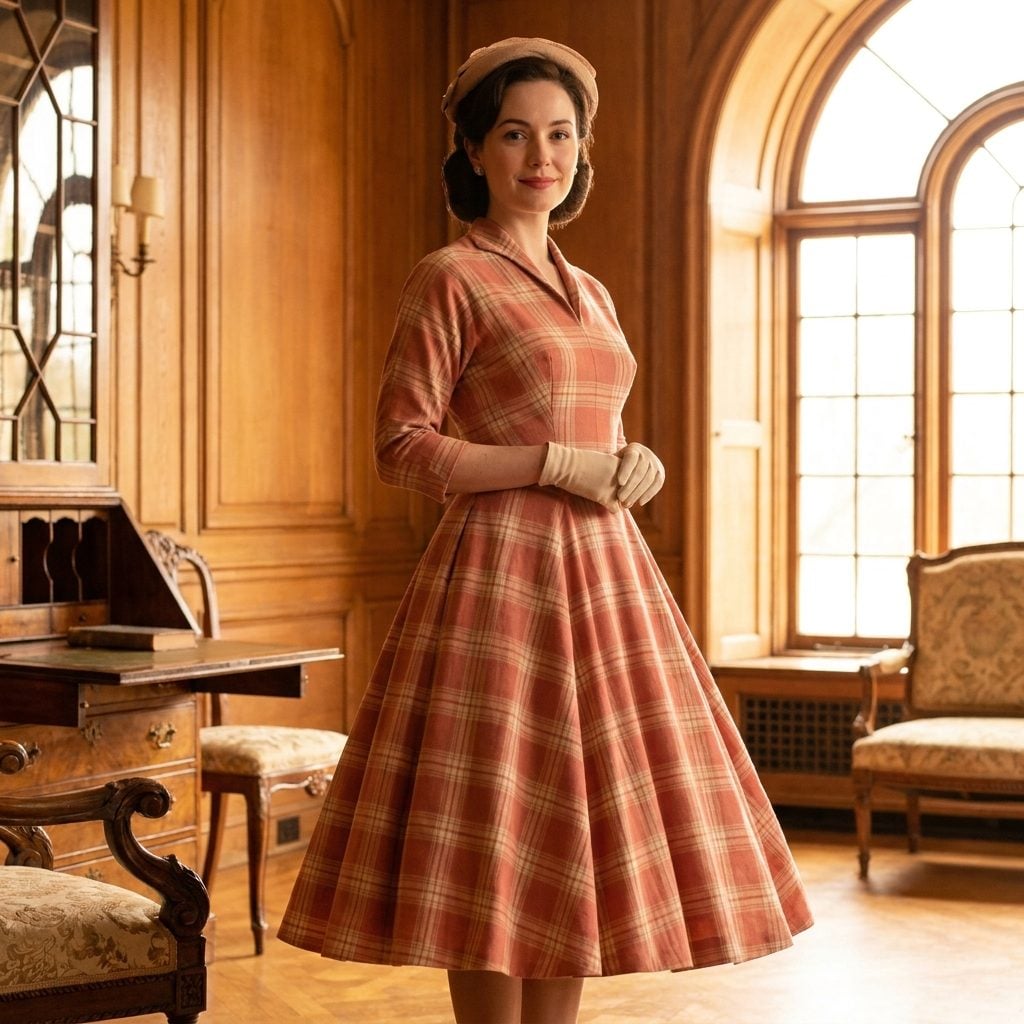
This is the decade’s waist strategy in one red dress. Curved seams shape the bodice, a slim belt establishes the center, and a petticoat sends the skirt outward with enough conviction to make the middle look even smaller.
Cherry red is hardly shy, but the construction keeps it disciplined. The dress isn’t depending on decoration for drama; the silhouette already supplied it. Short gloves and a top-handle bag stay compact enough that nothing else competes with the hourglass.
The 1953 Waist Cincher Was the Part Nobody Saw
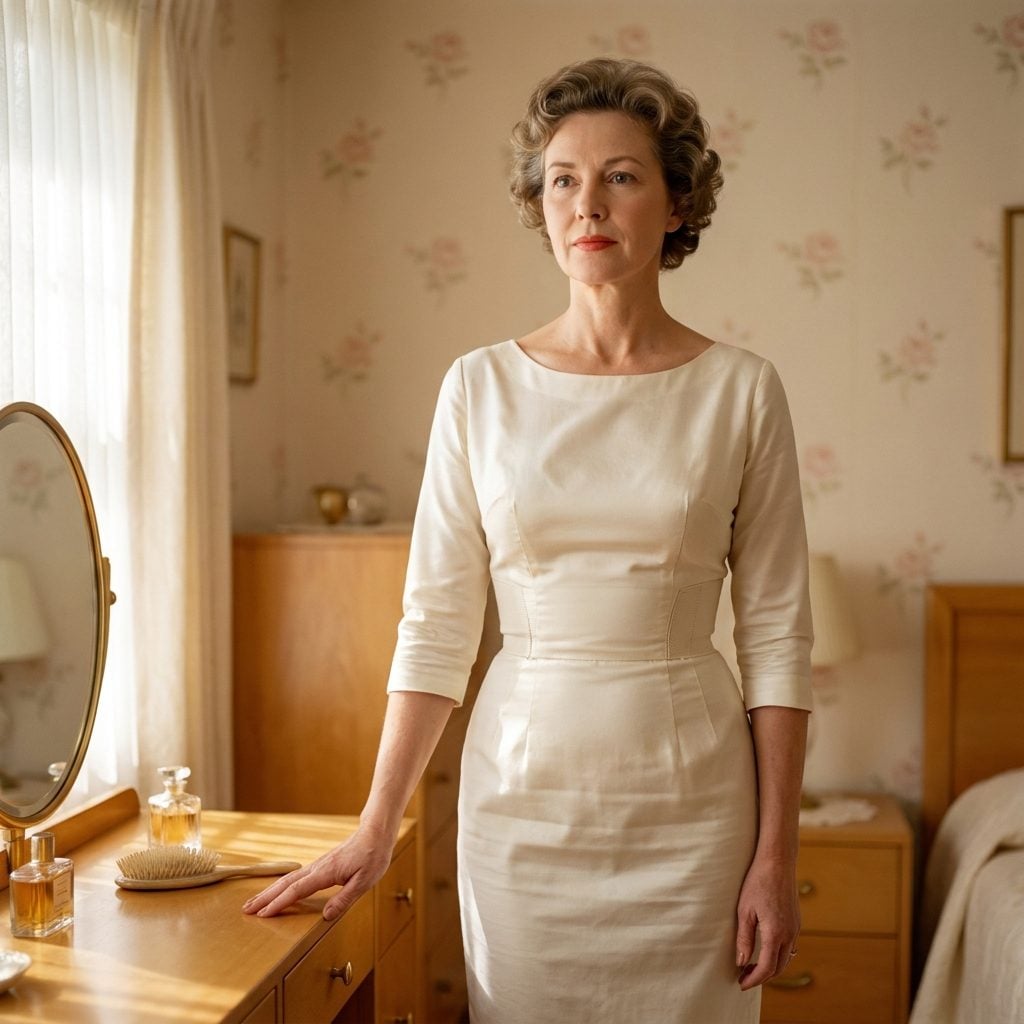
Not every 1950s waist was an optical illusion. Narrow elasticized waist cinchers were among the foundation garments sold to support the fashionable postwar silhouette, often using flexible boning and firm fabric to smooth and compress the middle beneath a dress.
The important distinction is scale. A waist cincher concentrated its shaping around the torso instead of extending from bust to hip like a longline foundation. Once the dress went over it, the engineering disappeared and the clothes collected the applause.
The 1956 Two-Tone Dress Made Color Behave Like a Seam
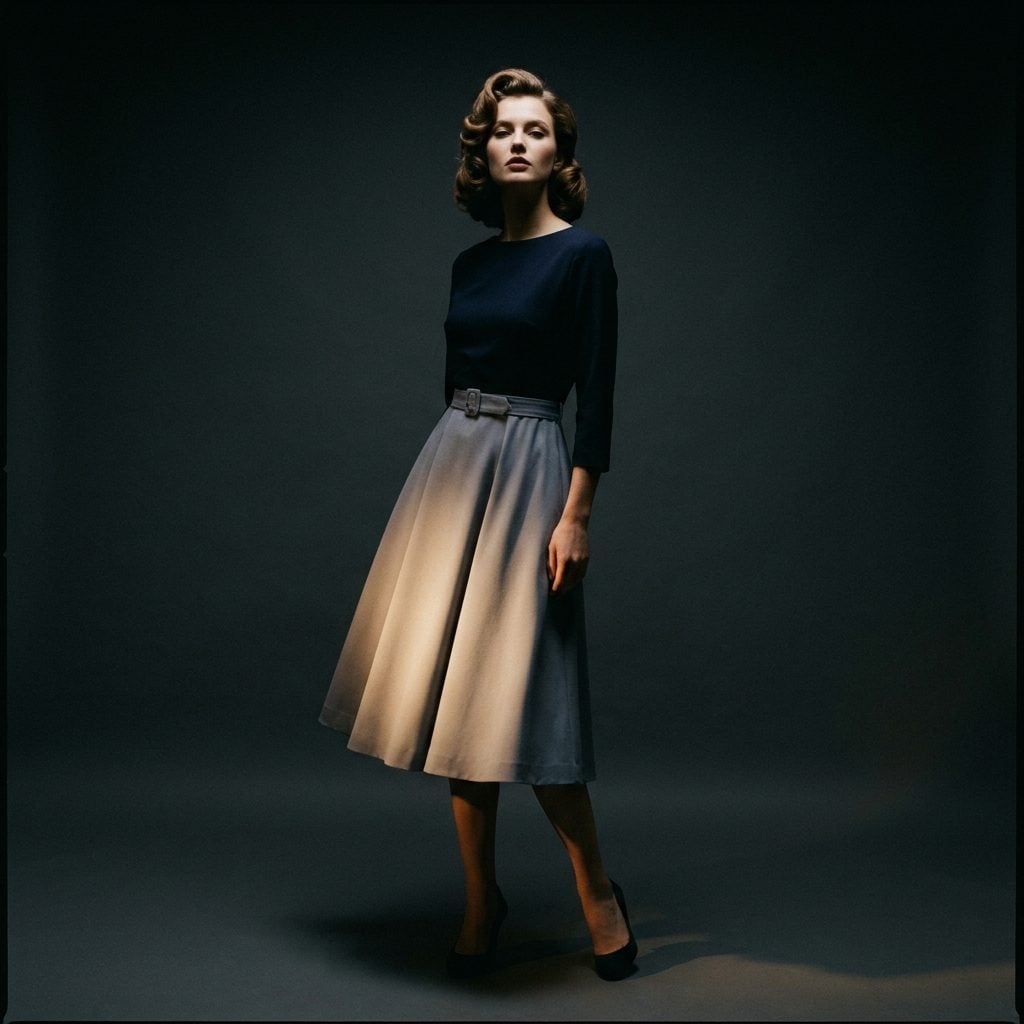
Dark navy holds the bodice visually close while dove gray opens below it, and the narrow navy waistband makes the transition impossible to miss. Nothing is physically tightening the figure. The contrast simply tells the eye where the center is.
The cleverness is in assigning different jobs to two colors. The darker upper half recedes; the lighter skirt attracts more attention and appears fuller. The waist becomes the crisp dividing line between them.
1958 Cigarette Pants and a Bateau Knit Took the Waist Trick Off the Dance Floor
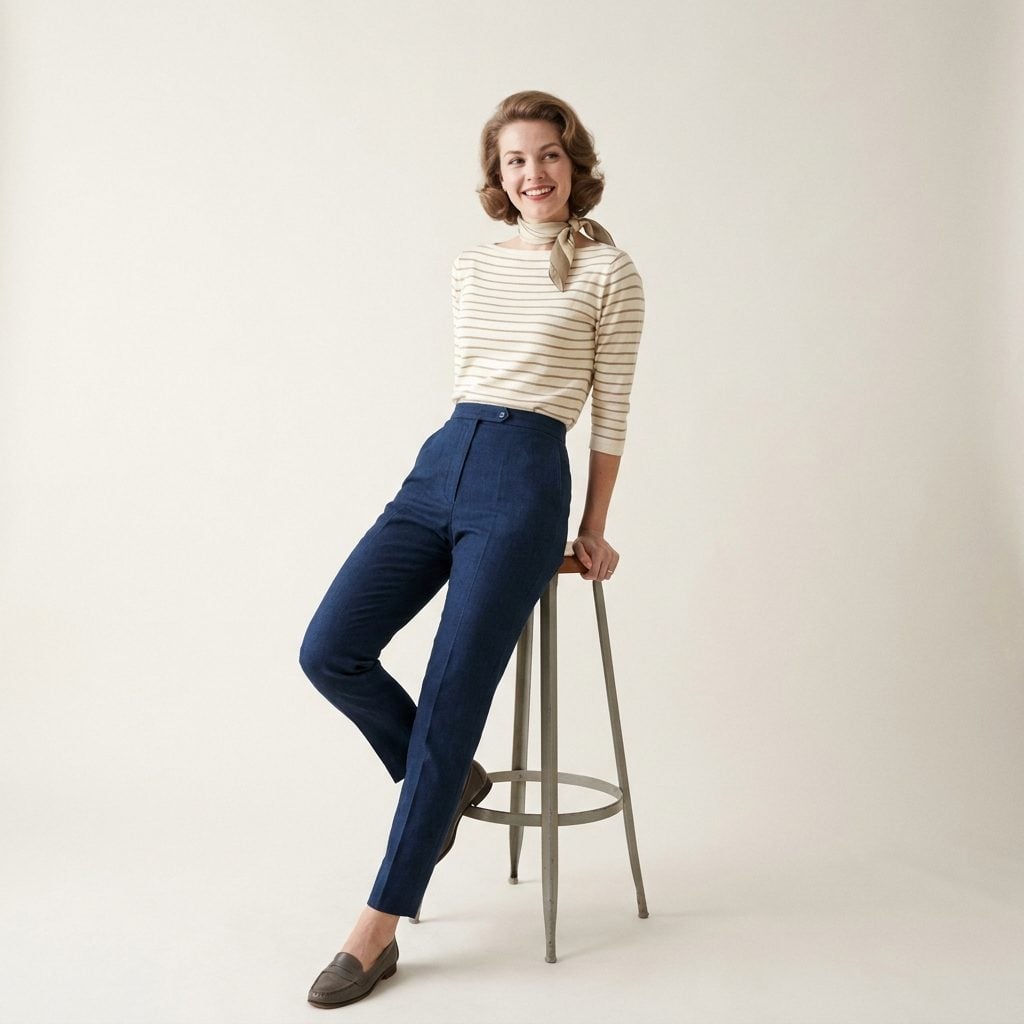
No petticoat required. Slim black cigarette pants sit high at the natural waist while the ivory bateau knit tucks cleanly inside them. The dark-light boundary makes the waistband obvious, and the broad horizontal neckline gives the shoulders a little extra visual width.
The effect is relaxed rather than engineered, which is why it feels so modern. Ballet flats and a silk scarf finish a look that shows how easily postwar waist emphasis could migrate into casual dressing.
What Our Readers Say
- Today, about two out of three ThreadCurve readers in our polls picked separates over dresses, so the tucked-in knit and high-waisted trouser tricks may feel the easiest to borrow.
From ThreadCurve reader polls and votes.
The 1950 Peplum Jacket Made the Hips Bigger on Purpose
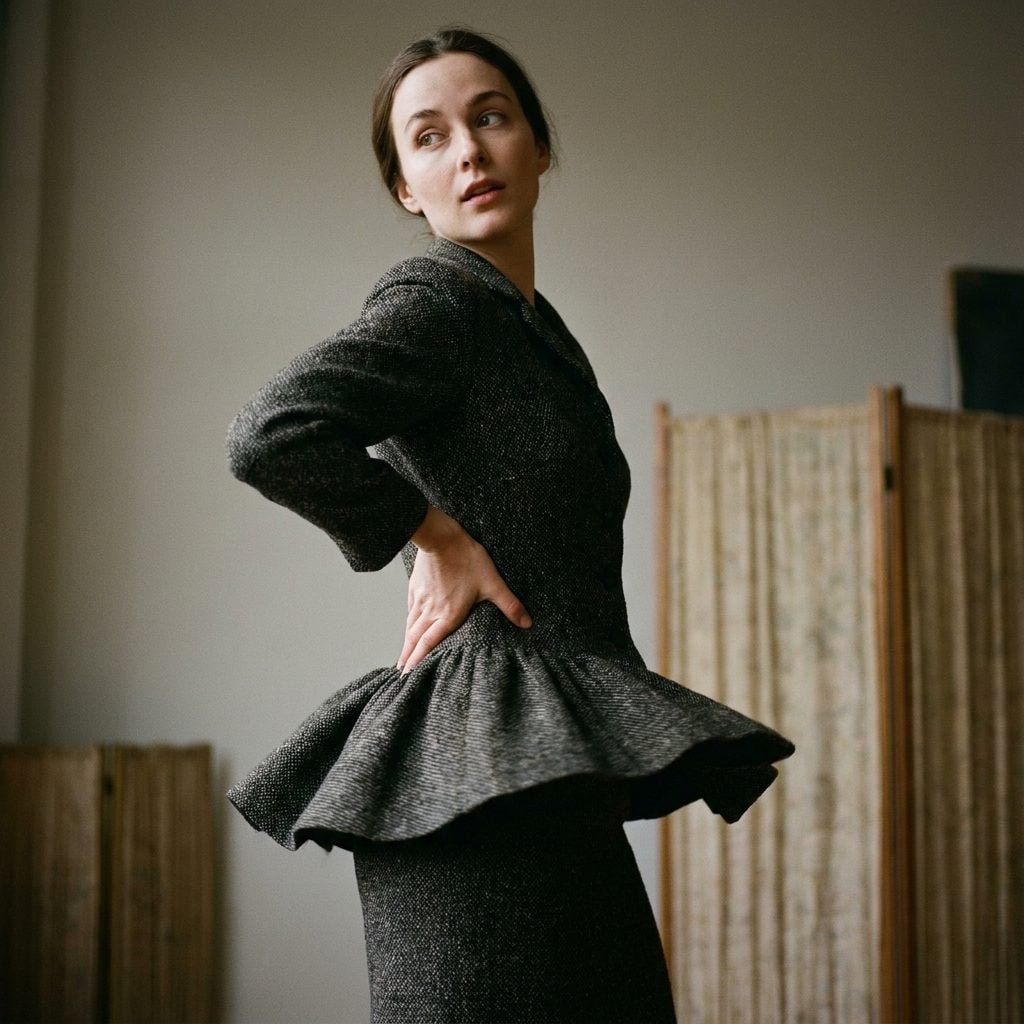
A peplum is wonderfully unapologetic about the assignment. It fits close through the torso, reaches the waist, and then abruptly flares over the hips.
Structured shoulders complete the architecture: width above, width below, restraint at the center. Pair that with a narrow charcoal skirt and the burgundy peplum gets even sharper because the lower line stops competing for attention.
The 1952 Princess-Seamed Dress Hid the Shaping Inside the Pattern
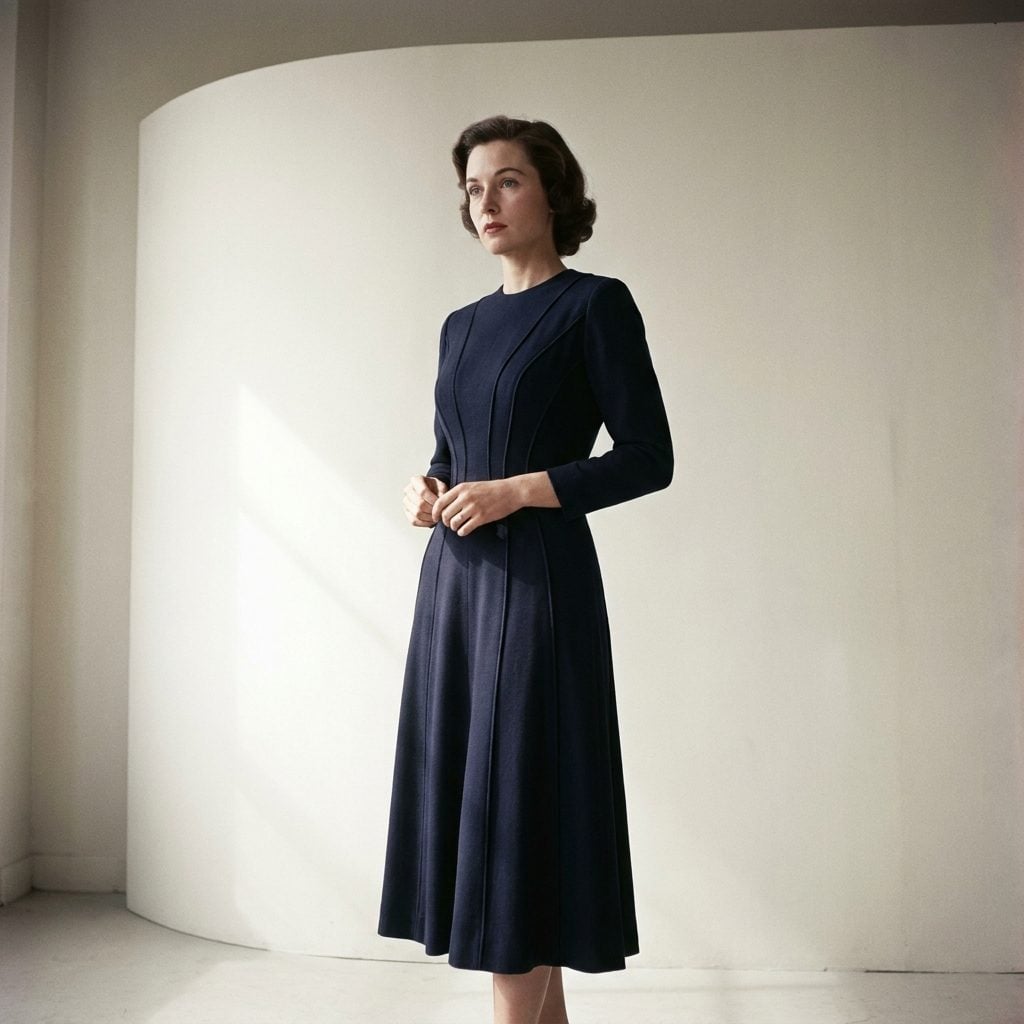
No belt is the point. Long curved seams travel through the bodice, taking fabric in around the torso and releasing it again toward the hip. The shape belongs to the pattern itself.
Bottle green keeps the result serious without becoming severe. There is no contrasting waistband announcing where the waist begins, which makes the definition feel quieter and considerably more sophisticated.
The 1953 Swing Coat Turned the Dress Underneath Into the Picture
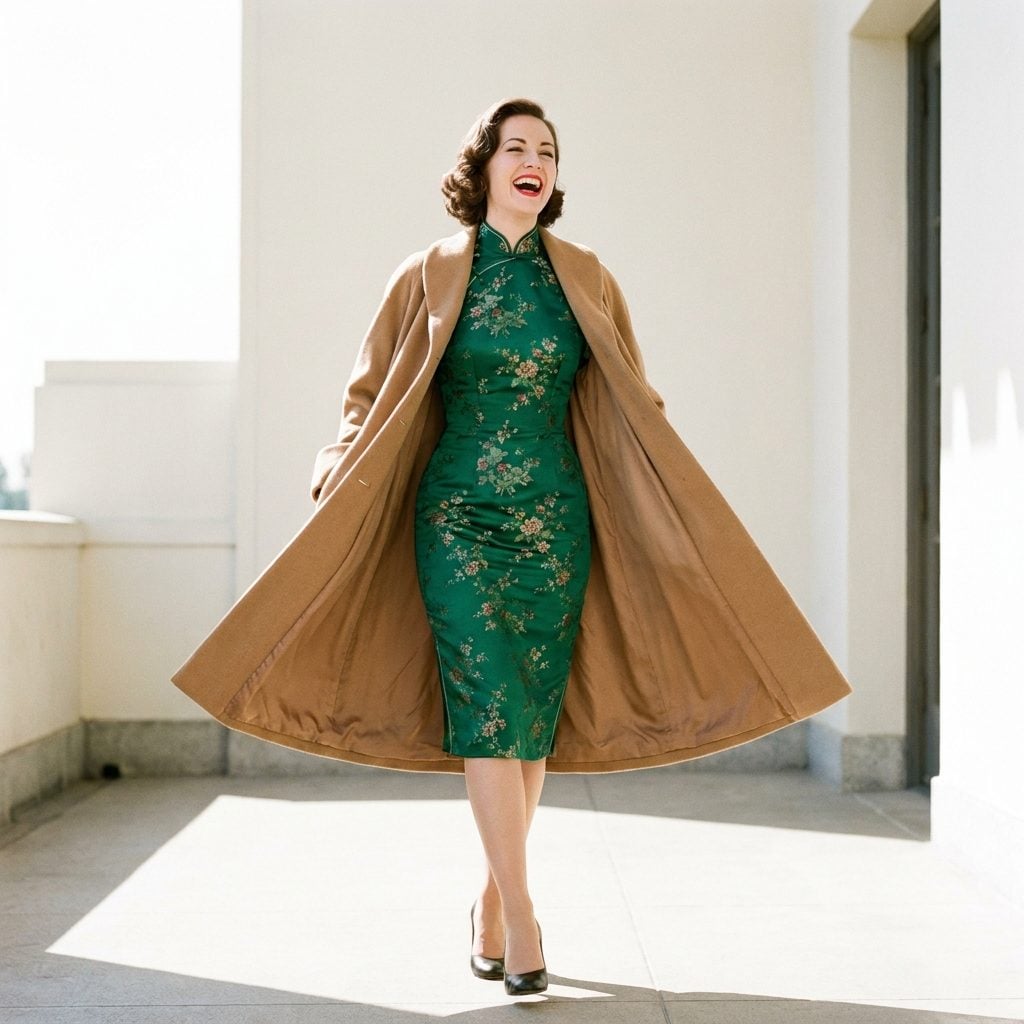
The camel coat opens into a generous A-line while the fitted dark-green dress remains visible inside it. Instead of defining the waist directly, the coat creates a large moving frame around something far narrower.
Closing the coat would change the entire effect. Left open, those sweeping sides make the fitted dress look almost miniature by comparison. Portrait framing, but with sleeves.
The 1956 Wide Sash Refused to Put the Bow in the Middle
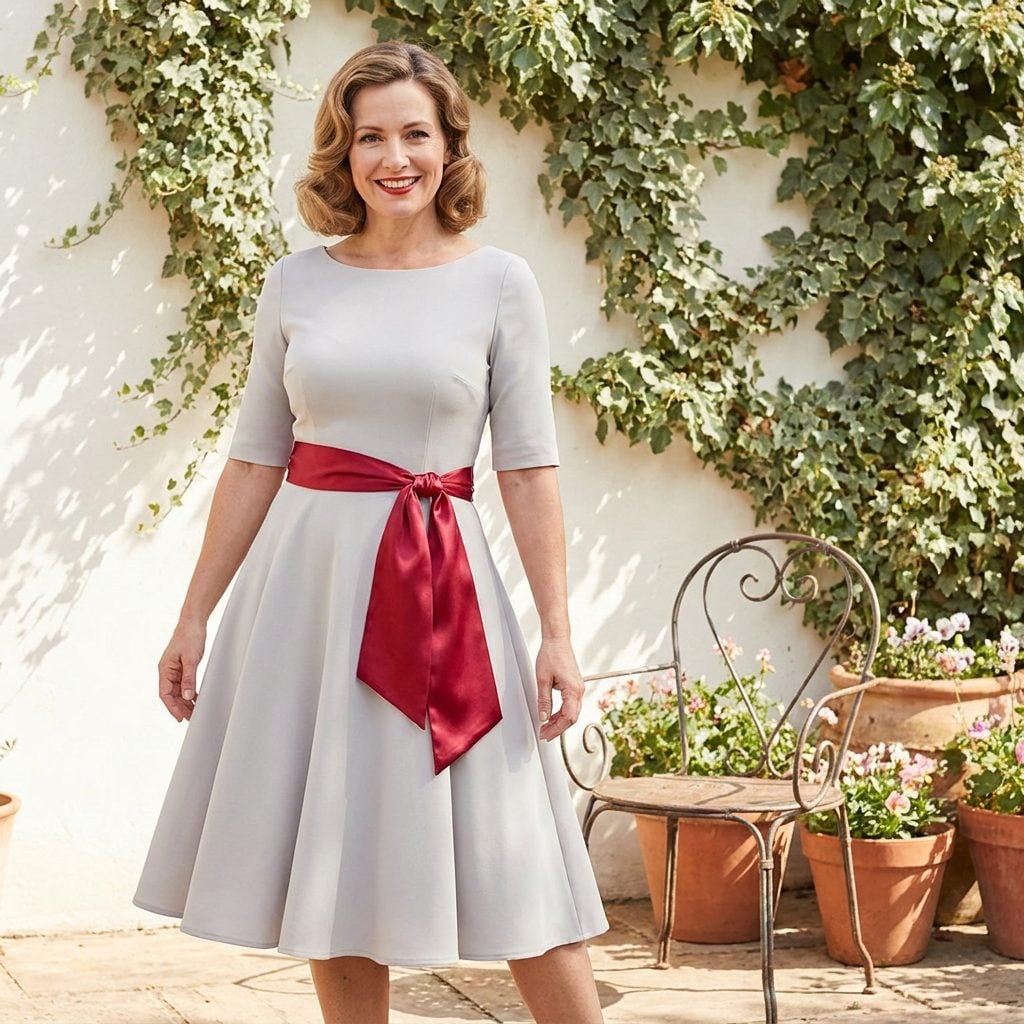
A wide crimson sash against matte gray crepe already gives the waist a hard visual stop. Moving the knot off-center prevents the band from looking stiff and ceremonial.
The asymmetry creates movement across the middle rather than parking one perfect bow directly on the stomach. It is a cheap trick in the most complimentary sense. Cheap tricks that work deserve tenure.
The 1957 Gored Skirt Saved Its Fullness for the Hem
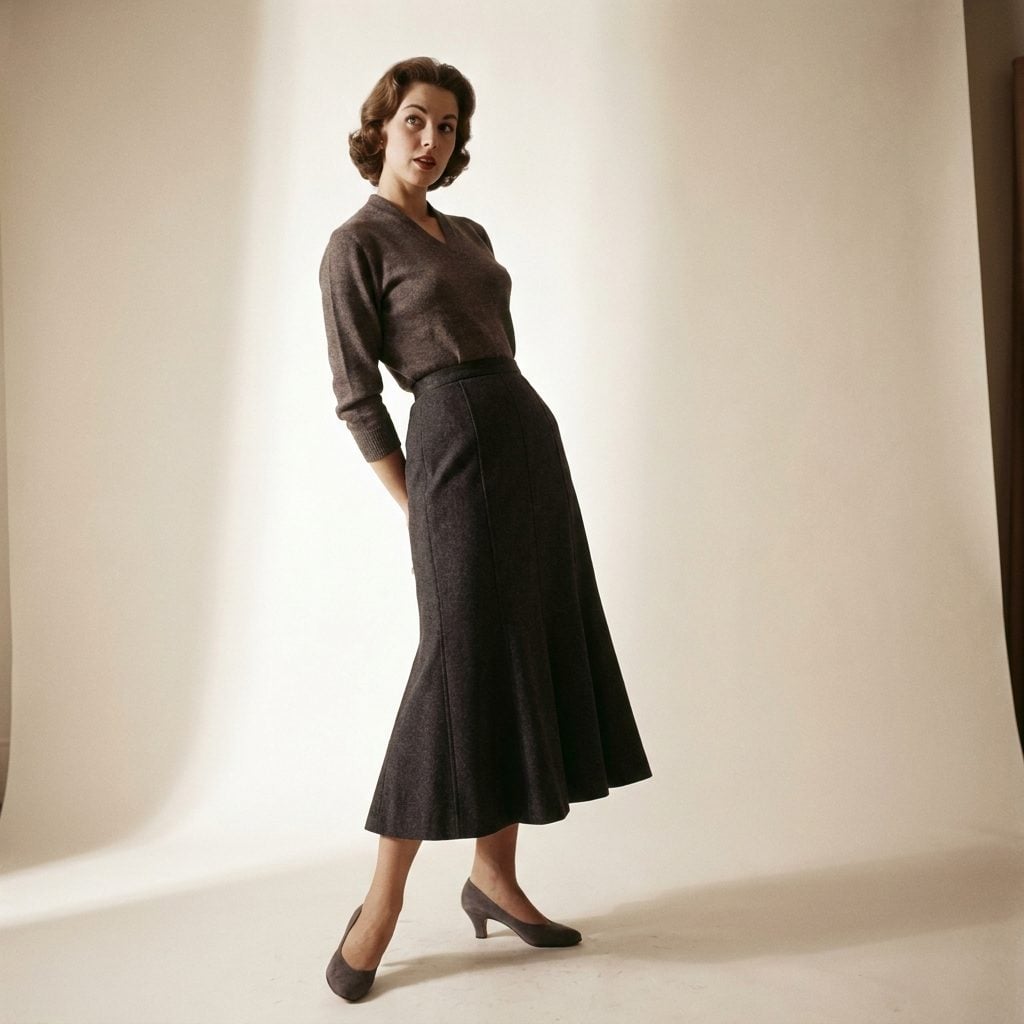
Instead of gathering yards of fabric directly into the waistband, a gored skirt uses shaped panels that remain comparatively smooth through the upper hip before widening farther down.
That changes where the volume lives. The ivory blouse tucks into a clean forest-green waistband with very little bulk underneath it, while the hem still gets plenty of movement. By the later 1950s, slimmer and more varied skirt shapes were sharing space with the enormous circles of earlier in the decade, and this is one of the most useful examples.
Today, ThreadCurve readers still lean this way: asked which skirt they would buy, 72% chose an A-line, well ahead of pencil and pleated styles.
The 1954 Basque Waist Drew a Point Straight Down the Center
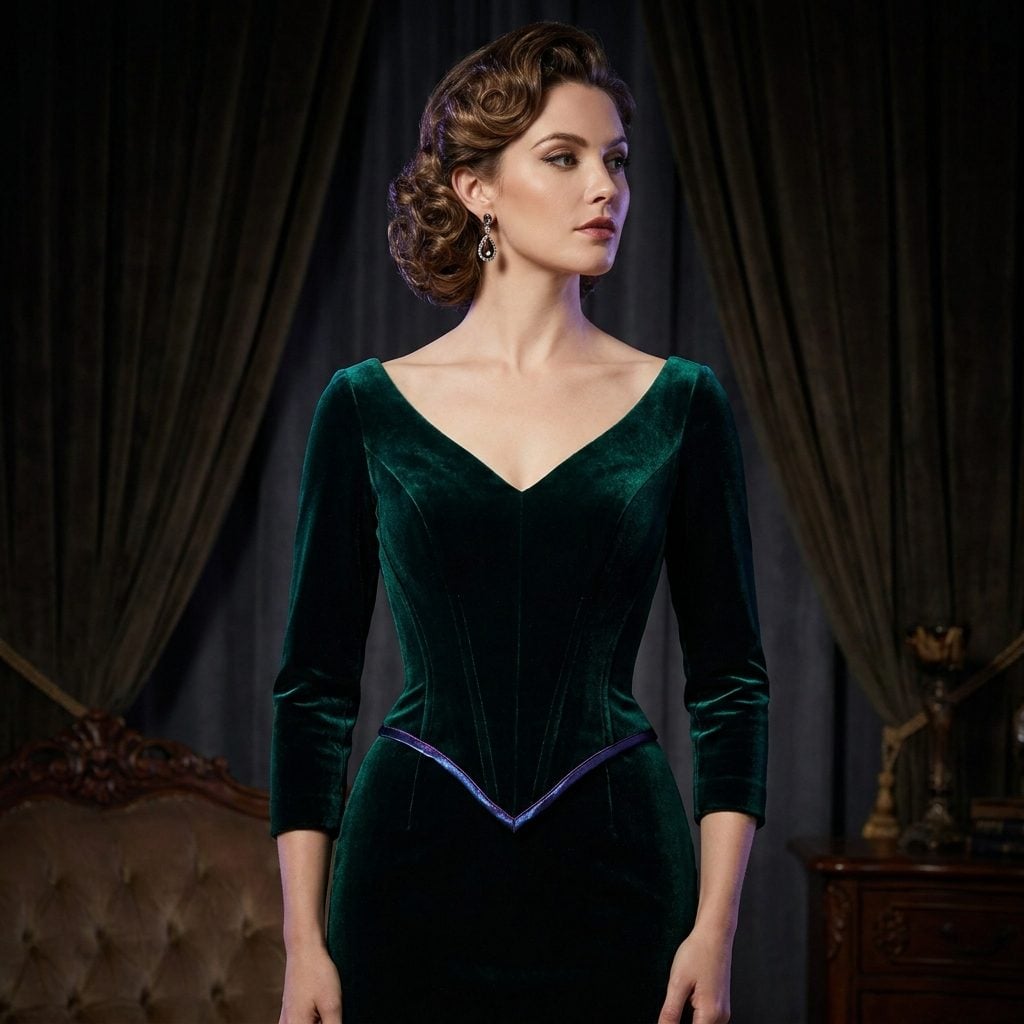
Instead of cutting straight across the body, the basque waist dips into a V at center front. That pointed seam gives the bodice a longer, tapered finish and pulls attention toward the middle without needing a contrasting belt.
Sapphire satin helps because light catches along the shaped seam. The full skirt supplies the evening drama; the little downward point supplies the precision.
1955 Diagonal Stripes Let the Fabric Aim the Eye
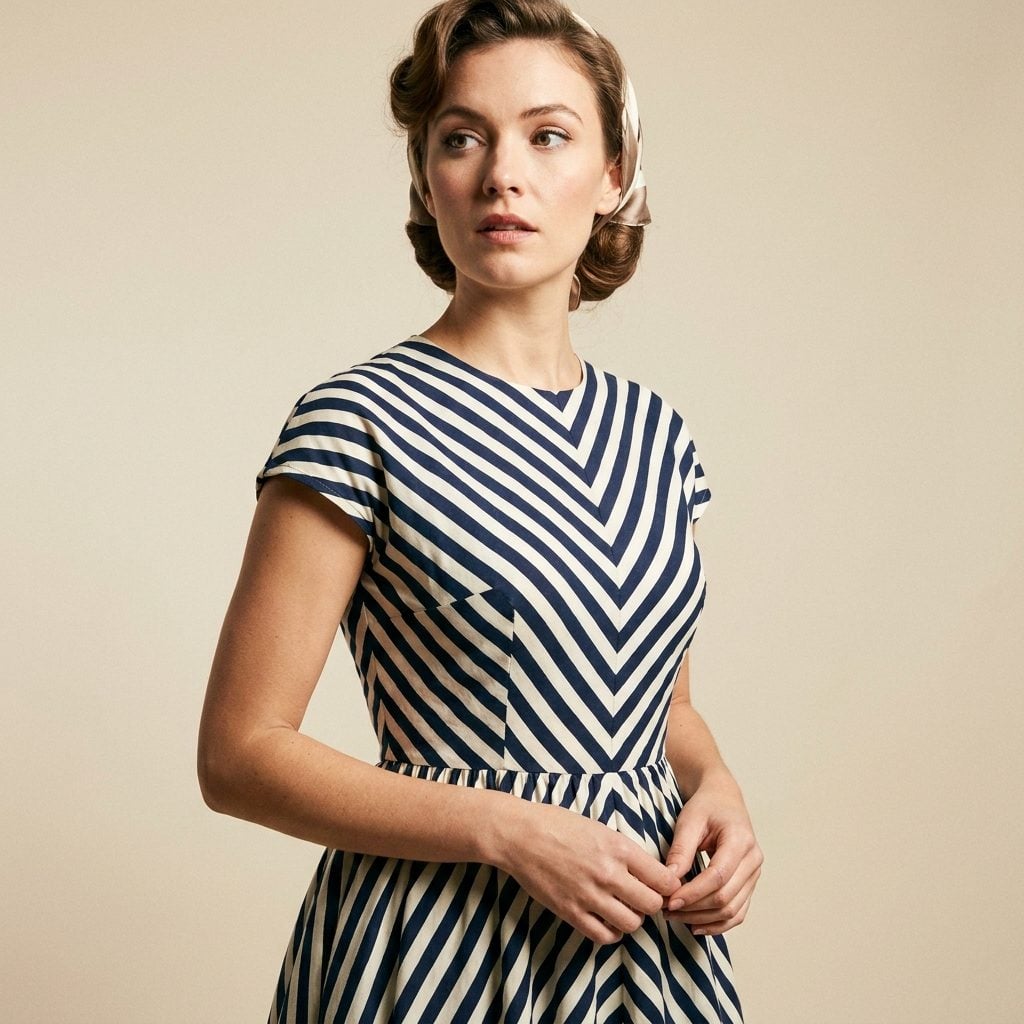
The same navy-and-ivory stripe behaves completely differently depending on how the pattern pieces are cut. Across the bodice, angled panels converge toward the center. Below, the stripes turn vertical and stretch the skirt visually downward.
That kind of matching takes patience. Miss the alignment at a seam and the geometry loses its nerve. Get it right and the fabric appears almost engineered around the figure.
The 1954 Cropped Cardigan Knew Exactly Where to Stop
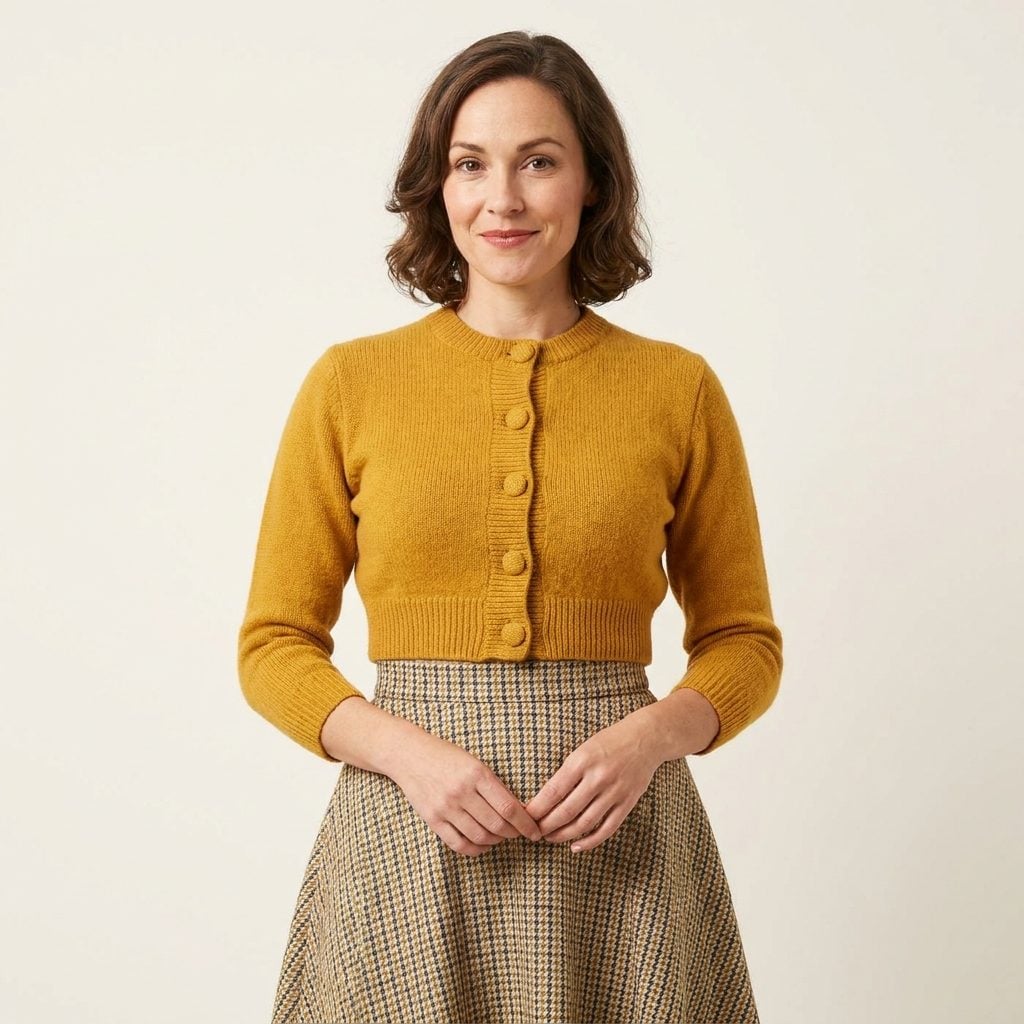
The cardigan does not shape the waist at all. It simply refuses to cover it.
Cream knit stops directly at the forest-green waistband, leaving a clean horizontal break instead of fabric drifting over the hips. That makes this less a story about cinching than editing: end one garment at exactly the place you want noticed.
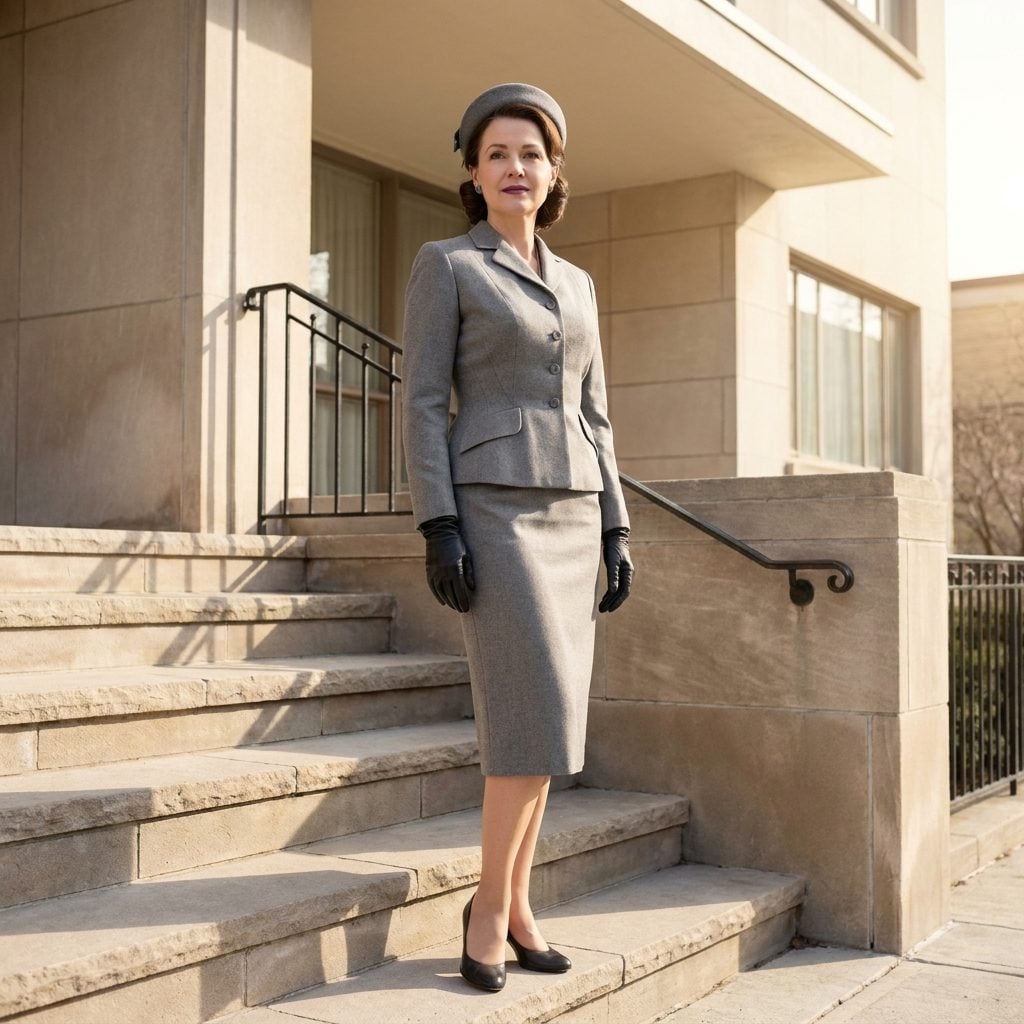
The 1957 Nipped-Waist Suit Built Curves Into the Jacket
❤️ Would you like to save this?
The New Look’s influence is easy to see in this dove-gray suit: fitted torso, pronounced waist, rounded hip line. Strategic internal structure can exaggerate the shape below the waist so the jacket’s center looks narrower without requiring the wearer’s body to provide every curve.
Fine matte wool and precise seams make the effect look architectural rather than padded. That’s the peculiar elegance of great tailoring: the garment is doing far more work than it admits.
The 1954 Merry Widow Shaped From Bust to Hip
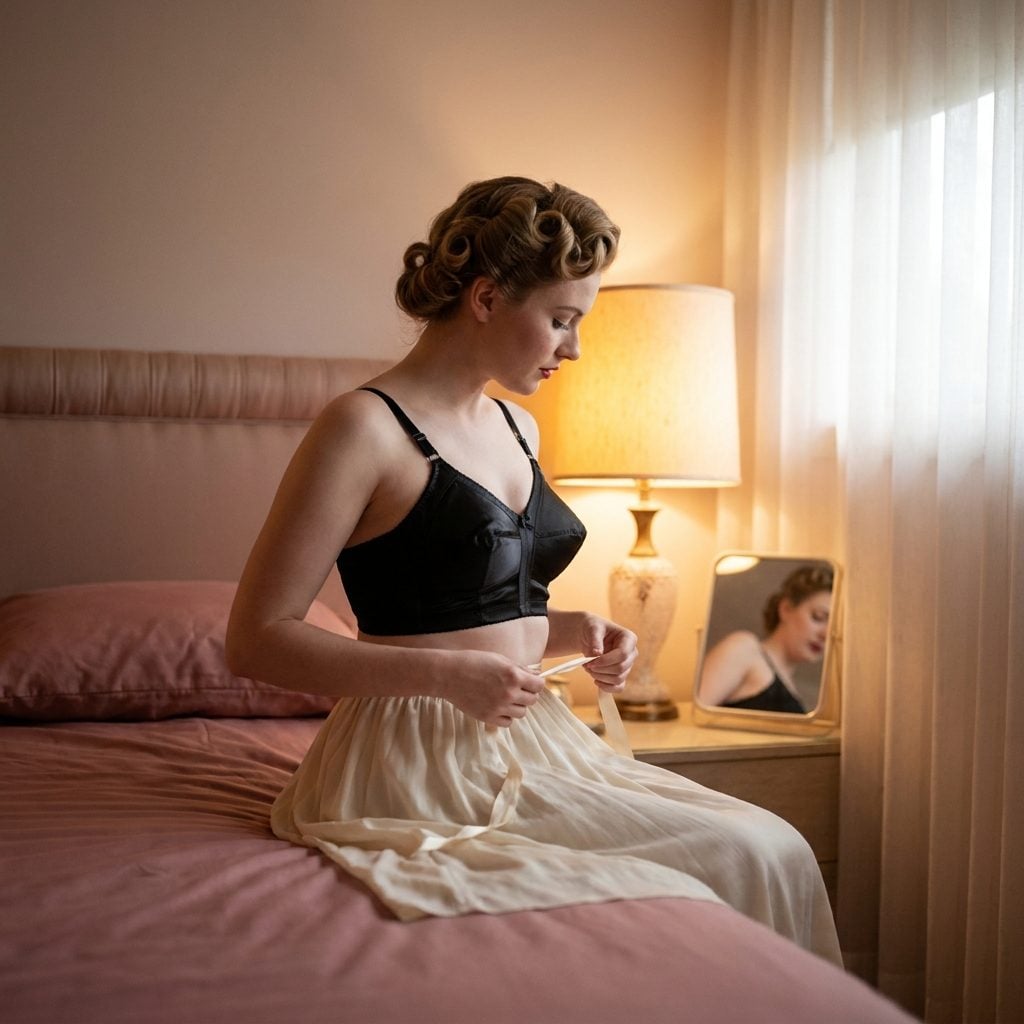
The Merry Widow went much farther than the short waist cincher. Warner’s introduced the foundation in the early 1950s, borrowing its name from the contemporary MGM film The Merry Widow, itself based on Franz Lehár’s operetta.
The garment extended from bust toward the hips, combining bra support, smoothing, and waist control in one longline piece. Boning and firm fabric created a continuous foundation under the increasingly fitted dresses of the period. The dress still got the compliments. The understructure knew better.
The 1957 Wrap Dress Let a Diagonal Line Find the Waist
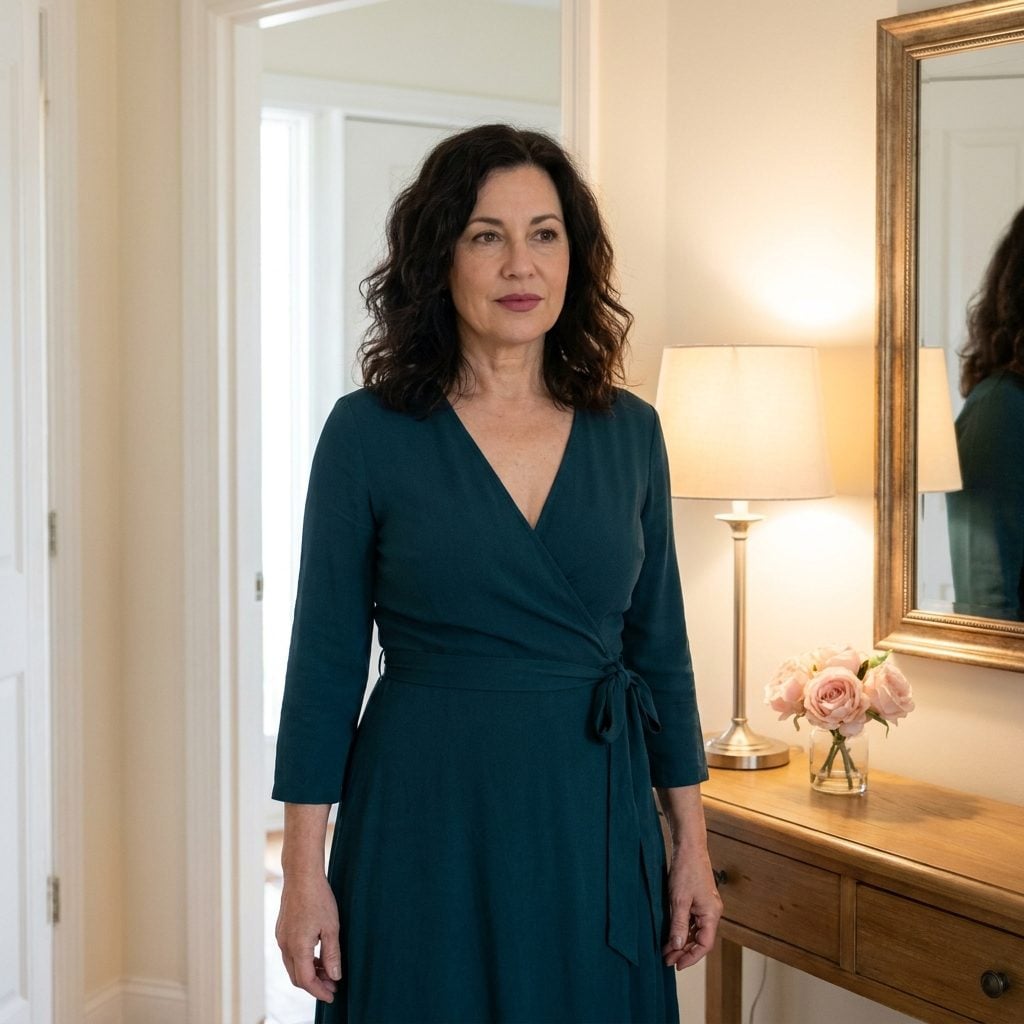
Long before Diane von Furstenberg made the jersey wrap dress a 1970s phenomenon, wrap and surplice constructions were already established fashion vocabulary.
Here the crossover bodice sends two diagonal lines toward the waist before the skirt falls away in an easy A-line. Soft teal rayon crepe keeps the crossing fluid rather than stiff, while the adjustable tie lets the garment accommodate the body instead of demanding the reverse.
The 1954 Broad Collar Made the Shoulders Part of the Plan
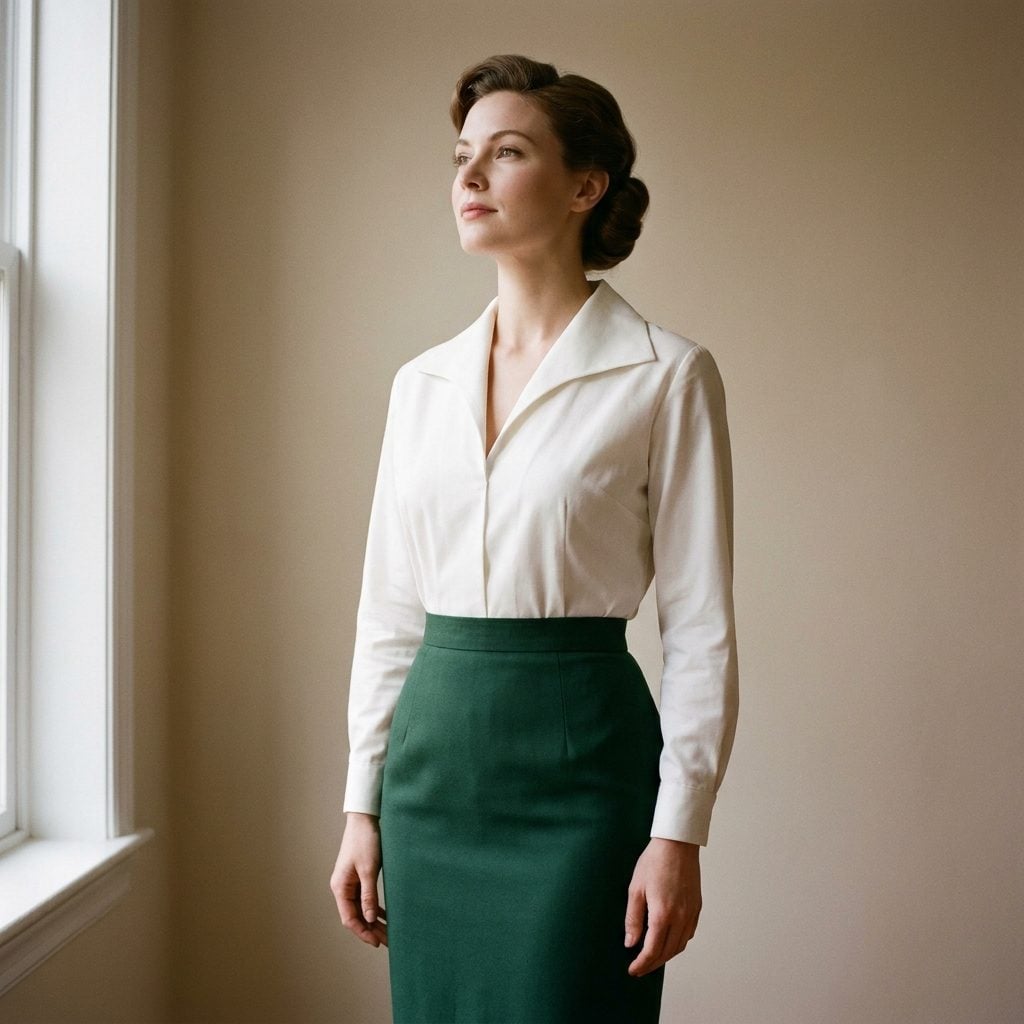
That broad ivory collar pushes the upper silhouette outward before the blouse disappears into a smooth deep-green waistband. The skirt itself stays narrow, so the contrast comes almost entirely from above.
Broad collars certainly did not begin with Dior, but they fit comfortably into the postwar fascination with manipulating shoulder, bust, waist, and hip proportions. Here the collar supplies the width and the clean tuck supplies the punctuation.
The 1958 Sheath Dress Proved a Tiny Waist Didn’t Need a Huge Skirt
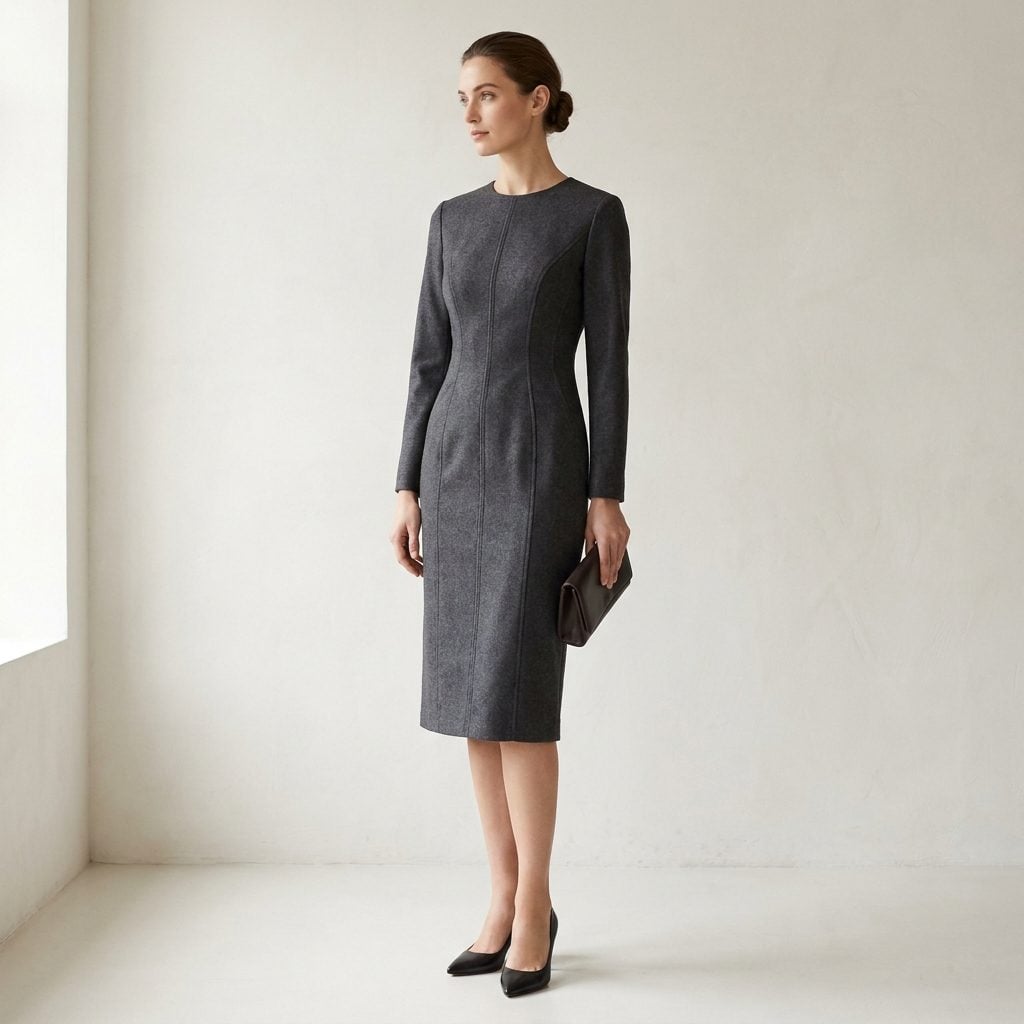
No petticoat, no giant flare, no contrasting belt. Curved darts and contour seams follow the body’s taper before continuing into a smooth wool-crepe column.
The little jacket stays open, creating two vertical edges around the torso rather than hiding the dress construction. Matte wool-crepe keeps the surface calm, allowing the cut rather than shine or print to supply the interest.
The 1953 Shirtwaist Made the Belt Part of Everyday Dressing
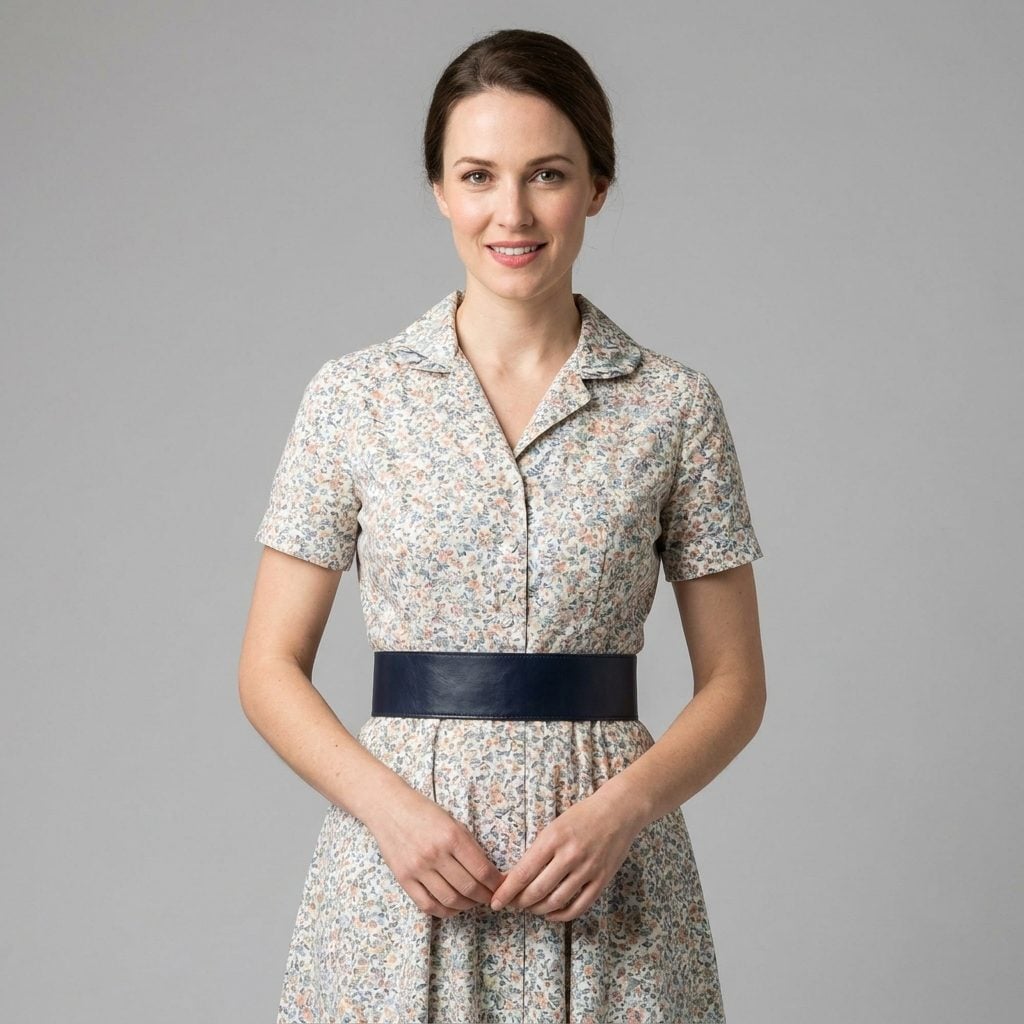
A shirtwaist could bring hourglass structure into an ordinary daytime dress without looking remotely formal. The bodice borrows the familiarity of a shirt, the gathered skirt supplies movement, and a wide navy belt separates the two decisively.
The geometric blue look gives the cotton some life without obscuring the silhouette. The belt isn’t an accessory added at the end. It is practically the punctuation mark holding the sentence together.
The 1952 Dropped-Shoulder Blouse Borrowed Width From the Sleeves
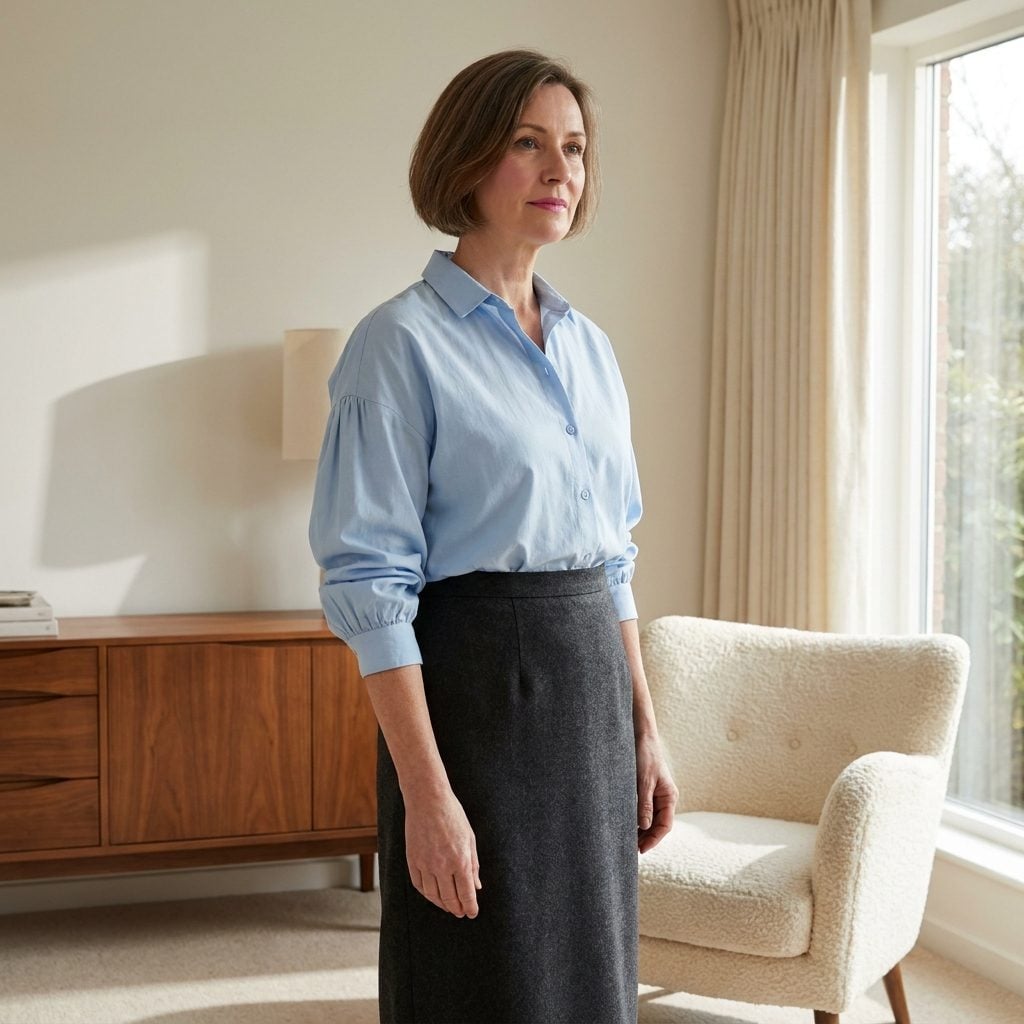
A dropped shoulder seam pushes the apparent edge of the blouse beyond the actual shoulder, while softly gathered sleeves add another little cloud of volume near the top.
Tuck all that powder-blue lawn into a slim charcoal skirt and the middle becomes the calmest part of the silhouette. Nothing happened to the measurement. The surrounding proportions simply changed the argument.
The 1959 Cocktail Dress Hid Its Waist Trick in Curved Seams
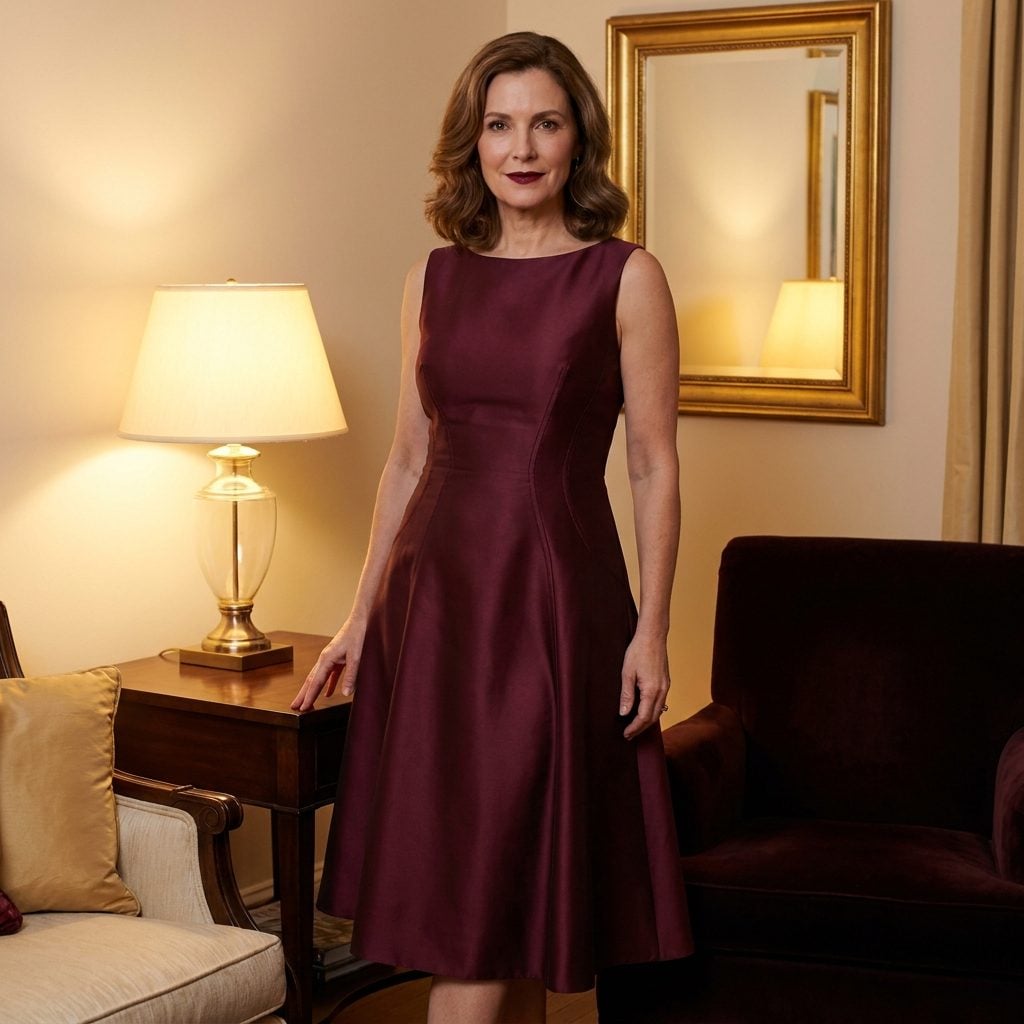
No visible belt interrupts this burgundy cocktail dress. Instead, curved contour seams pull the substantial silk faille inward through the torso before releasing into a soft flare below.
Under evening light, those seams catch just enough highlight to make the construction legible without shouting about it. The sophistication comes from making the shaping look inevitable.
1955 High-Waisted Cropped Trousers Sent the Legs North

Women had been wearing trousers for work, sport, leisure, and fashion long before 1955, but the mid-century high-waisted cropped trouser gives the silhouette a particularly clean graphic quality.
The rise meets the natural waist, making the legs appear to start higher and shortening the visible torso above them. A contour waistband is shaped rather than cut as a simple straight strip, helping it follow the body’s curve with less gaping. Add a tucked white shirt and rolled sleeves and suddenly the 1950s waist has somewhere to go on Saturday morning.
The 1956 Dark Knit and Plaid Skirt Put All the Noise Below the Waist
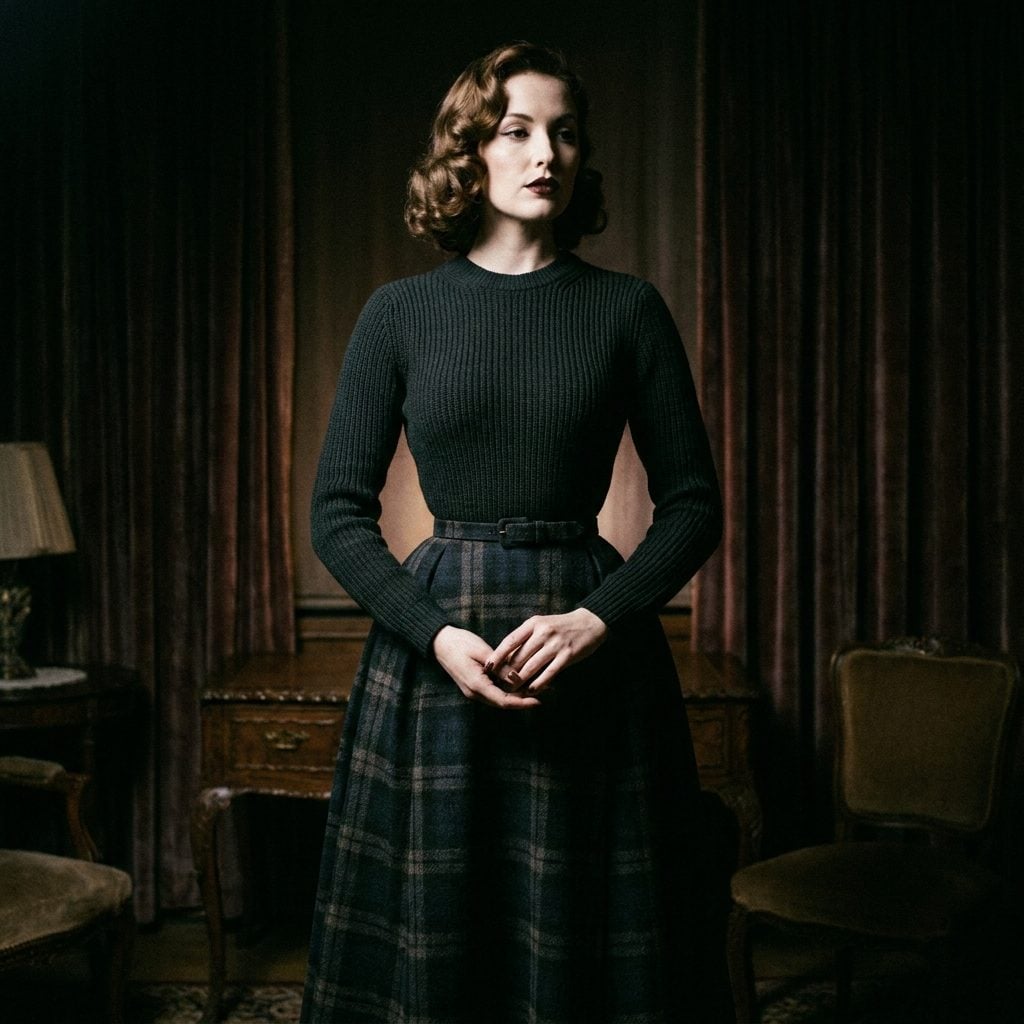
The black knit is almost aggressively uneventful. That is exactly what the tartan needs.
Muted red and green plaid takes over below the smooth waistband, giving the skirt movement, pattern, and visual weight while the torso remains one dark compact shape. Rather than decorating the waist itself, the outfit creates a quiet strip between two very different levels of activity.
The 1952 Bolero Put a Hard Stop Right Above the Skirt
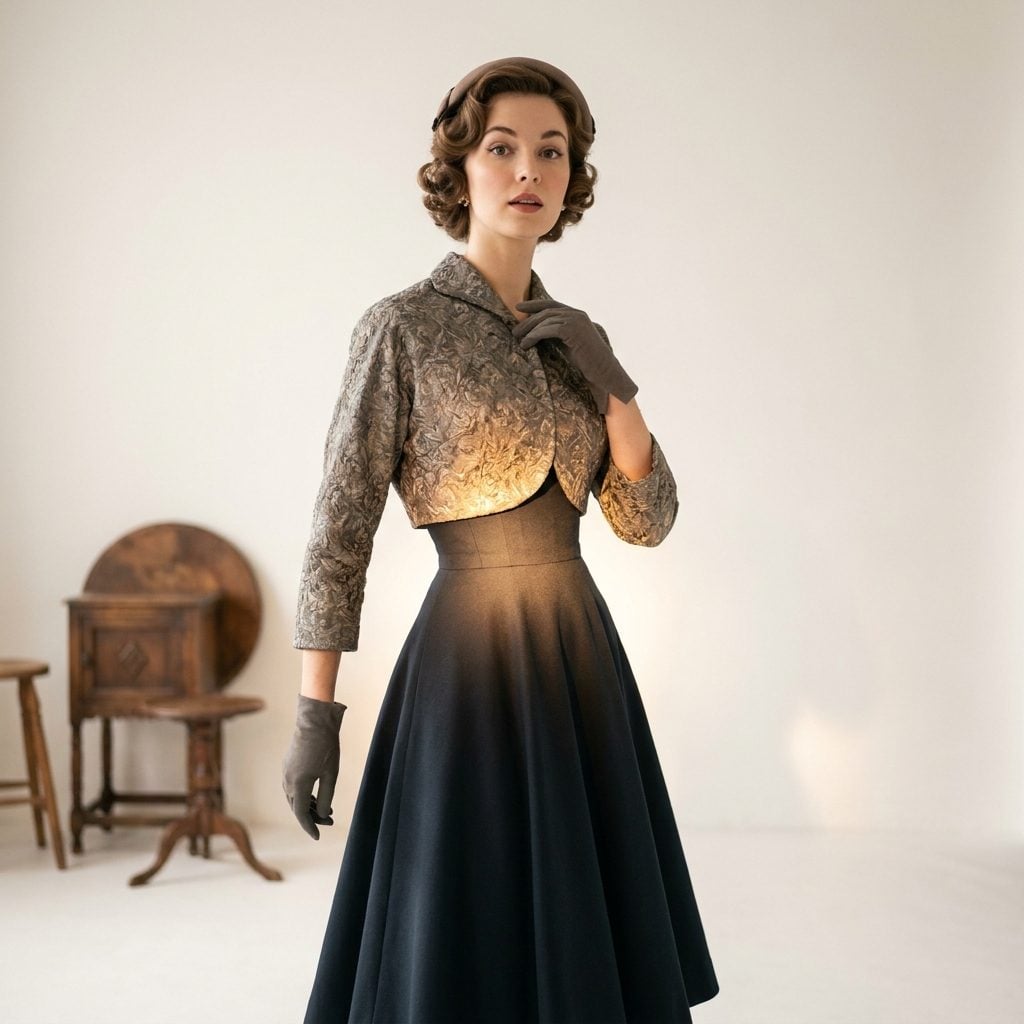
A bolero is basically a jacket with the lower half edited out. This fitted navy version ends exactly where the high-waisted cherry skirt begins, leaving no extra fabric to wander over the hip.
The color split makes that meeting point even clearer: dark and contained above, bright and expansive below. The result feels much sharper than simply putting another full-length jacket over the same skirt.
The 1958 Belted Trench Turned Rainwear Into a Silhouette
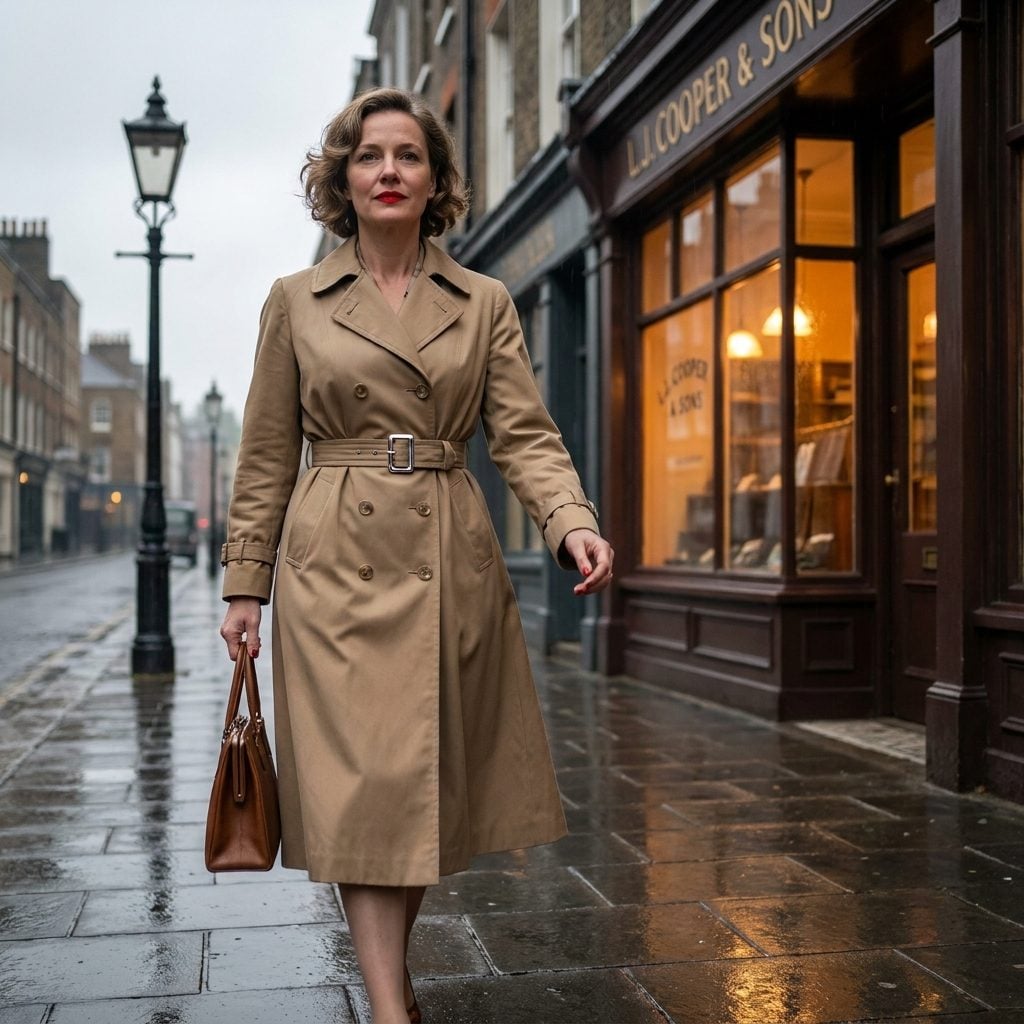
A trench starts as practical outerwear: broad enough to layer, structured enough to repel weather, long enough to cover the clothes underneath. Pull the belt firmly through the buckle and that utility suddenly acquires a waist.
Gabardine gathers above and below the belt, then releases into an A-line toward the hem. Tan fabric, wet pavement, one red lip — sometimes restraint is overrated.
In our readers’ heart and thumbs-down votes, outfit images featuring a coat or jacket got more hearts than the other images in the same articles.
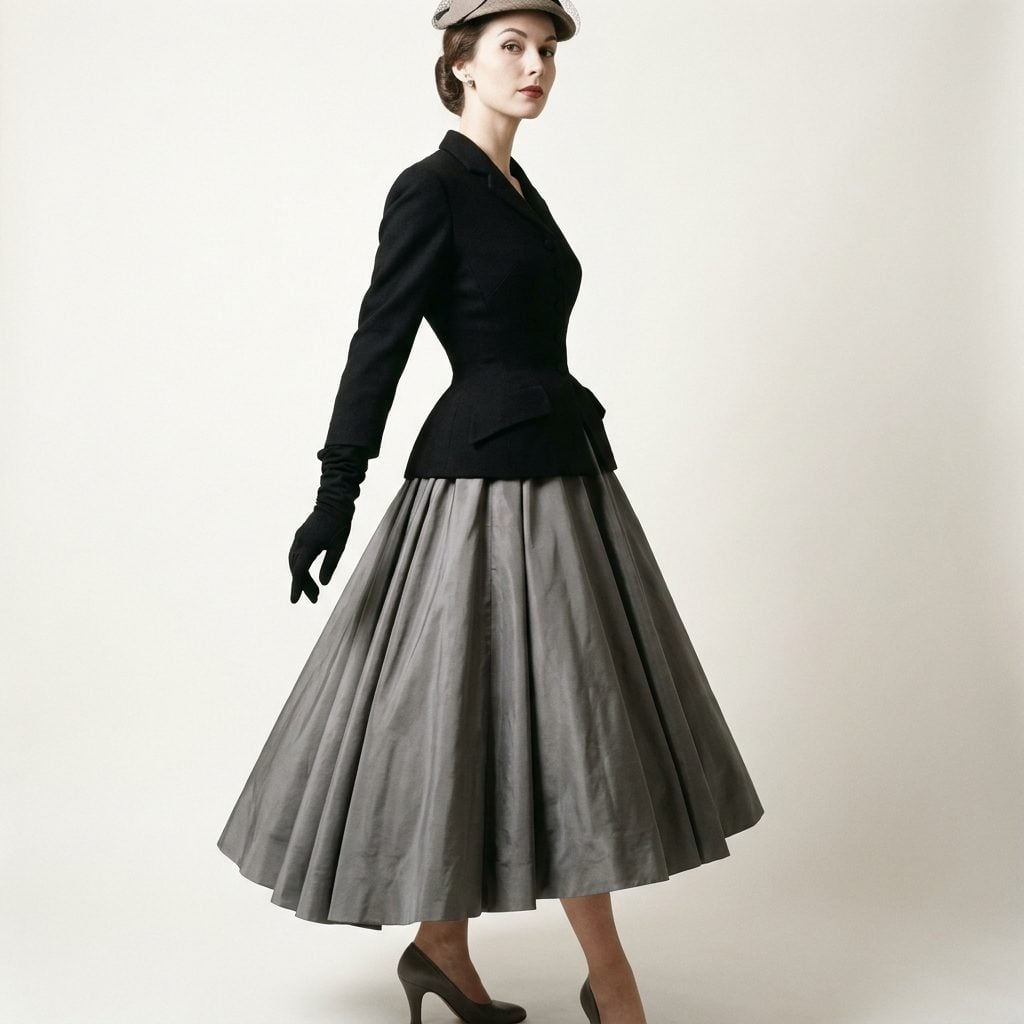
The 1951 New Look Jacket Turned Yardage Into Contrast
❤️ Would you like to save this?
The jacket follows the torso closely before the gray wool skirt opens into serious volume. That contrast echoes the New Look vocabulary Dior introduced in 1947: a sharply articulated waist surrounded by much more fabric than wartime fashion had permitted.
Soft hip shaping adds another little push outward below the jacket. A woman in this beige look would not need a novelty print or a pile of jewelry. The silhouette had already spent the budget.
The 1953 Ruched Midriff Broke One Smooth Surface Into Soft Folds
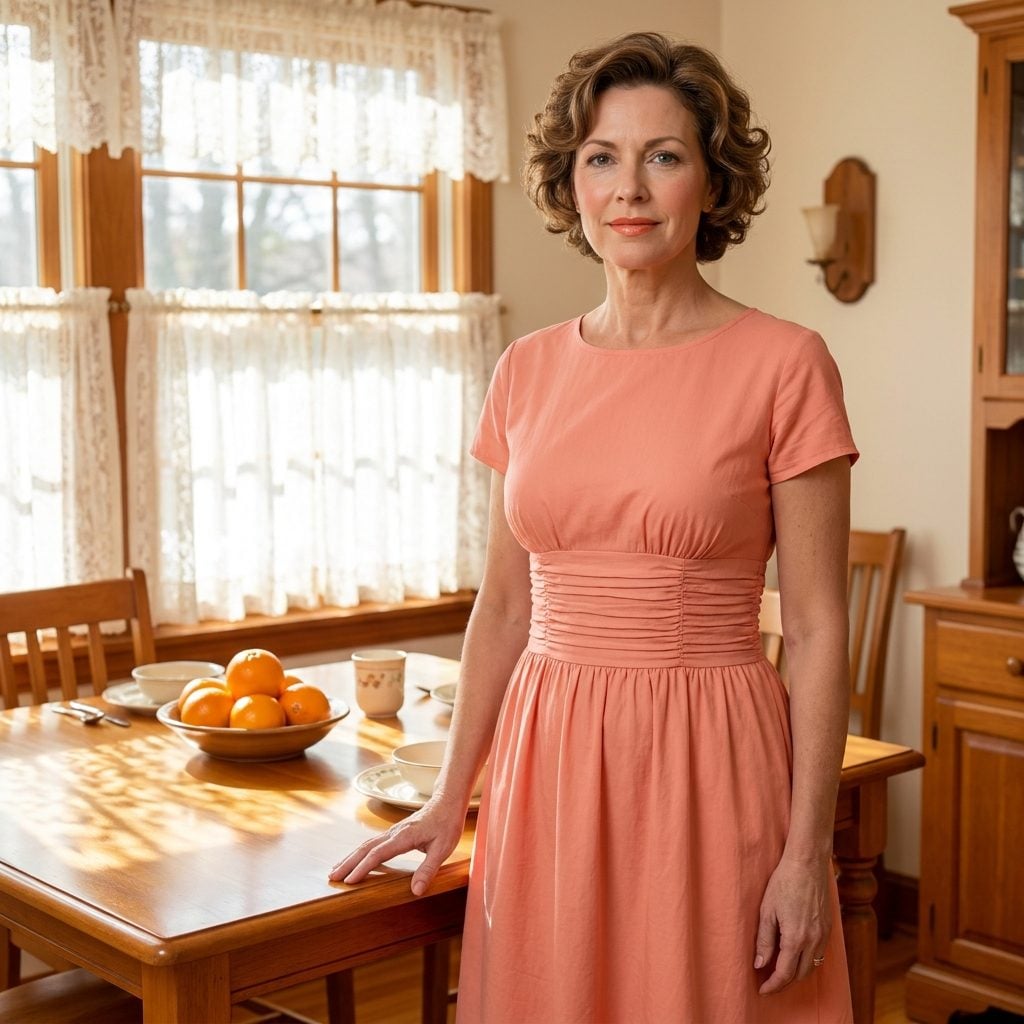
Ruching changes the surface before it changes the silhouette. Gather a section of fabric through the midriff and the eye encounters ridges, shadows, and movement instead of one uninterrupted plane.
The bodice above stays smooth, the skirt below stays smooth, and that coral band becomes a deliberately textured bridge between them. The folds also give the garment a little visual forgiveness without asking the fabric to hang perfectly flat across every inch.
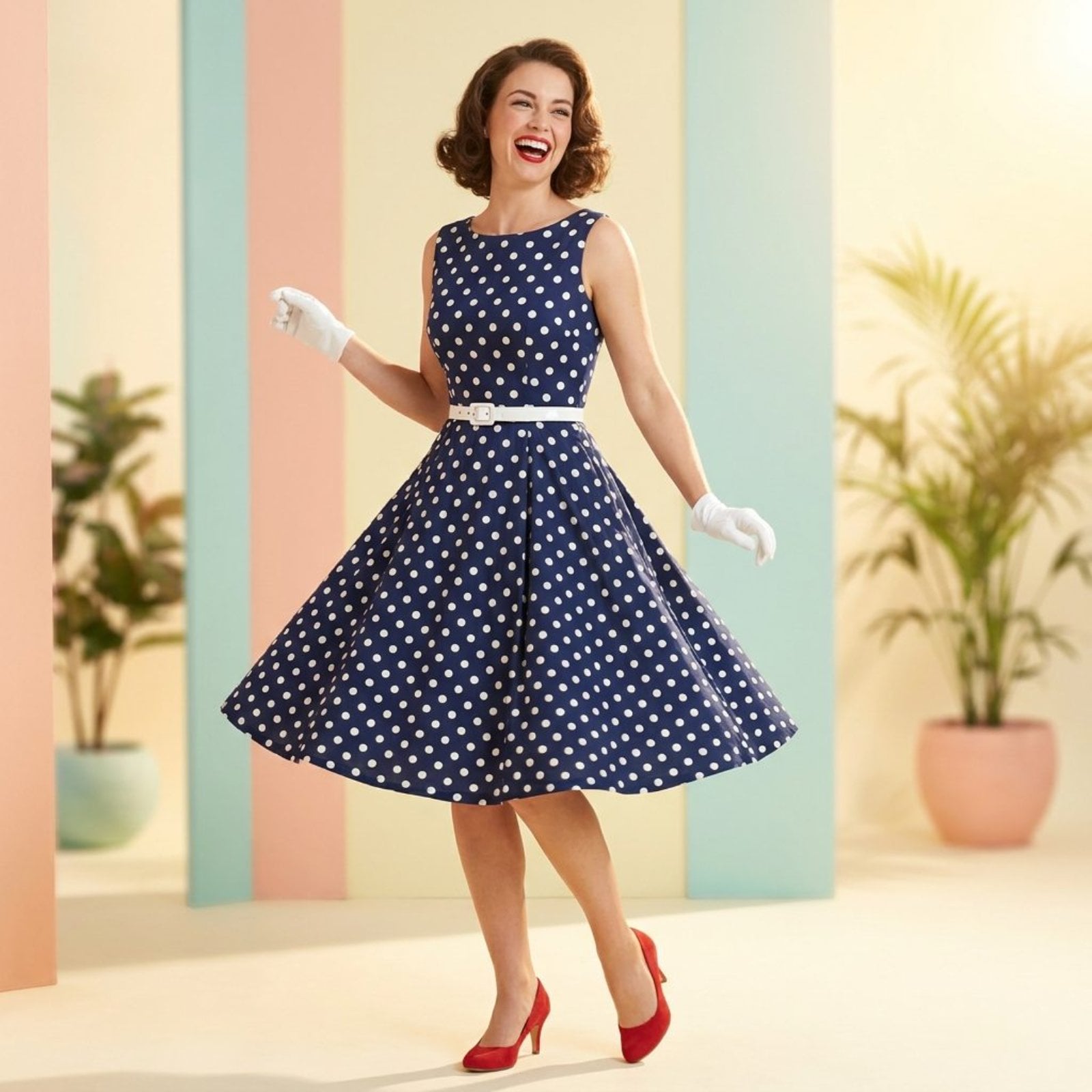
The 1957 Polka-Dot Dress Used One White Belt to Control a Busy Print
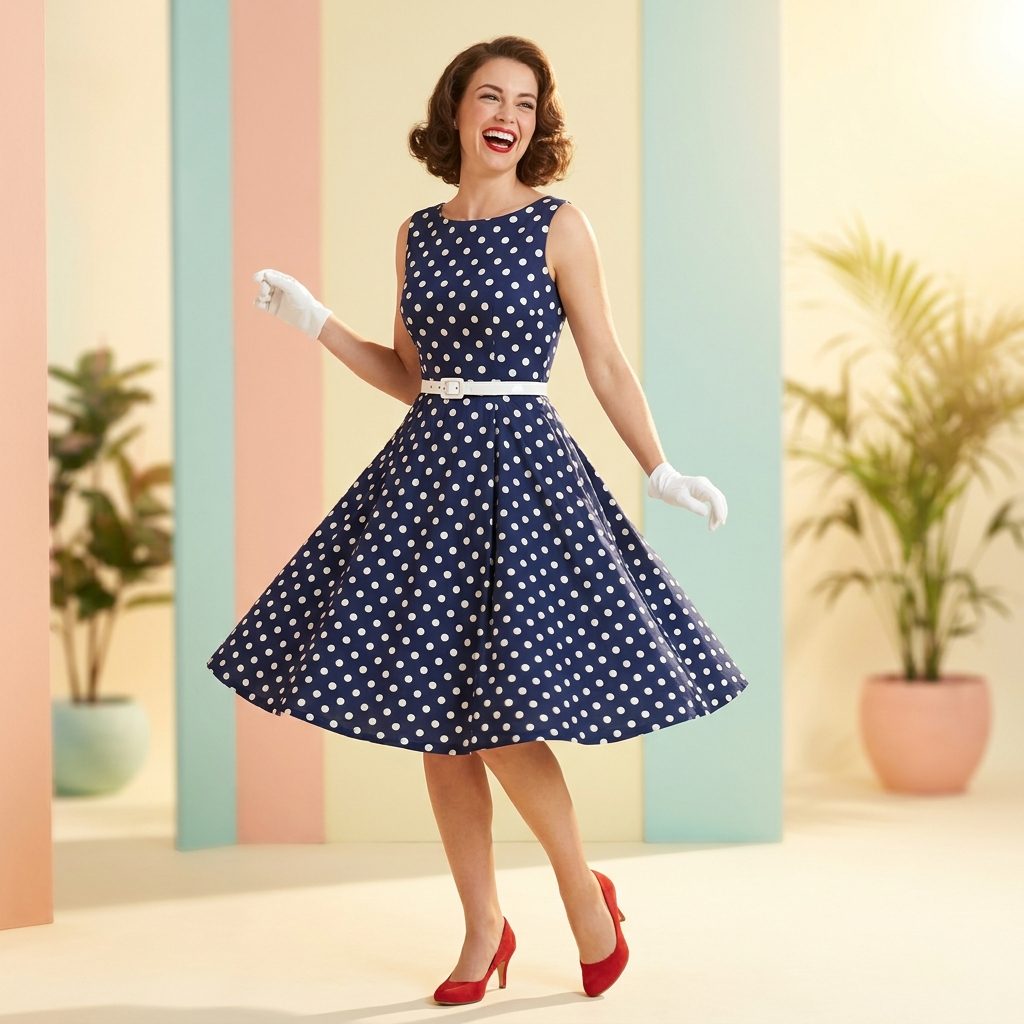
Dots can easily take over an entire dress. The narrow white belt gives this navy-and-white print one place where the pattern has to stop and behave.
The petticoat provides the familiar 1950s flare, but the belt is what keeps the print from becoming one continuous field from shoulder to hem. One slim line cuts through all that movement and gives the silhouette a center.
The 1956 Full Petticoat Did Nothing to the Waist — and Changed Everything Around It
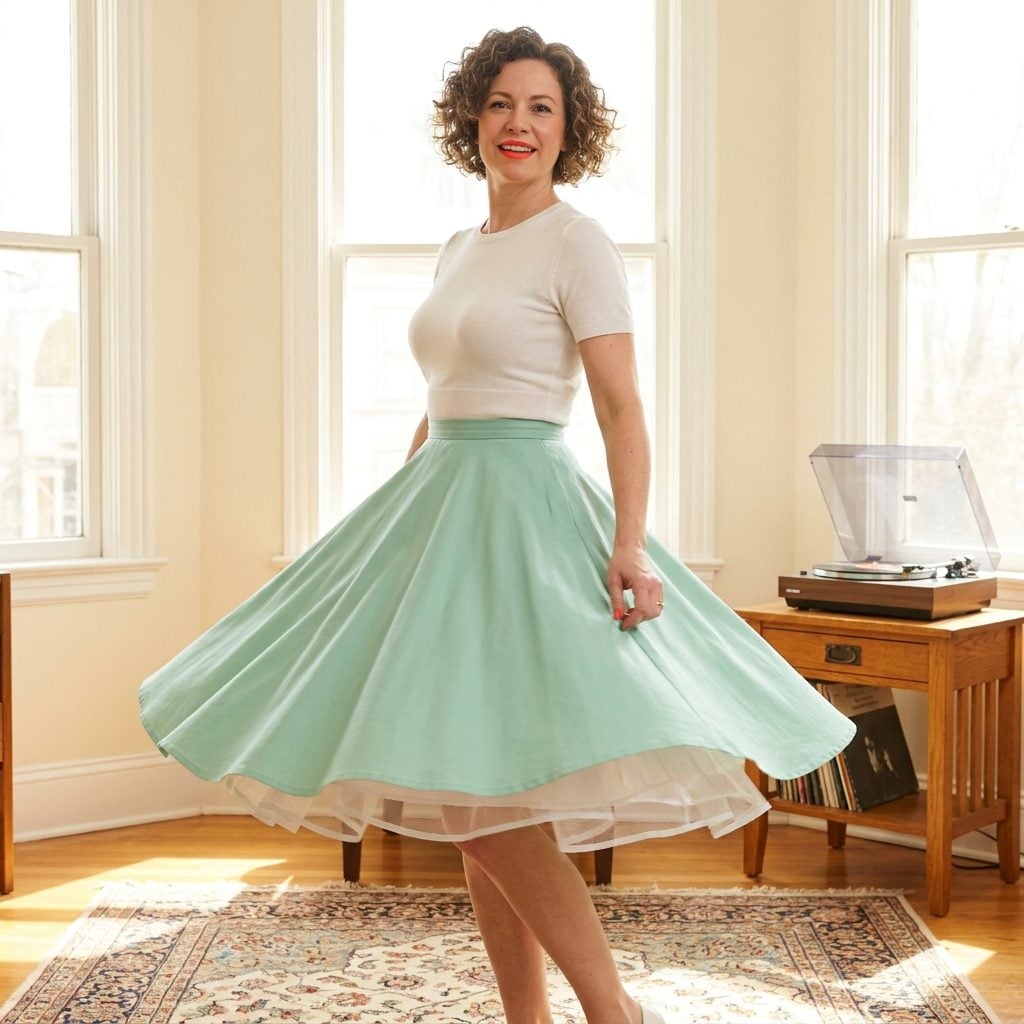
The petticoat never touches the waistline in any meaningful shaping sense. Its job is to push the skirt away from the legs.
Stiff net gives the mint circle skirt a bell-shaped profile while the fitted knit stays close above it. Suddenly an ordinary waistband is sitting next to several feet of airborne fabric. The waist did absolutely nothing. Its neighbors became dramatic.
The 1955 Sweater-and-Circle-Skirt Combination Made Movement Part of the Illusion
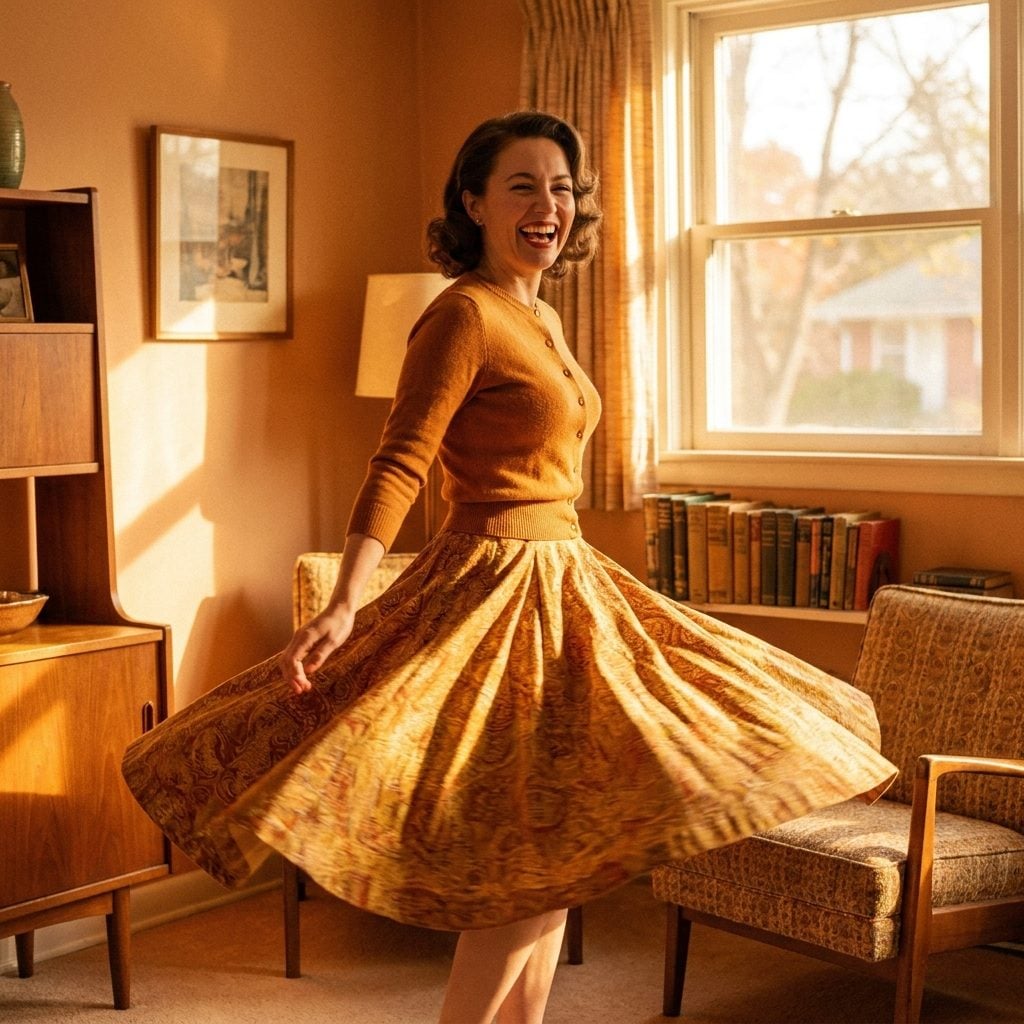
The difference between this and the petticoat trick is movement. A true circle skirt is cut with enormous sweep, so tartan fabric travels when the wearer does instead of simply standing away from the body.
A slim cashmere sweater gives all that plaid a stable upper half. Add a narrow belt and the outfit has one quiet center between a close knit and a skirt capable of clearing its own dance floor.
The 1957 V-Neck Dress Sent Every Upper Line Toward the Belt
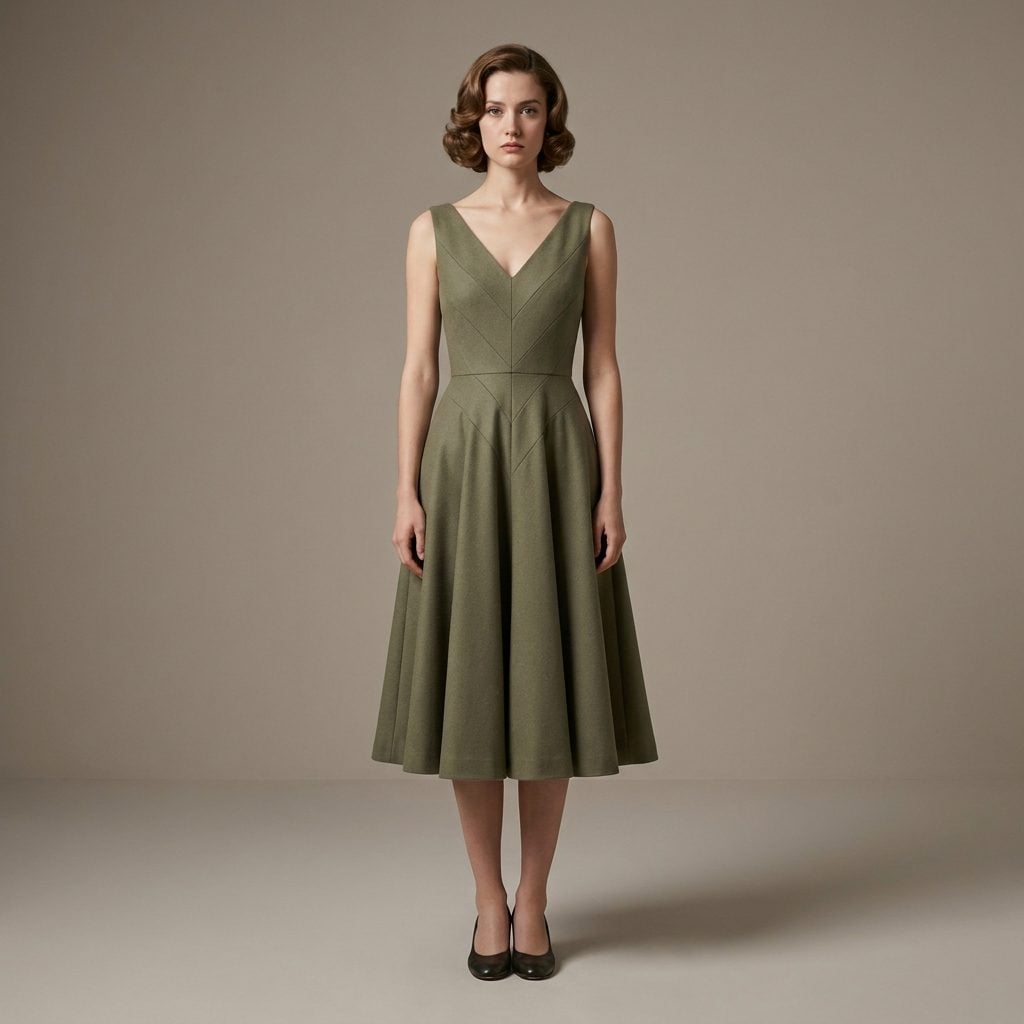
The neckline does the directing here. Its V travels downward toward the fitted bodice and belt, giving the upper half a clear visual destination before the skirt moves outward again.
Wine red keeps the effect grown-up rather than sugary. The full skirt is familiar territory by now; the more interesting part is how decisively the neckline organizes everything above it.
The V still pulls its weight: when we asked readers which neckline they would buy, half picked a V-neck, ahead of crew and scoop.
The 1957 Emerald Cocktail Dress Made the Hourglass a Suggestion, Not a Demand
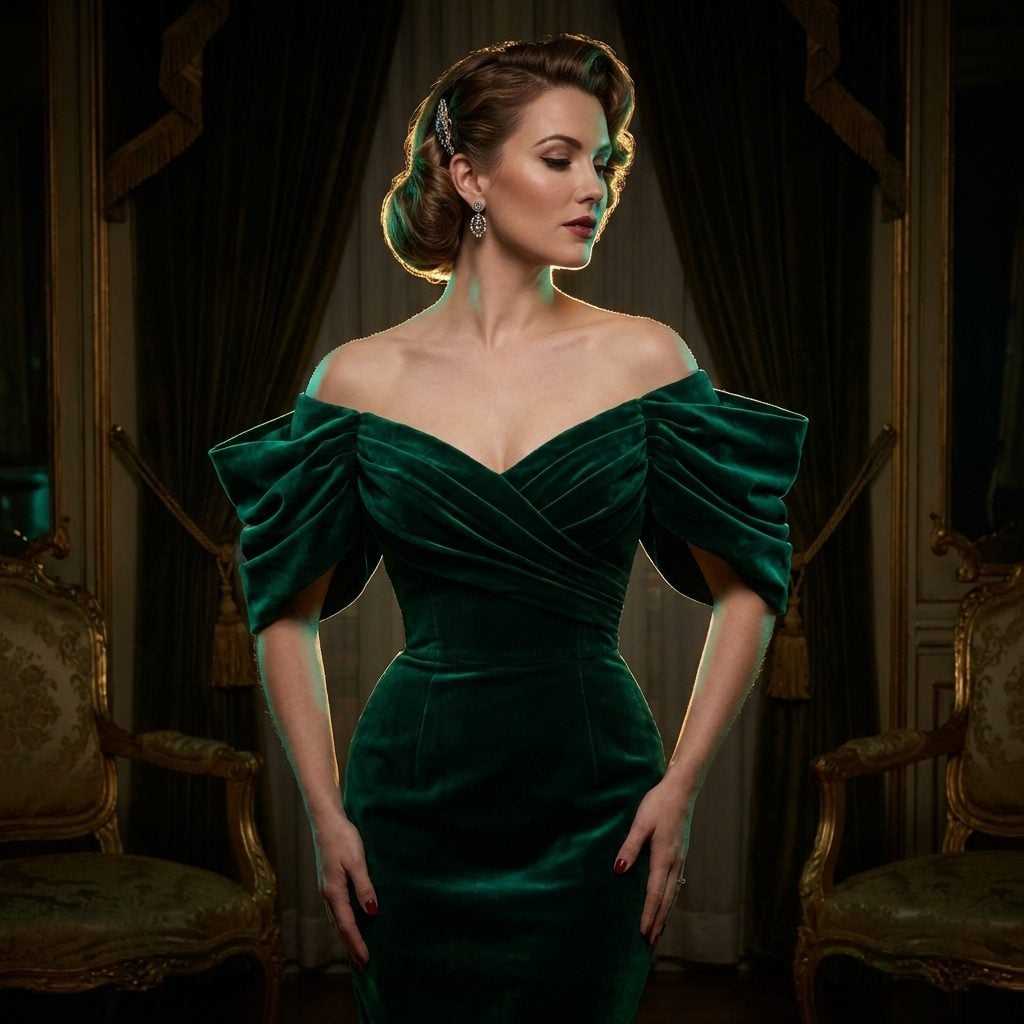
The final look doesn’t rely on the tightest belt, the biggest petticoat, or the stiffest foundation garment. Soft draping broadens the shoulders, the skirt supplies movement below, and the fitted center sits quietly between them.
Emerald fabric catches ballroom light at the shoulders and hem while the waist seam practically retreats into shadow. That is a fitting place to leave the decade. The most useful 1950s lesson was never that every woman needed a smaller waist. It was that clothes could suggest an hourglass through cut, color, scale, structure, and a remarkably good understanding of where the eye would go next.