❤️ Would you like to save this?
Your mother had one hanging in her closet. So did your aunt, your teacher, and the woman next door who always looked put together. In a single decade, the 1960s gave women dresses that ran from prim to downright rebellious.
These 32 silhouettes, fabrics, prints, and details defined the era, whether they appeared at the office, a garden party, a school dance, or around the house on an ordinary Tuesday. Some disappeared with the decade. Others keep circling back as though they never learned to leave.
FYI, thanks to AI imagery software, we’re able to create very specific fashion and hairstyle examples to illustrate the points being made. In some cases, imagery is exaggerated to hammer home the point. Also, assume links that take you off the site are affiliate links such as links to Amazon. this means we may earn a commission if you buy something.
32. The Shift Dress
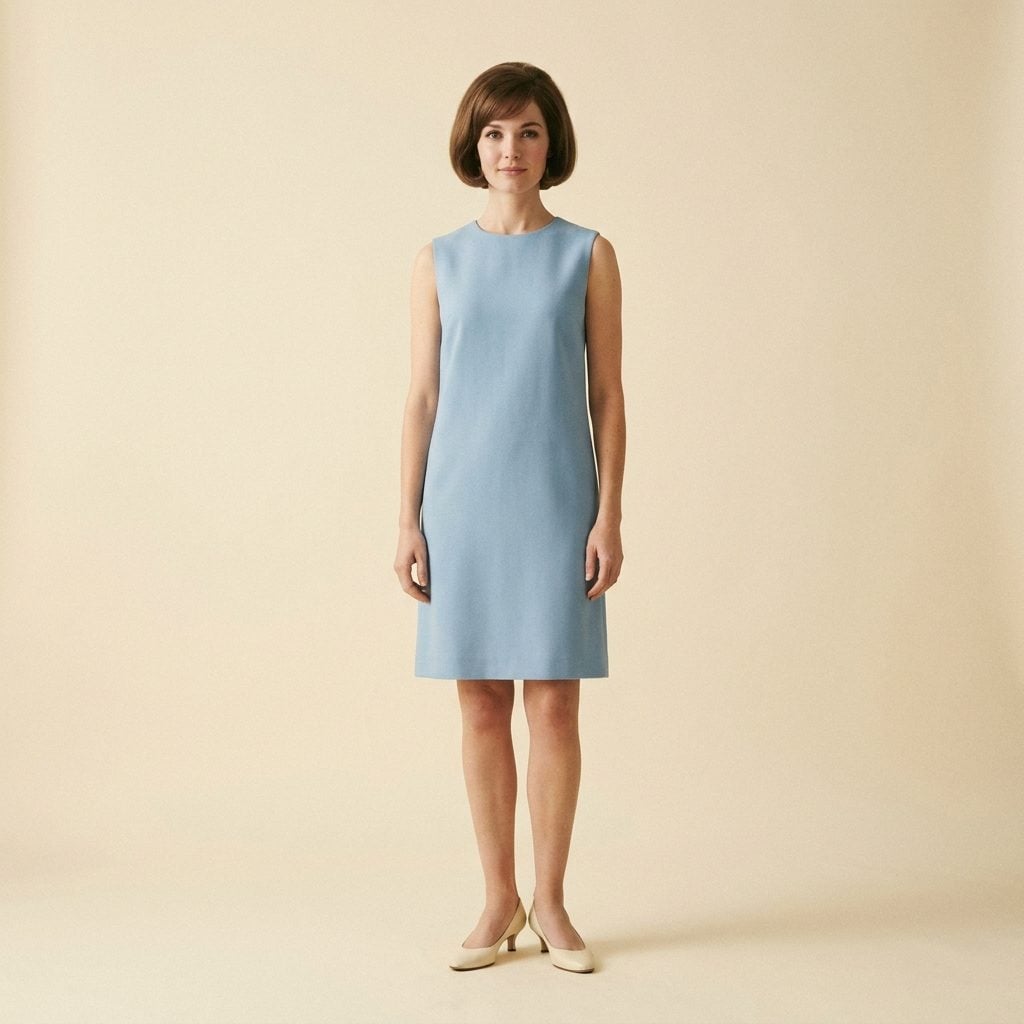
The shift did the least and received some of the decade’s biggest attention. Its relatively straight line hung from the shoulders without a strongly defined waist, allowing color, print, and hem length to take over the design.
That simplicity made the shift easy to dress up or down. A low block heel and one substantial accessory are enough, whether that means a short pearl strand or a ring with enough presence to stand on its own. Additional detail can compete with a dress whose appeal comes from restraint.
31. The A-Line Dress
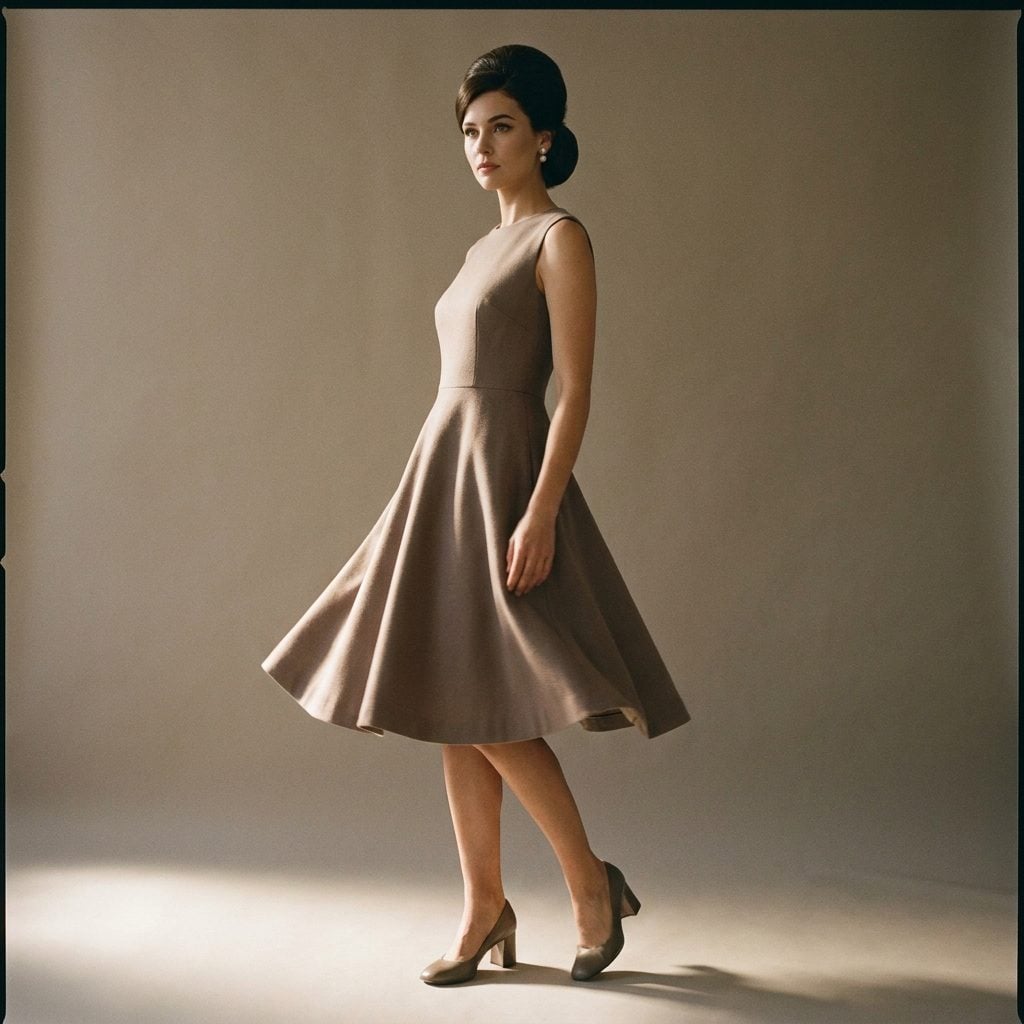
The A-line takes its name from its shape: narrower through the upper portion and gradually widening toward the hem. It does not require a sharply cinched waist or a full circle skirt. The controlled flare is what separates it from both a straight shift and a dramatic fit-and-flare dress.
A period floral in teal and rust gives the simple outline more character without obscuring it. Because the shape is already clear, shoes and accessories can remain understated.
The shape has lasting appeal: when our readers were asked which skirt they would buy, 72% chose the A-line over pencil and pleated styles.
30. The Empire-Waist Dress
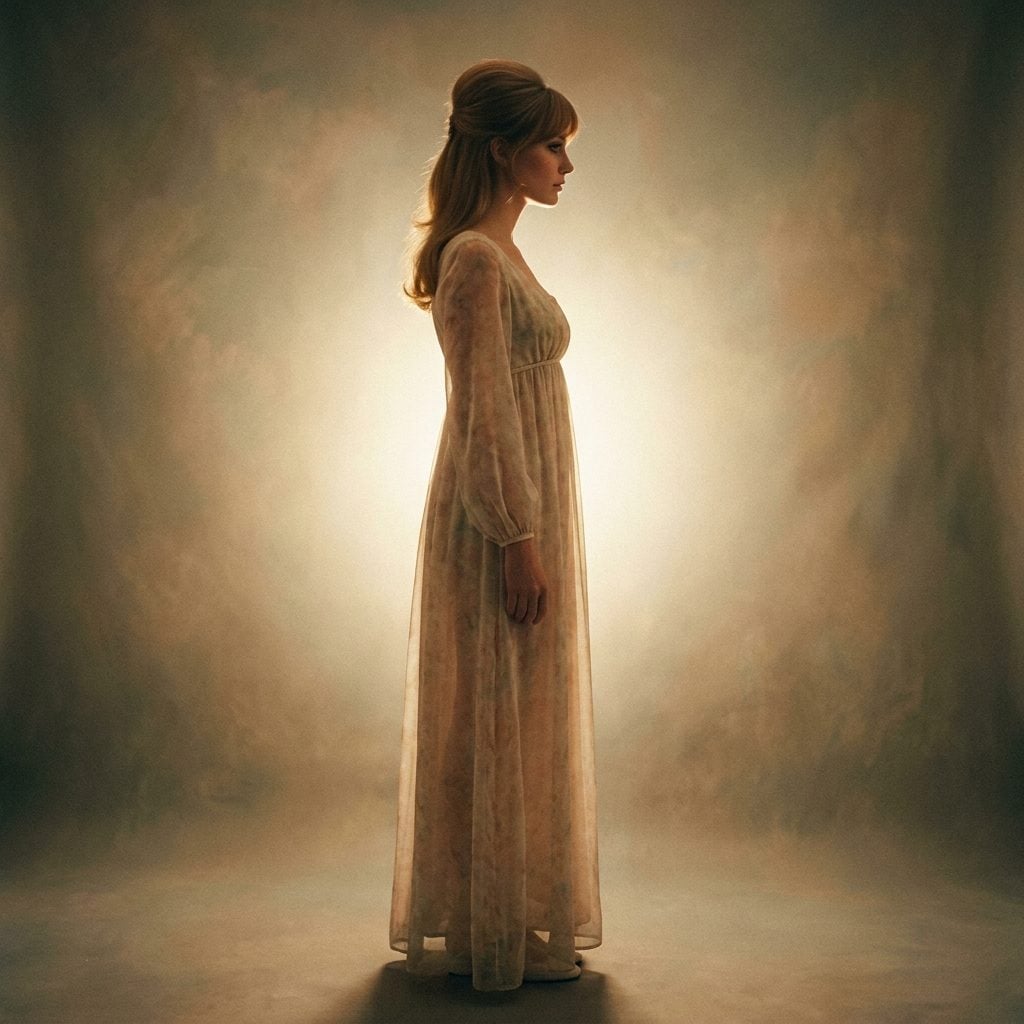
The empire line raises the waist seam to just beneath the bust, allowing the rest of the dress to fall from a much higher point than a conventional fitted waist. The 1960s revival drew on high-waisted silhouettes long associated with Regency dress.
Fabric determines whether the effect feels clean or bulky. Structured powder-blue crepe holds the line away from the body, while a very soft knit may collapse into folds. The construction matters more than whether the color is pale or bright.
29. The Shirtwaist Dress
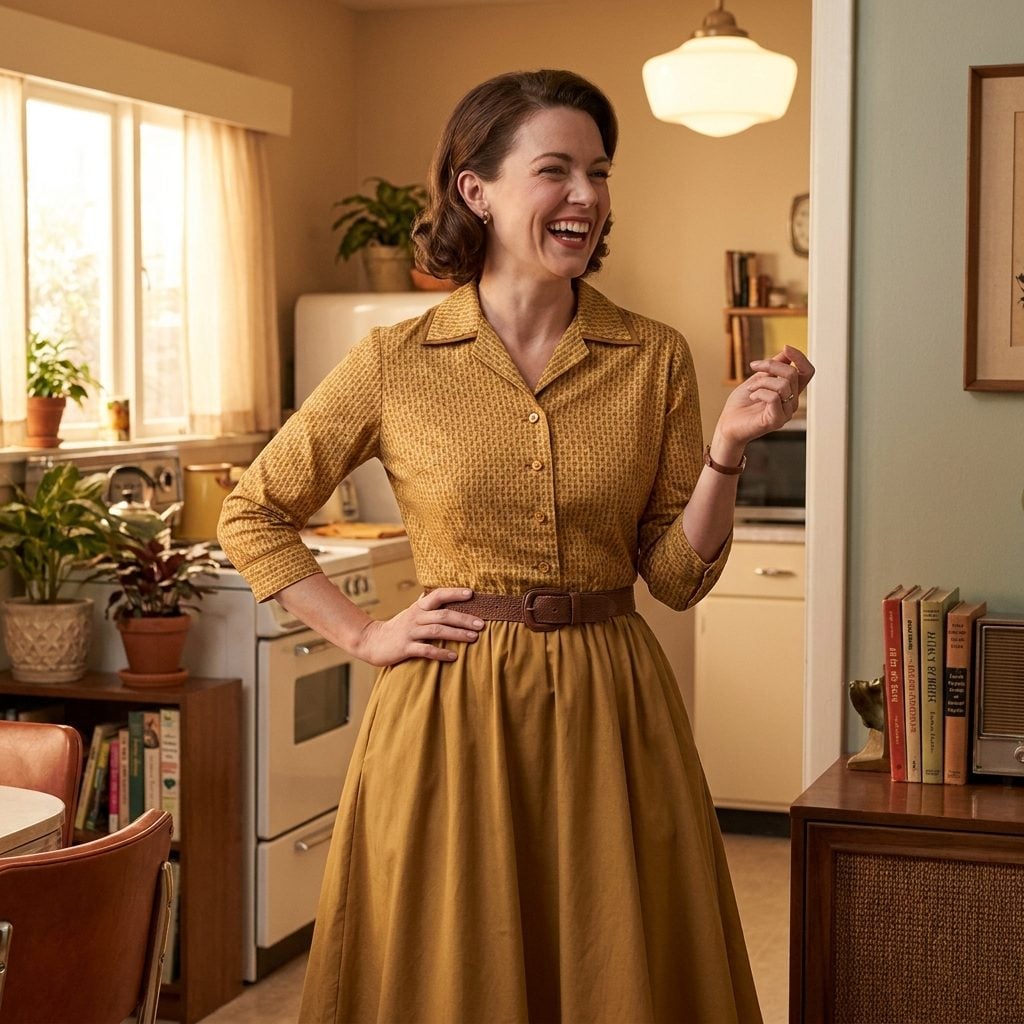
The shirtwaist combined familiar menswear details with the ease of a day dress: collar, button front, fitted or belted waist, and a skirt with enough room for movement. It could look crisp in the morning and remain practical through the rest of the day.
The button placket establishes a strong center line, while the belt gives the otherwise practical construction a clear waist. That combination explains why shirtwaist dresses appeared in so many fabrics, from cotton prints to more formal wool blends.
What Our Readers Say
- Dresses still win hearts: in our readers’ votes, outfit images featuring a dress got more hearts than the other images in the same articles.
- Today’s wardrobes lean the other way, though: when we asked dresses or separates, about two out of three ThreadCurve readers picked separates.
From ThreadCurve reader polls and votes.
28. The Sheath Dress
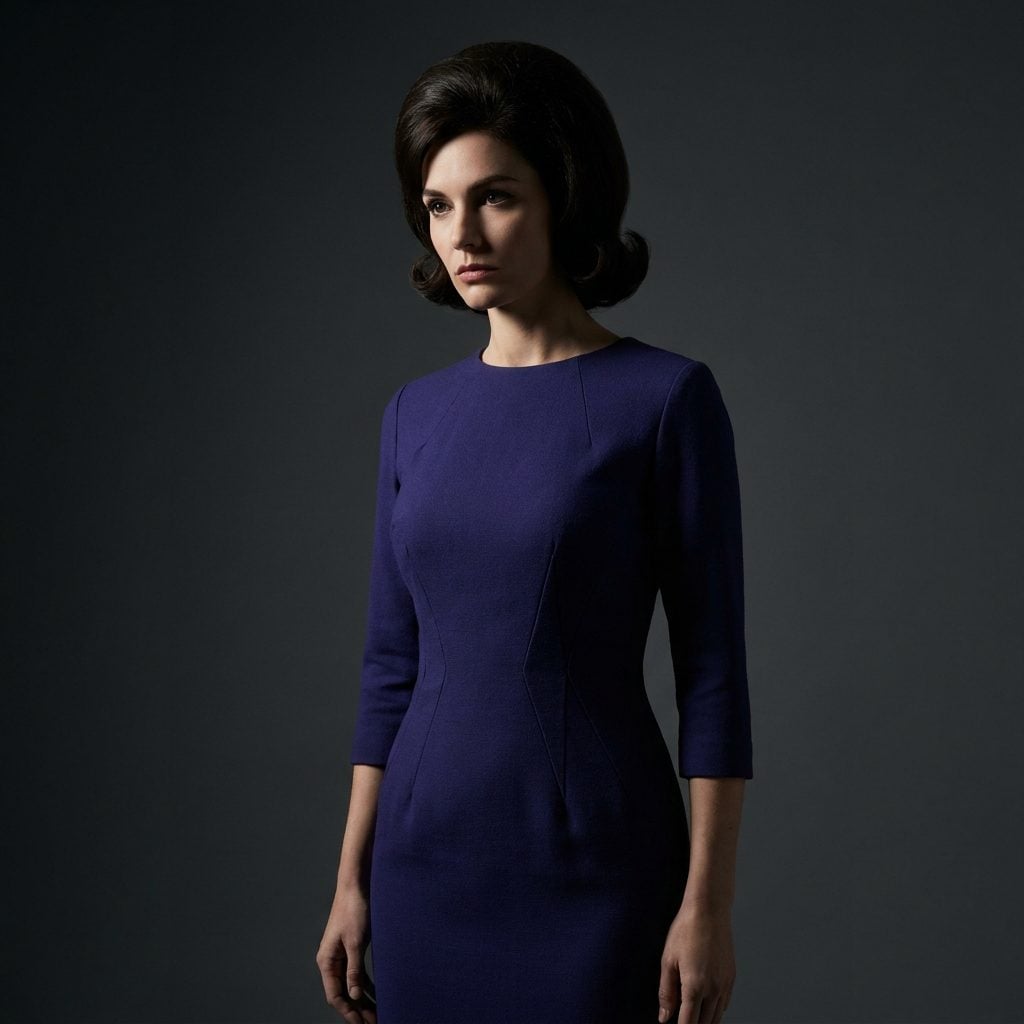
The sheath is the shift’s more closely fitted relative. Darts and shaped seams allow it to follow the torso while preserving a narrow, relatively straight line through the skirt.
Camel wool crepe gives this version a quiet businesslike finish without relying on trim or a busy pattern. The discipline comes from the fit: shoulder placement, waist shaping, and a hem that remains clean from one side to the other.
27. The Babydoll Dress
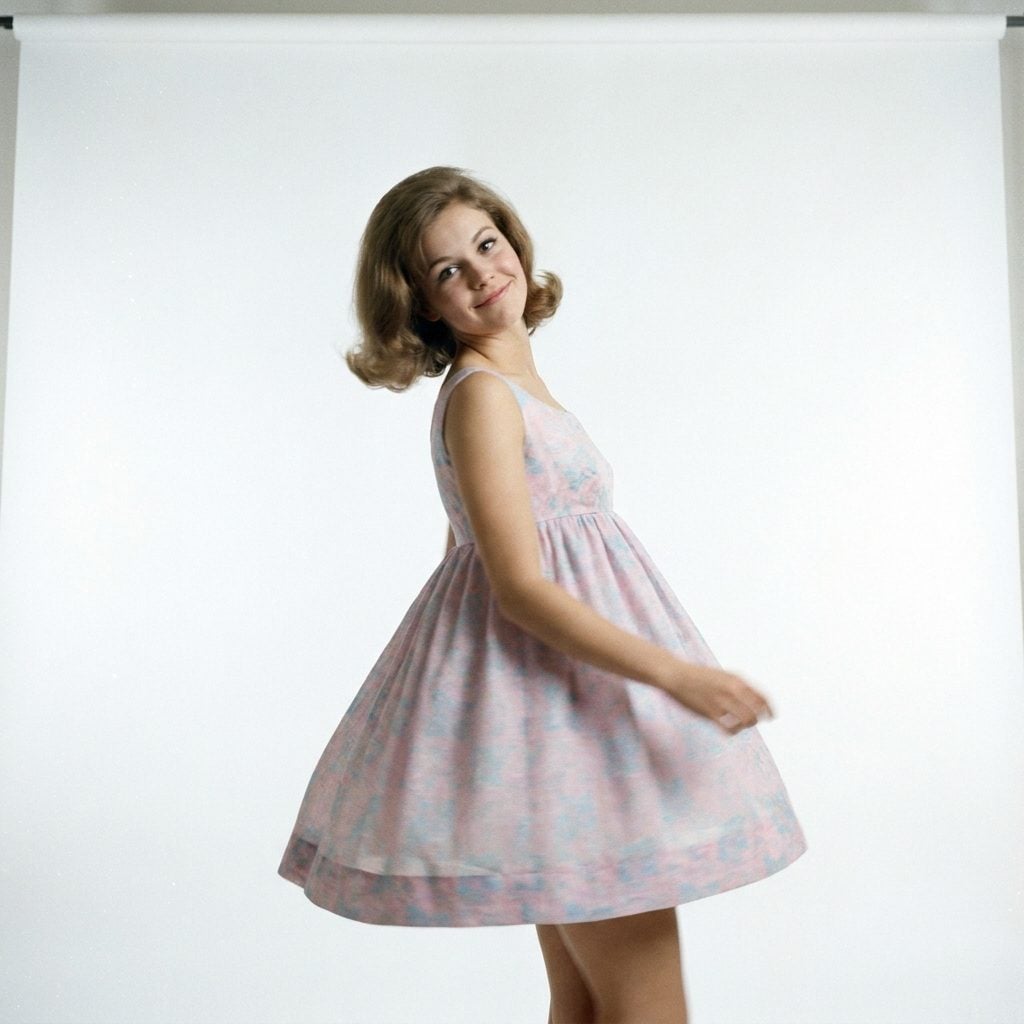
Short, high-waisted, and deliberately youthful, the babydoll flared from a seam beneath the bust and skimmed the body below. Its abbreviated length and loose lower half made it a natural fit for the younger mod market.
A coral polka-dot version worn with bare legs leans fully into the original 1960s spirit. Styled over slim trousers or paired with low boots, the same shape becomes a contemporary tunic-like layer. The appeal lies in the contrast between a compact upper section and unrestricted volume below.
26. The Mod Mini Dress
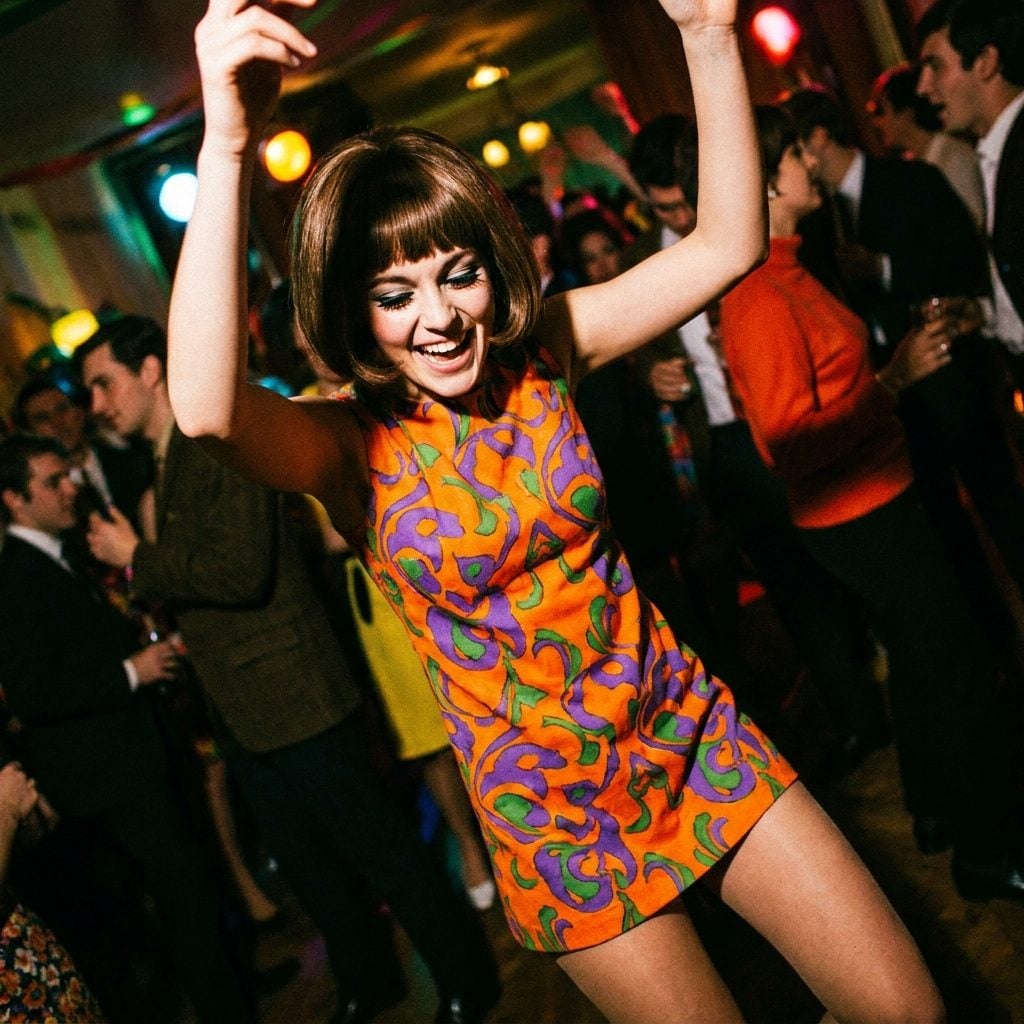
Mary Quant helped turn the rising hemline into one of the decade’s defining looks, although the miniskirt emerged through street fashion and the work of several designers rather than one single invention. The mod mini was short, graphic, and built for movement.
Orange-and-navy color blocking gives this version its force. Opaque tights and flat boots can shift the emphasis from bare leg to geometric design, allowing the high neckline and strong print to remain the main event.
25. The Trapeze Dress
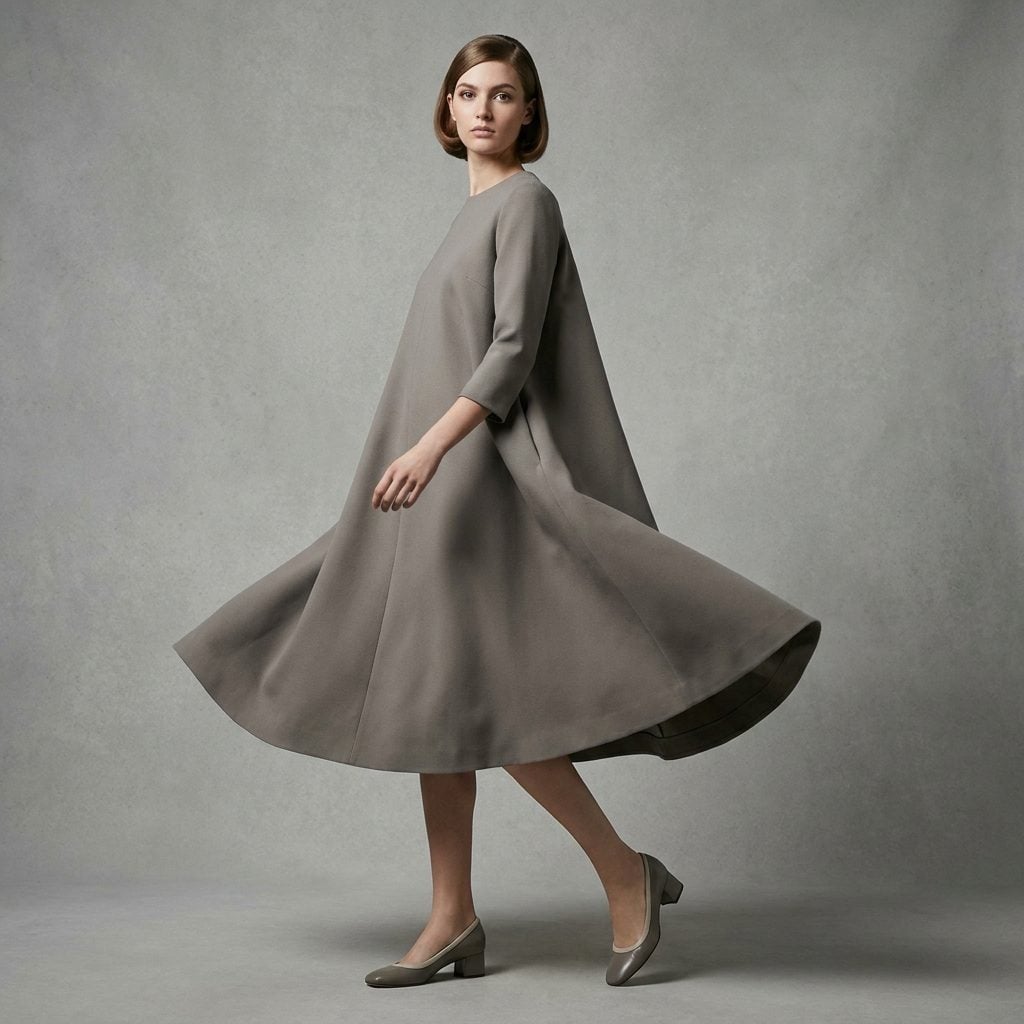
Yves Saint Laurent introduced his influential Trapeze line for Dior in 1958, helping establish a shape that would become central to early-1960s fashion. The silhouette begins narrowly at the shoulders and expands in a controlled triangle without defining the waist.
Dusty rose twill gives this version enough body to hold that architectural flare. Unlike the fuller tent dress later in the gallery, the trapeze depends on a relatively precise shoulder line and a measured outward sweep rather than unrestricted volume.
24. The Paisley-Print Dress
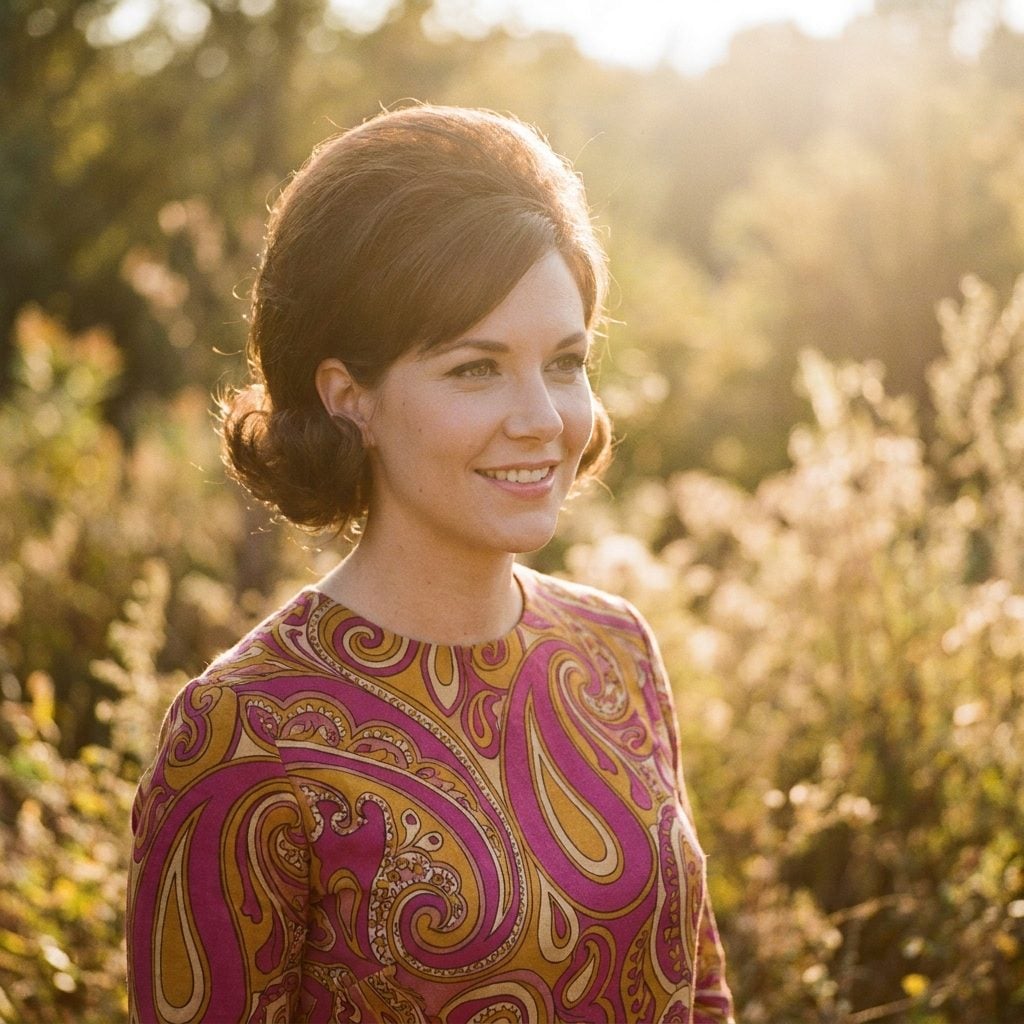
Paisley had traveled through Persian, Indian, Kashmiri, and European textiles for centuries before the late-1960s counterculture claimed it as part of the psychedelic wardrobe. The decade did not invent the motif, but it gave the curling teardrop a new association with saturated color and bohemian dress.
Magenta and gold turn this fitted-waist version into a fabric-led design. Accessories can remain spare because the repeated shapes already cover the surface with movement. One ring or a pair of simple earrings is enough.
23. The Op-Art Geometric Dress
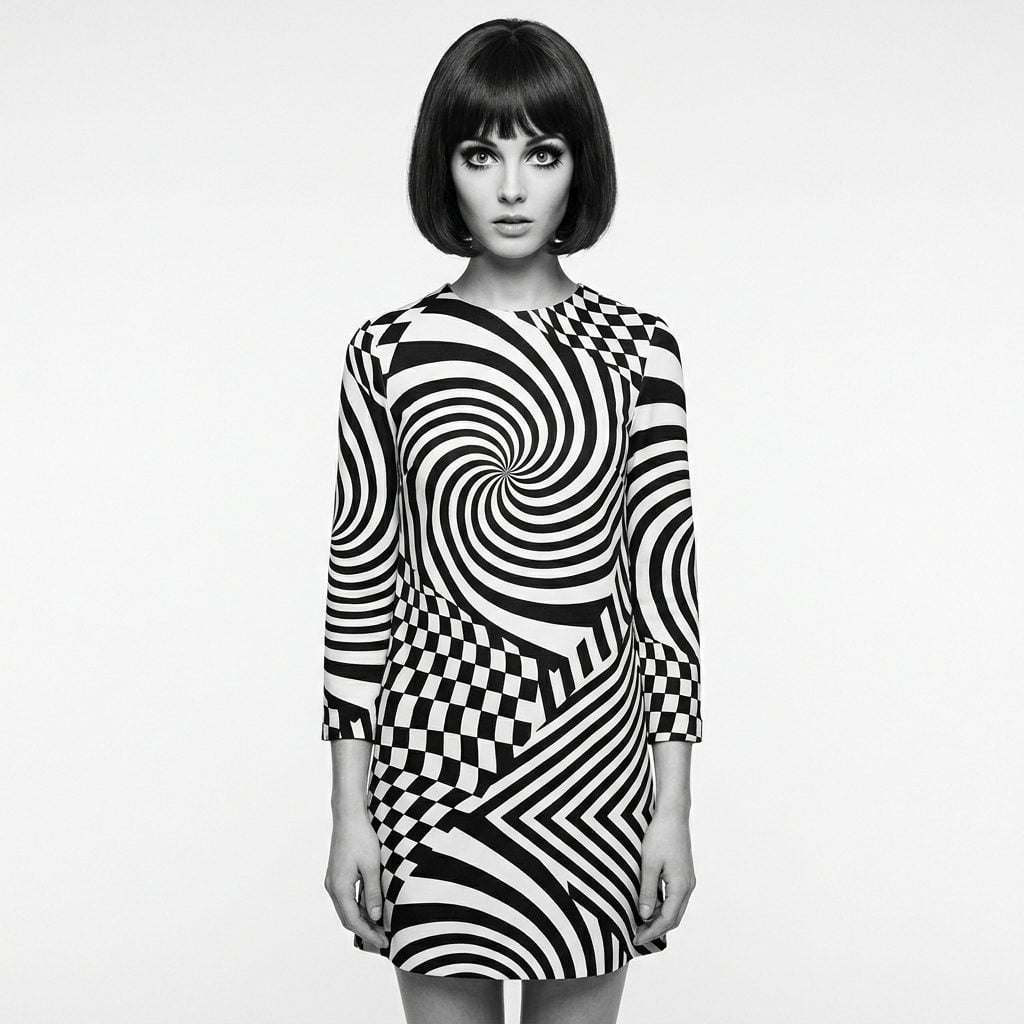
The optical experiments of artists including Bridget Riley moved quickly from galleries into fashion. High-contrast black-and-white waves appeared to shift as the wearer moved, making the dress itself seem animated.
A straight shift provides the best surface for that uninterrupted pattern. Black kitten heels continue the monochrome palette without introducing another shape or color that might compete with the illusion.
22. The Wrap Dress With a Tie Waist
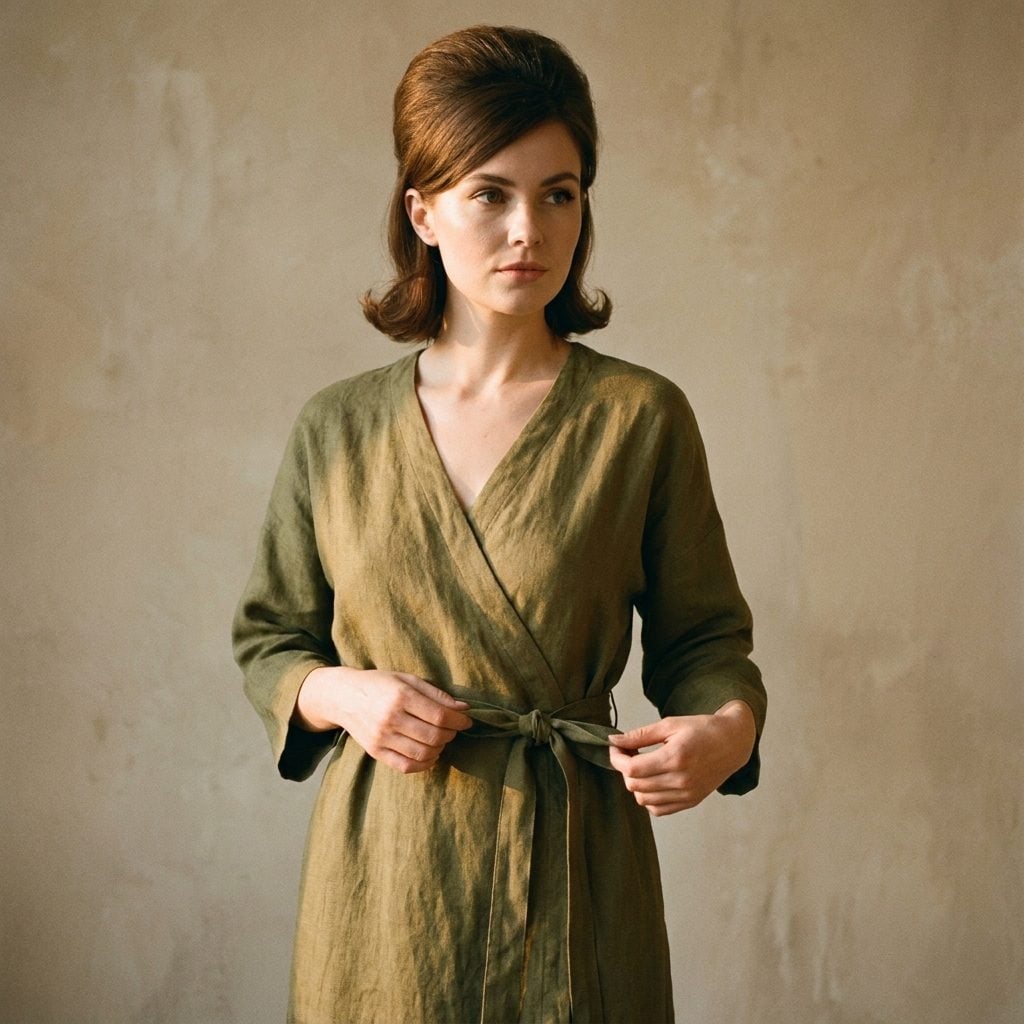
The tie waist allows the wearer to adjust the fit without relying on a rigid row of buttons or a fixed waistband. A crossover neckline establishes a diagonal line through the upper body, while the skirt falls from the tied center.
Wrap and crossover day dresses existed before Diane von Furstenberg introduced her famous jersey version in 1974. Her design made the style internationally recognizable, but it grew from a much longer tradition of adjustable sportswear and house dresses.
21. The Structured Coatdress
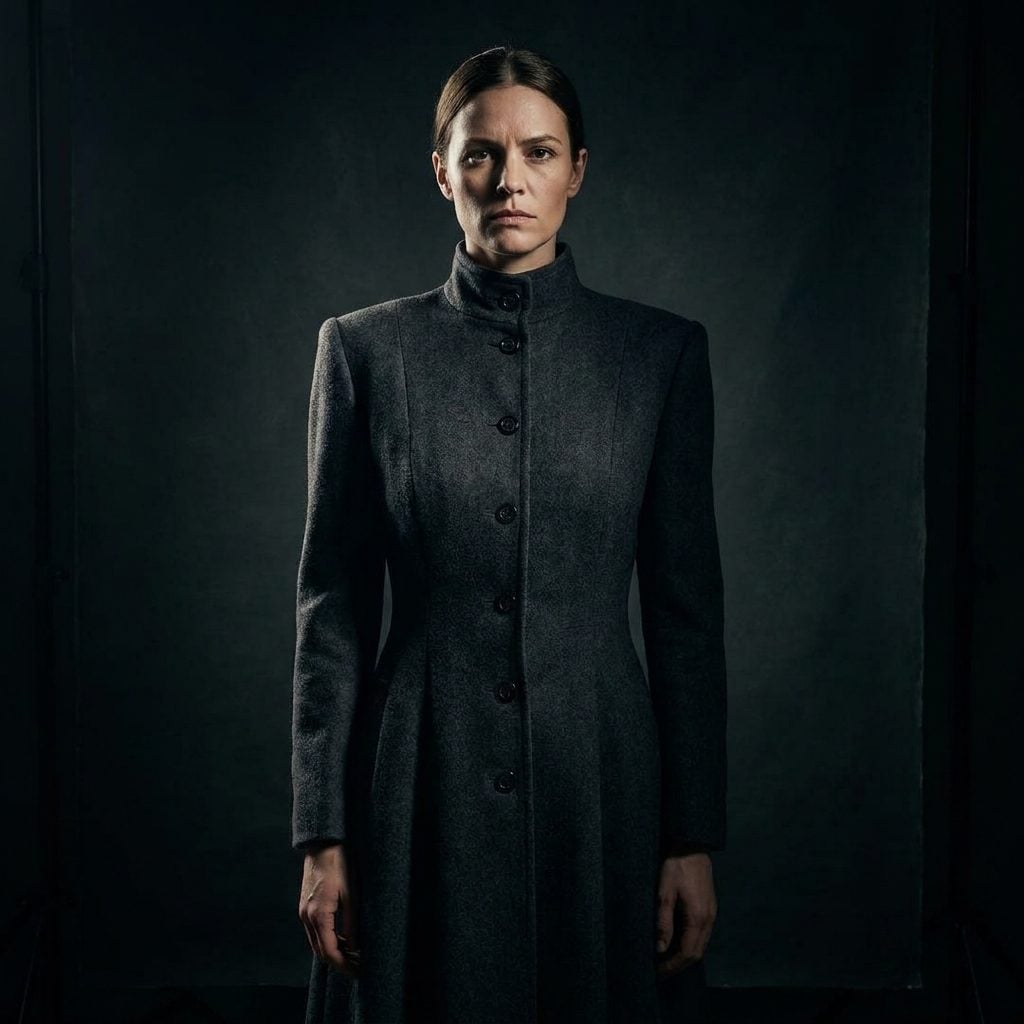
Half coat and half dress, the coatdress borrowed its authority from outerwear. A full button placket, defined shoulders, and substantial fabric allowed it to hold its form through a long day.
A camel wool coatdress can be worn over tights and low boots in cool weather or with pumps when the temperature rises. The appeal is less about ornament than the way the garment arrives already structured.
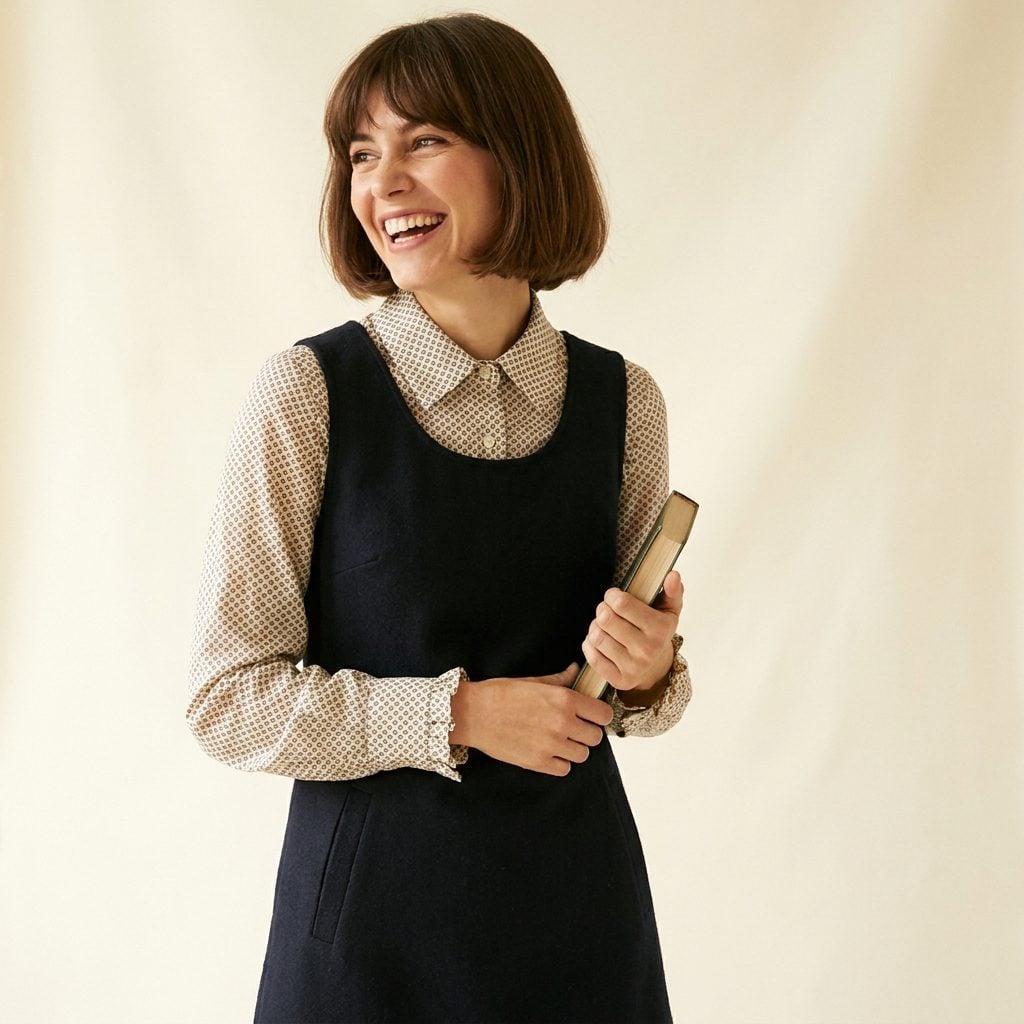
20. The Pinafore Jumper Over a Blouse
❤️ Would you like to save this?
A pinafore is designed to be layered, making the blouse beneath it part of the outfit rather than an afterthought. White at the collar and cuffs gives the navy corduroy a crisp break, while the A-line skirt keeps the jumper easy to move in.
Changing the underlayer changes the entire character. A turtleneck works in winter, short-sleeved cotton lightens it for spring, and a patterned blouse can introduce more color. Pushing the sleeves above the elbows creates a looser finish and keeps the outfit from feeling overly uniform.
19. The Fitted Polka-Dot Dress With a Full Skirt
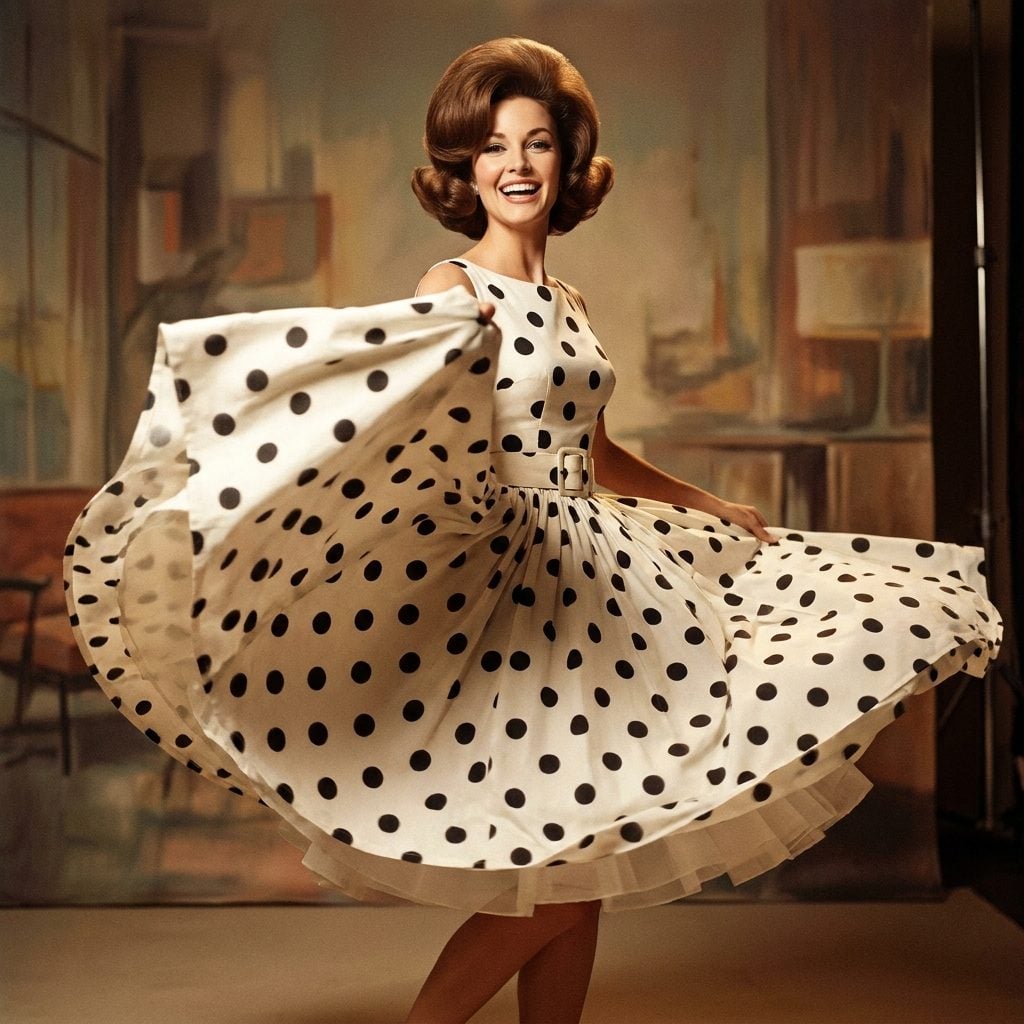
Cinch, then explode. A fitted bodice meets a sharply defined waist before opening into a circle skirt with enough volume to move independently from the upper half.
The silhouette has strong roots in 1950s dressing but remained visible into the early 1960s. Polka dots keep the broad skirt playful, while a petticoat can restore the full period shape. Without one, the fabric falls into a softer and more wearable swing.
18. The Gingham-Print Sundress
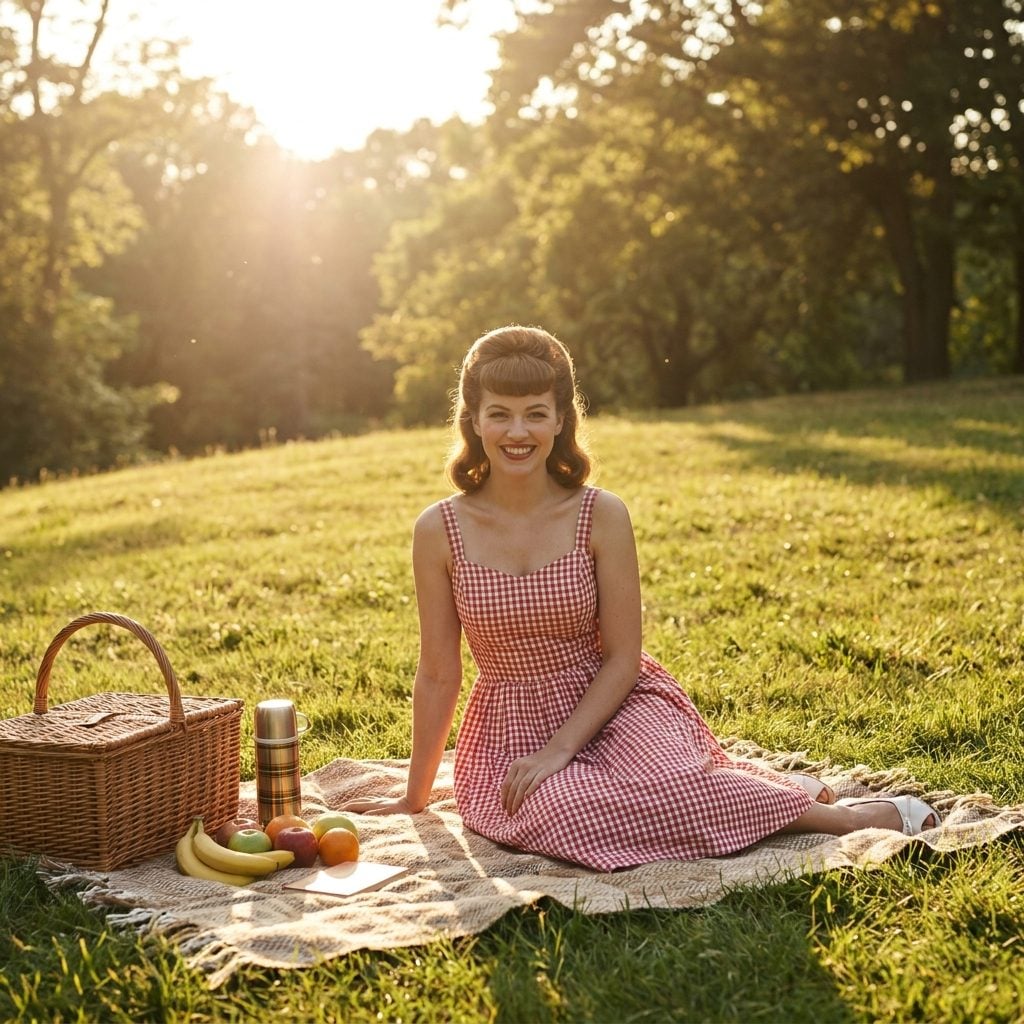
Red-and-white gingham gives this sundress its immediate warm-weather identity. The small, regular checks provide surface interest without obscuring the fitted bodice and gathered skirt beneath them.
Thin straps open the shoulders, while the defined waist gives the full skirt a clear starting point. A gingham sundress needs little more than flat sandals and a straw bag.
17. The Peter Pan Collar Dress
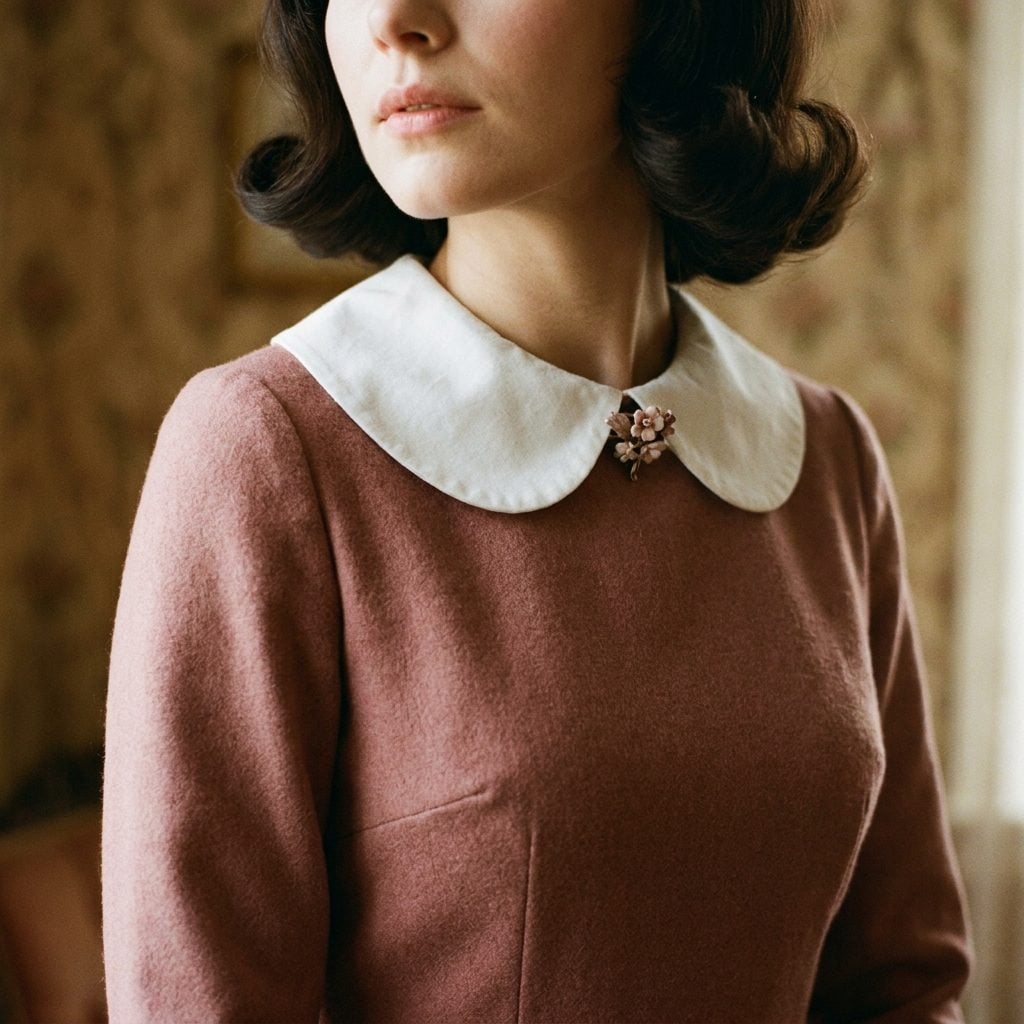
The collar gives this dress its identity. Rounded white edges sit flat against a dusty rose bodice, introducing a crisp contrast directly beneath the face.
A fitted waist and modest A-line skirt keep the remainder of the design controlled. Because the collar already acts like a built-in accessory, necklaces are unnecessary. Low heels work in warm weather, while opaque tights and flats move the same dress into fall.
16. The Flowing Boho Maxi Dress
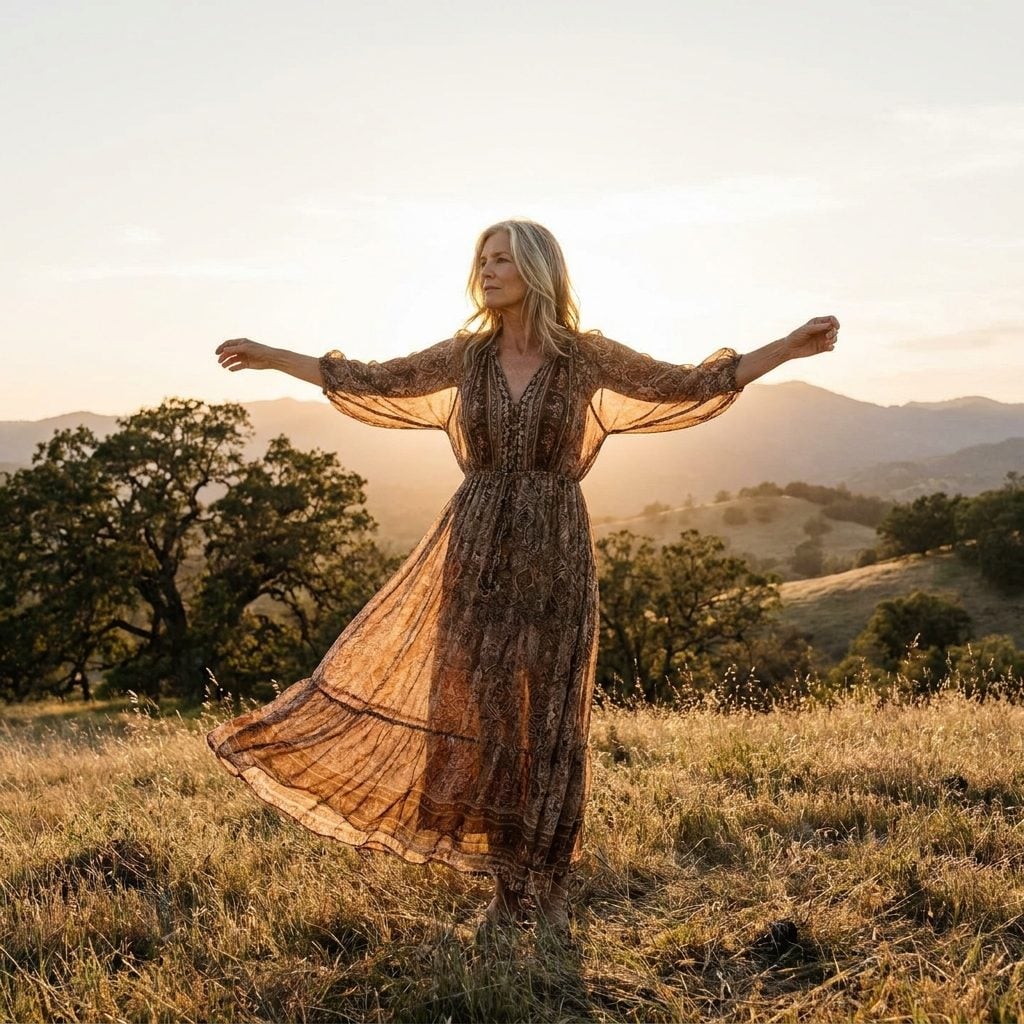
By the late 1960s, hemlines were moving in more than one direction. Alongside the mini came the bohemian maxi, a floor-length alternative built around movement, print, and a deliberately relaxed outline.
A high gathered waist gives the dress a point of definition before the fabric falls toward the floor. Bell sleeves add volume at the wrists rather than the shoulders, while flat leather sandals and layered brass jewelry reinforce the countercultural influence.
When ThreadCurve readers were asked which dress they would buy, about a quarter chose boho, though classic styles led with 45%.
15. The Bold Mod Go-Go Dress
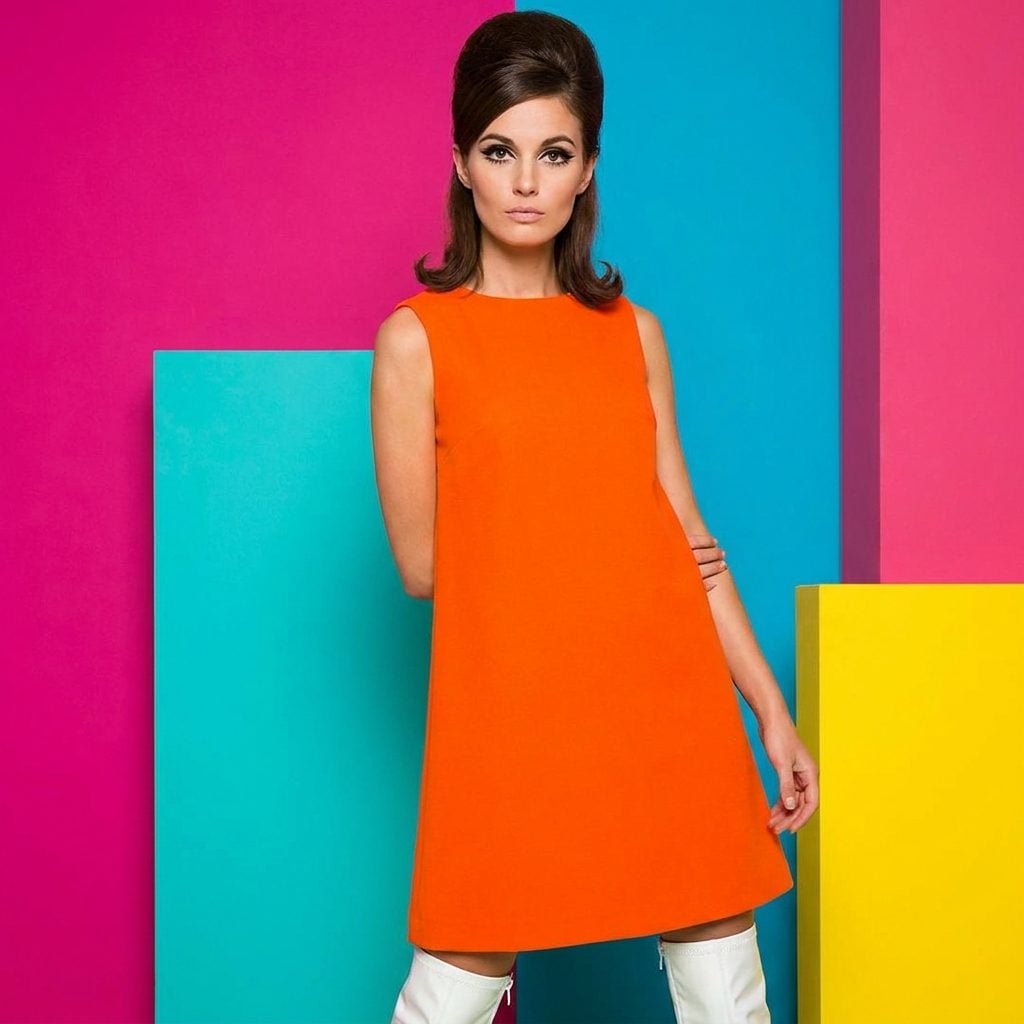
The go-go dress took the short mod silhouette into the nightclub. Bright synthetic color, a clean neckline, and a simple A-line shape allowed the outfit to move easily while remaining visible under changing lights.
White ankle boots provide the defining period reference. Unlike the earlier graphic mini, this version depends less on print and more on one uninterrupted block of tangerine, paired with the futuristic sheen and accessories associated with mid-1960s youth culture.
14. The Beaded Evening Sheath
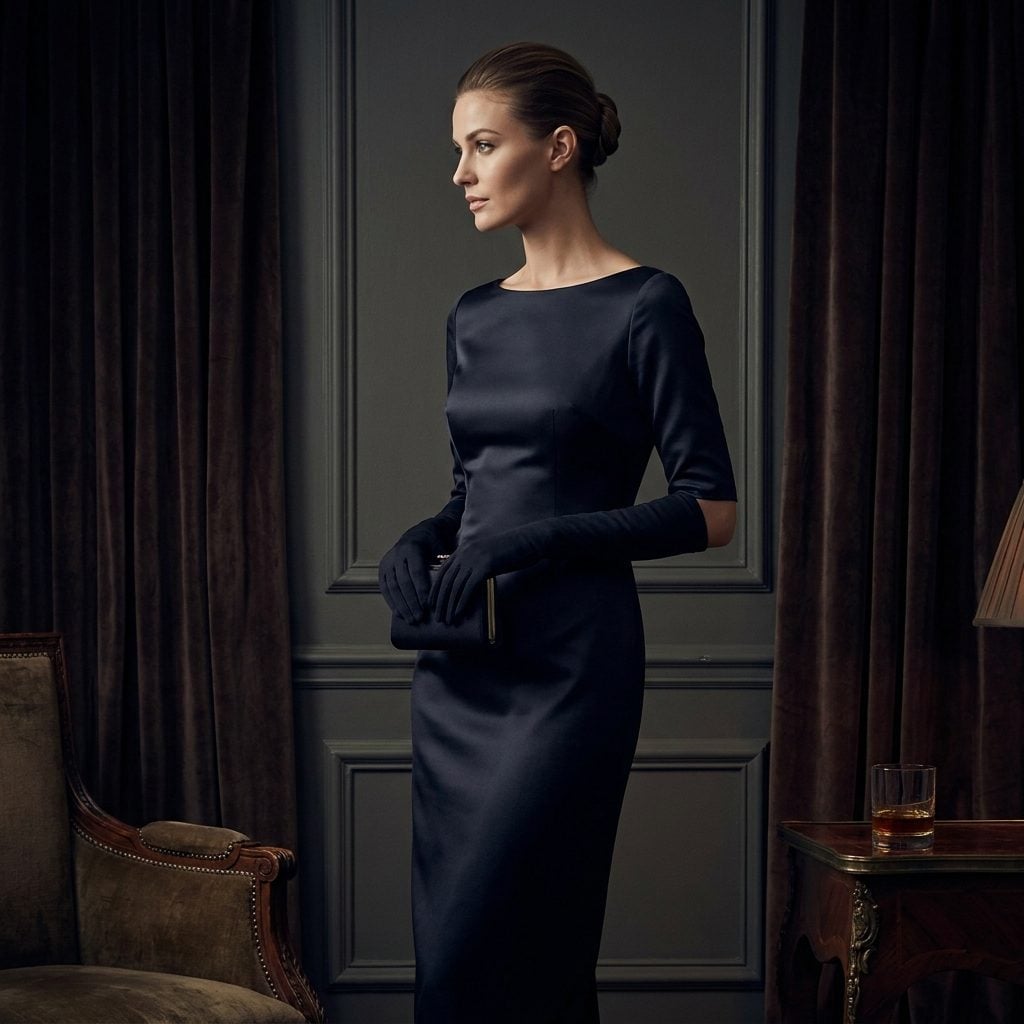
The evening sheath takes the fitted construction of the daytime version and changes its materials. A charcoal column remains narrow and controlled, but subtle beading at the neckline catches artificial light and moves the dress into cocktail territory.
Darted seams provide shape without adding a full skirt or a belt. One pair of statement earrings and a simple heel are enough because the embellishment already gives the eye a destination.
13. The Flowing Chiffon Party Dress
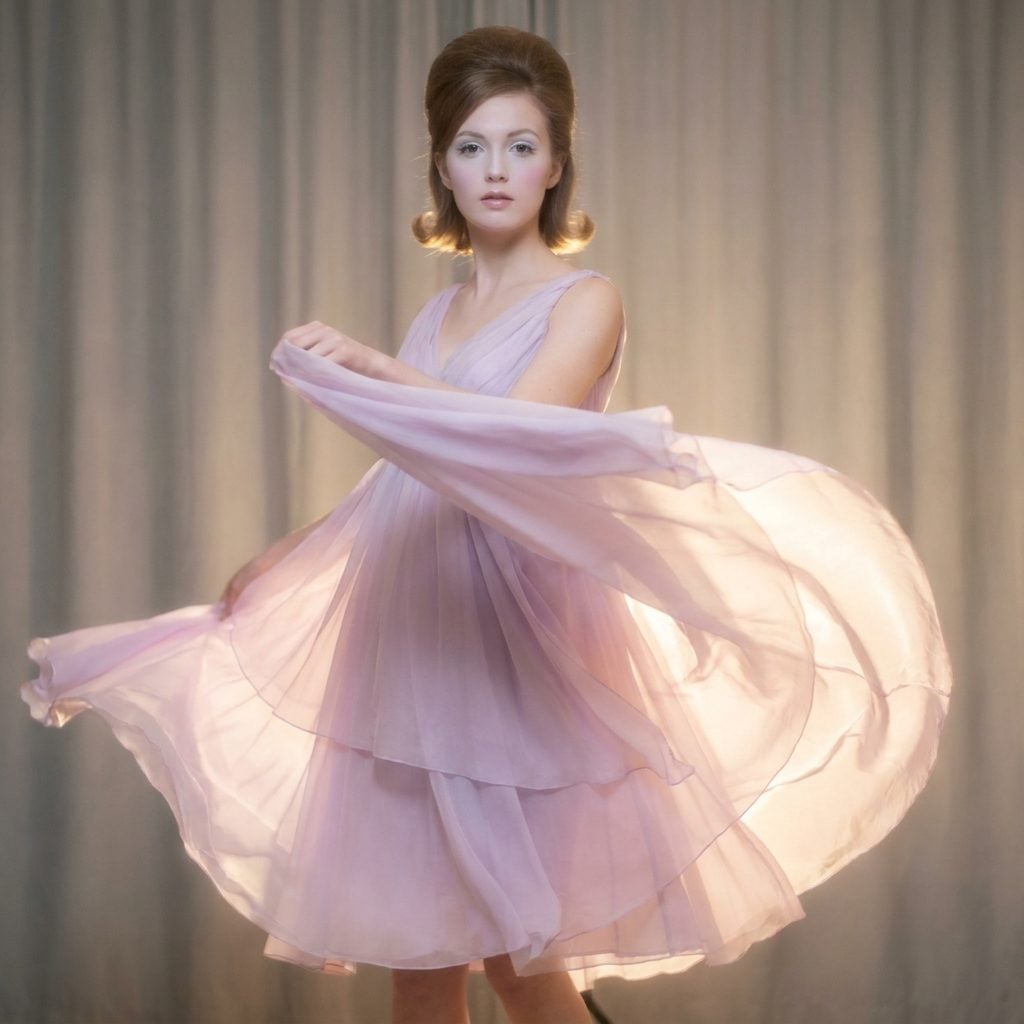
Layers of pale lilac chiffon respond to the smallest movement, giving the skirt a softness that structured wool or cotton cannot reproduce. The fabric supplies most of the drama.
A fitted bodice anchors those floating layers, while the draped neckline opens the upper part of the dress without introducing hard trim. Low heels and a small clutch preserve the lightness of the overall design.
12. The Ribbed Sweater Dress
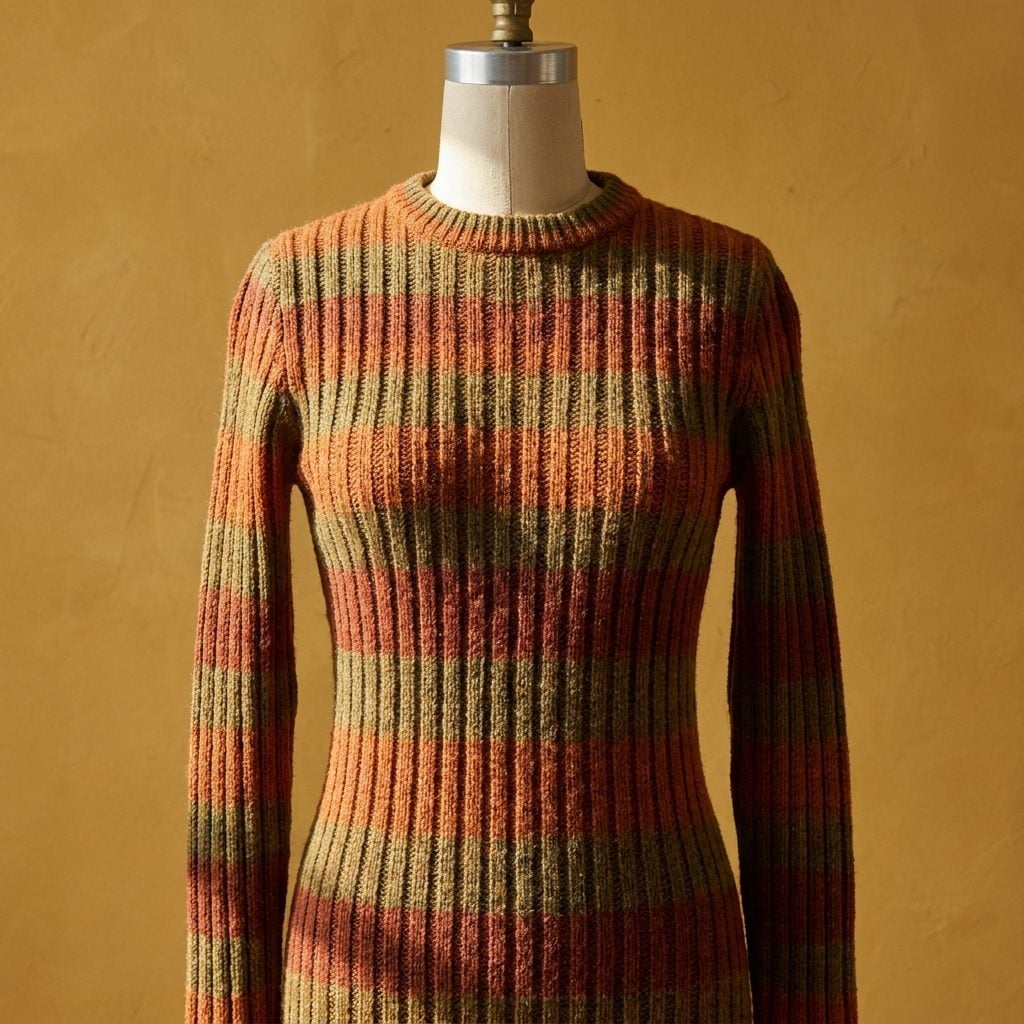
The ribbed knit creates vertical channels from shoulder to hem, giving the body-skimming dress a surface pattern without adding a print. The 1960s embraced the sweater dress as cold-weather clothing that could remain fitted and streamlined.
Camel keeps this example quiet, but chocolate brown, charcoal, burgundy, or navy could produce the same effect. Low block-heel boots and one gold cuff are enough to complete the restrained palette.
11. The Pleated Fit-and-Flare Dress
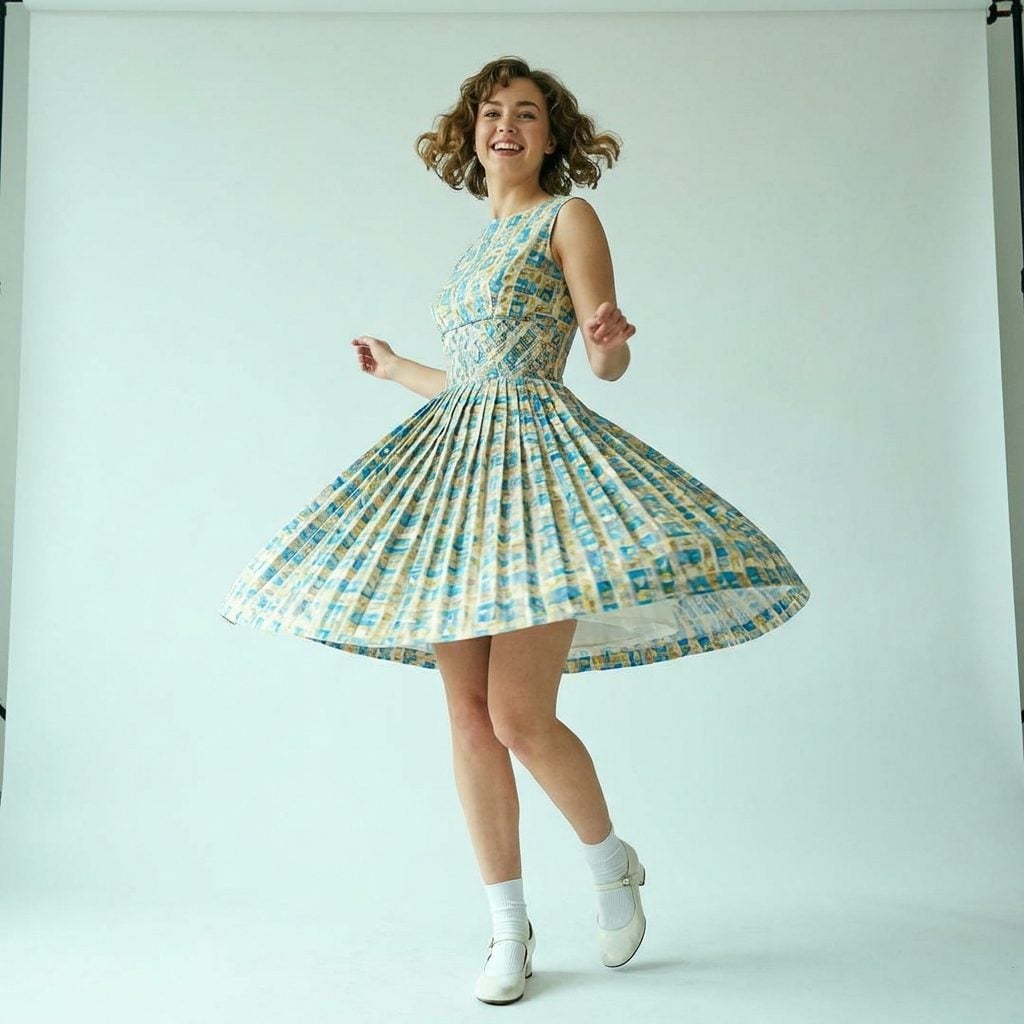
A fitted top gives way to knife pleats that open as the wearer moves. Unlike the broad circle skirt of the polka-dot dress, this version controls its fullness through repeated folds.
The pleats allow the skirt to remain relatively narrow while standing still and expand during movement. Hem length changes the mood, but the defining idea remains the same: a quiet bodice above a skirt built to animate every step.
10. The Sailor-Collar Nautical Dress
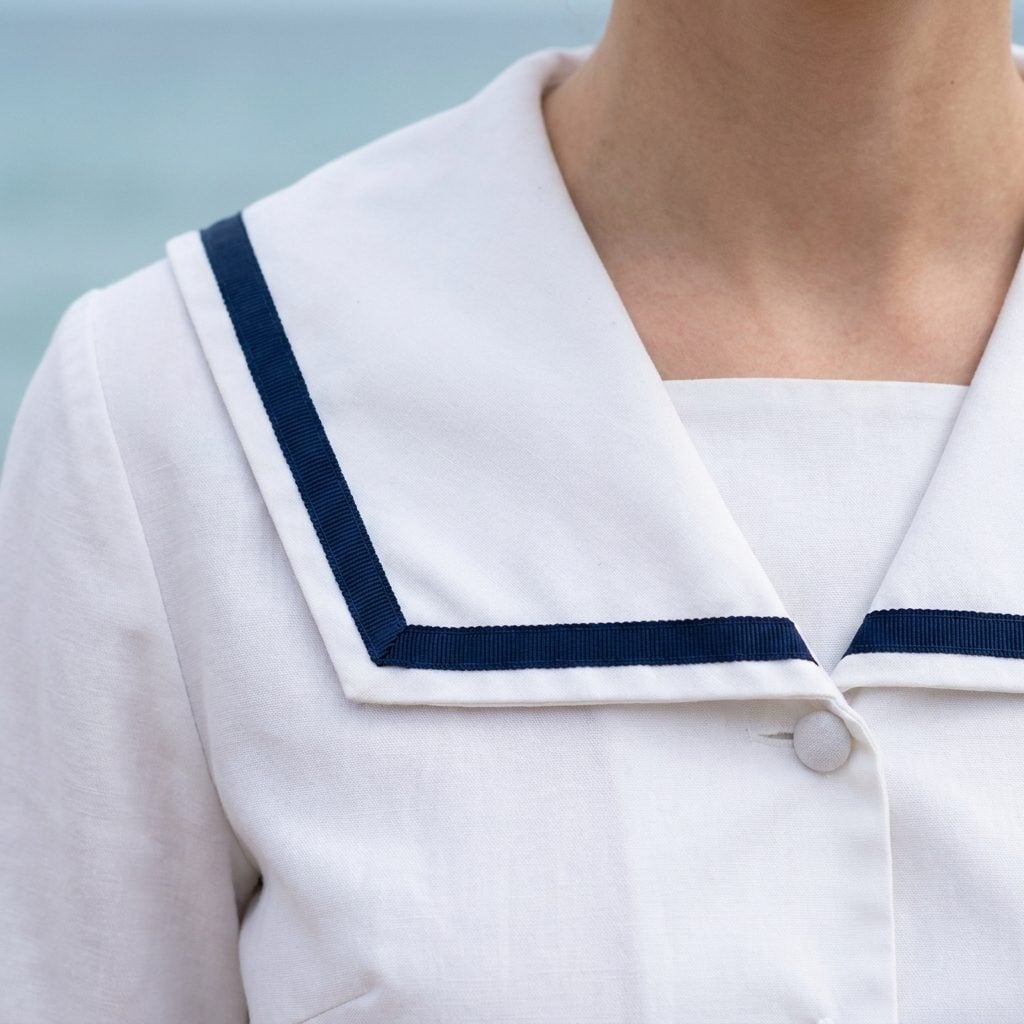
The squared sailor collar gives this dress its most recognizable detail. Navy trim against white establishes the nautical theme before the eye reaches the striped lower portion.
The collar already occupies the space where a necklace would normally sit, so additional jewelry is unnecessary. White sneakers or espadrilles keep the outfit connected to the leisurewear that helped make nautical fashion a recurring summer reference.
9. The Floral Garden-Party Dress
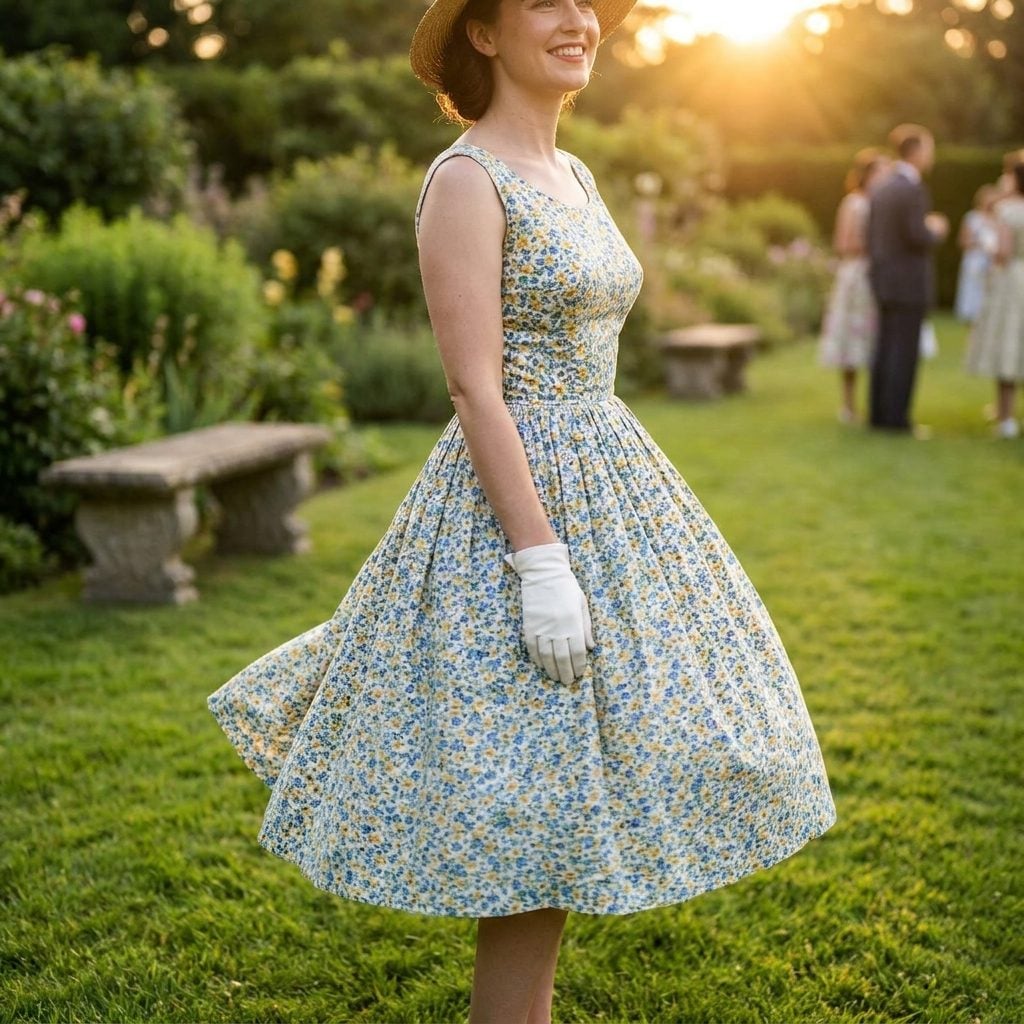
A fitted waist and full skirt give this dress its familiar social-occasion structure, while a dusty pink-and-sage floral distinguishes it from the polka-dot and gingham versions.
Small flowers create a continuous field of color, but a larger botanical print could work equally well if the rest of the design remained restrained. Flat sandals and bare arms keep the dress connected to outdoor summer occasions rather than formal evening wear.
8. The Velvet Evening Dress
❤️ Would you like to save this?
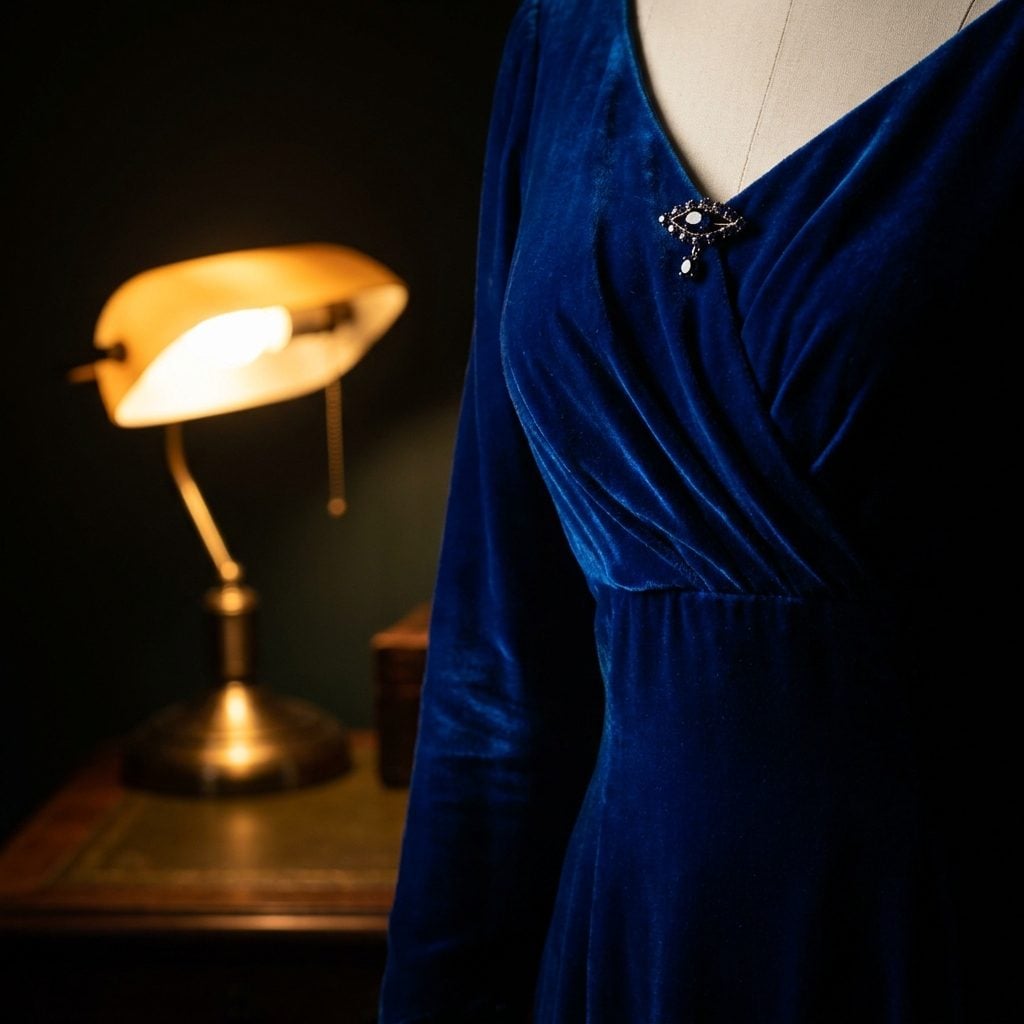
Velvet changes according to the direction of its nap. Beneath evening light, sapphire can move from near-black shadow to a vivid blue highlight without the addition of sequins or beading.
The fitted column lets the fabric remain the focus, tracing one uninterrupted line from shoulder to floor. A jewel-tone velvet evening dress works especially well with simple metal jewelry because the surface already supplies substantial depth.
Velvet does not need a complicated silhouette. The changing light across its surface provides enough movement on its own.
7. The Lace-Overlay Dress
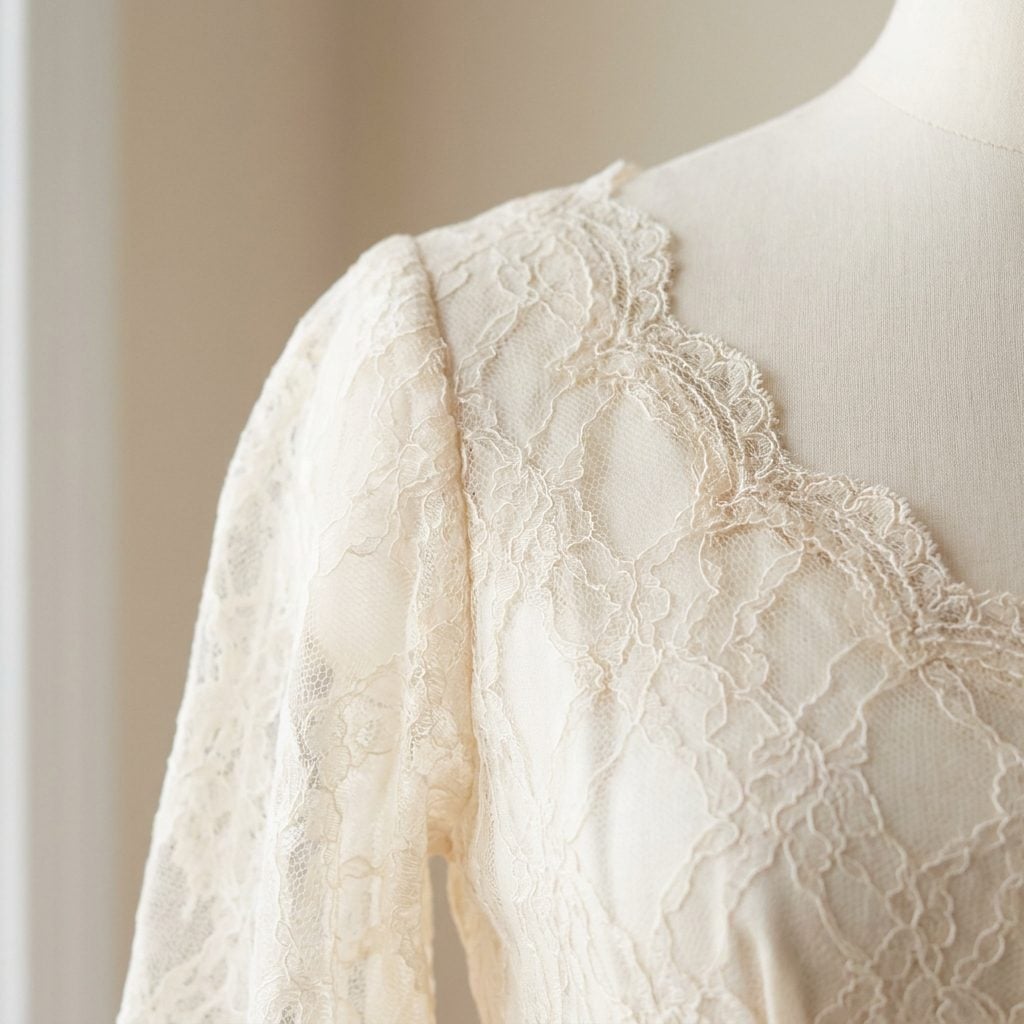
Lace over an opaque lining creates texture without requiring the entire dress to be transparent. Scalloped edges at the neckline and cuffs concentrate the detail at the boundaries of the garment.
Ivory lace over blush produces a softer contrast than bright white over a dark lining. Small drop earrings and plain shoes keep the styling from competing with a fabric that already covers the dress in intricate pattern.
6. The Houndstooth Tailored Dress
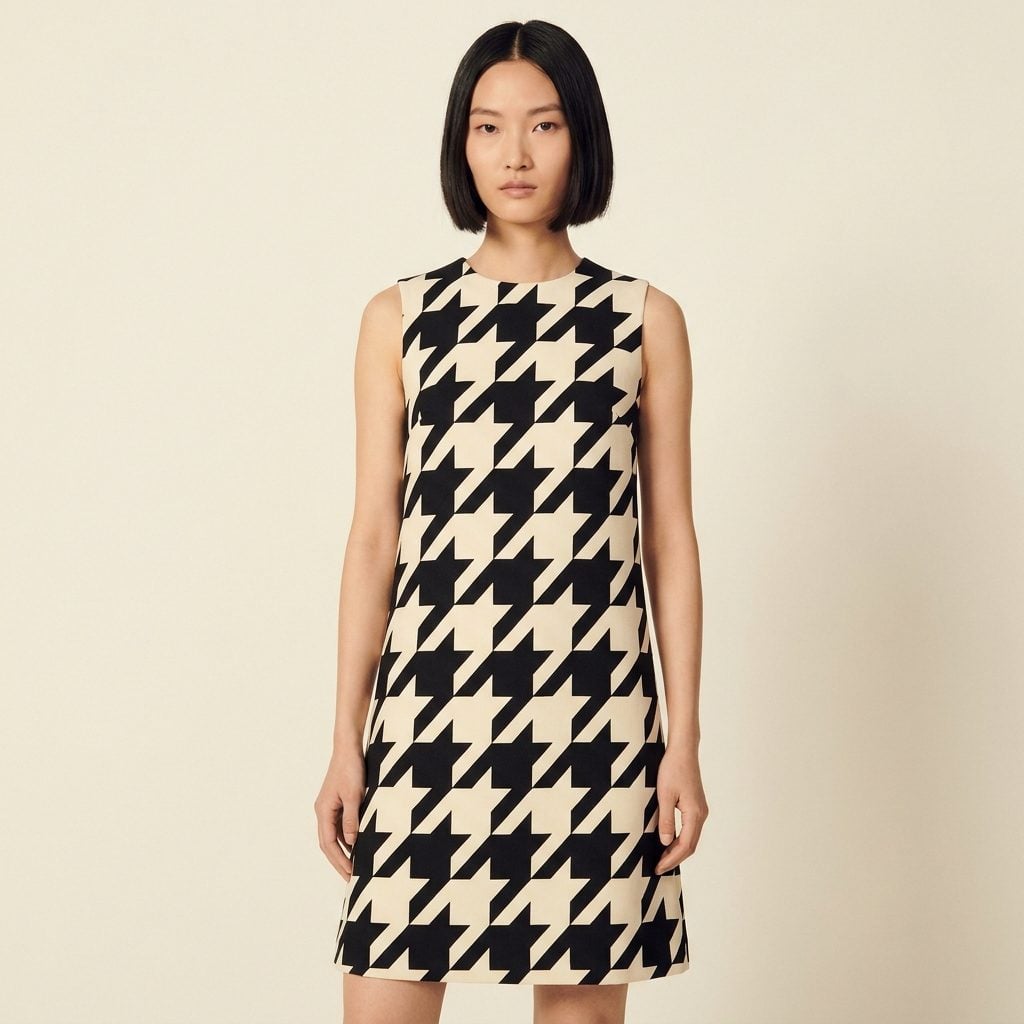
Houndstooth is a graphic pattern that can behave almost like a neutral. Black and cream appear busy at close range but merge into a softer gray impression from farther away.
A tailored sheath contains that active pattern within a clean outline. The result works for offices, lunches, and other daytime settings where a solid dress might feel too plain but a multicolor print would be distracting.
5. The Tent Dress
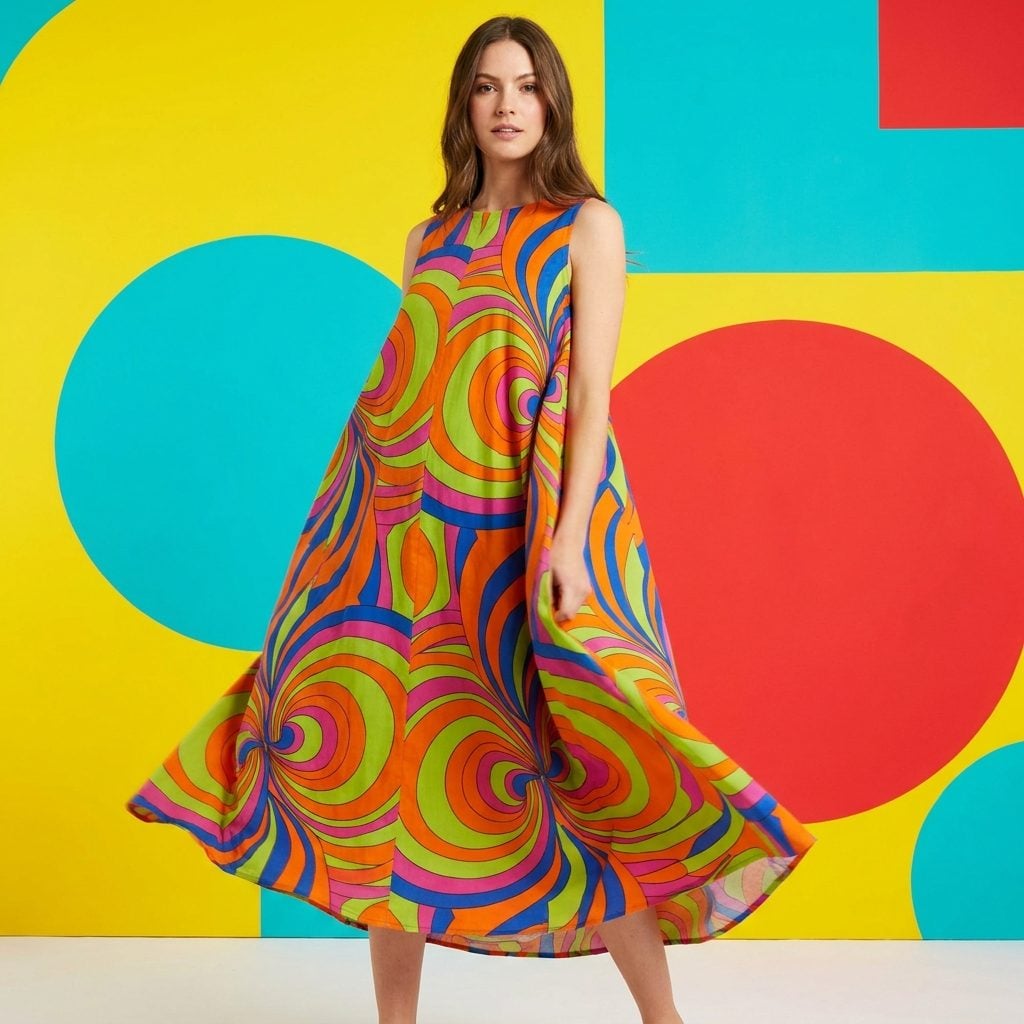
The tent dress releases its full volume directly from the shoulders, creating a broader and less controlled shape than the architectural trapeze. The absence of a waist is intentional rather than the result of poor fit.
Mustard gives the broad surface a strong single color. A shorter hem can emphasize the swing of the fabric, while a longer version creates a more dramatic column of volume. Shoes can be flat or heeled depending on whether the desired effect is casual or theatrical.
4. The Culotte Dress
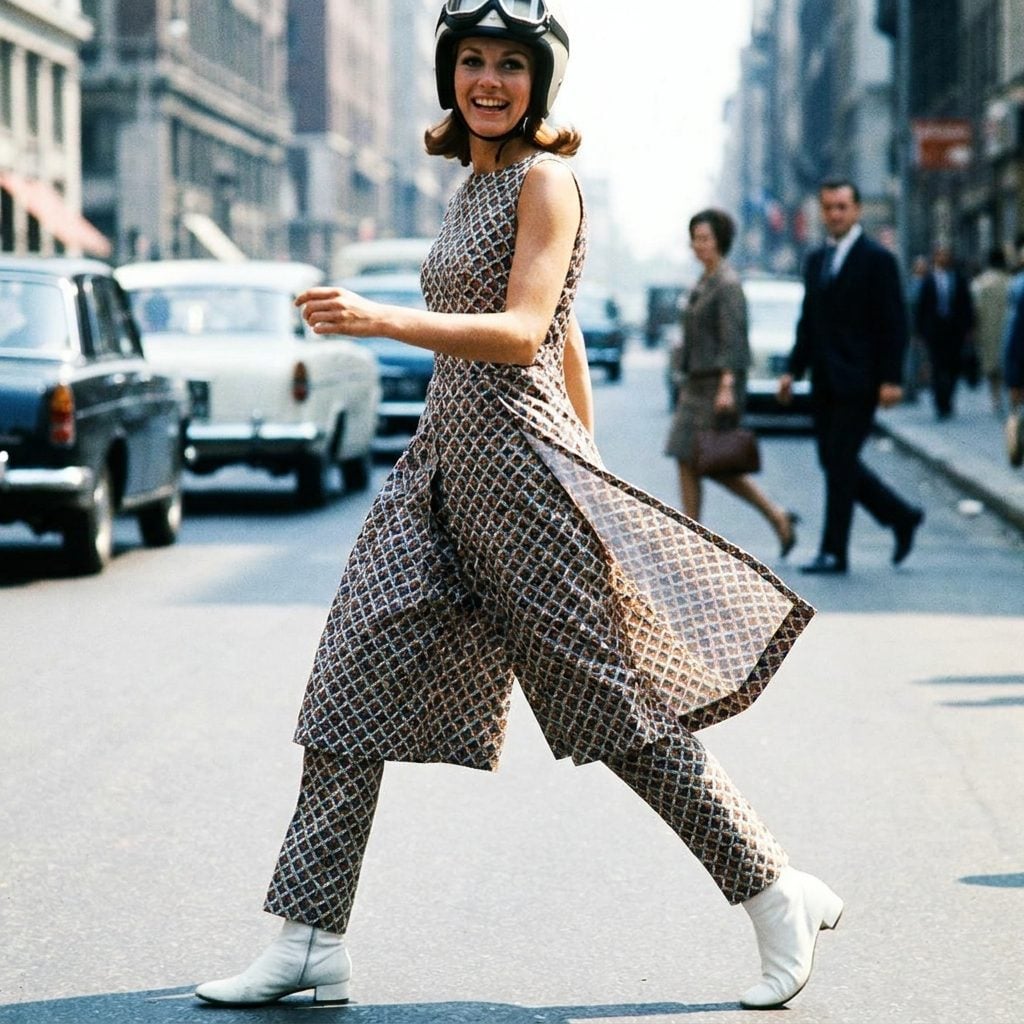
Skirt from the front, trousers when she moves. The culotte dress gave women the freedom of divided legs inside the broad outline of a dress.
The wide leg is cut generously enough to remain ambiguous until a step reveals the separation. Terracotta gives the practical construction a warm, deliberate color, while low heels or streamlined flats keep the hem from becoming visually crowded.
3. The Belted Day Dress
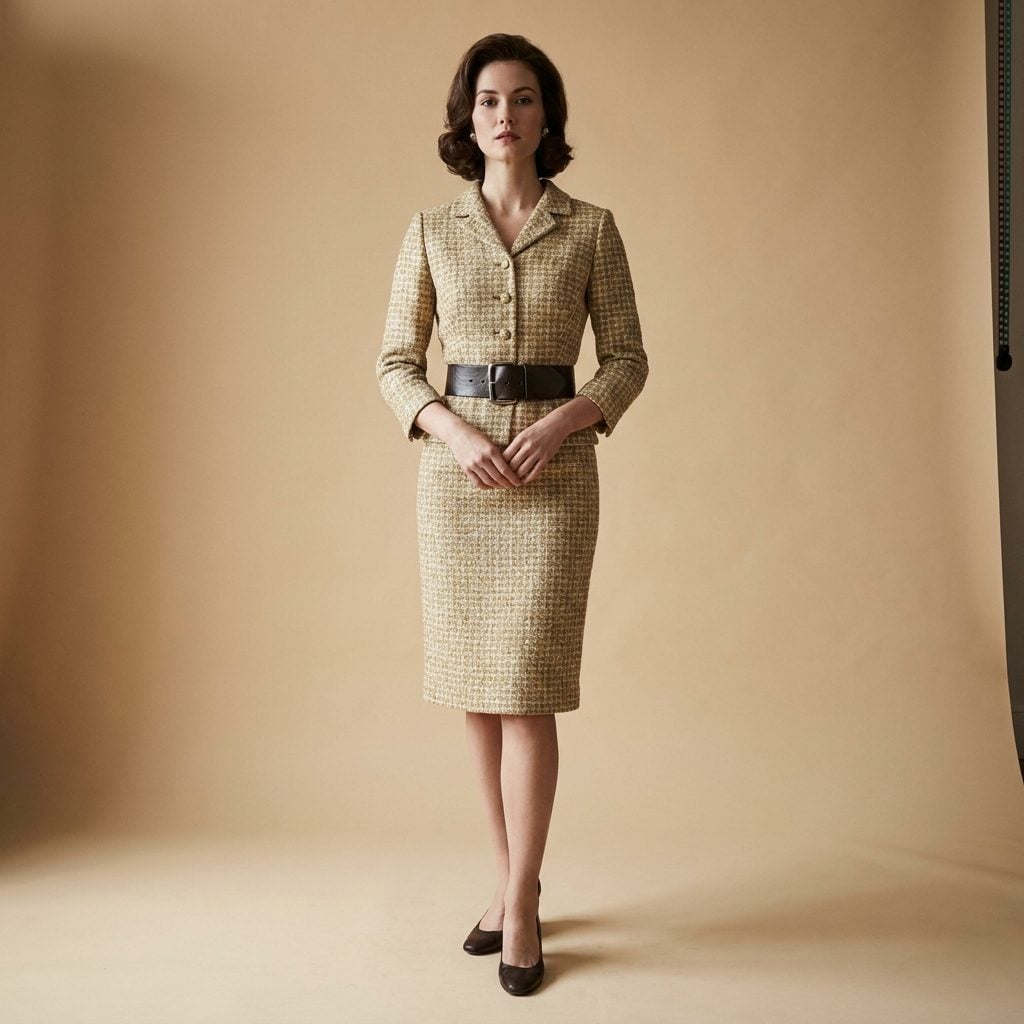
The belt is the defining feature here. A relatively simple day dress gains a clear center when a wide self-belt gathers the fabric and interrupts the straight line.
Sage green keeps this version understated enough for errands, visits, or informal work. Belt placement can be adjusted slightly above or below the natural waist depending on the dress’s construction and the wearer’s preferred proportion.
2. The Pastel Swing Dress
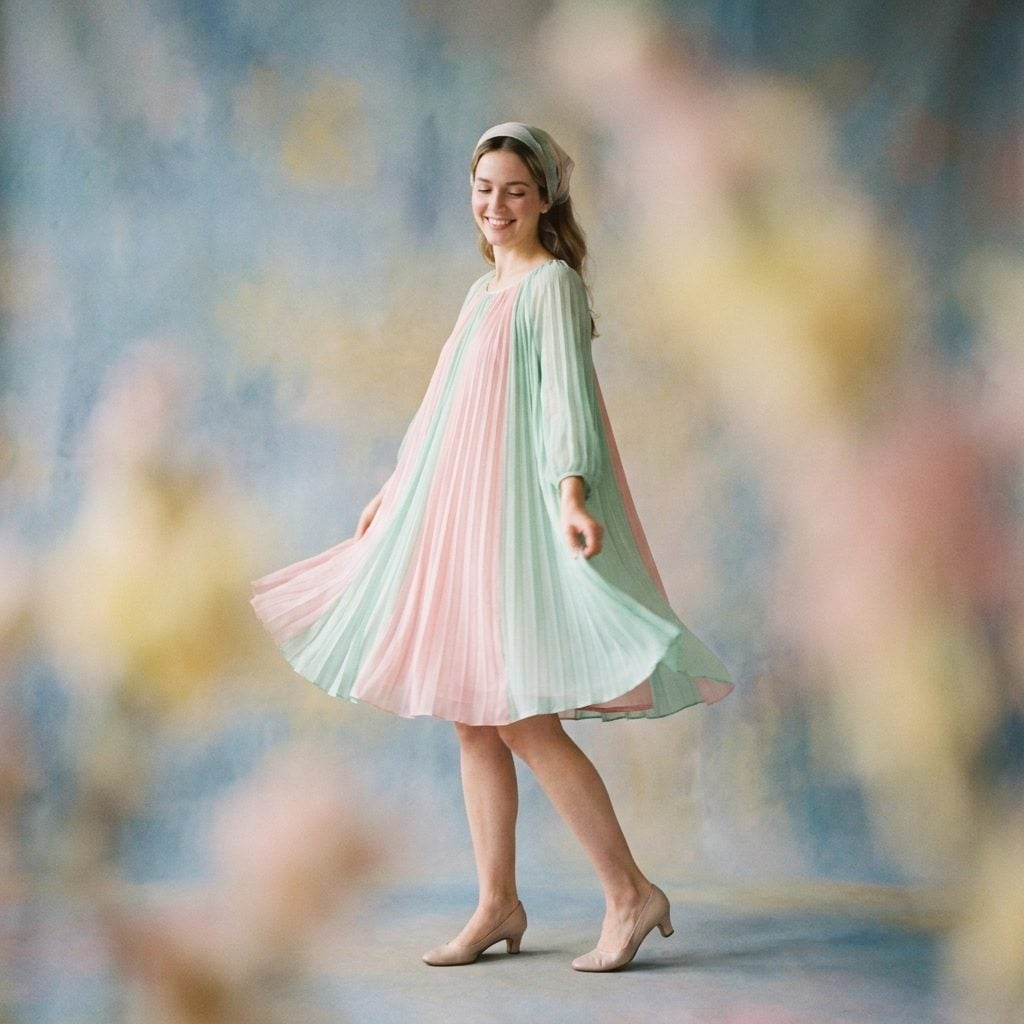
The swing dress keeps definition through the upper body before opening into a skirt designed to move. Compared with the full polka-dot circle skirt, this version uses less volume and a softer flare.
Mint, buttercup, and powder blue reinforce the lightness of the construction. A fitted cardigan and low heel keep the styling simple enough for daytime without pushing the dress into costume.
1. The Space-Age Metallic Dress
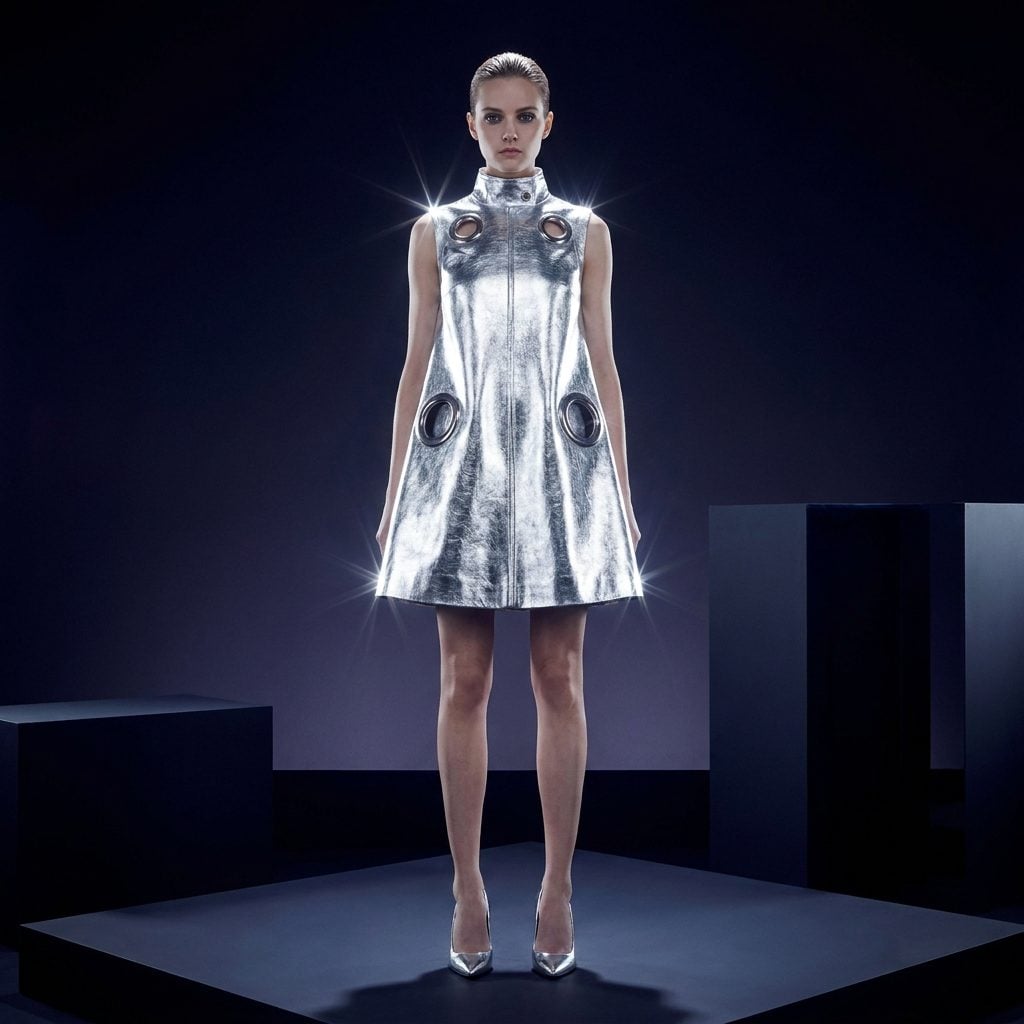
Strip away the silver surface and this is a simple A-line shift. Add the shine back, and the garment takes on the architectural, futuristic character associated with space-age fashion.
Designers responding to the space race experimented with metallic lamé, coated fabrics, vinyl, plastics, geometric seams, and flat boots. This version does not need to include all of those materials at once; the reflective finish and clean cut are enough to establish the idea.
The decade never settled on one answer to what a dress should be. It offered narrow sheaths and enormous tent shapes, strict collars and floating chiffon, familiar florals and surfaces that looked borrowed from a spacecraft. That range is why so many of these styles still return—and why one of them probably looks exactly like something remembered from a mother’s, aunt’s, or grandmother’s closet.