❤️ Would you like to save this?
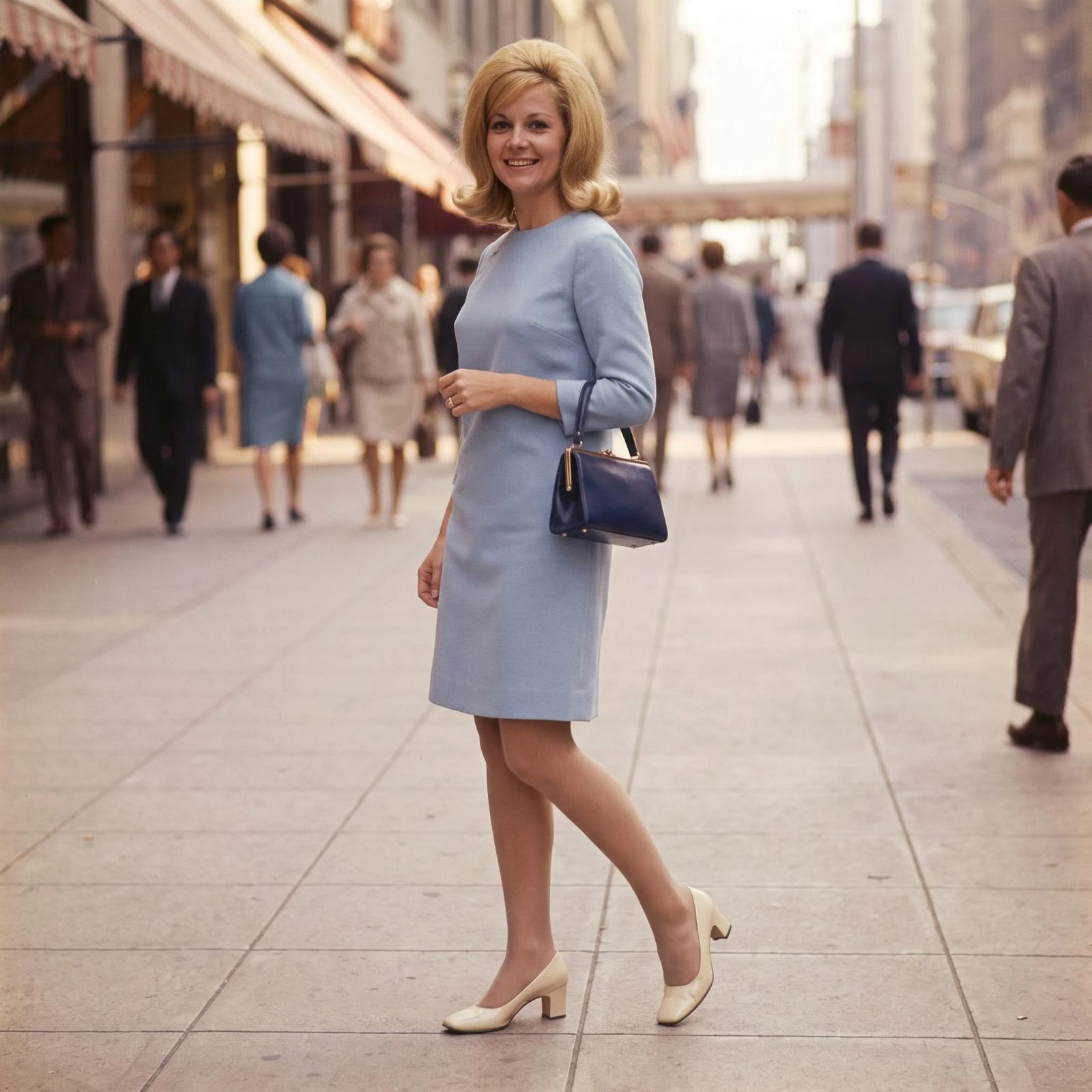
The 1960s did not leave the house quietly. A pillbox balanced above a lacquered bouffant. A clasp handbag snapped shut around lipstick, coins, powder, tissues, and the emergency machinery required to keep the whole construction intact. Even the rain had accessories.
Then the proportions changed. Hemlines shot upward. White patent boots cut bright verticals into the leg. Black liner sharpened the eye. Plastic jewelry grew to architectural scale, PVC gleamed like something from a space-age showroom, and by the decade’s end suede fringe and peace symbols were dismantling the polished little rules that had opened it.
That is what makes these 38 objects more interesting than simple nostalgia. Together they show a decade changing its silhouette in real time — from early-Sixties ceremony to mod precision to something looser, louder, and far less obedient. Some belonged on the body. Some lived permanently inside the handbag. Others existed almost entirely to stop hair, makeup, hems, weather, and changed plans from undoing everything before dinner.
FYI, thanks to AI imagery software, we’re able to create very specific fashion and hairstyle examples to illustrate the points being made. In some cases, imagery is exaggerated to hammer home the point. Also, assume links that take you off the site are affiliate links such as links to Amazon. this means we may earn a commission if you buy something.
38. A Pillbox Hat, Set Just So
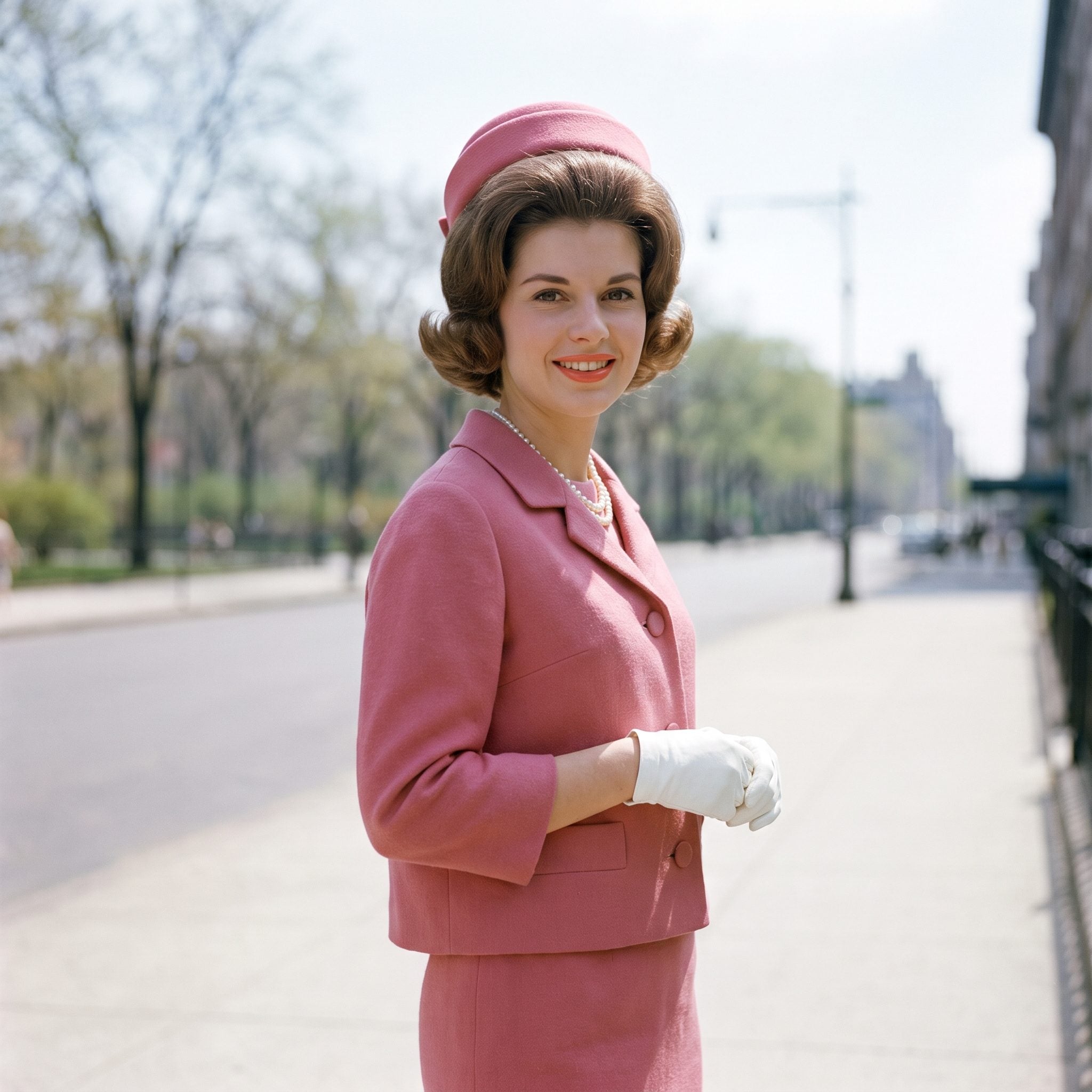
The pillbox sat high and compact, often secured toward the back of the head so it would not flatten the carefully constructed hairstyle beneath it. Less weather protection than finishing punctuation, it announced that the rest of the outfit had been considered too.
Jacqueline Kennedy made the shape inseparable from early-1960s polish, especially when paired with tailored suits, gloves, and neat pumps. Church, weddings, formal lunches, and important appointments all gave the little hat somewhere to go.
37. A Glossy PVC Raincoat That Made Bad Weather Look Futuristic
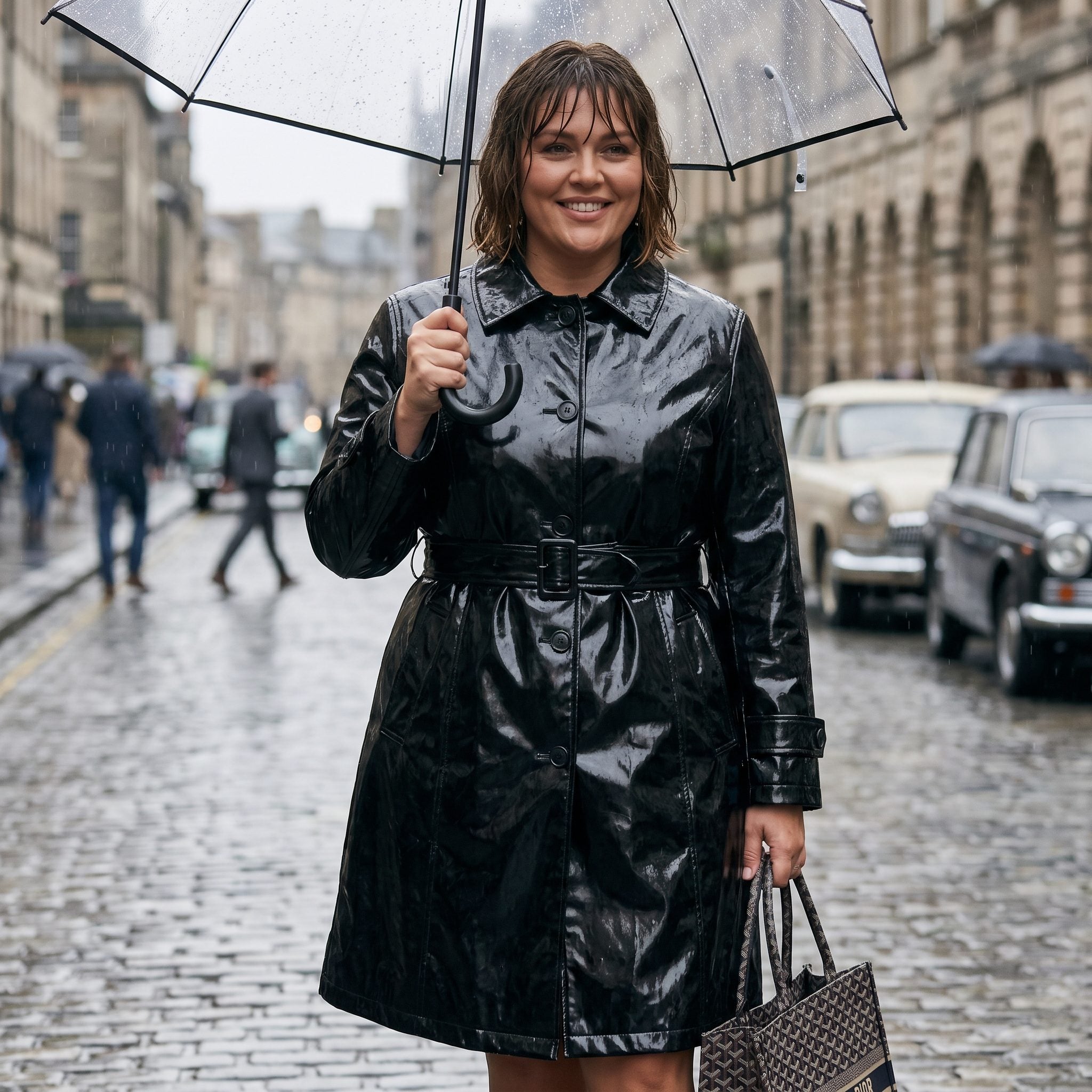
Traditional raincoats tried to look respectable despite the weather. PVC leaned into it. Shiny, almost wet-looking even when dry, the material turned a downpour into an excuse for another reflective surface.
The decade embraced synthetics with remarkable enthusiasm, and vinyl and PVC could feel startlingly modern. Bright white, candy colors, transparent panels, and sharp A-line cuts pushed rainwear straight into mod territory. Add white go-go boots and the forecast practically became part of the outfit.
36. A Decorative Costume Brooch Pinned at the Collar
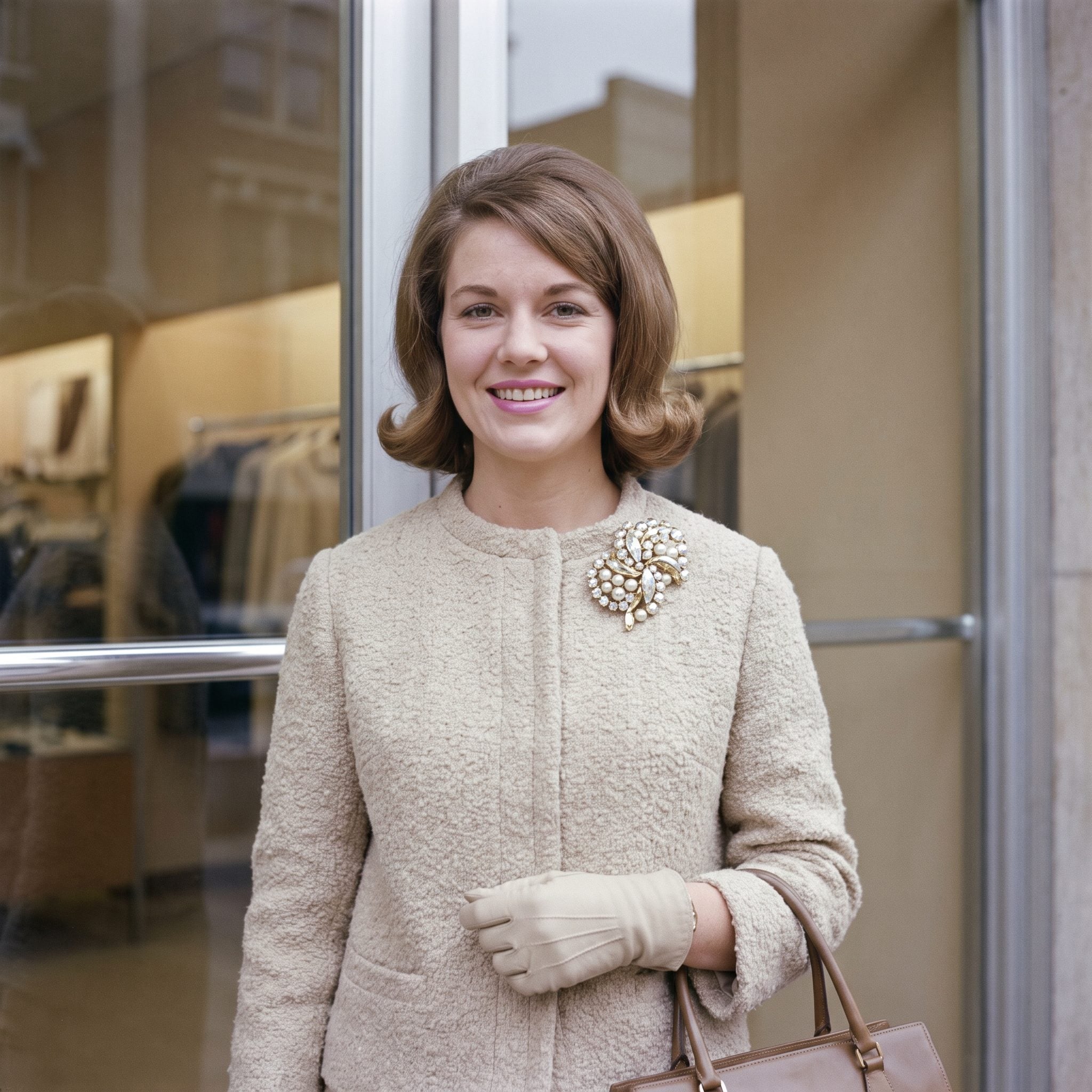
A sparkling brooch could sit high at the collarbone, flash from a coat lapel, or pin a scarf precisely where it needed to stay. Against the clean lines of a tailored jacket, one concentrated burst of stones often carried more visual weight than a complicated necklace.
Gold-tone metal, glass stones, imitation pearls, and aurora-borealis crystals made dramatic jewelry available without fine-jewelry prices. One brooch could move from suit to coat to hat, changing its job every time.
35. A Suede Fringe Jacket That Refused to Stand Still
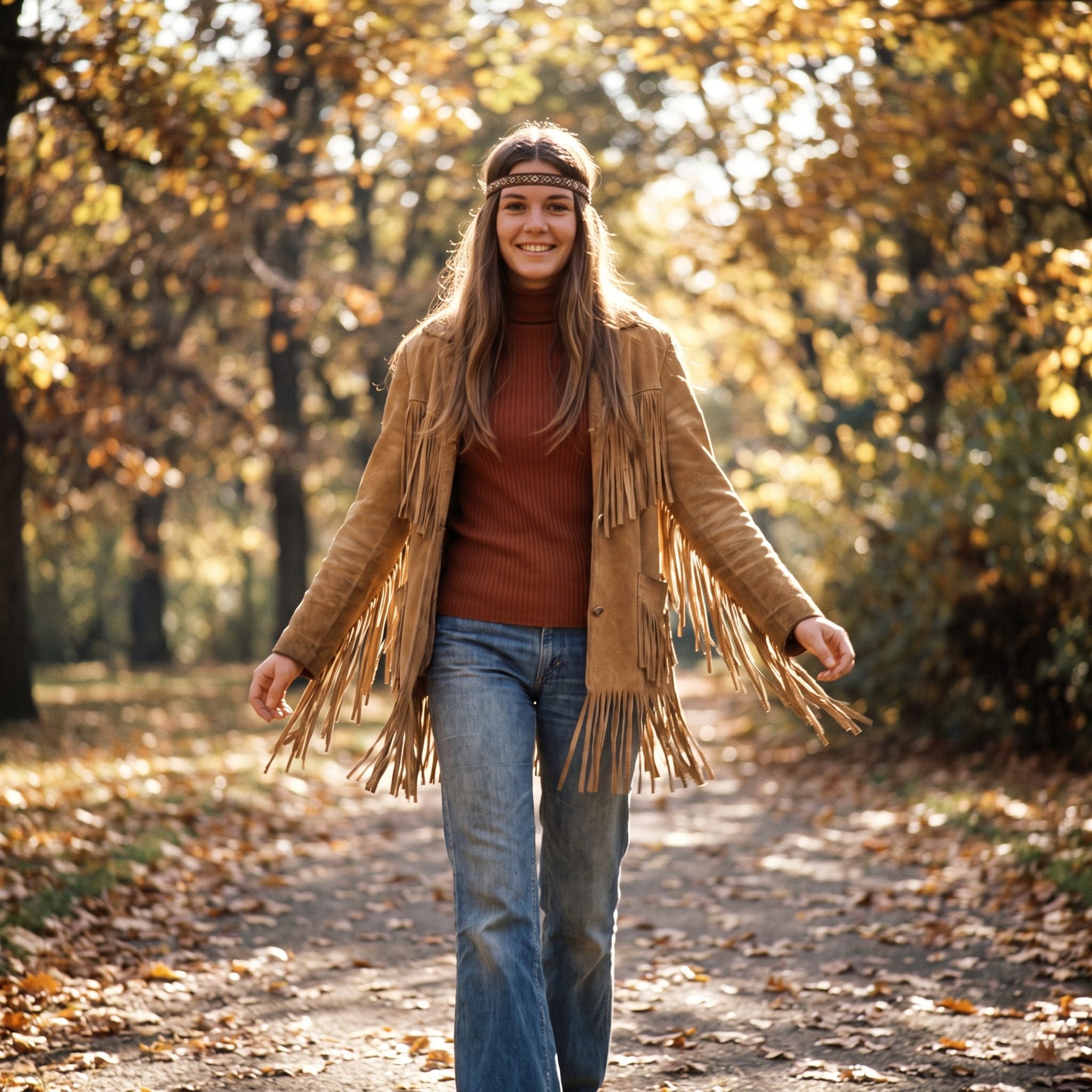
Soft tan suede was only half the story. Long fringe running down the sleeves and across the hem continued moving after the wearer stopped, giving the jacket a loose physical energy that would have looked almost unruly beside an early-decade suit.
By the late 1960s, that was exactly the appeal. The hard-edged discipline of mod fashion was giving way to softer, more countercultural shapes. A tan suede fringe jacket over a ribbed knit and flared trousers belonged to a very different 1960s than the pillbox hat — which is precisely why both define the decade.
34. A Purse Atomizer for a Quick Spritz Before Dinner
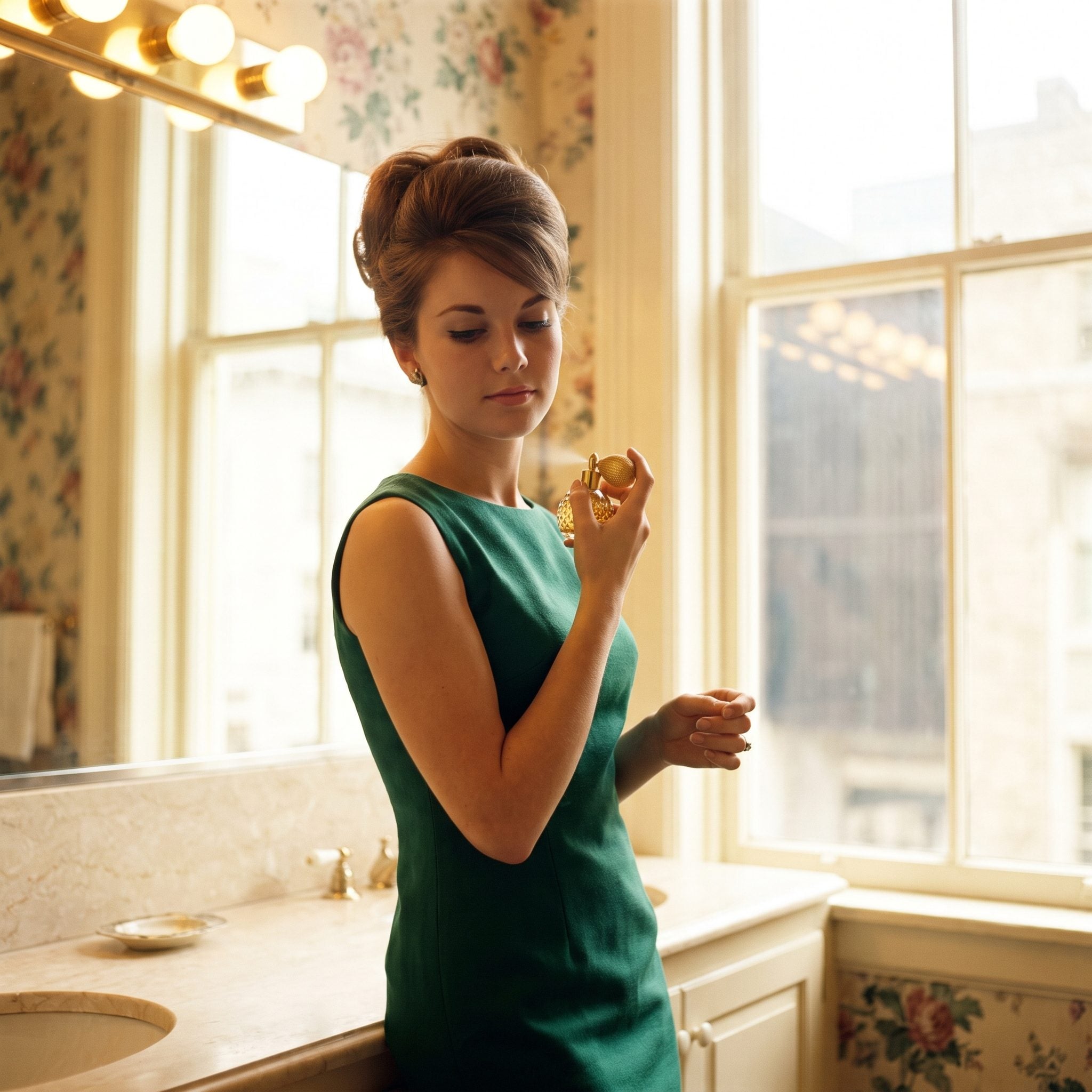
Perfume bottles were beautiful and often heavy. A small refillable atomizer solved the traveling problem, slipping into an evening bag while carrying enough fragrance for a discreet refresh before dinner.
A quick mist at the wrists or throat could become the final stage of dressing for a night out. The atomizer’s appeal was partly practical and partly theatrical: a tiny polished object devoted to one finishing touch.
33. A Mary Quant-Style Miniskirt That Changed the Proportions of Everything
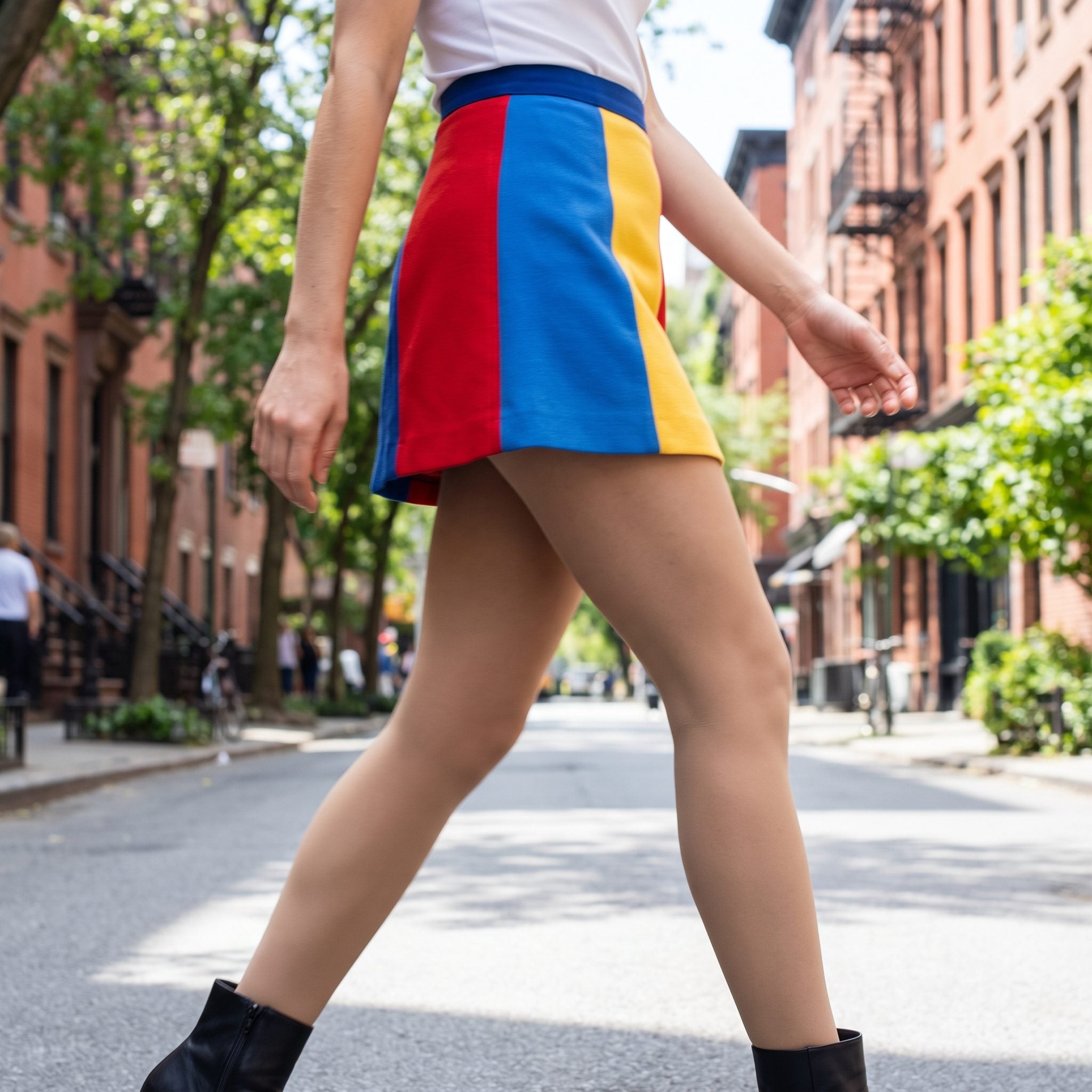
The short skirt became one of the decade’s most visible ruptures with earlier fashion. A structured mini worn with a fitted knit, opaque tights, or low boots exposed far more leg and shifted the visual center of an outfit upward almost overnight.
Mary Quant was central to popularizing very short skirts in 1960s London, although designers including André Courrèges were also pushing hems upward. Quant associated the name “mini” with the small British car she loved, and the word soon became inseparable from the garment.
32. A Mirrored Powder Compact That Turned Any Table Into a Dressing Table
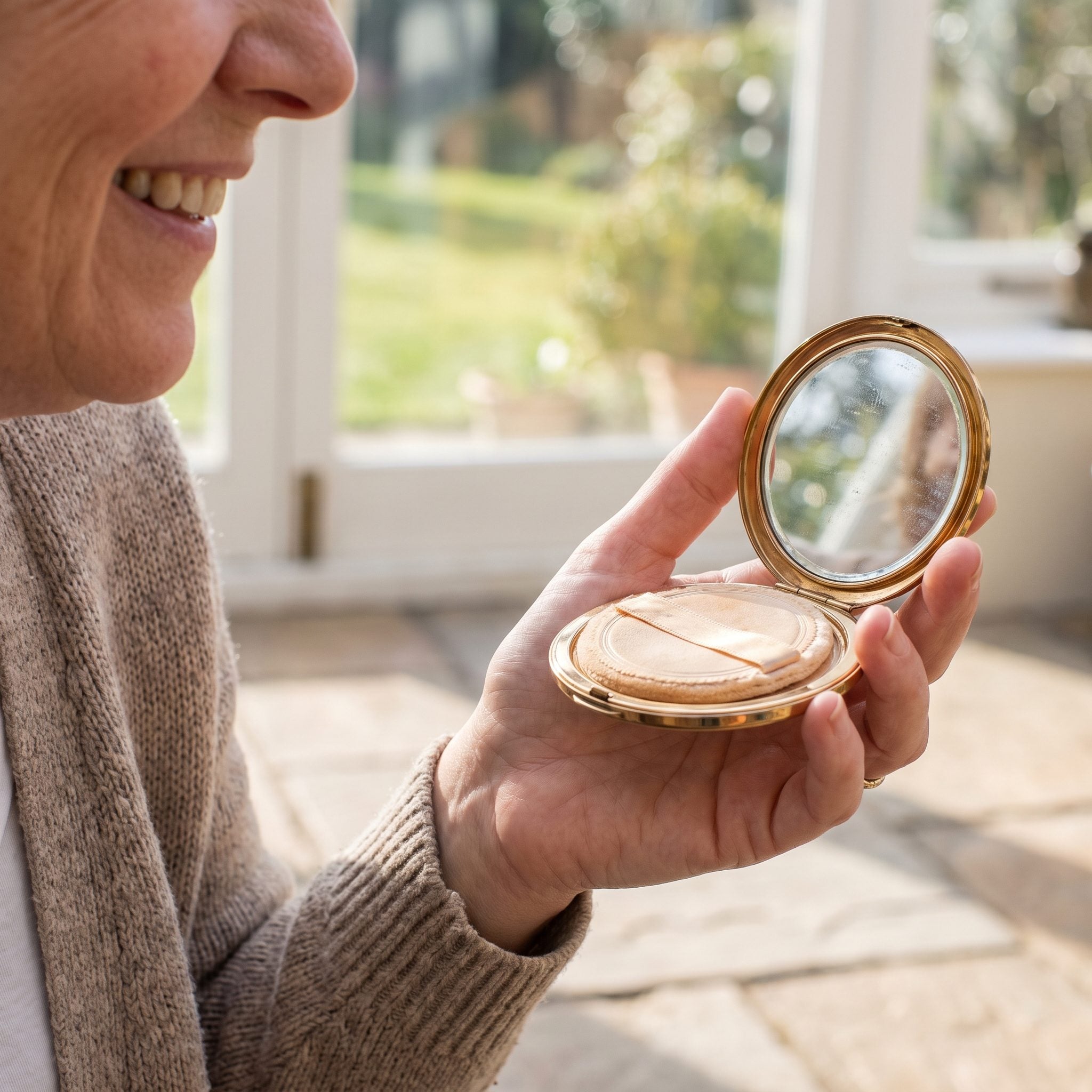
A small metal compact could open to pressed powder on one side and a mirror on the other, often with a puff tucked inside. Shine, lipstick, eyeliner, and a stray lash could all be checked without searching for a powder room mirror.
Flip it open, blot the shine, check the lipstick, snap it shut. The whole repair could be over in seconds before the polished little disc disappeared back into the handbag.
31. White Patent-Leather Go-Go Boots That Made the Sidewalk Look Like a Runway
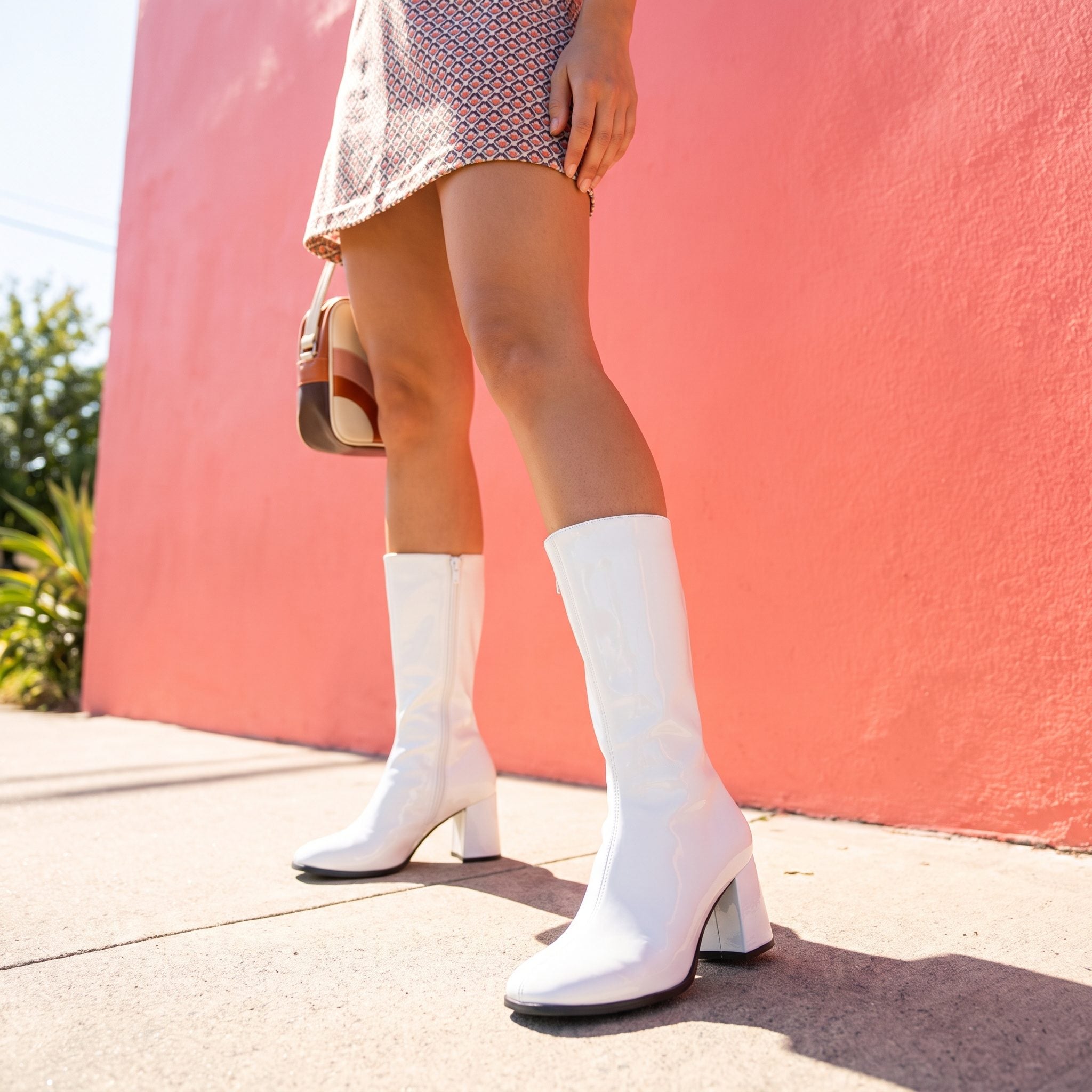
Shiny white uppers, a low heel, and a shaft climbing toward the calf gave the go-go boot an unmistakable silhouette. With a short dress or miniskirt, all that glossy white turned the lower leg into part of the composition.
The practical low heel mattered too. These were boots built for movement rather than posing, which helped them migrate from fashion photography and nightlife into the broader youth wardrobe.
30. A Pocket Address Book With an Entire Social Life Written Inside
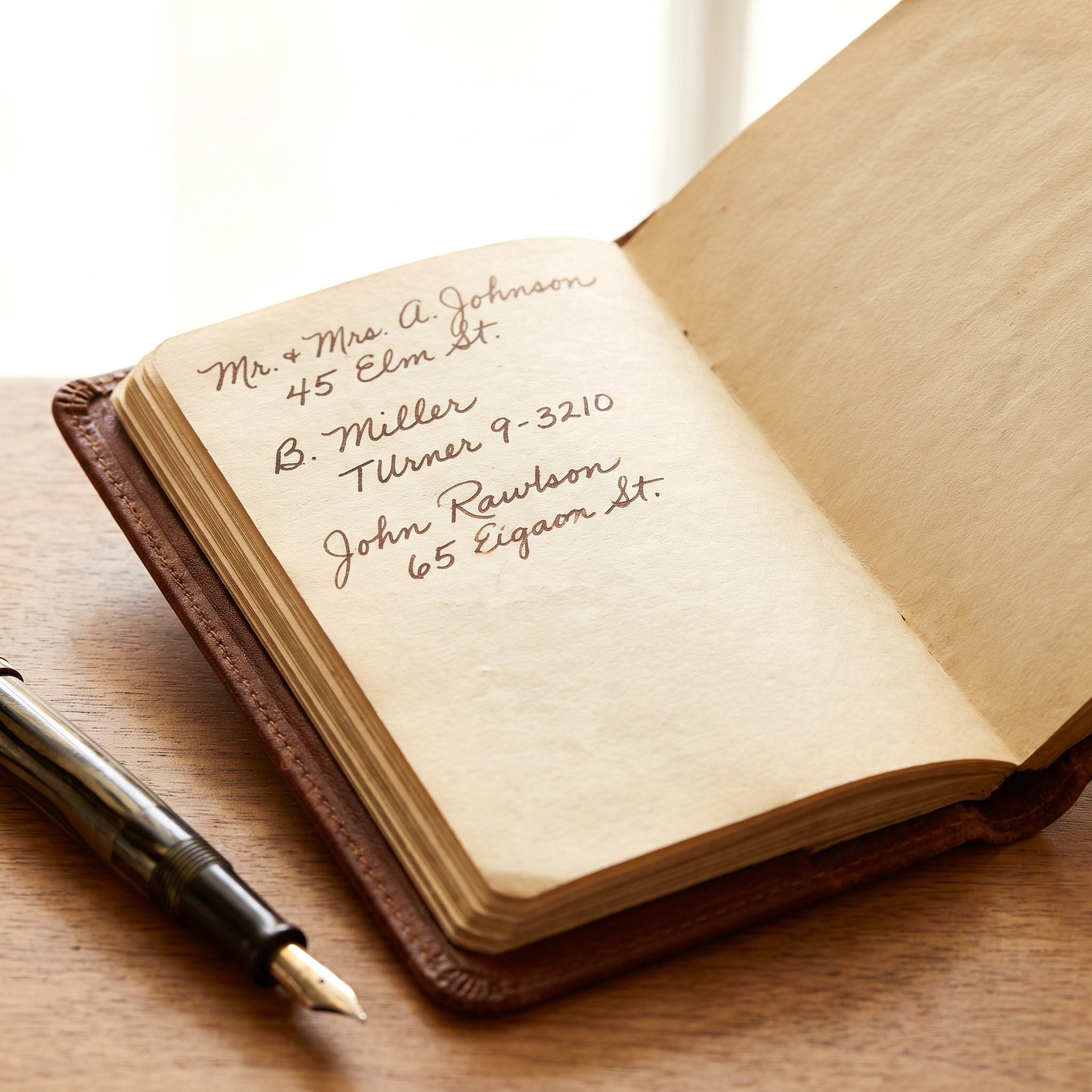
Before a phone number lived in a device, it lived on paper. Small address books traveled in handbags because reaching someone required knowing the number before finding a telephone.
Names accumulated by letter. Addresses changed. Numbers were crossed out, rewritten, or squeezed into the margin. Pencil marks, ink changes, and worn pages turned a pocket directory into an accidental record of relationships over time.
29. A Geometric-Print Blouse That Could Carry an Entire Mod Outfit
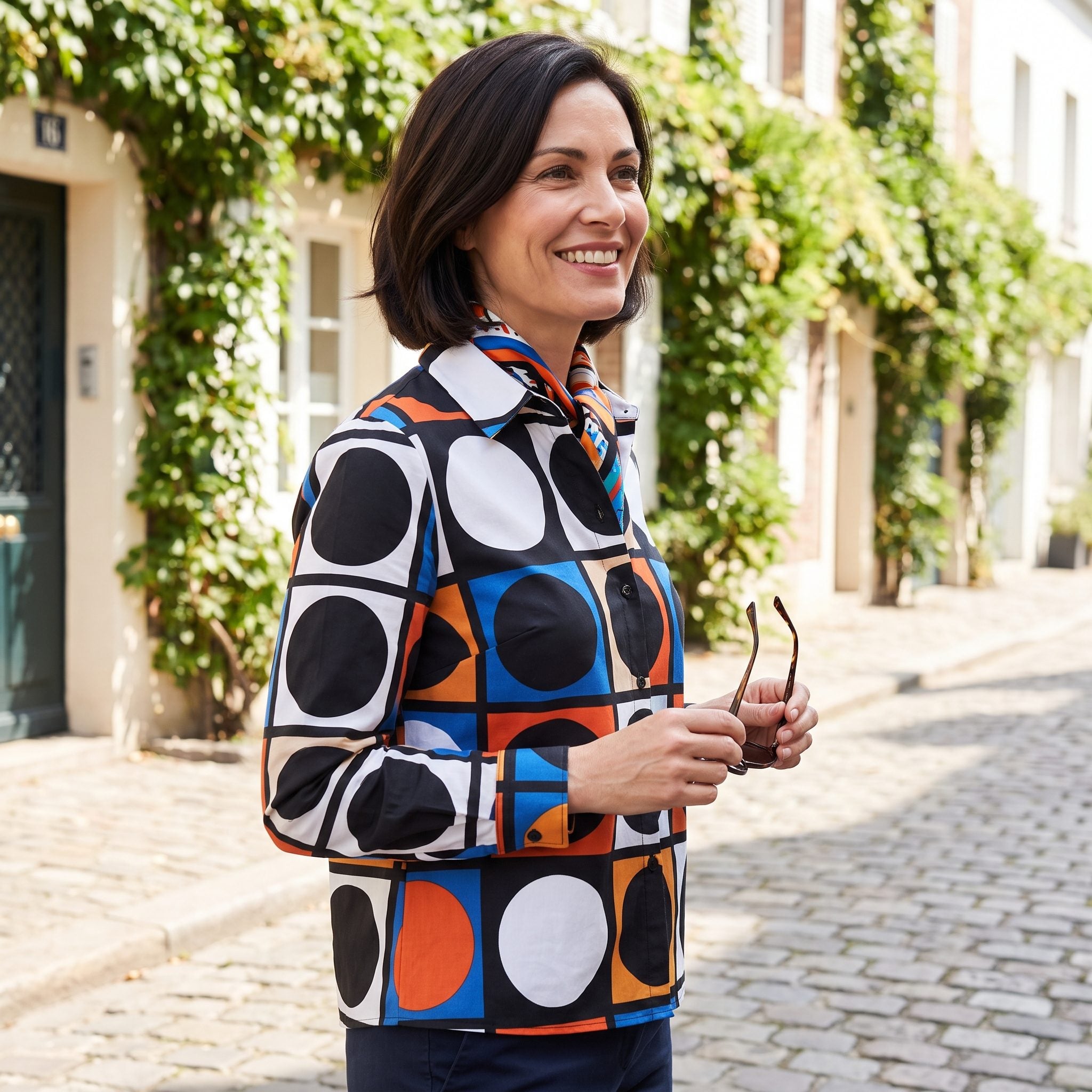
Concentric circles, hard zigzags, checkerboards, and contrasting squares gave the upper half of the body the same visual force found in posters, furniture, packaging, and Op Art of the period.
A strong print needed surprisingly little help. Plain trousers or a simple skirt kept the lower half quiet while the blouse supplied the movement, an approach that became one of the clearest signatures of women’s style in the mod years.
28. Short White Dress Gloves Kept Immaculate for the Occasion
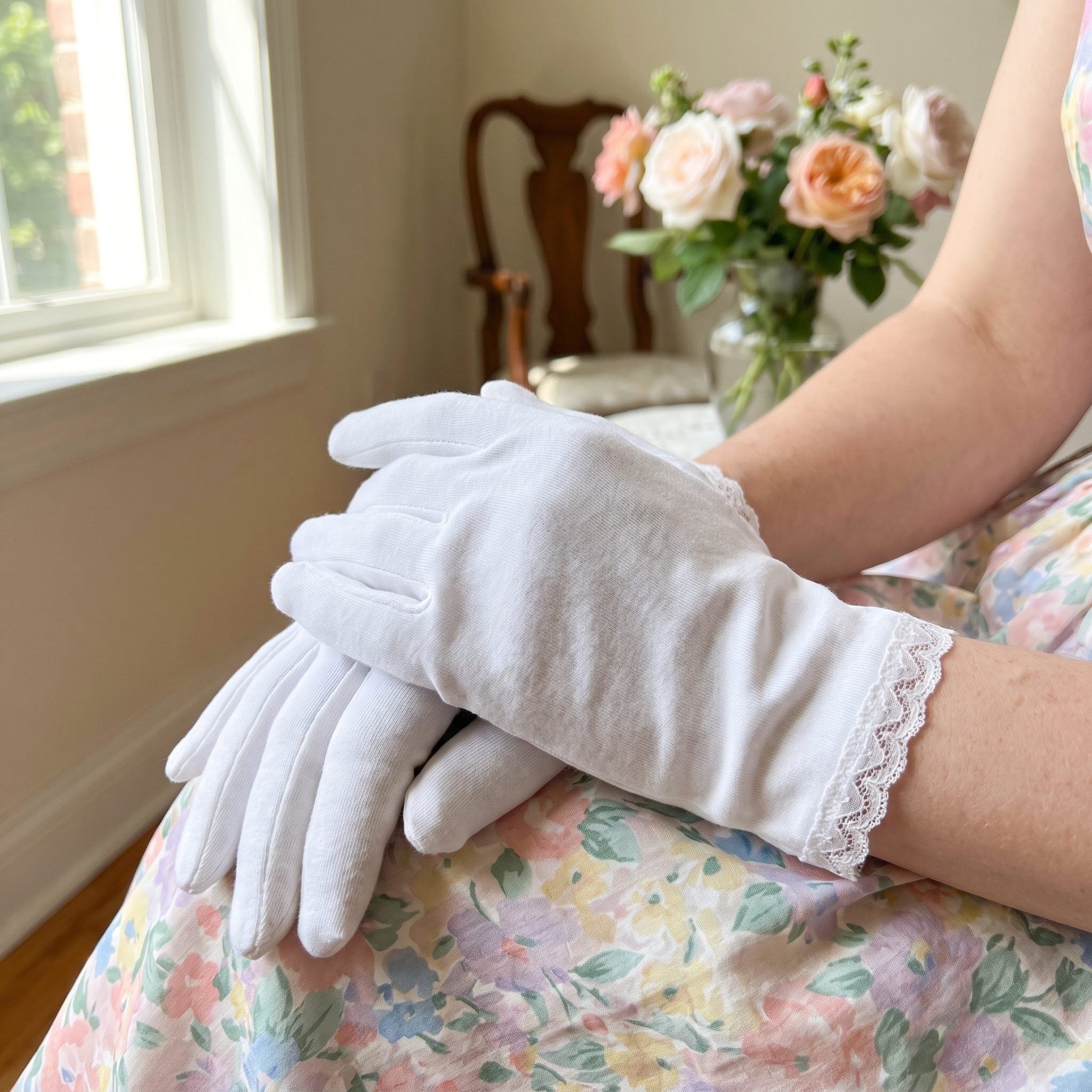
In the more formal early 1960s, gloves could still be expected for church, weddings, luncheons, travel, and other occasions that called for a polished suit or dress.
White pairs required maintenance. Car doors, coins, railings, and makeup could mark them quickly, so several pairs in rotation made practical sense. By the later 1960s, glove etiquette was loosening along with much of the rest of the dress code.
27. A Handheld Transistor Radio That Put Pop Music in One Hand
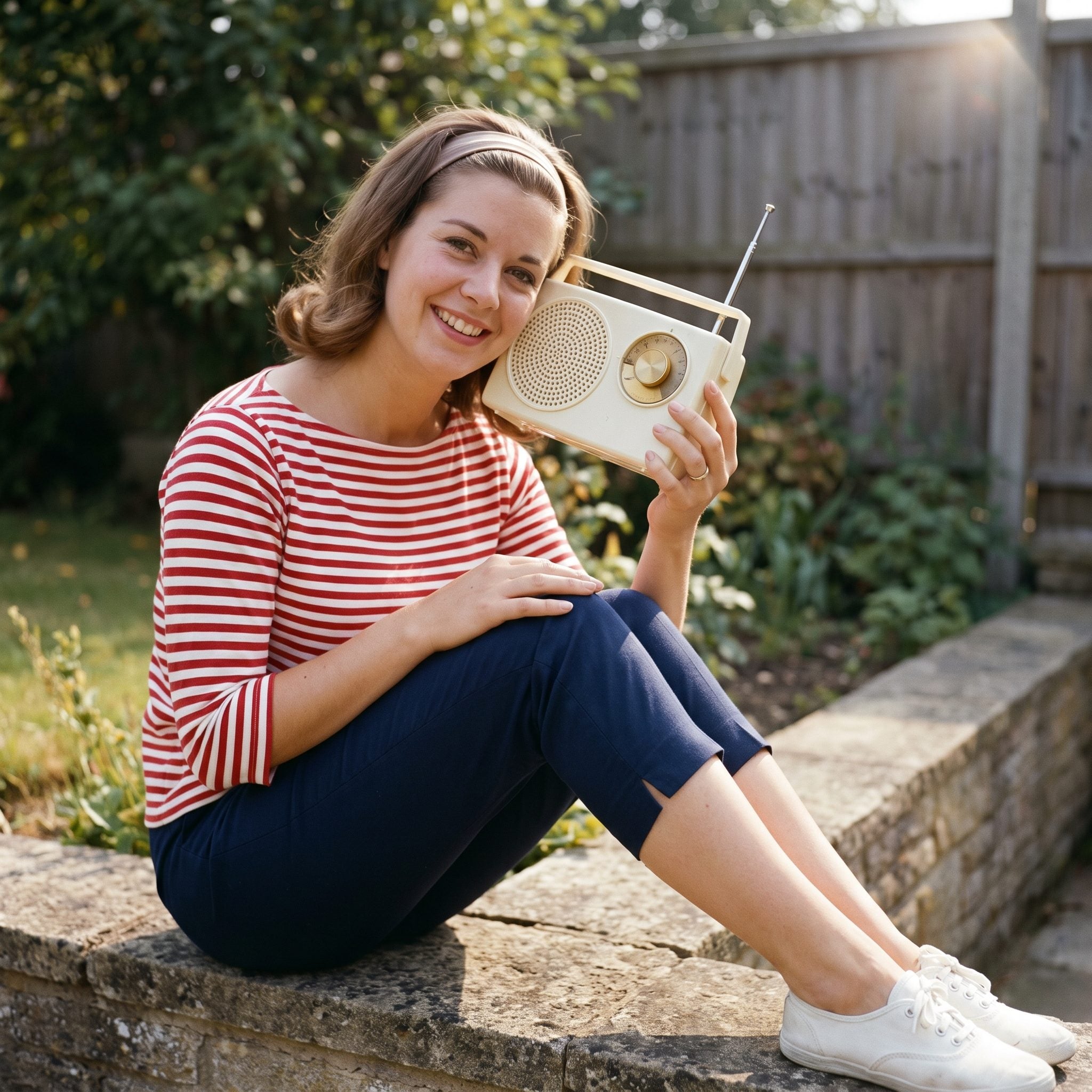
Small enough to carry to a park, beach, bedroom, or back step, the transistor radio made portable listening dramatically lighter and more personal than earlier radios.
Teenagers could follow the charts without gathering around the family console. A thumb on the tuning dial, a burst of static, then the opening bars of the record everyone had been waiting to hear. Portability changed not just where pop music was heard, but the privacy around listening to it.
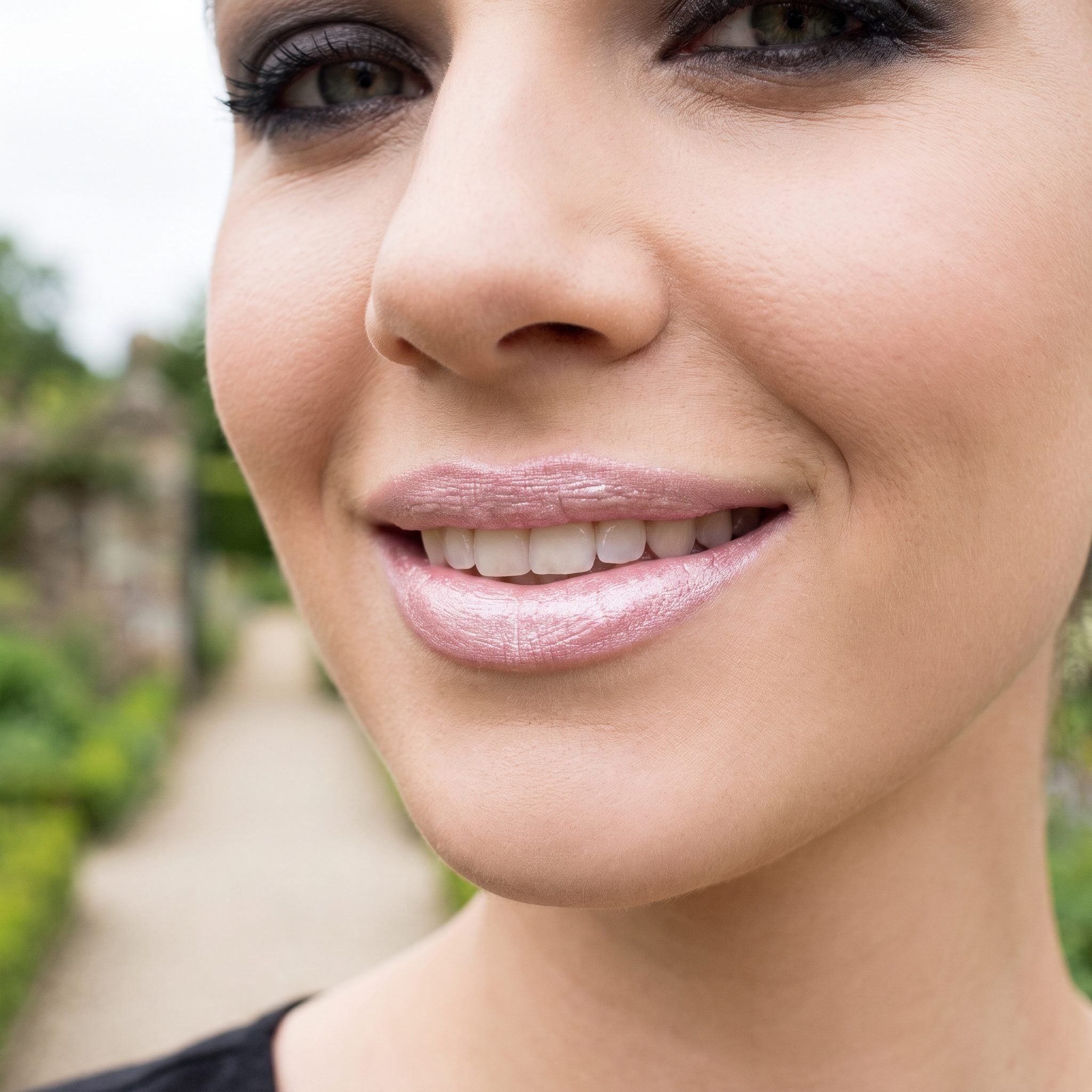
26. Pale Frosted Lipstick That Let the Eyes Take Over
❤️ Would you like to save this?
The balance of the face shifted dramatically in mod makeup. Eyes became dark, lined, and lash-heavy while lips retreated into frosted beige, shell pink, and near-nude shades.
Pale lipstick needed frequent attention because eating, drinking, and ordinary conversation quickly wore it away. The tube therefore stayed close at hand, ready for another pass whenever the mirror came out.
25. A Pair of Driving Gloves for the Steering Wheel
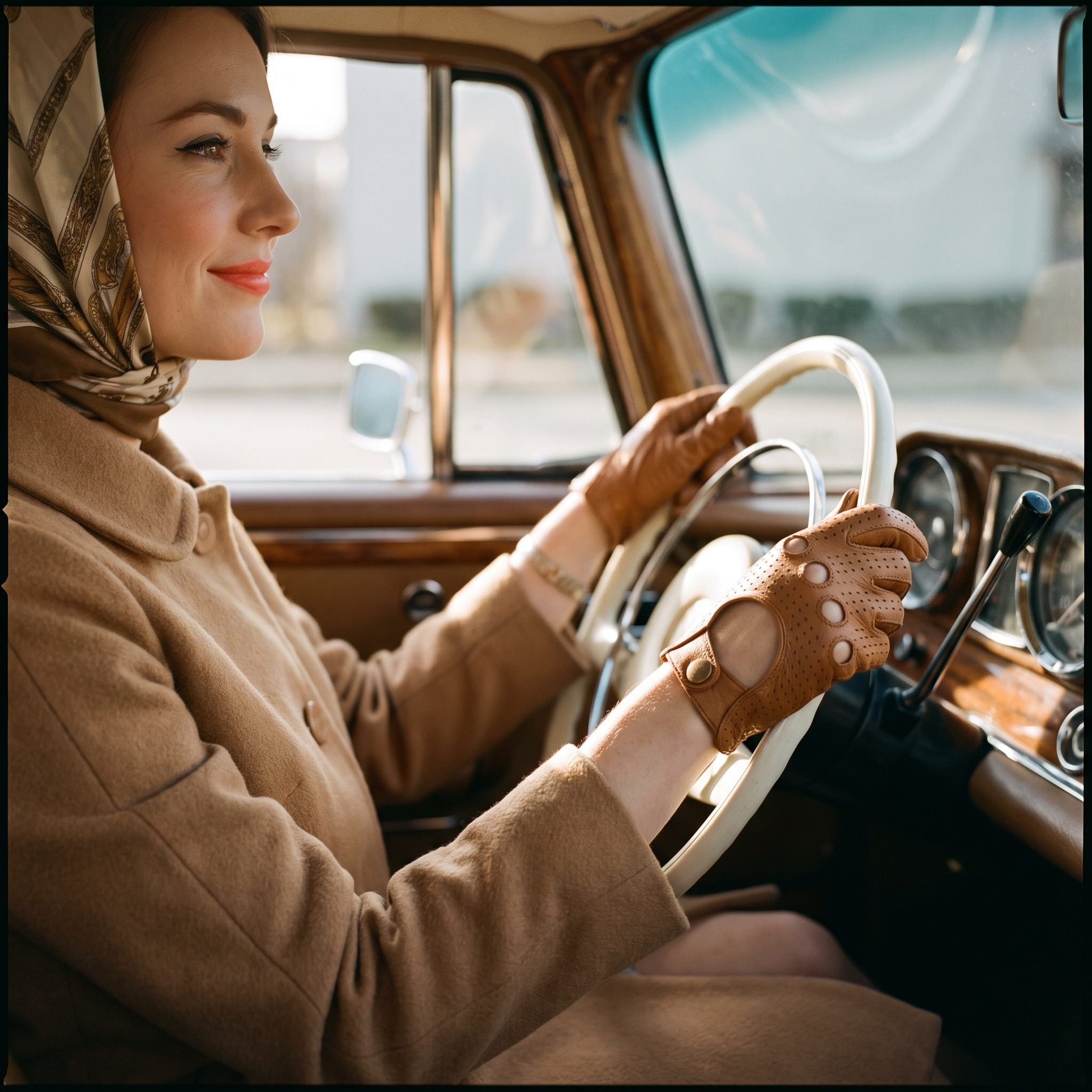
Short leather driving gloves often came perforated across the knuckles or palms, combining grip with ventilation. A snap at the wrist gave them the neat finish expected of even practical accessories.
They also protected hands from a steering wheel made slick by use or uncomfortably hot after sitting in the summer sun. Driving gloves belonged to the more polished end of women’s style, when even an everyday object could be matched with a purpose-built accessory.
24. A Strip of False Eyelashes, Plus Glue for Repairs
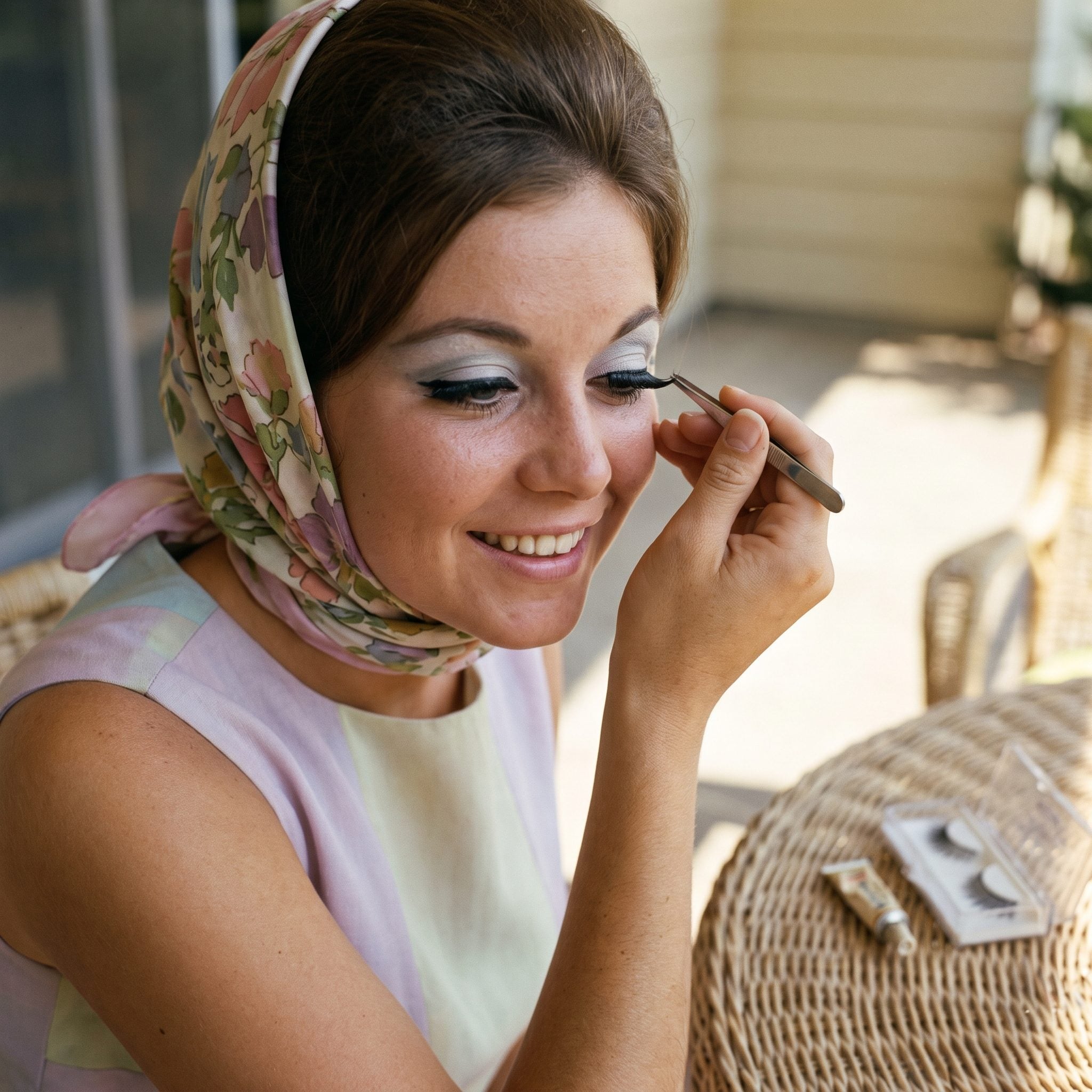
False lashes helped turn the eye into the dominant feature of 1960s makeup. A strip was positioned along the upper lash line, pressed into place, and blended with liner until the join disappeared.
Adhesive could lift at the corners after hours of wear, which made a small tube of glue useful for touch-ups. Twiggy’s famous doll-like eye helped push the look to an extreme, complete with individually painted lower lashes.
23. Opaque Colored Tights That Became Part of the Outfit
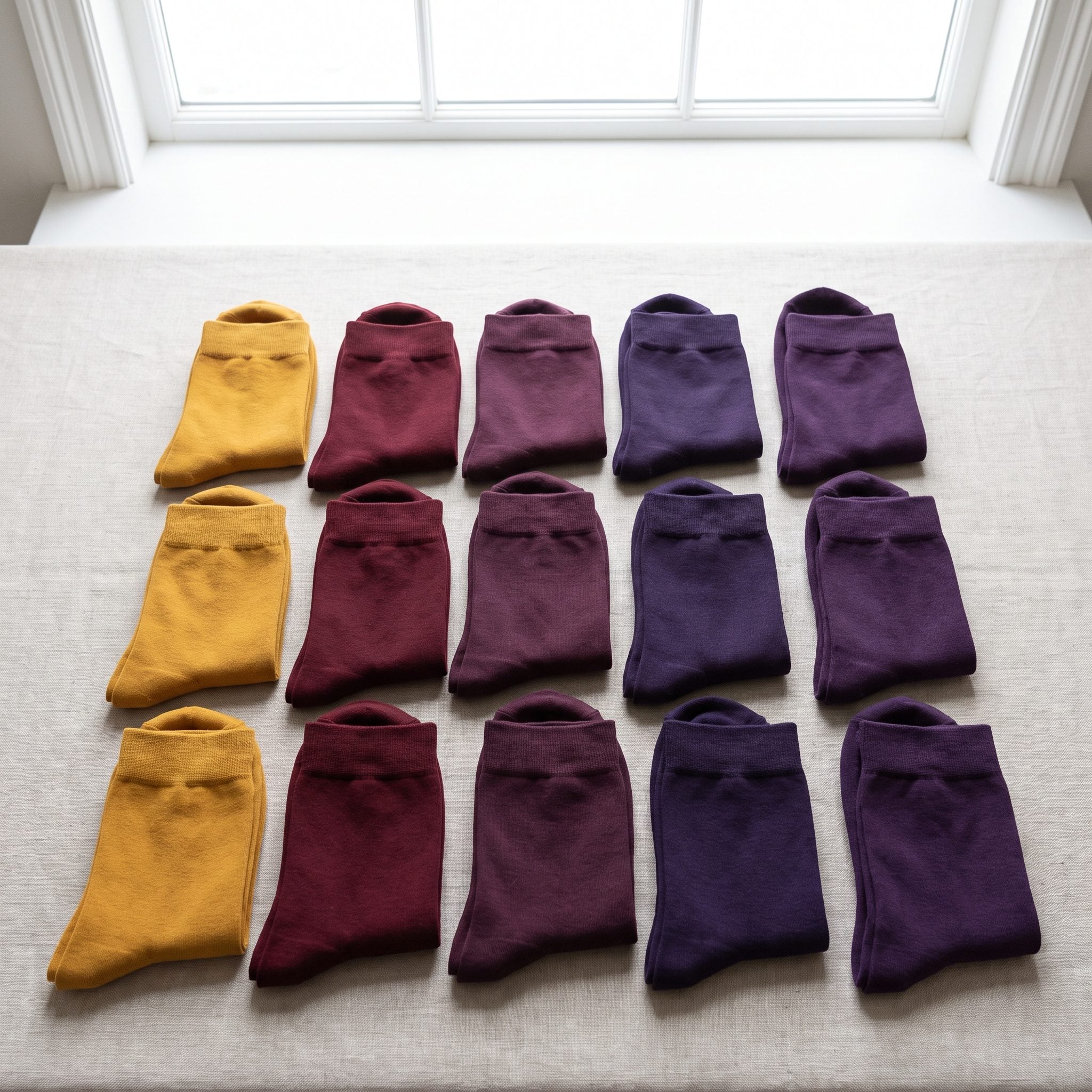
As hemlines climbed, hosiery became more visible and therefore more important. Mustard, oxblood, violet, bottle green, white, and black could echo or deliberately challenge the dress above.
Matching tights to the hem created one uninterrupted color column, while a contrasting pair broke the leg into another block of color. Either way, hosiery was no longer disappearing quietly beneath the skirt.
22. A Silk Scarf Tied Under the Chin to Protect the Hair
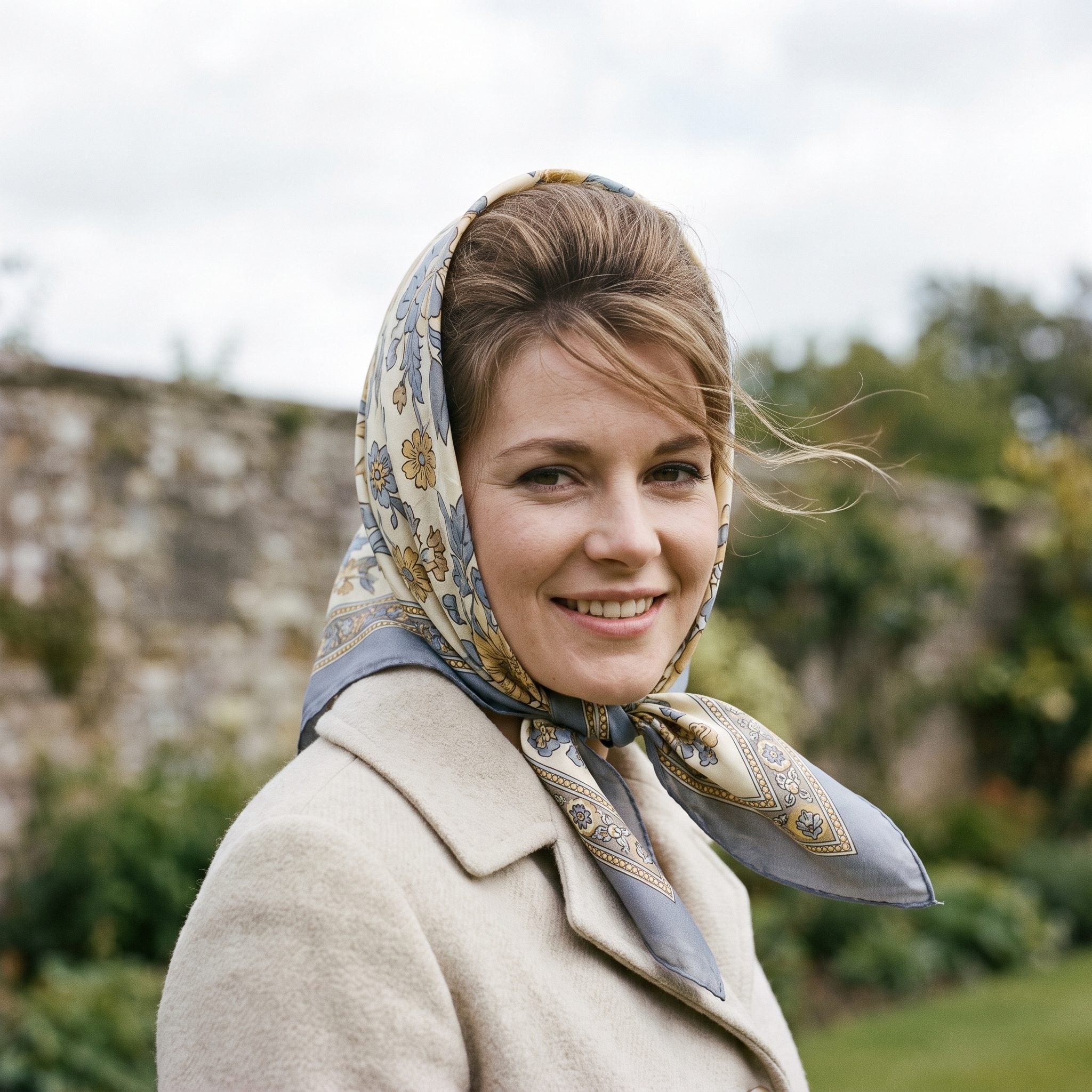
A salon set represented too much time and structure to surrender casually to wind. Folding a scarf into a triangle and tying it beneath the chin created a light protective shell around the hairstyle.
Florals, paisleys, and geometric prints appeared at every price level, from luxury silk to inexpensive imitations. In a convertible, on a breezy sidewalk, or walking from the house to the car, the scarf shielded the finished style without crushing it.
21. A Peace-Symbol Pendant That Signaled the Decade Had Changed
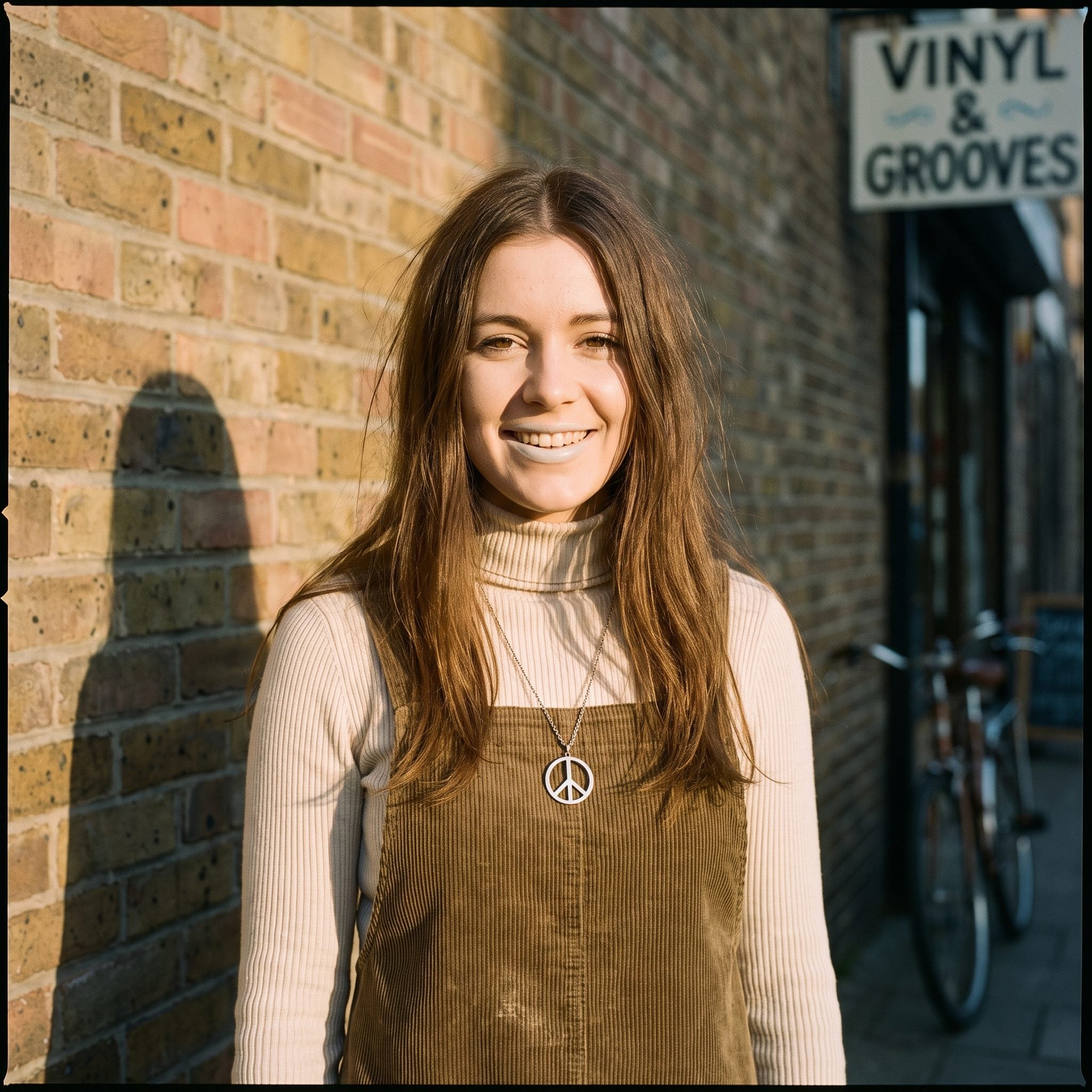
By the late 1960s, a peace-symbol pendant could carry political and cultural associations that conventional jewelry did not. Worn against a plain knit, it became a small but unmistakable emblem of nuclear disarmament, peace activism, anti-war politics, and the broader counterculture.
Its informality also suited the changing silhouette of the late decade. Tailored polish was no longer the only ideal; softer knits, denim, longer hair, fringe, and symbolic jewelry were pushing fashion somewhere less prescribed.
20. A Bouffant Teasing Comb Built to Restore the Height
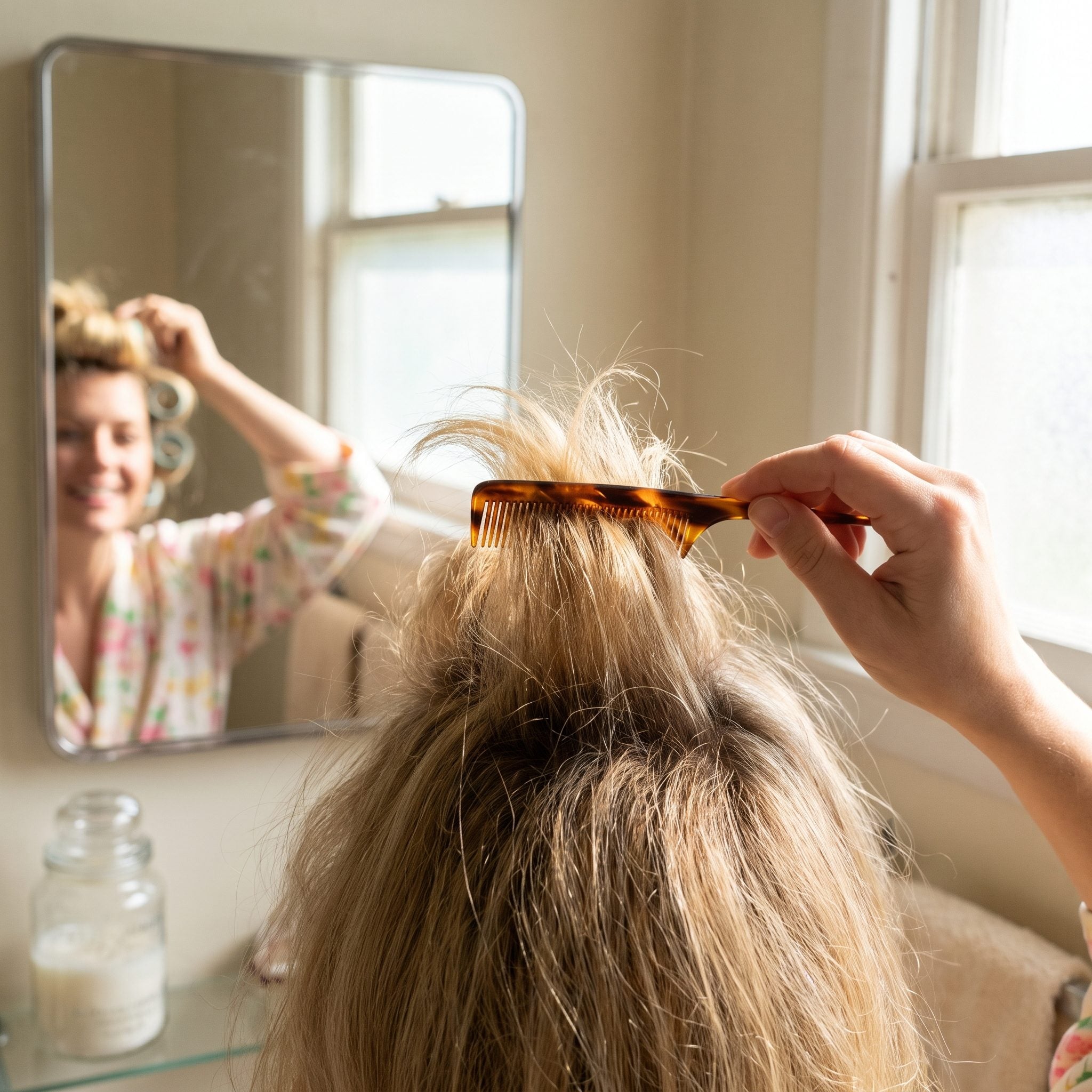
A high crown depended on backcombing, and backcombing depended on a comb narrow enough to get underneath the outer layer of hair without dismantling the entire style.
Fine teeth created density near the roots, while a slim tail helped with parting and sectioning. After wind or a long day compressed the shape, a few careful strokes underneath could restore height while the smoother top layer remained intact.
19. Oversized Plastic Earrings That Made a Plain Shift Look Graphic
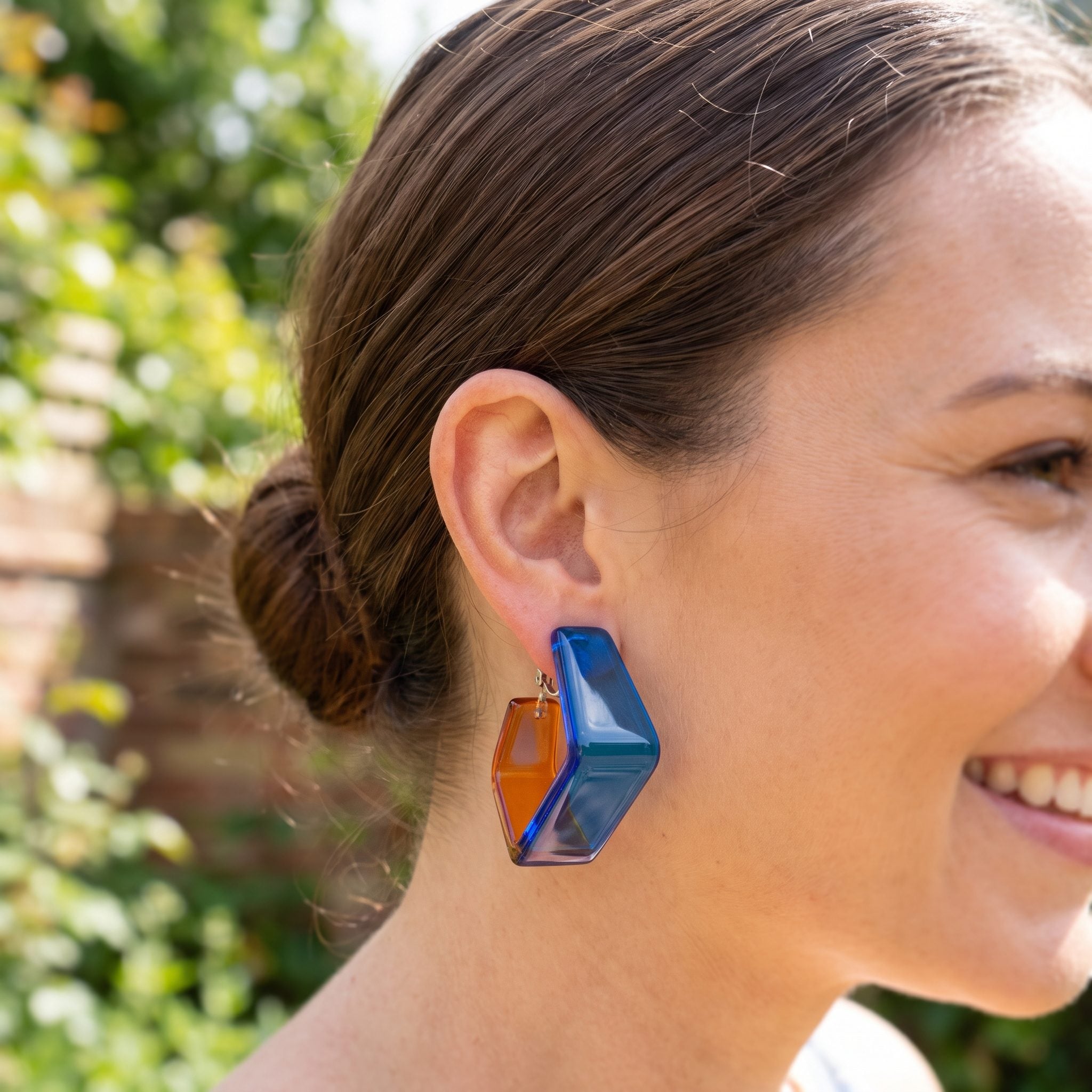
A plain white shift could become something entirely different with a pair of glossy discs clipped at the ears. Plastic allowed scale, color, and shape without the weight or price of precious materials.
Circles, geometric drops, black-and-white blocks, and angular shapes echoed the decade’s fascination with strong outlines. For a night out, a pair large enough to catch the light could carry most of the ornament the outfit needed.
18. An A-Line Dress That Let the Waist Relax
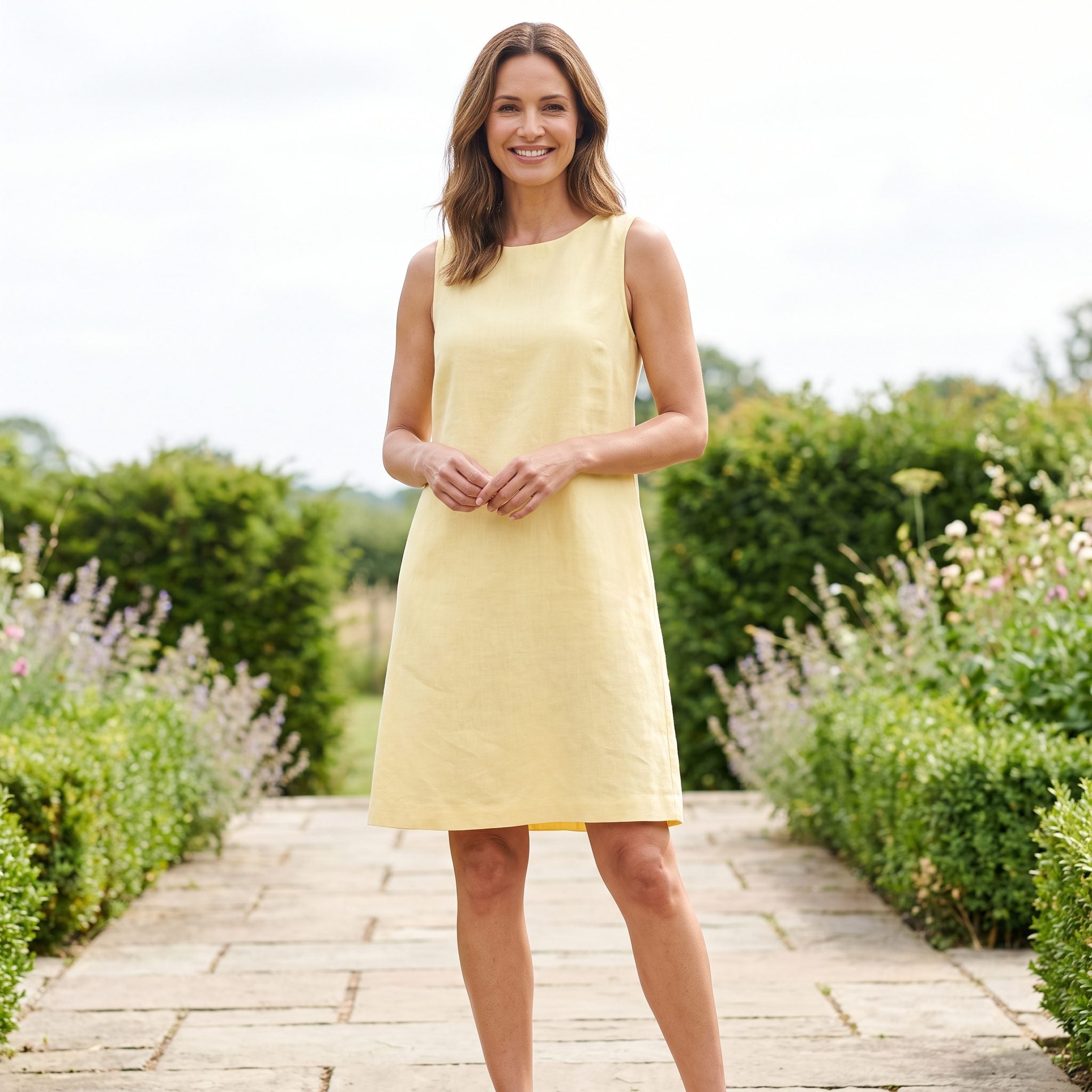
The fitted waist did not disappear in the 1960s, but it stopped being compulsory. An A-line dress skimmed the upper body and widened gradually toward the hem, creating shape through cut rather than cinching.
A true shift falls straighter, while a trapeze dress flares more dramatically from higher on the body. The A-line sits between those extremes, and all three helped move fashion away from the rigidly defined waist that had dominated much of the previous decade.
17. Coin Change Reserved for the Payphone
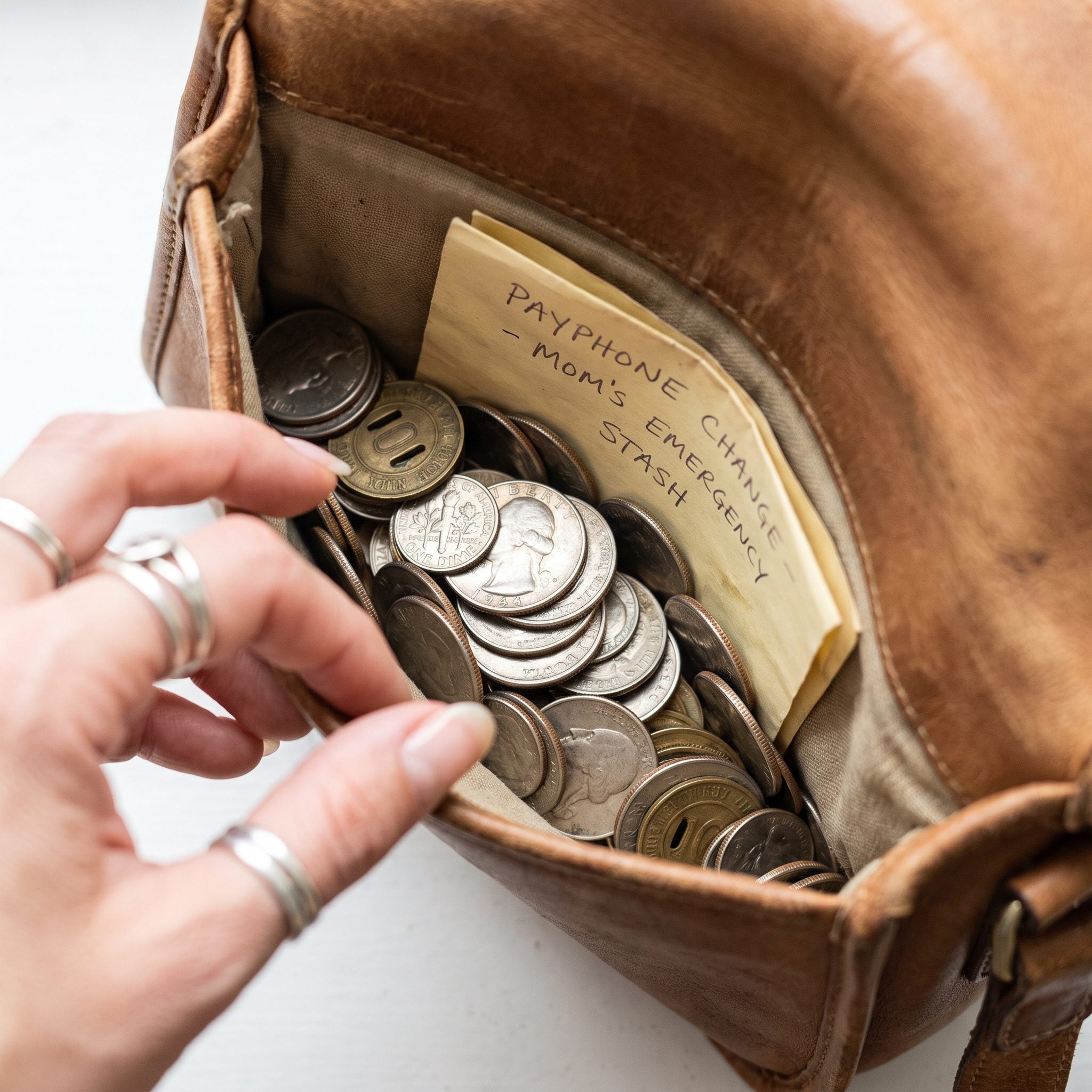
Loose change in a handbag was not always spending money. A few coins might be left untouched specifically for the telephone, because a missed ride or changed plan could otherwise become a much larger problem.
In many parts of the United States, a local payphone call cost a dime for much of the decade, although rates varied by place and system. Usually the ritual was simple: find a booth, feed in the right coin, dial the number. Operators still entered the picture for collect calls, some long-distance calls, and other assisted services.
16. A Wide Plastic Cuff Bracelet Built Like a Piece of Sculpture
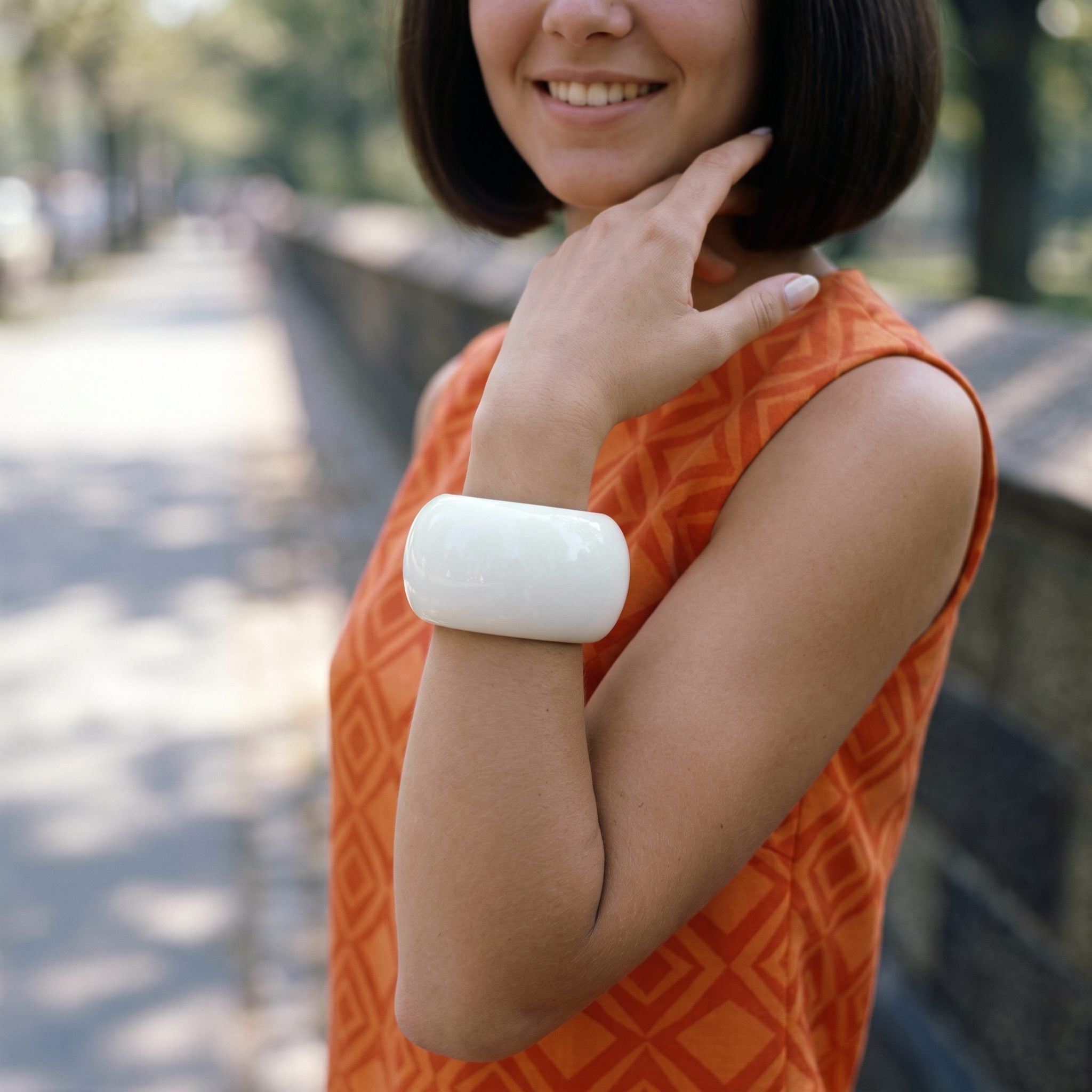
One wide cuff could occupy more visual territory than an entire stack of delicate bracelets. Glossy white, black, orange, yellow, or another saturated color turned the wrist into one more emphatic piece of the outfit.
Plastic suited the mod vocabulary perfectly: smooth, bold, inexpensive, moldable, and unapologetically artificial. Against a plain sleeve or sleeveless shift, the bracelet looked almost architectural.
15. A Small Can of Hairspray for Structural Emergencies
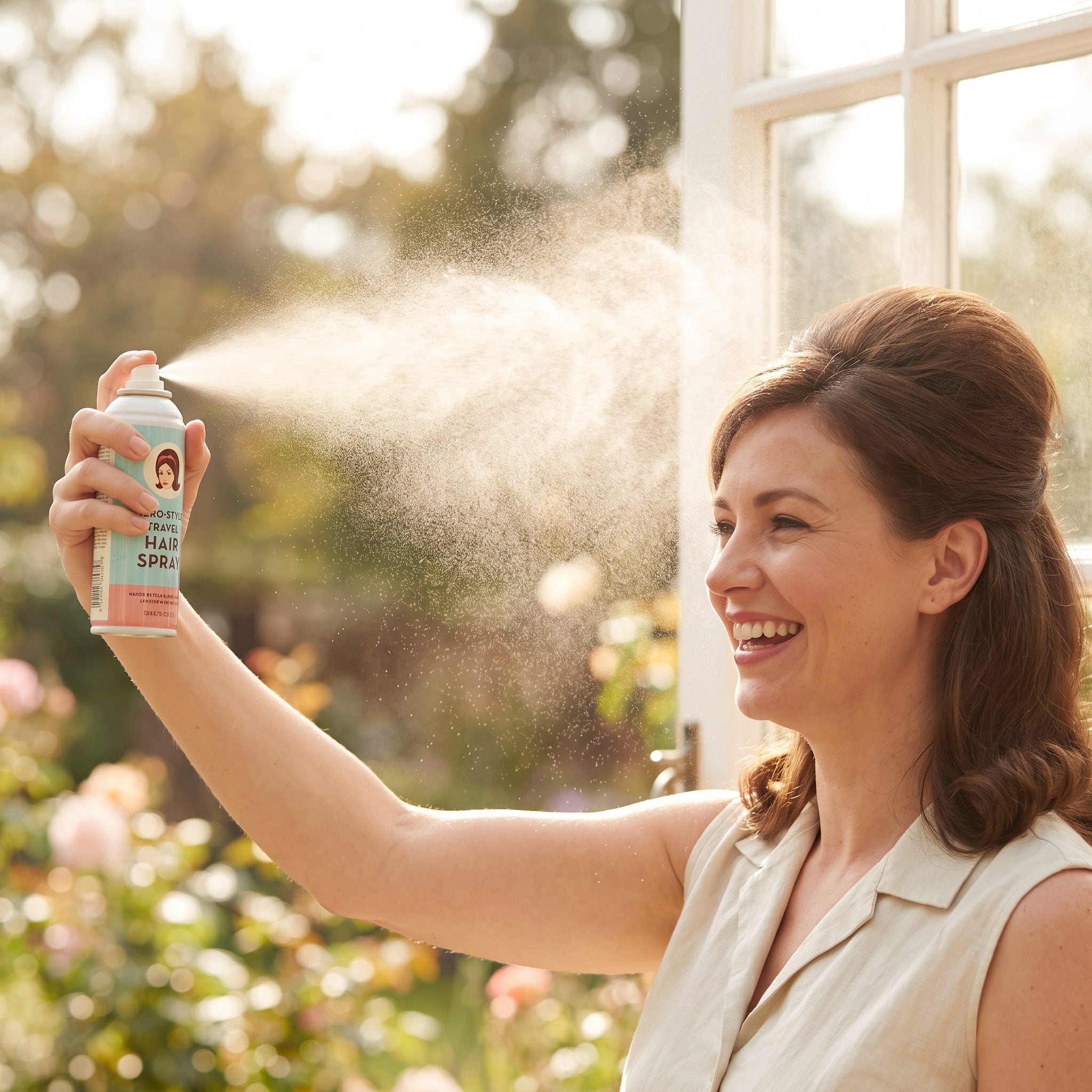
Bouffants, flips, and set styles depended on structure, and humidity had other plans. A purse-sized aerosol offered quick reinforcement when teased volume started sinking or curled ends began to soften.
The scent was distinctive and the hold could be formidable. Hairspray was less a finishing mist than part of the engineering, locking shaped sections into place after the comb had done its work.
14. A Folded Paper Shopping List Tucked Beside the Cash
❤️ Would you like to save this?
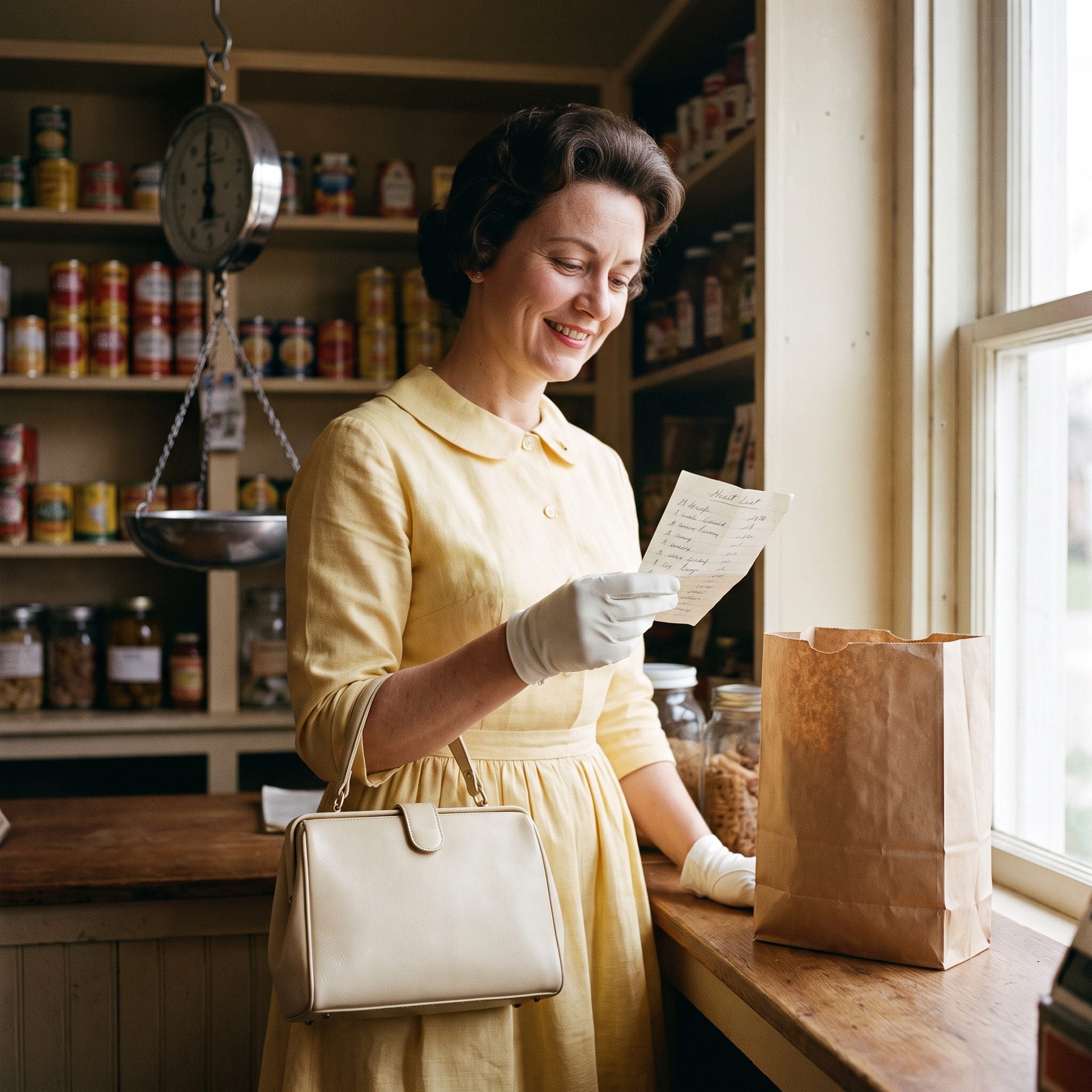
A scrap of paper folded into quarters could carry the week’s groceries, errands, stamps, prescriptions, and reminders. No screen was waiting in the aisle; the list had to survive the trip from kitchen table to checkout counter.
By the end of the day the folds softened and pencil marks smudged, but the system was hard to improve on: small enough for a wallet or handbag, cheap enough to replace tomorrow, and visible the instant it was unfolded.
13. A Ribbed Mock-Neck Sweater That Gave an Outfit a Clean Spine
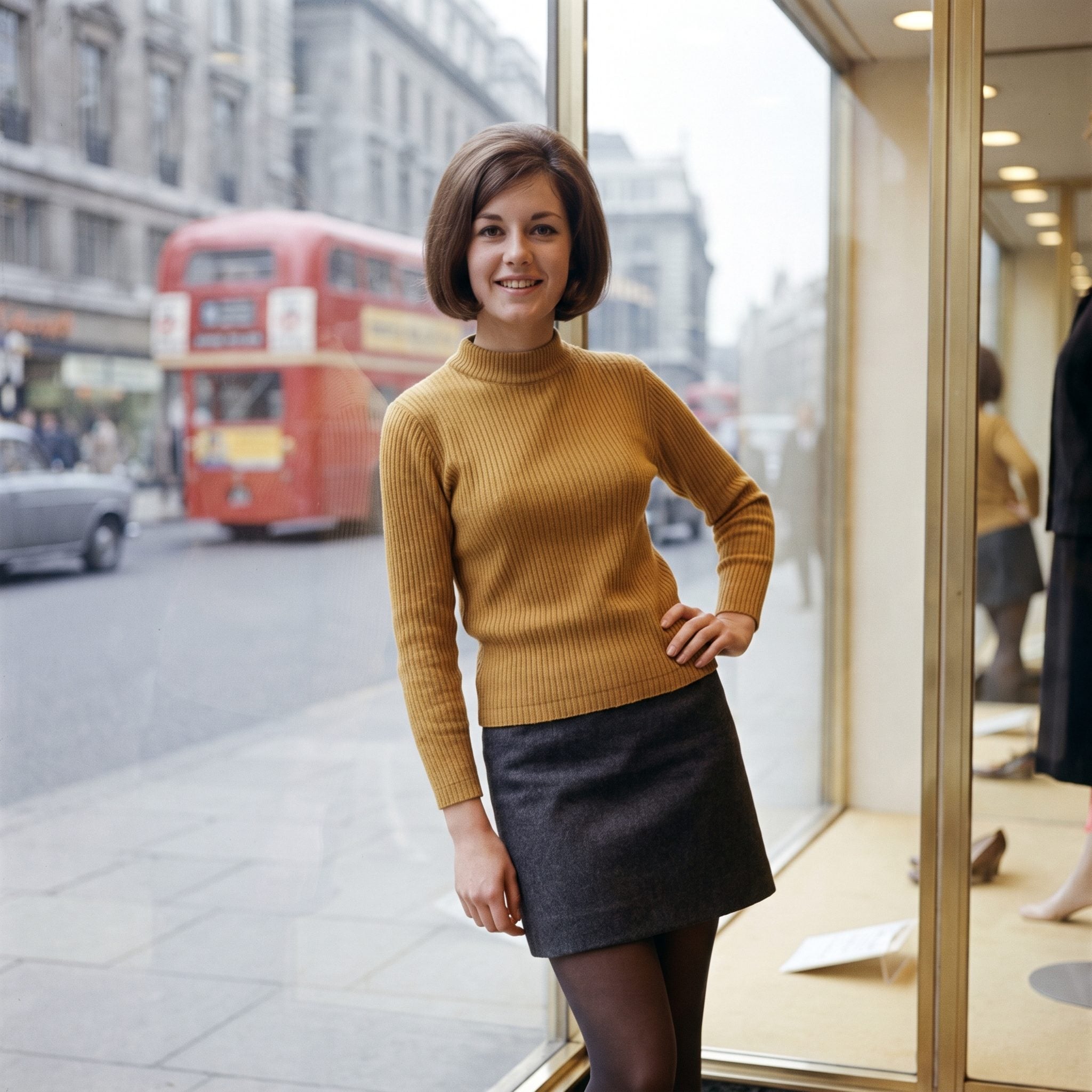
A fitted ribbed mock-neck created one uninterrupted line from chin to waist without the bulk of a collar or the formality of a blouse. With a miniskirt or narrow trousers, the result could be almost diagrammatically clean.
Jewel tones and mustard shades gave the simple shape more force. A mustard ribbed mock-neck sweater needed very little ornament when the color, ribbing, and high neckline were already defining the upper half.
12. A Rain Bonnet That Folded Into a Case Smaller Than a Compact
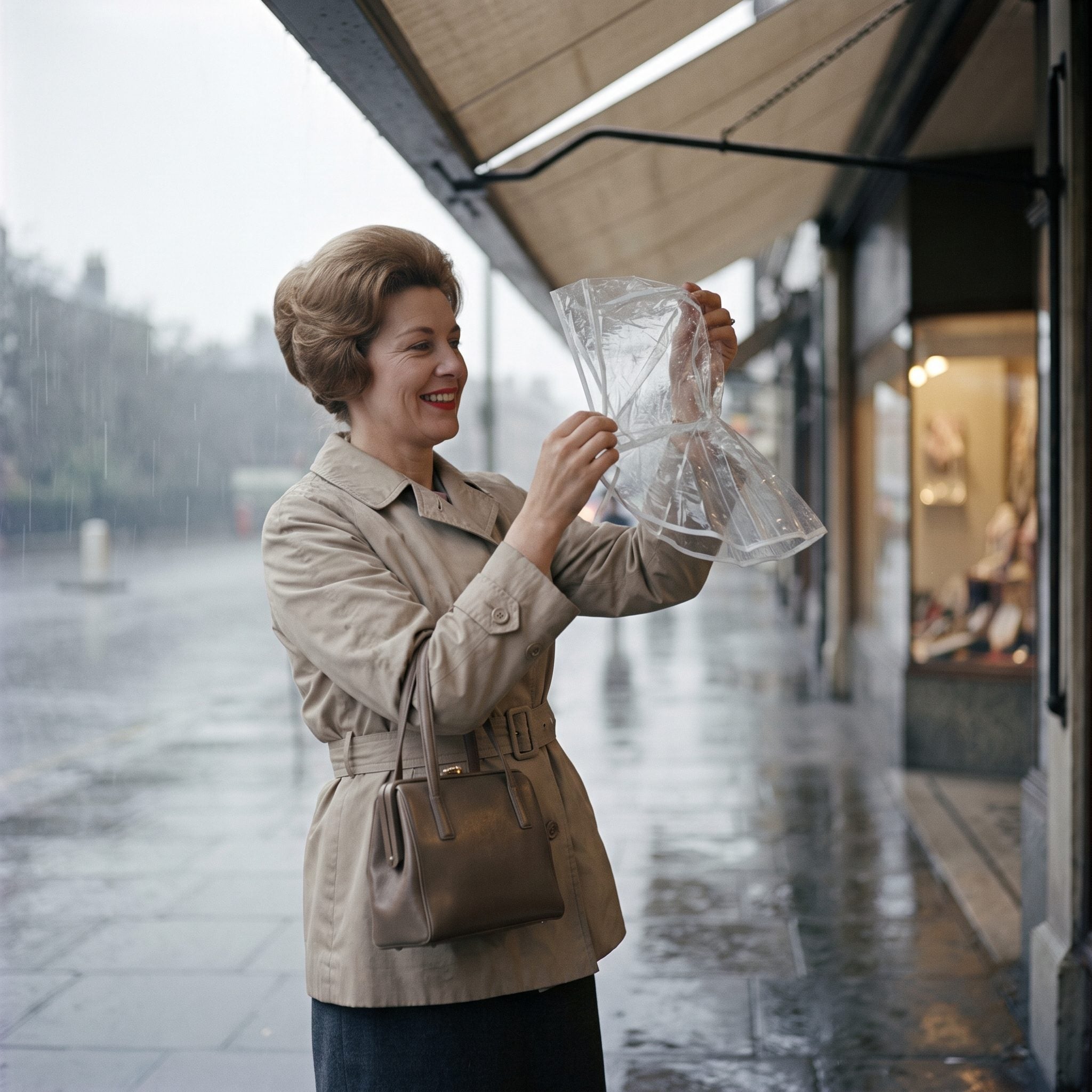
A transparent pleated rain bonnet could collapse into a tiny plastic case and wait almost invisibly at the bottom of a handbag until the weather turned.
The purpose was brutally specific: save the hairstyle. A set, backcombed bouffant, or carefully shaped flip represented too much time to surrender to a passing shower. The bonnet might have been crinkly and inelegant in the hand, but once rain began, elegance was no longer the urgent problem.
11. Square-Toed Low-Heeled Pumps Made for a Full Day on Foot
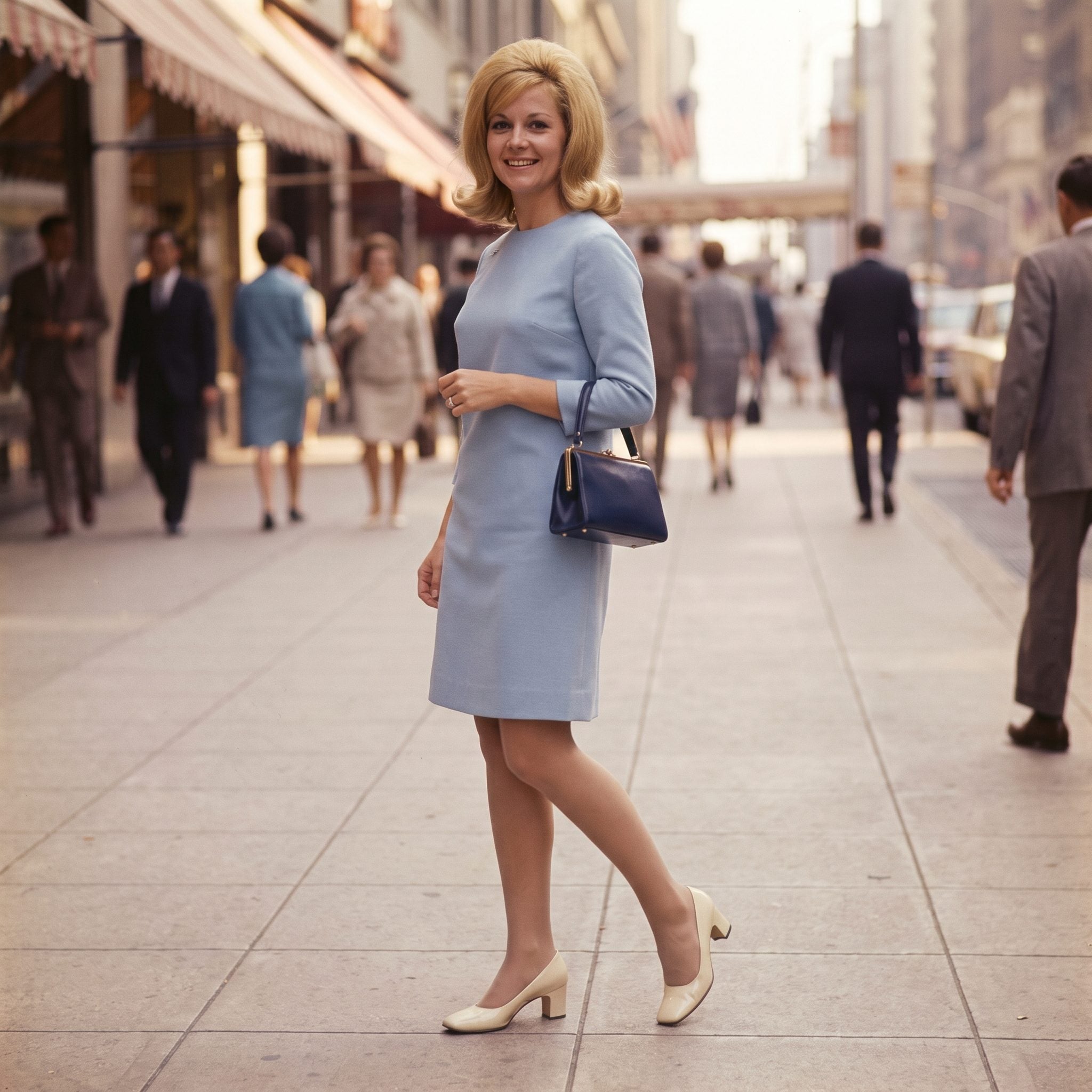
The square toe brought the clean angles of mod fashion all the way down to the shoe. A low block or stacked heel kept the profile neat without requiring the height of a stiletto.
Patent cream, black, and chalky white worked especially well with abbreviated skirts and clean-lined dresses. The broader-looking toe changed the silhouette even when the actual fit still depended on the individual shoe. Practicality and a sharply defined profile happened to arrive in the same package.
10. A Synthetic Makeup Bag Rattling at the Bottom of the Handbag
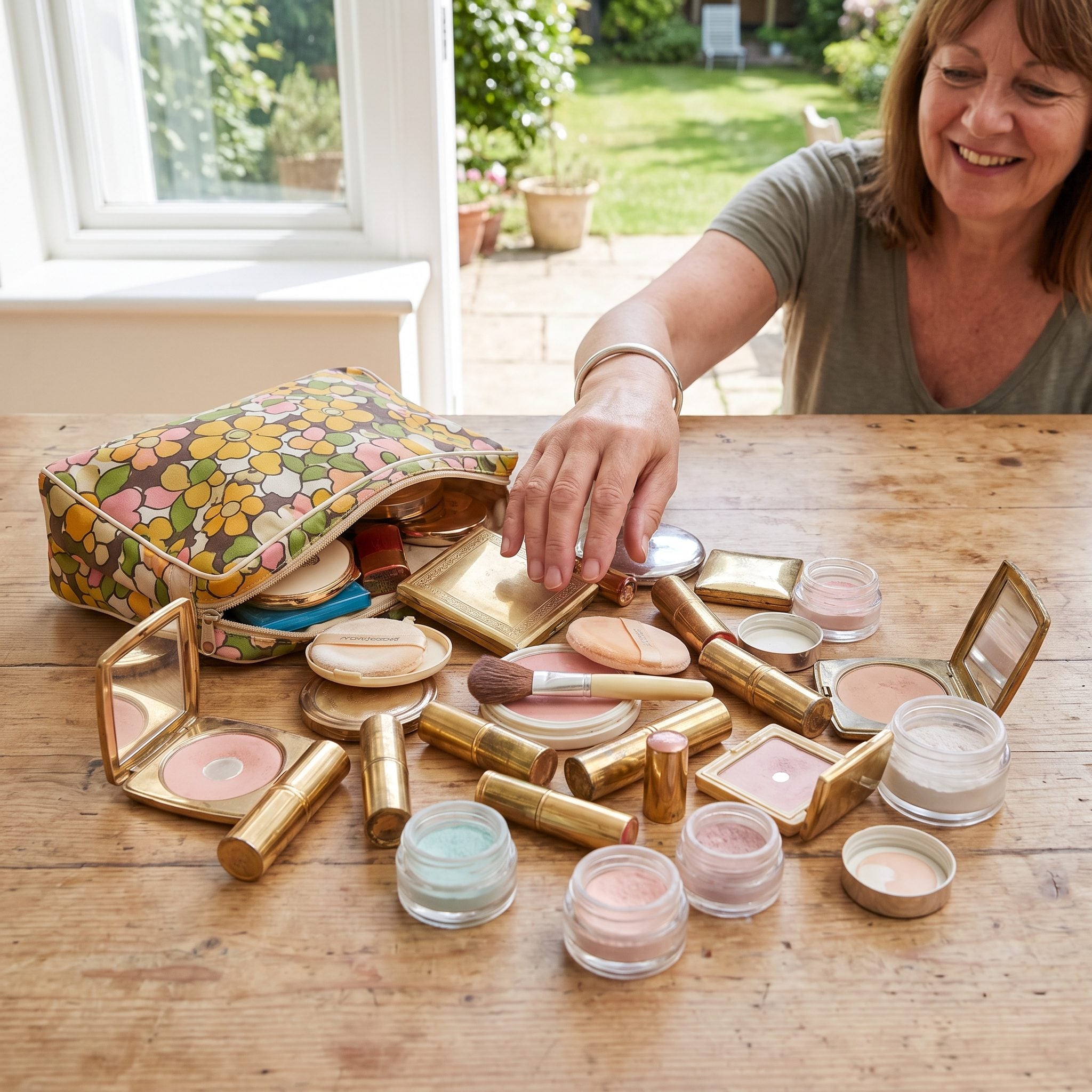
A small zippered pouch kept tubes, powders, brushes, and stray cosmetic odds and ends from migrating through the larger handbag. Its contents announced themselves with every step.
Nylon, vinyl, and other wipe-clean synthetics suited the job particularly well. Turquoise, pink, floral, or geometric on the outside; powder compact, lipstick, mirror, lash glue, and whatever else required repair on the inside.
9. Black Liquid Eyeliner Sharp Enough to Define the Decade
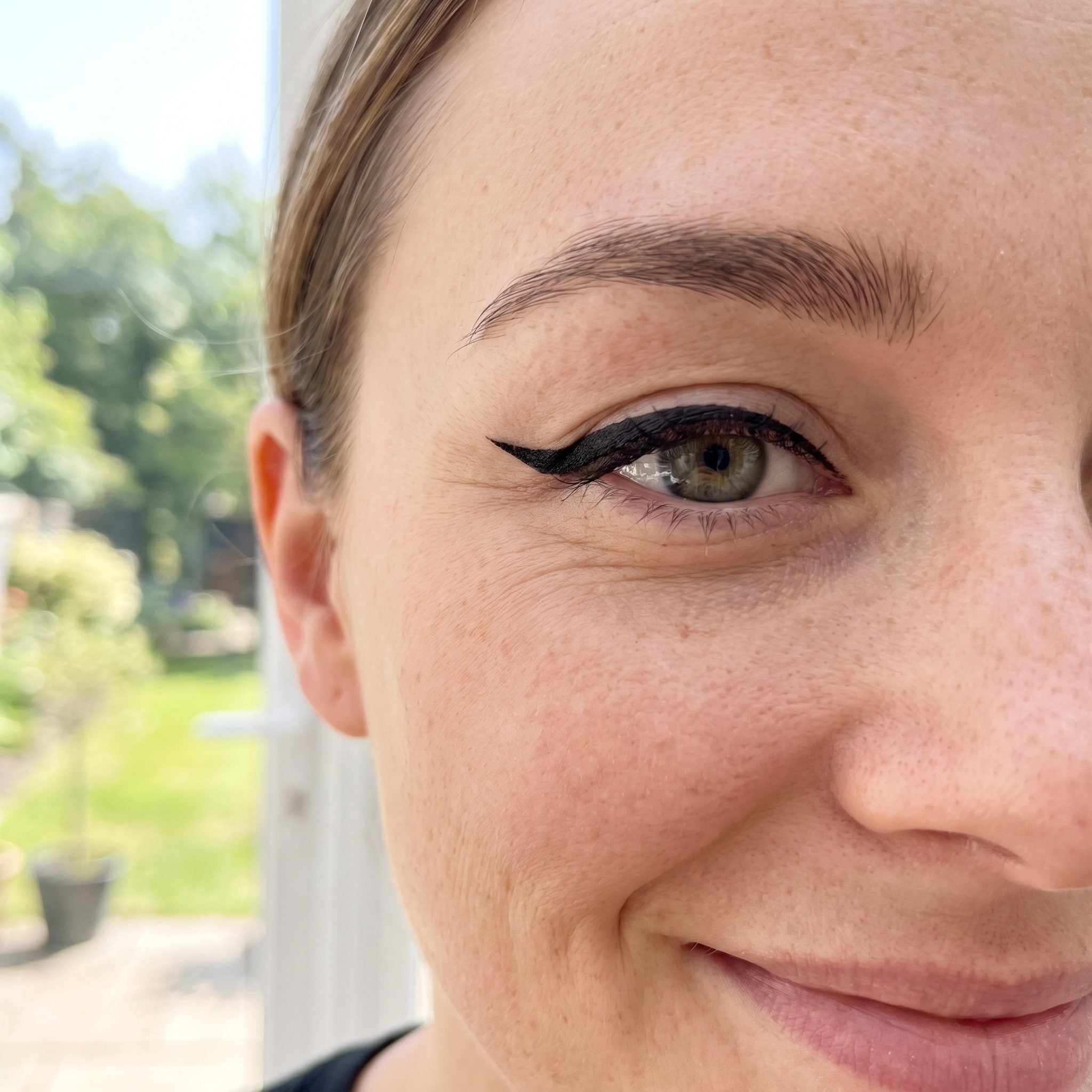
A clean black line along the upper lashes could change the entire architecture of 1960s makeup. Flick it outward, combine it with pale lipstick and heavy lashes, and the eye immediately became the focal point.
Mod makeup pushed the technique further with graphic crease lines and sharply separated zones of black and pale skin. Twiggy became the most famous face of the look, but the larger idea was everywhere: treat the eye almost like a drawing.
8. A Pot of Petroleum Jelly That Refused to Have Only One Job
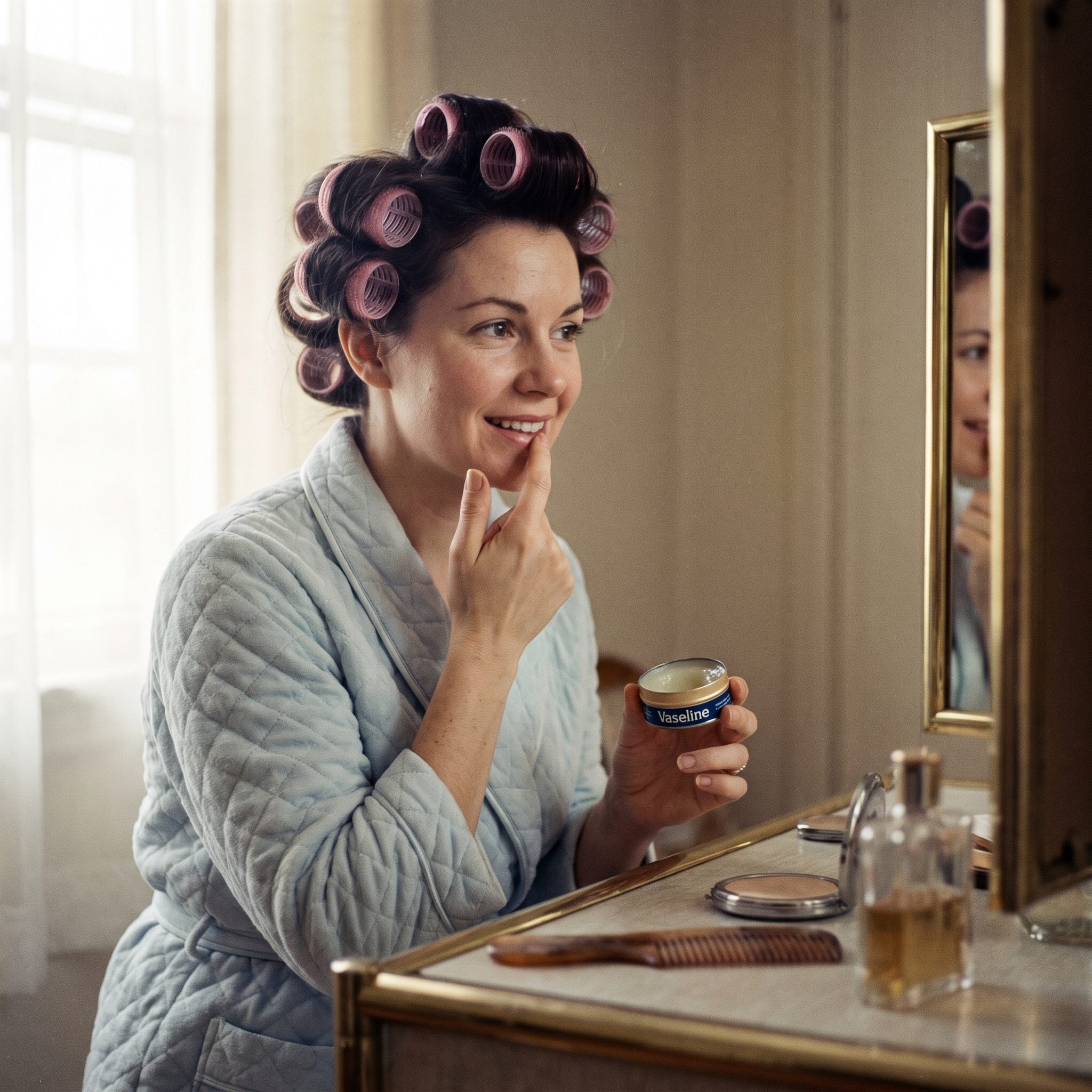
A small pot could soften chapped lips, smooth brows, add shine to lashes, or create a touch of sheen on the skin. Long before cosmetics were divided into highly specialized categories, petroleum jelly was already occupying several of them at once.
Its great advantage was simplicity. A fingertip was enough, the container traveled easily, and the product itself had no interest in fashion cycles.
7. A Beaded Change Purse That Kept Coins From Taking Over the Handbag
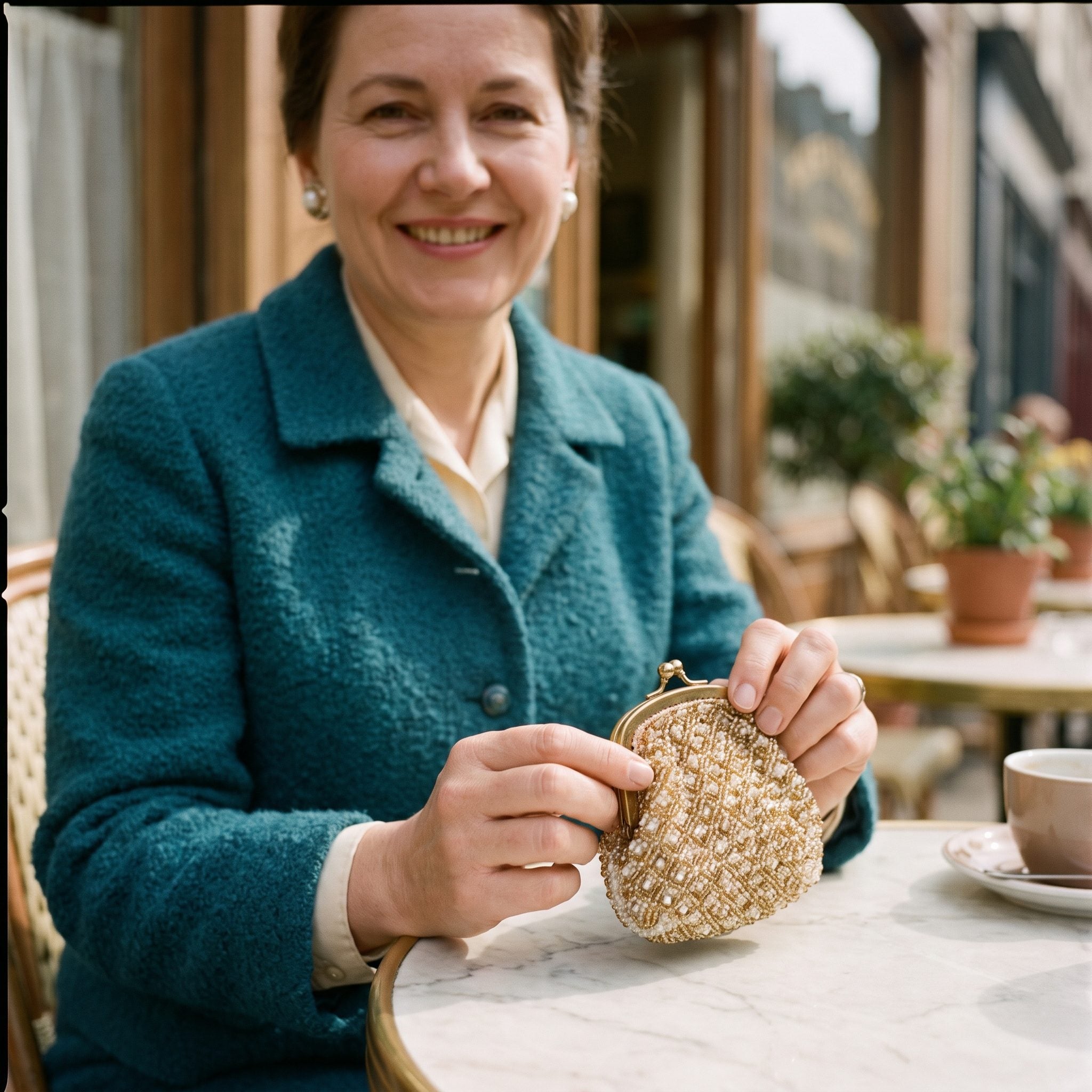
Glass beads sewn close across a tiny pouch could turn something as mundane as loose change into a miniature evening accessory. A metal kiss-lock opened wide enough to see the coins and snapped shut securely afterward.
The arrangement was practical in a cash-heavy world: paper money stayed separate while small coins remained easy to find at the register, bus, vending machine, or payphone.
6. A Packet of Pocket Tissues for the Messes Nobody Photographed
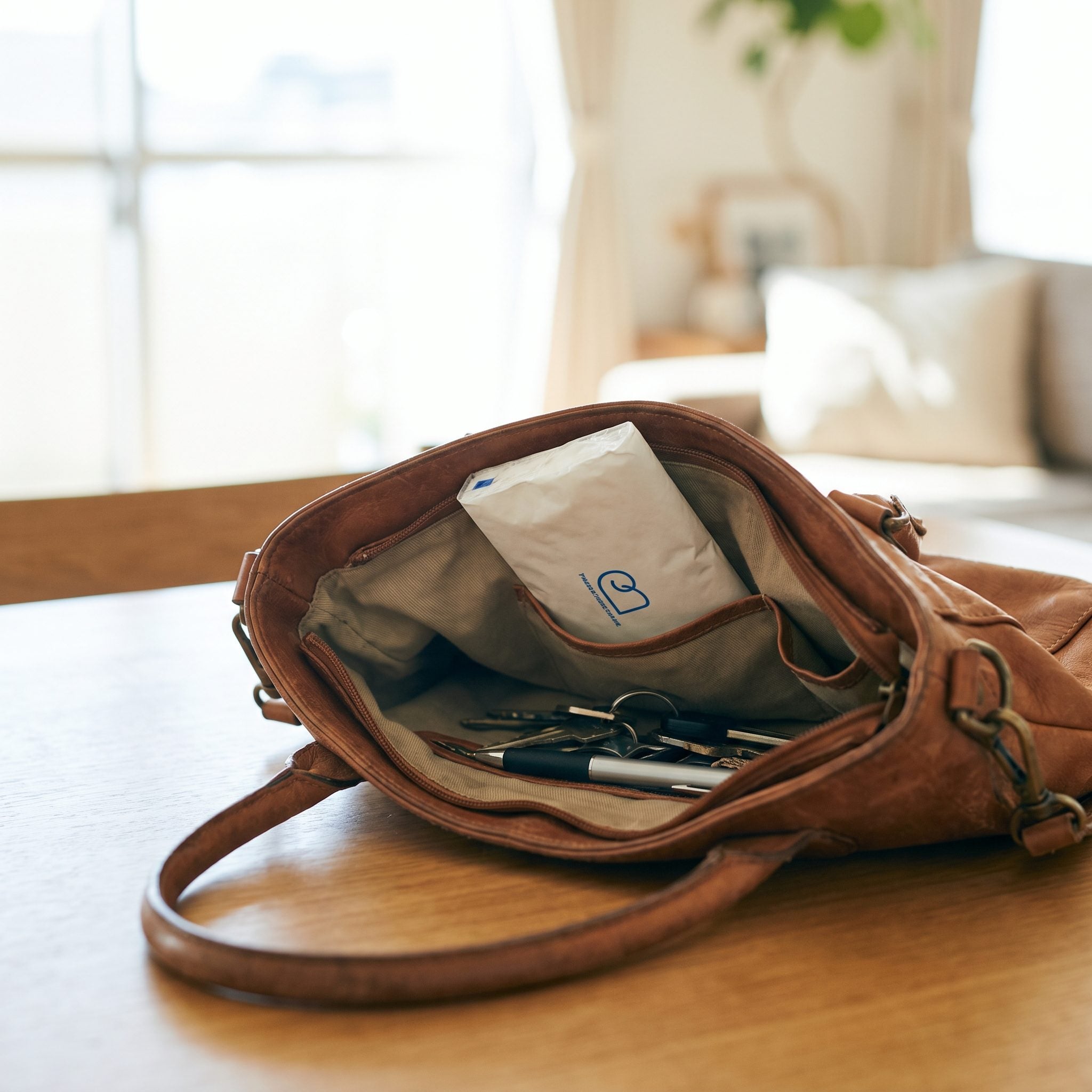
Not glamorous, but endlessly useful. A flat packet could handle a lipstick blot, a smudged corner of makeup, a spilled drop, or an ordinary cold without taking up much handbag space.
Disposable tissues also coexisted with the older ritual of the washable linen handkerchief. One was convenience; the other was an object meant to be pressed, carried, reused, and sometimes monogrammed.
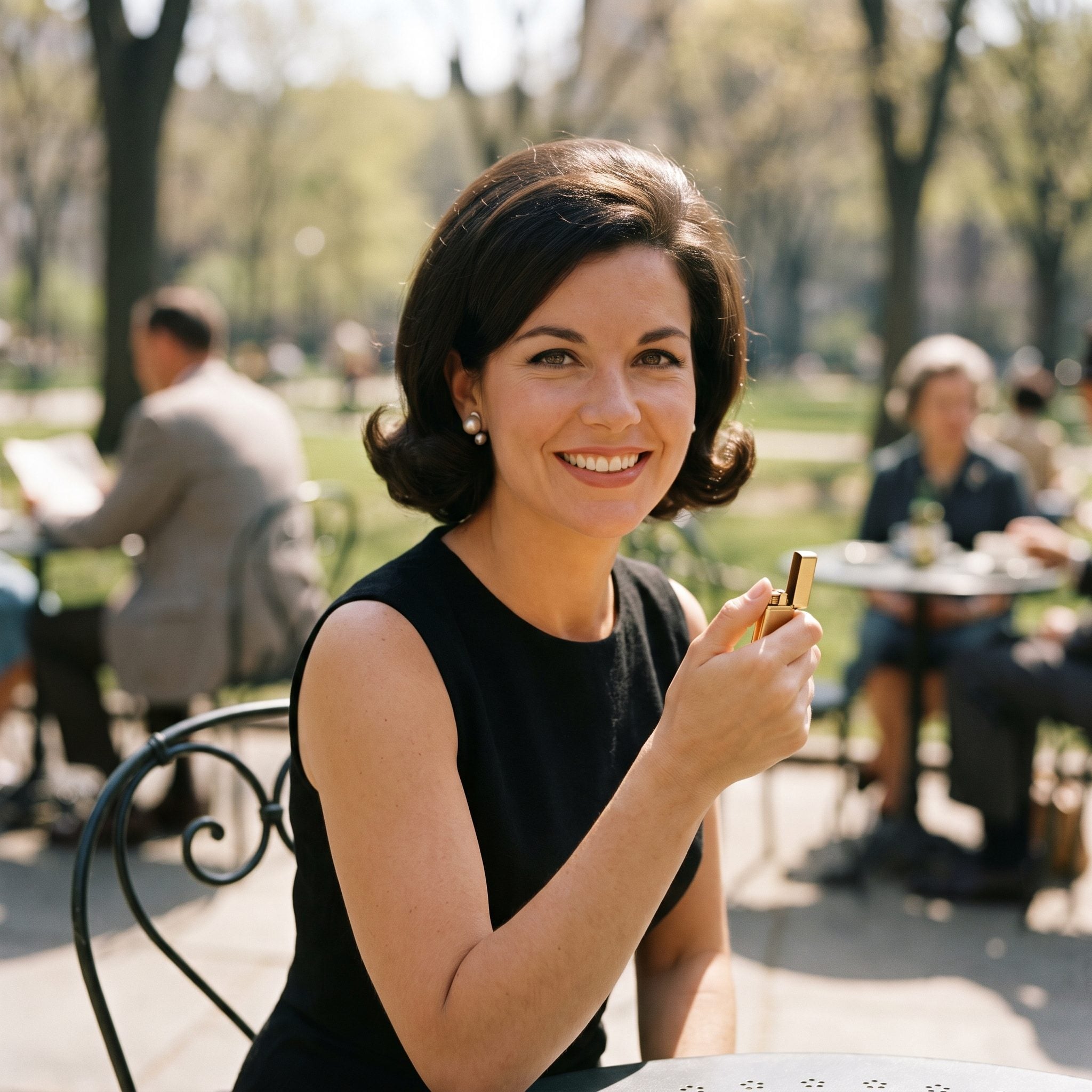
5. A Slim Gold Lighter That Became Part of the Evening Ritual
❤️ Would you like to save this?
Smoking was far more socially embedded in the 1960s than it is today, and a slim metal lighter could function as both tool and accessory. Gold-tone cases, engraving, and satisfying mechanisms made some examples feel closer to jewelry than hardware.
In lounges, restaurants, and evening settings, offering or accepting a light became part of the social ritual surrounding smoking. A polished lighter slipped easily beside lipstick and a compact in a small evening bag.
4. Cat-Eye Reading Glasses on a Chain So They Never Went Far
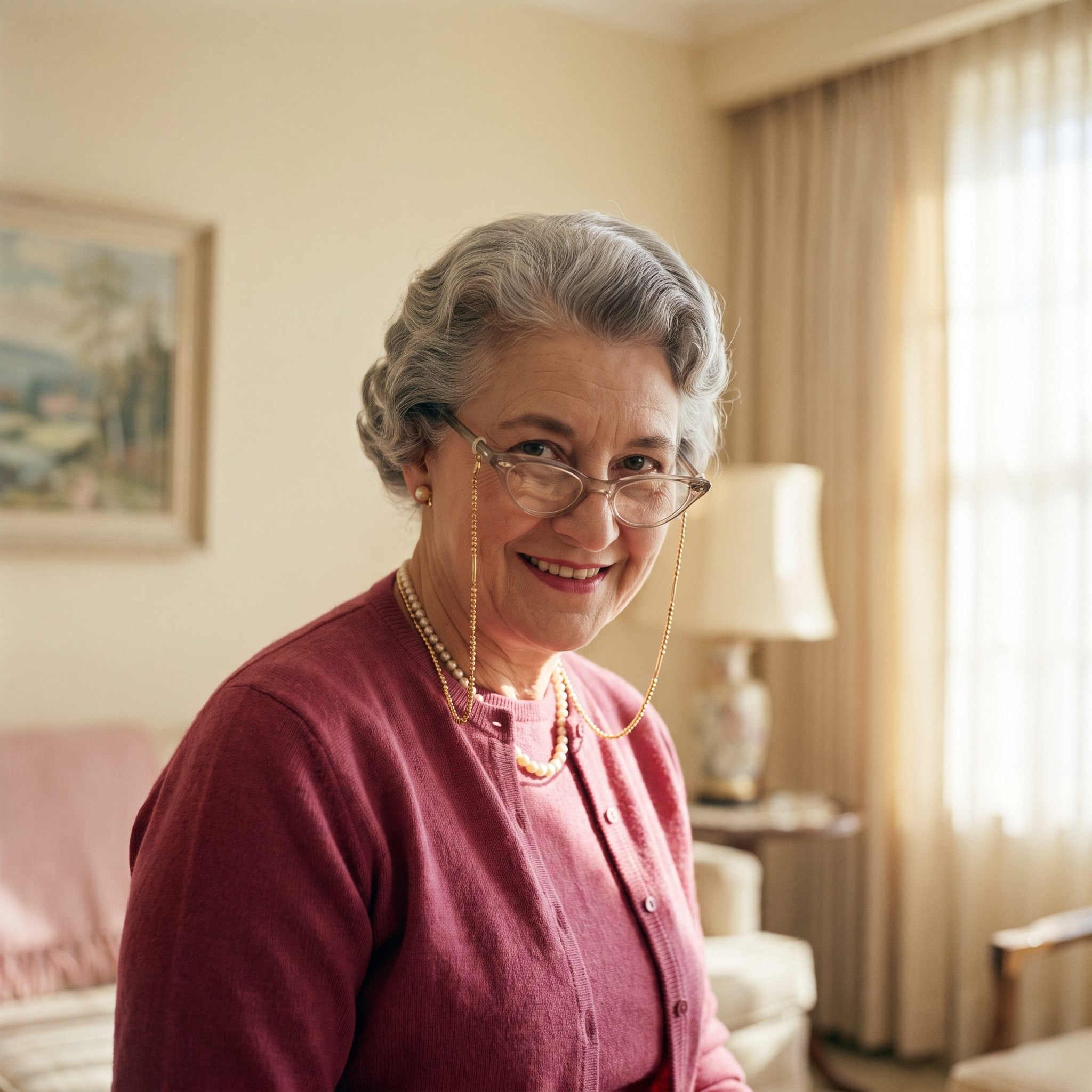
Cat-eye frames swept upward at the temples, turning a practical pair of reading glasses into another strongly shaped accessory. A chain let them fall to the chest the instant they were no longer needed.
The gesture became part of the appeal: glasses up for the menu, down for conversation, then hanging safely within reach instead of disappearing into the handbag. Function supplied the chain; fashion made sure nobody minded seeing it.
3. A Pressed Linen Handkerchief With One Initial in the Corner

Folded into a square and ironed flat, the linen handkerchief belonged to an older etiquette that still had plenty of life in the 1960s. Monograms, embroidered edges, and fine cloth made an ordinary practical object feel personal.
It could dab a watering eye, be offered to someone else, or simply remain tucked neatly inside the bag all day. Disposable tissues were gaining ground, but paper never quite reproduced the ceremony of a piece of linen prepared for reuse.
2. Bold Geometric Sunglasses That Put a Hard Frame Around the Face
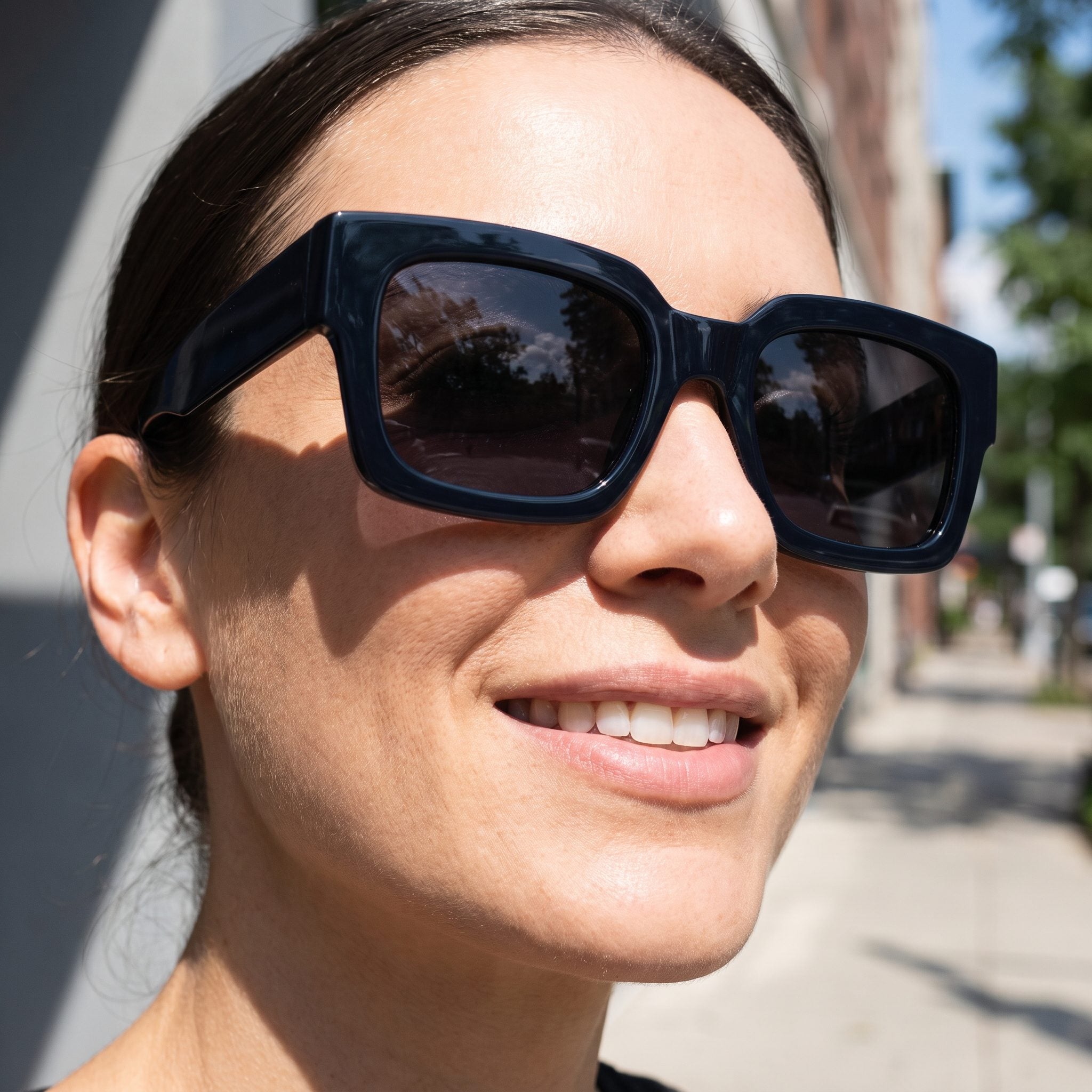
Thick rims and hard angles pushed sunglasses away from the softer shapes of earlier years. Square, oversized, or sharply cut frames could finish a mod outfit with one dark statement across the face.
The scale mattered. Large frames supplied contrast against pale lipstick, short haircuts, and clean necklines while echoing the same fascination with circles, squares, and strong outlines appearing elsewhere in 1960s design.
1. A Structured Top-Handle Handbag That Had to Carry Almost Everything Else
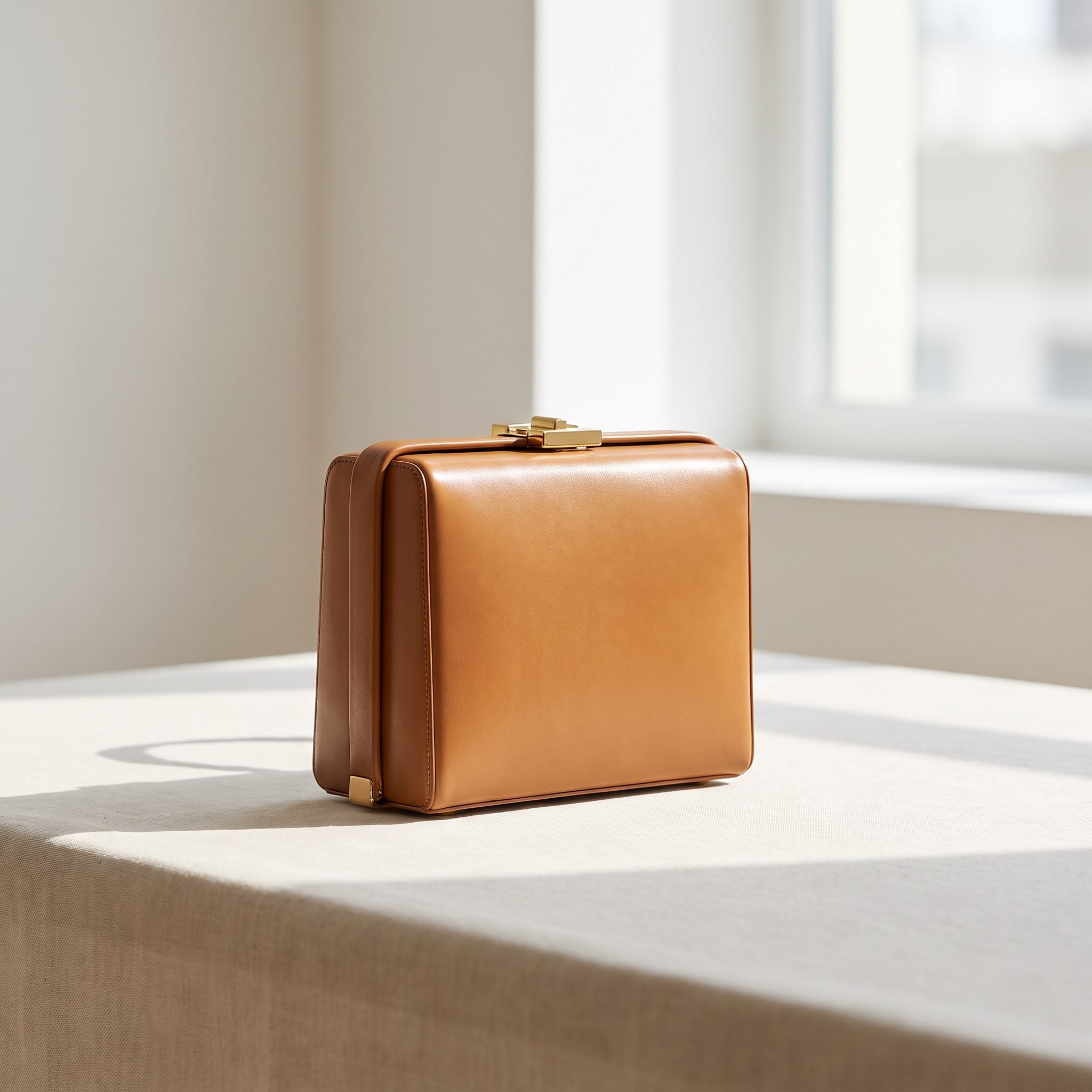
Firm, boxy, and designed to keep its shape, the top-handle handbag was both accessory and infrastructure. The clasp closed with authority; the frame kept the contents upright; the short handle forced the bag to be carried rather than casually slung.
More important, this was where much of the decade’s daily machinery actually lived: compact, lipstick, tissues, coins, address book, atomizer, change purse, comb, and whatever else the day required. A tan leather top-handle bag might look beautifully controlled from the outside while concealing a surprisingly elaborate operating system within.