
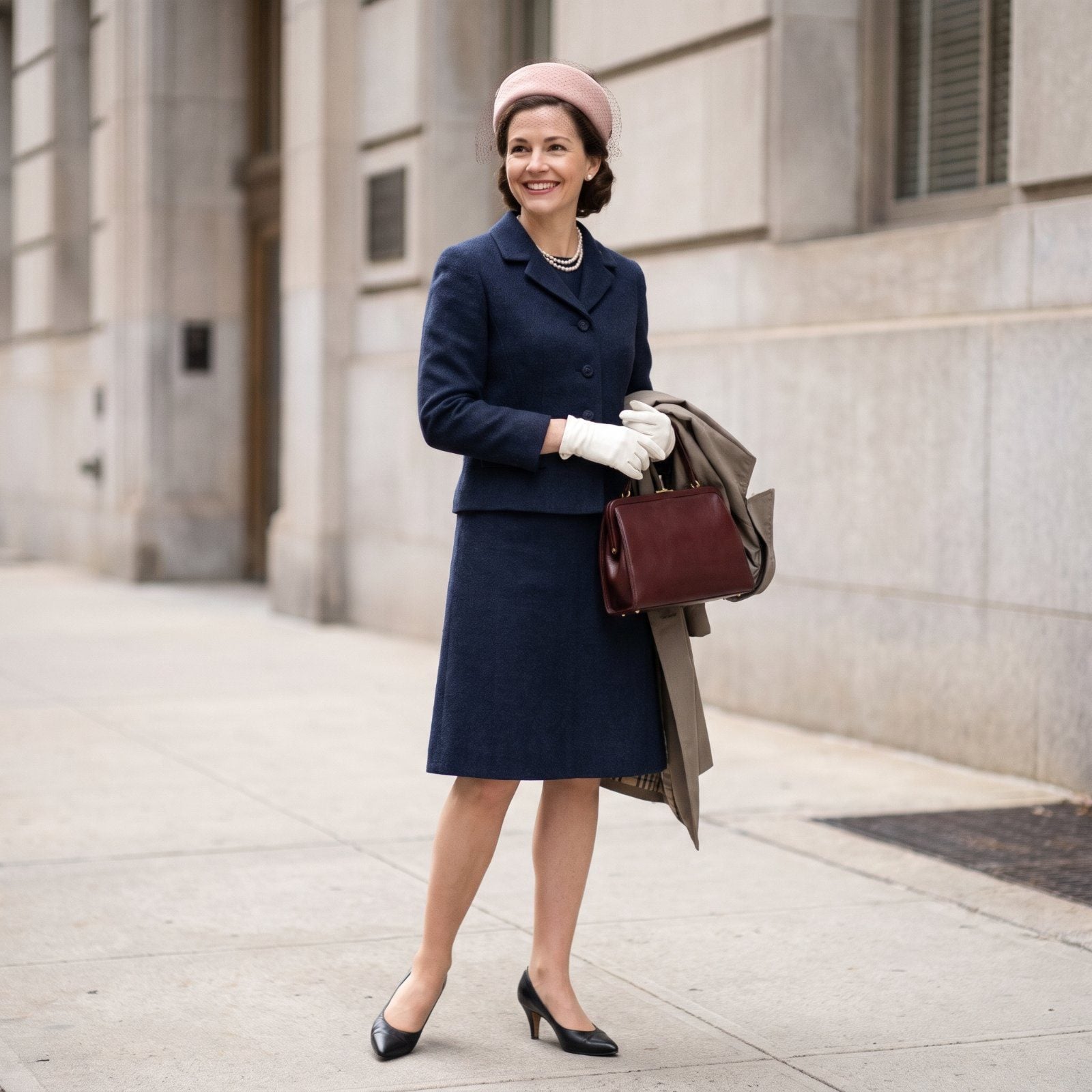
The smell of carbon paper. The clack of a typewriter carriage returning. Fluorescent light flattening everyone to the same shade of beige by three in the afternoon. That was the backdrop for some of the most disciplined dressing American women ever pulled off.
There was a uniform, though nobody called it that — a suit for Monday, a cardigan for the cold stockroom, a hat you did not remove at your desk. The looks below trace the 1960s office week across the whole decade, from early winter wool to late-sixties autumn corduroy, and honestly? They hold up better than you remember.
FYI, thanks to AI imagery software, we’re able to create very specific fashion and hairstyle examples to illustrate the points being made. In some cases, imagery is exaggerated to hammer home the point. Also, assume links that take you off the site are affiliate links such as links to Amazon. this means we may earn a commission if you buy something.
24. Early 1960s Winter Monday: Navy Wool Skirt Suit, White Blouse, and Black Pumps
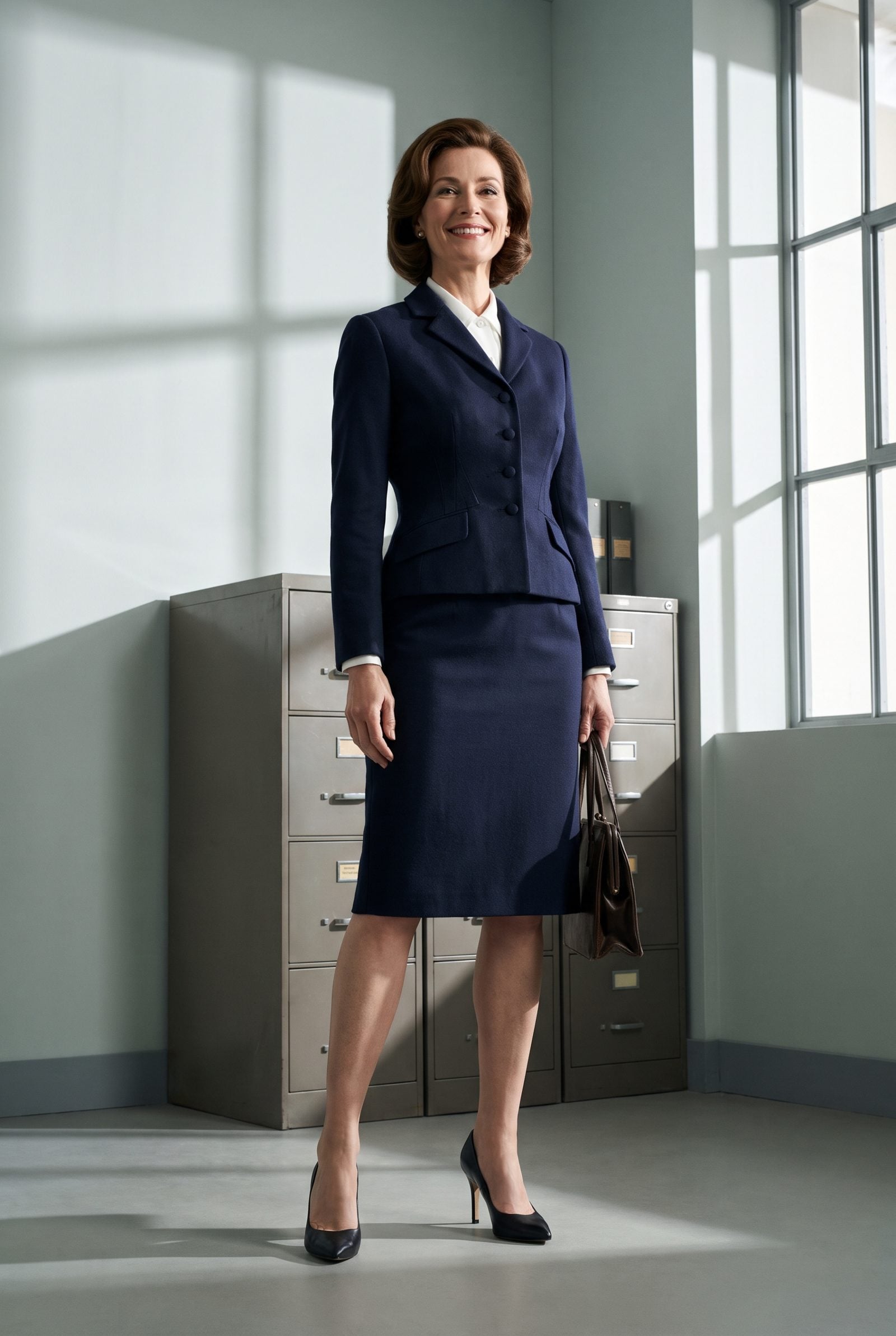
The navy suit was armor you could file in. Monday called for the most serious thing you owned, and nothing read serious like matched wool — a fitted jacket with narrow lapels over a straight skirt that hit just below the knee.
Restraint ran the whole thing. Navy instead of black kept it softer on a tired complexion, and the white blouse at the collar did the brightening work a scarf would do today. Pearls, pumps, a top-handle bag, and you had said everything you needed to say before you opened your mouth.
23. Early 1960s Winter Wednesday: Plaid Wool Skirt, Cashmere Cardigan, and Kitten Heels
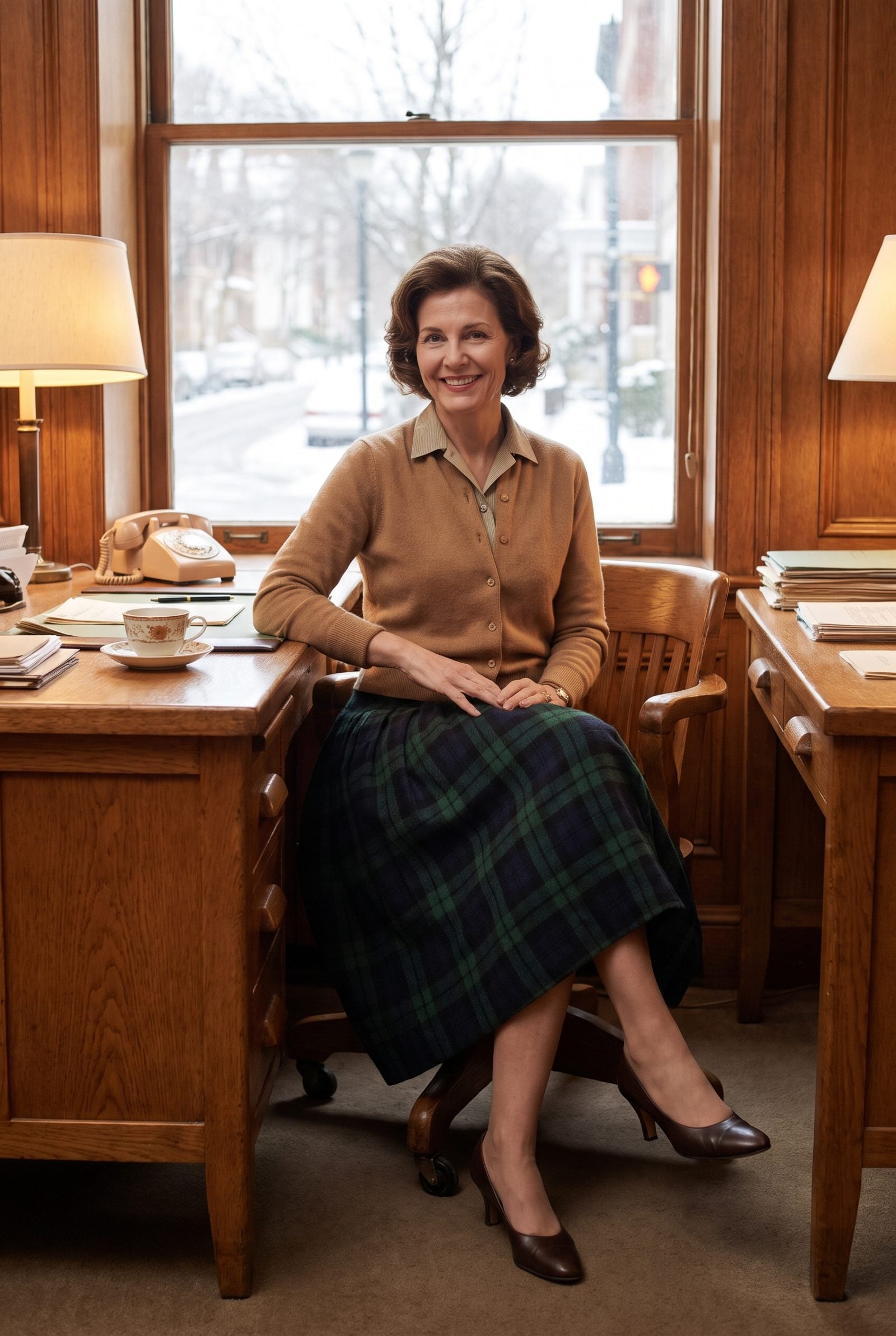
Wednesday loosened its collar. The plaid skirt and buttoned cardigan were the midweek compromise between Monday’s suit and the plain fact that the stockroom ran cold and the radiators had opinions.
Texture is the whole story here. Soft cashmere against the crisper weave of the wool skirt gives the look depth without a single bright color, and the neat collar points of the shirt peeking out keep a cardigan from reading like a bathrobe. Coordinated separates doing the quiet work of looking pulled together on a budget of two or three good pieces — which, let’s face it, was most budgets.
What Our Readers Say
- Asked which season they most like dressing for, about half of ThreadCurve readers (52%) picked fall and winter, well ahead of spring and summer at 20%.
- The everyday shoe has changed a lot: asked which daily pair they would buy, 61% of our readers chose sneakers and just 16% a low heel.
From ThreadCurve reader polls and votes.
22. Early 1960s Spring Monday: Collarless Pastel Suit, Shell Top, and Pillbox Hat
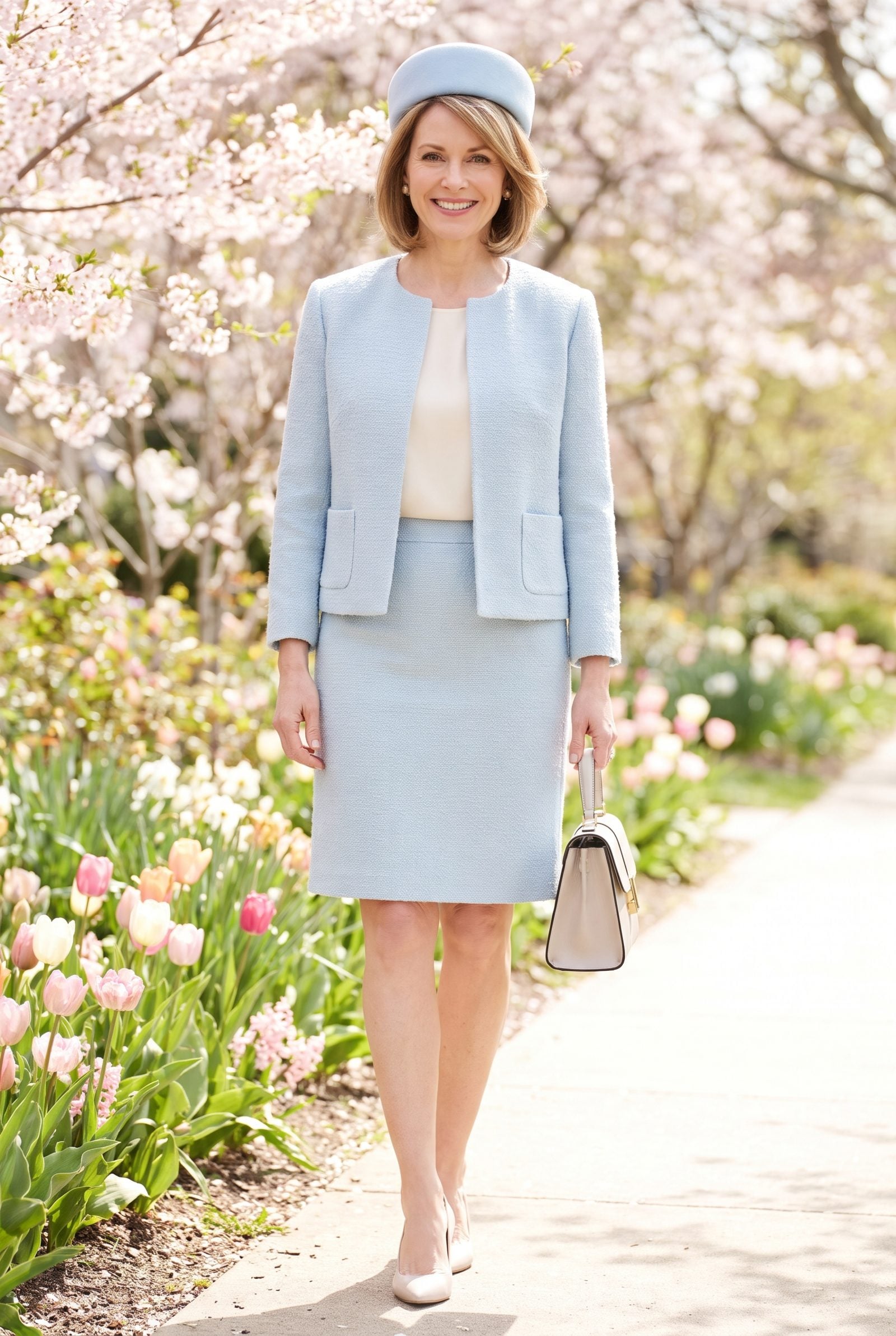
Pastel season arrived and the whole office exhaled. The collarless suit, boucle-textured and boxy, was pure early-decade elegance — the kind of silhouette that would be on every front page by 1963.
Powder blue against cream is the color story doing the lifting. The missing collar keeps the neckline clean so the pillbox hat and pearl earrings have room to register. It is a party look dialed down to desk-appropriate, which is exactly why it felt like a small occasion to wear it.
21. Early 1960s Spring Tuesday: Printed Shirtwaist Dress, Narrow Belt, and Spectator Pumps
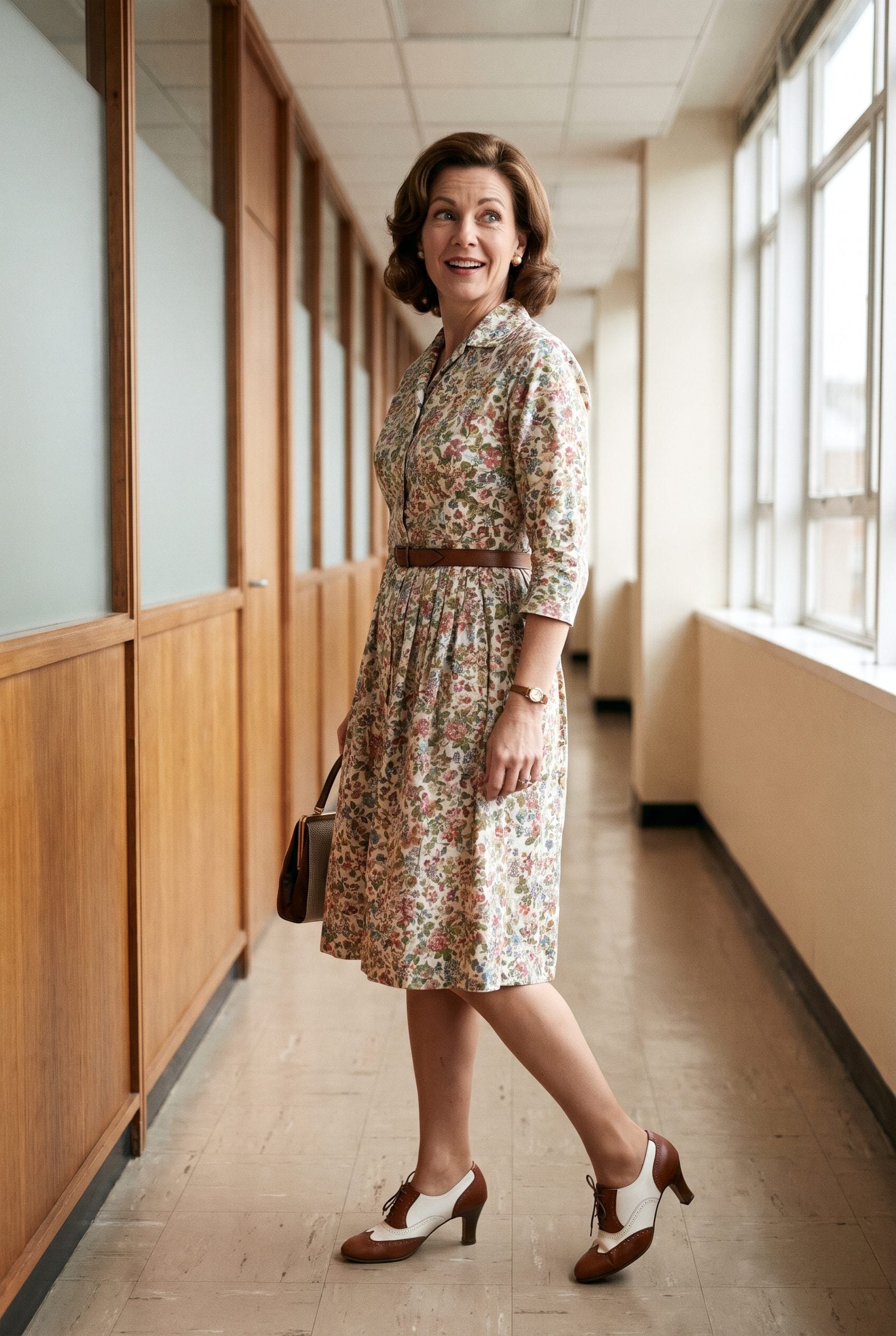
The shirtwaist was the workhorse, and nobody admitted how much they relied on it. Button front, collar, belt at the waist, a skirt with just enough swing to feel like spring without inviting comment.
Waist definition drives the whole thing. That narrow brown leather belt pulls a simple cotton dress into an hourglass and instantly reads deliberate rather than thrown on. The lace-up spectator heels nudge it from errand-run to office — two-tone cream and tan picking up the print without matching it exactly.
20. Early 1960s Summer Monday: Sleeveless Linen Sheath with a Matching Office Jacket
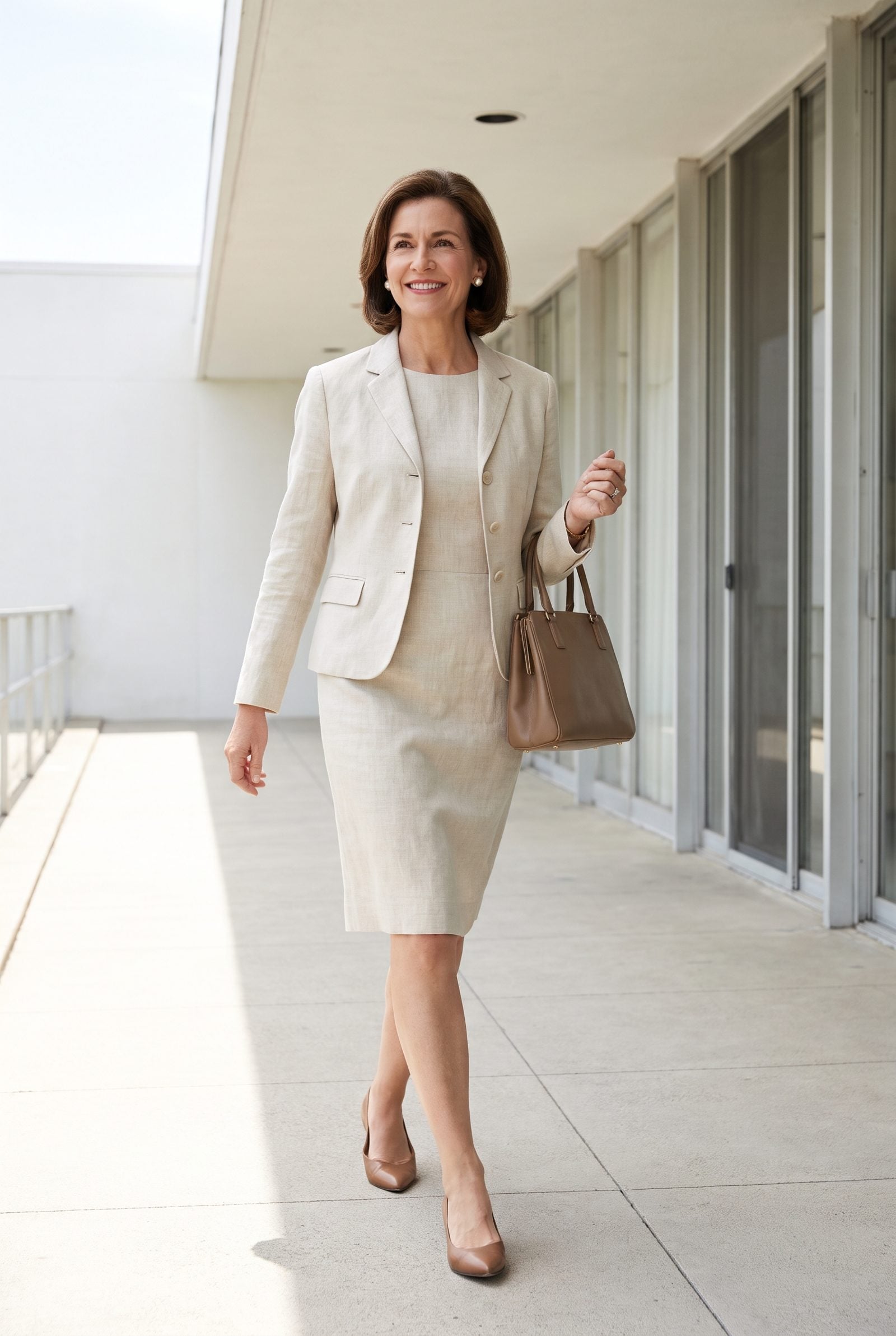
Summer did not excuse you from looking serious, so the sleeveless sheath came with its own matching jacket. Keep it on for the meeting, slide it off at your desk when the fan quit working. Problem solved.
The genius is one dyed-to-match set pulling double duty. A column of a single oatmeal linen elongates the whole silhouette, and the jacket turns a sleeveless dress into something presentable for the executive floor. Tolerating linen’s soft wrinkle, by the way, was a sign of real confidence rather than sloppiness.
19. Early 1960s Summer Wednesday: Lightweight Pencil Skirt, Sleeveless Shell, and Cardigan
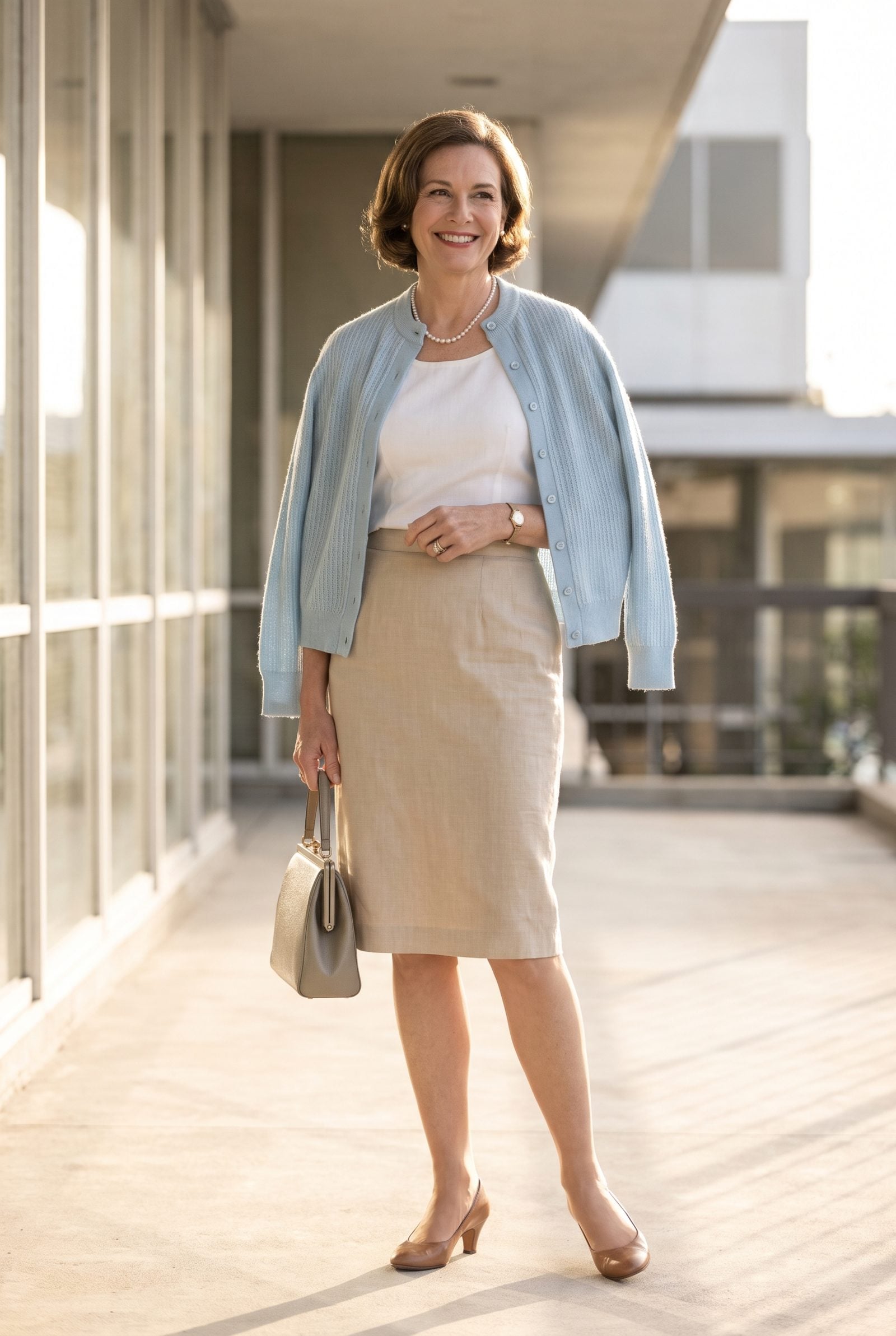
The shoulder-draped cardigan was its own language. You did not wear it so much as deploy it, left hanging open off the shoulders, ready to be pulled on when the air conditioning finally kicked in sometime around lunch.
A slim pencil skirt with a sleeveless shell keeps you cool and narrow; the cardigan is an insurance policy against the over-chilled office. Taupe and pale blue is a quiet, soft pairing — nothing shouting, everything working. Separates like these stretched three pieces into a full week of outfits, and every office woman knew the math by heart.
18. Early 1960s Summer Friday: Seersucker Suit, Cotton Blouse, and Low Pumps
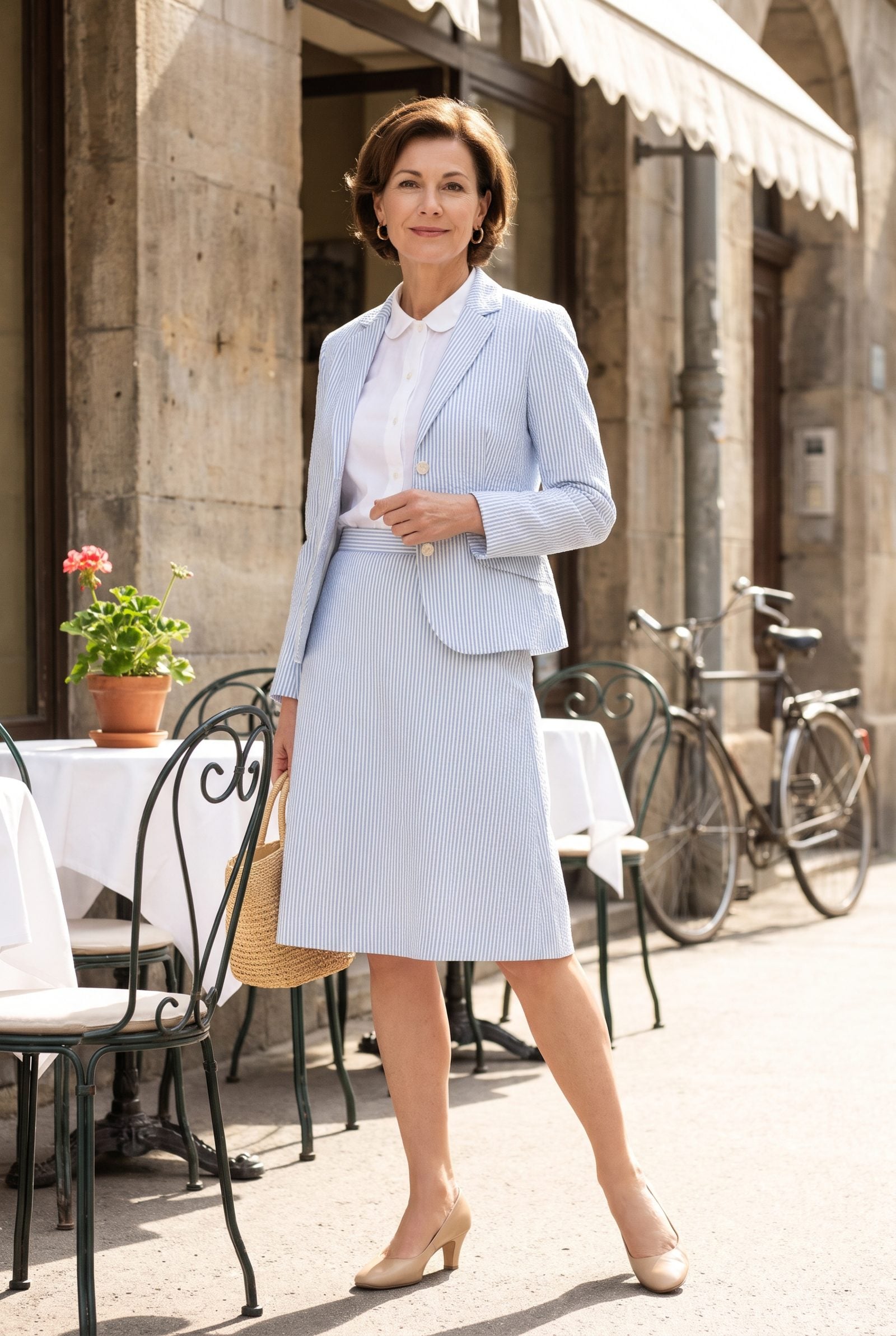
Seersucker on a Friday felt like the week had already half-forgiven you. The puckered cotton meant no ironing and no clinging — the two blessings of a July office with one overworked fan.
Texture is the hook. That crinkled blue-and-white stripe reads cool and light where a flat weave would look heavy, and the matched suit keeps it from tipping into weekend casual. Nude pumps on a modest heel rather than something taller? The small permission the end of the week grants itself.
17. Mid-1960s Autumn Tuesday: Sleeveless Jumper Dress Layered Over a Crisp White Blouse
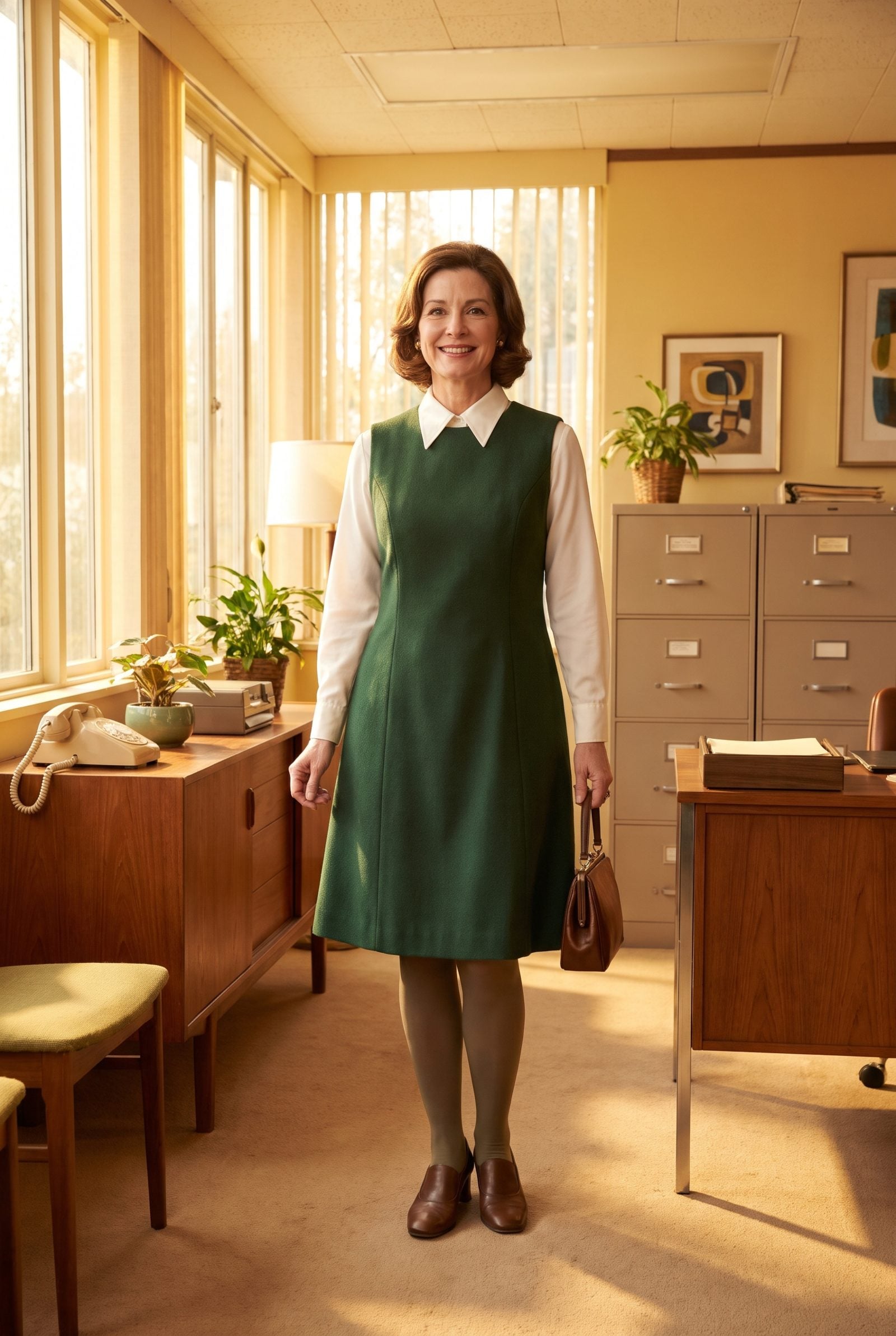
By mid-decade the jumper dress changed the whole mood. Sleeveless, A-line, worn over a white blouse, it was younger and looser than the matched suits that opened the decade, and the office finally let it in.
The proportions carry it. A clean A-line skims the body instead of hugging it, with the blouse collar and cuffs framing the face and wrists in white, and forest green wool over white cotton gives a simple shape enough contrast to stay interesting. This is where the trendy look of the era first crept into serious offices.
16. Mid-1960s Autumn Wednesday: Houndstooth Skirt, Ribbed Turtleneck, and Loafers
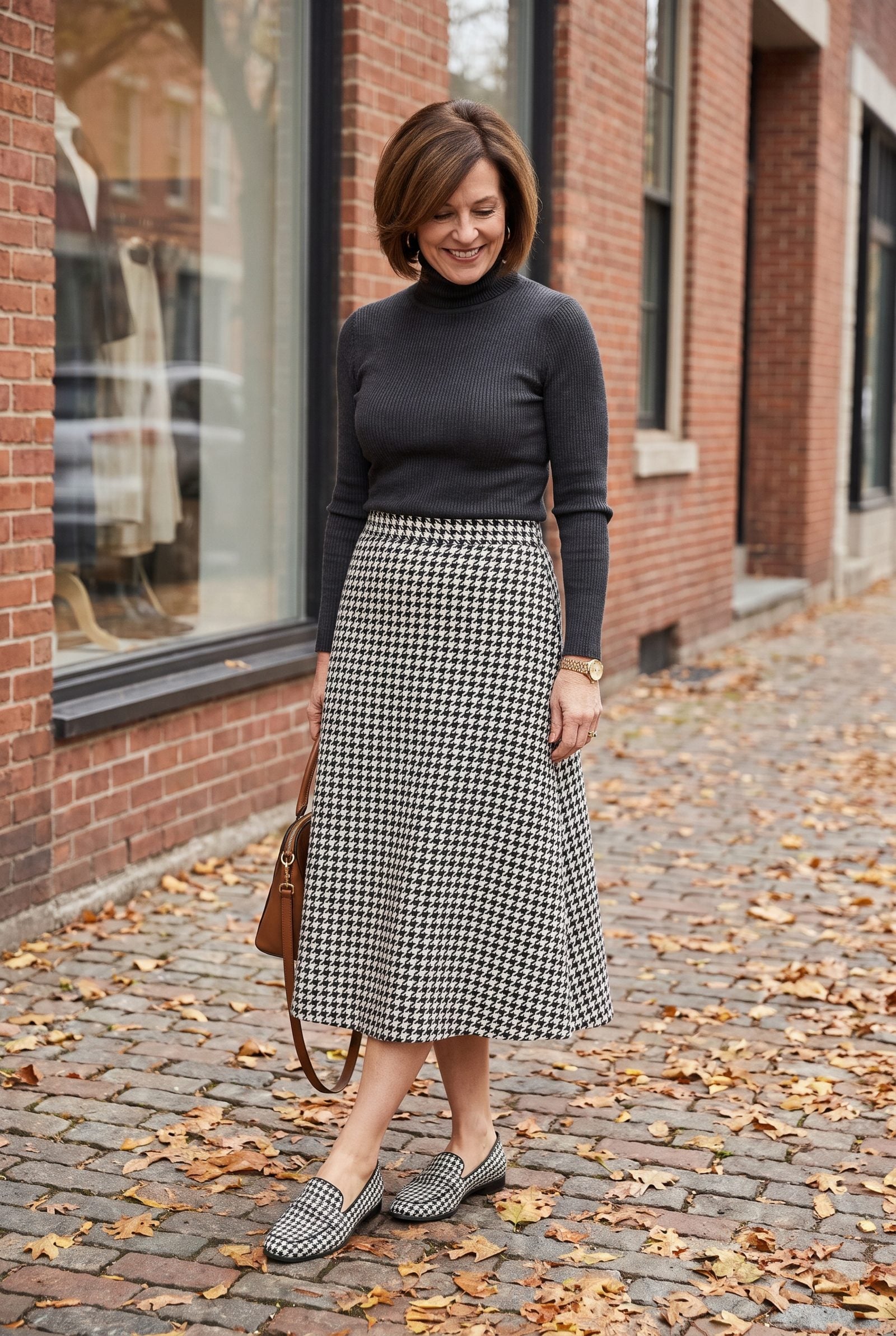
Loafers in the office were a small rebellion, and houndstooth made them look intentional. The pattern did the talking so the rest could stay simple — a slim ribbed turtleneck, a skirt that falls to mid-calf, and flats you could actually walk the hallways in.
Pattern against solid is the whole strategy. The busy houndstooth needs a quiet partner, and a black turtleneck tucked neat gives it one. Houndstooth loafers repeat the black and white from the skirt. Good shoes outfits live and die on that final choice, and here the flat is the point.
15. Mid-1960s Autumn Thursday: Belted A-Line Dress, Gold Brooch, and Structured Satchel
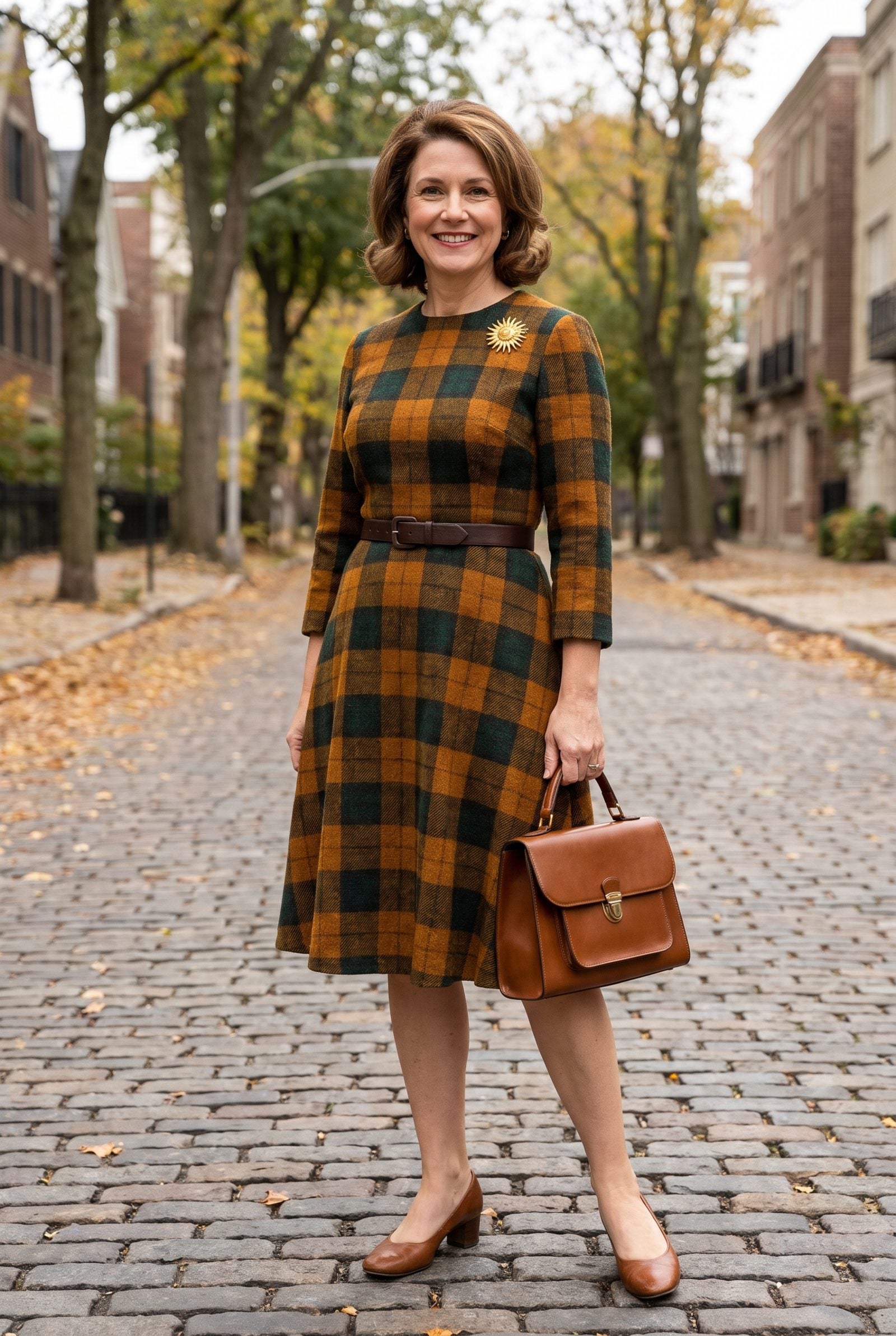
The belted A-line dress carried the back half of the week with authority. One dress, one decision, nothing to coordinate before coffee, and it still looked like you had thought about it.
A single gold brooch is the whole personality of this outfit. On a bold orange-and-dark-green buffalo-check wool dress, one piece of real metal near the shoulder reads as taste rather than effort, and the structured satchel grounds it with a hardworking shape. It carries the composure of a romantic coat without a coat in sight — proof that the right dress and one good accessory were all a Thursday ever required.
14. Mid-1960s Autumn Friday: Coordinated Sweater Set, Straight Skirt, and Patent Pumps
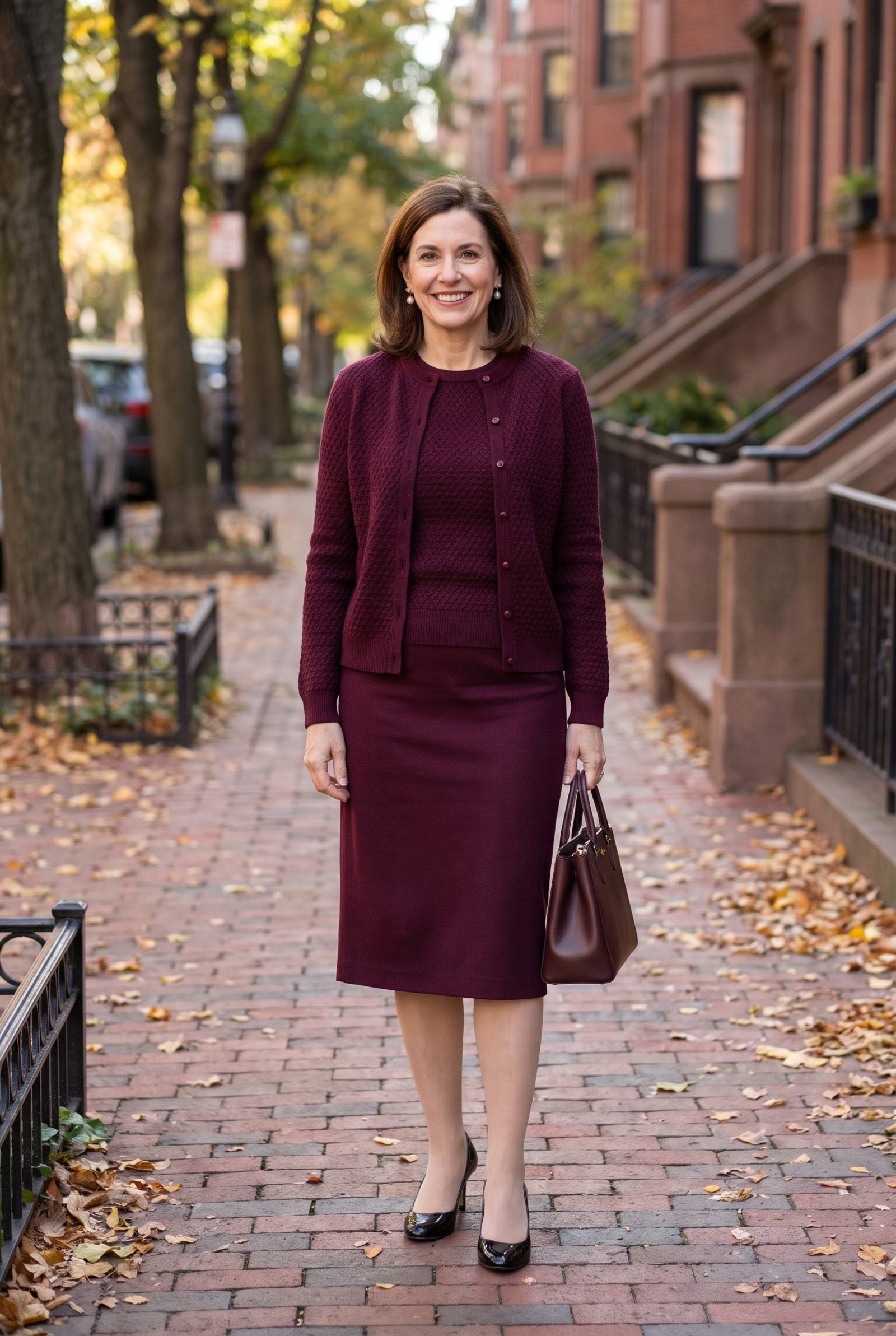
The matching knit set was the office woman’s quiet power move. One color, two pieces, and suddenly a Friday looked deliberate instead of thrown together. Burgundy cardigan over burgundy shell, buttoned to the collarbone or left open depending on how hard the radiators were working that afternoon.
The straight skirt did the real work, keeping everything disciplined below the waist while the knit softened the top half, so the whole silhouette read capable without reading stiff. Black patent pumps caught the overhead light and added the only shine in the outfit.
Fine knits still win with our readers: asked which sweater they would buy, 61% chose fine over chunky, and most of them said it came down to looks.
13. Mid-1960s Winter Monday: Double-Breasted Skirt Suit, Silk Scarf, and Leather Pumps
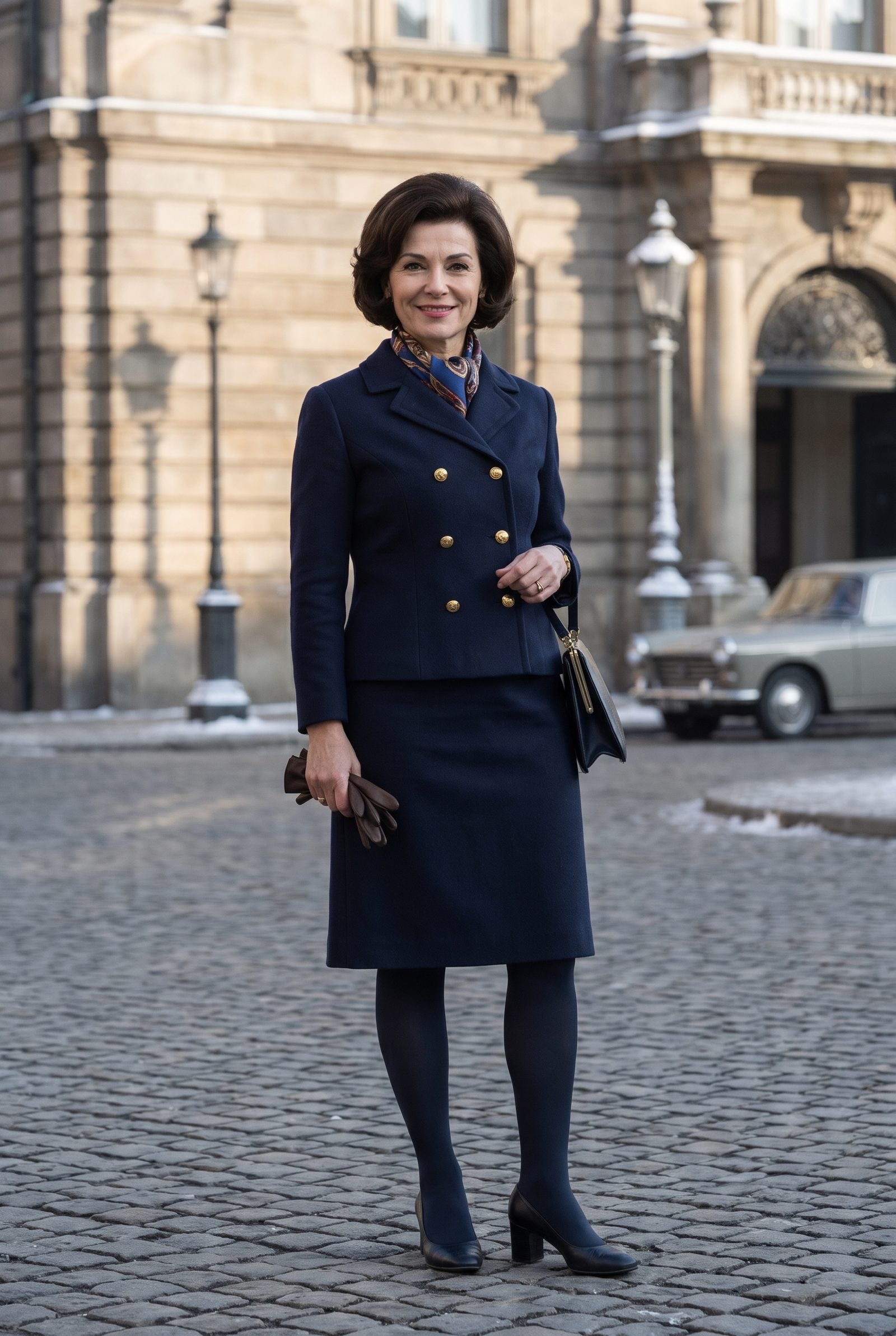
Monday called for armor, and the double-breasted suit answered. Two rows of gold buttons marching down a navy wool jacket meant business before you said a word, and the structure sat square across the shoulders to give the whole frame a sense of purpose.
Then the burgundy paisley silk scarf broke up the severity. Without it, the suit read like a uniform. Knotted at the throat, it introduced warmth and movement, one soft note against all that tailoring. That tension between the rigid jacket and the fluid silk is exactly why the look held up for a long week of meetings.
12. Mid-1960s Winter Tuesday: Bouclé Jacket, Dark Sheath Dress, and Clip-On Earrings
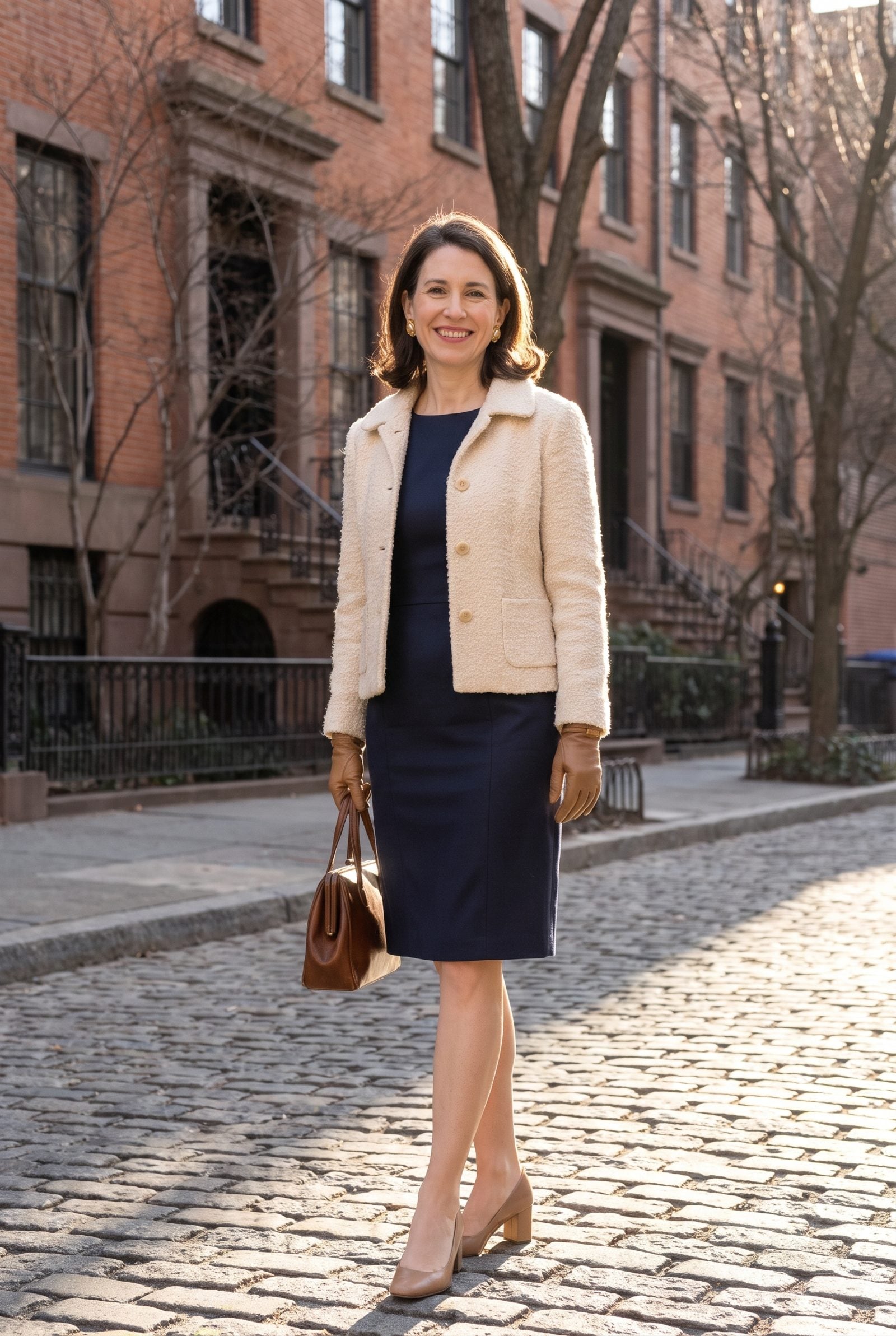
Texture was the entire argument here. A nubby cream bouclé jacket over a smooth dark sheath gave the eye two things to do, which is why a pairing this simple never felt plain.
The bouclé did the heavy lifting. Its rough, slightly irregular surface caught light differently than the sleek dress underneath, so the outfit had depth even under flat office fluorescents. Clip-on pearl earrings the size of small buttons finished it, no pierced ears required, just a firm pinch and you were ready for the nine o’clock.
As a design school professor puts it, “Everybody wants to touch the Chanel. It’s as if they had some sort of connection with it.”
11. Mid-1960s Winter Thursday: Plaid Shift Dress, Long-Sleeved Blouse, and Mary Jane Pumps
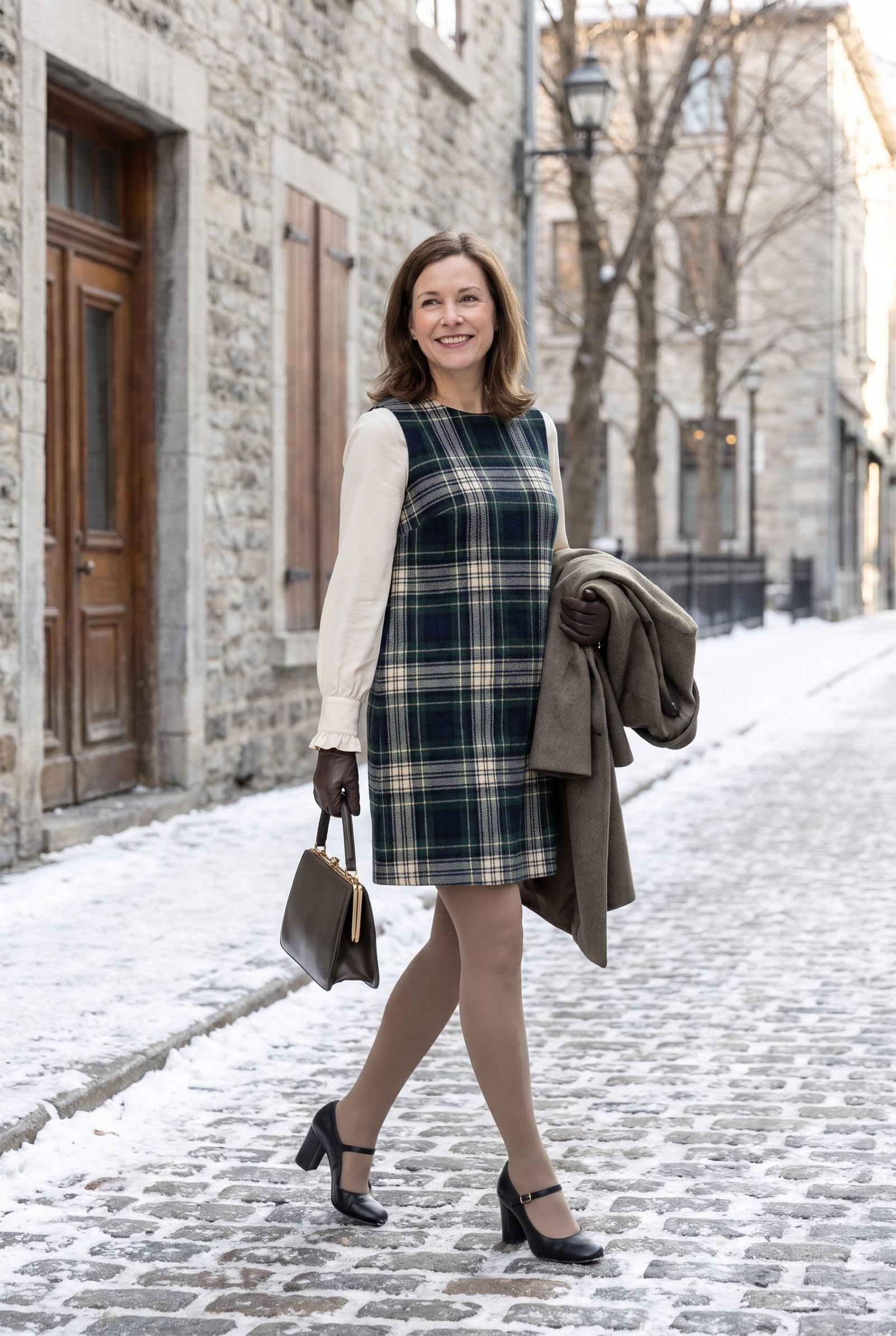
Layering a blouse under a sleeveless shift was the quiet winter trick every office woman knew. The plaid dress carried the pattern while the cream blouse underneath added warmth and showed only at the long sleeves and ruffled cuffs, leaving the dress’s clean crew neckline to frame the face.
And the black Mary Jane pumps were the unexpected piece. That strap across the instep gave a grown woman’s outfit a touch of schoolgirl primness, which sounds like a contradiction until you see it anchor a plaid shift so well. The low heel meant you could cross the parking lot in January without a second thought.
10. Mid-1960s Winter Friday: Jersey Knit Dress, Chain Belt, and a Boxy Handbag
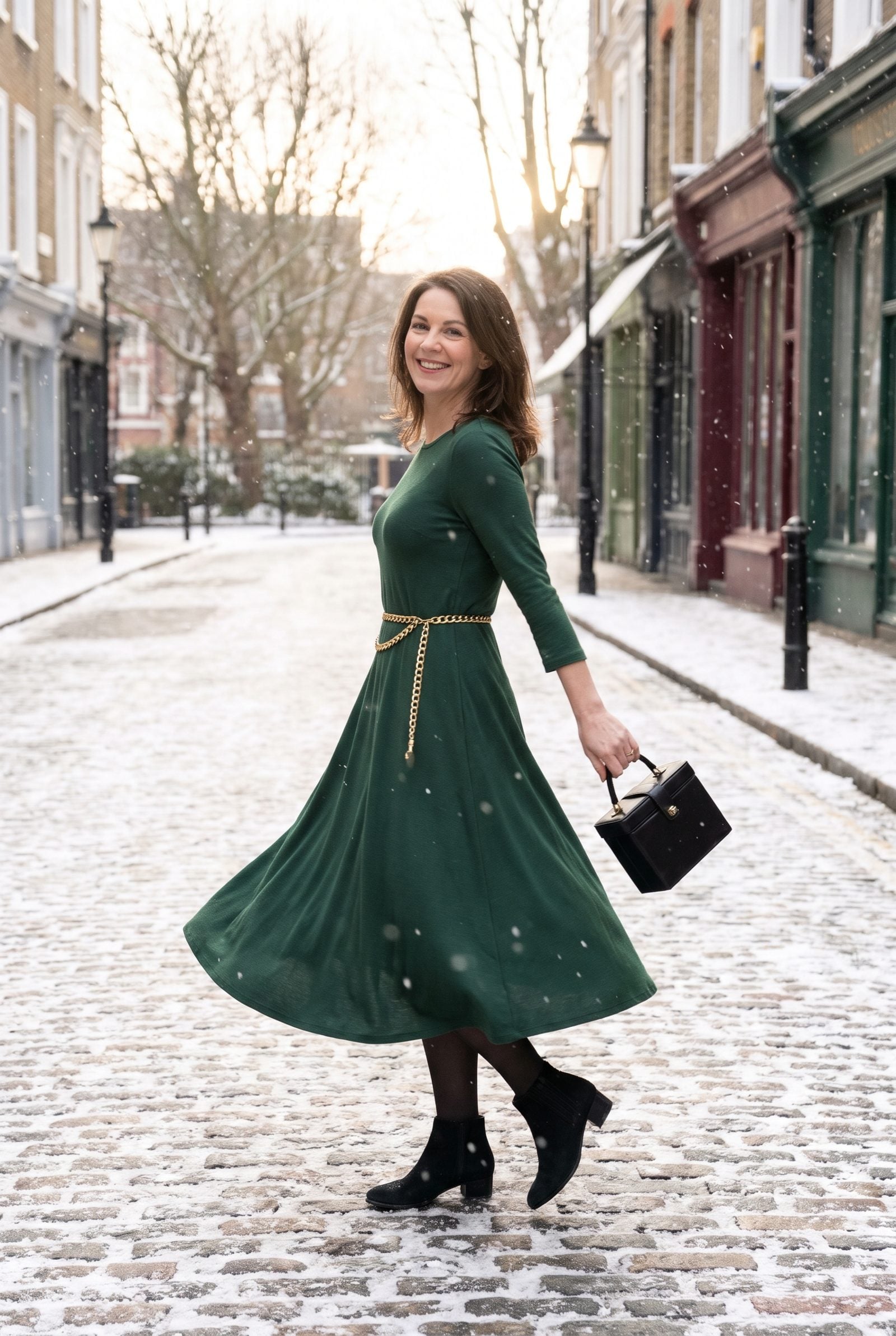
Jersey knit was the body’s reward after a week of structured wool. A forest green dress that moved with you, skimmed rather than squeezed, and still looked put together by lunch.
The gold chain belt did all the styling. Dropped low on the hips, it broke the column of the dress and added the only metallic shine in the outfit, which is why a simple knit never looked like a nightgown. The boxy handbag kept everything grounded, its hard corners a deliberate contrast to all that soft drape.
9. Mid-1960s Spring Tuesday: Color-Blocked Shift Dress and Low Geometric Heels
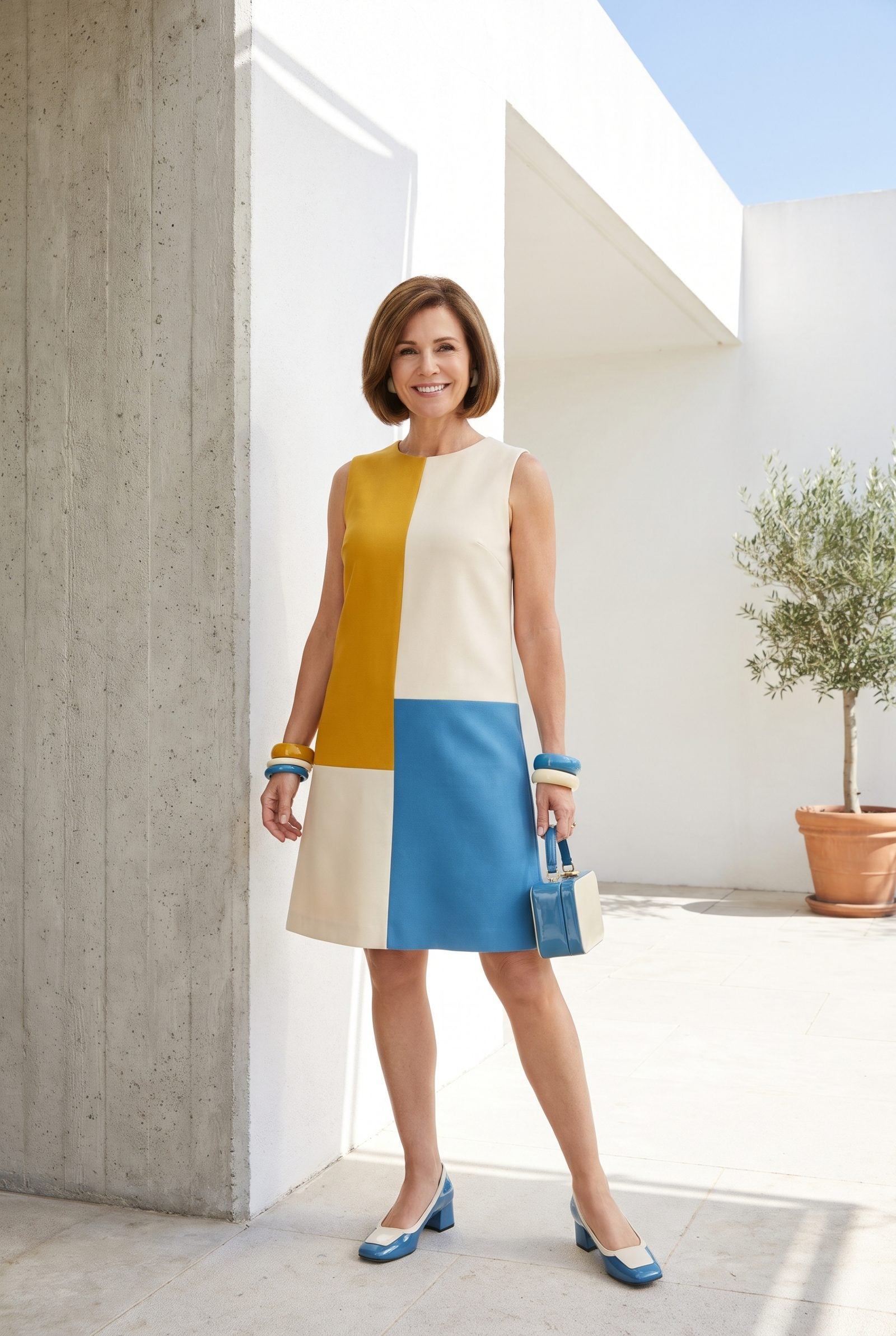
Mod arrived at the office in the form of a color-blocked shift, and spring was its season. Mustard up top, a block of cream at the center, and a sweep of sky blue below, pieced together in an asymmetric patchwork of hard-edged blocks that made the whole dress feel graphic and new.
The color commitment was the point. No print, no pattern, just three colors meeting in confident seams. Those low heels with their squared toes echoed the same clean geometry, so shoes and dress spoke one language. Here was the outfit that announced a woman paying attention to what the runways were doing, even if she bought hers off a department store rack.
8. Mid-1960s Spring Wednesday: Knife-Pleated Skirt, Fine-Gauge Knit Top, and Brooch
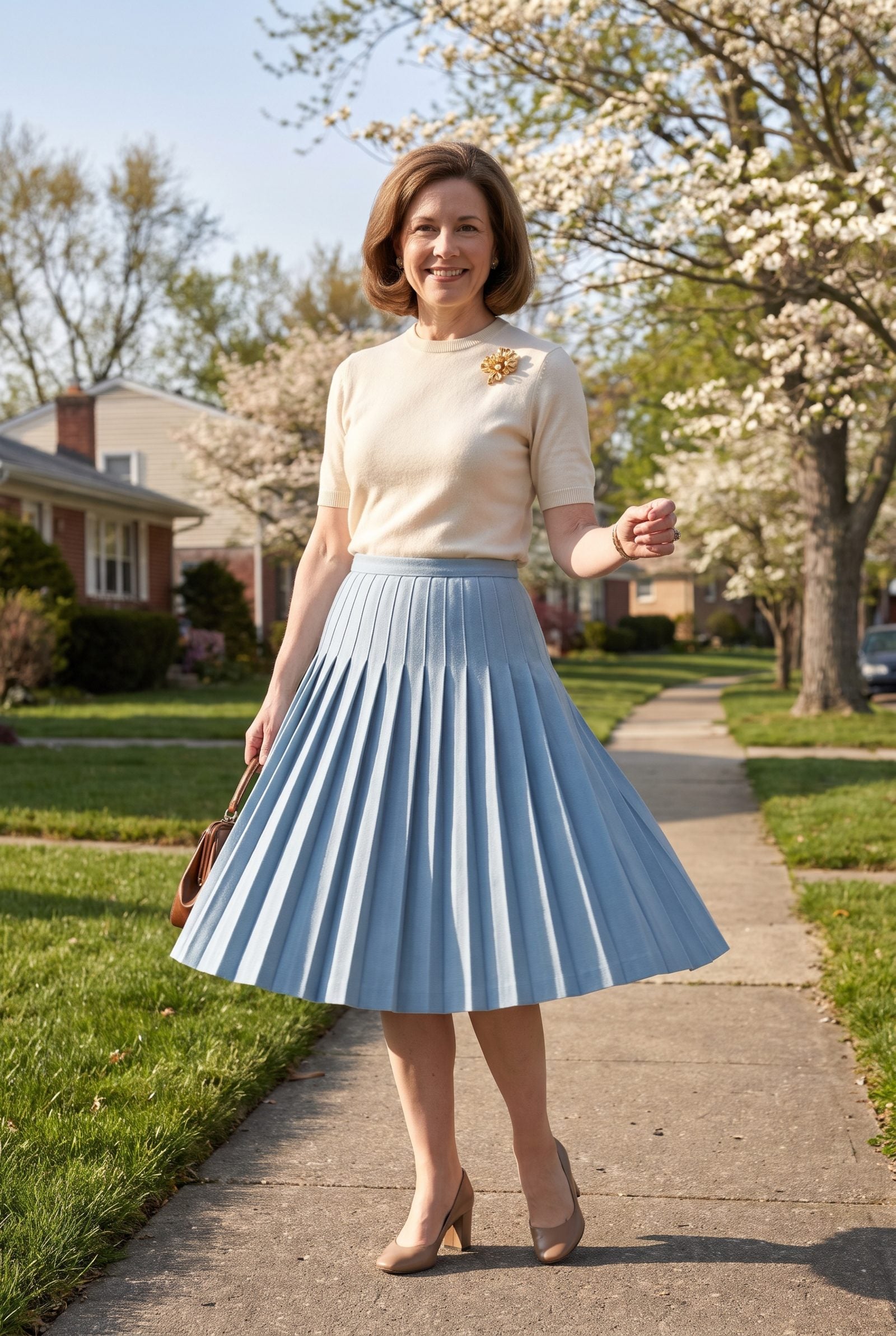
Knife pleats were a small act of precision. Each sharp fold held its line through a full day of sitting and standing, and the way they swung when you walked gave an otherwise quiet skirt a little life.
Tucking a fine-gauge cream knit into that light blue pleated skirt was the whole move, soft wool against crisp folds, sweetness balanced by structure. The brooch finished it. A small gold flower pinned near the shoulder, the kind of thing passed down and worn because it meant something, not because a magazine said to.
7. Mid-1960s Spring Thursday: Modest Geometric-Print Dress with a Cropped Cardigan
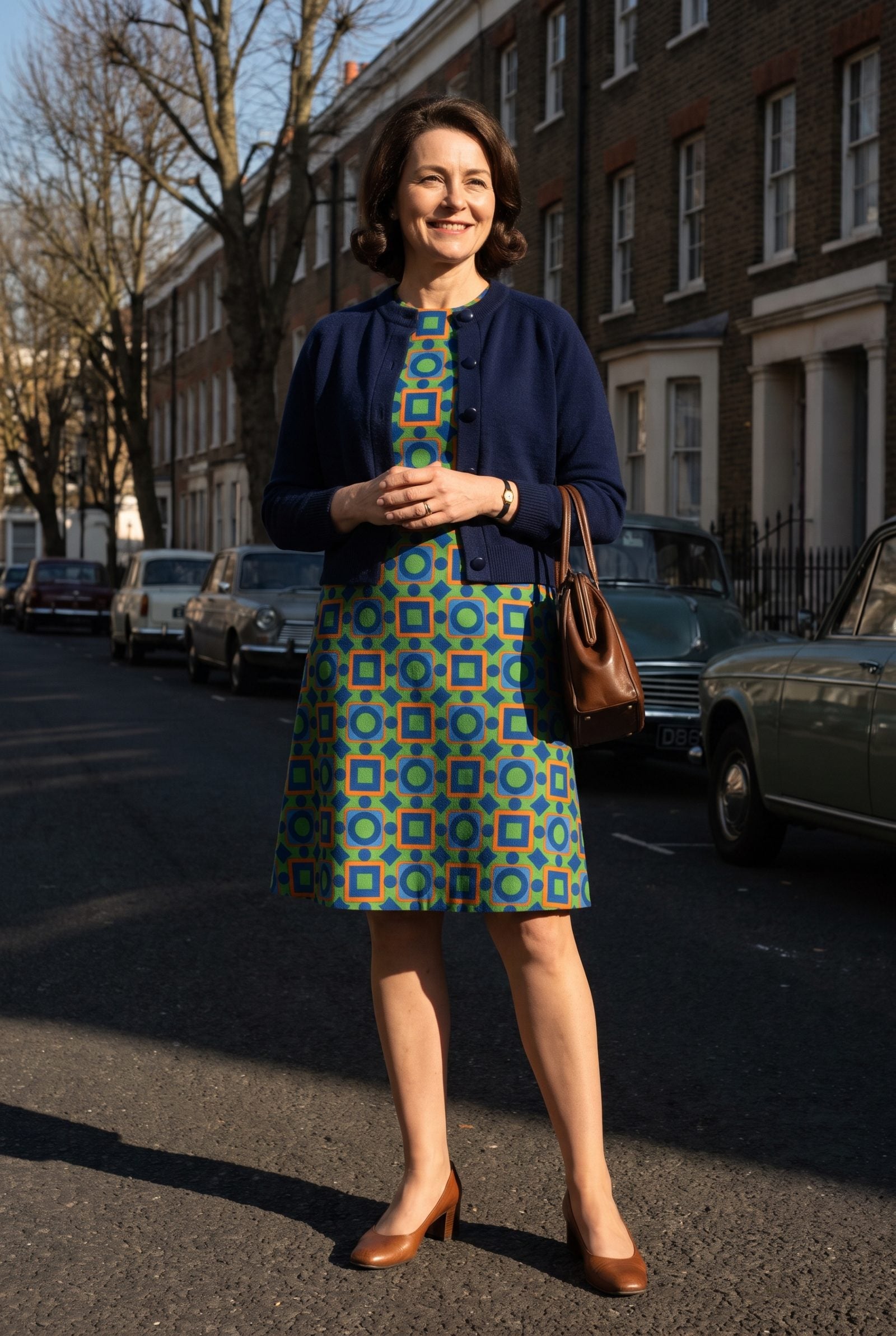
The geometric print dress carried all the energy, so everything else got out of its way. Green, royal blue, and orange arranged in repeating squares and circles, busy enough to be interesting, contained enough for a conference room.
A cropped navy cardigan buttoned over the top solved the eternal office problem of the over-air-conditioned room. Cut short so it ended at the waist, it covered the arms without hiding the print or breaking the dress’s line. Without a belt, the dress hung straight, and the cardigan’s short hem marked the waist, keeping a bold pattern from reading as a tent.
6. Mid-1960s Spring Friday: Windowpane Skirt, Mock-Neck Shell, and Patent Loafers
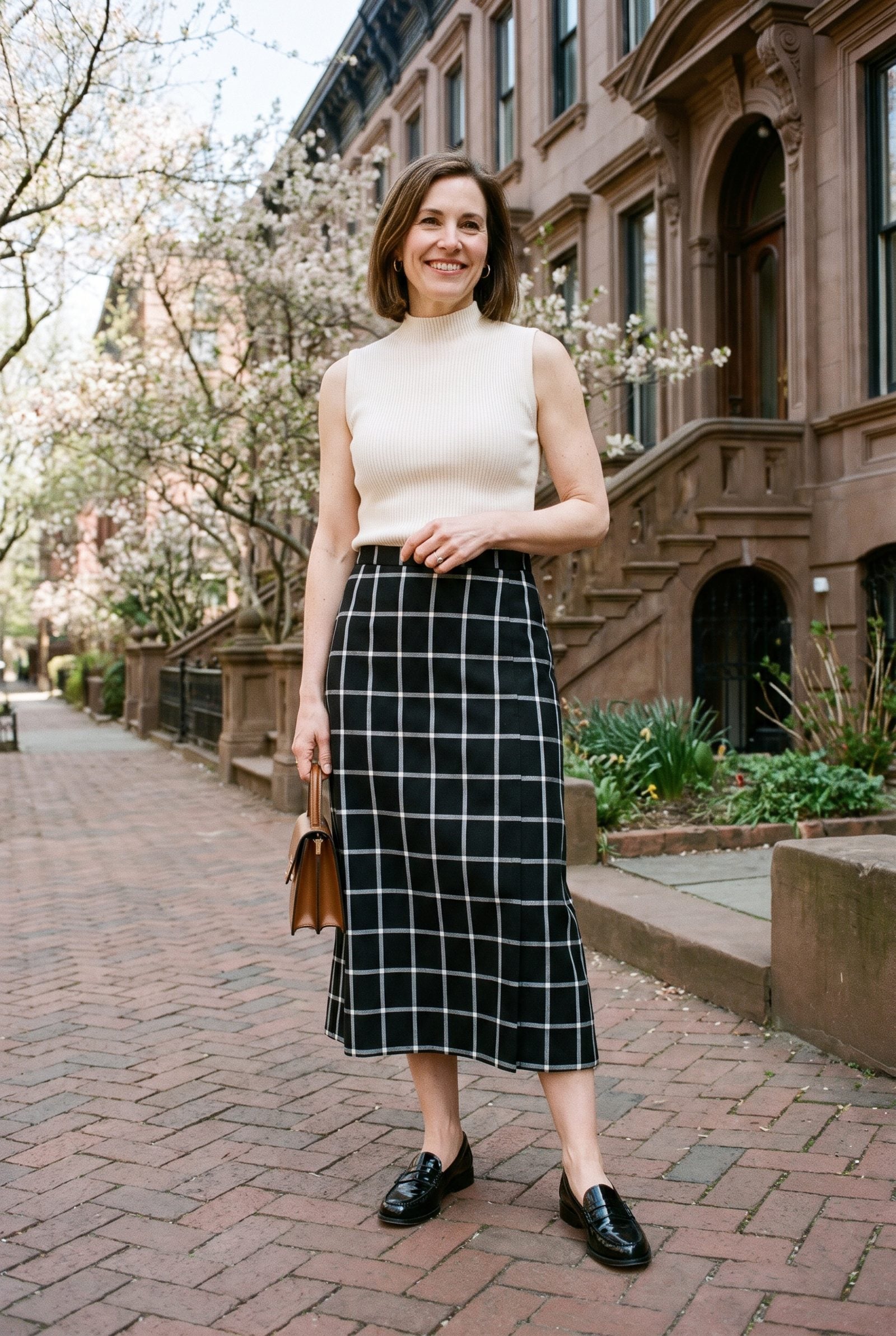
Windowpane check was the thinking woman’s plaid. A clean grid of white lines over black, graphic without the heaviness of a full tartan, cut into an A-line skirt that moved easily through a Friday.
The cream ribbed mock-neck shell tucked in to let the skirt run the show. Patent loafers were the surprise here, a flatter, easier shoe than the week’s pumps, with just enough shine to keep things polished. A woman who wore black patent loafers on a Friday knew her feet had earned the break and dressed accordingly.
5. Late 1960s Summer Tuesday: Sleeveless A-Line Dress with a Lightweight Matching Coat
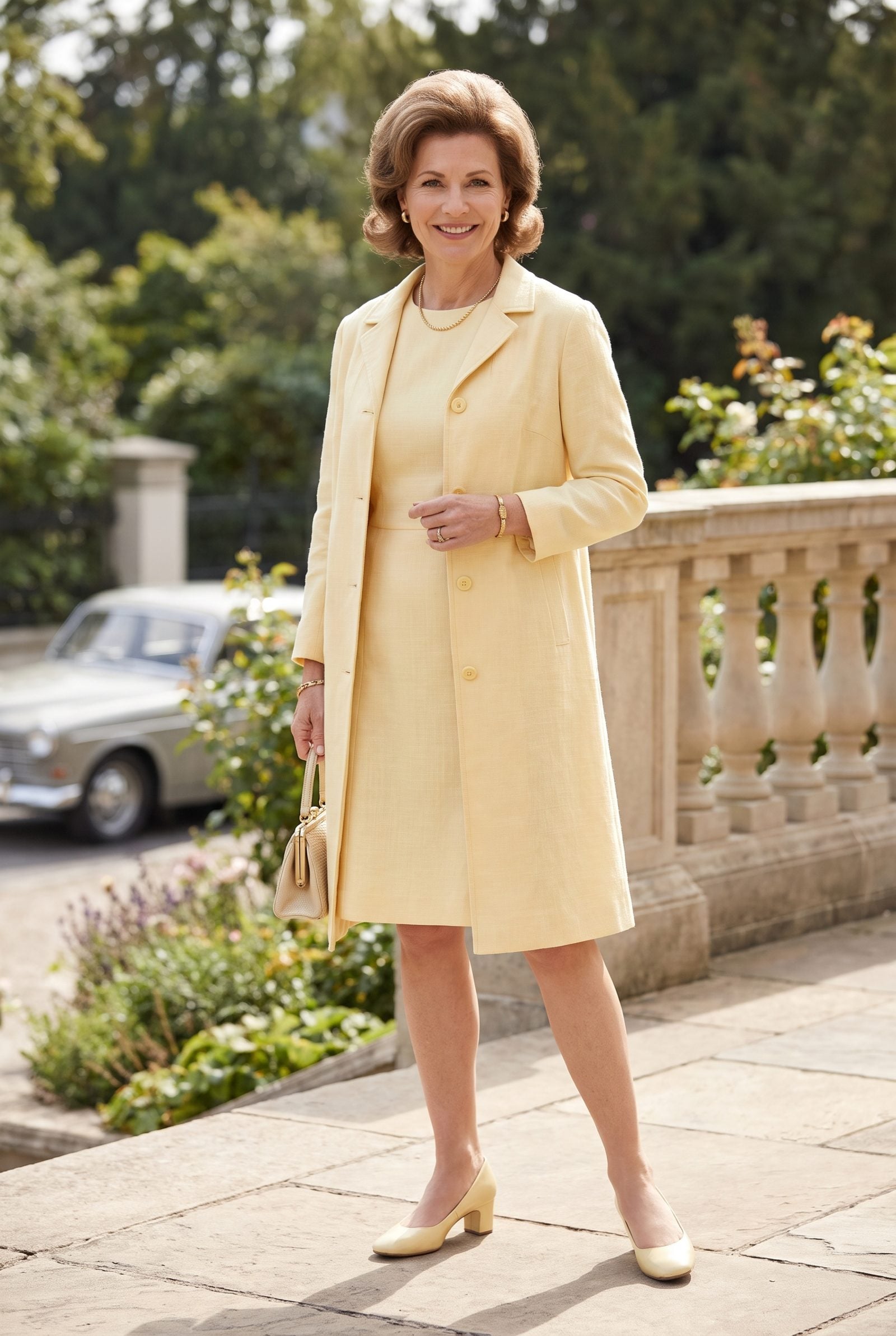
By the late sixties, the coordinated dress-and-coat set had taken over summer offices. A sleeveless pale yellow A-line dress under a lightweight coat cut in the exact same shade, so the two pieces read as one continuous column of color.
Monochrome in a single soft yellow is what made this feel considered rather than matchy. The coat’s boxy, unstructured cut kept everything airy for July, something you could throw on over the dress for the walk in and shrug off the second you reached your desk.
Cream block-heel pumps and a white handbag kept the palette bright. This was a woman who had watched fashion loosen up across the decade and moved right along with it, trading the stiff winter suiting for something that actually breathed.
4. Late 1960s Summer Thursday: Belted Safari-Inspired Dress and Low Stacked Heels
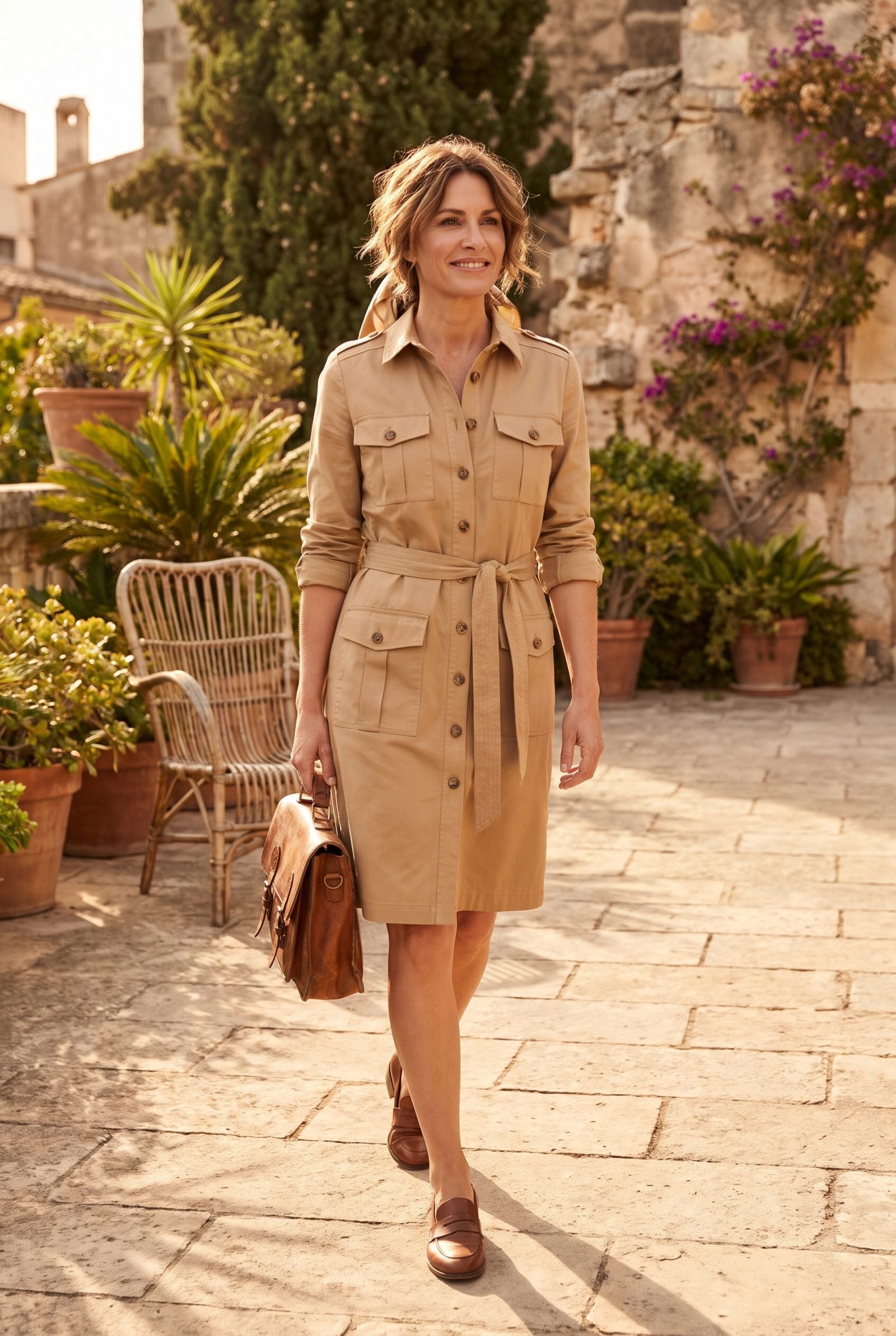
The safari dress crept into offices around 1968, and once it arrived nobody wanted to go back to the structured shirtwaist in July heat. Long sleeves rolled to just below the elbow, a self-belt cinched at the waist, flap pockets on the chest you never actually used. The fabric was usually a cotton-poly blend in khaki, olive, or that particular sandy beige that read as serious without looking like you were trying too hard.
You wore it with low stacked-heel brown pumps. Polished leather, barely an inch of heel, the kind that could carry you from the bus stop to the filing room without ruining your feet by lunch. This was the dress for the day you had to run between floors, deliver something to the executive wing, and still look pulled together when the air conditioning gave up around two.
3. Late 1960s Autumn Wednesday: Corduroy Jumper Dress, Blouse, and Knee-High Boots
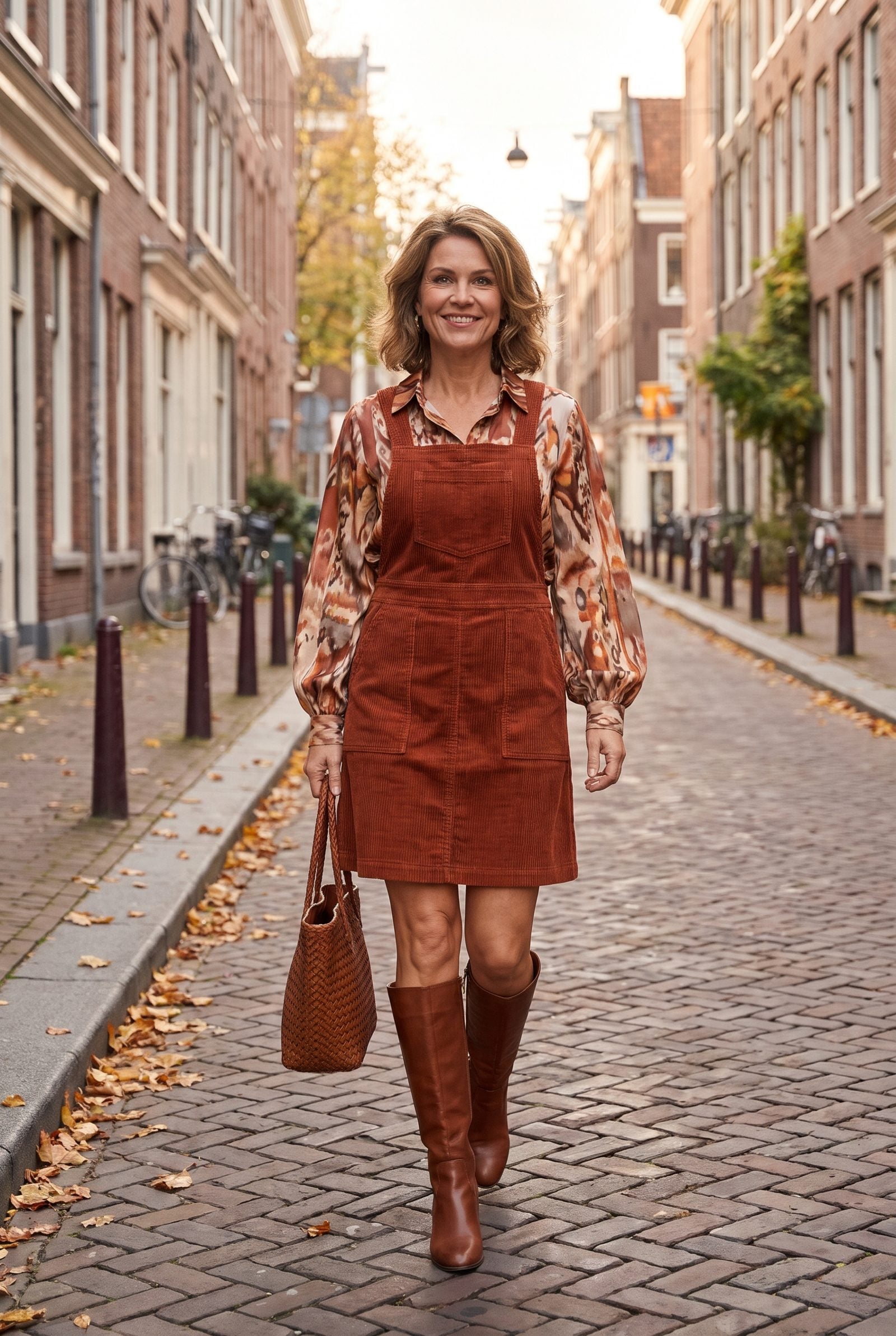
Once the weather turned, out came the corduroy jumper. Pinafore cut, A-line or slightly fitted, in rust or bottle green or that deep mustard everyone pretended they invented. You layered it over a printed blouse with a big spread collar worn open at the throat, and the whole thing felt like permission to be cozy at work without looking like you’d given up.
Knee-high boots made it modern — smooth leather, low block heel, zipping up the inside calf. They were the one item that signaled you were paying attention to what was happening on the street, not just in the office handbook. The corduroy whistled faintly when you walked. You stopped noticing after an hour.
2. Late 1960s Autumn Thursday: Tailored Pantsuit in an Office That Permitted Trousers
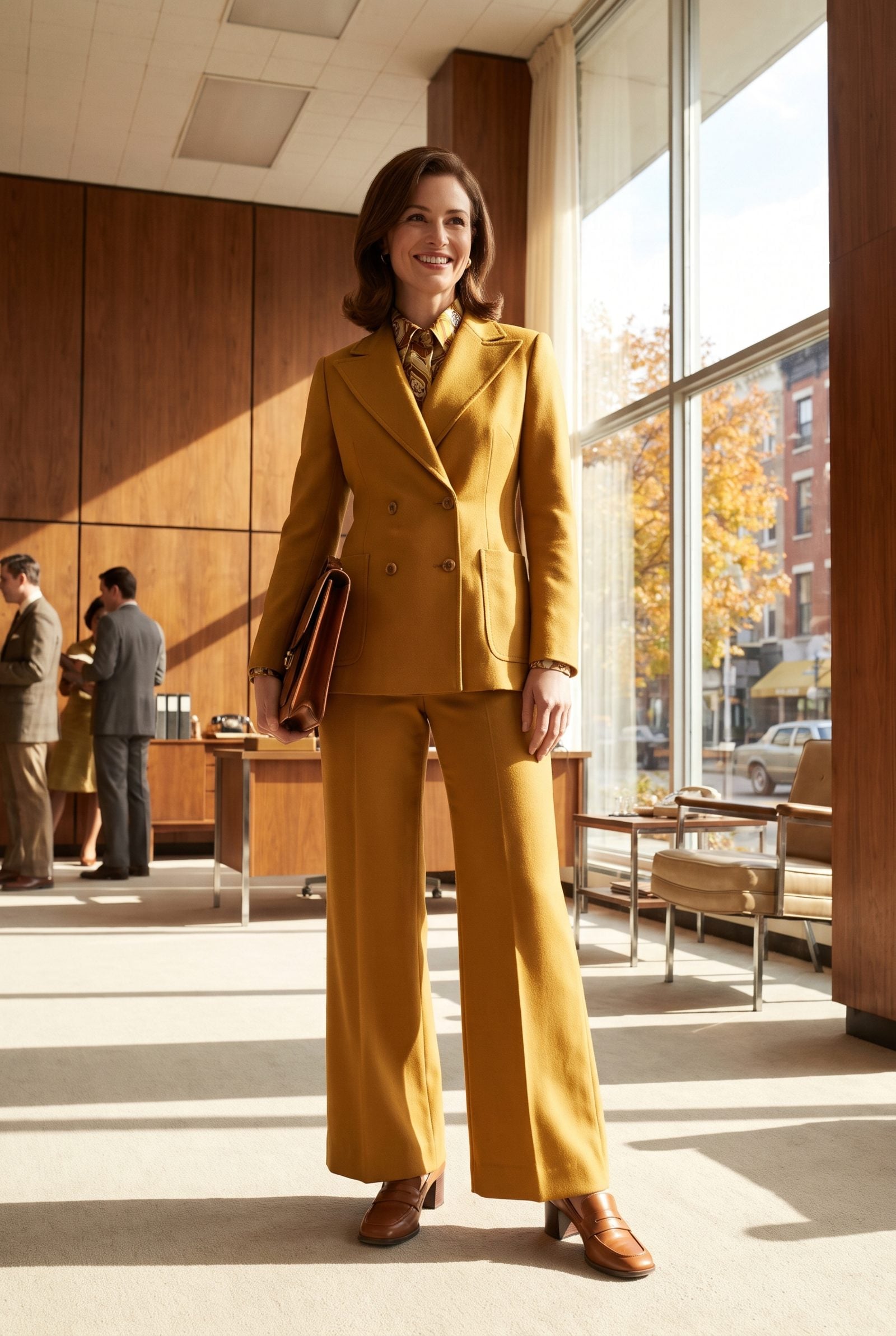
Trousers in the office were still a small act of nerve in 1968. Plenty of places didn’t allow them, and some women kept a skirt in a drawer just in case the rules changed on a Tuesday. But where trousers were permitted, the tailored pantsuit arrived with its own quiet authority.
Matched jacket and wide-ish trousers in flannel gray, camel, or a muted plaid. The jacket was proper tailoring, real lapels and a nipped waist, not some blazer afterthought. You wore it with a printed, collared blouse and tied neck scarf underneath and low-heeled loafers or a stacked pump. A little pattern at the collar was plenty. The suit said everything.
As a fashion merchandising professor puts it, “Though initially met with resistance, pantsuits slowly gained acceptance, particularly in more progressive work environments. By the late 1960s, women wearing trousers to work were no longer a rare sight.”
Today trousers are ordinary: asked which daily go-to they would buy, 30% of our readers picked trousers, compared with just 12% for a dress.
1. Late 1960s Autumn Friday: Midi Skirt, Fitted Sweater, and Chunky Low-Heeled Shoes
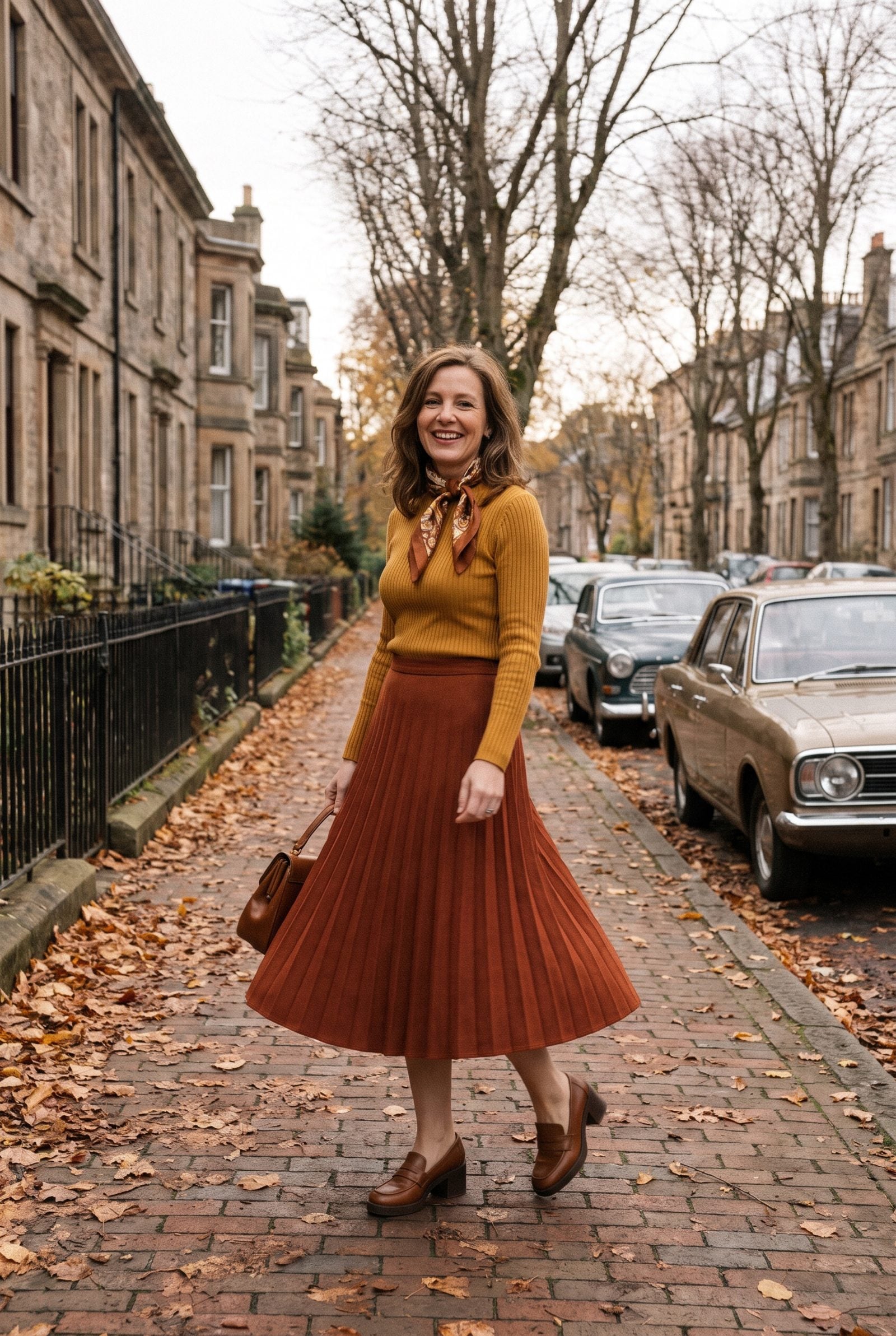
Friday loosened the collar on the whole week. The midi skirt was the signal, hitting mid-calf in a soft wool or a houndstooth that photographed beautifully under office lighting. You paired it with a fitted sweater, ribbed and skimming the body, maybe a turtleneck if the radiators hadn’t kicked in yet.
Chunky low-heeled shoes finished it — round toe, thick stacked heel, a strap or buckle across the top, comfortable enough for the walk to lunch and solid on the sidewalk once the leaves got slick. This was the outfit for the day that ended early, when the typewriters went quiet by four and the weekend was already in your head.