❤️ Would you like to save this?
Polyester was everywhere, the Vietnam War was on television, and somewhere in a department store a woman was trying on a platform sandal that would have looked unhinged a decade earlier. Shoes in the 1970s were caught between the polished sixties and a decade busily inventing its own rules: natural leather one minute, disco metallics the next, sensible block heels sharing closet space with platforms tall enough to require concentration.
Half a century later, plenty of those shapes are back. Others never really left. What’s changed is the weight, the materials, the proportions, and what we expect a shoe to do besides look good. Here are 26 ways the same footwear ideas traveled from the 1970s to now.
FYI, thanks to AI imagery software, we’re able to create very specific fashion and hairstyle examples to illustrate the points being made. In some cases, imagery is exaggerated to hammer home the point. Also, assume links that take you off the site are affiliate links such as links to Amazon. this means we may earn a commission if you buy something.
26. The Slingback Pump: From Sturdy Office Staple to Razor-Sharp Minimalism
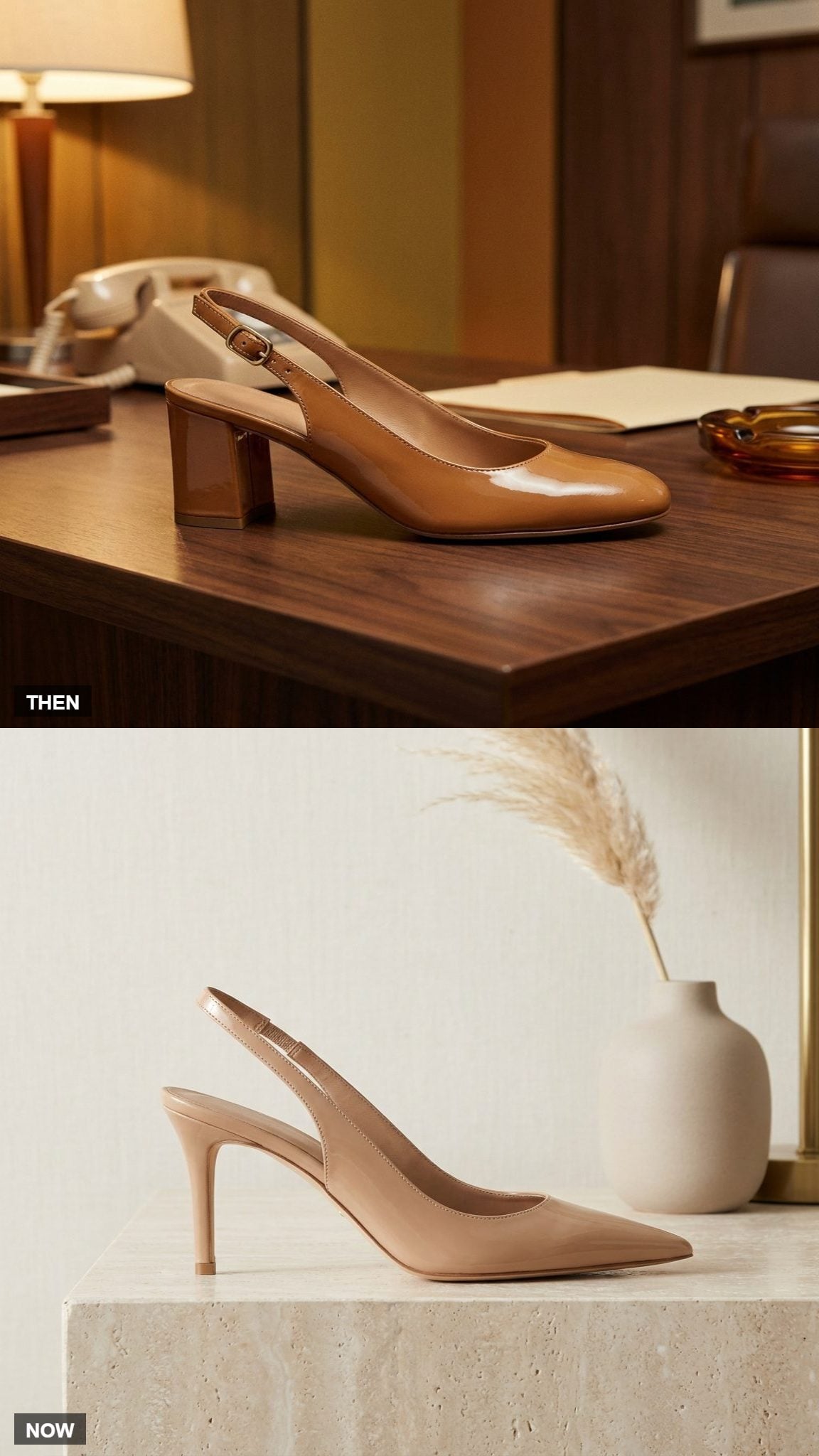
The 1970s slingback had some substance to it. Caramel patent leather, a rounded or softly squared toe, and a heel wide enough to survive a full workday gave the shoe a practical kind of polish. Worn under wide-leg trousers or with a knee-length skirt, it looked capable without needing to look delicate.
Today’s version often goes in the opposite direction: pointed toe, narrower heel, cleaner upper, sometimes in a nude or tonal leather that nearly disappears against the foot. The basic open-back construction hasn’t changed, but the visual weight has. Even across very different types of shoes, a few millimeters at the toe and heel can completely change the attitude.
25. The Loafer: Menswear Roots, but Long Past Asking Permission
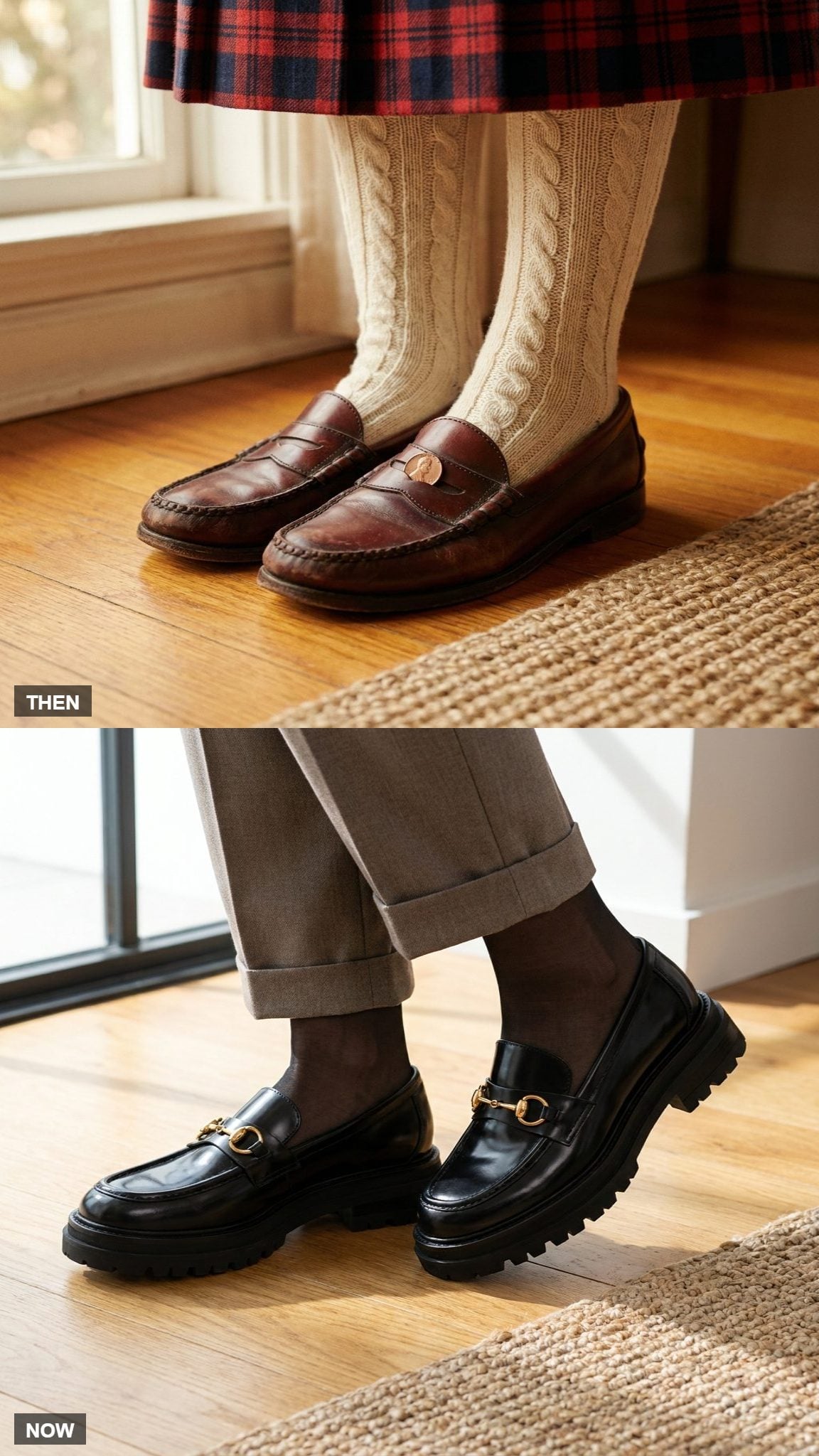
By the 1970s, women had already made loafers thoroughly their own. Penny styles, tassels, polished leather, and slightly chunky heels appeared with plaid skirts, trousers, knee socks, and the kind of collegiate dressing that could move from classroom to office without changing shoes.
The modern loafer has become heavier and more assertive. Lug soles, oversized chains, glossy leather, and thick platforms have taken a once-neat silhouette and given it some muscle. It can still disappear under tailored trousers, but it is just as happy interrupting a silk slip dress.
24. The Strappy Heeled Sandal: Disco Had More Straps and Absolutely No Regrets
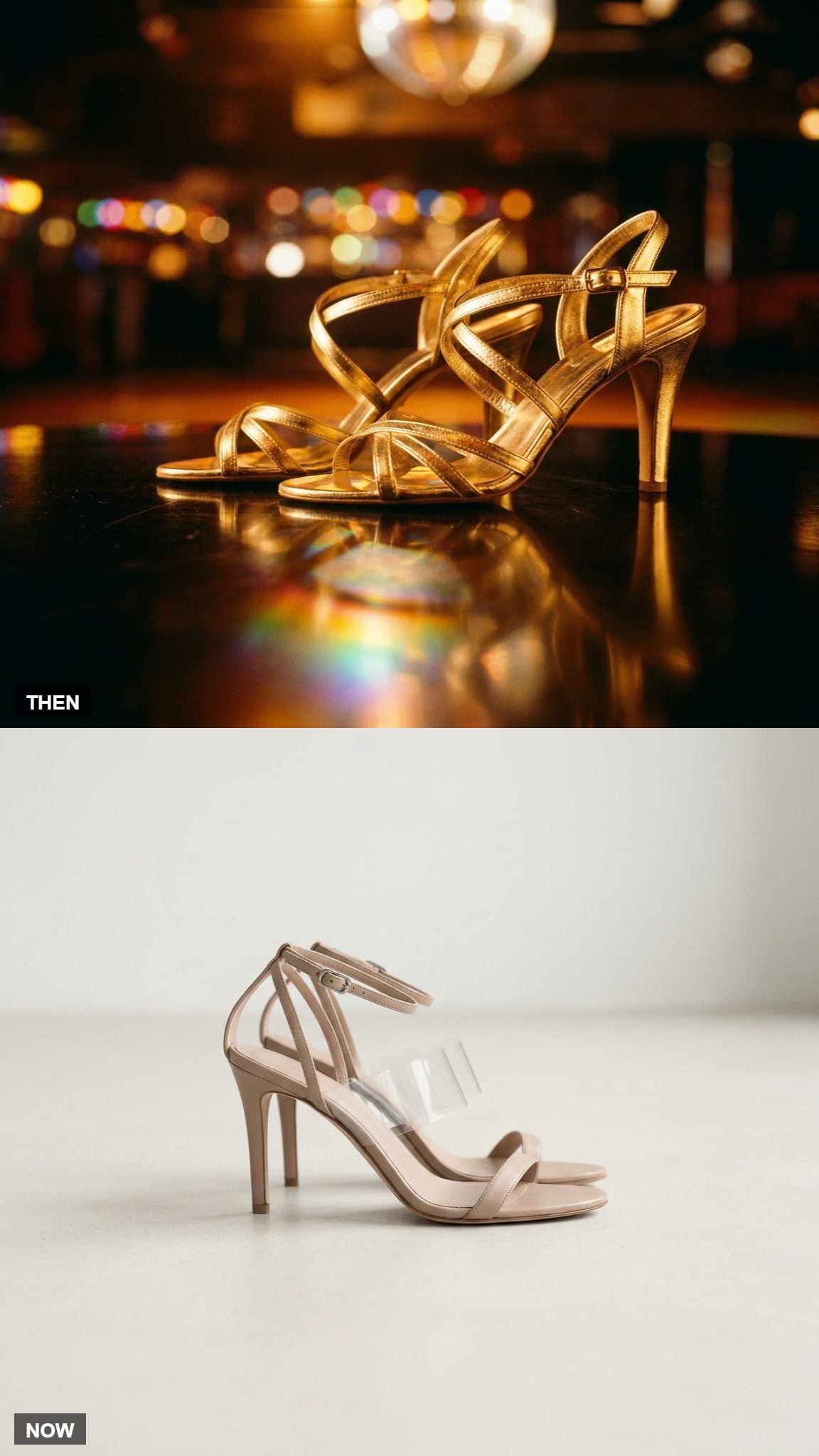
Late-1970s evening sandals could be a full production. Gold metallic leather, multiple straps crossing the foot, another wrapping the ankle, and enough shine to catch every rotating light in the room. Buckling them probably took longer than choosing the earrings.
The current strappy sandal has been stripped nearly to its outline. One band over the toes, one thin ankle strap, a narrow heel, sometimes transparent PVC so even the upper seems to disappear. Disco wanted the shoe noticed from across the room. The modern version seems almost embarrassed to occupy space.
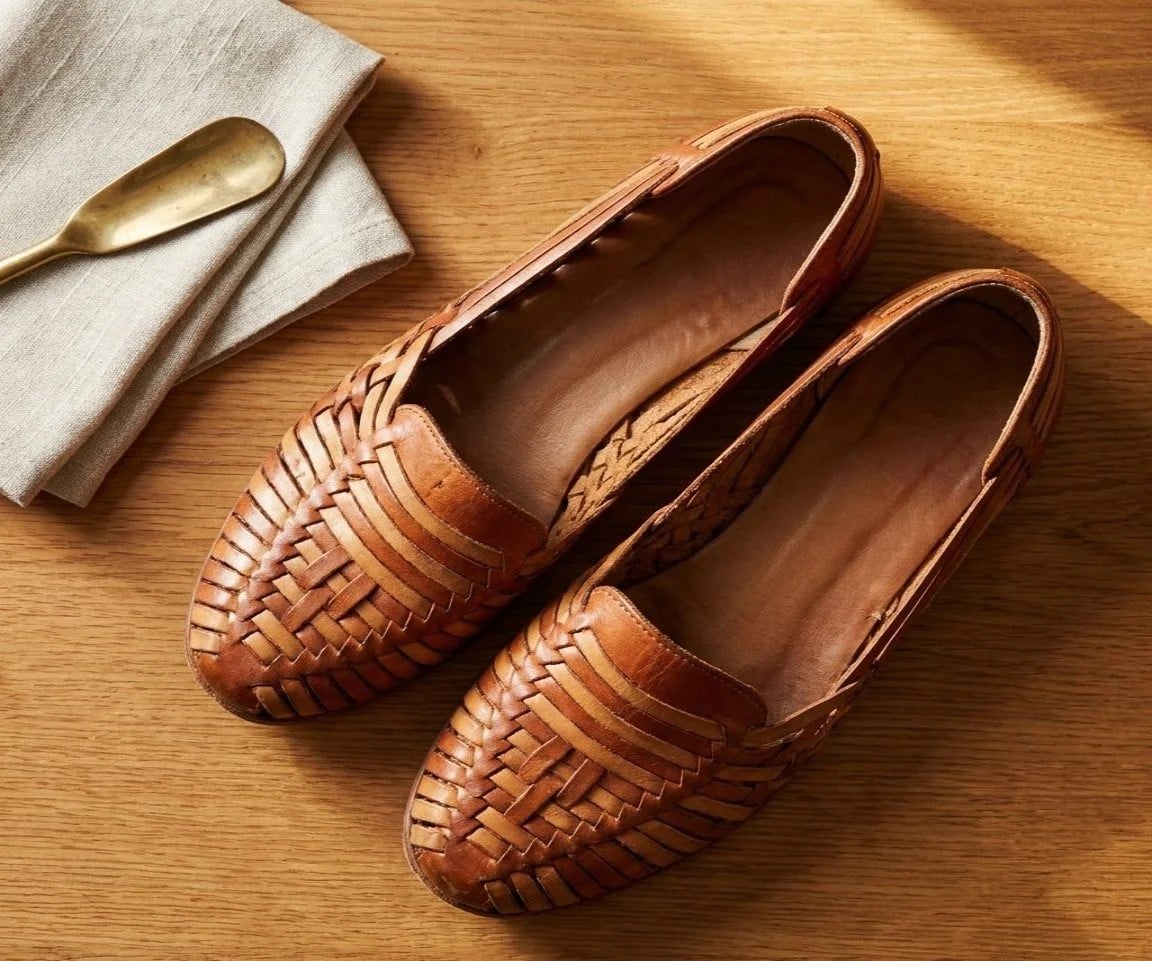
23. The Woven Leather Flat: Handmade Character Meets Machine-Level Precision
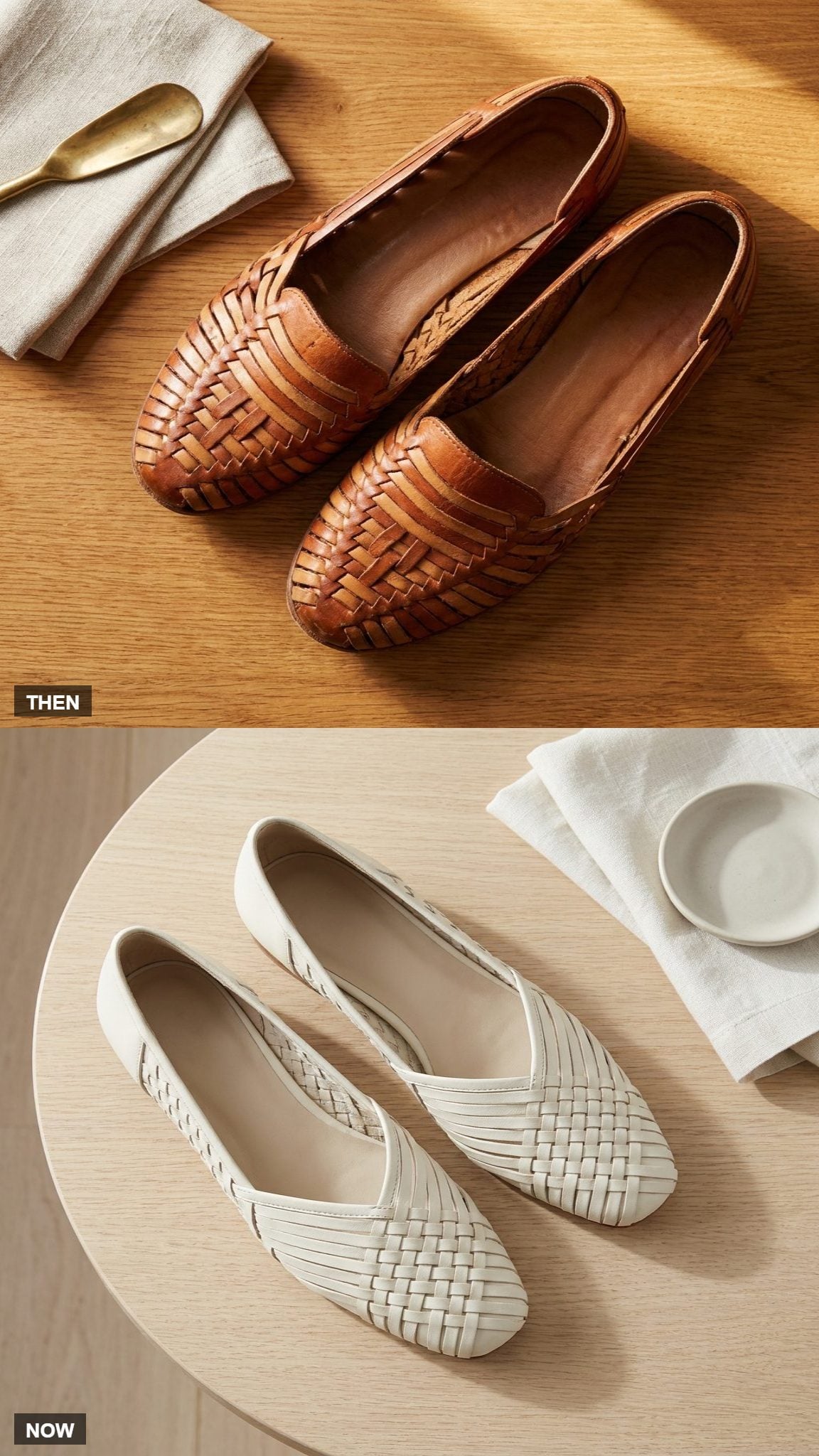
Woven leather flats fit naturally into the 1970s appetite for texture and earthy materials. Cognac, tan, and tobacco-colored strips created a surface that looked more interesting than a plain leather upper, whether the shoe was handmade or factory-produced.
Contemporary versions tend to be cleaner and more controlled: ivory, black, chocolate, beautifully even weaving, and edges finished with almost mathematical neatness. The old pair charms through variation. The new one gets its appeal from precision.
22. The Oxford Shoe: When Women’s Footwear Borrowed the Best Parts of Menswear
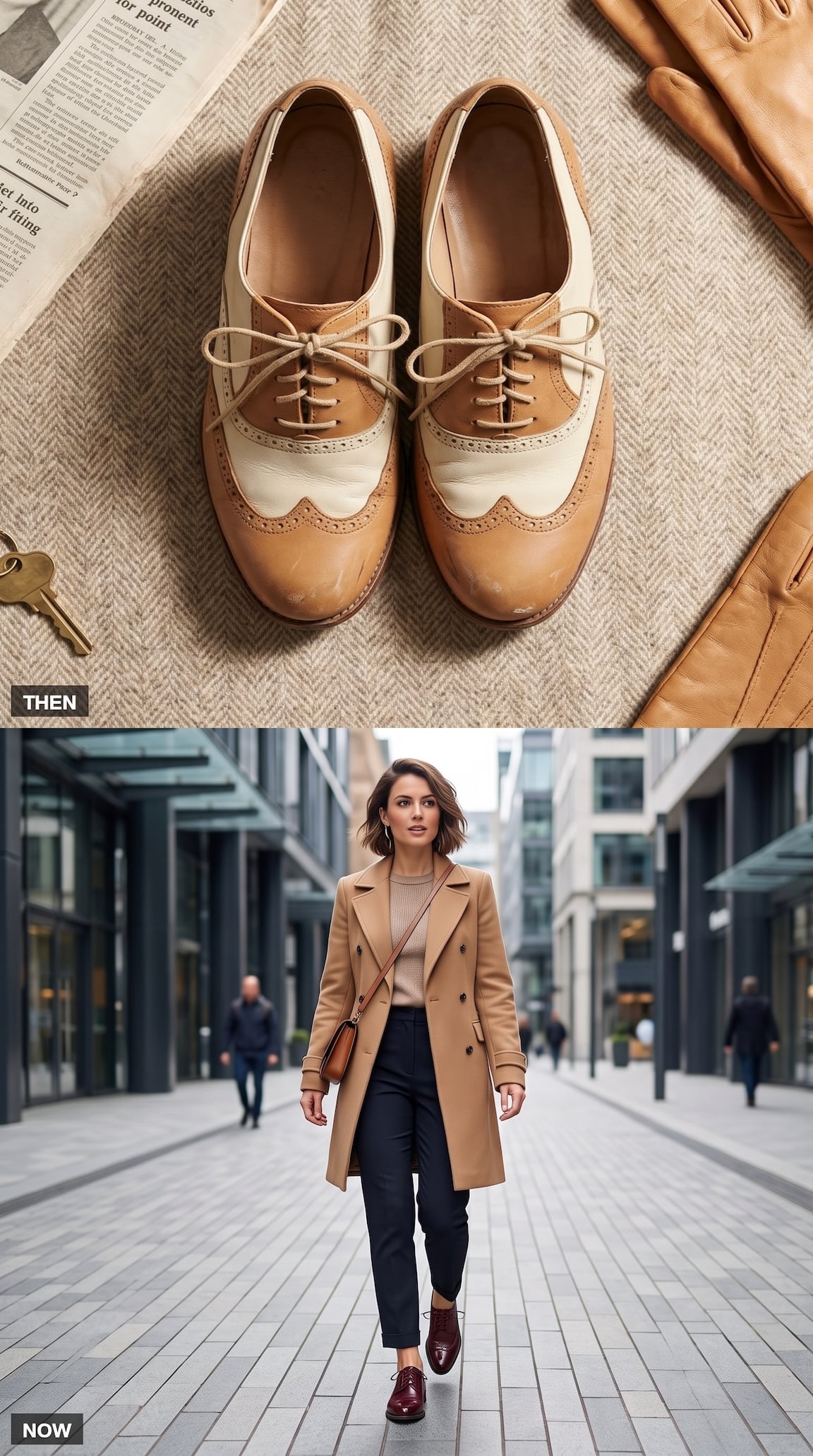
Women’s Oxfords were well established by the 1970s, and the decade gave them plenty to work with: two-tone leather, brogue perforations, wingtip toes, and sturdy heels borrowed directly from traditional men’s footwear.
Today’s version often sharpens the outline. Burgundy leather gets glossier, the toe gets narrower, and the brogue detailing becomes finer and more controlled. The basic lace-up structure remains recognizable, but contemporary women’s Oxfords range from classic and substantial to sleek, tapered, and deliberately polished.
21. The Wrap-Tie Heel: From Earthy Suede to Full Ballet Fantasy
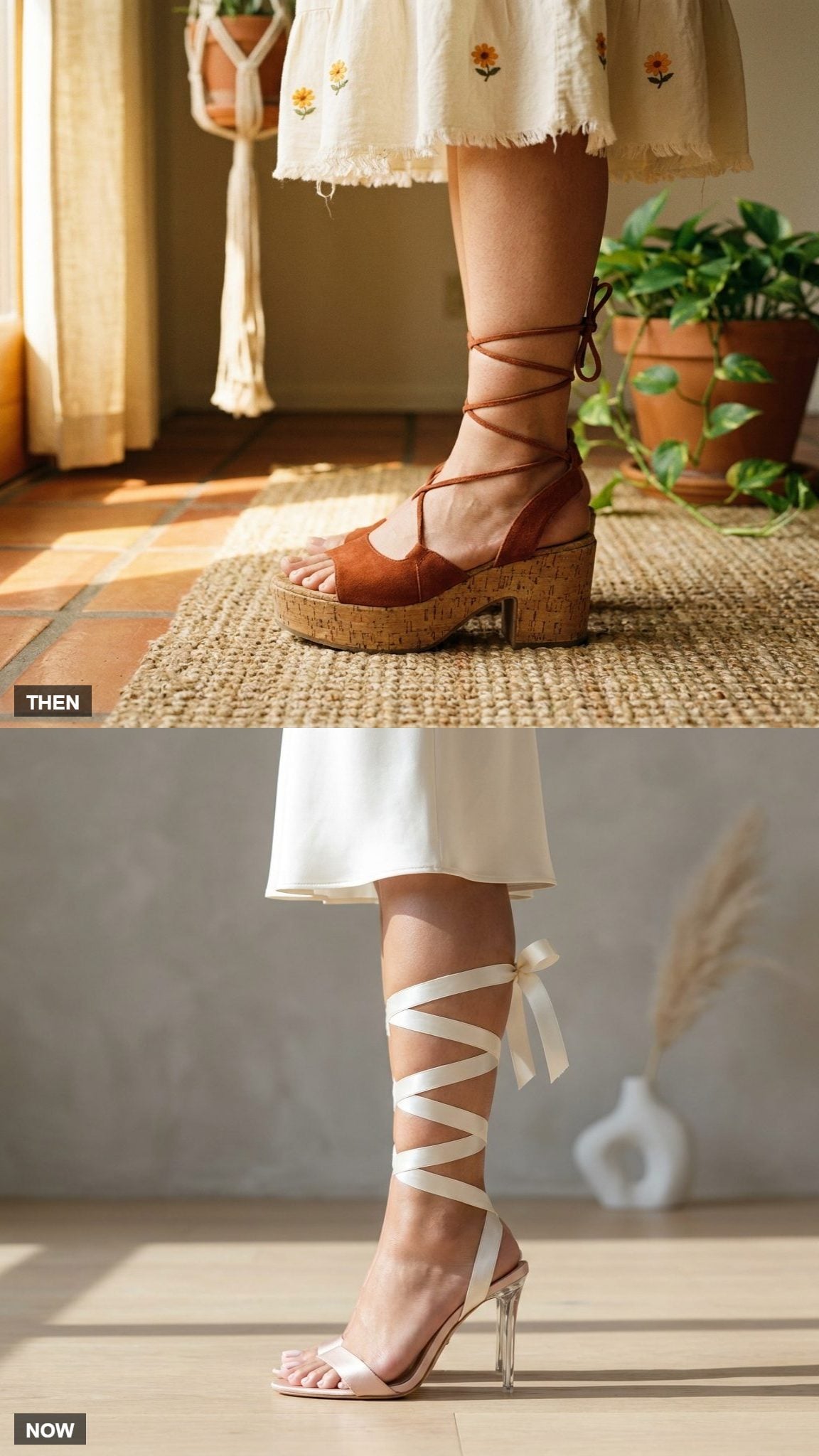
Terracotta suede, cork heels, and leather ties spiraling around the ankle made the 1970s wrap sandal feel perfectly at home beside macramé, pottery, and a long skirt moving through festival dust.
Modern wrap-ties have gone in a more theatrical direction. Satin ribbon replaces leather cord, the heel narrows, and the laces climb the calf with the neatness of a ballet slipper extended into evening footwear.
One drew from the earth. The other draws from the stage.
20. The Pointed-Toe Flat: Same Sharp Outline, Much More Attention to Comfort
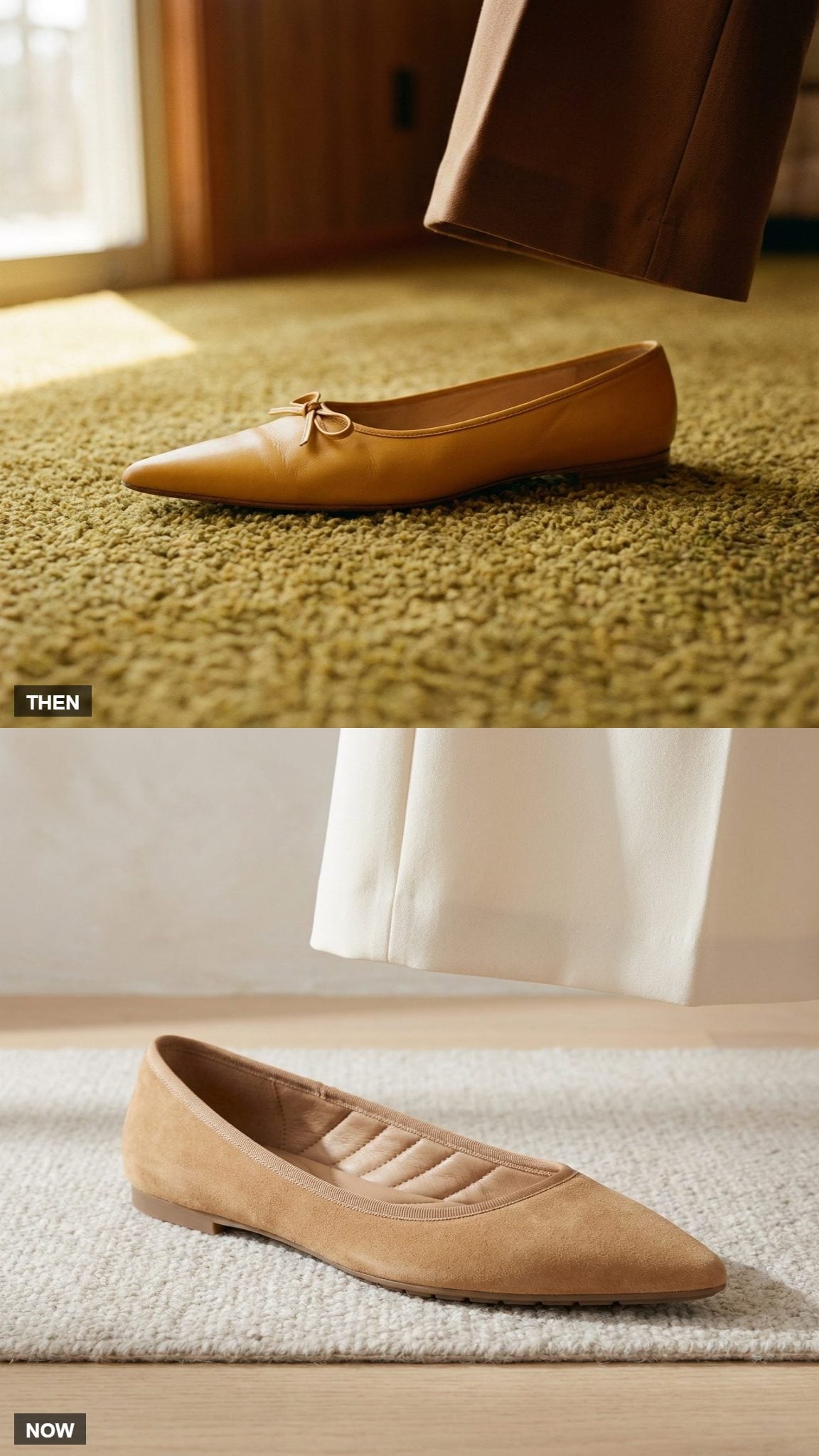
A pointed flat from the 1970s could be remarkably lean: thin sole, firm leather, little cushioning, and a toe narrowing with considerable ambition. Harvest gold or rust made the shape unmistakably of its decade even when wide-leg trousers hid most of it.
Modern versions can use softer suede, flexible soles, padded footbeds, and lasts designed to create the appearance of a point without forcing every toe into the narrowest part. That doesn’t guarantee comfort — pointed shoes are still pointed shoes — but the engineering has more options than it did fifty years ago.
19. The Closed Platform Shoe: When the Sole Became Half the Outfit
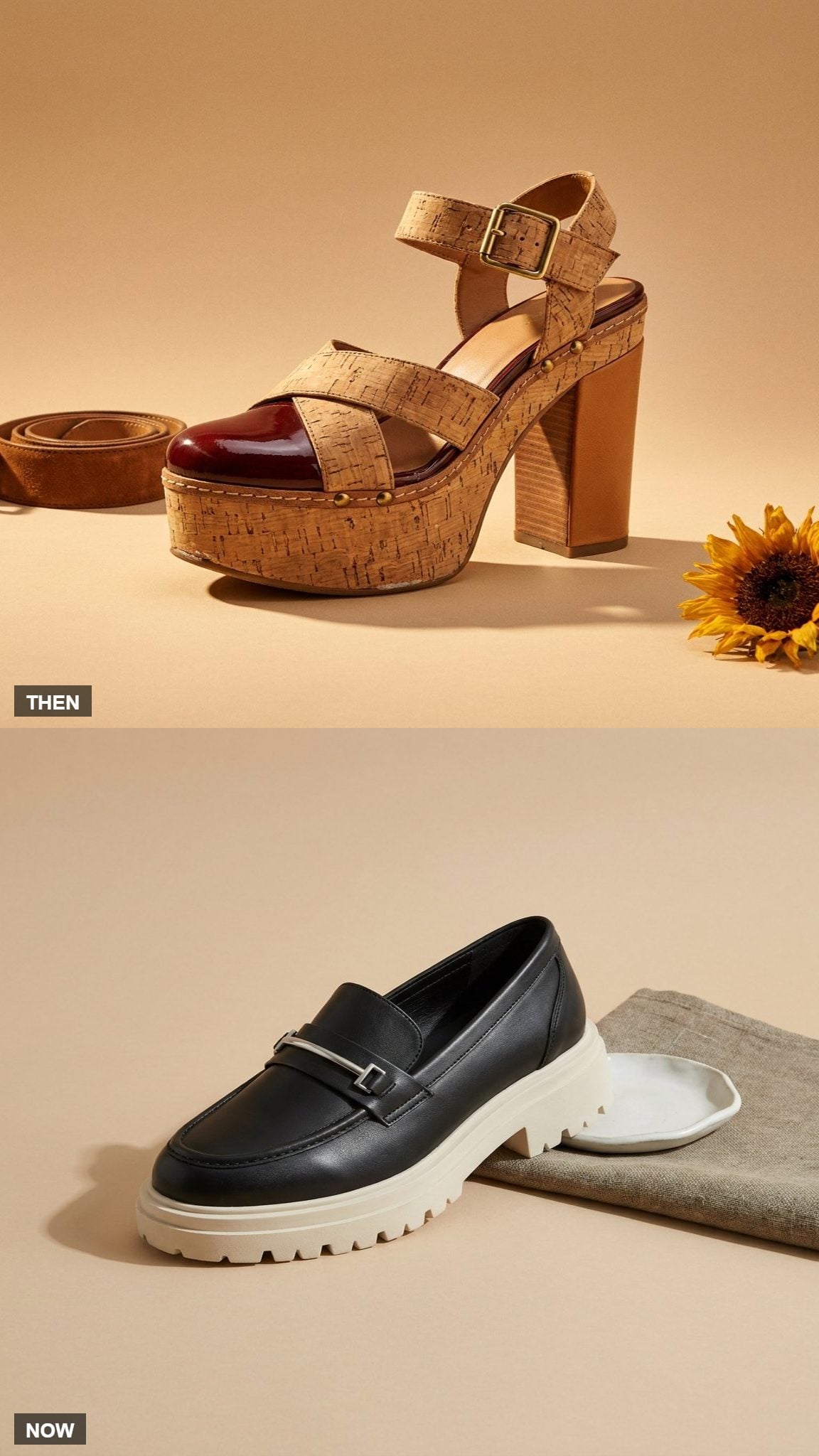
The 1970s platform shoe treated height as a design material. Cork, wood, or thick synthetic soles lifted even closed-toe shoes several inches off the ground, while chunky heels tried valiantly to make the whole arrangement feel stable.
Today’s platform shoes still play the same trick, but many use lighter foams, rubber compounds, and more flexible constructions. The proportion can remain outrageous without every step feeling as though you’re carrying a small piece of furniture on each foot.
18. The Kitten Heel Pump: Everyday Height Before It Became a Comeback Story
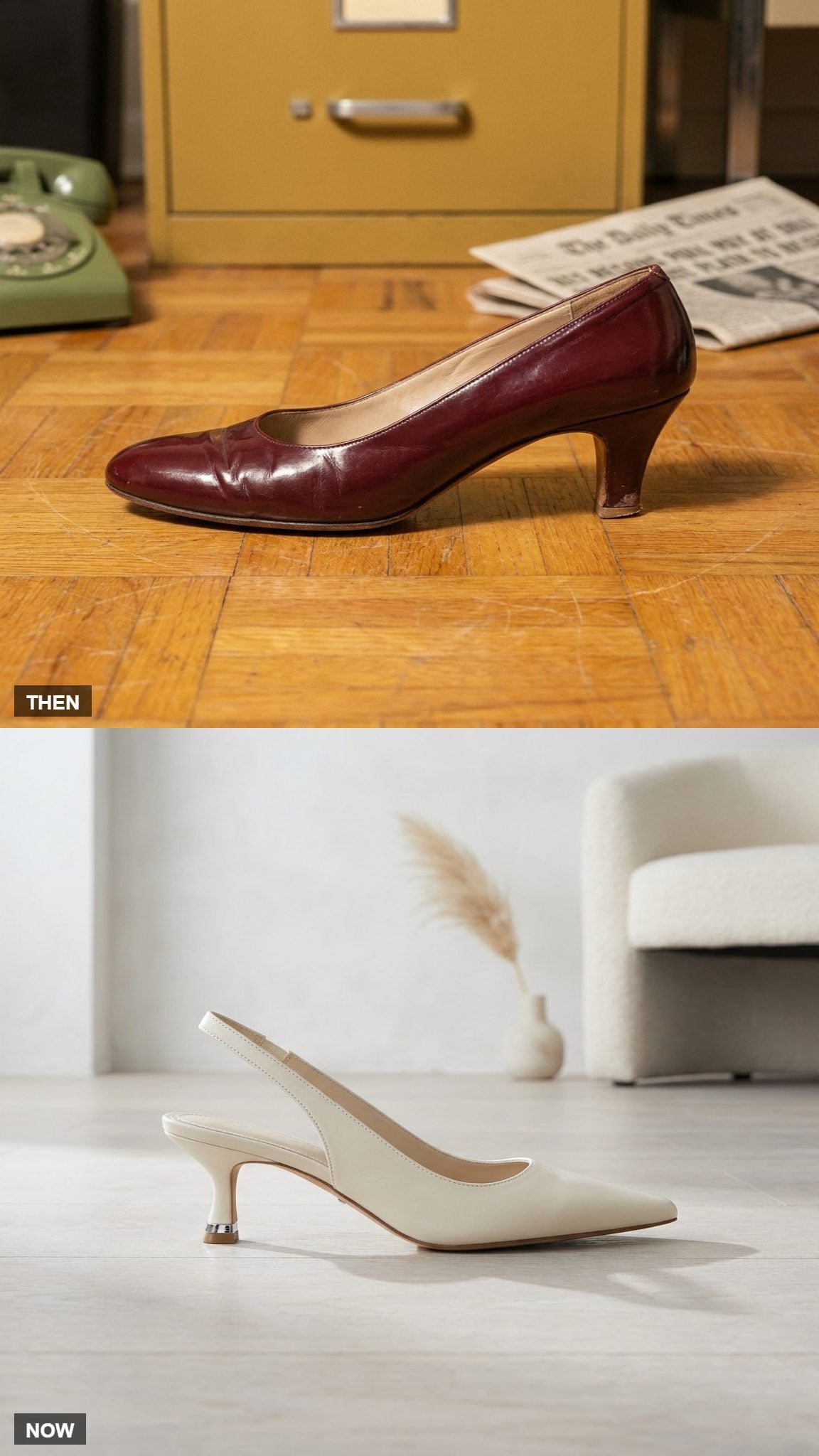
The kitten heel was already an established fashion term before the 1970s, but by then the low, slender heel had settled comfortably into everyday wardrobes. Patent leather, burgundy, chocolate brown, and simple pump uppers made it practical enough for work without surrendering the lift entirely.
Now the same little heel is treated as a fashion proposition in its own right. It appears under slingbacks, mules, square toes, knife-point pumps, and shoes that would never be described as merely sensible.
The height barely changed. The publicity department did.
17. The Leather-Upper Clog: Scandinavian Utility With a 1970s American Accent
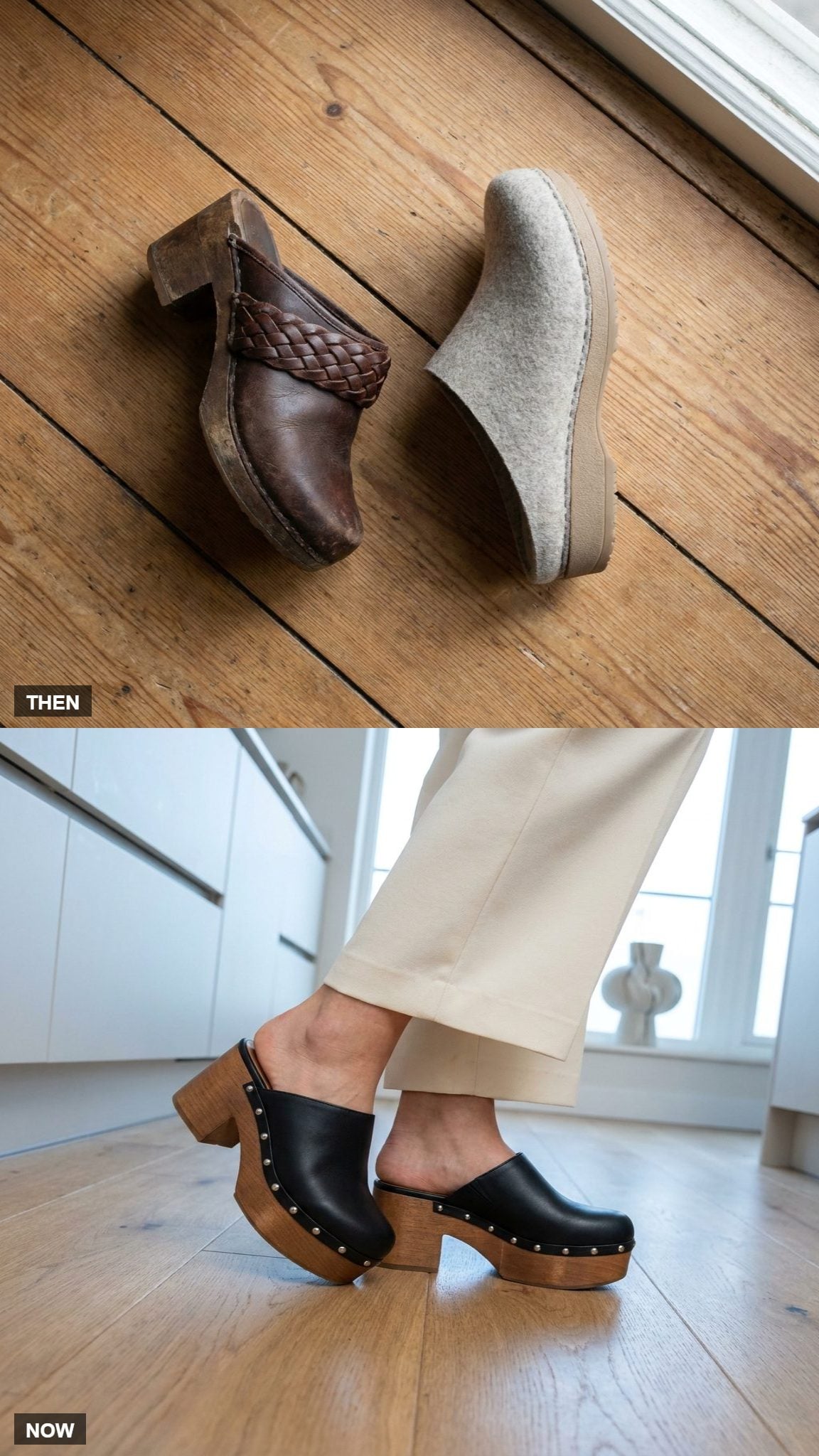
The clog that swept through 1970s wardrobes usually paired a rigid wooden sole with a simple leather upper. Open heel, visible staples or hardware, natural brown leather — nothing about it pretended to be delicate.
Modern versions keep that construction recognizable while adding softer footbeds, different heel heights, rubber tread, and enough cushioning to make a day on hard pavement less of a negotiation.
16. The T-Strap Mary Jane: Demure Shape, Surprisingly Serious Presence
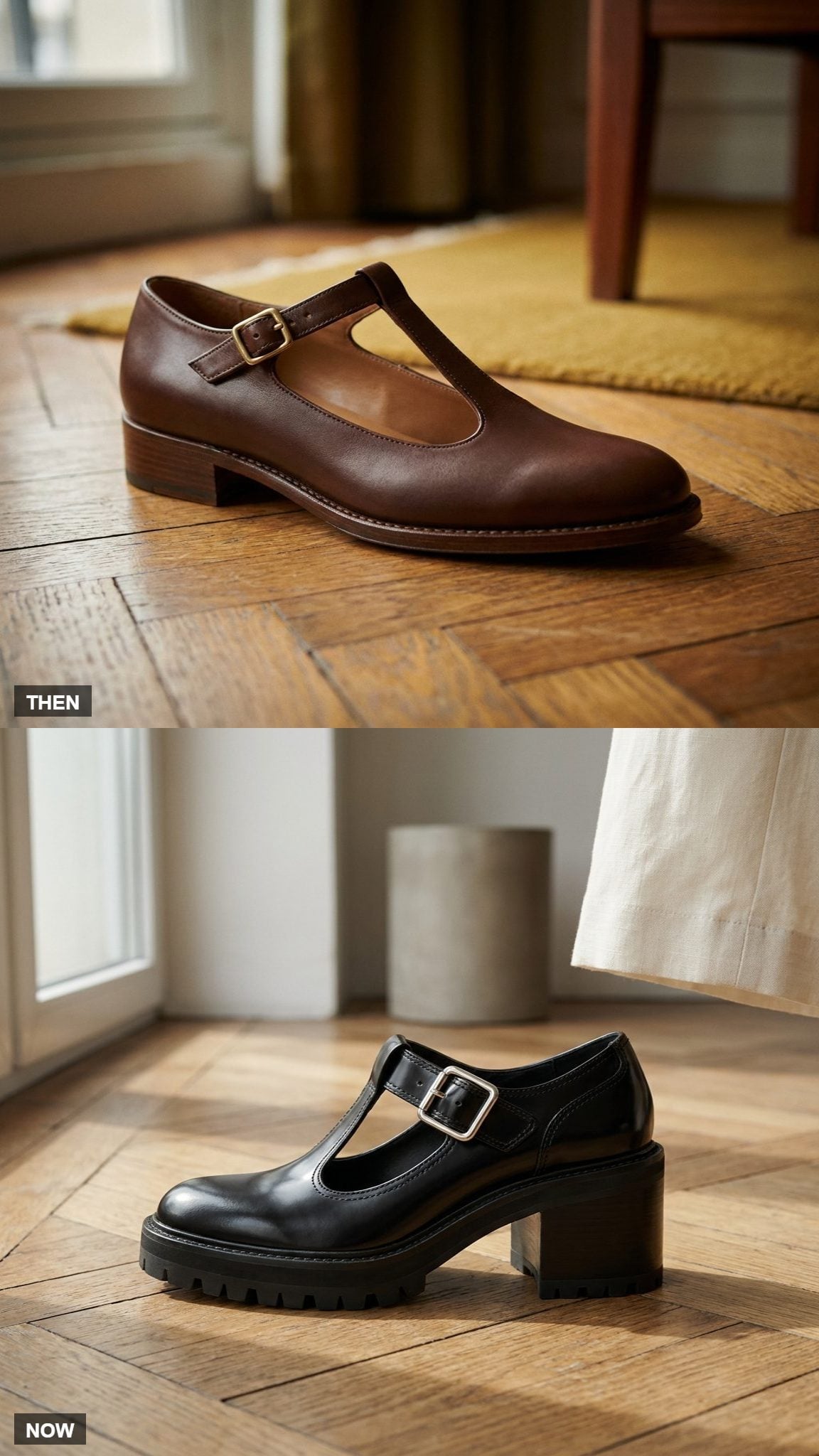
A closed toe, low block heel, and strap running vertically up the foot gave the 1970s T-strap Mary Jane a neatly contained shape. In chocolate, oxblood, or forest-green leather, however, it had more presence than the word “Mary Jane” suggests.
The current revival exaggerates the hardware and sole. Buckles grow larger, platforms get thicker, and the shoe appears beneath wide-leg trousers, short skirts, and socks deliberately left visible.
The T-strap never needed much decoration. Buckle it, polish the leather, and the geometry handles the rest.
15. The Low-Heeled Mule: Backless, Practical, and Almost Aggressively Uncomplicated
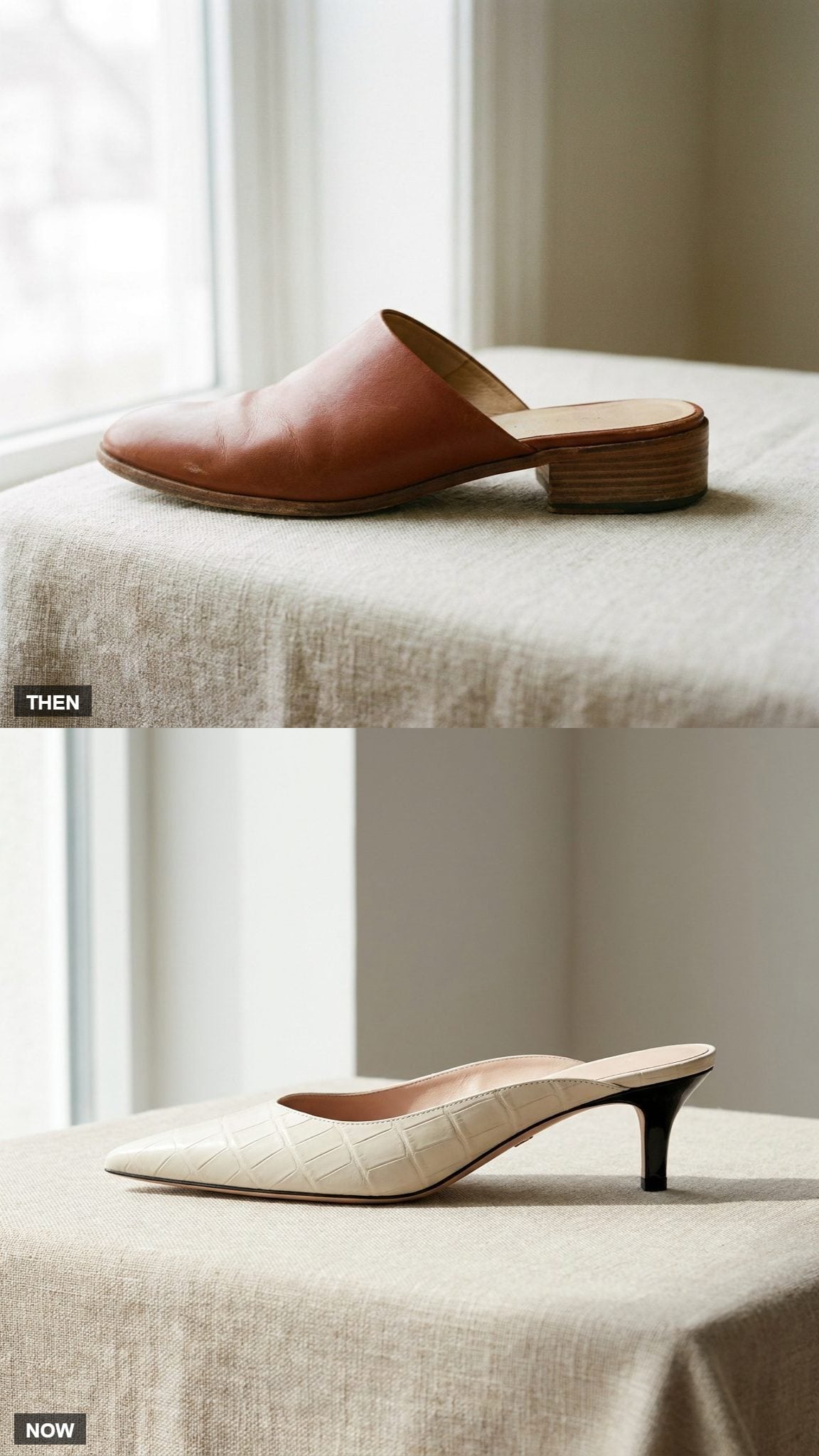
A broad leather upper, rounded toe, and low stacked heel made the 1970s mule about as straightforward as footwear gets. Slide in, walk out, hope friction keeps doing its job.
Contemporary mules have pushed the same backless construction into dressier territory with sharper toes, sculpted heels, embossed leather, and sleeker profiles. What was once an easy everyday shoe can now turn up at dinner without anyone wondering if its owner forgot to change.
14. The Brown Knee-High Boot: The 1970s Workhorse That Still Looks Familiar
❤️ Would you like to save this?
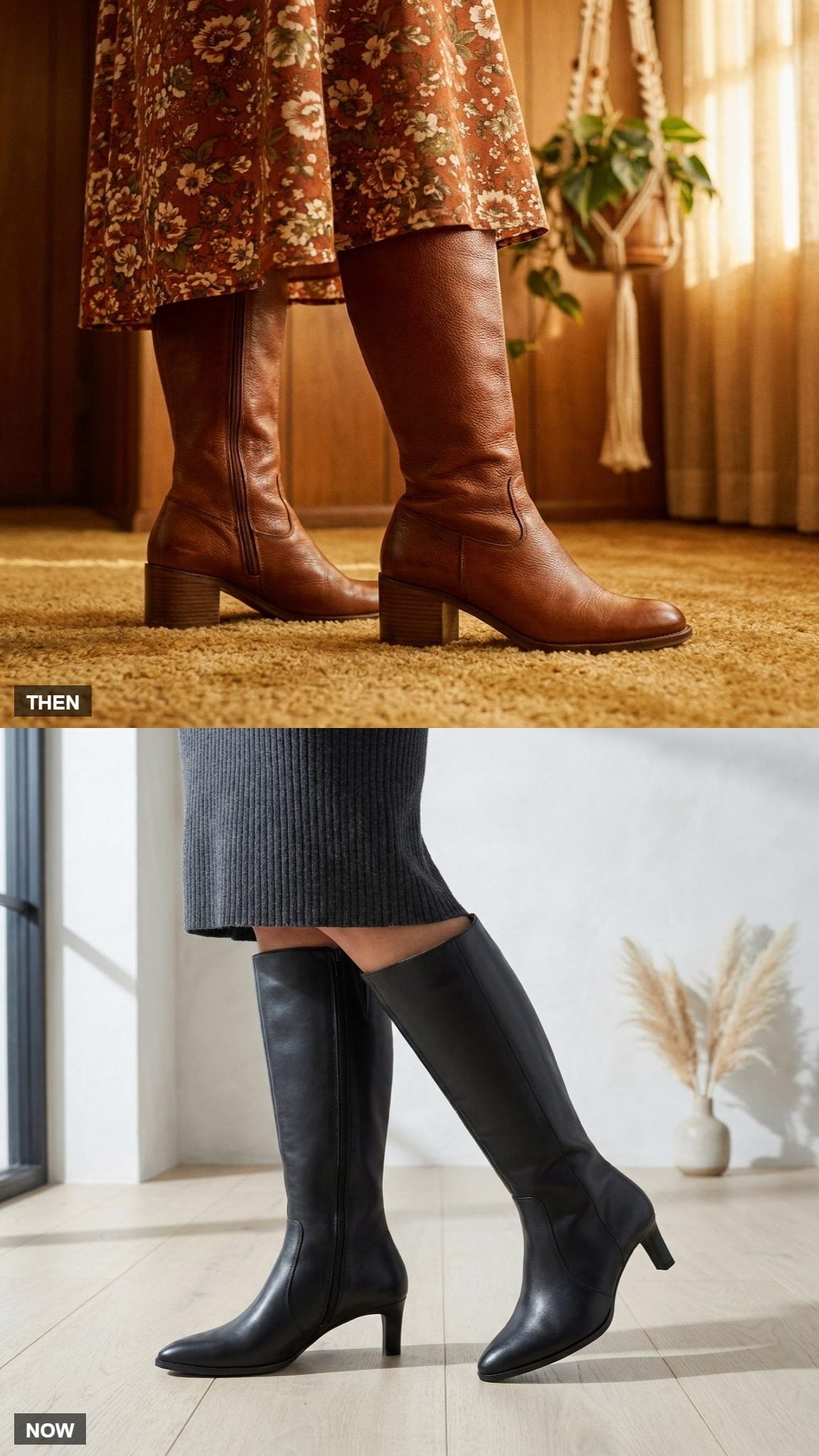
Cognac brown. Side zip. Block heel. Straight shaft to the knee. The 1970s leather boot worked with midi skirts, longer dresses, wide-leg trousers, and enough different wardrobes that it became one of the decade’s most durable silhouettes.
Today’s knee-high can be slimmer through the shaft, softer through the leather, and cushioned underfoot, but the basic outline remains remarkably recognizable. Put the old and new pairs beside each other and the biggest surprise may be how little explanation either one needs.
13. The Platform Sandal: All the Height, Now With the Foot Exposed
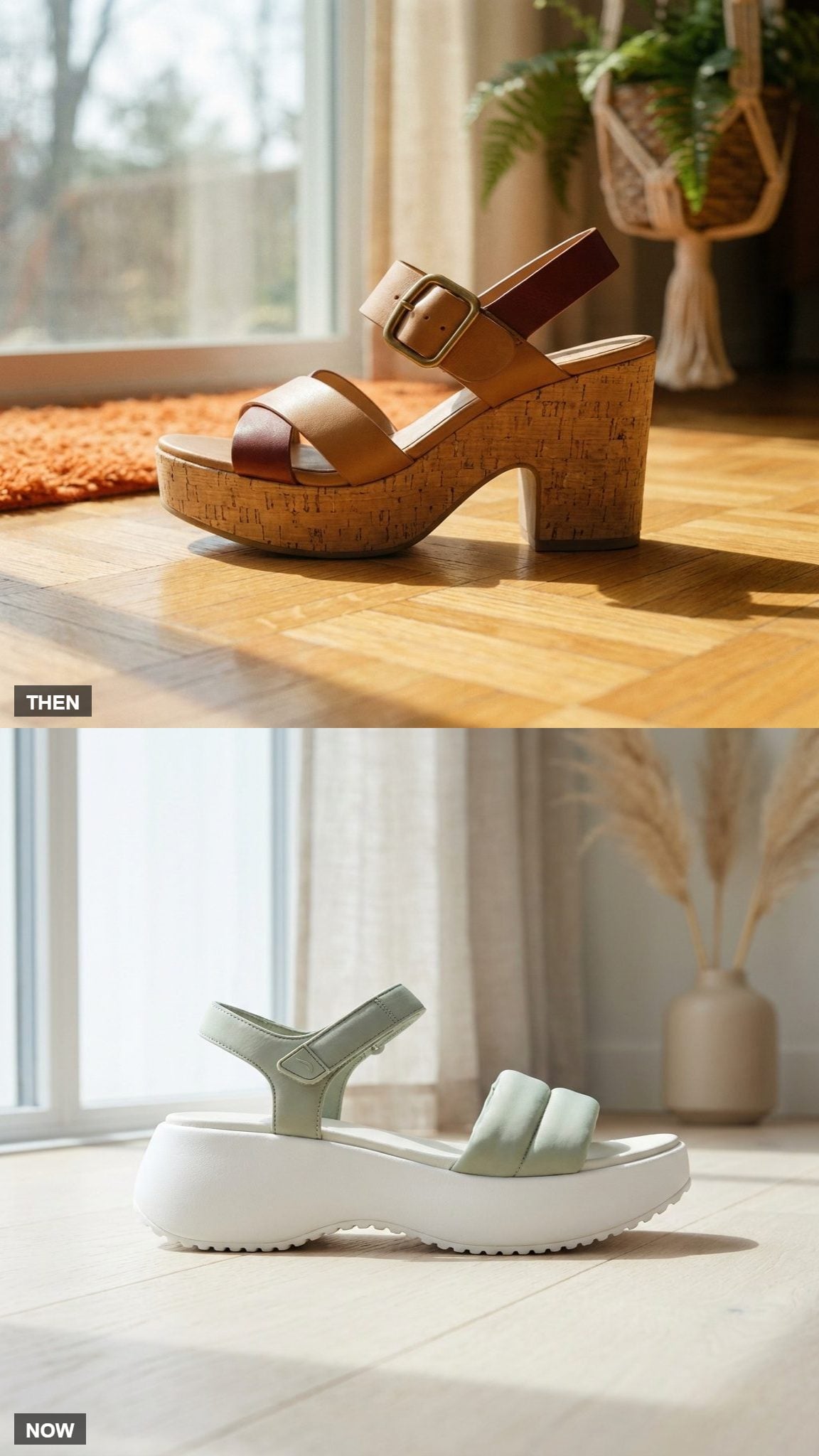
The sandal version of the platform was even more brazen because there was less shoe above the enormous sole to explain what was happening below it. Cork and wood rose several inches under leather straps and substantial buckles, turning a summer sandal into portable architecture.
Current shoe designs with similar platform proportions can use lighter foams, rubberized soles, and more flexible footbeds while keeping the exaggerated height. The old version looked like a staircase with straps. The new one has learned to bend.
12. The Earth Shoe: Negative Heel, Maximum 1970s Conviction
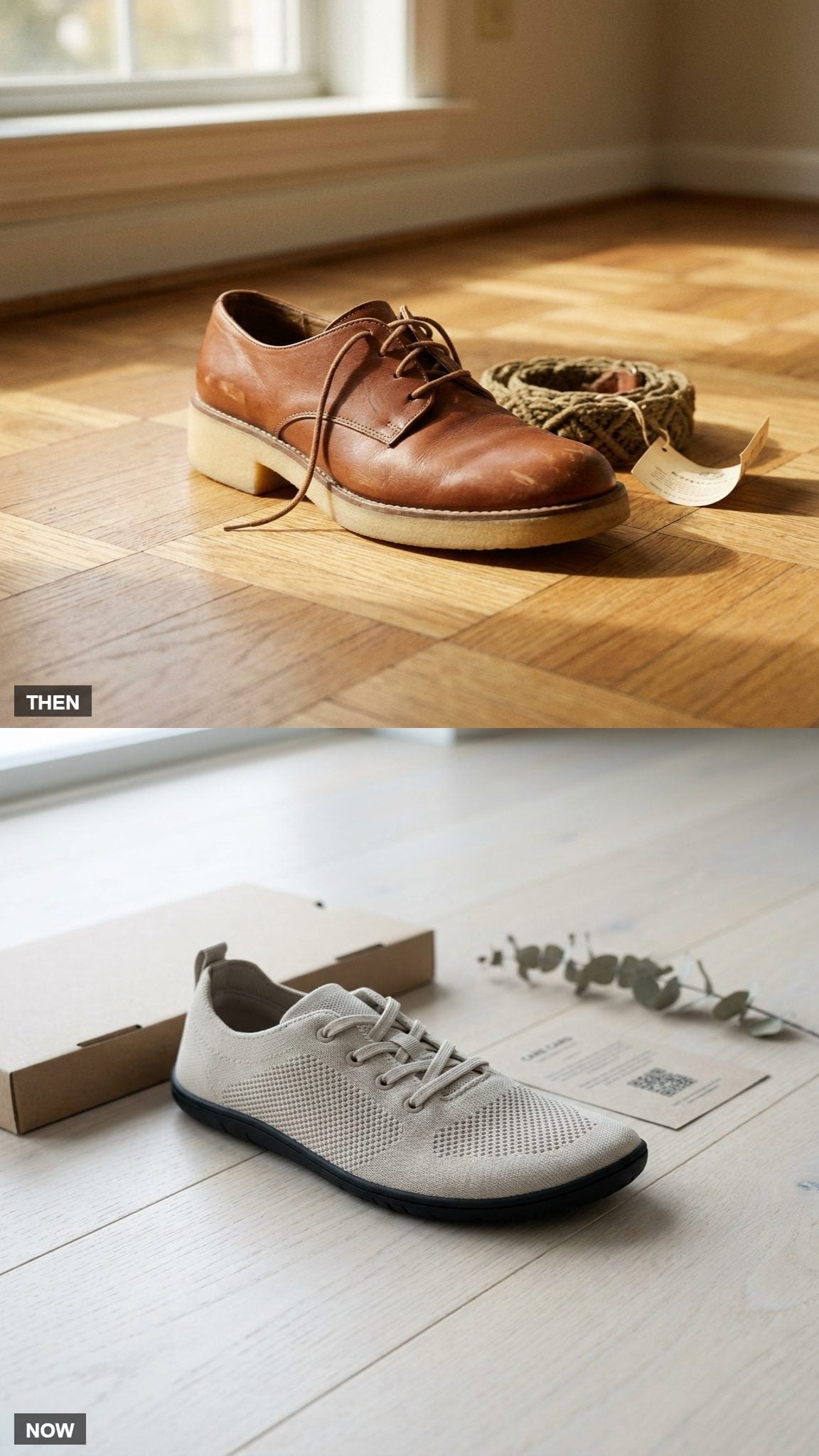
Few shoes summarize early-1970s wellness culture as neatly as the Earth Shoe. Developed from Danish designer and yoga teacher Anne Kalsø’s negative-heel concept, it placed the heel slightly lower than the front of the foot and was marketed around a more “natural” style of walking.
The result looked closer to corrective footwear than conventional fashion, which only made its popularity more interesting.
Ideas about wide toe boxes, minimal heel elevation, and barefoot-inspired movement have returned in contemporary footwear, although modern zero-drop and minimalist shoes are not simply Earth Shoes under a new name.
11. The Ballet Flat: Already a Classic in 1970, Still Cycling In and Out of Fashion
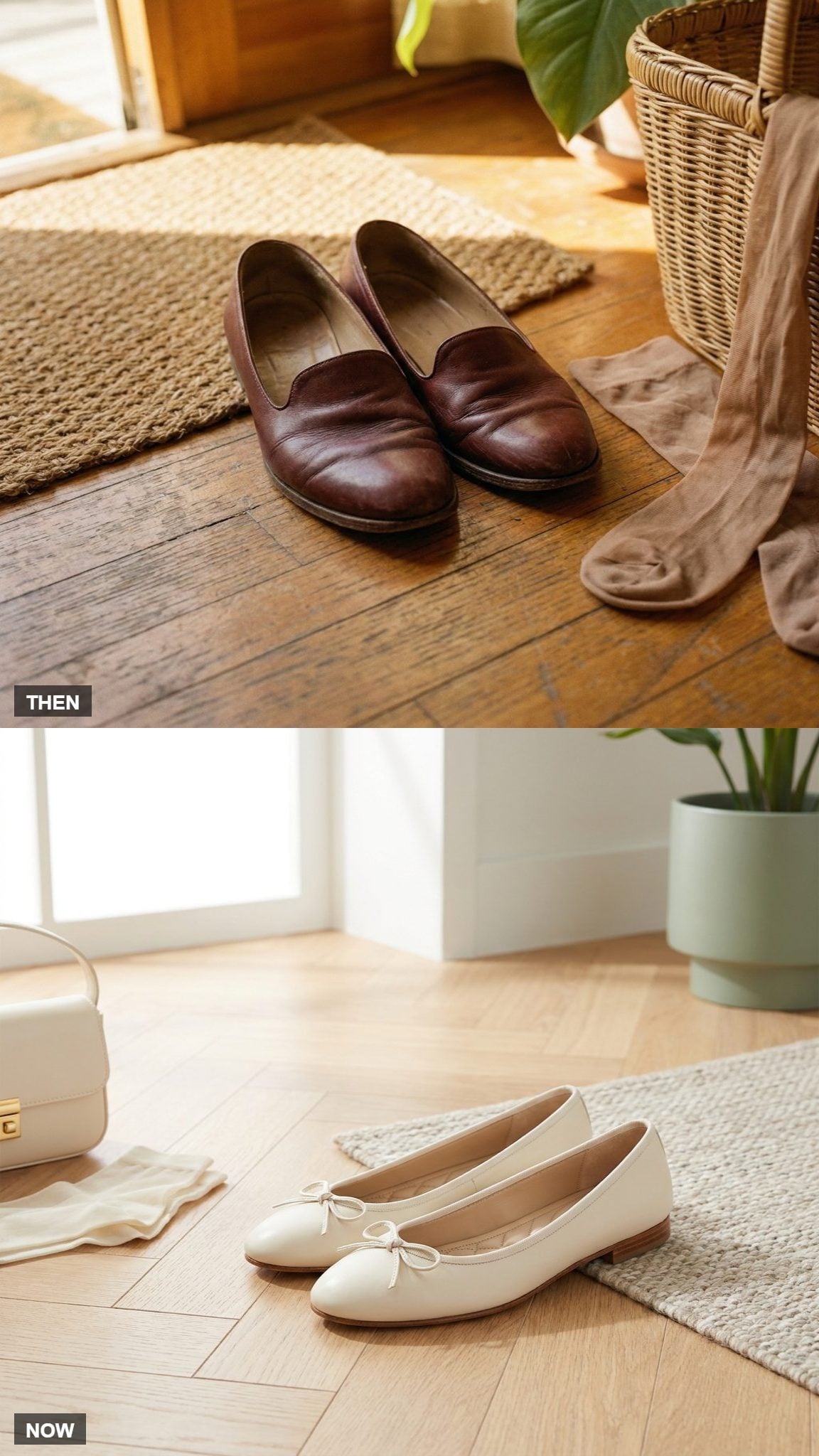
Ballet-inspired flats were fashionable well before 1970, so the decade didn’t invent the category. What it did have were plenty of simple, low-profile slip-ons: thin leather soles, rounded or almond toes, tiny bows or no decoration at all.
Today’s ballet flat can be buttery leather, mesh, satin, patent, square-toed, pointed, Mary Jane-strapped, or nearly identical to a pair worn decades ago.
This is less a comeback than a shoe that periodically gets rediscovered by people who weren’t paying attention the last time.
10. The Full Wooden Clog: Counterculture Footwear With Its Own Soundtrack
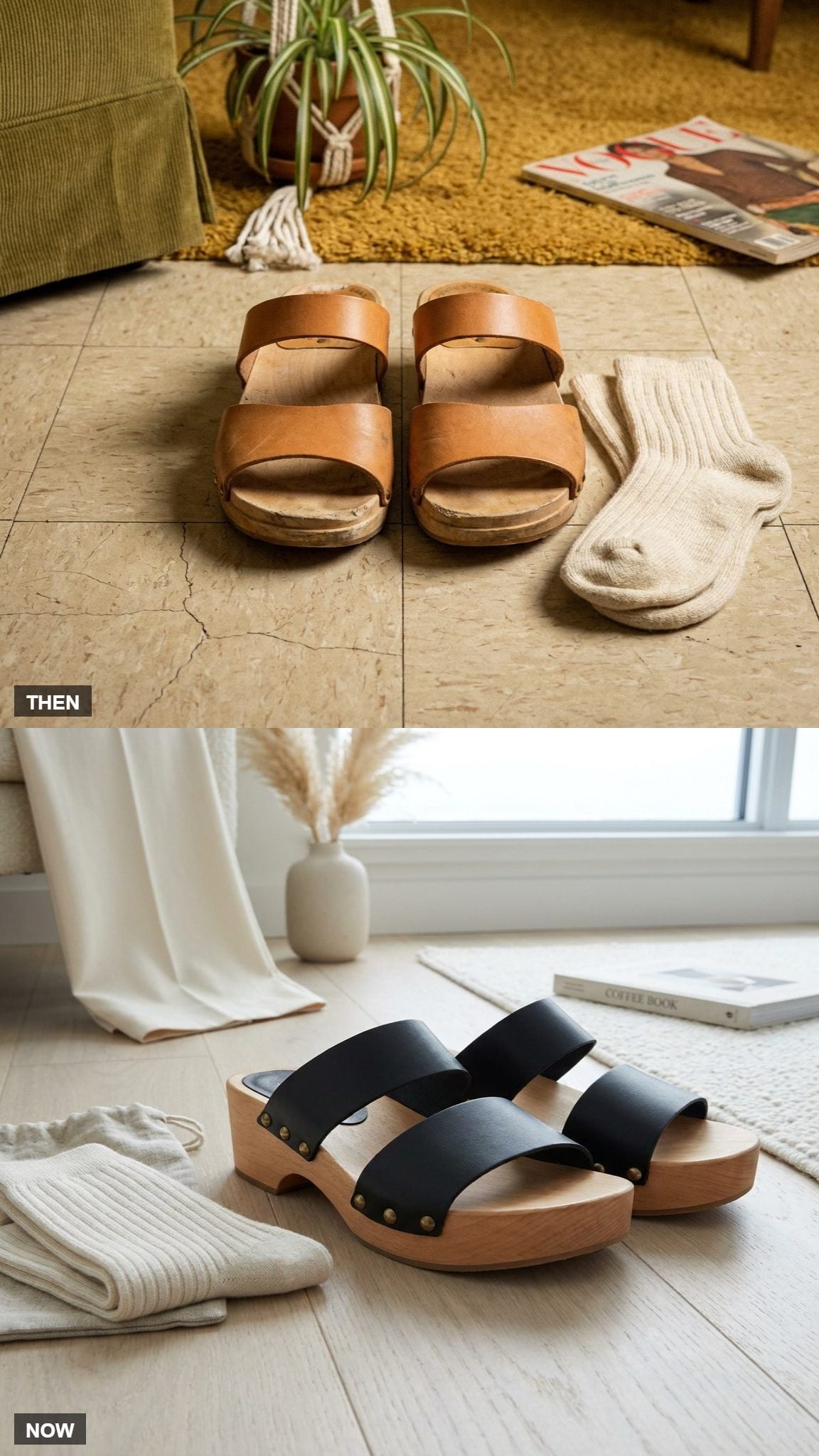
Where the earlier leather-upper clog feels almost restrained, the fully wooden version makes its material impossible to ignore. The rigid construction, natural finish, and unmistakable clack suited a decade fascinated by craft, folk traditions, and things that appeared to have escaped industrial polish.
They never entirely disappeared. Wooden clogs still turn up in fashion collections, workwear, and premium lifestyle brands, sometimes almost unchanged and sometimes exaggerated into high platforms.
The most faithful modern reproduction isn’t the silhouette. It’s the noise.
9. The Office T-Strap: Block Heel, Buckle, Eight Hours to Get Through
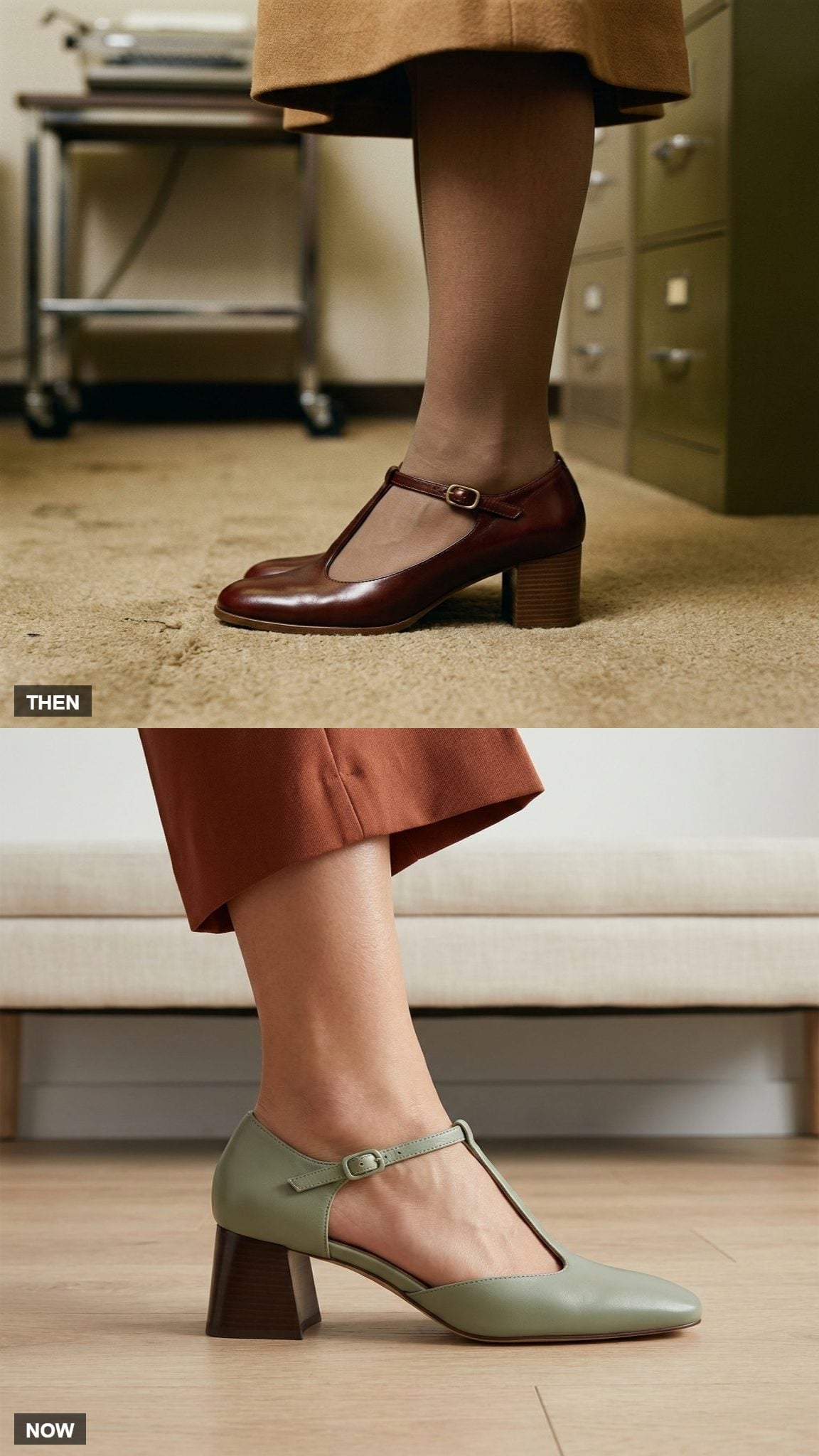
The dressier T-strap had a different job from the Mary Jane version earlier in the gallery. A more defined heel and pump-like upper made it especially well suited to office clothing, while the strap gave the foot more security than an ordinary slip-on pump.
Brown, black, oxblood, and other practical leathers were easy choices beside skirts and tailored trousers.
The modern T-strap block heel pushes the same structure into richer colors, sharper toes, and deliberately visible buckles. It no longer has to look sensible just because it stays on your foot.
8. Sneakers: From Primarily Athletic to Absolutely Everywhere
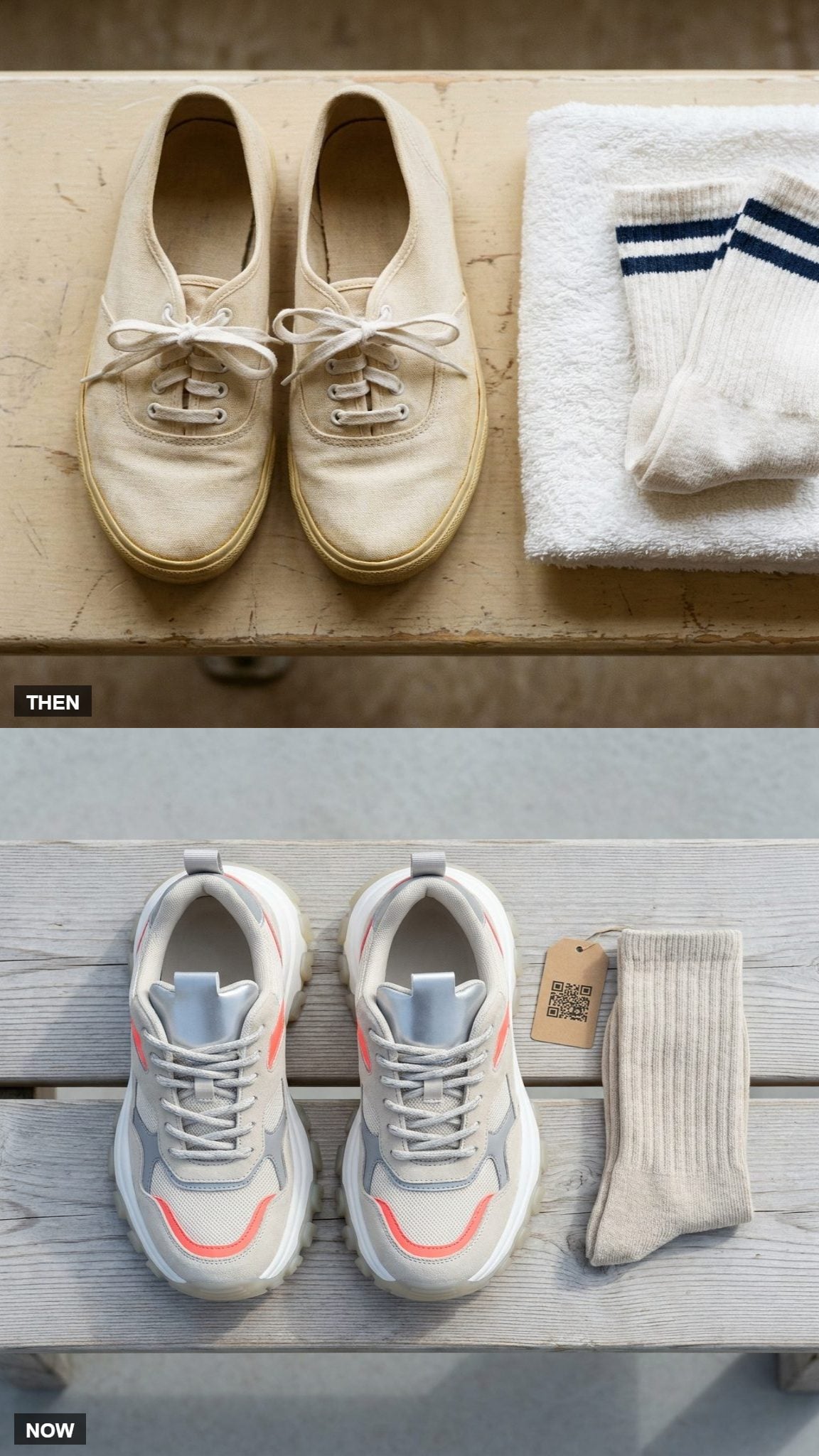
Sneakers certainly existed outside gyms in 1970, but they still carried a much stronger athletic and casual association than they do now. Canvas court shoes, running shoes, and simple rubber-soled styles had far less fashion infrastructure surrounding them.
Today the category has splintered into trail runners, court shoes, chunky dad sneakers, retro runners, luxury collaborations, limited releases, performance models, and shoes purchased by people with no intention of running anywhere.
The biggest change isn’t the sole. It’s that sneakers moved from one part of the wardrobe into almost every part of it.
7. The Micro Kitten Heel: When a Familiar Low Heel Became the Point
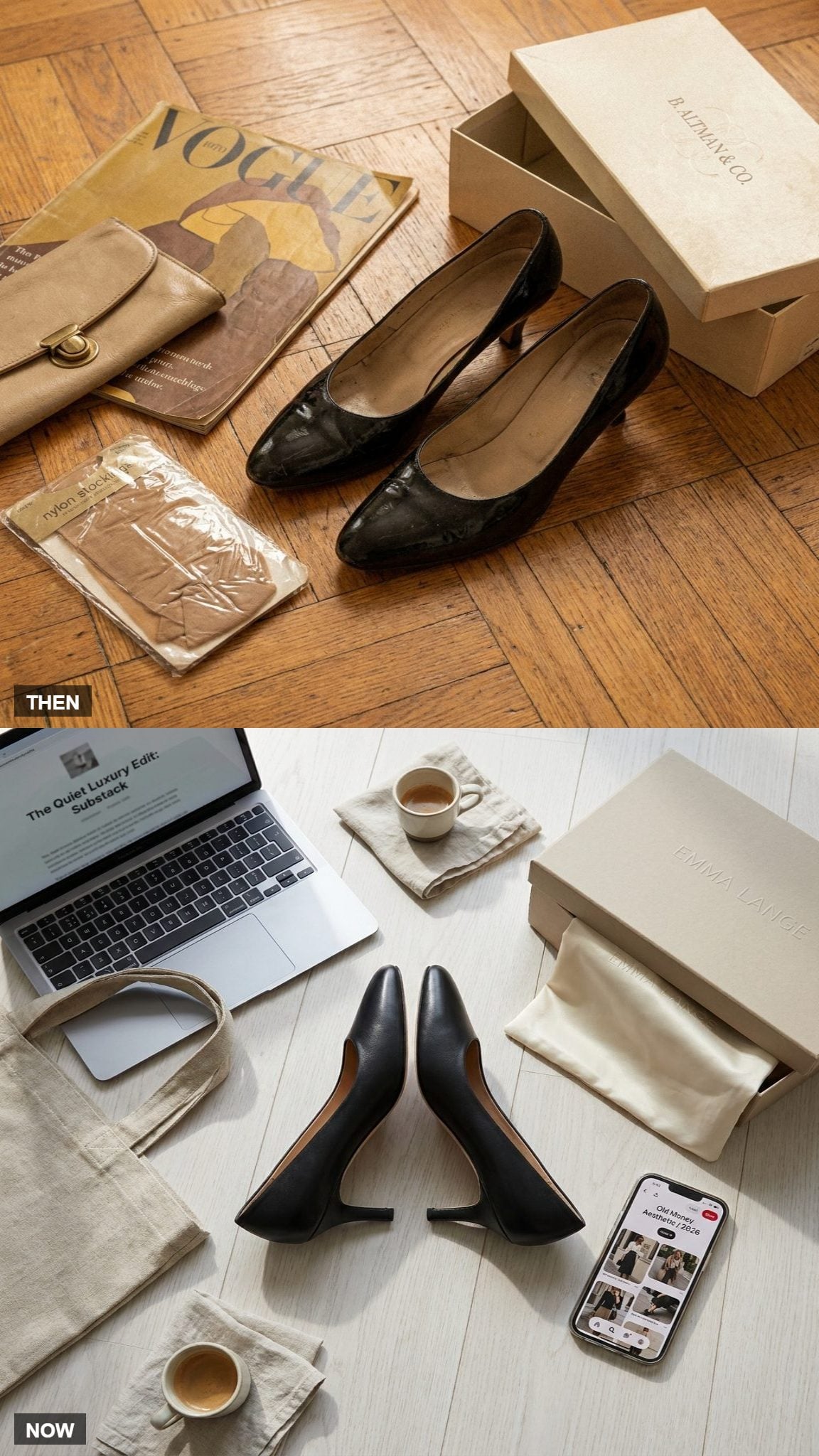
The earlier kitten-heel pump shows how ordinary the low heel could look in a 1970s work wardrobe. This version makes the contrast with today clearer: a relatively plain patent pump beside a modern shoe where the tiny heel itself has become a fashion signal.
The kitten heel pump now turns up in pointed slingbacks, exaggerated square toes, sculpted backs, and shoes styled specifically because the heel is small rather than in spite of it.
Once it was simply one useful height among many. Now it gets think pieces.
6. The Printed Mule: From Loud Fabric to Architectural Leather
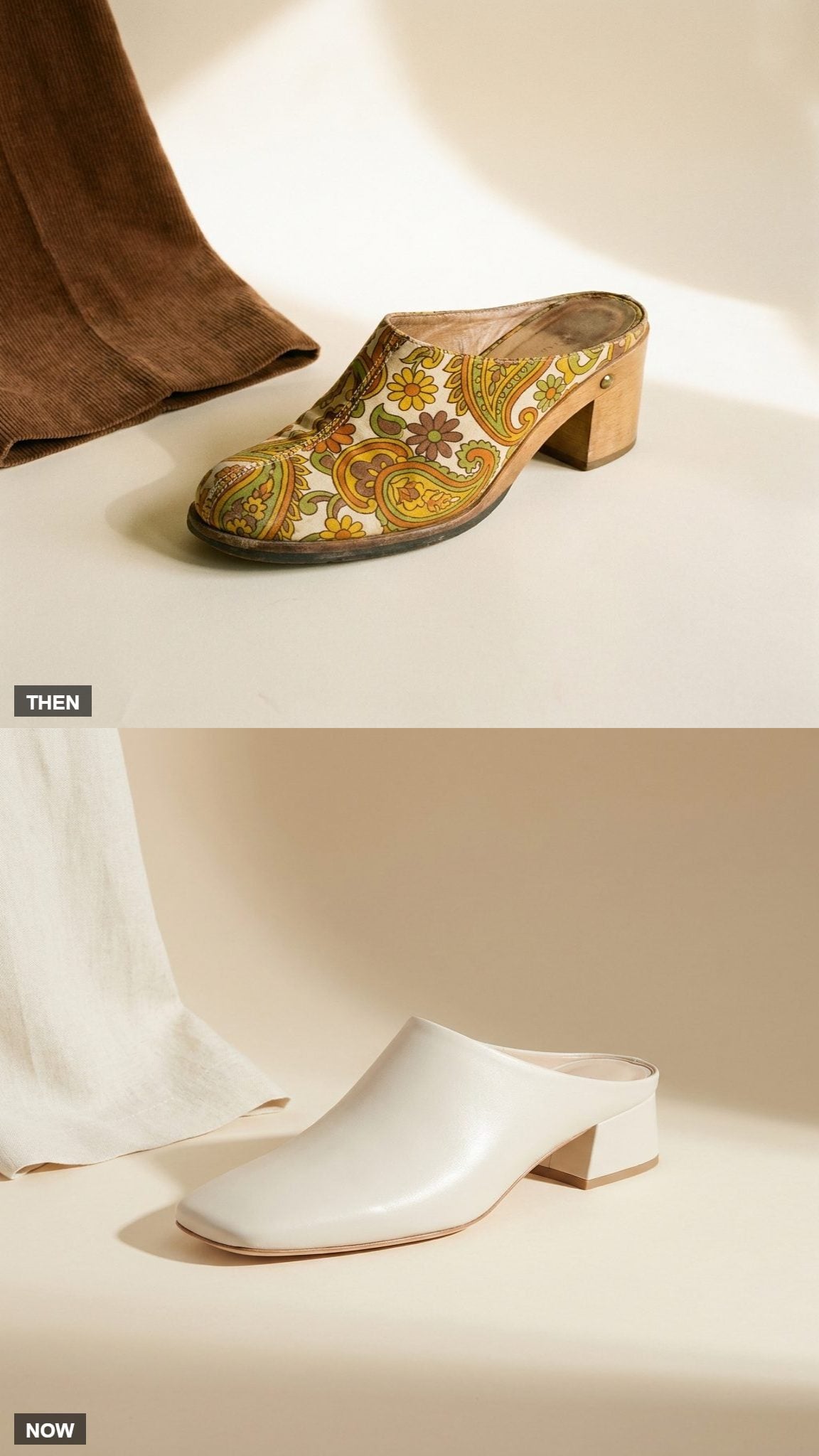
The earlier mule was quiet leather. This one shows the other side of the 1970s: fabric prints bold enough to become the outfit, a rounded toe, chunky heel, and open back that made all that pattern feel slightly less formal.
The mule today has split in two. One branch goes architectural and minimal — a sculpted leather mule heel, square toe, one clean color. The other deliberately raids the 1970s for print and texture.
Same backless construction. Two entirely different reasons to wear it.
The mule may be one of fashion’s favorite blank canvases: remove the back, then let every decade argue about what belongs on the front.
5. The Go-Go Boot: White Vinyl Refuses to Leave the 1960s Quietly
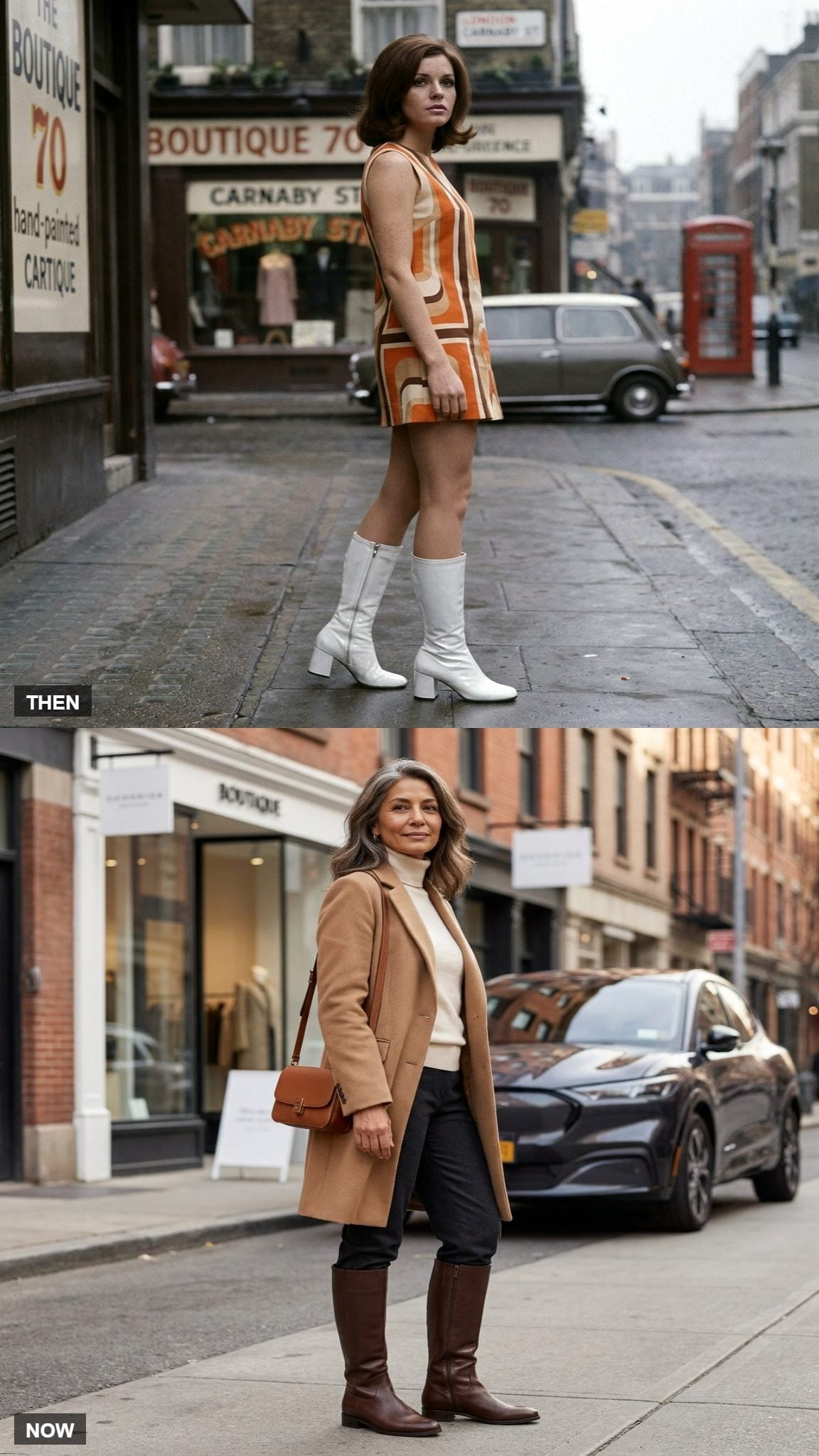
At the turn of the 1970s, the white go-go boot was still carrying plenty of 1960s energy with it: pale vinyl or leather, mid-calf height, block heel, and a shape made to sit beneath a miniskirt without behaving subtly.
Modern knee-high shoe construction can go in a much softer direction — supple leather, cleaner shafts, lower heels, and styling with tights, midi skirts, or slim trousers. The knee-high leather boot is less costume-like than the white go-go version, but the pleasure of letting a boot dominate the lower half of an outfit hasn’t gone anywhere.
4. The Earthy Sandal: Macramé, Braided Leather, and Enough Cork for a Bulletin Board
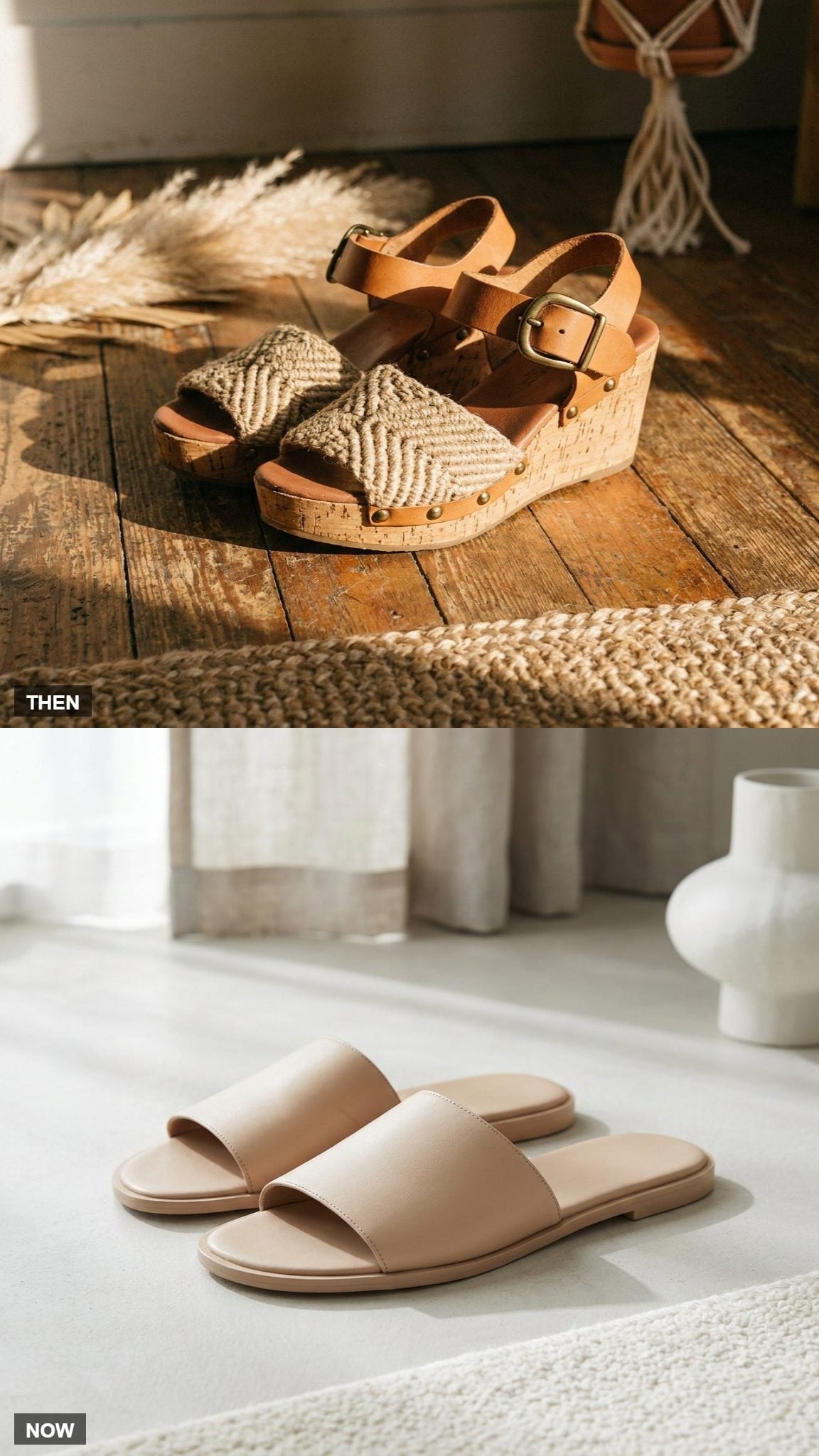
The 1970s sandal often looked like several craft traditions had agreed to collaborate. Cork, braided leather, woven straps, chunky buckles, and natural colors piled texture onto something meant for hot weather.
Now the minimalist leather slide takes the opposite route. One broad strap, maybe two. Low sole. Little or no hardware. Even paired with a more casual athleisure look, the modern sandal doesn’t need to tell the whole story.
What’s interesting is that both eras were chasing ease. One expressed it with handworked texture. The other removes almost everything.
3. The Espadrille: Centuries-Old Rope Sole, Completely Different Social Life
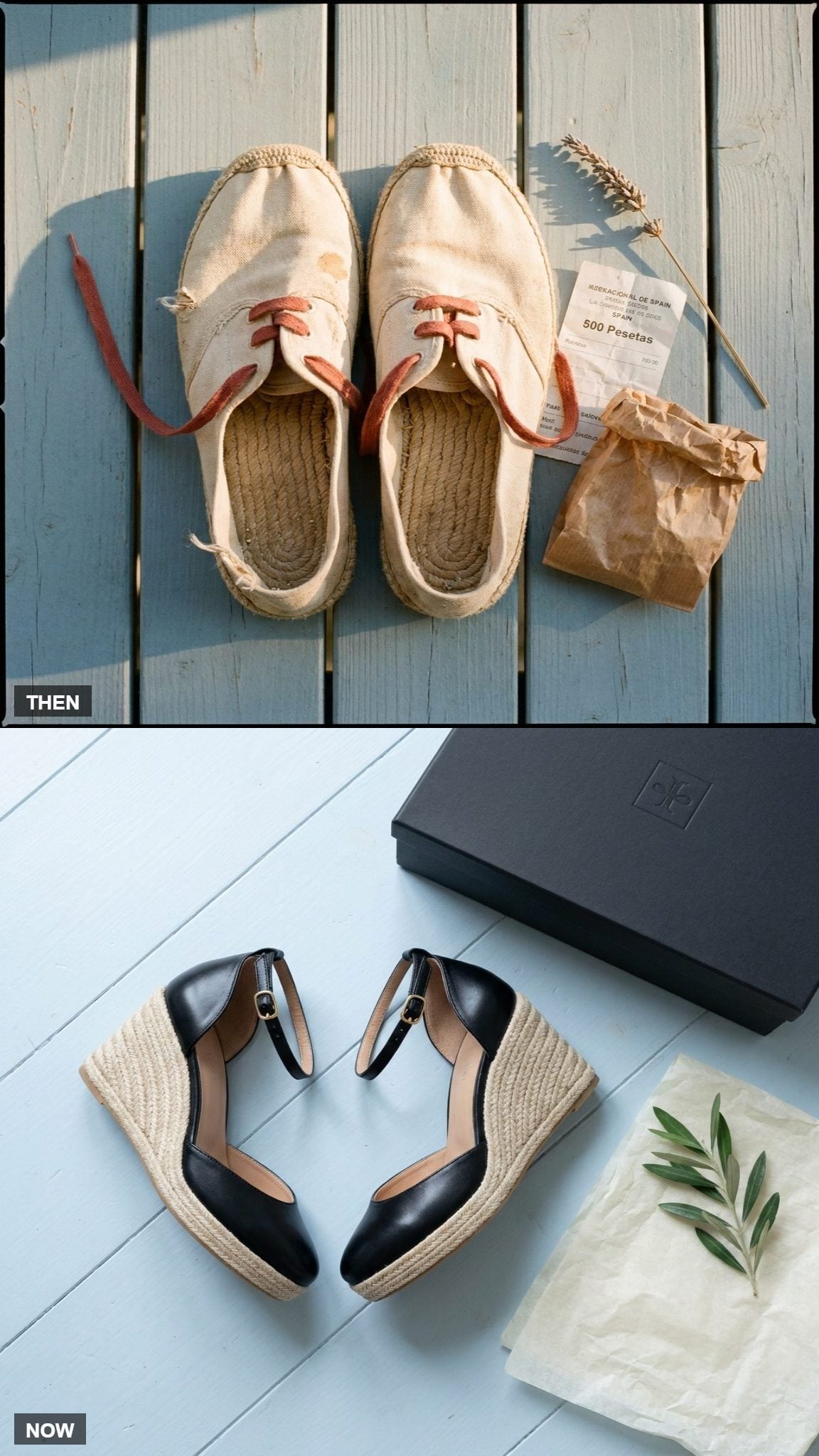
The 1970s helped cement the espadrille’s vacation association: canvas or cotton upper, rope-wrapped sole, light construction, and a shoe that looked happiest somewhere warm.
Today’s version has expanded the assignment. Wedges, ankle straps, black uppers, leather trim, and dressier finishes have turned the espadrille into something capable of surviving a much larger wardrobe rotation. The black ankle strap espadrille is a long way from the simplest rope-soled version, even though the family resemblance remains obvious.
2. The Wedge Sandal: One Continuous Rise Instead of a Platform and Heel
❤️ Would you like to save this?
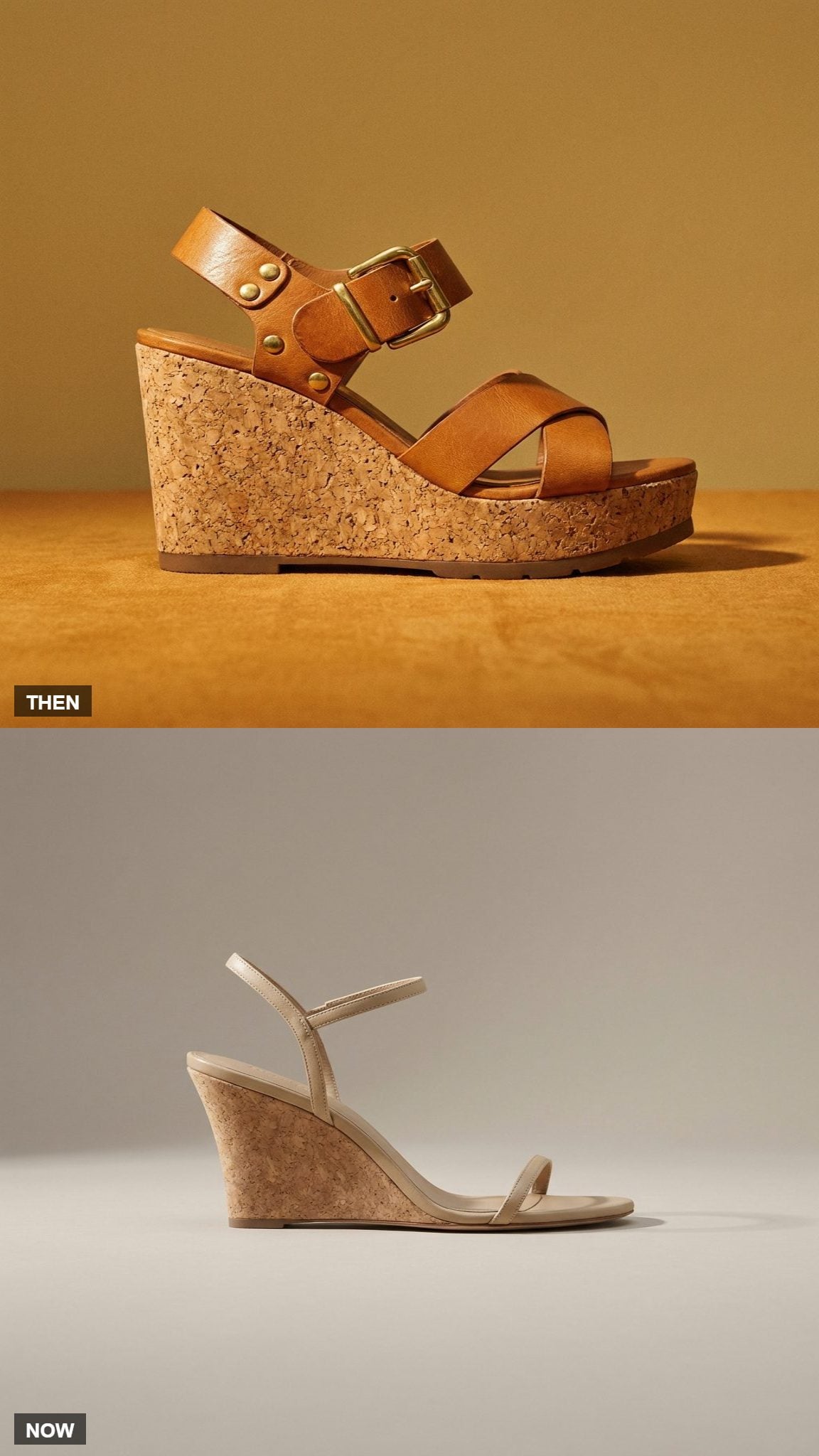
Subtle, the 1970s cork wedge was not. Thick tan straps, visible cork grain, oversized hardware, and one continuous block rising from toe to heel gave it a completely different stance from the platform sandals earlier in the gallery.
The current wedge pares that architecture down. Cleaner edges, sculpted sides, hidden closures, quieter colors. The entire sole still rises with the foot, but the shape is less “cork monument” and more controlled piece of geometry.
1. The Wooden Exercise Sandal: From Dr. Scholl’s Slap to Near-Silent Comfort
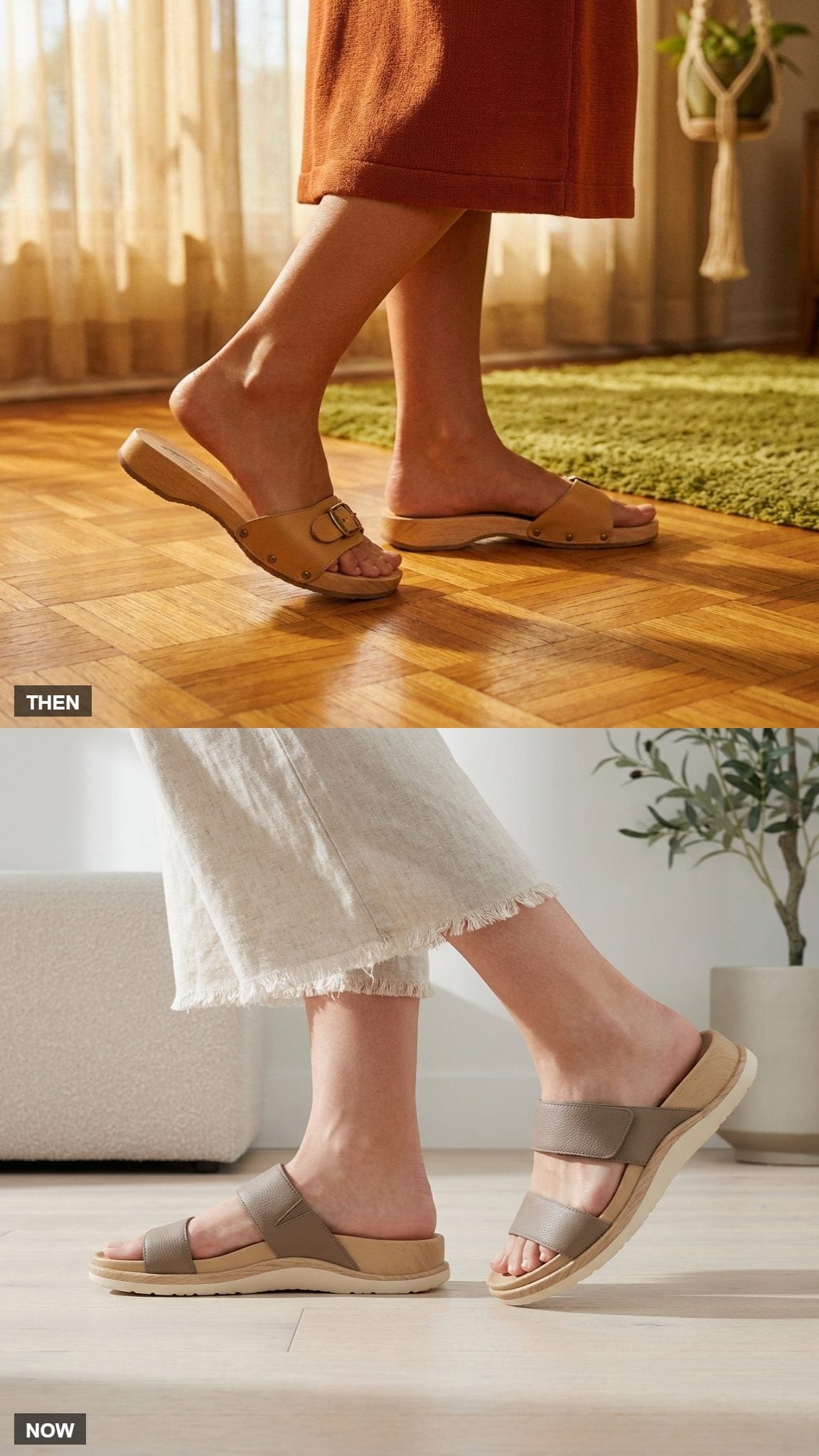
The sound was part of the experience. Dr. Scholl’s wooden exercise sandal put a shaped wood sole beneath a simple strap, and every step produced that unmistakable heel-against-wood slap.
The sandals were marketed around exercise and leg-toning ideas, which gave them a wellness story as distinctive as the construction itself. Whether anyone’s calves noticed is another matter.
The 2026 descendant is quieter: molded footbeds, rubberized soles, softer straps, cushioning, and almost none of the percussion. The broad idea — an easy slip-on sandal shaped around the foot — remains, but the sensory experience is entirely different. Even among other types of shoes, few have changed so dramatically in the noise department. You can wear this descendant into a library now.