
❤️ Would you like to save this?
The bathroom door was always cracked open. Through the gap you’d catch a slice of your mother in the mirror — one eye closed, mascara wand suspended midair, a cigarette burning down in a ceramic dish she’d thrown in a pottery class. Aqua Net. Charlie perfume. The hot-metal smell of a curling iron plugged into a socket that probably shouldn’t have been asked to handle it. You watched.
Nobody sat you down and taught you how a woman gets ready. That would have ruined it. You learned from the doorway: the lipstick blot, the scarf knot, the last look over one shoulder, the strange patience required to wait for nail polish to dry. Four decades later, the products have changed and half the instructions would horrify a modern beauty counter. The choreography remains. These are the small things your hands may still remember even when you don’t remember learning them.
FYI, thanks to AI imagery software, we’re able to create very specific fashion and hairstyle examples to illustrate the points being made. In some cases, imagery is exaggerated to hammer home the point. Also, assume links that take you off the site are affiliate links such as links to Amazon. this means we may earn a commission if you buy something.
24. You Apply Lipstick Without Looking Because Your Hand Already Knows
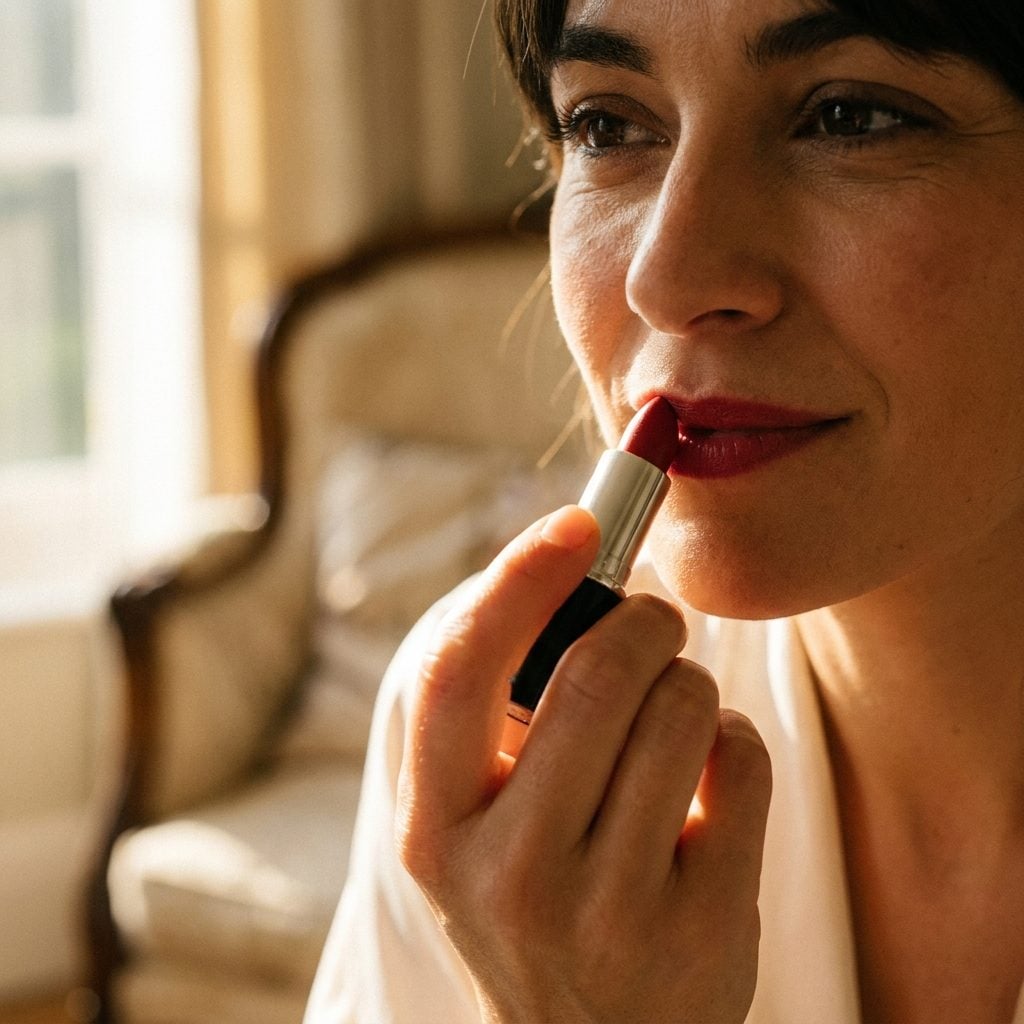
Some women could paint their mouths in a rearview mirror at a red light and never touch the edge. Maybe the tube was Revlon. Maybe the color was a red with the confidence of Cherries in the Snow. The brand matters less than the choreography you watched often enough to stop noticing.
Ring finger near the corner of the mouth, pinky steadying against the chin, one clean pass across the lower lip. Years later, the hand can still find its position before the mirror does.
23. You Still Believe in Rollers, Even If They Only Come Out for Weddings
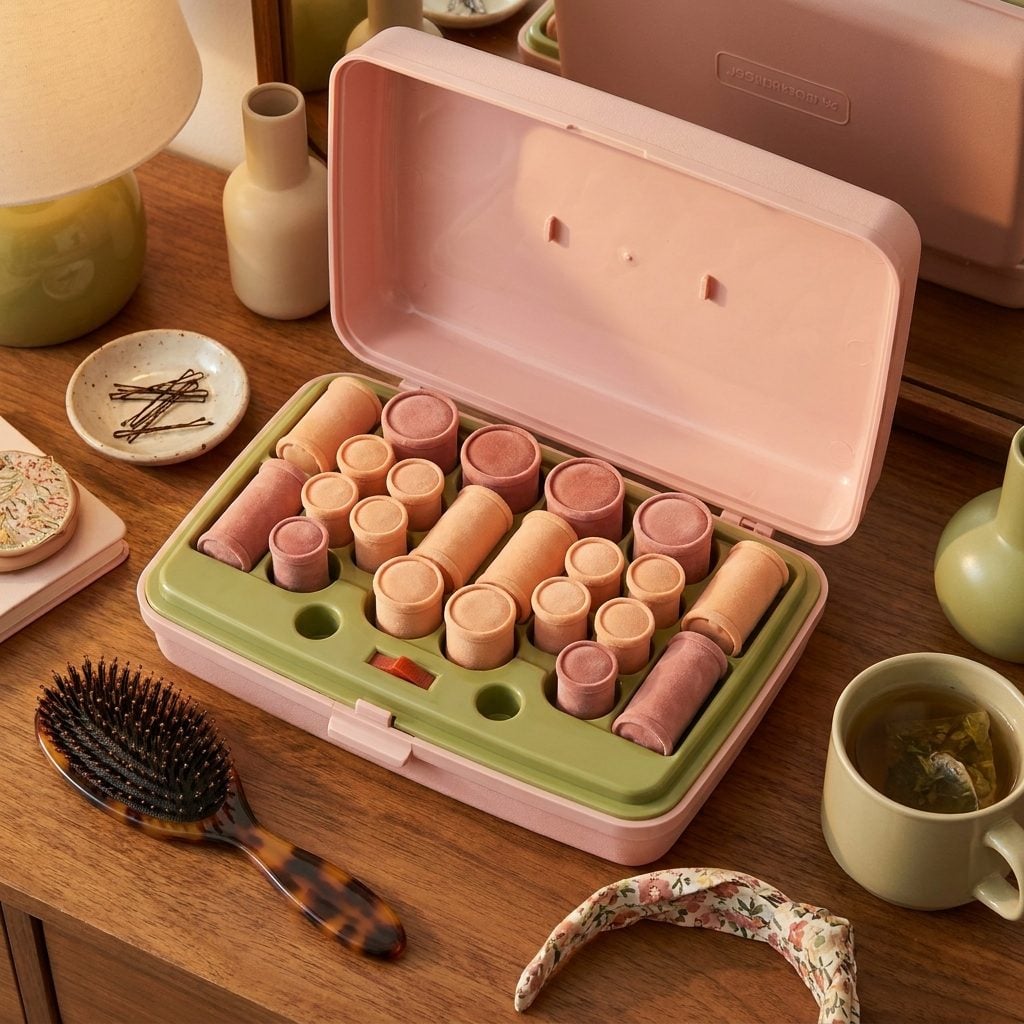
Hot rollers could take over a Sunday-night bathroom. Pink plastic case open on the counter, velvet cylinders warming inside, coffee nearby, Parade magazine within reach.
You may not use them every week now. Then somebody gets married, a reunion appears on the calendar, or a dinner suddenly matters, and the old machinery comes back out. A curling wand can make a bend. Rollers produce that particular lifted, brushed-out volume that belongs to an entirely different school of getting ready.
22. You Can Apply False Lashes Because You Watched the Whole Procedure
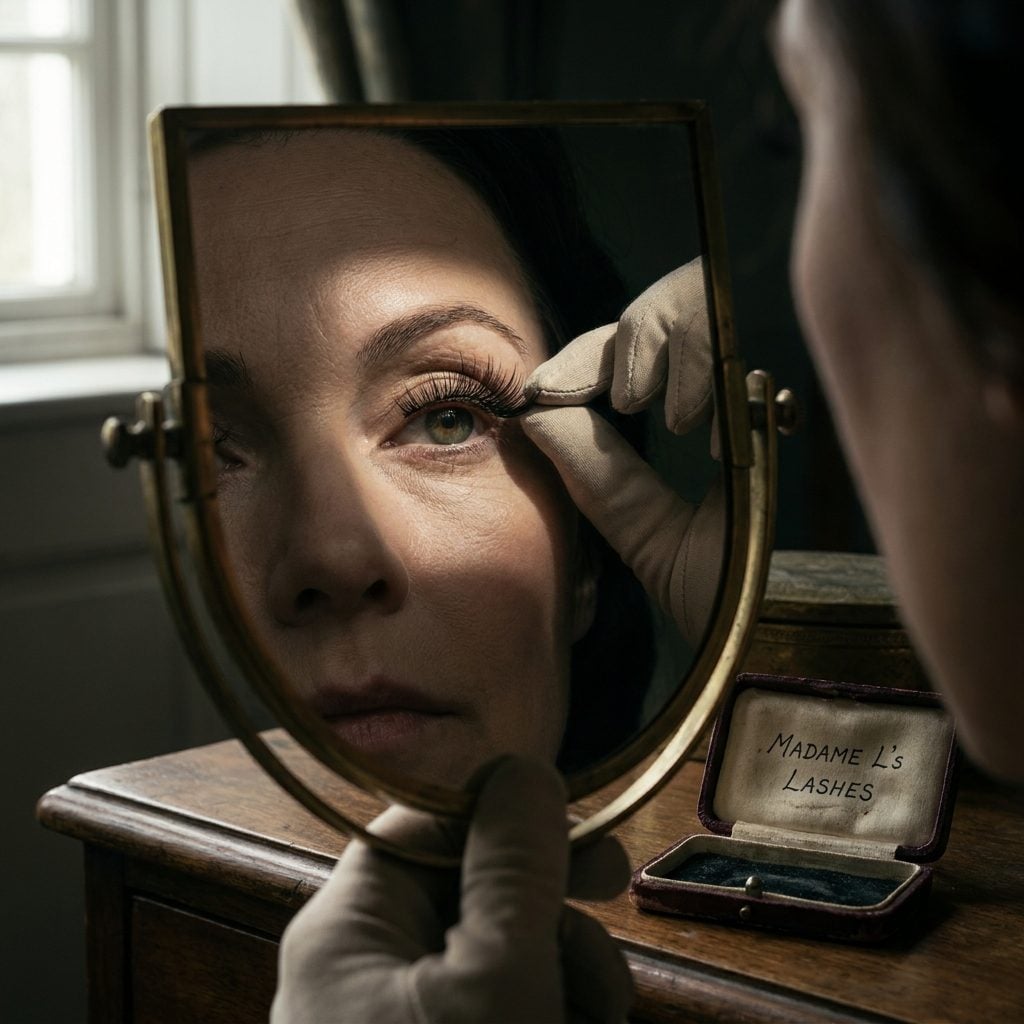
Strip lashes had already become a major beauty statement in the 1960s, and they never entirely disappeared when the seventies arrived. Glam, disco, evening makeup — there were still plenty of reasons to keep a little plastic lash case in the drawer.
The useful knowledge was practical. Tiny line of glue. Wait until it gets tacky instead of panicking and sticking it on wet. Guide the strip toward the lash line and press the corners into place. You learned the sequence from a mirror reflection, which somehow made it look much easier than it was.
21. You Know What Pin Curls Are Because Time Used to Be a Styling Tool
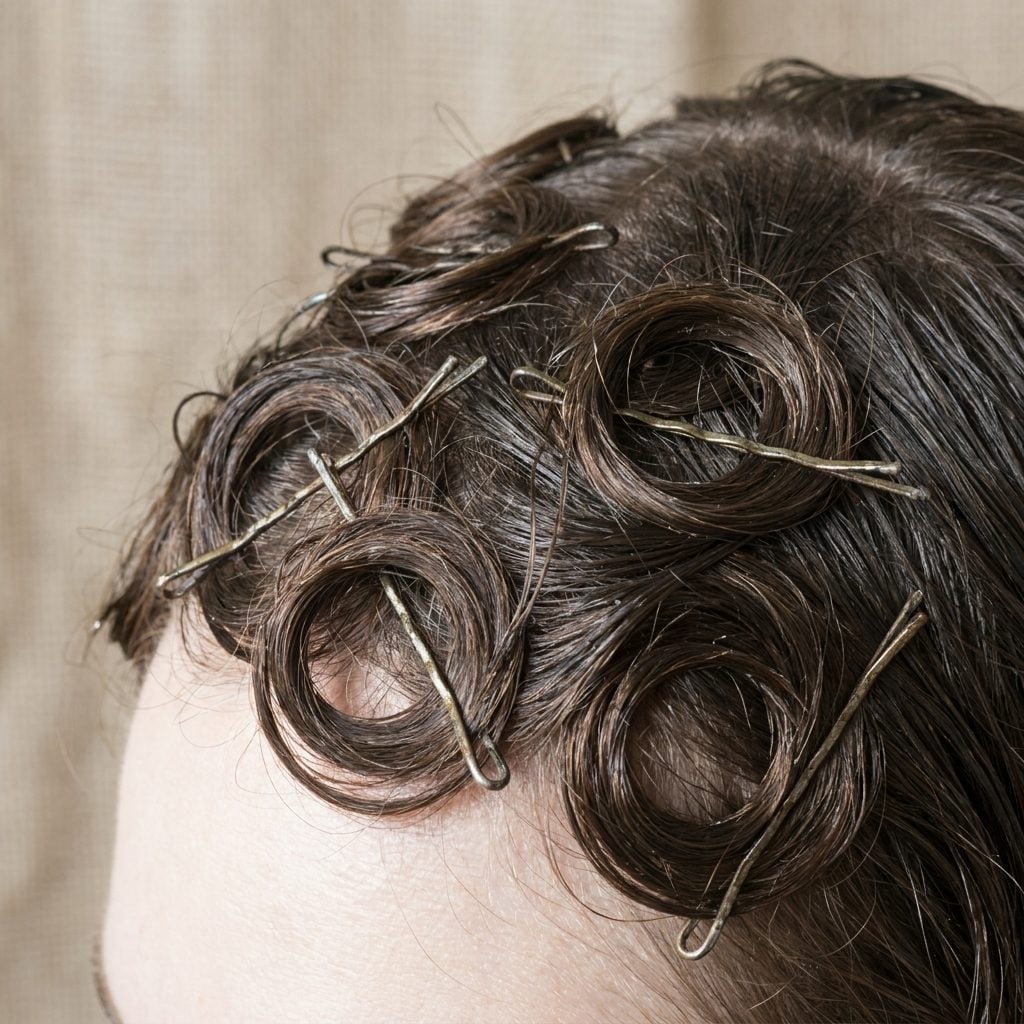
Damp hair. Small sections. Wind each one around a finger, pin it flat against the head, then leave it alone long enough to become something.
That is the part modern styling tends to skip: waiting. Pin curls build their wave as the hair dries in position rather than being forced into one by a hot barrel for ten seconds. They are slower, stranger to sleep on, and capable of producing a softness that explains why the method survived so many newer inventions.
20. You Tease the Crown Even When Nobody Can Tell You Did It

The teasing comb did not always mean a bouffant. Sometimes it meant two discreet passes underneath the crown so the hair stopped lying against the skull as though it had given up.
That little bit of hidden scaffolding changes the silhouette without announcing itself. You do it before a dinner, a photograph, or one of those meetings where the hair needs to have more conviction than you currently feel. Nobody points at the crown. That’s rather the point.
19. You Blend Foundation With Your Fingers Because That’s How the Motion Feels Right
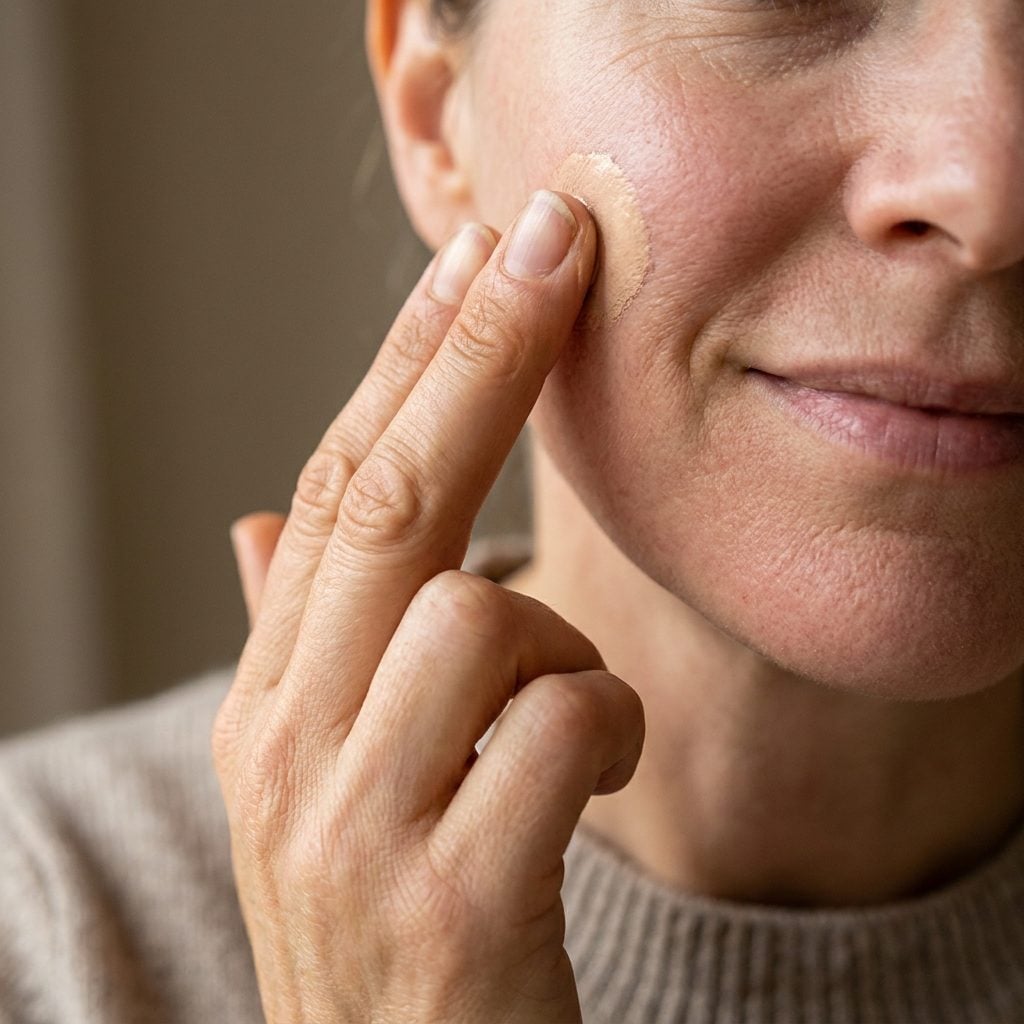
Makeup brushes did not suddenly appear with YouTube, and sponges have been around for generations. But plenty of women learned foundation with the tools permanently attached to their hands.
A small amount between the fingertips, then press, smooth, blend around the nose, disappear the edge near the jaw. Fingers warm some formulas and give immediate feedback about how much product is actually on the skin. Brushes and sponges can produce beautiful finishes too. The point here is familiarity: your hand already knows when to stop.
18. You Fill In Your Brows Like You’re Signing Your Name
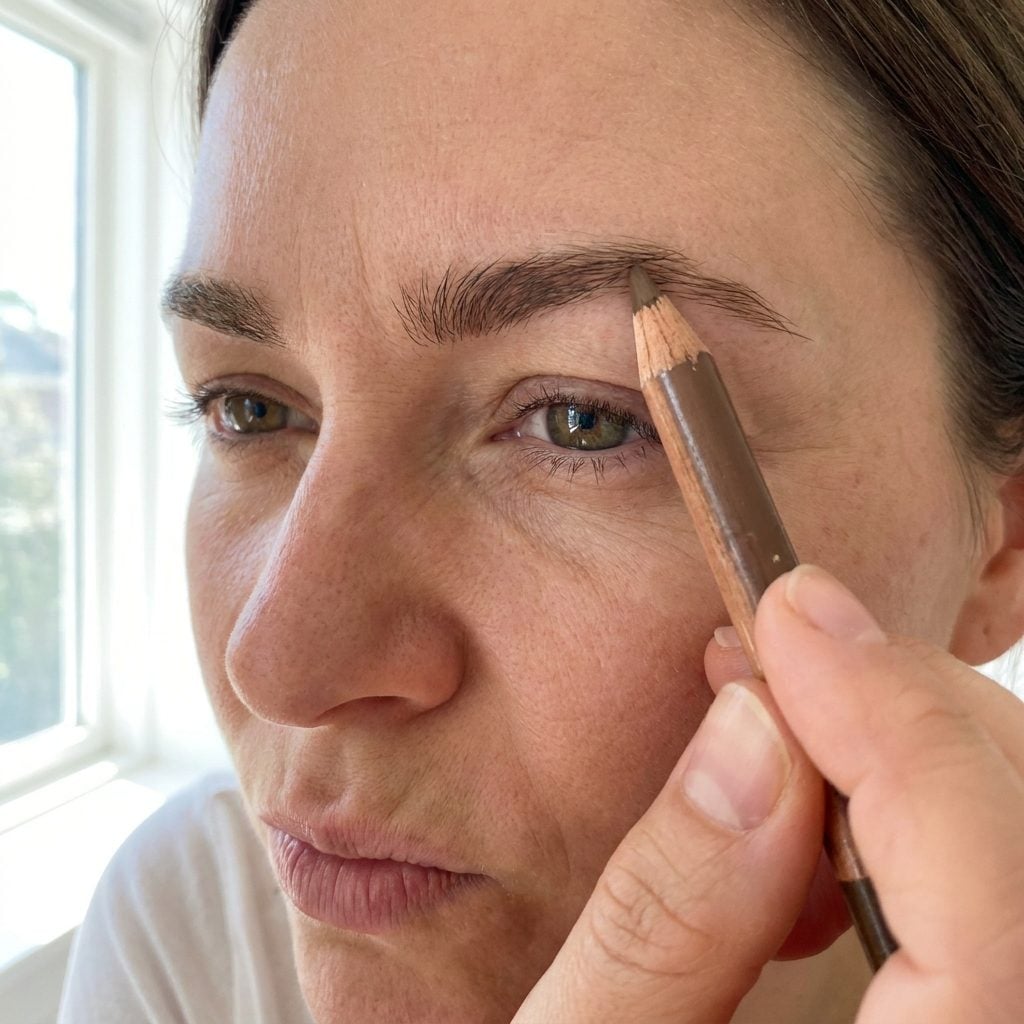
There was one brow pencil, sharpened almost indecently small before anybody admitted it was finished. Short strokes, light pressure, no drawing a single brown parenthesis over the eye.
Then the nineties tried to remove most of the eyebrow from civilization, and later decades tried to put it all back with gels, pomades, laminations, and microblading. Through all of it, the pencil kept making a perfectly good argument for itself.
17. The Outfit Is Waiting Before the Robe Comes Off
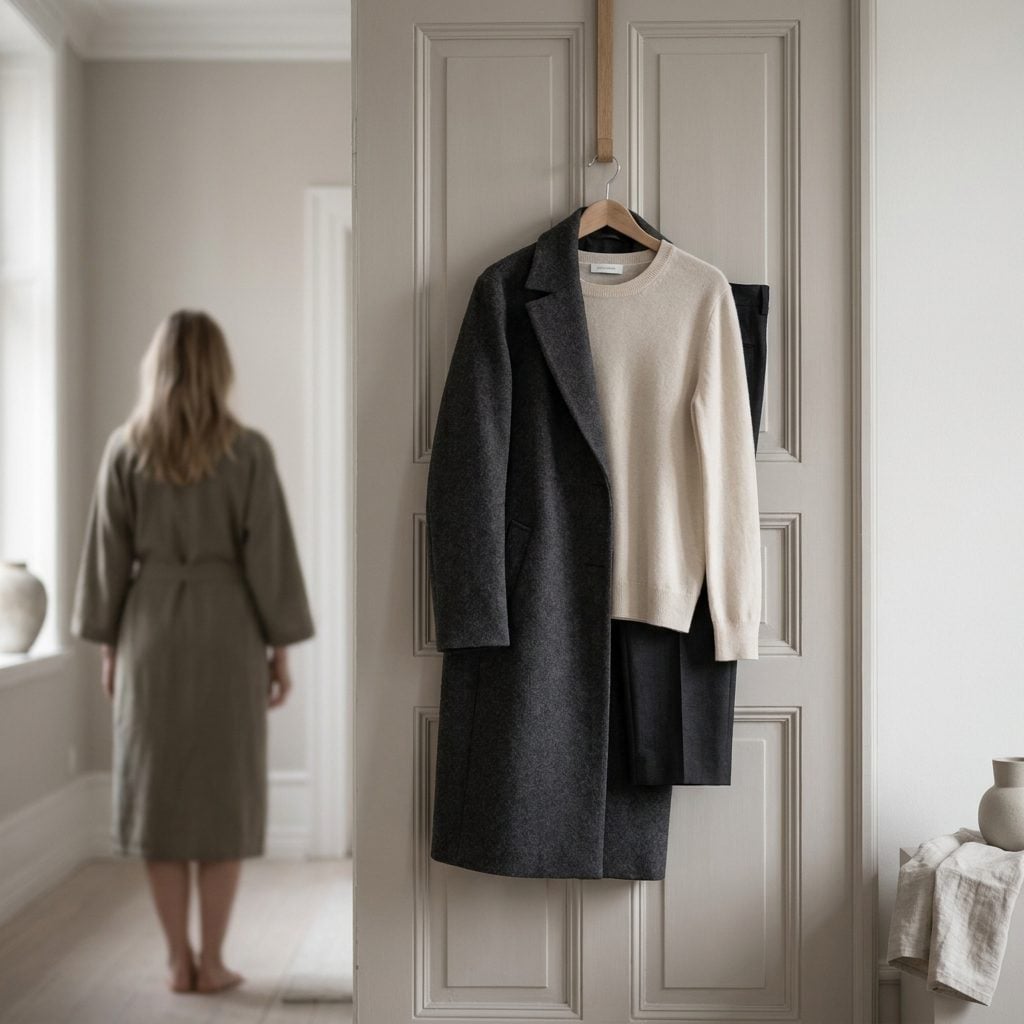
The clothes are hanging before you shower. Not crumpled on the bed. Hung. A load-bearing distinction.
Maybe the choice happened the night before. Maybe it happened while the coffee brewed. Either way, the decision was made before the getting-ready machinery reached full speed. Open closet. Consider. Close it. Walk away. Come back with the answer.
Getting dressed does not begin when the dress goes on. Sometimes it begins hours earlier, in a robe, while judgment is still cold.
16. You Spray Perfume Into the Air and Walk Through the Cloud

Never spray it directly on the neck. Somewhere, sometime, somebody said that and it became law. One cloud into the air, one step forward, eyes closed against the mist.
Applying fragrance to pulse points generally gives perfume more direct contact with warm skin, so the walk-through method is hardly the only way to wear scent. But chemistry and ceremony are different subjects. Sometimes the ceremony wins.
15. You Tie a Silk Scarf With the Speed of Someone Who Has Done It Forever

There was a scarf drawer. Florals, geometrics, souvenir prints, and maybe a Vera or two mixed among the rest. They went around the neck, over the hair, through a handbag strap, and occasionally somewhere nobody had thought to put a scarf until five seconds earlier.
You wear a watch on one wrist and a printed silk scarf at your throat, and somehow the technologies coexist. The knot is the inheritance. The watch is just evidence that time kept going.
14. You Own More Bags Than You Need Because They Are Not the Same Bag
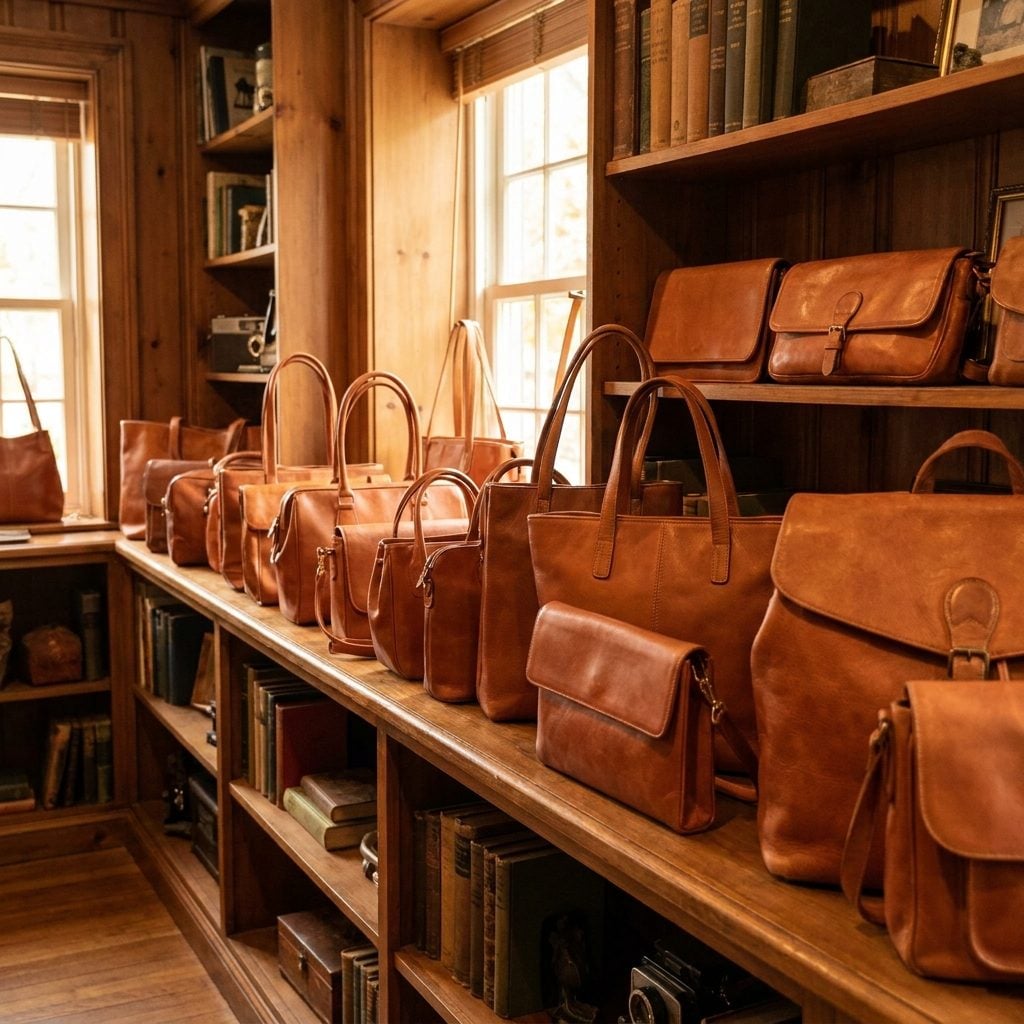
Every bag on the shelf has a jurisdiction. The tote goes to work. The crossbody goes to lunch. The cognac saddle bag gets dinner. The evening clutch has attended three weddings, one funeral, and at least one event nobody remembers clearly anymore.
The ritual is the transfer: lipstick, wallet, keys, tissues, whatever small objects constitute a life that evening. A purse is partly a container and partly a costume decision, and anyone who has ever changed bags five minutes before leaving knows perfectly well which function is winning.
13. You Finish With a Mist and the Hiss Means You’re Done
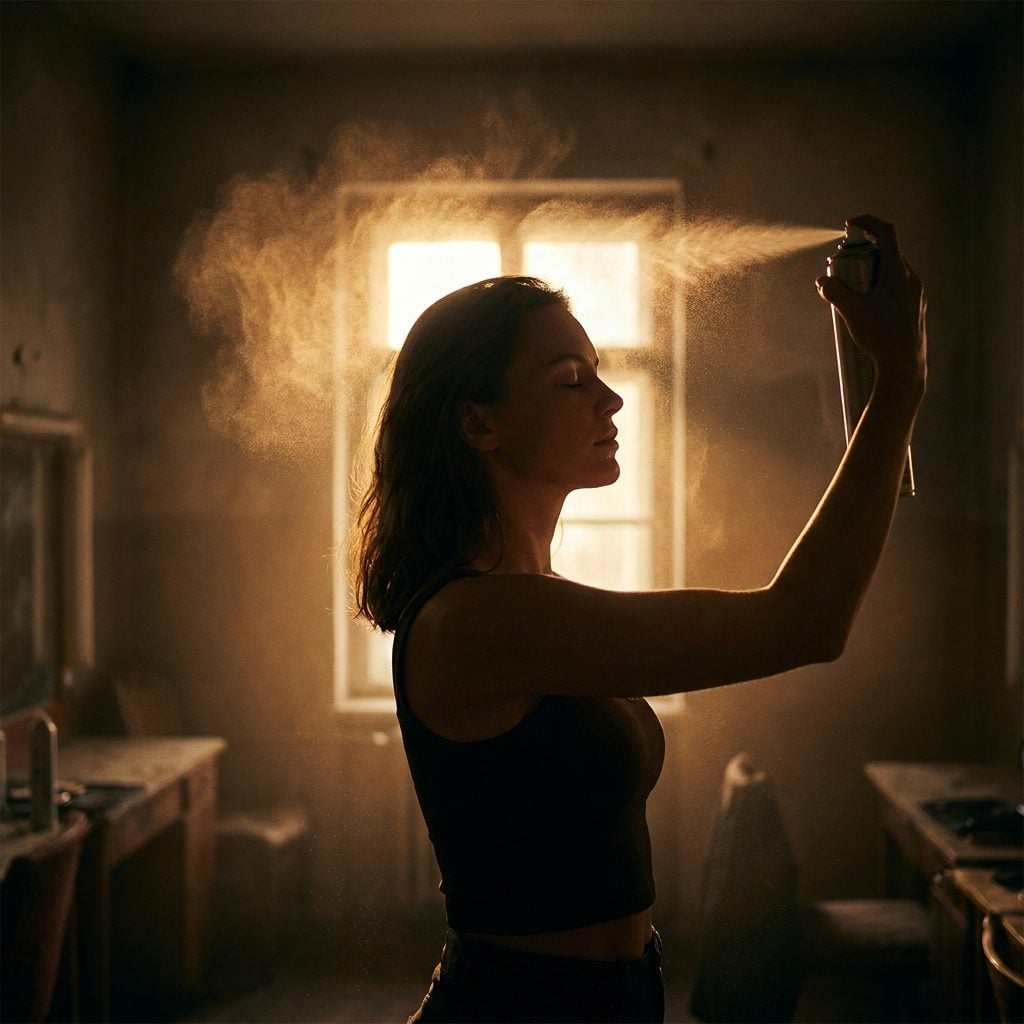
The last spray is barely about hair. It is punctuation.
Aqua Net. White Rain. Whatever can sat on the drugstore shelf. The aerosol hiss meant hands off, robe off, shoes on, door next. Today’s mist may be flexible enough that the hair can move when the weather changes its mind, but the signal remains surprisingly familiar.
Spray. Tilt. Exhale. Done.
12. You Check Yourself Over One Shoulder Before the Door Closes

❤️ Would you like to save this?
The last look is not vanity. It’s quality control.
The front has already been inspected to death. The three-quarter turn is for everything you cannot see while facing yourself: a bunched waistband, a coat vent caught underneath, a collar folding strangely, a piece of hair behaving treacherously at the back.
Then the coat goes on. The bag gets picked up. The mirror loses jurisdiction.
11. You Blot Lipstick on a Tissue Because the Kiss Print Is Part of the Process
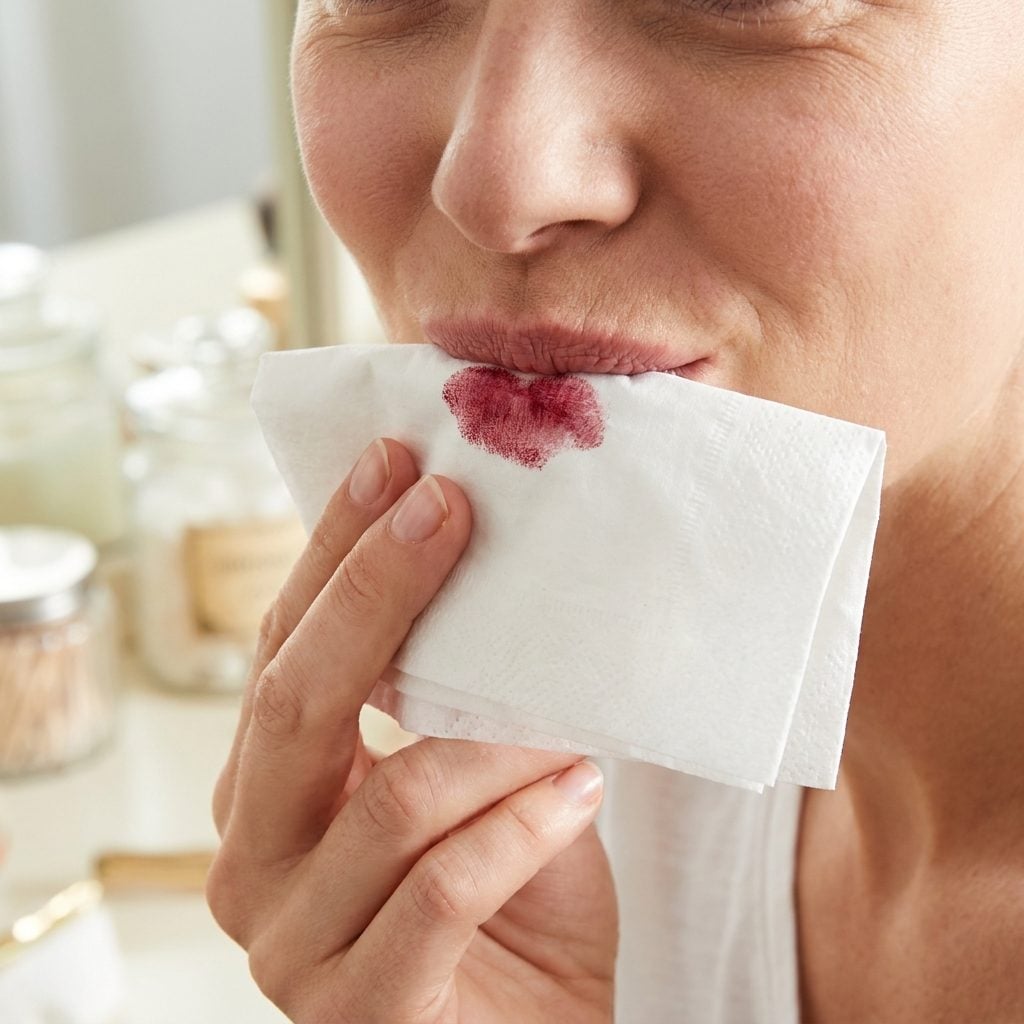
Apply. Blot. Apply again. The tissue takes away excess product and leaves behind that unmistakable little mouth-shaped receipt.
Modern long-wear formulas can last impressively well, and not every lipstick benefits from the same technique. But the old blot-and-reapply method still works beautifully with many traditional bullet lipsticks when you want color built in thinner layers instead of one heavy swipe.
10. You Can Sit Perfectly Still While Nail Polish Dries
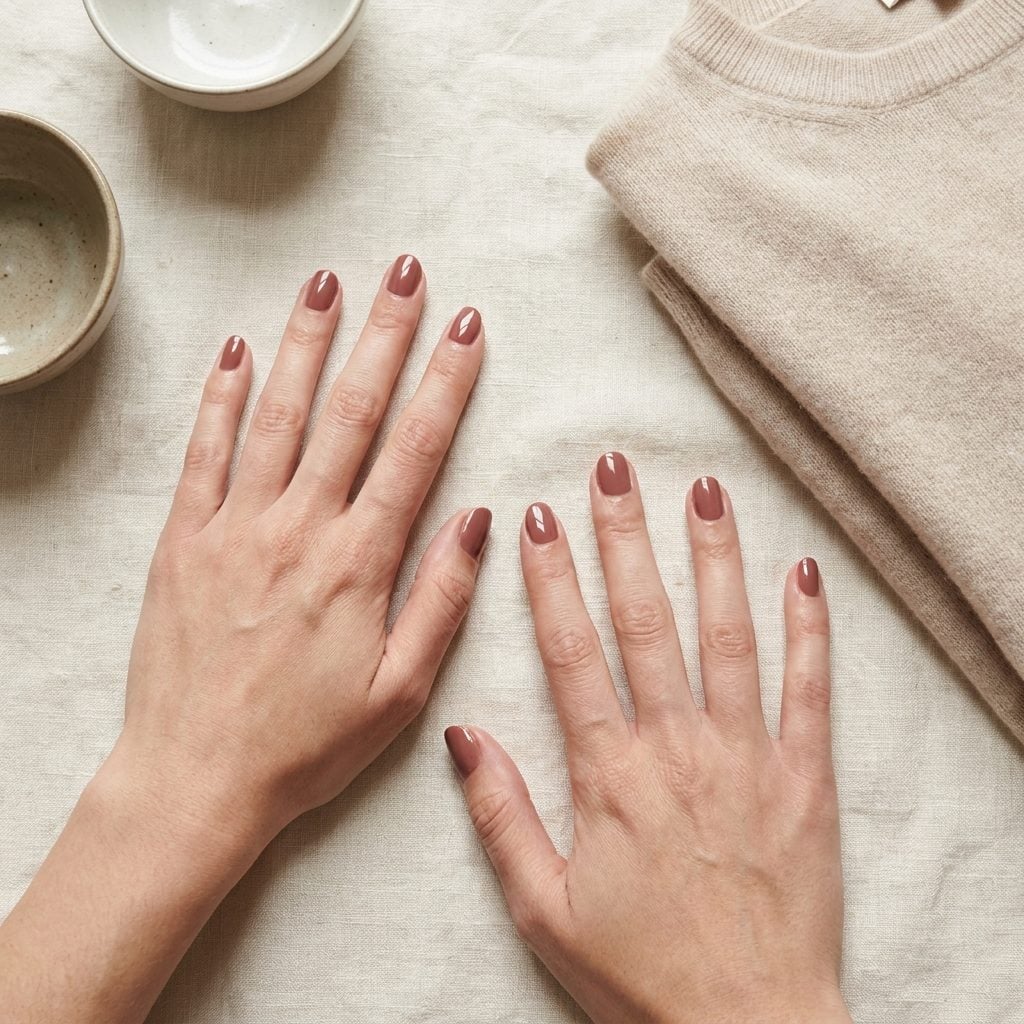
This is a skill. Fingers spread. Hands lifted away from fabric, hair, telephone, coffee cup, and every other object suddenly desperate to ruin the second coat.
Gel manicures and quick-dry systems have made waiting less central to the ritual, but anybody who learned on ordinary polish remembers the absurd seriousness of those minutes. Touch one thing too soon and an entire thumbnail could acquire the texture of a sweater.
The strangest part now is how luxurious the enforced stillness can feel.
9. You Know a Rat-Tail Comb Is Basically a Tenth Finger
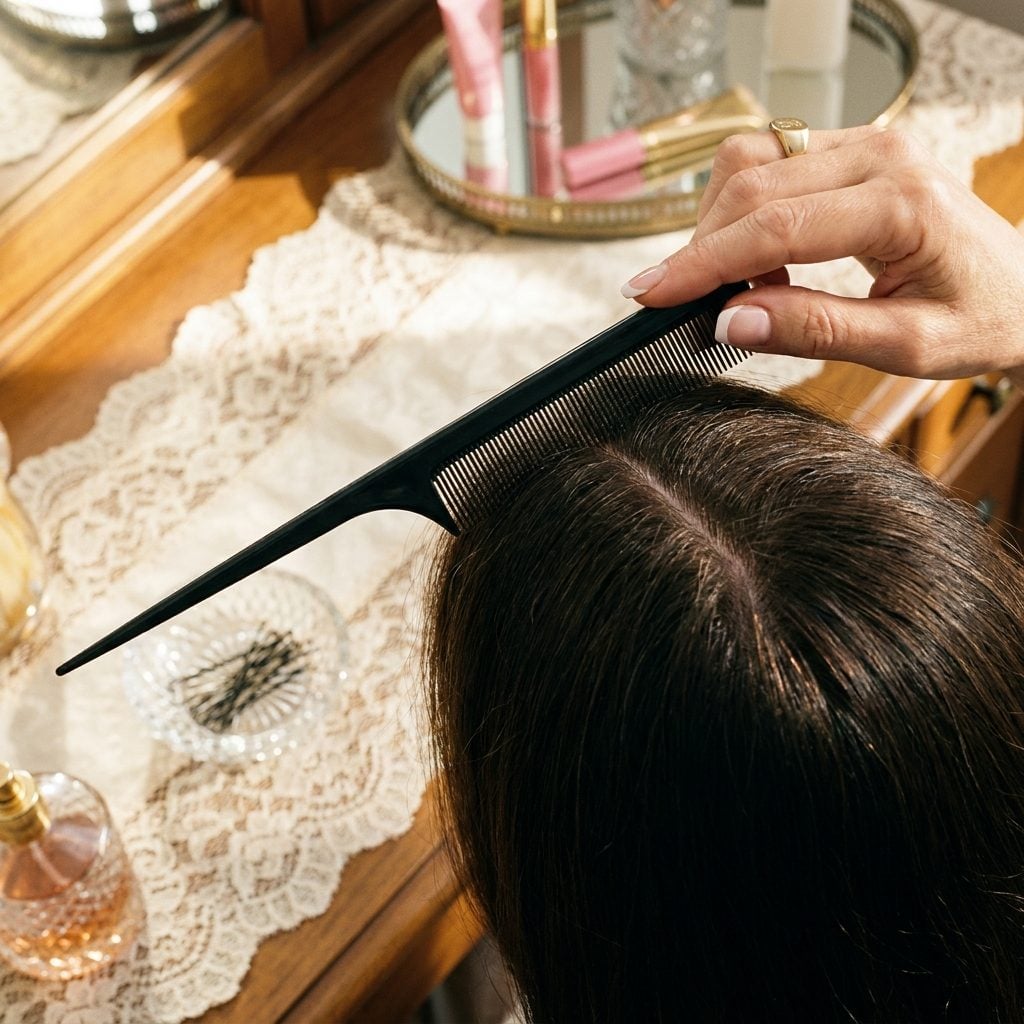
A rat-tail comb in unfamiliar hands looks like a regular comb somebody forgot to finish. In experienced hands, the pointed end is the whole reason it exists.
Use it to draw a clean part, lift a section for teasing, separate a curl, or nudge a bobby pin into a place where fingers would wreck everything. The narrow tail gives precision that the teeth cannot.
You may remember one permanently living on the vanity. Nobody wrote instructions beside it. You simply watched what the pointed end was for.
8. You Wrap a Towel Around Your Head in Three Seconds Flat
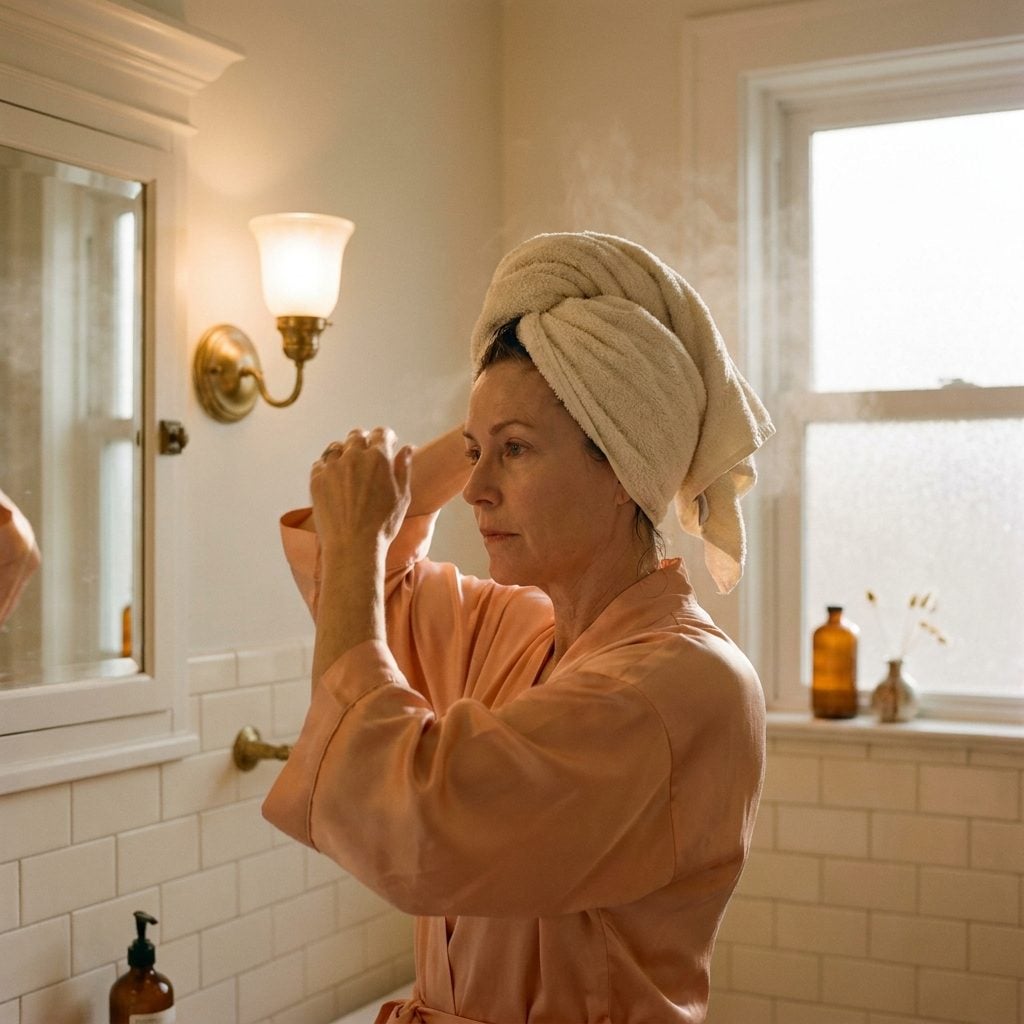
Flip forward. Gather. Twist. Tuck.
There was never a lesson. You saw the maneuver enough times that one day your own wet hair disappeared into terrycloth and your hands acted as though they’d been briefed privately.
The towel stayed on through coffee, brow plucking, breakfast, and phone calls made on wall-mounted receivers with cords long enough to cross county lines. An entire domestic era can apparently survive inside one three-second twist.
7. You Know the Sound of Silk Sliding Over Rollers

This is not another lesson in how to set the hair. The rollers have already done their part. The scarf is about protecting the operation while life continues around it.
Pull silk over foam and there is a dry little whisper as the fabric slides into place. Knot it at the crown. Make coffee. Check the clock. Get on with everything else while the hair quietly becomes tomorrow’s hair.
Now the clock is on your phone instead of above the stove. The sound has not changed.
6. Your Hand Cream Lives on the Vanity Because That’s Where It Belongs
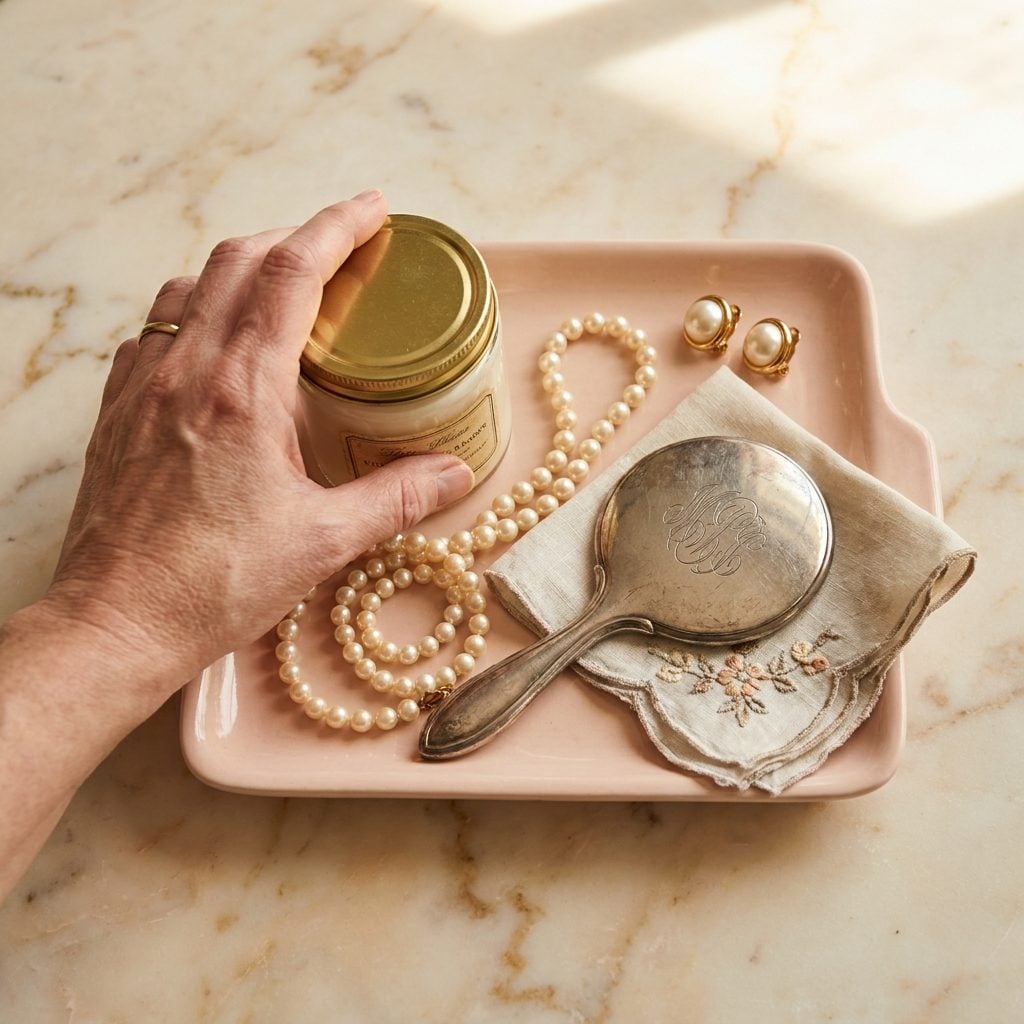
The cream isn’t hidden. Jar or pump bottle, it sits on the tray beside perfume, earrings, maybe the compact. One squeeze into the palm, rub it into the backs of the hands, smooth the remainder over the forearms, continue talking.
That visibility matters mostly because it makes care ordinary. No announcement, no spa music, no twenty-seven-step routine. Dry hands get cream because the cream is sitting there.
5. You Recognize a Perfume Before You Recognize the Woman Wearing It
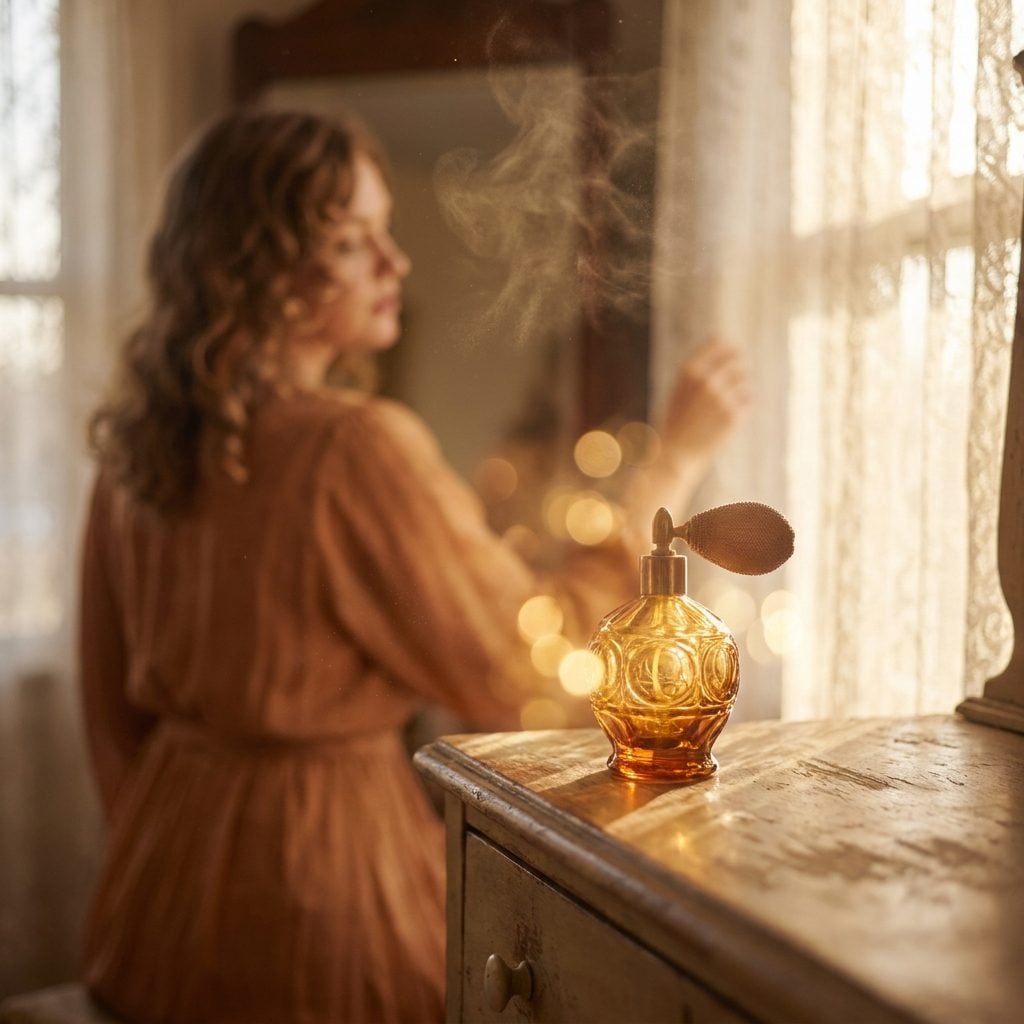
Some women had a scent long before anybody called it a personal brand. It lived in the coat closet, on a scarf, in the passenger seat five minutes after she had gone inside.
Then one floats past decades later and recognition arrives before language. Chanel No. 5. Shalimar. Opium. Charlie. Youth Dew. You may not know who is wearing it now, but for half a second you know exactly who isn’t there.
That is the difference between applying perfume and remembering perfume. One happens on skin. The other can apparently hide in the brain for forty years.
Perfume was the last thing she put on and sometimes the first thing memory brings back.
4. You Hold Two Earrings Up to Your Face Before You Commit
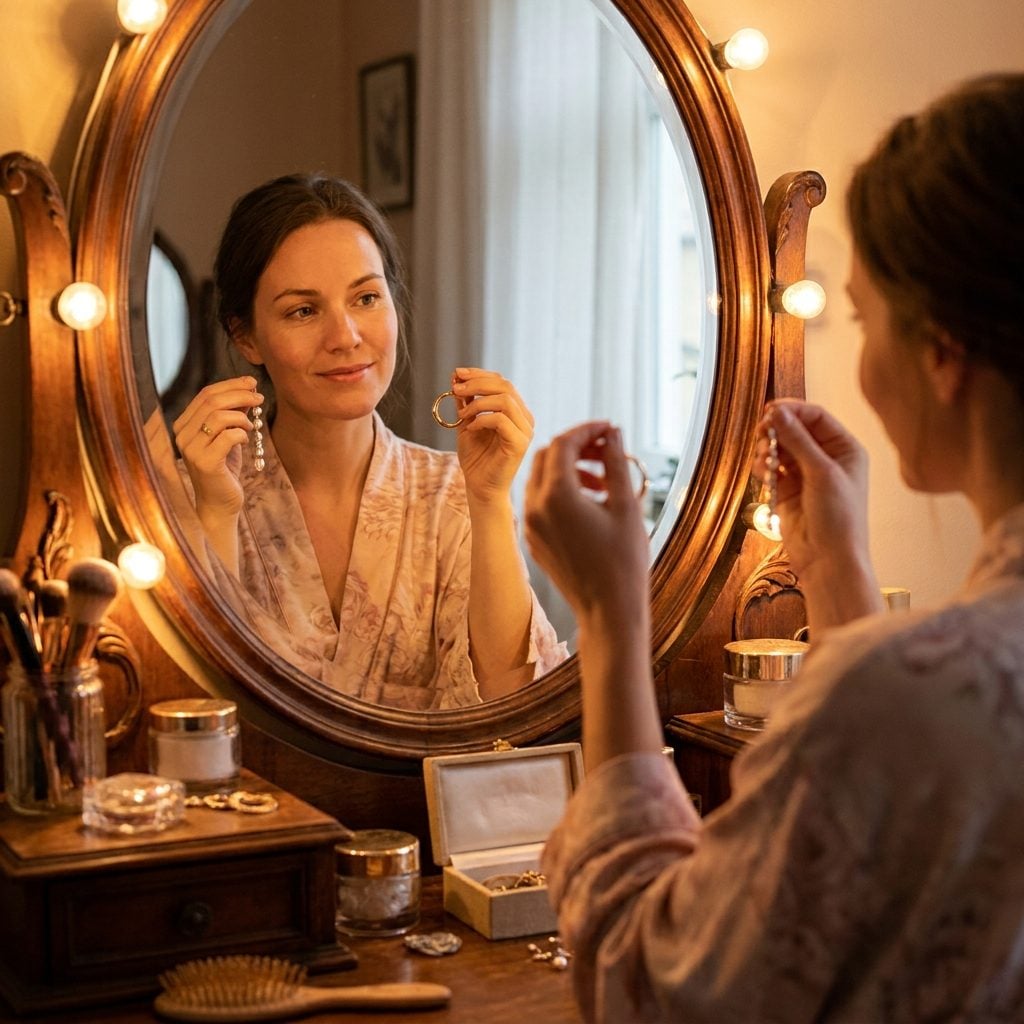
Two options. One face. The mirror decides.
Clip-ons still had plenty of company in seventies jewelry boxes even as pierced ears became increasingly common. The useful ritual had nothing to do with piercing anyway. Hold one earring to each side. Turn the head. Look again.
You run the same audition now with gold hoop earrings and a small pearl drop. Jewelry changes the punctuation of a face. Sometimes you need to hear both sentences before choosing one.
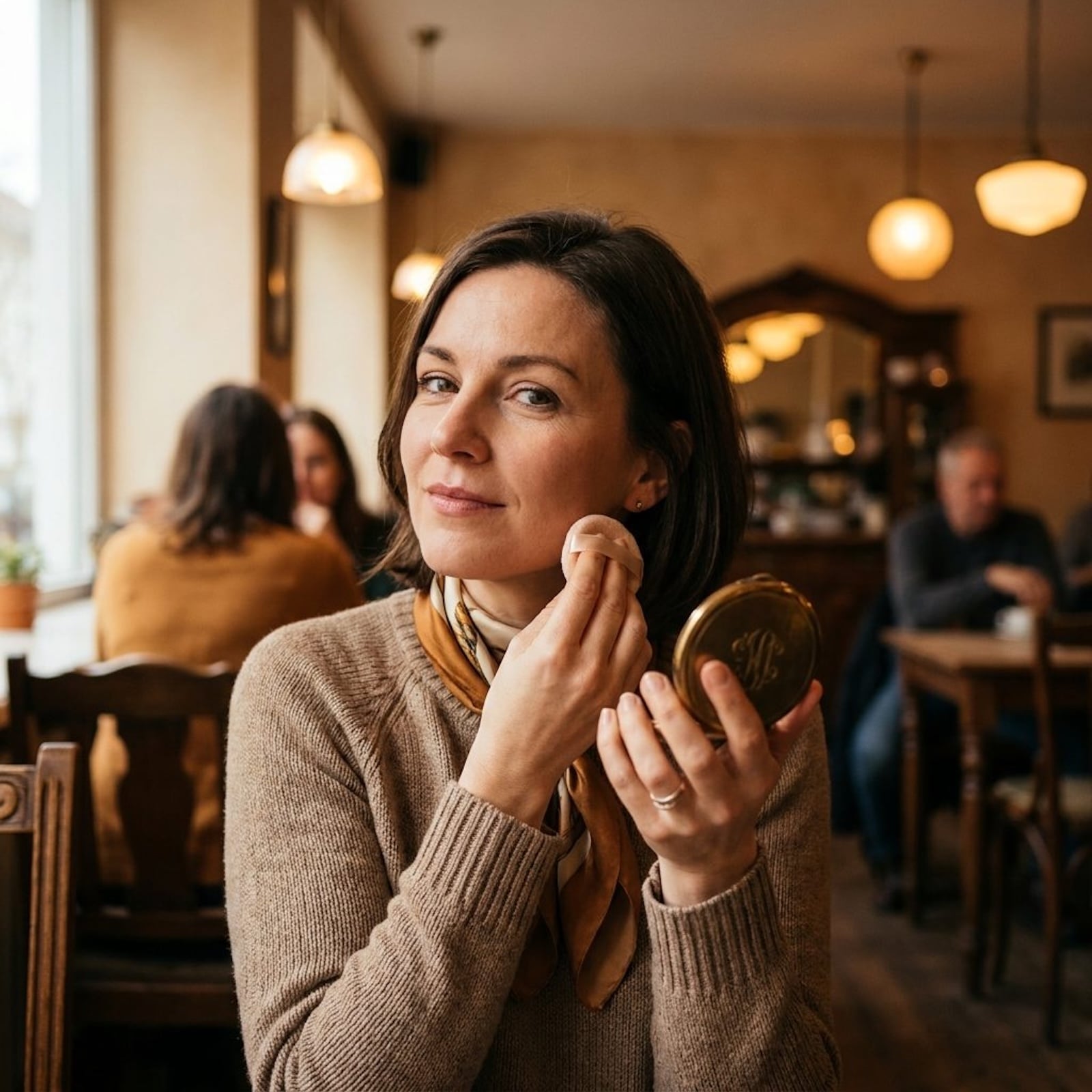
3. You Own a Compact and Have No Problem Using It in Public
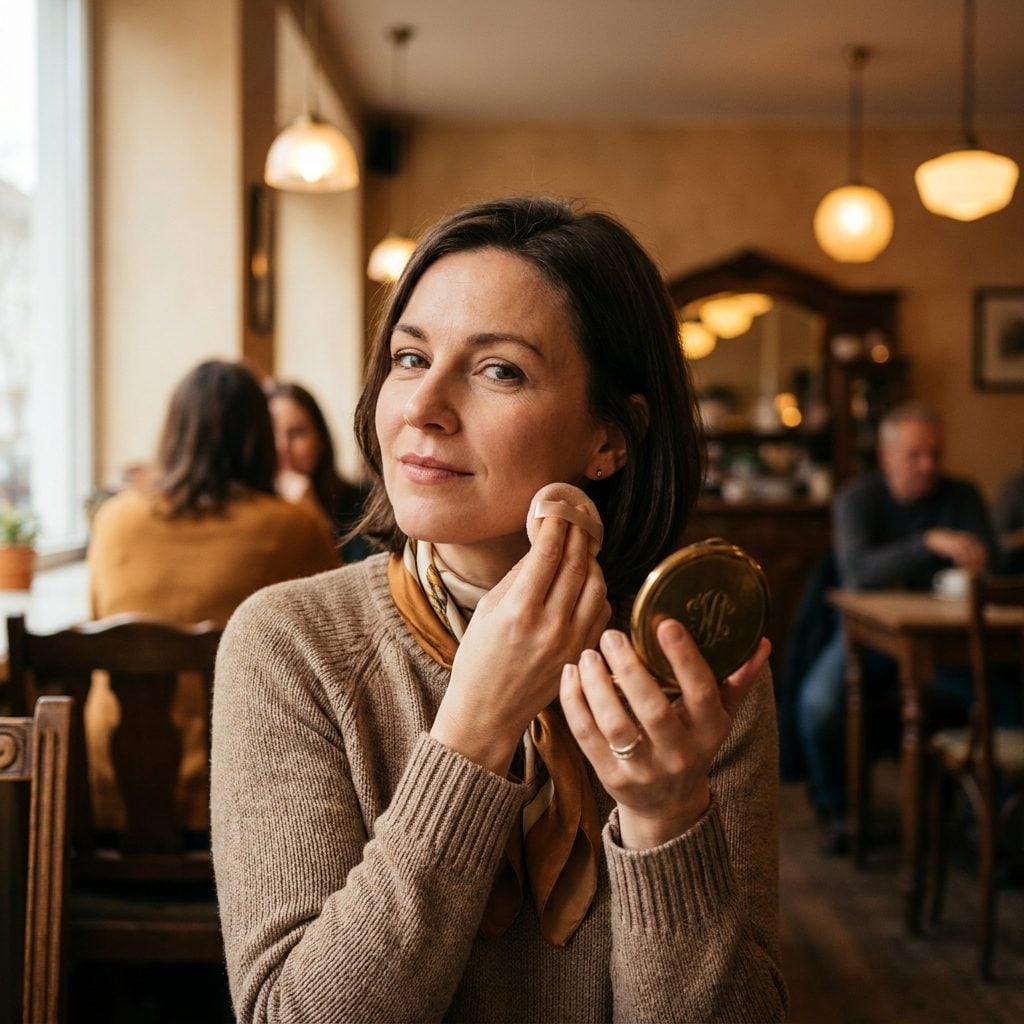
Gold-toned case. Small mirror. Powder pan worn down in the center. Maybe somebody’s initials on the lid and a hairline crack nobody considered serious enough to replace.
A compact could come out at a restaurant table, in the passenger seat, in the ladies’ room line, anywhere the nose required ten seconds of attention. The little performance was practical and unapologetic. Maintenance did not need to hide backstage.
2. You Check the Hosiery, the Hem, and Everything Else Before Leaving
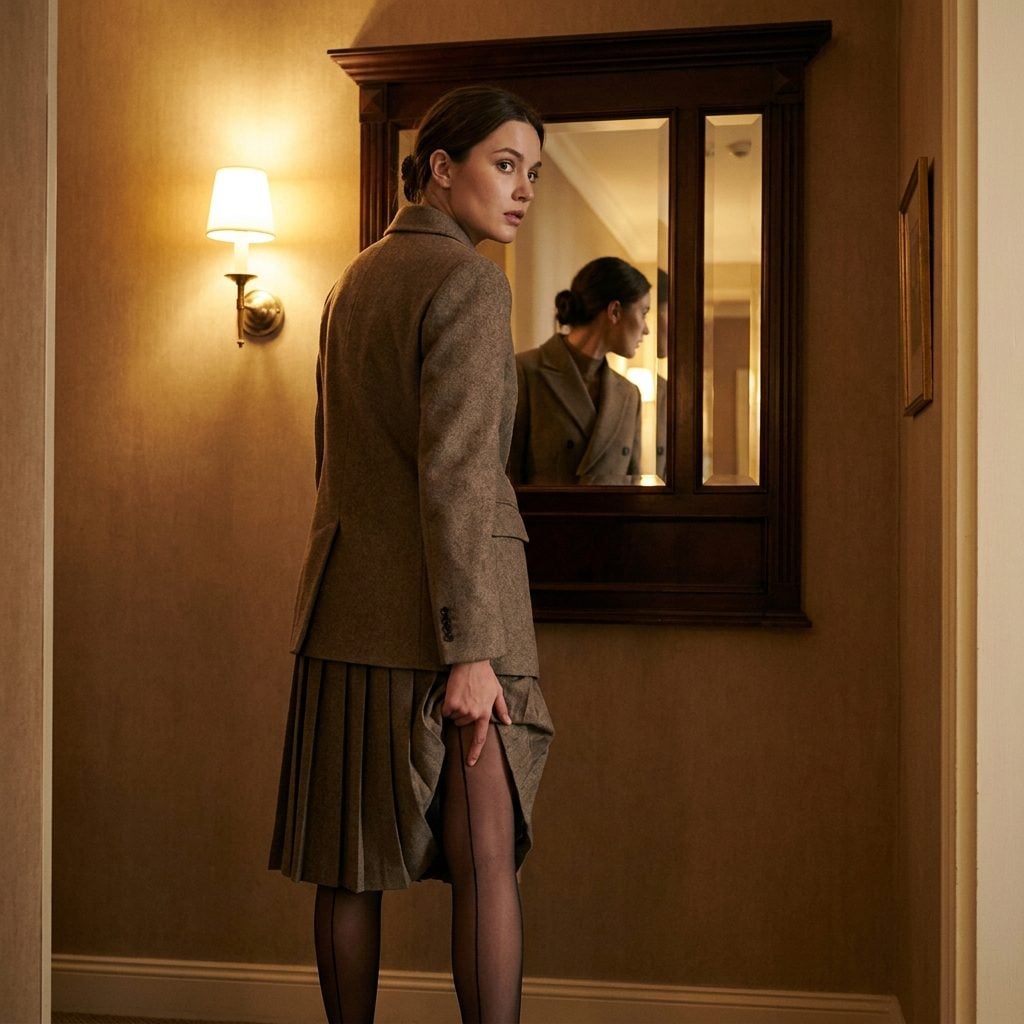
Seamed hosiery is much less common now, but when the seam was part of the outfit, the final inspection mattered. Turn. Look over the shoulder. Run a finger down the back of the leg. Straighten what needs straightening.
The modern version may be a twisted hem, lipstick on a tooth, a sweater caught under a waistband, or a label making an unauthorized appearance at the neck. The detail changes. The checkpoint survives.
1. You Catch Your Own Reflection and, for Half a Second, See Her
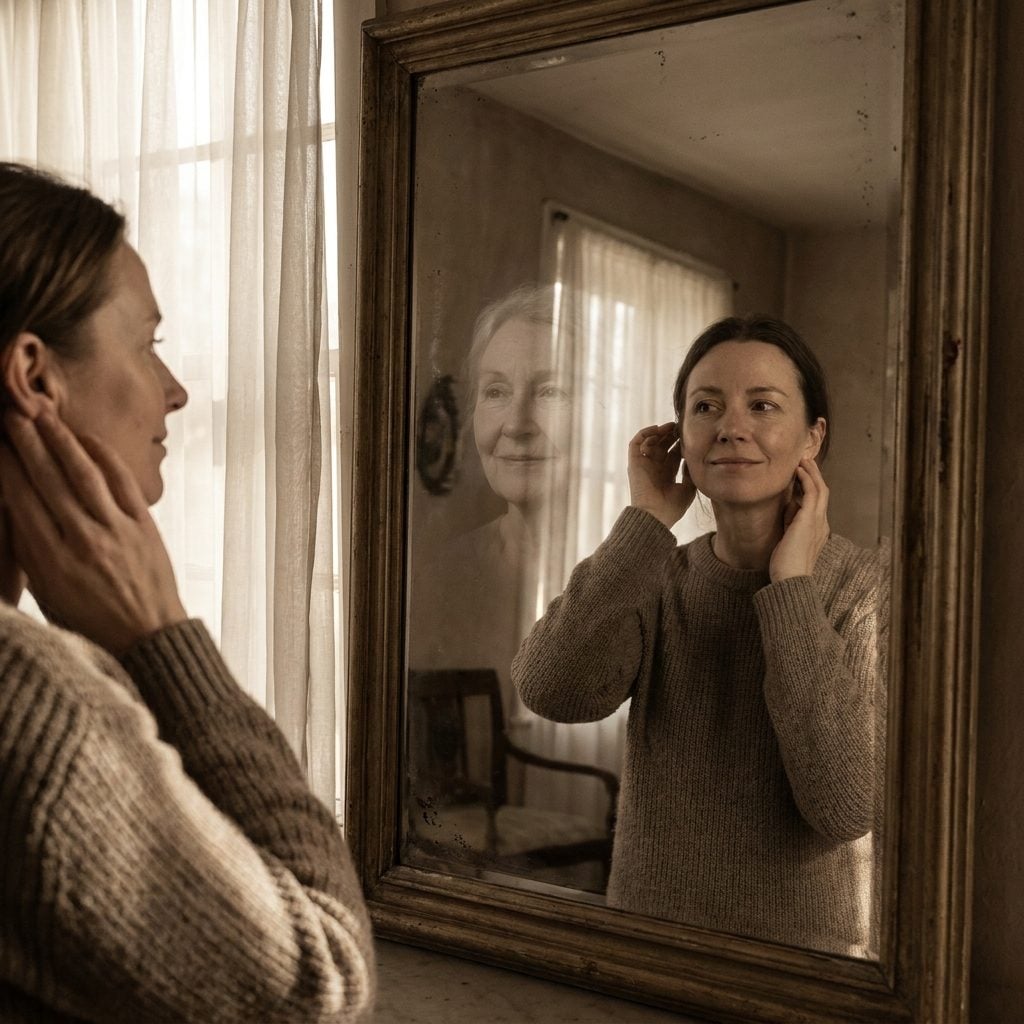
It happens when you’re not trying. Mid-earring. Pulling a sweater over your head. Turning sideways to check a collar. You glance into the mirror and there it is — the tilt of the head, the hand lifted toward the face, some tiny expression that belonged to another bathroom decades ago.
That is when all the other things in this list stop looking like beauty tricks.
The rollers, the lipstick-blotted tissue, the scarf knot, the compact, the towel wrapped around wet hair — none of them required a formal lesson. You watched someone you loved move through ordinary life, and ordinary life turned out to be remarkably good at leaving evidence behind.
Maybe you changed nearly everything. Different haircut. Different perfume. Better outlets. No cigarette smoldering beside the mascara. Yet every so often your hand moves before you think, and the mirror catches up.