❤️ Would you like to save this?
The 1970s prairie dress was never just one dress. It was a whole construction vocabulary borrowed, mixed, softened, exaggerated, and sent back onto the street: Victorian sleeves beside peasant embroidery, tiny calico flowers under severe yokes, eyelet that looked rescued from an old linen drawer, and waistlines that could migrate from the ribs to the natural waist depending on what historical decade the designer felt like visiting.
That collision is what made the look so memorable. The silhouette might be almost monastic until a sleeve doubled in size. A plain cotton bodice could suddenly acquire a wall of smocking, a scalloped eyelet bib, six pearl-like buttons, or three colors of rickrack marching down the front. Across these 26 examples, the prairie revival reveals itself detail by detail: collars, cuffs, pockets, pintucks, bows, embroidery, tiny florals, moving hems, and enough fabric to make walking across a room part of the design.
FYI, thanks to AI imagery software, we’re able to create very specific fashion and hairstyle examples to illustrate the points being made. In some cases, imagery is exaggerated to hammer home the point. Also, assume links that take you off the site are affiliate links such as links to Amazon. this means we may earn a commission if you buy something.
26. The High Ruffled Neck Put the Drama Exactly Where Everyone Could See It
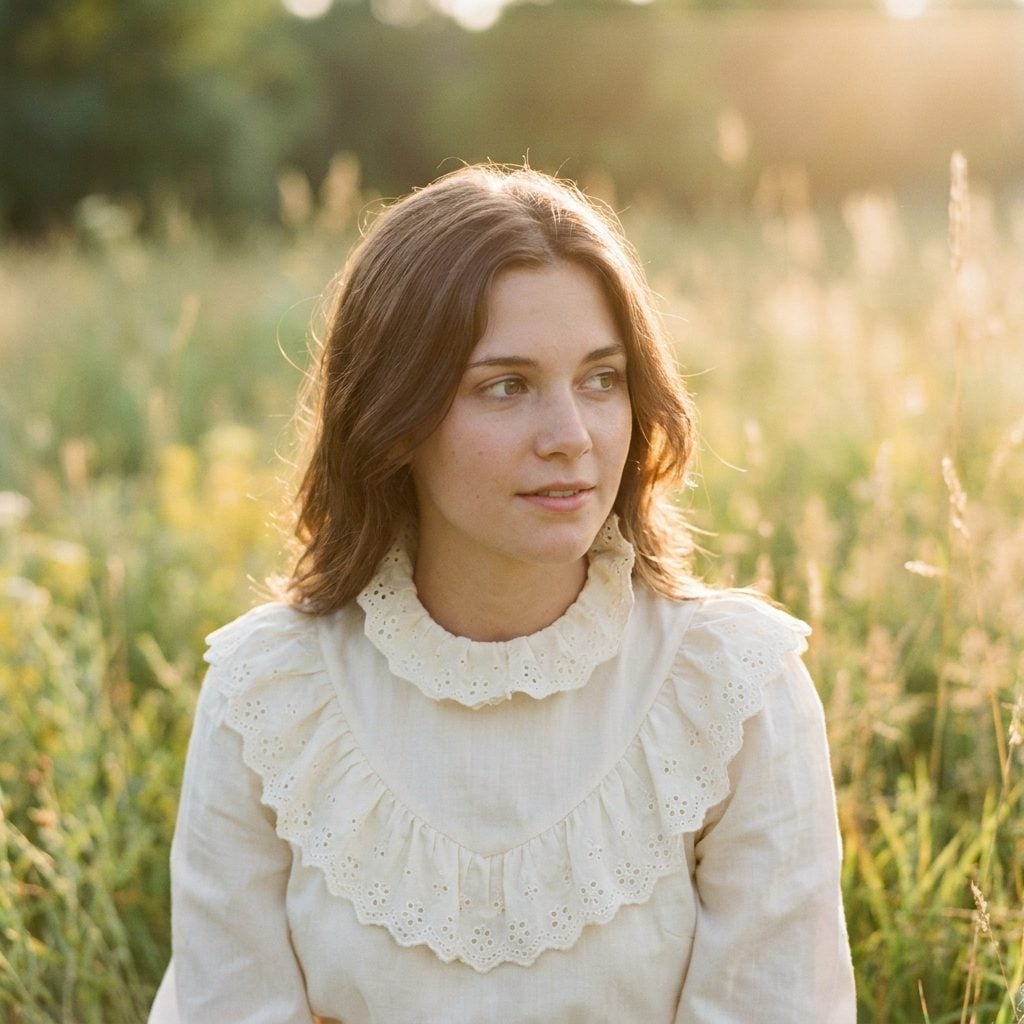
The prairie revival loved a neckline that refused to disappear. Here, a narrow ruffle rises close to the jaw, turning an otherwise pale, restrained bodice into something much more graphic. The effect is almost architectural: vertical fabric through the torso, then one soft eruption around the face.
That tension between modesty and theatricality runs through the entire prairie look. Nothing needs to plunge, sparkle, or cling when a few inches of gathered cotton can provide this much personality.
25. The Tiny Calico Print Worked Almost Like a Solid From Across the Room
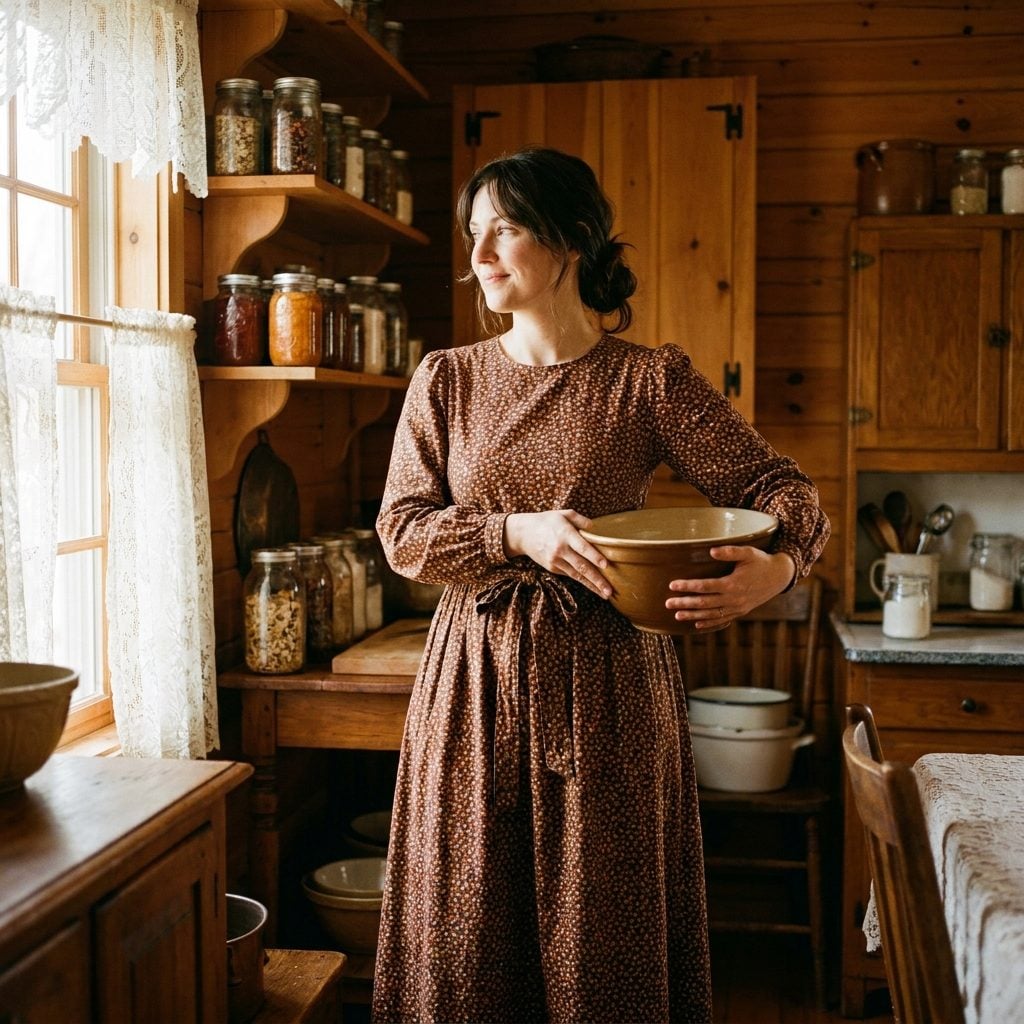
Calico became one of the prairie revival’s great visual workhorses because the flowers were often small enough to merge into an overall field of color. Up close, individual stems and petals appear. From a few feet away, the print settles into rust, brown, cream, dusty rose, or blue.
That scale matters. Large florals would have made these dresses much louder; microflorals let ruffles, gathers, sleeves, and yokes do the structural work while the print supplied texture underneath.
24. Leg-of-Mutton Sleeves Made the Shoulder the Widest Point in the Room
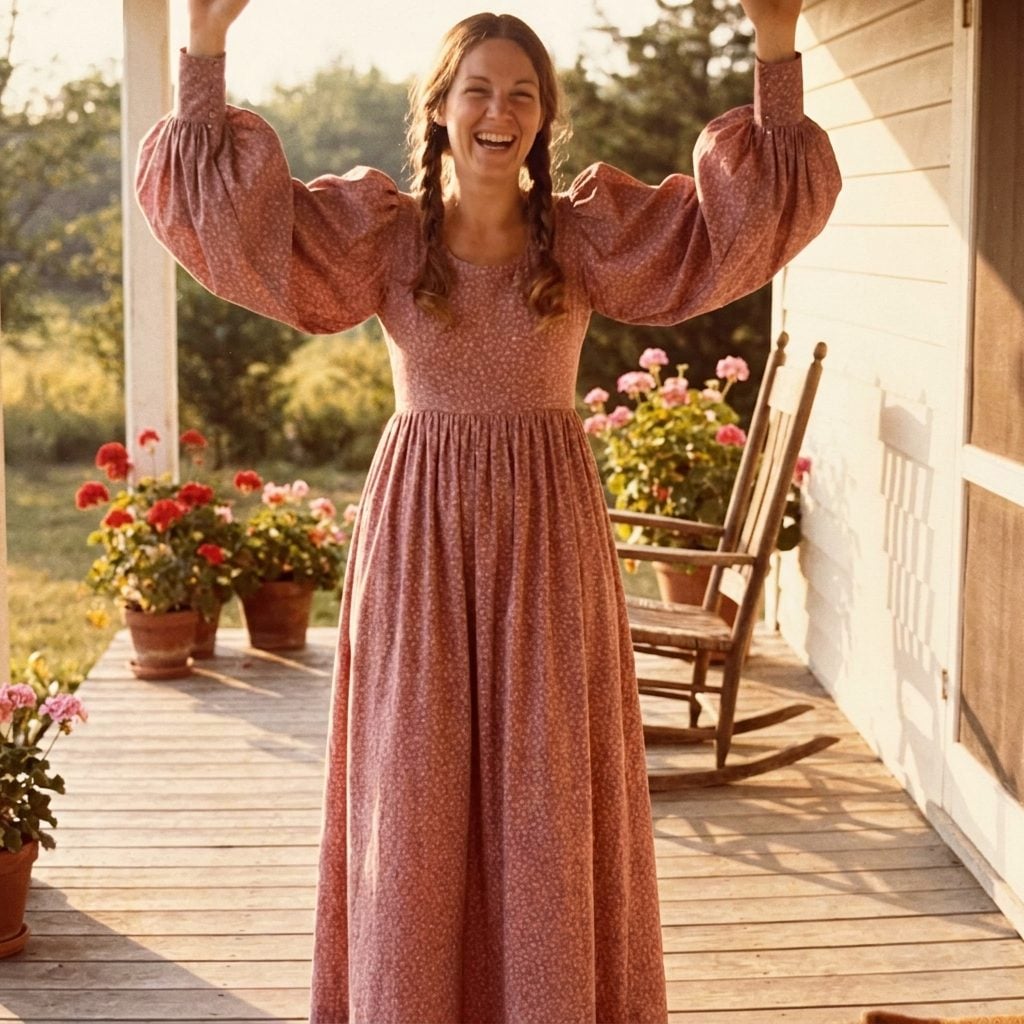
This is where historical revival stops being polite. The sleeves swell dramatically near the shoulder before narrowing toward the wrist, shifting the entire silhouette outward and upward. The waist looks smaller almost by comparison.
The shape has much older roots than the 1970s, but prairie-era designers embraced precisely that sense of costume history. Against a long, relatively simple skirt, the sleeve becomes the spectacle.
23. Vertical Pintucks Turned a Plain Bodice Into Precision Work
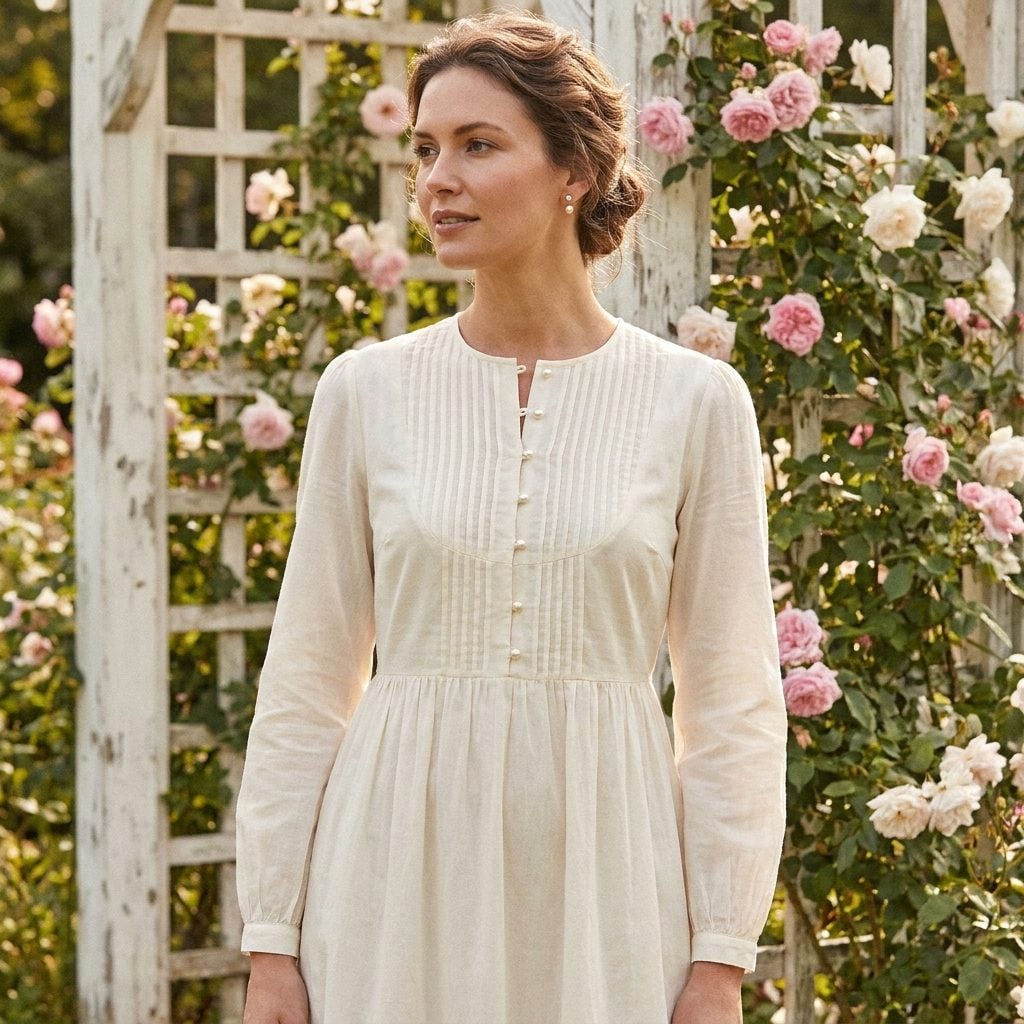
The tiny buttons get attention, but the pintucks are doing just as much work. Narrow stitched folds run vertically through the cream bodice, creating shadow and texture without changing color or adding lace.
Then the pearl-like buttons cut straight down the middle, giving all that softness a center line. It is an unusually disciplined piece of prairie dressing: romantic materials arranged with almost mathematical order.
22. Patch Pockets Were Too Useful to Hide in a Side Seam
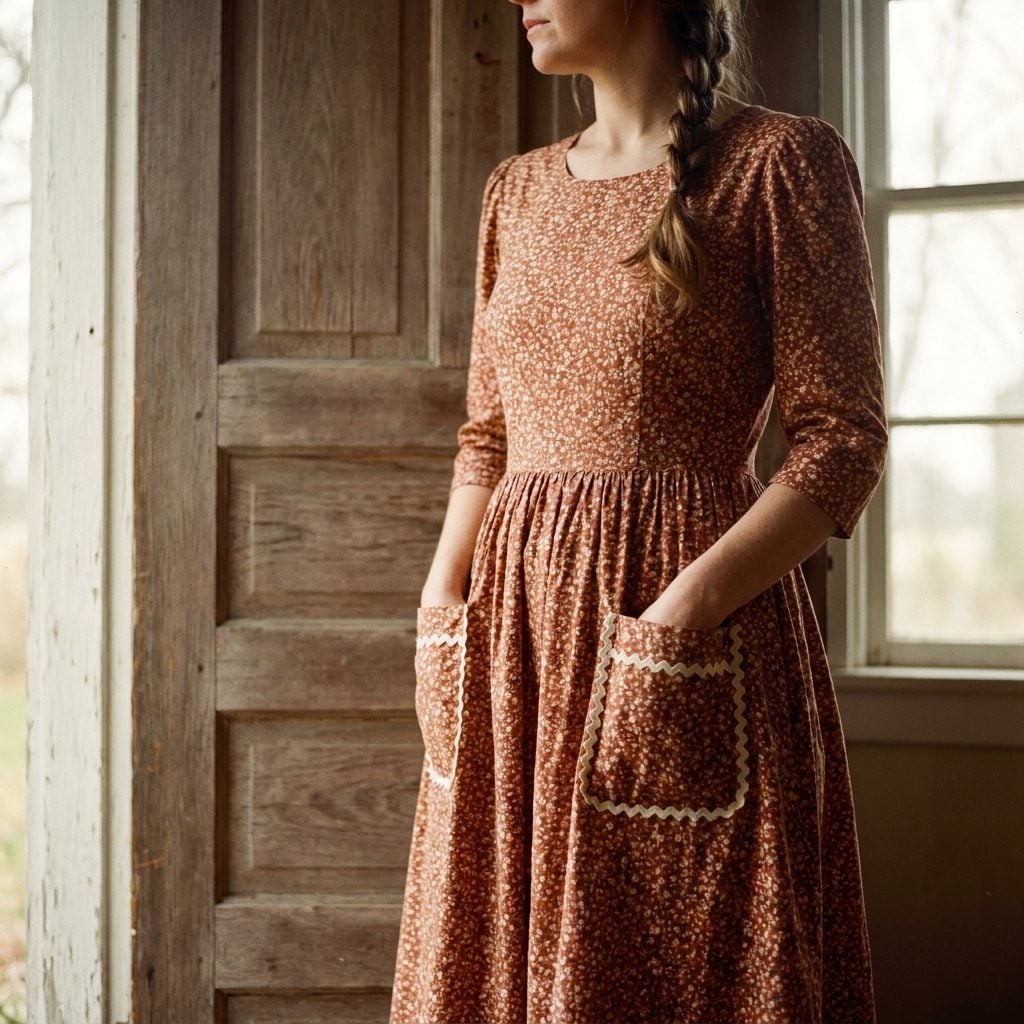
These pockets are not discreet. Two large rectangles sit directly on the skirt, outlined with pale rickrack and positioned where the hands naturally fall. Function becomes decoration simply because nothing is concealed.
Prairie styling was full of details like this—features associated with aprons, work clothes, and home sewing promoted to the front of the garment. The pocket is useful, but its visibility is half the point.
21. A Burgundy Pinafore Let the White Blouse Do Half the Styling
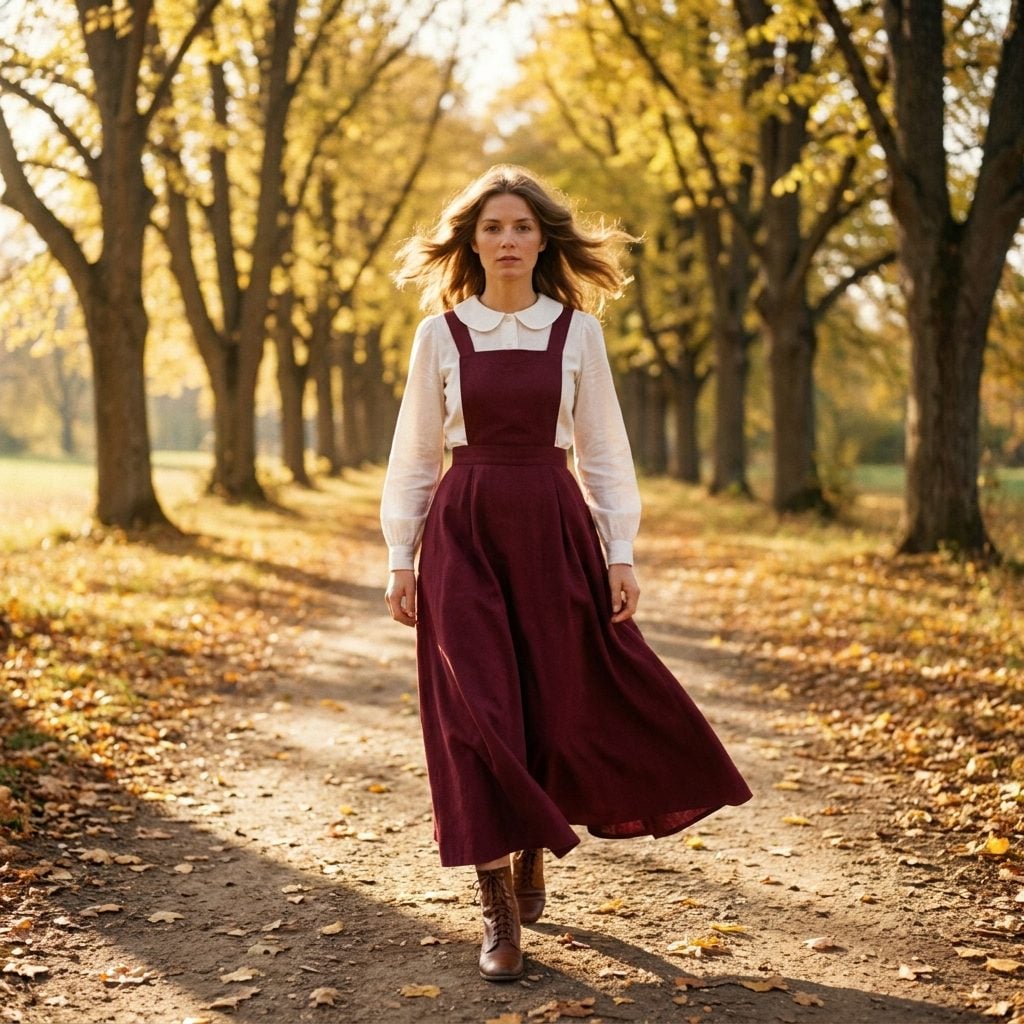
The pinafore reduces the dress to broad straps, a fitted upper panel, and a long skirt, then lets the blouse supply the sleeves and neckline. Here, the white rounded collar becomes almost as important as the deep burgundy layer over it.
That two-piece construction is one reason the prairie look could feel so visually rich without relying on complicated fabric. One color frames another; one neckline sits inside another. Layering becomes ornament.
20. Bishop Sleeves Saved Their Volume for the Last Possible Moment
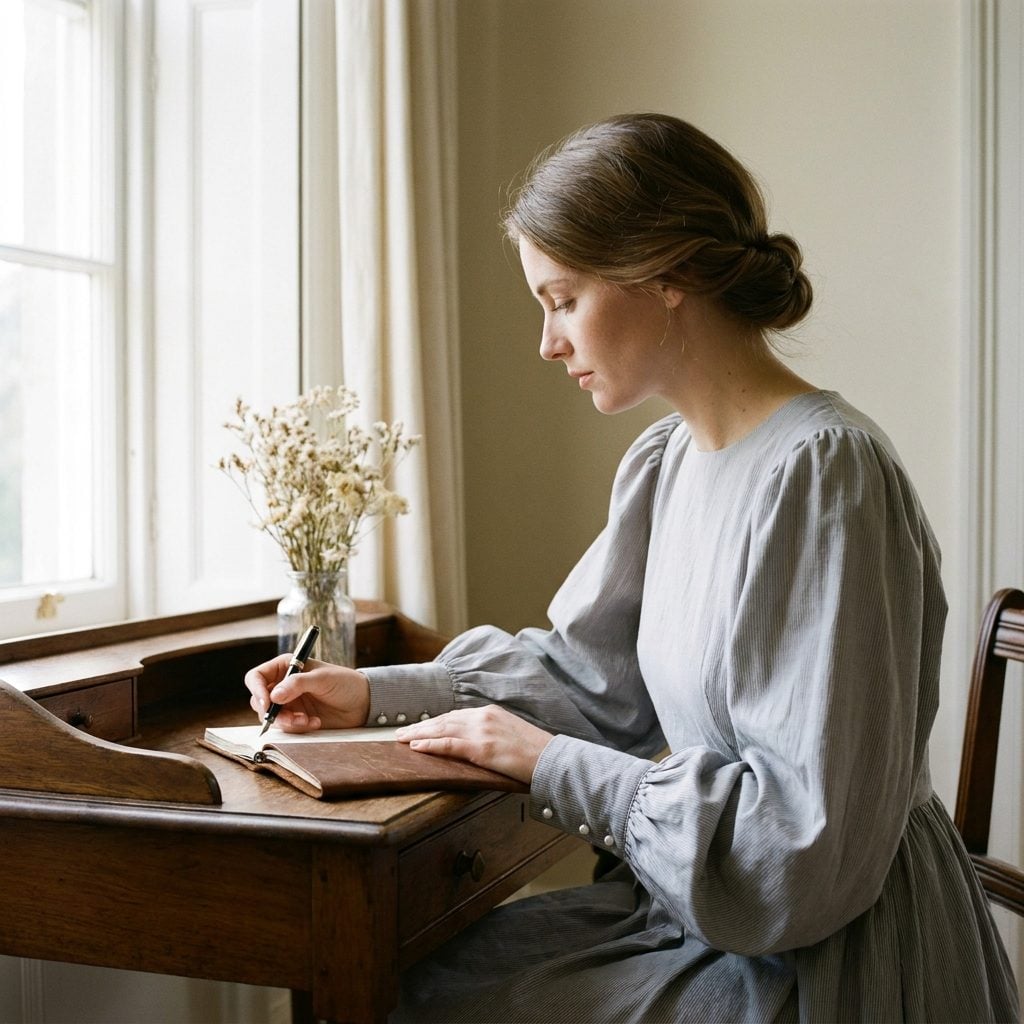
Unlike the shoulder-heavy leg-of-mutton sleeve, the bishop sleeve stays comparatively quiet up top and expands through the forearm. All that fabric then collapses into a close cuff at the wrist.
The contrast is elegant because the shape changes while the fabric remains almost severe. The tiny cuff buttons provide the only hard punctuation in a sleeve otherwise defined by drape and gathered volume.
19. Eyelet Could Take Over an Entire Yoke Instead of Merely Trimming It
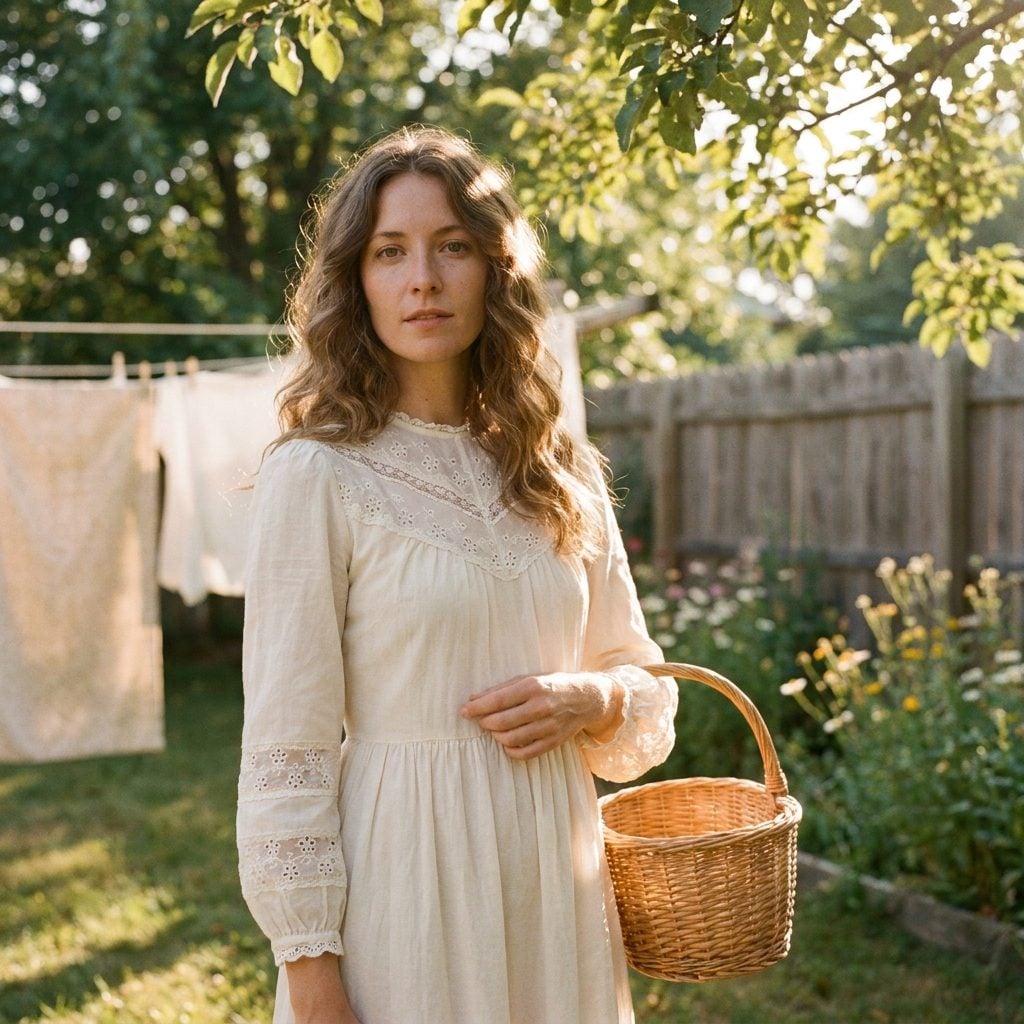
Eyelet is often used as a narrow edging. This version gives it territory. Embroidered perforations spread across the upper bodice and repeat through the sleeves, making the pattern visible from a distance rather than saving it for inspection at arm’s length.
Against opaque white cotton, those small openings create their own shadow pattern. The material supplies texture, decoration, and a hint of transparency without changing the monochrome palette.
18. Rickrack Took a Plain Blue Dress and Drew All Over It
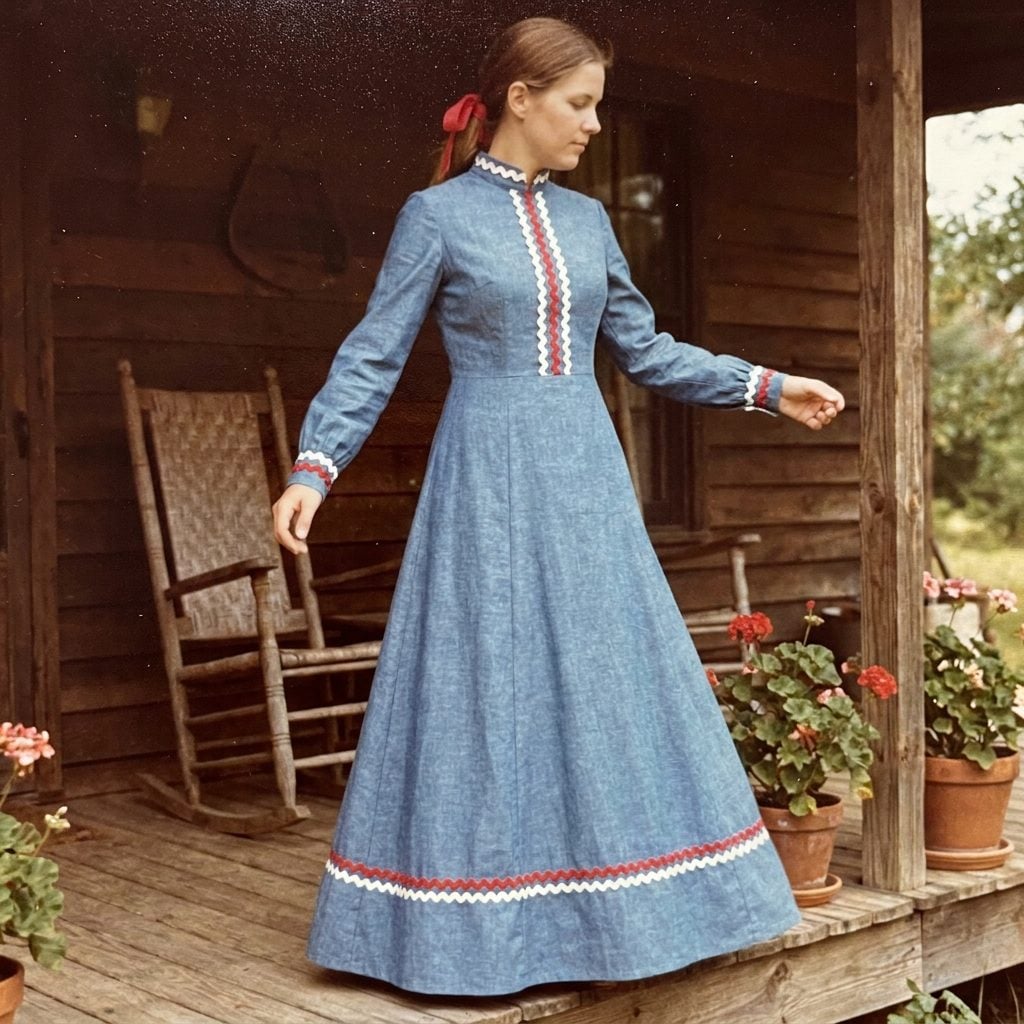
Few trims announce themselves as cheerfully as rickrack. Here red and white zigzags climb the front bodice, circle the cuffs, and run horizontally around the skirt, turning simple seam lines into graphic bands.
That is part of its charm: rickrack does not pretend to be luxury embroidery. It looks like trim because it is trim, and the prairie revival made that home-sewing vocabulary part of the aesthetic rather than something to disguise.
17. The Oversized Back Bow Made the Waistline Worth Turning Around For
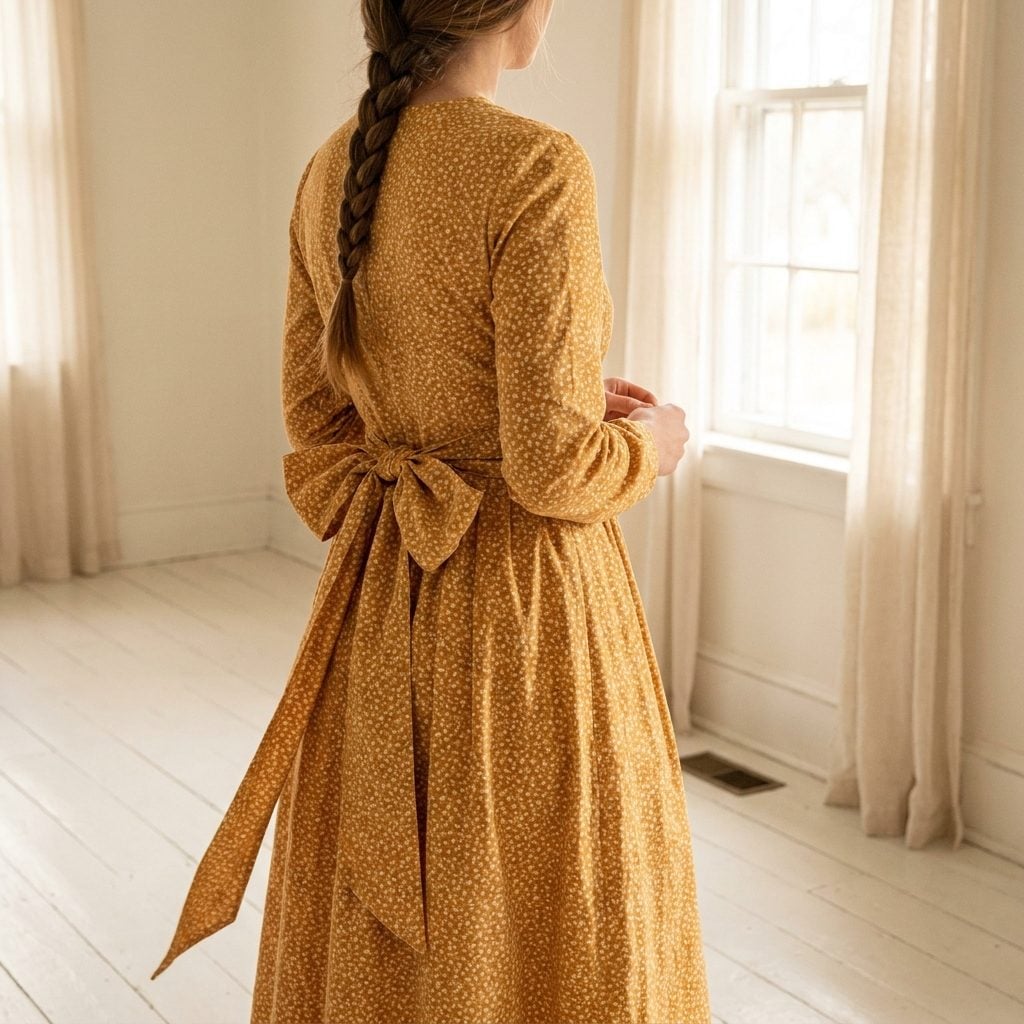
A self-fabric sash can disappear into the garment from the front. From behind, this one becomes the feature. Broad ties gather the waist and finish in a large bow whose tails fall nearly to the hem.
Because the sash uses the same tiny floral cloth as the dress, the effect comes from scale rather than contrast. Nothing new is added to the palette; the existing fabric is simply given a more theatrical job.
16. A Calico Headscarf Took the Print Beyond the Dress
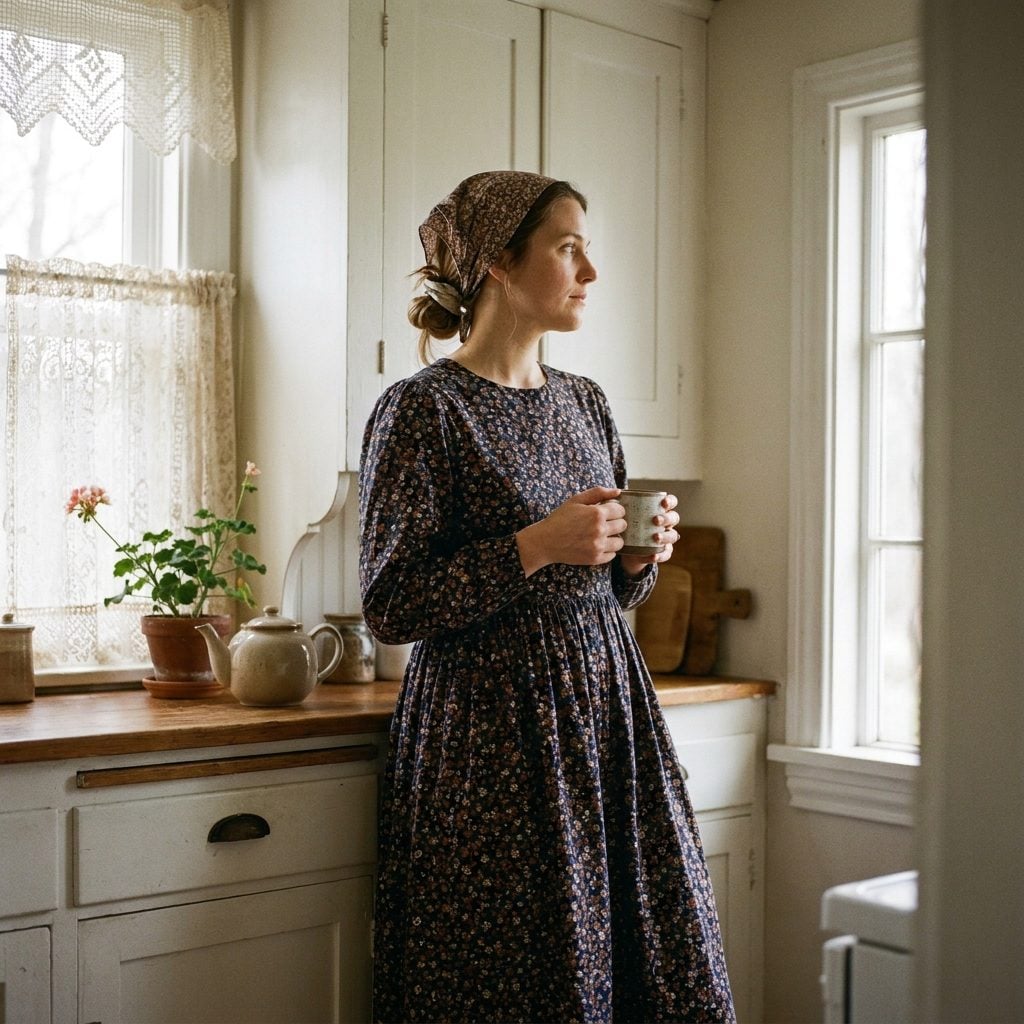
The tiny floral pattern already covers the dress from shoulder to hem. Repeating a related print at the head pushes the motif one step further and changes the silhouette without adding jewelry, trim, or a second color story.
Headscarves also belong naturally to the folk and rural references that prairie fashion borrowed so freely. Here the accessory makes the microfloral feel less like surface decoration and more like a complete visual system.
15. A Scalloped Eyelet Bib Spread the Decoration Across the Shoulders
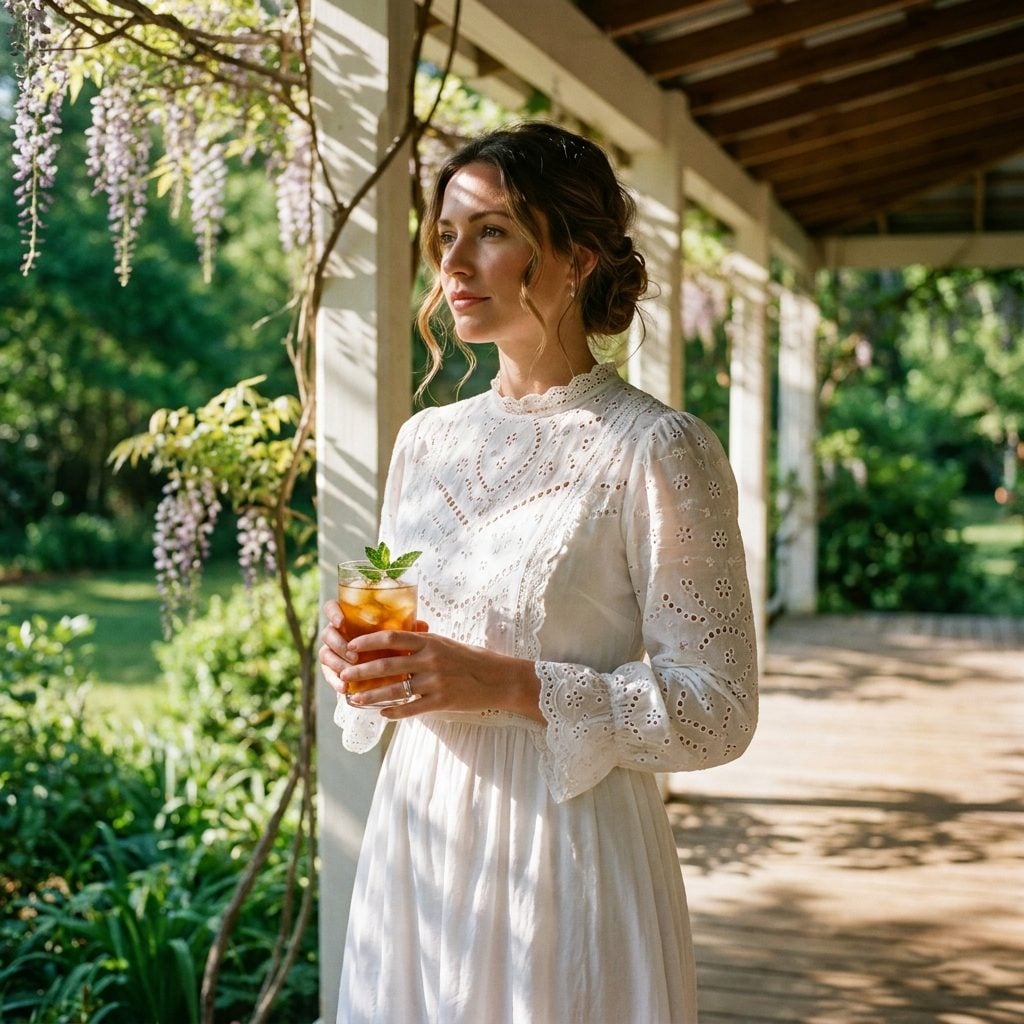
This eyelet treatment works differently from the all-over yoke. A broad scalloped panel sweeps across the upper chest and shoulders, creating a V-like frame over otherwise plain fabric.
Matching eyelet bands appear lower on the sleeves, so the ornament is repeated without becoming continuous. The eye follows the same decorative material at different levels of the garment, almost like a refrain.
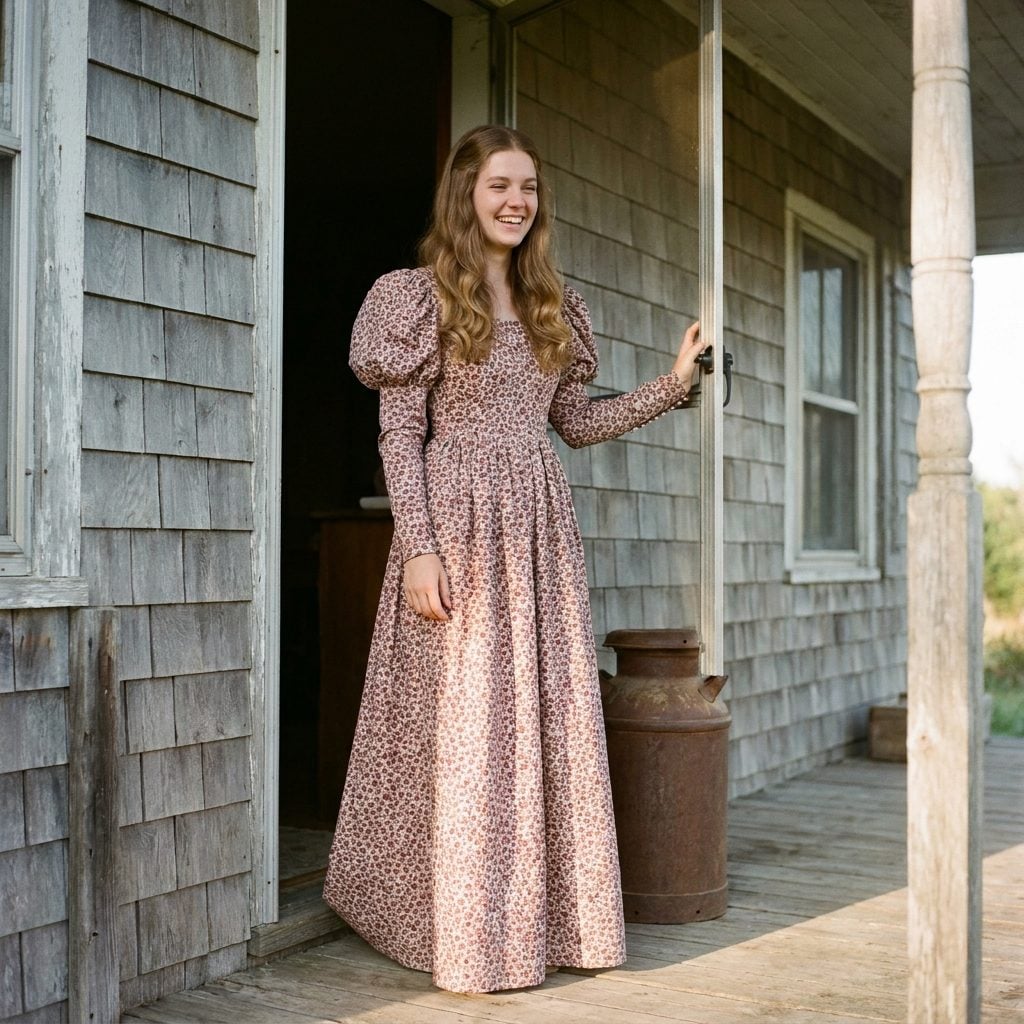
14. The Square Neckline Had to Hold Its Own Against Those Sleeves
❤️ Would you like to save this?
With this much sleeve volume, a timid neckline would disappear. The square opening provides the necessary counterweight: a crisp horizontal and vertical frame surrounded by acres of gathered fabric.
The contrast is pure prairie-revival logic. The bodice stays fitted and geometrically controlled while the sleeves expand with almost comic generosity. Structure in the center; extravagance at the edges.
13. The Ruffled Bib Turned the Entire Upper Bodice Into a Frame
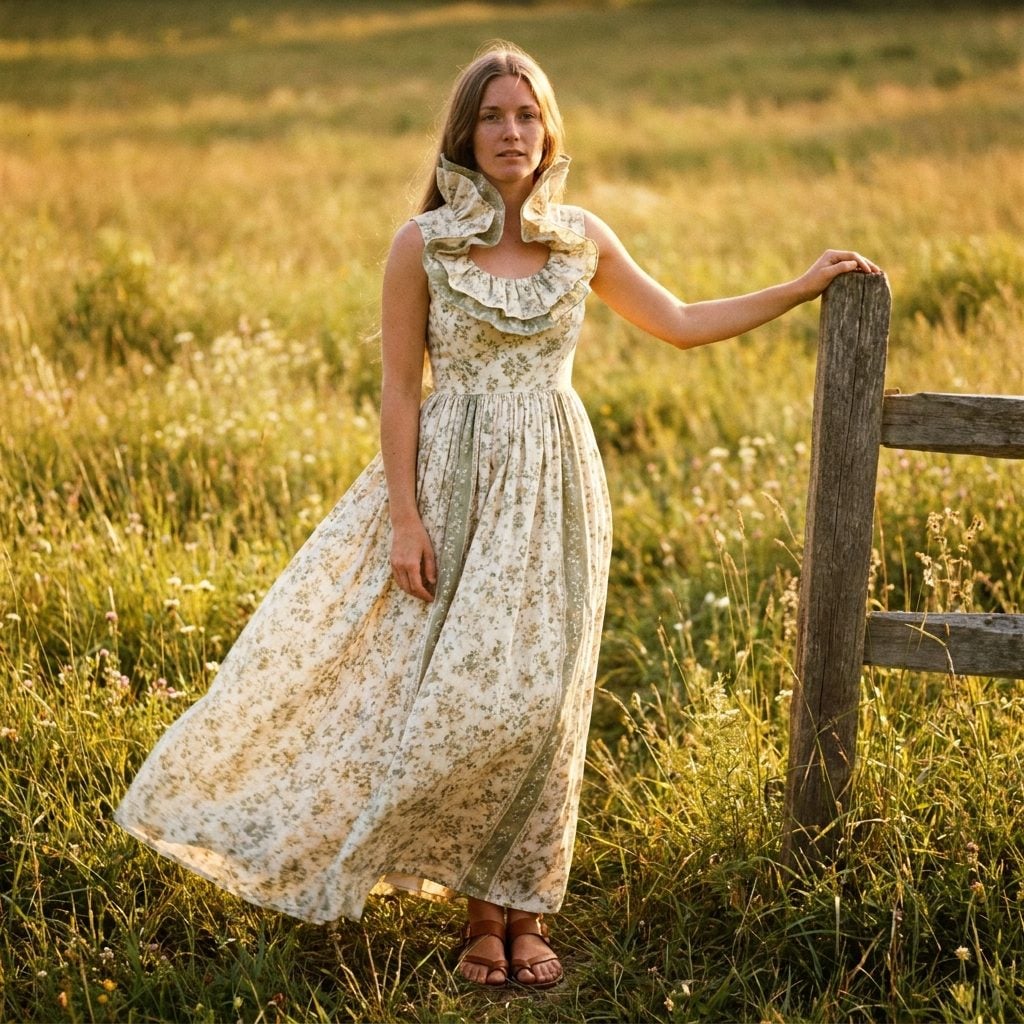
One ruffle around the neck is romantic. Extending that idea down across the shoulders makes the upper half of the dress something closer to a frame within a frame.
The effect enlarges a relatively small construction detail until it becomes the first thing the eye reads. The prairie revival was particularly good at this kind of escalation: a trim becomes a collar, the collar becomes a bib, and suddenly the fabric is doing architecture.
12. The Side-Tied Sash Turned Utility Into Asymmetry
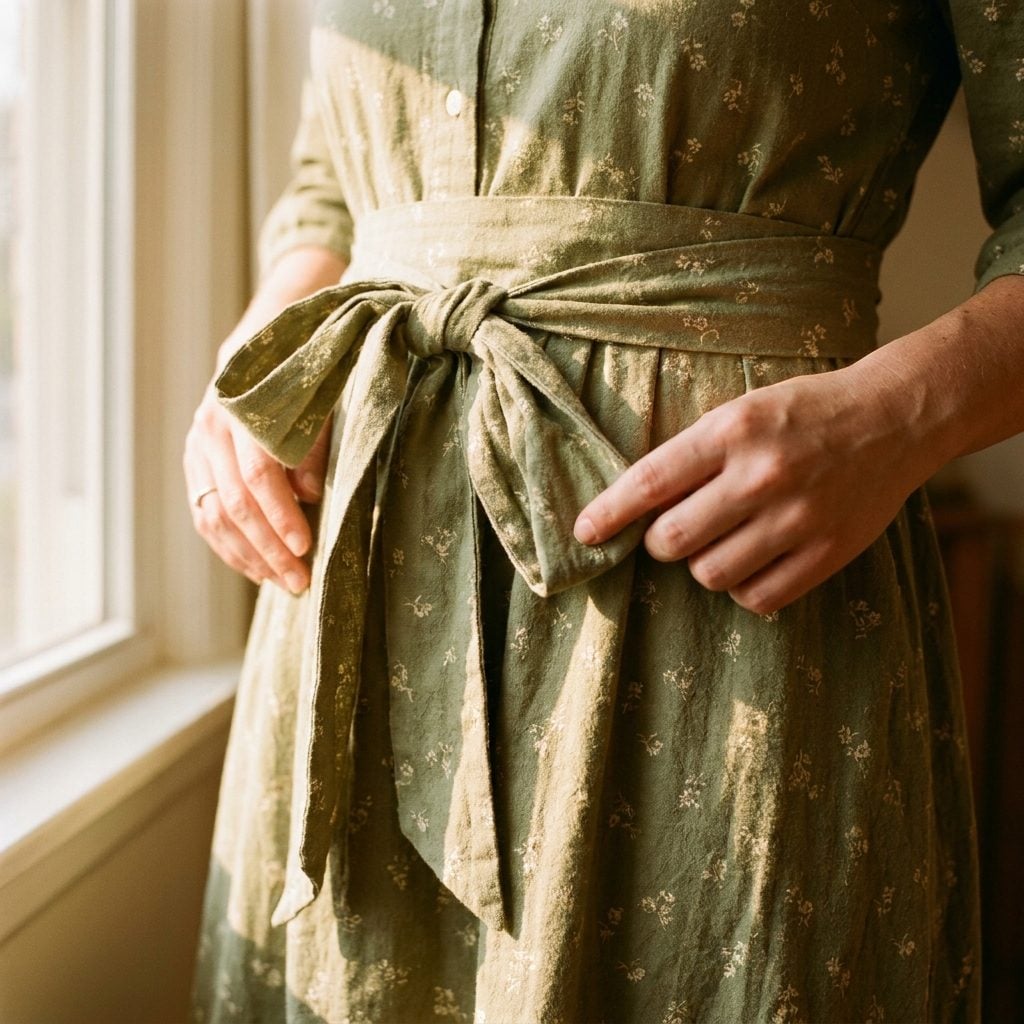
Moving the bow away from the center changes an otherwise traditional waist treatment immediately. The long tails fall down one side rather than dividing the body symmetrically, giving the skirt a stronger directional line.
Because the sash is cut from the same fabric as the dress, the knot supplies the contrast through folds and shadows rather than color. A simple strip of cloth becomes sculpture once it is wrapped, crossed, and tied.
11. Dotted Swiss Added Texture You Had to Get Close to Notice
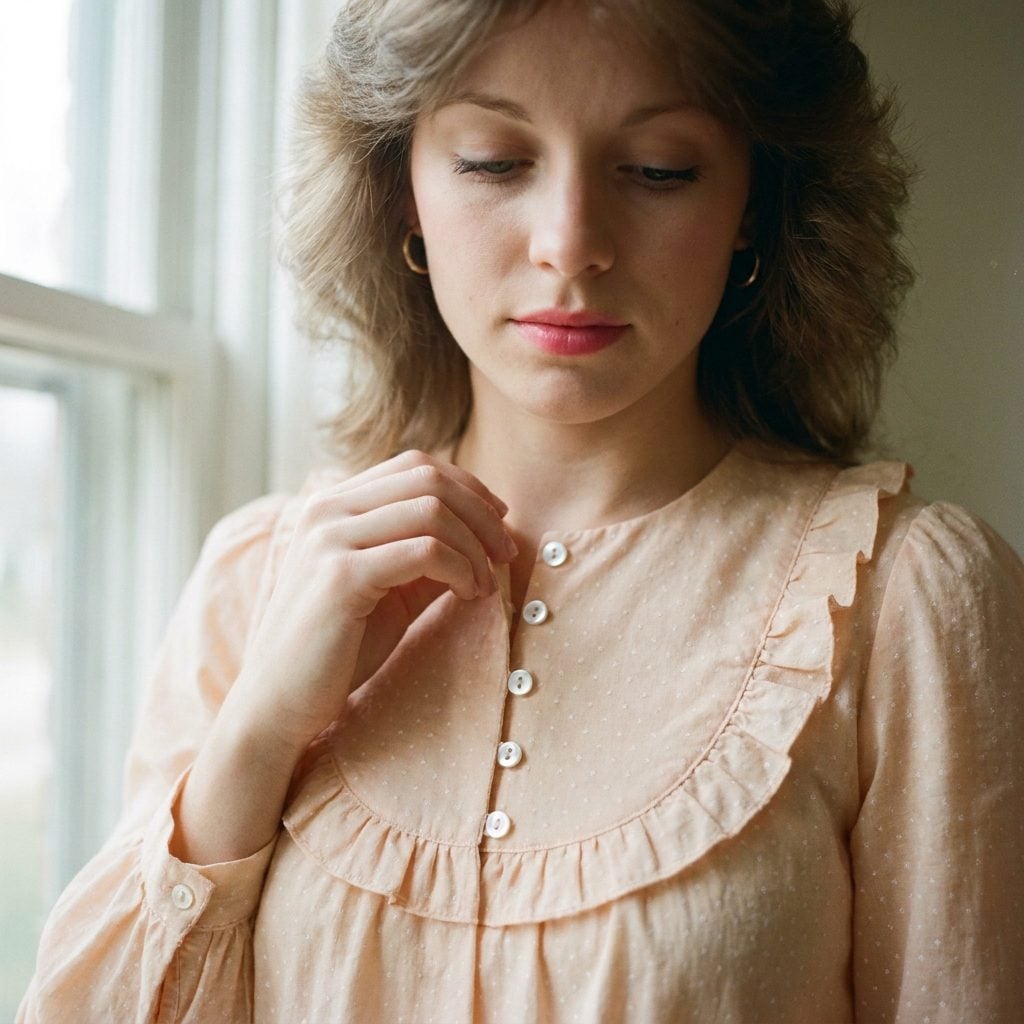
Not every prairie fabric needed a floral print. This pale peach cloth uses tiny raised dots to keep a nearly solid color from looking flat, while a curved ruffled yoke supplies the larger-scale decoration.
The combination works because the textures operate at different distances. The ruffle reads across the room; the dotted surface reveals itself only up close. That layering of tiny craft detail over larger construction is one of the look’s recurring pleasures.
10. Bell Sleeves Let the Volume Fall Away From the Wrist
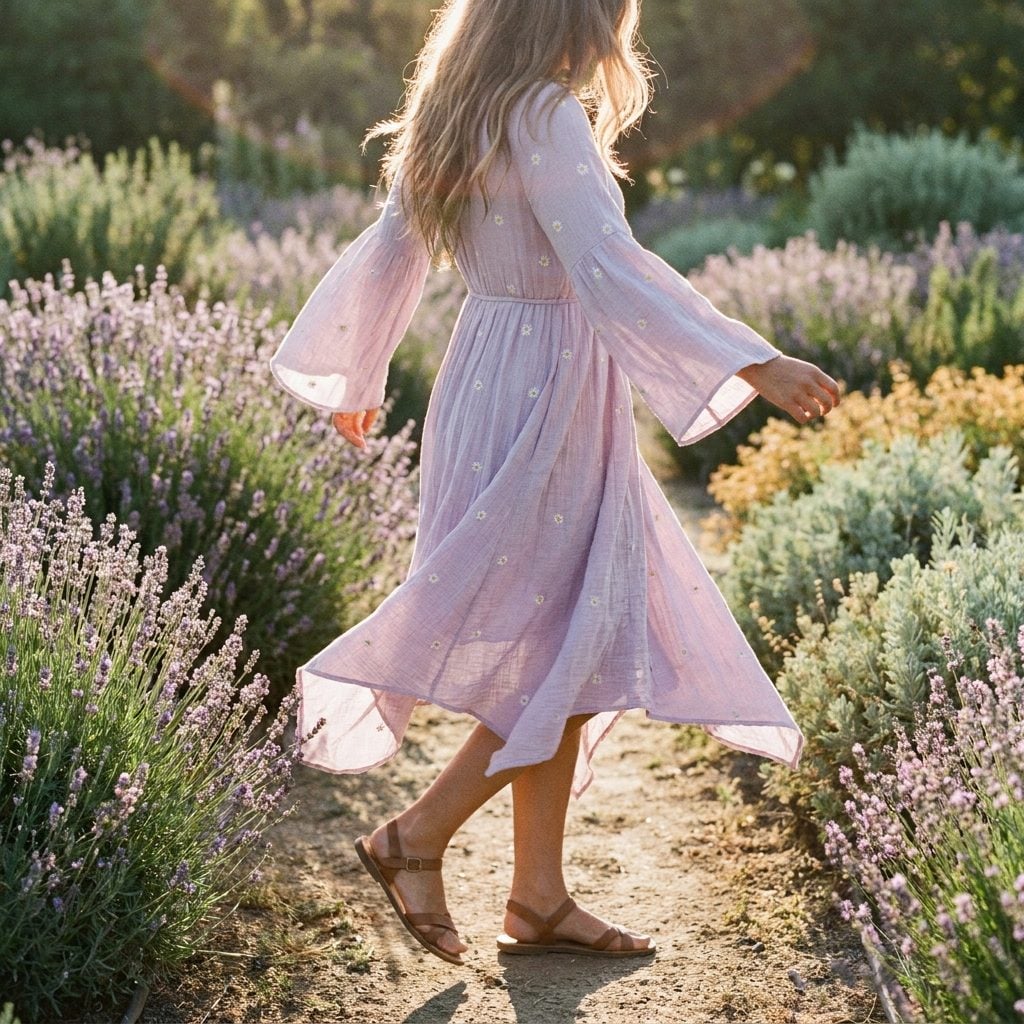
These sleeves begin comparatively narrow and flare outward toward the hands, creating movement at the opposite end of the arm from the leg-of-mutton silhouette. Instead of shoulder drama, the action happens at the cuff.
In a light, floating fabric, every gesture exaggerates the shape. The sleeves swing as the arms move, giving even a quiet dress a sense of motion before the skirt joins in.
9. The Embroidered Peasant Blouse Brought Folk Craft Into the Mix
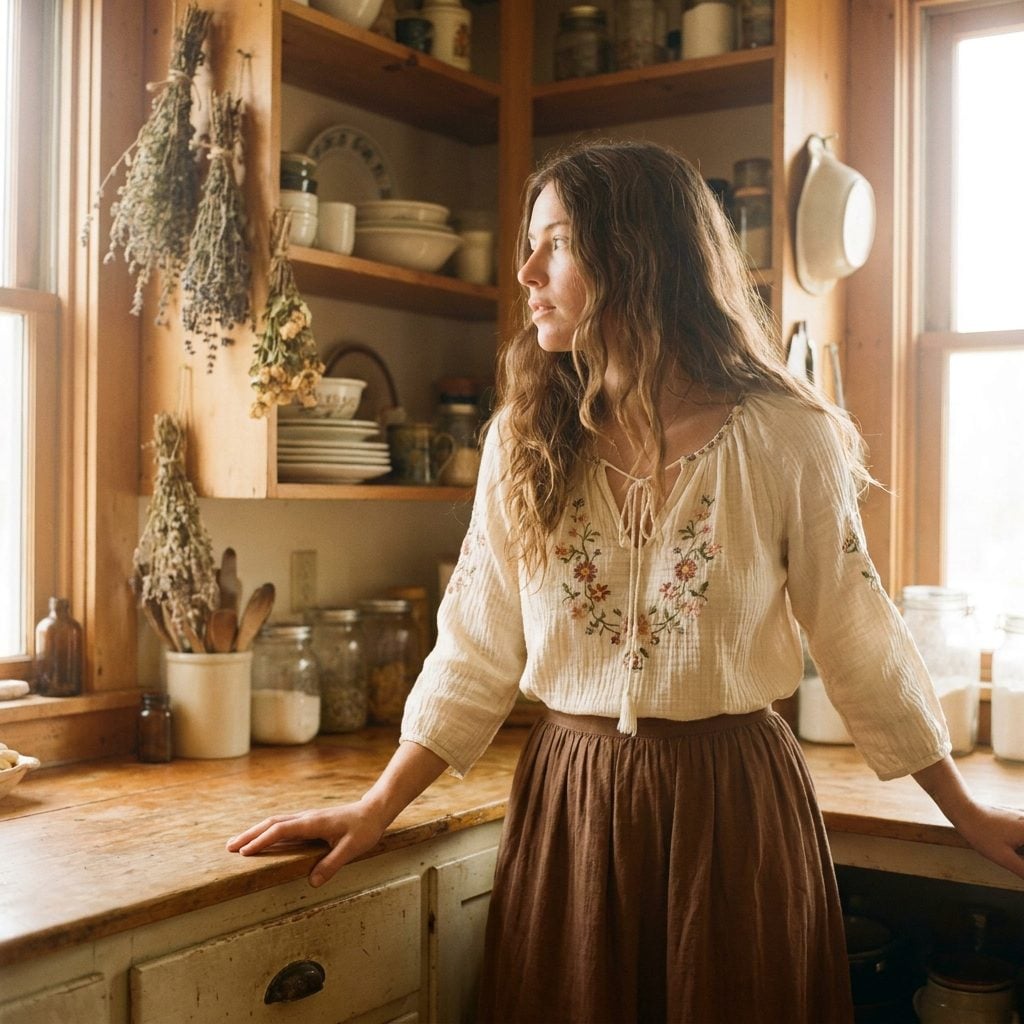
Prairie style did not draw only from Victorian dress. Folk blouses entered the same visual conversation, bringing looser shapes, embroidered flowers, textured cotton, and adjustable necklines with them.
This blouse makes the difference clear. The split neck is finished with narrow ties rather than a formal collar, while colorful embroidery runs across the chest and sleeves. The effect is less parlor, more folk craft—and prairie fashion happily borrowed from both.
8. The Empire Seam Lifted the Waist Almost to the Ribcage
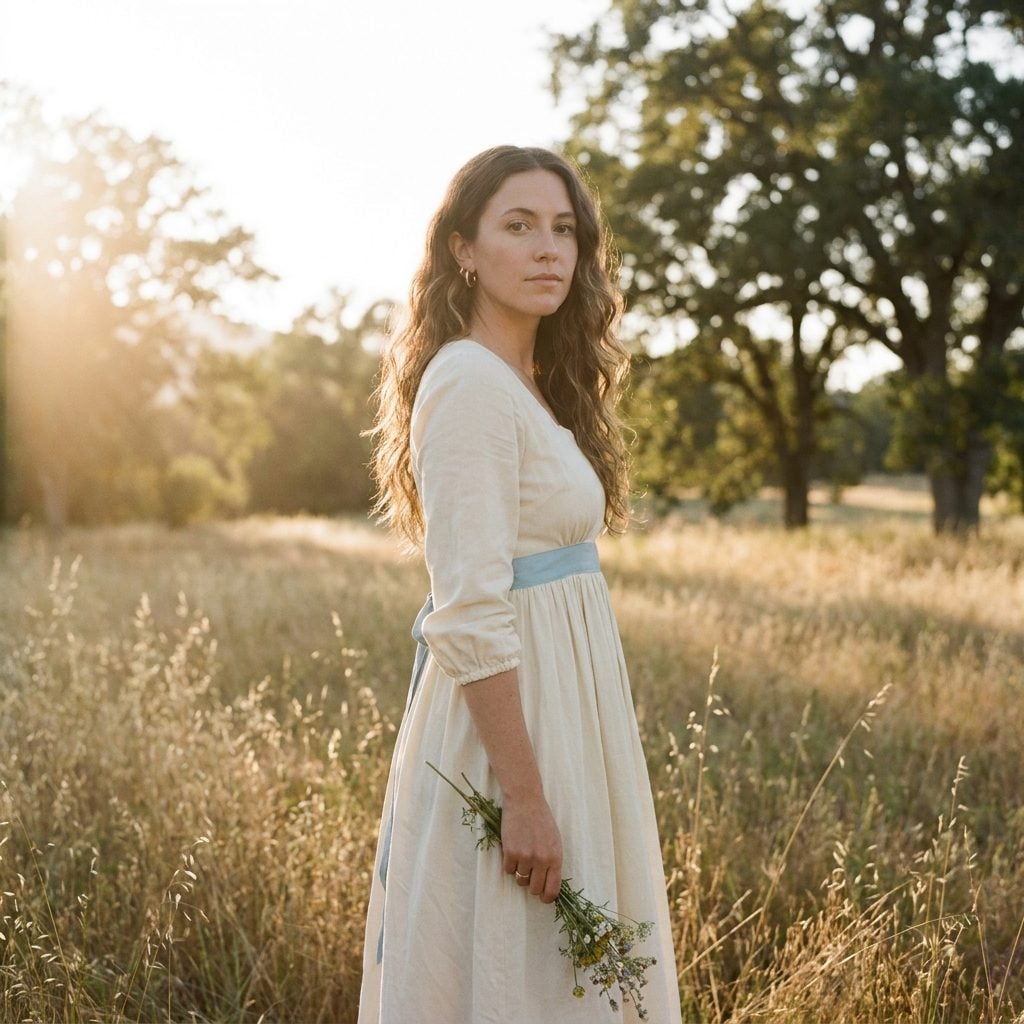
Most waist seams divide the torso somewhere near its natural narrow point. The empire line ignores that convention and rises directly beneath the bust, allowing the skirt to begin much earlier.
The pale blue band makes the placement impossible to miss. Below it, the cream fabric drops in a long uninterrupted column. It is a small change in seam position with an enormous effect on proportion.
7. Near-Match Piping Made the Yoke Look Drawn With a Fine Pen
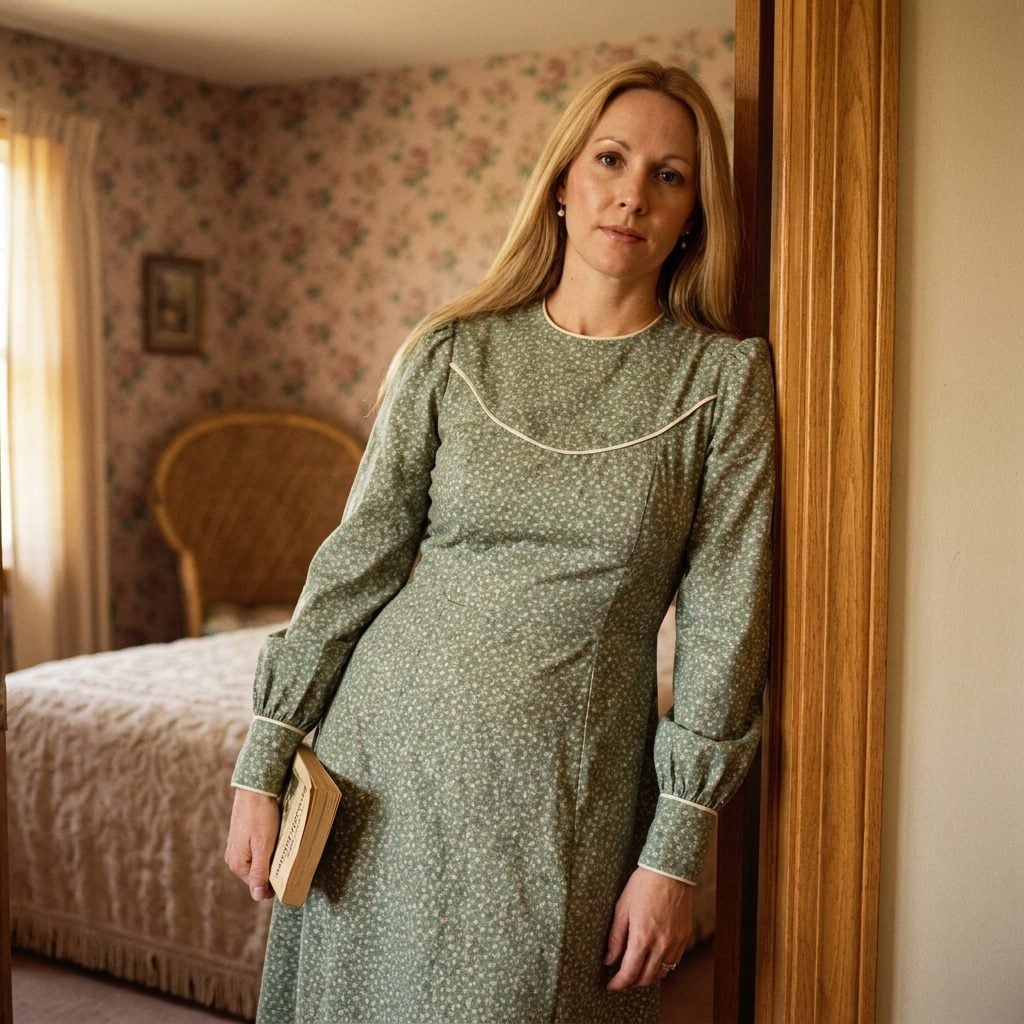
The pale piping tracing this curved yoke barely qualifies as contrast. That is precisely why it works. Instead of becoming decoration in its own right, the narrow line clarifies the construction underneath it.
The same treatment appears around the cuffs, tying two distant parts of the dress together. It is an almost architectural use of trim: not enough color to interrupt the print, just enough to make the seams legible.
6. Smocking Made Stretch, Structure, and Decoration the Same Thing
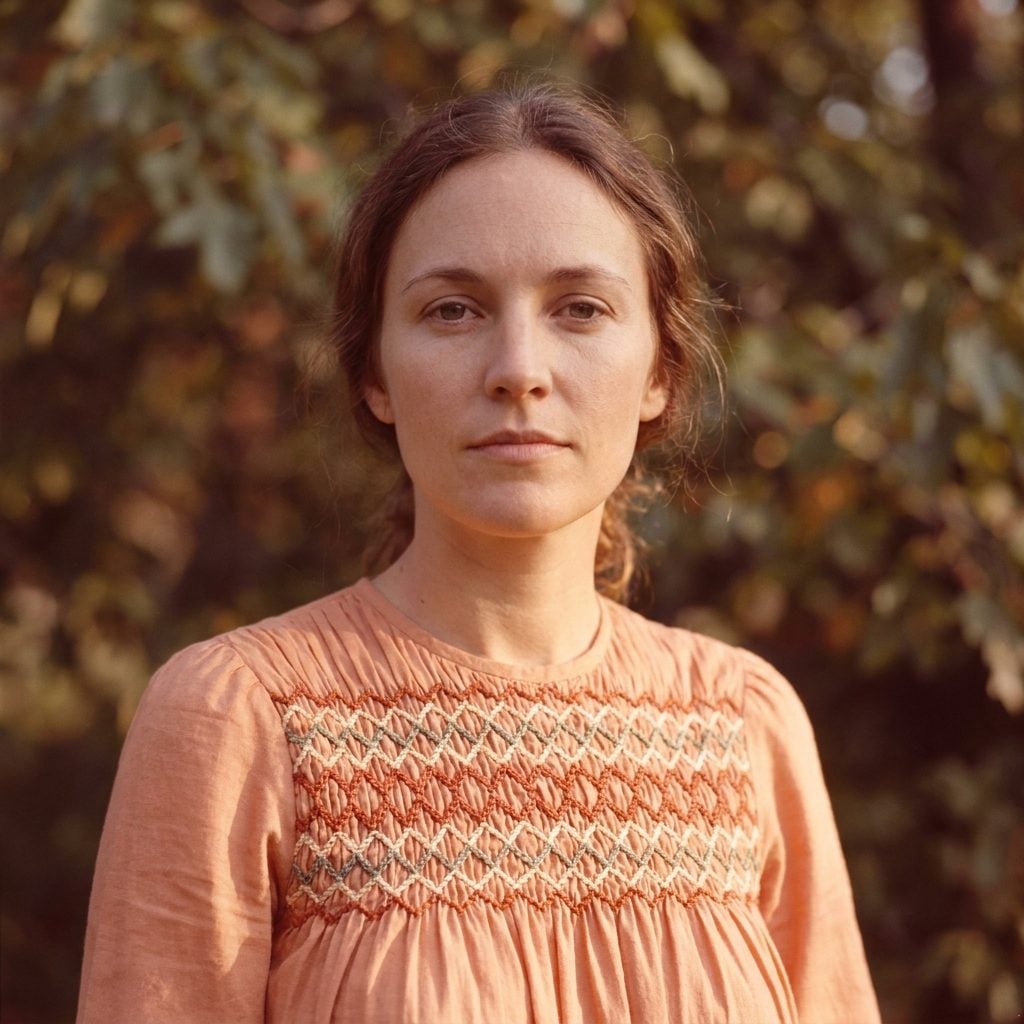
Smocking is one of those rare techniques in which construction becomes decoration almost automatically. Fabric is gathered into small, controlled pleats and held with repeated stitches, allowing the bodice to expand while still maintaining shape.
Here contrasting thread makes the structure impossible to miss. Rows of interlocking stitches stretch across the chest like a woven panel laid over the peach fabric, even though the decoration and the shaping are happening at the same time.
Prairie dressing was at its best when the construction itself became the ornament.
5. The Tie-Front Neckline Replaced a Collar With One Loose Bow
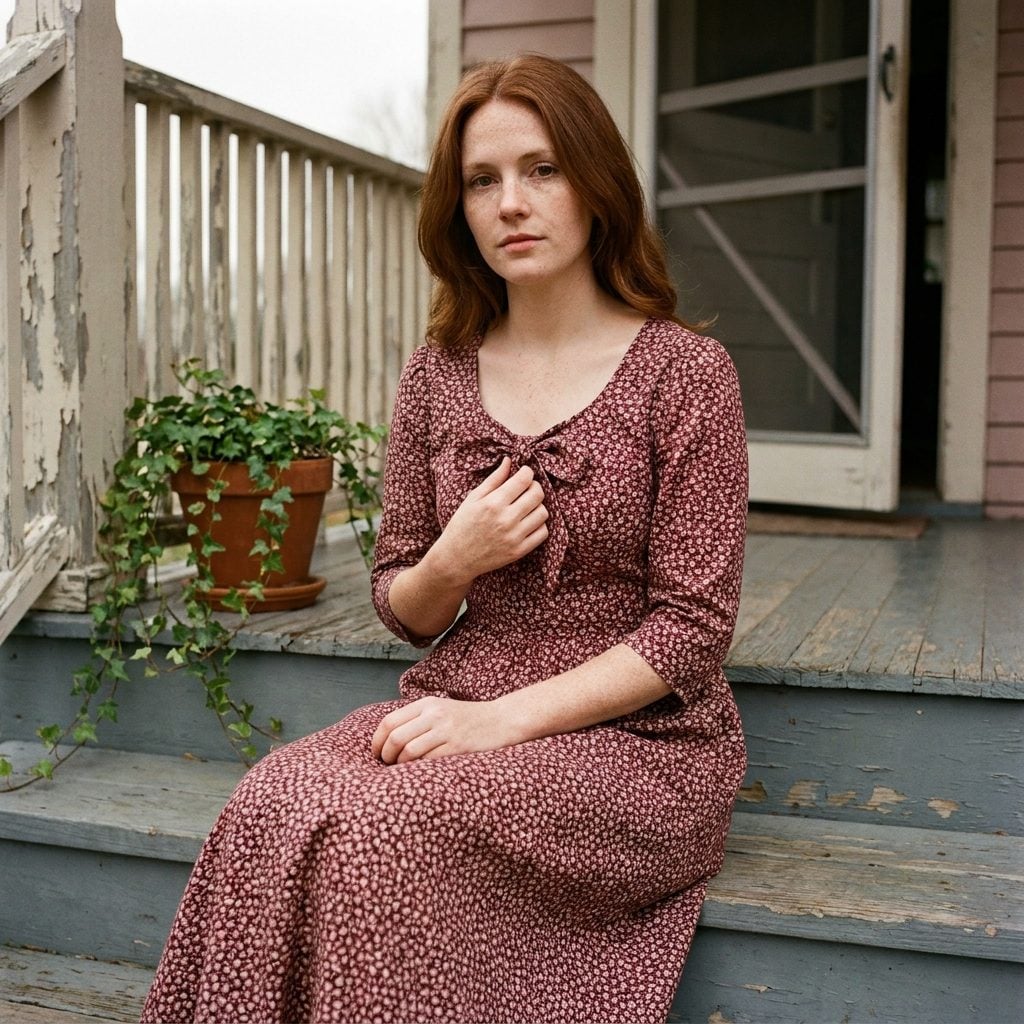
A narrow bow at the neckline can change the entire mood of a dress. Instead of a rigid collar, this burgundy floral version uses two soft ties emerging from a low rounded opening.
The bow introduces a deliberately adjustable quality into an otherwise fitted silhouette. Tighten it and the neckline becomes primmer; loosen it and the front relaxes. Prairie fashion loved exactly this kind of detail—romantic, functional, and just a little untidy.
4. A Wide Green Ribbon Gave a Soft Dress One Hard Shot of Color
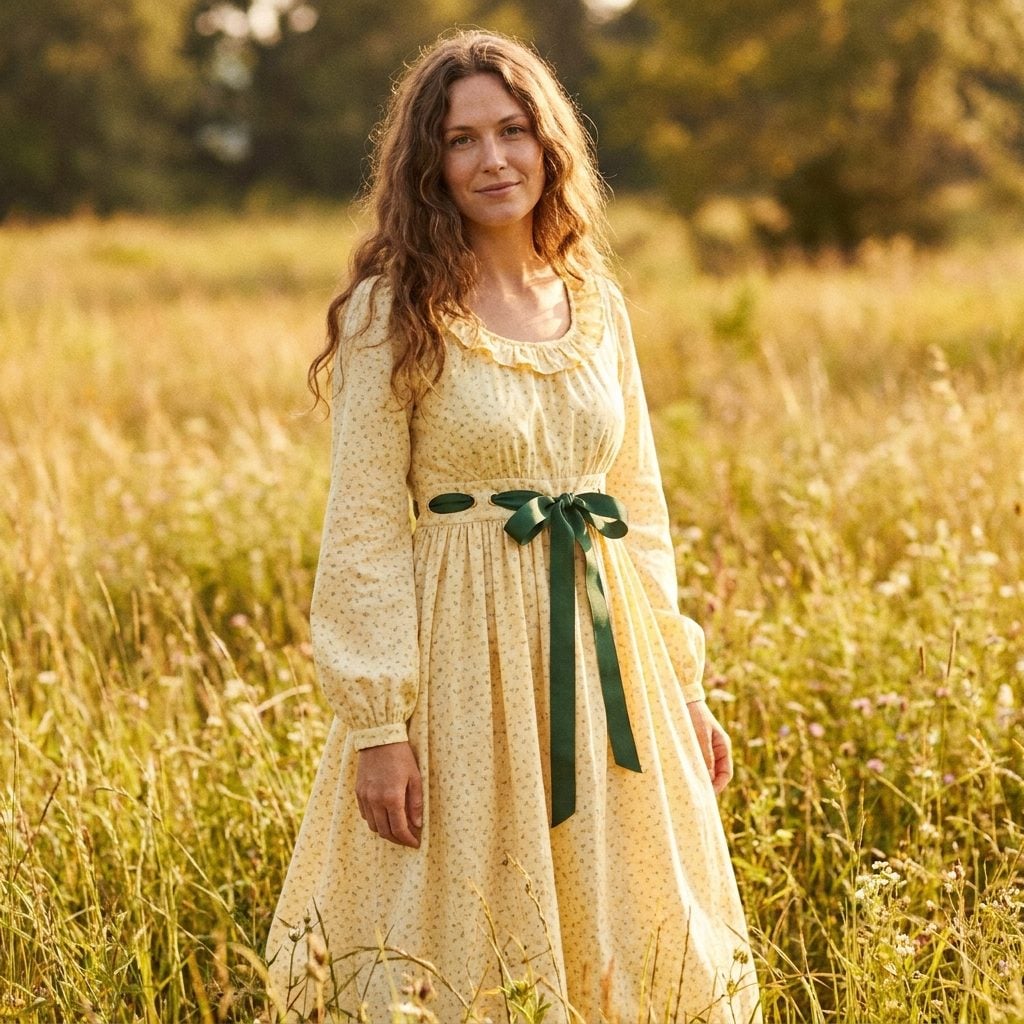
The pale floral dress would be almost weightless without that dark green ribbon. Threaded through the waist and tied into a long bow, it draws one crisp horizontal line across a field of tiny print and gathered fabric.
The darker ribbon holds a cleaner edge than the gathered dress fabric around it, so the contrast is tactile as well as visual: loose skirt against controlled waist, pale floral against one decisive band of green.
3. The Standaway Ruffle Collar Was Half Neckline, Half Special Effect
This ruffle does not sit quietly against the body. It rises, folds, and projects outward, creating a collar with enough depth to cast its own shadows.
The sleeveless bodice underneath makes the contrast even more dramatic. There is almost no visual competition elsewhere, so the entire upper silhouette is carried by one exaggerated ring of floral fabric.
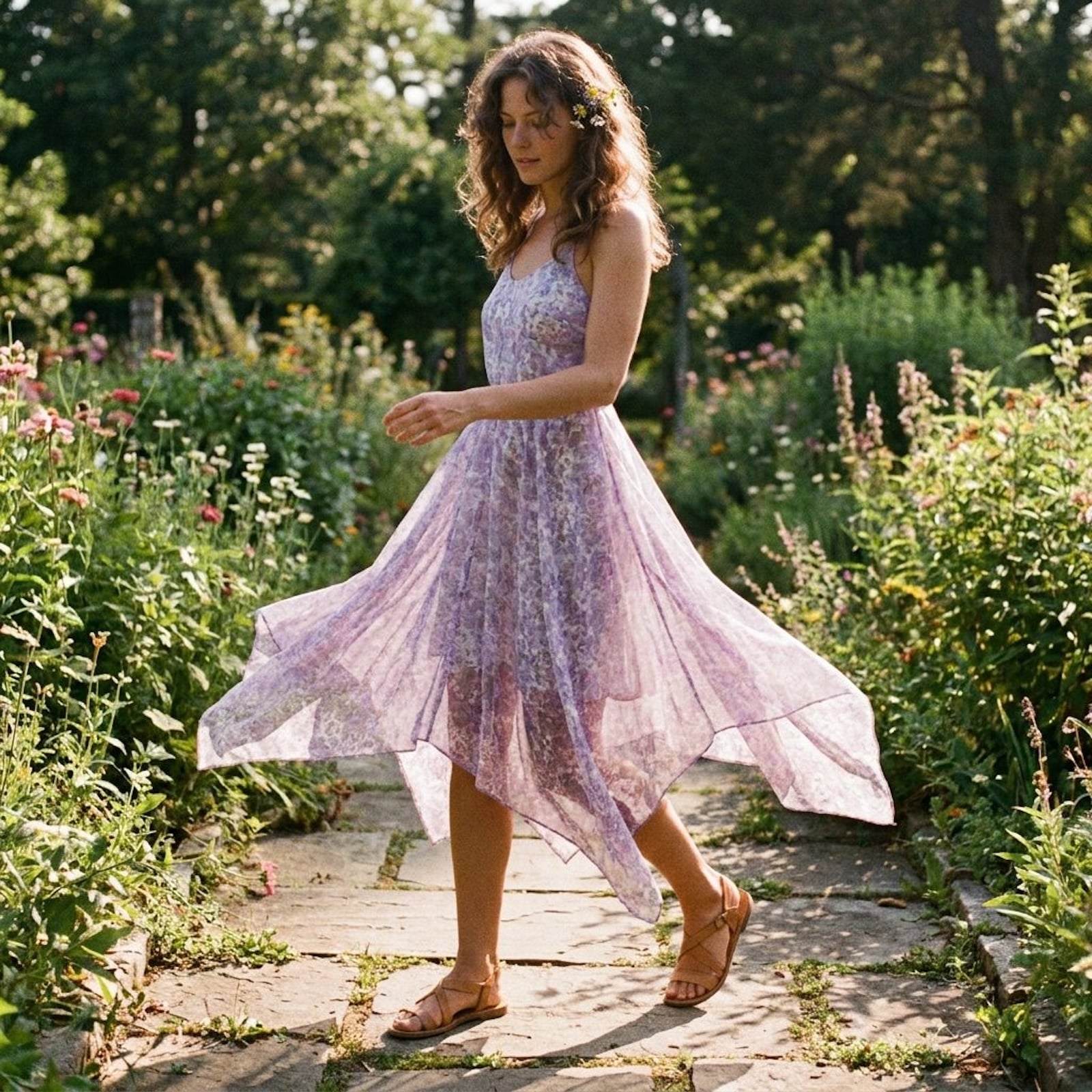
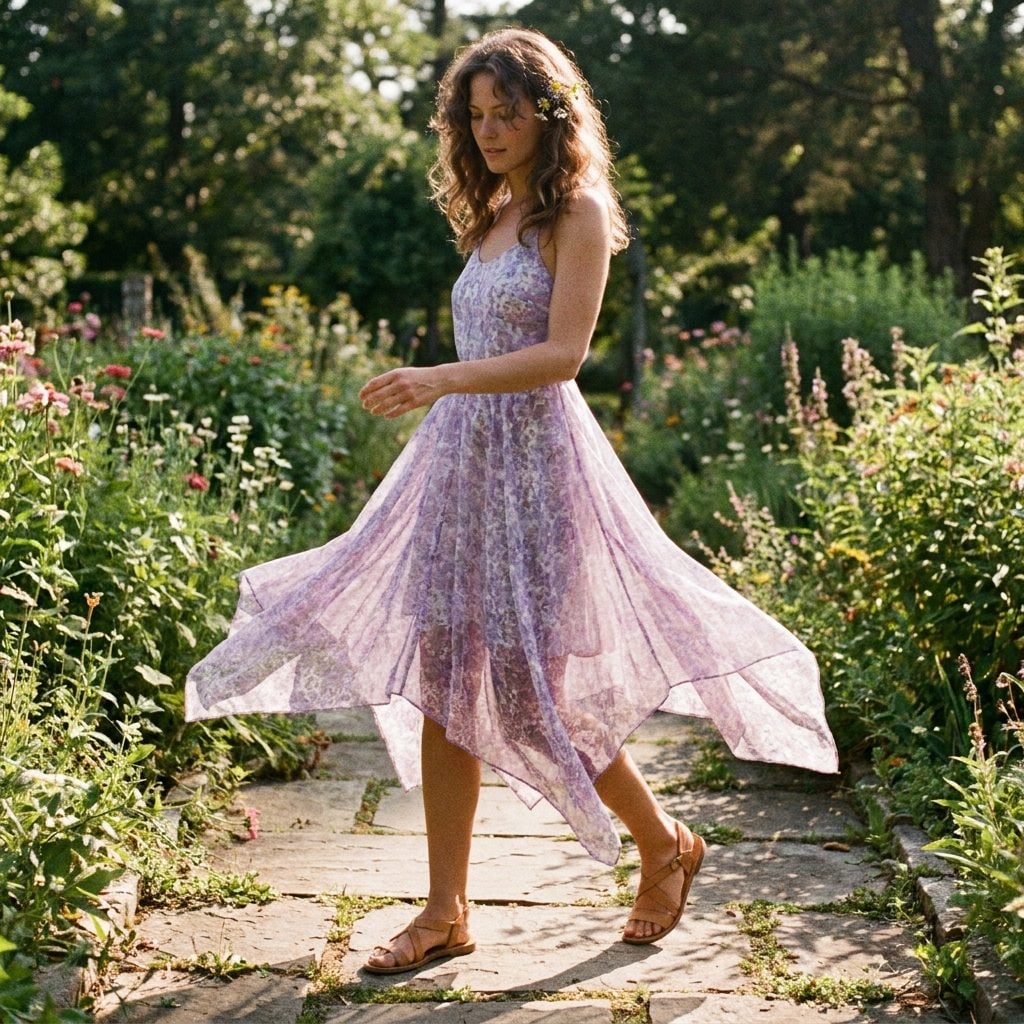
2. The Handkerchief Hem Made the Skirt Change Shape With Every Step
❤️ Would you like to save this?
A straight hem gives a skirt one ending. A handkerchief hem gives it several. The points drop to different lengths around the body, so each section responds differently as the wearer walks or turns.
Light fabric makes the construction especially effective. Instead of hanging as one continuous mass, the skirt opens, overlaps, and catches air. Movement becomes visible rather than merely implied.
1. The Straw Hat Finished What the Dress Started
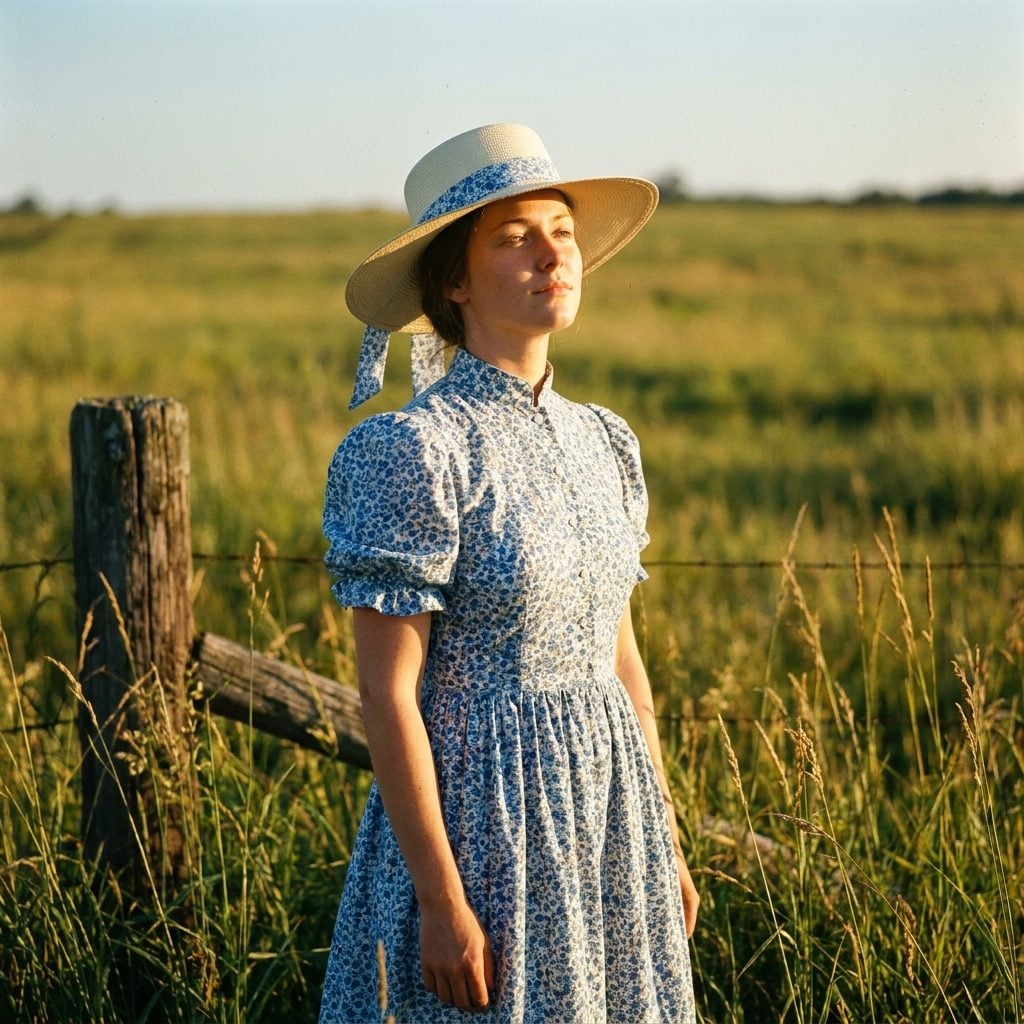
The hat is where the prairie vocabulary leaves the dress entirely and becomes a complete look. A wide flat brim gives the silhouette another strong horizontal line, while the blue floral ribbon echoes the print below.
By this point, the formula is unmistakable: historical references without strict historical accuracy, practical materials made decorative, domestic sewing details enlarged until they become fashion. That is why the 1970s prairie revival still registers so quickly. The dresses were full of details, but none of those details behaved like background.