❤️ Would you like to save this?
Bell-bottoms get all the nostalgia, but some of the smartest 1970s dressing happened several inches above the hem. Waists climbed higher, jackets were belted, scarves were left long, skirts were cut to swing instead of cling, and wide trousers were balanced against fitted tops with a precision that rarely looked precious about itself.
The decade certainly had girdles, control garments, and all the other machinery women had been dealing with for years. But many of its strongest silhouette tricks came from the garments themselves. A wrap dress could redirect the shape of an outfit with one diagonal seam. A long open vest could change the proportions without touching the waist. Pinstripes could build length straight into the fabric. A flared trouser could give a fitted knit an entirely different balance below the hip.
Plenty of 1970s ideas deserve to stay beside the avocado appliances and shag carpet. These are the ones that survived. Not because every woman needs to look taller, thinner, or more hourglass-shaped, but because proportion still matters, and these outfits understood how fabric, line, color, volume, and placement could change the way an outfit reads before anyone started writing commandments about it.
Across these 29 looks, the useful ideas keep changing. Sometimes the waist becomes the anchor. Sometimes it disappears completely. A stripe supplies direction. A pendant creates a center line. A coat turns three separate pieces into one long silhouette. The best lesson from the decade may be the simplest one: flattering outfits rarely came down to hiding the body. They came down to deciding where the shape, movement, and emphasis should go.
FYI, thanks to AI imagery software, we’re able to create very specific fashion and hairstyle examples to illustrate the points being made. In some cases, imagery is exaggerated to hammer home the point. Also, assume links that take you off the site are affiliate links such as links to Amazon. this means we may earn a commission if you buy something.
29. Wide-Leg Jumpsuits Did Something Clever That Trousers Alone Couldn’t
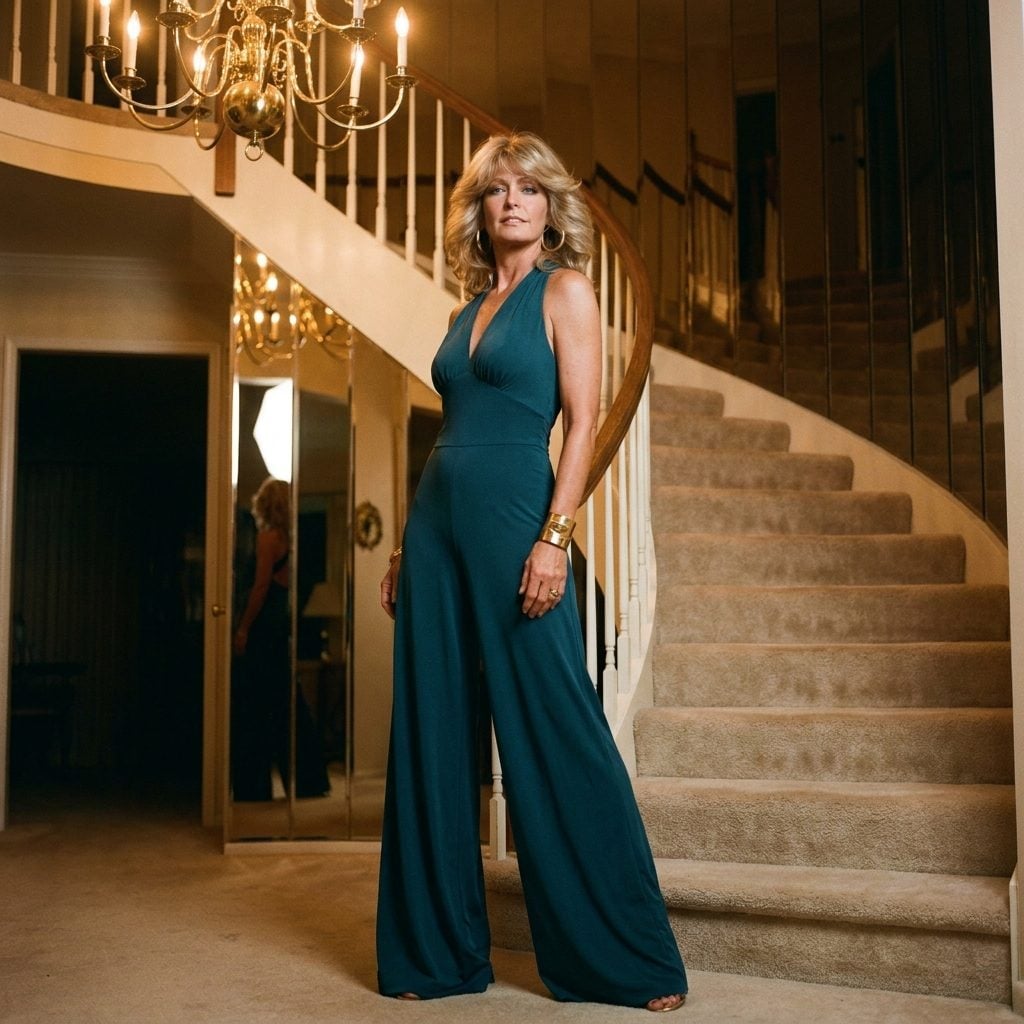
The teal jersey, cut wide through the leg and gathered softly at a deep V-neck, turns the entire outfit into one continuous shape. Unlike separates, there is no waistband, contrasting top, or change of fabric to divide the torso from the legs.
The halter-style shoulders keep the upper half spare while the wide legs supply movement below. Gold cuffs and hoop earrings add detail without breaking the sweep of teal. That single-color construction is the real idea worth borrowing: the jumpsuit creates length by refusing to interrupt itself.
28. Rust Pleats and a Navy Turtleneck Proved Contrast Doesn’t Have to Break the Silhouette
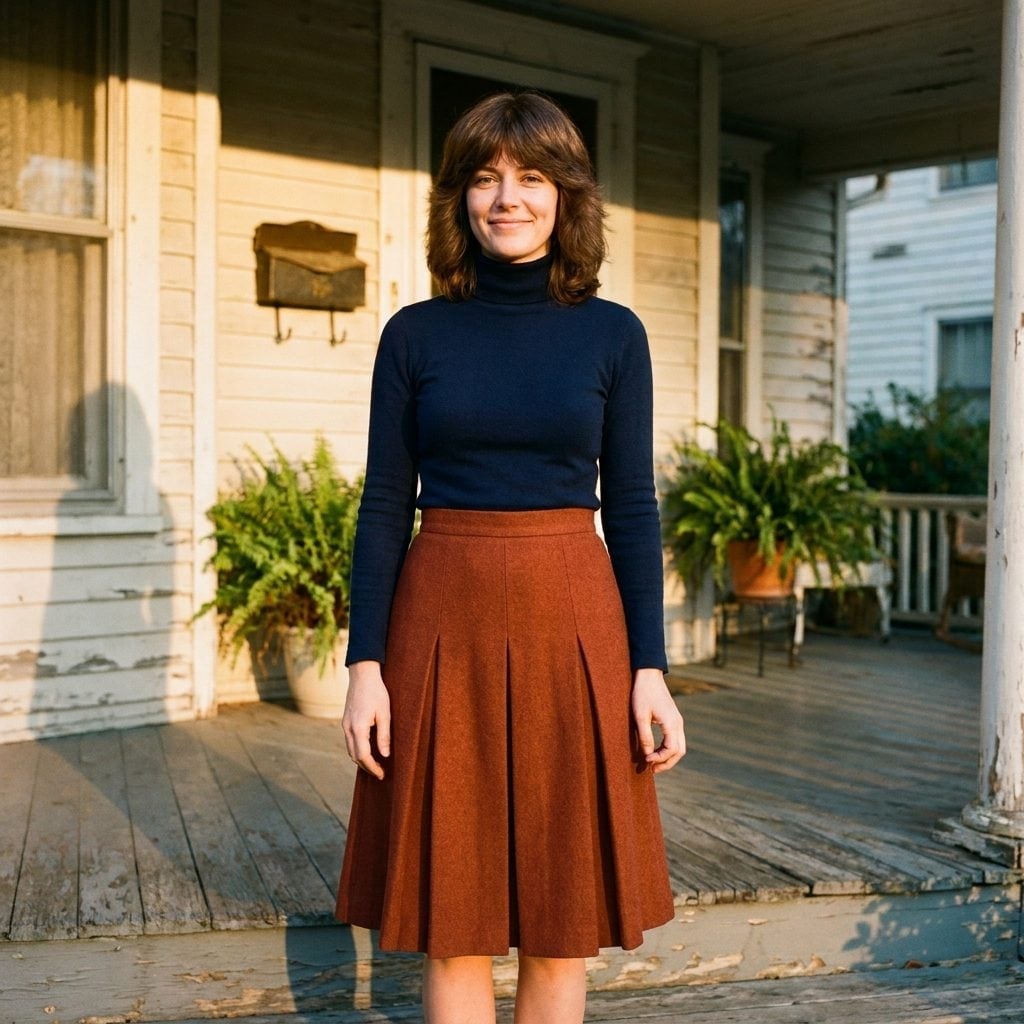
A rust wool midi and fitted navy turtleneck could easily become two unrelated blocks of color. The high waistband prevents that. It gives the skirt a clean starting point while the pleats open below the hip and create movement instead of bulk.
The dark top keeps the upper half visually compact; the warmer skirt has room to swing. What matters here is not monochrome but proportion: fitted above, fluid below, with the waist acting as the hinge between them.
Style Tip: Pleats behave very differently depending on where they open. A skirt that remains relatively flat through the upper hip before releasing into movement usually creates a cleaner line than one that adds volume immediately below the waistband.
27. Floral Maxi Dresses Moved the Waist Up and Let Everything Below It Float
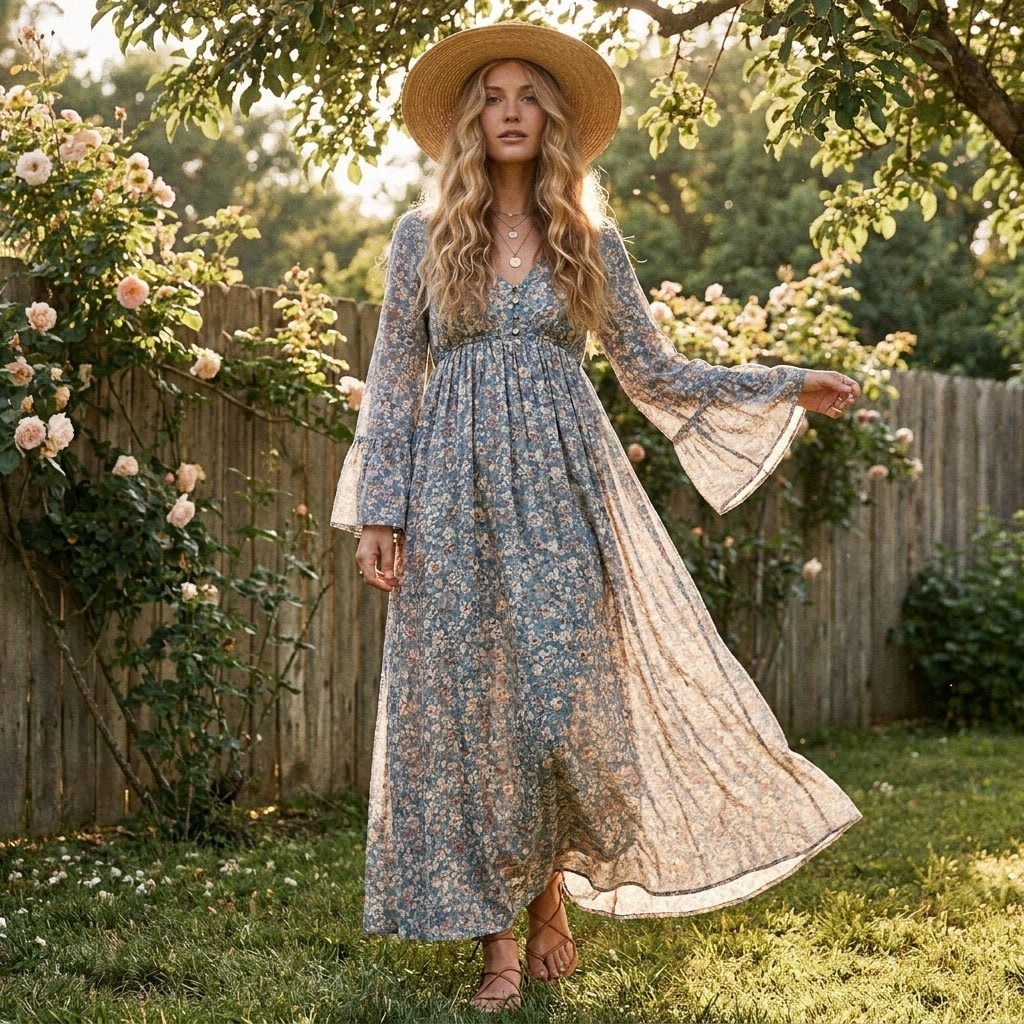
Dusty blue calico covers the bodice while a cream-toned underlayer catches light through the skirt. The empire seam is the important move: it shifts the point of definition upward and lets the rest of the dress fall away without needing to follow every contour underneath.
Bell sleeves and a tiered cuff keep enough volume above the waist to balance the long skirt, while flat sandals and a wide-brimmed hat preserve the relaxed mood. Nothing here depends on squeezing the middle into submission.
Why It Works: An empire seam concentrates definition high on the torso while allowing the skirt to skim below. The small floral repeat also behaves more like texture from a distance than a series of large competing motifs.
26. Longline Knit Vests Created Shape by Leaving the Middle Open
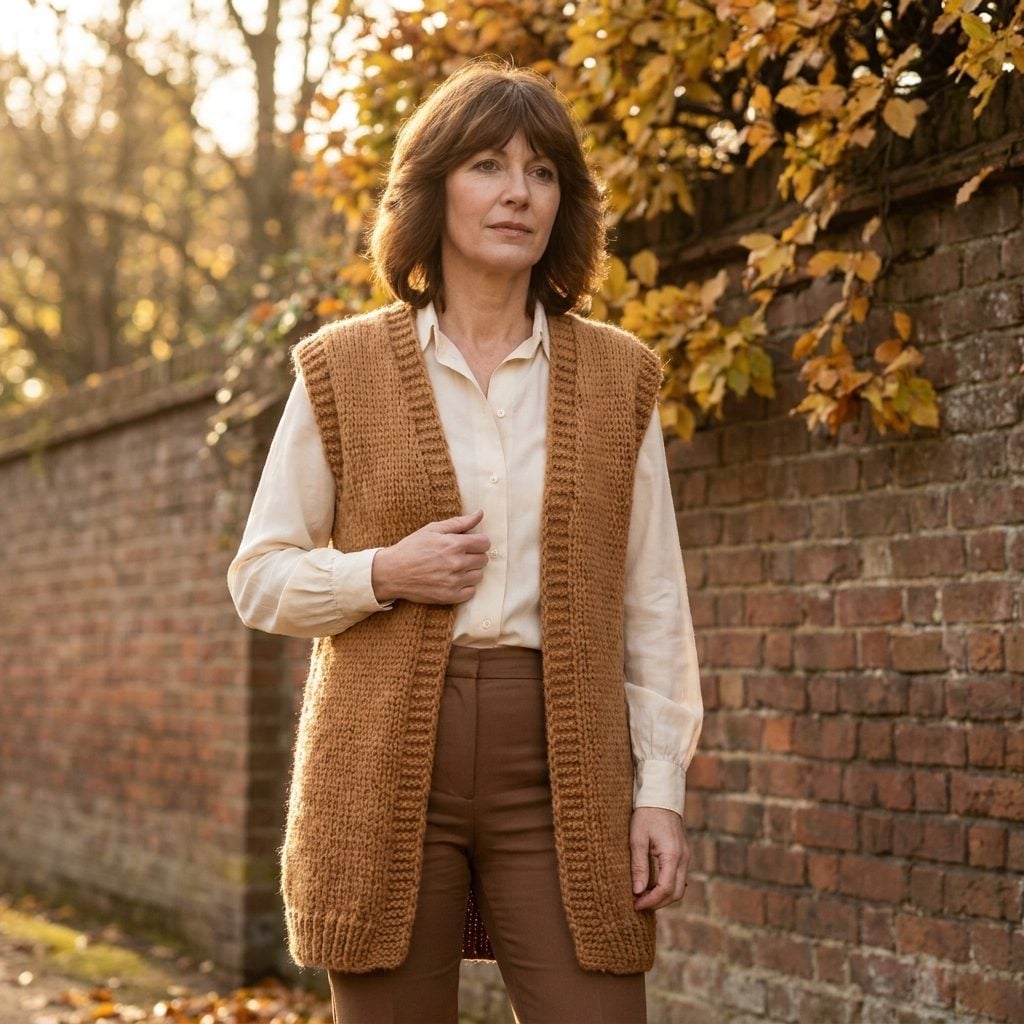
Worn open over a cream button-front shirt and tobacco trousers, the camel knit vest creates two strong edges down the front without cinching anything between them. That open center becomes part of the silhouette.
The length matters just as much. Because the vest extends beyond the hip, it frames rather than cuts across the middle of the body. The effect comes from negative space, not another belt.
25. Geometric Wrap Dresses Let the Print Follow the Construction
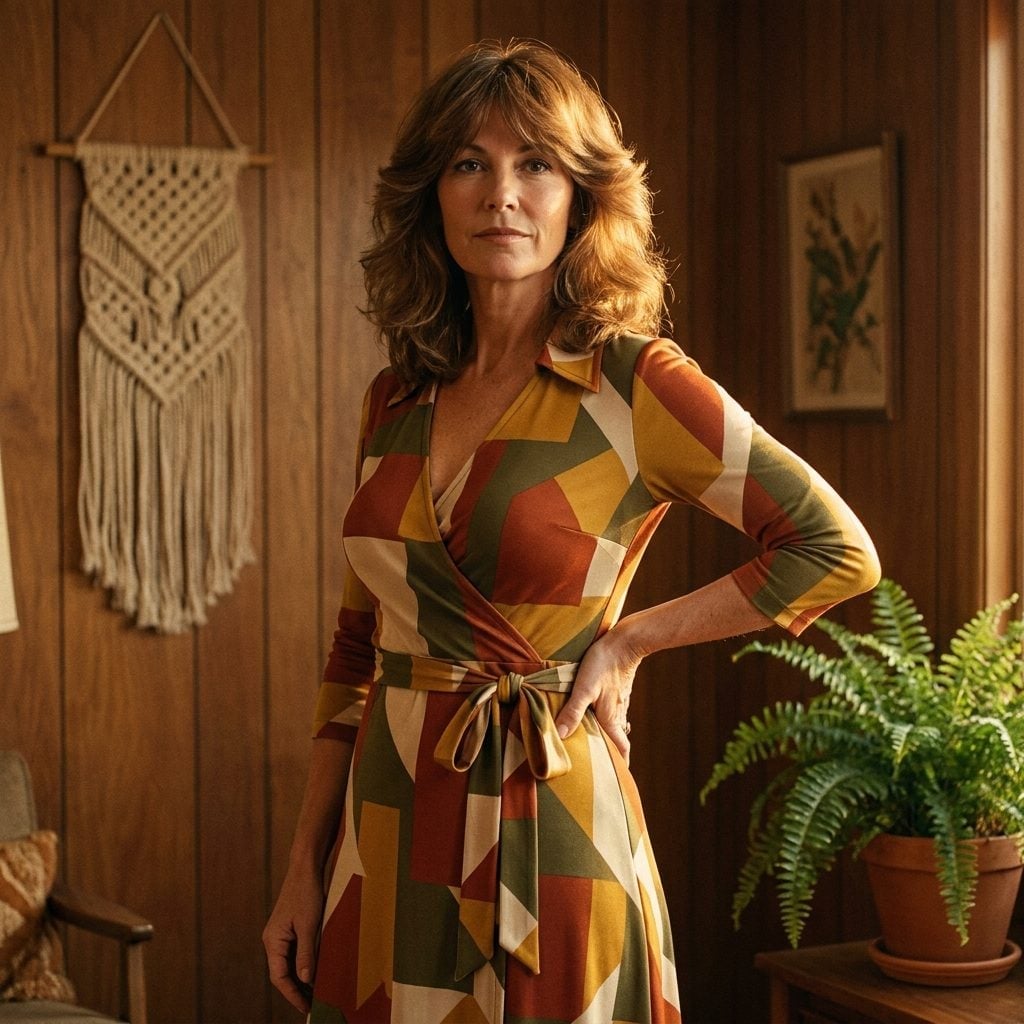
Burnt orange, olive, mustard, and cream could have turned this midi dress into a riot of competing geometry. The wrap construction gives the pattern a route to follow instead. The crossover neckline moves diagonally toward the waist, and the tie establishes a clear pivot point for everything happening around it.
That is why the bold print remains surprisingly orderly. The dress has strong pattern, but the construction tells that pattern where to go.
24. Camel Coats and Chocolate Flares Made Length the Main Event
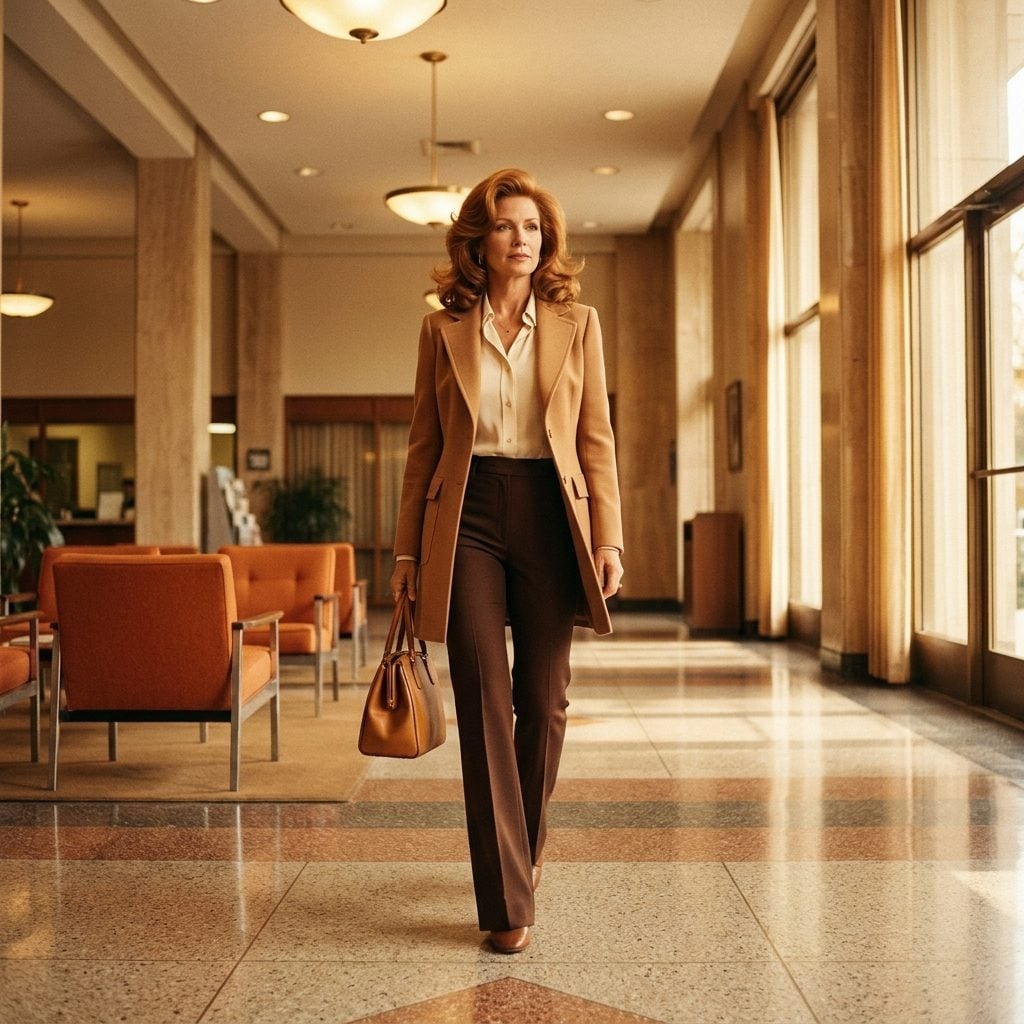
A long camel coat worn open over a cream blouse and dark chocolate flares creates a strong outer frame from shoulder almost to hem. Because the coat passes the hip instead of ending on it, the silhouette avoids a hard horizontal stop through the middle.
The flares add enough width at the bottom to balance the coat above, while the cognac handbag stays inside the same warm palette. No belt is required; length and sweep are doing something entirely different.
23. Charcoal Head to Toe Made One Color Look Anything but Flat
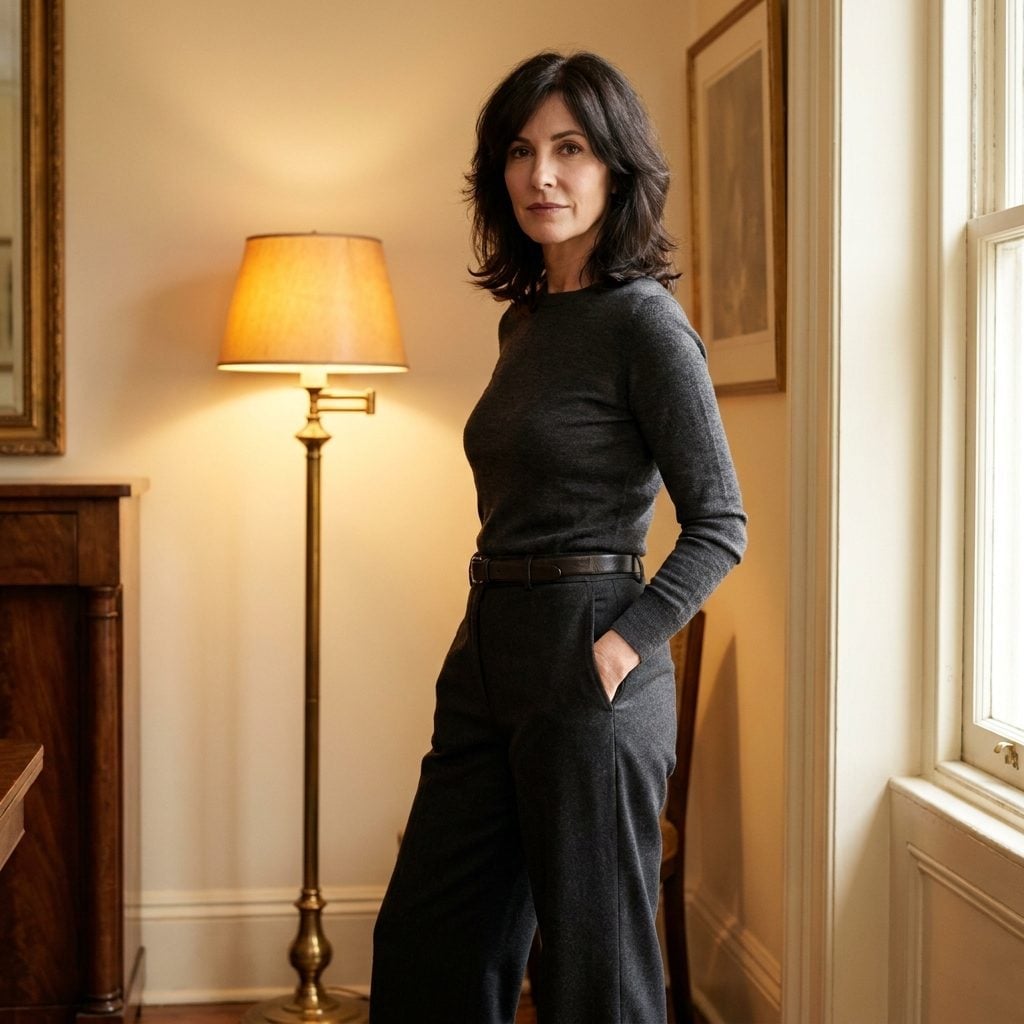
Dark charcoal from knit top through wide-leg trousers removes most of the color breaks that would normally divide an outfit into sections. A narrow leather belt still marks the waist, but because it stays close in value to everything around it, the interruption is controlled.
The result is genuine monochromatic dressing rather than simply wearing several neutrals together. Texture and trouser volume keep the single-color palette from becoming visually dead.
22. Block-Print Maxis Organized a Lot of Dress With One Small Drawstring
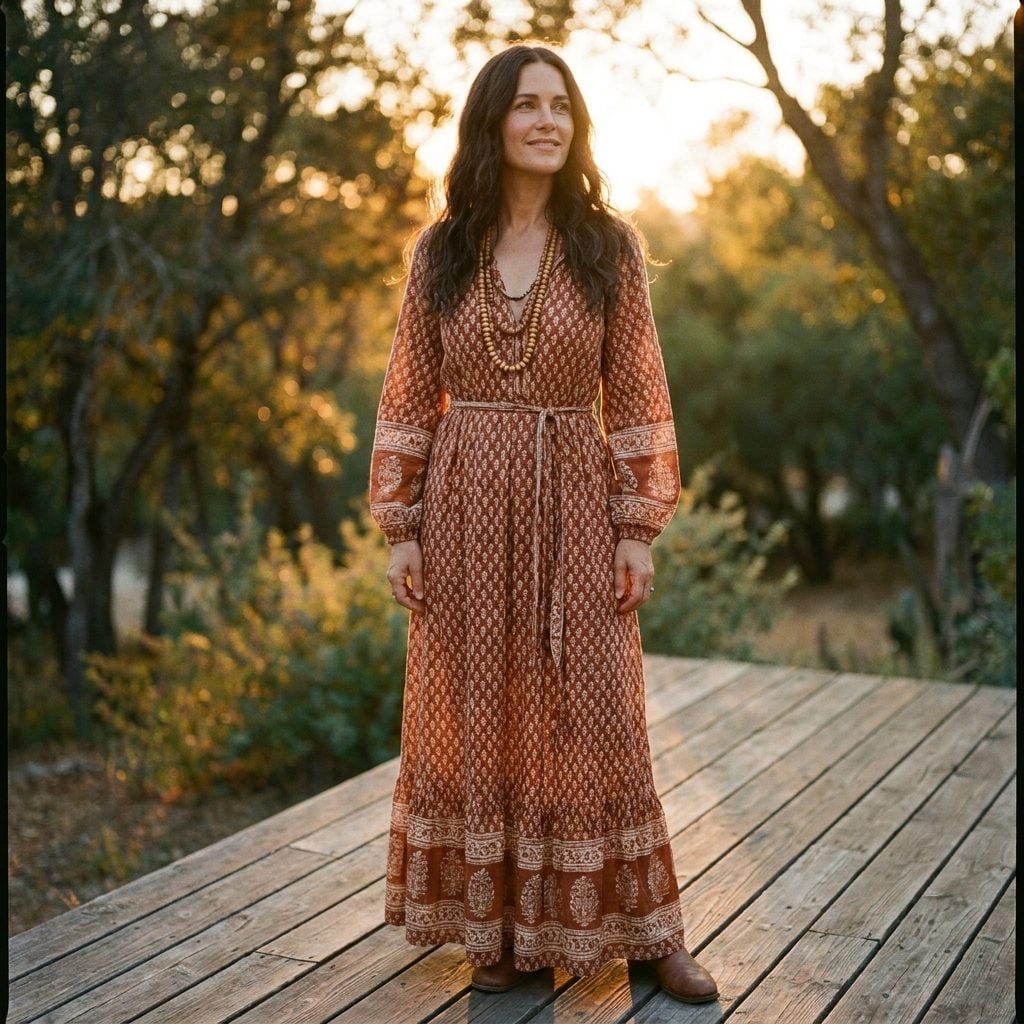
Rust block-print fabric in a small floral repeat runs nearly floor length, so there is already plenty happening before accessories enter the picture. A drawstring at the natural waist gives all that fabric one point of organization without turning the middle into a rigidly cinched band.
The V-neckline opens the upper body, while border printing at the cuffs and hem gives the pattern defined edges. Stacked amber-toned beads occupy the neckline without fighting the dress. This is maximalism with boundaries.
21. Flared Denim Didn’t Need Reinventing — Just the Right Waist and Hem
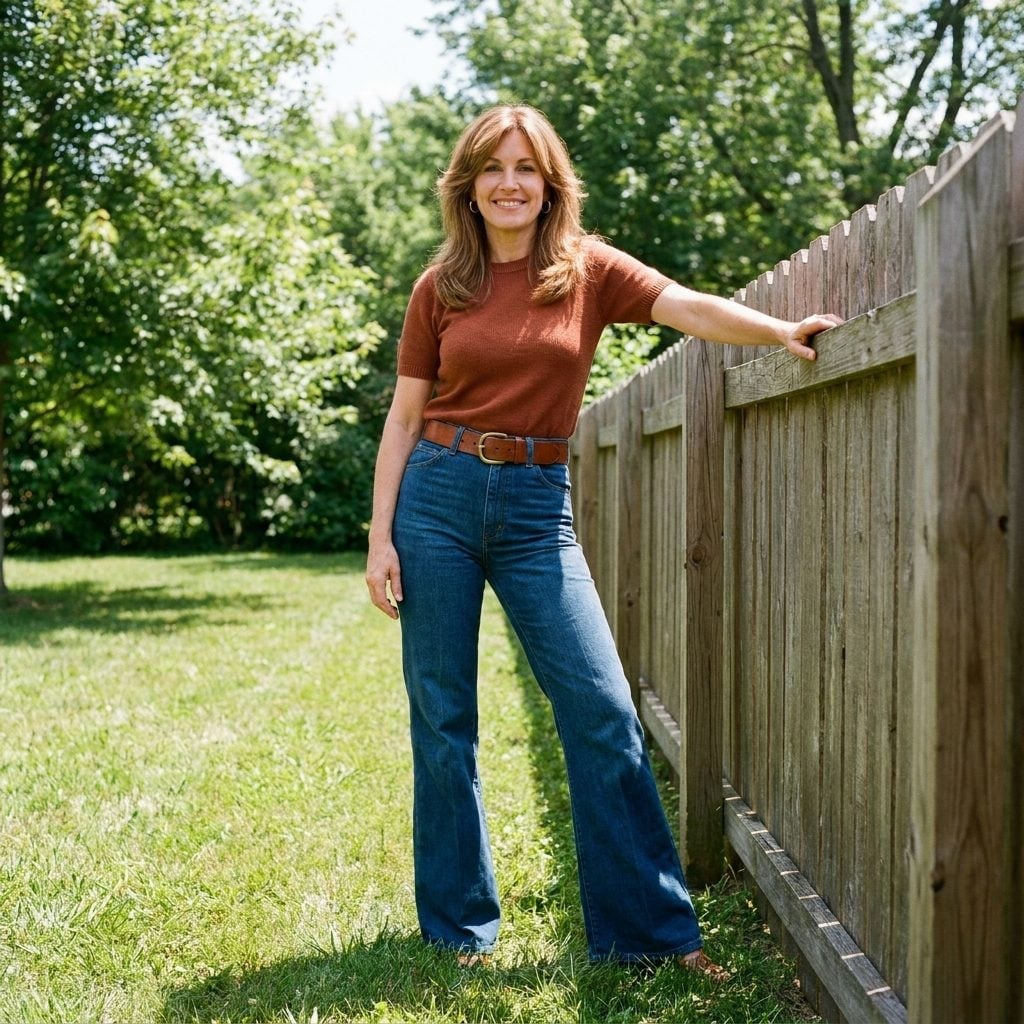
High-rise jeans are hardly exclusive to the 1970s, but that decade knew what to do with them. Here a terracotta ribbed knit tucks into dark indigo denim, allowing the rise to become part of the outfit rather than something hidden beneath a long top.
The cognac belt adds a crisp boundary at the waist, while the flare expands gradually below the knee. That contrast between a defined middle and a broader hem gives the denim its characteristic balance.
Wardrobe Math: A belt does not need dramatic contrast to define a waist. Keeping it within the warm palette of the top lets the rise remain visible without turning the belt itself into the outfit’s loudest horizontal line.
20. Burgundy Satin Put the Shine Exactly Where the Look Could Use It
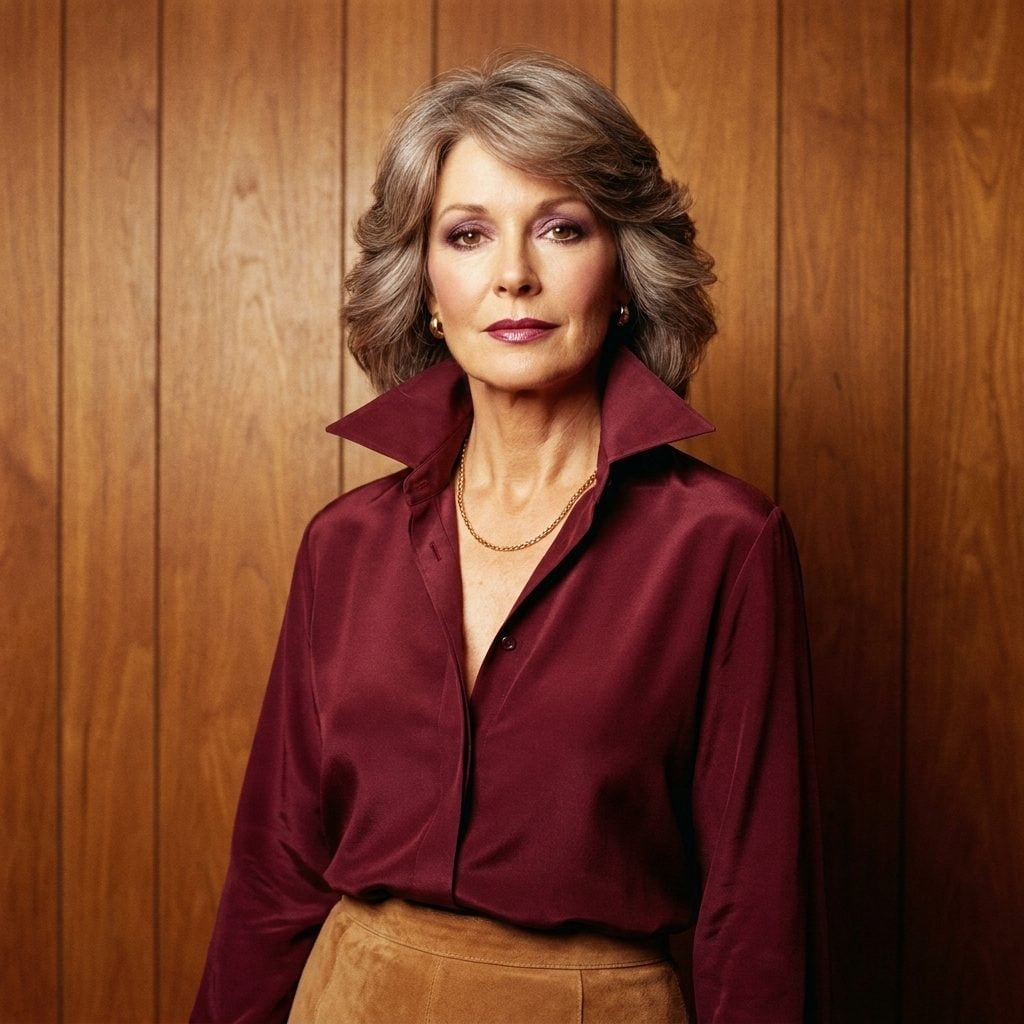
The burgundy satin blouse opens broadly at the collar, giving the richer color and gentle sheen room around the face and neckline. A gold chain lands inside that opening rather than competing with the fabric across the chest.
Below, camel suede changes both color and texture. This is not monochrome; the appeal comes from related warm tones handled in very different materials. Satin catches the light, suede absorbs it, and the contrast gives the outfit depth without requiring a loud print.
19. The Safari Jacket Made Utility Dressing Surprisingly Precise
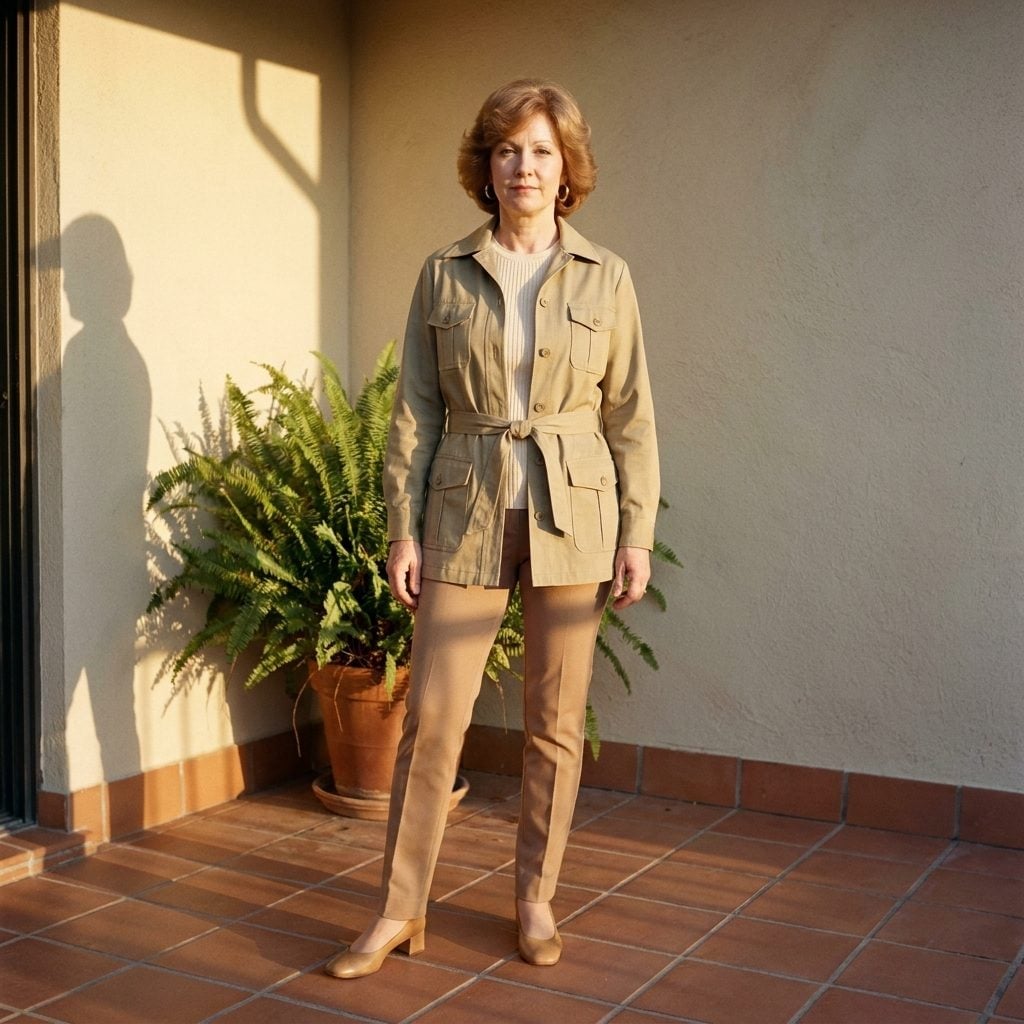
The safari jacket comes with plenty of potentially bulky ingredients: patch pockets, structured fabric, a collar, and a tie belt. The belt is what keeps those details from turning into one rectangular block.
Warm camel straight-leg trousers continue the earthy palette without matching the jacket exactly. That tonal shift is subtle enough to connect the pieces while still letting the jacket’s utility construction remain visible.
18. A Cream Ribbed Knit and Brown Flares Needed No Belt to Find the Waist
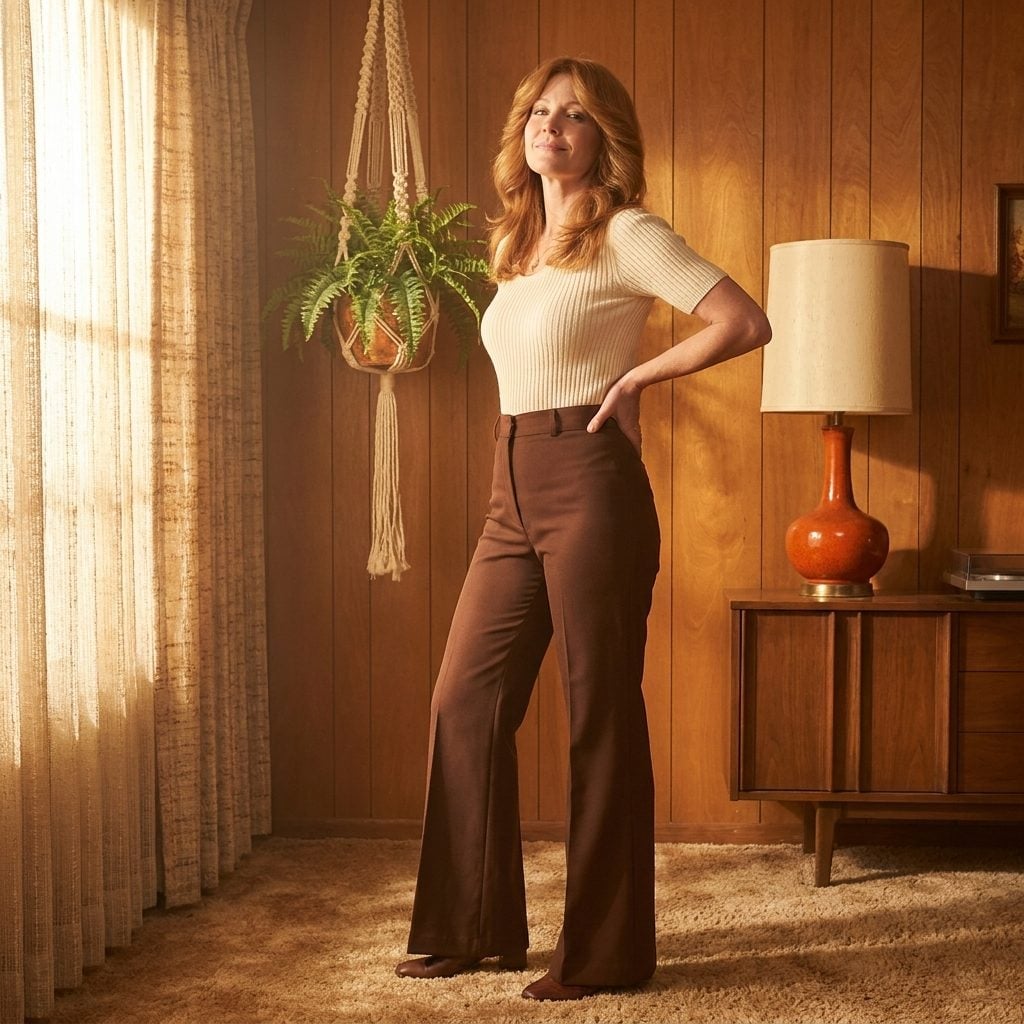
A fitted cream ribbed knit tucked into chocolate flares lets the high rise establish the waist on its own. Nothing extra is needed at the meeting point between top and trousers.
The light-dark contrast makes that division obvious, while the widening hem gives the lower half enough visual weight to balance the fitted knit. The lesson is less about slimming than about letting the trouser cut establish the proportion.
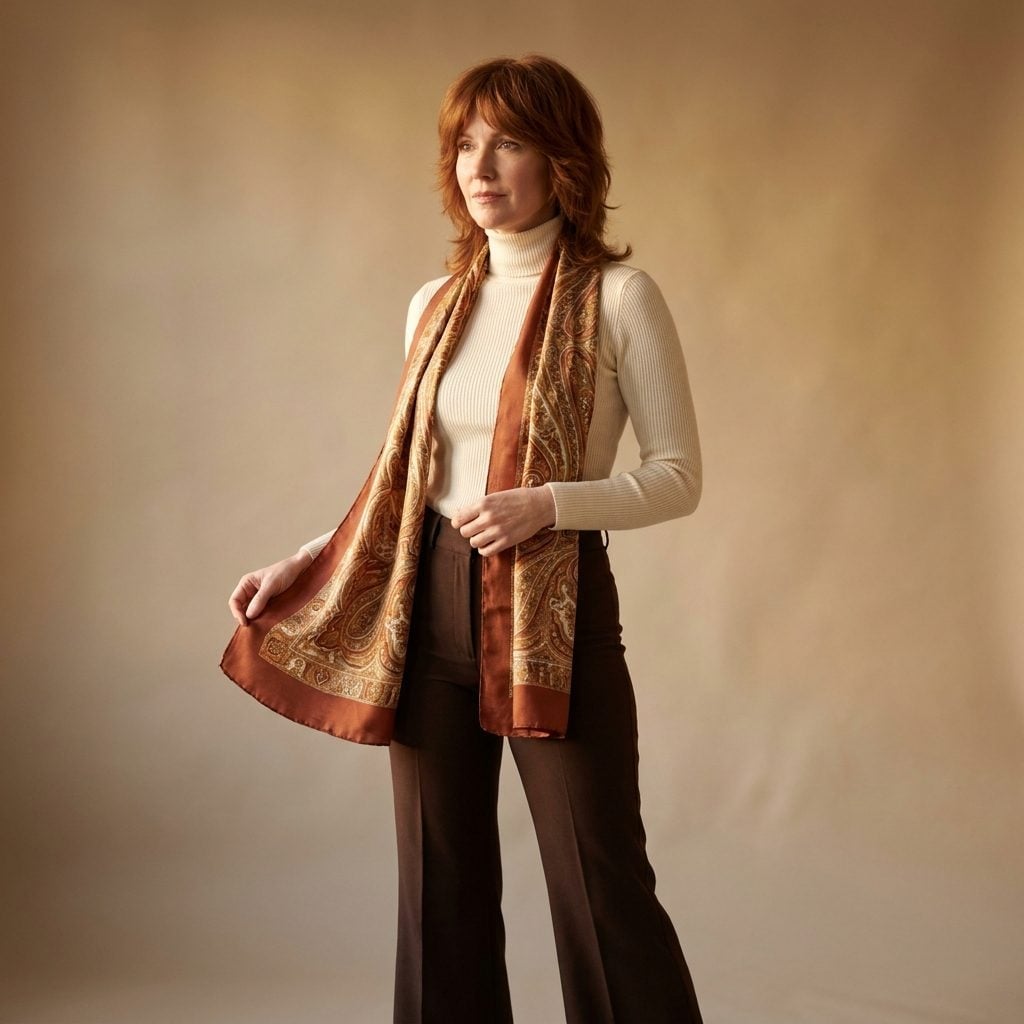
17. A Long Paisley Scarf Worked Almost Like a Soft Vest
❤️ Would you like to save this?
Cream ribbed turtleneck, wide-leg chocolate trousers, and then the scarf: a rust-and-gold paisley panel left completely open rather than looped around the neck. Hanging from the shoulders, the two long ends create structure without adding another garment.
The trick disappears the moment the scarf is knotted high or wrapped several times. Left loose, it behaves more like a narrow sleeveless layer, with the patterned borders making those edges even more visible.
16. Burgundy Wrap Dresses Made the Diagonal Do More Than the Belt
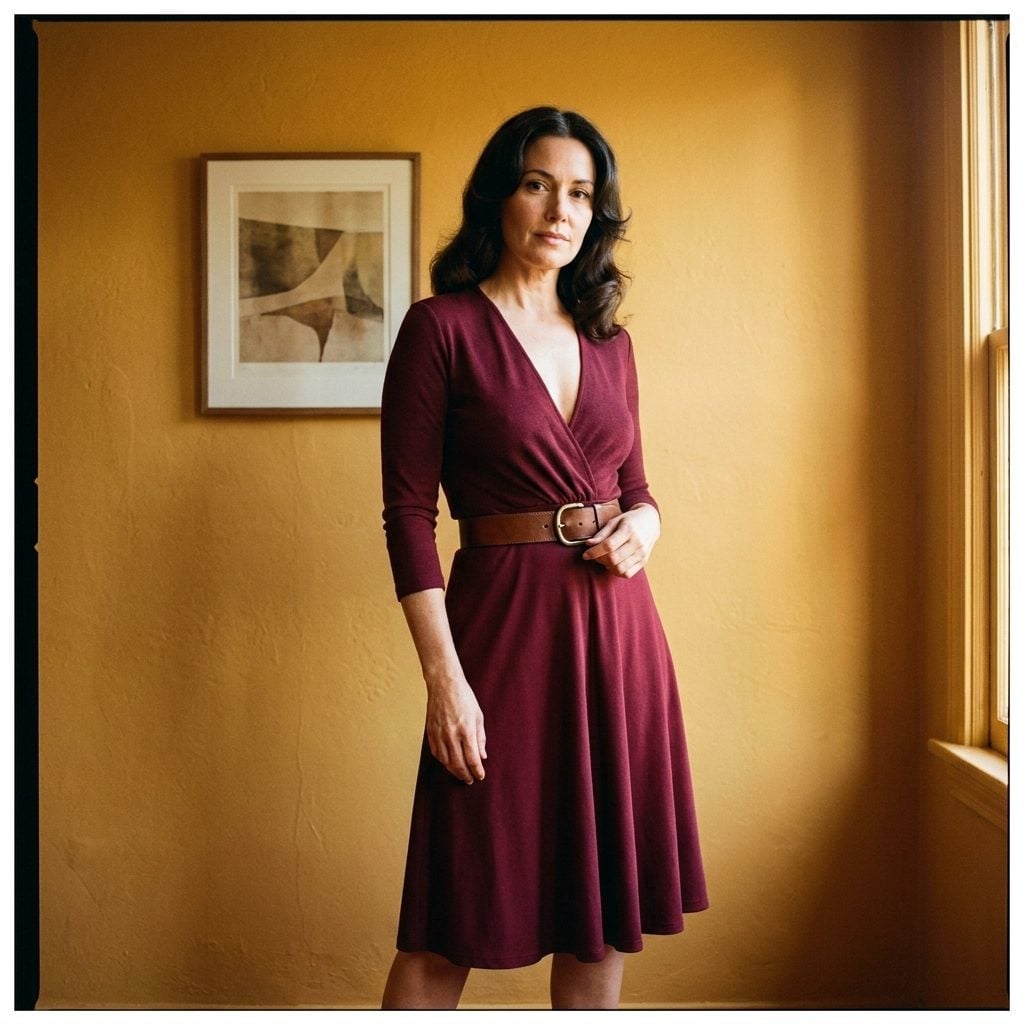
Burgundy jersey crosses the torso before meeting the belt, which means the waist is only part of the story. The surplice neckline sends a diagonal through the upper body first, then the skirt opens gently below the tie.
That sequence is why the wrap dress became such an enduring design. It combines neckline, waist placement, and skirt shape in one piece rather than relying on accessories to correct the proportions afterward.
15. Camel Head to Toe Worked Because the Scarf Knew Where to Interrupt It
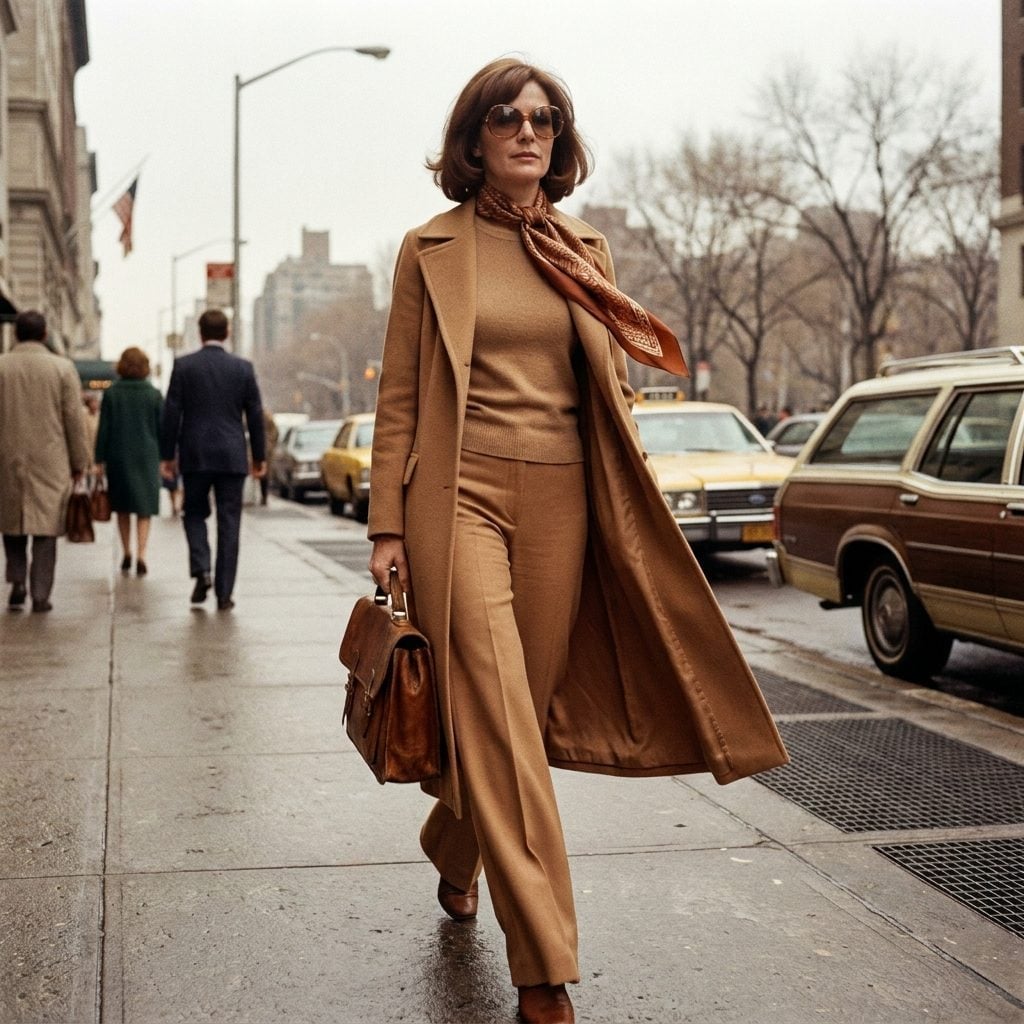
A camel turtleneck, wide-leg trousers, and long open coat create a near-continuous field of one color. Rather than break that column at the waist, the outfit puts its contrast much higher.
The rust-and-brown scarf is knotted loosely at the throat, giving the eye one concentrated focal point near the face. Brown boots and a cognac satchel deepen the palette at the edges. The single-color idea remains intact without becoming monotonous.
14. Khaki Shirtdresses Used Structure Without Becoming Stiff
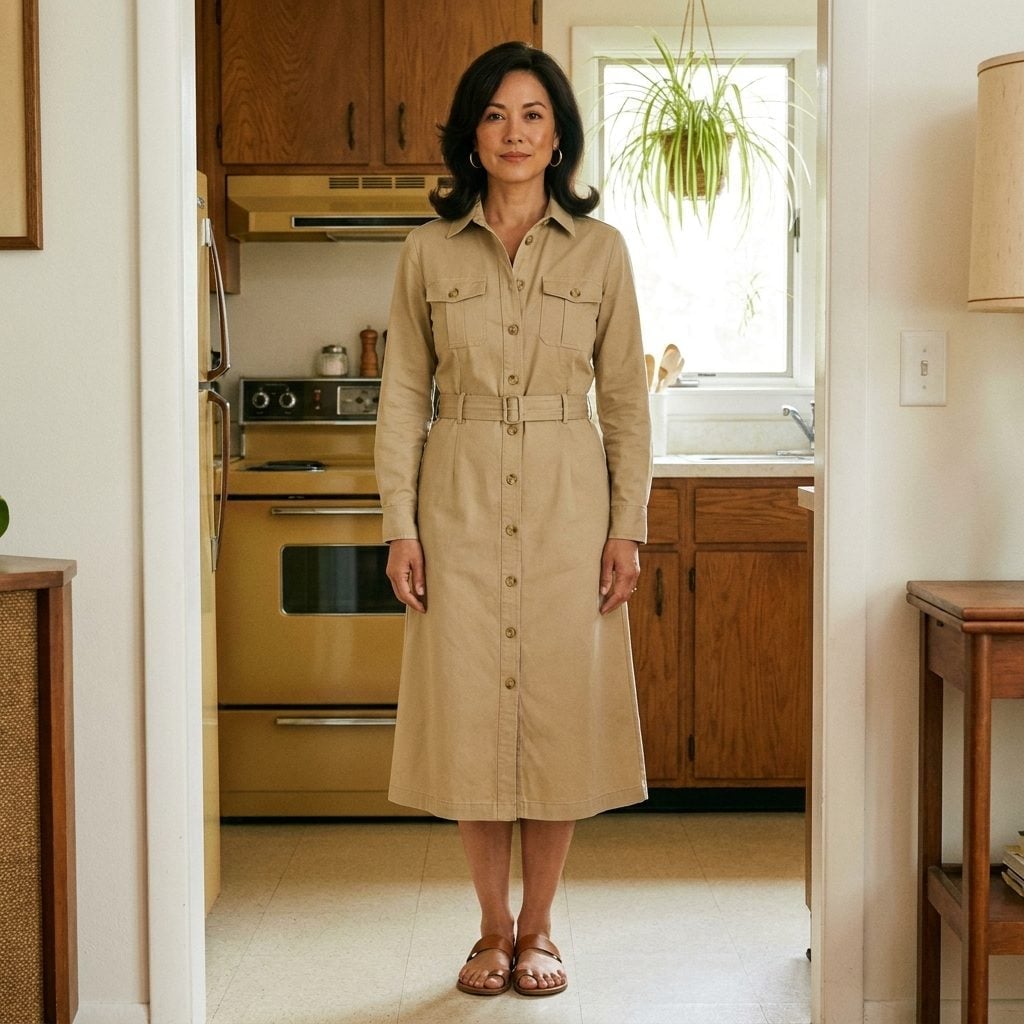
Structured cotton gives this warm khaki shirtdress a cleaner outline than jersey or soft rayon would provide. Buttons supply a strong center detail, while the self-fabric belt prevents the utility shape from turning boxy.
Because the belt matches the dress, the waist remains defined without inserting a contrasting stripe across the middle. Flat leather sandals let the midi silhouette remain relaxed rather than pushing it toward office wear.
13. The Tie-Neck Blouse Turned One Narrow Strip of Fabric Into Architecture
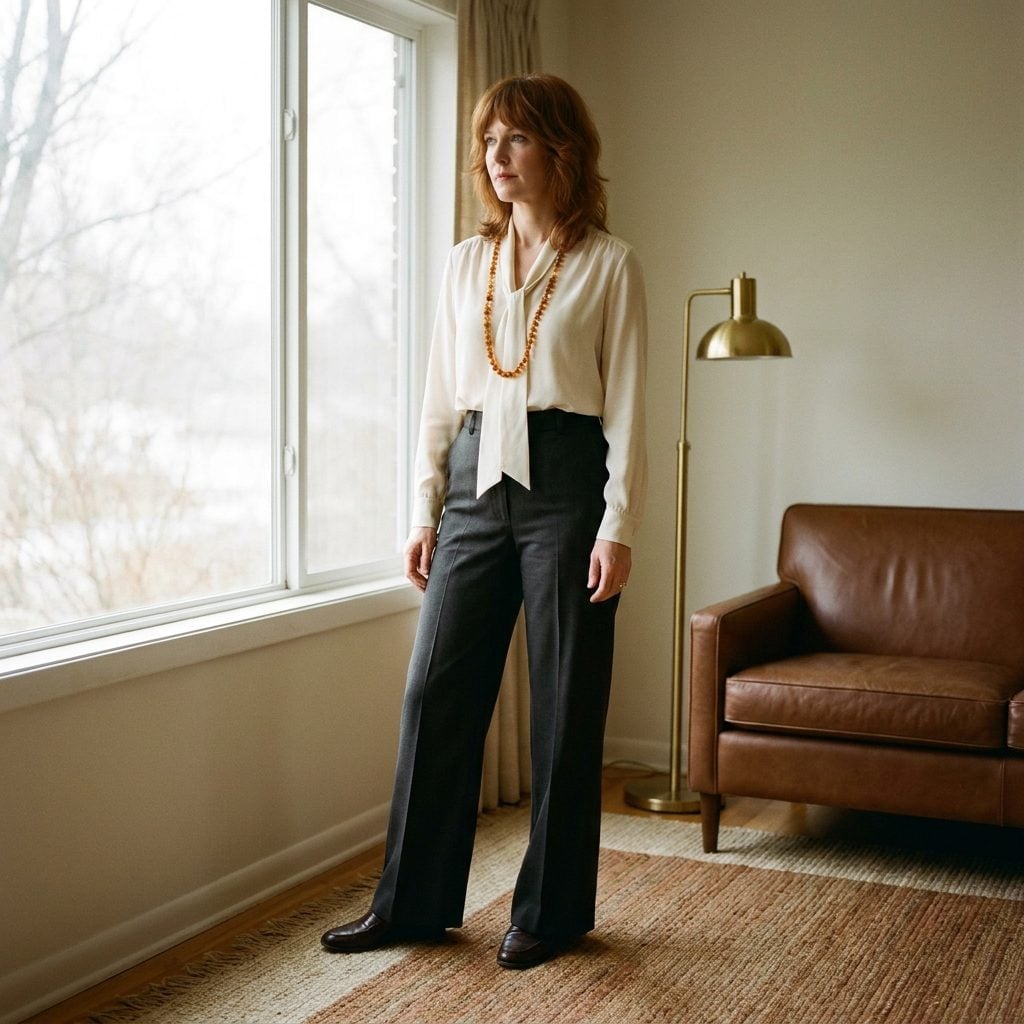
Charcoal wide-leg trousers with a pressed crease already bring plenty of structure below the waist. The fluid ivory blouse answers with a long self-tie hanging from the neckline, placing one narrow vertical detail directly through the center of the upper body.
An amber bead necklace echoes that length without adding another broad shape, while black loafers give the trousers a clean finish at the floor. The clever part is how little fabric the blouse needs to redirect the entire composition.
12. Rust Maxi Dresses Let Seaming Replace the Belt Entirely
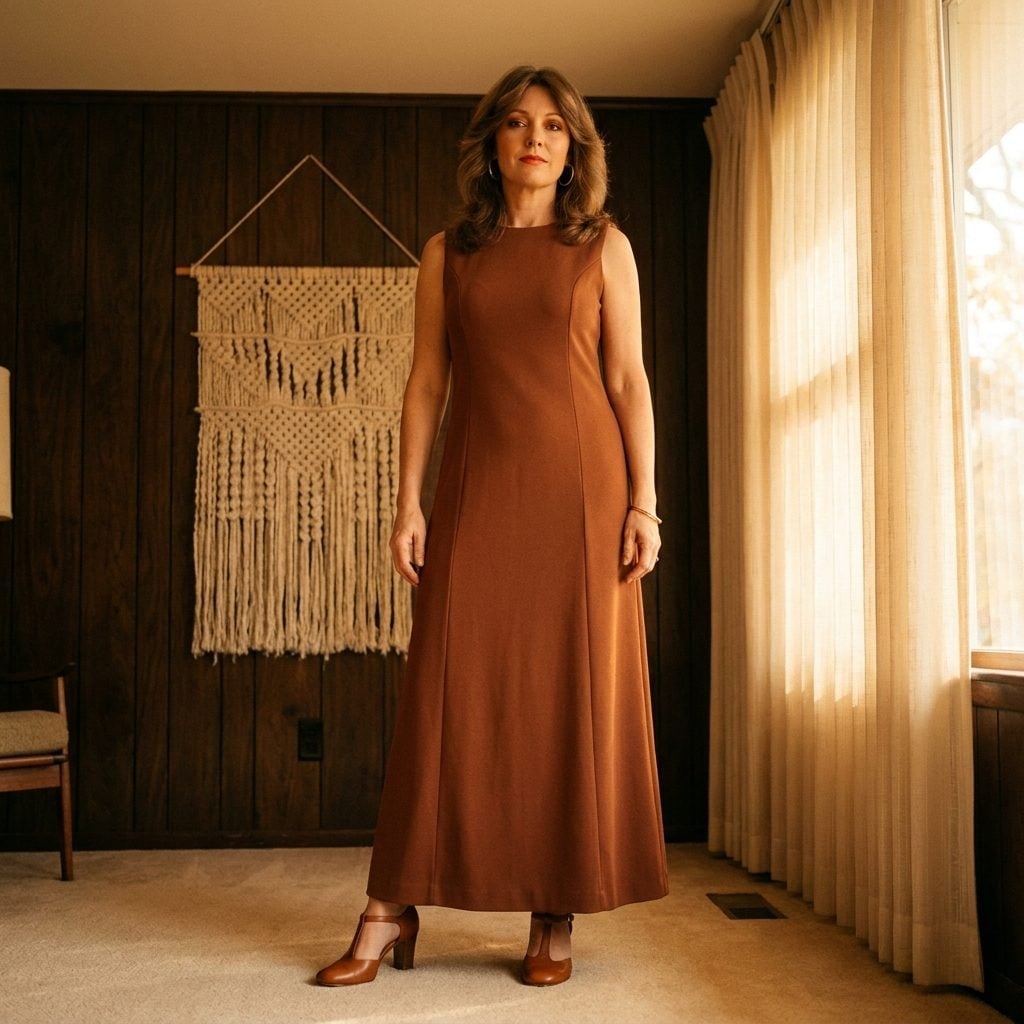
Burnt sienna runs from high boatneck to ankle without a waistband interrupting it. Instead of shaping the dress through a belt, vertical panel seams give the A-line form enough structure to keep it from reading as one large sheet of fabric.
Cognac T-strap heels stay within the same warm range, but the real interest remains in the cut. This is a useful counterargument to the idea that every flattering 1970s silhouette depended on cinching the middle.
11. Camel A-Line Skirts Balanced a Fitted Turtleneck Without Any Extra Hardware
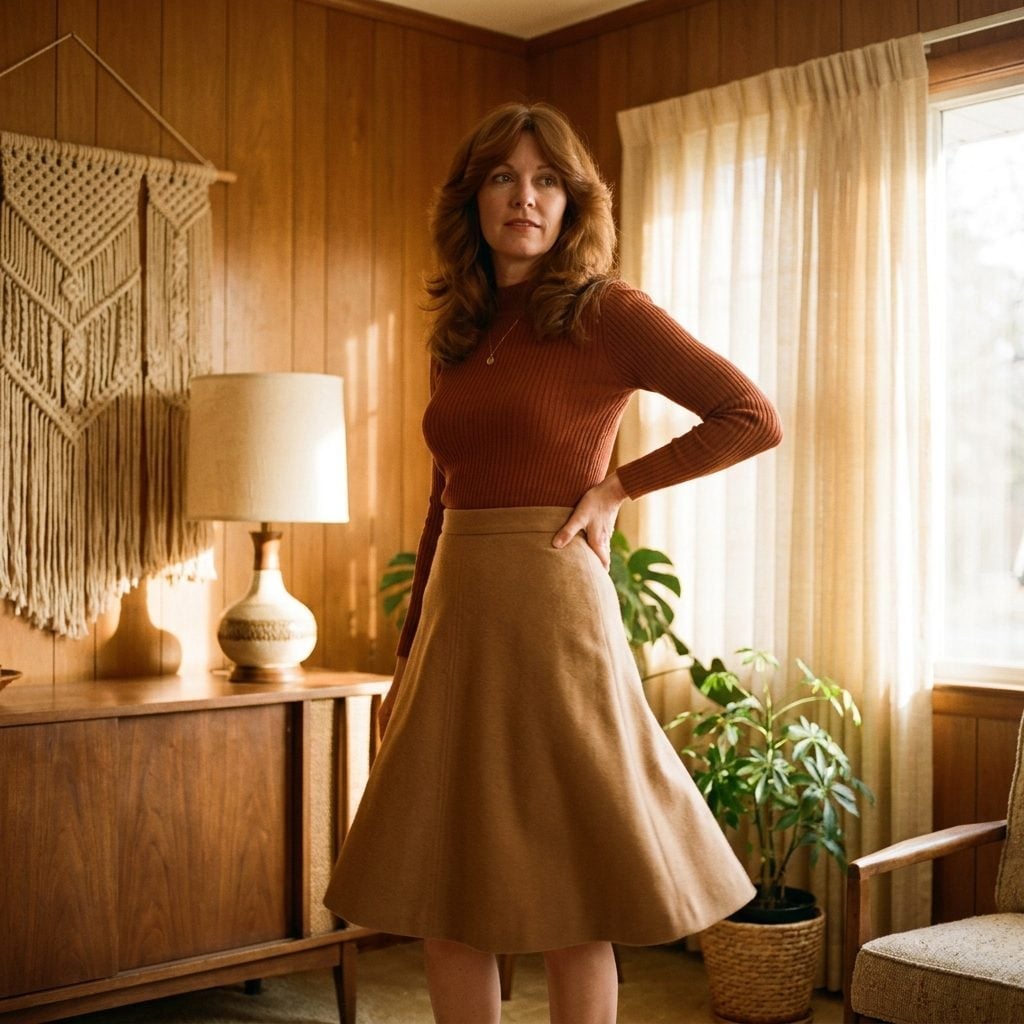
A camel wool midi sits high at the natural waist and releases gradually into an A-line rather than dropping straight from the hip. The rust ribbed turtleneck stays fitted and tucked, giving the skirt a compact upper half to work against.
The two warm tones are related without matching, which helps the silhouette remain connected. No belt is necessary because the contrast between fitted knit and expanding skirt already makes the waist legible.
10. Navy Shirtdresses Turned the Button Placket Into Part of the Proportion
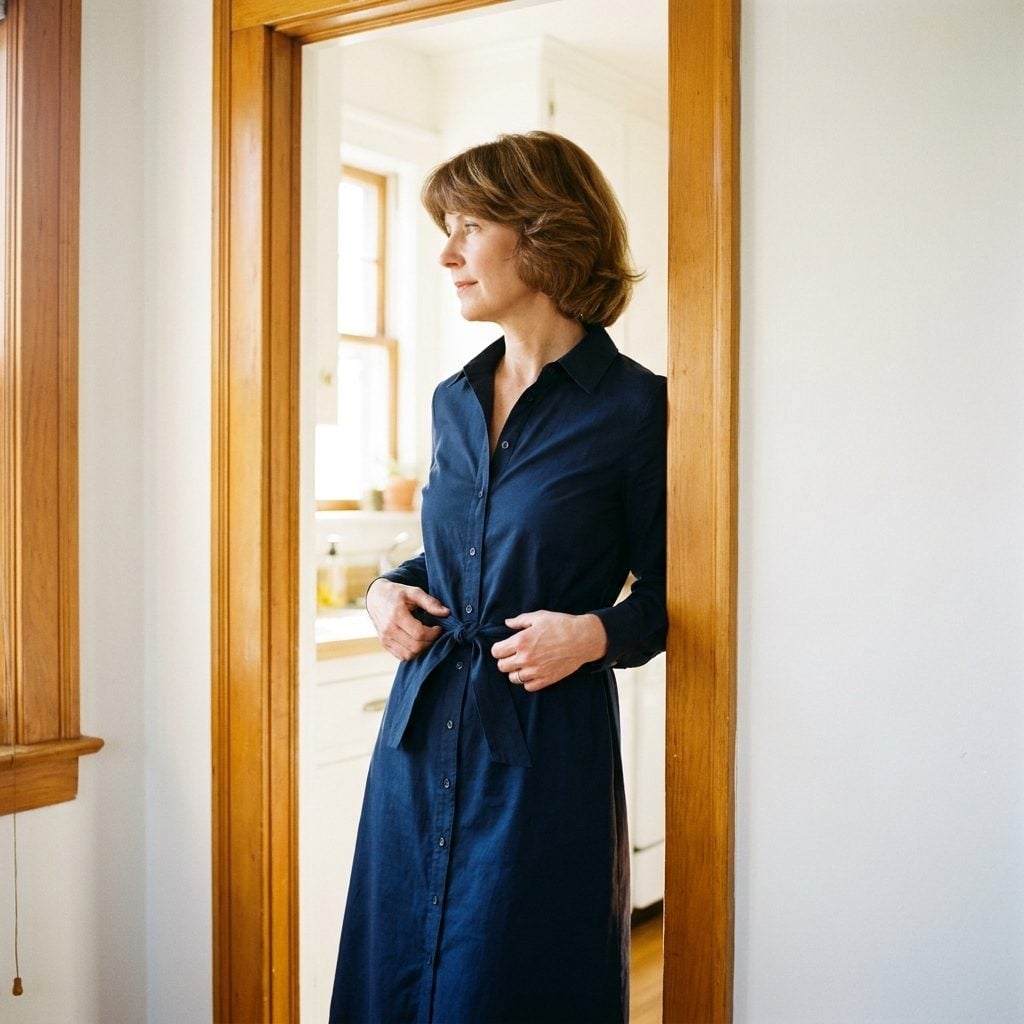
A midi-length navy shirtdress gets structure from several directions at once: the collar frames the neckline, the buttons run uninterrupted down the center, and the self-tie belt marks the waist without changing color.
The matte fabric holds the shape without looking rigid, while the skirt drops cleanly to mid-calf. This is the quieter side of 1970s dressing — less theatrical than a print maxi or bell-bottom, but just as considered.
9. Rust Ribbing and Chocolate Flares Made Tonal Dressing Feel Longer, Not Flatter
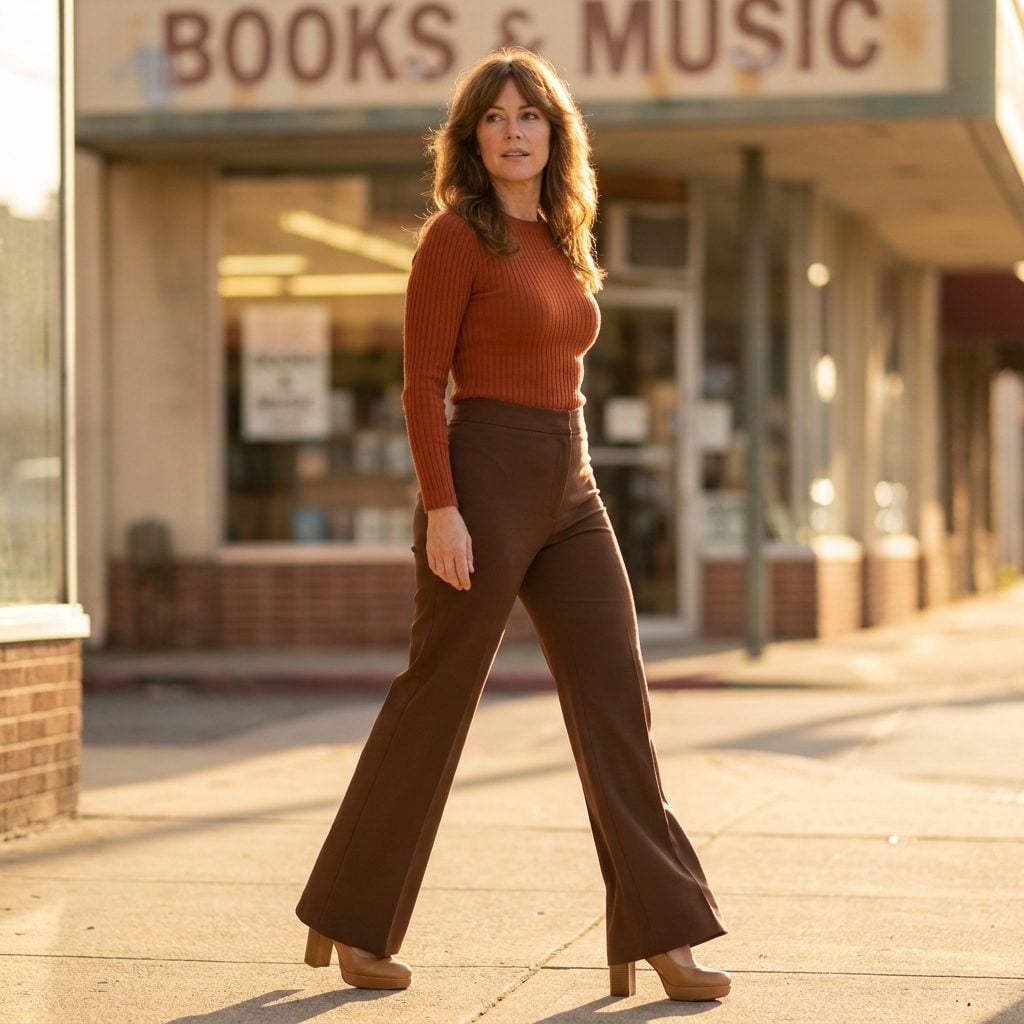
High-waisted chocolate flares with a full bell sweep meet a fitted rust turtleneck at a clearly defined waist. Because the two colors sit close together in warmth and depth, the outfit reads as tonal rather than sharply color-blocked.
Platform heels extend the sweep of the trousers, while the ribbed knit brings texture to the upper half without adding bulk. The effect depends less on matching than on keeping the transition between pieces controlled.
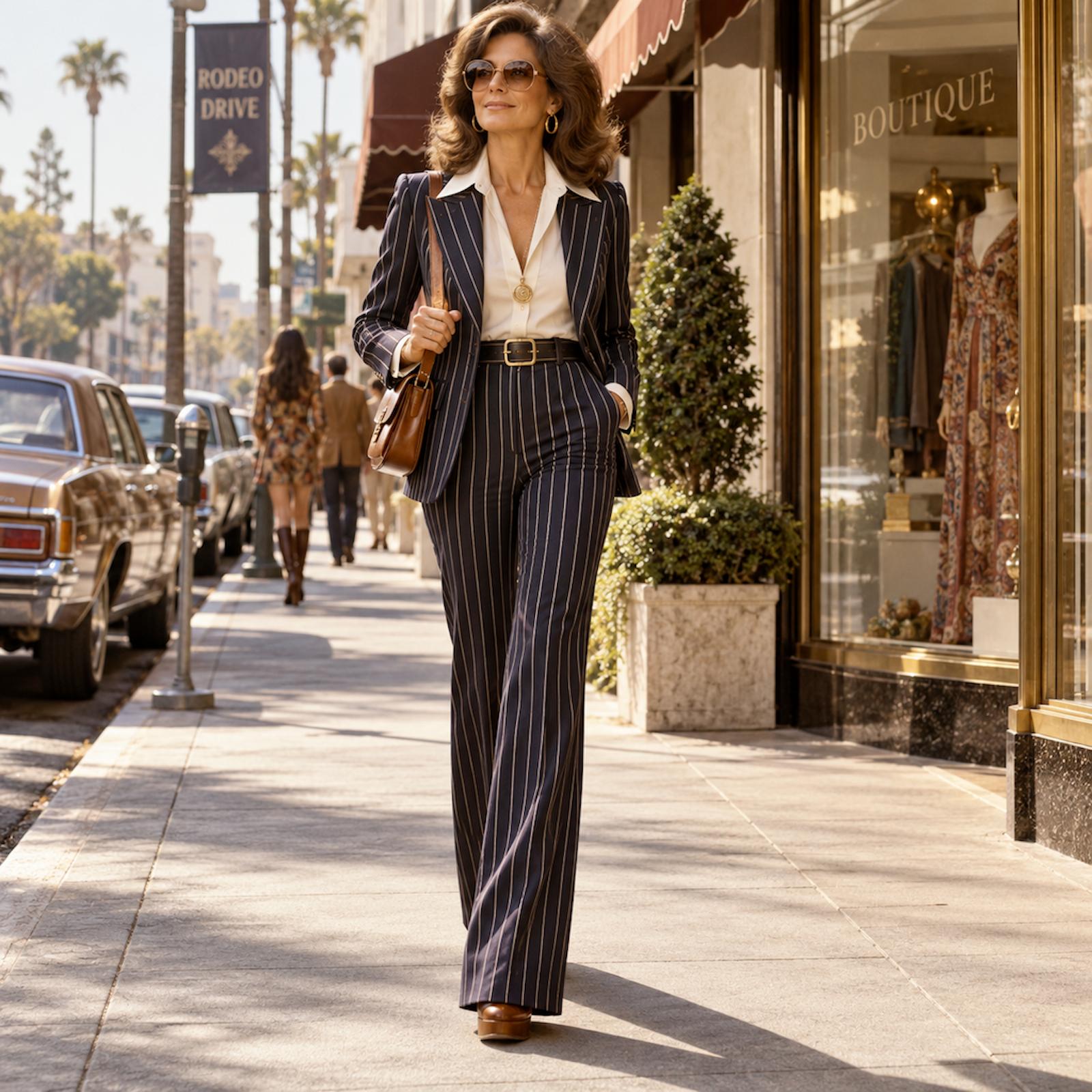
8. Pinstripes Made the Vertical Line Part of the Fabric
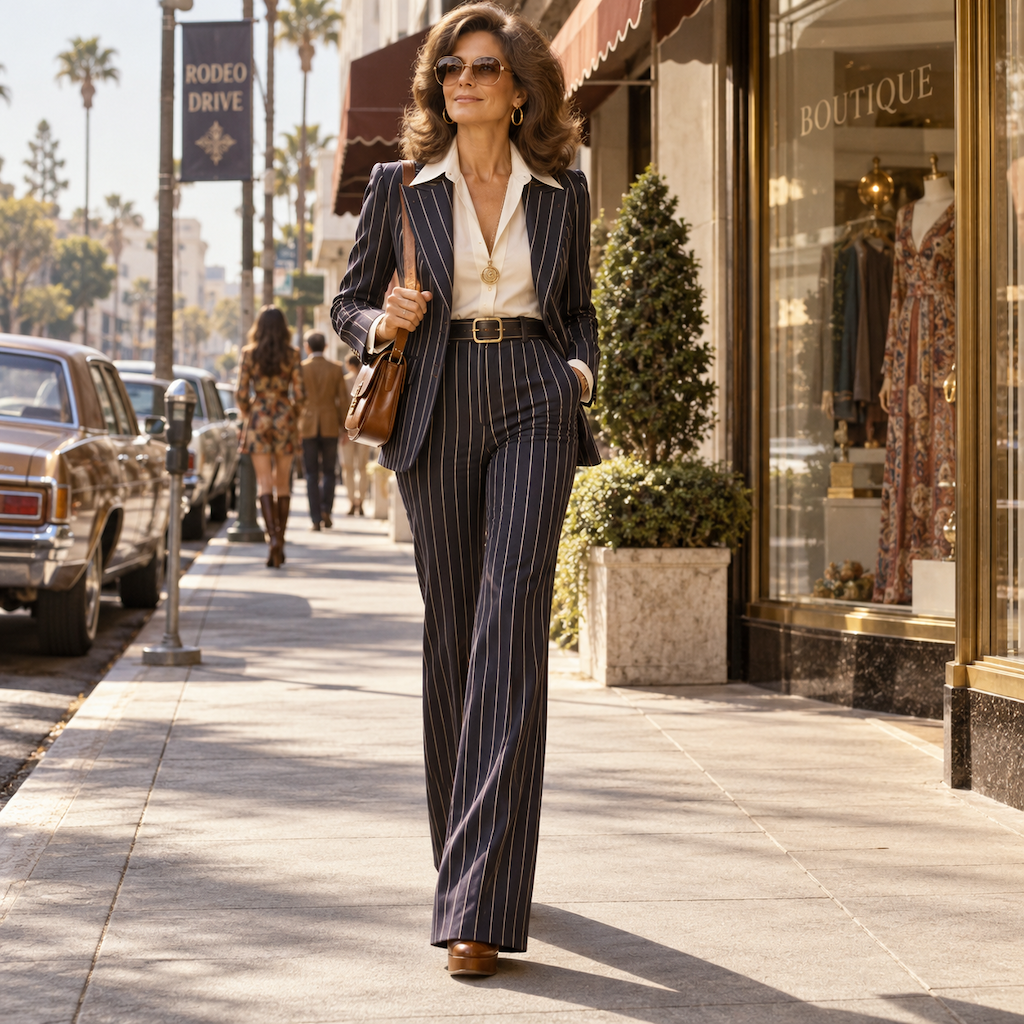
A tailored navy pantsuit does not need a pendant, scarf, or open cardigan to create direction because the fabric has already done the job. Narrow pinstripes run uninterrupted through the jacket and high-waisted trousers, giving the eye a repeated vertical rhythm from shoulder almost to floor.
The cream blouse breaks the dark field near the face, while the belt gives the waist a controlled punctuation point rather than slicing the suit into unrelated halves. Then the flared trouser carries those stripes outward just enough at the hem to make the look unmistakably 1970s. The useful idea is built into the textile itself: when stripe, tailoring, and trouser line all pull the same way, the silhouette gains length before accessories enter the conversation.
7. Camel Tunics Over Rust Trousers Proved the Waist Didn’t Always Need a Job
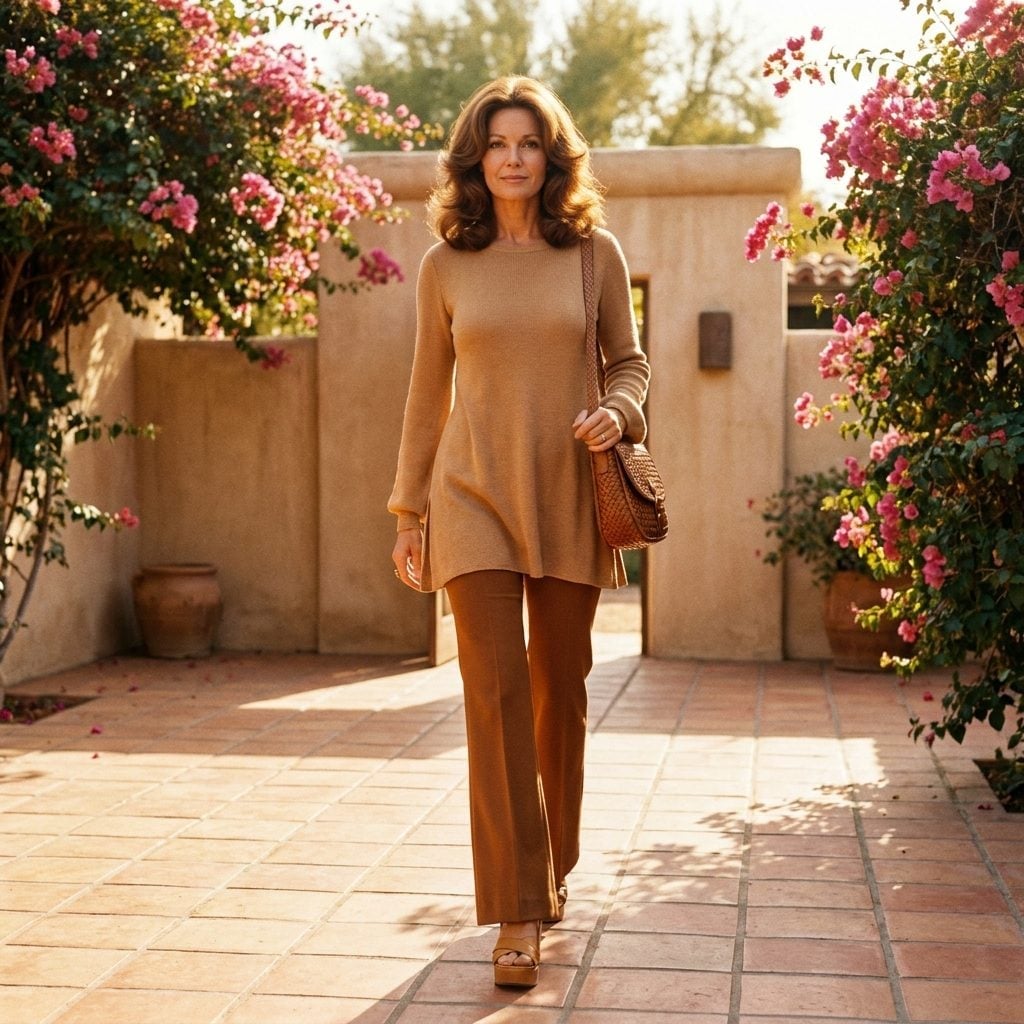
The long ribbed camel tunic passes the hip instead of stopping at the waist, while wide-leg rust trousers continue the loose geometry below. That makes this one of the few looks in the gallery that gains its balance by refusing to define the middle at all.
A woven crossbody introduces detail without changing the silhouette. After so many belts, tucks, and wrap ties, the restraint feels almost radical.
6. Chevron Color-Blocking Made the Pattern Point Somewhere on Purpose
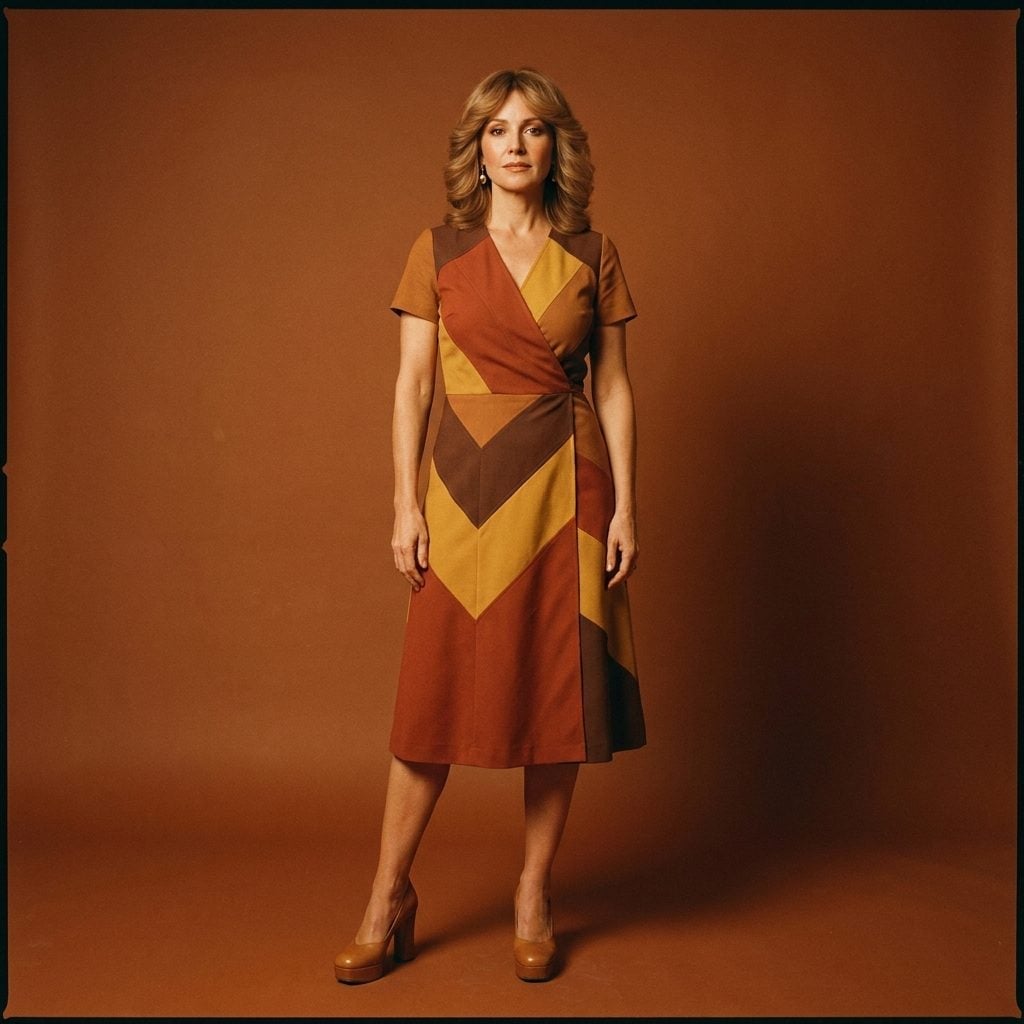
Downward-pointing bands of rust, mustard, and dark brown converge toward the center instead of running straight across the torso. The geometry is doing something a random print cannot: giving the pattern a direction.
The wrap construction and V-neckline repeat that angular movement, so the dress builds its shape from several related diagonals. Warm tan platforms finish the palette without introducing another competing color.
5. Chocolate Midi and Cream Turtleneck Made Contrast Work Harder Than Matching
❤️ Would you like to save this?
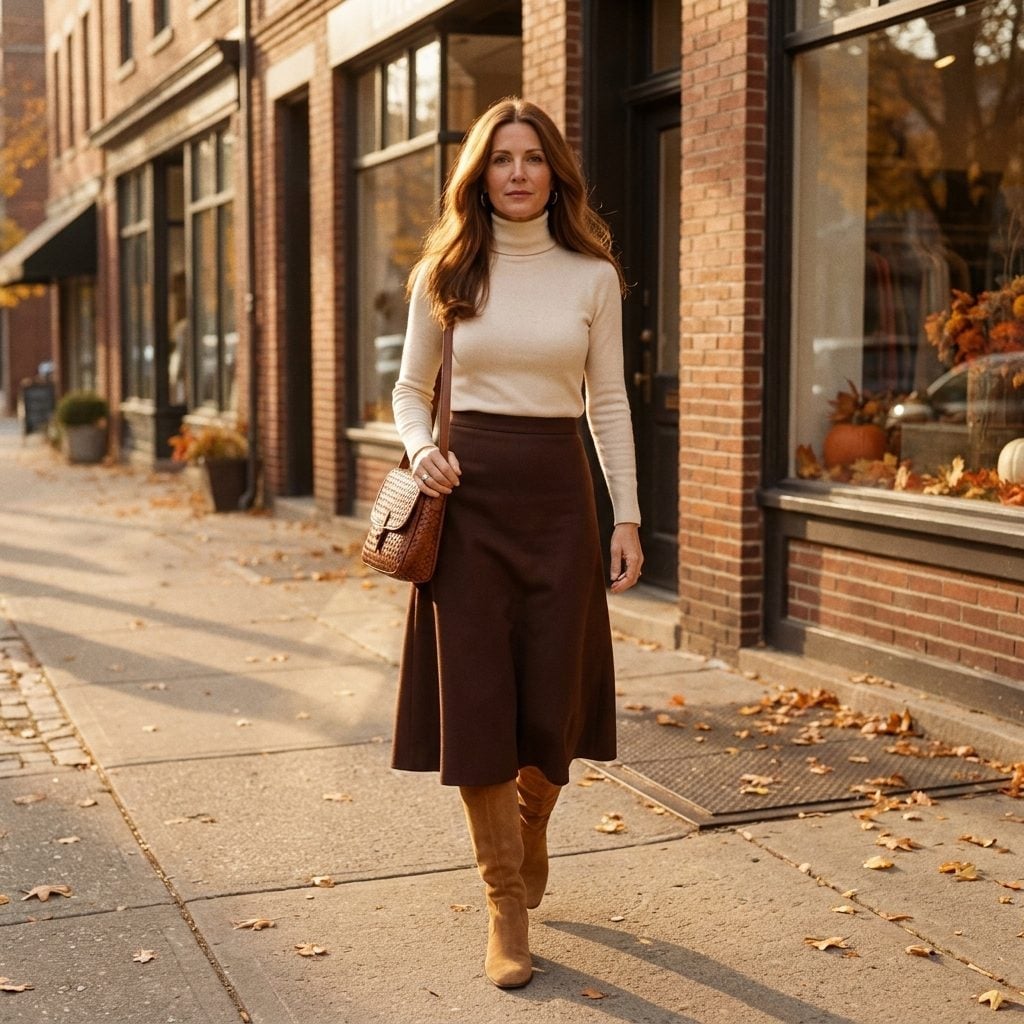
An ivory turtleneck tucked into a dark chocolate A-line midi creates a much sharper division than the tonal looks elsewhere in the gallery. That contrast works because the break lands at the high waist rather than somewhere arbitrary through the torso.
The skirt has enough weight to hold its flare cleanly, while tan suede knee-high boots soften the transition from dark hem to footwear. A small woven crossbody adds texture without becoming another major shape.
4. Copper Silk and a Chain Belt Made the Waist Lighter, Not Louder
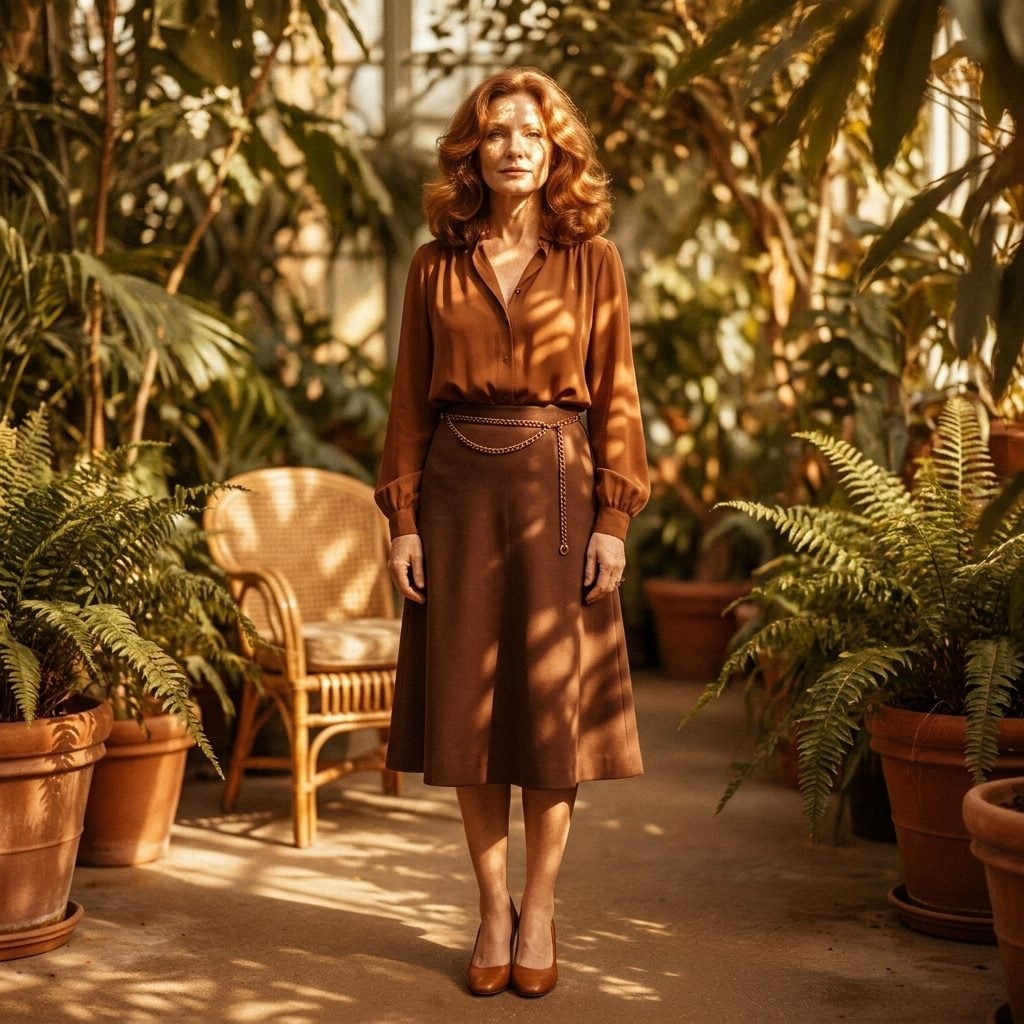
Cognac and chocolate keep the palette closely related, but the chain belt is what makes this outfit different from the many leather-belted looks of the decade. It marks the waist without laying a broad band of contrasting material across it.
Below, the A-line midi provides the volume; above, copper silk supplies sheen. Tan pumps continue the warm spectrum to the floor. The belt defines the shape while remaining almost jewelry-like.
3. Navy Flares and a Wide Cognac Belt Put the Proportion Right in the Middle
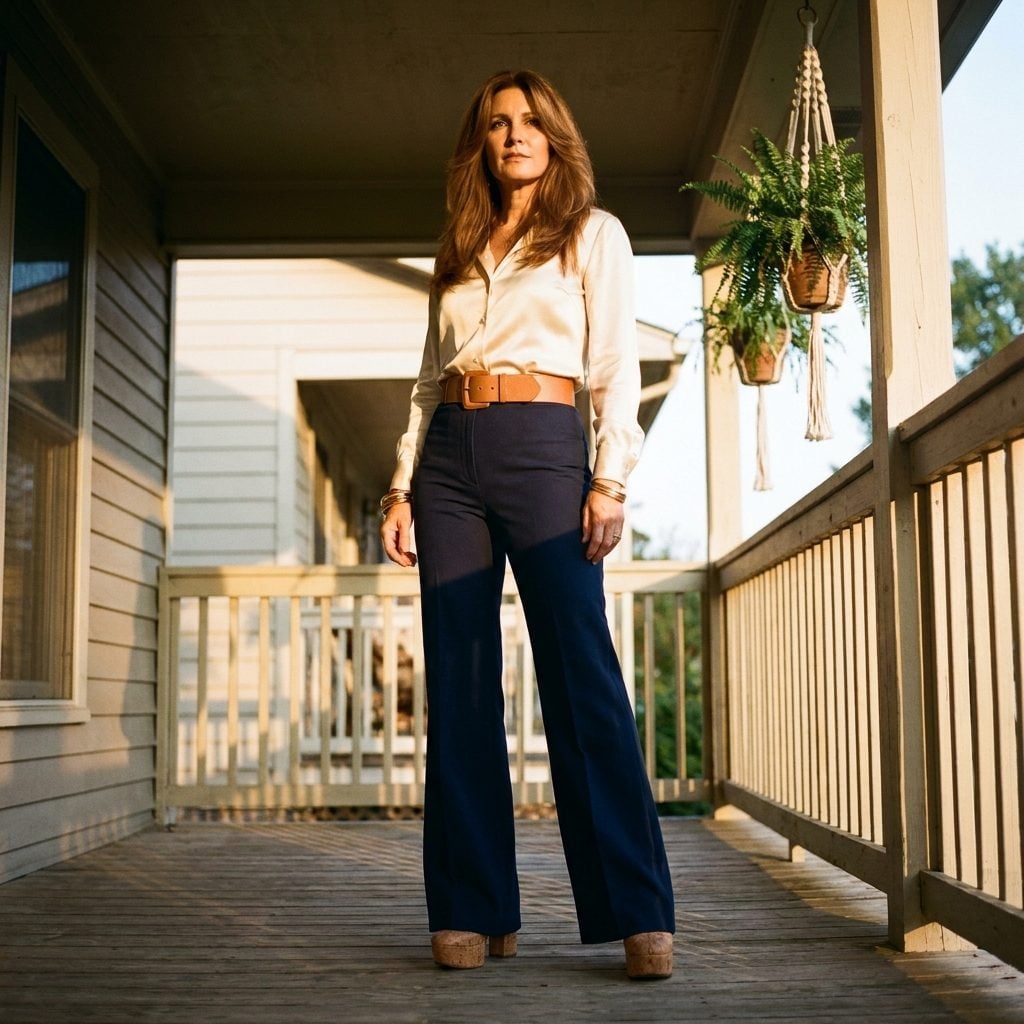
Deep navy wide-leg trousers rise high enough to make the waist a major part of the silhouette, and the tucked cream satin blouse leaves that rise completely visible. Then the cognac belt underlines the point rather than disguising it.
Cork platforms support the flare without cutting the trouser line short, while gold cuffs add weight above the waist. The outfit is a useful reminder that a wide belt can be structural rather than decorative when the proportions around it are already doing their part.
2. A Belted Rust Tunic Made Volume Look Controlled Instead of Careless
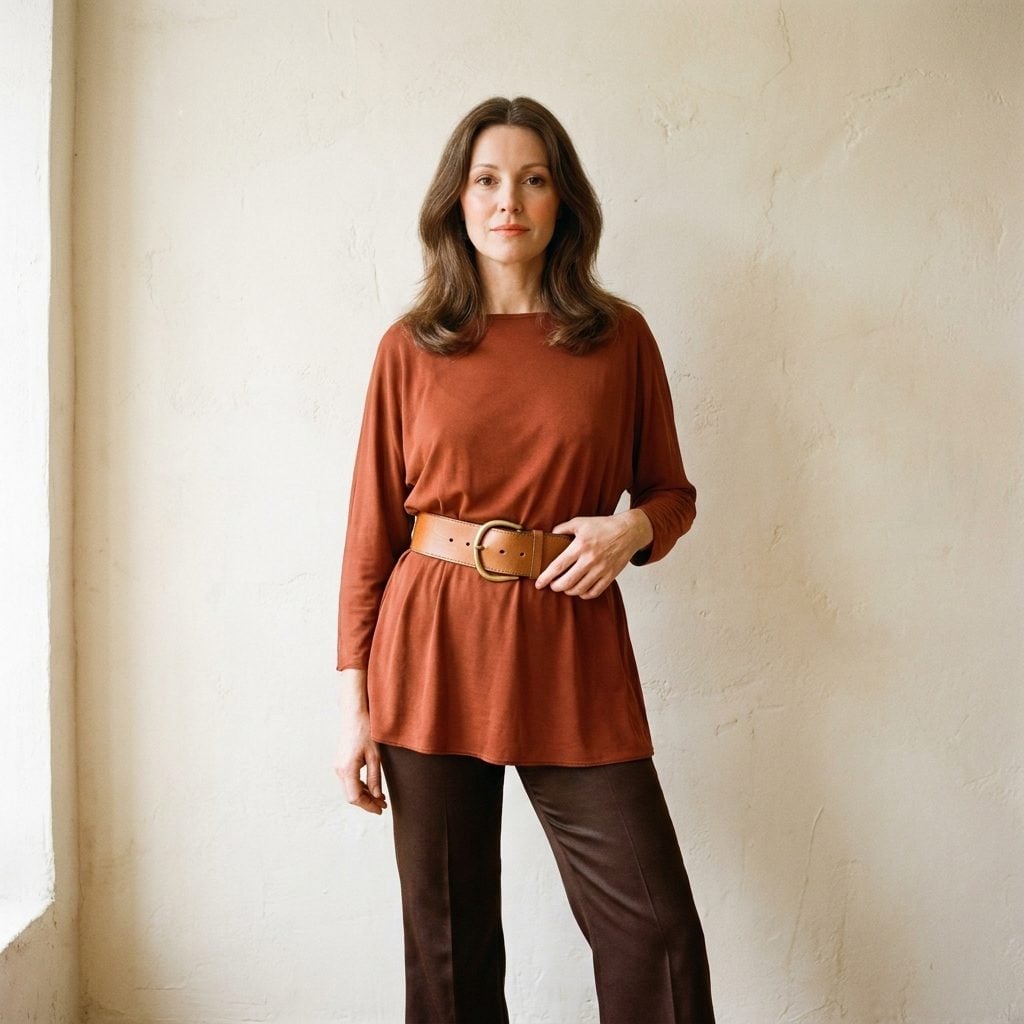
Dolman sleeves and a boat neckline give this rust jersey tunic considerable volume through the upper body. The cognac belt interrupts that looseness at the natural waist before the fabric begins to skim outward again below it.
Dark chocolate flares keep the bottom half substantial enough to balance the sleeve shape. The colors stay within the same warm family, but this is tonal dressing rather than strict monochrome — close enough to connect, different enough to keep the layers visible.
1. Draped Merlot Jersey Found a Waist Without Drawing a Straight Line Around It
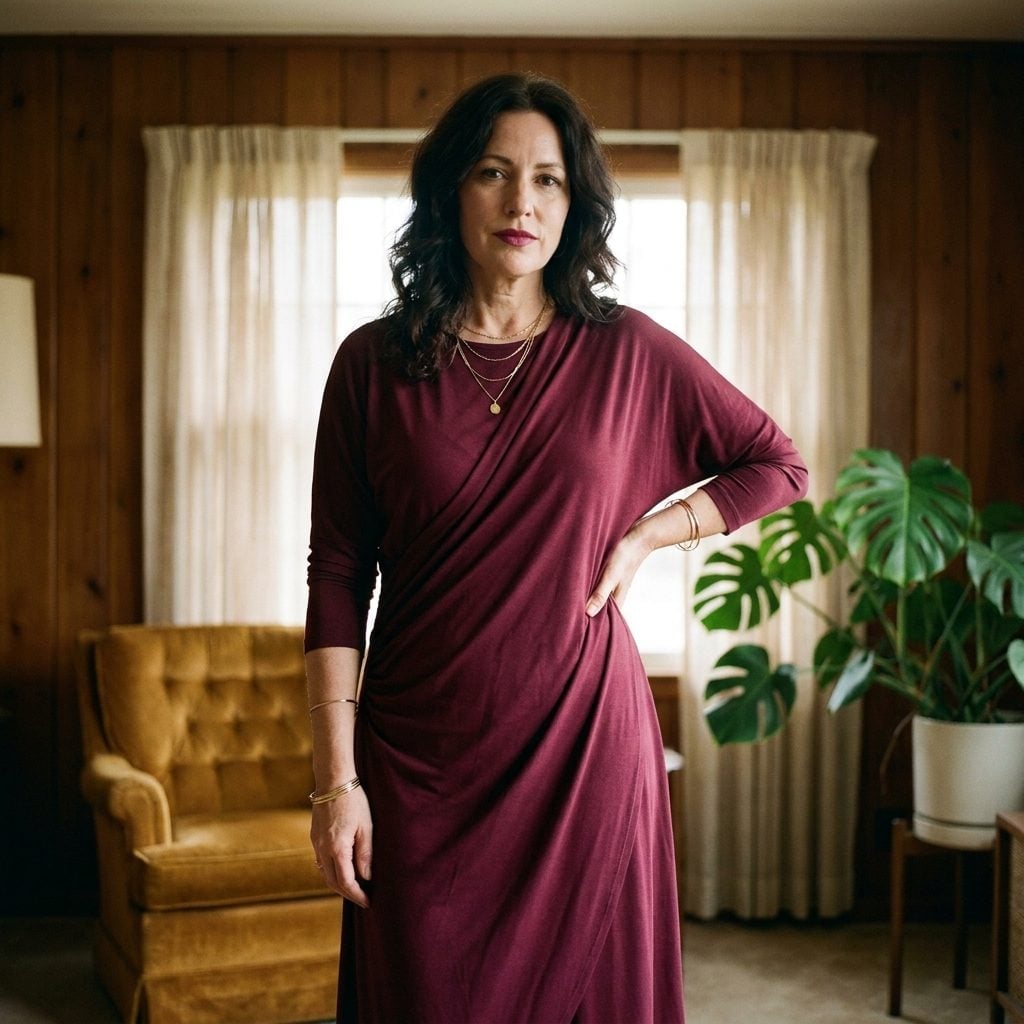
Ruched merlot jersey gathers at one hip and travels diagonally across the body, creating shape without a belt, waistband, or horizontal seam. After an entire decade famous for putting belts everywhere, that slant feels refreshingly clever.
The gathering gives the fabric somewhere to go rather than letting it hang straight from the torso. Layered gold necklaces move the emphasis back toward the neckline, while the diagonal drape handles the middle. It is a fitting place to end because it captures the best thing these 1970s looks understood: proportion was never one trick. Change the direction of the fabric, and the whole silhouette can change with it.