❤️ Would you like to save this?
Polyester was having its moment. The dress was ivory, the sleeves were enormous, and somewhere in a church basement a Polaroid captured all of it for posterity. Wedding style in 1975 followed a different set of rules: romantic, formal, and deeply committed to lace, sleeves, coordinated accessories, and ceremony. Fifty years later, almost every one of those rules has loosened. Here are 25 before-and-after changes, from the gown and veil to the cake, guestbook, registry, and photographer.
FYI, thanks to AI imagery software, we’re able to create very specific fashion and hairstyle examples to illustrate the points being made. In some cases, imagery is exaggerated to hammer home the point. Also, assume links that take you off the site are affiliate links such as links to Amazon. this means we may earn a commission if you buy something.
Sleeves Were Everywhere in 1975, Then Faded, and Now They’re Back
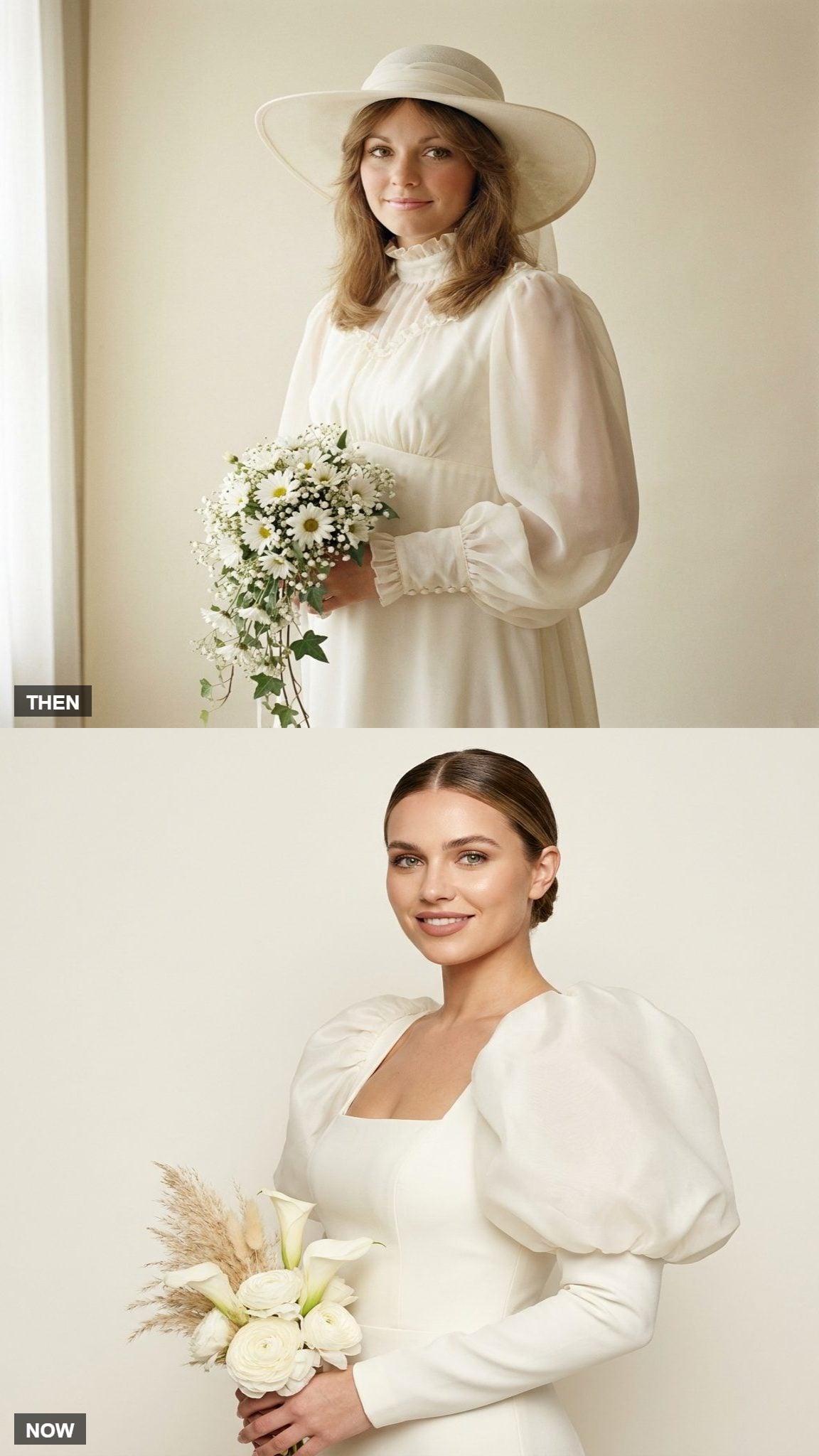
Bishop sleeves, Juliet sleeves, gathered cuffs, and sheer lace arms were familiar parts of the 1975 bridal look. The sleeve was not usually treated as a separate statement. It belonged to the whole romantic package.
Strapless and sleeveless gowns became far more prominent in later decades, but long sleeves have returned in a more deliberate form. Today’s version may be architectural, detachable, sculpted in organza, or cut close in embroidered lace. The 1975 sleeve came with the dress. The current sleeve is often the reason the dress gets chosen.
The Veil: From Expected Finishing Touch to a Choice With No Rules
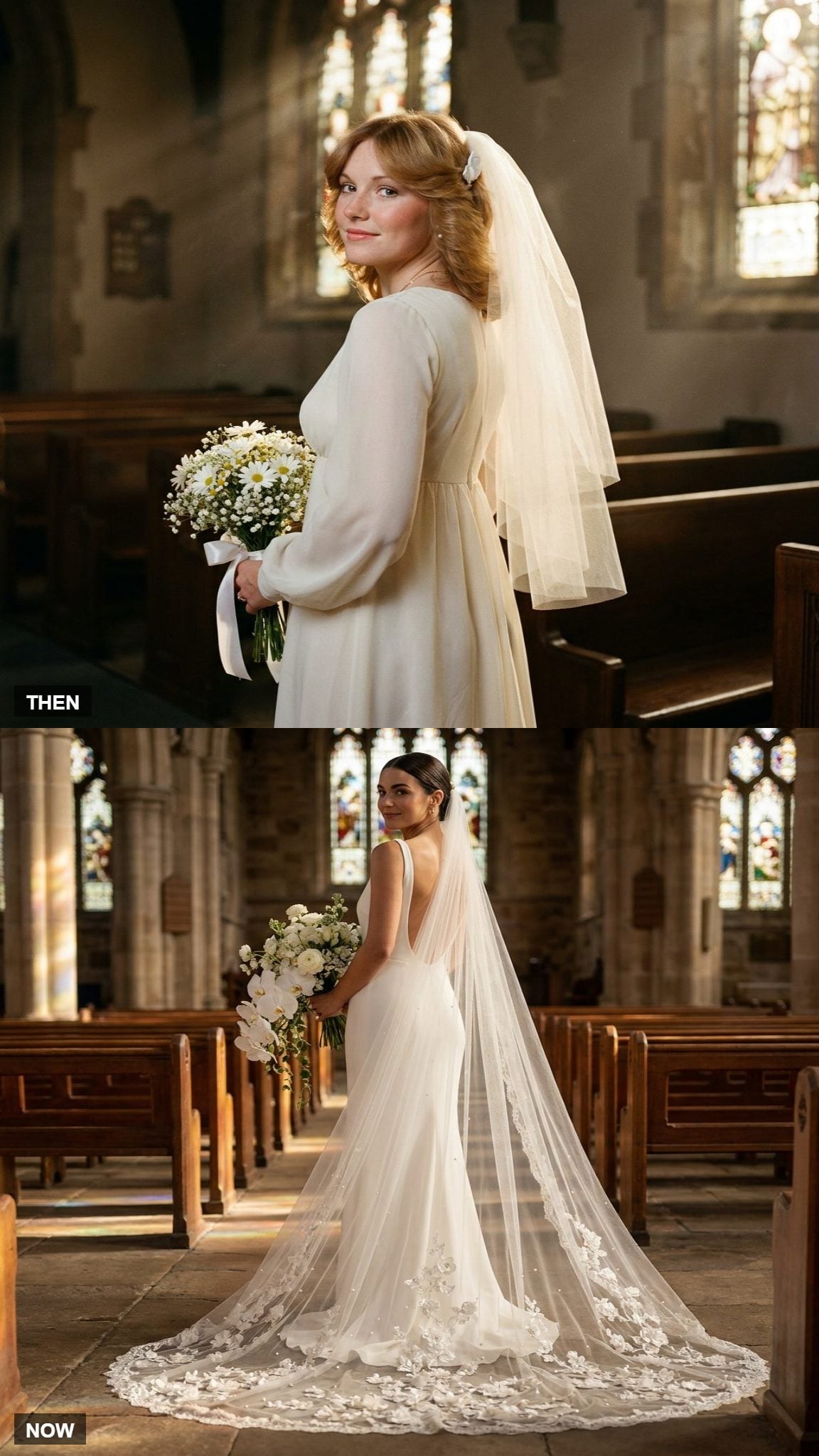
A veil was a familiar finishing touch in 1975, whether it stopped at the shoulders, reached the elbows, or trailed behind the gown. It might be anchored by a tiara, floral headpiece, cap, comb, or satin band. The details varied, but the veil itself rarely needed an explanation.
Today the range is even wider. Some brides choose cathedral-length tulle edged in pearls or embroidery. Others pin a short wisp beneath a low bun, wear a flower crown, or skip the veil entirely. The biggest change is not length. It is that no single version now reads as mandatory.
High Necks and Jewel Necklines Once Ruled. Now Almost Any Shape Is Fair Game.
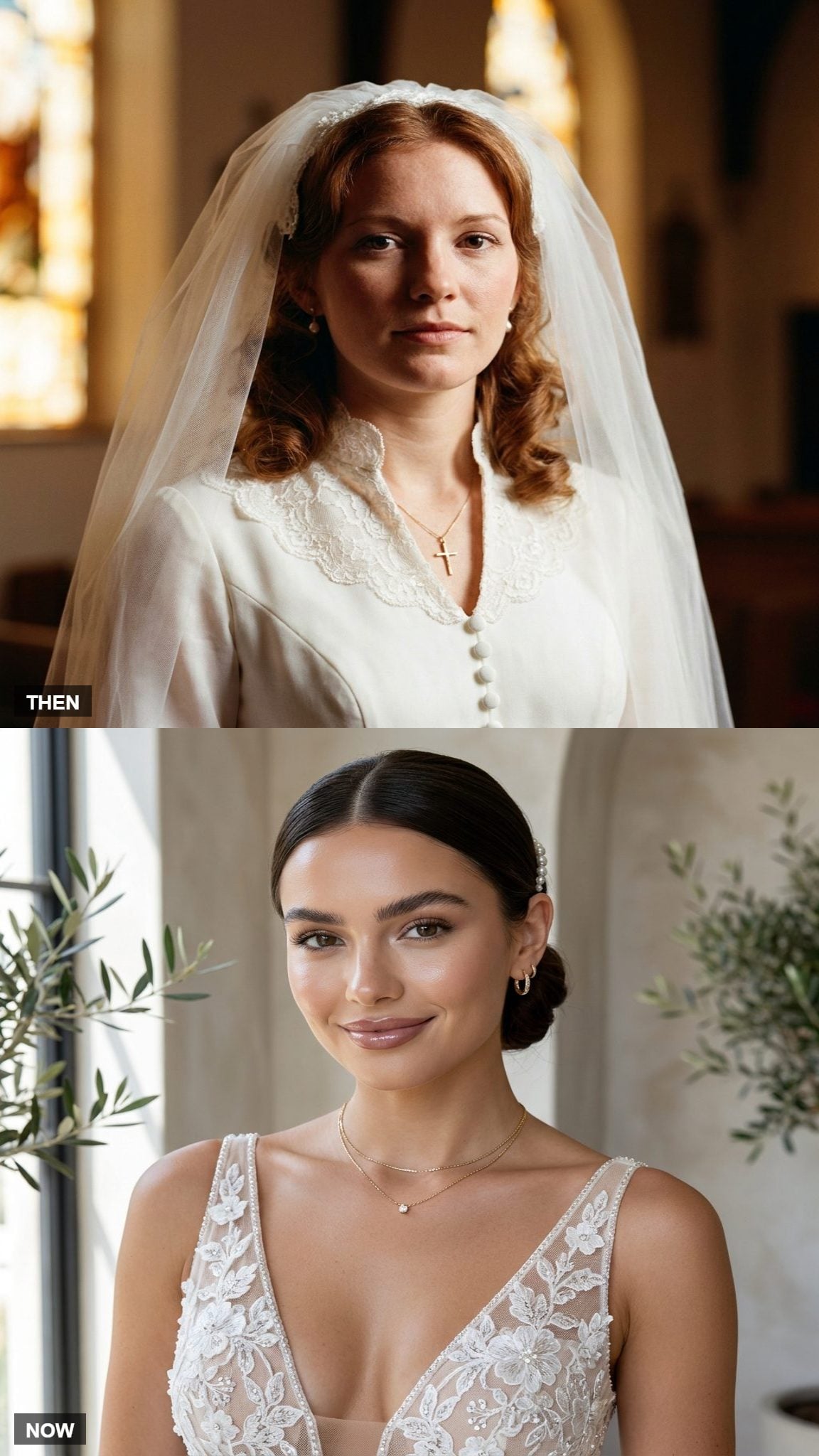
High lace collars, rounded jewel necklines, and modest oval shapes were familiar in 1975, often paired with long sleeves and romantic trim. They reflected the folk, Edwardian, and Victorian revival influences running through bridal fashion at the time.
Current bridal design works with a much broader vocabulary: off-shoulder folds, deep square necklines, plunging V-shapes, open backs, cowl-cut silk, and illusion panels engineered to look almost unsupported. The neckline has moved from part of the dress to one of its main design decisions.
The Train: From Traditional Formality to Any Length the Bride Wants
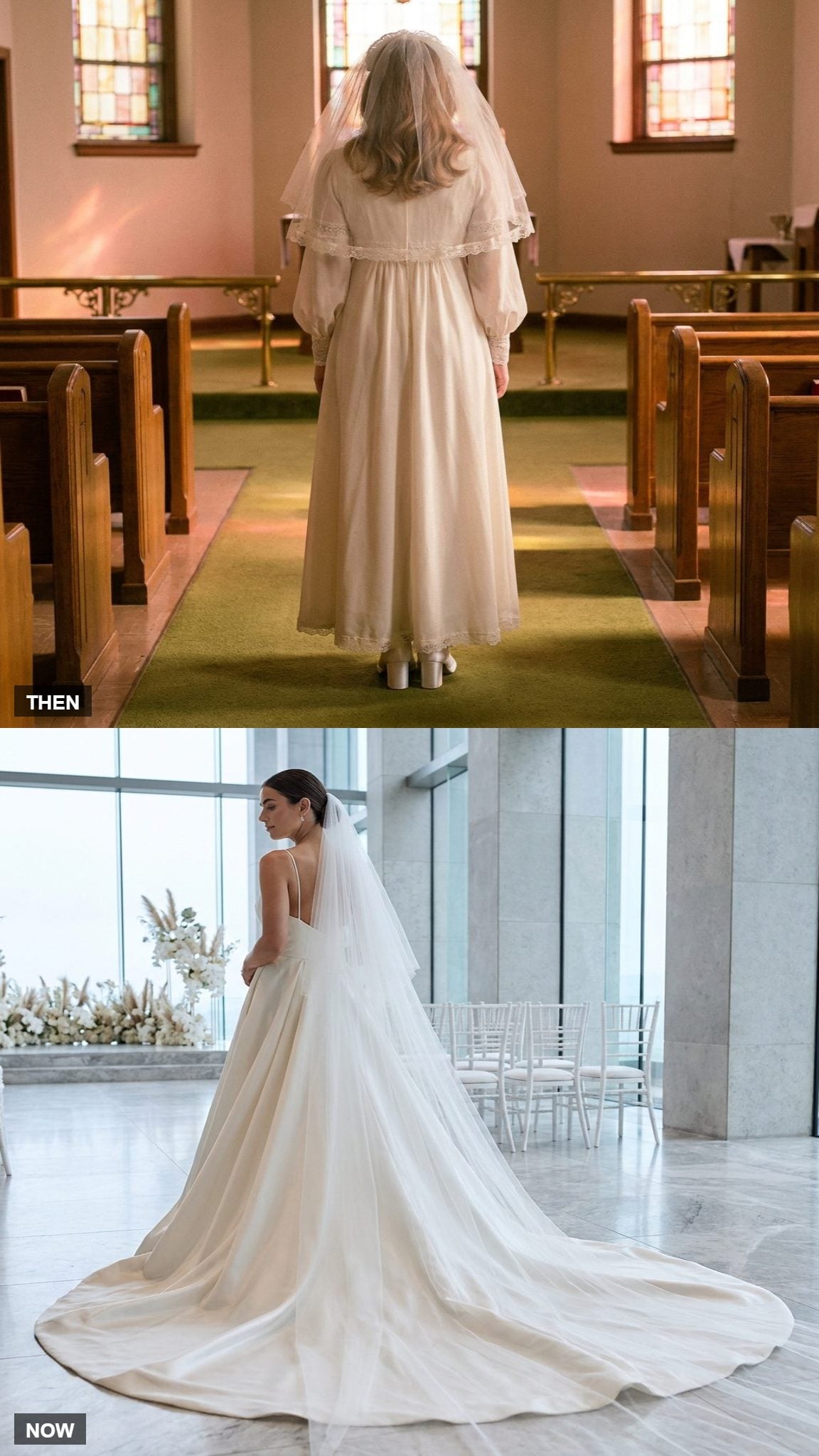
1975 gowns ranged from practical sweep trains to long church-ready lengths that attendants carefully arranged before the photographs. A train still signaled formality, but there was no single universal measurement hiding beneath every hem.
Today’s options stretch even further. A bride can choose a clean sweep, a chapel train, six feet of cathedral drama, a detachable overskirt, or no train at all. Built-in bustles and removable panels make it possible to have the entrance without spending the reception managing yards of fabric. The train is no longer an obligation. It is a dial.
Shoes Nobody Saw: Dyeable Pumps in 1975 vs. the Bridal Shoe as a Trophy
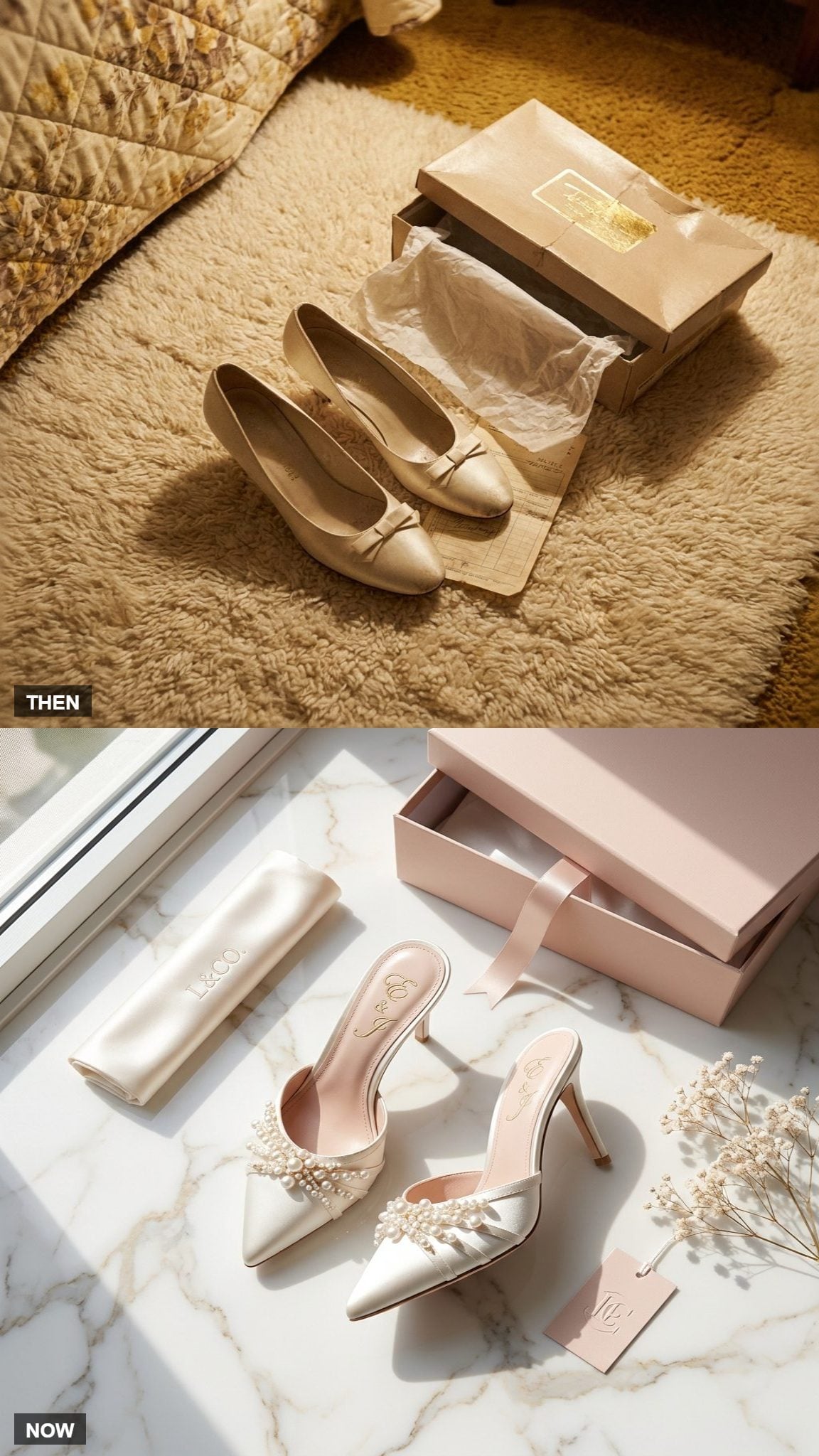
In 1975, the bridal shoe was often invisible by design: a low dyed-to-match pump hidden under a full-length hem, bought for comfort, coordination, and the walk down the aisle. Nobody lifted the skirt for a dedicated shoe portrait.
The current bridal shoe is far more likely to be photographed on its own. Satin mules, pearl-covered heels, embroidered insoles, metallic sandals, and platforms now appear in flat-lay photographs before the bride even puts them on. The accessory did not suddenly become more useful. It became visible.
The Bouquet: From Formal Cascade to Loose, Personal Composition
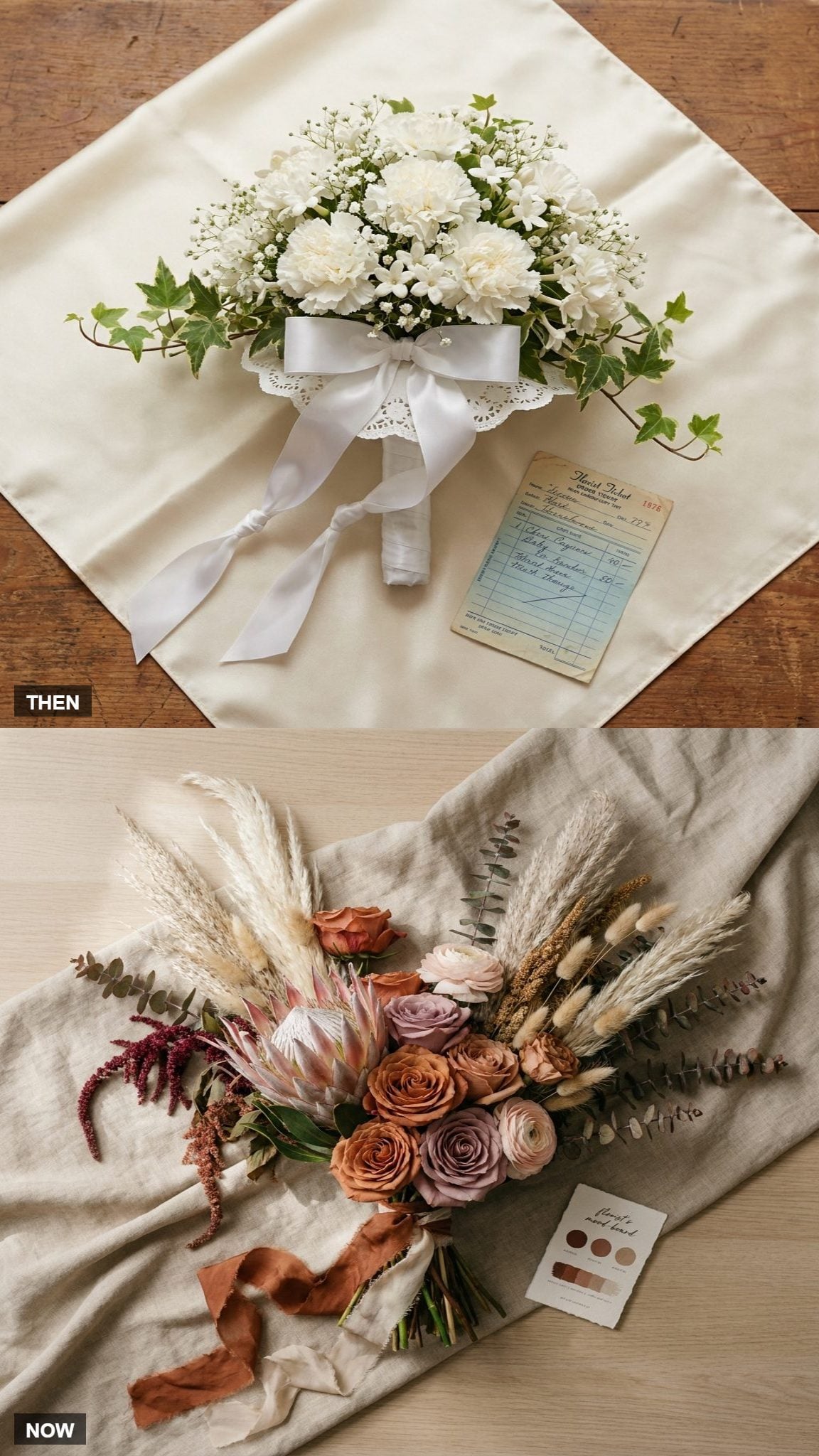
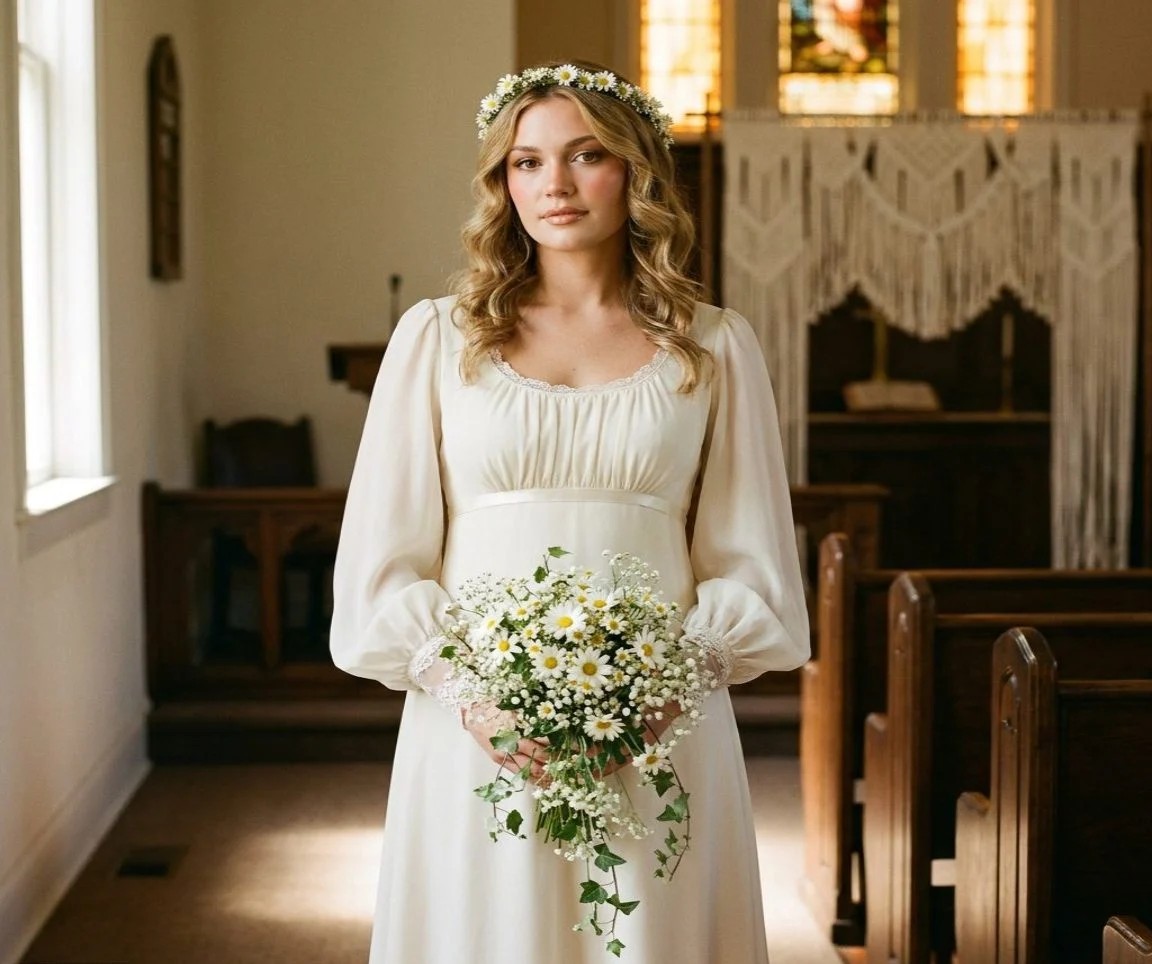
Carnations, baby’s breath, stephanotis, ivy, and white satin ribbon formed a familiar 1975 bouquet vocabulary. Many arrangements were tightly bound or built into formal cascades that dropped toward the bride’s knees without a stem wandering out of line.
Current bouquets may be loose, asymmetrical, monochromatic, dried, sculptural, or reduced to three garden roses tied with raw linen. Brides now arrive with reference photographs and color stories, but the real change is simpler: the bouquet is treated as part of the visual design rather than a floral requirement delivered on the morning of the ceremony.
1975 Had a Handful of Silhouettes. Today’s Brides Get an Entire Menu.
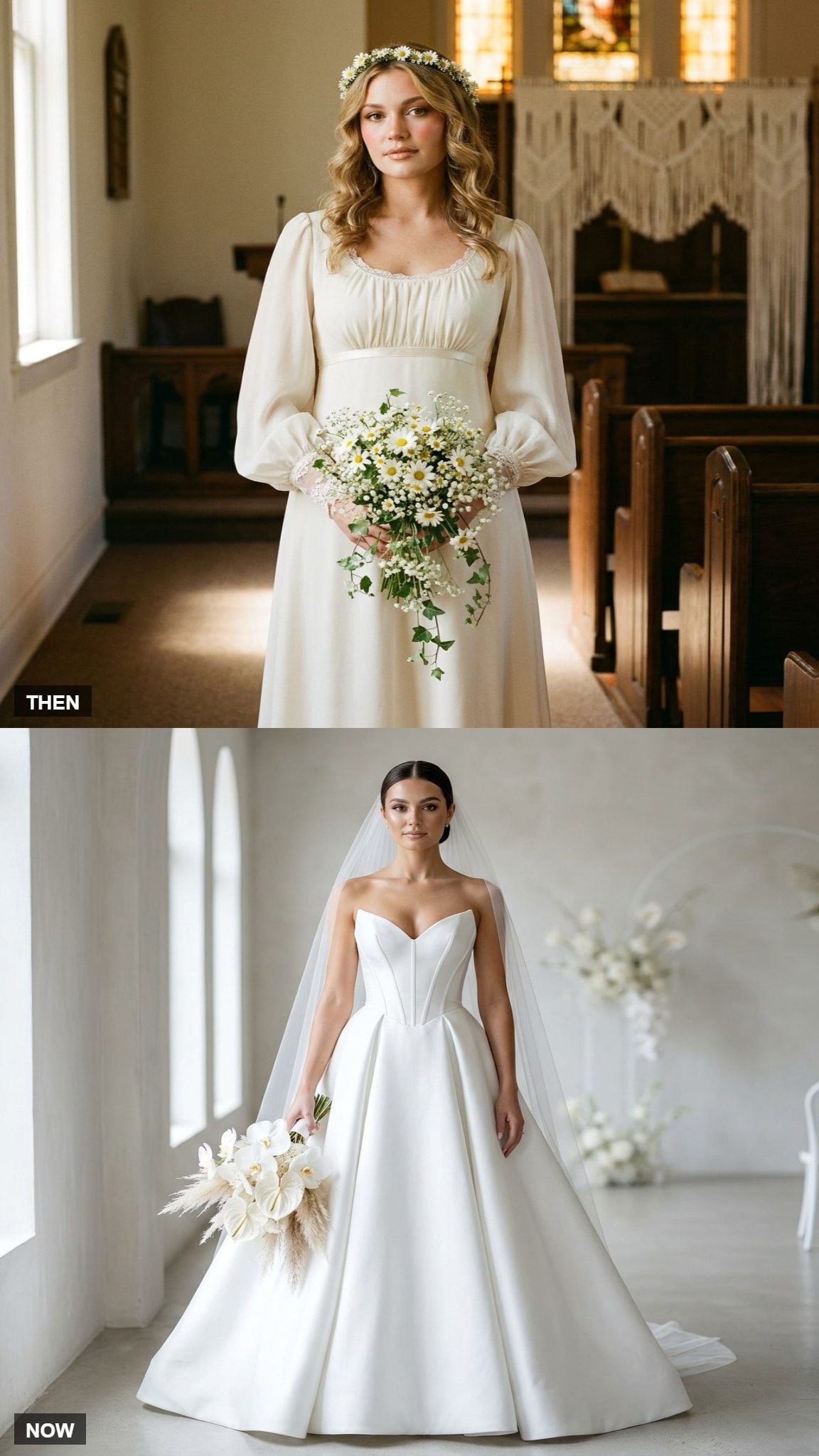
The 1975 bridal silhouette was not one shape. Soft empire waists, narrow A-lines, flowing columns, full skirts, and medieval-inspired gowns all appeared, often in fabrics that moved more easily than the highly structured excess that followed in the 1980s.
Current bridal fashion offers all of those shapes plus corseted bodices, fit-and-flare skirts, sculptural mikado, minimalist columns, and detachable overskirts. The defining modern feature is not one silhouette replacing another. It is the expectation that every bride can choose among radically different proportions without leaving the same collection.
The Ring Exchange: From Simple Gold Bands to Layered, Mixed-Metal Sets
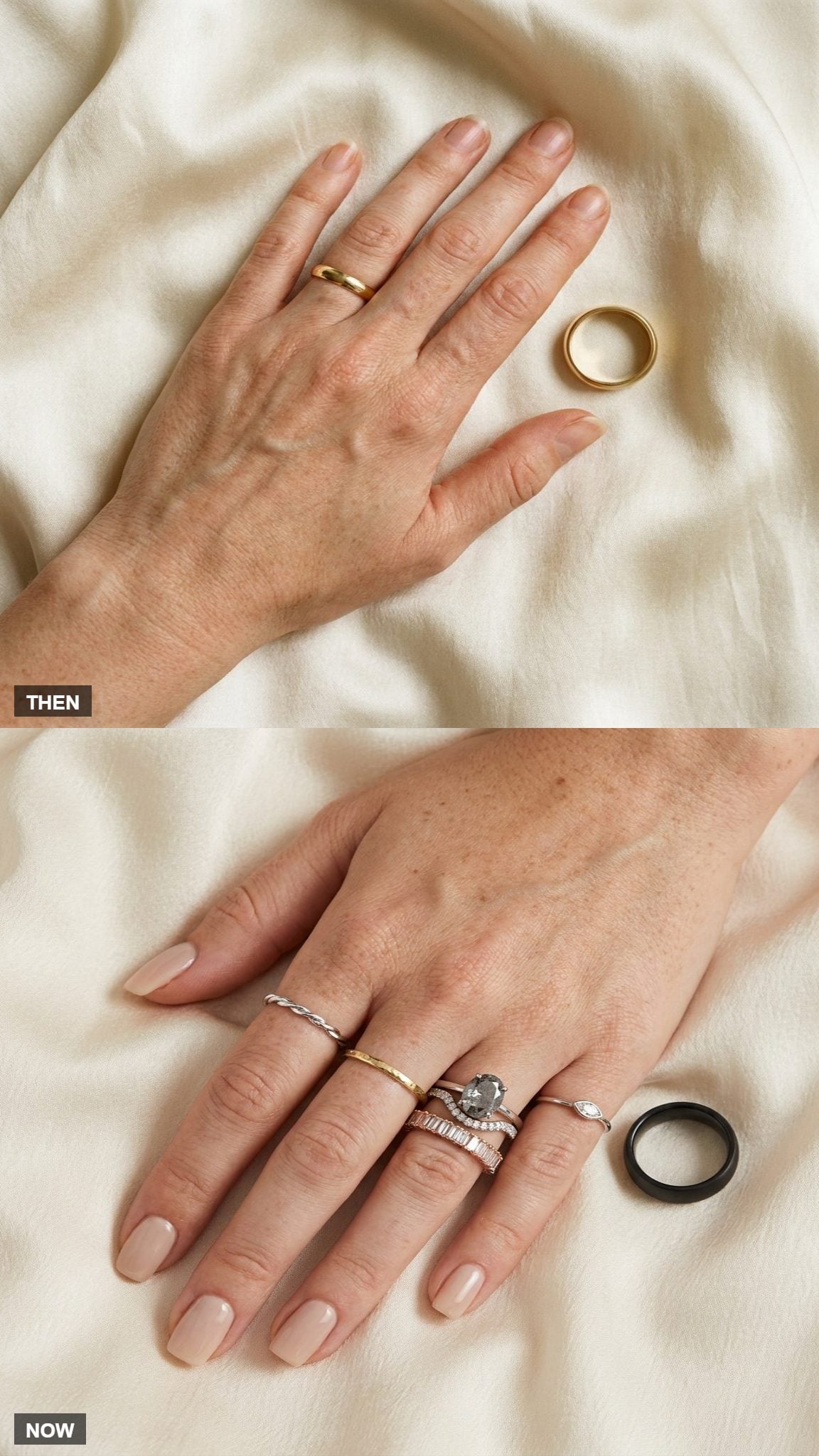
A plain yellow-gold wedding band was a familiar 1975 choice. Matching engagement and wedding bands were a familiar, polished choice, while stones on the band itself attracted more attention than they do now.
Today’s ring stack can combine an engagement ring, curved shadow band, eternity band, mixed metals, colored stones, salt-and-pepper diamonds, or an unconventional shape built around the original setting. White metals became especially prominent around the late 1990s and 2000s, while yellow gold later returned as one option among many. The single plain band has not disappeared. It has become a deliberate choice rather than the assumed default.
Wedding Portraits Used to Document the Day. Now They Tell Its Story.
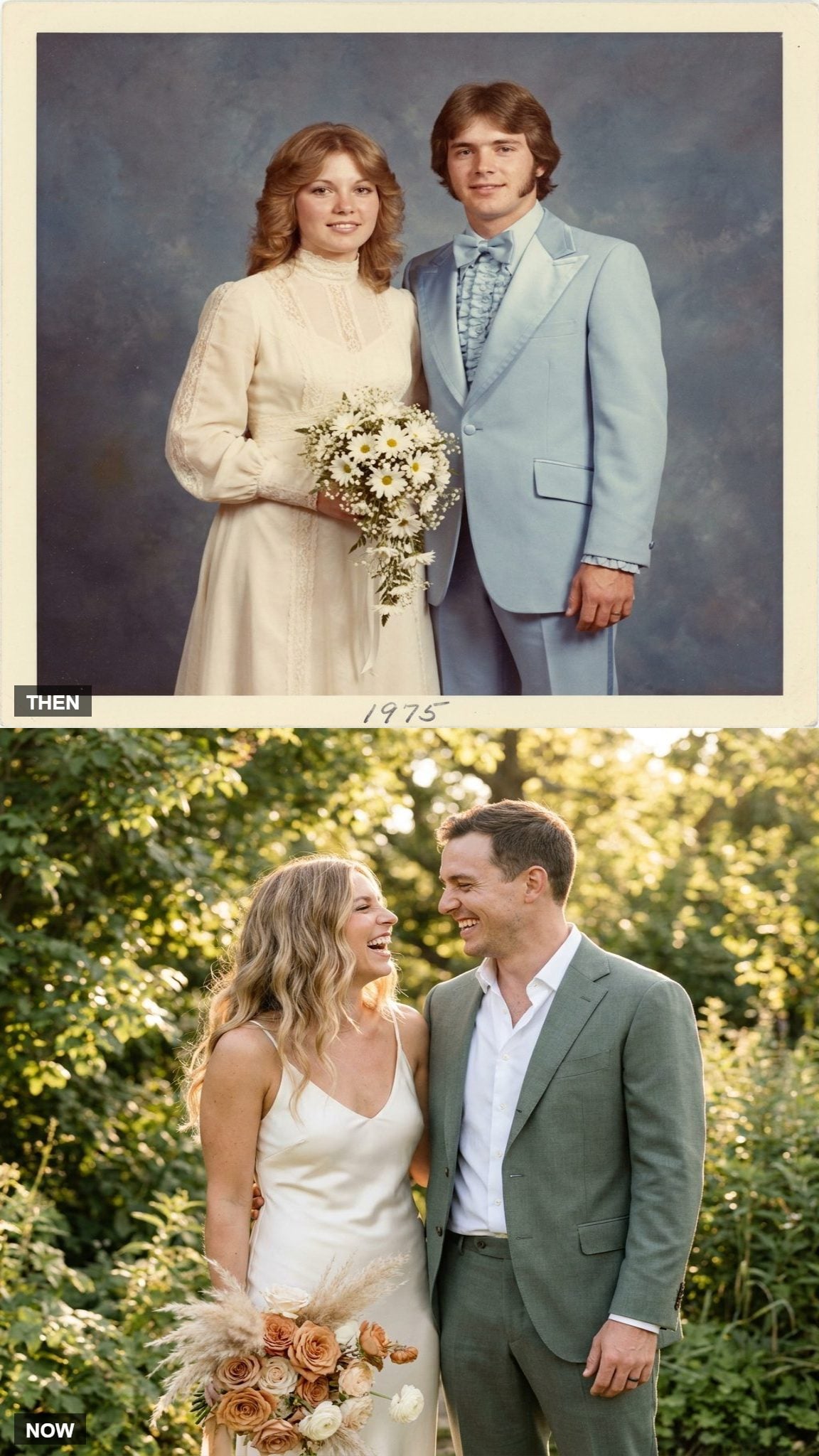
You know this photograph. The couple faces forward, the bouquet sits at regulated height, and the expression could be called happy or simply ready for the flash. The goal was documentation: prove who was there, what they wore, and where everyone stood.
Modern wedding photography is built around a broader story. First looks, movement, laughter, crying, overhead views, blurred film-style frames, and unscripted moments all sit beside the formal family portrait. The record still matters. It just no longer has to look like evidence.
The Reception Outfit Change: Unusual Then, Increasingly Common Now
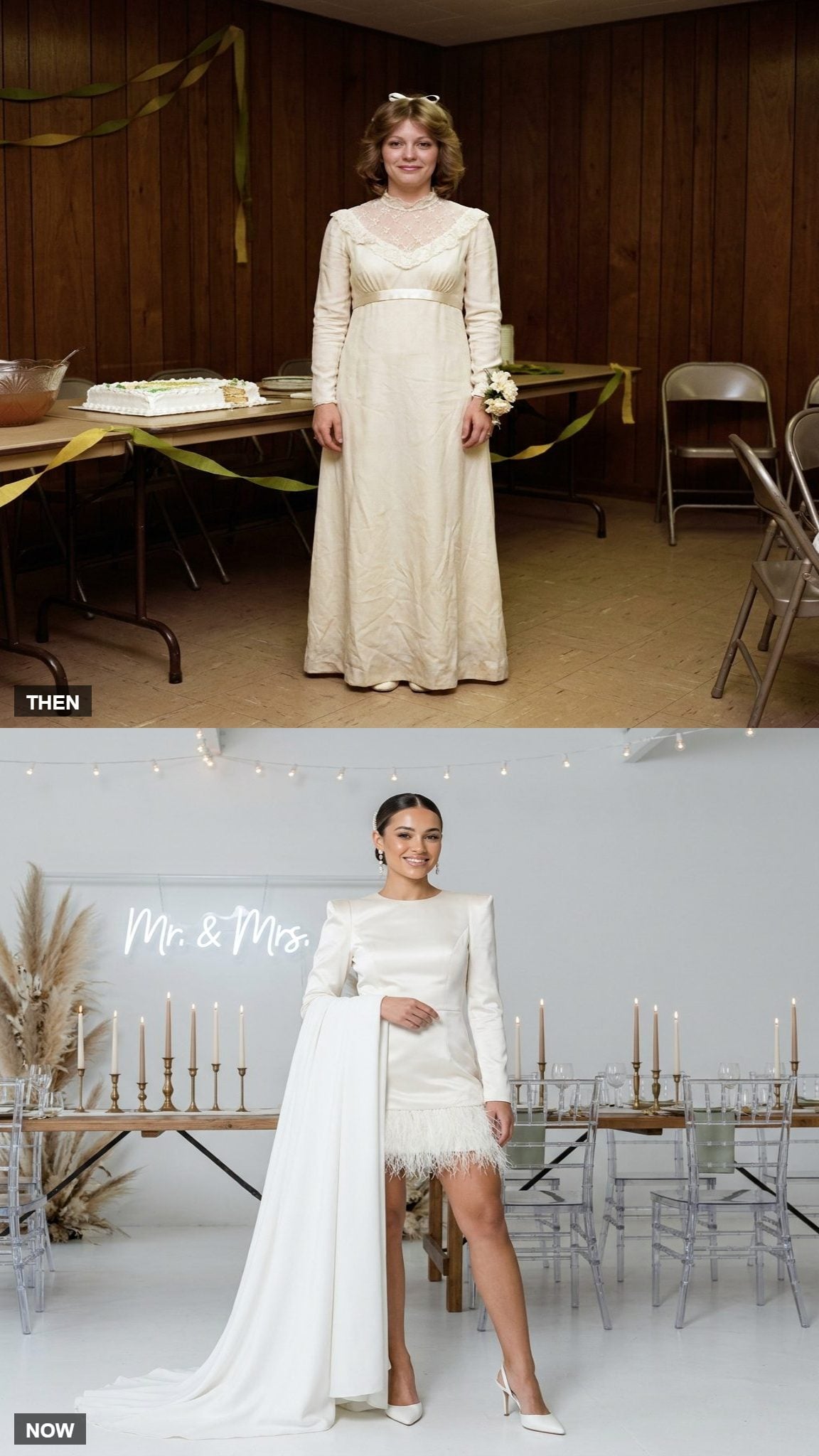
There was usually no outfit change in 1975. You wore the dress to the ceremony, through the receiving line, during dinner, and while someone’s uncle got too friendly with the dancing. The dress was the commitment and you honored it.
A second look is now far more visible, especially at larger or fashion-focused weddings. Brides change into short white dresses, tailored jumpsuits, or second gowns designed for dancing. A few have three looks. Others keep the original dress on until the last song. The difference is that changing no longer needs an excuse.
Structured Crowns and Caps Once Anchored the Veil. Now Almost Anything Goes.
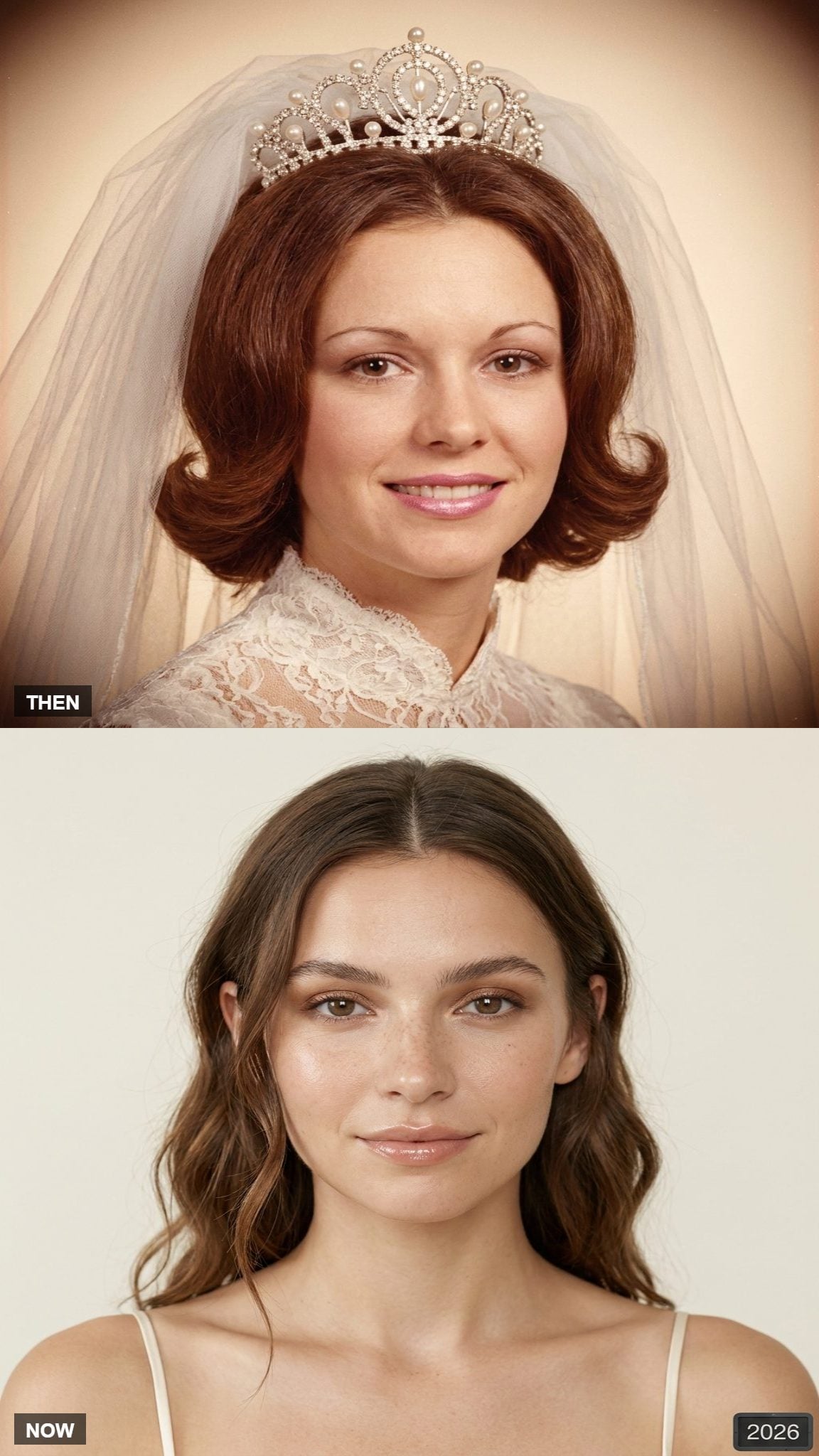
Tiaras, floral headpieces, structured veil caps, satin bands, combs, and pearl details were familiar parts of the 1975 bridal look. The headpiece often anchored the veil and made the role unmistakable from the back pew.
Today’s options barely hold together as one category: flower crowns, wrapped headbands, beaded pins, vintage brooches, dramatic bows, or nothing at all. The bare-headed bride is no longer a bride who forgot something. She made a choice.
The Fabric Story: From Polyester Crepe and Romantic Lace to Bias-Cut Silk
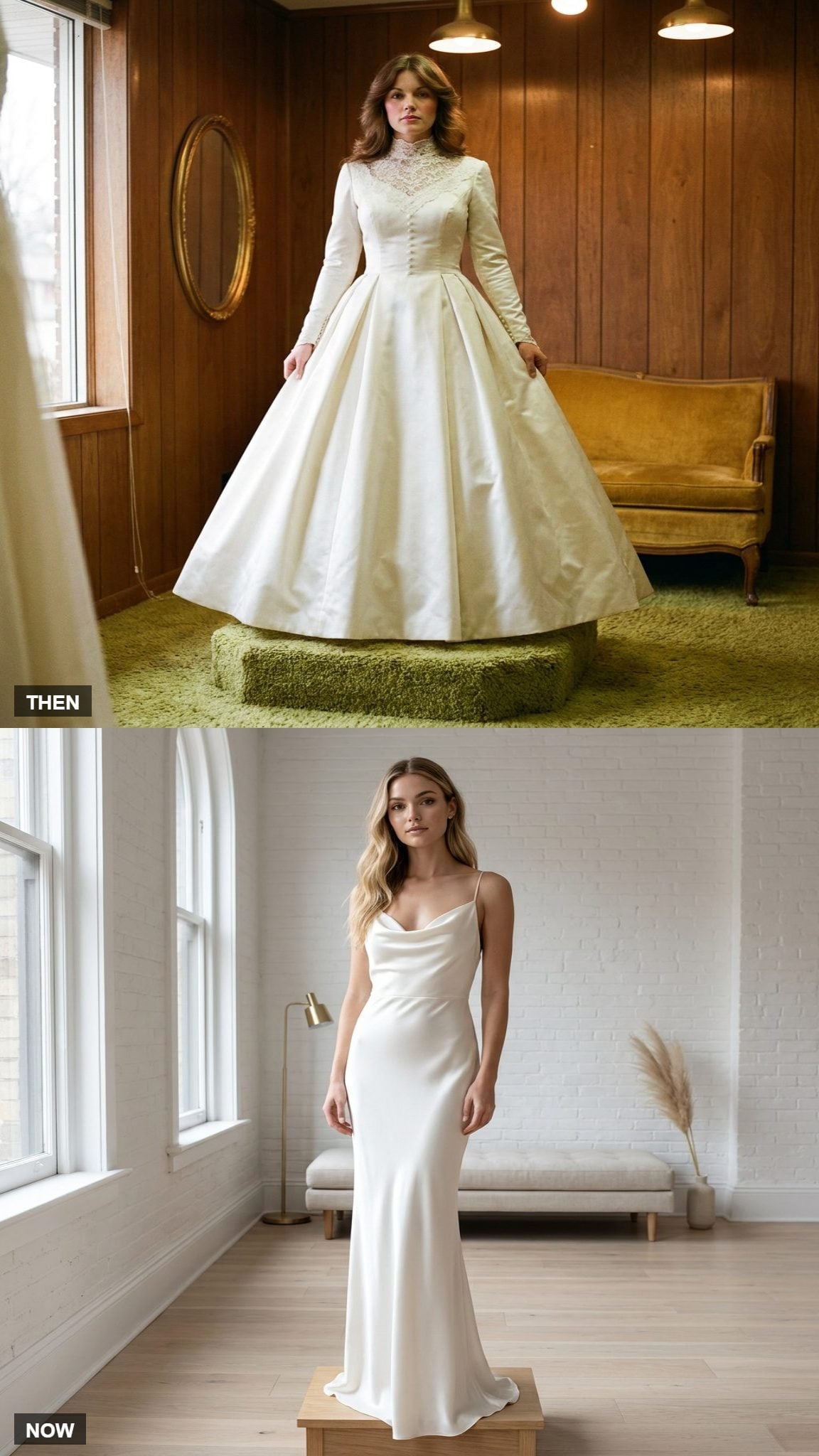
Many 1975 gowns relied on polyester crepe and other synthetics, along with chiffon, lace, and organza that could support sleeves, ruffles, and flowing empire or A-line shapes without the cost of silk. Some formal gowns used heavier satin, but the decade was just as comfortable with softness as structure.
Contemporary bridal fabrics range from sculptural mikado to fluid silk charmeuse, lightweight crepe, embroidered tulle, and chiffon that moves with every step. Bias-cut silk follows the body closely and reveals the lines of whatever sits beneath it, which makes undergarments and fittings part of the final design rather than an afterthought.
The Gloves: Once Familiar, Then Rare, and Now Deliberately Dramatic
❤️ Would you like to save this?
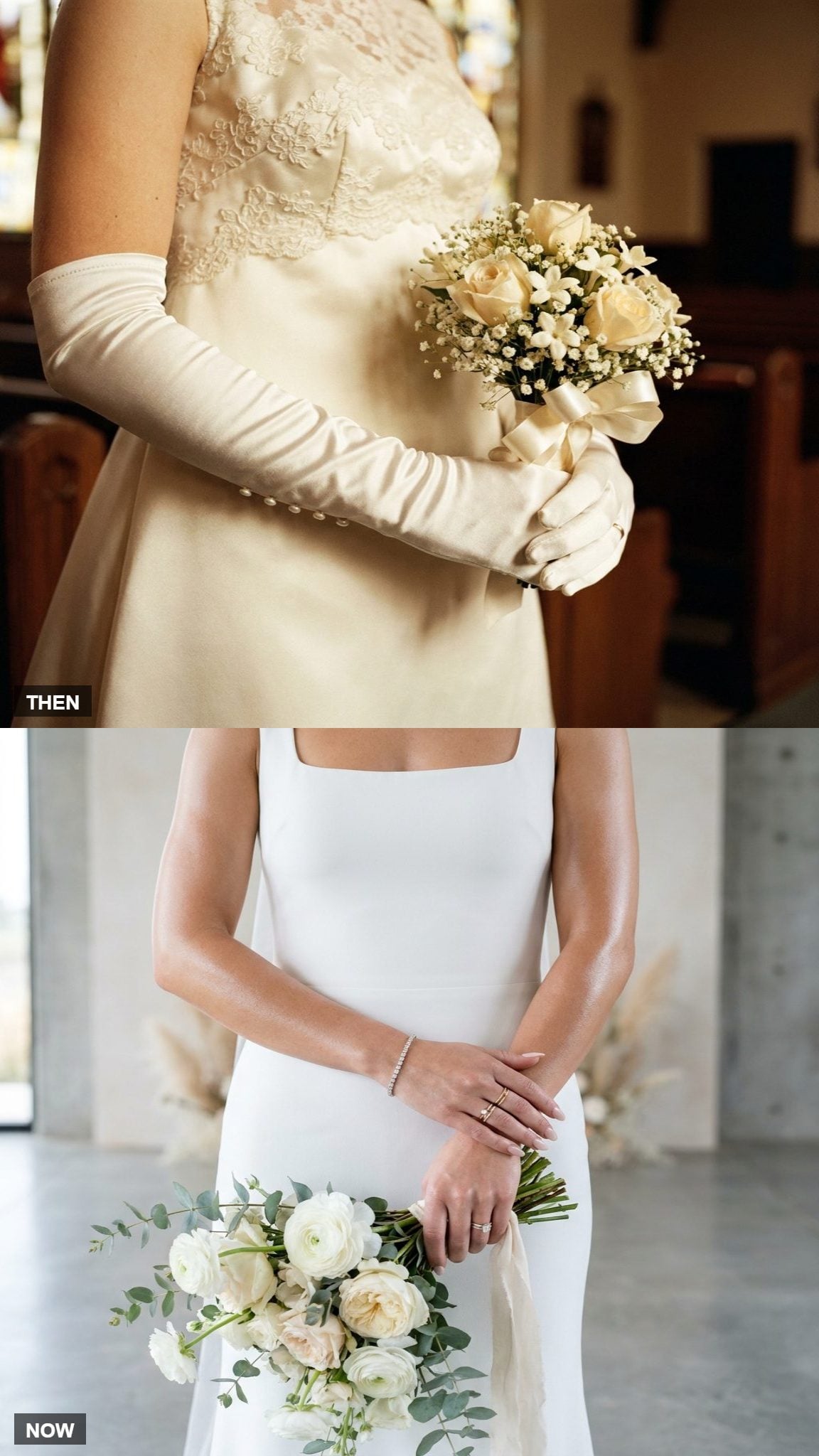
Short wrist gloves and longer formal styles appeared regularly in mid-century bridal fashion, though they were never universal. Satin, lace, pearl buttons, and carefully timed removal for the ring ceremony all suited a wedding day built around more formal rules.
Gloves later became unusual enough to read as costume, which is exactly why fashion-forward brides have started bringing them back in sheer silk, opera-length satin, and soft leather. Worn now, they signal intention rather than obligation.
The Wedding Cake Stopped Being a Monument and Started Being Dessert
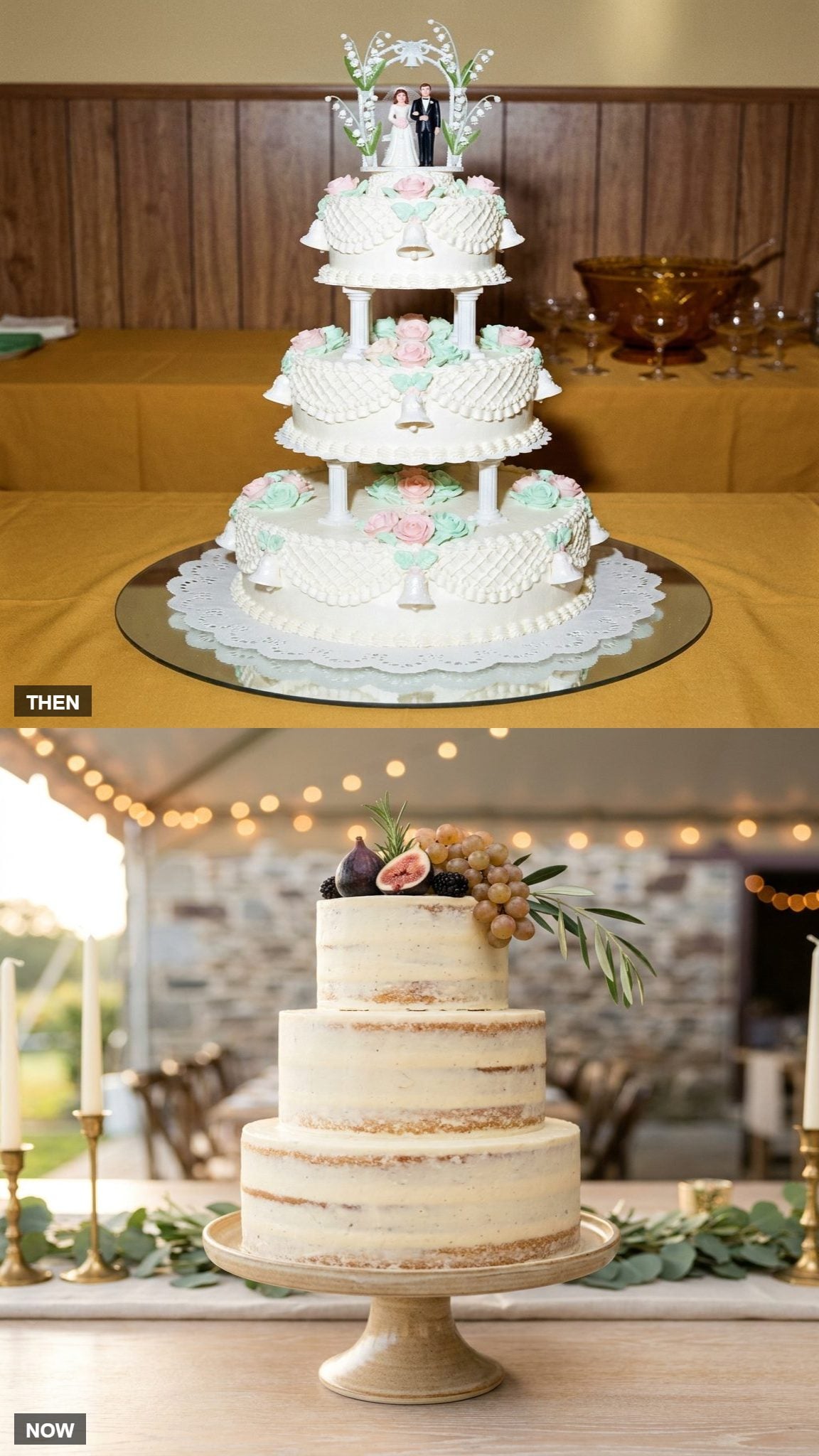
The 1975 cake was a monument. Stiff royal icing you could tap with a fingernail, sugar bells nobody ate, and a plastic couple standing under an arch that may have appeared on another cake three months earlier. The photograph mattered at least as much as the flavor.
Today’s version may have bare sides, real fruit, rough buttercream, pressed flowers, or one sprig of rosemary doing the work forty pounds of decoration used to do—and it looks like something a person made rather than a bakery assembled on a Saturday shift.
The Bridesmaids: Matching Pastel Uniforms vs. Same-Palette Individual Dresses
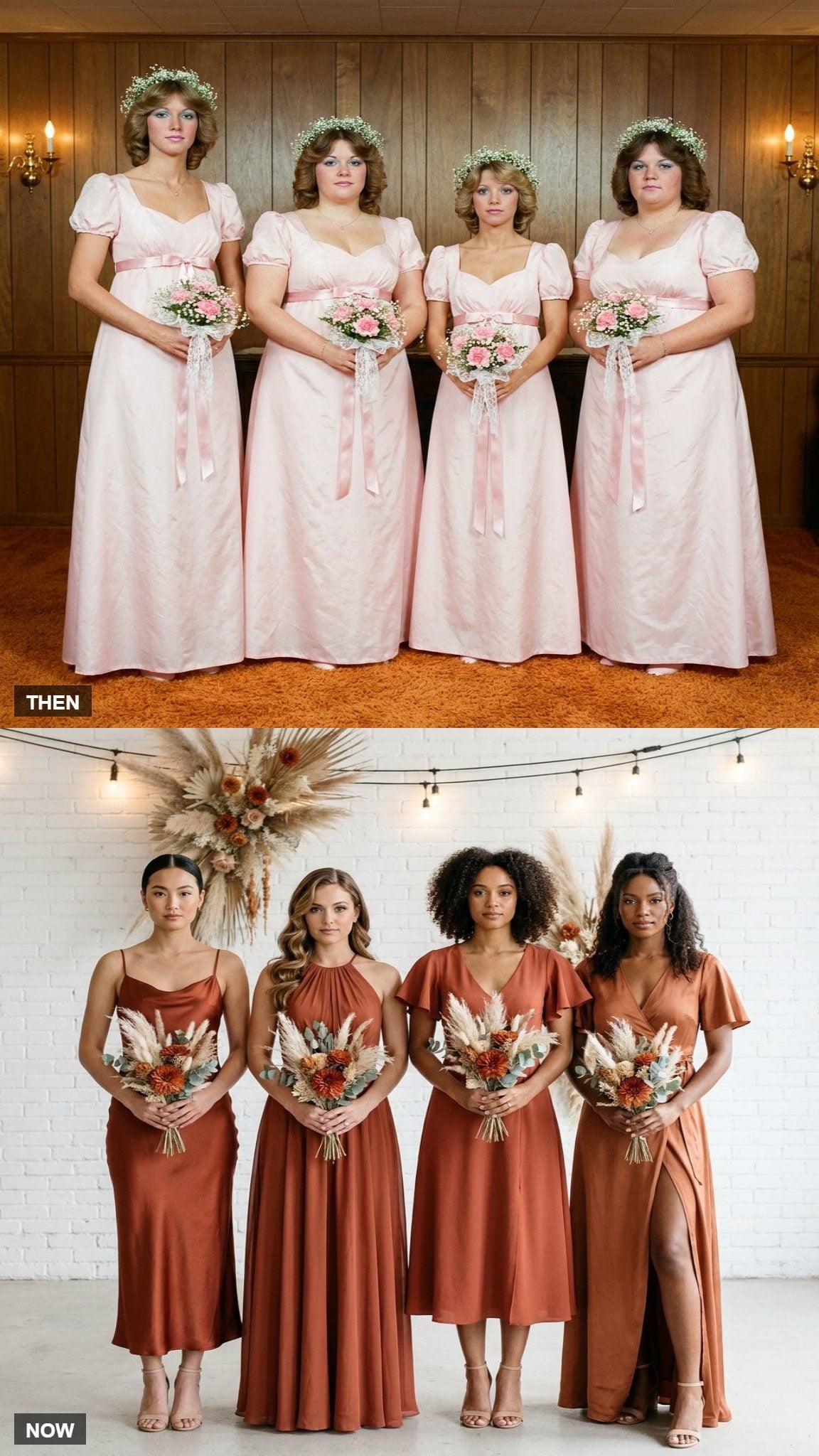
Four women, one dress, one color, one hairstyle. That was the deal in 1975. The bridesmaids were a set, like matching lamps, and any bridesmaid who happened to have a body the empire-waist puff-sleeve pink taffeta did not flatter simply had to lose the argument in public.
Now the brief is a palette, not a uniform. One color family, four different bodies, four different dresses. Four women who look like themselves instead of a pastel chorus line.
The Padded White Guestbook Gave Way to the Polaroid Wall
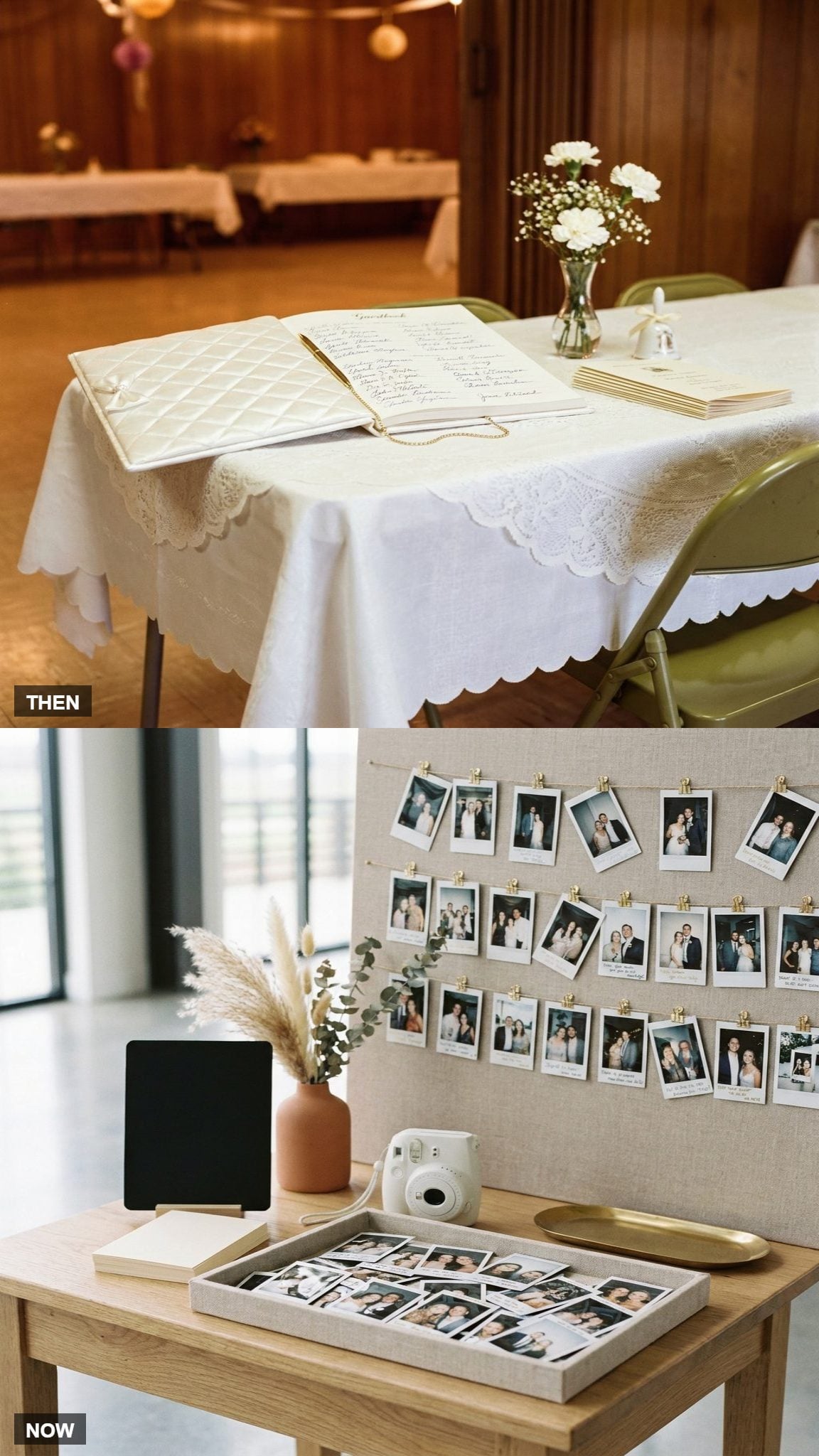
The satin book with the gold pen on a beaded chain sat on a folding table, collected a page of names, and disappeared into a box before the decade was over.
The wall of instant photographs is its descendant, and it has one clear advantage: guests write on the pictures, the display gets seen during the reception, and the couple may actually revisit it. A guestbook people look at twice was apparently the breakthrough.
The Groom’s Suit: Powder Blue and Ruffles vs. a Much Wider Modern Range
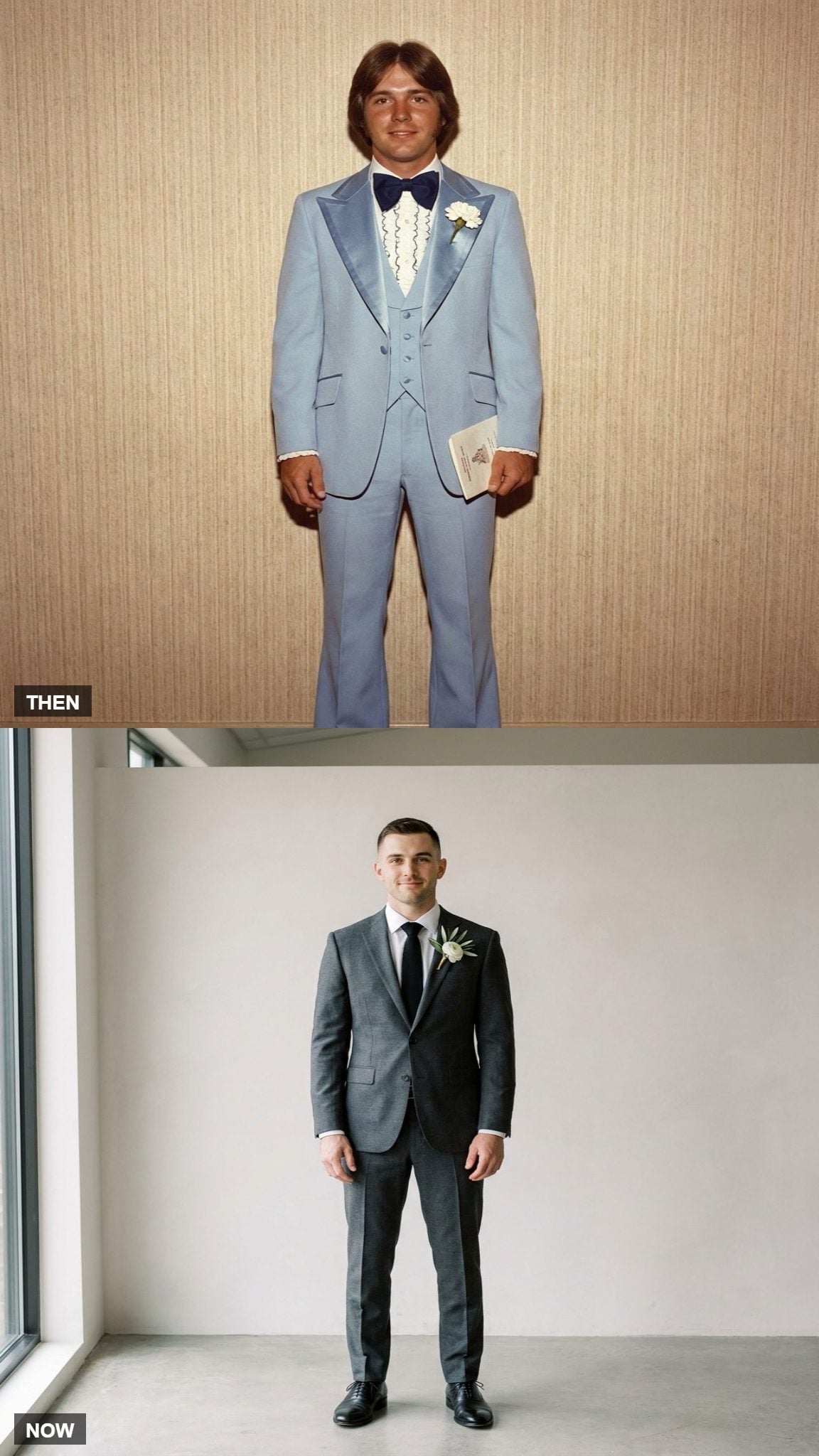
Powder blue, pale yellow, burgundy velvet, and ruffled shirts became memorable symbols of 1970s formalwear. Not every groom dressed like the lead singer of a soft-rock band, but enough did to keep the evidence alive in family albums.
The current groom can choose charcoal wool, linen, velvet, a dinner jacket, a colored suit, or something deliberately informal. The fit is usually cleaner and the shirt is far less likely to have a bib. Progress occasionally announces itself in ruffles not worn.
Ceremony Music Expanded From Church Organ Standards to Songs the Couple Chose
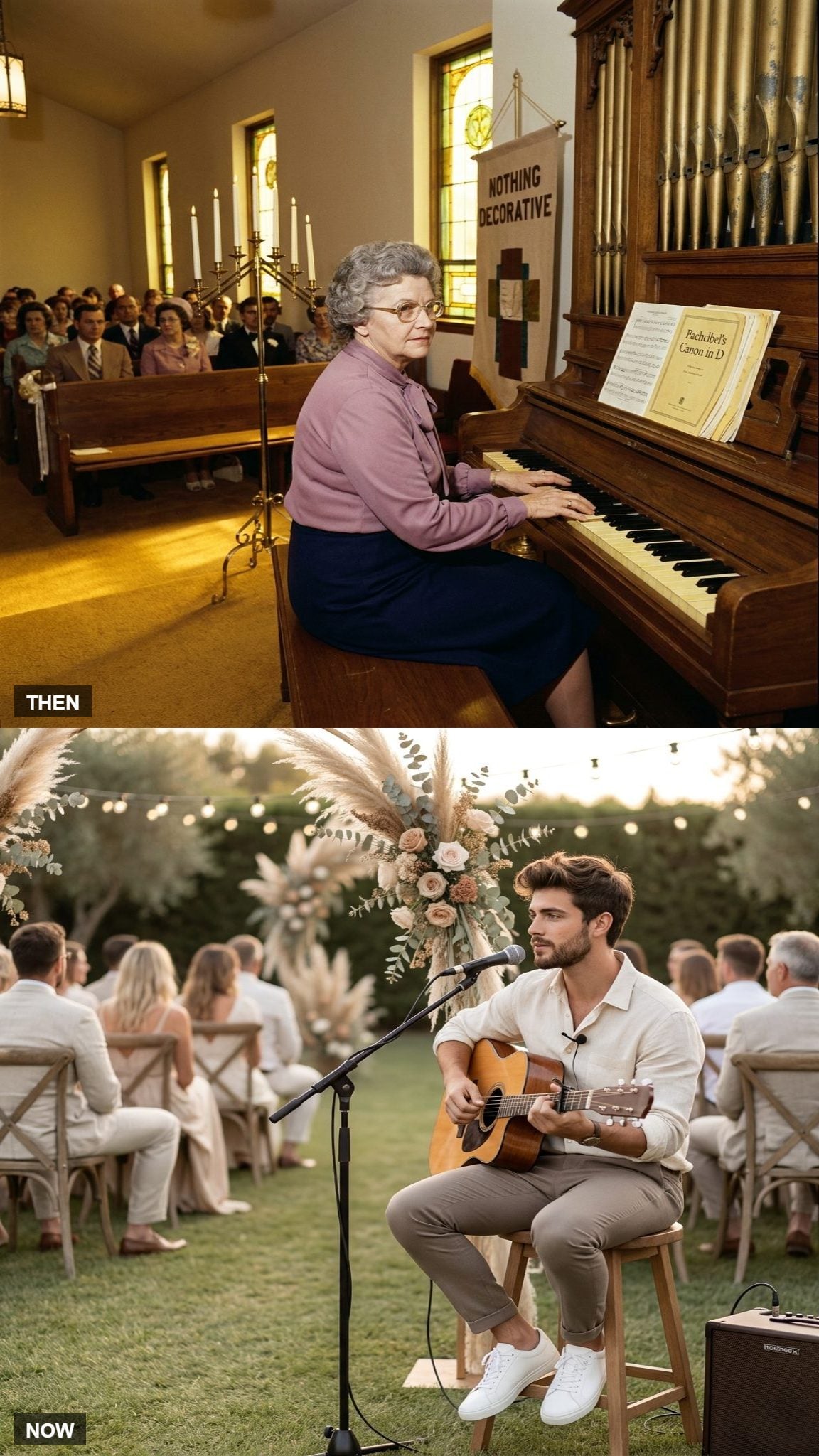
Traditional organ music, familiar hymns, and increasingly popular classical selections shaped many 1975 ceremonies. The church organist often handled weddings and funerals in the same week, and the program tended to reflect the venue as much as the couple.
Now a guitarist, string quartet, singer, or carefully timed recording can turn almost any meaningful song into a processional. The guests recognize it, the couple chose it, and the moment belongs unmistakably to them.
The First Dance: A Stiff Foxtrot to The Anniversary Waltz vs. Choreographed or Chaotic
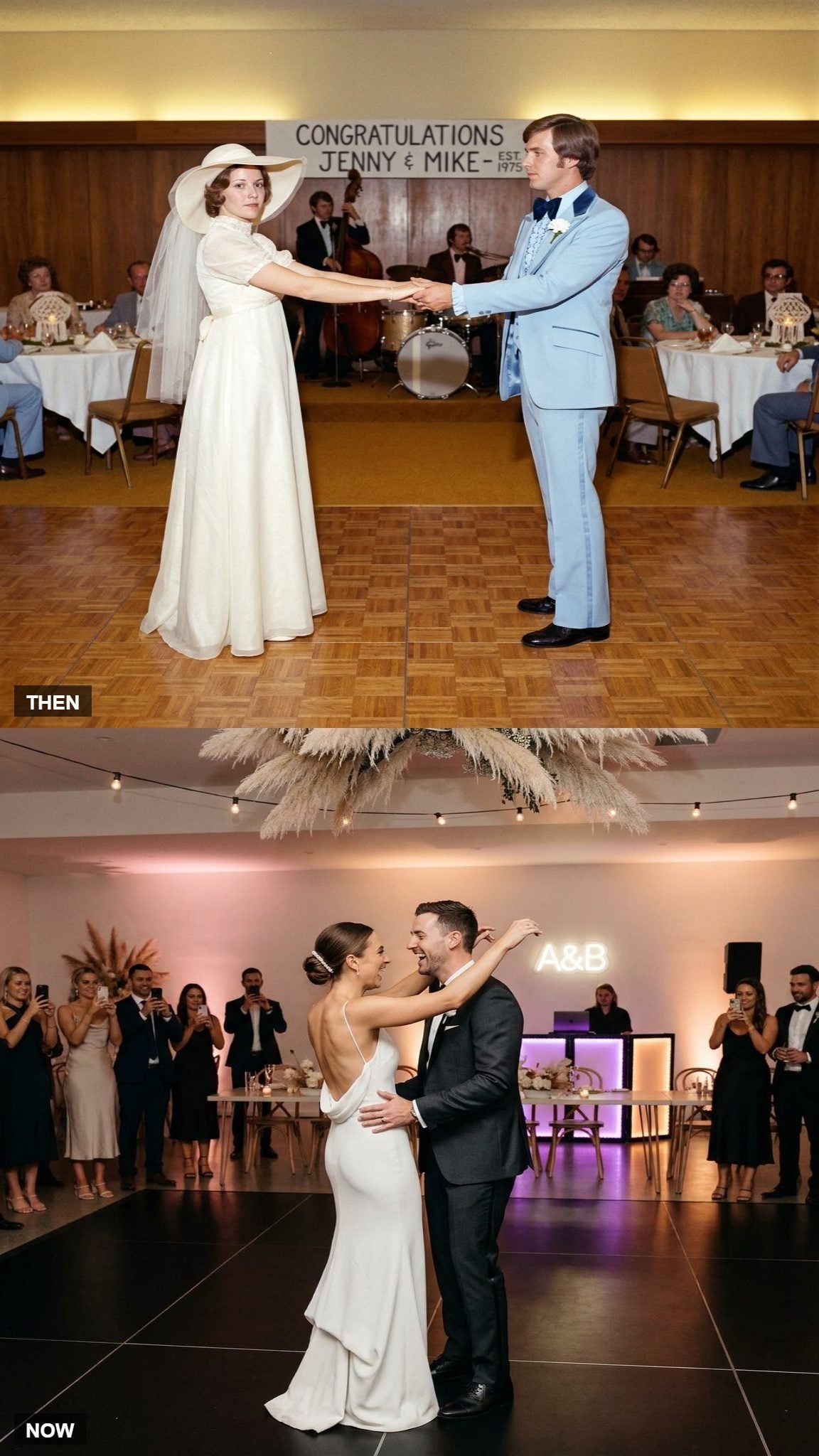
The first dance in 1975 was a formal box step performed to The Anniversary Waltz or We’ve Only Just Begun—arms locked, a foot of daylight between the couple, every relative watching in polite silence. It looked like two strangers who had been introduced at the door.
The current version might involve two weeks of choreography learned from TikTok. It might be the couple slow-swaying and laughing while guests film it. Either way, the sixty inches of formal daylight are gone. Nobody misses them.
Sugared Almonds Gave Way to a Small Bottle of Something Local
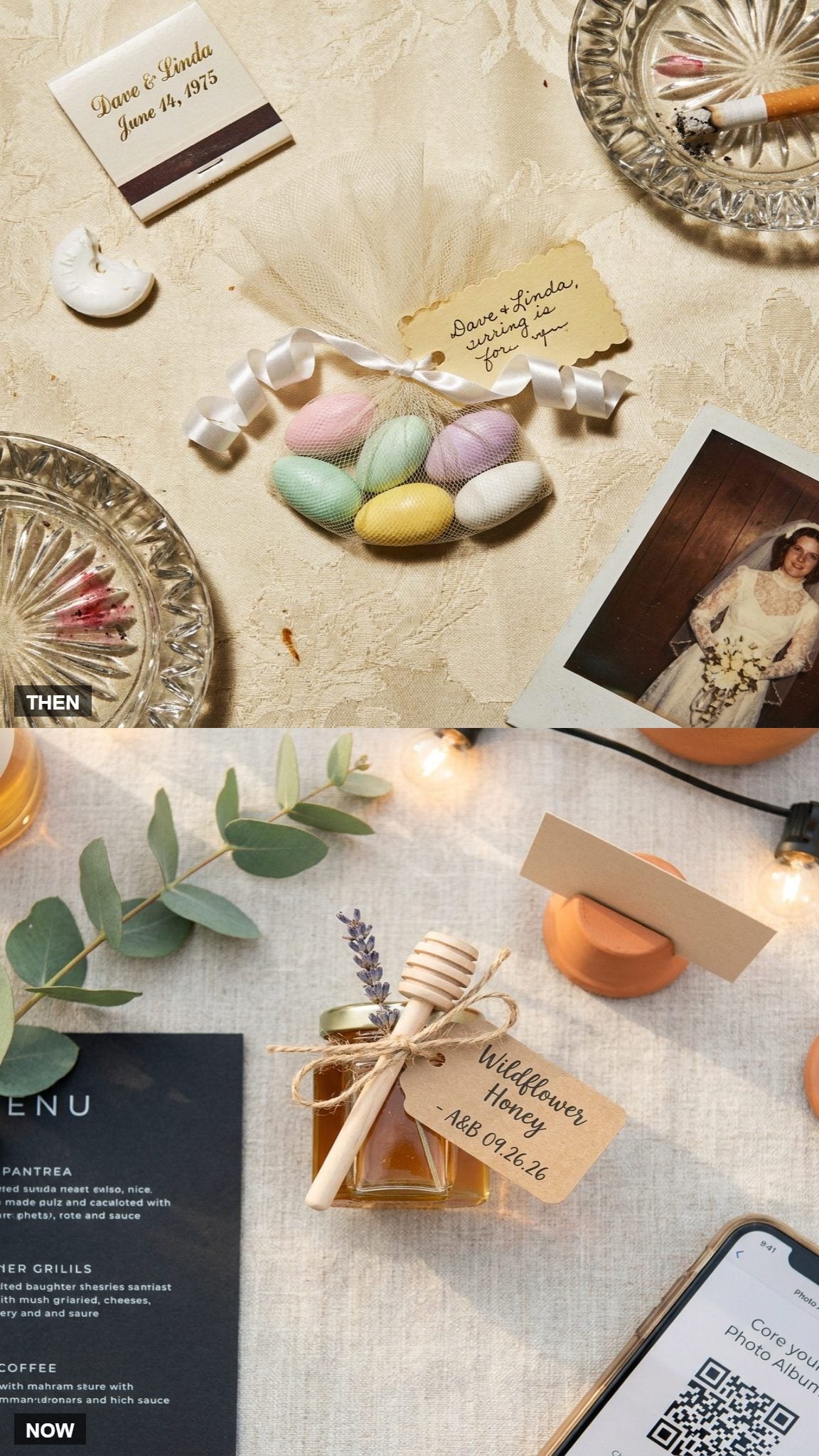
Five Jordan almonds in tulle, symbolic of health, wealth, happiness, fertility, and longevity—one per almond, according to a tradition nobody had read up on but everyone repeated. The almonds went straight into the trash on the drive home.
The bottle of honey may not last much longer, but at least someone eats it. Small gesture, smaller cleanup. That’s the whole upgrade.
The Invitations: Cream Cardstock and Formal Script vs. a Full Visual Identity
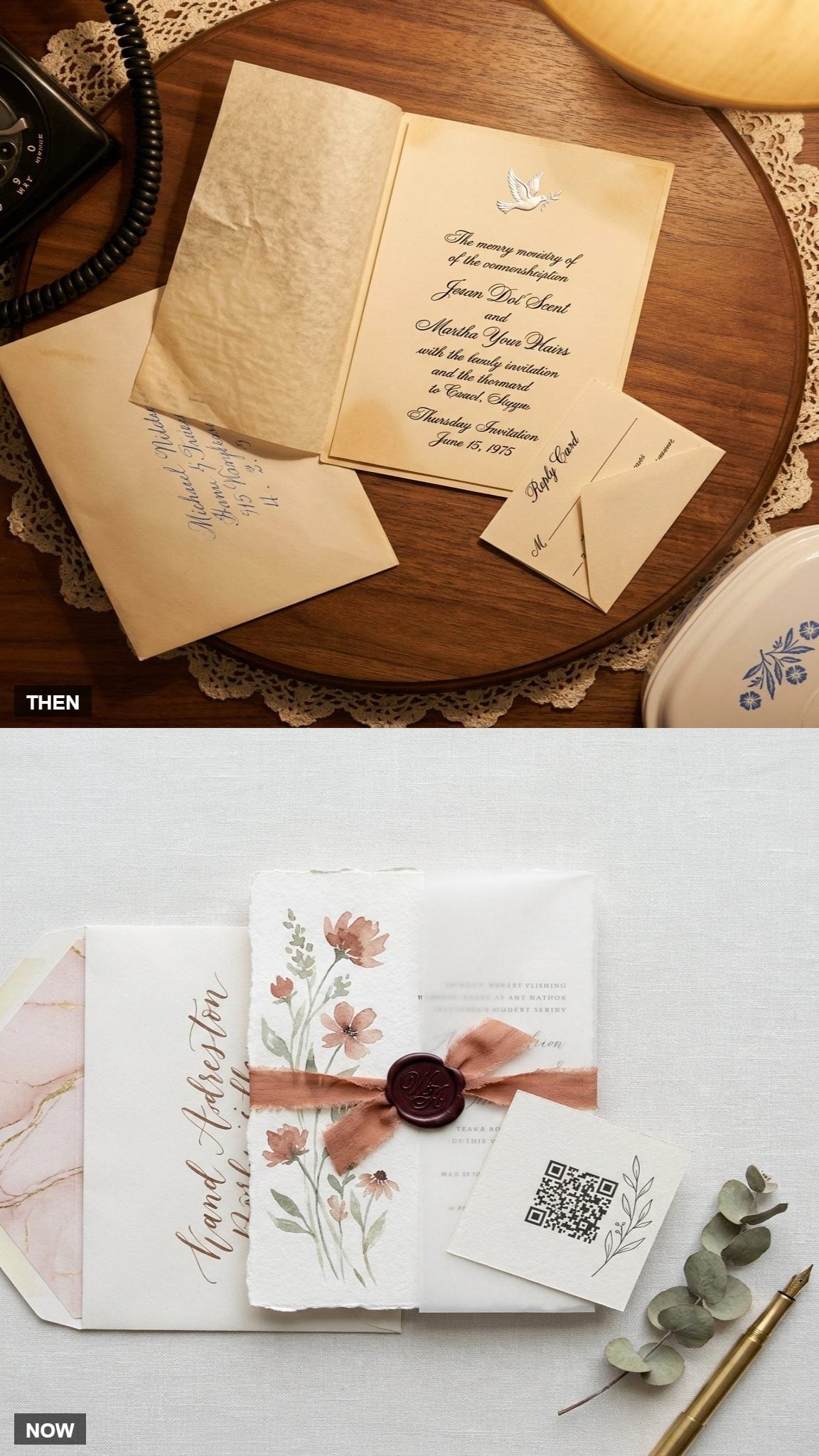
The 1975 invitation often arrived on cream cardstock in formal script, with language such as “request the honor of your presence” and perhaps a dove, bell, floral border, or embossed motif. Etiquette narrowed the choices, and many invitations within the same town looked remarkably alike.
Now the invitation often introduces the entire visual identity of the wedding: hand illustration, wax seals, deckled edges, custom typography, and a QR code for the RSVP because almost nobody is mailing back a card. The dove is welcome to return. It just has to earn it.
The Rehearsal Dinner Barely Counted as an Occasion. Now It Gets Its Own Bridal Look.
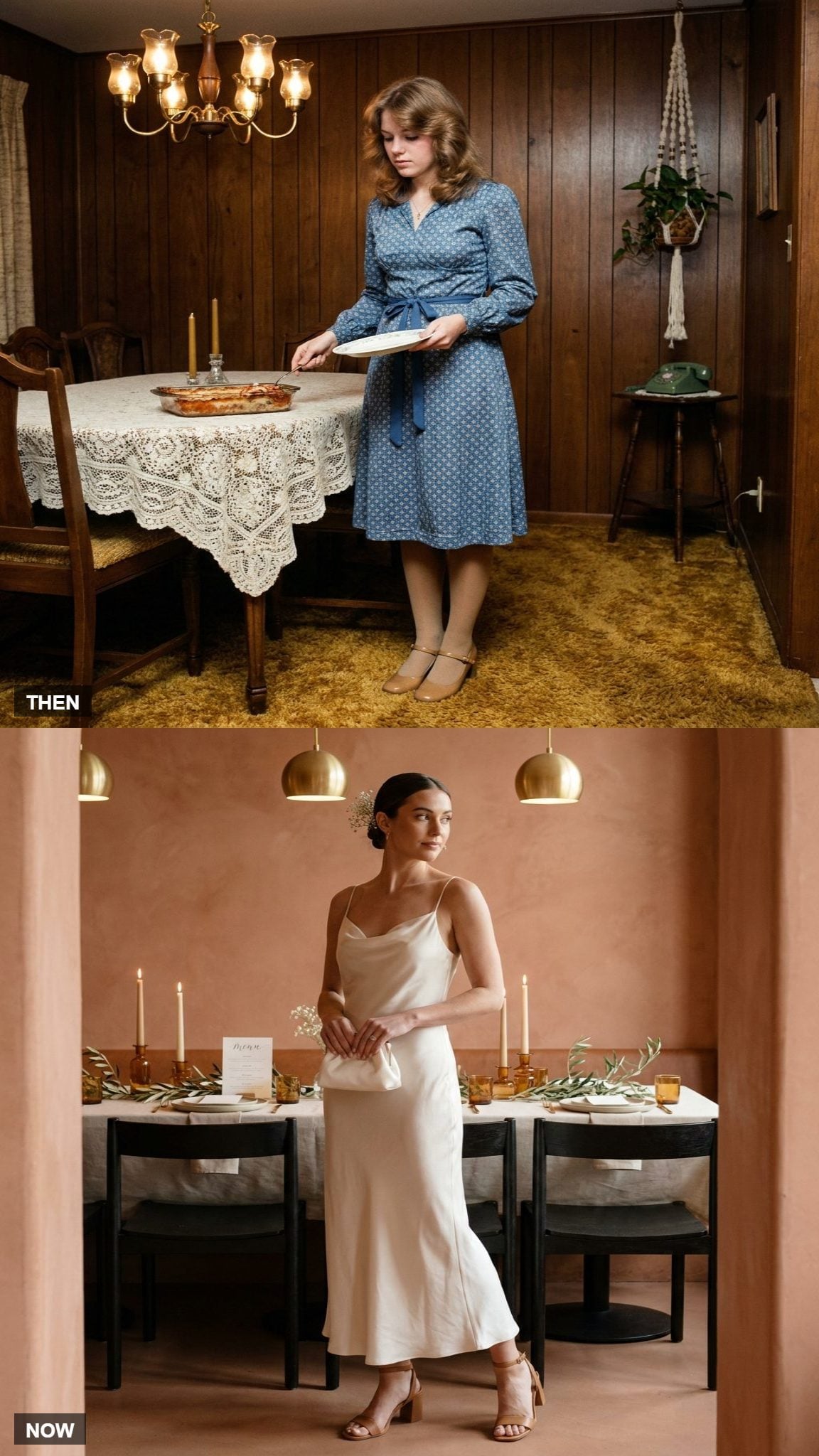
The rehearsal dinner in 1975 might be lasagna at somebody’s house. The bride wore whatever dress she already owned that had not been ruled out. It was not an event. It was Wednesday.
Now the rehearsal dinner often has its own photographs, flowers, tablescape, and white dress, usually a silk slip, tailored mini, or polished separates that feel bridal without repeating the ceremony gown. The second wardrobe starts before the wedding does.
The Getaway: Rice Thrown at a Sedan vs. Sparklers and a Vintage Convertible
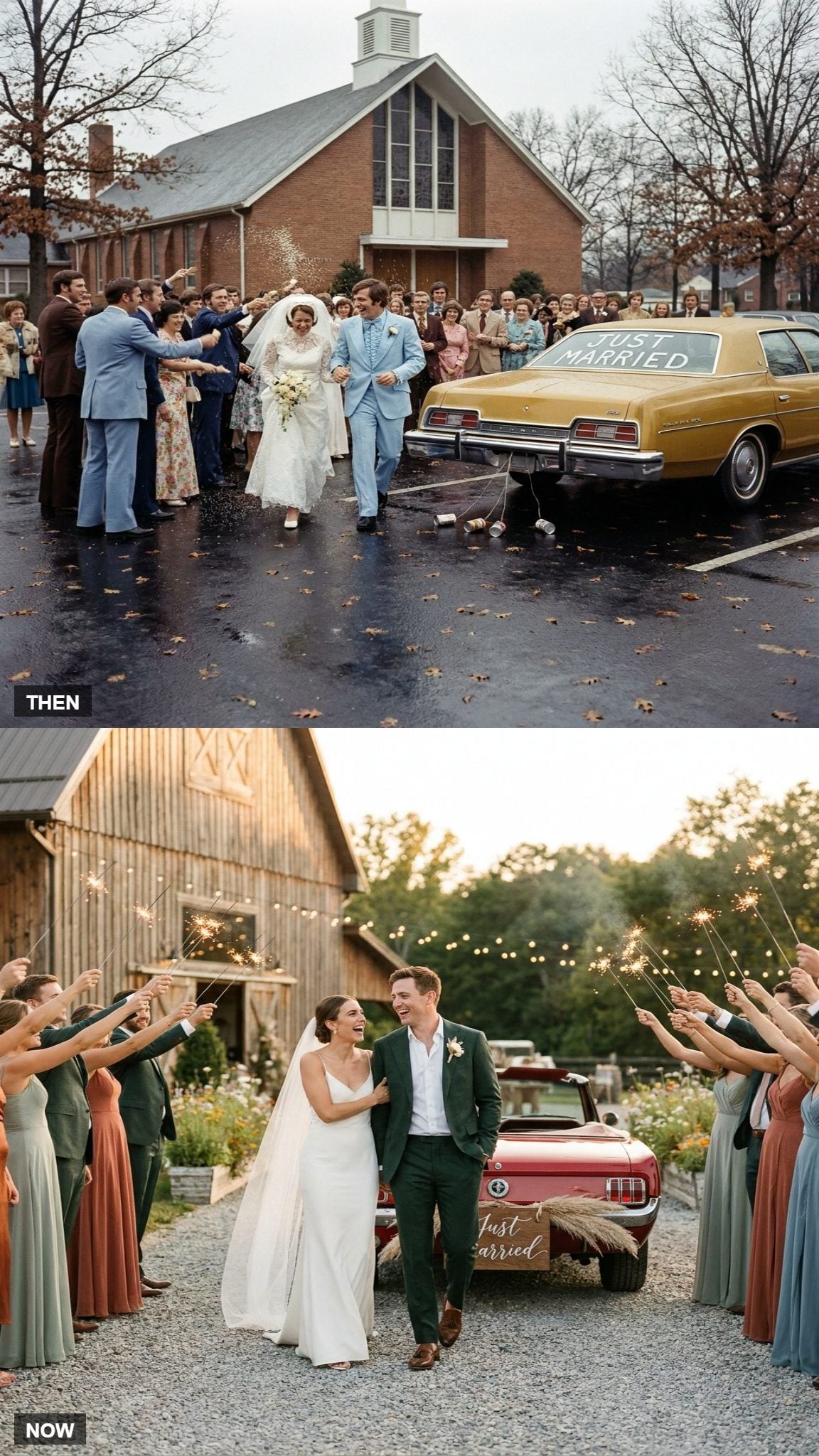
The 1975 getaway involved a hail of long-grain white rice that lodged in hair, collars, and every seam of the family sedan. Shoe polish covered the windows, old tin cans dragged behind the bumper, and the car might travel only a few blocks to the hotel.
The sparkler tunnel is dramatic and photographs beautifully. The vintage convertible may be rented for forty-five minutes so the photographer can get the shot. The couple is not really leaving. They are going back inside to keep dancing. Everyone knows it. Nobody minds.
Fine China and Gravy Boats Gave Way to the Honeymoon Fund
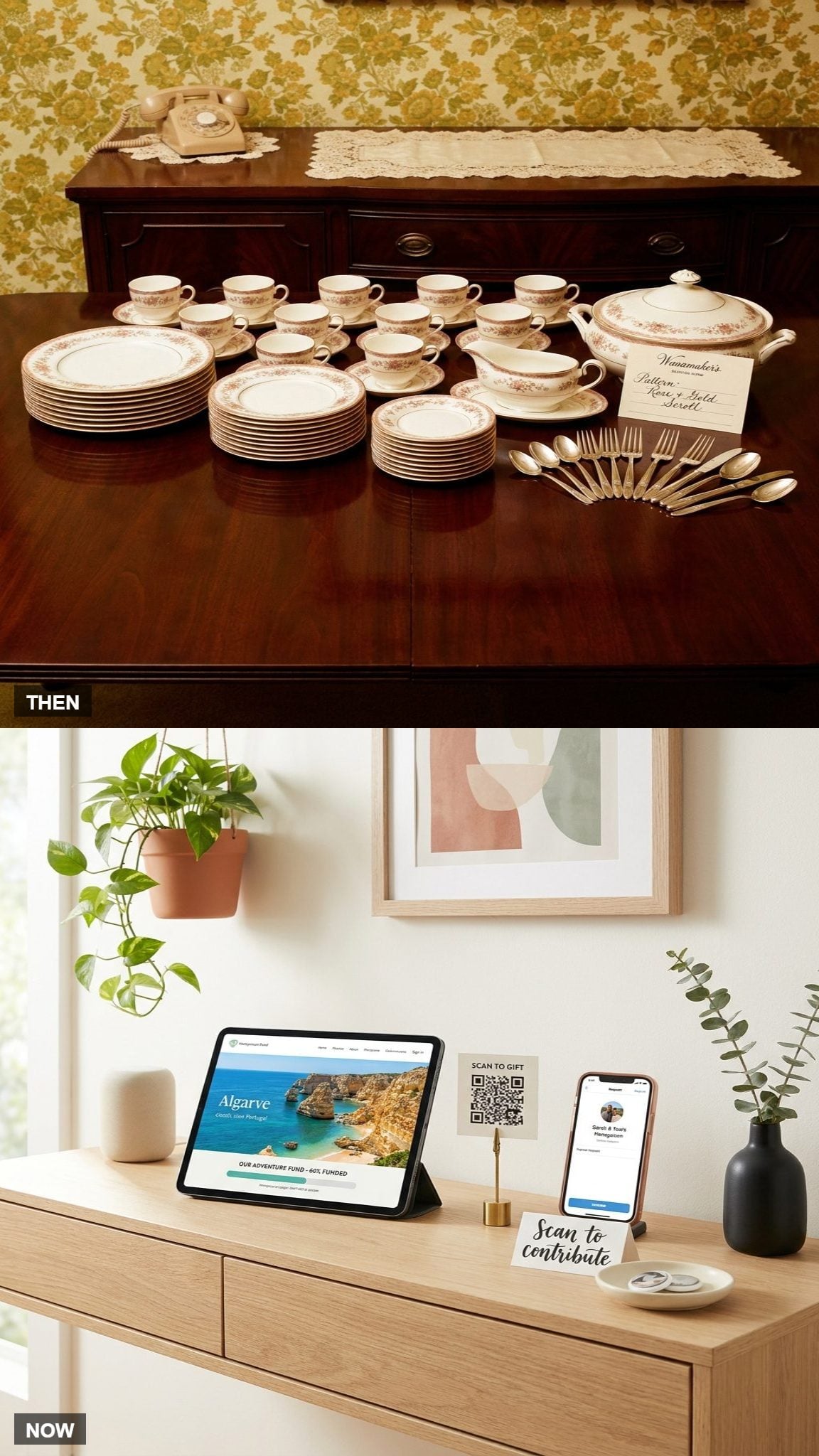
The 1975 bride registered for twelve of everything. Twelve dinner plates. Twelve salad plates. Twelve bread plates, twelve teacups with saucers, and a gravy boat that might appear once a year before returning behind glass.
The current couple may already share a lease, a dog, and a cabinet full of mismatched plates. What they do not have is a week in Portugal. So the registry becomes a honeymoon fund, cash contribution, travel experience, or shorter list of household items they expect to use immediately.
The Wedding Photographer: Limited Film Frames vs. a Full Production Team
❤️ Would you like to save this?
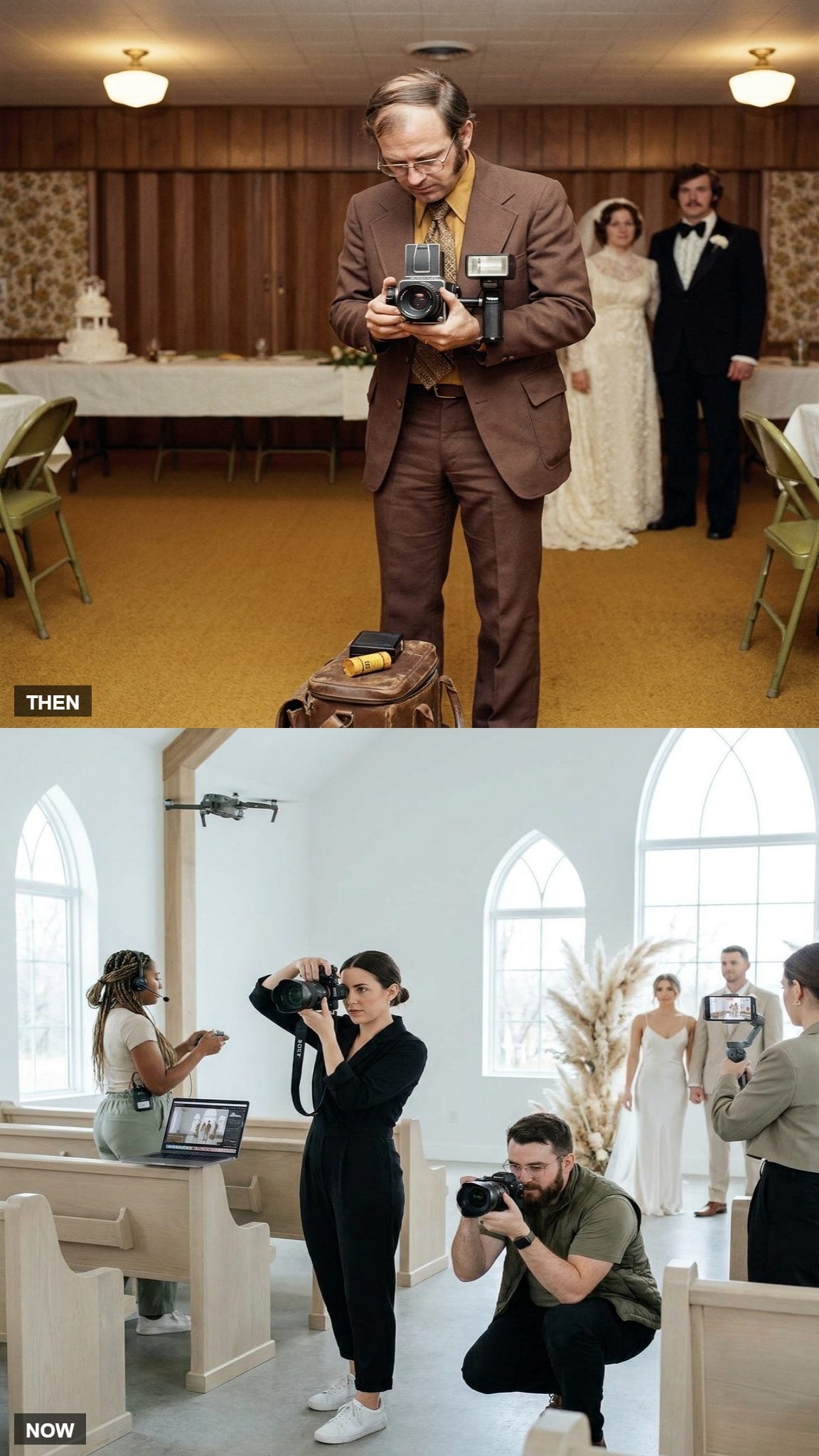
In 1975, one photographer might cover the entire day on film, working carefully because every frame cost money and could not be checked on the back of the camera. Weeks later, the finished album arrived in a padded white cover with gold lettering across the front.
Now a wedding may involve a lead photographer, second shooter, videographer, drone operator, and content creator capturing vertical clips before the toasts have ended. The deliverables can include hundreds of edited photographs, a highlight film, a longer documentary cut, a same-day teaser, and raw footage on a drive the couple may never open again.
The camera got smaller. The production grew around it.