❤️ Would you like to save this?
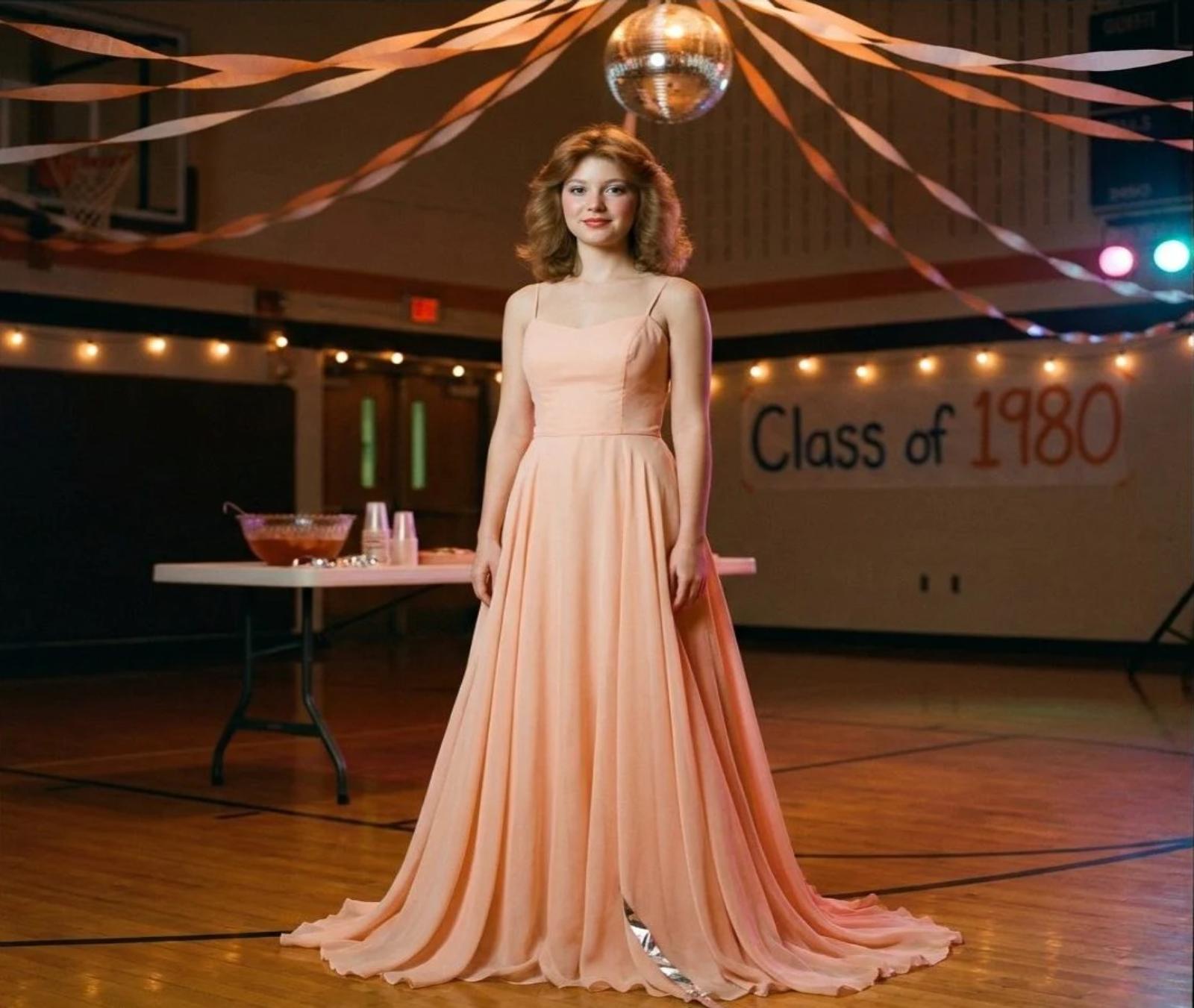
The gym smelled like hairspray and anticipation. The DJ was playing something heavy on synthesizer, and somewhere on the dance floor was a girl in a dress with sleeves the size of throw pillows, a bow big enough to gift-wrap a refrigerator, and enough taffeta to upholster a sectional sofa.
Prom in 1980 was its own universe. What passes for a prom dress now might have caused a dress-code emergency back then. Twenty-six details. More than four decades. The gap is genuinely hard to believe.
FYI, thanks to AI imagery software, we’re able to create very specific fashion and hairstyle examples to illustrate the points being made. In some cases, imagery is exaggerated to hammer home the point. Also, assume links that take you off the site are affiliate links such as links to Amazon. this means we may earn a commission if you buy something.
26. The Portrait Neckline That Made the Shoulders the Main Event
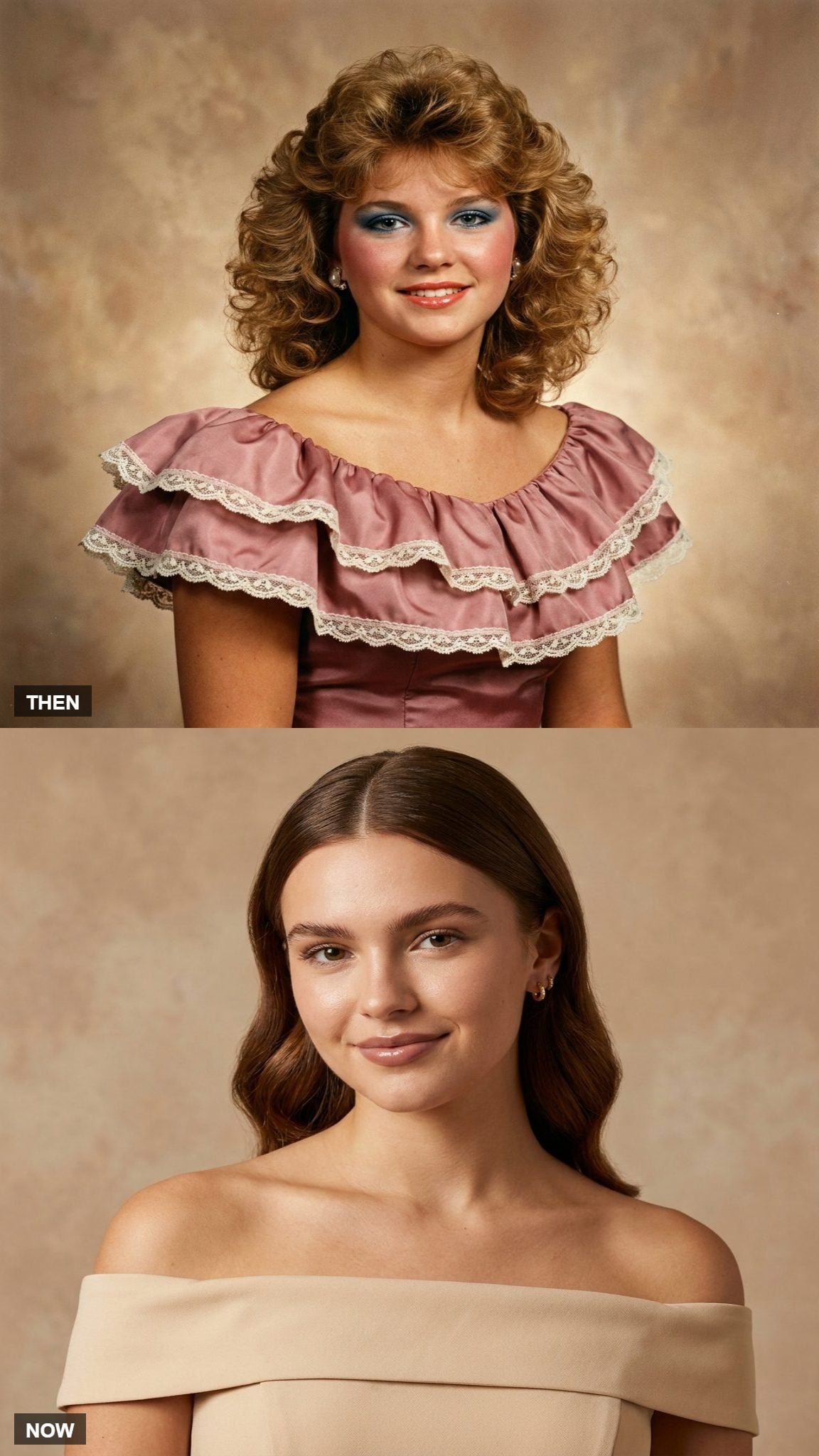
The portrait neckline of 1980 prom was doing a lot. Wide and ruffled, it sat across the shoulders like a Shakespearean collar made from synthetic satin. Boning, elastic, and the occasional emergency safety pin helped keep the whole arrangement in place through every fast song the DJ played.
Today’s off-the-shoulder dress borrows the same shoulder-baring idea but removes most of the framework. The line is cleaner, the fabric falls more quietly, and the neckline no longer has to compete with several layers of gathered trim.
What Our Readers Say
- Asked which era they dress for, two out of three ThreadCurve readers picked timeless, while 22% went for retro revival.
- In our reader polls, 63% say comfort comes first and polish second, a long way from boning, petticoats and stiff taffeta.
From ThreadCurve reader polls and votes.
25. The Sleeve Volume That Could Pick Up Radio Signals
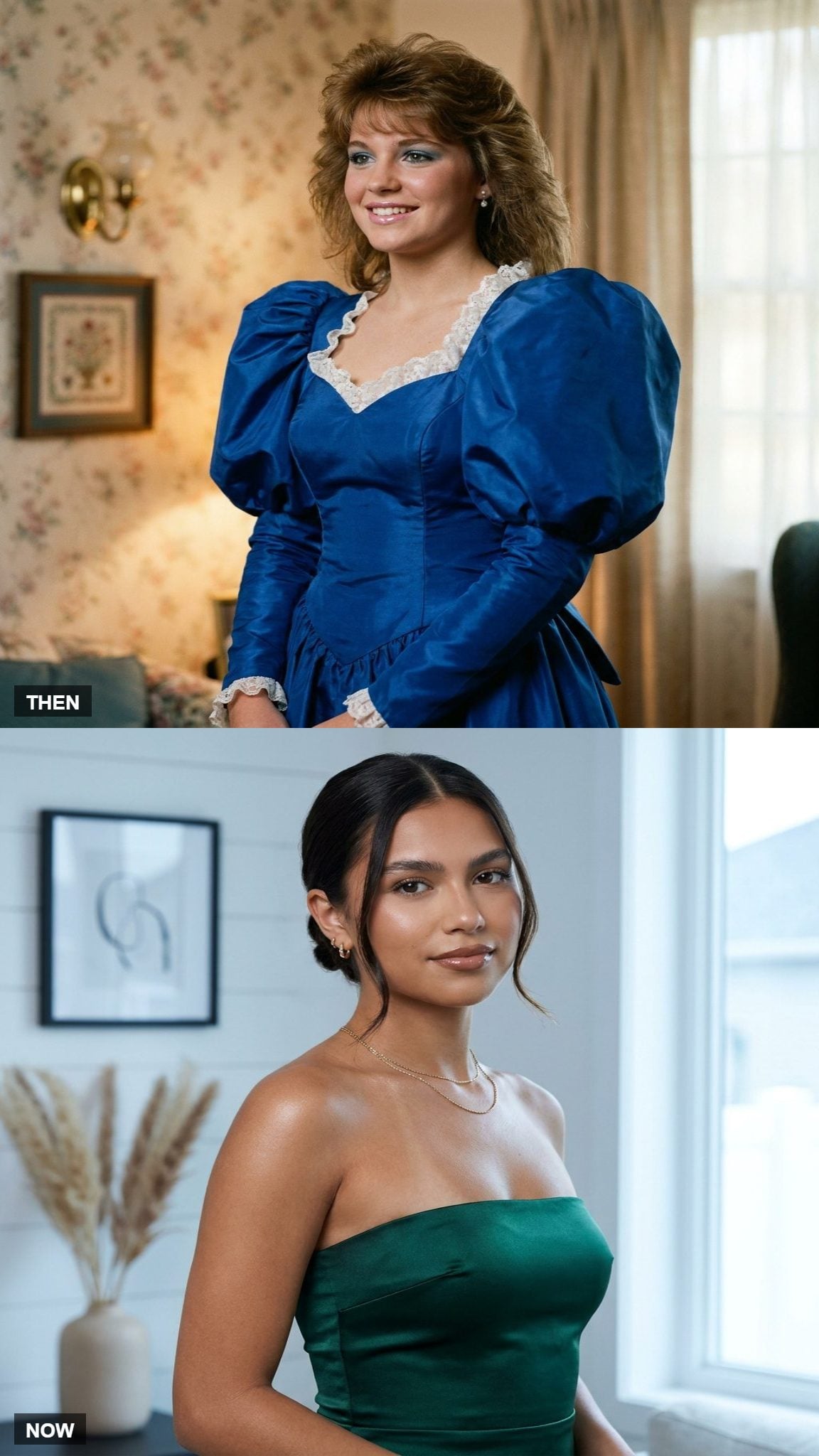
Puffed sleeves in 1980 were not merely a detail. Taffeta ballooned from the shoulder seam and created a silhouette wide enough to demand advance planning at narrow doorways. The volume helped balance a full skirt, although the final effect sometimes suggested formalwear designed by a football coach.
Modern prom dresses often leave the shoulder almost completely exposed. Strapless necklines, narrow straps, and sleeveless cuts treat the shoulders as part of the silhouette rather than a platform for architectural experimentation.
24. The Updo: Aqua Net Architecture vs. Effortless Undone
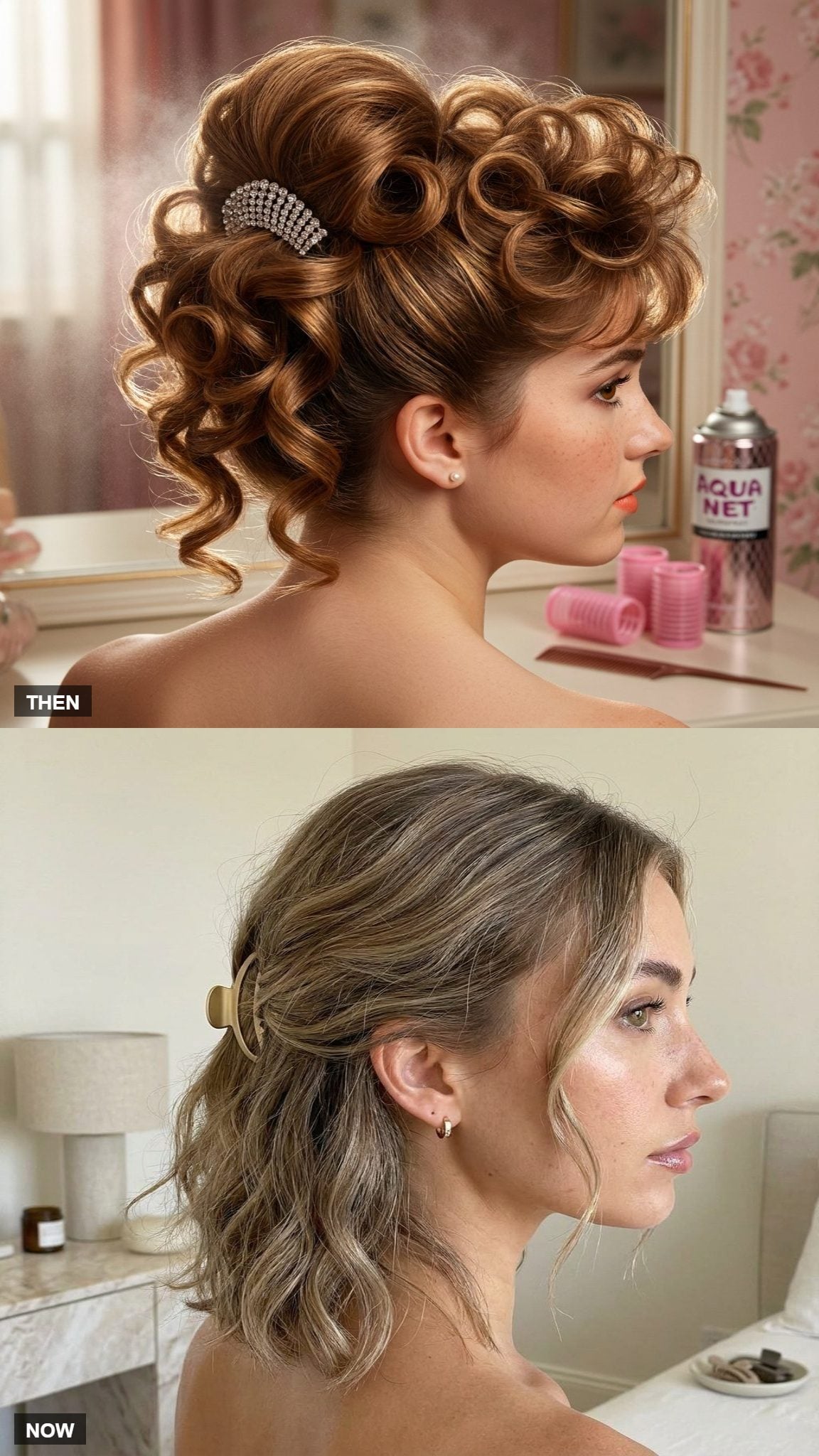
The 1980 prom updo required an appointment, a formidable supply of Aqua Net, and plenty of patience. Pins, teasing, curls, and a rhinestone comb produced hair that did not move when the dancing started.
The modern equivalent is studied nonchalance: loose waves, a low knot, or a deliberately imperfect twist with a single clip. The goal is to look as though very little effort was involved, which can take just as long to achieve.
Different aspirations, same amount of bathroom time.
The undone look has real support today: when we asked our readers about hair finish, 75% picked tousled over sleek.
23. The Color Palette: Sherbet Brights vs. a Broader Modern Spectrum
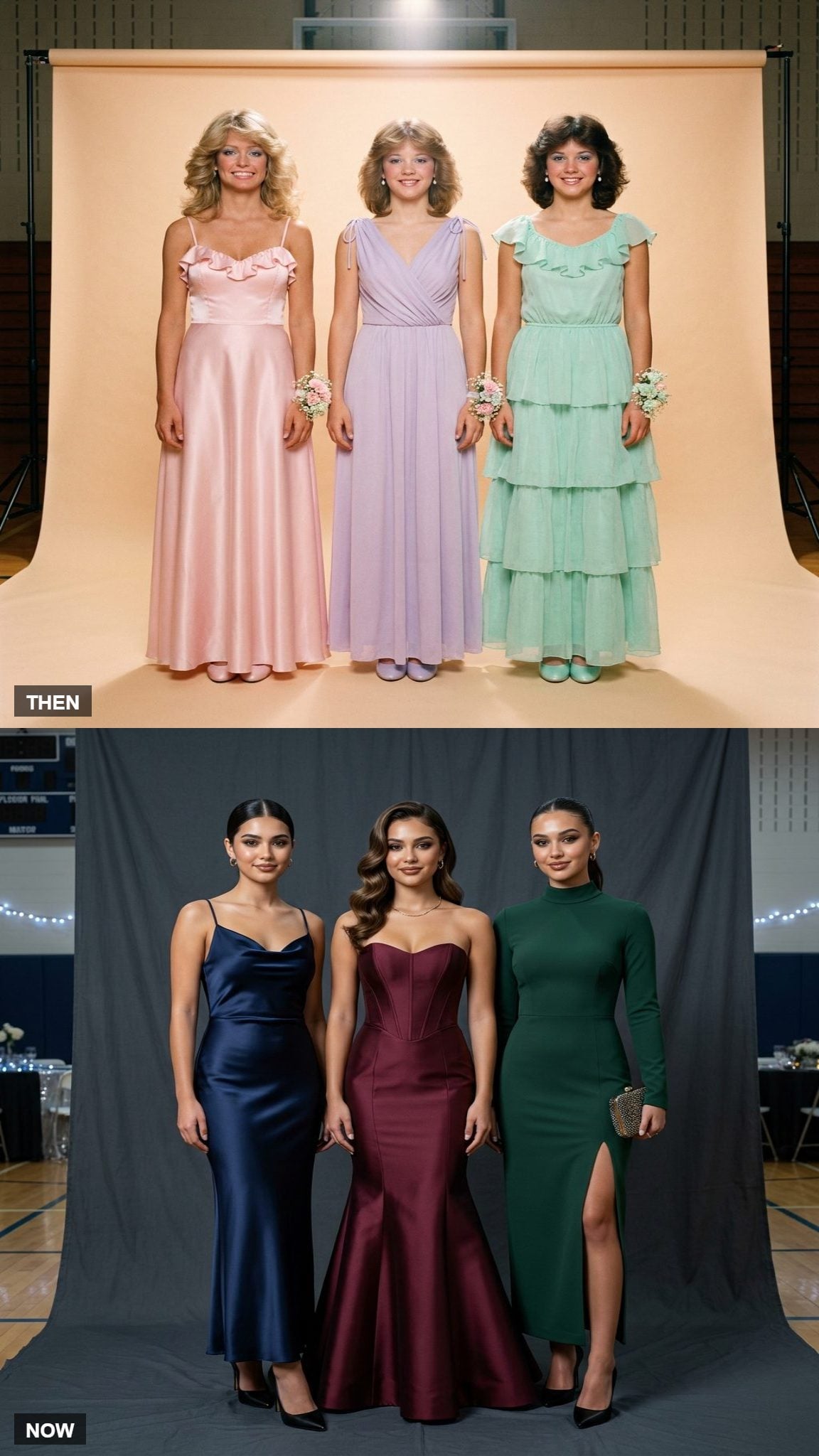
Look at a group prom photo from 1980 and the colors often arrive before the silhouettes do. Powder pink, lavender, mint, peach, turquoise, and royal blue stood side by side like a dessert cart converted into formalwear.
Today’s palette is broader. Midnight blue, wine, forest green, and black share the rack with dusty rose, sage, champagne, and muted blue. Some dresses whisper while others still demand attention; modern prom simply allows more than one definition of formal.
22. Dyed Satin Pumps vs. Shoes Chosen to Stand on Their Own
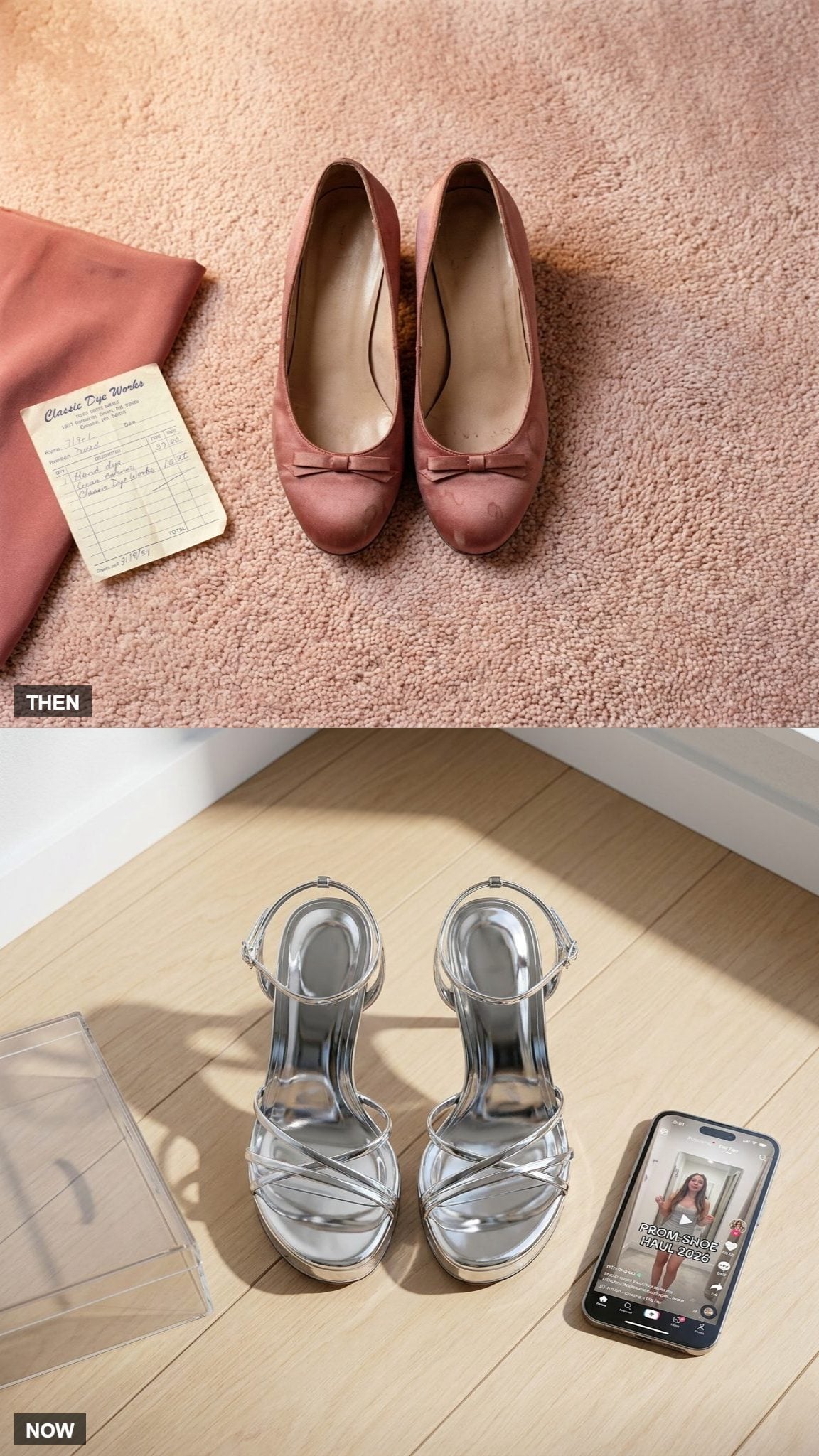
Dyed-to-match satin pumps were a prom ritual. You brought the dress or a fabric swatch to a shoe shop, and a pair of white satin pumps came back in a shade intended to disappear beneath the hem. A modest heel kept them practical, while a small bow or rhinestone clip completed the coordination.
The modern shoe is more independent. Metallic sandals, clear straps, neutral heels, or an intentionally contrasting color can work without repeating the dress exactly. Matching still happens, but it is no longer the entire assignment.
The 1980 shoe was a team player. The modern one is allowed a solo.
Today, when ThreadCurve readers choose the heel height they would actually buy, about half go flat and only 9% pick high.
21. The Satin Evening Clutch vs. the Mini Bag That Holds Three Things
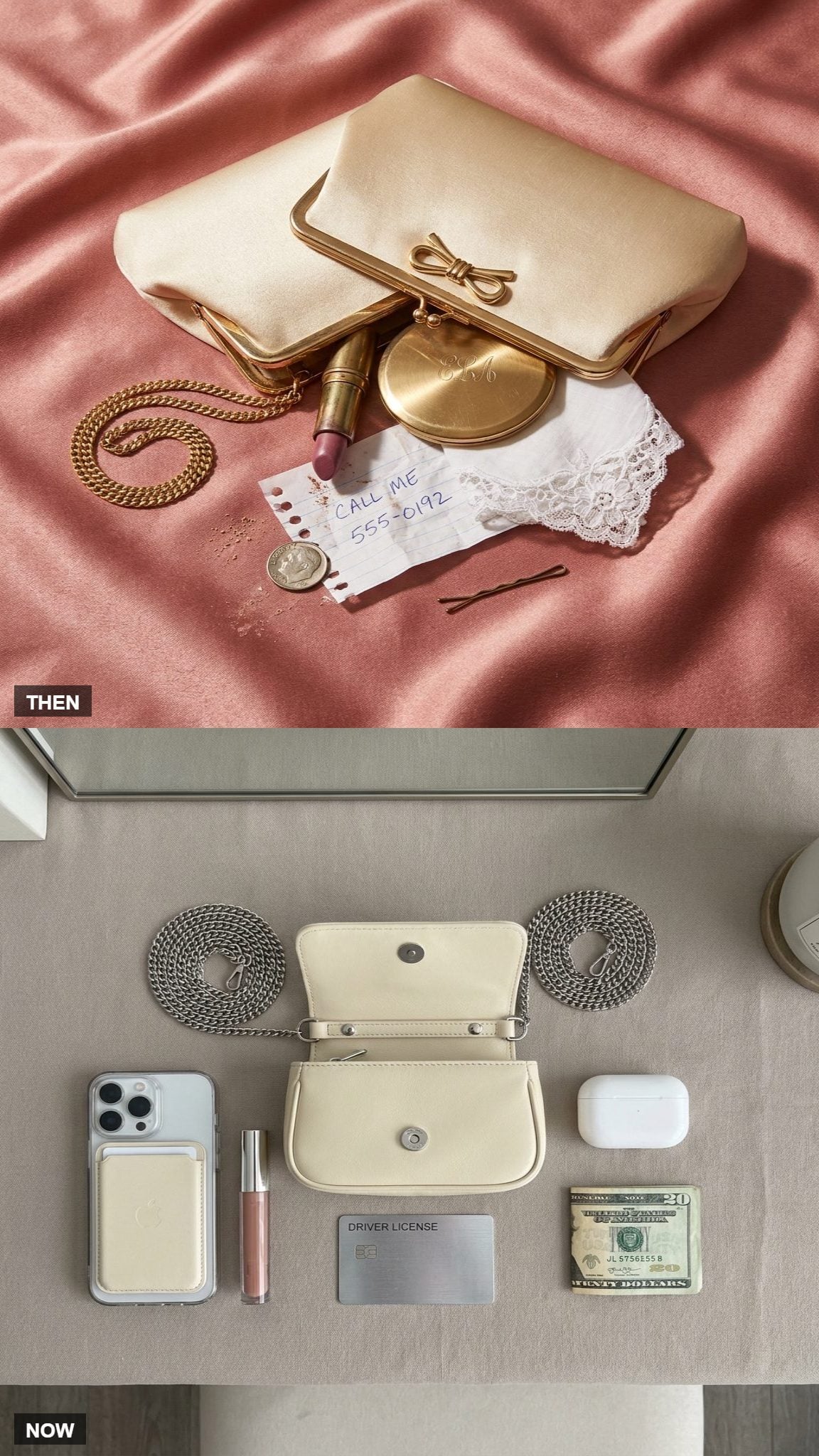
The satin evening clutch implied you needed only lipstick, a compact, and a folded handkerchief. In reality, it might also hold a dime for the pay phone and growing uncertainty about whether your ride was arriving at 11 p.m. or 11:30.
The modern equivalent is a tiny structured bag that holds a phone, an ID, and one lip product if the zipper is feeling cooperative. Different container, same optimism about how little a person needs for an entire night out.
20. Floor-Length Formality vs. the High-Low Hem
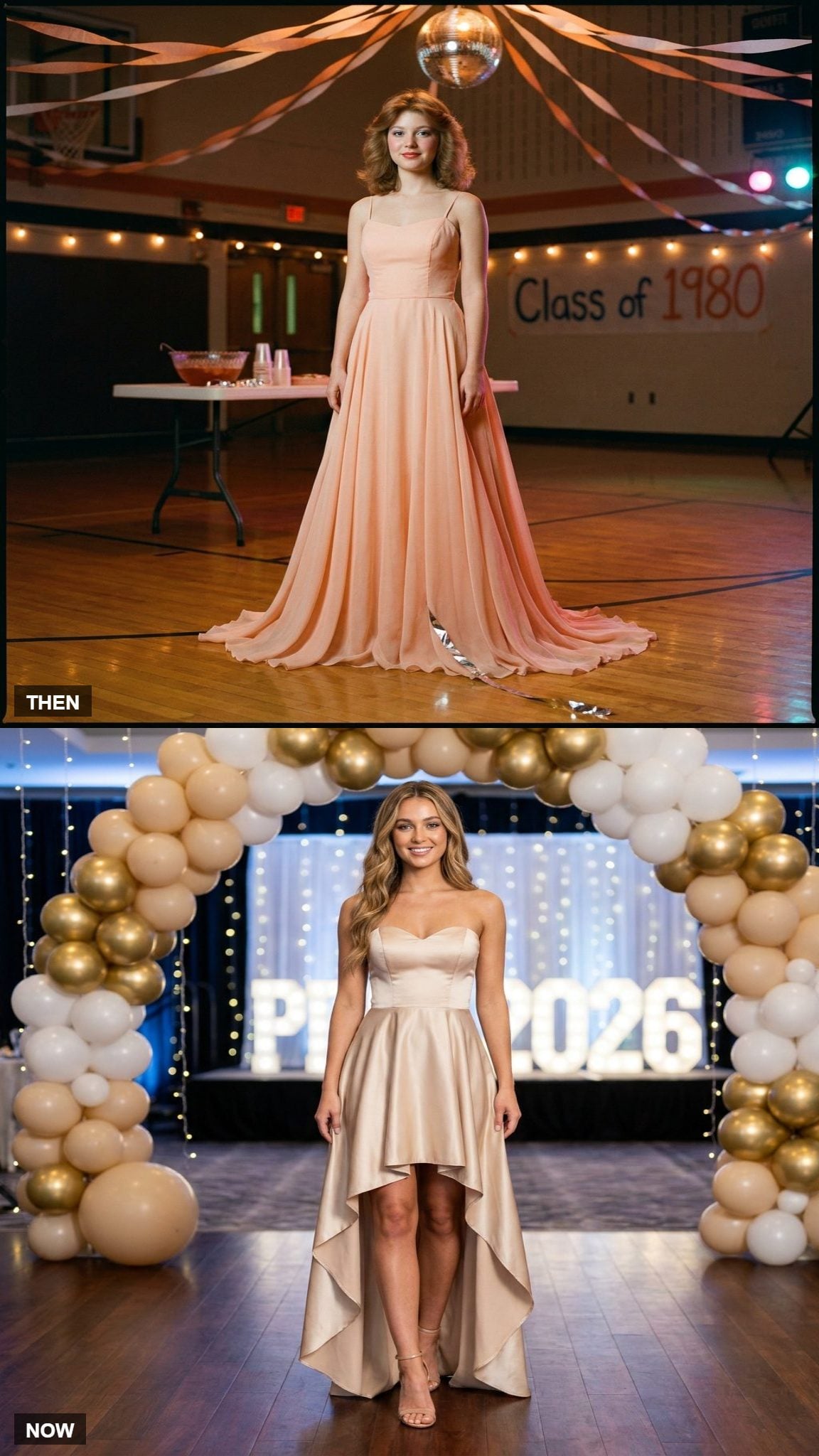
Floor-length gowns dominated the most formal end of the 1980 prom rack, although shorter full-skirted dresses were also available. The long hem swept the gym floor, gathered the occasional streamer, and gave the evening more gravity than a basketball court normally possessed.
High-low dresses became especially visible in modern formalwear during the early 2010s and never disappeared completely. The shorter front shows the shoes and simplifies walking, while the longer back preserves enough sweep for the photographs.
It is either clever compromise or a dress hedging its bets.
19. Stiff Taffeta vs. Fabric That Moves With the Wearer
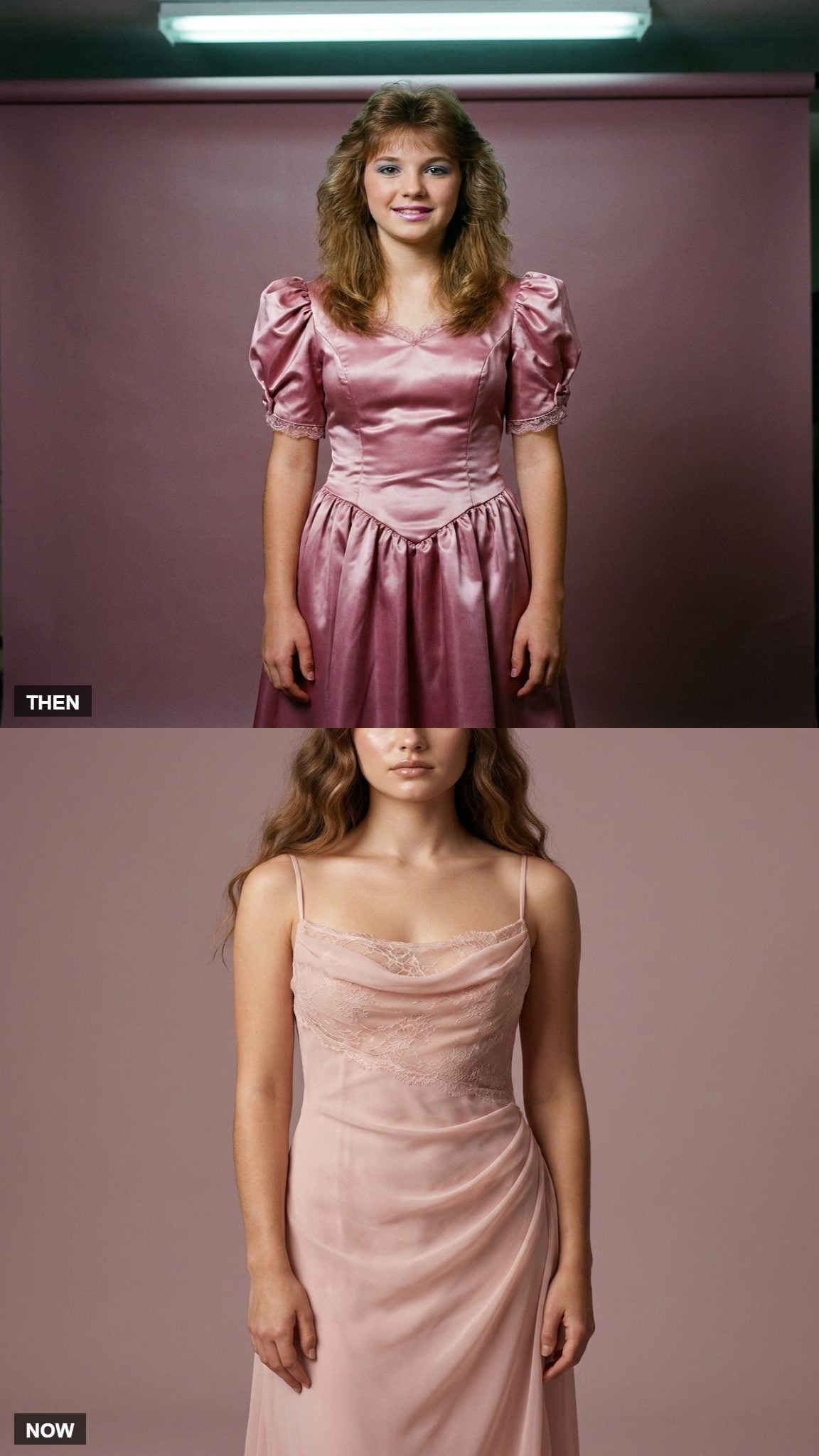
Stiff polyester taffeta and shiny satin were prominent formalwear choices in 1980. They held gathered sleeves, full skirts, ruffles, and bows exactly where the pattern intended. Breathability was not their greatest strength, but structure was.
Modern prom dresses use everything from chiffon and stretch crepe to mesh, lace, and fluid satin. These fabrics move because the current silhouette often depends on movement.
Somewhere between then and now, the job of the dress shifted from holding its shape to following yours.
18. The Shoulder Pads Hiding Under the Sleeves
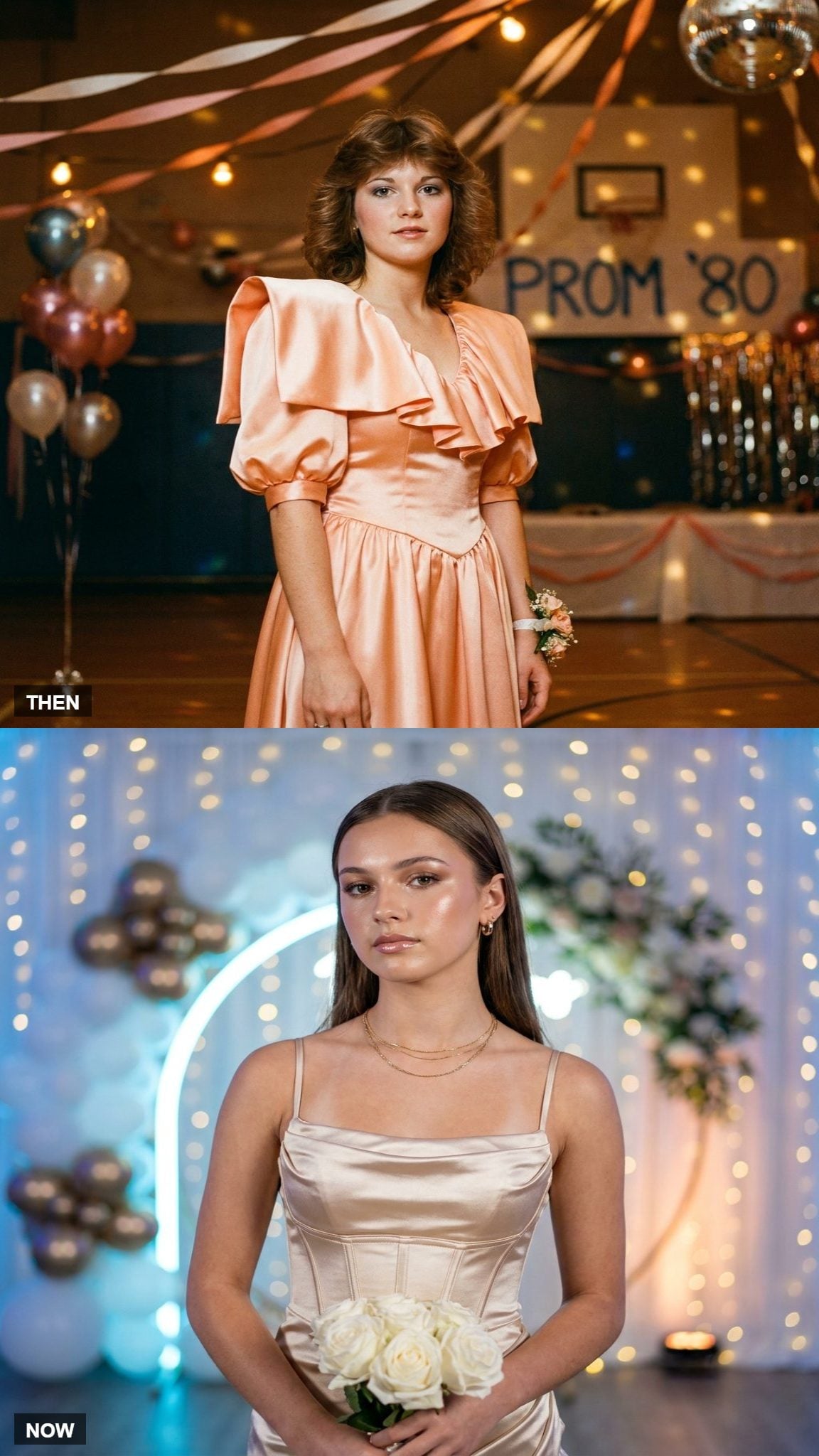
Puffed sleeves created volume outside the dress. Shoulder pads added another layer beneath it. They sharpened the upper body and gave even soft formal gowns a trace of the broad, authoritative silhouette spreading through early-1980s fashion.
Current prom styles are more likely to reveal the natural shoulder line through narrow straps, one-shoulder necklines, or clean sleeveless cuts. Modern dresses may still use internal structure, but they rarely advertise it through visible padding.
The old shoulder entered the room first. The modern one waits for the rest of the dress.
17. The Train: From Dramatic Statement to Dignified Sweep
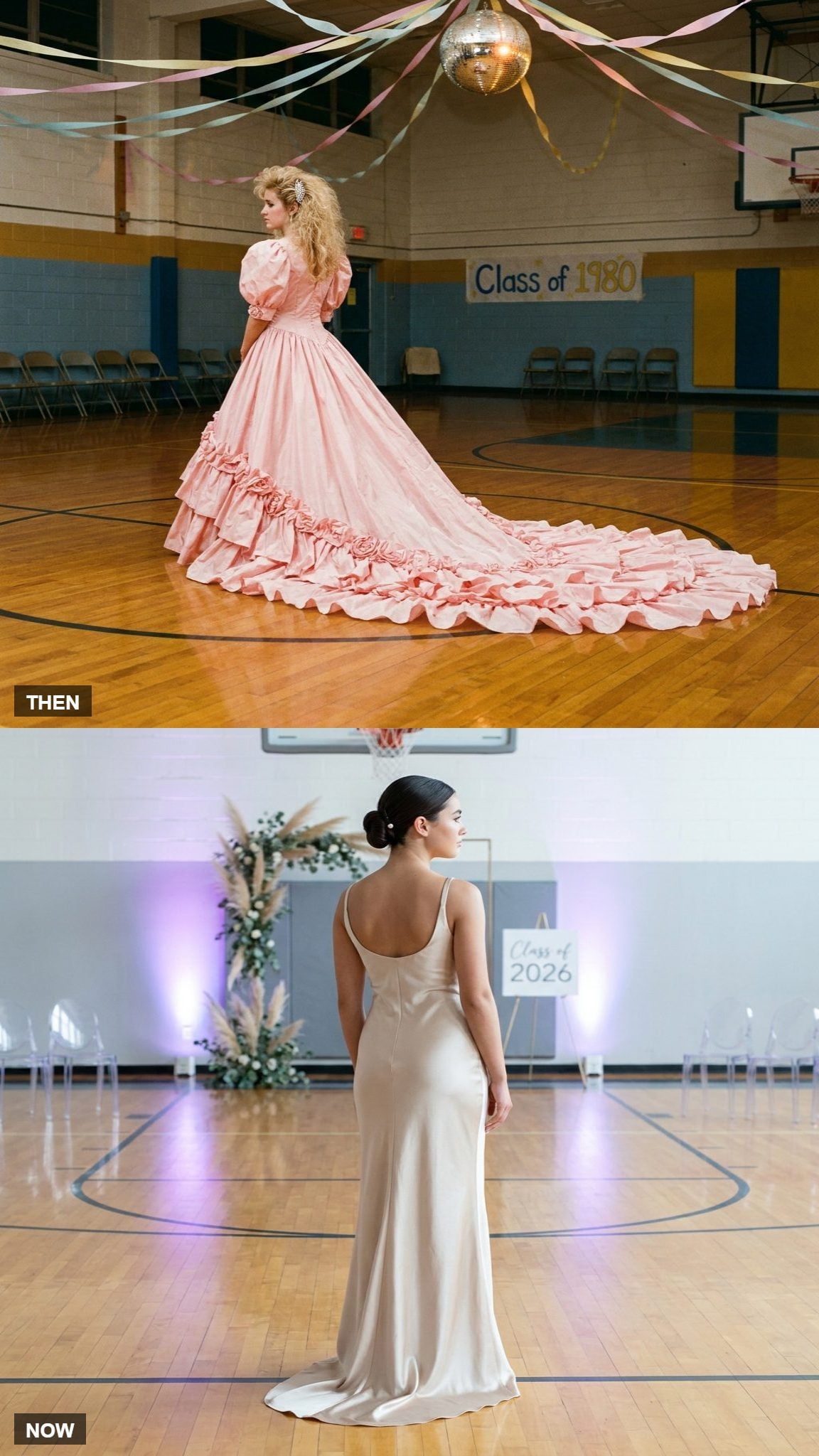
The 1980 prom train was a declaration. Taffeta gathered into ruffled rows at the back and spread across the gym floor like a statement nobody had requested. Reaching the punch bowl required route planning. Getting into a car required assistance.
Modern trains, when they appear, are often measured in inches rather than ambitions. A soft sweep extends the hem just enough to register in photographs without demanding a support crew.
The point is no longer to fill the room. It is to make the exit look good.
16. The Wrist Corsage Was Its Own Entire Situation
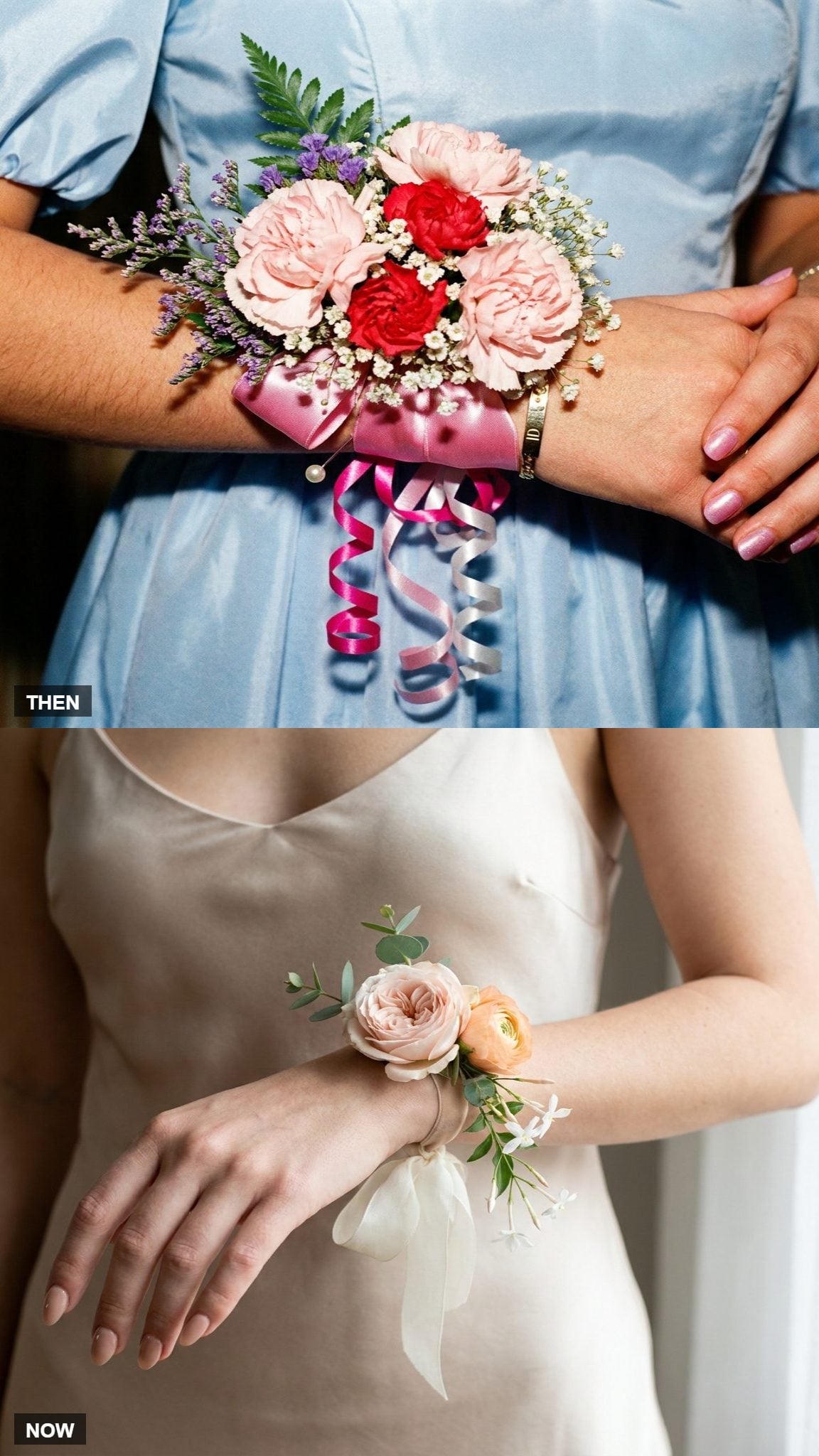
The 1980 corsage was engineered for visibility from across a school gym. Carnations sat beside baby’s breath, greenery, and curled ribbons in several colors. It occupied enough wrist space to qualify as a portable centerpiece.
Corsages have not disappeared, but modern versions often run smaller. One or two blooms, a little eucalyptus, and a narrow ribbon replace the florist-counter abundance. Some prom-goers carry small bouquets instead, while others skip flowers entirely.
The ritual survived. It simply stopped shouting.
15. The Ruffle Situation Along Every Available Edge
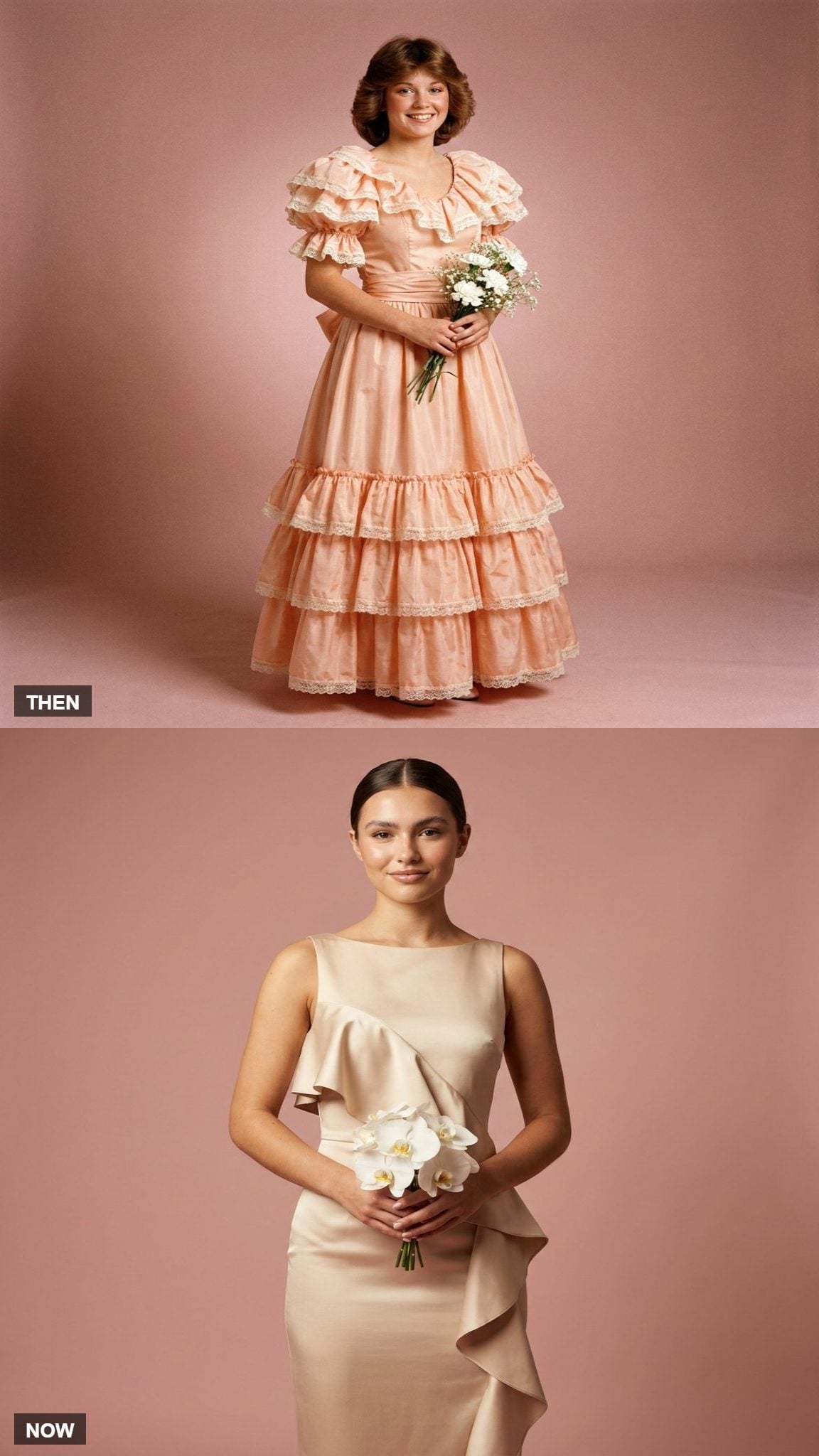
Ruffles in 1980 were a condition, not a design choice. They ran along sleeves, necklines, hems, and sashes. If an edge existed, somebody considered gathering fabric onto it.
Modern formalwear is more likely to ration the ruffle to one shoulder, one side of the skirt, or one moving edge. A single flourish gets room to register instead of competing with six others.
Restraint runs the show. The ruffle finally gets to finish its sentence.
14. The Peplum Waist That Fought the Dress It Was Attached To
❤️ Would you like to save this?
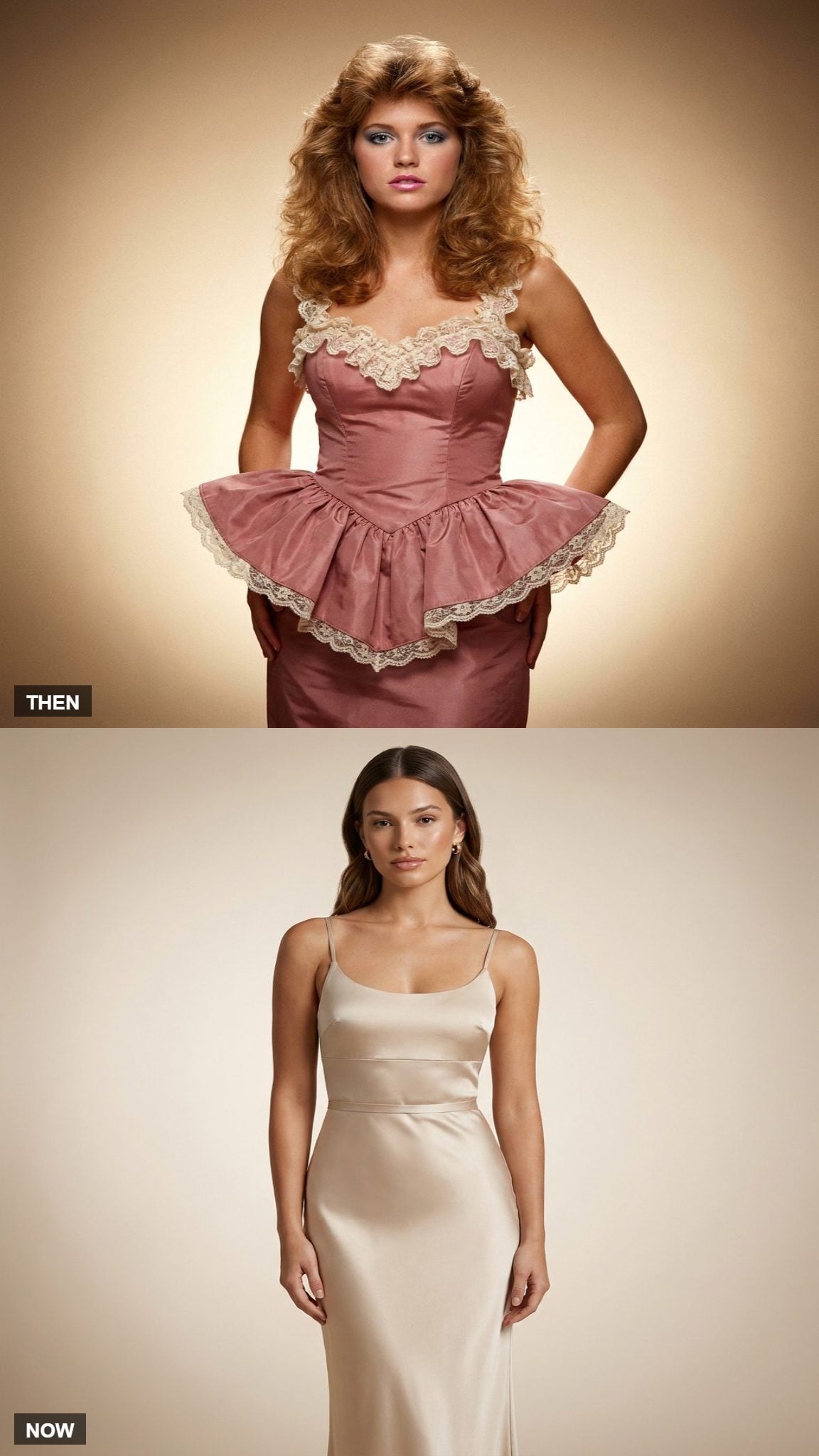
The 1980 peplum added a structured flare at the waist or hip, creating another layer between the fitted bodice and full skirt. On an already elaborate gown, it sometimes looked like two dresses negotiating custody of the same silhouette.
Modern dresses are more likely to define the waist through seaming, draping, ruching, or a narrow belt. Peplums still return periodically, but they no longer arrive as mandatory architectural shelves.
It turns out a waist can be acknowledged without building an awning around it.
13. The Petticoat Under Everything
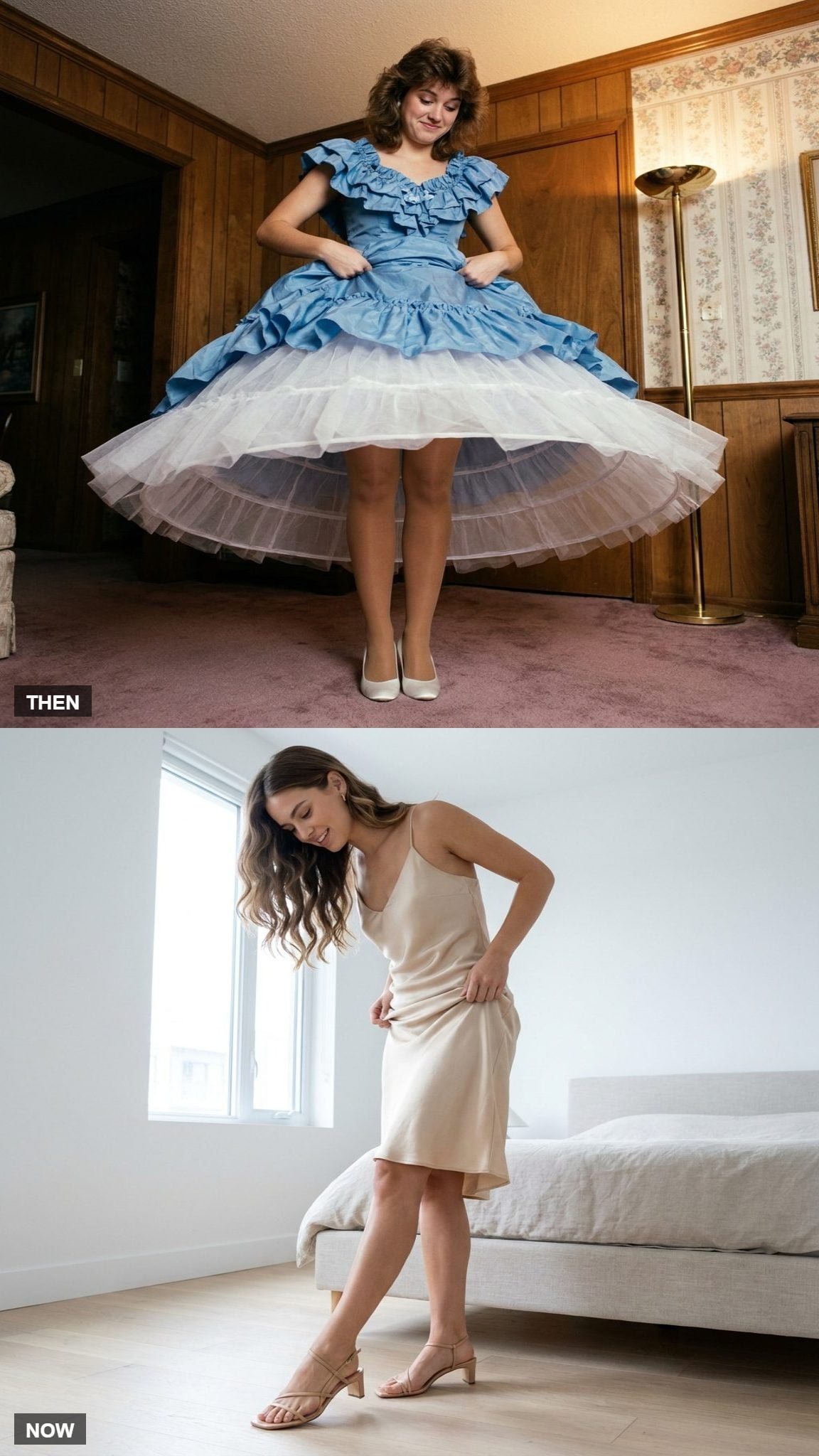
Many full-skirted prom dresses relied on layers of stiff netting, crinoline, or a separate petticoat. The support kept taffeta away from the legs and created the bell-shaped volume the dress promised from across the department store.
Modern ball gowns still use layered underskirts, boning, and horsehair braid, but plenty of current prom styles choose a slip silhouette or bias-cut skirt instead. The fabric follows the wearer rather than maintaining a permanent perimeter around her.
She can sit. She can dance. She can leave the car without a briefing.
12. The Back of the Dress: Giant Bow vs. Open Reveal
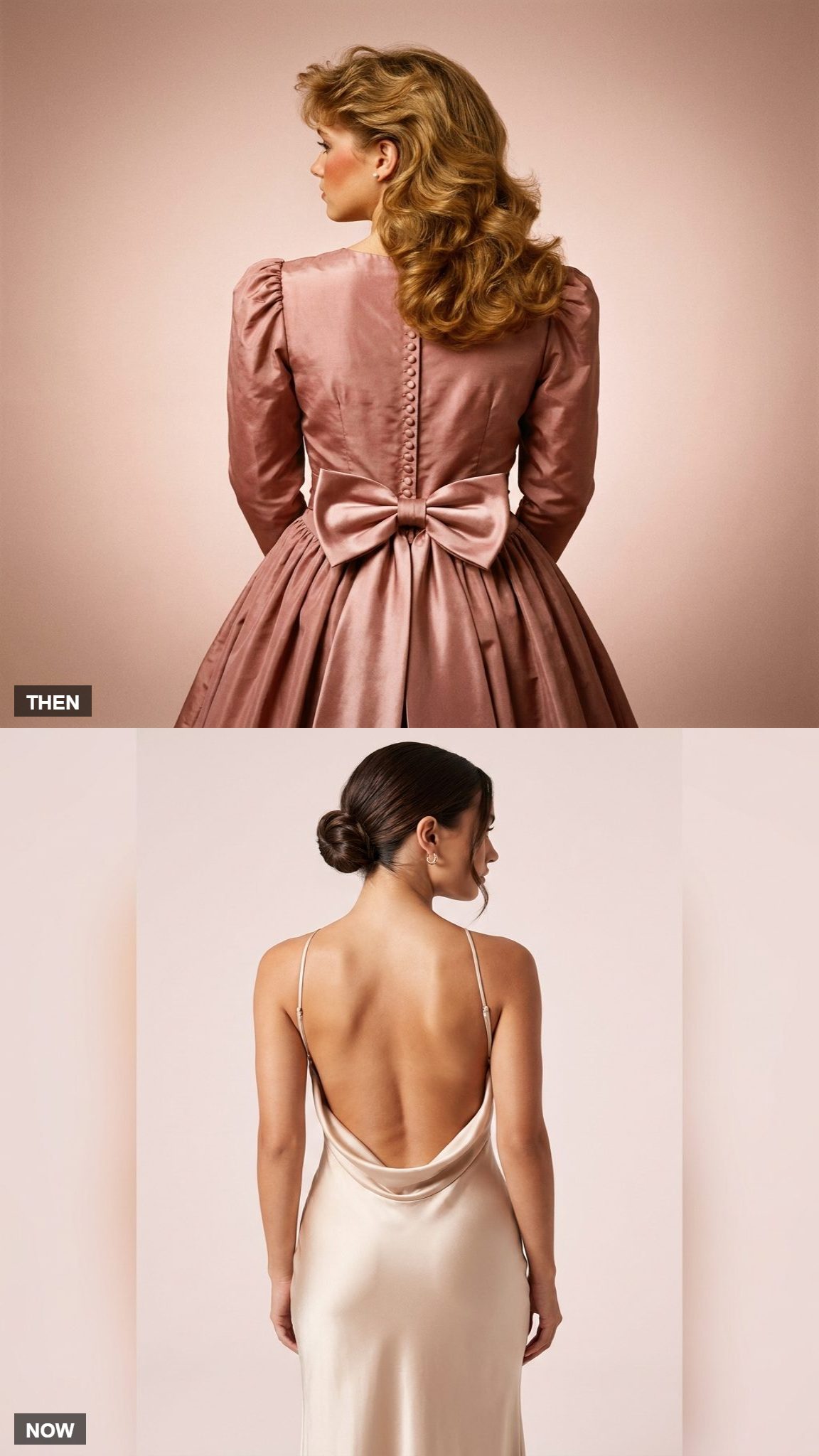
The back of a 1980 prom dress was often covered from shoulder to waist and decorated with a large satin bow near the zipper or sash. Turn around and the bow became the final announcement.
Modern formalwear often treats the back itself as the detail. A low scoop, a draped cowl, narrow crossing straps, or an open panel replaces the attached decoration.
The visual interest did not disappear. It moved from something added to the dress to the shape of the dress itself.
11. The Sweetheart Bodice Meets the Square Neck
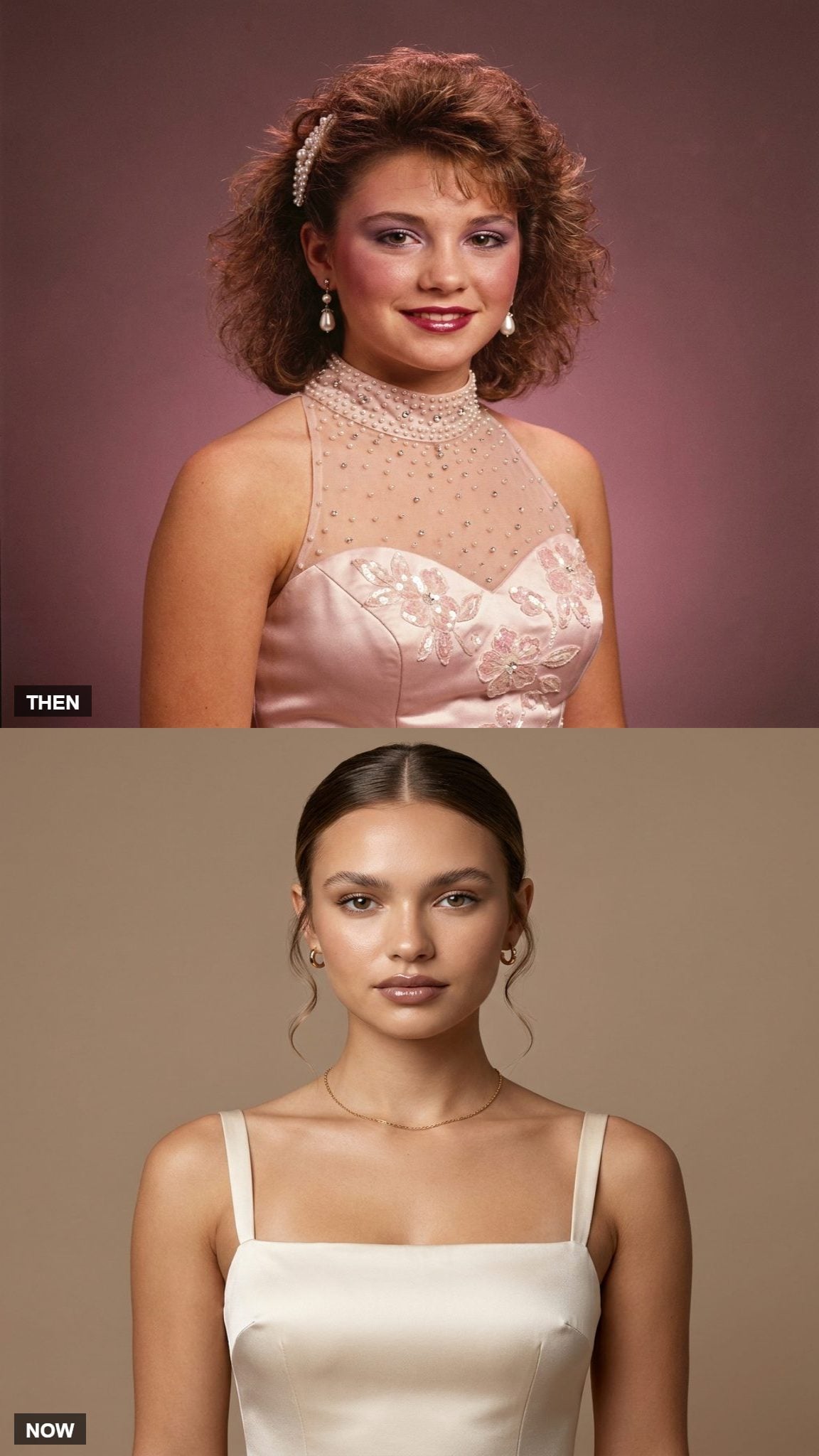
A sweetheart-shaped bodice in 1980 rarely had to carry the entire neckline alone. Illusion mesh, ruffles, lace, beads, or a high embellished yoke often surrounded the curved shape and gave it another layer of sweetness.
The square neckline favored now is more direct. Straight edges frame the collarbones without requiring pearls, mesh, or three different trims to explain the idea.
One narrated the neckline. The other simply draws it.
10. Small Applied Bows vs. One Sculptural Moment
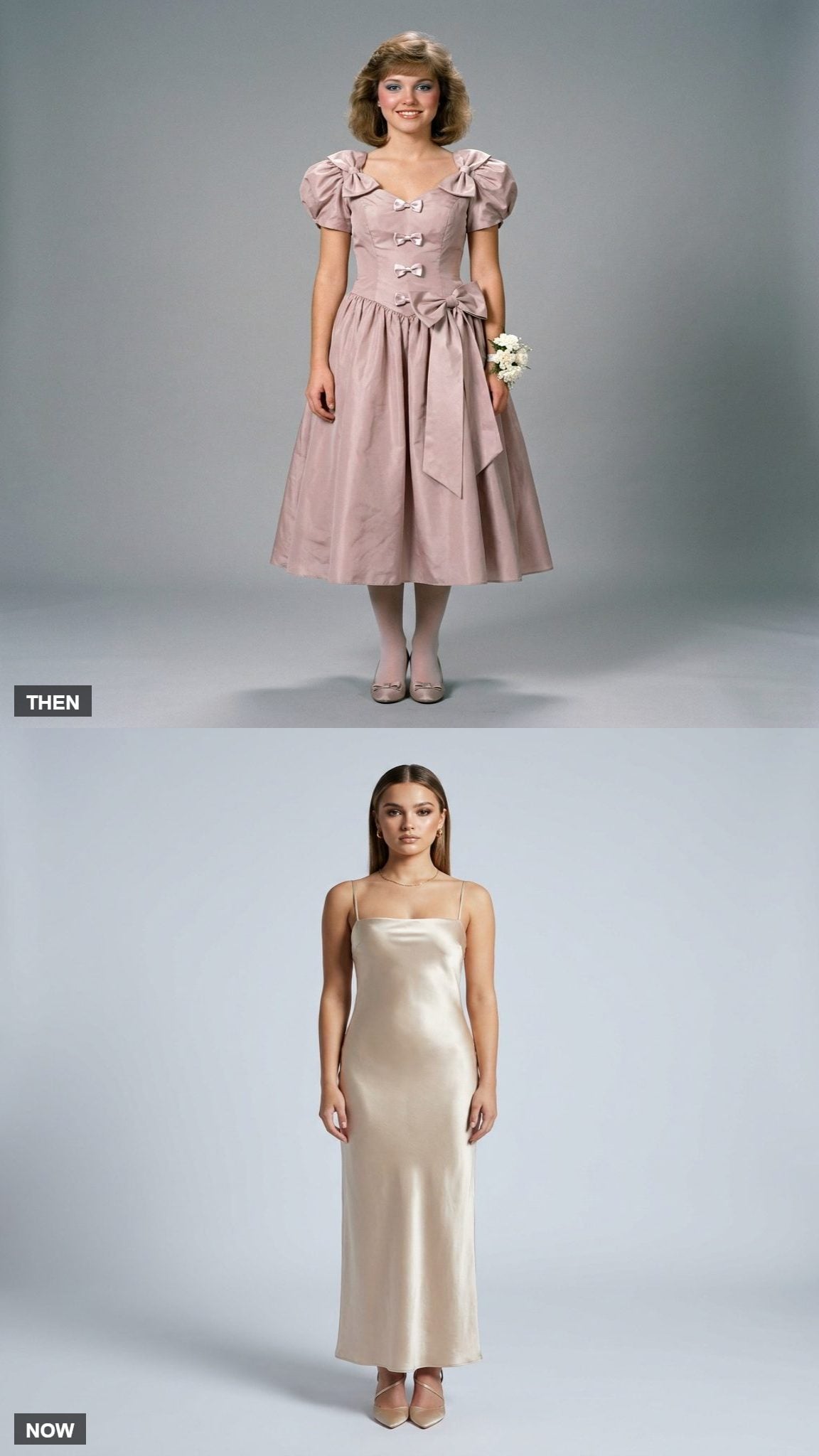
Bows could appear almost anywhere on a 1980 prom dress: shoulders, sleeves, bodice seams, skirt openings, or shoes. Several small bows often repeated across one garment so nobody missed the theme.
Bows still appear in modern formalwear, but usually with more discipline. One sculptural bow at the shoulder, waist, or back replaces a trail of small decorative knots.
The bow was not retired. It was promoted from supporting cast to featured role.
9. The Tea-Length Skirt Beside the Full-Length Gown
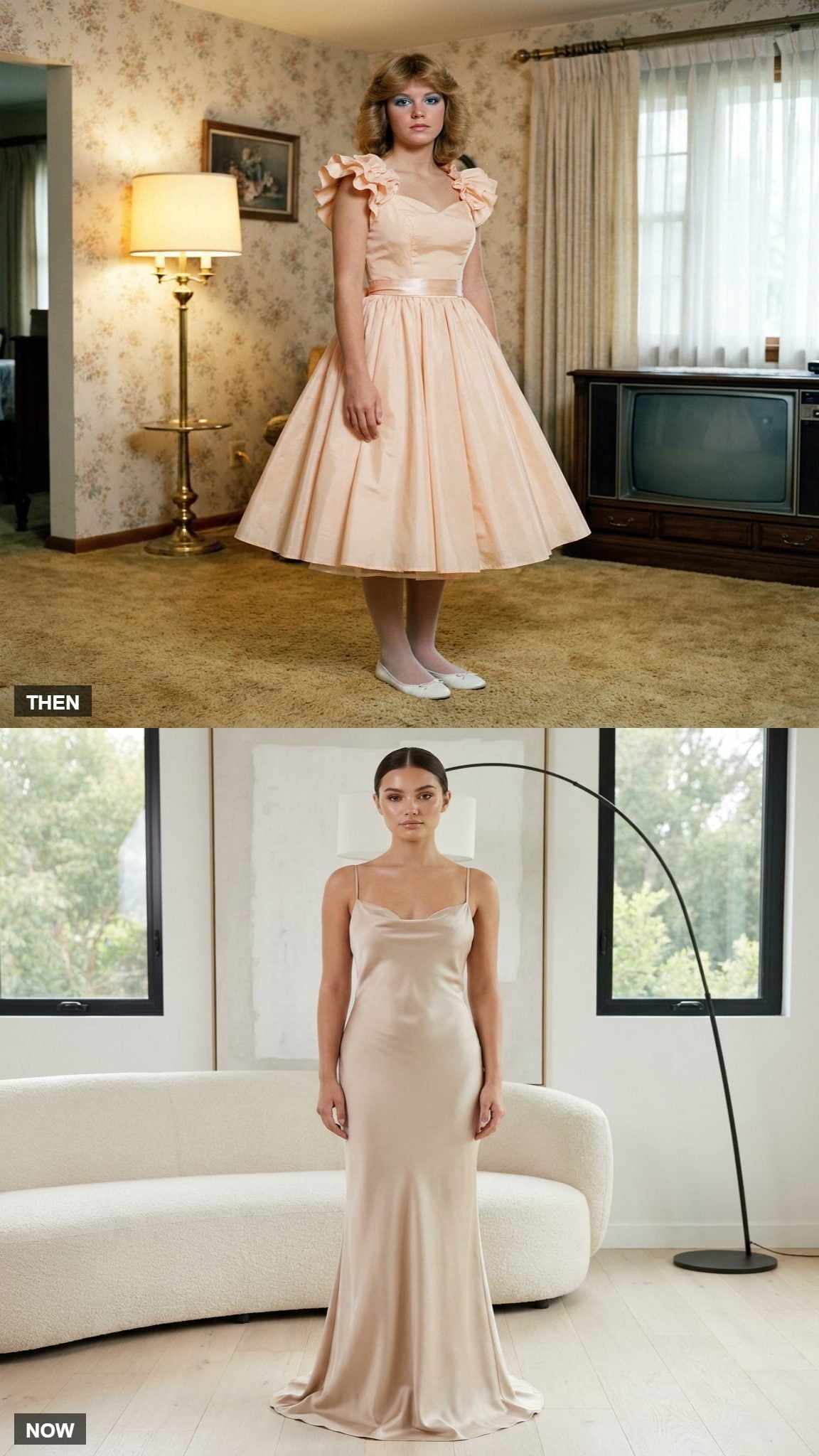
Alongside floor-length gowns, full tea-length dresses gave 1980 prom racks a shorter, dance-friendly option. The hem stopped around mid-calf, allowing the dyed shoes to remain visible while the skirt swung through every turn.
Many current prom collections lean toward long, fluid hems that skim or pool against the floor. Drama comes from the sweep rather than the bounce.
The shorter skirt announced the dance. The longer one anticipates the photograph.
8. High-Sheen Taffeta vs. the Matte Finish
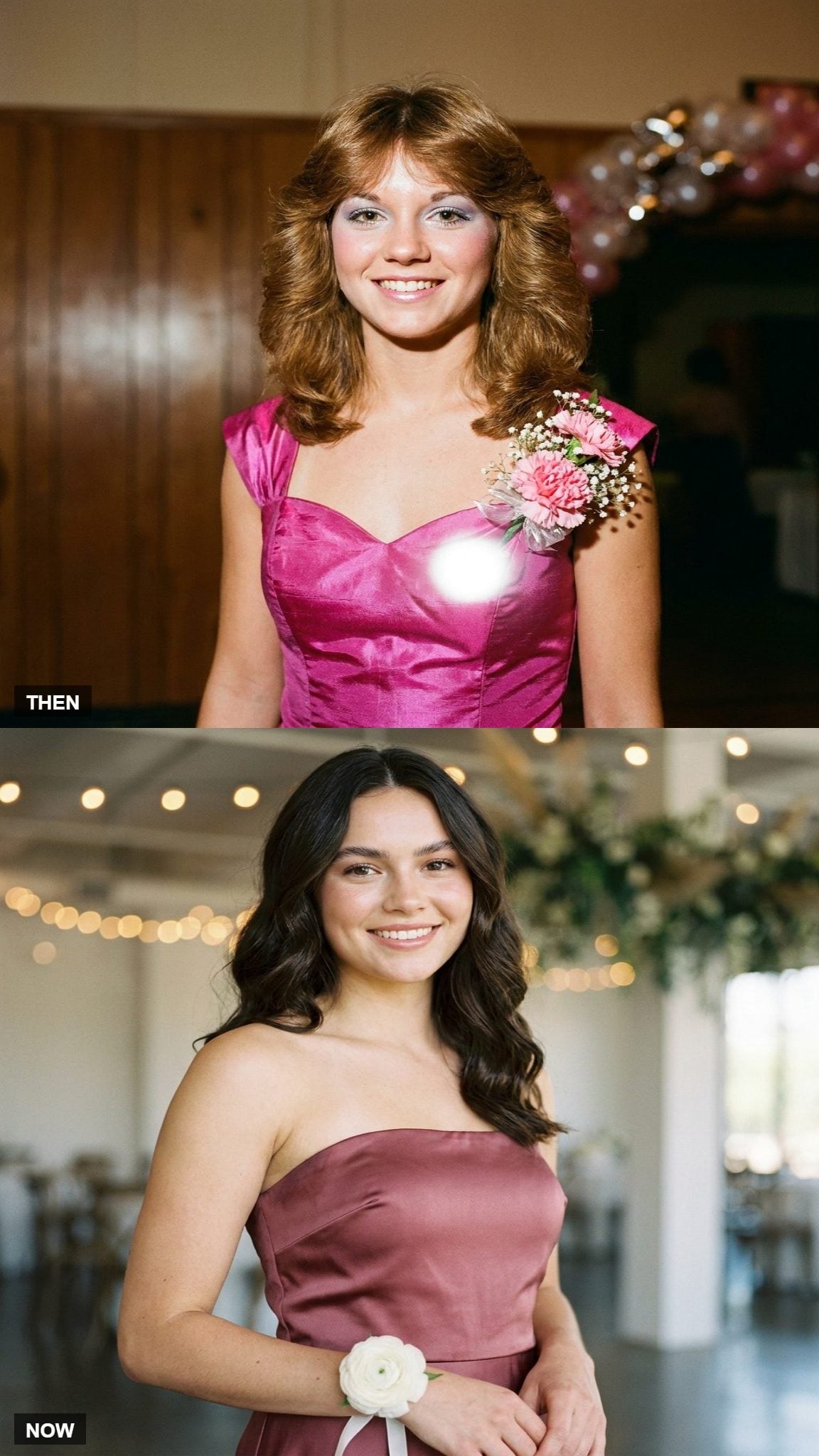
Some 1980 taffeta reflected light like a freshly polished car. Direct camera flash hit the folds, bounced back toward the lens, and created the bright white hotspots found in countless formal portraits.
Modern prom fabrics often use a softer sheen or fully matte finish. Crepe, chiffon, mesh, and textured jacquard absorb or scatter light instead of returning it in one hard burst.
The old dress announced the flash. The modern one lets the light travel across it.
7. The Gloves That Went Above the Elbow
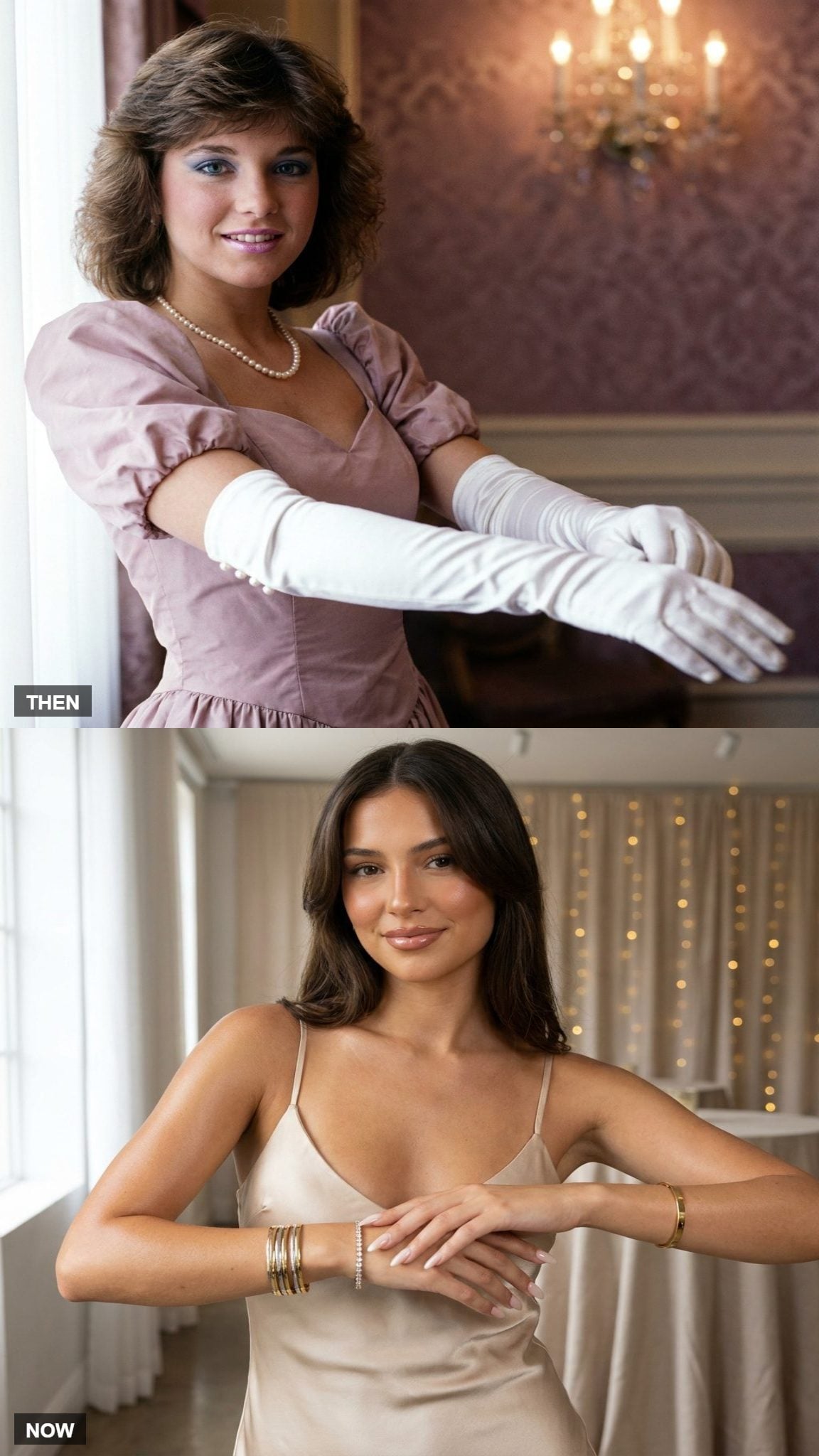
Opera-length gloves appeared in satin, nylon, lace, and stretch fabrics, reaching past the elbow and occasionally finished with pearls, small buttons, or ruching. Removing them before eating turned a school dinner into a miniature ceremony.
Bare arms are more common now. A bracelet stack, manicure, or single cuff supplies the detail that the glove once carried.
Formality moved from covering the arm to editing what appears on it.
6. The Prom Portrait Pose Itself
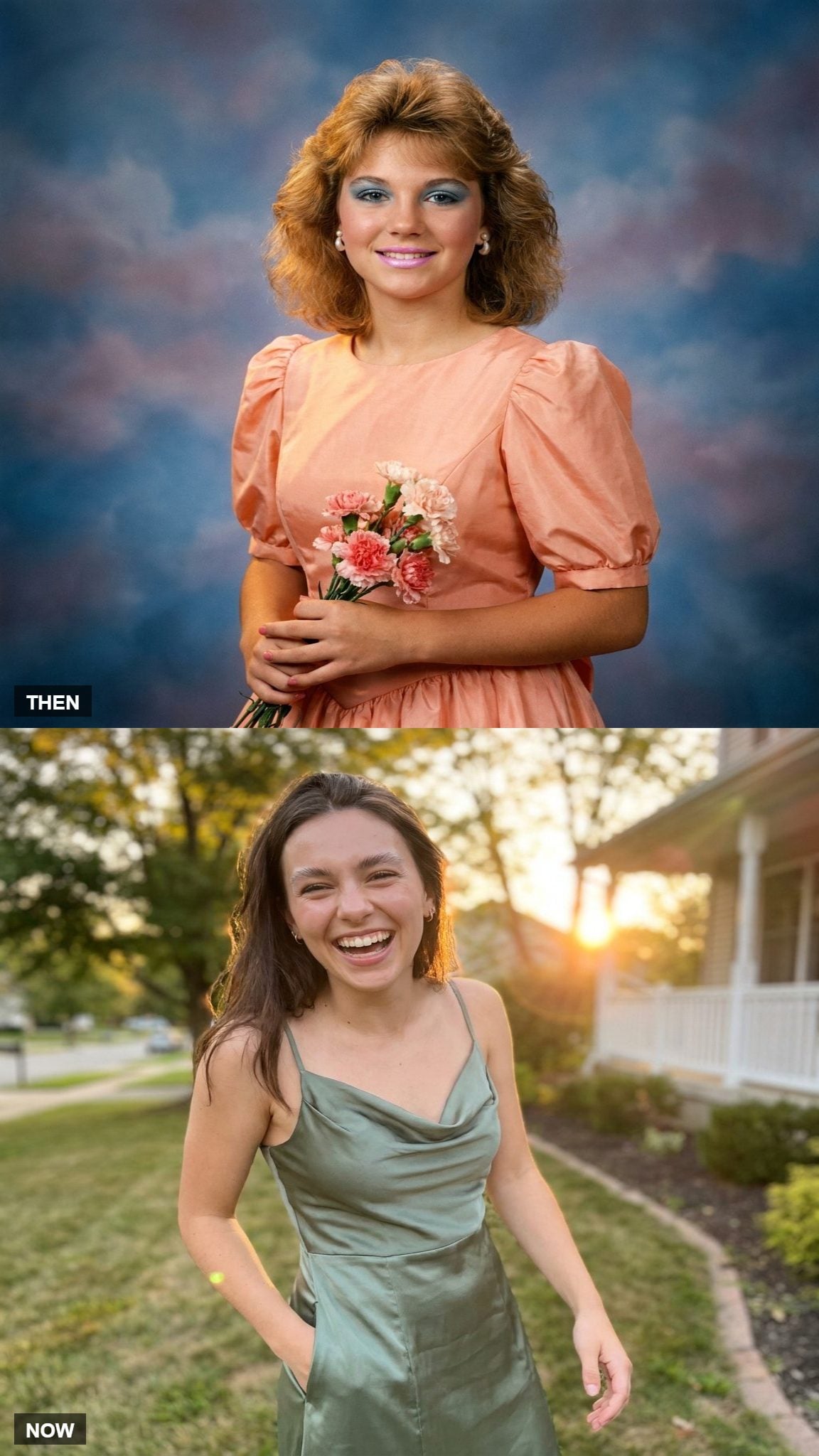
The 1980 portrait followed a familiar formula: painted or cloudy backdrop, body turned slightly, chin tilted, bouquet at the waist, and one hand placed where the photographer instructed. Every studio seemed to know the same angle.
The current portrait often avoids the setup. Natural light, a real laugh, a hand in a pocket, and a friend holding the phone can replace the formal studio pose.
The dress still marks the occasion. The person wearing it is finally allowed to move.
5. The Beading That Felt Like Part of the Structure
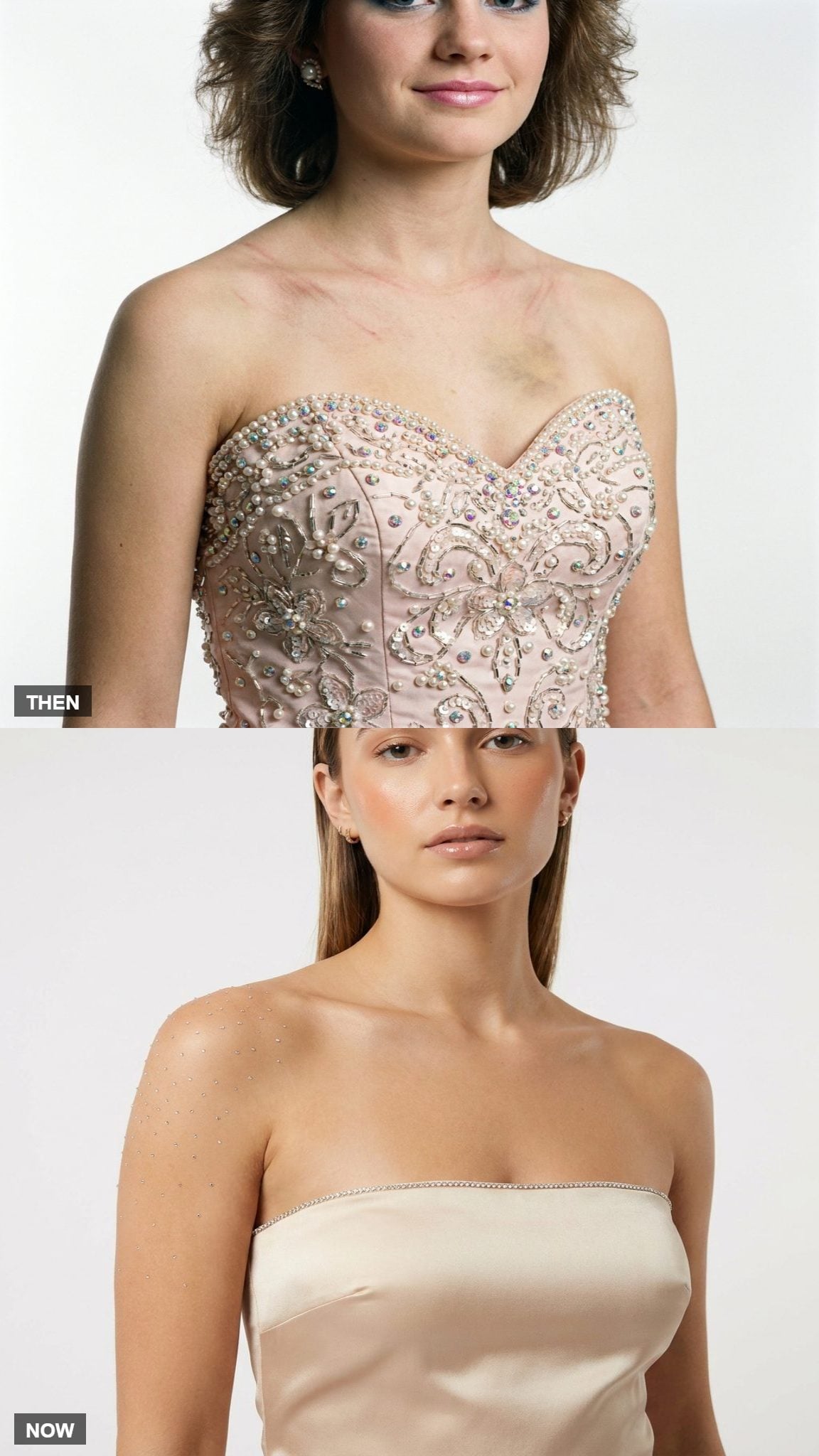
Some 1980 bodices carried layers of plastic pearls, sequins, rhinestones, bugle beads, and embellished appliqués. The decoration could make the upper dress feel noticeably heavier and stiffer than the skirt beneath it.
Modern beading often appears as one crystal line, a narrow border, or a scatter across the shoulder. The embellishment catches light without covering every available inch of fabric.
Luxury now often lives in what the dressmaker decided not to add.
4. The Boyfriend’s Suit Then vs. His Suit Now
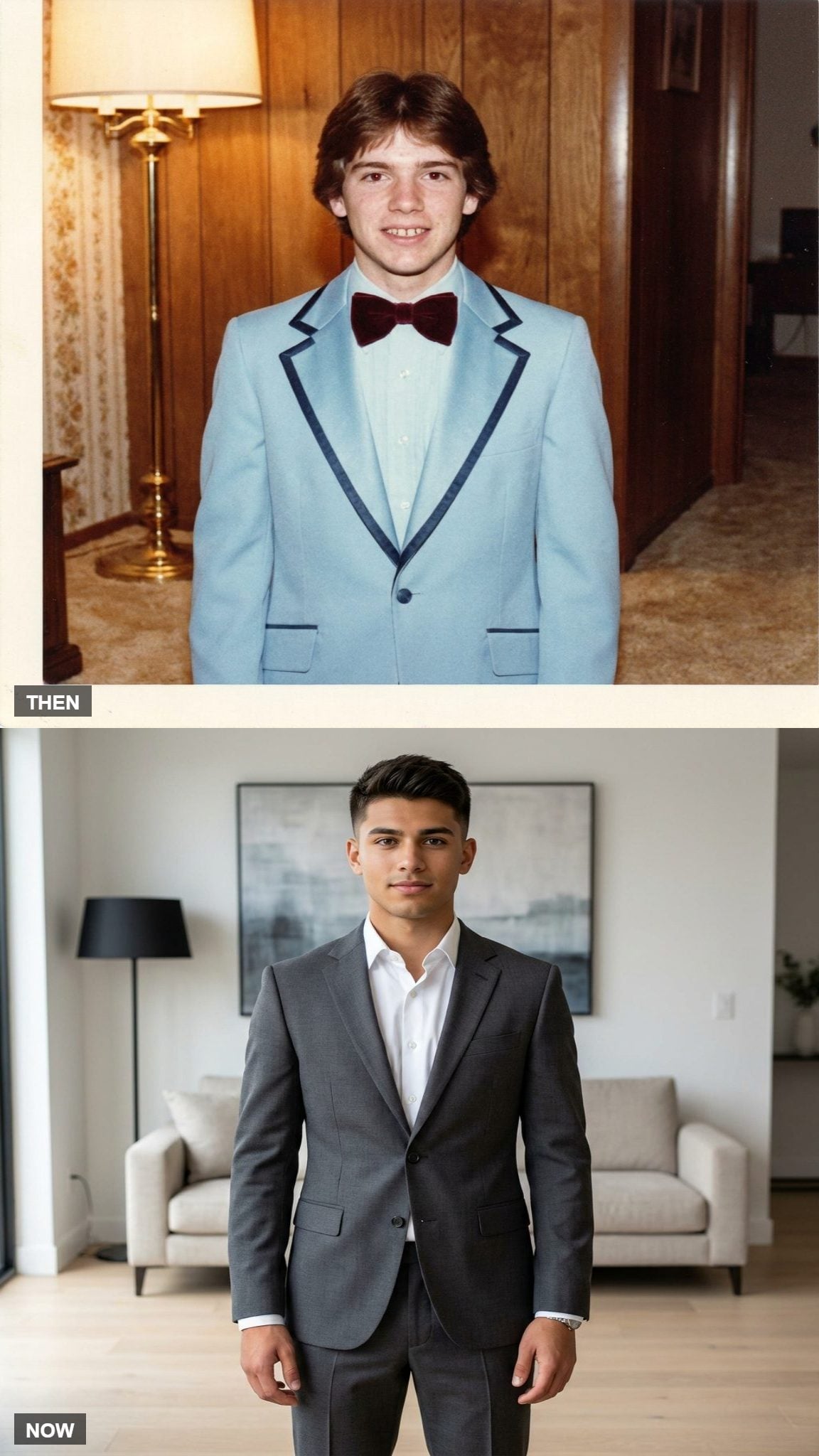
Powder blue, mint green, burgundy, and velvet all found their way into late-1970s and early-1980s prom tuxedos. A rented set might include a ruffled shirt, satin lapels, cummerbund, and bow tie coordinated with the date’s dress. It came back to the rental shop on Monday with a punch stain nobody claimed.
A modern prom suit is more likely to be charcoal, navy, or black with a slimmer cut and less decorative hardware. Some wearers skip the tie or replace the full tuxedo with separates they can use again.
The older suit tried to join the dress. The modern one is more willing to stand beside it.
3. The Waistline Sash Situation
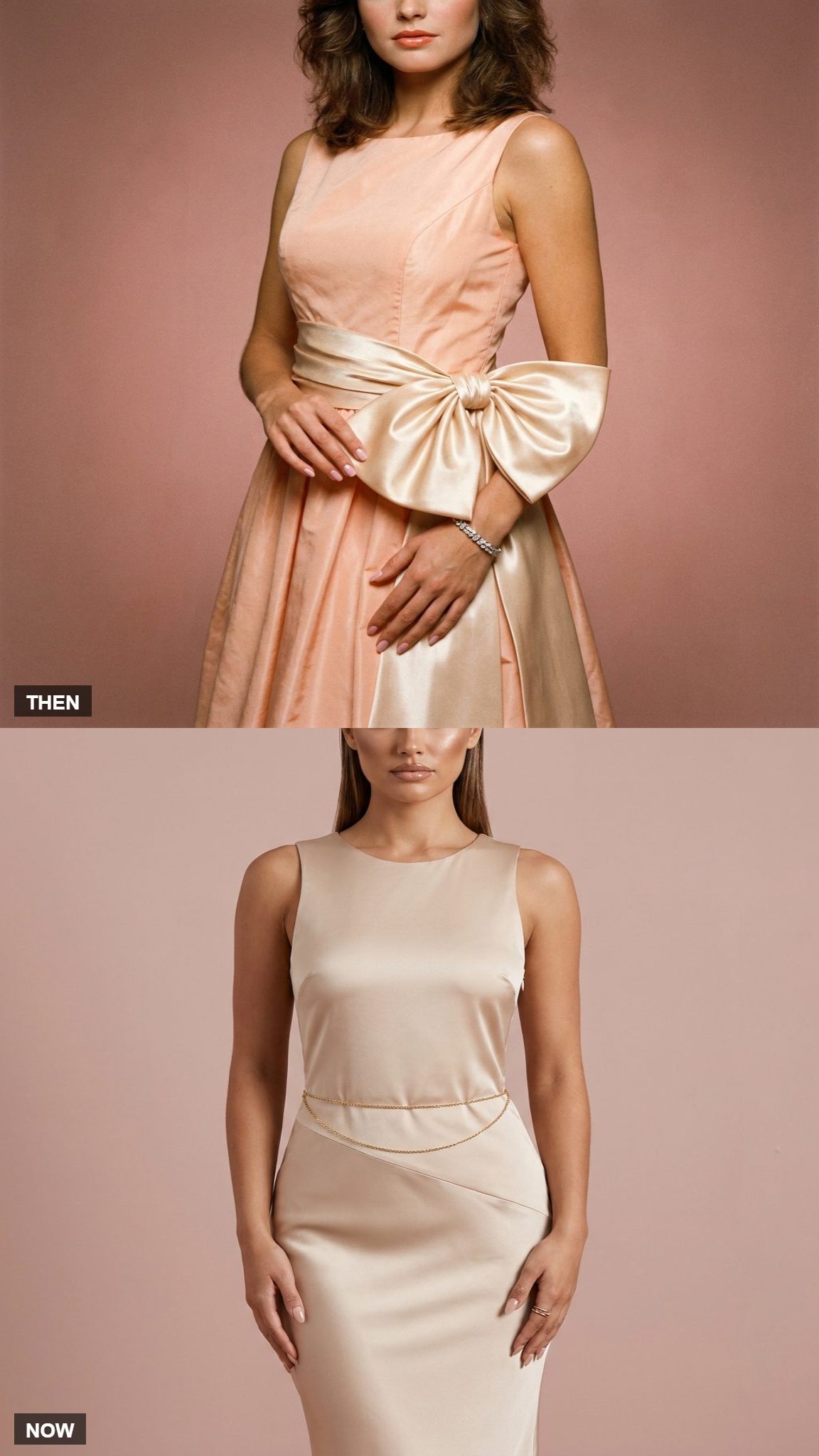
The 1980 waist sash was not shy. A wide satin band cinched the middle and often ended in a large bow at the hip, with streamers trailing toward the skirt. The waistline became another place for color, shine, and volume.
Modern formal dresses are more likely to define the same area through draping, seaming, ruching, or a fine belt. The waist remains important; the decoration no longer needs to catch on every chair back in the room.
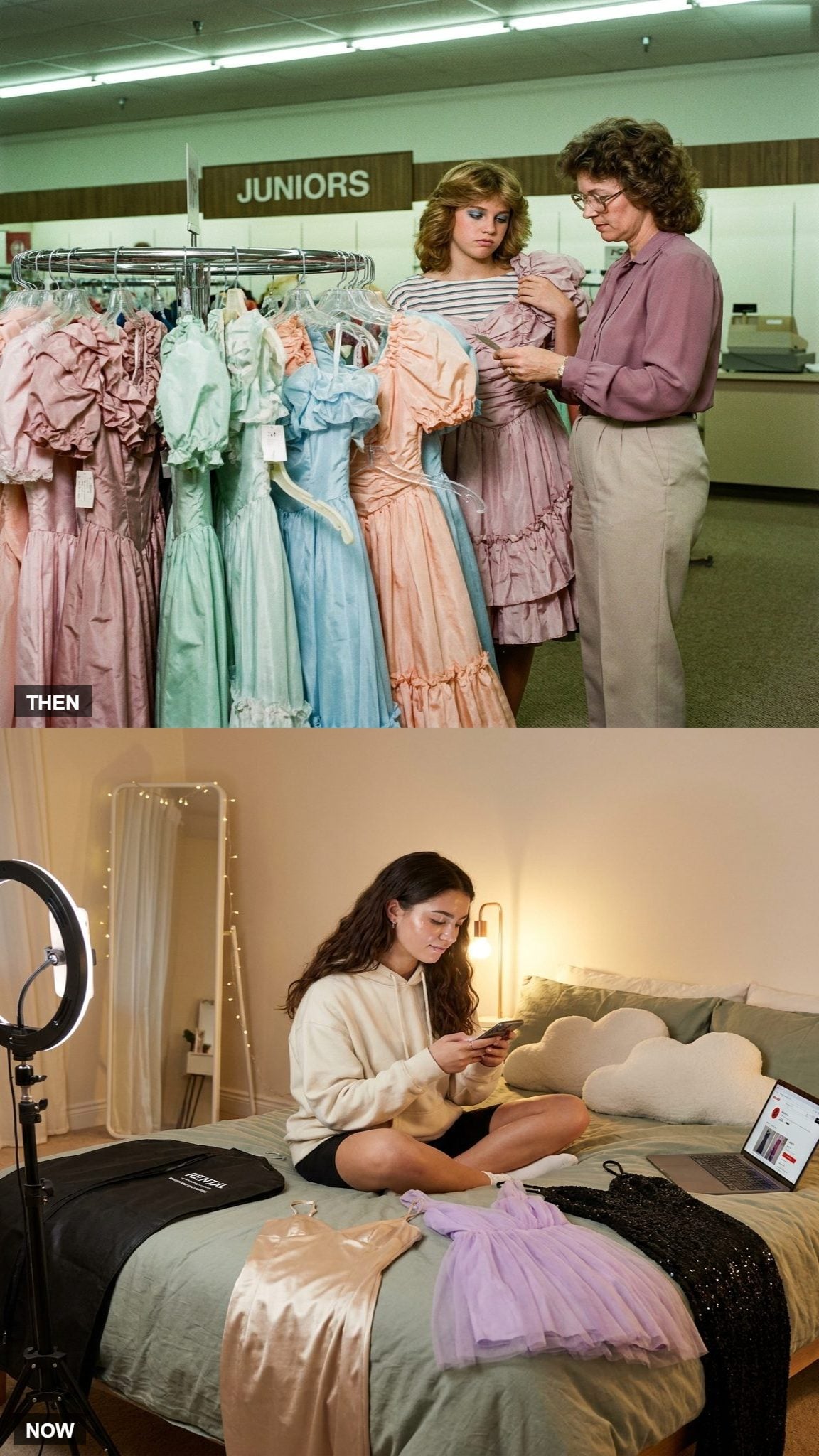
2. The Prom-Dress Shopping Trip Itself
❤️ Would you like to save this?
The 1980 prom dress required a whole Saturday. Mom drove. The department store had already been picked over by March. The dress that fit might become the dress you bought, even when the color was not the one imagined at the beginning of the trip.
Now a shopper might scroll at midnight, order several dresses to try at home, rent another, and resell the final choice afterward. Reviews, videos, return policies, and group-chat opinions follow the dress into the bedroom.
The fitting room moved home. Mom’s opinion now arrives by text, where it can be considered at a safe distance.
1. The Group Limo vs. the Party Bus and Rideshare
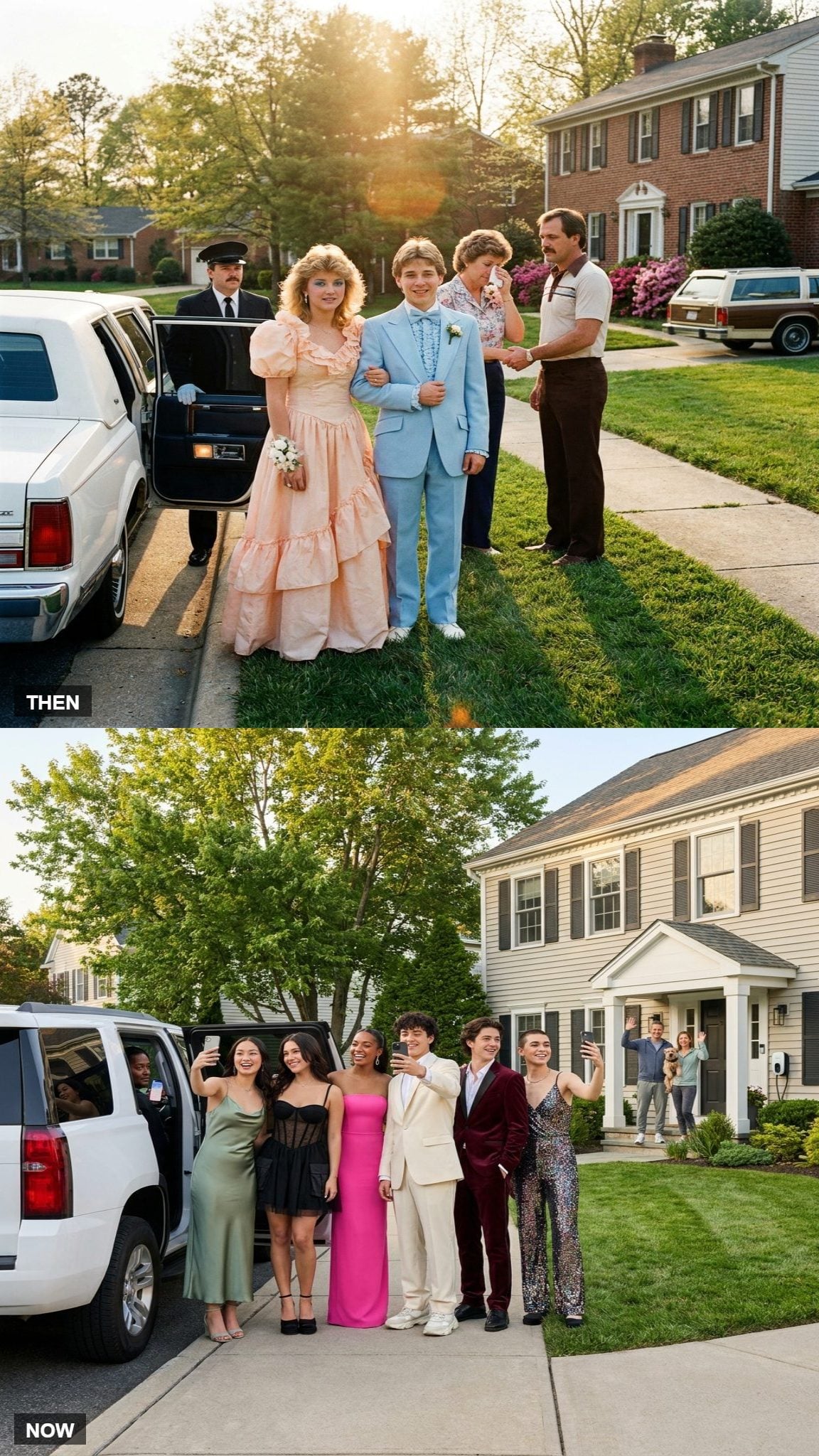
A stretch limousine was the extravagant 1980 option rather than the universal one. Four couples might split the cost while the car moved from house to house so parents could take front-lawn photographs. Plenty of other students still arrived in a family sedan.
Current groups may book a party bus, divide into several rideshares, or pile into one larger vehicle without pairing off into formal dates. The photographs happen on phones before everyone leaves, and the transportation plan may remain unsettled until the group chat finally reaches a decision.