❤️ Would you like to save this?
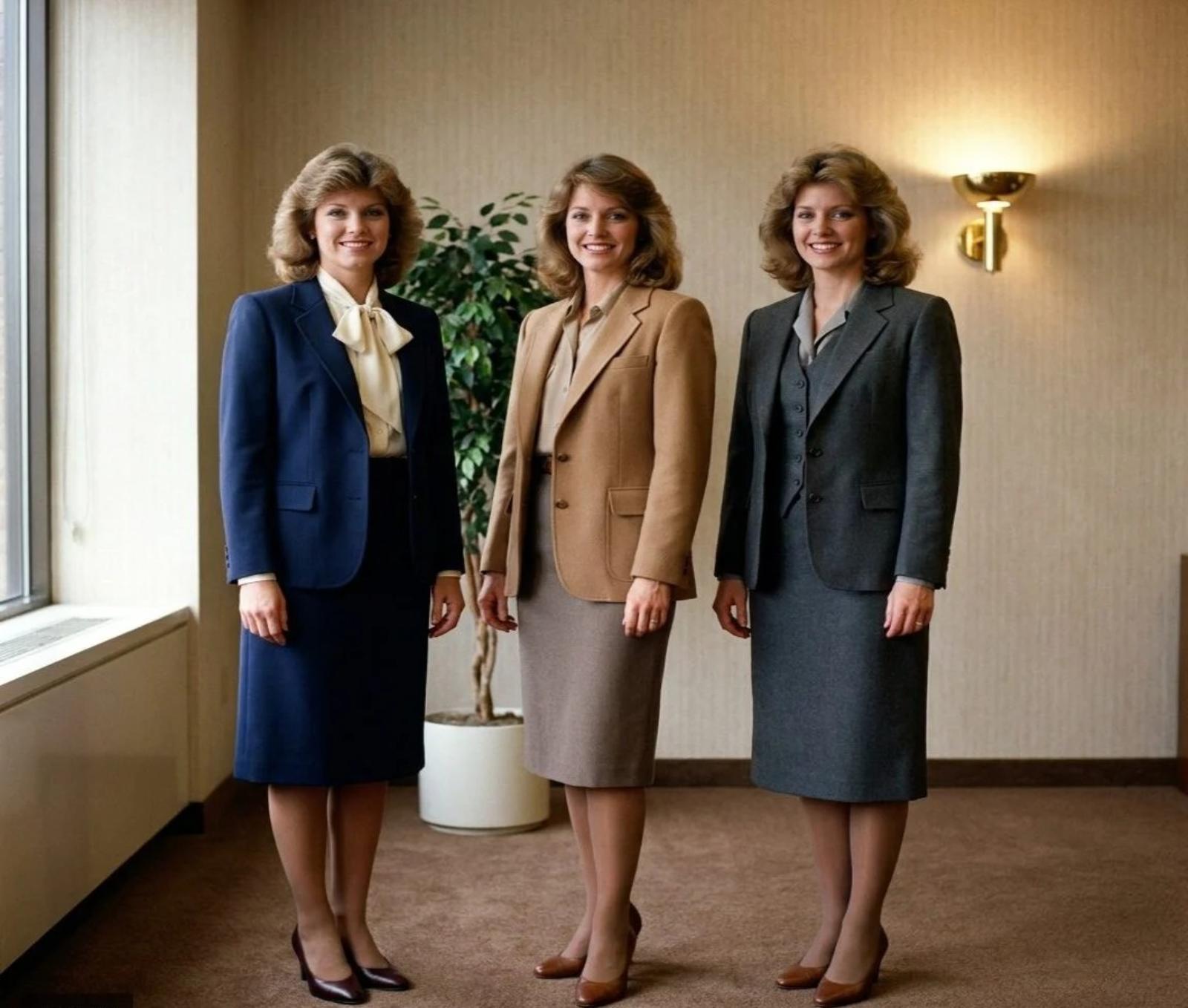
The shoulder pads were load-bearing. Not structurally, but psychologically. A woman walking into a conservative 1980 boardroom in a boxy wool blazer with several inches of foam at each shoulder was making a statement before she said a word. Office dressing came with rules, expectations, and enough unwritten policy to fill a filing cabinet. Clothing that passes without comment in many workplaces now could once have raised eyebrows before the morning coffee arrived. These 27 before-and-afters show how much ground shifted.
FYI, thanks to AI imagery software, we’re able to create very specific fashion and hairstyle examples to illustrate the points being made. In some cases, imagery is exaggerated to hammer home the point. Also, assume links that take you off the site are affiliate links such as links to Amazon. this means we may earn a commission if you buy something.
27. Sneakers Stopped Hiding Under the Desk
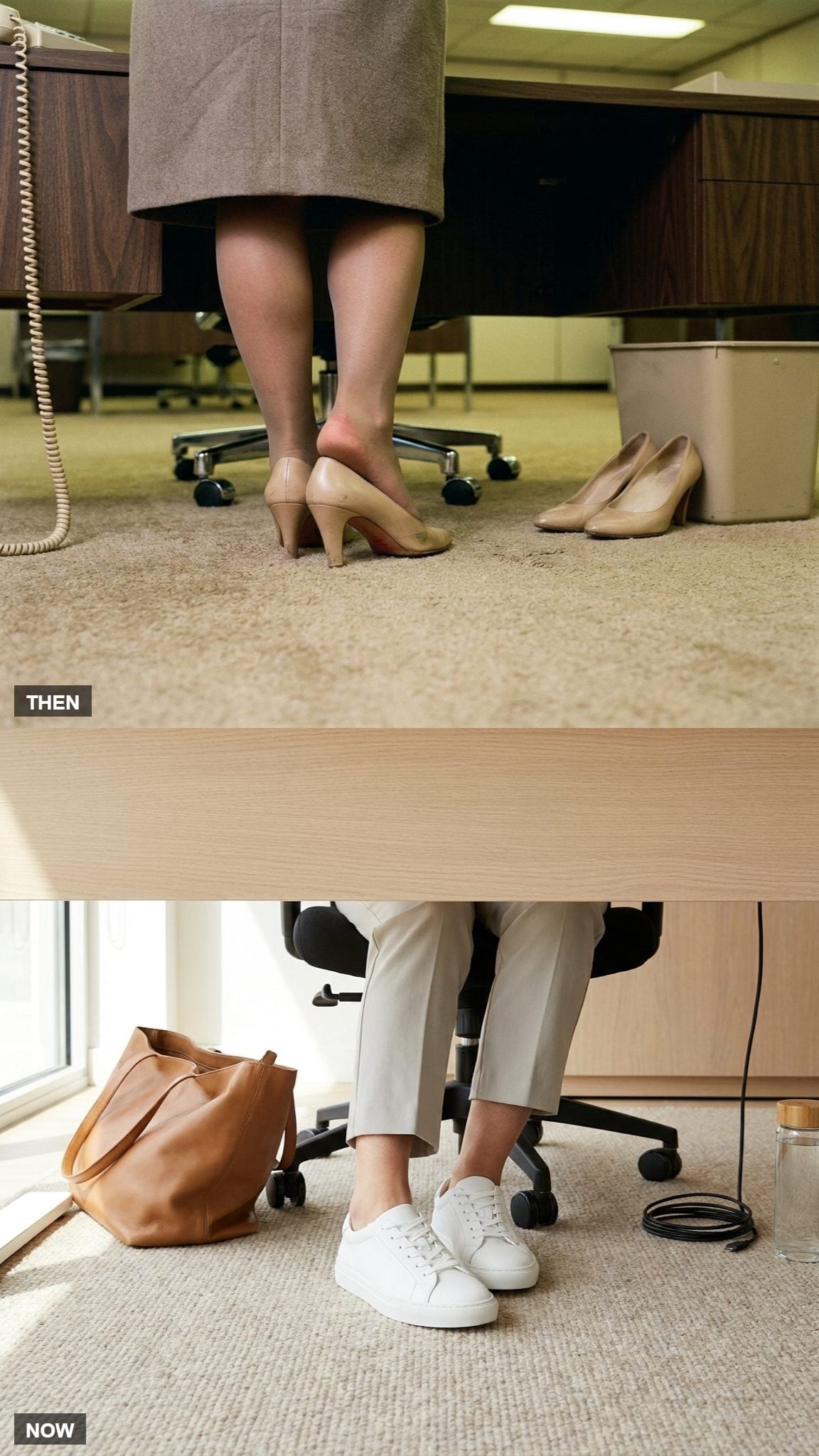
The shoes under the desk tell forty-six years of office dressing in one glance. In many conventional 1980 workplaces, neutral pumps were treated less like a choice than part of the uniform. They blended into the outfit, looked suitably restrained, and could make the final hours of the day feel twice as long. Plenty of women kept a more comfortable pair nearby for the commute home.
Now the shoes can be the outfit. Sharp trousers and white leather sneakers are not necessarily a compromise; they are often the point. Nobody is hiding them beneath the desk. They may be the first thing you notice.
Sneakers have moved well beyond the office too: in our reader polls, 51% named sneakers as their daily shoes, ahead of flats and low heels.
26. The Hard Briefcase Became a Tote That Carries Half the Day
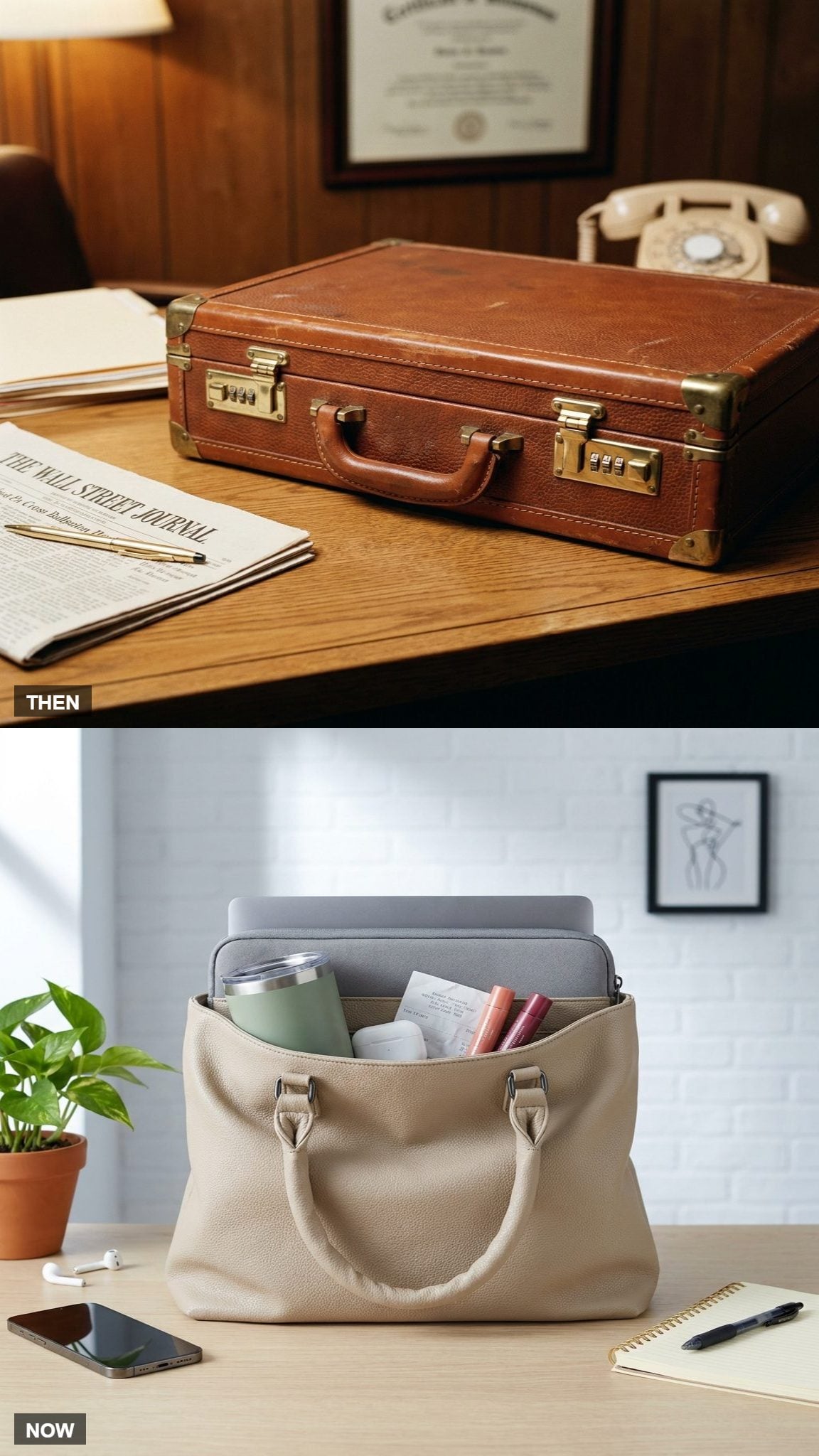
The 1980 briefcase was armor. Hard sides, brass clasps, and the weight of something to prove. Carrying one announced seriousness the way a firm handshake was supposed to. It also weighed approximately as much as a small television.
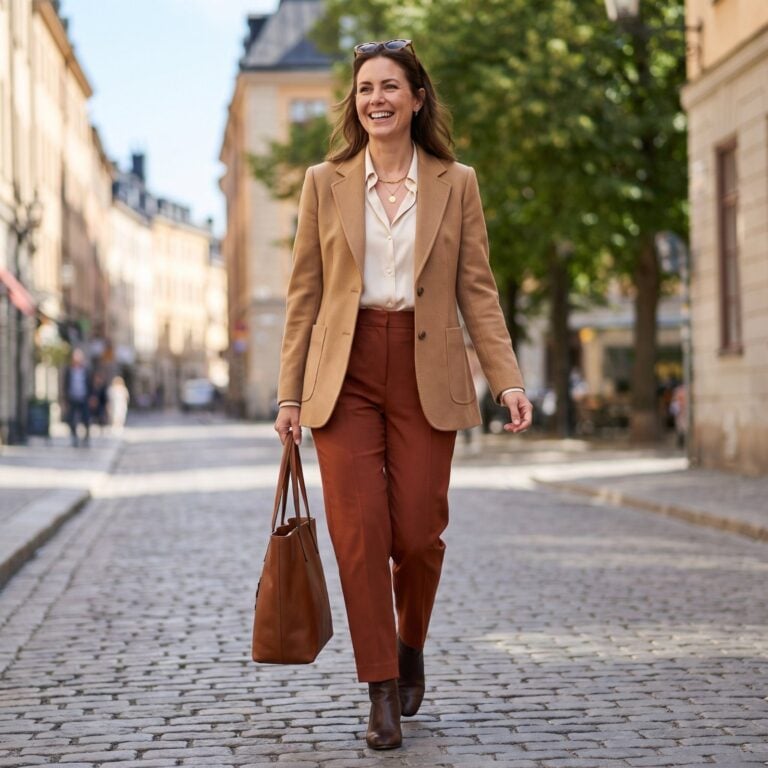
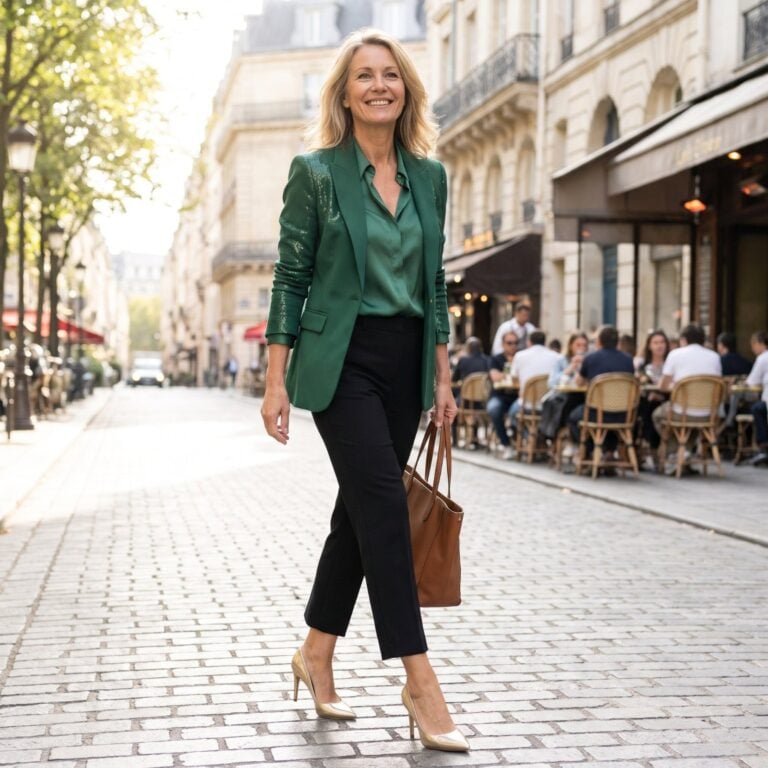
The modern work tote carries a laptop, an insulated tumbler, charging cables, and approximately four lip balms that never quite get thrown away. It is softer, less ceremonial, and somehow holds more. The brass clasps have not been widely mourned.
25. Heavy Florals Announced You. Skin Scents Barely Admit It.
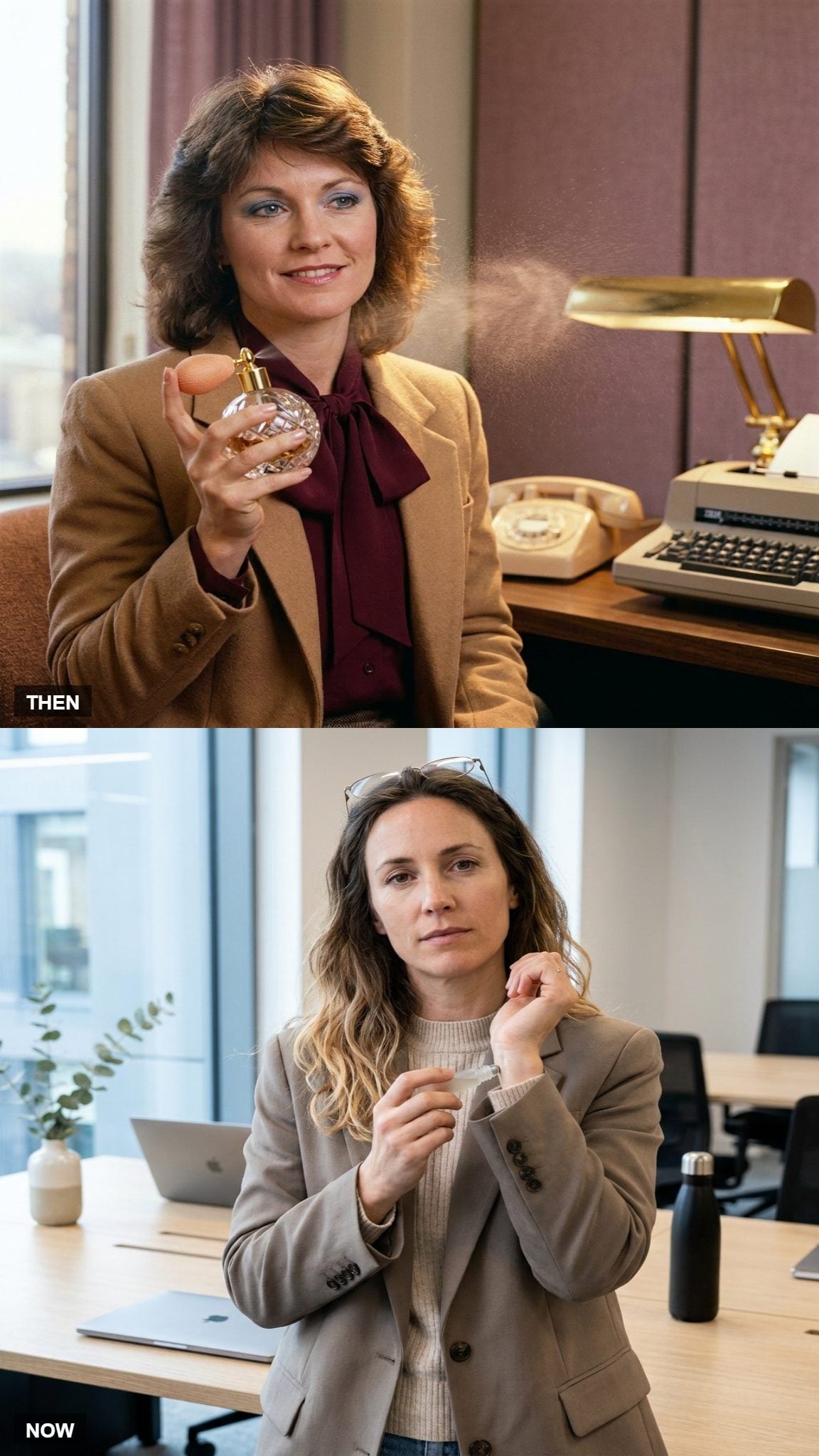
In 1980, you could sometimes tell who had arrived at the office before you turned the corner. White florals and powdery amber fragrances lingered in meeting rooms long after their wearer had moved on. Fragrance was not simply decoration. It was presence.
Today the scent is more likely to sit close to the skin, almost imperceptible unless someone leans in. The shift is not purely aesthetic. Open offices, shared ventilation, and fragrance-sensitive workplace policies helped lower the volume. The perfume went quiet when the walls came down.
24. The Cigarette Disappeared. So Did the Lunch Break.
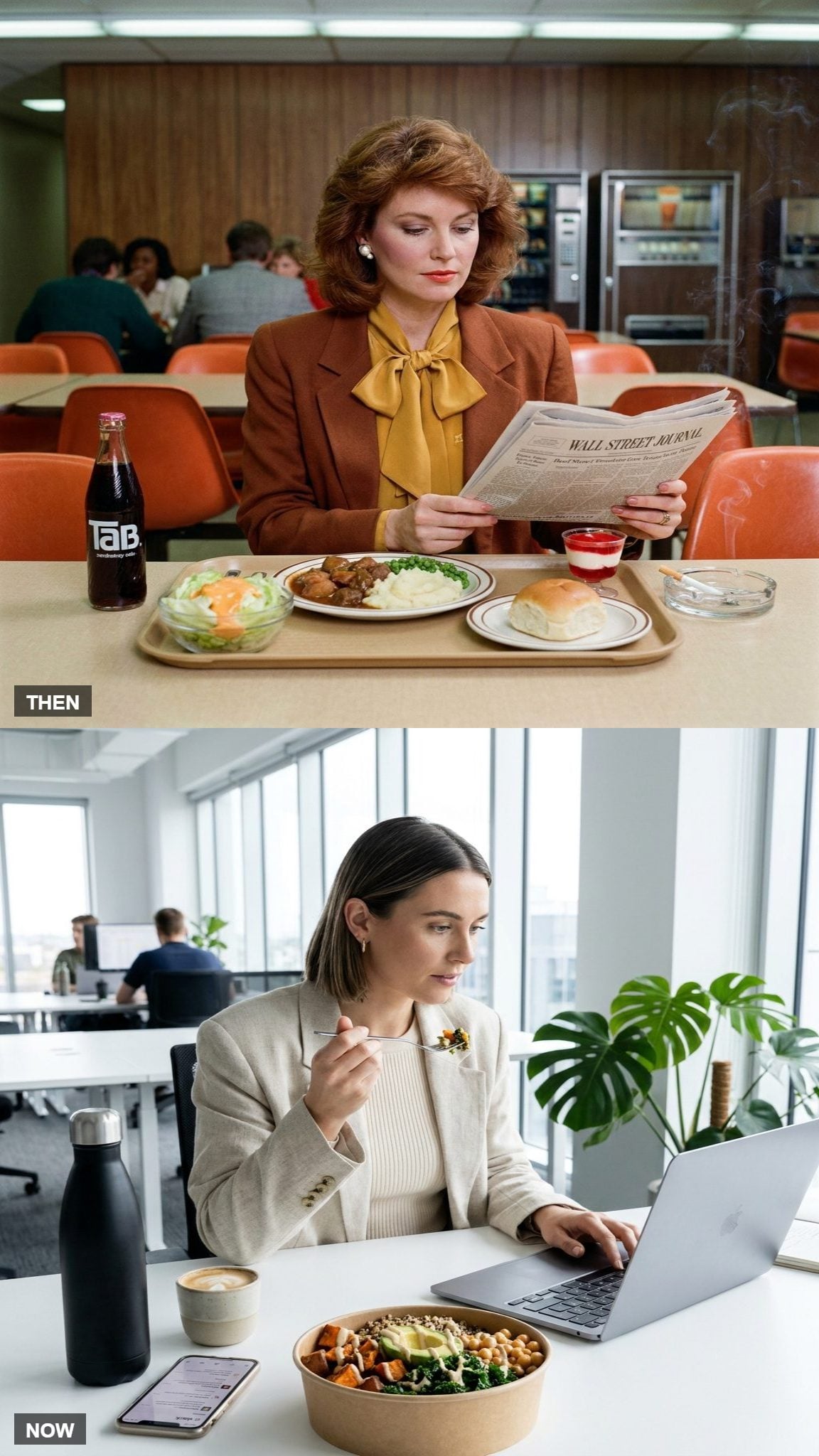
The 1980 office lunch had a designated place, a tray, and often an ashtray nearby. It created a full stop in the day. You left your desk, sat in the cafeteria, ate without looking at a screen, and perhaps read a newspaper before returning upstairs.
Lunch in 2026 is frequently eaten over the keyboard while emails keep arriving. The grain bowl may be healthier. The cigarette is gone. The uninterrupted break has become the endangered part.
23. Hairspray Held Every Strand in Place. The Claw Clip Leaves a Few Loose.
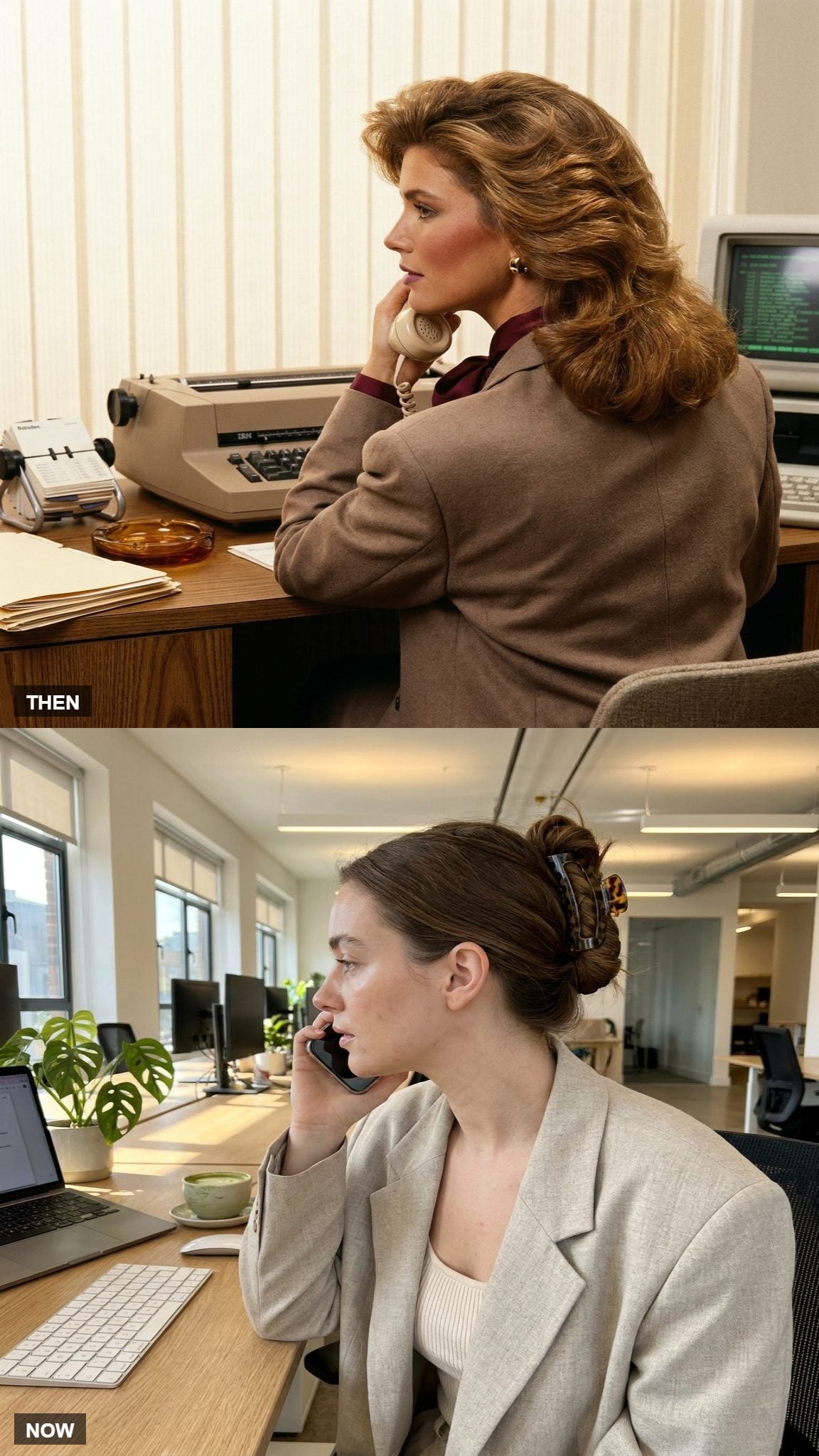
By 5 p.m. in 1980, the hair was expected to remain fully deployed. That was the point: enough hairspray in the morning meant the style could survive phone calls, a walk to the copier, and a passive-aggressive budget meeting without visibly conceding defeat.
The 5 p.m. hair of 2026 may have gone up around 2 p.m. and stayed there. The tortoiseshell claw clip is not necessarily surrender; it has already enjoyed a fashion revival of its own. The looseness is part of the composition.
22. The Bow Blouse Had Something to Prove. The Crew-Neck Tee Does Not.
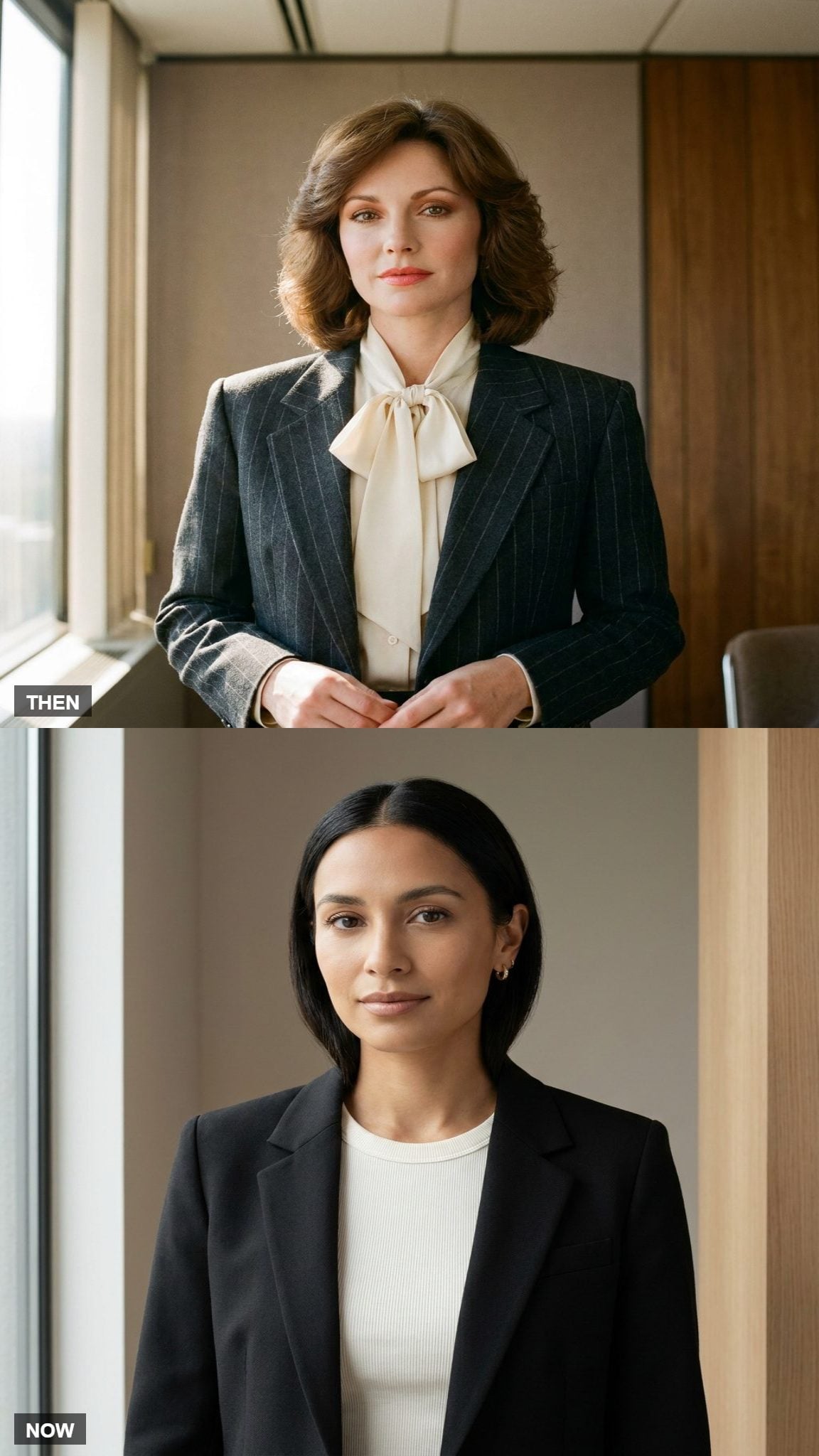
The bow blouse was the feminine counterpart to the tie. Men had a strip of silk knotted beneath the collar; women were offered a softer version that still read as formal and deliberate. Tying it neatly required more concentration than anyone admitted.
The ribbed crew-neck tee replaced it so gradually that no one declared a winner. Now it works as a clean base beneath a blazer: no loops to arrange, no collar to collapse, no dry-cleaning bill hiding in the future.
Not everyone reaches for the tee, though: asked which new top they would buy, our readers picked a fine knit at 59%, the blouse at 30% and the tee at just 9%.
21. The New Suit Used to Announce the Promotion. Now She Already Dresses Like She Has It.
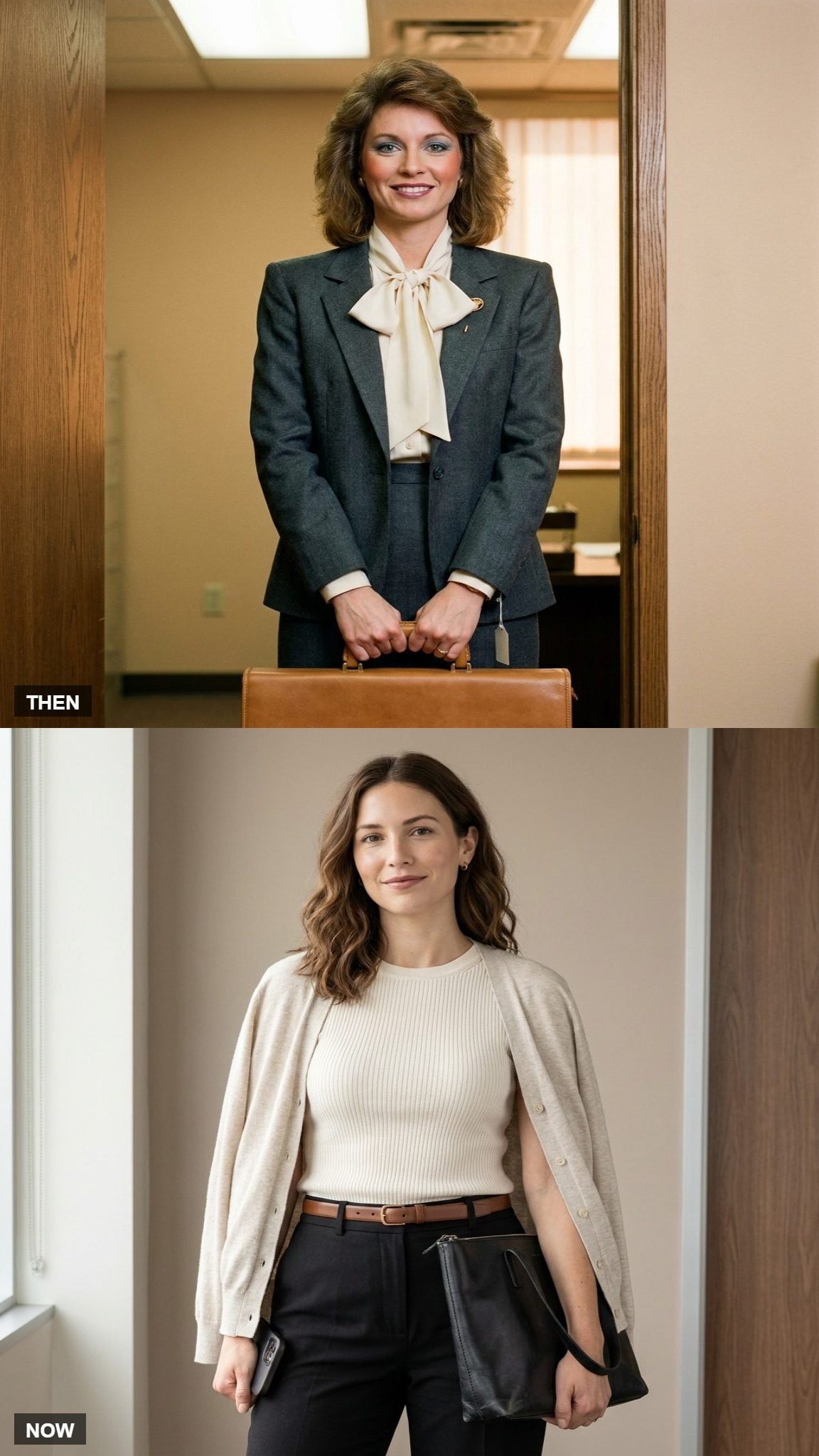
The 1980 promotion outfit was often bought for the occasion. A new suit arrived stiff from the department store, carrying the message that the meeting mattered enough to require a financial investment and a fresh set of shoulder pads.
Today, showing up in the clothes you already wear well can communicate something different: continuity. The wide-leg trousers, blazer, or knit dress have already survived regular Tuesdays, difficult clients, and the meeting that earned the promotion in the first place.
The 1980 suit said: I am ready for this. The 2026 outfit says: I have been doing it already.
20. The Emergency Pantyhose Became an Emergency Charger
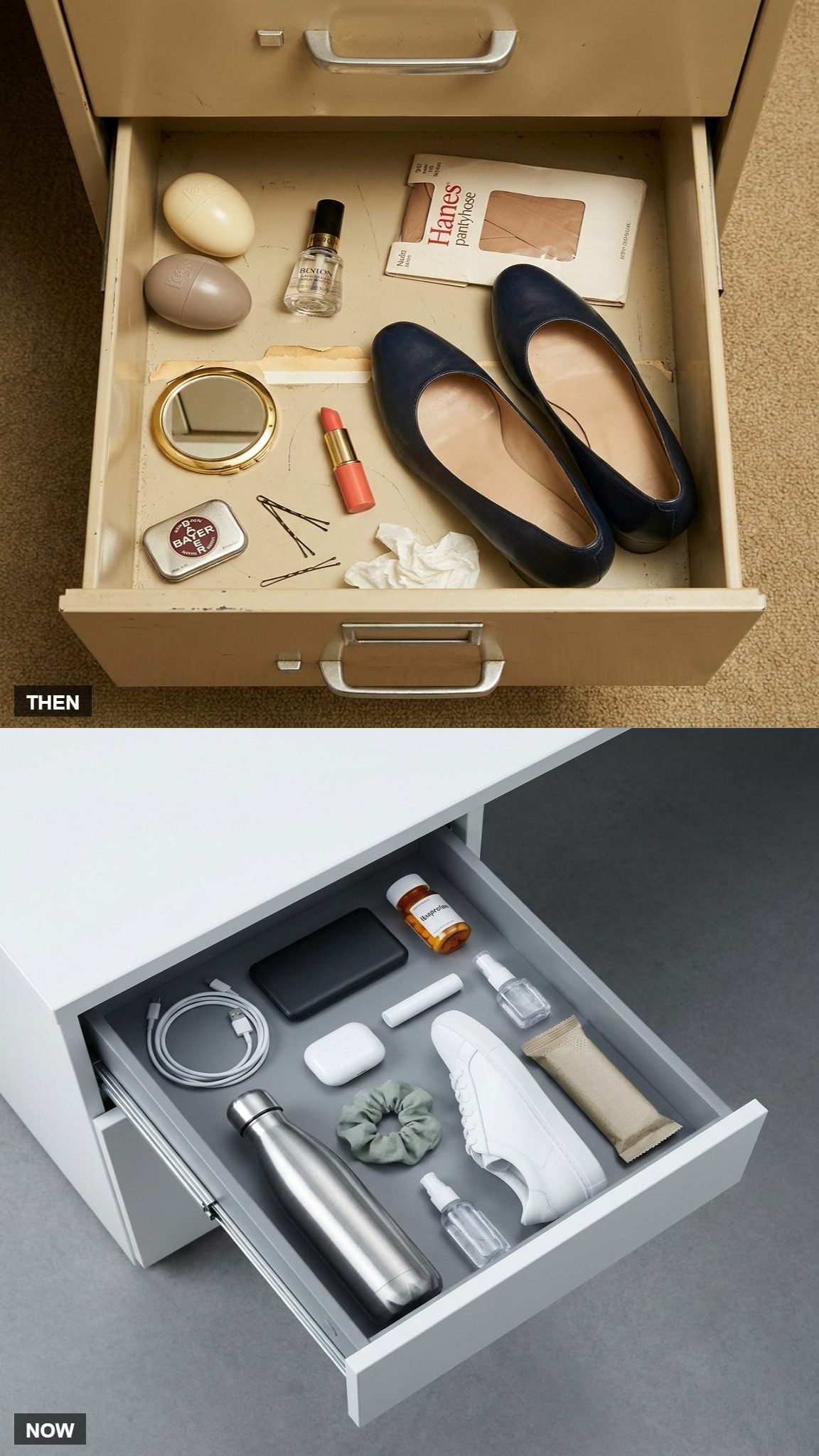
The bottom desk drawer in 1980 was a survival kit. Spare pantyhose in a plastic egg, clear nail polish to slow a run, and low heels for the commute. In offices where hosiery was expected, backup stockings made as much sense as a spare tire.
Now that drawer holds a USB-C cable, a portable battery, earbuds, and perhaps some ibuprofen. The crisis has changed from a laddered stocking ten minutes before a presentation to a phone sitting at 3% before the train home.
19. Lunch-Hour Errands Once Kept the Suit On. The Gym Changed That.
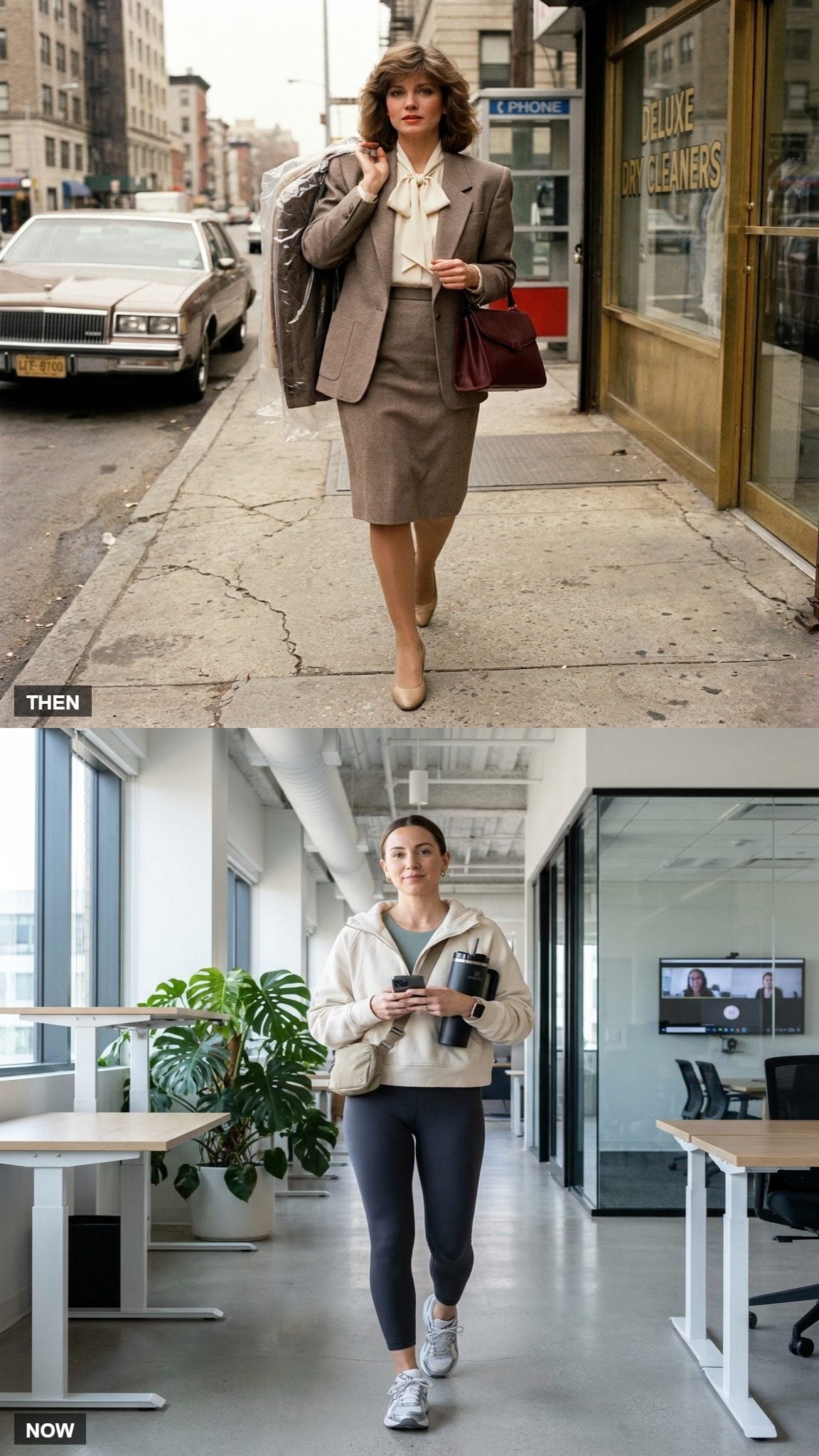
The 1980 lunch break had a specific look: full suit still on, heels clicking across pavement, and errands folded into a 45-minute window with military efficiency. You did not change clothes to pick up the dry cleaning because the dry cleaning was probably the suit you planned to wear Thursday.
Offices with a midday gym culture have made joggers, leggings, and a zip-up hoodie less startling at a corporate address. The athleisure look that once signaled the weekend may now signal an efficient lunch hour.
18. The Invisible Layer Used to Hold Her In. Now It Helps Her Move.
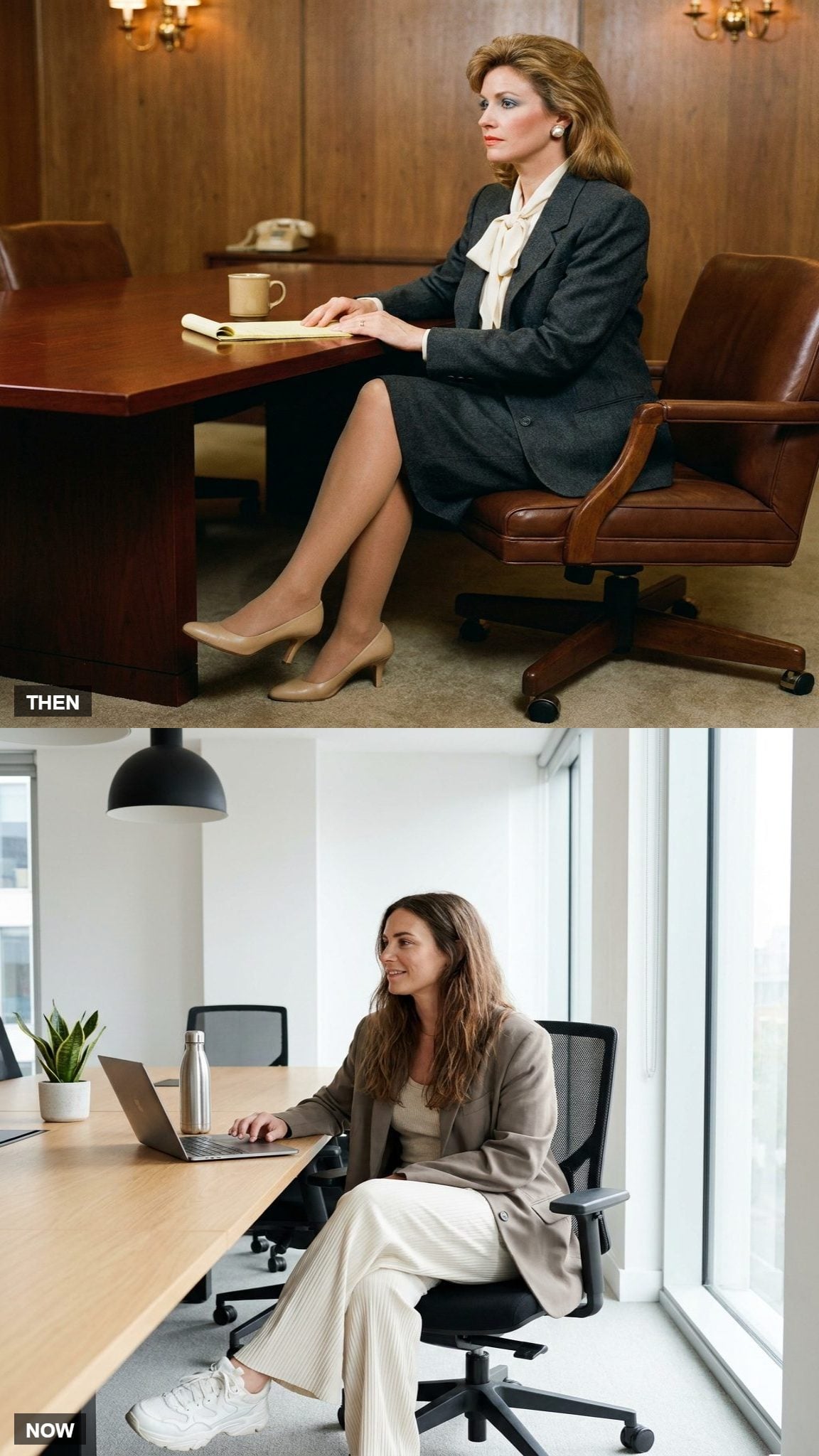
Sitting through a long meeting in a conservative 1980 office could mean doing it in control-top hosiery beneath a lined wool skirt, knees together, back straight, and very little room for the body to forget what it was wearing. Comfort ranked well below composure.
Modern invisible layers are more likely to be chosen for ease: slip shorts beneath a dress, stretch fabric beneath trousers, or seamless underwear that does not require an hourly adjustment. The garment no one sees now has a less punitive job.
17. Engraved Cardstock Made the Introduction. Now Two Phones Just Tap.
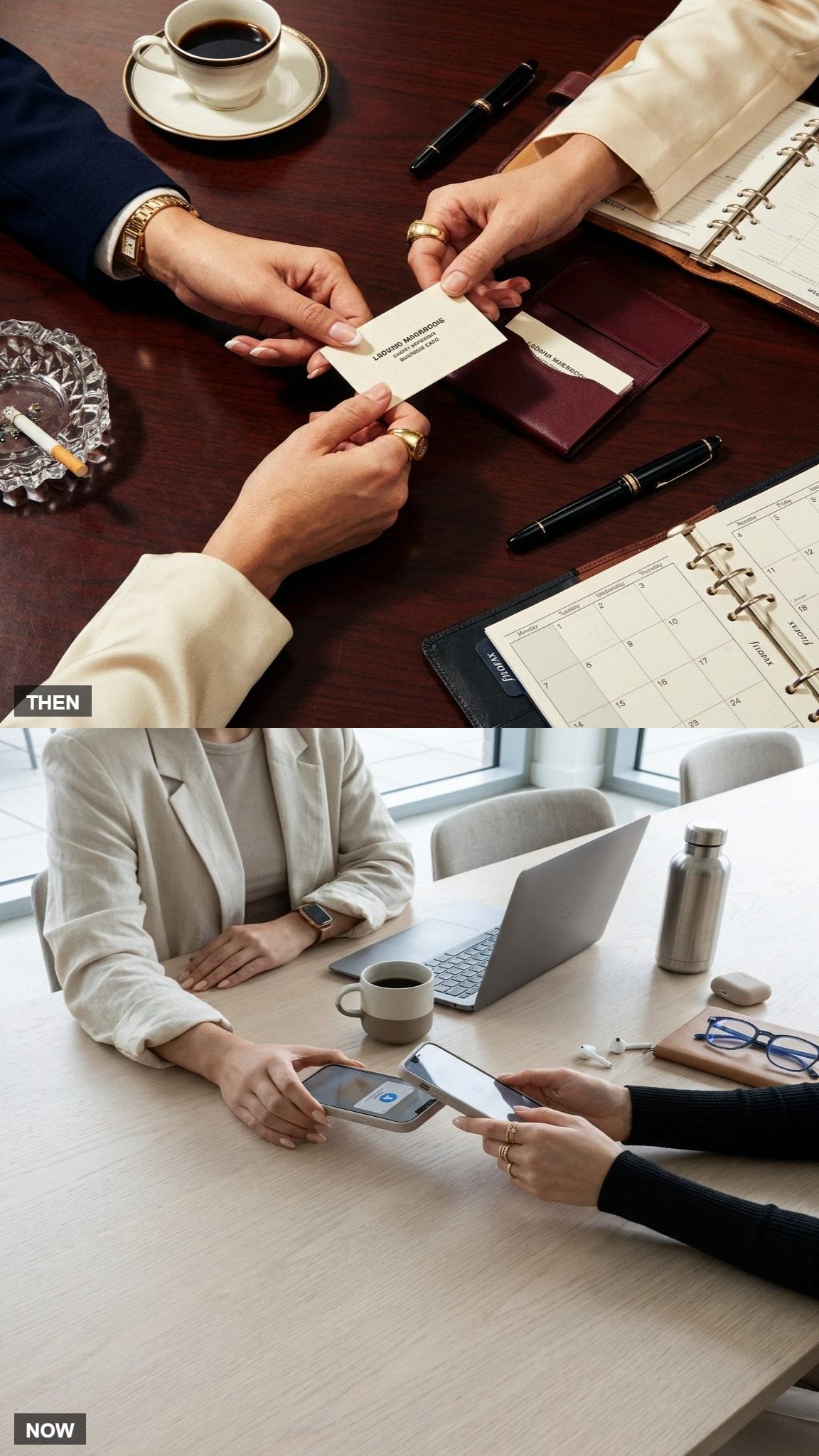
The 1980 business card exchange had a ritual. Cards stayed in a slim case inside a structured handbag and emerged with deliberate timing. Thick stock, raised lettering, and a restrained typeface carried some of the introduction before the meeting had fully begun.
Now two phones can trade contact details through NameDrop, or a QR code can move the conversation online in seconds. Paper cards survive, particularly in finance, law, design, and luxury. Their physical weight is no longer required, which makes using one feel more intentional than routine.
The card once had to carry the introduction. Now it is a souvenir of one.
16. The 1980 Blazer Built Shoulders. The Modern One Borrows Space.
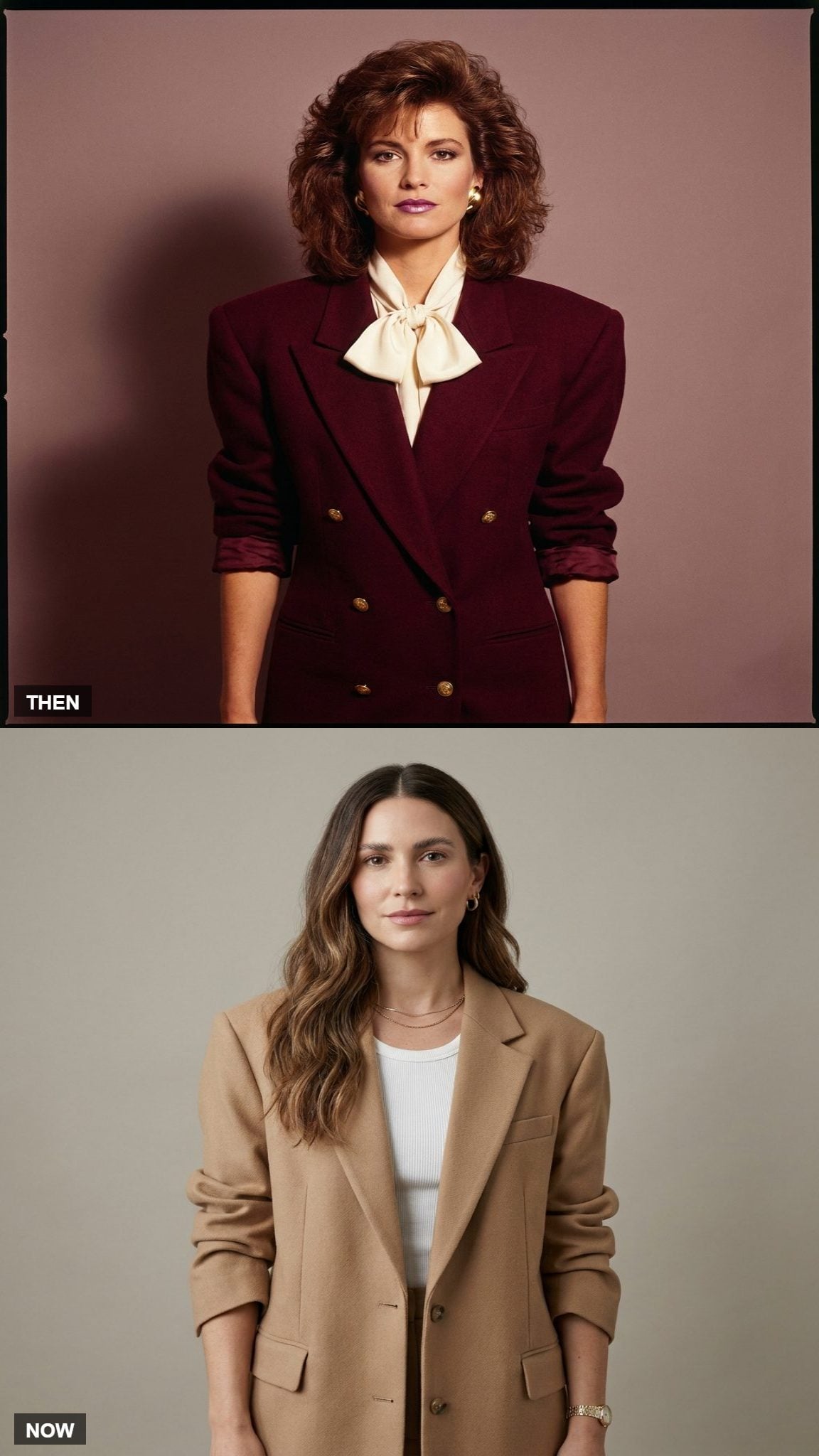
The 1980 jacket built its silhouette outward: padded shoulders, a controlled waist, and firm fabric that held the body inside a sharply defined outline. The exaggeration was deliberate. It borrowed the scale of menswear and turned the volume up.
Today’s oversized blazer creates size differently. The shoulder drops, the fabric hangs, and the jacket often extends well below the hip. Both eras wanted presence. One used scaffolding; the other uses drape.
What Our Readers Say
- Asked which workwear outfit they would buy, 69% of ThreadCurve readers chose a blazer and trousers, well ahead of a dress or a knit and skirt.
From ThreadCurve reader polls and votes.
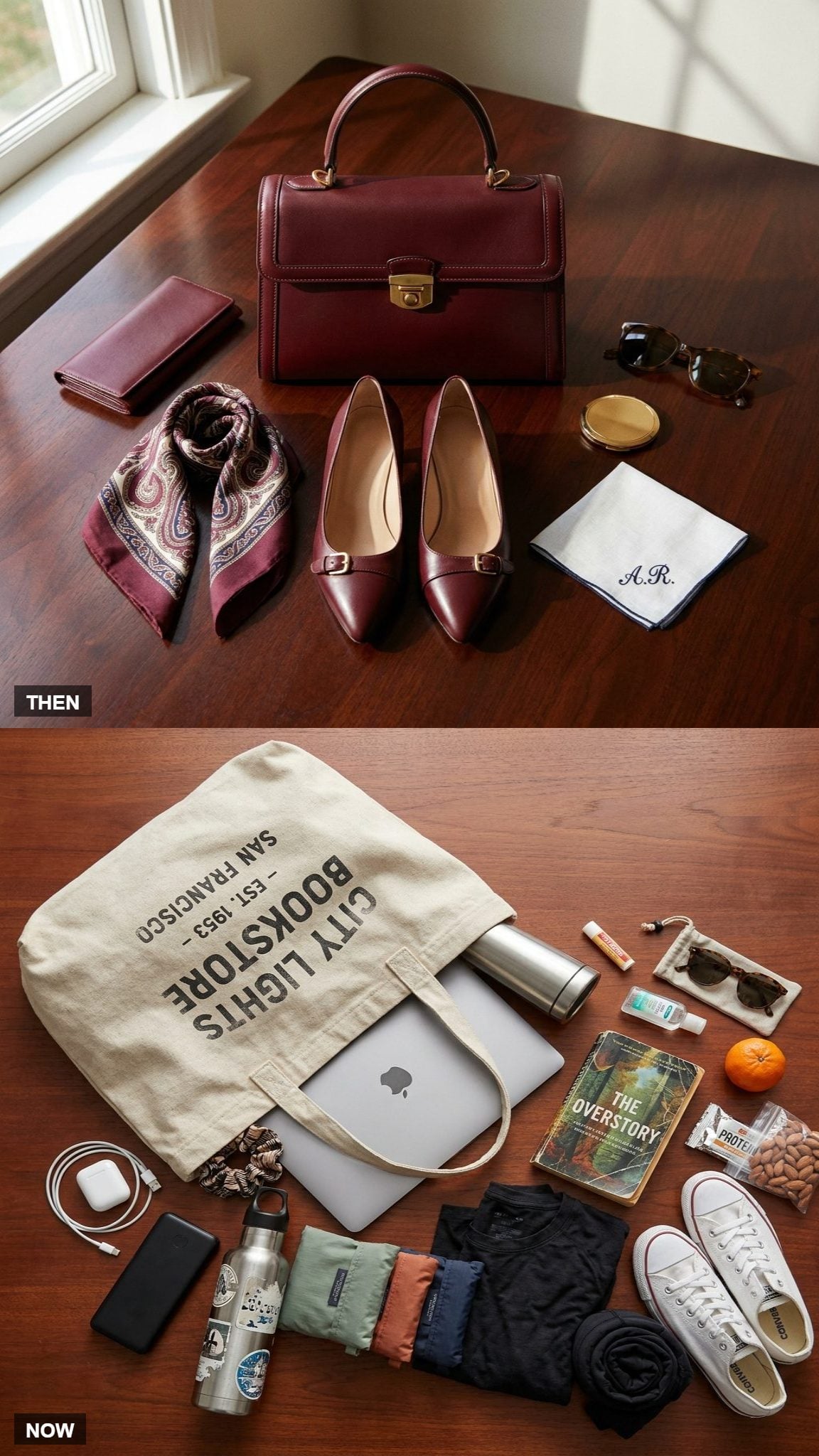
15. One Matched Set Became a Tote Full of Everything
❤️ Would you like to save this?
The matched bag-and-shoe set was a whole philosophy. A burgundy handbag with black pumps could look like an unfinished thought. Coordination required time, money, and enough closet space to support several parallel systems.
The 2026 commute bag is a large tote containing a laptop, a gym outfit, headphones, three kinds of snacks, a portable charger, and approximately fourteen reusable bags folded inside one another. It matches almost nothing. Capacity won.
14. Navy Was Safe. Cobalt Had to Wait.
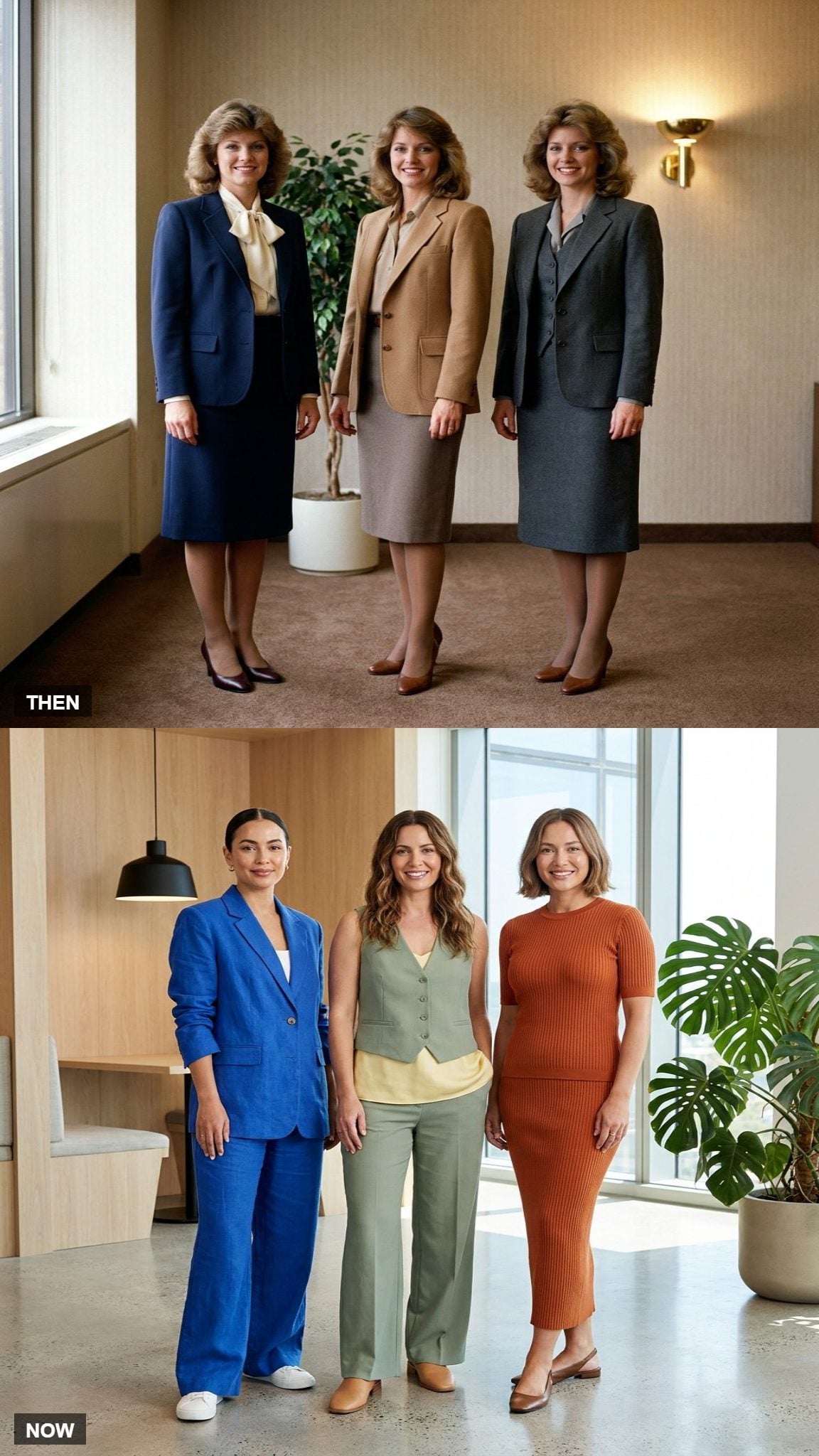
In a conservative corporate office in 1980, navy, camel, gray, brown, and cream formed the reliable core. Jewel-toned blouses and patterned dresses certainly existed, but the suit itself often stayed restrained. A quieter palette reduced the chance that the clothes became the meeting’s first topic.
The 2026 office may contain cobalt linen blazers, sage wide-leg trousers, rust knit sets, black tailoring, and several people who still prefer gray. The difference is range. Color no longer needs to wait for the office holiday party.
The muted palette was not always about taste. Sometimes it was simply one less thing to defend.
13. Corduroy Was as Casual as 1980 Got—Then the 1990s Changed the Office
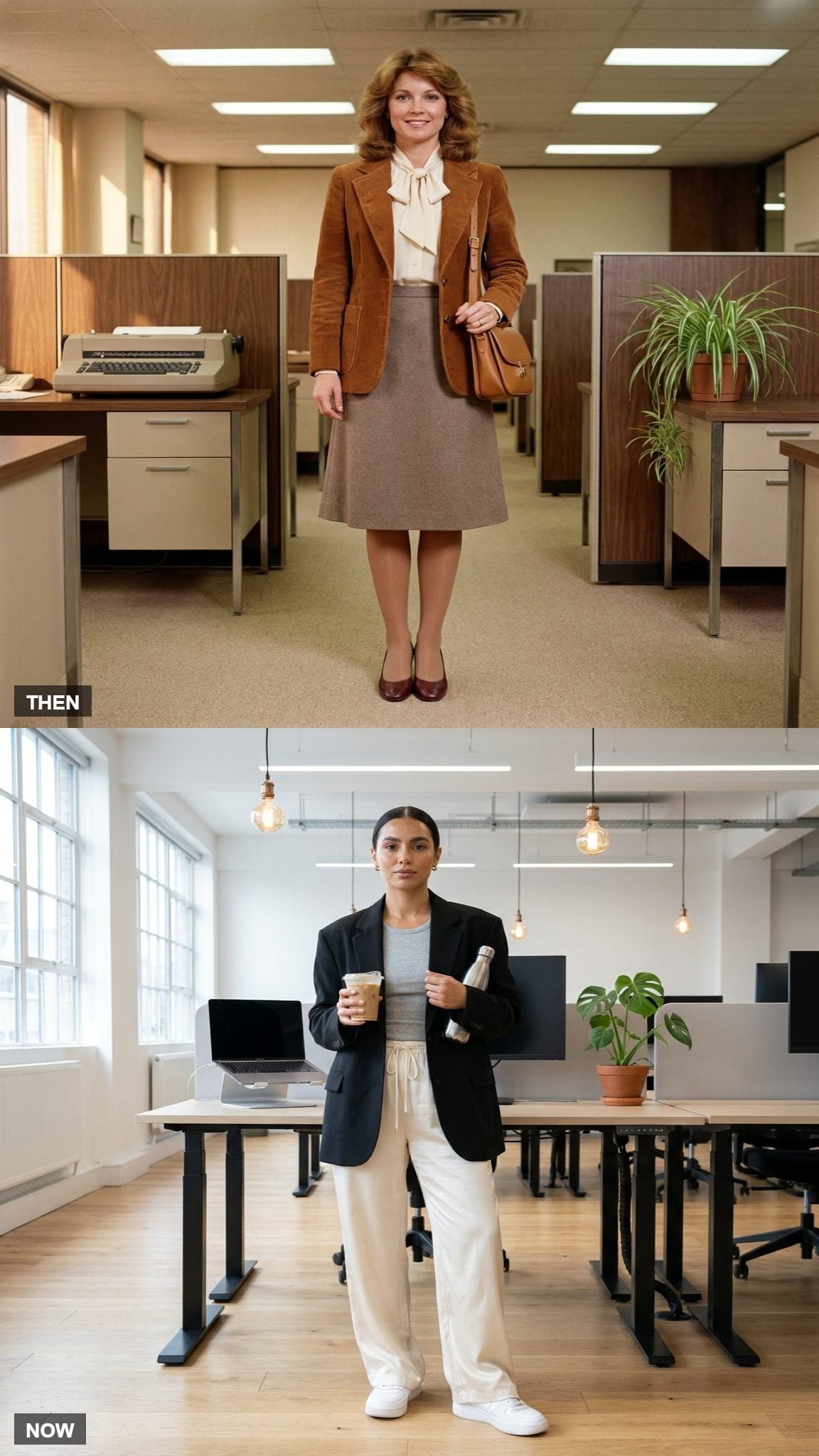
A slightly relaxed Friday outfit in 1980 might have meant trading a wool jacket for corduroy or choosing a softer blouse. The structure remained: skirt, tailored separates, polished shoes, and very little that would now qualify as weekend clothing.
Formalized Casual Friday became a much larger workplace force during the 1990s. The term eventually stretched from khakis and knit polos to expensive denim, sneakers, and outfits that rely heavily on a blazer to maintain diplomatic relations with the dress code.
12. The Office Coffee: Percolator and Foam Cup in 1980, Personal Oat Milk Latte Now
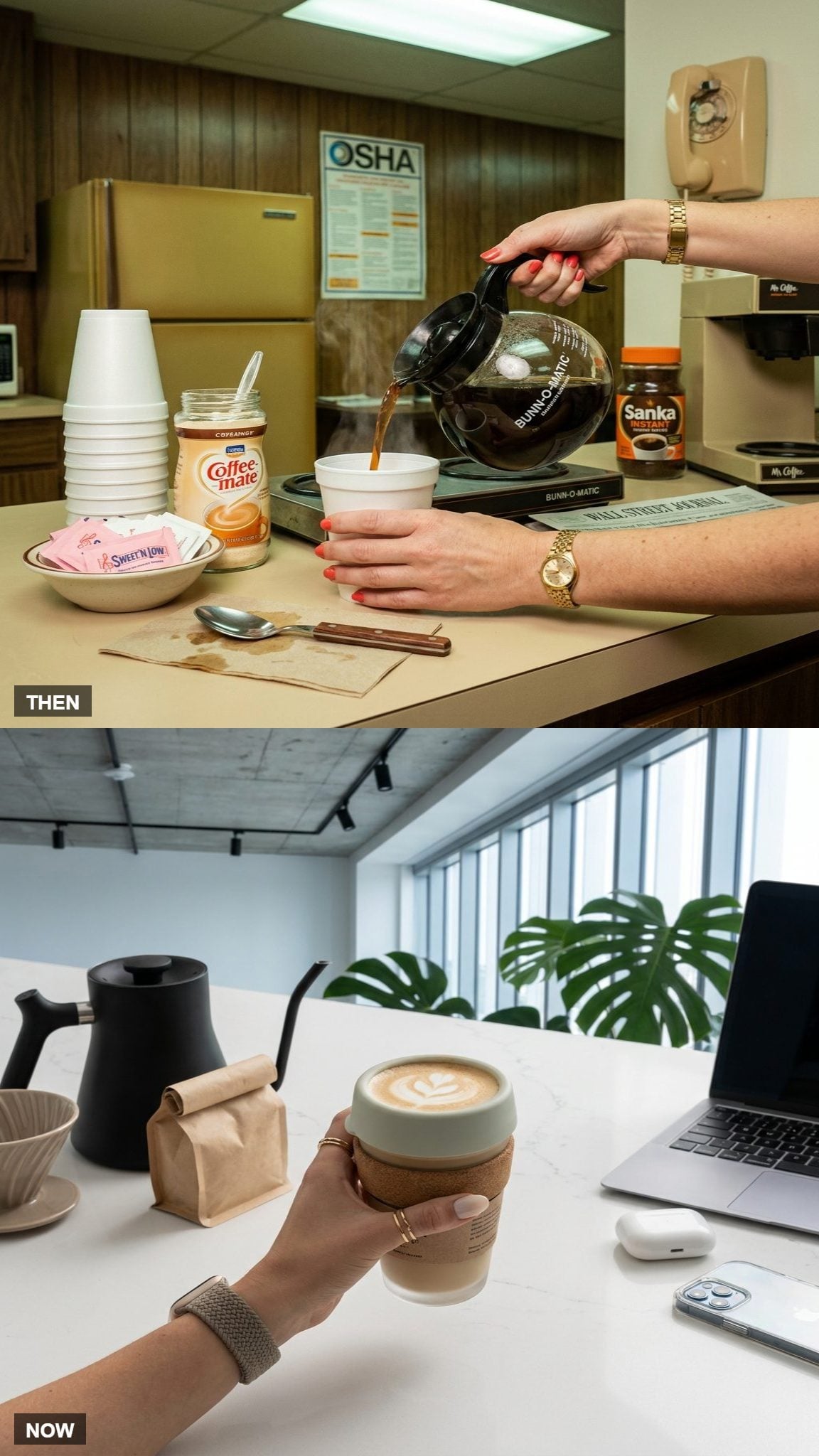
Coffee tells you plenty about how work changed. In 1980, it was fuel and social glue, brewed by whoever reached the pot first and poured into a foam cup before being doctored with powdered creamer and a pink packet of sweetener.
Now the coffee may arrive with its owner, cost seven dollars, and include a milk choice longer than the agenda for the morning meeting. The reusable glass cup is personal property, the order is memorized, and the communal pot may sit untouched beside a machine that sounds like a small aircraft.
11. The Chain Kept Reading Glasses Close. Now They Just Live in the Hair.
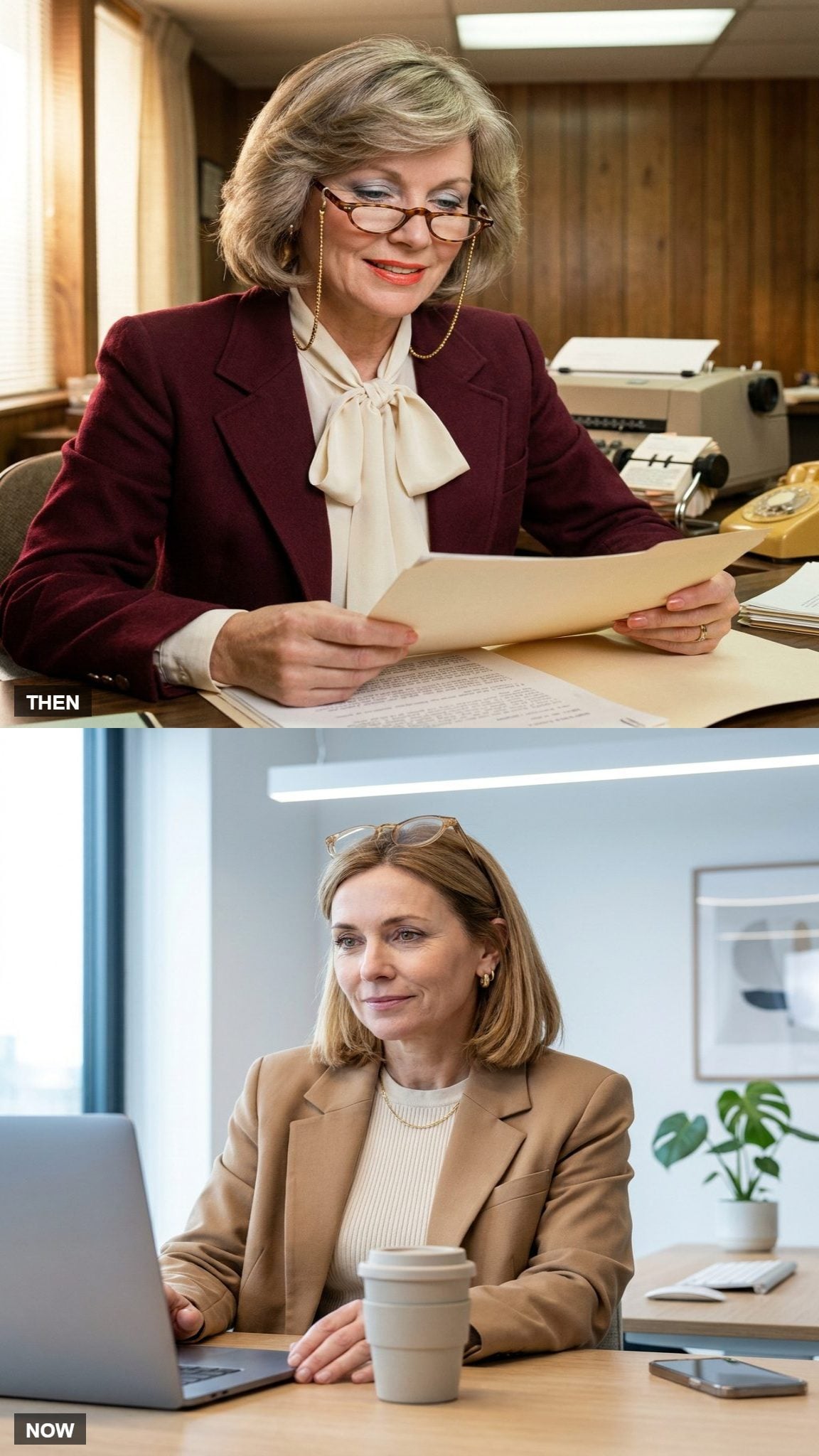
The chain around the neck was practical theater. It kept reading glasses from wandering between the filing cabinet and the conference room while adding one more deliberate accessory to the blouse-and-blazer arrangement.
The modern pair may spend half the day pushed into the hair between bouts of screen work. The message is less “I have documents” than “I have twenty tabs open and no idea which one is making noise.”
10. The Hemline Used to Arrive With an Unwritten Rule
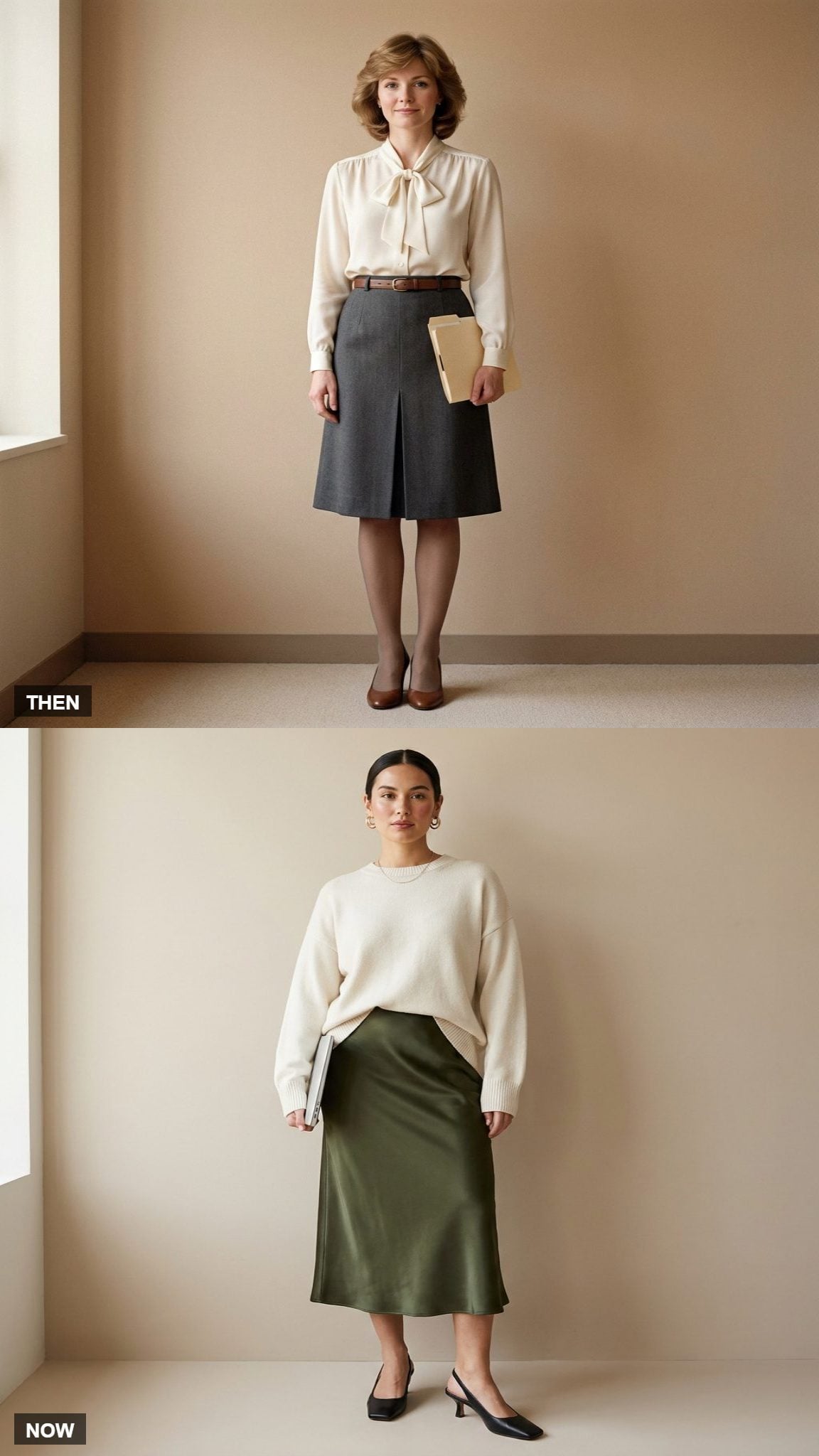
Below the knee was the safest professional choice in 1980. The exact rule might never have appeared in writing, but it could be absorbed quickly by looking around the office on the first morning.
Modern dress codes still exist, yet the acceptable range is broader: midi, maxi, knee-length, and sometimes shorter depending on the workplace. The hemline has not escaped judgment entirely. It simply has more room to negotiate.
9. The Golf Umbrella Shrank Down to Fit in a Tote
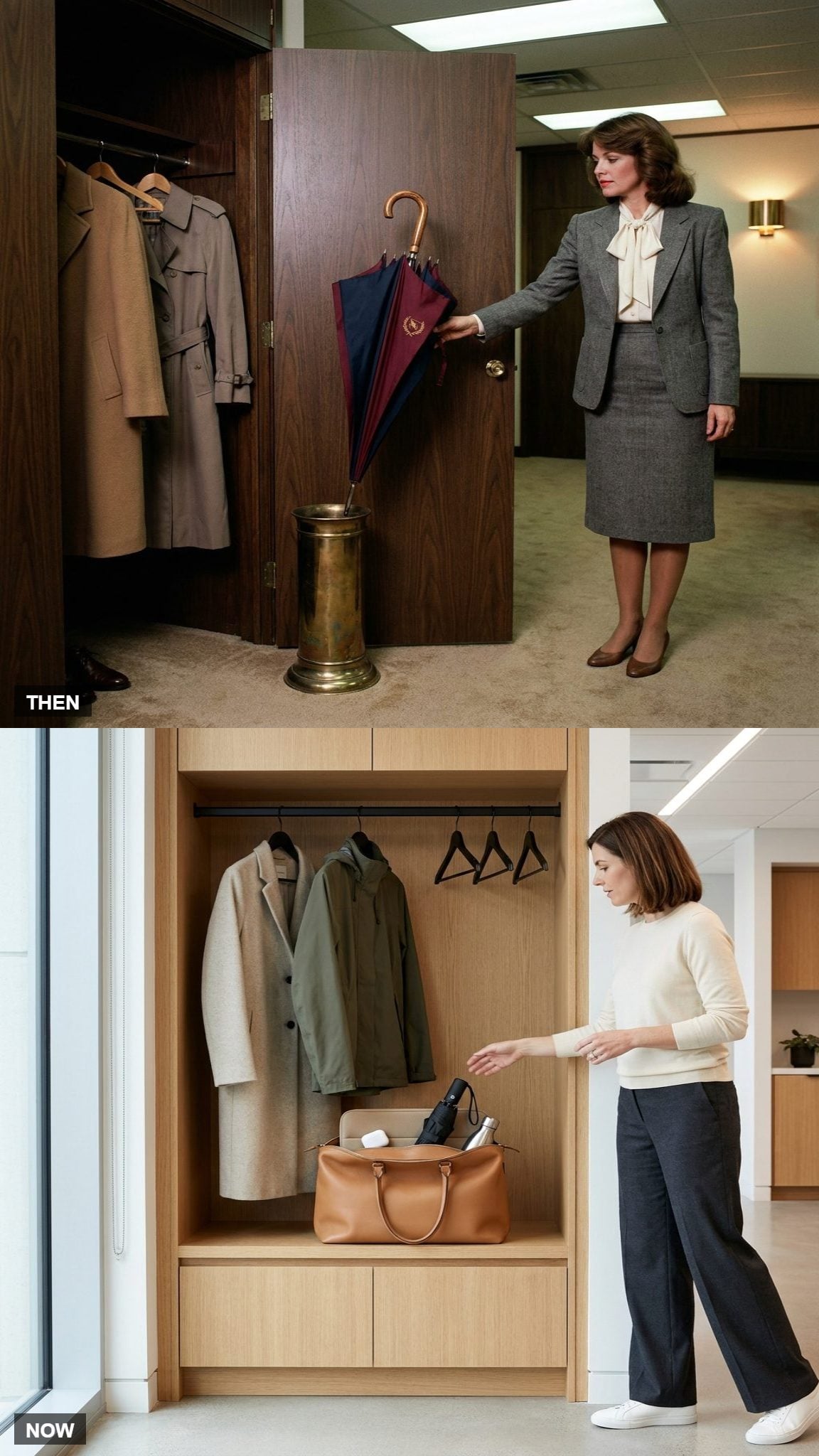
The golf umbrella in the office lobby was a fact of life: large enough to protect a structured hairstyle, heavy enough to double as a weapon, and difficult to lose because it occupied half the coat closet.
The modern umbrella folds down to the size of a paperback and lives permanently in the bottom of the tote, forgotten until the weather turns. The engineering improved. The likelihood of leaving it in a restaurant did not.
8. The Watch Used to Tell Time. Now Time Is Buried in the Menu.
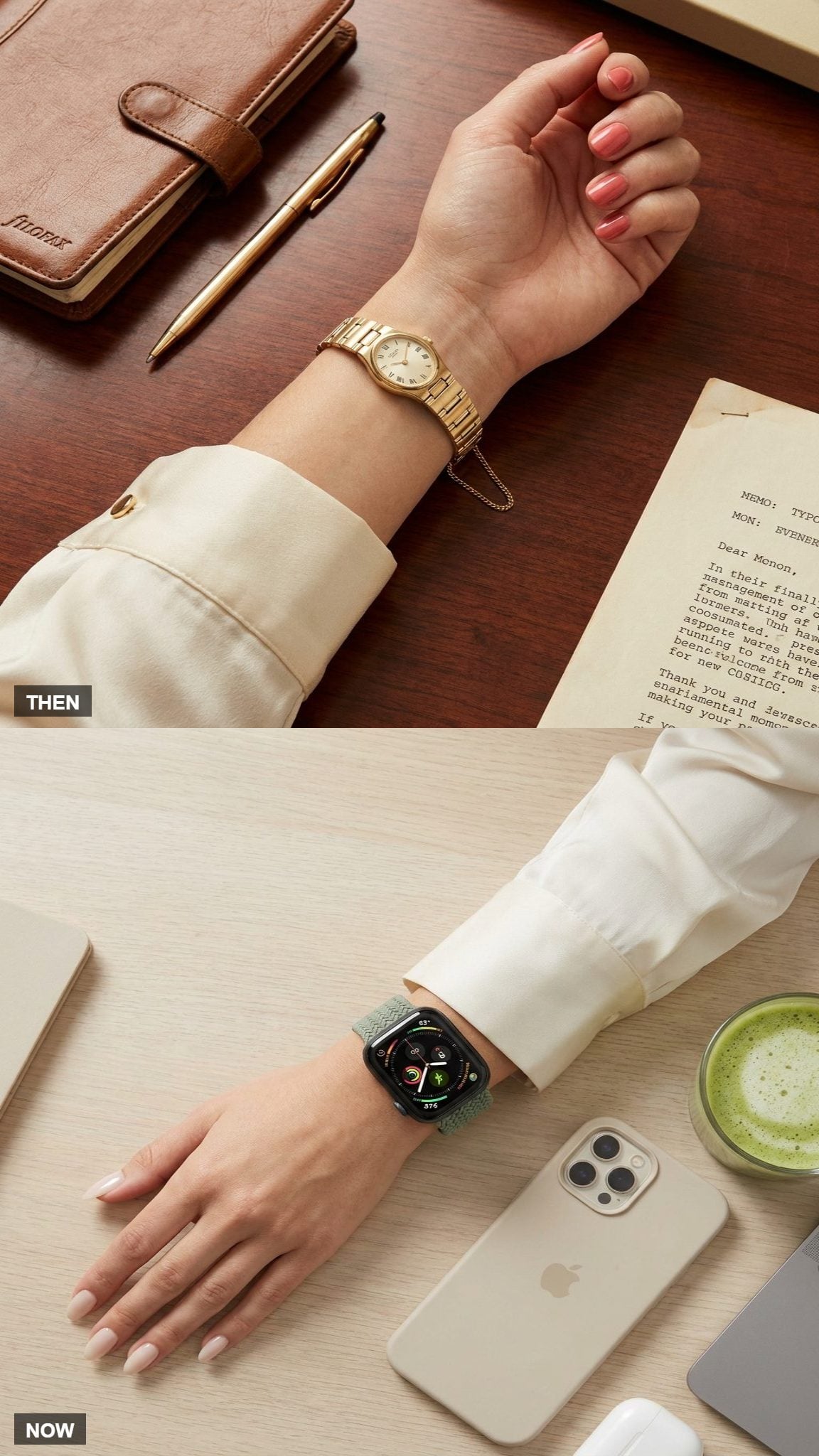
A bracelet watch was jewelry that happened to tell time. The face could be small enough that reading it required a squint and a precise tilt of the wrist.
The current wrist carries a small computer counting steps, heartbeats, calendar alerts, and unread messages. Time remains available, but it has fallen deep into the menu.
7. Frosted Peach Meant Weekly Polish. Neutral Gel Bought Three Weeks.
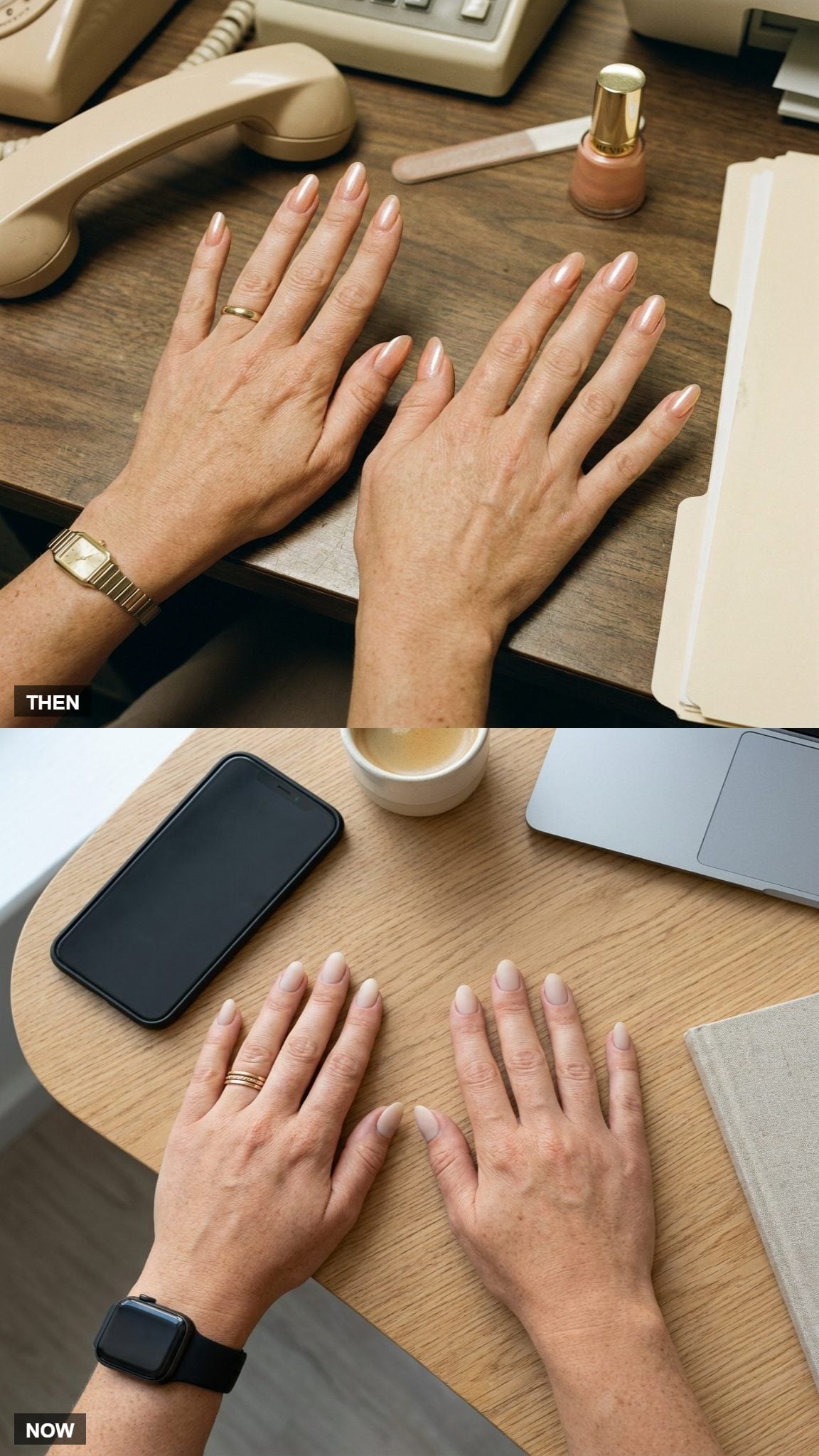
Frosted peach with a shimmer was a dependable office choice: oval nails, a regular salon appointment, and a file in the desk drawer for emergency repairs.
The current version is often shorter, rounded or squoval, and finished with neutral gel that can last for weeks. The maintenance moved farther apart, even if the appointment itself became considerably more elaborate.
6. Rubber Overshoes Squeaked Through the Lobby. Sneakers Took Over.
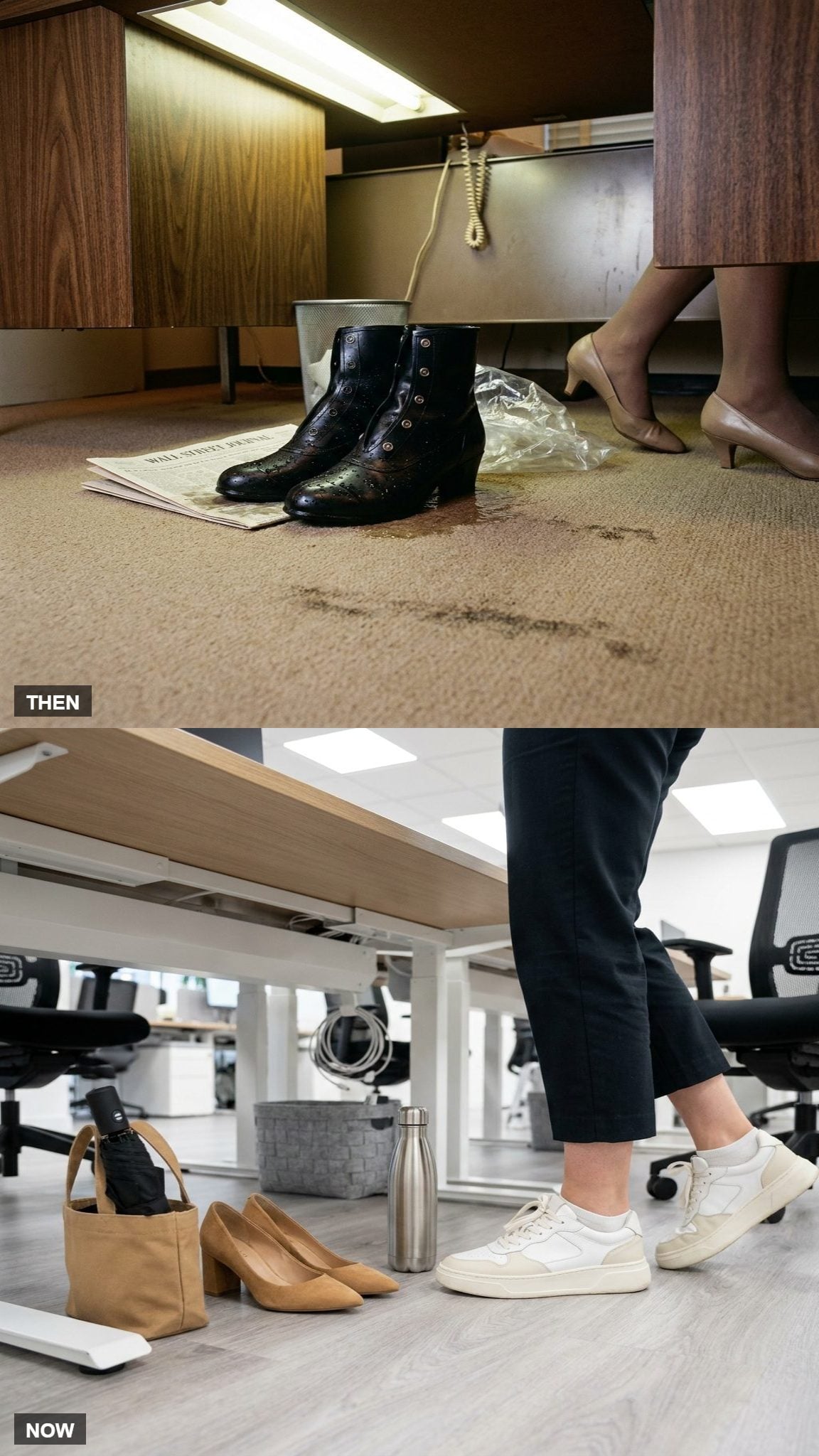
Rubber overshoes pulled over good pumps offered one accepted solution for a rainy commute. They lived beneath the desk in a plastic bag and made a distinctive squeak while crossing the lobby.
Now sneakers may handle the commute while the office shoes wait in a drawer. Or the good shoes are sneakers. Or the meeting is remote and the rain has lost jurisdiction over the lower half of the outfit.
5. The Camel Wrap Coat Matched the Suit. The Puffer Does Not Bother.
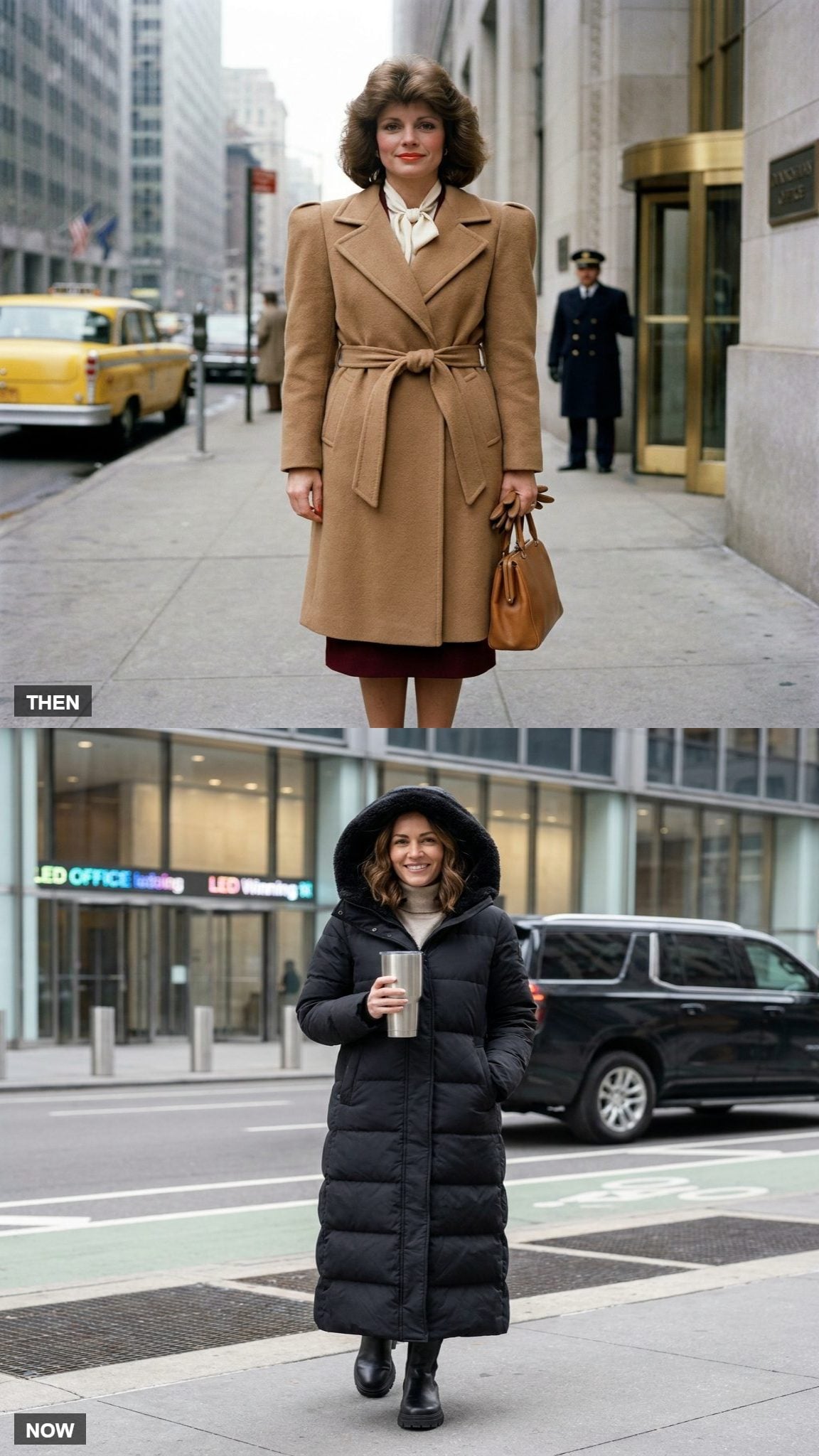
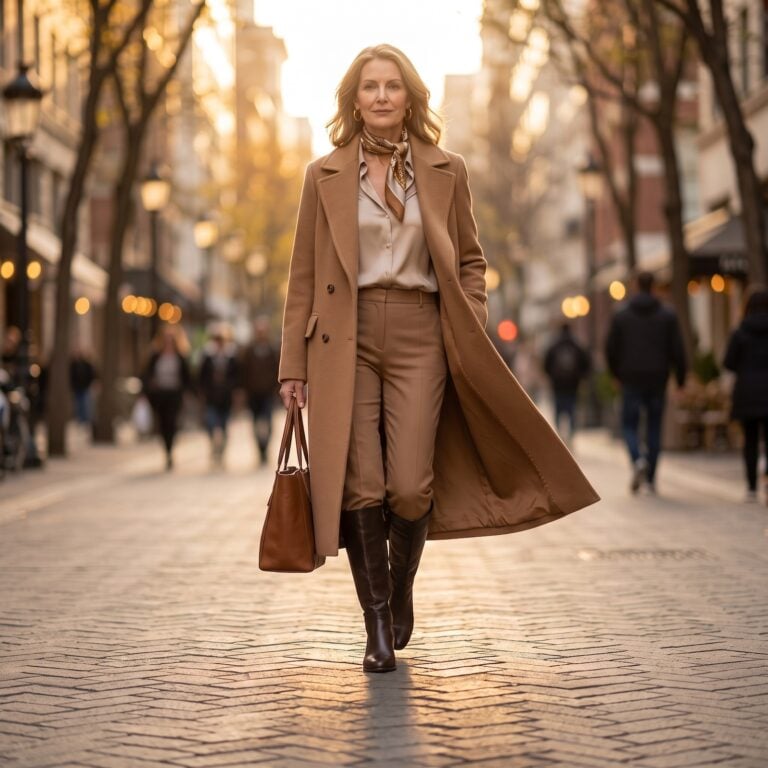
The camel wrap coat with a self-tie belt was the coat. It extended the tailored office silhouette outdoors, complete with broad shoulders and enough polish to look expensive whether it was or not. It was also frequently warm enough for the walk between a taxi and a revolving door.
The modern version may reach the ankle, include a hood, and carry enough insulation for a train platform in February. The puffer ignores the outfit underneath until the wearer reaches the office. Warmth settled that argument a while ago.
The wool coat has held its ground, though: when ThreadCurve readers voted on coats, wool came first at 38%, while the puffer drew just 10%.
4. The Note-Taking Method: Steno Pad and Shorthand in 1980, Tablet and Stylus Now
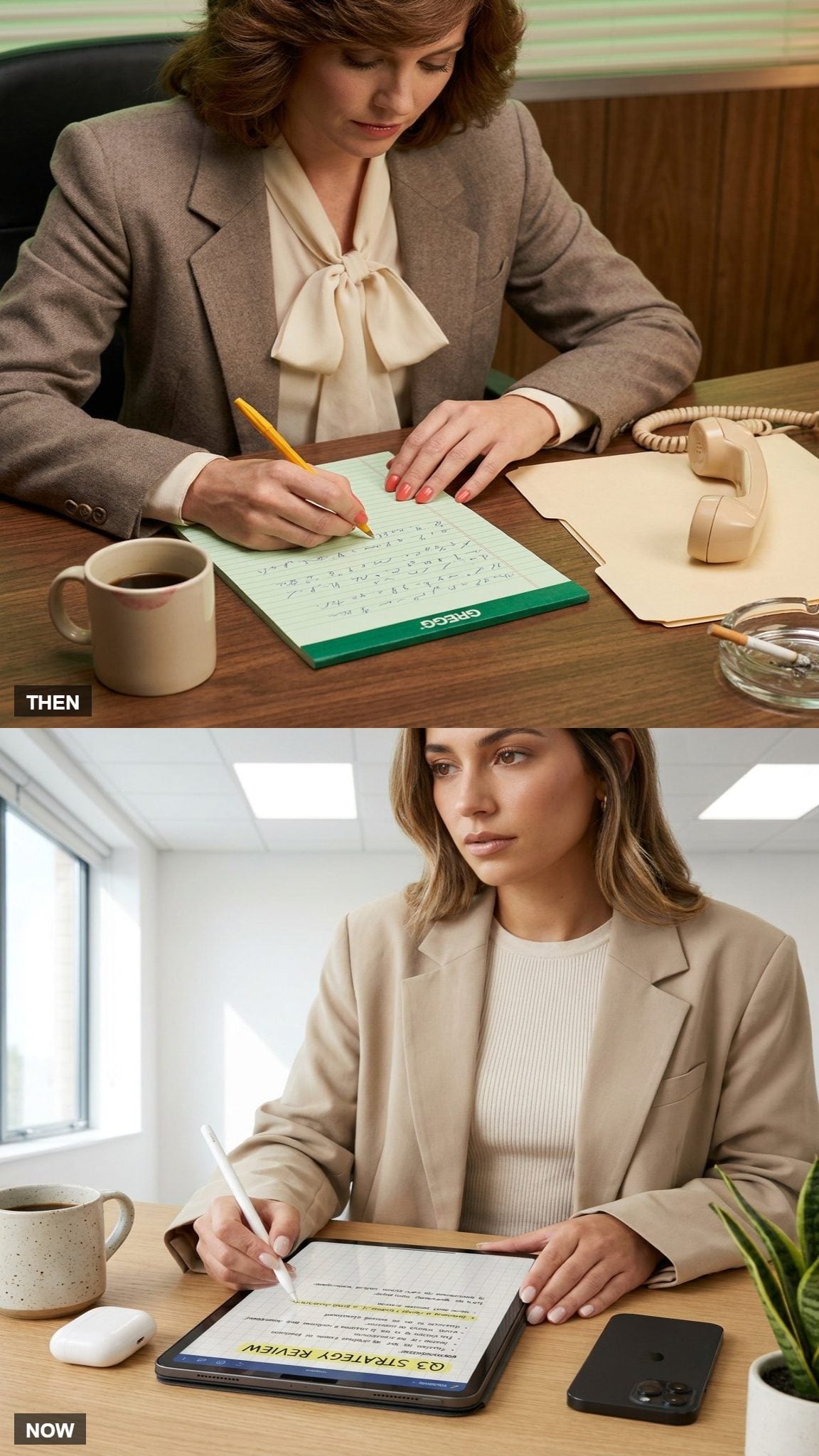
Shorthand was a skill: real training, real speed, and real symbols that meant nothing to anyone who had not learned them. A skilled stenographer could take dictation at around 120 words per minute and produce an accurate typed version afterward.
A stylus on a tablet can preserve handwriting, search notes, and store years of meetings without requiring a filing cabinet. It requires less training and introduces more battery anxiety. Something private disappeared in the exchange, though. Shorthand was almost a secret language. The tablet is designed to share.
3. The Belt Used to Announce Itself. Now It Mostly Holds Up the Trousers.
❤️ Would you like to save this?
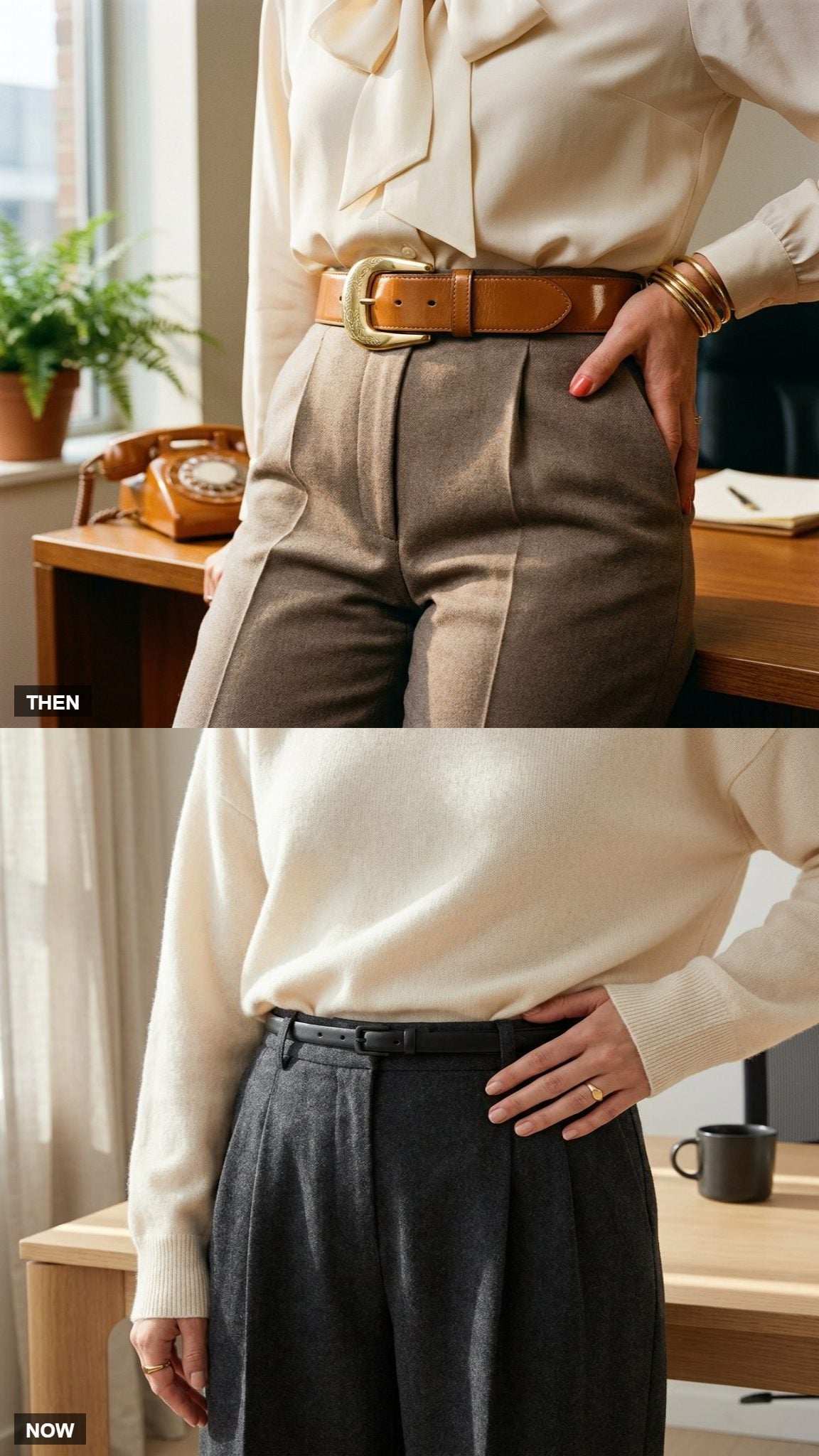
The 1980 belt did visible work. It cinched, announced itself, and caught the light. A brass buckle the size of a saucer was not an accident and rarely behaved like one.
Current belts are often almost structural. They hold the trousers in place and retreat into the outfit. The focal point has moved elsewhere, perhaps to the sneaker, the sleeve, or the oversized coat that has already covered the belt completely.
2. The Sick Day Uniform: Hose to the Doctor in 1980, Sweatpants Under the Coat Now
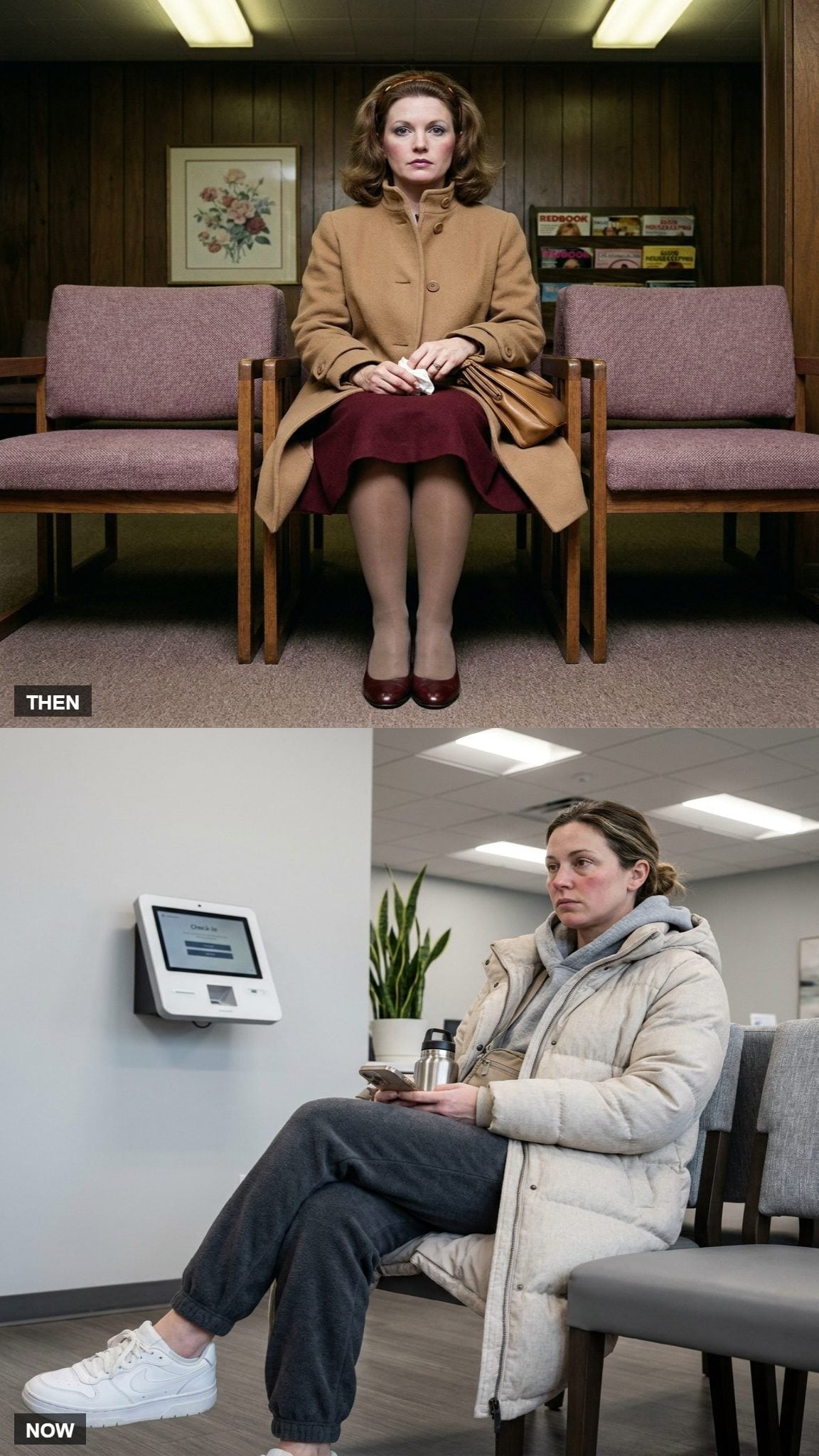
Even a sick day could retain traces of the office uniform. A woman accustomed to dressing formally every weekday might still put on hosiery, a skirt, and proper shoes before heading to a doctor’s appointment, fever or no fever.
Now the sweatpants remain in service. A long coat covers most of the evidence, sneakers handle the waiting room, and nobody expects illness to arrive in a coordinated handbag-and-pump set.
1. The Business Trip Packing: Two Matching Hard Suitcases in 1980, One Carry-On Roller Now
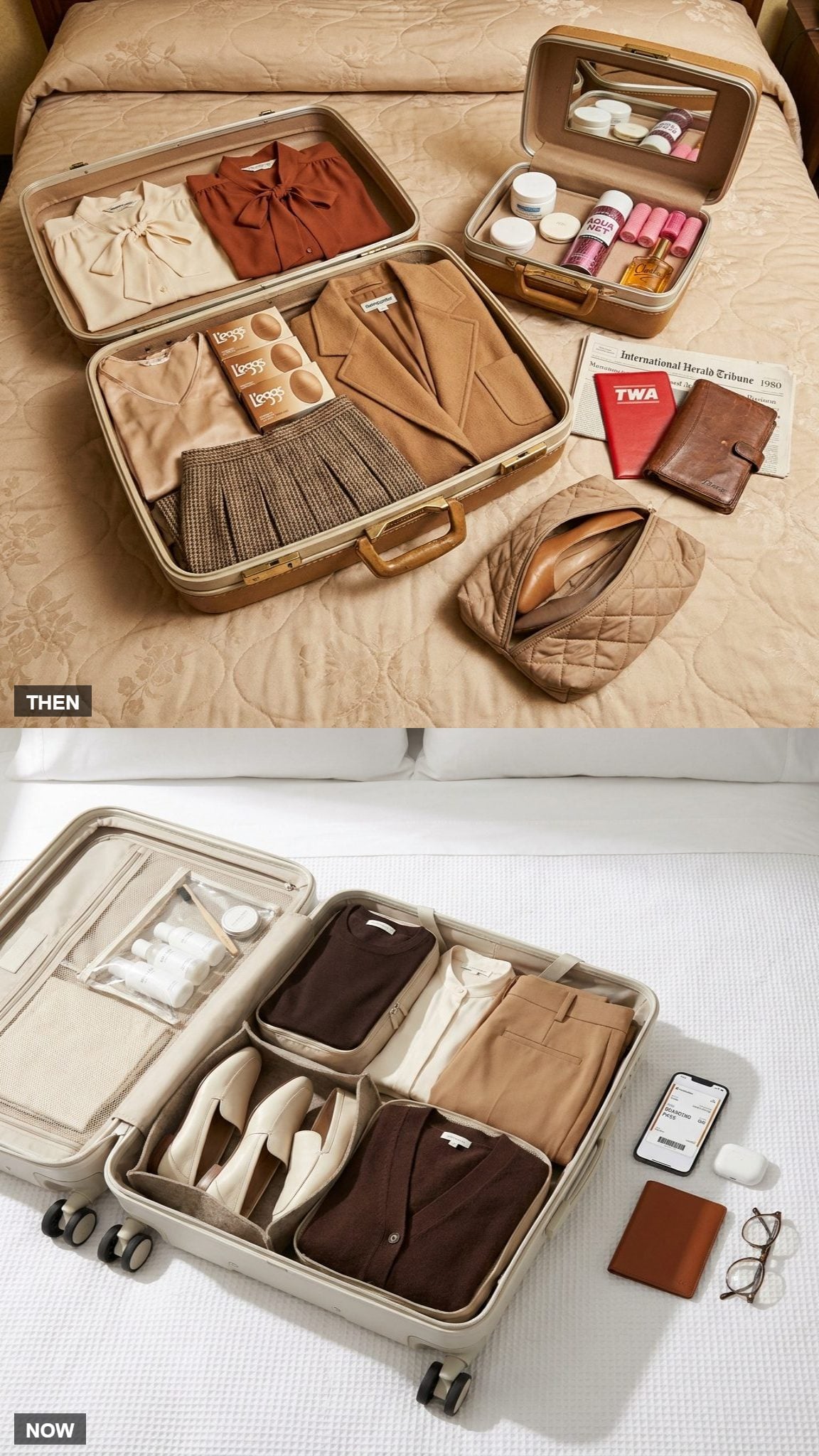
Two suitcases and a train case for a three-day business trip once made practical sense. The clothes needed pressing, the shoes needed their own bag, and the toiletries occupied a hard case with a mirror built into the lid.
Now one carry-on can hold three coordinating outfits, a laptop, and one pair of shoes expected to perform several unrelated jobs. The wardrobe became more flexible. The traveler became less willing to wait at baggage claim.