
❤️ Would you like to save this?
The color-blocked shift ruled the 1980s. Bold geometric panels, a hemline that hit at exactly the wrong spot, and shoulders built for a boardroom that no longer exists. It looked sharp then. Now it reads as costume. Still, the bones of that dress were always good—a clean line, a confident use of color, a shape that actually moves with you. The 35 looks ahead keep what worked and quietly ditch what dated. Same woman, same starting point, thirty-five ways to look like the most decided person in the room.
FYI, thanks to AI imagery software, we’re able to create very specific fashion and hairstyle examples to illustrate the points being made. In some cases, imagery is exaggerated to hammer home the point. Also, assume links that take you off the site are affiliate links such as links to Amazon. this means we may earn a commission if you buy something.
35. Color-Blocked Again, Now in a Navy and Camel Ponte Sheath
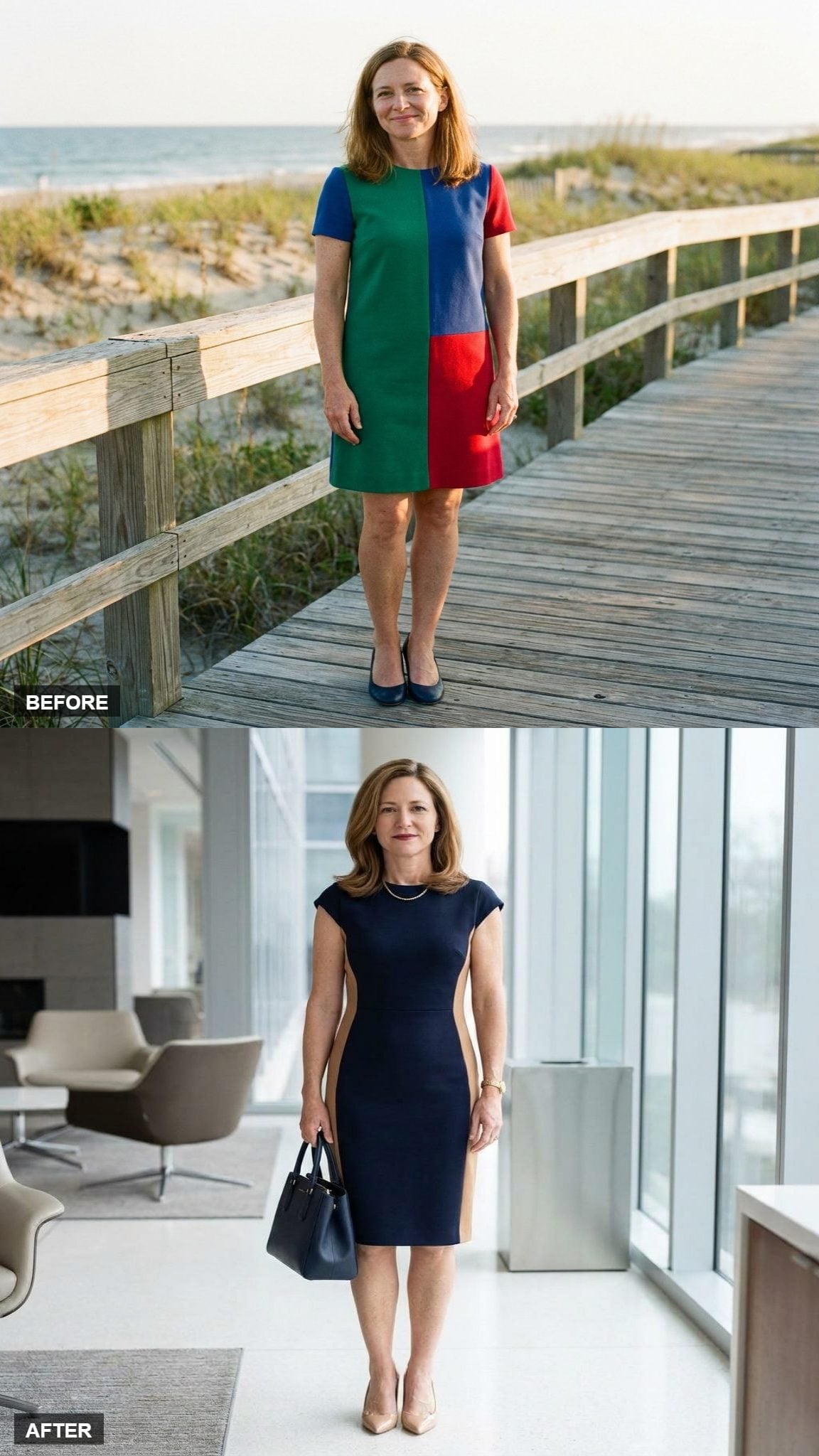
The 1980s original loved a color block, but it slapped the panels on flat, with no logic to where they landed. This version puts the camel down the sides on purpose.
Vertical side panels give the dress a cleaner architectural line and bring more attention to the lighter center. The ponte knit supports the shape through a workday without collapsing into every crease. Same color-block idea the era embraced—but now it is doing something more precise.
34. Retro Color-Block, Now in Matte Crepe and Clean Seams
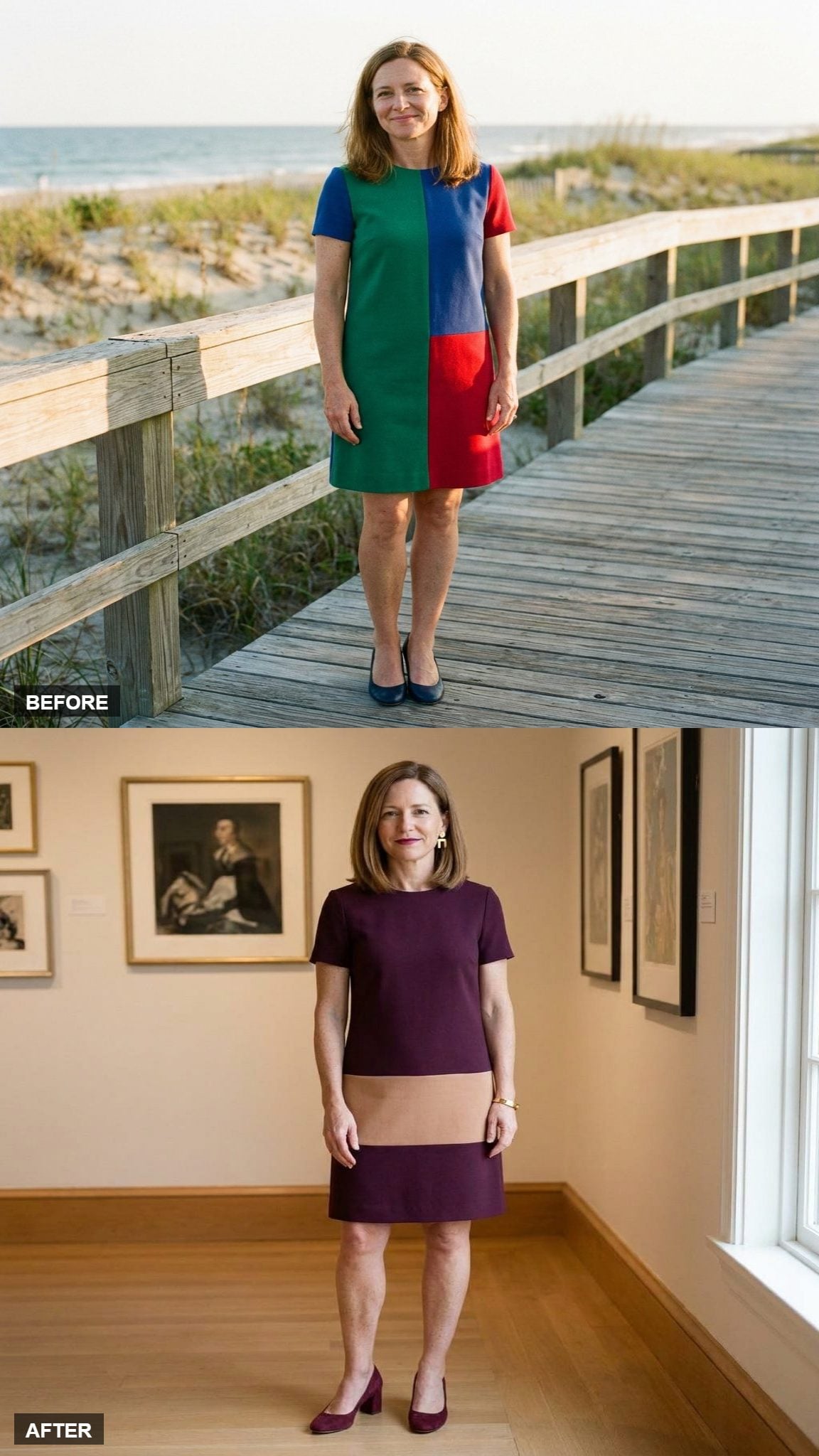
Eighties color blocking loved a hard graphic clash. This version keeps the block but softens the palette to plum and camel, colors that hum instead of shout.
The horizontal band becomes part of the color story rather than a correction device. Matte crepe keeps the plum and camel muted, with clean seams and no extra shine competing for attention.
33. Modern Shift Reborn in Color-Block Crepe and Sculptural Gold
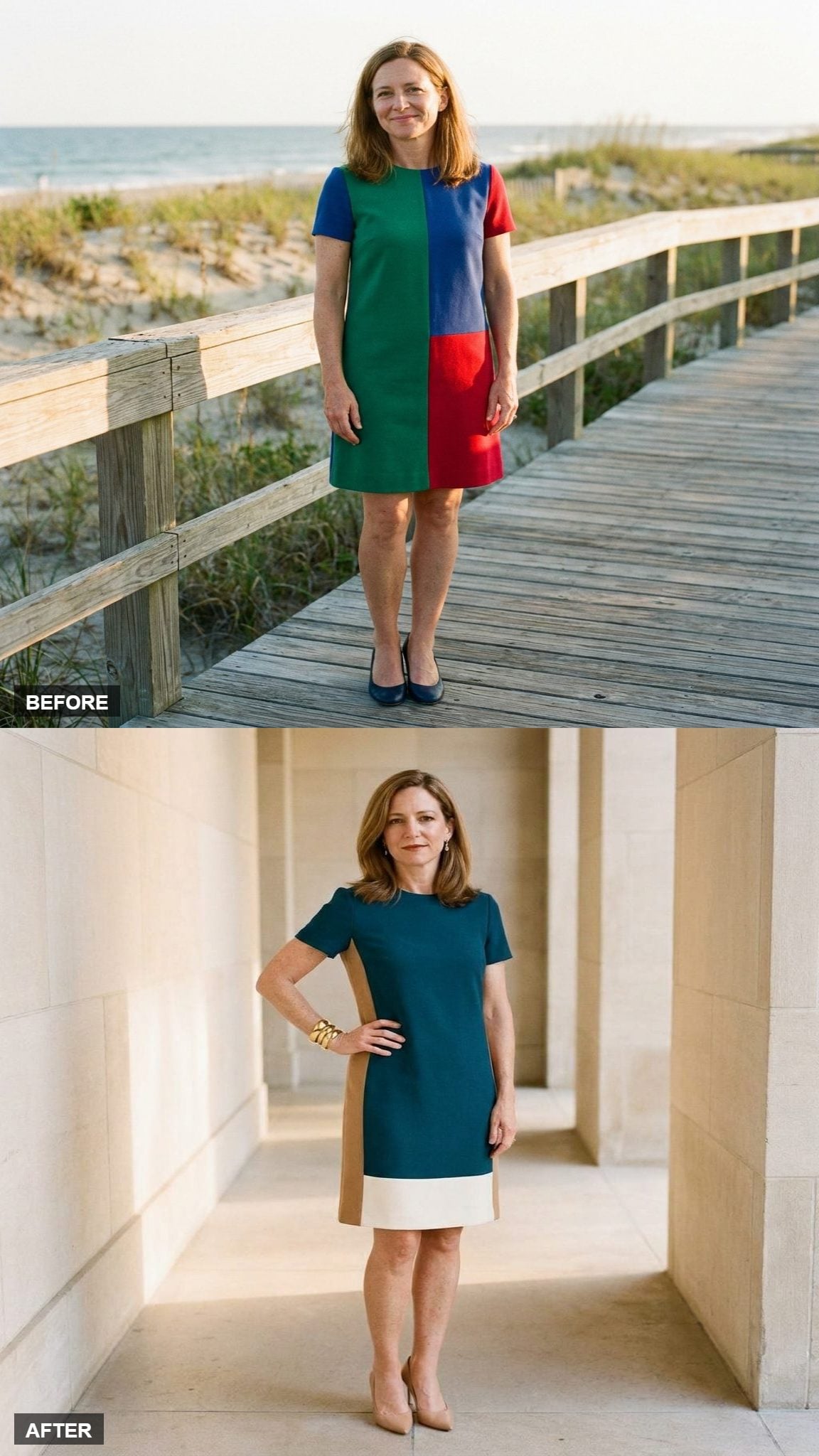
The 1980s got the color blocking right and the fit wrong. Those old shifts hung like paper bags. This version keeps the graphic panels but cuts them in crepe that grazes the waist instead of ignoring it—and that teal-to-camel-to-ivory seam does the shaping for you.
One dress, three colors, zero fuss. The gold sculptural cuff is the only jewelry that matters here.
32. Modern Color-Block in Camel, Ivory, and Black Ponte
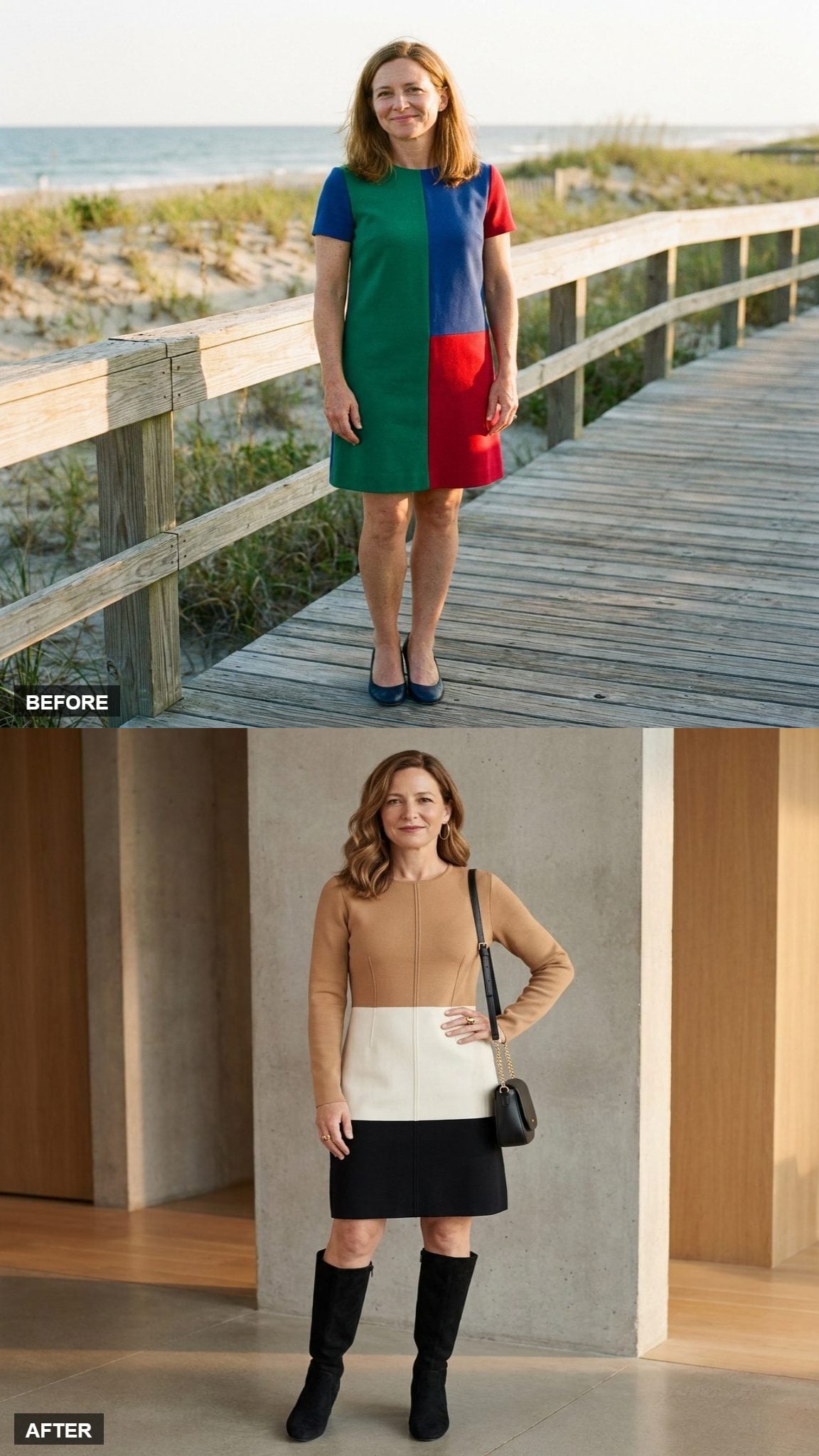
The 1980s loved color blocking and often placed the panels horizontally with little attention to how the seams related to the dress.
This one runs the panels vertically, giving the dress a cleaner structure than the original horizontal blocks. Camel up top warms the palette, black grounds the lower half, and the ivory band creates a clear focal point through the middle.
31. Color-Blocking Done Right in Camel and Rust
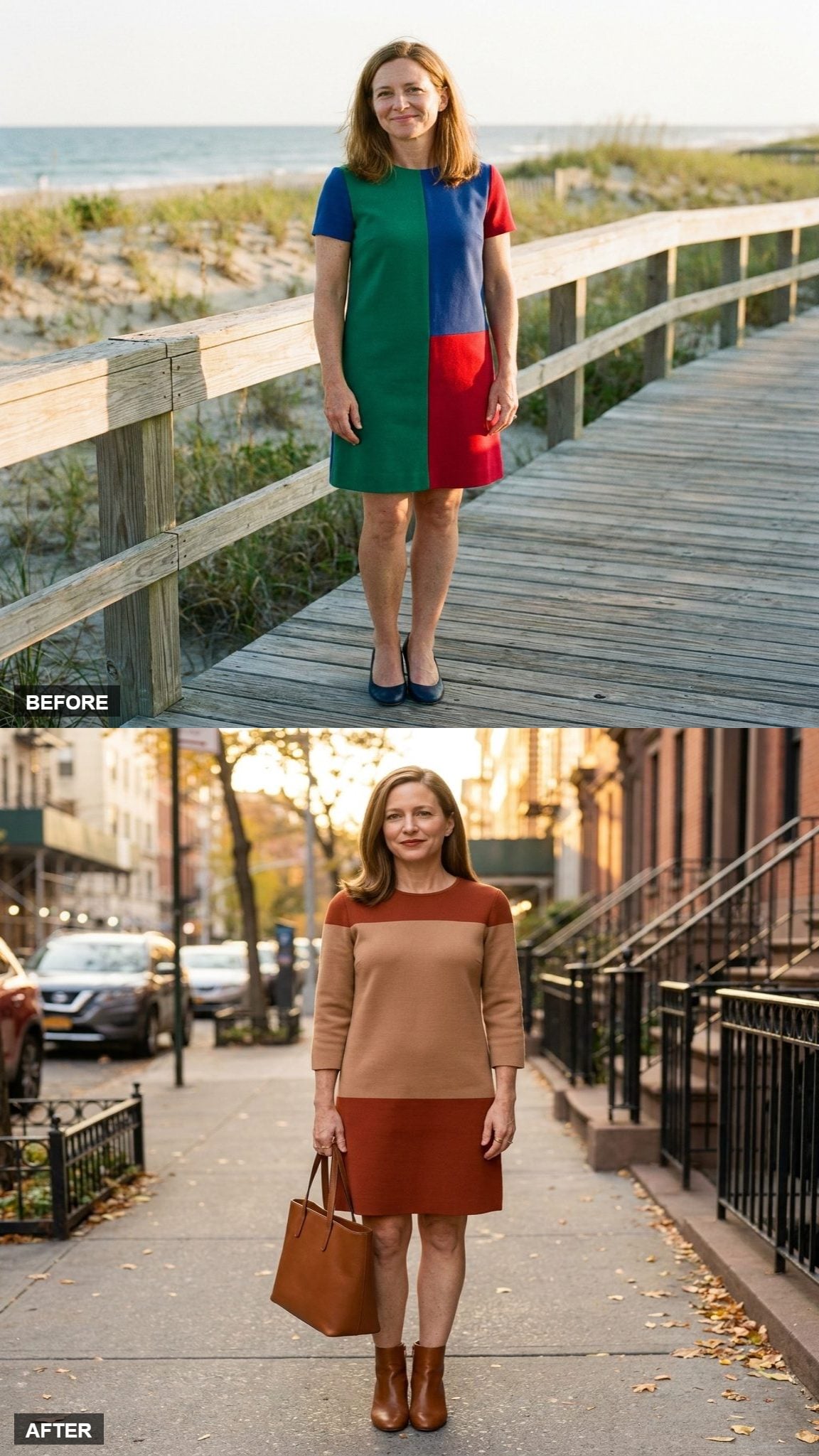
The 1980s got color blocking loud, and the tones clashed for it. So here’s the corrected version. Camel and rust share warm undertones, so the blocks feel considered instead of chaotic.
Ponte knit is the quiet hero. It holds the sharp horizontal seams the way the original always wanted to and never managed, because it has structure without stiffness.
30. Sleeveless Sheath Reworked in Ponte Knit and a Single Gold Cuff
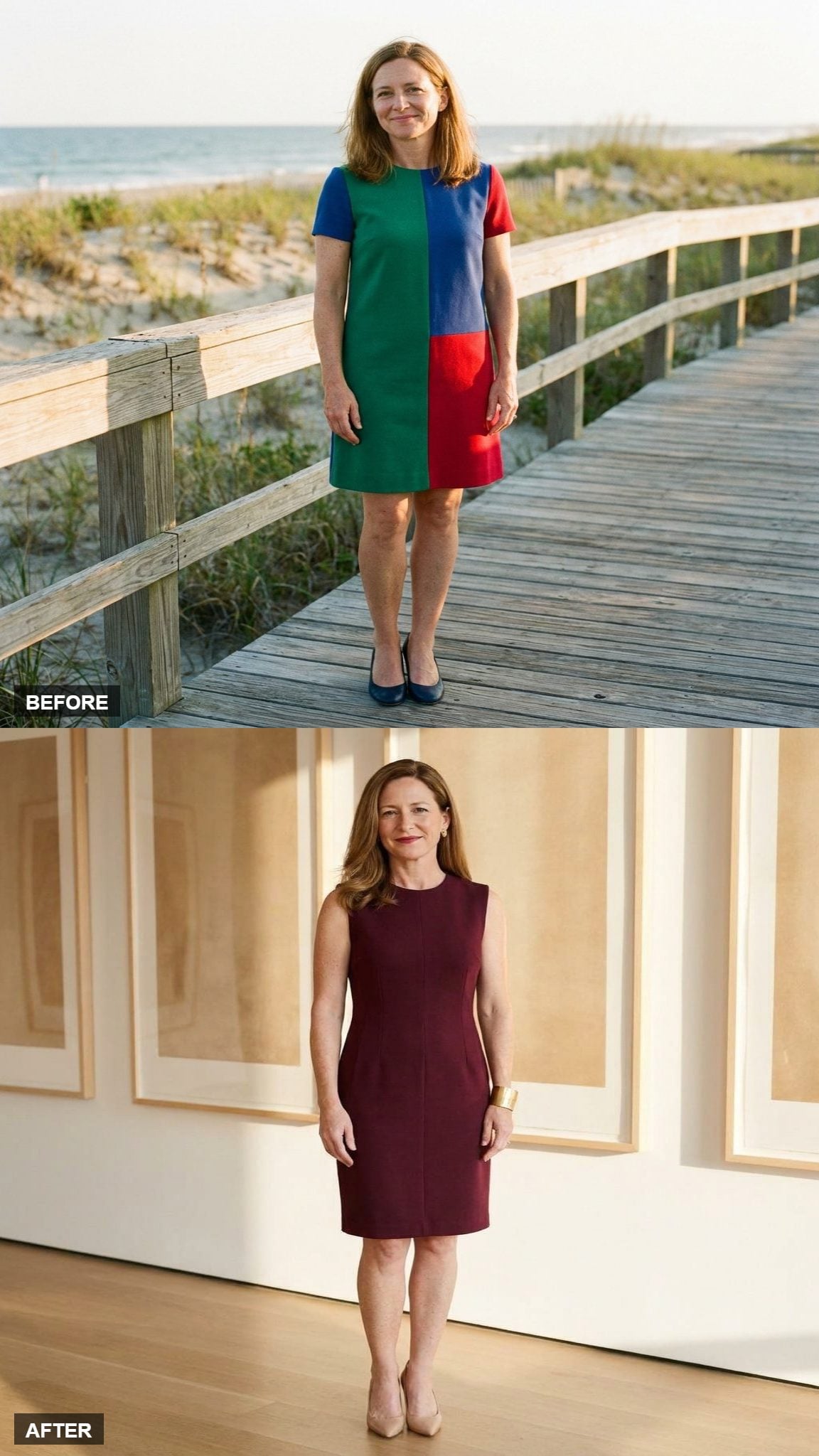
The before dress had the right idea and the wrong fabric. That thin cotton followed every crease and lost its shape by midday. Ponte knit fixes that in one move—it holds a line instead of following gravity.
The dress keeps the shift’s sleeveless simplicity but uses darts to create shape through the middle while the ponte holds the seams cleanly. One gold cuff does all the jewelry work. Restraint, believe it or not, is the loudest thing in the room here.
29. Retro Shift Rewritten in Fluid Silk and a Slim Leather Belt
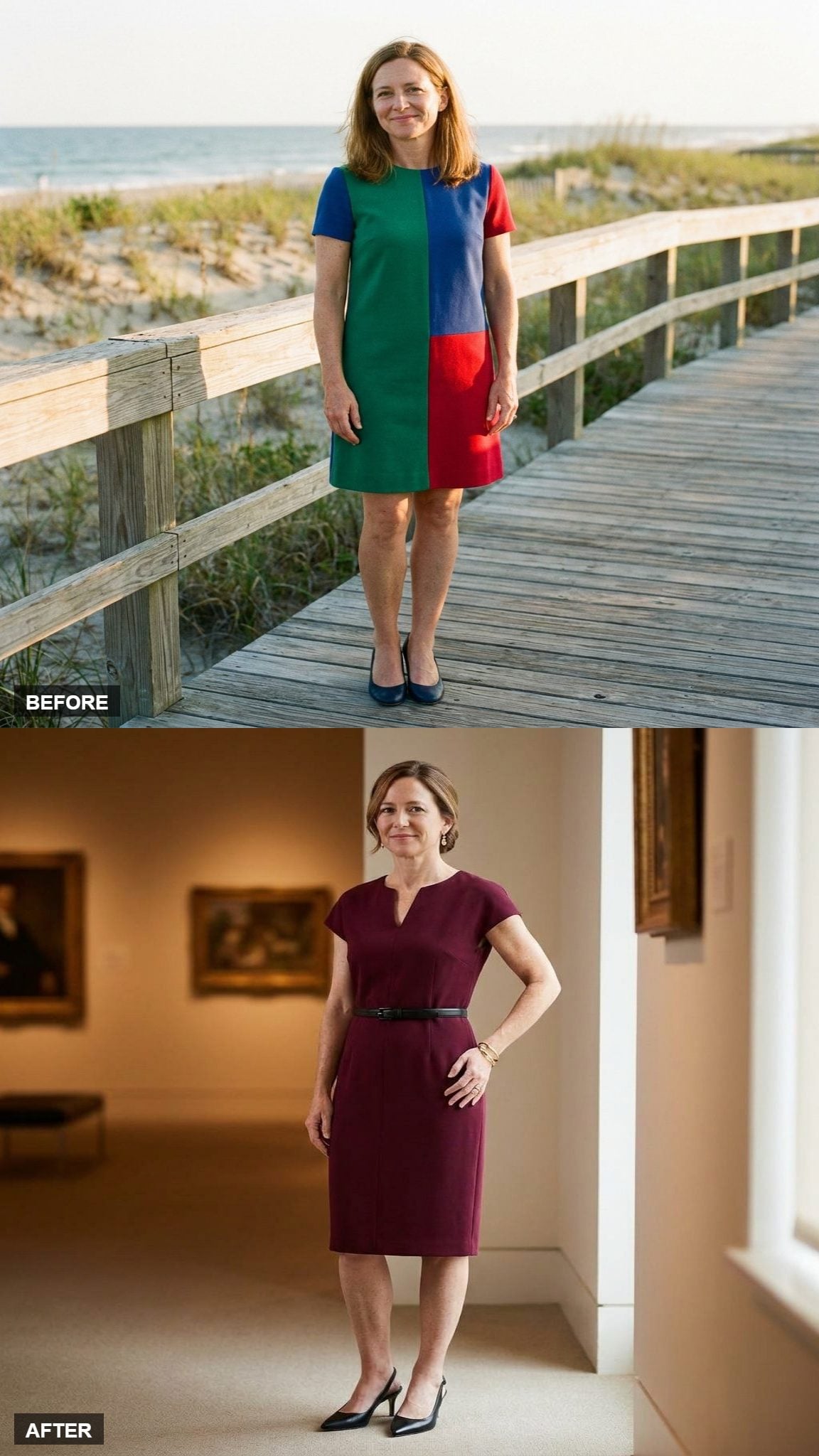
The old shift had the right idea and the wrong execution—boxy through the middle, no waist, colors that fought each other. This bordeaux dress keeps that clean shift line but lets the silk actually fall instead of standing off the body like cardboard.
One move does all the work here: that slim black leather belt. It gives the straight silhouette one precise point of structure without adding another seam. Same shape, one accessory, completely different read.
28. Color-Blocked Again, This Time in Ivory and Terracotta Crepe
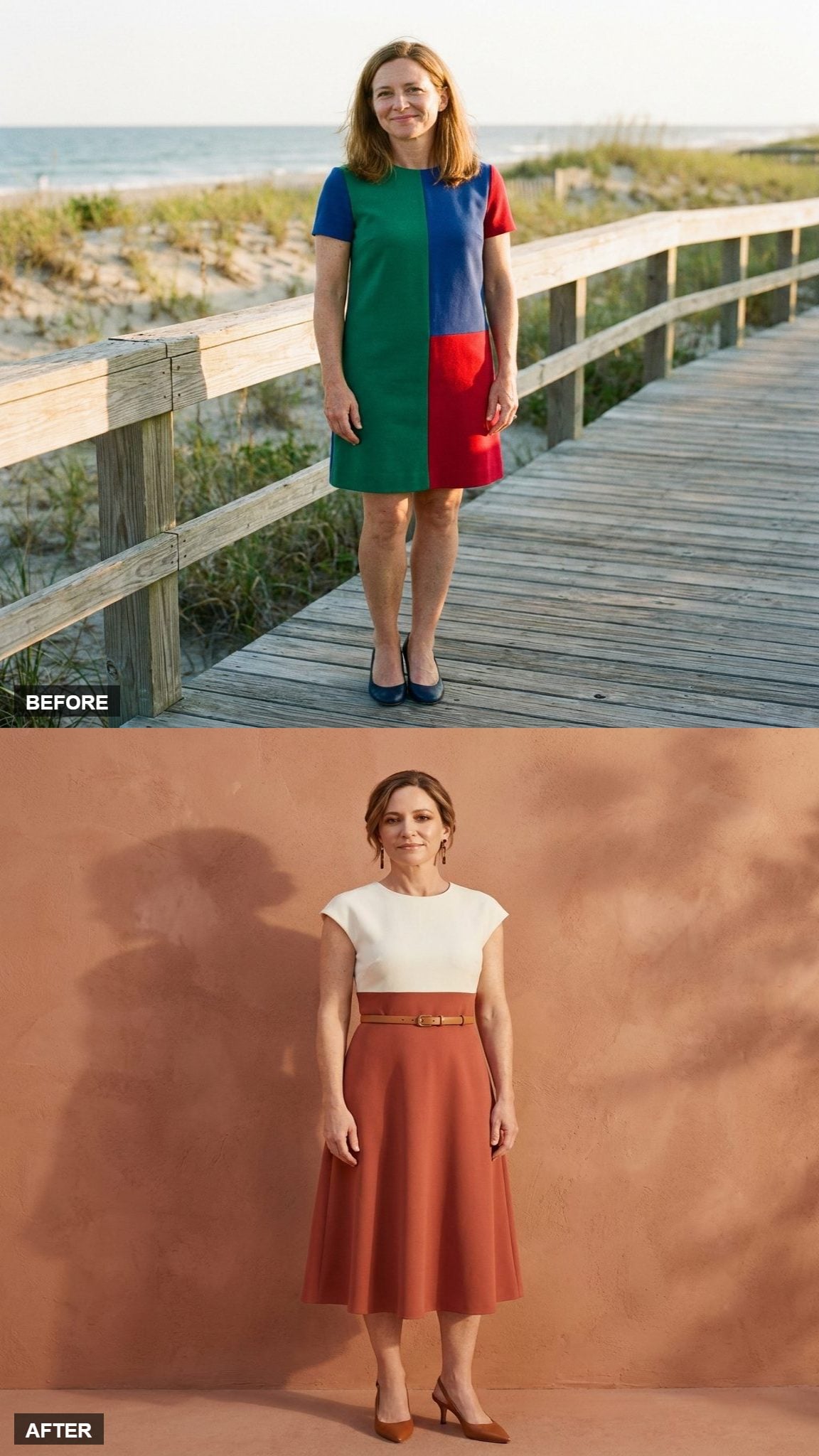
The 1980s got color blocking half right—big blocks, wrong placement, seams slicing the body at odd points. This version borrows the exact idea and uses the seam as a clean color transition rather than a random interruption.
Ivory keeps the upper half bright while terracotta gives the lower half warmth and weight. The crepe stays matte, so the color does the talking with no sheen fighting it. Same graphic spirit as the original, only tuned to work on a body instead of a sketchbook.
27. Color-Blocked Again, Now in Rust and Cream Crepe With a Clean Column
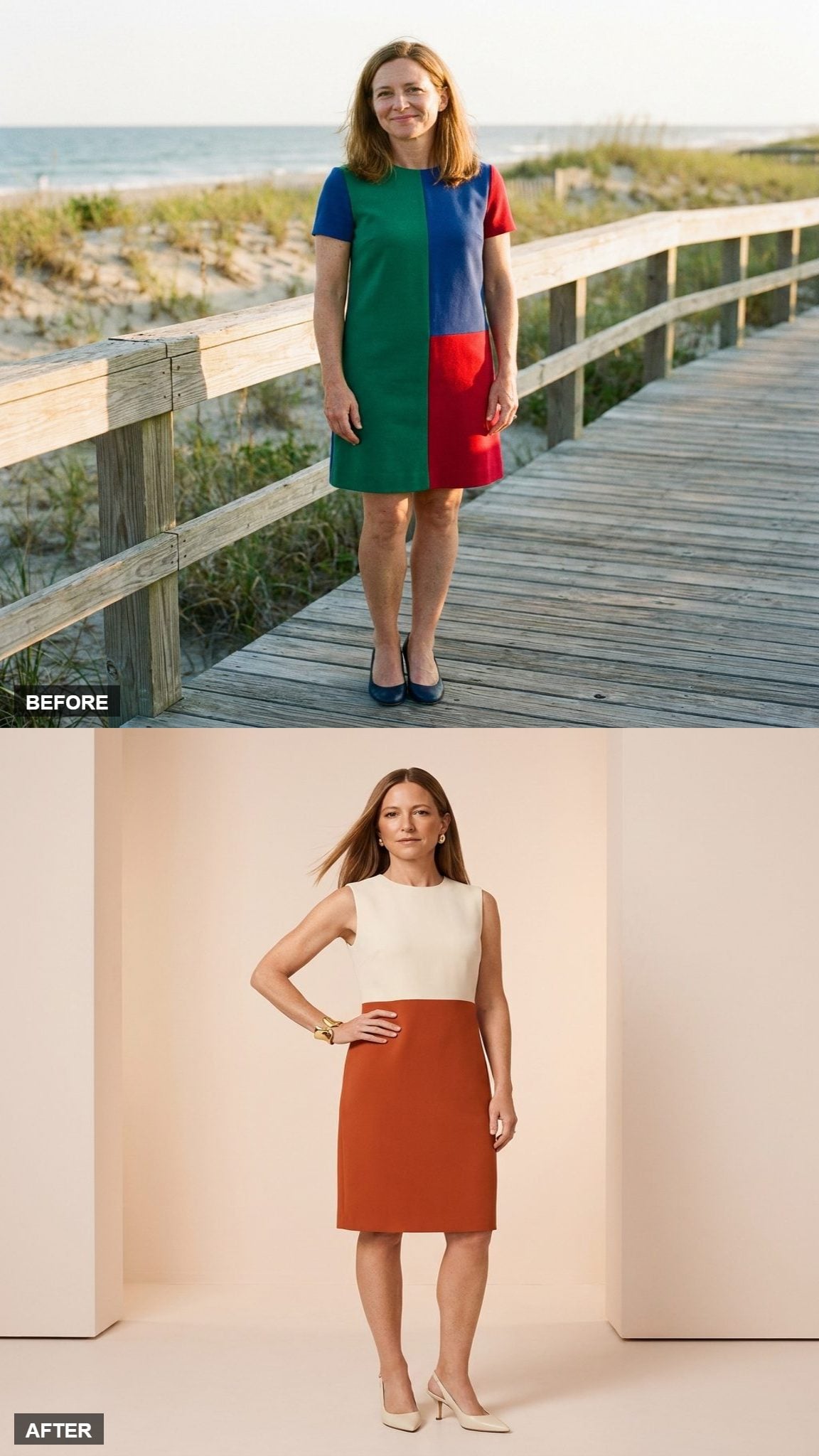
Here’s the direct nod to the eighties original. Color-blocking, sure—but the seam now sits where a waist actually lives instead of floating somewhere around the ribs. Cream up top, rust below, one crisp line between them.
Matte crepe keeps the division clean and lets the two colors carry the look. It holds a shape without clinging and photographs like money. Add a sculptural gold cuff and cream slingback heels, and the whole thing reads deliberate. The original was unmistakably of its decade. This one is harder to date.
26. Evening Impact in a Cobalt Column and Statement Earrings
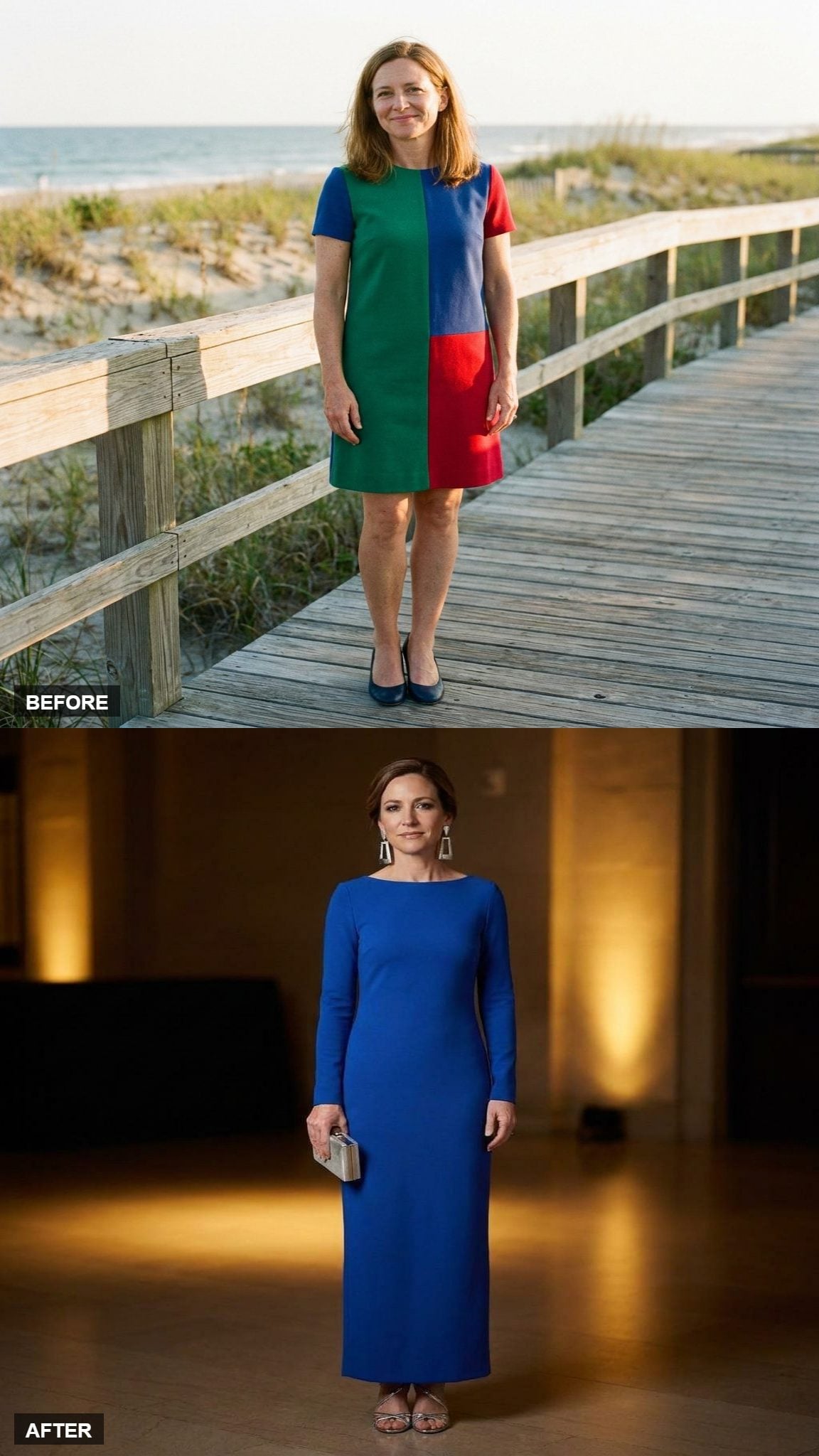
A cobalt column dress needs almost nothing else. The color and that unbroken vertical line already carry the whole thing, so styling it is really about knowing when to stop.
Skip the necklace. The high boat neck already frames the collarbone, so let the earrings take over—big silver geometric drops that catch light every time you turn your head. A small box clutch keeps your hands from cluttering the line. Cobalt against warm skin photographs like it’s lit from inside.
25. The Shift Goes Long in Fluid Chocolate Jersey
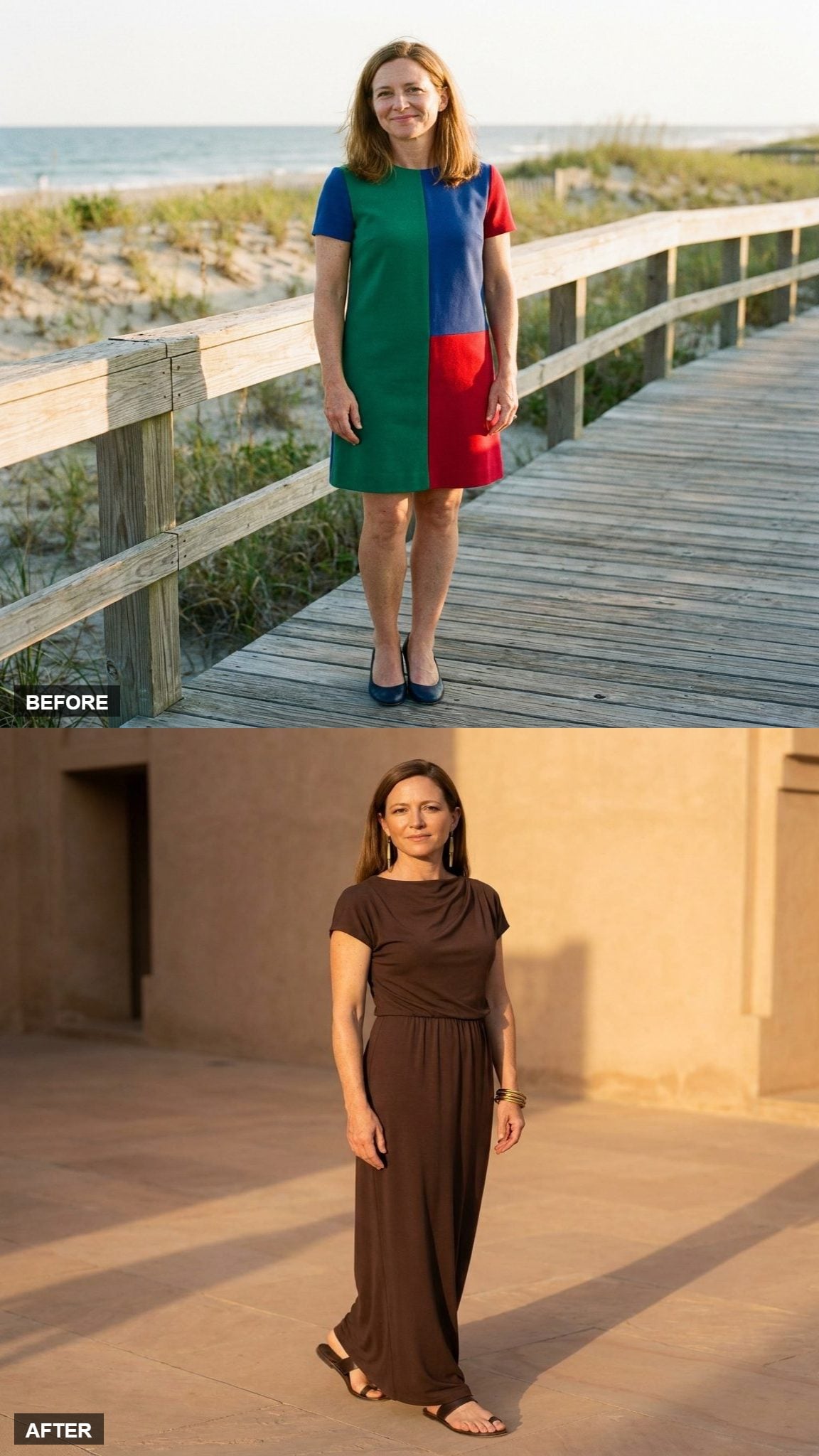
Length changes the entire mood. The original hem interrupted the line around the knee and stopped the dress abruptly. Drop the hem to the floor and the silhouette stretches into one long, uninterrupted line.
Matte jersey in chocolate moves with you rather than standing off the body, and the draped neck softens a boxy top the original never bothered to fix. Same dress, finally given room to breathe.
24. The Same Silhouette, Now in Ribbed Knit and Suede Boots
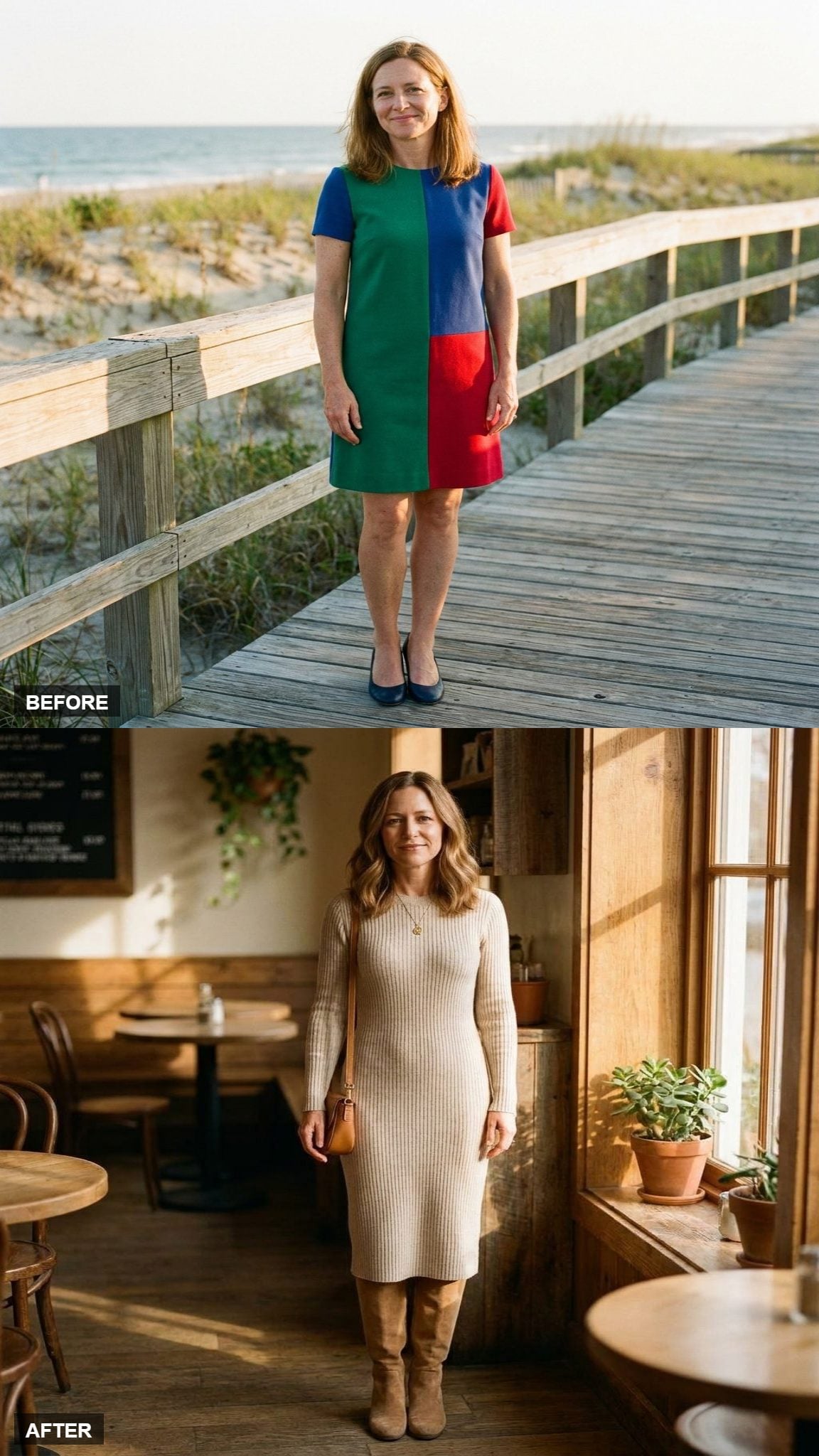
Swap the stiff woven fabric for ribbed knit and the whole dress drops its shoulders and exhales. Where the original block colors read costume, the oatmeal tone makes the texture feel softer and less tied to a particular decade.
Those tan suede boots are the anchor—they close the leg line and give a soft dress a spine, so nothing floats. Comfort and polish land in the same outfit, which is exactly what the softer knit makes possible.
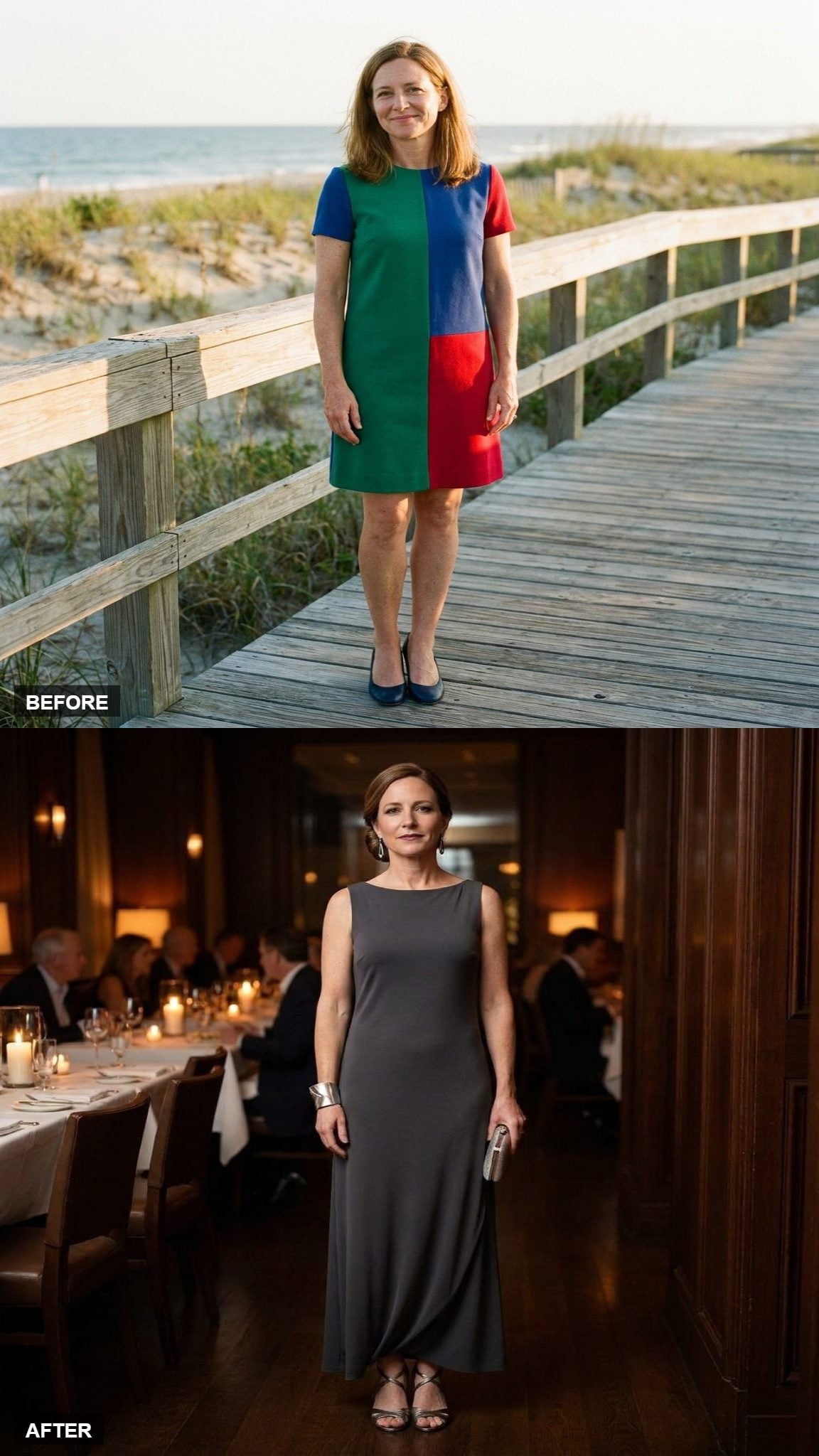
23. Evening Version in Charcoal Jersey and a Sculptural Cuff
❤️ Would you like to save this?
Take the same shift, drop it to the floor, remove the busy color, and it becomes evening wear. Charcoal jersey falls in one uninterrupted line, leaving the accessory choice to set the tone.
A single silver sculptural cuff carries the whole thing. When the dress does nothing loud, the one hard accessory becomes the sentence everyone in the room reads first.
22. Sunday Ease in a Terracotta Jersey T-Shirt Dress
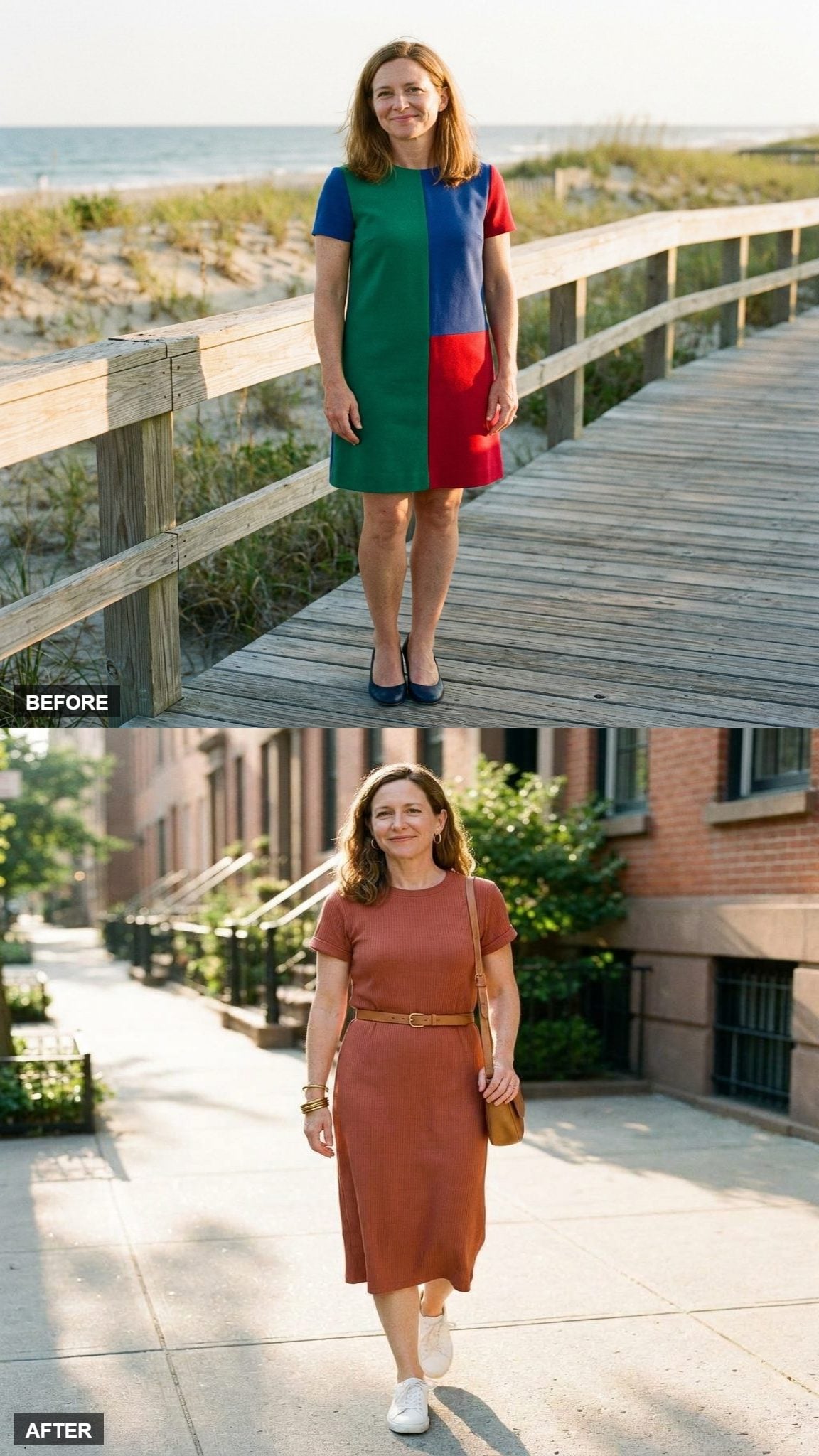
Proof that a shift can go weekend without going shapeless. This ribbed jersey T-shirt dress keeps the pull-on ease of the original but adds a belt at the waist, giving the relaxed shape one clear point of structure.
Terracotta warms the whole picture, while the white leather sneakers and brass bangles keep it grounded and unfussy. Comfortable and intentional were never opposites. Somebody sold us that lie years ago.
21. Evening Drama in a One-Shoulder Emerald Column
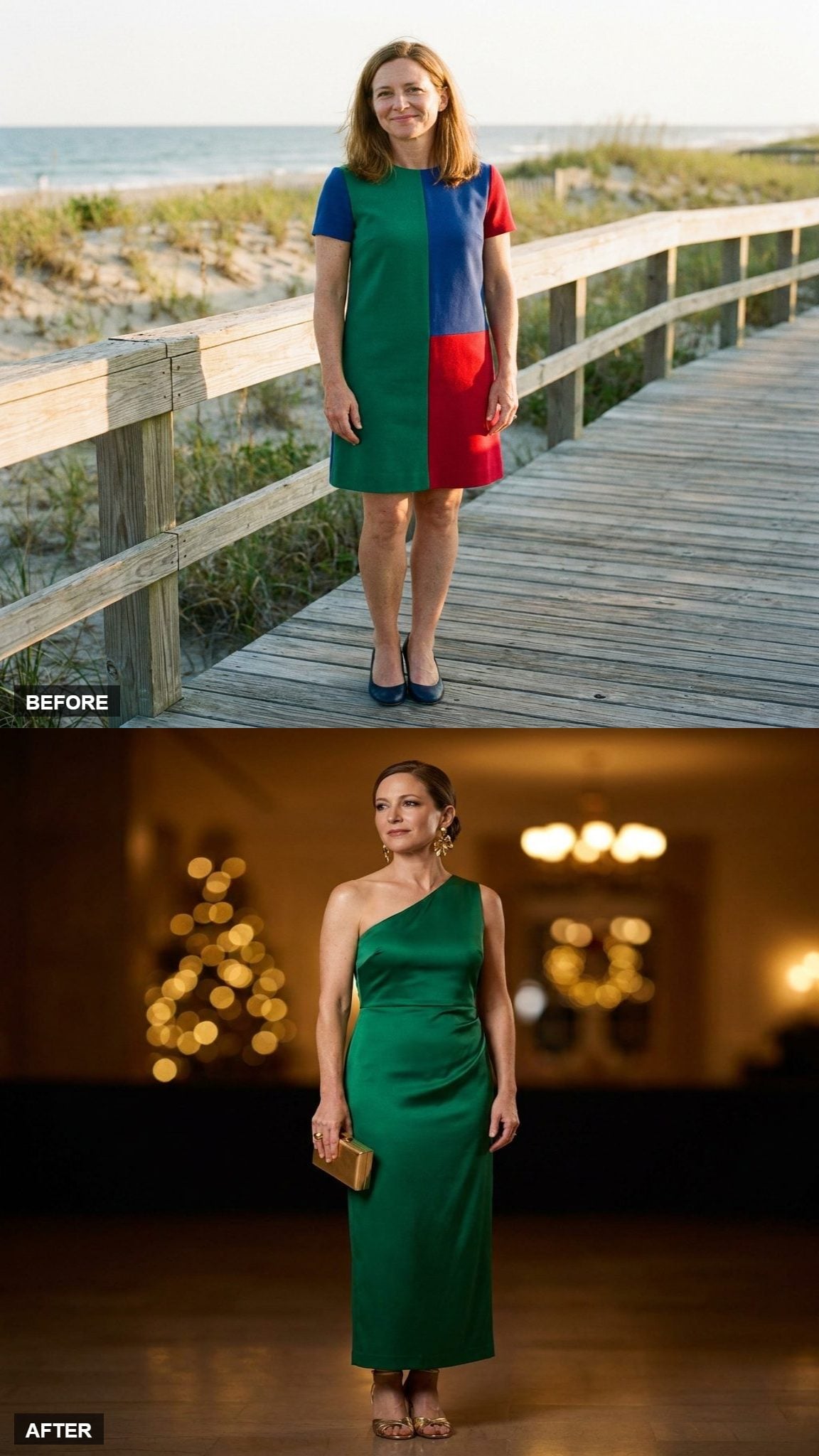
Take the shift’s clean simplicity, stretch it floor-length in emerald satin, and the same restraint that read as forgettable in cotton suddenly reads as deliberate.
The asymmetrical neckline draws a diagonal through the long column, leaving the gold statement earrings to handle the rest. Emerald brings enough depth to carry the dress without relying on extra decoration.
20. The Shift Reborn in Ochre Linen With Rolled Sleeves and Espadrilles
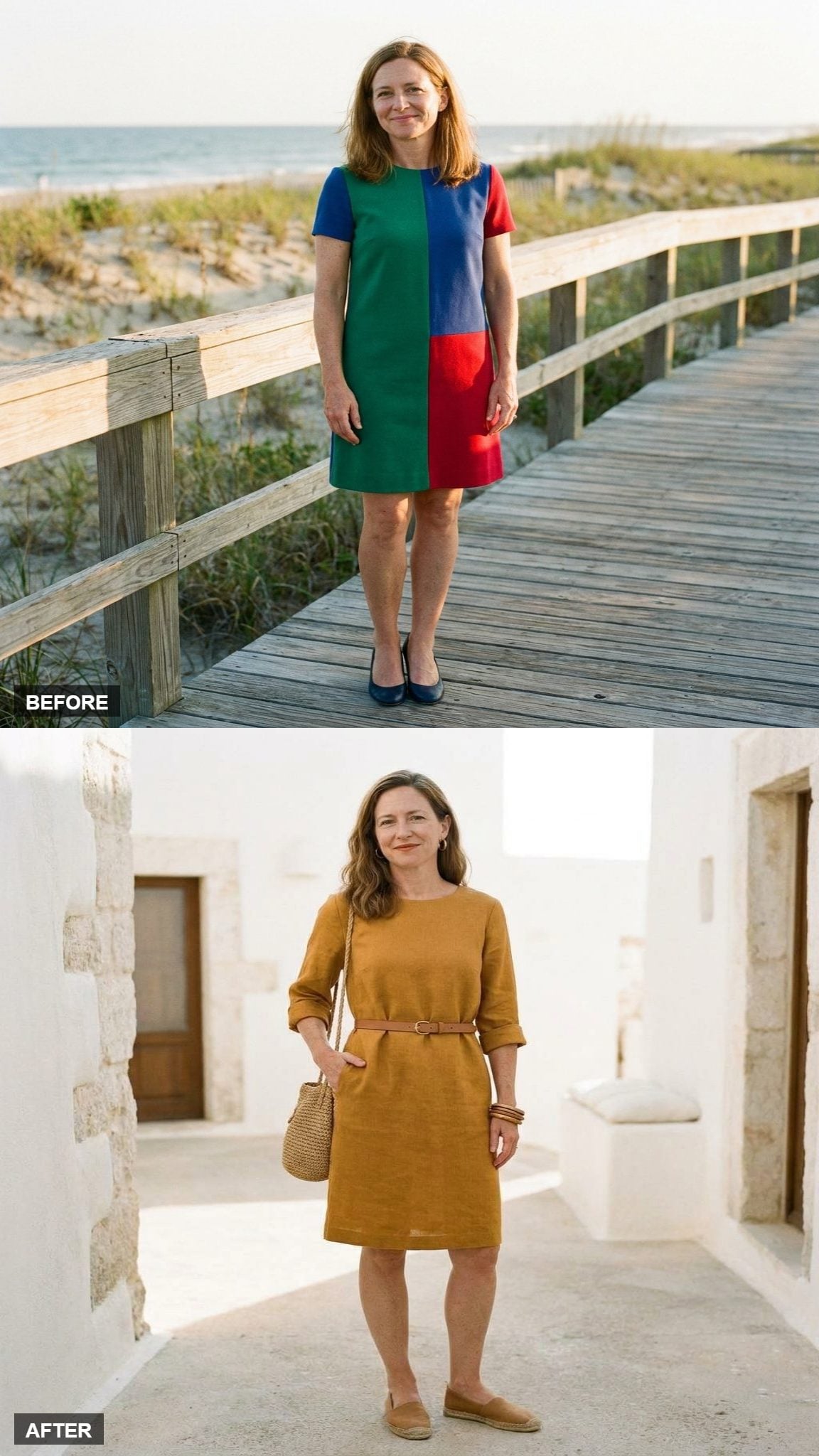
Washed linen brings a looser, more rumpled movement than the stiff cotton used in the original. That ochre dress keeps the same easy shift shape as the before, but the fabric falls instead of hanging, and the belt gives the relaxed fabric one clear point of structure.
Rolled sleeves lighten the upper half and make the easy linen feel styled rather than merely loose. Pair it with flat tan espadrilles and a straw crossbody and you’ve got a look that walks a market at noon without complaint.
19. A Wrap-Front Version in Plum Jersey That Actually Holds a Waist
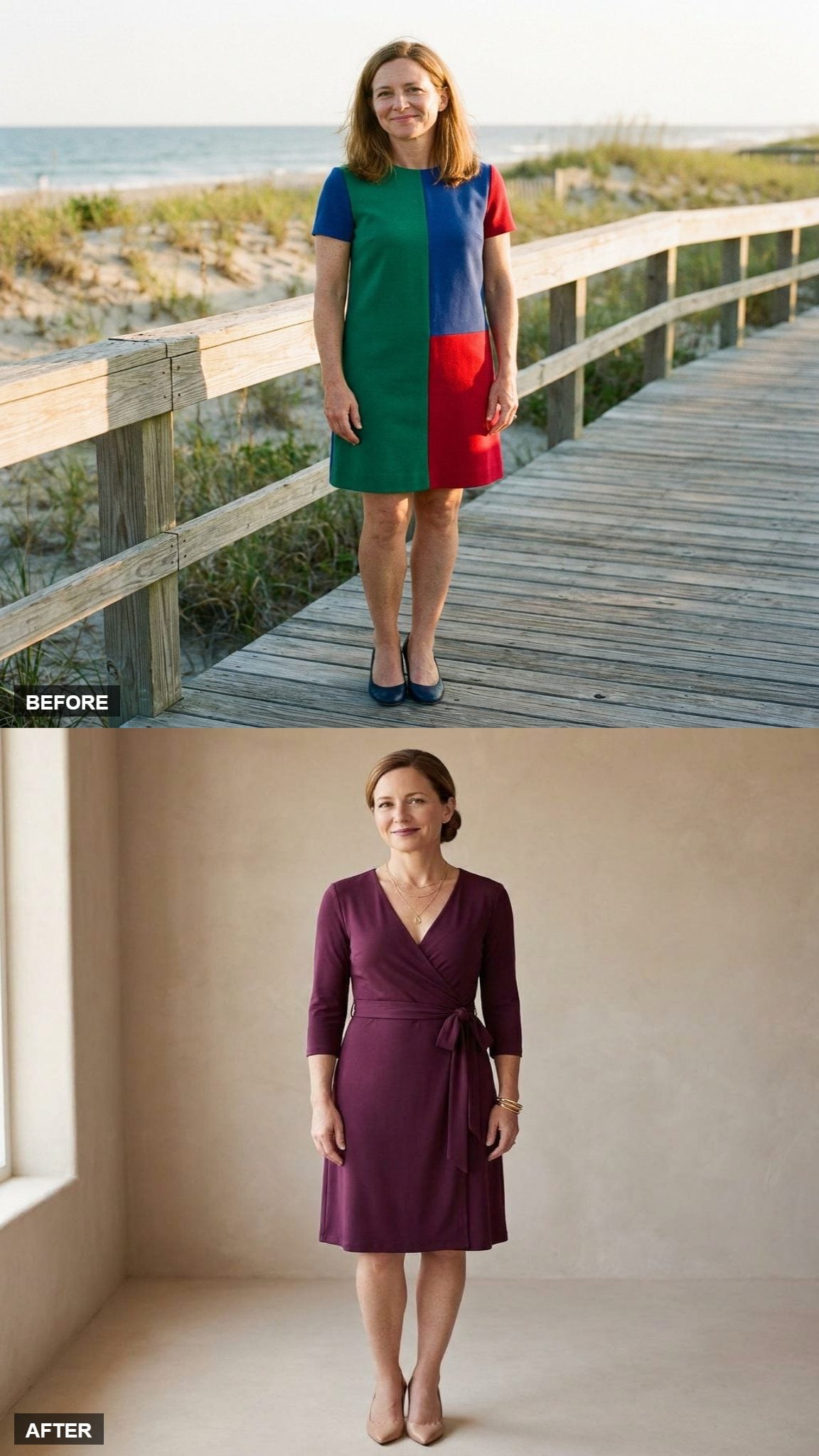
The before dress relied on one straight line from shoulder to hem. A wrap changes that by introducing a diagonal neckline and an adjustable tie, giving the plum jersey shape without losing its slip-on ease.
This is the shift’s smartest descendant. Same slip-on ease, none of the shapelessness.
18. The Shift Reworked in Wrap-Front Jersey and a Belted Waist
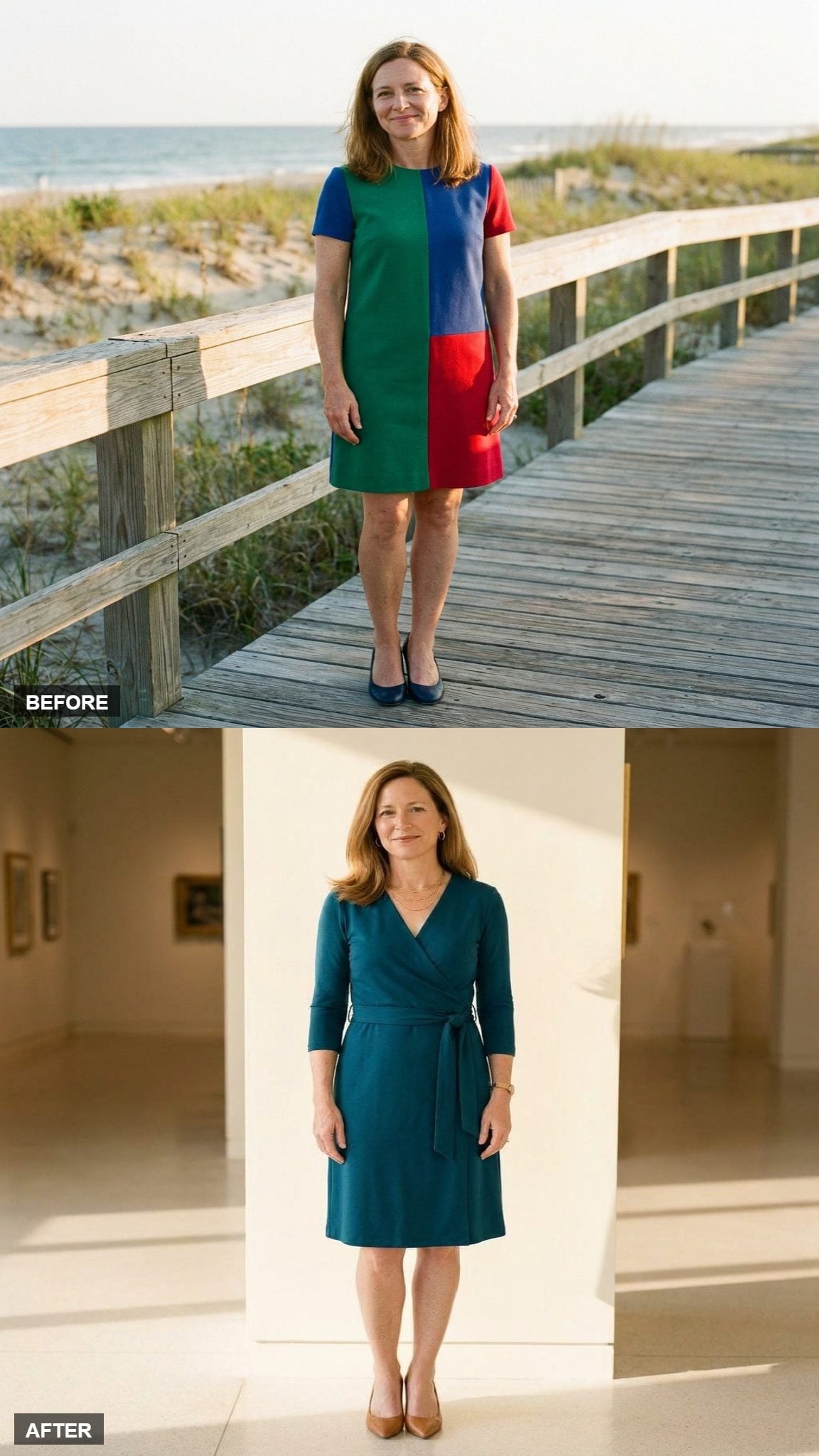
This version takes the wrap idea into a more structured, work-ready direction. Fluid jersey keeps it comfortable, while the three-quarter sleeves and deeper teal give it more presence. The tie creates one clear point of structure without making the dress feel rigid.
Deep teal reads richer against warm skin than any washed-out block print ever managed. The three-quarter sleeves keep the dress practical for work and leave room for a cuff or watch.
17. A Sleeveless A-Line in Structured Cotton Poplin
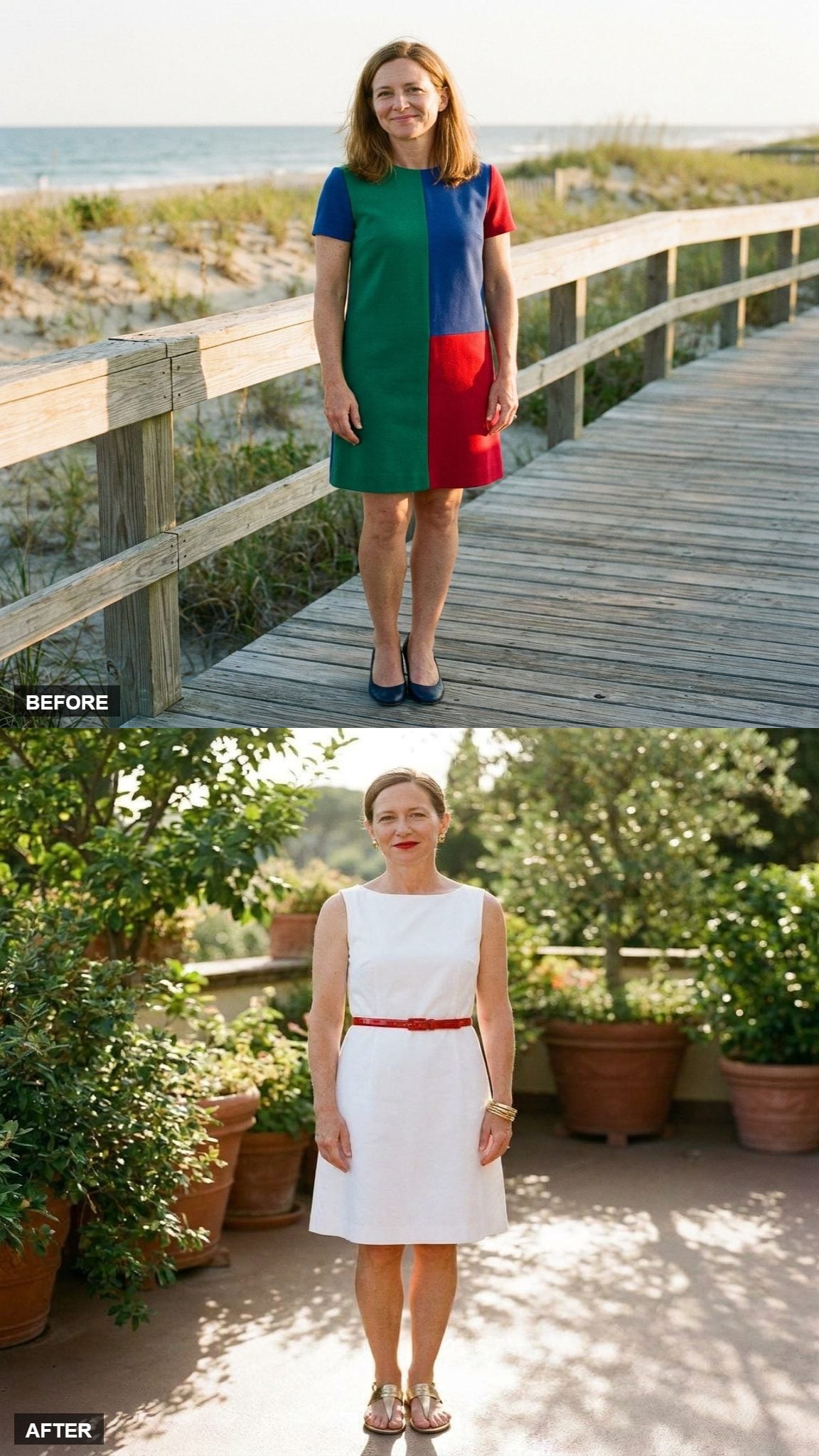
Same sleeveless bones as the 1980s original, but structured poplin gives the A-line a crisper outline.
The whole dress runs quiet in white, so one red patent belt and a matching lip carry it. Restraint as a weapon, basically.
16. The Shift Goes Soft in a Silk Slip With a Blazer Layer
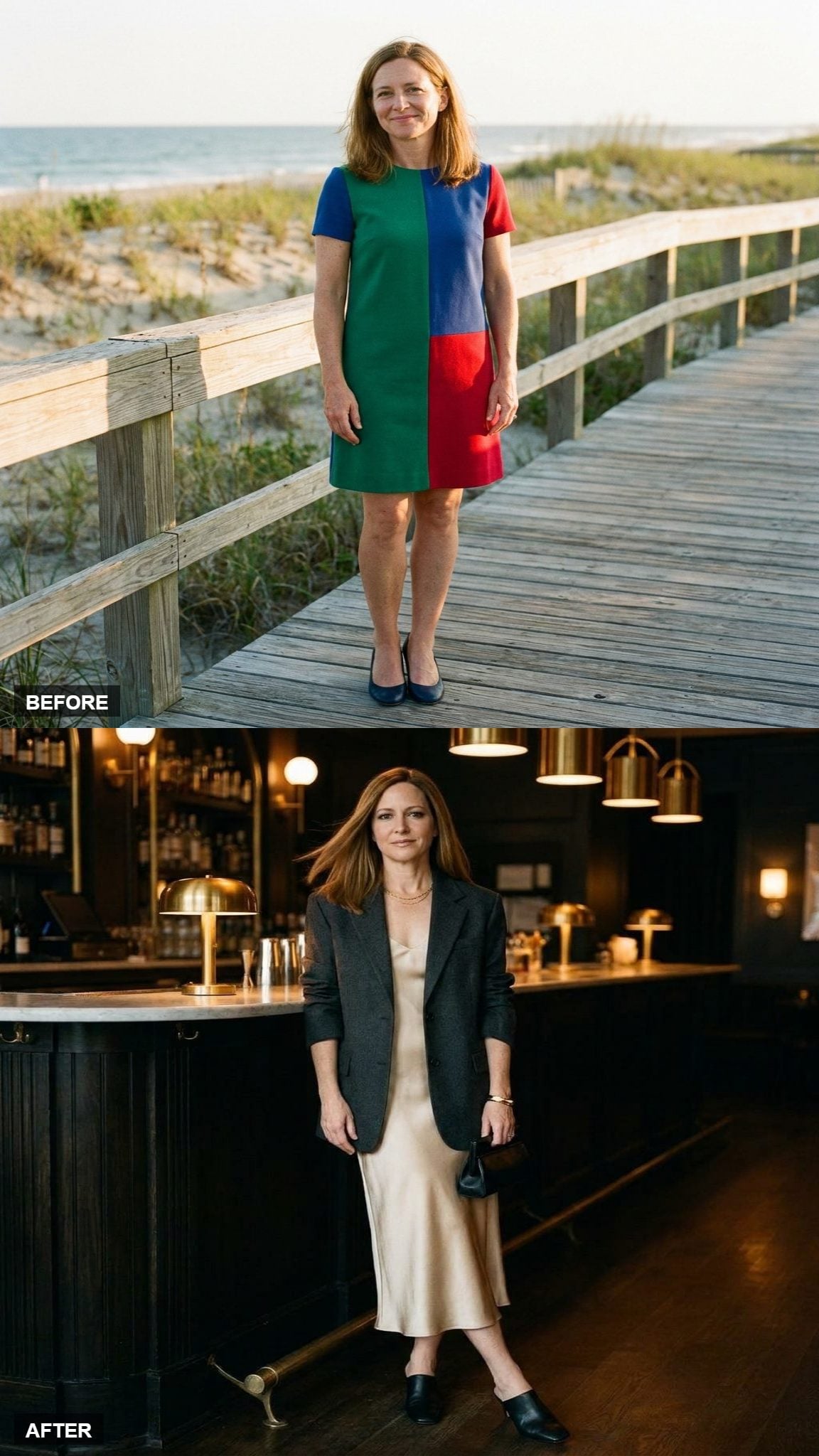
Take the shape of the old shift and let it liquefy. A bias-cut silk slip moves with the body instead of standing away from it, and the champagne tone throws warm light back up at the face.
The charcoal wool blazer gives the slip its evening structure. Hard shoulders over fluid silk—you can feel that tension across a room, soft and structured openly arguing with each other, and it always reads as a choice. That contrast is what turns a simple slip into a complete evening look.
15. The Shift Goes Fluid in a Bias-Cut Slip Under a Cropped Trench
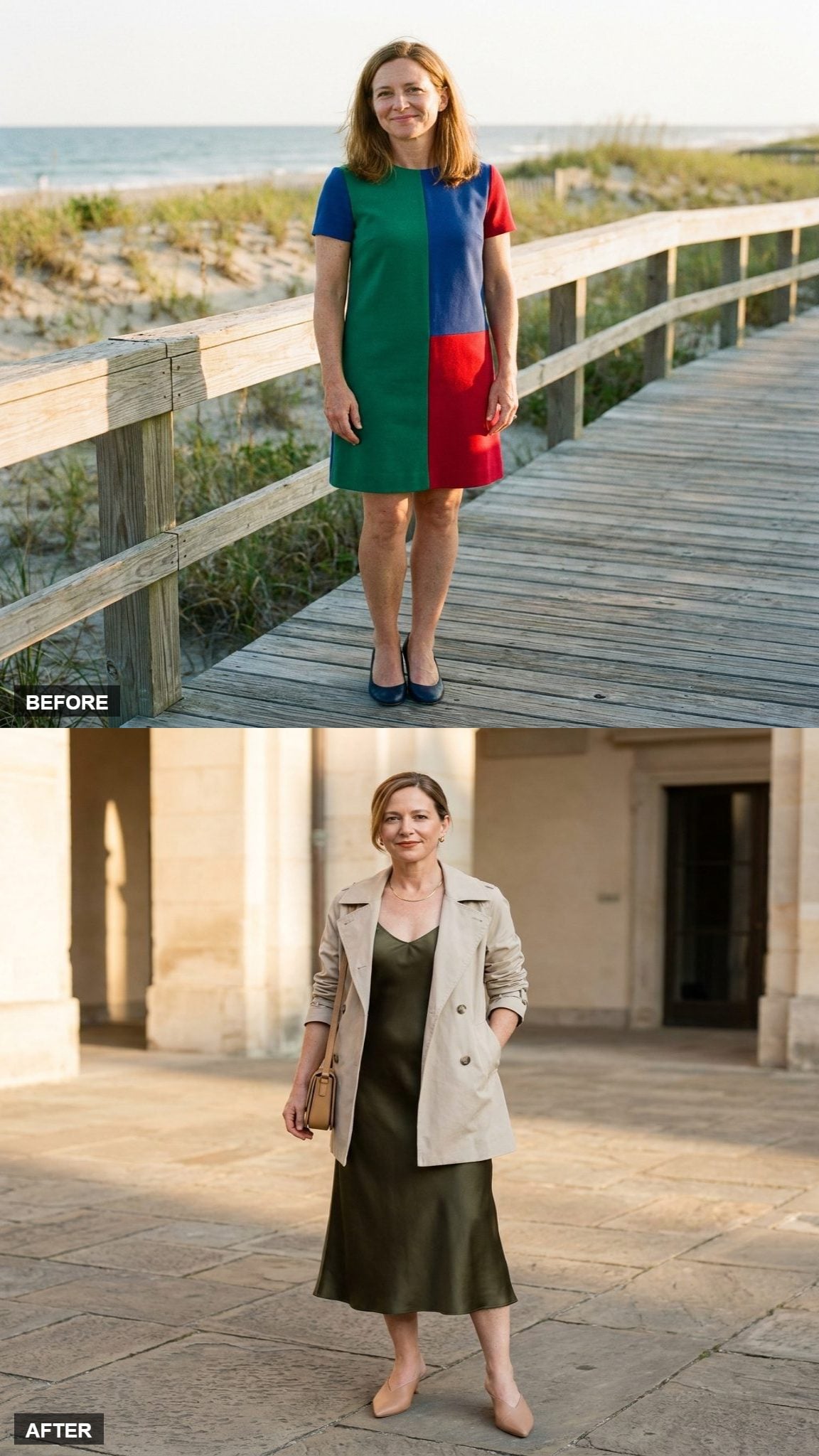
The old shift had one job and did it badly—it hung straight down and called that a silhouette. The bias-cut slip does the opposite. Cut on the diagonal grain, the satin skims and moves, following the body instead of pretending it isn’t there.
The cropped trench shifts the slip toward daytime dressing by adding structure at the shoulders without hiding the fluid skirt. That tug-of-war between drapey and crisp is the point.
14. The Shift Turned Weekend-Ready in a Ribbed Sweater Dress and Boots
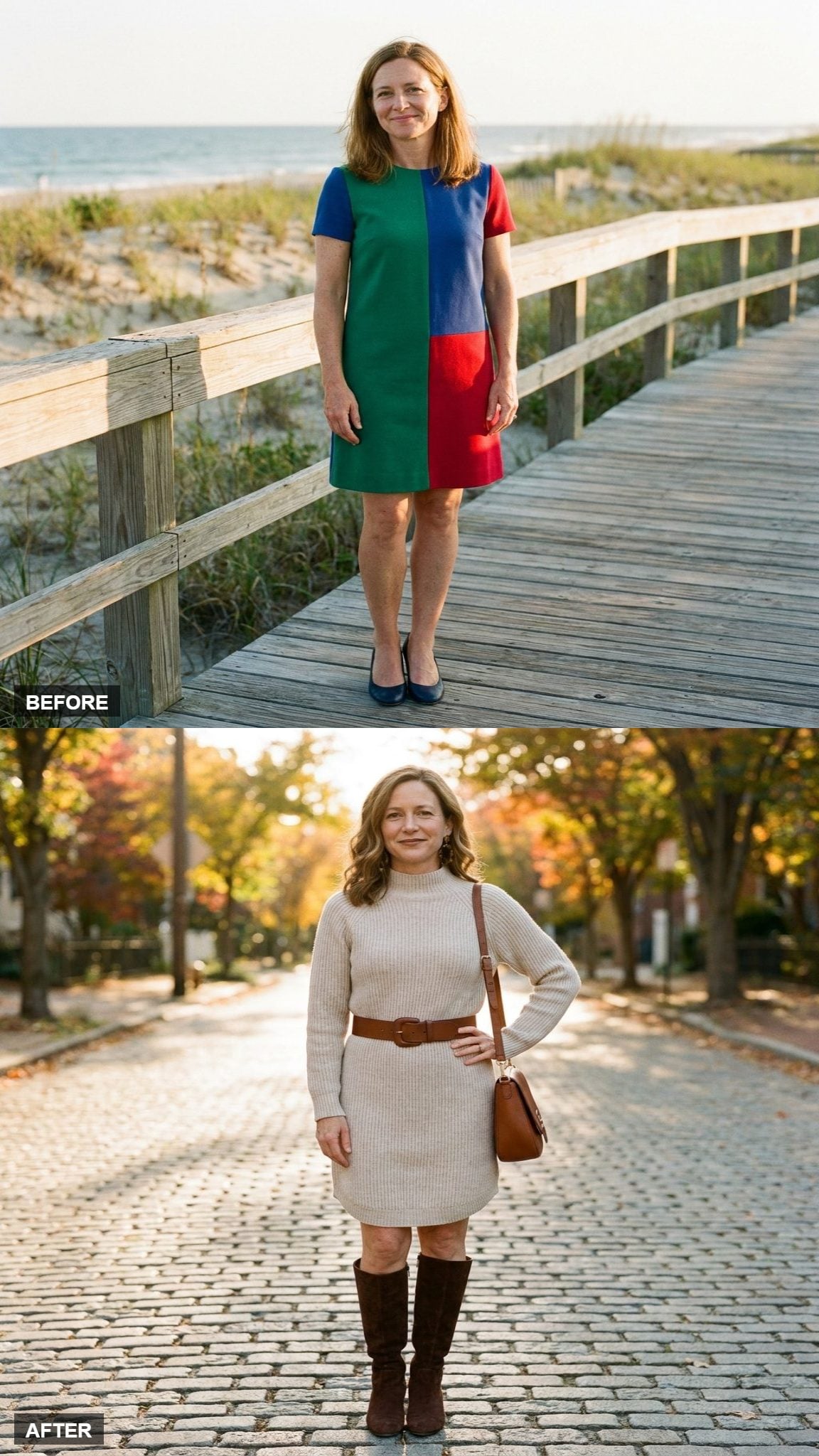
This is the cold-weather answer to the same shape. The ribbed knit hugs where the old shift billowed, and those vertical ribs add texture without interrupting the long shape.
Tall chocolate suede boots are the piece that reframes everything, reducing the amount of exposed leg between the hem and footwear and giving the knit a stronger base. Oatmeal and chocolate—a tonal pairing that runs warm without breaking a sweat.
13. The Shift Goes Sharp in a Tonal Camel Suede Trapeze Dress
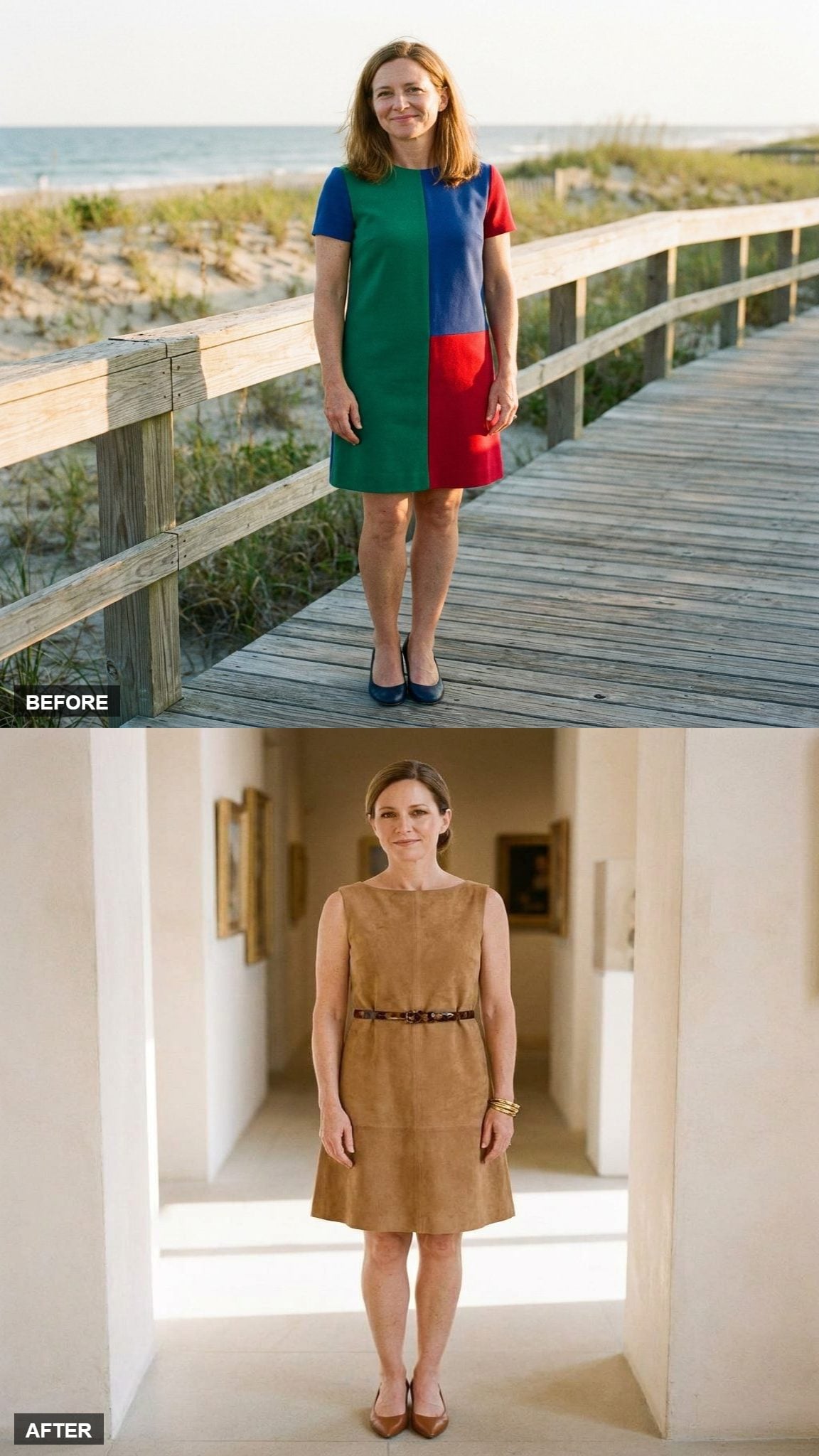
The old dress divided the silhouette into rigid horizontal sections. Wipe those seams out, let one warm camel suede dress run uninterrupted from shoulder to hem, and it reads as one long, deliberate line—something the color blocking never managed.
The trapeze cut keeps the ease of a shift and adds swing; the thin belt lightly redirects the silhouette without turning it into a fitted sheath. Same silhouette family. Completely different confidence.
12. Retro Attitude, Now in a Mock-Neck Ribbed Knit Dress
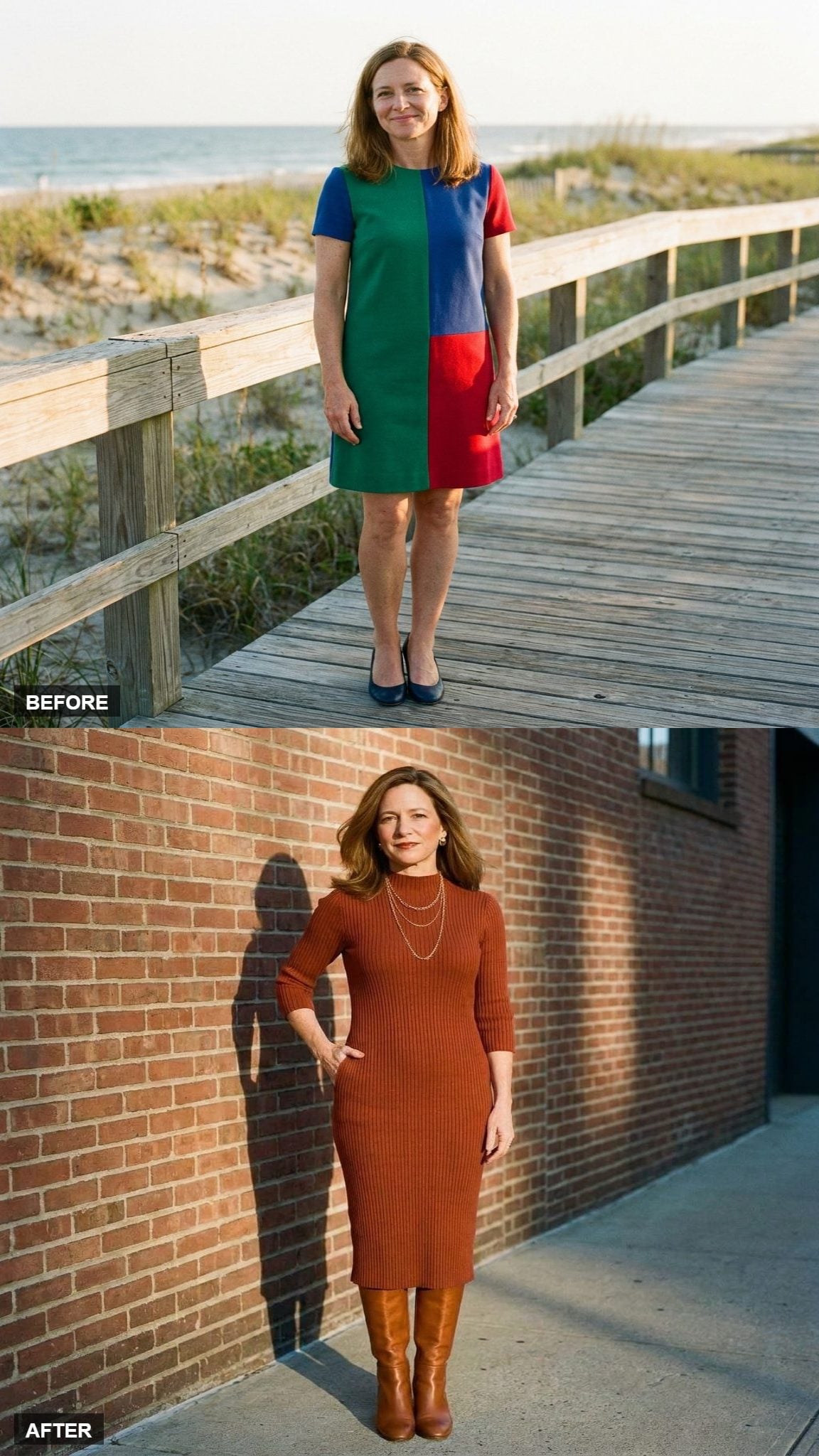
The mock neck is the update that matters here. It nods to 1980s polish without bringing back the oversized shoulders or graphic blocks.
Paired with tall boots in a matching warm brown, the ribbed knit feels pulled together without becoming formal. It is the kind of dress you throw on in November and look finished before you have even had coffee.
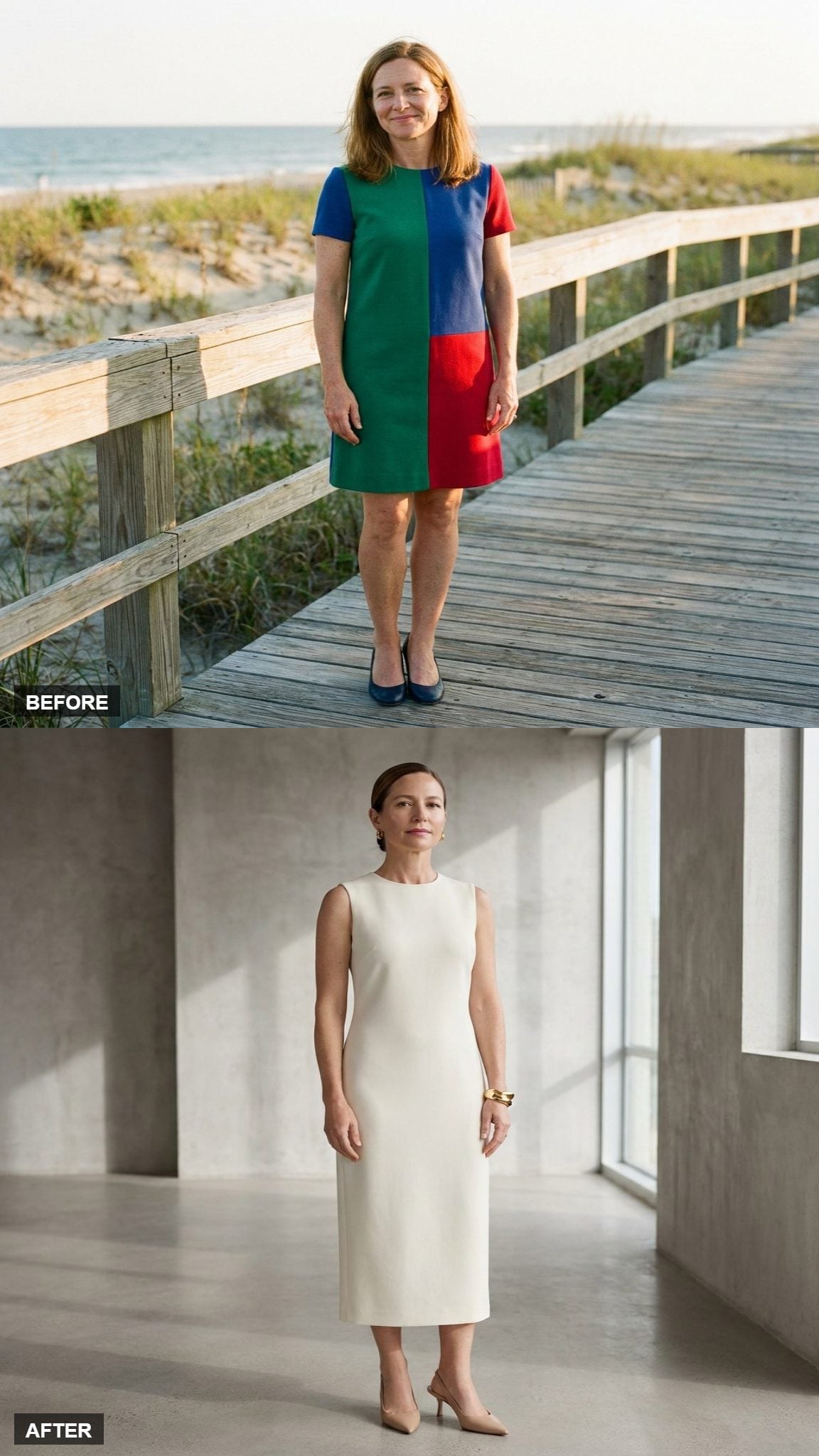
11. Modern Minimalism in a Sleeveless Column of Ivory Crepe
❤️ Would you like to save this?
This is the subtraction version: no color blocks, no belt, no outer layer, no visible construction trick. Crepe has just enough weight to skim the body and hang in a clean line—exactly what a shift silhouette always wanted to do and never could in stiff cotton.
One gold cuff. Nothing else. With so little competing for attention, the ivory crepe and clean cut have to earn the entire look.
10. Off-Duty Cool in a Denim Shift and White Sneakers Done Right
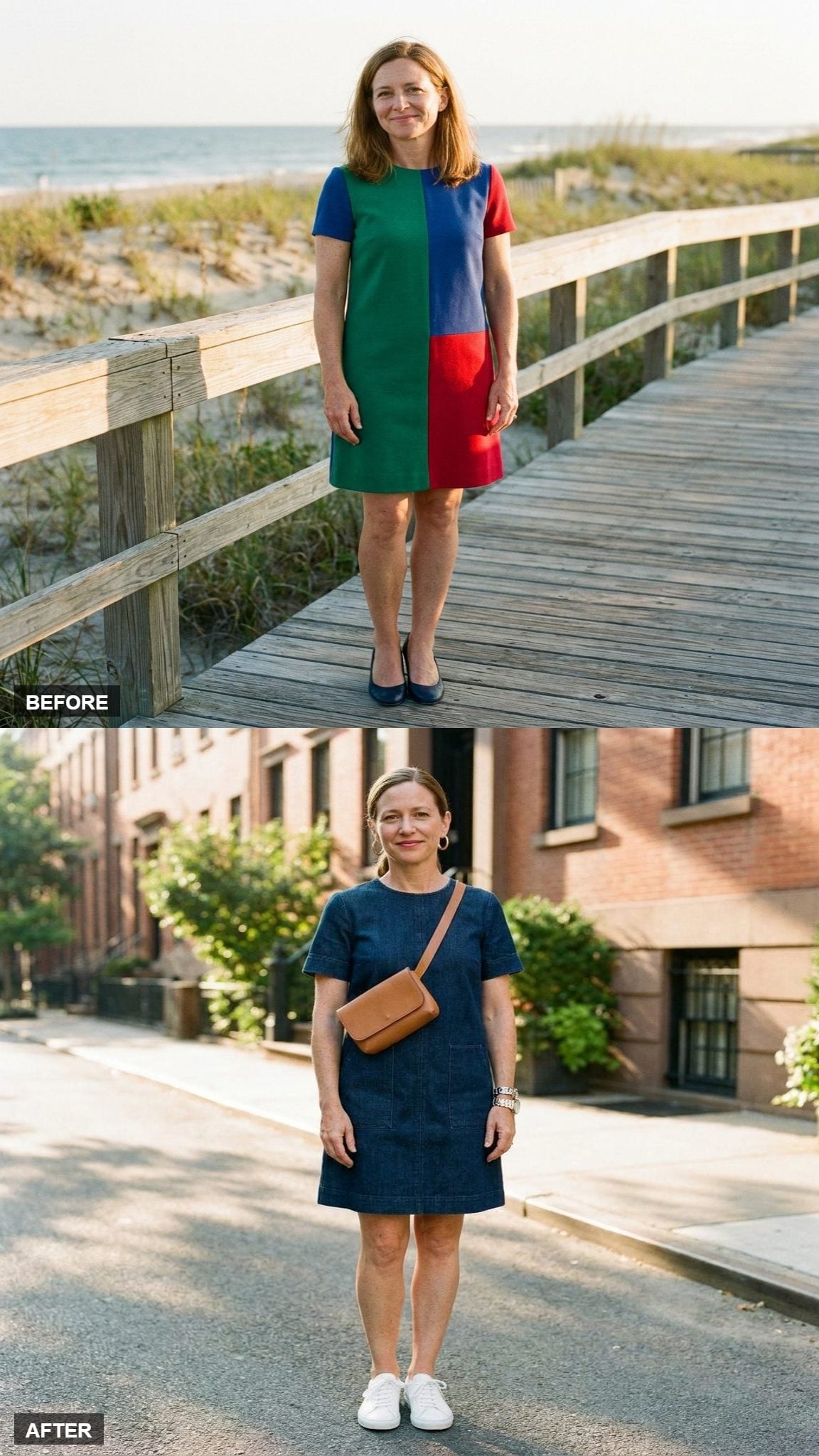
The before look already had sneakers and casual intent—the pieces simply lacked a clear shared direction. Swap the faded tee-and-jeans for a structured denim shift, keep the sneakers but make them clean and white, and the whole thing snaps into focus.
Dark indigo denim in an A-line cut creates a clearer silhouette than the faded separates in the original image. Proof, if you needed it, that comfortable and considered aren’t opposites.
9. Resort Ready in a Terracotta Linen Shift With Rope Espadrilles
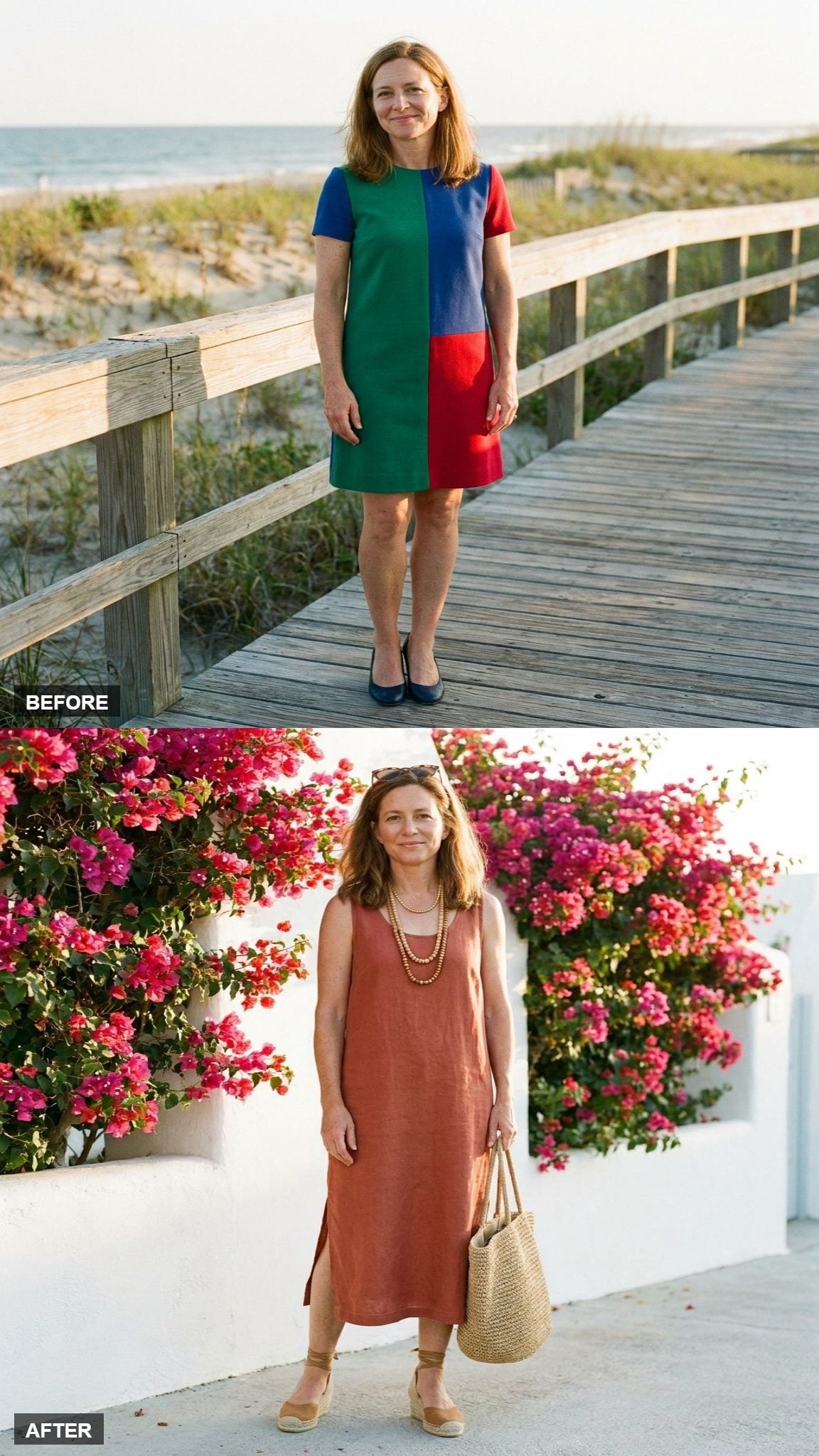
Linen wrinkles. That’s the point. Where the before dress hung stiff and lifeless, washed linen moves with the body and catches light along every fold.
Terracotta against sun-warmed skin reads like a vacation you’ve already taken. Pair it with rope wedges and a straw tote for a resort look that carries you from the market to a long, slow lunch by the water.
8. Creative Director Energy in a Color-Block Sweater Dress Reworked
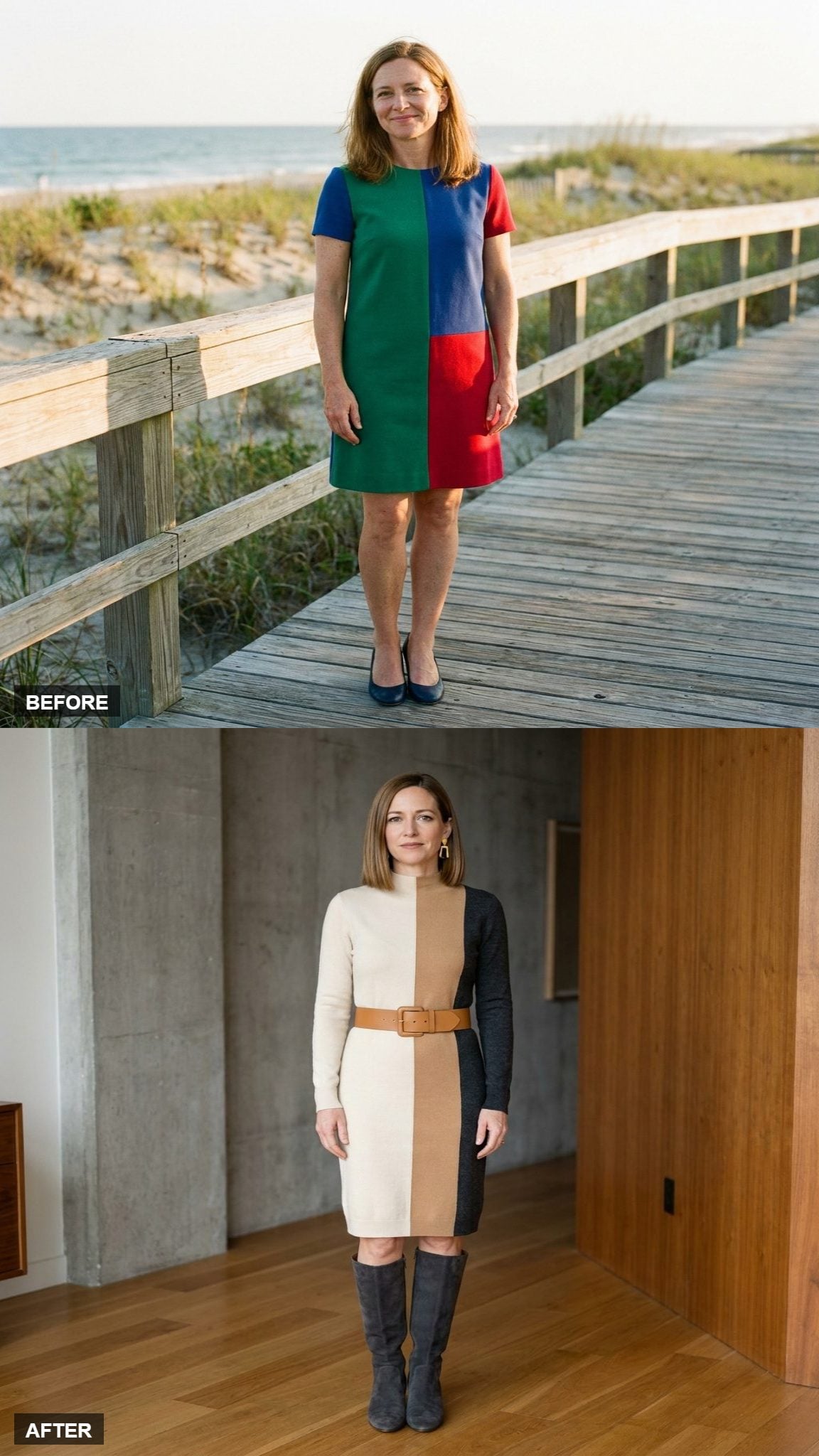
Here’s the direct answer to the eighties original. Take the color blocking that defined the original and rebuild it in fine merino. The panels still feel graphic, but the knit softens the edges and moves with the body.
Fine merino replaces boxy cotton, so the dress skims rather than hangs, and a wide belt marks the waist while the panels preserve the dress’s geometric identity. That’s how you hold onto a beloved silhouette and still drag it into the present.
7. Quiet Luxury in a Sleeveless Oatmeal Knit Column and Loafers
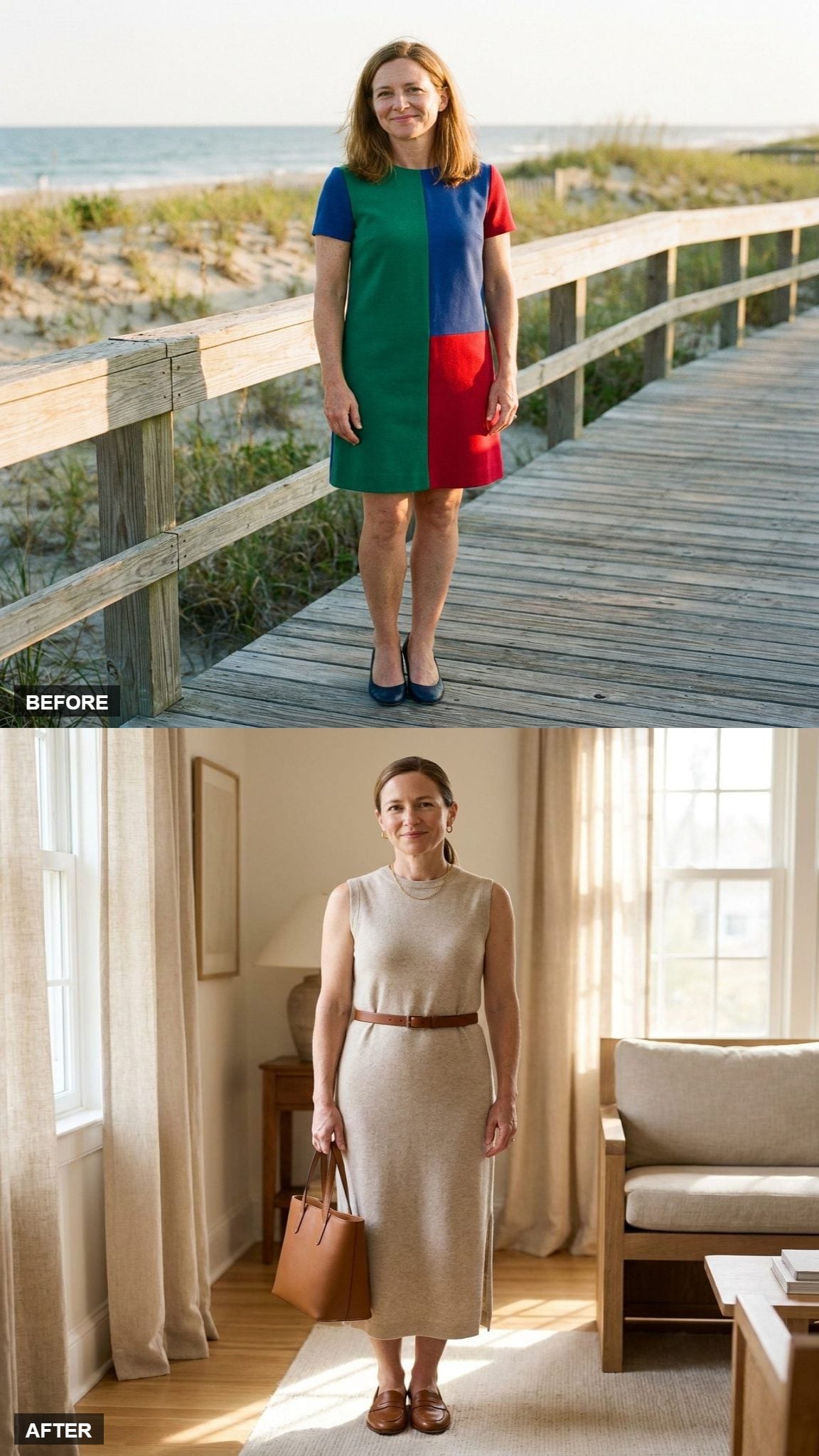
The sleeveless cut and loafers make this the warm-weather neutral knit of the group. Nothing relies on boots, layers, or seasonal bulk; the interest comes from the clean arm line, textured column, and polished leather.
Oatmeal knit against warm brown loafers keeps the palette controlled, while the sleeveless shape gives the look a sharper finish than the heavier ribbed versions.
6. The Shift Goes Sculptural in a Bonded Scuba Sheath
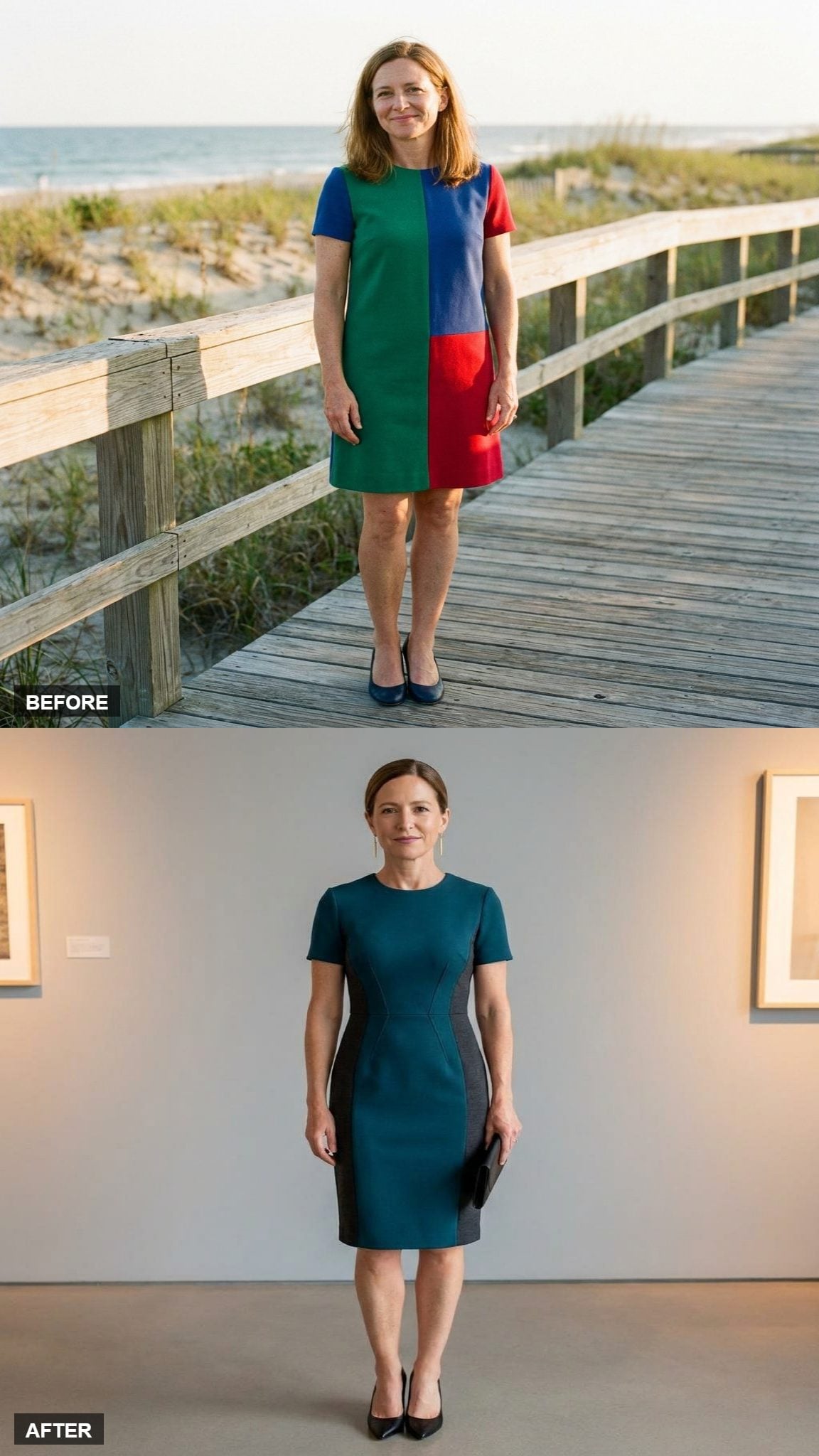
Bonded scuba gives this version its sculptural edge. Cut into panels, it supports a firmer silhouette than the original lightweight cotton. The teal-to-charcoal color blocking runs vertically instead of straight across, so your eye travels up rather than stopping dead at the hips.
The seam placement feels architectural rather than decorative, which is what separates this version from the softer knit interpretations. Pair it with pointed black leather pumps and you’ve got a dress that means business without shouting about the decade it crawled out of.
5. Retro Blocks Reworked in a Belted Shirt Dress
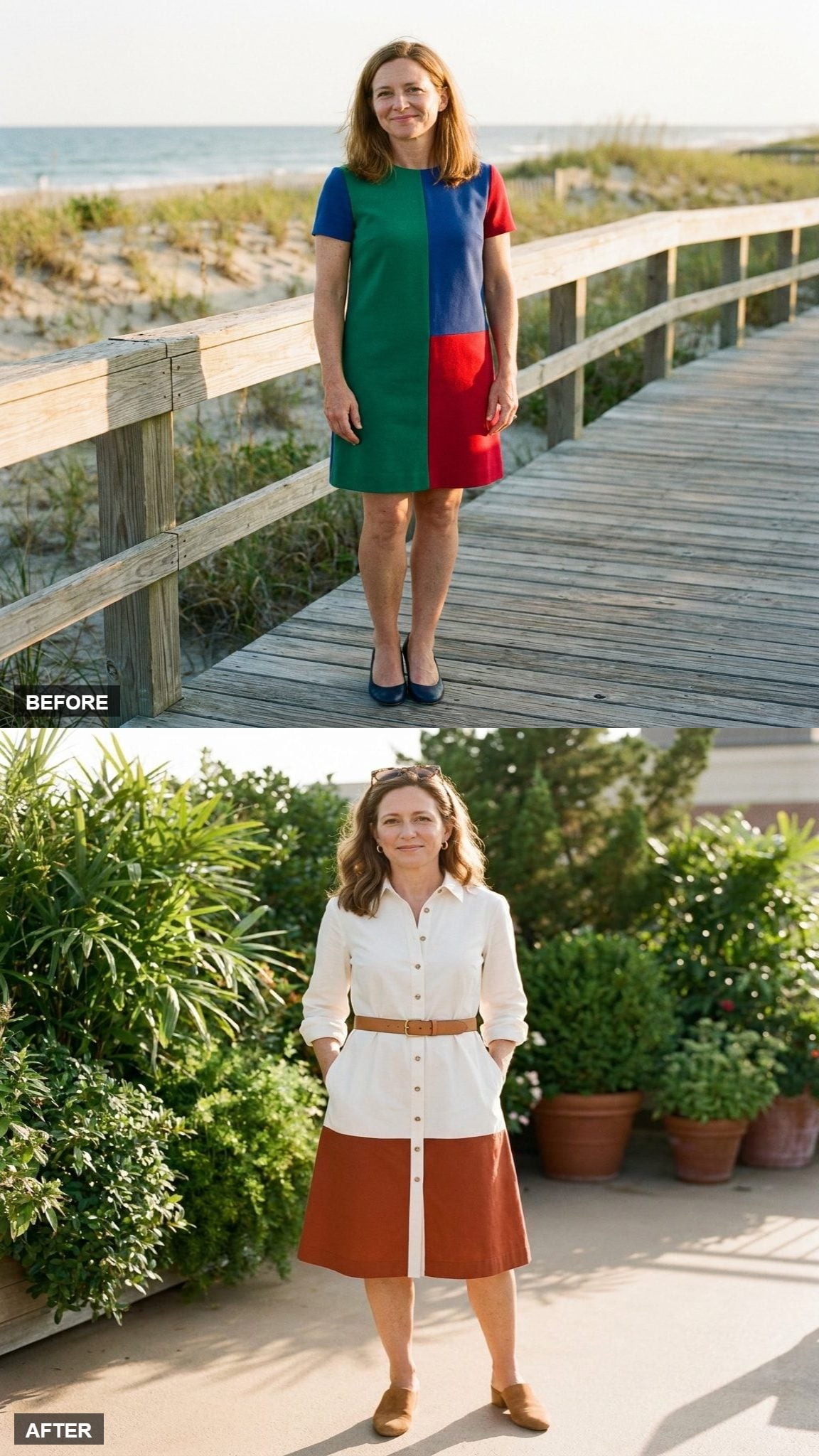
The before dress hung off the shoulders with no waist to speak of. This shirt dress fixes that with one leather belt and a row of buttons. Suddenly the fabric has a clear structure.
Splitting the color at the waist instead of the chest keeps the nod to 80s blocking without the boxy silhouette. A tan leather belt gives the shirt dress one clear point of structure without altering the garment permanently.
4. Evening Version in a Draped Jersey Column
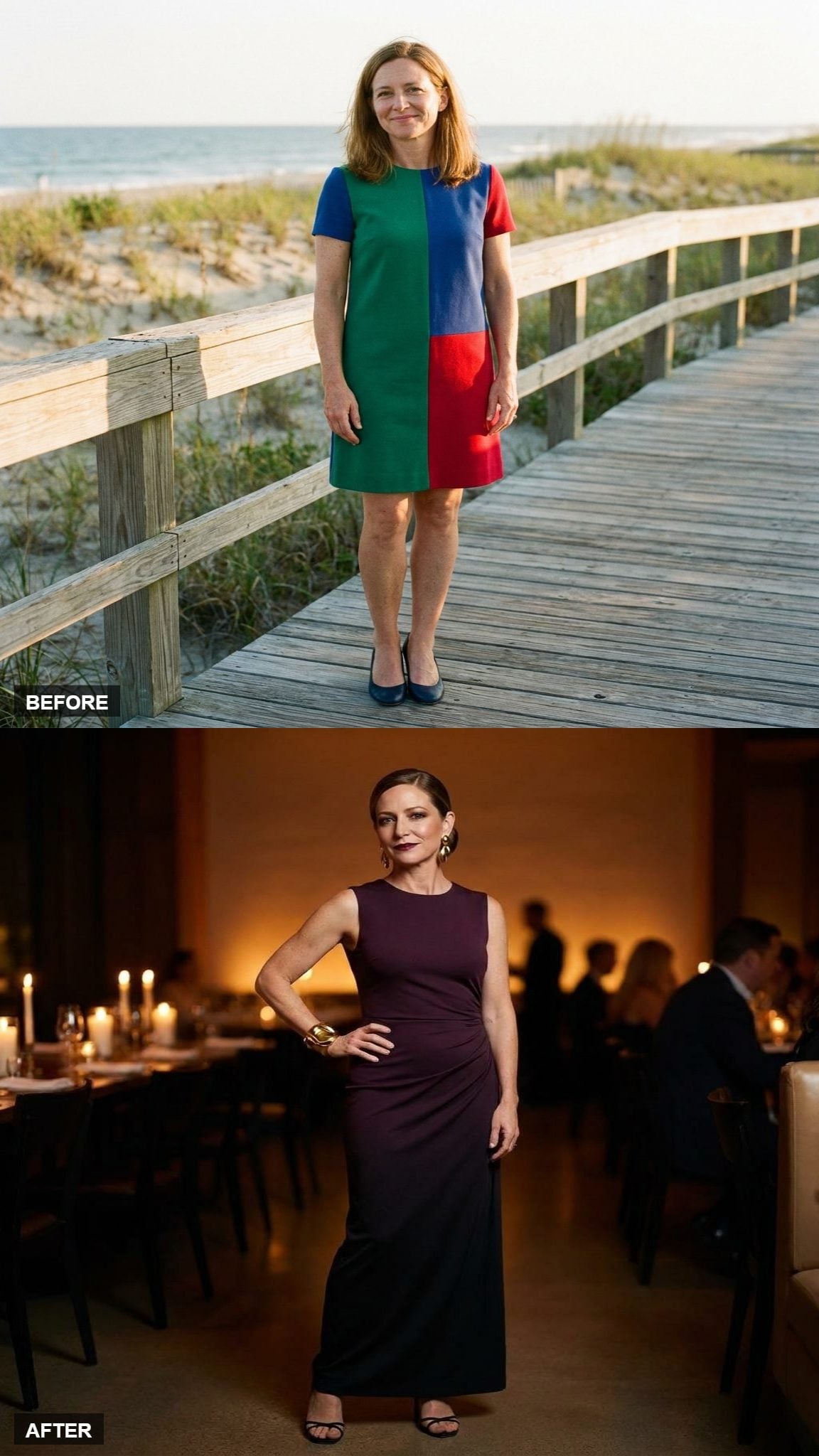
Take the same color-split idea and run it floor-length in matte jersey. The plum bleeds into black at the hem, and the ruching at the hip does the shaping the old shift never bothered with.
The soft jersey accommodates the hip ruching without making the gathered area stiff. The gold cuff is the only hard edge in a soft look—exactly enough, and no more.
3. Modern Icon in a Ponte Panel Dress With Ankle Boots
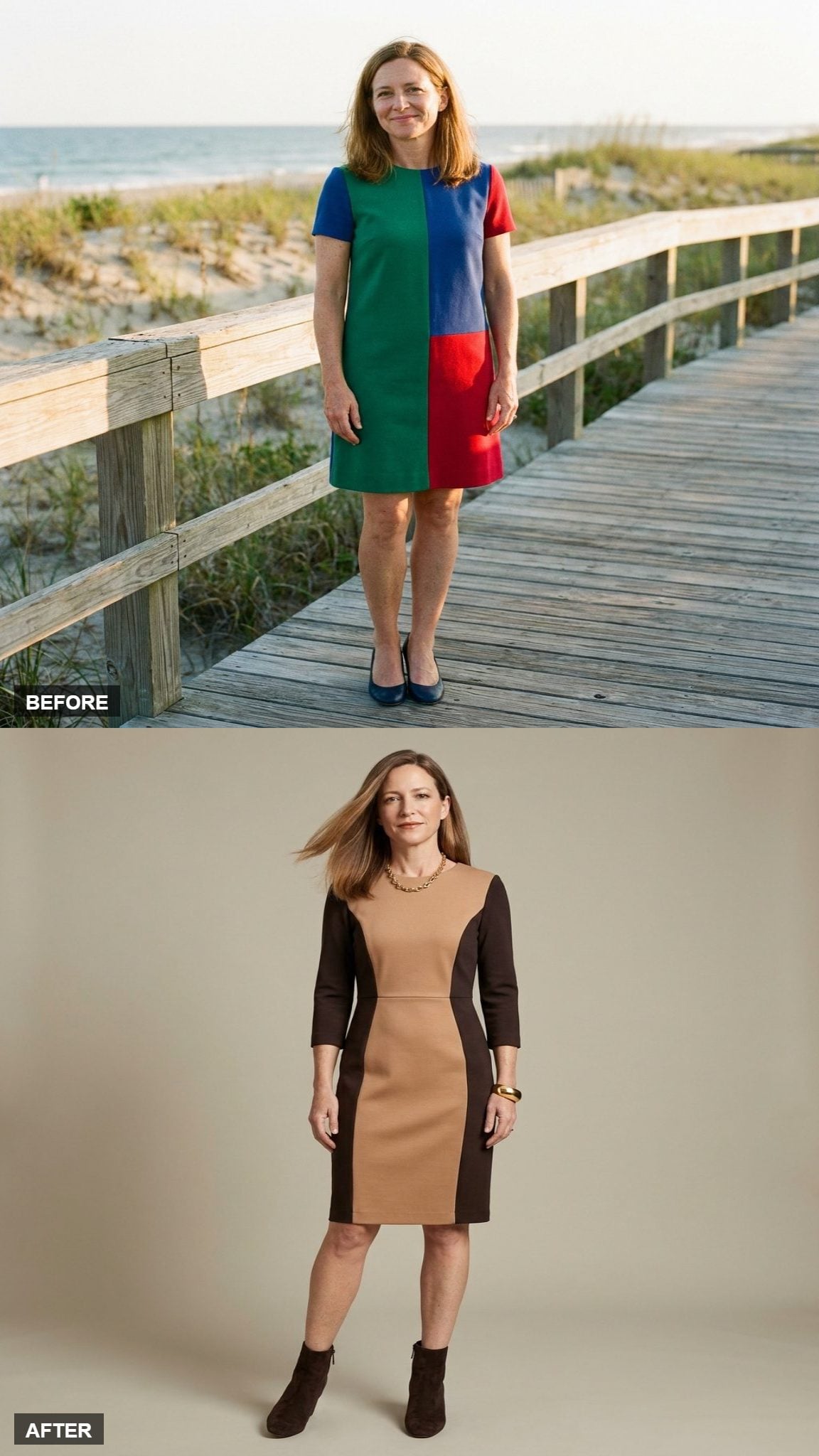
Ponte is the workhorse fabric nobody bothers to thank. It supports a princess seam, resists many everyday creases, and travels well. Here the camel-and-espresso paneling places the darker color at the sides, giving the dress a stronger frame than a horizontal block would.
The three-quarter sleeves give the panel dress a more finished, everyday shape than the original sleeveless version. Add espresso suede ankle boots and a gold chain necklace, and it’s a Tuesday you’ll want to be seen on.
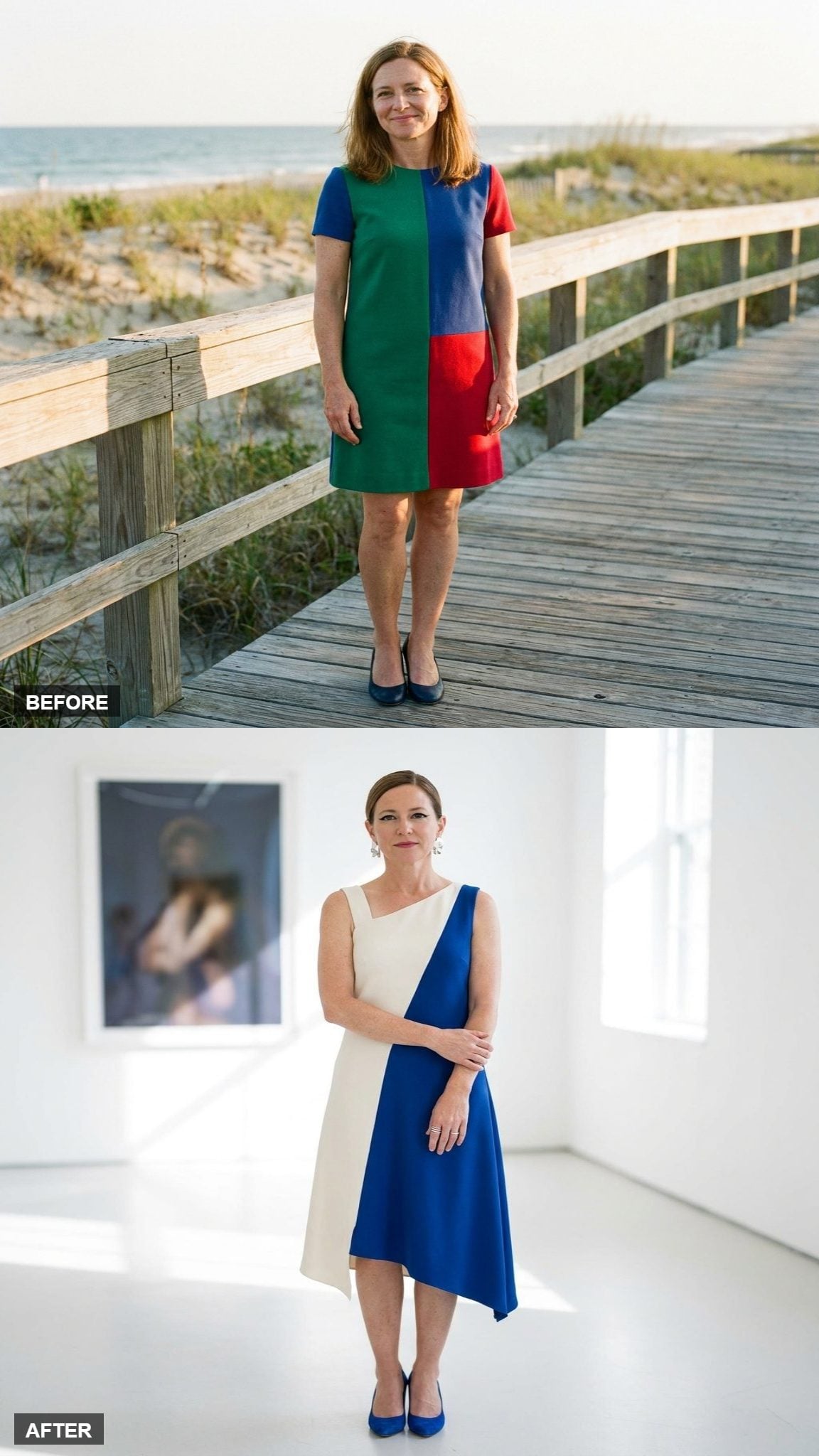
2. Gallery-Opening Cool in an Asymmetric Crepe Dress
❤️ Would you like to save this?
The diagonal seam is the star. Where the 80s original blocked color in flat horizontal bands, this one runs the ivory into cobalt on a slant, and the whole dress tilts toward motion.
Cobalt against ivory is a loud pairing that somehow stays sophisticated, and that’s down to how restrained the cut is. Match the pumps to the blue and you get a color echo that looks planned rather than matchy.
1. Power-Lunch Update in a Structured Sheath and Blazer
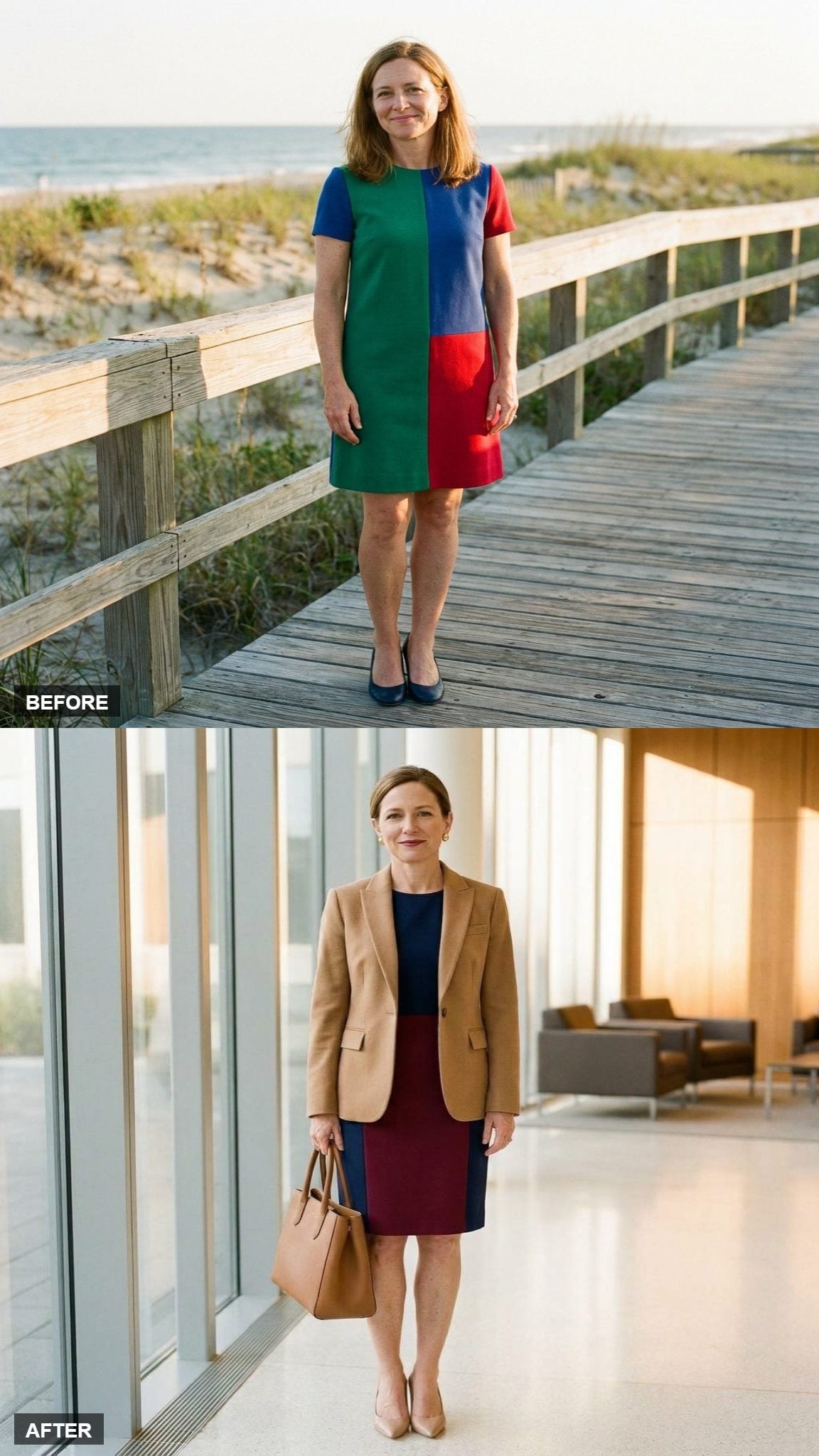
Layer a camel blazer over a navy-and-burgundy sheath and the retro color-block reads as considered instead of dated. The blazer frames the color split the way a mount frames a painting.
Sharp darts define the sheath, while the camel blazer creates a strong outer frame around the navy and burgundy panels. A camel wool blazer earns its keep over almost anything. It earns it here.