❤️ Would you like to save this?
Power dressing in the 1980s was not simply a blazer with bigger shoulders. It was a complete system of proportion, surface and visual authority. Shoulders moved outward, waists pulled inward, skirts stayed controlled around the knee and hardware became conspicuous enough to count as architecture. Silk softened wool. Gold interrupted charcoal. A narrow pump finished one silhouette while white sneakers temporarily dismantled it on the commute. The individual pieces could contradict one another, but together they produced a figure that was almost impossible to mistake for another decade.
The clothes were also negotiating a professional dress language that had largely been built around menswear. Some pieces borrowed directly from it: double-breasted jackets, briefcases, pinstripes, ties, hard shoulders and disciplined gray wool. Others pushed hard in the opposite direction. Pussy bows, pearls, red lipstick, satin shells, frosted nails and enormous gold earrings did not disguise femininity; they made it part of the uniform. That tension is where the best 1980s power dressing still gets interesting — masculine scale paired with distinctly feminine color, sheen, ornament and movement.
These 39 details move through tailoring, shoes, bags, jewelry, beauty and the tiny styling decisions that could change the entire silhouette. None was universal, and office dress varied enormously by profession, city and workplace. Taken together, though, they explain why the era remains so visually legible. A shoulder line, a tortoiseshell frame, a flash of brass against navy wool, a pair of pumps waiting under the desk — sometimes an outfit dates itself before you have even seen the calendar.
FYI, thanks to AI imagery software, we’re able to create very specific fashion and hairstyle examples to illustrate the points being made. In some cases, imagery is exaggerated to hammer home the point. Also, assume links that take you off the site are affiliate links such as links to Amazon. this means we may earn a commission if you buy something.
39. The Structured Blazer With Shoulder Pads You Could See From Across the Parking Lot

Everything starts at the shoulders. The exaggerated blazer widens the upper body before anything else in the outfit gets a vote, turning a conventional jacket into an inverted triangle with real visual force.
The double-breasted charcoal wool blazer was particularly good at it: broad lapels, padded shoulder line, narrow skirt or trouser underneath. Designers including Giorgio Armani and Claude Montana helped make strong shoulders central to early-’80s tailoring, and by the time Working Girl arrived in 1988, the silhouette was already potent cultural shorthand.
38. The Oversized Tortoiseshell Eyeglasses That Took Up Half the Face
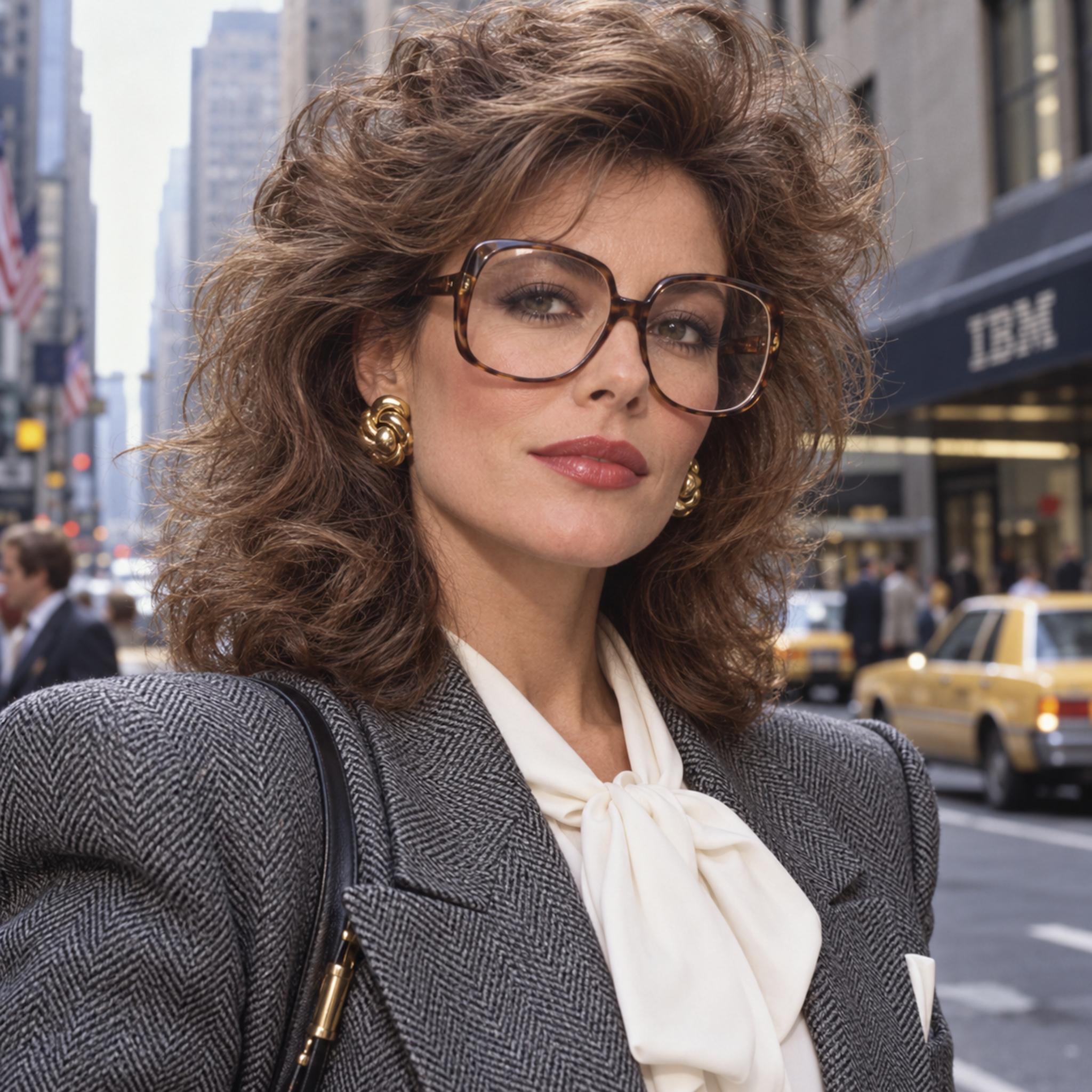
Small frames would have disappeared inside all that hair and tailoring. The glasses got bigger instead — broad tortoiseshell rims, softly squared lenses and enough visual weight to hold their own against padded shoulders and gold earrings.
A large frame puts another strong horizontal across the face, echoing the scale of the jacket while turning eyewear into part of the composition. Add teased hair and a cream bow blouse and the glasses stop looking merely functional. They become architecture for the face.
37. The Wrap Dress in a Bold Geometric Print for Days the Suit Stayed Home

The wrap dress offered a completely different route to waist definition: no hard jacket, no waistband, just a diagonal line crossing the torso and a tie closing at the side.
Diane von Furstenberg had established the wrap dress as a major fashion idea in the 1970s; by the 1980s the basic construction could appear in louder prints and stronger shoulder treatments. Jersey kept the dress fluid while graphic pattern supplied the visual authority. A contemporary geometric print wrap dress still uses essentially the same geometry.
36. Pantyhose in “Suntan” With a Spare Pair Waiting in the Desk Drawer
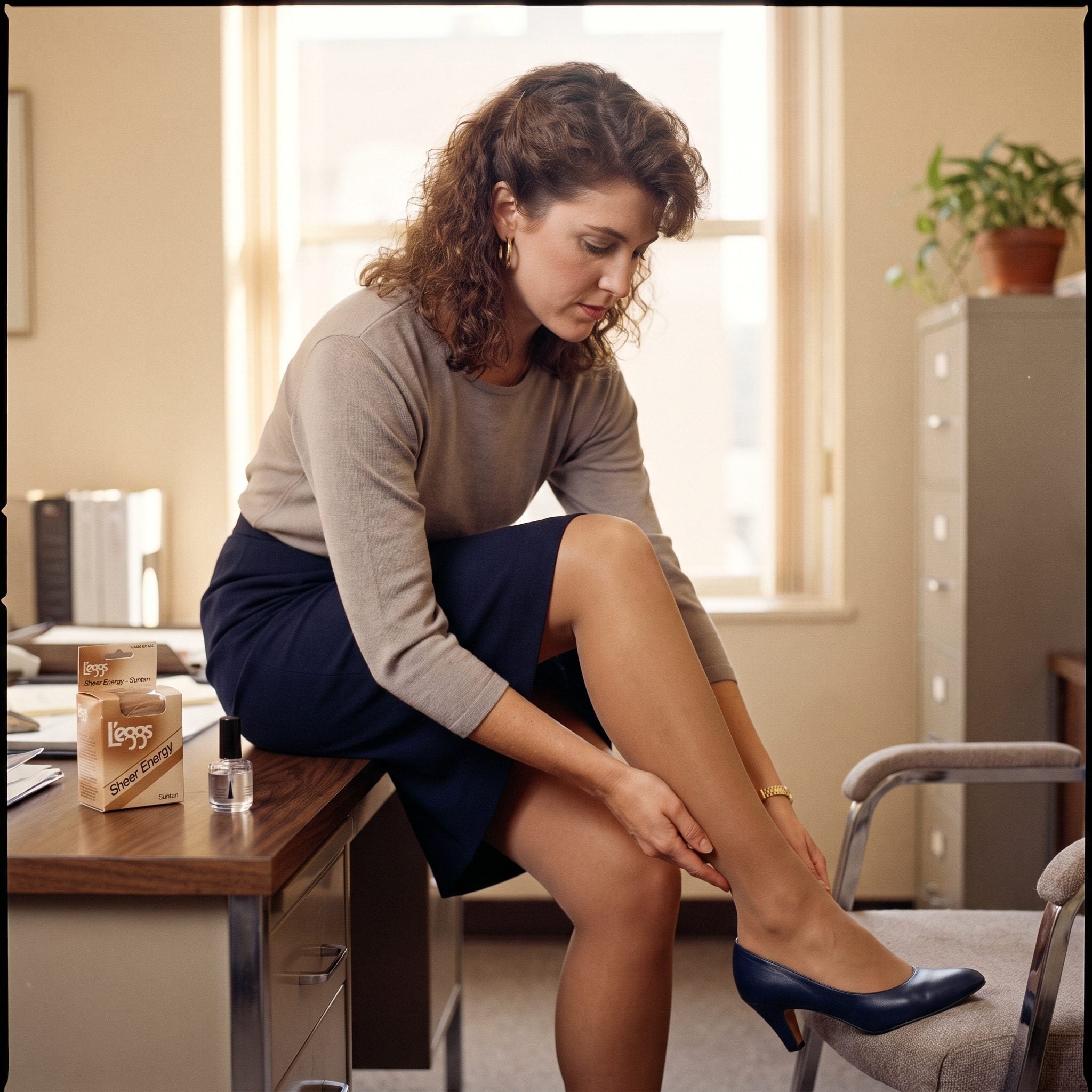
A ladder in a stocking could turn one tiny snag into the most distracting line in the outfit. Hence the backup pair: folded into a drawer or tucked into the work bag beside the cosmetics and receipts.
Warm beige shades such as “suntan” were common office choices, particularly with knee-length skirts and closed pumps. Clear nail polish became the emergency repair when a run started and there was no time to change. Not glamorous. Extremely specific to the mechanics of getting dressed for work.
35. The Statement Brooch Pinned High on the Blazer Lapel
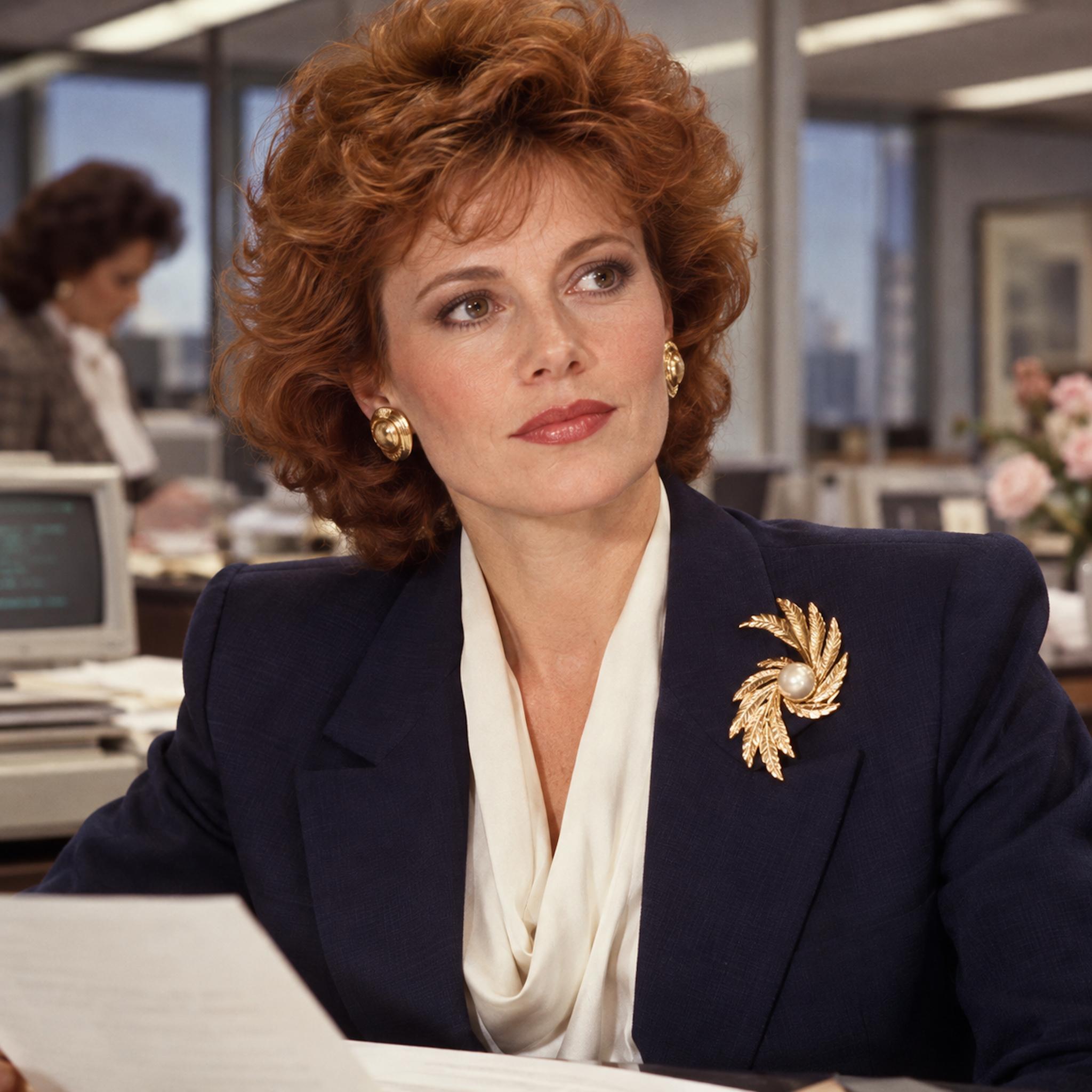
A brooch worn high on the lapel does something a necklace cannot: it attaches the ornament directly to the tailoring.
Placed near the shoulder, a large gold swirl or pearl-centered pin pulls attention upward and gives a plain blazer a focal point. On dark navy wool, the metal almost behaves like hardware — less generic jewelry than a piece of punctuation fixed directly to the architecture.
34. The Trench Coat With the Belt Knotted Instead of Buckled
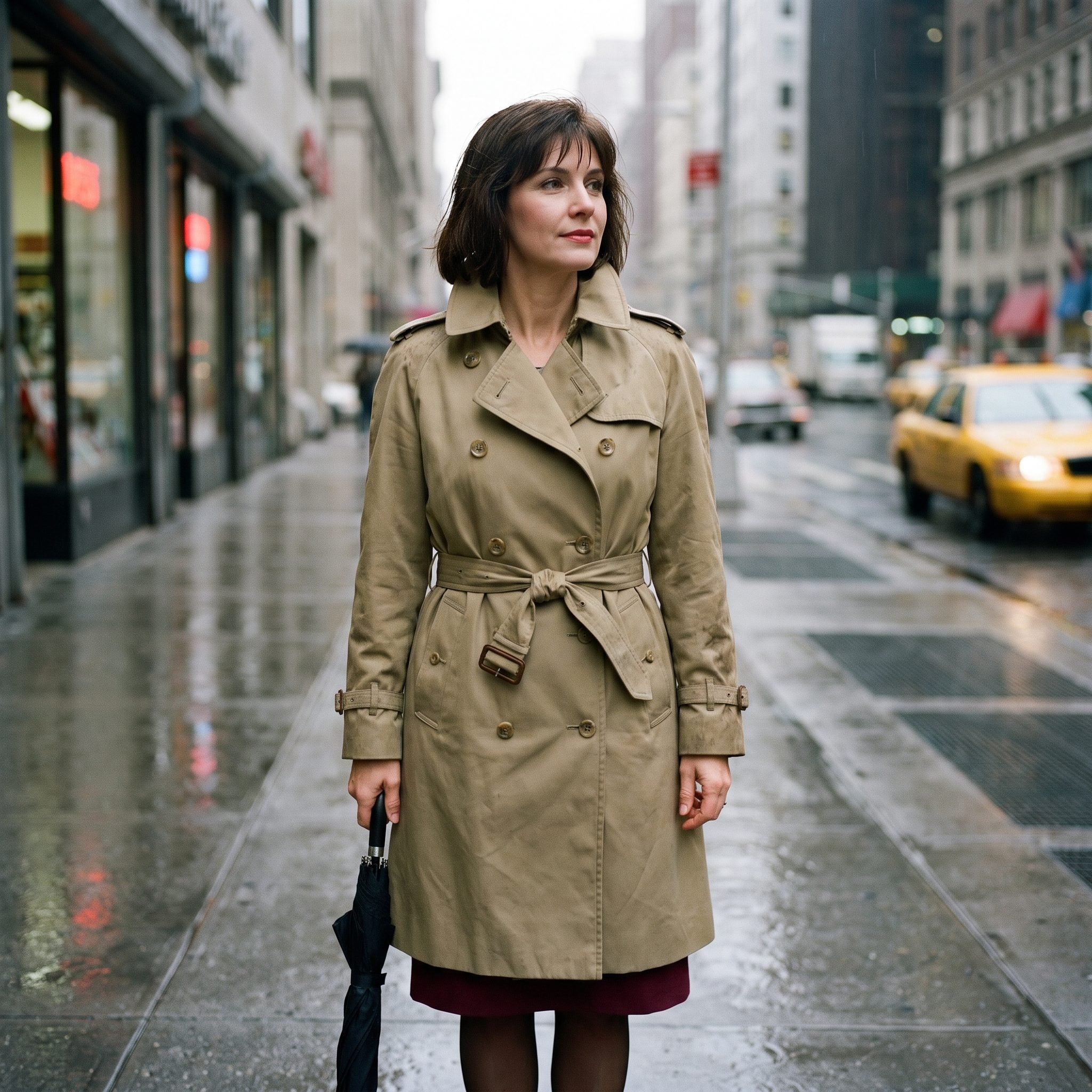
The trench supplied a cleaner, leaner outer layer after all that structured tailoring underneath. Khaki was the classic, but navy, black and stone all circulated through professional wardrobes.
The styling move was the belt: knot it instead of threading the buckle and the coat immediately looks less regimented. The waist remains marked, but the loose ends introduce movement. Formal coat, slightly impatient finish.
33. The Pleated High-Waisted Trouser With a Tucked Silk Blouse
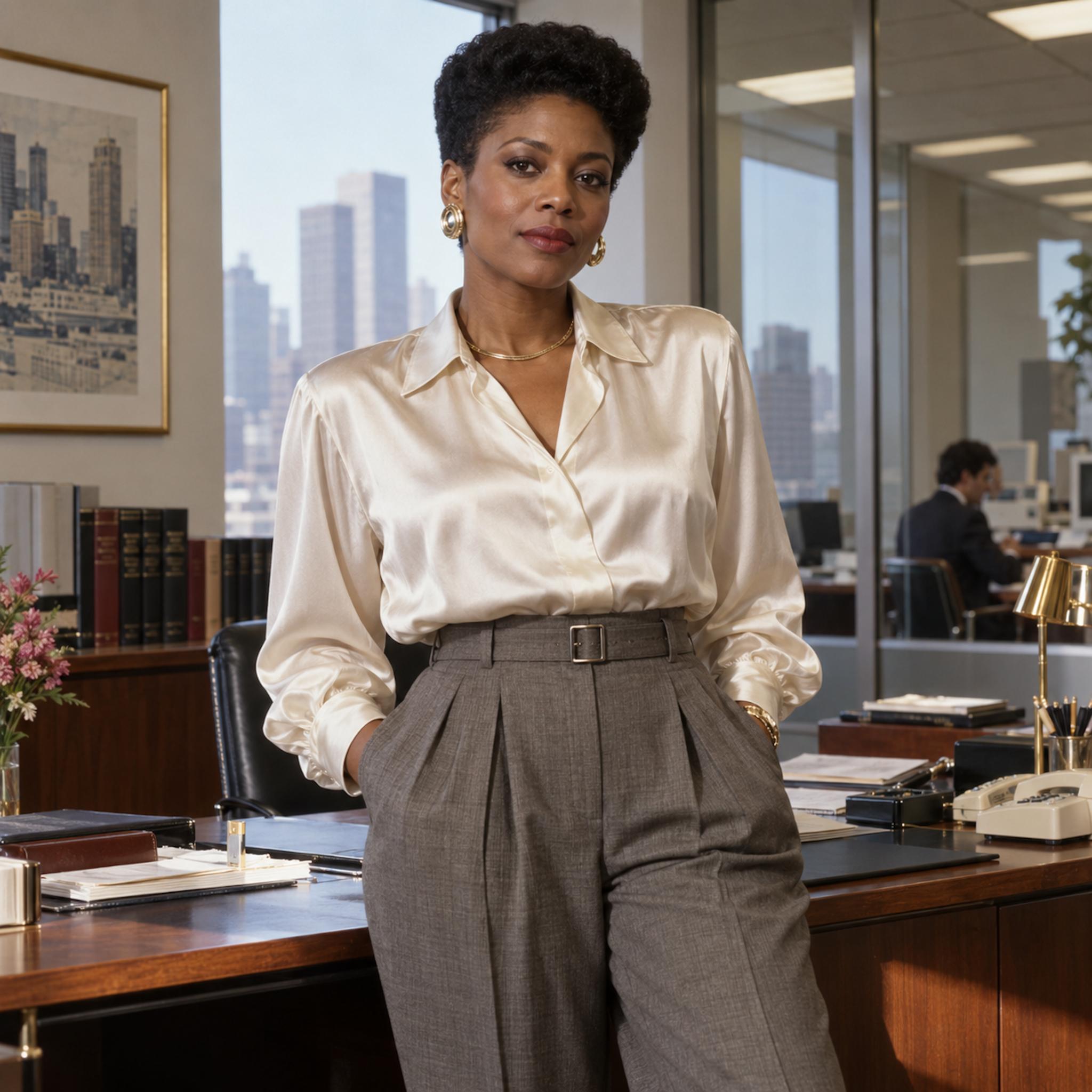
Not every power look needed a skirt. A deeply pleated trouser rising to the natural waist could create just as much authority, particularly when the blouse disappeared cleanly inside it.
The important line is the waistband. Set it high, add front pleats and the trouser gains controlled volume through the hip before narrowing or falling straight below. Silk above keeps the look fluid; structured wool below gives it weight. The two materials meet exactly where the silhouette wants the eye to stop.
32. Chunky Gold Clip-On Earrings the Size of a Half-Dollar

They pinched. That did not stop them.
Large button earrings, braided knots and sculptural gold-tone clips filled the visual gap between big hair and broad lapels. Clip-ons were only one part of the market — plenty of statement earrings were pierced — but the oversized clip became especially recognizable because of its unapologetic scale.
A tiny stud could disappear inside the silhouette. The earring had to keep up.
31. The Filofax Organizer That Held an Entire Workday Between Two Covers

Calendar, addresses, notes, receipts, lists, maps: the personal organizer was the analog operating system of the desk.
Filofax had existed since the early 20th century, but its leather binders became especially associated with 1980s professional culture. The bulk was almost part of the appeal. A thick organizer filled with handwritten appointments looked visibly busy because it literally was.
30. Estée Lauder Lipstick in a Red That Meant Business
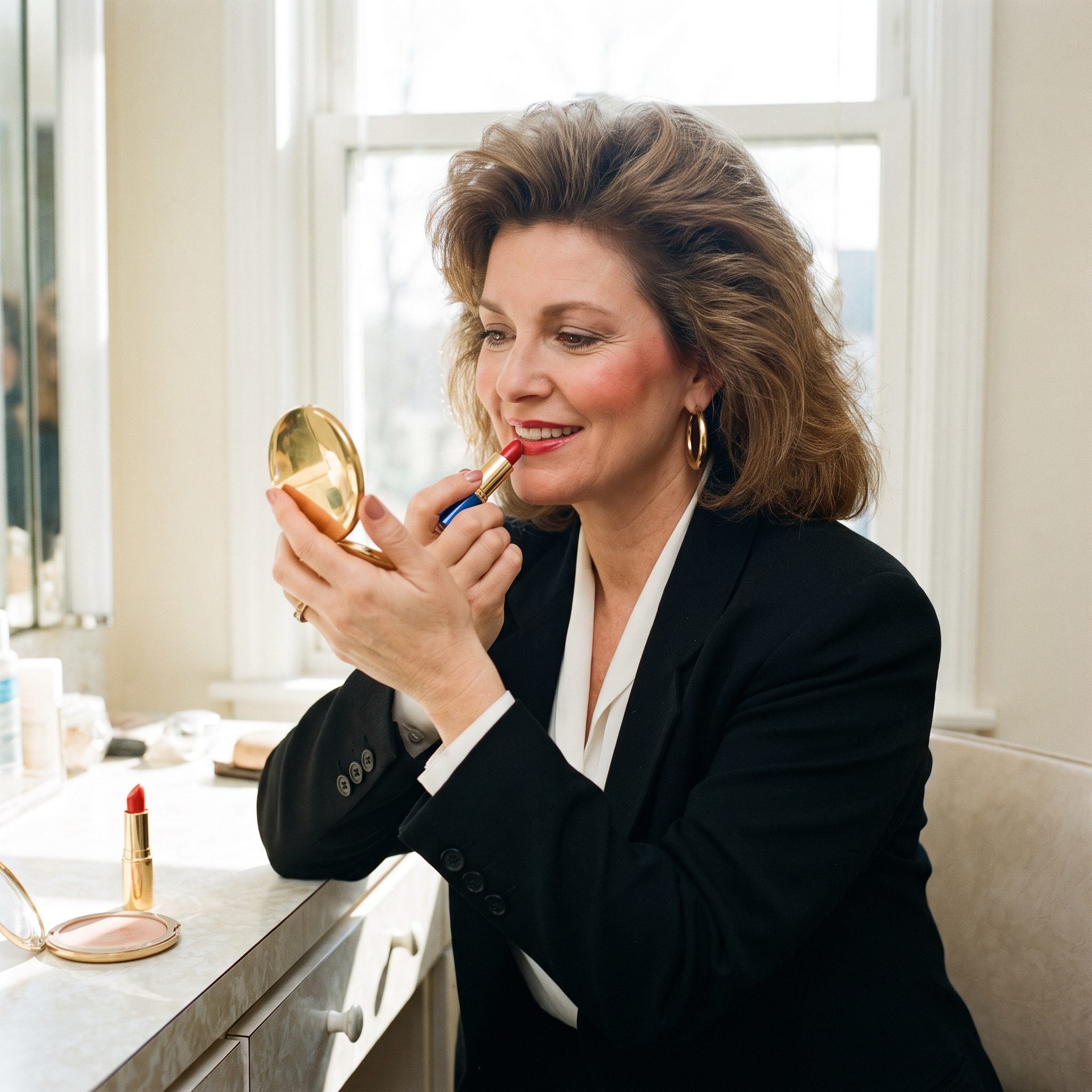
A strong red lip could hold its own across a conference table, which is exactly what the scale of the decade demanded.
Blue-reds and saturated berries stood against gray wool, navy tailoring and cream silk without disappearing into them. Estée Lauder and Revlon were familiar names in the cosmetics drawer, and a heavy gold-toned lipstick tube fit neatly into an era that liked even ordinary objects to look finished.
29. The Hard-Sided Leather Briefcase That Meant Business Before You Reached the Desk
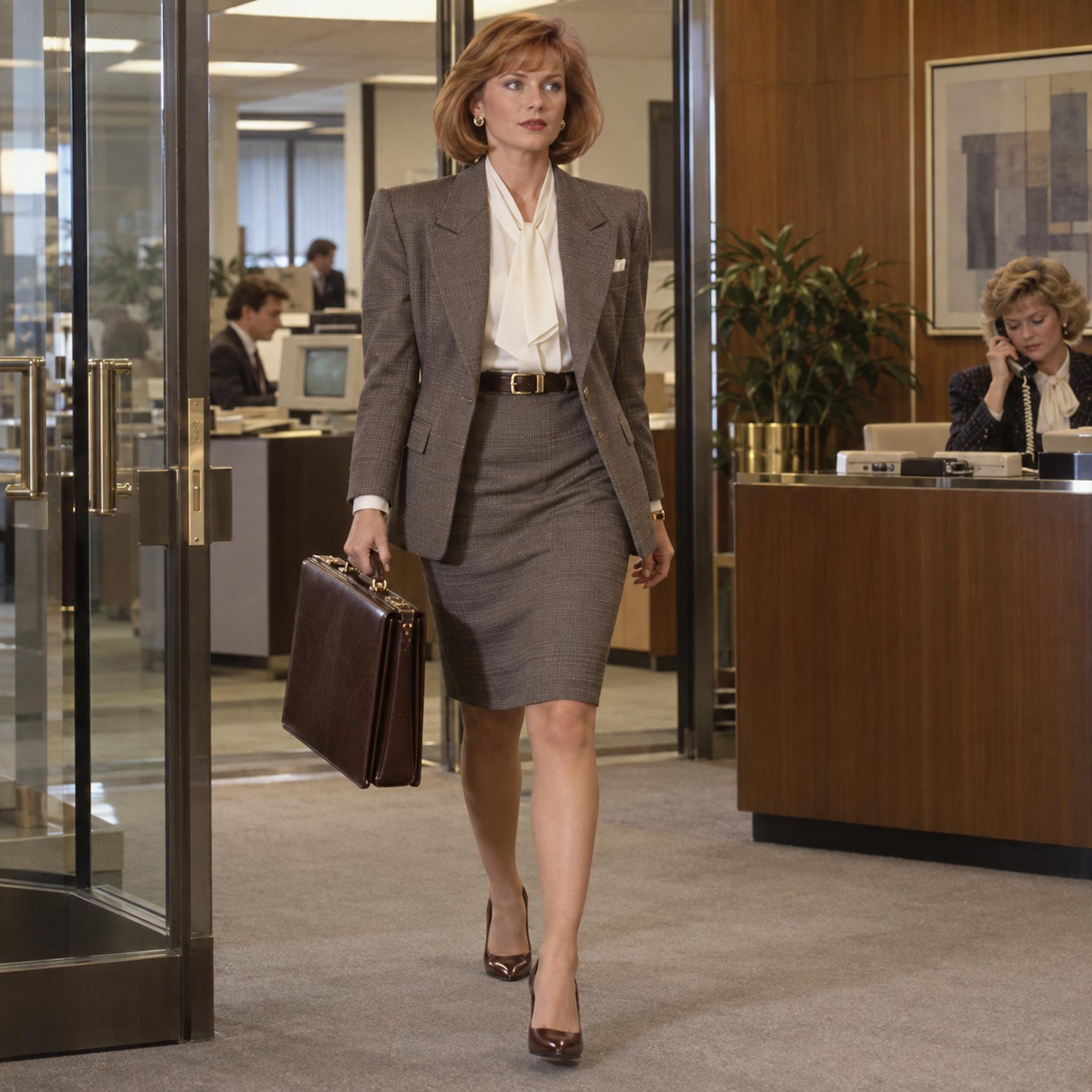
The oversized tote could swallow half a life. The hard-sided briefcase had a narrower assignment: documents, contracts, presentation copies, work.
Dark brown leather, rigid corners, brass hardware and a top handle gave it almost the same disciplined geometry as the suit beside it. Carried low at the side, it created a hard vertical against the moving skirt. Nothing slouched. Nothing collapsed. Even the bag had posture.
28. Frosted Pink Nails Filed Into a Perfect Oval, Tapped Against the Conference Table

Frosted pink was quiet by 1980s standards, which may be exactly why it worked so well with everything else going on.
The pearly finish caught fluorescent light without competing with lipstick, earrings or suit color. Oval filing kept the shape soft rather than graphic. Against a stack of reports or a dark conference table, ten little flashes of pale pink were enough.
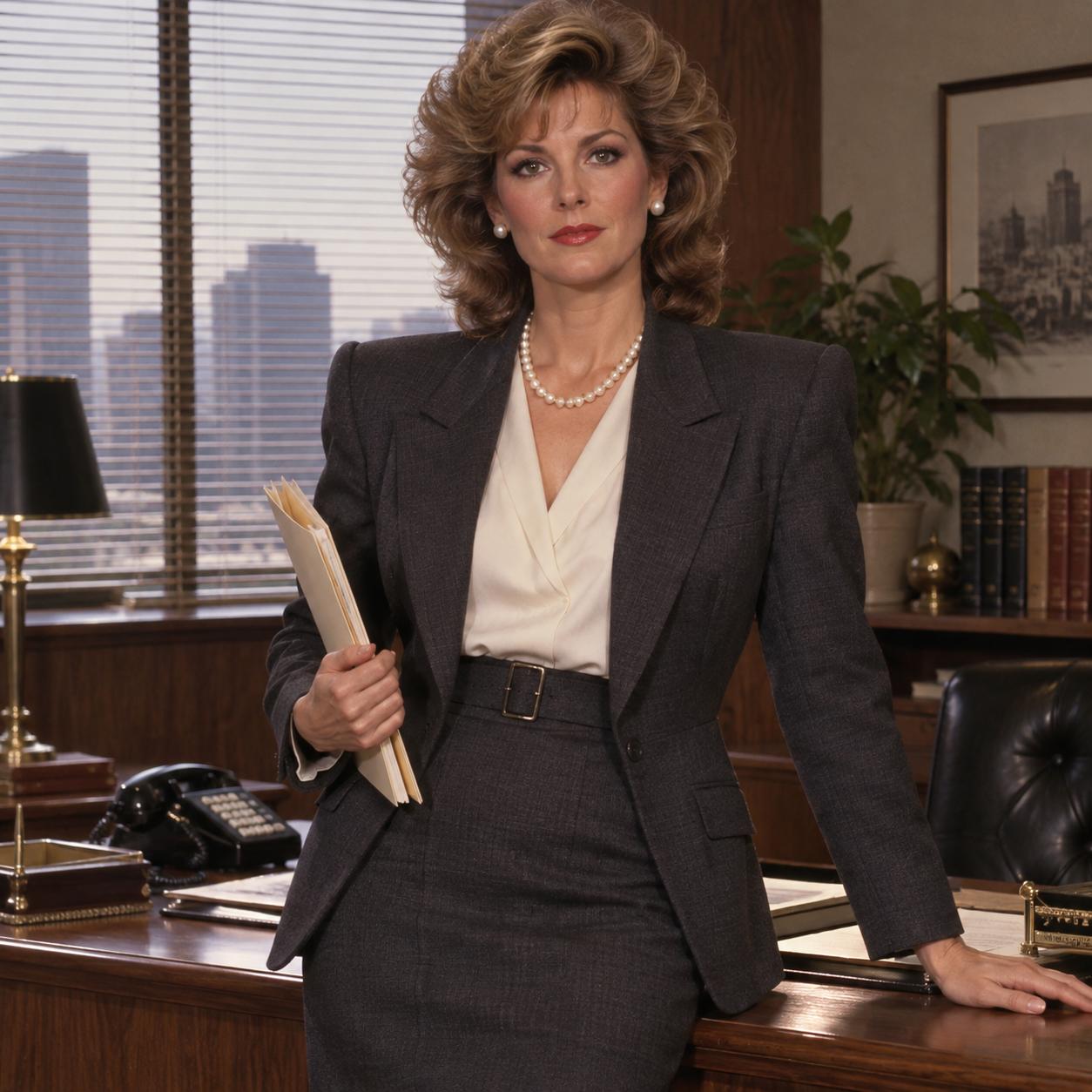
27. Pearls Against a Hard-Shouldered Suit
❤️ Would you like to save this?
Gold costume jewelry was one route to authority. Pearls offered another: quieter, cooler and deliberately conservative.
A single strand sitting inside the neckline of a hard charcoal suit creates a useful tension. The shoulders say scale and structure; the pearls say polish and continuity. Against cream silk they almost disappear until the light catches them. Authority did not always have to arrive clanking.
26. The Wraparound Sunglasses Pushed Into the Hair at the Office Door
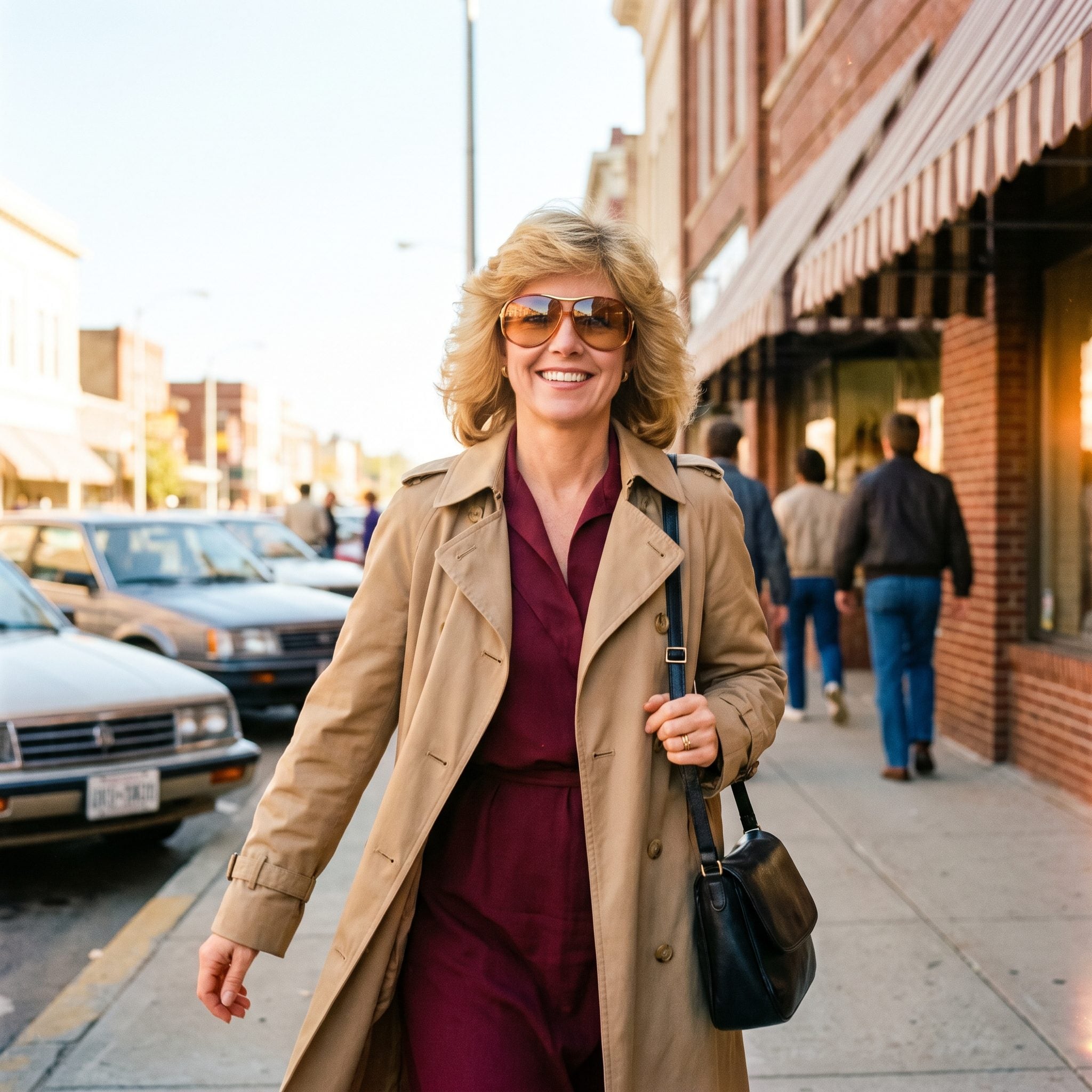
Large amber lenses and curved frames belonged to the commute, but pushing them into the hair gave them a second life once indoors.
Against a full blowout, the glasses almost became a headband — practical object converted into styling device. Foster Grant sold accessible versions, while department stores and mall sunglass counters supplied endless variations. Bigger hair had room for bigger frames.
25. The Shoulder-Padded Sheath Dress That Did the Suit’s Work in One Piece

The sheath simplified the uniform without surrendering its structure. Shoulder pads gave the top enough breadth, while the dress ran in one controlled line toward the knee.
Add a brooch, burgundy pumps and a defined waist and very little else was required. A structured burgundy sheath dress could deliver the same broad-shoulder, narrow-middle logic as a suit without the visual break of separate pieces.
24. The Silk Scarf Folded Into a Triangle and Pinned at the Shoulder
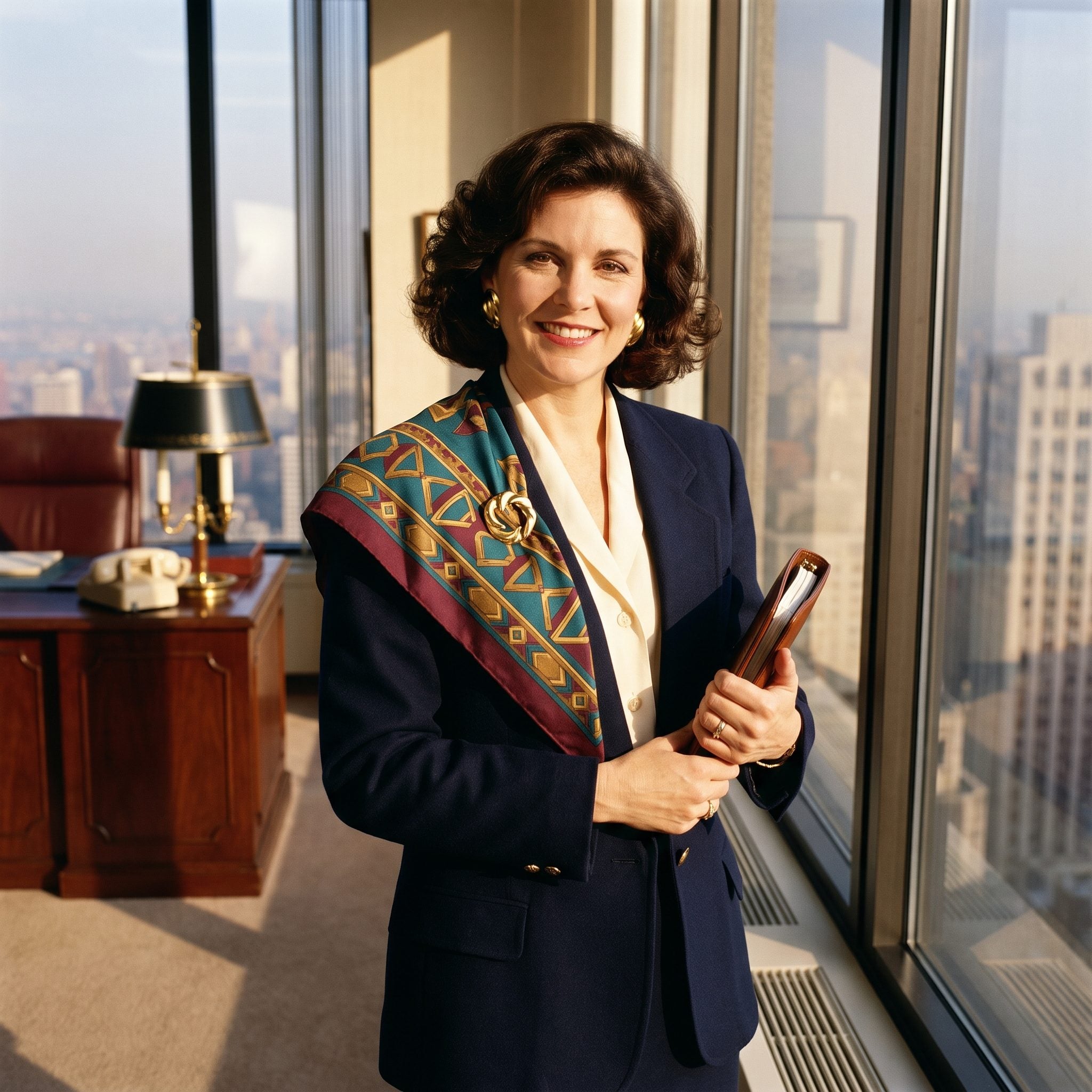
This is not the little neckerchief version. Spread a large silk triangle over the shoulder and suddenly the scarf becomes almost another lapel.
Teal, burgundy, gold and equestrian prints worked particularly well because pattern could interrupt a plain jacket without overwhelming it. Pinning the fabric with a brooch also gave the fold a fixed point, so all that silk moved around one deliberately placed piece of hardware.
23. The Gold-Tone Wristwatch With a Rectangular Face
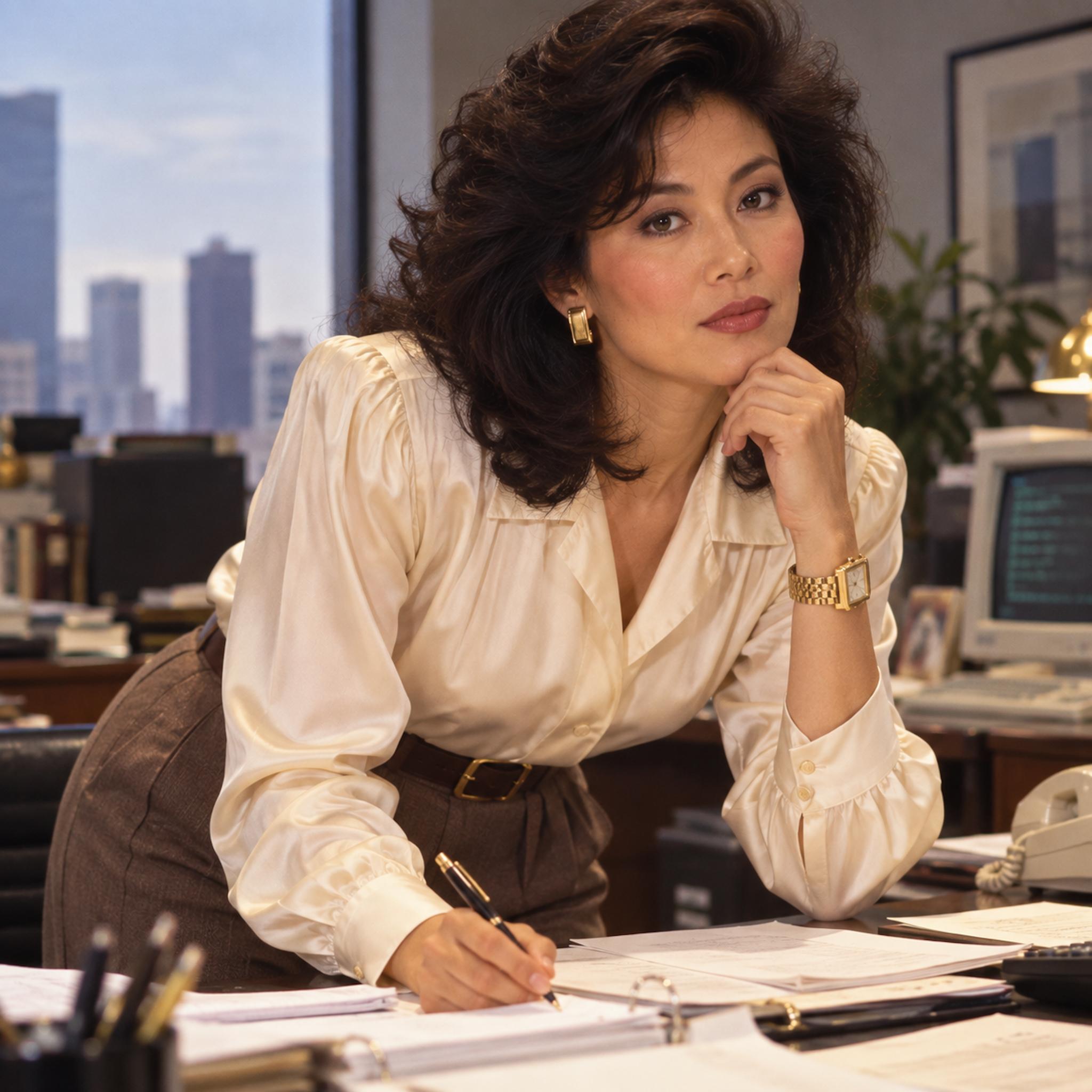
Before mobile phones became clocks, calendars and everything else, checking the time meant looking at the wrist. That made the watch unusually visible.
A rectangular gold-tone case on a linked bracelet had exactly the right vocabulary for the decade: practical object, polished surface, a little status. Leaning over paperwork, the watch sits directly in the line of sight beside the pen and documents. Jewelry that was also doing a job.
22. The Silk Pussy-Bow Blouse Tied Tight at the Throat
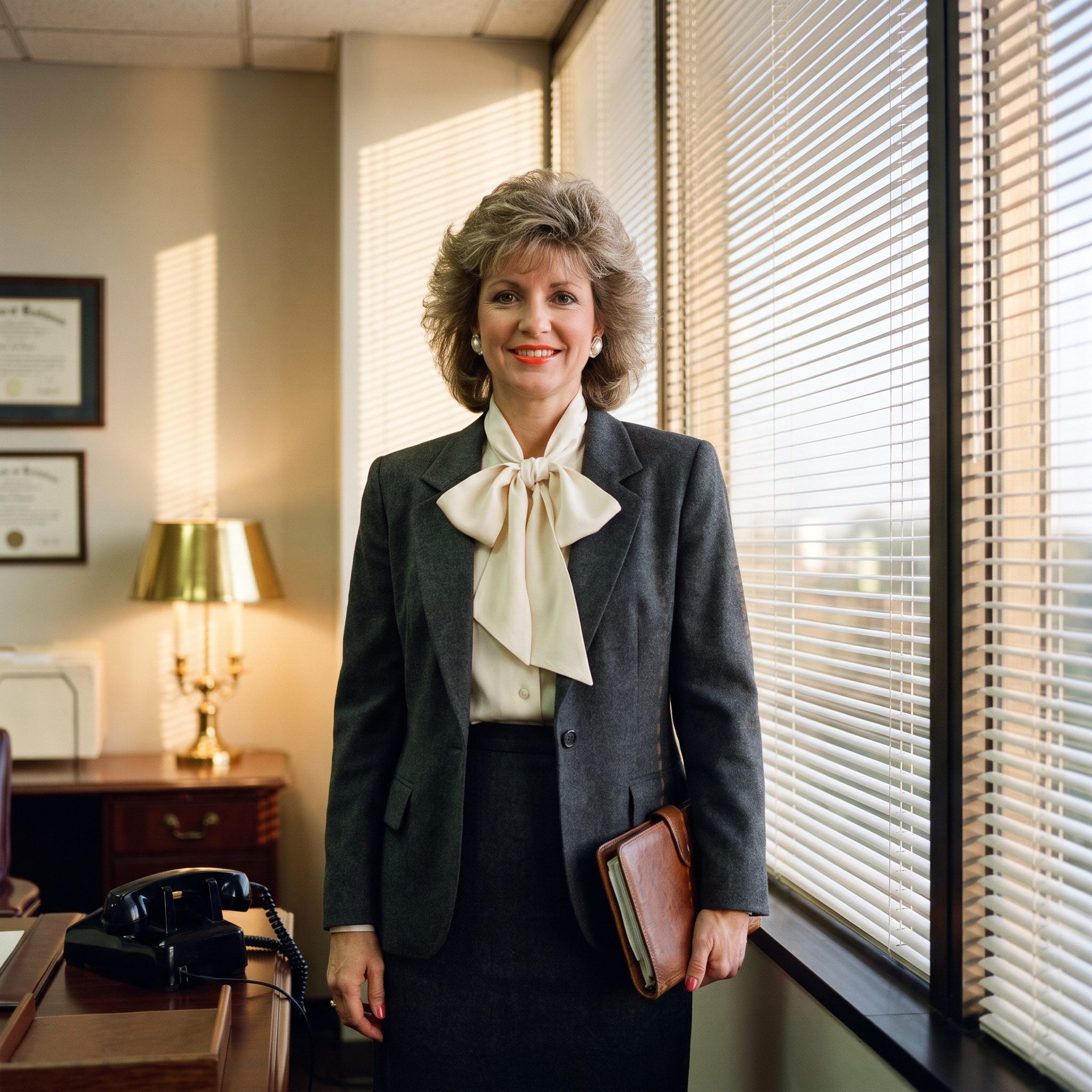
The pussy bow performed some of the same visual work as a necktie without pretending to be one. A length of silk gathered directly beneath the face, filling the V of a jacket and putting softness exactly where menswear usually supplied a hard knot.
The style had much older roots, but it became especially visible in late-20th-century professional wardrobes. Margaret Thatcher famously wore versions of it, and the appeal is easy to see: formal enough for tailoring, fluid enough to keep the whole suit from becoming severe. The larger the bow, the more interesting the argument.
21. The Oversized Leather Tote That Doubled as a Briefcase and a Life
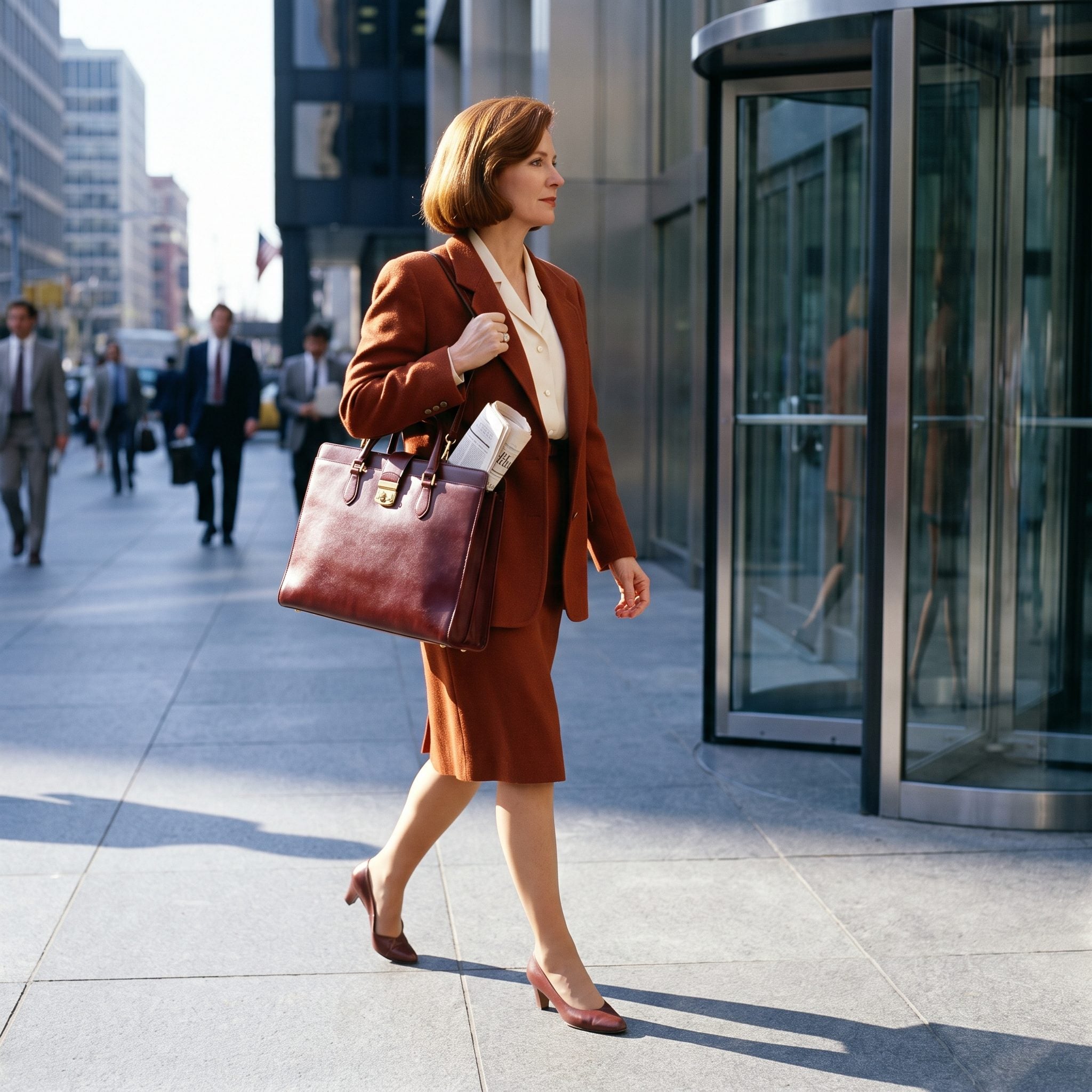
Forget the delicate handbag. The serious work tote had to accommodate the parts of the day the suit could not.
Folders, an umbrella, paperback, cosmetics, spare hosiery, organizer, receipts — the larger bag suited a commuter life built around carrying everything from morning through evening. Structured oxblood or tan leather kept it from looking casual even when the contents were one loose granola bar away from chaos.
20. Shoulder-Length Hair Blown Out Until the Shape Could Survive the Workday

The blowout was less about length than lift. A round brush rolled the ends, pushed the roots upward and created a halo broad enough to remain visible above a suit collar.
The important difference from teased bangs is movement. This hair still swings. The ends turn, the crown stays buoyant and the shape looks polished without appearing sprayed into one immovable object. At least until the weather gets involved.
19. The Wide Leather Belt That Cinched Everything Back to the Waist

A three-inch belt could reorganize an entire outfit. Put one over a blouse, sweater or dress and the oversized volume above suddenly had a destination.
The buckle mattered too. Brass or gold-tone hardware created a visual center and echoed the earrings, watch or buttons elsewhere. A wide tan leather belt did not need a new silhouette underneath it. It could manufacture one.
18. The Silk Shell Under the Blazer That Softened All That Architecture
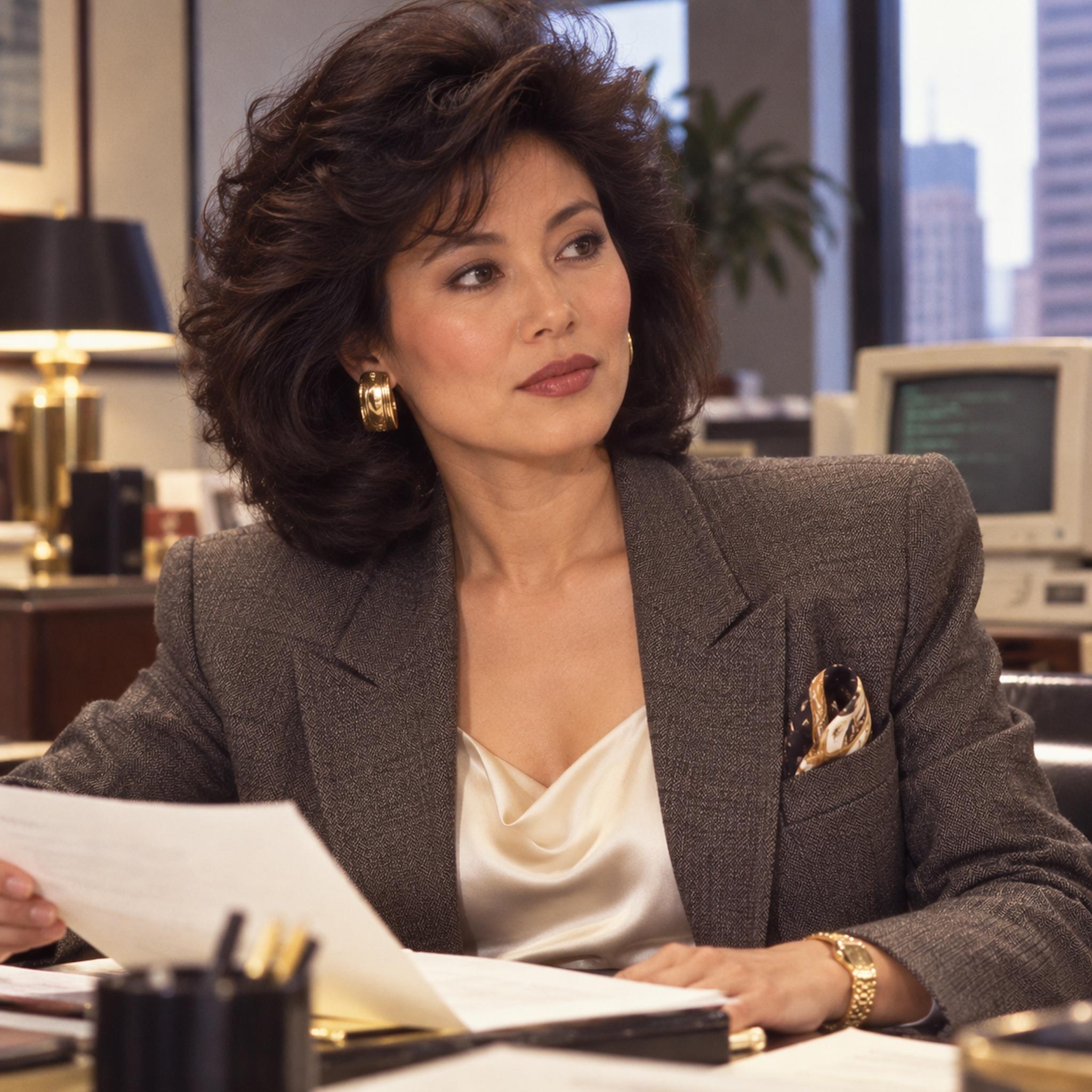
The blazer supplied the hard line. The shell underneath was allowed to do the opposite.
Silk or satin brought sheen, drape and movement into the rigid frame of wool tailoring. A cream cowl or softly scooped neckline also draws the eye inward from the shoulders toward the face. That contrast — hard jacket, liquid blouse — is one of the quiet reasons power dressing rarely looked like borrowed menswear.
17. Aqua Net Sprayed Until the Bangs Stood at Attention
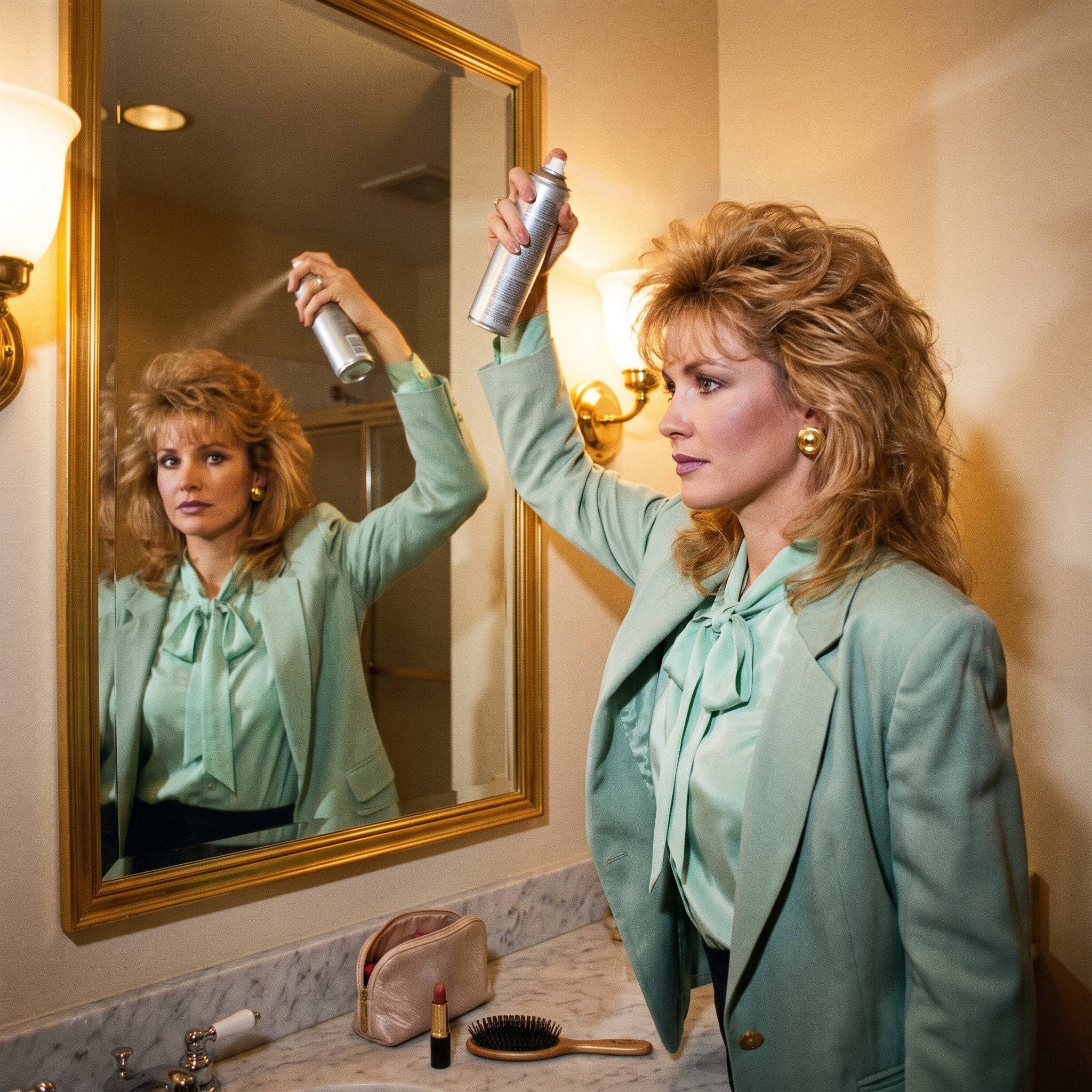
The height started at the root. Tease, lift, spray, repeat until the bangs and crown had enough volume to balance the width of the jacket underneath.
Aqua Net became inseparable from memories of 1980s big hair because strong hold mattered to the construction. The hair was not merely fluffy; it had architecture. Humidity could make its own argument. The aerosol can was there to win it.
16. The Contrast-Piped Suit in a Color That Wasn’t Navy or Gray
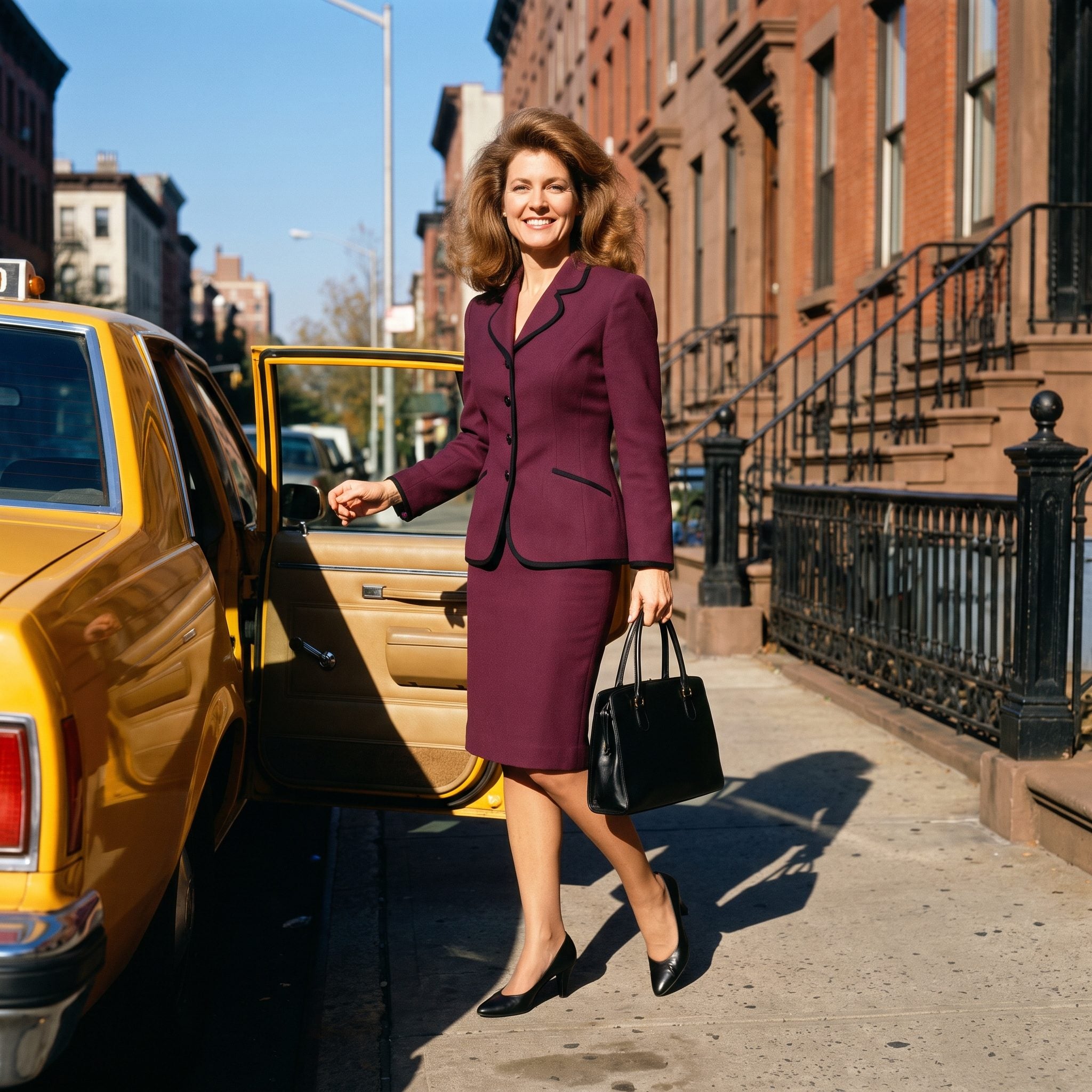
Plum with black piping. Cobalt edged in navy. Cream outlined in charcoal. Once the suit changes color, the piping becomes an architectural drawing laid directly over it.
Contrast trim traces lapels, pocket flaps, cuffs and sometimes the jacket edge itself, making the tailoring unusually legible from a distance. That is the real power of the detail: every seam suddenly looks intentional.
15. The Knee-Length Pencil Skirt With the Back Walking Vent
❤️ Would you like to save this?
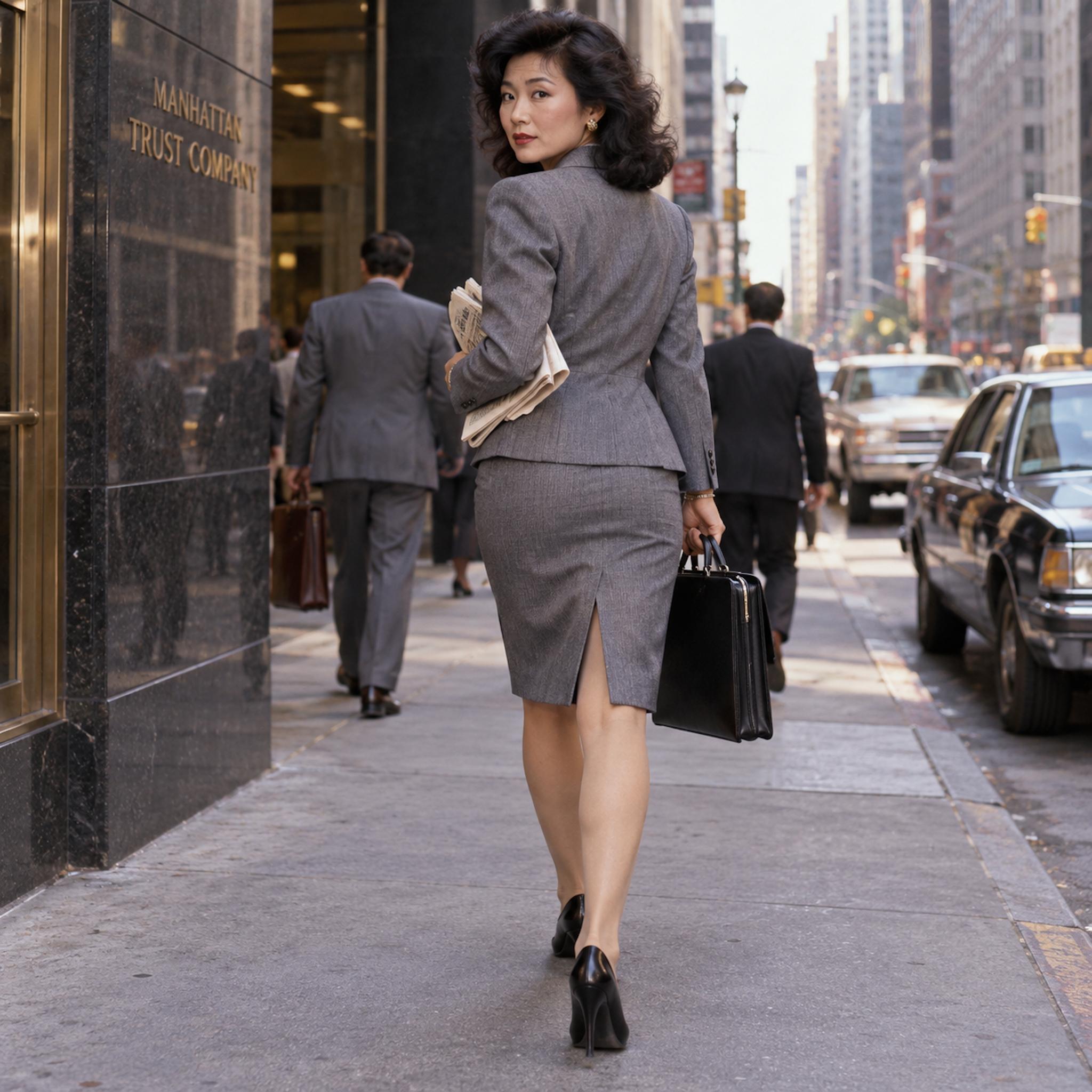
The pencil skirt looked controlled because it was controlled. Its narrow cut held the line close from waist through thigh, which made the slit or vent at the back more than decorative.
That opening gave the skirt enough room for an actual stride. Seen from behind, the vent becomes one of the silhouette’s most functional details: structure everywhere until movement requires an escape hatch. Add pumps and a fitted jacket and the lower half stays remarkably clean even while walking.
14. Chunky Gold Costume Jewelry Loud Enough to Compete With the Suit

One bracelet was an accessory. Three or four became part of the soundtrack.
Stacked bangles, rope chains and oversized hoops turned gold-tone metal into a repeated surface throughout the outfit. The point was not necessarily preciousness. Scale mattered more. A substantial chain could stand up to bouclé, broad lapels and saturated color where something delicate might simply vanish.
13. The Camel Wool Coat Worn Open, Belt Hanging Loose

Camel wool gave the power wardrobe a neutral that was warmer than gray and less predictable than black.
Worn open, the long coat creates two uninterrupted vertical lines down the body while revealing the darker suit underneath. Let the belt hang loose and the coat moves rather than cinches. A camel wool coat could be conservative without ever looking timid.
12. The Coach Bag That Made Practical Leather Feel Like a Promotion
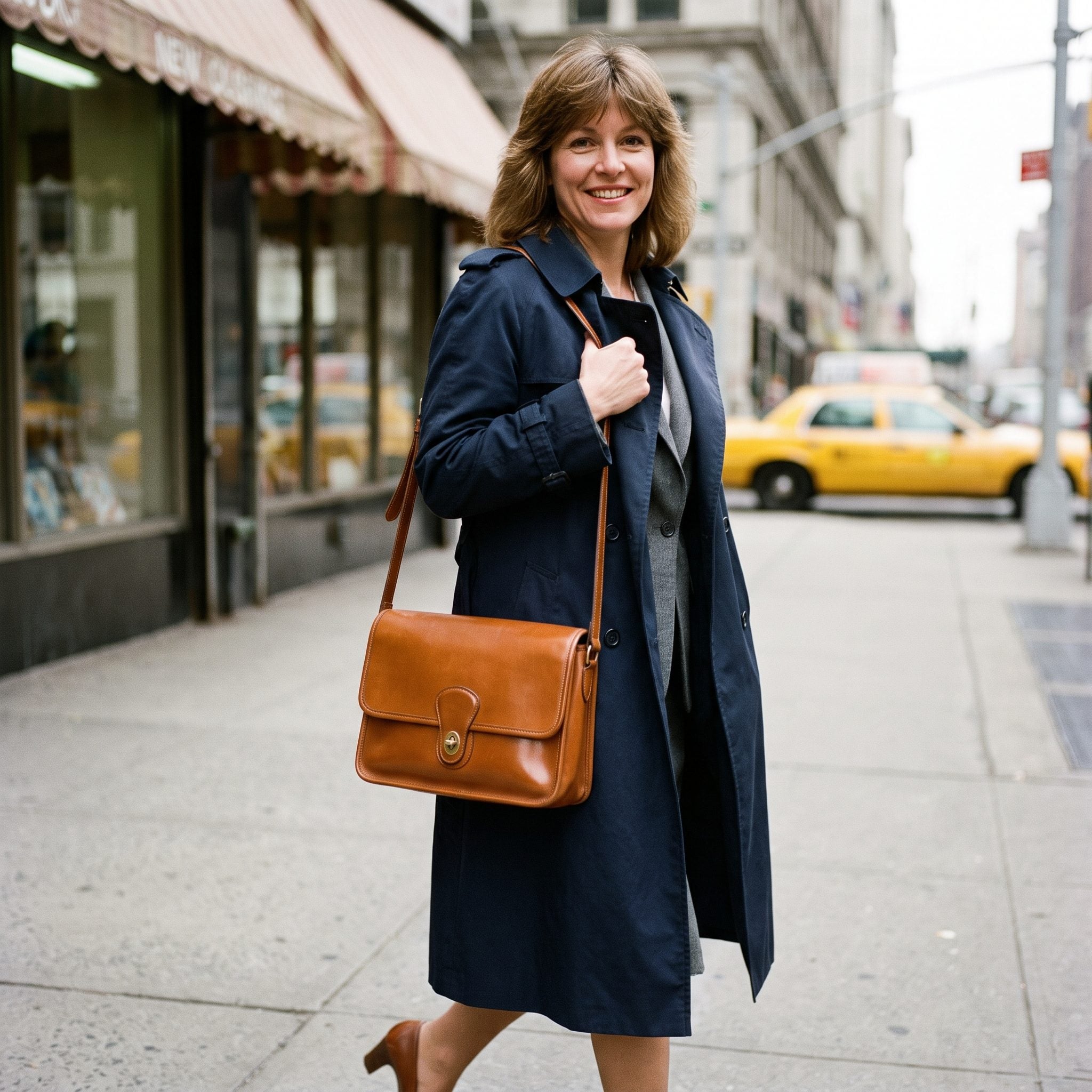
This is different from the giant tote. A structured Coach bag was not mainly about volume; it was about leather, hardware and the pleasure of something that improved as it aged.
Glove-tanned hides in tan or burgundy, brass turn-locks and relatively restrained shapes gave the bag a quieter kind of status. The modern equivalent of the silhouette still exists in a tan leather shoulder bag, but the appeal remains the same: real structure without shouting.
11. The Power Scarf Folded Into a Triangle and Pulled Through a Gold Ring

Another scarf, completely different mechanics. Here the silk spreads across the chest and shoulders before gathering through a gold ring at the throat.
Corporate dressing manuals of the period encouraged scarves as polished accessories, and the idea fit neatly into the decade’s taste for controlled ornament. Paisley, geometry and equestrian motifs supplied color while the ring kept all that fabric from becoming floppy. Soft textile, hard center point.
10. The Blazer Sleeves Pushed Up Past the Forearm
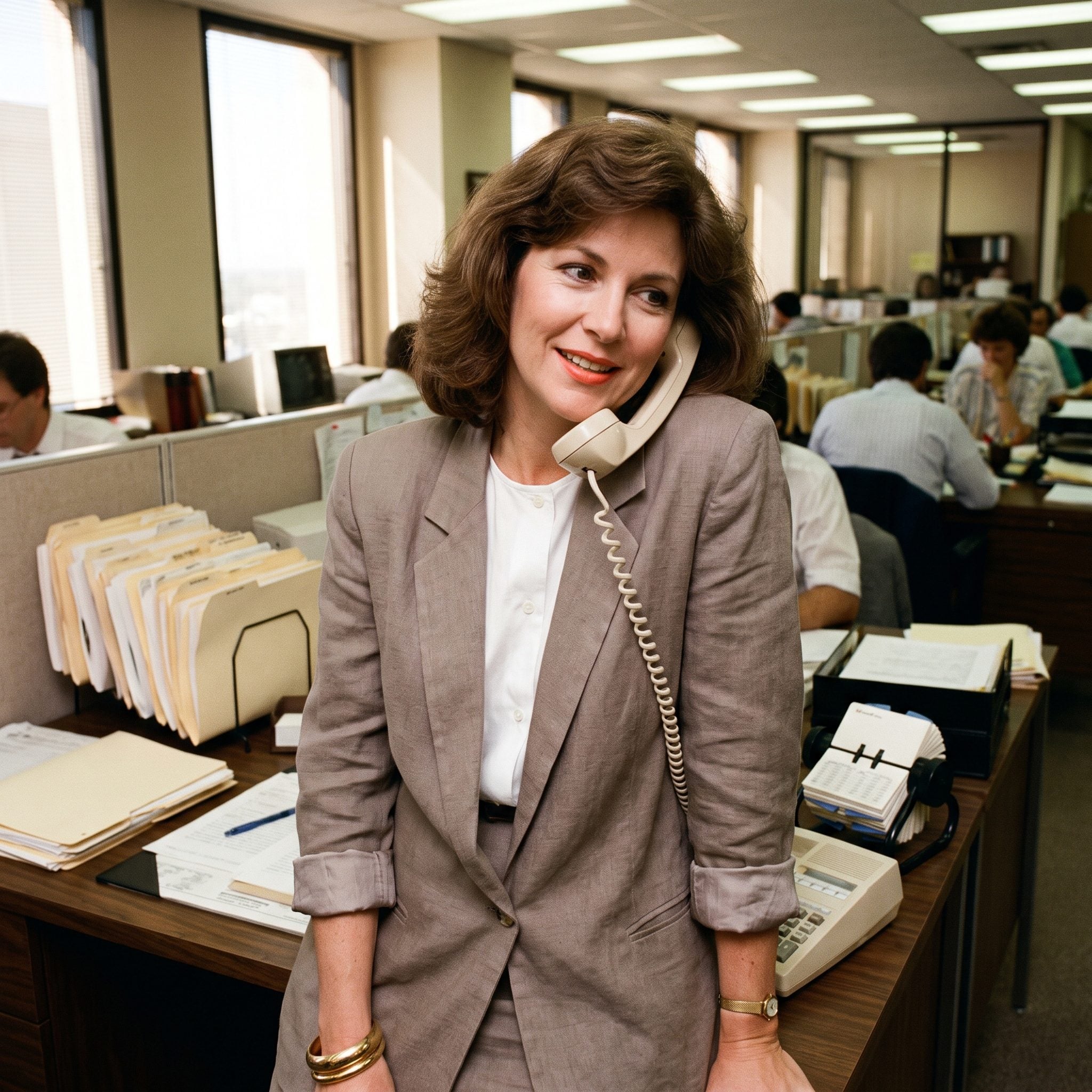
A fully buttoned jacket can look formal enough to keep its distance. Push the sleeves up and the whole thing loosens immediately.
Forearms appear, bracelets come into view, and the jacket starts behaving more like working equipment than ceremony. The scrunch also breaks the long sleeve into folds and shadows, giving a plain blazer a surprising amount of texture for a move that takes three seconds.
9. The Bright Blazer Dress That Skipped the Suit and Kept the Shoulders
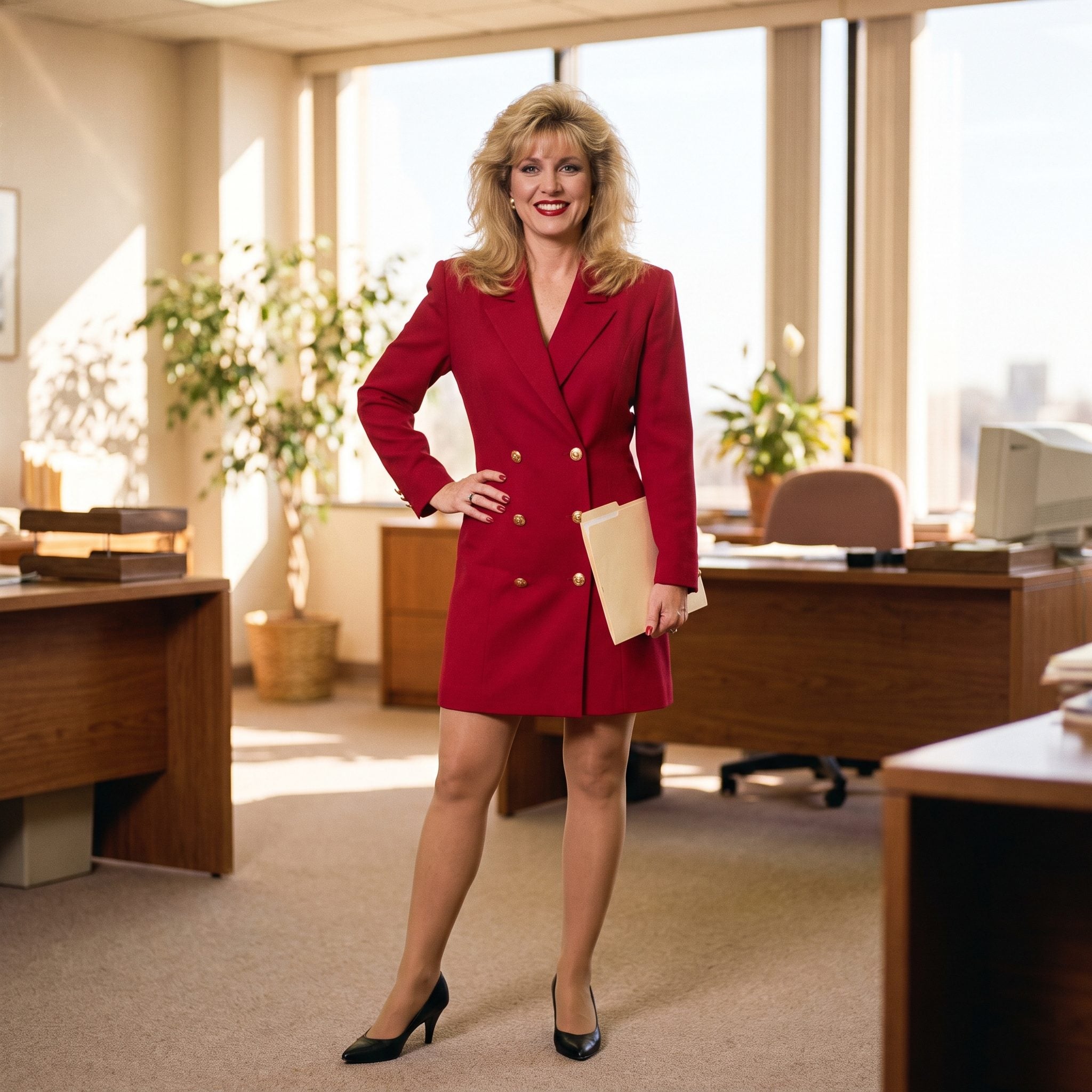
Take the jacket’s lapels, double-breasted closure, gold buttons and strong shoulders, then keep going until it becomes the dress.
Red, cobalt and emerald all suited the idea because the silhouette was already emphatic enough to carry real color. The result was a dress that borrowed the visual language of tailoring without requiring a matching skirt underneath. One garment, plenty of argument.
8. The Skinny Leather Tie Over a Buttoned-Up Blouse

The leather tie is where office tailoring collides with new-wave styling. Narrow, dark and slightly severe, it creates a clean vertical against a pale blouse.
Women’s menswear looks had been building for years, with figures from Diane Keaton to Annie Lennox helping keep androgynous styling highly visible. The 1980s version could be sharper and more graphic: button the collar, tighten the knot, let the tie look almost too narrow for the jacket around it.
7. The Big Gold Chain Belt Slung Over the Blazer
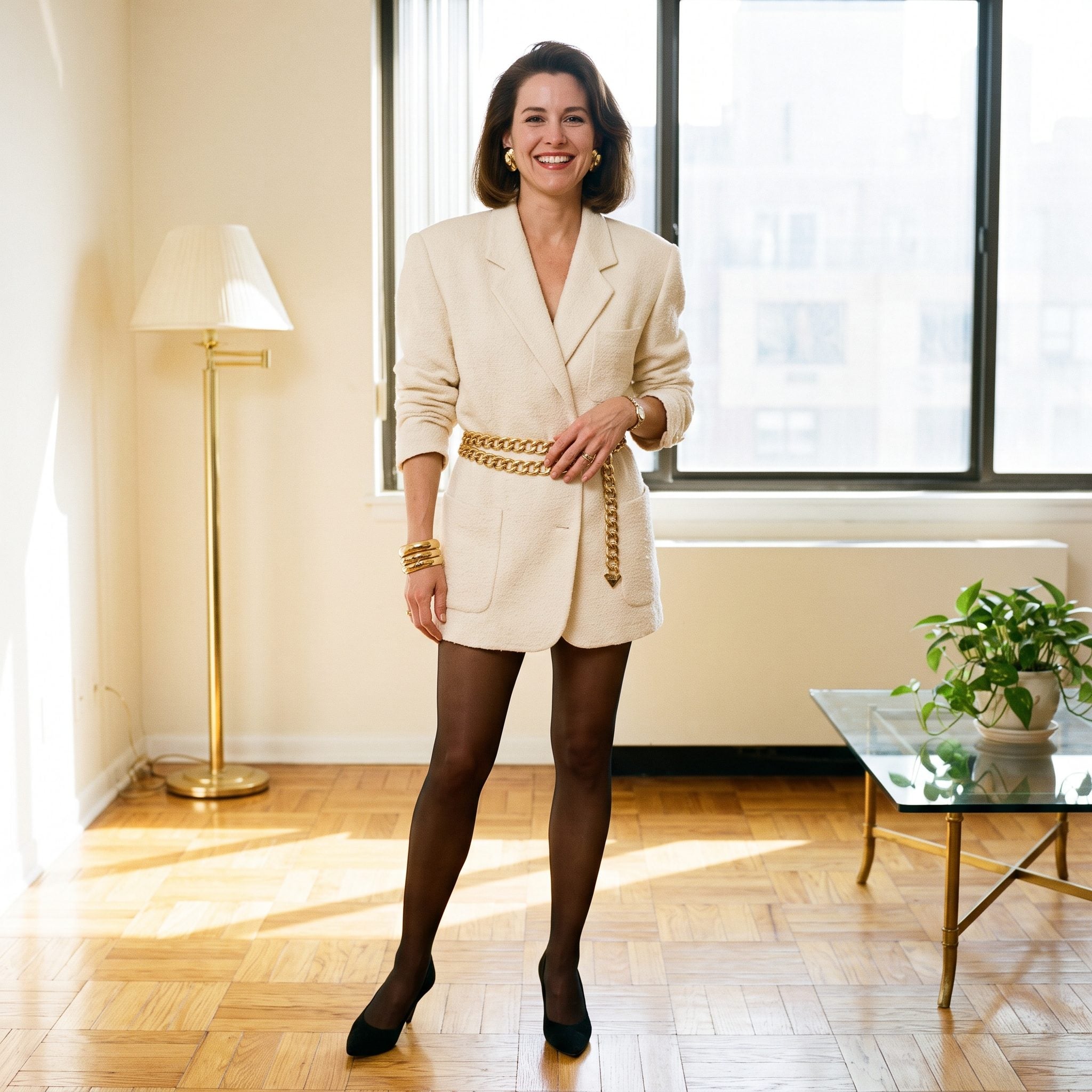
Oversized bouclé wants to spread. A chain belt gives all that volume a stopping point.
The links introduce a completely different texture: polished metal against nubby cloth. Cinched over the jacket rather than hidden underneath, the belt makes the waist part of the outer architecture and repeats whatever gold is happening at the ear, wrist or buttons.
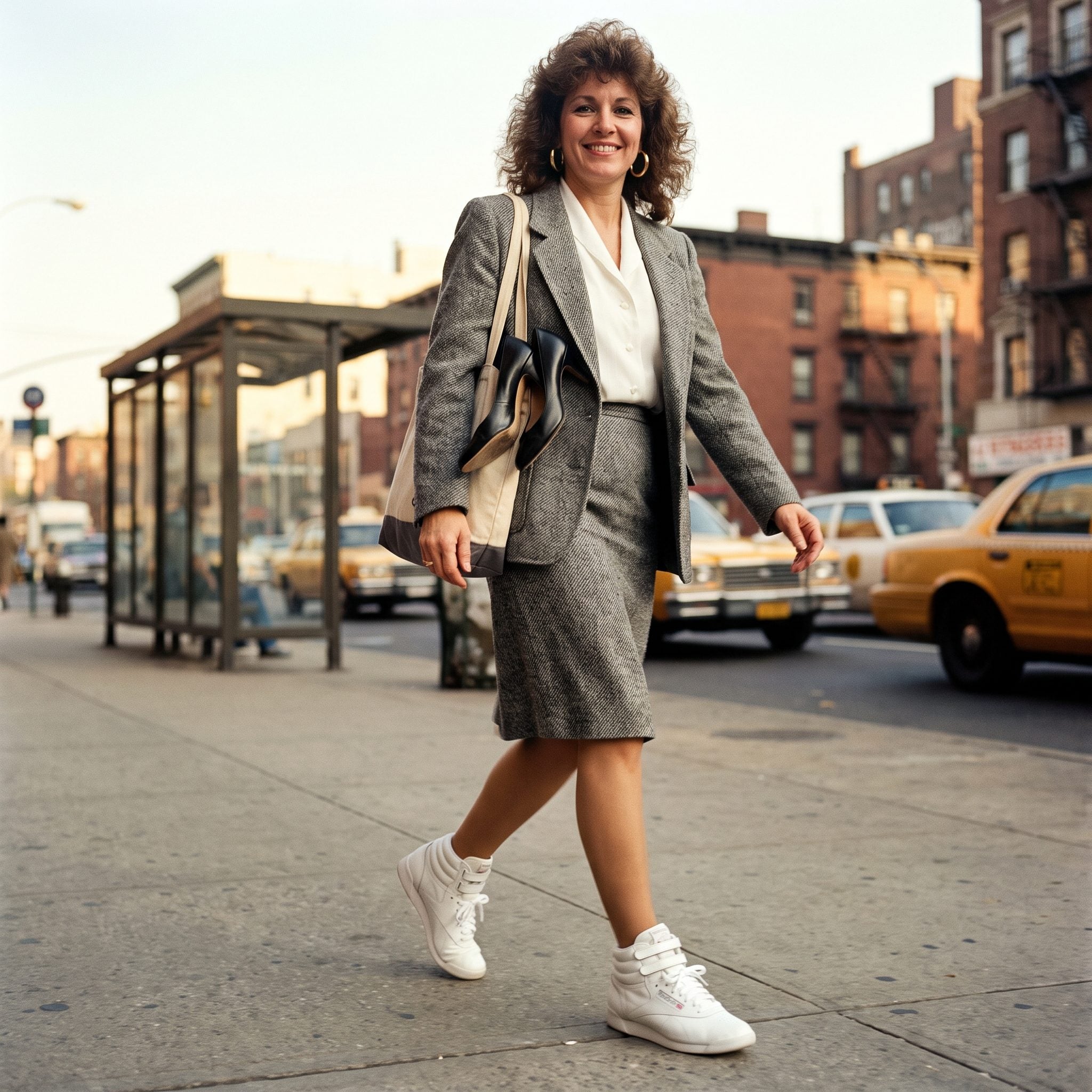
6. Reebok Freestyles Worn With the Suit on the Commute, Heels in the Tote
❤️ Would you like to save this?
The top half said office. The feet said there were eight blocks between the train and the desk.
Reebok introduced the Freestyle in 1982 as a women’s fitness shoe, and its white high-top shape fit neatly into a commuter workaround already visible in American cities: walk in sneakers, switch to pumps at work. The collision between formal suit and athletic shoe was part of the charm. Function had interrupted the uniform in public.
5. Blue Cream Eyeshadow Swept All the Way Up to the Brow Bone

Subtle was available. The decade frequently declined.
Blue, slate and cool violet could cover the entire visible lid and travel well beyond the crease, especially when paired with liner, mascara and a strongly shaped brow. The color gives the upper face enough intensity to compete with large hair, earrings and shoulder pads below. Even the makeup understood scale.
4. The Padded-Shoulder Coatdress Buttoned to the Throat
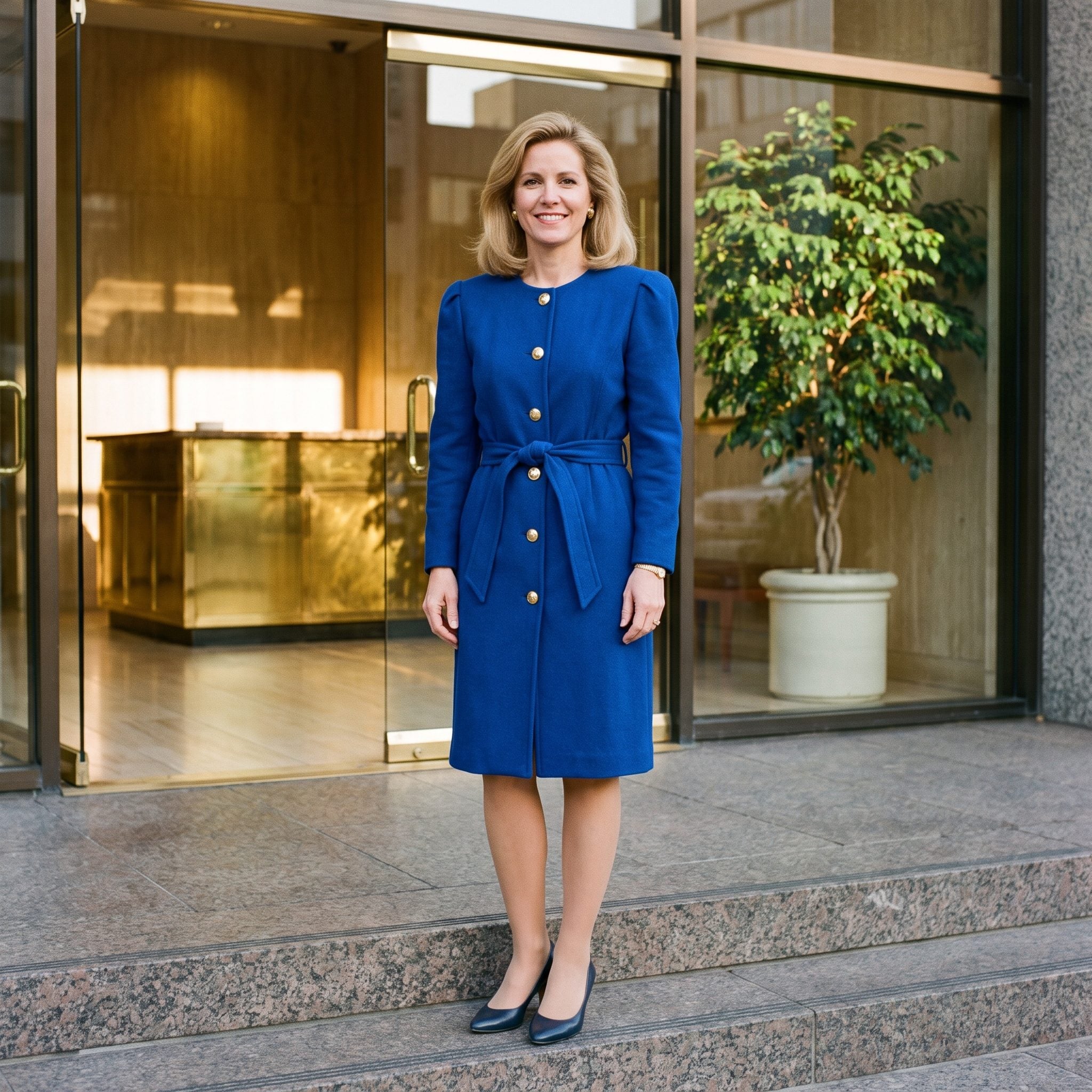
The coatdress takes the logic of tailoring and closes every gap. Shoulder to hem becomes one continuous garment, buttoned high and controlled through the waist.
Its public visibility was reinforced by high-profile women including Princess Diana and Nancy Reagan, both of whom wore structured coatdresses extensively in the 1980s. For office dressing, the appeal was clear: the authority of tailoring without having to coordinate separate pieces.
3. The Bow-Front Blouse Tucked Into a High-Waisted Pencil Skirt
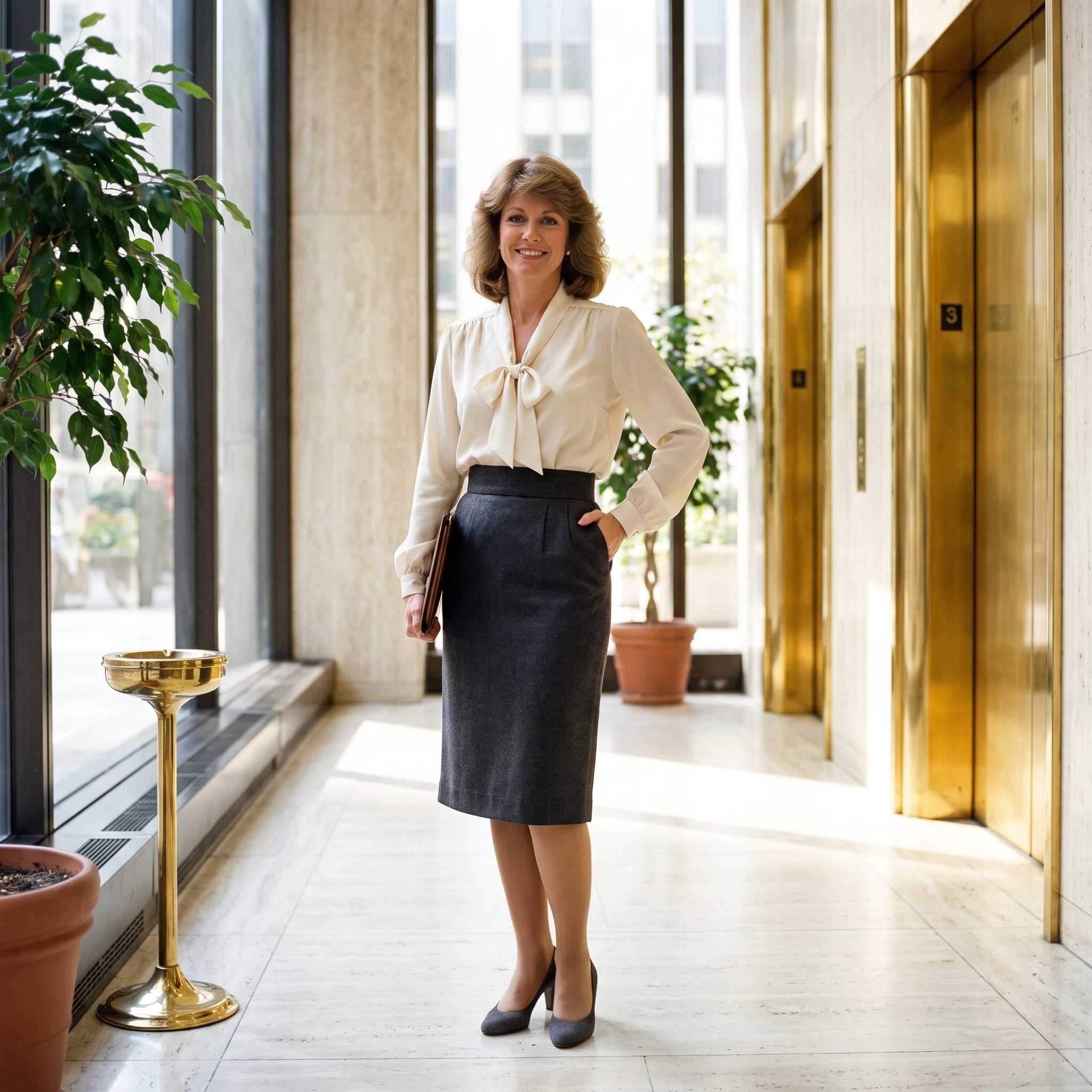
This one is really about where the two materials meet. Soft silk gathers at the throat and disappears cleanly into a high wool waistband, producing a sharp break at the natural waist.
The skirt then drops in a narrow vertical column toward the knee while the blouse supplies movement above it. Silk against wool, fluid against structured — the tension keeps the outfit from becoming either too soft or too severe.
2. The Double-Breasted Skirt Suit With Gold Buttons Doing the Talking
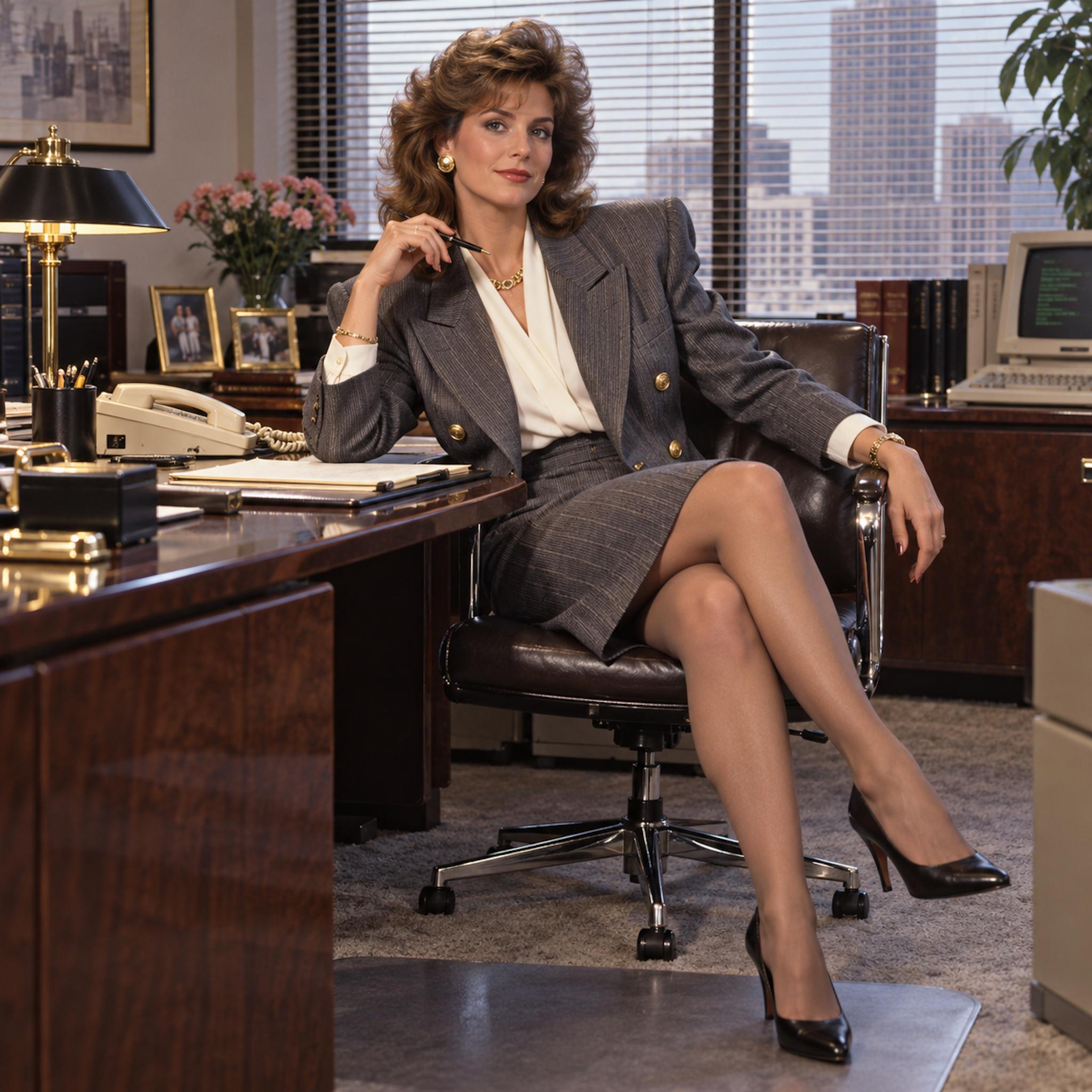
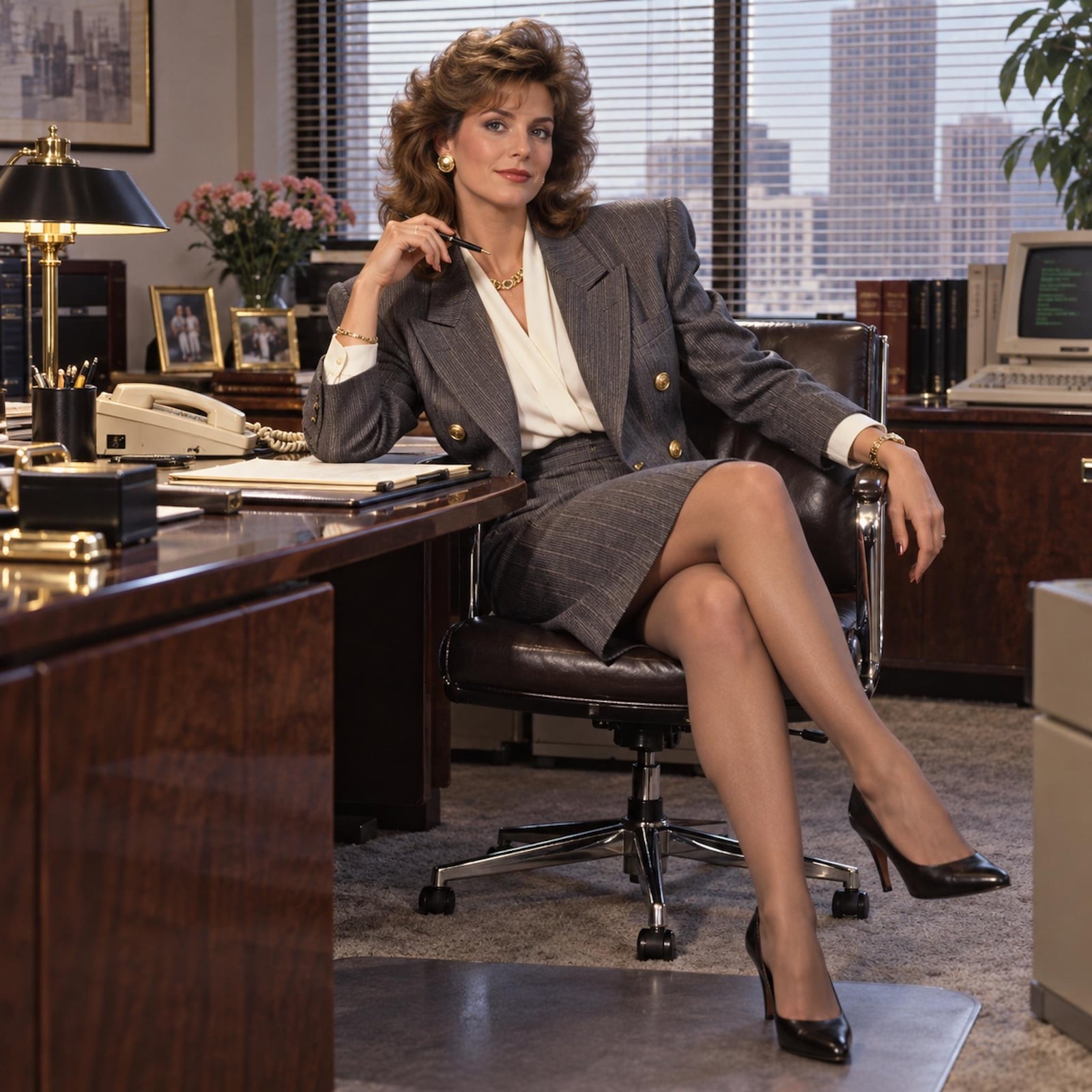
If one outfit could stand in for the entire power-dressing thesis, the double-breasted skirt suit would make a convincing case. Broad shoulder, fitted waist, straight skirt, bright hardware — the silhouette is assembled out of control and contrast.
Gold buttons matter more than they seem. Against charcoal or navy wool they become punctuation, drawing attention to the jacket’s closure and reinforcing its symmetry. Add a silk blouse, sheer hose and pumps and the pieces stop behaving like separate garments. They become a uniform.
1. The Monochrome Red Power Suit That Refused to Blend Into the Conference Room
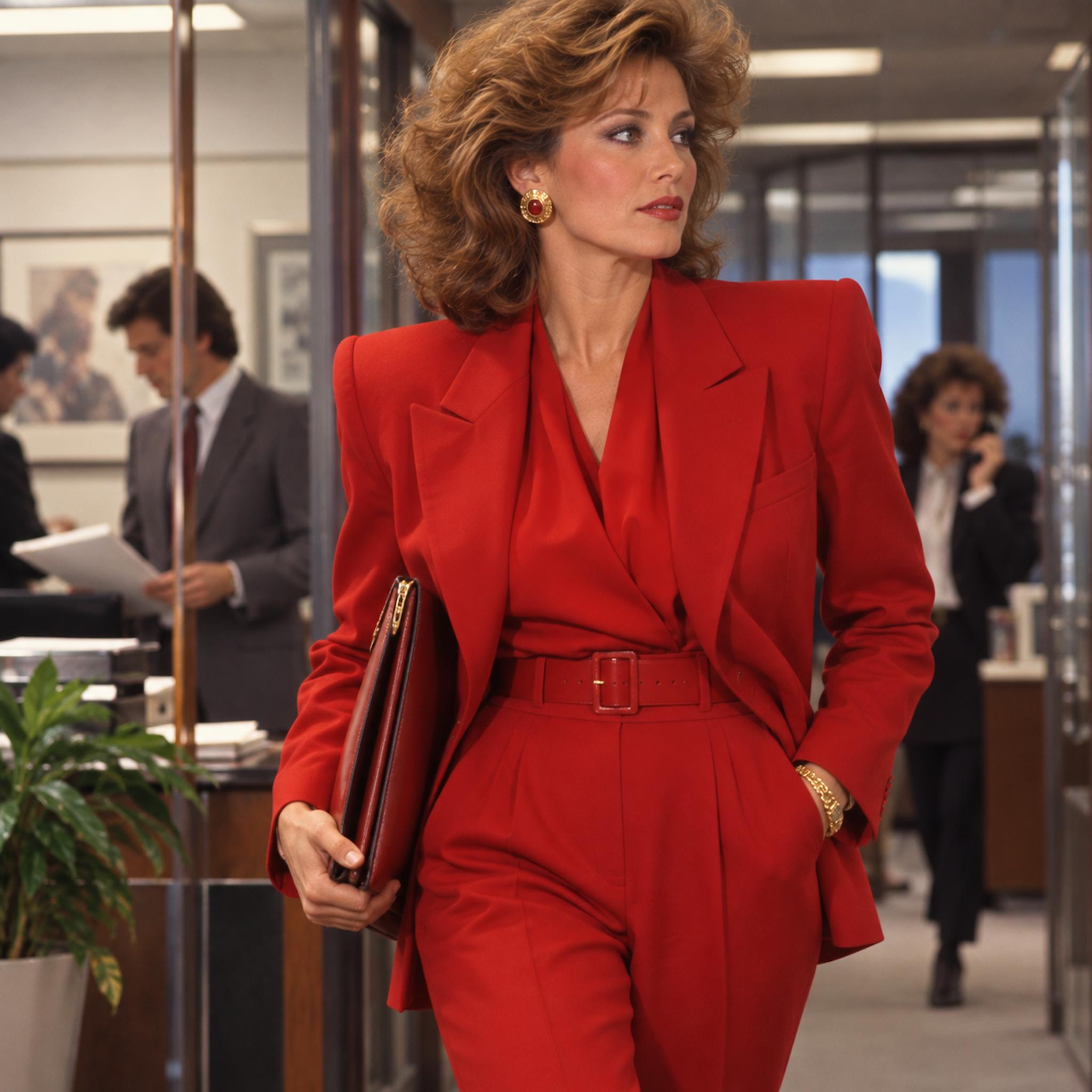
Charcoal explains power dressing. Red demonstrates what happened once the silhouette no longer needed to apologize for being noticed.
Jacket, blouse, belt and high-waisted trousers stay inside one saturated color family, so there is almost nowhere for the eye to escape. The interest has to come from cut: exaggerated shoulders, broad lapels, tucked waist, pleated trouser and the small flashes of gold at the ear and wrist. Monochrome makes every structural decision more obvious because color is no longer separating the pieces.
That is a useful place to leave the decade. Power dressing was never one jacket or one accessory. It was the cumulative effect of dozens of decisions about width, height, polish, movement and visibility. Sometimes authority arrived in charcoal wool and sensible pumps. Sometimes it arrived in red from shoulder pad to trouser crease and looked to the right as if somebody had just called its name.