
❤️ Would you like to save this?
You put it on and your posture changed before you even looked in the mirror. The shoulder-pad blazer didn’t ask you to be confident; it decided for you, restructuring your silhouette into something that took up space on purpose. Power dressing was more than a trend. It was a statement and a uniform. These are the 25 details, memories, and rituals that made the jacket one of the most loaded pieces of clothing a woman could own in the 1980s.
FYI, thanks to AI imagery software, we’re able to create very specific fashion and hairstyle examples to illustrate the points being made. In some cases, imagery is exaggerated to hammer home the point. Also, assume links that take you off the site are affiliate links such as links to Amazon. this means we may earn a commission if you buy something.
25. Wearing the Pinstripe Meant You Were Not Playing Around

Not the solid. Not the plaid. The pinstripe. Wearing the pinstripe to a meeting communicated something specific that you did not have to say out loud. Every woman in that room understood exactly what it meant.
The navy pinstripe shoulder-pad blazer existed at the intersection of Wall Street and a very specific kind of personal ambition. It was a uniform that happened to be yours. You bought it at Lerner or Ann Taylor or sometimes a proper department store with a real tailor’s section, and you kept it for years because nothing else ever quite hit the same note.
24. The Oversized Blazer You Wore to an Interview and Got the Job In
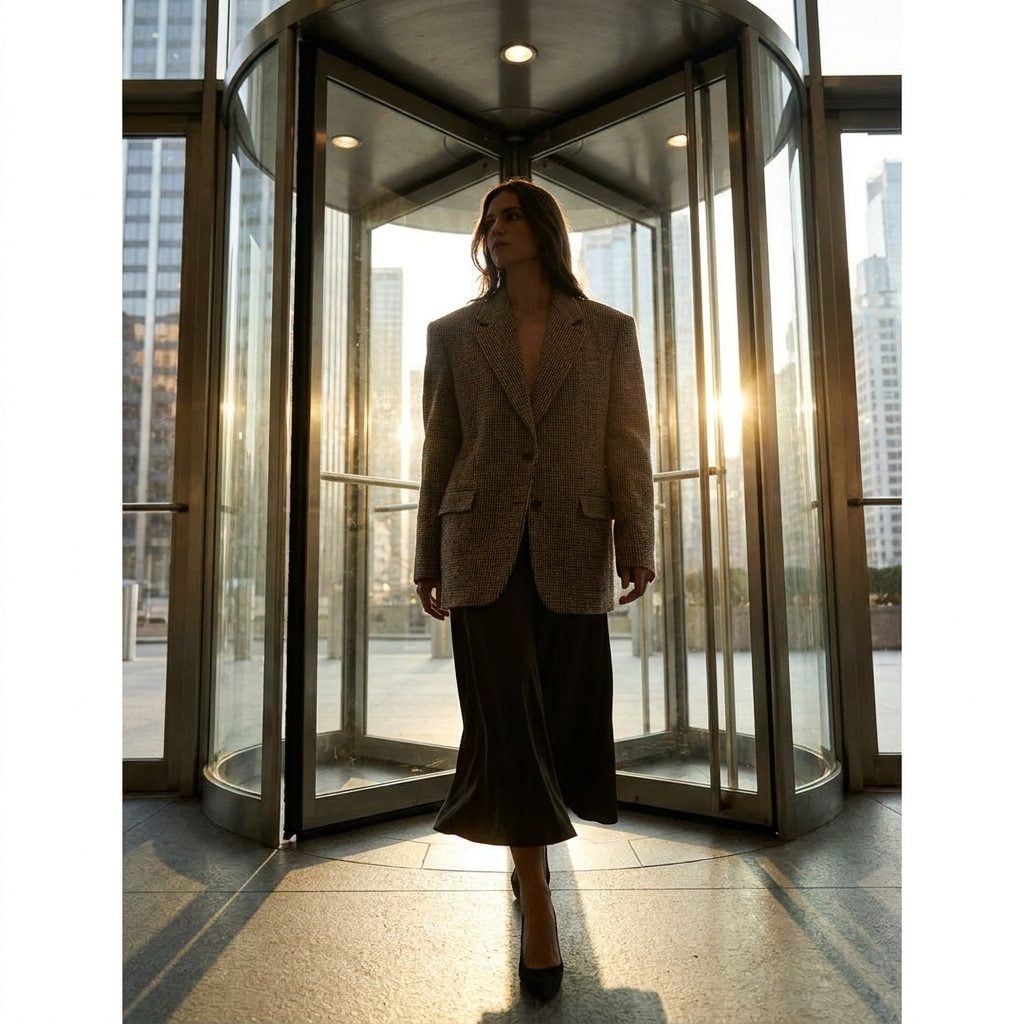
It was a size too big and you bought it anyway because the shoulders were right. The body of it hung a little loose, the sleeves came a fraction past your wrist, and none of that mattered because from the front, in the mirror, something about the proportions worked in a way that a perfectly fitted version never quite did.
You wore it to the interview. You got the job. The blazer went back into the closet and for a while you were almost superstitious about touching it.
23. The Matching Blazer-and-Skirt Set That Was Its Own Kind of Armor
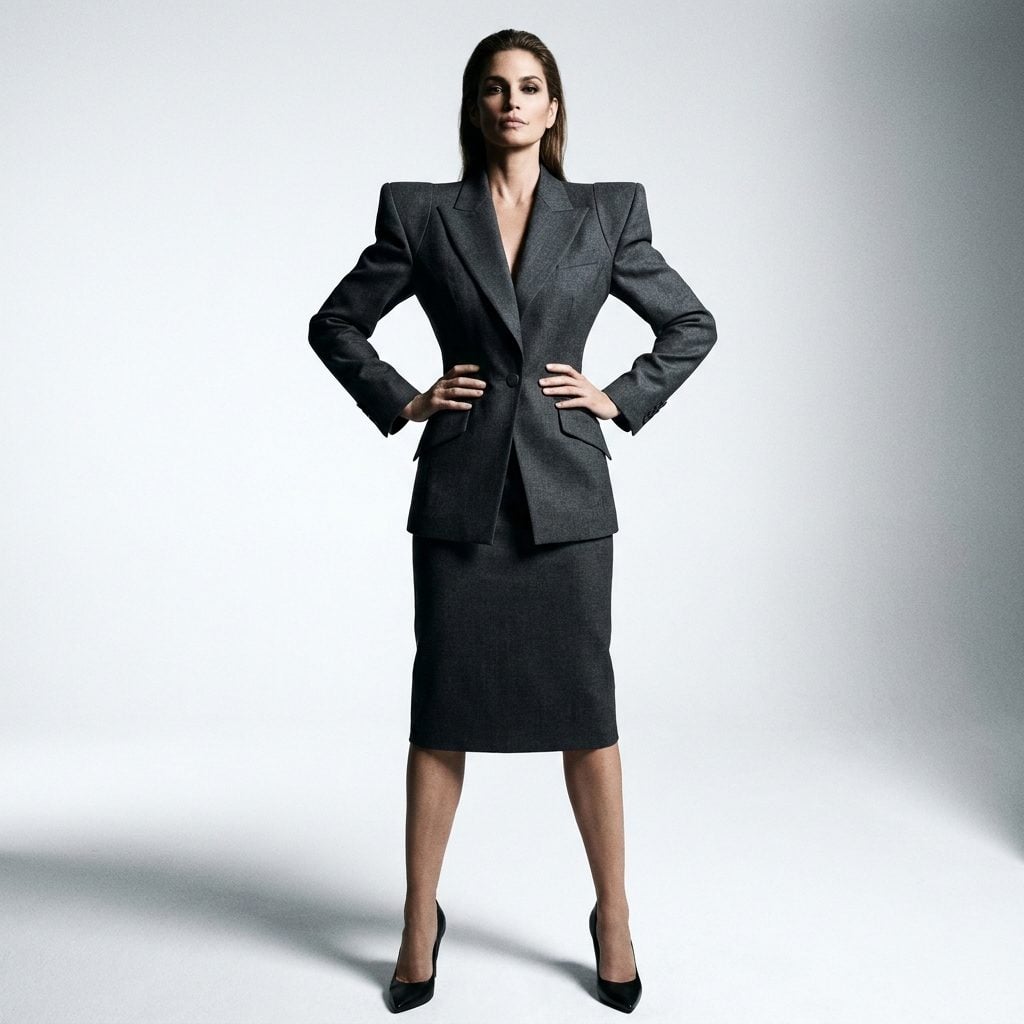
The matching set operated by different rules than the blazer alone. When the blazer and skirt were cut from the exact same fabric, the outfit looked complete before a single accessory was added. There was no coordination left to solve; the complete suit arrived with its own answer.
Stores like Petite Sophisticate and Casual Corner built entire sections around these sets. The burgundy sets. The forest green ones. The heather-gray versions. You bought the set and you wore it together for formal occasions and then slowly you started mixing the pieces with other things, and the blazer went one direction and the skirt went another, and both of them had long careers.
22. The Costume Jewelry Brooch Pinned Exactly on the Lapel
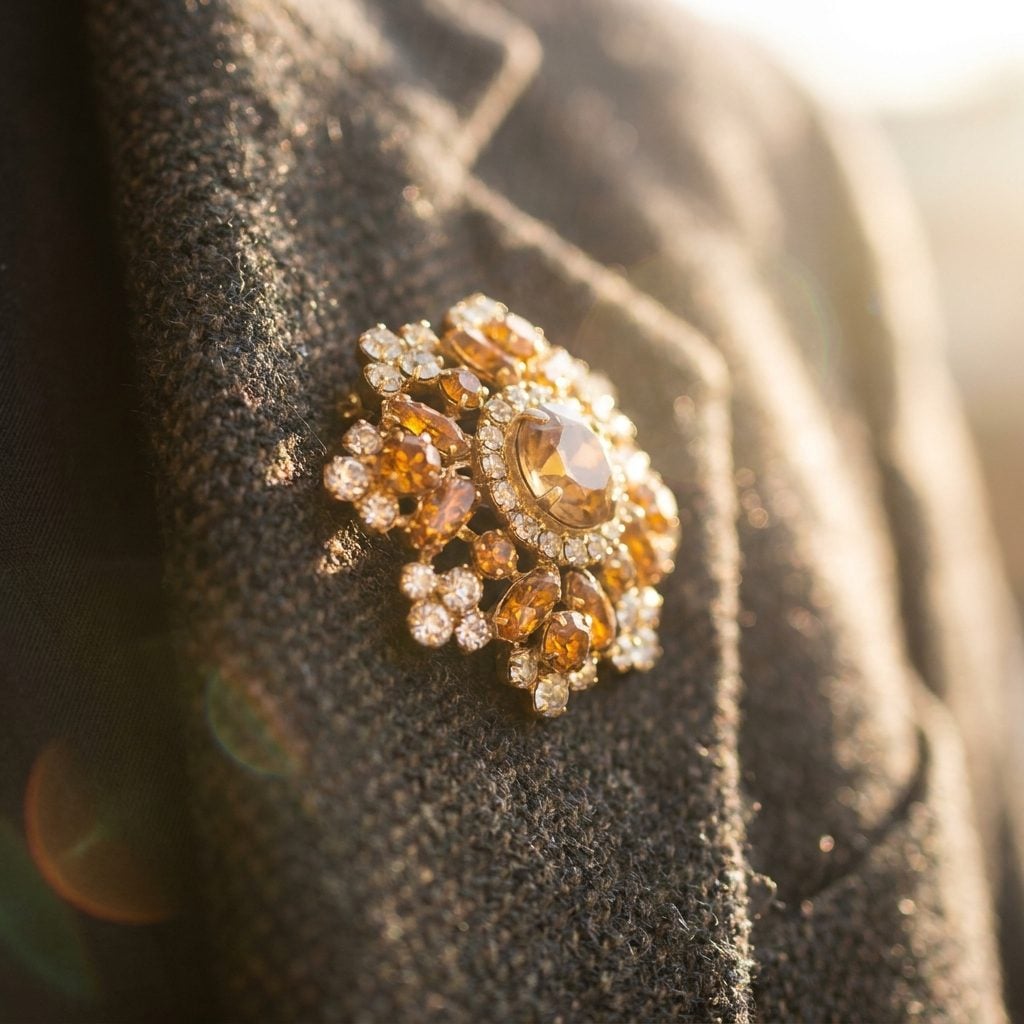
The brooch was not an afterthought. It was the last decision, the one you made standing in front of the mirror with the blazer already on, running through the options laid out on the dresser top. The starburst. The enamel flower. The twisted gold knot. Each one changed the character of the whole outfit.
Pinning it was also a small skill. Too high on the lapel and it disappeared into the collar. Too low and it pulled the fabric. The best placement depended on the size of the brooch, the width of the lapel, and the weight of the fabric. Once you found the spot that sat flat without pulling, your hands went there automatically every time.
21. Wire Hangers Never Held the Shoulders Up
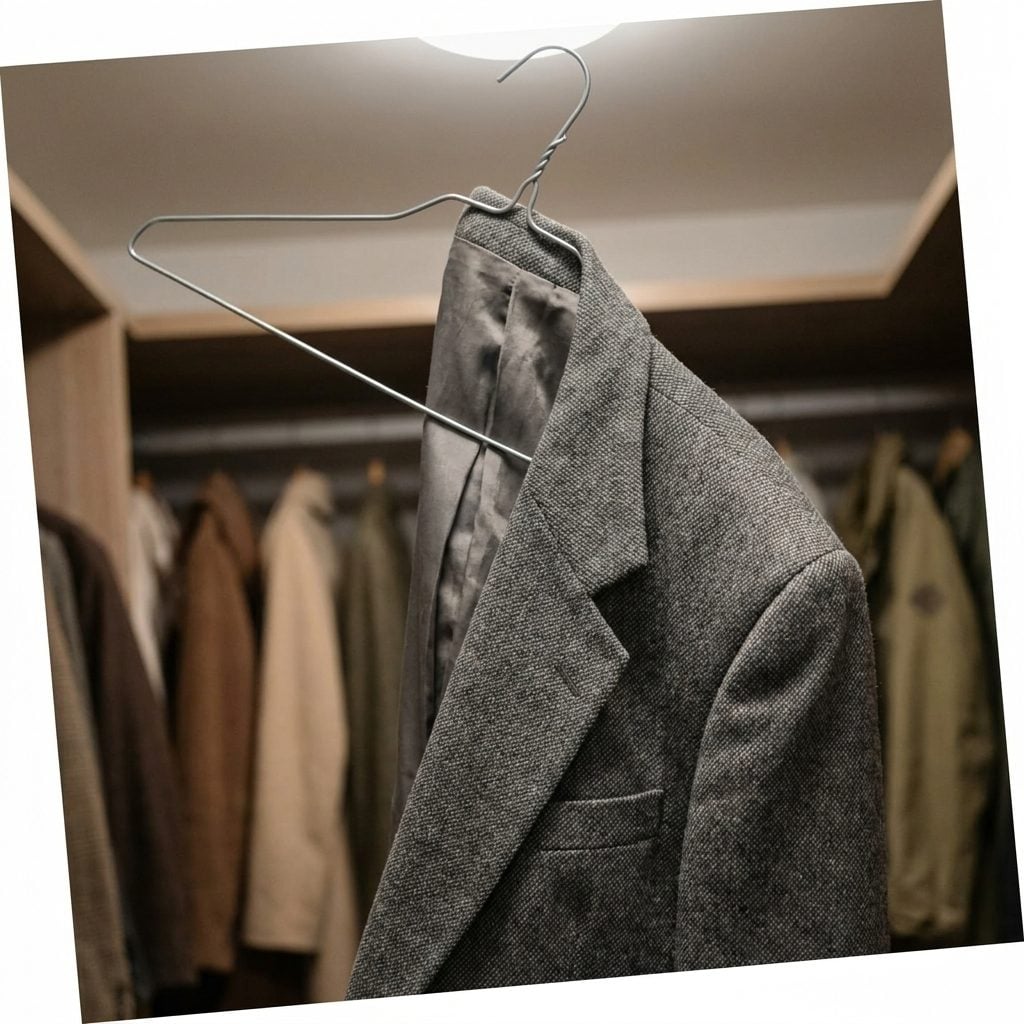
Wire hangers were not built for these things. The shoulders would slide off, the whole blazer would crumple to one side, and you would come back the next morning to find it half on the closet floor looking like it had given up. Broad wooden and padded hangers were better suited to the weight and width of a shoulder-pad blazer.
This was not a garment that tolerated being stored carelessly. It needed proper support, enough closet space, and maybe even a dedicated hook on the back of the office door. The blazer had opinions about where it lived.
20. The Blazer You Bought at a Department Store Sale and Wore for Fifteen Years
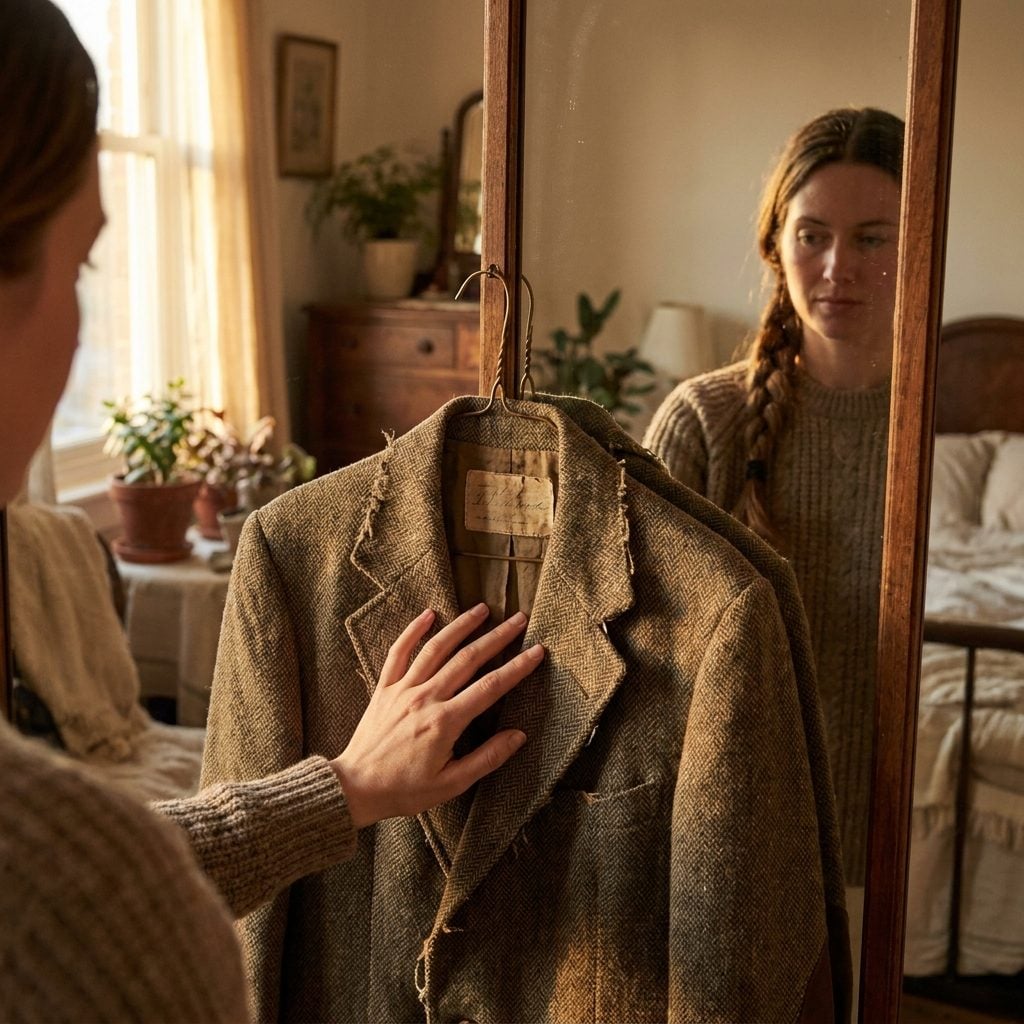
It came off the sale rack at Nordstrom or Dillard’s or Macy’s, marked down twice, and you still had to think about it for a minute before you bought it. Camel wool. Real buttons. Lining that felt substantial. You wore it the following Monday and kept wearing it until the decade changed and then kept wearing it anyway.
Some blazers were events. This one was furniture. It became part of the routine of getting dressed, the thing you reached for when nothing else was quite right. The shoulders kept their shape. The color worked with everything. Fifteen years later it still had the same effect it had the first morning you put it on, and that is a specific kind of reliability that has nothing to do with fashion.
19. Weekends, It Lived on the Back of the Dining Chair
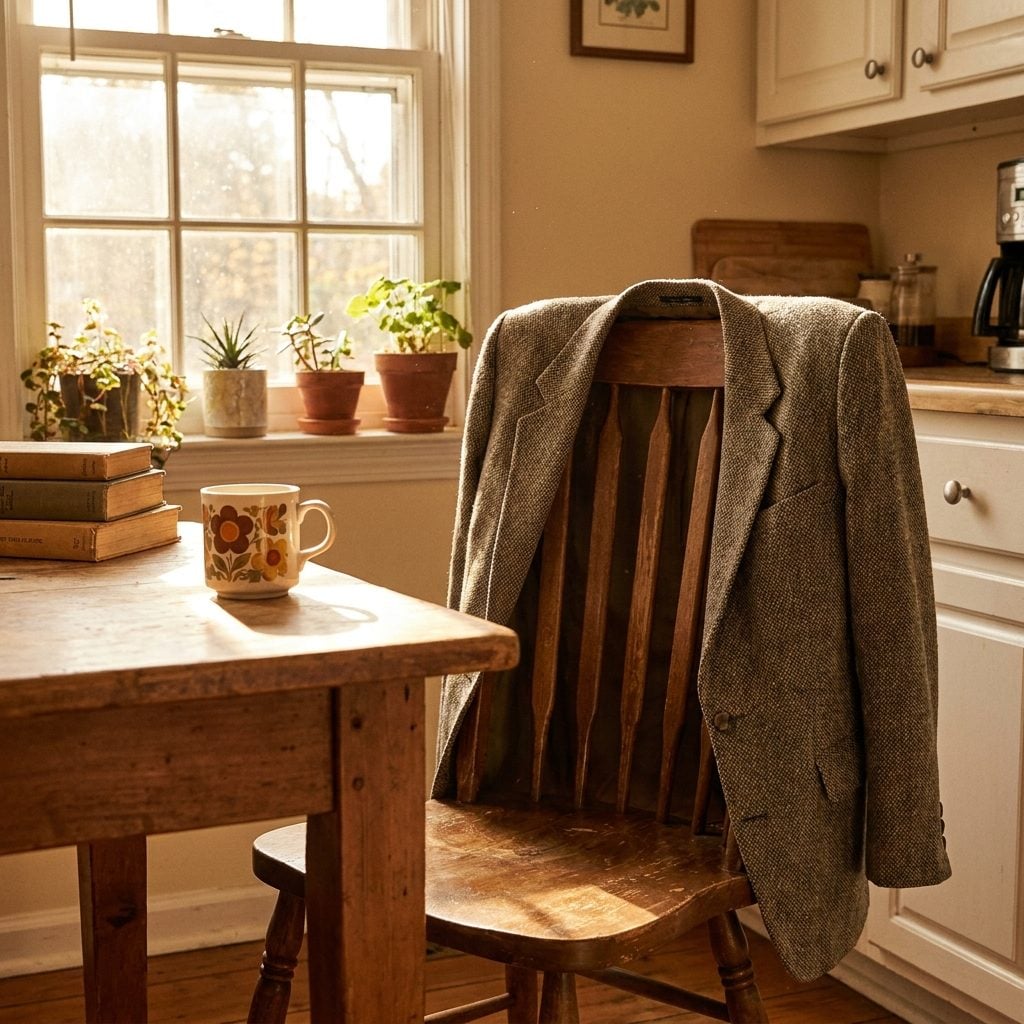
Friday it went on the back of the dining chair when you got home. Saturday morning you put it on over a T-shirt to read the paper and drink coffee because wearing it felt like wearing the best version of a housecoat ever made. By Sunday afternoon it was still there, slightly warm from the afternoon light, ready for Monday.
This was its off-duty life. Not the closet. Not the hanger. The chair. Plenty of homes had a chair like this, and plenty of those chairs had a blazer on them. The pairing was entirely domestic, entirely practical, and somehow exactly right.
18. The Power Handshake You Practiced Before the Meeting

The shoulder-pad blazer didn’t just change what you wore. It changed how you walked into a room. There was a specific posture that came with it: shoulders already squared for you, spine automatically straighter, the first impression already established before you opened your mouth.
You practiced the handshake at home. Firm, direct, no apology in it. The blazer made that handshake feel possible, as though the clothes were doing half the negotiating.
17. Belting It Turned One Blazer Into a Whole Outfit
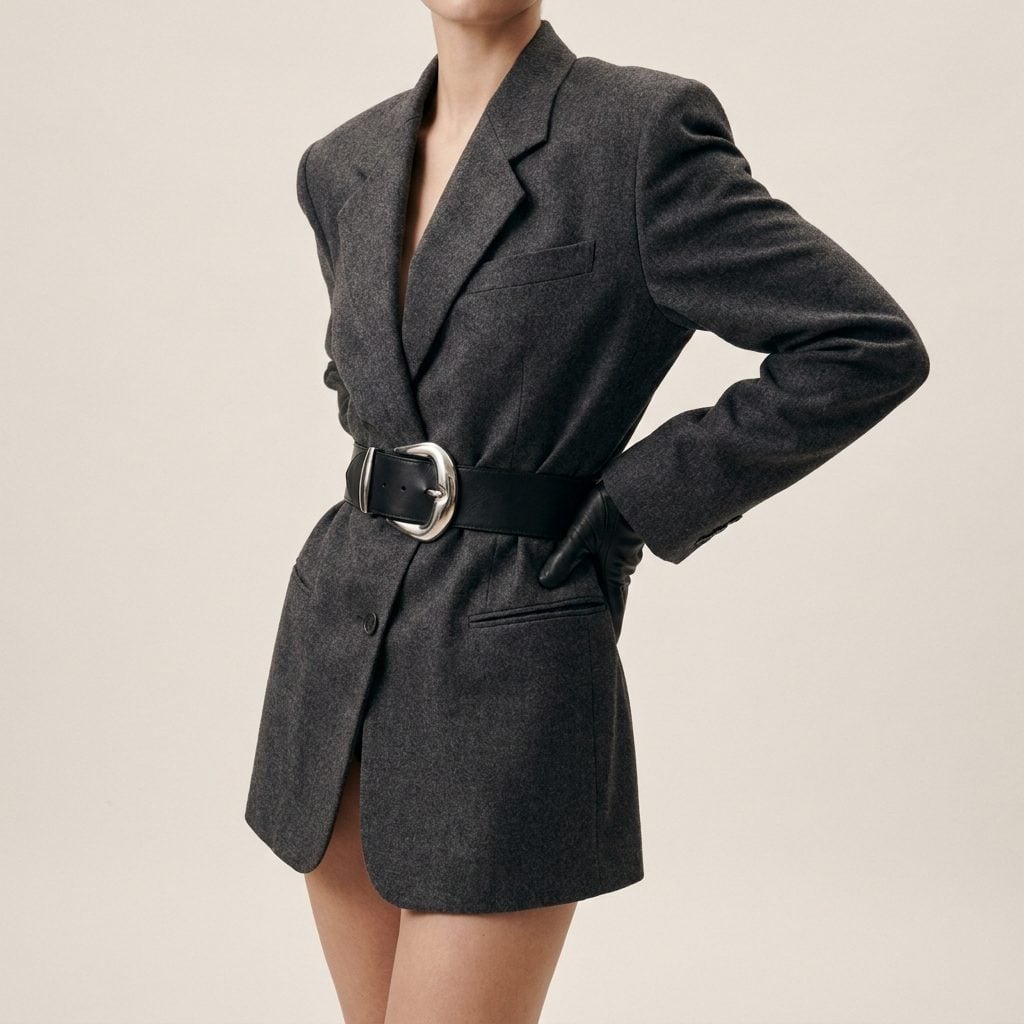
Belting a blazer was not a minor styling adjustment. You were not borrowing from the men’s department for comfort, you were taking the whole shape and making it yours.
The wide belt, usually patent leather, usually in a color that had no business being near the blazer, pulled everything in at the exact point that made the shoulder width look intentional rather than overwhelming. One piece became a whole outfit. The belt gave the broad shoulder line a clear counterpoint at the waist.
16. The Satin Blouse in Champagne or Ice Pink Tucked Underneath Everything
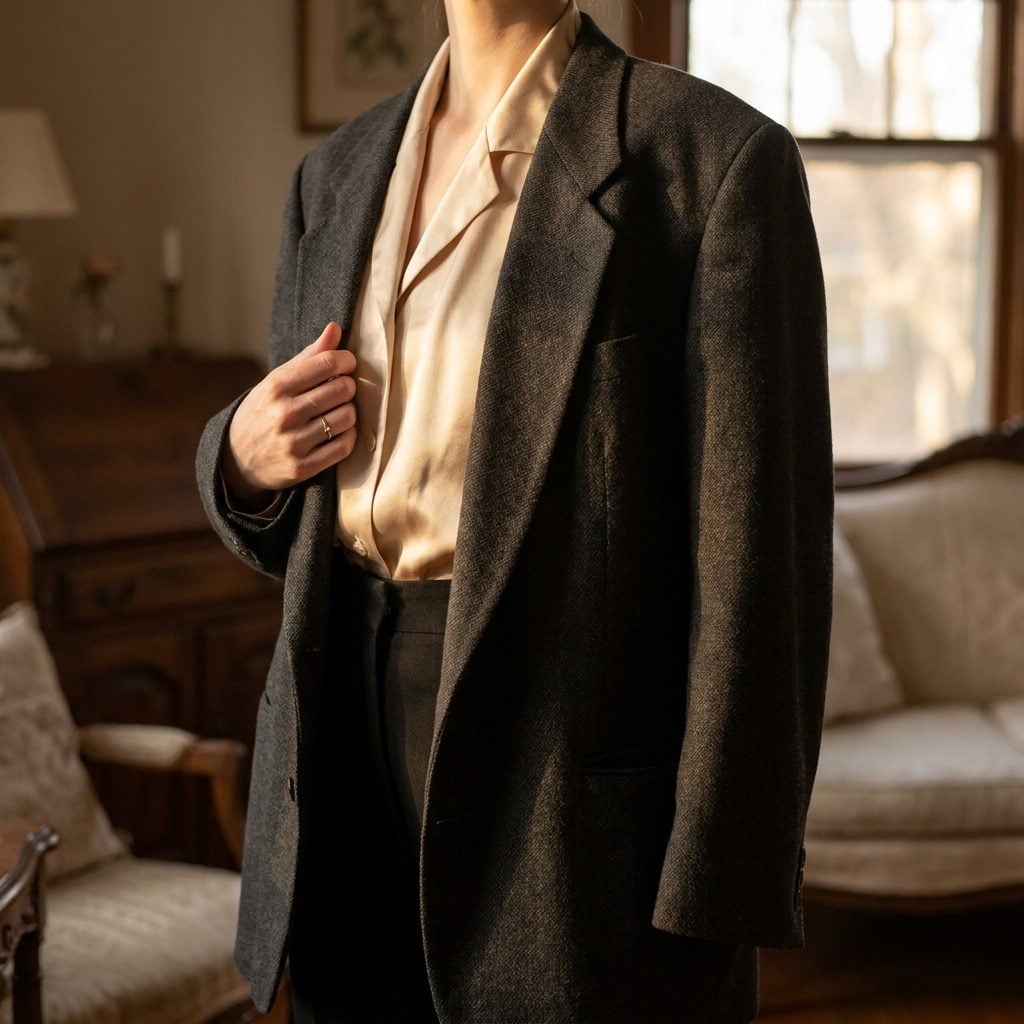
The satin blouse existed in a register the blazer could not reach alone. The matte structure of the blazer and the reflective surface of the blouse worked in opposite ways, which is exactly why the combination held together.
Champagne was the classic. Ice pink was for days when you felt slightly more optimistic. Either way, the bow at the neck was large and the fabric caught the fluorescent office light in a way that was more interesting than it had any right to be.
15. The Moment You Realized You Could Wear It With Jeans and It Still Worked

By the later 1980s, pairing a blazer with jeans had changed the entire math of the jacket. You did not need a boardroom to wear it. You did not need heels or a pencil skirt or a bow-neck blouse. You just needed jeans, specifically dark stonewash, specifically high-waisted, and suddenly the blazer became the most versatile piece you owned.
14. The Red One That Somebody at the Office Always Had the Nerve to Wear
Every office had one. One woman who wore the red blazer on a regular Tuesday. Not a presentation day, not a Friday, just a regular Tuesday. And the whole floor noticed.
The red shoulder-pad blazer was a specific kind of confidence that had nothing to do with rank. It was purely sartorial. A red double-breasted blazer became the visual center of the office, and nobody missed the effect. The women who wore it regularly were never unaware of the effect. That was the entire point.
13. The Gold Button Detail That Made Everything Look More Official
❤️ Would you like to save this?
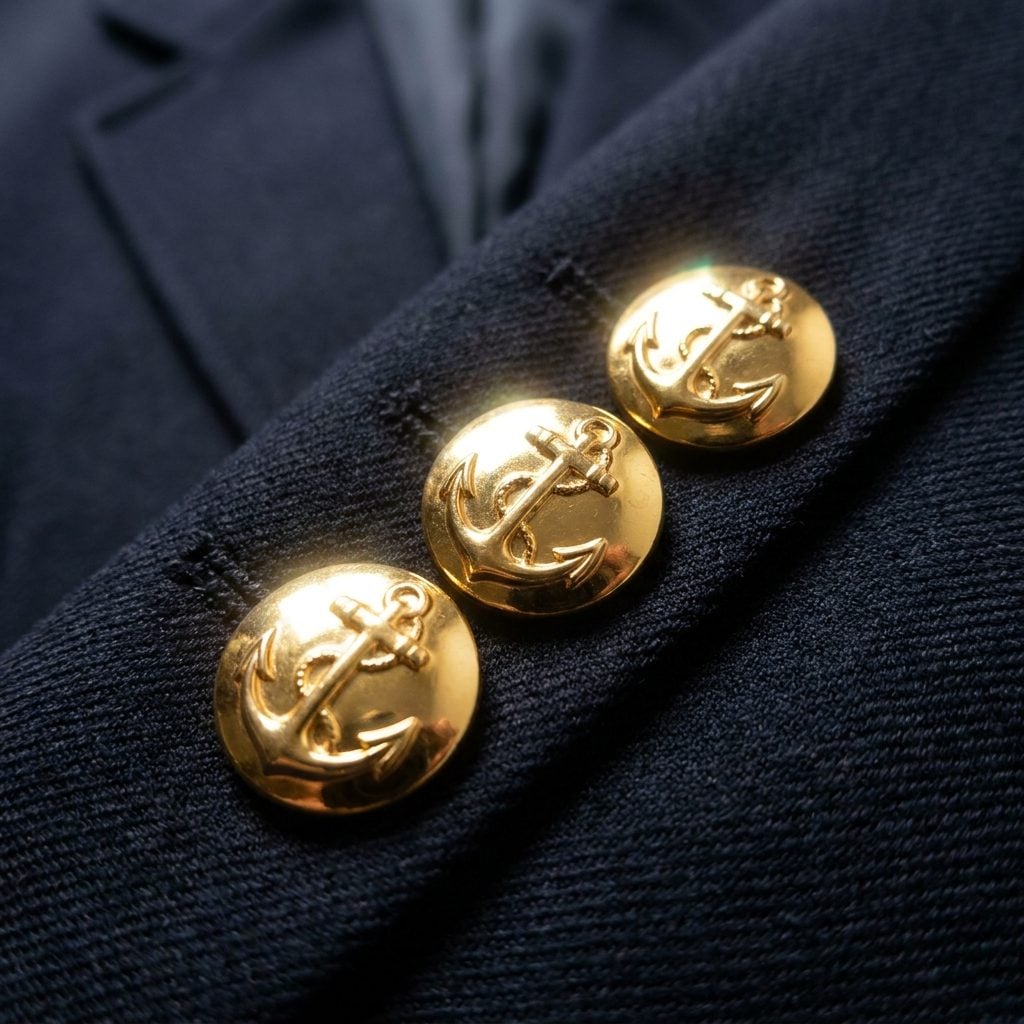
The gold buttons did more than decorate the jacket. They made it look official. A navy blazer with plain buttons was a blazer. A navy blazer with large polished gold buttons was a statement, and in the 1980s the distinction mattered enormously.
Double-breasted was the preferred configuration because it doubled the number of buttons visible, which amplified the military and club-blazer associations. The effect was immediate: more hardware, more visual formality. Plenty of women bought the navy double-breasted blazer for exactly that reason.
12. Taking It Off at the End of the Day Felt Like Putting Down Something Heavy

There was a ritual at the end of the day. You got home, set down your bag, and shrugged off the blazer. The shoulders dropped. Your actual shoulders dropped. Some tension that had been held in your upper body for nine hours finally released.
The blazer had been carrying something for you all day, a shape, a posture, an argument about who you were in that room. When you hung it up, you were allowed to be slightly smaller again. Not diminished. Just off the clock.
11. Plaid Said You Were Serious and Had Opinions About It
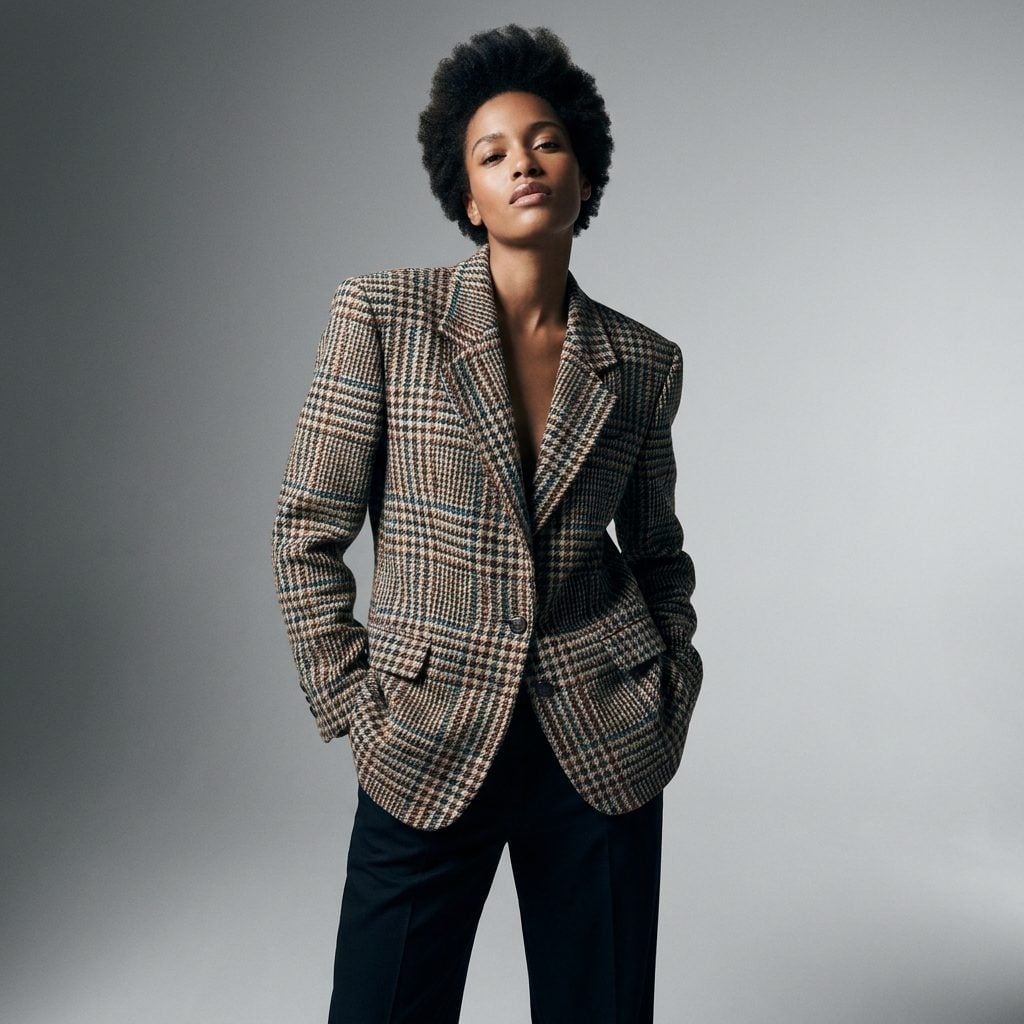
The solid-colored blazer said you were serious. The plaid one said you were serious and you had opinions about it. Burgundy and black tartan, or that particular green-and-navy windowpane check that showed up everywhere in ’87 and ’88, worn over a turtleneck because tucking in a blouse felt like too much effort when the blazer was already doing all the work.
There was something about the pattern that made the broad shoulder line even more visible. You weren’t wearing a blazer. The pattern made the blazer feel larger, louder, and less anonymous.
10. The Shoulder Pad You Stitched Back In Yourself Because It Migrated
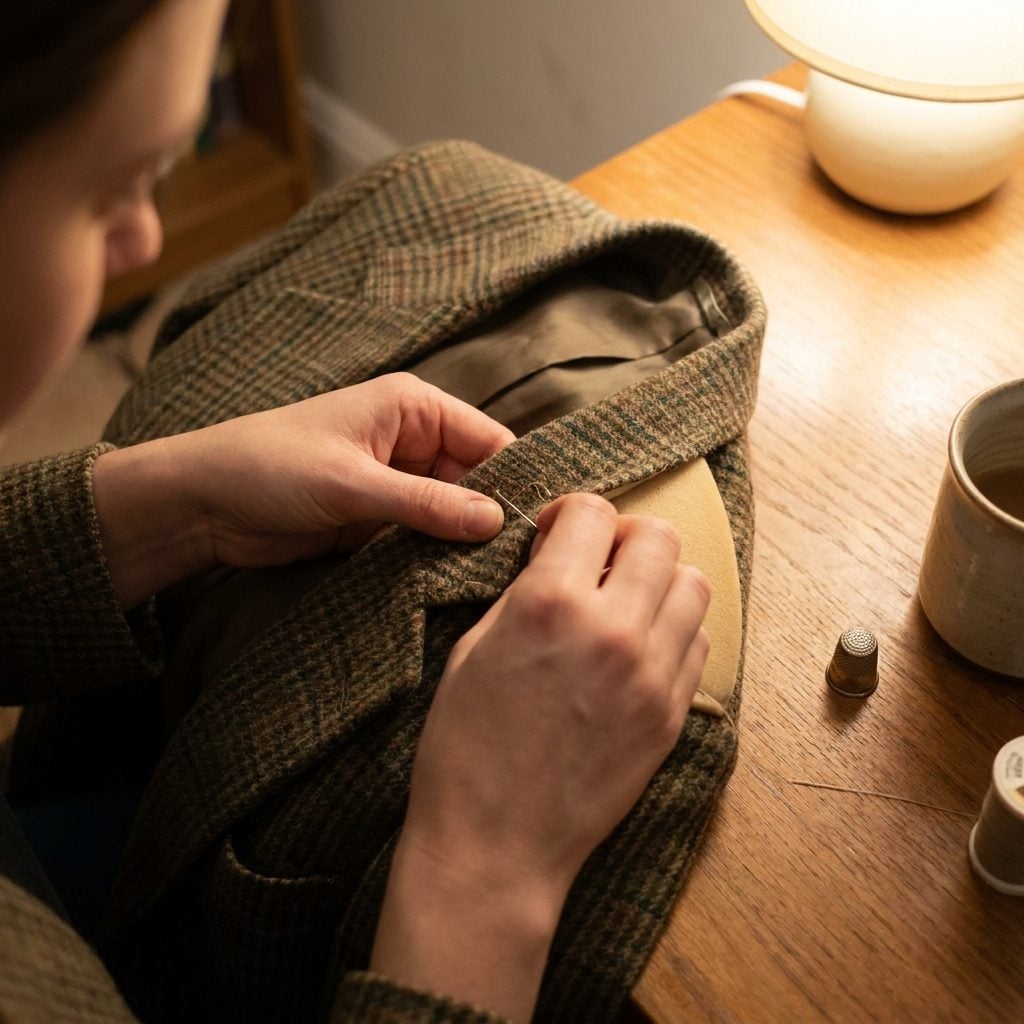
It always happened on the left side. You’d pull the blazer on and one shoulder would be where it was supposed to be and the other would have shifted halfway down your back, doing nothing for anyone. You’d find the pad bunched at the seam like a small animal trying to escape.
So you sewed it back. Probably not neatly. Probably with thread that didn’t quite match. And then you wore it anyway, because the blazer was the blazer and a little crooked stitching wasn’t going to stop you from walking into that 9 a.m. meeting like you owned the building.
9. The One You Found at a Consignment Shop and Never Told Anyone
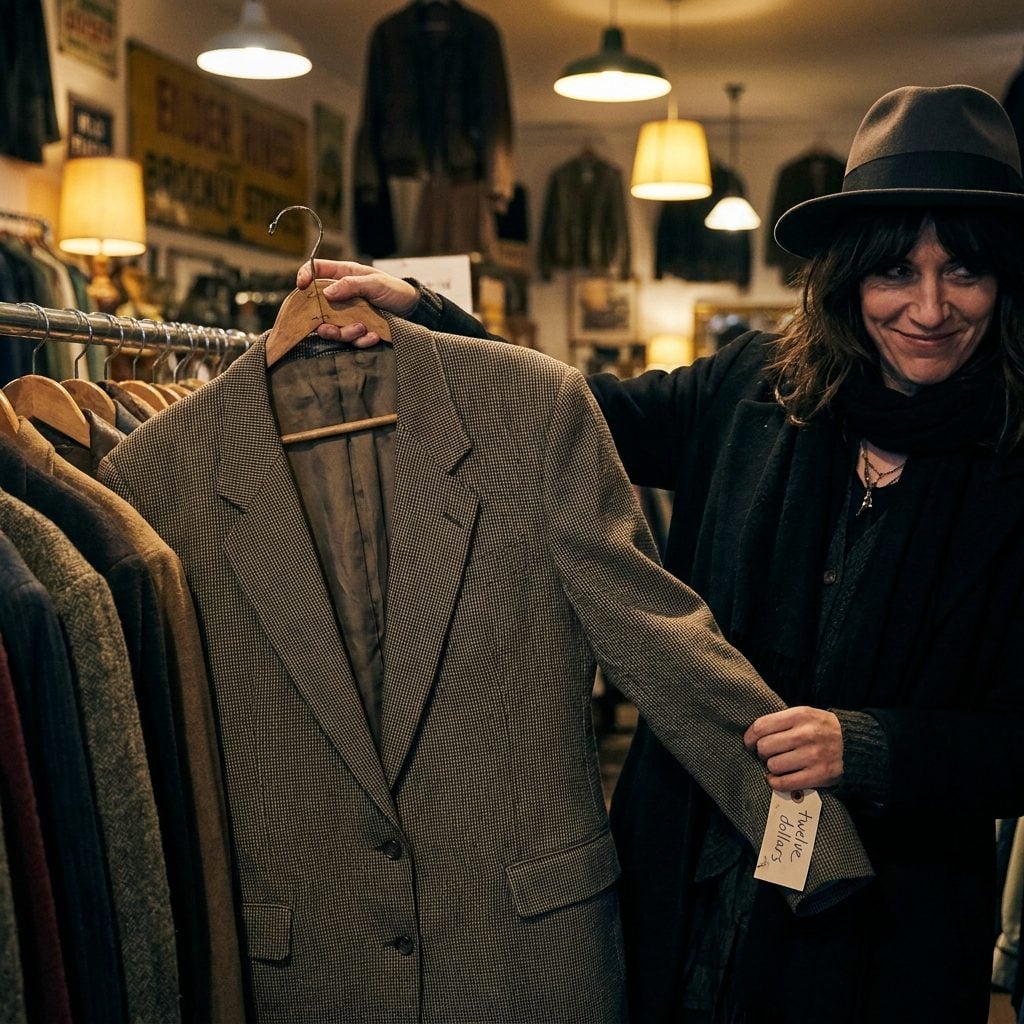
It was cheap enough to feel improbable, hidden at the back of the rack between a ski jacket and someone’s old trench. The label was still intact: Jones New York, Liz Claiborne, or occasionally something you’d never heard of that fit better than all the rest.
You didn’t tell anyone where it came from. Not because you were embarrassed, but because the find felt private. That blazer had a history you’d never know and a shoulder line that was absolutely perfect, and some things you just keep to yourself.
8. Color-Blocked and Confident, Just the One Time
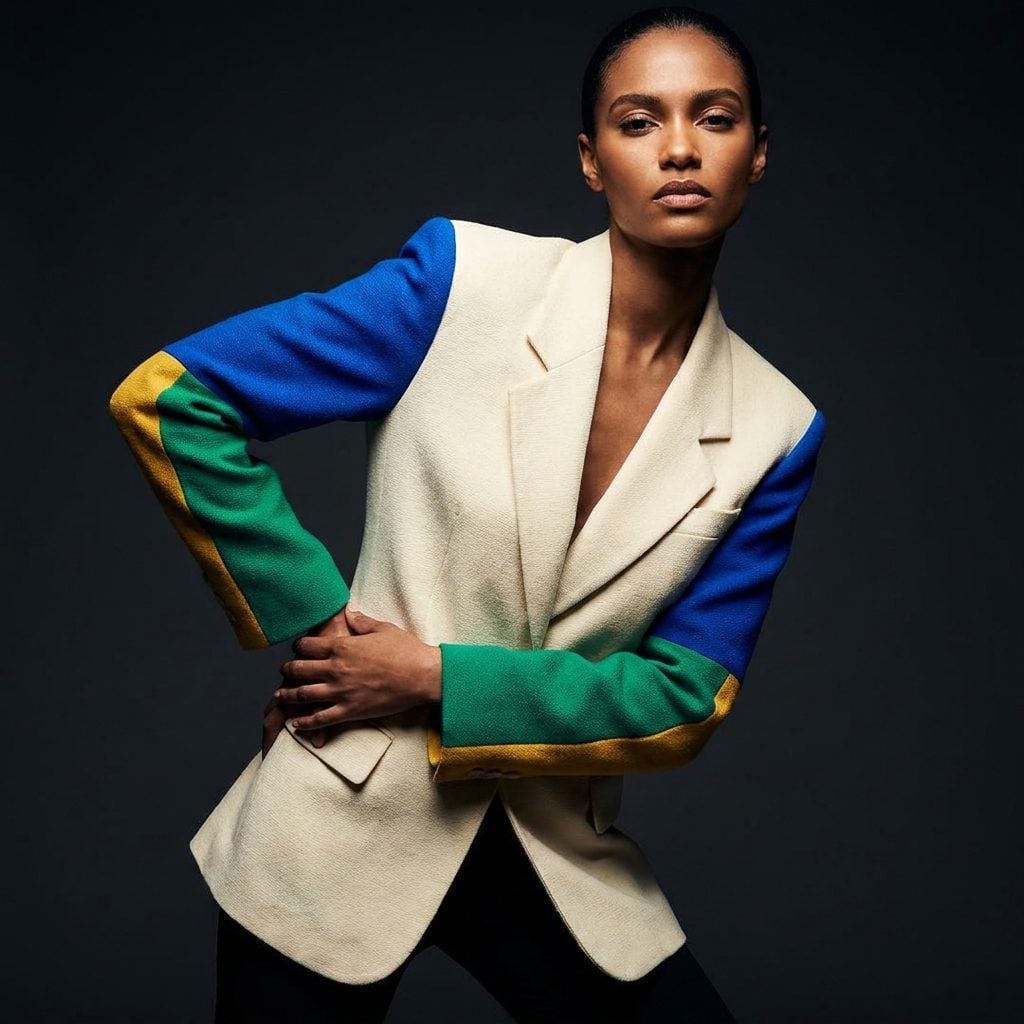
Most of them were solid. A few were plaid. And then there was the color-blocked one, body in winter white or cream, sleeves in something that had no business being that cobalt or that coral, and a lapel detail that tied the two together like the designer had made one very confident decision and committed completely.
Wearing it felt like having a distinct personality. Which, in an office full of navy and charcoal, was sometimes the whole point.
7. The Liz Claiborne Tag You Checked Before You Even Tried It On
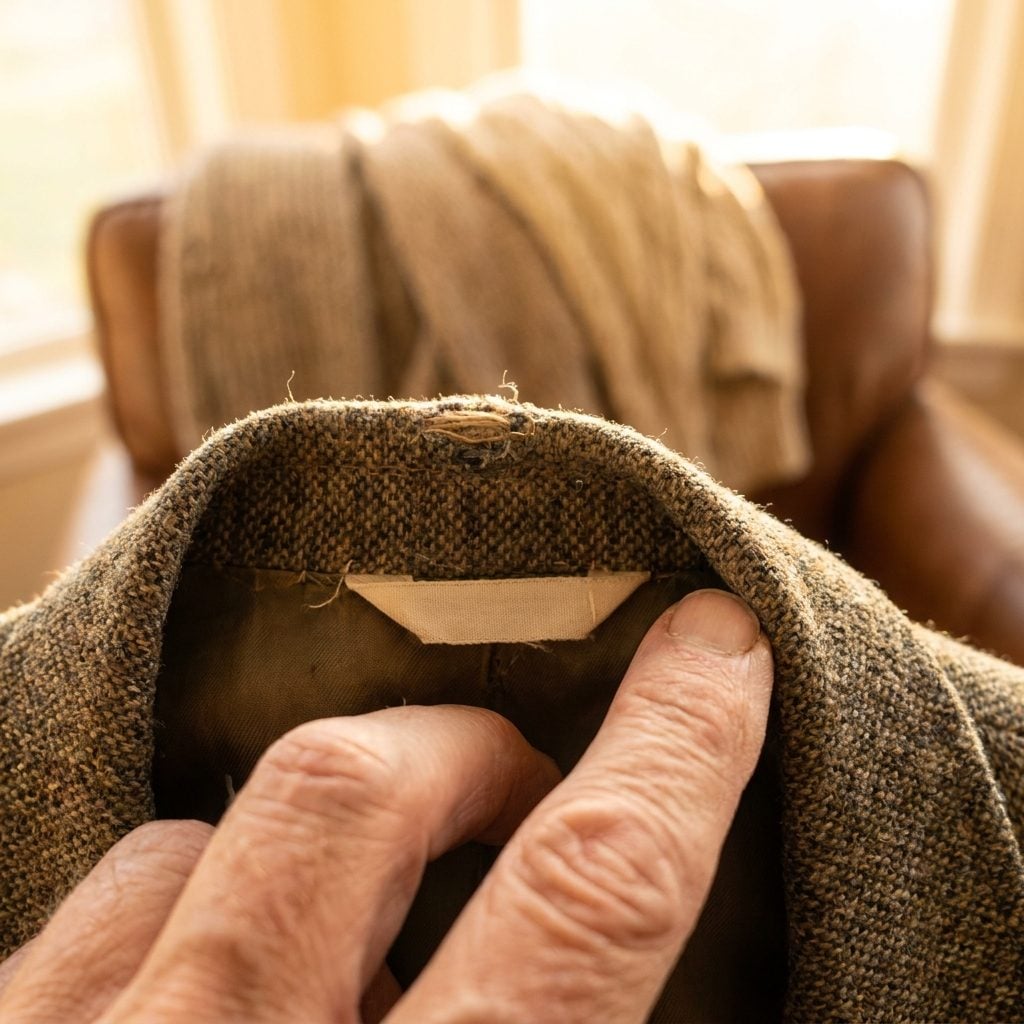
Before you looked at the cut, before you even checked the size, you flipped to the tag. Liz Claiborne meant something specific in the 1980s: it suggested a practical fit, substantial lining, and clothes designed around the working woman rather than only the sketch.
The triangle logo on that tag was a shortcut to trust. You’d learned to read it the way you learned to read anything that mattered.
6. The Matching Skirt You Kept Just in Case You Ever Needed a Full Suit Again
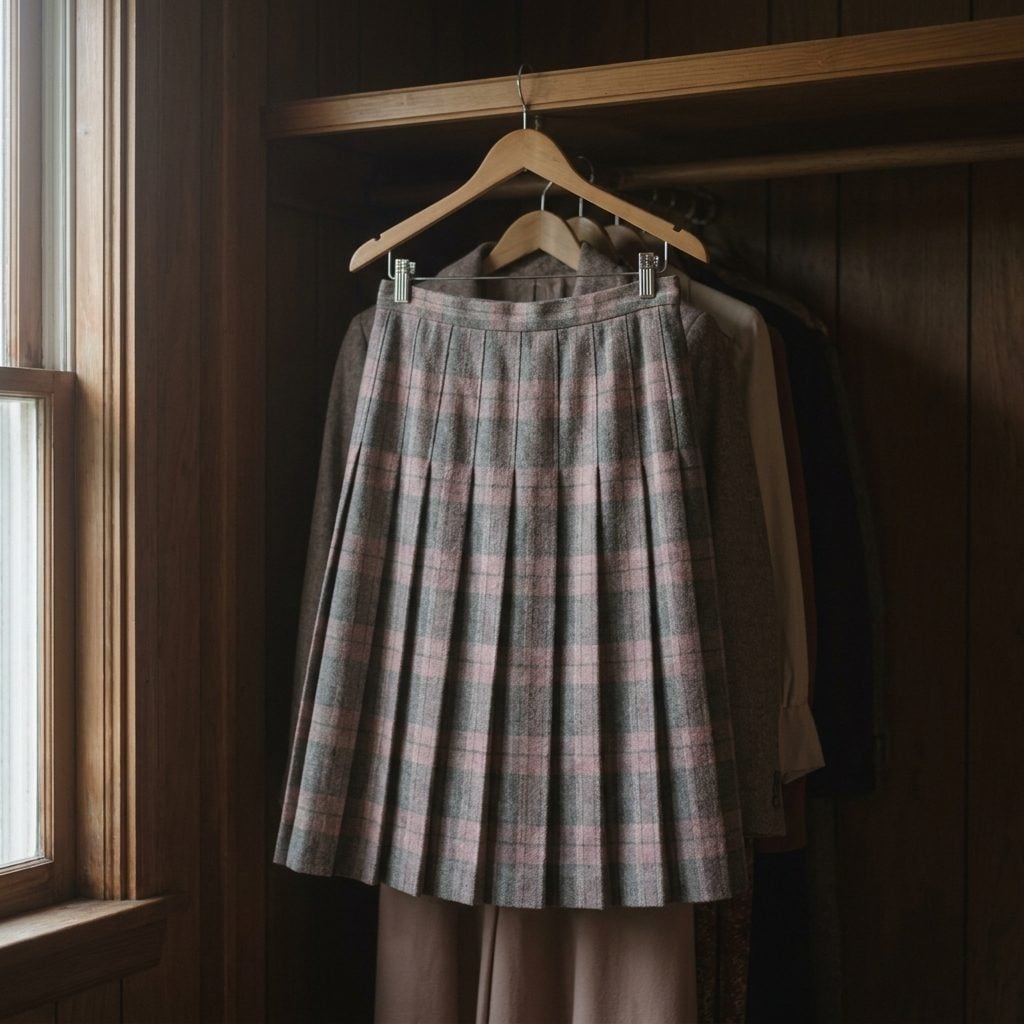
The skirt lived a much quieter life than the blazer did. Once the blazer started getting worn with jeans, with turtlenecks, with anything and everything, the skirt got left behind in the closet, still on its own hanger, still pressed. You didn’t get rid of it. You just stopped reaching for it.
Then some formal occasion would come along, an awards dinner, a client presentation that mattered more than the usual ones, and you’d go looking for it specifically. The skirt existed for exactly those days: rare, unglamorous insurance against the one time a blazer alone wouldn’t be enough.
5. The Moment You Realized the Blazer Wasn’t Borrowing From Men, It Was Taking

There was a whole conversation happening in fashion theory about whether women in the 1980s were simply mimicking the male power uniform. That conversation missed the point entirely. Women’s designers altered the established menswear formula through stronger shoulder width, more waist shaping, skirts, color, and different proportions. When women got hold of the silhouette and pushed those shoulders out another two inches, something shifted. It stopped being an imitation and became a distinctly female workplace signal.
The blazer wasn’t saying “I want to be taken seriously the way men are.” It was saying something shorter and less negotiable than that. Women who wore it in boardrooms, courtrooms, and newsrooms in the mid-1980s understood the difference. The shoulder pad was the exclamation point on a sentence that had been building for years.
4. Three Months a Year, It Lived in Dry-Cleaning Purgatory
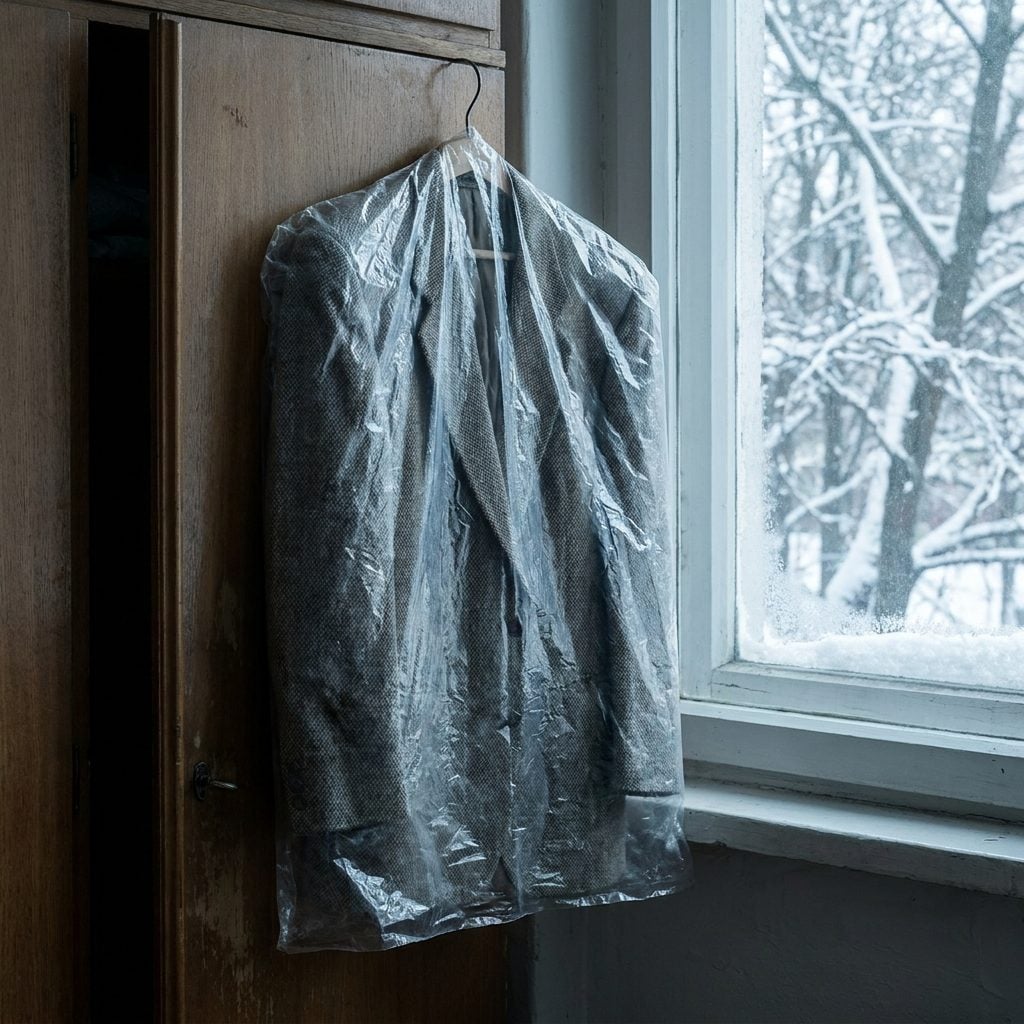
Every woman who owned a genuinely good shoulder-pad blazer also owned a relationship with her dry cleaner that bordered on the personal. A structured wool blazer usually could not safely be washed at home; the canvas interlining, padded shoulders, and carefully pressed lapels might not survive it. So it went in after a heavy week of wearing and it sat there for weeks, sometimes months, because picking it up required both time and the exact right amount of cash on hand.
Getting it back was a small occasion. Peeling away the plastic, shaking out the shoulders until they sat right again, hanging it somewhere visible so you could look at it. That blazer asked for maintenance and it gave back in return. The dry-clean-only tag felt like a rule worth following.
3. The Silk Scarf Tied at the Neck Like You Were About to Board a Concorde

The scarf did more work than the blazer. A rectangle of printed silk from the Macy’s accessories counter, knotted into whatever shape you’d rehearsed in the bathroom mirror the night before—and just like that, the whole outfit read intentional.
Paisley. Foulard. The horse-bit chain print everyone pretended wasn’t a knockoff of the real thing. You folded it into a triangle, wrapped it around, tied a soft bow at the throat, tucked the ends under the lapels, and the blazer shifted from plain office wear to a fully composed look.
2. The Shoulder Pad You Could Feel Through the Fabric When Someone Hugged You
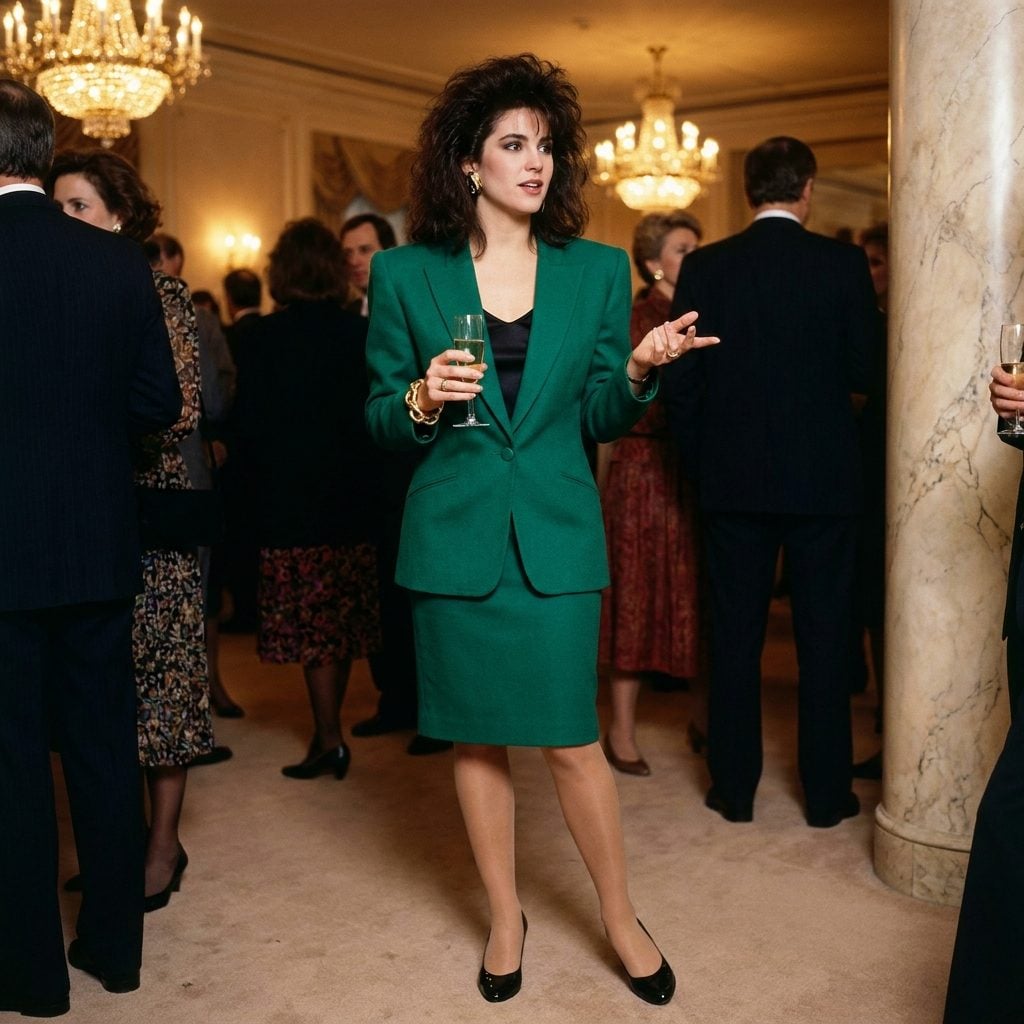
You knew the exact shape of them—foam wedges sewn into the shoulder seam, giving the blazer its whole geometry whether your actual shoulders played along or not. Someone hugged you hello and their hand landed on the pad instead of your body, and there was this half-second recalibration where both of you agreed to pretend that was fine.
The pads were the point. They squared the frame and made the waist appear narrower by contrast. The social oddity was simpler: during a hug, the first thing another person touched was often foam.
1. The Way You Rolled Up the Sleeves to Show the Contrasting Lining

❤️ Would you like to save this?
The lining was the secret handshake.
You bought the blazer for the outside and wore it for the inside, because the second you pushed those sleeves up to your elbows, a flash of hot pink or emerald or leopard print told everyone in the room you knew what you were doing. Two rolls. Never three. Loose enough to fall on its own, tight enough to stay put through the whole evening. Exposing the forearm was practical when you were typing or lifting a wine glass—but the real reason was the color. A cream blazer with a fuchsia lining stopped being a cream blazer. It became a decision.