❤️ Would you like to save this?
The 1980s did not believe in leaving a silhouette alone. Shoulders got wider. Waists got marked. Trouser legs narrowed toward the ankle. Belts moved outside the dress and announced themselves. Even a necklace could be recruited to pull the whole outfit in a more flattering direction.
That is what makes these old styling tricks more interesting than simple nostalgia. Beneath the shoulder pads, slouch boots, Lycra, and heroic amounts of fabric was a very deliberate understanding of proportion. A high waist could change where the leg seemed to begin. A long jacket could carry a clean line past the hips. Dark tights and matching shoes could make the lower half feel continuous. None of it changed the body underneath; it changed the architecture around it.
These 31 looks show how the decade manipulated width, length, contrast, volume, and visual emphasis long before “body-sculpting” became a marketing category. Some ideas now look unmistakably 1980s. Others never really left. Strip away the mousse and the giant earrings, and quite a few of these tricks still know exactly what they are doing.
FYI, thanks to AI imagery software, we’re able to create very specific fashion and hairstyle examples to illustrate the points being made. In some cases, imagery is exaggerated to hammer home the point. Also, assume links that take you off the site are affiliate links such as links to Amazon. this means we may earn a commission if you buy something.
31. Shoulder-Padded Blazers Made the Waist Look Smaller
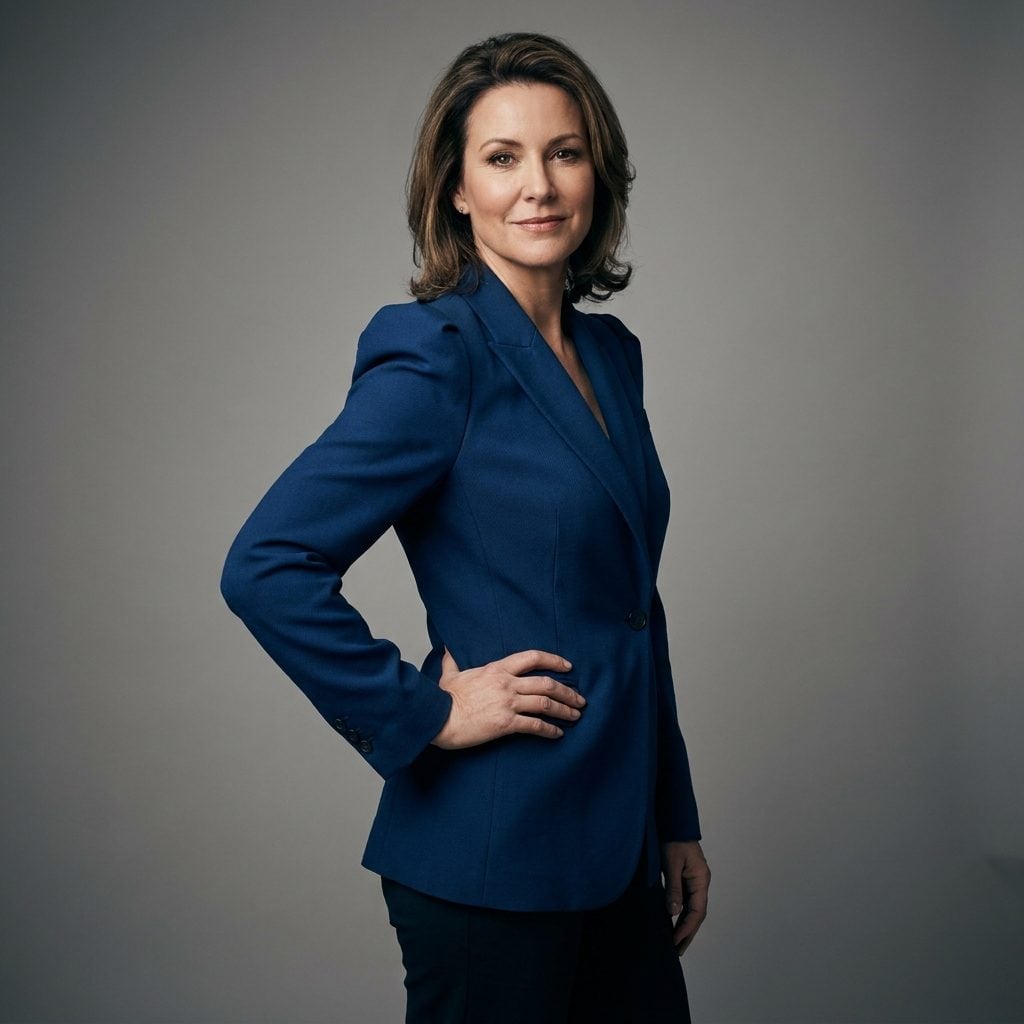
The whole illusion runs on comparison. Broaden the shoulder line and the waist below it can appear narrower, even though nothing about the waist itself has changed.
That was the real power of the padded blazer. Structured wool held the top line firmly, while a belt or shaped jacket waist created a second, much smaller measurement underneath it. A modern camel wool blazer with gentler structure still borrows the same proportional idea, just without quite so much foam.
30. Dark Opaque Tights Kept the Leg Line Going

This was tonal continuity doing the work.
Charcoal tights with charcoal shoes, deep plum with burgundy, near-black navy with dark leather — the closer the tones sat together, the fewer abrupt breaks appeared between hem and floor.
The result was a cleaner lower-half silhouette, especially under tunic sweaters and long jackets with plenty of volume above. Keep the shoe in roughly the same tonal family and the line stays calmer; jump to a bright contrast and the ankle suddenly becomes punctuation.
29. Diagonal Necklines Broke Up the Usual Horizontal Line
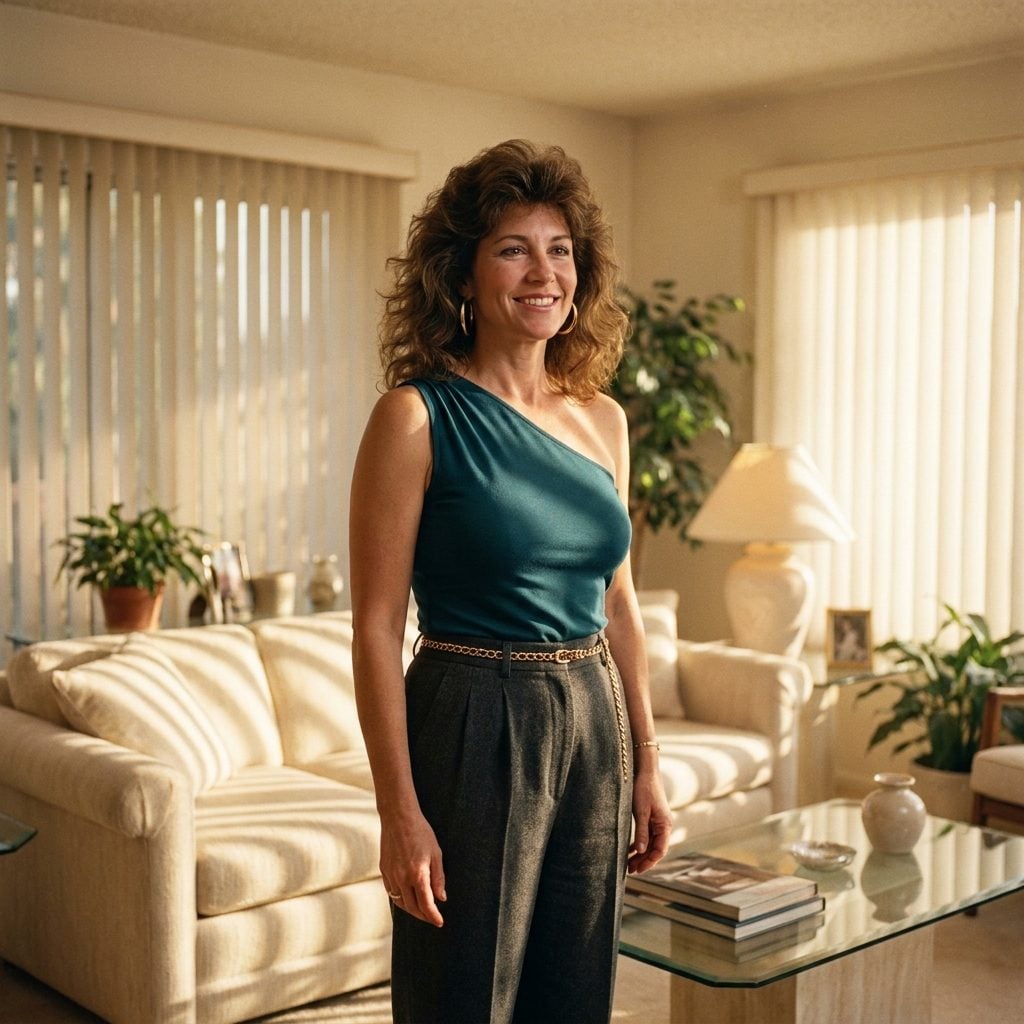
A diagonal sends the gaze somewhere. That is the whole point.
One-shoulder tops, asymmetric ruffles, and sweaters slipping off one side interrupted the usual horizontal shoulder line and replaced it with movement across the torso. Instead of a static top edge, the outfit gained direction.
The bolder the slant, the stronger that directional effect became. Quiet geometry dressed up as drama — very 1980s.
28. High-Waisted Pencil Skirts Put the Waistline on Display
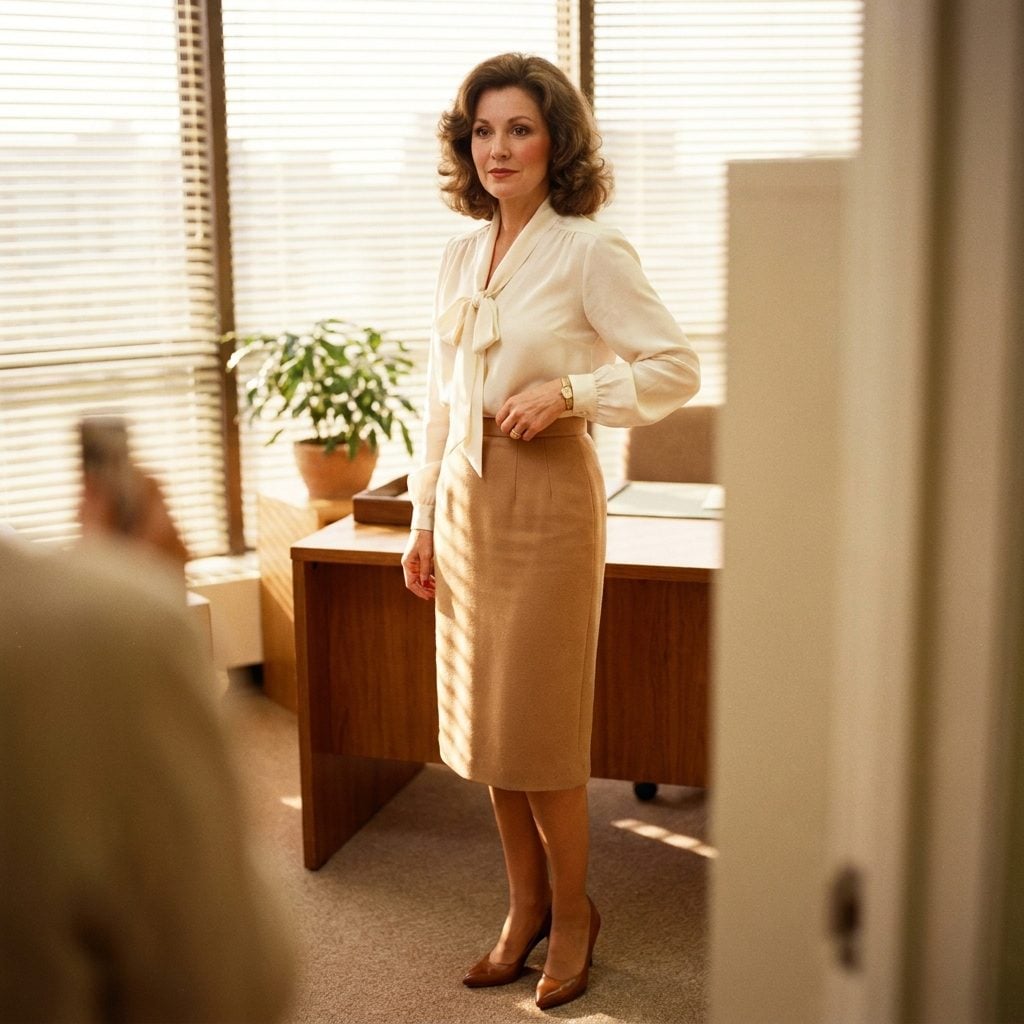
Tucking the blouse changed the entire proportion.
Left loose, the fabric blurs where the torso ends and the skirt begins. Tucked into a high-waisted pencil skirt, the waistband becomes a clear dividing line and the lower half begins visually higher.
That camel skirt did not need much embellishment. The discipline came from the placement: blouse contained, waist marked, skirt falling in one narrow line below it.
27. Long Cardigans Left Open Created Two Vertical Borders

Left open, a long cardigan frames whatever sits underneath it.
The two front edges create parallel vertical borders down the body, while a slimmer base layer remains visible through the center. Over black, charcoal, or another dark tonal column, the effect becomes even cleaner.
Buttoning the same cardigan changes the geometry completely. Open, it frames. Closed, it becomes the shape.
26. Batwing Sleeves Used Soft Volume to Emphasize the Waist
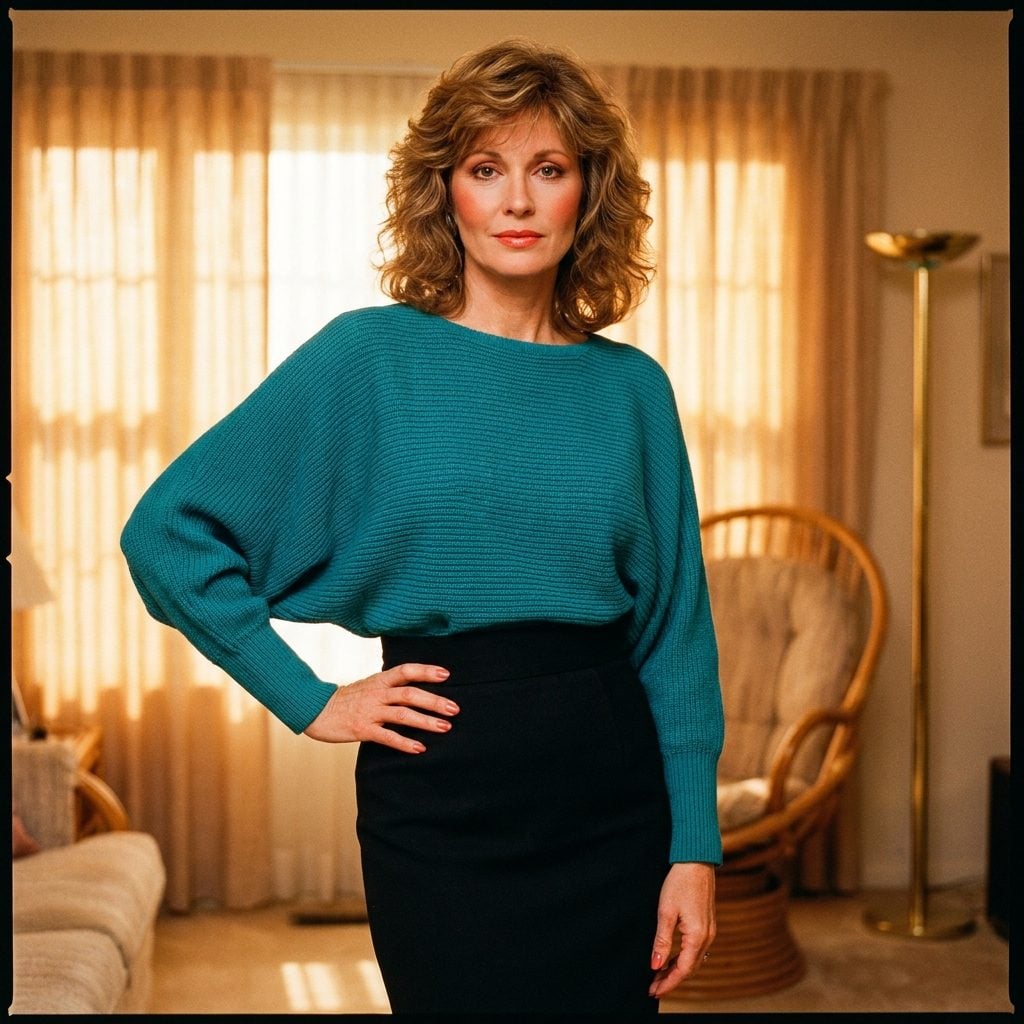
Shoulder pads used structure. Batwing sleeves used fabric.
All that loose volume through the upper arms and shoulders expands the top half softly, then collapses into a fitted waistband or tucked skirt. The waist becomes the visual hinge between two very different amounts of fabric.
A teal batwing sweater tucked into a high skirt turns pure excess into a proportion trick.
25. Monochrome Dressing Removed the Color Breaks
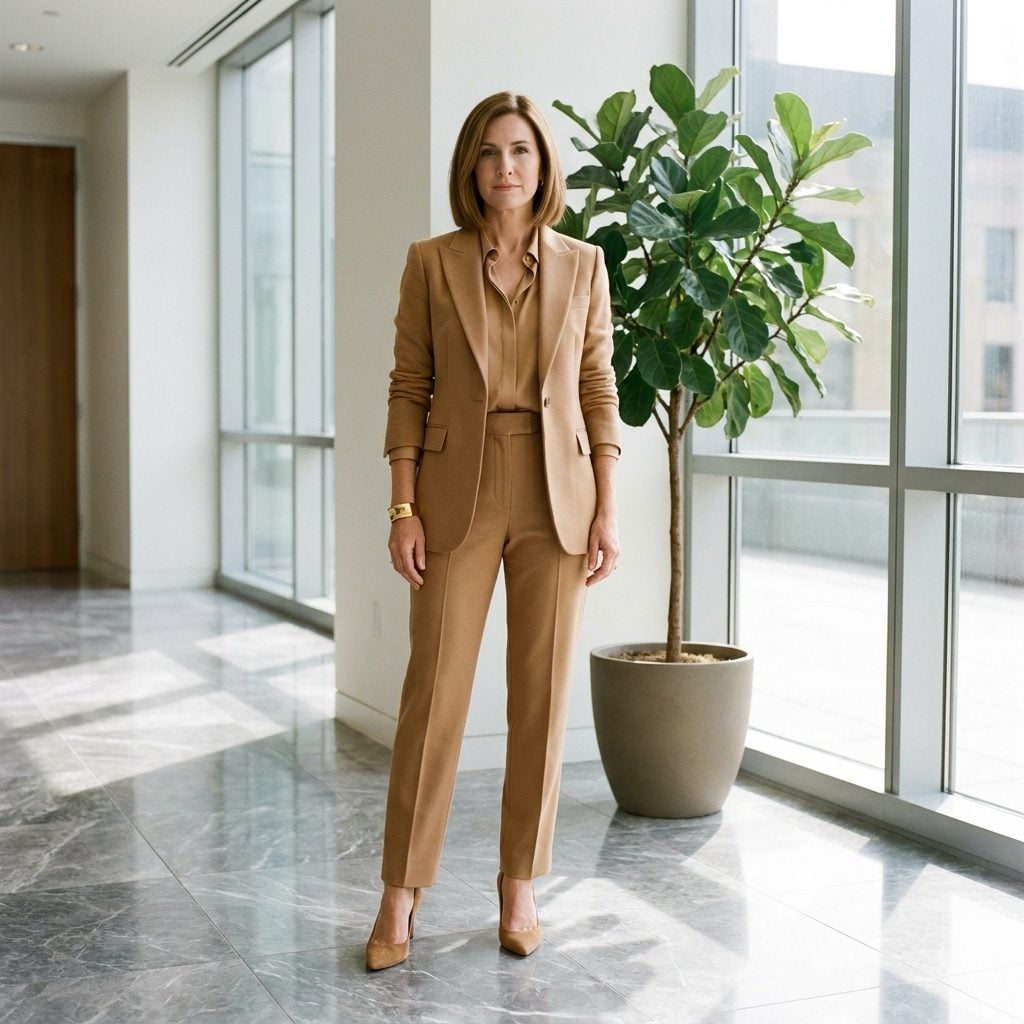
One color from collar to shoe leaves very little for the outfit to argue about.
Camel over camel, navy over navy, black all the way down — without a contrasting belt or shoe slicing through the composition, the clothes read as one coordinated field rather than separate blocks.
A tonal outfit built around a camel wool blazer still looks polished because the continuity is doing as much work as the individual pieces.
24. Rolled Sleeves Gave Oversized Jackets a Point of Lightness
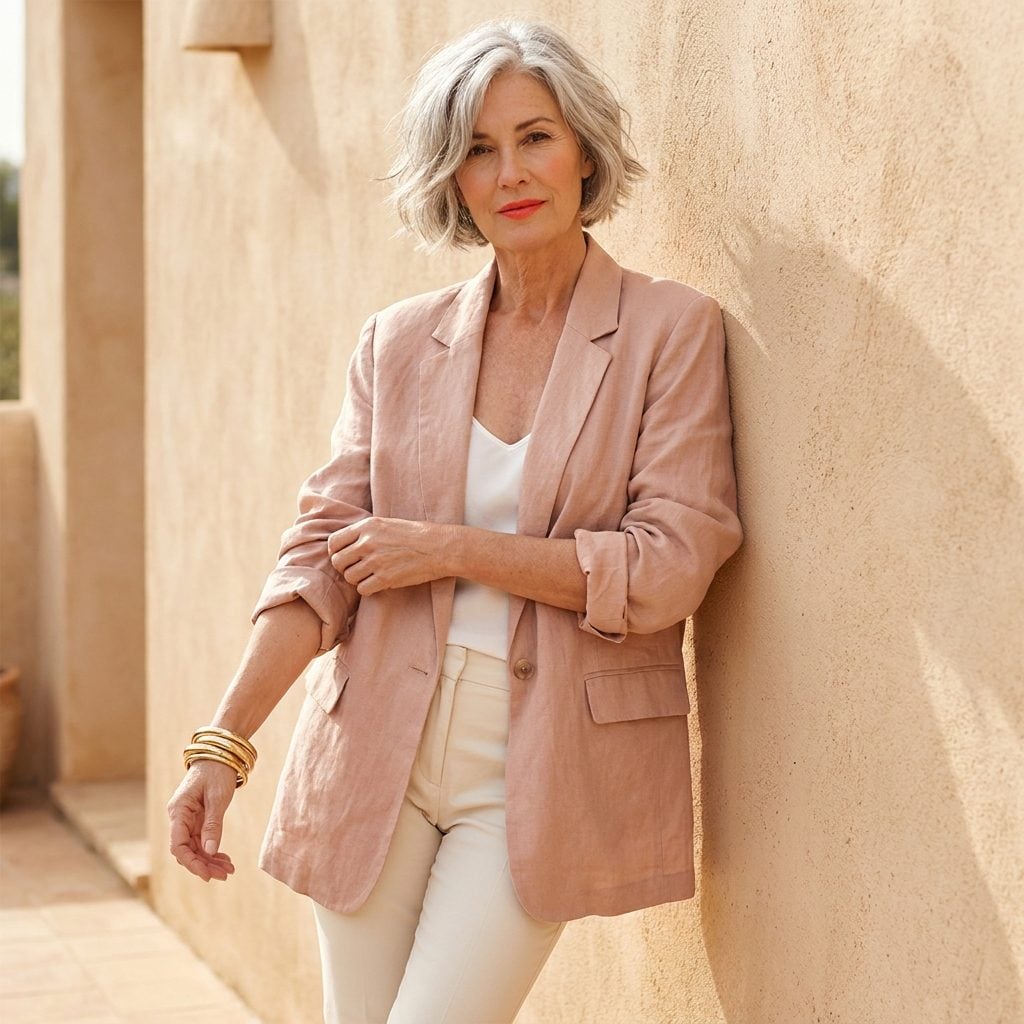
An oversized jacket can become a lot of fabric very quickly. Pushing the sleeves to the elbow changes that.
Suddenly a section of forearm appears between jacket and hand, breaking up the mass and making the styling look deliberate rather than merely oversized.
A stack of gold bangle bracelets only sharpened the effect. If the jacket was going big, the exposed wrist made sure something stayed visually light.
23. Drop-Waist Dresses Moved the Proportion Game Lower
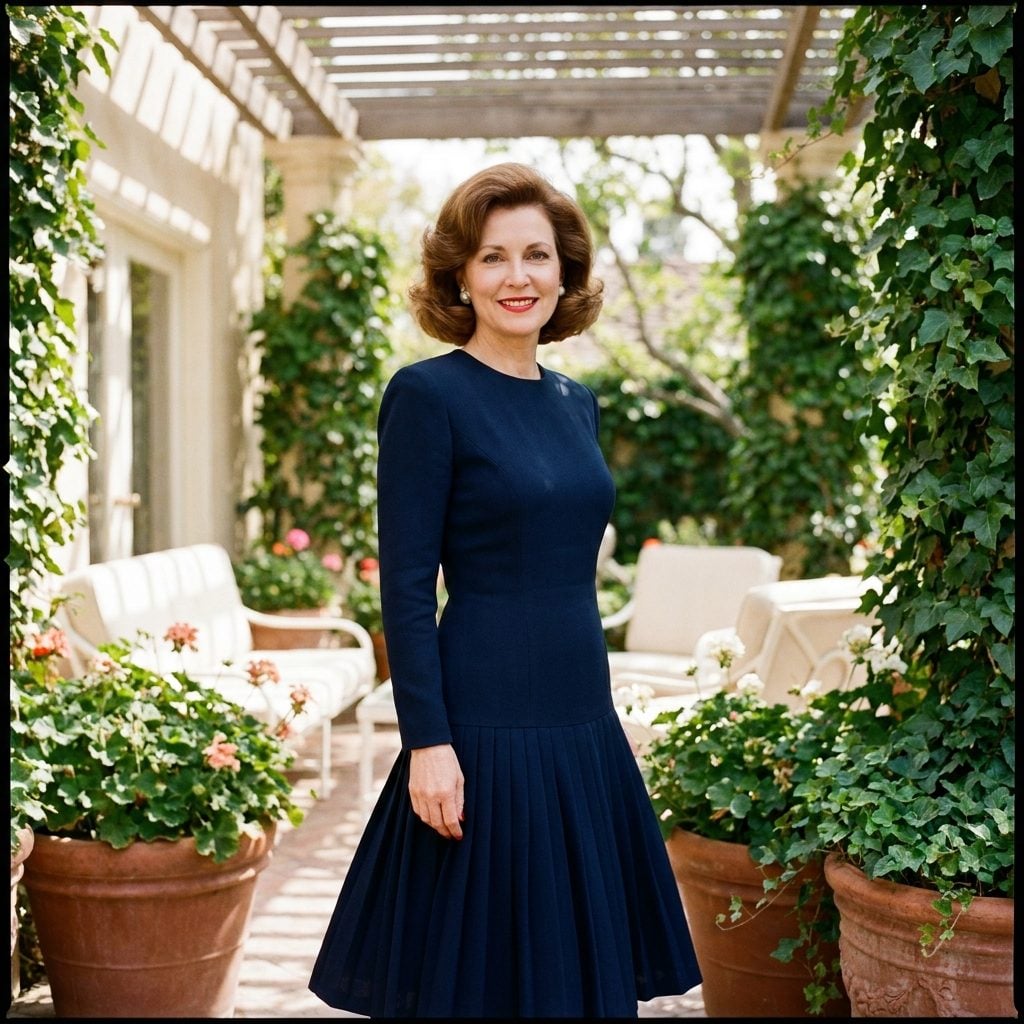
Lower the waist seam toward the hips and the torso can appear longer.
That was the appeal of the drop-waist dress: it moved the point of emphasis away from the natural waist and let the skirt begin farther down. The silhouette became straighter, less cinched, and very different from the decade’s more obvious hourglass tricks.
The shape had deep roots in 1920s fashion, and its 1980s revival proved there was more than one way to redraw a body.
22. Pointed-Toe Pumps Extended the Finish of the Leg
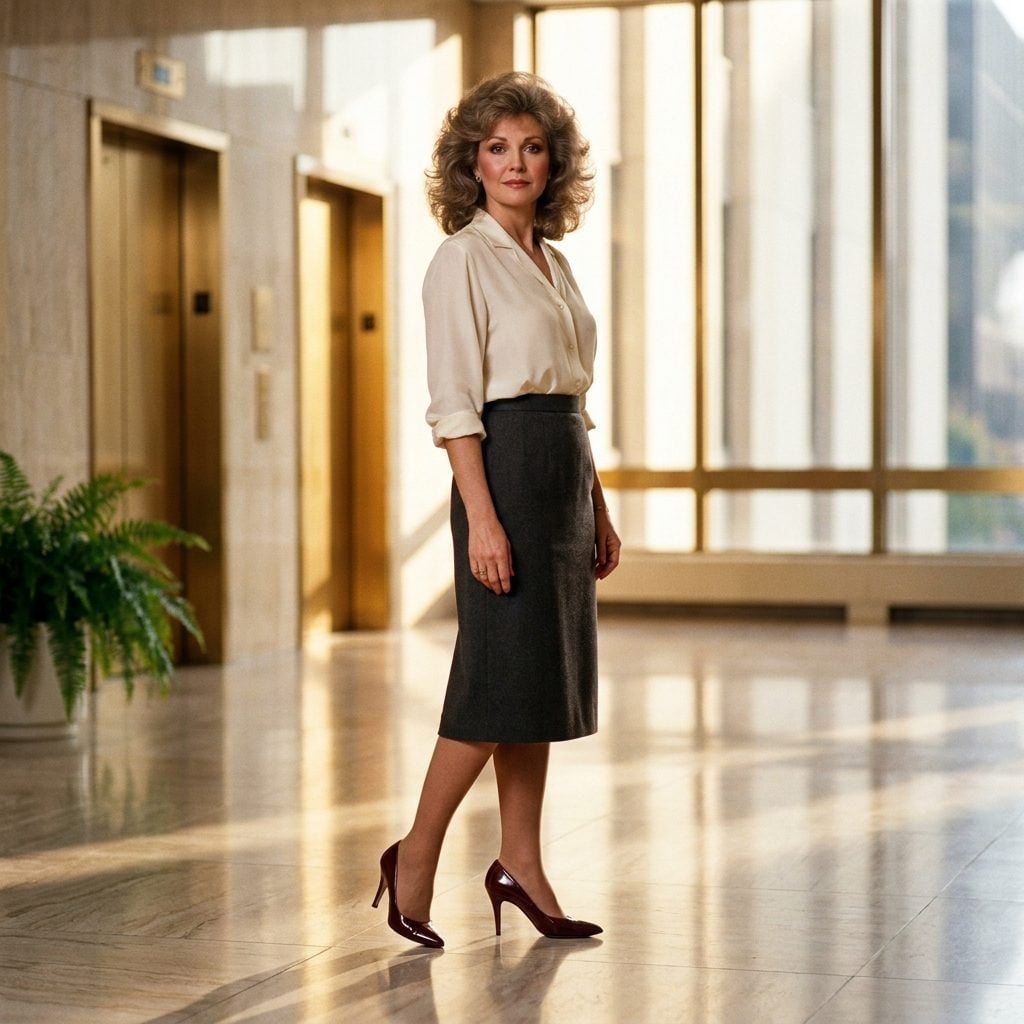
A pointed toe keeps the shoe moving forward visually long after a rounded toe would have stopped.
Paired with a knee-length hem, the burgundy patent pumps extend the directional line from calf to toe instead of ending it abruptly.
The heel adds height. The point adds length. Together, they make the shoe part of the silhouette rather than a separate object sitting underneath it.
21. Blouson Dresses Put the Contrast Above the Belt
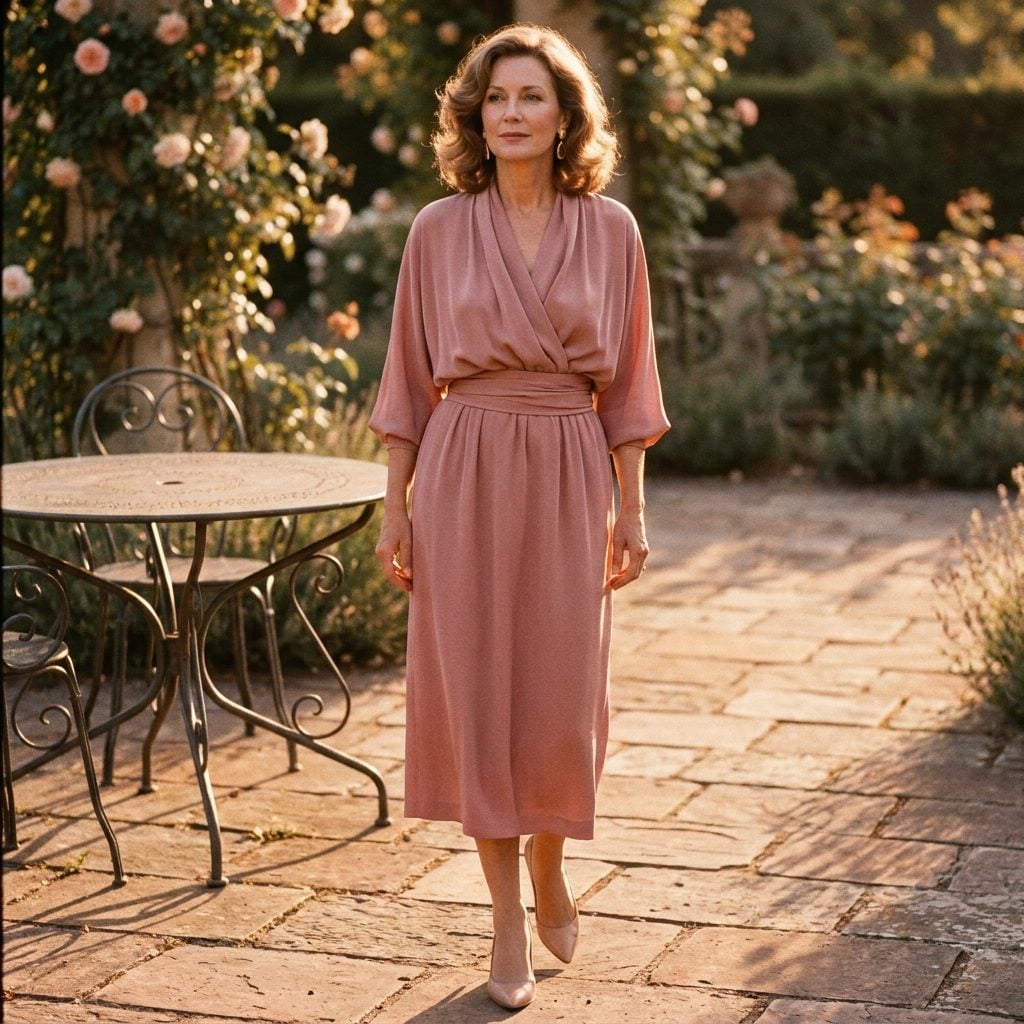
The loose bodice is not a mistake. It is the setup.
Fabric blouses gently above the belt, creating fullness through the upper torso before narrowing sharply at the waist. Below that, the skirt drops away in a much cleaner line.
Loose above, defined in the middle, quieter below. The contrast creates the shape without requiring the entire dress to cling.
20. Vertical Seaming Built the Shape Into the Dress
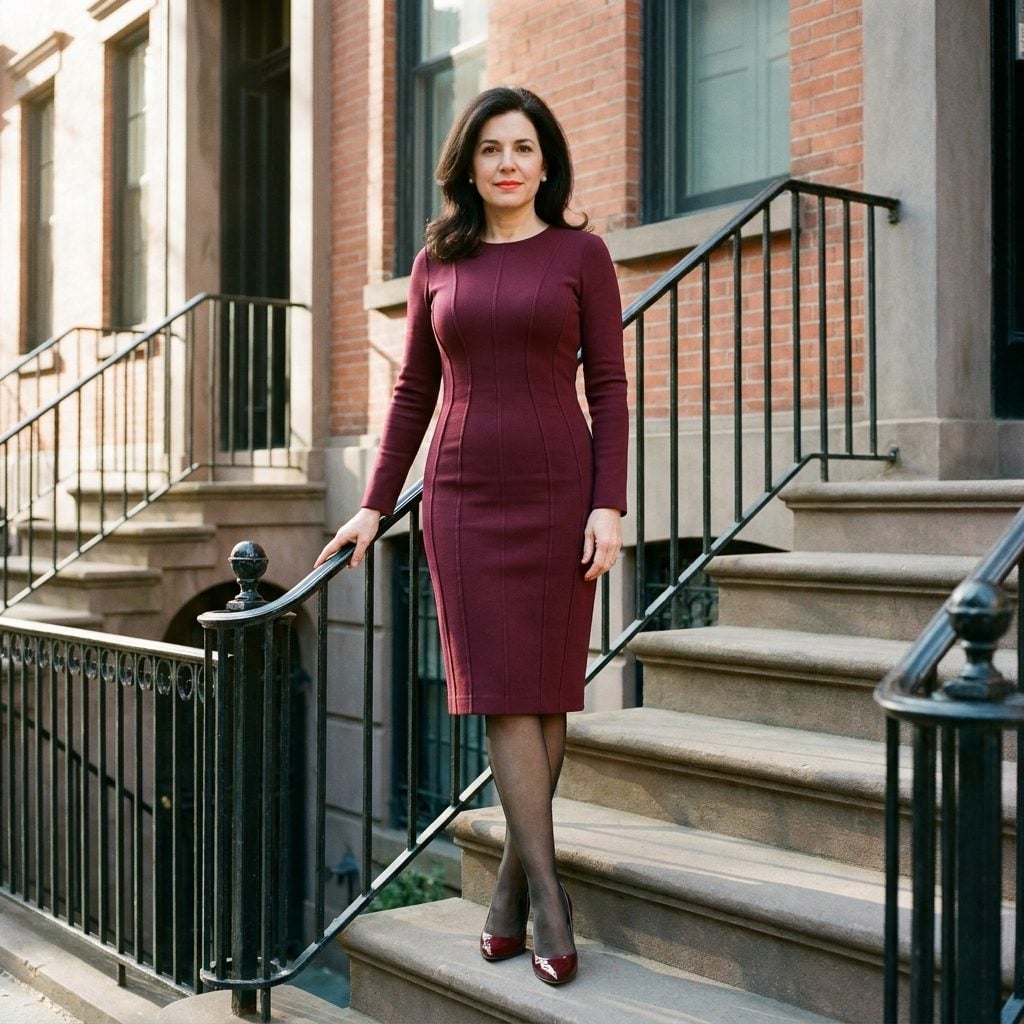
Some dresses did not need belts or color blocking because the construction itself was already drawing the route.
Princess seams run vertically through the garment and can contour the bust, waist, and hips without inserting a strong horizontal interruption. On a tailored dress, those long panel lines become part of the visual structure.
The method long predates the 1980s. What the decade loved was making the construction look assertive enough to notice.
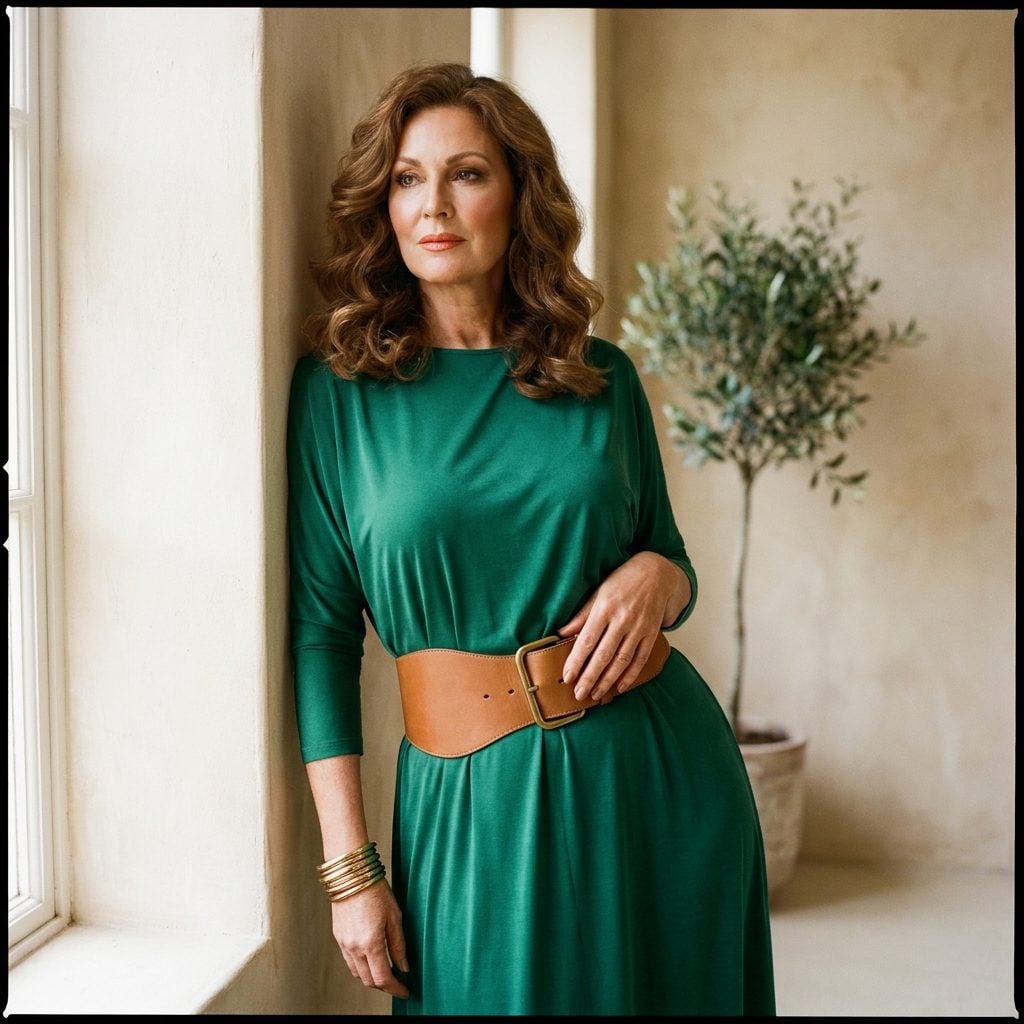
19. Wide Belts Turned the Waist Into the Main Event
❤️ Would you like to save this?
Belts stopped pretending to be background accessories.
In the 1980s, a wide belt over a dress could become one of the strongest horizontal elements in the outfit, deliberately marking the waist and forcing the surrounding fabric to react to it.
A wide tan leather belt over emerald jersey turns a straight dress into something much more sculpted with one visible interruption.
18. The Slouch Boot Kept Slim Trousers From Ending Abruptly
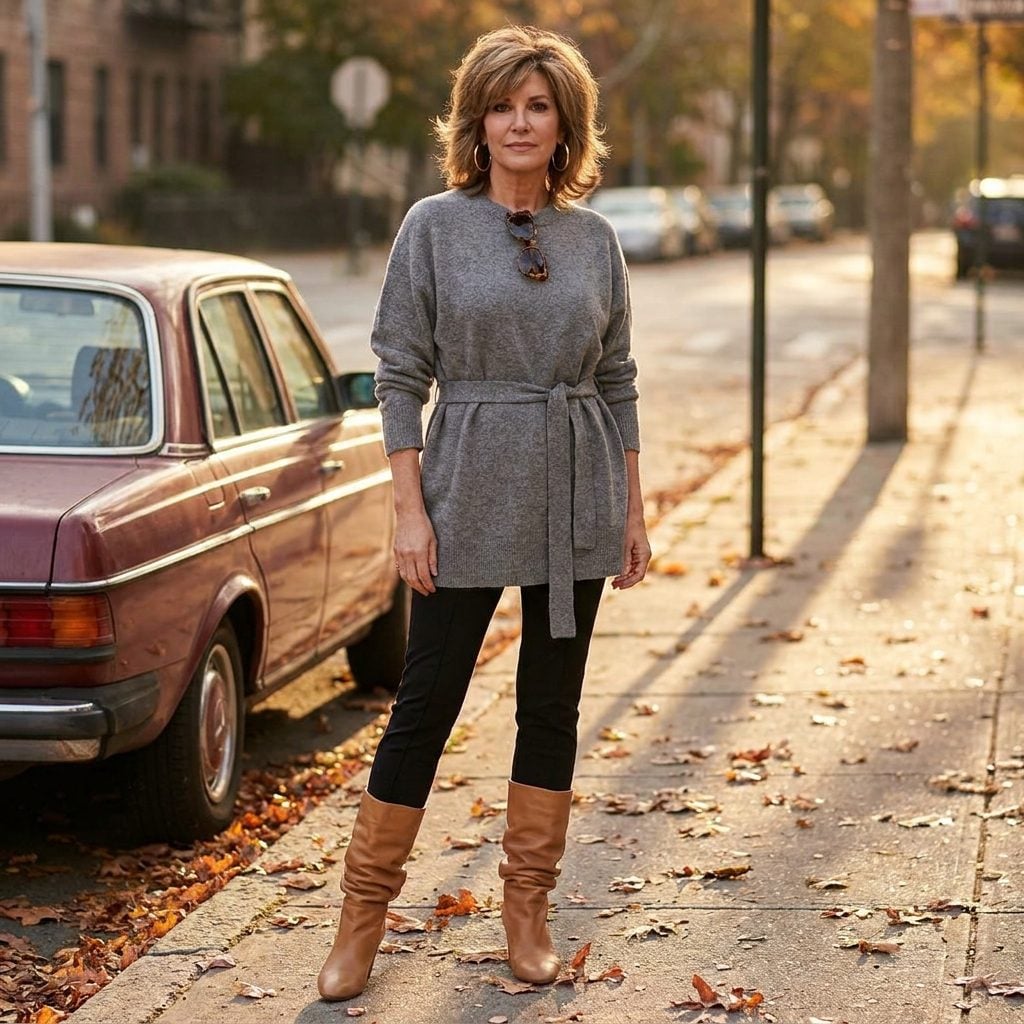
The slouch boot looks bulky in isolation. Put it over narrow trousers in a close tone and the effect changes.
Instead of trouser, exposed ankle, sock, shoe, the lower leg becomes one continuous sequence of fitted fabric and leather. The slouch adds texture without introducing another bright break.
Add a belted tunic and the proportions become unmistakably 1980s: relaxed volume above, a much cleaner line below.
17. Sweater Dresses Got Their Shape From the Belt
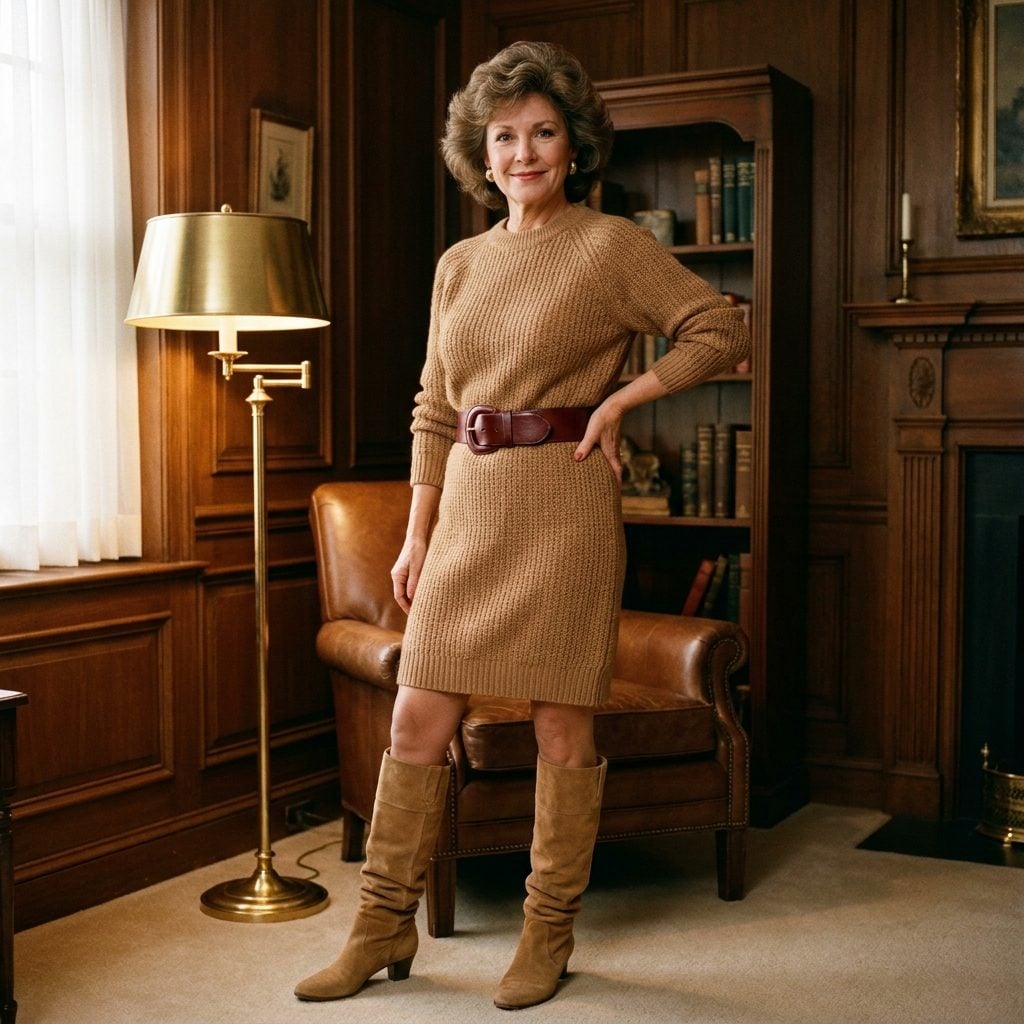
A straight sweater dress can be all comfort and very little architecture.
Add a wide contrasting belt and the soft knit suddenly has a center. Fabric gathers above and below it, while the belt supplies the definition the dress itself does not.
The camel-and-oxblood combination works because the warm knit stays quiet enough for the deep red belt to become the deliberate focal point in the outfit.
16. Long Shoulder-Padded Jackets Carried a Clean Line Past the Hips
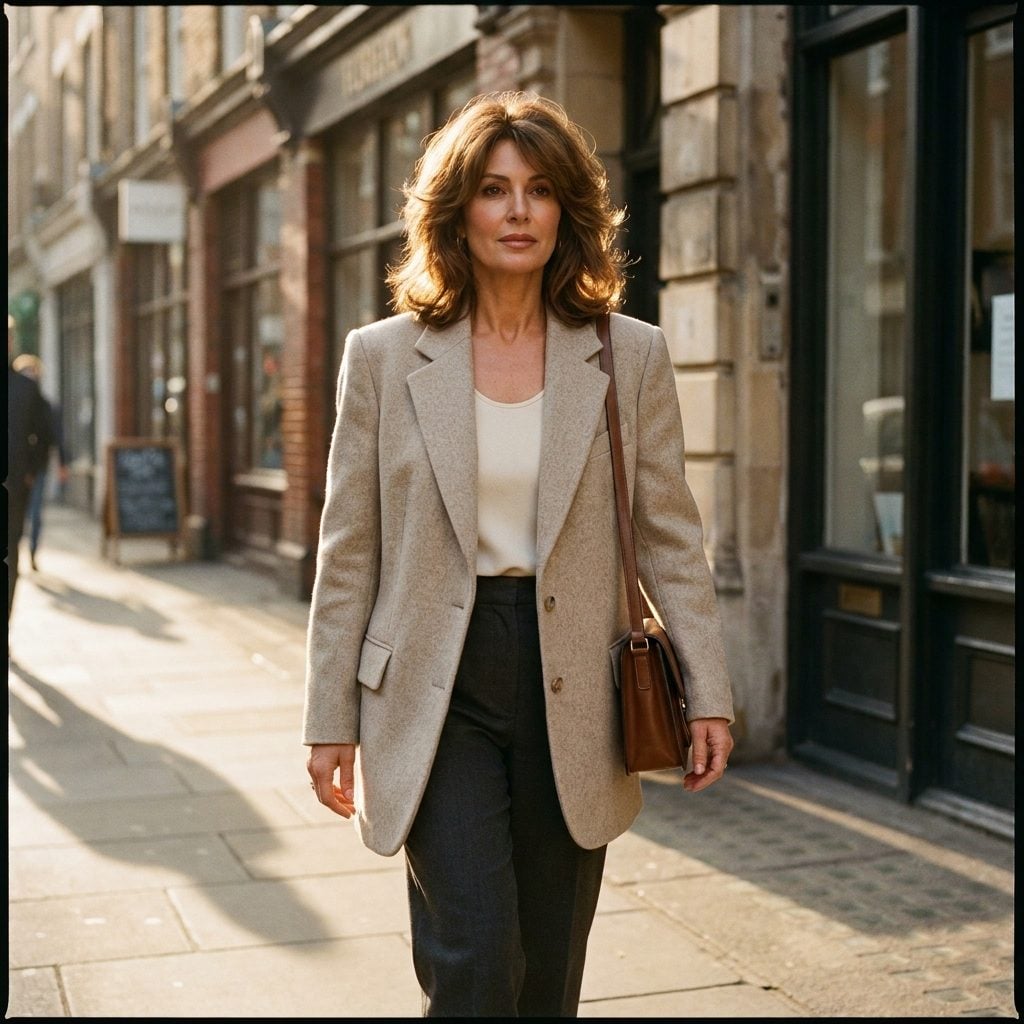
The long blazer handled proportion differently from the cropped power jacket.
Strong shoulders established width at the top, while the mid-thigh hem continued in a relatively straight path past the hips. Over slim trousers, the jacket became a long outer frame rather than a short box ending at the widest part of the outfit.
The oversized oatmeal blazer gave a work outfit plenty of authority without needing a sharply cinched waist.
15. Stretch Lycra Let Body-Conscious Dresses Lose the Heavy Structure
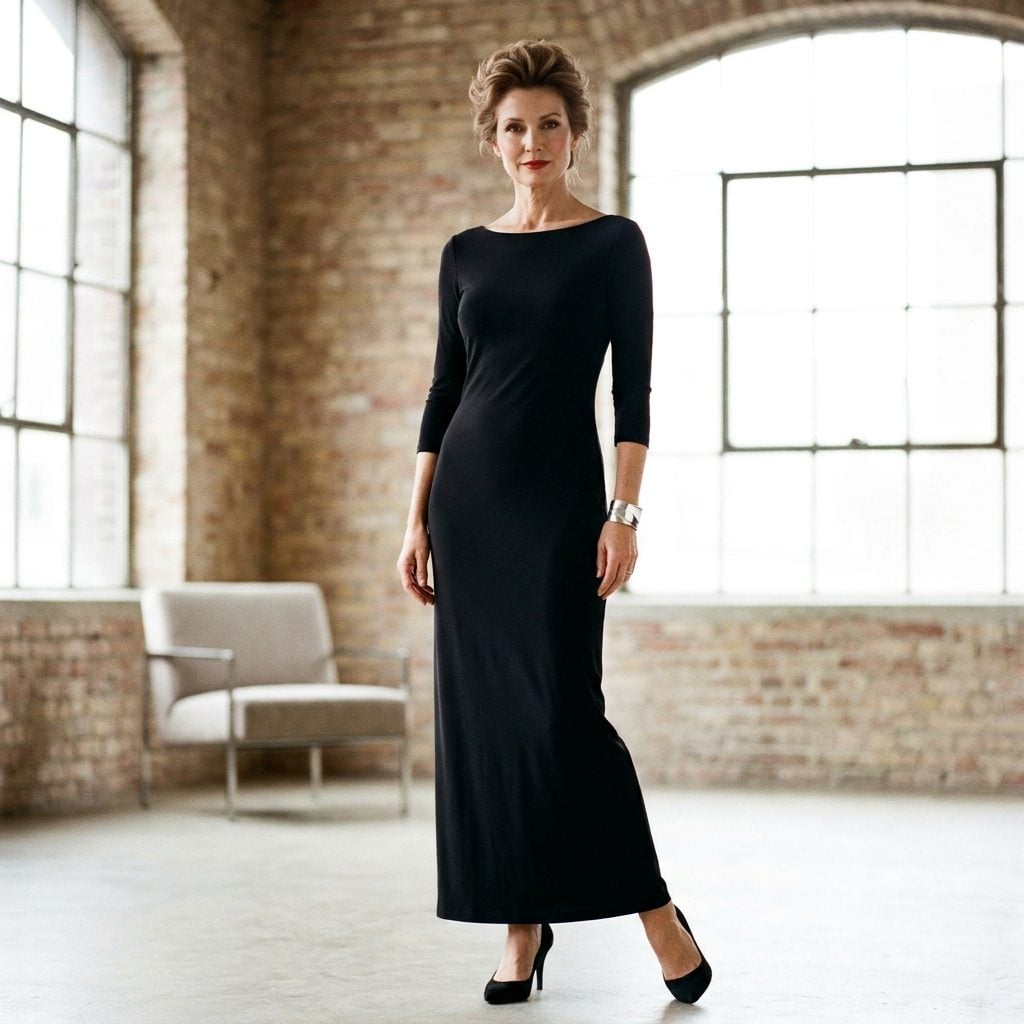
The 1980s fitness boom made stretch fabrics impossible to ignore.
Lycra itself had existed since the late 1950s and was already used in hosiery, swimwear, and activewear. By the 1980s, stretch had moved well beyond the gym and into increasingly body-conscious day and evening clothes, helping garments follow the figure without relying entirely on rigid internal structure.
A matte black stretch dress could sit close without the visual weight of heavy boning or bulky tailoring. The decade’s athleisure outfit vocabulary and its nightlife vocabulary were beginning to borrow from each other.
14. Matching Skirt Suits Ran in One Unbroken Fabric Story
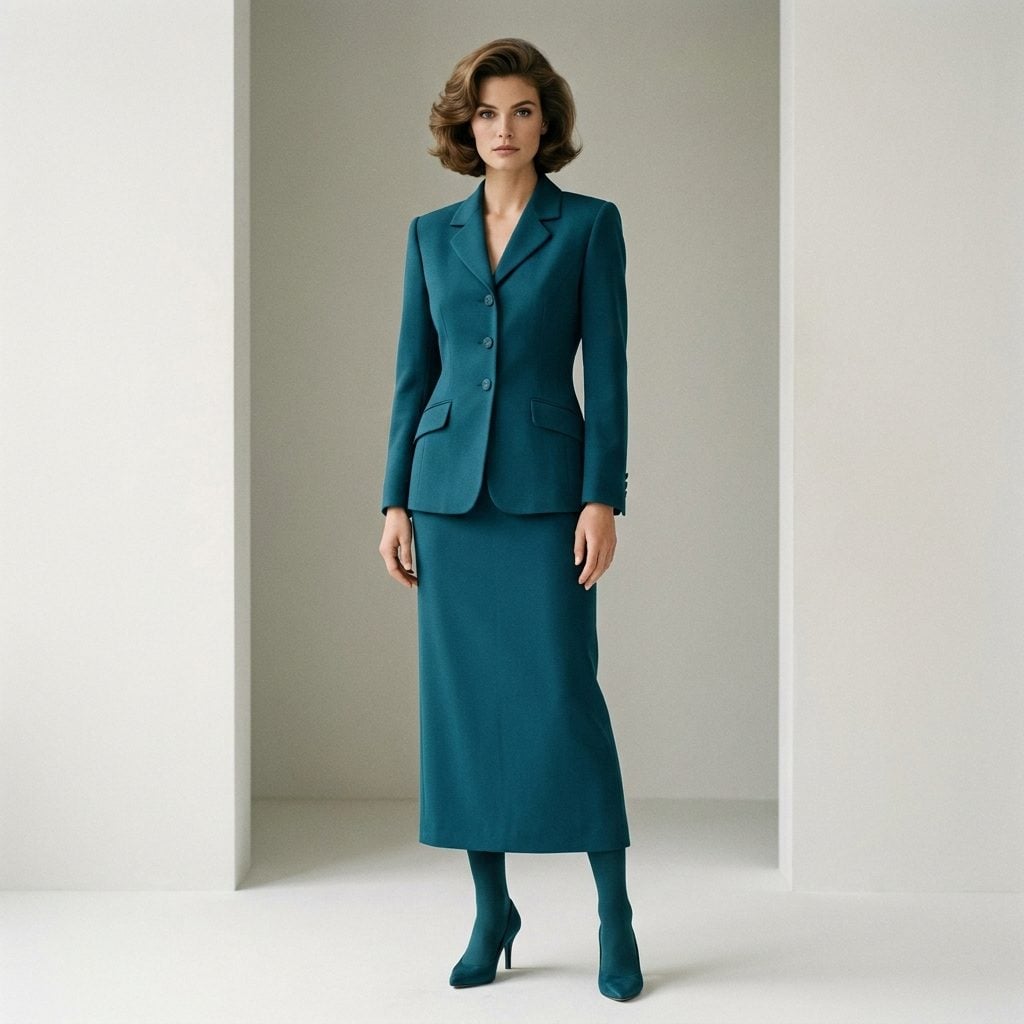
Same fabric, same color, jacket and skirt speaking with one voice.
Unlike a generic monochrome outfit assembled from separate pieces, the matching suit repeated the exact same textile from shoulder to hem. That consistency made the jacket and skirt feel like one designed unit rather than two components stacked together.
The dove gray wool skirt suit did not need contrast to look authoritative. The uniformity was the point.
13. High-Waisted Jeans Started the Leg Line Higher

The rise came all the way to the waist and made no attempt to hide it.
Add a tucked top and a belt, and the waistband becomes the obvious starting point of the lower half. Compared with a low-rise cut, there is simply more visible trouser below the waistline.
No wonder the silhouette keeps coming back: the rise does half the styling before anything else goes on.
12. Puffed Sleeves Used Romantic Volume Instead of Tailored Bulk
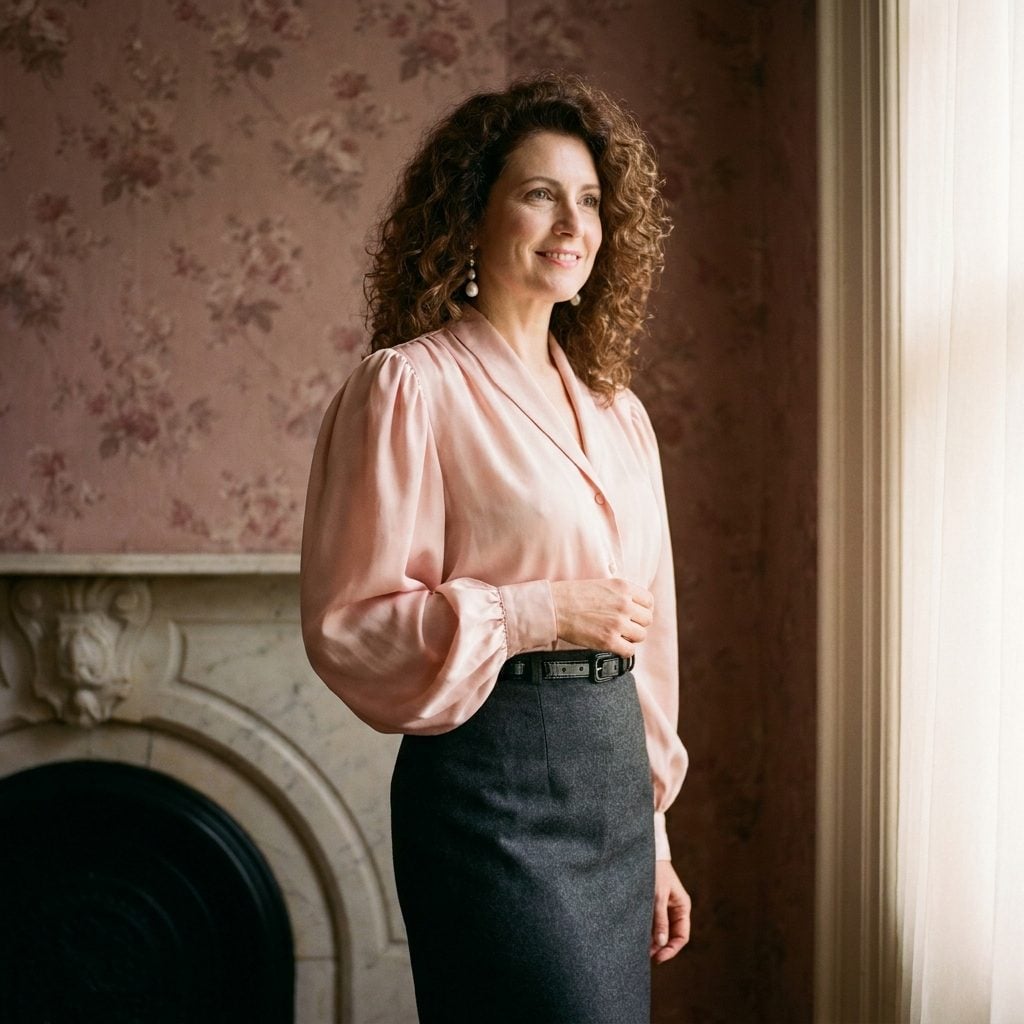
Puff sleeves and power shoulders overlapped in the 1980s, but they created width in completely different ways.
A shoulder pad builds a hard line. A puffed sleeve expands softly, often gathering back toward the arm before the silhouette reaches the waist. Pair that romantic volume with a belt and the contrast becomes unmistakable.
The 1981 royal wedding helped amplify the appetite for large romantic sleeves in early-1980s bridal and fashion imagery. The decade was perfectly happy to make the shoulder dramatic whether the mood was corporate or fairy tale.
11. Tapered Pants Put the Narrowest Point at the Ankle
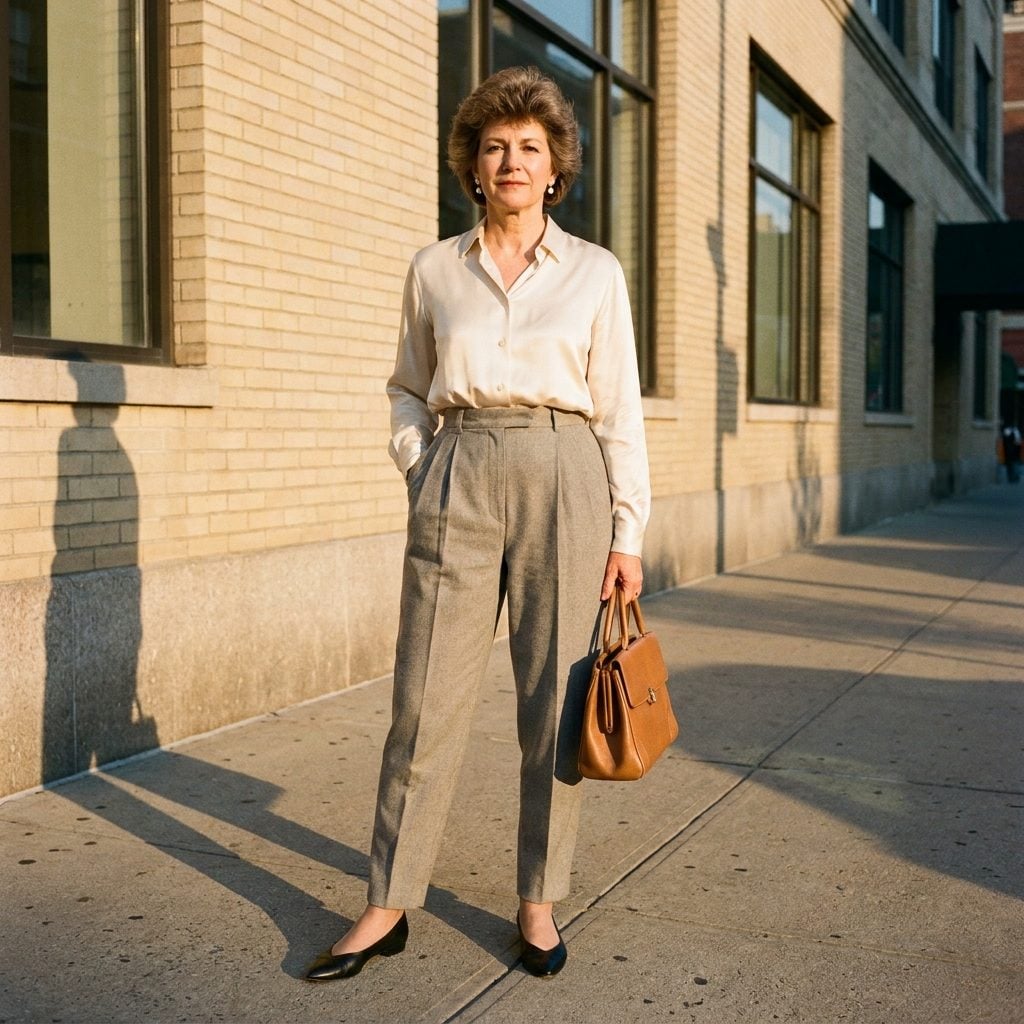
Fabric gathered generously through the hip and thigh, then narrowed sharply toward the hem.
That taper is what kept the shape from reading as simply oversized. The fullness had somewhere to resolve.
Paired with a heel or pointed flat, the narrow ankle became the visual finish after all that fabric above it. Pleats brought the drama; the taper stopped them from taking over the entire leg.
10. Wrap Dresses Used a Diagonal Closure and an Adjustable Waist
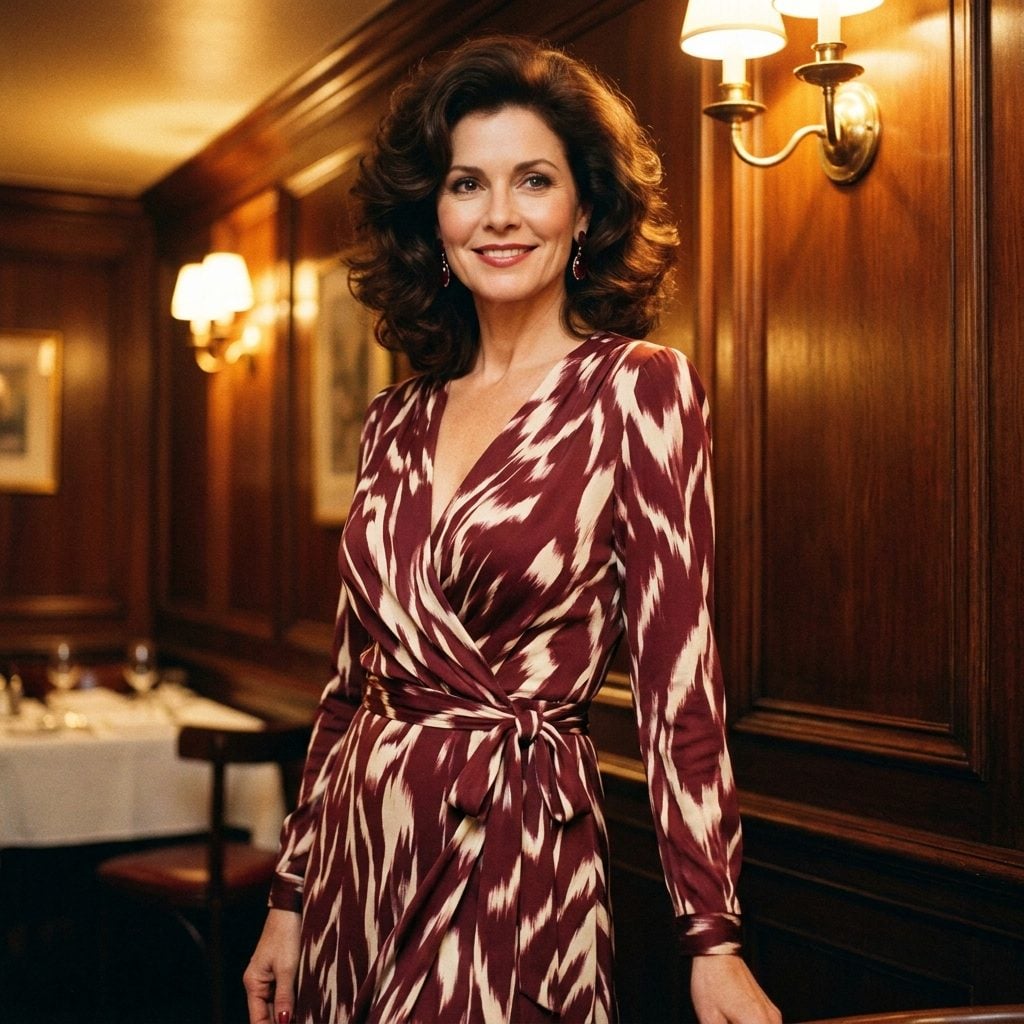
The wrap dress combines two strong design ideas in one garment.
The front crosses the torso diagonally, while the tie lets the waist be adjusted rather than fixed by a rigid seam. Jersey versions add drape and movement without requiring a heavily structured bodice.
Wrap garments long predate the 1970s, but Diane von Furstenberg famously popularized the modern jersey wrap dress during that decade. Its usefulness carried easily into the 1980s.
9. Leggings Made Oversized Sweaters Look Even Bigger on Purpose
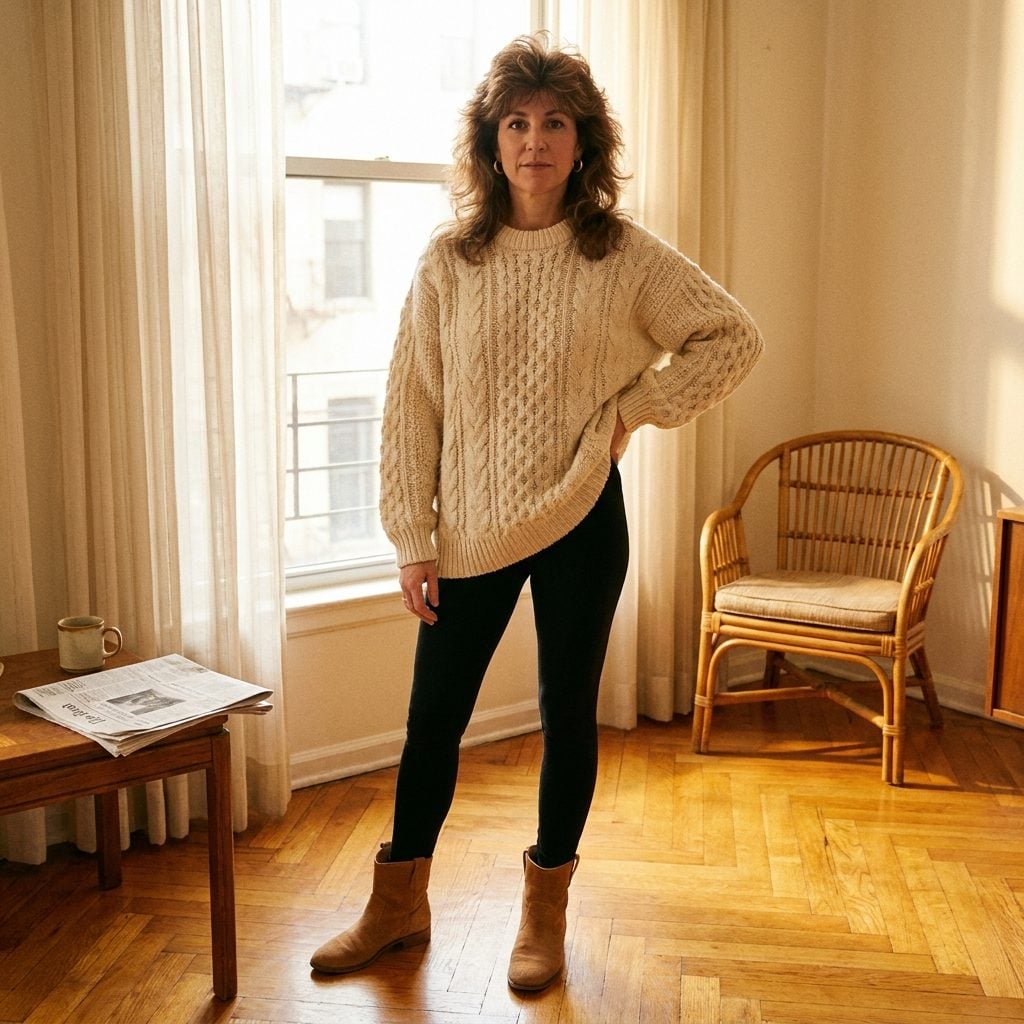
Loose on top, close on the bottom. That contrast did most of the styling.
An oversized sweater brings width and softness around the torso and hips. Black leggings immediately narrow the silhouette below it, making the upper volume look deliberate rather than uncontrolled.
The athleisure outfit logic still feels familiar because the proportion formula never really disappeared.
8. Matching Skirt Suits Created a Continuous Head-to-Toe Look
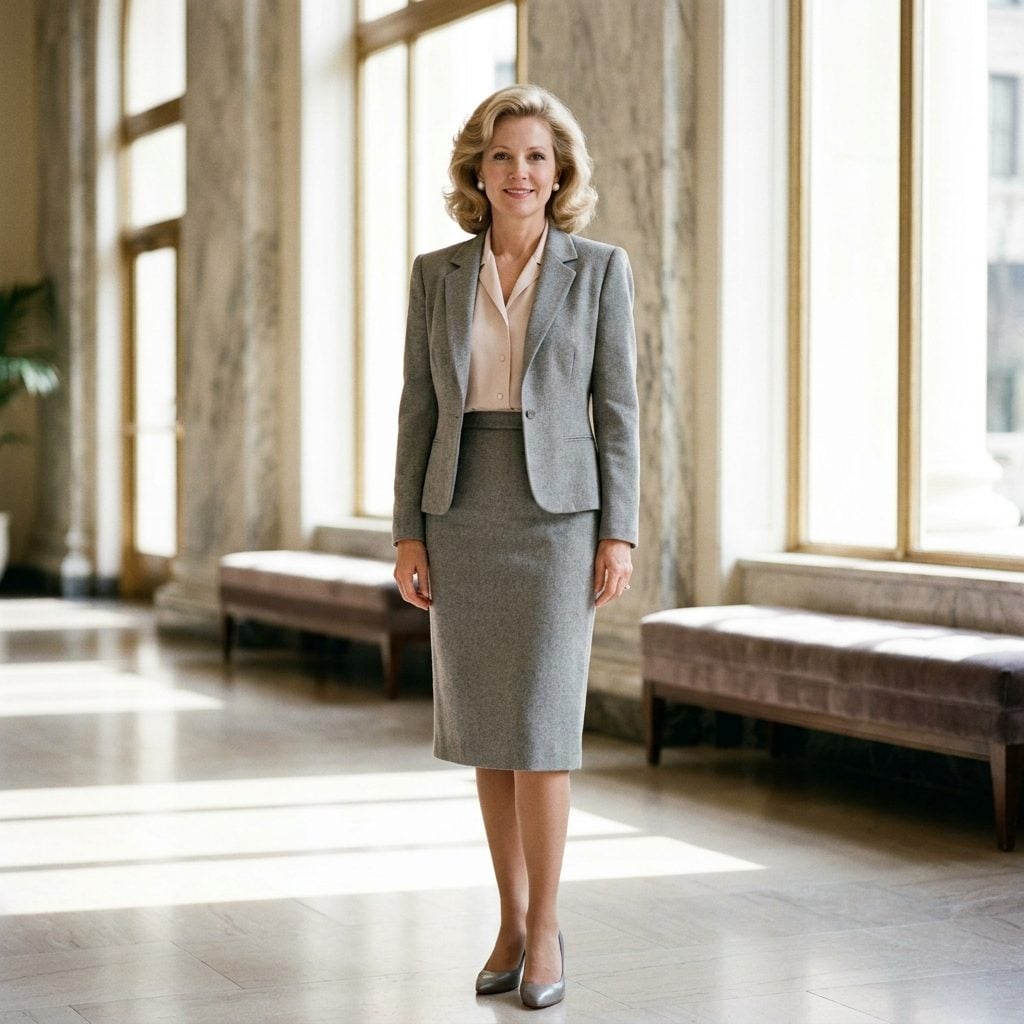
This second suit uses the same continuity trick but pushes it farther.
Where the earlier look focused on identical jacket-and-skirt fabric, this version extends the tonal idea through the rest of the styling so there are fewer abrupt color changes from shoulder toward shoe.
The single-color outfit becomes less about the suit as a matching set and more about controlling every visible break around it.
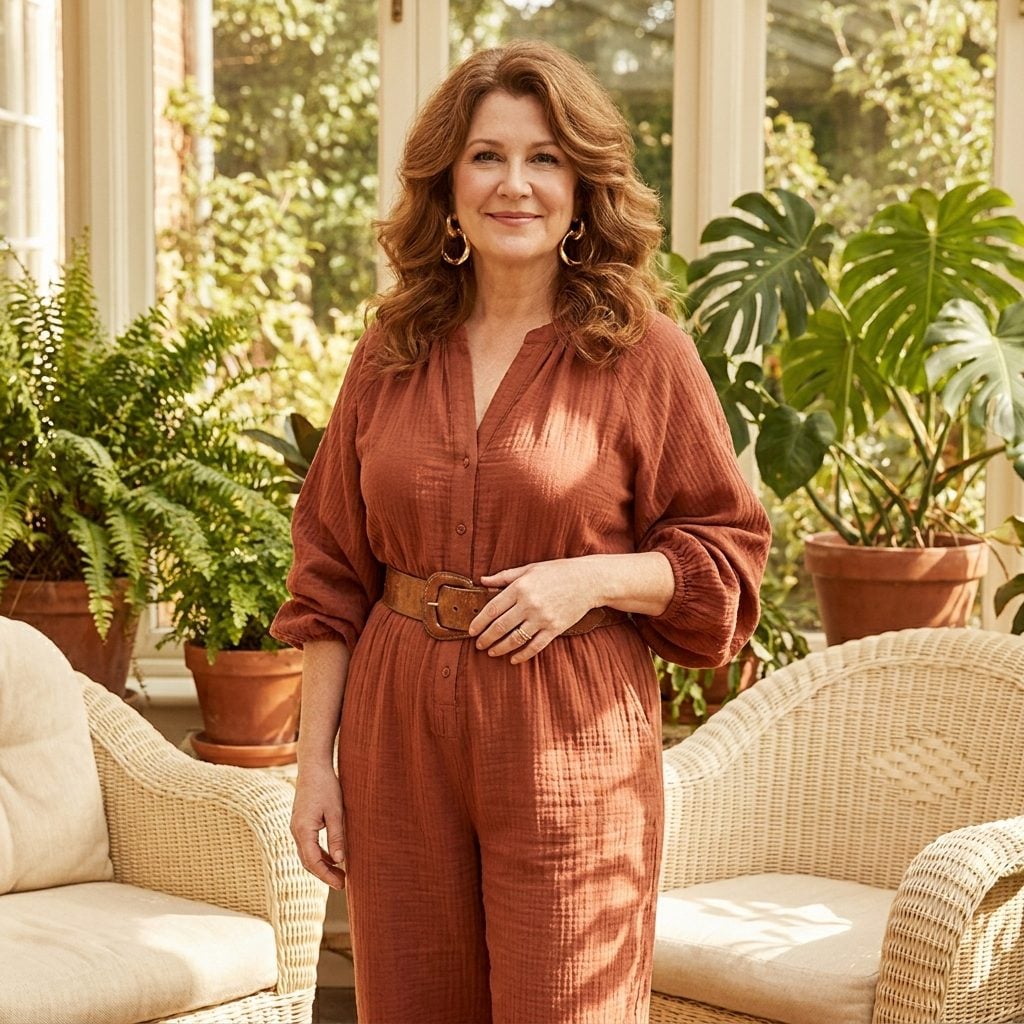
7. Jumpsuits Used Belts to Interrupt a Long, Loose Column
❤️ Would you like to save this?
A jumpsuit can run from shoulder to ankle without offering the eye a single major stop.
In this roomy 1980s version, the belt supplies one. Full sleeves and generous fabric remain above and below, but the middle gets a clear point of definition.
Plenty of jumpsuits work beautifully without belts. This particular silhouette simply becomes more legible once the waist has somewhere to register.
6. Straight Skirts Gave Oversized Jackets Somewhere to Resolve
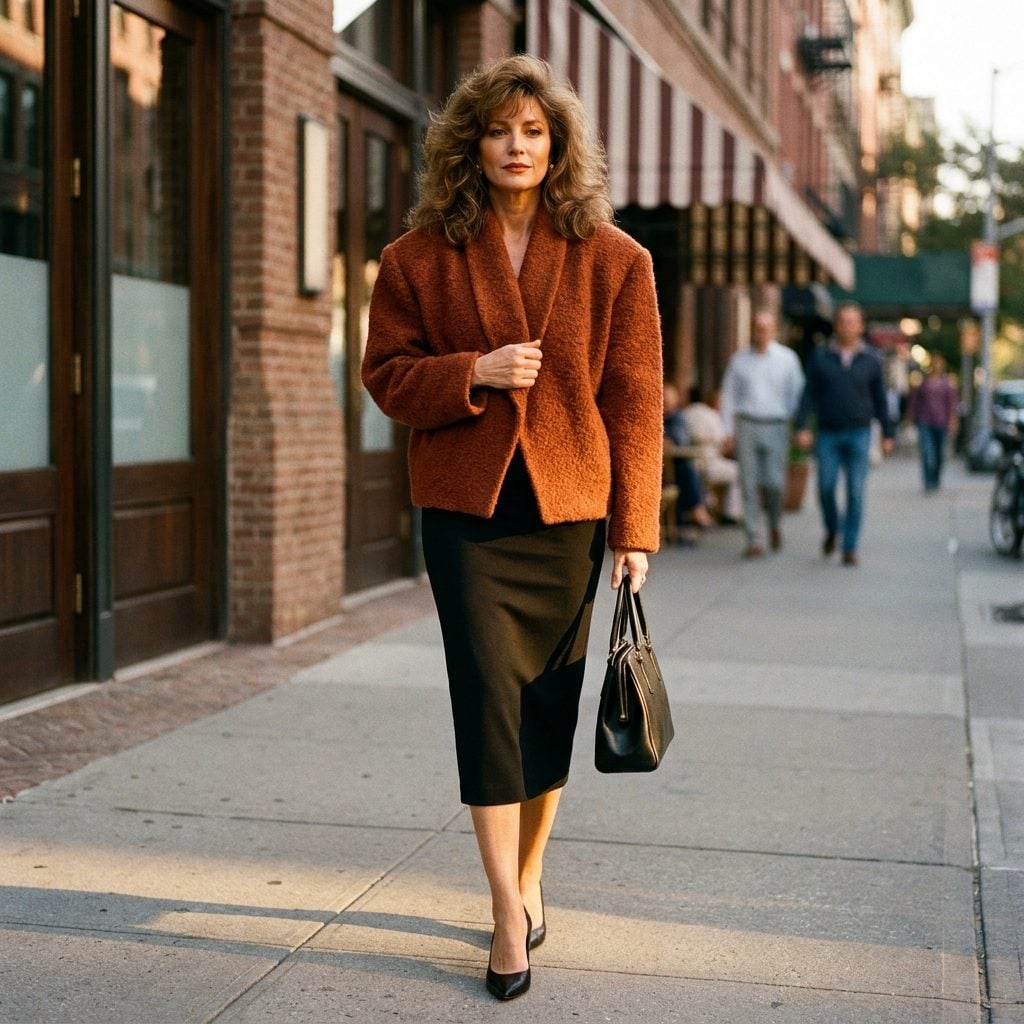
A huge jacket needs somewhere for all that volume to stop.
The straight skirt does exactly that. Instead of repeating width below the waist, it narrows the lower half and lets the oversized rust bouclé jacket remain the obvious statement.
Big above, controlled below. Not a universal rule, but an extremely effective way to keep this particular kind of tailoring from becoming shapeless.
5. Padded-Shoulder Coats Got Their Waist Back With a Skinny Belt
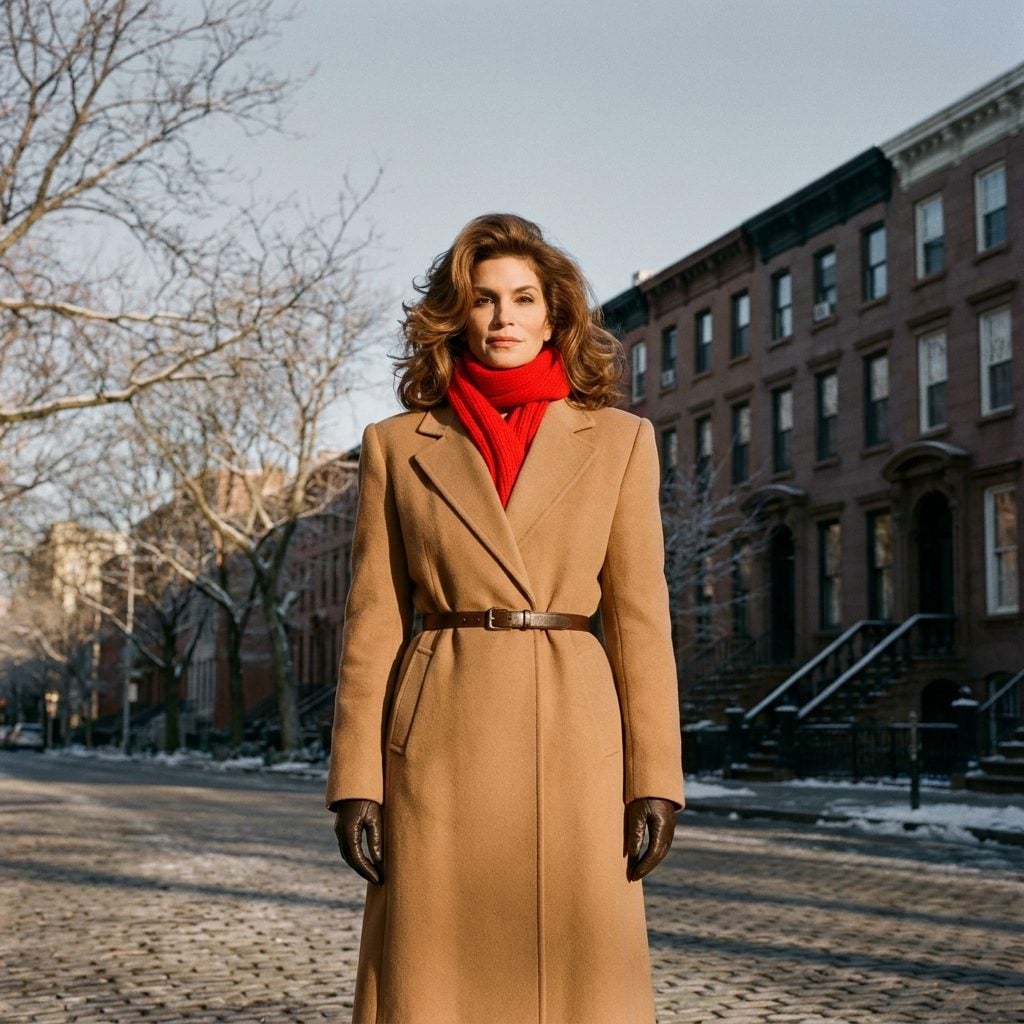
Outerwear was not exempt from the decade’s obsession with proportion.
Structured shoulders gave the coat width up top; a narrow belt interrupted the bulk at the middle. The same heavy layer could move from rectangular to strongly shaped with one accessory.
The belt does not have to be mandatory to make the idea useful. On a coat with this much shoulder structure, it simply creates a very different silhouette.
4. Vertical Pendant Necklaces Added One Long Line Through the Center
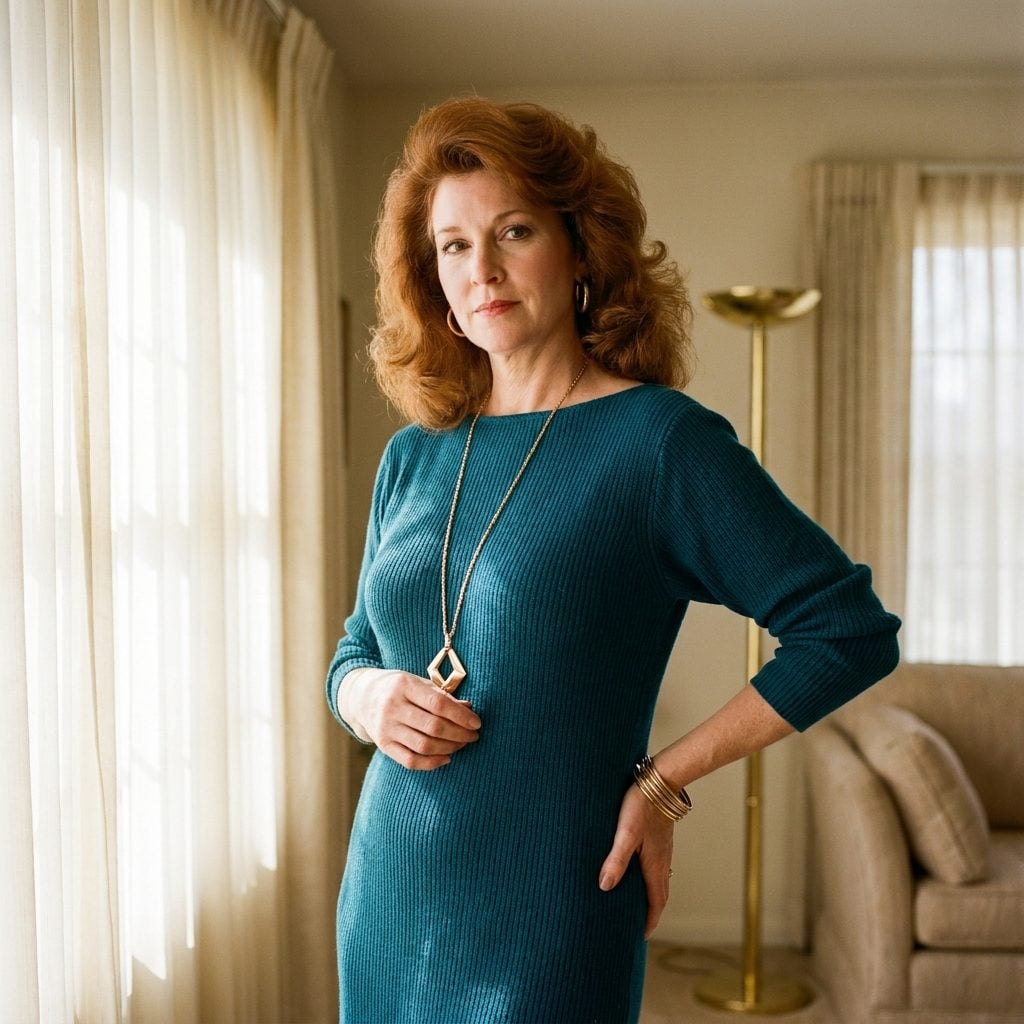
A long pendant could do what a seam or open cardigan did on a much smaller scale.
One chain dropping toward the mid-torso adds a clear vertical element through the center of the outfit, especially over a plain knit, turtleneck, or boat-neck top.
The necklace does not physically change the torso, of course. It simply gives the styling another directional line to work with.
Gold pendants were especially compatible with the decade’s love of bold accessories, but the useful part was the length, not the metal.
3. Skirt Suits Combined Several Tricks in One Outfit
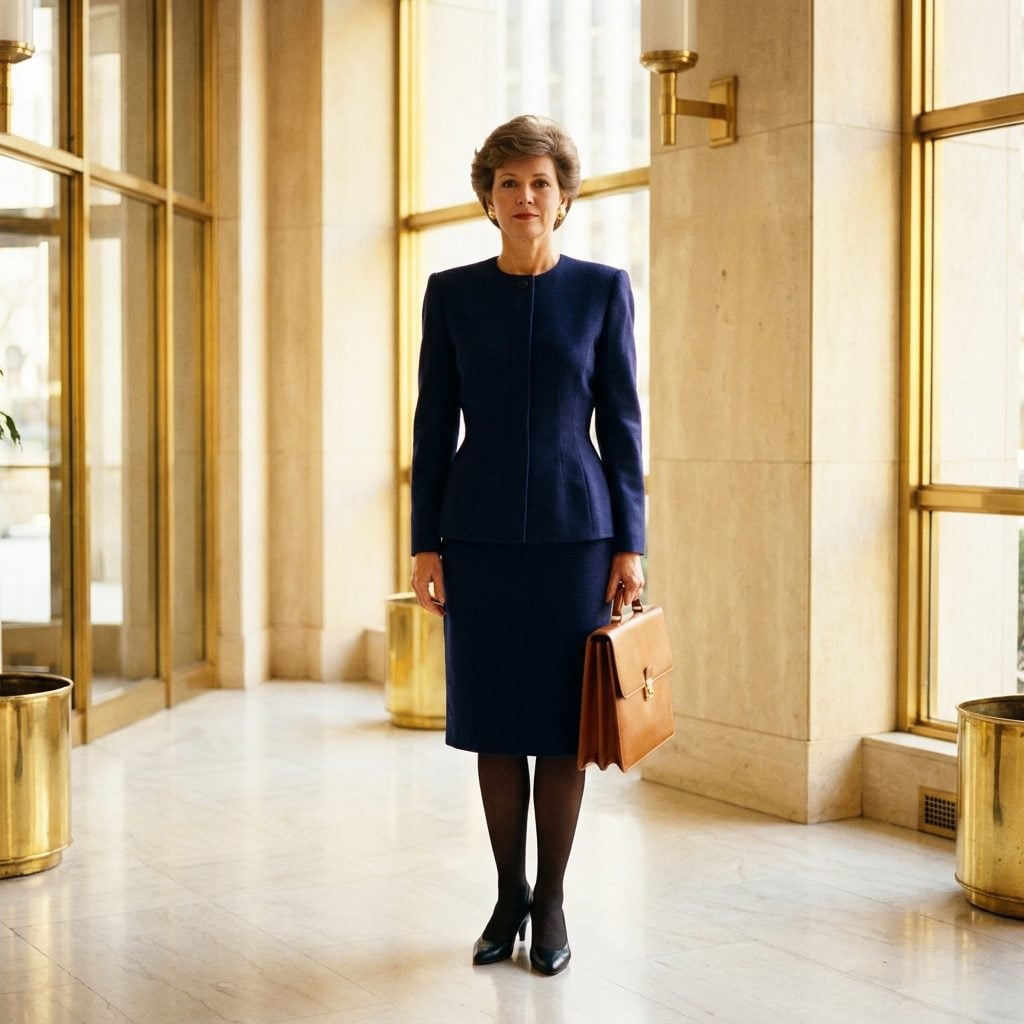
By this point, the decade had stopped choosing one proportion trick at a time.
The shoulder pads broadened the top. The fitted tailoring defined the middle. Dark hosiery and a similarly toned shoe kept the lower half visually cohesive.
That combination became strongly associated with professional power dressing in the 1980s, particularly as more women entered highly visible corporate and executive environments. The clothing was not merely decorative; its exaggerated structure became part of the era’s visual language of authority.
The opaque tights deserve their share of the credit. They keep the lower half quiet enough for the tailoring above to dominate the work look.
2. Oversized Tops Knotted at the Hip Created Their Own Waistline

The knot did what the sweatshirt itself refused to do: introduce shape.
Gather loose fabric to one side, pull it in at the hip, and the oversized top suddenly develops direction. Above the knot, fabric blouses. Below it, slim leggings keep the rest of the silhouette comparatively clean.
It was a casual version of the same decade-long obsession with controlling where volume started and stopped.
1. The Full Power-Dressing Silhouette Used Every Trick at Once
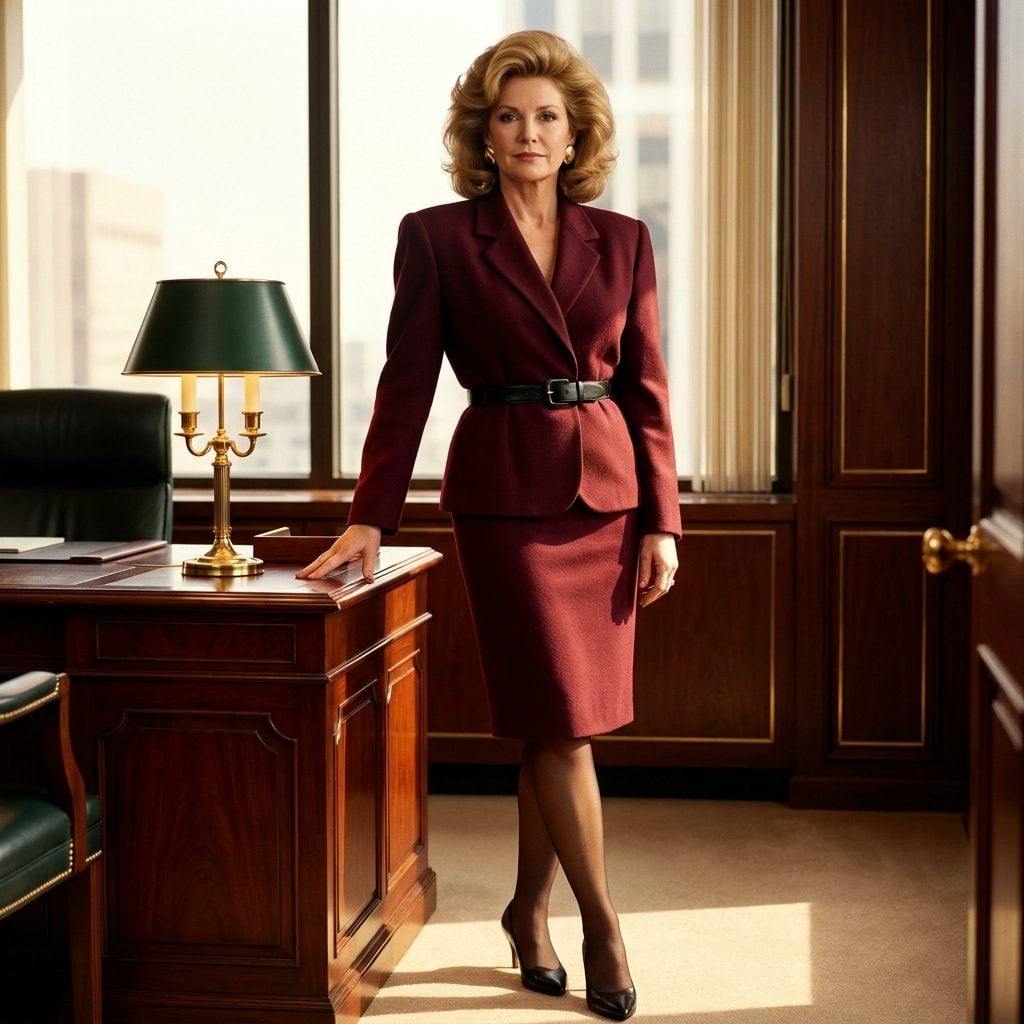
And here is the entire 1980s silhouette manual assembled into one look.
Broad shoulders establish the top line. A fitted or belted waist pulls the center inward. A straight skirt keeps the lower half controlled. Dark hosiery extends toward the shoe. A pointed pump gives the finish one last directional push.
Nothing here is trying to make the body disappear. The clothes are rearranging emphasis around it — widening one area, defining another, extending a line somewhere else.
That is the most enduring lesson in all 33 looks: the body was never treated as a fixed outline. The clothes kept redrawing the frame.
The 1980s did not dress around the body. It staged it.