❤️ Would you like to save this?
A pair of Levi’s 501s cost about $25 in the mid-1980s. That felt like a lot when minimum wage was $3.35 an hour—nearly seven and a half hours of work for jeans your mom thought were overpriced. The 1980s were not cheap, not the way nostalgia makes them sound. Wages were lower, but so were expectations, and yet somehow the closet still had to have the right sneakers, the right sweater, the right everything. What follows is what that actually cost, item by item, across 23 products that could define a teenage closet, bathroom counter, or backpack.
FYI, thanks to AI imagery software, we’re able to create very specific fashion and hairstyle examples to illustrate the points being made. In some cases, imagery is exaggerated to hammer home the point. Also, assume links that take you off the site are affiliate links such as links to Amazon. this means we may earn a commission if you buy something.
23. A Pair of White Reeboks: About $35 in the 1980s
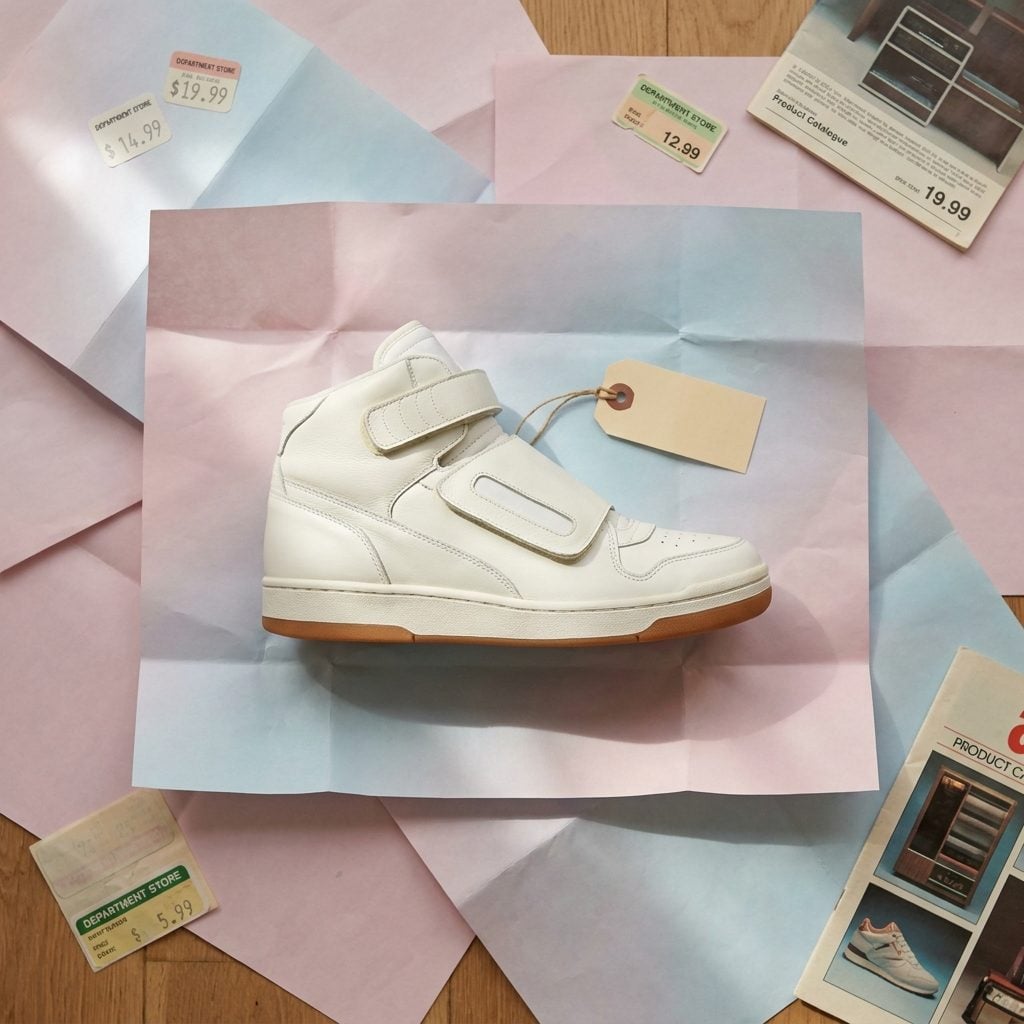
Around 1985, a pair of white leather Reebok Freestyle or Classic high-tops ran about $35 at department stores and athletic retailers. At a minimum wage of roughly $3.35 an hour, that was more than ten hours of work for a teenager saving up. They were the sneaker that crossed the aerobics craze right into the school hallway, and every girl who owned a pair kept them white with a dedication that bordered on devotion.
The Velcro strap was not optional. It was the defining detail.
22. A Members Only Jacket: About $45 in the 1980s

Somewhere between $40 and $50, depending on the color. The Members Only jacket was the status piece of the early 1980s in a way that is genuinely hard to explain now. It was nylon. It had a weird little epaulet that served no purpose. And what felt like every teenager in America needed one.
At the federal minimum wage, that jacket represented roughly thirteen to fifteen hours of gross pay. Moms generally considered it overpriced. The kids considered it non-negotiable. By the late 1980s, Starter jackets and other sports-logo outerwear were competing for the same status-piece territory, but for a few years that snap collar was everything.
21. A Swatch Watch: About $30 in the 1980s
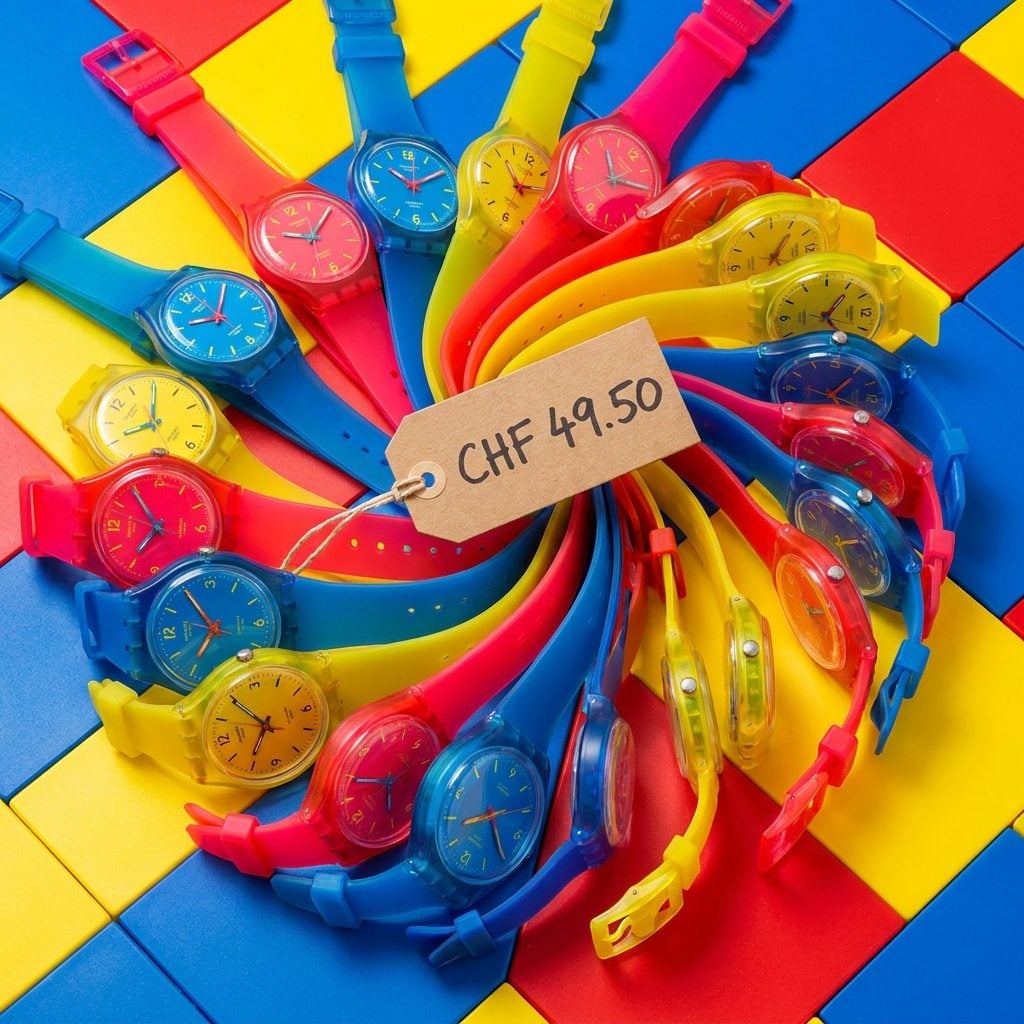
Swatch launched in the U.S. in 1983 at a suggested retail of about $30, and the marketing was genius: buy more than one, stack them, wear four at a time. The plastic Swiss quartz watch was cheap enough that a teenager could own several, which was entirely the point. The company wanted Swatch to be a fashion accessory first and a timepiece second, and teenagers obliged completely.
20. A Pair of Jellies: About $8 in the 1980s
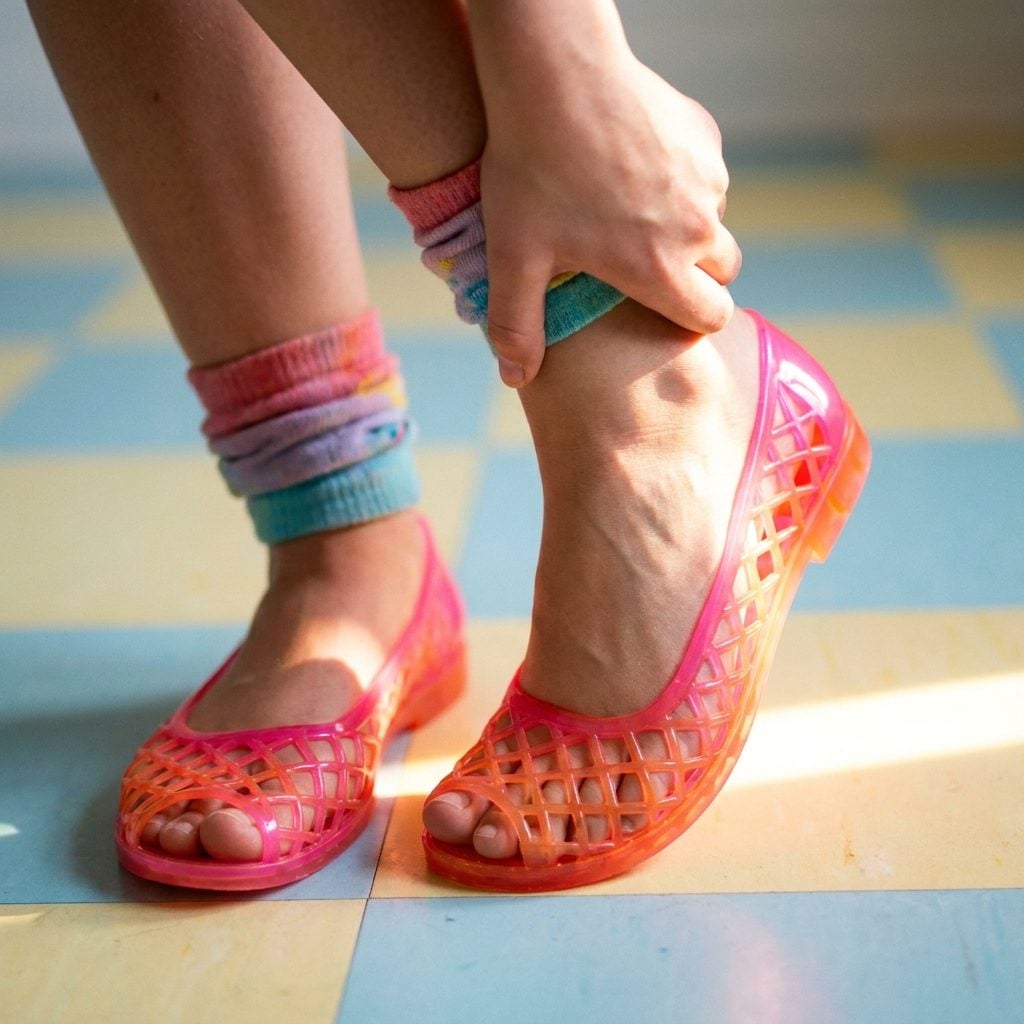
Plastic shoes that left your feet wet from the inside. No breathability, a blister guaranteed by noon, and an unmistakable squeaking sound on any hard floor. Girls loved them anyway. A pair of jelly sandals ran somewhere between $6 and $10 at drugstores, Kmart, and Payless, which made them the most affordable trend of the decade. You could buy three pairs for what a single pair of Reeboks cost.
They came in every color, including a glitter version that was extremely difficult to walk away from at age twelve.
19. An L.A. Gear High-Top: About $40 in the 1980s
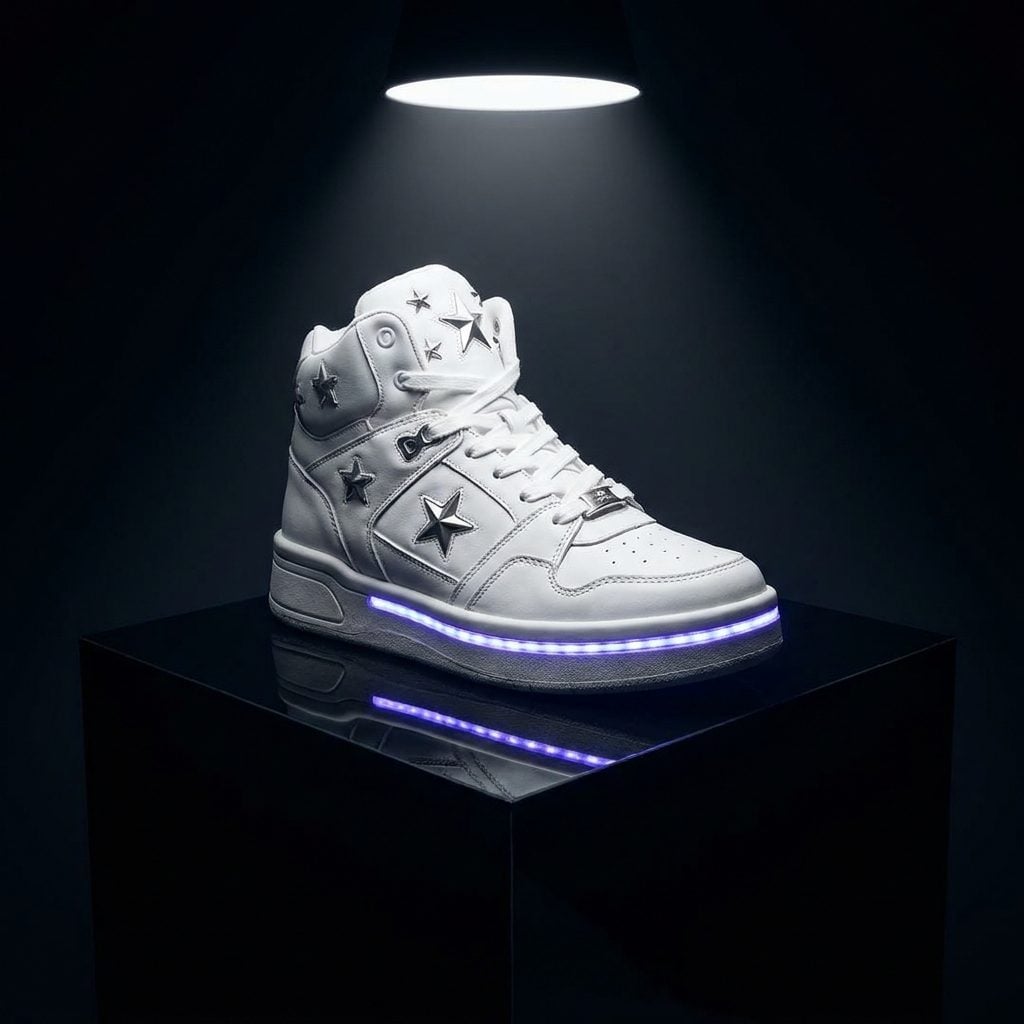
L.A. Gear surged at the end of the decade, and its flashy high-tops with stars, metallic accents, and layered color ran about $35 to $45. They competed directly with Reebok and Nike on price but went a different direction on design, which is a polite way of saying they were louder. The target customer was very much a teenager who wanted to be noticed walking down a hallway.
18. A Scrunchie (or Twelve): About $2 Each in the 1980s
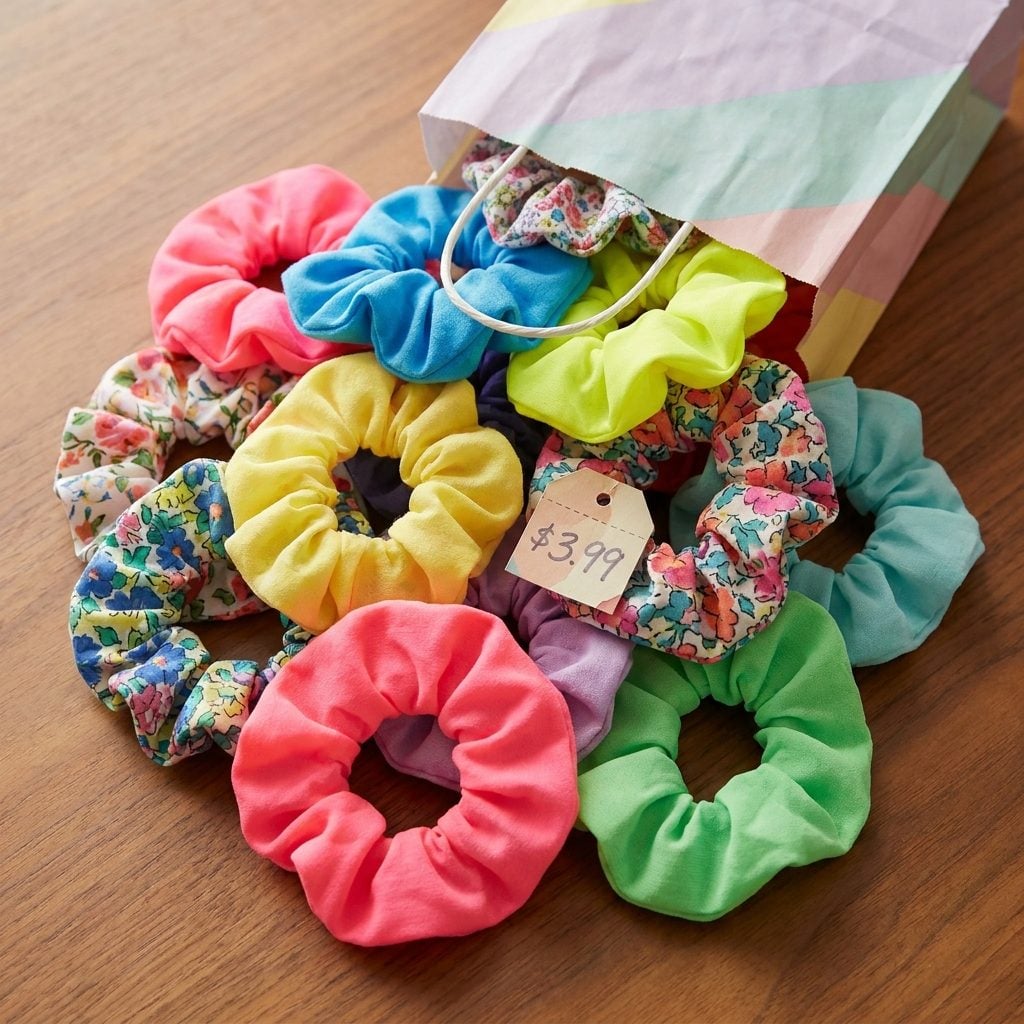
Roughly $1.50 to $3 each, sold everywhere from Claire’s to the drugstore checkout line, which meant a teenager could reasonably own two dozen of them without it registering as a significant household expense. They were worn in the hair, stacked on the wrist as bracelets, and left on every surface in the house. Moms spent a portion of the decade stepping on them barefoot.
The scrunchie was the lowest-cost, highest-volume item in the 1980s teenage wardrobe. Some girls had a dedicated drawer. It was not considered excessive at the time.
17. A Trapper Keeper Binder (Yes, It Was Fashion): About $10 in the 1980s
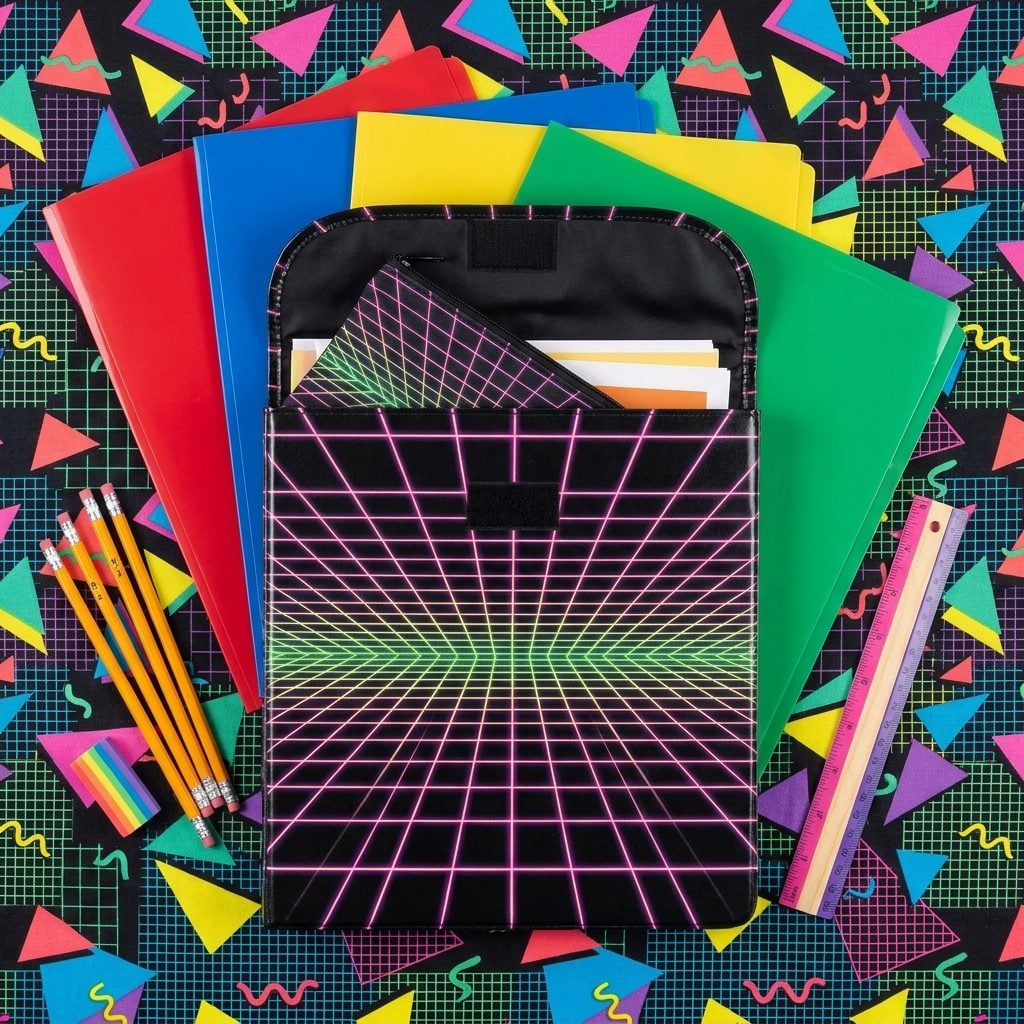
The Trapper Keeper cost about $10 in 1983, and it was absolutely considered part of the back-to-school wardrobe. What you carried it in said something. The cover design mattered. Mead sold them in spaceship graphics, hot air balloons, and airbrushed sunsets, and kids were opinionated about which print they brought to class.
Ten dollars was real money when minimum wage was $3.35. Plenty of families bought the plain three-ring binder for a dollar and called it done. The Trapper Keeper was an upgrade, a small luxury, the kind of thing you asked for specifically.
16. A Neon Windbreaker That Hurt to Look At: About $20 in the 1980s

Around $18 to $22 at department stores or sporting goods chains, the neon windbreaker was the 1980s in jacket form. Polyester shell, thin enough to crinkle when you moved, colors engineered to be visible from space. Electric yellow. Acid green. Hot pink with teal sleeves. The color-blocking was not subtle, and that was entirely the point.
It weighed almost nothing, crinkled every time you moved, and was somehow the most important thing in the closet.
At $20 against a federal minimum wage of $3.35, the jacket represented almost six hours of gross pay.
15. A Tube of Dep Hair Gel: About $2.50 in the 1980s
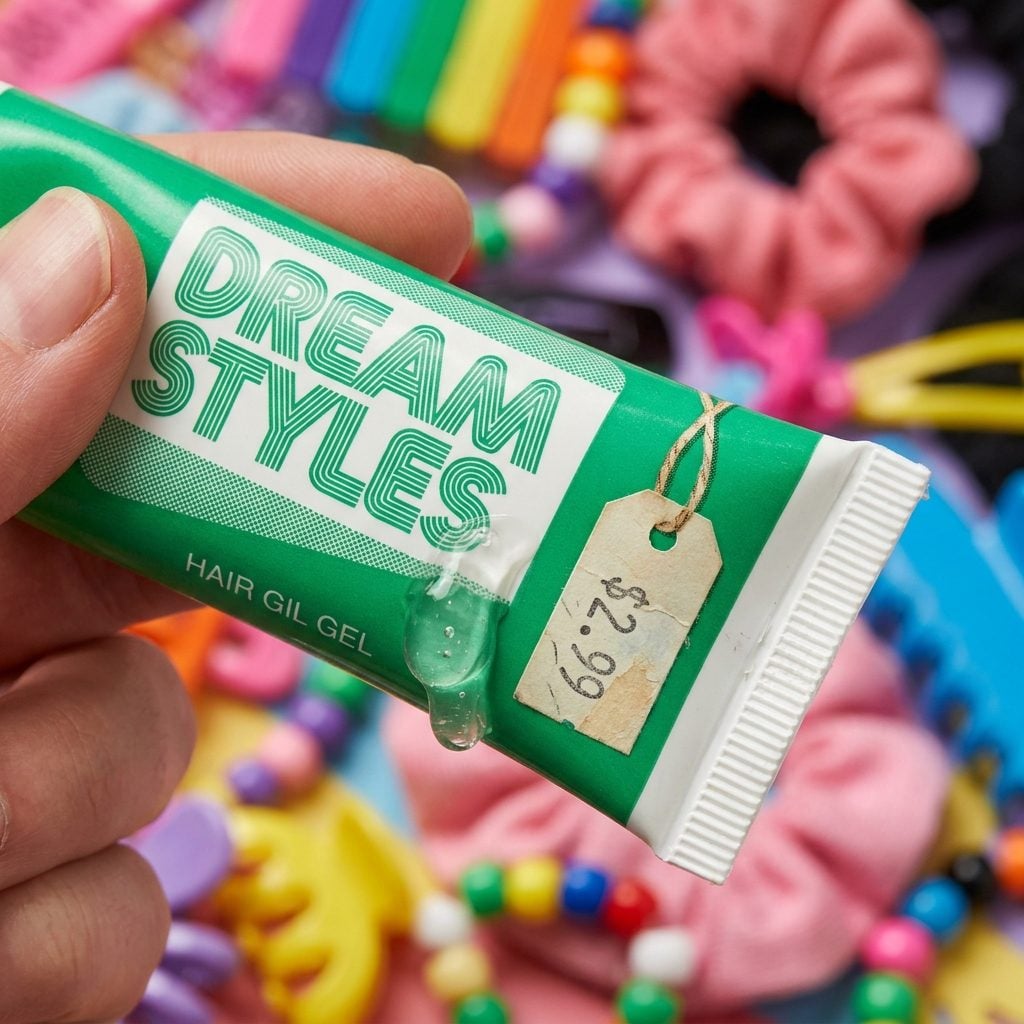
Dep gel. About $2.50 at any drugstore, and absolutely essential. The tube with the green-and-white label lived on countless bathroom counters for a decade. Wet look, crunchy hold, the specific smell of every 1980s school picture day. You used it for the spiky bang, for the side wings, for the gravity-defying height that required a full minute with a round brush and a blow dryer set to volcanic.
14. A Pair of Oversized Plastic Sunglasses: About $12 in the 1980s
About twelve dollars bought a pair of oversized plastic sunglasses with enough surface area to cover half your face. White frames, red frames, translucent frames, mirrored lenses if the store had them. They were less about blocking sunlight than completing the outfit.
At a federal minimum wage of $3.35, that was a little over three and a half hours of work for an accessory that could disappear into a beach bag by August. The frames scratched, the hinges loosened, and nobody expected them to last for years. They only had to survive the season.
13. A Pair of Shoulder Pads (Sold Separately): About $3 in the 1980s
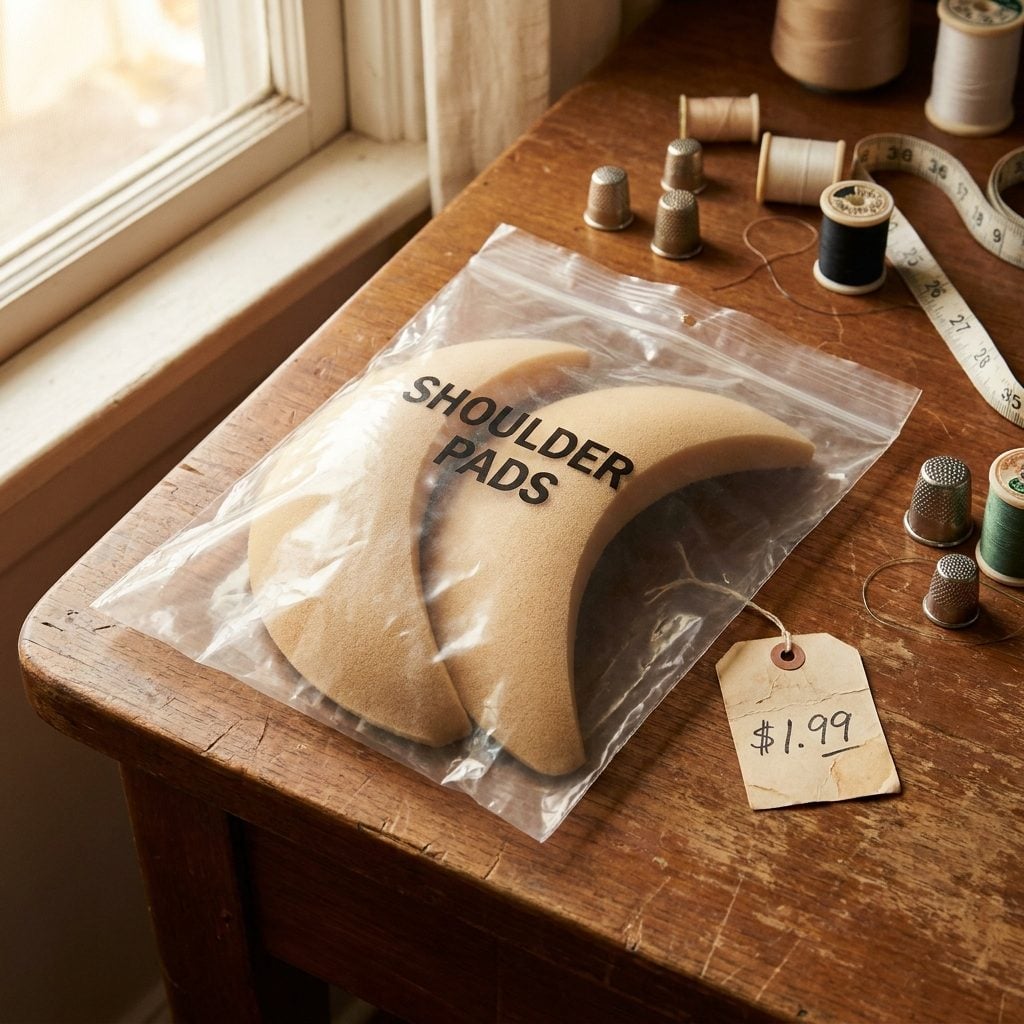
You could buy shoulder pads separately. At fabric and notions stores, a pair ran about $3, sold in a little plastic bag. You sewed them in, safety-pinned them in, or just held them in place with optimism and a blazer. Some of the pads sewn into blouses shifted around. The ones you added yourself were a whole project.
The 1980s shoulder silhouette required them. Without the pad, a blazer looked wrong, soft, like something from the previous decade. With it, you had a shoulder line that announced you before you opened your mouth. Three dollars was not a lot to pay for that.
12. A Pair of Levi’s 501s: About $25 in the 1980s
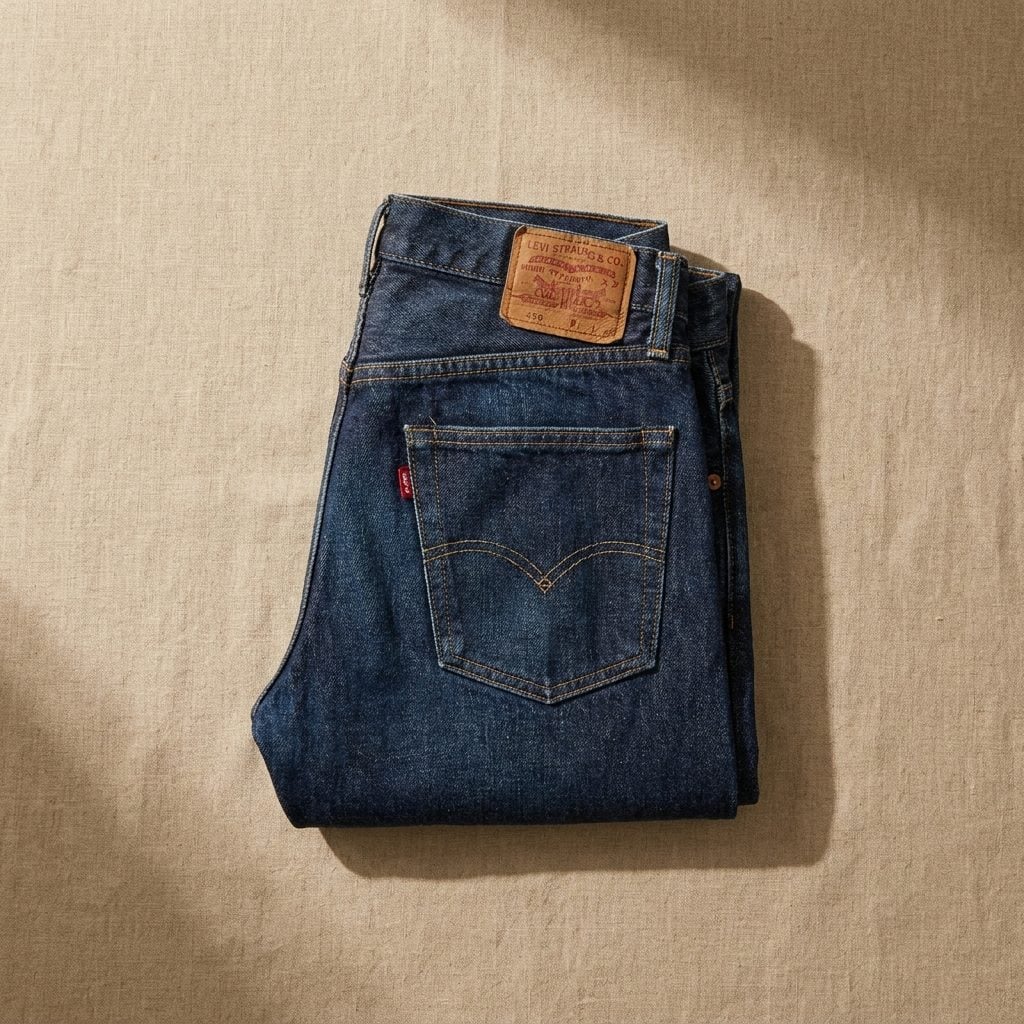
Around $25 for a pair of 501s in the mid-1980s, when federal minimum wage was $3.35 an hour. That’s roughly seven and a half hours of work for a teenager bagging groceries. Not cheap. Levi’s weren’t a throwaway purchase. They were the purchase, the one item a mom might cave on because she knew they would last.
The basic 501 formula had remained recognizable for decades, and that continuity was the defining detail. No stretch, no give, button fly, stiff as cardboard until you broke them in. Kids would wear them into the bath to shrink them to shape. Today a vintage pair in good condition can sell for far more than its original price. The market changed, but the appeal of a stiff button-fly 501 never really disappeared.
11. A Can of Aqua Net Hairspray: About $2 in the 1980s
❤️ Would you like to save this?
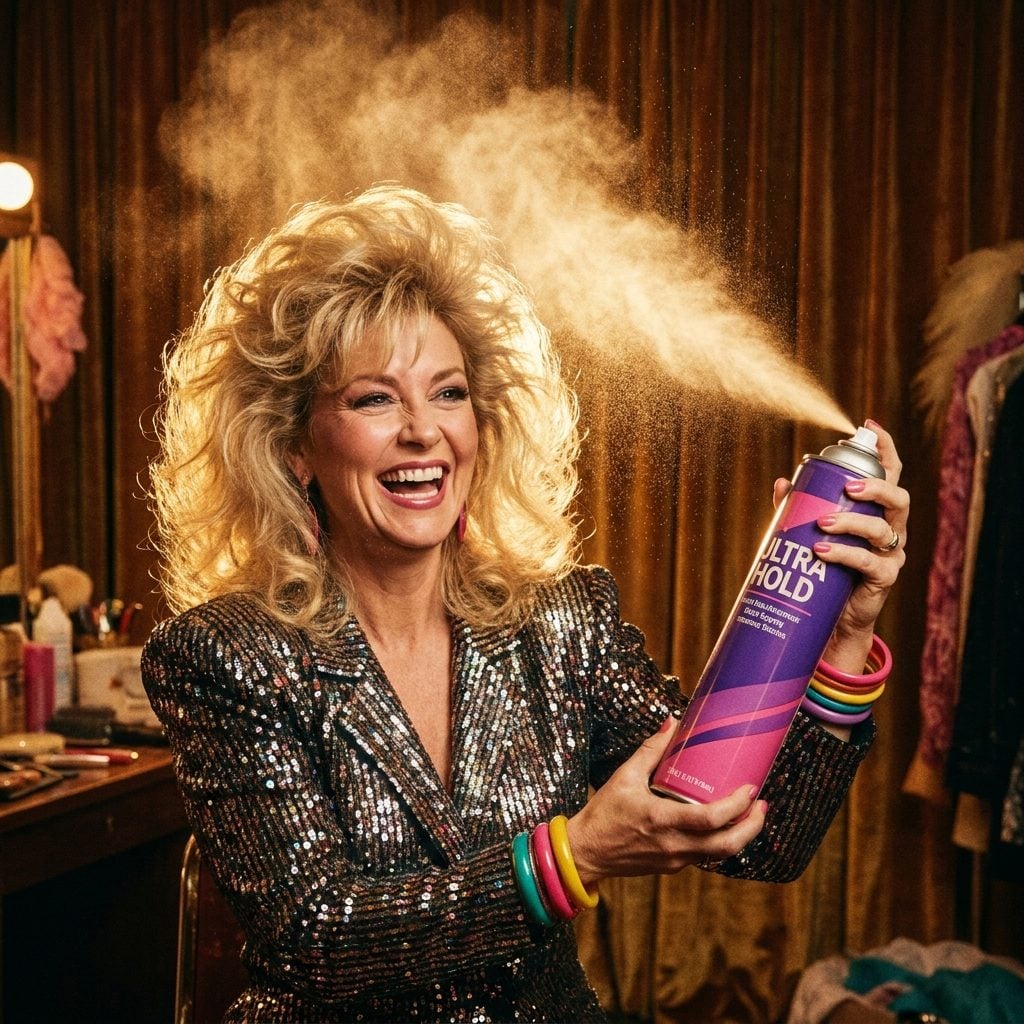
About $2. That’s what a supersized can of Aqua Net cost at any drugstore in 1985, and it was possibly the best $2 a teenager’s mom ever spent, or the most regretted, depending on how the bathroom ceiling looked afterward.
A devoted user could go through a can every few weeks during peak bangs season. Do the math on a school year. The bathroom mirror and ceiling have not forgotten.
Aqua Net came in several hold levels, the strongest of which was essentially shellac. Hair froze in place. Wind did nothing. Rain was the only real threat, and even then it was a negotiation. At $2 a can, it was the cheapest line item in the entire closet budget, and arguably the one that defined the decade more than anything else in it.
10. A Guess Denim Jacket: About $50 in the 1980s
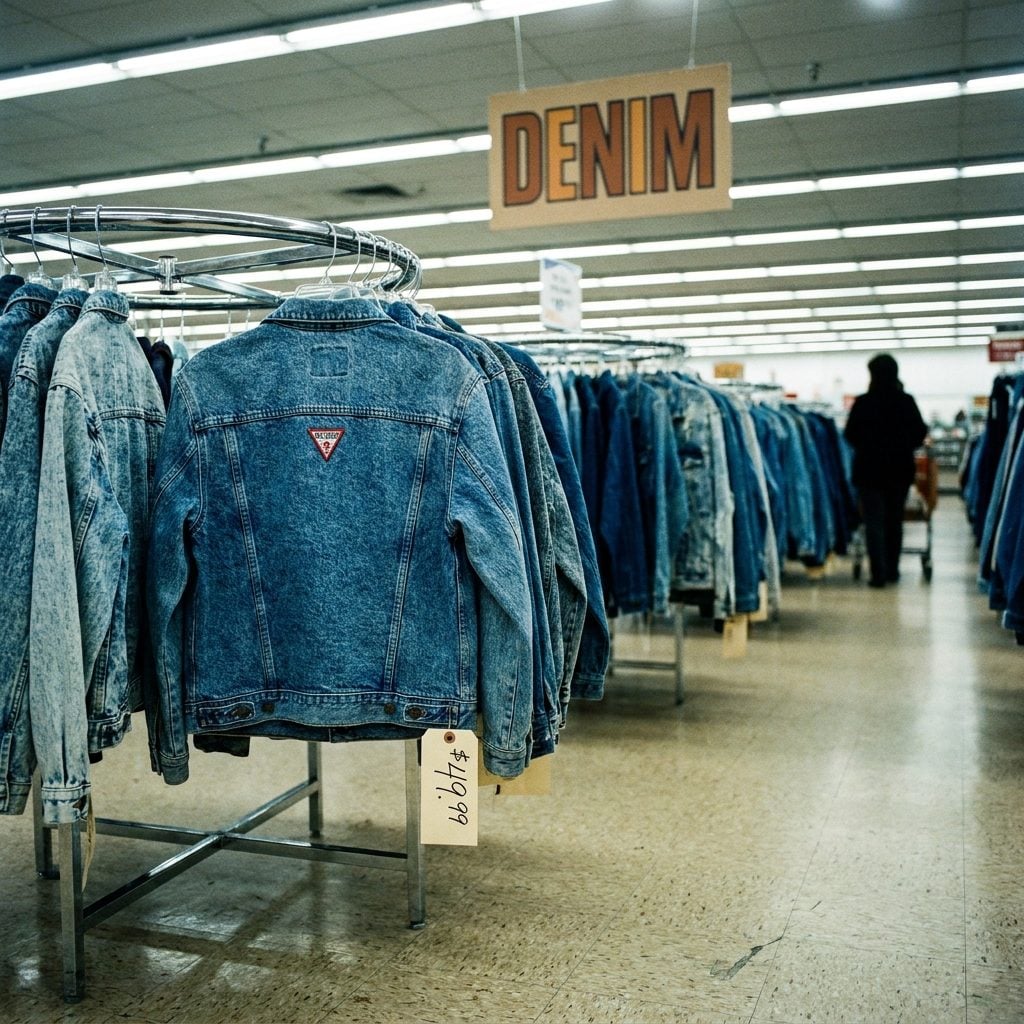
Roughly fifty bucks for a denim jacket carrying the Guess triangle where everyone could see it. In 1985 that meant almost fifteen hours of gross pay at the federal minimum wage, which explains why so many teenagers wore theirs until the cuffs frayed white and the elbows gave up entirely.
The Guess jacket was the status piece. A generic denim jacket from Sears cost about half and did the same job structurally—same weight, same warmth, same pockets—but the little red triangle was the defining detail. Peer signaling, stitched into cotton.
9. A Pair of Guess Jeans: About $60 in the 1980s
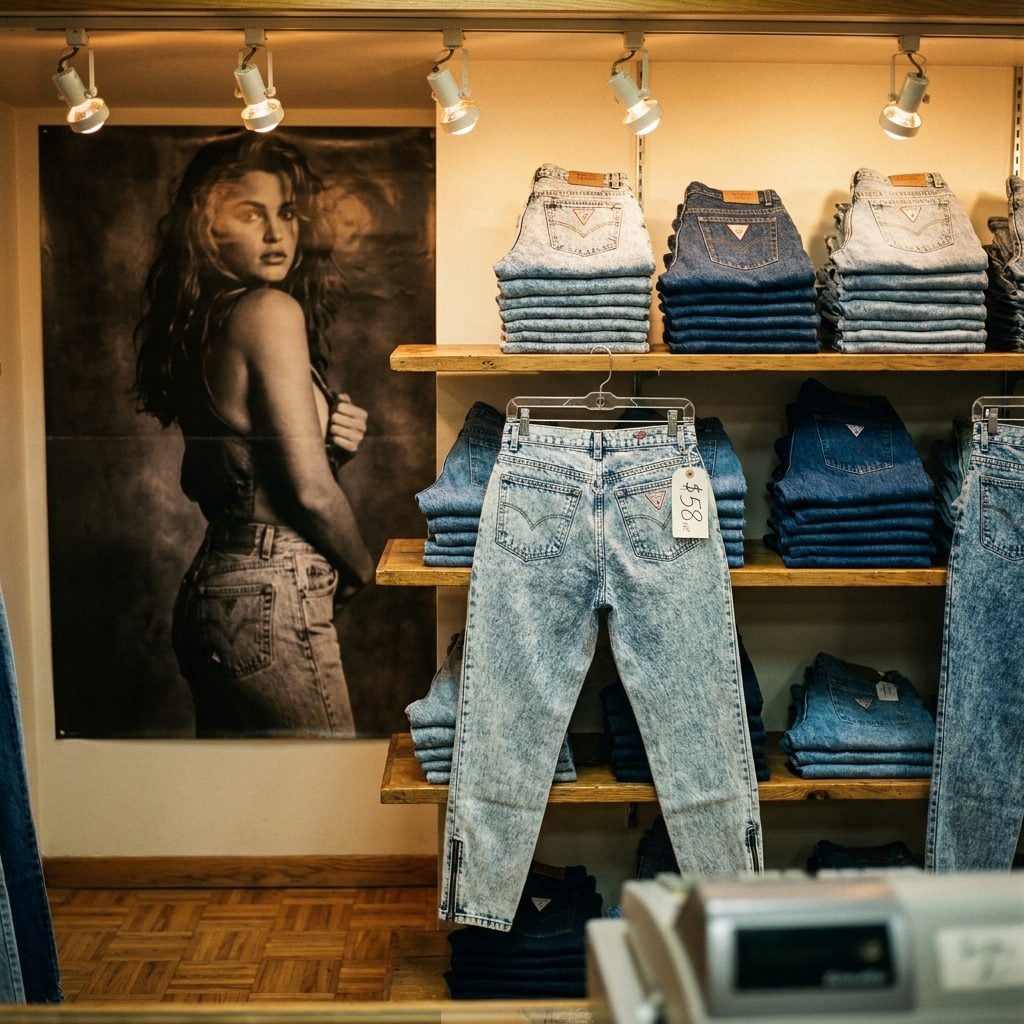
Sixty dollars for jeans in 1986 was genuinely expensive. At the federal minimum wage, a sixty-dollar pair represented almost eighteen hours of gross pay—more than two long after-school shifts and enough time around a fryer to make the smell follow you home.
The ankle zipper solved a very specific problem. Regular jeans got tapered by folding or pegging—an art form involving tight rolls and prayer—but the zipper skipped the ritual entirely and gave you the silhouette straight from the hanger. Design solving a styling problem the customer had already been solving with her hands.
8. A Coty Airspun Face Powder: About $3 in the 1980s
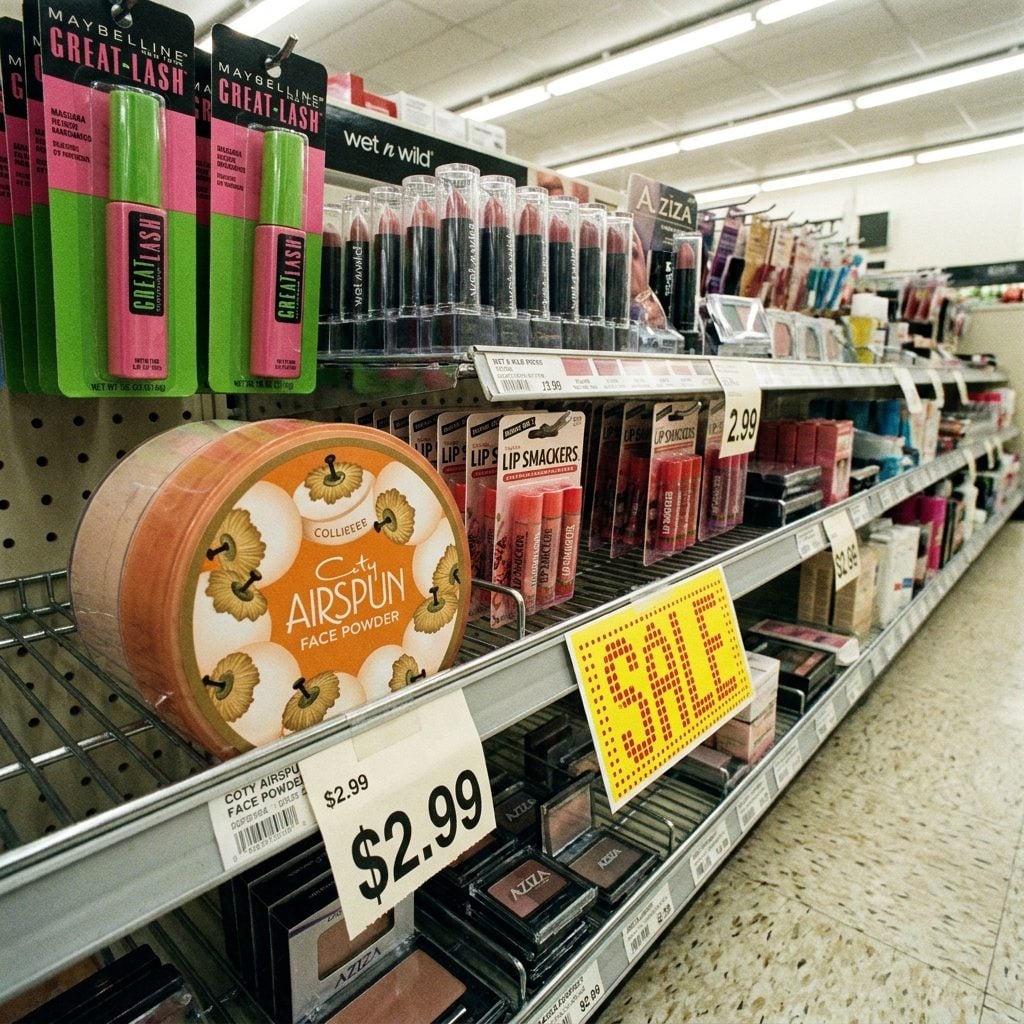
Three dollars. That’s what the peach-scented powder cost—the one that mothers, grandmothers, and daughters all reached for interchangeably. Coty Airspun had been around since 1935, and by the 1980s it was the drugstore default, the powder many shoppers grabbed by habit, choosing from the familiar shades without turning the purchase into a research project.
Much of the beauty aisle ran on the same math. Under five bucks for almost anything worth having. A teenager could walk out of Rexall with a mascara, a lipstick, and a powder for less than fifteen dollars and consider herself fully outfitted for Friday night—a movie, a mall loop, and possibly a boy who wouldn’t notice any of it anyway.
7. A Bonne Bell Lip Smacker: About $1.50 in the 1980s
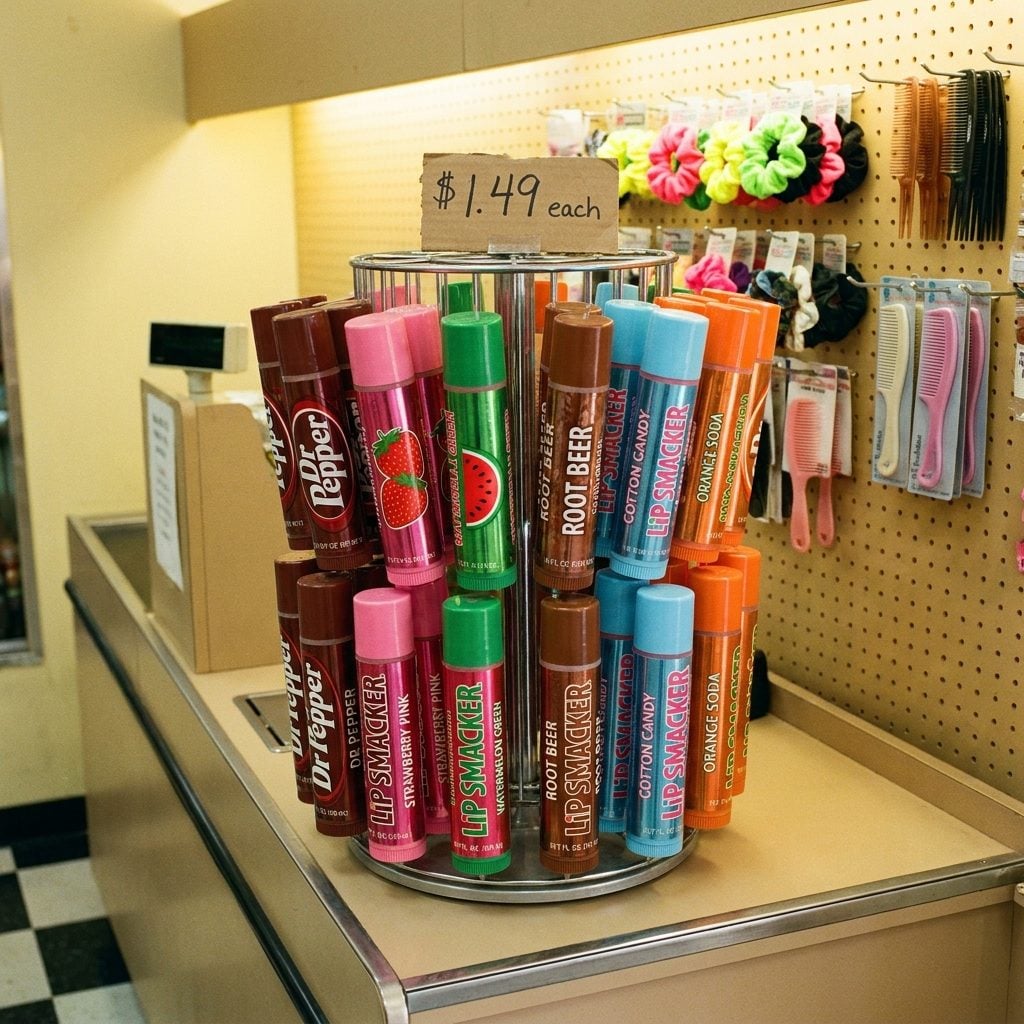
Buck fifty for a tube the size of a small flashlight, in flavors that had nothing to do with lips and everything to do with the candy aisle. Dr Pepper. Root beer. Watermelon. The flavor was the product.
Kids collected them like stickers—a dozen tubes zippered into a pouch, one for every mood and outfit, and the collection still cost less than a single tube of grown-up lipstick from the department store counter upstairs.
6. An Esprit Sweatshirt: About $32 in the 1980s
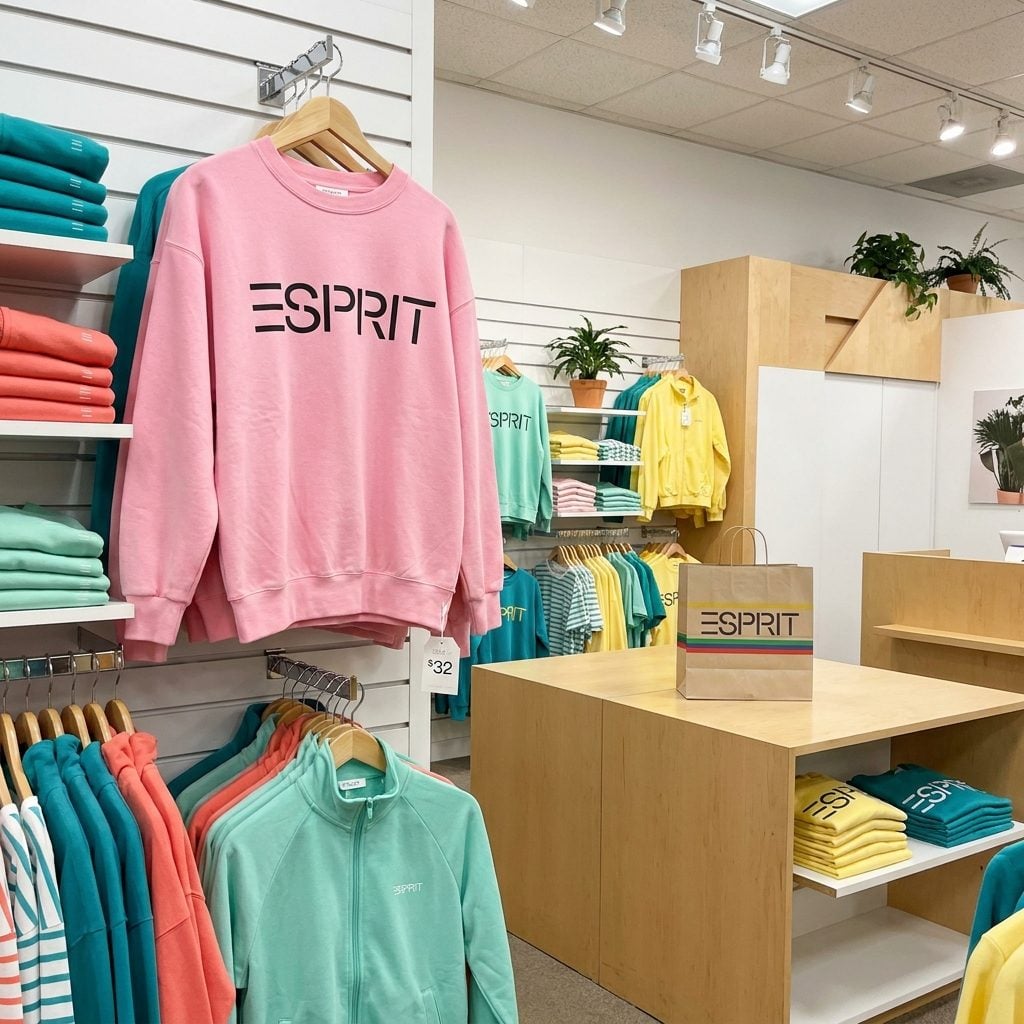
Thirty-two dollars for a sweatshirt with wide-set letters that looked like it belonged in a modern art museum gift shop. Esprit sat in the aspirational middle tier—pricier than mall staples, cheaper than the real designer stuff—and it wore that positioning openly.
The appeal was creative-kid coded. Some Esprit campaigns and catalogs used employees and other nontraditional subjects instead of relying only on conventional fashion models. Stores looked like small European ateliers dropped into American malls. And the clothes signaled that you had taste even if you were fifteen and didn’t yet know what taste meant. The branding helped justify the price, and teenagers paid it happily.
5. A Pair of Keds Champion Sneakers: About $22 in the 1980s
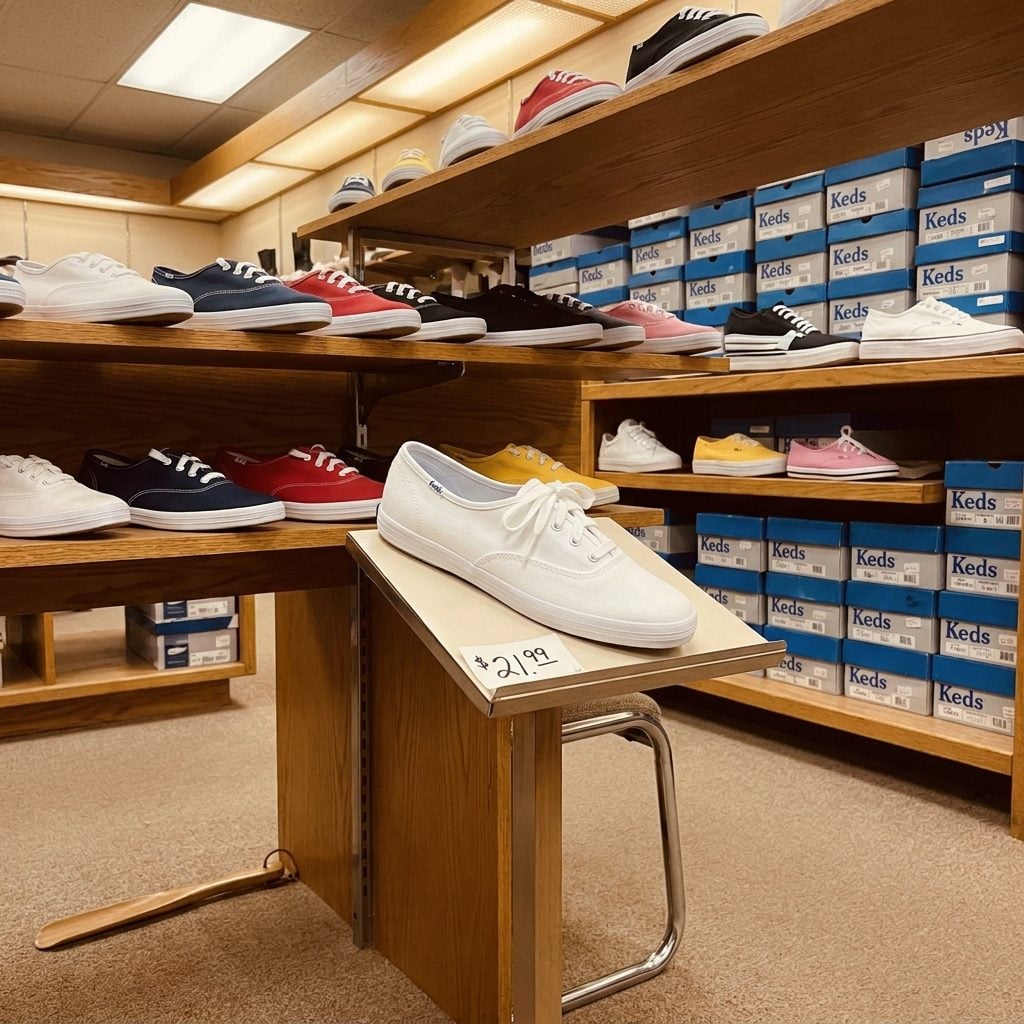
Twenty-two bucks for the plainest, most reliable canvas sneakers in the mall. Keds dated to 1916, and the Champion’s plain canvas-and-rubber formula looked remarkably consistent decades later—which was exactly why anyone bought them.
They were what you wore when you didn’t want to think about your shoes. A pair lasted a school year if you were careful with them, a few months if you weren’t, and the pink ones especially became a kind of summer uniform for anyone who didn’t want to commit to something louder or weirder or more expensive.
4. A Benetton Rugby Shirt: About $38 in the 1980s
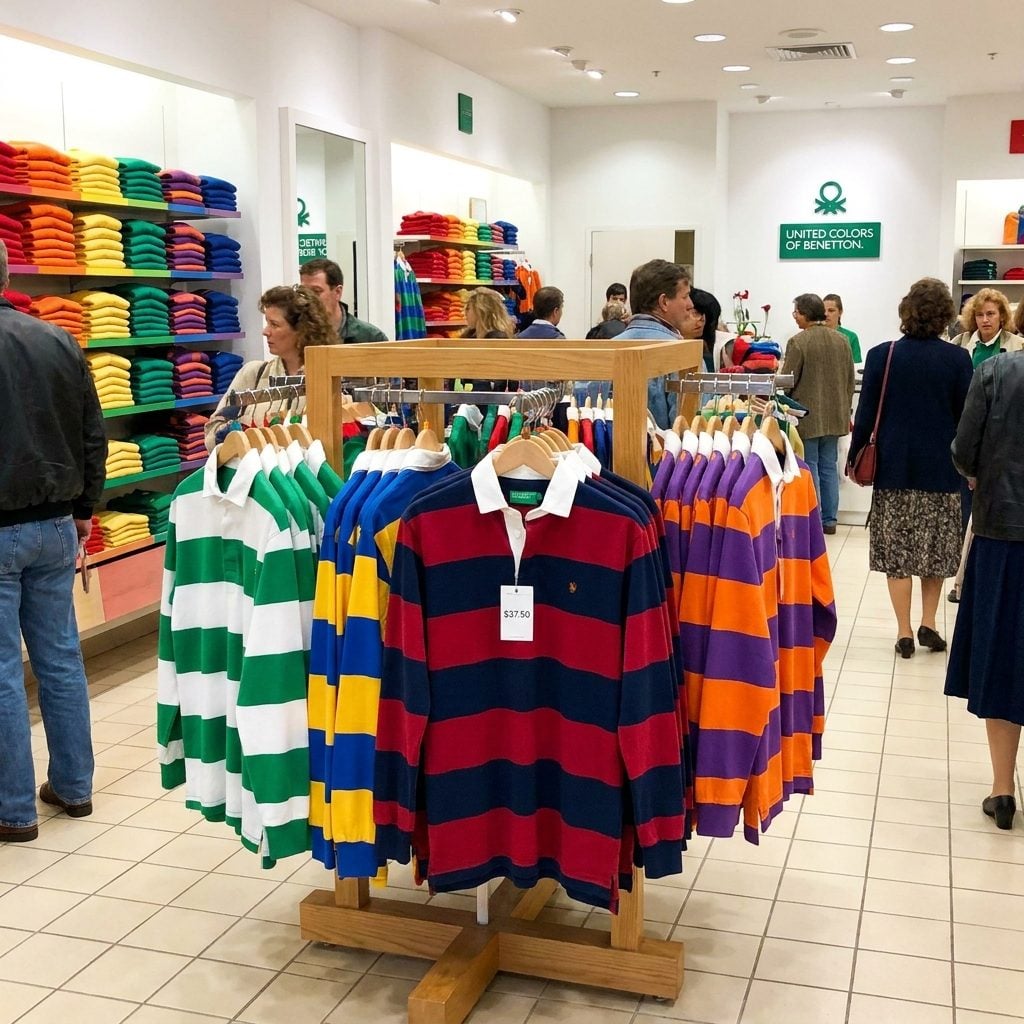
Almost forty dollars. For a striped shirt. In colors that had been dialed up somewhere past reasonable and left there. Benetton was doing something few mall brands attempted in that decade—global-preppy with an Italian accent—and the price tag reflected the story it was selling.
The rugby collar made it feel sportier than a sweater and more substantial than an ordinary knit top. Broad stripes, saturated color, and a slightly oversized shape did the rest. At $38, it represented more than eleven hours at the federal minimum wage, which was a serious amount for something worn mostly to prove you knew exactly which mall store mattered.
3. A Casio Calculator Watch: About $25 in the 1980s
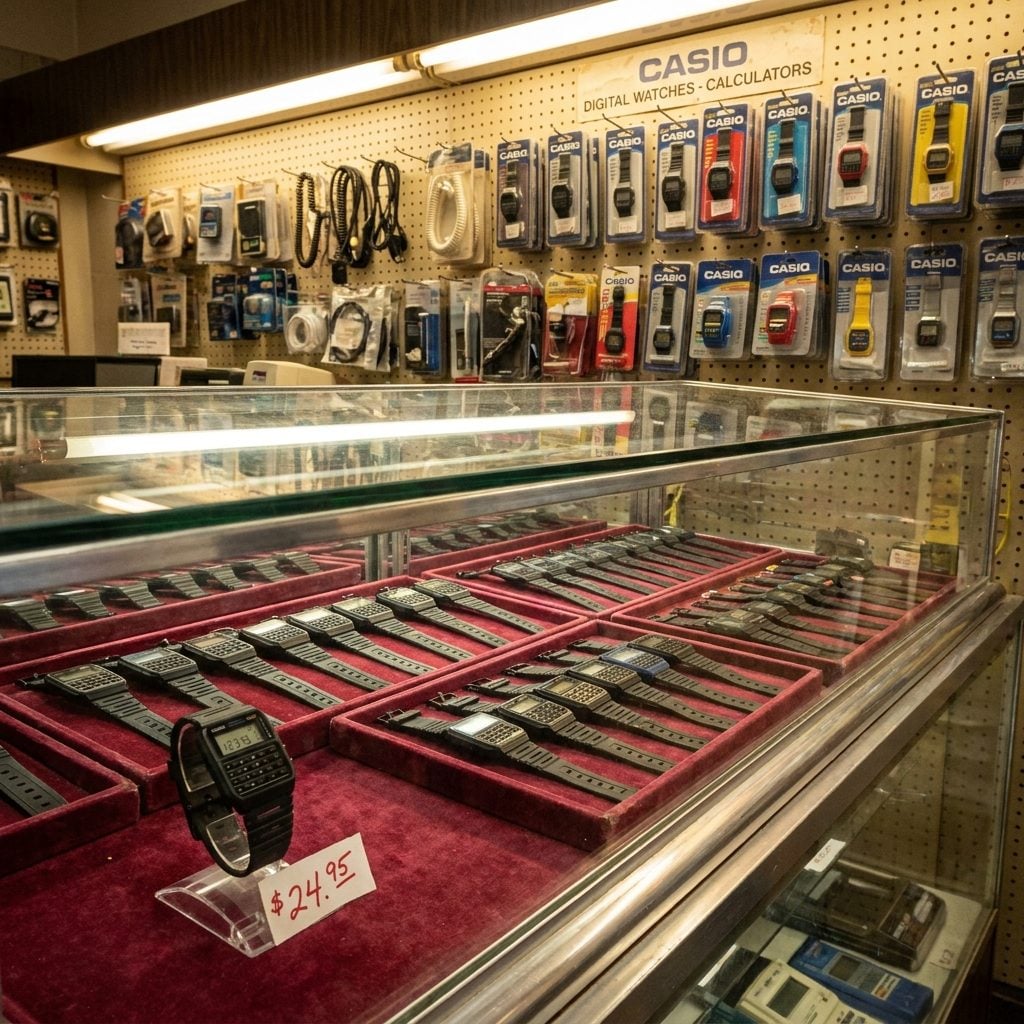
Twenty-five dollars for a wristwatch that could do long division. Casio’s calculator-watch models landed as both nerdy and futuristic, depending entirely on who was wearing it and what else they had on that morning.
Buttons too small to actually calculate anything useful. Nobody cared. The point was that it could, theoretically, and for a certain kind of 1980s teenager that was worth the price of admission by itself.
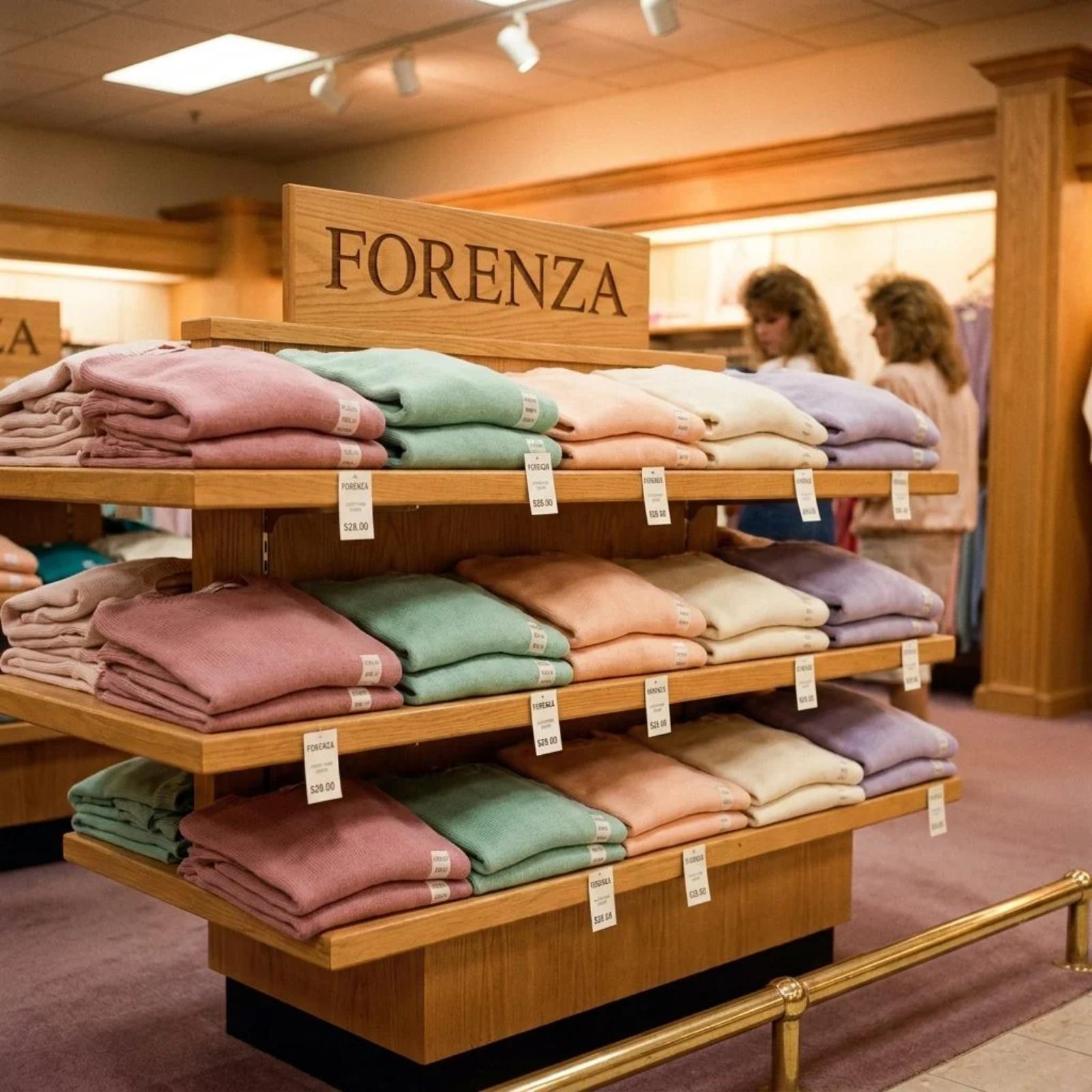
2. A Forenza Sweater from The Limited: About $28 in the 1980s
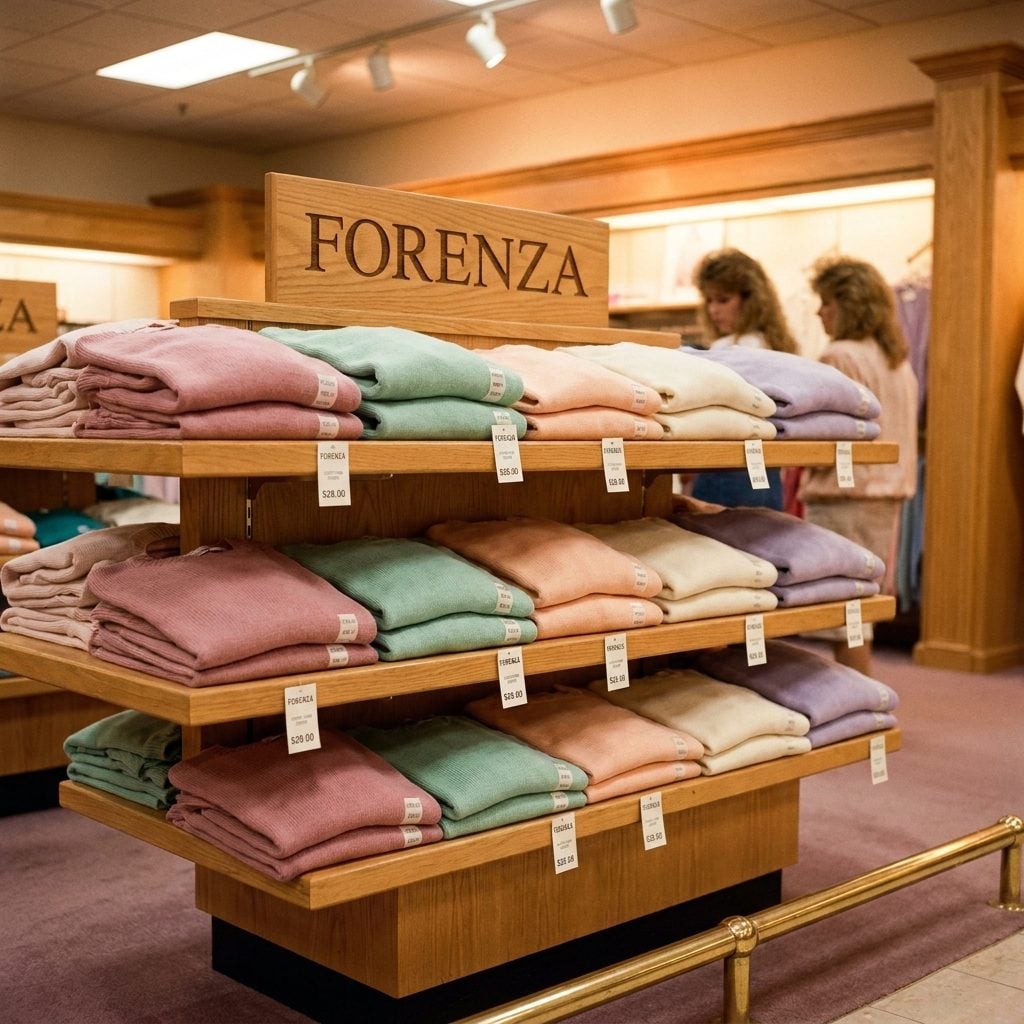
Around twenty-eight dollars for the Forenza sweater every girl at the lunch table already owned. The Limited priced them to move, and move they did, in shades of sherbet that turned every locker bank into a bowl of pastel ice cream by October.
Twenty-eight dollars in 1986 represented a little over eight hours at the federal minimum wage, or several evenings of babysitting depending on the local rate. Not nothing—but cheap enough that a mother might cave once, then cave again in a different color by December.
You wore it with the sleeves shoved up past the elbow, one shoulder slouching off, layered over a turtleneck if you were serious. The oversized shape created the slouch; the pushed-up sleeves kept it from swallowing the wearer.
1. A Pair of Girbaud Jeans: About $70 in the 1980s
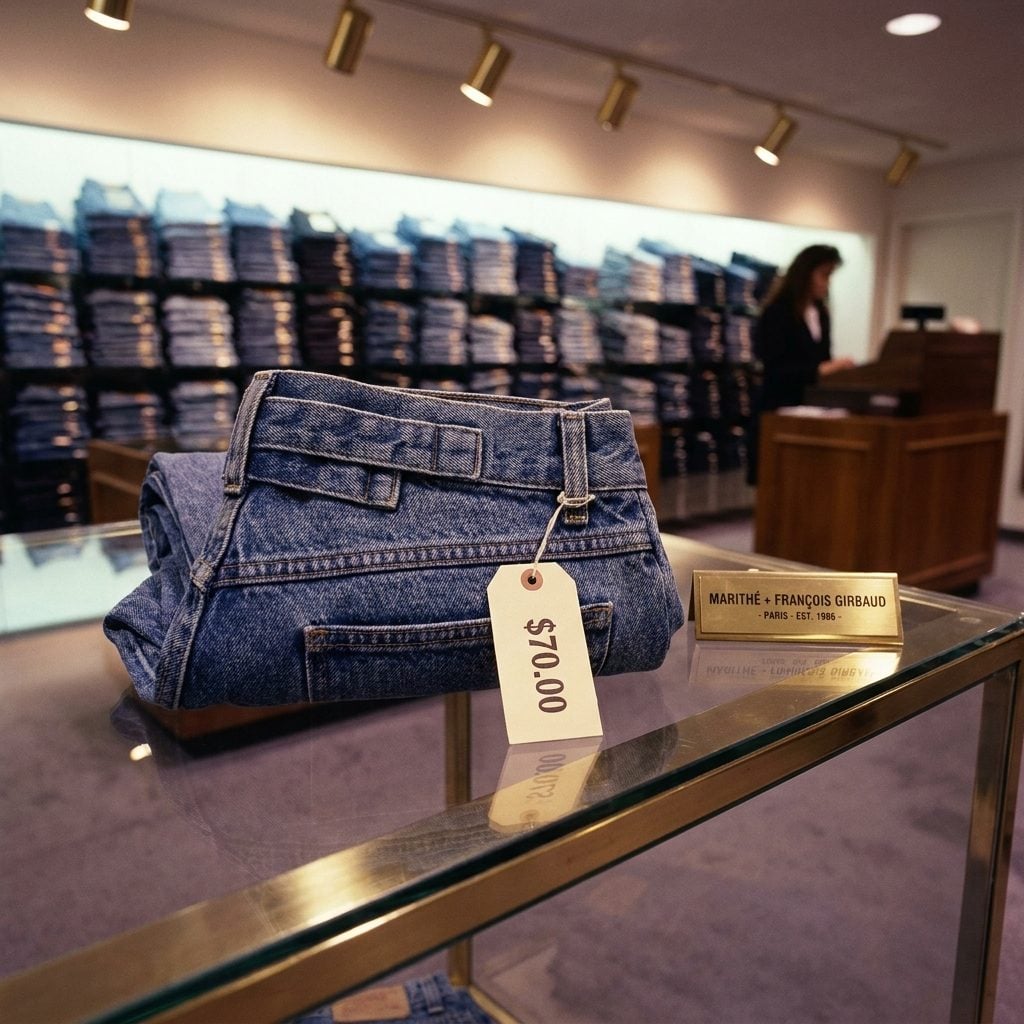
Seventy dollars for a pair of jeans in 1988 caused a small scandal in most households. Girbaud sold itself as designer denim, and that little tab across the back waistband was the whole flex—visible from across the cafeteria, doing the talking a logo tee would do a decade later.
Seventy dollars represented nearly twenty-one hours at the federal minimum wage before taxes, and almost triple what the same girl’s Levi’s had cost. Parents did the math out loud, usually while standing in the store, usually loudly.
Girls saved for them anyway. Birthday money, Christmas money, babysitting money folded into an envelope until the number was right, and then the jeans came home in a stiff paper bag with rope handles and got worn approximately every third day for the next two years.
The tab was the point. If nobody could see the tab, you had wasted seventy dollars.
Worth every penny to the fourteen-year-old wearing them. A minor household crisis to the mother who paid.