❤️ Would you like to save this?
The 1980s working wardrobe was built like architecture. Shoulders were widened, waists were marked, hems were controlled, and every smooth expanse of wool or silk seemed to need one hard flash of gold, leather, or pearl. The point was not simply to look dressed. It was to create a silhouette that held its shape from the elevator doors to the conference table.
Look closely and the system becomes almost mathematical. A broad blazer sat over a narrow waist. A fluid bow blouse softened a straight skirt. High rises lengthened the leg line; belts interrupted columns of color; pumps, loafers, scarves, watches, and structured bags supplied the punctuation. Texture mattered just as much as color: matte wool against silk, cable knit against crisp Oxford cloth, polished leather against pleats that moved when you walked.
These 35 pieces show how much design work went into a wardrobe that could look, from a distance, almost effortless. Some were pure office armor, some were the details that made the armor human, and some survived because the proportions were better than the decade’s reputation suggests. Together they explain why a woman in 1987 could walk into a lobby in navy, camel, burgundy, and gold and make the whole composition read before she said a word.
FYI, thanks to AI imagery software, we’re able to create very specific fashion and hairstyle examples to illustrate the points being made. In some cases, imagery is exaggerated to hammer home the point. Also, assume links that take you off the site are affiliate links such as links to Amazon. this means we may earn a commission if you buy something.
35. The Shoulder-Padded Navy Blazer That Meant Business

The shoulder pad changed the architecture before anything else happened. Navy wool widened the frame, squared the line from neck to sleeve, and gave the soft ivory blouse beneath it a hard edge. In an office wardrobe built around presence, this was the load-bearing wall.
High-waisted cream trousers keep the lower half long and quiet, while a slim brown leather belt lands exactly at the natural waist. Broad above, narrow through the middle, clean below: the silhouette is almost diagrammatic, which is why it reads so instantly.
34. The Silk Scarf Knotted at Your Throat Like Armor

A silk scarf at the throat could change the temperature of a plain blouse in thirty seconds. Navy and ivory stay disciplined; then an equestrian print arrives at the collarbone and gives the eye one place to stop.
That placement matters. The pattern sits high, close to the face, so it works more like a frame than an all-over print. Knotted tightly, it also brings a little ritual to getting dressed: fold, loop, pull, check the mirror, go.
33. The Gold Chain Necklace That Made Black Knit Look Expensive

Gold over black knit under a cream blazer, and suddenly the outfit has a pulse. The chain catches light against the darkest surface in the look, which is exactly where a small piece of jewelry can do the most visual work.
Three textures make the combination: matte wool, smooth knit, hard metal. Nothing needs to be oversized when the contrast is this clean. The chain is less ornament than a bright line drawn across an otherwise controlled palette.
32. The Belted Teal Shirtwaist Dress
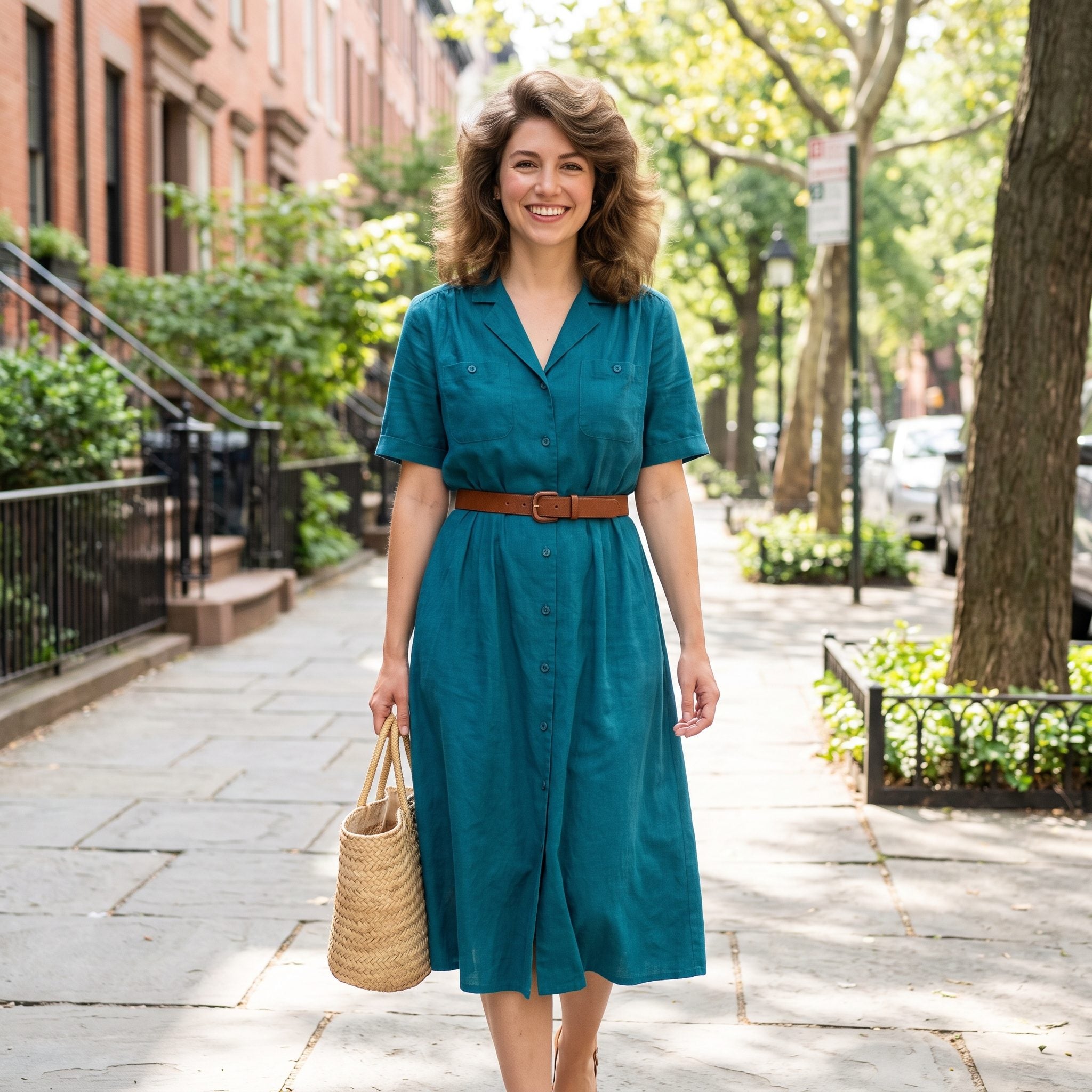
One dress, one belt, done. The shirtwaist borrowed the orderliness of a button-front shirt and gave it a skirt, then pulled the whole thing inward at the middle so the silhouette never disappeared under all that fabric.
Teal keeps the effect saturated but serious. The belt is doing structural work rather than decorative work: it divides bodice from skirt, fixes the waistline, and lets the gathered lower half move without making the dress feel loose.
31. The Classic Black Leather Pumps That Clacked Down the Hall
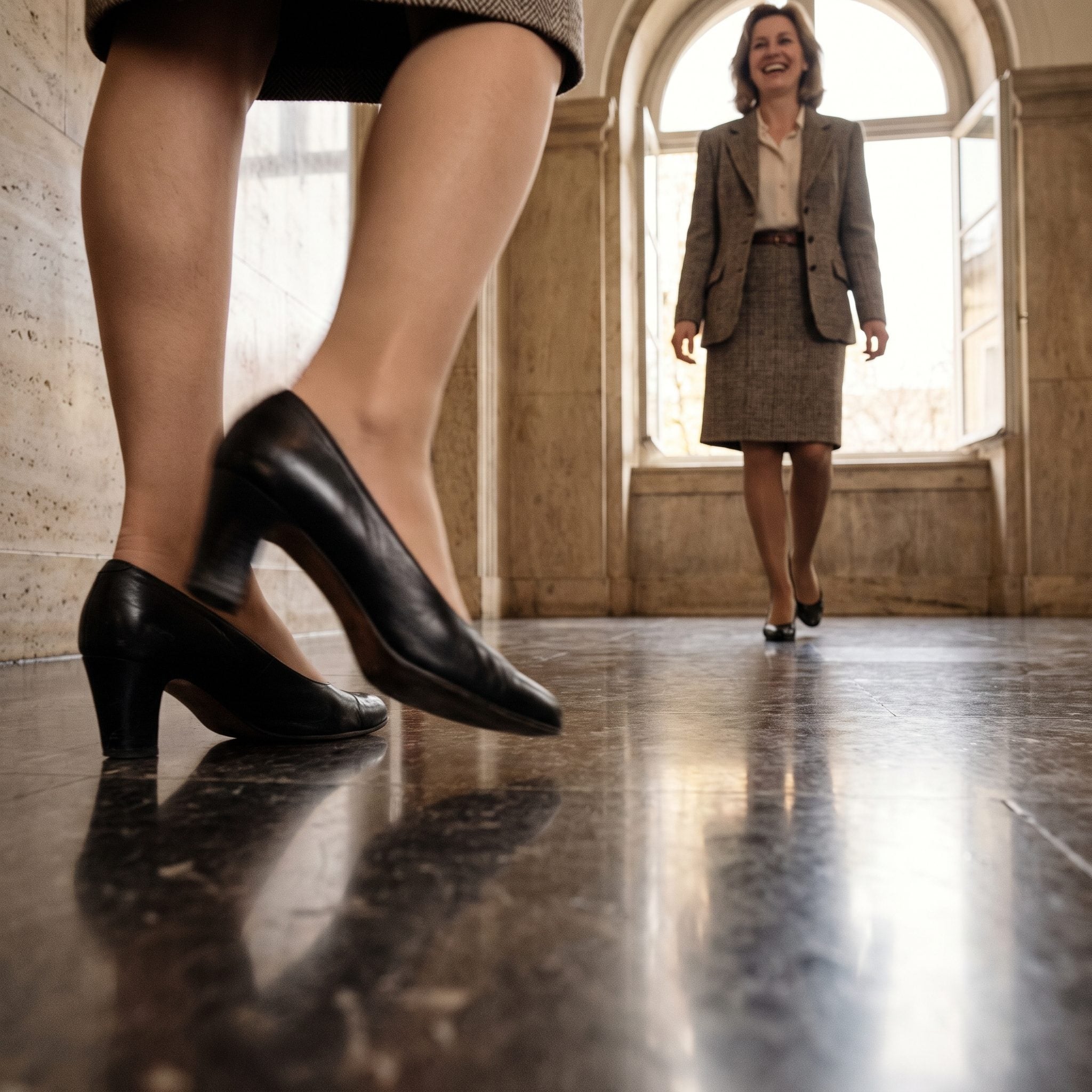
You heard them before you saw them. That steady clack on stone or tile was part of the uniform: black leather pumps, moderate heel, closed toe, no argument about what they were for.
The shape finishes tailoring without competing with it. A little lift sharpens the line from skirt or trouser hem to floor, while black disappears easily beneath navy, charcoal, camel, or jewel tones. A good pair was polished, resoled, and worn until the leather had memorized the foot inside it.
30. The Silk Bow Blouse You Saved for Something
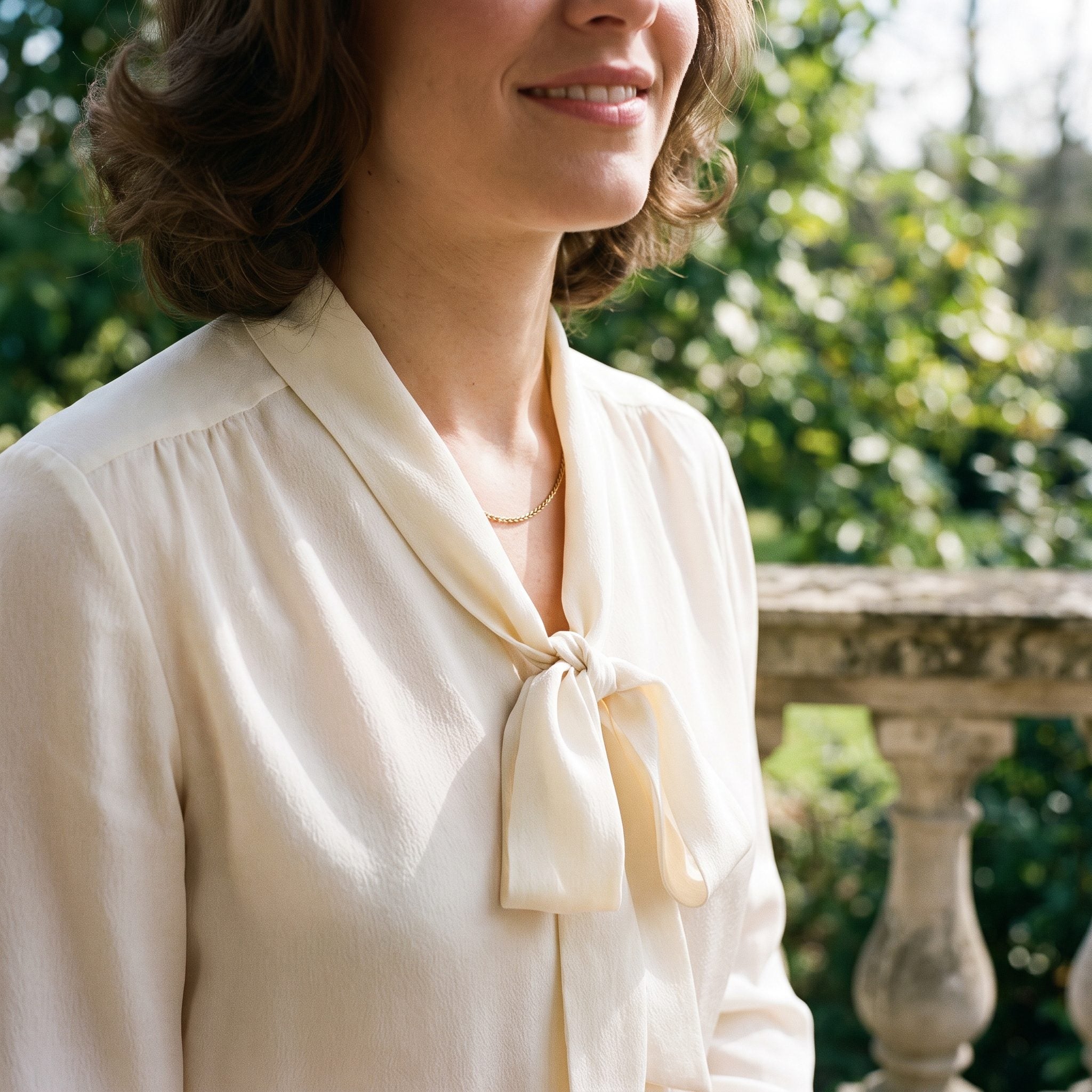
Silk at the collarbone and a bow arranged just so — this was not the blouse you pulled from the laundry basket on a Tuesday. It came out for the interview, the presentation, the lunch where you wanted the mirror to cooperate.
The appeal is the contrast. Fluid silk and a soft tie sit above a firmer burgundy midi, so the outfit gets authority from the skirt without hardening all the way to the neckline. The bow is decorative, but it also puts the visual emphasis exactly where a jacket lapel would normally take over.
29. The Structured Burgundy Top-Handle Handbag
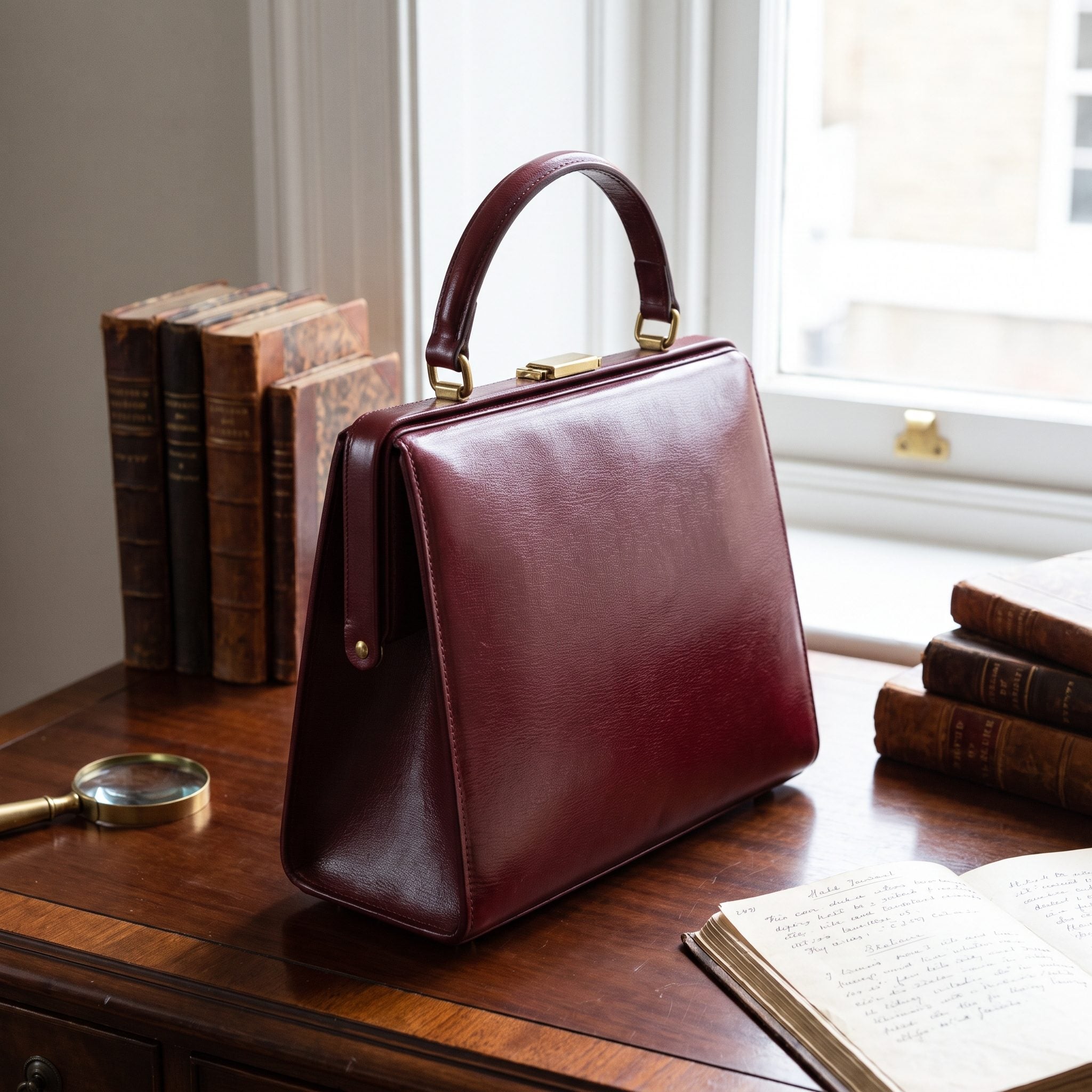
It stood upright on the desk. That was the tell. A structured burgundy top-handle bag kept its own shape, held its hardware in place, and looked more like a compact piece of equipment than something meant to collapse into the crook of an arm.
Against camel and cream, burgundy becomes the deepest note in the composition. The color has enough weight to anchor the neutrals, while the rigid form echoes the tailored clothes around it. Soft bag, different story; this one arrived already composed.
28. The Houndstooth Blazer With Shoulders You Could Set a Drink On
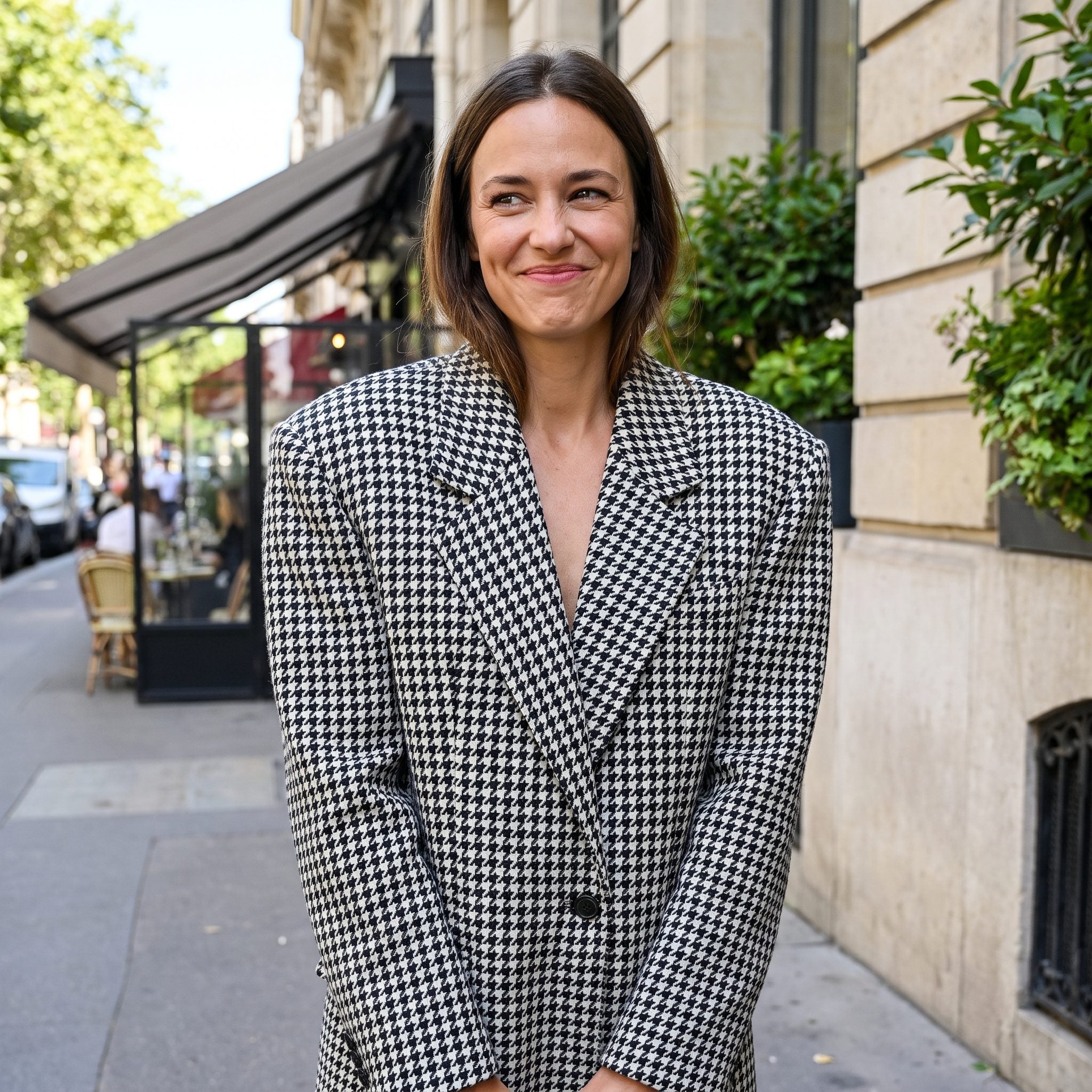
The houndstooth blazer did not need help being noticed. Strong shoulders gave it scale; the black-and-white weave supplied the movement. Put both together and the jacket became the entire opening argument.
Everything underneath wisely backs away. A black turtleneck and black skirt turn into a visual ground plane, letting the broken checks stay crisp instead of chaotic. This is pattern used as structure, not decoration sprinkled on afterward.
27. Pearl Stud Earrings
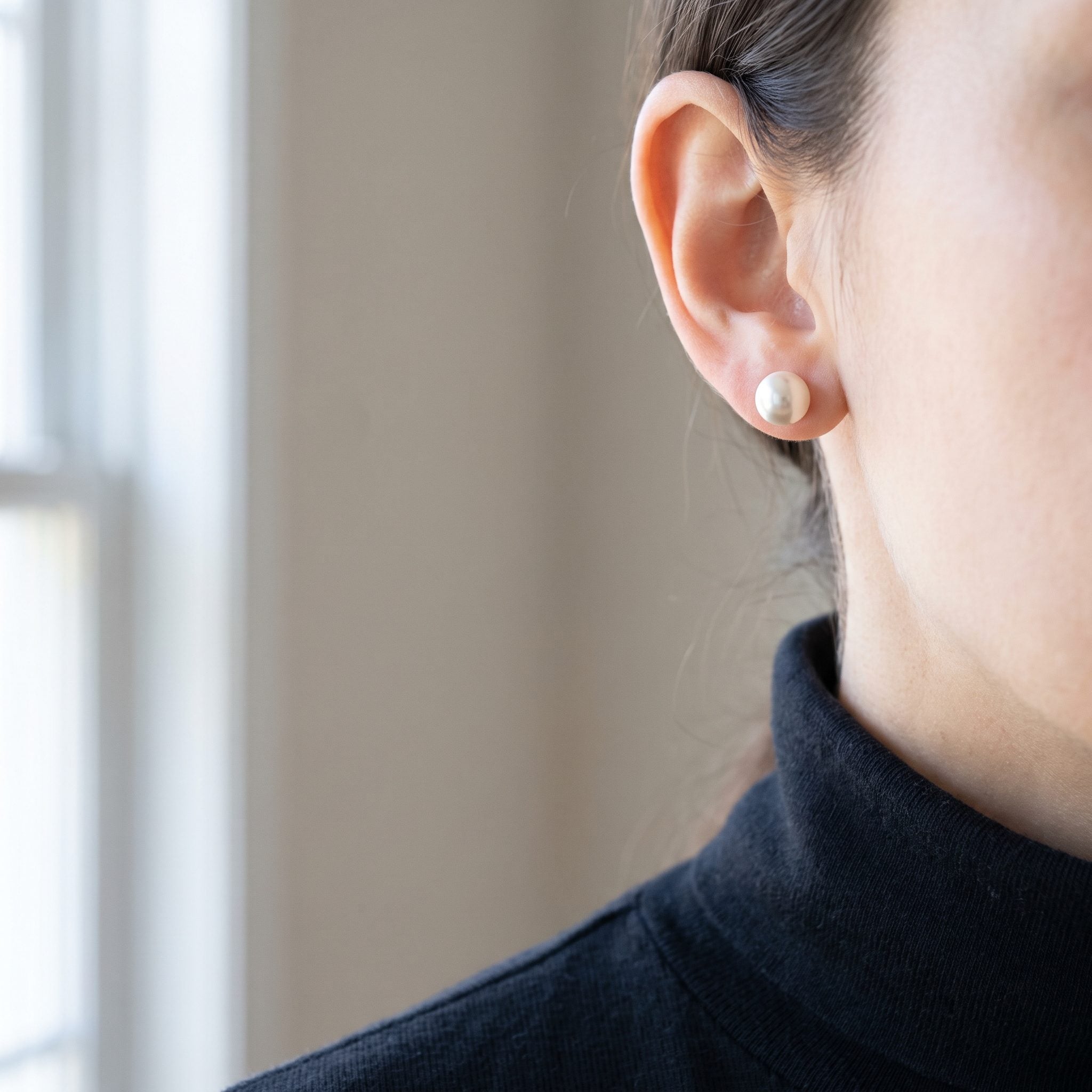
Pearl studs were the tiny counterweight to a decade of large hair, broad shoulders, and emphatic color. Against navy wool and ivory silk, they added light near the face without adding another shape the outfit had to negotiate.
That restraint was useful. When the blazer, blouse, and hair already carried volume, a small round earring kept the upper frame polished rather than crowded. The effect was composed, not timid.
26. High-Waisted Pleated Trousers That Sat at the Natural Waist
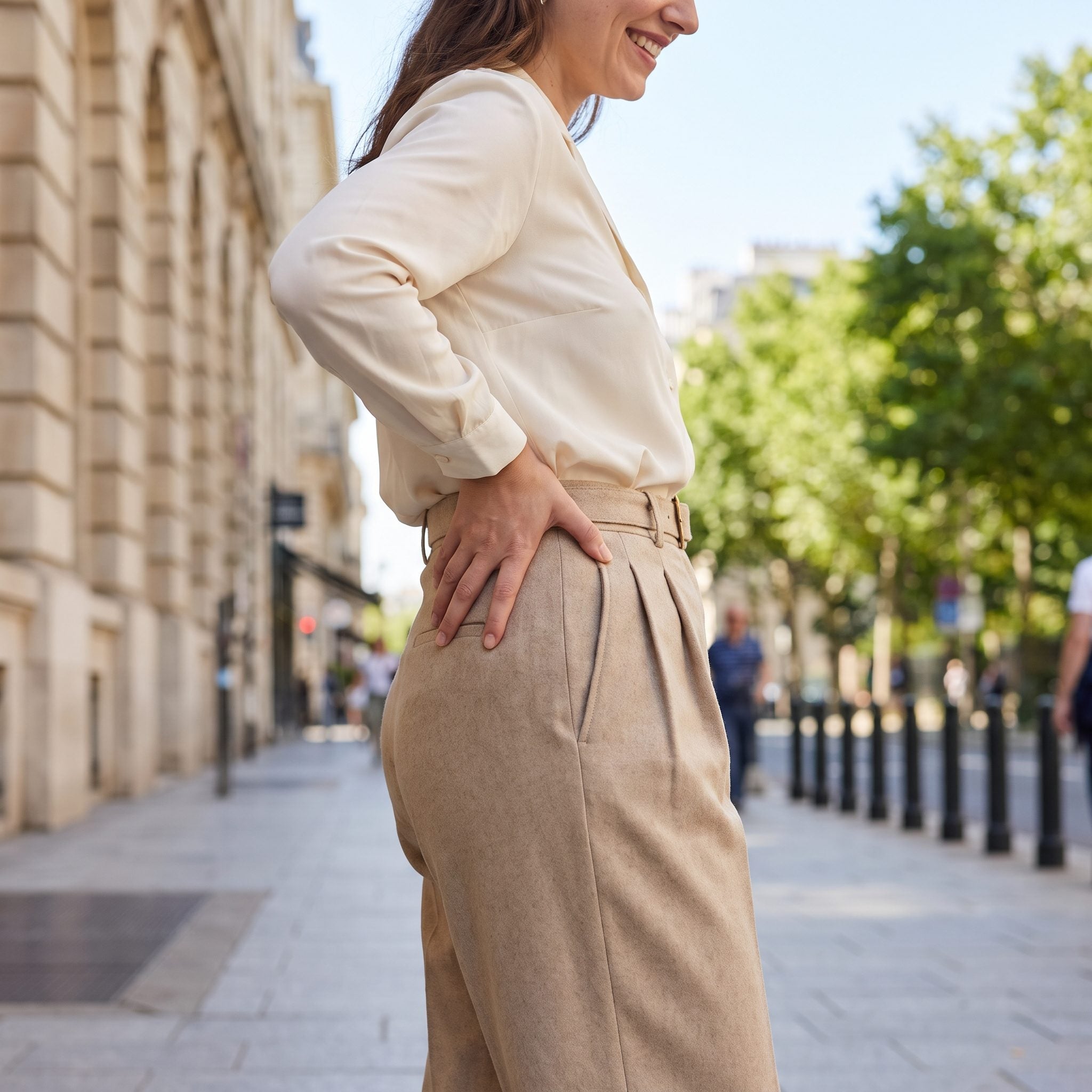
These trousers sat where the body actually bends: at the natural waist. Pleats opened through the hip, then the leg narrowed again toward the ankle, creating room without surrendering the line.
A tucked silk blouse makes the rise visible, which is the whole advantage. The waistband becomes a clear architectural break and the leg appears to begin higher. A full tuck shows that construction best; hiding the waist would throw away the feature you bought them for.
25. Cropped Cardigan
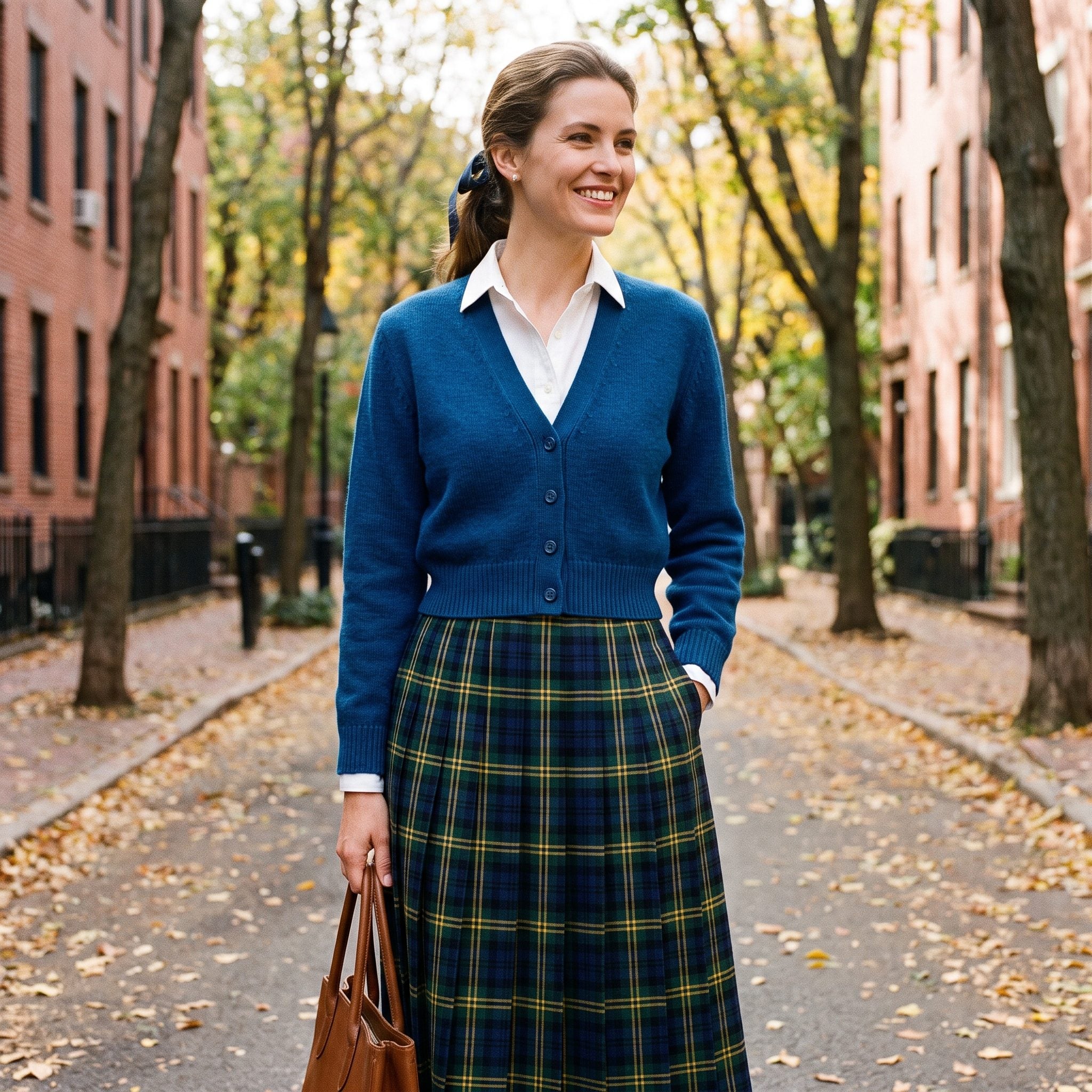
A jewel-blue cardigan cropped directly at the high waist brought color to an office outfit without adding bulk. Buttoned over white and paired with a plaid midi, it had the neatness of a jacket with none of the boardroom severity.
The hem is the reason the proportions hold. It meets the skirt at almost the same horizontal point, so the waist reads once instead of being chopped into competing sections. Short knit, high skirt, long lower line — simple geometry doing useful work.
24. The Matching Skirt Suit in a Color You Could Spot Across a Lobby
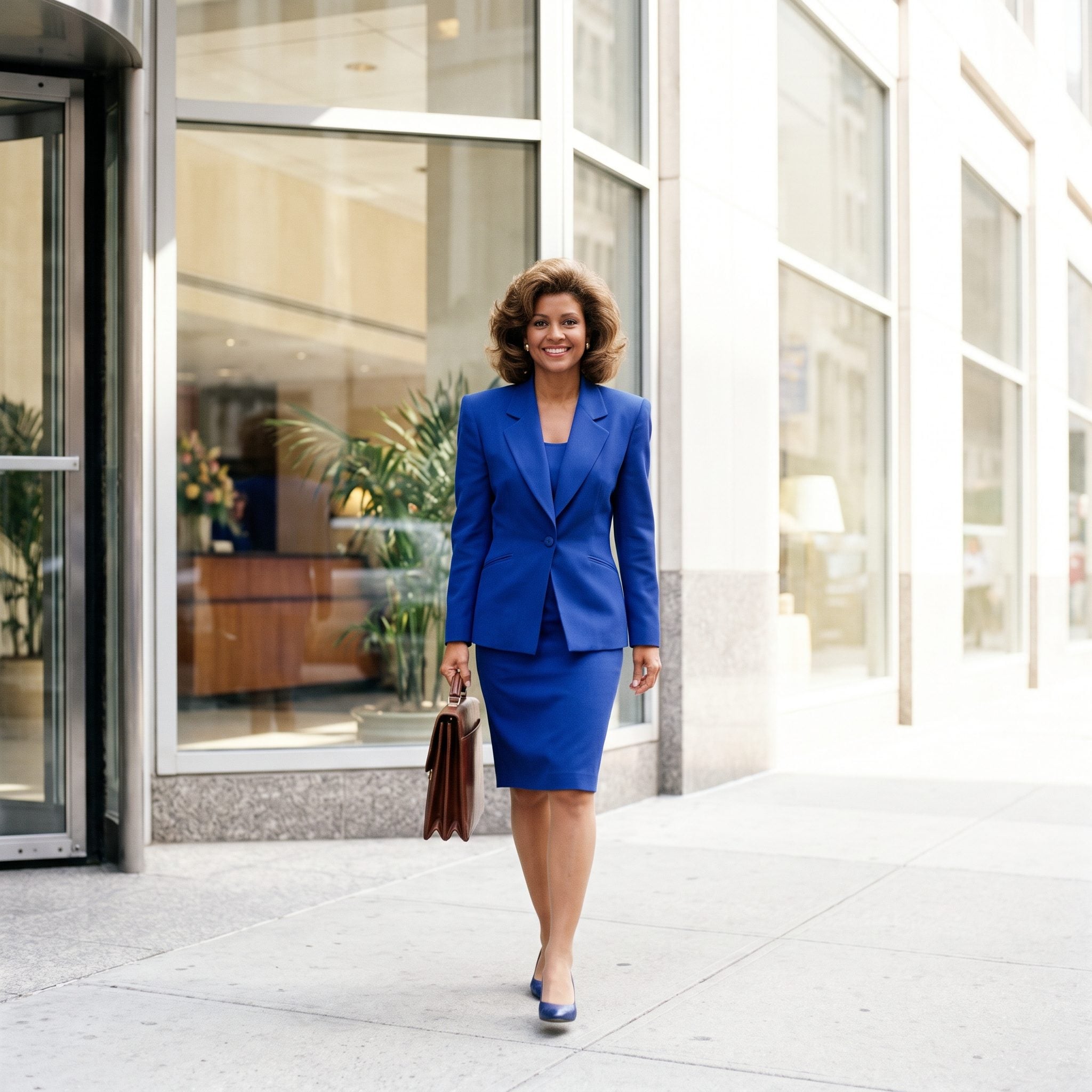
Royal blue from shoulder to knee left very little room for indecision. The matching skirt suit was coordination made visible: jacket and skirt speaking the same color, fabric, and level of seriousness before the blouse even entered the conversation.
The cream at the neckline is the release valve. It interrupts the blue just enough to frame the face, while the uninterrupted color below keeps the silhouette tall and singular. This was not tonal dressing trying to look effortless. It was commitment.
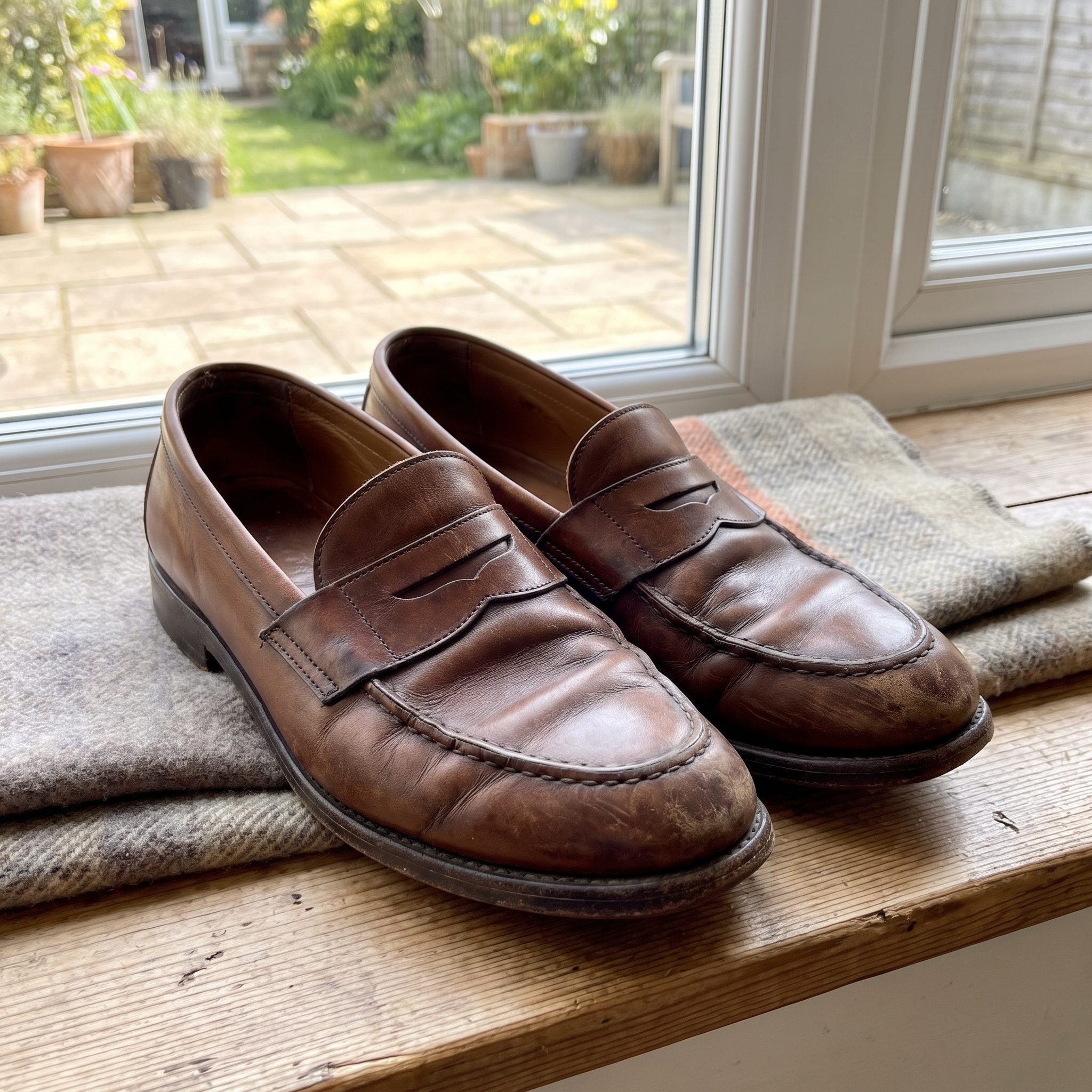
23. The Brown Penny Loafers Worn Until the Leather Gave
❤️ Would you like to save this?
You broke them in with a blister and then refused to give them up. Brown penny loafers made cream trousers and a pale Oxford feel intentional without borrowing the formality of a pump.
The leather also warms a cool blue-and-navy outfit from the ground up. That matters more than it sounds: the shoes stop the palette from becoming chilly and tell you the look belongs to preppy daywear rather than sportswear.
22. The Camel Double-Breasted Blazer With the Gold Buttons

Two rows of gold buttons turn camel wool into something more formal before the lapels even get involved. The double-breasted front carries its own symmetry, and the broad shoulders make sure the jacket never reads casual.
A black turtleneck underneath is almost disappearing ink. It recedes so the tailoring, warm wool, and bright metal can take over. Unlike the navy power blazer, this one is less about corporate armor than about polish with a little military precision.
21. The Wrap Dress That Understood Your Waist
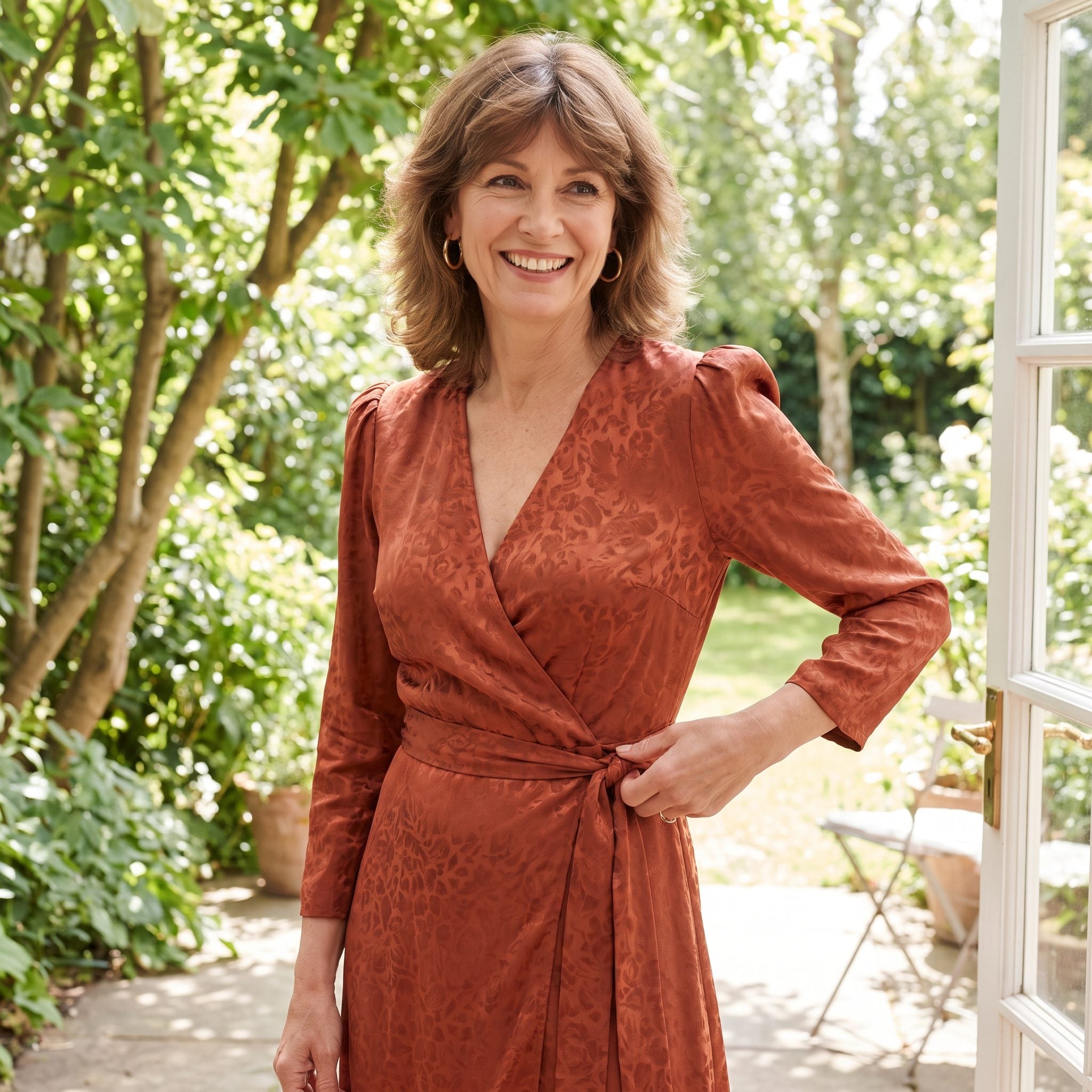
One tie did the work of several darts. Cross the fabric, pull it where you want it, knot it, and the dress adjusts around the body instead of asking the body to match a fixed seam.
The diagonal closure is as important as the waist. It creates a V at the neckline, then continues across the torso before meeting the tie, giving the eye a route through the dress rather than one static block of color. Gold jewelry and navy pumps can stay small because the construction is already doing plenty.
20. The Gold Wristwatch That Flashed Every Time You Checked the Time
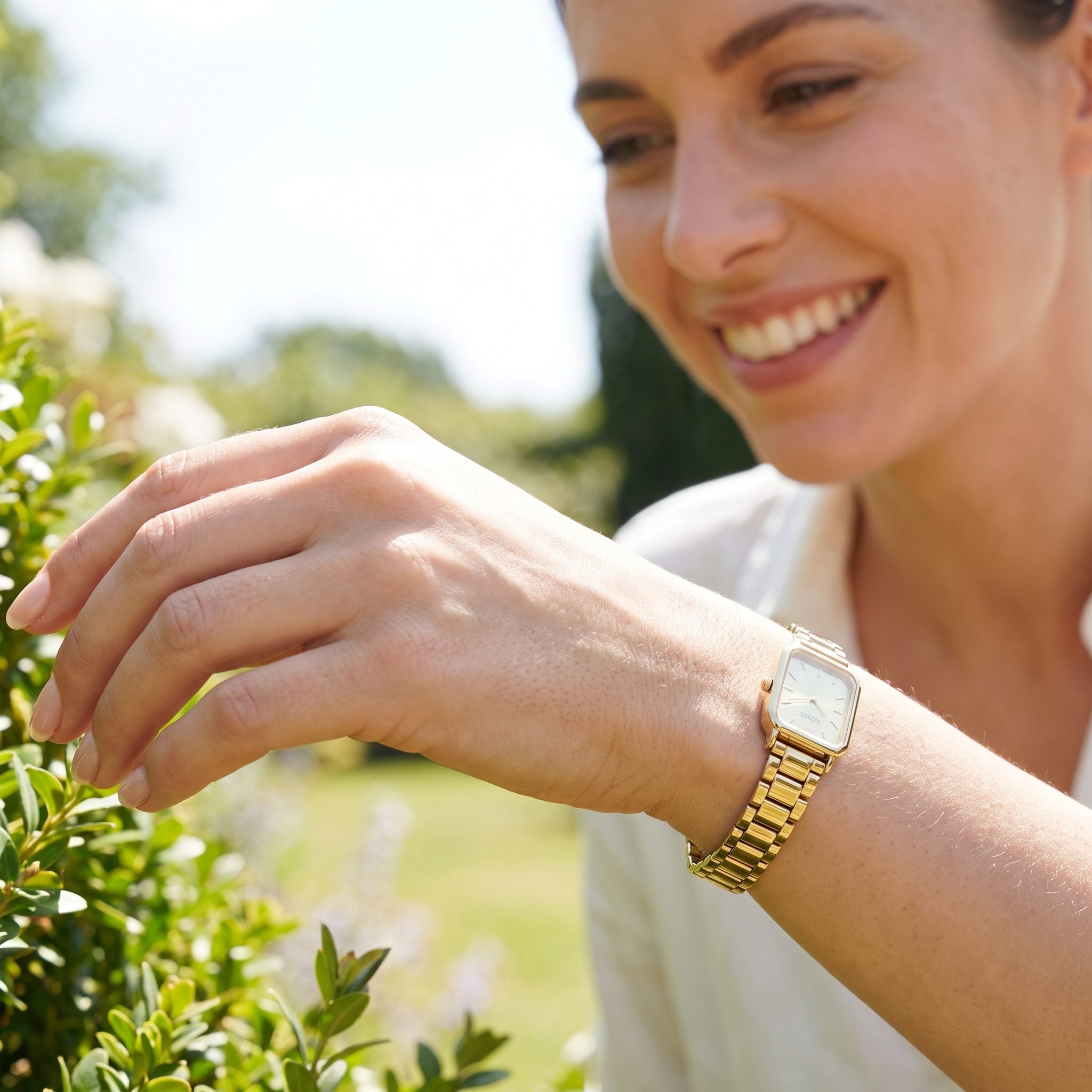
The gold watch was jewelry with a job. A slim linked bracelet and small face flashed at the cuff whenever a hand reached for a file, a coffee, or the time she already knew she was running out of.
Against ivory and camel, that glint of metal keeps the neutrals from becoming too soft. It is a small hard edge in a matte outfit, practical enough for daytime and polished enough to count as jewelry without another bracelet beside it.
19. The Tartan Wool Skirt That Belonged in a Library
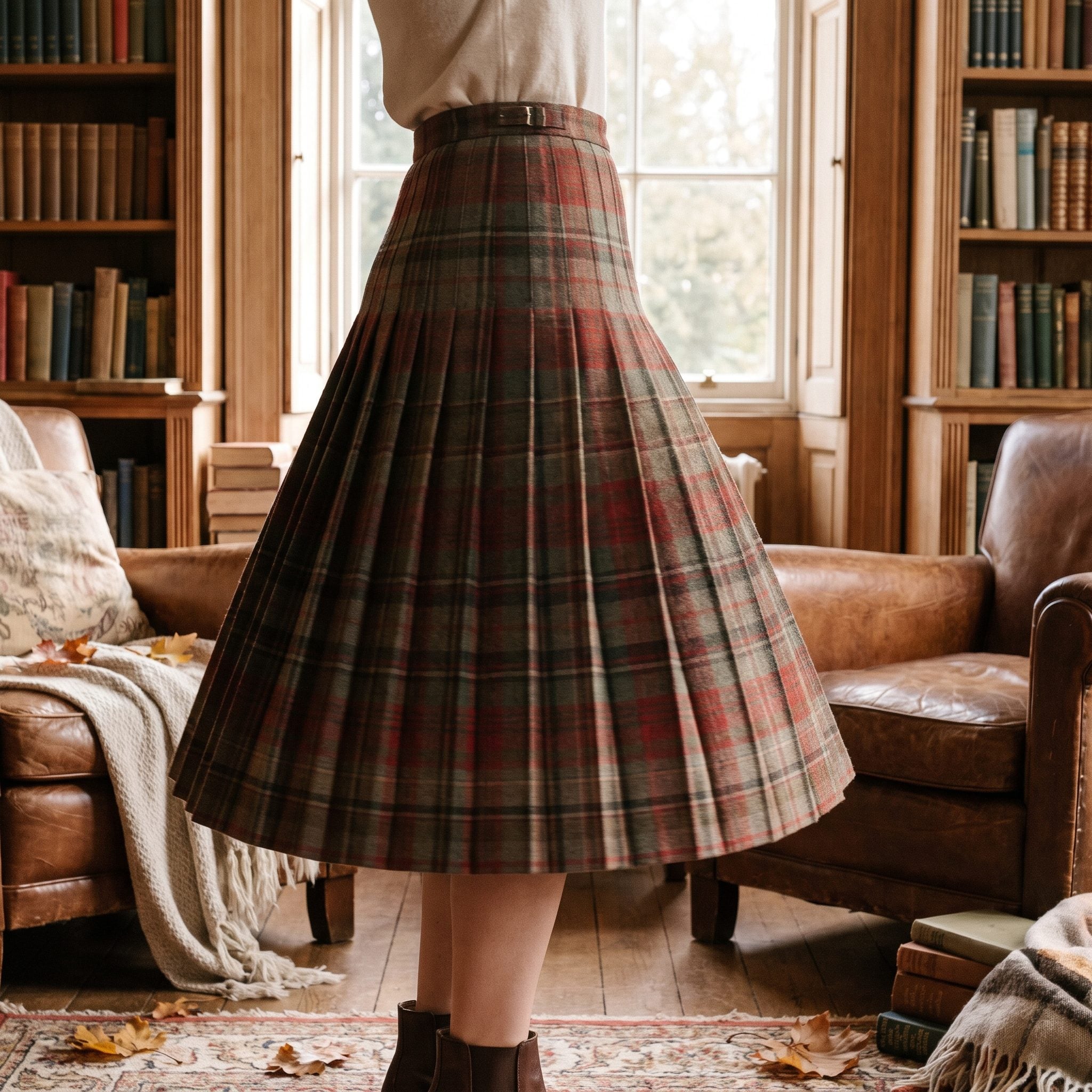
Tartan in fall practically came with weather. Deep green, navy, and burgundy crossed through wool that moved when you walked and immediately made a cream blouse feel more seasonal.
The navy cardigan is deliberately plain because the skirt has enough information already. Flat knit above, woven pattern below, cream between them: the textures stack without forcing another color into the room.
18. Oxford Button-Down Shirt

Pale blue Oxford, tucked clean, navy sweater knotted over the shoulders. The combination has survived decades of catalog photography because the pieces understand their jobs: crisp shirt underneath, soft knit above, no unnecessary negotiation.
The draped sweater changes the composition more than it changes the temperature. It places a darker band around the shoulders and collarbone, softening the strict shirt and giving the eye a second layer before it reaches the waist.
17. The Statement Brooch, Pinned to the Blazer Lapel
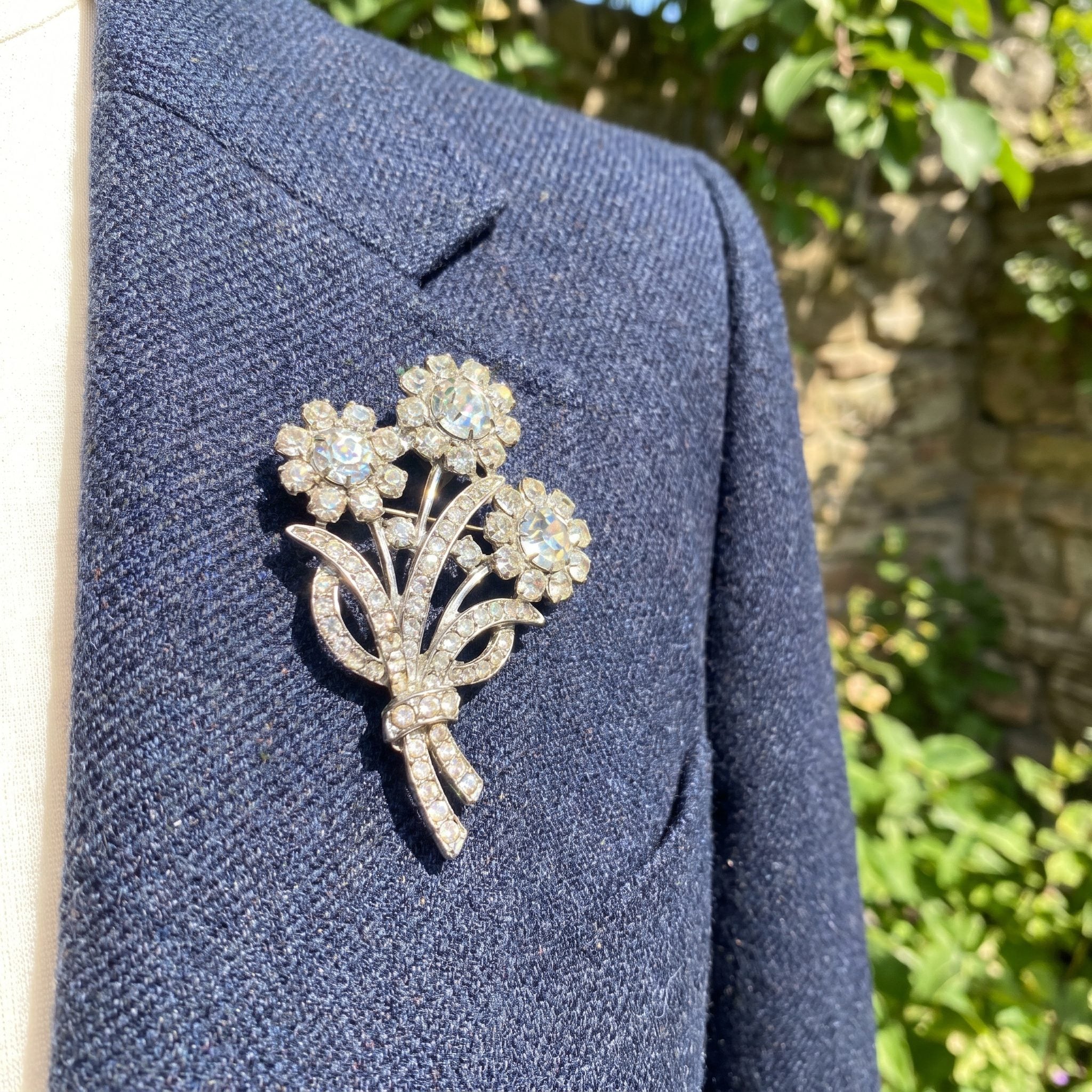
The brooch was the tiny piece allowed to behave like sculpture. Pinned high on a blazer lapel, it broke up a broad field of wool with one hard flash of gold, enamel, or faux stone — exactly where the eye was already traveling toward the face.
Placement was half the pleasure. Too low and it disappeared into the jacket; high on the lapel, it looked intentional and gave a conservative blazer one personal detail that could move from suit to coat to dress. Before novelty pins became ironic, this was simply how you signed the outfit.
16. The Jewel-Tone Day Dress in an Unforgettable Emerald
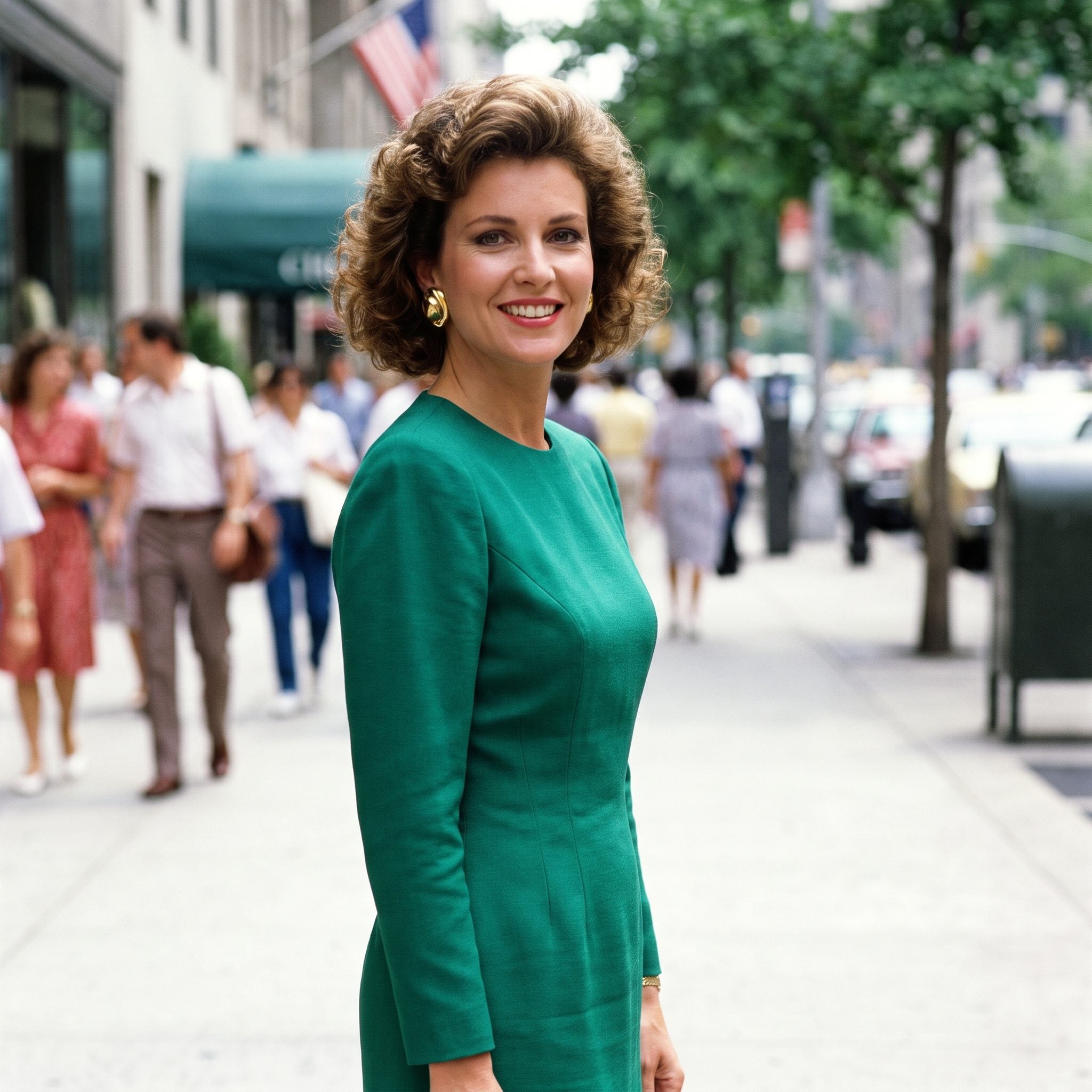
Emerald did not ask to be background color. On a day dress, it turned one uncomplicated silhouette into the thing everyone remembered after lunch.
A slim belt interrupts the saturated green at the waist, then gold jewelry adds warmth without competing for scale. The strength comes from refusing a print: one color, one shape, enough confidence to let both register clearly.
15. Cable-Knit Sweater
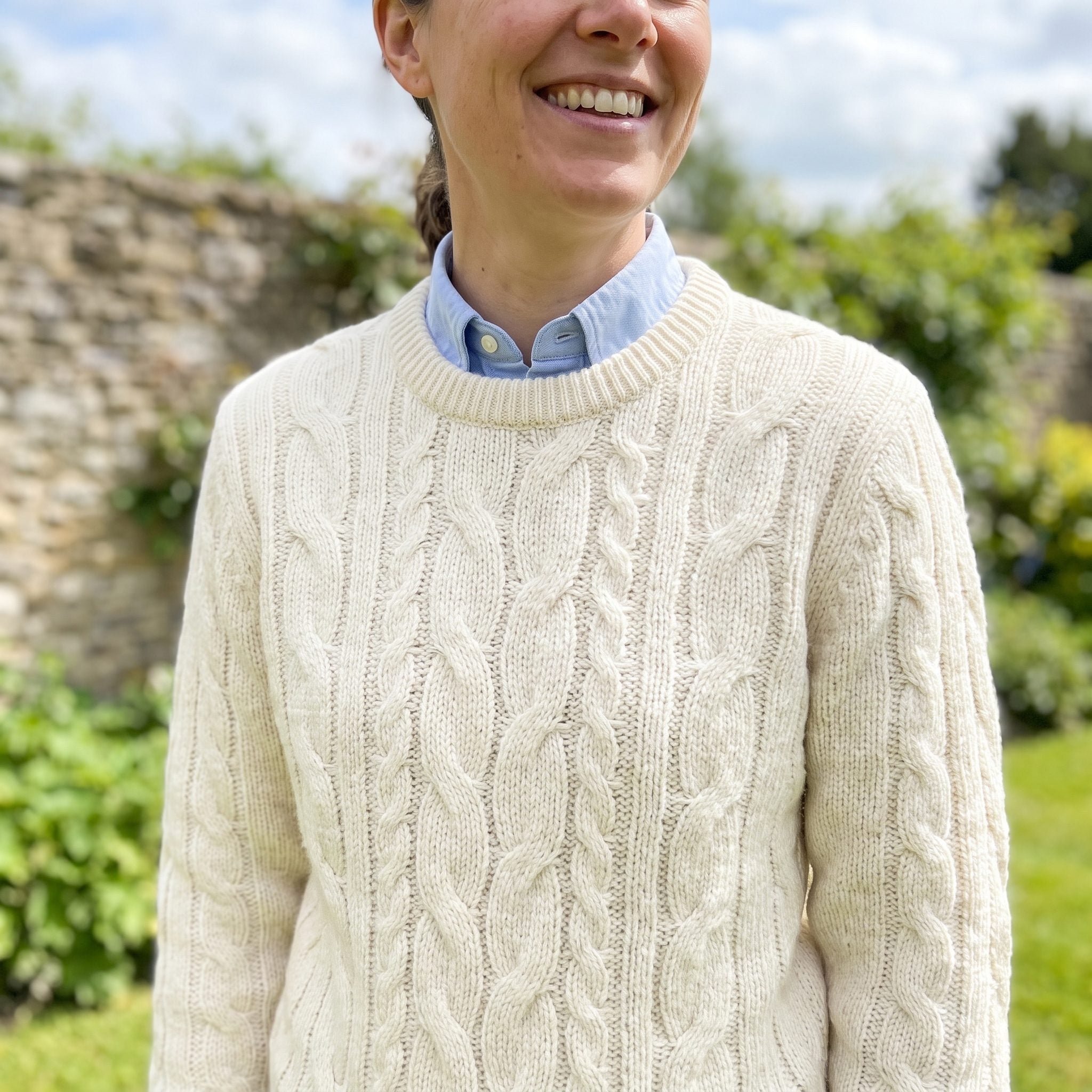
Ivory cable knit over a pale blue Oxford collar was peak preppy texture: sturdy yarn against crisp cotton, soft relief against a flat woven surface. Camel trousers kept the whole outfit in a narrow, expensive-looking range of neutrals.
The collar matters because it stops the sweater from closing in around the face. A small triangle of blue and a sliver of cuff give the knit edges, which is why layered preppy dressing could look finished even when every individual piece was simple.
14. The Straight Knee-Length Skirt That Never Let You Down
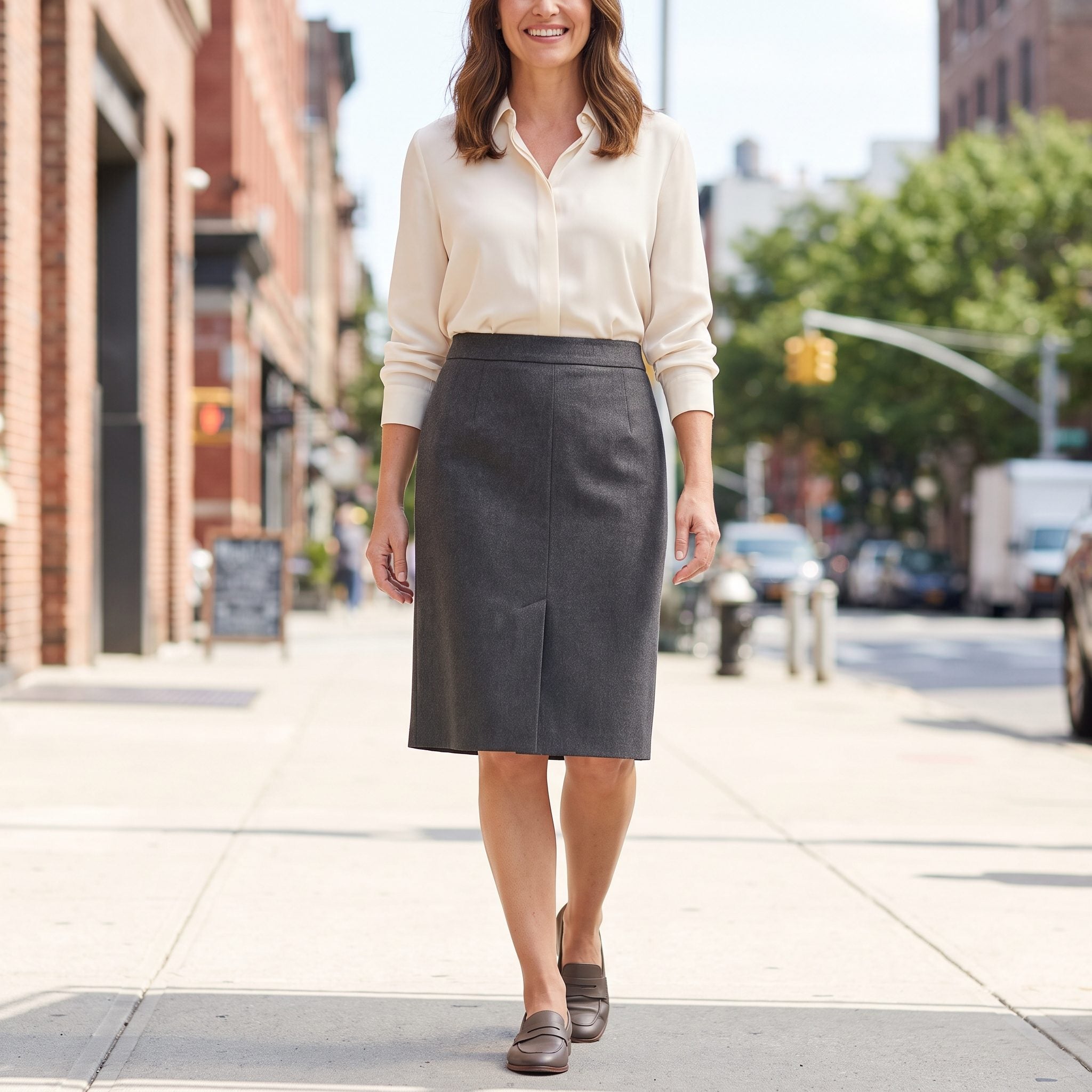
The straight skirt was the office workhorse: no pleats, no sweep, no elaborate construction to announce itself. It ran from waist to knee in one clean line and made room for whatever blouse or blazer had more personality that morning.
Burgundy accessories keep this version from dissolving into charcoal and ivory. The belt and pumps repeat the same deep color at two different heights, while carrying the blazer instead of wearing it loosens the formality just enough.
13. Single-Strand Pearl Necklace

A single strand across a black boat neck is almost graphic design. Cream circles against a dark field draw one bright curve at the collarbone and then stop before the effect gets busy.
That economy is the appeal. No competing chain lengths, no pendant dropping into the neckline, no second idea. The necklace supplies the only light note against black, which gives it more presence than a larger pile of jewelry would have.
12. Trench Coat
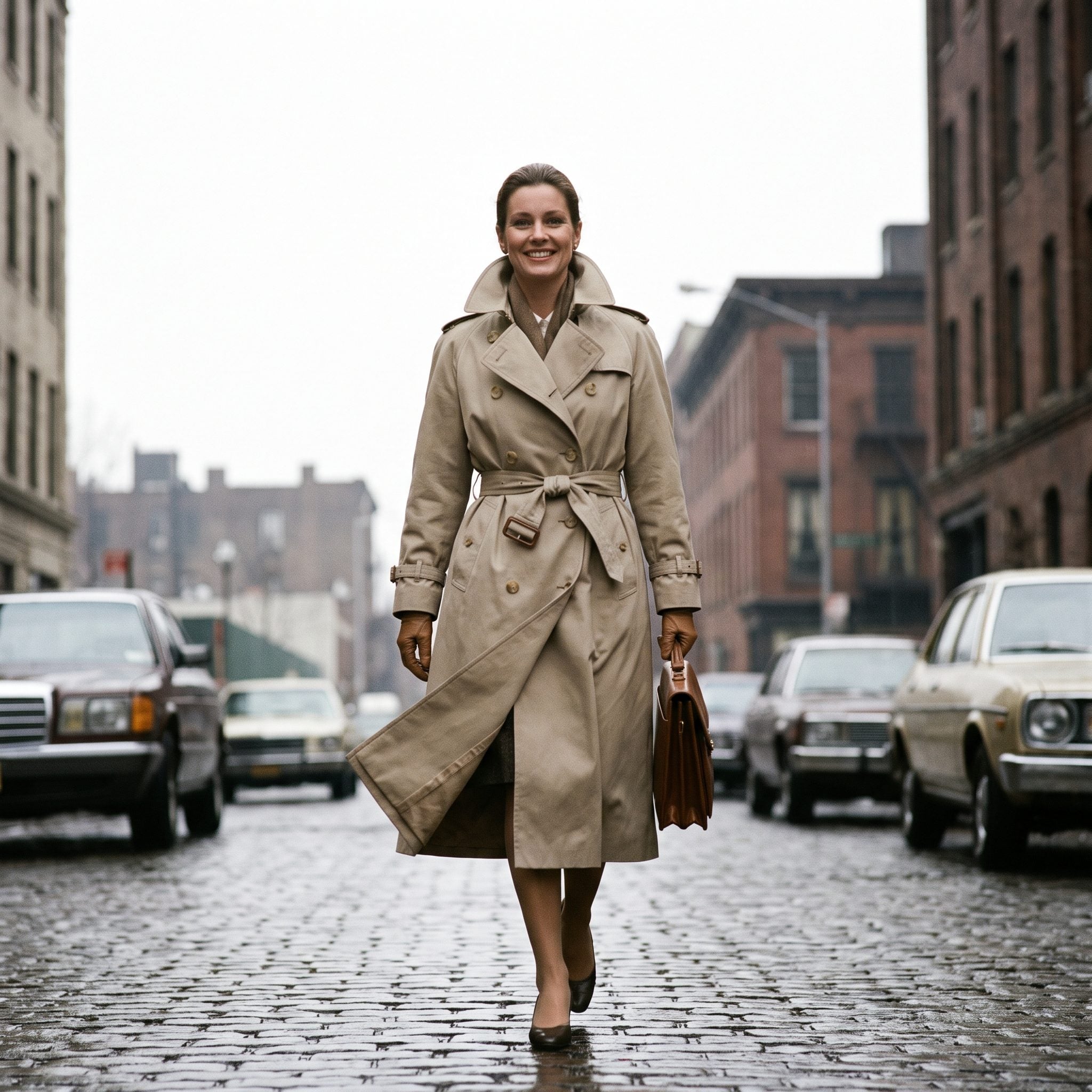
The trench was a moving piece of tailoring. Belt cinched, collar up, hem swinging around the knee, it could pull a blouse-and-skirt outfit into one long outer silhouette before the elevator doors even opened.
The tied waist keeps all that fabric from becoming a beige tube, while the longer hem protects the line of whatever is underneath. Add a structured bag and the coat stops looking purely practical. Rainwear, yes; anonymity, no.
11. Coordinated Knit Set
❤️ Would you like to save this?
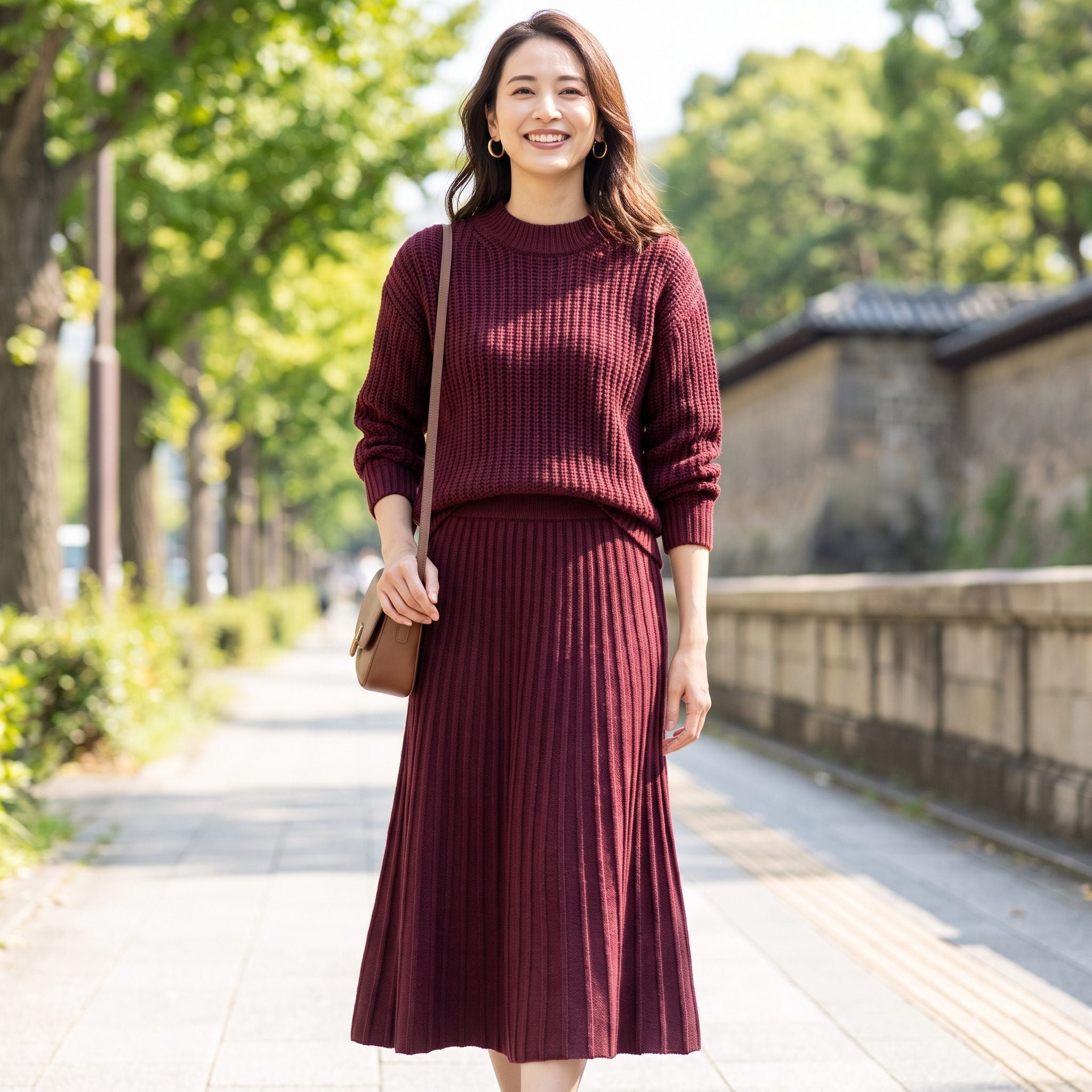
Matching burgundy knit top and skirt made dressing look almost suspiciously easy. Same yarn, same color, same surface from shoulder to hem — the coordination was built in before a belt or earring had a chance to interfere.
The narrow belt is what keeps the matching set from turning into one uninterrupted sweater. It marks the middle, while the monochrome color lets the knit texture do the rest. Tonal dressing here feels deliberate because nothing is pretending to be an accent.
10. The Emerald Pussy-Bow Secretary Blouse

Where the earlier silk bow blouse was soft and ceremonial, this one uses color as the first impression. Emerald pushes forward against a charcoal pencil skirt, then the generous tie keeps all that saturated color concentrated near the face.
The skirt’s job is almost entirely to stay quiet. Dark, straight, unpatterned — it gives the blouse enough visual room for the bow to remain dramatic without making the full outfit fussy.
9. Wide Waist Belt
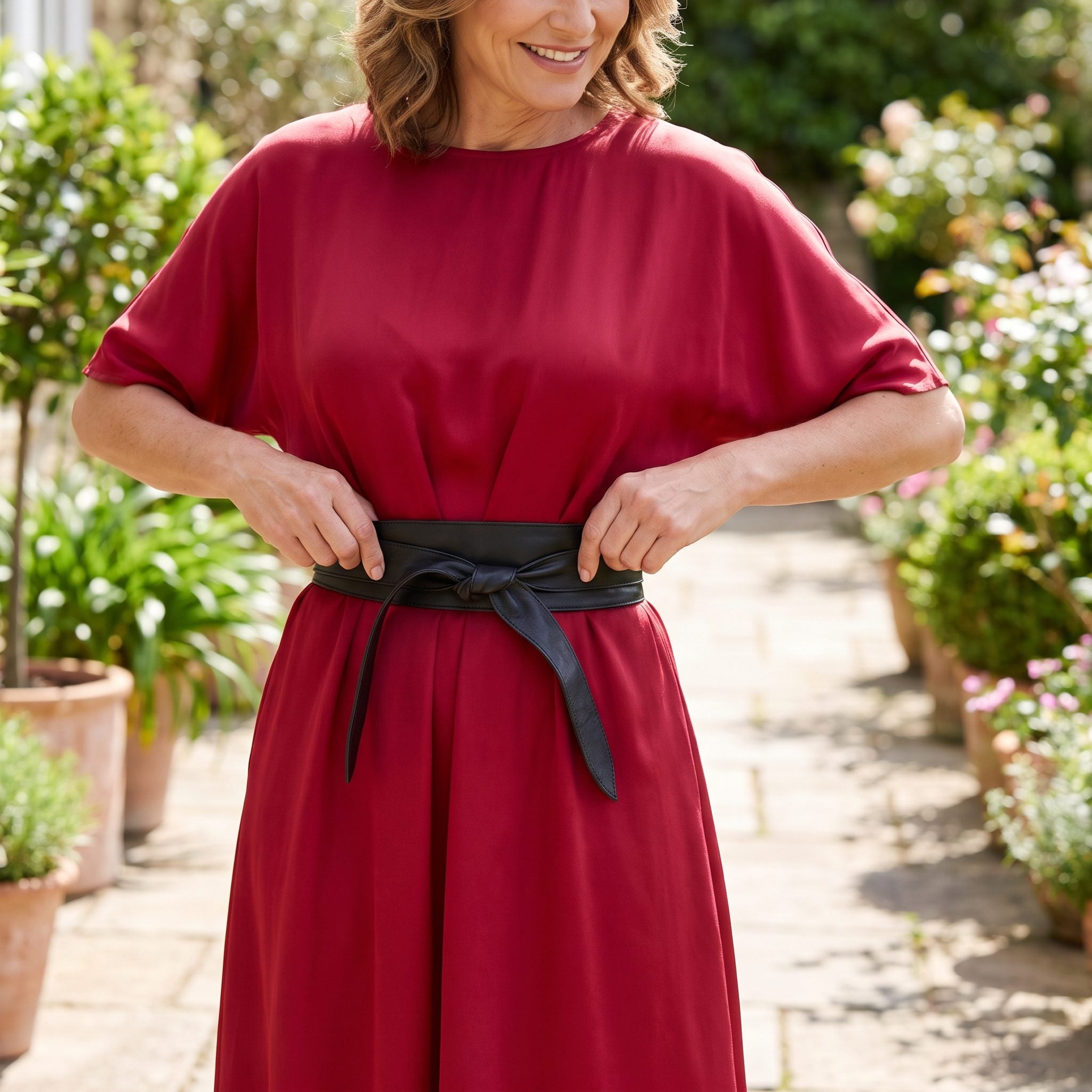
A jewel-red midi can hang as a long column until a wide black belt snaps across the middle. Suddenly the dress has a waist, the fabric above and below has direction, and the silhouette reads as designed rather than merely draped.
The gold buckle earns its visibility because it sits at the exact point where the outfit changes shape. Black creates the interruption; gold marks the center of it. One accessory, three jobs.
8. The Camel Wool Overcoat That Meant You’d Arrived
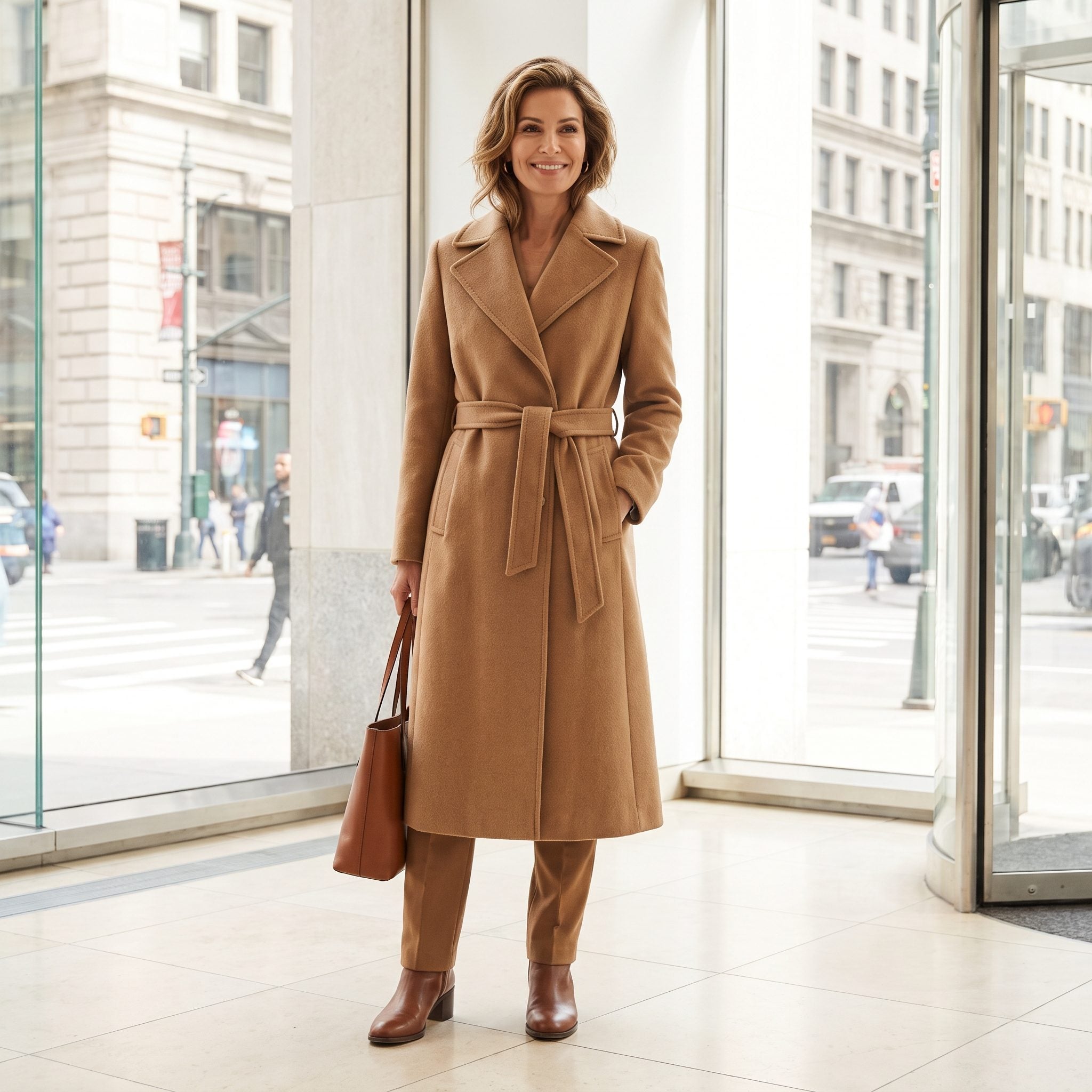
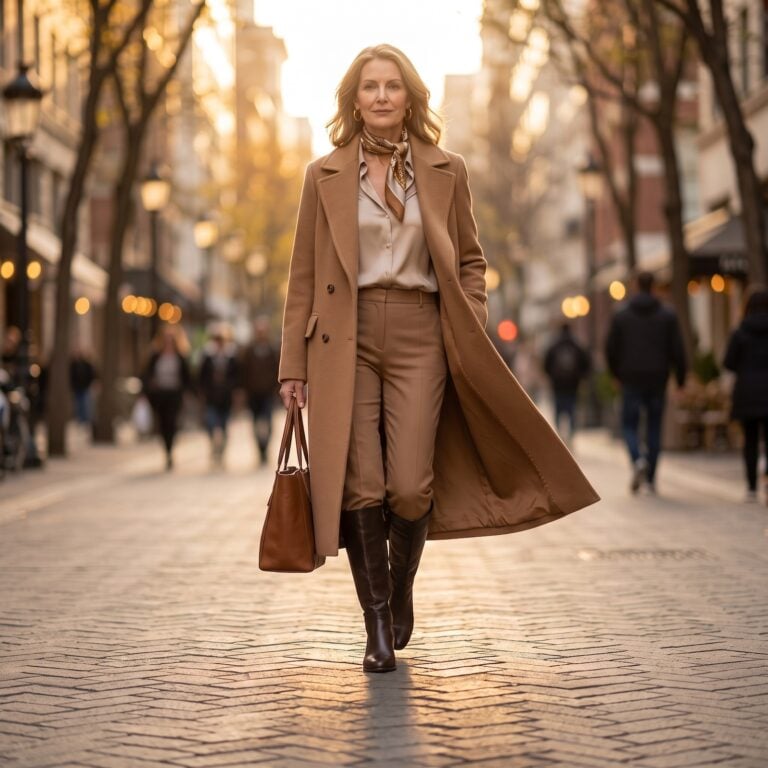
A good camel coat could make a rushed morning look premeditated. Heavy wool hangs cleanly, a defined shoulder keeps the top line crisp, and the below-knee length turns whatever is underneath into background information.
The camel wool overcoat also lives in that useful space between warm neutral and status color. Gloves and a structured bag sharpen it, but the long uninterrupted sweep of wool is what gives the coat its authority.
7. Fine-Gauge Turtleneck
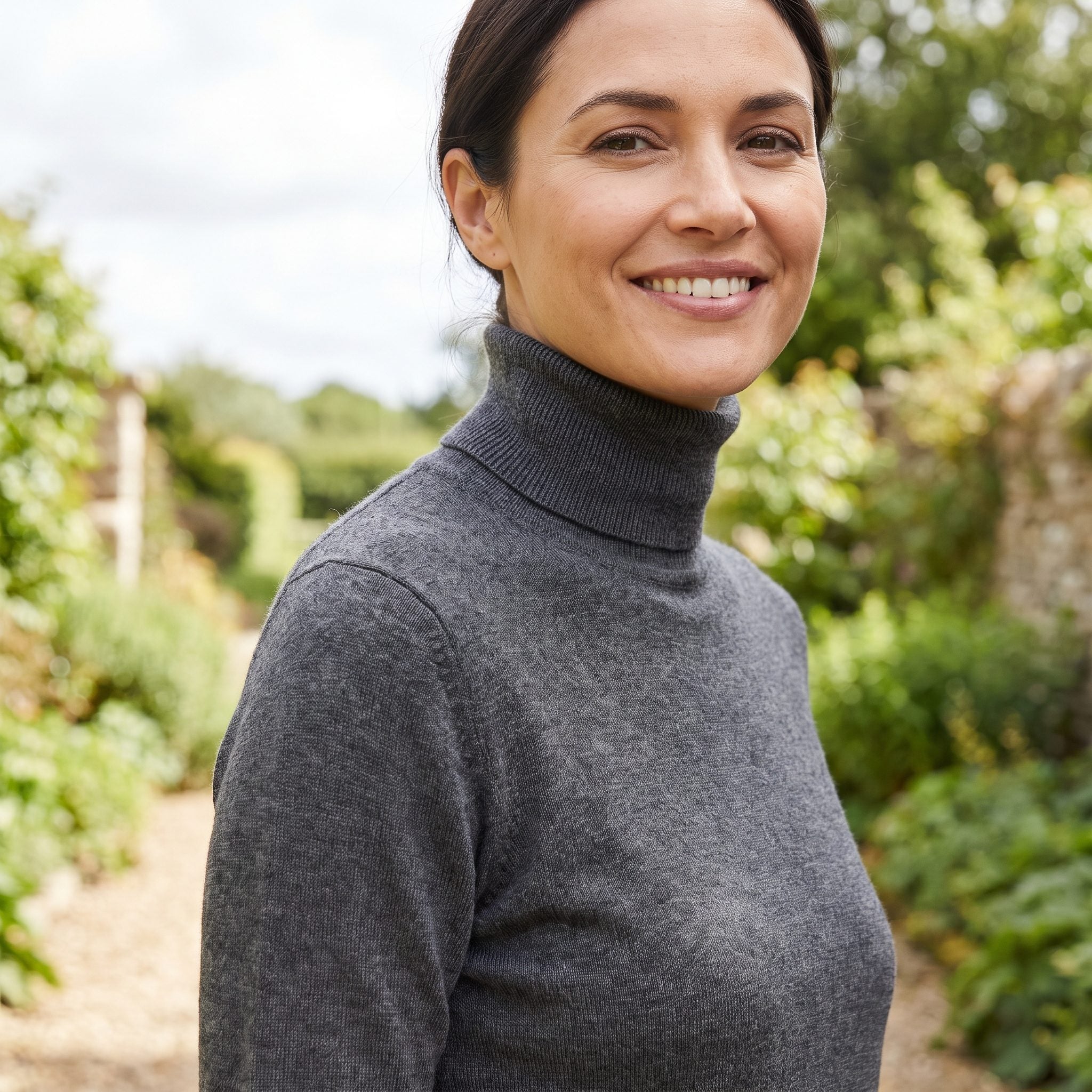
The fine-gauge turtleneck was an excellent supporting actor. Thin enough to disappear beneath a blazer, close enough to the body to tuck cleanly, and high enough at the neck to make a jacket lapel look sharper by comparison.
Here, charcoal knit and high-waisted trousers create one continuous dark base while the camel blazer sits over it like a frame. No pattern is required; the interest comes from the shift between soft knit, tailored wool, and the belt at the middle.
6. The High-Waisted Pencil Skirt That Meant Business
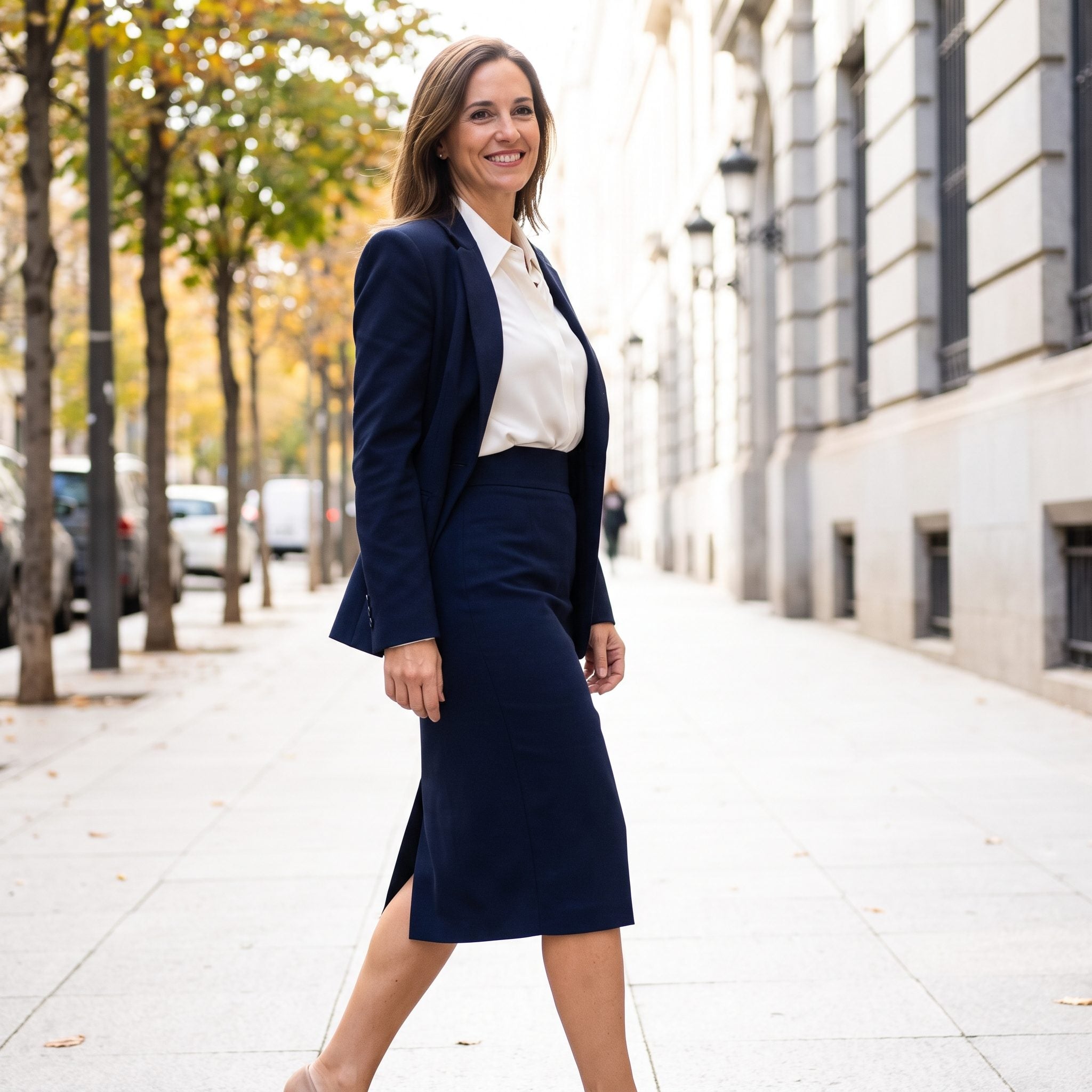
The pencil skirt takes the same high-waisted logic as the pleated trouser and removes nearly all the volume. The waistband sits at the natural middle; from there, navy wool follows a narrow line toward the knee.
A tucked silk blouse keeps the upper half fluid while the skirt stays exact. That contrast matters more than another accessory would: sheen against matte wool, softness above a controlled line below.
5. The Matching Leather Belt and Shoes Nobody Thought Was Optional
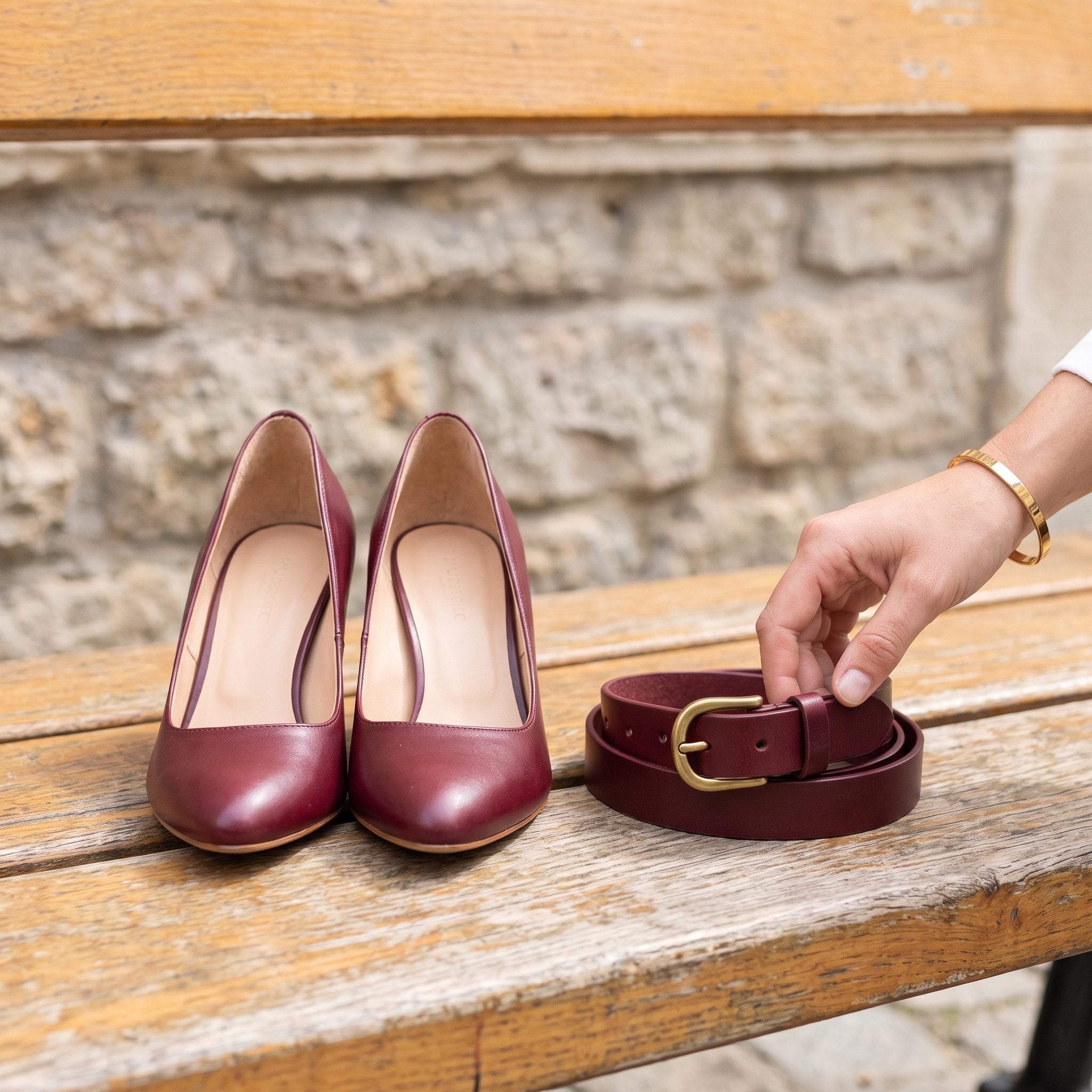
Burgundy at the waist, burgundy at the feet. Matching leather was one of those small rules that made an outfit feel resolved before anyone could explain why.
Against a camel dress, the repeated color creates two deliberate anchor points and lets the eye connect them. A handbag in a related tone could join in, but the belt-and-shoe pairing already supplies the coordination that much 1980s dressing prized.
4. Sheer Nude Pantyhose (Worn Even in July)
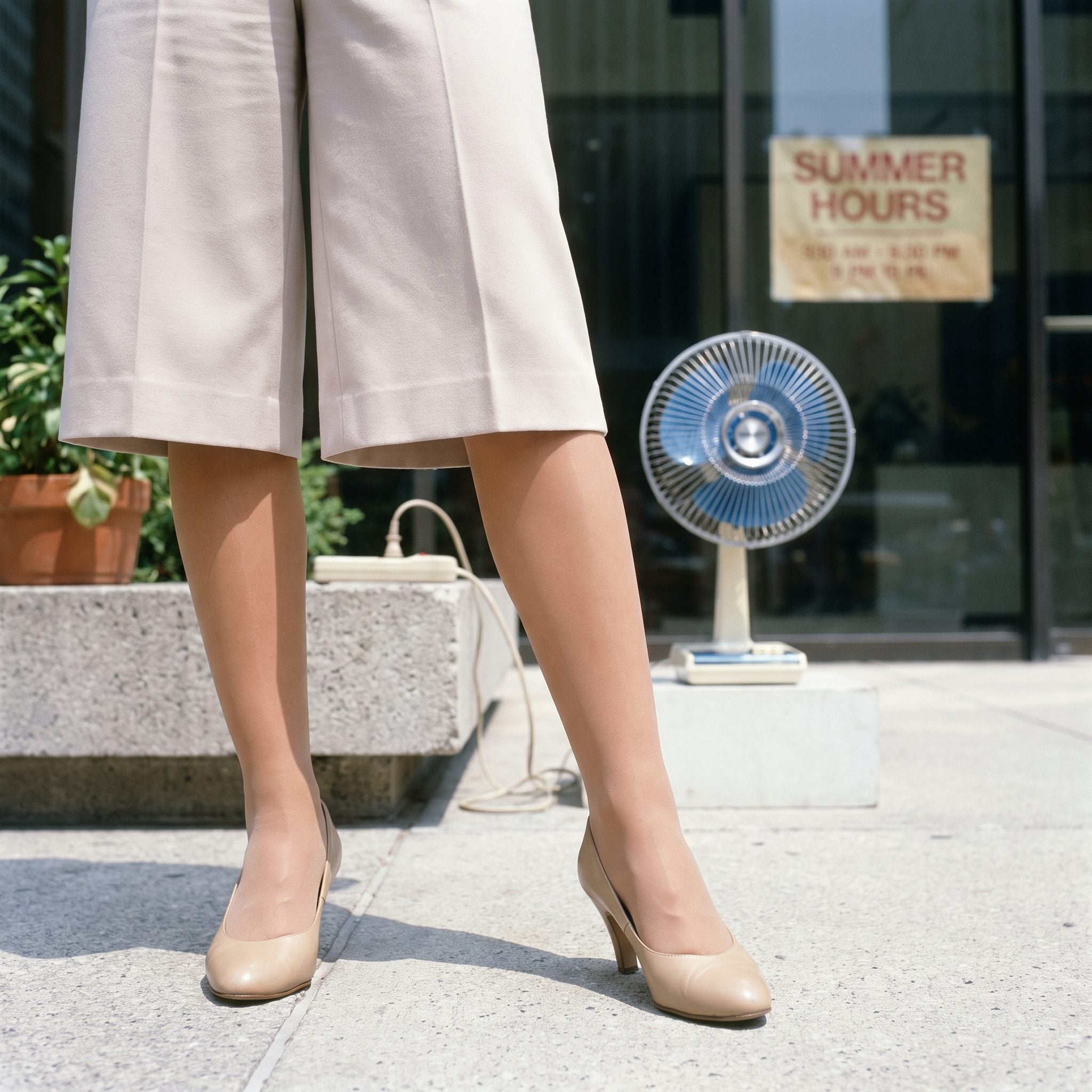
In many conservative offices, bare legs still read as too casual, which made sheer nude pantyhose part of the expected finish. Runs were inevitable; spare pairs in desk drawers and handbags were less fashion statement than contingency planning.
Visually, the hosiery creates a quiet bridge from skirt hem to pump. The leg stays low-contrast so the navy tailoring and black shoe do not look abruptly disconnected. You were not meant to notice the pantyhose much. That was exactly the point.
3. The Camel Pleated Midi Skirt With Real Swing
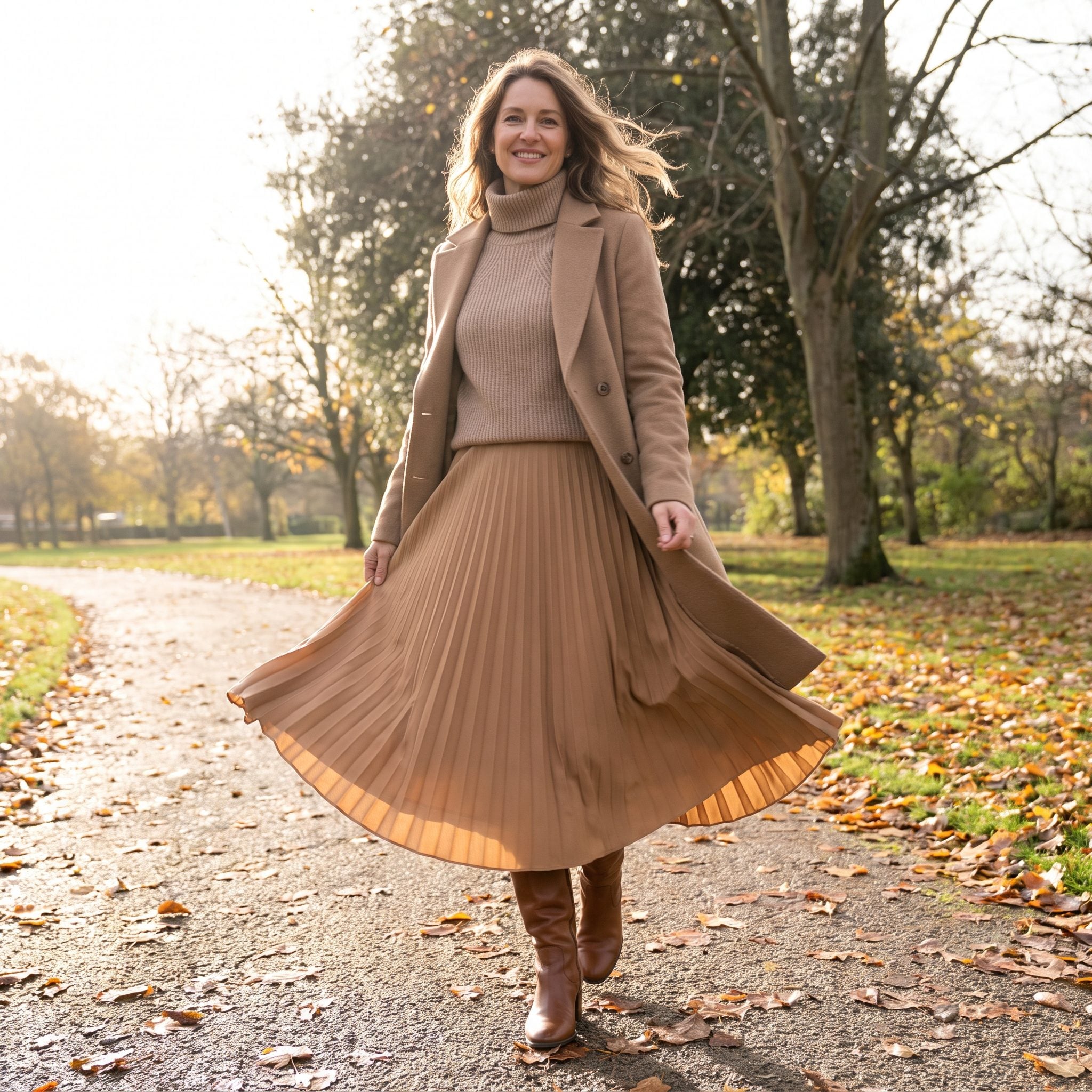
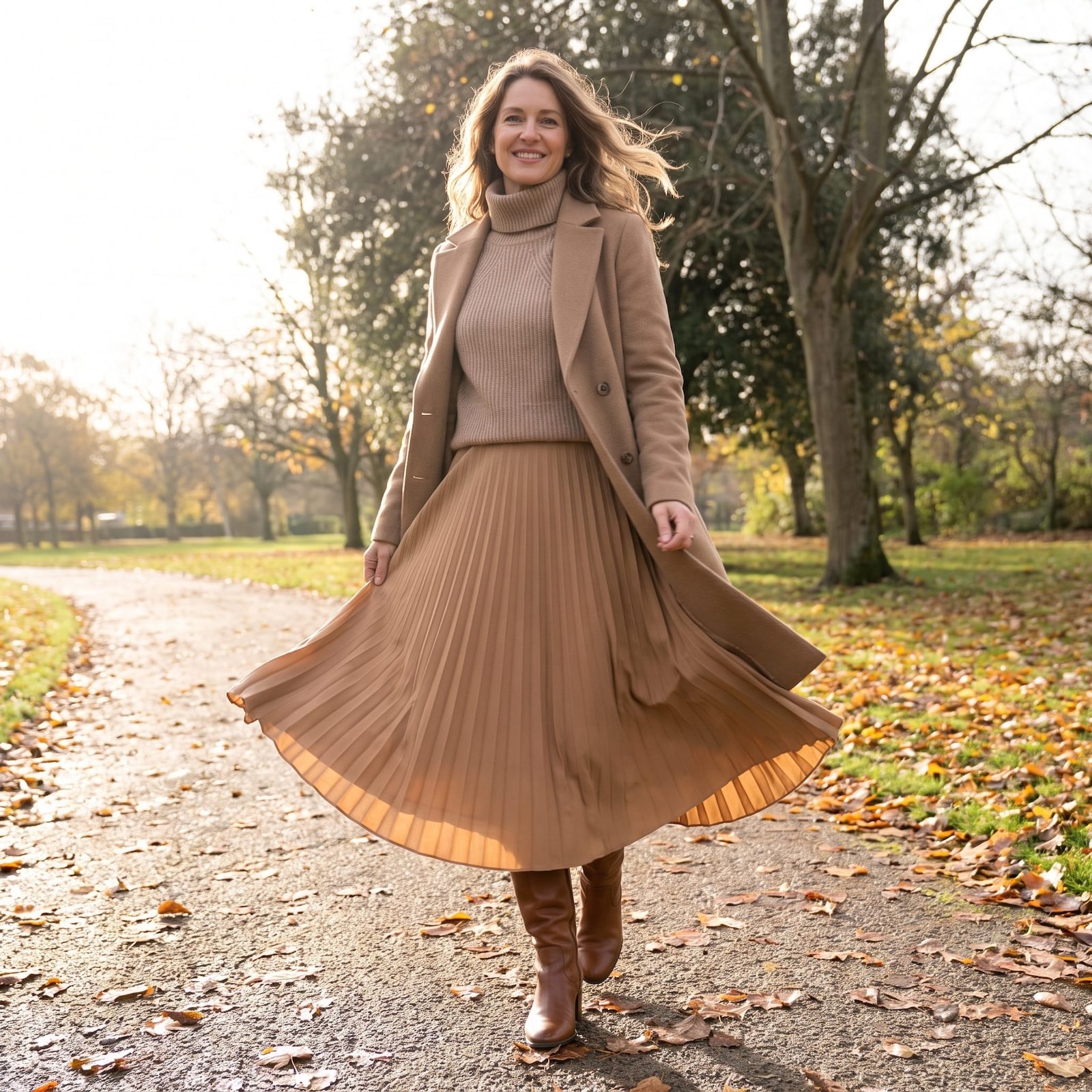
Movement was the attraction. A camel pleated midi opened and closed with every step, turning an otherwise quiet blouse-and-skirt combination into something kinetic. Those knife pleats also came with maintenance: pressing them back into obedience was part of the bargain.
The high waist keeps the volume controlled before the fabric releases downward. Cream above, camel below, thin belt between them — a warm neutral column with just enough swing to keep office polish from becoming office stiffness.
2. The Structured Clutch That Meant You Were Going Somewhere
❤️ Would you like to save this?
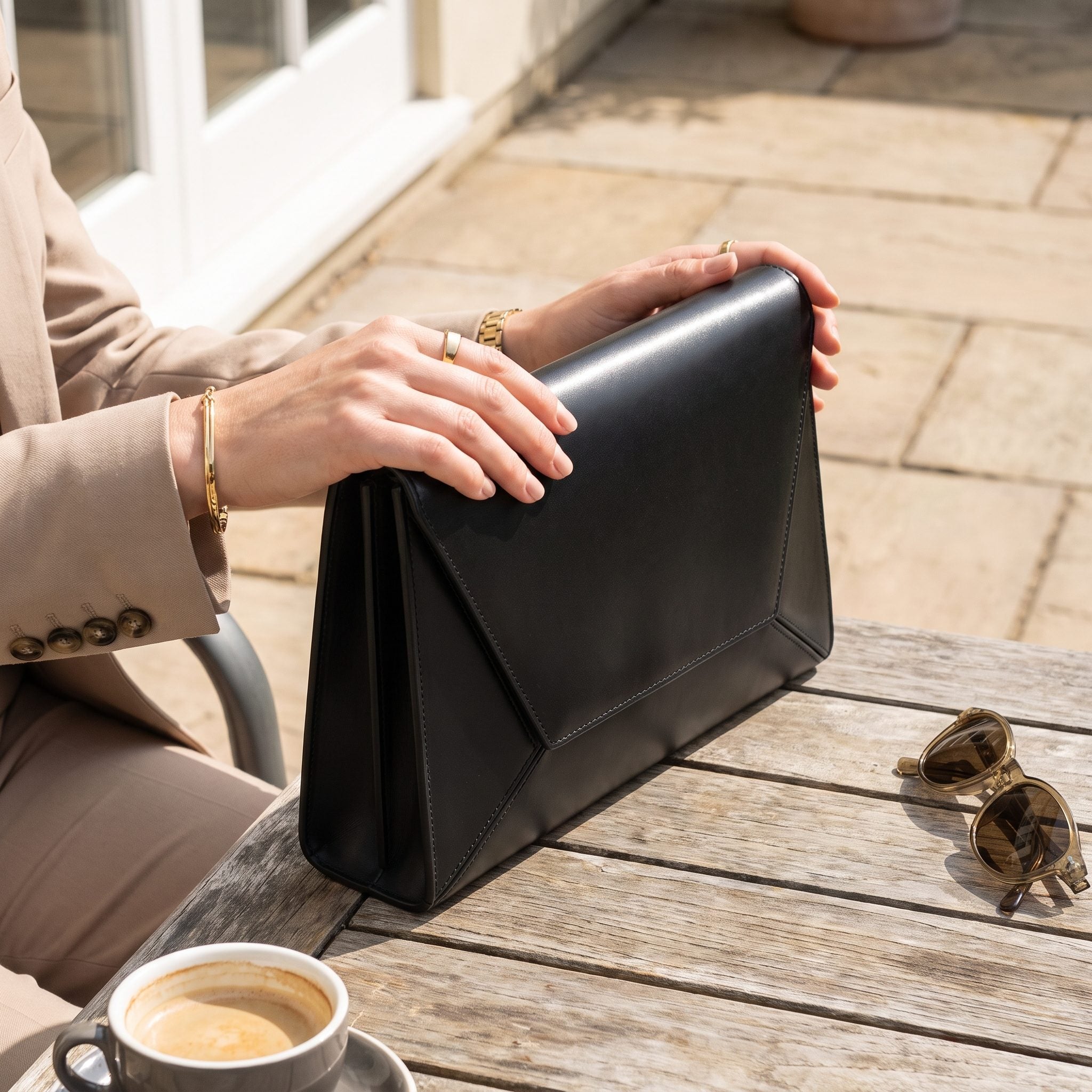
A black leather clutch did not slouch, stretch, or hang from the shoulder while you searched for keys. It sat in the hand like a small hard-edged object, instantly shifting a jewel-red dress from daytime polish toward evening.
Black gives the saturated red somewhere to stop, while gold-tone hardware repeats the jewelry without introducing another color. The rigid shape also contrasts nicely with soft fabric — one compact block against a dress built to move.
1. Statement Clip-On Earrings, Big Enough to Announce You
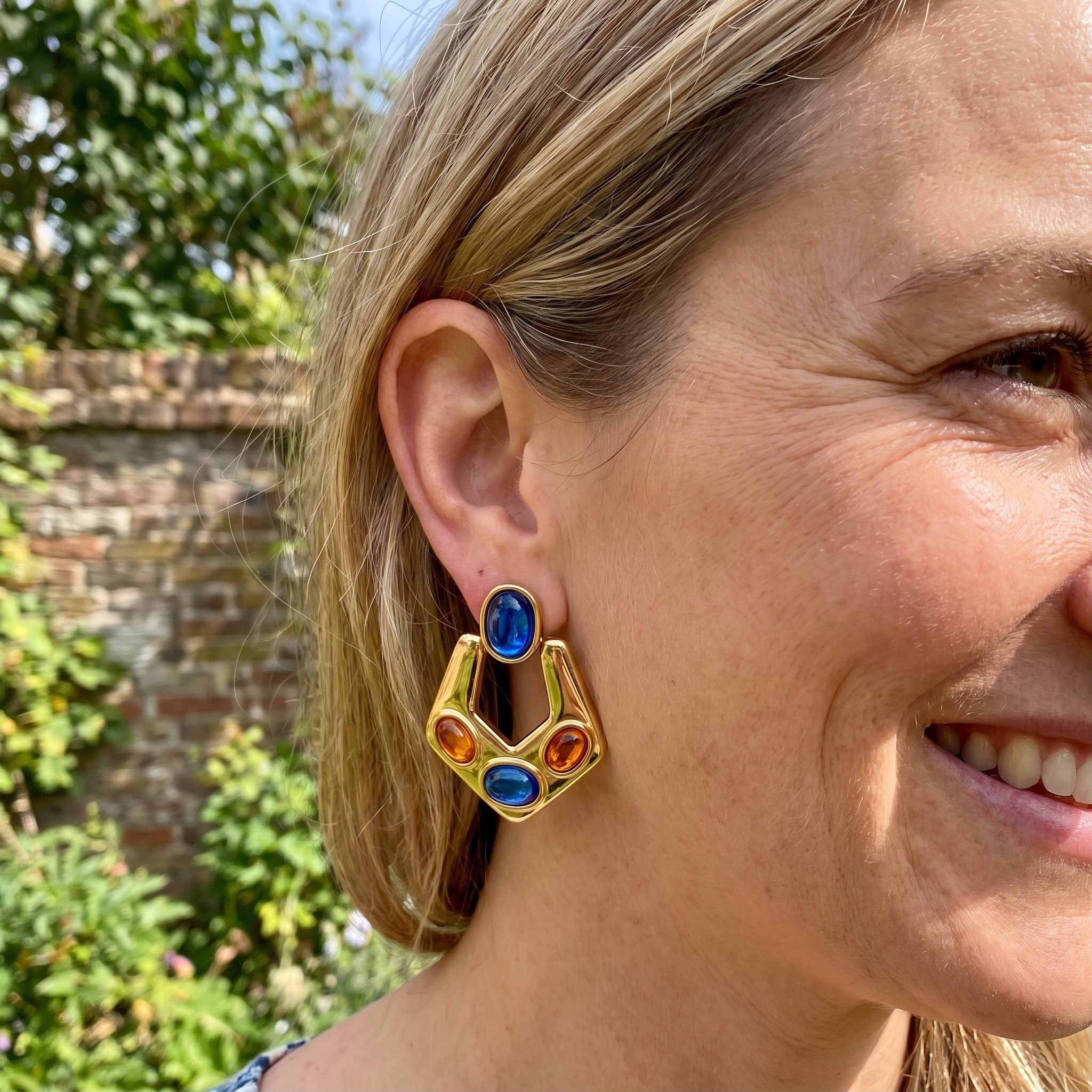
You felt clip-ons before you understood them: the firm pinch behind the earlobe, the slow ache by the end of the evening, the glorious relief when they finally came off in the car. Comfort was apparently not invited to every 1980s occasion.
The scale made sense with the rest of the decade. A plain black dress retreats, hair sweeps away from the ears, and two sculptural pieces of gold take over the upper frame. No necklace required. After thirty-four other ways to finish an outfit, these do it by refusing to be subtle.