❤️ Would you like to save this?
The leotard was tucked into the leggings. That was the look. That was the considered, intentional, put-together look women wore to work out in 1985, and nobody questioned it because there was nothing to question it against. Activewear was a different category then, closer to costume than clothing, built from cotton, nylon, Lycra, acrylic, and the unshakable belief that brighter was better. Four decades changed almost everything. Here are 28 ways the clothes, equipment, and rituals around exercise shifted.
FYI, thanks to AI imagery software, we’re able to create very specific fashion and hairstyle examples to illustrate the points being made. In some cases, imagery is exaggerated to hammer home the point. Also, assume links that take you off the site are affiliate links such as links to Amazon. this means we may earn a commission if you buy something.
28. Leg Warmers Were Not Optional. They Were Structural.
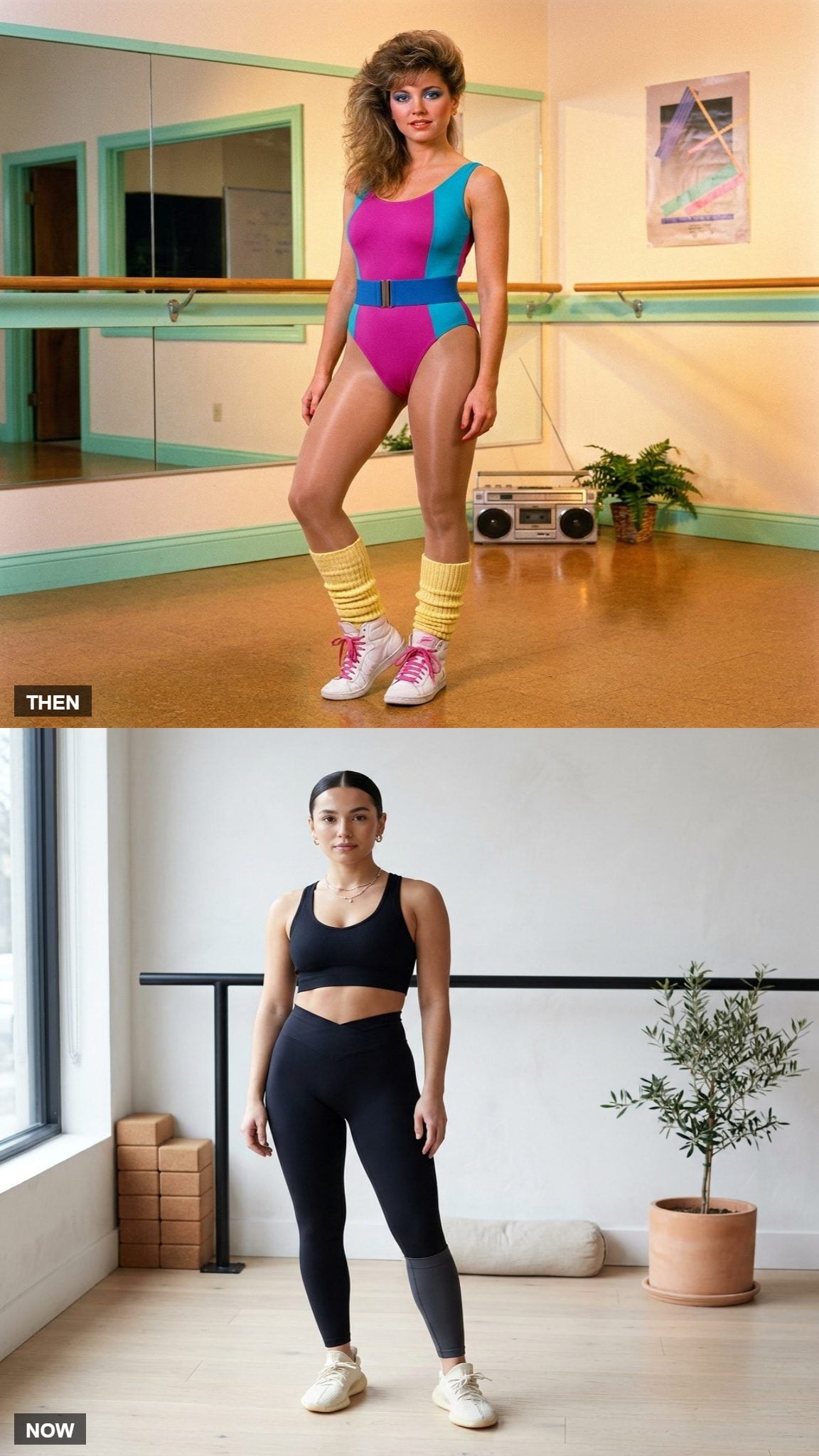
Leg warmers were everywhere in 1985 and nobody questioned it. Bundled from ankle to calf in thick ribbed wool, worn over tights, over leotards, to the gym, to the grocery store, to parties. Olivia Newton-John made them look reasonable in 1981 and the trend refused to die for the entire decade.
The practical argument was warmth between movement and rest. In aerobics class, though, the decorative value often mattered just as much. Today the closest visual relative is the compression sleeve, worn for support, comfort, warmth, or recovery rather than to match a leotard.
27. The Cotton T-Shirt That Turned Heavy Halfway Through Class
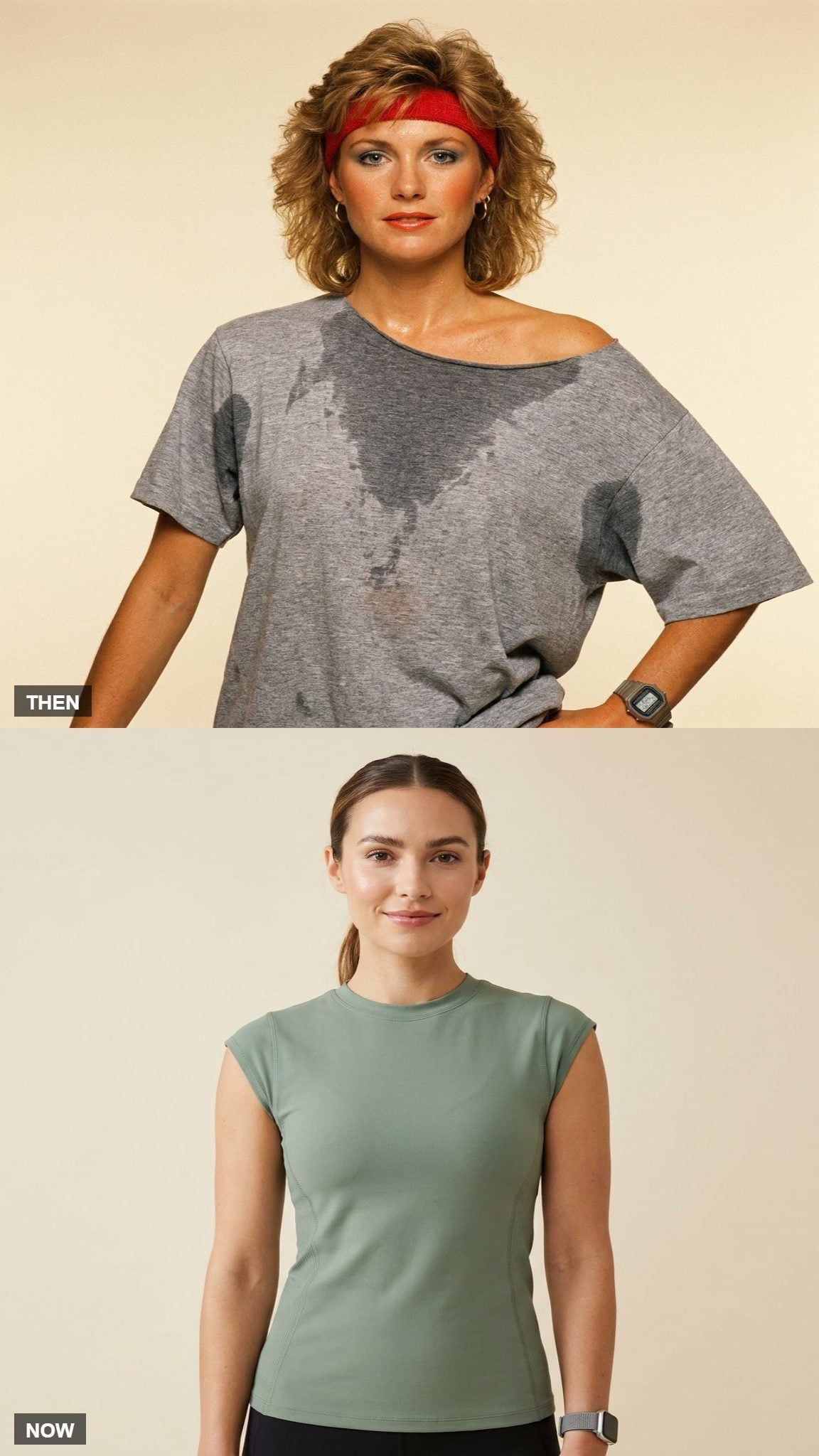
Cotton was everywhere in 1985, especially in oversized T-shirts cut wide enough to slide off one shoulder. During a hard class, the fabric absorbed sweat, grew heavier, and stayed damp long after the jumping jacks ended.
Modern moisture-wicking workout tops feel dramatically lighter by comparison. They are cut for movement and designed to spread moisture across the fabric so it can evaporate more efficiently. The old cotton shirt simply held on to whatever the class produced.
26. The Shiny Satin Running Short That Rode Up Every Single Time
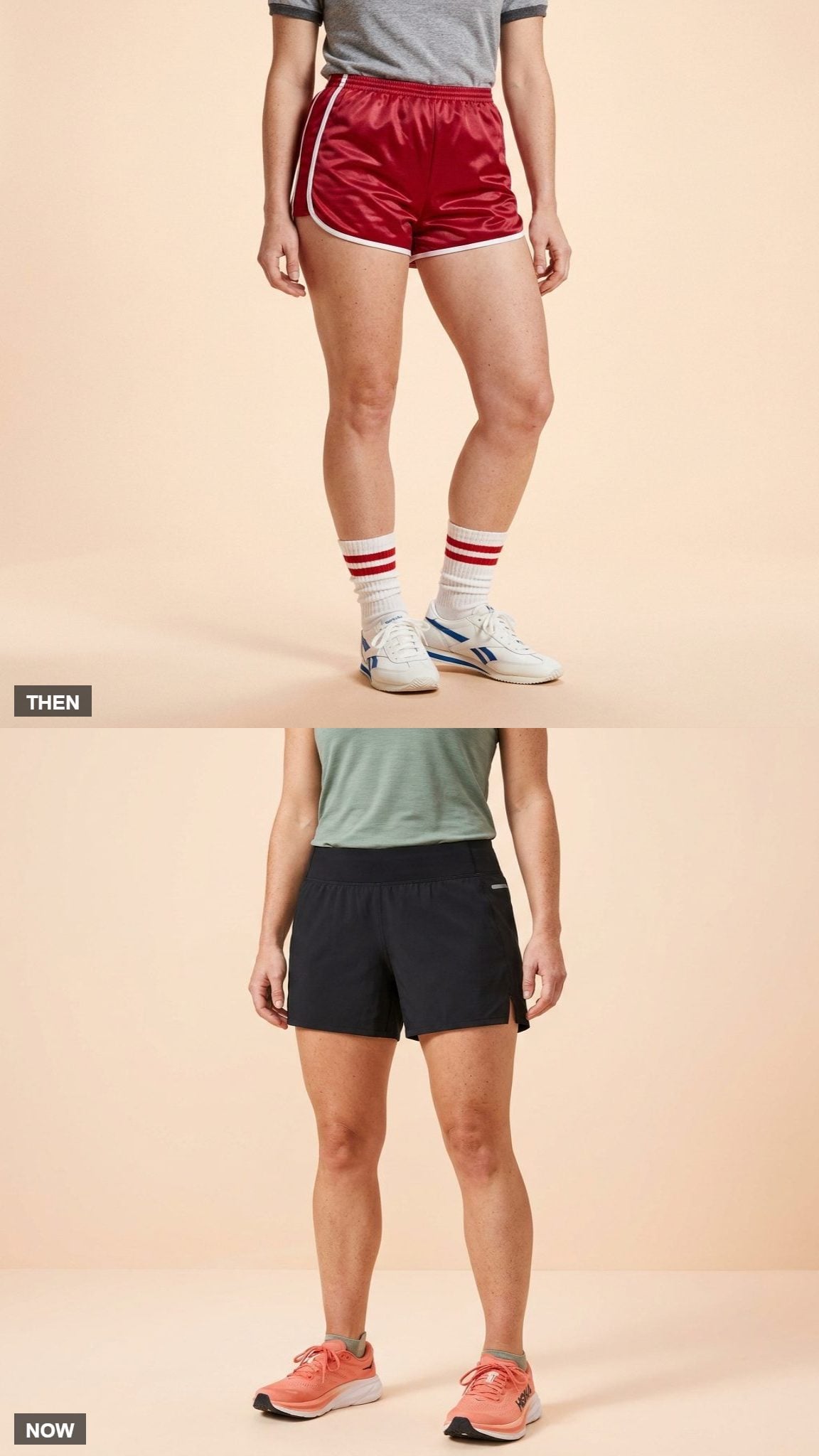
Two-inch inseam. Satin-adjacent nylon. High-waisted enough to sit at the natural waist, which made the leg opening an afterthought. These were sold as running shorts and technically they were, if you don’t count the constant mid-run adjustments required to keep them from disappearing entirely.
The shiny finish was mostly aesthetic, while the loose cut and short inseam made ride-up and friction part of the experience. Today’s running shorts have built-in briefs, sweat-wicking liners, and inseams that actually cover the relevant geography. The 1985 version had none of that. Just shine and optimism.
25. Aerobics Shoes Had to Learn About Side-to-Side Movement
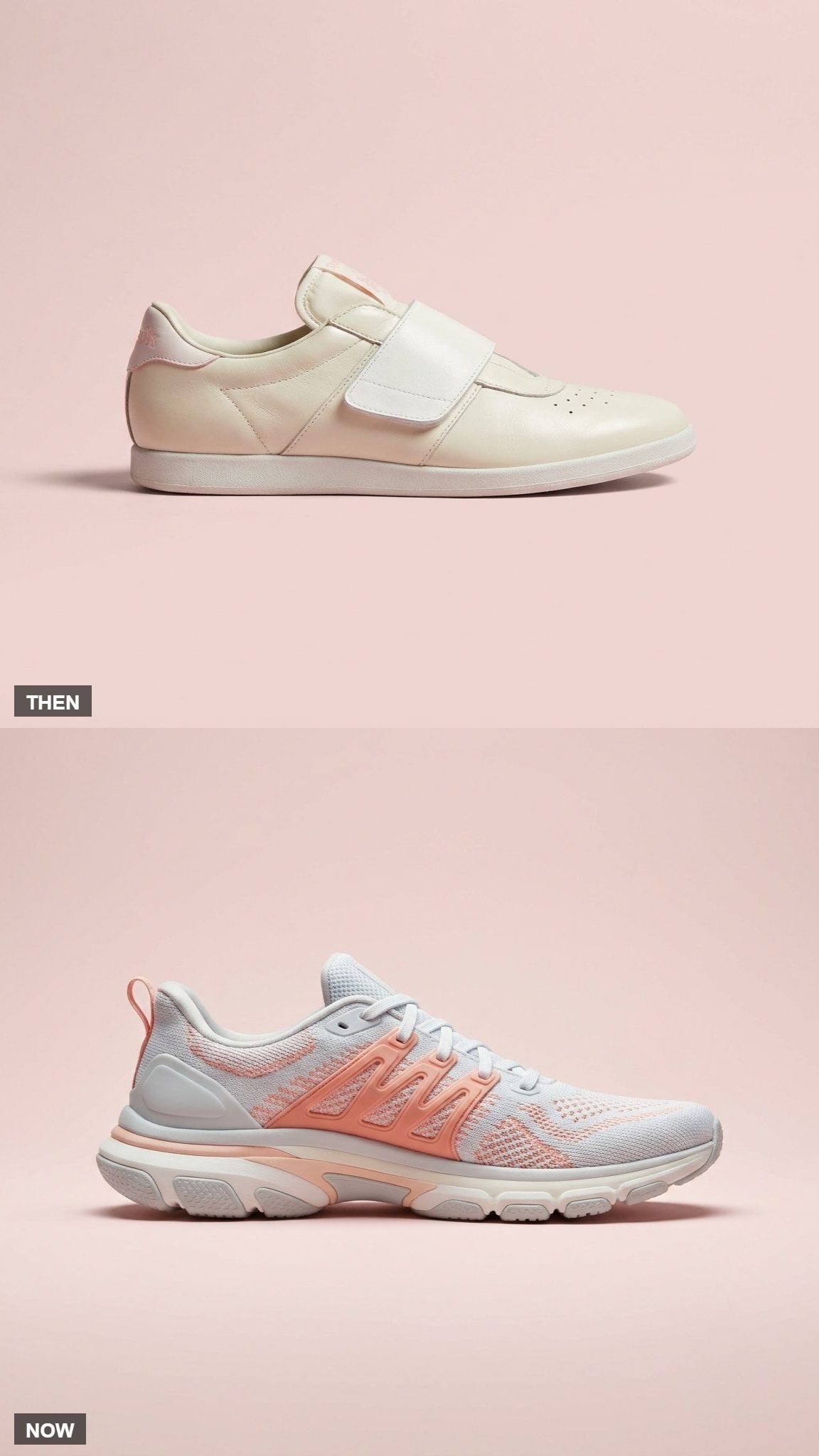
Early aerobics shoes often looked like white leather casual shoes with athletic intentions: low-profile soles, simple foam cushioning, and hook-and-loop straps. The challenge was not only impact. Aerobics demanded repeated side steps, pivots, and grapevines that exposed the need for better lateral stability.
Current training shoes are built around lateral support, secure heel hold, and cushioning suited to multidirectional movement. The shift was from adapting general athletic shoes to designing footwear for the class itself.
24. The Headband That Held Nothing and Said Everything
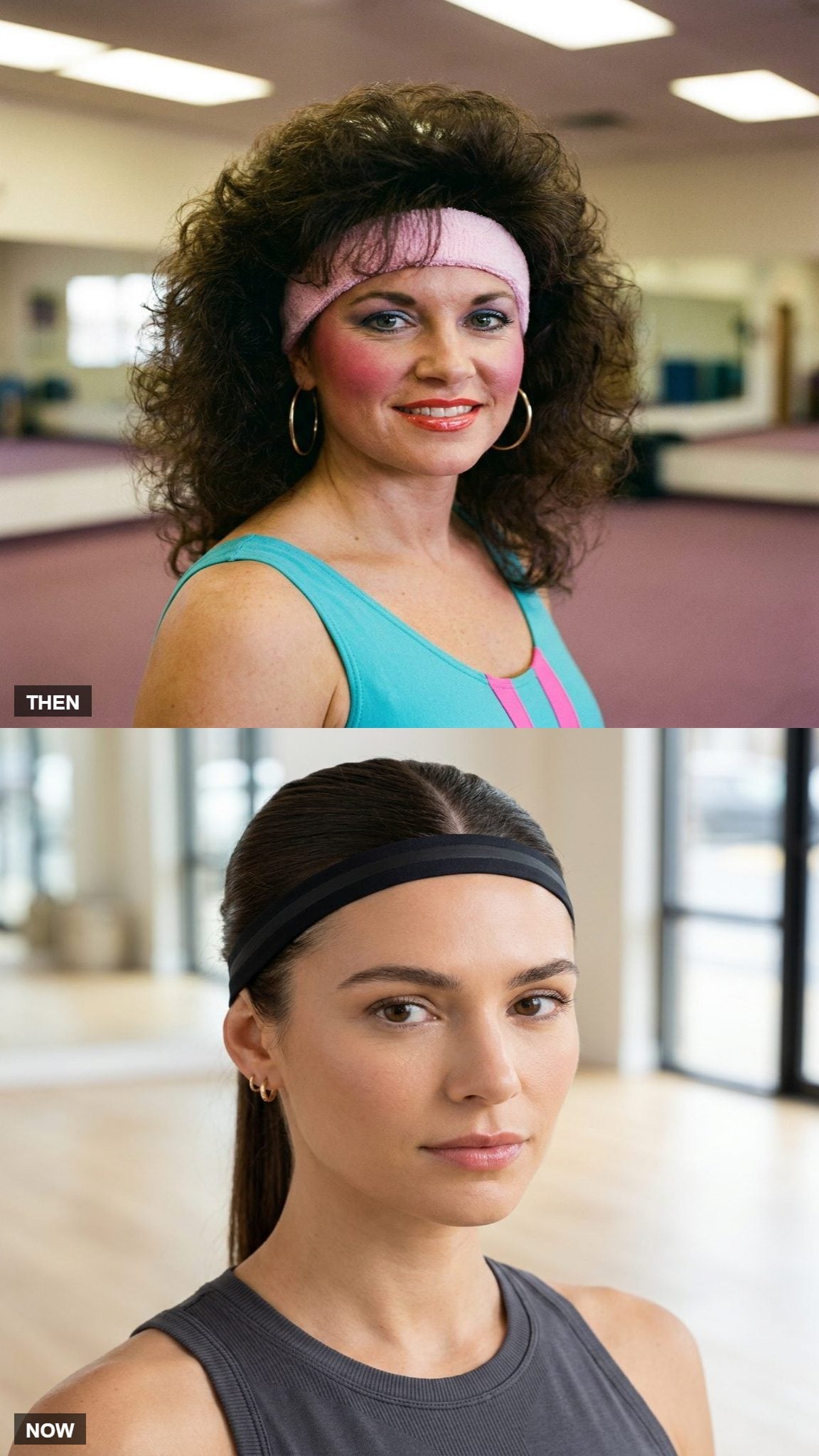
The terry-cloth headband’s actual job was sweat management. Its real job was styling. In 1985 it sat across a perm so heavily lacquered with Aqua Net that no amount of jumping jacks was going to disturb it. The headband was decorative participation in the concept of athleticism.
Also: earrings. Gold hoops, worn to aerobics class, because taking them out apparently never occurred to anyone. Modern workout headbands use stretch fabrics and grip details to stay in place. The 1985 version mattered as much for the color story as it did for sweat.
23. The Wrist Weights That Added Resistance in All the Wrong Places
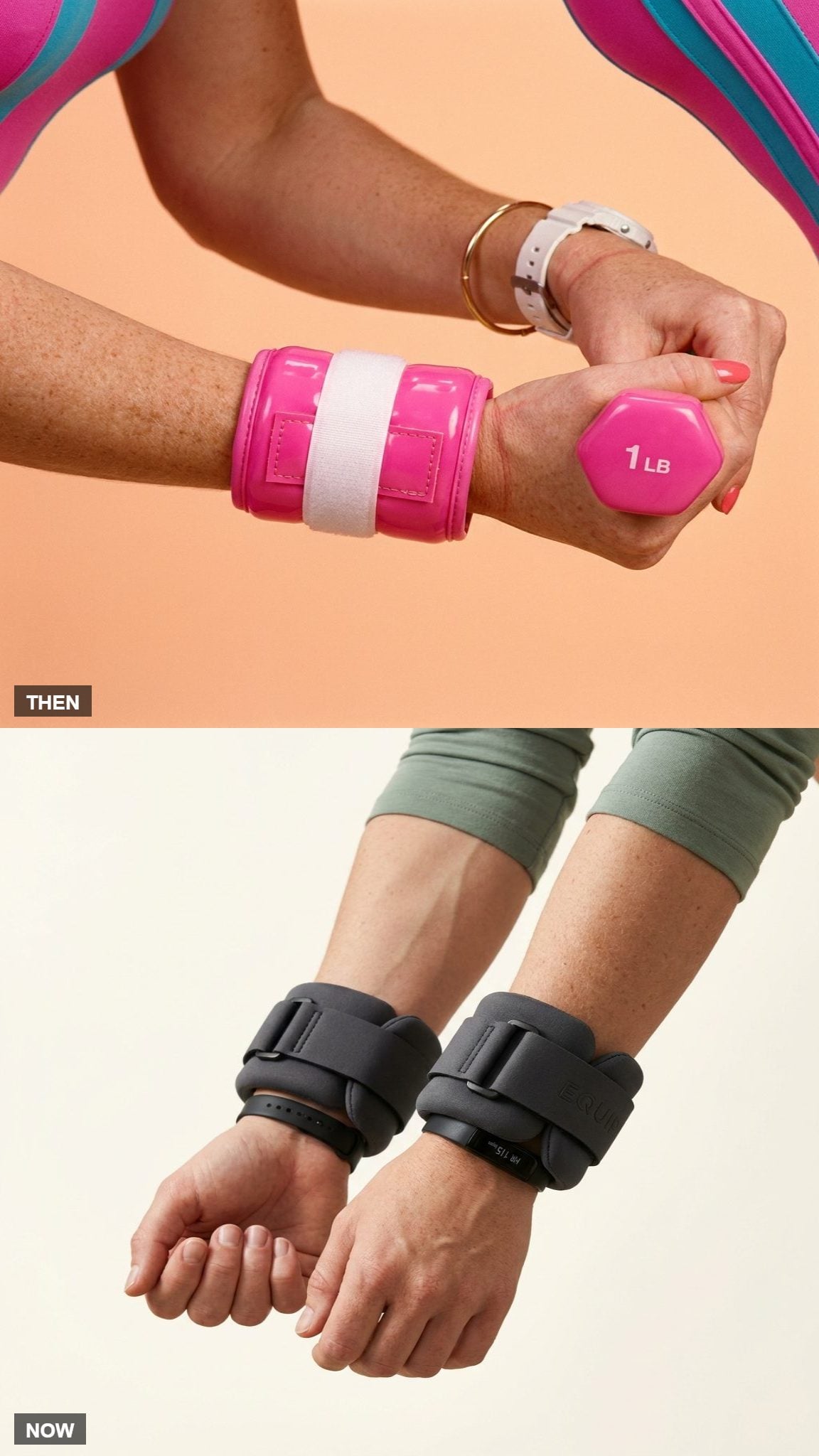
One pound each. Neon vinyl. Fastened with hook-and-loop tight enough to leave a mark. The wrist weight was a 1985 fitness staple sold as a way to intensify aerobics. One pound per wrist did add resistance, but not in the controlled way of a dedicated strength exercise.
Used during fast, repetitive arm movements, light wrist weights can change technique and increase fatigue at the shoulders and elbows. But in 1985, they came in matching sets with the leotard, and that was enough.
22. The Permed, Sprayed, Somehow Survived a Full Class Hair Situation
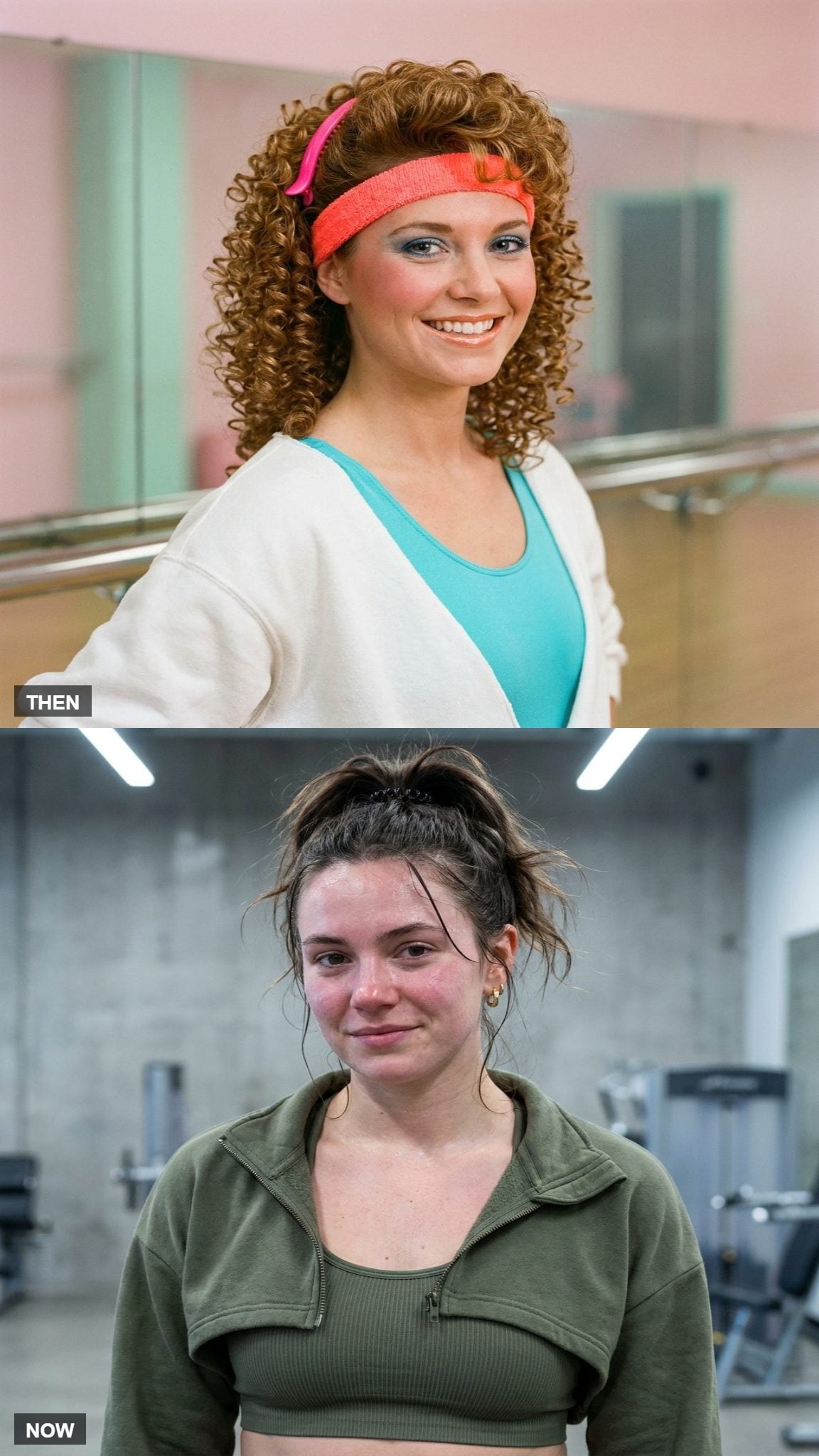
Full perm. Banana clip at the crown. Aqua Net applied before class like pre-workout. This was the 1985 mid-workout hair situation, and the remarkable thing is it looked almost exactly the same after an hour of high-impact aerobics as it did going in. Good technique had little to do with it. The holding power came from chemistry.
The modern gym pony is tied up, forgotten, and comes down looking honestly defeated, which is correct because you just worked out. The 1985 approach treated hair as a garment, not a biological material. It stayed in place because it had been convinced, chemically, that it had no choice.
21. The Sports Bra Situation Was… Not That
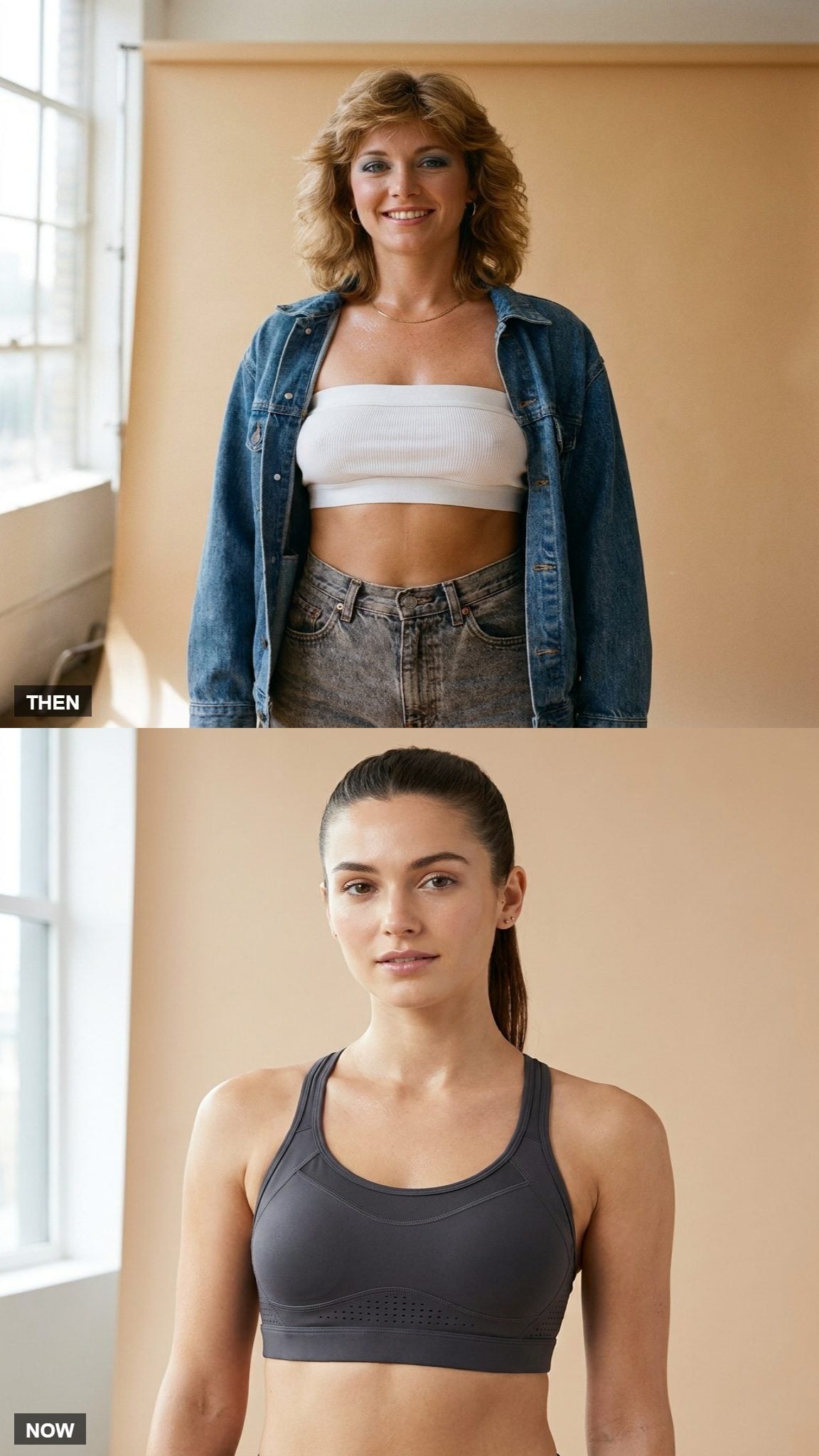
By 1985, true sports bras already existed, but the category was still young. Early designs relied heavily on elastic compression and offered far fewer support levels, fabrics, closures, and size options than women can choose from now.
Now the supportive sports bra is a full design category. Different impact levels, mesh zones, racerback shapes, adjustable bands, molded cups, and extended sizing address activities and bodies that the early market treated as one problem. The product went from an afterthought to a major category in sporting-goods stores.
20. Workout Shorts Reflected a Completely Different Standard of Coverage
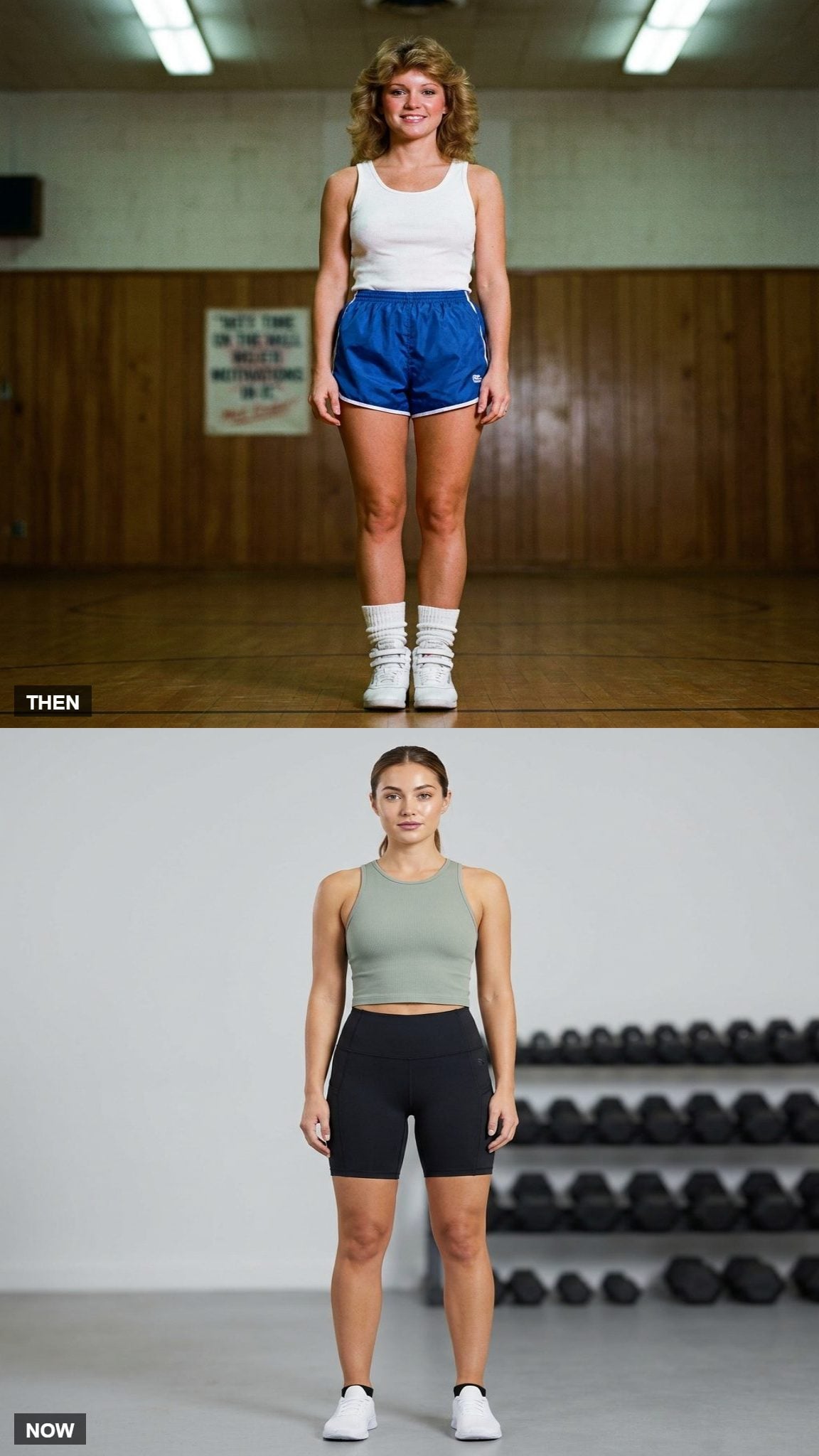
Three inches of inseam. Silky nylon. High side openings. The point here is less how the shorts performed than how normal that degree of coverage looked in a public workout space. Royal blue, hot pink, or black with white piping—that was the visual language.
Today’s athletic shorts cover a much wider range of inseams, fits, and modesty preferences. Biker shorts, five-inch and seven-inch cuts, loose shells, and compression liners all coexist now.
19. The Instructor’s Headband Made Her Visible From the Back Row
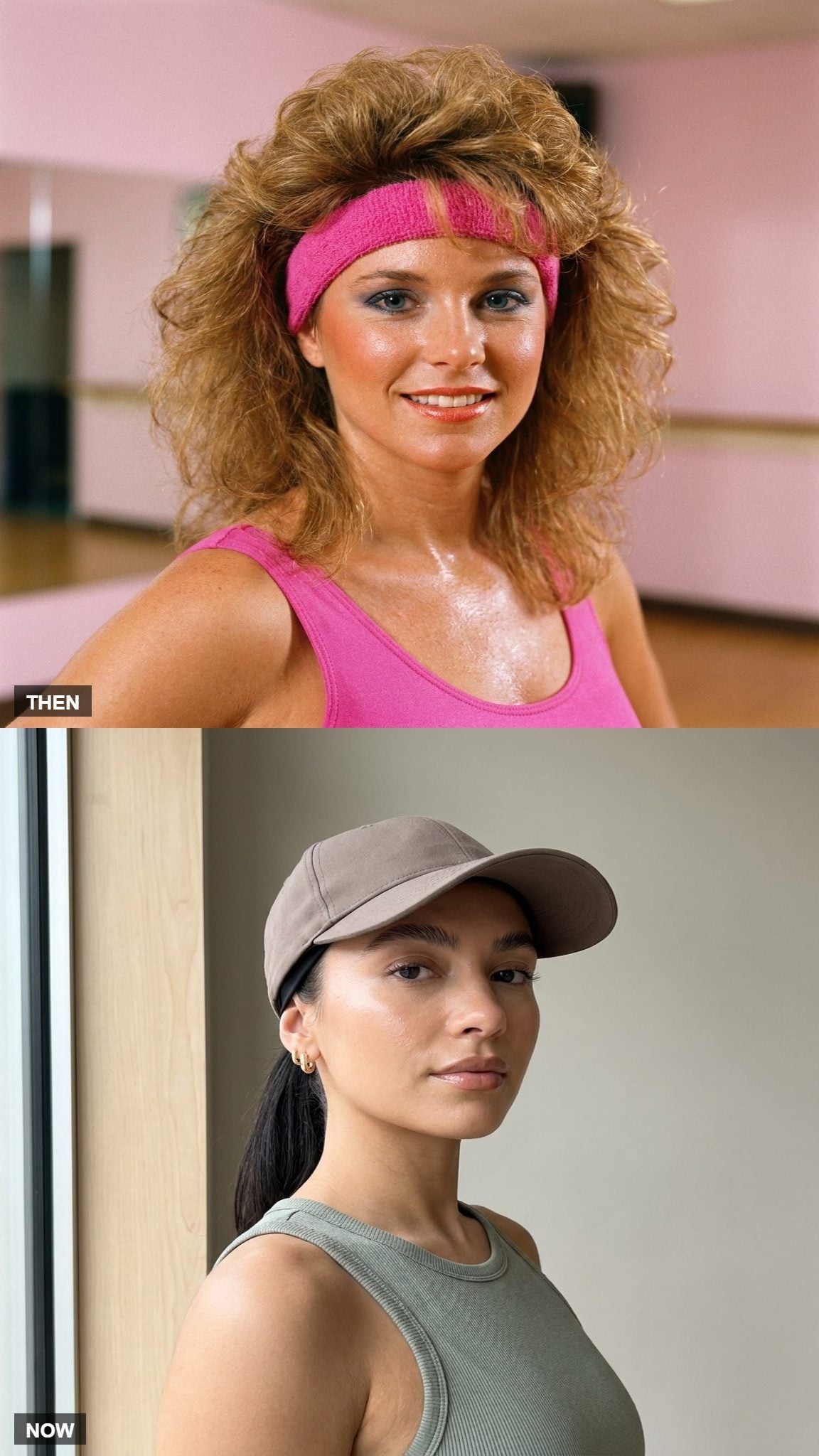
The terry-cloth headband of 1985 was not merely an accessory. On the instructor, it was part of the uniform. Three inches wide, often in the same color as your leotard, worn across the forehead like a crown while you grapevined across a mirrored gym. Its practical job was sweat control, but its larger job was visibility: from the back row, the coordinated headband helped mark the person everyone was meant to follow.
Current instructors rely on branded sets, microphones, lighting, and social media to establish a visual identity. In 1985, a three-inch band of matching terry cloth could do much of that work from across a mirrored studio.
18. The Leotard-Over-Tights Look That Defined an Era
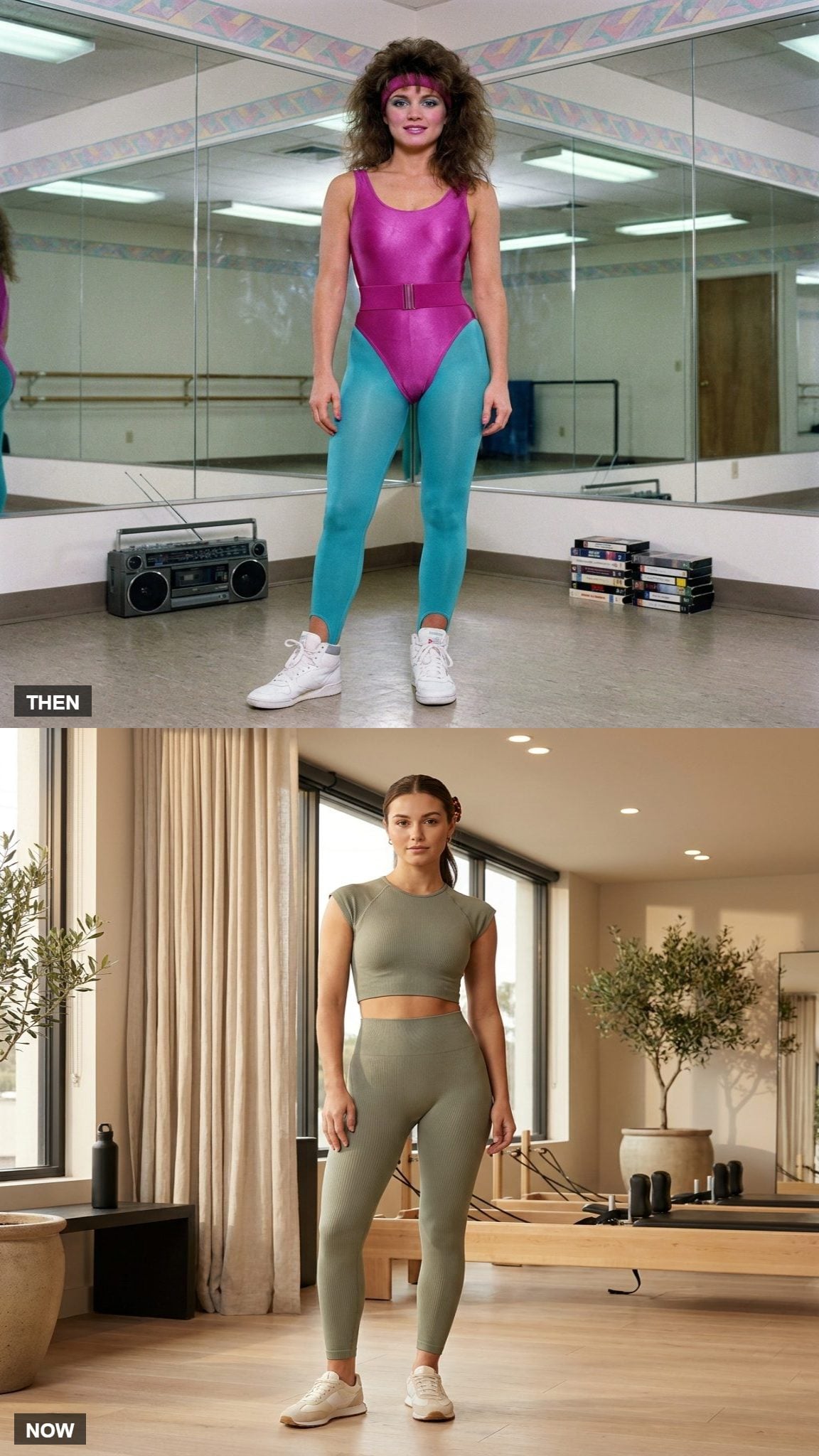
There was exactly one correct way to be dressed for a 1985 workout class.
A shiny spandex leotard, cut high on the hip, worn directly over stirrup tights. The outfit created a shape that required constant adjustment and made sitting down complicated. The high-cut hip was not practical. It was the whole point. If your leotard wasn’t cutting across your hip bone, you weren’t dressed for aerobics.
The contemporary equivalent is a matching workout set built around stable waistbands, stretch, and support rather than the visual drama of a high-cut hip.
17. Running Shoes Had Far Fewer Specialized Options
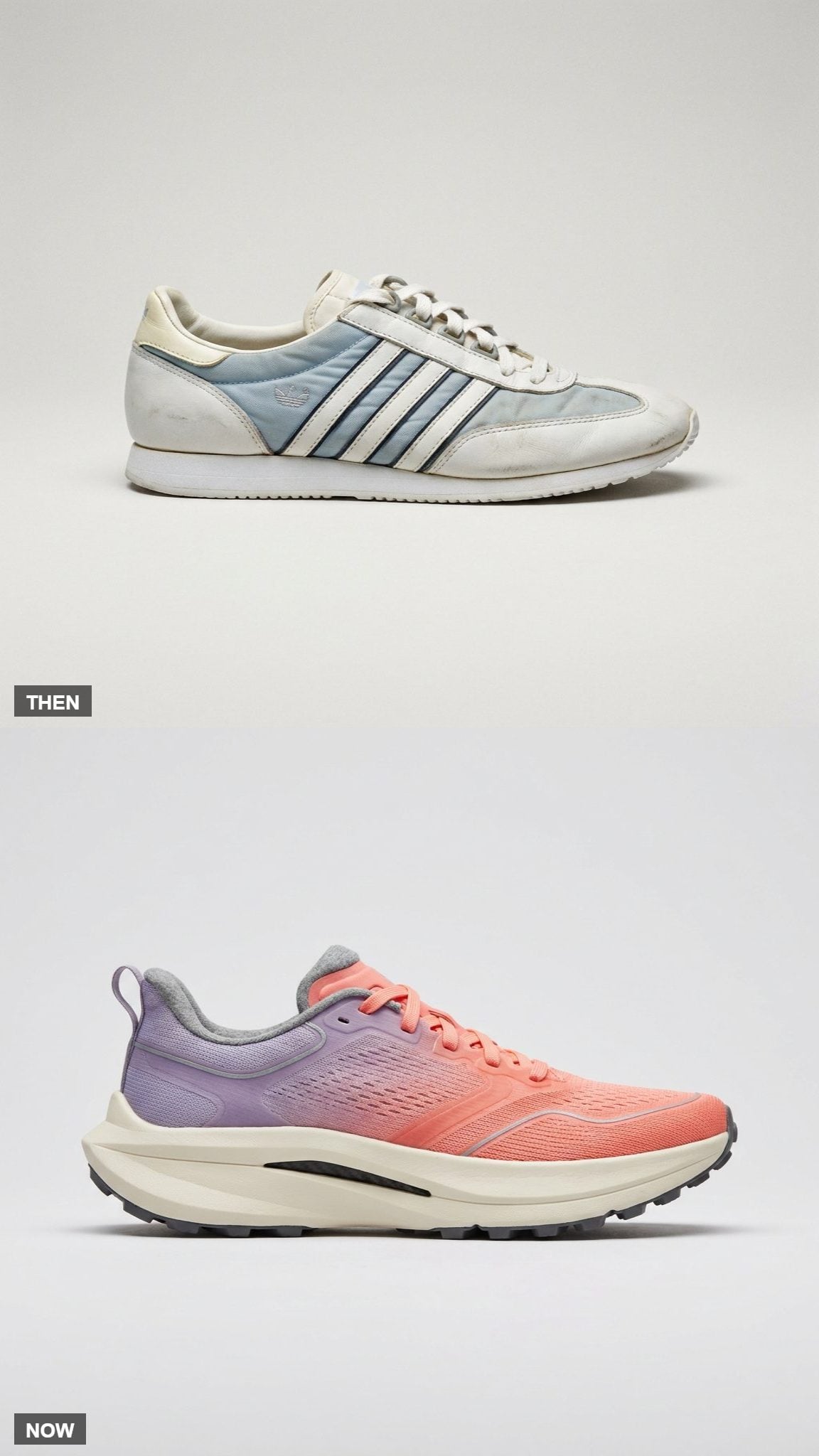
Flat rubber sole. Leather upper. Thin foam insert that compressed permanently after two weeks. Running shoes in 1985 already used foam cushioning, motion-control ideas, and emerging technologies such as air pockets, but the materials were heavier and the category offered far fewer specialized options than it does now.
Now a pair of women’s running shoes may list heel-to-toe drop, stack height, foam composition, stability features, and—at the performance end—carbon-fiber plates. The difference is less one dramatic invention than four decades of lighter materials, better foams, and increasingly specialized designs.
16. The Post-Workout Outfit Was Just the Workout Outfit, Everywhere
❤️ Would you like to save this?
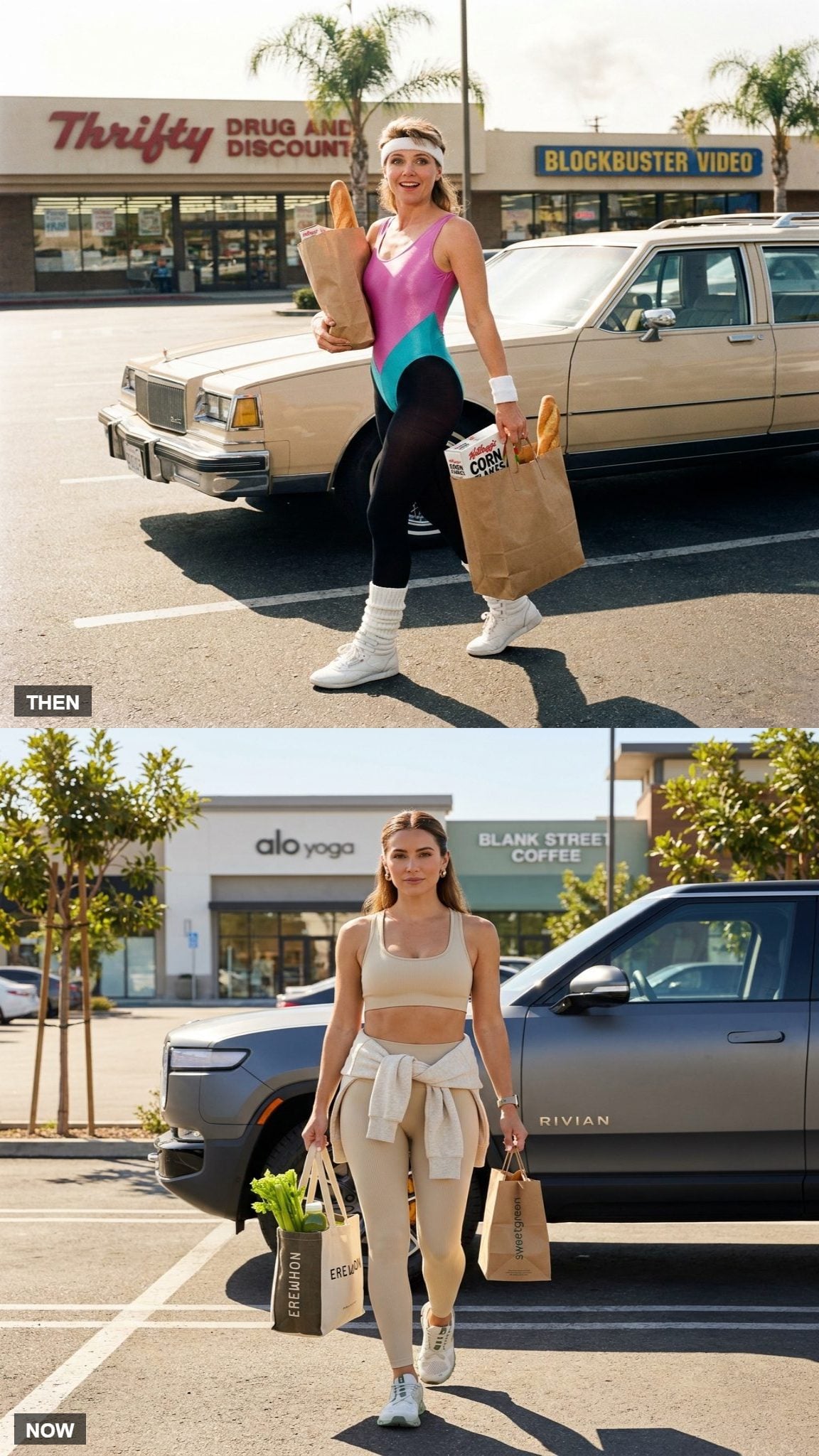
You wore it to the gym. You wore it home from the gym. You possibly ran errands in it. The 1985 workout outfit moved easily into errands and casual life because the boundary between fitness wear and street wear was already becoming porous. The leotard and stirrup tights were simply what you were wearing on a Tuesday.
This is the one area where 1985 was accidentally ahead of its time. The current athleisure movement is built on the same premise: the workout outfit should be wearable everywhere. The difference is that now it’s intentional design, not a gap in the market for something better to change into.
15. The Gym Bag Was a Duffel That Could Double as Luggage
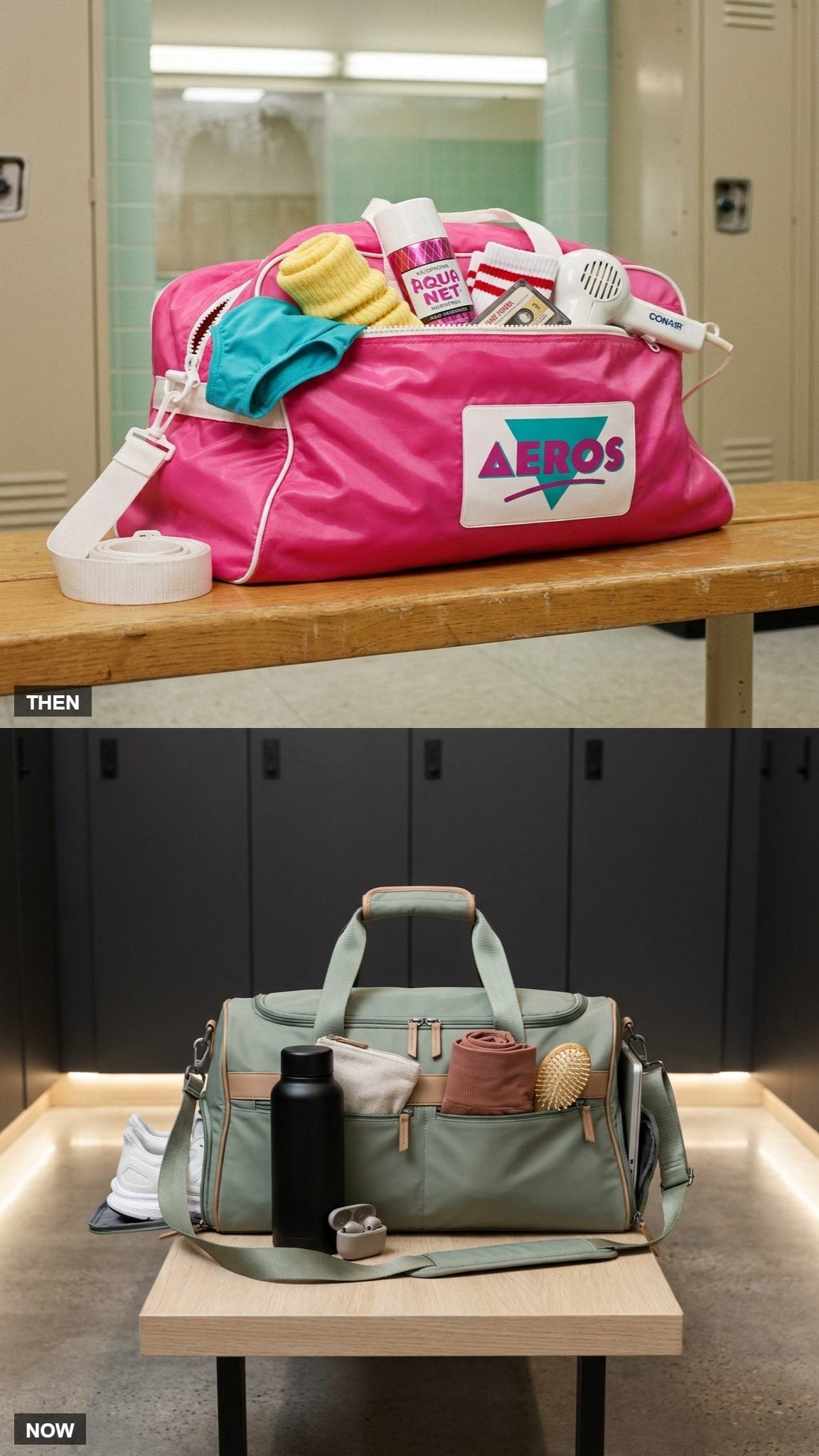
The 1985 gym bag was enormous. Hot pink nylon, cylindrical, built like a piece of checked luggage that had gone casual. It held everything: a spare leotard, tube socks, a can of Aqua Net, leg warmers, possibly a full-size blow dryer, and whatever else seemed necessary before shoe compartments, wet pockets, and bottle sleeves became standard bag features.
The modern women’s gym bag has a shoe compartment, a wet pocket, a laptop sleeve, and a structured silhouette. It is trying to be several things at once. The 1985 bag was trying to be one thing: large enough to fit everything you owned into it before class.
14. The Sweatband Went From Main Character to Background Detail
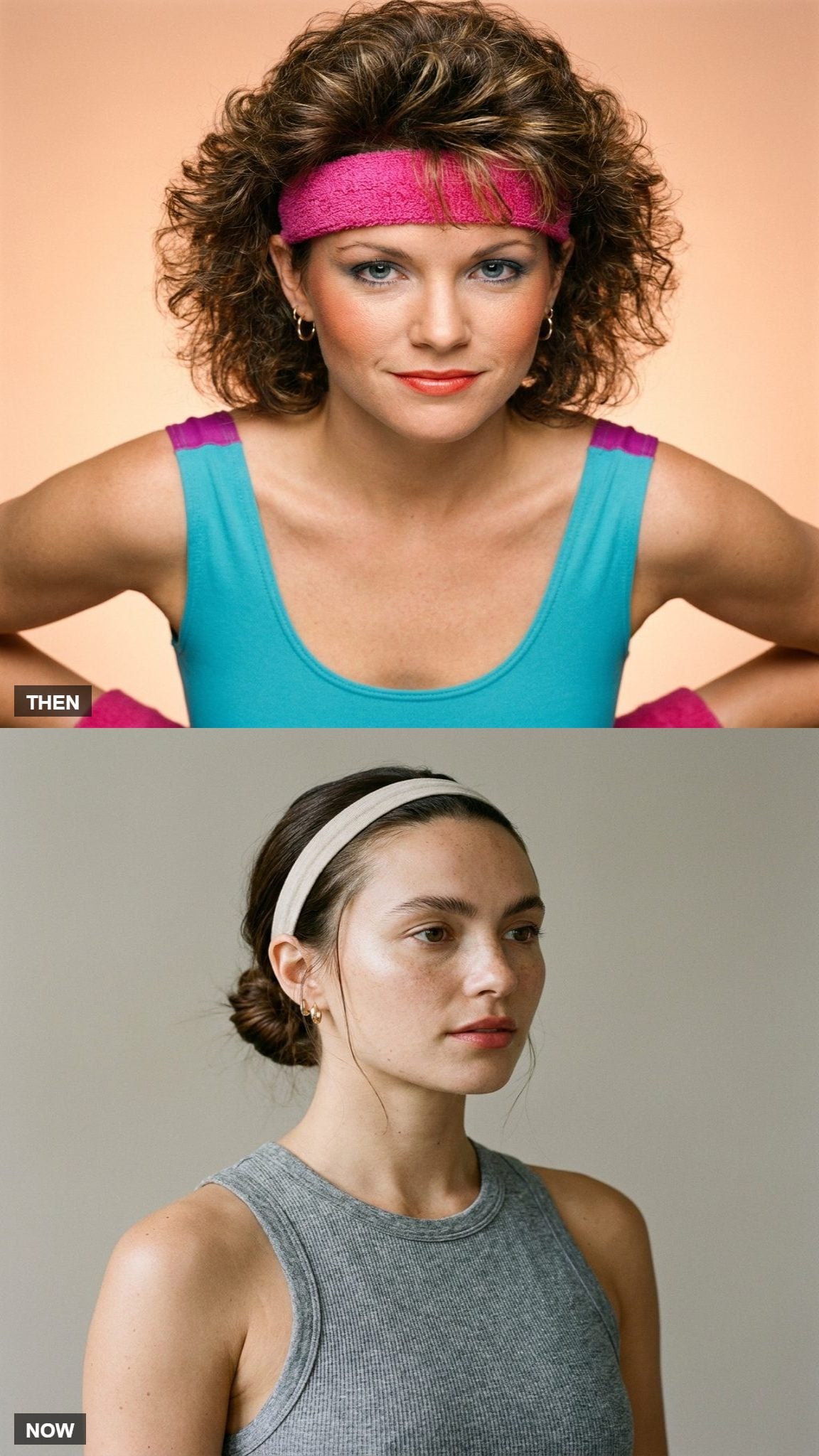
In 1985, the terry-cloth sweatband was not just an accessory; it was a declaration. Worn thick across the forehead, color-matched to your leotard, coordinated with the wristbands on both arms. It said: I am here. I am working. I have a system.
Now a headband is something you forget you’re wearing. A thin strip of fabric holding a bun in place, chosen in whatever neutral was at the front of the drawer. Function only, no fanfare. The fact that both objects have the same name is almost embarrassing for one of them.
13. The Workout Shoe: From Reebok Freestyle to Cloud-Soled Engineering
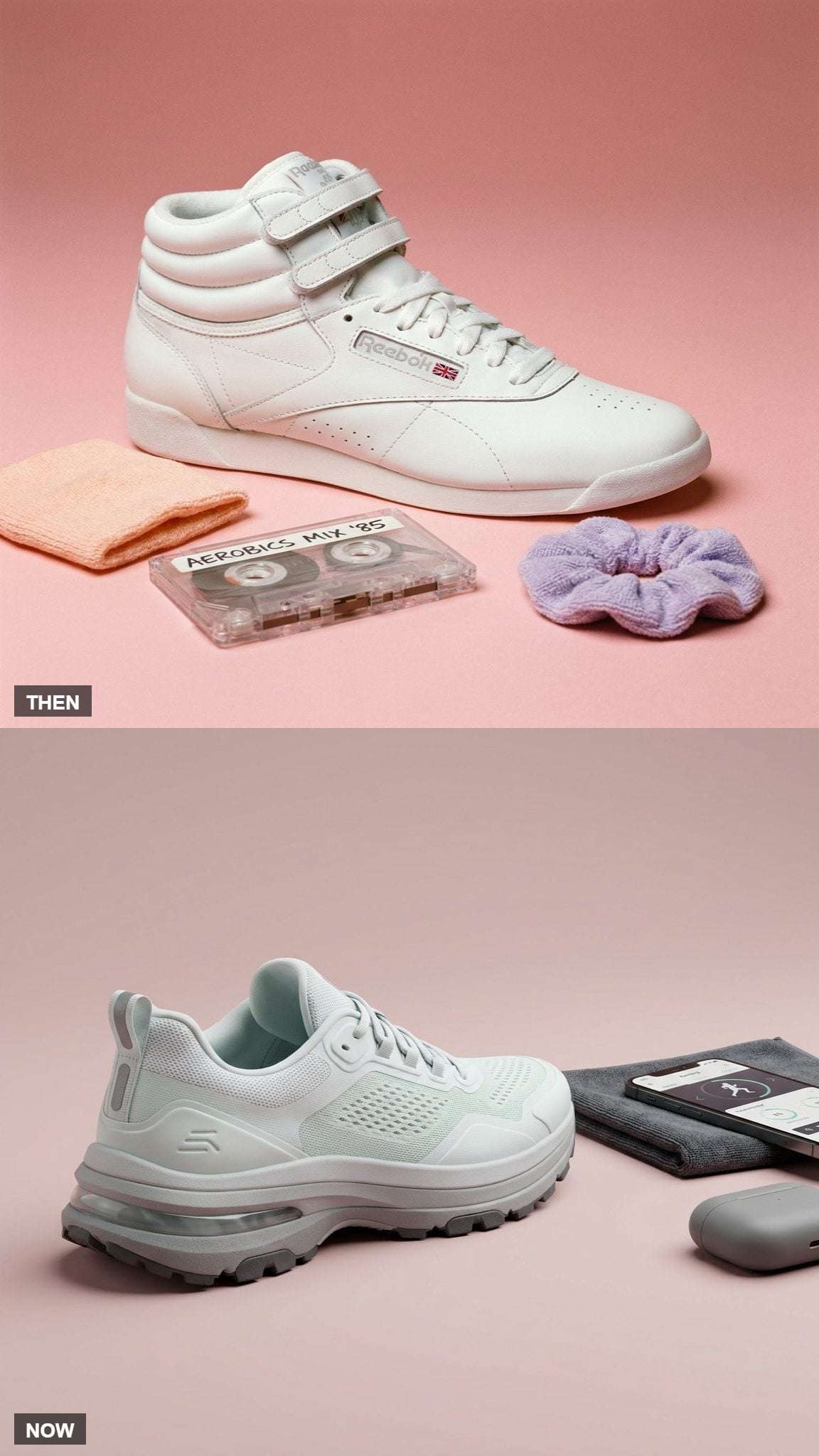
The Reebok Freestyle arrived in 1982 as a women-specific fitness shoe and became one of the defining products of the aerobics boom. White leather, a high ankle, and hook-and-loop straps made it instantly recognizable both in class and on the street.
A 2026 cross-trainer may combine layered foam, flexible grooves, lateral reinforcement, and a broader platform. The Freestyle matters less as failed technology than as the moment women’s fitness footwear became a category with its own identity.
12. The Fanny Pack Full of Everything and Nothing
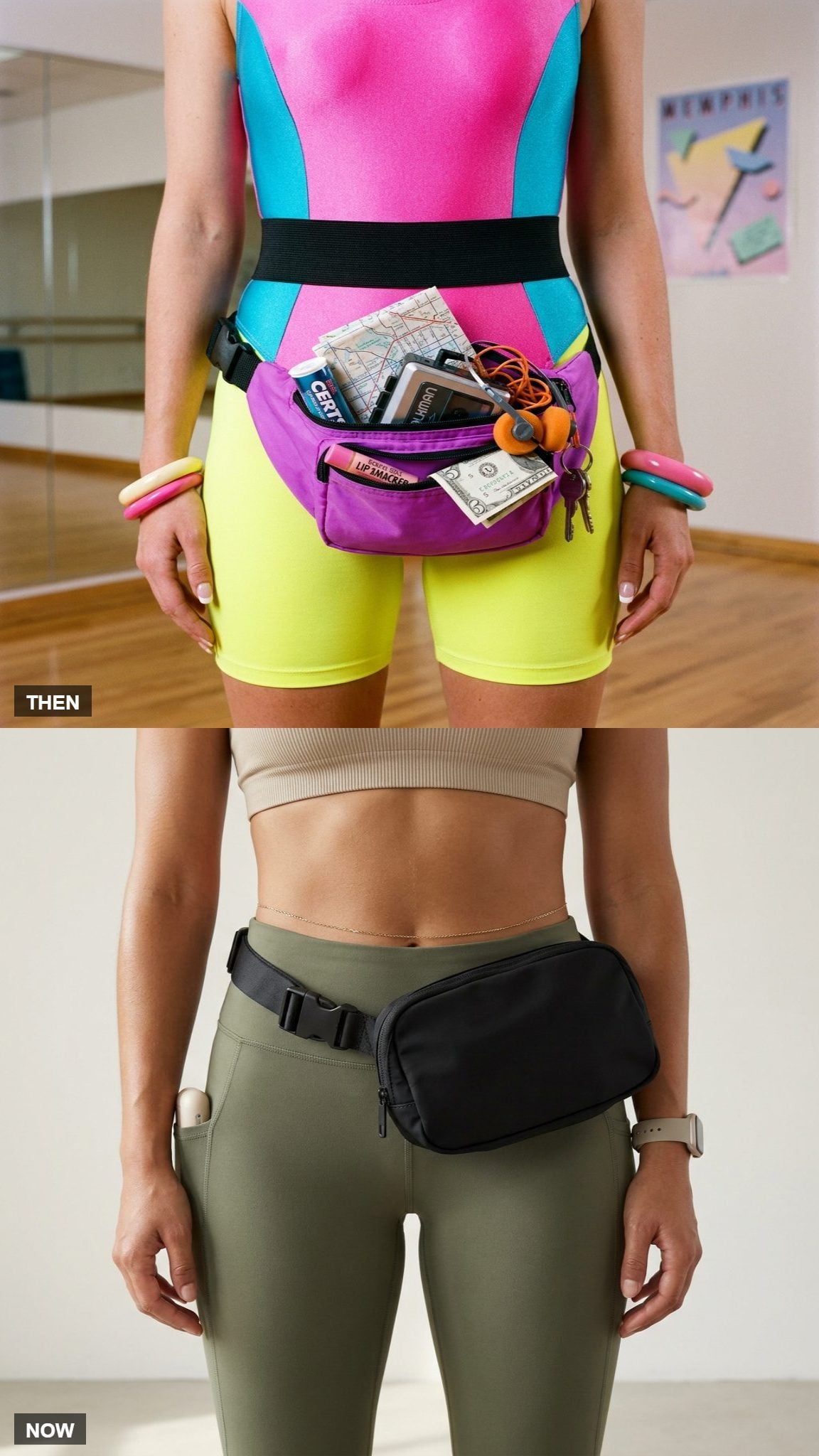
Strapped across the hip in electric teal or hot pink nylon, the 1985 fanny pack carried a driver’s license, three quarters for the pay phone, a stick of Trident, a folded five-dollar bill, and a small tube of Bonne Bell Lip Smacker. The plastic clip had already snapped once and been taped back together. Nobody thought it looked ridiculous because nobody had told them yet.
Now the same job gets done by a phone shoved into a legging pocket. No zipper, no jingle of coins knocking against a Bic pen, no sticky residue from a leaked lip gloss. The belt bag came back, sure, but it’s matte black and made of recycled something, and it rides high on the chest like a beauty queen sash. Different creature entirely.
11. The Terry Cloth Wristband Turned Smartwatch
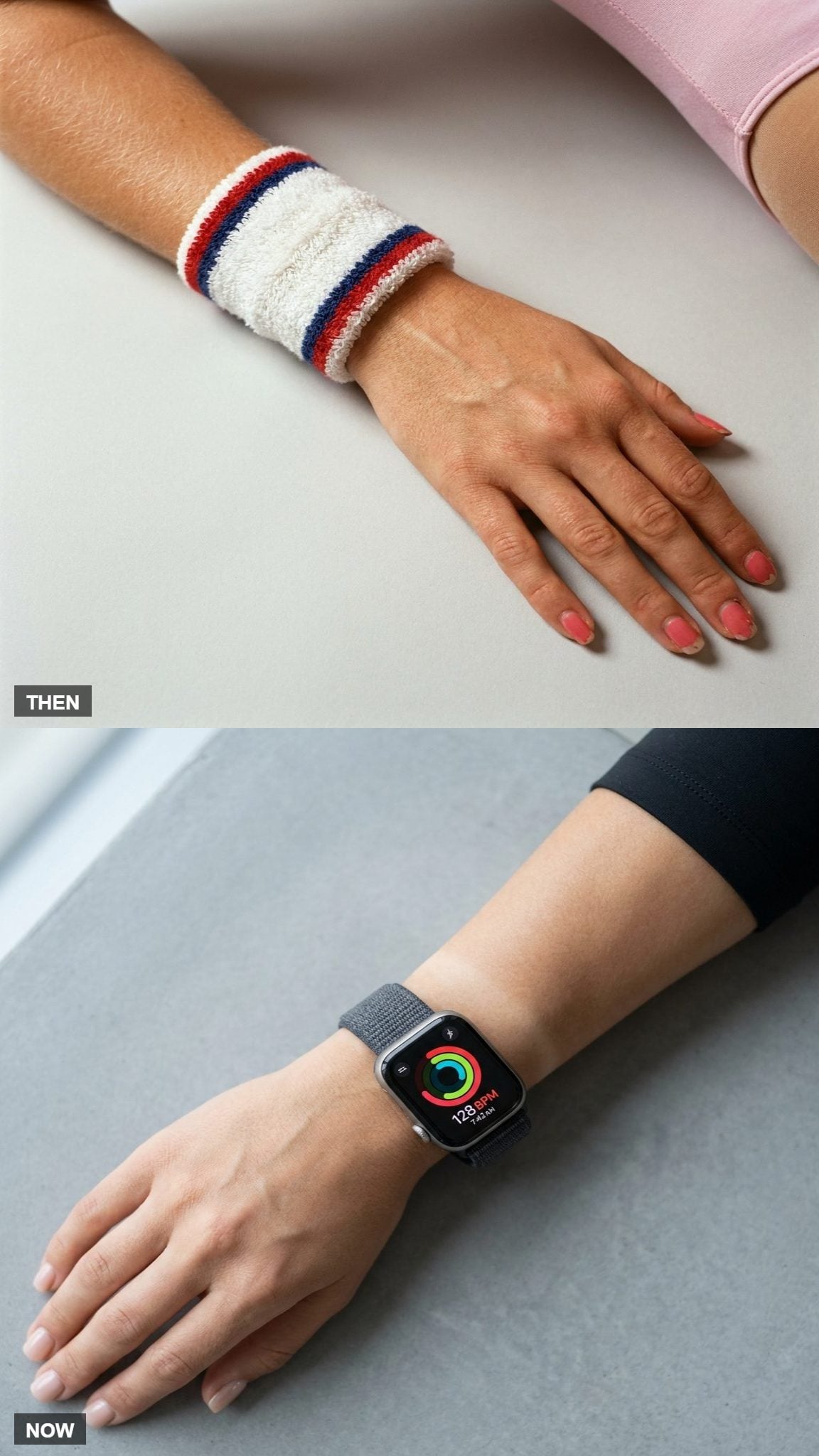
THEN: A stretchy loop of white terry cloth, sometimes striped red and blue at the edge, worn on one wrist or both. Its job? Mop sweat off the forehead mid-jumping-jack. Nothing else. Professional tennis helped make them recognizable, and aerobics carried the look into group fitness.
NOW: A slab of aluminum and glass on a silicone band that knows her resting heart rate, her sleep score, her VO2 max, and whether she bothered to stand up today. It buzzes when she hits her move goal, calls her daughter if she takes a spill, and generally acts like a tiny concerned relative strapped to her pulse. The wrist got a promotion.
10. The Cassette Walkman That Bounced Through Every Jumping Jack
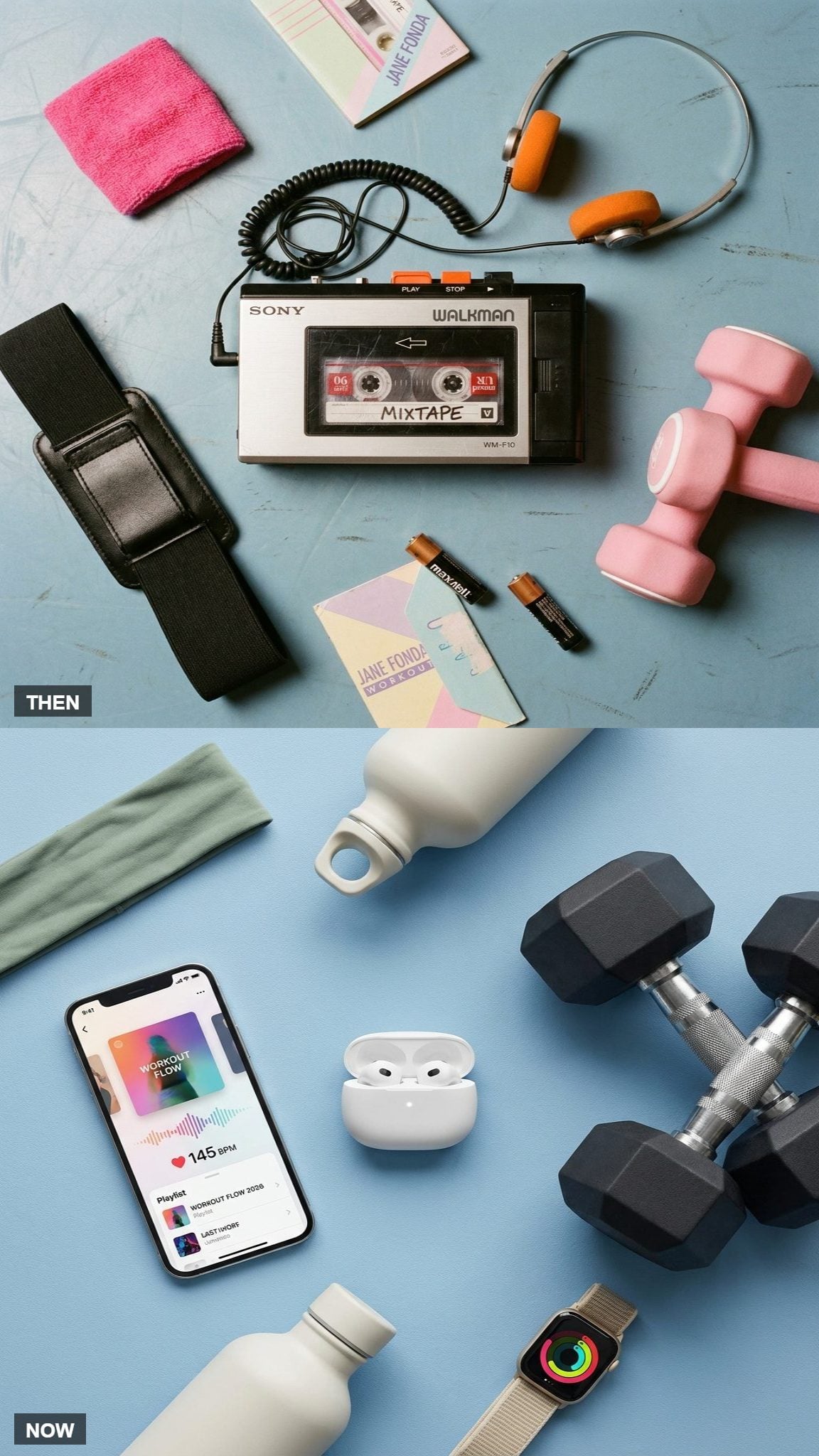
THEN: A yellow Sony Sports Walkman rode her hip in 1985, cassette rattling with every jumping jack, foam headphones sliding off with every high kick. Tuesday night’s mixtape ran 45 minutes a side, and if the tape jammed halfway through side B, workout over. Fast-forwarding burned batteries, and batteries cost real money, so she rationed them like coffee.
NOW: AirPods. A few grams each. Her whole music library plus a coaching app barking splits at her, all streaming from a phone that also tracks her heart rate and reorders the groceries while she runs.
9. The High-Cut Leg Opening Became the Signature Shape
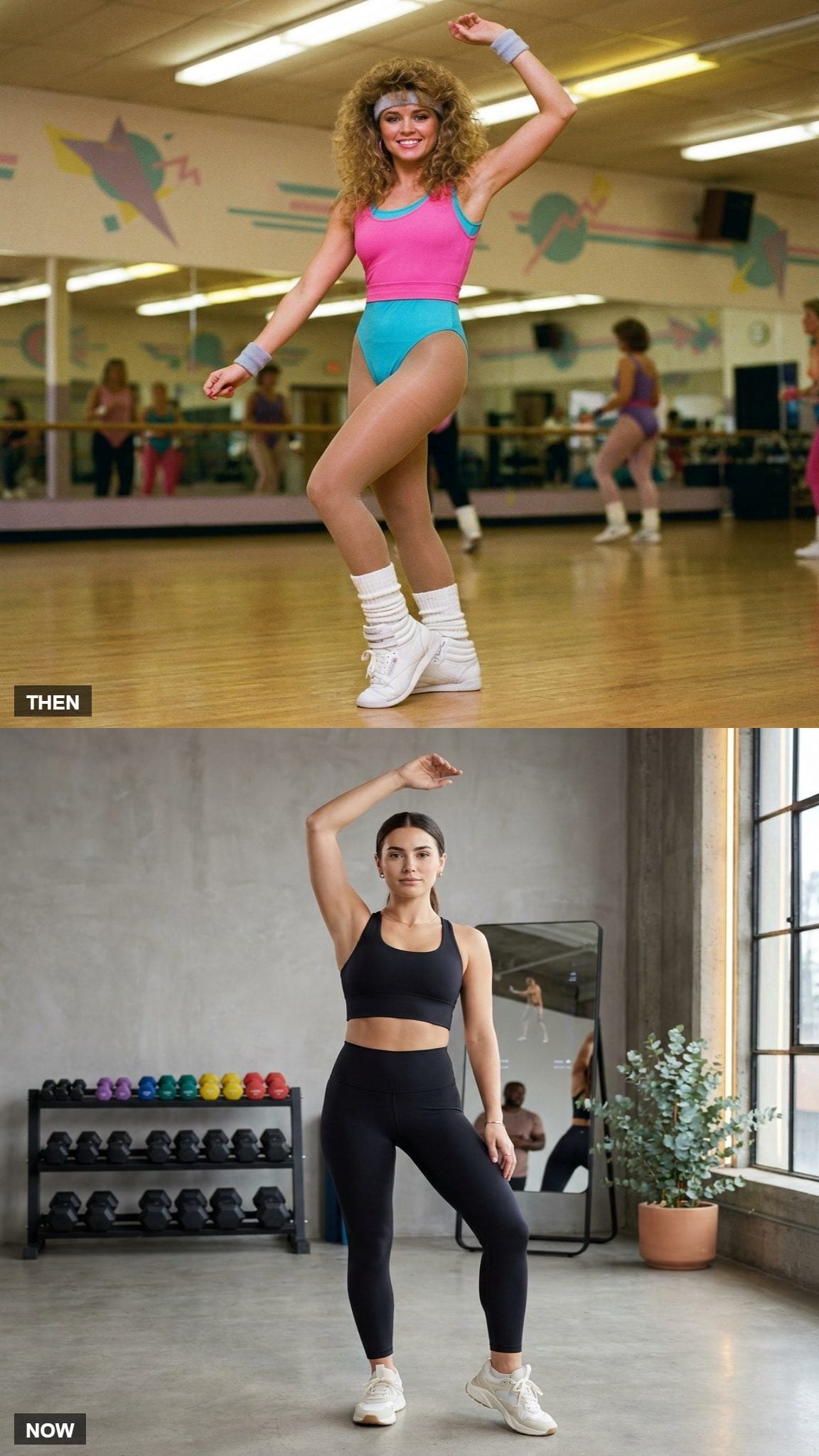
The high-cut leg opening was the defining line of the 1985 aerobics silhouette. Not high-cut at the neck, high-cut at the hip, cut so aggressively upward it was practically a swimsuit with ambitions. Women wore these to actual gyms, in front of actual other people, and nobody blinked. The logic was: more hip exposure equals more freedom of movement. Sure.
Today’s athletic leotard still exists, mostly in gymnastics and dance. The rest of activewear moved toward high-rise leggings and more stable coverage. The contrast is not simply more fabric; it is a different idea of what should stay fixed during movement.
8. The Full Face of Makeup That Refused to Sweat Off
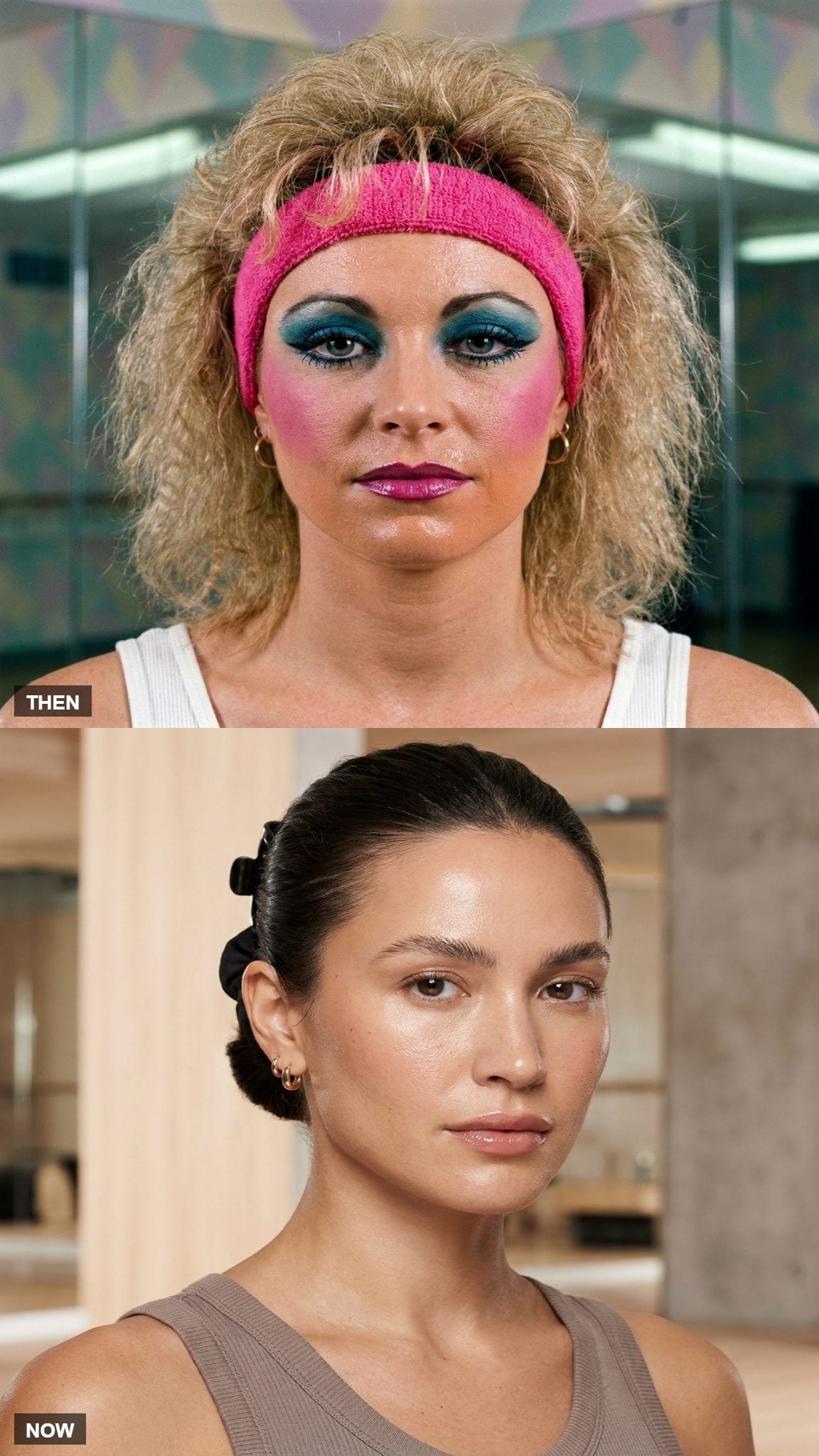
THEN: Blue frosted eyeshadow swept clear up to the brow bone. Three coats of mascara, the last one still wet when she walked in. A stripe of blush called Peach Passion carved across the cheekbone like war paint. Women showed up to Jazzercise as polished as they might have for the rest of the day. Lipstick got a touch-up somewhere between the cool-down stretches and the drive home.
NOW: Tinted SPF, a lip balm making vague promises about hydration, maybe brow gel if a coffee stop is in the cards. Sweating is the point. That was apparently a hot take in 1985.
7. The Water Bottle Situation Was a Dixie Cup by the Cooler
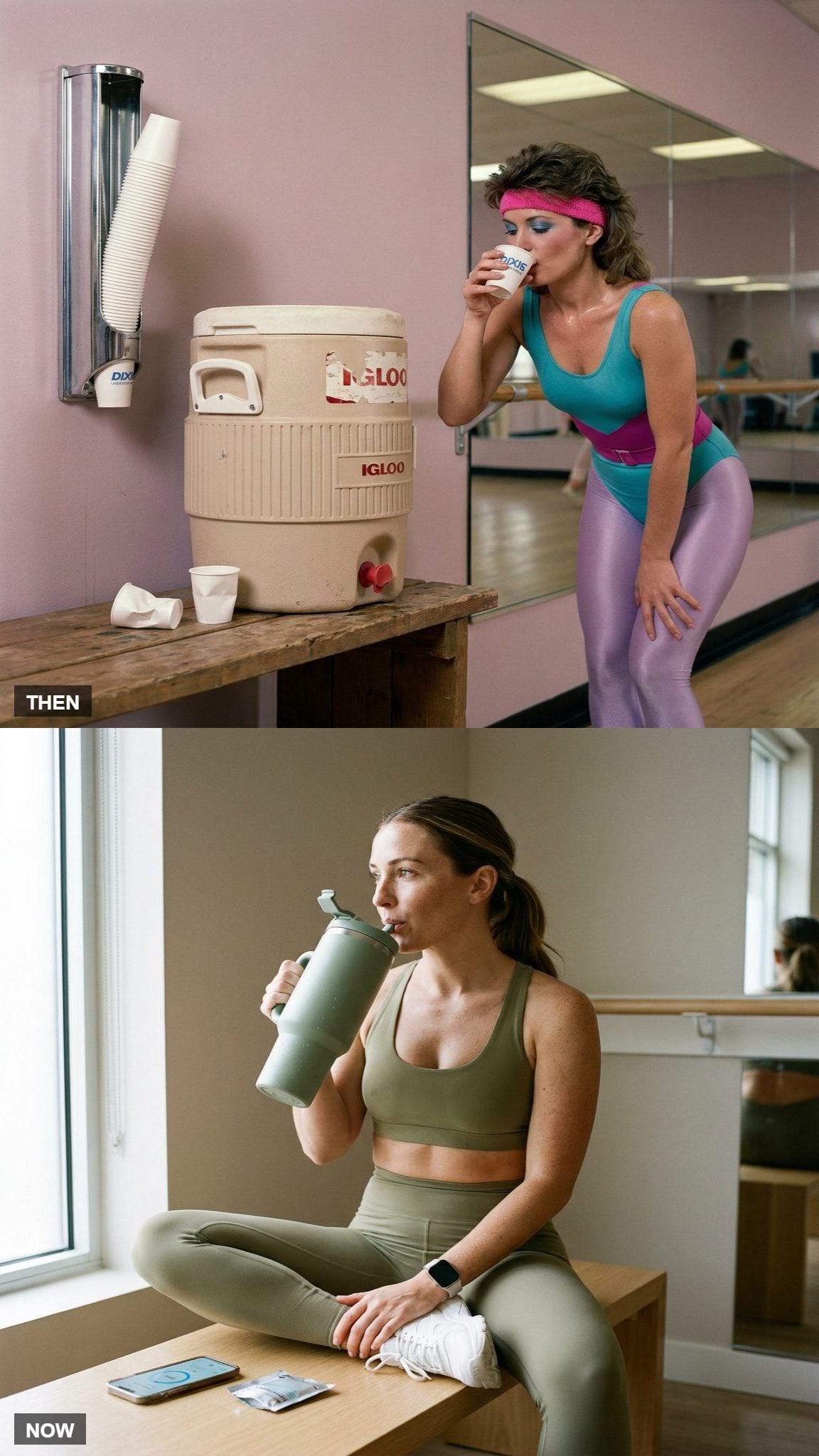
In 1985, hydration meant a stack of Dixie cups next to a beige Igloo cooler that had lived at the studio since 1979. You drank four ounces, tossed the cup, felt virtuous. Personal water bottles were far less central to the visual culture of the gym, and electrolyte marketing had not yet taken over the conversation. If class ran long you got thirsty and dealt with it.
Now the tumbler is bigger than the workout bag.
A 40-ounce insulated stainless steel tumbler with a flip straw and a handle, tracked on an app, refilled twice before noon. Show that to the 1985 aerobics crowd and they’d assume you were carrying it for the whole family.
6. The Aerobics Step That Didn’t Exist Yet
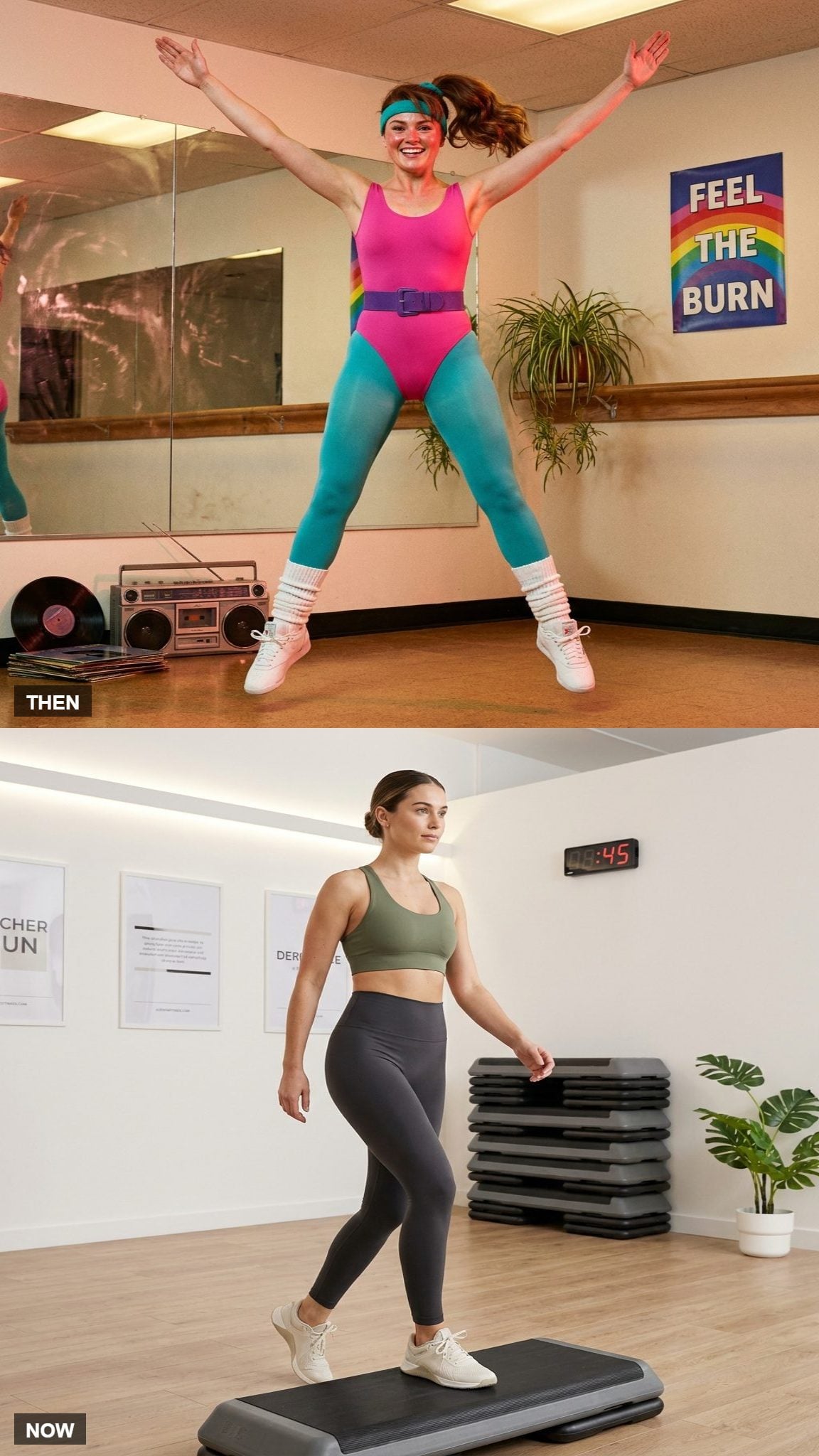
Step aerobics developed and began spreading around 1989. In 1985, class was just you, a wood floor, and the hope that your knees would hold out. High-impact meant high-impact—both feet left the ground, both feet came back down, and the floor gave you nothing on the way in.
Now there’s a rubber-topped platform with adjustable risers and a whole methodology behind foot placement. The platform changed the structure of the class by controlling height, rhythm, and foot placement. It did not remove impact, but it created a new method with its own technique.
5. The Instructor Cued With Her Voice, Not a Headset
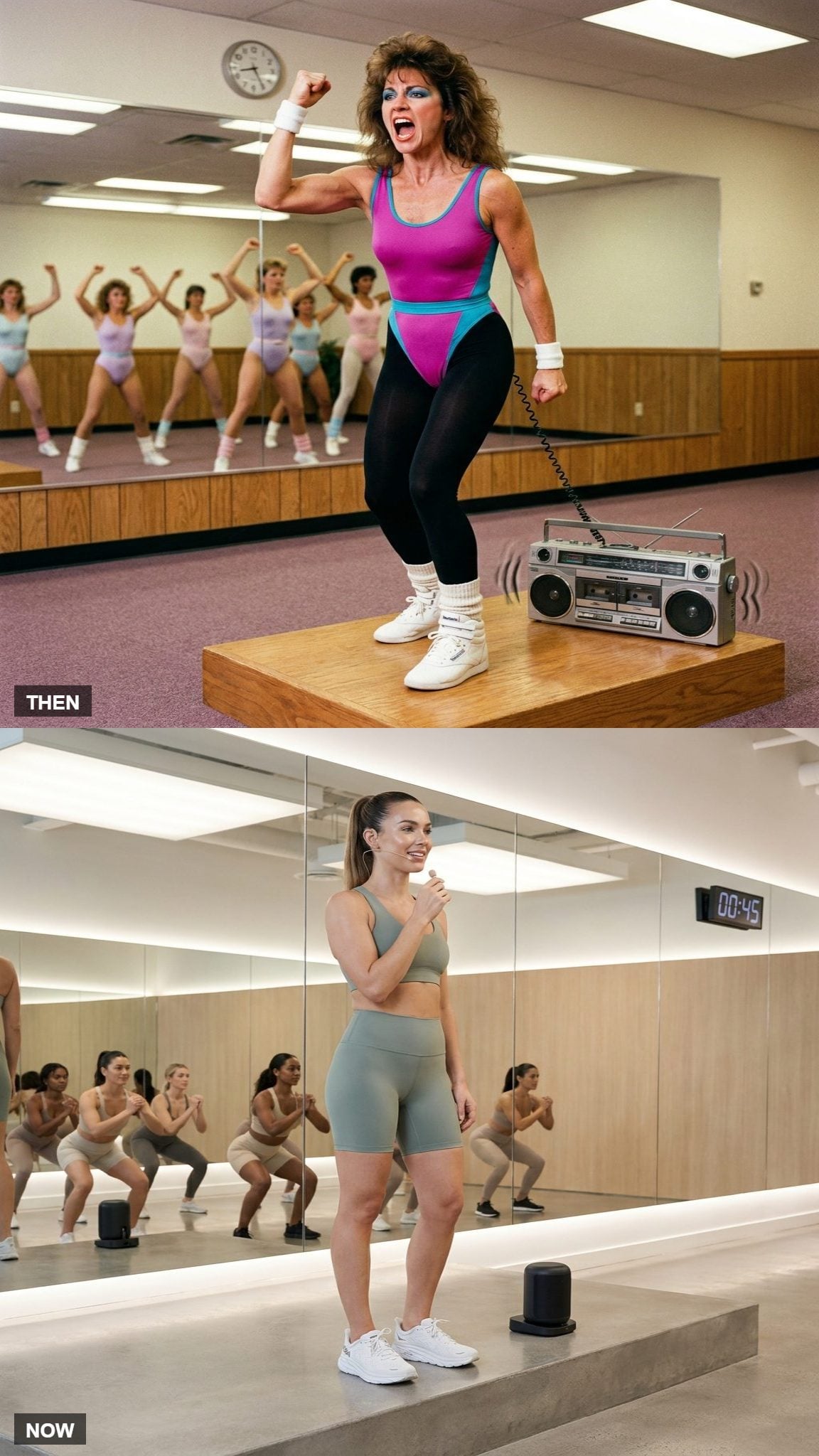
The 1985 instructor had one tool: her voice. She screamed cues over Wham! and Whitney for sixty minutes and went home hoarse. If you were in the back row you learned the routine by watching feet.
The 2026 instructor wears a headset that probably cost more than the entire 1985 sound system, and she speaks at conversational volume. Everyone hears her. She still has a voice by Sunday. Progress, actually.
4. The Post-Class Snack Was a Tab and a Cigarette

❤️ Would you like to save this?
Nutrition in 1985 was a pink can of Tab, maybe a Virginia Slim, and the vague sense that skipping lunch counted as a personal win. The vending machine outside the studio sold Fresca and Nutter Butters. That was the menu. Exercise physiology and sports nutrition already existed, but everyday gym culture did not package recovery the way it does now.
Now? The post-class ritual involves a fourteen-dollar smoothie loaded with adaptogens nobody can pronounce, a scoop of collagen, and some protein bar engineered in a Boulder lab by people with graduate degrees. Protein, creatine, and electrolyte products now occupy the space once dominated by diet soda and appetite-control messaging. The culture shifted from eating less to optimizing more.
3. The Locker Room Blow Dryer That Could Strip Paint
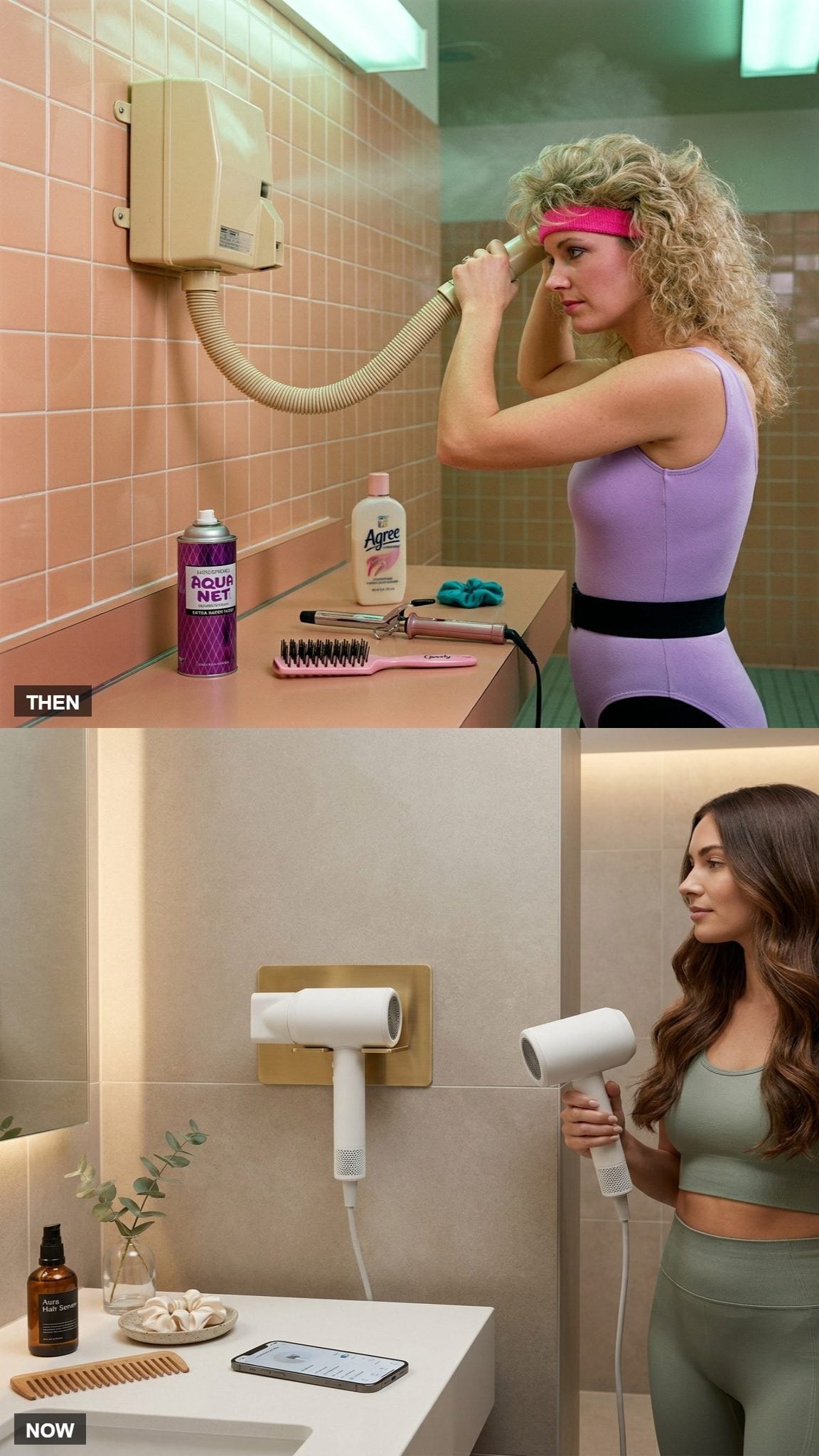
That mounted beige dryer had two settings—hot and hotter—and sounded like a jet engine taking off in a tiled room. You could smell the Aqua Net from the parking lot, and everyone left with hair that could survive a hurricane and eyes stinging from the aerosol cloud.
Now personal dryers are lighter, quieter, and more controlled, with multiple heat and speed settings. The serum bottle costs sixty dollars. The Aqua Net is gone, which is either sad or overdue depending on who you ask.
2. Technical Fabrics Became Their Own Engineering Category
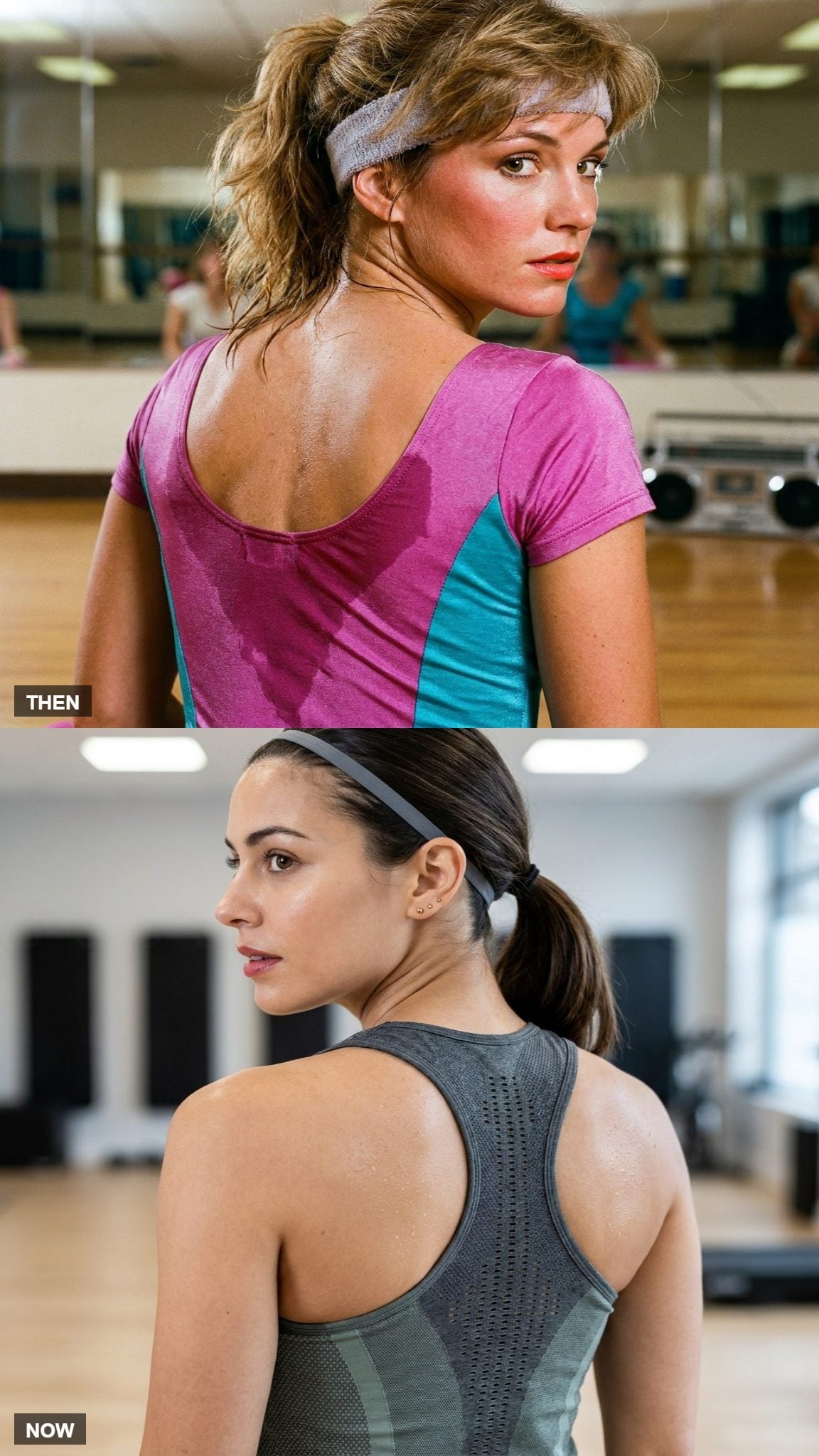
Cotton absorbs. That’s what it does. Many 1985 workout layers absorbed or trapped moisture, which could leave the outfit feeling clammy by the third song and unpleasant on the drive home. Moisture-management textiles already existed in limited forms, but the technology was nowhere near as common, varied, or heavily marketed as it is now.
Now textile blends are designed around stretch, evaporation, odor control, abrasion resistance, and compression. The modern change is not one miracle fabric; it is the creation of an entire technical-apparel industry.
1. The Group Fitness Class Photo That Lived in a Physical Album
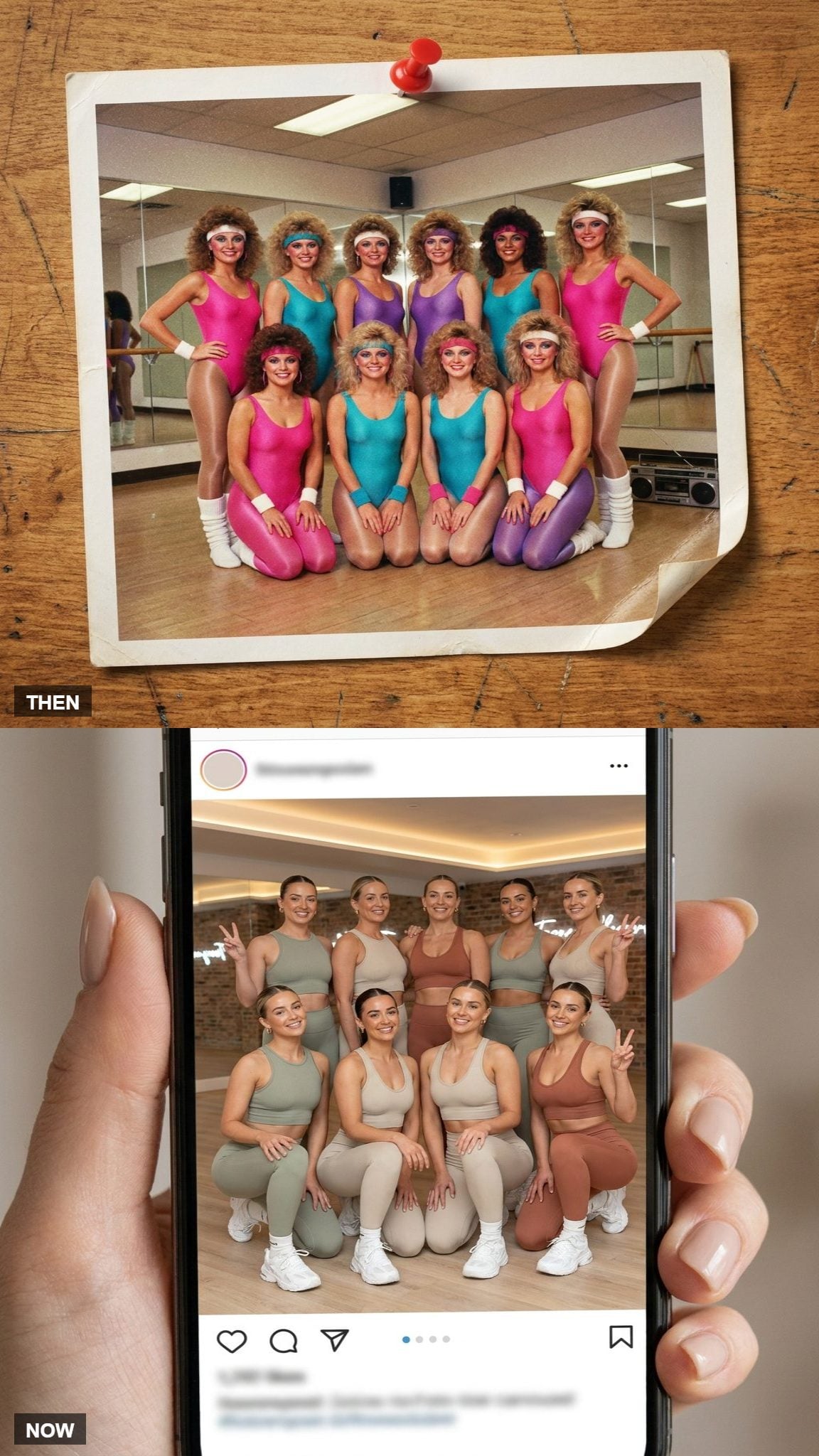
Back then, the class photo was a real physical object you could hold. Someone would show up with a Kodak, everyone froze in formation for a single frame, and three weeks later the print got tacked to the studio corkboard with a thumbtack. One photo. Maybe two if the first one blinked, though film wasn’t cheap and nobody wanted to burn a whole roll on a group of sweaty women. If you wanted a copy, you asked the studio owner nicely and she wrote your name on the back in ballpoint pen.
Now the same class posts a carousel to the studio’s Instagram before the last woman has finished her cooldown. Ring lights on tripods, a phone propped against a water bottle, forty-seven takes, a Boomerang of the high-five wall, everyone tagged by dinner. The permed hair is gone. So is the thumbtack. So is the mild dread of not knowing how you looked until the film came back from the drugstore.