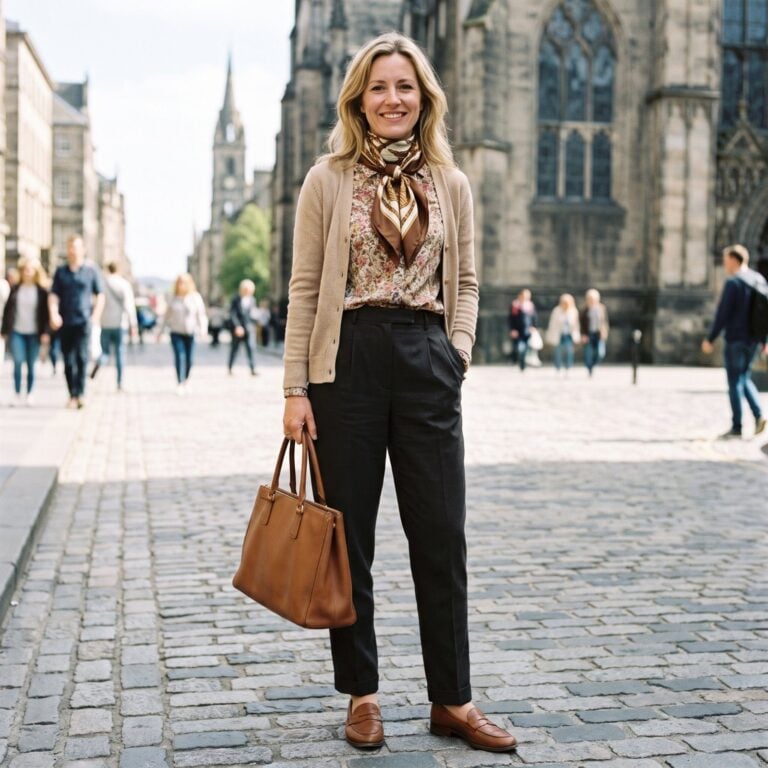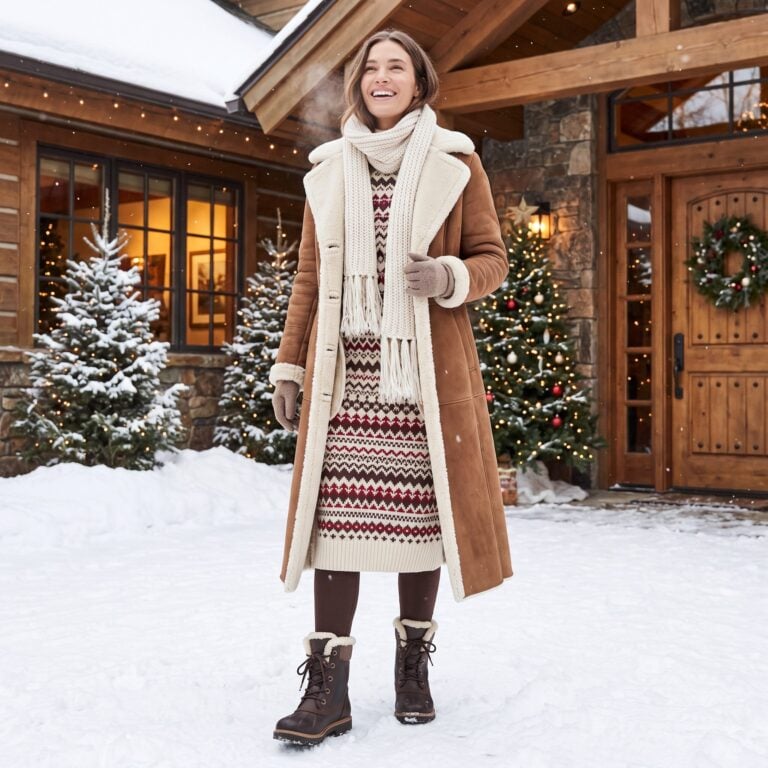
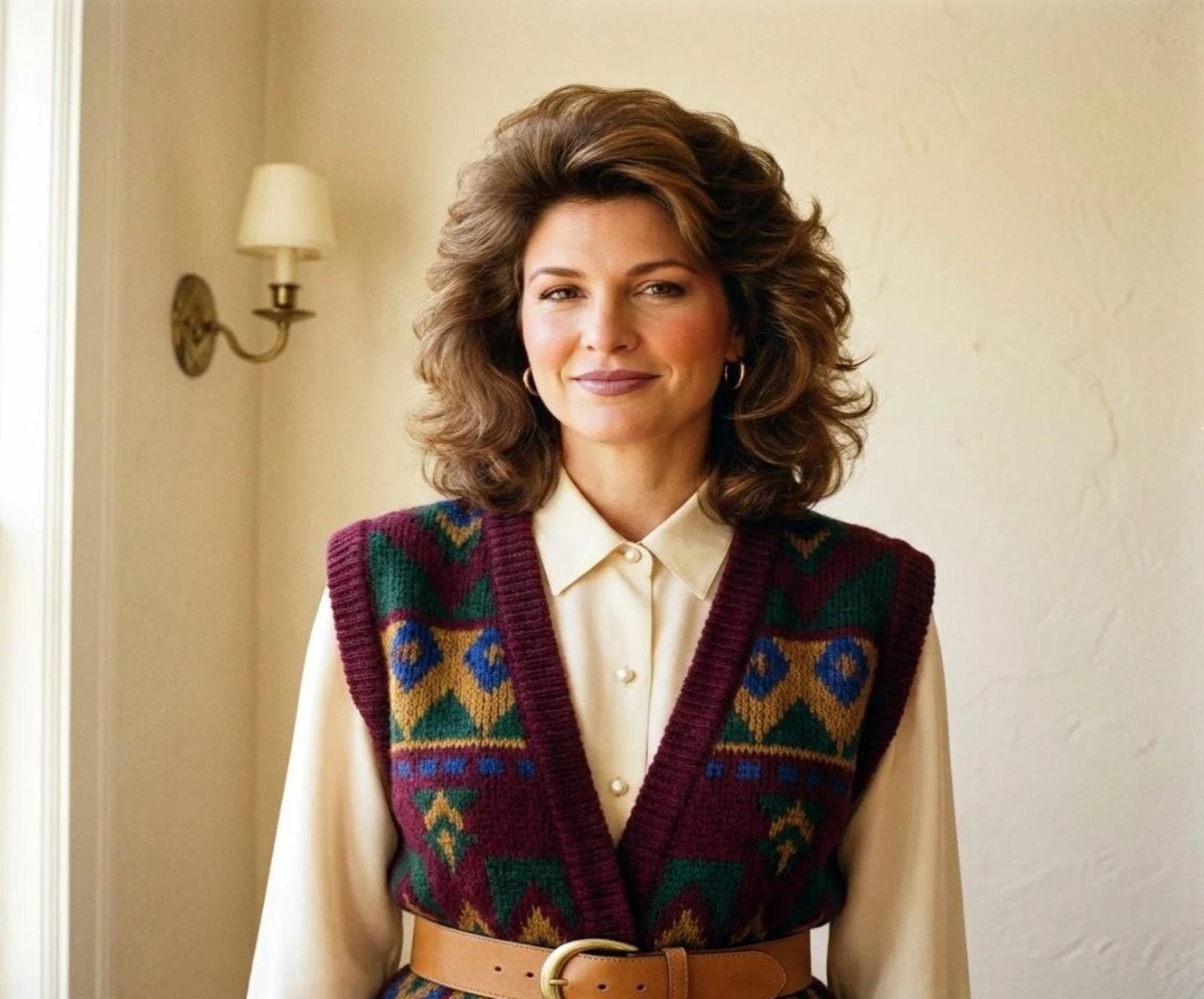
❤️ Would you like to save this?
Acid wash existed on a Tuesday. Not a costume. Not a theme party. A regular Tuesday, with errands to run and places to be, and women were out there in neon-trimmed sweatshirts, belts wider than a paperback book, and hair that required its own weather system. The 1985 wardrobe was not subtle. It was not trying to be. These 29 looks show just how much everyday style has changed — and how much of that glorious excess keeps finding its way back.
FYI, thanks to AI imagery software, we’re able to create very specific fashion and hairstyle examples to illustrate the points being made. In some cases, imagery is exaggerated to hammer home the point. Also, assume links that take you off the site are affiliate links such as links to Amazon. this means we may earn a commission if you buy something.
29. The Shoulder Pad Era Nobody Apologized For
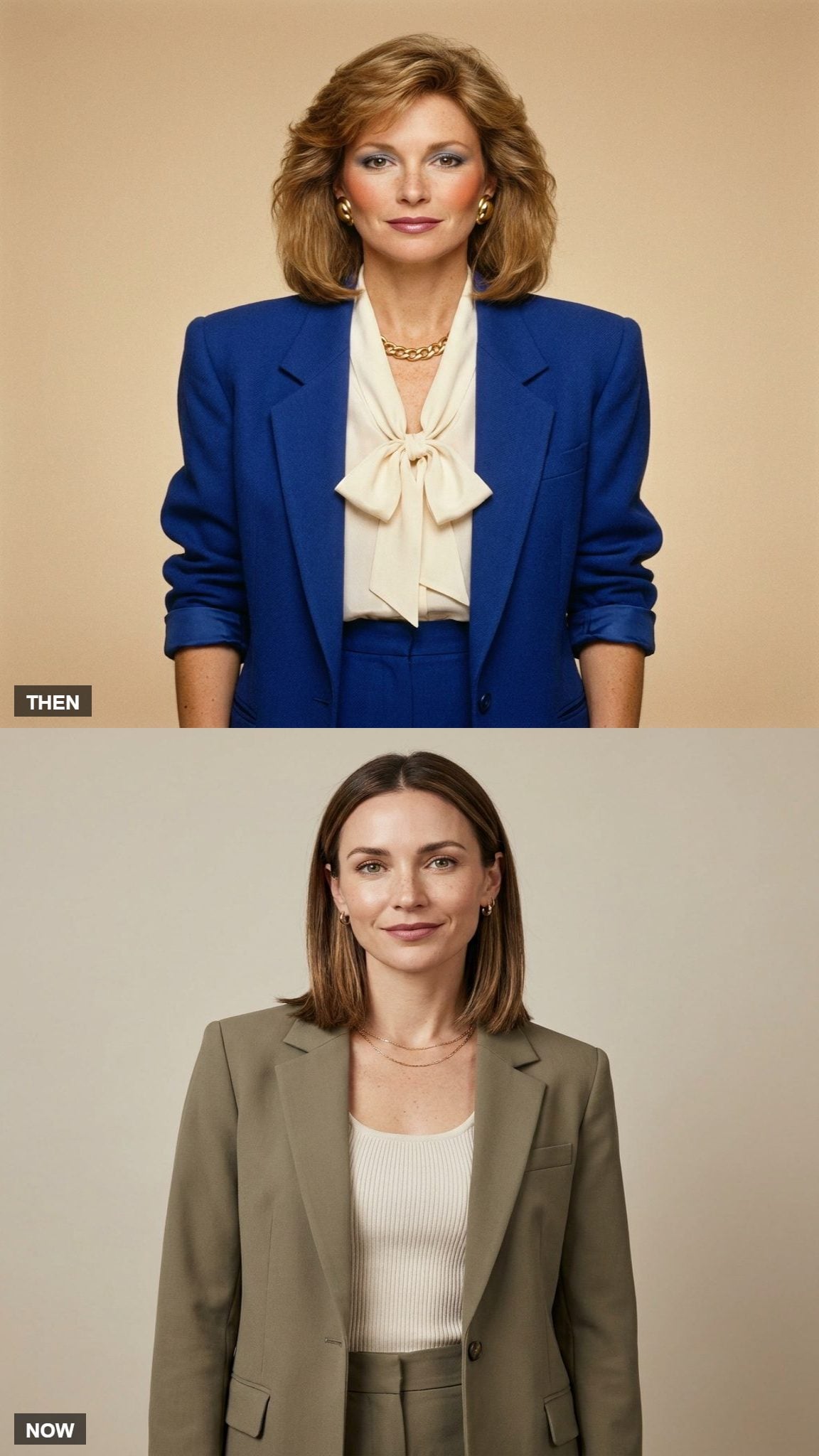
In 1985, a blazer wasn’t doing its job unless it could hold a conversation from across the room. Shoulder pads weren’t a subtle lift; they redrew the upper body entirely. Cobalt, magenta, forest green — the jacket arrived before the woman did.
Modern tailoring usually follows the natural shoulder more closely, but the old silhouette never disappeared completely. Fashion keeps rediscovering the pleasure of a strong shoulder. The difference is that today it tends to be one option among many. In 1985, restraint was the experimental choice.
28. Acid Wash Denim Was the Uniform and Nobody Questioned It
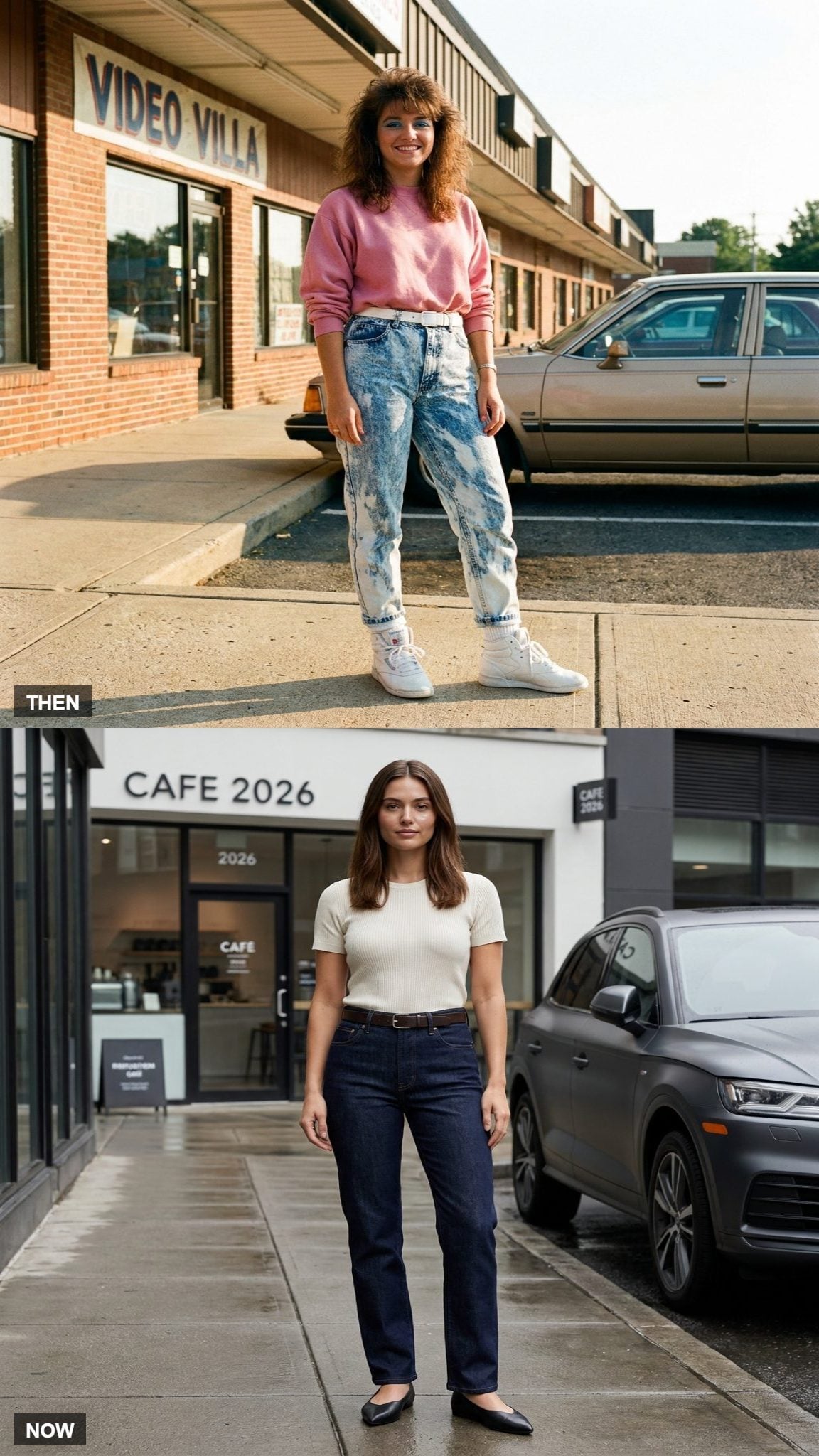
Acid-wash denim got its storm-cloud surface from industrial bleaching processes that often involved chlorine-treated pumice stones tumbling against the fabric. The effect looked anything but industrial: irregular white streaks, hard contrasts, and jeans that seemed to have survived a small electrical event.
A modern everyday outfit can go in the opposite direction with dark, clean denim that almost reads like a trouser. Same basic fabric. Completely different attitude.
27. The Hair Scrunchie Wasn’t an Accessory. It Was Structural.
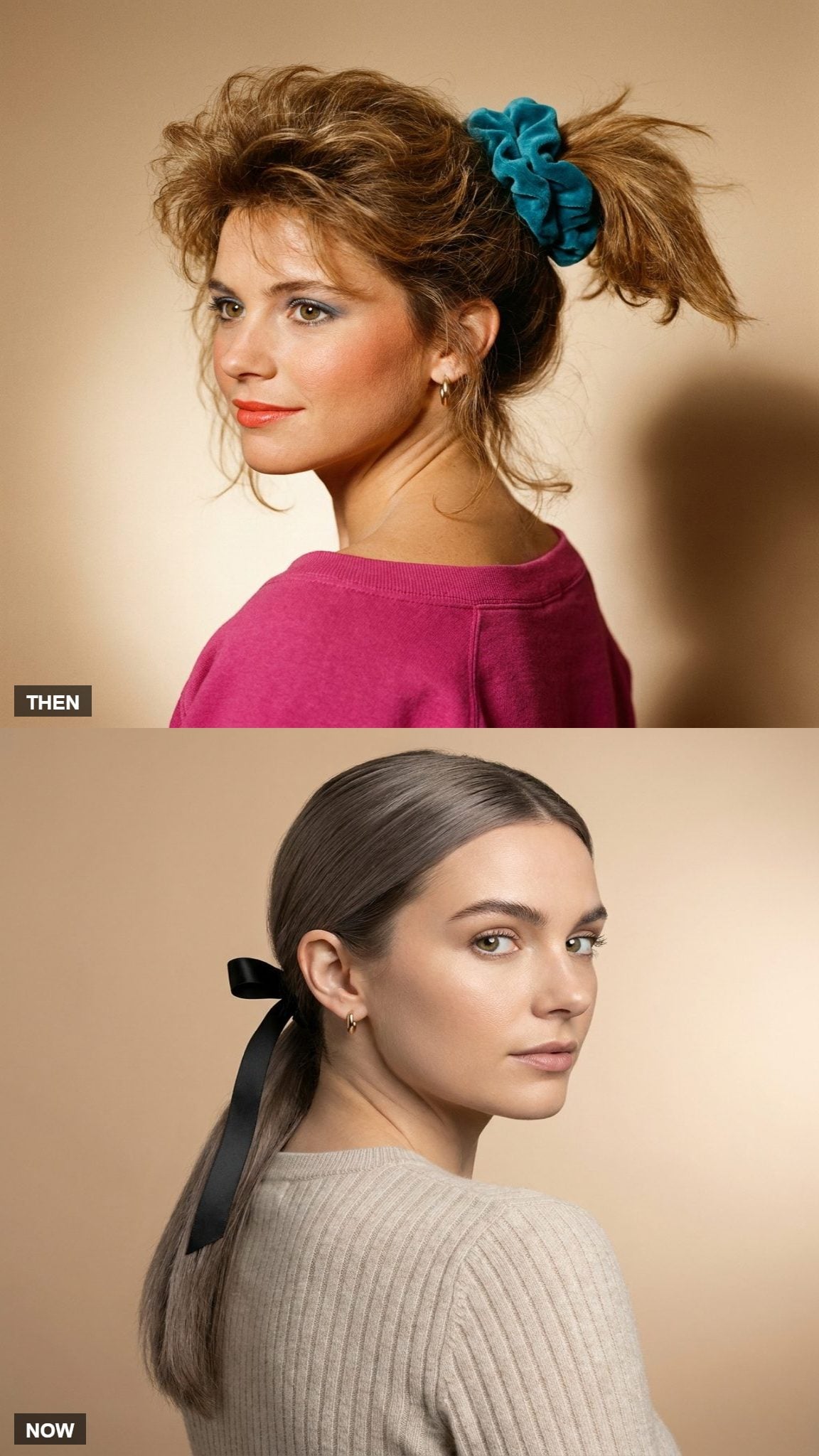
The 1985 scrunchie wasn’t merely holding hair back. Velvet. Teal. Sometimes positioned high enough that the ponytail seemed to be entering the room under its own power. Hair was a statement before you opened your mouth.
Today’s version might be a ribbon, a claw clip, or another scrunchie — because this is one 1980s accessory fashion cheerfully reclaimed. The scale changes, the placement changes, but apparently a fabric-covered elastic was too useful to stay buried forever.
26. The Handbag Had to Be Big Enough to See From Space
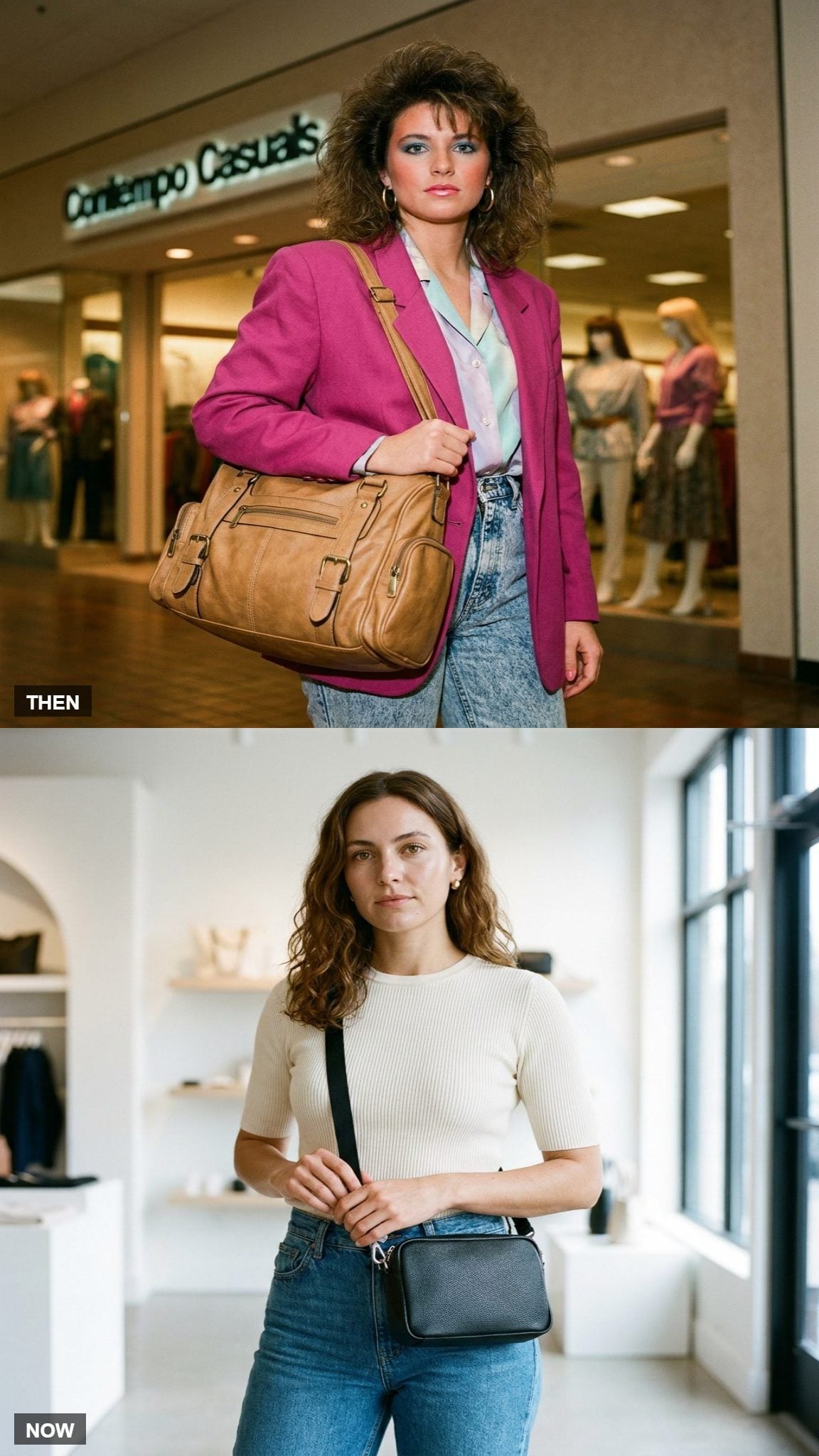
The everyday bag of the era could look ready for a weekend away even when the destination was lunch. Structured shapes, gold hardware, exterior pockets, room for a full wallet, address book, cosmetics, receipts, and whatever else civilization might require before dinner.
Today’s choices run from enormous totes to genuinely tiny bags, but the crossbody changed the everyday equation. A pebbled leather crossbody bag can carry the basics without turning one shoulder into a load-bearing wall. Less expedition gear, more editing.
25. Neon Was a Neutral in 1985 and Don’t Let Anyone Tell You Otherwise
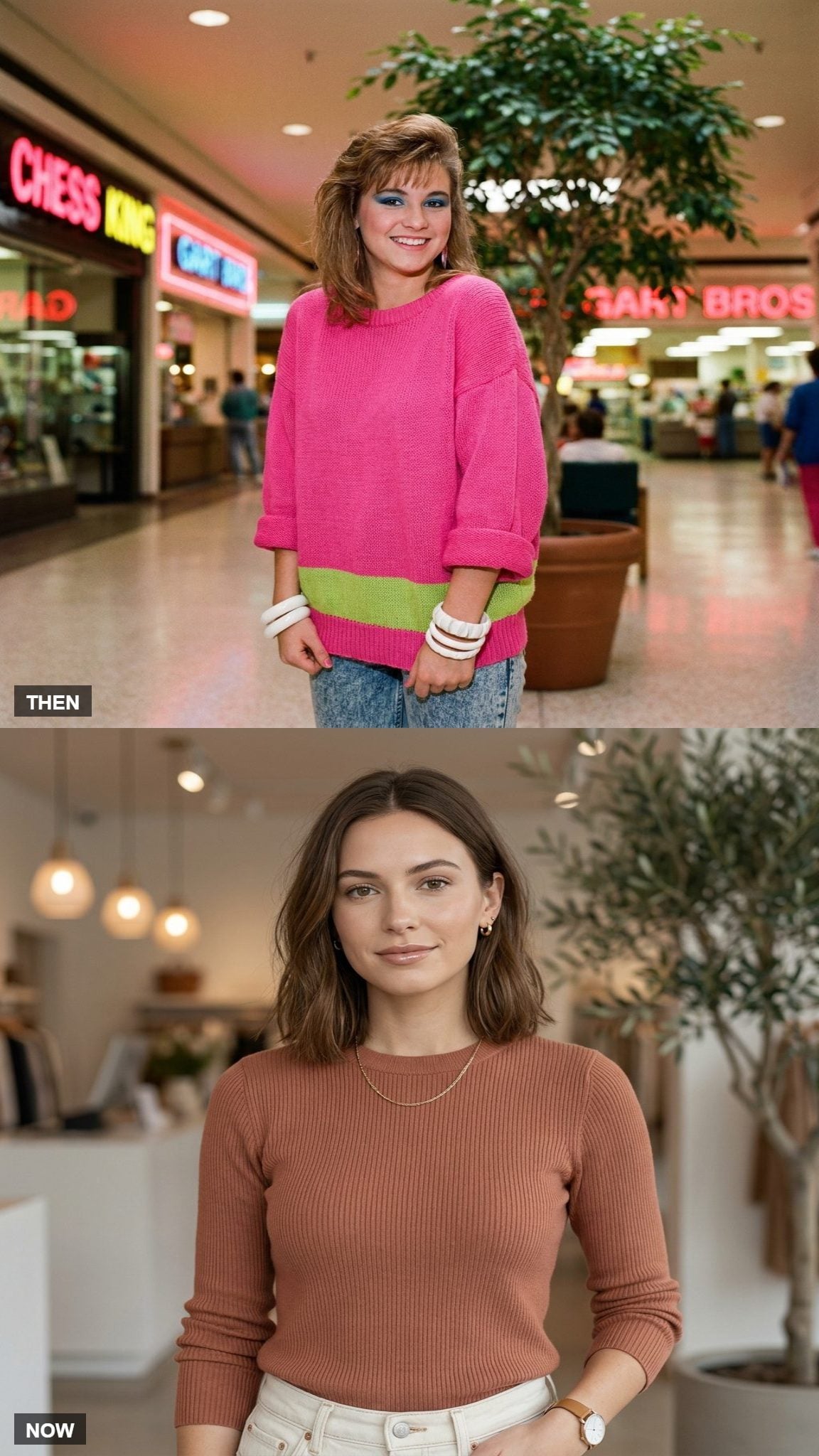
Hot pink and electric lime worn together, as a sweater, on a weekday. That was the beauty of mid-’80s color. Nobody needed the acid green stripe to be an accent. The stripe could bring friends.
A 2026 ribbed knit sweater in terracotta or clay occupies a similar casual slot in a completely different register: earthy, muted, deliberate. Neon never vanished, but it no longer has to carry the entire room.
What Our Readers Say
- Asked to pick their era, about two out of three ThreadCurve readers chose timeless, while 22% went for retro revival and 13% for current.
- When our readers add a pop of colour today, 54% put it in the top, 27% in the bag and 19% in the shoes.
From ThreadCurve reader polls and votes.
24. The Perm Was Engineering, Not a Casual Suggestion
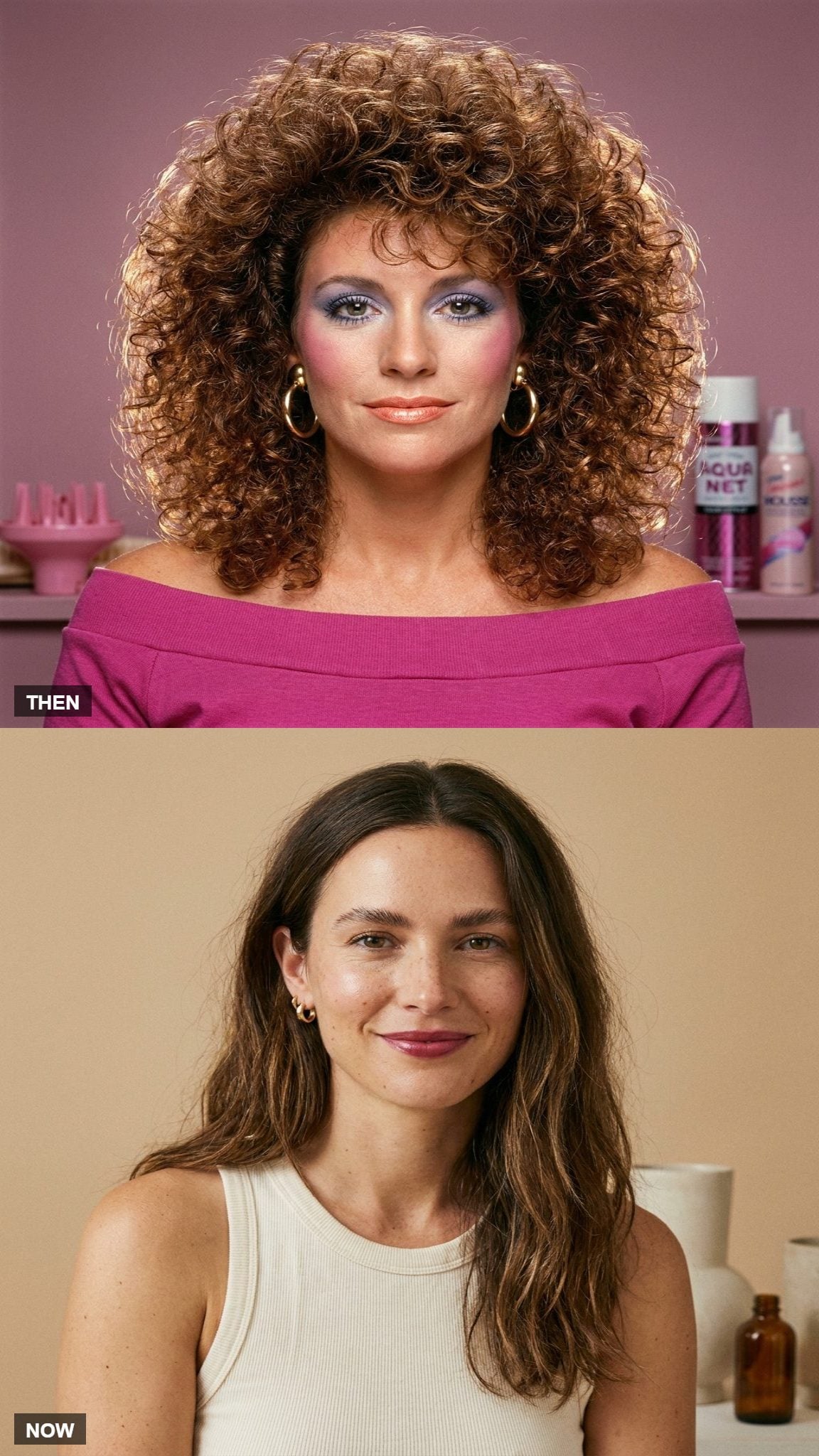
The 1985 perm took hours, smelled unmistakably chemical, and often produced a very specific promise: curl everywhere. Then came mousse, scrunching, diffusing, teasing, and the quiet hope that humidity would cooperate.
Texture now occupies a much wider universe. Natural curls, air-dried waves, polished blowouts, heatless sets, modern perms — all can coexist without one being declared the official answer. The great change isn’t that texture disappeared. It’s that hair is allowed considerably more ways to have it.
23. The Statement Belt Went Around the Waist Like It Meant Business
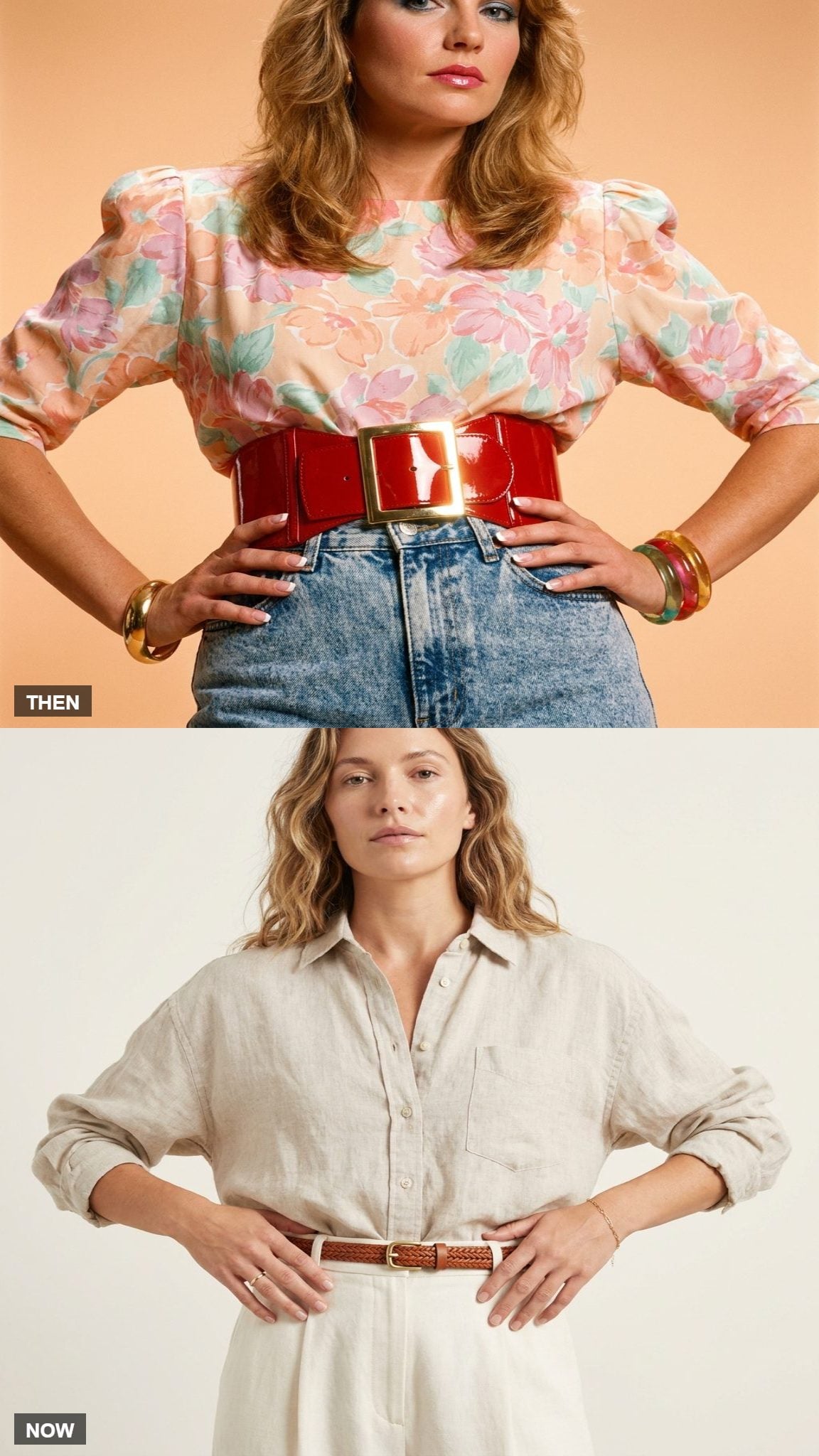
The 1985 cincher belt could be four inches of patent leather worn over a floral blouse, knit dress, blazer, or anything else foolish enough to have a waist. It wasn’t finishing the accessory outfits. It was organizing them.
Belts still swing between nearly invisible and impossible to miss. A narrow woven belt gives quiet definition; a wide belt instantly pulls the outfit toward the ’80s. Apparently the waist remains useful territory whenever fashion gets bored with straight lines.
22. The Sneaker Was White, High-Topped, and Non-Negotiable
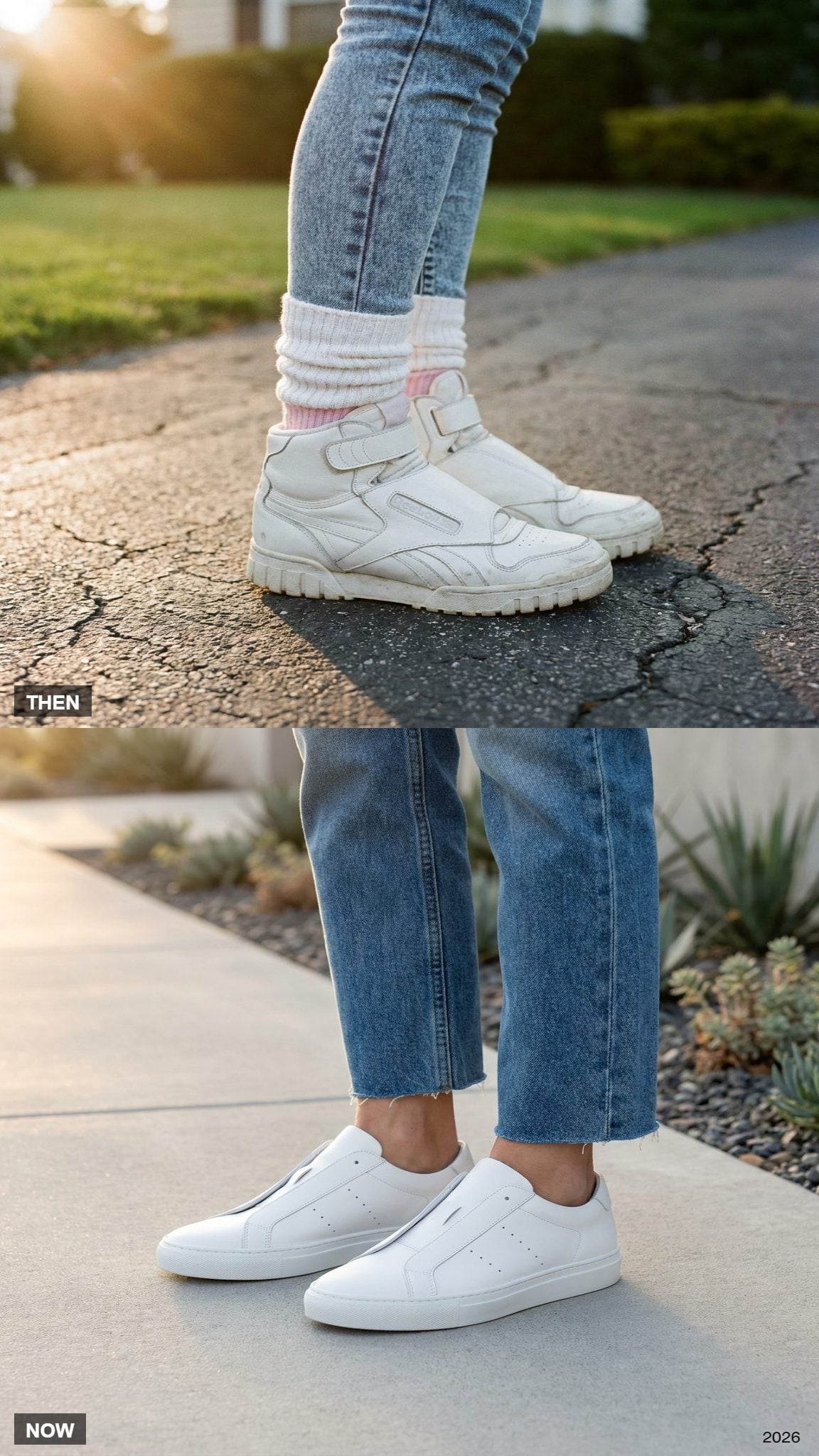
High-top white sneakers weren’t gym shoes accidentally caught in civilian clothes. They belonged with jeans, casual dresses, leggings, and oversized jackets. Thick tongue, padded ankle, hook-and-loop strap, possibly two pairs of socks working overtime underneath.
The low-profile sneaker has since taken the same basic idea through several rounds of subtraction. A white leather low-top sneaker can disappear into an outfit where the 1985 high-top insisted on participating.
21. Leggings in 1985 Came With a Stirrup and a Plan
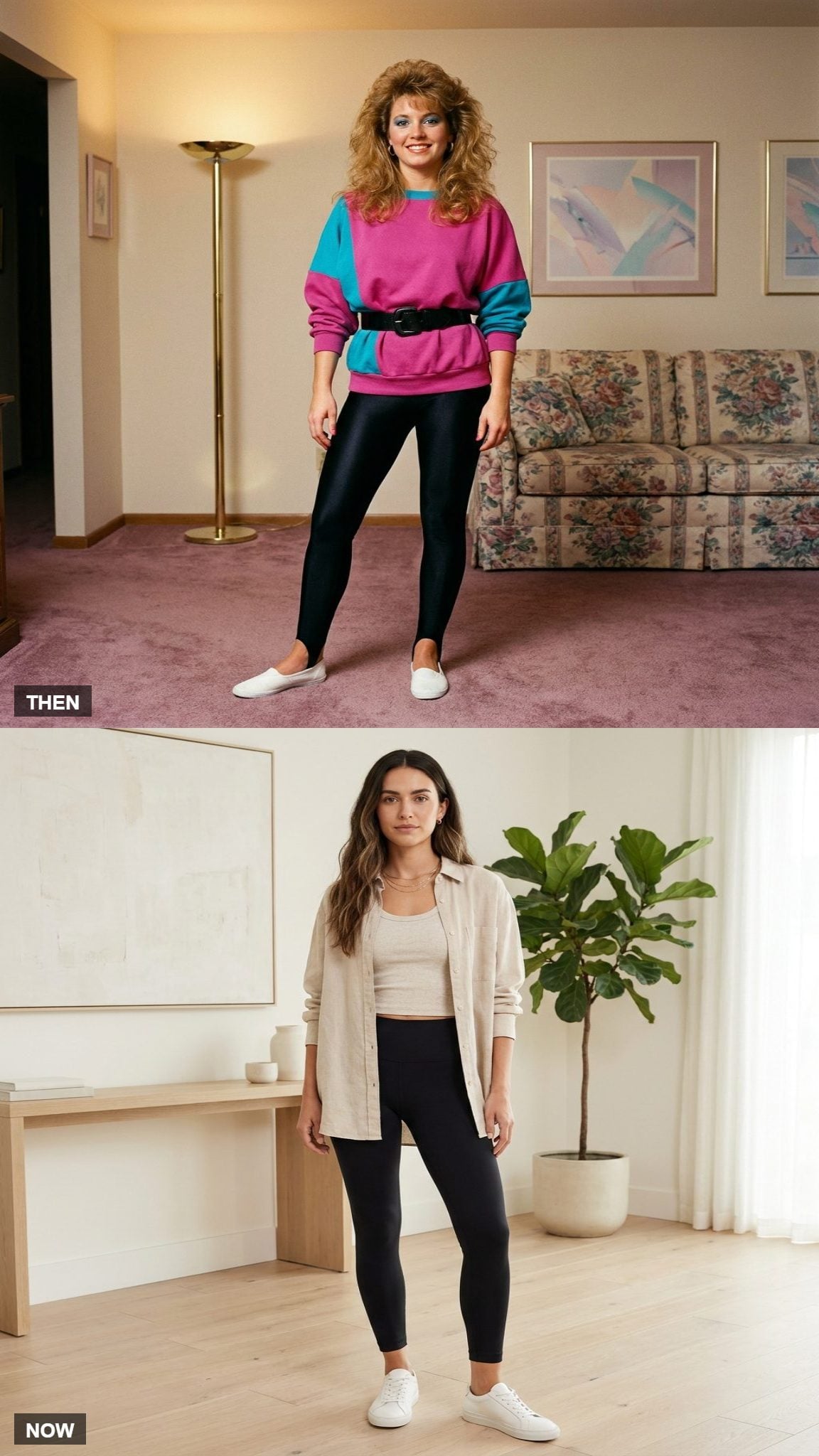
A stirrup legging wasn’t merely a stretchy pant with a peculiar foot attachment. The strap kept the leg taut beneath flats, pumps, or boots, while an oversized top and aggressive belt handled everything above.
Leggings survived. Stirrup pants disappeared for stretches and then wandered back onto runways often enough to prove that fashion keeps very few ideas permanently buried. The difference is that today the stirrup reads as a deliberate retro reference. In 1985, it was simply part of getting dressed.
20. The Turtleneck Was a Foundation Piece, Not Just Emergency Winter Clothing
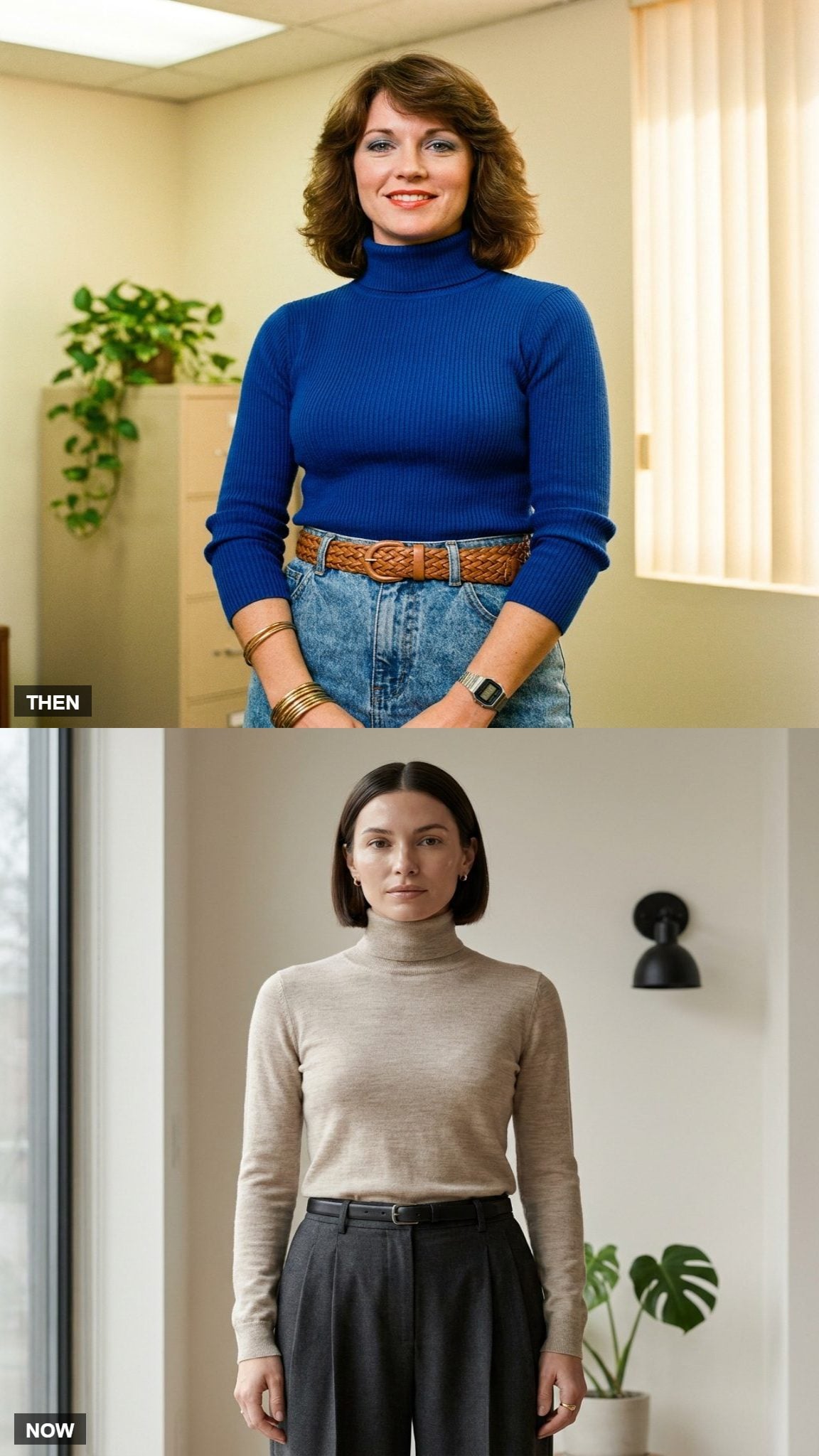
The ribbed turtleneck spent a lot of the 1980s tucked into high-waisted trousers, skirts, and jeans or buried beneath another layer. Cobalt blue, brick red, mustard yellow — the neck roll sat proudly under the chin and waited for a necklace, blazer, vest, or sweatshirt to arrive.
Turtlenecks are still with us, but the styling is usually less relentless. Fine-gauge versions layer quietly under jackets; heavier knits come out when the weather earns them. The garment survived. The insistence on involving it in every possible outfit did not.
19. The Cardigan Was Long, Oversized, and Treated Like Outerwear
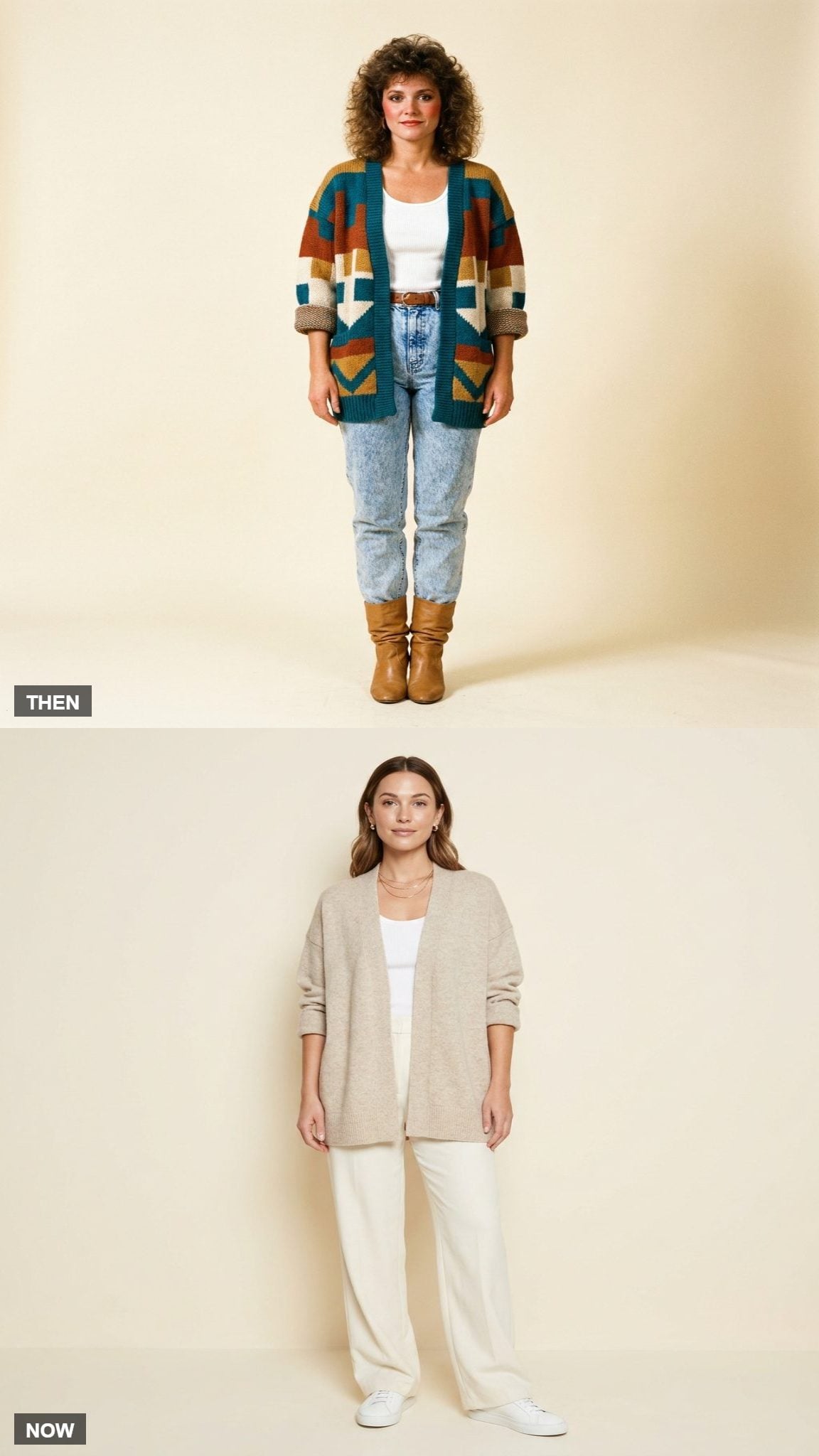
That cardigan was enormous and that was entirely the point. A geometric knit worn open over a tank could reach toward the knee, drop its shoulder somewhere around the upper arm, and combine teal, rust, cream, black, and whatever else had not yet objected.
Oversized cardigans still exist, but modern versions often retreat into oatmeal, gray, camel, and other colors apparently chosen by a very sophisticated bowl of porridge.
The 1985 cardigan had a geometric agenda.
18. Costume Jewelry Wasn’t Trying to Pass for the Real Thing
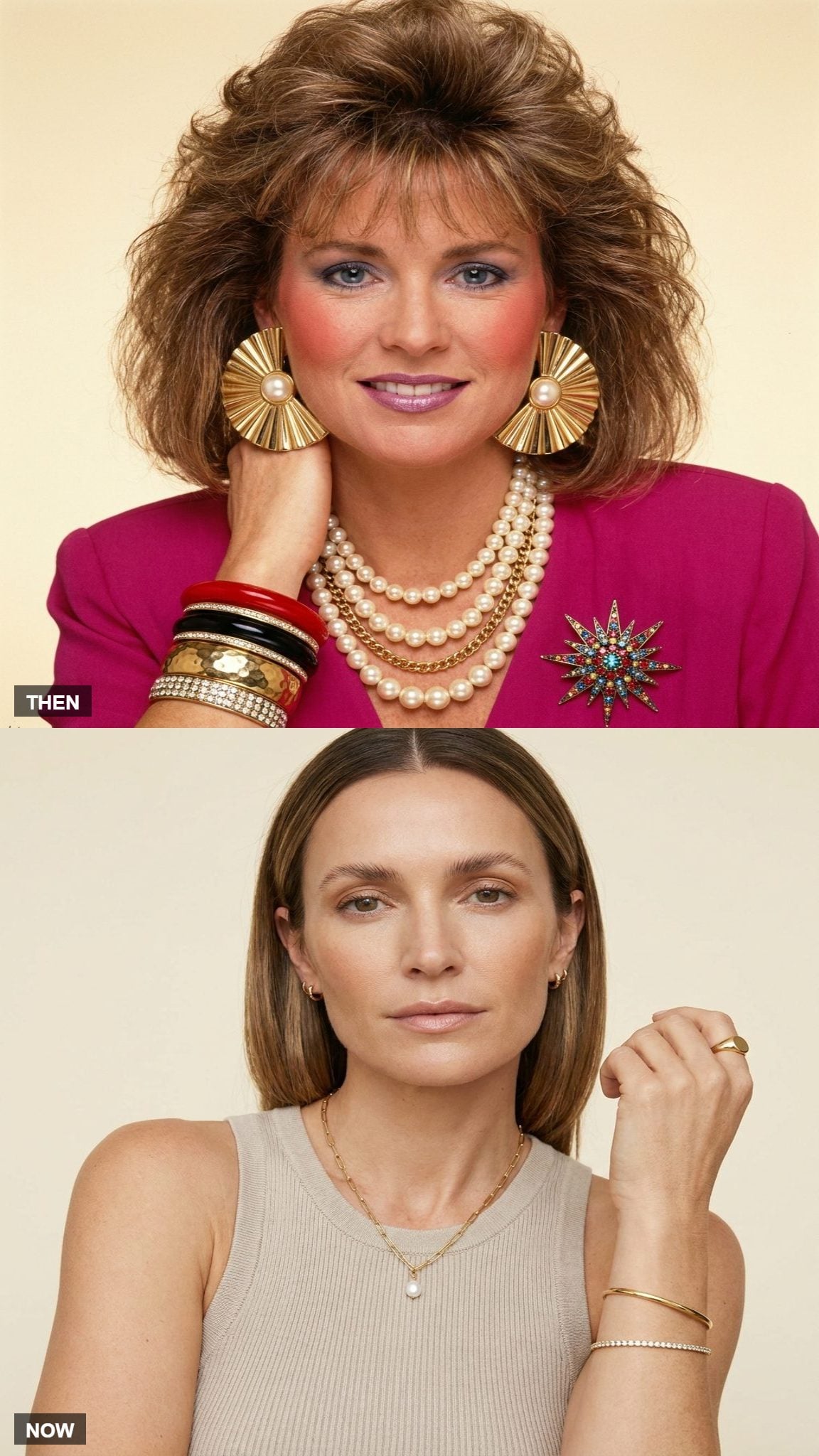
The clip-on earrings were the size of small nations. The necklace had six strands and weighed something. Bangles climbed the forearm and announced every hand gesture with percussion.
Costume jewelry was not merely pretending to be precious. Its freedom was precisely that it didn’t have to. Plastic, enamel, faux stones, gilt metal, impossible scale — the materials allowed the piece to become more theatrical than fine jewelry usually dared.
Statement jewelry never disappeared, and current fashion happily swings between tiny chains and sculptural bangles. The unmistakably ’80s part was wearing several declarations at once and refusing to choose a spokesperson.
17. The Work Blouse Had a Bow at the Neck and It Meant Business
❤️ Would you like to save this?
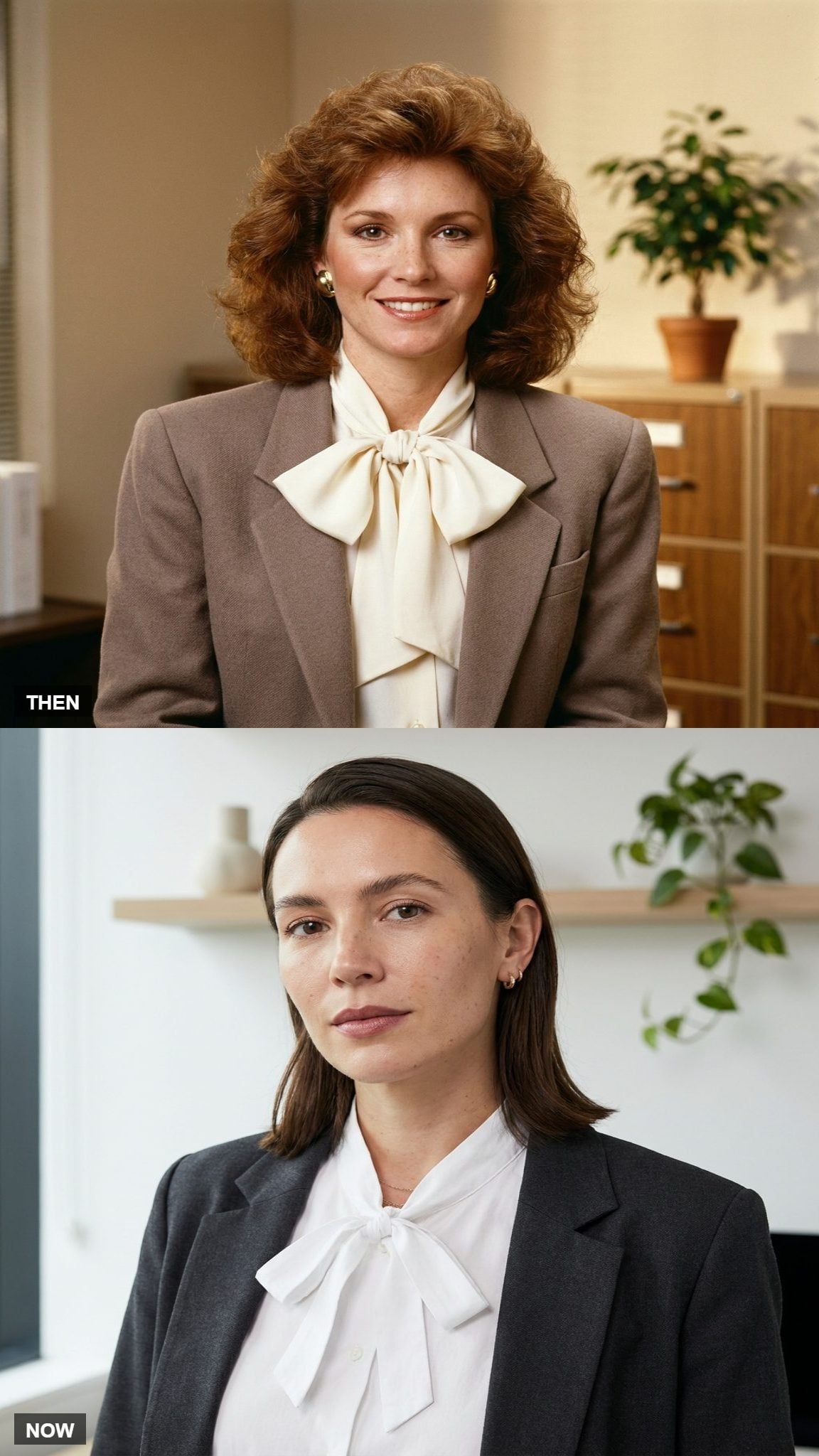
The bow at the neck was technically decoration, but visually it behaved like punctuation. The 1985 work blouse could carry a satin or silk-looking tie large enough to occupy most of the upper chest, usually beneath a tailored jacket with shoulders equally unwilling to be overlooked.
That combination of conventional femininity and hard tailoring became one of the era’s signatures. The bow blouse has cycled back many times since, but usually with less fabric and considerably less interest in touching both shoulders at once.
16. Mixing Textures Wasn’t a Styling Trick. It Was Just the Outfit.
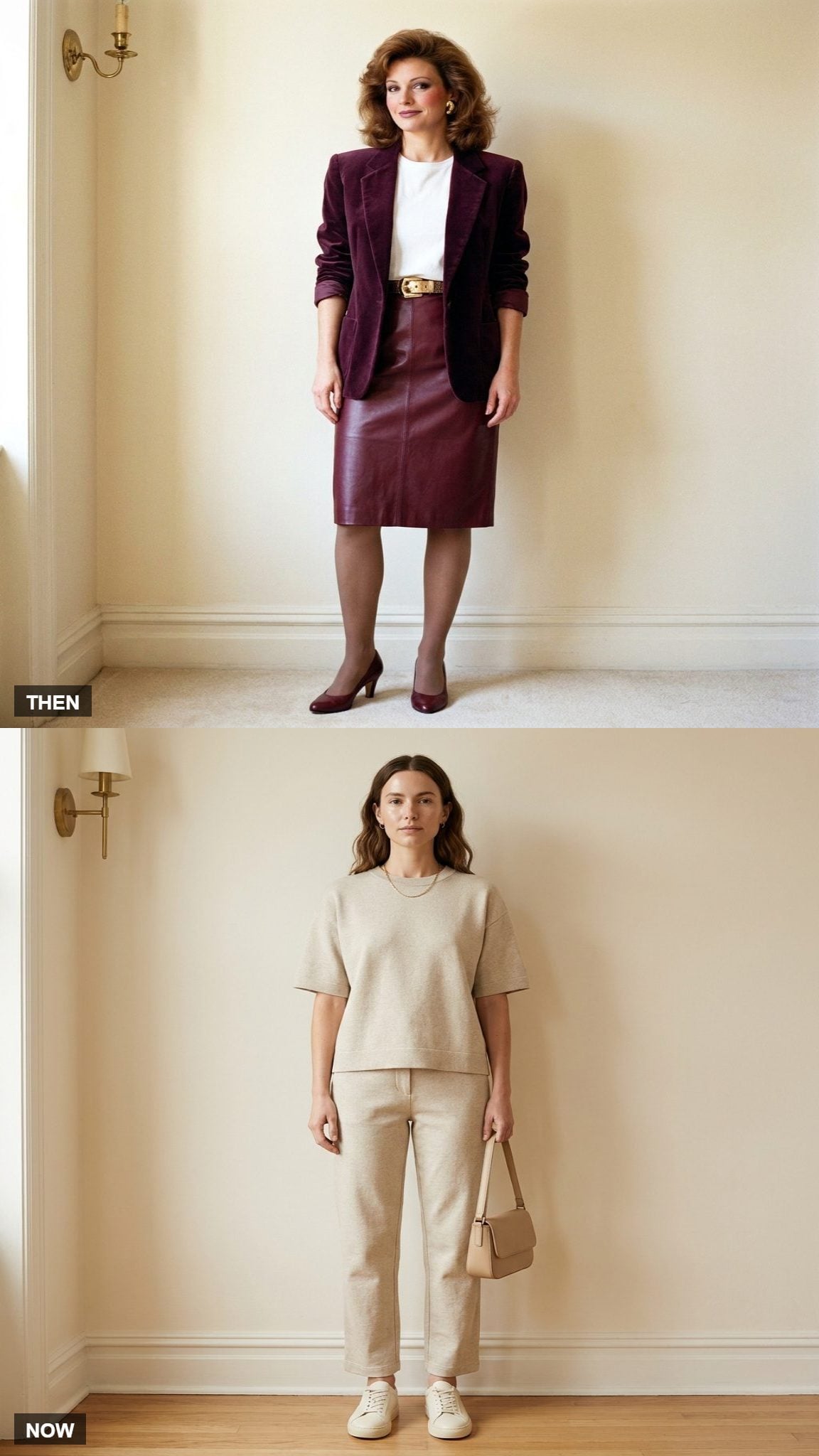
Leather skirt, cotton top, velvet blazer with shoulder pads. The materials could be having three separate conversations and somehow still leave the house together.
Modern styling advice often treats texture mixing as a technique to deploy carefully. The 1980s had considerably less anxiety about it. A plain jersey piece could sit beside shiny leather and plush velvet without anyone issuing a seminar on balance.
15. The Mock-Neck Bodysuit Was Infrastructure for Every Tucked-In Look
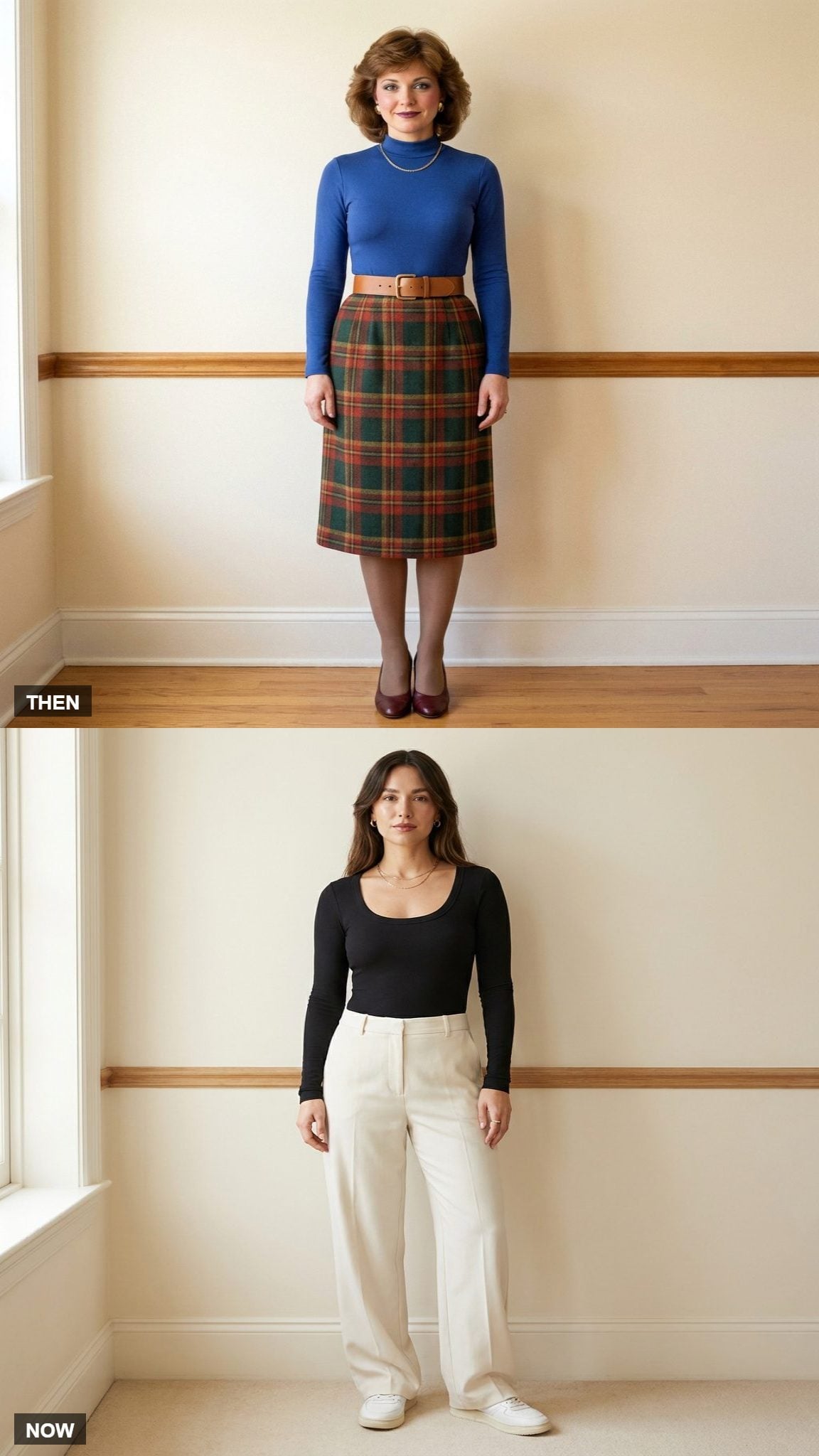
The bodysuit solved a very specific problem: the blouse that refused to stay tucked. A snap closure underneath meant the top stayed exactly where the high-waisted skirt or trouser expected to find it.
A mock-neck version in cobalt, brick, black, or cream could anchor an everyday look beneath a wide belt, blazer, or skirt without adding another billow of fabric at the waist.
Bodysuits returned strongly in the 2010s and never entirely left. The cobalt mock neck under a plaid wool skirt and giant belt, however, remains a much more specific time capsule.
14. The Vest Was a Whole Outfit Layer, Not a Costume Department Afterthought
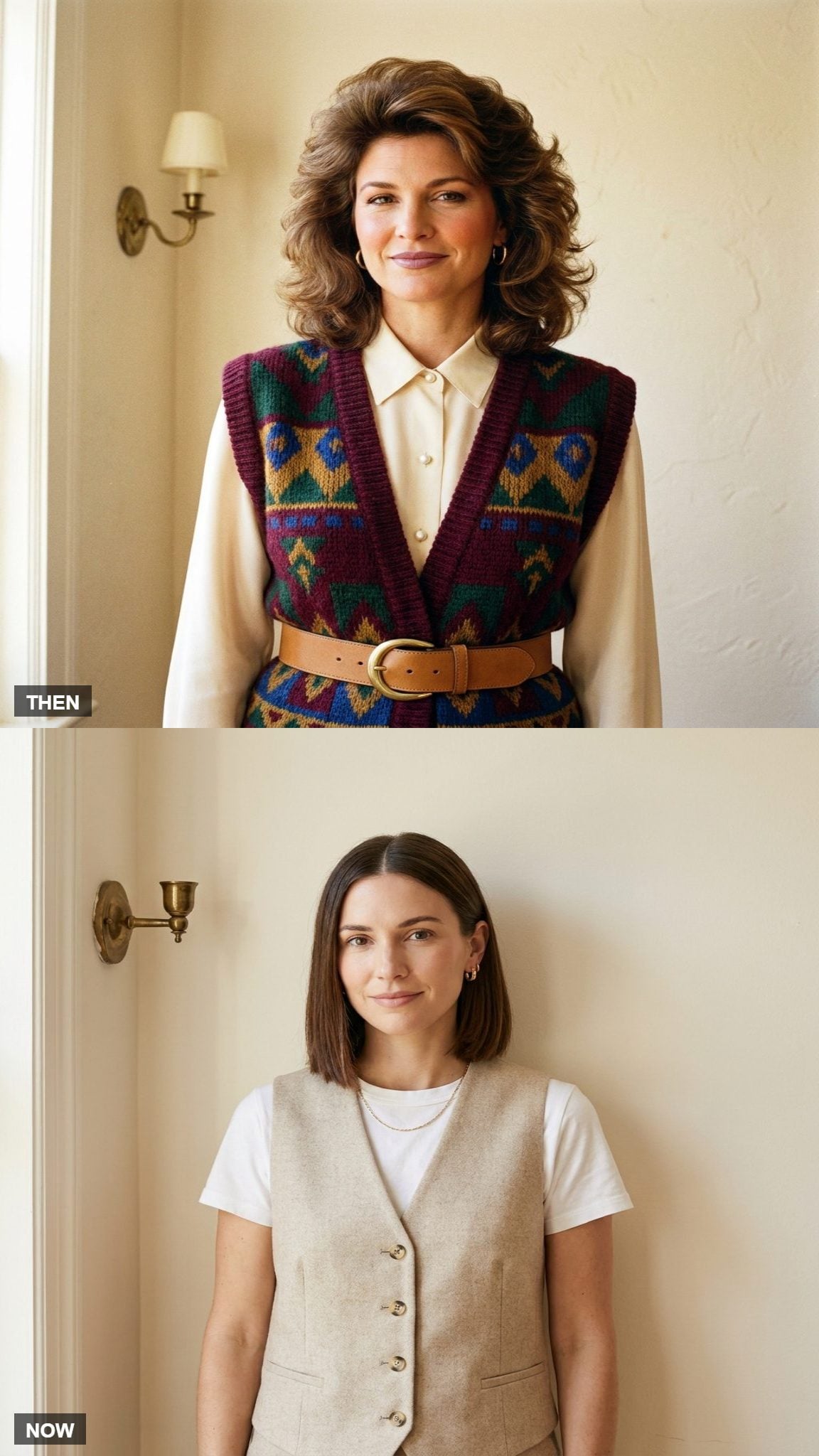
The tapestry vest was not filler. A chunky woven version in jewel-toned colorwork could go over a long-sleeve shirt, get belted at the hip, and become the reason the rest of the outfit existed.
Modern vests have returned through suiting, sweater knits, workwear, and cropped tailoring. The 1985 version often had more pattern, more texture, and the confidence of something that knew nobody was going to mistake it for an undershirt.
13. The Slouch Sock Was a Coordinated Art Project
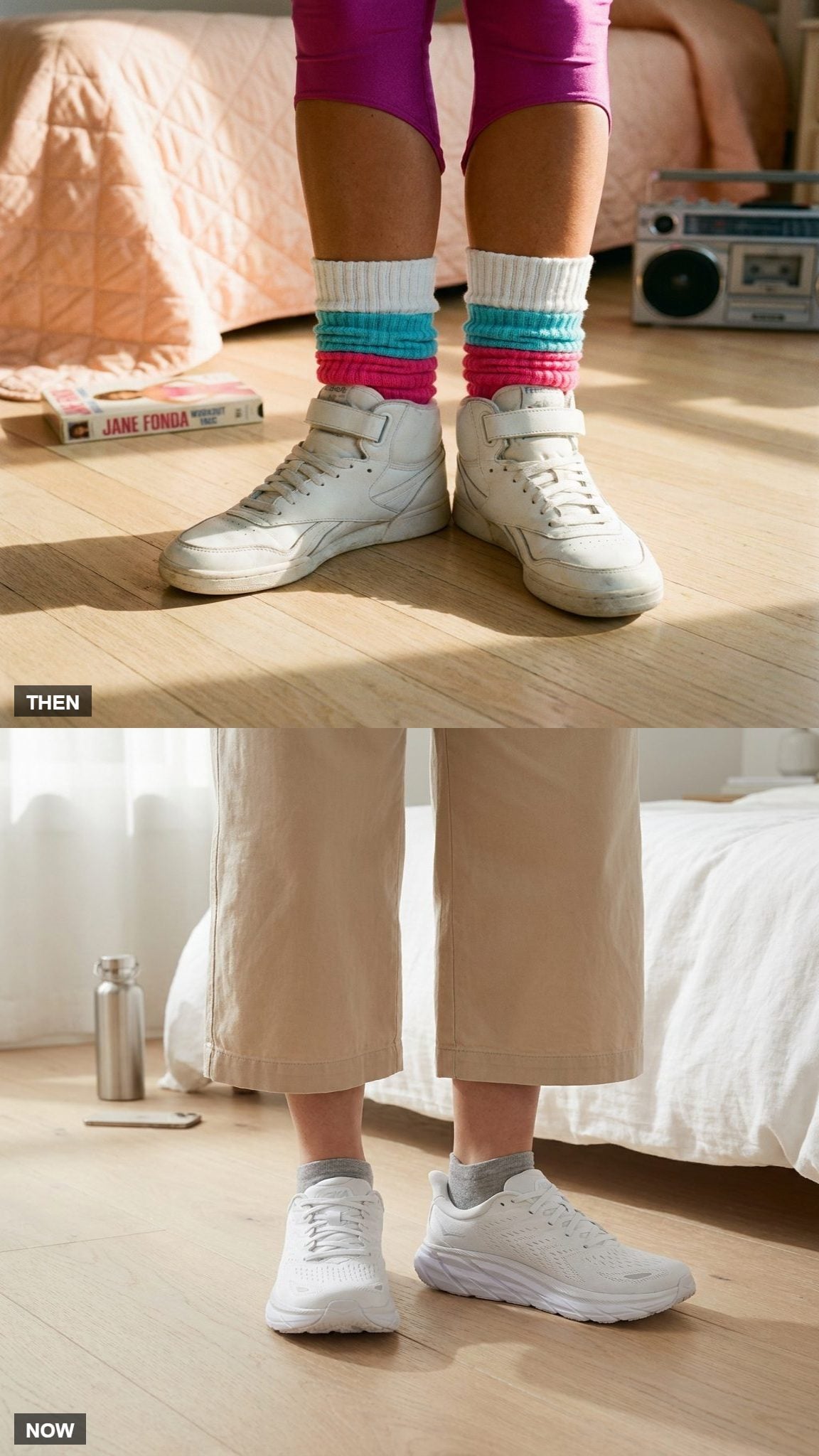
You didn’t just put on socks. You arranged them. Layered pairs, color coordination, deliberate bunching above the sneaker — getting the scrunch right took actual attention.
Visible socks have returned as a styling detail, so the category is hardly dead. What looks unmistakably mid-’80s is the commitment: bright socks stacked above high-tops until the lower leg had its own supporting cast.
12. Jumpsuits Had Shoulder Pads, Belts, and Absolutely No Interest in Disappearing
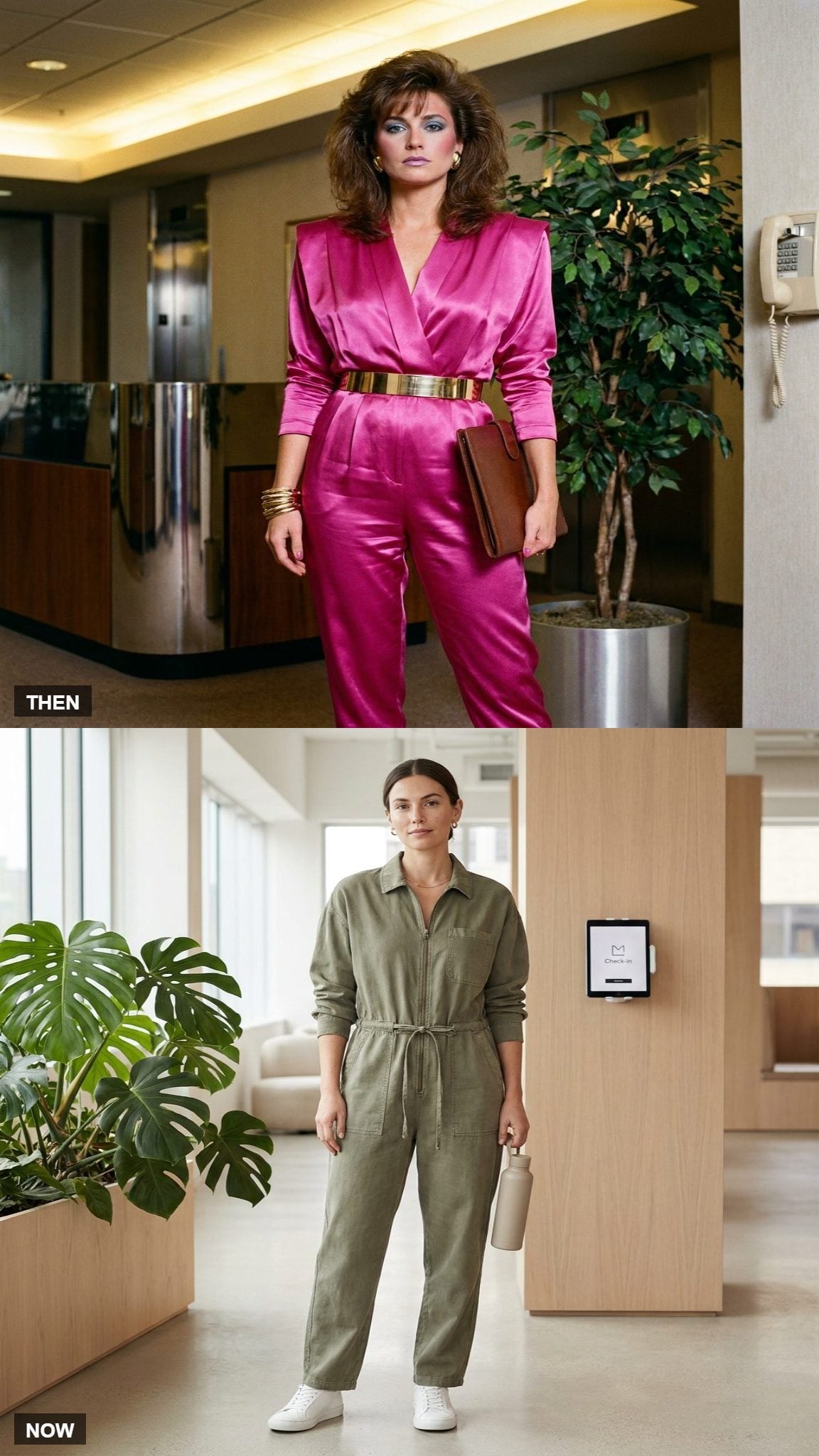
The 1985 jumpsuit could be satin, belted, broad-shouldered, and polished enough for dinner rather than remotely interested in repairing a boiler. One garment handled the top, trouser, waist, and much of the drama.
Today’s jumpsuits range from utilitarian boiler suits to sleek evening versions, so the category never became merely practical. What largely vanished was this particular recipe: padded shoulders, gleaming fabric, a cinched waist, and enough structure to make one-piece dressing look surprisingly complicated.
11. Going to the Grocery Store Could Still Mean Putting Together an Actual Outfit
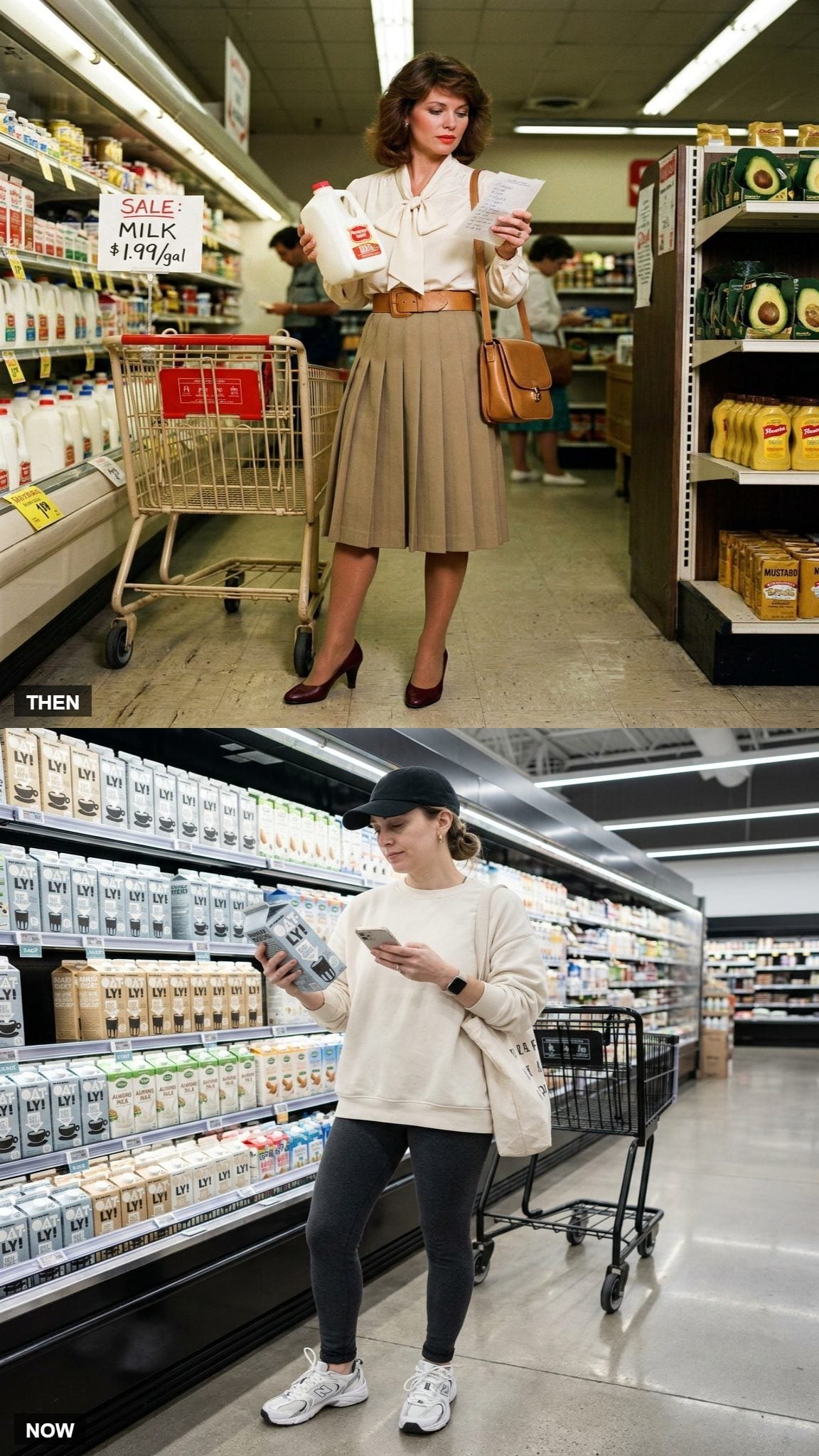
Nobody in 1985 was legally required to buy milk in a skirt and pumps. Jeans, sneakers, sweats, and casual sportswear were already thoroughly established. But everyday public dressing could still carry more structure than many people bother with now: tucked blouses, belted trousers, coordinated separates, earrings put on for reasons no greater than leaving the house.
The 2026 grocery aisle is wonderfully democratic. Pressed linen can stand beside leggings, work clothes, gym clothes, pajama-adjacent clothes, and the person who clearly remembered the butter halfway through walking the dog.
The change isn’t that Americans suddenly discovered comfort. It’s that fewer errands come with any expectation that your clothes prove you prepared for them.
10. Bold Pattern-Mixing Wasn’t Treated Like an Advanced Styling Exercise
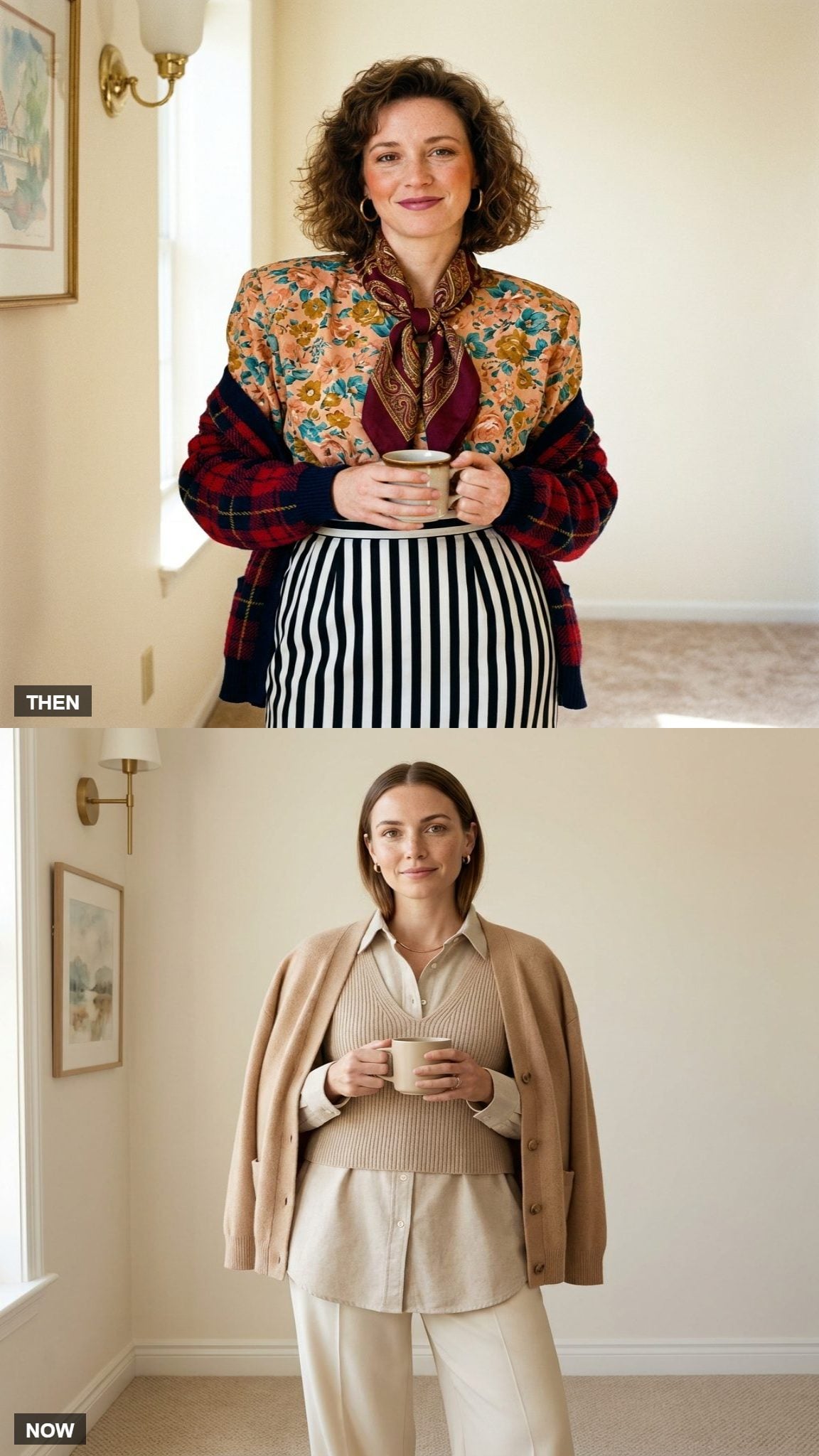
Florals with stripes. Plaid beside paisley. A geometric sweater entering negotiations with a printed skirt. The 1980s weren’t the only decade to mix patterns, but they brought an unusual willingness to let several visual ideas occupy the same square footage.
Recent fashion can be monochromatic one minute and wildly printed the next, so this isn’t a simple then-versus-now extinction story. The difference is one of mood. Tonal dressing treats harmony as the destination. The ’80s were often perfectly happy with productive disagreement.
Today things are calmer: in our reader polls, 80% said they wear prints rarely, and only 20% said they wear them often.
9. The Gym Bag Was a Fashion Object. The Workout Inside Was Another Matter.
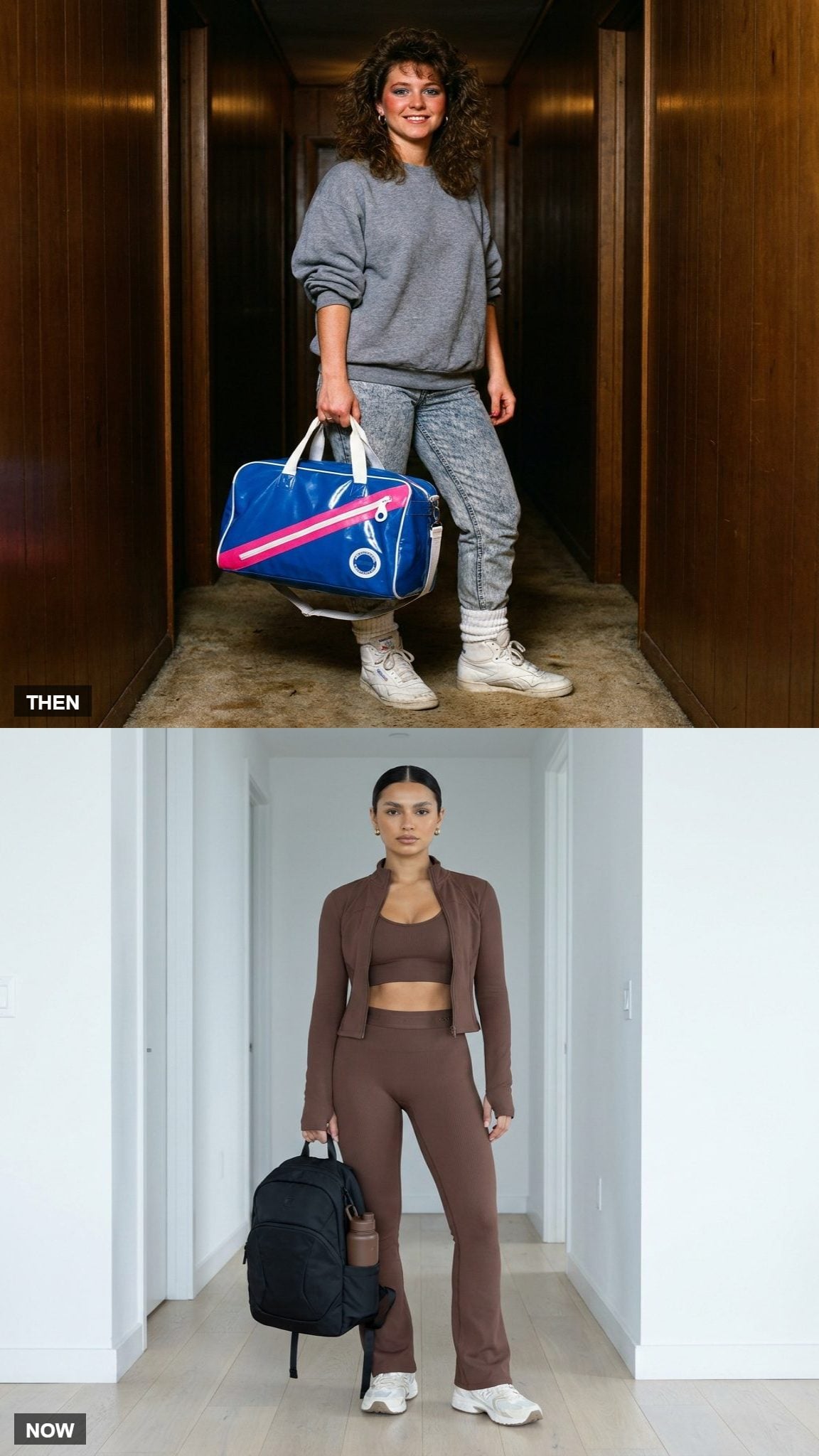
The gym bag could be louder than the workout. Electric blue vinyl, bold stripe down the side, white hardware — carried with the visual confidence of an accessory that expected to be seen.
Inside: leotard, leg warmers, towel, cassette player, perhaps evidence that aerobics had happened.
Modern gym bags often go stealth in black nylon while the backpack outfits around them get more coordinated. Matching sets, technical sneakers, water bottle, jacket. Athleisure moved the workout aesthetic out of the gym whether anyone actually made it to the treadmill or not.
8. The Broomstick Skirt Swished With Every Step and Still Looks Unmistakably Retro
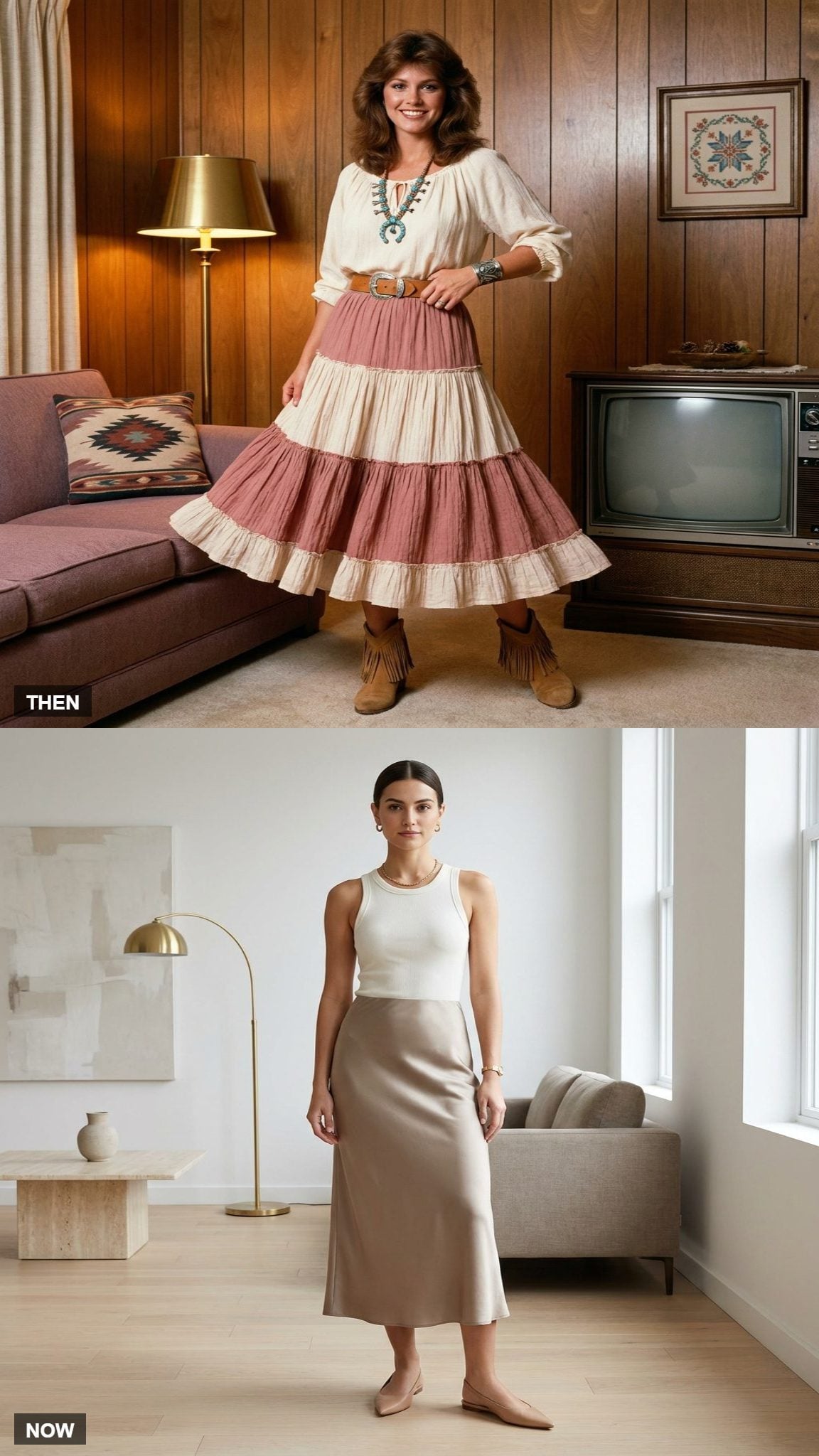
The broomstick skirt did the talking — crinkled fabric, ankle-length sweep, often paired with a wide belt, peasant blouse, boots, or another piece equally committed to movement.
Crinkled maxis still exist, but the exact 1980s combination reads distinctly retro beside today’s cleaner bias-cut slips and column-shaped skirts. Same long sweep. Completely different relationship with volume.
7. The Blouson Silhouette Puffed Out at the Waist Like a Small Balloon
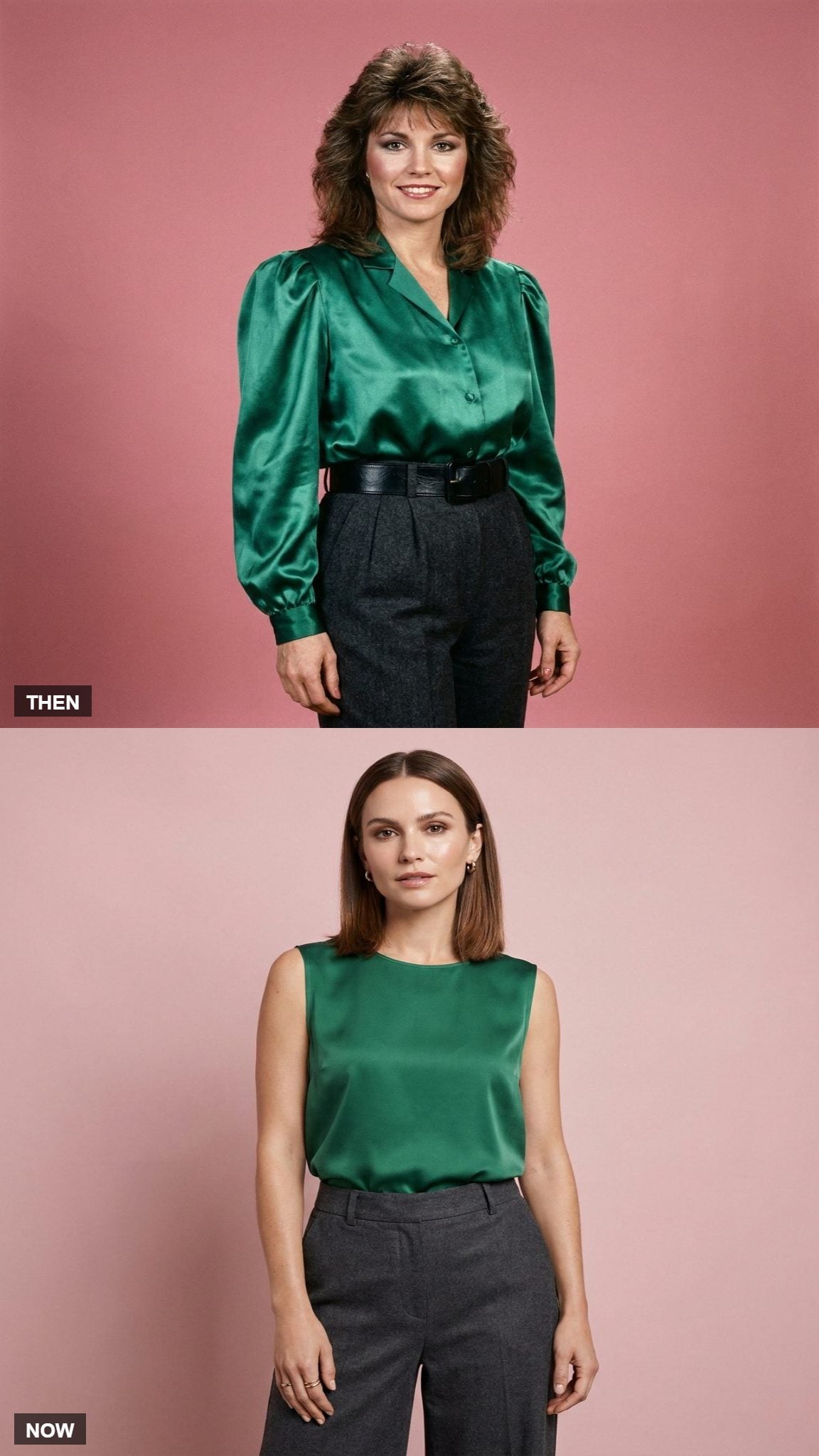
Blouson tops puffed deliberately. An elastic or fitted hem caught the fabric at the waist and let everything above it balloon outward, creating volume because volume itself was desirable.
A silk shell tucked flat into trousers produces almost the inverse effect: smooth line, quiet waist, no gathered cloud hovering above the belt.
Same basic territory. One silhouette inflates it; the other edits it.
6. The Sweater Dress Was Belted, Body-Conscious, and Ready for Opaque Tights
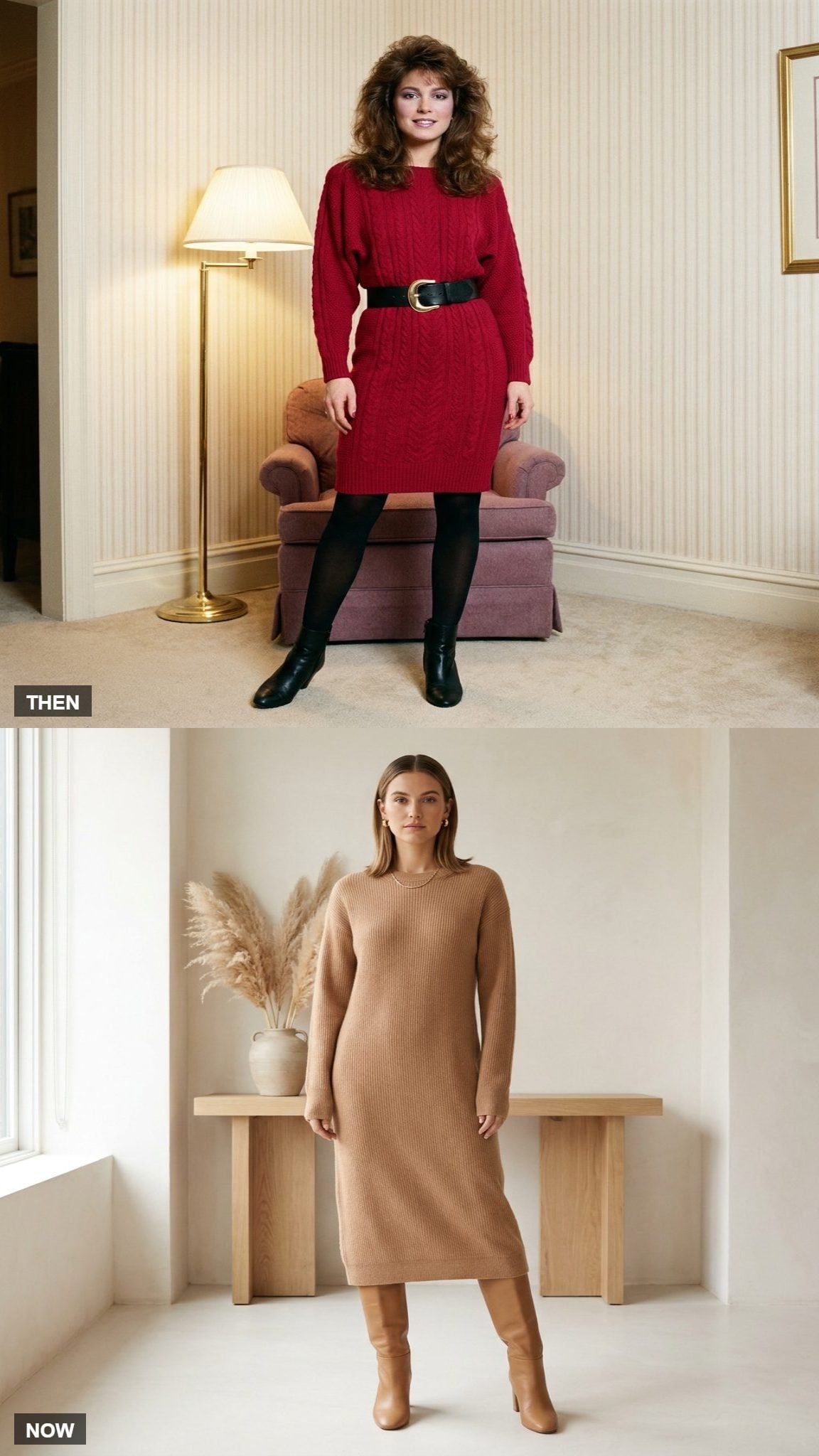
The fitted sweater dress loved company. Belt at the waist. Opaque tights below. Stacked-heel ankle boots. The outfit broke the body into clearly defined sections and then made sure every section knew where it began.
Modern sweater dresses can be fitted, belted, oversized, mini, midi, or nearly ankle length, but one particularly current approach does the opposite: longer knit, cleaner line, tall boot, little interruption.
5. The Denim Jacket Was Bedazzled, Painted, or Pinned Within an Inch of Its Life
❤️ Would you like to save this?
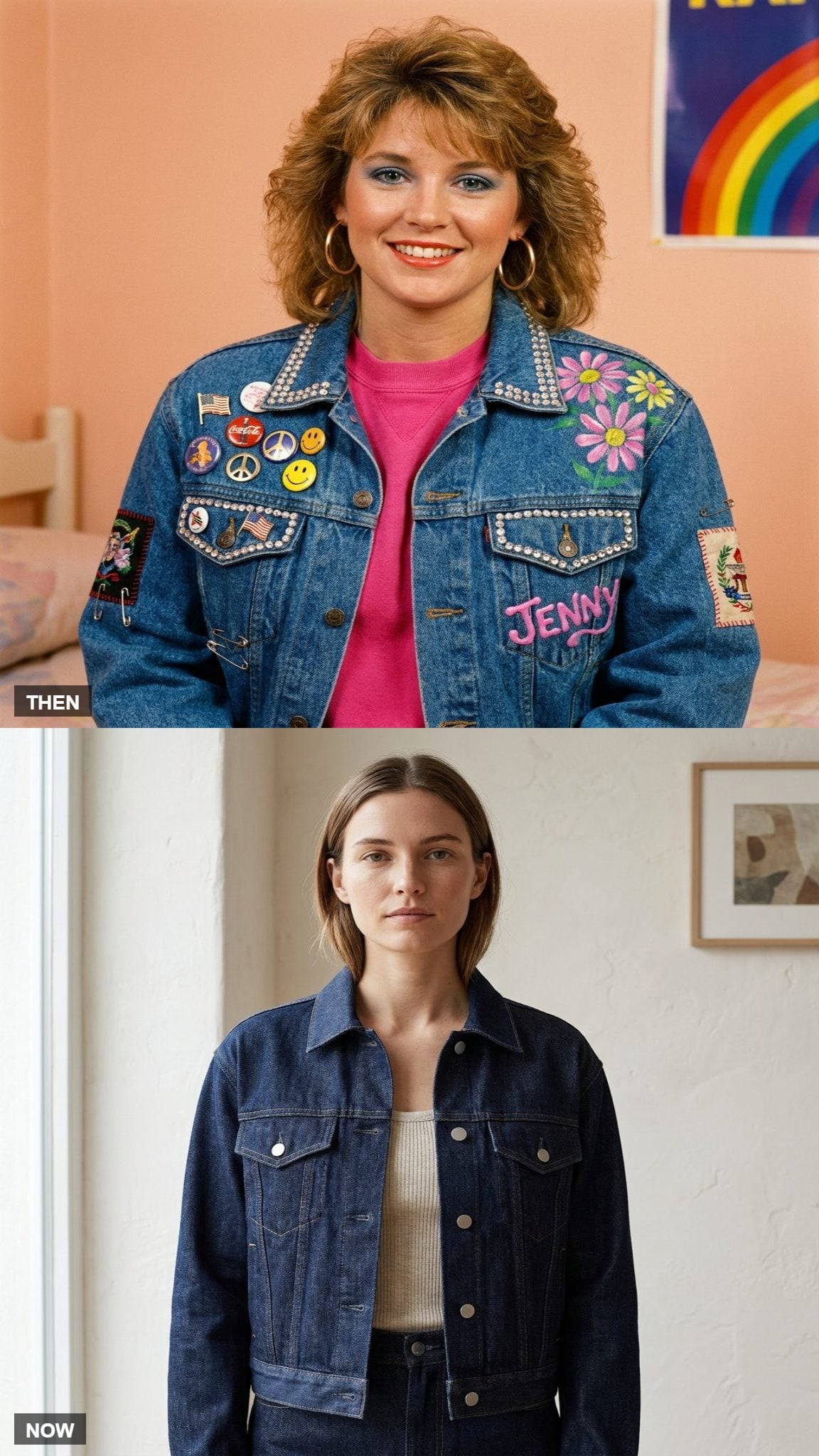
The denim jacket was excellent real estate. Rhinestones along the collar. Enamel pins from concerts and souvenir stands. Painted flowers across the back. Patches wherever a patch might plausibly survive.
Plain denim existed, obviously, but customization fit the decade beautifully. A basic jacket could become a bulletin board for taste, loyalties, questionable artistic experiments, and whatever somebody’s talented cousin could paint for twenty dollars.
Current denim often celebrates cleaner washes and simpler cuts. All that personalization energy had to go somewhere.
Probably the phone case.
4. The Everyday Skirt Suit Could Make an Ordinary Lunch Look Official
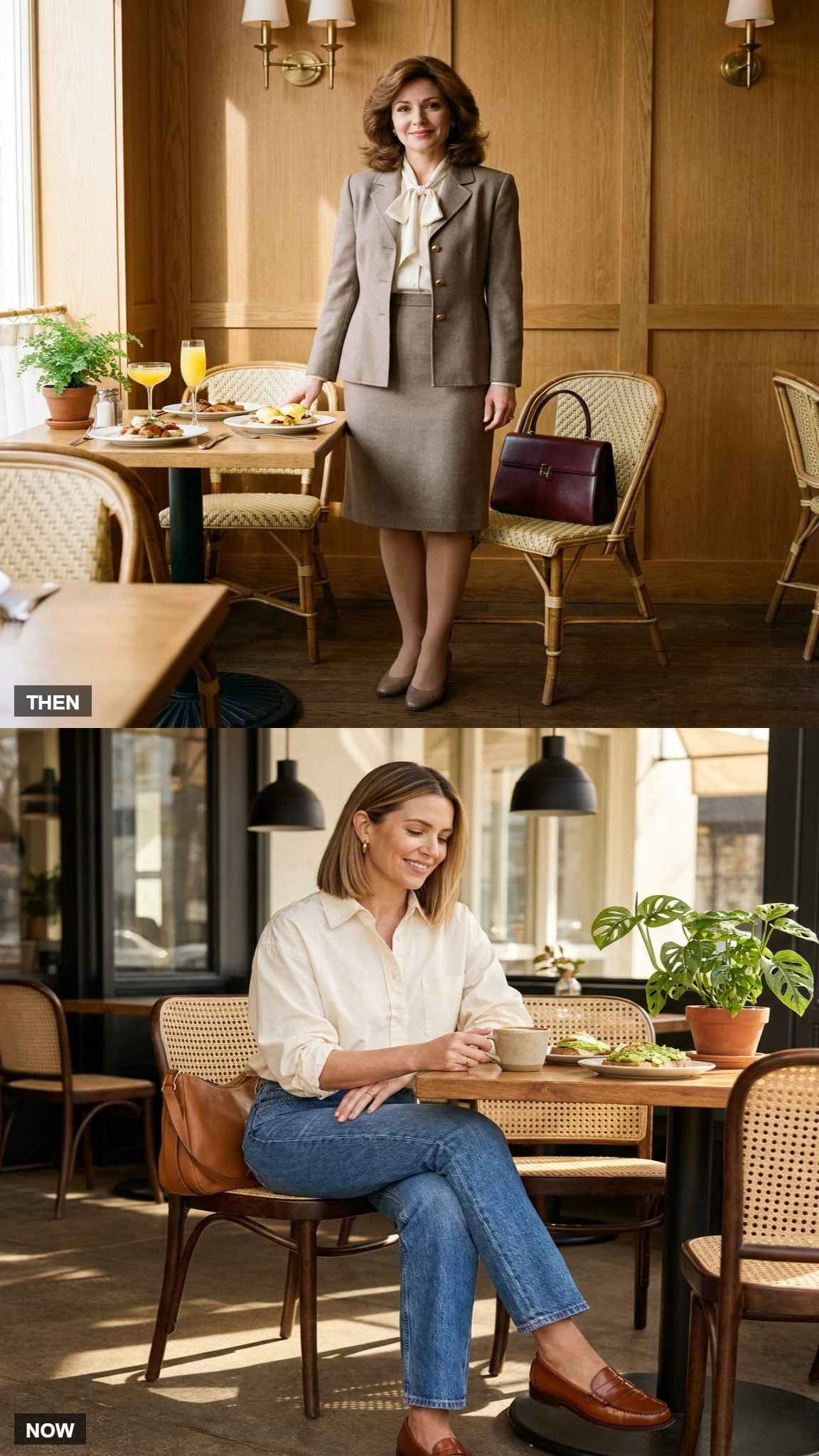
A matched blazer and knee-length skirt could leave the office without immediately looking overdressed. Add hose, low pumps, and a blouse with a bow doing quiet ceremonial work at the throat, and even lunch had acquired an organizational chart.
The same social outing today might mean jeans, an oversized button-down, and loafers. Effort hasn’t disappeared. It migrated into cut, fabric, shoes, and the precise amount of shirt allowed to escape the waistband.
Nobody put on hose to eat eggs, and civilization continued.
3. Puffed Sleeves Ruled the Casual Blouse and Made Coats an Engineering Problem
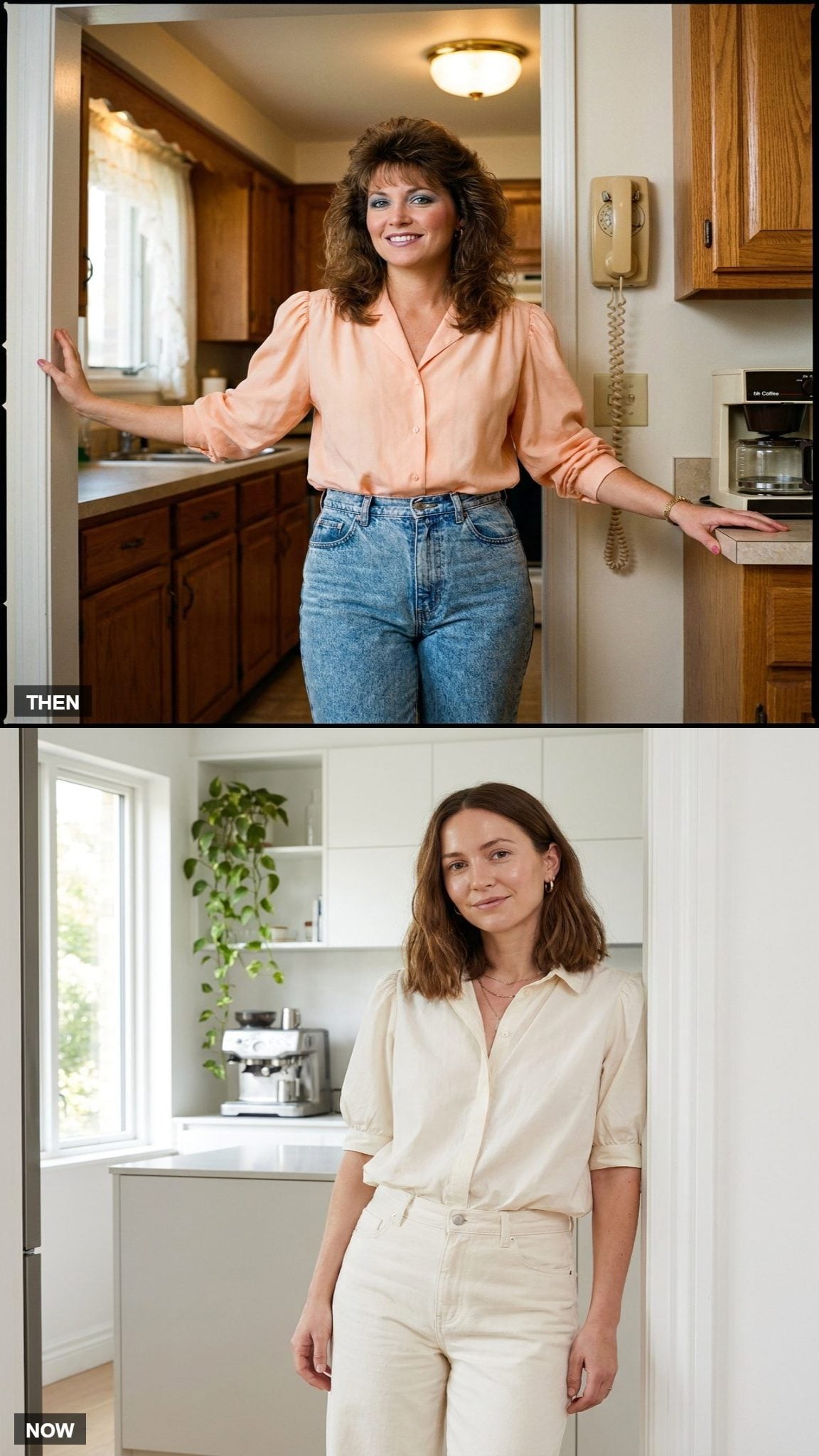
Puff sleeves in the 1980s could require serious gathering, sleeve heads, stiff fabrics, or padding to maintain all that altitude. The shoulder rose above the actual shoulder and then kept going because apparently there was airspace available.
Puffed sleeves have returned repeatedly, but the everyday version is often softer: a controlled gather, a rounded shoulder, enough volume to register without making the jacket you planned to wear over it reconsider its career.
2. The Sunday Church Hat Still Belonged to Traditions That Took Dressing Up Seriously
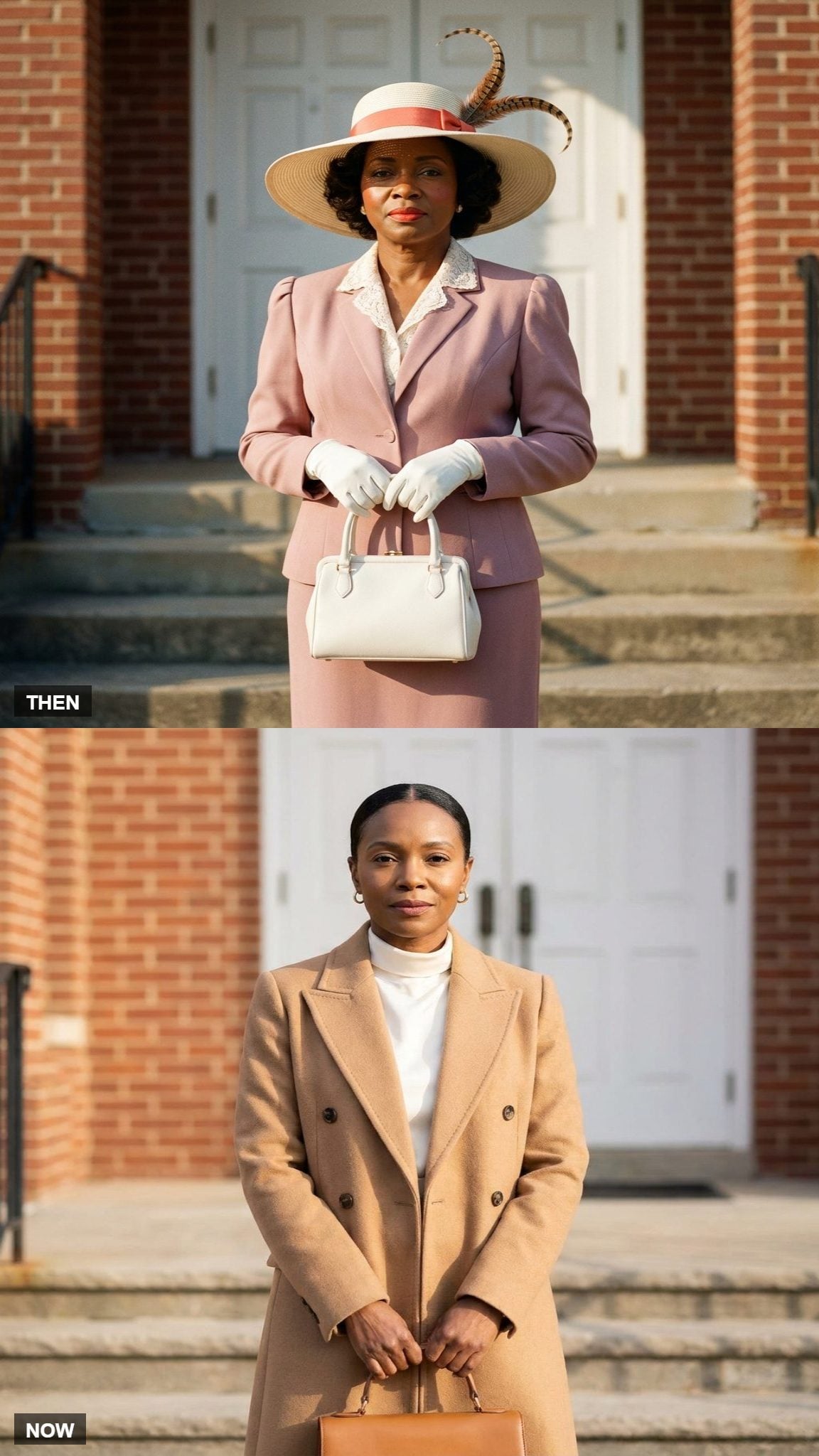
By 1985, a formal Sunday hat was hardly universal across American churches. But in congregations and communities where church dressing remained ceremonial — particularly within the long tradition of Black church hats — a wide brim, ribbon, flower, feather, or carefully matched bag could still make Sunday clothes unmistakably different from weekday clothes.
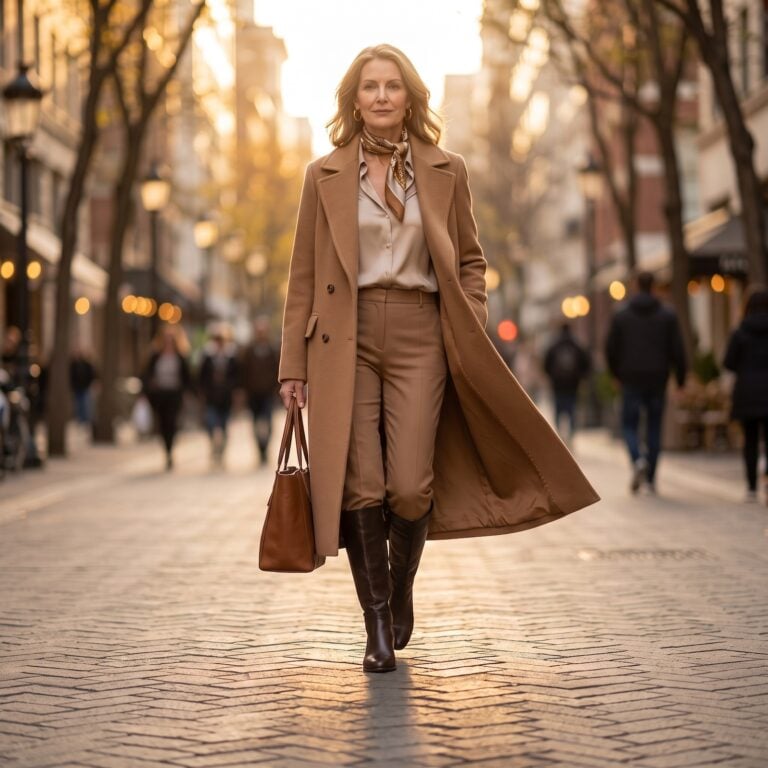
That tradition has never entirely disappeared. Elsewhere, the signal of occasion has often shifted away from hats toward a particularly good coat, dress, suit, shoe, or piece of jewelry.
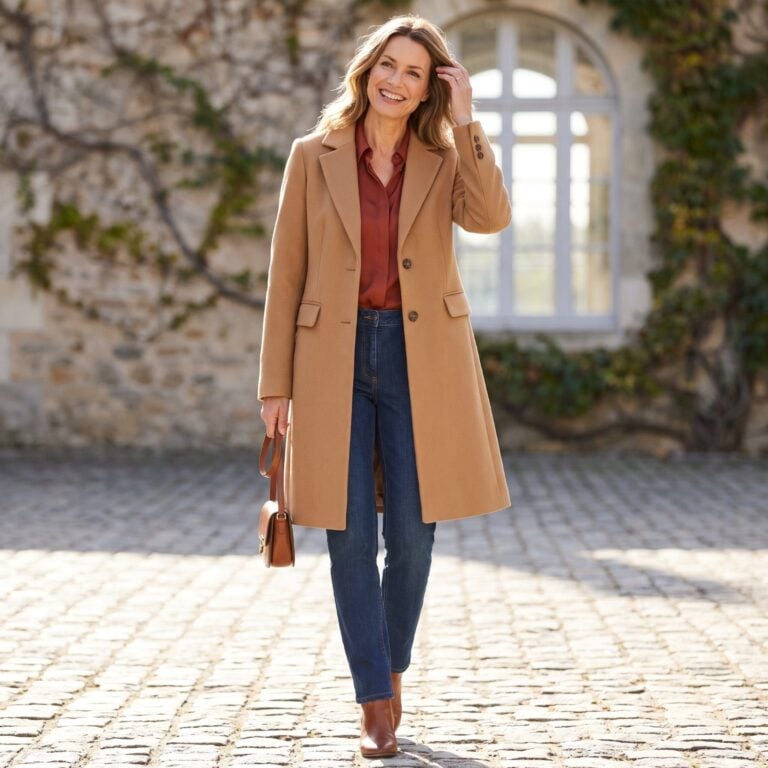
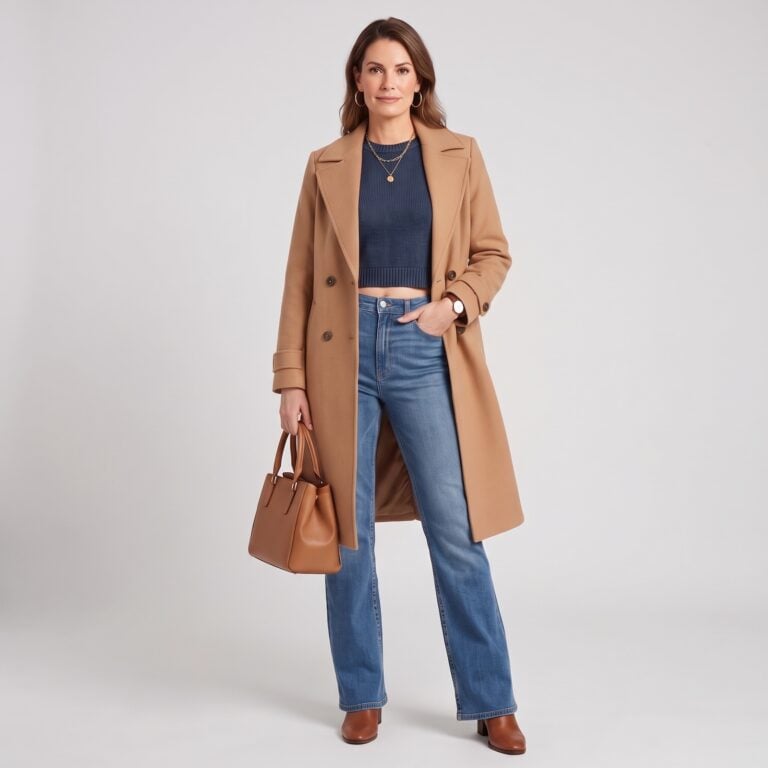
A camel wool coat is quieter than a feathered brim, but quiet and casual are not the same thing.
1. Casual Layering Meant a Turtleneck Under a Polo Under a Sweatshirt
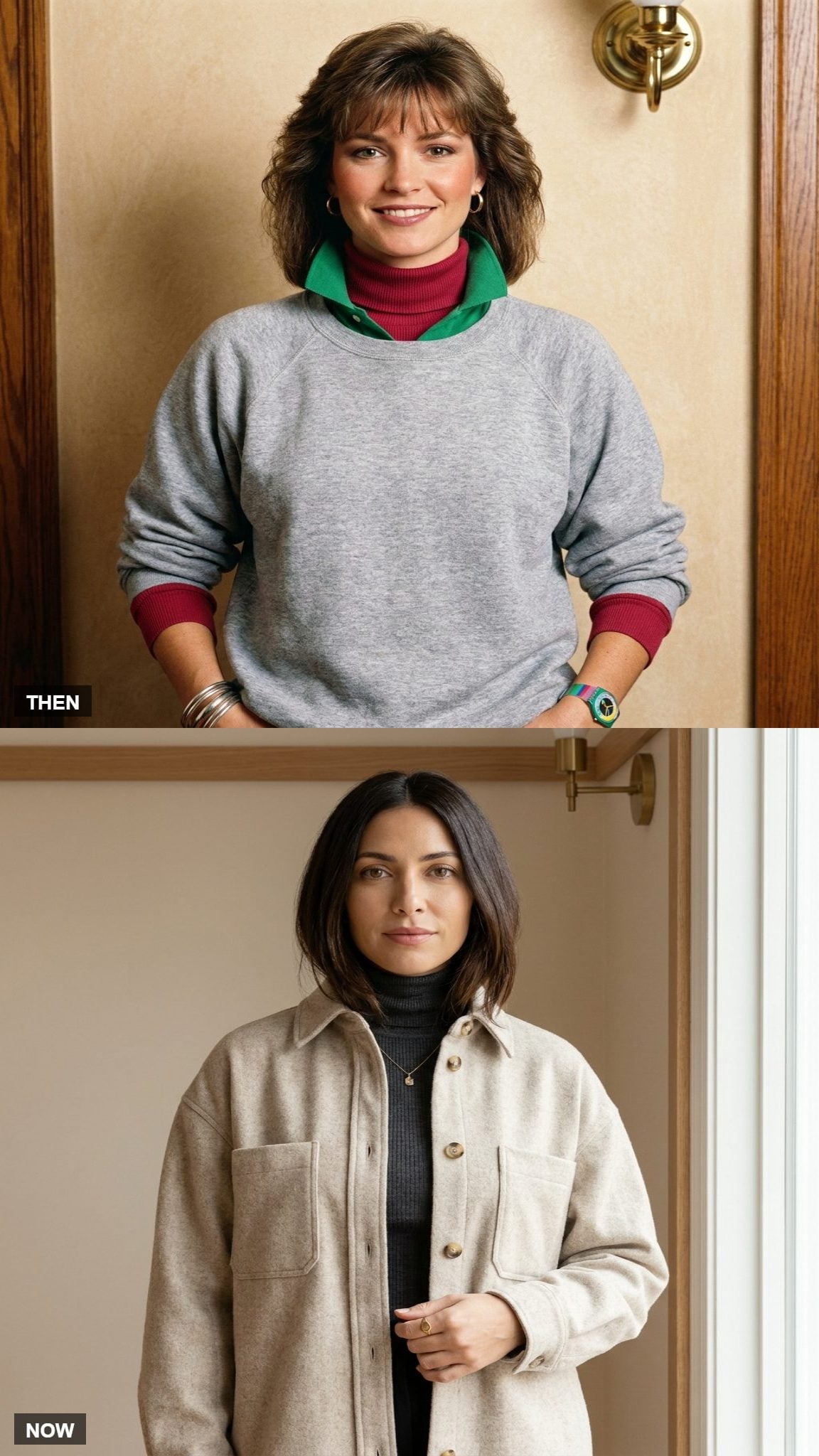
Turtleneck at the base. Polo over it, collar visible. Sweatshirt on top, sleeves pushed up so the first two layers could provide evidence of their existence.
The stacking wasn’t always about warmth. Color, collars, cuffs, and texture were supposed to remain visible. One garment apparently hadn’t supplied enough information.
A modern outfit can arrive at a similarly put-together result with two pieces: a fine turtleneck and a wool overshirt, perhaps, or a tee beneath a textured jacket. Fewer layers, more breathing room, considerably less fabric negotiating for custody of the neckline.
Today’s layering is lighter: when we asked ThreadCurve readers how many layers they wear, 69% said two, while only 13% went for three.