❤️ Would you like to save this?
A silk blouse could cost $240 in 1985. Median weekly earnings for a full-time working woman that year were about $277. Put those two numbers beside each other and the decade’s office-fashion fantasy gets considerably less breezy: one blouse could swallow most of a week’s gross pay.
Prices were lower, certainly. So were the paychecks. The federal minimum wage sat at $3.35 an hour. Dressing for the office meant doing arithmetic in the fitting room—deciding what had to last, what could be faked and which expensive piece might make five cheaper ones look better.
These 27 pieces show what that wardrobe could cost, from the everyday basics bought in multiples to the silk blouse that came close to eating an entire paycheck. Some purchases were necessities. Others were ambition with a price tag attached.
FYI, thanks to AI imagery software, we’re able to create very specific fashion and hairstyle examples to illustrate the points being made. In some cases, imagery is exaggerated to hammer home the point. Also, assume links that take you off the site are affiliate links such as links to Amazon. this means we may earn a commission if you buy something.
27. The $9 Clip-On Earrings With the Gold Statement Shine
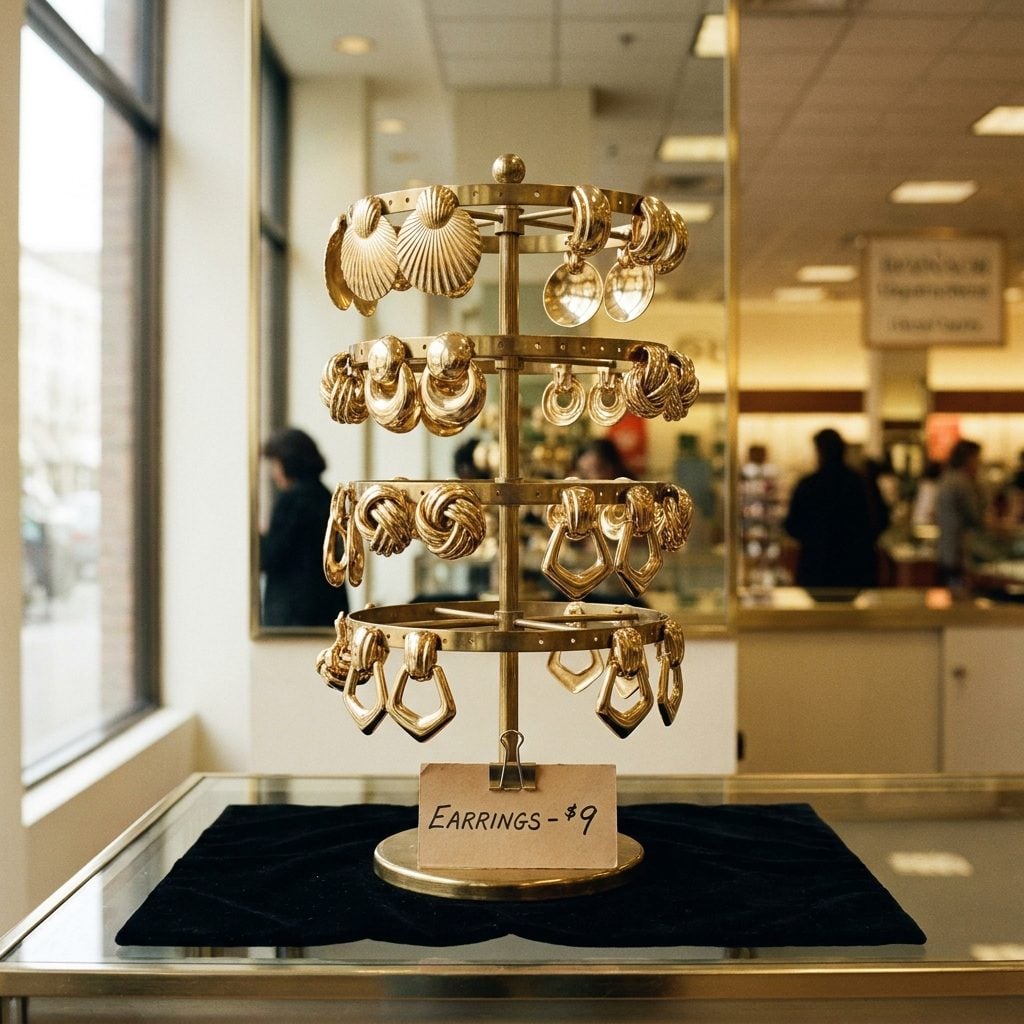
Nine dollars made oversized costume earrings an easy place to experiment. Fluted discs, knots and door-knocker shapes delivered a disproportionate amount of visual confidence for the price.
Clip-ons remained common even though pierced ears were already widespread, particularly for large statement styles that were heavy enough to make comfort a theoretical concern. Match the scale of the earring to the shoulder pad and subtlety quietly packed its things.
26. The $12 Tube of Revlon Lipstick in Corporate Red
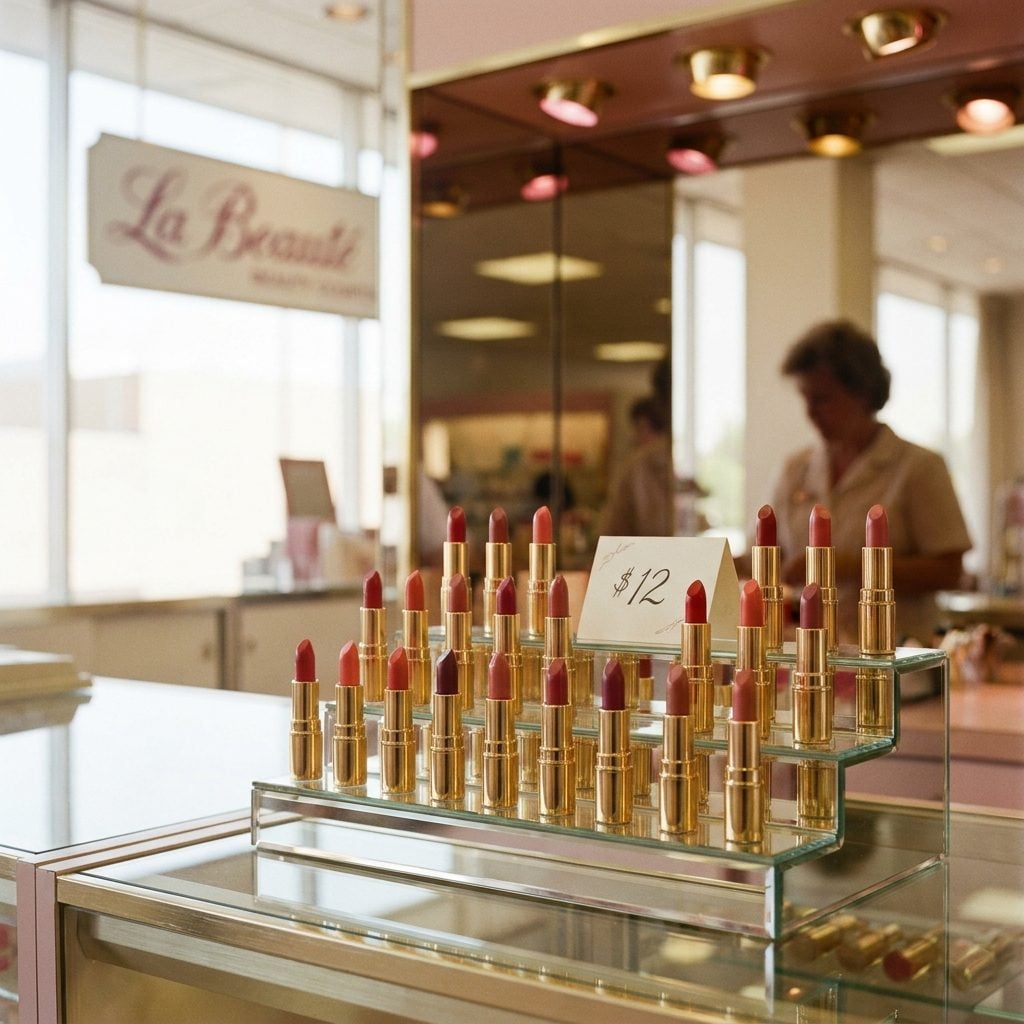
Twelve dollars put a bullet of red into the handbag, ready for the morning mirror, lunch-hour repair and the inevitable reapplication before leaving work.
Bold reds, berries and corals belonged naturally beside the stronger tailoring of the decade. The department-store cosmetics counter added ceremony: mirrors, testers, rows of color and somebody fully prepared to explain why the lipstick you came for obviously required two more products beside it.
25. The $13.50 Basic Leather Handbag
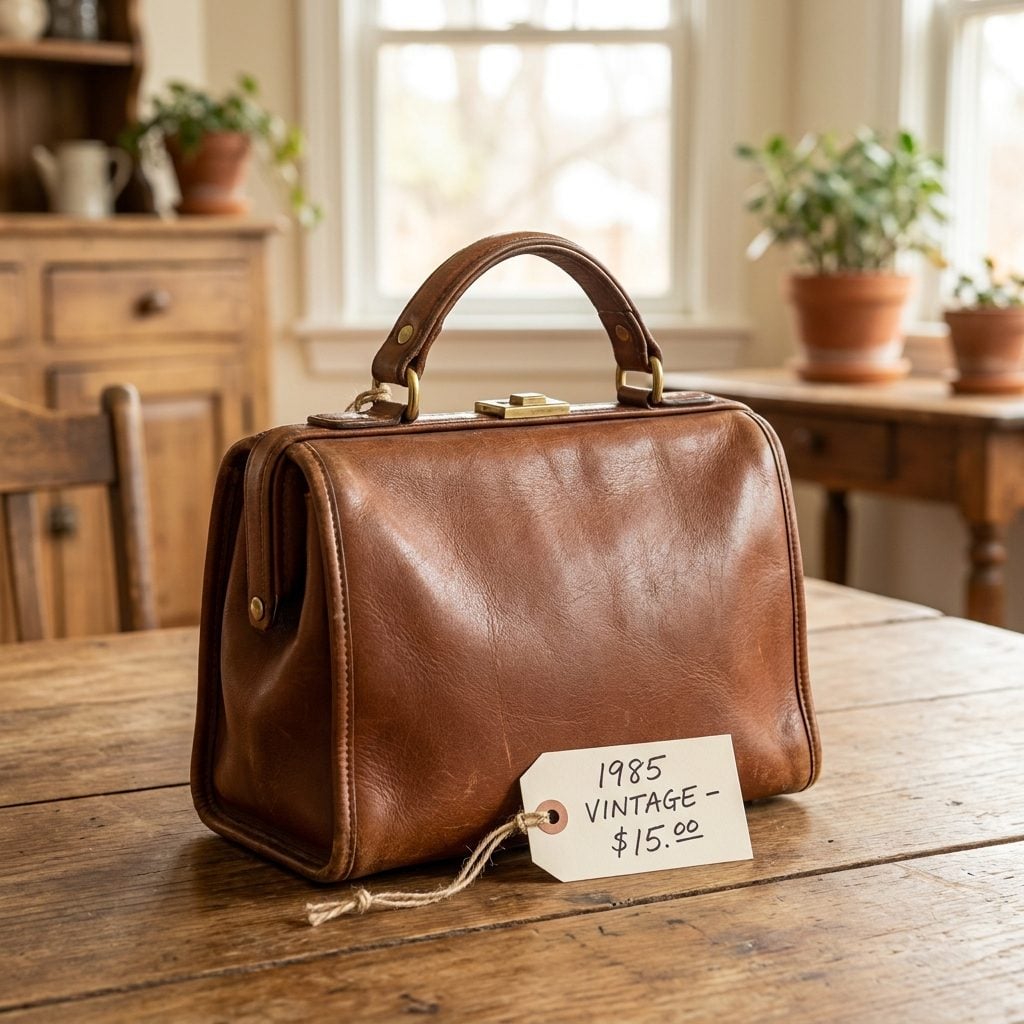
Thirteen dollars and fifty cents sat near the bottom of this wardrobe’s price range, inexpensive enough to be an everyday purchase by comparison with what is coming later.
The bag is compact and honest—short handles, brown leather, hardware kept quiet. Paired with the dusty rose print blouse and navy skirt, it disappears into the outfit in the best possible way. Some accessories announced themselves. This one simply showed up every morning and carried everything.
24. The $16 Three-Pack of Suntan Pantyhose
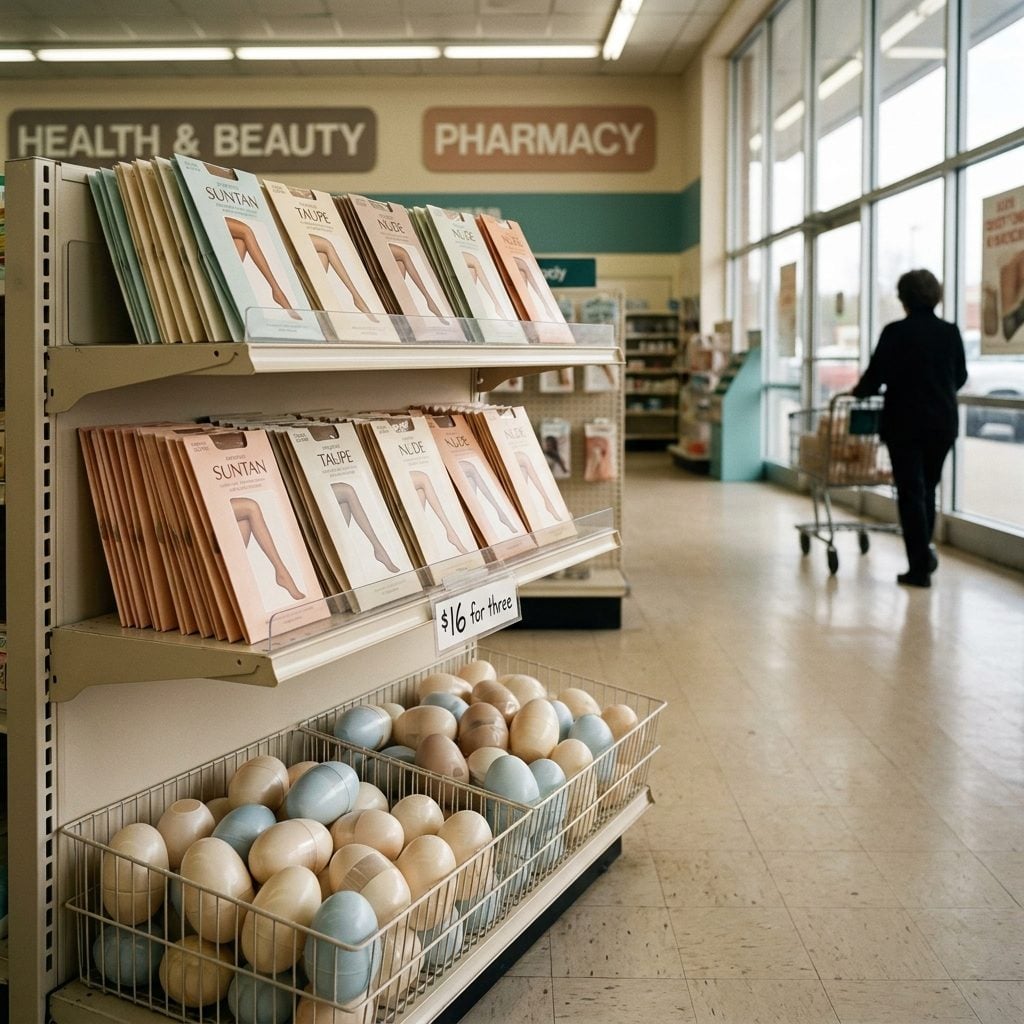
Sixteen dollars for three pairs sounds like a minor expense until the first run appears before lunch. Then another pair goes Wednesday. Suddenly hosiery isn’t an accessory; it is office overhead.
Suntan, taupe and other neutral shades were common choices, and in many conservative professional workplaces bare legs were effectively off-limits. Desk drawers held emergency pairs because nylon had a genius for failing precisely when an important meeting appeared on the calendar.
23. The $16 Camisole That Changed the Blazer
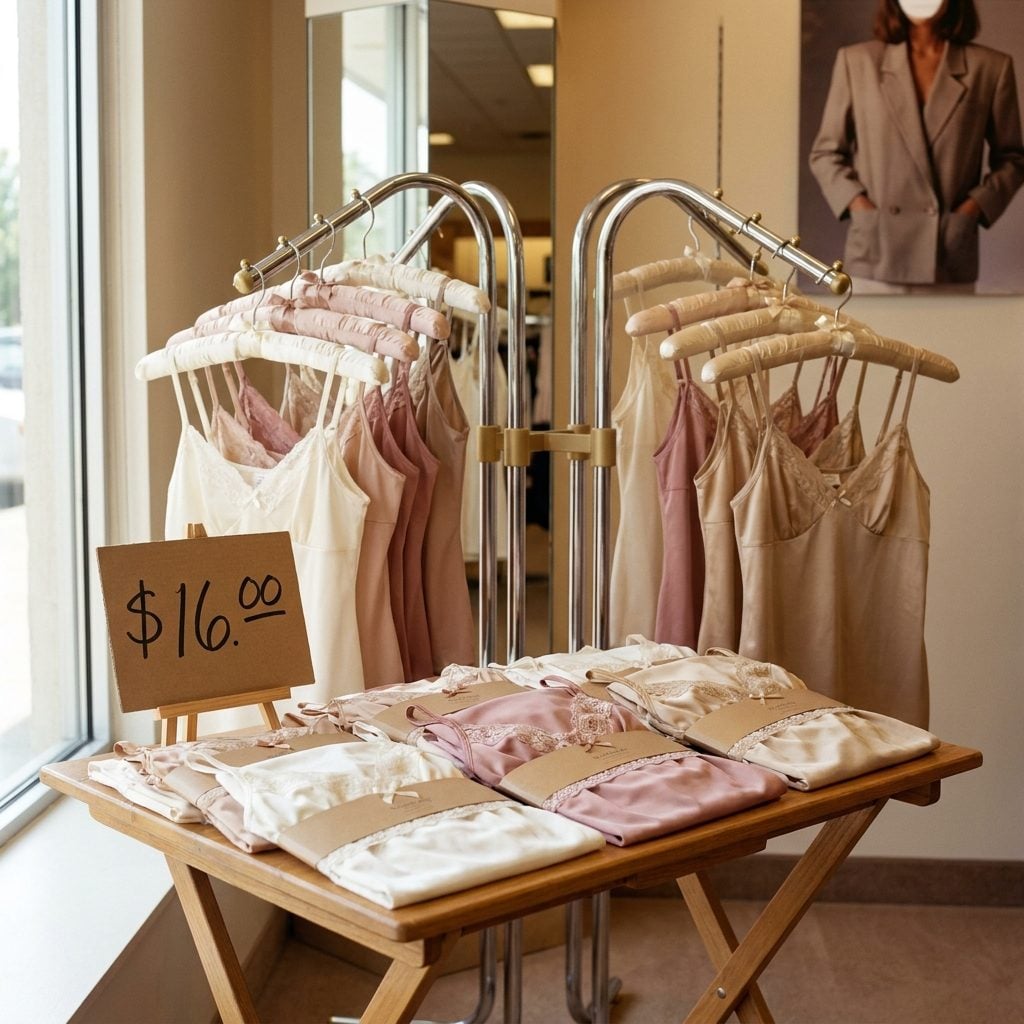
Sixteen dollars bought the layer that barely appeared. A smooth camisole under a buttoned blazer stripped away the collar, bow and extra fabric of a traditional blouse and made the jacket itself the main event.
This was the more fashion-forward end of office dressing rather than a universal boardroom uniform. Ivory, blush or black could disappear beneath the jacket while giving the neckline enough finish to look intentional instead of unfinished.
22. The $18 Leather Gloves for the Commute
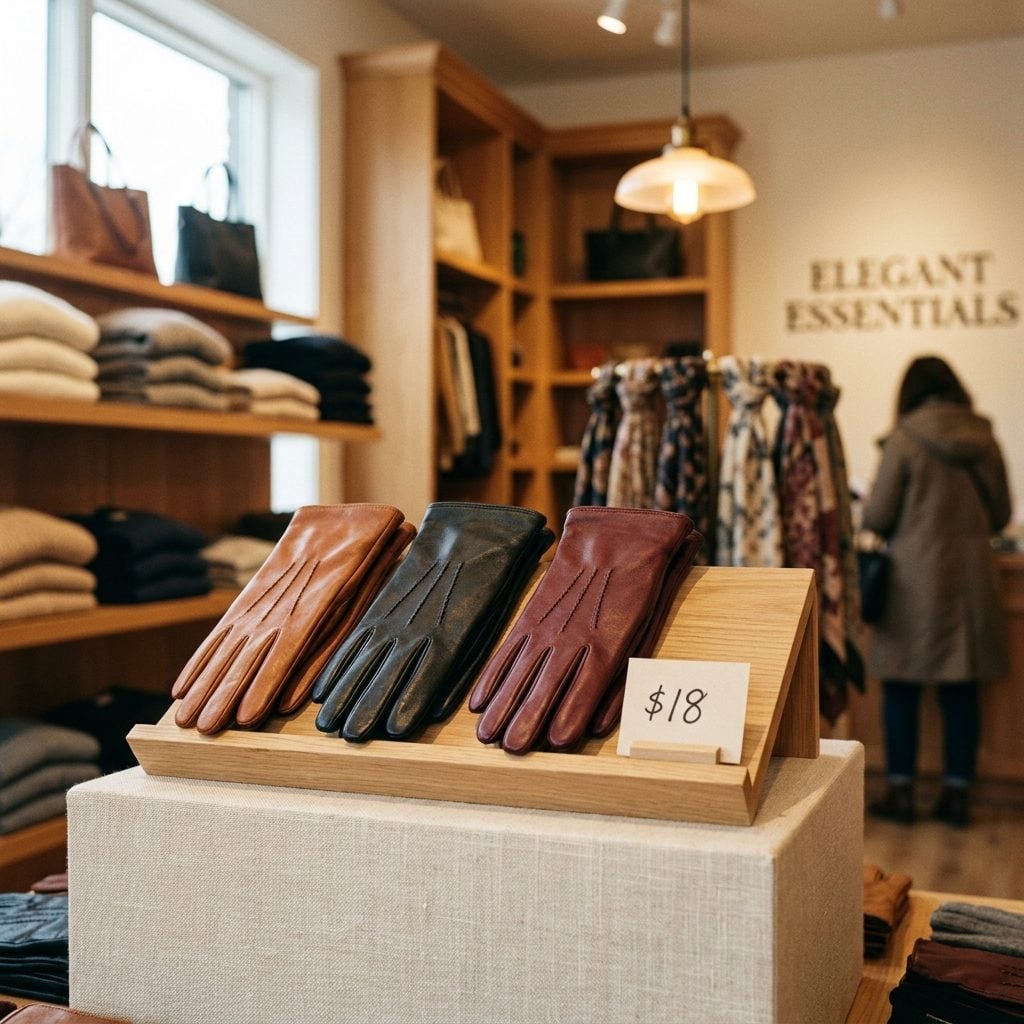
Eighteen dollars bought a small luxury with a very practical excuse. Lined leather gloves in cognac or oxblood kept the cold out and looked considerably better emerging from a wool-coat pocket than whatever emergency pair had been bought at the drugstore.
The pleasure was coordination. Gloves could echo the boots, bag or belt without needing to match them exactly. A warm oxblood pair brought an entire cold-weather wardrobe into the same conversation.
21. The $19.99 Basic Work Pumps
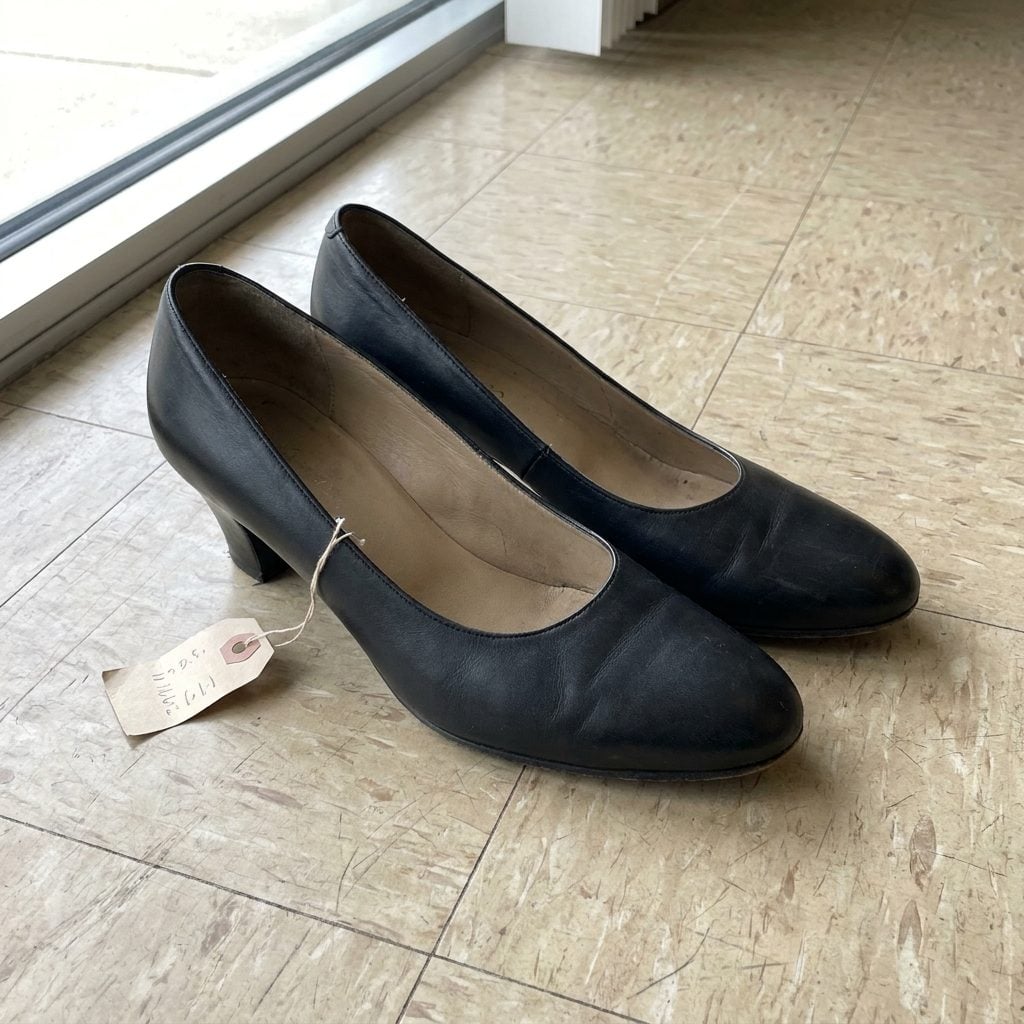
Twenty dollars for work shoes represented just under six hours of gross pay at the federal minimum wage. That sounds manageable until you remember how often the shoes were expected to appear: commute, office, lunch, meeting, repeat.
The almond toe and medium heel are almost aggressively sensible. Nothing says money. Nothing needs to. This was the pair bought to make the rest of the outfit look finished, then worn until the crease across the toe started writing its own résumé.
20. The $22 Silk-Blend Scarf That Finished Everything
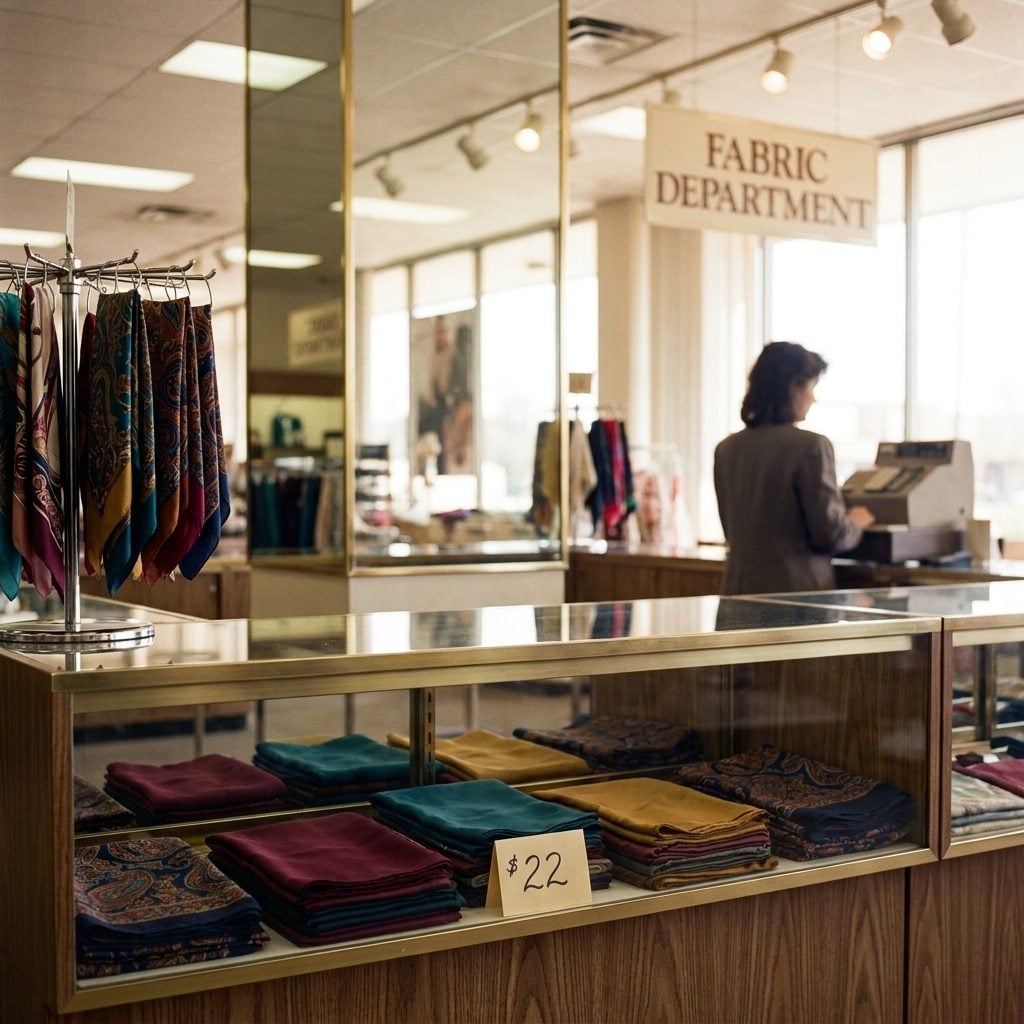
Twenty-two dollars bought one of the cheaper ways to make familiar clothes look reconsidered. Knot a patterned scarf over a plain blouse, tuck it under a blazer and suddenly yesterday’s jacket had acquired another life.
Burgundy and navy paisley had exactly the right office manners: enough pattern to be noticed, enough restraint to survive a meeting. A woman could rotate a handful the way men rotated ties—not because the scarf came directly from men’s dressing, but because it performed a remarkably similar wardrobe job.
19. The $27 Everyday Work Boots
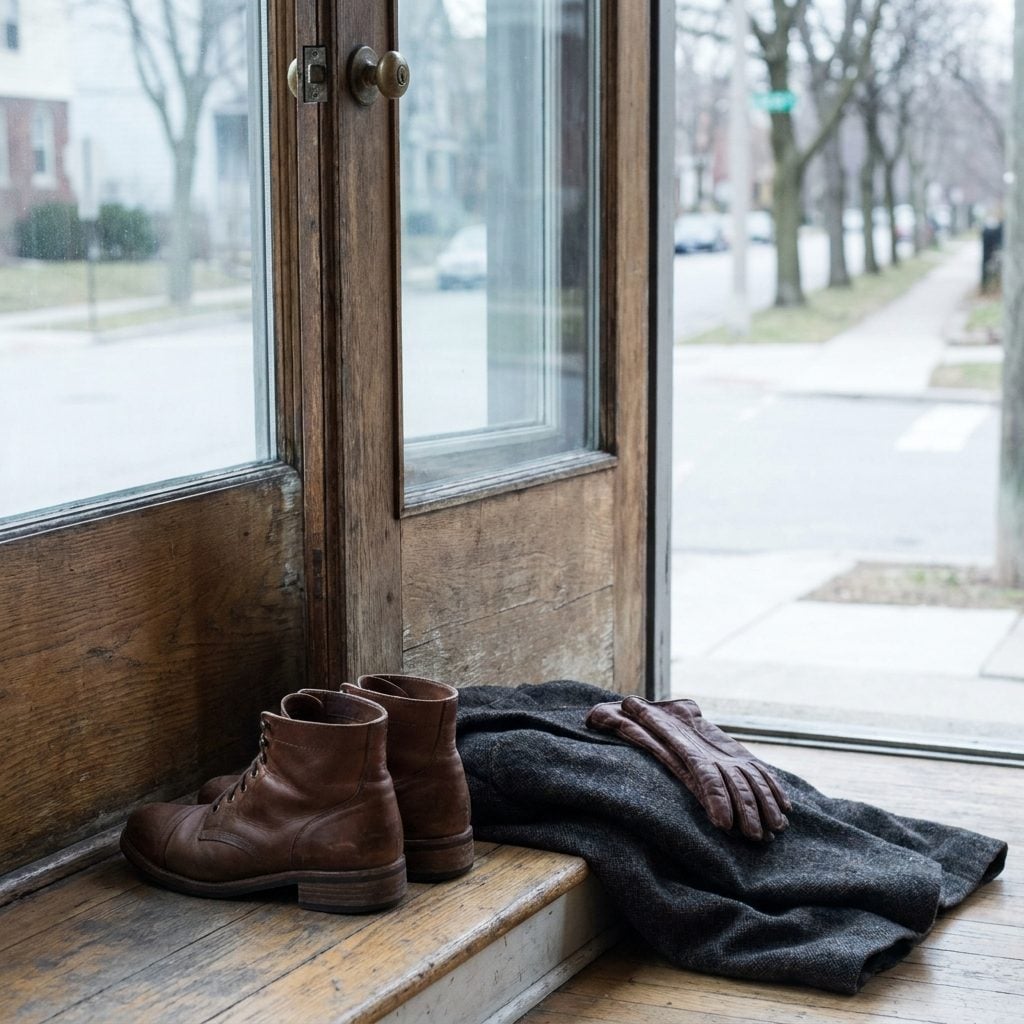
Twenty-seven dollars bought the practical boots: dark brown, moderate height and useful enough for a cold commute without making the office outfit look as though weather had won.
The rust blouse against camel and brown is the better lesson. Three warm tones sit in the same family, making inexpensive separates look intentional because nothing is fighting for temperature. Budget dressing has always loved a palette that does the coordinating for you.
18. The $28 Leather Portfolio for Carrying Actual Paper
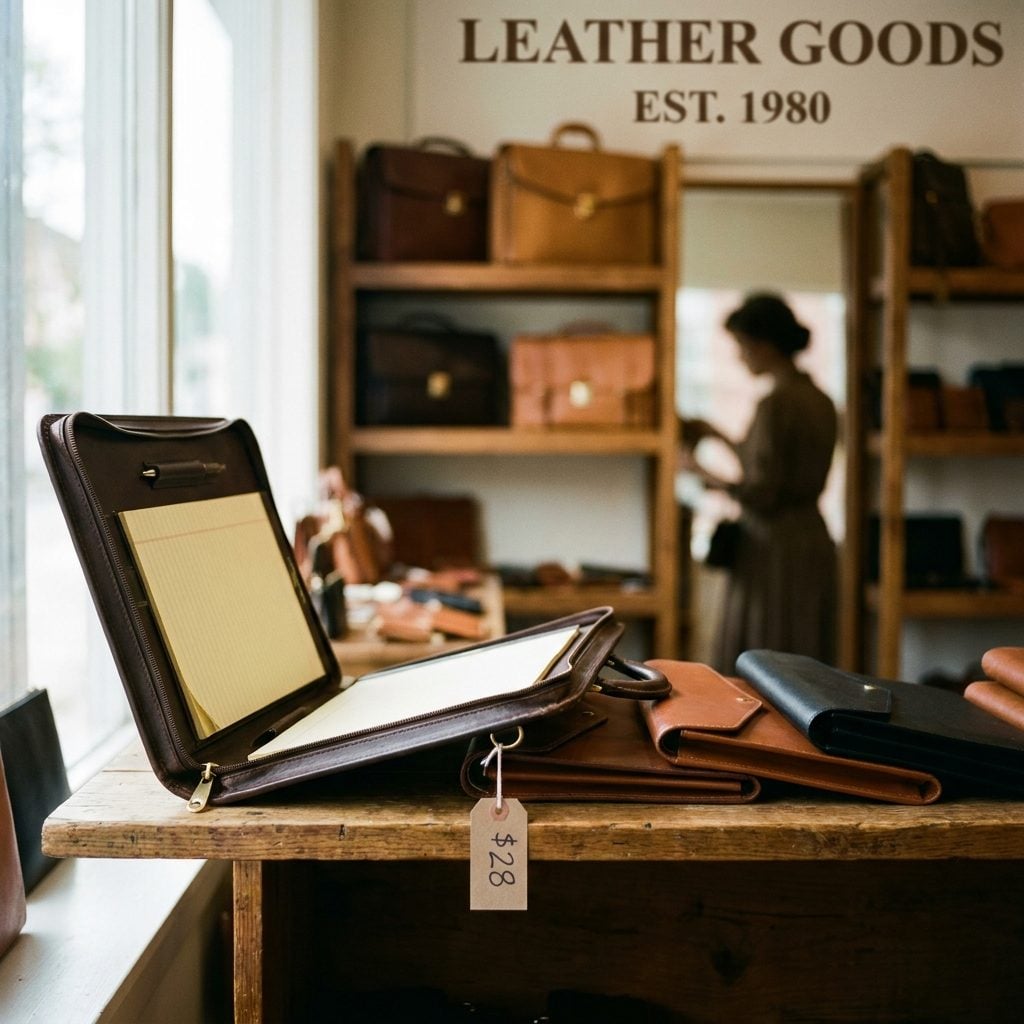
A slim leather portfolio cost less than most of the clothing here, yet few objects could change the story of an outfit faster. This was the woman who had brought documents.
Meetings still meant legal pads, folders, typed pages and notes written in the margins. Not everyone wanted a hard-sided briefcase, so the cognac portfolio supplied structure without requiring luggage. Carry one under your arm and the outfit immediately acquired a destination.
17. The $29.99 Basic Office Blouse
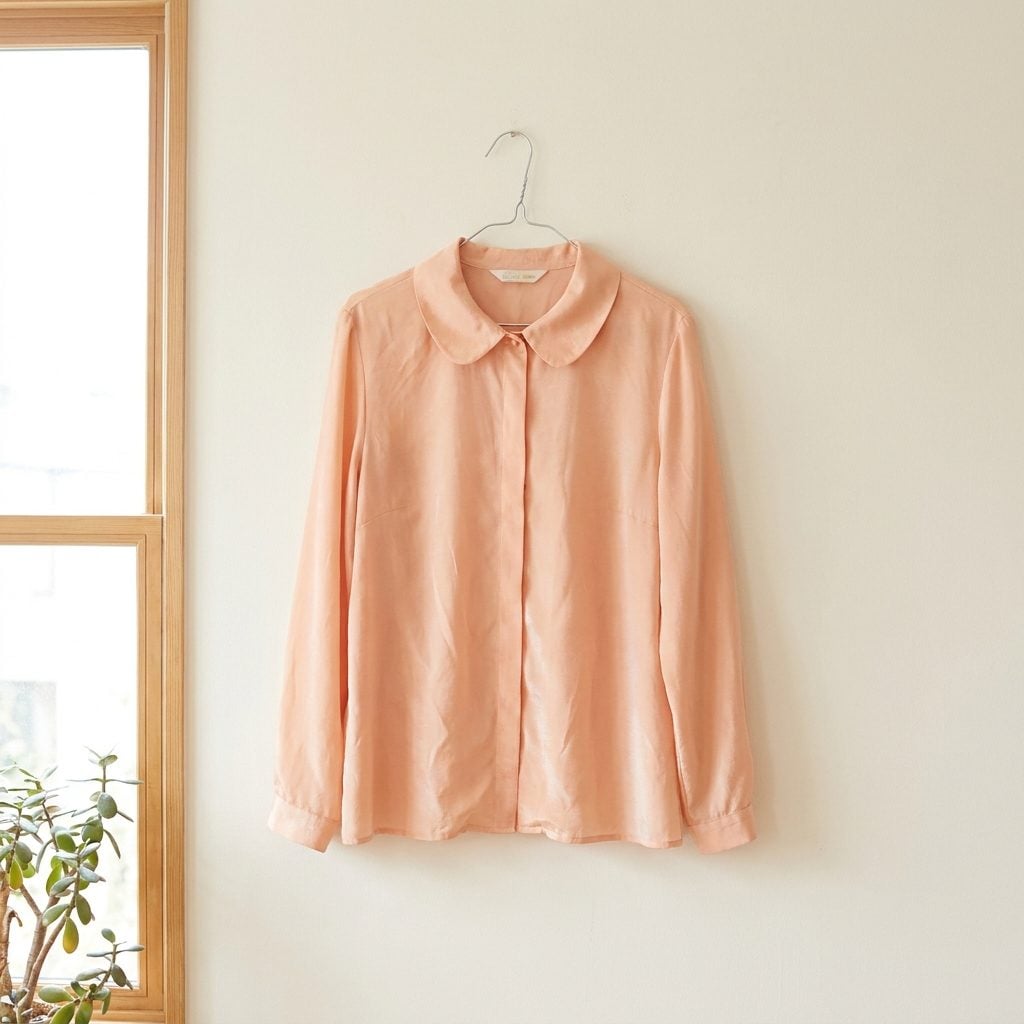
Thirty dollars, near enough, for the blouse expected to do half the week’s work. At the 1985 federal minimum wage, that represented roughly nine hours of gross pay—not ruinous, but hardly disposable when you needed several in rotation.
The gathered neckline and slightly full sleeve catch the softer side of mid-’80s office dressing. Tucked into navy, the peach blouse isn’t trying to become the story. It looks tidy, takes the accessories without complaint and leaves the woman wearing it free to be noticed for something besides her shirt.
16. The $35 Quilted Handbag With the Chain Strap
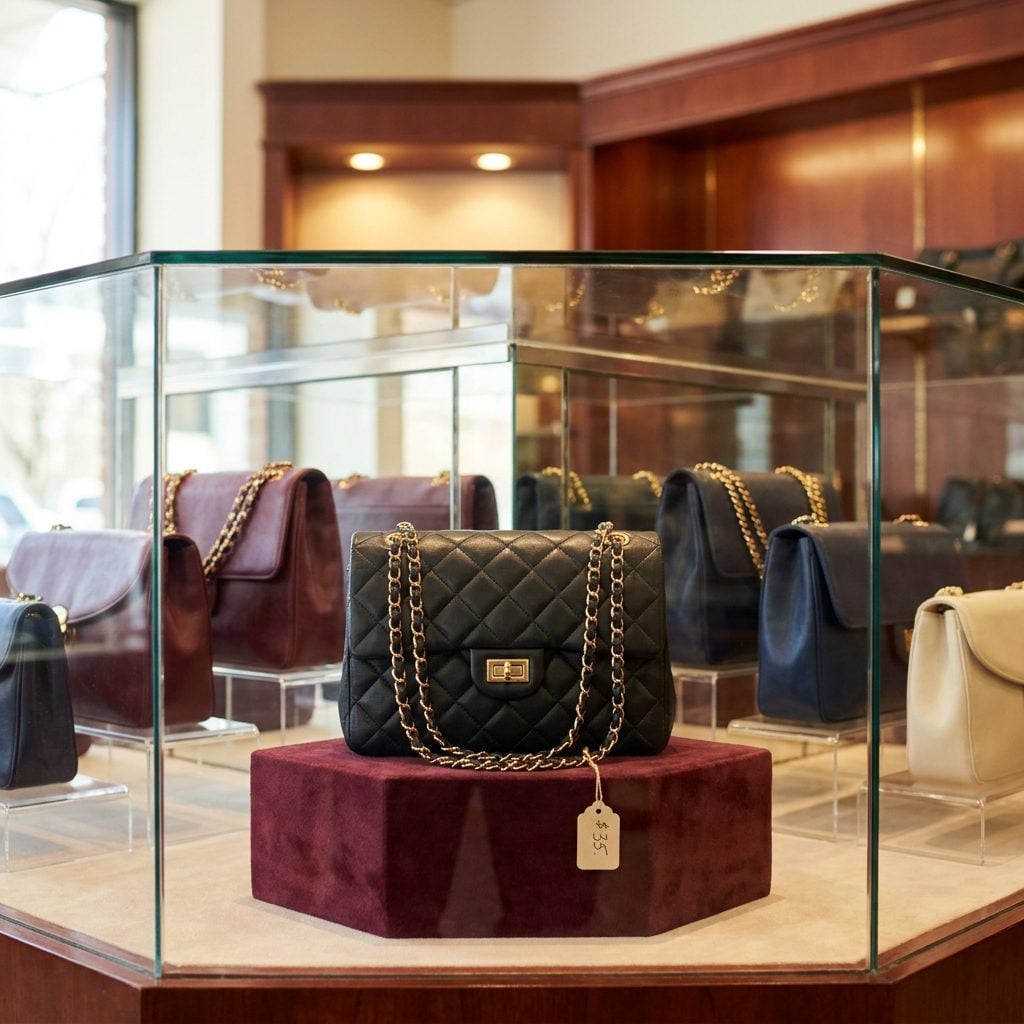
Thirty-five dollars bought the visual shorthand: diamond quilting, gold-tone chain and enough resemblance to much pricier French luxury bags that nobody needed the reference explained.
Ten hours of minimum-wage labor was still real money, but this bag knew how to multiply itself. Sling it over a plain coat, a navy suit or the most ordinary office dress and suddenly the rest looked slightly more deliberate. The shoulder strap also left both hands free on a crowded commute, an advantage glamour rarely bothers mentioning.
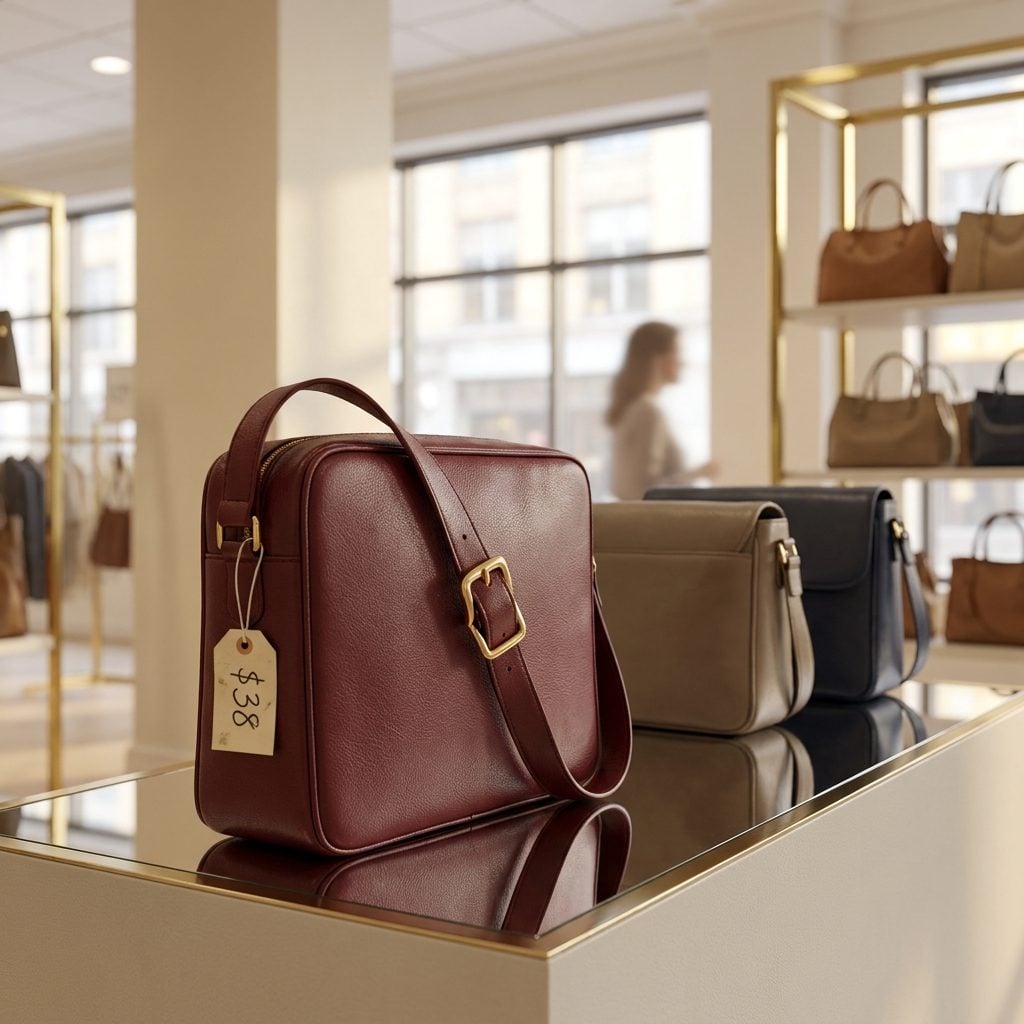
15. The $38 Structured Shoulder Bag That Held a Legal Pad
❤️ Would you like to save this?
Thirty-eight dollars bought a bag with an actual job description. Wide enough for papers, rigid enough not to slump into itself and structured enough to look at home beside a suit.
At the federal minimum wage, the price represented over eleven hours of gross pay. You chose the color carefully, carried it until the corners softened and expected the interior to swallow considerably more office debris than the elegant exterior admitted.
Shape was the point. This oxblood block looks decisive beside softer clothes, the same reason a good work bag still changes the tone of an outfit. A grained oxblood leather shoulder bag doesn’t need much decoration when the silhouette is already doing the talking.
14. The $42 Trench Coat for the In-Between Weather
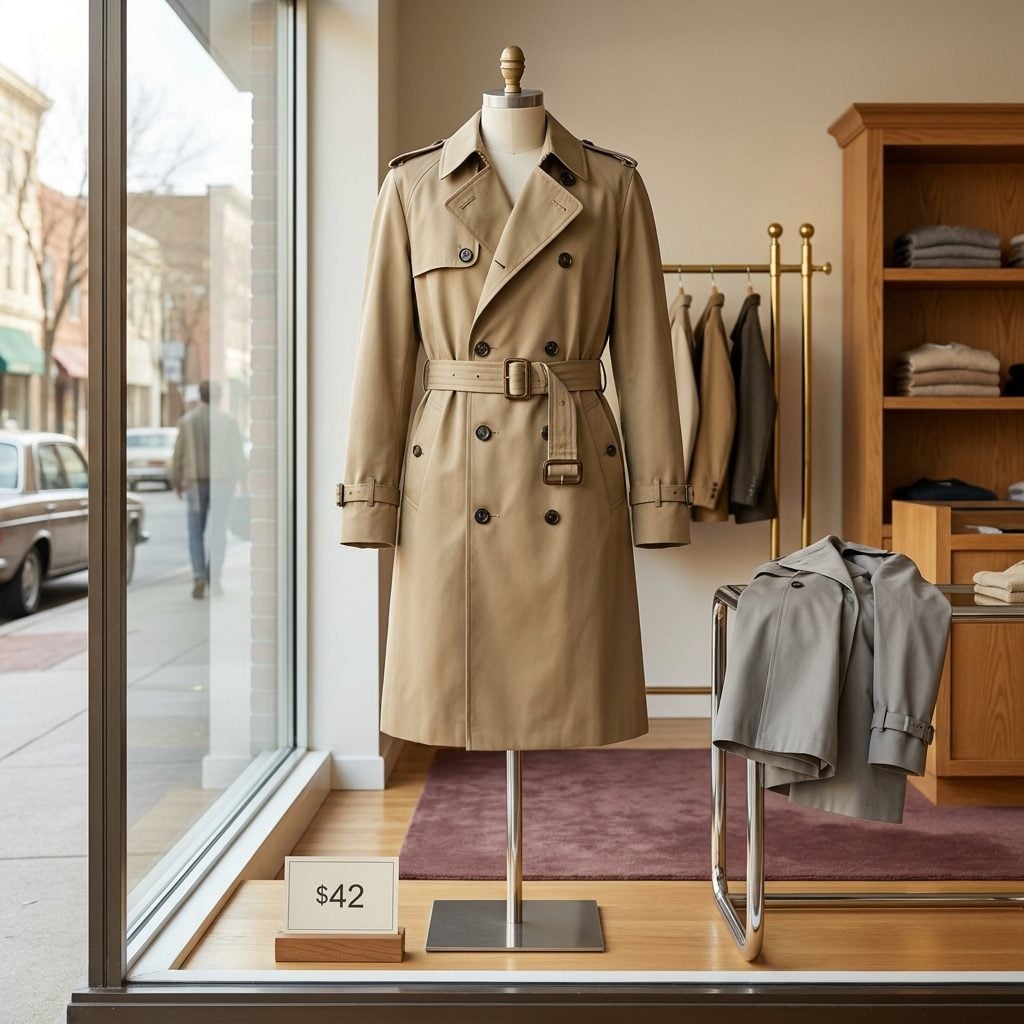
Forty-two dollars bought the practical middle season: cotton-poly fabric, raglan sleeves, storm flap and belt. Beige was practically a diplomatic choice because it refused to quarrel with anything already in the closet.
The trench earned its money by pulling double shifts. Over the suit on Tuesday, over jeans on Saturday, respectable in the rain and rarely the reason the outfit went wrong.
13. The $45 Costume Pearl Necklace
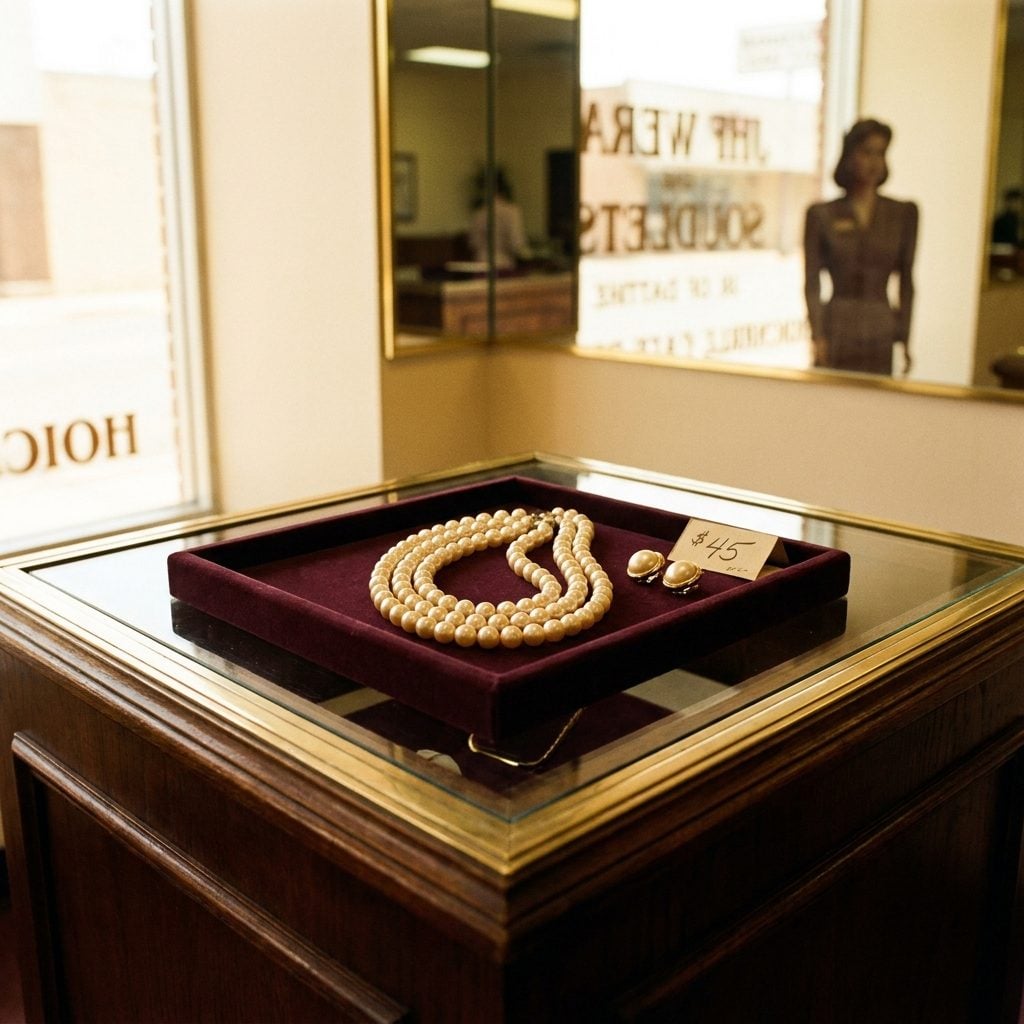
Forty-five dollars for costume pearls made the strand more than throwaway jewelry. The point wasn’t fooling a jeweler. It was giving the neckline a finish that worked with dresses, blouses and jackets without ever looking as though it had wandered in from another outfit.
Pearls were everywhere in the visual language of respectable ’80s polish—from political wardrobes to prime-time television. The better costume versions had a warmer, softer luster rather than the unmistakable glare of shiny plastic.
12. The Mary McFadden Signature Jacket
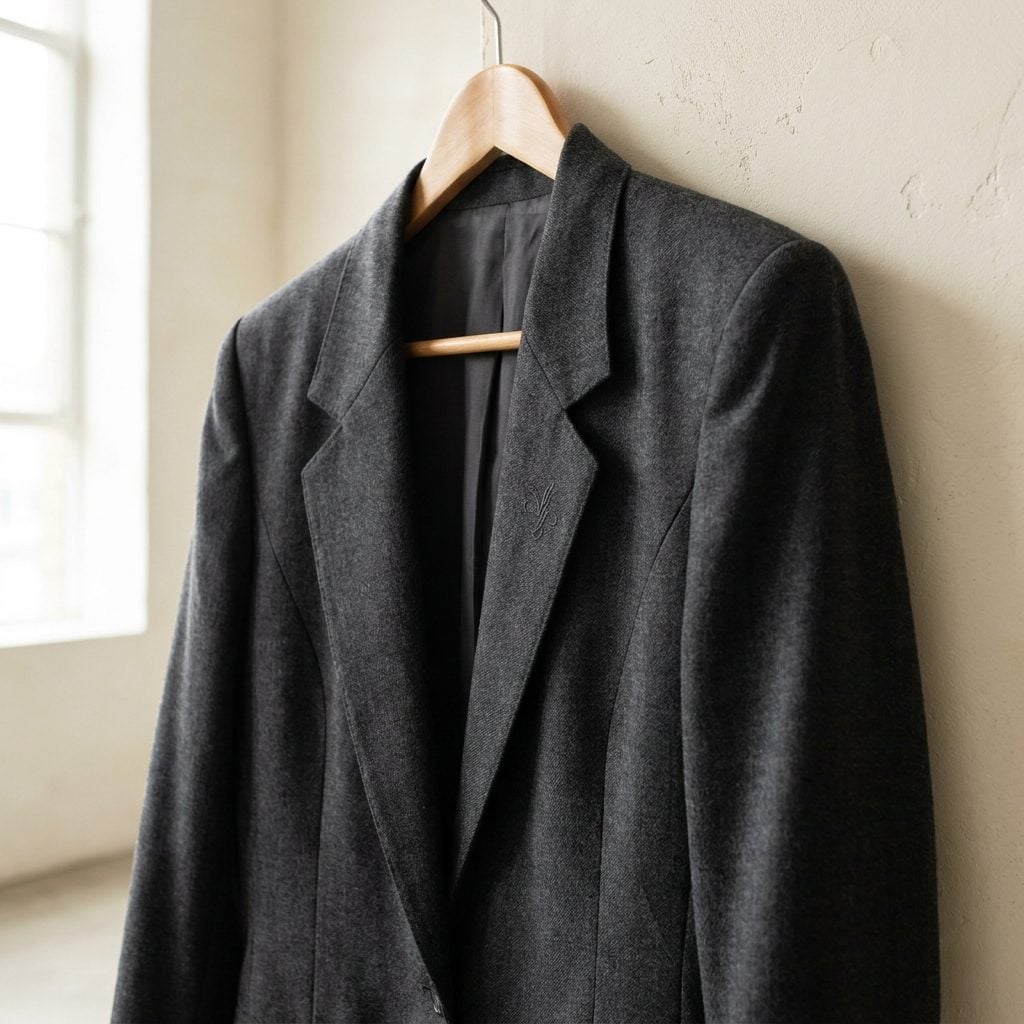
Not every wardrobe decision came down to a single number. By 1985, designer Mary McFadden—already known for jewel-toned, pleated eveningwear—had extended her name into a more accessible Signature Collection, putting a recognizable designer label within reach of shoppers who couldn’t touch her couture prices.
What survived the trip down-market was McFadden’s eye for color. Teal, cinnabar, cobalt and mustard gave the collection a palette far more distinctive than another row of safe office neutrals. Here, cobalt over cream takes a simple skirt-and-blouse foundation and gives it intent in one move.
11. The $74.99 Everyday Work Coat
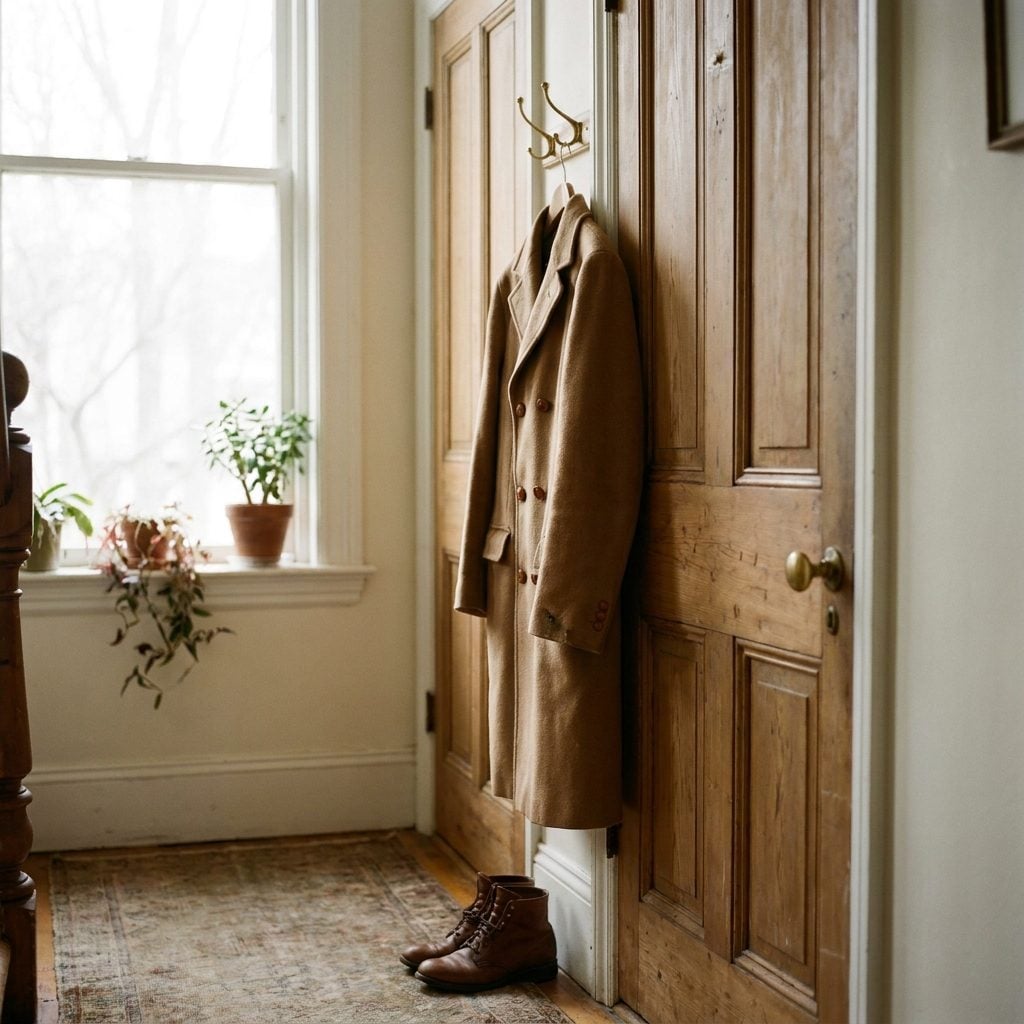
Camel didn’t need to perform tricks. At $74.99, this was the coat bought to go over almost everything: dresses, skirts, navy, burgundy, the outfit that worked and the one assembled seven minutes before the bus arrived.
Taupe wool over deep red is difficult to quarrel with, while cognac pumps stay in the same warm register. The dark structured handbag supplies the one hard visual edge the look needs.
10. The $80 Entry-Level Women’s Suit
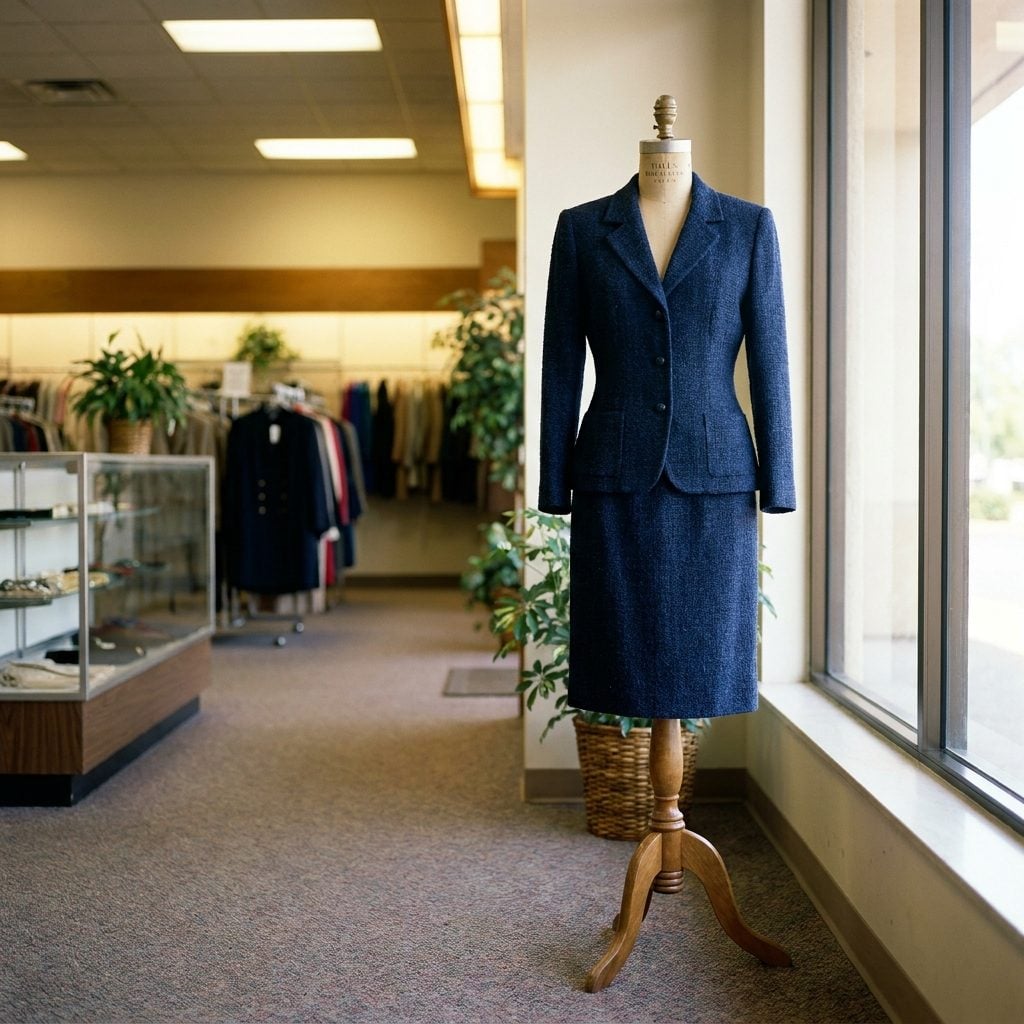
Eighty dollars bought the first serious suit in this wardrobe. Against 1985 median weekly earnings of $277 for full-time women, the price represented close to 29 percent of a week’s gross pay—the sort of purchase a young worker noticed.
This navy skirt suit understands the assignment. Restrained shoulders, plain lapels, pale blue at the neckline. Nothing announces luxury, which makes fit and care matter more. Picture it going back onto the hanger after every wear because this is the good suit—the one that meets the partners, sits through the interview and has no intention of being replaced next season.
9. The Under-$100 Quality Leather Shoe Problem
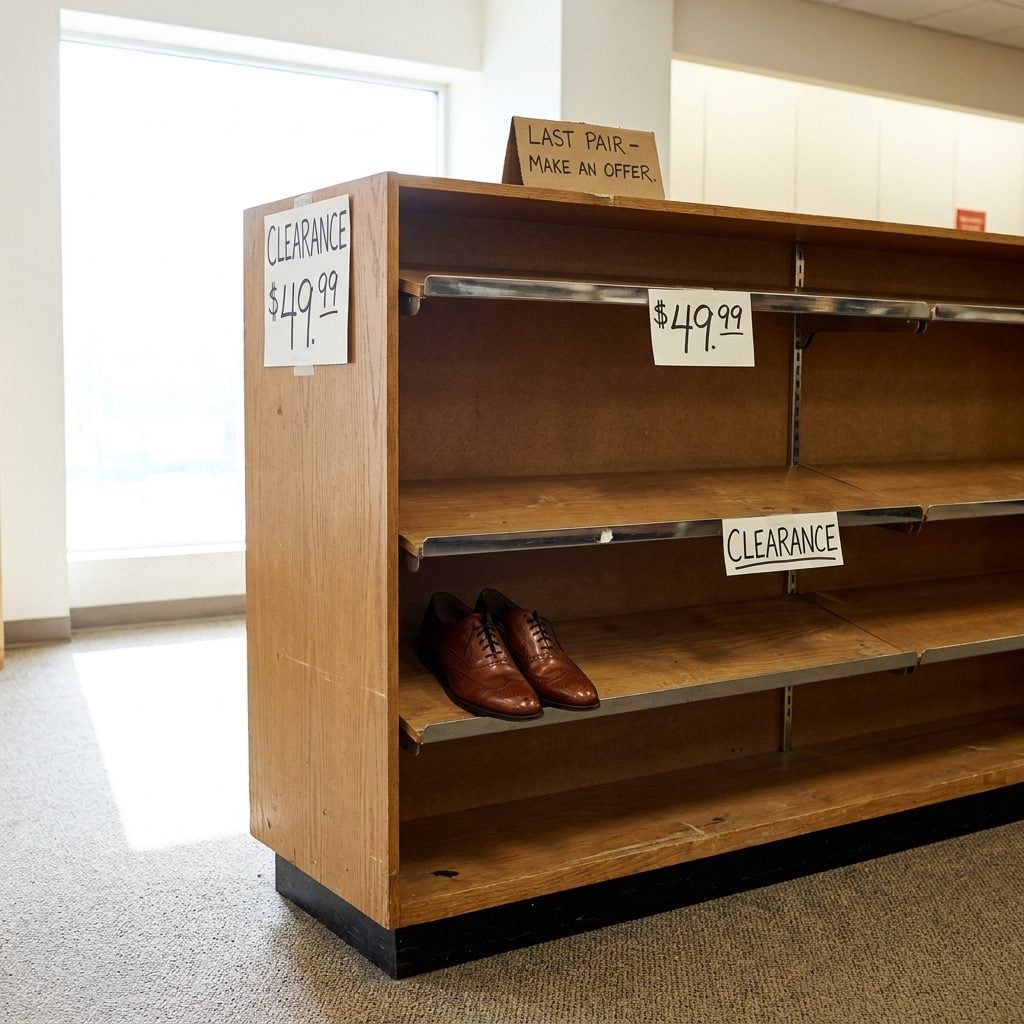
The difficult shoe purchase wasn’t always the cheapest pair. It was standing at the counter with two pumps in your hands, clearly preferring the better-made one and calculating how many years of wear would be required to make the price stop bothering you.
Low pumps in oxblood, navy and black were office workhorses. Better leather and construction could justify paying more through durability and repairability, but price alone never guaranteed comfort. The real gamble was finding the pair that could survive both the commute and the office without making either memorable.
8. The $88 Better Leather Boots
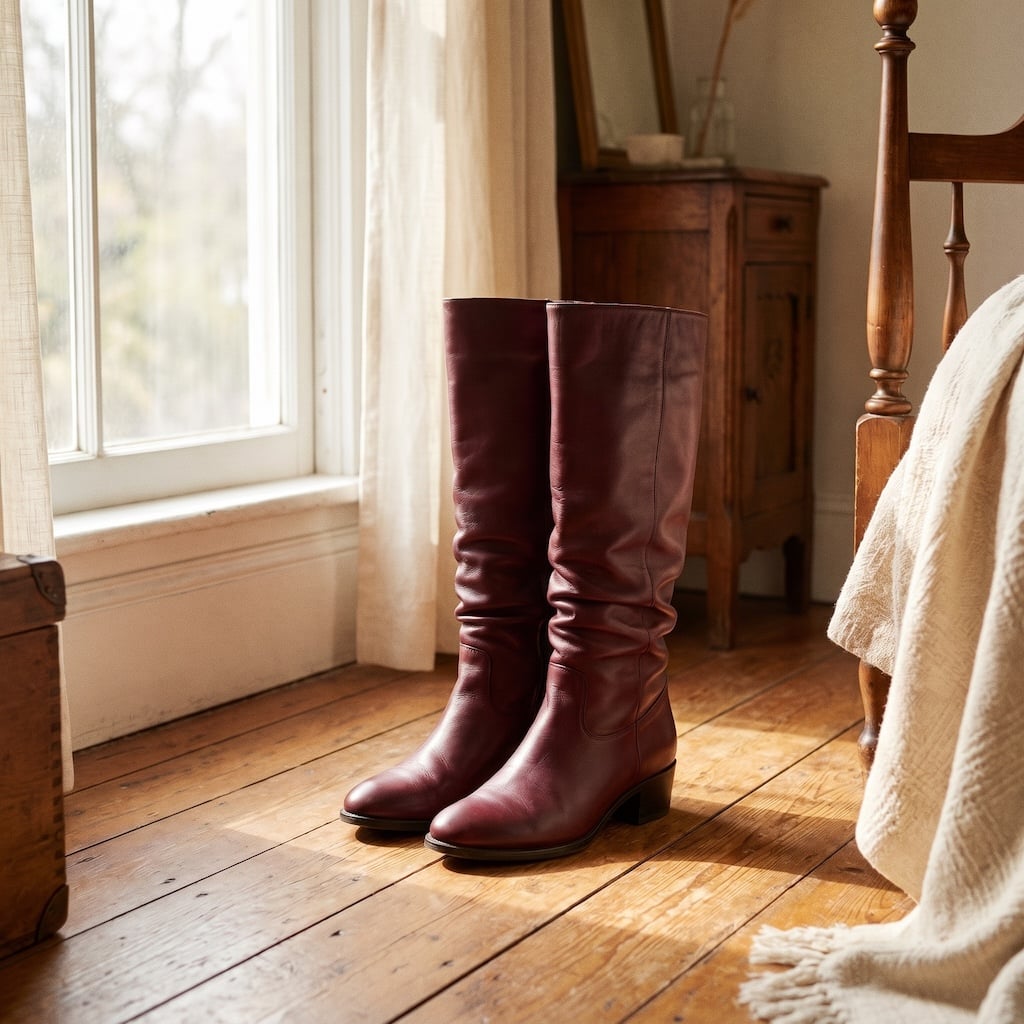
Eighty-eight dollars made these boots a commitment. At the federal minimum wage, the price represented over 26 hours of gross pay, enough to make quality, fit and how many winters they might survive legitimate fitting-room questions.
The burgundy echo is the reason the outfit works so well. Boot and cropped jacket rhyme across the charcoal skirt, bookending the neutral middle. The eye reads one deliberate palette rather than three unrelated purchases. Better leather helps, but color coordination is doing plenty of unpaid labor.
7. The $100 Executive Blazer
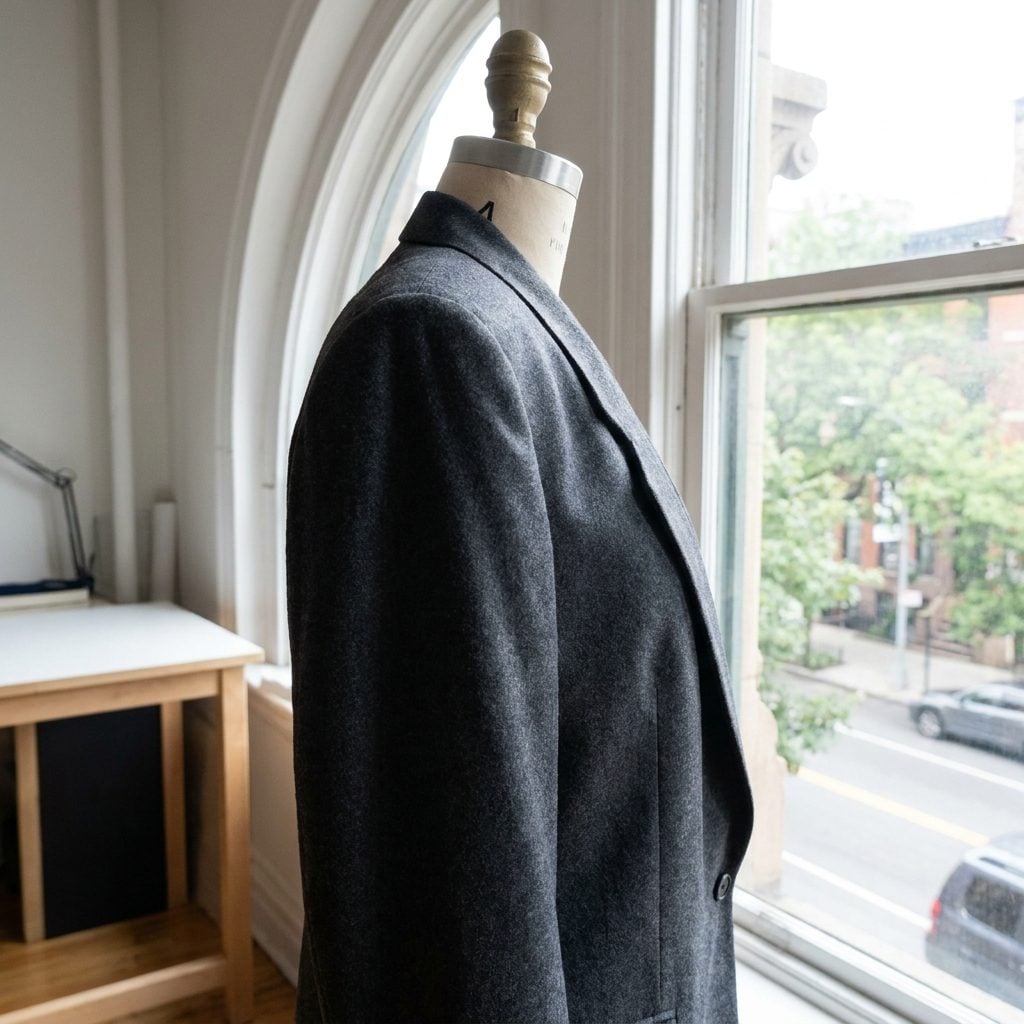
A hundred-dollar blazer had to behave like more than one garment. Buy burgundy, and suddenly three plain skirts, two blouses and half the accessories in the closet had somewhere more interesting to go.
The wool carries the look, but color commitment is what gives it presence. Ivory underneath keeps the red from becoming too emphatic. And note the shoulder: defined enough to change the silhouette, nowhere near the caricature that later nostalgia would make of the entire decade.
6. The $119 Premium Blouse

At $119, this ivory blouse was no longer the thing bought because a blouse was required. It was the blouse expected to justify choosing it over several cheaper ones—more than a third of a week’s median gross pay for full-time women in 1985.
The tied neckline and carefully finished cuffs provide the argument. Ivory against wine is richer than stark white against red, especially once the pearls and gold watch arrive. Nothing here is chasing novelty. The pleasure comes from seeing a woman who has stopped asking whether the outfit looks expensive and started asking whether it looks like her.
5. The $124 Better Career Dress
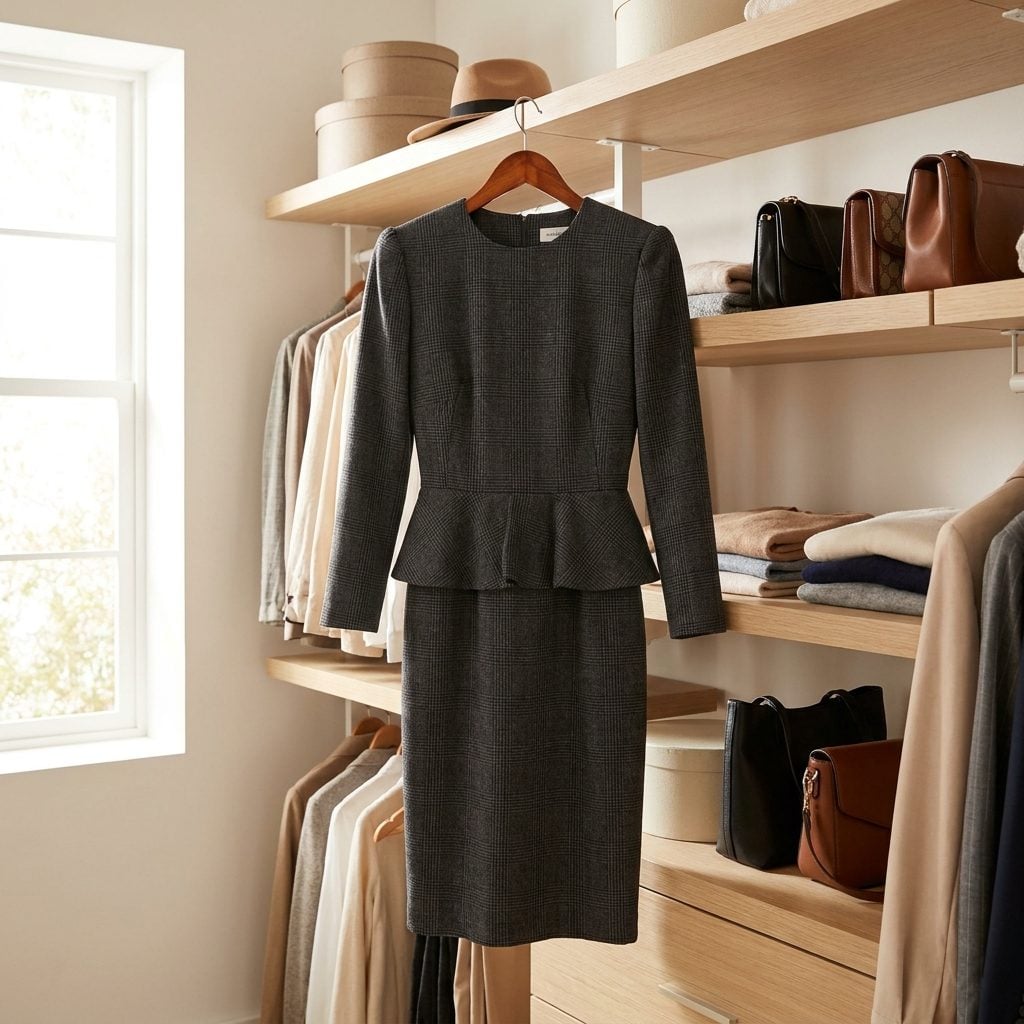
A $124 career dress consumed almost 45 percent of the median full-time working woman’s weekly gross earnings in 1985. That is not an impulse buy. That’s a meeting, presentation, interview and dinner-with-the-boss dress being asked to earn its keep.
The emerald color does much of the work. Structured shoulder, shaped waist, very little extraneous business. A dress like this bypasses the morning committee meeting between blouse, skirt and jacket. Zip it, add the shoes and walk out looking as though the decision had been made hours ago.
4. The $150 Executive Skirt
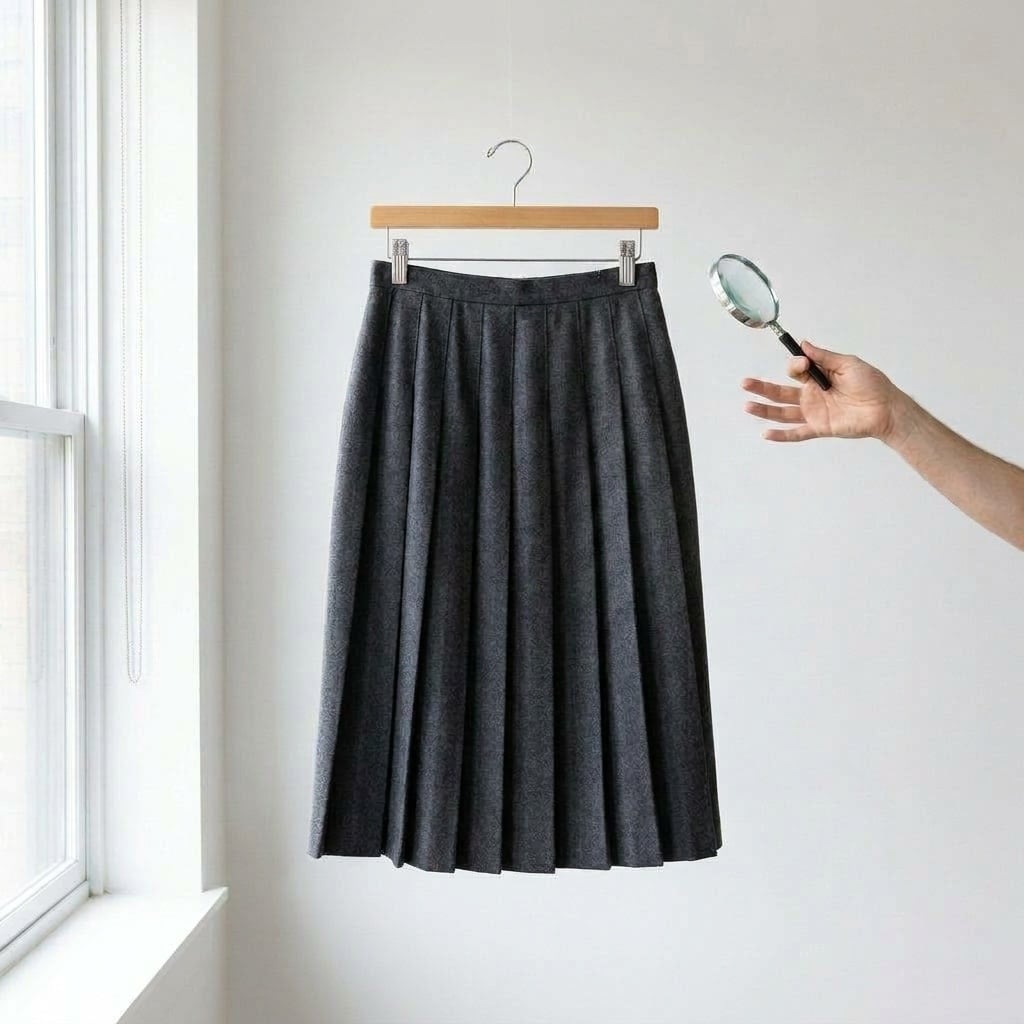
A $150 skirt is the sort of number that makes the cheaper $80 suit elsewhere in this wardrobe look almost confrontational. Different labels, stores, fabrics and departments created enormous spreads in what professional clothing could cost.
The teal cropped jacket is what makes this skirt interesting visually. Ending the jacket at the waist lets the charcoal continue in one long line below, lengthening the proportions without asking the skirt itself to do anything decorative.
She’s carrying a leather portfolio instead of a handbag, a small signal that she’s heading to work with something to present rather than simply somewhere to be.
3. The $200 Executive Outfit
❤️ Would you like to save this?
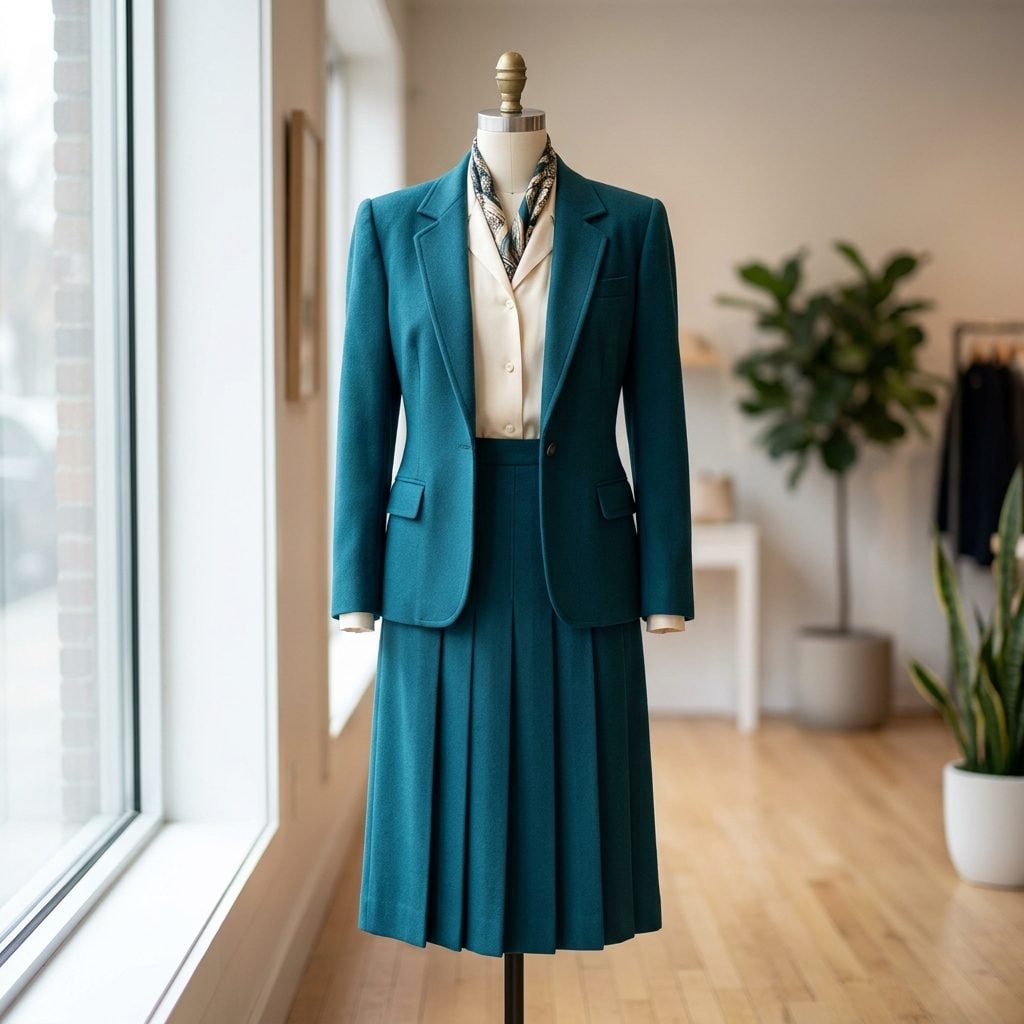
Two hundred dollars moved the shopper out of basic workwear and into a coordinated executive look. At 1985 median earnings for full-time women, the number represented roughly 72 percent of a week’s gross pay.
Cobalt against charcoal makes the outfit more interesting than a single uninterrupted suit. The jacket supplies the color, the skirt gives it a long neutral column and the narrow belt makes the waist part of the plan. Black pumps finish the sentence without introducing another idea.
2. The $240 Silk Blouse That Nearly Ate a Paycheck
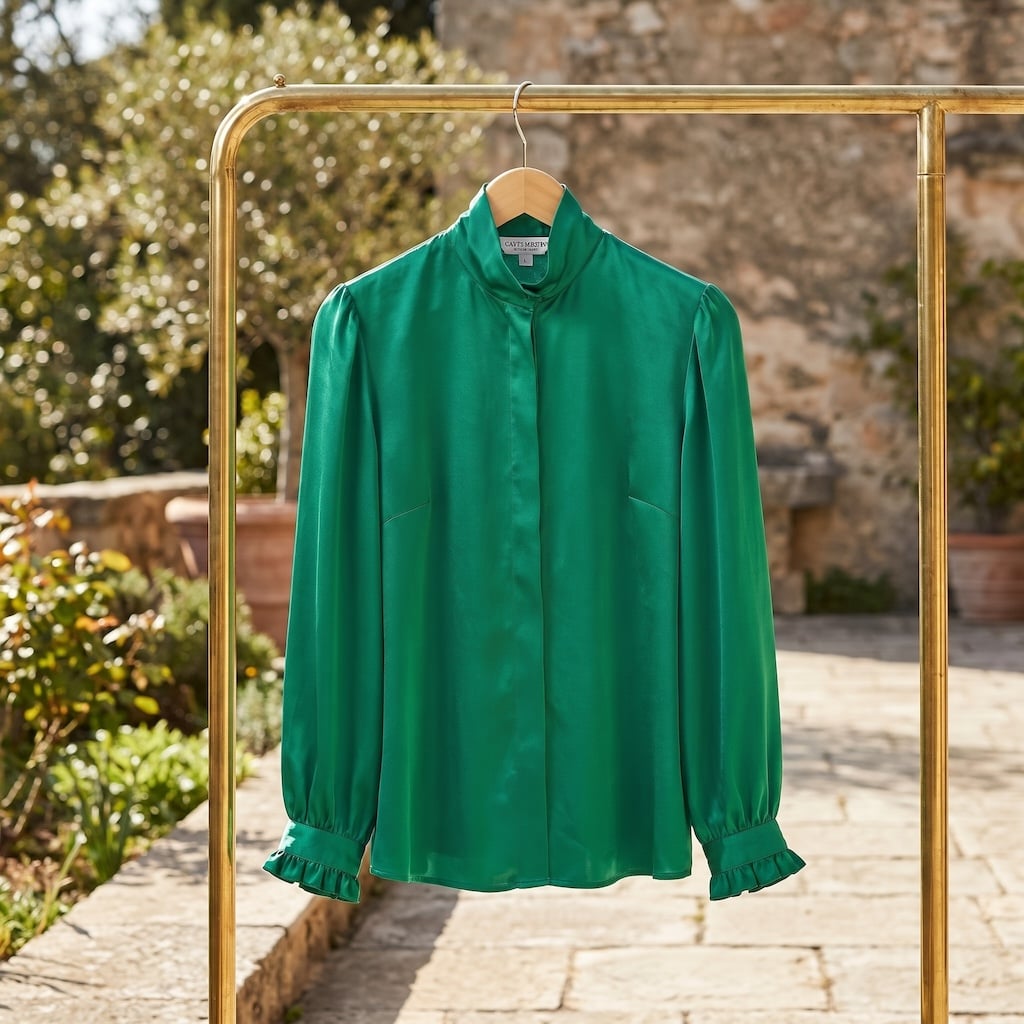
Two hundred and forty dollars. For a blouse. Against median earnings of $277 a week for full-time women in 1985, the number borders on absurd: roughly 87 percent of a week’s gross pay disappearing into one garment.
And yet silk knows how to make the argument. It catches light differently, hangs differently and moves before the rest of the outfit does. Plum gives the fabric even more depth, turning what is technically a blouse into the first thing anybody notices. Financially indefensible for plenty of women. Visually persuasive enough to make them reconsider.
1. The $220 Faux-Fur-Collared Winter Coat for the Big Cold
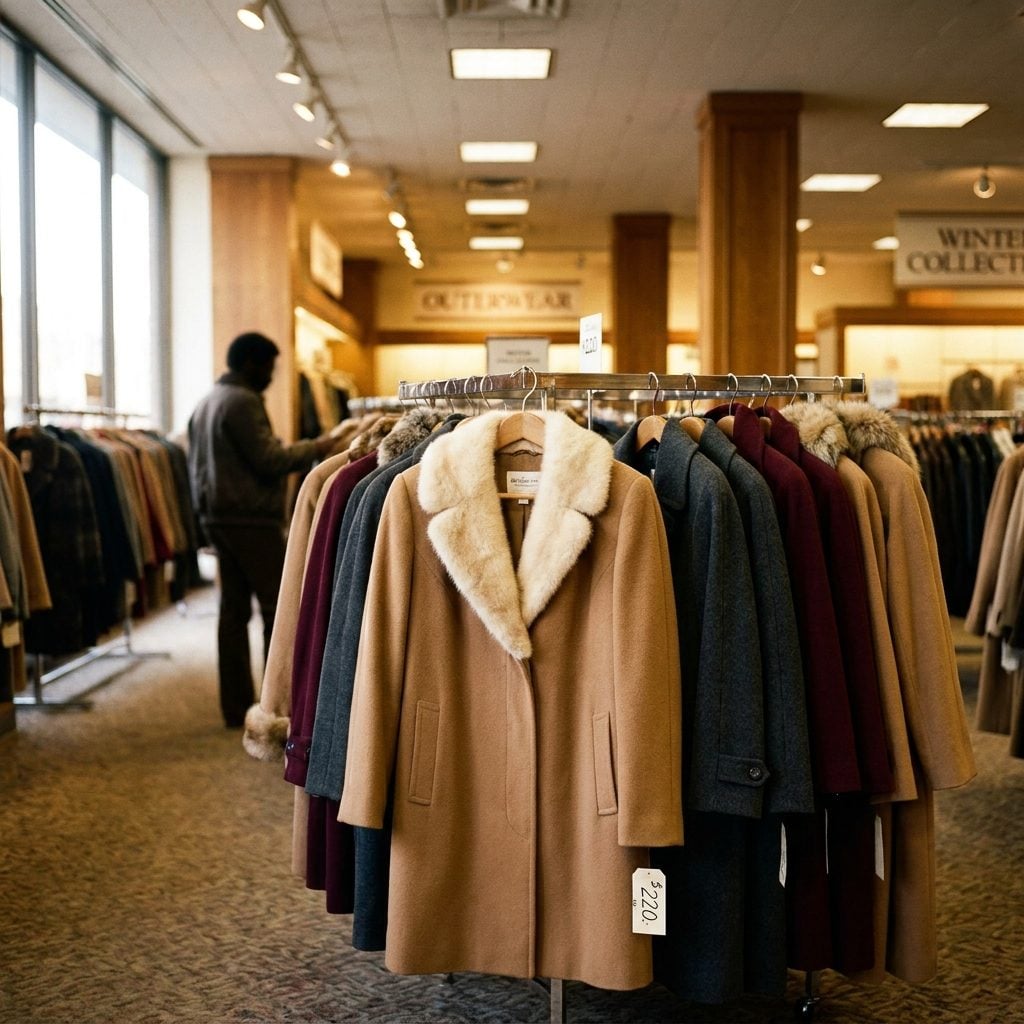
Two hundred and twenty dollars for the good winter coat represented roughly four-fifths of the median full-time working woman’s weekly gross pay in 1985. That is how an outerwear purchase becomes a household discussion.
Camel was the sensible choice precisely because the coat would be seen over everything. Navy suit, burgundy dress, office skirt, weekend sweater—the same wool shell had to survive all of them. The plush faux-fur collar supplied enough glamour to make repetition feel intentional.
That is really the arithmetic running underneath this entire wardrobe. In 1985, median weekly earnings for full-time women were about $277. A professional wardrobe wasn’t inexpensive merely because the price tags look quaint now. Women stretched expensive pieces across years, rotated modest basics relentlessly and learned exactly where polish could be bought cheaply—and where it couldn’t.