❤️ Would you like to save this?
Dressing for the office in the 1980s could be wonderfully unapologetic, but beneath the shoulder pads and jewel tones was some remarkably disciplined design. Jackets were cut long enough to redraw proportion. Lapels created direction through the torso. Skirts, hosiery, and shoes often stayed in one tonal family so the silhouette did not fracture at the knee. Belts marked a waist without necessarily cinching it, while drape, pleats, ribbing, pattern scale, and carefully placed contrast did far more work than anything skin-tight ever could.
These 32 outfits revisit that logic at its most persuasive. Some use the hard geometry of a pinstripe suit; others get there with a wrap dress, a fluid knit, a long scarf, controlled pleats, a cropped jacket, or an uninterrupted sweep of color. What makes them slimming is not one tired trick repeated 32 times. It is proportion: knowing where to add structure, where to let fabric move, where to interrupt the eye, and where absolutely not to. Forty years later, much of the wardrobe belongs to another office era. The visual intelligence does not.
FYI, thanks to AI imagery software, we’re able to create very specific fashion and hairstyle examples to illustrate the points being made. In some cases, imagery is exaggerated to hammer home the point. Also, assume links that take you off the site are affiliate links such as links to Amazon. this means we may earn a commission if you buy something.
32. Dusty-Mauve Wrap Dress With Matching Pumps
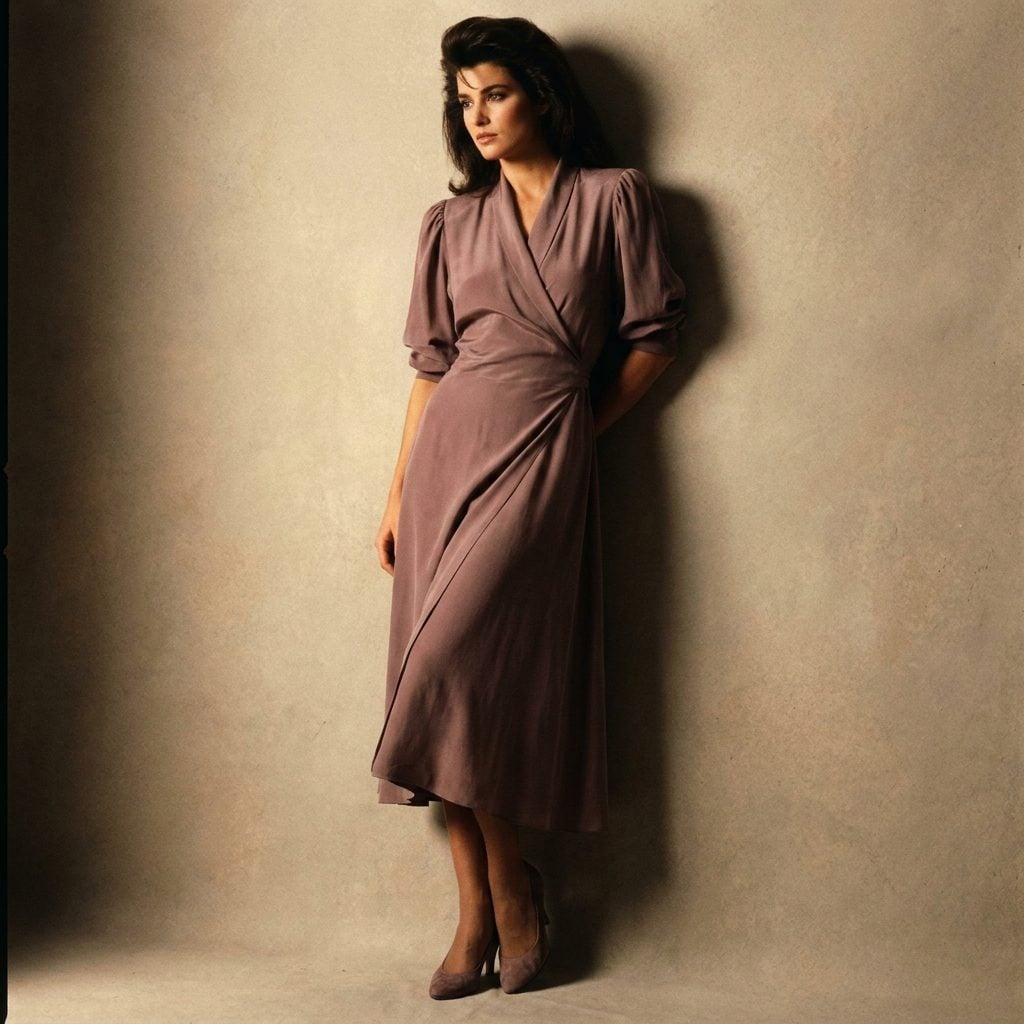
The wrap dress begins with a diagonal, which immediately makes it more interesting than another straight column. Fabric crosses the torso, narrows into the waist, then releases into a fluid skirt. The V-neck repeats that downward movement above it, so the entire design seems to travel rather than stop.
Matching mauve pumps keep the color story uninterrupted at the bottom, but the real intelligence is in the drape. Nothing is being pulled tight to manufacture a waist. The construction creates one, then lets the fabric move on. Softness, in this case, is doing extremely precise work.
31. Navy Pinstripe Power Suit With an Ivory Bow Blouse
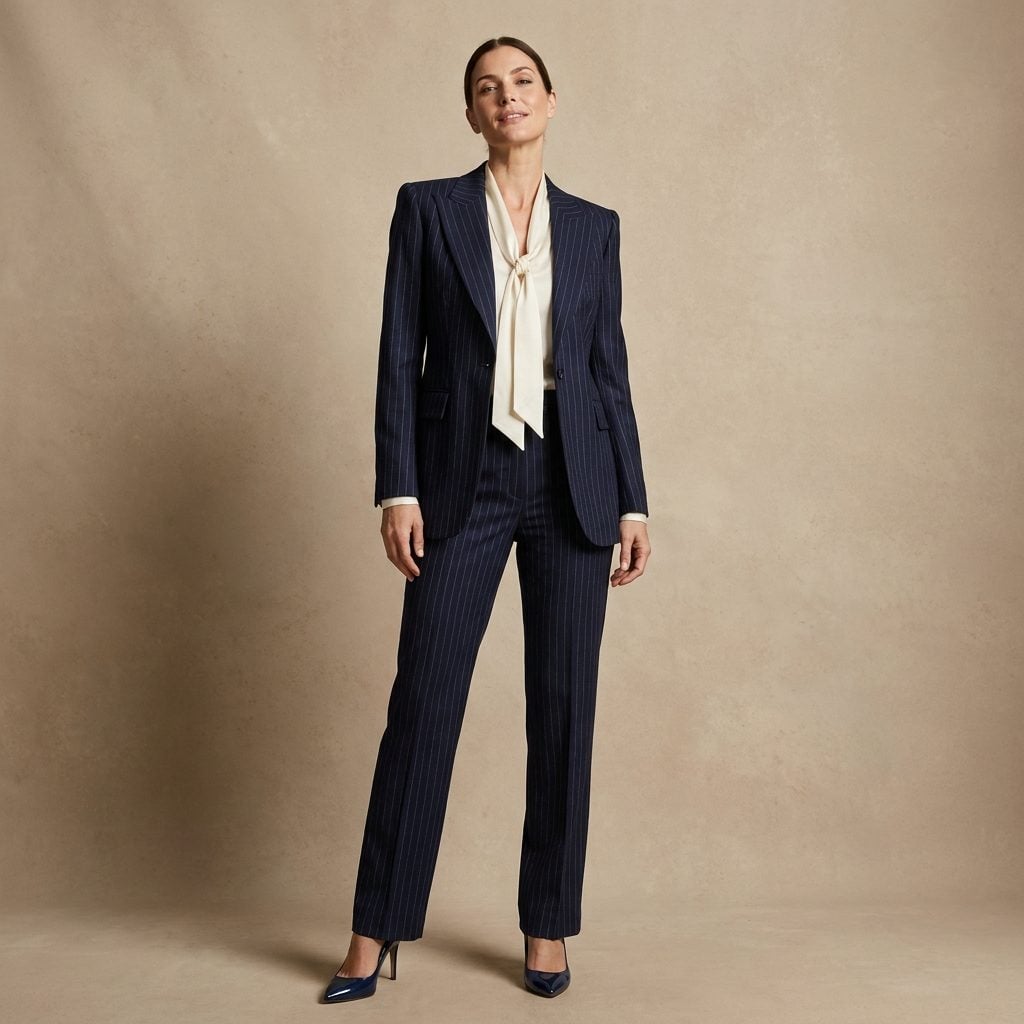
If 1986 had a corporate native language, pinstripe tailoring was fluent in it. The fine stripe carries the eye through the jacket and skirt while navy hosiery and dark pumps prevent the outfit from breaking into unrelated sections below the hem.
Then the ivory bow blouse changes the temperature completely. All the tailoring is disciplined and linear; the blouse gathers softness at the neckline and gives the eye somewhere gentler to land. The contrast is what keeps the power suit from becoming pure uniform.
30. The Chocolate-Brown Trouser Suit Over an Ivory Shell
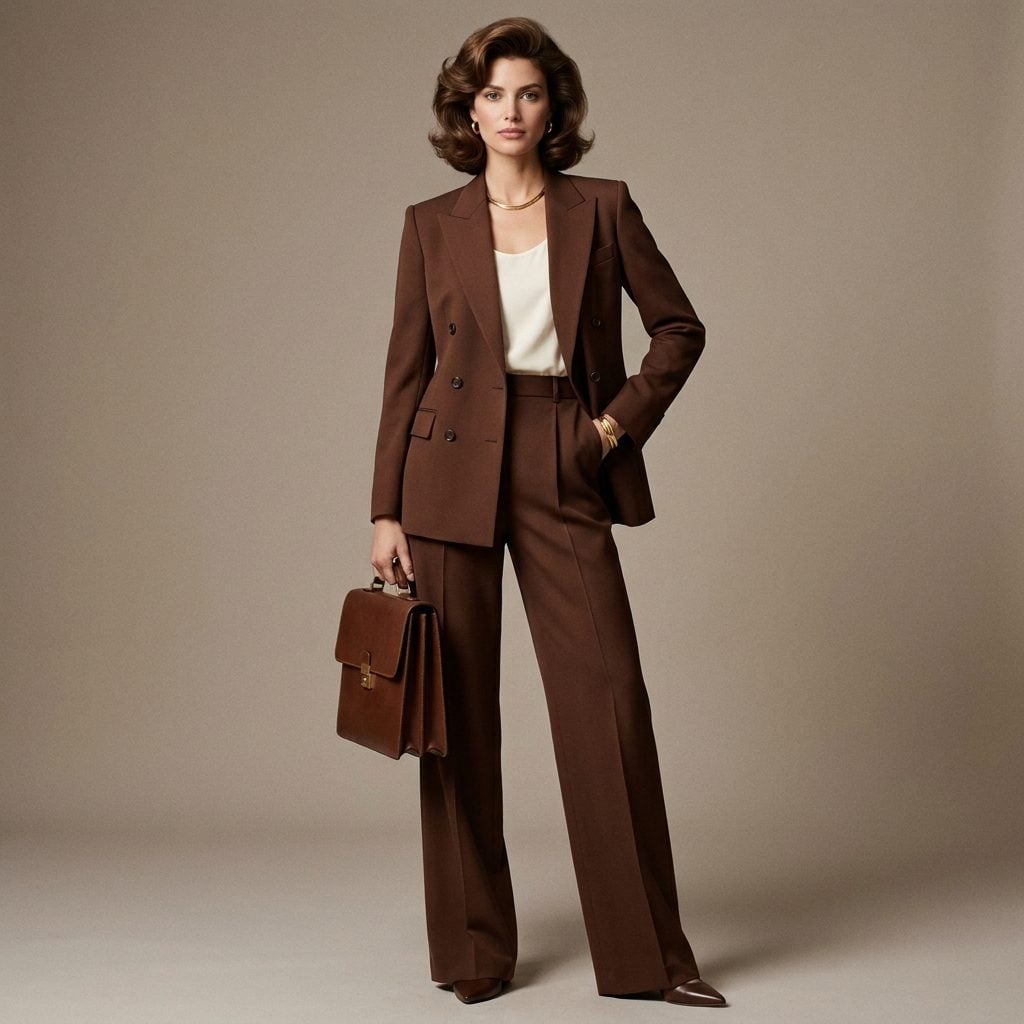
One shade from shoulder to trouser hem gives this suit its calm authority. Because the jacket and pants are nearly identical in value, there is no hard interruption at the waist and no competing block of color below it.
The ivory shell is small but essential. It lifts the area around the face and prevents all that chocolate brown from turning visually heavy. This is monochrome dressing at its most useful: not blank, not severe, simply controlled.
29. Forest-Green Knit Dress With a Long Gold Necklace
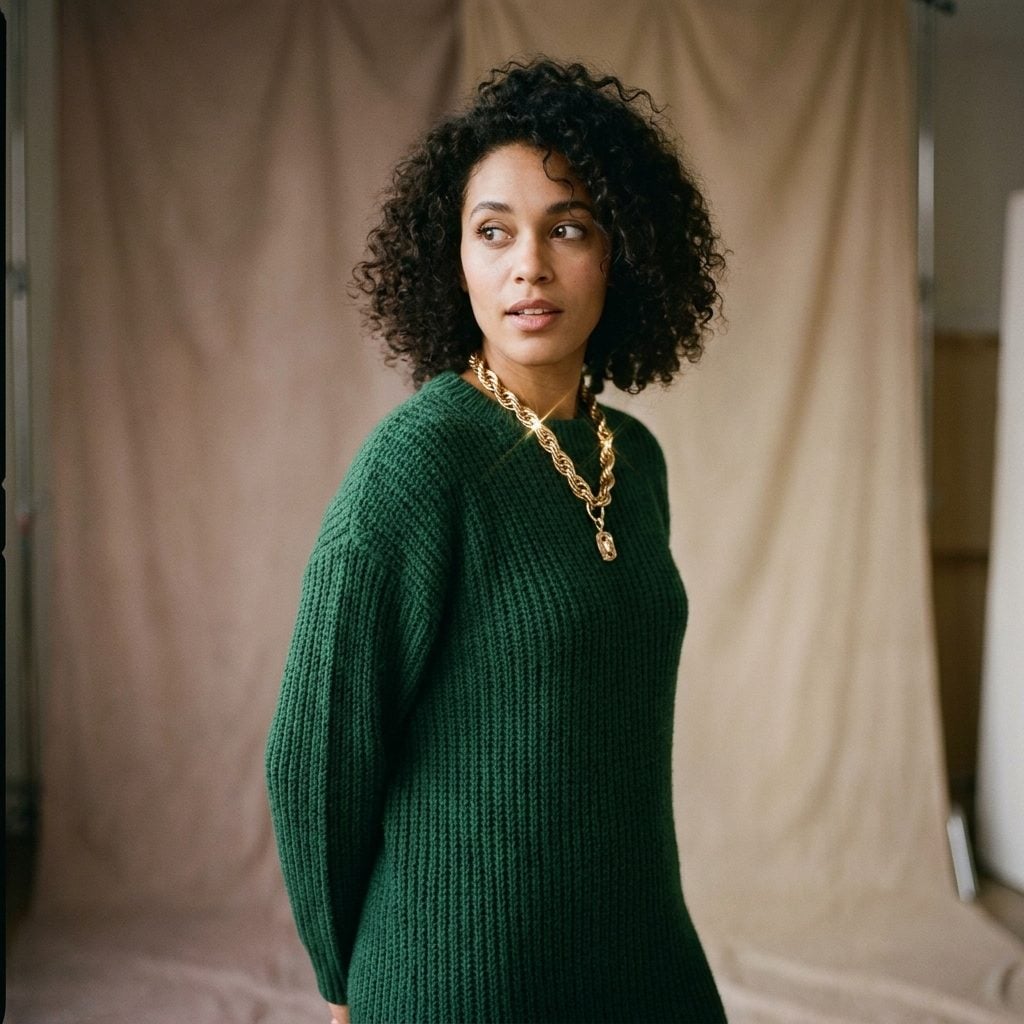
The long gold necklace earns its place here because it gives an otherwise uninterrupted field of green a single directional accent. One bright line drops down the center instead of spreading visual interest outward.
The knit itself matters just as much. It skims instead of gripping, acknowledges the waist without clamping onto it, then releases into a soft A-line skirt. The silhouette gets definition without stiffness, which is a very different kind of polish from a suit.
28. Camel Jacket Over a Chocolate Pleated Skirt and Cream Shell
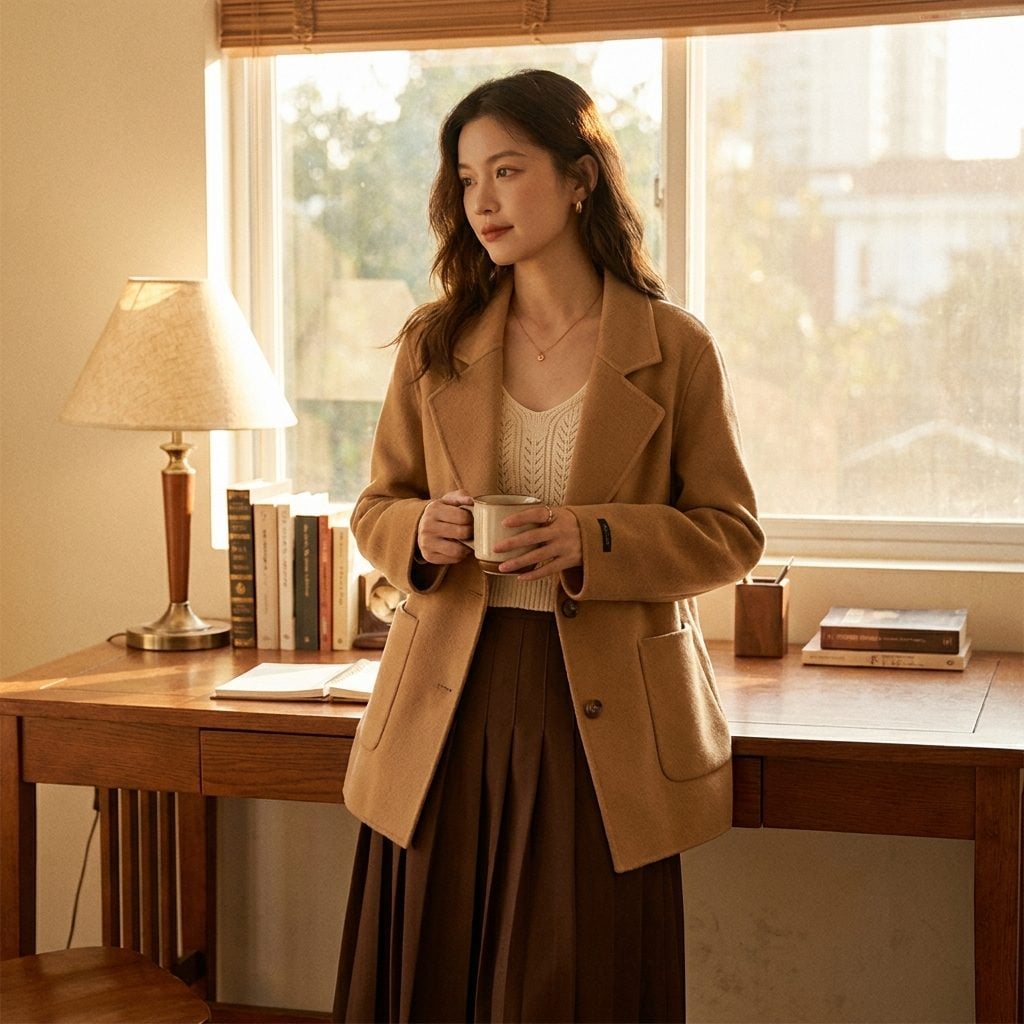
Camel, cream, chocolate: three warm neutrals close enough in value that the outfit moves from one to the next without a jarring stop. The effect is softer than monochrome but nearly as cohesive.
The pleated skirt is the technical piece. Its pleats stay controlled near the waistband and open farther down, which keeps volume away from the waist while allowing the skirt to move. That is the difference between pleats that shape a silhouette and pleats that simply add bulk.
27. Royal-Blue Jacket Over a Black Shell and Black Skirt
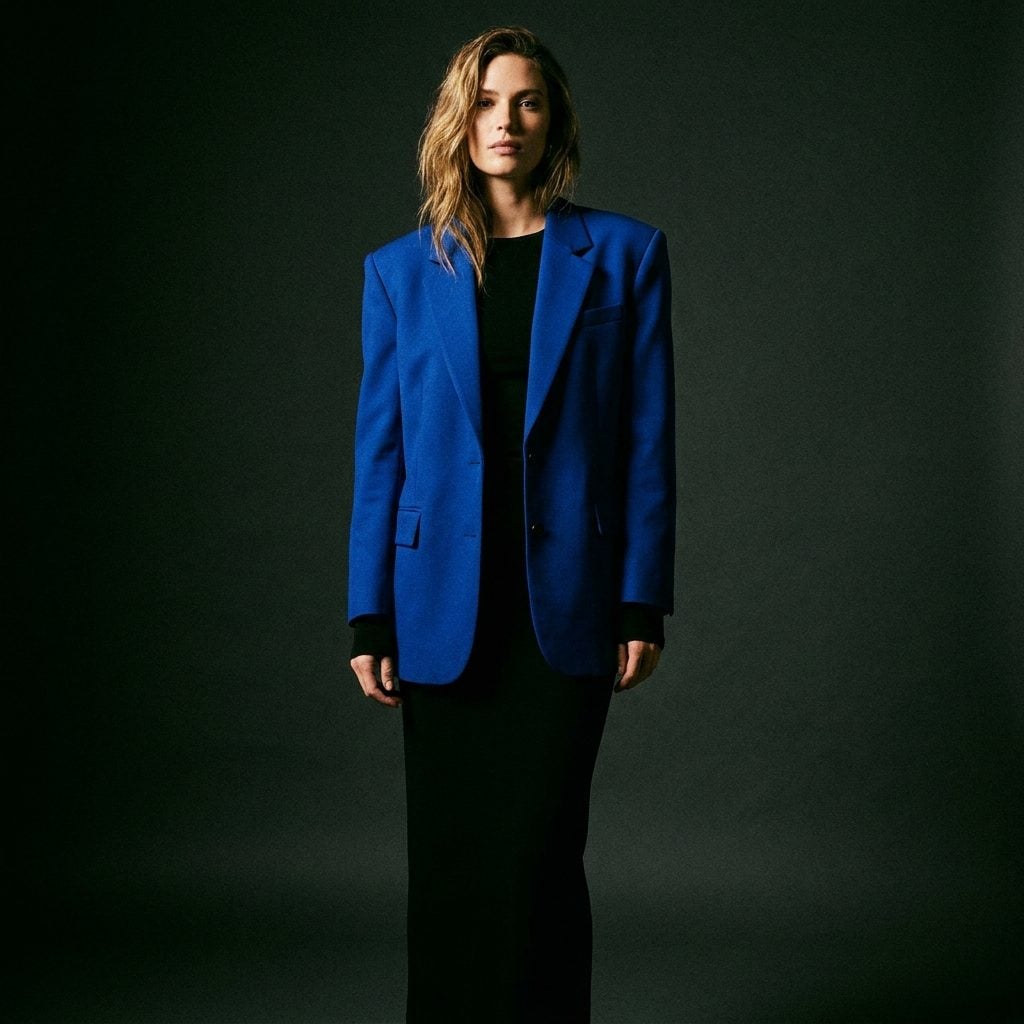
The black shell and skirt form a dark central field while the open royal-blue jacket creates two brighter edges around it. That framing gives the outfit presence without requiring the jacket itself to be enormous.
Royal blue also does something black cannot: it creates distance from the body through color contrast. The jacket announces the outline; the darker center recedes. Forty years later, the technique still works because the eye has not changed its mind about contrast.
26. Cream Blouse, Navy Knife-Pleat Skirt, and a Long Navy Cardigan
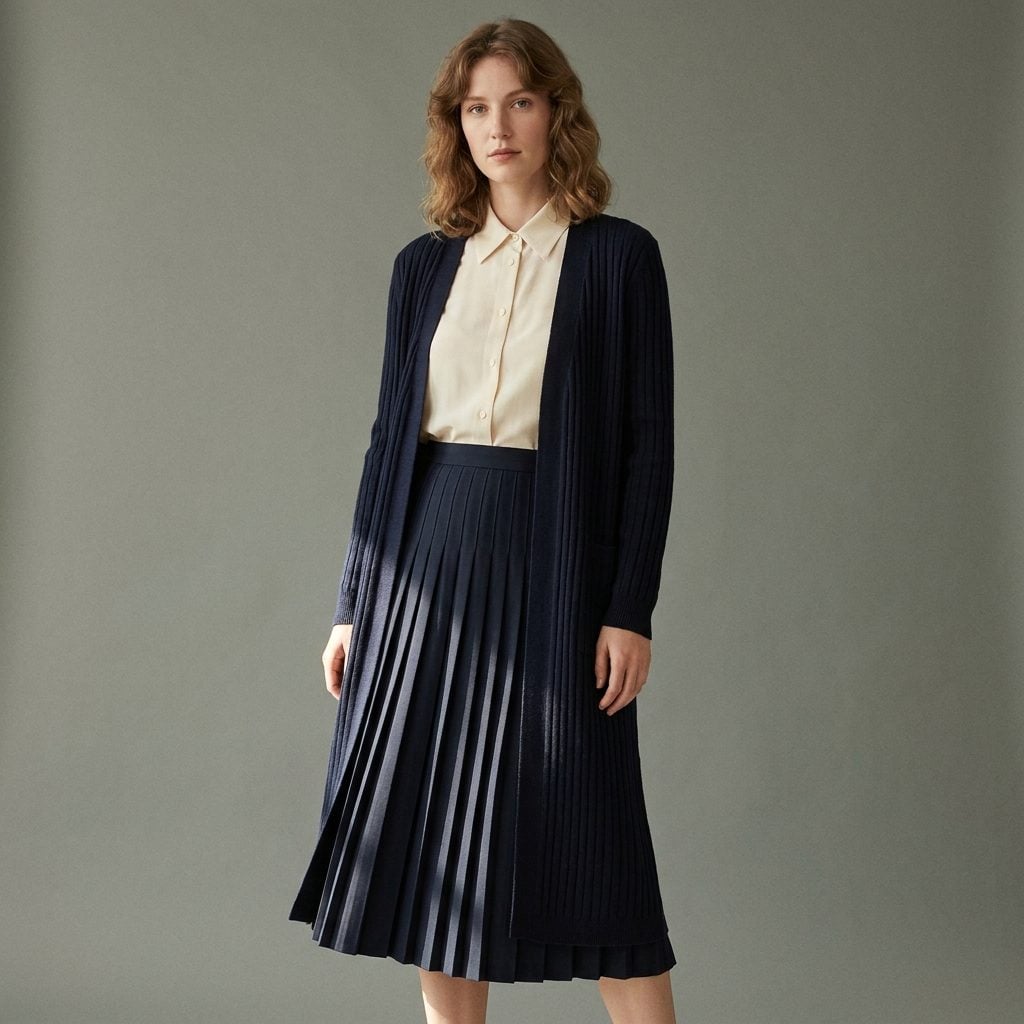
This is what happens when the power suit relaxes without losing its proportions. The long cardigan creates two uninterrupted edges through the torso while the knife pleats repeat that direction below.
The cream blouse brings light to the center without disturbing the navy framework around it. Compared with a structured blazer, the knit layer gives the outfit more movement and less armor, but the visual discipline remains almost identical.
25. Deep Teal Suit With a Cream Open-Collar Blouse
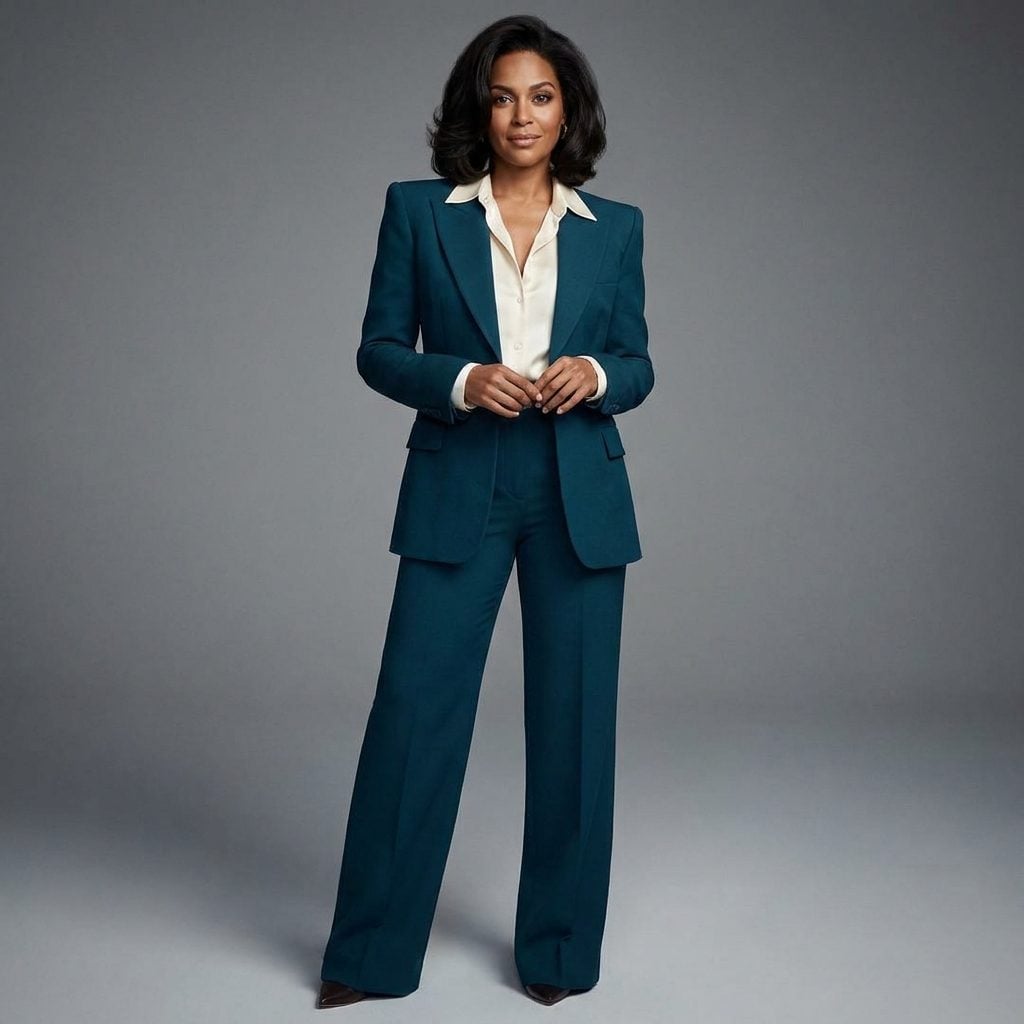
Teal gives classic corporate tailoring a much richer pulse than navy without sacrificing any of its seriousness. Matching jacket and skirt establish the main color field; the cream blouse prevents it from becoming visually dense around the face.
The lapels are the clever part. Long and sharply notched, they create a deep V through the upper body and pull attention toward the center rather than the shoulders. Strong color, controlled geometry. This is one of the looks the decade got emphatically right.
24. Olive Straight Skirt, Cream Blouse, and a Matching Olive Vest
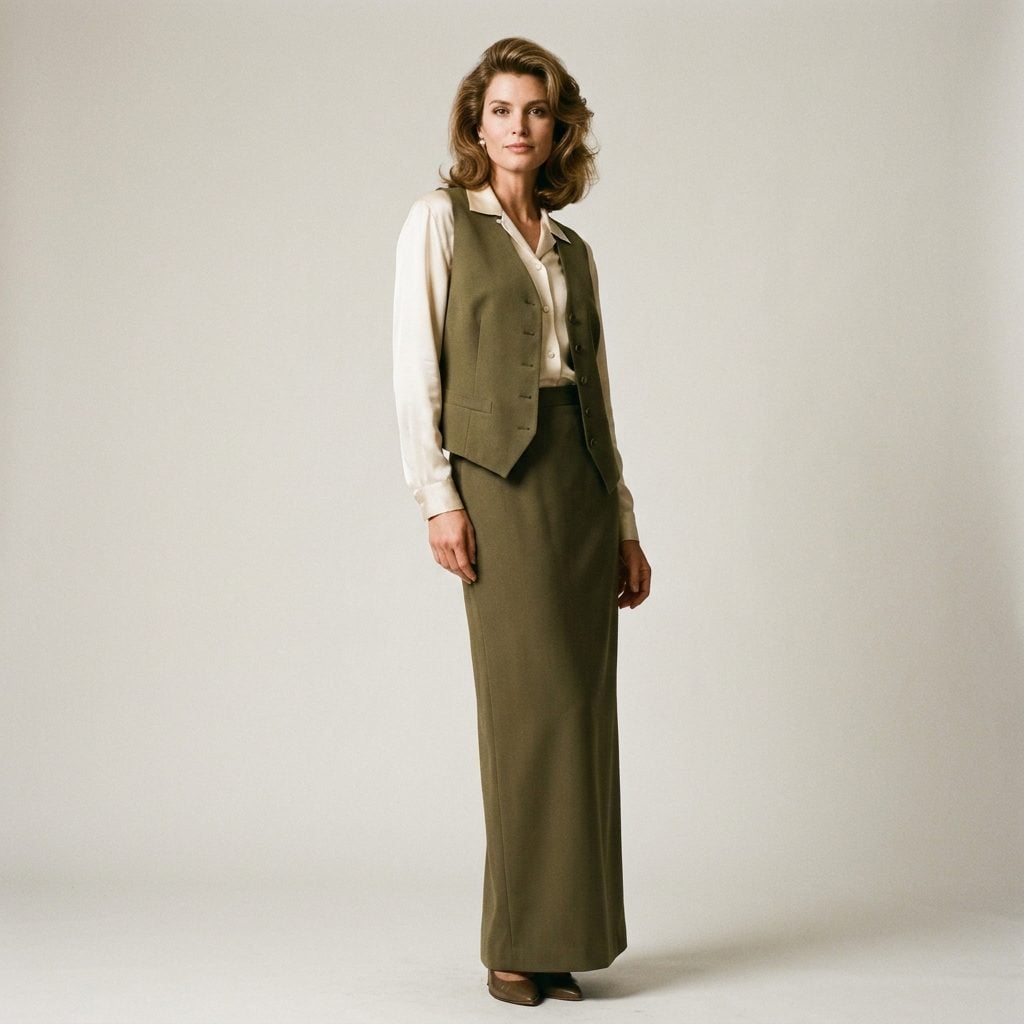
The vest does almost everything a jacket would do here with considerably less fabric. Matching it to the skirt creates a dark olive frame through the center while the cream blouse concentrates brightness around the neckline.
Taupe hosiery eases the transition from olive to brown rather than inserting a sharp new color between skirt and shoe. The effect is thoughtful rather than dramatic, which is precisely why the proportions remain so clean.
23. Burgundy Pinstripe Dress With Black Pumps
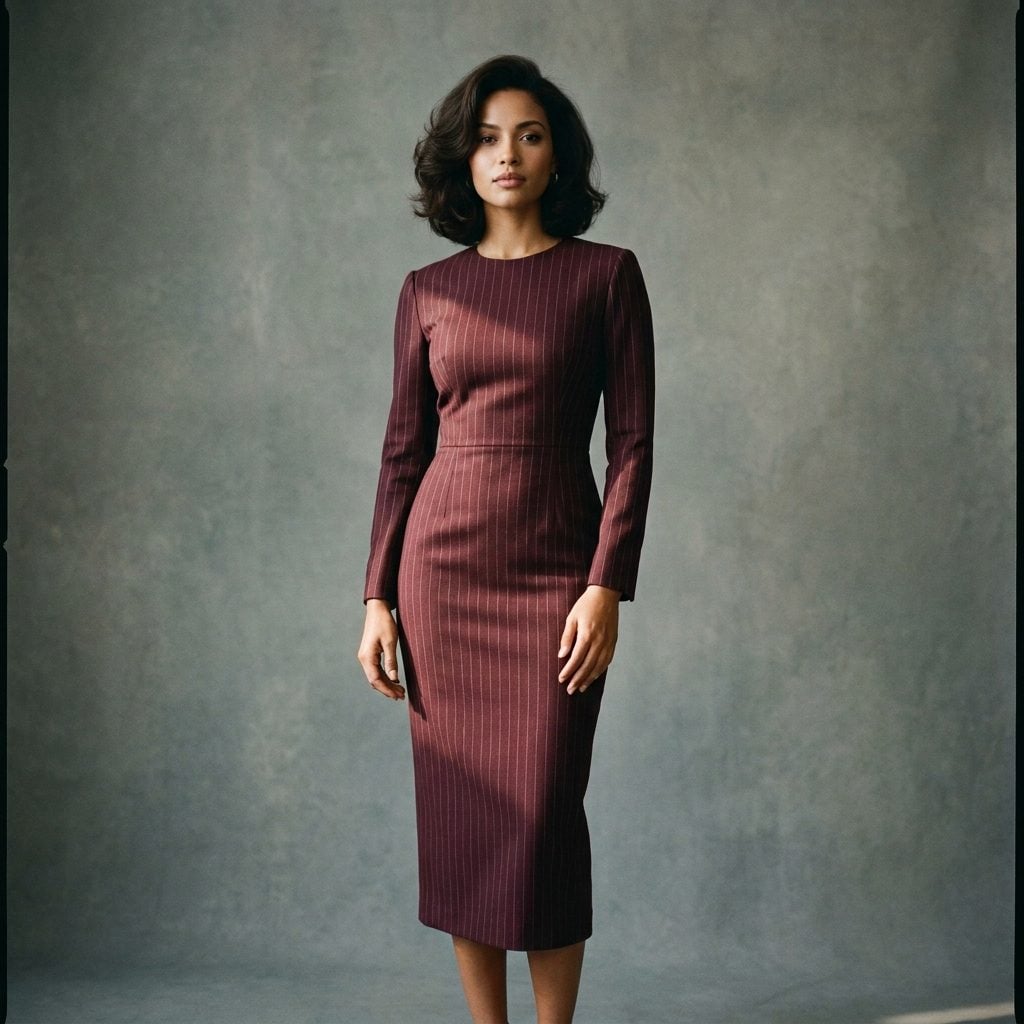
A dress eliminates one of the most obvious places an outfit can fracture: the waistband between separate pieces. Add a fine pinstripe and the fabric itself starts reinforcing the length of the shape.
Burgundy also gives the authority of a dark neutral without falling back on black or navy. A lightly structured shoulder balances the skirt below while pearl earrings keep the neckline restrained. Think of it as the pinstripe suit distilled into one move.
22. Navy Windowpane Jacket, Navy Trousers, and a Pale Pink Shell
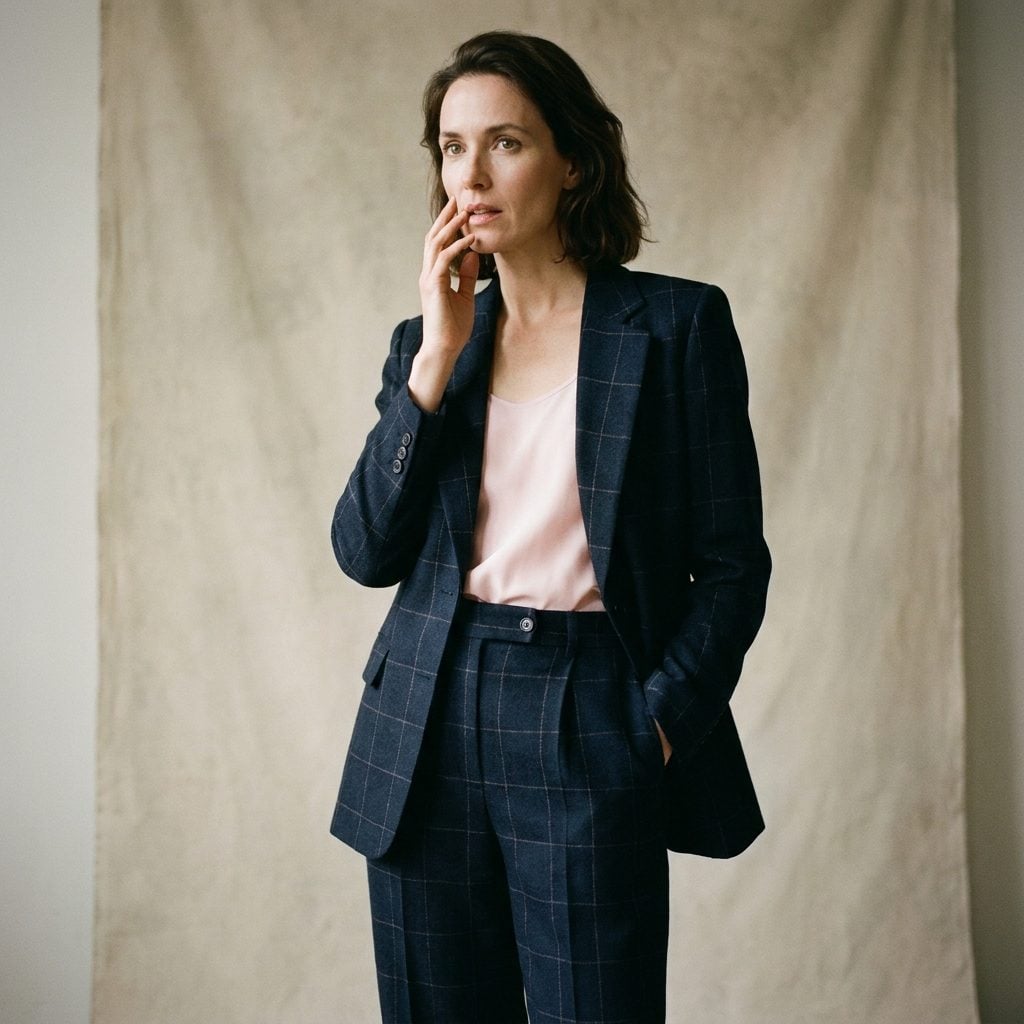
This particular windowpane is fine enough to behave more like surface texture than a dominant grid. That matters because the jacket is already long; a huge check would compete with its clean shape.
Solid navy trousers continue the color below while the pale pink shell softens the transition at the neckline. The combination is structured without becoming stern, and the pattern gives the eye something to discover only after the silhouette has already registered.
21. The Deep-Plum Sweater Dress in Head-to-Toe Tonal Knit
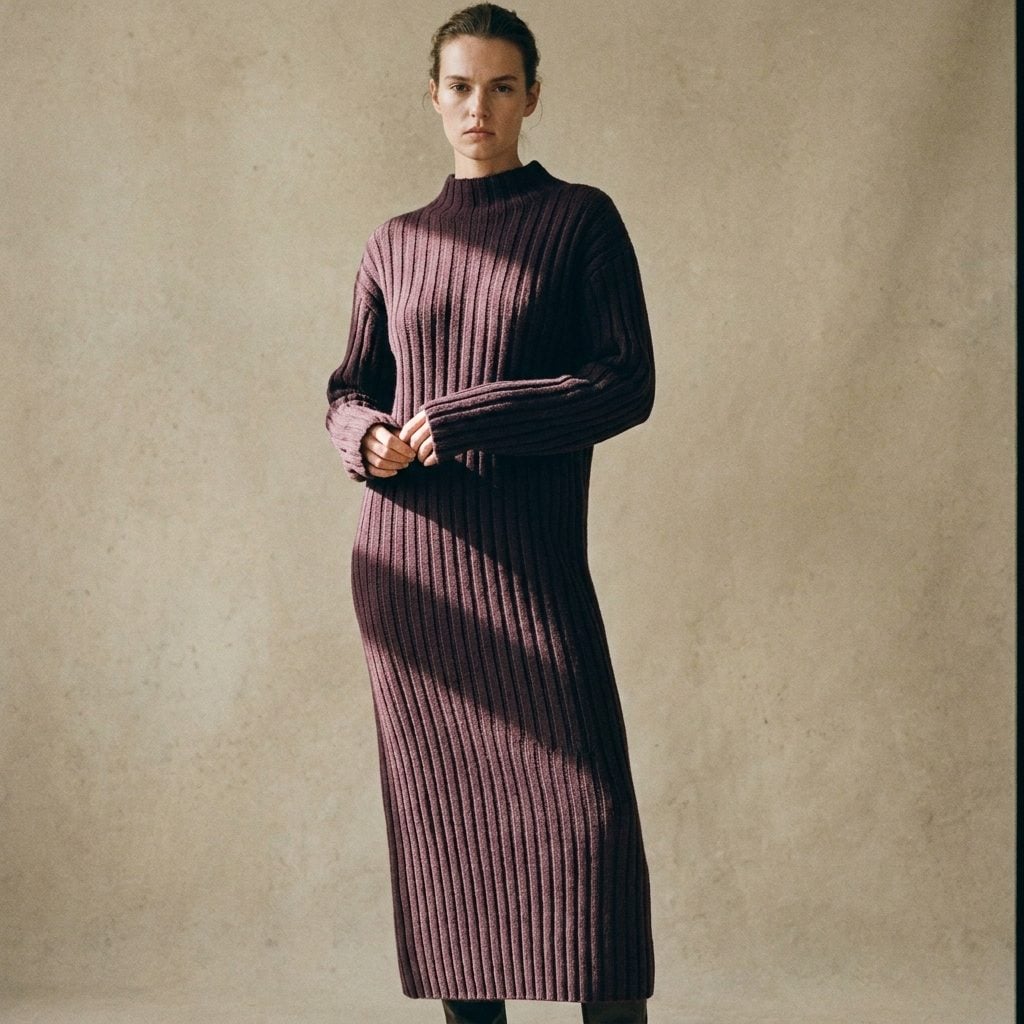
Fine ribbing gives the fabric direction before the dress even reaches the body. Those narrow shadows run vertically through the knit, while the silhouette itself stays close enough to show shape without tipping into bodycon territory.
Plum hosiery and pumps extend the tonal idea below the hem, but texture keeps the outfit from becoming a single flat block. This is one of the decade’s easiest ideas to revive now: one rich color, a fine knit, almost nothing else required.
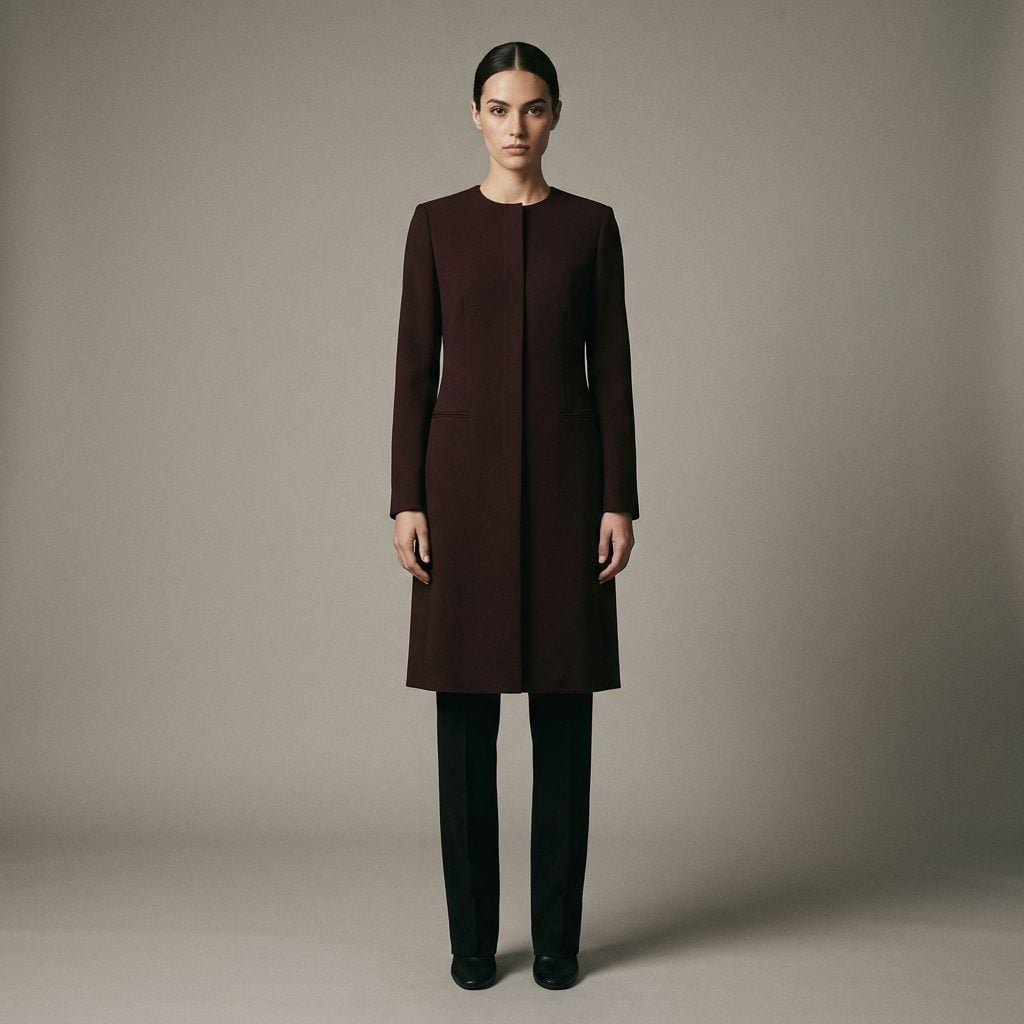
20. Maroon Tunic Jacket Over Black Slim-Straight Trousers
❤️ Would you like to save this?
The long maroon jacket extends beyond the hip, which changes the proportion more than a standard blazer would. Instead of stopping at the waist or high hip, it creates one longer sweep over the straighter trouser line beneath it.
The cream shell keeps the darker colors from crowding the face. Just as important, the pants retain room through the leg. Nothing here depends on tightness for its streamlined effect; the authority comes from length, drape, and a clean fall.
19. Cream Jacket Over a Navy Blouse and Navy Skirt
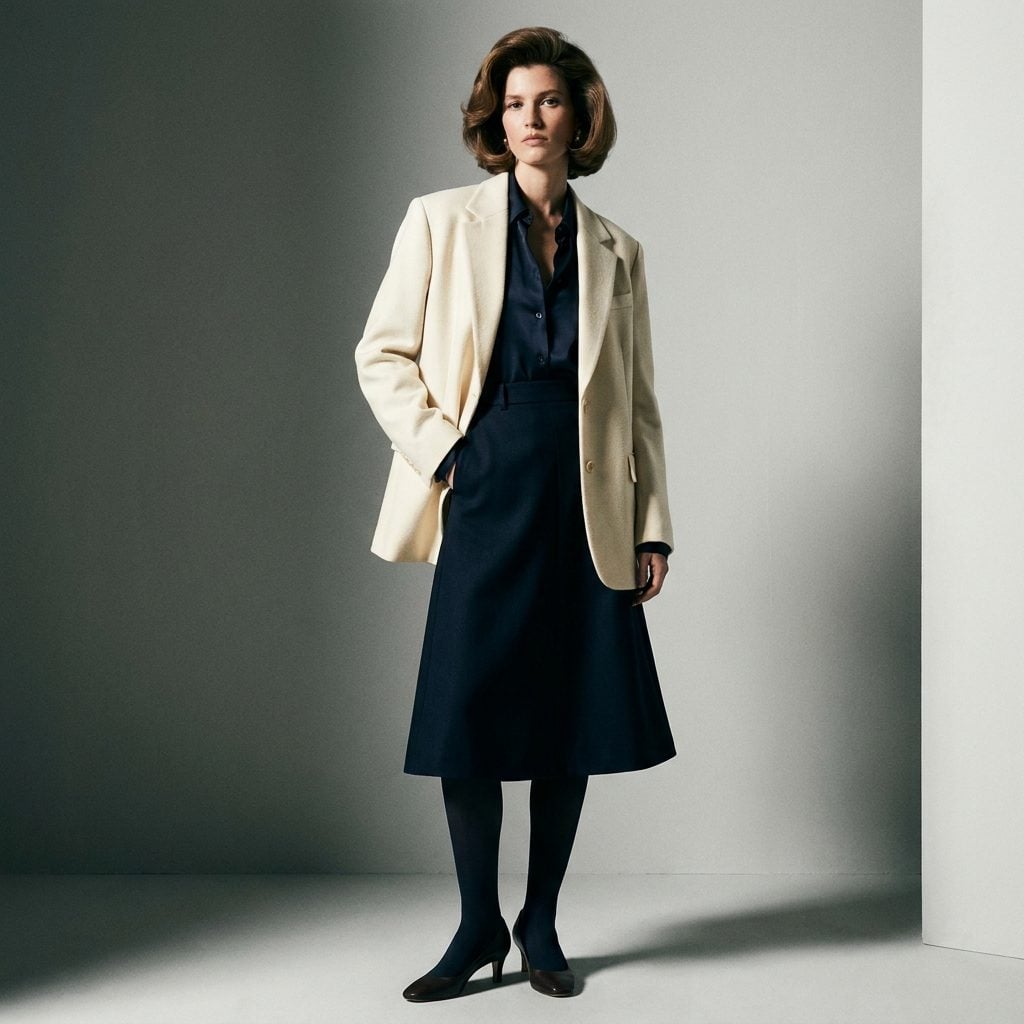
Light outside, dark inside. The cream jacket frames a continuous navy center from blouse through skirt, giving the eye one strong interior shape to follow.
Matching the blouse to the skirt is what makes the idea hold together. Split those colors at the waist and the effect changes completely. Keep them identical, carry navy into the hosiery, and the structure remains beautifully calm. The same principle can make even more casual outfit combinations feel considerably more coherent.
18. Charcoal Belted Shirt Dress With Black Pumps
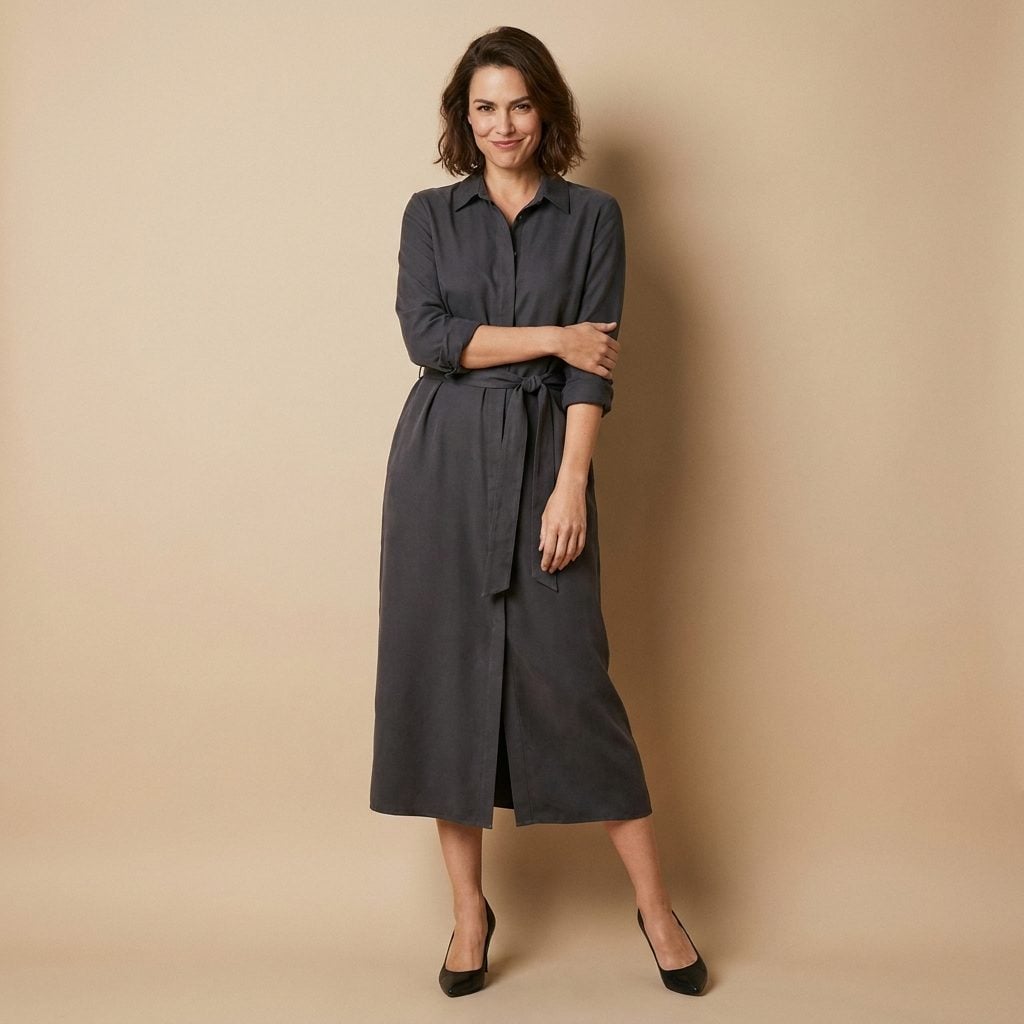
The shirt dress has a built-in advantage: collar, button placket, belt, skirt, all contained inside one field of charcoal. The central button line gives the eye a clear direction while the fabric remains uninterrupted around it.
The self-belt defines rather than constricts. Because it disappears into the same cloth instead of introducing another color, the waist is acknowledged without becoming a hard dividing line. Tonal hosiery continues the restraint below.
17. Burgundy Longline Blazer, Matching Skirt, and a Blush Blouse
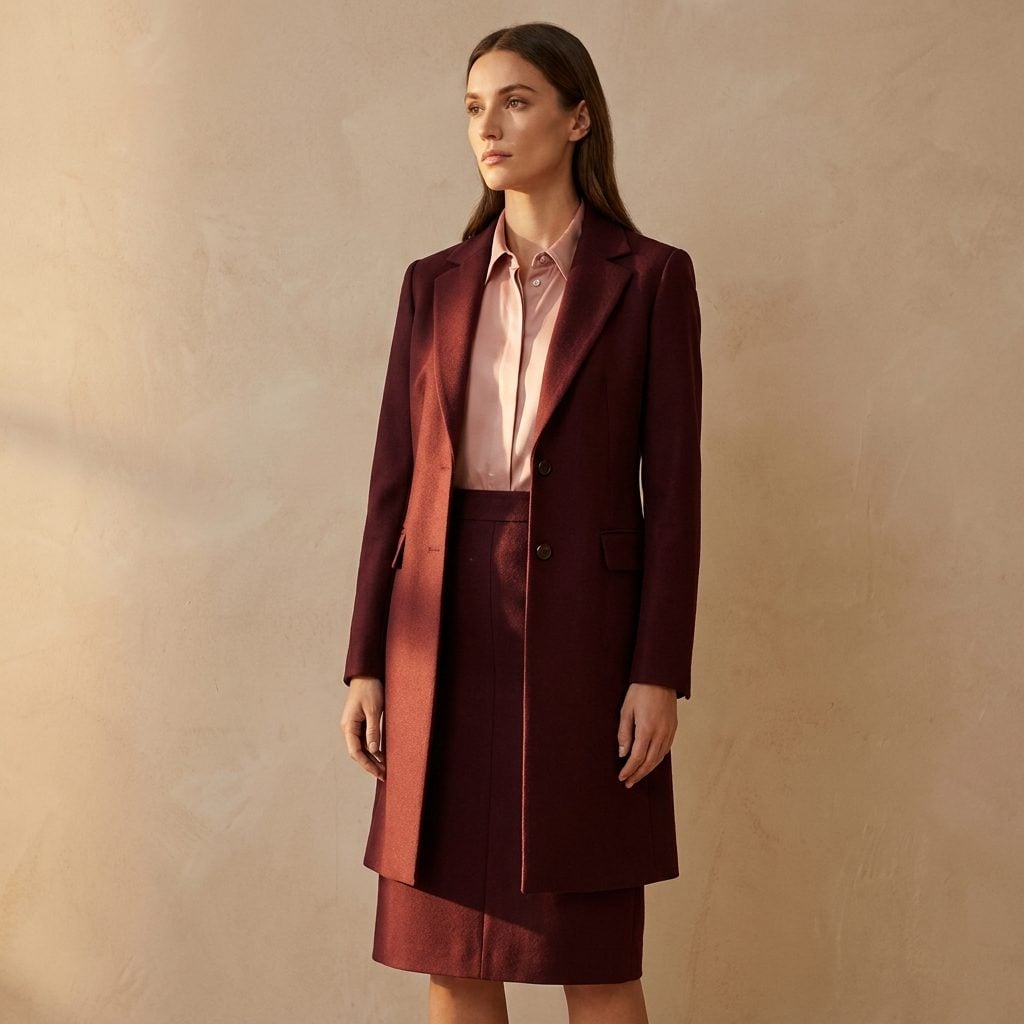
The long blazer is what distinguishes this from a more conventional skirt suit. Worn open and carried past the hip, it gives the upper half a longer frame and makes the matching skirt feel like a continuation rather than a separate block.
Blush in the center keeps all that burgundy from becoming too dense. Warmth against the face, authority everywhere else. The palette is disciplined without becoming monochromatic.
16. Espresso Skirt, Camel Sweater, and a Longline Plaid Jacket
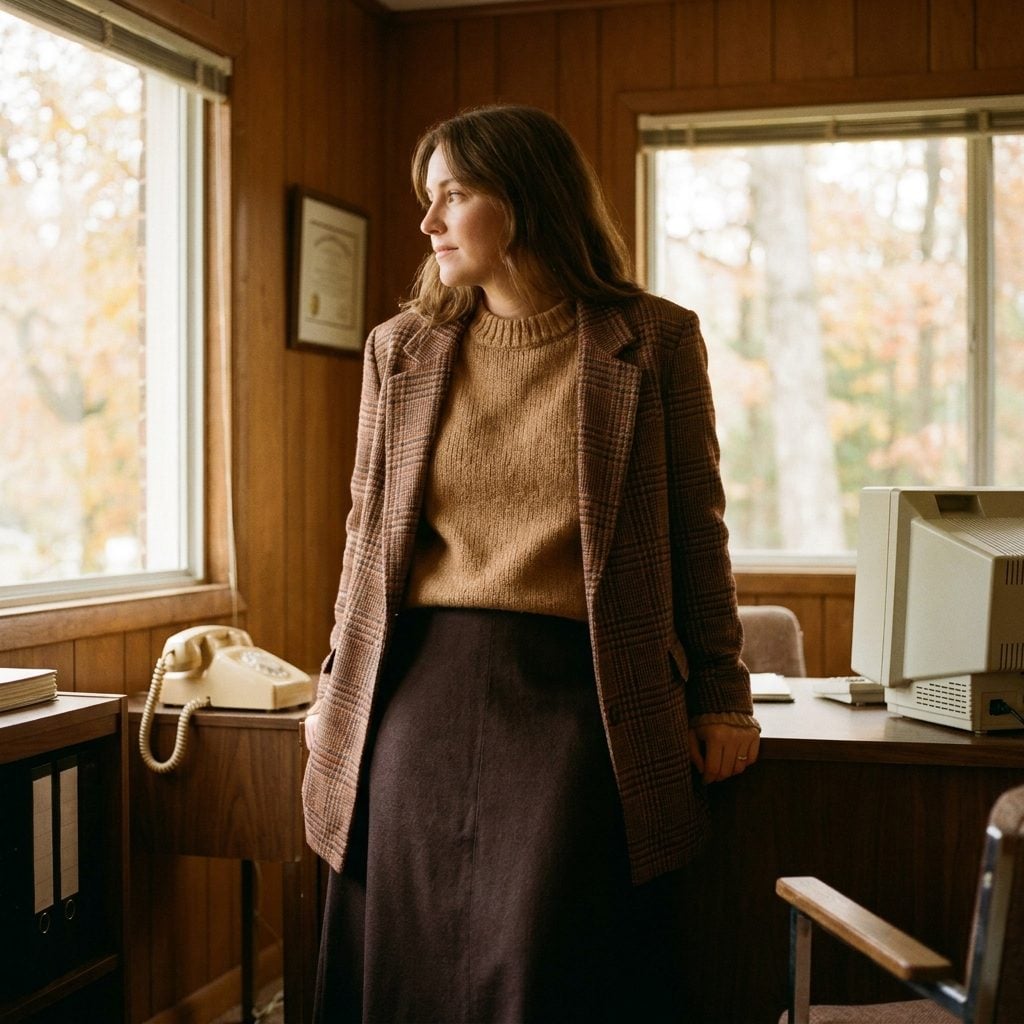
Brown only becomes muddy when the values have nothing to say to one another. Here they do: camel lightens the center, espresso anchors the skirt, and the plaid jacket introduces several related shades without leaving the family.
Brown hosiery and chocolate pumps keep the lower half cohesive while the open jacket adds shape around the lighter sweater. For a gallery full of jewel tones, this earthy intermission is especially good.
15. Navy Jersey Dress With a Long Cream Scarf Down the Front
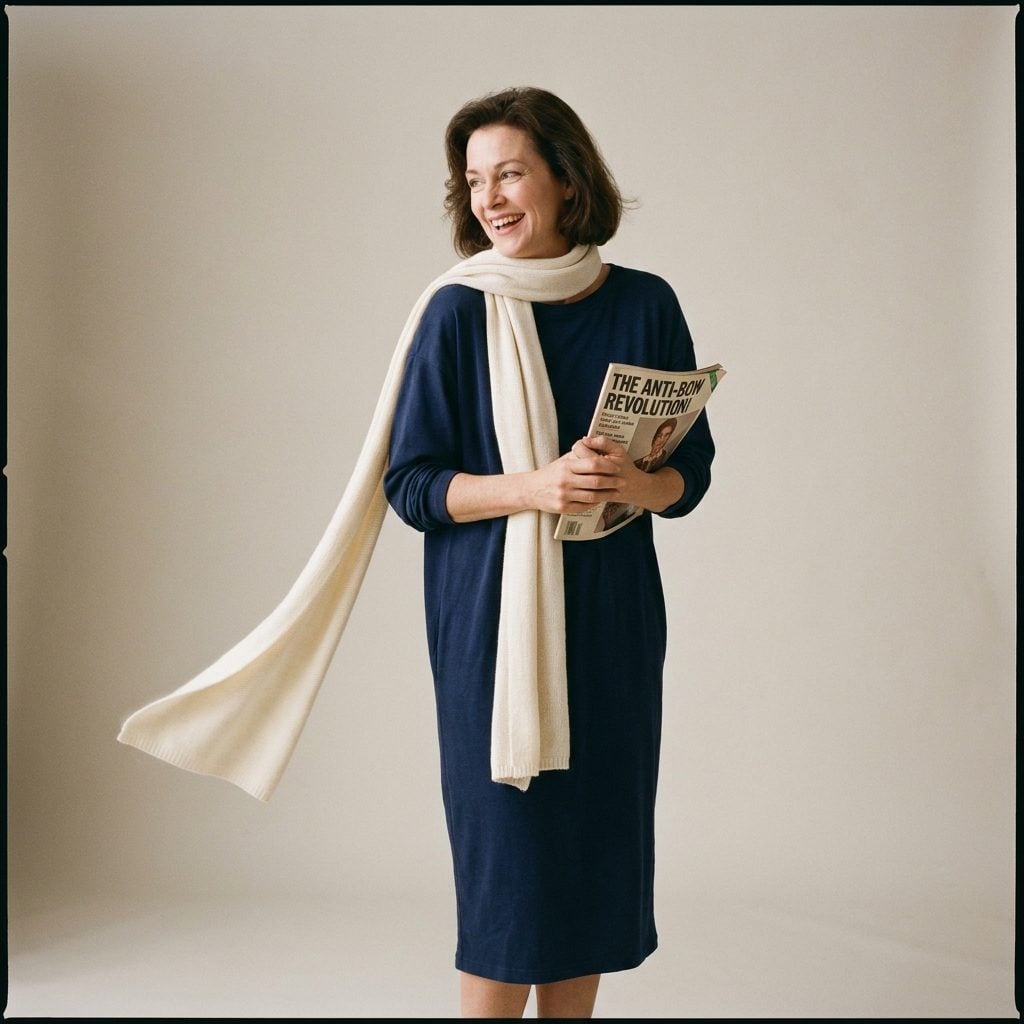
The scarf is used almost architecturally. Instead of being knotted high at the neck, it drops in one long cream stroke against the navy dress, introducing contrast without widening the silhouette.
Jersey supplies the opposite quality: softness. It drapes, moves, and gives the body room without the crisp resistance of suiting. That tension between fluid fabric and one disciplined accent is why the outfit still feels remarkably current.
14. Maroon Pencil Skirt, Cream Draped Blouse, and a Long Gold Necklace
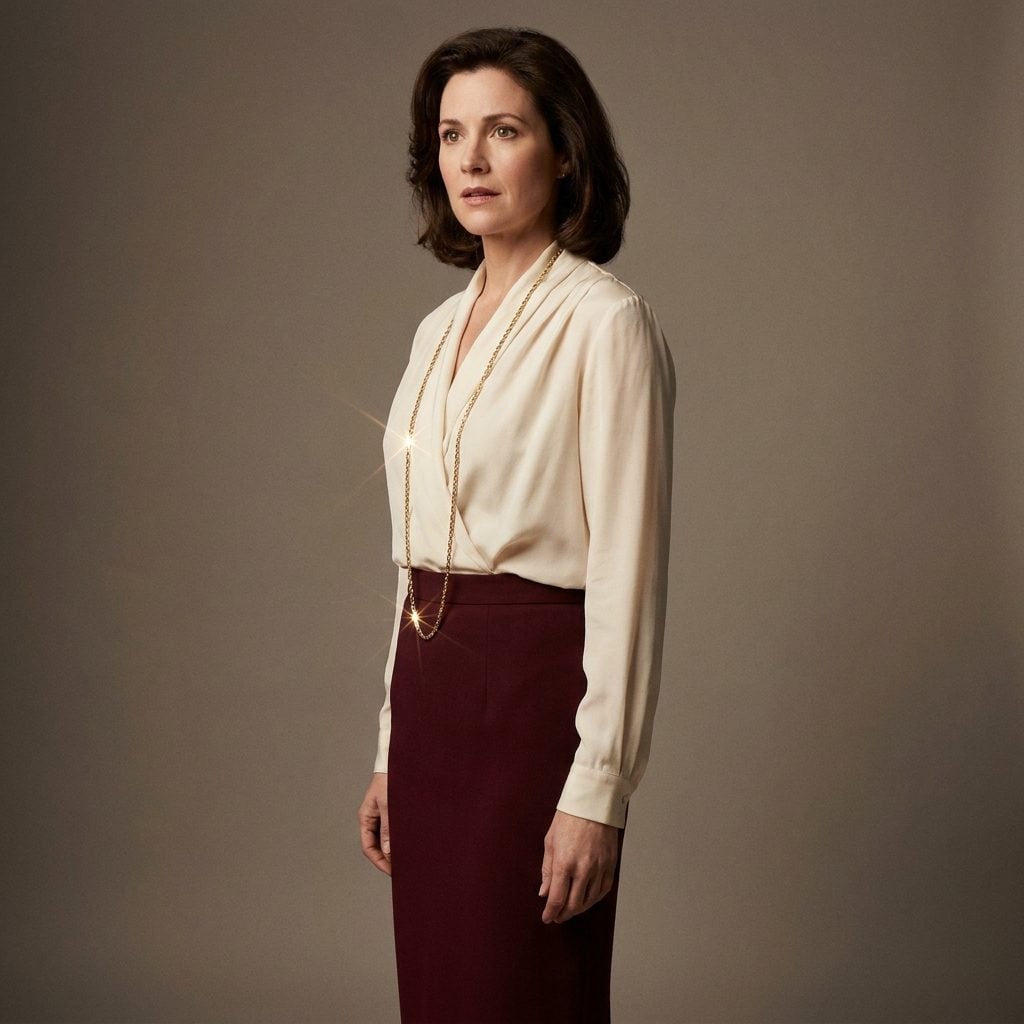
No blazer is necessary when the other proportions are this clear. The cream blouse brings softness and volume above a much straighter maroon skirt, while the long gold chain gives the center of the blouse a narrow point of focus.
Burgundy hosiery close to the skirt color keeps the lower half quiet. The contrast between drape above and structure below does more for the silhouette than another layer of tailoring would.
13. Gray Flannel Skirt Suit With a Wine Turtleneck Underneath
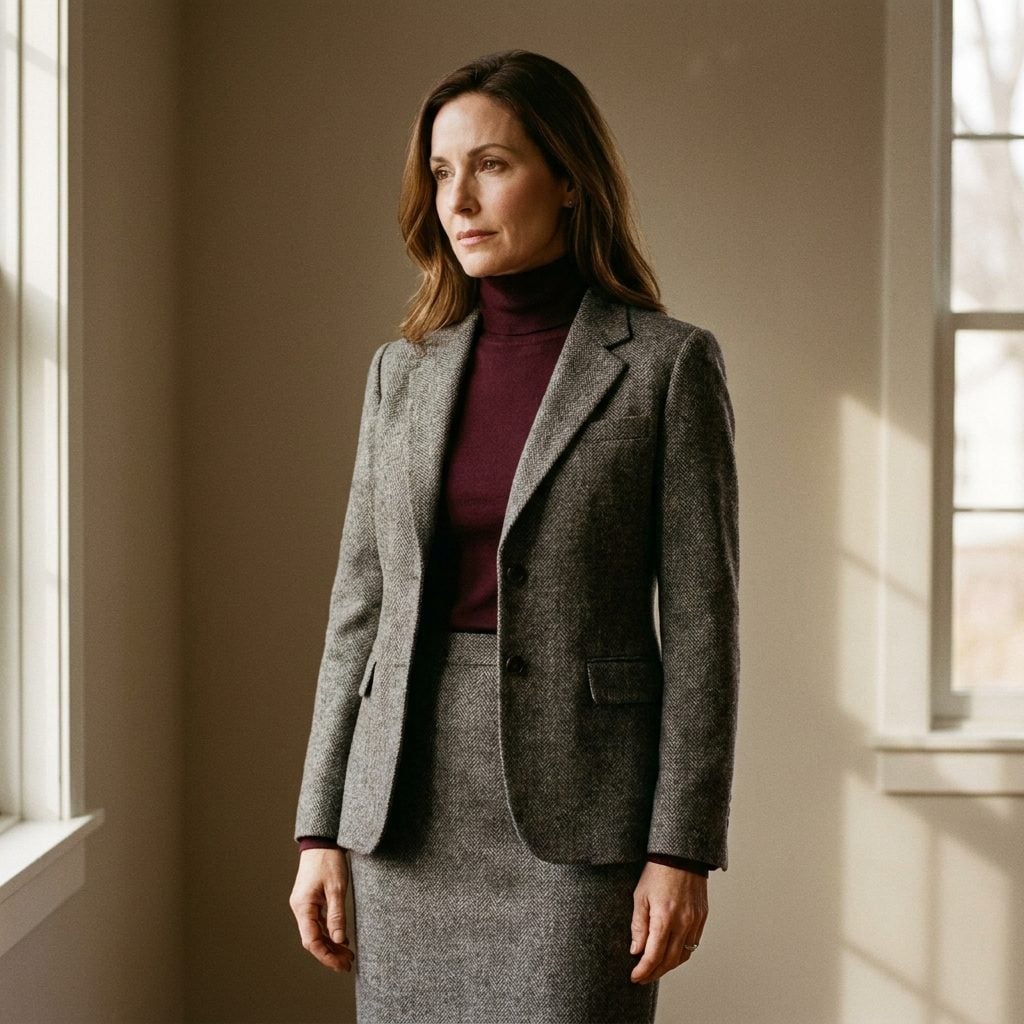
Flannel rescues gray from flatness. Its soft brushed surface absorbs light differently from a smooth worsted cloth, giving an otherwise sober suit more depth than the color alone suggests.
The wine turtleneck adds warmth exactly where charcoal needs it most. Below, matching hosiery keeps the skirt grounded in the same dark family. Nothing about this outfit is loud, but very little about it is accidental.
12. Navy Pencil Skirt, Vertical-Stripe Blouse, and a Cropped Red Jacket
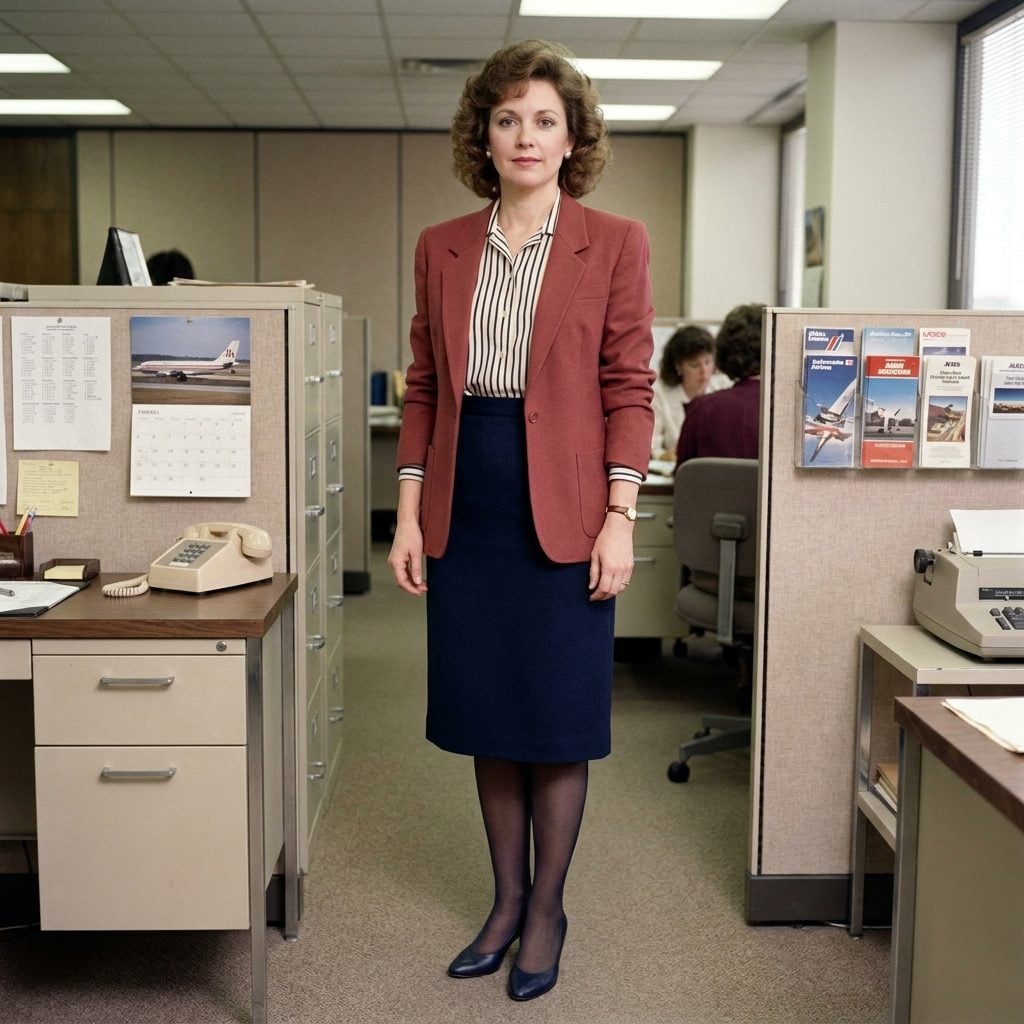
After so many long jackets, the cropped proportion is almost startling. Ending the red jacket high exposes more of the navy skirt, so the eye sees a longer stretch of one continuous color below.
The striped blouse introduces another direction through the center without adding bulk, while navy hosiery and pumps continue the skirt color toward the floor. The muted red supplies energy without taking over the silhouette.
11. Navy Belted Coatdress With Burgundy Pumps
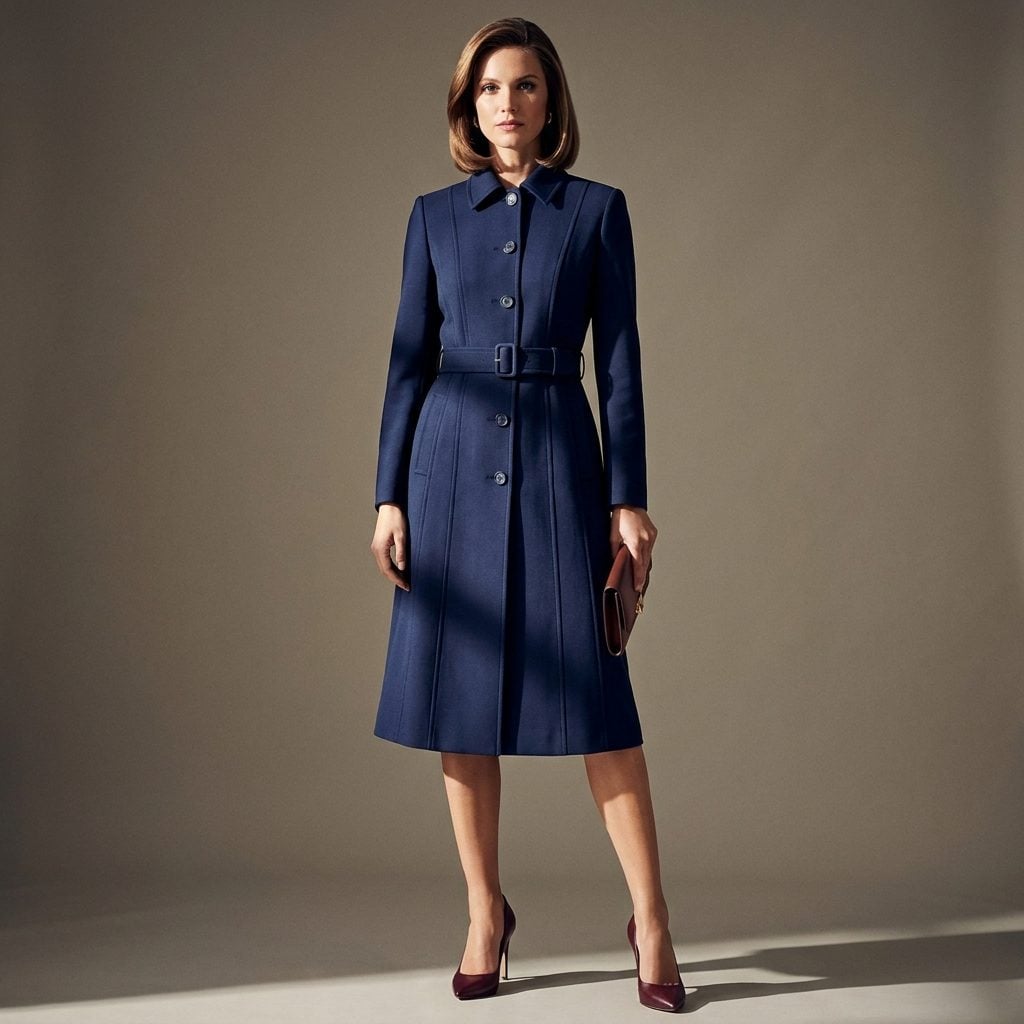
The coatdress gets its authority from structure rather than layers. Vertical seams travel through one continuous field of navy, while the belt introduces a waist without breaking the garment into separate top and bottom pieces.
Navy hosiery keeps the color moving below the hem until the burgundy pump arrives as the deliberate finish. It is one of the cleanest silhouettes in the gallery because nearly every detail is working inside the same dark framework.
10. Charcoal Pinstripe Trousers With a Burgundy Blouse and Black Belt
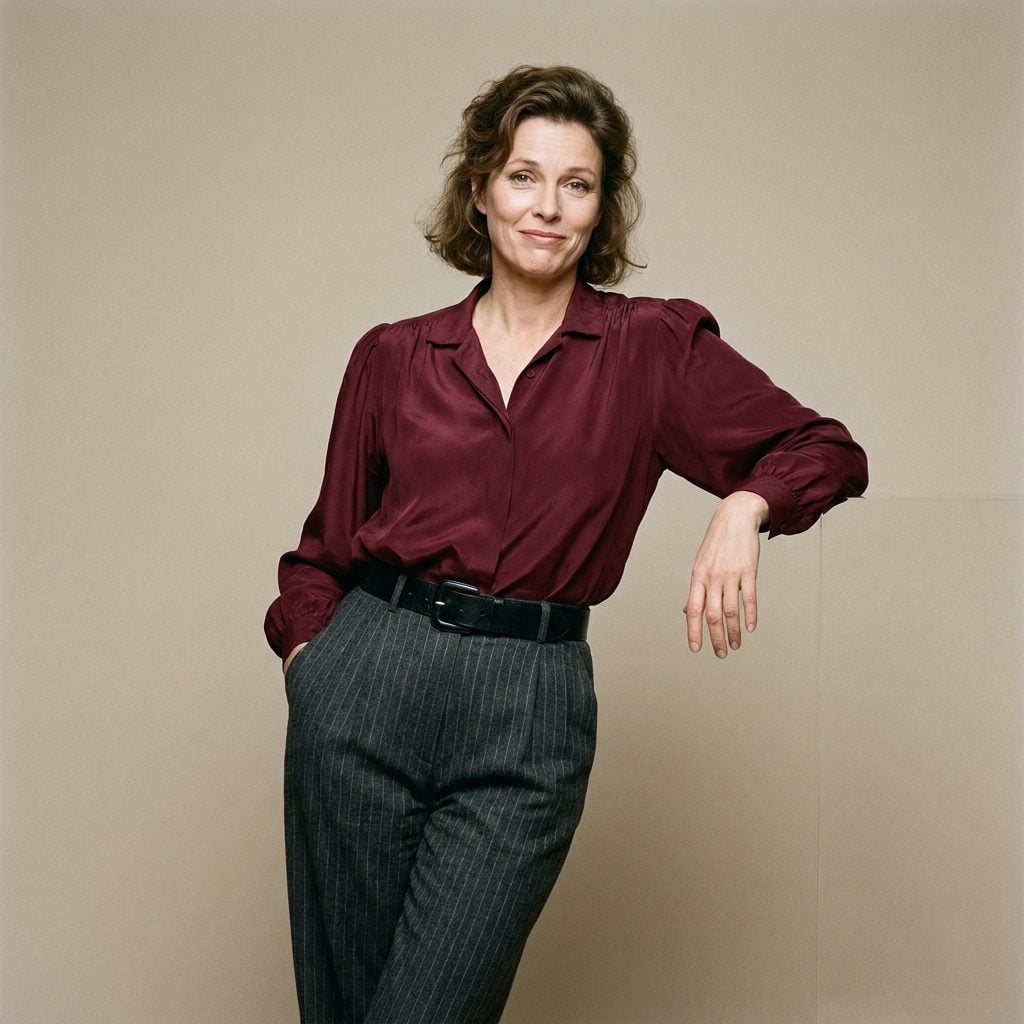
This outfit proves the blazer was never mandatory. The burgundy blouse carries the color while high-waisted pinstripe trousers supply structure below.
A narrow black belt defines the meeting point without cinching the waist into submission, and dark shoes remain close enough to the charcoal to keep the trouser line visually settled. Clean, capable, considerably less armored than another full suit.
9. Wine-Red Jersey Dress Under a Matching Longline Jacket
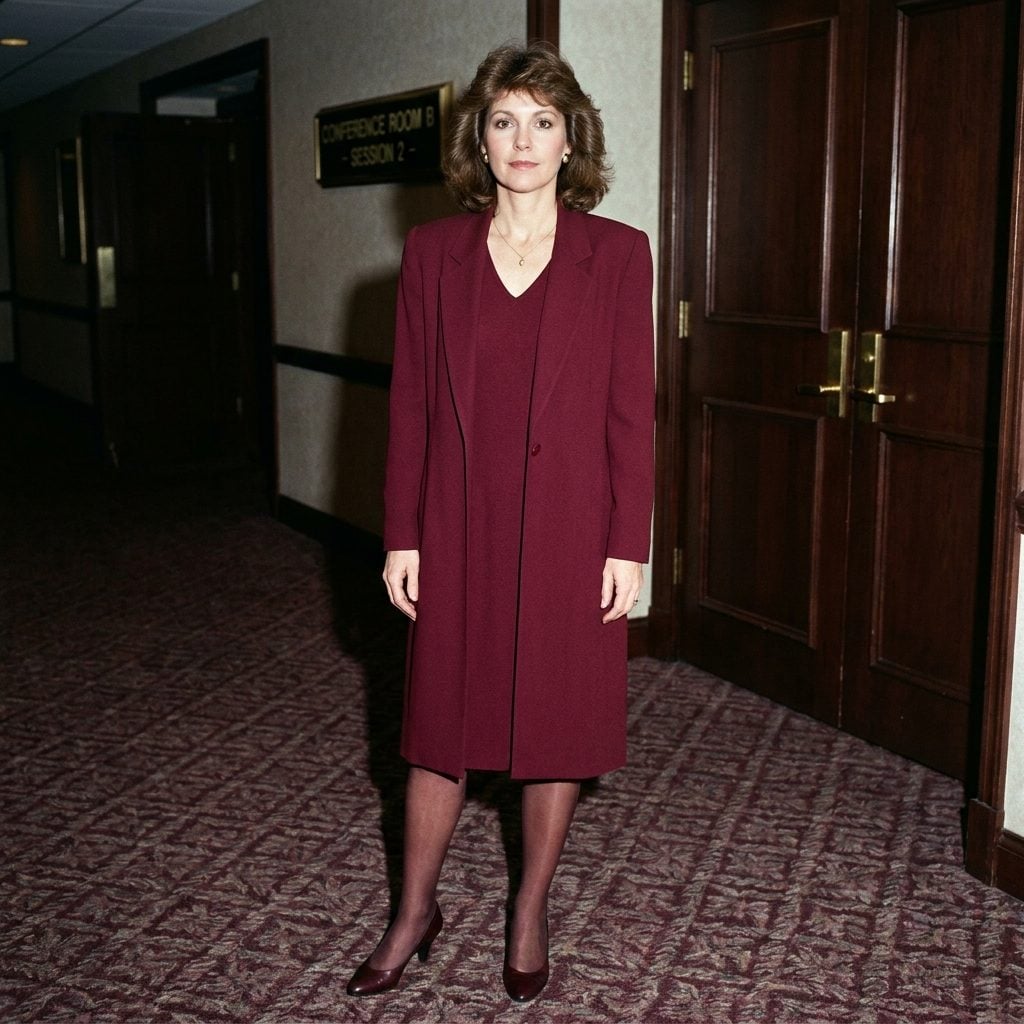
Same color, different surfaces. The jersey dress falls softly while the jacket holds a firmer edge over it, so the monochrome palette never becomes visually flat.
A long gold necklace repeats the opening of the jacket and gives the center another narrow accent. Deep wine has all the seriousness of a traditional office dark without surrendering the warmth that makes the outfit memorable.
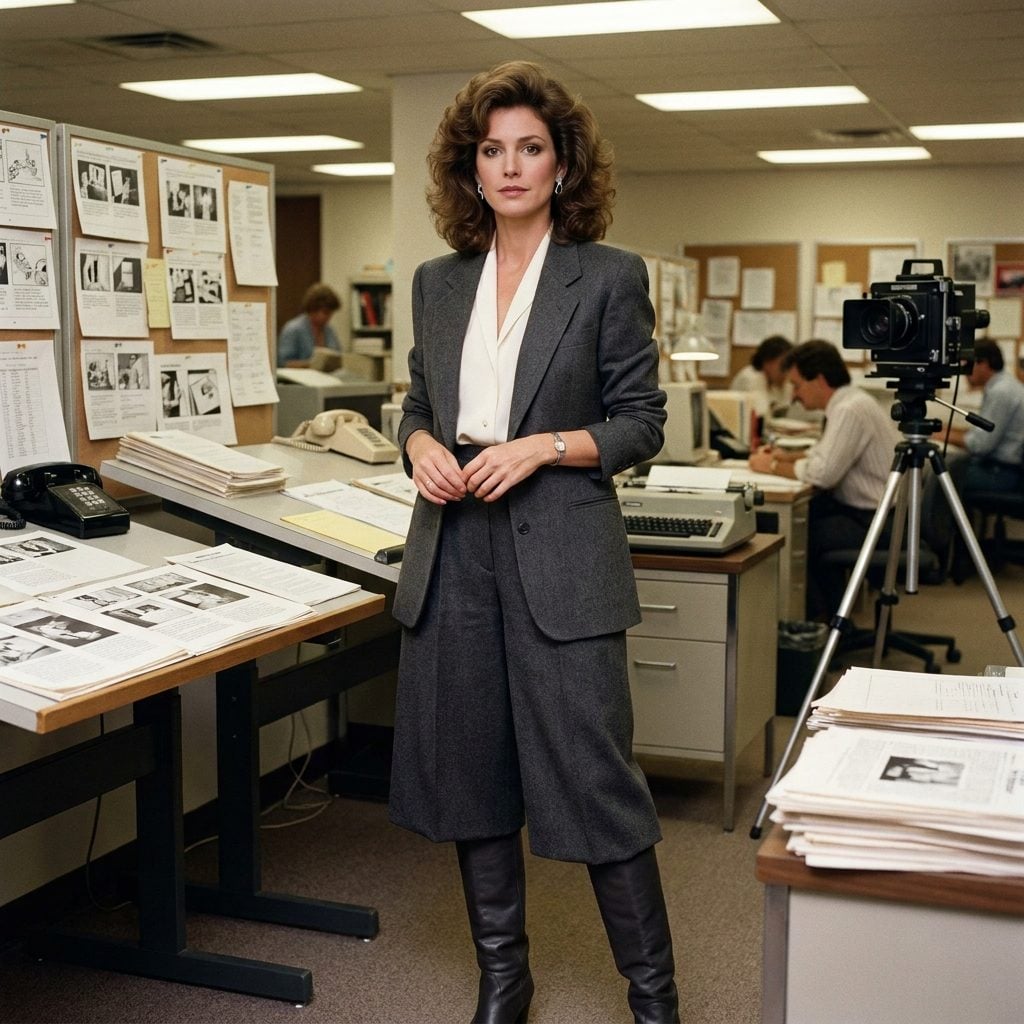
8. Charcoal Culotte Suit With an Ivory V-Neck and Tall Boots
❤️ Would you like to save this?
Culottes introduce volume exactly where most of the gallery has been controlling it, which makes this one of the more interesting experiments in the set. The answer is not to pretend the width is not there. It is to integrate it.
Charcoal jacket, culottes, tights, and tall boots stay within the same dark range, allowing the fuller leg to read as part of one deliberate silhouette. The ivory V-neck breaks open the upper center and keeps all that charcoal from becoming monolithic.
7. Deep-Emerald Skirt Suit With a Black Fine-Knit Shell
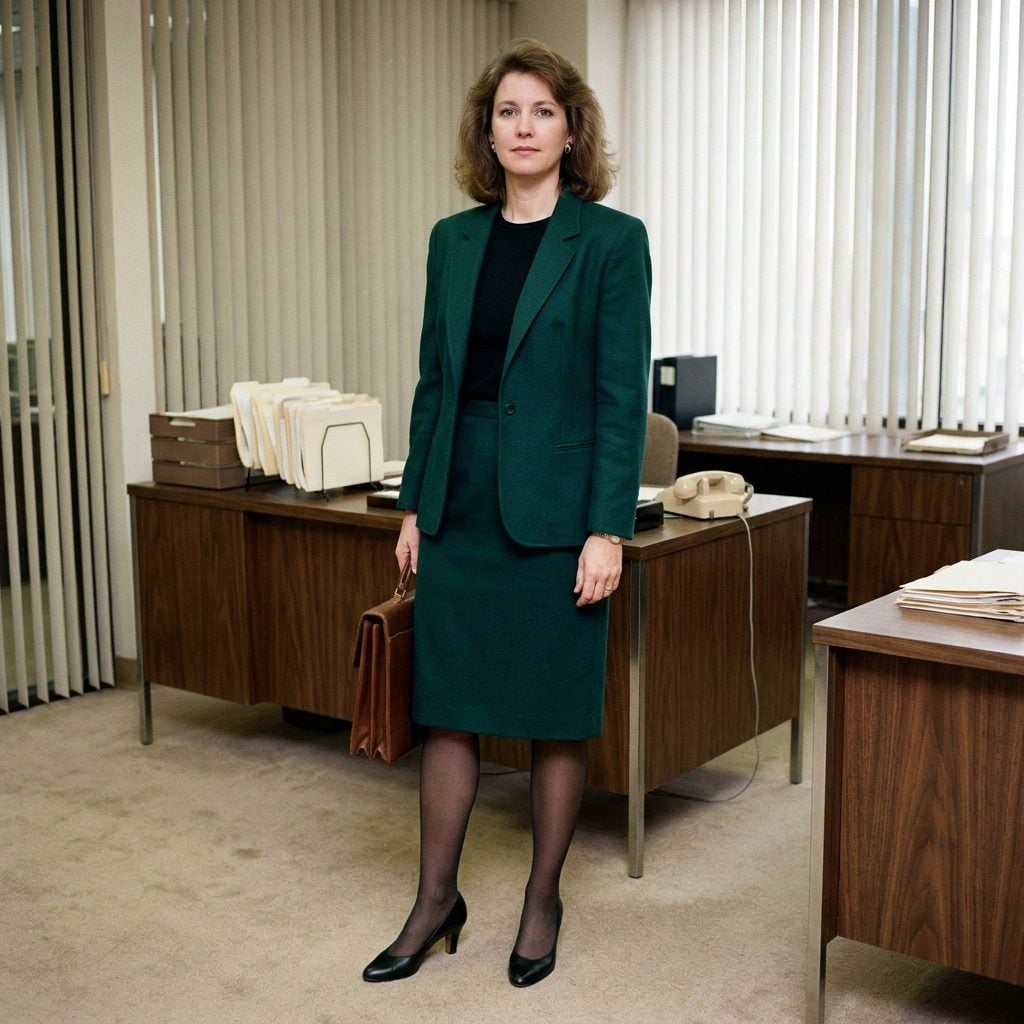
Emerald does not need much assistance. The saturated suit already has presence, so the black shell wisely stays quiet in the middle and gives the green lapels a darker field to frame.
The matching skirt keeps the suit coherent while charcoal hosiery avoids introducing an unrelated light patch below. Compared with head-to-toe red, emerald has a cooler, steadier kind of impact—still assertive, but less interested in shouting about it.
6. Navy Trousers, Ivory Blouse, and a Long Gray Vest
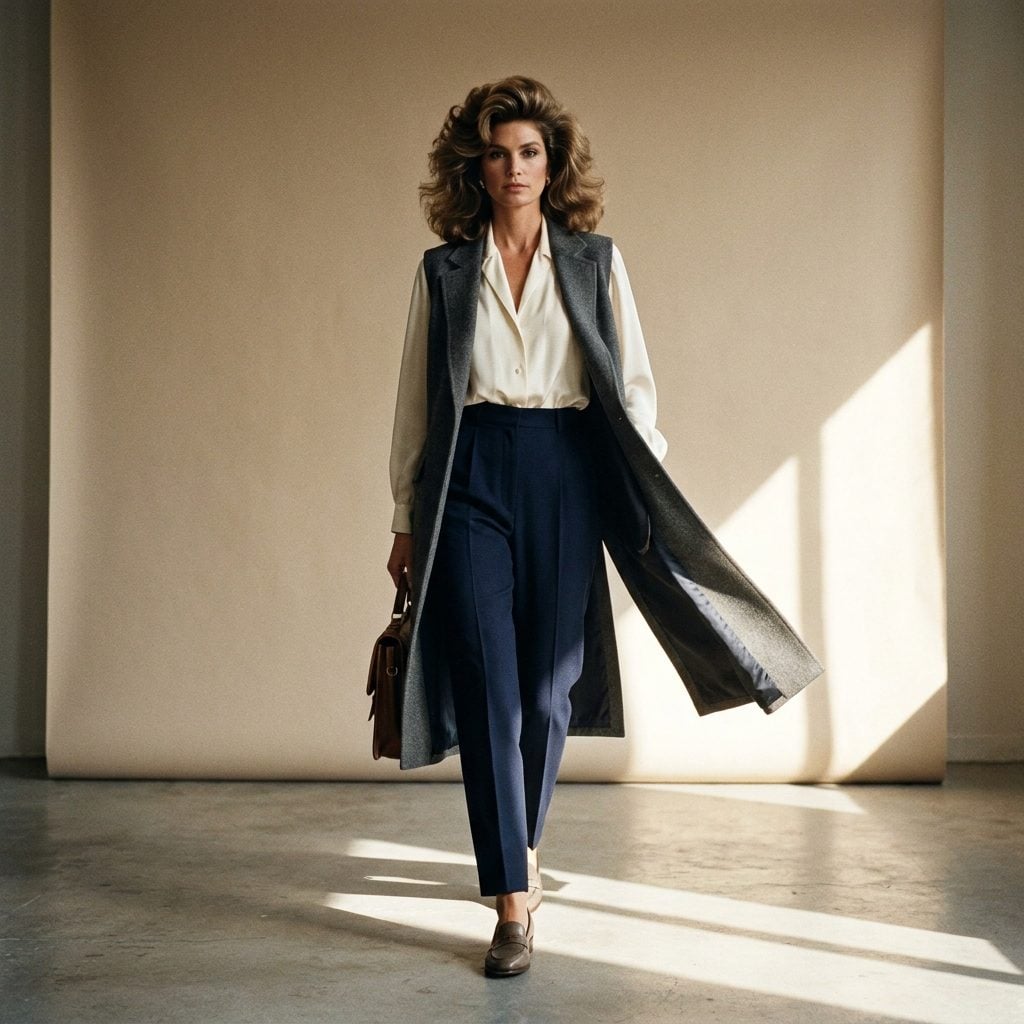
The sleeveless long vest strips the blazer down to its most useful geometry. Two gray panels frame the ivory blouse, but there are no sleeves or shoulder structure adding extra visual weight around them.
High-waisted navy trousers give the lower half a clean, full-length shape. The result is tailored without feeling rigid—a useful reminder that structure does not always have to announce itself with shoulder pads.
5. Dusty-Rose Blouse, Charcoal A-Line Skirt, and the Gray Cardigan Worn Open
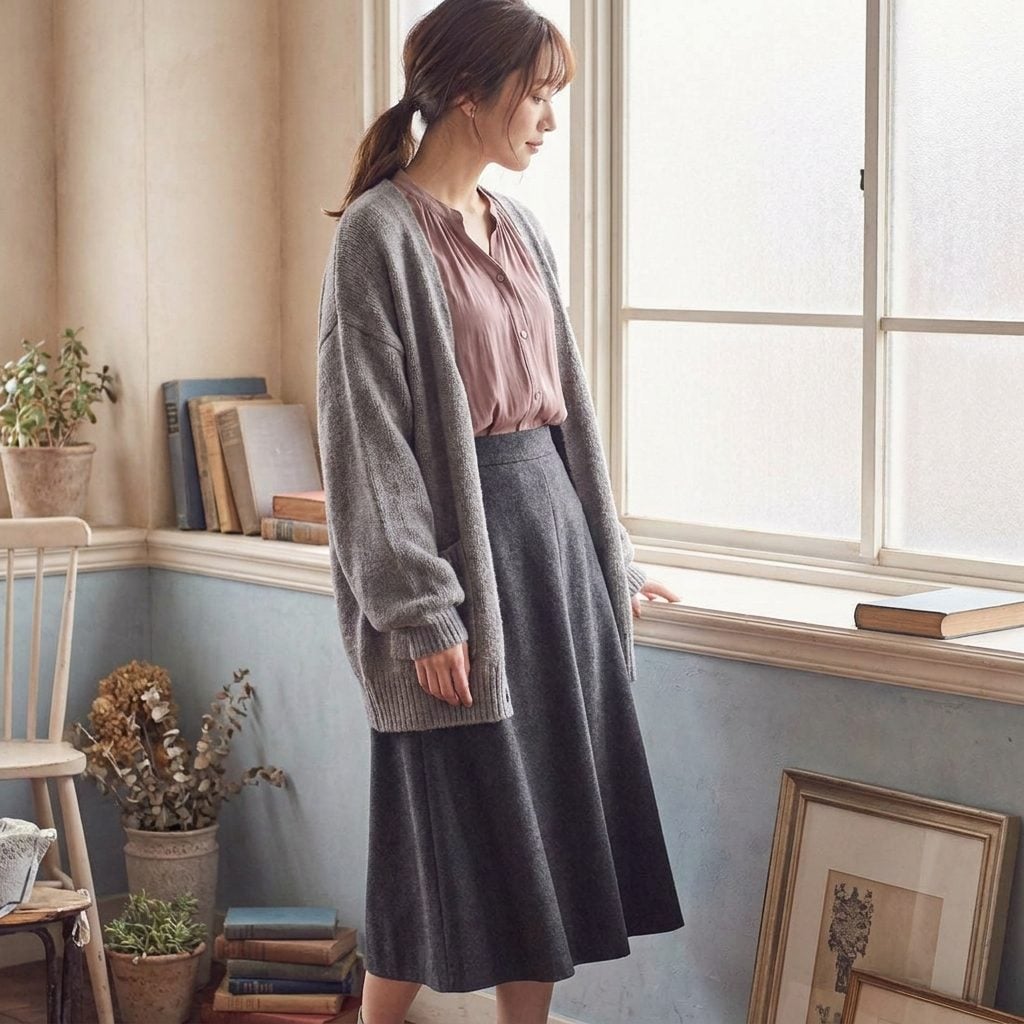
This is the gallery’s softer version of the same tailoring logic. The open cardigan gives the torso a loose frame, but nothing about it is hard-edged or boardroom severe.
Dusty rose adds warmth near the face while charcoal anchors the skirt and hosiery below. The outfit does not need sharp tailoring to feel composed; controlled color and proportion are enough.
4. Burgundy Jacket, Gray Pinstripe Trousers, and an Ivory Shell
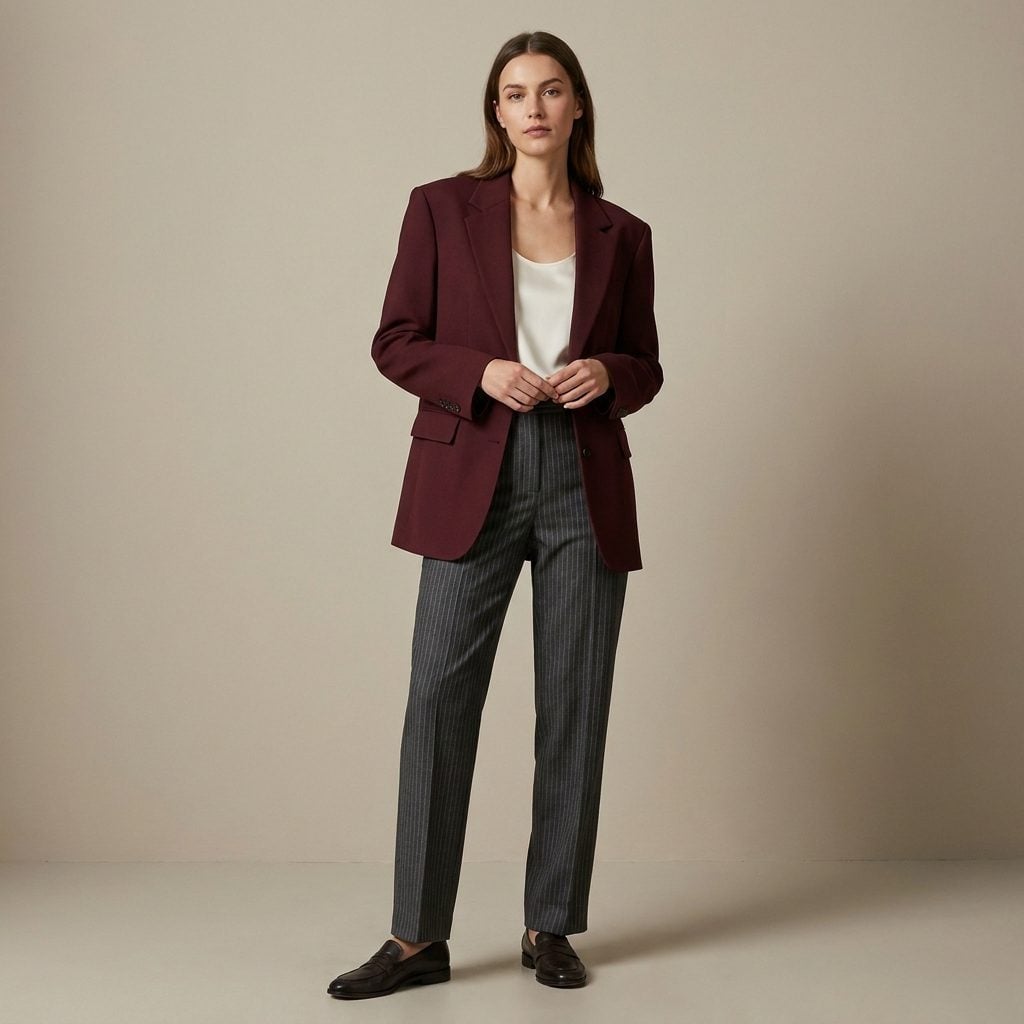
This one splits its strategy neatly between top and bottom. Burgundy concentrates attention around the shoulders while gray pinstripe trousers pull the lower half into a much cooler, quieter register.
The ivory shell keeps those two strong colors from colliding directly, and the narrow black belt provides a small punctuation mark rather than a thick horizontal barrier. Warm above, cool below, with just enough contrast between them.
3. Black-and-White Houndstooth Jacket With a Black Straight Skirt
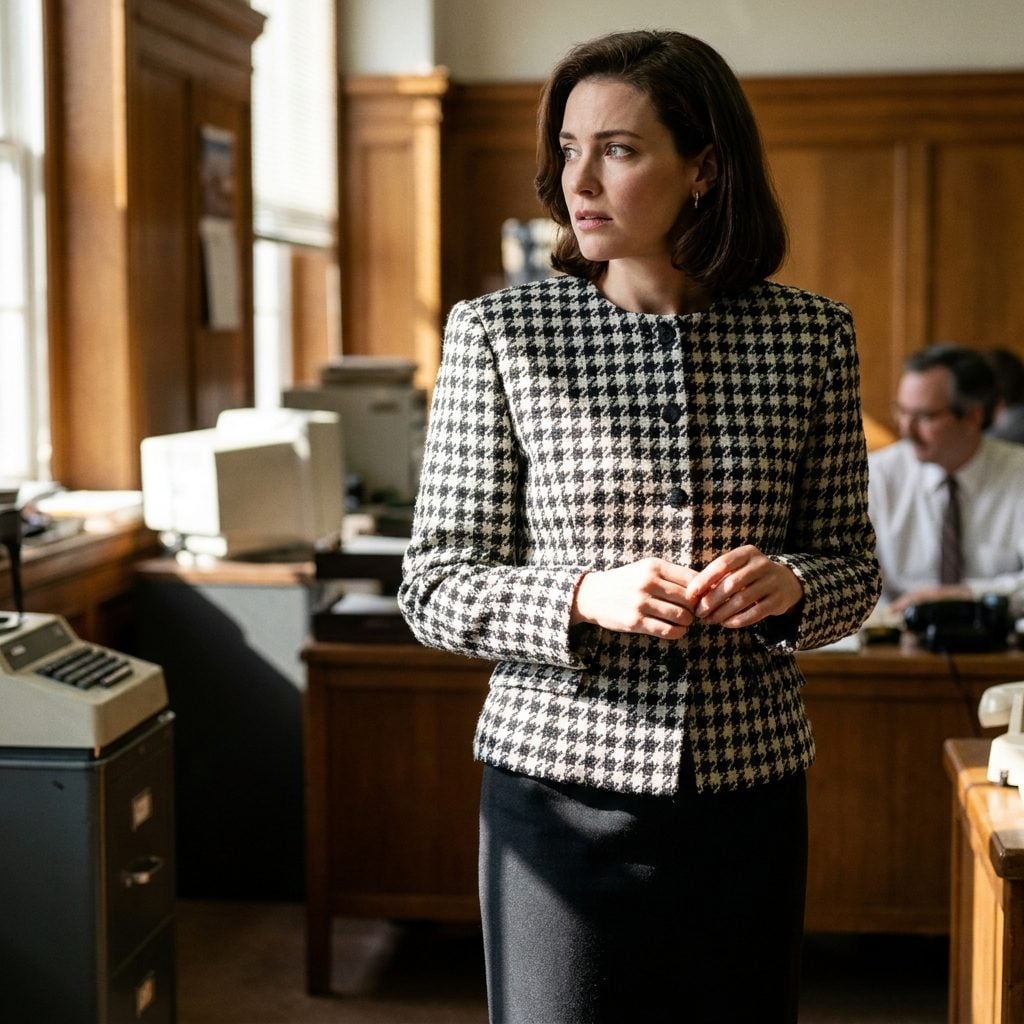
After so much tonal restraint, the houndstooth arrives like punctuation. Its tight black-and-white repeat brings real graphic energy to the upper half, but the pattern stops decisively at the jacket hem instead of being allowed to consume the entire outfit.
That restraint is what makes the look work. A straight black skirt, black hosiery, and dark shoes give the pattern a silent foundation underneath. The jacket can be busy because everything below it has agreed not to compete. Pattern above, calm below—a simple division of labor and one of the smartest looks in the gallery.
2. Winter-White Skirt, Black Turtleneck, and a Belted Camel Blazer
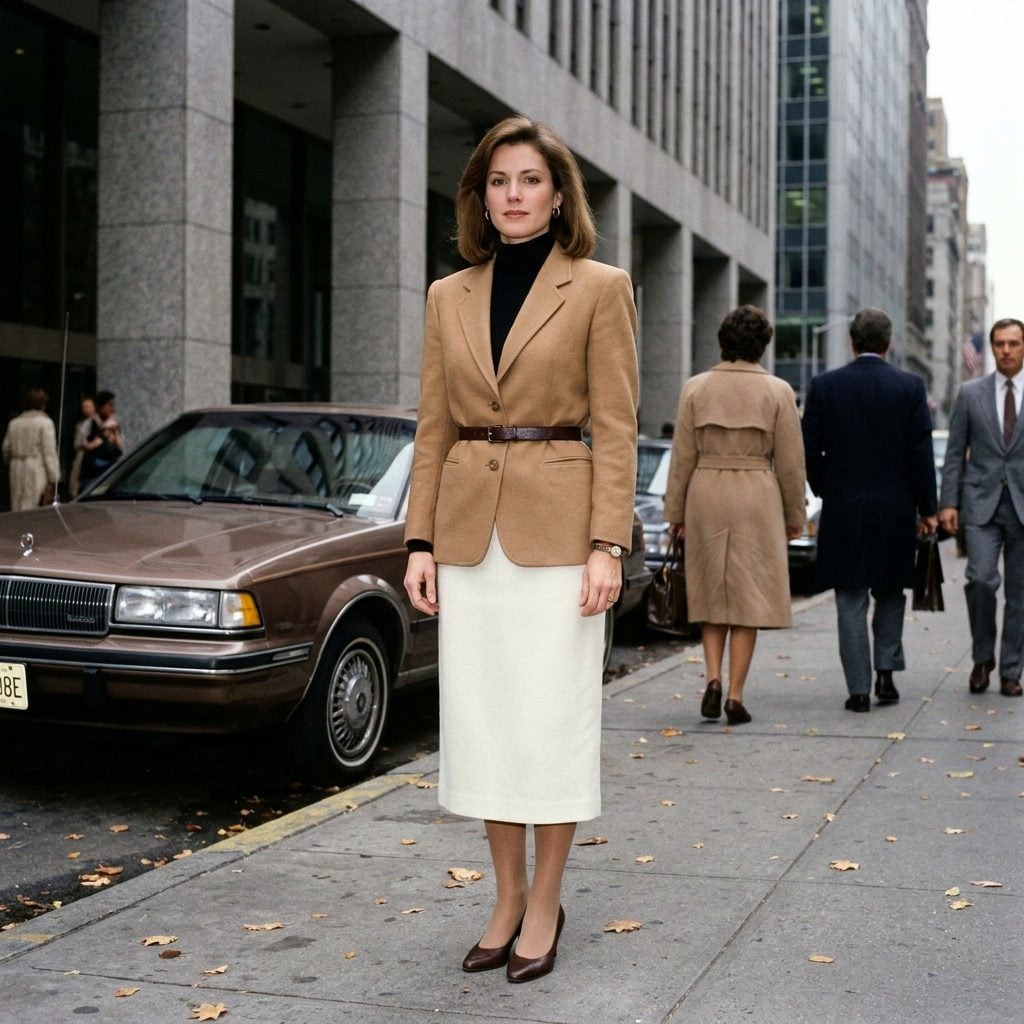
After the houndstooth’s graphic punch, this is all about controlled neutrals. The belt is not merely an accessory added at the end; it changes the architecture of the jacket. Drawing the camel blazer inward at the natural waist gives the longer hem below it somewhere to flare gently rather than hanging as one straight block.
Winter white below keeps the outfit light while the black turtleneck creates a narrow dark center between the camel lapels. Three neutrals, each assigned a different job. That is why none of them disappears.
1986 career dressing was never only giant power suits. Proportion, tonal continuity, strategic contrast, and one well-placed belt could be just as persuasive.
1. Slate-Gray Double-Breasted Blazer Over a Black Column Dress
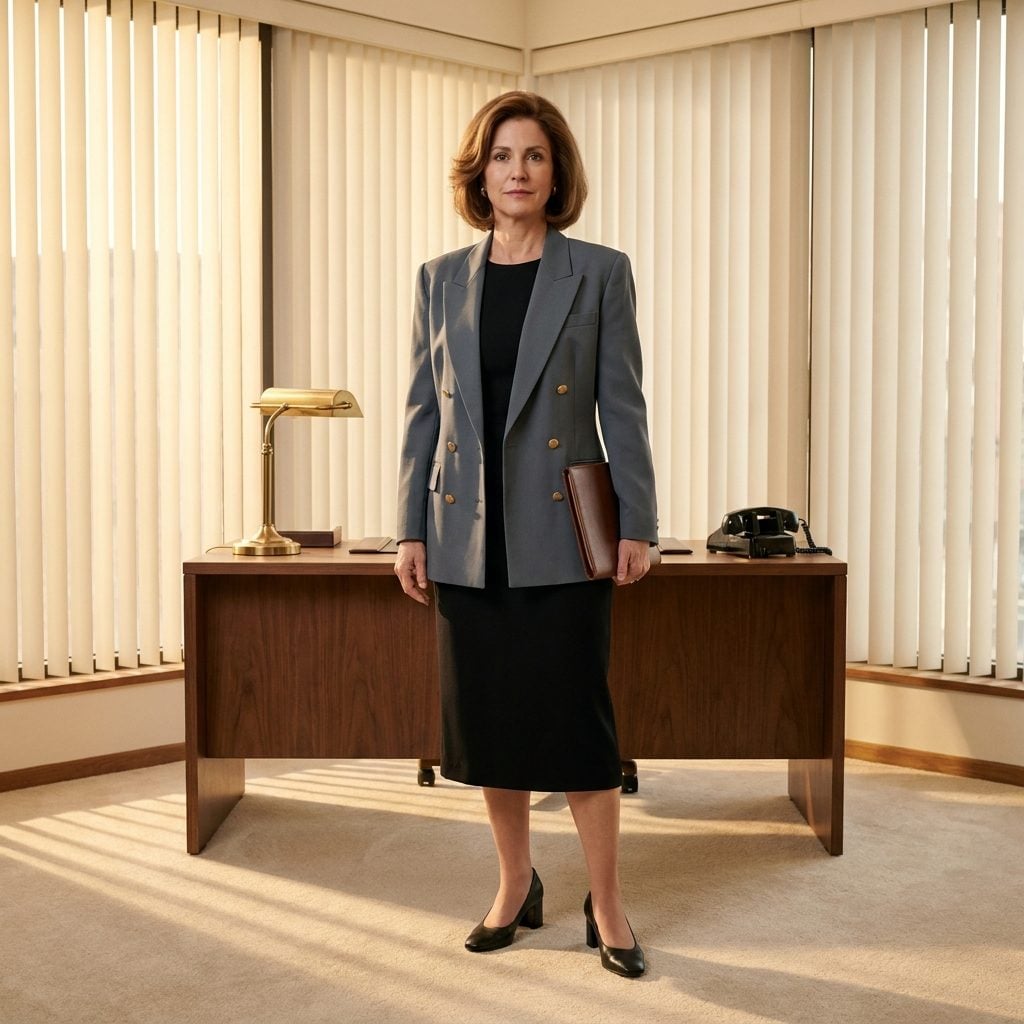
The gallery ends with one of its clearest lessons. A black column dress creates the quiet center; the slate-gray blazer gives it shoulders, lapels, and two long outer edges. Neither piece has to fight the other for attention.
The gray is close enough to black to keep the palette continuous but different enough to reveal the construction. That is the whole 1986 trick in miniature: use tailoring to organize the body, color to control where the eye pauses, and proportion to do the work that tight clothes never could.