❤️ Would you like to save this?
In 1987, a shoulder pad could change the apparent width of a waist without touching the waist itself. Jackets came with architectural ambitions, trousers climbed toward the ribs, and belts were deployed with the precision of surveyors. Color was rarely asked to behave. Cobalt, emerald, fuchsia, and plum competed for attention while black pencil skirts and carefully tailored trousers kept the whole enterprise from getting completely out of hand.
For all the decade’s extravagance, some remarkably clever thinking went into those silhouettes. A peplum could manufacture an hourglass. A jacket hem could alter the apparent length of a leg. A row of buttons, a diagonal fold, or a strategically placed scarf could redirect attention without changing the garment’s basic shape. The strongest outfits weren’t simply big, bright, or expensive-looking. They understood proportion, and they weren’t afraid to manipulate it.
These 30 looks revisit the styling decisions that made 1987 such a fascinating year for fashion. Some remain remarkably effective. Others reveal just how much depends on getting the fit, fabric, and placement right. Between the dramatic shoulders and the unapologetic colors, there are plenty of ideas worth borrowing, even if the full eighties treatment is best left to the history books.
FYI, thanks to AI imagery software, we’re able to create very specific fashion and hairstyle examples to illustrate the points being made. In some cases, imagery is exaggerated to hammer home the point. Also, assume links that take you off the site are affiliate links such as links to Amazon. this means we may earn a commission if you buy something.
30. Dark Indigo Jeans and a Cropped Leather Jacket: Where the Legs Take Over
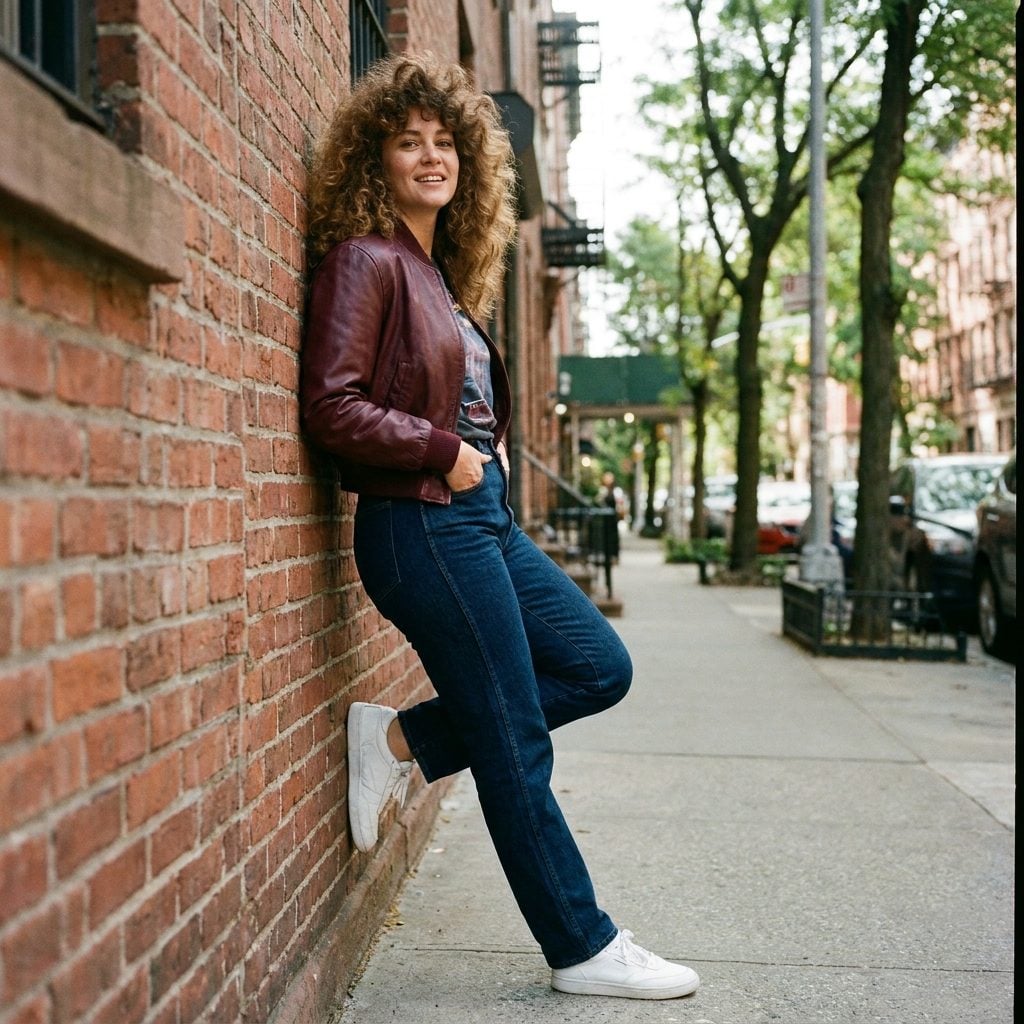
The leather jacket knows when to quit. Ending near the high hip, its burgundy hem leaves the dark indigo jeans to carry the silhouette downward without another layer interrupting the proportions. A longer jacket would tell a different story, covering more of the rise and shortening the visible trouser line.
High-waisted denim was made for this sort of calculation. The tucked ribbed knit keeps the waistband visible, while the jacket’s structured shoulders provide the requisite eighties attitude. The burgundy leather jacket and tan shoulder bag bring warmth to an otherwise cool palette. Nothing needs to be oversized to make an impression.
29. Deep Purple Skirt Suit: The Case for Dressing in One Color
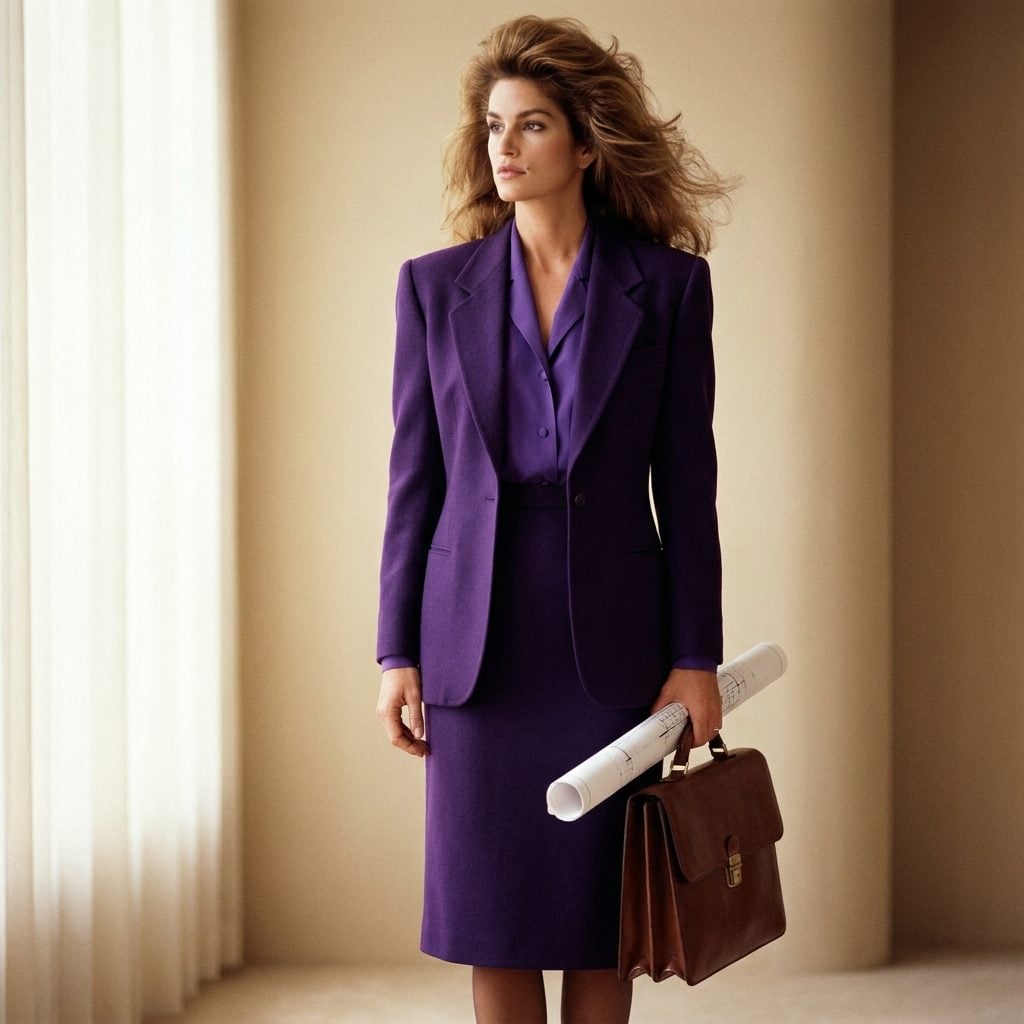
There is purple, and then there is an entire argument conducted in purple. The jacket and skirt establish the dominant shade, while a lighter violet blouse introduces just enough variation to distinguish the layers. The effect is cohesive without looking like a uniform.
Plum hosiery extends the color below the skirt, reducing the contrast between hem and leg. Different fabric textures keep the combination interesting: tailored wool against a smoother blouse, opaque material against the subtle sheen of hosiery. Monochromatic dressing doesn’t require every piece to match perfectly. Sometimes the small differences make the outfit.
28. Fuchsia Batwing Top and Gray Skirt: The Waistline Takes a Detour
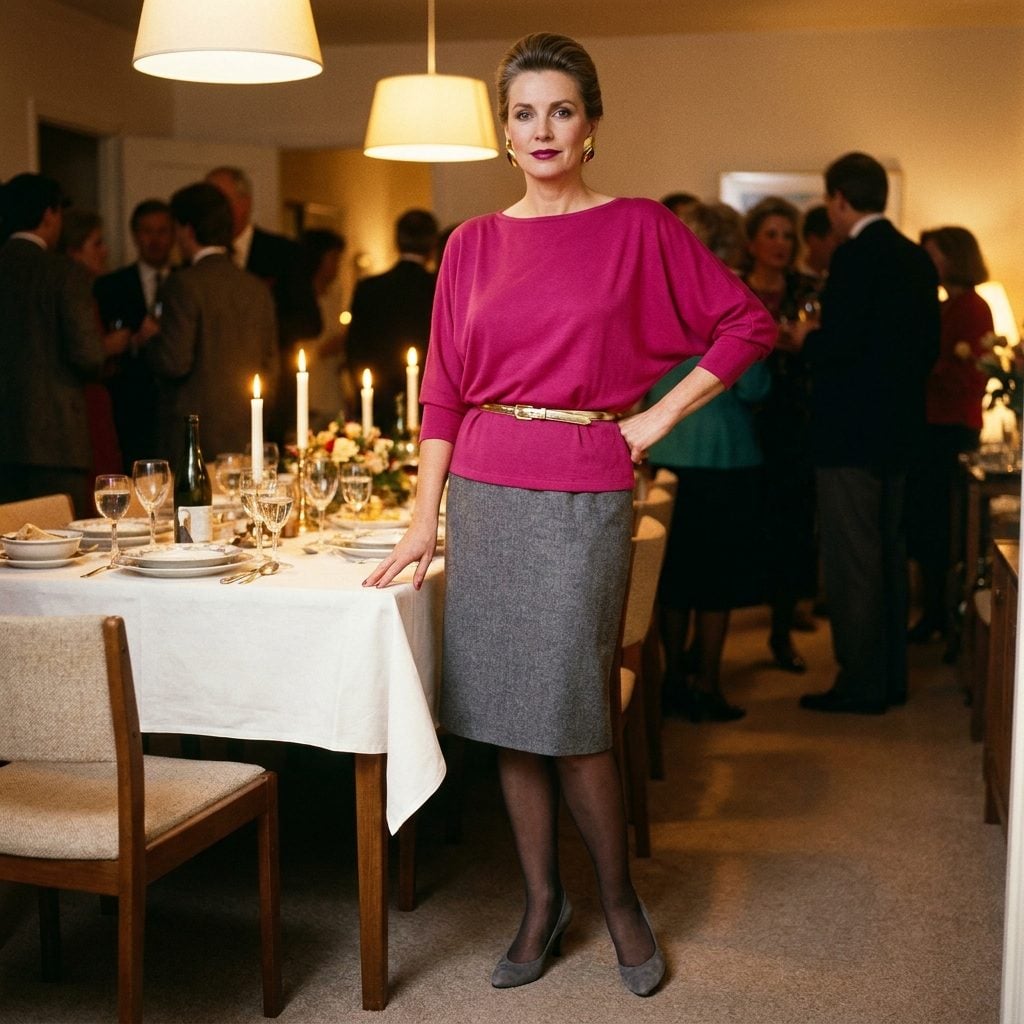
Few garments announce the eighties quite as enthusiastically as a fuchsia batwing top. The sleeves create generous volume through the upper body, but the interesting decision happens lower down. Instead of cinching everything tightly at the natural waist, the belt sits closer to the hip, allowing the fabric above to blouse softly.
That placement changes the silhouette from sharply hourglass to relaxed and elongated. The straight gray skirt provides a comparatively disciplined foundation, preventing the top’s volume from spreading through the entire outfit. Fuchsia supplies all the drama necessary. The skirt wisely declines to compete.
27. Charcoal Pinstripe Suit: When the Pattern Does the Tailoring a Favor
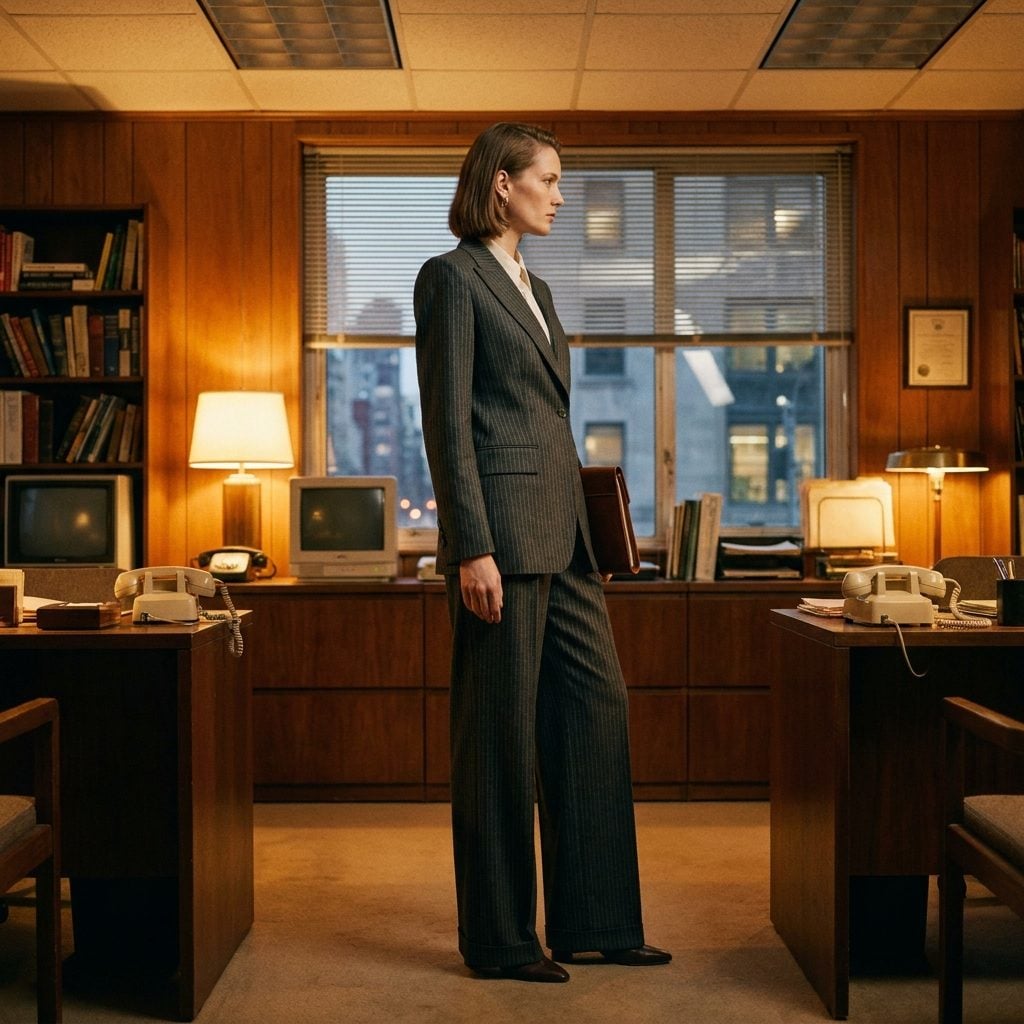
Pinstripes have a reputation for making the wearer look taller, but the cut of the suit deserves at least equal credit. Here, fine pale-gray lines follow the jacket and skirt, emphasizing their tailored construction rather than fighting it. Long lapels sharpen the front, and the matching pieces establish a consistent pattern from shoulder to hem.
The ivory blouse is an important interruption. Without that lighter center, the charcoal could become visually heavy, particularly around the face. This was the attraction of serious eighties tailoring: substantial shoulders, defined proportions, and enough structure to make a suit look composed before a single accessory entered the picture.
26. Teal Draped Dress: A Diagonal That Refuses to Behave
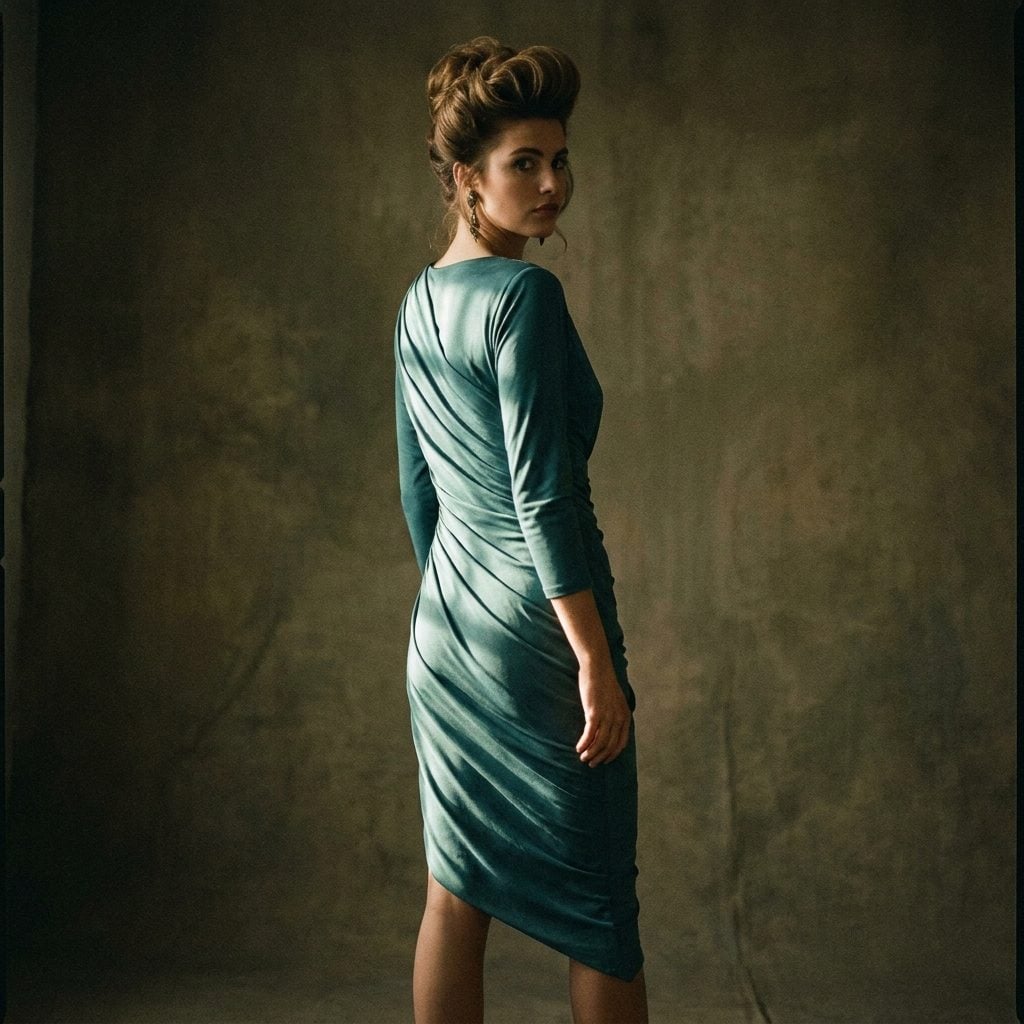
A straight seam describes the body. Diagonal draping can complicate the description, shifting attention across the torso rather than dividing it into neat horizontal sections. The gathers in this teal dress introduce movement around the waist and hip, giving the fabric room to shape the silhouette without relying entirely on a tight fit.
The success depends on where those folds begin and end. Too much fabric can overwhelm the waist; carefully placed draping creates definition while softening the outline beneath. Dark hosiery and teal pumps keep the accessories restrained. The asymmetry is already doing enough.
25. Red Knit and Black Suspenders: Two Lines With a Job to Do

Suspenders are usually discussed as practical accessories or unfortunate costume decisions. Here, they have a more interesting assignment. Two narrow black straps interrupt the red knit with parallel vertical lines, directing attention toward the high waistband without adding a wide belt.
The tailored black trousers take over below, with pleats supplying room through the upper leg and a narrower finish maintaining definition. The fitted sweater keeps the upper body neat against the trousers’ fuller cut. This combination has the playful confidence of late-eighties sportswear, but its proportions are more deliberate than the bright red first suggests.
24. Aubergine Knit Dress: The Waistline Is Built Into the Seams
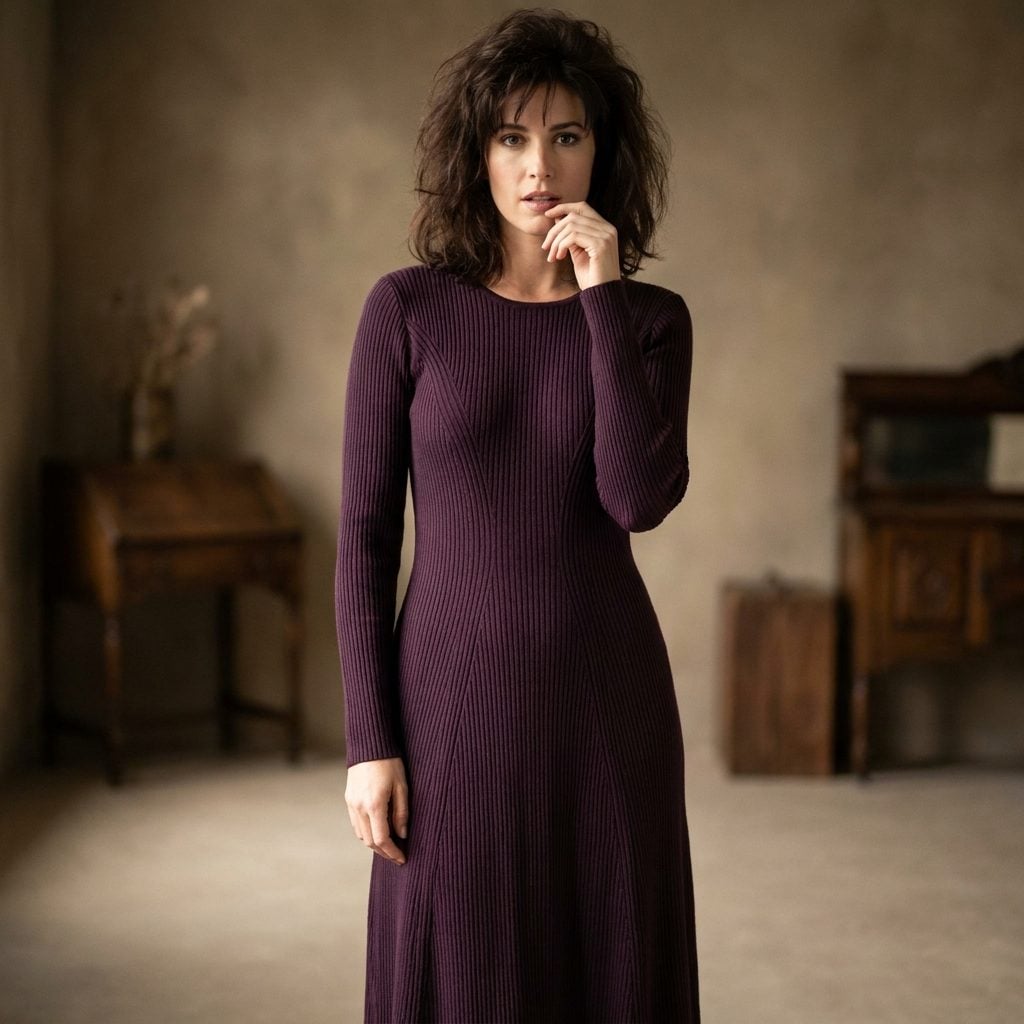
Some dresses need a belt to find their shape. This one has already done the engineering. Princess seams travel through the bodice and waist, allowing the fabric to follow the body’s contours without depending on a separate band of contrasting material.
Aubergine gives the construction a suitably rich background. Light shoulder structure balances the upper body, while the modest V-neck prevents the neckline from feeling closed in. Charcoal hosiery and black pumps finish the look without competing with the seams. The restrained, body-conscious tailoring recalls the approach that helped define Donna Karan’s early work, although the underlying construction principles extend well beyond any one designer.
23. Magenta Jacket Over Black: The Brightest Part Isn’t the Center
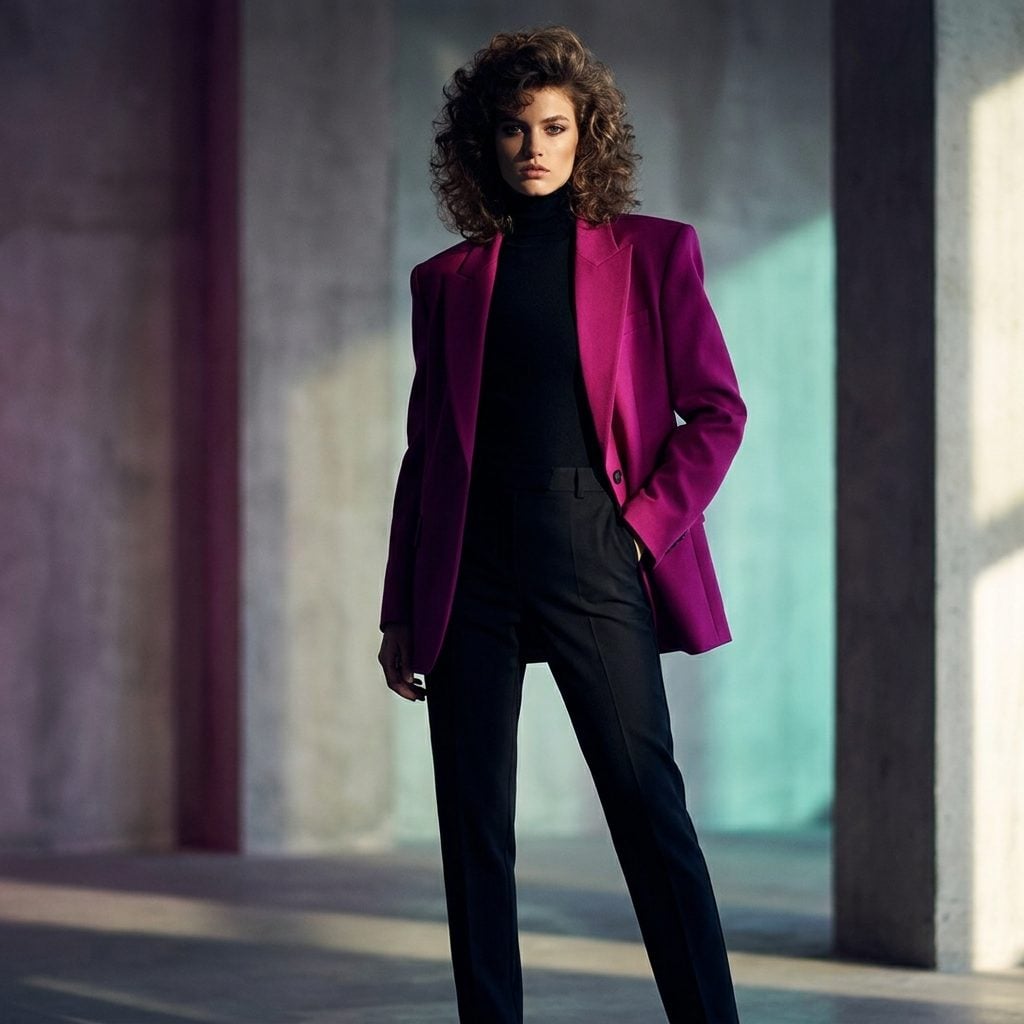
Magenta isn’t a color inclined toward discretion. Yet the open jacket makes an unexpectedly controlled composition by placing its strongest color outside a black top-and-skirt combination. The eye notices the brilliant outer layer first, then registers the narrower dark area between the jacket fronts.
Shoulder structure is essential. Without it, the jacket could hang as two shapeless panels. Instead, the broad upper line and tailored front establish a distinct outline. Black provides continuity underneath, while magenta delivers the sort of saturated color that made eighties fashion impossible to mistake for anything else.
22. Plum Tunic and Stirrup Pants: A Long Jacket Changes the Equation
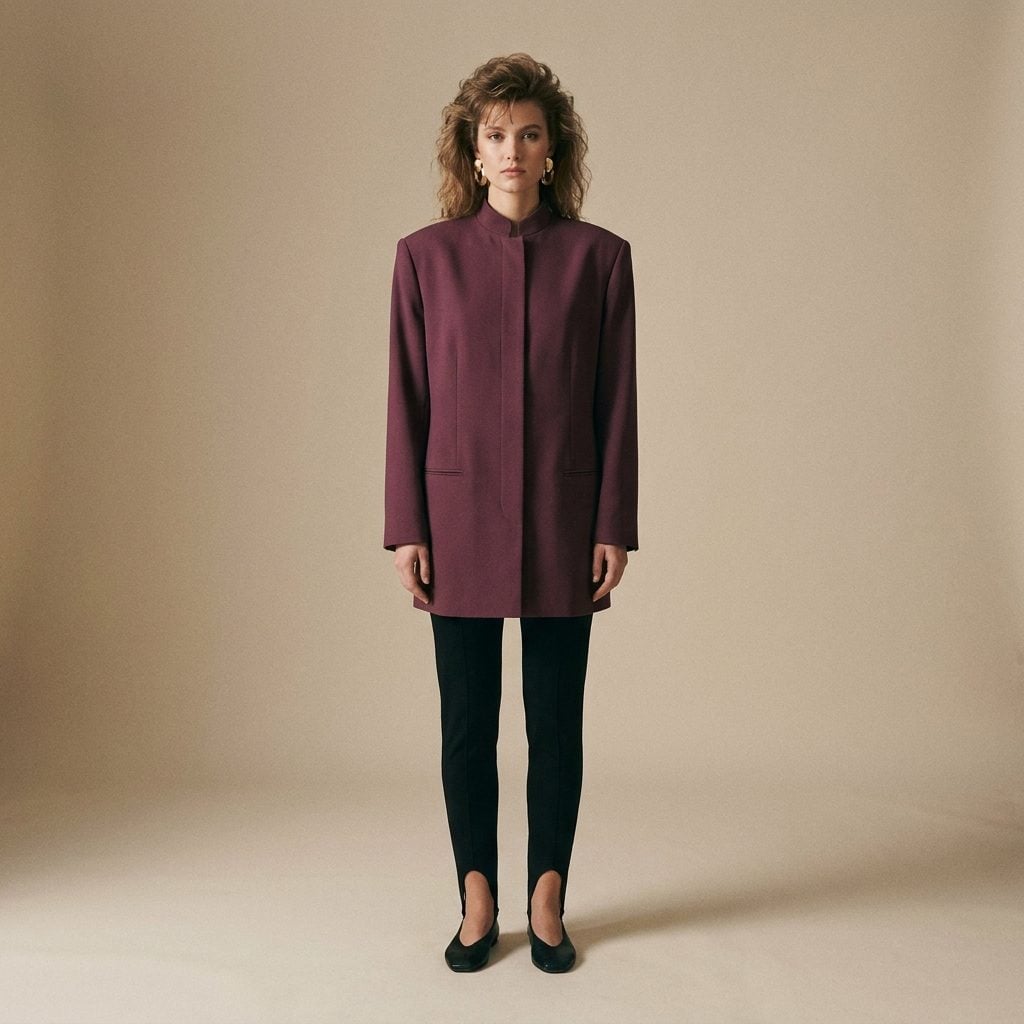
Stirrup pants were not designed to be timid. Their narrow shape made them particularly effective beneath longer tops, provided the fabric had enough substance to hold a smooth outline. This plum tunic jacket supplies the necessary counterweight, covering the hips while leaving the lower legs clearly defined.
The proportion is long over narrow, but not simply big over small. The jacket retains structure through the shoulders and torso, preventing the extra length from becoming shapeless. Black stirrup pants disappear neatly into the footwear, producing the sleek lower silhouette that helped make the style a recognizable eighties staple.
21. Burgundy Wrap Dress: Three Angles, One Defined Waist
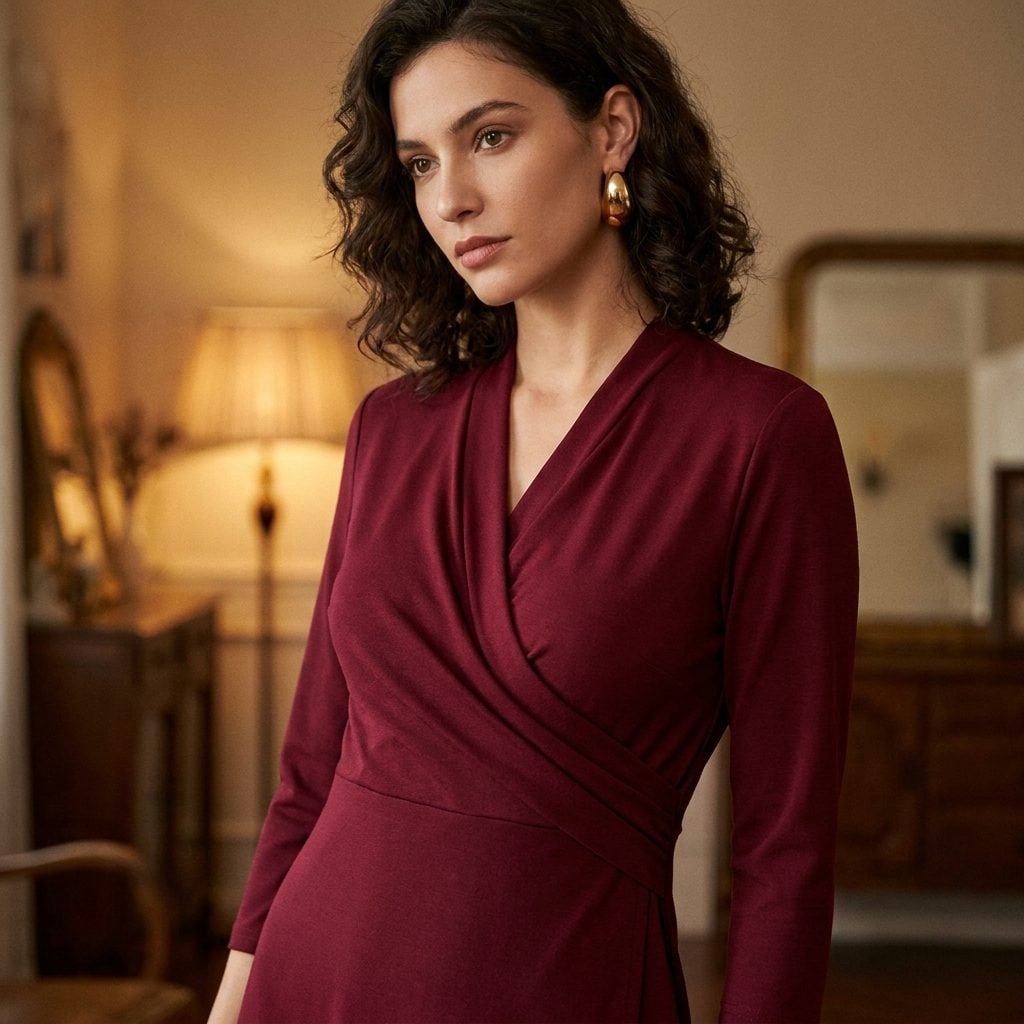
The wrap dress has survived decades of fashion upheaval because its construction is remarkably adaptable. A V-neck opens the neckline, overlapping fabric creates a diagonal across the torso, and the tie adjusts the waist without requiring a rigidly fitted bodice.
Burgundy gives this version a particularly rich eighties character. Stretch jersey allows the fabric to follow the body while accommodating movement, although the exact fit remains crucial. A burgundy wrap dress succeeds when the overlap lies smoothly and the waist tie sits where the proportions benefit most. The design’s versatility, rather than any universal slimming magic, explains its staying power.
20. Mustard Silk Blouse: Shoulder Pads With a Softer Side
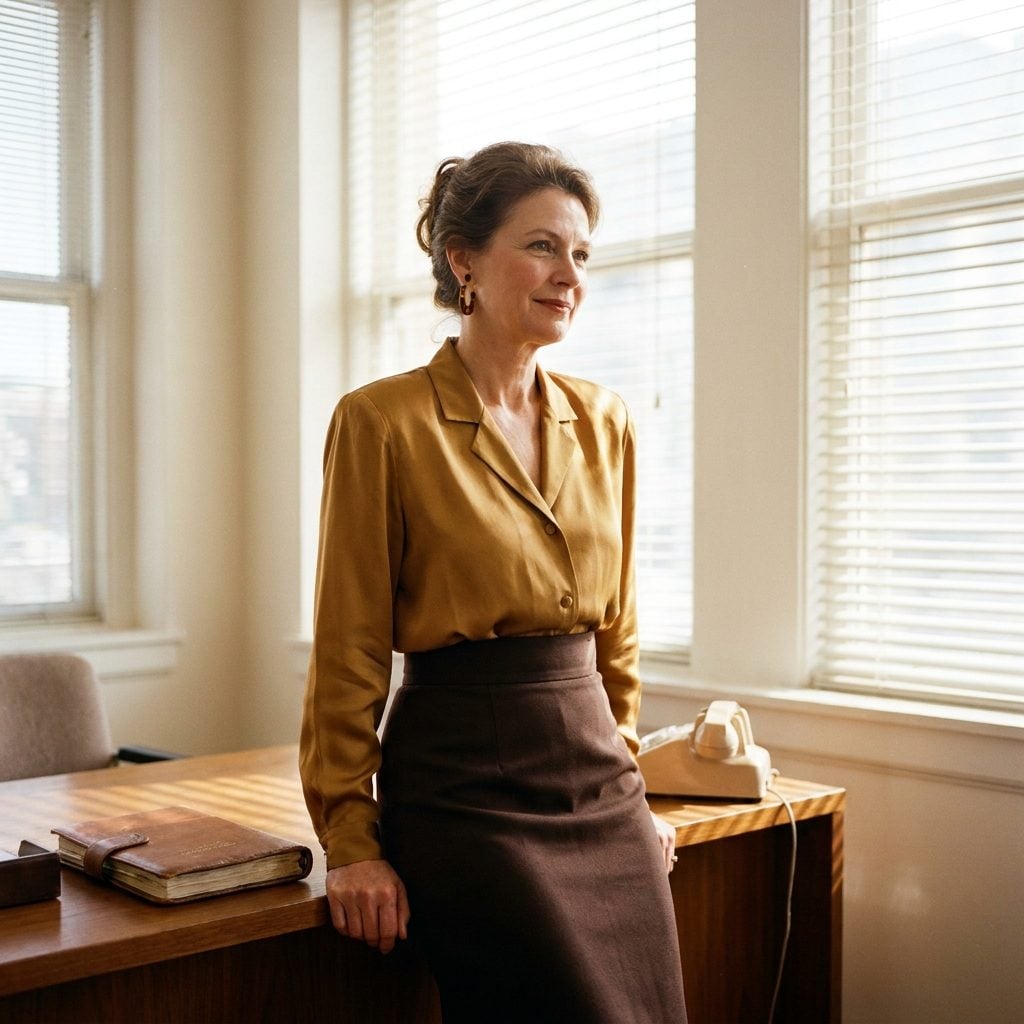
Shoulder pads have spent decades answering for their worst excesses. But moderate padding can establish a clean upper silhouette, particularly when the waist beneath remains softly defined. This mustard blouse demonstrates the distinction between building shape and simply adding width.
The silk is gently bloused over the dark waistband rather than stretched flat across the torso. That small amount of ease gives the waist definition without making the blouse look constricted. Chocolate brown grounds the saturated mustard, creating a warm combination that feels less severe than the decade’s more corporate gray-and-black uniforms.
19. Camel Jacket and Black Turtleneck: A Neutral Combination With an Edge
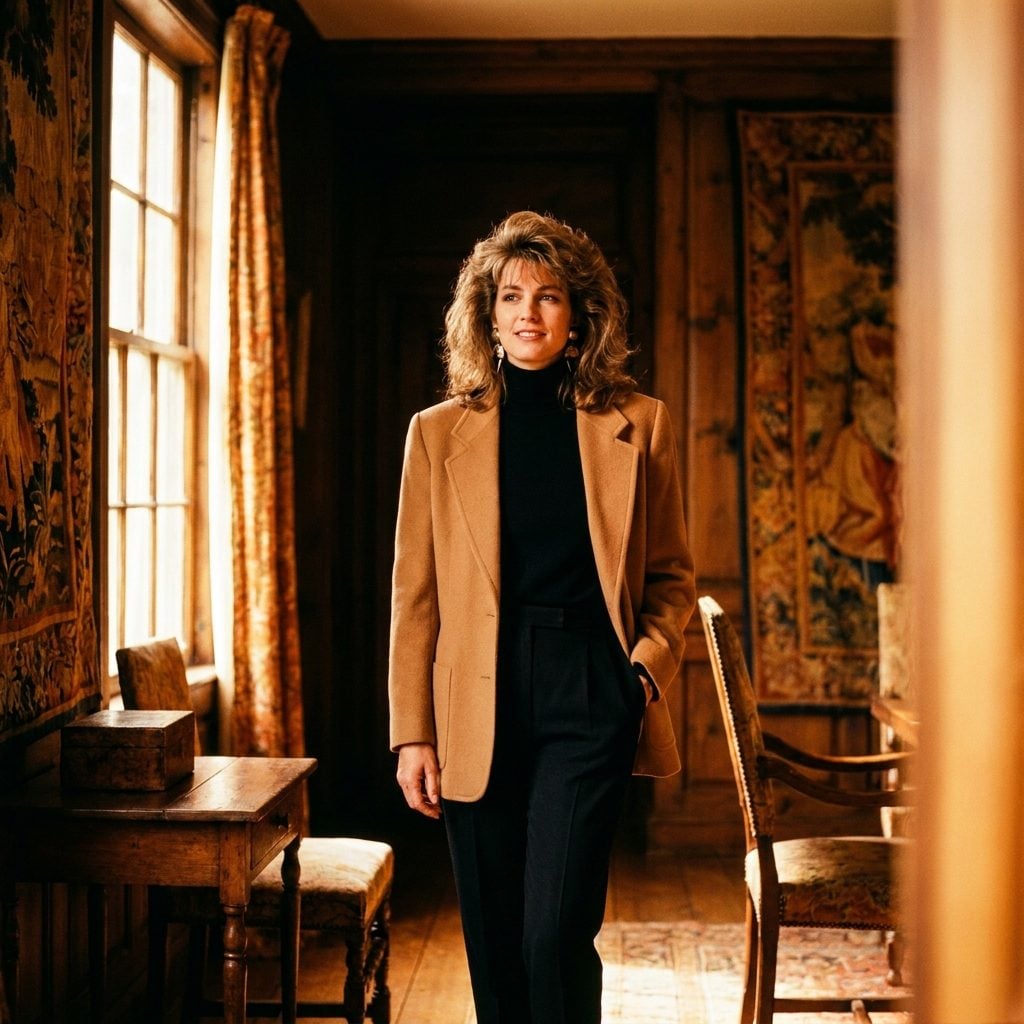
Camel and black have been partners for generations, but the strong-shouldered eighties jacket gives the combination a sharper silhouette. The turtleneck supplies a clean, uninterrupted neckline, while black trousers keep the lower half understated.
What distinguishes this outfit from a longer coat-and-trouser combination is the jacket’s tailored authority. Defined shoulders and structured lapels give the camel fabric a precise outline. The forest-green bag is a welcome complication, adding another deep color without disturbing the restrained foundation. Three colors, each doing something different.
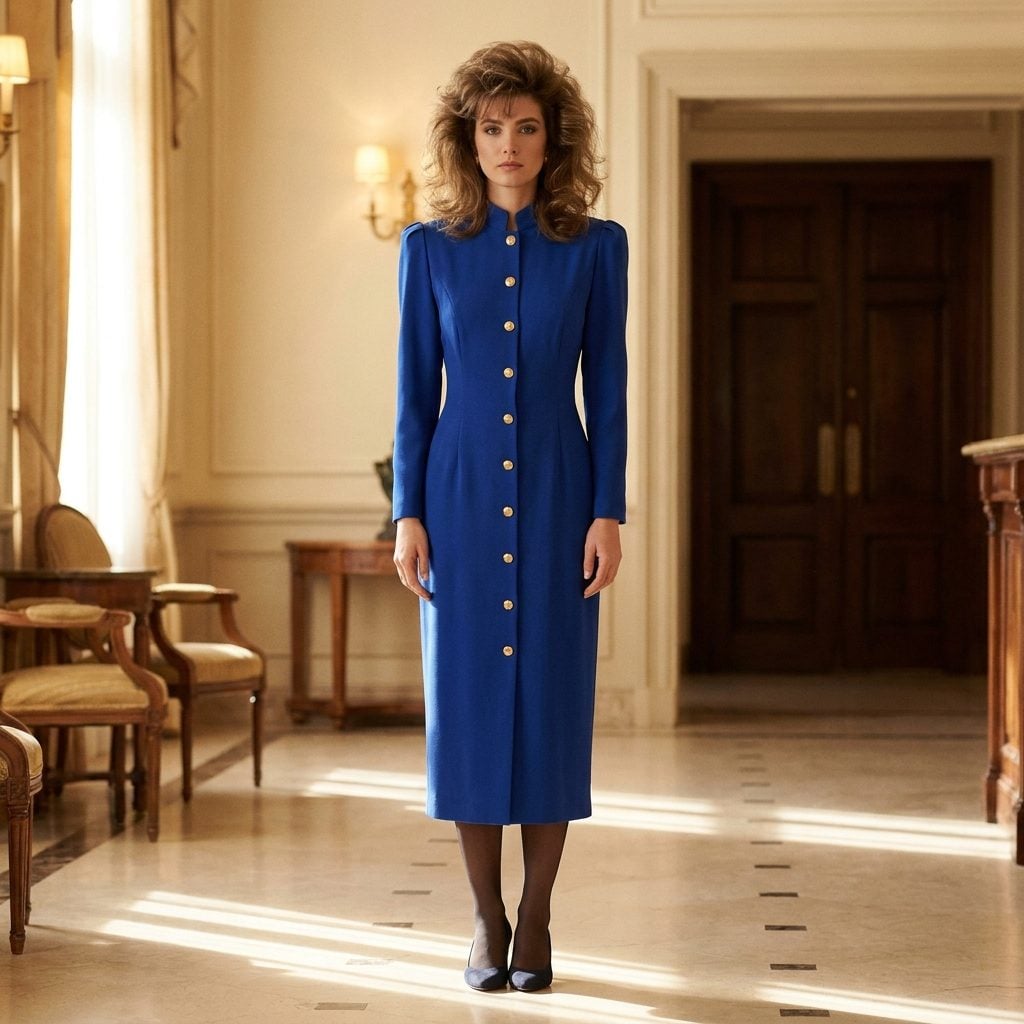
18. Royal-Blue Button-Front Dress: Follow the Buttons
❤️ Would you like to save this?
A row of buttons can be a surprisingly useful design feature when the rest of the dress allows it to remain visible. Here, the placket runs down the center of a royal-blue silhouette, establishing a clear line through the bodice and toward the skirt.
The matching belt adds waist definition without introducing another strong color. Navy hosiery and pumps deepen the palette below the hem, giving the vivid blue room to dominate. The dress doesn’t need elaborate accessories because its most interesting detail is already running straight down the front.
17. Charcoal Sweater Dress: One Pendant Changes the Center of Attention
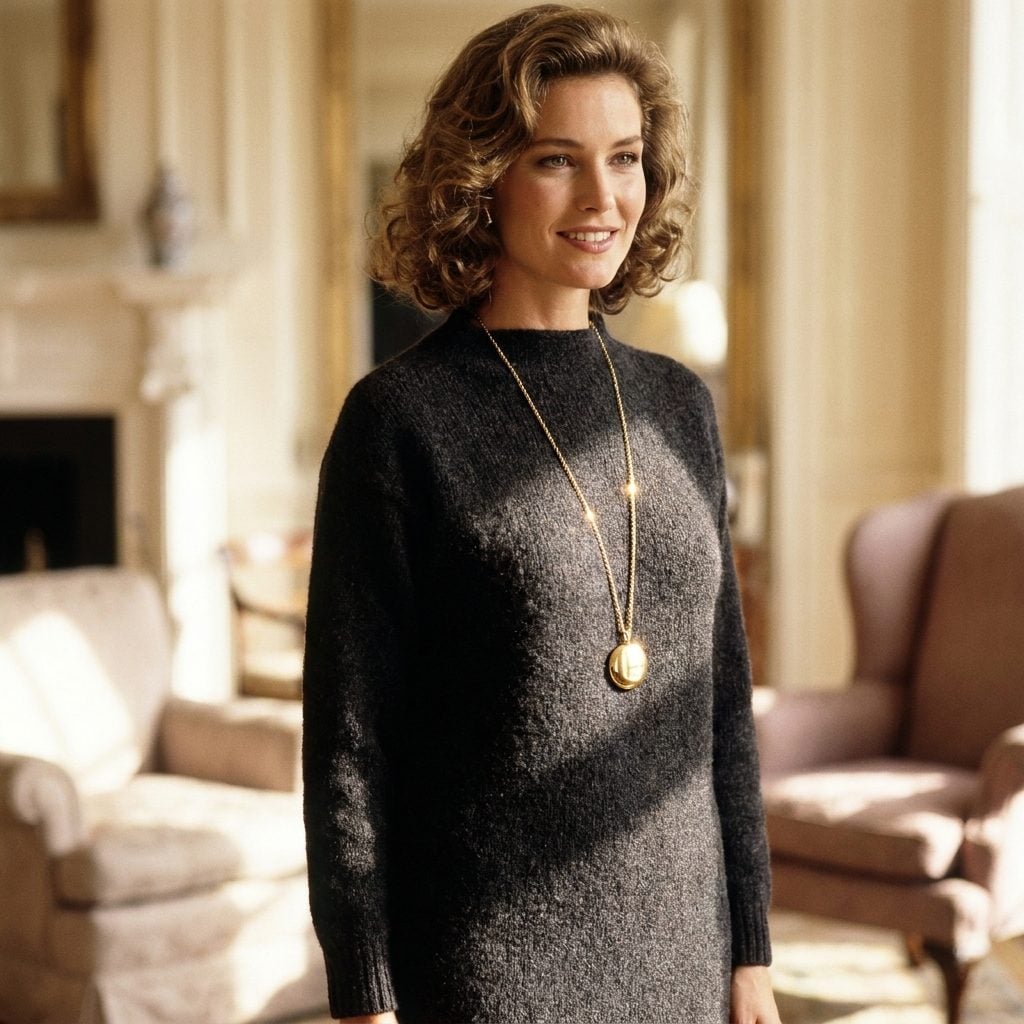
A long gold pendant is a small intervention with a very visible result. Against charcoal knit, the necklace introduces a narrow line of metallic contrast down the center of the torso. The simplicity matters. Several competing necklaces would create a different effect, turning the neckline into the main event.
Matching charcoal hosiery keeps the palette consistent below the hem, while the sweater dress retains the relaxed character that made knitwear such a useful alternative to tailored suits. No belt, no complicated layering, no need to pretend a comfortable dress can’t also look carefully considered.
16. Cobalt Jacket and Black Pencil Skirt: The Shoulder-Pad Argument
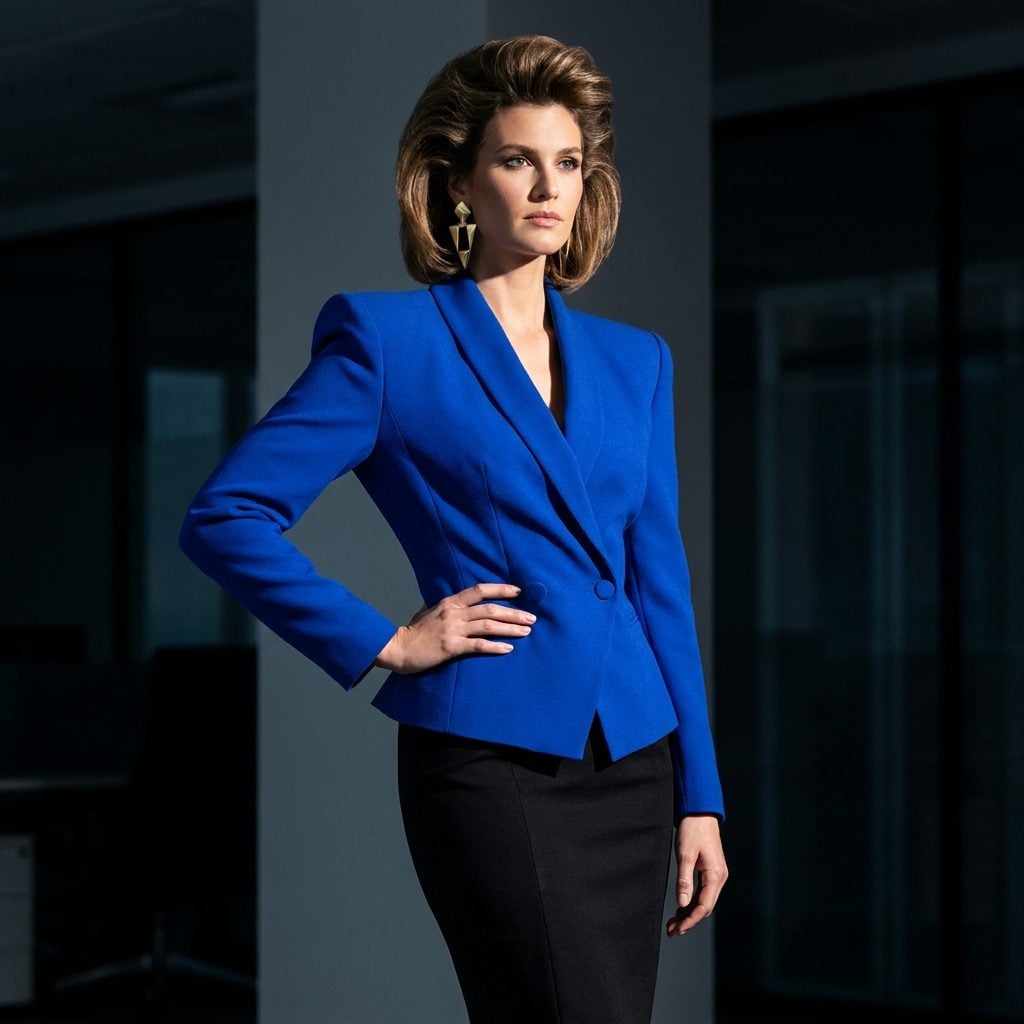
The cobalt jacket makes its case before the pencil skirt gets a word in. Broad, structured shoulders establish the upper proportions, while the jacket’s shaping brings attention back toward the waist. Against that wider shoulder line, the middle can appear more defined.
The black pencil skirt provides a narrow, uncomplicated finish. Its job isn’t to compete with the cobalt but to balance it. This is the essential logic behind some of the decade’s most recognizable tailoring: exaggerate one proportion, control another, and let the contrast establish the silhouette. Shoulder pads weren’t always subtle, but subtlety wasn’t always the assignment.
15. Denim Skirt and Emerald Sweater: Casual Dressing Learns a Few Tricks
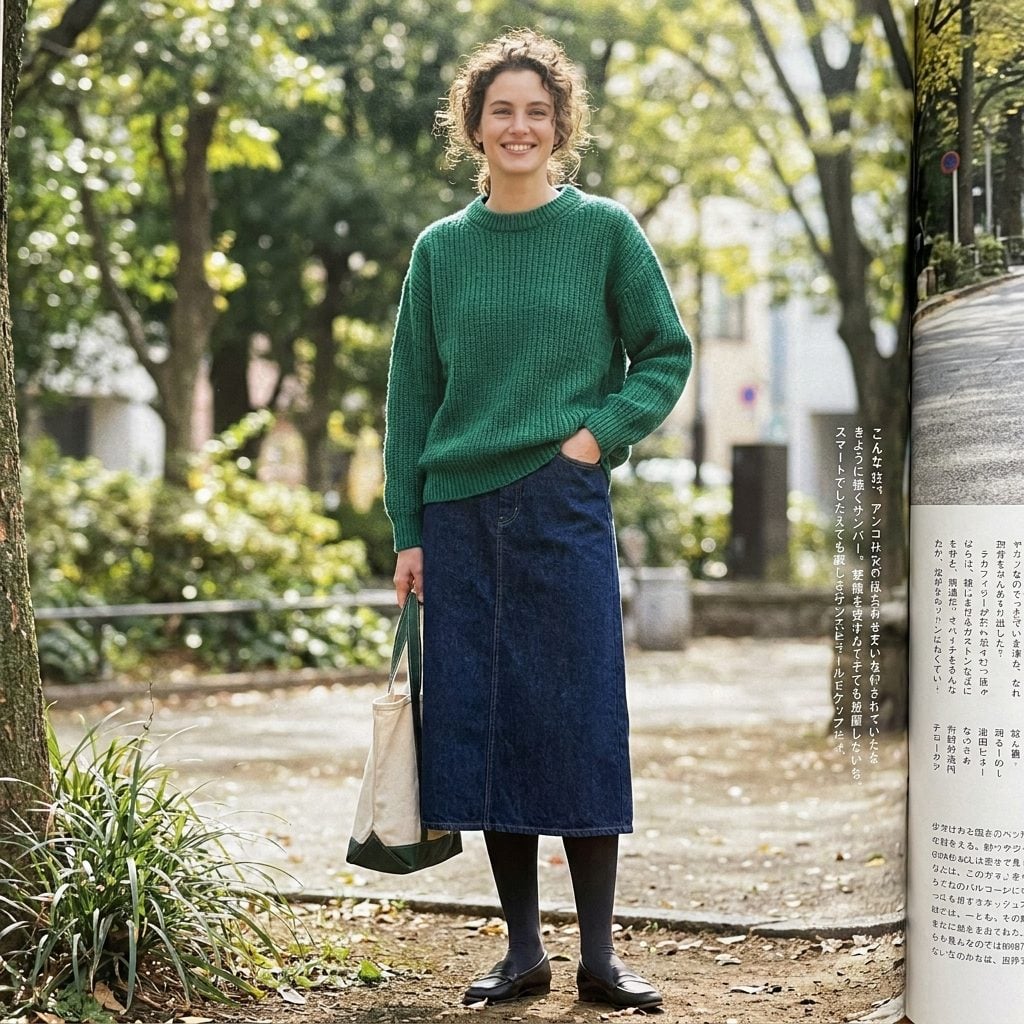
Denim doesn’t automatically become casual just because someone has stopped wearing a suit. A dark indigo skirt has enough visual weight to work with polished knitwear, particularly when the hem and footwear are treated as part of the same composition.
Navy hosiery and pumps create a smooth transition below the skirt, while the emerald sweater gives the upper body a welcome burst of color. The contrast between jewel-tone knit and dark denim feels distinctly eighties without depending on oversized shoulders or extravagant accessories. A practical outfit, with more thought behind it than its simplicity suggests.
14. Navy Dolman-Sleeve Dress: Volume Has to End Somewhere
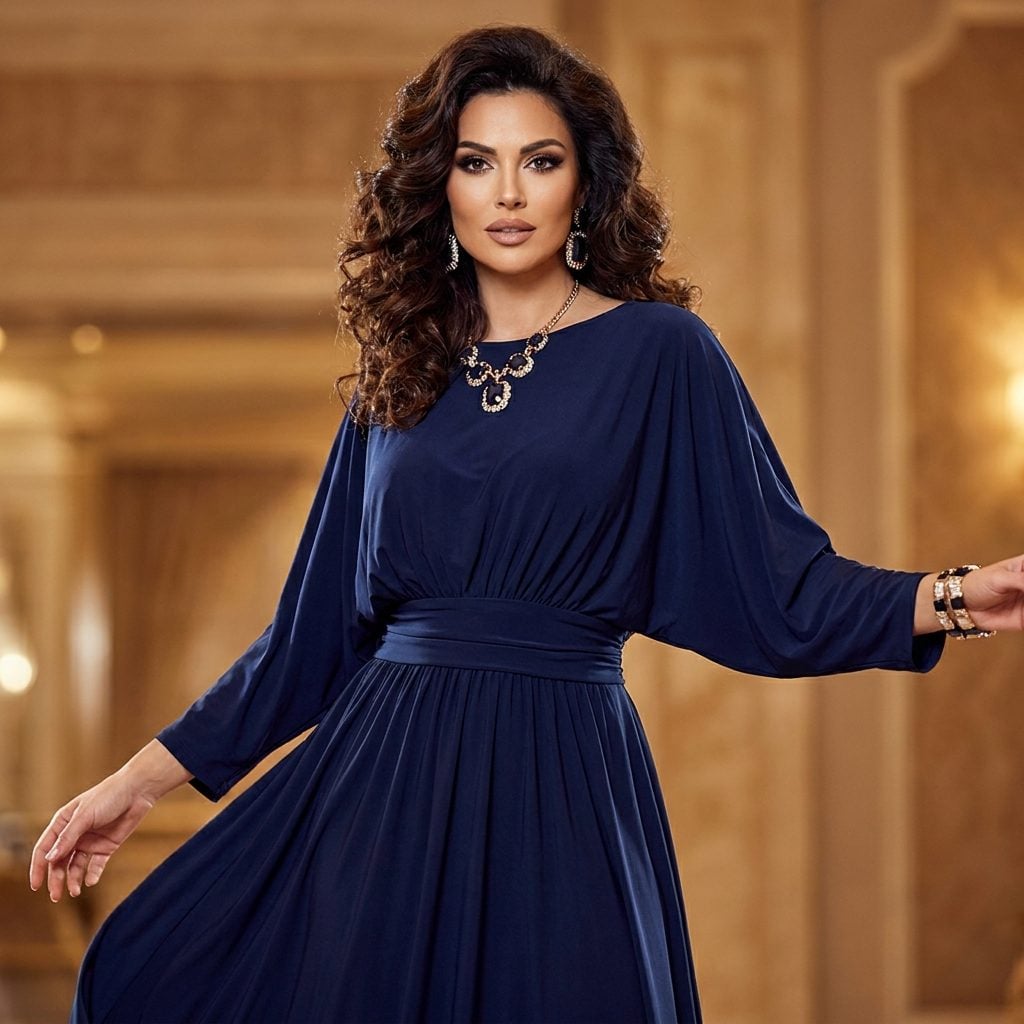
The dolman sleeve makes a generous gesture across the upper body, with fabric extending from the bodice into the sleeve rather than following a conventional fitted armhole. Left entirely unstructured, that volume can obscure the waist. This dress gives it a boundary.
A tonal navy belt gathers the silhouette at the middle, and the narrower skirt restores definition below. Structured wool-crepe is well suited to this sort of controlled volume because it can hold a shape without requiring excessive stiffness. The result is a more disciplined interpretation of the batwing silhouette, where fullness and precision occupy the same garment.
13. Black Dress and Long Red Scarf: An Accessory That Refuses to Sit Still
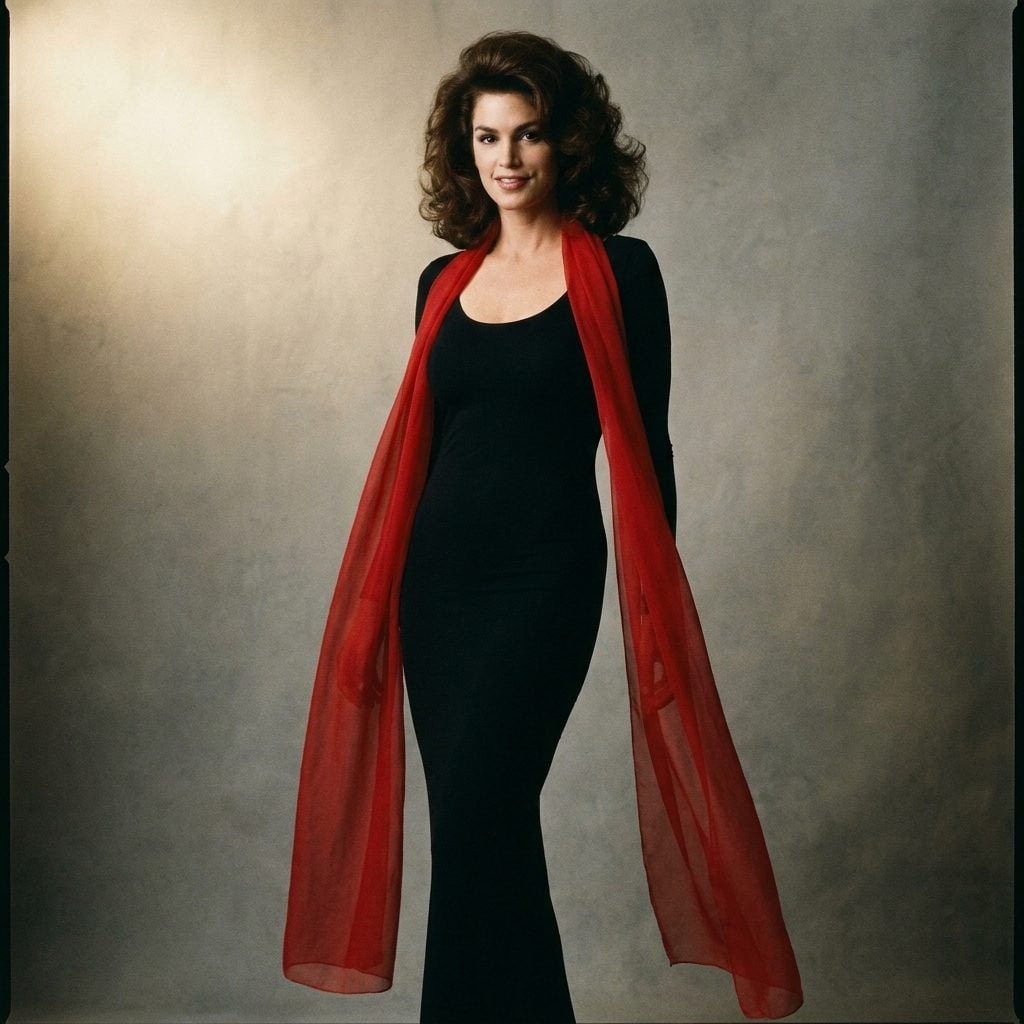
A black dress is an accommodating background, but this one gets an entirely different character from a long red scarf. Instead of being tied into a bow or wrapped repeatedly around the neck, the scarf hangs in two narrow lengths down the front.
That decision gives the outfit movement and a vivid central accent without changing the dress itself. The scoop neckline and moderate shoulder structure remain understated, allowing the red to command attention. Tie the scarf differently and the proportions change immediately. Few accessories offer quite so much visual influence for so little fabric.
12. Ivory Blouse and High-Waisted Trousers: The Waist Moves Up
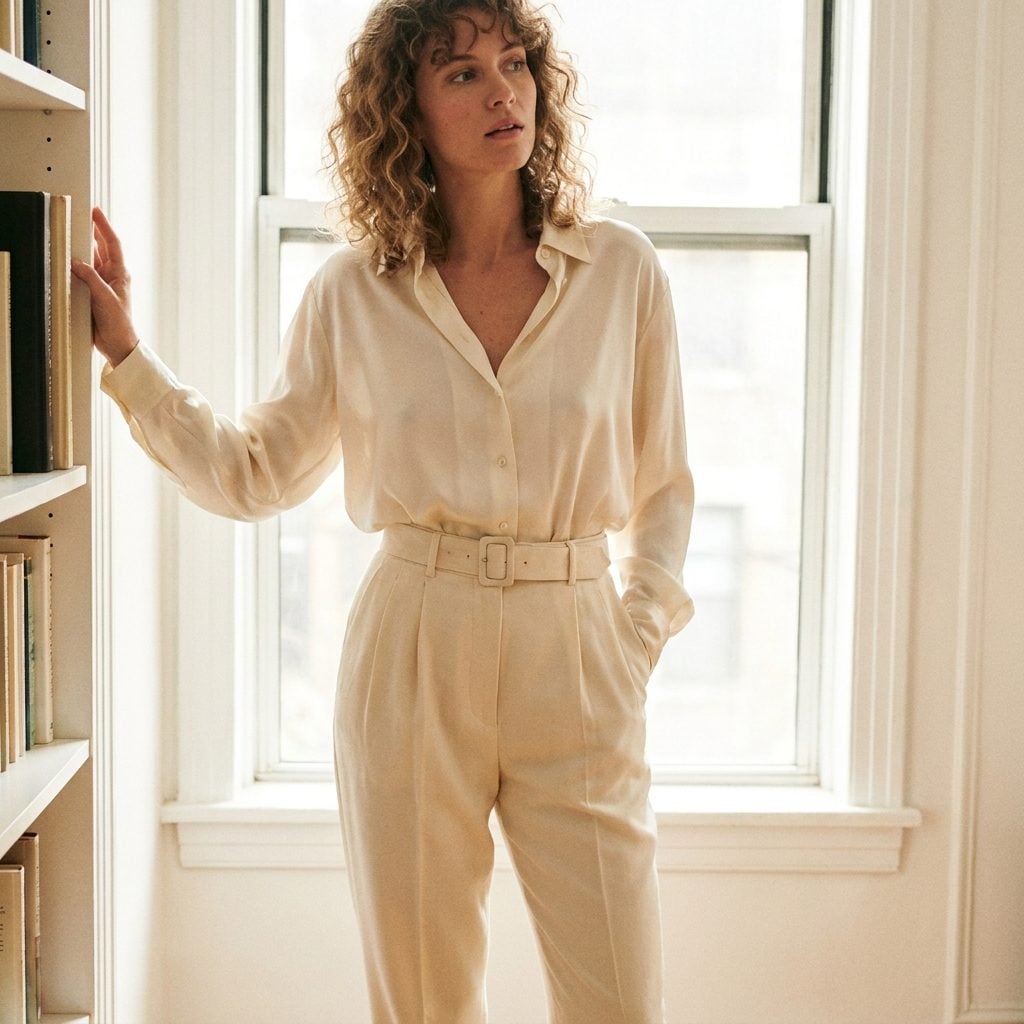
Raise the apparent starting point of the legs and the proportions of an outfit change. That’s the advantage of trousers fitted at the natural waist, particularly when the blouse is tucked neatly enough to leave the waistband visible.
These tapered trousers offer room through the hip and thigh before narrowing toward the ankle, a shape closely associated with late-eighties tailoring. The ivory blouse provides a light upper contrast, while the gold buckle makes the waist impossible to overlook. The result depends less on concealing the body than on choosing exactly where the garment’s divisions should appear.
11. Red Jacket and Charcoal Trousers: A Long, Leaner Kind of Drama
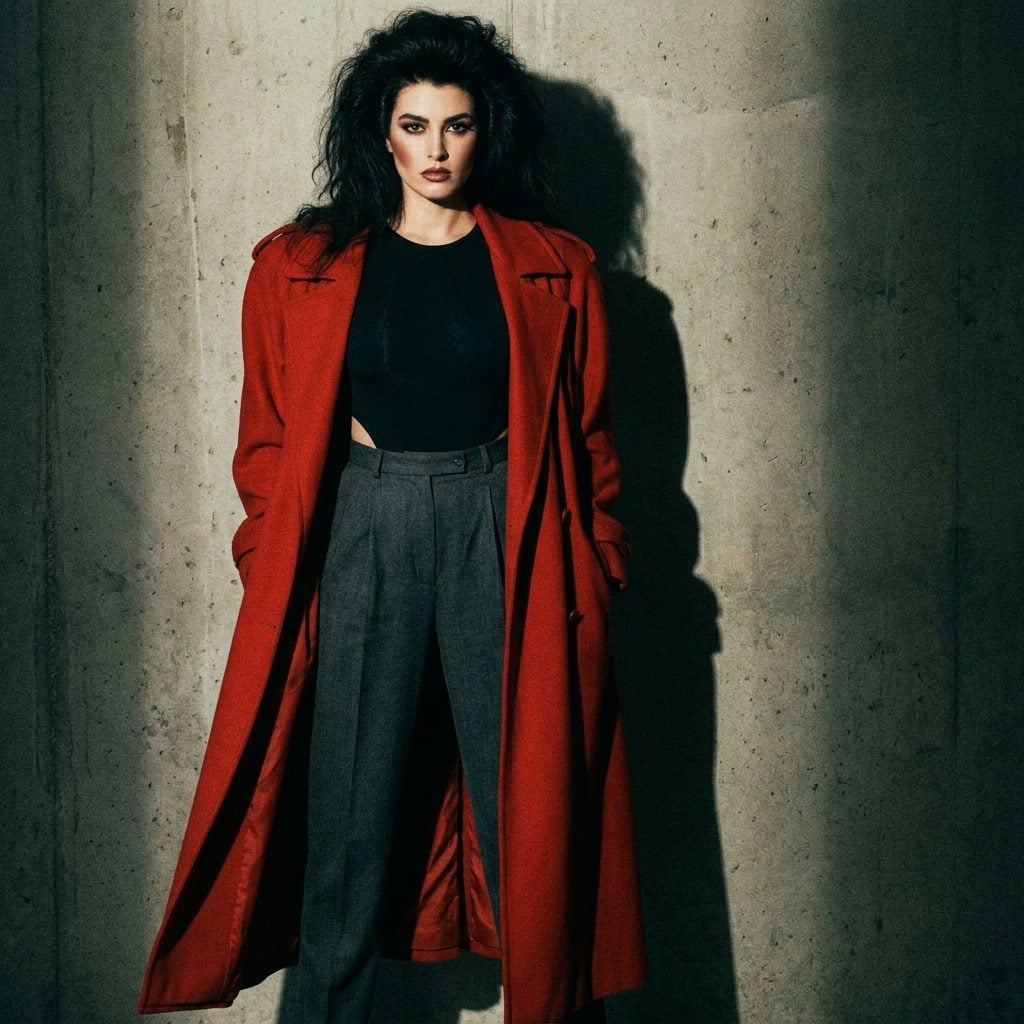
Where a cropped jacket emphasizes the waist, this long red version plays with the entire torso. Its extended hem creates a more continuous outer silhouette, and the open front reveals a black bodysuit that sits smoothly beneath the jacket.
Charcoal trousers soften the transition from black to gray, while their tapered cut prevents the lower half from becoming too voluminous. The red jacket is the unmistakable centerpiece, but the interesting detail is how its length changes the relationship between shoulders, hips, and legs. Strong color attracts attention; good proportions give that attention somewhere worthwhile to go.
10. Gray Skirt Suit and Ivory Blouse: Two V-Necks Are Better Than One
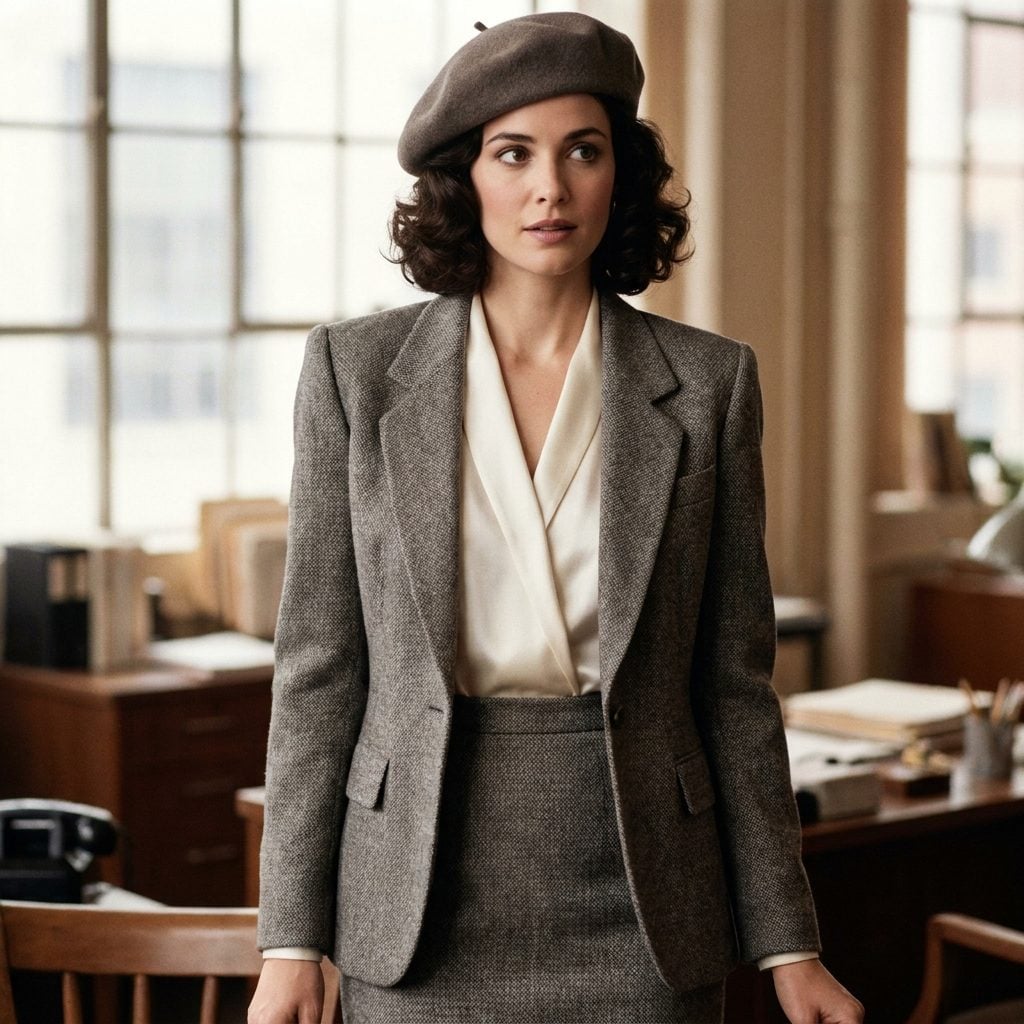
Look closely at the neckline. The jacket lapels create one V-shaped opening, and the ivory blouse introduces another inside it. The repeated angles give the upper body a layered architectural quality, directing attention toward the center without requiring a dramatic neckline.
Gray keeps the tailoring restrained, while ivory provides the necessary contrast to make the double V visible. The skirt follows the jacket’s disciplined lines, creating a suit that feels more precise than severe. Eighties power dressing is remembered for shoulder width, but the smaller decisions around collars, lapels, and openings could be just as effective.
9. Forest-Green Jumpsuit: One Garment, Plenty of Structure
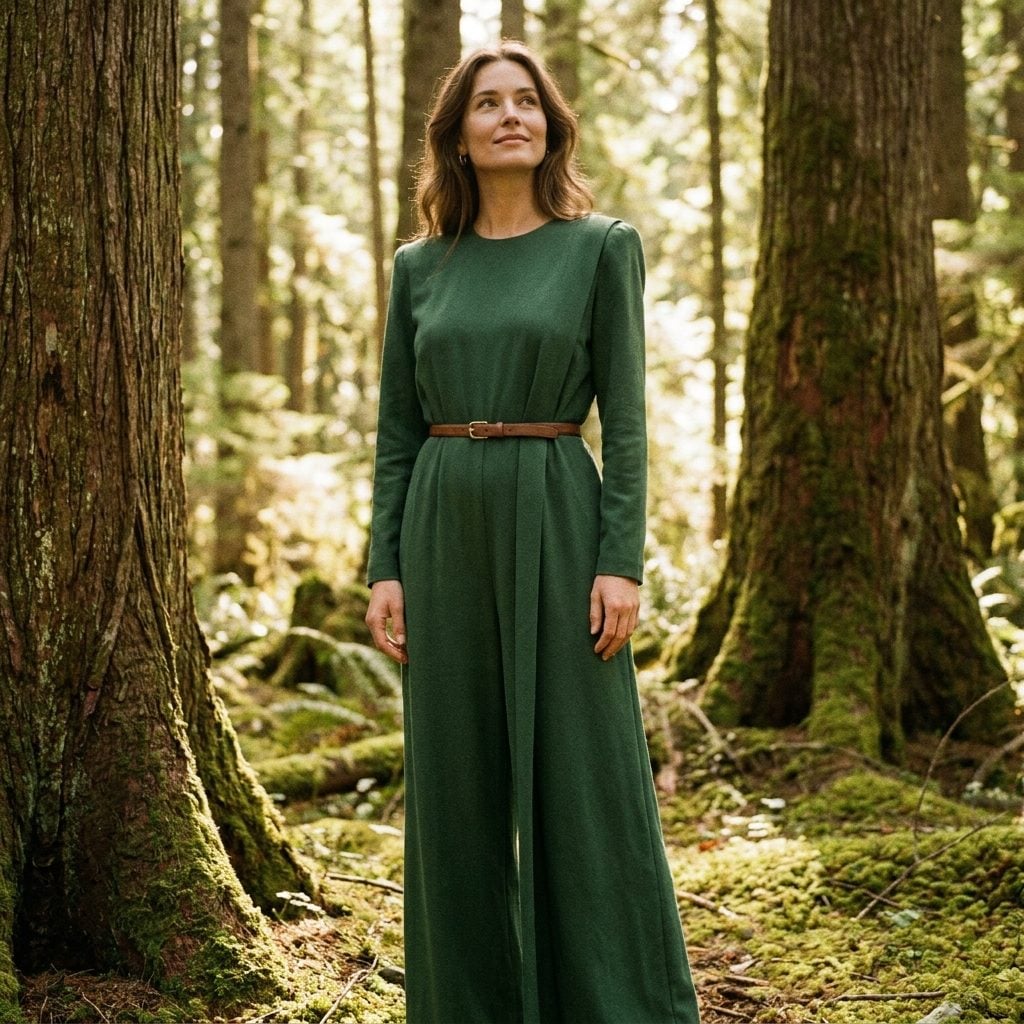
A jumpsuit eliminates the need to coordinate separate upper and lower garments, but that doesn’t mean its proportions take care of themselves. This forest-green version relies on shoulder structure, a narrow matching belt, and carefully tapered trousers to give the one-piece silhouette definition.
Pleating adds room through the upper leg, while the narrower ankle keeps the shape controlled. The deep green gives the outfit visual consistency without relying on black, and the matching belt identifies the waist without becoming the dominant feature. It has the practicality of American sportswear and the composure of tailored dressing, a particularly appealing combination.
8. Red Peplum Jacket: The Waist Gets Its Own Architecture
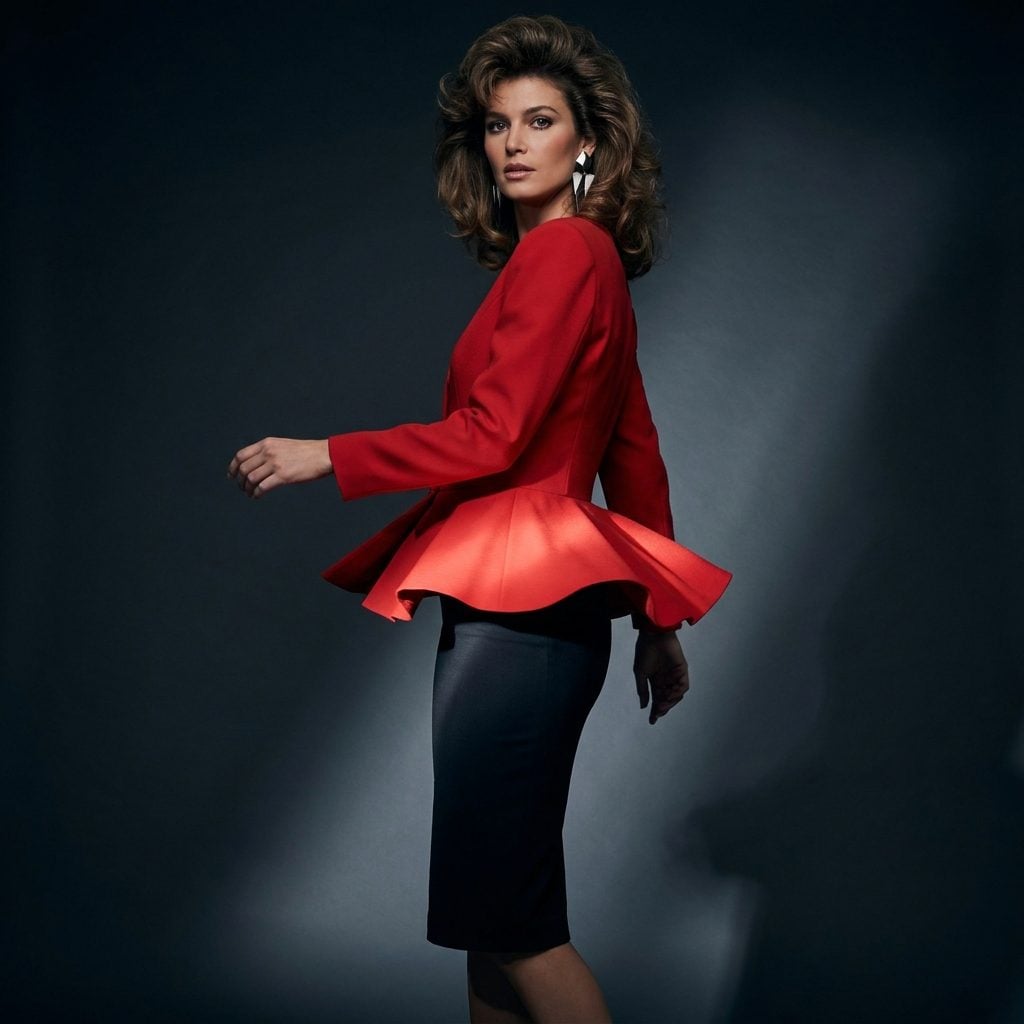
The peplum is one of fashion’s more ingenious ways of creating shape without demanding that the body provide all of it. This red jacket narrows through the waist before releasing into a controlled flare below, producing a pronounced contrast between the fitted middle and the fabric extending over the upper hips.
Strong shoulders reinforce that shape from above, while the narrow black skirt keeps the lower silhouette disciplined. The important word is controlled. A larger, more heavily gathered peplum could add considerable volume; this restrained version gives the waist definition without overwhelming the skirt. Tailoring creates the hourglass effect, and the brilliant red makes certain nobody overlooks it.
7. Burgundy Jacket and Black Pencil Skirt: Two Inches Can Change the Proportions
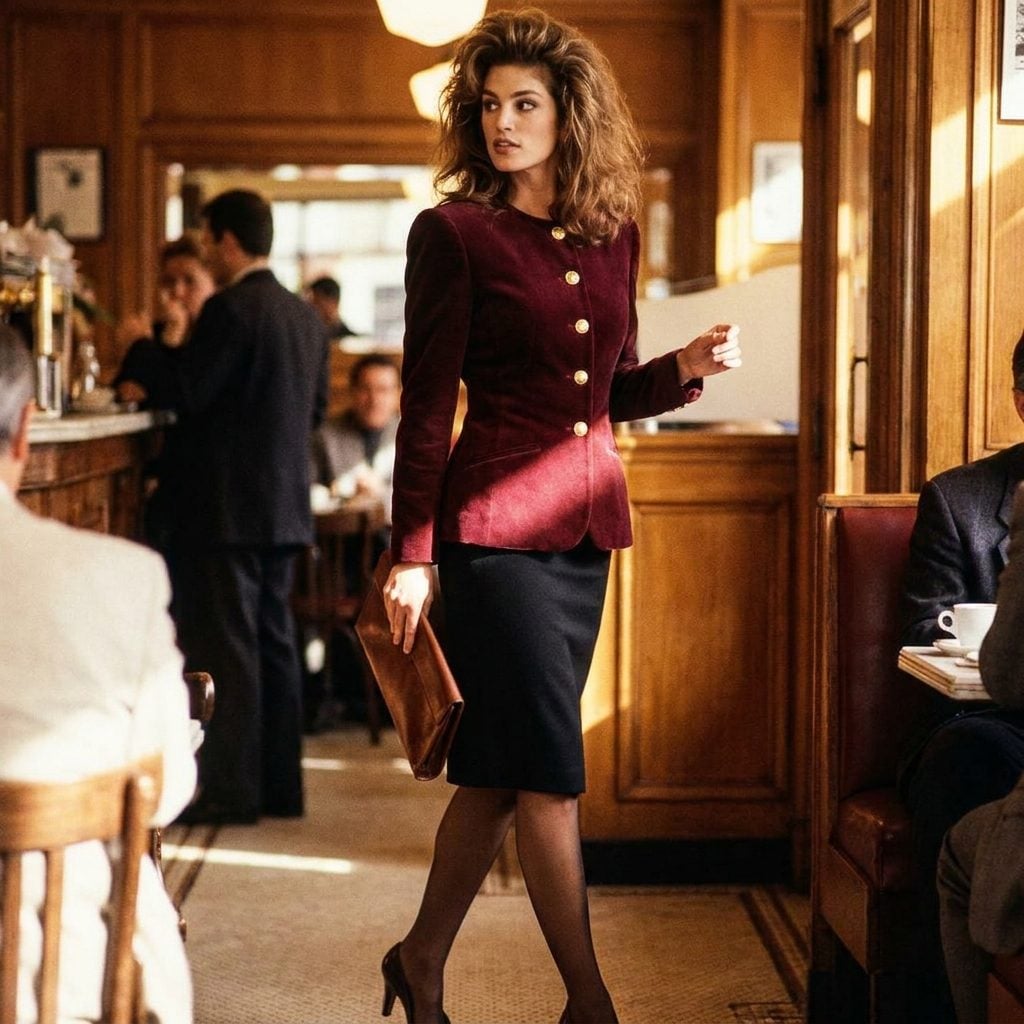
Jacket length is easy to overlook until the hem lands somewhere unfortunate. This burgundy jacket ends around the hip, leaving enough of the black pencil skirt visible to establish a clear distinction between the upper and lower proportions.
Worn open, the jacket also reveals the black shell beneath, creating a darker central area without sacrificing the richness of the burgundy. The tan bag provides a lighter accent against the deeper colors. Change the jacket length and the relationship between torso and legs changes with it, which is why trying on different cuts can be more useful than simply choosing a different size.
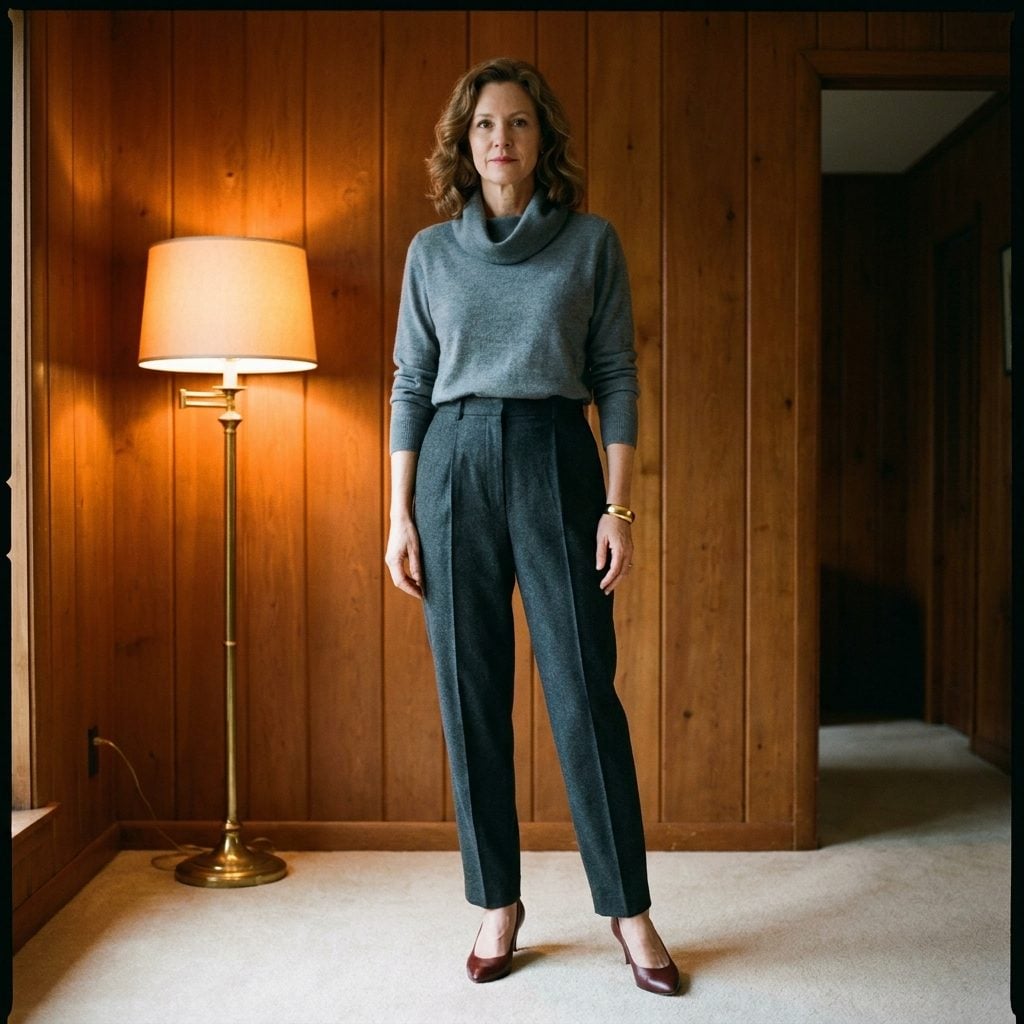
6. Slate-Gray Cowl Neck: Soft Volume Meets a Sharply Defined Waist
❤️ Would you like to save this?
A cowl neck introduces a different kind of volume from shoulder pads or batwing sleeves. Instead of widening the entire upper silhouette, soft folds gather around the neckline, giving the sweater texture and movement close to the face.
Below, the high-waisted wool trousers supply a more disciplined shape. Tucking the sweater keeps excess fabric from gathering around the hips, while the gray-and-charcoal palette allows the different textures to provide much of the interest. Softness above, tailoring below, and no need for a brightly colored accessory to explain the relationship.
5. Emerald Shirt Dress: A Belt That Knows Its Place
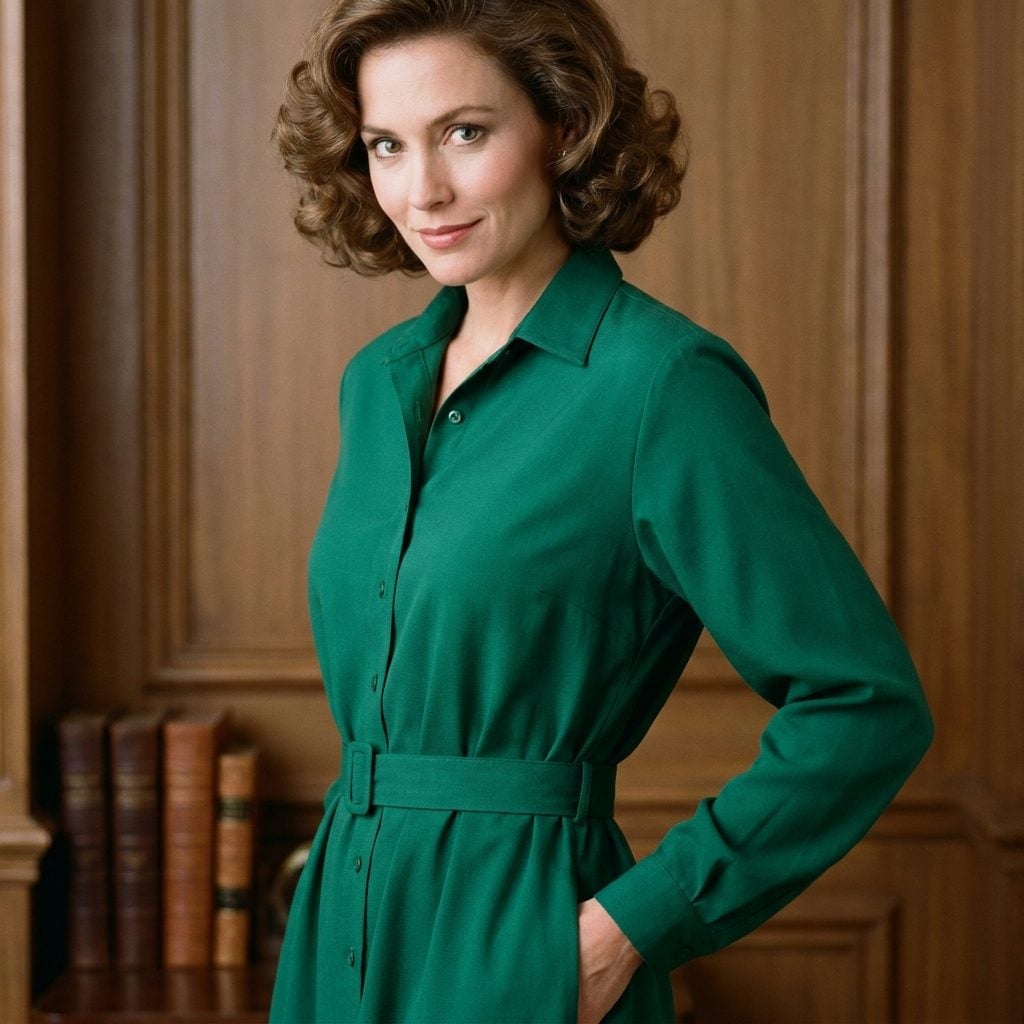
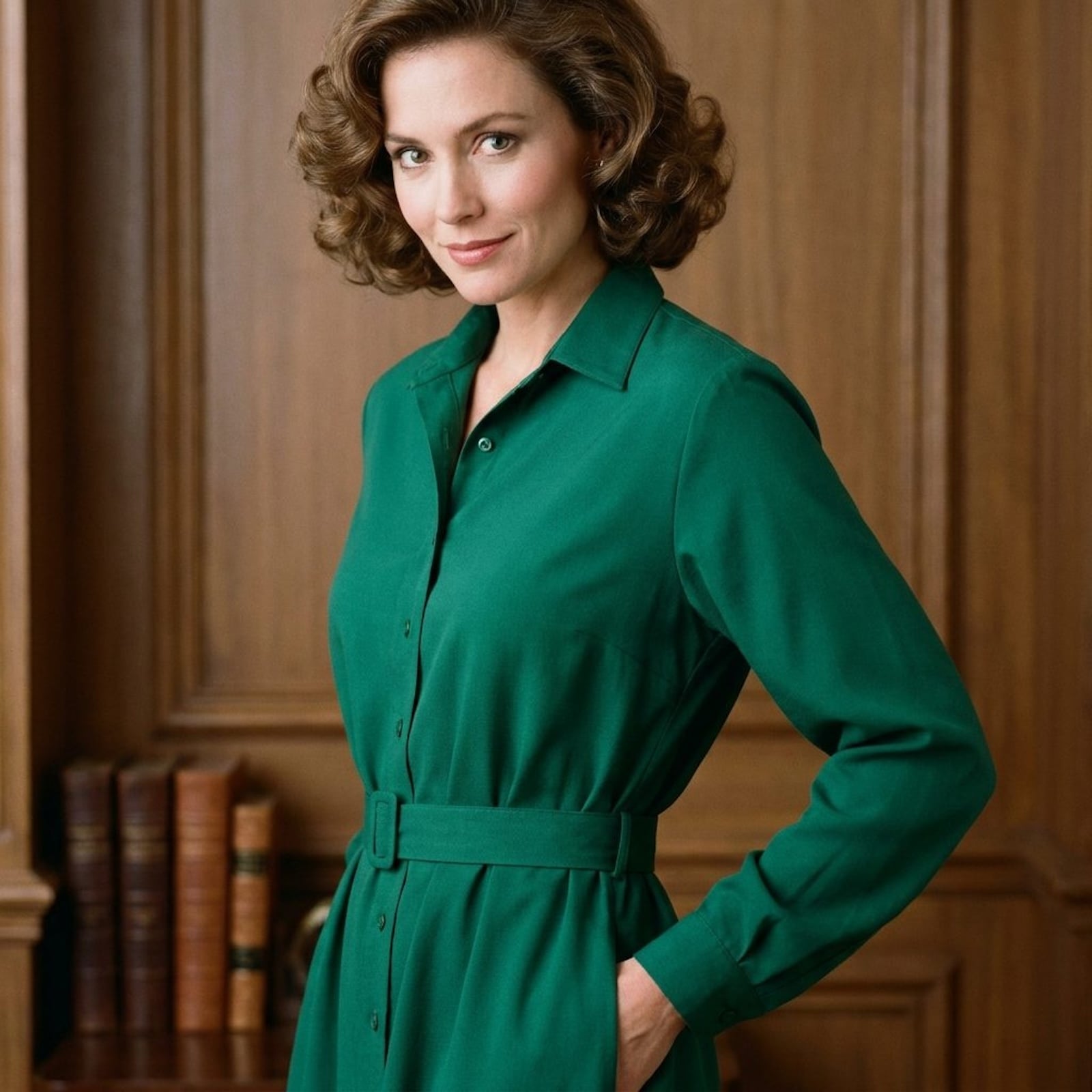
The shirt dress borrows its authority from menswear tailoring, then rearranges the proportions around a defined waist. This emerald version uses a matching belt to draw in the fabric without introducing a second dominant color across the middle.
The main attraction is the relationship between the relaxed shirt-style bodice and the fitted waist. The collar adds structure near the face, the sleeves contribute to the tailored character, and the skirt continues the saturated green below. A straightforward garment with considerably more shaping potential than its familiar name suggests.
4. Vertical-Stripe Blouse and Black Skirt: The Print Knows Where to Stop
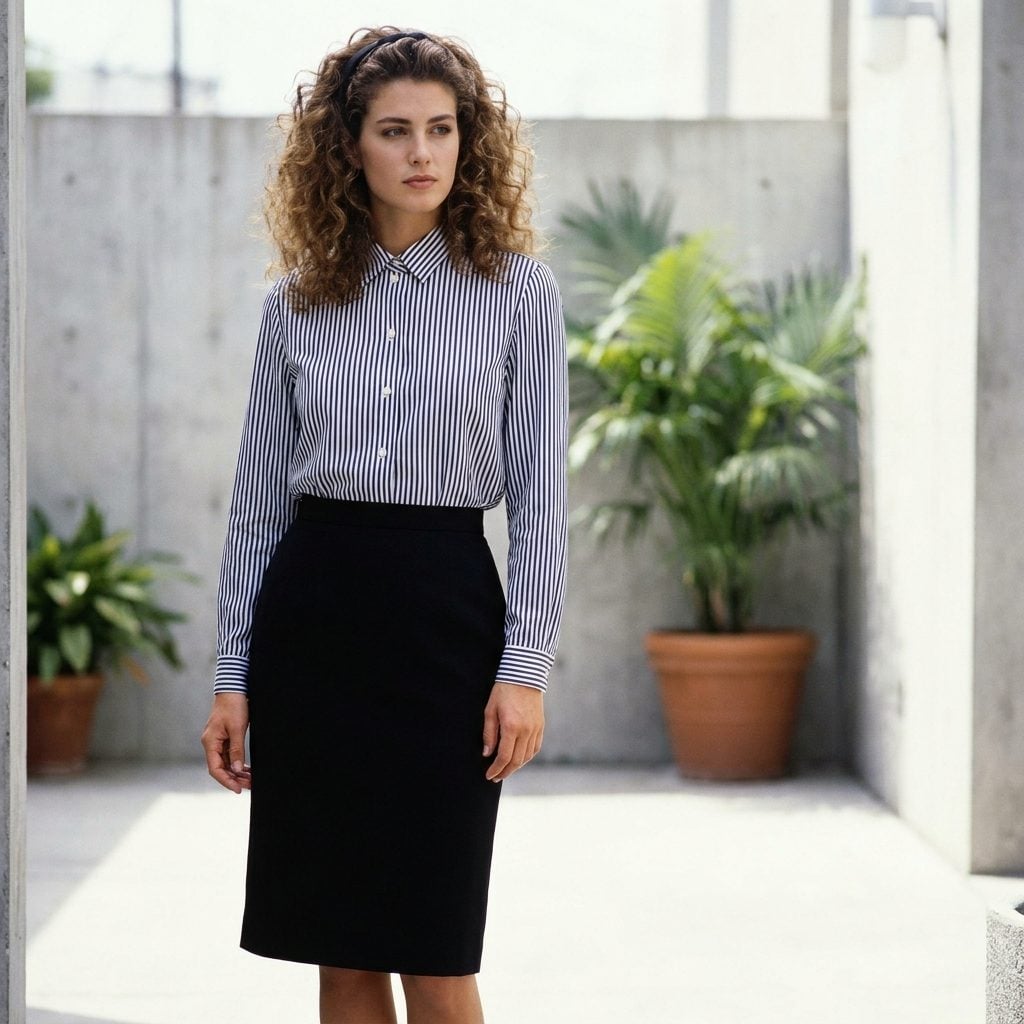
Stripes can flatter, overwhelm, widen, or sharpen an outfit depending on their scale and placement. These narrow vertical stripes create a relatively fine pattern across the blouse, while the solid black skirt gives the eye somewhere quieter to settle.
The red bag interrupts the monochromatic foundation with a concentrated burst of color near the hip. That detail prevents the combination from becoming overly severe. The real lesson isn’t that vertical stripes automatically make everyone look slimmer. It’s that a controlled print paired with a simple solid can produce a more balanced composition than two competing patterns.
3. Black Wool Dress and Wide Belt: A Waistline Worth Defining
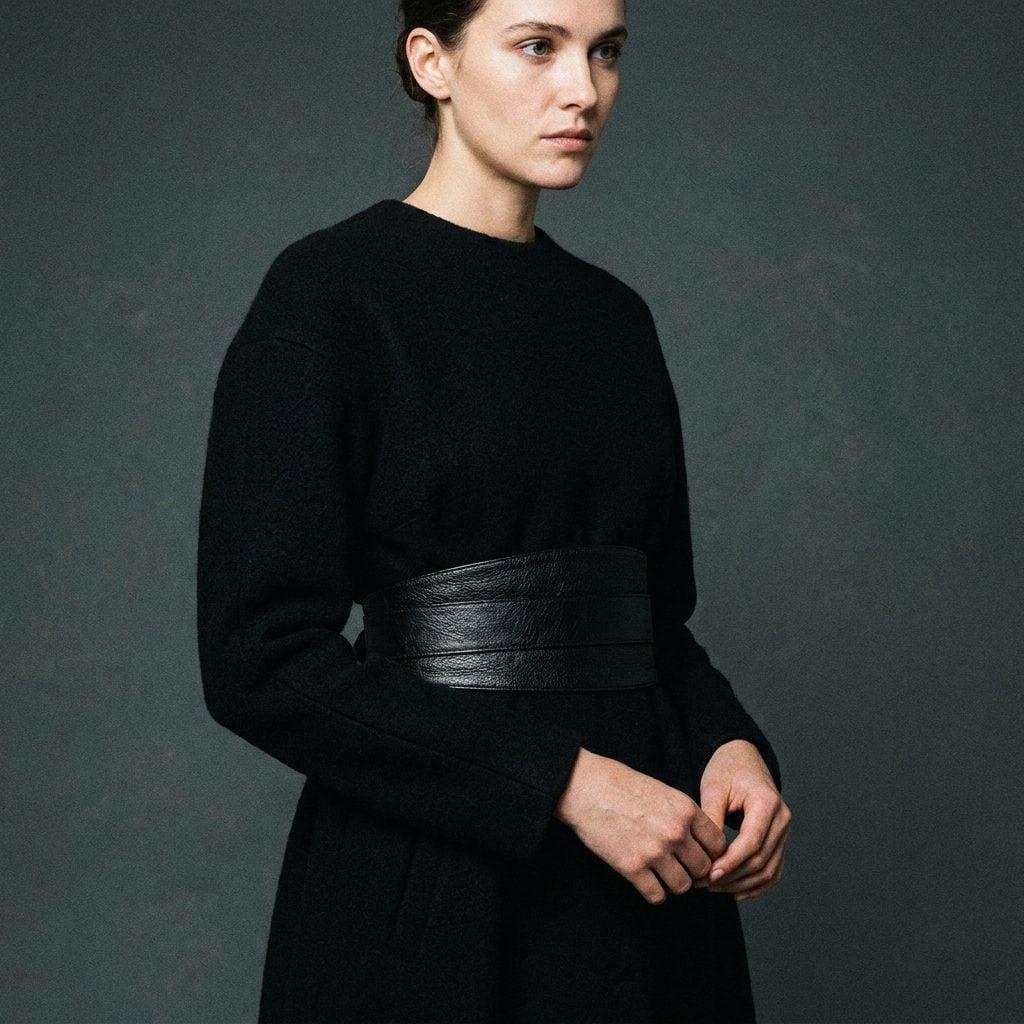
A wide belt makes a much stronger statement than the narrow tonal versions elsewhere in this gallery. On this black wool dress, the belt occupies a substantial portion of the waist, creating a clear division between the softly bloused upper body and the narrower skirt.
The success comes from having enough fabric above the belt to create shape without excessive bunching. Black keeps the belt and dress visually connected, while burgundy pumps and an oxblood bag introduce warmer notes away from the middle. A wide belt isn’t automatically flattering on every torso, but with the right placement and proportion, it can turn a fairly simple dress into a carefully shaped silhouette.
2. Camel Cardigan Coat: Let the Outer Layer Do the Lengthening
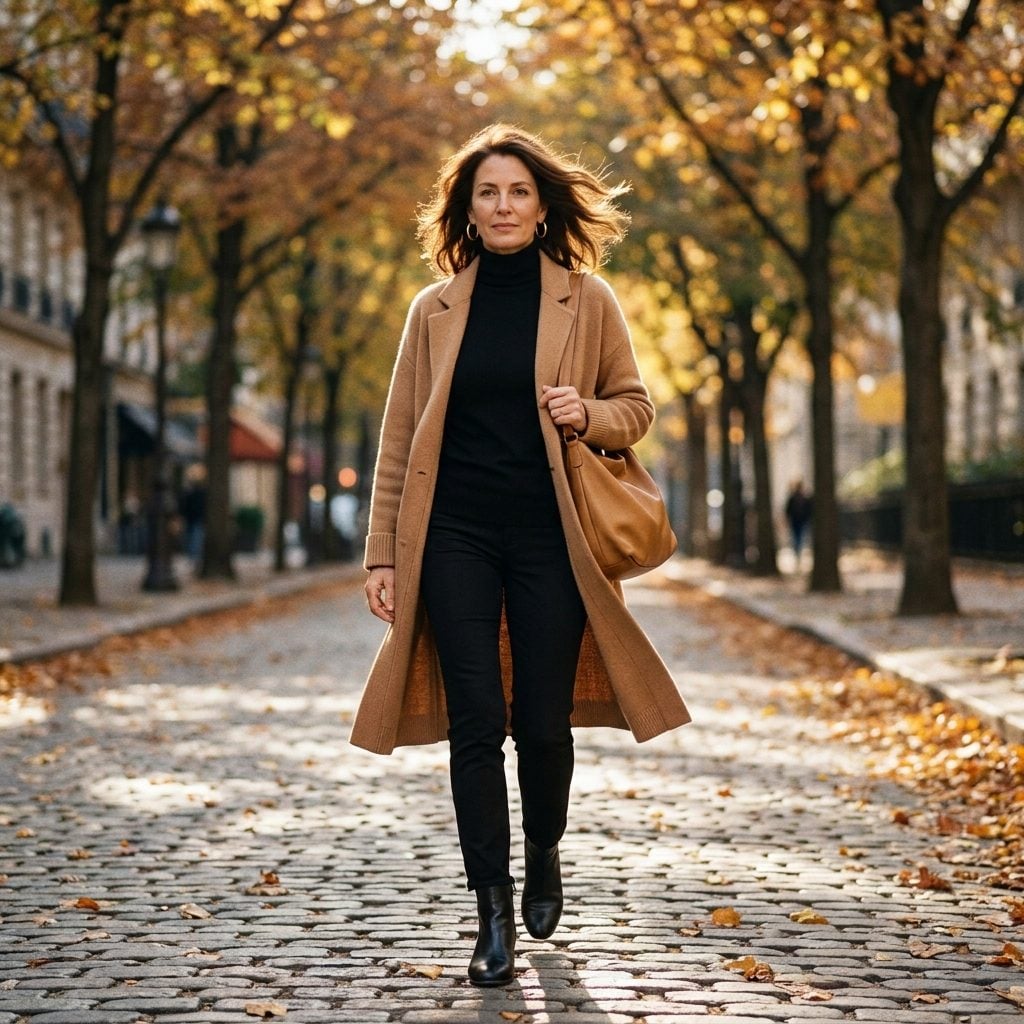
Unlike the shorter tailored camel jacket, this cardigan coat depends on length and drape rather than sharply constructed shoulders. Left open, its long fronts hang over an all-black base, establishing a relaxed outer silhouette with a clearly visible darker center.
The knit needs enough weight to fall smoothly rather than bunching around the hips. That is the difference between a long cardigan that looks deliberate and one that simply looks oversized. The camel softens the severity of the black underneath, while the extended hem gives the outfit a graceful, unhurried finish. A little less boardroom, a little more ease.
1. Black Wool Jacket and Straight Skirt: The Dark Suit That Still Means Business
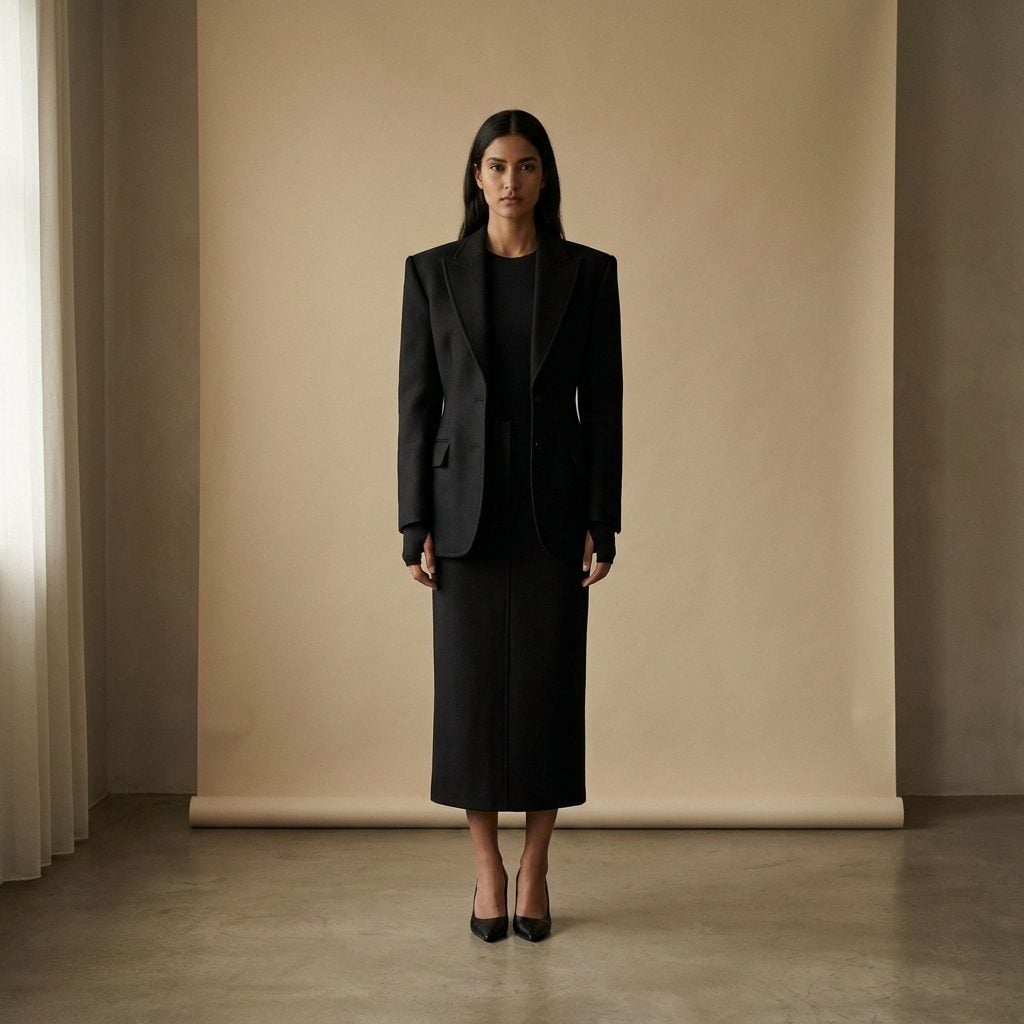
After all the fuchsia, cobalt, emerald, and plum, the black suit makes a surprisingly persuasive final argument. Its strength comes from restraint. The open wool jacket introduces tailored lapels, the straight skirt follows a clean outline, and the bodysuit beneath avoids the extra fabric that can accumulate around a tucked waistband.
Sheer dark hosiery and black pumps complete the coordinated palette, allowing the jacket’s cut and the skirt’s proportions to carry the design. The bodysuit is an especially useful detail, providing a smooth foundation without adding another visible hem at the waist. No spectacular color, no exaggerated accessory, no complicated draping. Just the disciplined tailoring that gave some of the decade’s most memorable outfits their staying power.