❤️ Would you like to save this?
A Prada nylon backpack ran about $330 in 1990. A Hermès Kelly could cost nearly $3,000. At the other end of the spectrum, less than $100 still bought a thick leather Coach bag meant to survive years of commuting. Handbags in the 1990s occupied an increasingly strange middle ground between useful object, fashion signal, and financial decision.
Nylon got expensive, imitations got clever, and women stood at glass counters doing the math in their heads. These 30 prices show just how wide the market had become — from attainable leather workhorses to jeweled evening pieces that cost more than many people made in months.
FYI, thanks to AI imagery software, we’re able to create very specific fashion and hairstyle examples to illustrate the points being made. In some cases, imagery is exaggerated to hammer home the point. Also, assume links that take you off the site are affiliate links such as links to Amazon. this means we may earn a commission if you buy something.
30. The $2,950 Hermès Kelly, About $7,231 Today
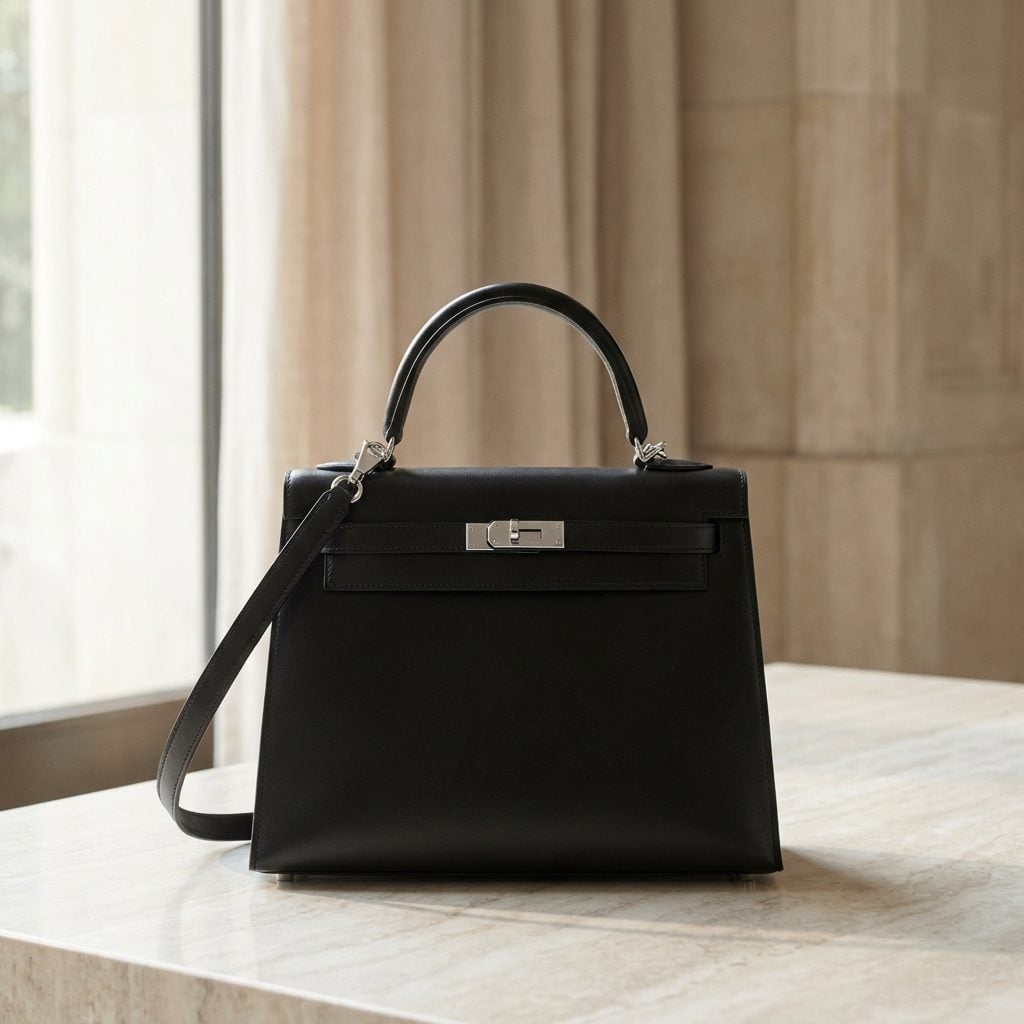
Start with the bag that made much of the rest of the market make sense. A small black calfskin Kelly was priced around $2,950 in 1991, with reports of a two-year wait. In today’s dollars, that’s roughly $7,231 — enough to turn one structured black handbag into a serious household purchase.
At about ten dollars an hour, $2,950 represented close to 300 hours of gross wages. The appeal wasn’t just scarcity. Hand construction, leather, heritage, and that unmistakable top-handle shape all mattered. The waiting list added another ingredient: wanting something you couldn’t simply walk in and buy that afternoon.
29. The $58 Coach Station Bag, About $142 Today
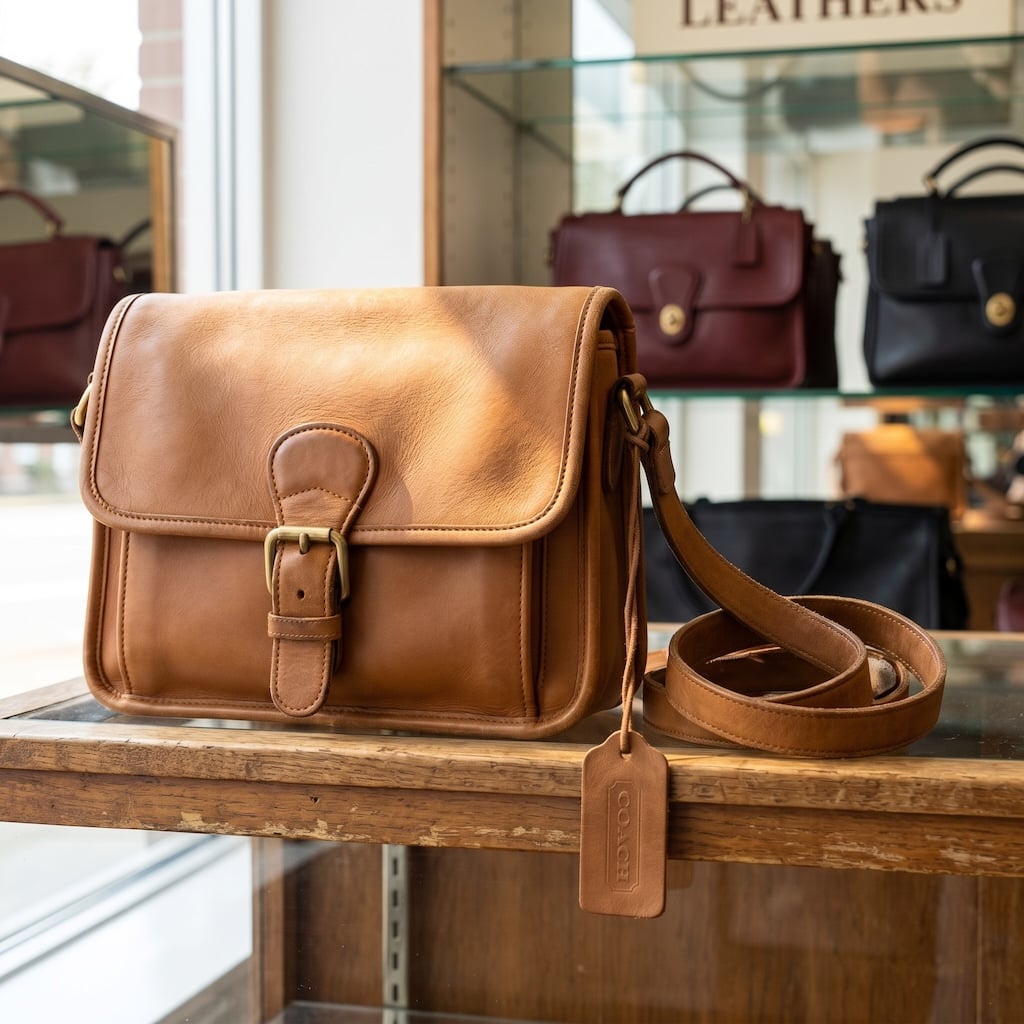
Then there was the other version of aspiration: buy something good once and carry it until the corners softened. Around $58 for the Station Bag put Coach in an entirely different financial universe from Hermès — roughly $142 in today’s money — yet the buyer still got substantial leather, brass hardware, and a design intended to improve rather than collapse with use.
You paid for leather and construction rather than spectacle. The bag could go to work Monday morning, the grocery store Saturday, and dinner that night without announcing that it had changed assignments. Plenty of old Coach bags are still circulating for exactly that reason.
28. Longchamp Le Pliage Made a $60 Nylon Tote Feel Very French and Very Necessary
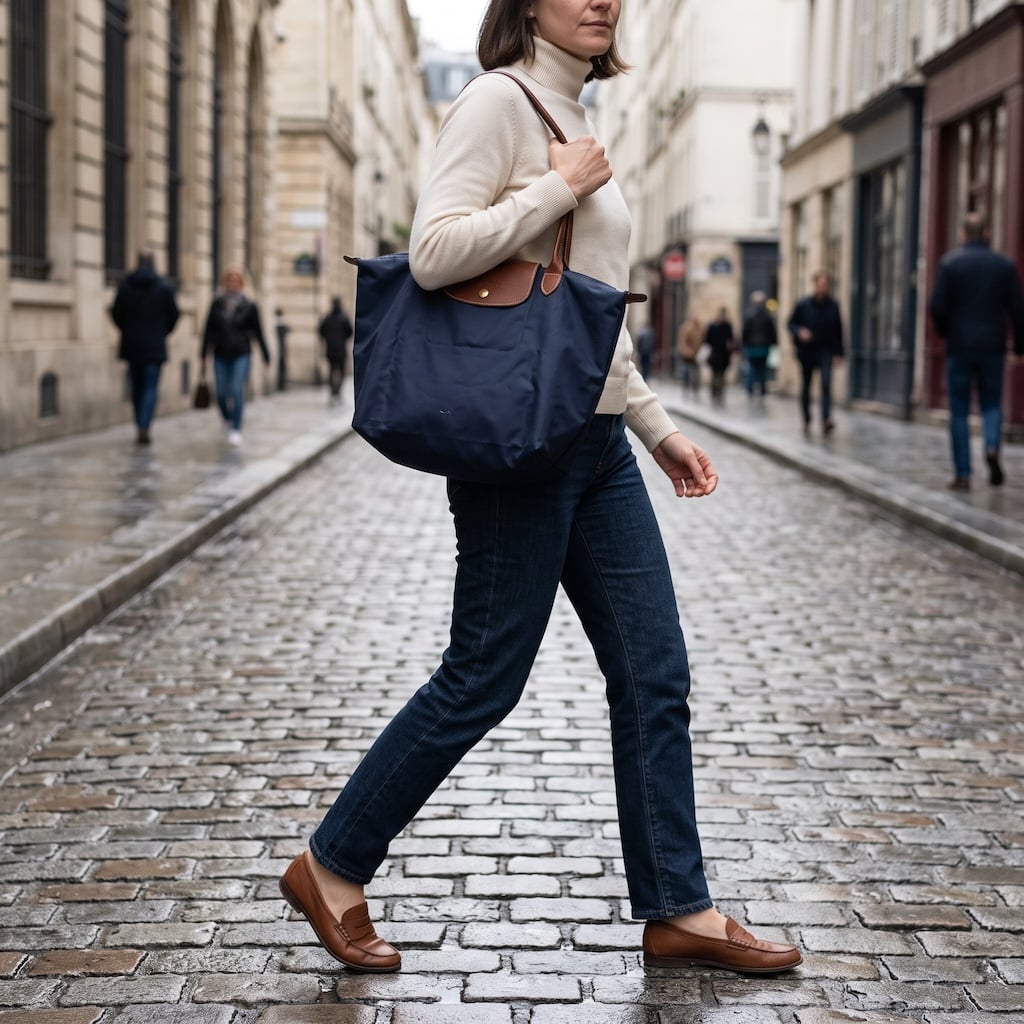
Longchamp introduced Le Pliage in 1993, and early versions lived around the $60 price range depending on size and market — roughly $139 in current money. Against almost everything else in this gallery, that qualifies as startlingly reasonable.
Lightweight nylon, leather handles and trim, and a snap closure allowed the tote to fold down into a compact little parcel. While other houses were teaching shoppers that nylon could cost hundreds, Longchamp made the same material practical, portable, and unmistakably French.
Against dark denim and a cream turtleneck on a Paris side street, the bag looks almost incidental. That’s part of its charm. Nobody needed a two-year waiting list to prove they wanted one.
27. The $110 Kate Spade Sam Bag, About $270 Today
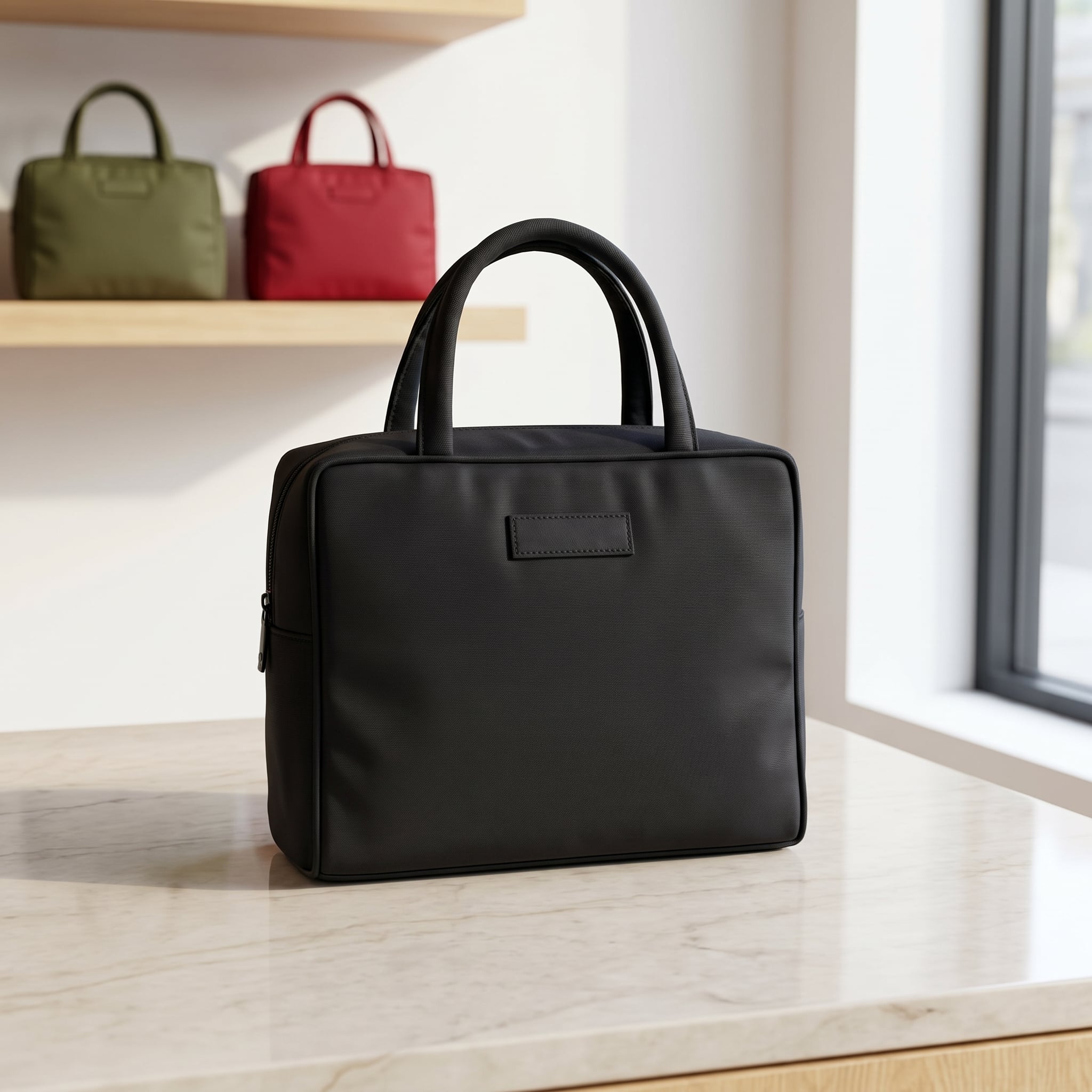
The Sam proved that a plain black nylon rectangle could acquire an astonishing amount of personality. Kate Spade introduced the style in the early 1990s with little more than a boxy silhouette and that small horizontal label doing the identifying.
At roughly $110, or around $270 today, it occupied a useful middle ground: more considered than a department-store basic, nowhere near the financial commitment of Prada or Chanel. Clean, downtown, practical enough for a real commute. The simplicity was the attraction, not something the buyer had to apologize for.
26. Dooney & Bourke’s All-Weather Satchel Was the Bag You Bought to Survive the Entire Decade
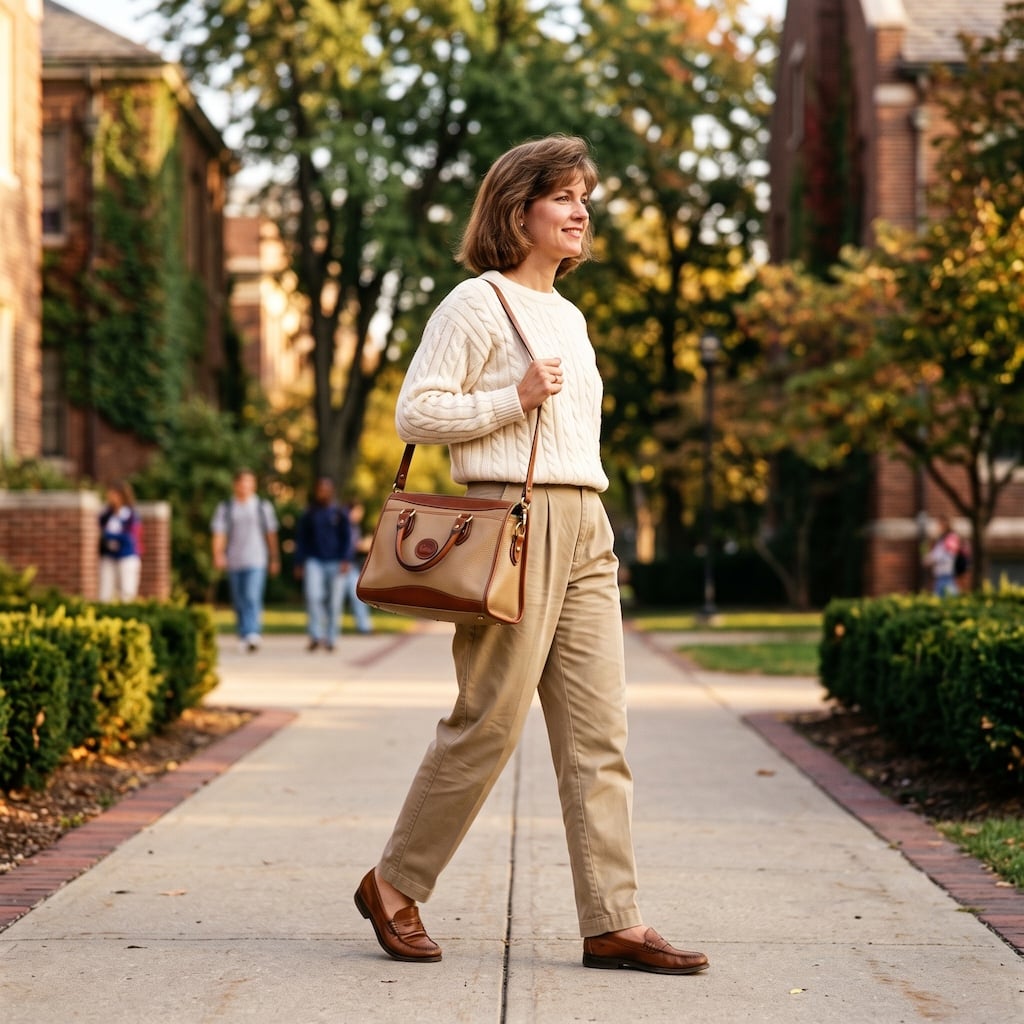
An early-’90s Dooney & Bourke All-Weather Leather satchel could land around the mid-$100s, with roughly $145 translating to about $346 today. That put it near Coach territory: substantial enough to feel like a purchase, sane enough to be used rather than worshipped.
Pebbled leather, brass hardware, tan trim, practical proportions. Add a cable-knit sweater, khakis, and a tree-lined walk between brick buildings and you’ve got the entire East Coast collegiate fantasy compressed into one handbag.
25. The $170 Susan Gail Quilted Bag, About $417 Today
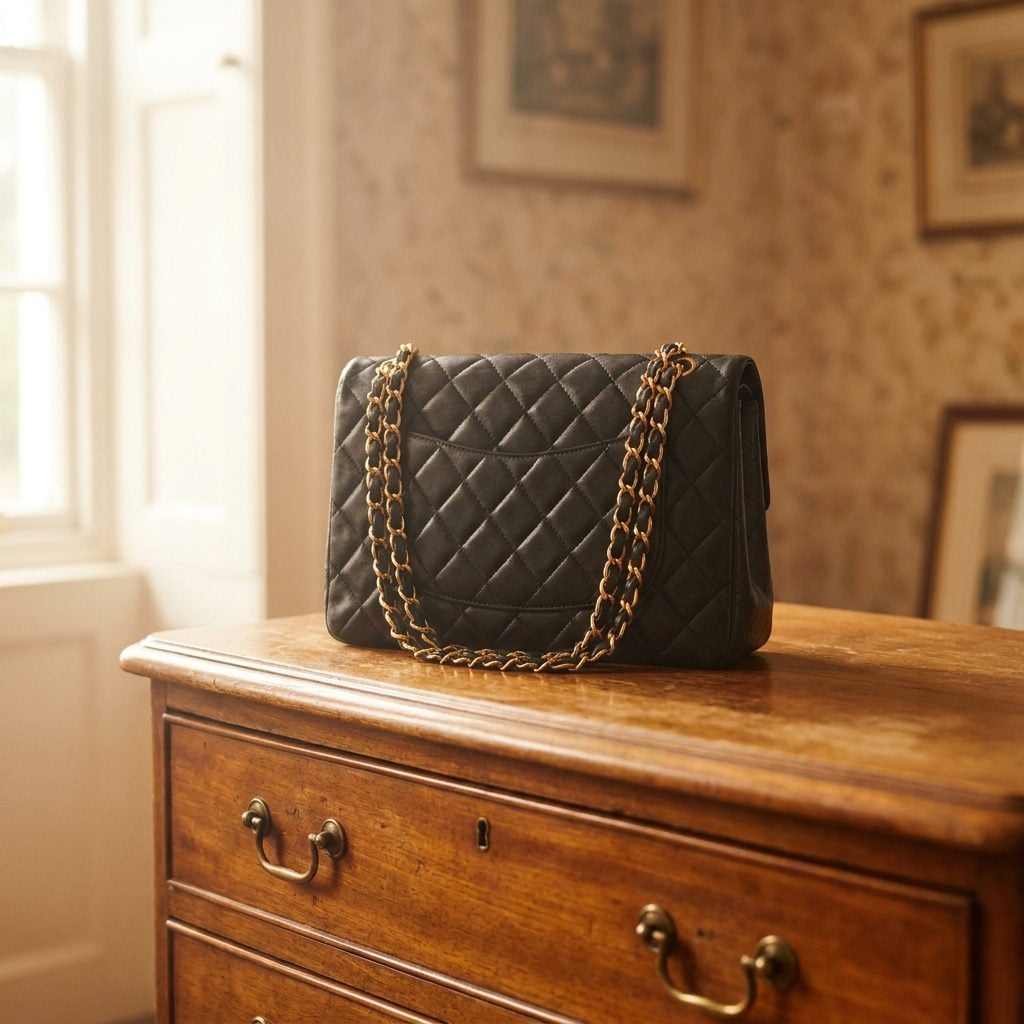
The clever woman’s alternative to Prada. In 1991, Susan Gail offered a quilted bag for about $170 — roughly $417 today. Still real money, but suddenly the status-bag silhouette existed outside four-figure territory.
Compact proportions and subdued hardware give this one much of its polish. Against an ivory blouse and high-waisted charcoal trousers, the shape looks purposeful without requiring a famous logo to explain itself.
At $170, a woman earning around eight dollars an hour still needed more than twenty hours of gross pay to buy it. Affordable was always relative.
24. The $215 Susan Gail Bamboo-Handle Bag, About $527 Today
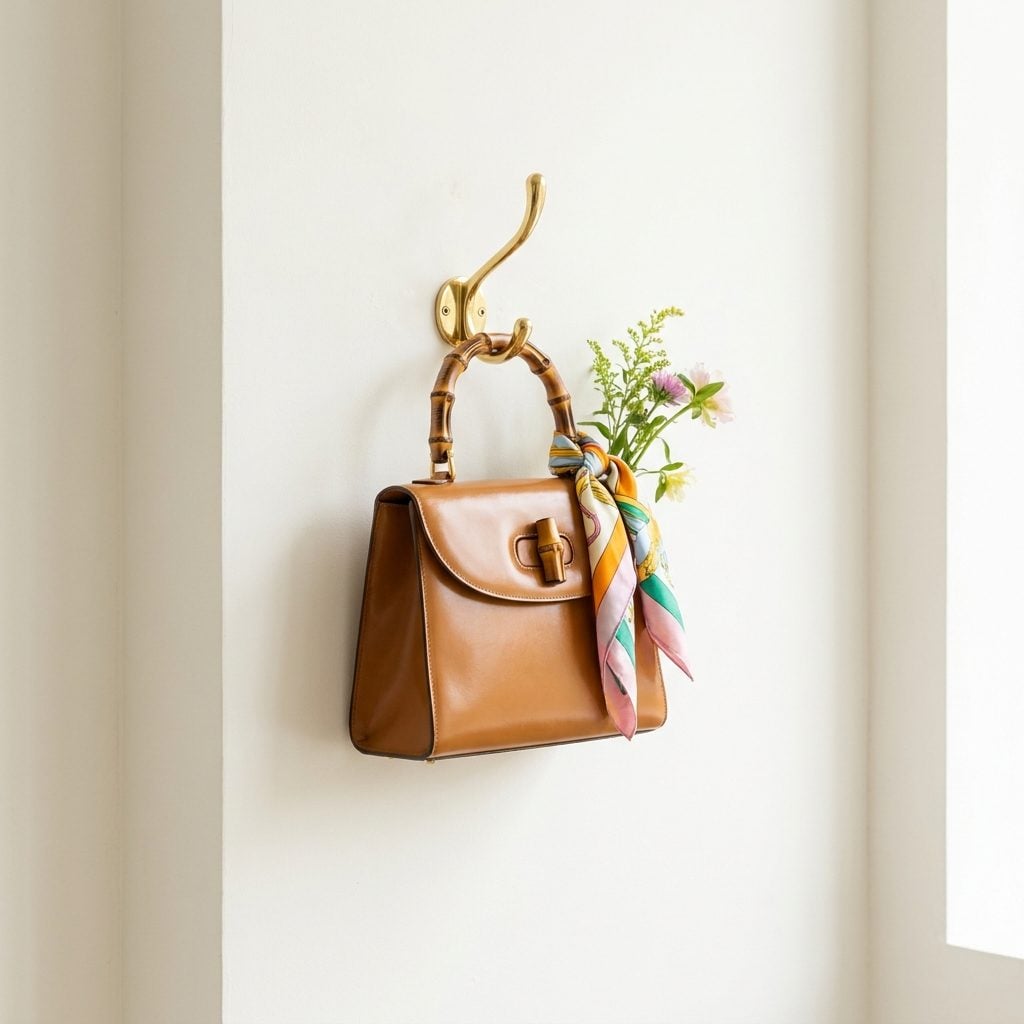
Gucci’s bamboo handle was the object of desire. Susan Gail offered a way into the look for about $215 in 1991, roughly $527 today.
Chestnut leather gives this version warmth before you even reach the handle. Paired with camel and teal, the bag belongs naturally to the clothes rather than looking like something attached at the end. That curved bamboo-style handle is enough to make an otherwise conventional leather bag instantly recognizable.
Fifty dollars more than Susan Gail’s quilted version bought a considerably more distinctive profile. By the early 1990s, recognizable shape was becoming its own form of branding.
23. The $240 Quilted Jay Herbert Bag, About $588 Today
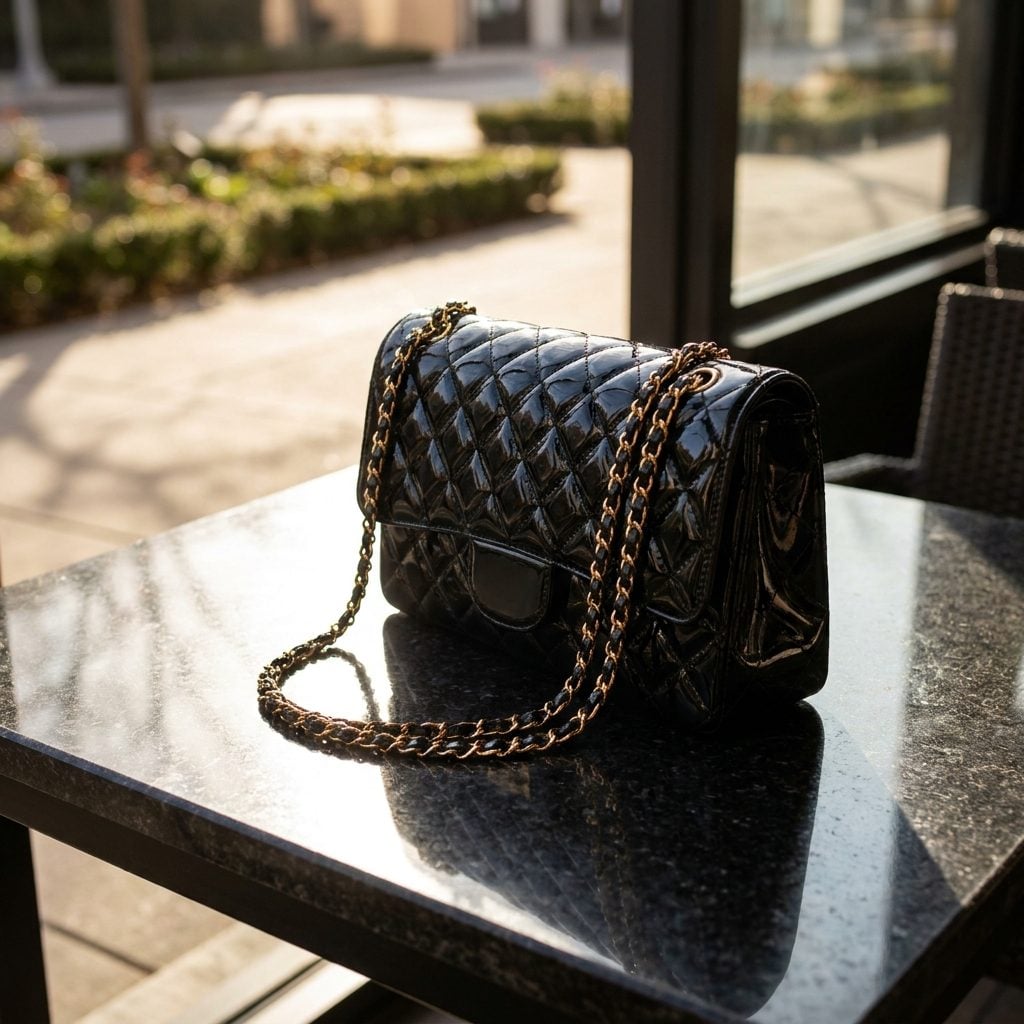
Black quilted patent, leather-and-chain straps, enough shine to register from across the room. Jay Herbert’s version of the quilted chain bag cost around $240 in 1991, approximately $588 now.
Against burgundy tailoring and a cream shell, the glossy patent becomes the sharpest surface in the picture. The reference to Chanel was hardly mysterious, but neither was the attraction: you could get much of the visual vocabulary without getting anywhere near the Chanel counter.
22. The $240 Kelly-Style Paola del Lungo Bag, About $588 Today
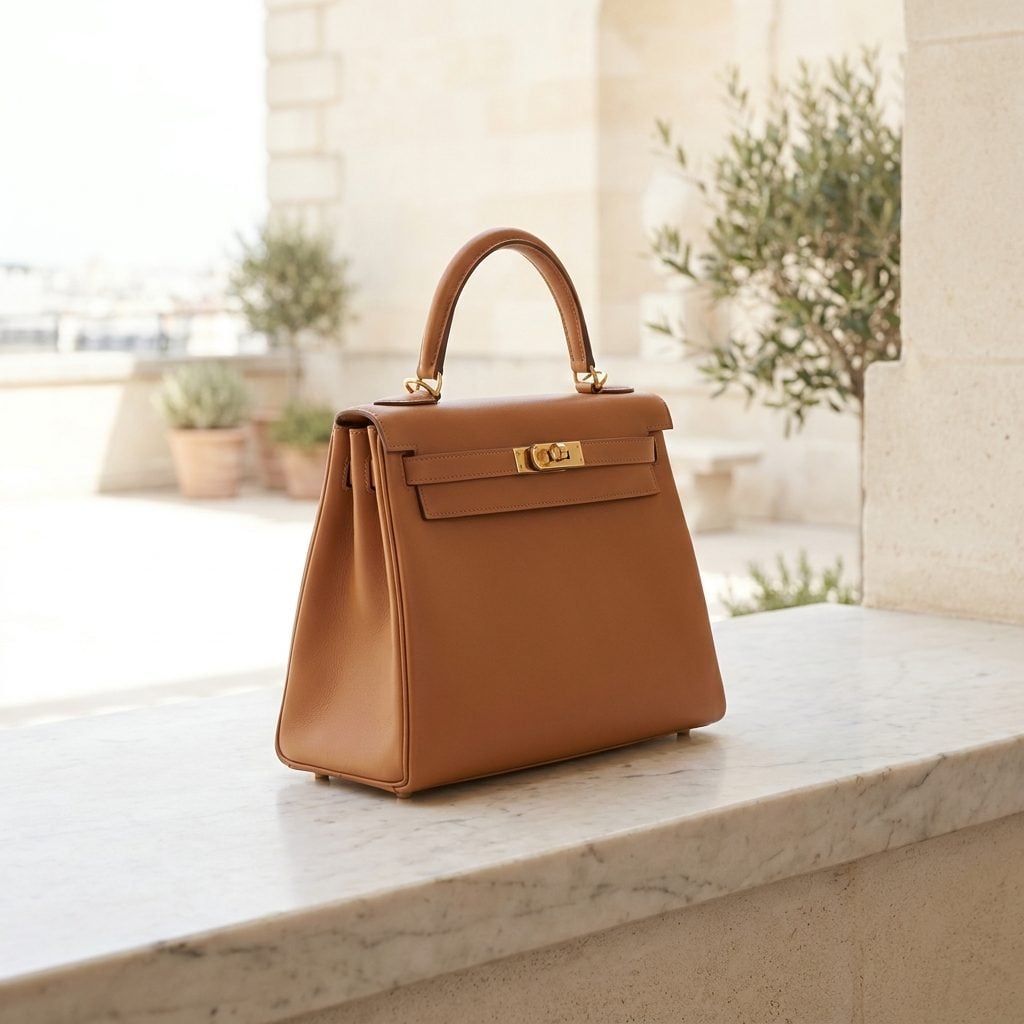
The real Kelly cost nearly $3,000. A structured Paola del Lungo top-handle version offered much of the visual vocabulary for around $240 in 1991 — about $588 today.
The attraction is geometry: trapezoidal body, single handle, disciplined closure, almost no visual slouch. Dark oxblood embossed leather adds interest without making the bag flashy. Carried against cream and camel, it has the formality people were paying thousands to find elsewhere.
21. The $250 Entry-Level Louis Vuitton, About $639 Today
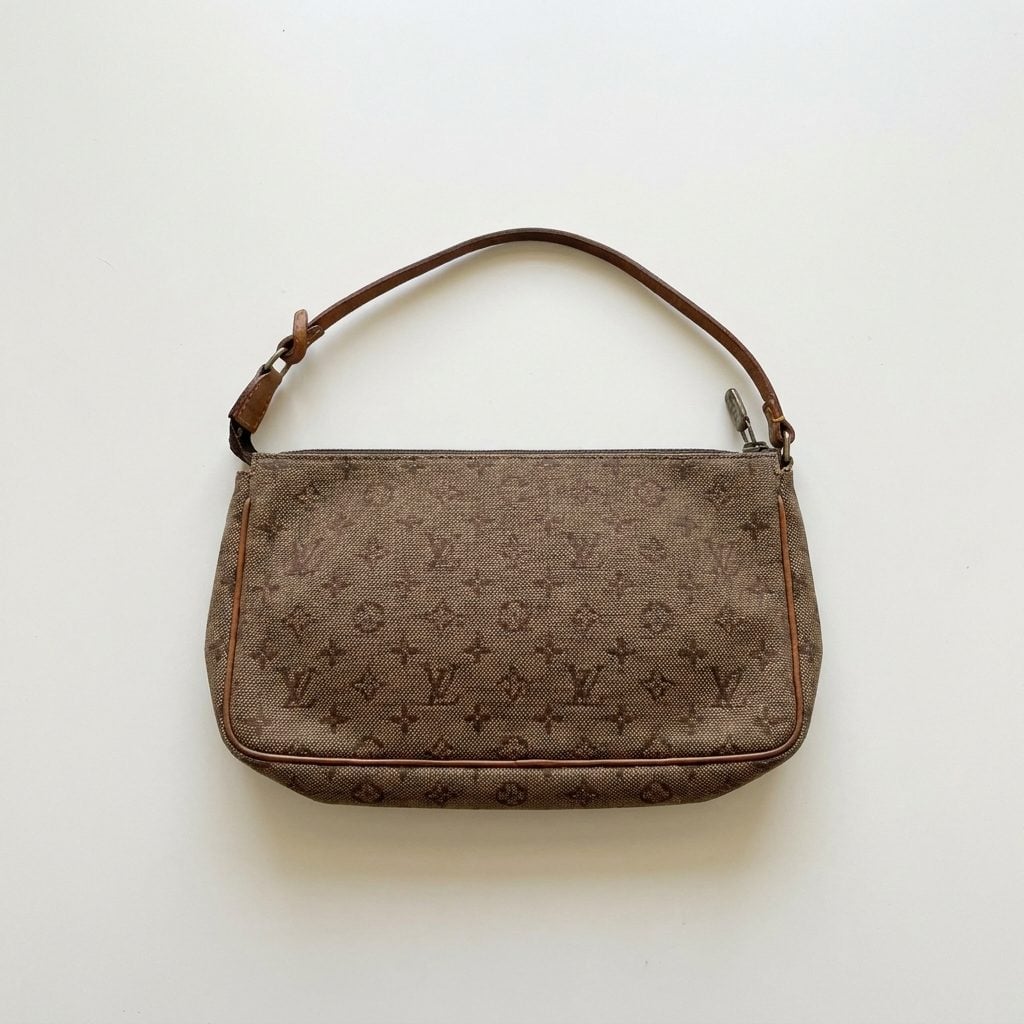
Around $250 could put a small Louis Vuitton monogram bag within reach in the early 1990s. That’s roughly $639 today — hardly trivial, but far below the decade’s truly intimidating luxury prices.
Compact dimensions, leather trim, instantly familiar canvas. For somebody buying her first recognizable designer piece, the attraction wasn’t only status. This was supposed to be the bag still hanging in the closet ten years later.
20. The $330 Prada Nylon Backpack, About $843 Today
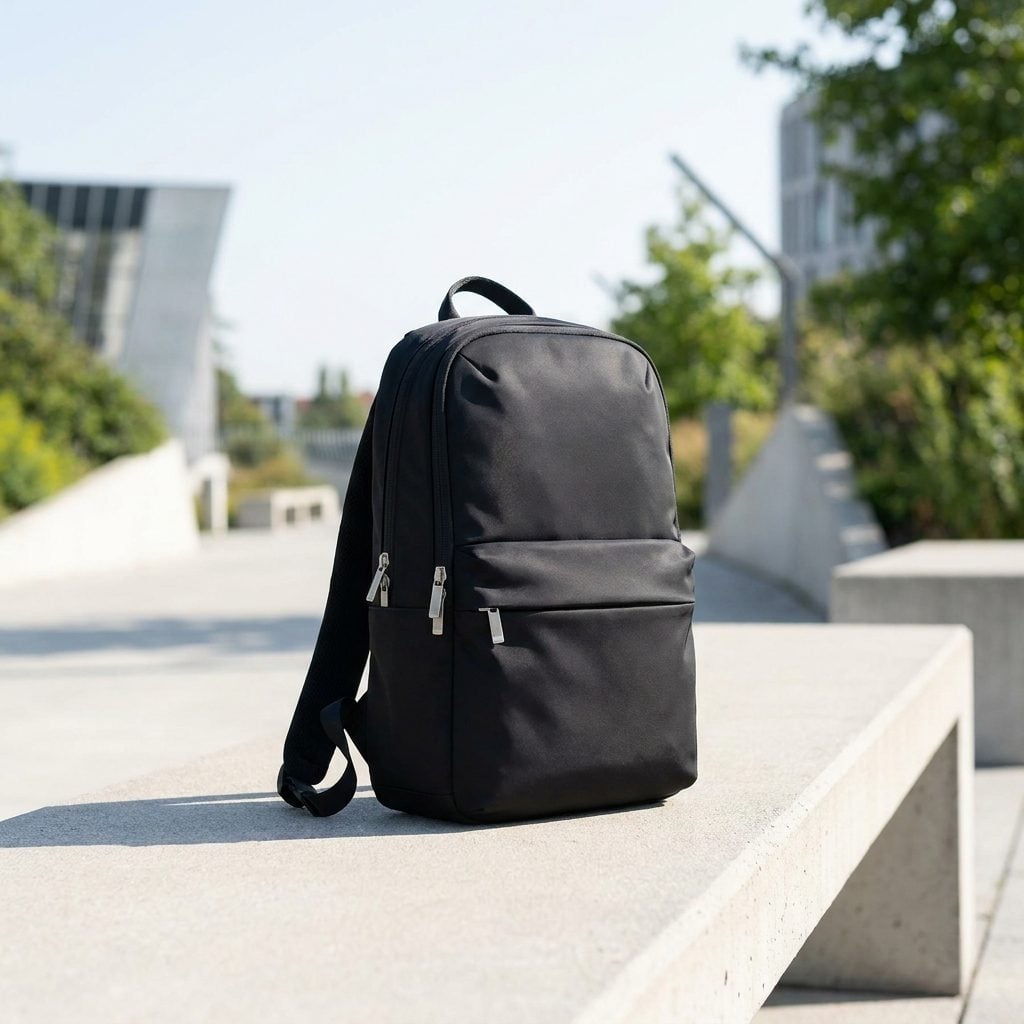
Nylon. On purpose. Around $330 in 1990, or roughly $843 now. Prada took a material associated with gym bags and utilitarian luggage and made the plainness itself part of the luxury proposition.
The clothes understand the appeal: black turtleneck, camel trousers, loafers, restrained backpack. Little decoration, little hardware, barely enough branding for somebody outside the club to notice. Decades before “quiet luxury” became an exhausted phrase, Prada was already charging handsomely for understatement.
Prada made nylon aspirational, one of the great sleights of hand in modern handbag history.
19. The $385 Prada Chain-Strap Tote, About $984 Today
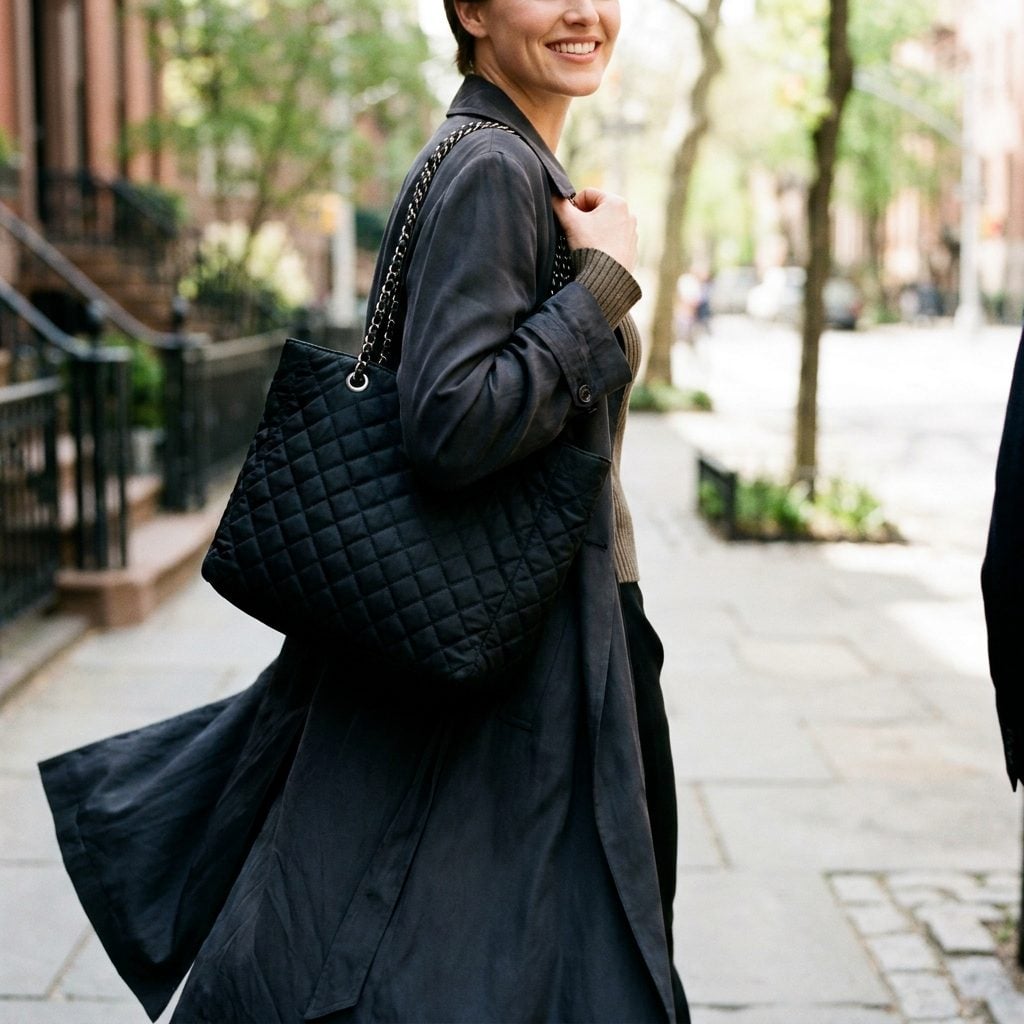
Around $385 in 1990 — close to $984 today — bought a Prada tote large enough to acknowledge that women occasionally carried more than lipstick.
The chain changes the temperature of the bag. Against a long charcoal blazer, it supplies movement and reflected light while the dark body remains almost anonymous. Strip away that hardware and you have something sensible. Put it back and the practicality suddenly looks expensive.
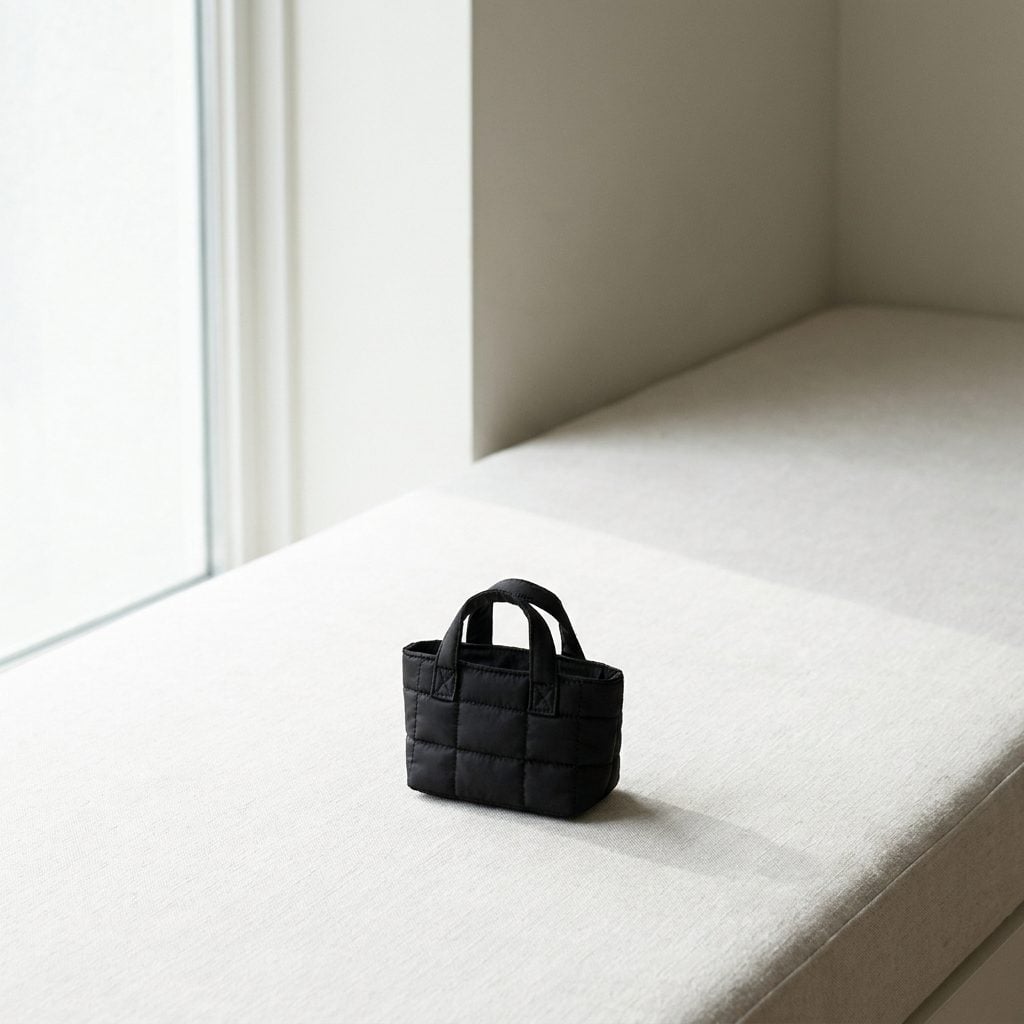
18. The $435 Small Prada Quilted Nylon Bag, About $1,066 Today
❤️ Would you like to save this?
Small bag, startling number. The compact quilted nylon Prada cost around $435 in 1991 — approximately $1,066 today for something that could disappear beneath one arm.
The quilting supplies the surface interest while the hardware and branding remain subdued. Against a plum silk blouse and gray trousers, it looks practical enough for daylight but expensive enough that leaving it in a taxi would destroy the rest of the week.
Over a thousand current dollars for a nylon bag roughly the size of a paperback. The arithmetic refuses to become ordinary.
17. The $450 Prada Tote, About $1,150 Today
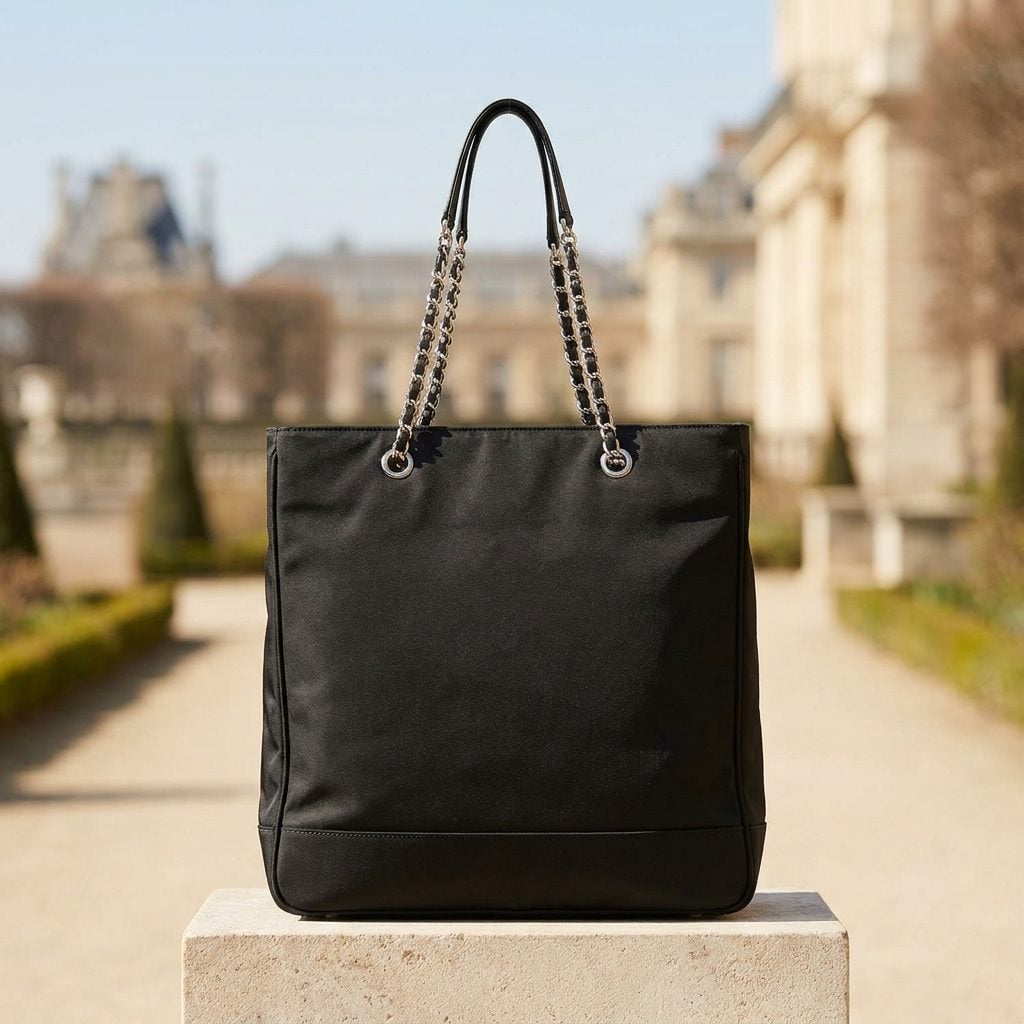
Around $450 bought one of the larger Prada totes represented here, about $1,150 today. Suddenly the expensive nylon idea had enough room for a working day rather than a carefully edited evening.
A taupe trouser suit and black shell make the bag look almost utilitarian. That’s exactly what distinguishes it from the jeweled objects coming later. Luxury didn’t always need crystals or exotic leather. Sometimes it looked like the thing somebody carried into the office every morning.
16. The $490 Medium Prada Quilted Nylon Bag, About $1,201 Today
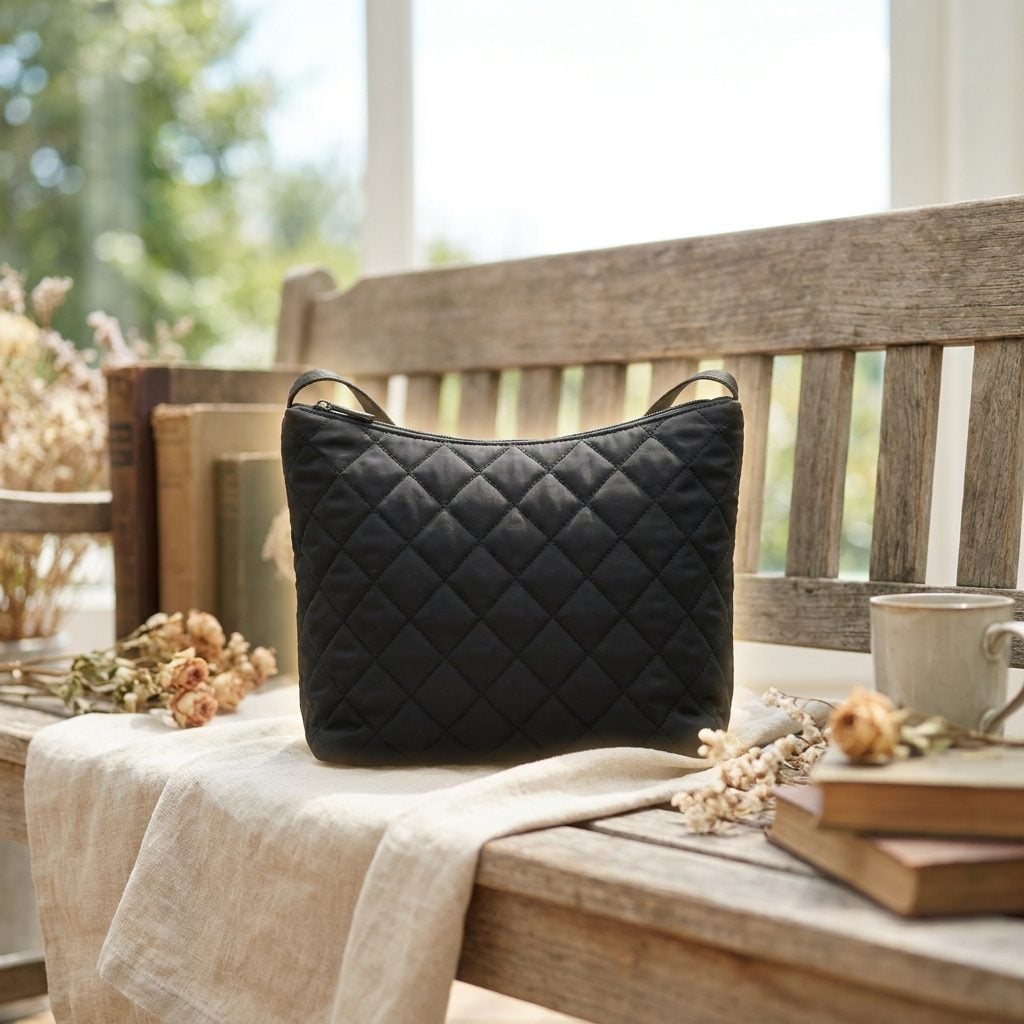
At $490 in 1991 — roughly $1,201 today — the medium quilted nylon Prada came with something even money couldn’t immediately solve: reported waiting lists at stores carrying it.
That’s the revealing part. The product remained restrained while the behavior around it became conspicuous. Forest green above, black below, compact quilted bag between them. Anybody unfamiliar with Prada might have missed the point entirely. The woman waiting for the phone call from the store certainly didn’t.
15. The $650 Chanel Quilted Patent Bag, About $1,594 Today
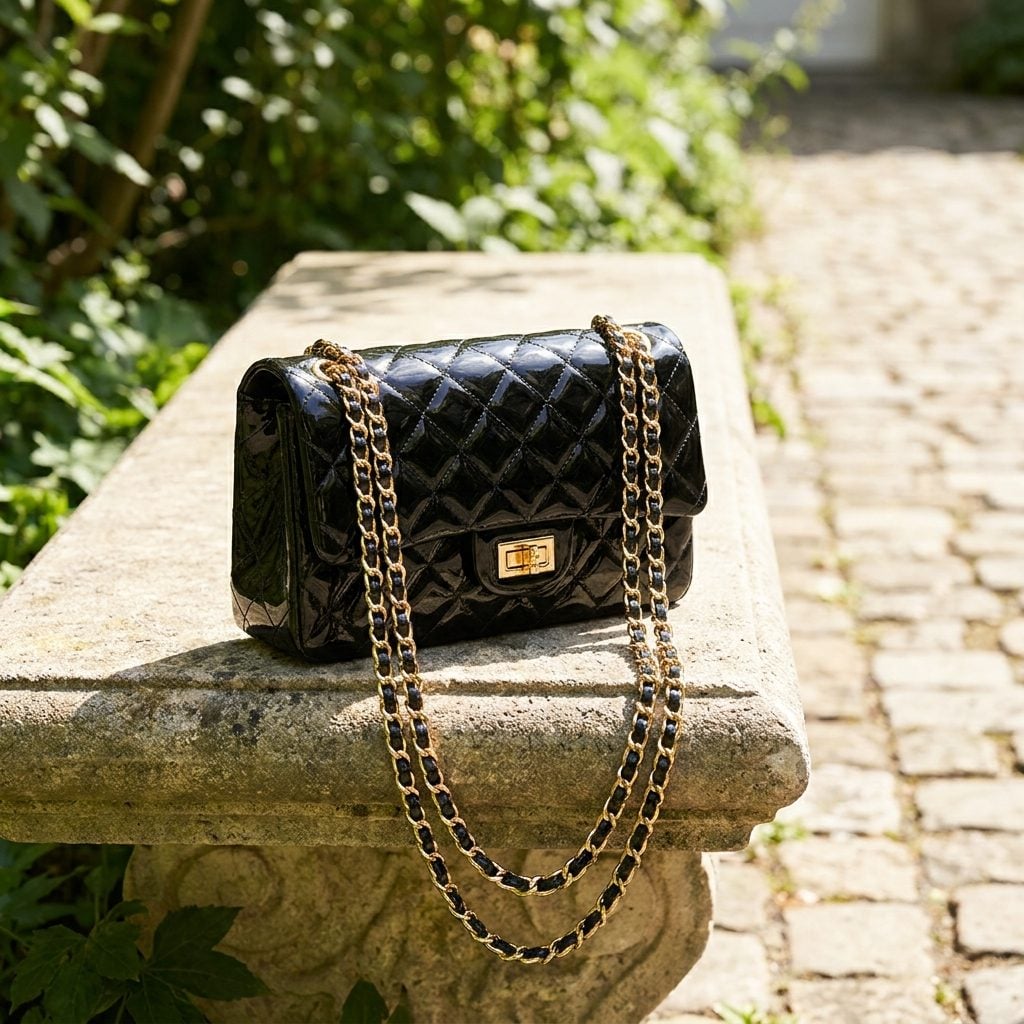
Six hundred fifty dollars in 1991 bought the medium quilted patent Chanel flap represented here. That’s roughly $1,594 today — expensive, certainly, but almost startling beside what many Chanel bags command now.
Against a matte cream jacket, the glossy black quilting, tassel, and chain provide enough visual electricity for the entire outfit. No additional fireworks required.
14. The Fendi Baguette Arrived in 1997 and Made the Practical ’90s Handbag Look Suddenly Boring
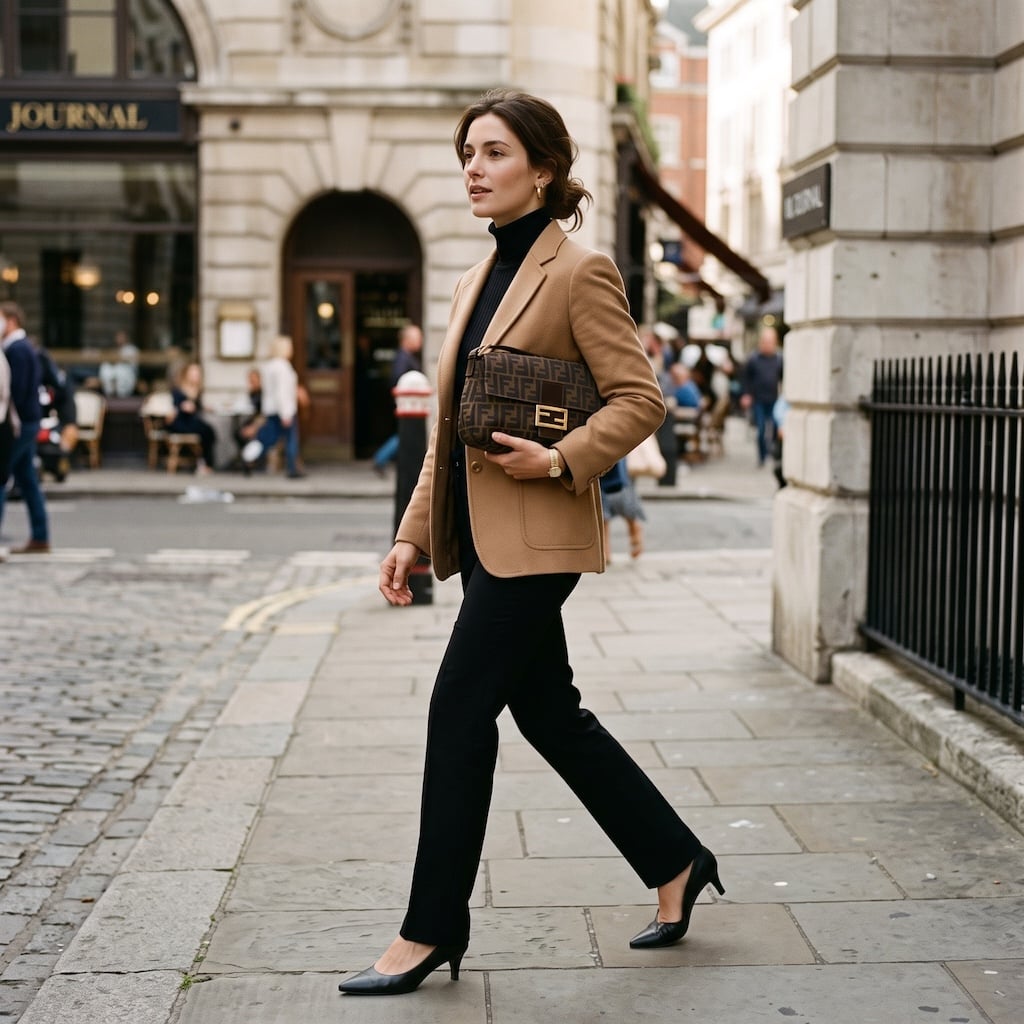
When Fendi introduced the Baguette in 1997, versions around the $750 neighborhood translated to roughly $1,523 in today’s money. More importantly, the shape helped change the conversation. After years of disciplined nylon, structured leather, and work-ready totes, here was a little bag that seemed delighted by its own unnecessary existence.
FF jacquard, compact proportions, tucked tight under the arm. A camel blazer and black turtleneck give it enough neutral territory to misbehave without turning the entire outfit into a logo exercise.
13. The $825 Gucci Bamboo-Handle Bag, About $2,108 Today
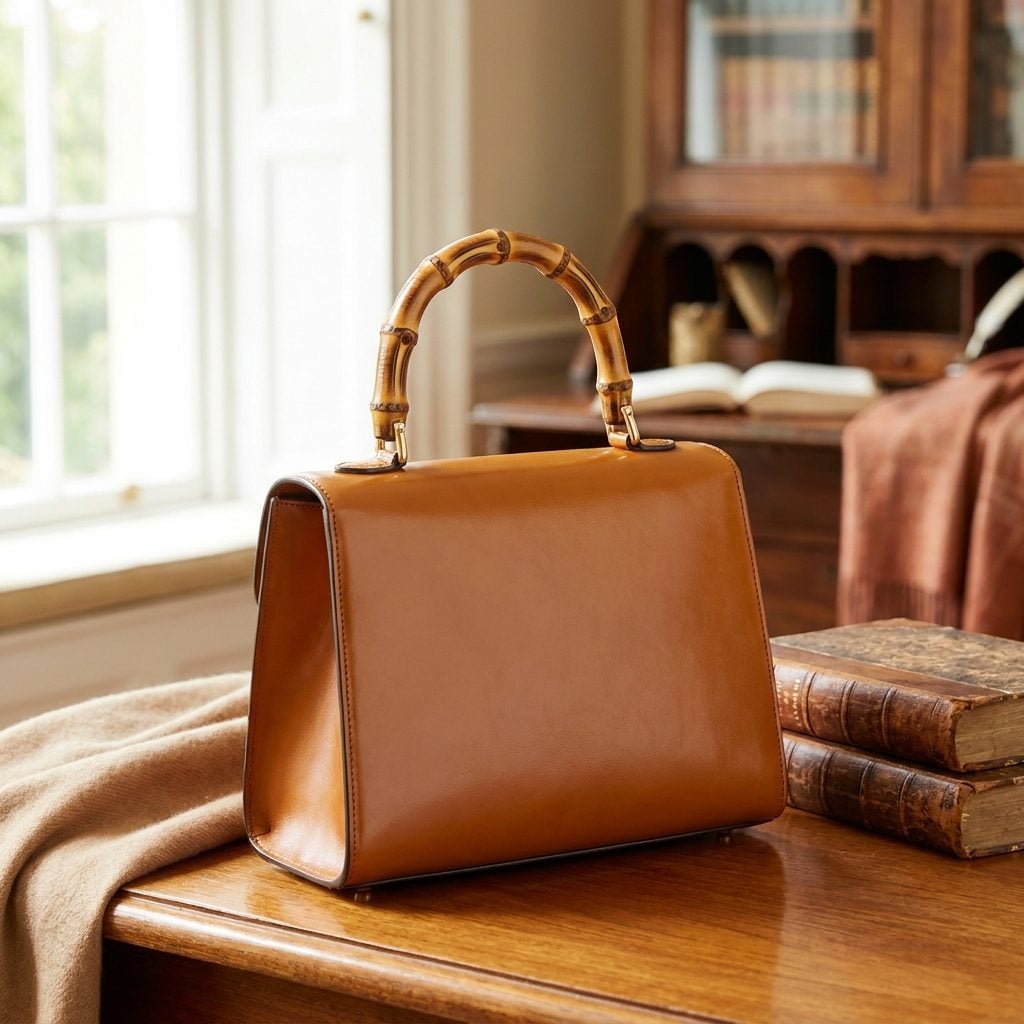
A smaller Gucci bamboo-handle bag could sit around $825 near the opening of the decade, or roughly $2,108 today. That placed recognizable Gucci craftsmanship well above the alternatives but below the larger and more exotic versions still to come.
A camel jacket, ivory blouse, and dark skirt give the honey-colored handle plenty of breathing room. No billboard logo is required. The shape and material already identify the family.
Bamboo entered Gucci’s vocabulary during the material shortages of the postwar years, when the house experimented with unconventional luxury materials. Heated and bent bamboo became a practical solution that outlived the problem by decades.
12. The $1,000 Judith Leiber Satin Evening Bag, About $2,253 Today
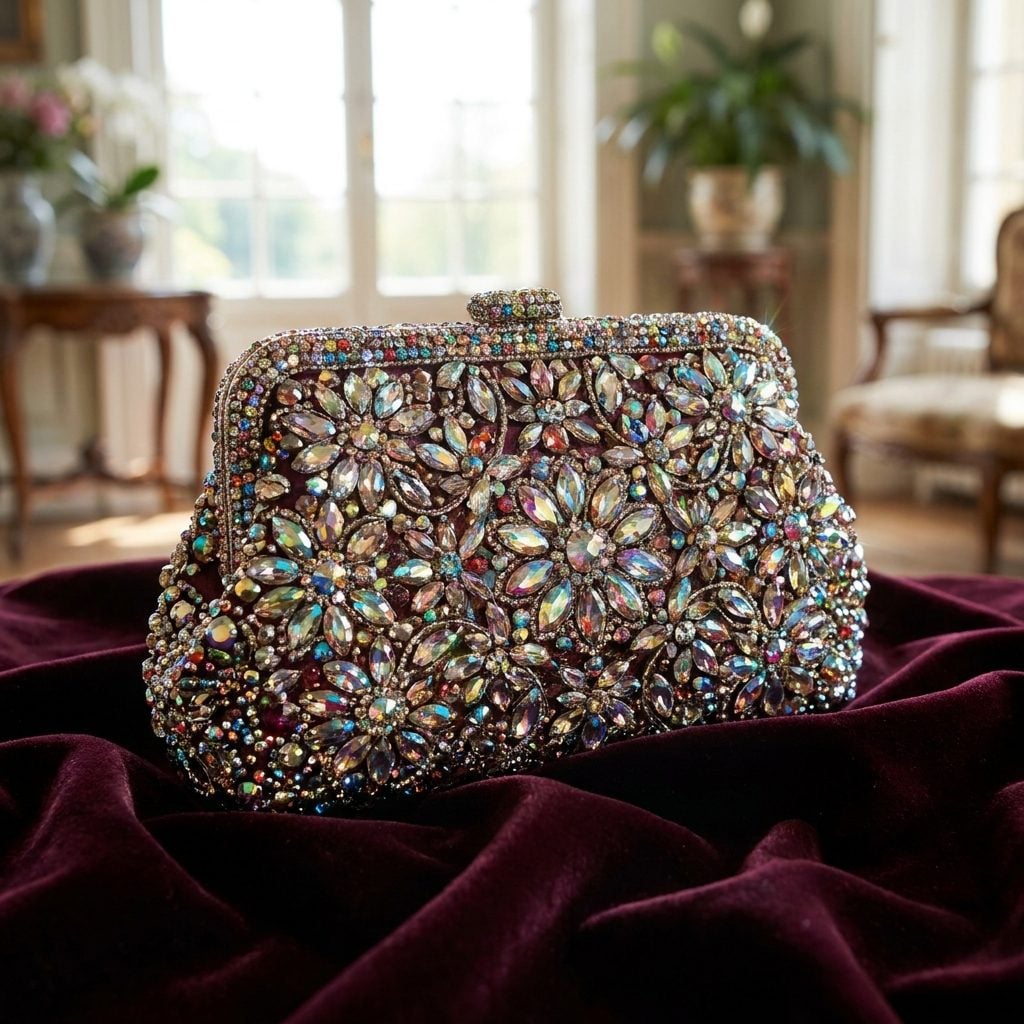
A thousand dollars for a tiny evening bag in 1994 comes out near $2,253 today. Capacity was almost beside the point: lipstick, folded cash, perhaps a key, and civilization had reached the limit.
The plain black dress gives the satin and jeweled clasp a dark field to work against. Pearls stay restrained because anything larger would begin negotiating with the handbag for attention.
The evening bag doesn’t finish this outfit. The outfit was simplified so the bag could exist.
Judith Leiber’s New York workshops became famous for meticulously made evening bags and minaudières. Buyers weren’t paying for cubic inches. They were paying for concentrated workmanship.
11. The Chanel 2.55 Lambskin Flap Was Already an Icon — and Its 1990 Price Looks Almost Quaint Now
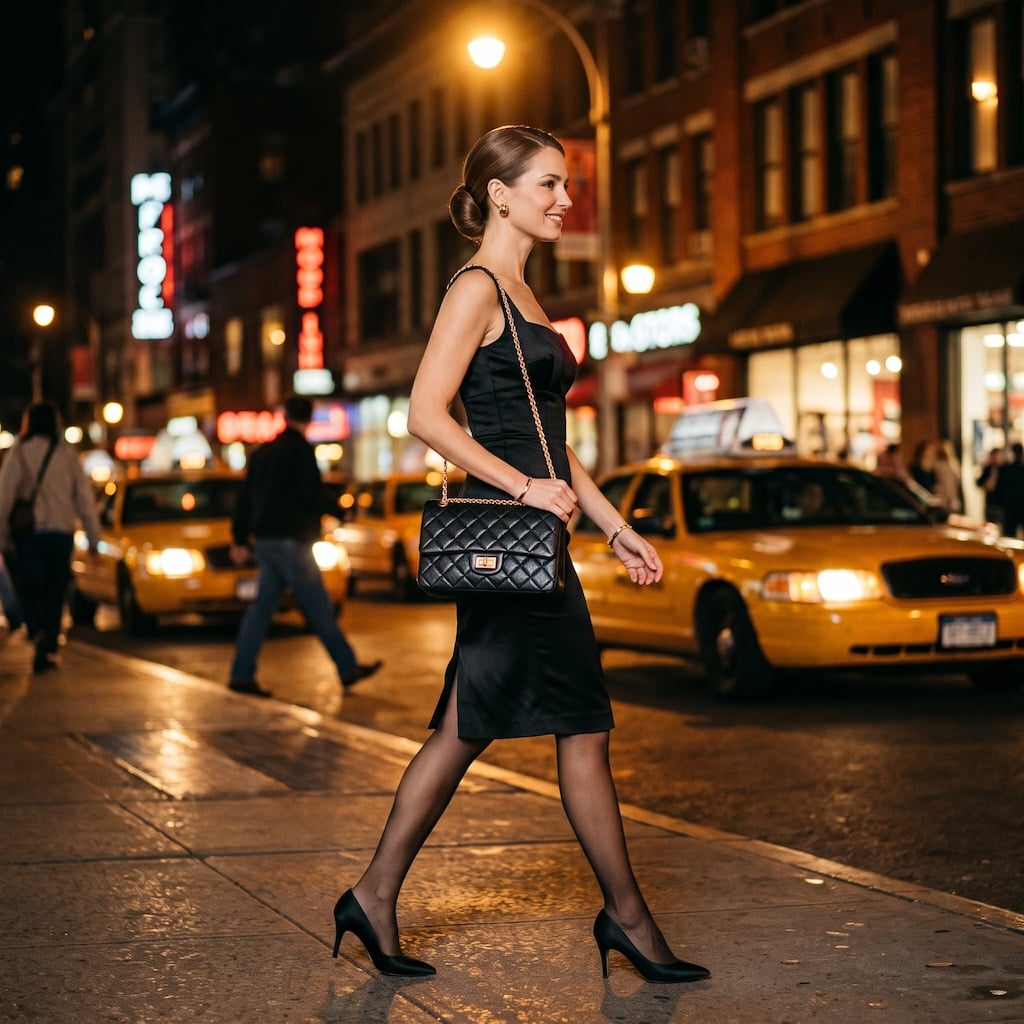
A classic quilted Chanel lambskin flap could sit around $1,150 at the start of the decade, roughly $2,939 today. Next to modern luxury pricing, that figure has acquired the strange quality of sounding almost reasonable.
Diamond quilting, soft lambskin, gold chain threaded with leather — the design already had decades of history behind it. Here, taxi lights and neon signs pick up the quilting and hardware in a way a studio backdrop couldn’t. The street becomes part of the jewelry.
10. The $1,250 Gucci Bamboo Bag, About $3,064 Today
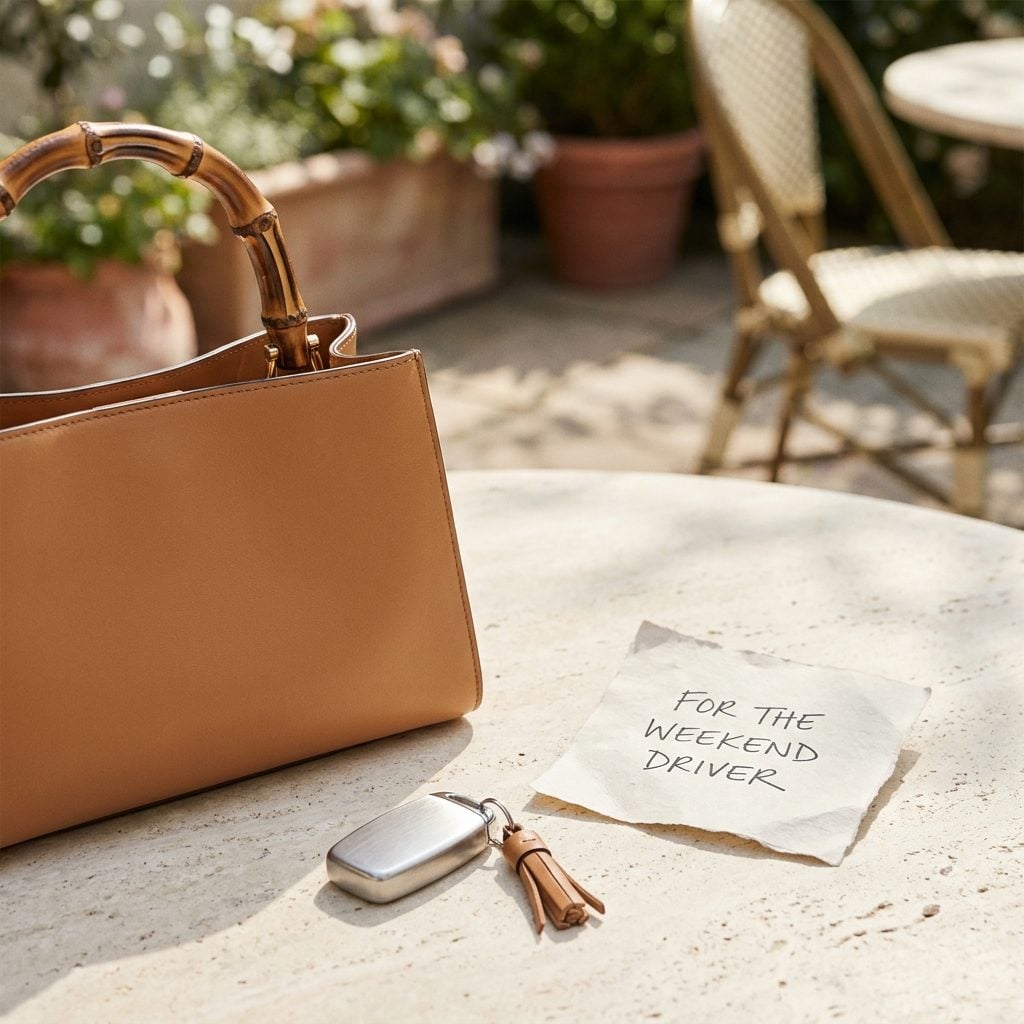
By 1991, a prominent Gucci bamboo-handled calfskin bag could run around $1,250. Converted forward, that’s approximately $3,064 — a substantial jump from smaller versions and a reminder that size, leather, and execution could change the price dramatically within one recognizable design family.
Burgundy above, cream below, tan leather and honey bamboo between them. Whether a bag should match your shoes was already an old argument. This outfit has a better answer: make the bag belong to the palette rather than forcing an exact match.
9. The $1,535 Judith Leiber Mailbox Bag, About $3,458 Today
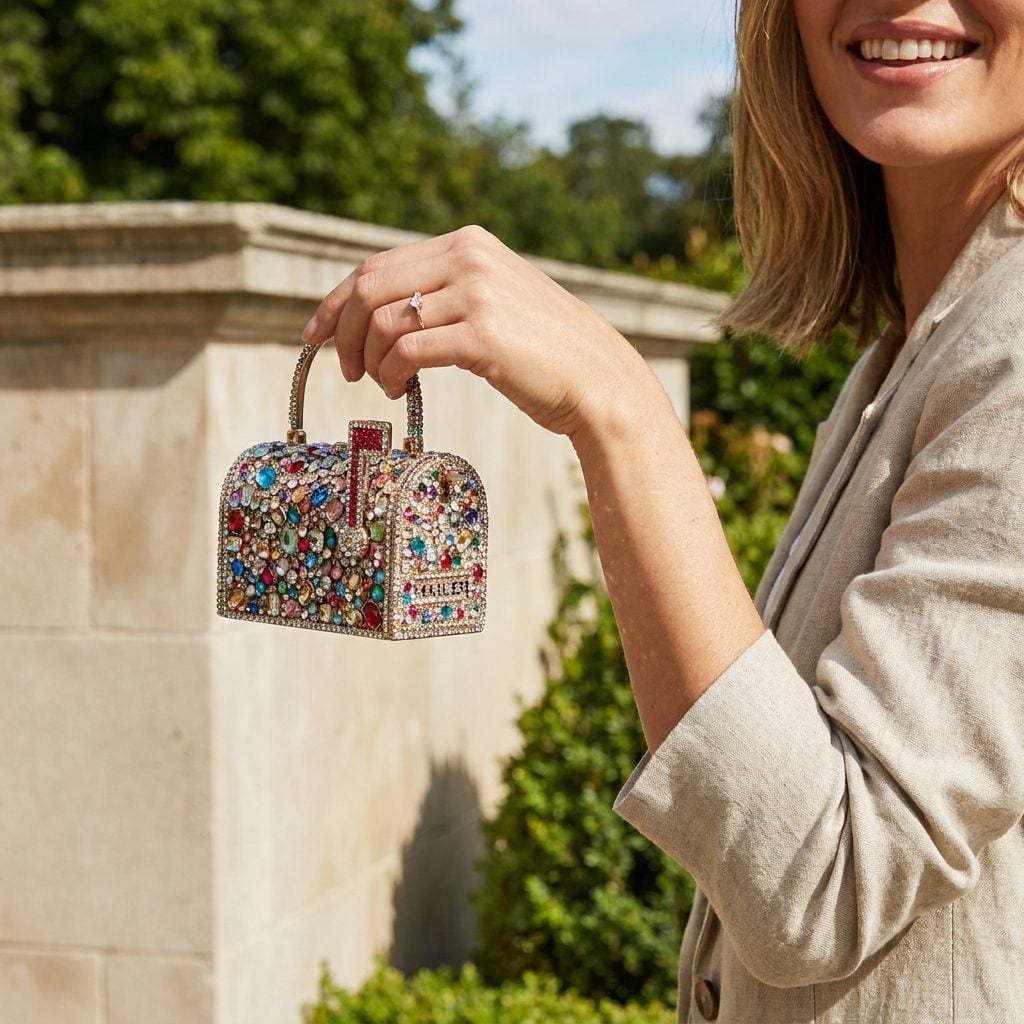
Fifteen hundred thirty-five dollars for a bag shaped like a mailbox. In 1994. That’s roughly $3,458 today, spent on an object whose practicality was never remotely the sales pitch.
Plain black dress, extravagant rhinestone mailbox. Add competing jewelry, pattern, or embroidery and the joke disappears into noise. Leave everything else alone and somebody across the room is eventually going to ask what on earth you’re carrying.
These minaudières arrived at dinner before the conversation did.
8. The $1,635 Judith Leiber Black Mask Bag, About $3,684 Today
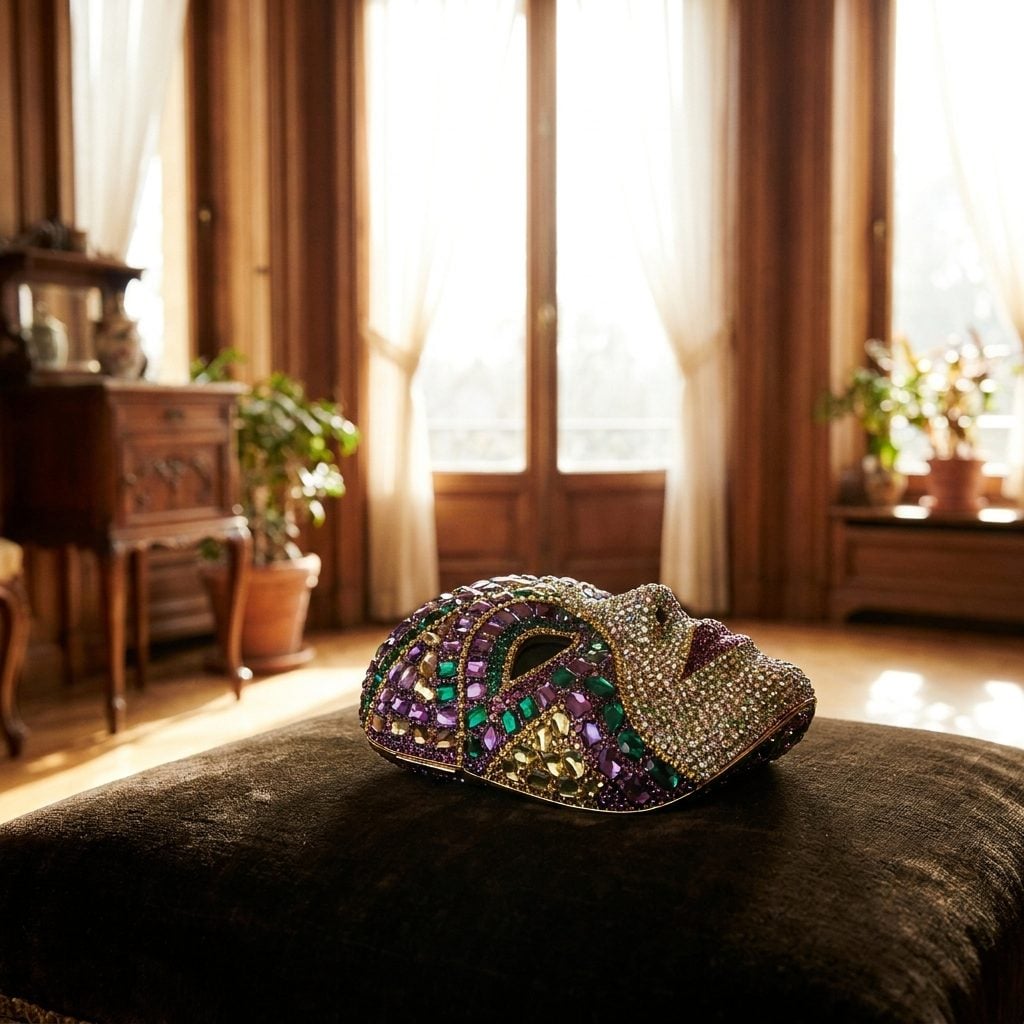
The black mask bag came in around $1,635 in 1994, approximately $3,684 today. A theatrical face reduced to handbag scale and covered in sparkle is not something anyone buys because the internal pocket arrangement is unusually sensible.
Emerald tailoring gives the black bag a saturated background without trying to imitate its theatricality. Small gold jewelry is enough. Once the handbag itself has a face, the rest of the accessories can probably take the evening off.
7. The $2,010 Judith Leiber Queen-of-Hearts Bag, About $4,528 Today
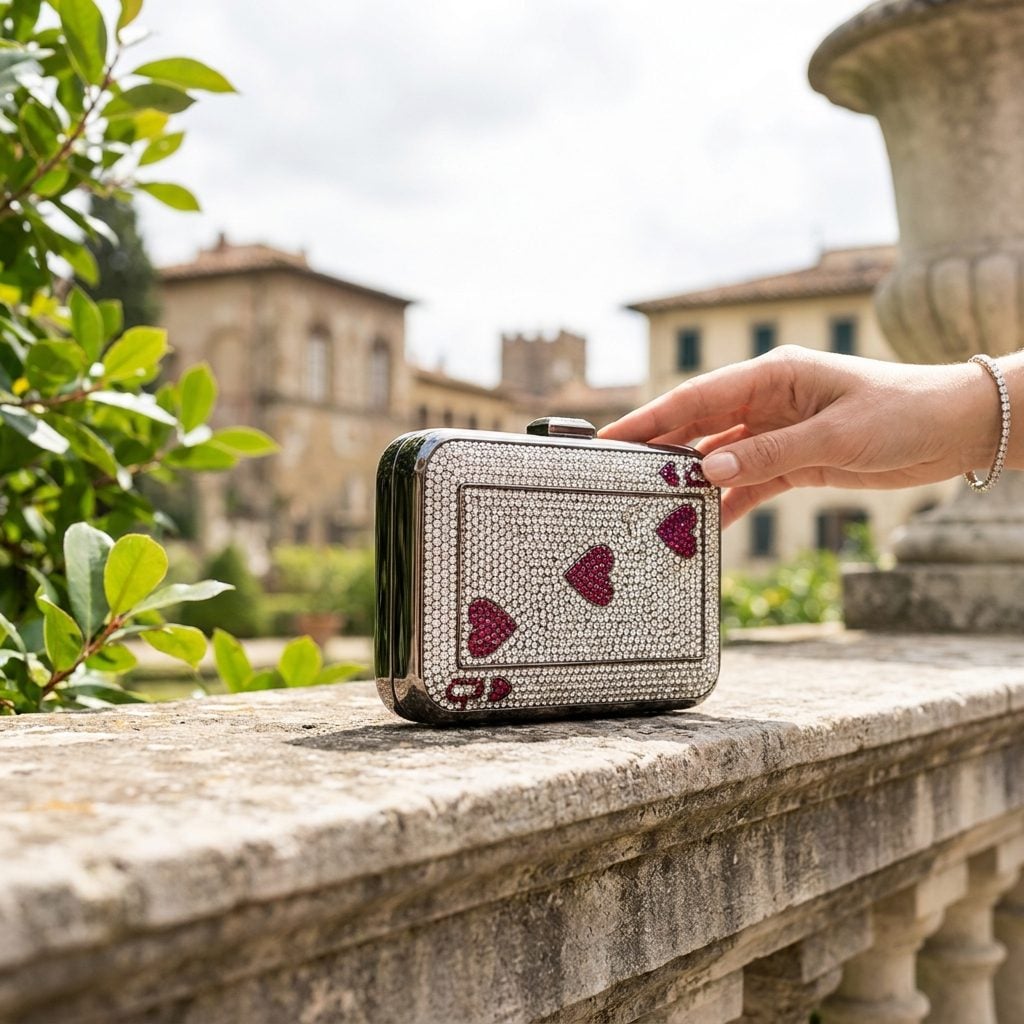
Two thousand and ten dollars in 1994. Around $4,528 today. By this point the handbag has crossed out of ordinary accessory pricing and wandered into the territory of miniature collectible objects.
The all-red outfit goes in the opposite direction from the black-dress strategy. Rather than isolate the jeweled heart, everything stays within the same hot family of reds. The bag becomes part of the color story instead of an alien object dropped into it.
There’s real authority in a woman at 60 wearing head-to-toe red without asking anybody’s permission.
6. The $2,300 Large Gucci Lizard Bamboo Bag, About $5,876 Today
❤️ Would you like to save this?
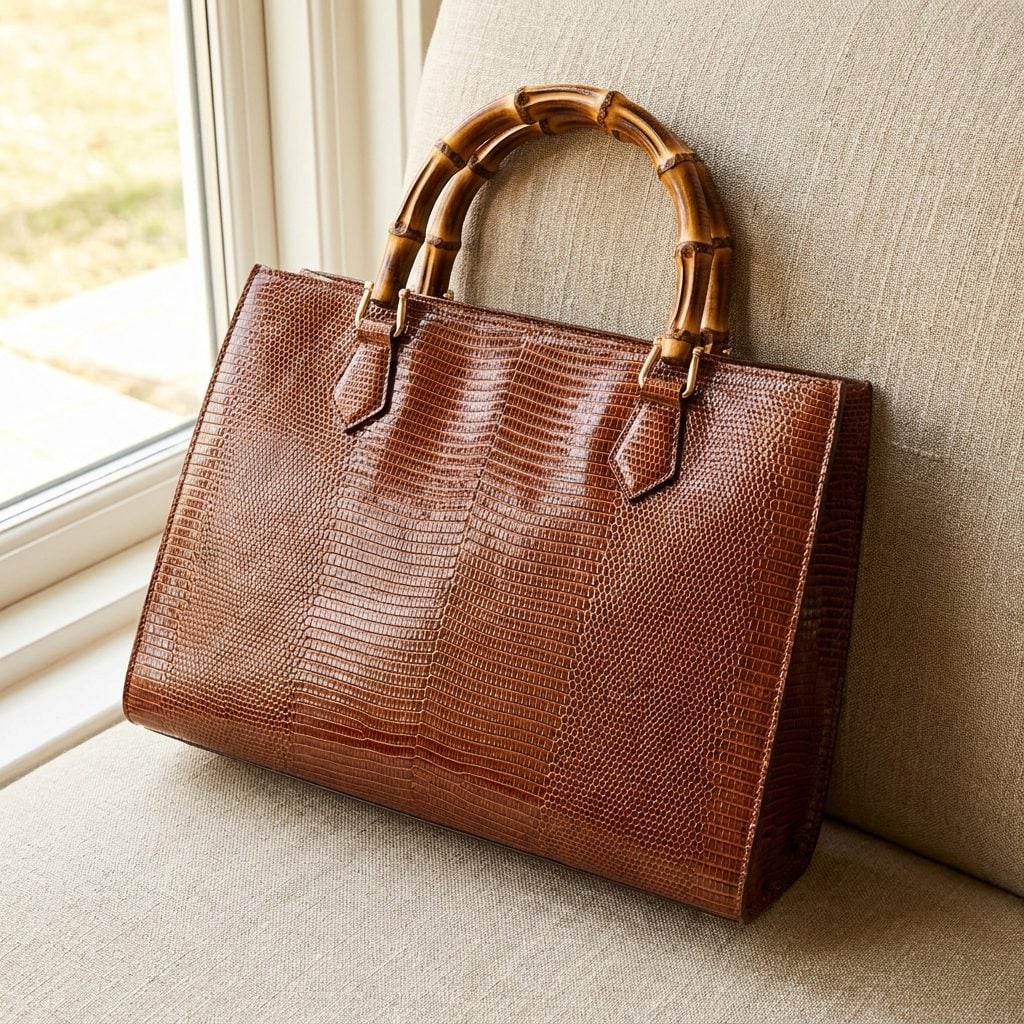
Around $2,300 near the opening of the decade for a large lizard version translates to roughly $5,876 today. By then, the familiar bamboo handle wasn’t the only source of expense; exotic skin moved the bag into another category.
Black and cream tailoring provide the opposite of the bag’s textured surface. Almost no pattern, very little visual chatter. The lizard grain has the room to register without anybody needing to underline it.
5. The Hermès Birkin Before the Hype Machine Turned It Into a Financial Asset With Handles
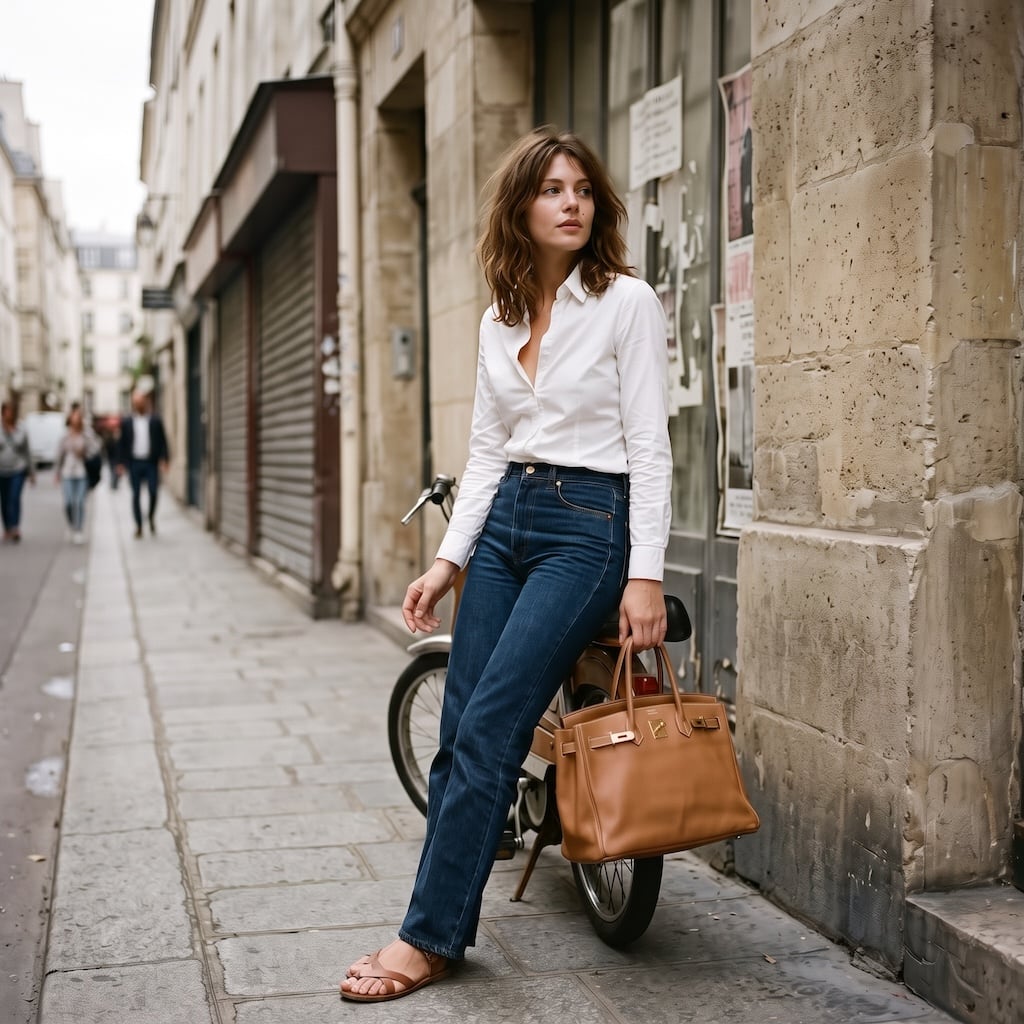
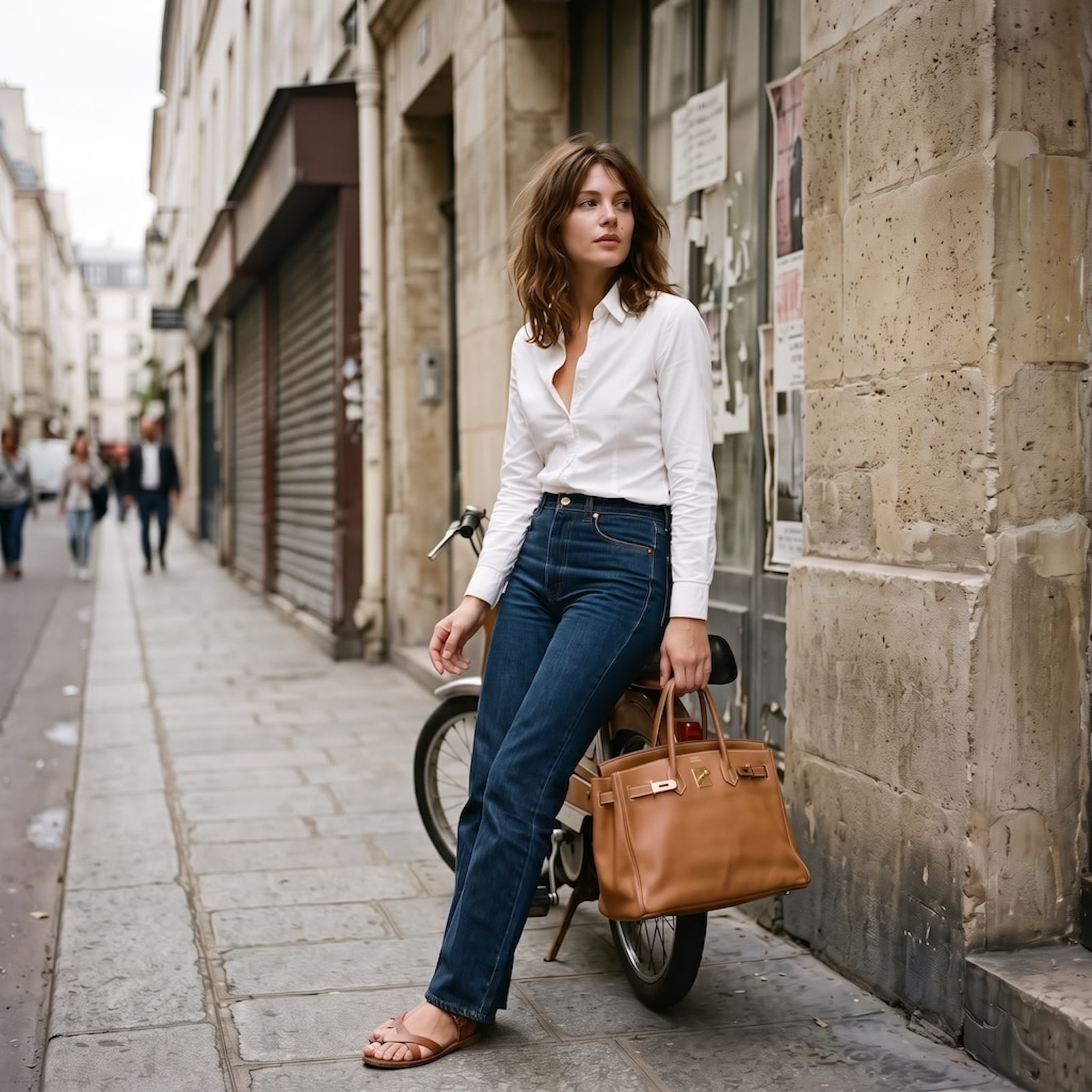
By the early 1990s, a standard leather Birkin could land somewhere around $2,750, or roughly $6,740 today. Already a serious purchase, certainly, but still years before resale speculation and scarcity mythology would turn the Birkin into something resembling a financial instrument with handles.
The pleasure of this image is how little ceremony the bag gets. Unbuttoned white shirt, high-waisted denim, moped against an old stone building, Birkin hanging loosely from one hand. Expensive leather treated as though it were simply somebody’s bag.
4. The $2,780 Judith Leiber Stained-Glass Bag, About $6,263 Today
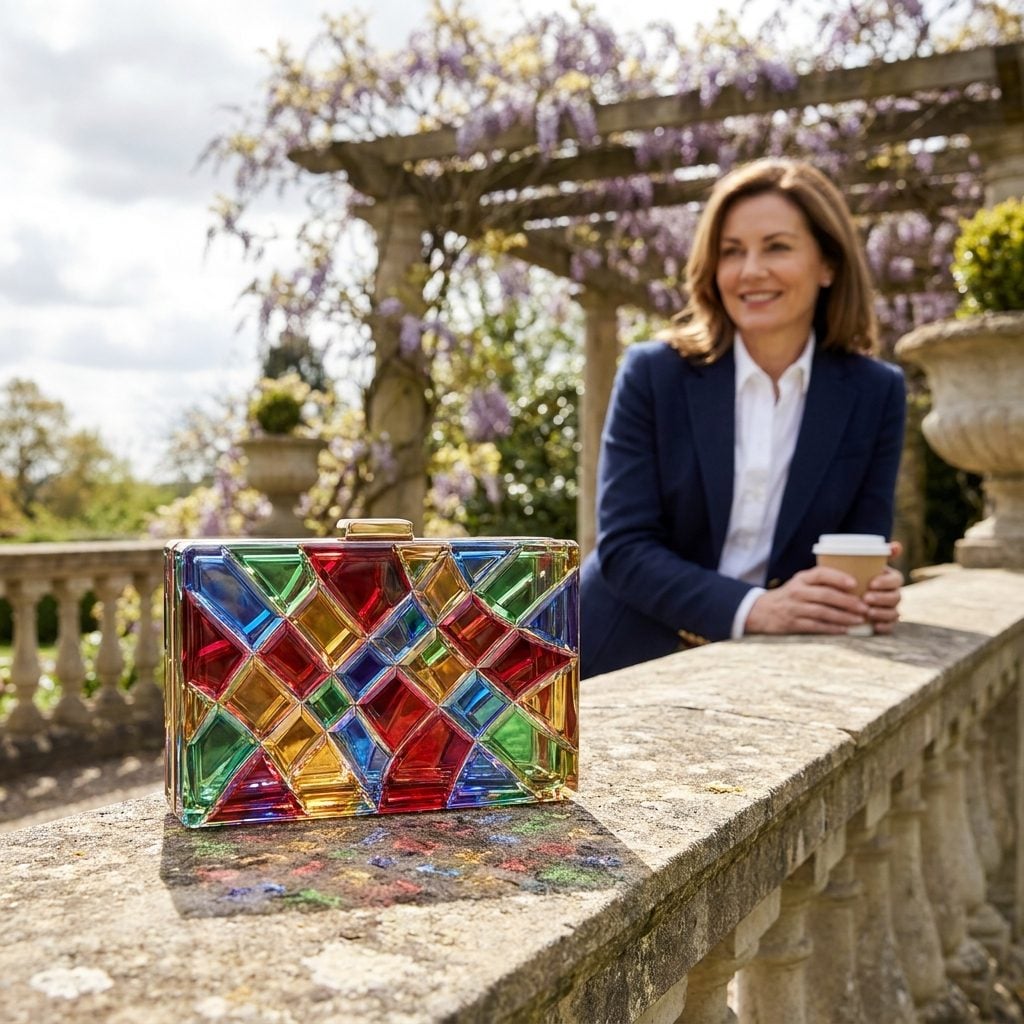
Around $2,780 in 1994 becomes roughly $6,263 today. The stained-glass effect pushes this little evening bag considerably closer to decorative art than to ordinary leather goods.
The midnight-blue gown wisely retreats. Against that dark ground, multicolored crystals can throw back every available point of light. Silver earrings, understated shoes, nothing else making a bid for attention.
Some accessories complete an outfit. Others make you design the outfit around them.
By now the arithmetic has become almost comic. Thousands of current dollars for a bag designed to carry very little — except, of course, everybody’s attention.
3. The $3,035 Judith Leiber Gold Monkey, About $6,837 Today
A gold monkey covered in rhinestones cost $3,035 in 1994, roughly $6,837 today. It holds almost nothing. That’s not a defect in the concept; that’s practically the concept.
Leiber’s figural minaudières operated like sculptures with clasps. Dense crystal work, elaborate metal forms, and painstaking assembly pushed the price far beyond anything storage capacity could explain. You were paying for the moment the monkey appeared on the table beside the champagne glass.
At more than three thousand 1994 dollars, practicality had officially left the building.
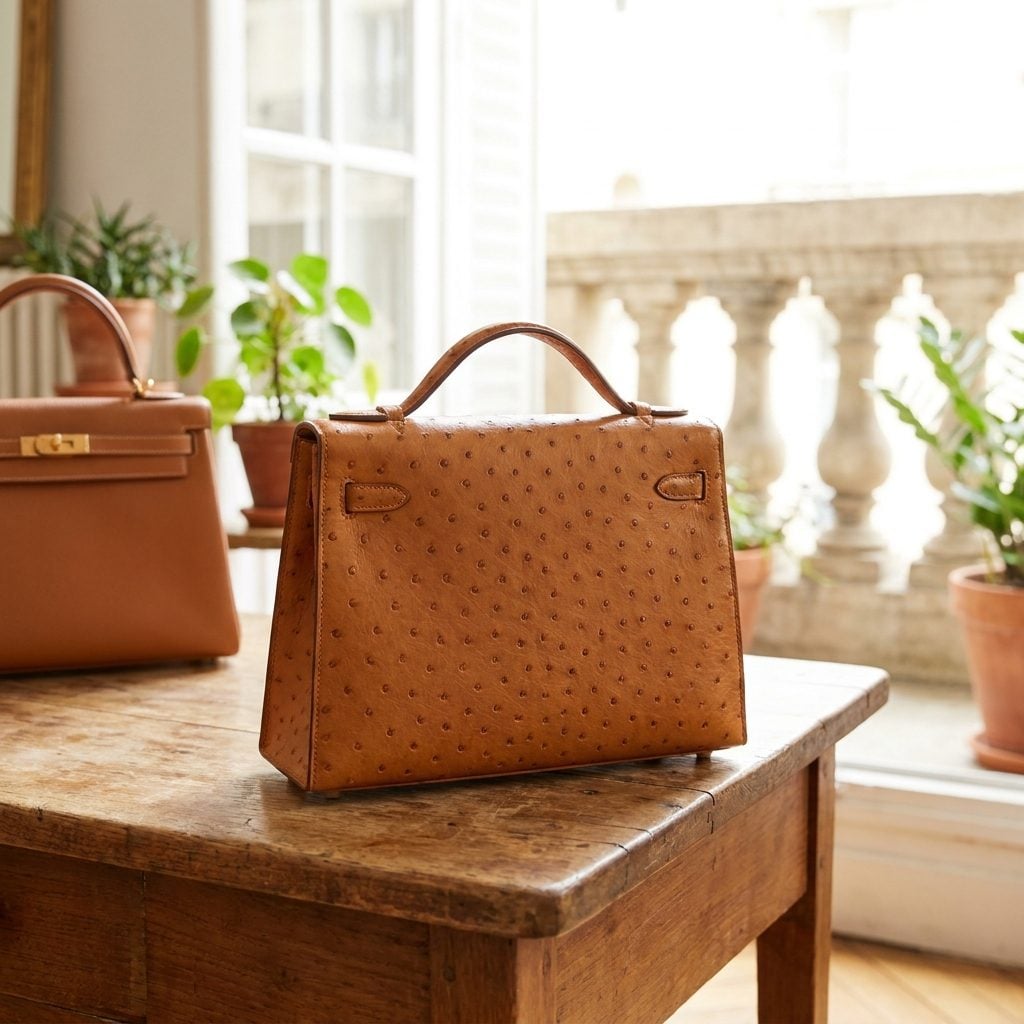
2. The $3,100 Ostrich Hermès Kelly, About $7,599 Today
Same unmistakable Kelly architecture, different material. A medium ostrich version was priced around $3,100 in 1991, close to $7,599 now.
Those raised dots are the feather follicles characteristic of ostrich leather, creating a texture calfskin can’t imitate. Exotic skins brought their own sourcing, grading, processing, and scarcity considerations, layered over the workmanship and prestige already built into the Kelly.
The intriguing part is that the more expensive version could look less obvious to somebody who didn’t know handbags. You paid extra for a distinction that often required a knowledgeable observer to recognize it.
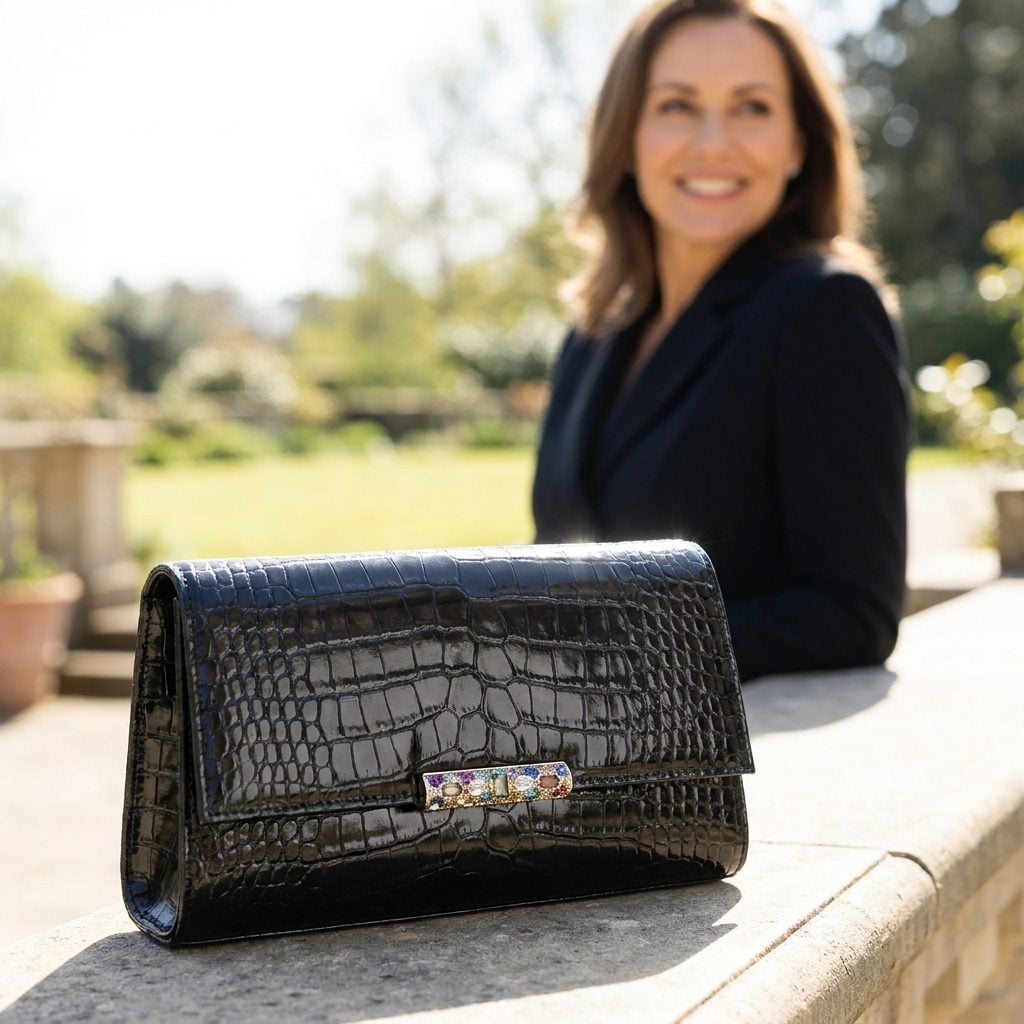
1. The $3,725 Judith Leiber Black Alligator Bag, About $8,392 Today
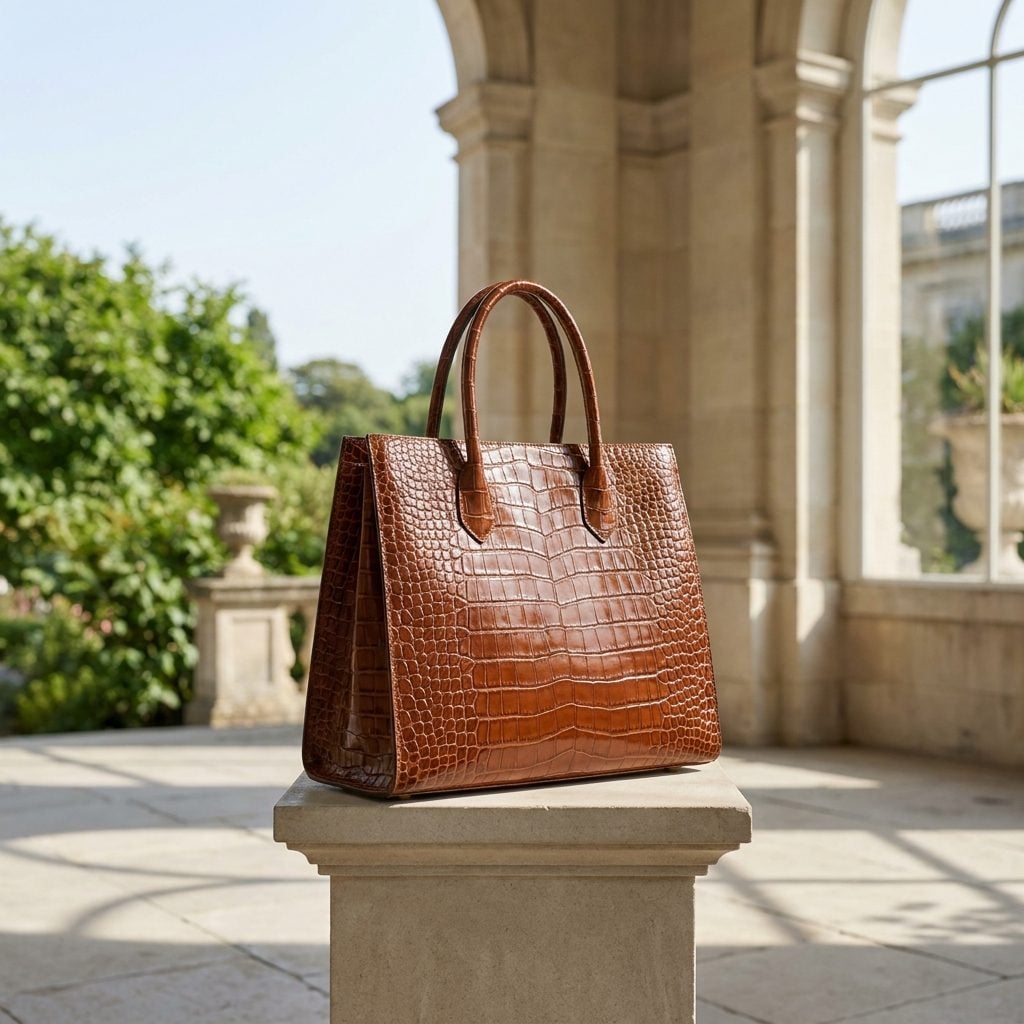
And finally, around $3,725 in 1994 for black alligator with a jeweled bar clasp. That’s approximately $8,392 today — the highest original price in this group, attached to an evening bag still small enough to carry in one hand.
After the monkeys, hearts, masks, and stained-glass explosions, this one is almost severe. The alligator remains dark and controlled. The flourish is concentrated into the clasp: semiprecious stones running across the top like a bracelet that happens to lock the bag shut.
That’s a fitting place for the numbers to end. The 1990s handbag market could sell you durable leather for under $100, recognizable designer nylon for hundreds, a famous European icon for thousands, or a jeweled object costing more than plenty of used cars. Somewhere along the way, the bag stopped being merely the thing carrying your wallet. Increasingly, it was the thing carrying the message.