❤️ Would you like to save this?
Somewhere between the mom jeans and the slip dress, she stopped apologizing. The old photographs came out of a shoebox, the outfits got reconstructed piece by piece, and suddenly clothes she’d dismissed years ago were back on a body decades older and considerably less interested in anyone else’s rules. A few felt ridiculous until the mirror disagreed. Others looked so natural that the intervening years seemed to vanish.
The surprise wasn’t that 1990s fashion had circled back. Fashion always circles back. It was discovering how much of what she’d blamed on the clothes had really been about being younger, less certain, and far more willing to let a bad fitting-room light ruin an afternoon.
What survived best wasn’t necessarily the famous stuff. It was proportion, texture, color, and clothes that left enough room for a person to inhabit them. The experiment started as nostalgia. Somewhere along the way, it became an argument for keeping the good parts and leaving the old anxieties in the shoebox.
FYI, thanks to AI imagery software, we’re able to create very specific fashion and hairstyle examples to illustrate the points being made. In some cases, imagery is exaggerated to hammer home the point. Also, assume links that take you off the site are affiliate links such as links to Amazon. this means we may earn a commission if you buy something.
29. High-Waisted Straight Jeans, a Ribbed Mock-Neck, and Penny Loafers Still Know What They’re Doing
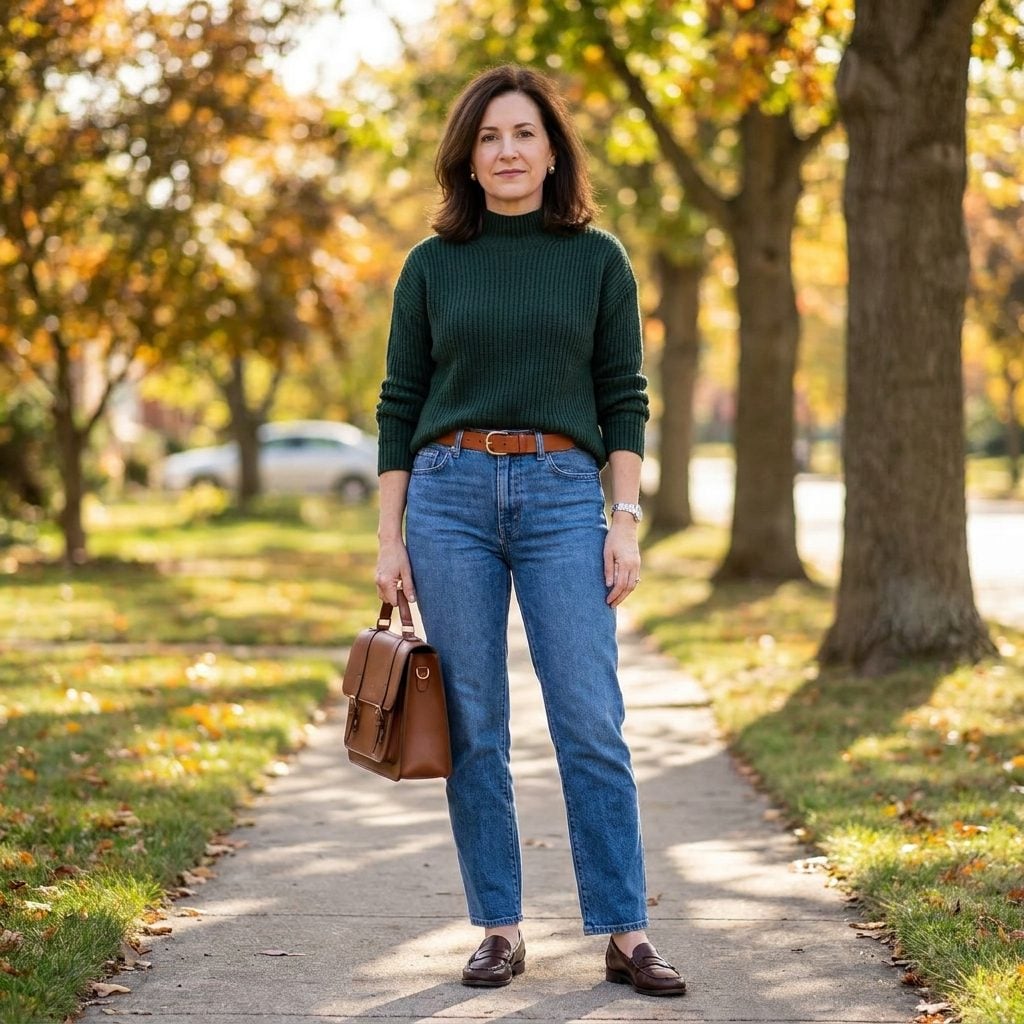
The waist sets the architecture. Sit that jean near the natural waist and the leg starts visually higher, while the tucked green mock-neck keeps the top half compact. Soft ribbing against sturdy denim gives an otherwise ordinary combination enough texture to stay interesting.
That was the surprise. In an old photograph, this barely registered as an outfit. Recreated now, the beige look crowd might call it studied restraint, while the cognac leather belt and dark-brown penny loafers quietly connect the warmer notes. Nothing needs embellishment. The proportions already finished the sentence.
28. The Black Slip Dress Needed Less Updating Than She Expected
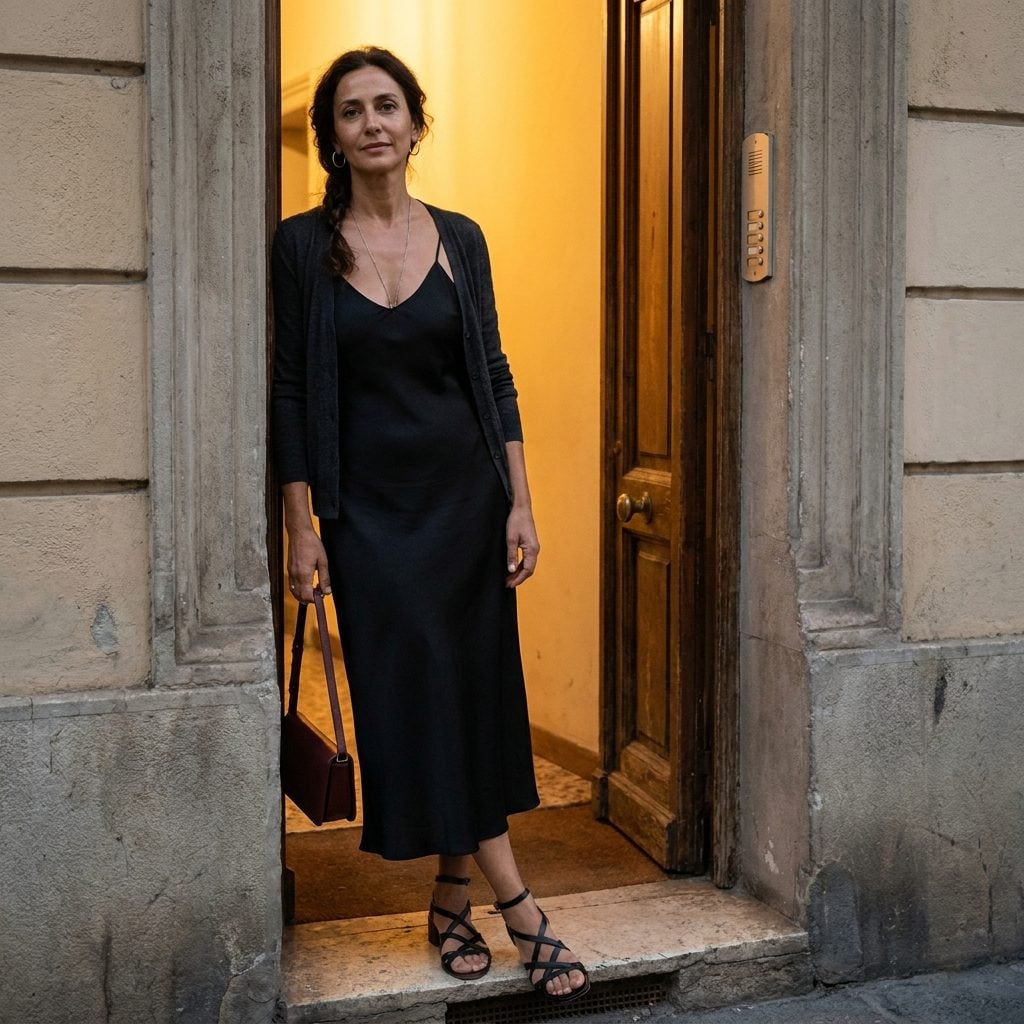
One color, two surfaces. The satin catches light and moves while the fine-knit cardigan absorbs it, giving an all-black outfit depth without resorting to hardware, pattern, or elaborate layering.
The slip dress may be one of the defining garments of the mid-’90s, but she resisted modernizing this one into oblivion. No giant blazer. No cutouts. No attempt to make the neckline more complicated than it was. A slim pendant and tiny dark-red bag are enough because restraint was part of the original appeal.
27. The Open Flannel Still Refuses to Become Complicated
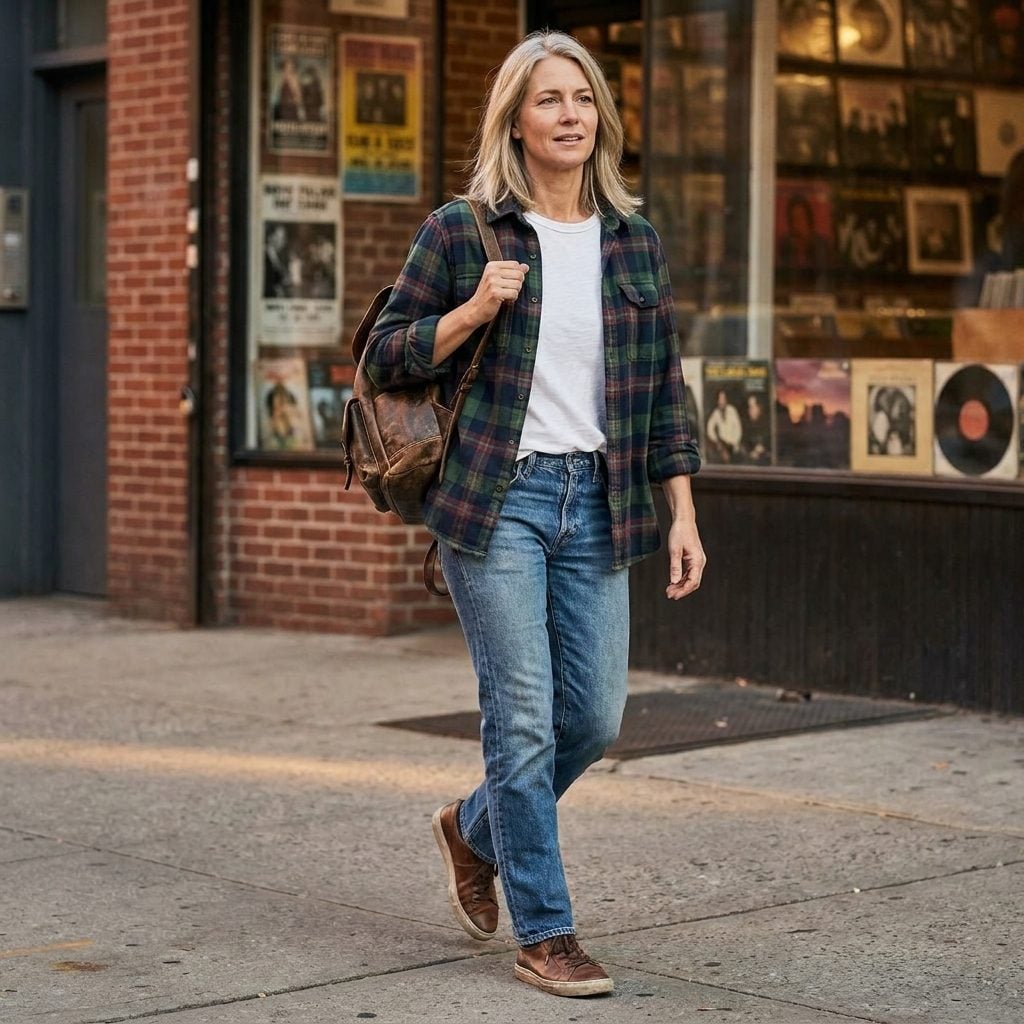
The flannel succeeds on something almost annoyingly simple: ease. Not tent-sized, not tailored to death, just loose enough to fall open over a fitted white tee. Go much bigger and the person disappears. Pull it too tight and the whole reason for wearing flannel evaporates.
She kept everything else plain — faded straight jeans, brown leather sneakers, no theatrical pile of grunge references. It looks like an outfit for browsing record bins and getting coffee afterward because that is exactly the level of ambition it should have.
26. Denim Overalls Return From the Part of the Closet Marked Absolutely Not
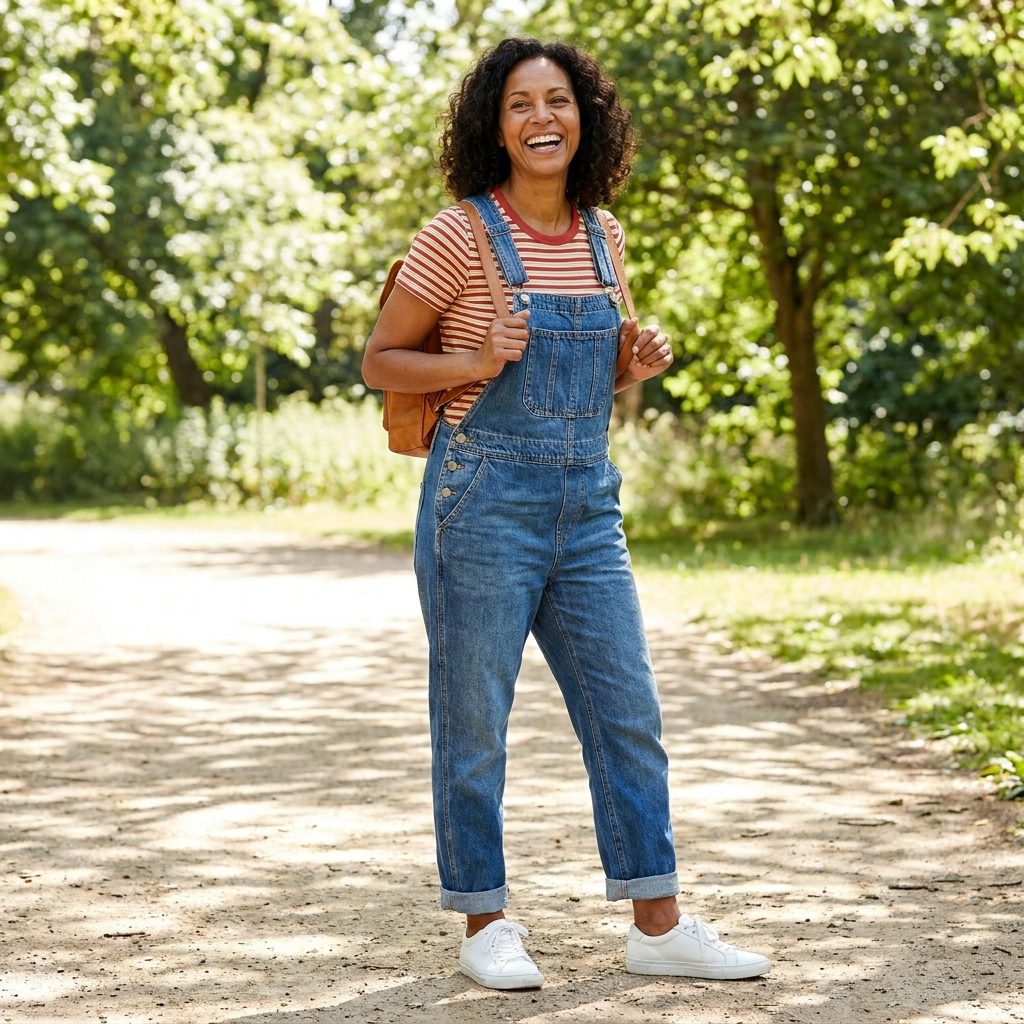
These were the overalls she had mentally buried with dial-up internet. Then the relaxed straight leg went on, the fitted red-and-cream tee followed, and the expected disaster failed to materialize.
The close-fitting tee gives the roomy denim a clear counterpoint instead of adding more volume. White sneakers and naturally rolled cuffs keep the outfit casual without turning it into a costume assembled from a decade-themed party bin.
The most unexpected change is attitude. The overalls look better once nobody wearing them is asking permission.
25. Black Straight Trousers Show the Other Half of the 1990s
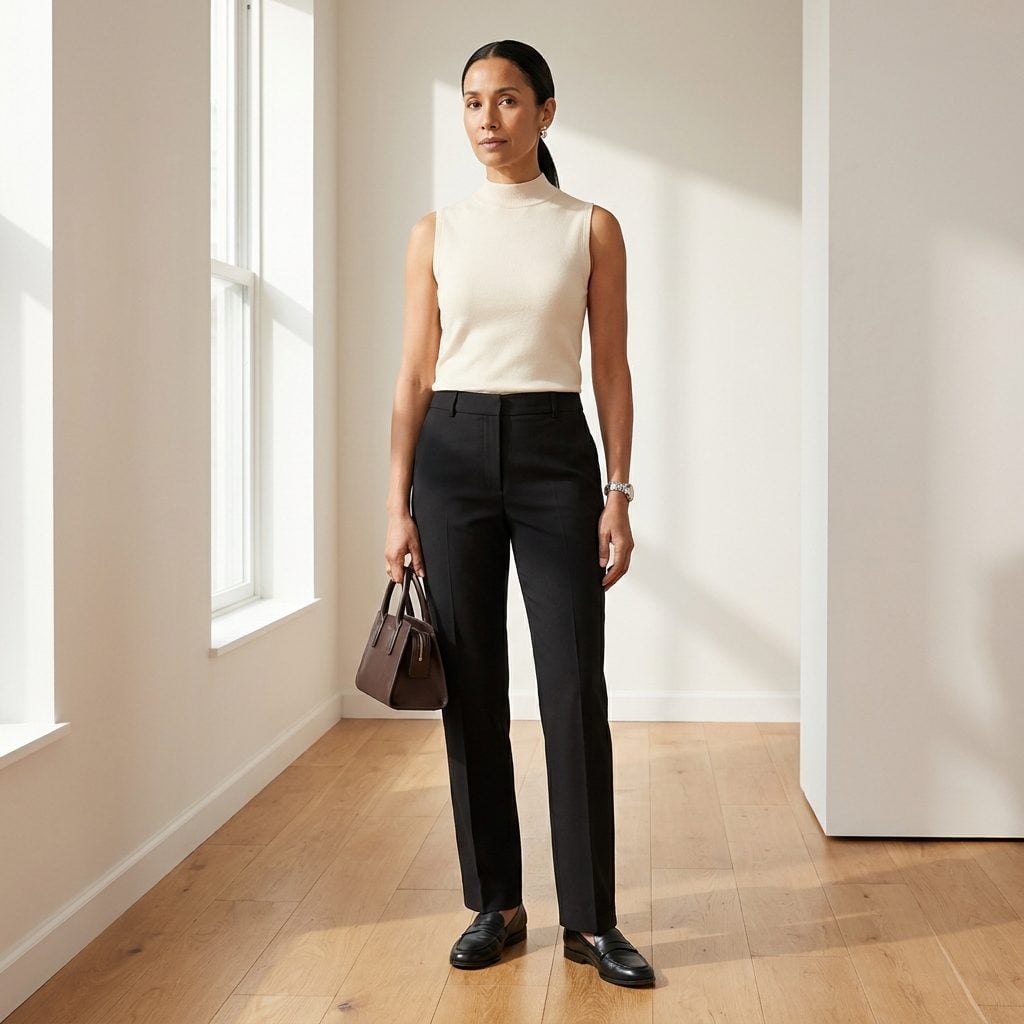
Not every 1990s closet was flannel, denim, and a slip dress. There was also this: cream sleeveless mock-neck, black straight trousers, a clean tuck, and almost nothing else competing for attention.
The little structured top-handle bag provides enough finish to keep the outfit from reading unfinished. Two colors and good tailoring handle the rest.
The ’90s weren’t all flannel and slip dresses. Half the decade was clean lines and the confidence to stop adding things.
24. The Long Floral Dress Remembers 1994 Without Reenacting It
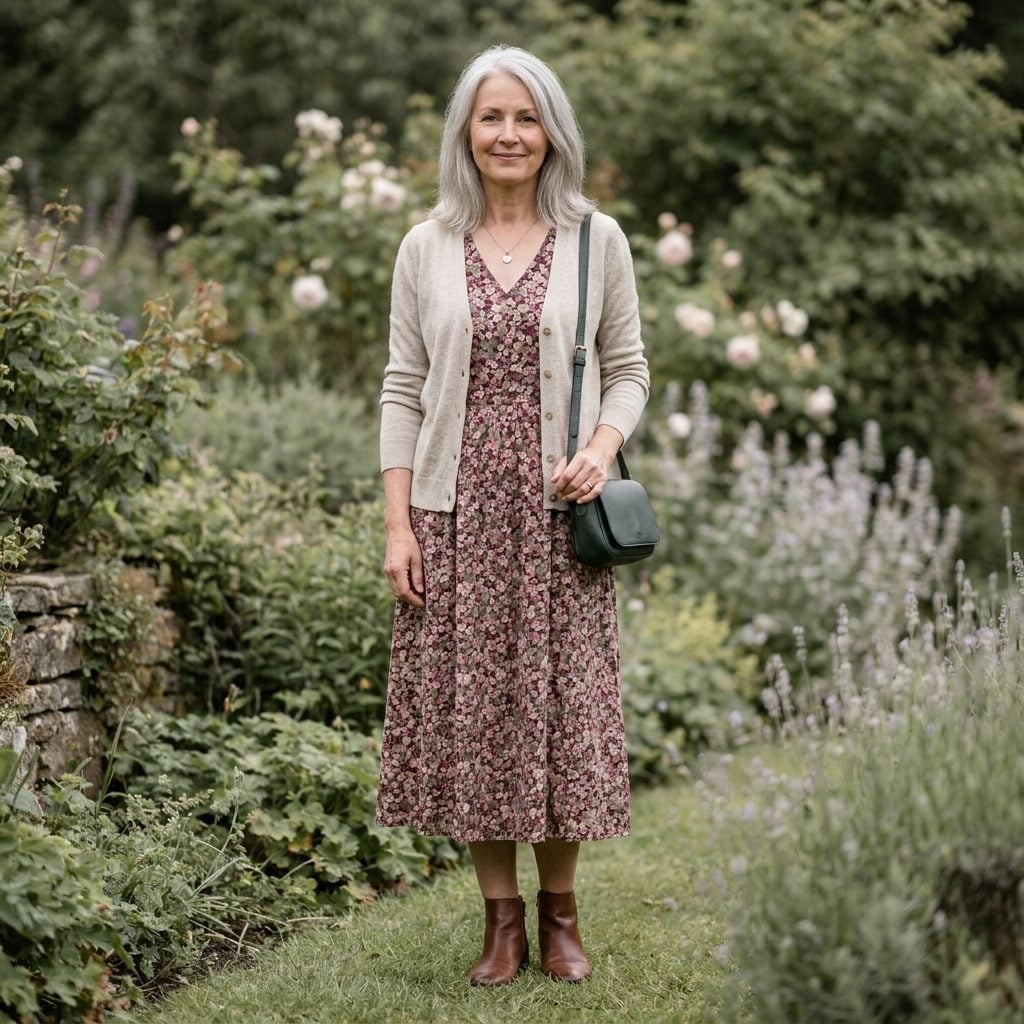
The small burgundy, dusty-rose, and olive floral immediately places the dress in an era when prints were often dense rather than blown up to wallpaper scale. That visual busyness is part of the memory.
An oatmeal cardigan stops at the waist before the skirt drifts away, and brown ankle boots take some sweetness out of the hem. The dress didn’t make her feel younger when she put it back on. More interestingly, it made her remember why she’d liked herself in it.
23. Black Bootcut Jeans and a Short Leather Jacket Still Make a Sharp Pair
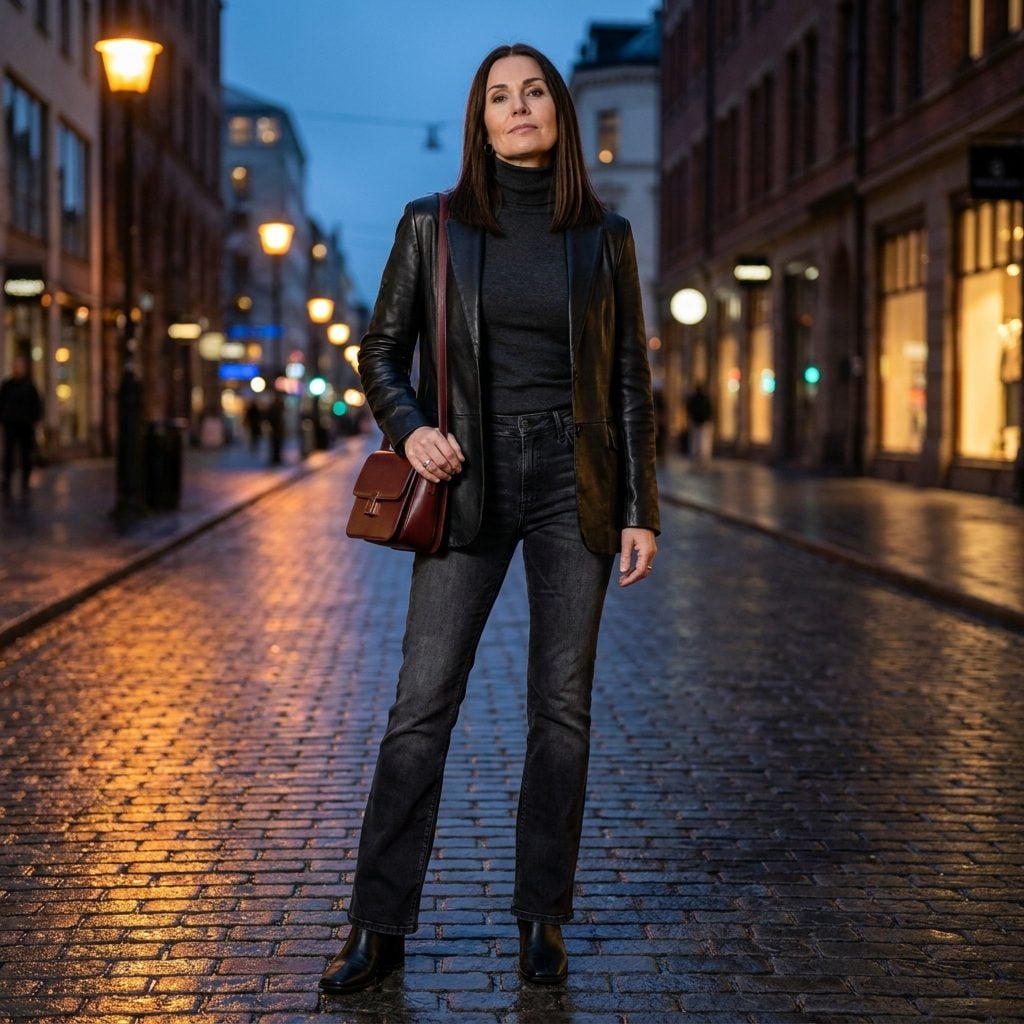
The jeans stay narrow through the hip before opening below the knee, creating just enough movement at the hem to counter a fitted top. Bootcut didn’t need to flare dramatically to change the silhouette.
The leather jacket stops high on the hip rather than swallowing the rise of the jeans. A tucked charcoal turtleneck keeps the center clean, and an oxblood bag adds the only obvious warmth against the washed black.
Sharp, spare, and mercifully free of an unnecessary trench coat.
22. Double Denim Works Better When the Two Halves Disagree
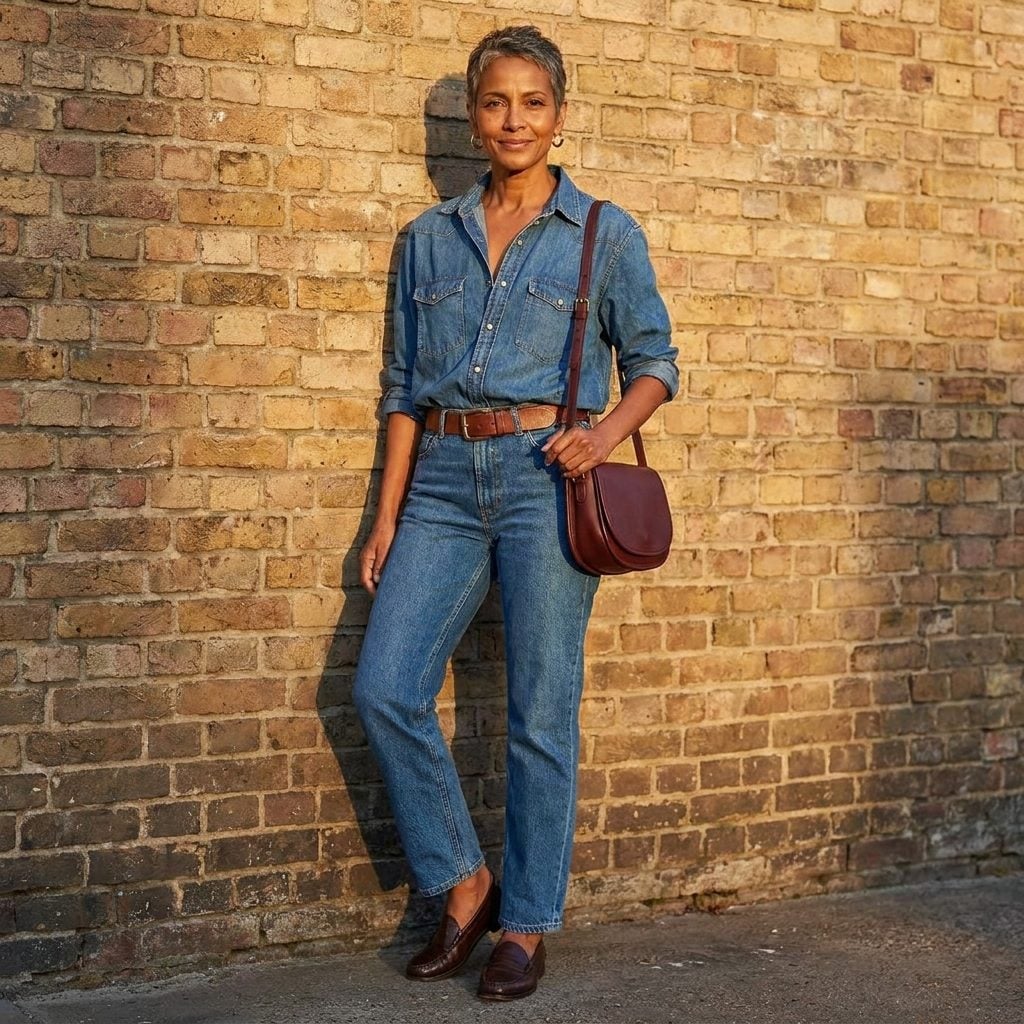
For this recreation, separating the washes is what keeps the denim from collapsing into one blue block. The shirt is clearly lighter than the jeans, so the eye reads two pieces rather than one accidental jumpsuit.
A brown belt interrupts the blues at the waist, while a burgundy saddle bag, gold hoops, and brown loafers give the denim warmer company. She had filed double denim under regrettable decisions. The file has been reopened.
21. The Bias-Cut Midi Skirt Makes Restraint Look Expensive
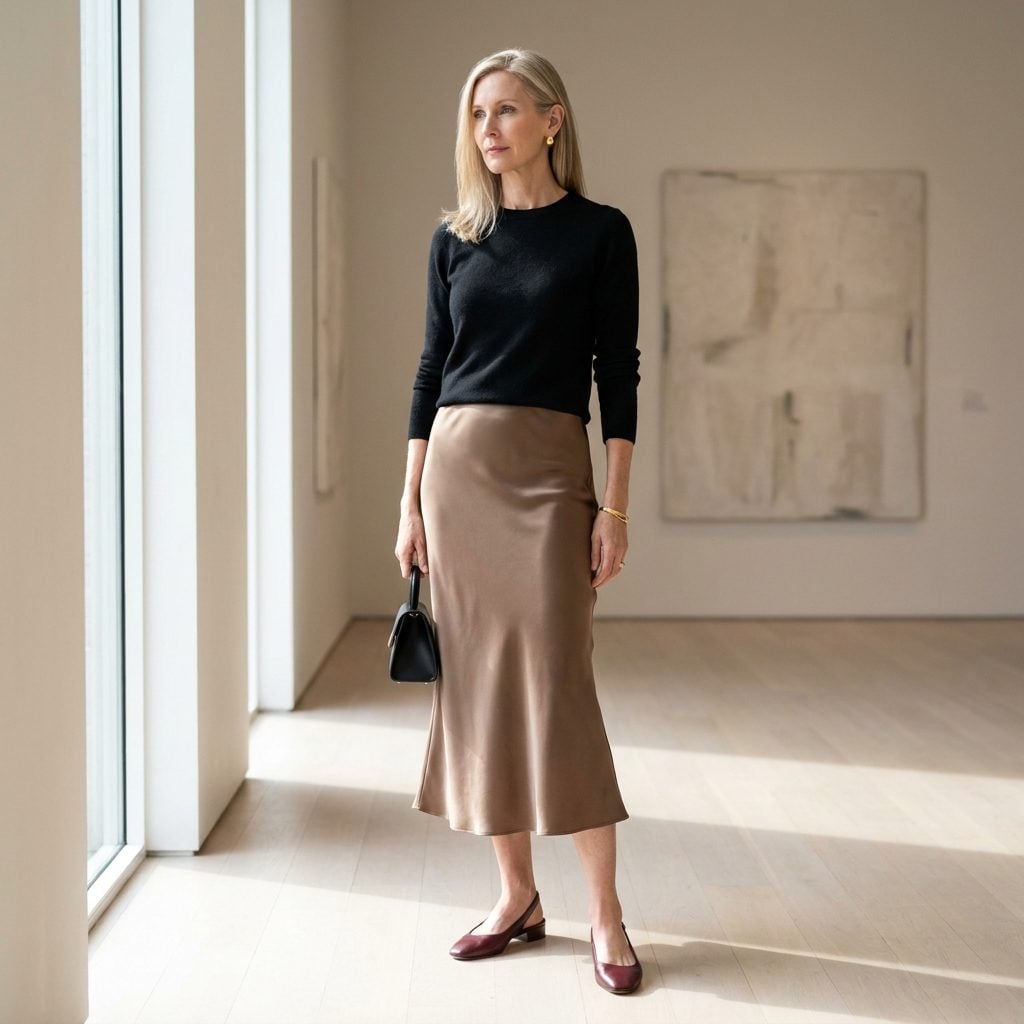
A compact black crew-neck sits above a champagne-brown bias skirt, and the outfit lives almost entirely in the way the skirt moves.
Burgundy slingbacks prevent the palette from drifting beige, while the low heel keeps everything closer to the understated mid-’90s mood than the enormous satin maxis that often stand in for it now.
No statement piece arrives because the drape already has a voice.
20. The Sweater Vest Came Back With Receipts
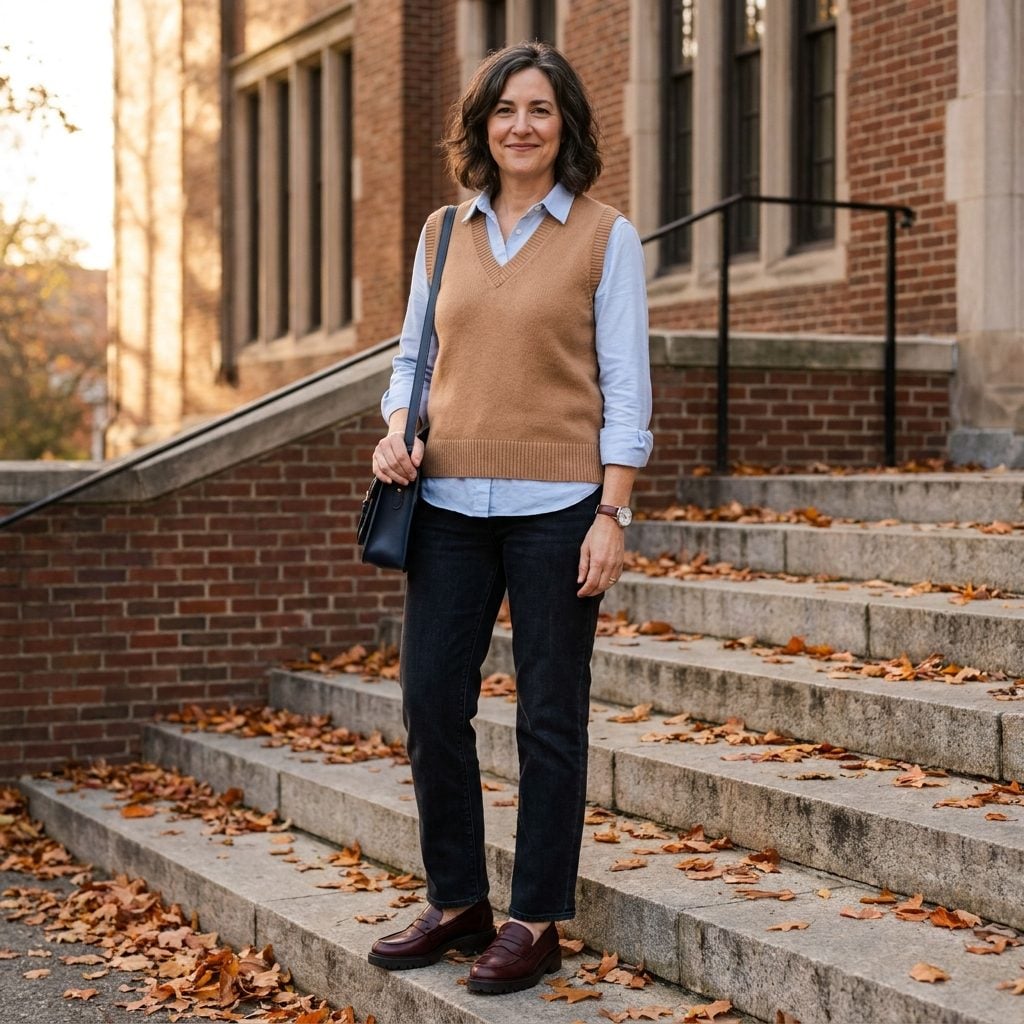
Layer a camel V-neck over a pale-blue Oxford, leave the collar and cuffs visible, and the vest suddenly does much of what a blazer would without asking the outfit to become formal.
The fit matters. A camel V-neck sweater vest should skim rather than smother, while straight jeans keep the lower half unfussy. The oxblood chunky loafers give the soft camel-and-blue combination a darker foundation.
Turns out the vest wasn’t hopeless. It had merely spent some bad years in unfortunate company.
19. The Long Denim Skirt Earns a Retrial
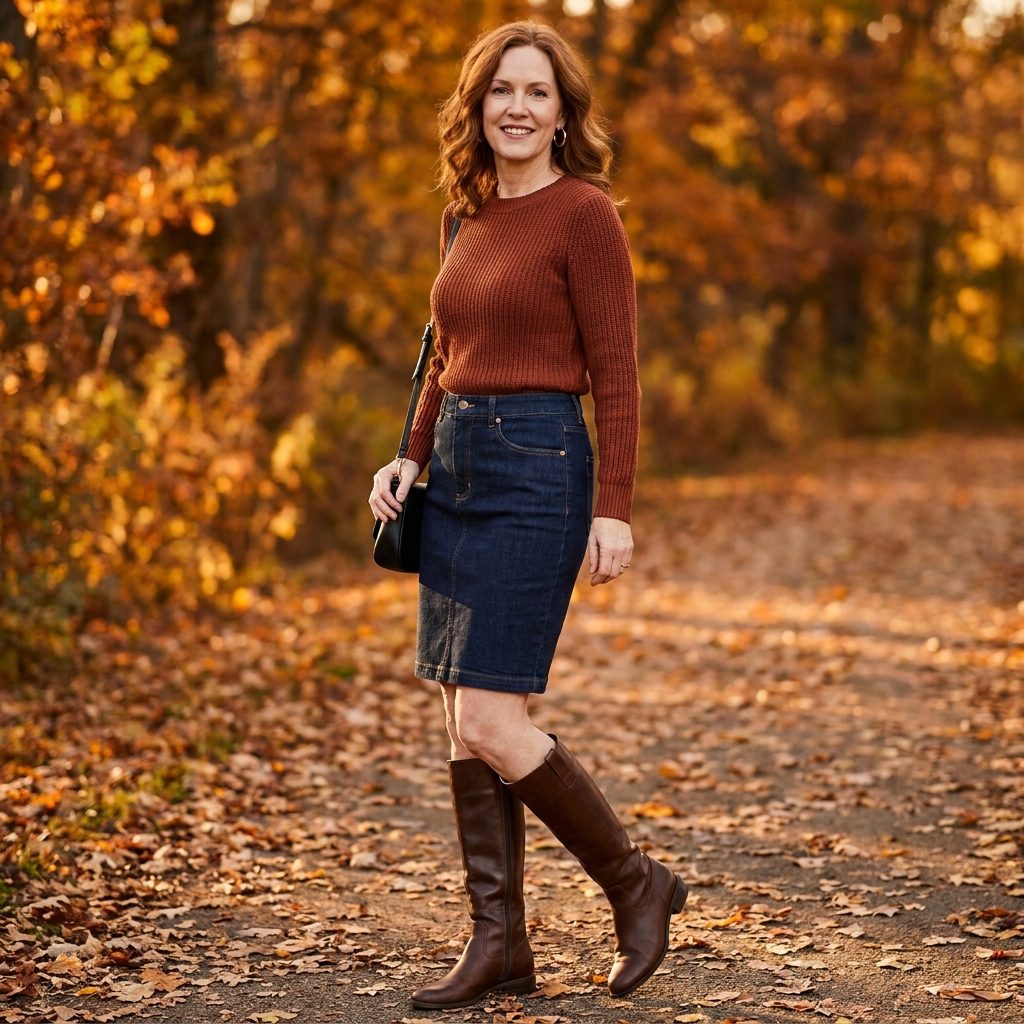
This is not a floaty maxi borrowing denim’s name. Dark indigo, a center seam, and a real back slit give the skirt enough structure to make its 1997 origins obvious.
The rust ribbed knit introduces the warmth, while tall chocolate boots disappear beneath the hem instead of slicing another band of color across the leg. She had expected the mirror to settle the argument permanently.
Instead, the skirt earned parole.
18. A Plaid Blazer Turns Tuesday Into an Appointment
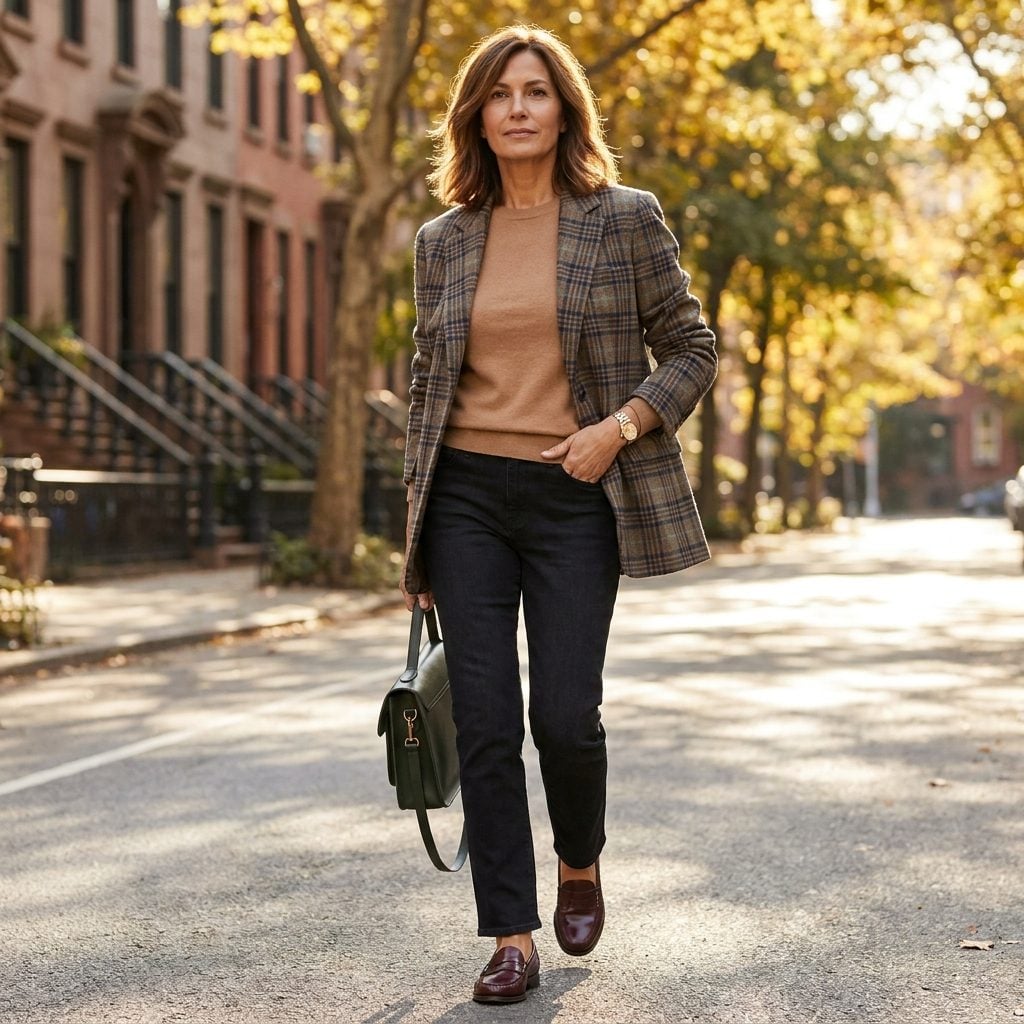
Without the blazer, this is dark denim and a camel sweater — perfectly competent, completely ordinary. Add muted brown, navy, and green plaid and suddenly the outfit appears to have somewhere to be.
The 1993 cut wants ease rather than bulk. A plaid single-breasted blazer with breathing room looks lived in rather than corporate. Burgundy penny loafers and a dark-green satchel pull different threads from the jacket without matching them literally.
The clothes she rejected weren’t necessarily the mistake. Sometimes she simply hadn’t learned yet which parts belonged to her.
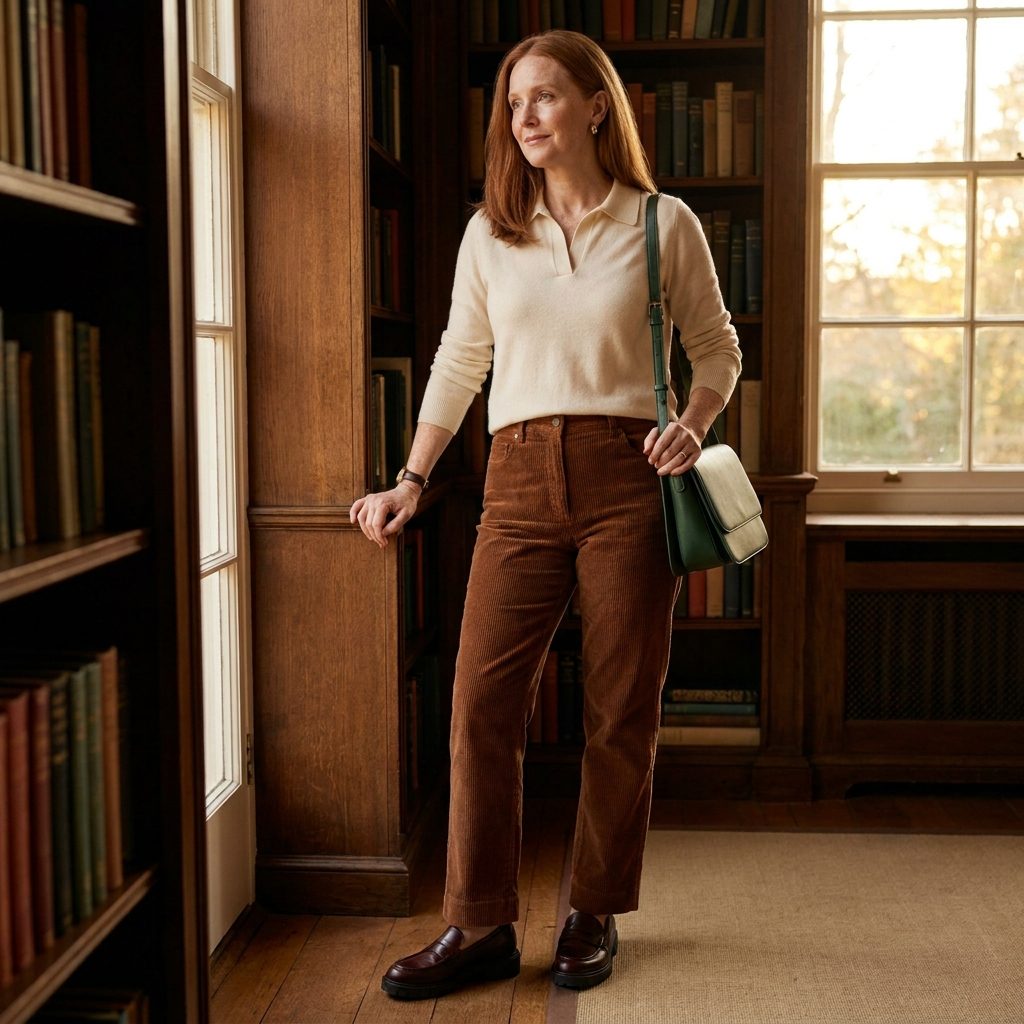
17. Corduroy Trousers Make Texture the Main Event
❤️ Would you like to save this?
The visible wale of the chestnut corduroy trousers changes the outfit before color even enters the conversation. Corduroy catches light in ridges, which gives an otherwise straightforward trouser shape much more surface life than denim.
A cream polo knit stays quiet above it. Oxblood loafers deepen the warm palette, while a forest-green bag arrives as the one cool interruption.
This outfit somehow smells like October.
16. The Blazer-and-Camisole Combination Wasn’t Waiting for an Age Limit
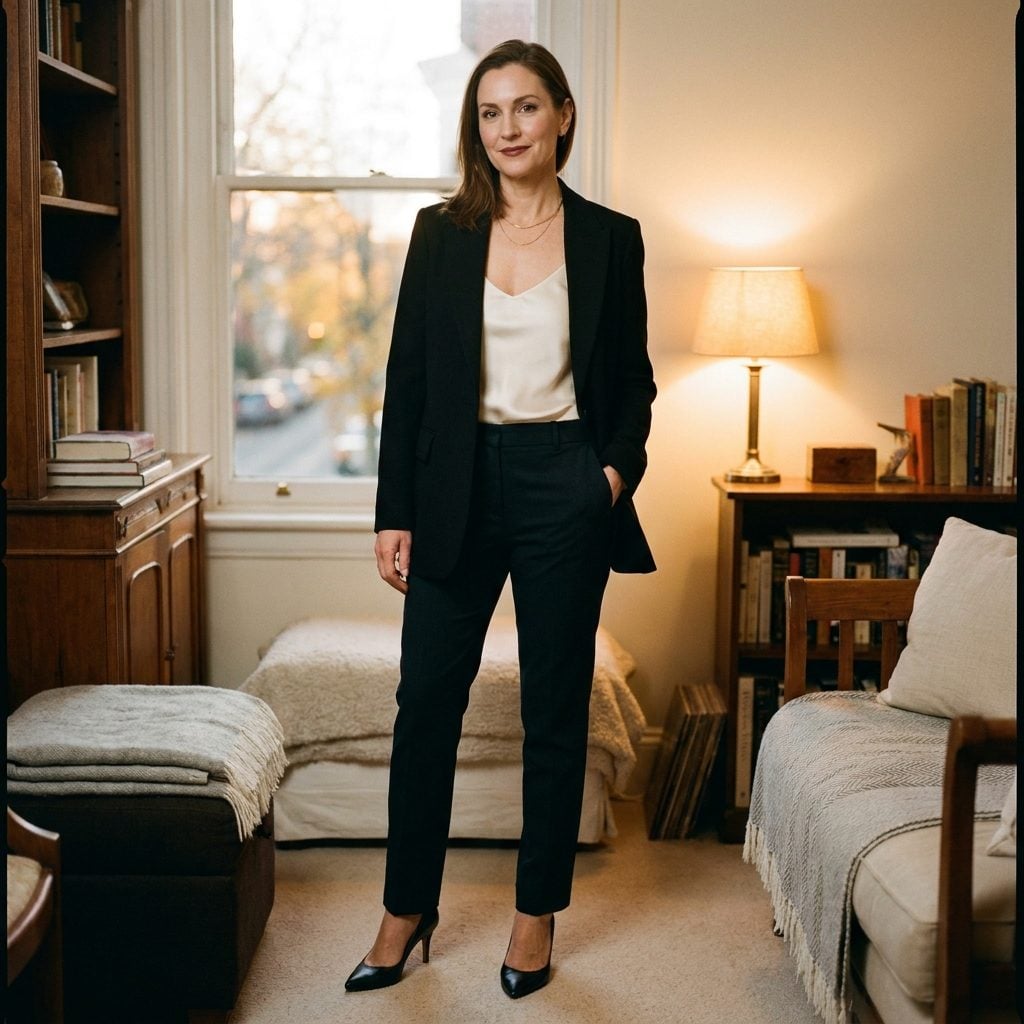
A bare camisole under a sharp blazer was a late-’90s night-out formula she had quietly decided belonged to another stage of life. Trying it again exposed the flaw in that logic: neither piece had actually stopped working.
The blazer supplies the line, weight, and coverage. The satin camisole introduces softness underneath it. Crisp wool against fluid satin is enough contrast to keep both pieces interesting without adding another layer or necklace to explain the outfit.
Quiet armor, with one deliberate softness underneath.
15. Leather Trousers Grow Up Nicely When They Stop Pretending to Be Leggings
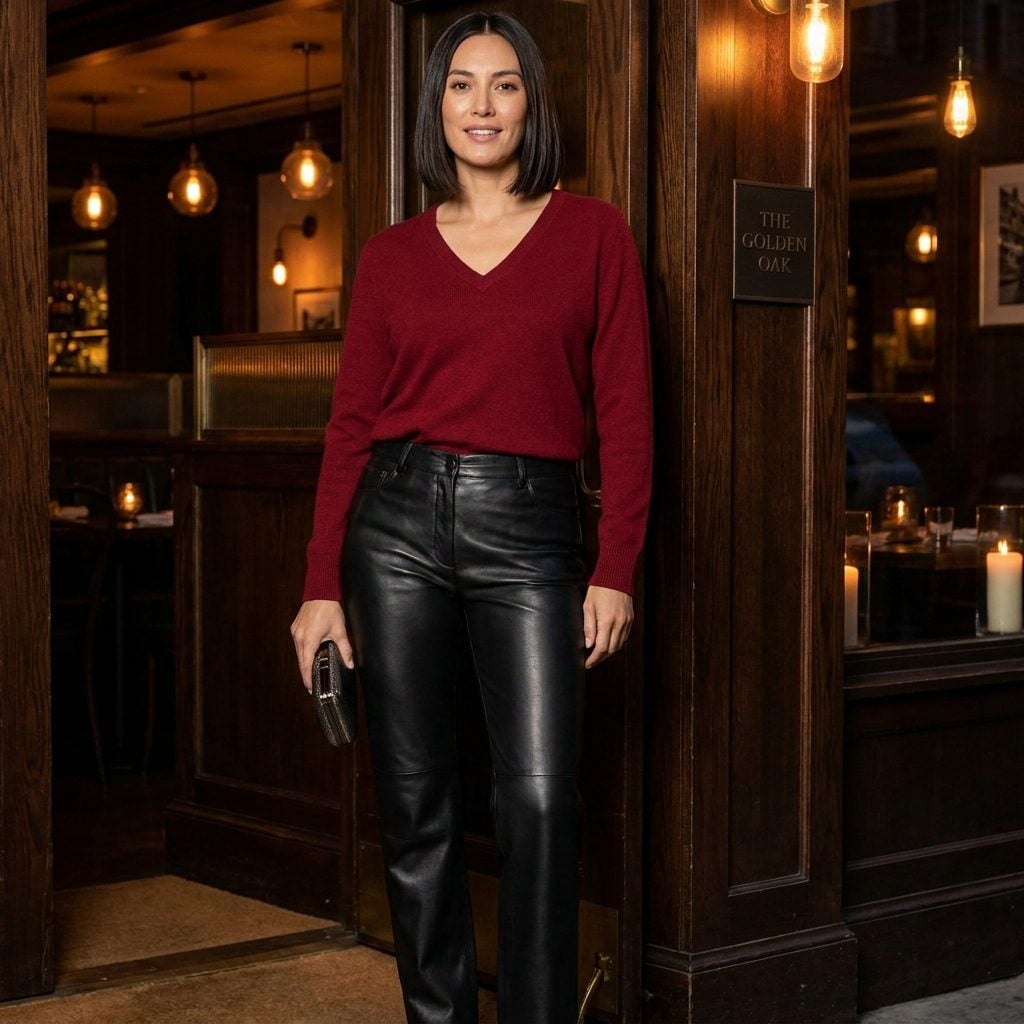
Straight-leg leather trousers change the proposition completely. Instead of clinging like stagewear, they hang more like tailoring, which lets the leather provide the drama without dragging the rest of the outfit into it.
A deep-red fine-gauge V-neck softens the surface contrast. Pointed pumps and a slim metallic clutch finish the job, and then everybody else is dismissed for the evening.
Leather is already talking. There is no reason to shout over it.
14. The Oversized White Oxford Only Needs One Point of Control
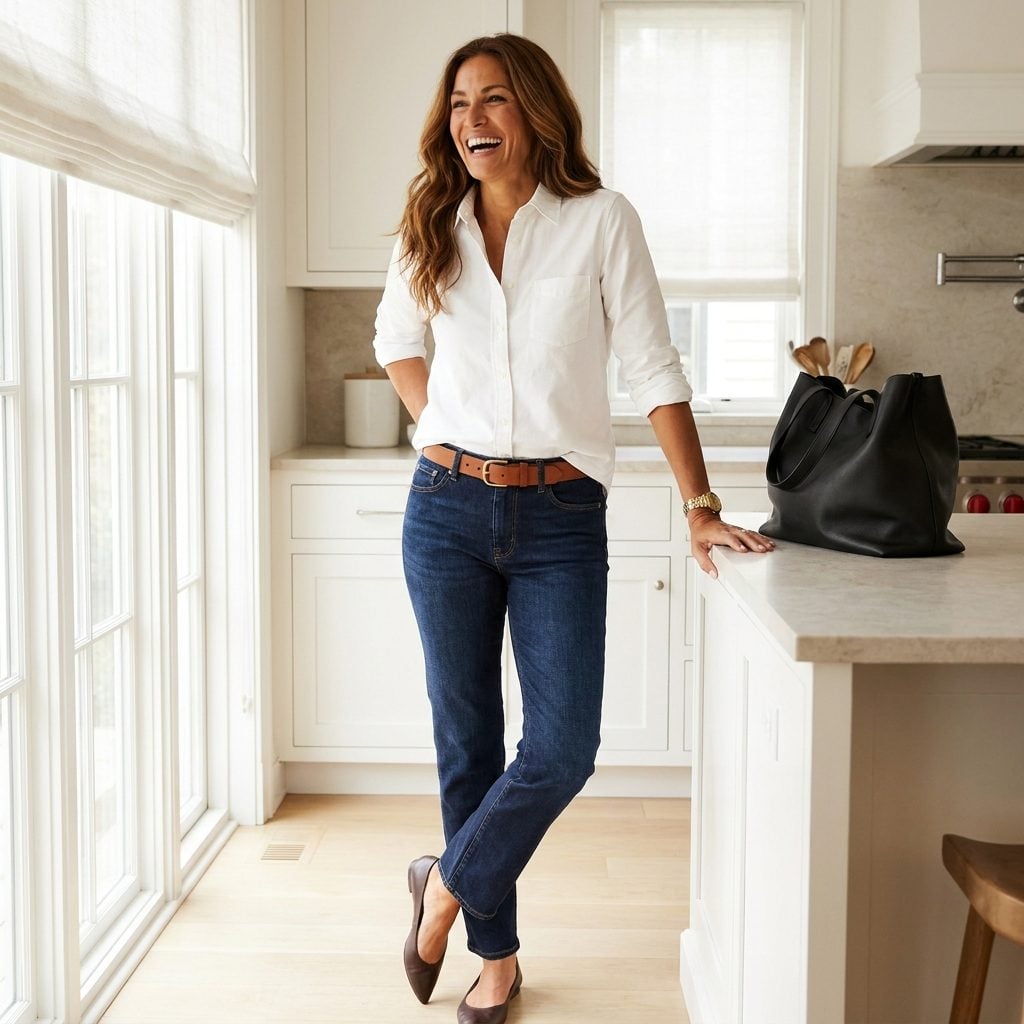
A roomy white Oxford can tip into nightshirt territory quickly. Here, the front tuck and cognac leather belt establish just enough shape to let everything else remain loose.
High-rise dark denim gives the shirt something substantial to fall over, while rolled sleeves keep the volume moving rather than hanging dead at the wrists.
Borrowed-from-him and drowning-in-it are neighboring addresses. This stays on the right side of the street.
13. The Corduroy Skirt Makes an Autumn Palette Feel Almost Inevitable
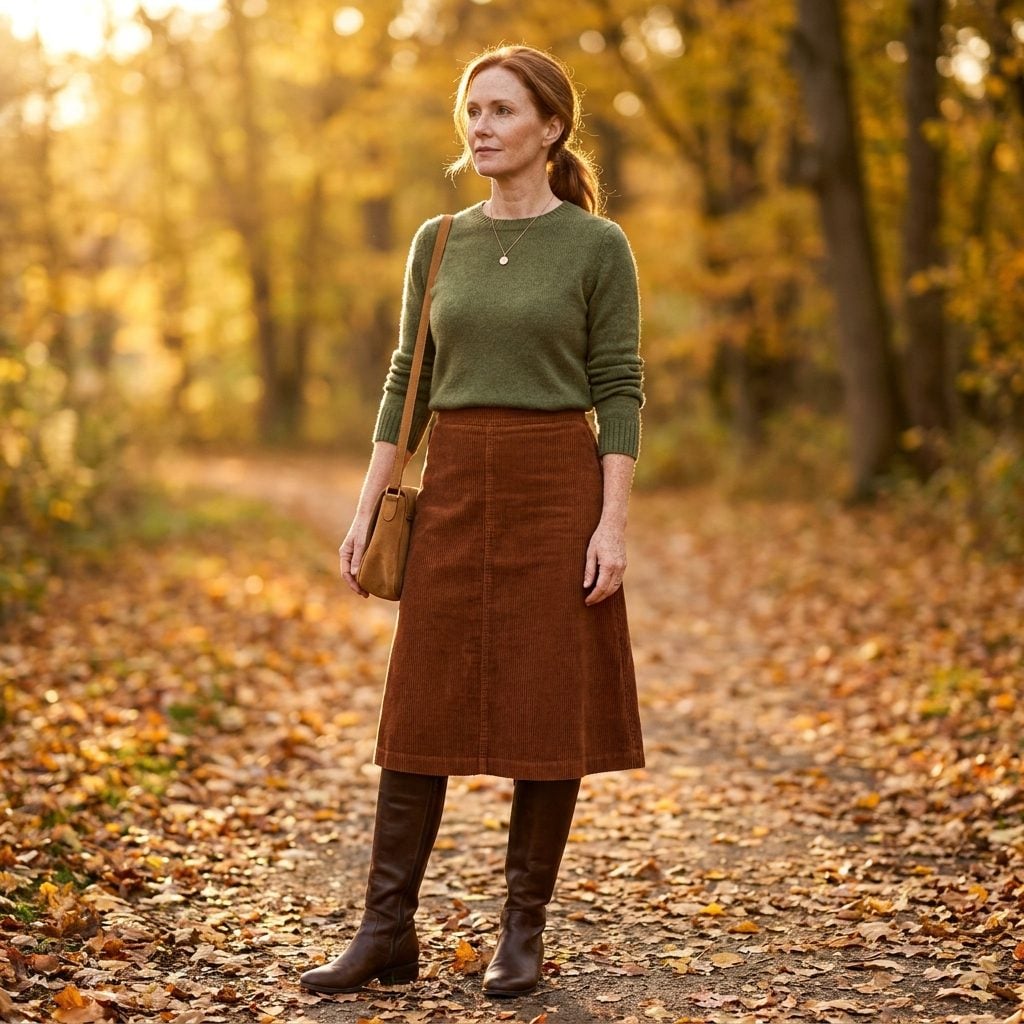
Rust corduroy beside moss knit is the reason this outfit sticks. The colors are rich without being bright, and the fabrics make them look deeper still.
The A-line skirt falls into tall boots, while the sweater stays tucked so the waist doesn’t disappear under two soft pieces. A tan suede bag keeps the palette earthy without forcing it into an exact match.
This is the practical corner of the early-’90s closet — the outfit nobody called iconic because everybody was too busy wearing it.
12. The Baby Tee Is Less About Age Than Where It Stops
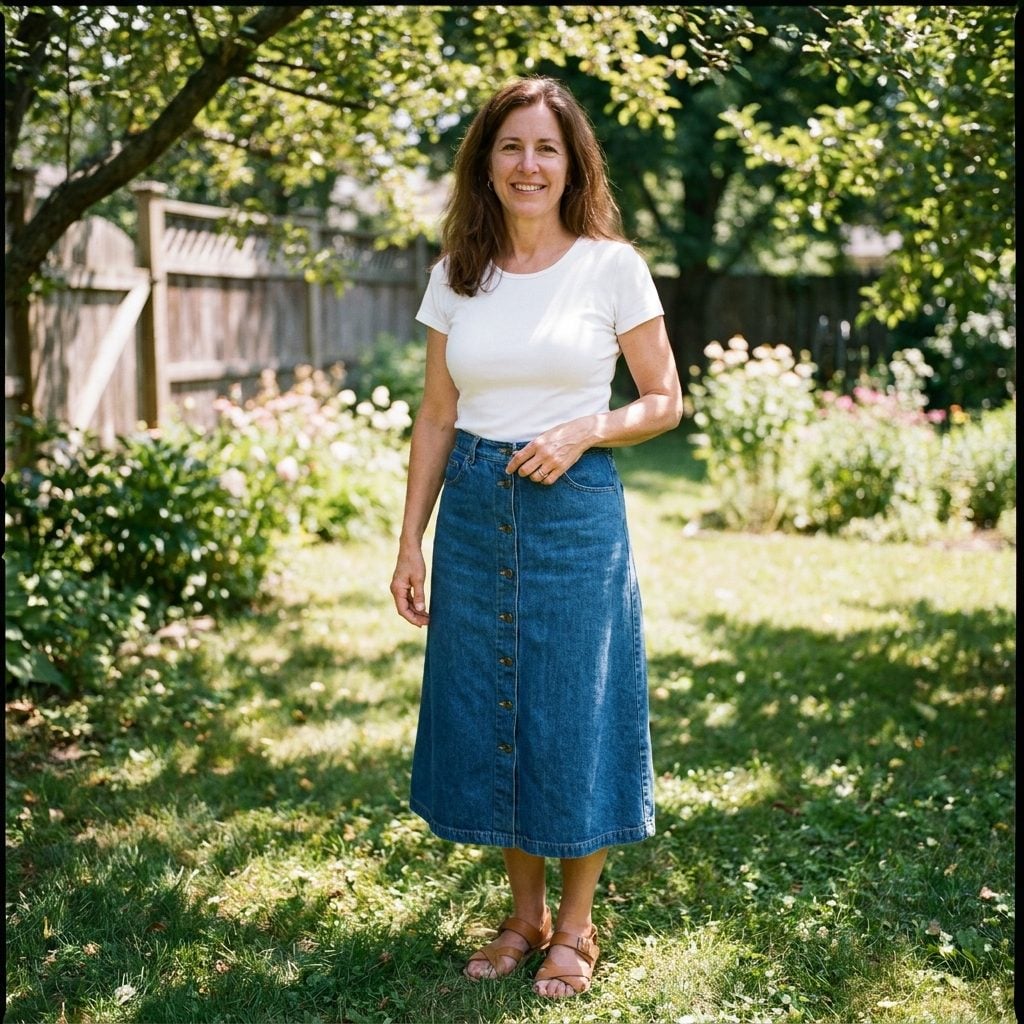
She was convinced this was the piece that would expose the whole experiment. Instead, a fitted tee ending right at a high waistband simply behaved like a compact top.
The long denim button-front skirt gives it enough visual weight that the tee never has to perform as a nostalgia stunt. Snug above, long and structured below: the tension is about proportion, not the birth date on anybody’s driver’s license.
The version that looks dated is the one that fits badly. That’s a less dramatic problem, and fortunately a solvable one.
11. A Long Black Dress Gets Better Once Denim Interrupts It
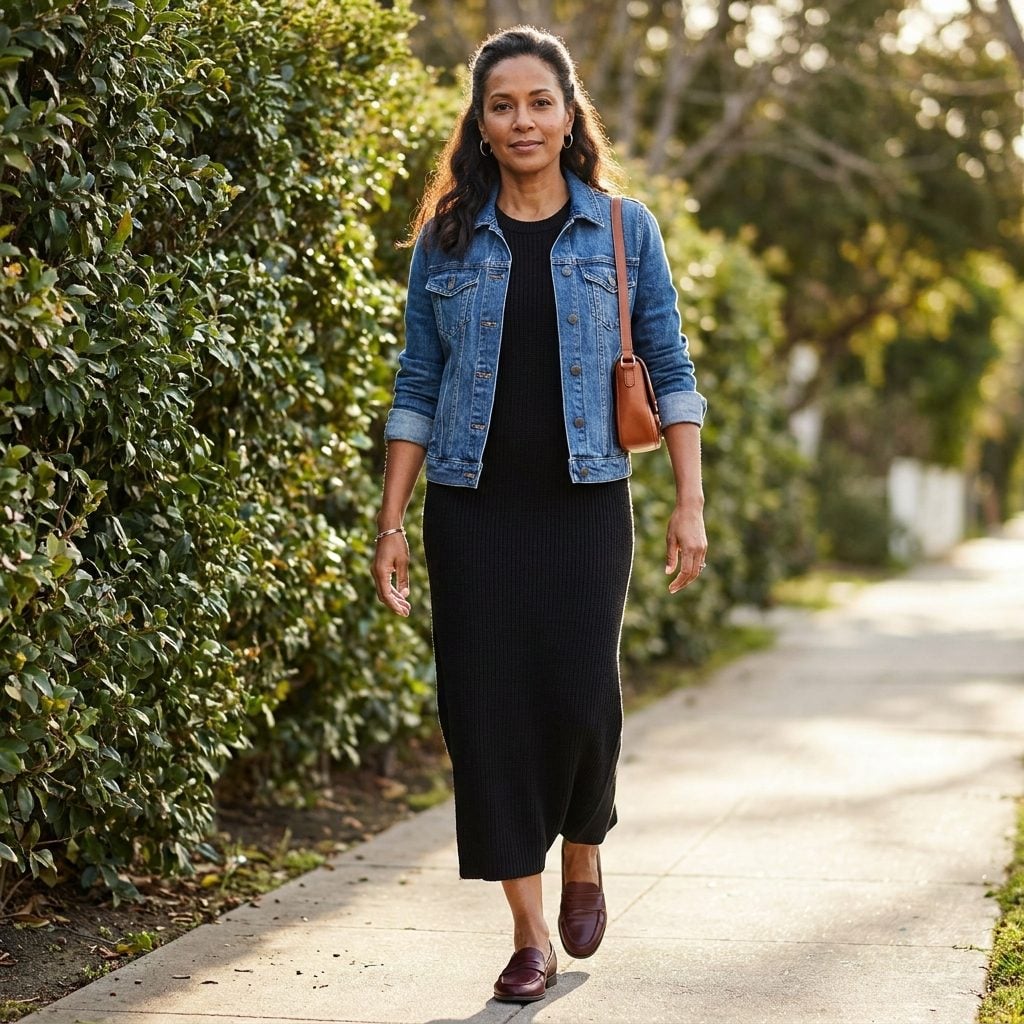
A plain black column can become severe if nothing breaks it. The cropped medium-blue denim jacket changes that immediately, adding weight, color, and a horizontal stop near the hip.
Dark-red loafers keep the black from reaching the floor uninterrupted, while the dress itself remains deliberately simple. No dramatic sleeves, no bodycon gymnastics, no attempt to convince anyone that simplicity requires an apology.
The ’90s understood the usefulness of a plain dress because it expected the woman wearing it to finish the story.
10. The Buttoned Cardigan Returns as a Top, Not a Layer
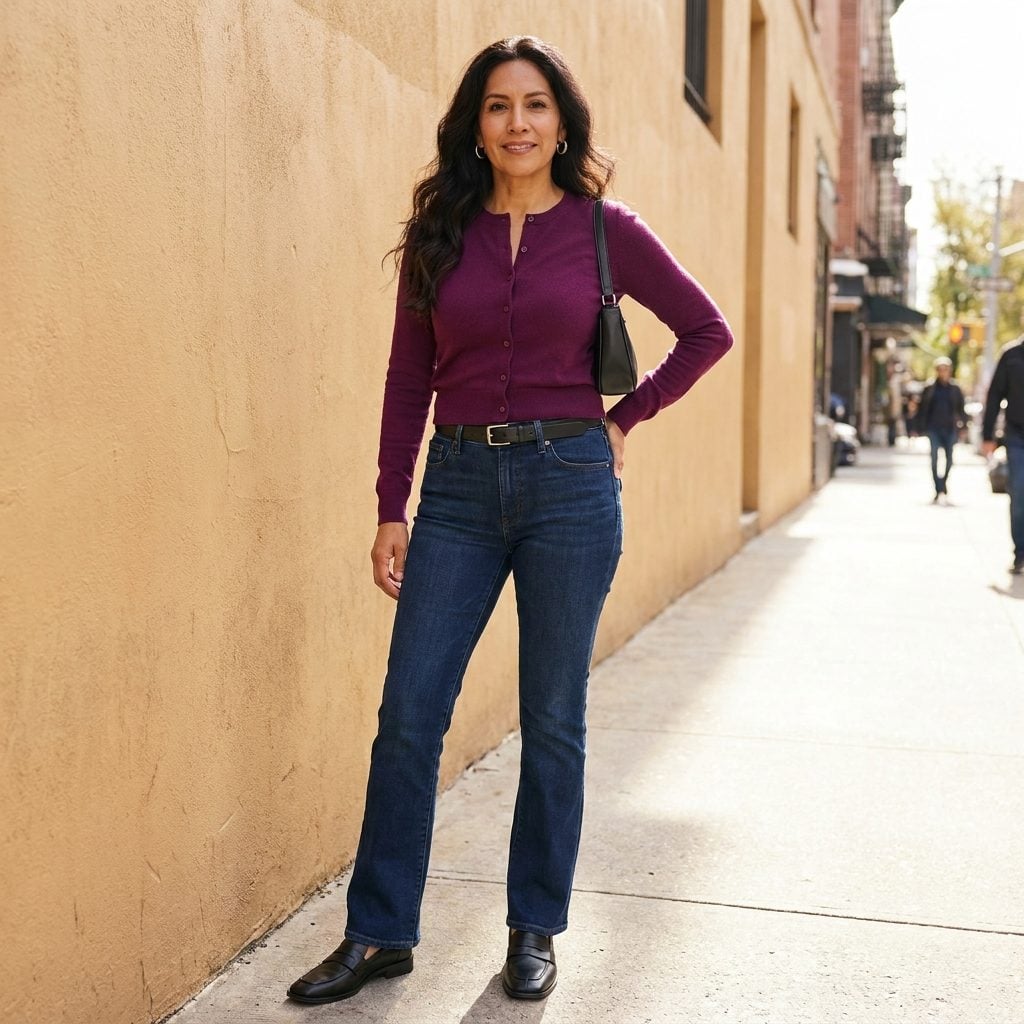
The plum cardigan is buttoned all the way up and asked to behave like a knit top. That only works because it follows the torso instead of hanging like a modern grandpa cardigan.
Bootcut jeans introduce movement below the knee, a slim black belt gives the waist a clean interruption, and the black baguette bag announces 1999 before anything else gets the chance.
She kept the bag. Of course she kept the bag.
9. Ecru Jeans Solve the Double-Denim Problem a Different Way
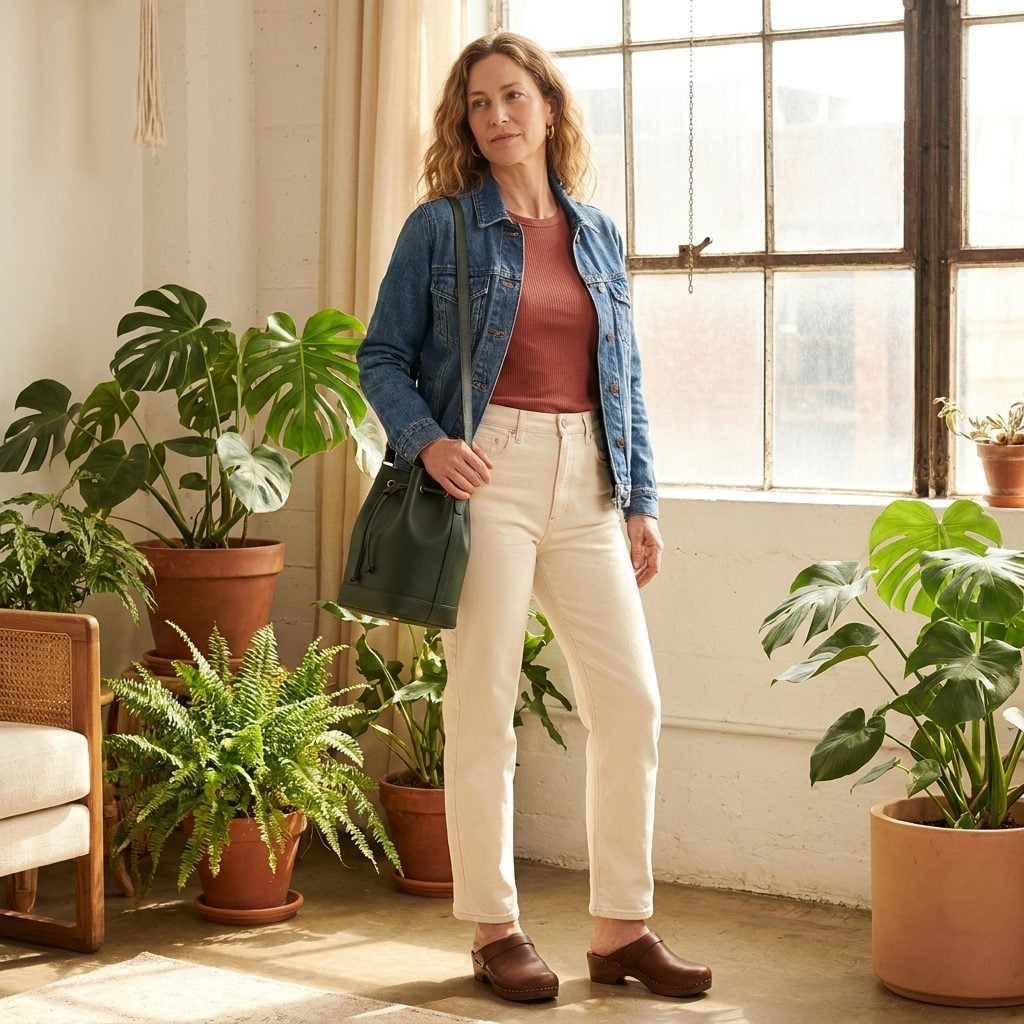
Instead of separating two blue washes, this version removes blue from half the equation entirely. Ecru jeans below, medium-wash denim jacket above, brick-red ribbed tee in the middle.
The result is richer than today’s pale neutral uniforms. A green bucket bag and chocolate clogs make sure nobody mistakes quiet for colorless.
Quiet luxury this is not. It has better things to do.
8. The Tailored Vest Works Better Once Nobody Insists on Putting a Shirt Under It
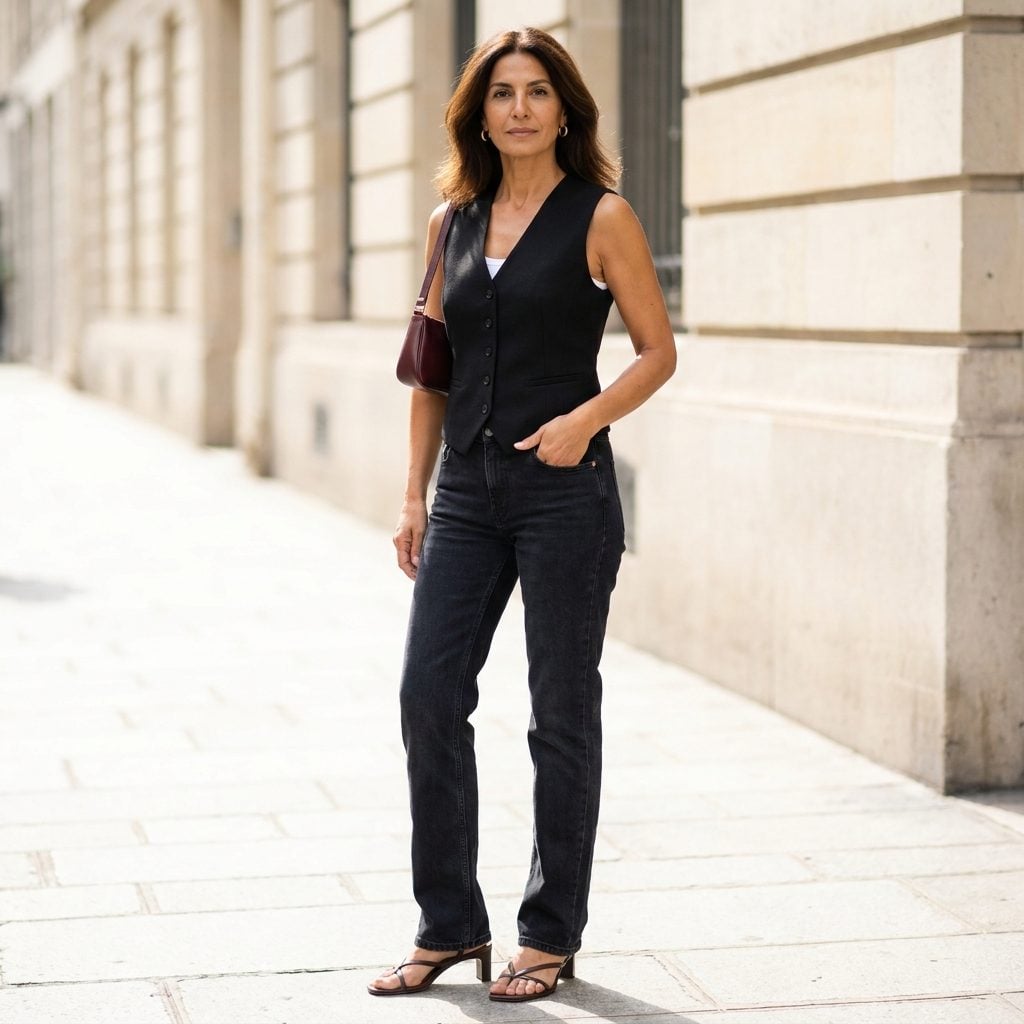
A tailored vest buttoned as the actual top creates its own neckline, waist, and structure in one piece. Straight jeans keep the lower half matter-of-fact, allowing the vest to carry the sharper mood.
She remembered feeling exposed in this combination years ago. Wearing it again, the reaction was completely different. A tiny burgundy baguette and gold hoops are enough to move the outfit beyond pure throwback.
Add a tee and you’ve built a perfectly nice layered look. Leave the vest alone and you’ve made a decision.
7. The Plaid Midi Skirt Was Never Competing With the Schoolgirl Version
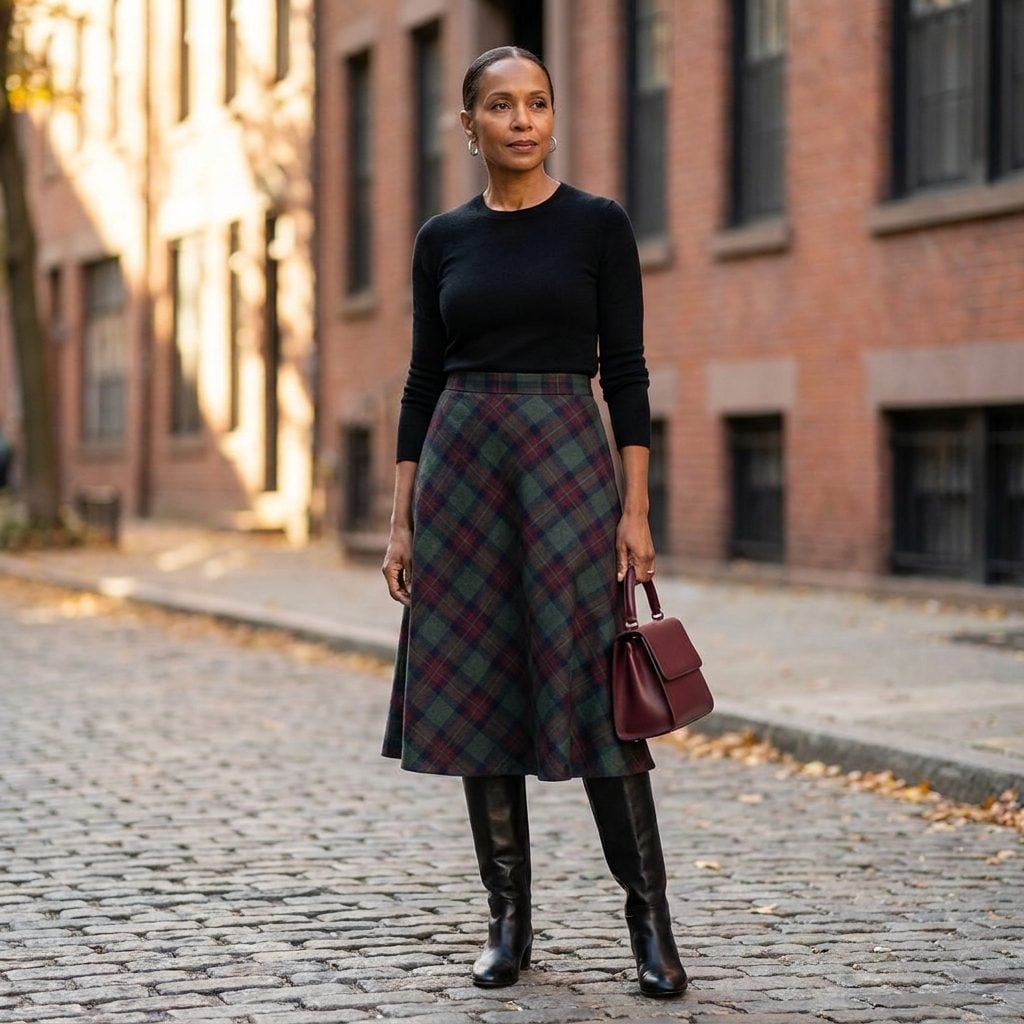
Muted green, burgundy, and navy plaid on a below-knee A-line skirt tells a very different story from the pleated mini that dominates people’s memory of 1995.
A fitted black knit lets the pattern operate without competition, while knee-high boots continue underneath the hem instead of introducing a strip of bare leg. The burgundy top-handle bag simply pulls out one warm note already living in the plaid.
This is not the plaid that posed for the yearbook. This is the plaid that went to work.
6. The Relaxed Jeans and Henley Win by Barely Being an Outfit
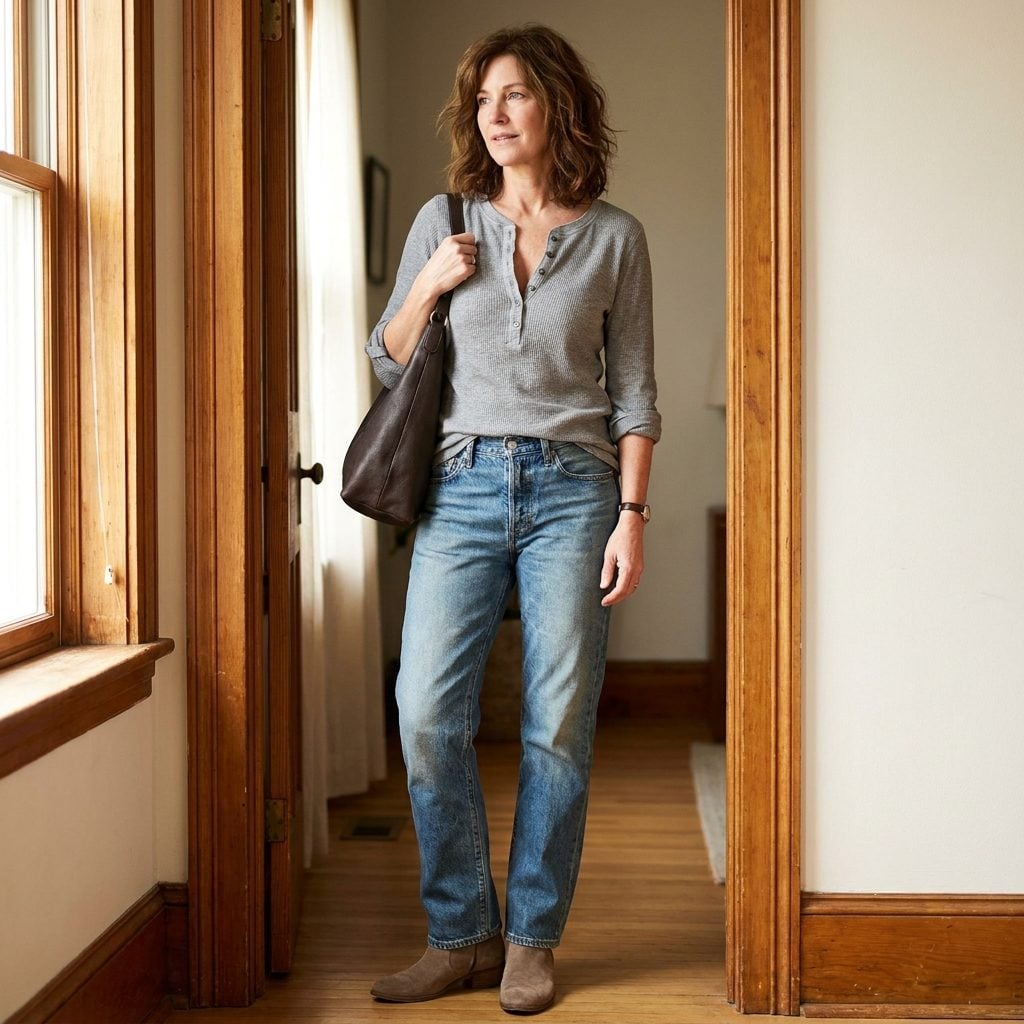
Relaxed straight jeans. Heather-gray Henley. Suede ankle boots. Nothing here would have stopped anyone on the street in 1994, and that ordinariness is exactly what makes the recreation land.
A few open buttons and pushed sleeves change the shirt more than any accessory would. Button it to the throat and pull the cuffs down and you’re doing chores. Open the placket, shove the sleeves back, and suddenly the same clothes have some air in them.
Some outfits survive because they’re memorable. This one survives because millions of people barely remembered putting it on.
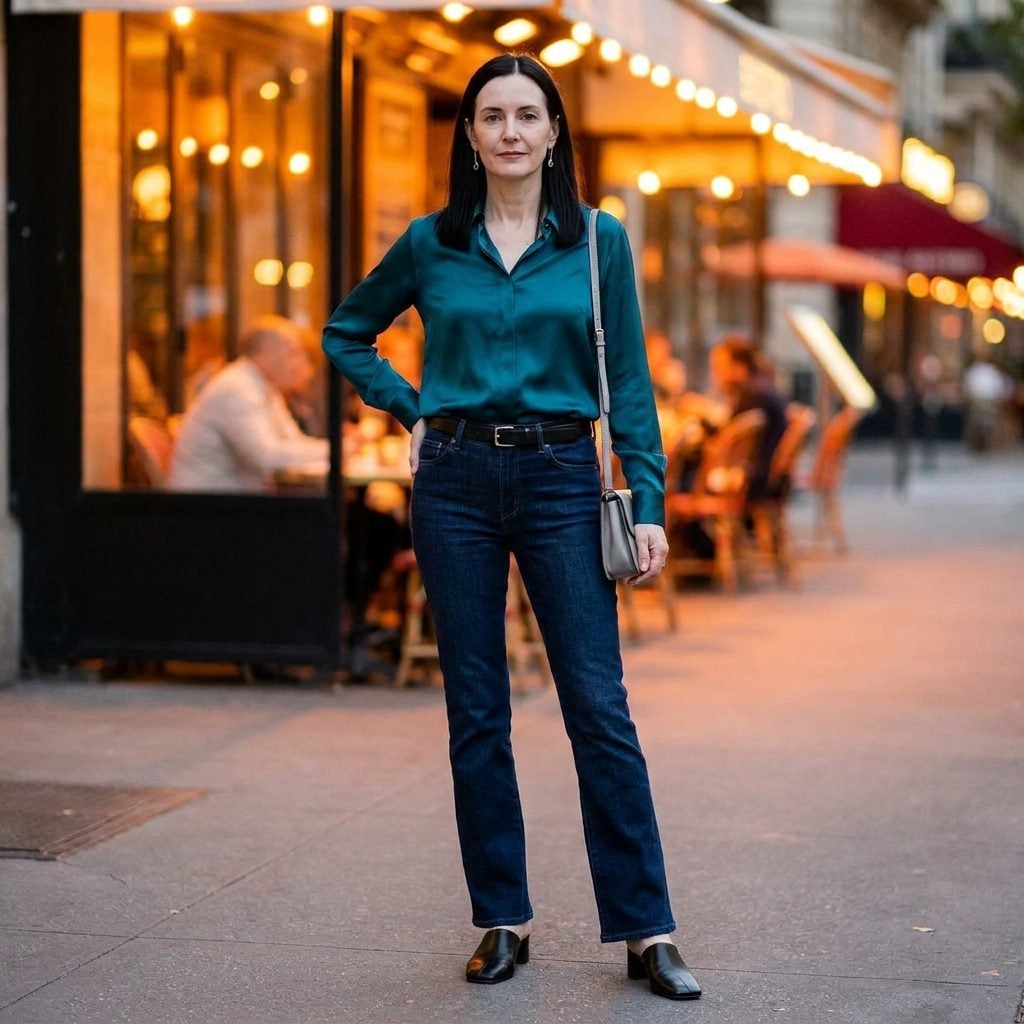
5. The Satin Blouse Turns Bootcut Jeans Into a Friday Night
❤️ Would you like to save this?
Teal satin over dark denim is unmistakably late-’90s going-out dressing, but the reason it survives is material rather than nostalgia. The blouse moves and reflects light; the jeans give all that fluidity something blunt and familiar to sit against.
A square-toe mule works with the slight kick of the bootcut rather than competing with it. The black belt provides one clean boundary, while a silver-gray bag and restrained earrings stay well away from the blouse’s spotlight.
4. The Slip Dress Comes Back Again — This Time Under a Chunky Cardigan
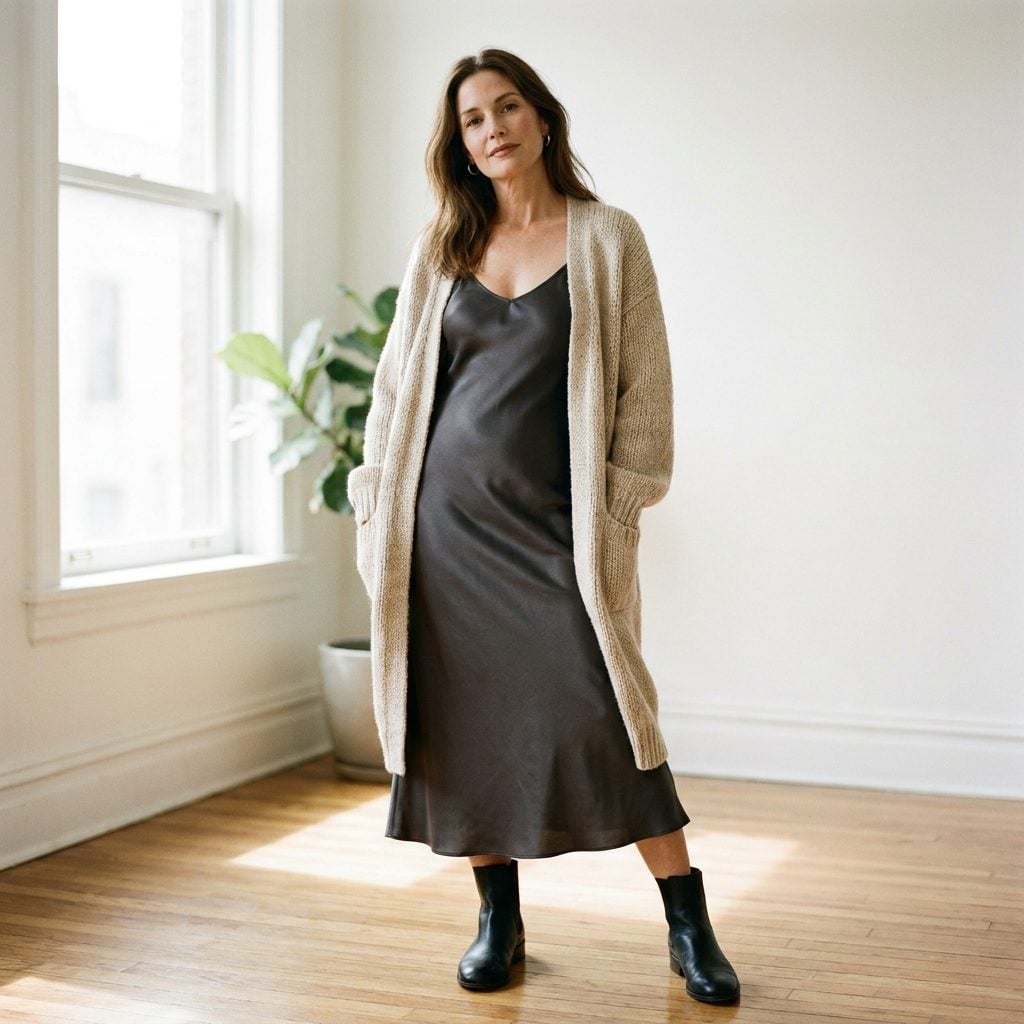
This is the useful callback. Earlier, the black slip dress survived by staying spare. Here, a softer slip goes in the opposite direction and disappears partly beneath a heavy oatmeal cardigan.
Liquid satin against nubby knit gives the outfit enough contrast to justify both pieces. The cardigan also changes the emotional temperature of the dress: less evening, less exposed, more likely to end up at a coffee shop with a coat thrown over one arm.
She kept calling the slip dress a costume. Apparently she had only been missing the sweater.
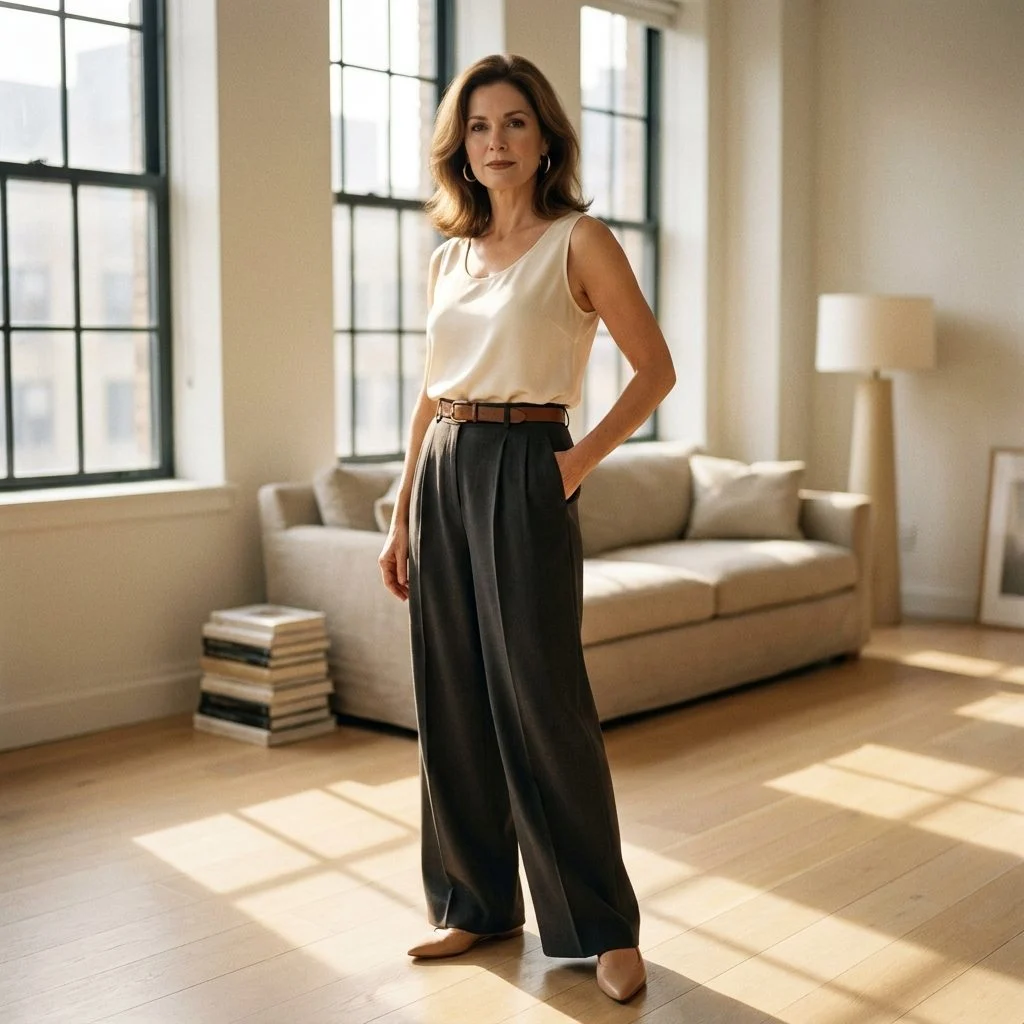
3. The Wide-Leg Trousers She Nearly Gave Away Make Their Case Late
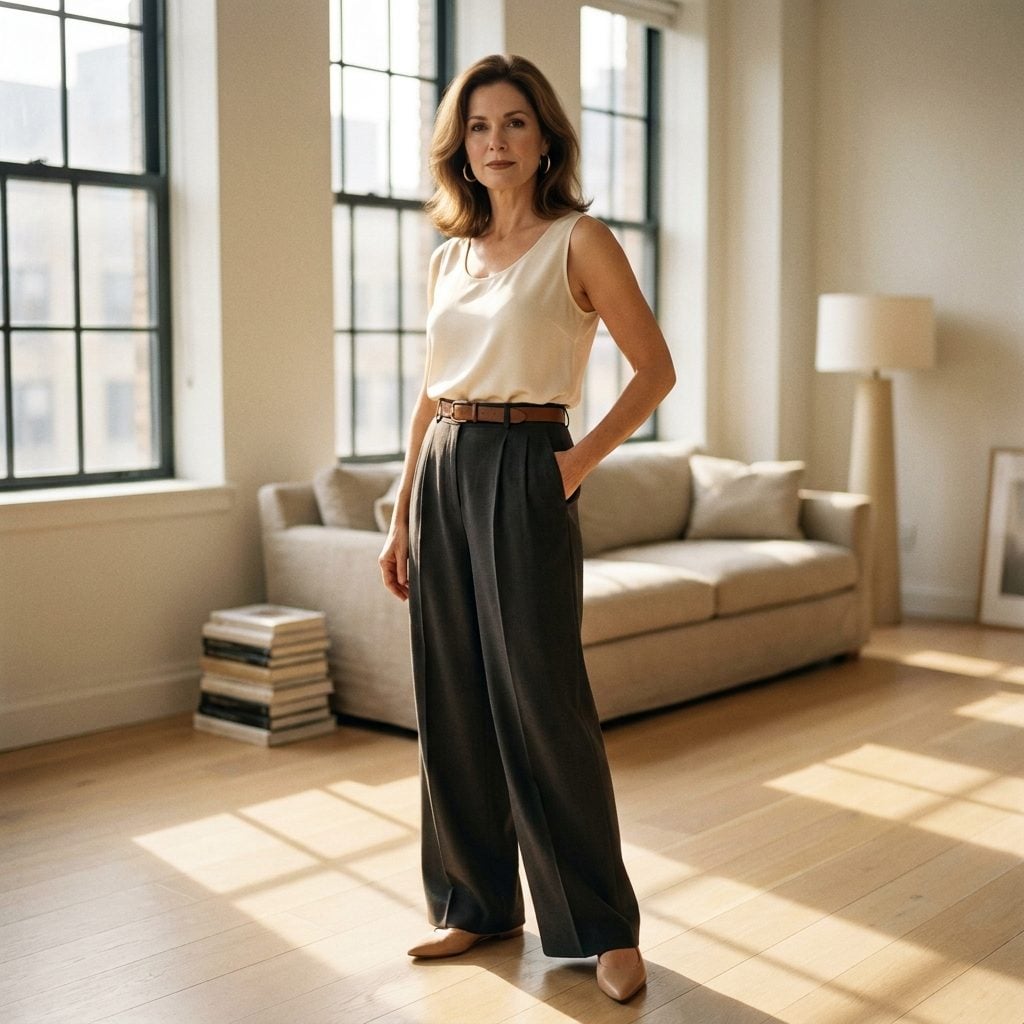
Loose palazzo trousers can become an astonishing amount of fabric if the waist disappears. Here, the slim belt gives all that width a clear starting point.
The silk shell stays tucked and deliberately quiet so the trousers can move without another oversized shape competing above them. A high rise lets the wide leg begin early, while the simple flat keeps the hem visually clean instead of adding another bulky interruption.
She wore some version of these to every dinner that mattered near the end of the decade. Seeing them again, the mystery is why they ever reached the giveaway pile.
2. The Matching Knit Set Comes Back With More Authority Than Nostalgia
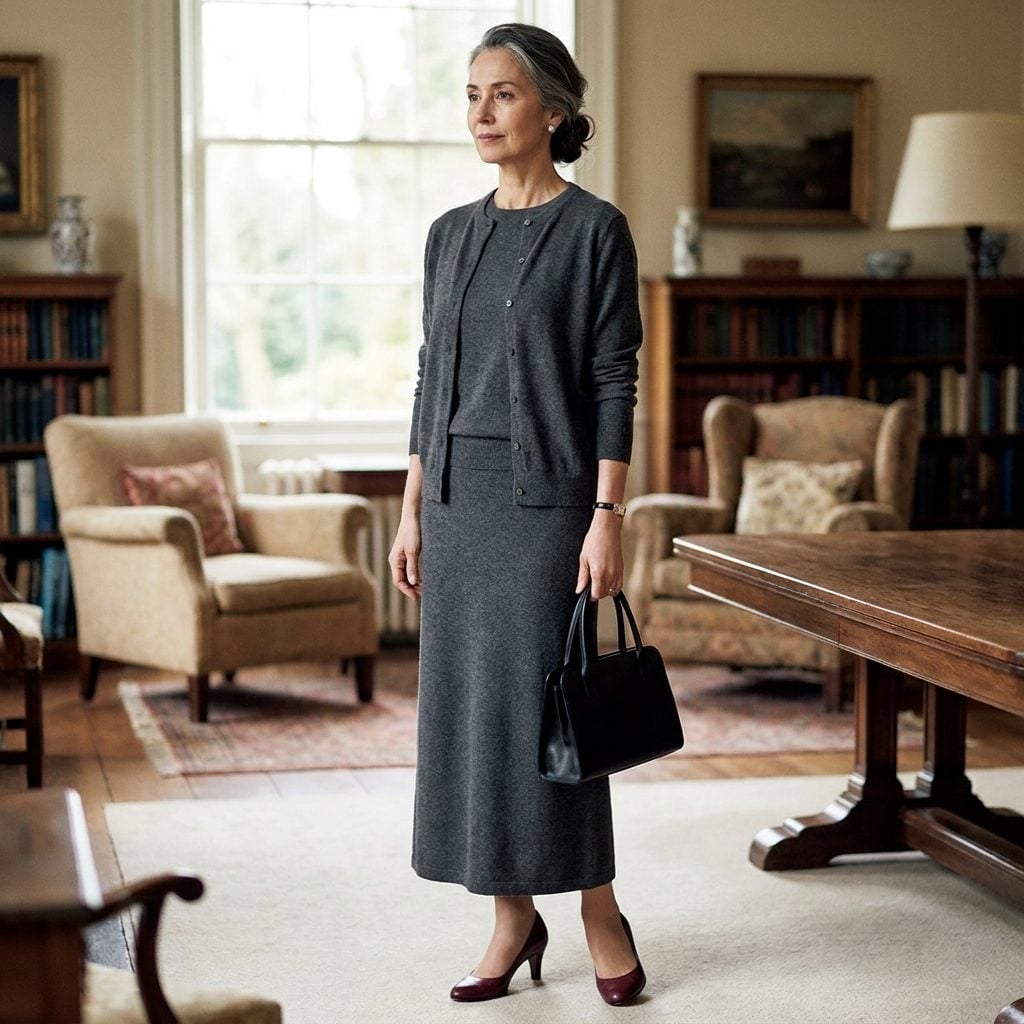
This was the outfit she had condemned most confidently. Long charcoal skirt, matching cardigan, coordinating shell: too matched, too proper, too obviously from another moment. Then she put the complete set back on instead of trying to rescue it one piece at a time.
That was the revelation. Charcoal from shoulder to ankle creates a continuous field, while burgundy pumps and a structured black bag keep the monochrome from turning flat. Pearl studs and a plain watch add exactly the kind of quiet finish she once thought made the outfit hopelessly grown-up.
Now grown-up is not the insult it used to be.
1. Medium-Wash Bootcuts and a Sapphire Knit Bring the Whole Closet Back Around
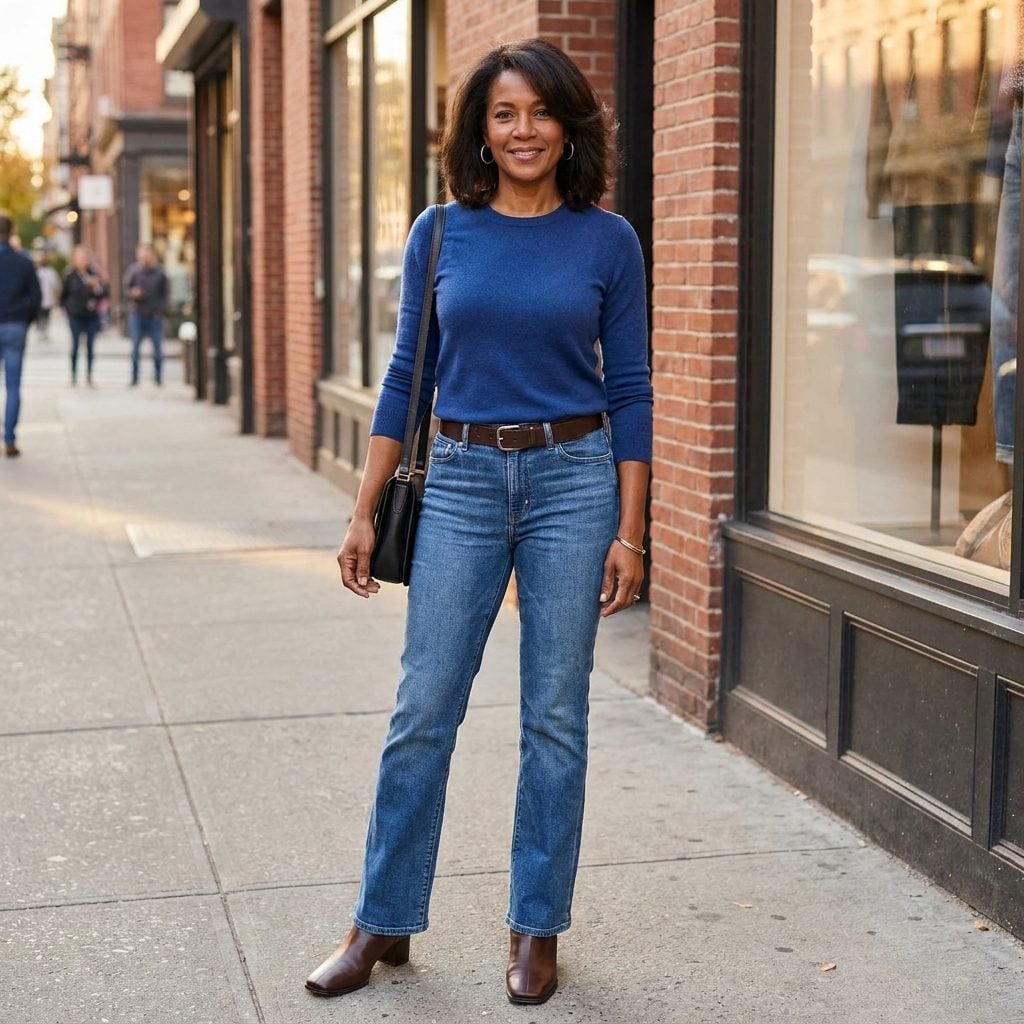
The final outfit doesn’t reach for a dramatic reveal. It is almost aggressively familiar: medium-wash bootcut denim, a saturated sapphire knit, chocolate square-toe boots. The sort of thing somebody wore to Friday dinner in 1999 without thinking she was documenting fashion history.
That’s why it belongs at the end. The blue knit has enough saturation to stand apart from the denim, the tucked waist gives the jeans their starting point, and the flare falls slowly over a block heel instead of announcing itself from across the room.
No garment has been rescued by irony. Nobody is dressing as her younger self. The pieces that returned are simply the ones that still make sense once the embarrassment has been stripped away.
End of the closet. She recreated the looks, kept the ones that still felt like hers, and quietly reordered a pair of bootcuts. Nobody’s surprised.