❤️ Would you like to save this?
The 1970s did not believe in leaving well enough alone. A handbag wanted brass hardware. A scarf wanted paisley. A shoe wanted another inch of cork underneath it. Even the practical things — combs, compacts, rain bonnets, balm tins — arrived with enough color, texture and personality to become part of the look.
That may be why so much of the decade refuses to stay buried. Some pieces disappeared for good reason. Others have been renamed, resized and marched straight back into boutiques as though nobody had seen a saddle bag, platform sandal or enormous pair of tinted frames before. Fashion forgets quickly. Closets have longer memories.
These 30 pieces move through the handbags, beauty rituals, jewelry, shoes and everyday finishing moves that made 1970s style instantly recognizable. Not every woman owned every one, and not every trend lasted. But put enough of them in one room and the decade comes roaring back — cognac leather, coral lipstick, hammered metal and all.
FYI, thanks to AI imagery software, we’re able to create very specific fashion and hairstyle examples to illustrate the points being made. In some cases, imagery is exaggerated to hammer home the point. Also, assume links that take you off the site are affiliate links such as links to Amazon. this means we may earn a commission if you buy something.
30. Cognac Leather Doctor Bags Were the It-Bag Before “It-Bag” Existed
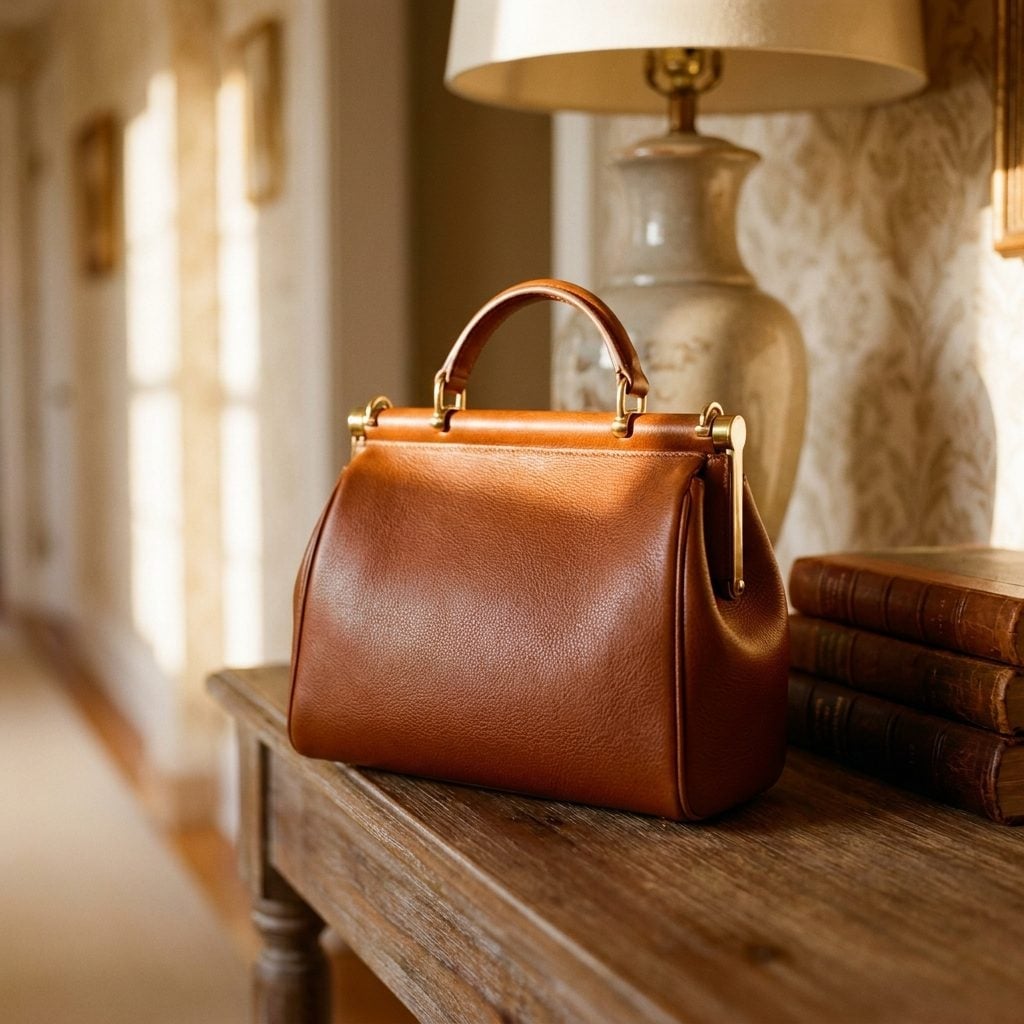
A structured doctor bag already had authority. Put it in warm cognac leather with brass frame hardware and a single looped handle and suddenly the practicality looks almost ceremonial.
The appeal is in the tension. The silhouette is rigid, but the brown leather keeps it from feeling severe. Visible grain adds warmth; the hinged frame gives the bag its unmistakable snap-shut geometry. Long before handbags routinely arrived with waiting lists and celebrity campaigns, a bag like this could carry an outfit by sheer presence.
29. Pressed-Powder Blush Put the Color Exactly Where the Decade Wanted It
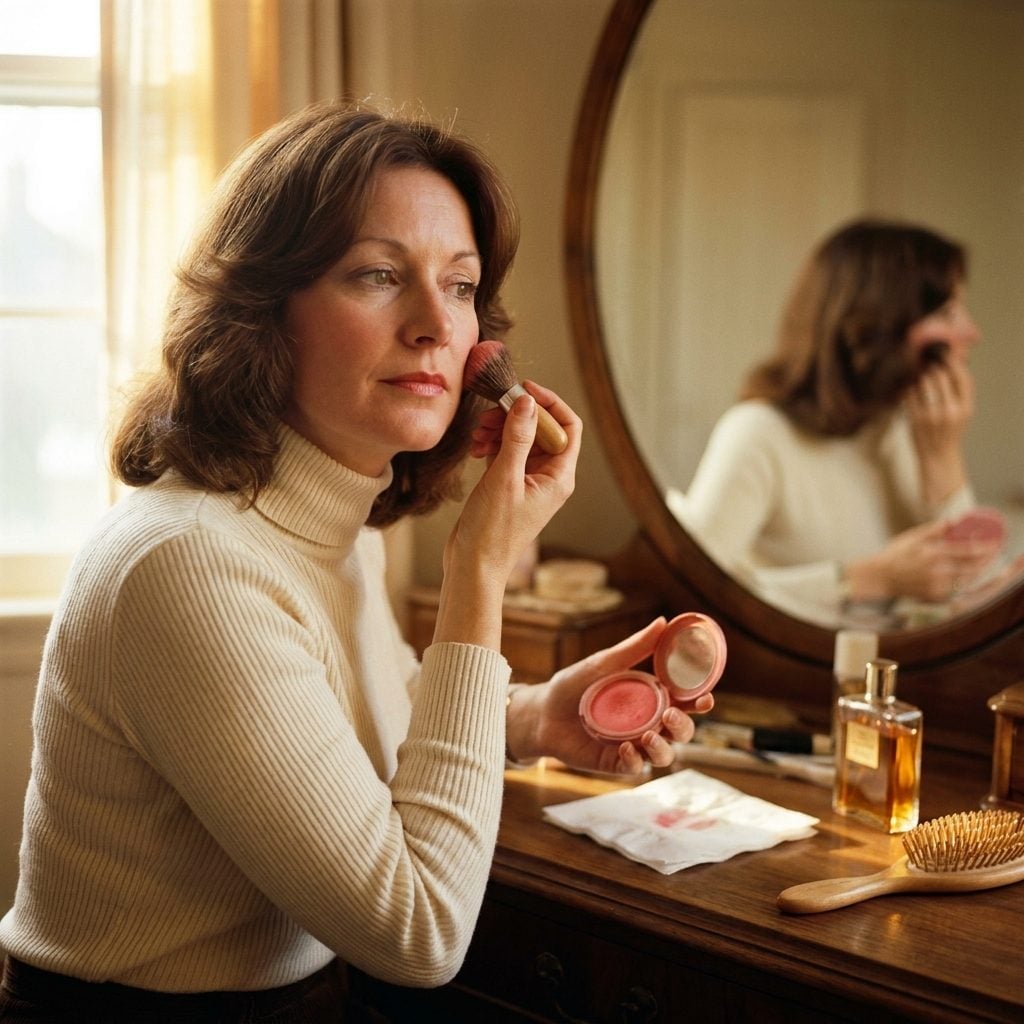
Pressed blush gave 1970s makeup one of its most recognizable moves: warm color concentrated on the cheeks rather than carved into the face with elaborate contouring. Coral, peach and rosy shades all played a part as makeup shifted through the decade.
The placement shown here keeps the effect straightforward — color at the apple of the cheek swept outward rather than a sharply sculpted stripe. Against the cream ribbed turtleneck, the warmth on the face gets to do nearly all the talking.
The compact, rounded brush and wood vanity complete the period mood without needing to turn the ritual into mythology. Sometimes a decade announces itself with a hemline. Sometimes it takes one sweep of blush.
28. Knee-High Leather Boots Gave Shorter Hemlines Some Serious Weight
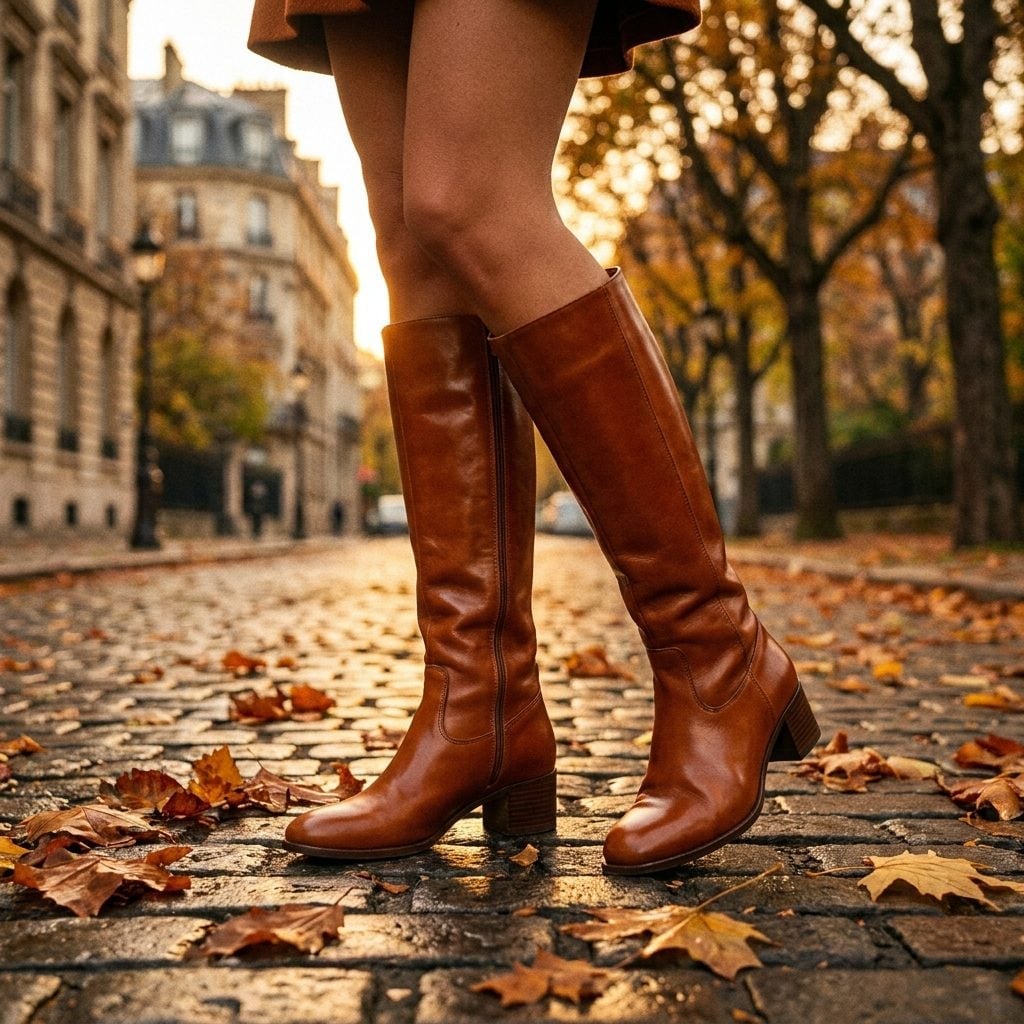
Cognac knee-high boots with a stacked heel became one of the decade’s defining footwear silhouettes, and the proportions explain why. The shaft stops just below the knee, the toe stays rounded without turning clumsy, and the block heel adds height without making the shoe look delicate.
Under a shorter hemline, all that leather gives the lower half of the outfit enough visual weight to stand up to the coats, knits and strong accessories happening above it. The warm brown finish helps too. Black would sharpen the effect; cognac lets it swagger.
27. Rectangle Watches Made the Wrist Look Almost Architectural
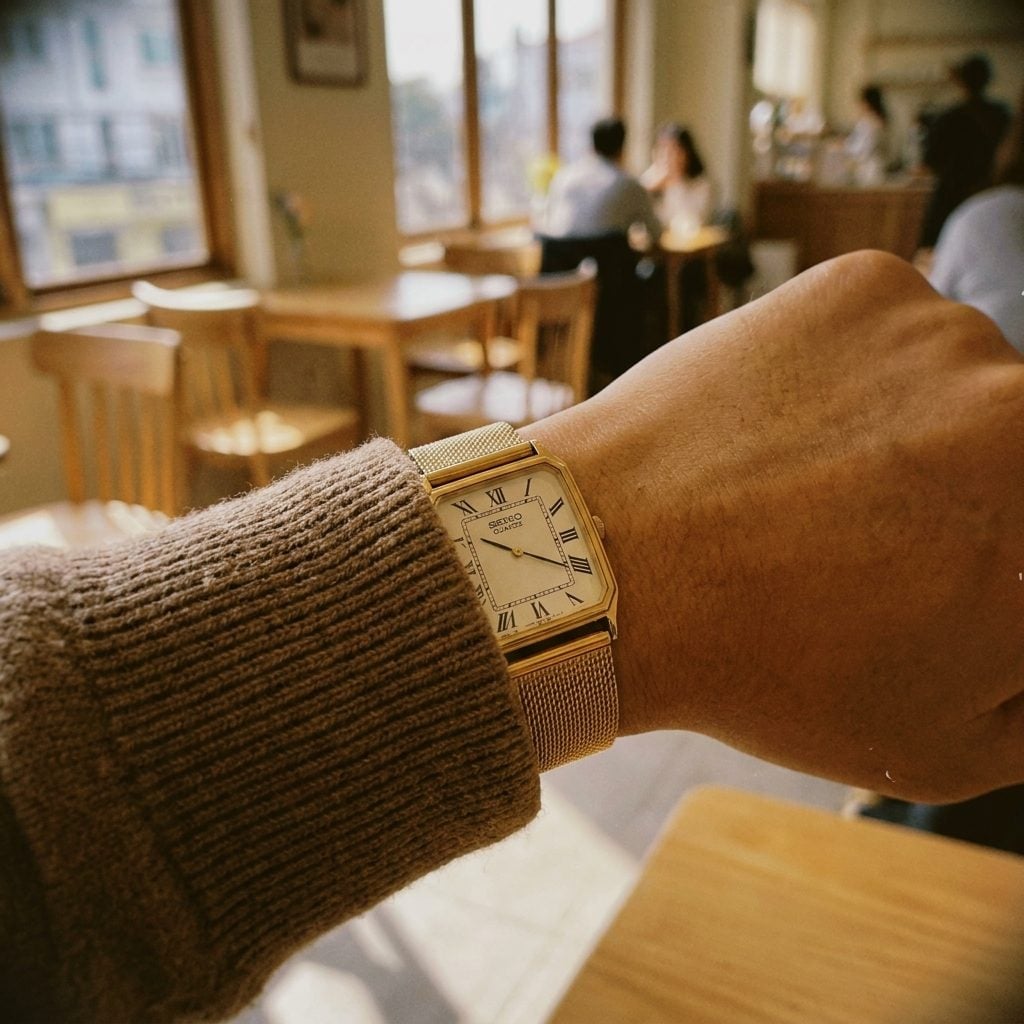
A gold-tone rectangular watch on a fine mesh bracelet does something a round face cannot quite imitate: it turns the wrist into a composition of straight lines.
The cream dial, Roman numerals and slim hands keep the face formal without making it bulky. More jewelry-like than sporty, the shape sits neatly against the wrist and slips into the decade’s appetite for gold-tone accessories without needing to compete with them.
26. Wrap Dresses Turned One Diagonal Line Into an Entire Outfit
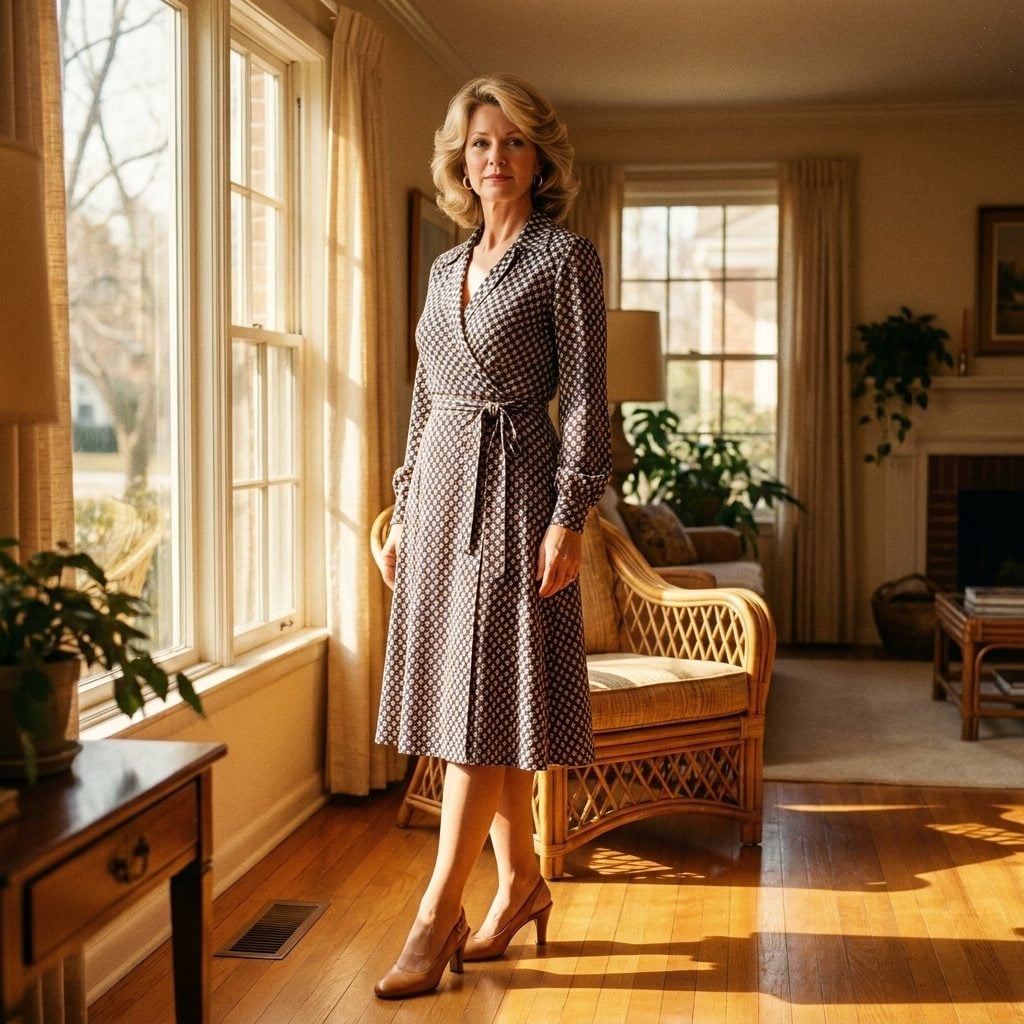
Diane von Furstenberg did not invent the wrap silhouette, but her 1970s designs helped turn it into one of the decade’s defining dresses. The appeal becomes obvious in a version like this: V-neck, self-tie waist, long sleeves and a geometric print doing almost all the decorative work.
The diagonal closure gives the dress shape without requiring a rigid construction, while the tie allows some adjustment at the waist. Add caramel slingbacks and very little else is necessary. That economy is part of the reason the wrap dress survived its original moment instead of becoming trapped inside it.
25. Tortoiseshell Combs Made Hair Maintenance Look Better Than It Had To
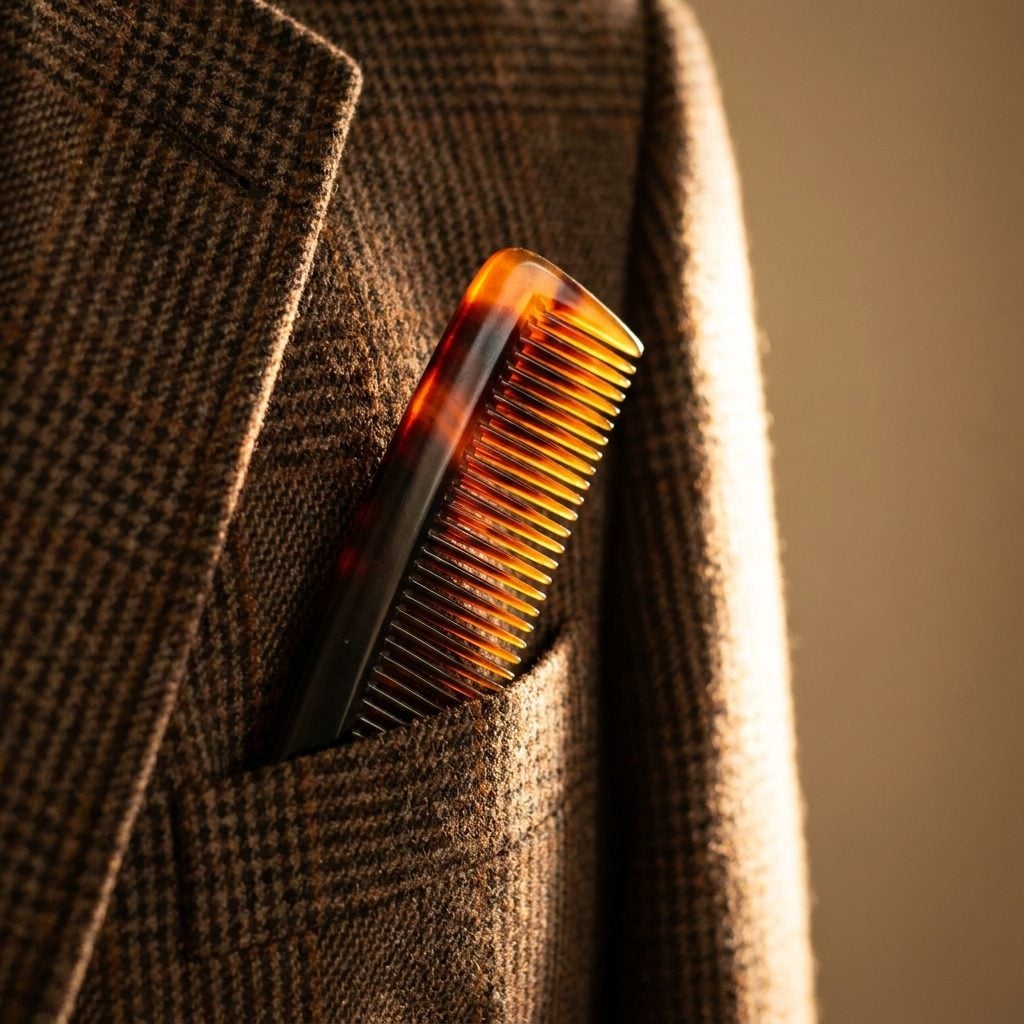
A pocket comb is about as utilitarian as an accessory gets. Give it an amber-and-mahogany tortoiseshell pattern and suddenly the thing used to fix hair deserves to be seen.
The two tooth widths make practical sense: finer teeth for tidying and parting, wider ones for working through more volume. And volume mattered. Seventies hair could involve wings, waves, curls, center parts and enough lift to make a tiny comb earn its space in a pocket.
Hair was architecture. Architecture needs maintenance.
24. Cork Platform Sandals Made Flared Denim Finish the Sentence
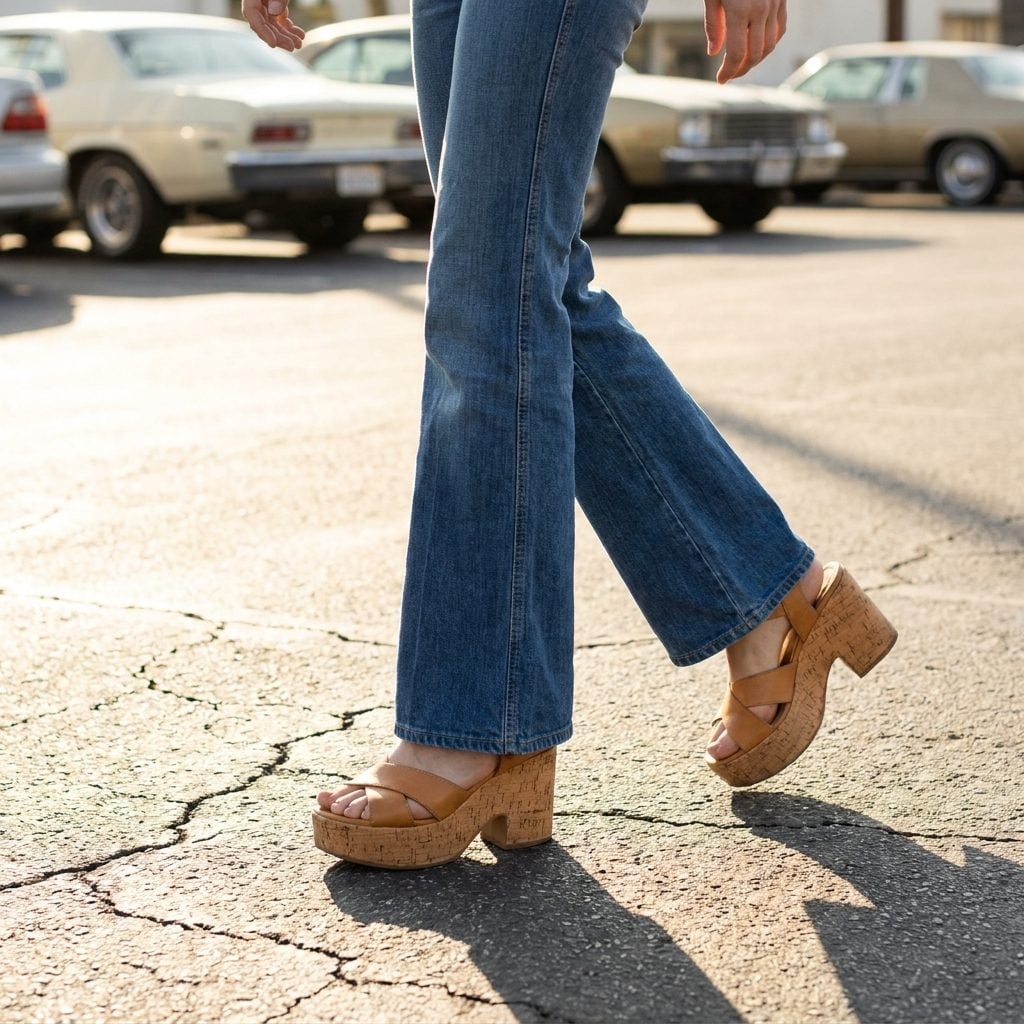
Flared denim already brings drama toward the floor. A cork platform gives that sweep something substantial to land on.
The tan leather straps stay relatively simple while the sole does the heavy lifting: platform under the toe, chunky heel behind it, cork wrapping the whole base into one continuous shape. That extra height works particularly well beneath a long flare because it allows more of the trouser’s width and length to remain visible.
Nothing dainty is happening here. That’s exactly why the proportion works.
23. Emerald Satin Clutches Made a Tiny Bag Look Like the Final Word
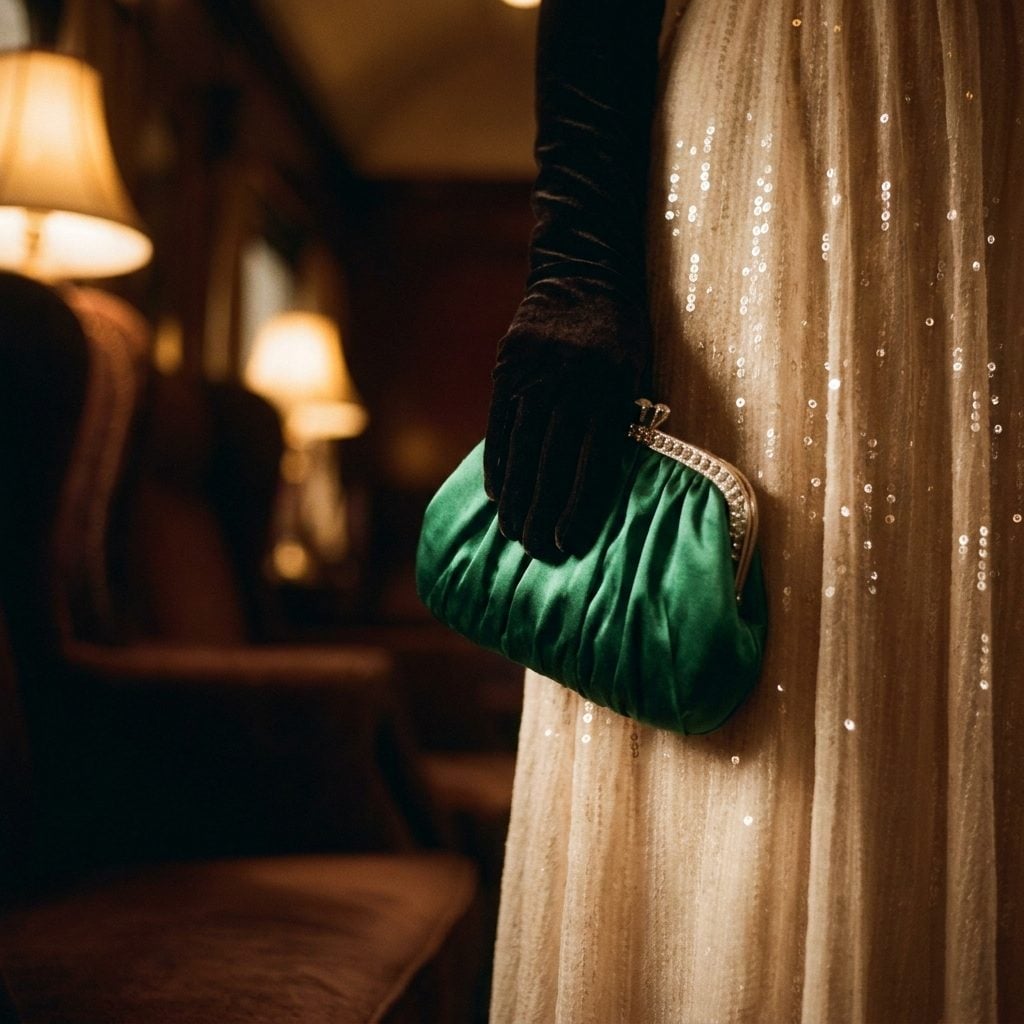
Ruched emerald satin, a structured frame and crystal-trimmed hardware: this is a very small object making absolutely no effort to be discreet.
The ruching keeps the satin from looking flat, while the saturated green sits beautifully against the black glove and pale sequined fabric around it. An evening clutch did not need to carry the visual weight of a daytime handbag. It could be compact, impractical and spectacularly good at punctuation.
Why It Works: Ruched satin breaks reflected light into softer highlights than a perfectly flat surface. Add a metal frame and the clutch gets structure without losing the softness that makes satin so effective for evening.
22. Felt Brimmed Hats Could Rescue the Hair Without Hiding the Outfit
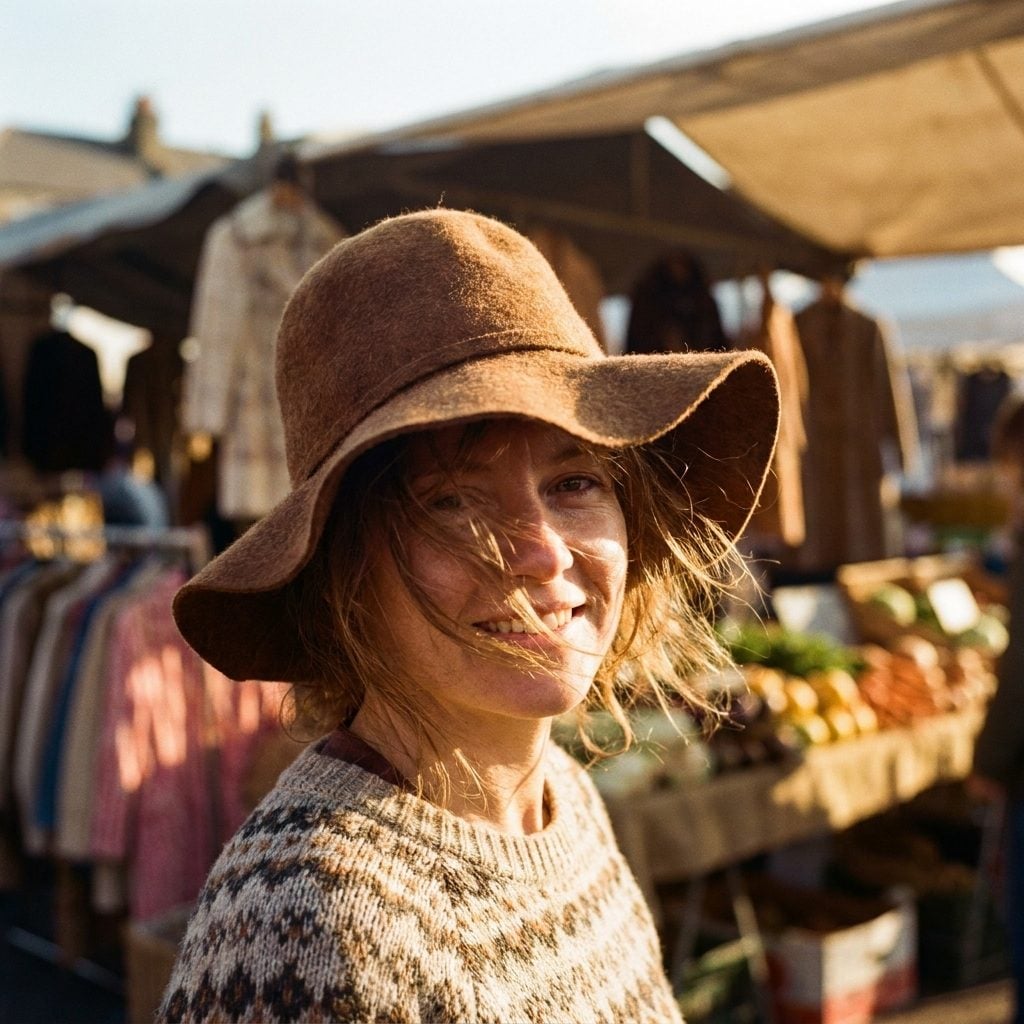
Camel felt, a soft brim and enough crown to give the hat presence without turning it into costume. The warm tone ties easily into the browns, rusts and ochres that dominated so much of the decade’s cold-weather dressing.
The practical advantage is almost embarrassingly good: the hat creates shape at the top of the outfit while giving the hair underneath considerably less responsibility. A little movement around the brim only helps. Perfect hair would almost miss the point.
21. Wide Leather Belts Could Rebuild a Shirtdress at the Waist
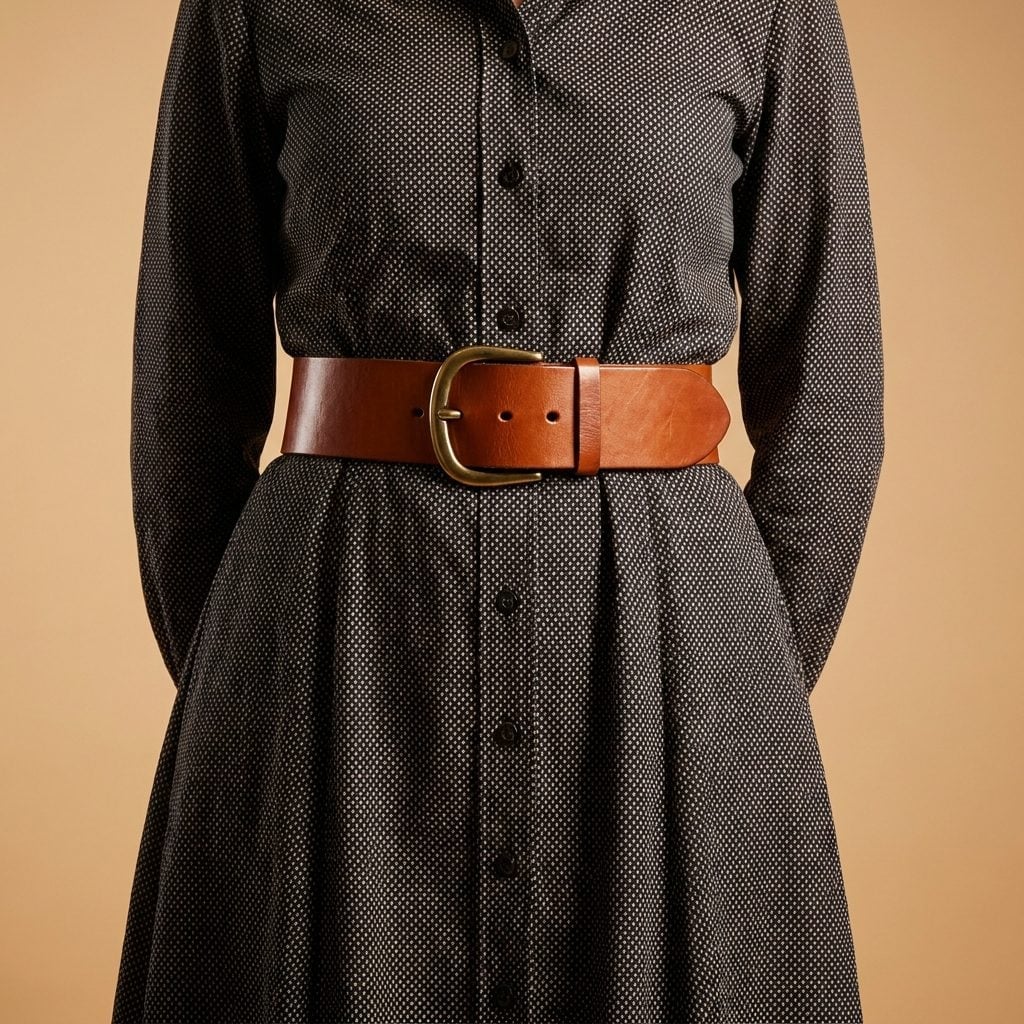
What a wide cognac belt does to a loose button-front shirtdress is almost architectural. Fabric that falls straight from shoulder to hem suddenly has a center. Not suggested. Actual.
The substantial width matters because a full-length dress has enough fabric to absorb it. A skinny belt could disappear; this one gives the eye a firm stopping point before the skirt opens out below. Warm brown leather and brass-tone hardware also sit naturally against the dark printed fabric without trying to match it.
The belt isn’t decoration after the outfit is finished. In this case, it’s the move that finishes the proportion.
Material Note: Substantial leather develops creases, softening and surface variation with use. Brass or brass-tone hardware adds another warm note, which is one reason the combination looks so natural against the decade’s earth-toned fabrics.
20. Oversized Tinted Frames Put the Attitude Right Across the Face
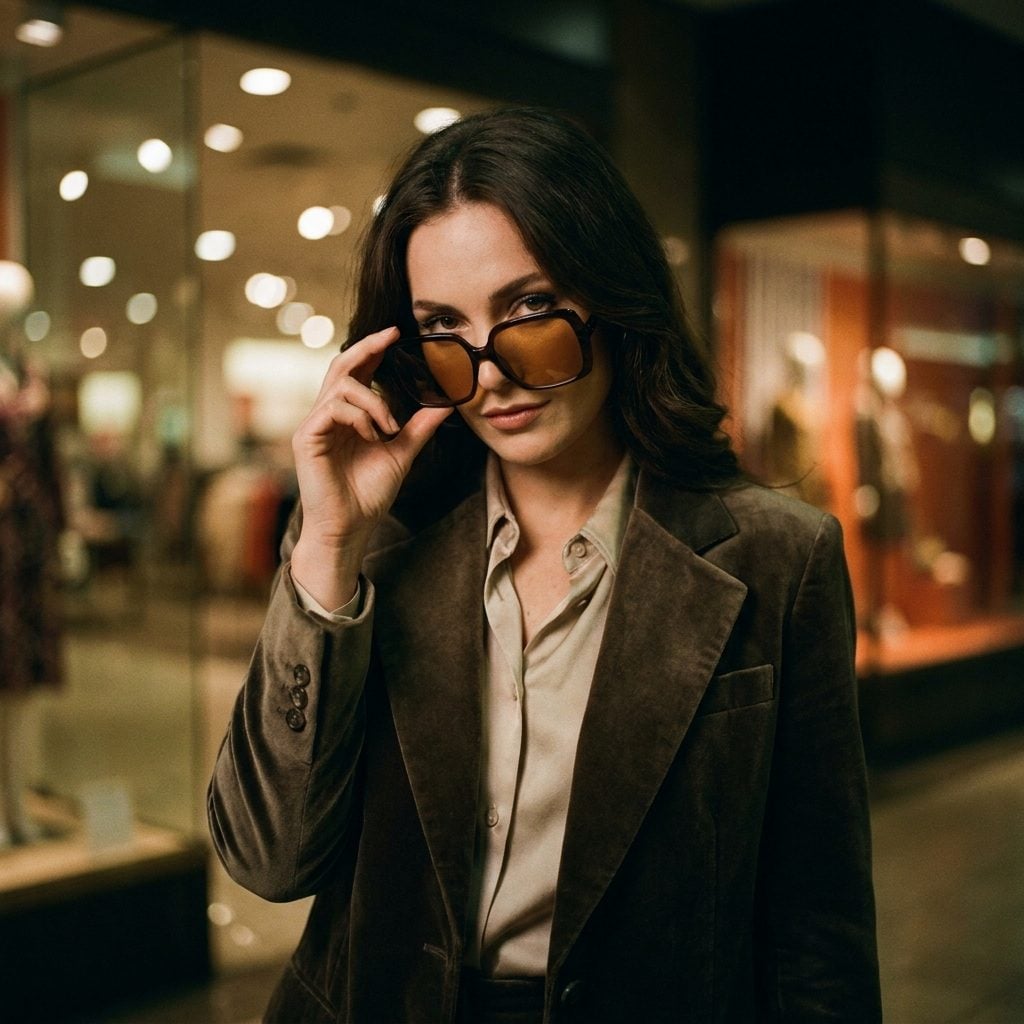
Dark tortoiseshell frames with amber lenses cover enough territory to become part of the outfit rather than merely something worn with it. The scale is square, broad and unapologetic.
Paired with an olive-brown velvet blazer and a loose satin shirt, the frames become the sharpest element in a collection of softer textures. That’s the clever part. The outfit doesn’t need another statement because the statement is already sitting directly across the face.
19. Sweaters Worn as Wraps Made an Extra Layer Look Almost Effortless
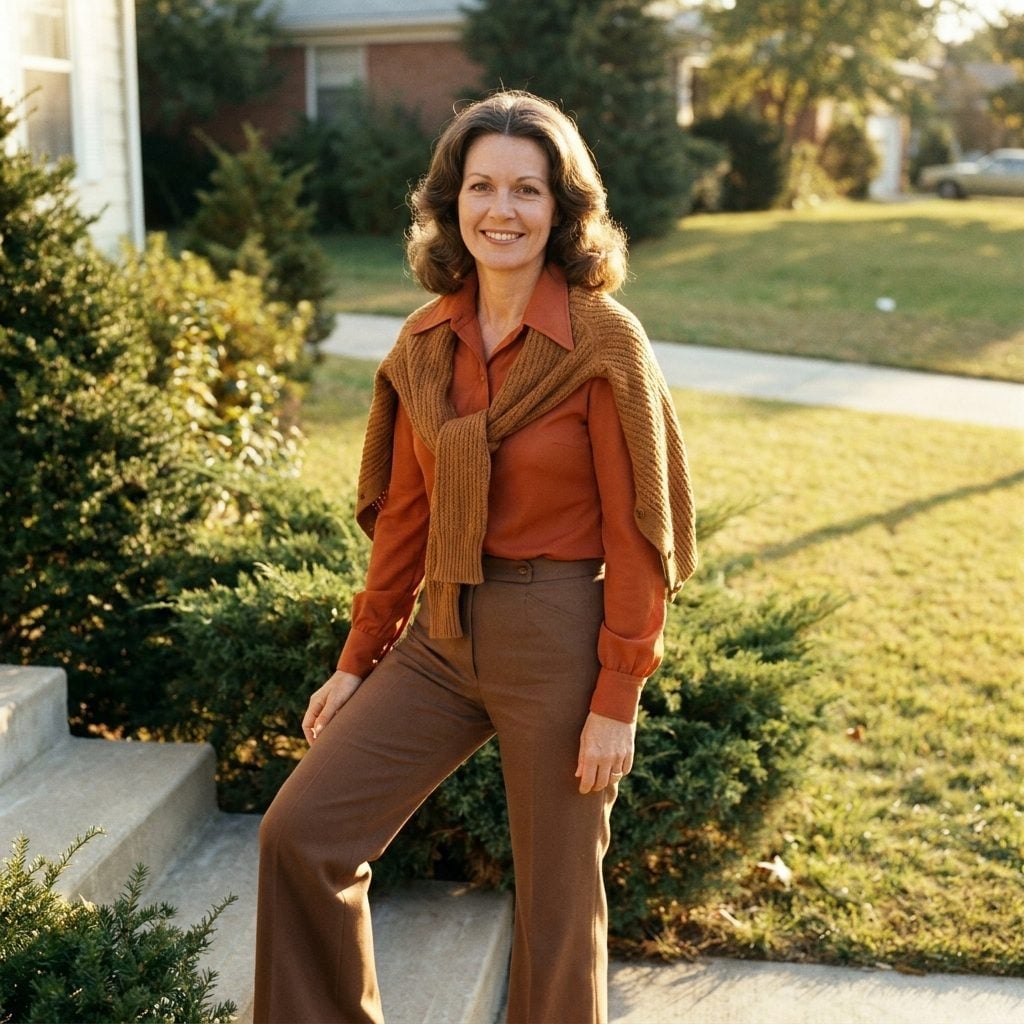
Burnt sienna gets attention first, but the caramel knit draped across the shoulders is what gives the outfit another dimension. Worn as a wrap instead of conventionally through the sleeves, it adds warmth without adding another fully constructed silhouette.
Wide-leg trousers in deep tobacco brown keep the palette moving through related earth tones without matching anything exactly. Rust, caramel and brown all occupy the same family, but each gets its own job. That’s considerably more interesting than simply buying the same shade three times.
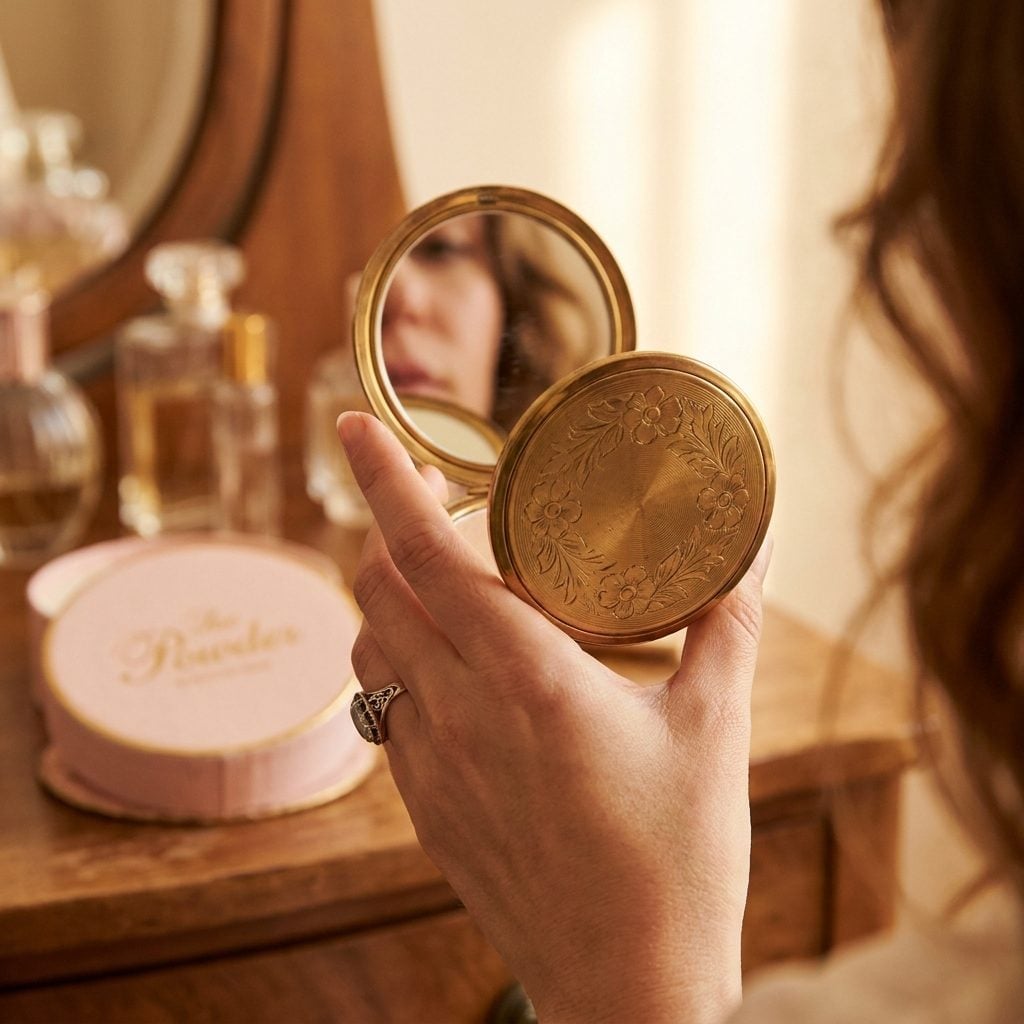
18. Powder Compacts Turned a Touch-Up Into a Small Piece of Theater
❤️ Would you like to save this?
A compact had a practical job, but nobody said practicality had to arrive in plain plastic. Gold-tone metal, floral engraving and a mirror tucked inside turned a makeup touch-up into something closer to opening a tiny case of jewelry.
The wreath of flowers and leaves across this lid gives the object more surface detail than it strictly needs, which is precisely the charm. Open it and the function is straightforward: mirror, powder, done. Close it and the compact becomes decorative again.
Useful enough to live in a handbag. Attractive enough not to hide when it came out.
17. Suede Fringe Bags Refused to Stand Still
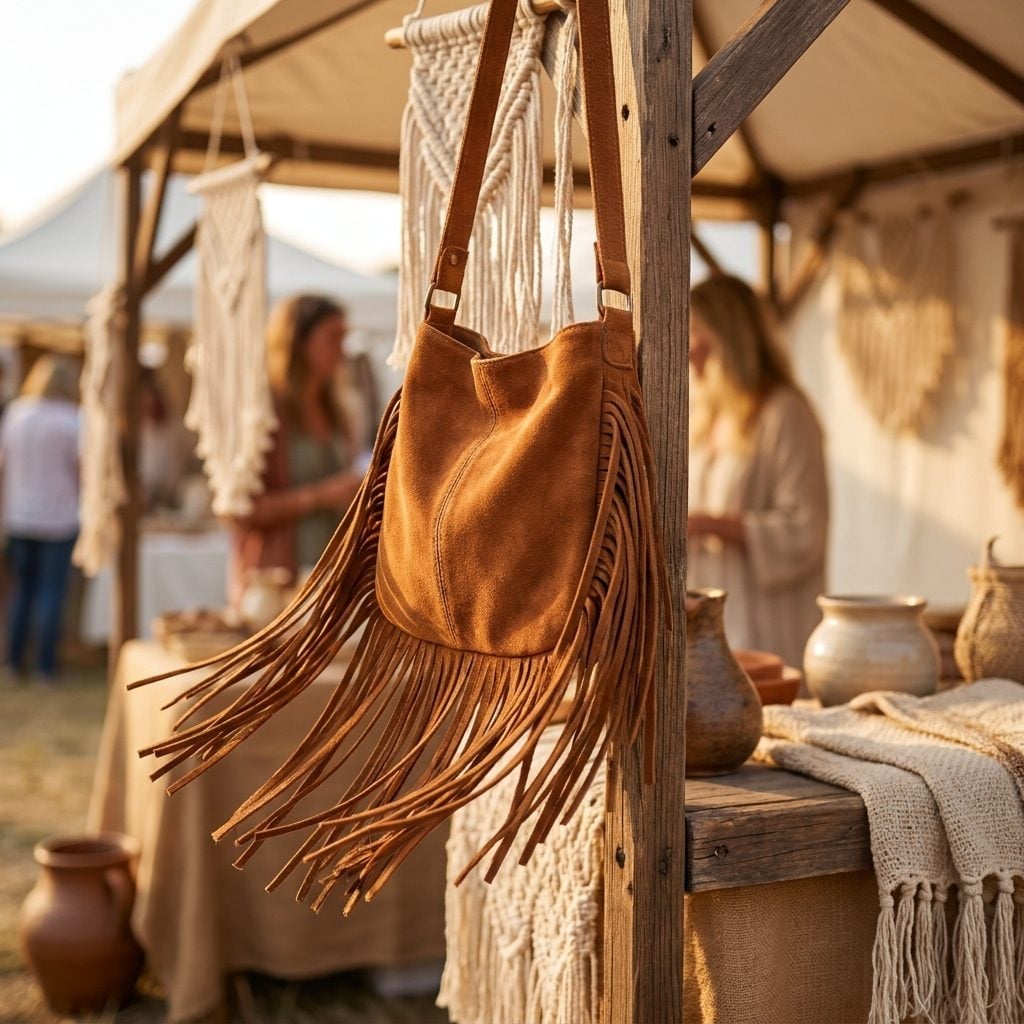
Structured leather holds a pose. Suede fringe refuses.
This warm brown bucket bag lets the material slump slightly while long strips of fringe fall well past the body of the bag. That movement makes particular sense beside the decade’s flared hems, loose sleeves and other silhouettes designed to move rather than stay rigid.
Suede is especially suited to the effect because it has a softer hand than stiff polished leather. The fringe drops rather than projecting outward. The bag doesn’t need extra decoration. It already comes with choreography.
16. Tortoiseshell Barrettes Made Half-Up Hair Look Finished in One Move
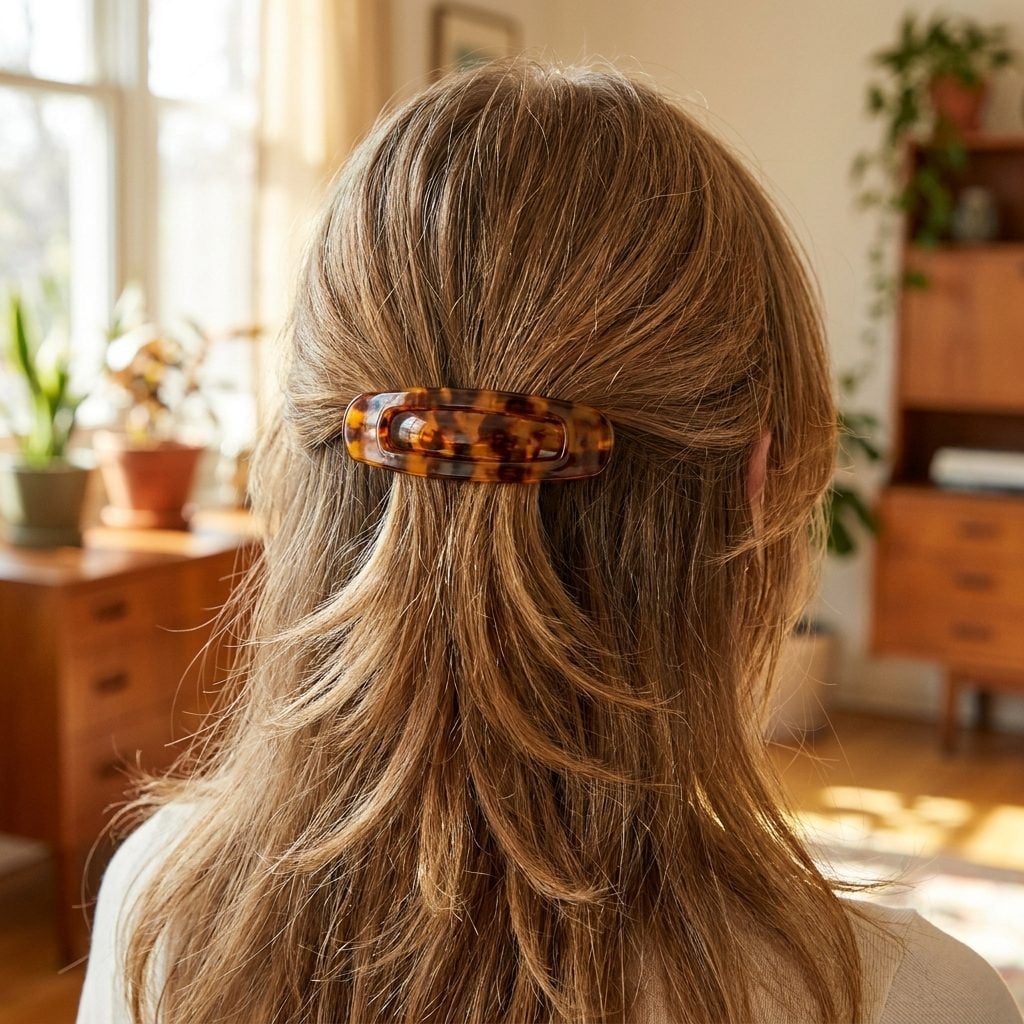
Half-up hair solves a practical problem without sacrificing the volume and movement that made so many 1970s styles distinctive. A substantial tortoiseshell barrette makes the solution visible.
Amber, burnt sienna and deep brown ripple through the resin, giving a simple rectangular clip more depth than a flat solid color could manage. Positioned through the crown, it gathers enough hair to establish shape while leaving the rest loose.
How to Wear It: A barrette placed through the crown preserves more volume than one fastened very low at the nape. Tortoiseshell also brings several warm tones into one small accessory, making it easy to pair with brown, camel, rust and cream.
15. Camel Wool Coats Could Carry the Entire Color Story
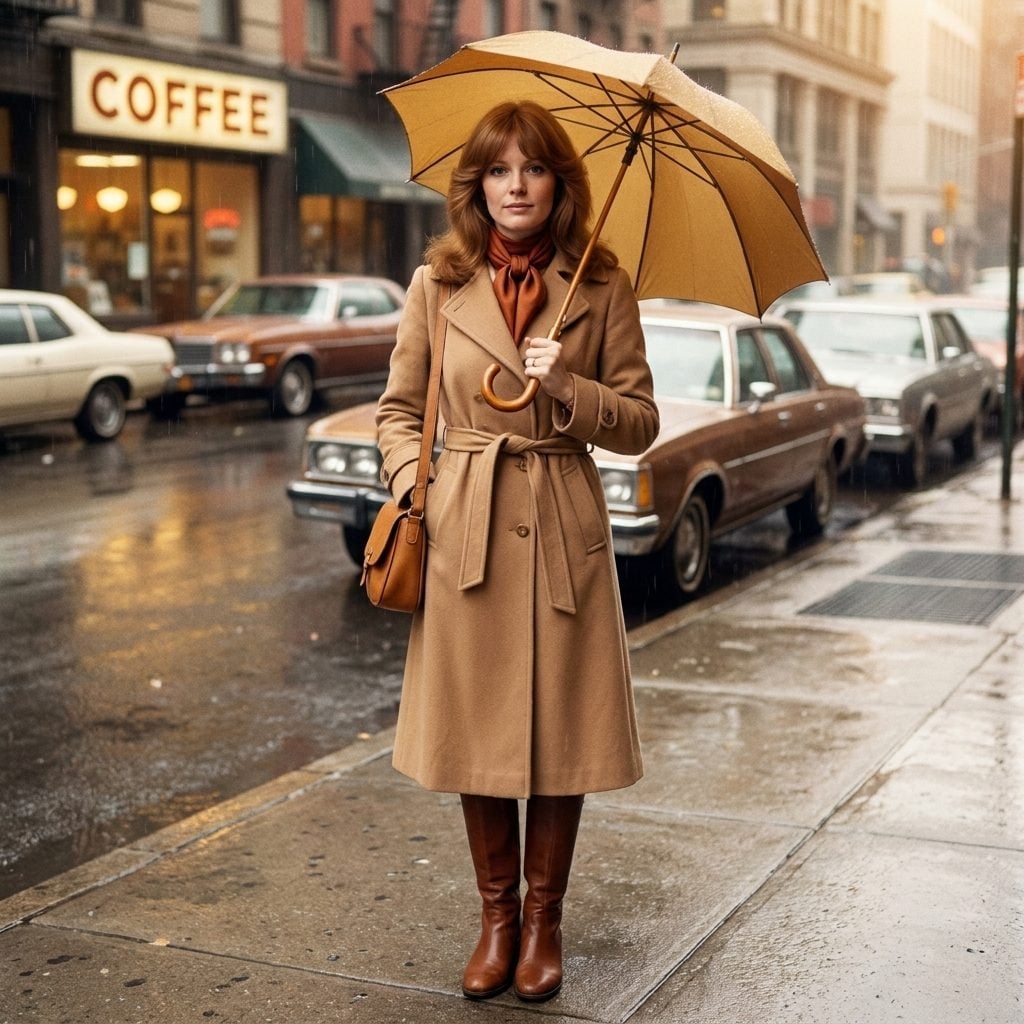
A belted camel coat doesn’t need much assistance. The wrap front creates its own waist, the midi length supplies drama, and the warm neutral gives almost every accessory around it somewhere to land.
Brown knee-high boots, a rust scarf, an amber umbrella and a cognac crossbody all stay within the same broad earth-tone family without becoming a matching set. That’s the sophisticated part: harmony without duplication.
When the coat carries this much of the outfit, everything else can afford to speak more quietly.
14. Chunky Gold Hoops Needed Almost Nothing Else
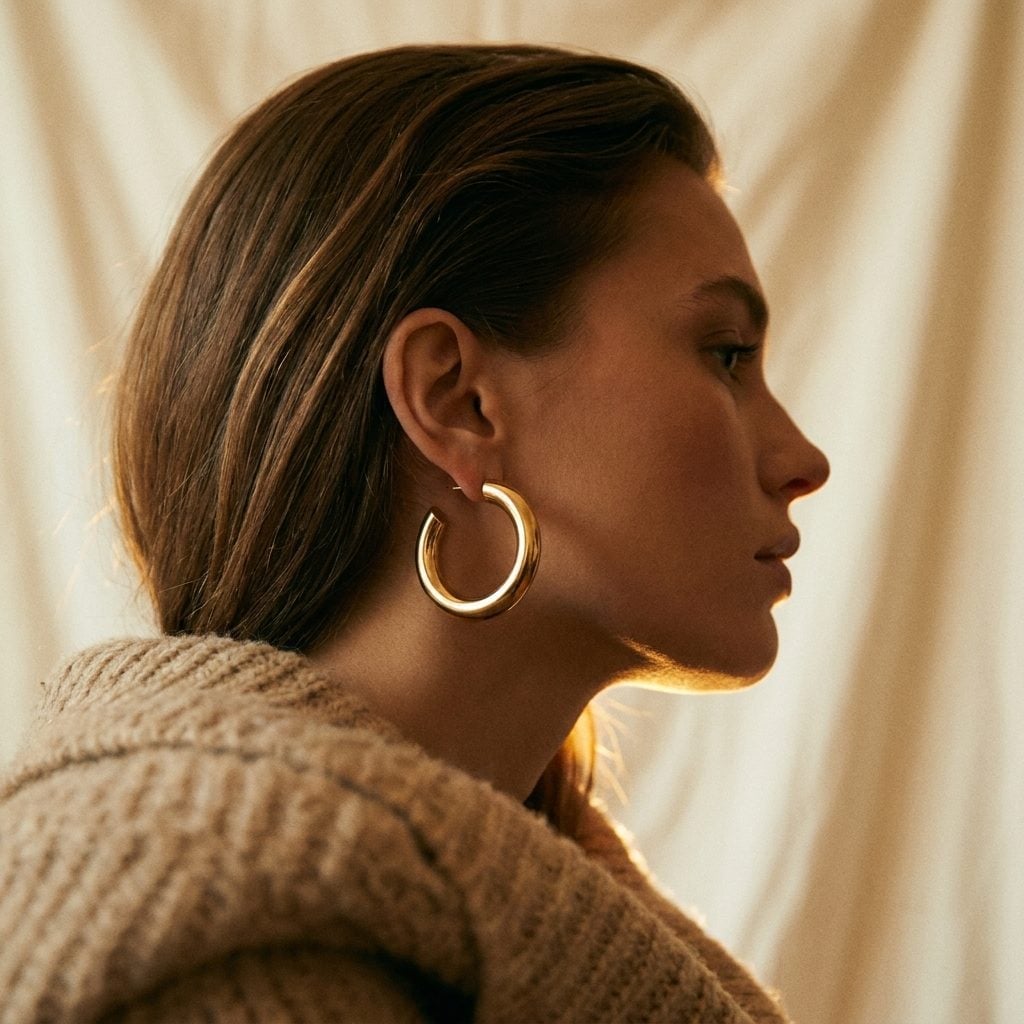
Thick tube hoops in polished yellow gold-tone metal, large enough to register against the jaw, are not interested in disappearing politely into an outfit.
That’s why the cable-knit sweater works so well beside them. Texture below, shine above, no competing necklace trying to negotiate between the two. Sometimes the smartest accessory strategy is knowing when the earrings have already finished the job.
13. Paisley Head Scarves Could Do the Work of a Hat Without Becoming One
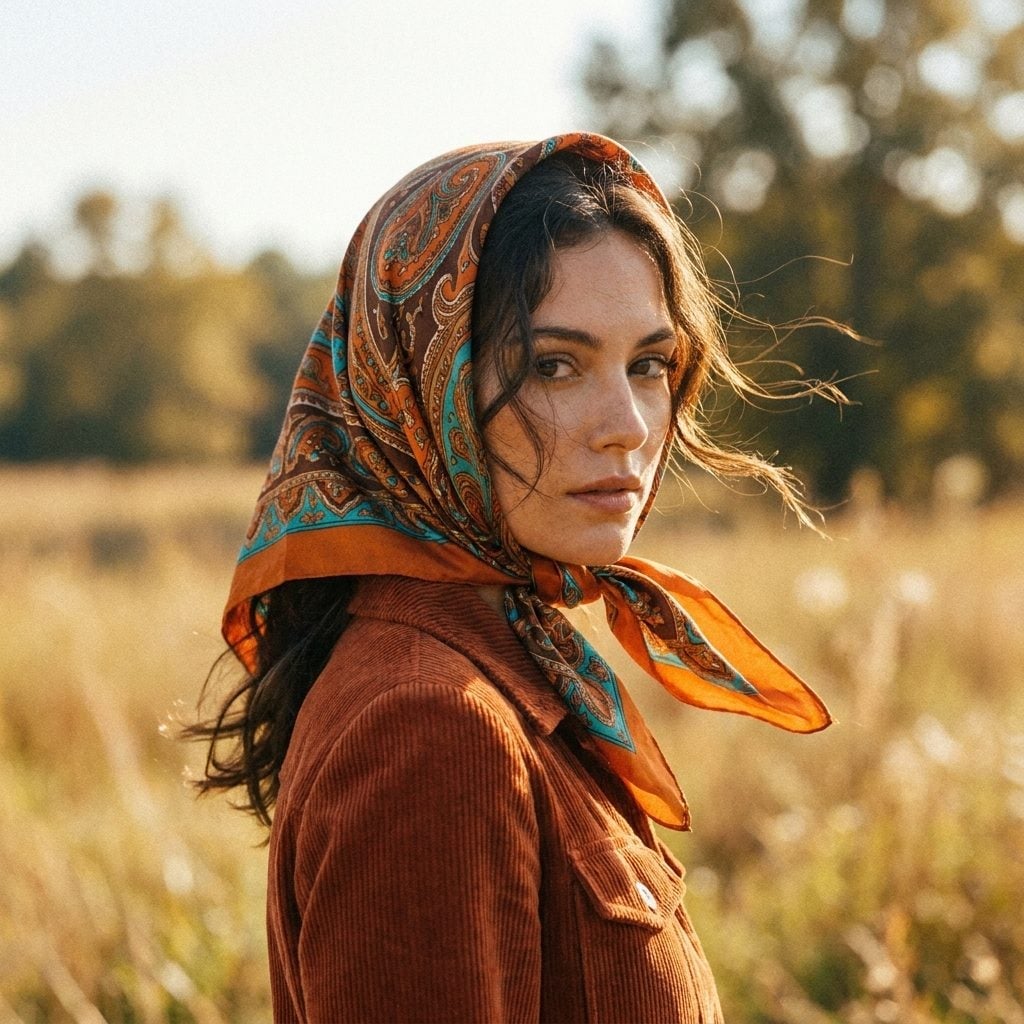
Folded into a triangle and tied beneath the jaw, a paisley scarf covers the crown while still letting the hair remain part of the picture. Burnt orange and teal give this one enough color to hold its own against the rust corduroy jacket.
The larger medallion pattern is important visually. On this scale it reads clearly across the folded fabric instead of dissolving into tiny decoration. Practical coverage, strong pattern, almost no bulk. A hat would change the silhouette. The scarf leaves it alone.
12. Saddle Bags Were Going Cross-Body Long Before the Name Became Ubiquitous
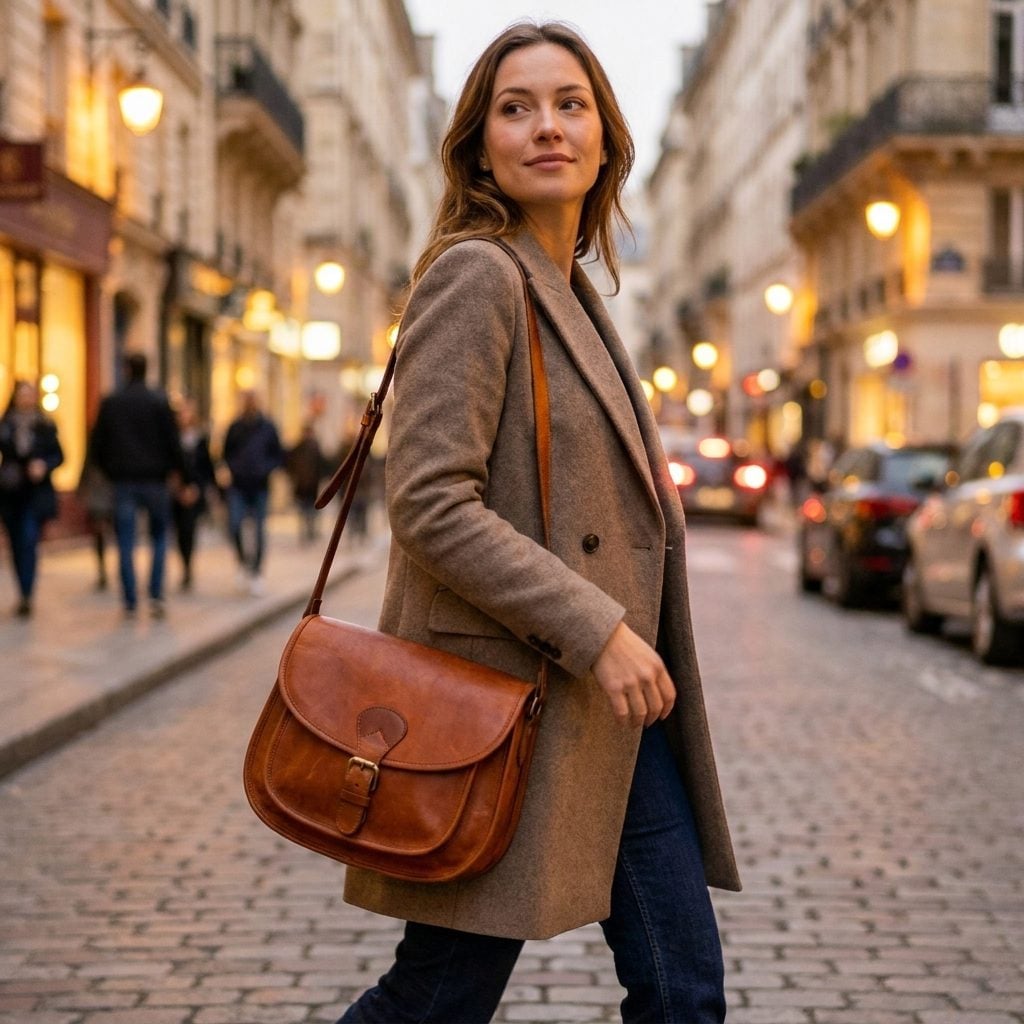
A long strap drops this cognac saddle bag to hip level, giving the curved flap and buckle enough room to register against the coat instead of disappearing beneath an arm.
The design is practical almost to the point of stubbornness: broad strap, secure flap, straightforward buckle, compact body. Yet the warm leather and rounded shape keep all that utility from looking severe. Against dark denim and camel wool, the bag doesn’t behave like an afterthought. It becomes the hinge between the colors above and below it.
11. Coral Lipstick Could Warm Up a Face Without Waiting for Evening
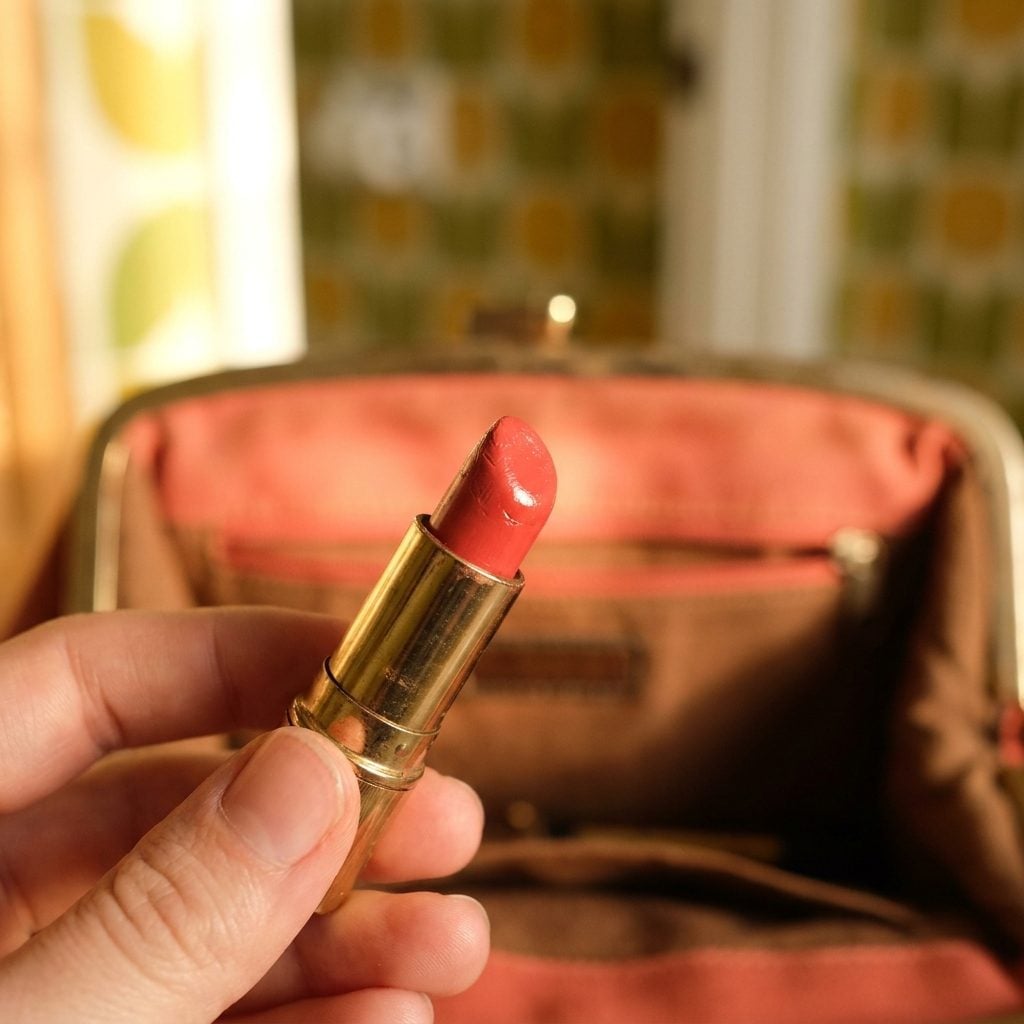
Coral sat comfortably inside the 1970s appetite for warm color, somewhere between pink, peach and orange depending on the formula. It could be noticeable without carrying the formality of a deep red, which made it an easy fit for daytime makeup.
The worn bullet in the gold-tone tube is more interesting than a pristine one would be. This is makeup represented as something used, not displayed. Alongside the decade’s peaches, earthy reds, glosses and softer pinks, coral earned its place by speaking the same warm language as the clothes.
10. Turquoise Rings Were Better When Nobody Pretended They Were Subtle
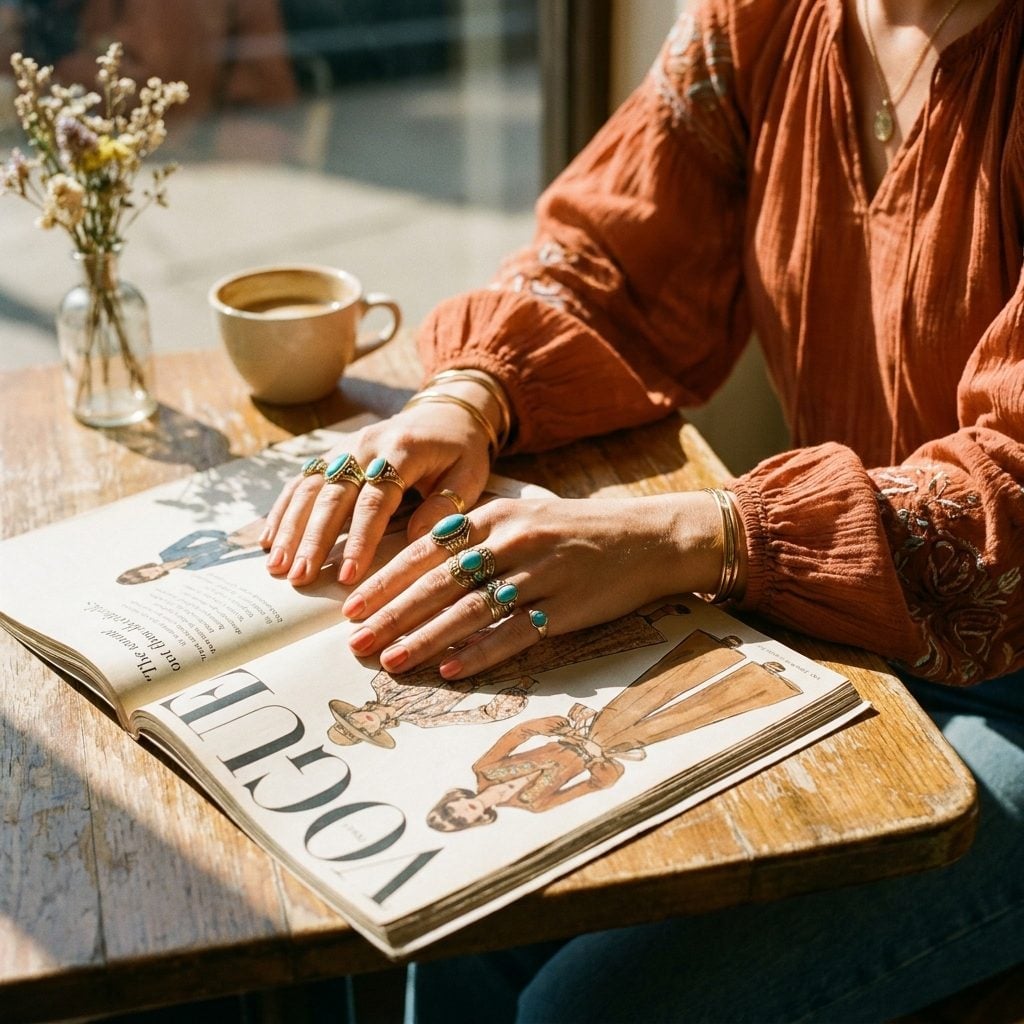
Gold-set turquoise across several fingers isn’t a finishing touch. It’s the premise.
The oval blue-green stones repeat without becoming identical, while the substantial settings give each one enough weight to survive beside the others. Spreading the rings across different fingers keeps the decoration moving across the hand instead of building one enormous cluster.
Add flat bangles and a terracotta gauze blouse and the jewelry stops looking like something added at the end. The outfit appears to have been built outward from it.
9. Brushed Brass Statement Earrings Made Matte Metal Look More Interesting Than Shine
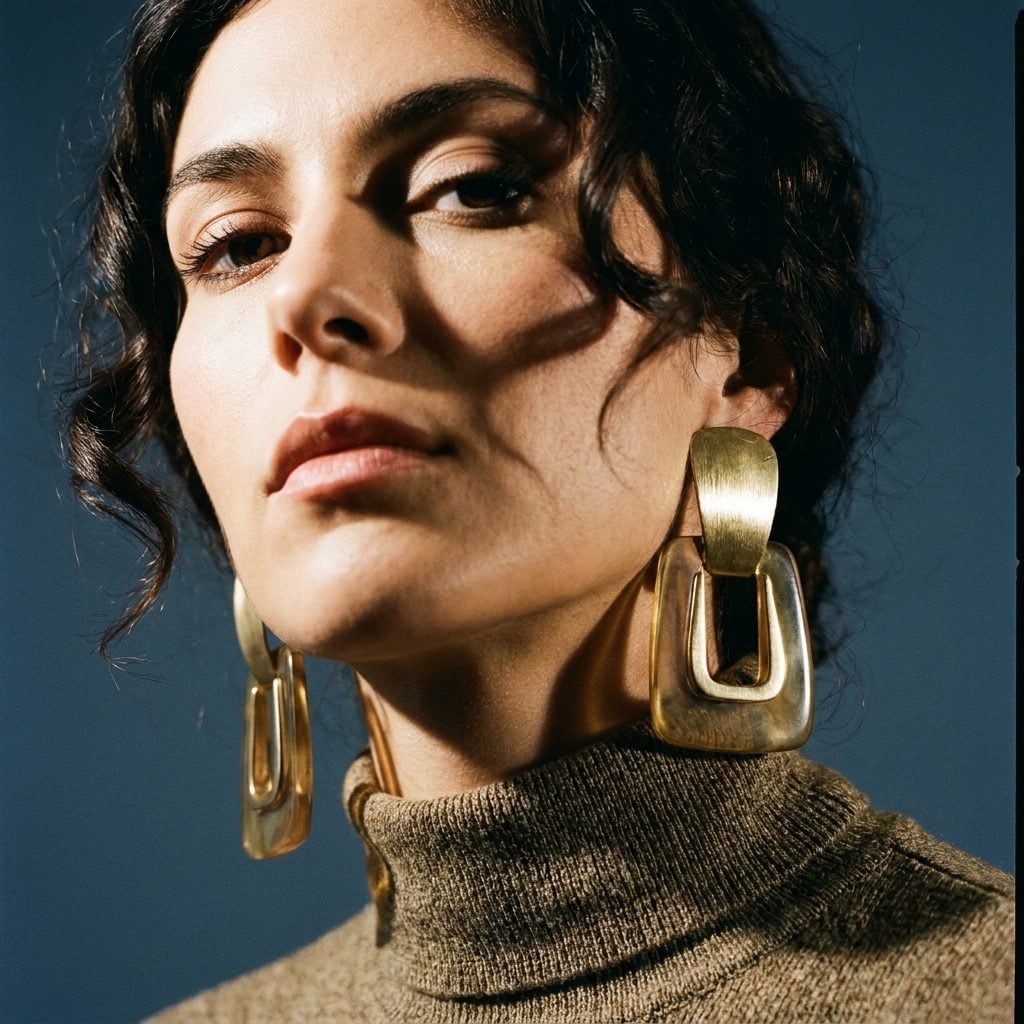
These sculptural brass-tone earrings use scale rather than sparkle: a flat upper piece at the ear and a chunky open rectangle suspended beneath it.
The brushed finish changes everything. Highly polished metal would throw back sharp highlights; this surface diffuses them, making a large earring feel earthy rather than precious. That’s a very 1970s trick — substantial jewelry without requiring ballroom manners.
8. Solid Balm Tins Put Practical Beauty in a Container That Could Survive a Pocket
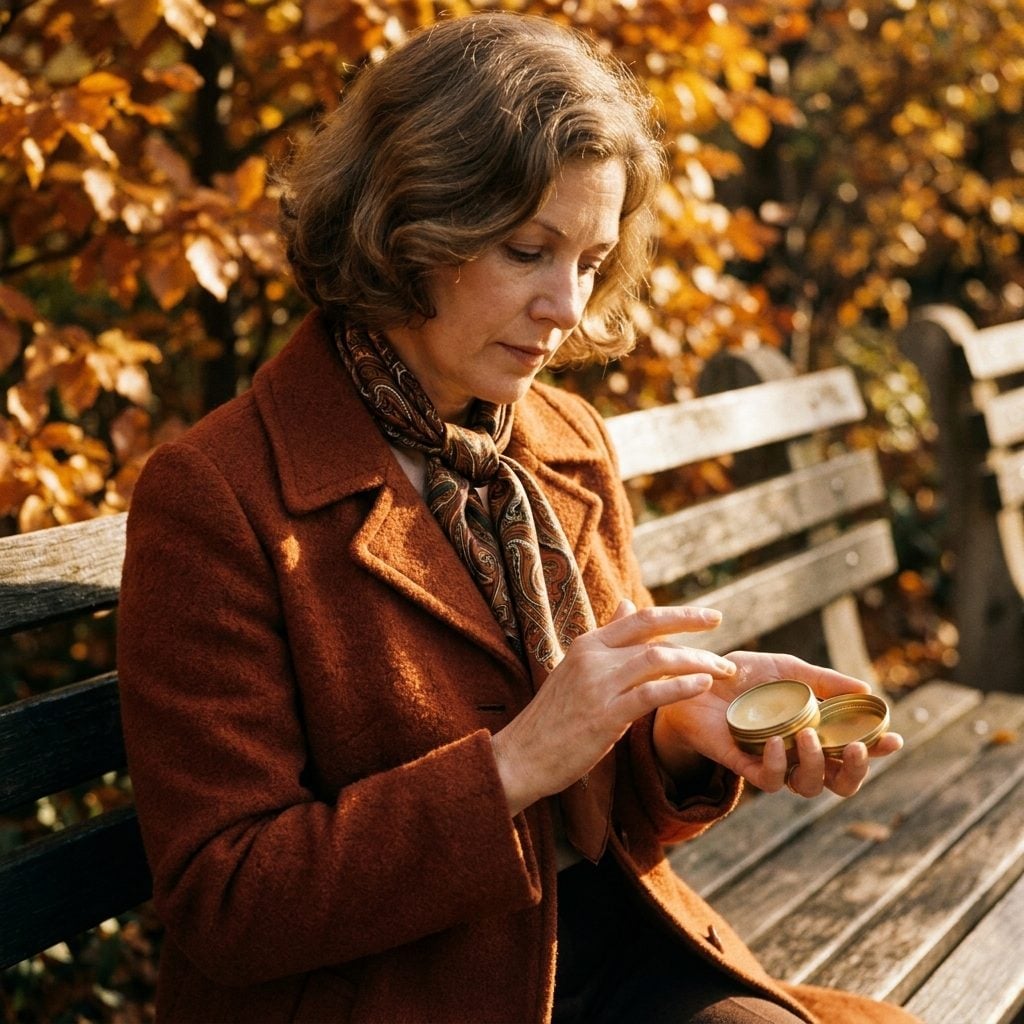
Small screw-top tins were ideal for solid and semi-solid beauty products because they were compact, flat and considerably less fussy than carrying another bottle.
The gold-tone tin shown here is being used for a balm-like product, but the broader appeal of the format is the point. Lip treatments, salves and solid fragrance could all live in containers small enough for a coat pocket.
Beside the rust wool and paisley scarf, even the packaging belongs to the same warm visual world. Practicality did not have to arrive looking clinical.
7. Granny Square Bags Carried Half the Decade’s Palette at Once
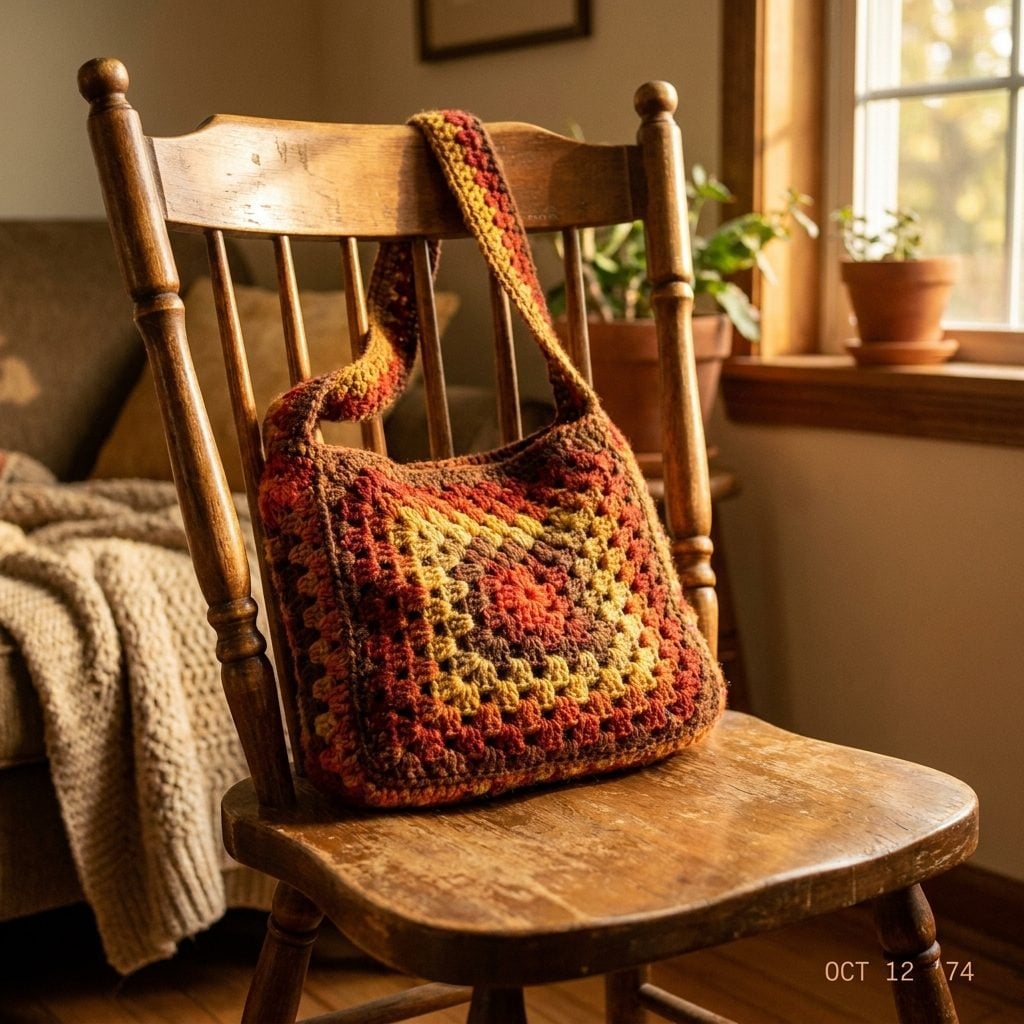
Rust at the center, then burnt orange, mustard and deep brown moving outward through the crochet. This bag doesn’t coordinate with an autumn palette. It practically contains one.
Granny-square construction also fits naturally into the decade’s enthusiasm for handmade and craft-driven fashion. A bag like this could be made at home or found through the era’s thriving craft culture, which gave crochet an appeal mass-produced leather could not quite imitate.
The long strap and soft body keep the shape relaxed. Fill it and the bag gets better. Empty it and the crochet still has enough personality to carry the argument.
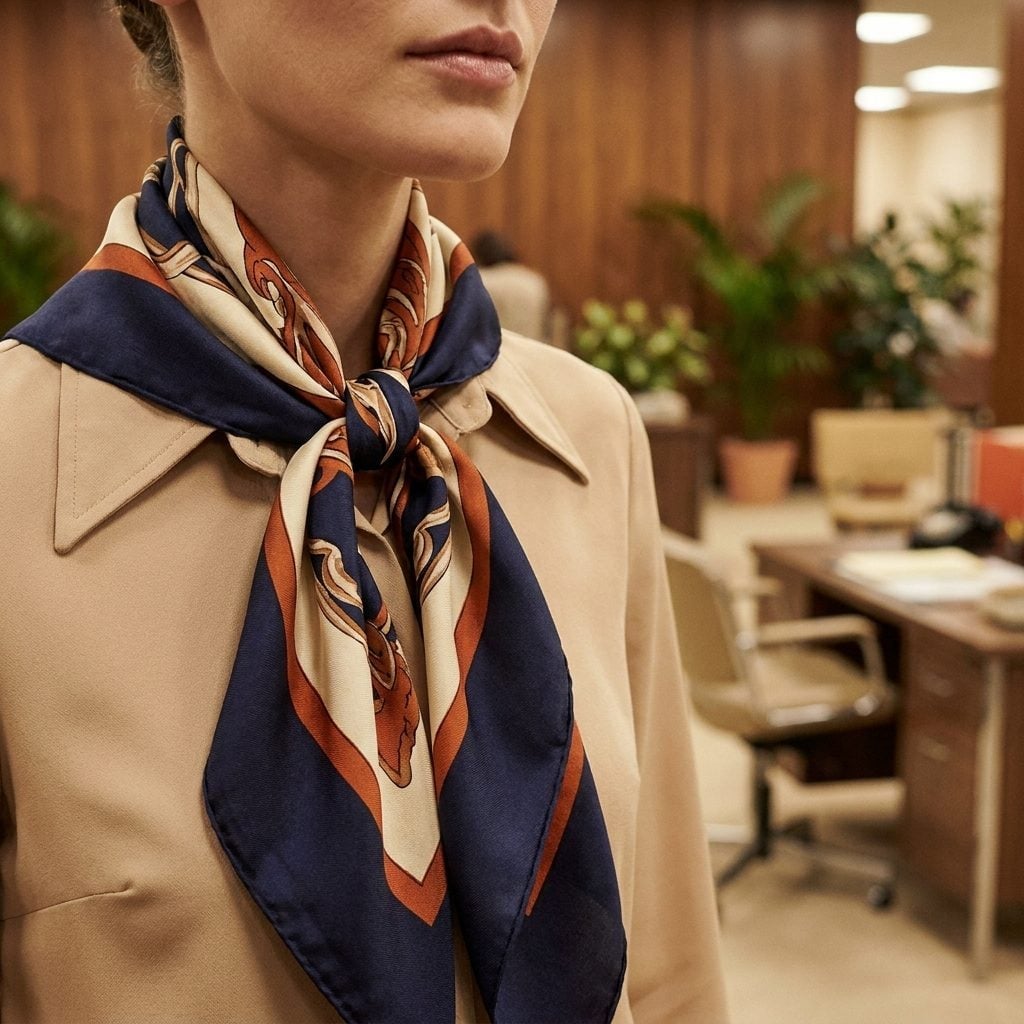
6. Silk Scarves at the Throat Could Finish a Coat Without Matching It
❤️ Would you like to save this?
Knotted loosely at the collar of a camel coat, this scarf does something a necklace cannot: it adds pattern, color and movement in one narrow strip.
Navy, cream and rust repeat tones already present around it without matching them exactly. The uneven tails matter too. One falls longer than the other, keeping the scarf from becoming a perfect little bow sitting obediently at the throat.
The most convincing version looks slightly undone. Too symmetrical and the scarf starts behaving like a uniform.
Sometimes the difference between polished and overworked is one knot pulled slightly off-center.
5. Whiskey-Brown Hobo Bags Let the Leather Lose Its Posture
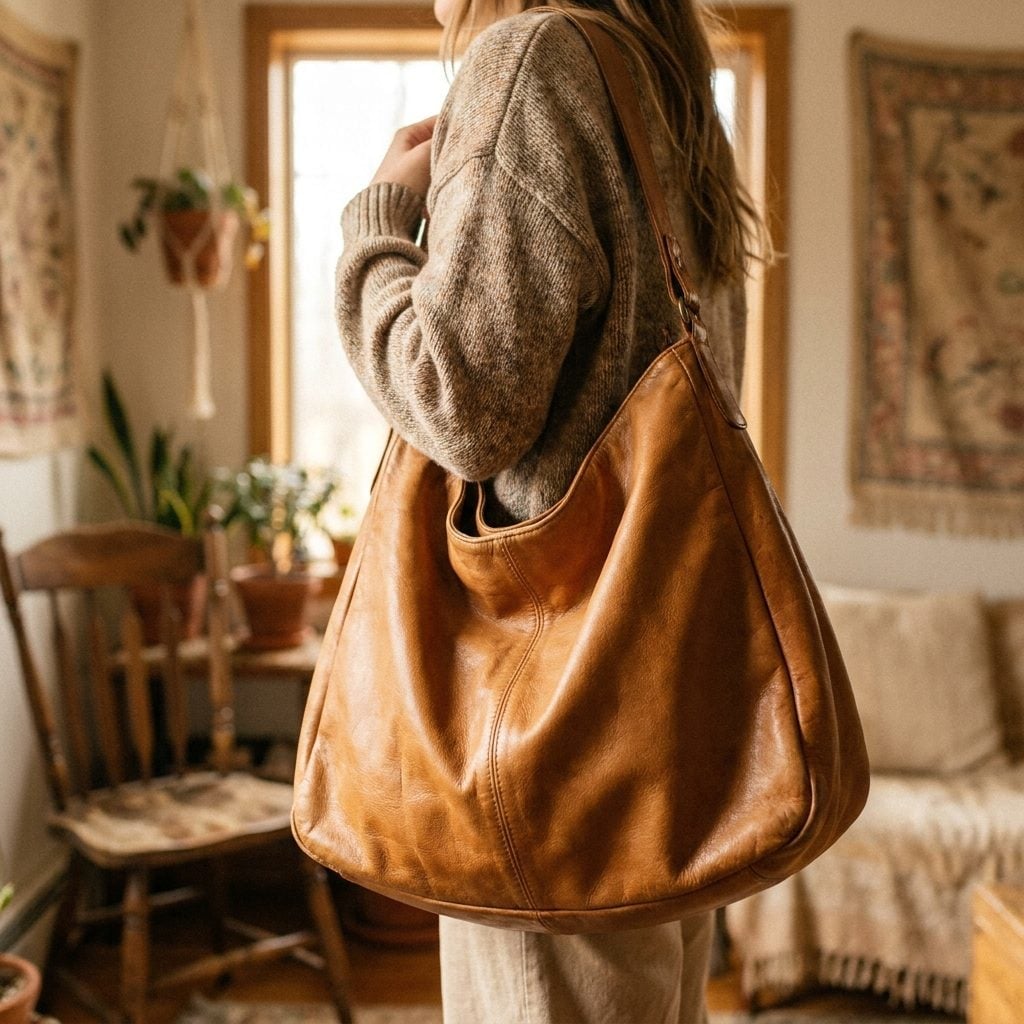
The hobo bag makes its point by refusing the rigid frame that gives a doctor bag its authority. Soft leather drops from a single shoulder strap, gathers toward the opening and widens through the body into a relaxed triangle.
The whiskey-brown shade sits somewhere between caramel and tobacco, warm enough to work with the decade’s earth tones without tipping bright orange. Minimal hardware leaves the leather to do almost everything.
Against chunky knits, linen and other heavily textured fabrics, that simplicity becomes an advantage. The bag doesn’t need a scarf tied to the strap or another charm dangling from it. Its shape is already the decoration.
4. Hammered Gold Pendants Knew Exactly How Much Empty Sweater They Needed
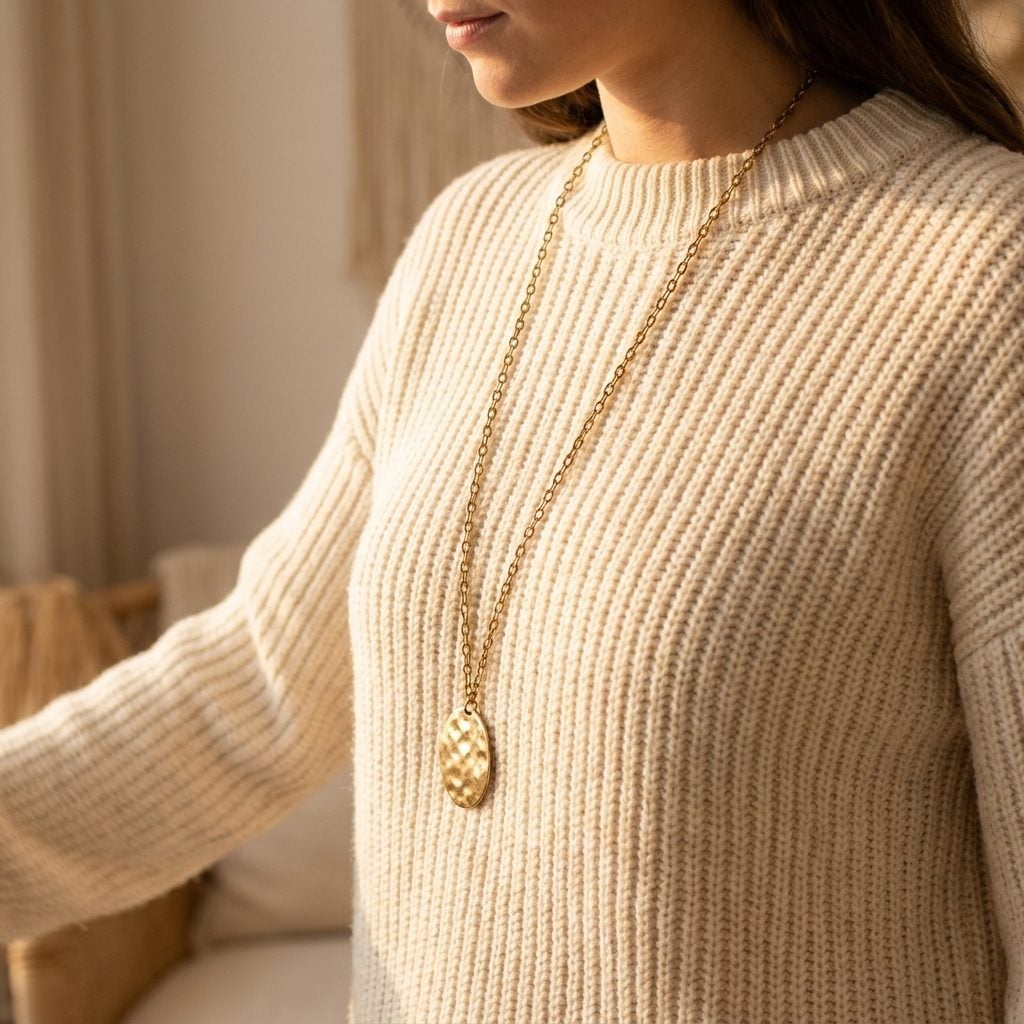
A hammered oval medallion on a long chain isn’t trying to sprinkle a little jewelry around the neckline. It wants a clean field of knitwear and enough length to become the vertical line of the outfit.
Against a cream ribbed mock neck, the textured metal catches light while the sweater stays deliberately quiet. No necklace stack required. One pendant, one strong shape, plenty of room around it.
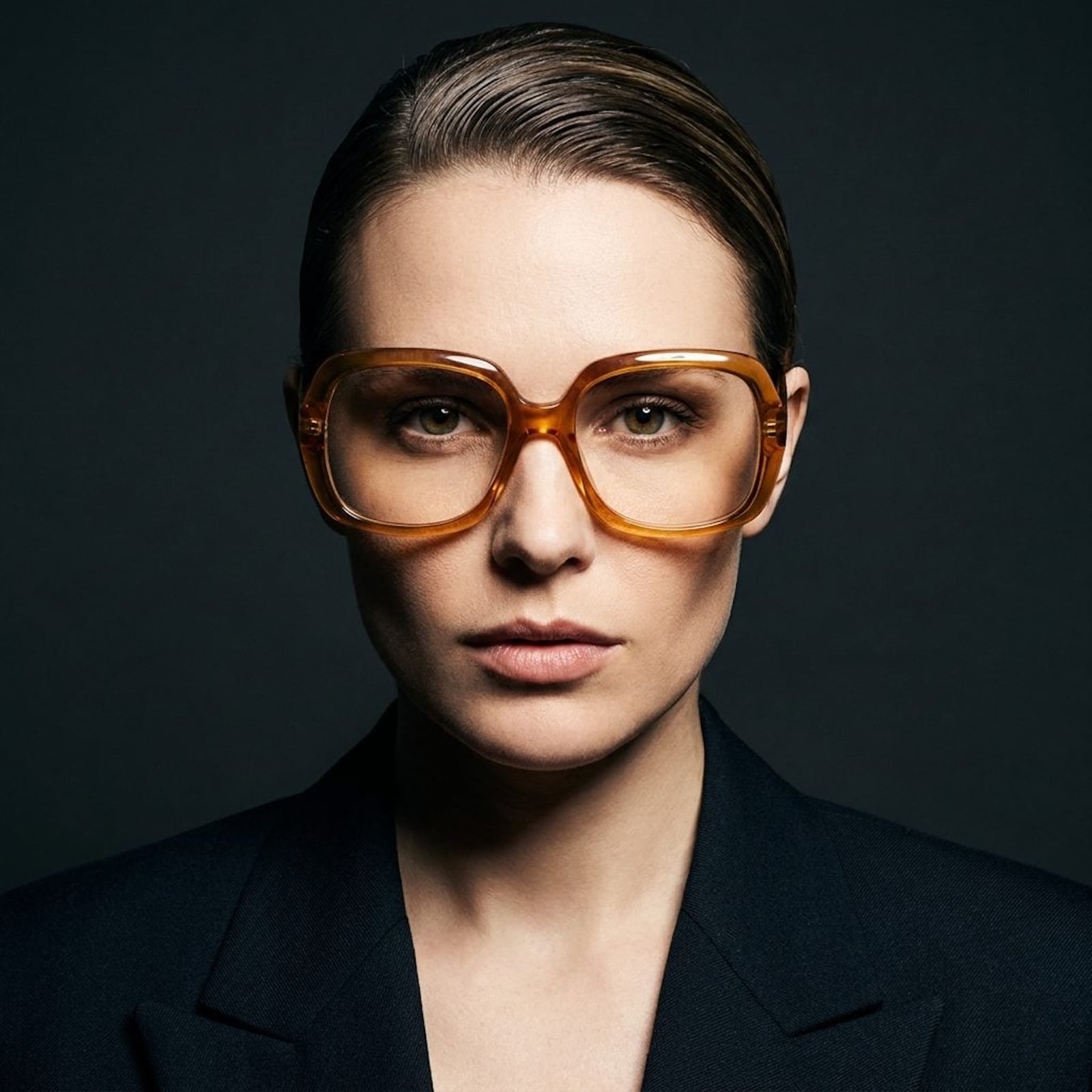
3. Oversized Clear Frames Made Eyewear the Main Event
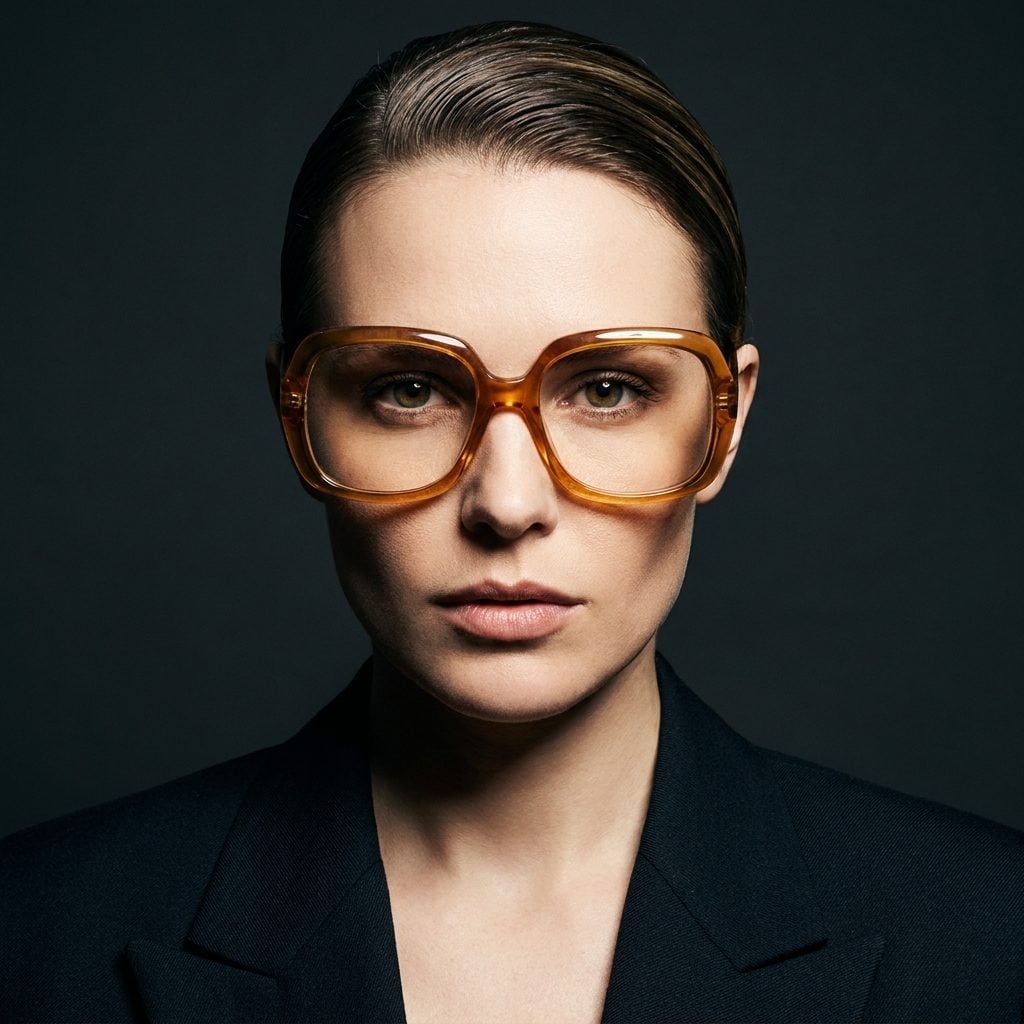
Square frames this big weren’t an accessory — they were the whole argument.
Honey-amber acetate runs from brow toward cheekbone, with softened corners taking just enough severity out of the geometry. The translucent material matters. At this scale, opaque black could dominate completely; amber lets light move through the frame.
Slicked-back hair and a dark blazer leave the glasses almost uncontested. One focal point. No apology required.
Frame Note: With oversized glasses, the relationship between the brow, upper rim and cheek matters as much as the frame color. Translucent amber also gives a very large silhouette some visual lightness that an equally thick opaque frame would not.
2. Braided Leather Crossbodies Made Utility Look Considerably Better Than Utility Had To
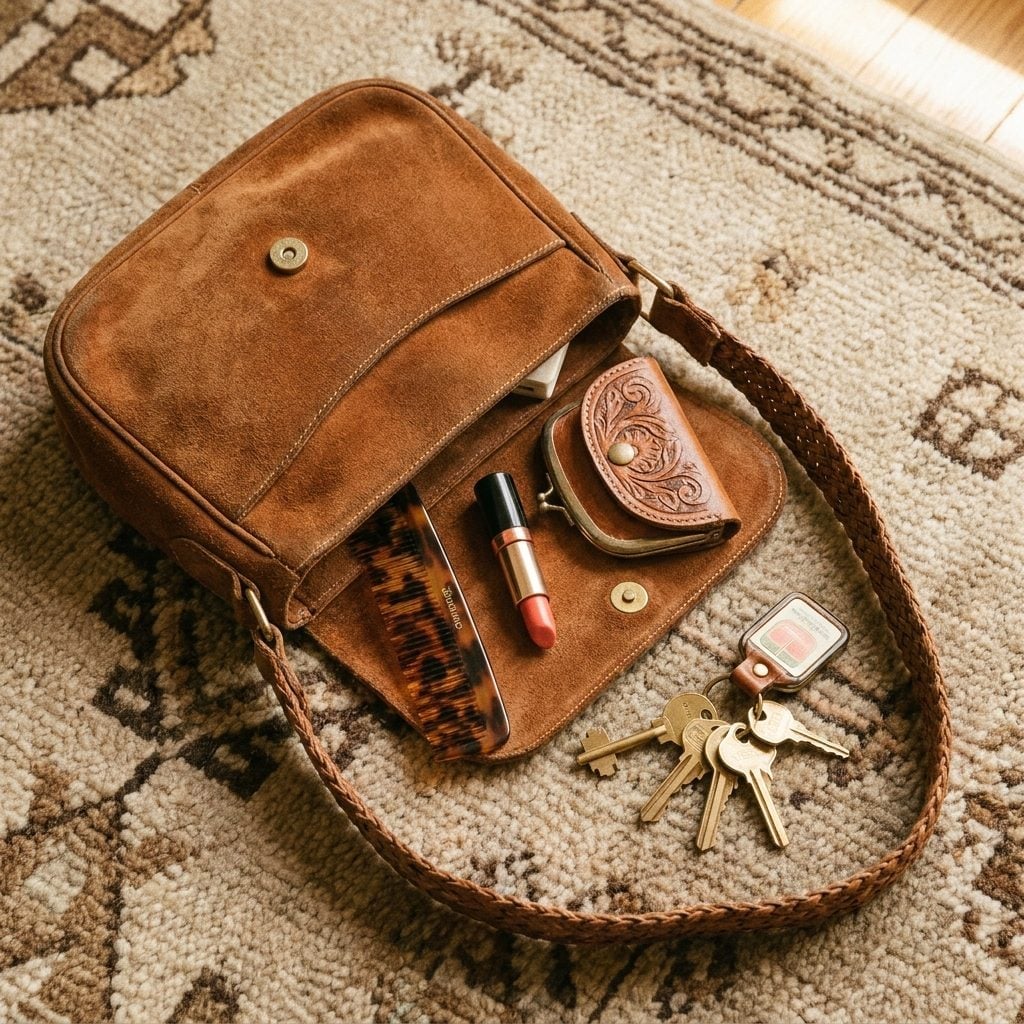
Distressed cognac leather, a braided strap and a snap-close front pocket: the details make this bag feel worked rather than manufactured into anonymity.
The contents tell the practical side of the story — comb, lipstick, coin purse, keys. The bag is compact enough to stay close to the body while still deep enough for everyday essentials. Nothing requires a giant tote or an internal filing system.
The braided strap is what pushes the design firmly toward the decade. Hand-worked texture turns a purely functional component into one of the most visible parts of the bag.
1. Plastic Rain Bonnets Were the Least Glamorous Thing That Somehow Completed the Look
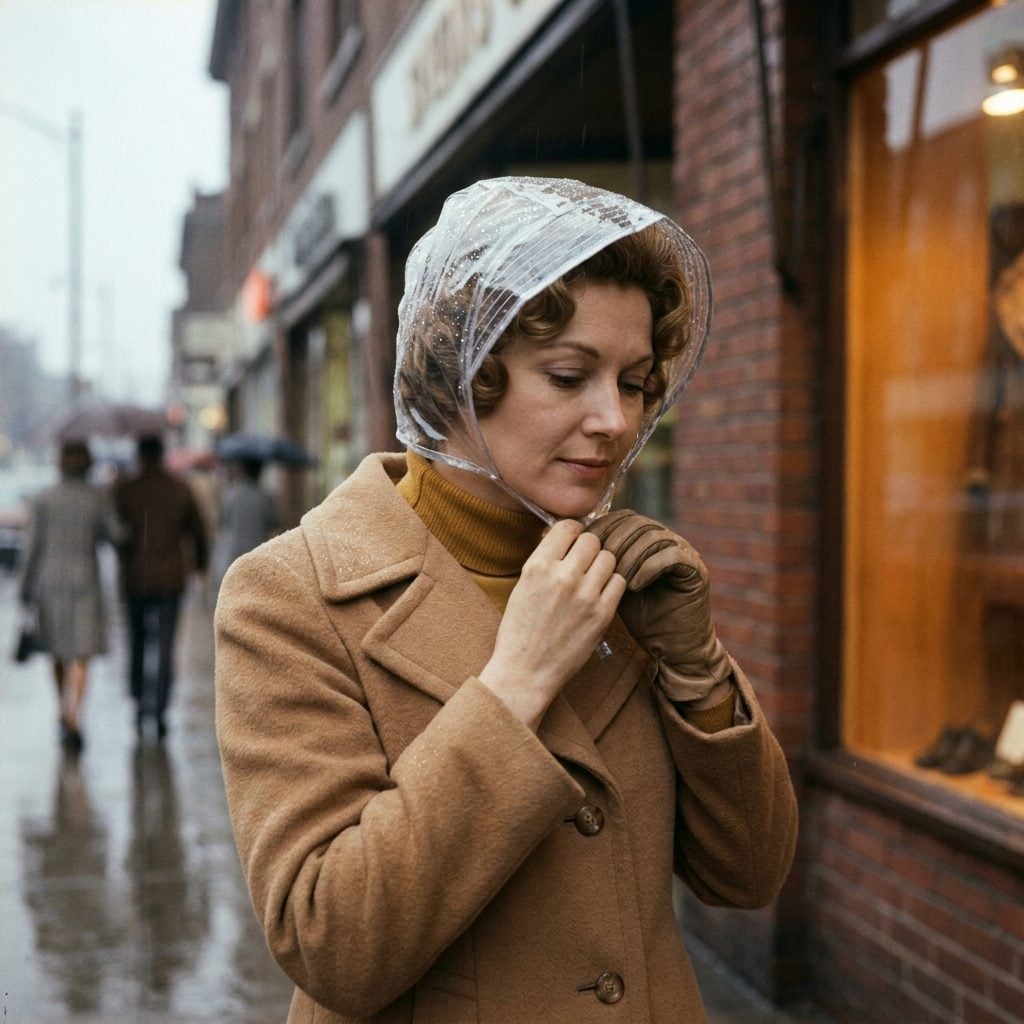
Clear plastic rain bonnets were a familiar sight when protecting a set hairstyle mattered more than pretending weather wasn’t happening. Foldable versions could disappear into a handbag or coat pocket and come out the minute the sky turned hostile.
This one ties beneath the chin and leaves enough room through the crown to cover the hair without pressing everything flat. Transparency is the saving grace. The hairstyle remains visible, which keeps the bonnet from replacing the look it was meant to protect.
Then comes the part that makes the whole image work: camel wool, mustard knit, wet pavement, clear plastic. The bonnet is unapologetically practical while everything around it remains considered. Few objects capture the decade’s strange genius better. Even the emergency rain gear had a silhouette.