❤️ Would you like to save this?
The sleeves could have their own seating chart. Satin bows competed with the bouquet. Veils rose above carefully sprayed hairstyles before spilling halfway down the aisle. And somewhere beneath all that lace, beading, and architectural ambition was a wedding dress determined to look timeless.
The 1990s bridal salon was no place for understatement. Princess skirts demanded elaborate bodices. Necklines borrowed from Victorian portraits, Renaissance paintings, and Hollywood glamour. Pearls came in matching sets, shoes were dyed to match the gown, and the finishing touches could involve enough tulle to furnish another wedding. Yet the decade was hardly one continuous parade of excess. Sleek tailoring, sheer sleeves, sculpted waistlines, and sharply contrasting flowers offered entirely different ways to make an entrance.
What makes these looks so revealing now isn’t simply how dramatically bridal fashion has changed. Some details remain remarkably elegant. Others identify their decade before the bride’s face comes into focus. These 29 bridal styles and accessories show exactly where 1990s wedding fashion found its confidence, lost its restraint, and occasionally got everything right.
FYI, thanks to AI imagery software, we’re able to create very specific fashion and hairstyle examples to illustrate the points being made. In some cases, imagery is exaggerated to hammer home the point. Also, assume links that take you off the site are affiliate links such as links to Amazon. this means we may earn a commission if you buy something.
29. The Princess Ball Gown With a Skirt You Could Hide Two Flower Girls Under
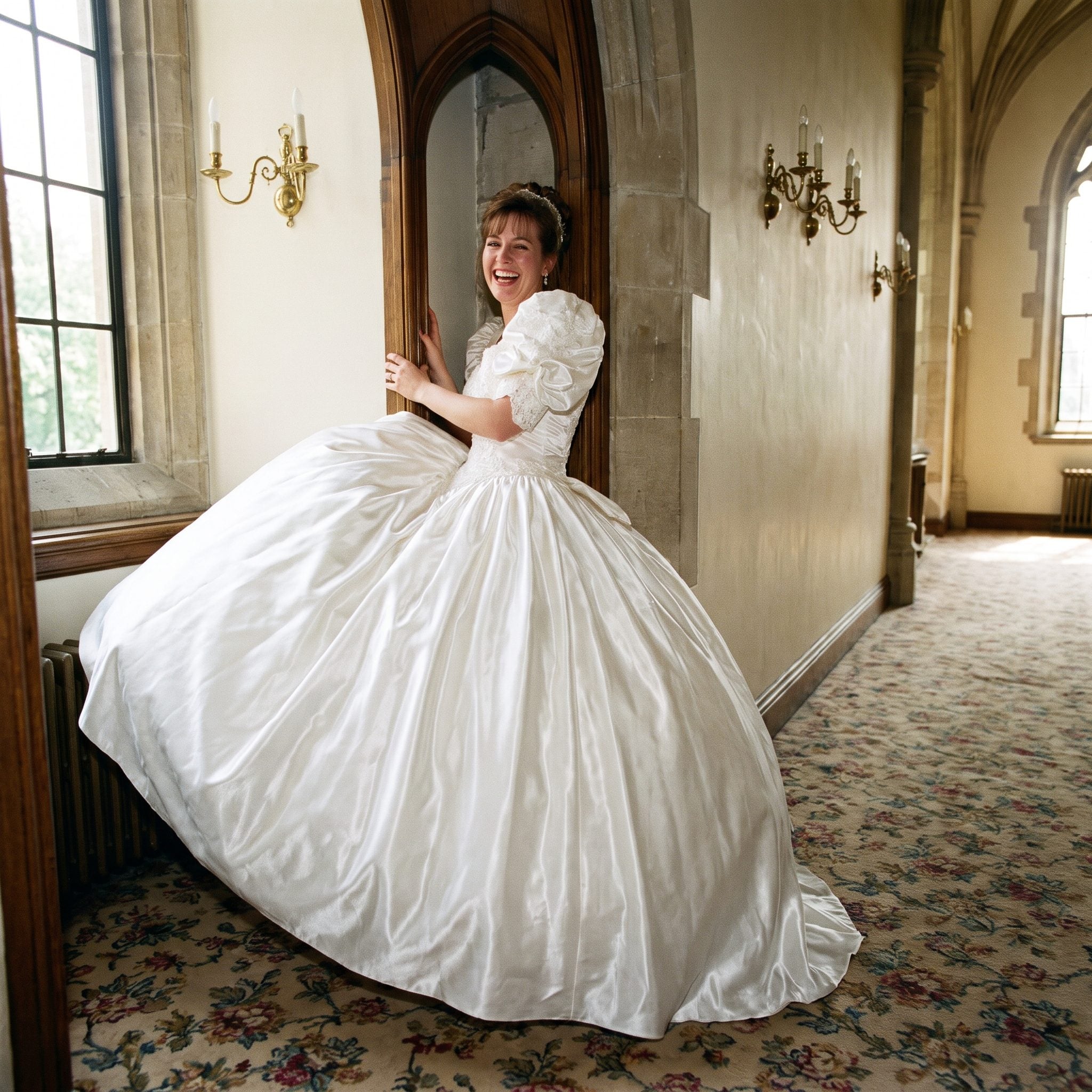
A fitted bodice, a sharply defined waist, and a skirt expanding outward with the confidence of a parade float. The princess ball gown turned the bride into the architectural center of the ceremony. Every additional layer of tulle or crinoline increased the distance between the waist and the outer edge of the dress.
That exaggerated contrast was the entire visual strategy. A narrow bodice looked even smaller against the enormous skirt, while satin and lace gave the volume a formal finish. Princess Diana’s 1981 wedding helped popularize grand romantic bridal silhouettes, and their influence remained visible throughout the following decade. The 1990s version frequently added more decoration to an already substantial shape.
28. The Tiny Satin Drawstring Wrist Pouch That Could Barely Hold a Lipstick
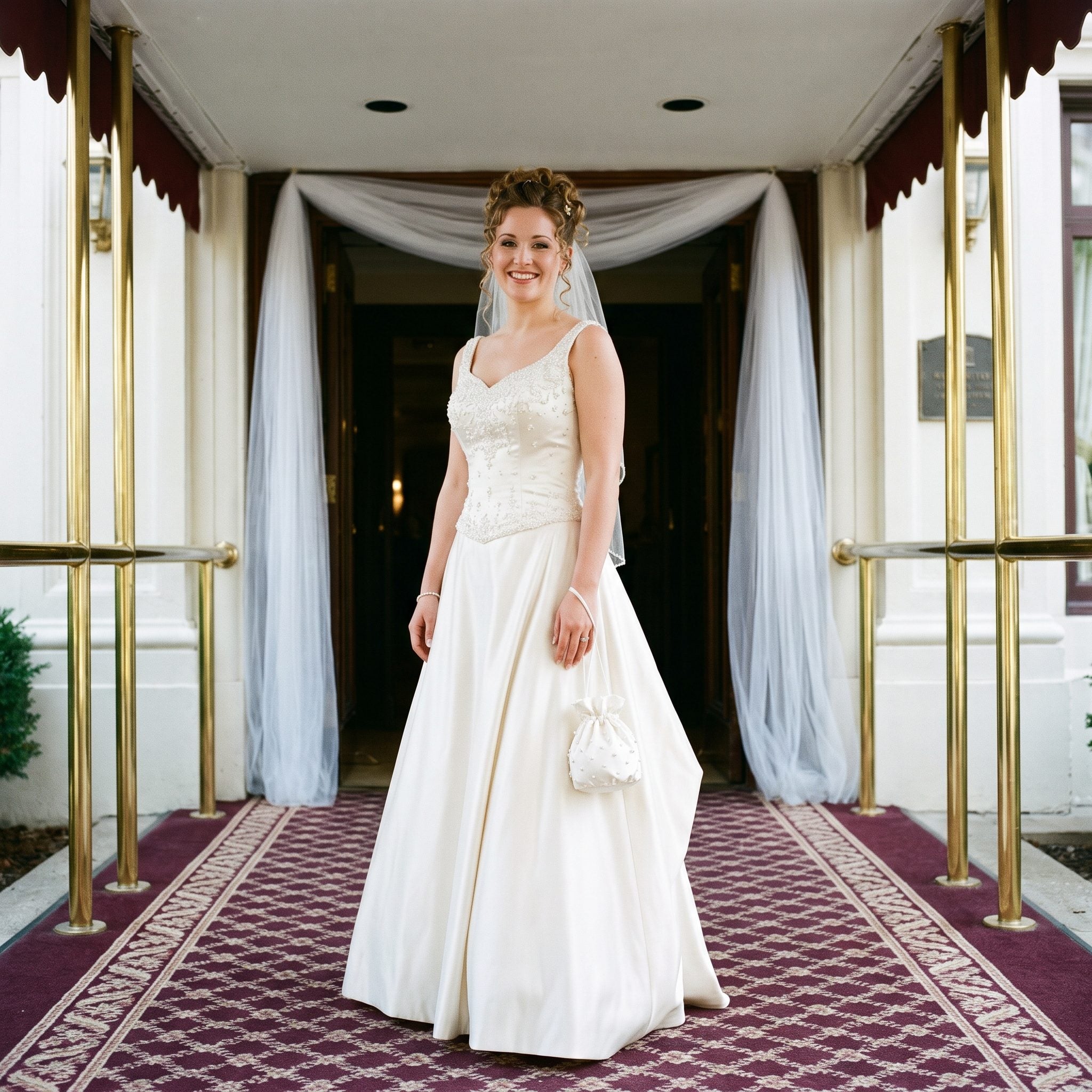
After the enormous skirt came the smallest accessory imaginable. A satin drawstring pouch, sometimes trimmed with pearls or lace, hung from the wrist and offered just enough space for lipstick, a tissue, and perhaps one other tiny necessity. Practicality had been reduced to its most decorative dimensions.
The shape recalled the historical reticule, a small drawstring handbag carried by women whose dresses offered little convenient storage. Bridal versions translated that idea into ivory satin and delicate embellishment. Against a full wedding gown, the little pouch looked almost comically undersized, but its proportions were part of the charm.
27. The White Tuxedo-Style Bridal Jacket for the Bride Who Read Vogue
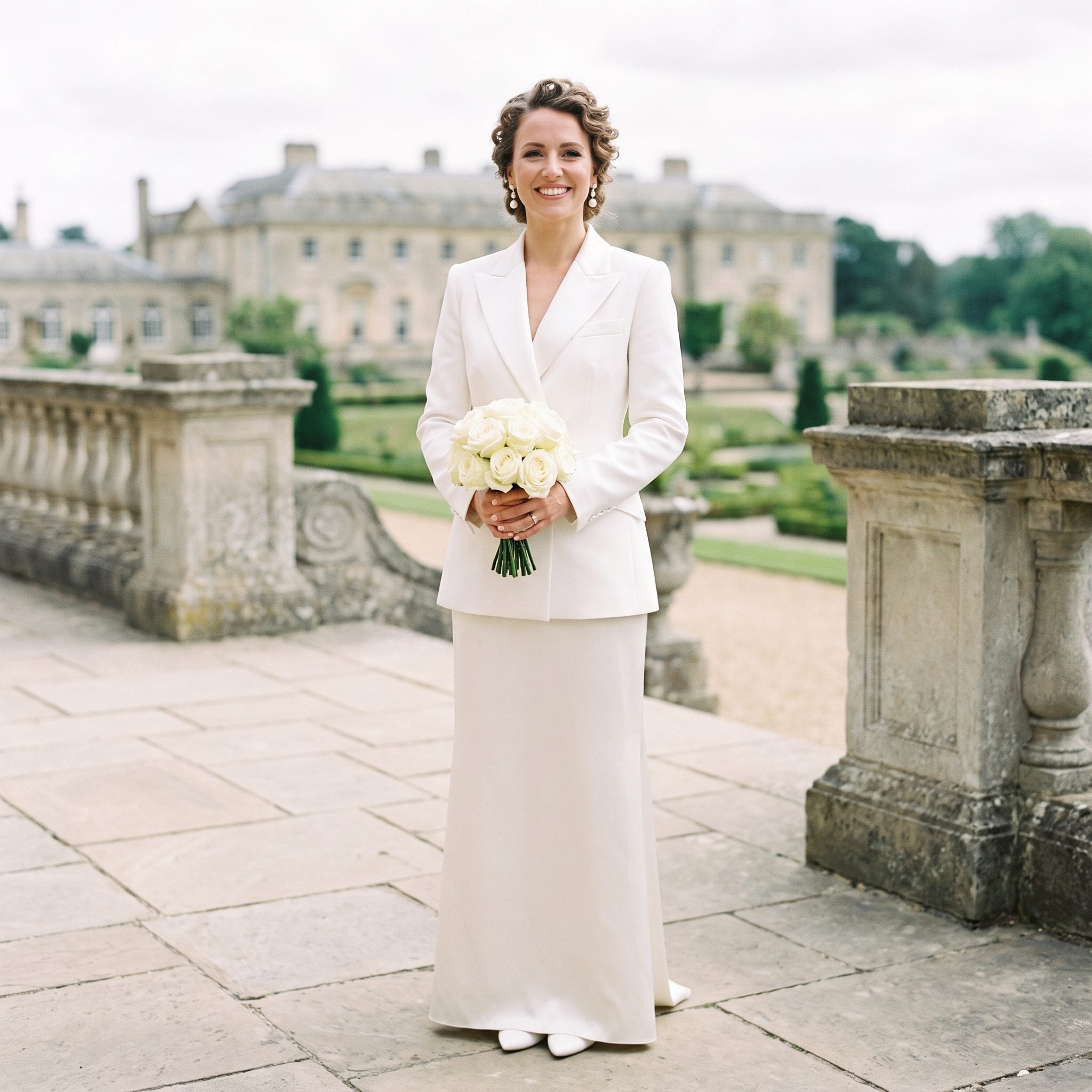
Sharp lapels, a defined waist, structured shoulders, and a bridal skirt that refused to disappear beneath the tailoring. The white tuxedo-style jacket offered a striking alternative to lace-covered bodices and romantic collars. Its authority came from the cut rather than the quantity of decoration.
Bridal tailoring drew on a much longer fashion history, including Bianca Jagger’s famous white wedding suit in 1971 and the power-dressing silhouettes of subsequent decades. By the 1990s, a fitted bridal jacket could look sophisticated without surrendering the occasion’s formality. Against the decade’s larger ball gowns, the clean lines were practically radical.
26. The Cascading Waterfall Bouquet That Trailed Halfway Down the Skirt
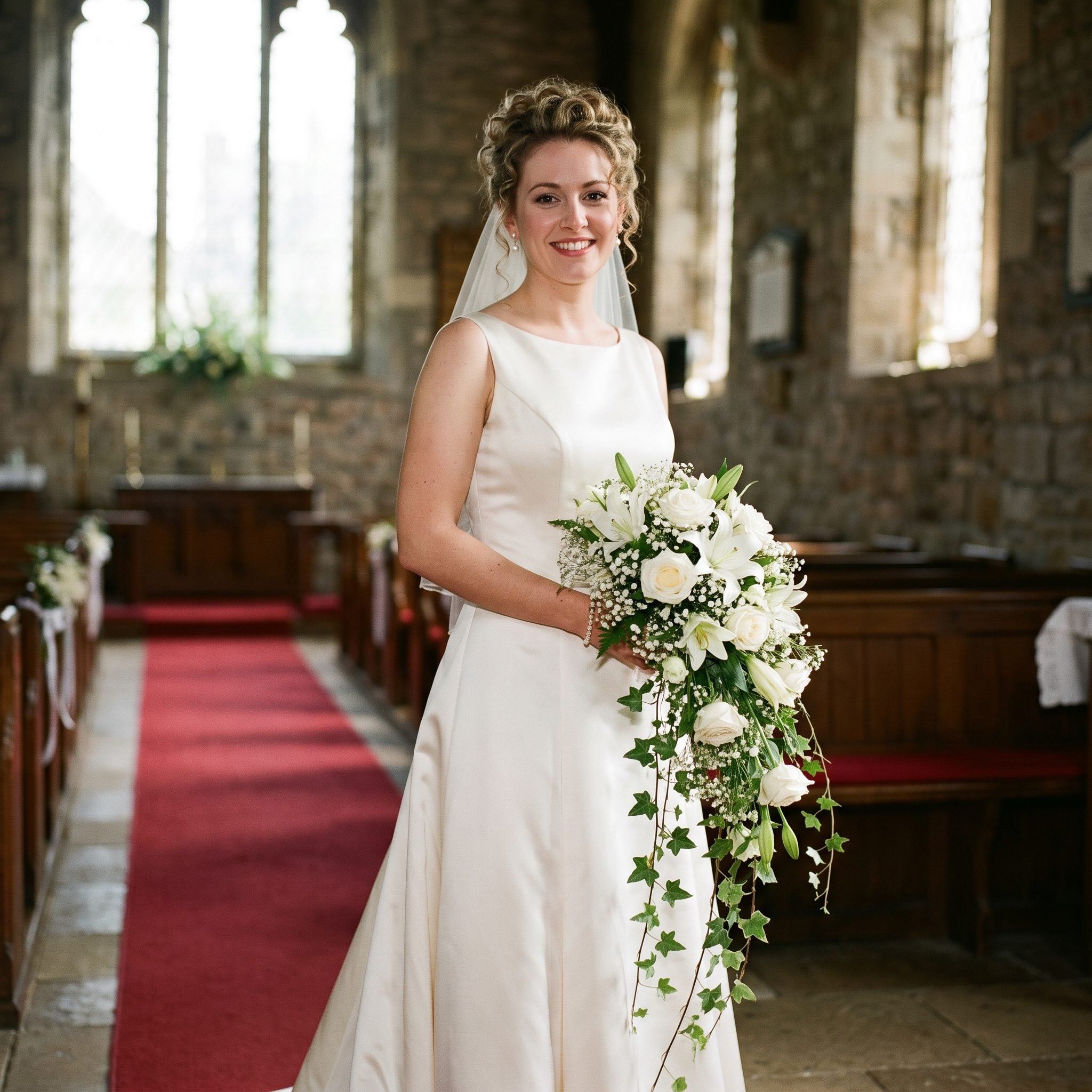
A compact bouquet stayed politely above the waist. The cascade had other plans. Roses, lilies, trailing ivy, and smaller blossoms spilled downward in an elongated teardrop, introducing movement against the comparatively rigid structure of the gown.
The arrangement could emphasize the vertical line of a dress while providing an elaborate floral counterweight to a full skirt. Princess Diana’s dramatic cascading bouquet in 1981 was one influential example of the style, although trailing bridal flowers had a history long before her wedding. By the 1990s, the waterfall arrangement remained an unmistakably formal choice, particularly when finished with long ribbons and dense greenery.
25. The High Victorian Lace Neckline Buttoned Right Up to the Throat
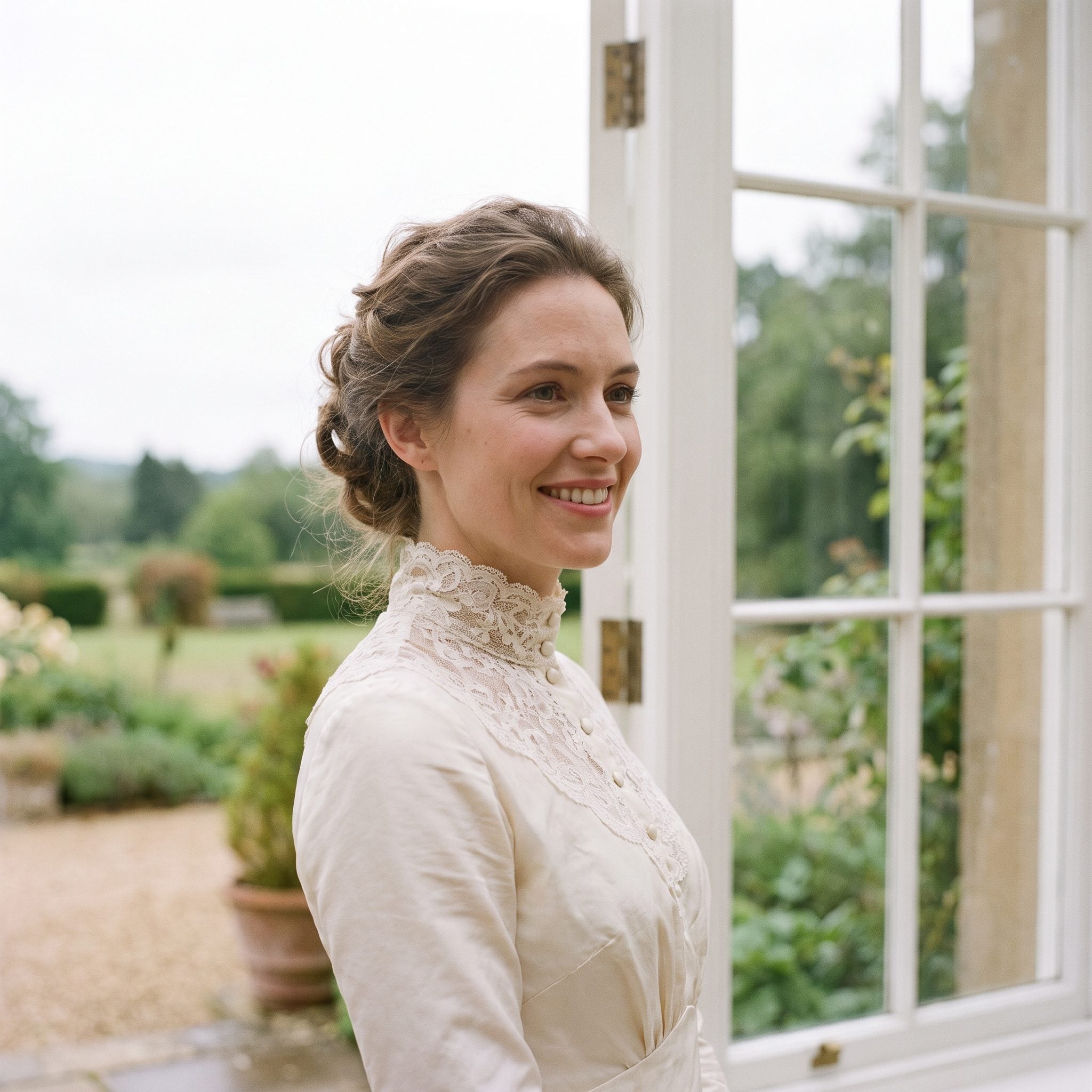
While other gowns exposed the shoulders, the high-necked lace dress covered nearly everything. Floral lace climbed toward the throat, sometimes finishing in a narrow standing collar, with the bodice continuing the elaborate pattern below. The effect was formal, intricate, and deliberately old-fashioned.
Its success depended on transparency and contrast. Open lace over skin or a sheer lining prevented the neckline from becoming one solid block of fabric, while smooth satin beneath the bodice supplied a quieter foundation. Victorian references were hardly new to bridal fashion, but the 1990s embraced them with particular enthusiasm, often combining historical delicacy with a distinctly modern appetite for volume.
24. The Big Permed Curls That Took Up Their Own Pew
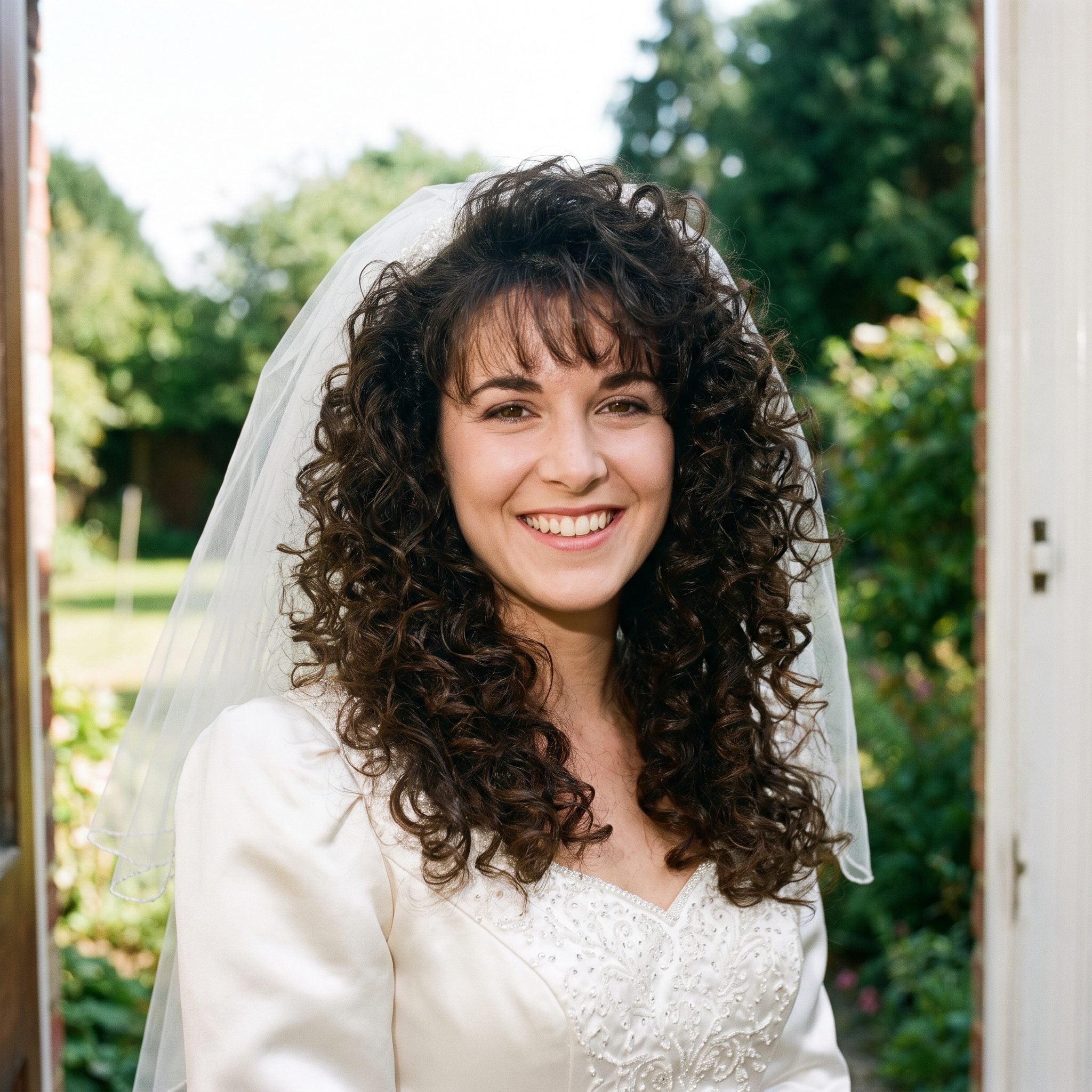
Ringlets, spirals, lifted roots, and enough volume to make a delicate headpiece look thoroughly outnumbered. Big bridal curls carried the influence of late-1980s hairstyling into the following decade, when elaborate texture remained a familiar choice for formal occasions.
Perms could provide a lasting curl pattern, while rollers, curling irons, teasing, and setting products created additional volume for the wedding day. The resulting silhouette was softer than a tightly controlled updo but hardly effortless. Every curl contributed to the overall shape, especially when a veil or floral accessory was worked into the hair.
23. The Basque Waist That Dipped Into a Sharp Little Point
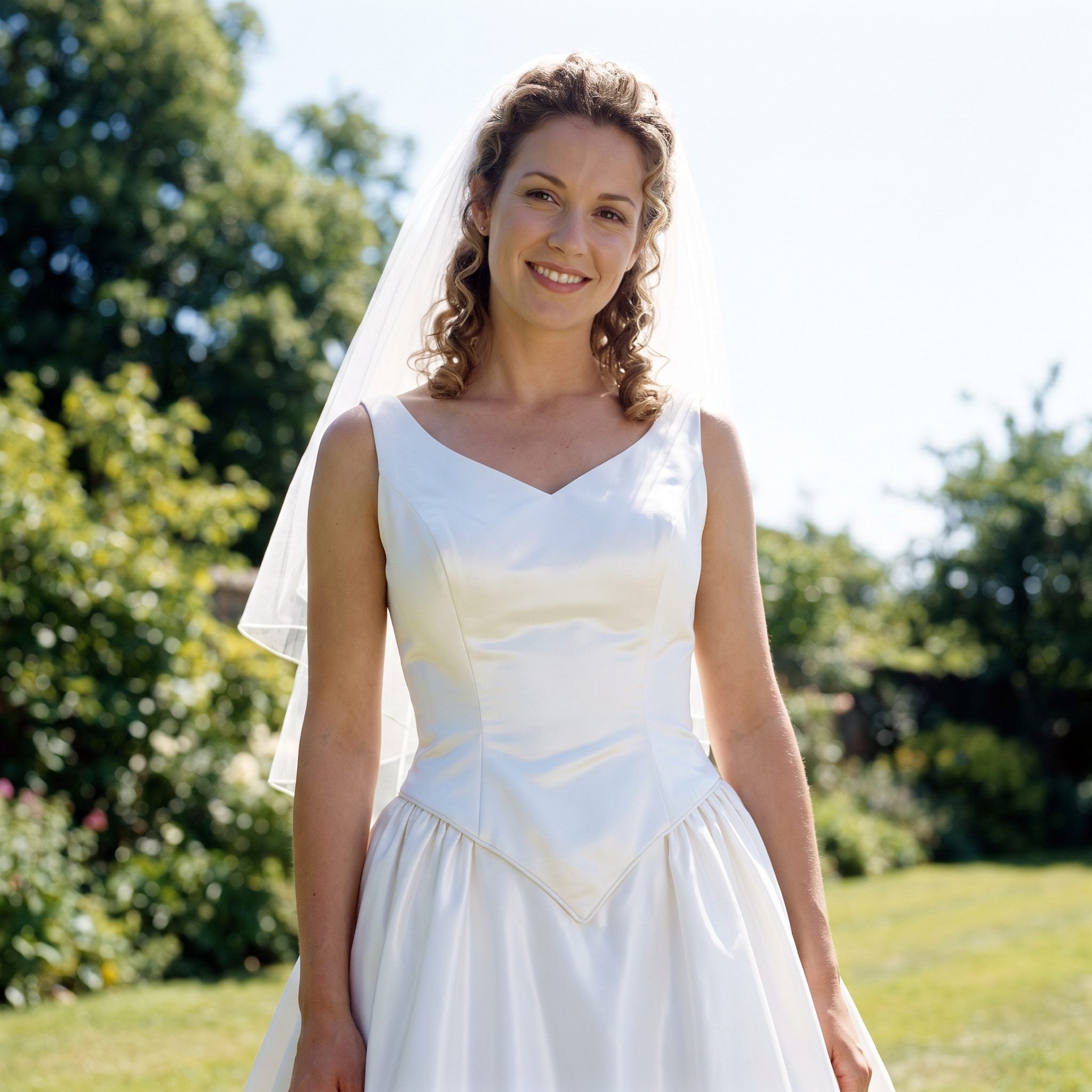
Instead of ending at a straight horizontal seam, the fitted bodice descended into a pronounced V at the front. That small change transformed the relationship between the torso and the skirt. The eye followed the point downward before the fabric expanded into its full volume.
The Basque waist had historical roots in fitted European dress, but its revival suited the 1990s fascination with elaborate bridal silhouettes. On a full ball gown, the dropped point could visually lengthen the torso and sharpen the waist definition. Unlike some of the decade’s more extravagant embellishments, the effect came from pattern cutting rather than decoration.
22. The Tight Round Bouquet of Deep Red Roses, Wrapped Like a Fist
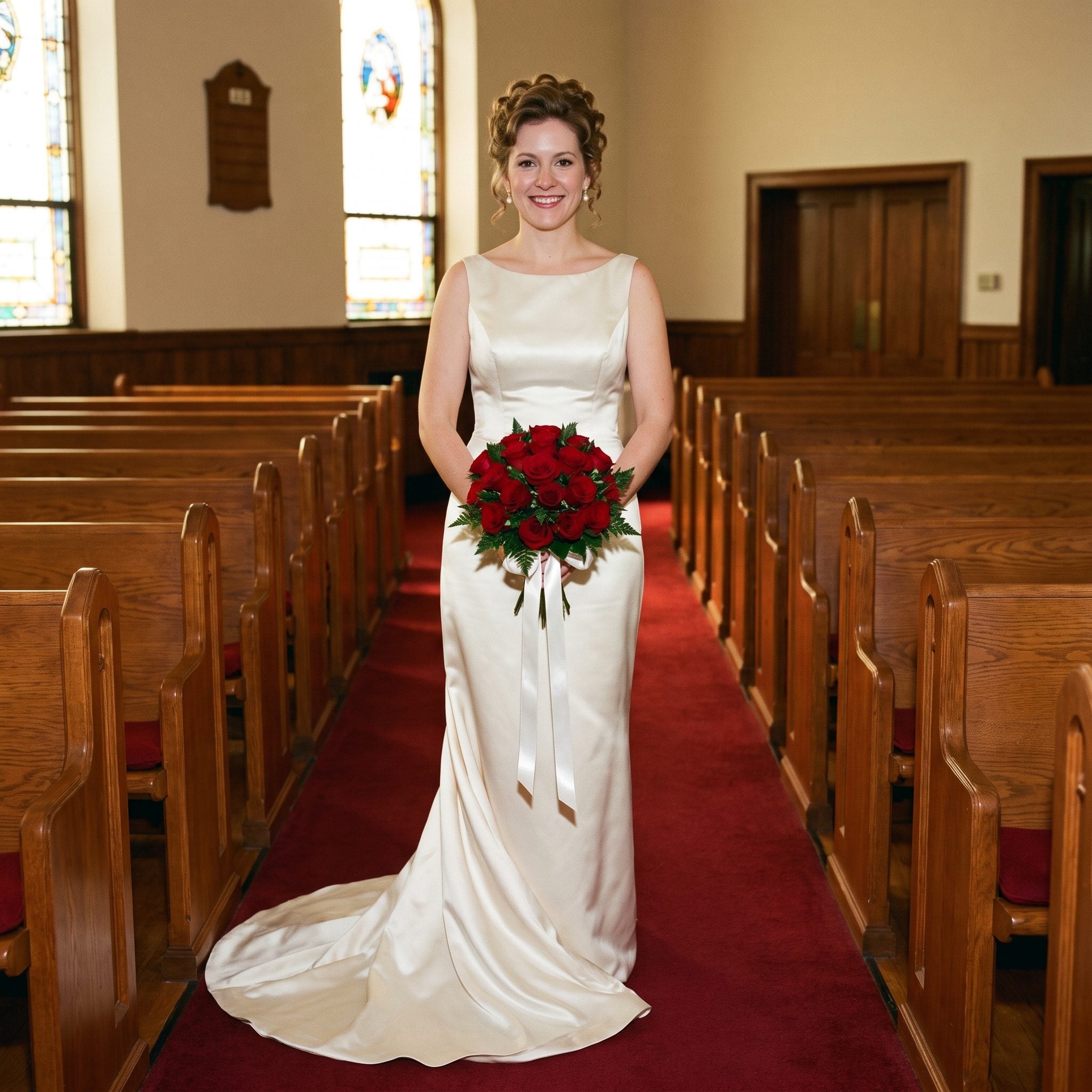
Deep crimson roses packed into a dense, nearly perfect dome. No loose garden stems, no wandering branches, no suggestion that the flowers had been gathered casually. The round bouquet was a carefully constructed object, its compact shape emphasizing the repetition of tightly arranged blooms.
Against white or ivory satin, the saturated red supplied immediate contrast. The controlled outline also distinguished the bouquet from the trailing arrangements popular in more elaborate ceremonies. Satin ribbon wrapped around the stems completed the polished effect, turning the flowers into a deliberate part of the bridal silhouette rather than a separate decorative flourish.
21. The Detachable Lace Shoulder Capelet Nobody Asked For but Everybody Wanted
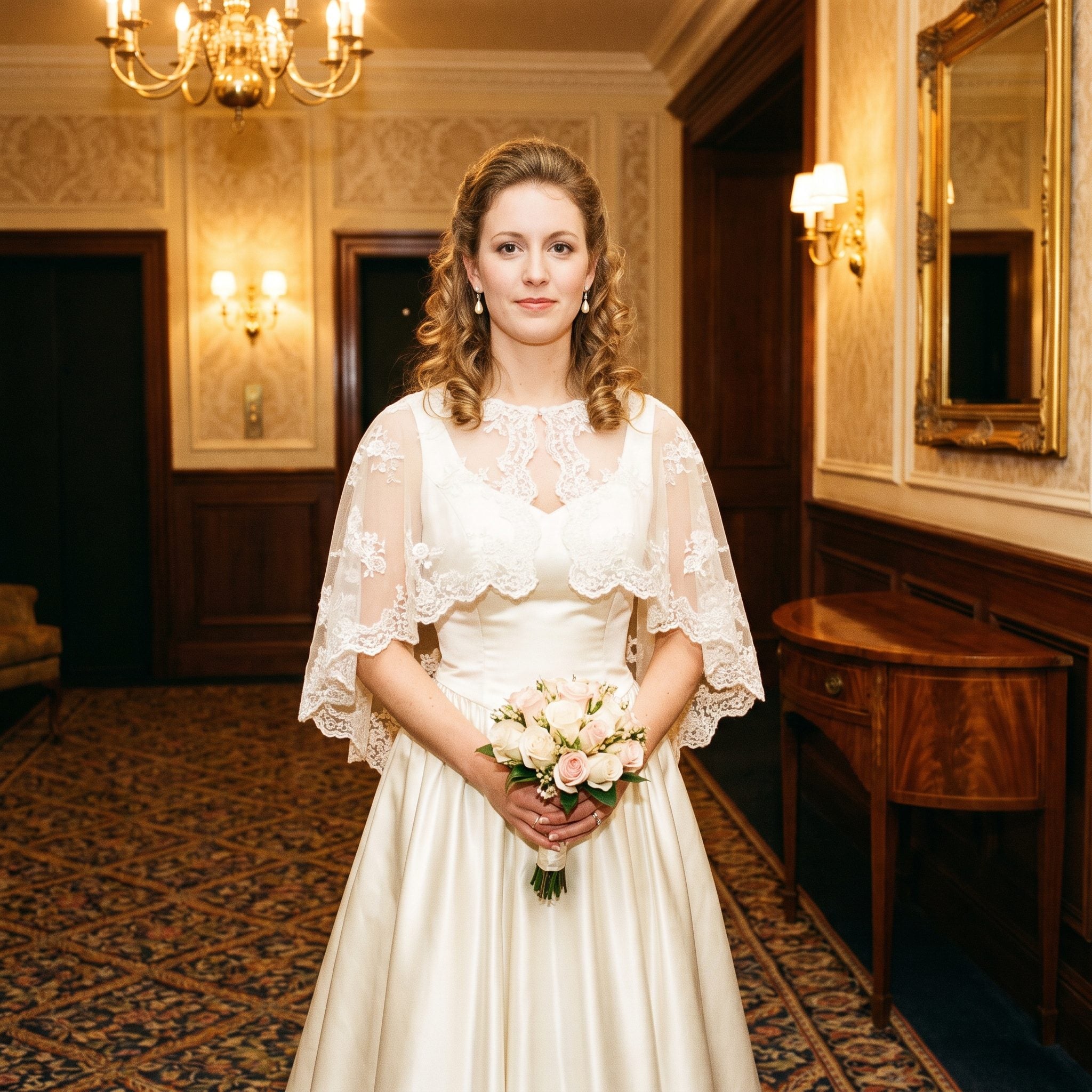
A short layer of sheer lace settled across the shoulders, sometimes ending in a scalloped border around the upper arms. The capelet could make an otherwise simple neckline suddenly elaborate, adding another floral pattern to a dress that might already contain several.
Detachable versions offered a practical advantage: additional coverage for the ceremony without permanently altering the gown beneath. Removed for the reception, the same dress could reveal a strapless or sleeveless bodice. The idea of two appearances from one garment was sound. Whether the extra lace improved the design depended on how much ornament the dress could already support.
20. The French Twist Sprayed Into a Bulletproof Vertical Seam
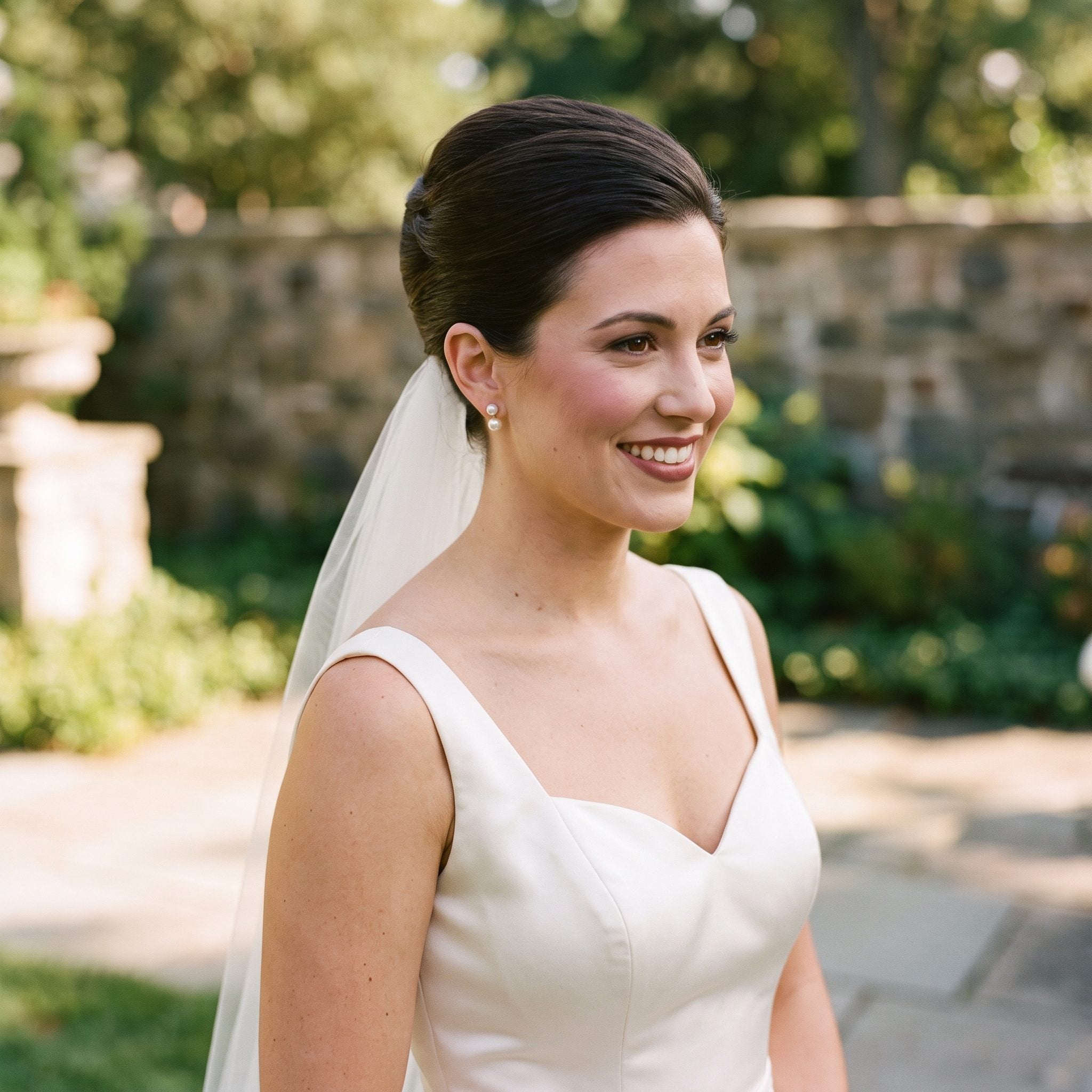
Hair swept upward, folded inward, and secured into a smooth vertical roll. The French twist offered a controlled alternative to loose curls, exposing the neck and giving a bridal veil or decorative comb a firm architectural foundation.
The style predates the 1990s, but its polished form suited the decade’s formal bridal aesthetic. Pins, teasing, and generous amounts of hairspray helped maintain the structure through a long event. Against an ornate gown, the clean shape could be surprisingly effective: one disciplined line above several yards of elaborate satin.
19. The Giant Fabric Roses Blooming Off the Skirt
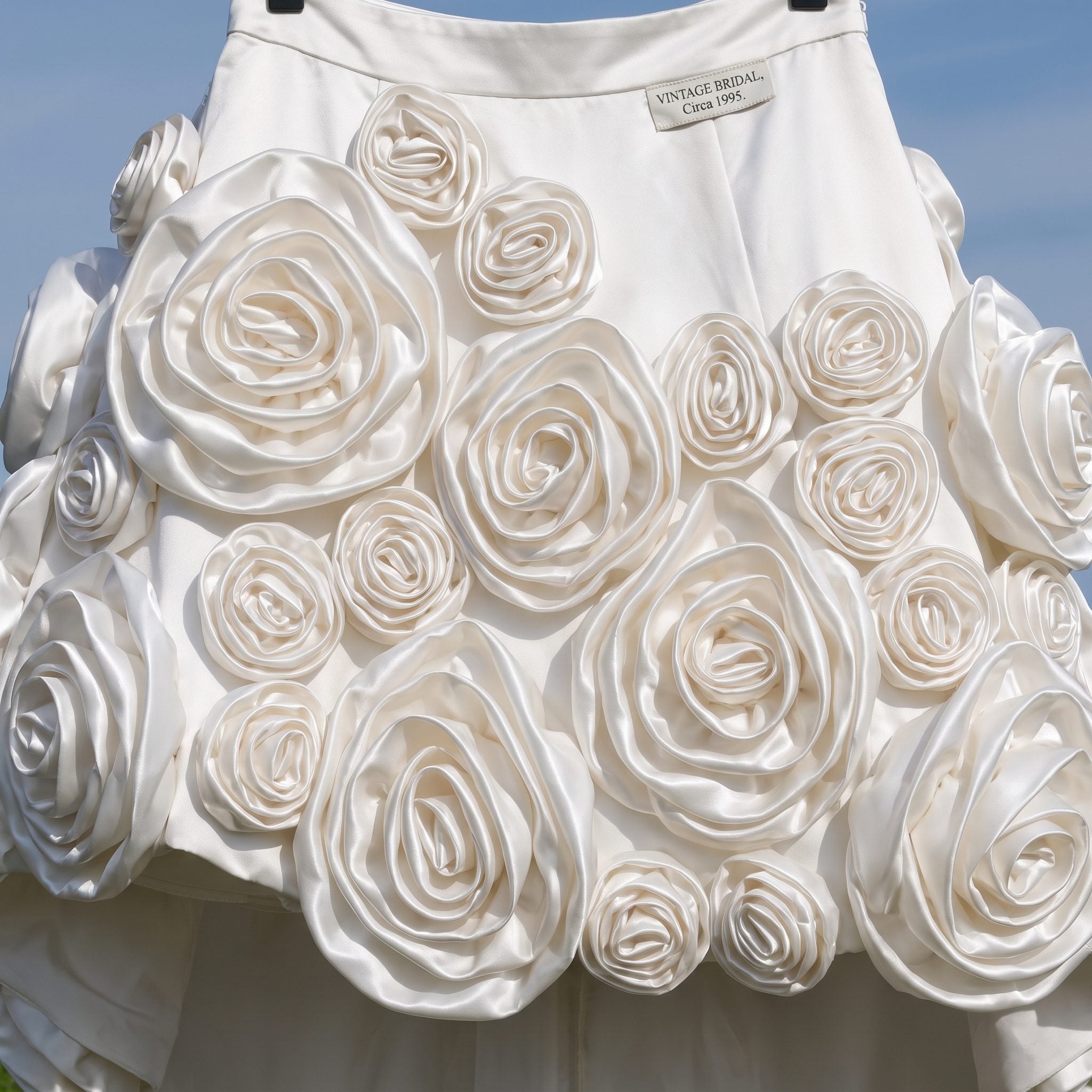
Real flowers in the bouquet apparently weren’t enough. Oversized fabric roses emerged from the waist, clustered along the skirt, or occupied a prominent position on the gown itself. Satin, organza, and other structured fabrics could be folded into sculptural petals that stood away from the dress.
These rosettes introduced three-dimensional decoration rather than relying entirely on embroidery or surface lace. Placement mattered enormously. One dramatic flower could create a striking focal point; several competing blossoms could overwhelm the silhouette. The most successful versions treated the roses as part of the gown’s construction, allowing their scale and placement to shape the overall design.
18. The Satin Opera Gloves That Went Well Past the Elbow
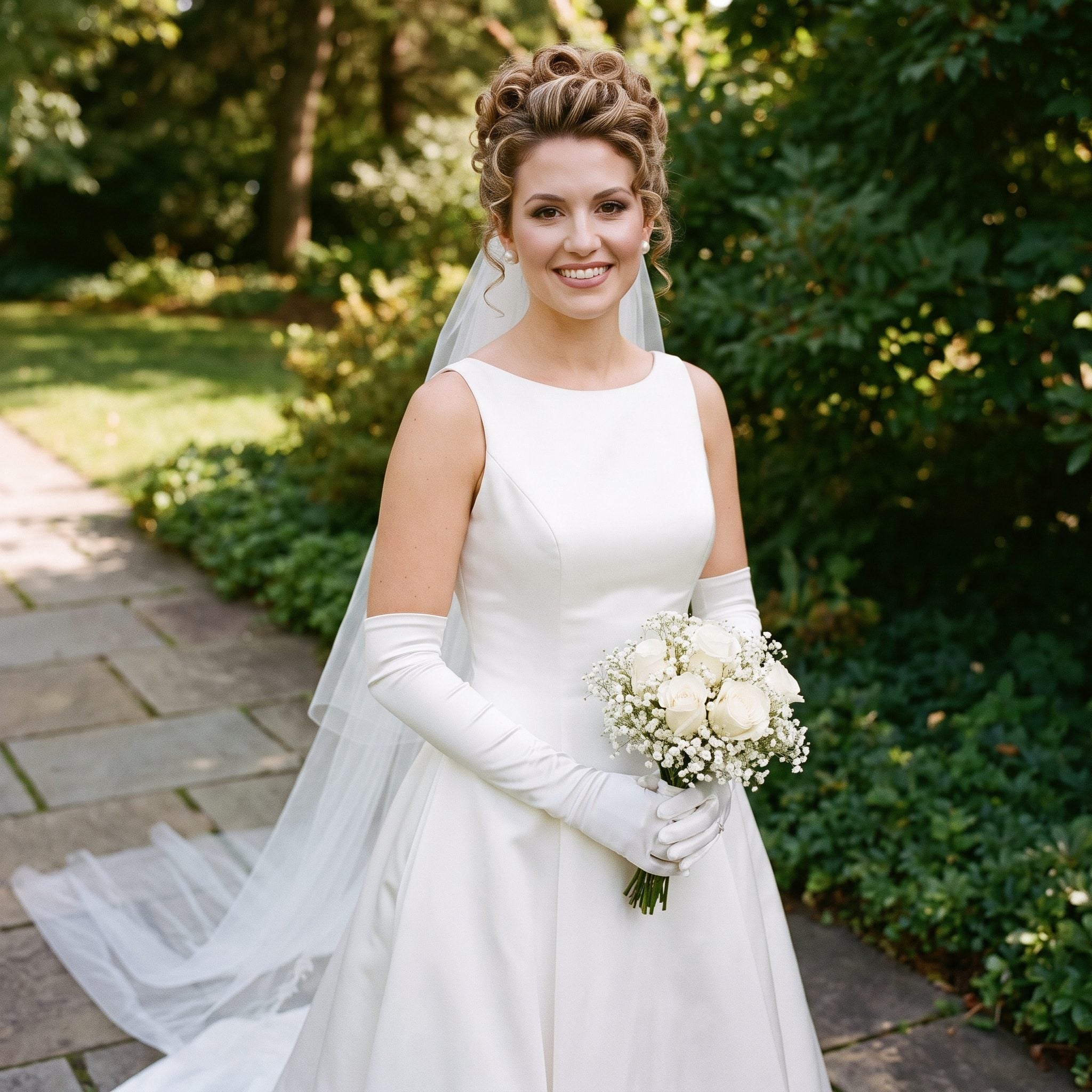
Long white or ivory gloves extended beyond the elbow, transforming bare arms into another carefully finished element of the outfit. Their smooth satin surface created an uninterrupted line from the fingertips toward the upper arm, particularly effective with strapless or sleeveless gowns.
Opera gloves borrowed their formality from eveningwear traditions that long predated the 1990s. Their appearance was elegant; their practicality was another matter. Handling food, rings, and small objects could become awkward, and glove etiquette introduced complications of its own. But paired with a clean neckline and restrained jewelry, the long silhouette could be remarkably striking.
17. The Tiara Holding Up a Pouf Veil the Size of a Weather System
❤️ Would you like to save this?
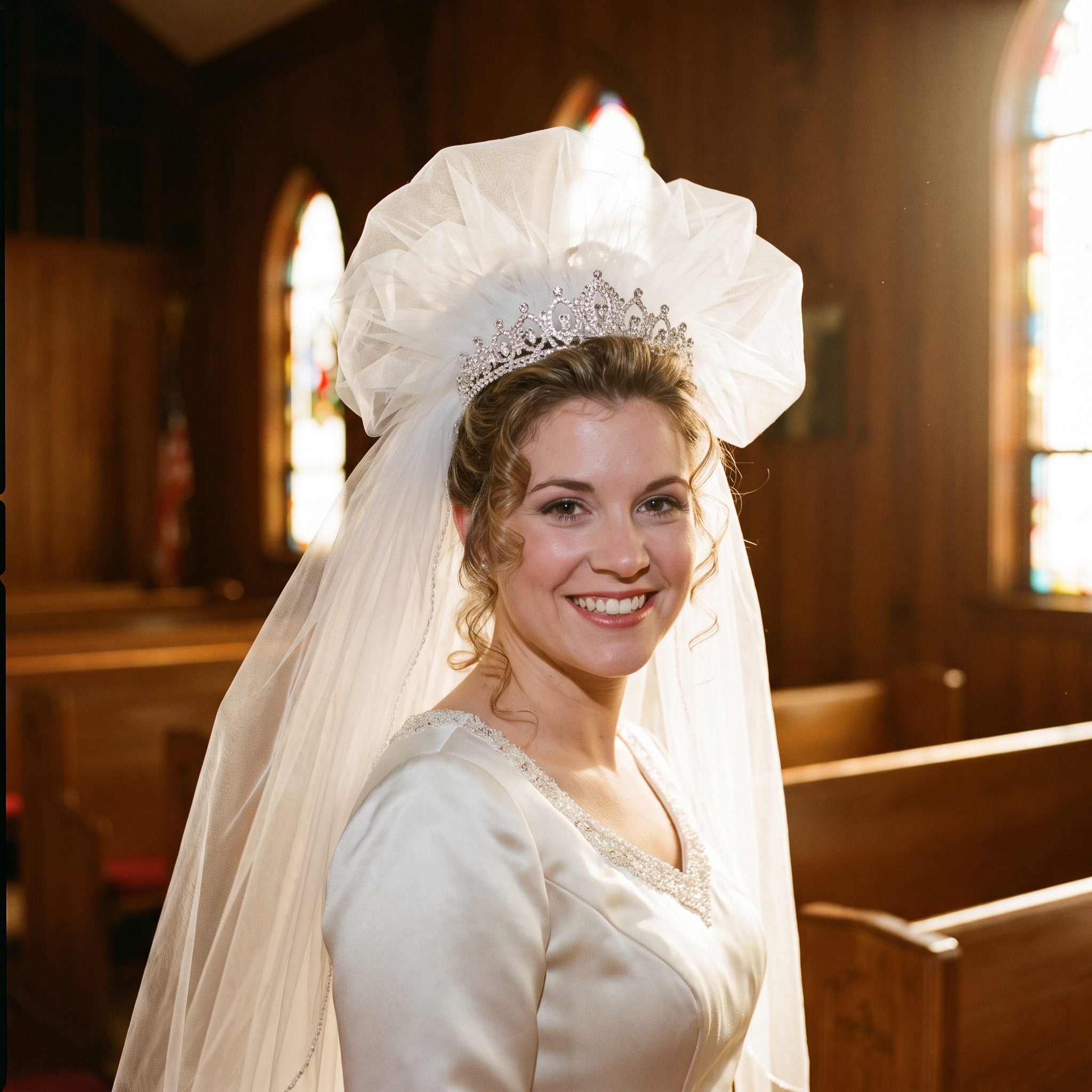
The tiara was only the beginning. Behind its rhinestones rose a gathered cloud of tulle, lifted high above the crown before the veil descended toward the shoulders. The resulting headpiece combined jewelry, millinery, and a surprising amount of engineering.
Gathered veils could be secured with combs, pins, and carefully arranged fabric, while the tiara supplied a glittering focal point at the front. The height worked with the decade’s substantial hairstyles and enormous gowns, creating a sense of balance through sheer scale. In retrospect, the pouf can look almost impossibly elaborate. In the context of the complete bridal outfit, understatement would have been the greater surprise.
16. The Beaded Bodice That Weighed More Than the Bride
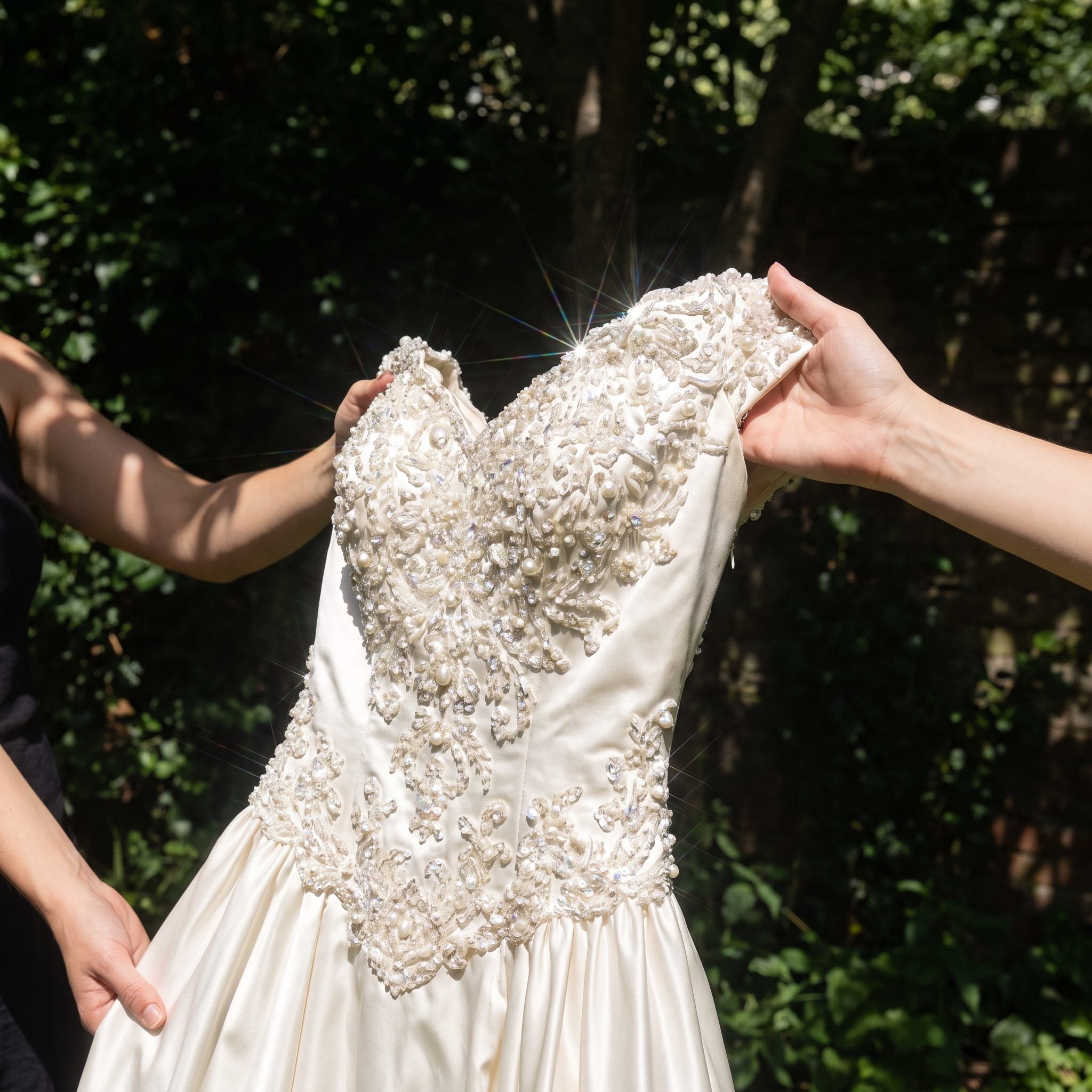
Pearls, sequins, crystals, and tiny glass beads crowded the bodice until the fabric beneath almost disappeared. Under reception lighting, the surface shimmered with every movement, turning a fitted upper half into the most visually active part of the dress.
Dense beadwork added genuine weight, especially when applied over large areas or combined with heavy satin and structured lining. The strongest designs used contrast to manage that intensity: an elaborate bodice above a comparatively plain skirt, or concentrated embellishment around the neckline and waist. When every available surface glittered, the gown could become a competition between its own details.
15. The Floral Headband That Turned Every Bride Into a Renaissance Fair Extra
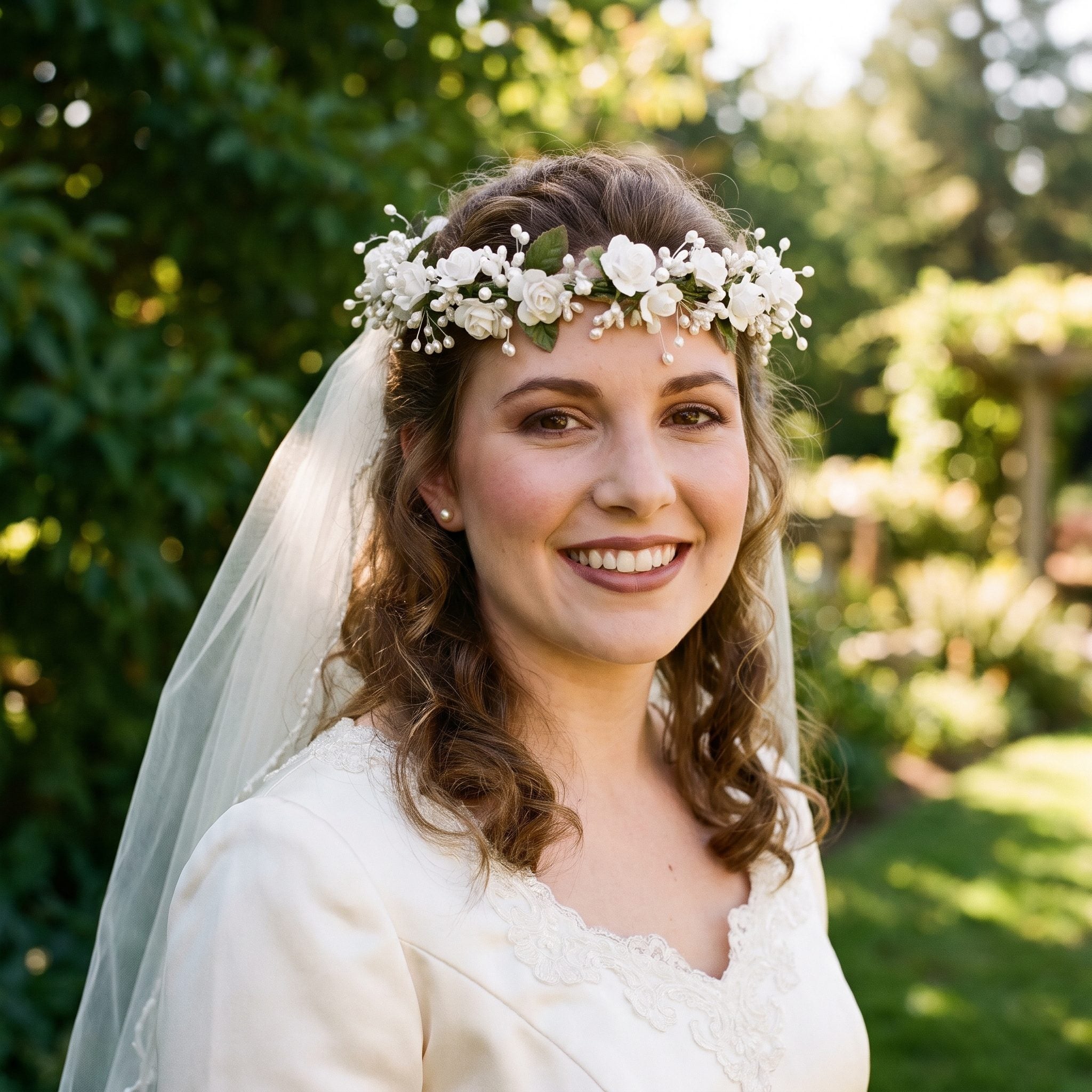
A ring of silk flowers, pearl sprays, and delicate greenery sat across the hairline, replacing the sparkle of a tiara with something softer and more pastoral. Some versions resembled miniature floral wreaths; others were narrow headbands with blossoms concentrated around the temples.
The look drew on romantic and historical references, offering a gentler alternative to elaborate jeweled headpieces. Its effectiveness depended on scale. Small flowers could complement loose hair or a simple veil, while oversized artificial blooms introduced a distinctly theatrical quality. The line between ethereal bride and Renaissance pageant was sometimes remarkably thin.
14. The Ivory Pumps Dyed to Match the Dress Exactly
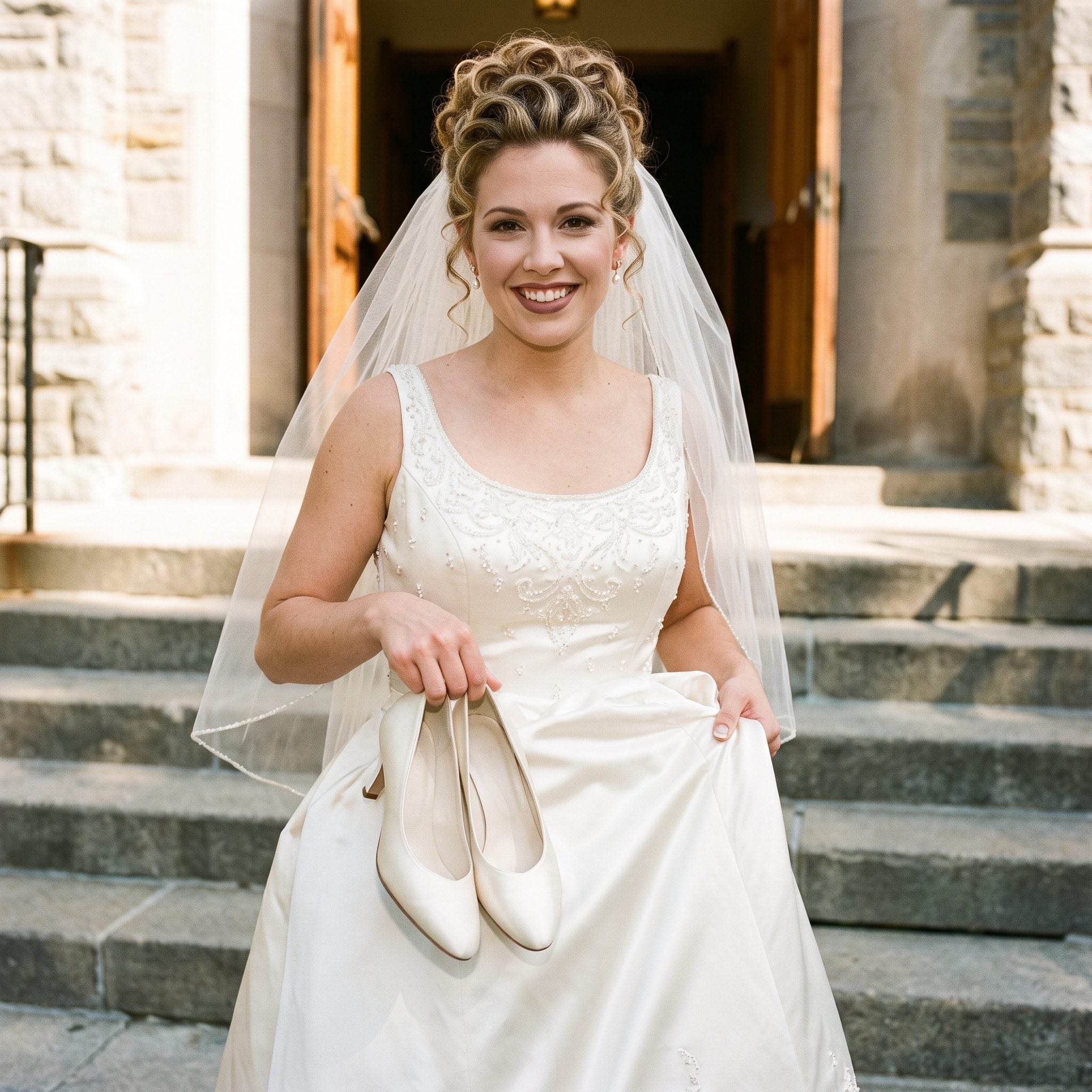
White wasn’t necessarily white enough. Ivory, candlelight, champagne, and cream all required their own careful coordination, particularly when the gown and shoes were made from fabrics that reflected light differently. Dyeable satin pumps offered a way to bring the footwear closer to the dress’s precise shade.
Bridal retailers and specialist services could match shoes using fabric samples, although the final color depended on the material and dyeing process. The practice reflected the decade’s enthusiasm for coordinated accessories, even when the shoes remained almost completely hidden beneath a floor-length skirt. A detail visible for only a few moments could still receive an extraordinary amount of attention.
13. The Off-the-Shoulder Portrait Collar That Framed Everything
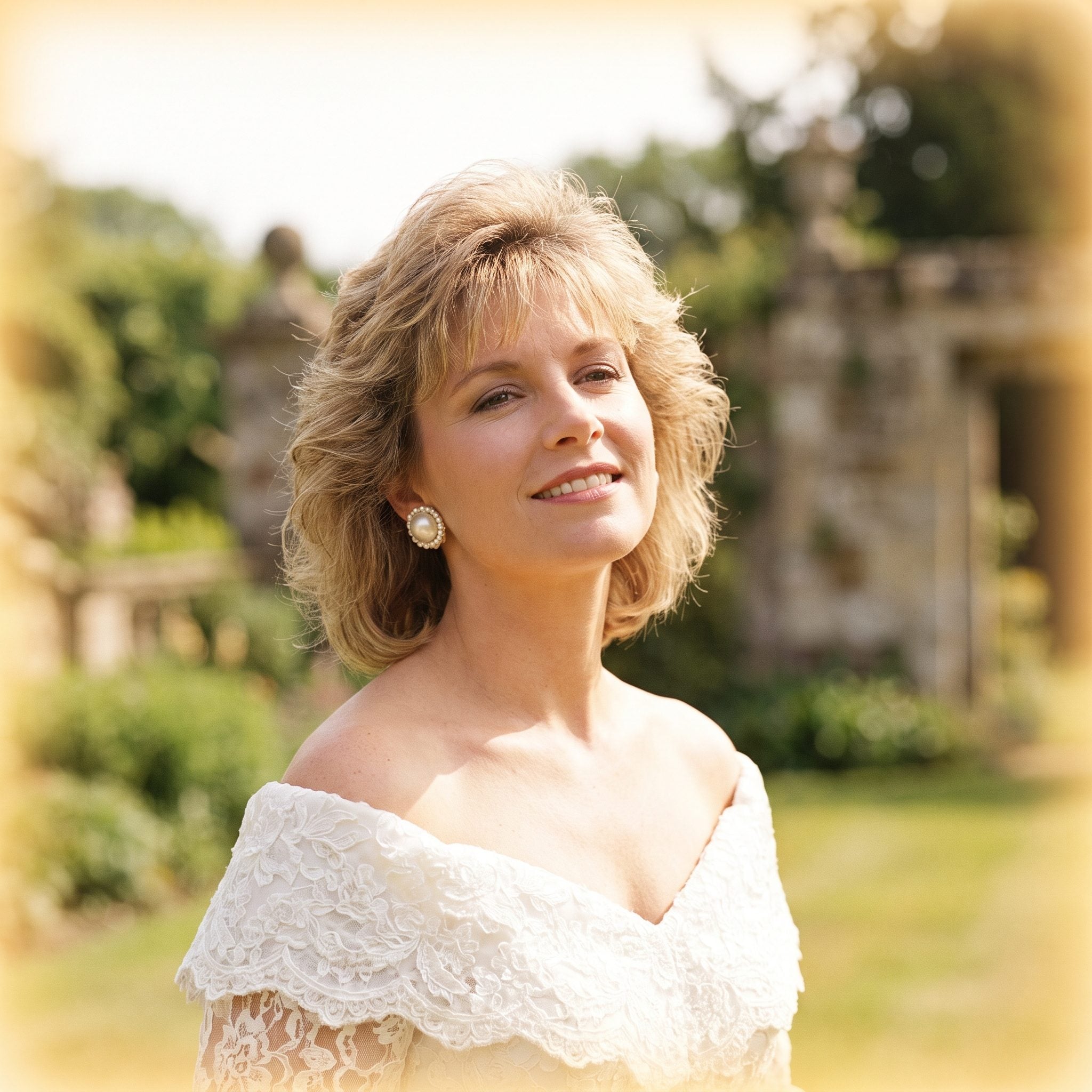
A broad band of satin swept across the upper arms, leaving the shoulders exposed while giving the neckline a pronounced horizontal shape. The portrait collar was formal without requiring a high neck, and its sculptural construction could make even a relatively plain bodice look elaborate.
That wide sweep changed the proportions of the upper body. It emphasized the shoulders and collarbones while balancing the fullness of a large skirt below. The design recalled historical portraiture and traditional evening dress, but its appeal wasn’t confined to nostalgia. A carefully proportioned portrait collar can still provide a striking frame for the face.
12. Baby’s Breath Tucked Into Absolutely Everything
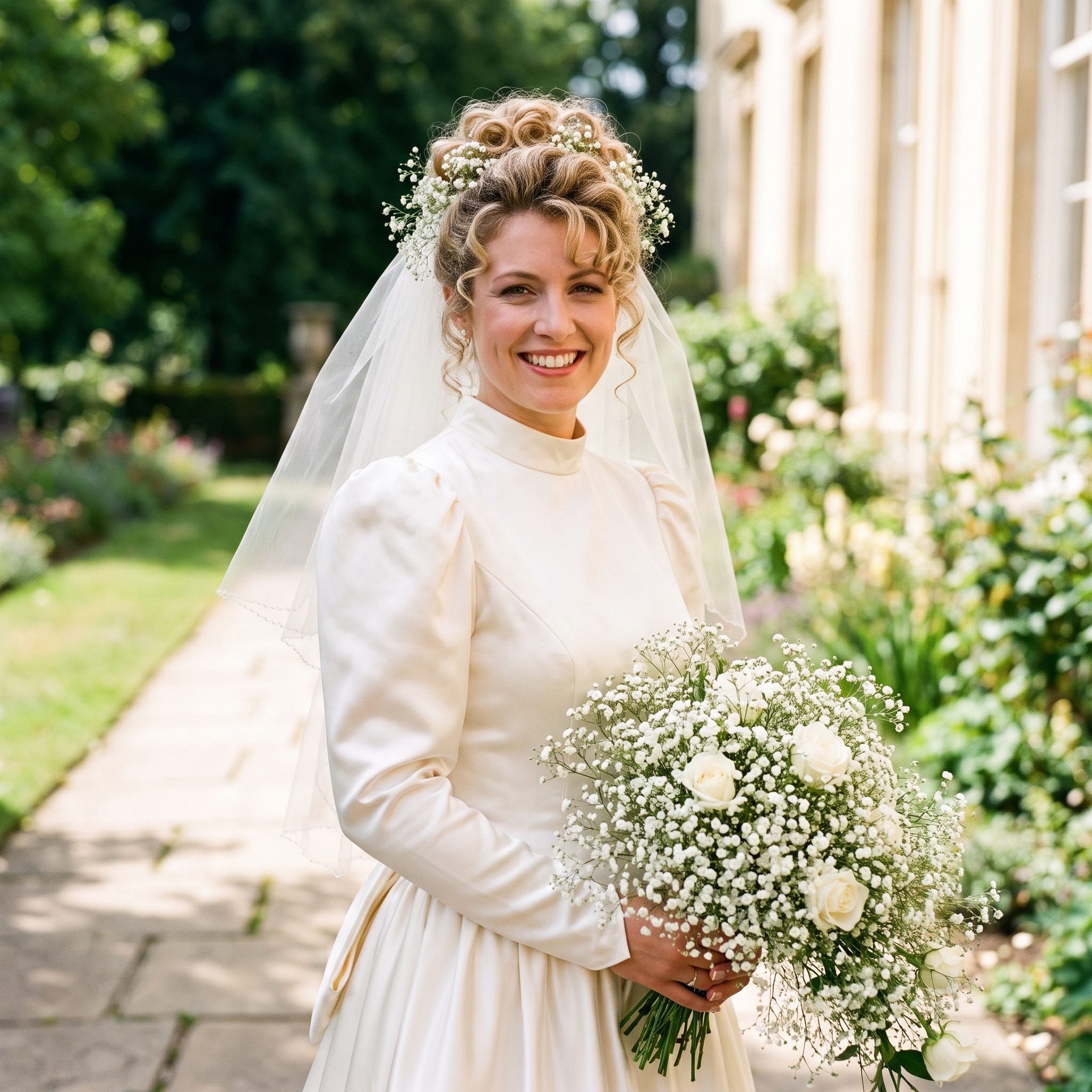
Into the bouquet, around the floral headpiece, along the pew decorations, and between the larger blossoms in the centerpieces went clouds of tiny white flowers. Baby’s breath supplied the wedding with an apparently inexhaustible reserve of softness.
Florists have long used baby’s breath, or gypsophila, as a filler flower, but its fine branching stems could also become a prominent decorative feature. In the 1990s, its airy texture complemented lace, pearls, and romantic bridal hairstyles. Used sparingly, the blossoms added delicacy. Packed into every arrangement, they could make an entire wedding look as though it had been lightly dusted with floral snow.
11. The Lace-Edged Cathedral Veil That Filled the Aisle Behind You
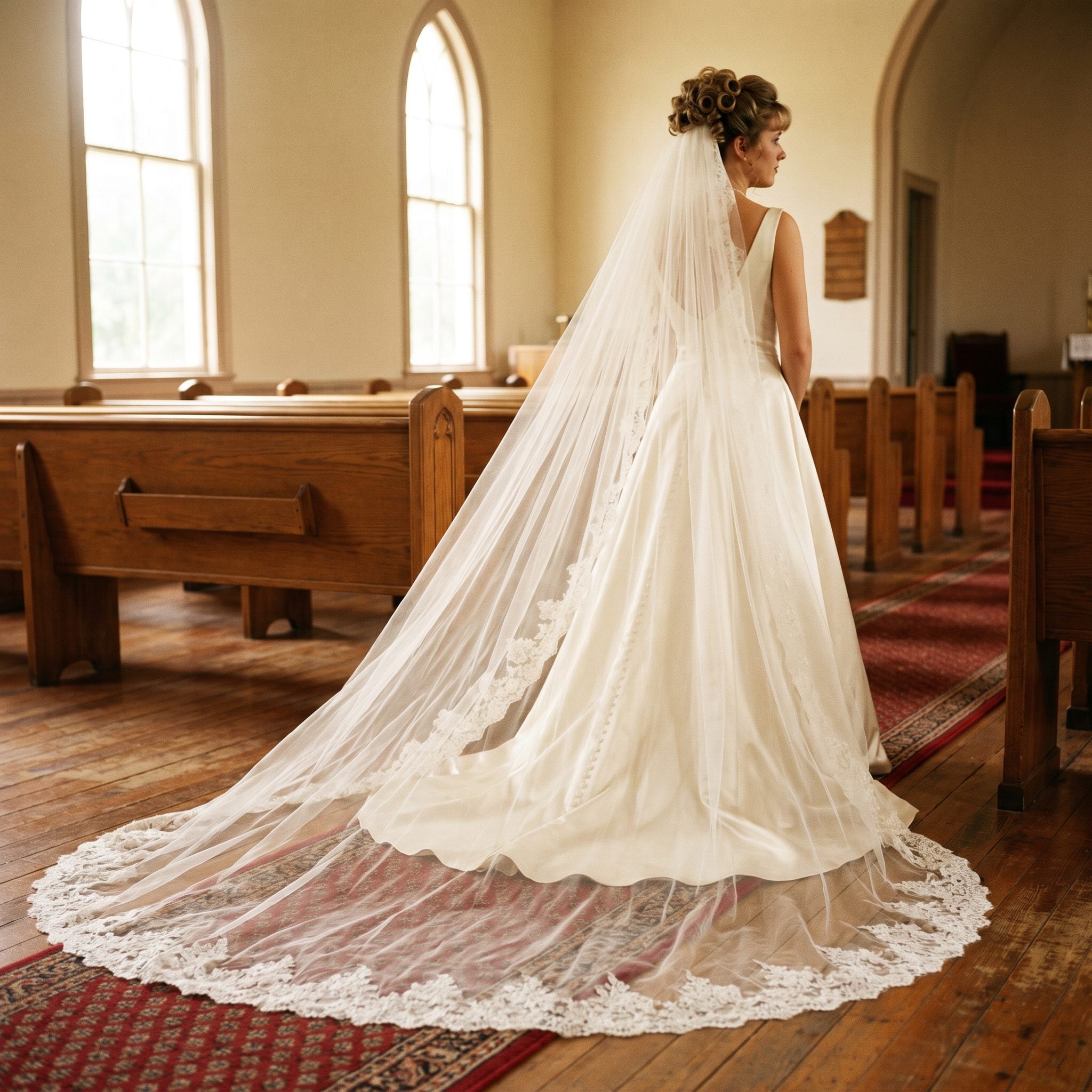
Long before the skirt’s train ended, another expanse of fabric could be spreading behind it. A cathedral-length veil extended well beyond the gown, its sheer tulle edged with floral lace that traced an enormous outline across the aisle.
The veil differed from the train beneath it: one was a separate headpiece, the other an extension of the dress. Together, they could create overlapping layers of satin, tulle, and lace, each moving differently. The border made the veil’s shape visible against the floor, turning an otherwise transparent accessory into a dramatic part of the ceremony’s overall silhouette.
10. The Pearl Choker That Sat High and Tight at the Throat
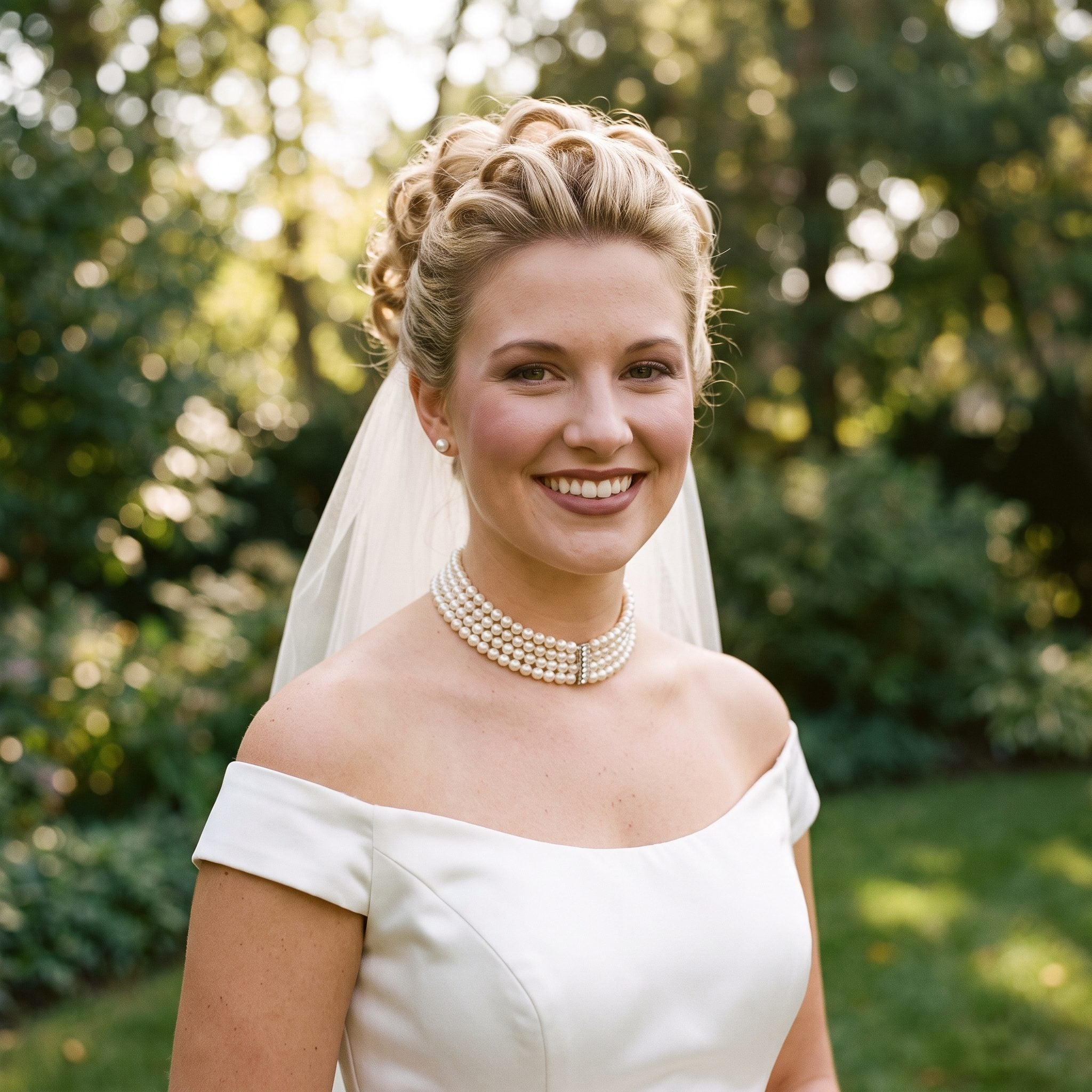
One strand of pearls could be restrained. Two or three, gathered close to the throat and finished with a decorative clasp, made a more emphatic statement. The pearl choker brought a traditional jewelry material into a compact, highly visible shape.
Its success depended on the neckline beneath it. Against bare shoulders or a simple satin bodice, the pearls created a crisp focal point. Paired with a high lace collar, heavy earrings, and an ornate veil, the same necklace could become one embellishment too many. The 1990s frequently preferred the complete matching set, even when a single strand might have accomplished more.
9. The Scalloped Lace Hemline That Wanted You to See It
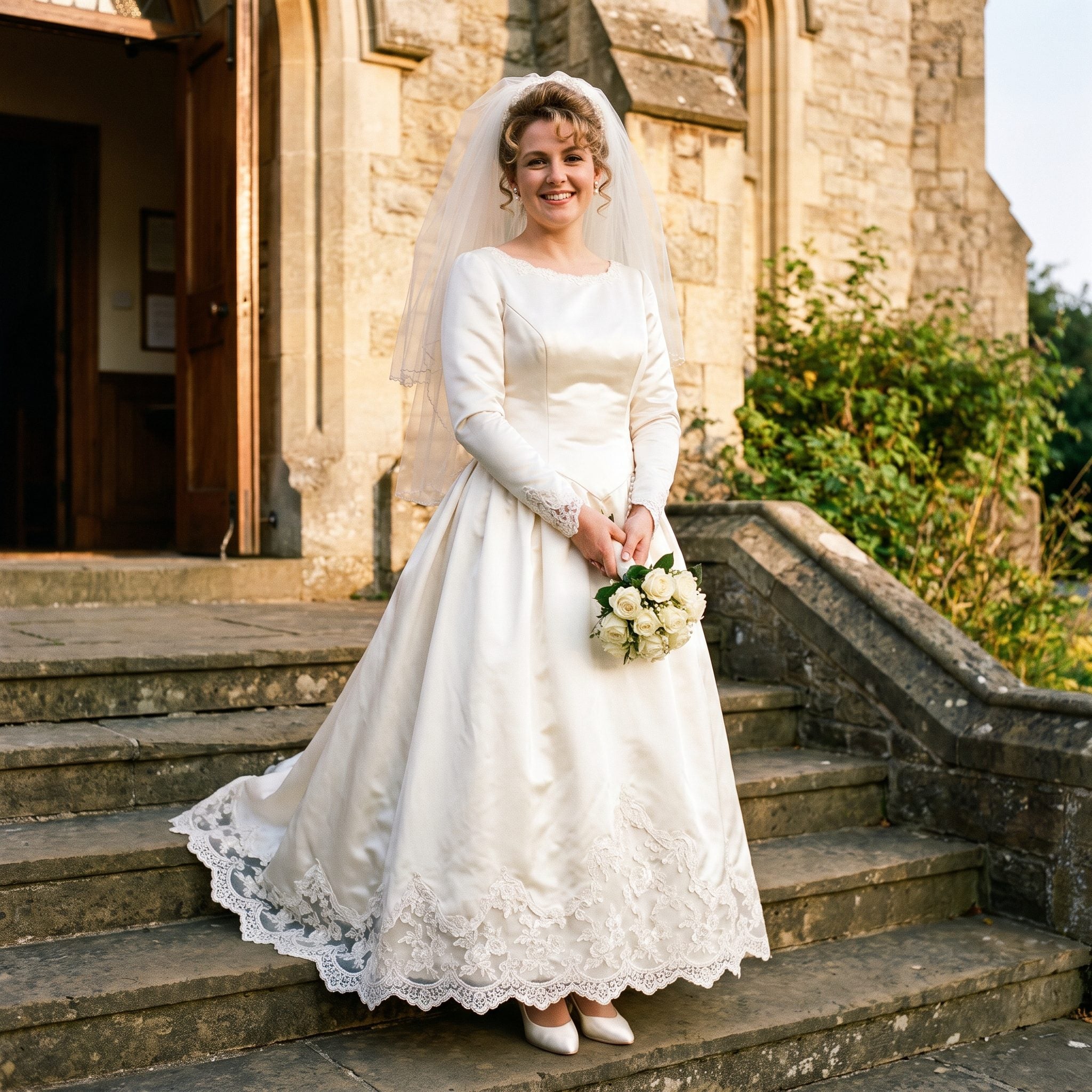
A wide border of floral lace traveled around the bottom of the skirt, its scalloped edge interrupting the smooth sweep of satin. Even when the rest of the gown remained relatively simple, the hemline announced that the dress had received a substantial finishing treatment.
The decorative border emphasized the skirt’s circumference and drew attention toward the floor, particularly when the lace continued along a train. Against plain fabric, the contrast could be elegant. Combined with elaborate sleeves, a beaded bodice, and an equally ornate veil, the border became part of the decade’s familiar competition for attention. Its enduring appeal lies in the craftsmanship of the lace rather than the amount of it.
8. The Enormous Satin Bow Parked on the Small of the Back
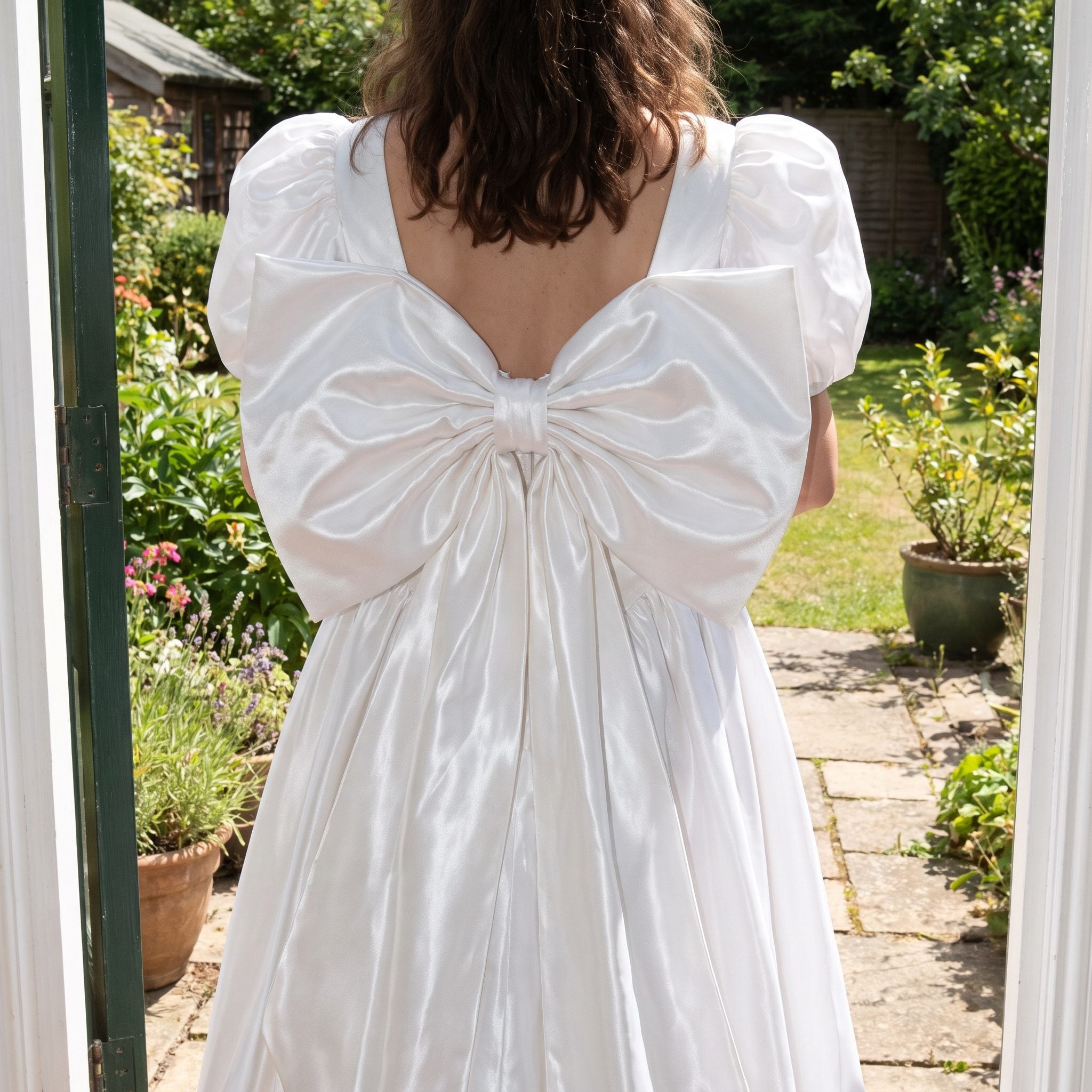
The front of the gown could be relatively restrained. Turn around, however, and an enormous satin bow occupied the waist, its loops standing away from the fabric while long tails descended toward the skirt. The decoration was impossible to miss from behind.
That placement mattered during a ceremony, when the back of the dress remained visible for extended periods. The bow emphasized the waist and introduced a strong focal point above the skirt’s volume. Some designs used the bow almost architecturally, while others treated it as one more extravagant finishing touch. Either way, the rear view was no longer an afterthought.
7. Puffed Sleeves So Big They Deserved Their Own Zip Code
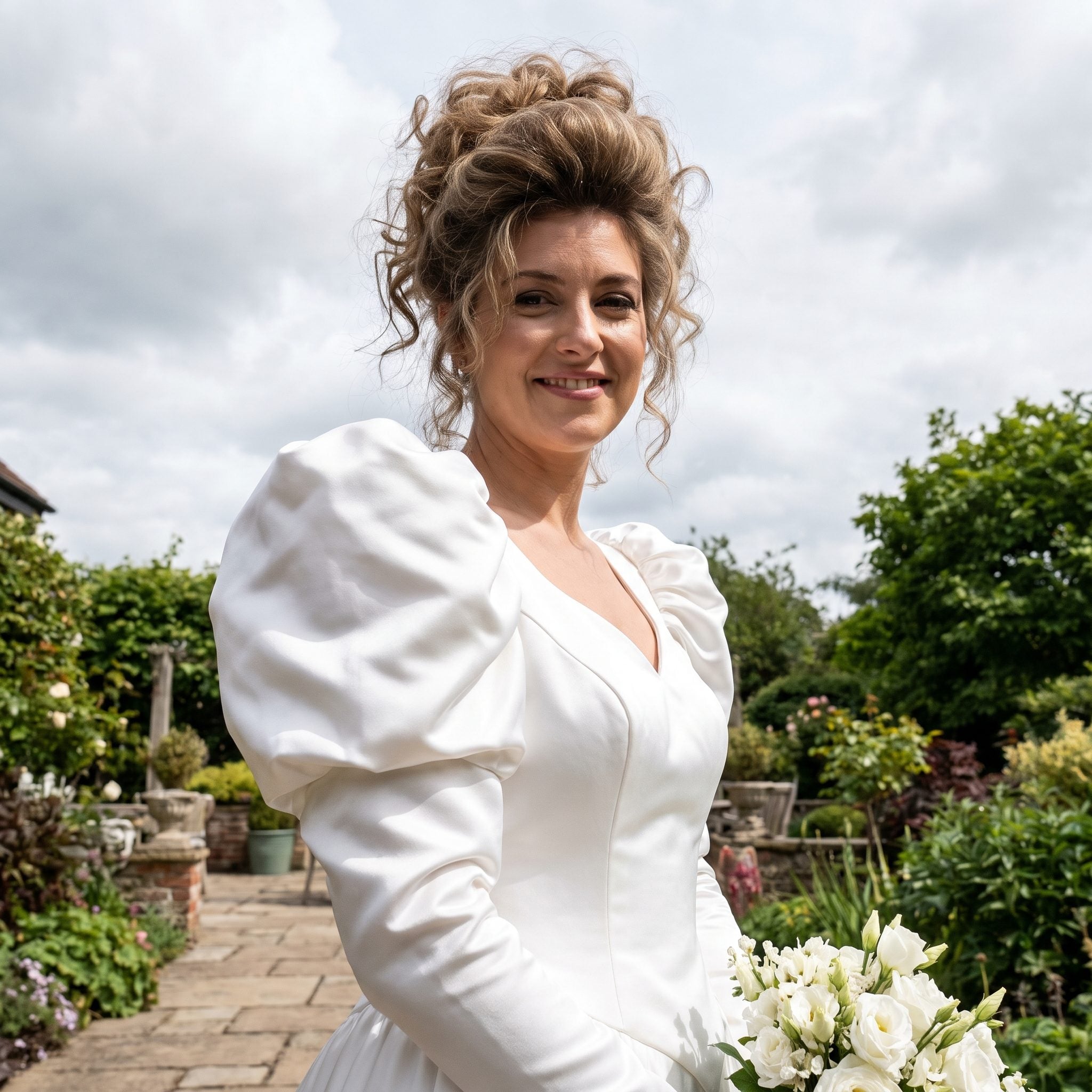
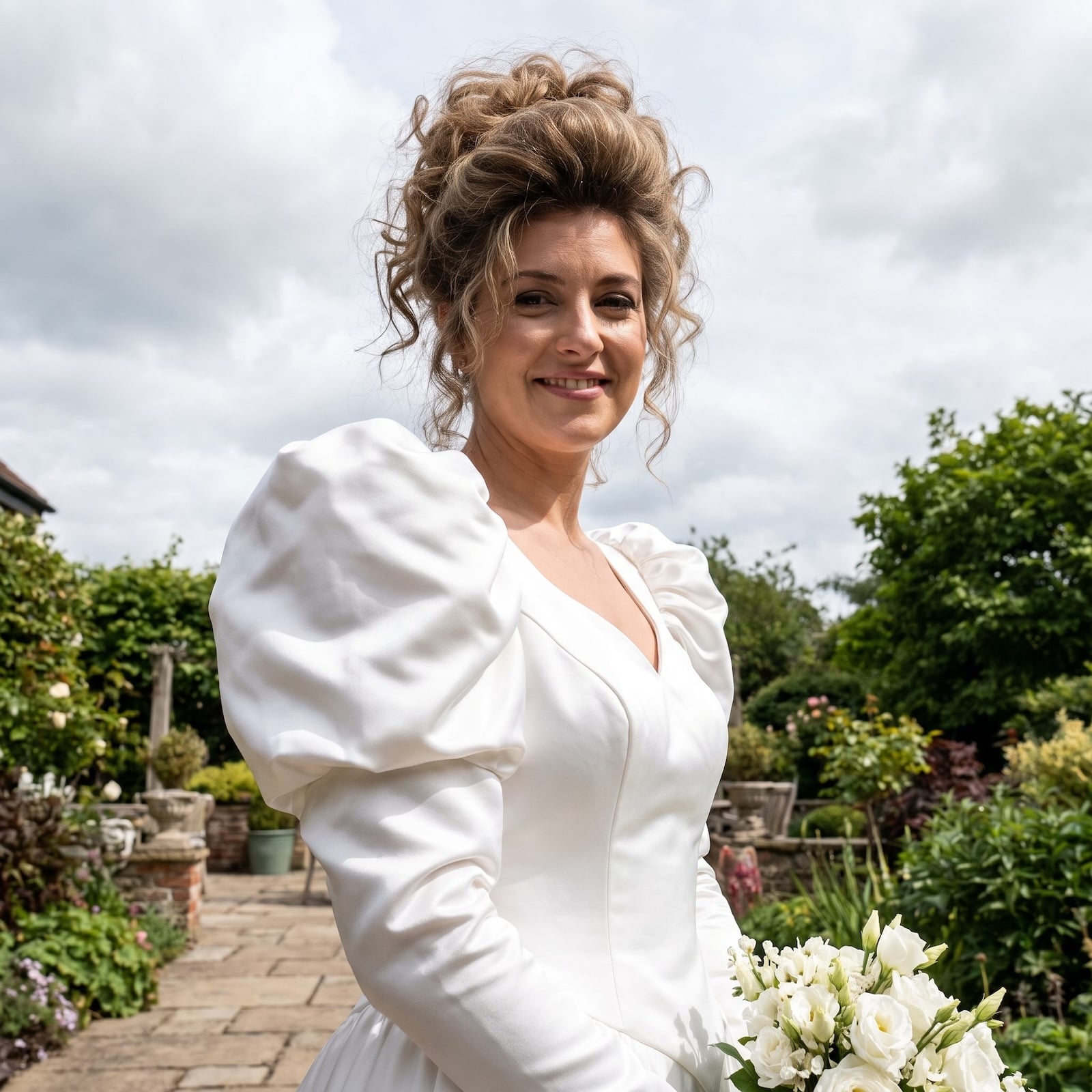
The shoulders expanded outward in enormous rounded volumes of satin, lace, or gathered taffeta. Some sleeves rose high above the shoulder line; others ballooned around the upper arm before narrowing toward the elbow. Either construction gave the gown a silhouette that could be recognized from the far end of the aisle.
The exaggeration served a proportional purpose. Large sleeves balanced a full skirt while making the fitted waist between them appear smaller. Stiff fabrics, gathers, and internal support helped maintain the shape, transforming an ordinary sleeve into a substantial design feature. The look drew on the romantic excess of the 1980s and remained visible in early-1990s bridal fashion. Few details identify that period more immediately.
6. The Face-Framing Tendrils That Escaped on Purpose
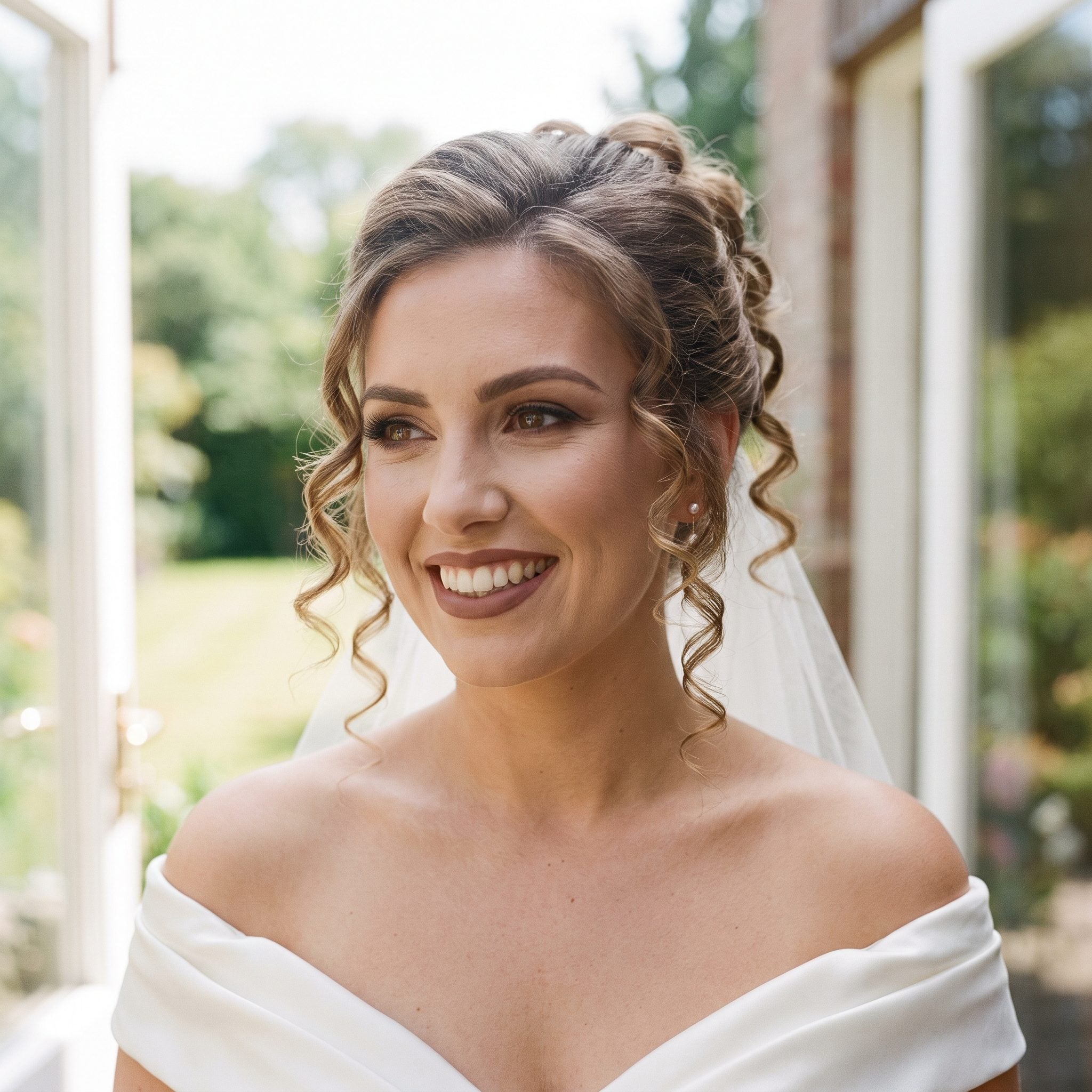
The updo was firmly secured, but two carefully curled sections remained loose beside the face. Sometimes there were four. Sometimes the tendrils formed tight little spirals that looked almost independent of the hairstyle holding everything else in place.
The contrast was deliberate. A polished bun or French twist could appear severe, while loose curls softened the hairline and introduced movement around the cheeks and temples. The technique became a recognizable feature of 1990s formal hairstyling, especially when paired with veils and decorative combs. The apparent spontaneity required considerable planning.
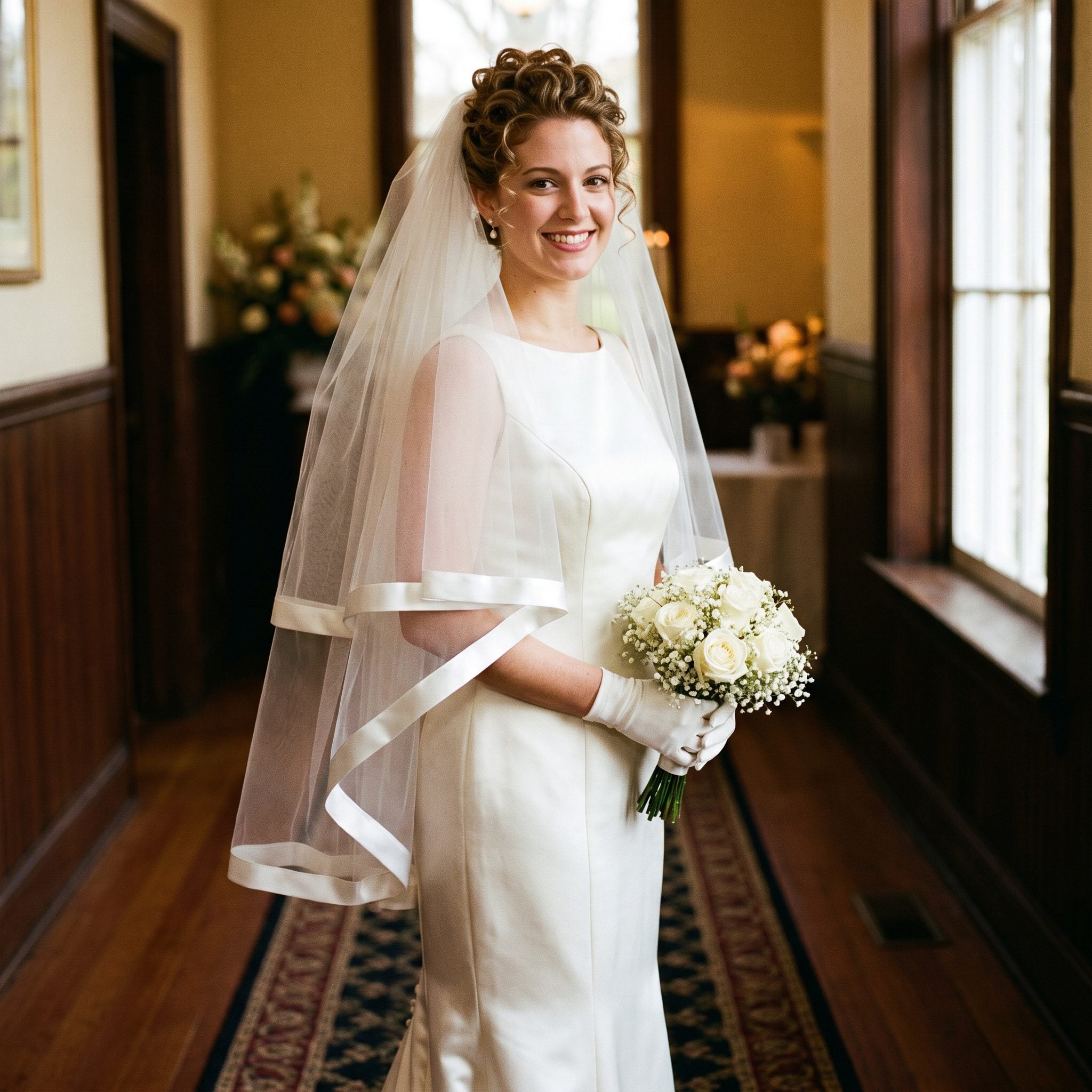
5. The Satin-Edged Fingertip Veil That Drew an Outline Around the Bride
❤️ Would you like to save this?
A relatively simple veil acquired an entirely different personality once a broad satin ribbon ran around its edge. The opaque border traced the shape of the sheer fabric, making the veil’s outline visible against the gown and the surrounding space.
Fingertip veils generally end around the level of the bride’s fingertips when her arms rest at her sides. Their manageable length made them a practical alternative to cathedral veils, while satin edging supplied a more decorative finish. A narrow border could look crisp and elegant. A very wide one turned the veil into a floating white outline, unmistakably part of the era’s taste for emphatic details.
4. The Bridesmaids in Puffed Sleeves and Giant Waist Bows
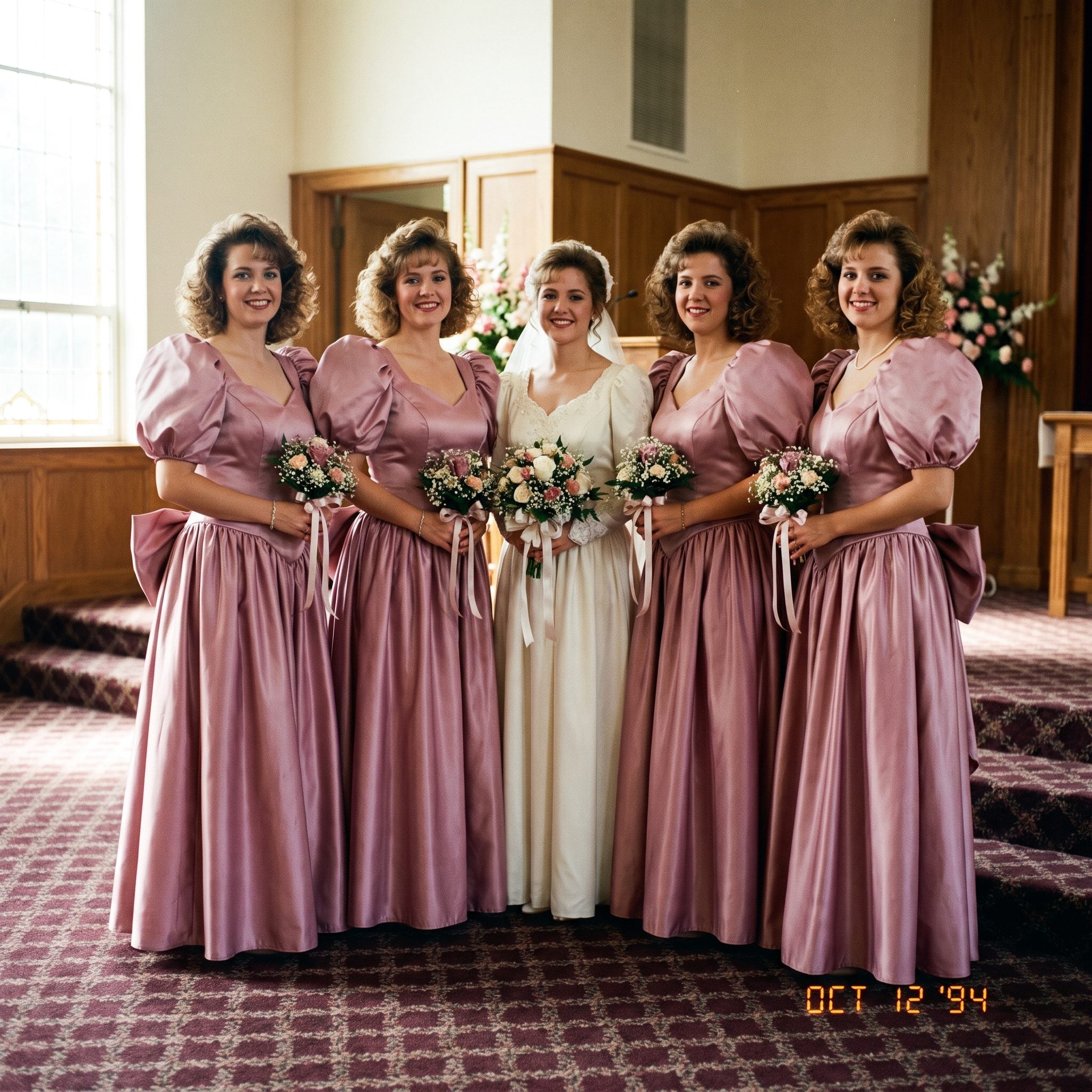
Dusty rose, mauve, peach, and other soft shades appeared in matching rows of puffed shoulders, fitted waists, and extravagant bows. The bridesmaid dress often echoed the bride’s silhouette while adding color, making the entire wedding party look like a coordinated extension of the main gown.
Matching attendants’ dresses were hardly unique to the 1990s, but the decade’s preferred combinations could be particularly elaborate. Large sleeves increased the apparent width of the shoulders, while bows emphasized the waist or back of the dress. Repeated across several bridesmaids, those details created a powerful visual rhythm. The individual garments might be excessive; together, they formed an unmistakable period portrait.
3. The Long Sheer Illusion Sleeves Covered in Lace Appliqué
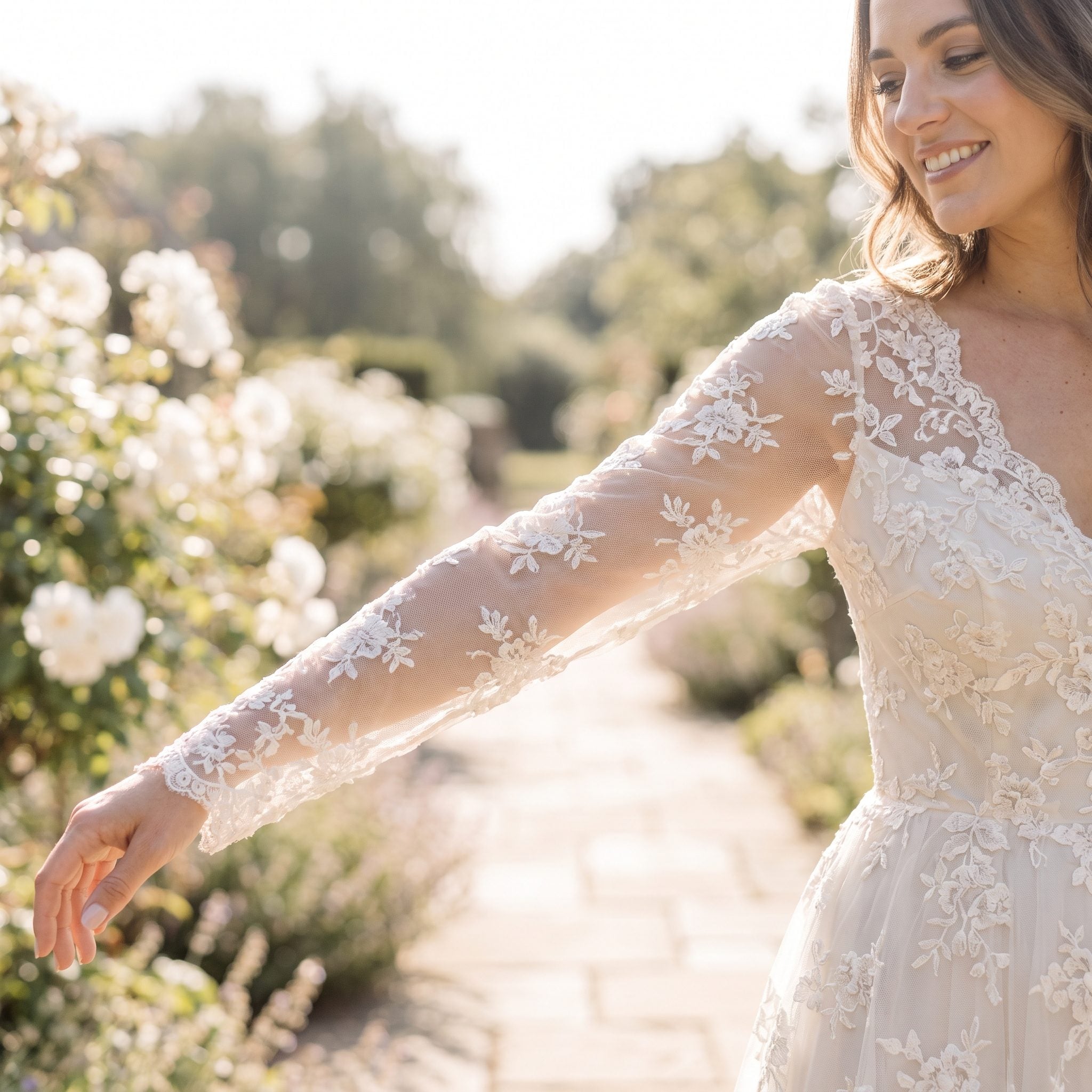
Fine tulle extended over the arms while floral lace appliqués appeared to rest directly against the skin. From a distance, the sleeves could look almost transparent, with the embroidered pattern providing the structure that the underlying fabric deliberately concealed.
Illusion sleeves offered coverage without the visual weight of solid satin or opaque lace. Their effectiveness depended on the fineness of the mesh, the placement of the appliqués, and how closely the lining matched the wearer’s skin. Unlike the decade’s enormous puffed sleeves, this approach emphasized delicacy rather than volume. The technique remains familiar in contemporary bridal design, even when the surrounding gown has changed considerably.
2. The Cathedral Train You Could See From the Back Pew
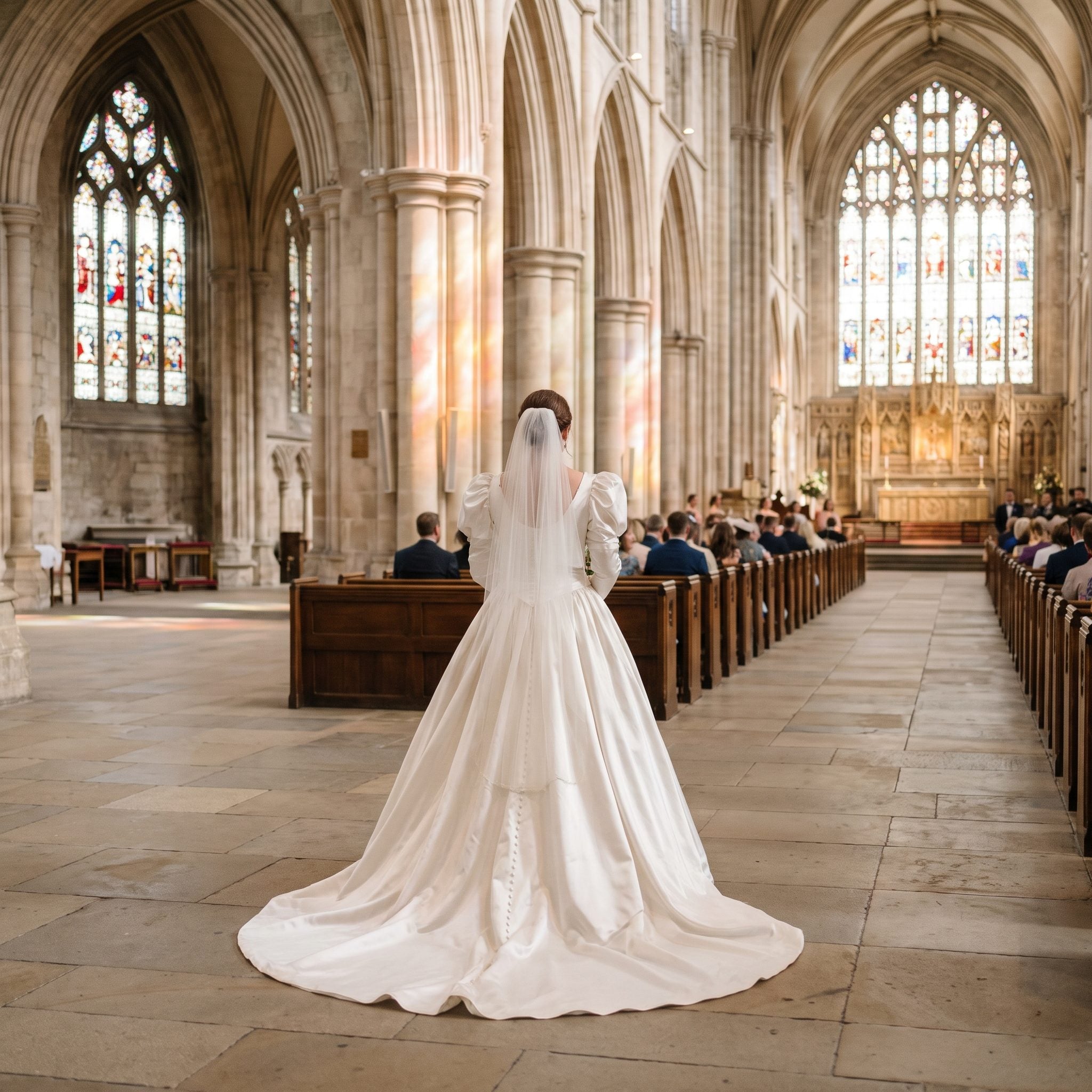
Several feet of satin extended behind the skirt, turning the back of the wedding gown into a long, uninterrupted sweep of fabric. The cathedral train was designed for ceremony rather than convenience, its scale most apparent when spread across an aisle or arranged for a formal photograph.
Unlike a detachable veil, the train formed part of the gown itself, although some designs incorporated removable sections or bustles for the reception. Its dramatic proportions had a history extending far beyond the 1990s, which helps explain why long trains continue to appear in bridal collections. The decade’s version could be heavily decorated, but the essential appeal was simpler: the dress continued long after the bride had passed.
1. The Whole Matched-From-Head-to-Toe 1990s Bridal Look
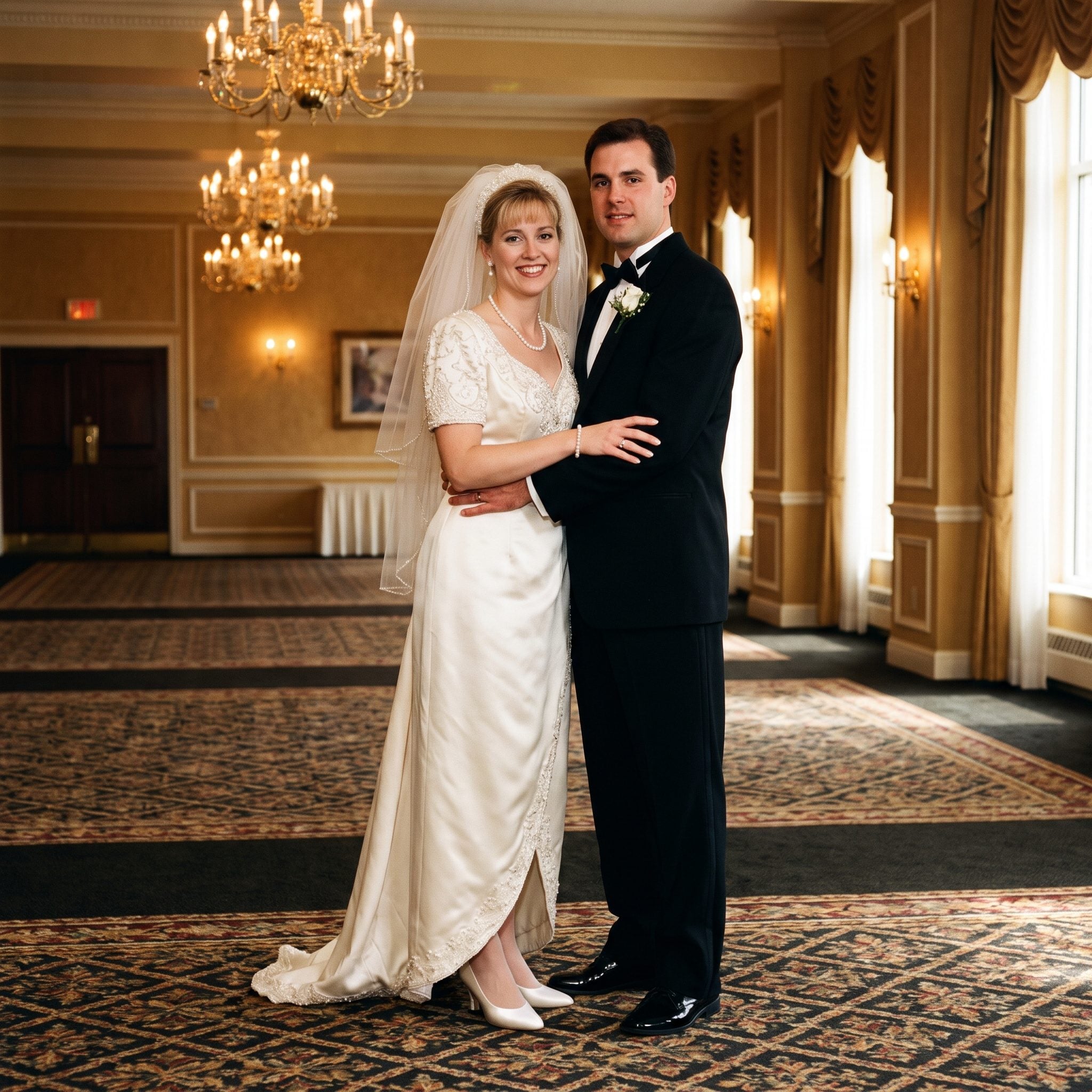
Ivory gown, ivory veil, ivory gloves, ivory shoes. Pearls at the ears and throat. A bouquet chosen to harmonize with the fabric, and perhaps a satin pouch or decorative headpiece repeating the same finishes. Nothing appeared accidental. Every accessory seemed to have been selected in consultation with every other accessory.
That degree of coordination was one of the decade’s most revealing bridal habits. Matching colors and materials promised a unified appearance, even when the individual elements were elaborate enough to command attention on their own. The result could be beautifully polished or overwhelmingly complete. What looks unmistakably 1990s today is not necessarily any single bow, sleeve, or veil, but the determination to make every last detail belong to the same carefully constructed picture.