❤️ Would you like to save this?
The air smelled like wet leaves and dry-cleaning fluid. You pulled a wool blazer off a wooden hanger, buttoned nothing, and let the whole thing fall long and open down the front. That was the trick. Not hiding a body. Not pretending clothes could change its dimensions. The best fall outfits of 1991 understood something more useful: where a jacket ends, where a waist begins, whether a trouser crease keeps moving, and what happens when one color runs uninterrupted from hip to shoe.
These 31 looks were built on line, proportion, texture, and a surprisingly fearless amount of burgundy. Some use the dark-column trick. Others rely on a cropped jacket, a high trouser rise, a strong V-neck, tonal dressing, or simply refusing to interrupt a good silhouette halfway down. The clothes are unmistakably 1991. The logic behind them never really left.
FYI, thanks to AI imagery software, we’re able to create very specific fashion and hairstyle examples to illustrate the points being made. In some cases, imagery is exaggerated to hammer home the point. Also, assume links that take you off the site are affiliate links such as links to Amazon. this means we may earn a commission if you buy something.
31. The Teal Shirt Dress Starts With One Long Line
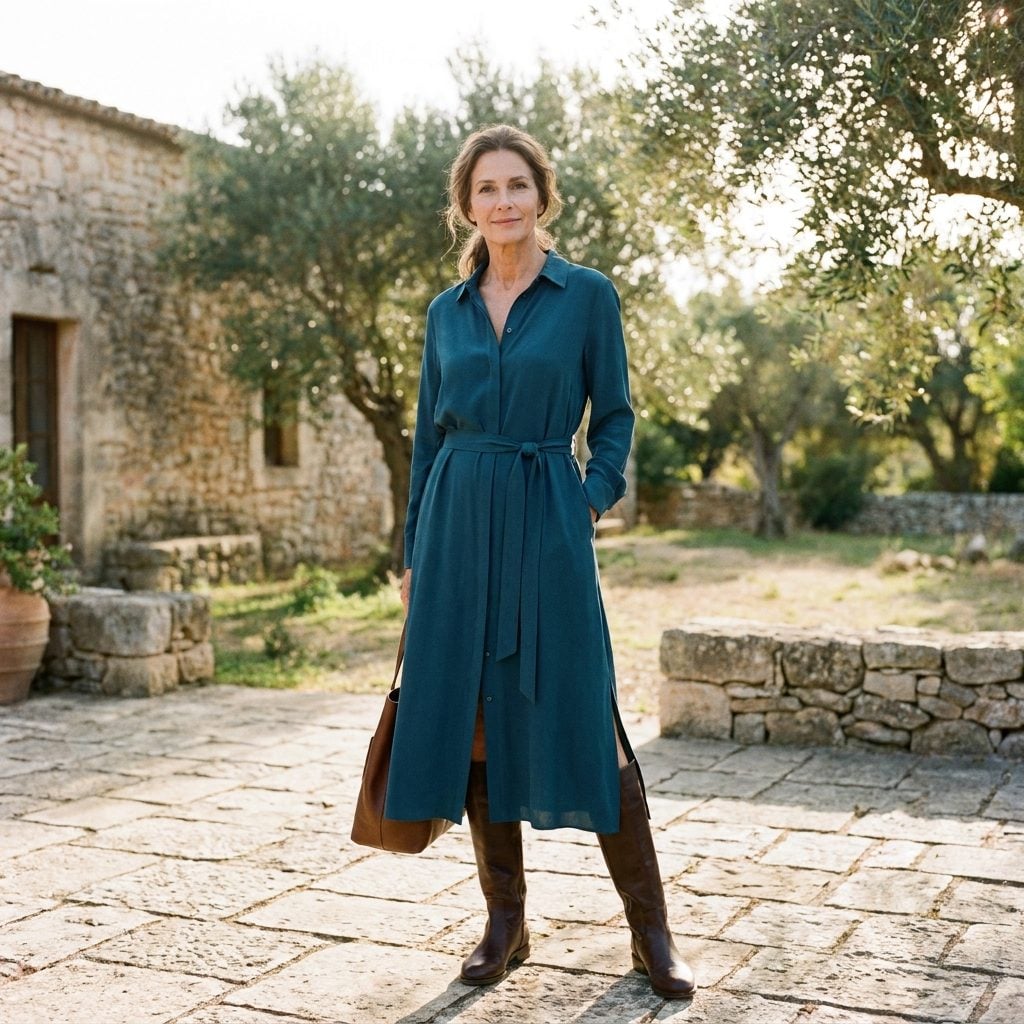
One color, one long placket, one belt near the natural waist. The deep teal shirt dress does not need much else because its strongest feature is continuity from collar to hem.
Knee-high brown boots extend the fall palette downward without introducing a hard color shock at the calf. The belt defines the middle gently rather than wrenching the dress inward, so the fabric can still fall cleanly from the waist.
30. The Black Knit Dress Needs Almost Nothing
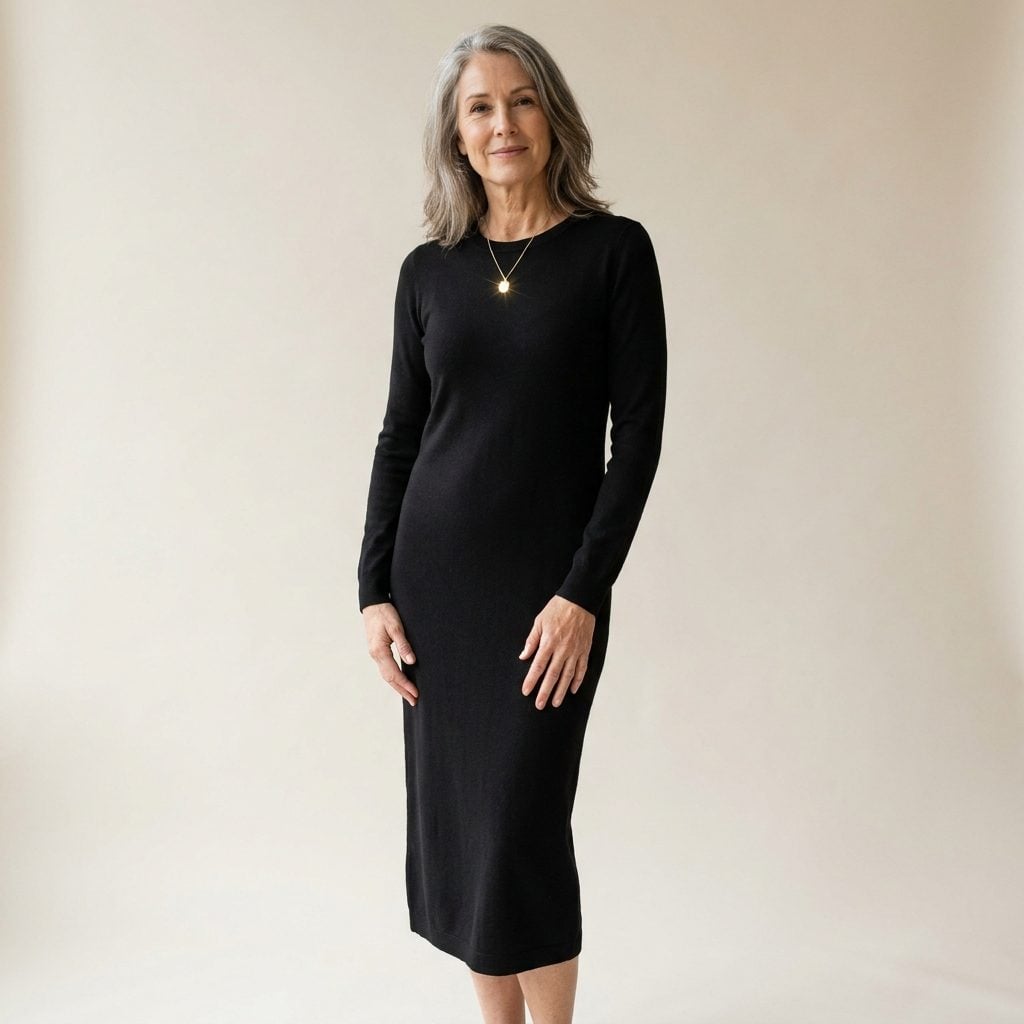
One dress, one necklace, done. The black knit falls below the knee in a single uninterrupted shape, while a long gold pendant creates one narrow point of movement down the center.
The V-neck keeps the upper half open, sheer black hosiery continues into black pumps, and there is no jacket competing for attention. After years of layering advice, this is a useful reminder that sometimes the cleanest silhouette is the one with the fewest decisions.
29. Deep Plum Makes Tonal Dressing Look Rich, Not Matchy
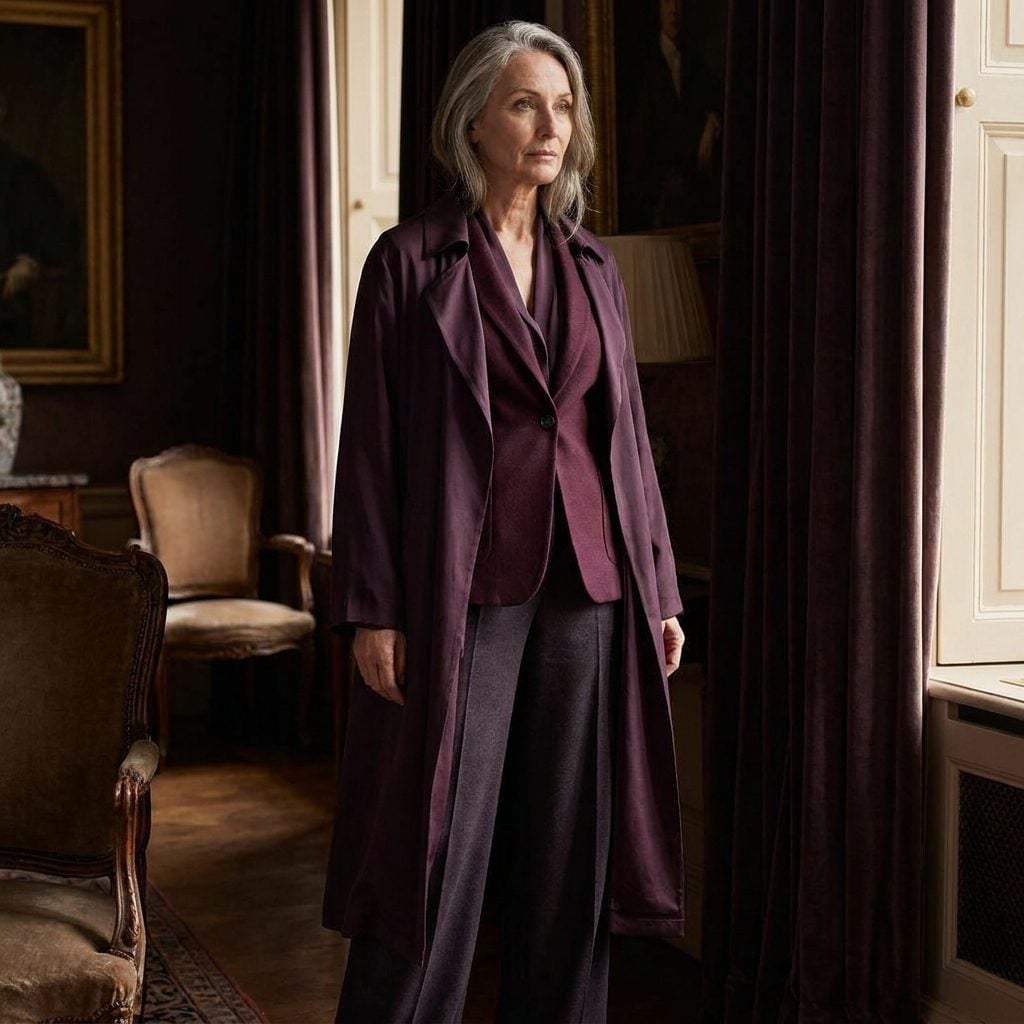
Plum appears here in several depths instead of one flat match: the knit is lighter, the trousers sit in the middle, and the jacket is deepest. The color family stays intact while the tonal shifts keep the layers visible.
That is the more interesting lesson than simply calling the outfit monochrome. Tonal dressing can reduce hard visual breaks, but variation in shade prevents the result from becoming one large block.
28. Cobalt Wakes Up a Charcoal Midi
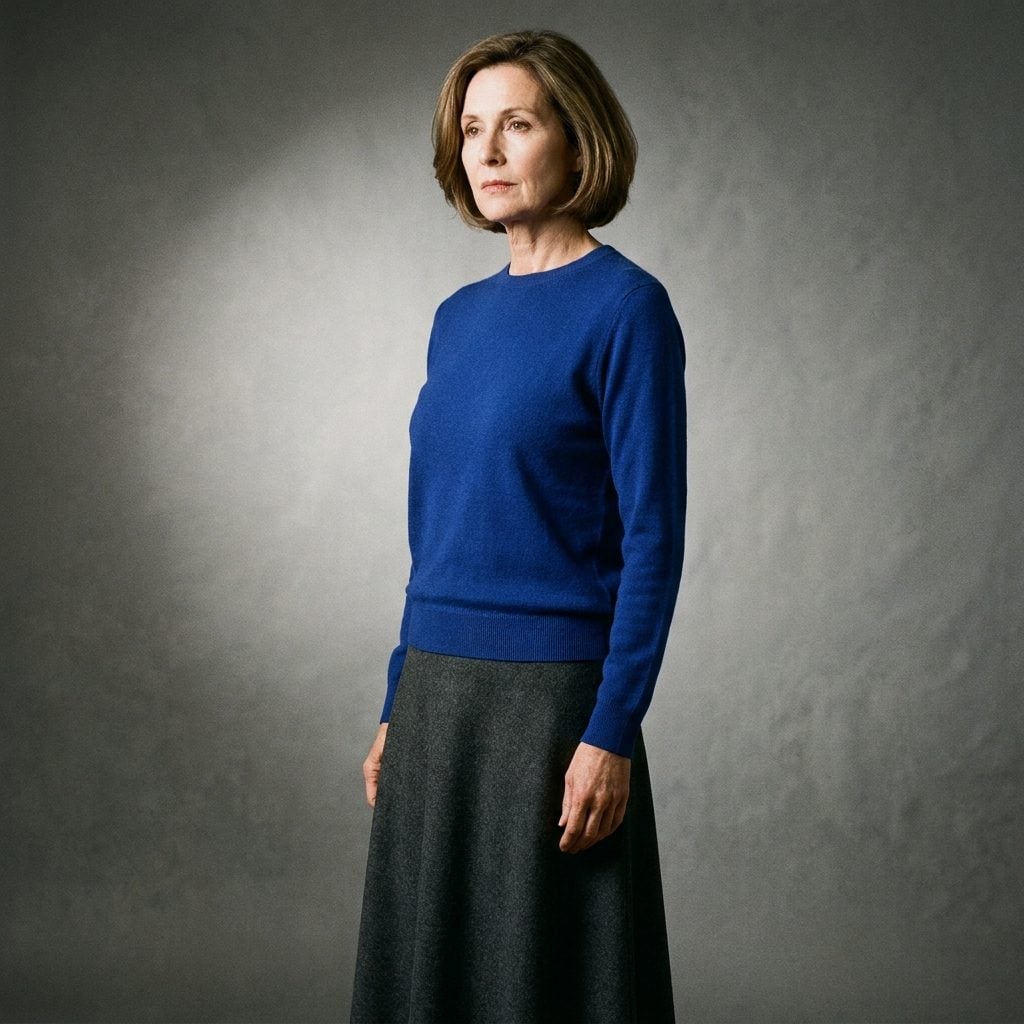
Cobalt is the only loud thing in the outfit, and that is exactly why it lands. The saturated sweater concentrates color near the face while the charcoal skirt, tights, and dark loafers form a quieter base below.
The A-line skirt has volume, but the compact fine-gauge knit keeps the upper proportion simple. Nothing needs to be squeezed or hidden. One strong color and one controlled silhouette are plenty.
27. Dark Denim Gets Framed by an Ivory Cardigan

A black shell flows into deep indigo jeans, giving the center of the outfit one dark base. The ivory cardigan sits over it like a pale frame, leaving the darker middle visible instead of covering it.
Gold buttons and a softly shaped shoulder put this squarely in 1991, but the principle survives beautifully. A lighter outer layer can emphasize the darker core underneath without requiring the cardigan itself to be oversized or dramatic.
26. Rust Suede Cuts the Black Trouser Line Short — in a Good Way
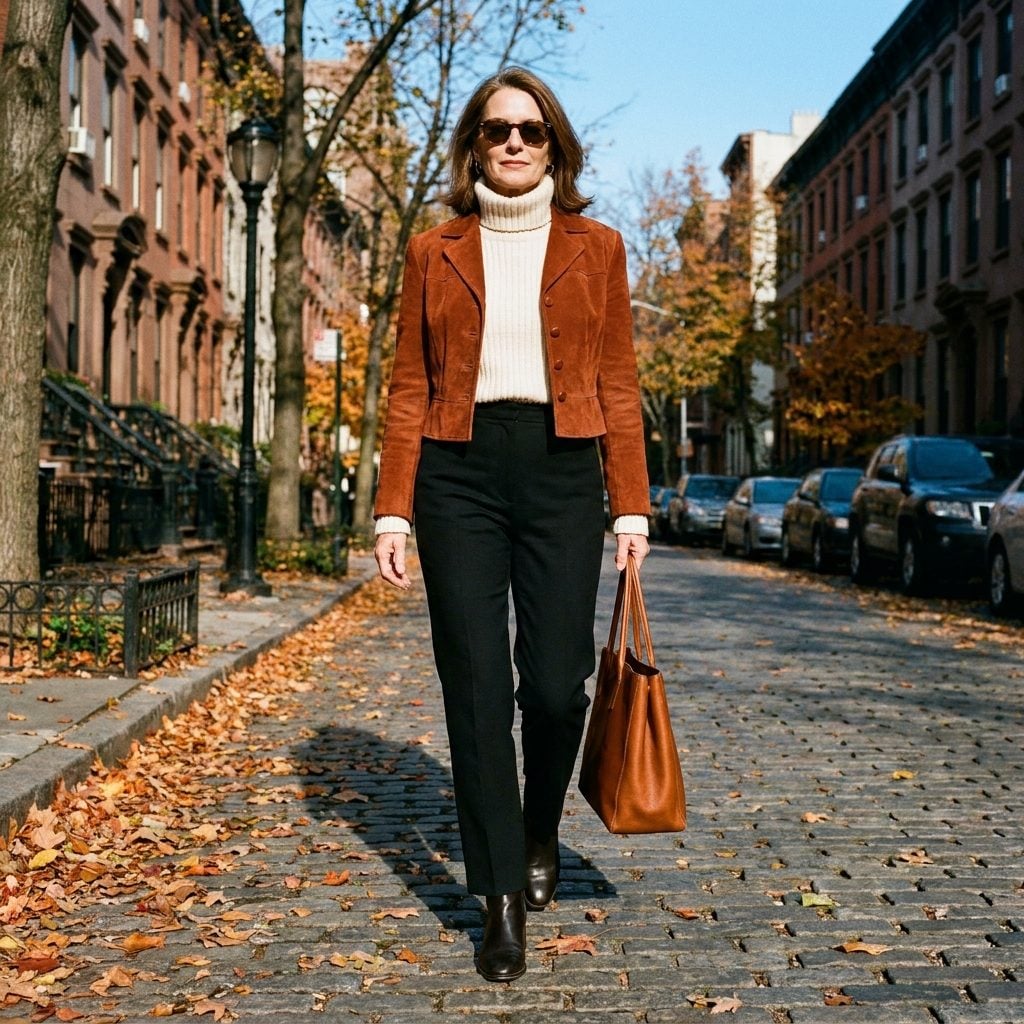
The rust suede jacket ends high enough to make the trouser rise visible, which gives the lower half more room to establish itself. Black straight trousers then continue into black boots without another color change at the ankle.
Cream and rust keep the upper half warm and autumnal without making any claim that one shade magically suits everyone. The appeal is in texture: soft suede against ribbed knit, followed by a clean dark trouser line.
25. Burgundy Crops the Jacket, Black Lengthens the Rest
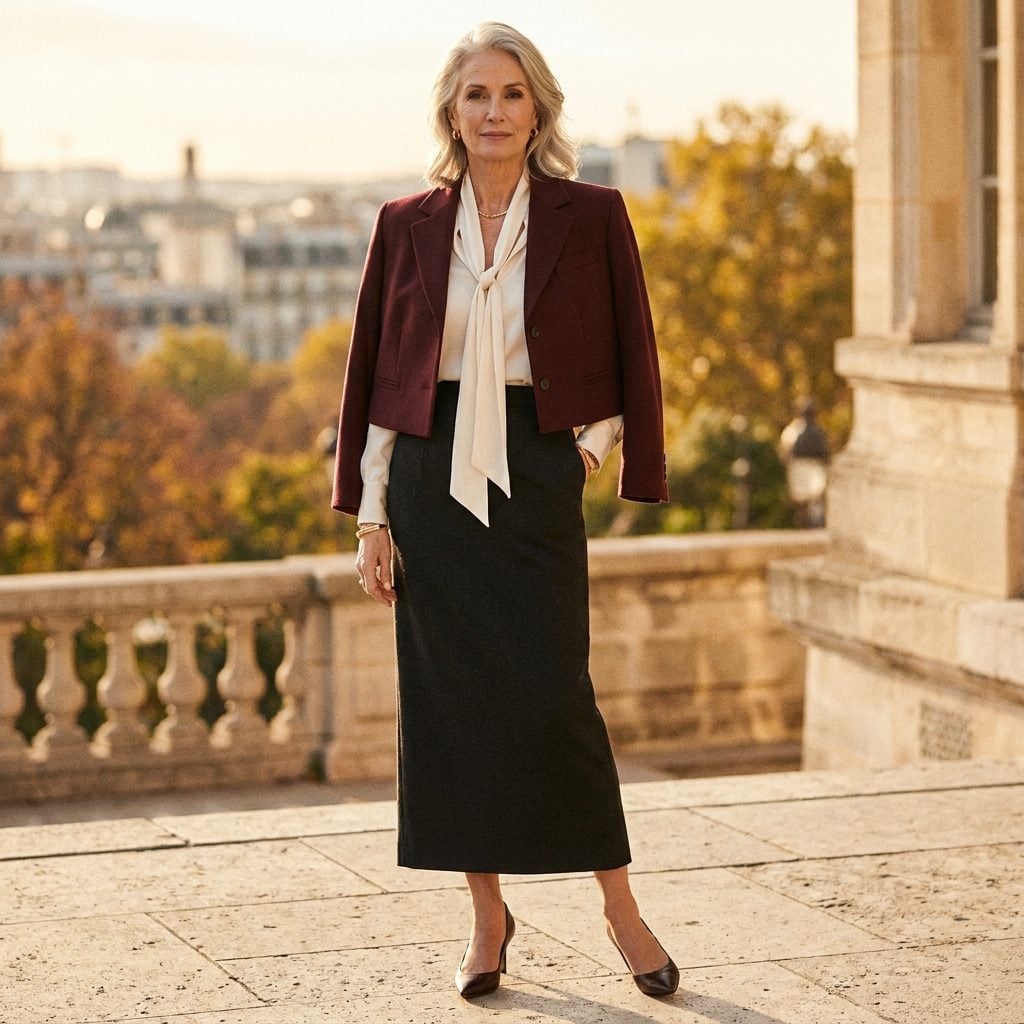
The short burgundy jacket ends at the high hip, leaving the long black skirt, hosiery, and pumps to carry most of the visual length below.
An ivory blouse breaks the dark palette at the face, while the narrow neck tie adds softness without turning into a full bow. The proportions are doing more here than the accessories: compact jacket, long skirt, uninterrupted footwear.
24. A Leather Blazer Gives Bootcut Denim Some Backbone
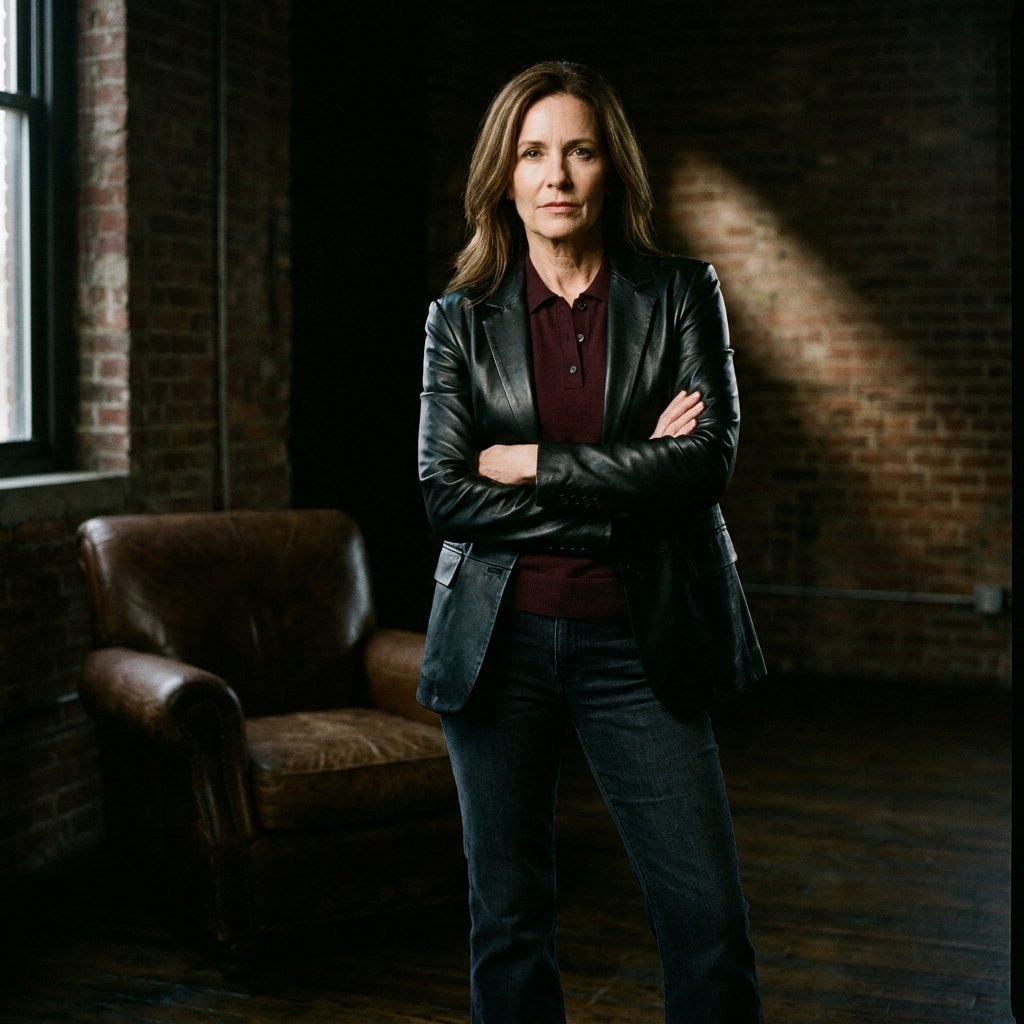
The black leather blazer is the decisive piece here. The burgundy knit polo and dark denim would be perfectly respectable without it; the leather adds surface, structure, and enough weight at the shoulder to give the outfit a clearer outline.
Dark boots meet the bootcut hem without exposing a pale strip of ankle. The slight flare then echoes some of the jacket’s visual weight without pretending there is one universally flattering trouser shape.
A black leather blazer like this one is less a period costume than proof that certain pieces simply keep getting recut.
23. Camel A-Line, Black Turtleneck, No Excess Volume
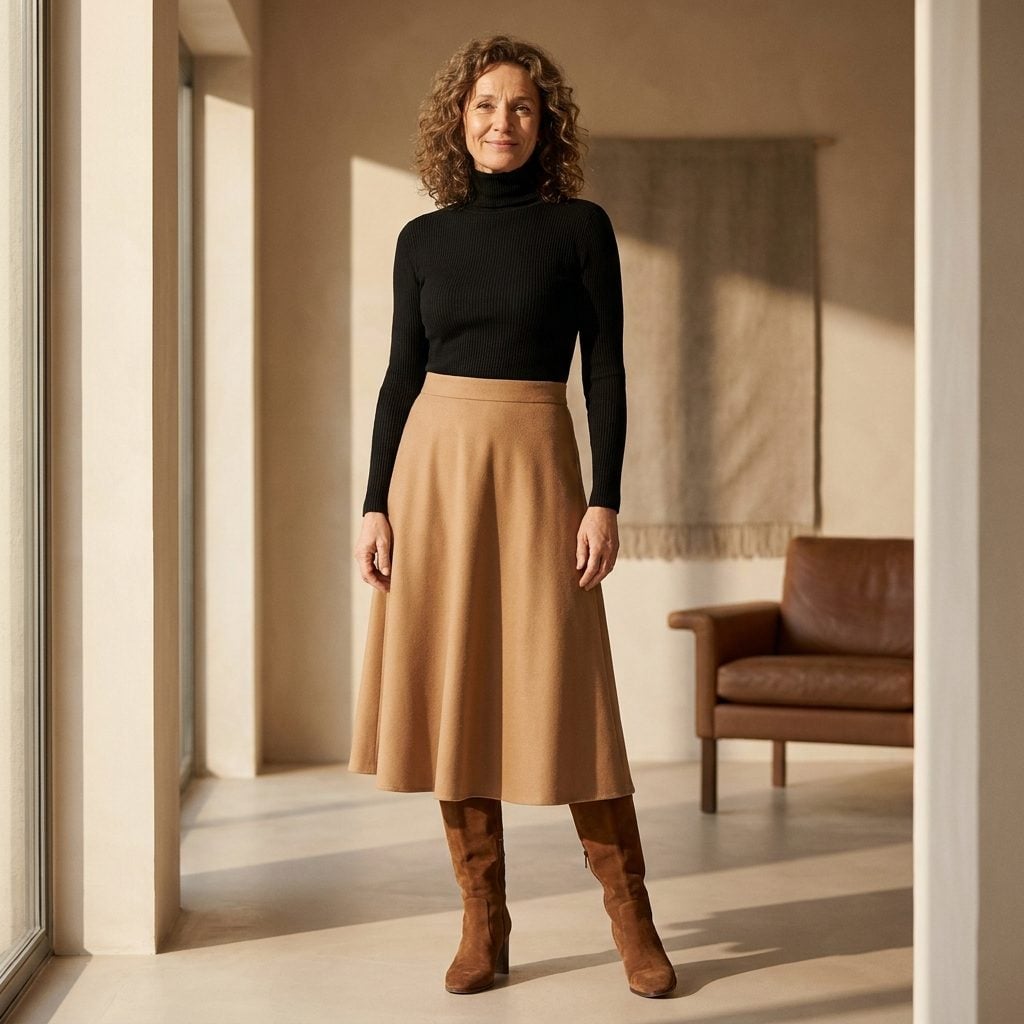
A fine black turtleneck gives the camel A-line skirt a compact upper partner. The contrast between a closer-fitting top and a skirt that opens gradually below the waist makes the silhouette easy to read.
Brown suede boots stay within the camel family without matching it exactly. Black, camel, and brown give the outfit three depths instead of three competing ideas.
22. The Gray Trouser Suit Is 1991 With the Volume Turned Down
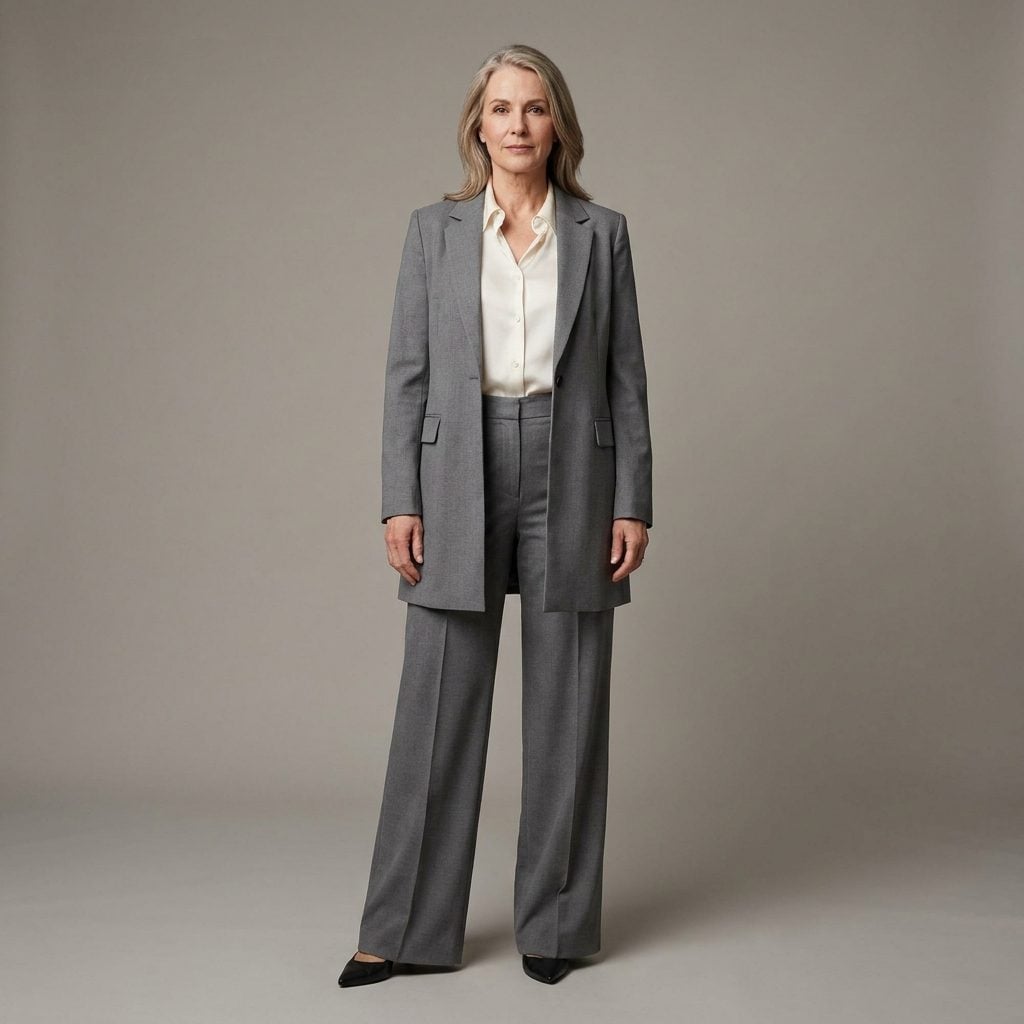
Gray runs from jacket through trouser, while the ivory blouse occupies the narrow opening created by the lapels. The result is unmistakably a suit, but it avoids the feeling of two unrelated halves.
The shoulders still have presence — early 1990s tailoring had not suddenly forgotten the previous decade — but the line is calmer than the most exaggerated 1980s power suits. Long lapels and full trousers do the talking without shoulder pads having to shout over them.
21. Denim Skirt, Forest Knit, Tall Boots: the Everyday Version
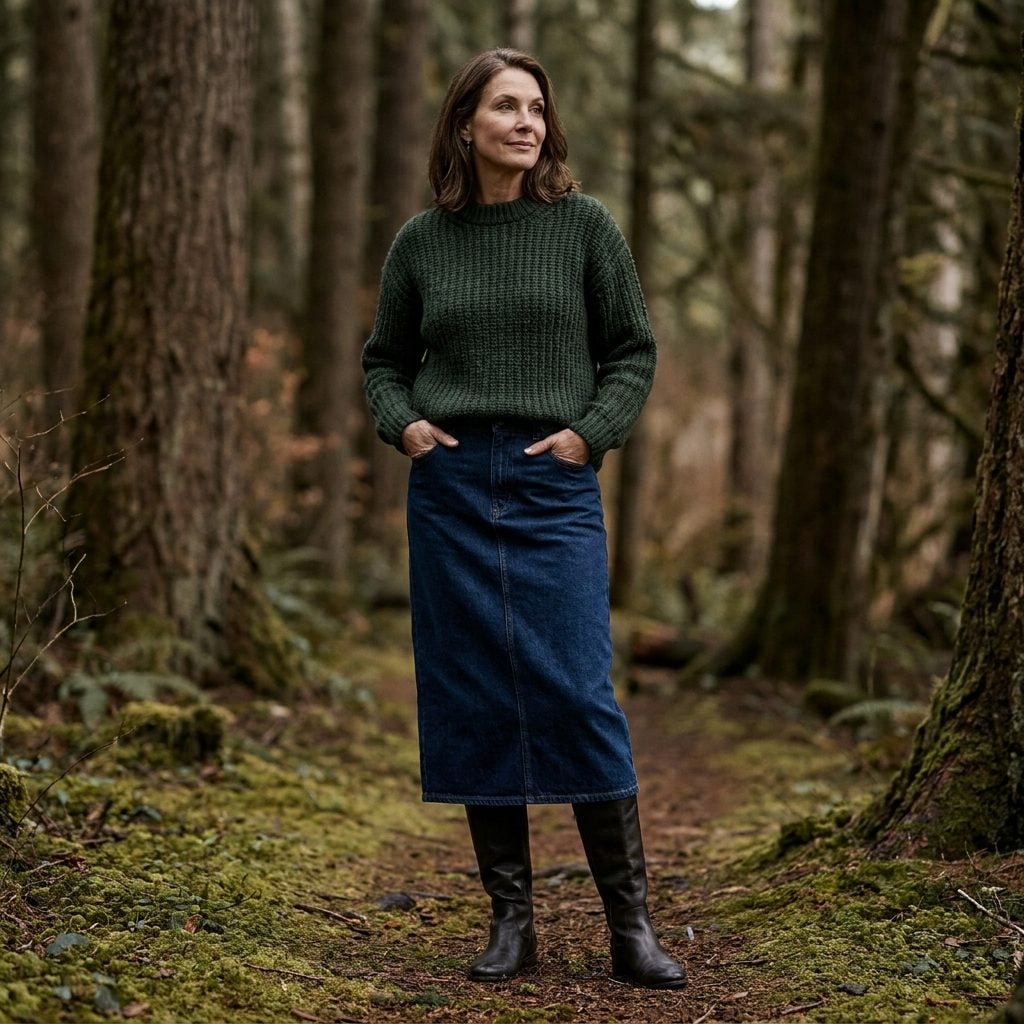
Dark indigo moves into dark hosiery and then black boots, creating a relatively continuous lower half beneath the forest-green knit.
The below-knee denim skirt and modest walking slit keep this out of office territory. It is practical, substantial, and exactly the sort of outfit that made 1991 fall dressing look competent without requiring a blazer.
20. Chocolate Waistcoat Over Ivory Silk
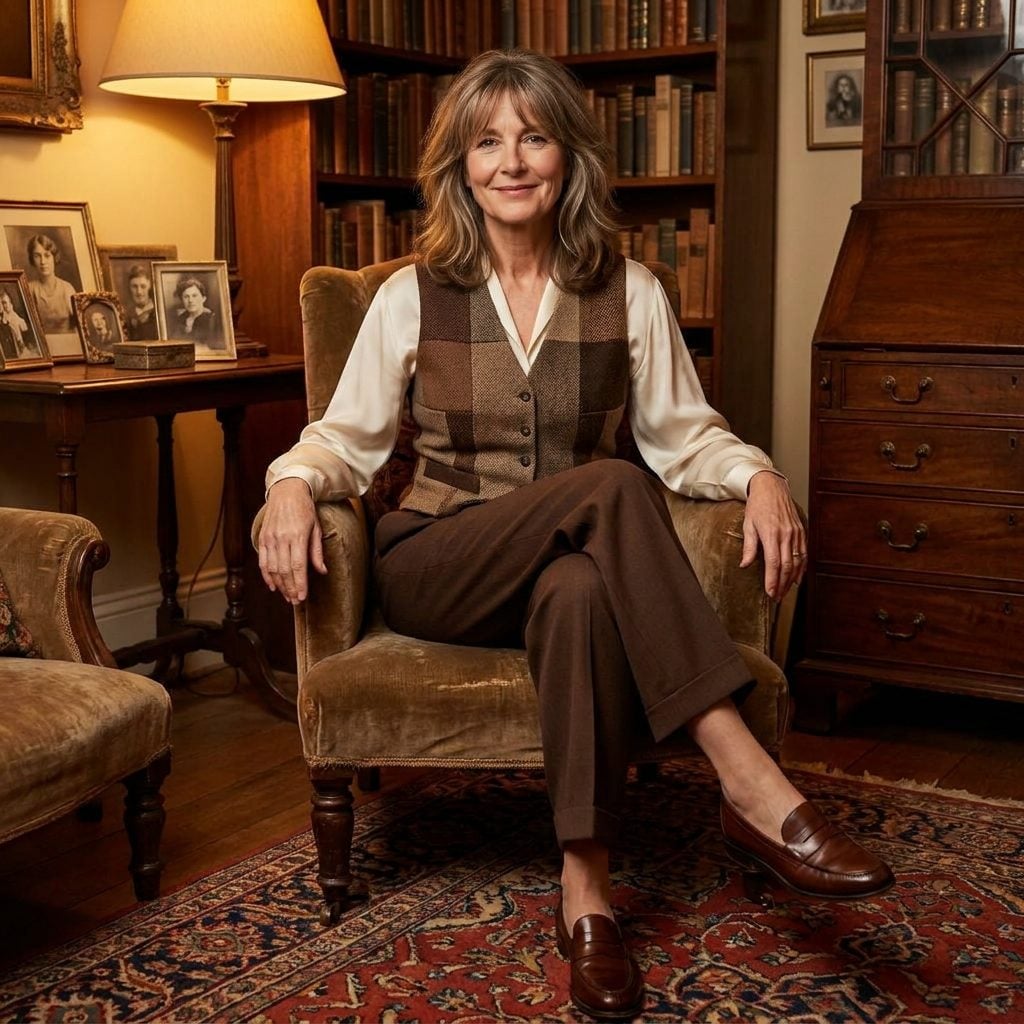
The chocolate waistcoat and trousers nearly form a matched column, while the ivory silk blouse softens the center and sleeves.
More importantly, the waistcoat gives the blouse structure without requiring a fitted jacket. That fitted-over-fluid contrast is why the combination still feels useful now: soft sleeves, defined torso, full-length trouser.
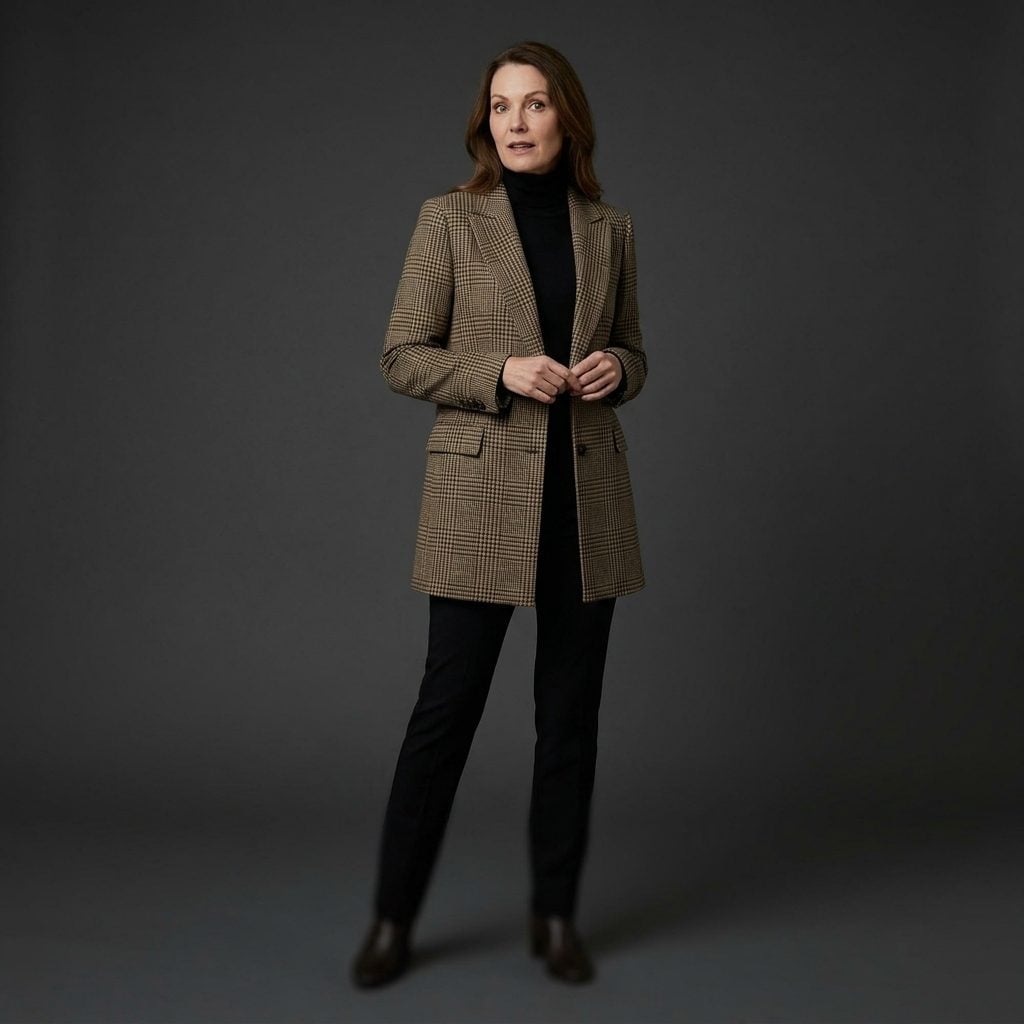
19. Glen Plaid Frames a Black Center
❤️ Would you like to save this?
The glen-plaid blazer introduces pattern while the black shell and skirt remain visually quiet underneath. Worn open, the jacket leaves that darker center visible between two patterned sides.
That does not mean a plaid blazer must always stay open. Here, though, the open styling is what lets the contrast between print and solid become the point.
18. Full Navy Trousers Need a Compact Burgundy Knit
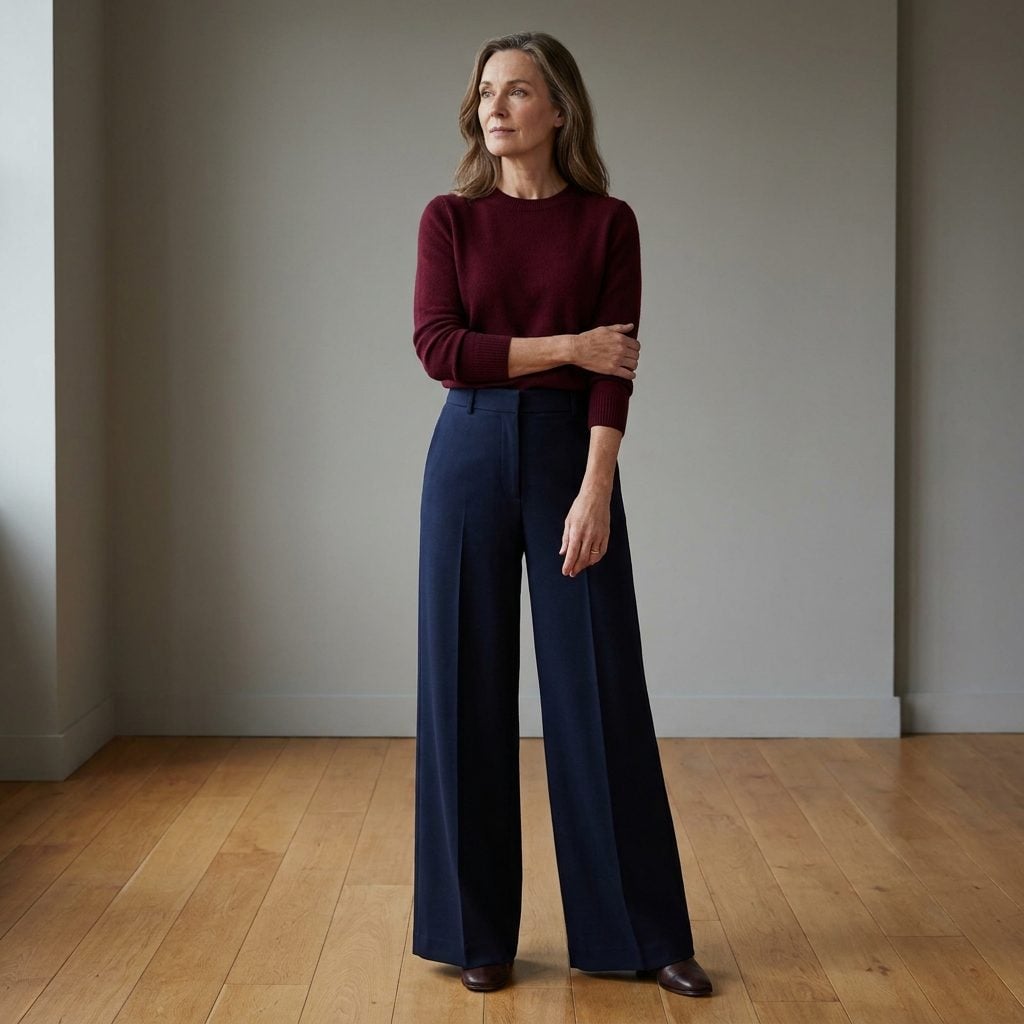
The high rise matters because it establishes the trouser line early. From there, the fuller navy leg falls almost to the floor, with a pressed crease keeping all that fabric visually organized.
A compact burgundy sweater gives the upper half less volume than the lower. That contrast — fitted above, generous below — is one of the clearest examples of early-’90s proportion looking unexpectedly current again.
17. Burgundy Leather Does Not Need Shine to Get Attention
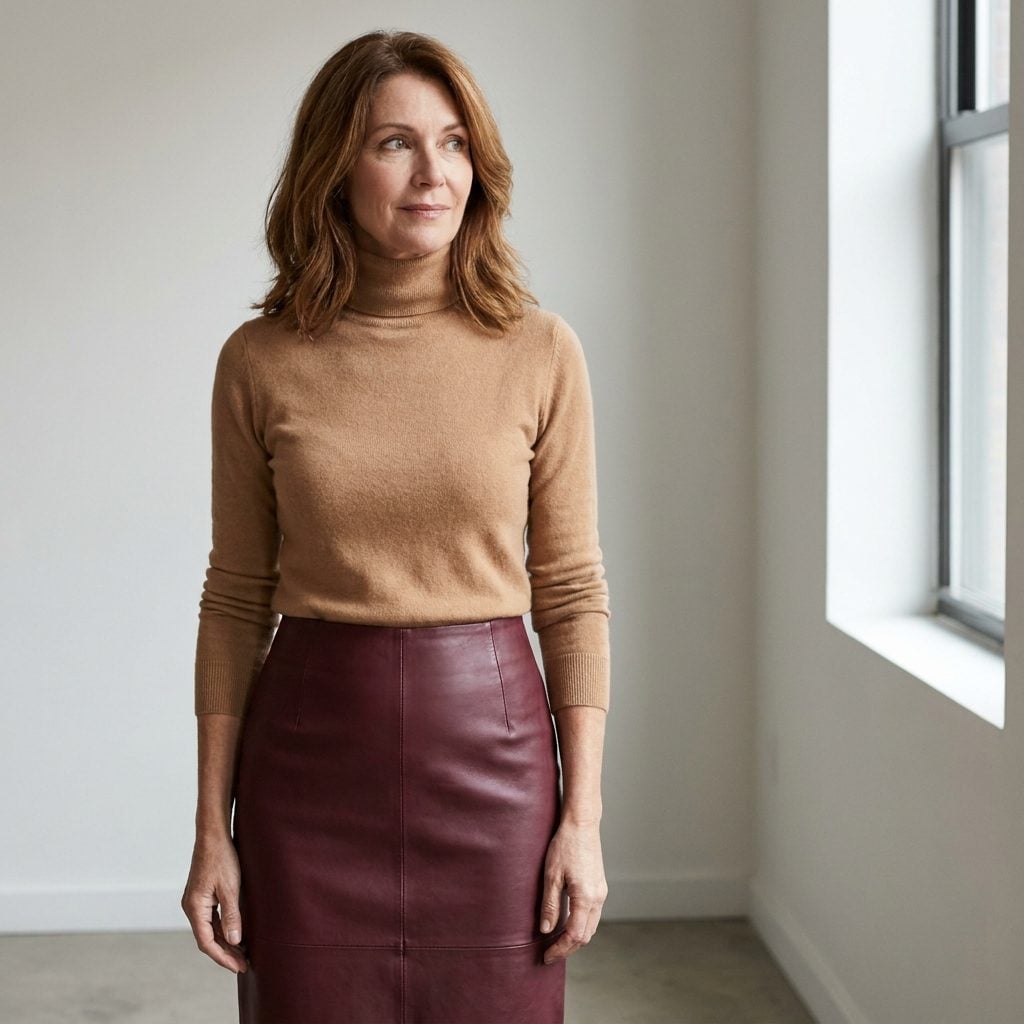
The leather is matte enough that texture arrives before gloss. That makes the burgundy straight skirt feel substantial rather than theatrical.
A camel turtleneck keeps the upper half warm and simple, while black hosiery and pumps provide a dark base underneath. Leather gets to be the unusual material; everything around it behaves.
16. Forest-Green Trousers Replace the Expected Black Pair
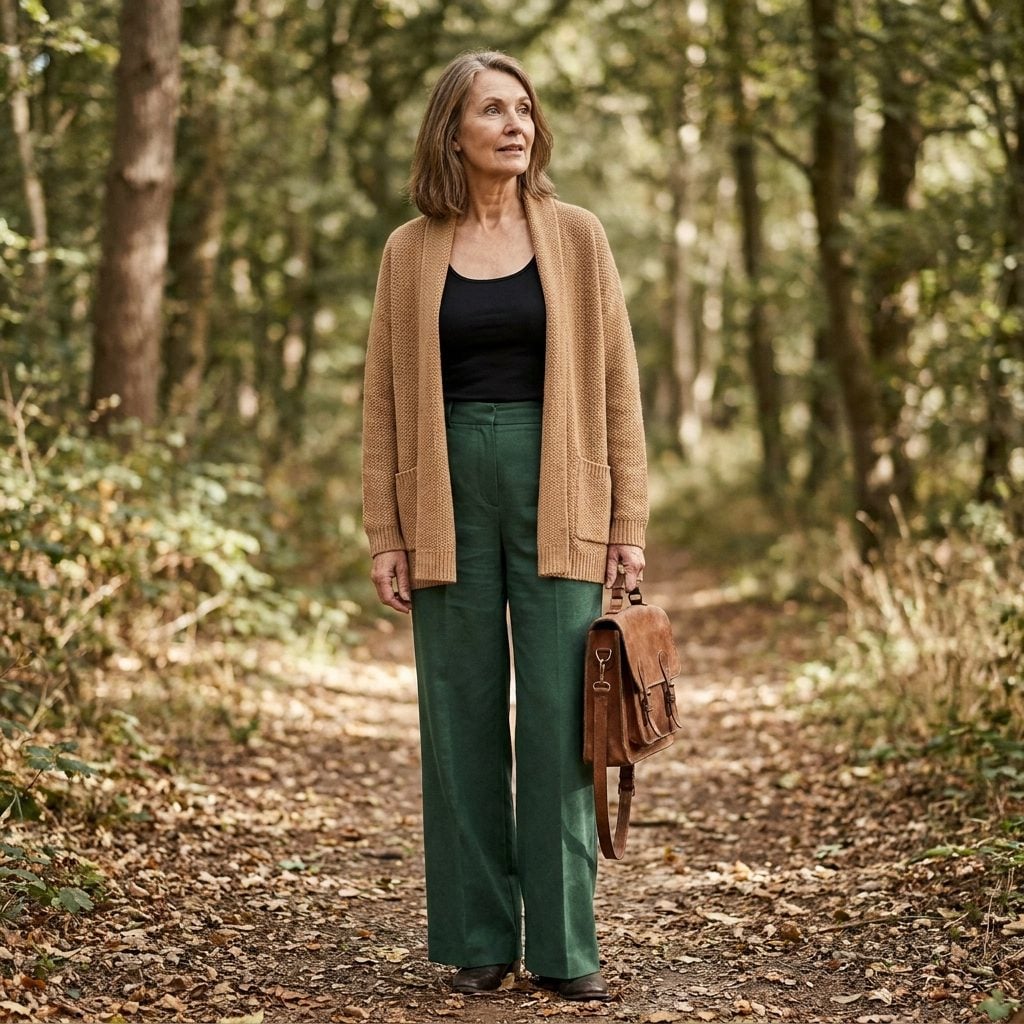
Forest green is dark enough to cooperate with black and camel but distinctive enough to keep the outfit from becoming another neutral exercise.
The black shell is tucked cleanly into the trousers, the camel cardigan remains open, and a pressed trouser crease keeps the lower half crisp. The appeal is color discipline, not a personality test.
15. Ivory Silk Over Black Tapered Trousers

The belt is intentionally quiet. It gives the fluid ivory blouse some shape without hauling every fold of silk toward the center.
Below it, black tapered trousers create a clean dark base. The contrast between pale fluid silk and dark tailored pants is stronger than any belt trick here, which is exactly why the waist treatment can remain restrained.
14. Fine-Wale Corduroy Gives Olive Trousers Texture, Not Bulk
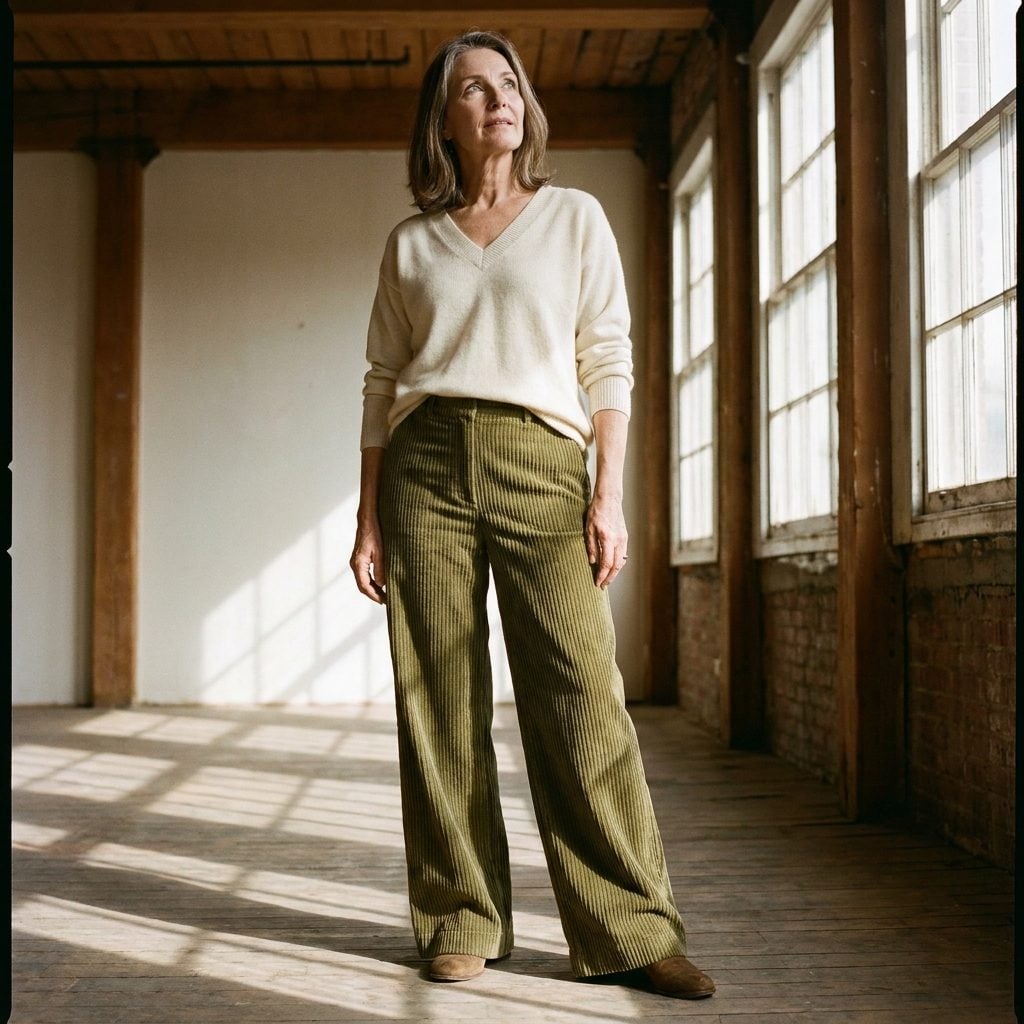
Fine-wale corduroy brings narrow vertical ribbing to a full straight trouser leg. That texture can emphasize direction without pretending fabric itself changes the body underneath it.
A cream V-neck sweater keeps the top lighter and simpler, while a slim brown belt, cognac satchel, and loafers warm the olive rather than competing with it.
13. Short Suede Over a Long Forest-Green Skirt
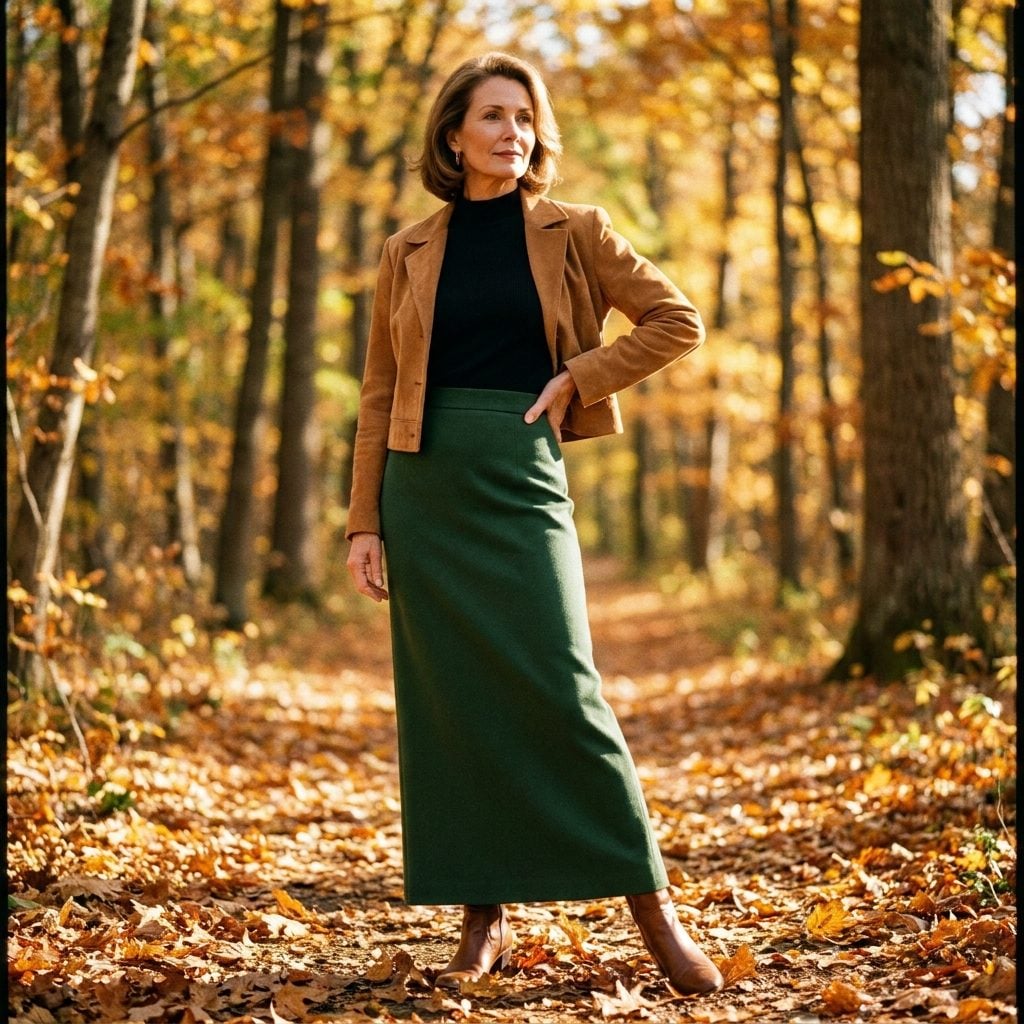
The short suede jacket stops around the high hip, leaving the long forest-green skirt visible from waist to hem instead of burying it under another long layer.
Black hosiery flows into black pumps below. The point is not that green possesses some magical relationship with black; it simply has enough depth to sit beside it without disappearing.
12. Tobacco, Chocolate, and Cream Stay in the Same Conversation
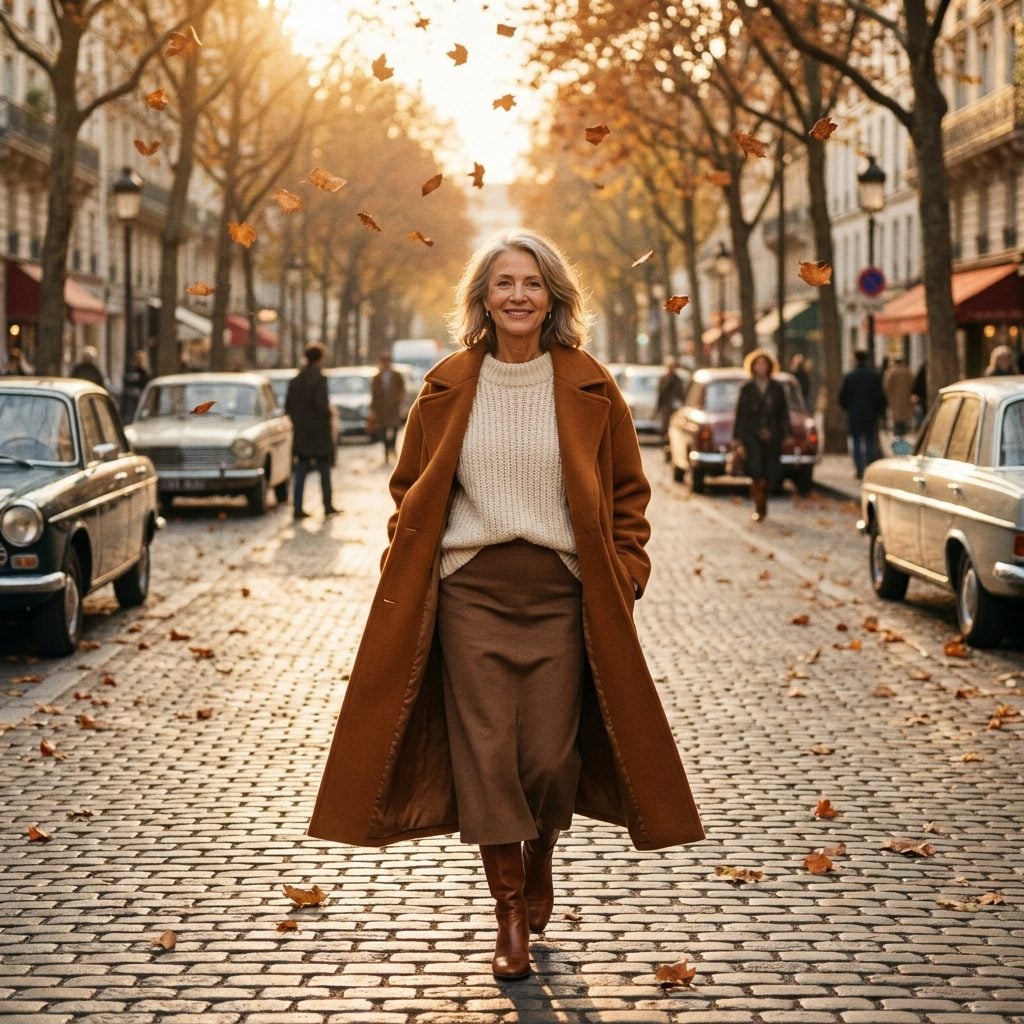
Tobacco coat, chocolate skirt, cream knit, dark hosiery, brown pumps. The colors move gradually from light to deep instead of snapping from one extreme to another.
Leaving the coat open keeps the cream center visible and prevents the long outer layer from becoming a single block of brown. The richness comes from neighboring tones and fabric depth, not another lesson about optical illusion.
11. Pleated Navy Trousers Meet a Charcoal Sweater Vest

A white Oxford collar sits inside the deep V of a charcoal sweater vest, creating one sharp little opening at the neckline.
Below, high-rise navy pleated trousers carry a pressed crease straight through the fuller leg. Navy and charcoal are close enough in value to feel calm together, while the white shirt prevents the whole outfit from sinking into murk.
10. Red Fine Knit Breaks Up a Long Black Cardigan
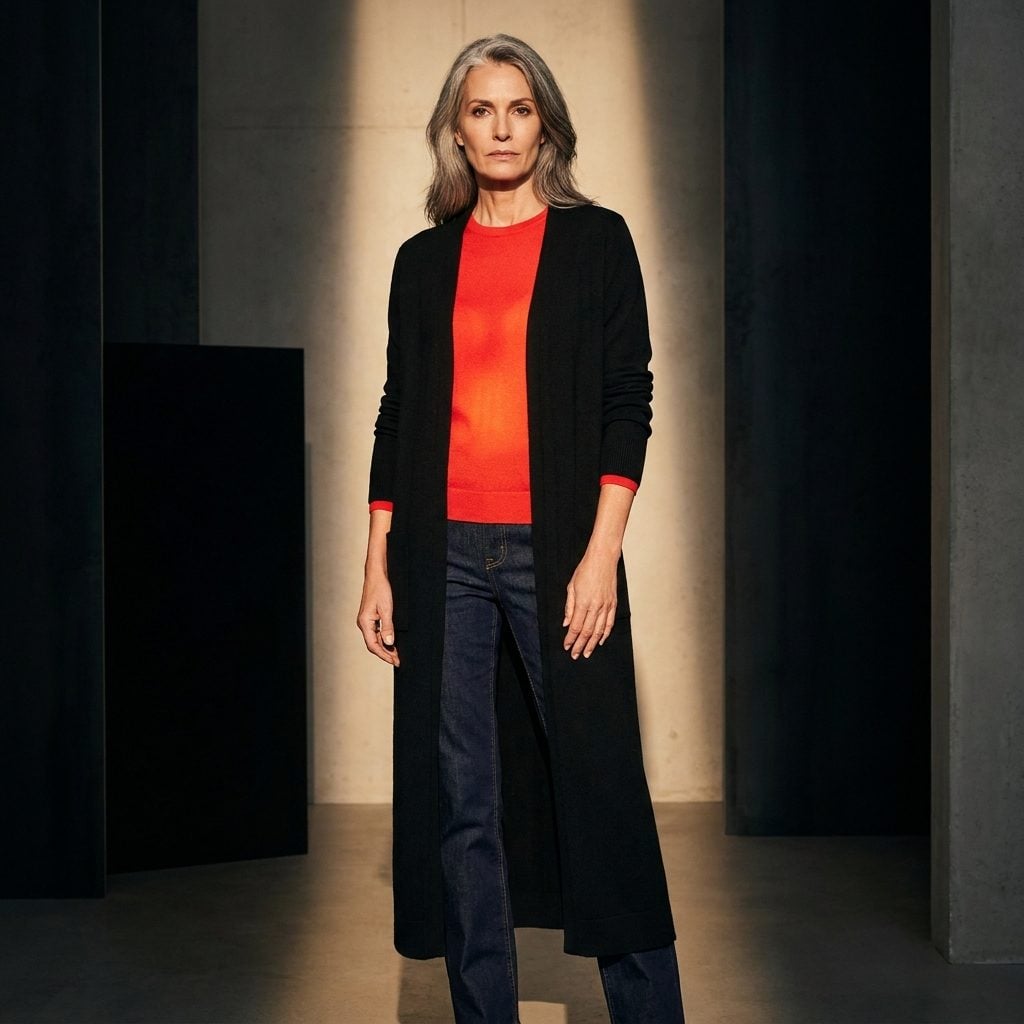
A long black cardigan could easily become shapeless over dark jeans. The red fine-knit sweater stops that from happening by occupying the center with one clear patch of color.
Dark straight denim keeps the bottom simple, while the cardigan provides movement rather than hard tailoring. It is the softest version of long-layer dressing in the gallery, which is precisely why it deserves to stay.
9. Charcoal Blazer, Black Column, Pure 1991 Geometry
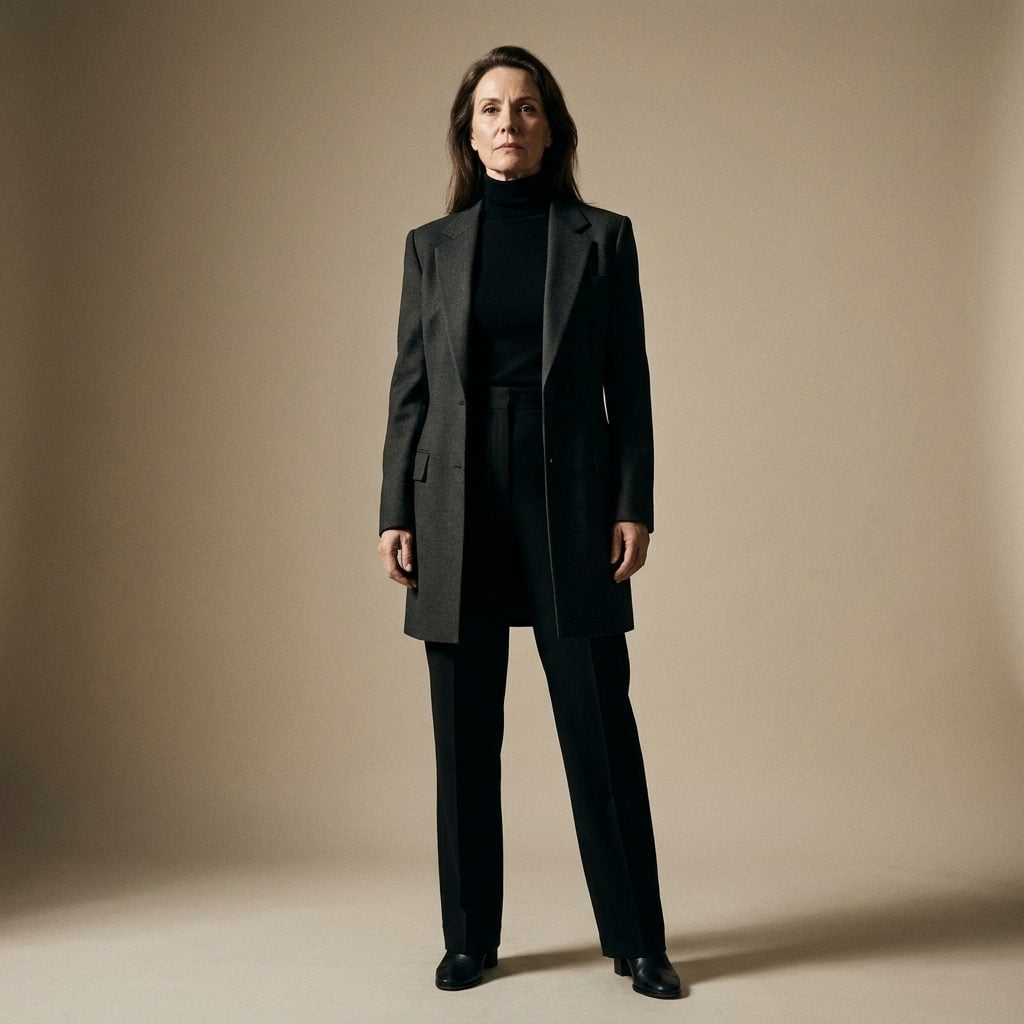
This is the classic dark-column formula in its clearest form: black turtleneck into black high-waisted trousers, with a charcoal blazer left open around them.
The blazer reaches the lower hip, the trouser rise sits high, and the shoe stays dark enough not to interrupt the bottom of the line. Once the principle is this visible, the rest of the gallery does not need to keep explaining it.
8. Charcoal Sheath, Black Coat, Almost No Distraction
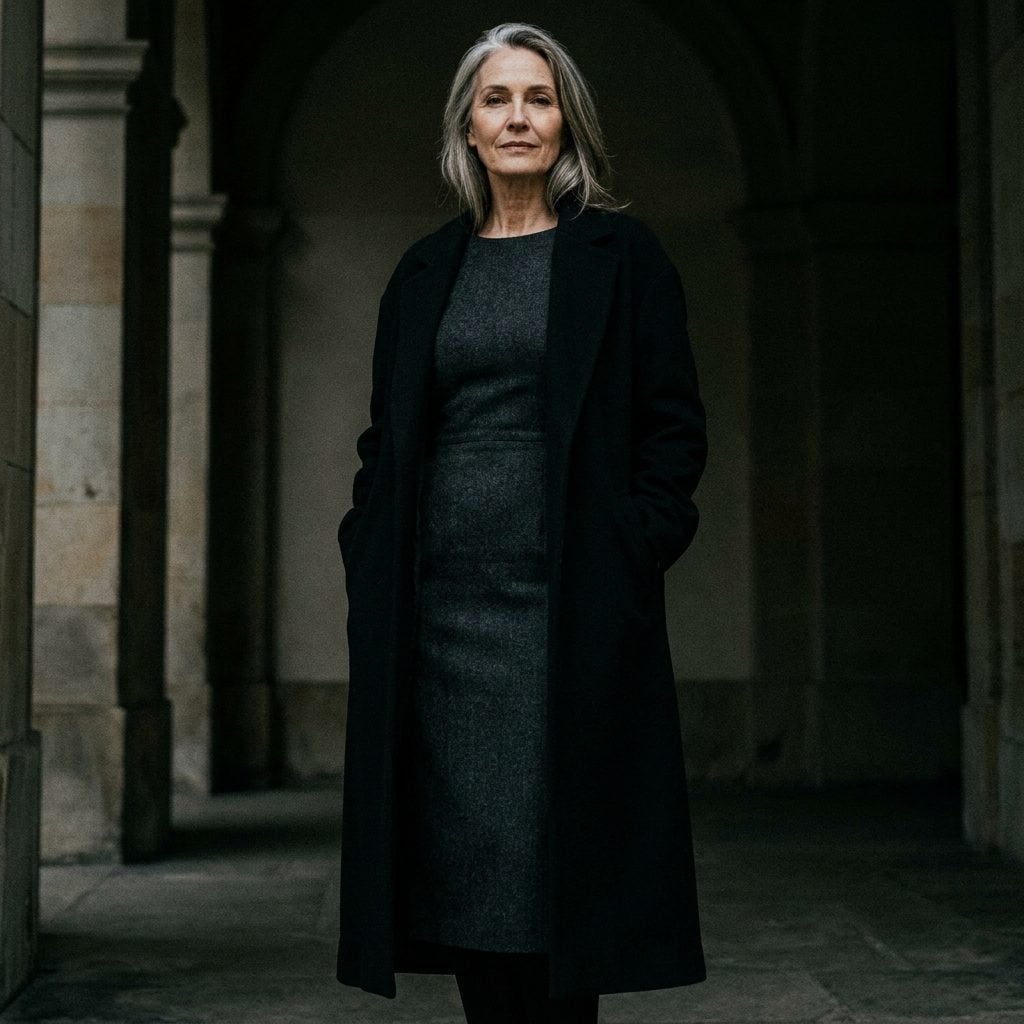
The charcoal sheath is narrow, quiet, and self-contained. Instead of adding contrast with a blouse or belt, the outfit stays within black and charcoal and lets differences in garment length create the interest.
The coat is longer than the dress, the hosiery continues into the shoe, and the absence of bright accessories keeps attention on the severe simplicity. This is less an optical trick than a commitment to one idea.
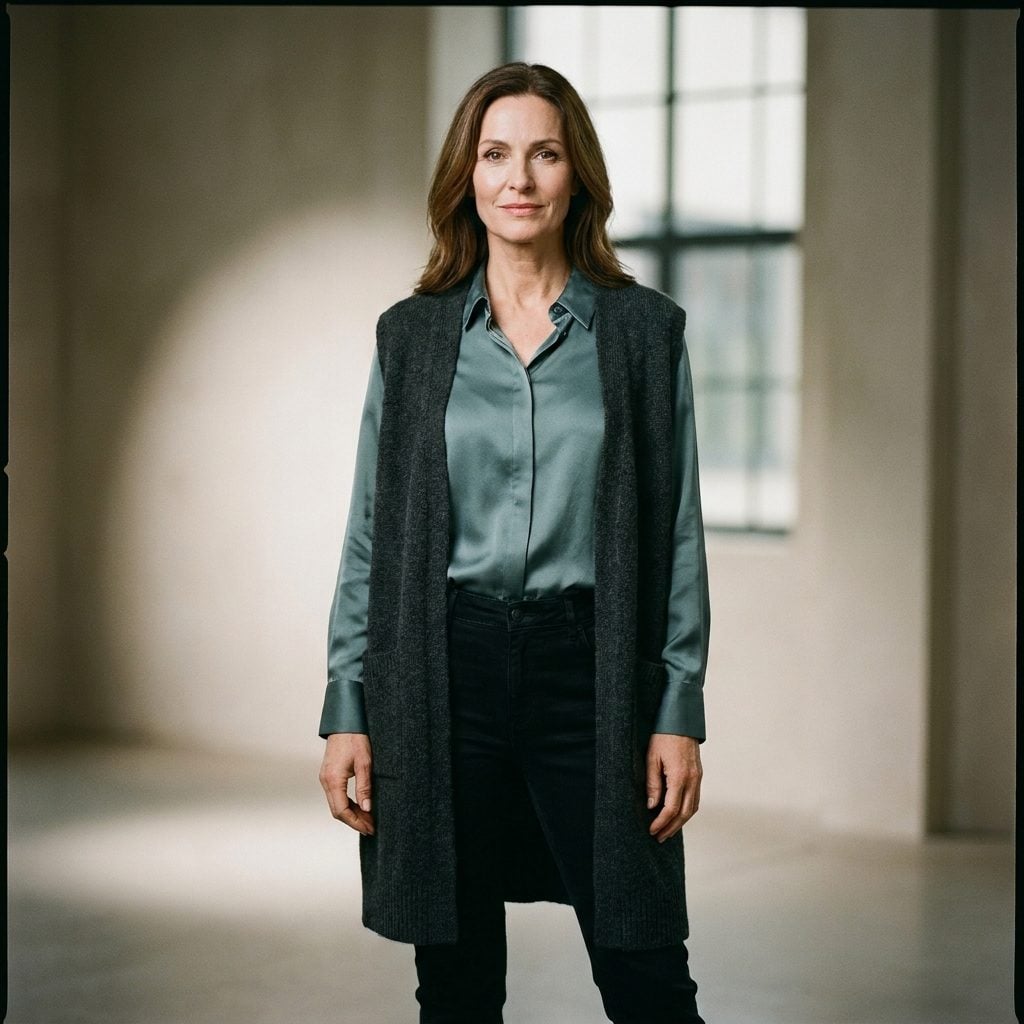
7. Teal Satin Softens Trouser Jeans and a Longline Vest
❤️ Would you like to save this?
Black trouser jeans give this look the comfort of denim with a straighter, more tailored finish. A charcoal longline vest adds structure without sleeves, which keeps the outfit from becoming another full suit.
Muted teal satin is the interesting counterweight. It catches light at the neckline while the rest of the palette stays matte and dark. Comfortable below, polished above, and no need to pretend jeans cannot participate.
6. Burgundy Knit and Camel Coat: the Casual Version
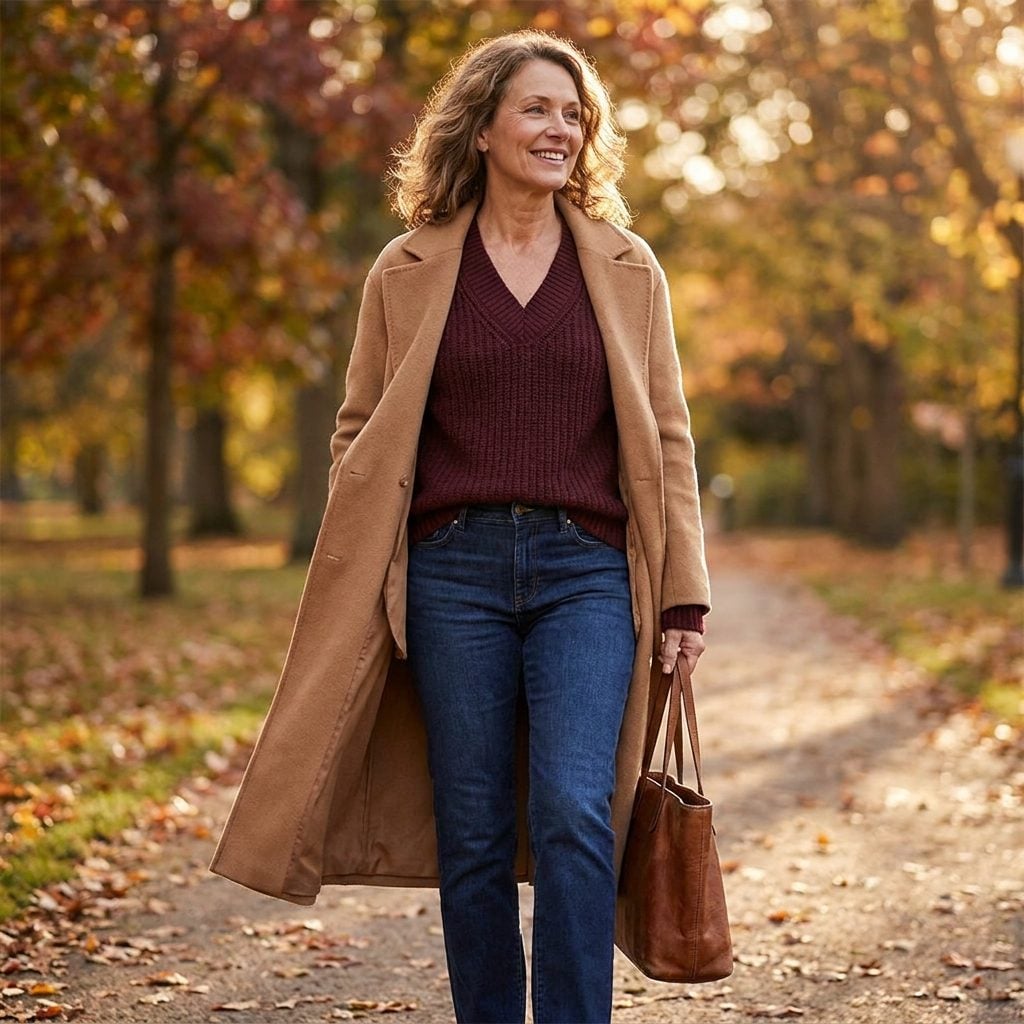
A V-neck creates an open shape at the collarbone that works particularly well with a substantial burgundy knit. That does not make crewnecks wrong; it simply gives this sweater a little more air at the top.
The camel wool coat stays open over dark straight jeans. 1991 certainly knew slim and tapered denim, but it was not yet living under the later tyranny of ultra-skinny stretch jeans. A straight high rise feels entirely at home here.
5. Espresso Knit and Herringbone Under Oxblood
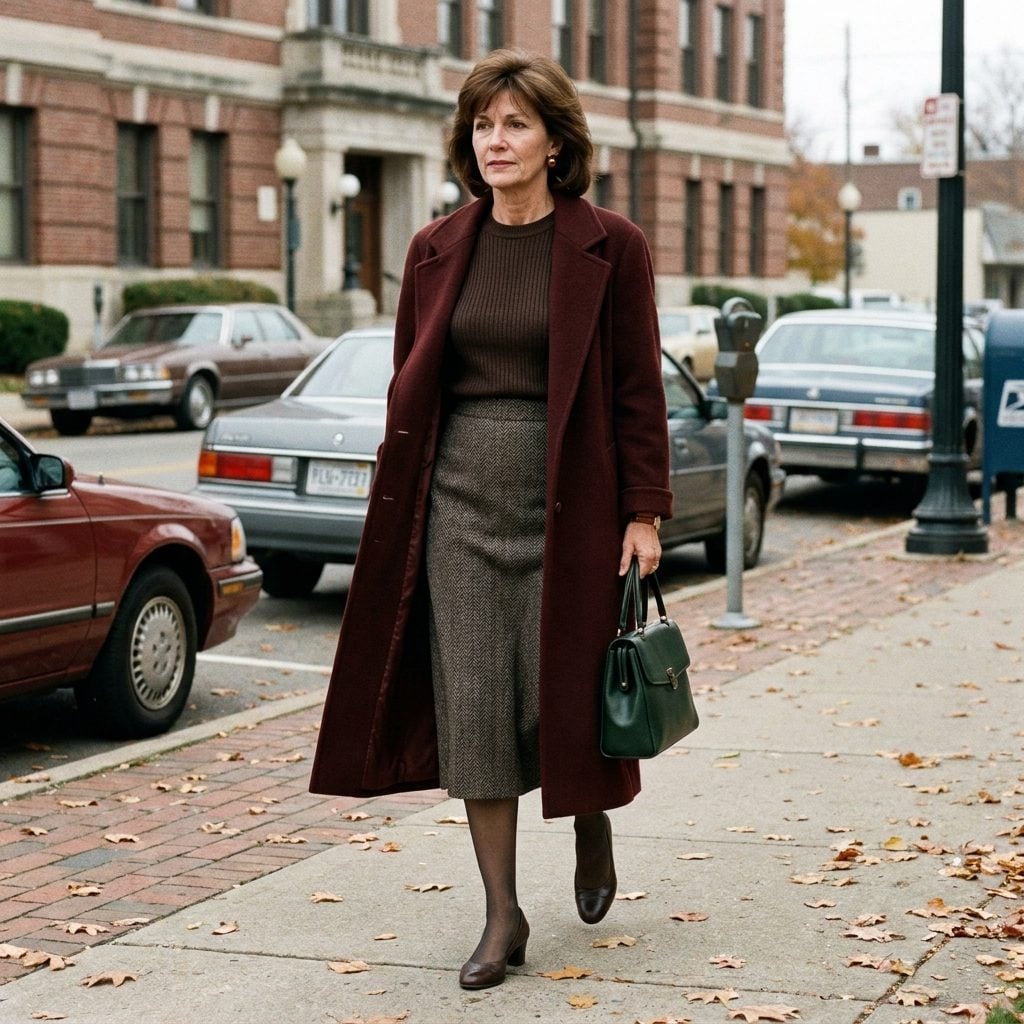
The oxblood coat supplies the drama, but underneath it the outfit stays remarkably restrained: espresso ribbed knit, herringbone walking skirt, charcoal hosiery, dark pumps.
The herringbone wool skirt brings a quiet pattern that rewards a closer look without breaking the warm, subdued palette.
4. Aubergine Suede Replaces the Expected Black Blazer
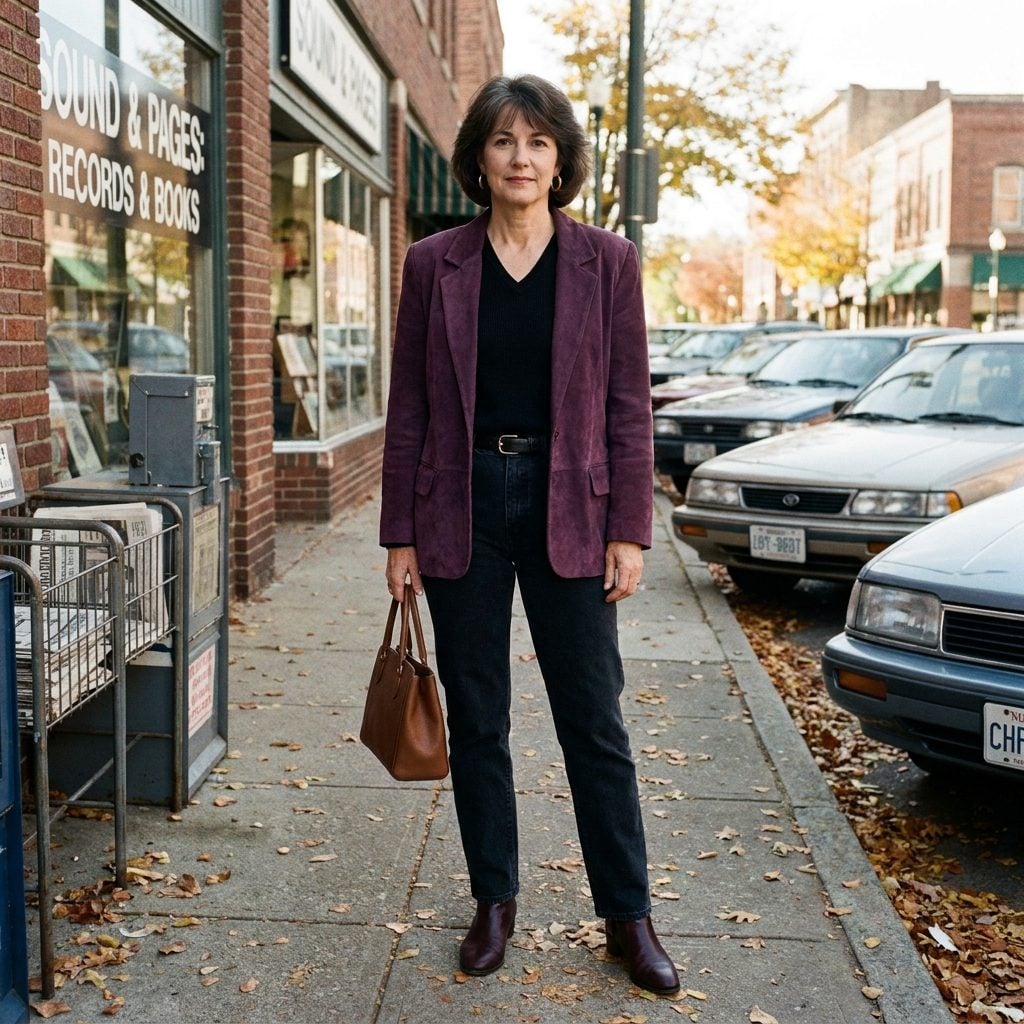
Aubergine suede gives this blazer the depth of a dark neutral without simply becoming black. The black V-neck underneath keeps the center quiet, while high-rise dark denim gives the outfit a sturdy everyday base.
Burgundy ankle boots pick up the warmth of the blazer without matching it exactly. That near-match is more interesting than a perfectly coordinated set and keeps the purple-brown palette from becoming too precious.
3. Another Camel Coat, This Time With Creased Charcoal Trousers
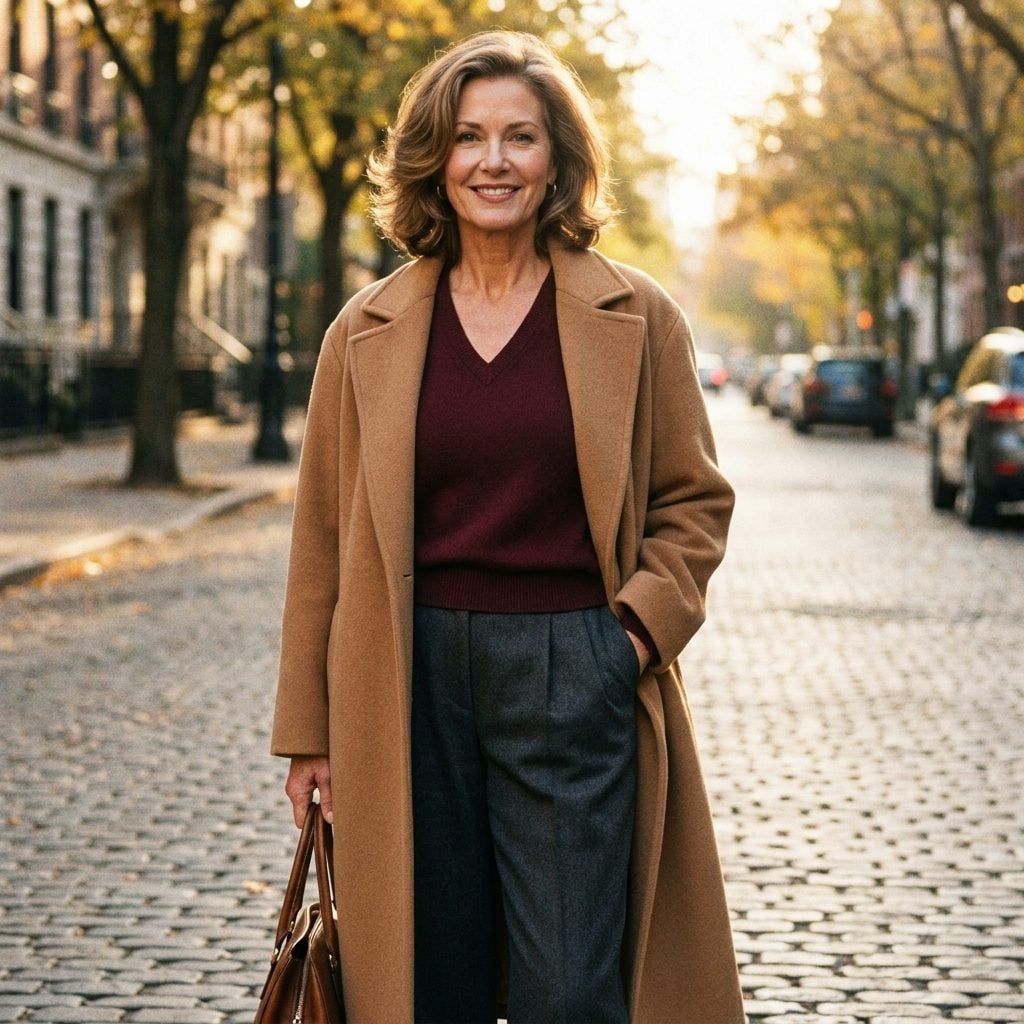
This camel-and-burgundy combination earns its place separately from the denim version because the lower half changes the entire character. Charcoal trousers introduce a pressed crease, cleaner drape, and a more tailored fall from waist to shoe.
The camel coat is worn open, while the oxblood shoulder bag stays in the burgundy family without trying to match the sweater exactly.
Decades on, this combination needs remarkably little translation: high-rise creased trousers, a fine V-neck, a long coat worn open, and one dark red accessory.
2. Plaid Wool Gets Bracketed by Charcoal
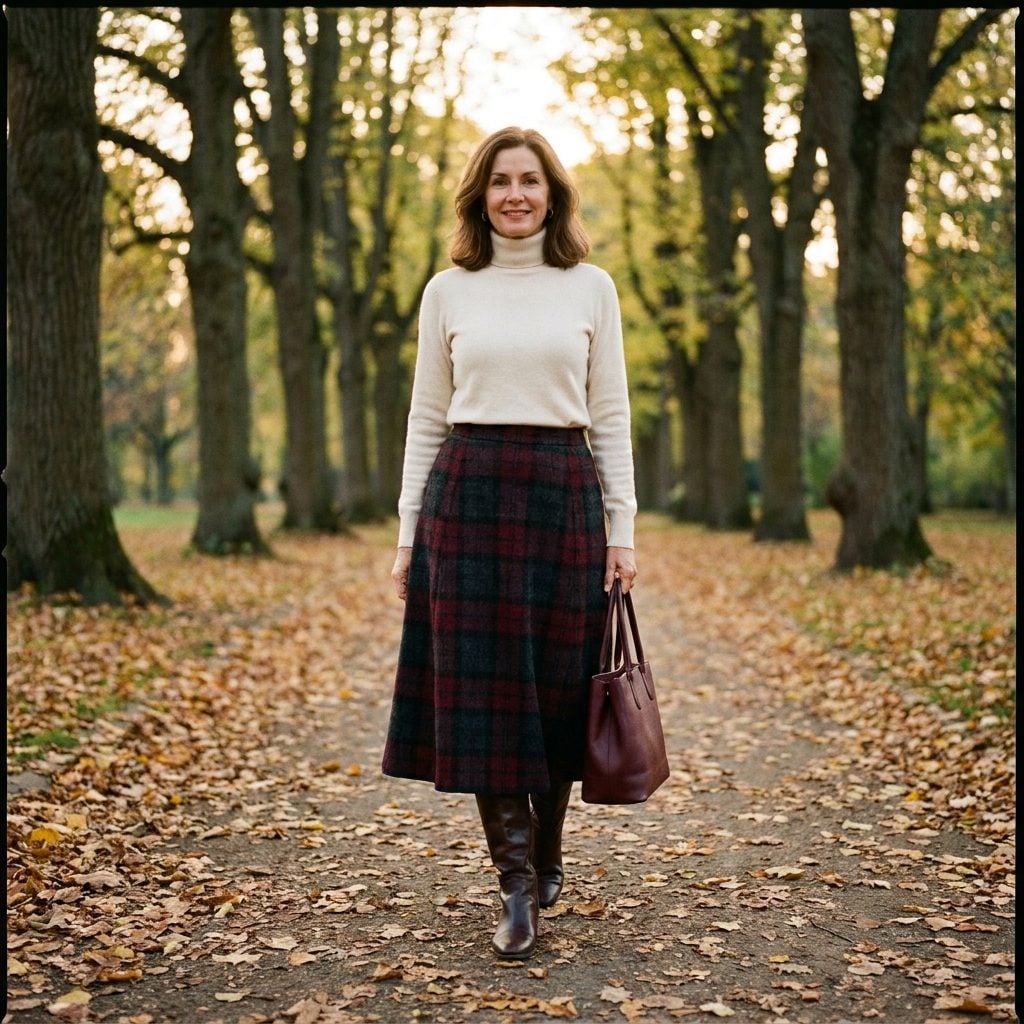
The plaid skirt carries enough pattern for the whole outfit. Charcoal above and below gives it solid boundaries, while a burgundy bag lifts one color directly from the check without introducing anything new.
The medium-scale plaid feels controlled beside the dark turtleneck and hosiery. Bigger checks could create a more graphic result; this version is simply quieter.
1. Navy Culottes Finish With a Completely Different Proportion
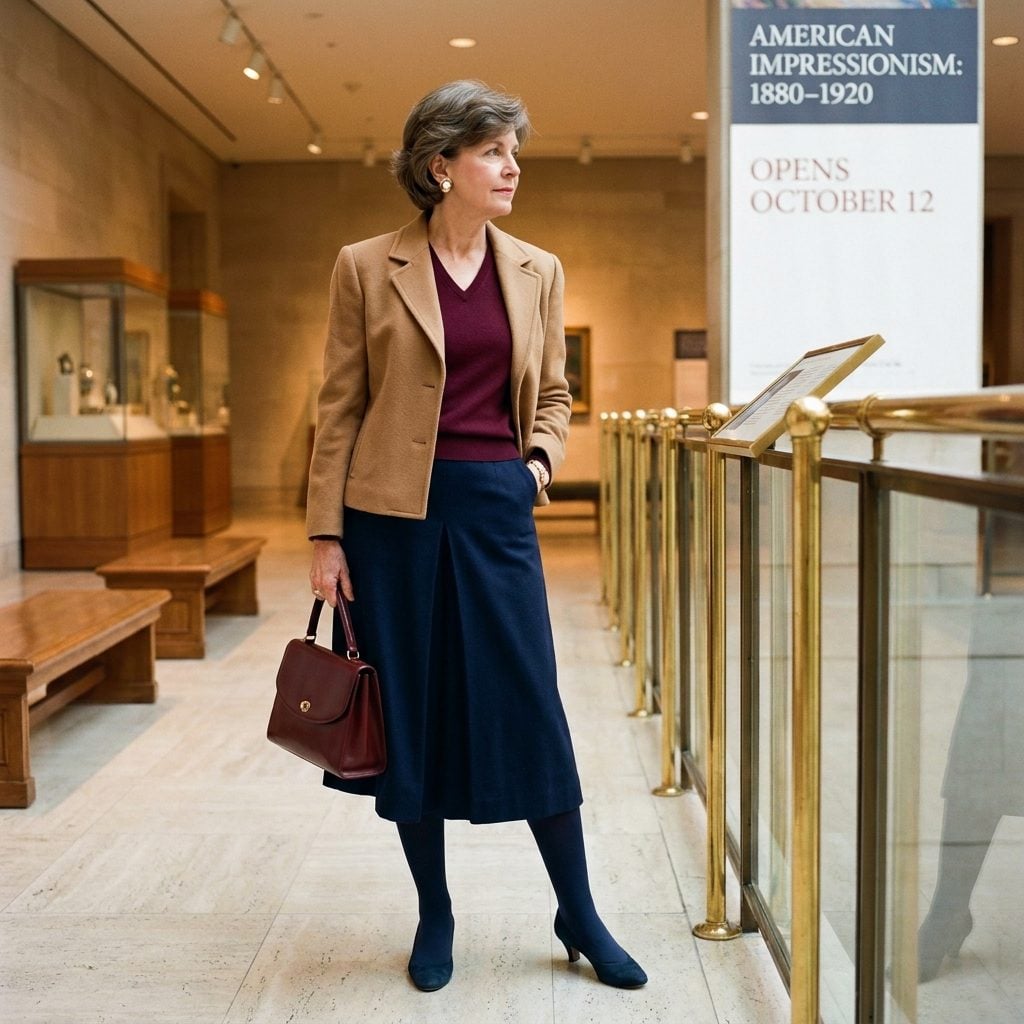
The cropped camel jacket establishes the upper boundary early, which gives the full navy culottes room to move without being paired with another long layer. Wide cropped shapes can shorten the apparent leg line when everything above them is long too; this outfit avoids that particular pileup.
Navy continues through hosiery and pumps, while the fitted burgundy knit keeps the torso compact between camel and navy. The oxblood bag echoes the sweater without laboring the point.
Culottes are the right place to finish because they break nearly every formula that came before them. They are wide instead of straight, cropped instead of floor-skimming, and closer to a skirt in movement than conventional trousers. Yet the same 1991 logic survives: know where the jacket should stop, decide where the color should continue, and let proportion do more than camouflage ever could.