❤️ Would you like to save this?
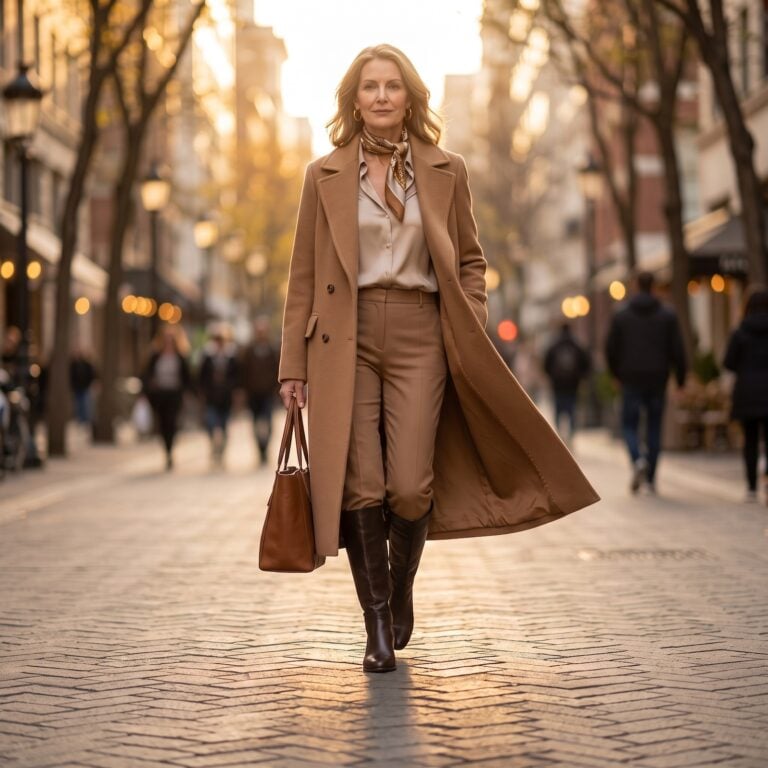
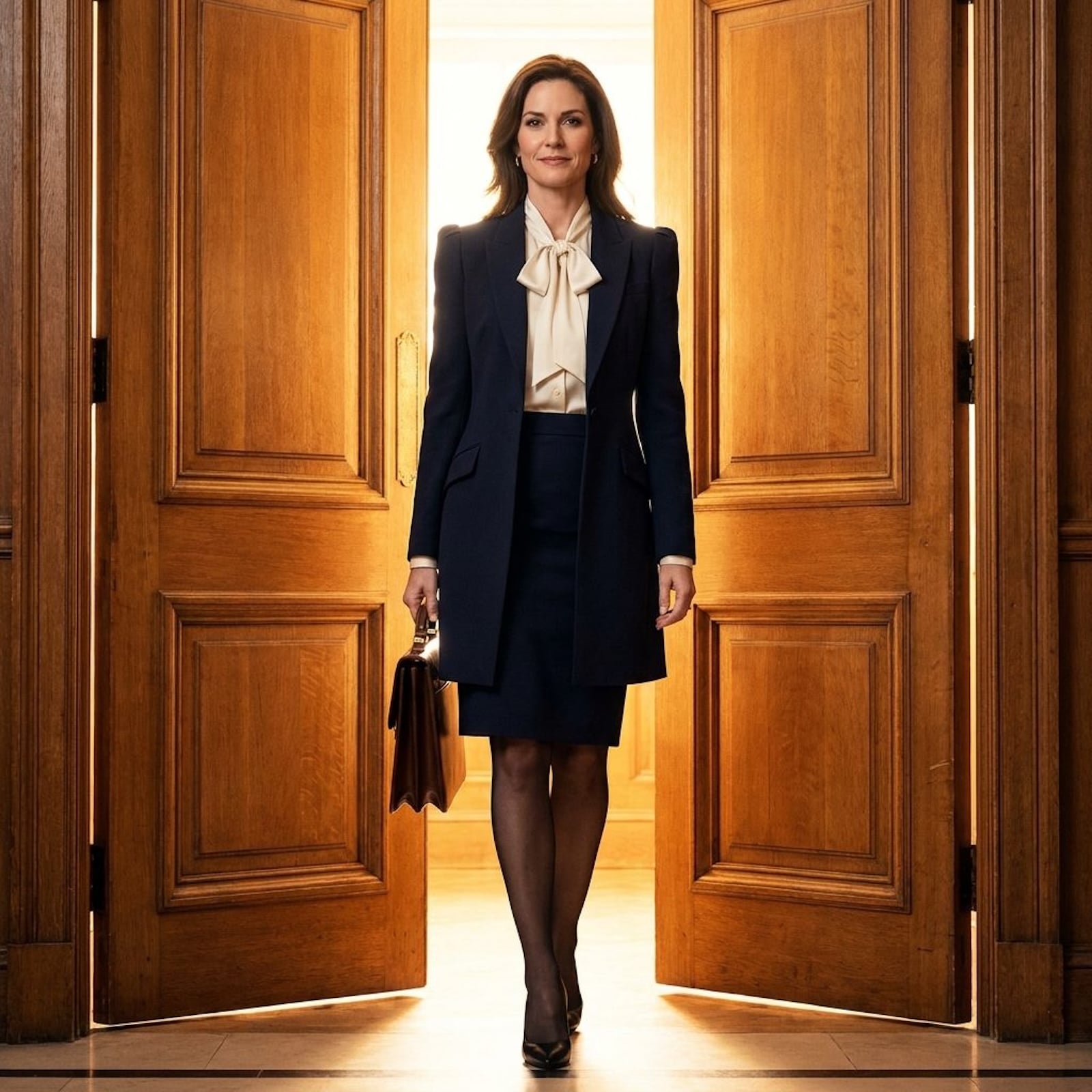
Before anybody opened a résumé, checked a title, or glanced toward the corner office, the clothes had already started talking. A charcoal jacket crossed the lobby. Moderate heels clicked over industrial carpet. Somewhere beyond the cubicles, a fax machine coughed out another curling sheet of paper while a woman in a long navy suit headed toward a meeting nobody planned to start without her.
Office fashion in 1992 lived in a fascinating halfway place. The armored power suit of the 1980s hadn’t disappeared, but its shoulders were coming down, its jackets were getting longer, and softer knits, fluid trousers, silk shirts, restrained jewelry, and expensive-looking neutrals were slipping into the executive wardrobe. You could practically watch one era handing the keys to the next. These were the clothes that made the org chart visible from across the room.
FYI, thanks to AI imagery software, we’re able to create very specific fashion and hairstyle examples to illustrate the points being made. In some cases, imagery is exaggerated to hammer home the point. Also, assume links that take you off the site are affiliate links such as links to Amazon. this means we may earn a commission if you buy something.
30. The Charcoal Double-Breasted Suit That Meant She Signed the Checks
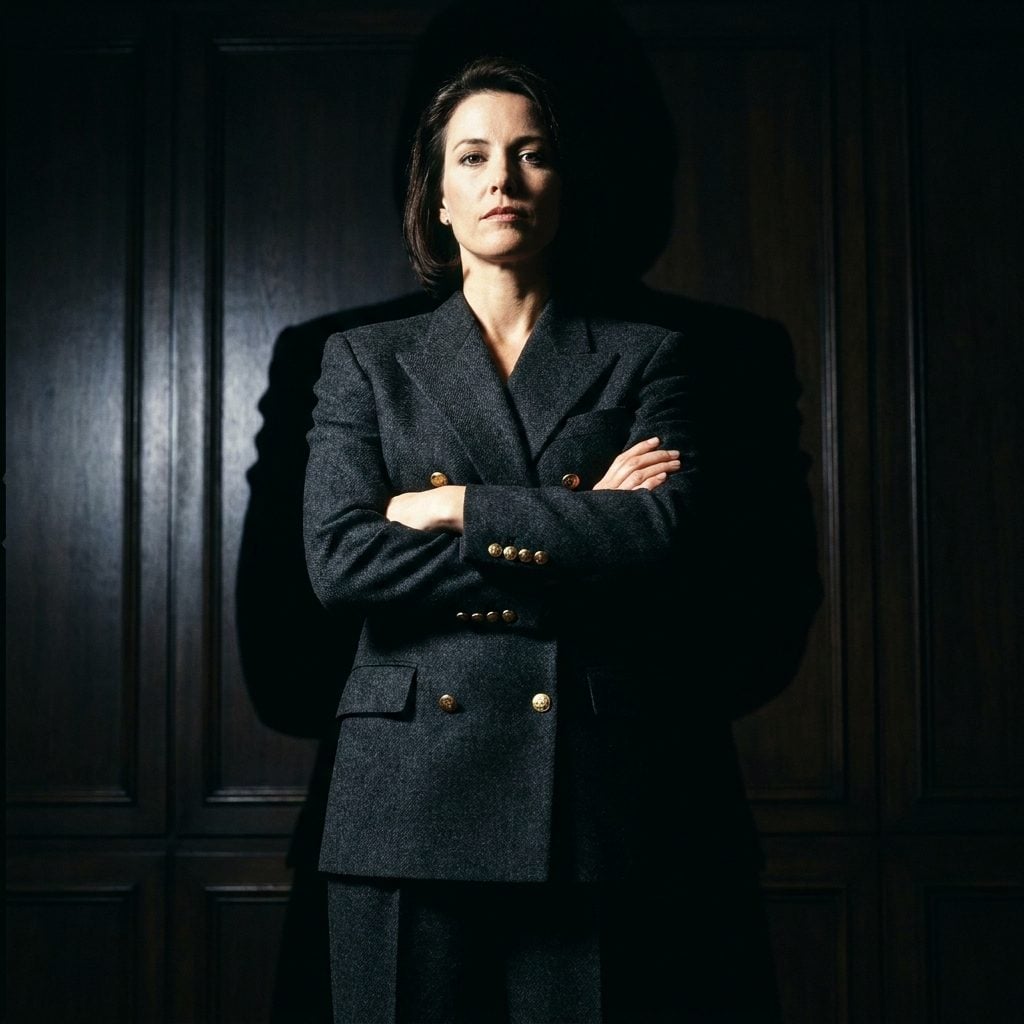
Double-breasted tailoring didn’t enter a room quietly. Two disciplined rows of buttons broadened the torso, gave the jacket architectural weight, and made a single-breasted suit across the conference table look almost tentative by comparison.
Charcoal helped. Black could feel severe and navy had become corporate shorthand, but charcoal occupied the expensive middle ground — serious without looking ceremonial. Add the slightly elongated jacket of the early 1990s and this was less a suit than a piece of office infrastructure. She didn’t wait to be offered a chair. Someone had already put her name on it.
29. The Wide Leather Belt Cinching the Waist of a Longline Jacket
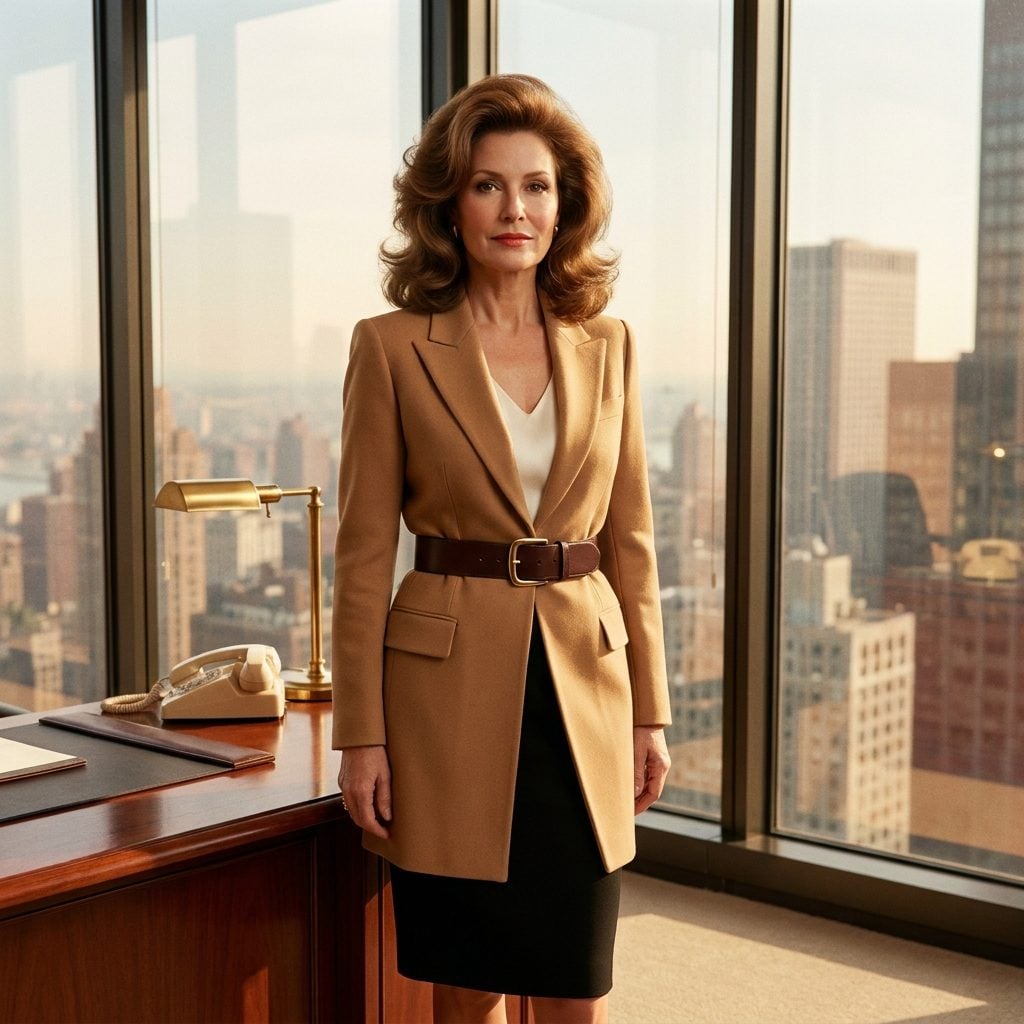
One camel-toned wide leather belt could rescue a long jacket from becoming a rectangle. Suddenly the waist reappeared, the proportions snapped into focus, and a perfectly ordinary blazer started looking chosen rather than merely owned.
Call it proportional editing with hardware. The belt interrupts all that fabric exactly where the eye needs a break, turning one long block into a deliberate silhouette without altering a stitch. Cheap compared with a new suit, instantly visible from across the room, and remarkably effective.
28. The Longline Navy Skirt Suit With Shoulders That Whispered Instead of Shouted
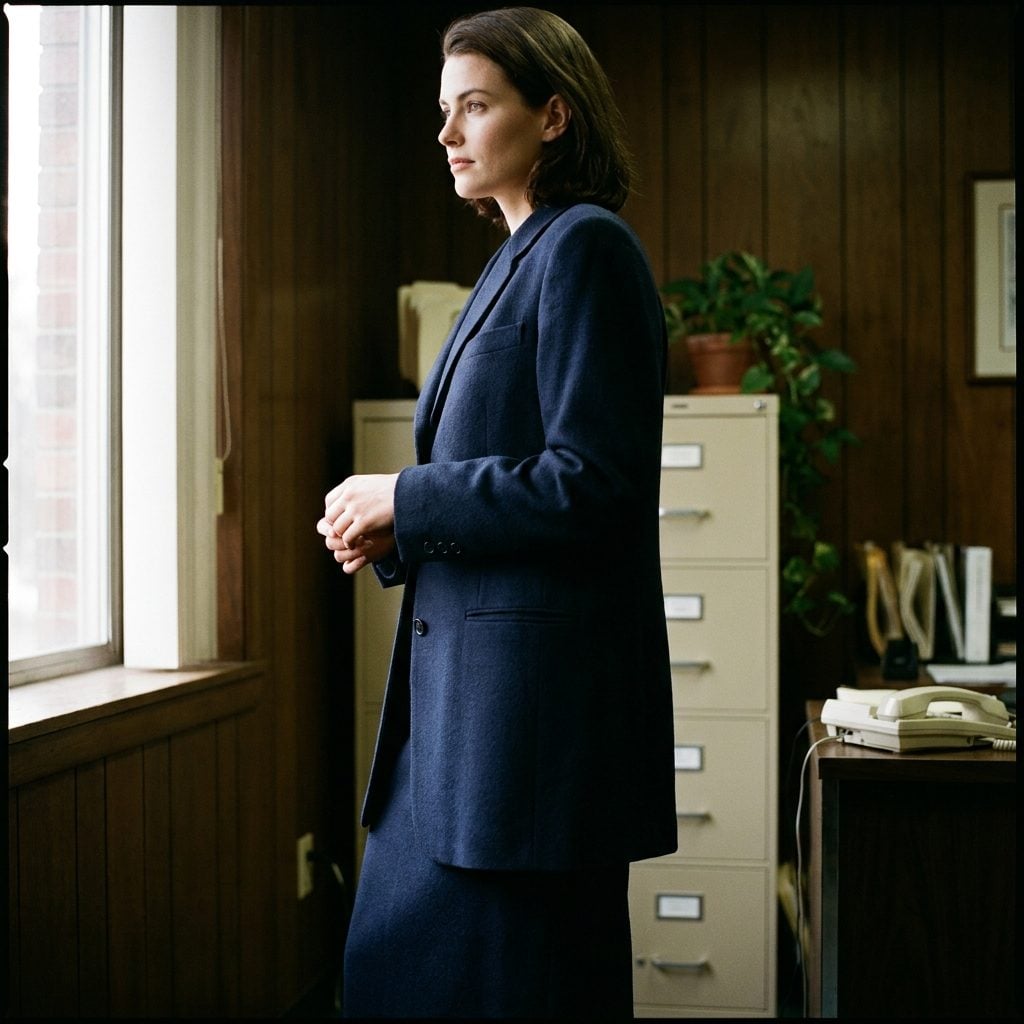
The shoulders were still there. They had simply stopped arriving five minutes before the woman wearing them.
By 1992, the most exaggerated padding of the previous decade was easing back, and jacket length was beginning to provide the drama instead. A navy blazer running well past the hip over a straight matching skirt created a leaner, calmer silhouette. Same boardroom authority, considerably less linebacker.
27. The Houndstooth Jacket With a Black Office Skirt
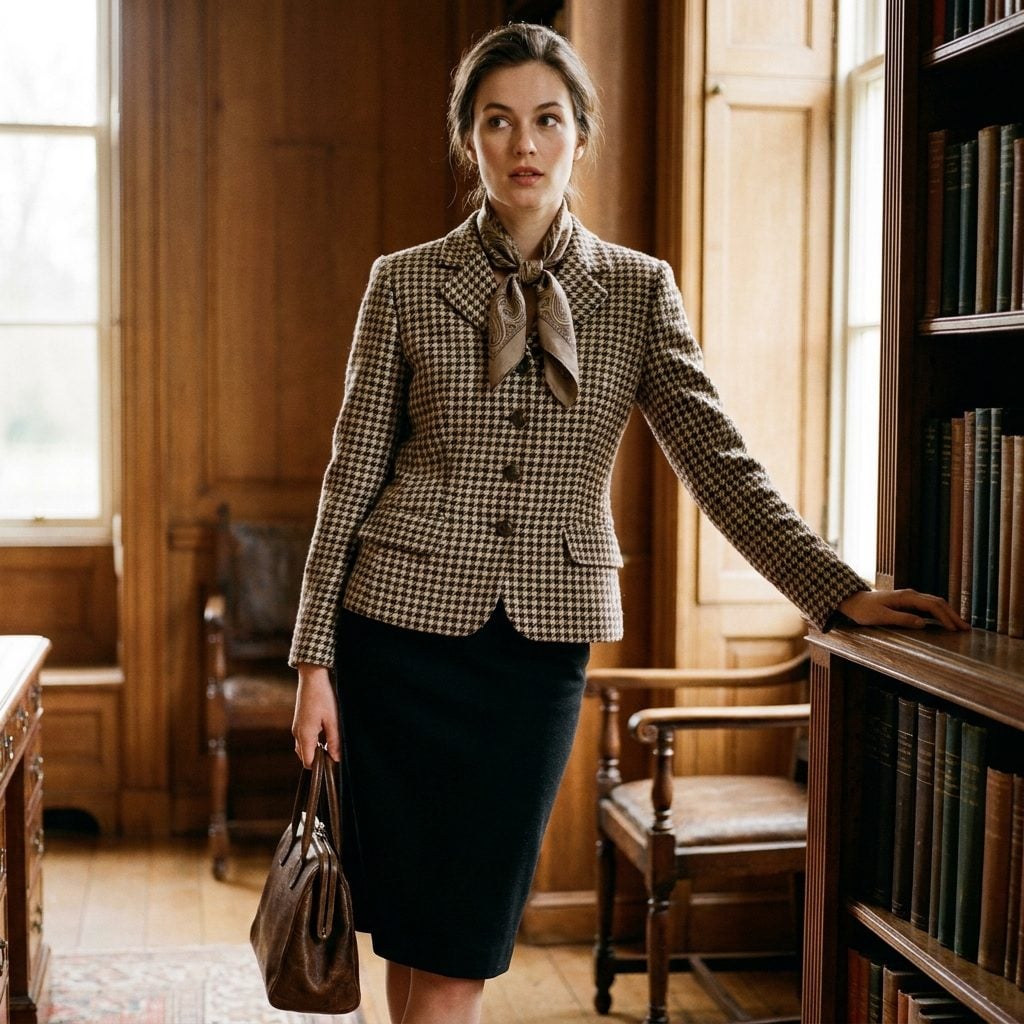
Houndstooth let a woman wear a pattern without looking as though she’d dressed for the pattern. From ten feet away it behaved almost like texture. Move closer and the little black-and-white checks sharpened into focus.
The black skirt was what made the arrangement behave. No second print, no competing color story, no jewelry trying to get into the argument. One animated piece, one quiet piece. Office dressing rarely gets more efficient.
26. The White Shirt With Pinstripe High-Waisted Trousers and Jacket
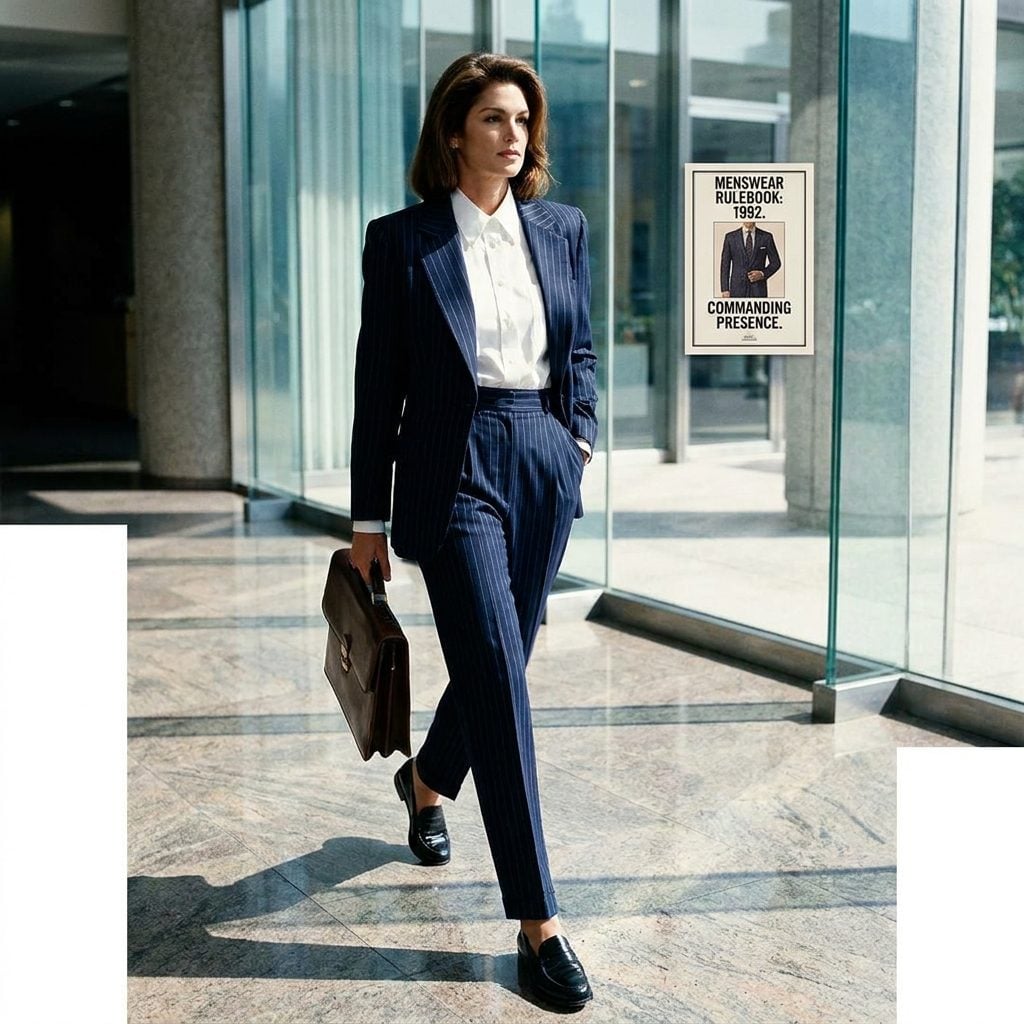
Pinstripes came with decades of male-boardroom baggage, which made them particularly satisfying on a woman who had no intention of pretending she hadn’t noticed.
Here, the proportions are the story: high waist, pleated trouser, roomy leg, long jacket, crisp white shirt tucked cleanly into the middle of all that charcoal. The stripe keeps the eye traveling while the white shirt cuts through the pattern like a clean sheet of paper.
She borrowed the men’s vocabulary and kept the delivery entirely her own.
25. The Burgundy Skirt Suit Over an Ivory Shell
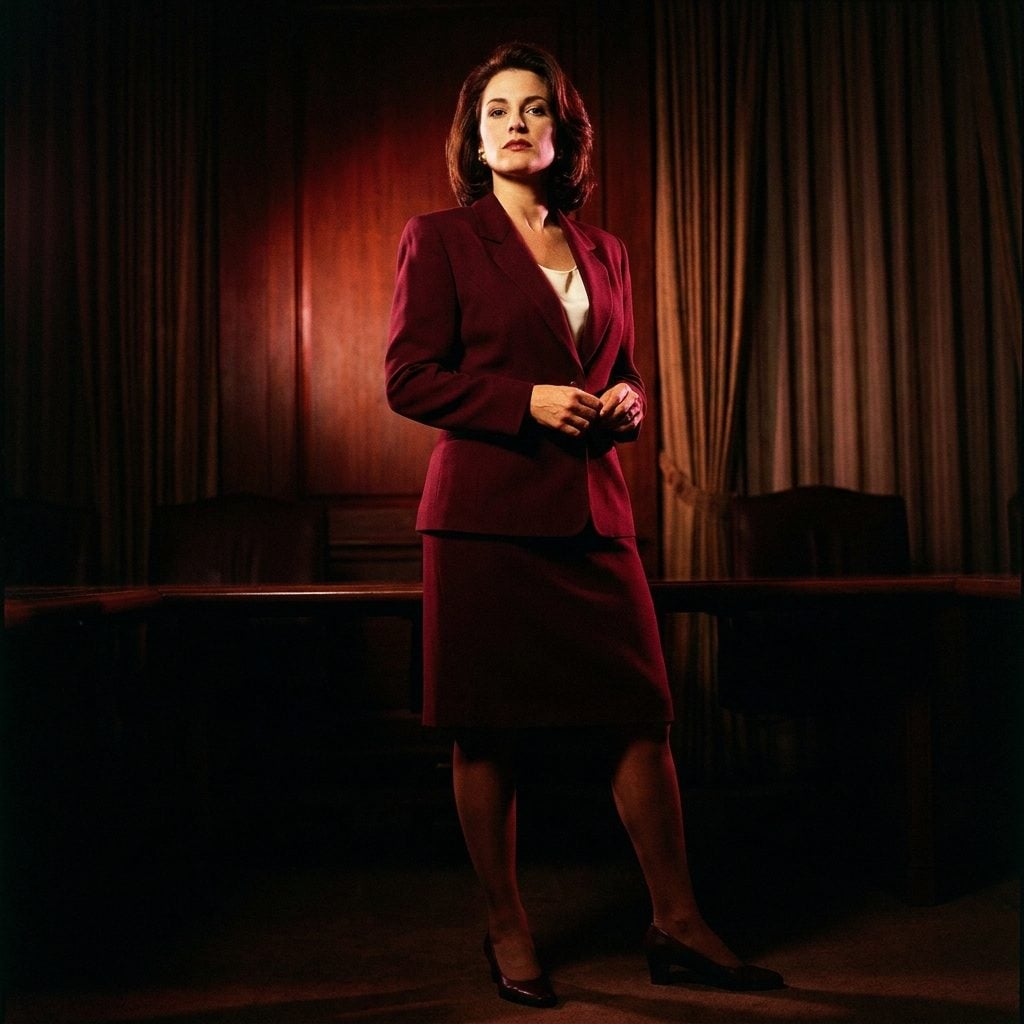
Burgundy was what happened when a woman wanted the seriousness of navy without disappearing into a conference room full of it. Deep enough for business, rich enough to register immediately, it made its point without resorting to electric 1980s color.
The ivory shell prevents all that saturated wool from becoming heavy. Jewelry can stay small, tailoring can stay simple, and the color gets the room to itself. A camel coat over the whole thing would have handled the commute beautifully, but indoors this suit didn’t need another sentence.
24. The Matching Jacket-and-Dress Ensemble
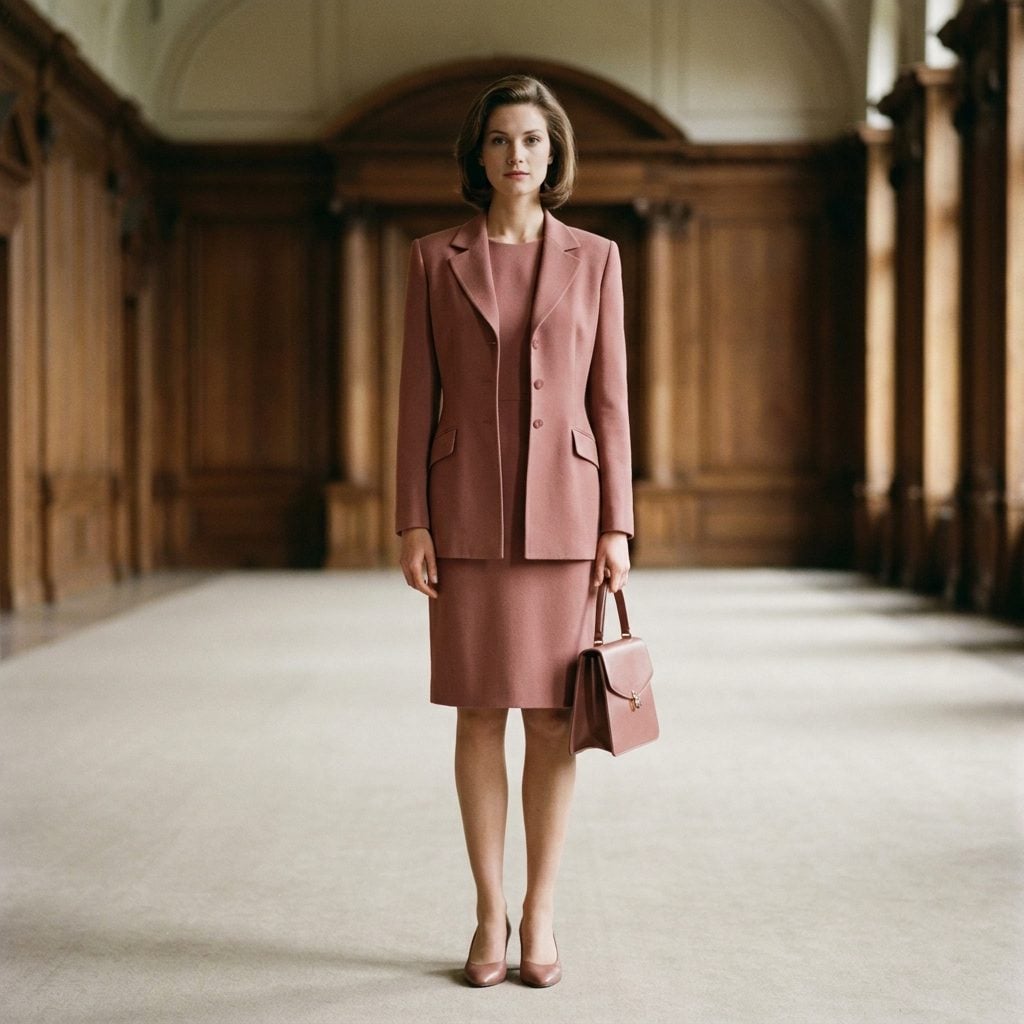
The matching dress and jacket was corporate dressing reduced to one excellent decision. No blouse wondering whether it liked the skirt. No morning negotiations with separates. Put on the dress, add the jacket, leave.
Its real advantage appeared over the course of the day. Jacket off at the desk, jacket back on before the meeting. The longer layer over the sheath gave the outfit movement and presence while the matching color kept the whole thing almost absurdly composed.
23. The Deep Red Executive Jacket Over a Black Straight Skirt
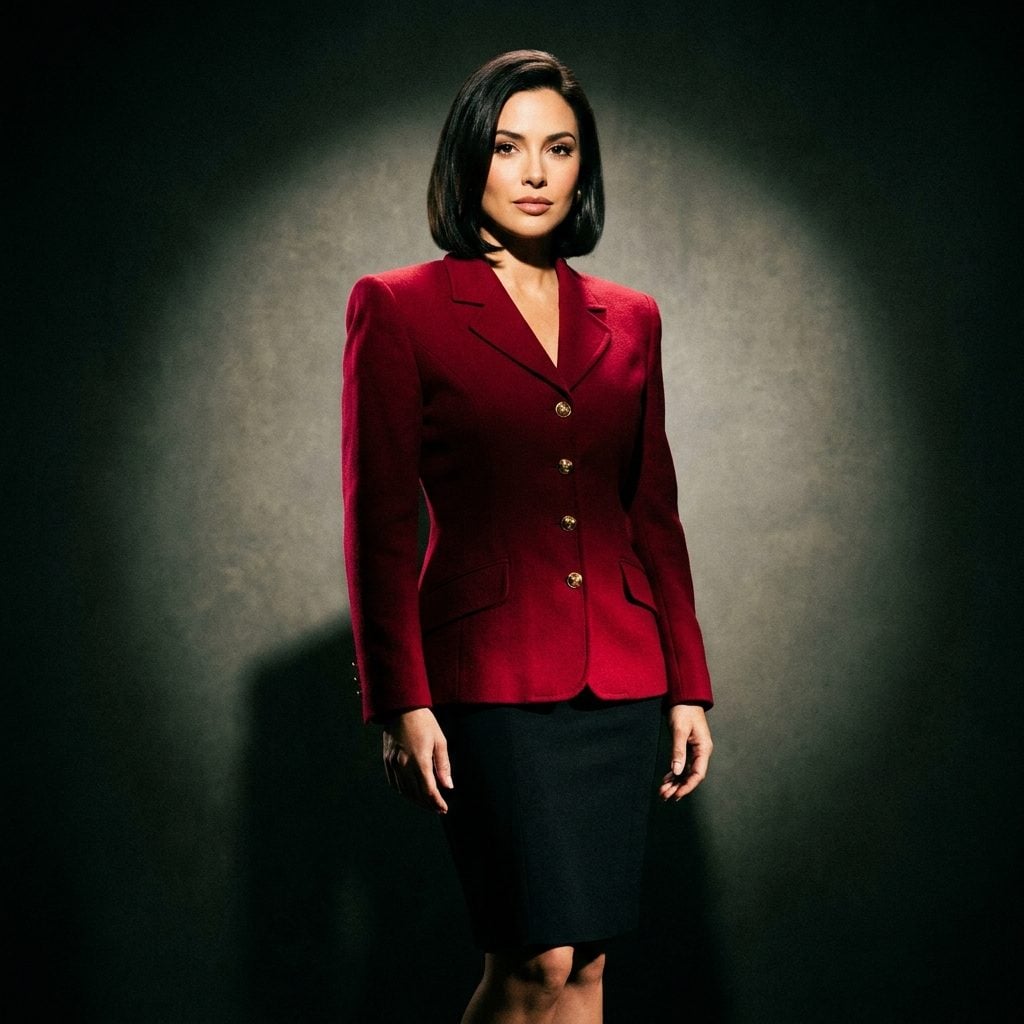
Navy participated in the meeting. Red entered already knowing where the conversation was going.
The smartest part is everything that doesn’t compete with it. A plain black wool straight skirt, a low leather pump, restrained accessories, moderate shoulders. The jacket gets the headline while the rest of the outfit quietly keeps the page from becoming cluttered.
22. The Ivory Silk Blouse Doing the Softening
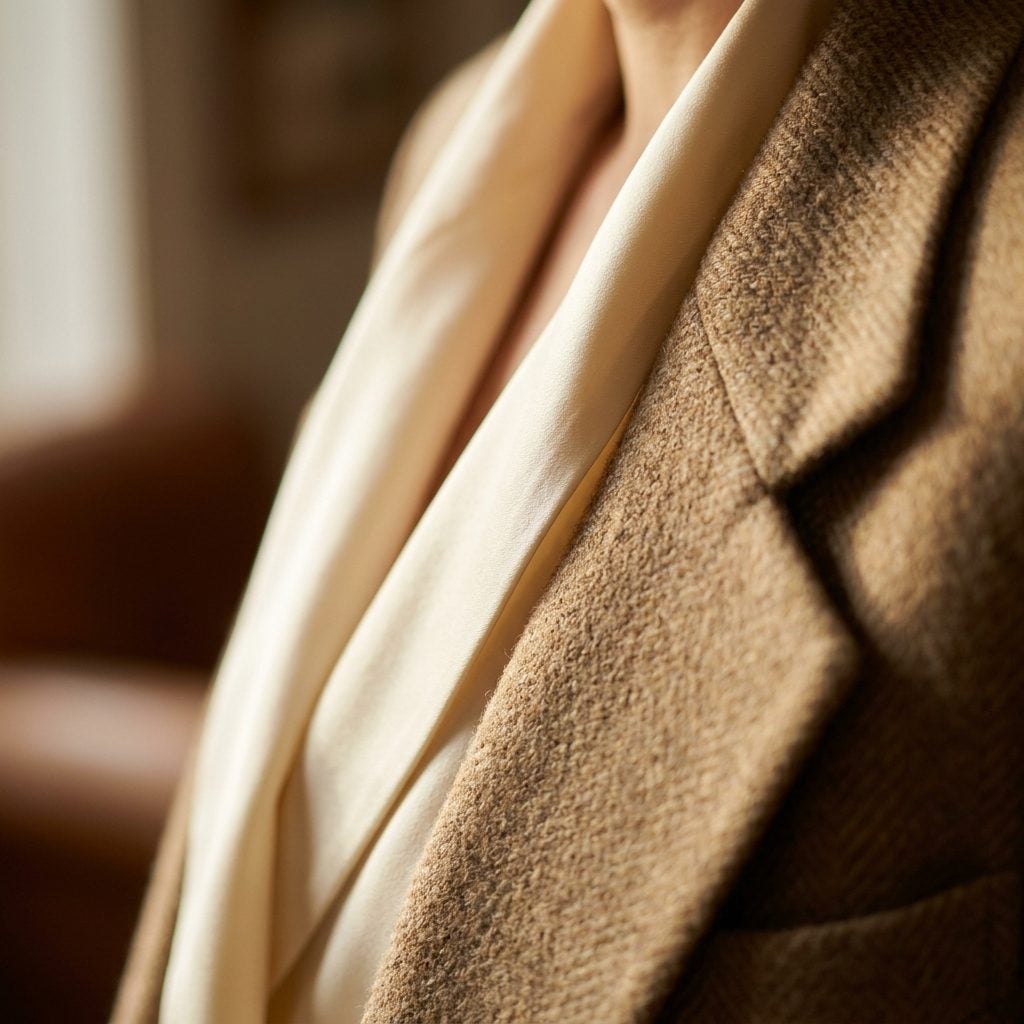
A dark wool suit could carry a lot of visual weight. Ivory silk gave it somewhere to breathe.
The pleasure was in the collision of surfaces. Wool held its shape; silk slipped, folded, reflected light, and refused to look bureaucratic. The blouse didn’t make the suit less serious. It made all that structure look more intentional.
21. The Pinstripe Pantsuit Softened by a Feminine White Shirt
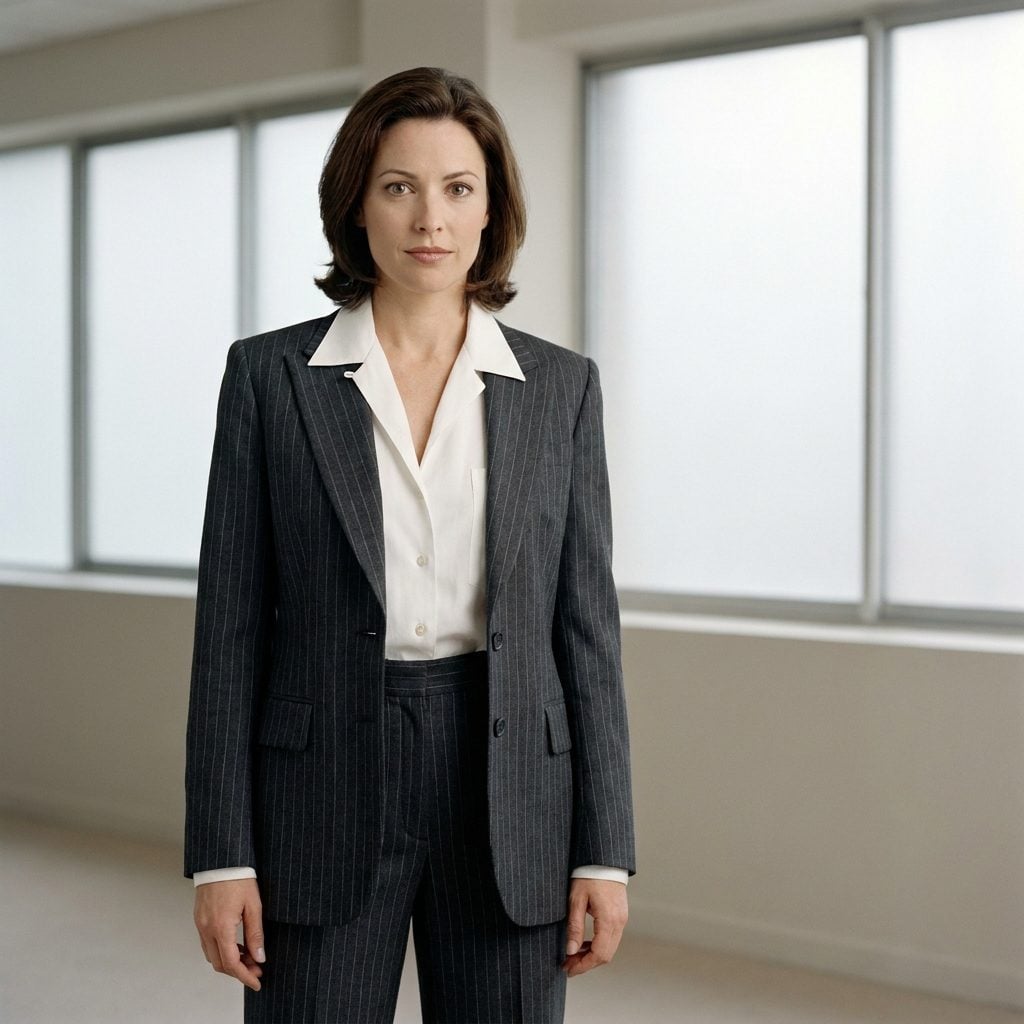
Another pinstripe suit, completely different argument.
This time the interest isn’t the trouser shape or the borrowed boardroom pattern. It’s the blouse. A soft collar, a little ruffle, a deliberately feminine detail sitting inside tailoring with unmistakably masculine roots. Neither half cancels the other. The friction is precisely why the outfit works.
20. The Camel Longline Jacket Over a Black Straight Skirt
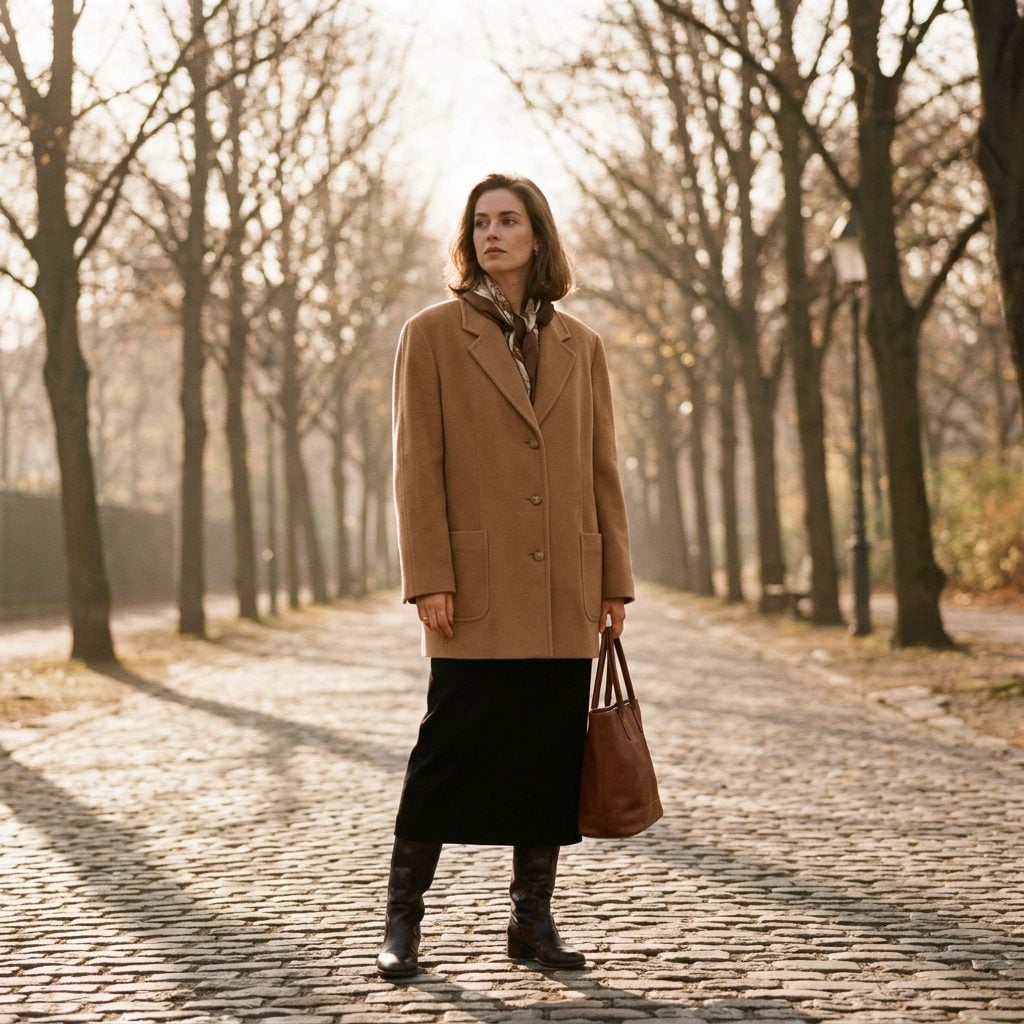
Camel had none of the fluorescent hangover of the late 1980s. Against a black skirt, it looked almost suspiciously calm.
The camel longline jacket supplies warmth without fuss, while black underneath gives it a hard edge. Those softer tan tones were part of a broader early-1990s move toward quieter palettes and clothes that could survive more than one fashion season.
19. The Long Glen-Plaid Blazer That Borrowed From Menswear and Owned It
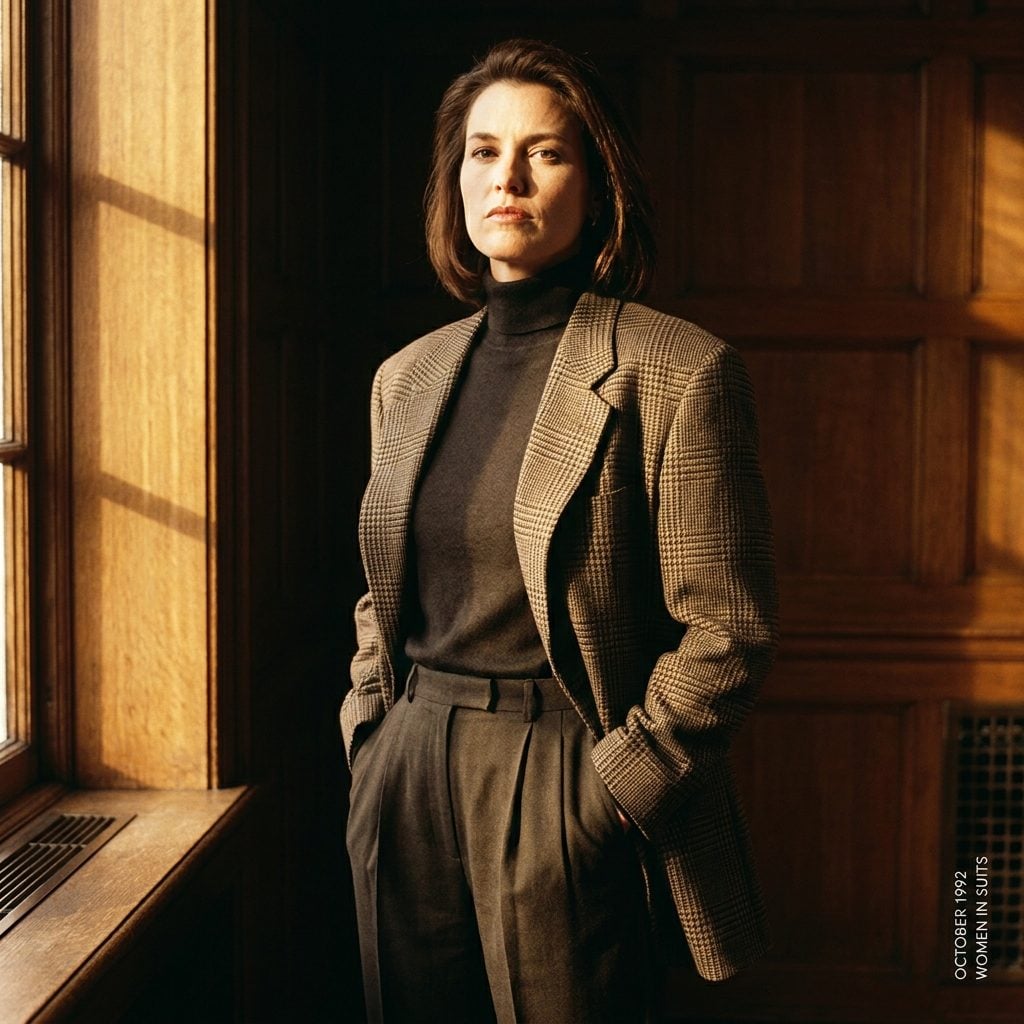
Glen plaid arrived with an entire filing cabinet of associations: bankers, lawyers, old clubs, men’s tailoring. Putting the check on a long women’s blazer with matching trousers made the reference impossible to miss.
The confidence comes from refusing to dilute it. Jacket and trousers carry the same pattern while a pale silk blouse gives the eye one quiet place to land. Had the trousers been plain, the look would have politely nodded at menswear. Matching them turns the nod into appropriation.
18. The Dark Teal Suit With Pearl Studs

❤️ Would you like to save this?
Teal was for the woman who had looked at black, looked at navy, and decided both departments were sufficiently staffed.
The pearl studs are what keep the color sophisticated. No necklace fighting the neckline, no giant clips trying to turn the suit into an accessory display. Just two small points of light beside a saturated jacket. A decade that had loved costume jewelry was beginning to discover the pleasure of stopping sooner.
17. The Bow-Neck Blouse That Refused to Leave the Office
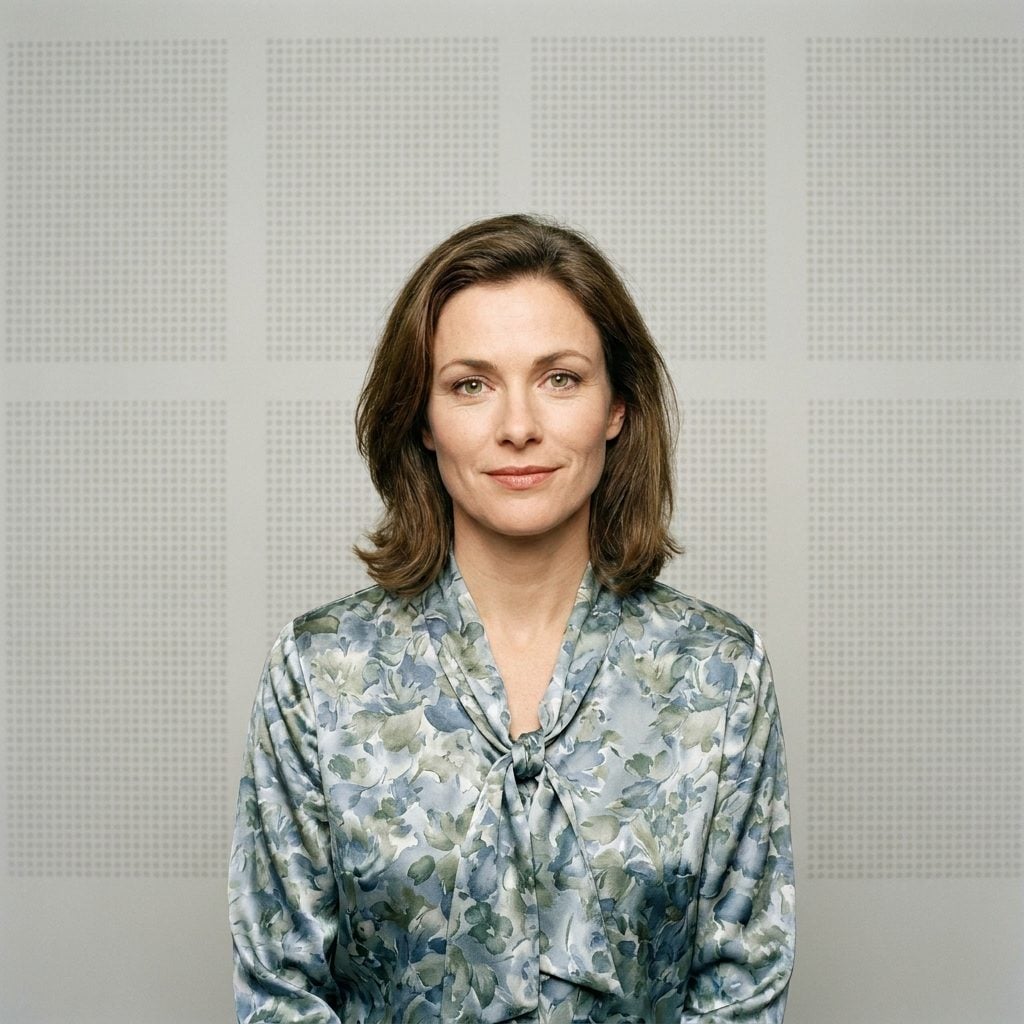
By 1992, the pussy-bow blouse was hardly new. That was part of its usefulness. It had spent years proving that a conspicuously feminine neckline could survive perfectly well under a serious blazer.
Silk if the budget allowed, polyester if it didn’t, and available in enough muted teal, dusty rose, cream and mauve to stock an entire administrative floor. The bow gave the face a little ceremony without asking the rest of the outfit to participate.
16. High-Waisted Pleated Wool Trousers With Room to Think
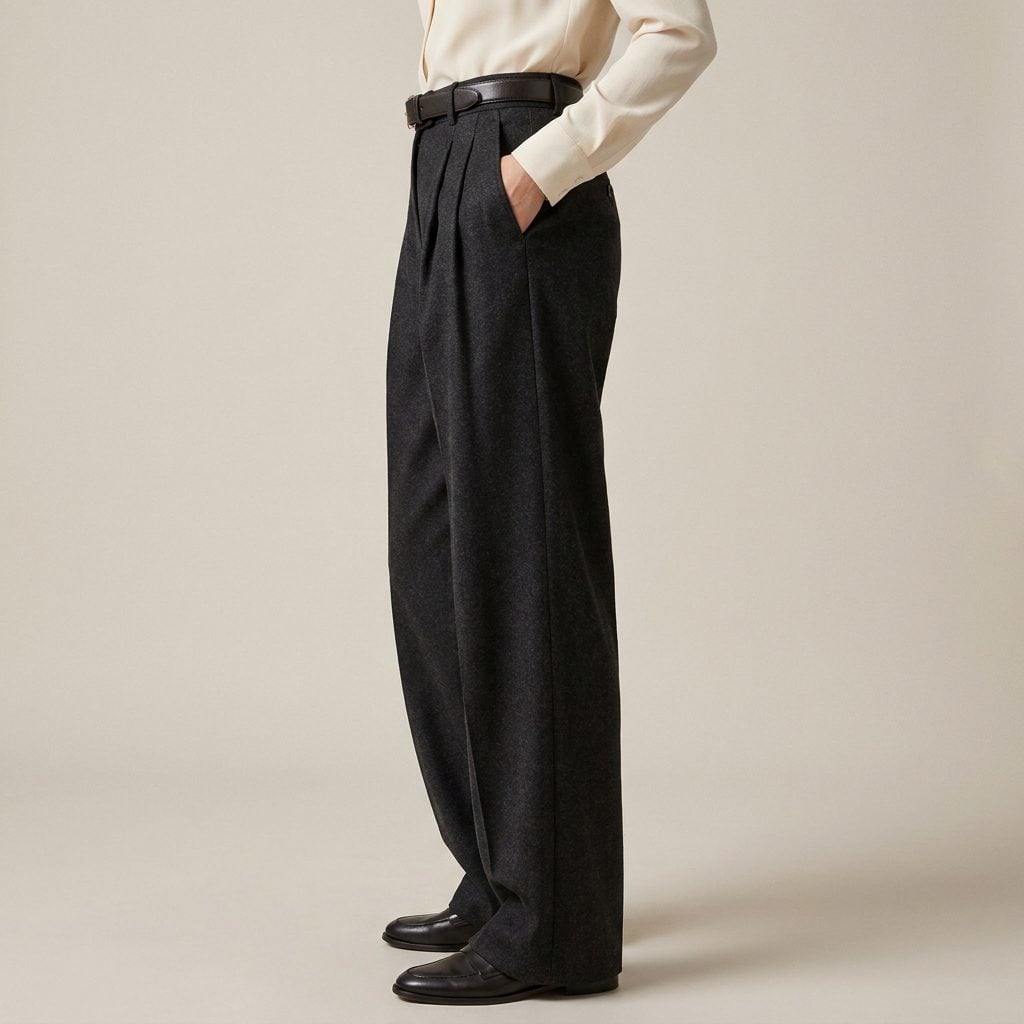
The waistband sat at the natural waist, the pleats opened below it, and the hips were permitted the radical privilege of having fabric around them.
That generous cut is what makes these trousers unmistakably early ’90s. In camel wool with a blouse tucked high, the shape drops cleanly from waist to shoe instead of clinging to every intermediate stop. Comfortable, certainly. Casual, not remotely.
15. The Collarless Textured Jacket With a Straight Skirt
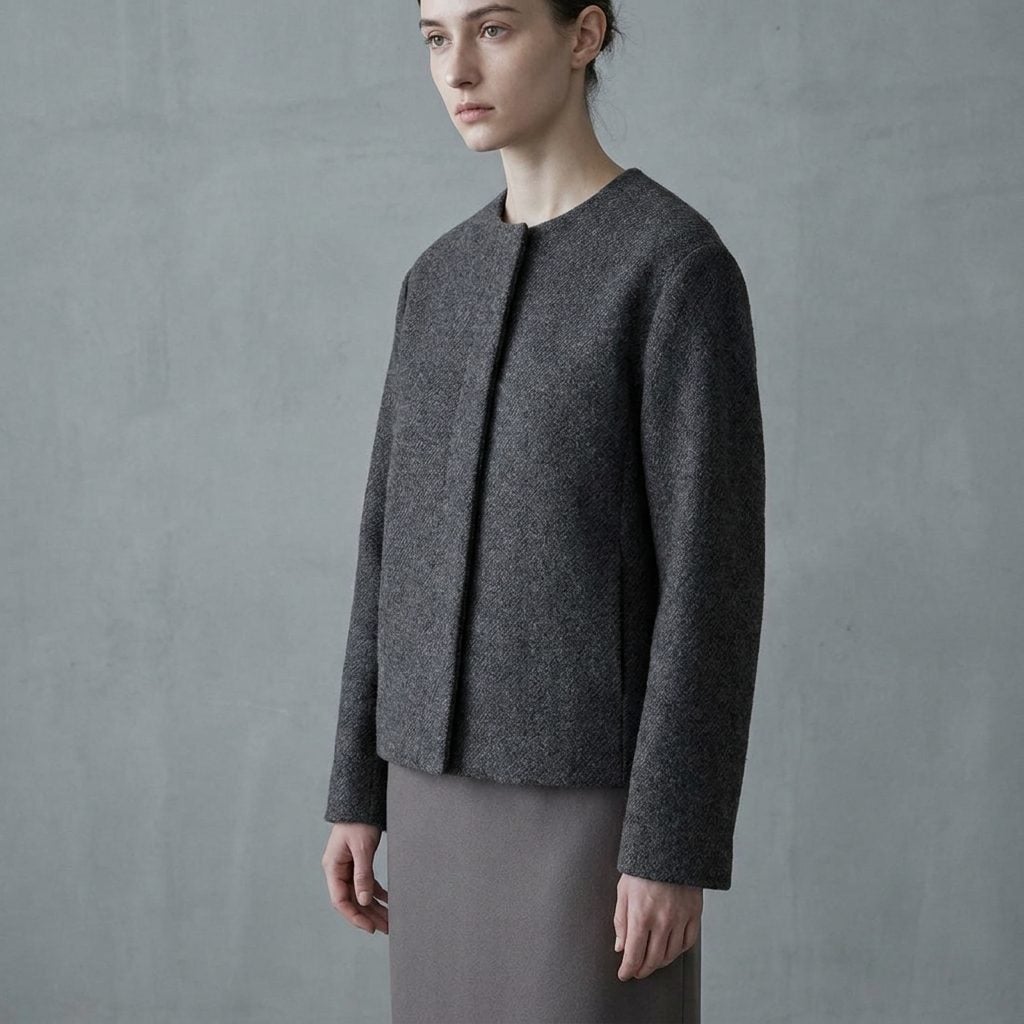
Take away the lapels and suddenly the whole suit changes temperature.
A bouclé or tweed surface provides enough visual interest that the neckline can stay beautifully spare. Against a plain straight skirt, all the complexity remains in the fabric rather than the cut. After years of broad lapels and emphatic shoulders, that clean collarless edge felt like somebody had opened a window.
14. The Straight Knee-Length Skirt With a Silk Shirt

No jacket. That was the interesting part.
A straight navy skirt and a silk shirt with the sleeves pushed up could still look completely at home in the office because the materials and proportions were doing the discipline. The skirt held a clean line while the shirt moved. This was executive dressing with the top layer removed — less ceremonial, more like somebody who had already been in the building since seven.
13. The Fine-Gauge Knit Tucked Into a Straight Office Skirt
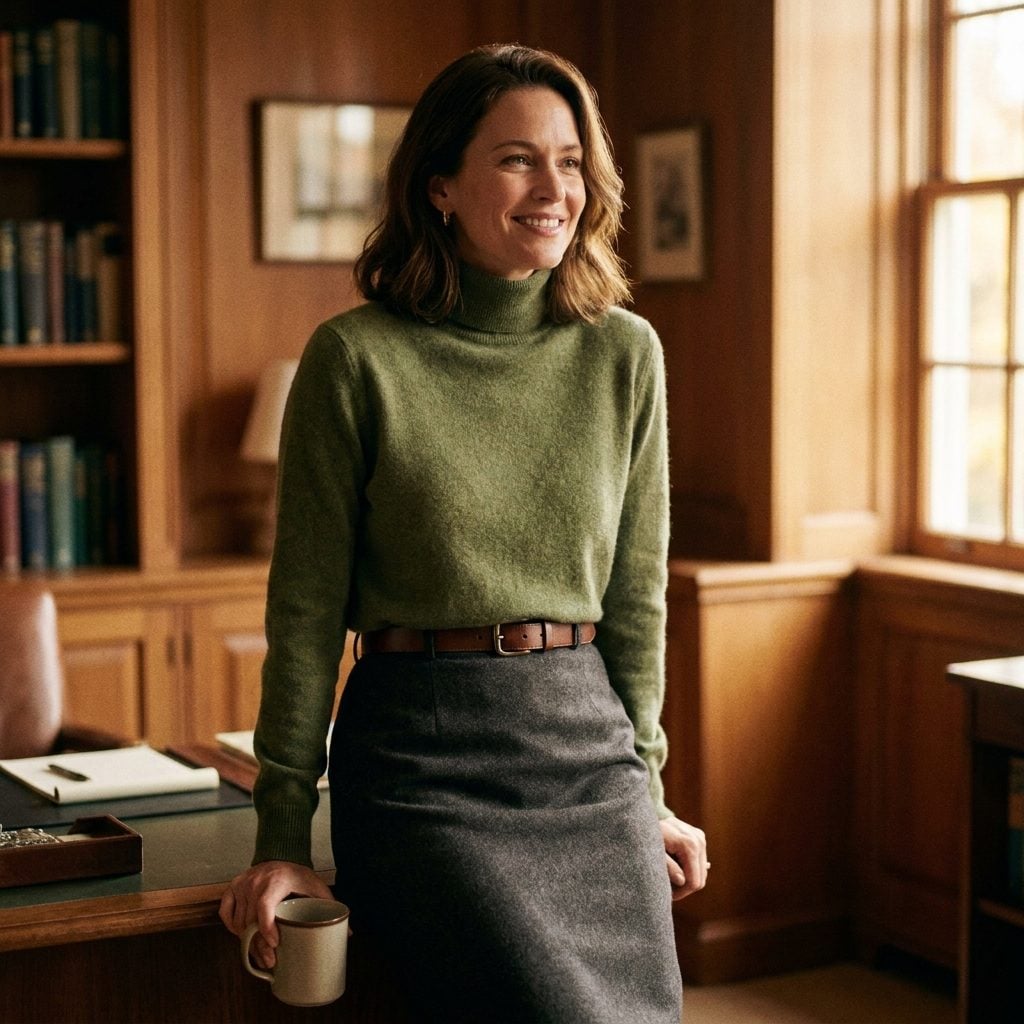
One of the clearest changes underway in 1992 was the realization that professionalism did not actually require a blazer at every waking moment.
A fine-gauge knit tucked into a structured skirt kept the proportions disciplined while letting the torso soften completely. Nothing slouched, nothing sagged, nothing looked like Saturday. The office had simply discovered a new material.
12. The Silk Scarf Knotted at the Throat Like a Signature
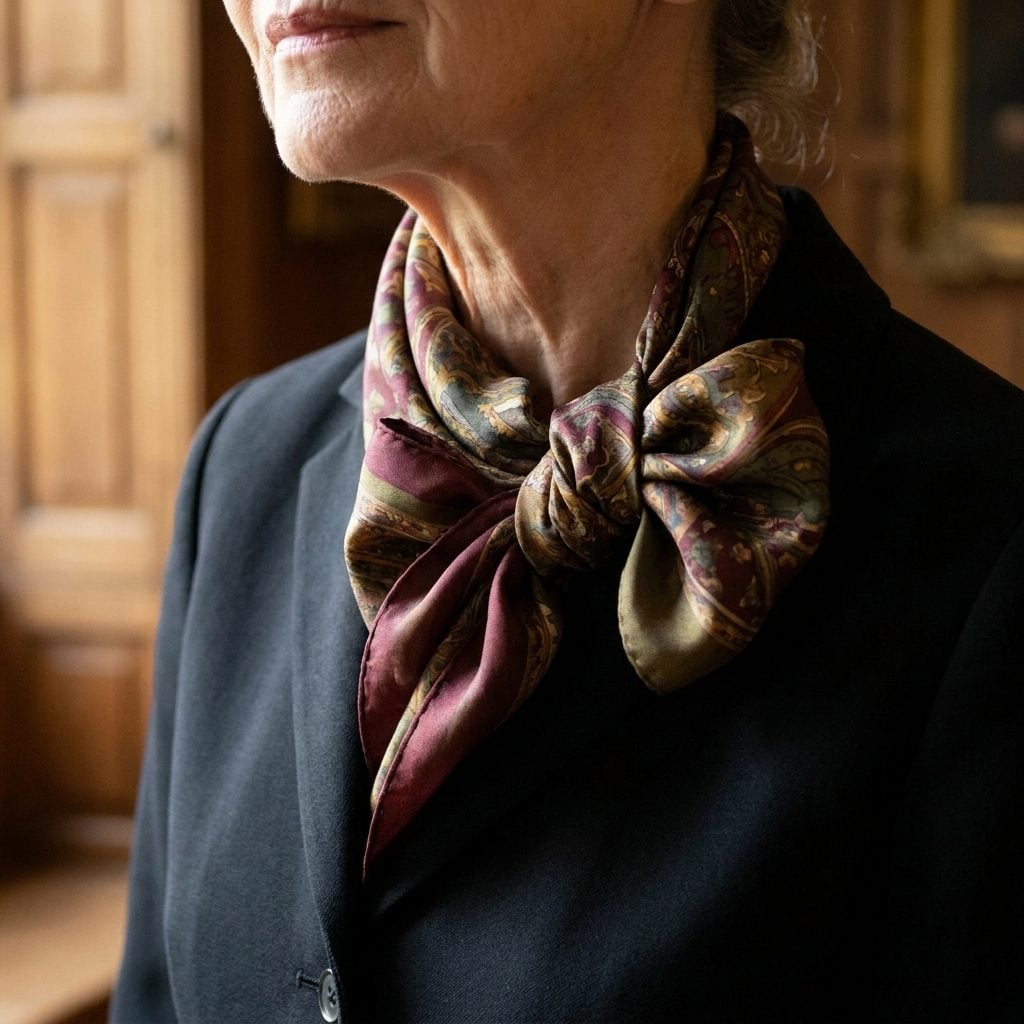
A dark suit could be anonymous right up until the scarf arrived.
Printed burgundy, emerald geometric, navy paisley — one square of silk folded at the throat gave a plain office uniform a recognizable accent. Better still was the woman who repeated the same kind of scarf week after week until it stopped looking like an accessory and started functioning almost like handwriting.
11. The Belted Cardigan That Took Donna Karan’s Easy-Dressing Idea to Work
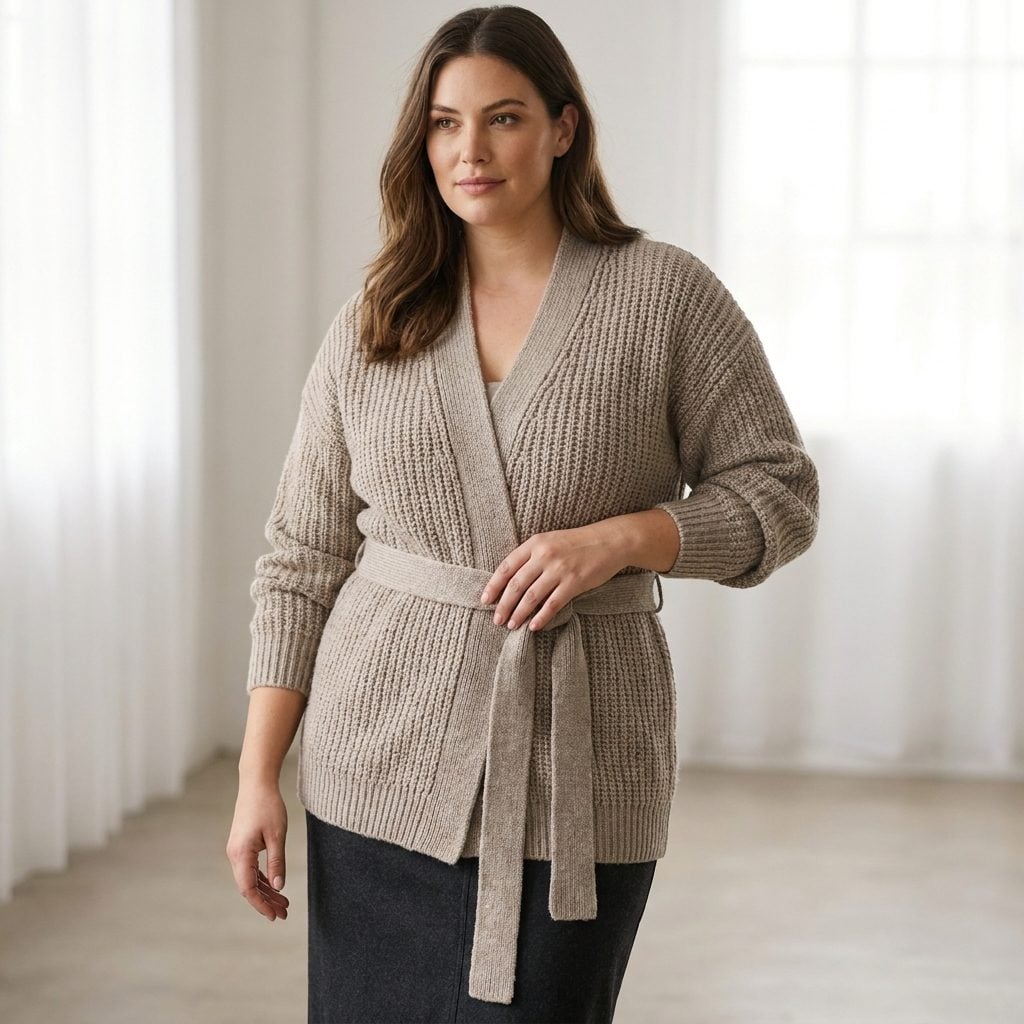
Donna Karan’s Seven Easy Pieces philosophy had been reshaping the conversation around working wardrobes since the mid-1980s: fewer rigid outfits, more interchangeable pieces that could move through a woman’s actual day. By the early ’90s, that philosophy looked thoroughly at home in a belted knit.
The belt is what keeps a soft belted cardigan on the office side of the line. Left loose, it drifts toward weekend. Cinched over a professional skirt, the waist returns, the silhouette organizes itself, and the sweater starts doing a jacket’s job without pretending to be one.
10. The Softly Draped Blouse With Full-Leg Trousers
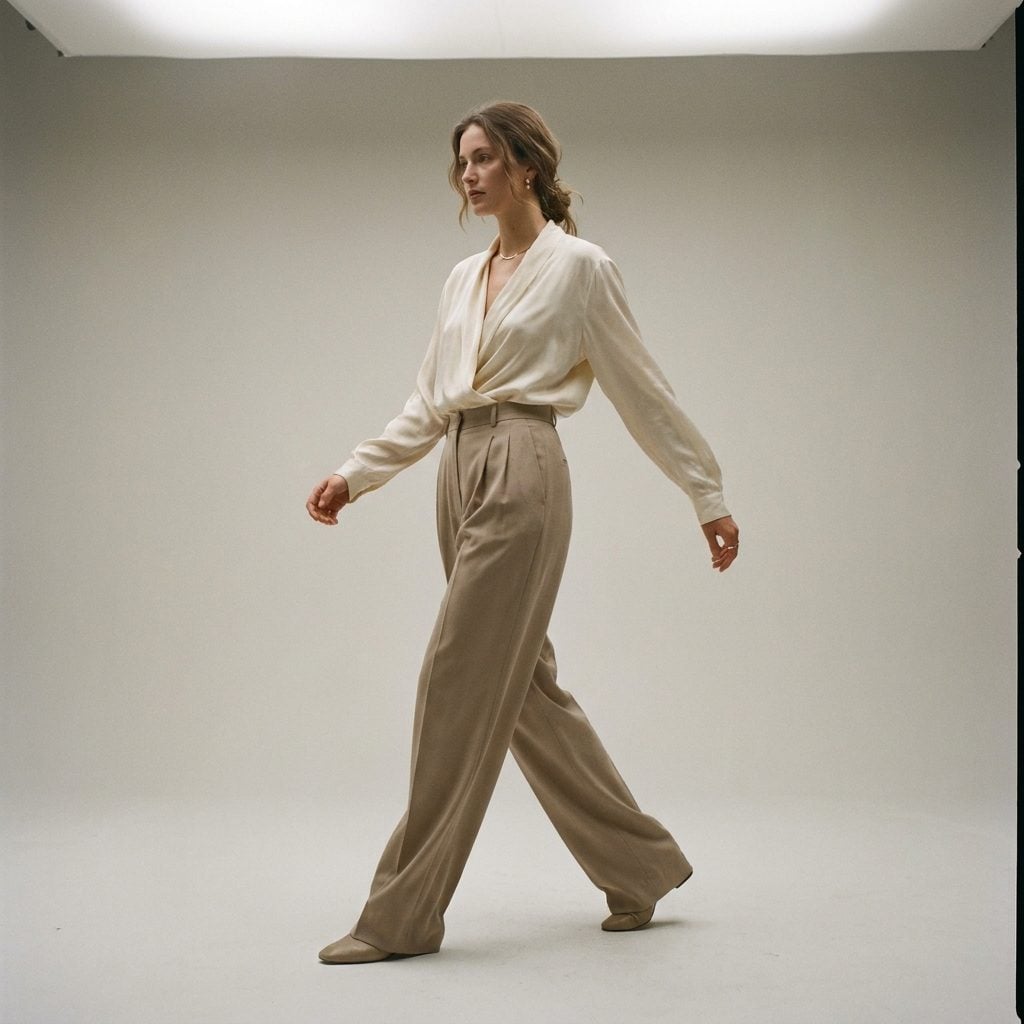
Now the jacket disappears altogether and the trouser gets the volume.
A softly draped blouse above full pleated legs creates movement at both ends, but the high waist prevents everything from dissolving into fabric. Unlike the earlier pinstripe pantsuit, this isn’t trying to quote men’s tailoring. It’s using generous proportions on entirely different terms.
The result looks almost relaxed, which in a corporate wardrobe that had spent years bracing itself at the shoulder was a small revolution.
9. Elegant Knit Layers Instead of a Suit Jacket
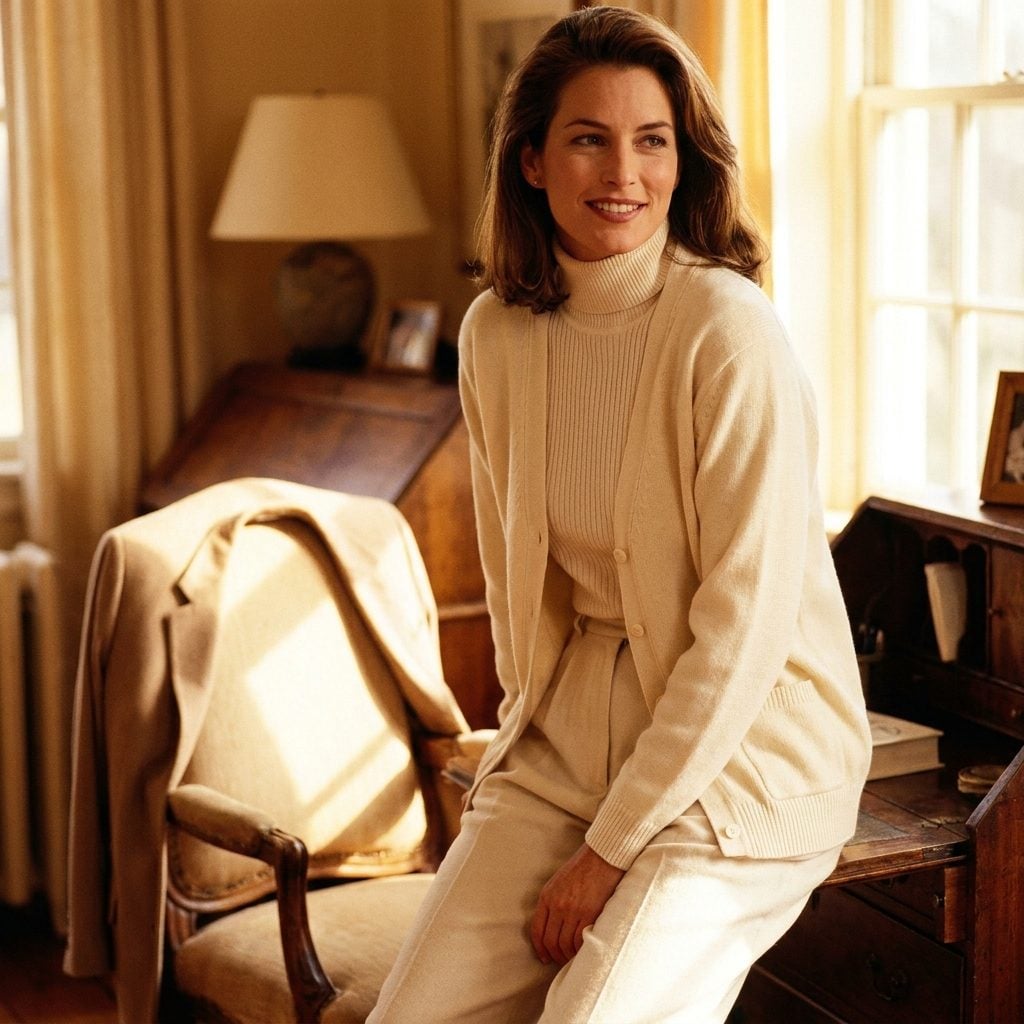
The smartest knit dressing wasn’t one sweater replacing one blazer. It was layering.
A long cardigan over a matching shell, both fine enough to stay sleek, created depth without introducing another color or hard edge. Add a structured wool skirt underneath and the outfit still belonged at work, but the visual rhythm was completely different from a conventional suit.
This was where tonal dressing started to look less like compromise and more like strategy.
8. The Pinstripe Pantsuit That Rewrote the Dress Code

By 1992, trousers on professional women were no novelty, but the pantsuit was becoming increasingly central rather than merely permissible. That distinction mattered.
The cut belongs unmistakably to the moment: high waist, front pleats, room through the hip, straight leg breaking over the shoe. Nothing narrow, nothing apologetic. The woman wearing this wasn’t sneaking trousers past the dress code. The dress code was learning to keep up.
7. The Black Longline Jacket, Cream Blouse, and Matching Skirt
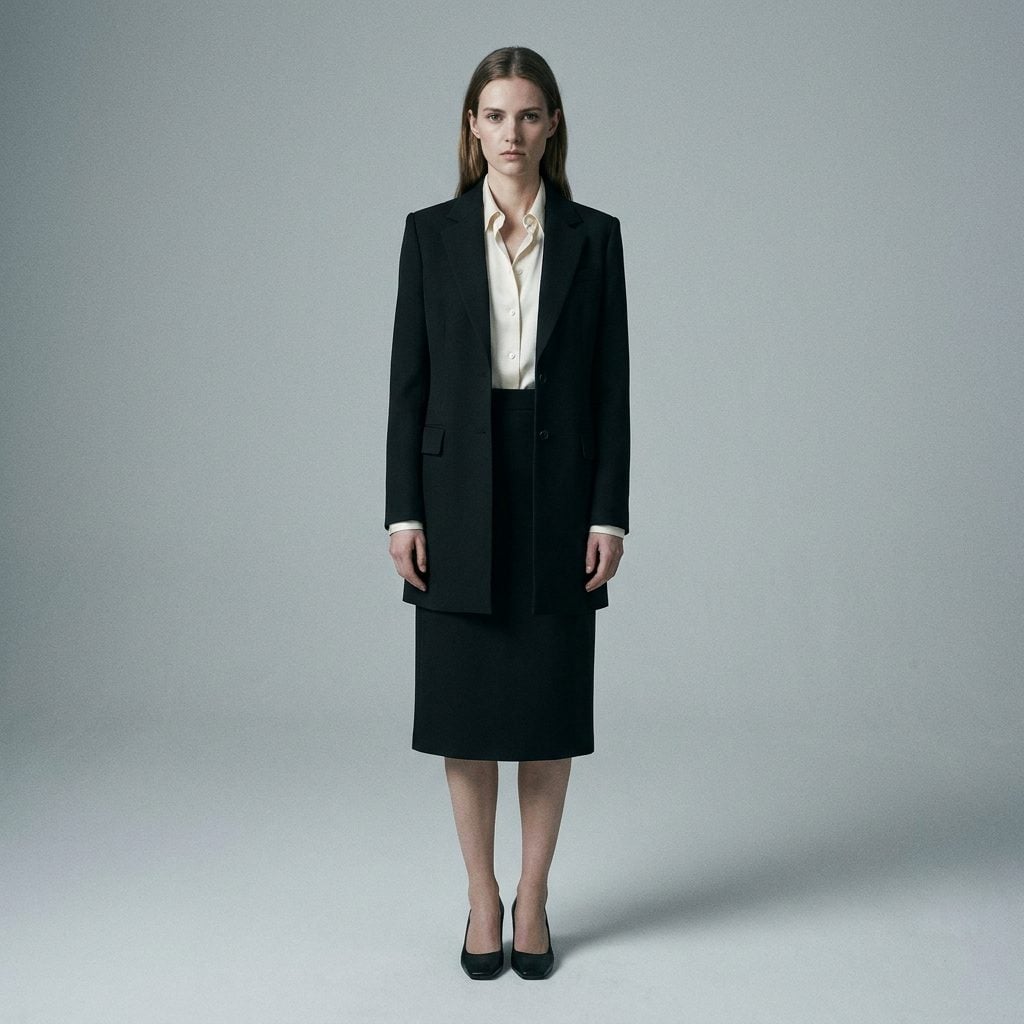
Black jacket, cream blouse, black skirt. Three pieces, two colors, absolutely nowhere for a bad decision to hide.
The contrast is what makes this different from the other longline suits. Black creates the frame; cream lights the center and pulls attention toward the face. No print, no jewel tone, no accessory required to rescue it. Sometimes the most sophisticated outfit in the office was simply the one that knew when it was finished.
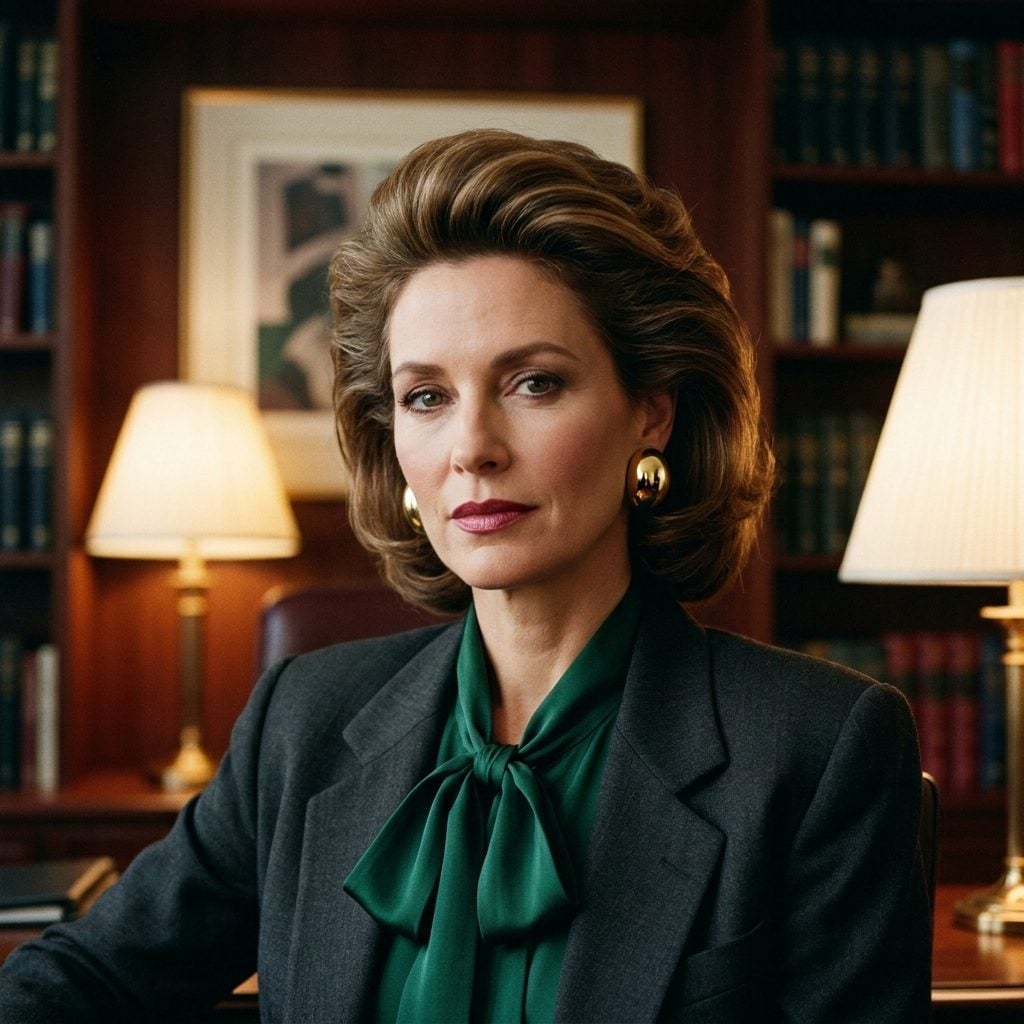
6. The Gold Chunky Clip Earrings You Could See From Across the Room
❤️ Would you like to save this?
And then, of course, there was the woman who had no interest in stopping there.
Gold clips the size of a communion wafer were still very much alive in 1992, particularly when an outfit needed light near the face. Against a deep emerald silk blouse, those polished earrings didn’t whisper refinement. They flashed it across the table.
5. The Single Strand of Real Pearls Over a Silk Shell

At the opposite end of the jewelry drawer sat one restrained strand of pearls.
Real pearls carried tiny irregularities, subtle variations in luster, and a weight that imitation strands tried very hard to reproduce. Worn over a plain ivory silk shell with matching studs, they didn’t need to dominate the outfit. Their entire appeal was that they looked as though they’d been there for years.
4. The Trench Coat Belted, Never Buckled
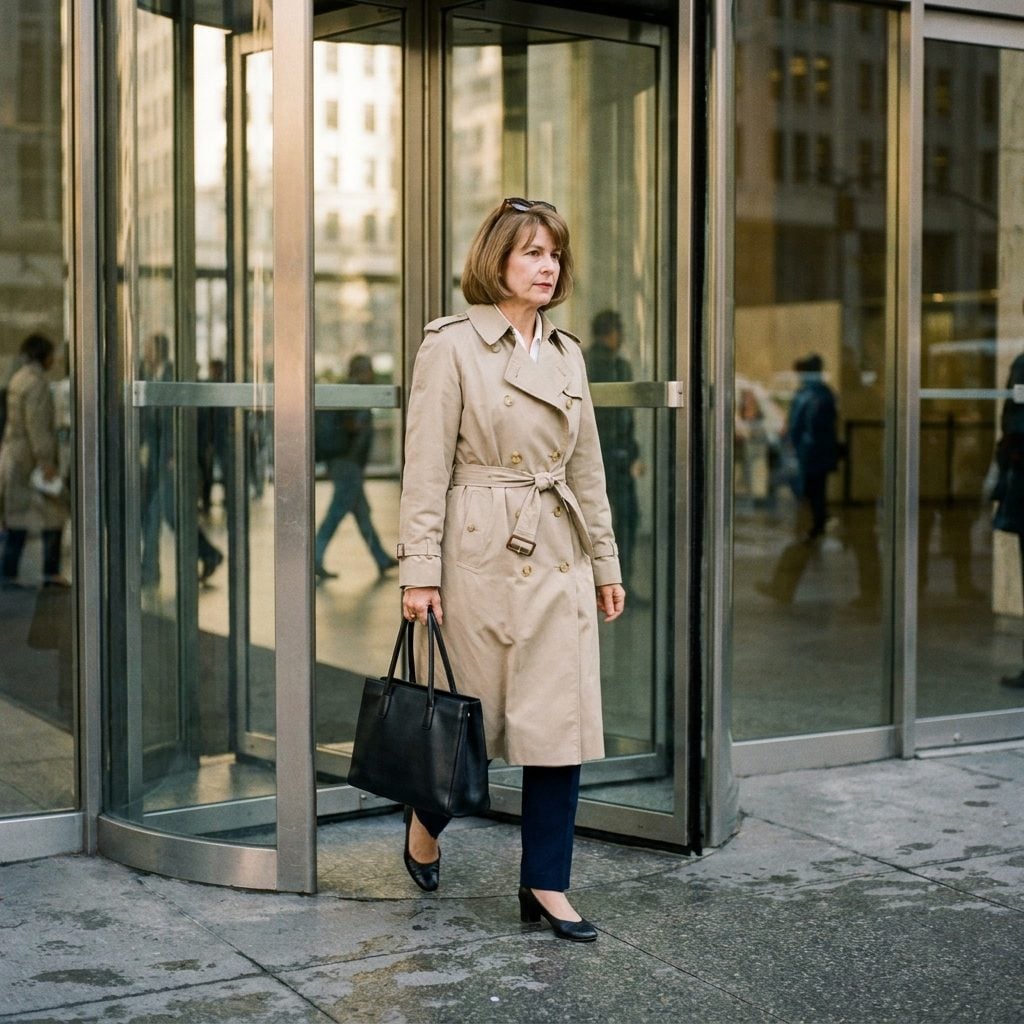
Everybody owned the buckle. Almost nobody with somewhere urgent to be seemed interested in using it.
Knotting the belt of a beige trench coat pulled the gabardine into shape with one quick gesture and made a standardized piece of outerwear look oddly personal. Threading the buckle was correct. The knot looked better precisely because nobody had bothered to be correct.
3. The Structured Wool Coat Worn Over the Suit

A substantial wool coat over a suit created the rare outfit that became more imposing on the way out of the building.
Mid-calf length, strong shoulder, dark wool underneath — every layer extended the silhouette another few inches. Worn open, the coat moved around the suit rather than swallowing it, letting the tailoring underneath remain visible as she crossed the lobby.
2. The Long Soft Jacket Over an Ankle-Length Skirt
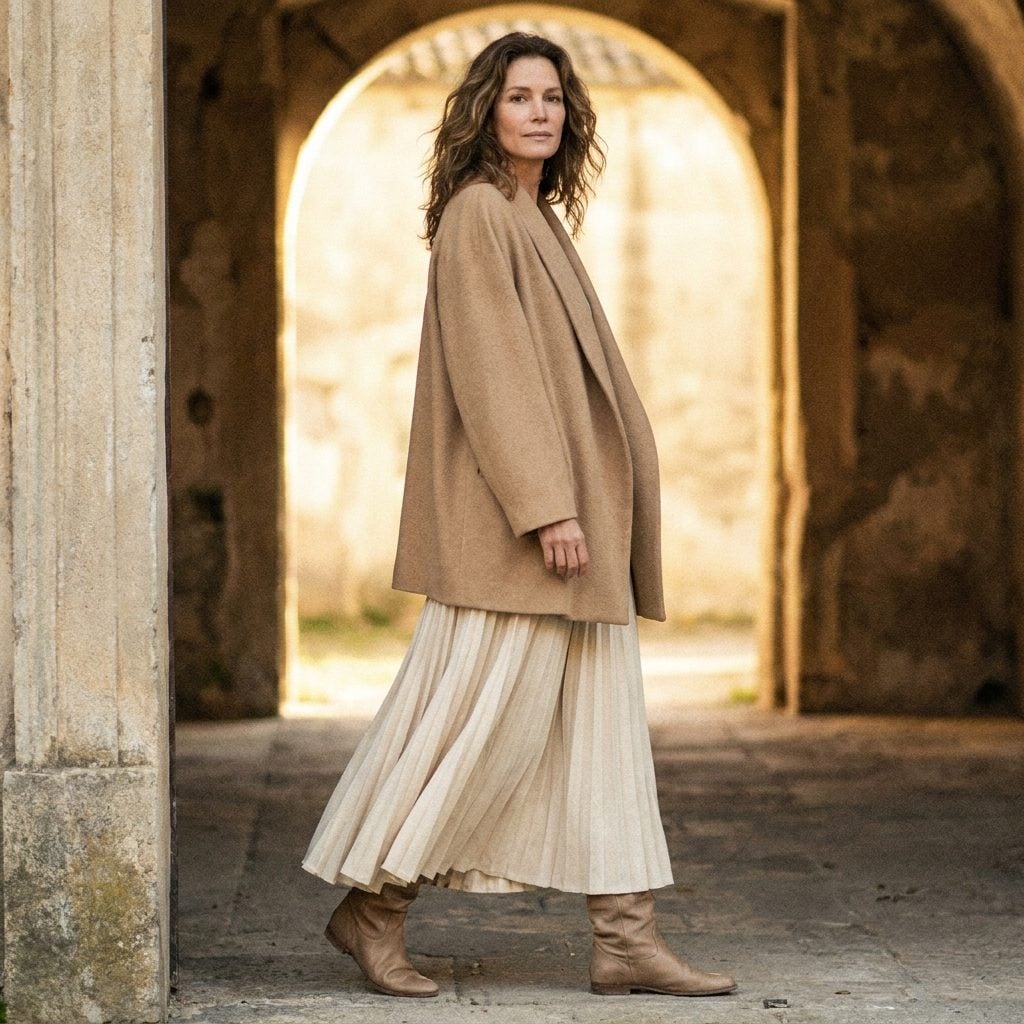
By the time the jacket stretches long and the skirt drops toward the ankle, the old power suit has almost disappeared.
Nothing here depends on a hard shoulder or tightly controlled waist. An oatmeal jacket over a camel column skirt creates one long, quiet sweep of neutral fabric. The authority comes from scale and restraint rather than armor.
Fashion coverage in 1992 was already registering this movement toward softer jackets, longer hems and more fluid office clothes. Women weren’t abandoning tailoring. They were teaching it how to unclench.
1. The Complete 1992 Woman-in-Charge Uniform
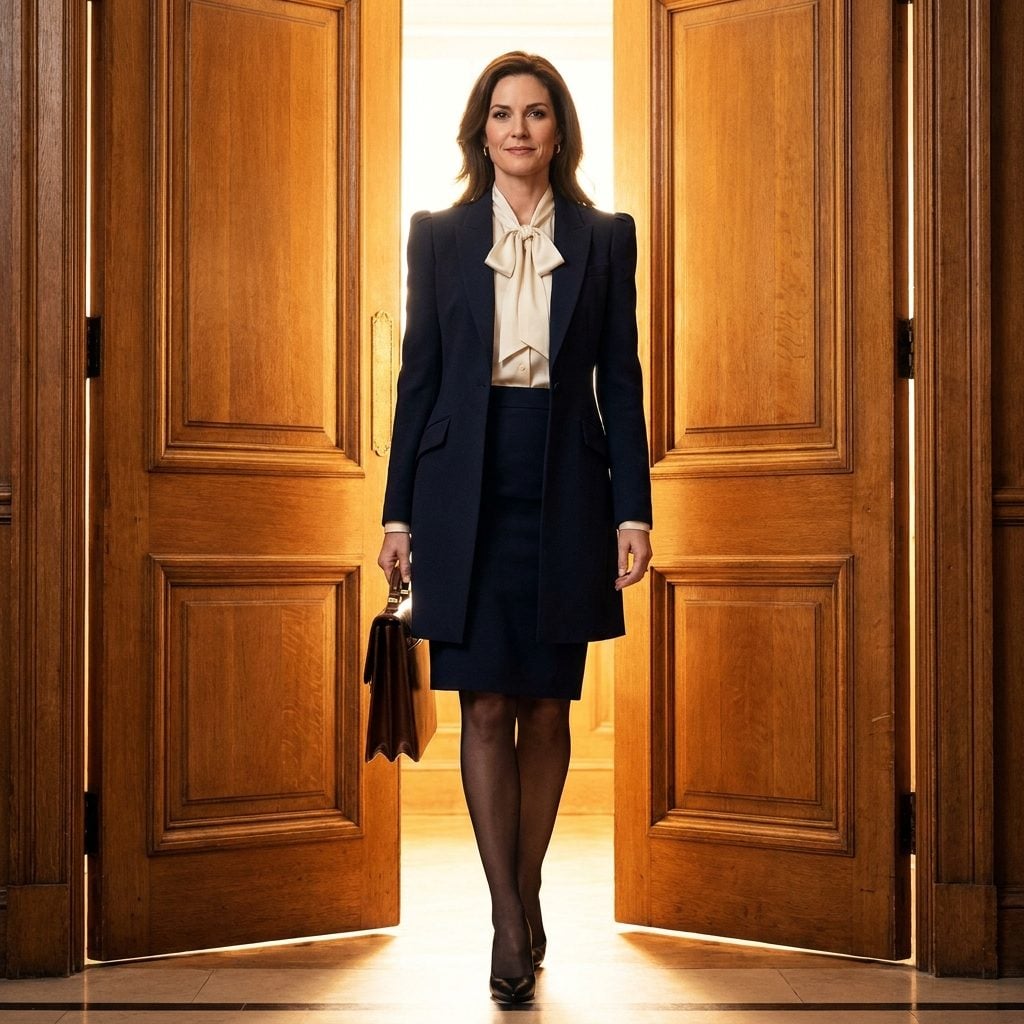
And there she is.
Dark elongated skirt suit. Ivory silk blouse. Sheer hosiery. Moderate pumps built for an actual working day. Analog watch. Small gold. Maybe pearls. Nothing dangling from the wrist, nothing fluorescent fighting for attention, nothing requiring explanation.
After thirty looks, the formula becomes surprisingly clear. 1992 office power wasn’t one garment so much as a negotiation between two decades: enough structure left from the 1980s to command a room, enough restraint and softness arriving from the 1990s to make all that structure look newly effortless.
Thirty-plus years later, pieces of the uniform are still wandering through offices: the good silk blouse, the charcoal suit, the camel coat, the clean trouser, the jewelry that knows when to stop. The fax machine is gone. The industrial carpet may finally be gone. The woman who knew exactly what to wear into the meeting is doing just fine.