
❤️ Would you like to save this?
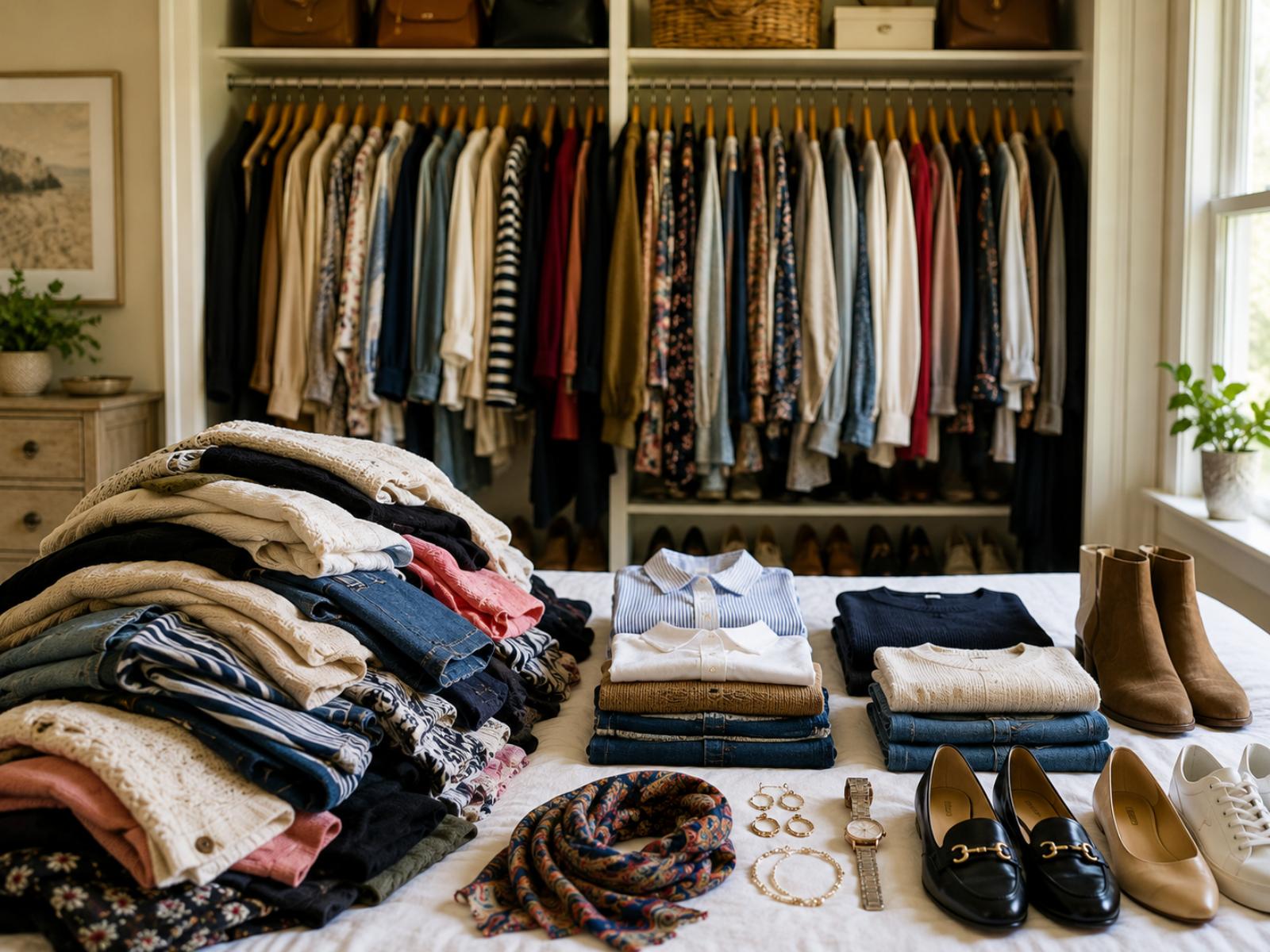
AnnG owns somewhere between 200 and 300 pieces of clothing.
She wears maybe 40 to 60 of them in a normal month.
For the past three years, she’s been trying to get rid of the rest.
This is proving harder than you might think.
AnnG is over 70, retired and lives with her spouse in the Mid-Atlantic region of the U.S. She spent 40 years working in a corporate environment, including a customer-facing job where dressing professionally wasn’t optional.
She needed suits.
She needed jackets.
She needed skirts.
She needed shoes that apparently had ambitions of their own.
Four-inch heels.
She wore them.
She does not miss them.
“4 inch heels and any uncomfortable shoes. Do NOT miss them.”
At some point I think women should receive a certificate acknowledging all the hours they spent walking around on shoes that made absolutely no anatomical sense.
AnnG would like her younger self to know something:
“You don’t need as many clothes as you think you do. Lower those heels by at least 2 inches.”
There speaks experience.
These days, her life looks very different.
She’s retired but hardly inactive. She volunteers with the Humane Society, sits on a board of directors, sings in a choir, spends time with grandchildren, travels, hikes and keeps up with fitness.
Her household income is roughly $150,000 to $250,000.
She still cares quite a bit about clothes.
On a scale of 1 to 10, she gives their importance an 8.
She enjoys getting dressed.
She enjoys fitting rooms.
She doesn’t particularly enjoy seeing herself in photographs or catching her reflection in shop windows, but she’s neutral about both.
Late-night online shopping?
Avoids it entirely.
Smart woman.
She shops only a few times a year, mostly at boutiques, independent shops and directly from brands. She estimates she spends between $1,000 and $2,500 on clothing and shoes in a typical year.
Does her spouse know what she spends?
“No, and I keep it that way”
Finally.
A little dirt.
Not much dirt. We’re talking a few thousand dollars a year in a household earning six figures, not a secret apartment in Paris.
Still.
I asked.
She answered.
AnnG’s weekday dressing routine starts with something wonderfully practical.
The weather.
“Check the weather forecast. Pick shoes based on what I’m doing that day.”
Then comes the outfit, usually jeans or casual pants with a blouse or shirt. She adds a third layer if she needs one, then accessories.
Earrings.
A necklace.
Maybe a scarf in winter.
Possibly a bracelet.
A watch if she’s going out.
Then a quick look in the mirror.
Done.
There is no suggestion that AnnG is standing in front of the closet for 45 minutes screaming internally that she has nothing to wear.
Which would be particularly difficult to argue with 200 to 300 pieces available.
She also has 57 pairs of shoes, including boots.
That number sounds high until AnnG adds that she’d worn 21 pairs recently—nearly all her summer shoes.
Okay.
I respect a working inventory.
Fifty-seven pairs you actually rotate through is different from 57 pairs slowly fossilizing on a shelf.
Although there is some fossilization happening elsewhere.
AnnG still has three to five things with the tags attached.
Her latest purchases were two matching shorts-and-top sets from Petite Studio NYC, in two colors. They were on sale for $100 per set.
She can’t remember the last thing she returned.
She can remember the regrets.
There’s a $40 sundress that looked good online but doesn’t fit and turned out to be a gaudy color.
There’s also a midi denim skirt she bought on sale for $75.
This is why “on sale” deserves its own accounting category.
We all know what it cost.
The more interesting question is whether we would have bought the thing if the tag hadn’t first told us how much money we were supposedly saving.
But neither of those is the interesting thing hanging around AnnG’s closet.
That honor belongs to a Dana Buchman wool jacket and skirt.
They’re about 20 years old.
Together, they cost close to $1,000.
“A lot 20 years ago.”
She’s right.
And she wore them.
This wasn’t one of those expensive purchases that spent two decades waiting for the right occasion. The jacket and skirt did their jobs during AnnG’s corporate years.
The problem is that the job ended.
“I wore them a lot during my corporate life but I don’t live that life now.”
There’s the closet problem.
Not that the clothes don’t fit.
Most of them still do.
AnnG says her weight doesn’t fluctuate much and has actually gone down over the past five years.
The clothes still fit the body.
They don’t necessarily fit the life.
She’s tried selling the old Dana Buchman pieces on Poshmark.
No luck.
Consignment stores wouldn’t take them either.
So they’re still there.
A $1,000 reminder of a woman who used to get dressed for a completely different day.
I find this fascinating about closets.
You can change jobs in an afternoon.
Retire on a Friday.
Move somewhere warmer.
Stop going to an office.
Become a grandmother.
Decide you’re never wearing heels again.
The clothes don’t get the memo.
They just hang there.
AnnG says her taste still skews dressier than the life she actually lives because she spent four decades in that corporate environment.
She’s been culling the closet and selling pieces for three years.
It’s been difficult.
I can see why.
Getting rid of something because it no longer fits is relatively straightforward.
Getting rid of something that fits perfectly, cost a lot of money, still looks good and belongs to a version of you who doesn’t exist anymore is a different decision.
Especially when that earlier version of you isn’t entirely gone.
I asked AnnG who she’s dressing for now.
“Mostly myself but also a little bit for other women and my 35 year old self (she’s slowly disappearing).”
That’s quite an answer.
Not men.
Not her spouse.
Herself.
Other women.
And a 35-year-old woman who’s apparently still somewhere in the dressing room with her.
I don’t think AnnG means she’s trying to dress like she’s 35.
Nothing else she says suggests that.
Actually, her philosophy about clothes is almost aggressively sensible.
“Style is all about grooming and neatness not about fashion: brush your hair, wear just a little makeup, even if it’s just blush and lipstick, dress for the occasion, wear clothes that are clean and fit properly. Smile.”
That’s what she thinks she’s figured out.
Not trends.
Not expensive labels.
Not having 300 things in a closet.
Brush your hair.
Wear clothes that fit.
Dress appropriately.
Smile.
And perhaps keep the heels somewhere below four inches.
It seems to be working.
Family and friends tell AnnG she dresses well.
She gets compliments.
Occasionally even strangers compliment her.
Yet when she looks in the mirror, she doesn’t always see the woman they’re seeing.
“Sometimes I look heavier and dowdy in the mirror.”
I like that she said this right alongside all the confidence elsewhere in her answers.
She enjoys clothes.
She knows how to dress.
Other people think she dresses well.
She has figured out what works for her.
And sometimes she looks in the mirror and thinks she looks dowdy.
Apparently you can know what you’re doing and still have a mirror.
There’s one other tiny detail I liked.
I asked what’s on “the chair” right now.
You know the chair.
The chair that starts life as furniture and gradually becomes a transitional clothing storage facility.
AnnG doesn’t seem to have one of those.
“On a hanger or folded. If just worn, it gets aired out overnight and hung back in the closet.”
Of course it does.
I should have known.
This is a woman who checks the forecast before selecting her shoes.
There will be no sweater mountain.
The interesting part of AnnG’s closet isn’t really how much she owns.
Two hundred to 300 pieces sounds like a lot.
Fifty-seven pairs of shoes sounds like a lot.
Three to five unworn items with tags isn’t actually that many.
And she doesn’t appear to be buying clothes compulsively. She shops a few times a year and says she’s actively reducing what she owns.
It’s that the closet spans different lives.
Corporate AnnG is still in there.
Retired AnnG is getting dressed every morning.
Thirty-five-year-old AnnG still gets a small vote.
Current AnnG is trying to decide what stays.
The old expensive suit doesn’t have anywhere to go anymore, but getting rid of it isn’t as simple as admitting you don’t wear it.
She did wear it.
A lot.
It belonged to 40 years of her life.
And now she hikes, travels, sings in a choir, sees her grandchildren, volunteers, serves on a board and mostly gets dressed in jeans or casual pants.
The woman changed.
Her closet is taking a little longer.
“For the past 3 years I’ve been culling my closet and selling pieces. It’s been difficult because I worked in a corporate environment for 40 years and my taste skews to dressy rather than casual. My weight doesn’t fluctuate much so most pieces still fit.”