
❤️ Would you like to save this?
A fuller neck does not sentence anyone to a lifetime of long hair worn like camouflage. In fact, length can sometimes do exactly what you hoped it would not: collect around the shoulders, obscure the jaw and turn all that supposedly protective hair into one uninterrupted curtain.
Shorter cuts change the conversation. A wave can move the widest part of a hairstyle toward the cheekbones. Bangs can put the eyes back in command. A close nape can expose rather than crowd the neckline, while extra lift through the crown gives a cropped cut somewhere to go besides sideways. None of these is a magic formula, and the same cut will behave differently depending on texture, density, face shape and styling. That is precisely why the details matter.
These 31 before-and-afters move between cautious lobs, blunt bobs, loose waves, bangs and the pixies that require considerably more nerve. Some transformations whisper. Others practically kick the salon door open. What matters is seeing how length, texture, parting, color and volume placement can completely rewrite the frame around the same face.
FYI, thanks to AI imagery software, we’re able to create very specific fashion and hairstyle examples to illustrate the points being made. In some cases, imagery is exaggerated to hammer home the point. Also, assume links that take you off the site are affiliate links such as links to Amazon. this means we may earn a commission if you buy something.
31. Long to Lob: Four Inches Came Off and Her Face Came Forward
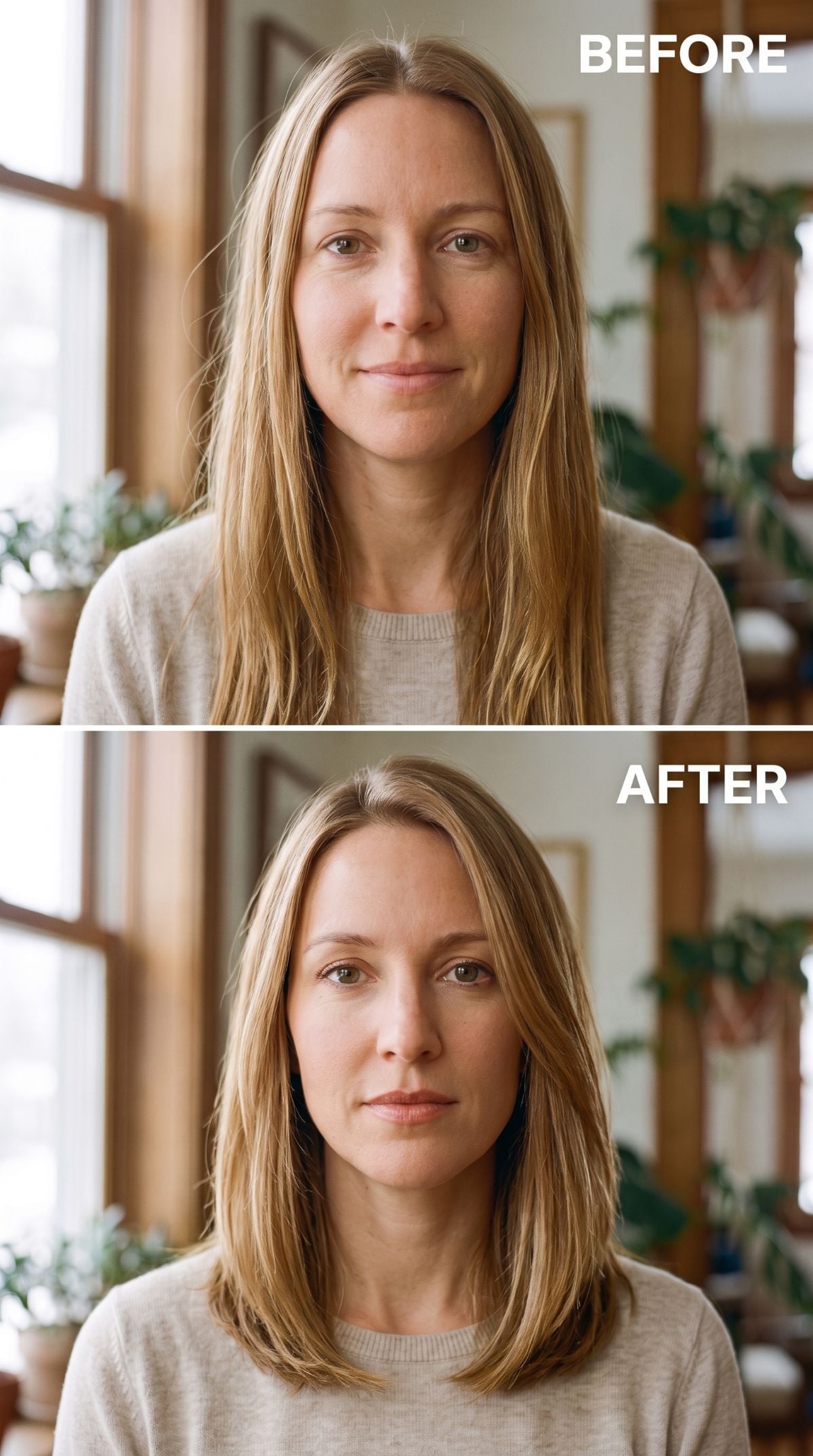
In the before, sandy-blonde hair falls past the collarbone in one relatively uninterrupted sheet. The after stops much sooner, turning that length into a polished lob with face-framing pieces that angle toward the cheekbones.
The difference is subtle enough for anyone nervous about going short. Nothing radical happened at the crown and there is still plenty of hair to tuck, curl or pull back. But the new perimeter gives the style an actual shape instead of asking sheer length to do everything.
30. Dark Bob, Sharp Perimeter, Completely Different Frame
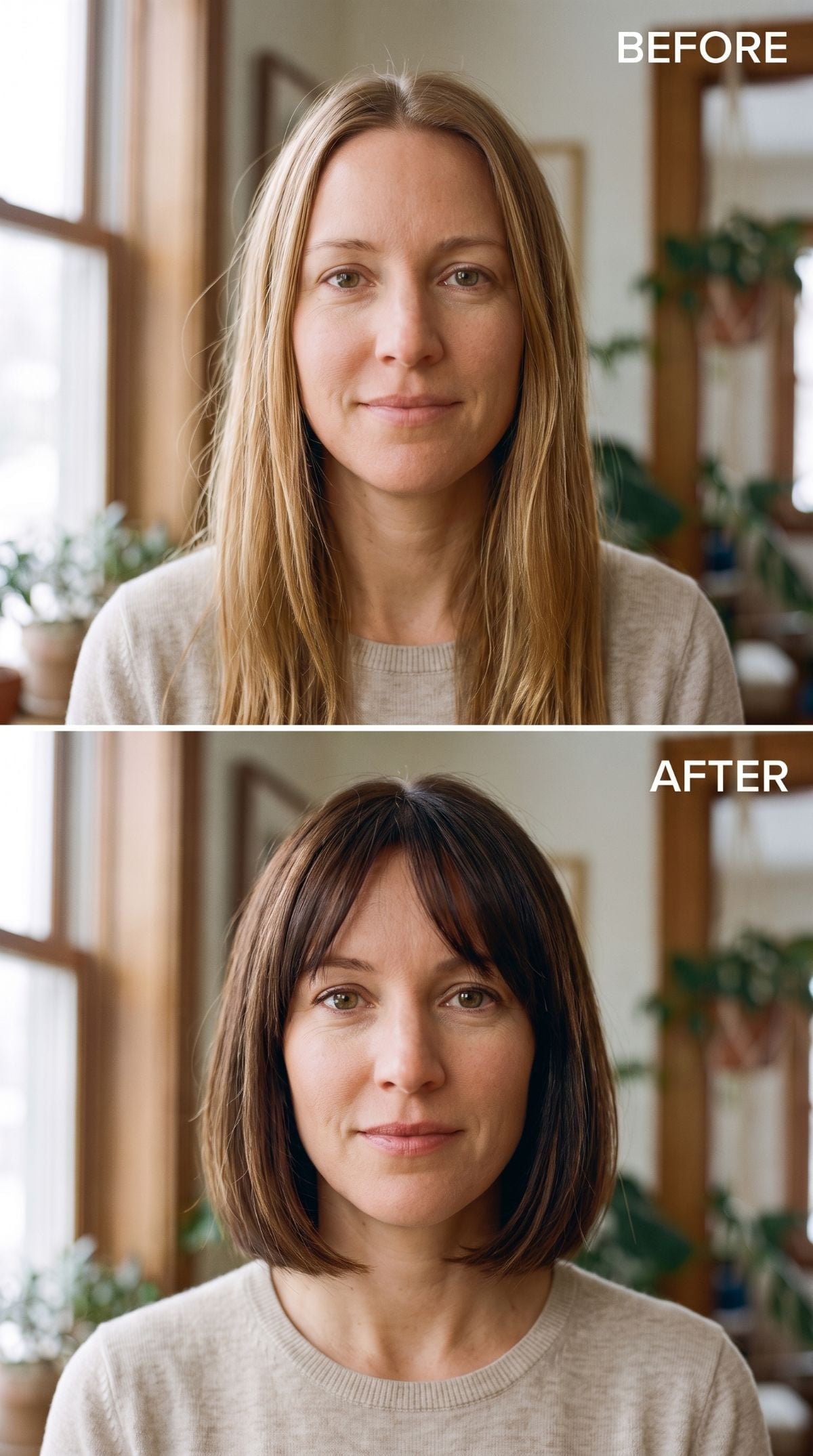
The long blonde before is quiet almost to the point of disappearing. Then comes the brunette bob: chin length, blunt through the perimeter, softened by wispy side-swept bangs.
That strong edge at the jaw gives the eye somewhere definite to stop. The darker color adds contrast around the face, while the fringe keeps the upper half from feeling severe. This is the first look that makes a convincing case for cutting decisively rather than cautiously.
29. Loose Waves Turned a Basic Lob Into the Main Event
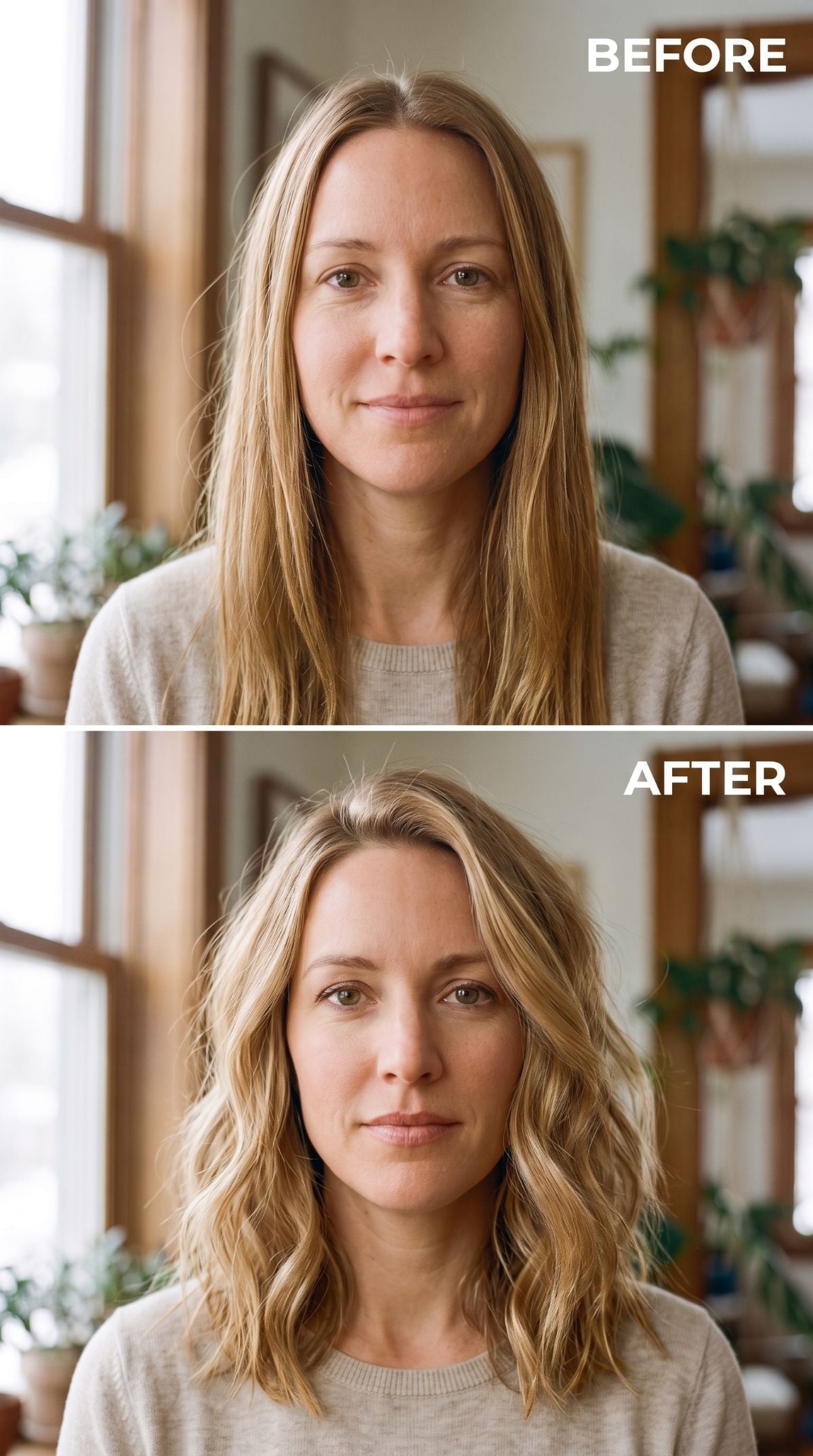
The important change here is not merely shorter hair. It is where the movement happens. Long, straight lengths become a lob with loose bends beginning around the ears and carrying through the ends.
That gives the hairstyle width higher up, around the cheeks, instead of letting everything hang vertically toward the shoulders. The blonde also looks more dimensional once the bends start catching light from different angles.
Why the Wave Pattern Matters
These are not tight curls and they are not random bends. The loose S-shape starts high enough to frame the face, then relaxes toward the bottom. On this particular cut, that placement matters more than another inch gained or lost.
28. Then She Went All the Way to a Burgundy Pixie
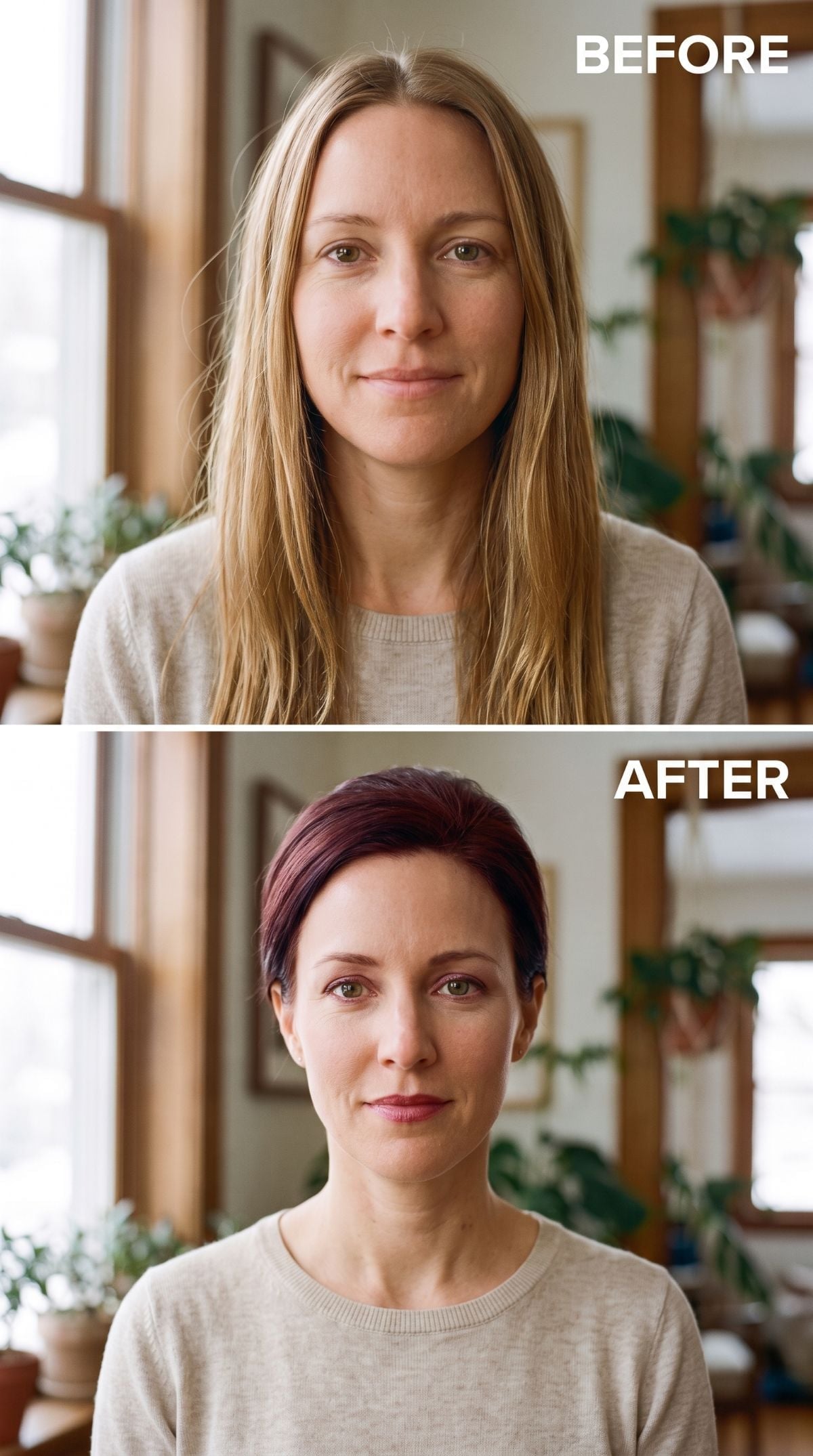
So much for easing into things. The long blonde lengths disappear completely and a wine-dark pixie takes their place, cropped close around the sides with enough hair left on top to sweep softly forward.
This is useful to see early because it destroys the assumption that a fuller neck automatically requires hair hanging beside it. Here the exposed neckline actually makes the cut feel cleaner, while the burgundy puts all the visual drama upstairs around the eyes and crown.
27. Bangs Plus a Blunt Lob Changed More Than the Length
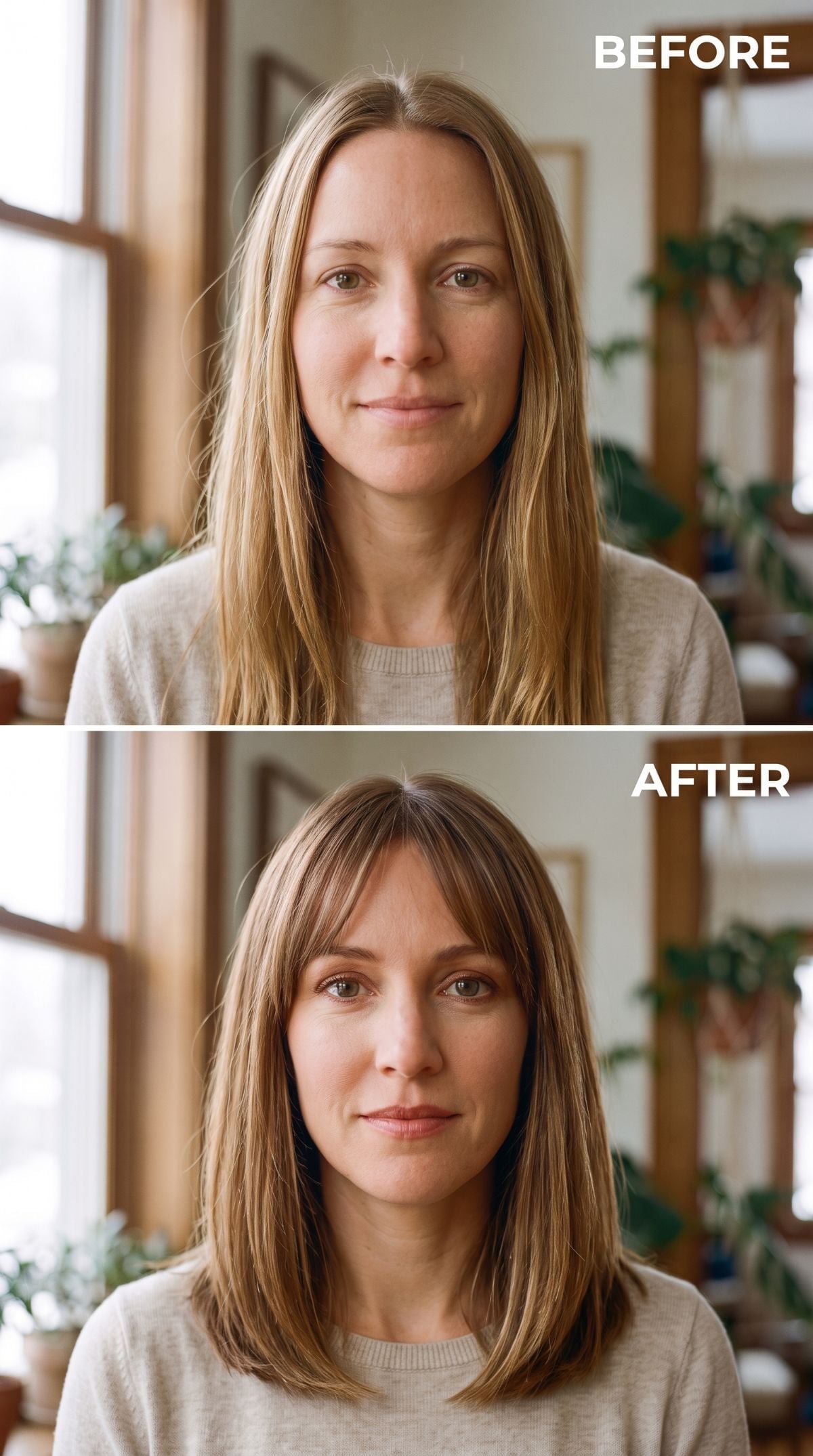
The haircut itself is restrained: long blonde hair becomes a blunt lob hovering around the collarbone. Then the fringe arrives and changes where you look first.
Soft, slightly side-swept bangs bring the eyes into focus, while the blunt bottom edge keeps the remaining length from looking accidental. This is a good example of why “shorter” is only part of the equation. The new focal point matters just as much.
26. Copper Bob, Lived-In Texture, No Need to Play It Safe
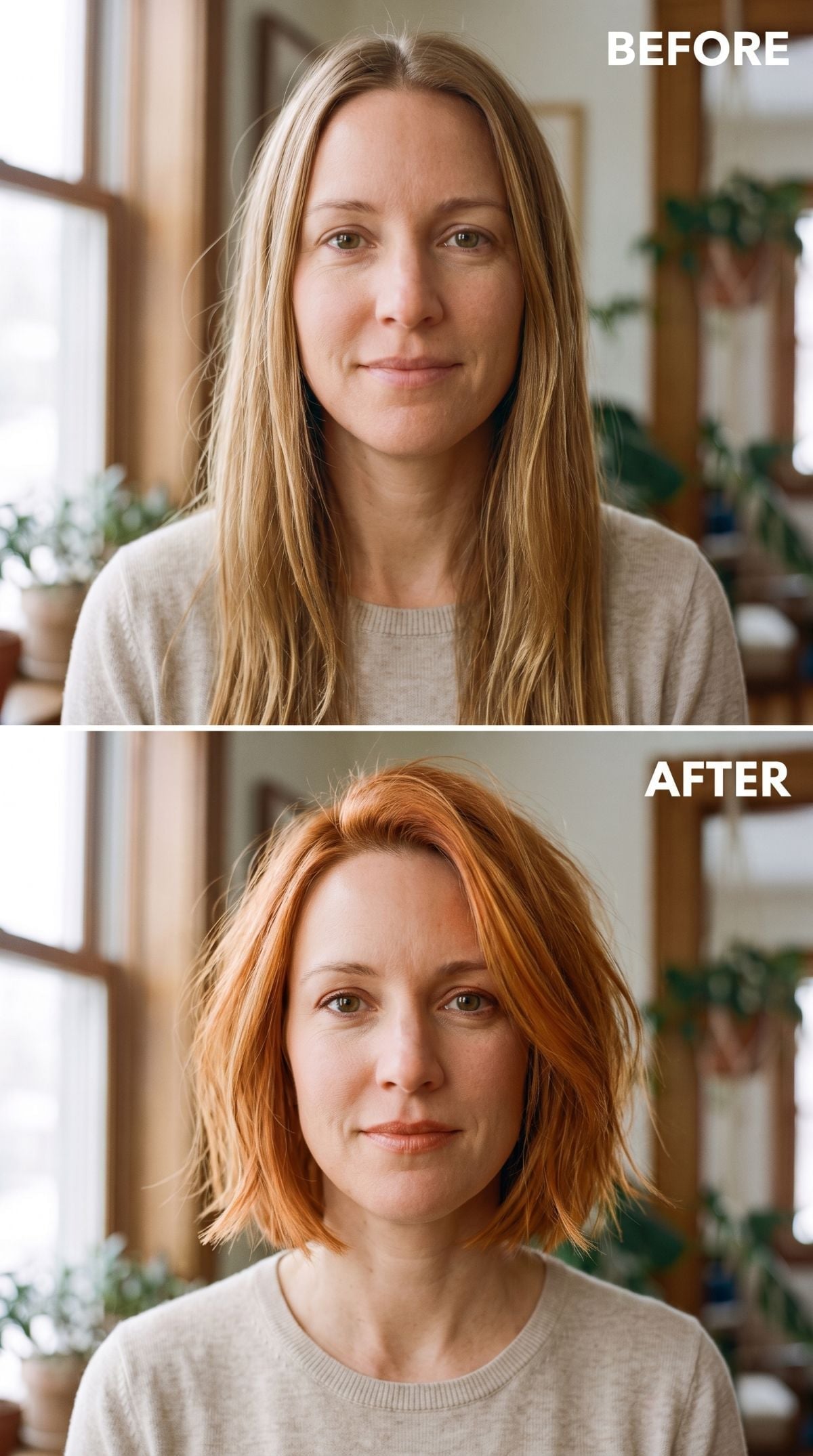
Long, center-parted dirty blonde gives way to a jaw-length copper-ginger bob with slightly undone texture and an asymmetric sweep. The color is a leap; the cut is surprisingly wearable.
Instead of sitting perfectly round around the face, the bob moves. One side pushes away, the other falls forward, and that little bit of imbalance keeps a classic shape from feeling helmet-like.
25. Side-Swept Bangs Made This Chin Bob Feel Softer, Not Smaller
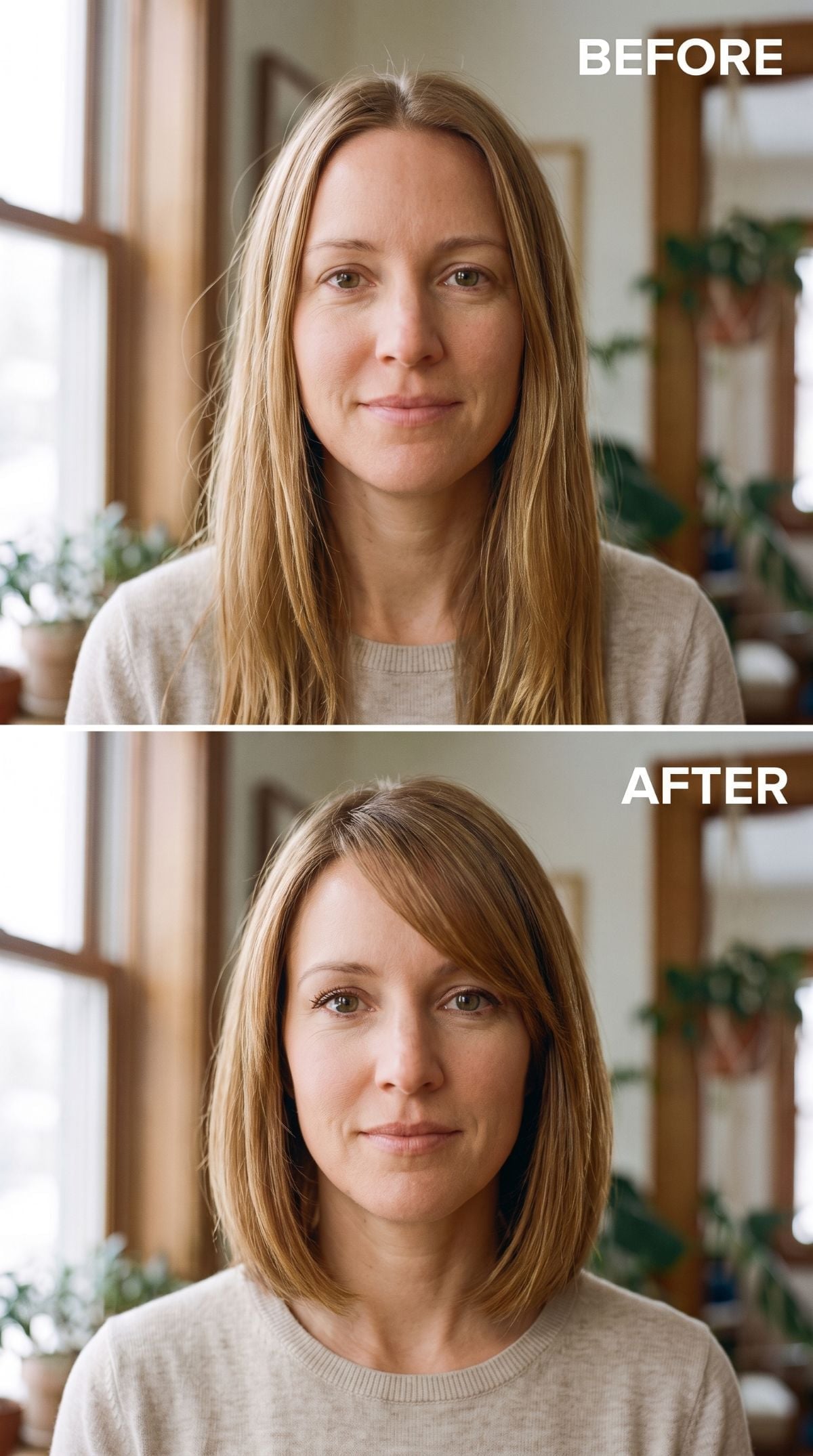
Blunt ends stop at the chin, but the rest of this cut refuses to behave bluntly. The fringe sweeps across the forehead and the perimeter curves gently inward rather than hanging like a ruler.
That combination matters. A very severe bob could make the lower edge feel heavy; this one keeps its clean outline while introducing enough softness around the eyes to balance it.
24. Dark Curls on Top Made This Pixie Feel Anything but Severe
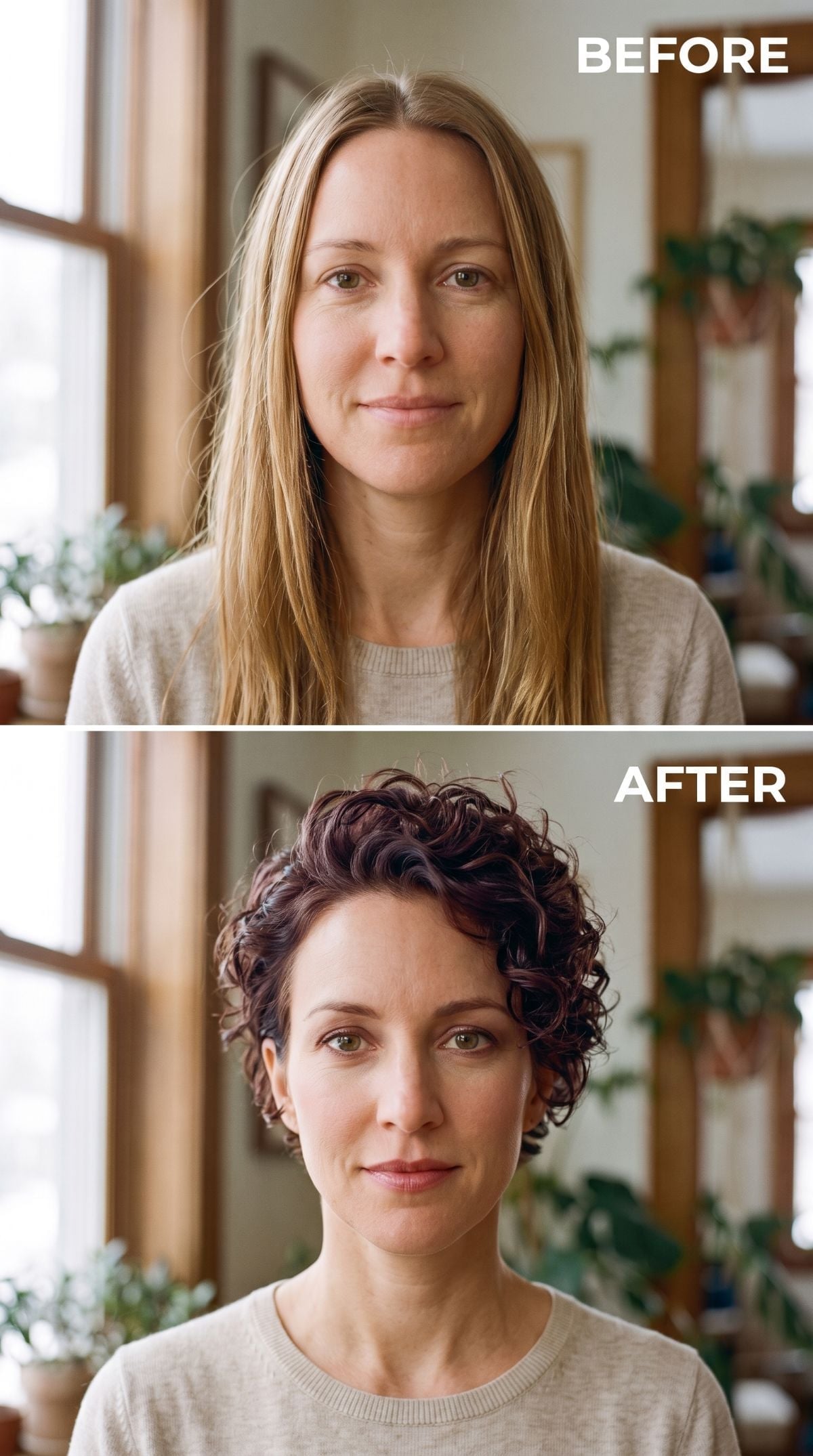
The contrast could hardly be bigger: long, straight blonde disappears and a short burgundy-brown crop arrives with defined curls concentrated through the crown.
The nape is cut extremely close while the texture stays above the ears. That division gives the style its character—clean underneath, lively on top. Anyone who assumes pixie automatically means flat should keep this image handy.
23. Blonde Became Blush-Toned and the Bob Suddenly Had Personality
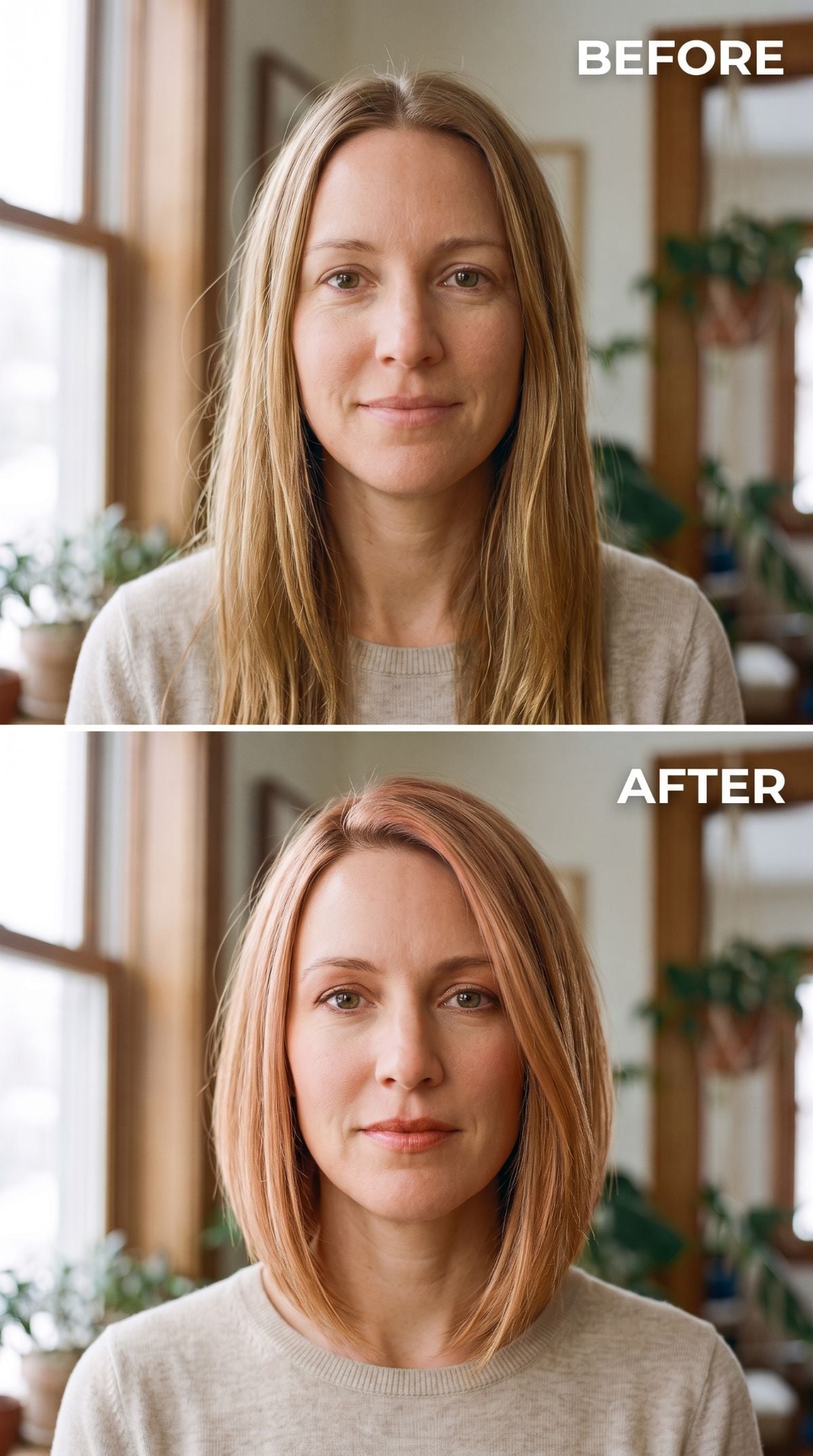
This transformation plays with two things at once. The length contracts into a collarbone-grazing bob with a slightly longer front, while cool blonde shifts toward a blushy strawberry tone.
The forward angle gives the cut direction instead of letting it simply drop beside the face. Meanwhile, the warmer color creates a noticeably different relationship with her skin and neutral gray sweater. Even without a pixie-level chop, the entire mood changes.
22. Short Brown Crop, Caramel Fringe, Clean Slate
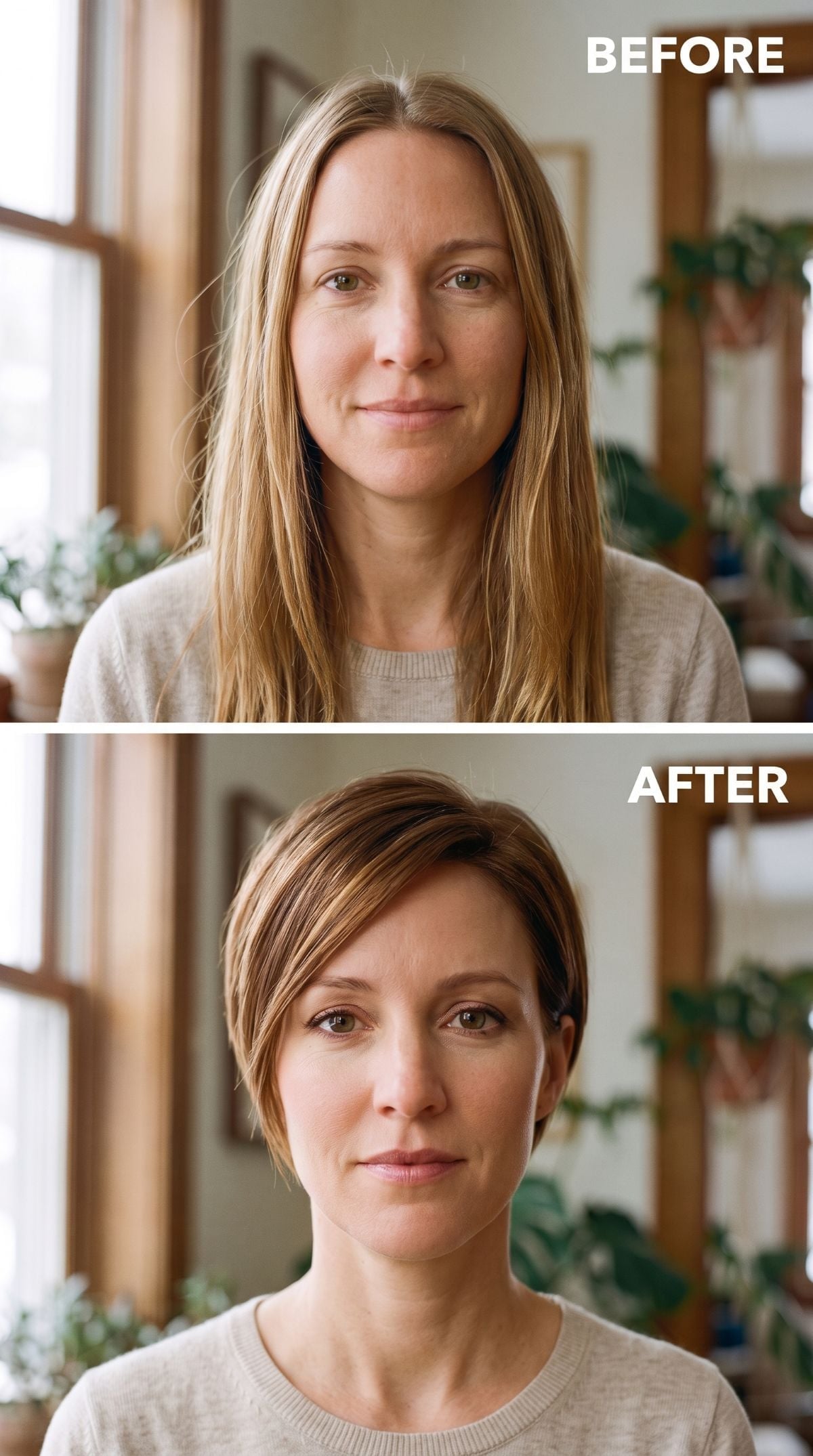
Shoulder-length blonde is replaced by a brown pixie crop with caramel pieces swept over the forehead. The nape is exposed, but the front remains soft enough that the cut never feels military.
That is the balancing act with very short hair: remove the bulk underneath without stripping all the personality from the top. Here the fringe does exactly that.
21. Warmer Blonde and Soft Waves Gave This Bob More Lift
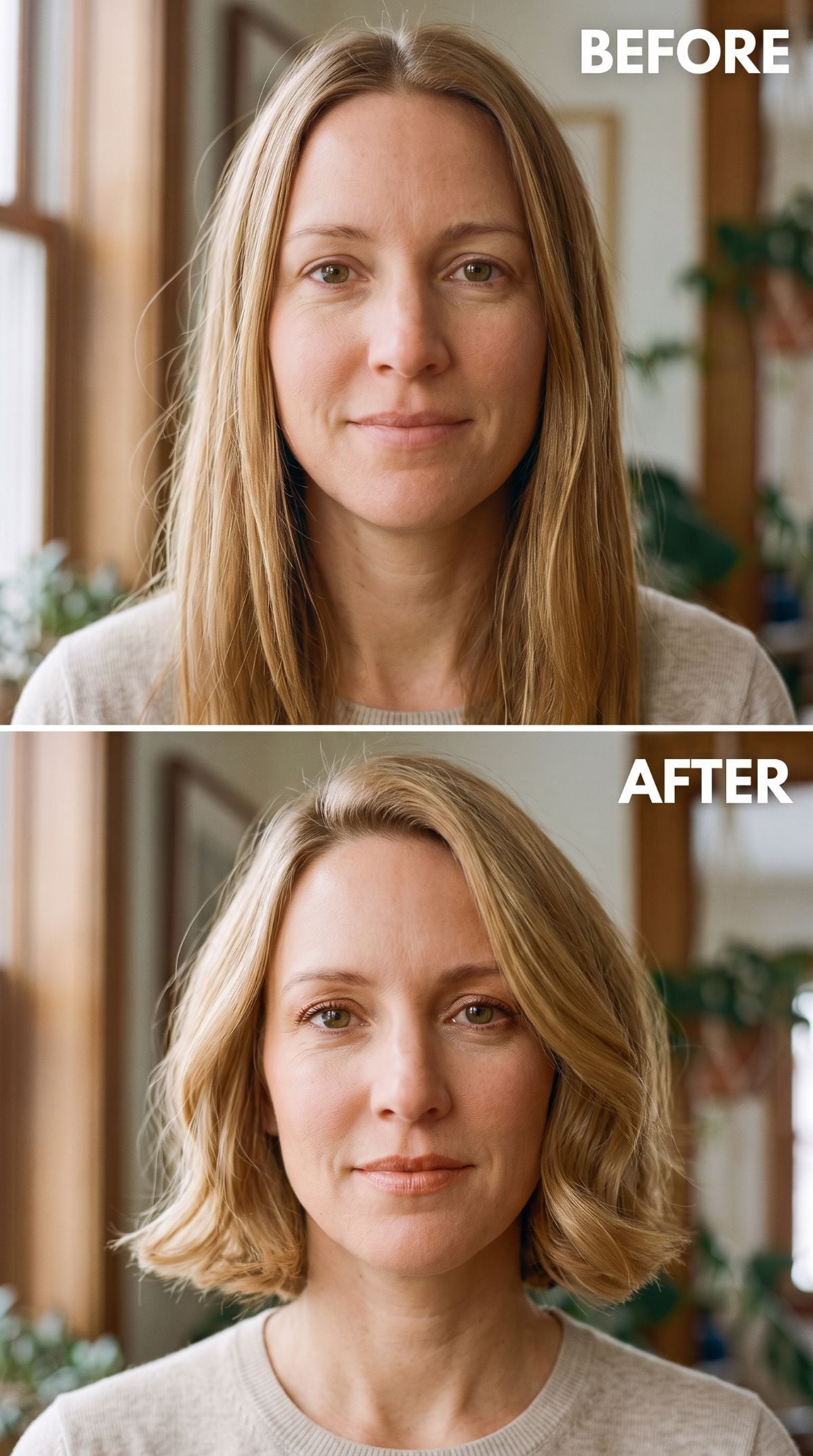
Long, flat blonde gets cut to the chin and warmed up, but the waves are what separate this from the straighter bobs. Movement through the middle pushes the silhouette outward around the face before the ends settle back in.
The brighter face-framing pieces add another point of interest near the cheekbones. Nothing is hiding the neck; the hairstyle simply gives you more compelling places to look first.
20. Burgundy Shaggy Bob: The Anti-Perfect Version
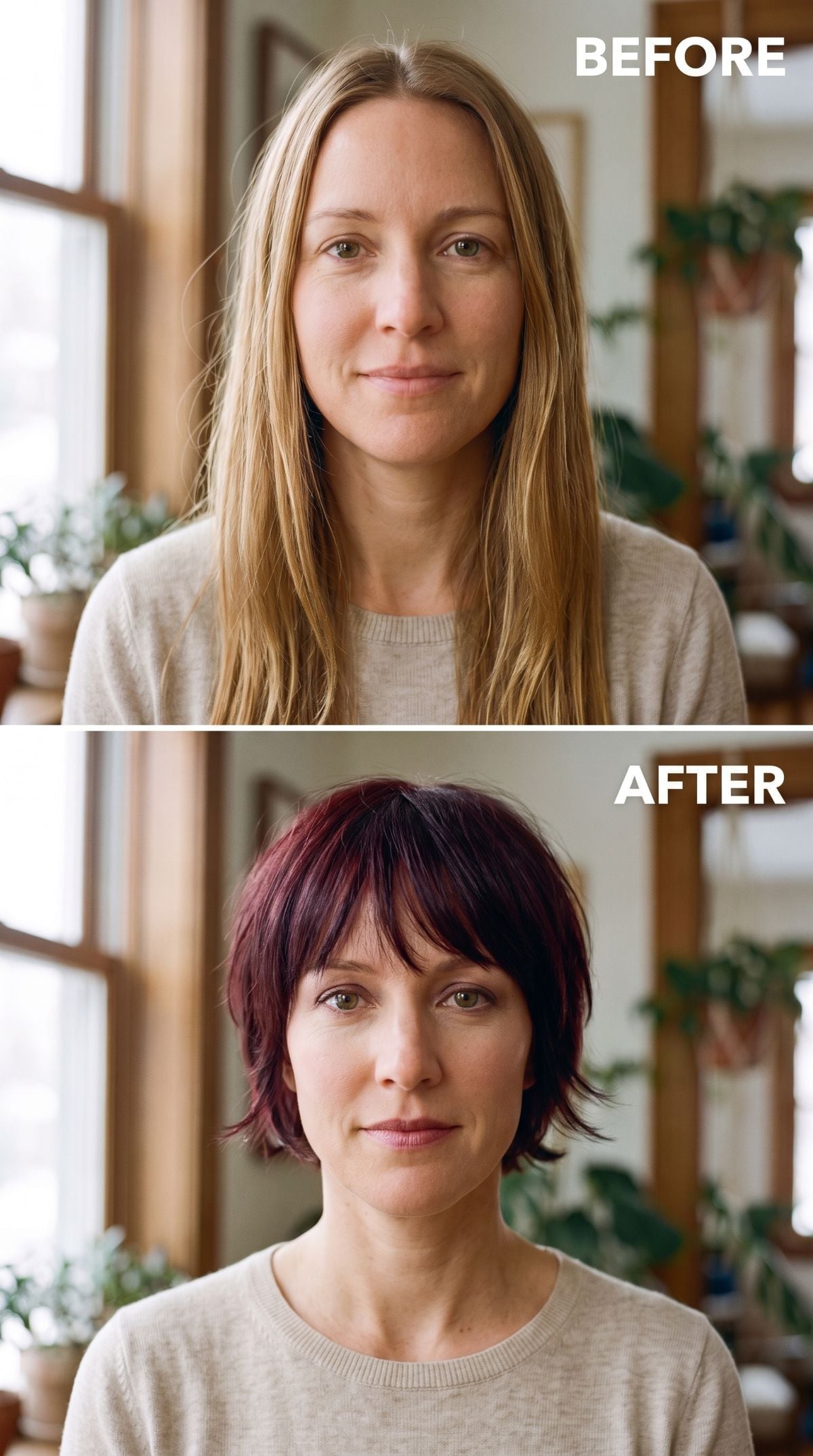
The polished bob gets a rebellious cousin here. Long, fine blonde disappears into a burgundy shaggy bob with curtain fringe, feathered sides and a much shorter back.
The movement through the cheekbones makes this feel less controlled than the blunt cuts, while the shortened nape keeps all that texture from collecting at the base of the head. It is short hair without the slightest interest in behaving.
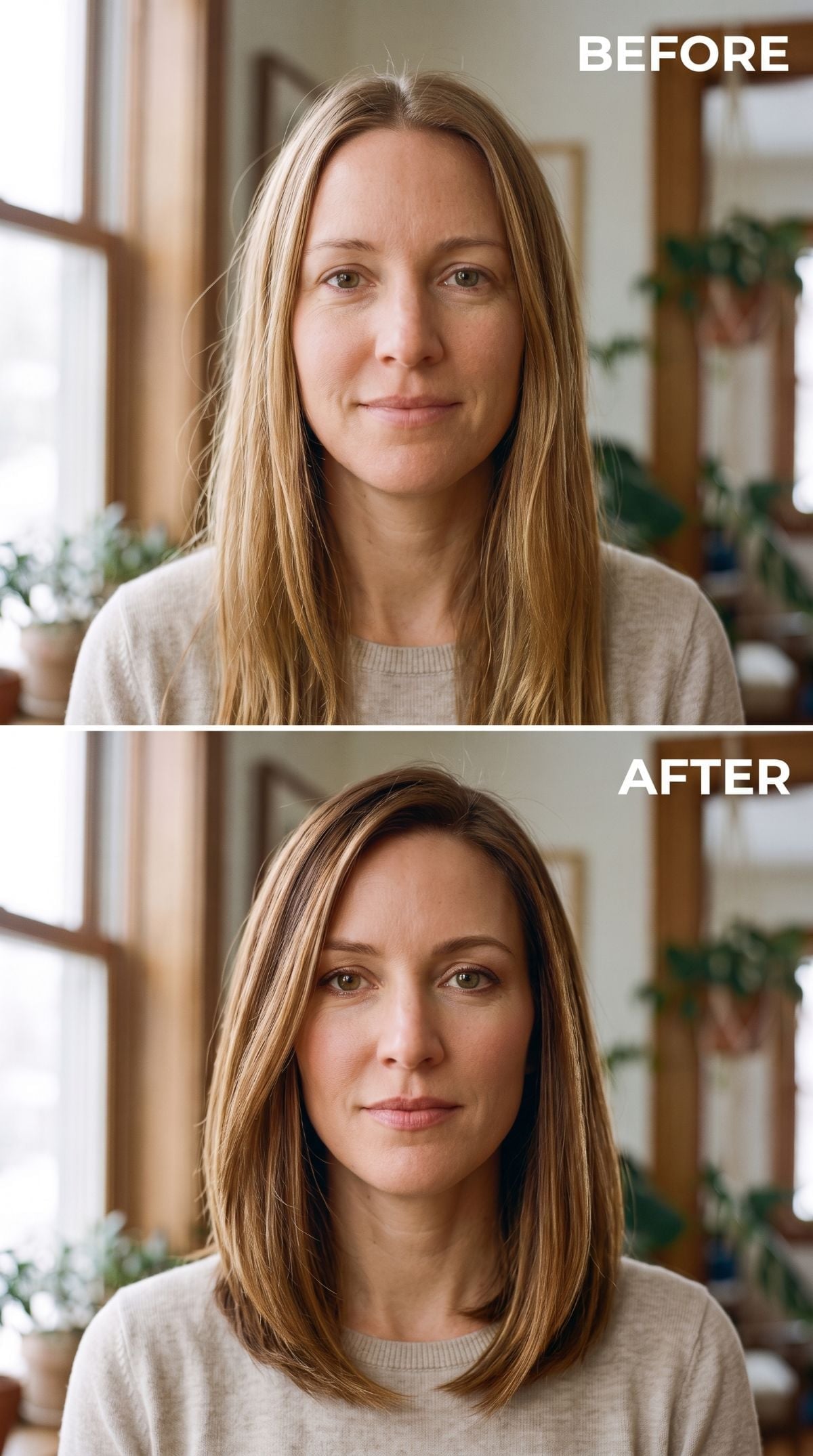
19. Darker, Shorter, and Finally Some Structure
❤️ Would you like to save this?
The before is long and comparatively shapeless. The after introduces a shorter brunette silhouette with caramel dimension, a side part and soft pieces angling toward the jaw.
What improves the look is not some mystical power of dark hair. It is contrast plus structure. The part creates asymmetry, the layers give the perimeter movement and the richer base makes those lighter pieces more visible.
18. Swept Back at the Chin, With All the Volume Above the Neckline
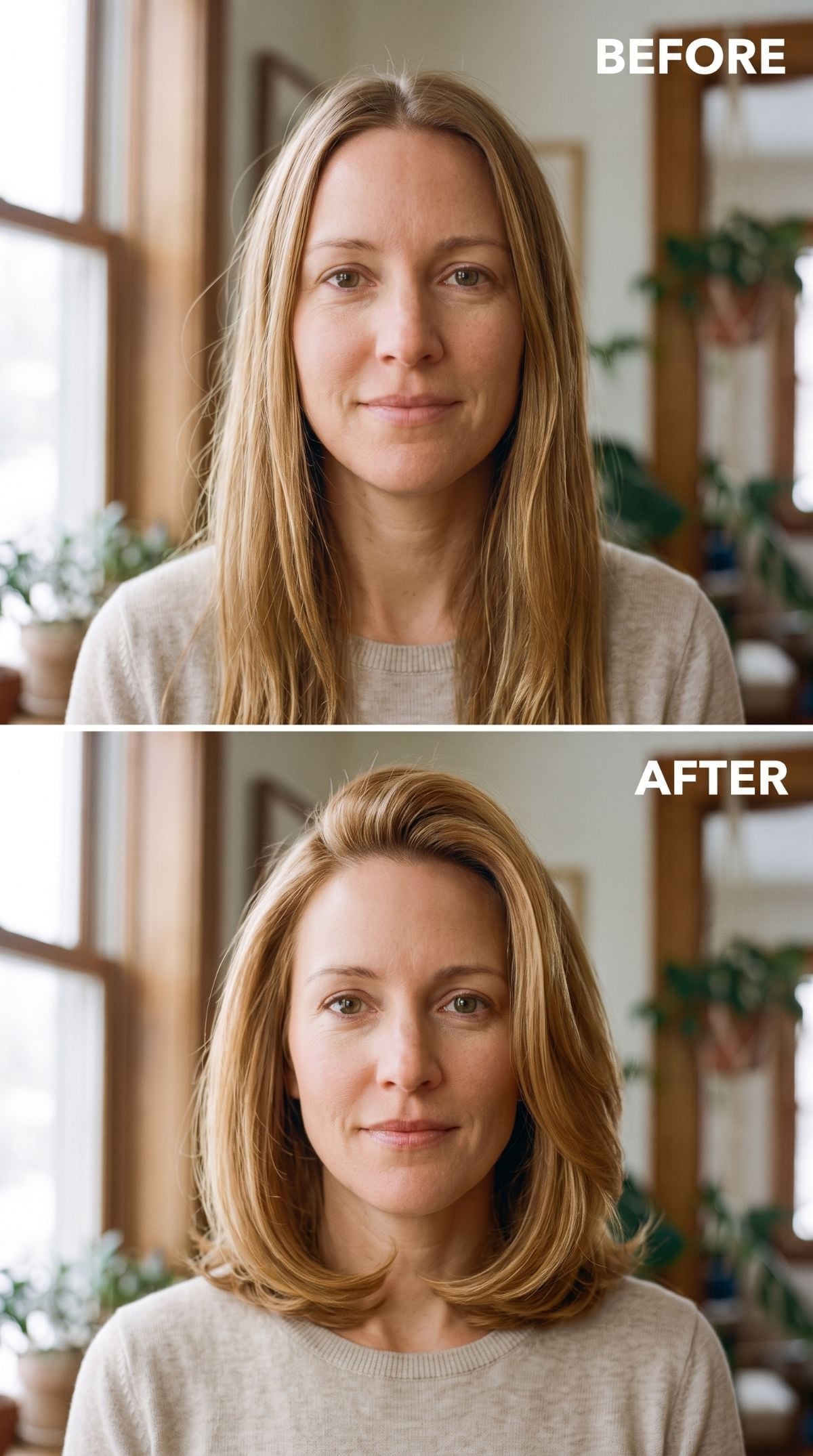
This bob does not curl inward and politely frame the jaw. It pushes away from the face, building volume through the sides and letting the ends flip lightly outward.
That makes it a useful counterexample to all the sleek bobs. The cut is still chin length, but styling completely changes its silhouette. Same general territory, very different attitude.
17. Copper Pixie, Swept Back, Nothing Crowding the Jaw
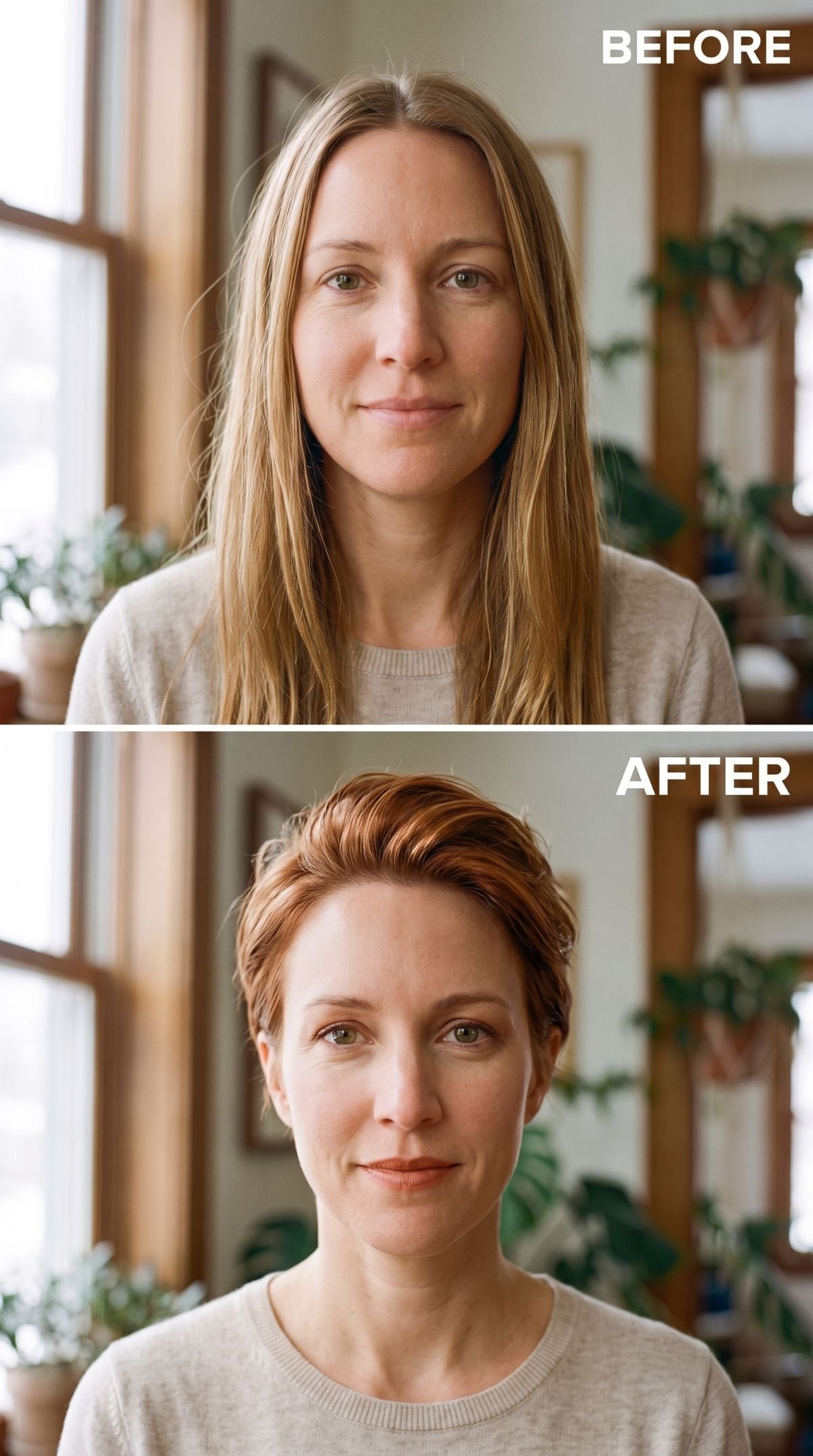
Sandy blonde gives way to copper auburn, and shoulder length gives way to a pixie swept back above the ears and tapered neatly through the nape.
The warm highlights keep the crop from feeling visually dense, while the backward movement opens the sides of the face completely. This one feels polished without being precious.
16. Platinum, Side-Parted and Suddenly Much More Graphic
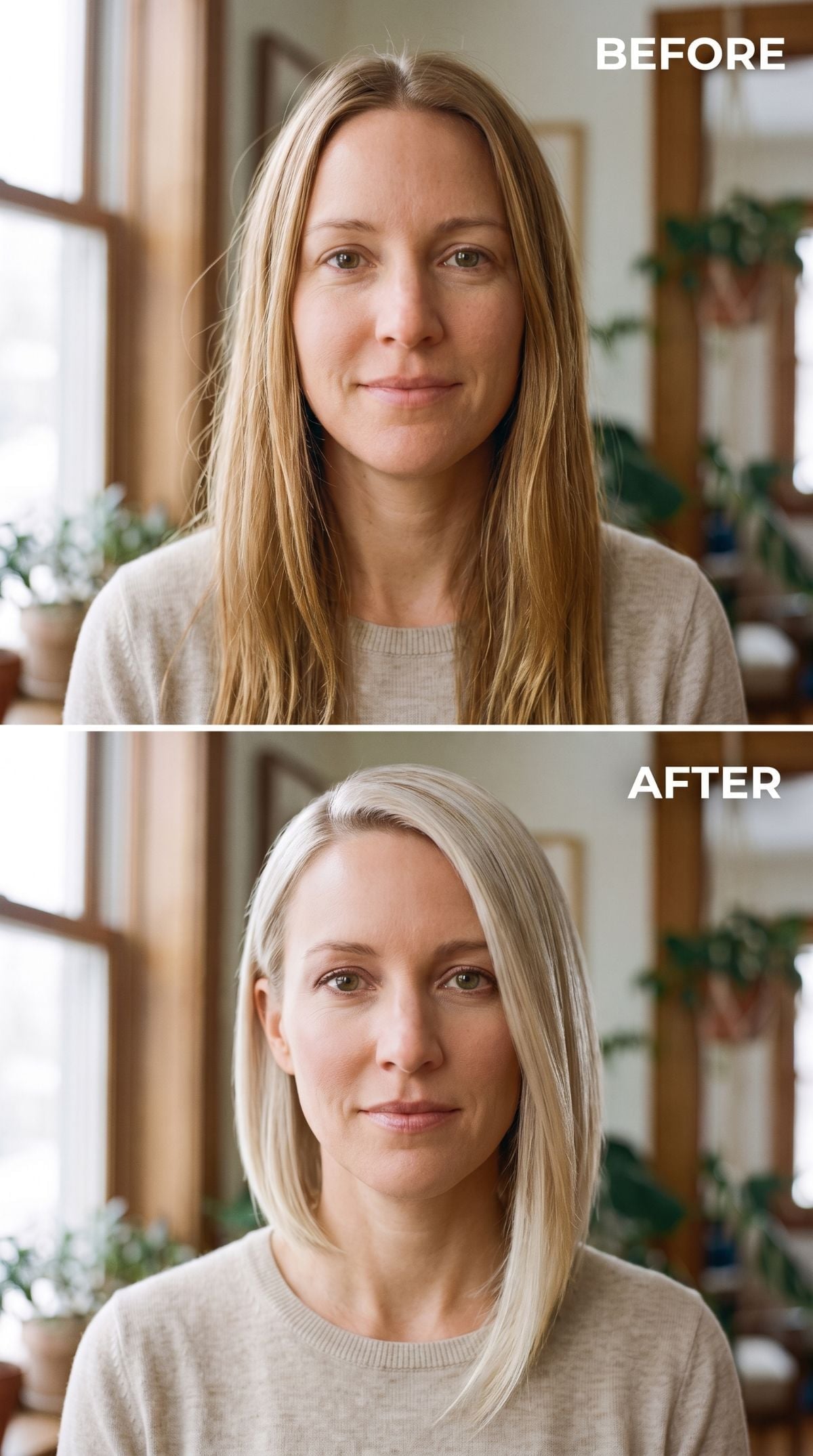
Several inches disappear, honey blonde cools into platinum and the center part shifts sideways. Those three changes happen together, which is why the after feels much more dramatic than the cut length alone would suggest.
The side part breaks the symmetry of the before, while the smooth perimeter gives the new color a clean surface. This is less about “hiding” anything than making the hairstyle look deliberately designed.
15. Brown Blunt Bob: The Straight-Line Version
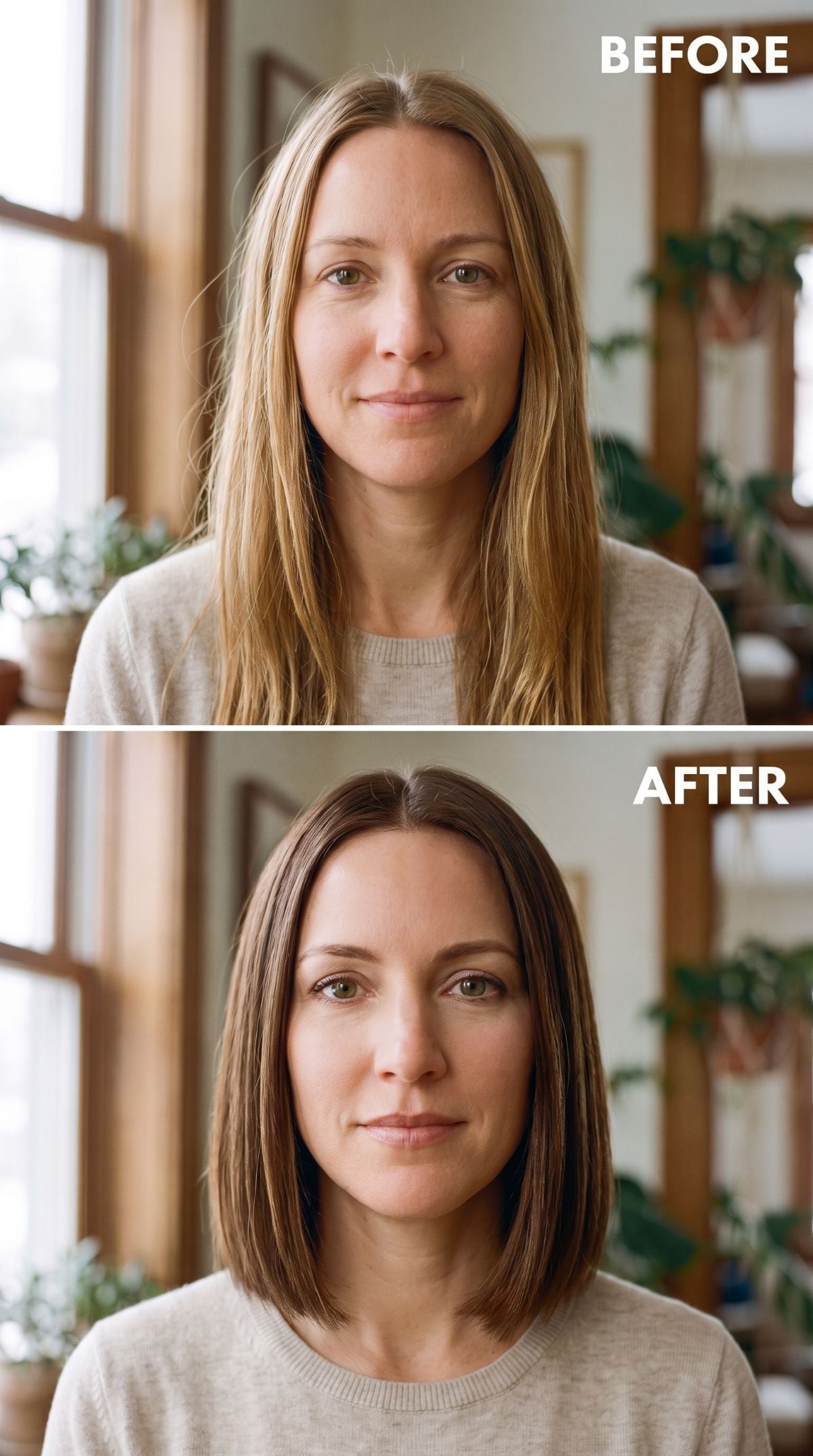
Honey blonde past the chest is replaced by a cool medium brunette bob ending around the jaw. Unlike the wavy and shaggy versions, this one is almost entirely about the perimeter.
The crisp bottom edge gives the haircut a graphic quality, while the darker color creates stronger contrast with her skin and cream sweater. It is a much more assertive frame without requiring bangs, curls or visible layering.
14. Burgundy Finger Waves Turned the Crop Into Something Glamorous
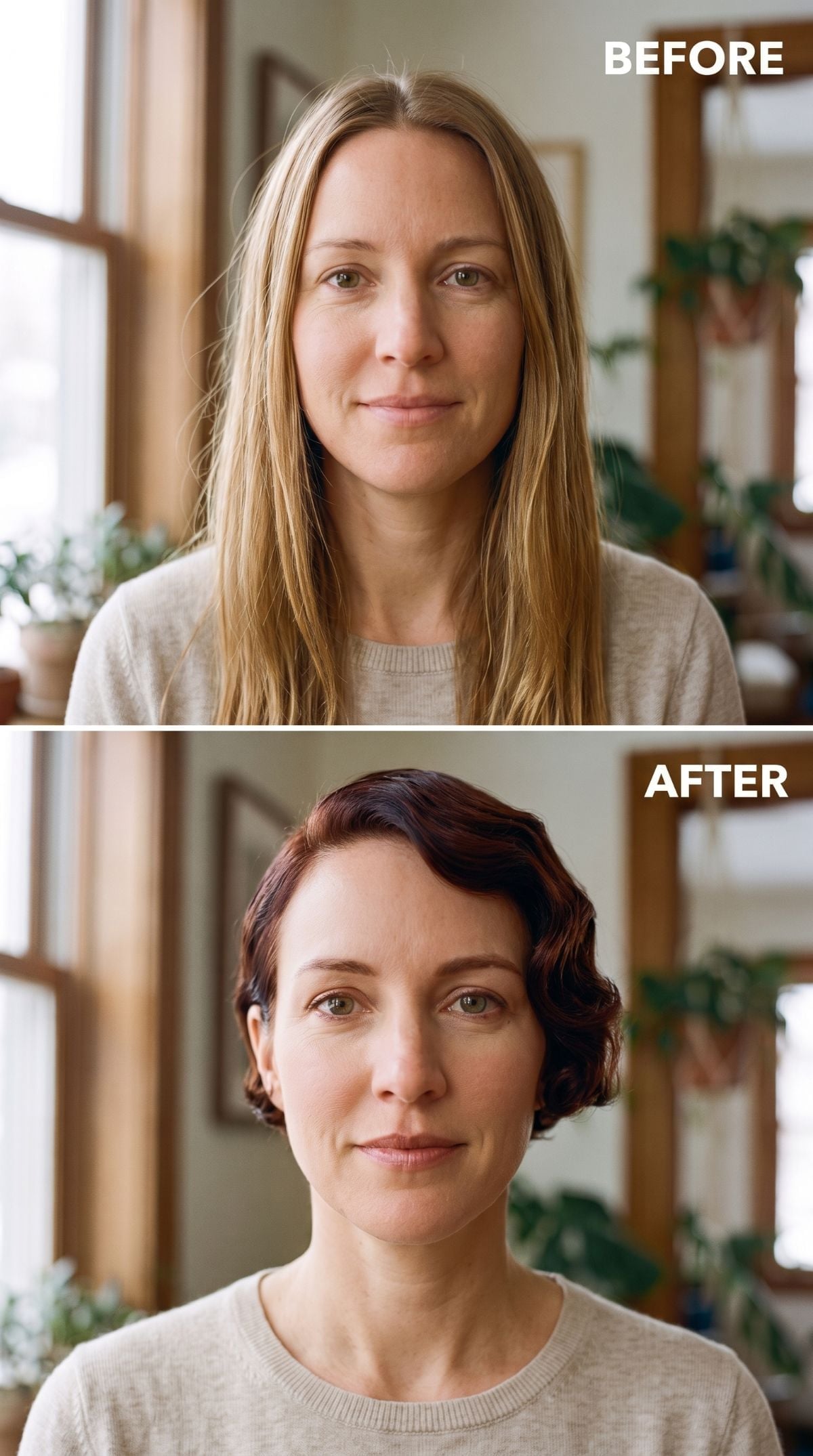
The nape is cropped close, but the finger-wave texture makes this feel worlds away from the straighter pixies. Soft auburn-burgundy curves move across the head instead of standing upright at the crown.
That gives the crop a dressier, almost sculpted finish. Short does not have to mean sporty, practical or severe. Sometimes it means evening hair without all the hair.
13. Grown-Out Blonde Became a Crisp Chin Bob
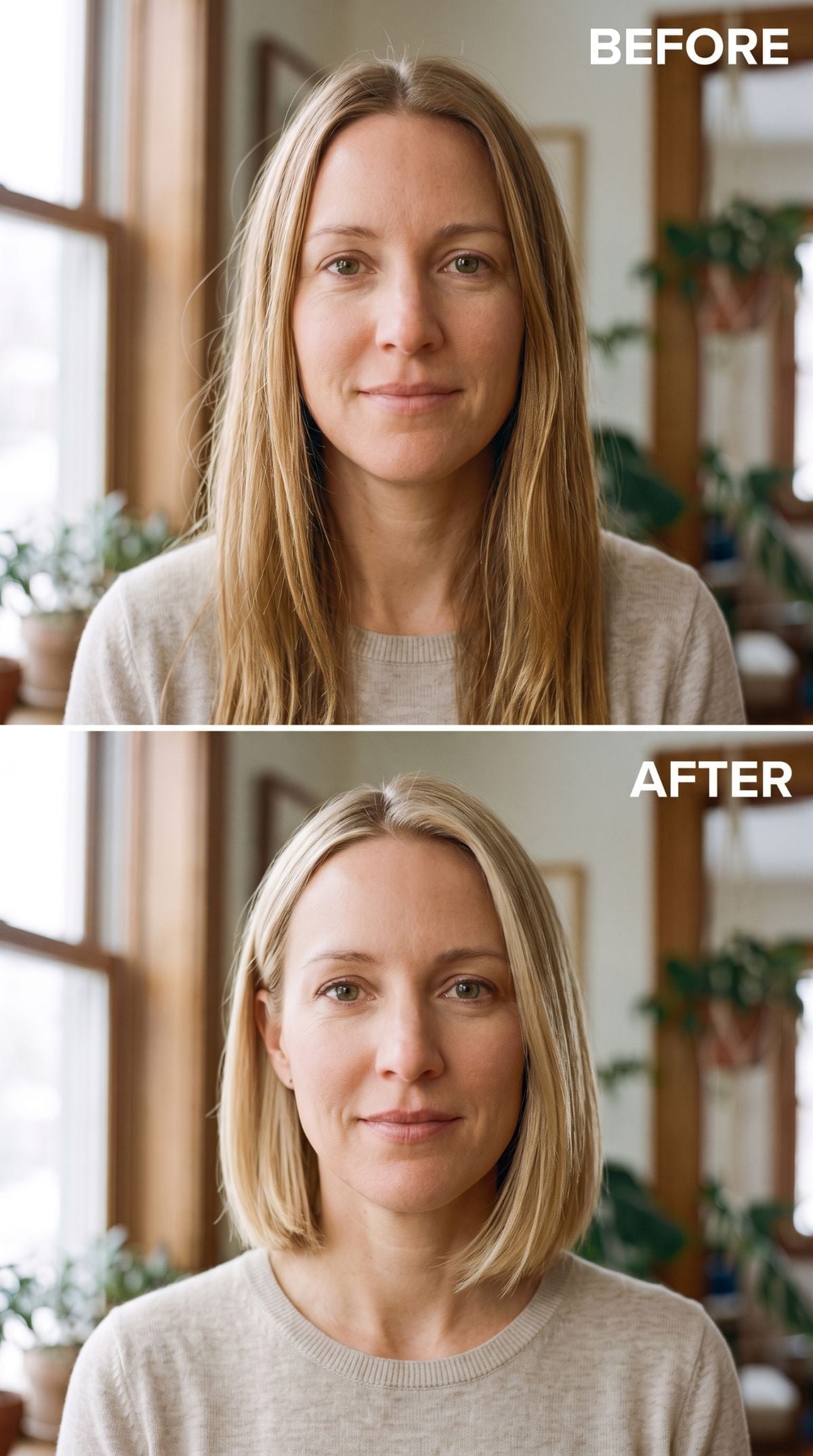
The before pools well below the shoulders. The after stops cleanly around the chin and lifts the blonde brighter and cooler.
Because the sweater remains virtually unchanged, the haircut gets to make its case without much visual interference. It is not the most radical transformation here, but it shows how much cleaner a familiar blonde can look once the perimeter is intentional.
12. Dark Pixie, Lifted Crown, No Apology for Going Short
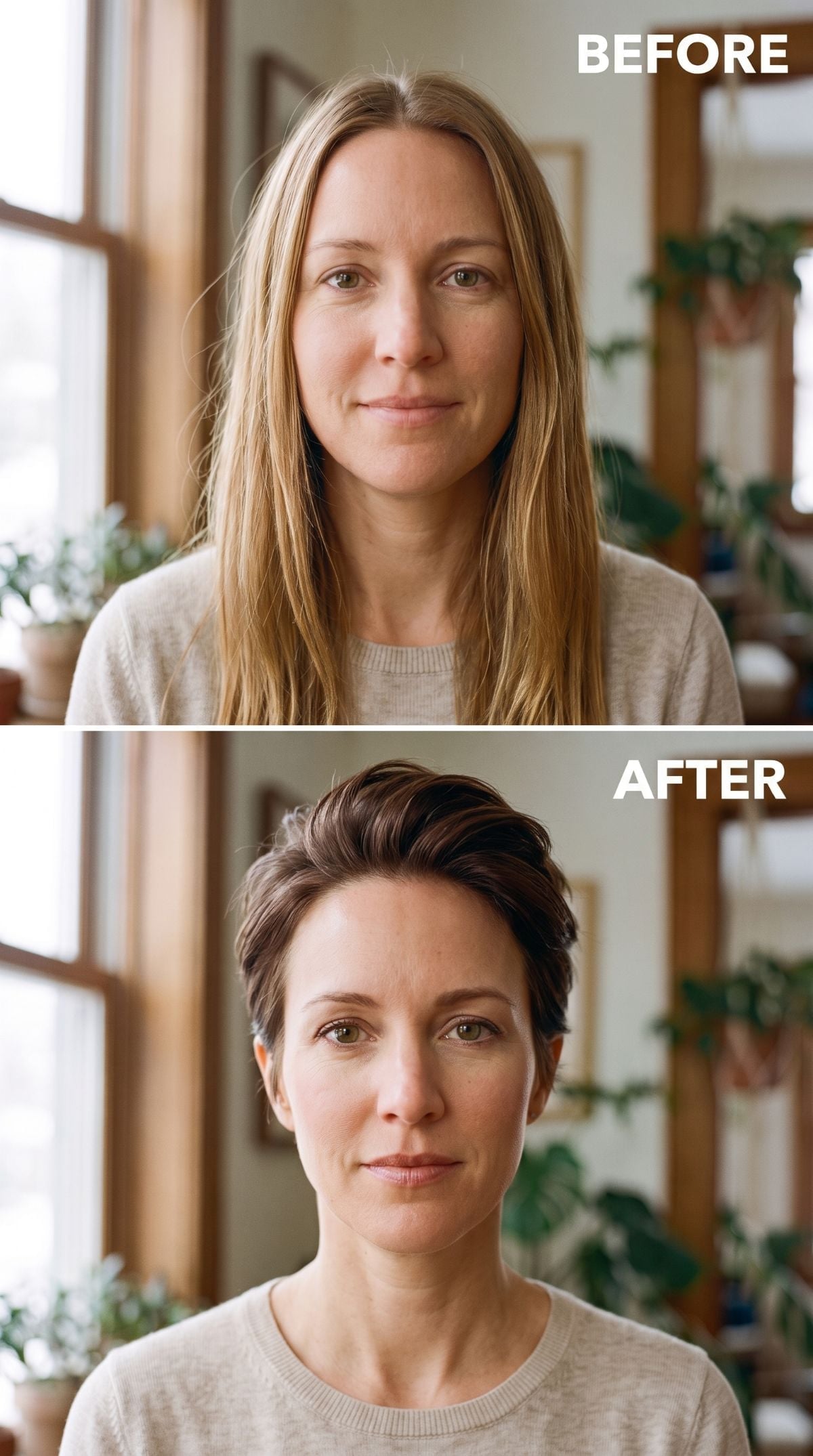
Long blonde hair vanishes and a dark brown pixie takes over, cropped close at the sides with noticeably more length through the crown.
The styling is swept back with a smooth, lightly defined finish rather than pasted flat. That extra height gives the cut direction, while the closely controlled sides keep it from widening around the ears.
11. Lighter Ends and a Shorter Shape Made the Color Work Harder
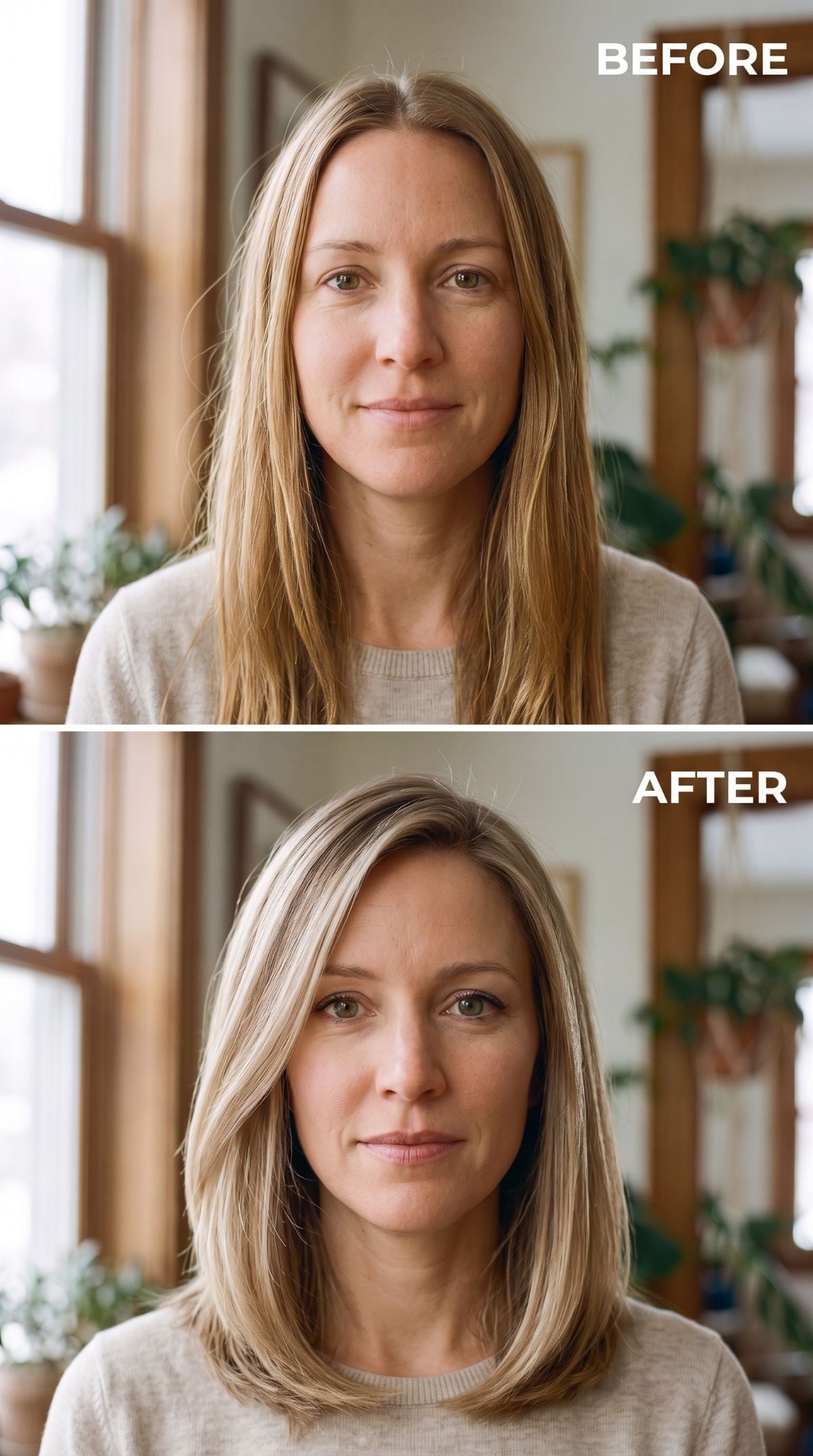
Several inches come off, but this transformation is really a lesson in placement. Bright pieces concentrate through the front and ends, giving the shorter shape more separation than the flatter blonde before.
The cut sits near the jaw with a restrained inward bend rather than clinging tightly. The result looks lighter and more dimensional without requiring a dramatic change in overall color family.
10. Ash Pixie: Quiet Color, Very Decisive Cut
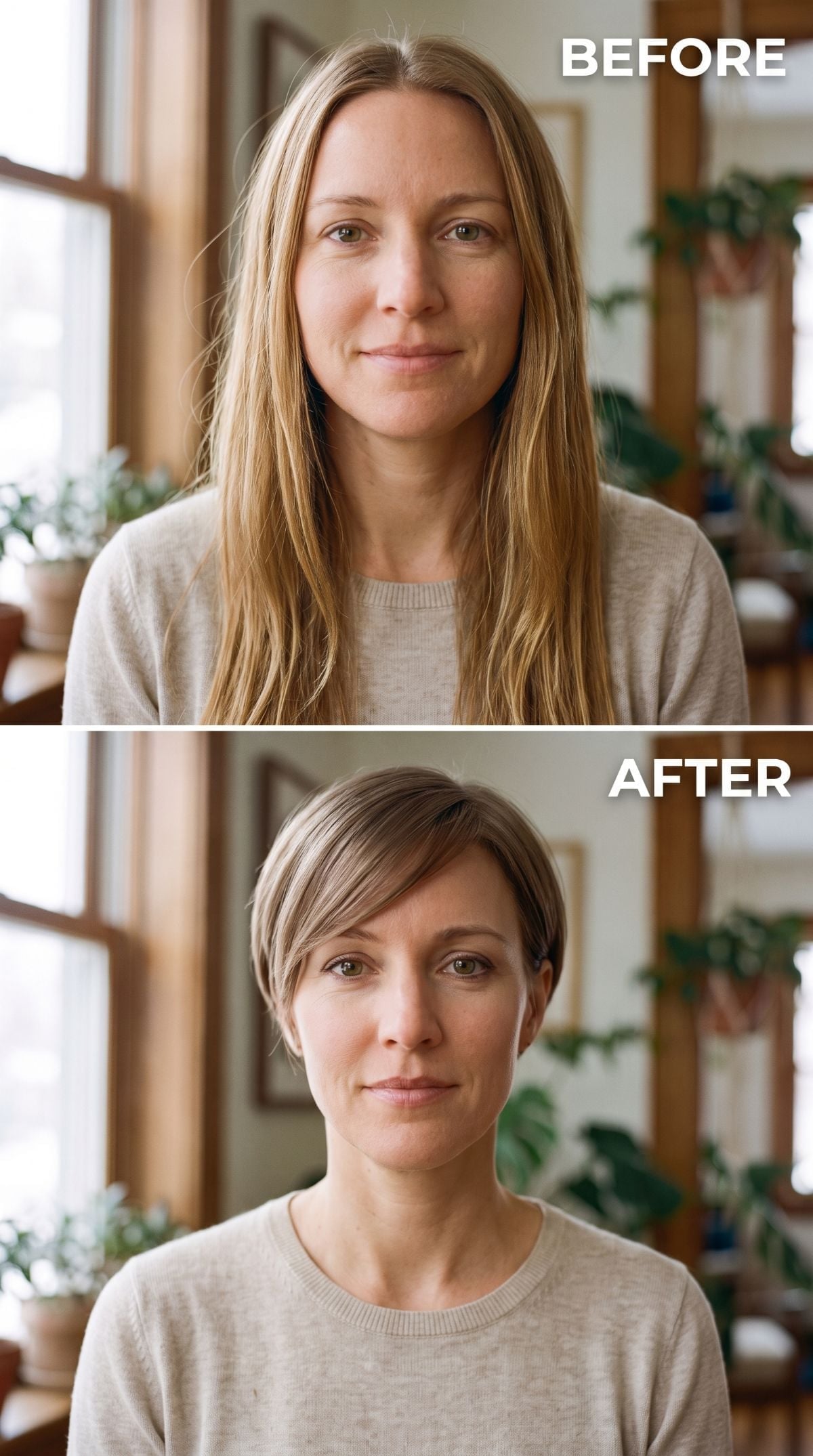
Sandy blonde and shoulder-skimming length are replaced by an ash-brown pixie with a side-swept fringe and closely tapered sides.
Unlike the burgundy and copper crops, the color stays intentionally quiet. That puts more emphasis on the silhouette: soft movement over the forehead, very little bulk around the ears and a nape that disappears neatly into the neckline.
9. Same Basic Bob Length, Completely Different Once the Waves Arrived
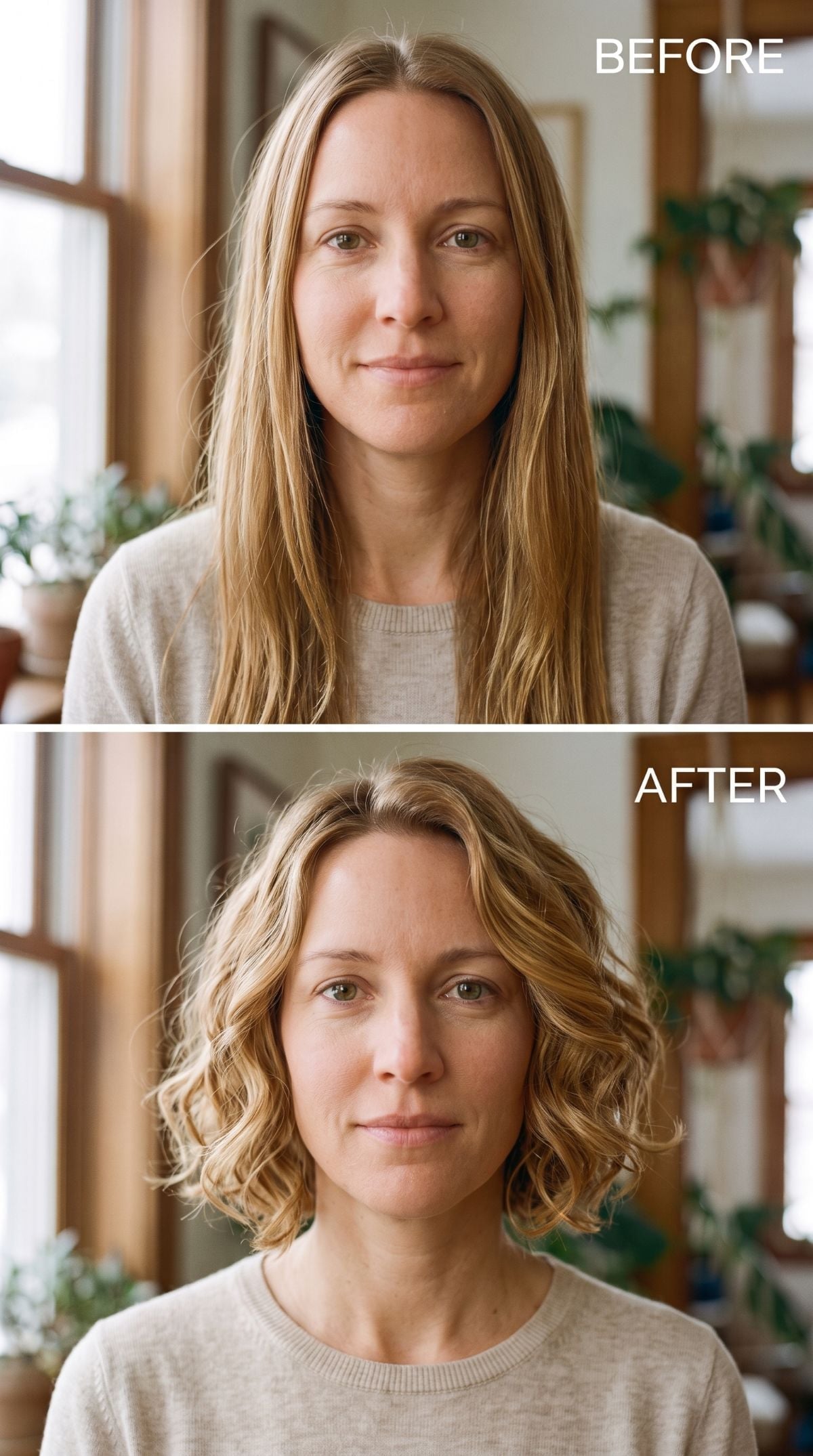
The straight before falls below the shoulders without much movement. The after sits around the jaw and introduces loose waves, warmer roots and brighter ends.
What distinguishes this one from the earlier wavy lob is how compact the finished shape becomes. The bends occupy a smaller space around the face, so the bob feels buoyant rather than broad. Short hair done well does not make anyone smaller. It changes the frame.
8. Close at the Nape, Longer in Front: The Bob With a Hidden Trick
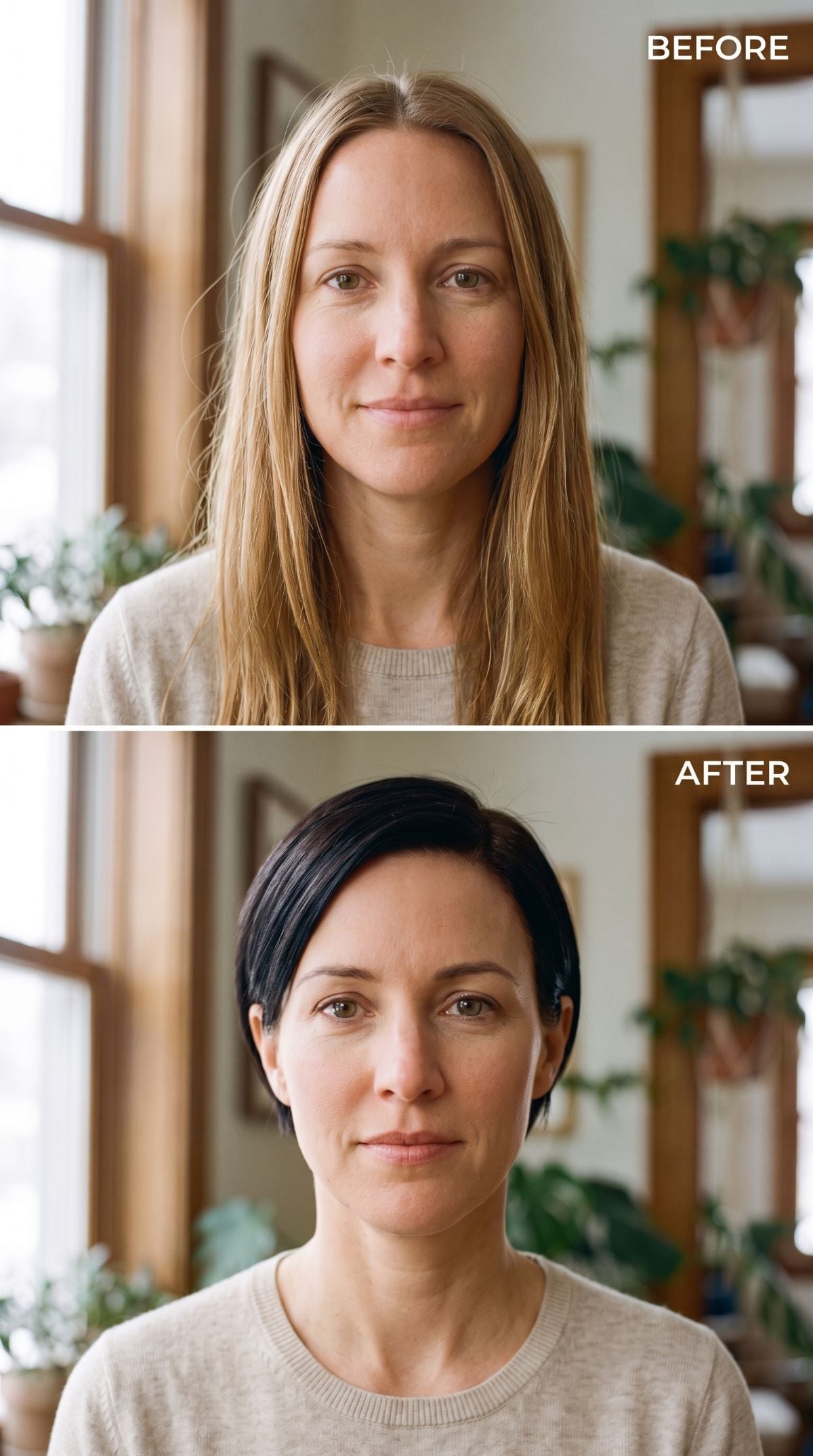
The back is cropped far tighter than the front, which immediately distinguishes this from a conventional one-length bob. Longer pieces sweep toward the face while the nape stays neat and compact.
That contrast gives the cut shape without stacking obvious volume at the back. Deep brunette adds definition, but the architecture of the haircut is what makes this one worth studying.
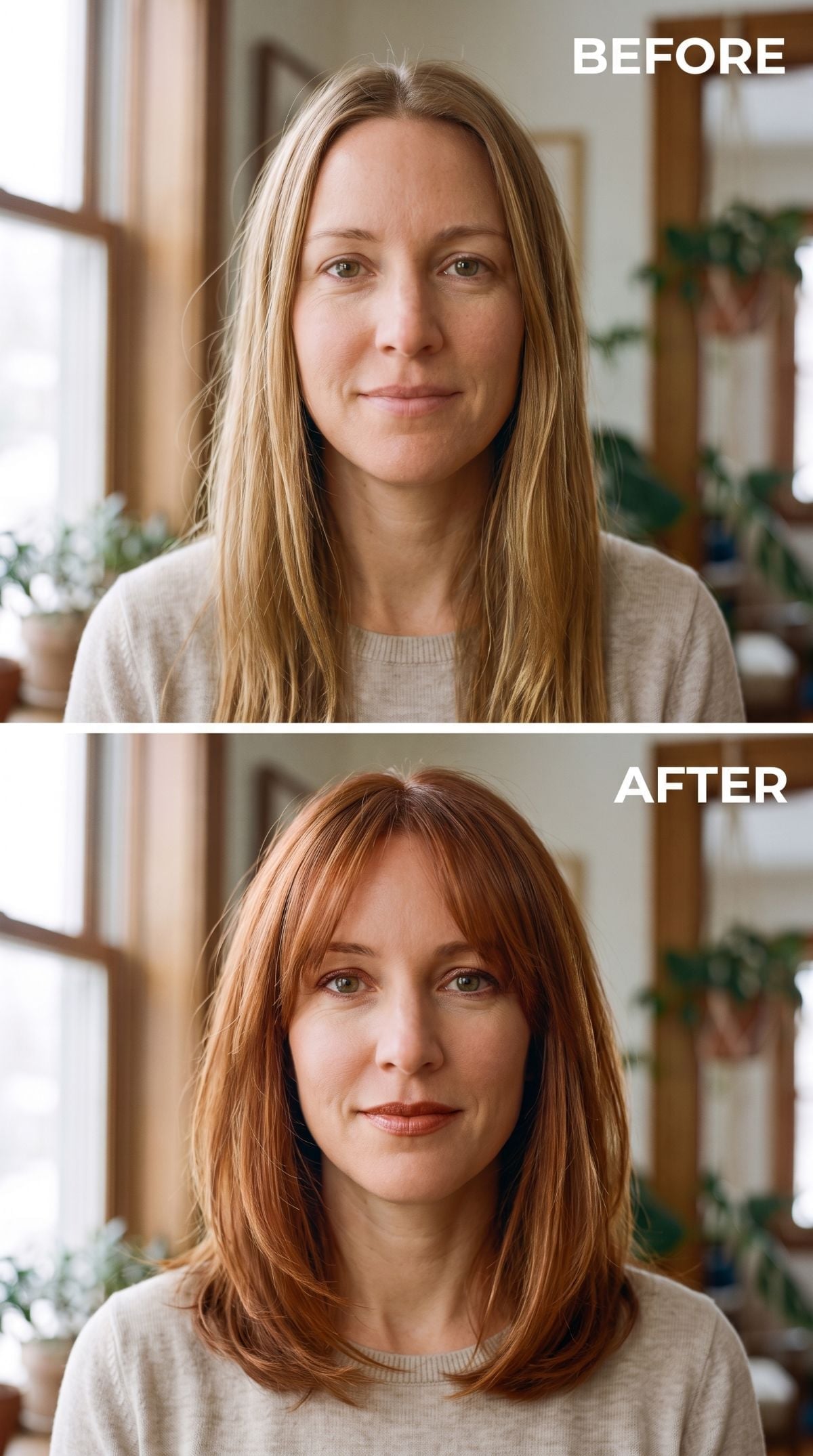
7. She Kept the Length — Then Used Red and Bangs to Change the Focus
❤️ Would you like to save this?
This is the outlier, and that is exactly why it belongs. She does not go truly short. Instead, flat blonde becomes copper-red with auburn depth, while bangs arrive above the brows and the remaining length gains more shape.
It is useful proof that the answer is not always “cut it all off.” A strong fringe can establish a new focal point while color adds enough presence to make existing length feel intentional rather than merely long.
6. Dark Pixie With Texture on Top: Small Cut, Big Attitude
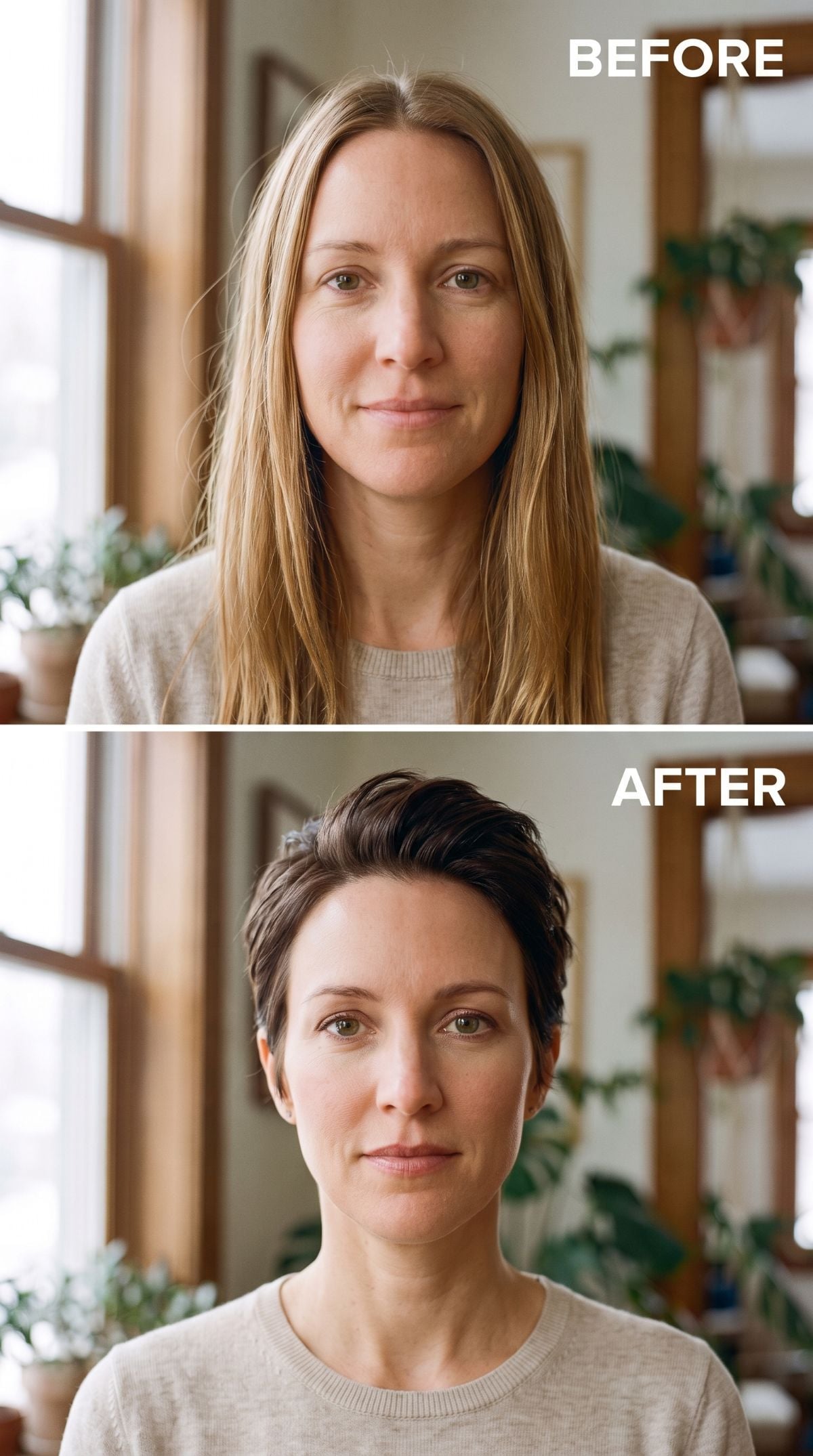
The nape and sides follow the head closely, but the crown is left long enough for soft, finger-combed texture. That one choice keeps the pixie from turning austere.
The before relies on length. The after relies on shape. It is a far more decisive haircut, yet those softened waves on top stop it from feeling harsh.
5. Chin-Grazing Bob, Dark Roots, Honey Ends
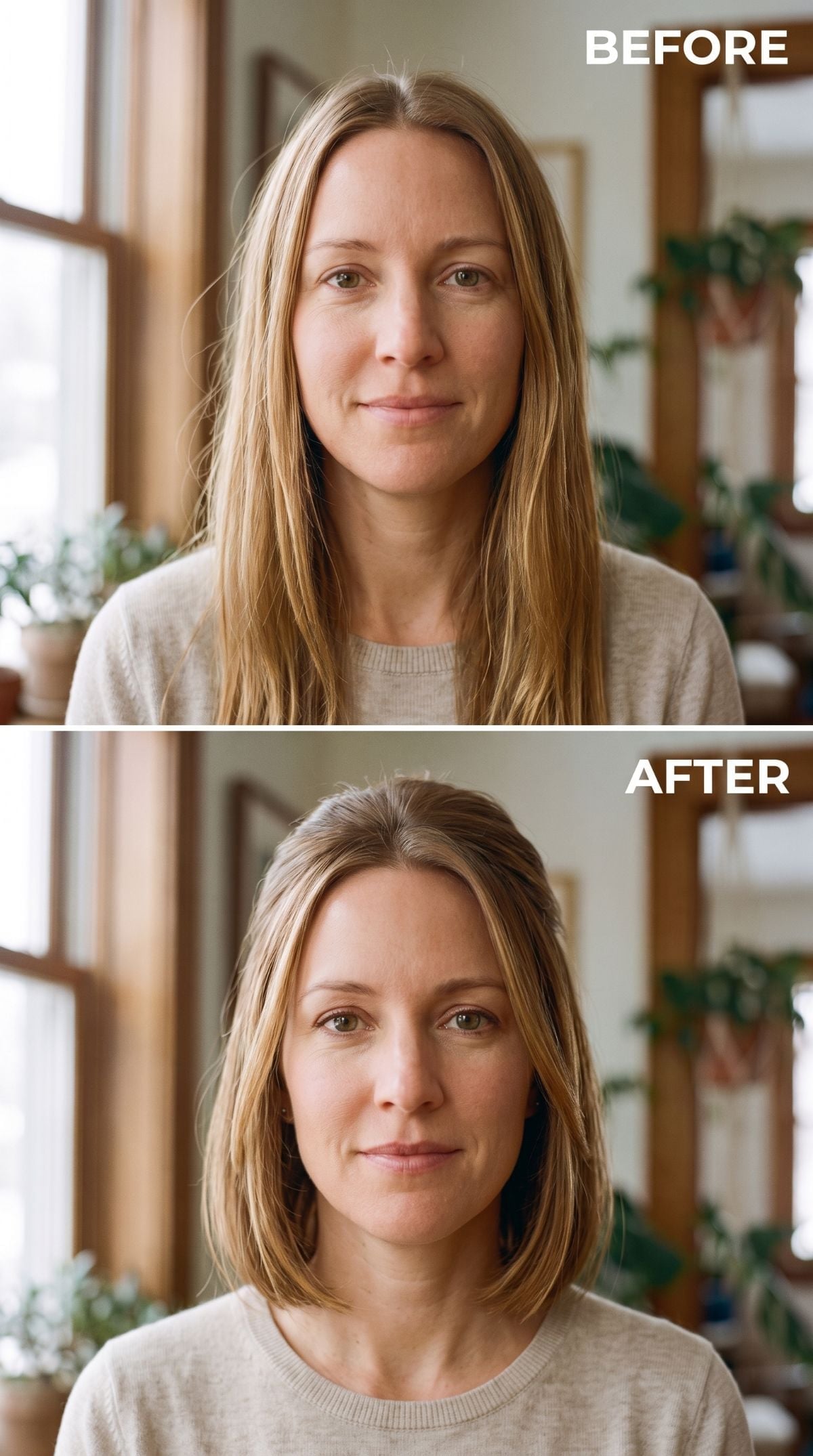
Loose longer strands are replaced with a chin-skimming bob whose ends turn gently inward. Darker roots fade into honey-colored lengths, giving a relatively simple cut more depth.
The important distinction is that the color gradient adds dimension rather than somehow “pulling the eye upward.” The cut supplies the new outline; the color keeps that outline from looking flat.
4. Ink-Black Pixie: The Boldest Contrast in the Gallery
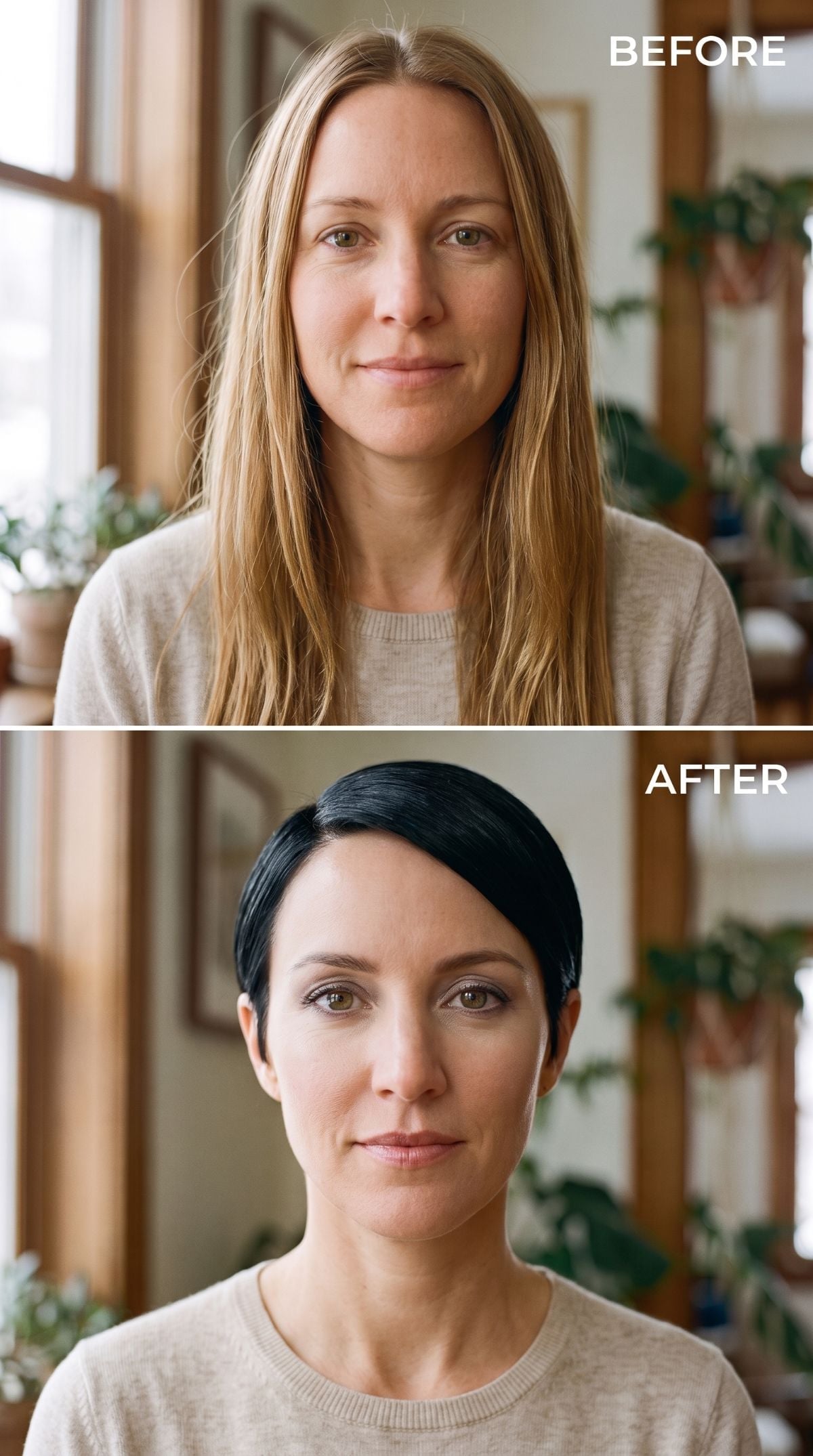
Honey blonde disappears into near-black, while the cut goes from long to almost architectural. The crown lies relatively sleek, the sides stay tight and the nape is tapered close.
Because the beige ribbed sweater remains similar, the new hair creates nearly all the contrast in the frame. This is not the soft, forgiving pixie. It is the graphic one—the version for someone who wants the haircut noticed.
3. Blonde to Dark Textured Pixie, With Height Exactly Where It Counts
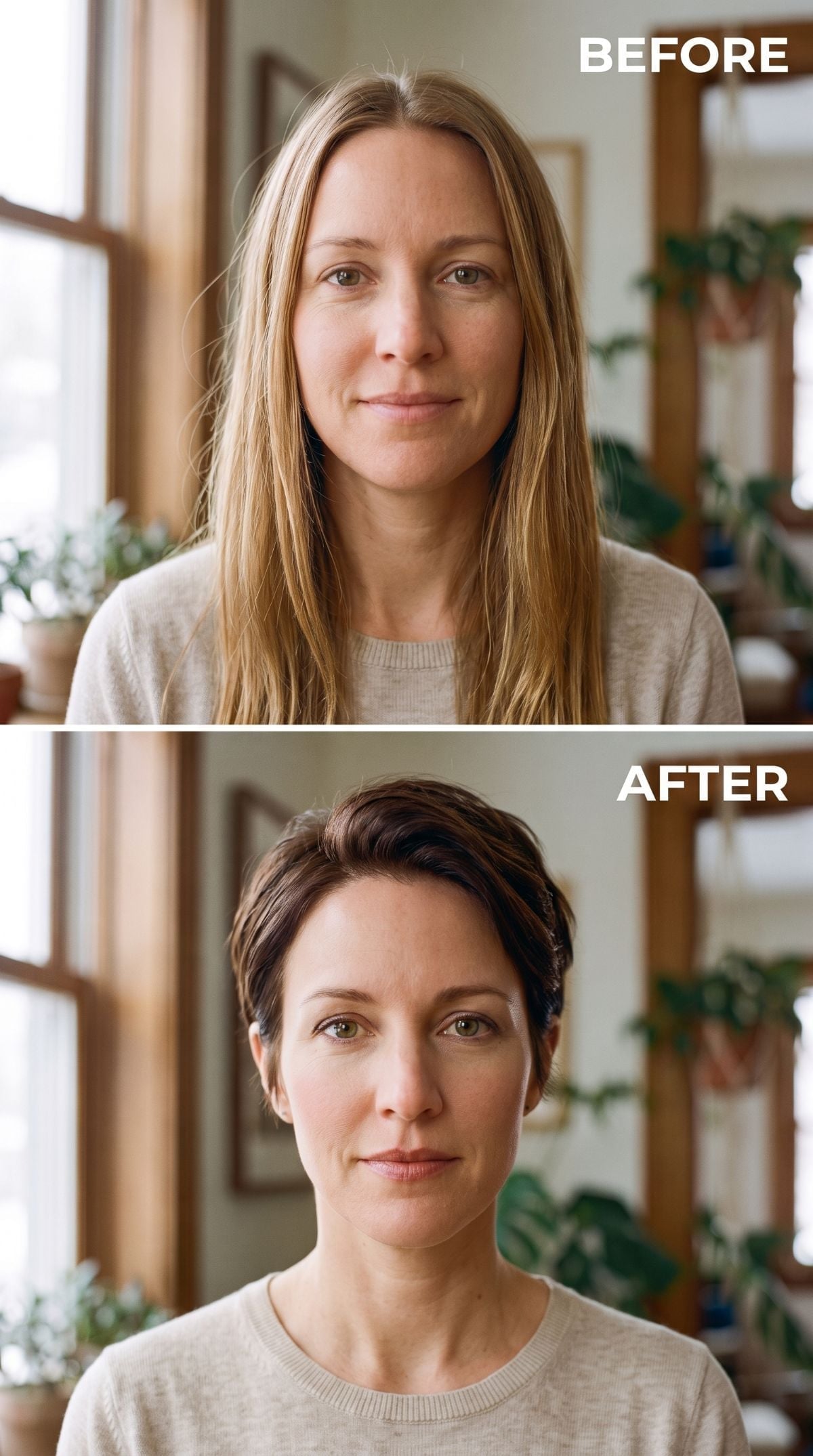
The long, flat blonde before gives way to a dark brunette pixie with movement concentrated through the crown and fringe.
There is a useful lesson here in not cropping every inch to the same length. Leaving some softness on top gives the eye texture to follow, while the shorter sides make that movement more pronounced.
2. Platinum Streaks and a Jaw-Length Cut Made the Blonde Feel New Again
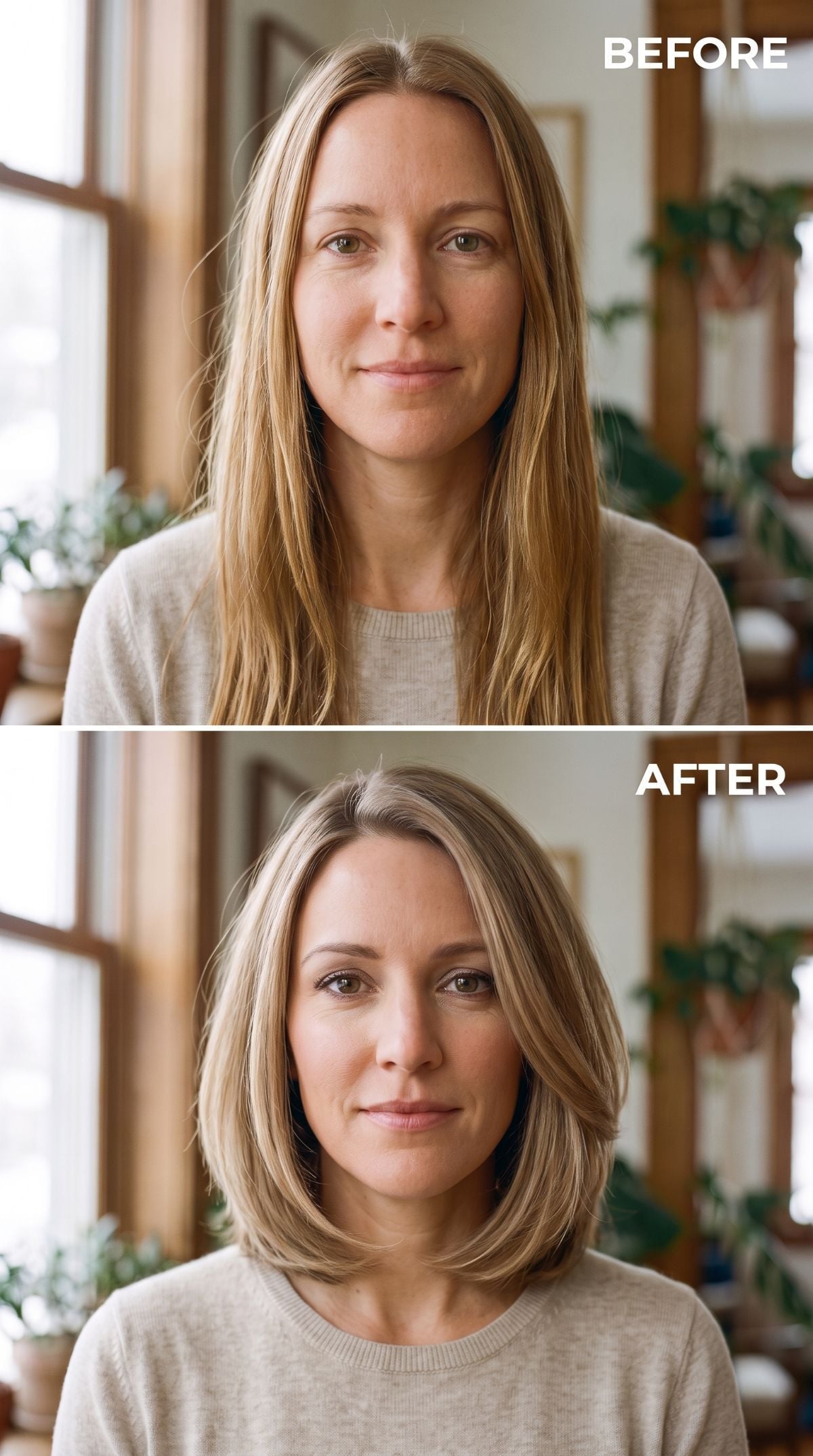
Long, center-parted blonde becomes a chin-length bob with soft layering, a side part and brighter pieces concentrated toward the face.
The change is less about going dramatically dark or dramatically short than finally giving the blonde some architecture. The side part disrupts the symmetry, the layers soften the edge and the lighter pieces keep the result lively.
1. Long Blonde Behind Her, Short Brown Ahead — and No Looking Back
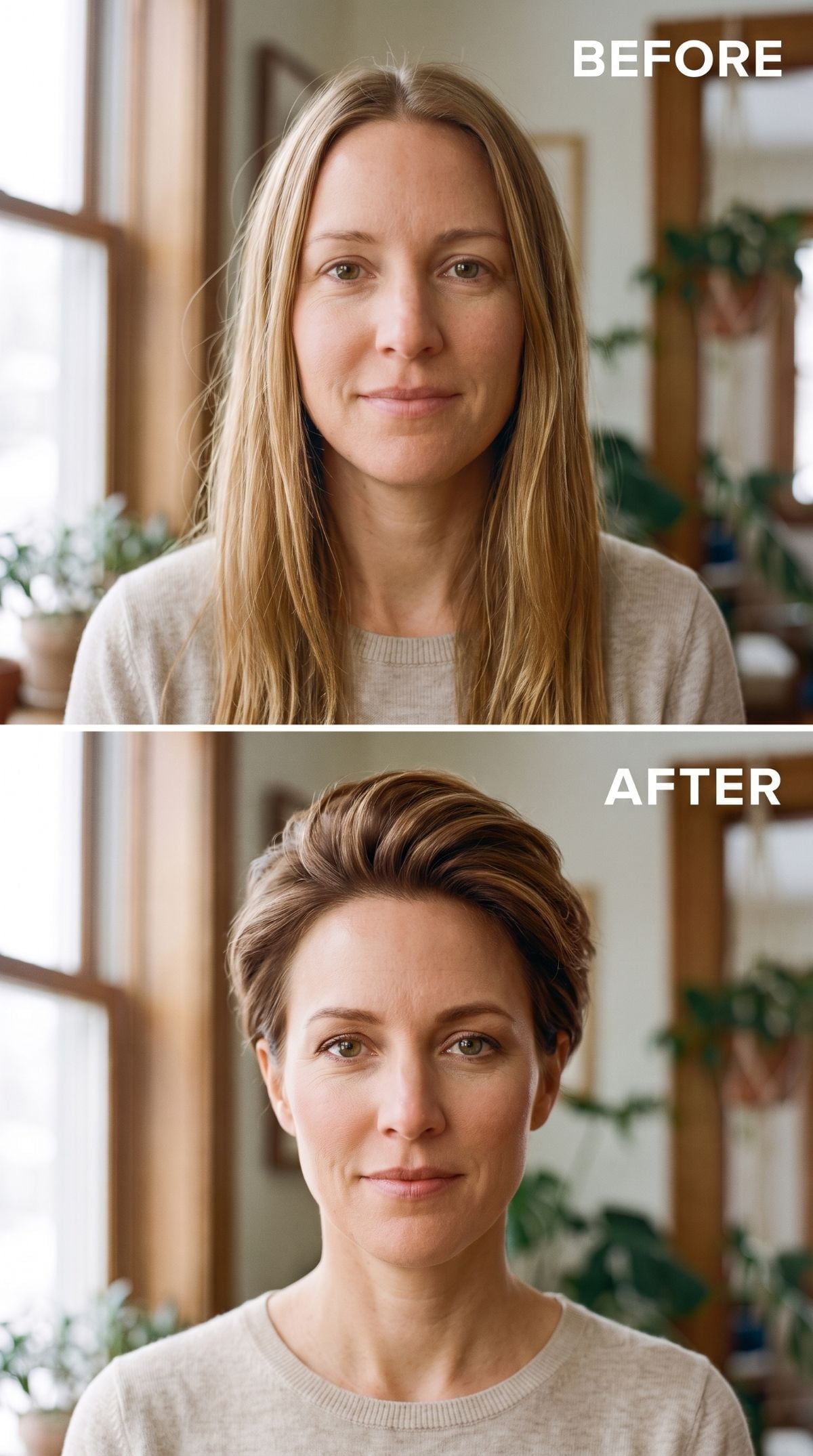
The final transformation brings together nearly every lesson in the gallery. Long, flat, center-parted blonde disappears. In its place: a brown pixie with warm chestnut highlights, close sides, a neatly tapered nape and genuine lift through the crown.
Nothing is being hidden anymore. That is what makes this a useful place to finish. The first cuts in this gallery cautiously rearranged the hair around the neck; this one simply exposes it and builds the hairstyle somewhere else entirely.
That may be the bigger lesson in all 31 transformations. A flattering short haircut is not about making a neck vanish, because hair cannot do that and shouldn’t have to. It is about deciding where the shape, movement and personality of the hairstyle will live. Sometimes that means cheekbone-level waves. Sometimes it means bangs. Sometimes it means a bob with a razor-clean edge. And sometimes it means cutting the nape short, lifting the crown and discovering that the feature you were trying so hard to camouflage never needed quite that much attention in the first place.