
❤️ Would you like to save this?
Low-maintenance hair gets sold as surrender: cut it short, stop fussing, accept whatever happens next. These transformations make a much better argument. The smartest cuts are not necessarily shorter or simpler. They are better organized. Weight moves somewhere useful. A thin bottom edge gets stronger. A fringe gives the front a direction. Layers stop piling up where the hair already feels widest. Color starts helping the shape instead of asking for attention of its own.
Across these 31 AI transformations, the strategy keeps changing. Some women keep nearly every inch and simply shift the fullness. Others go straight for a bob, pixie, shag, blunt fringe, silver blend, or copper reset. The interesting part is watching how little sometimes has to change before the whole head of hair starts making more sense.
FYI, thanks to AI imagery software, we’re able to create very specific fashion and hairstyle examples to illustrate the points being made. In some cases, imagery is exaggerated to hammer home the point. Also, assume links that take you off the site are affiliate links such as links to Amazon. this means we may earn a commission if you buy something.
31. A Choppy Copper Bob Takes the Weight Off the Shoulders and Puts the Texture Back Into the Cut
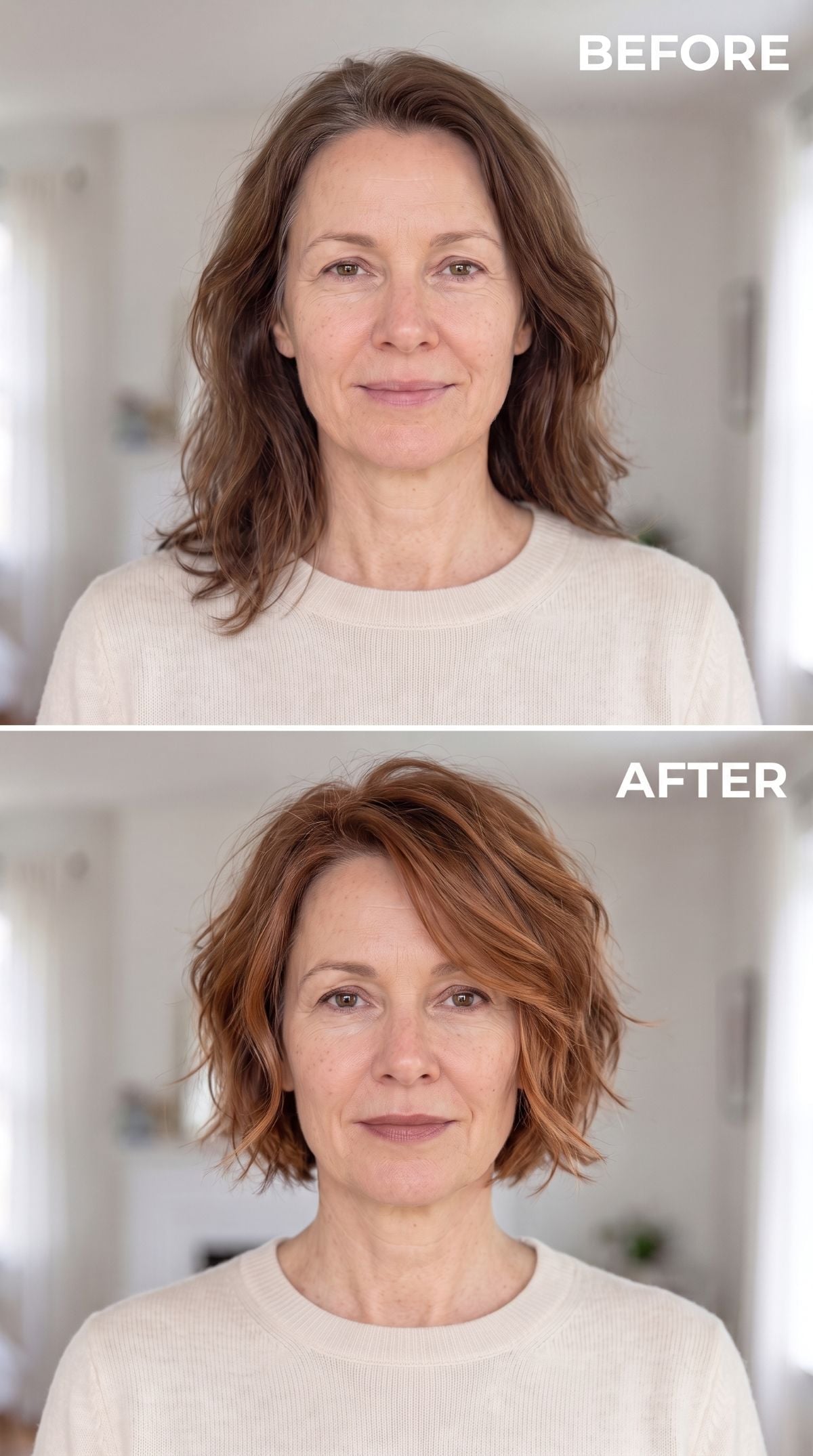
The change starts at the bottom. Longer brown waves that spread across the shoulders give way to a chin-length bob with irregular, piece-y ends and noticeably more action through the lower half.
The copper-auburn color strengthens that effect because highlights and shadows show up more clearly through the broken texture. Nothing about this cut is trying to sit perfectly smooth. A little natural bend gets to become part of the hairstyle instead of something that has to be corrected.
Why It Works: A textured bob can use natural movement rather than hiding it. The trick is making those broken-up ends look intentional enough that a little irregularity belongs there.
30. Honey-Blonde Layers Keep the Length but Move the Fullness Toward the Face
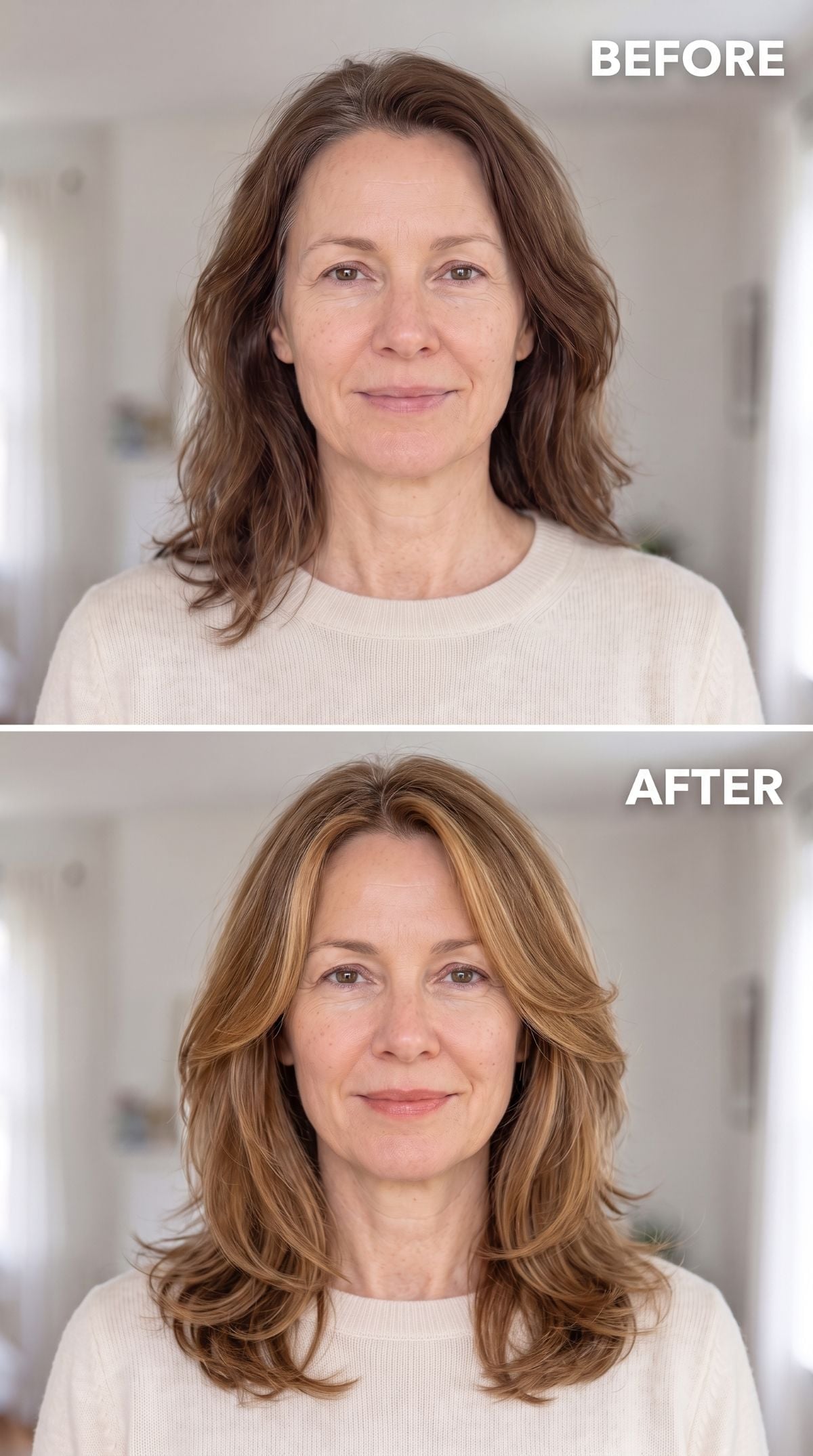
No dramatic chop is required here. The hair still grazes the shoulders, but face-framing layers begin higher and move outward instead of allowing everything to hang in one heavy curtain.
Warm honey-blonde color makes those separate sections easier to see. The sweep around the jaw also keeps the lower half from collapsing into one dense block, which is useful when the goal is more shape without giving up medium length.
29. A Silver Pixie Replaces Width at the Ends With Shape Through the Crown
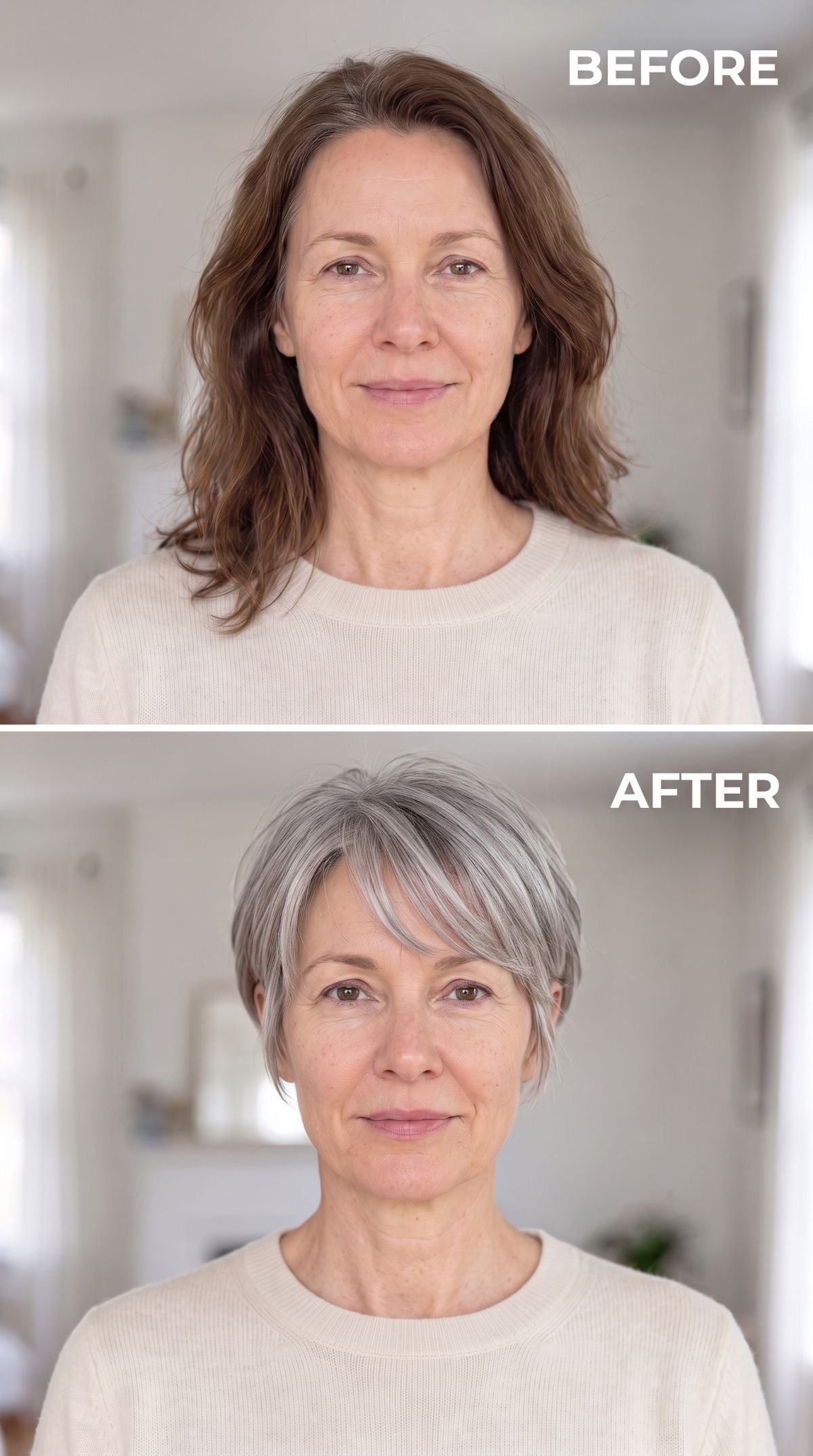
The longer starting cut carries most of its fullness toward the shoulders. The pixie reverses that arrangement completely: the nape comes in close, the sides narrow, and the remaining length concentrates through the crown and side-swept fringe.
Silver makes every short layer more visible, especially across the top where the separation shows most clearly. A little finger-worked texture can replace the need to organize a much longer silhouette section by section.
28. A Deeper Brunette and Soft Curtain Fringe Put the Focus Back Near the Eyes
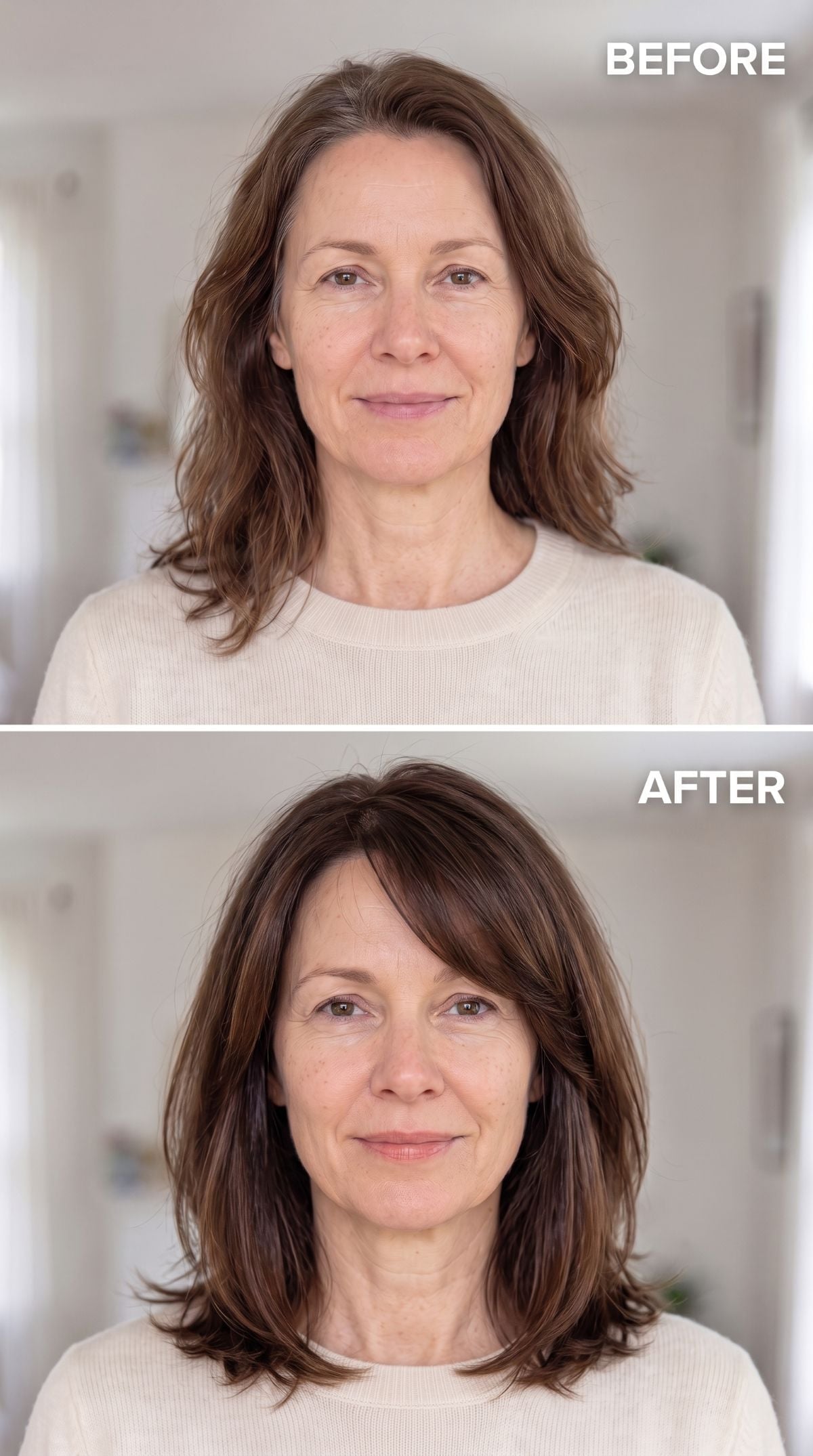
Length barely changes, which makes the transformation more interesting. The real difference is where the detail sits. Side-swept layers and a soft curtain fringe create movement around the forehead and cheekbones while the lower edge remains substantial.
The deeper brunette adds richness without relying on a high-contrast highlight pattern. Instead of asking the length alone to create interest, the cut gives the eye several places to stop before reaching the ends.
Fringe Check: Curtain fringe is less rigid than a straight-across bang because it can separate, sweep sideways, and merge into the surrounding layers as it grows.
27. A Chin-Length Bob and Full Fringe Give the Front a Stronger Shape
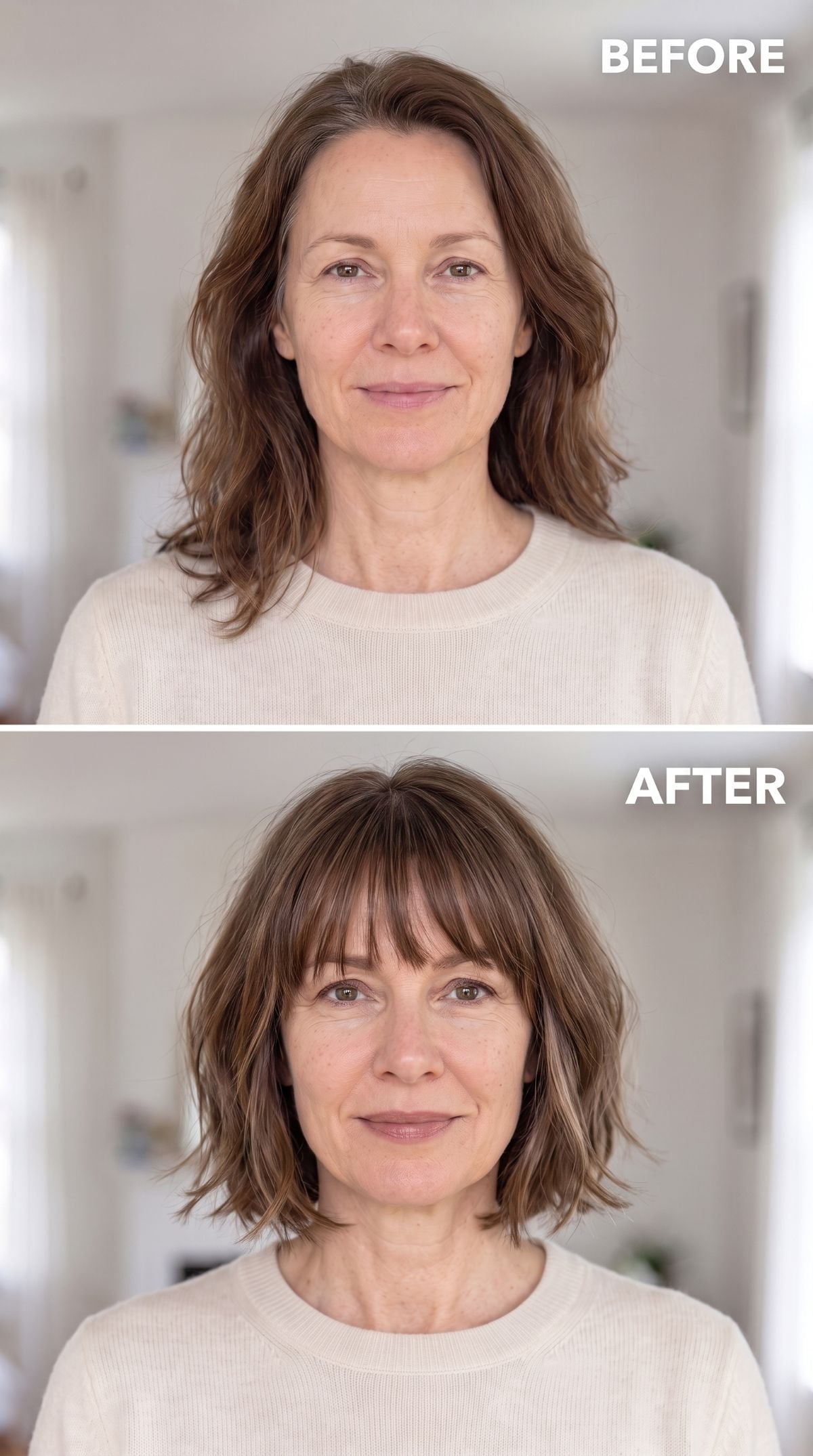
The longer waves have movement but no particularly strong outline. The bob changes that immediately with a jaw-level edge and a full fringe that establishes a second clean line across the front.
A slight outward kick at the ends keeps the bob from feeling severe. Bangs do need trimming as they grow, but they also give the front of the haircut an established direction rather than leaving every strand around the face to be arranged separately.
26. Gray-Blended Layers Make the Color Transition Part of the Shape
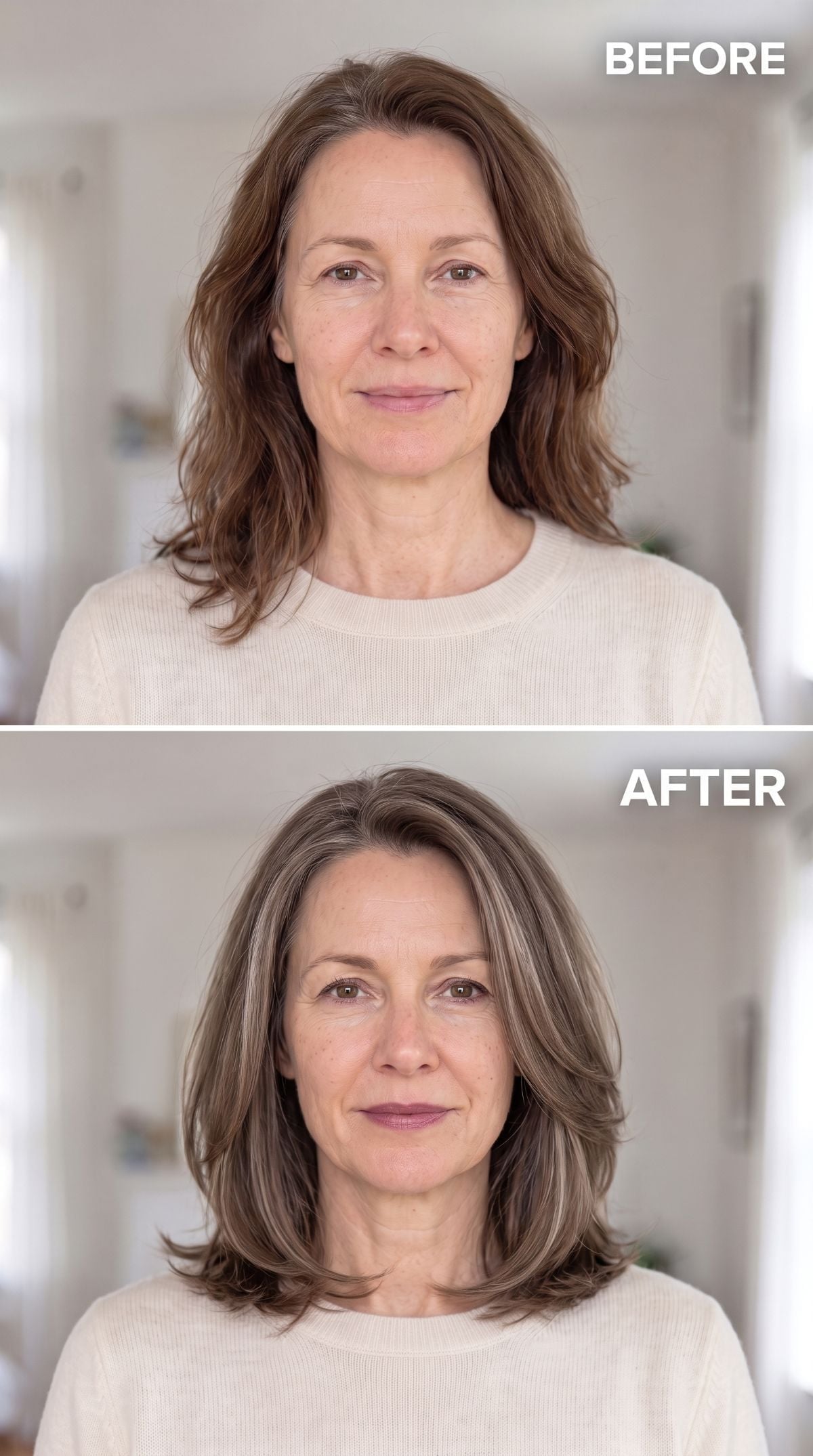
Rather than covering every lighter strand, this version folds gray into the palette. Cooler pieces at the crown blend into softer highlights toward the ends, so variation becomes part of the design instead of something the color has to conceal.
The collarbone-length layers add controlled movement without sacrificing a fuller bottom edge. It is a useful middle ground for anyone who wants less visual heaviness but has no interest in jumping straight to a bob.
25. A Dark Chocolate Shag Turns Irregular Texture Into the Main Event
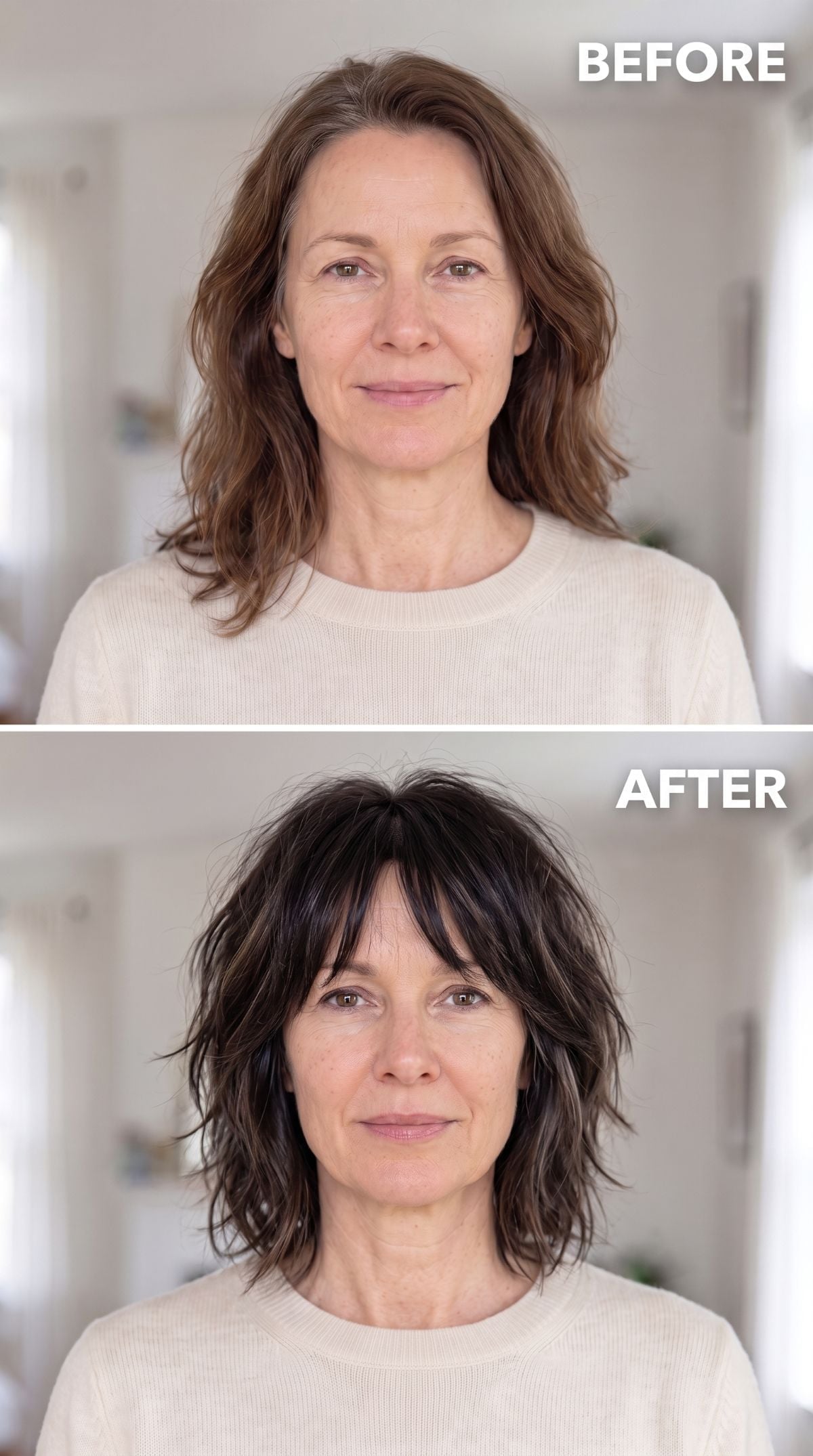
This one heads in the opposite direction from the sleek bobs. The jaw-length shag keeps the ends broken up, works shorter pieces around the face, and lets curtain bangs connect directly into the surrounding layers.
Dark chocolate color gives all that chopping a strong background. Texture no longer has to behave like straight hair. Separation, bend, and a little disorder are already written into the cut.
24. A Blunt Silver Bob Gives the Ends a Stronger Line
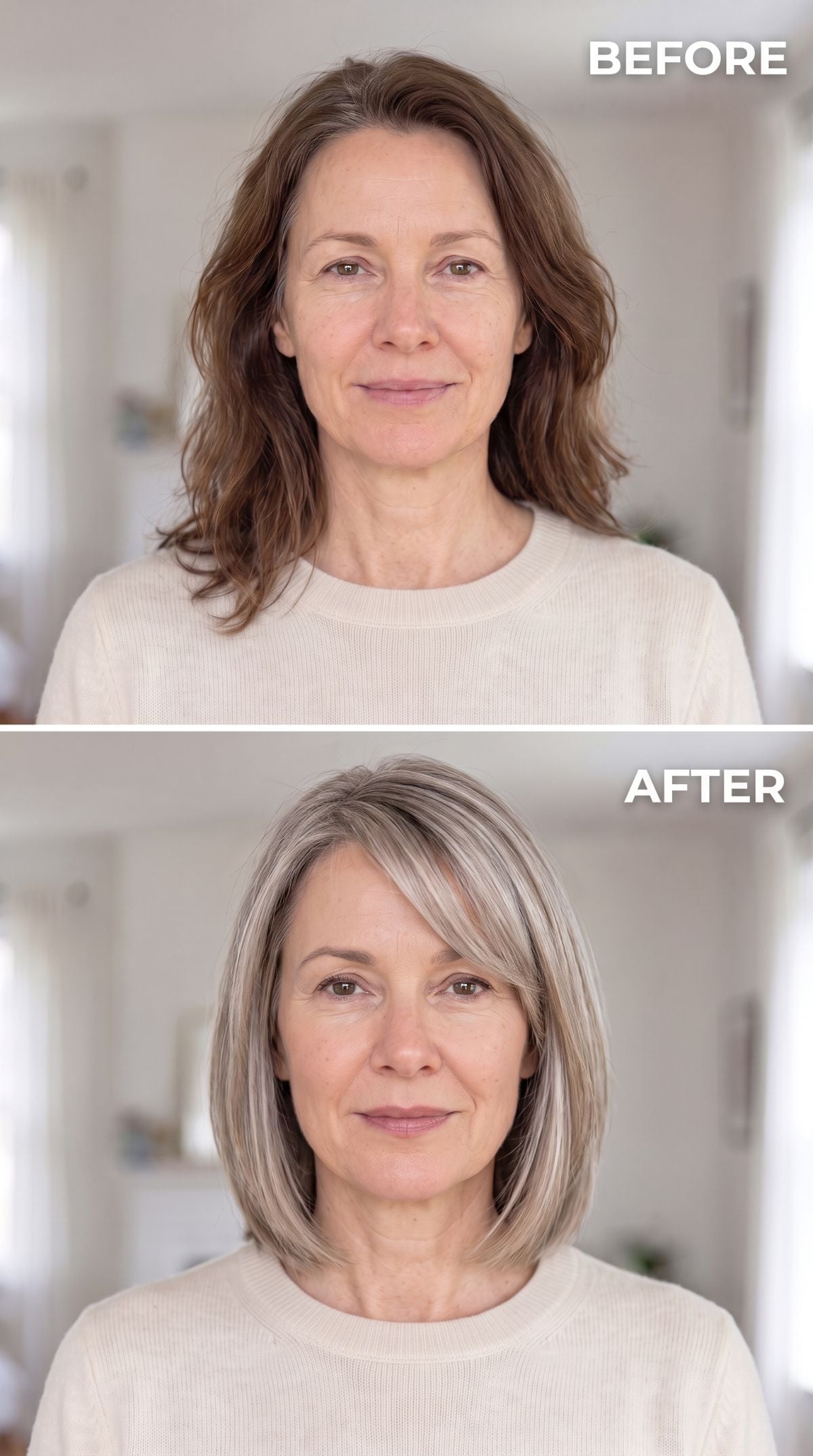
The contrast could hardly be clearer: loose medium-length brown waves on one side, a compact silver bob on the other. The new edge lands near the jaw and stays deliberately solid rather than dissolving into layers at the bottom.
Platinum and silver variation through the top keeps the color from becoming one flat sheet. The cleaner outline supplies the discipline while the side sweep keeps the front softer than the bluntness might suggest.
23. Fuller Layers Keep the Length but Move Volume Away From the Bottom
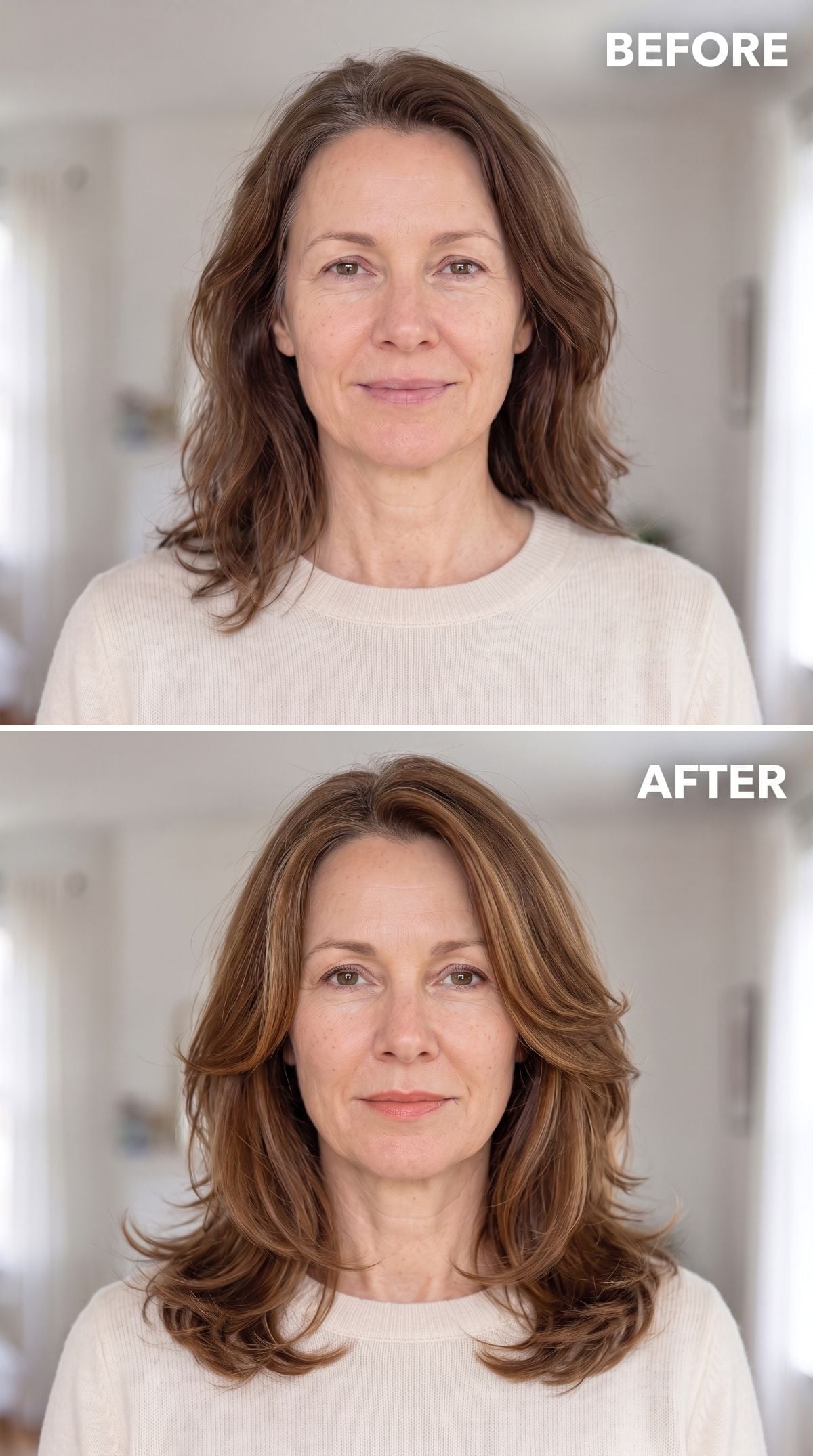
Nothing says low maintenance has to mean short. The shoulder-length outline stays, but the interior changes. Layers build movement through the middle instead of allowing all the weight to settle at the ends.
Caramel variation through the brown base exaggerates that separation. The useful strategy is not “add volume everywhere.” It is deciding where fullness improves the outline and where it merely makes the haircut wider.
22. A Stacked Bob Puts the Shape Into the Back Instead of the Styling Routine
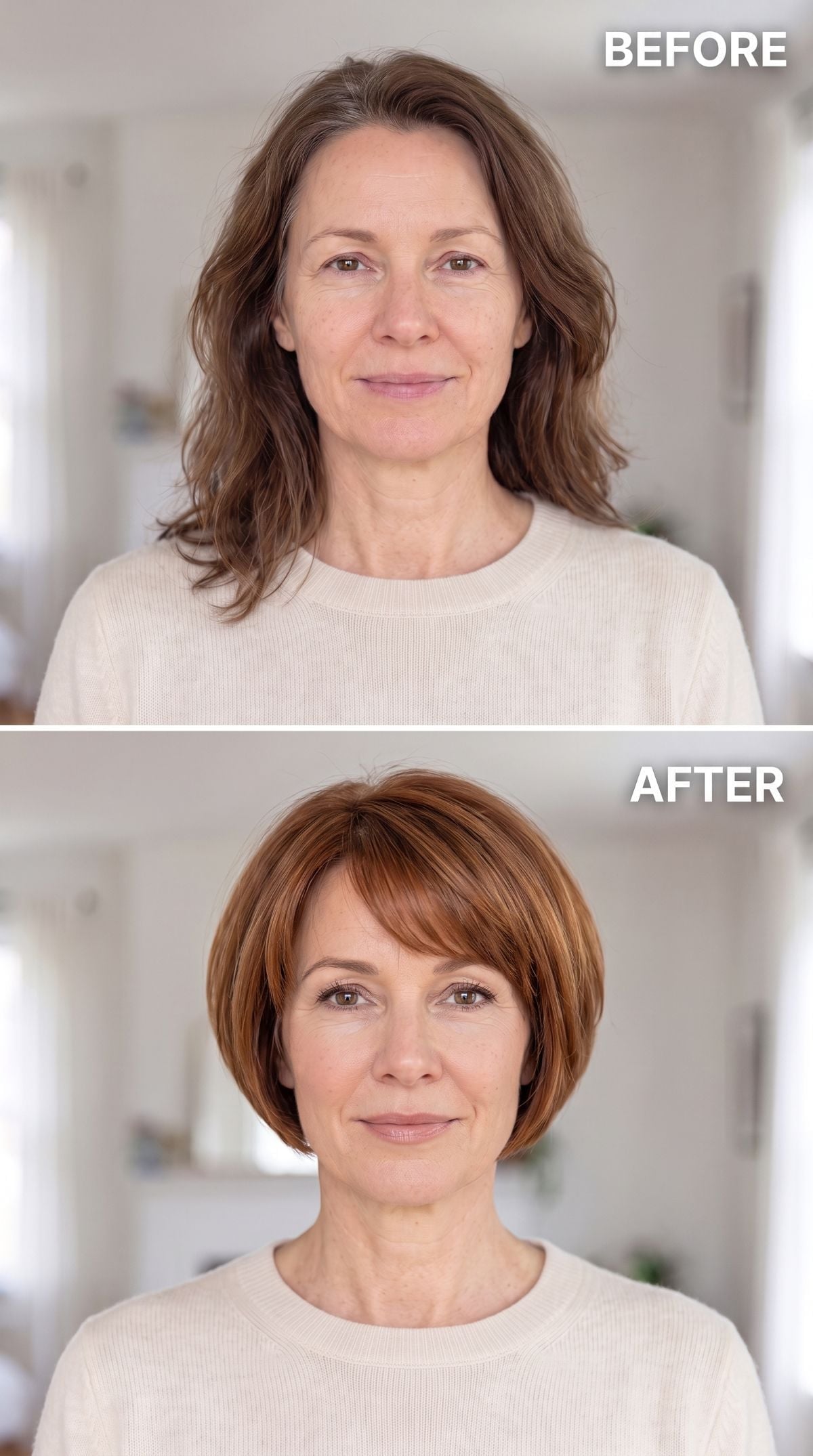
The longer starting cut spreads its movement along the full length. The bob concentrates it. Graduation through the back creates a rounder profile at the crown while the sides angle forward toward the jaw.
Soft fringe prevents that construction from becoming too rigid. The warmer auburn-brown also reveals the stacked sections more clearly because every layer catches the light a little differently.
21. Face-Framing Blonde Pieces Let a Mid-Length Cut Do More With Less Layering
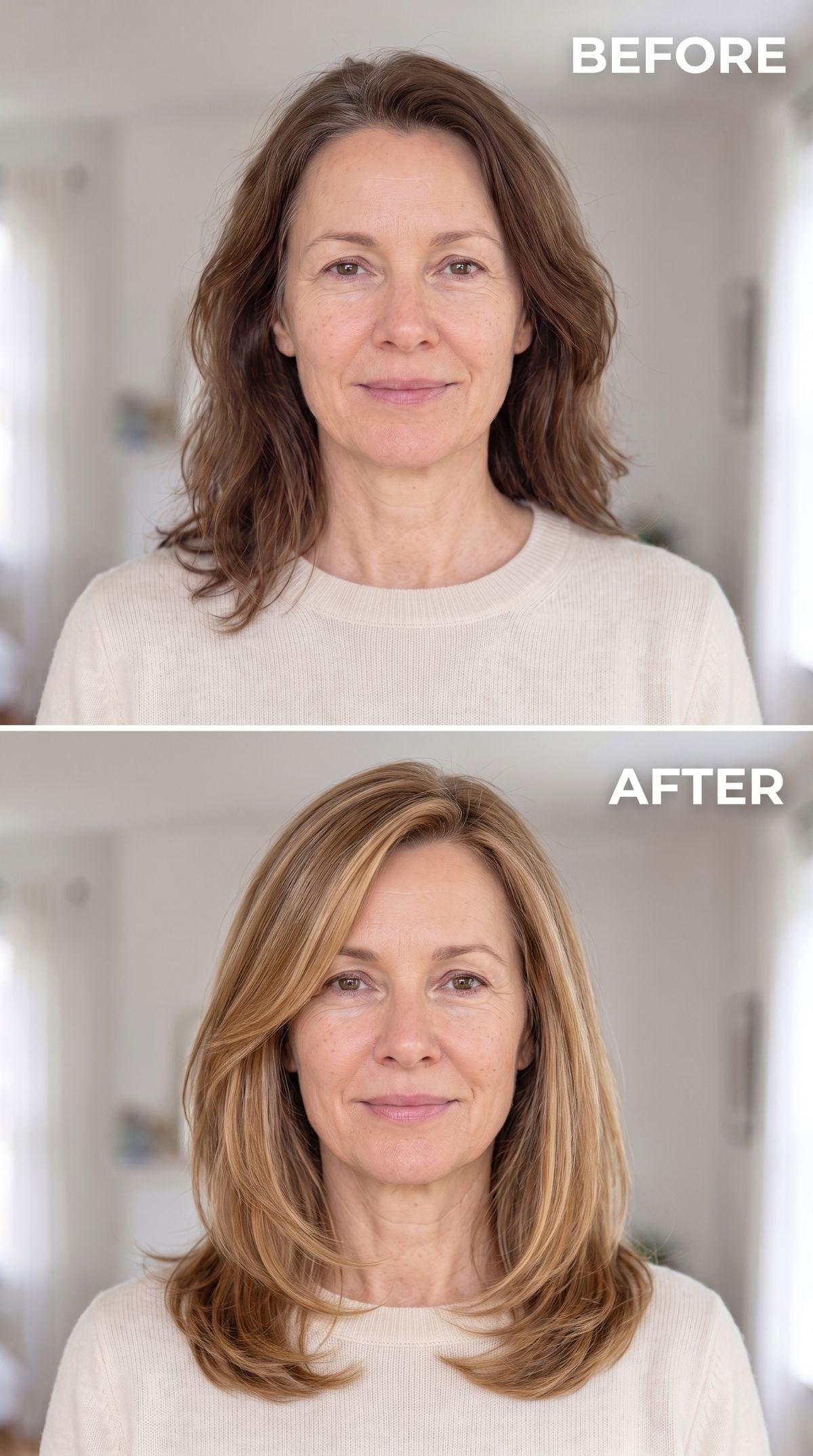
The cut remains substantial through the bottom, which matters. Instead of thinning the whole outline into wisps, the transformation keeps a fuller edge and uses lighter pieces around the face to create movement.
Color is carrying some of the visual work the layers otherwise would. A subtle inward bend at the ends finishes the look without turning the haircut into a cascade of separate pieces.
20. A Silver Pixie Bob Keeps Enough Length on Top to Stop Short of Fully Cropped
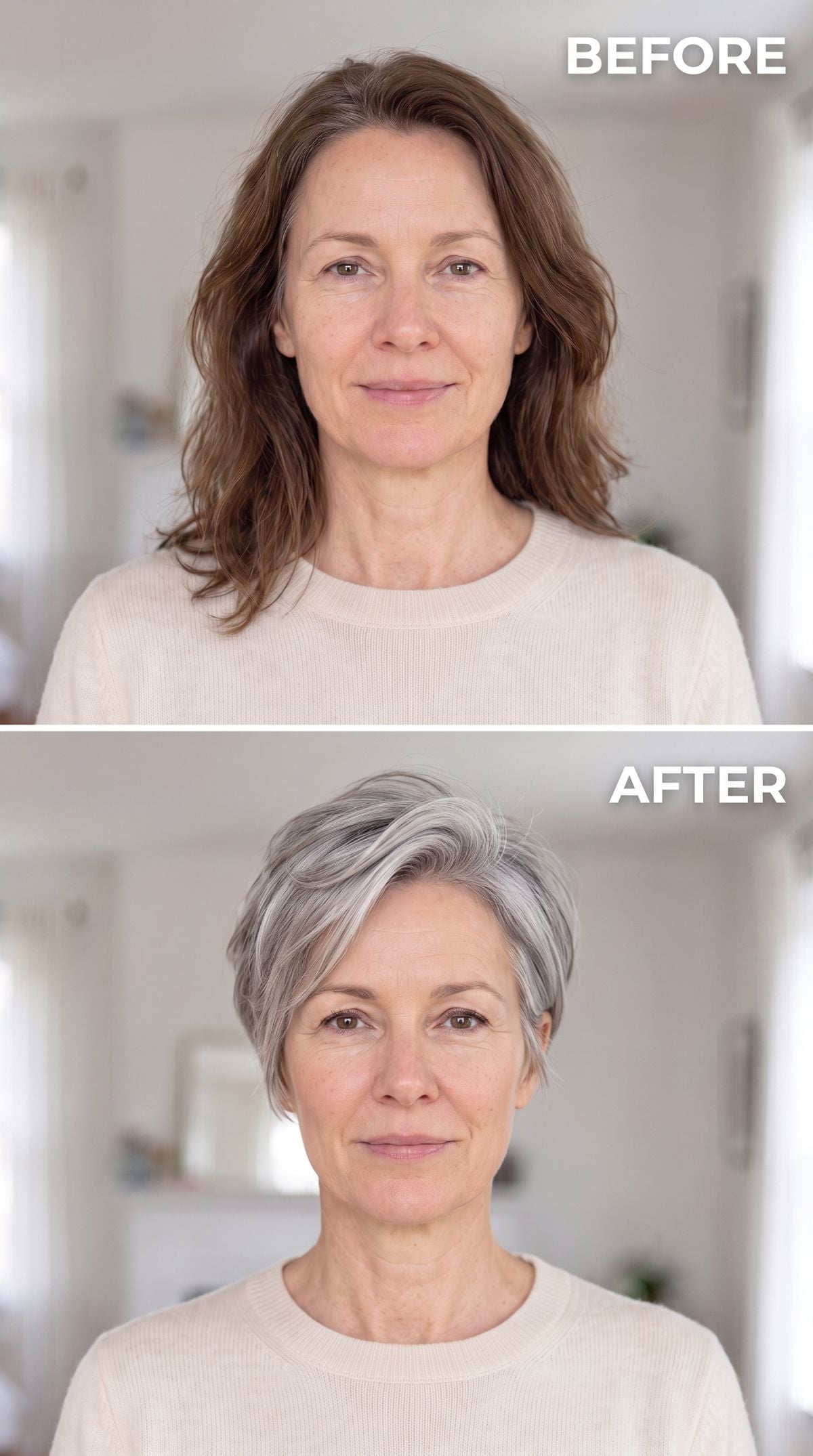
This is the middle ground between a bob and a true pixie. The nape comes in short, yet the crown and front remain long enough to sweep sideways and hold some softness around the face.
Silver-gray emphasizes the separation through the top. The result has the compact outline of a short cut without requiring every inch to sit close to the head.
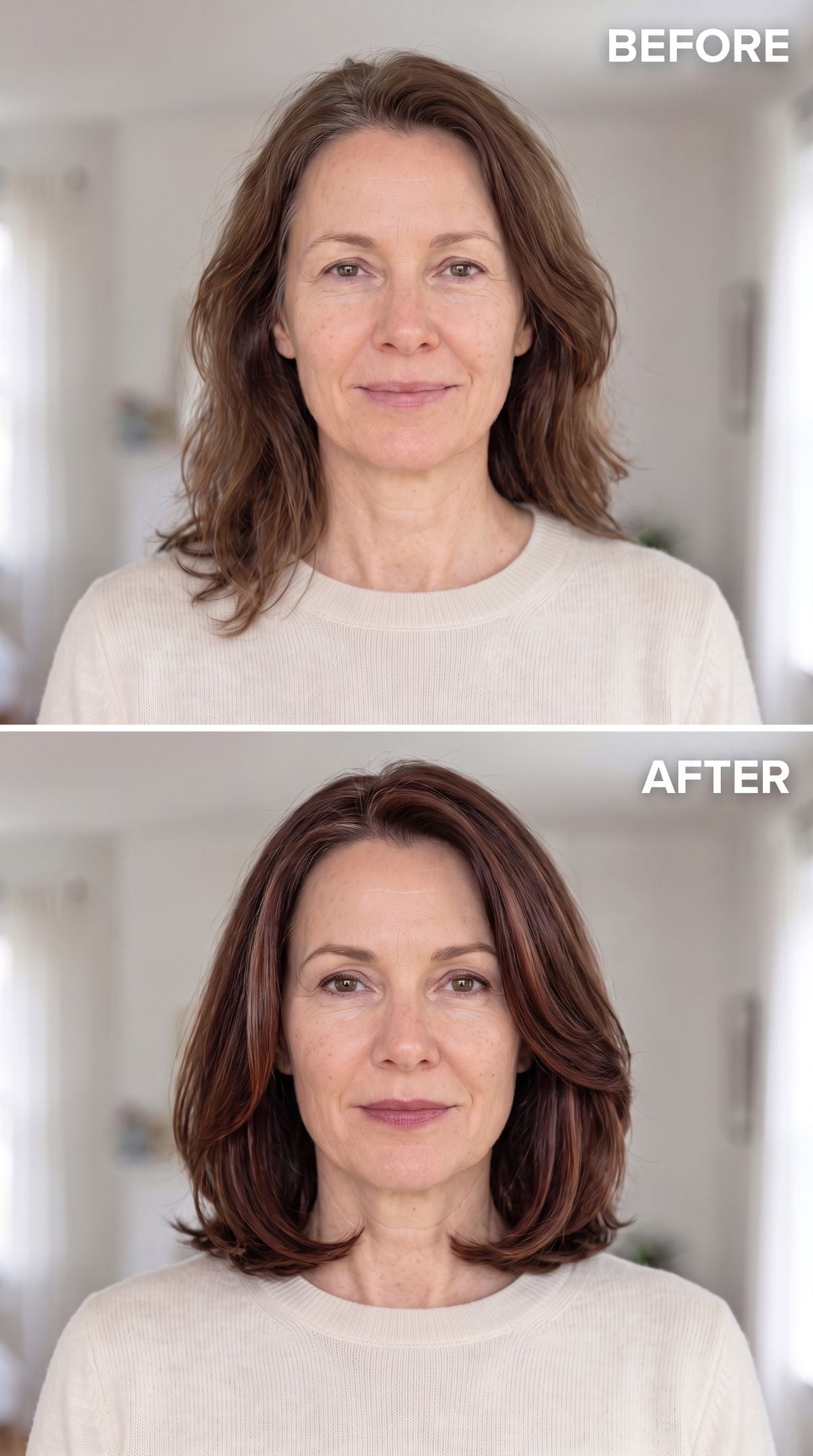
19. A Mahogany Bob Makes Richer Color Part of the Structure
❤️ Would you like to save this?
A stronger lower edge immediately tidies up the longer wave pattern, but the mahogany color is what gives this transformation its character. Auburn variation through the mid-lengths creates depth without breaking the cut into obvious stripes.
The ends turn gently inward, keeping the outline controlled. This is a more polished interpretation of the bob without becoming hard or geometric.
18. Soft Bangs and Honey Highlights Change the Front Without Sacrificing the Length
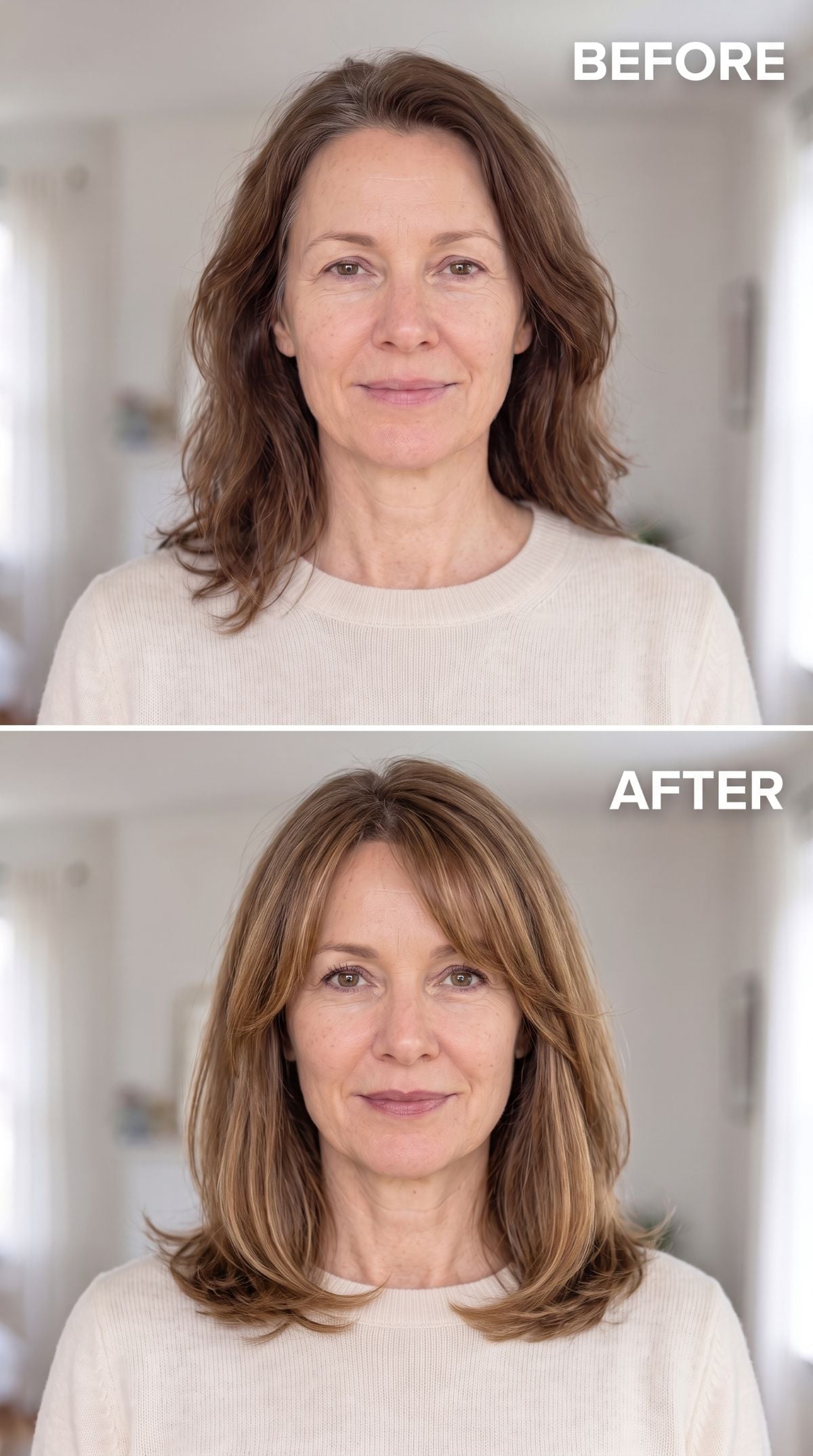
The transformation stays near the collarbone but gives the front much more definition. Soft bangs sweep across the forehead while honey-toned highlights break up the medium brown and make the layering easier to read.
The important distinction is that the bottom remains fairly full. The haircut gains movement without sacrificing the substantial edge that keeps medium-length hair from looking thinned out.
17. An Ash-Blonde Lob Lets Cooler Color Work With the Emerging Gray
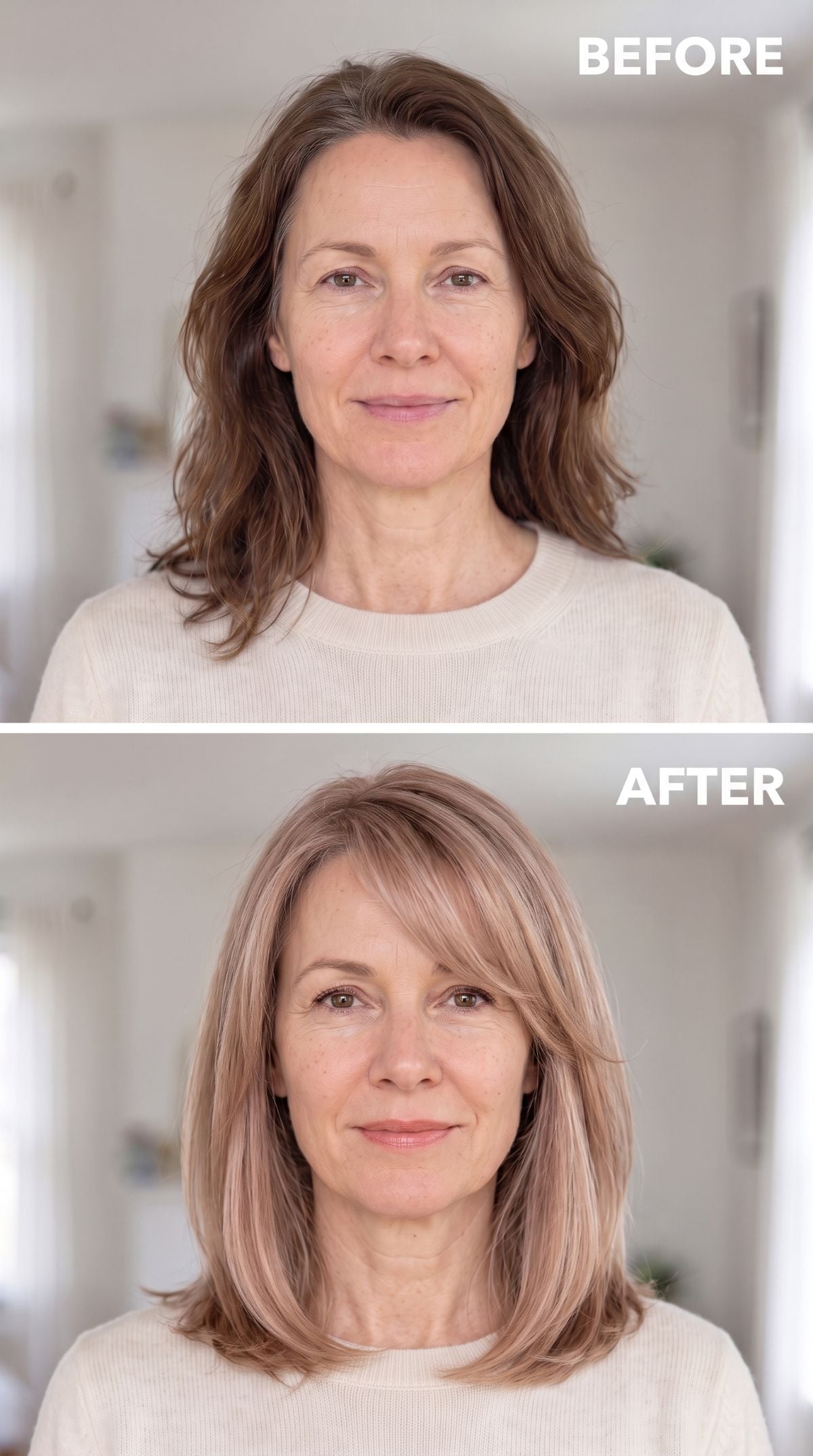
The collarbone lob has a straighter, cleaner outline than the starting waves, but the color shift is just as important. Cool ash-blonde tones sit closer to silver and gray than a warm brunette does, reducing the visual contrast between darker lengths and lighter new growth.
Soft internal layers keep the lob from becoming a rigid block. The cut stays relatively quiet while the color supplies most of the complexity.
16. A Pixie Bob Concentrates Length Where It Can Actually Create Lift
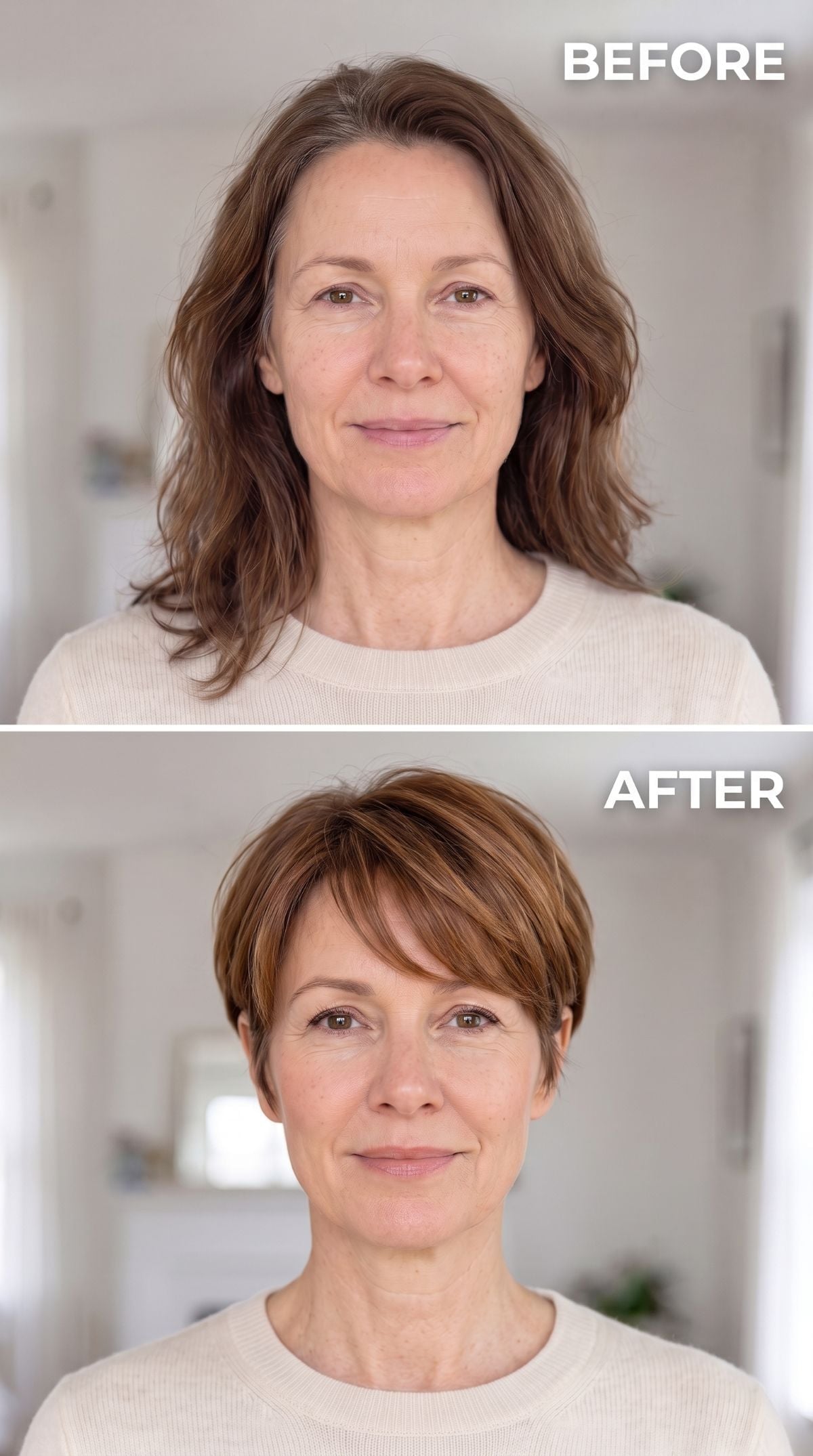
The shorter nape clears away much of the bulk while the crown deliberately stays longer. That leaves enough hair to sweep forward and sideways without carrying the weight of the original medium-length waves.
Chestnut color with subtle caramel variation through the top makes the crown layering easier to see. The transformation feels short without losing softness around the forehead and temples.
15. A Caramel Blunt Bob Strengthens the Bottom Edge Instead of Adding More Layers
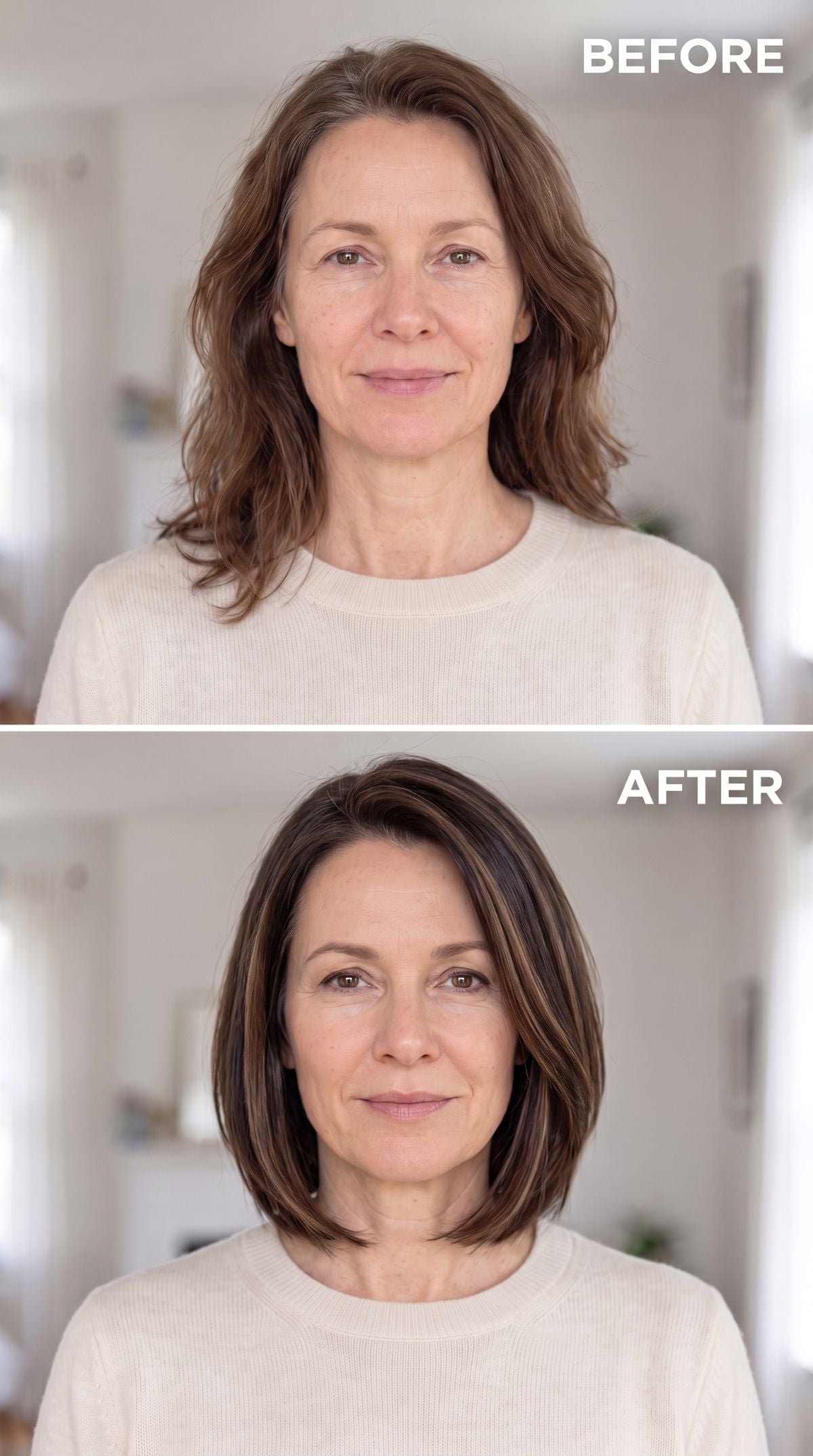
Sometimes the answer to hair that feels shapeless is not more layering. This bob does the opposite: it creates a firmer line near the jaw and lets that edge supply the definition.
Caramel pieces through the brown base keep the solid bottom from feeling visually heavy. The haircut looks deliberate because the length has somewhere definite to end.
Color Note: Highlights that begin away from the scalp can create a softer grow-out than a high-contrast color applied directly from the root. The effect depends on the starting shade, gray pattern, and placement.
14. Blonde Layers Add Movement Without Turning the Ends Wispy
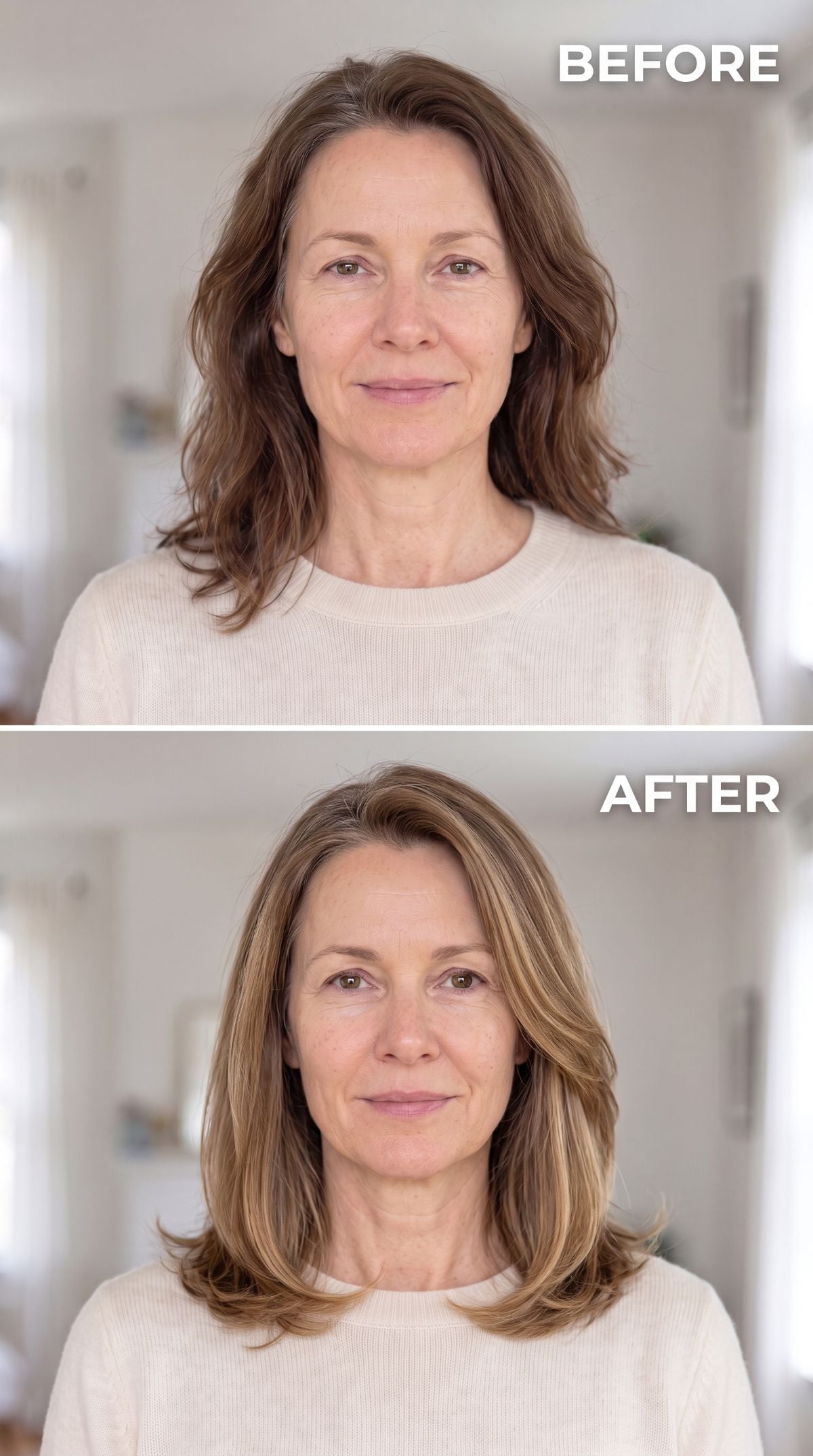
The cut keeps enough weight at the bottom to avoid the feathered, disappearing edge that can make fine hair look thinner. Rounded layers begin through the front and middle instead.
Honey and ash-blonde tones help separate those sections visually. A slight outward kick at the ends adds energy without requiring the bottom of the hairstyle to become heavily layered.
13. A Copper Bob With Bangs Puts Two Strong Lines Into One Small Cut
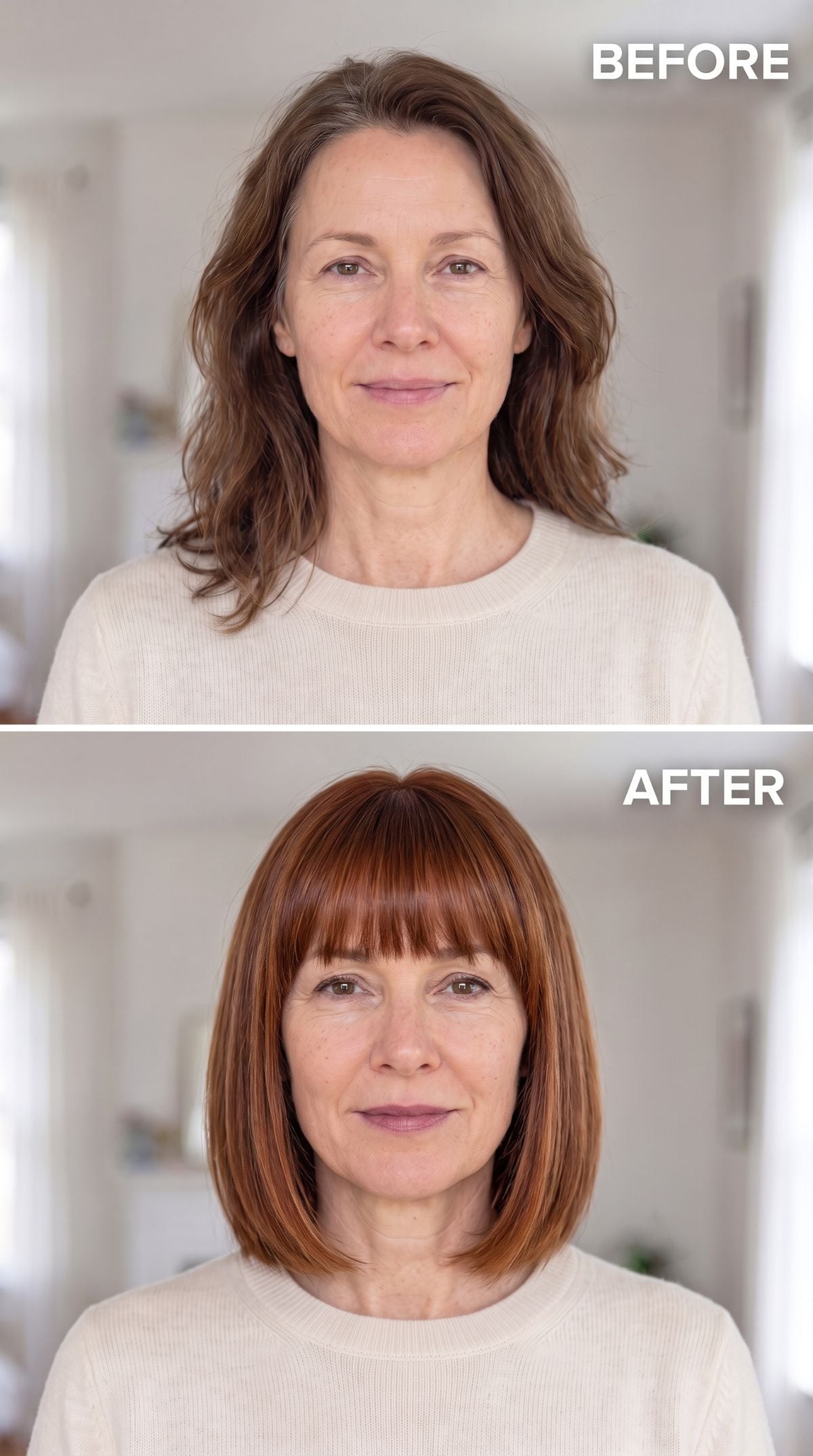
This transformation is built from two decisive edges: a jaw-length bob and straight bangs just above the brows. Neither line is trying to disappear, which gives the style much more graphic definition than the longer brown waves.
The copper-auburn color reinforces that boldness. Bangs do need periodic trimming as they grow, but the trade is a front section with an established shape rather than a long fringe constantly merging back into the rest.
12. A Blonde Lob Trades Loose Waves for a Cleaner Collarbone Line
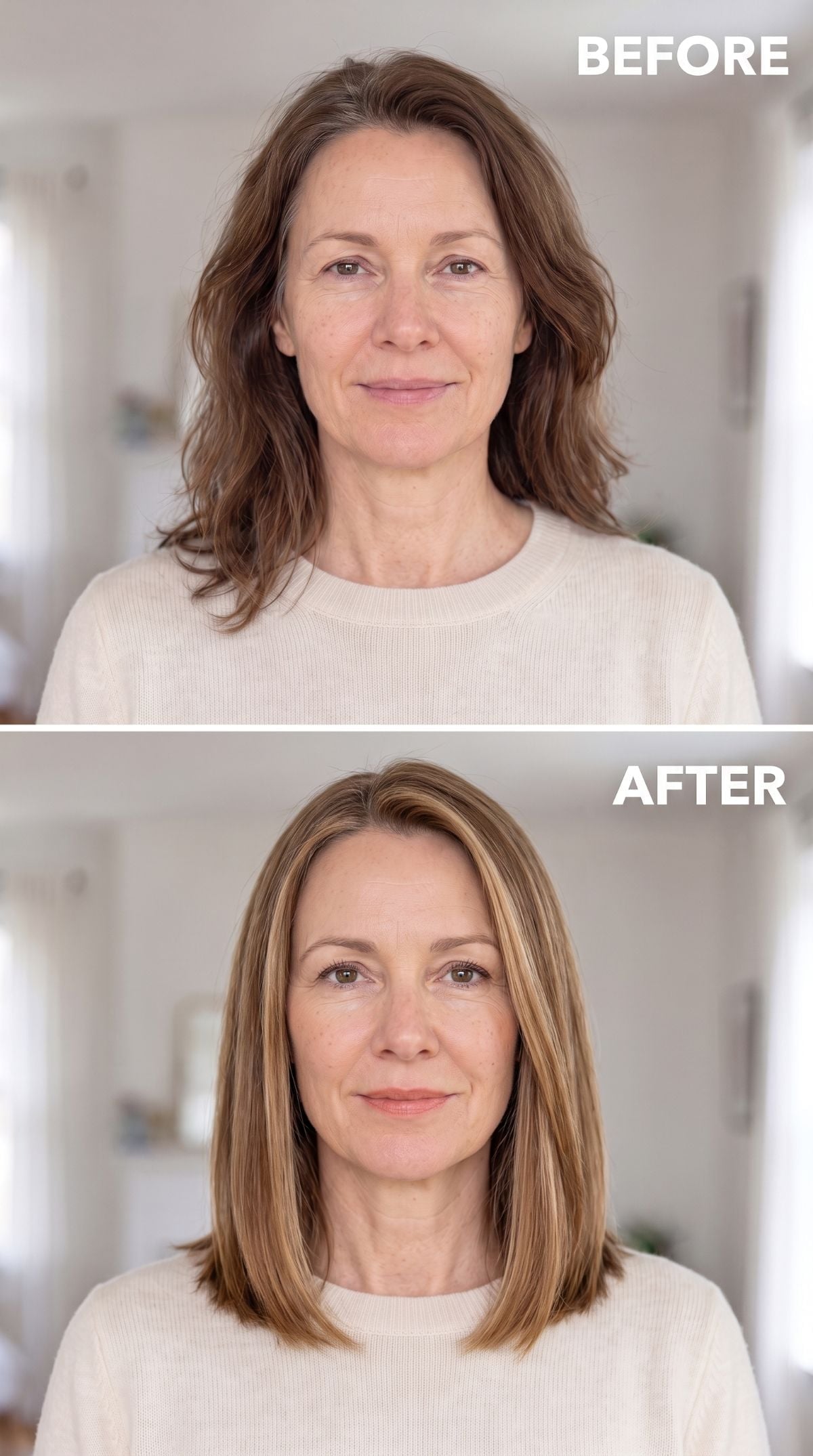
The strongest change is not simply that the finished image is straighter. It is the new outline. A blunt collarbone edge gives the hair a clear stopping point and reduces the visual spread of the original waves.
Warm blonde variation through the mid-lengths and ends softens that geometry. Natural texture will still determine how the lob dries, but the cut provides a simpler framework for wearing some bend or smoothing it straighter.
11. A Silver-Streaked Bob Makes the Grow-Out Pattern Part of the Design
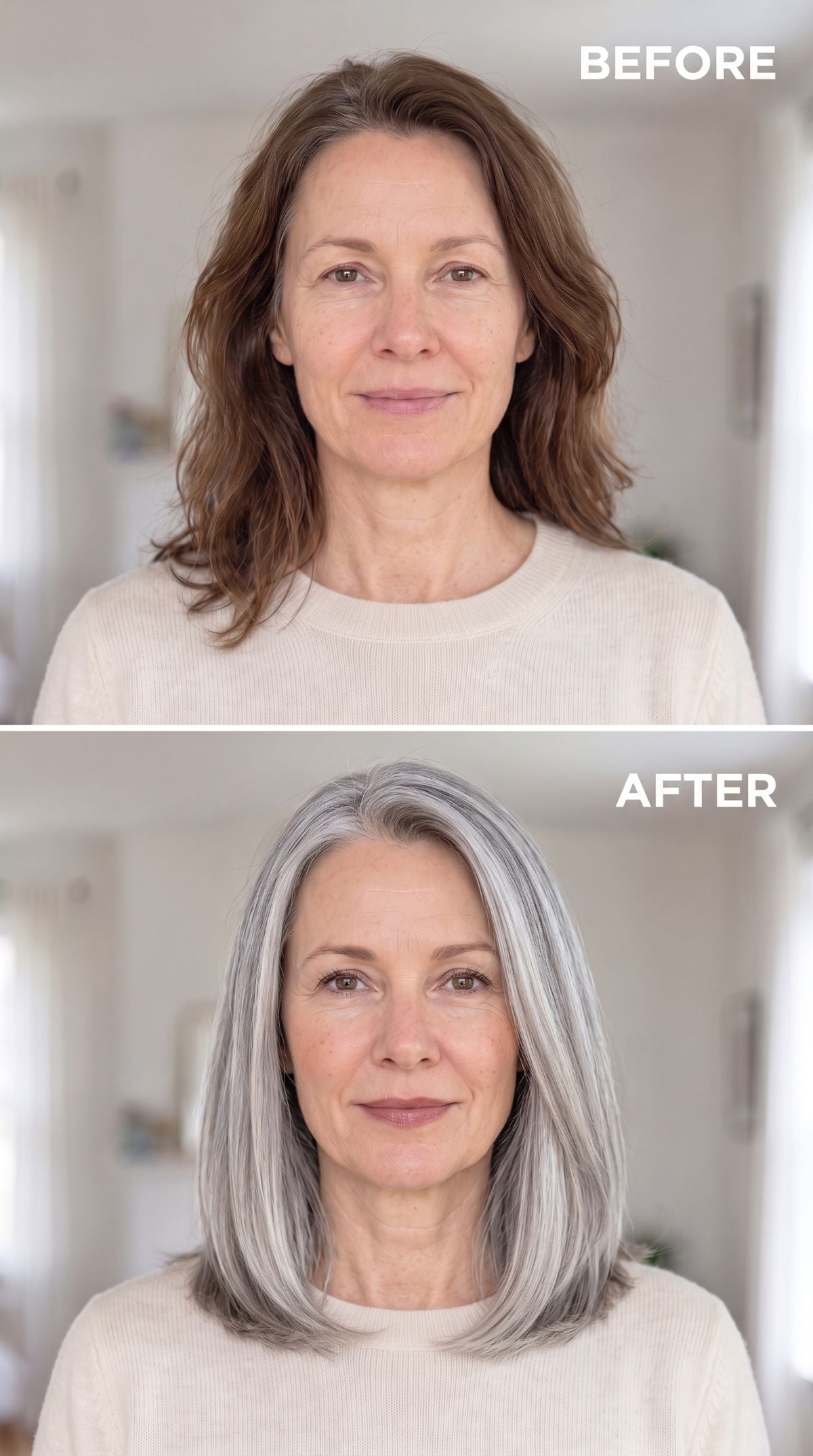
White and pewter tones move from the root into darker ash underneath, creating a deliberate gradient rather than pretending every strand is one color.
The blunt shoulder-length edge gives that complicated color a simple container. Instead of combining a busy cut with busy color, this transformation lets one element stay quiet while the other gets all the attention.
10. A Sculpted Auburn Bob Uses an Inward Curve to Tighten the Shape
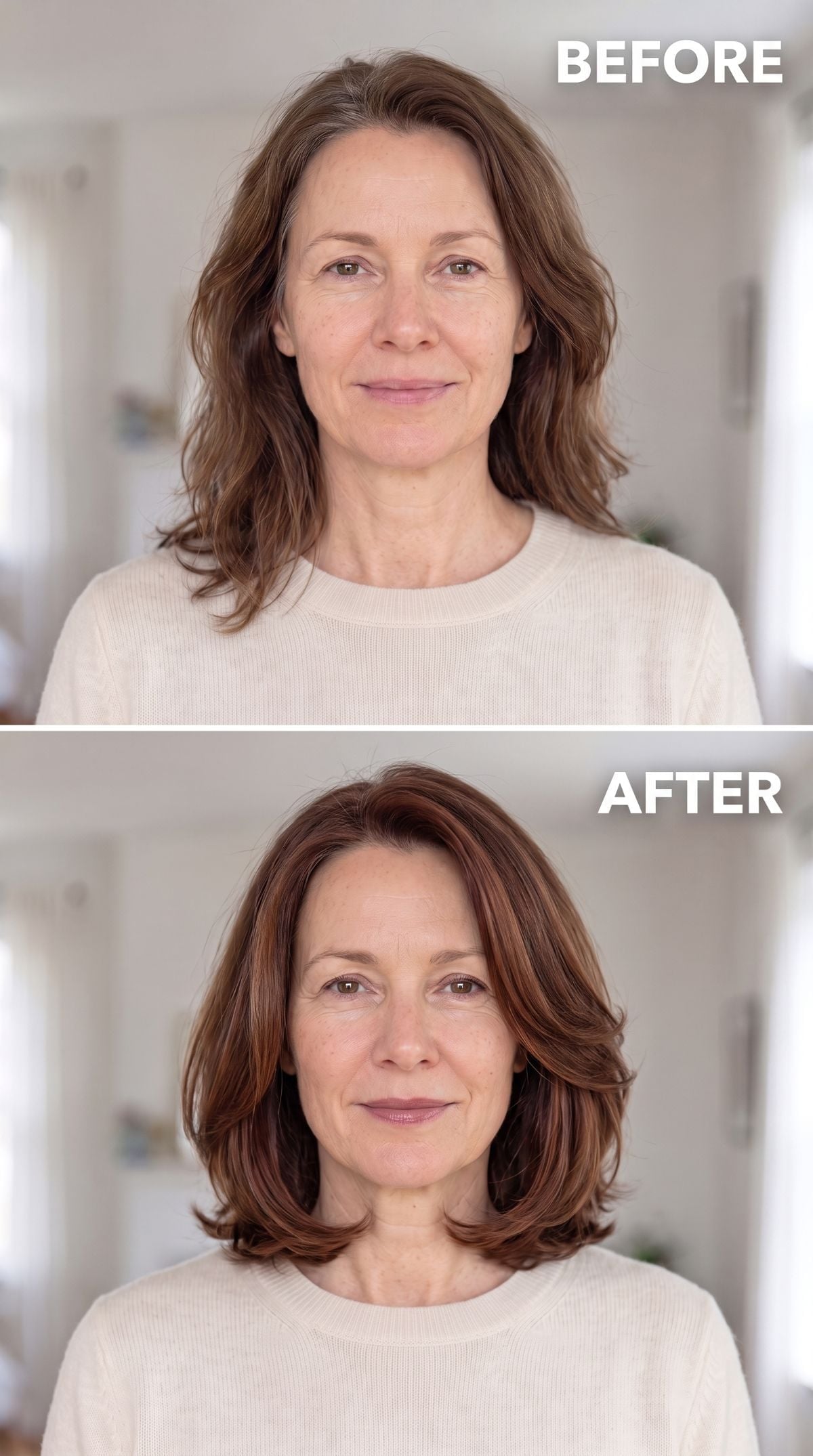
The starting waves spread outward through the lower half. The bob pulls that width back in, bringing the ends toward the jaw rather than away from it.
A deeper auburn-brown gives the finished cut extra density. The curve can be encouraged by the haircut and by how the hair naturally bends, although the exact finish will always depend on texture and styling.
9. A Platinum-Ash Pixie Bob Changes the Proportions More Than the Color
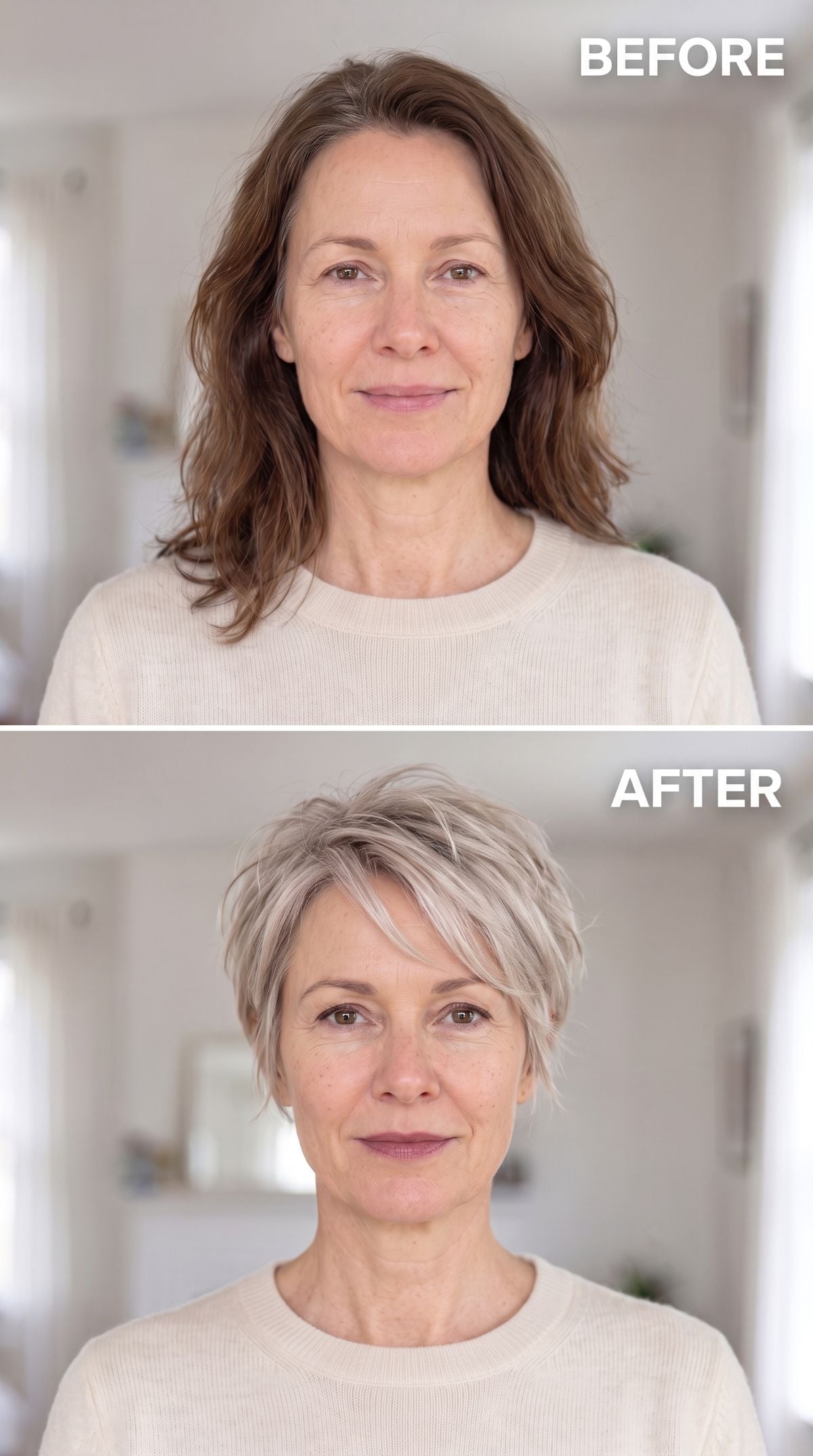
The platinum-ash color grabs attention first, but the larger change is structural. Length disappears from the shoulders and reappears as soft layering around the crown and face.
The side-swept front keeps the cut from reading severe, while the shorter back eliminates the broad lower shape of the original waves. Shorter does not have to mean sharper.
8. Longer Blonde Layers Open the Shape Without Giving Up the Collarbone Length
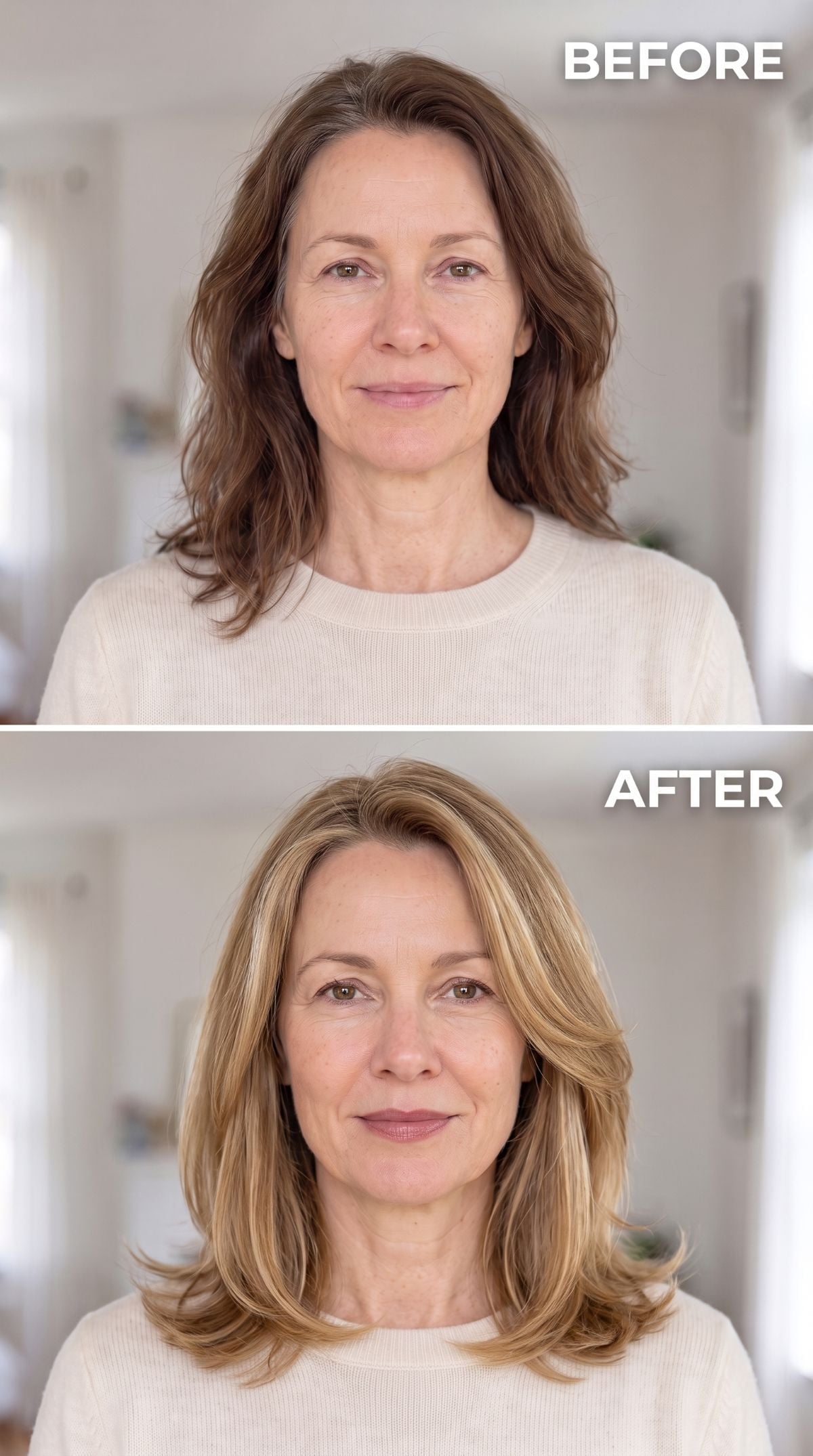
This one is for anyone who wants change without the psychological drama of watching half the length hit the salon floor. The collarbone stays, but layered ends move away from the face instead of sitting in one dense section against it.
Honey and wheat tones amplify that sweep through the middle. The result feels lighter even though the overall length remains reassuringly familiar.
Color Strategy: Highlights concentrated through the mid-lengths and ends can create a softer transition as they grow than a sharply contrasted root-to-tip change. Placement matters as much as the shade itself.
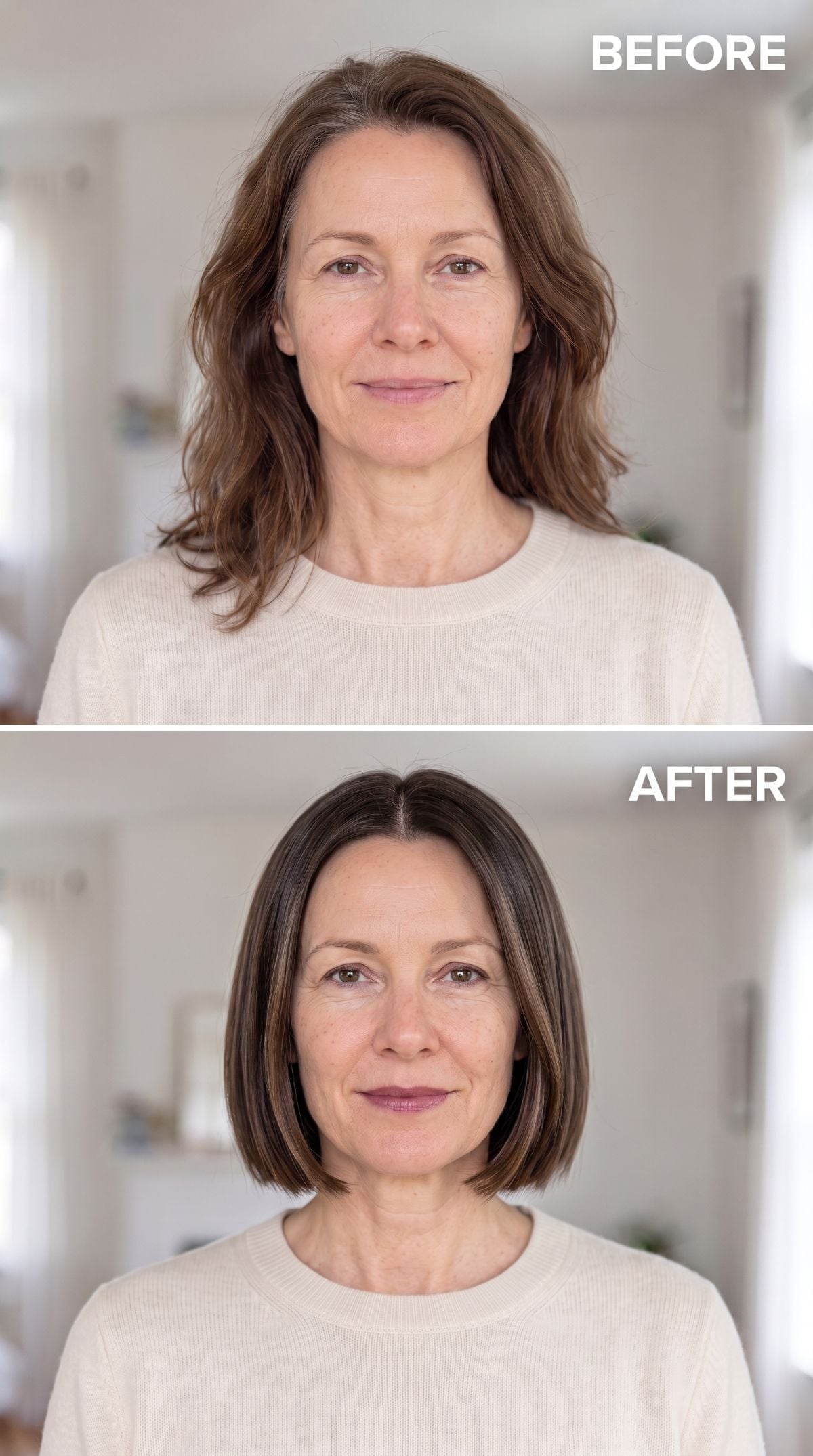
7. A Center-Part Bob Makes Simplicity the Entire Point
❤️ Would you like to save this?
No fringe, no dramatic stacking, no elaborate cascade of layers. The transformation relies on a chin-length edge, a centered part, and just enough internal shaping to keep the bottom from becoming square.
Subtle highlights stop the solid bob from reading as one uninterrupted block. It is one of the simplest looks in the gallery, which is exactly why it arrives at the right moment.
6. A Shoulder-Length Highlighted Bob Keeps the Waves but Gives Them Boundaries
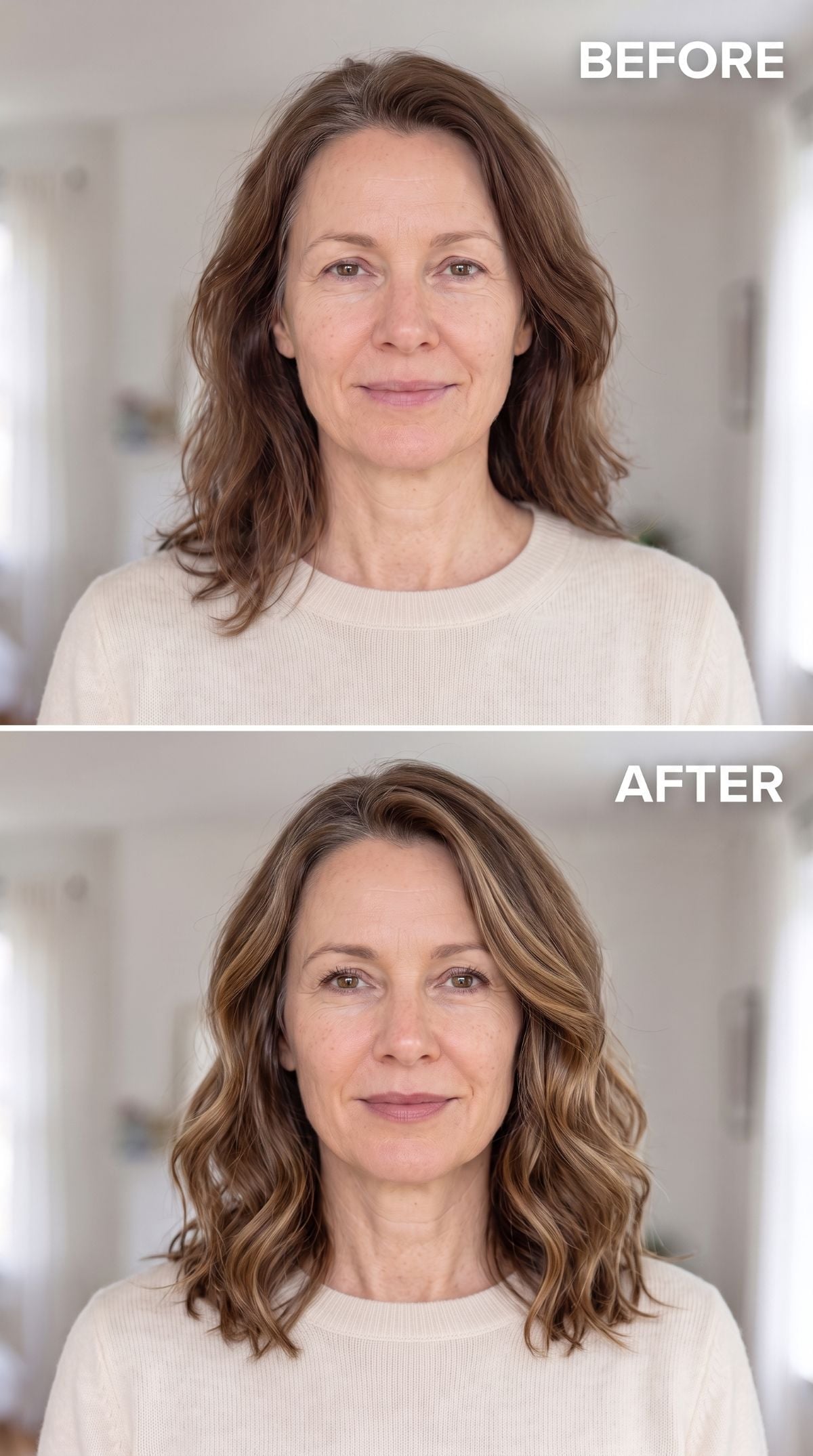
Not every low-maintenance strategy requires straightening the texture out of the picture. Here the waves remain, but the shorter shoulder-length outline gives them a defined stopping point.
Blonde highlights through the middle and ends make individual bends easier to see. The result keeps texture while losing some of the visual sprawl of the longer starting shape.
5. A Highlighted Chin Bob Uses a Strong Edge and Softer Color at the Same Time
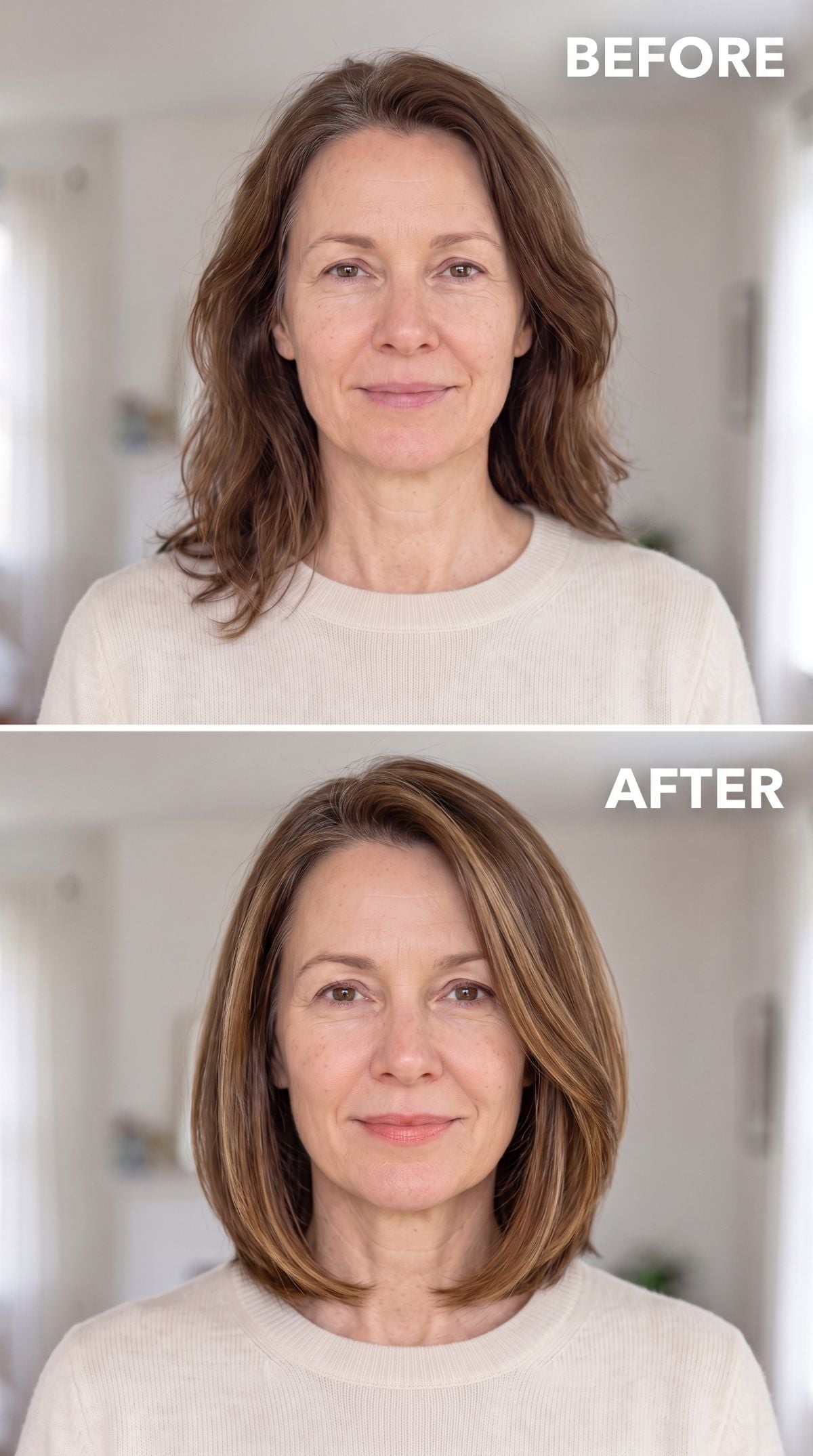
This is another blunt bob, but the color prevents it from duplicating the darker versions. Warm caramel pieces pass through the mid-lengths instead of turning the whole head dramatically lighter.
The jaw-level line supplies the definition while the highlights break up the surface. One controls the outline; the other keeps it from feeling dense.
4. A Sleek Silver Bob Lets the Side Part Replace Most of the Layering
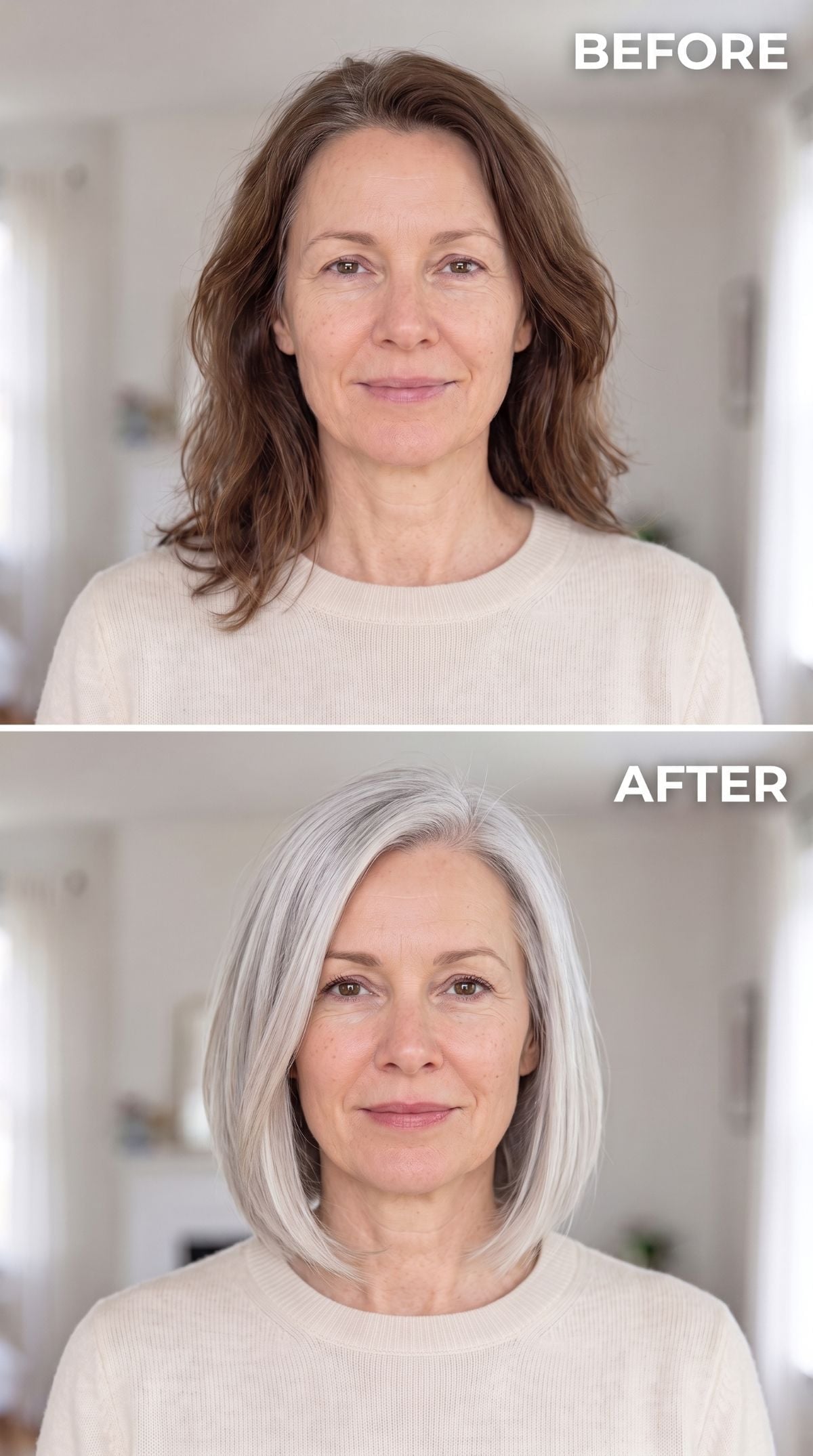
The bob itself is extremely simple: a strong edge just below the jaw and relatively little visible layering. The side part supplies the asymmetry instead.
Silver-white color makes that stripped-back geometry feel intentional. Natural texture will determine whether the finish dries this straight, but the underlying haircut does not depend on a complicated stack of layers to hold together.
3. A Warm Brown Bob Softens the Chop Without Losing the Cleaner Shape
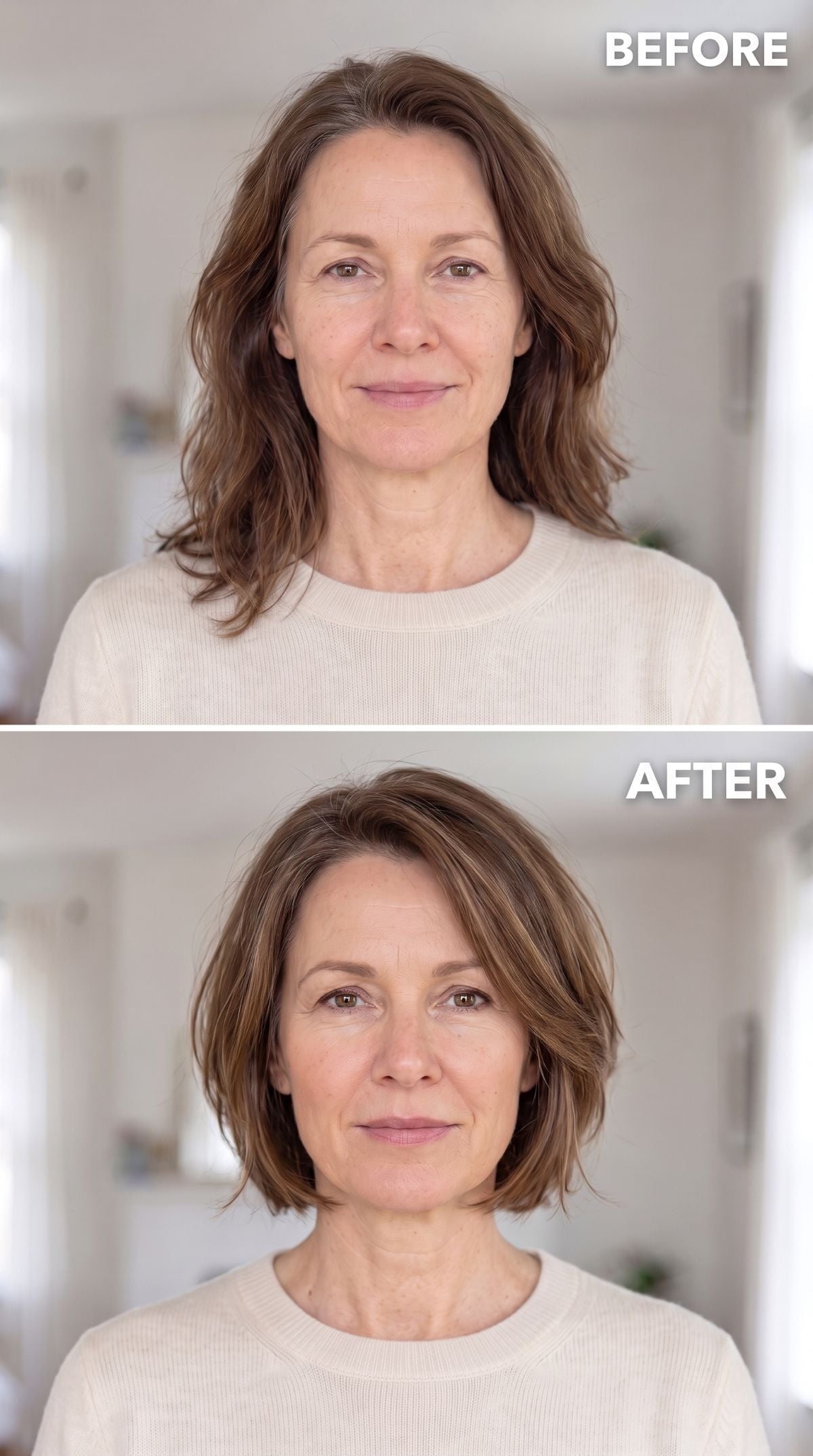
The transformation shortens the hair to the chin but resists turning it into a perfectly rigid line. A little internal layering and subtle lighter pieces around the face keep the brown bob relaxed.
This is reduction rather than reinvention: less length, a cleaner bottom edge, fewer competing directions, and enough softness left behind to keep the change from feeling severe.
2. A Highlighted Sleek Bob Puts the Emphasis on Shape Instead of Volume
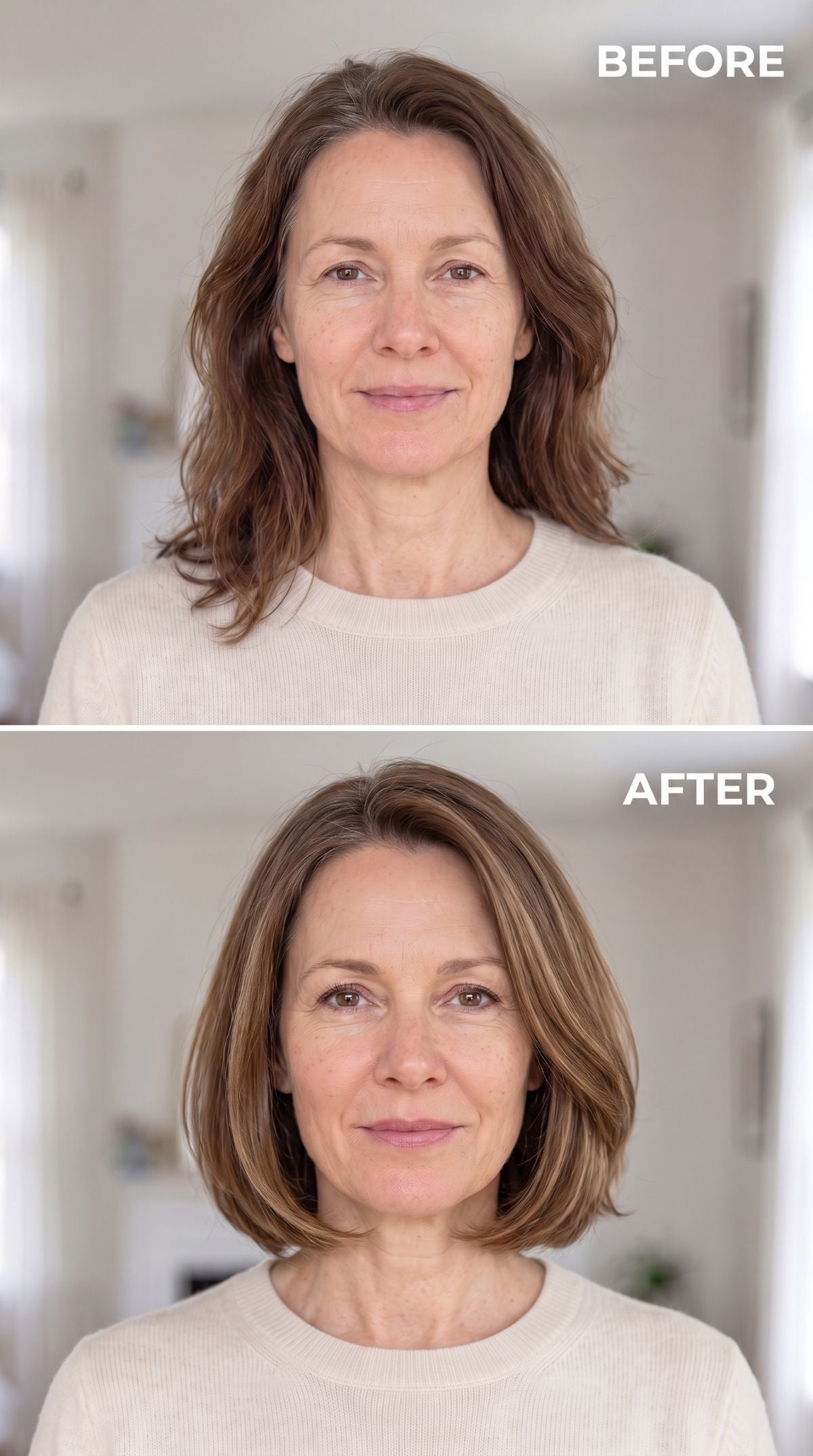
The starting hair carries more width and irregular movement. The bob narrows the profile and creates a straighter visual path from the part to the jaw.
Honey highlights keep the smooth finish from becoming flat-looking. The strongest idea is still the cut itself: a compact outline with fewer sections competing for attention.
1. An Ash-Blonde Bob Finishes the Gallery by Stripping the Shape Back to Almost Nothing
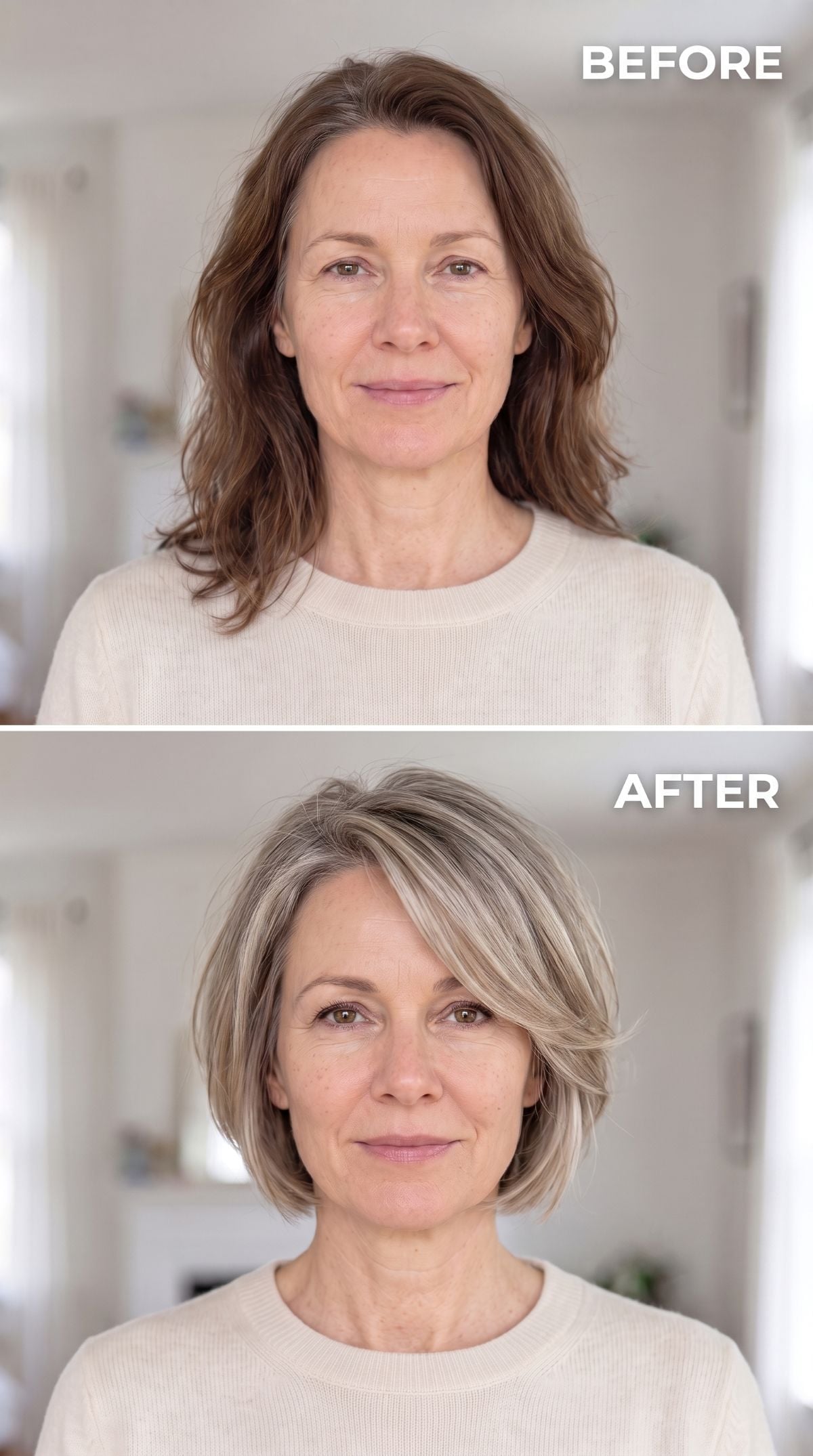
After shags, pixies, curtain fringe, copper, mahogany, honey blonde, gray blending, blunt bangs, and stacks of layers, this final transformation is almost austere. The hair stops near the chin, the bottom stays blunt, and the side part provides most of the movement.
Cool ash-blonde and silver pieces through the top give that simple outline dimension without making the haircut itself busier. Sometimes low maintenance is not about finding a cleverer styling trick. It is about giving the hair fewer things to do.