
❤️ Would you like to save this?
Short hair has a reputation for being simple. Then the mirror gets involved. Too much weight lands at the sides. Too little stays on top. A fringe behaves beautifully from one angle and starts freelancing from another. Suddenly “shorter” turns out to be the least interesting part of the decision.
These 29 transformations make a better case for looking at shape instead of inches. Some move volume upward. Some sharpen the perimeter. Some keep every bit of gray and simply give it somewhere better to go. Others bring in copper, brunette, blonde, lavender, pink, even navy. Pixies expose. Bobs contain. Fringe redirects. Color changes the temperature. The real transformation happens when all of those choices start pulling in the same direction.
FYI, thanks to AI imagery software, we’re able to create very specific fashion and hairstyle examples to illustrate the points being made. In some cases, imagery is exaggerated to hammer home the point. Also, assume links that take you off the site are affiliate links such as links to Amazon. this means we may earn a commission if you buy something.
29. A Navy Bob With a Sand-Blonde Flash Makes the First Move
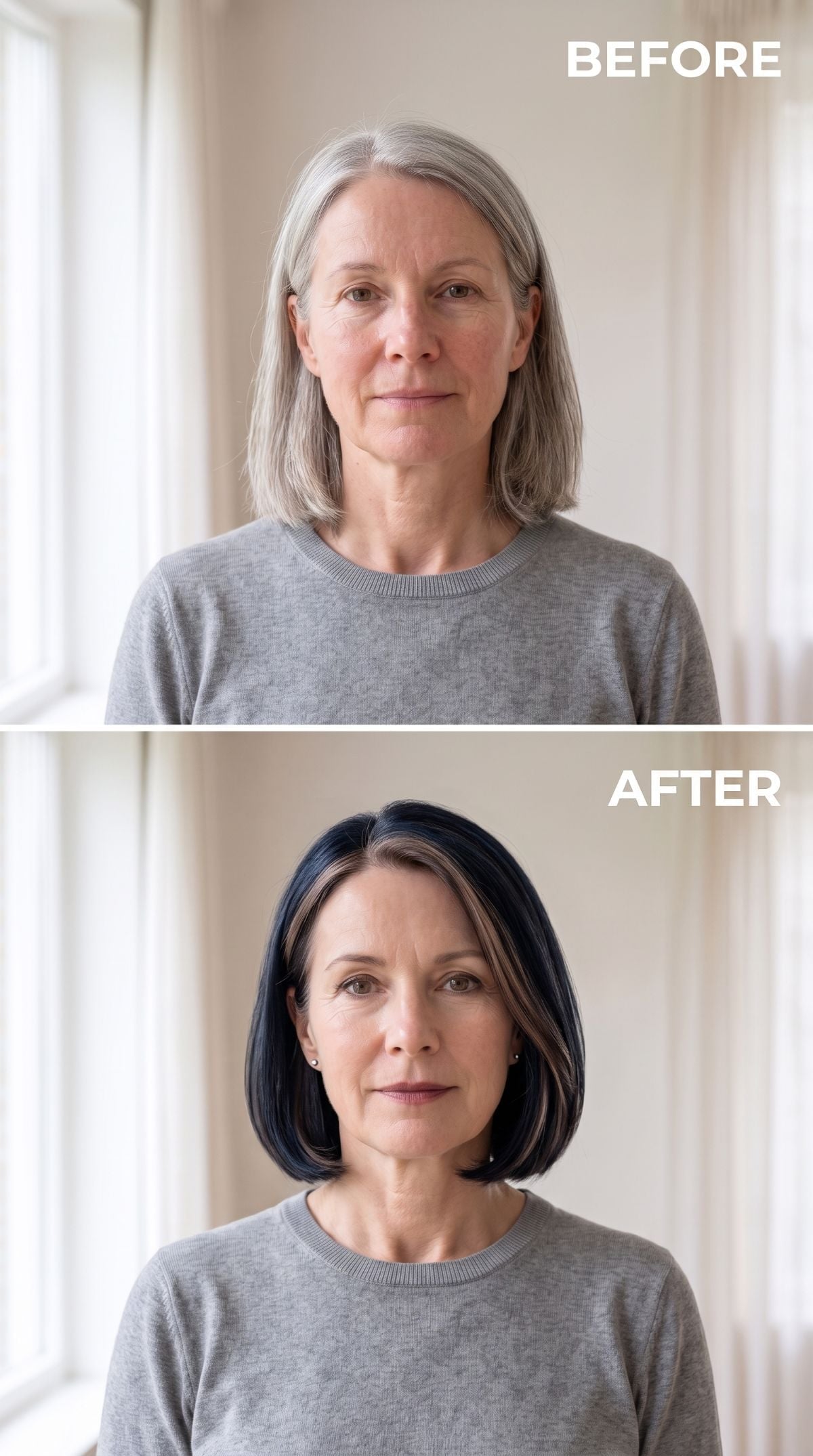
No easing into this gallery. Long gray gives way to a chin-length bob in inky navy with one sand-blonde panel cutting through the right side.
The color gets the attention first, but the shape makes the transformation believable. Length comes up to the jaw, the perimeter becomes clean and deliberate, and the face is no longer surrounded by one long curtain of gray. That pale panel keeps the navy from reading as a single dark block and gives the asymmetry something to do.
This is short hair as punctuation.
28. A Silver Angled Bob Proves Gray Wasn’t the Problem
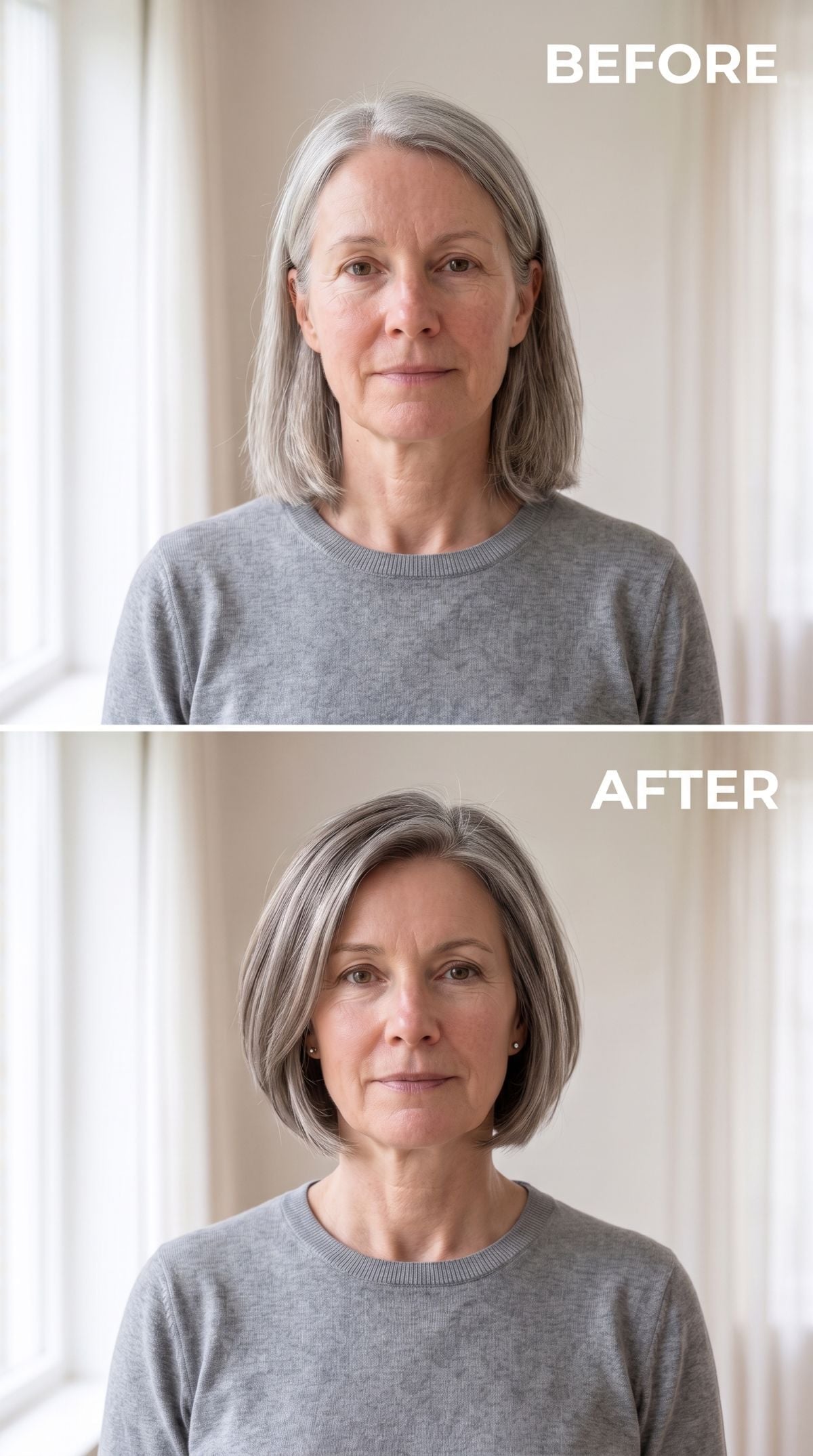
Immediately after navy, natural silver looks almost radical in its restraint.
The original shoulder-grazing length falls straight down with little definition at the perimeter. Bringing it to just below the jaw and leaving the front slightly longer gives the gray a much clearer silhouette. Darker ash and brighter silver strands become easier to see once there is less length competing with them.
Nothing about the color needed rescuing. It needed a better outline.
27. Copper Pixie Turns the Volume Up Without Adding Length
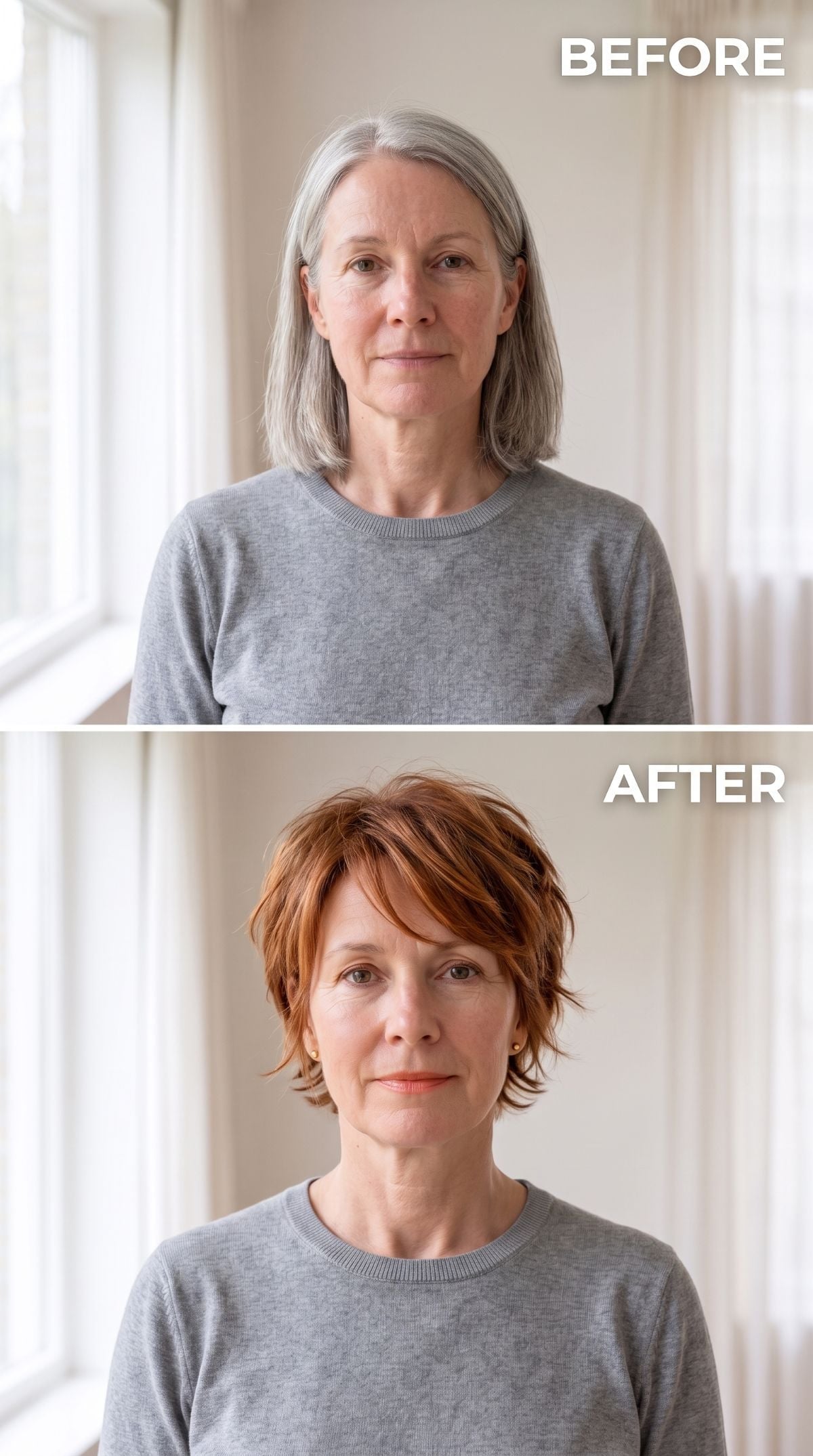
Then the volume moves north.
Shoulder-length gray becomes a choppy auburn-copper pixie with short sides, a textured crown, and a soft fringe breaking across the forehead rather than sitting as one blunt line.
The red is vivid enough to change the mood without drifting into novelty color. More important, clearing the jaw and concentrating movement above it changes the proportions completely. The old shape traveled downward. This one pushes up and forward.
Short does not have to mean quiet.
26. Dusty-Rose Curls Change the Entire Energy
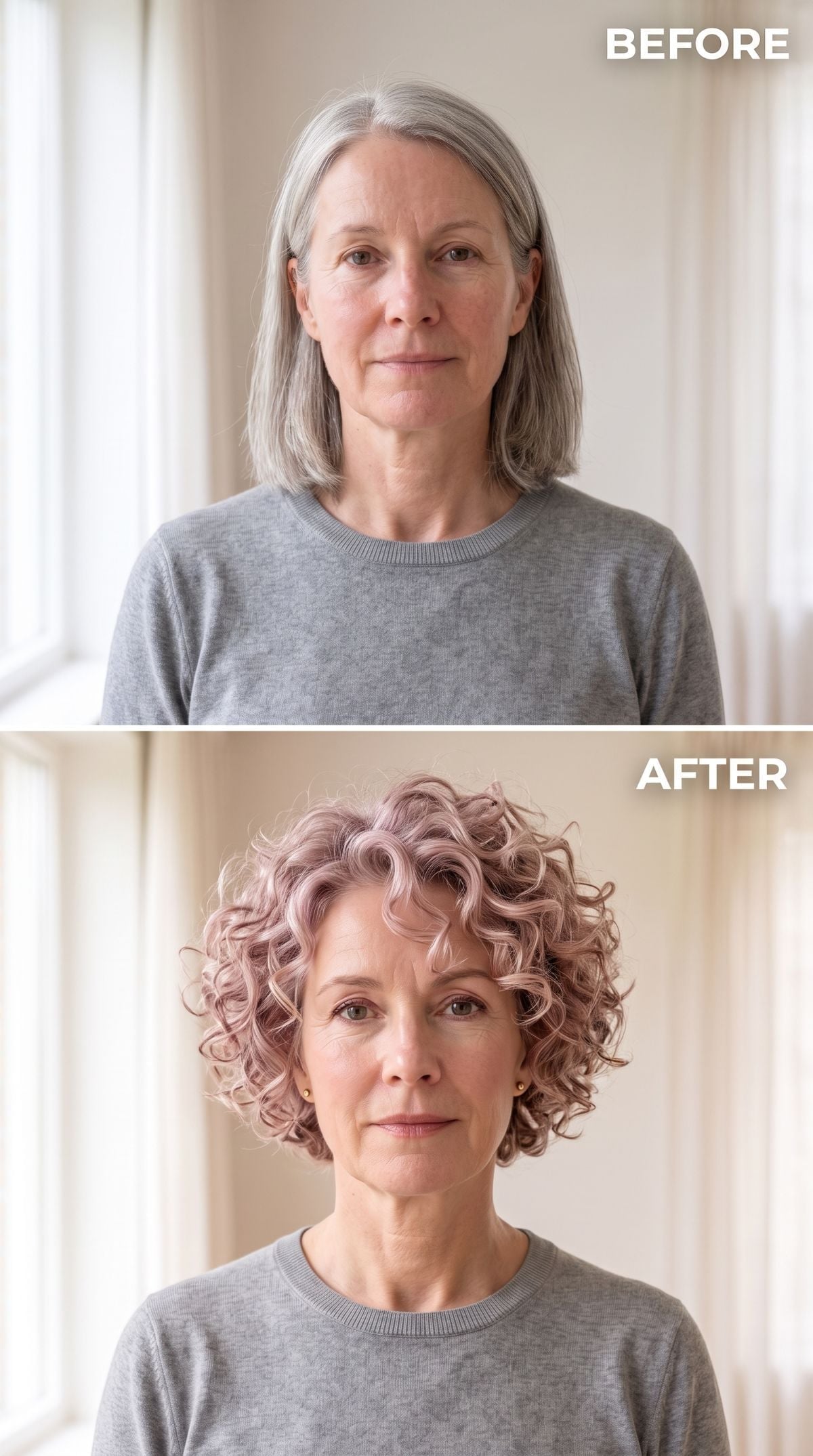
Straight gray disappears and a dusty-rose curly bob shows up in its place. The contrast is so complete that length almost becomes the least interesting part.
The bob sits just below the jaw, but instead of relying on a hard perimeter, the curls build the silhouette. Warm pink softens toward rose rather than neon, keeping the color surprisingly sophisticated.
For hair with natural wave or curl, the broader idea is worth stealing: the outline works best when it respects where the texture already wants to travel.
Styling Note: Curl patterns can change considerably between wet and dry. If that describes your hair, ask whether a dry or curl-by-curl approach would make sense for the shape you want.
25. A Brunette Crop Pulls the Weight Up to the Crown
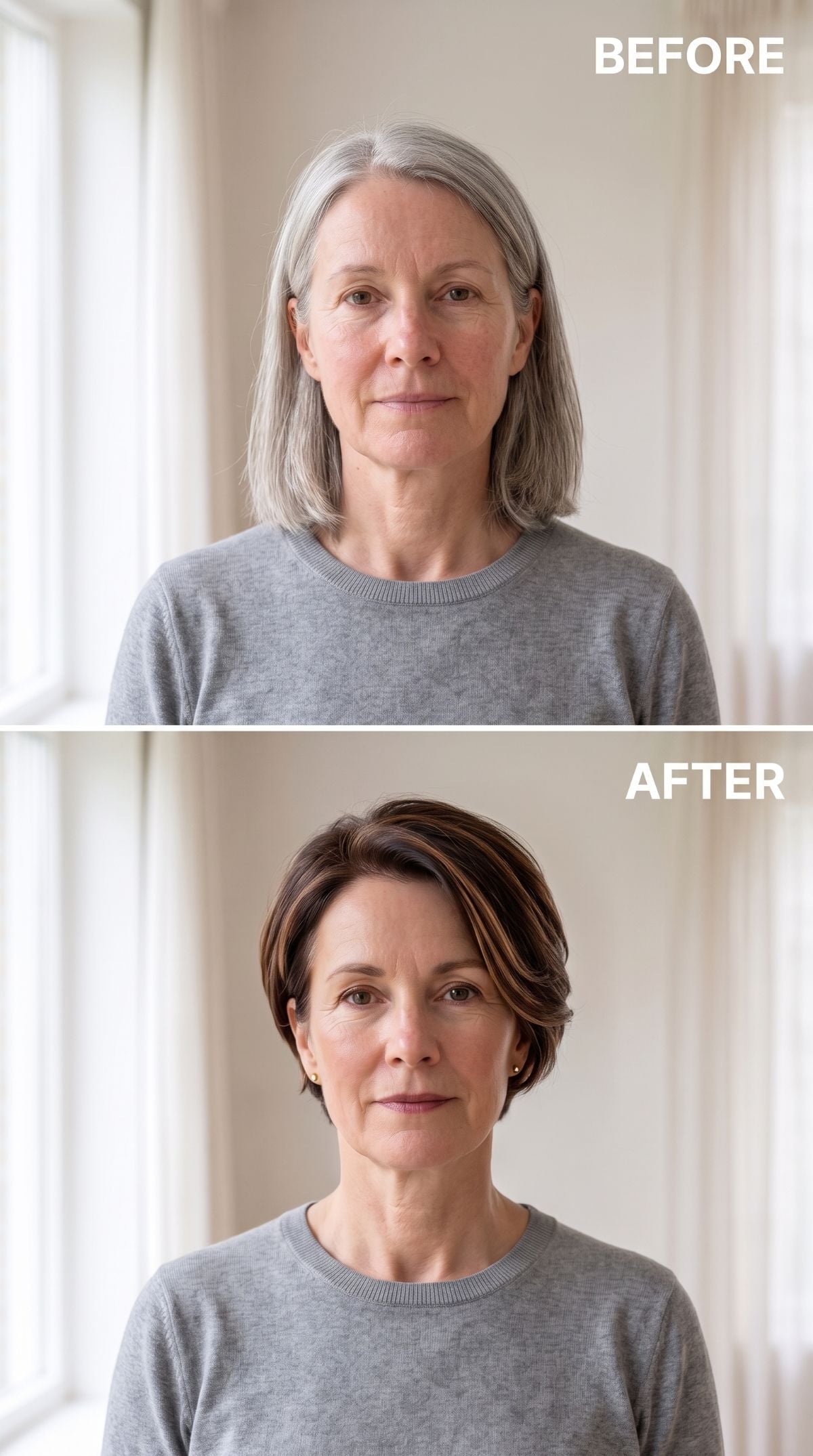
Back to something quieter, but not anonymous.
Warm brunette with caramel variation replaces the long gray, while the cut sits close around the ears and leaves more fullness through the top. That shift in weight is the important part. Instead of the silhouette widening lower down, attention moves toward the crown and side sweep.
Nothing here needs spikes, hard edges, or exaggerated height to read as decisively short. The shape stays compact and lets the color supply the softness.
24. A Lavender Bob Makes Silver Feel Deliberate
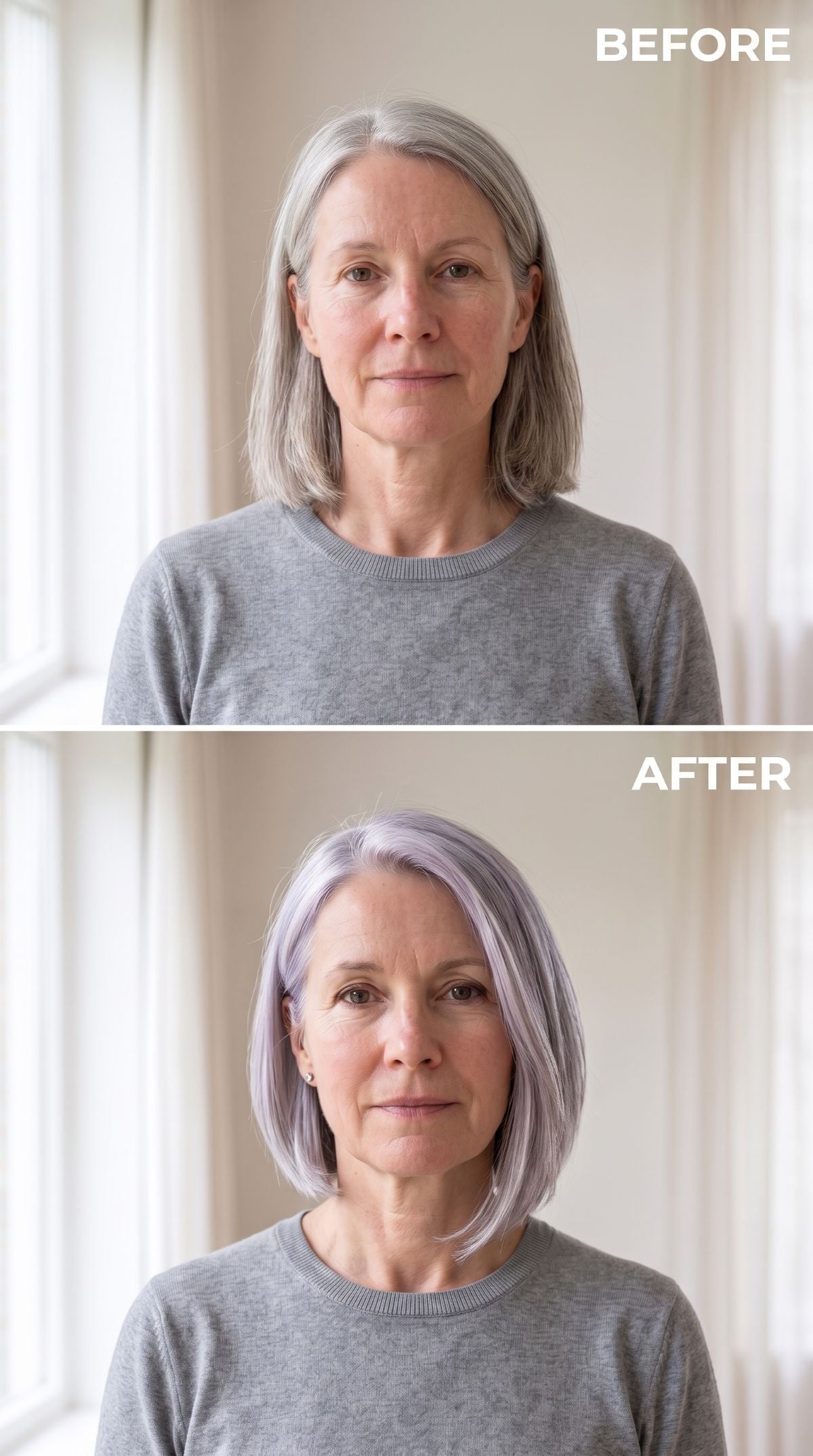
The gray does not disappear so much as acquire a violet filter.
A pale lavender wash sits over the silver, while a blunt bob just below the jaw gives all that subtle color a crisp perimeter. The shade hovers somewhere between silver and violet rather than announcing itself as full pastel.
That clean edge matters. Without it, the color could look incidental. With it, the silver-violet effect reads completely intentional.
23. A Golden Pixie Clears the Face and Keeps the Top Soft
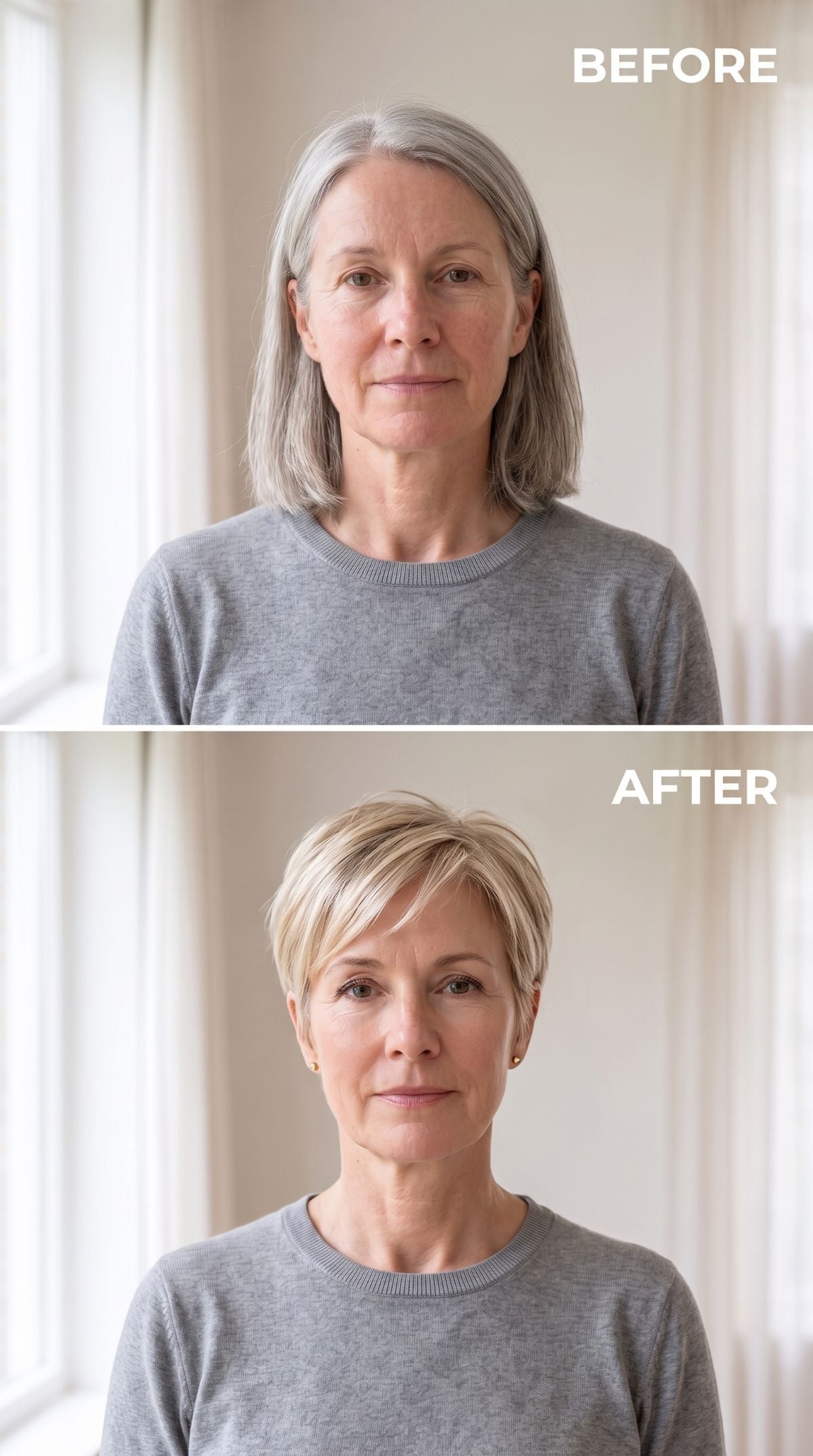
After lavender, gold feels almost conservative.
Shoulder-length gray is replaced by a close pixie with more length through the top and a loose side sweep across the forehead. That extra top length keeps the cut from reading severe, while the shorter sides expose the ears, neck, and jaw.
The blonde adds brightness, but the bigger transformation is negative space. There is simply less hair between the face and everything around it.
22. Warm Brunette Waves Trade Length for Movement
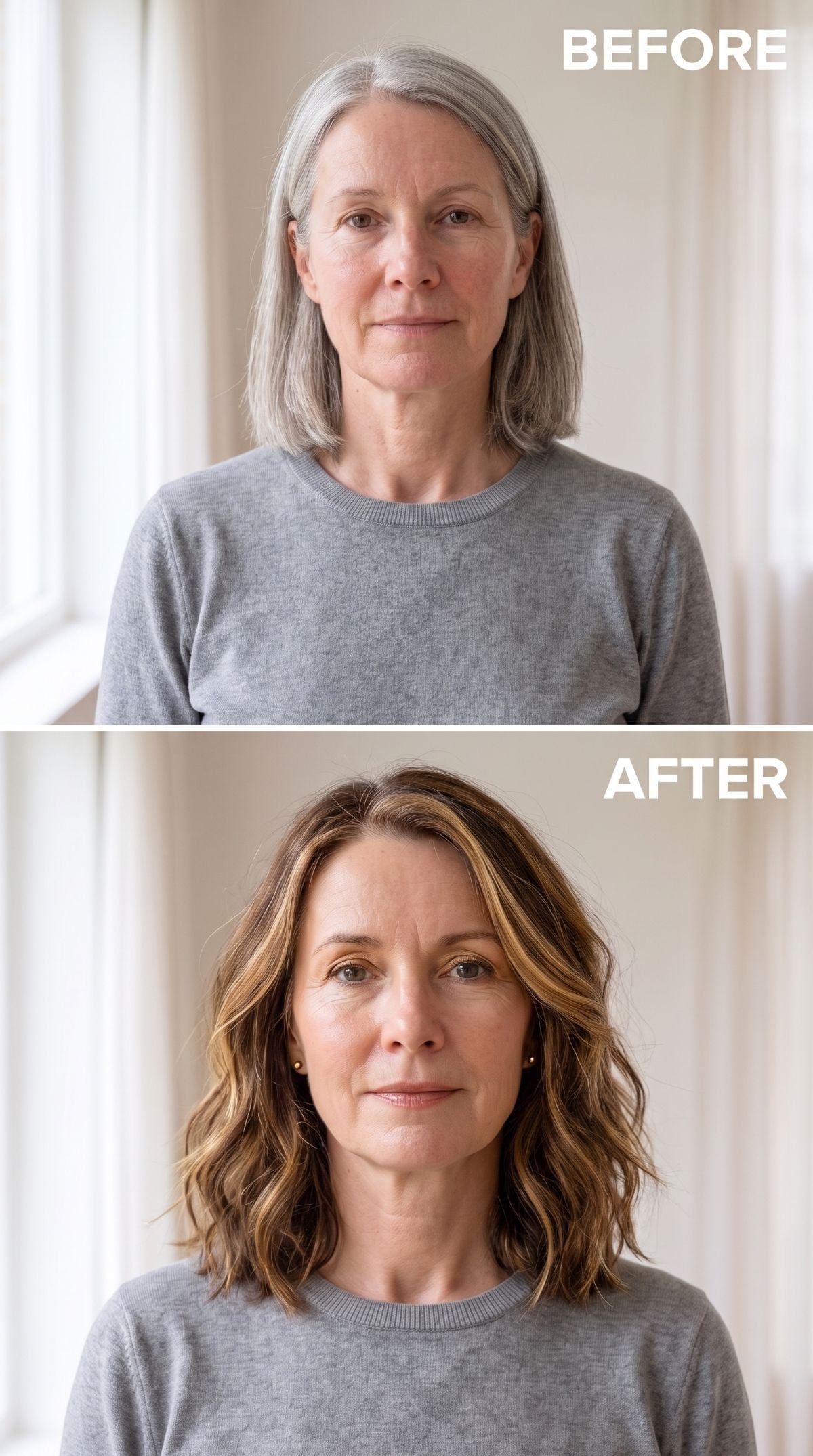
Chestnut at the roots, honey toward the ends, and enough wave to stop the bob from behaving like a ruler.
The before is long, gray, and visually vertical. The after moves sideways as much as downward, with bends around the jaw giving the silhouette more width and movement. That distinction matters more than the brunette color itself.
When hair already carries some wave, a shorter shape can make that texture much more visible. The cut does not have to manufacture movement if the hair already has some to offer.
21. A Flame-Red Bob Does Not Believe in Background Hair
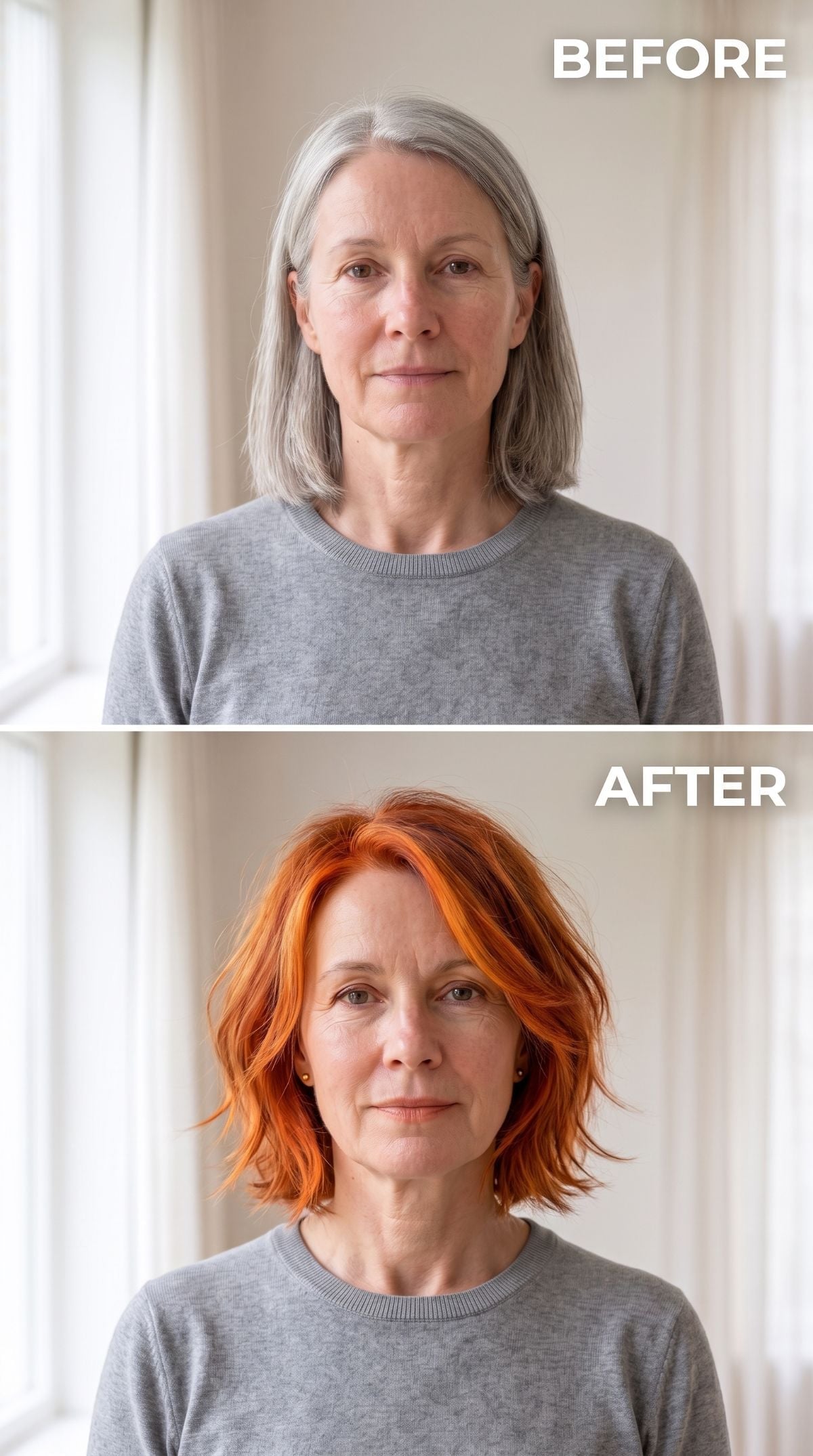
Some cuts frame the face. This one arrives first.
Vivid copper-orange lands somewhere between persimmon and flame, while loose texture keeps the jaw-length bob from becoming a perfectly geometric helmet. The nape sits shorter, the sides flare slightly, and the movement gives the saturated color somewhere to go.
Everything else around the face can afford to stay quiet. When the hair is this loud, the supporting cast should know its place.
20. A Soft Silver Bob Adds Fringe Without Losing the Gray
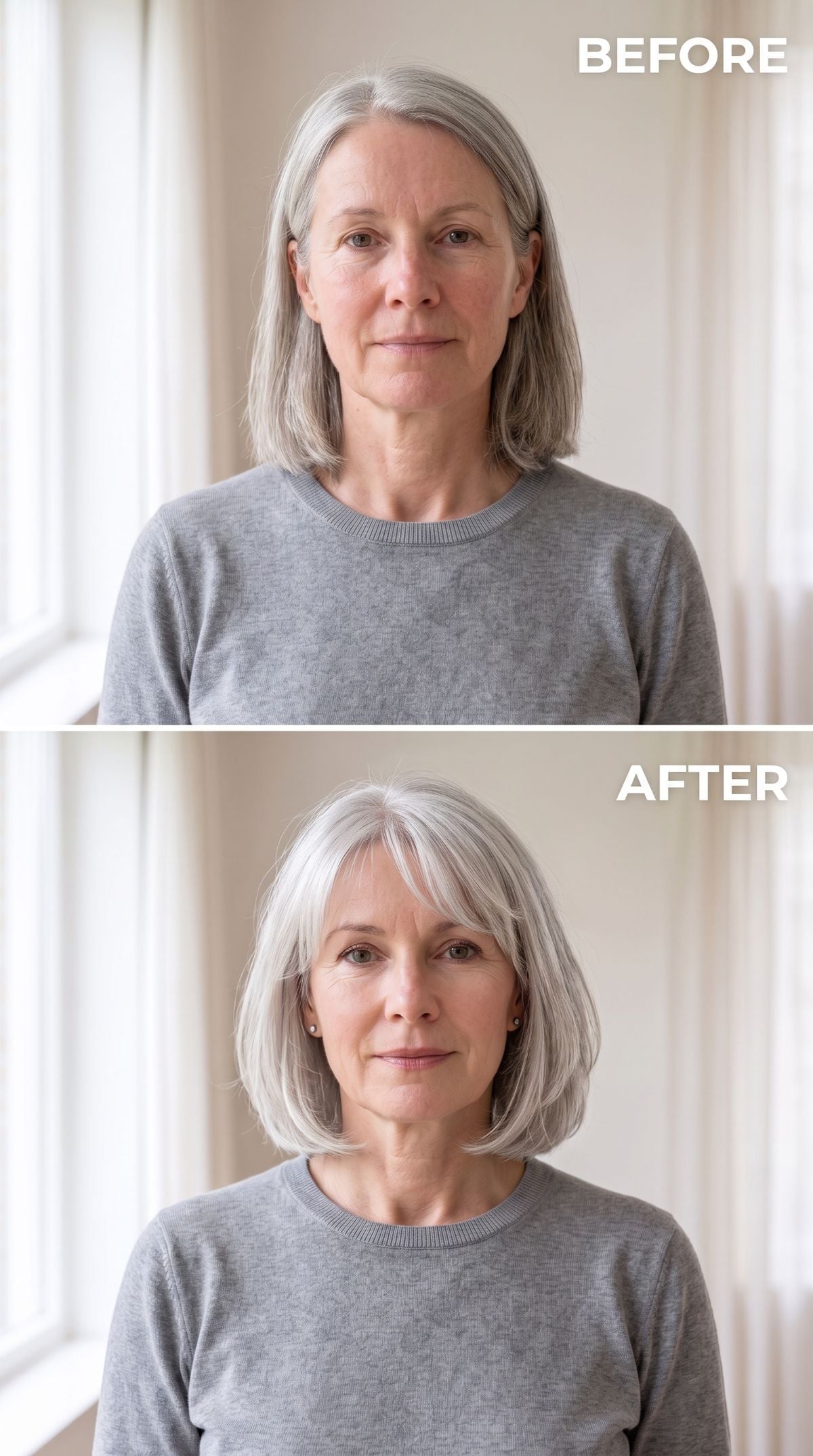
Here the color stays almost entirely out of the argument.
Shoulder-length gray comes up to the jaw, and a swept fringe crosses the forehead rather than leaving the center part to do all the framing. The ends retain enough fullness to keep the bob from looking wispy, while the silver-white at the crown becomes part of the design instead of something the cut is trying to disguise.
The transformation is quieter than lavender or copper, but that is exactly why it works here.
19. A Pink-Blonde Pixie Pushes the Color Without Overloading the Shape
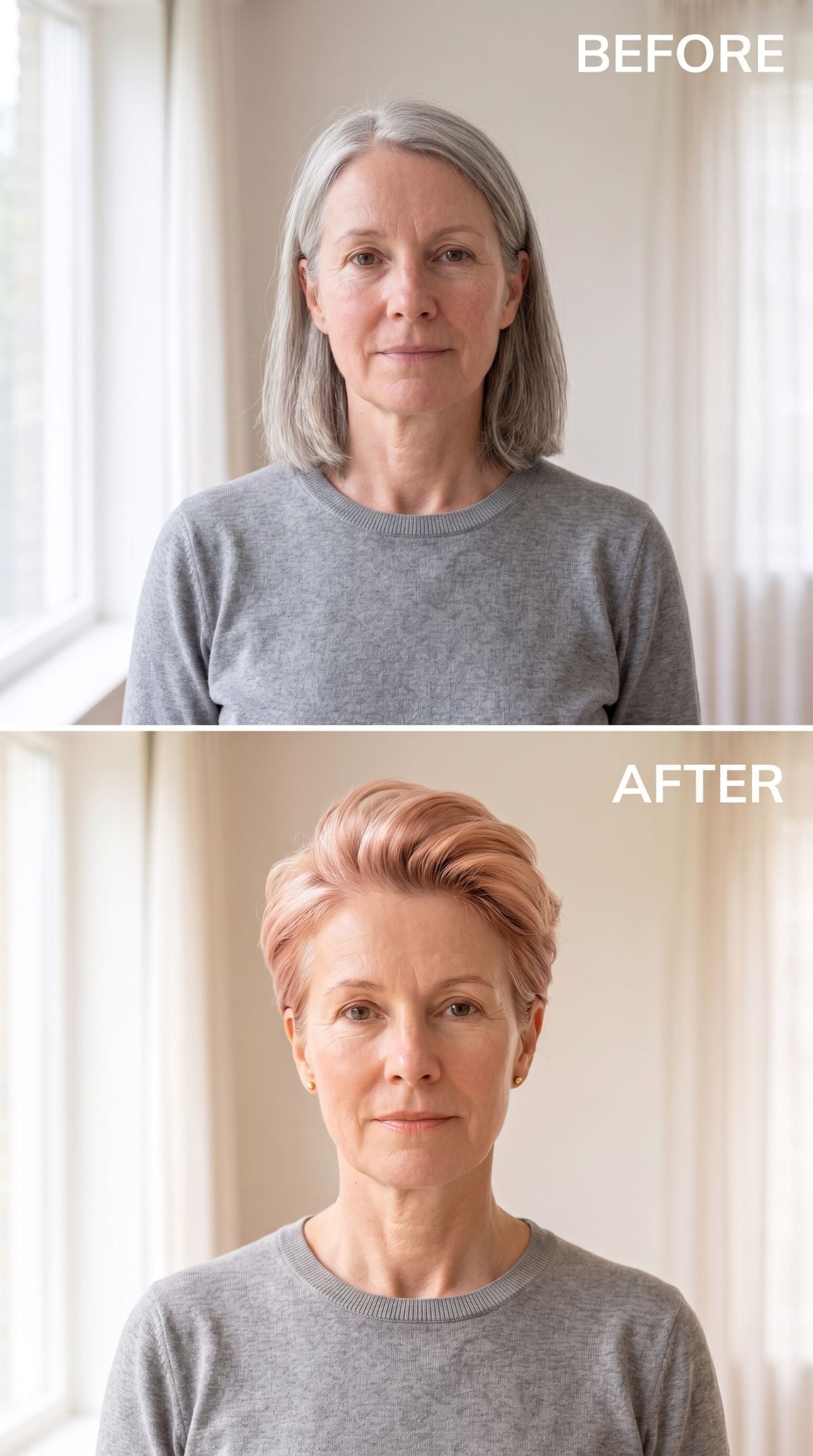
This could have become very busy: short cut, major color change, crown volume, fringe. Instead, the shape stays disciplined enough to let rosy blonde be the surprise.
The sides sit close, the top stays longer, and the fringe sweeps rather than chops across the forehead. Against that compact silhouette, the pink-blonde reads more like a warm blush cast over blonde than a novelty pastel.
One big color decision. One clean shape. No need to make every detail compete.
18. An Auburn Shag Keeps More Length but Loses the Flatness
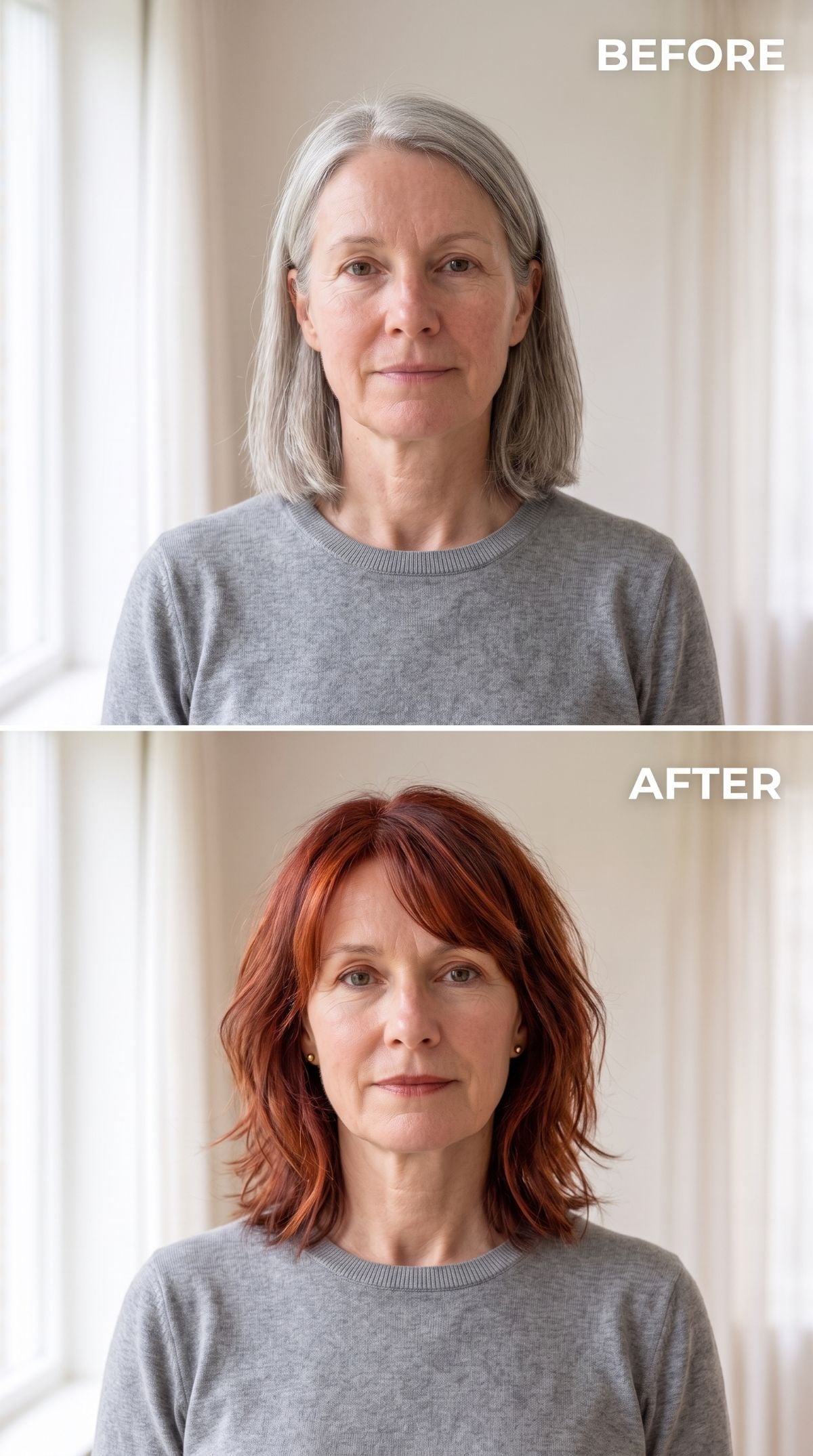
Not every transformation has to end above the jaw.
This auburn shag keeps the hair around shoulder length but adds a soft fringe and more broken movement through the ends. The new shape is less about becoming dramatically shorter and more about getting rid of the straight, uninterrupted drop of the original.
It is a useful reminder that the problem can be weight distribution rather than sheer length.
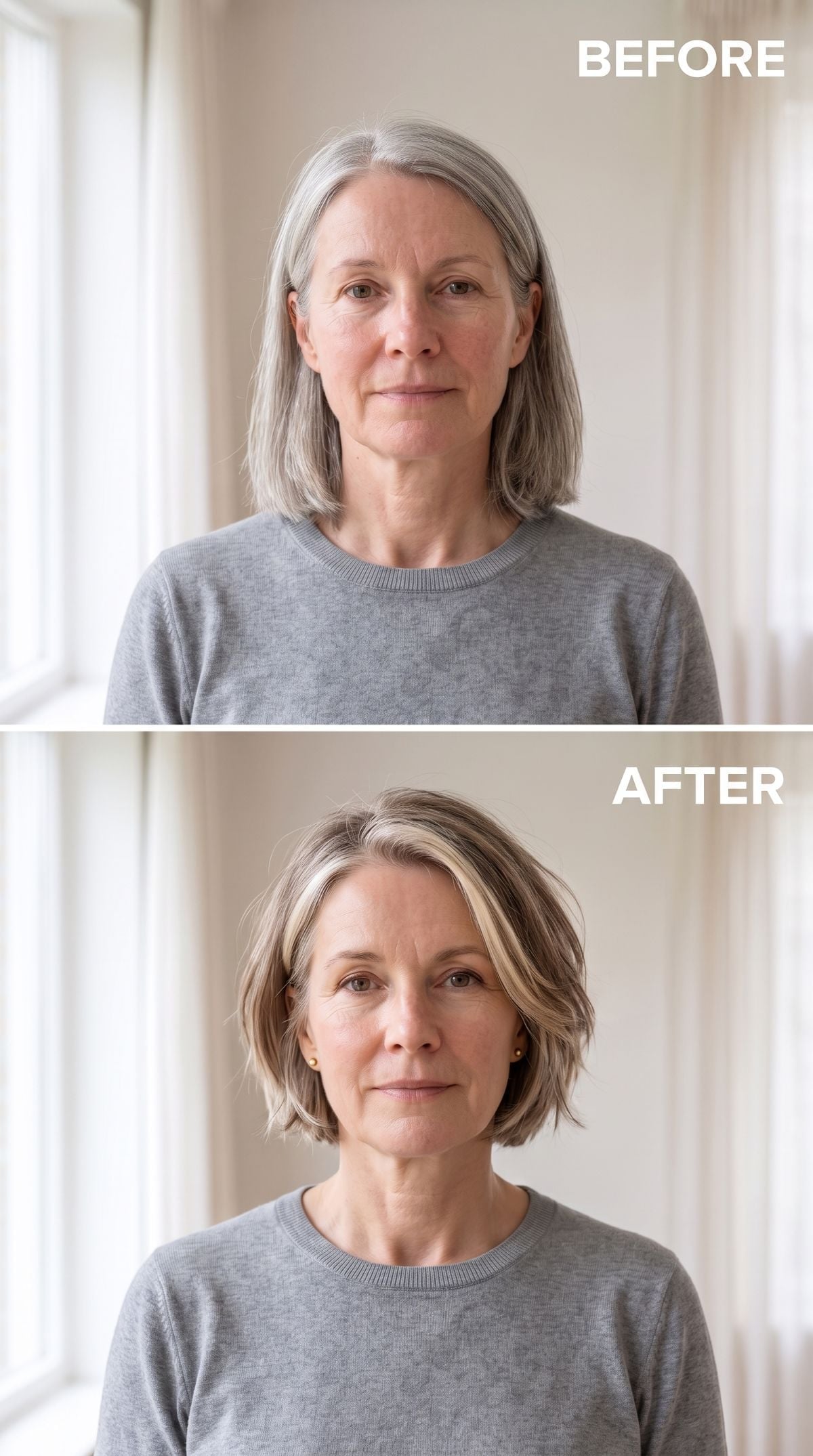
17. An Ash-Blonde Bob Keeps the Shape Soft and the Finish Clean
❤️ Would you like to save this?
After the auburn shag, this feels almost architectural.
A chin-grazing bob angles gently toward the front, while cool ash-blonde sits over the original gray with some depth still showing near the roots. Nothing is carved too sharply. The ends retain movement, the jaw gets a clearer frame, and the color transition feels softened rather than erased.
Shorter, but not severe. Blonde, but not uniformly bright. Polished, without looking shellacked into place.
16. A Dark Auburn Pixie Goes Sleek Instead of Spiky
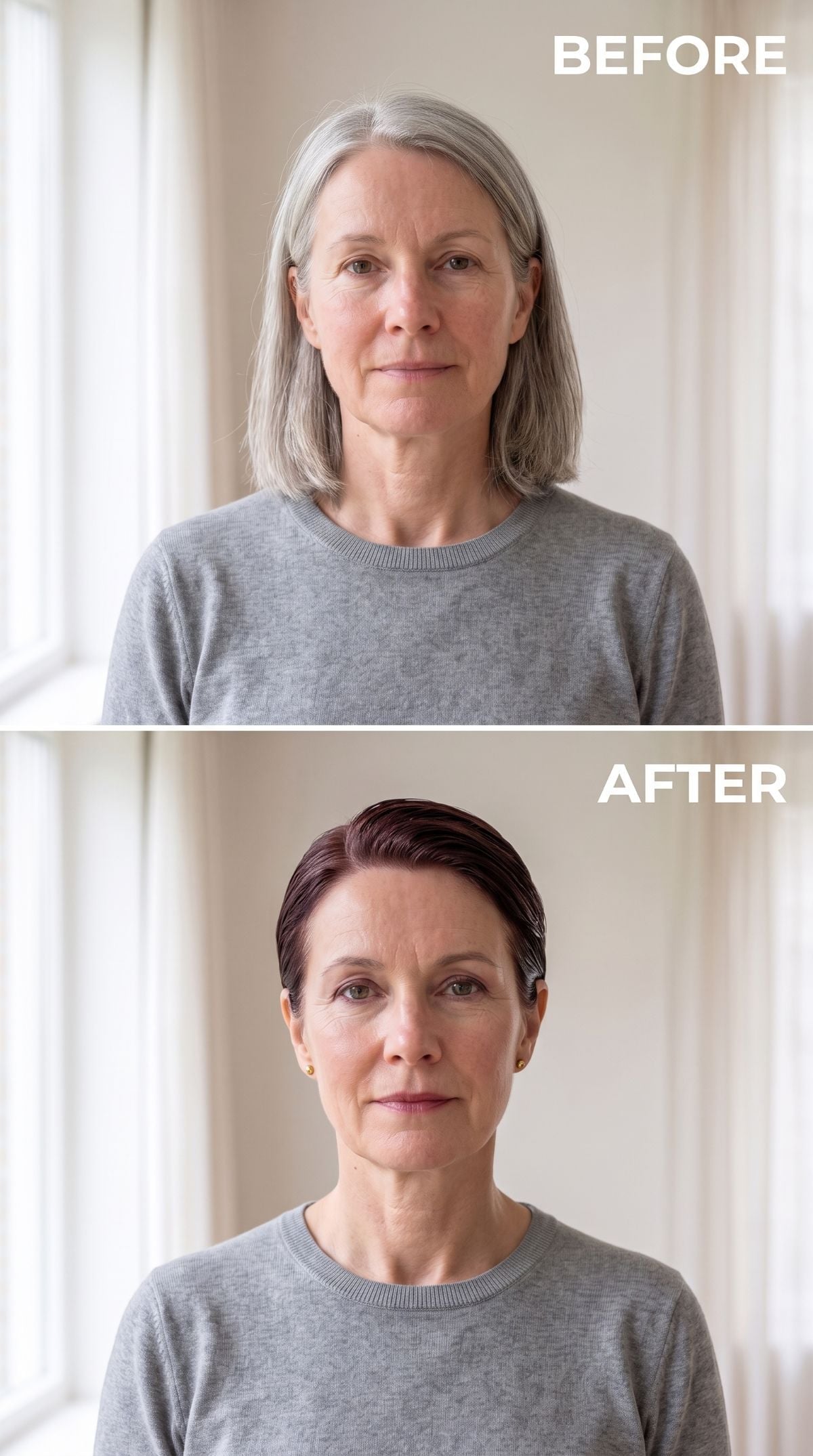
Pixie does not automatically mean tousled.
This one sweeps backward, sits close at the sides, and leaves just enough length over the crown to preserve a smooth line. Deep auburn gives the crop depth without the brightness of the earlier copper version.
Same broad haircut family, opposite attitude. Copper went choppy and forward. Auburn goes sleek and back.
15. A Center-Parted Silver Bob Makes Precision the Point
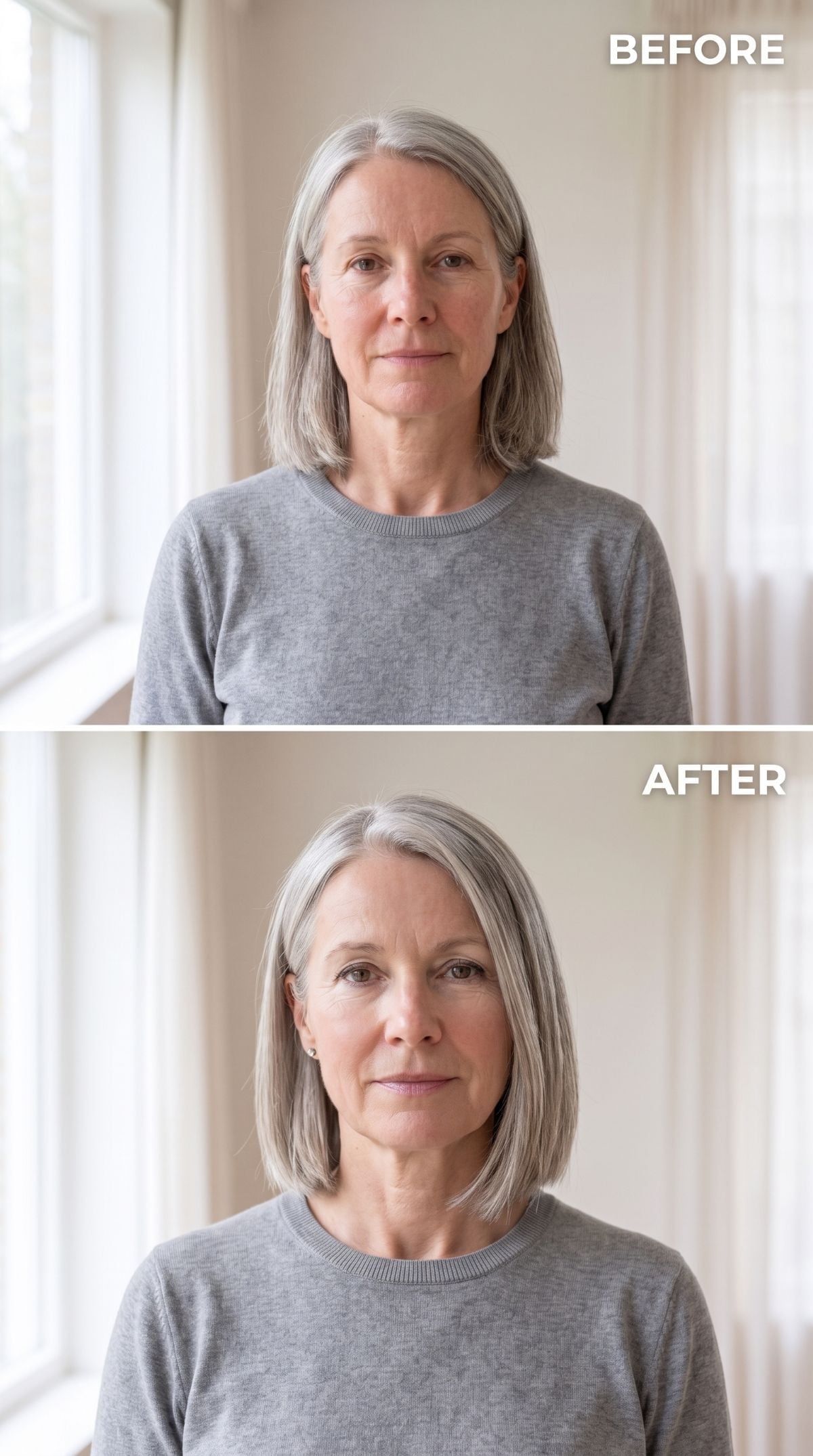
No color change. No fringe. No strategic distraction.
The transformation is a clean, chin-grazing silver bob with a centered part and a sleek finish. Against the longer before, the difference is almost architectural: one long vertical outline becomes a compact geometric shape.
The polished finish shown here would require some styling on many hair types, but the haircut itself is simple enough to understand at a glance. Gray gets to be the feature.
14. A Golden Bob Keeps the Transformation Clean and Graphic
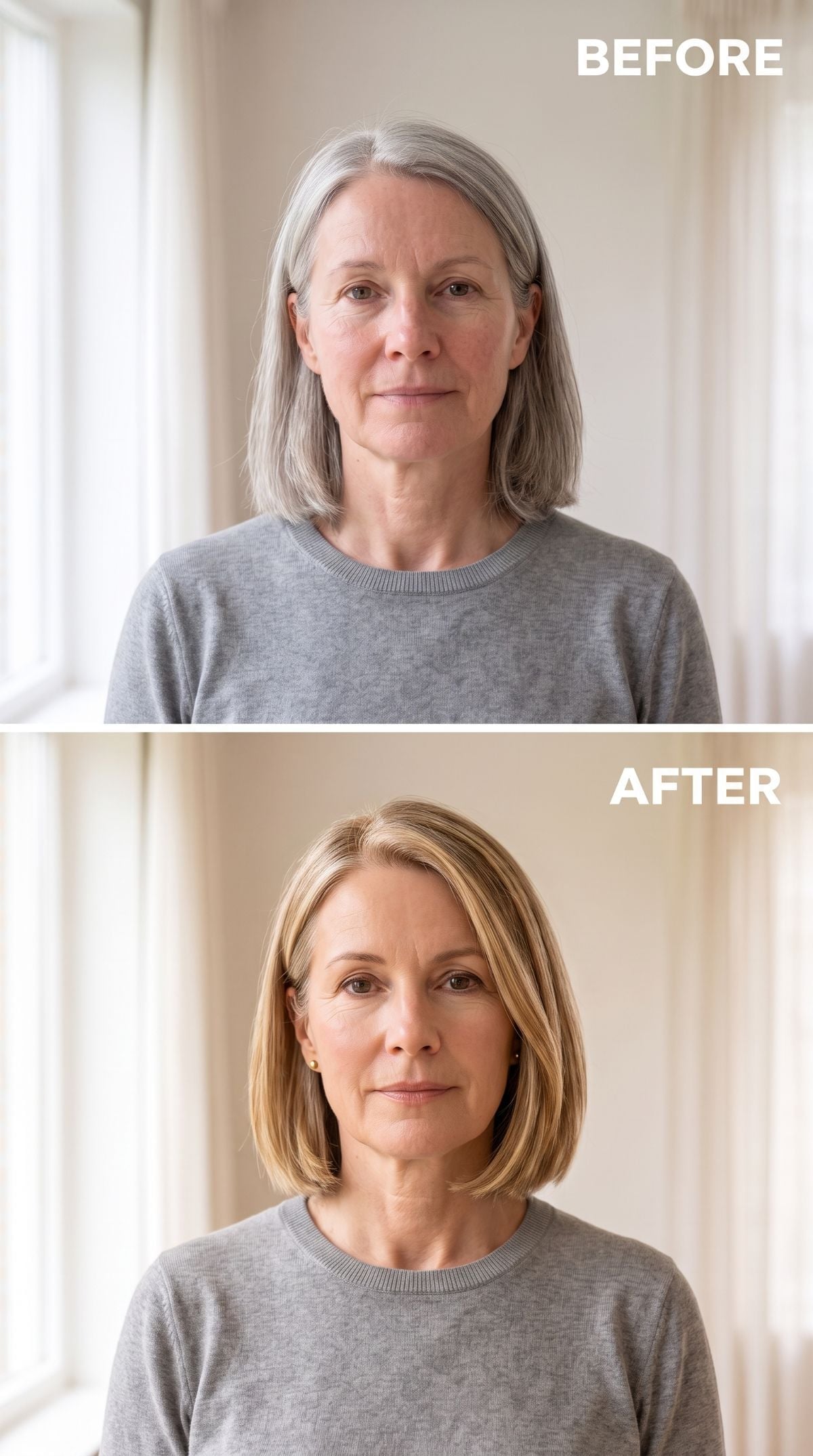
No curls. No shag. No dramatic fringe. Just a substantial change in length and a much warmer color.
The bob lands just below the jaw and sits slightly shorter toward the back, giving the perimeter a clear forward direction. Golden blonde with lighter pieces around the face keeps the color from reading as one uninterrupted block.
It is almost suspiciously straightforward, which may be the attraction.
13. Caramel-Lit Layers Move the Volume Away From the Bottom
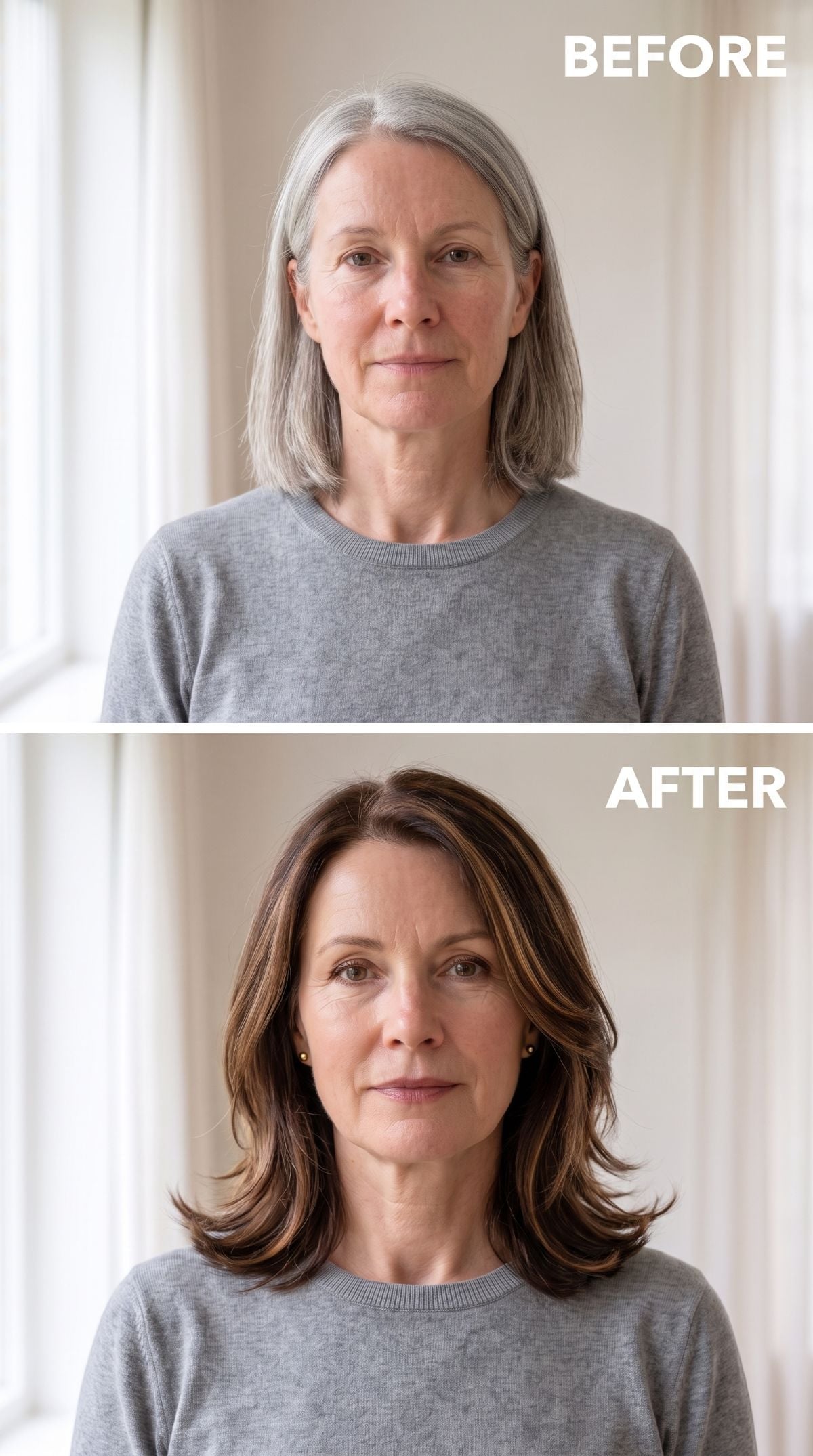
This one refuses the usual pixie-or-bob choice.
Warm brown and caramel replace the cool gray, but the important change is the layered flip. Instead of one straight line running from the head toward the shoulders, the ends move outward and create a wider, livelier silhouette.
Shortening hair does not always mean removing every bit of swing. Sometimes the better move is deciding where the width should live.
12. A Honey-Blonde Pixie Uses a Side Sweep Instead of a Hard Crop
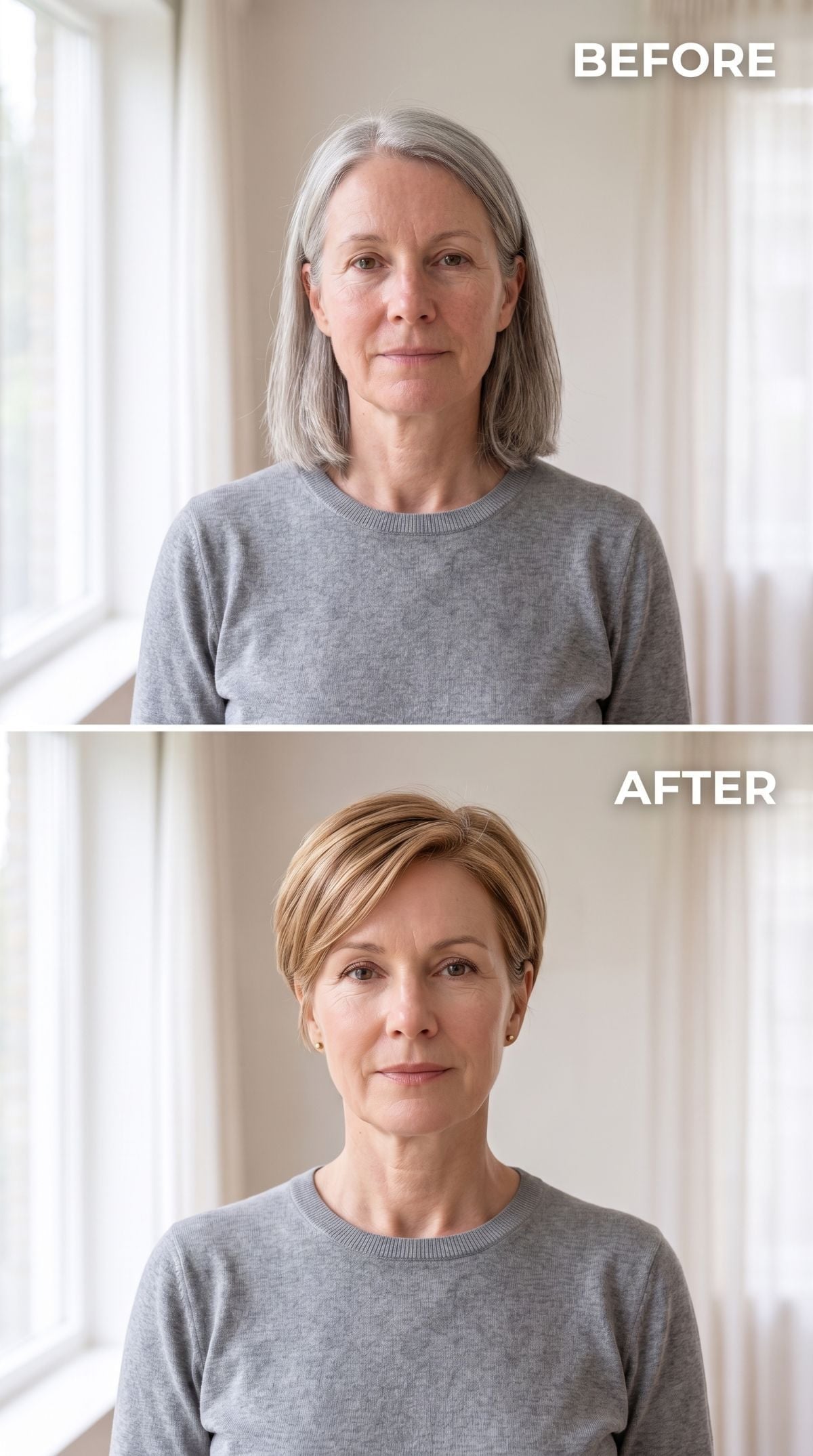
Notice what changes when the top is treated almost like a miniature side part.
The sides sit close while the longer section crosses the forehead with enough weight to keep the result soft. Honey-champagne blonde warms the color considerably, yet the shape remains controlled.
The useful takeaway is not that short hair automatically saves time. It is that strategic length can make a crop feel much less severe.
11. A Blonde Angled Bob Changes the Line Around the Jaw
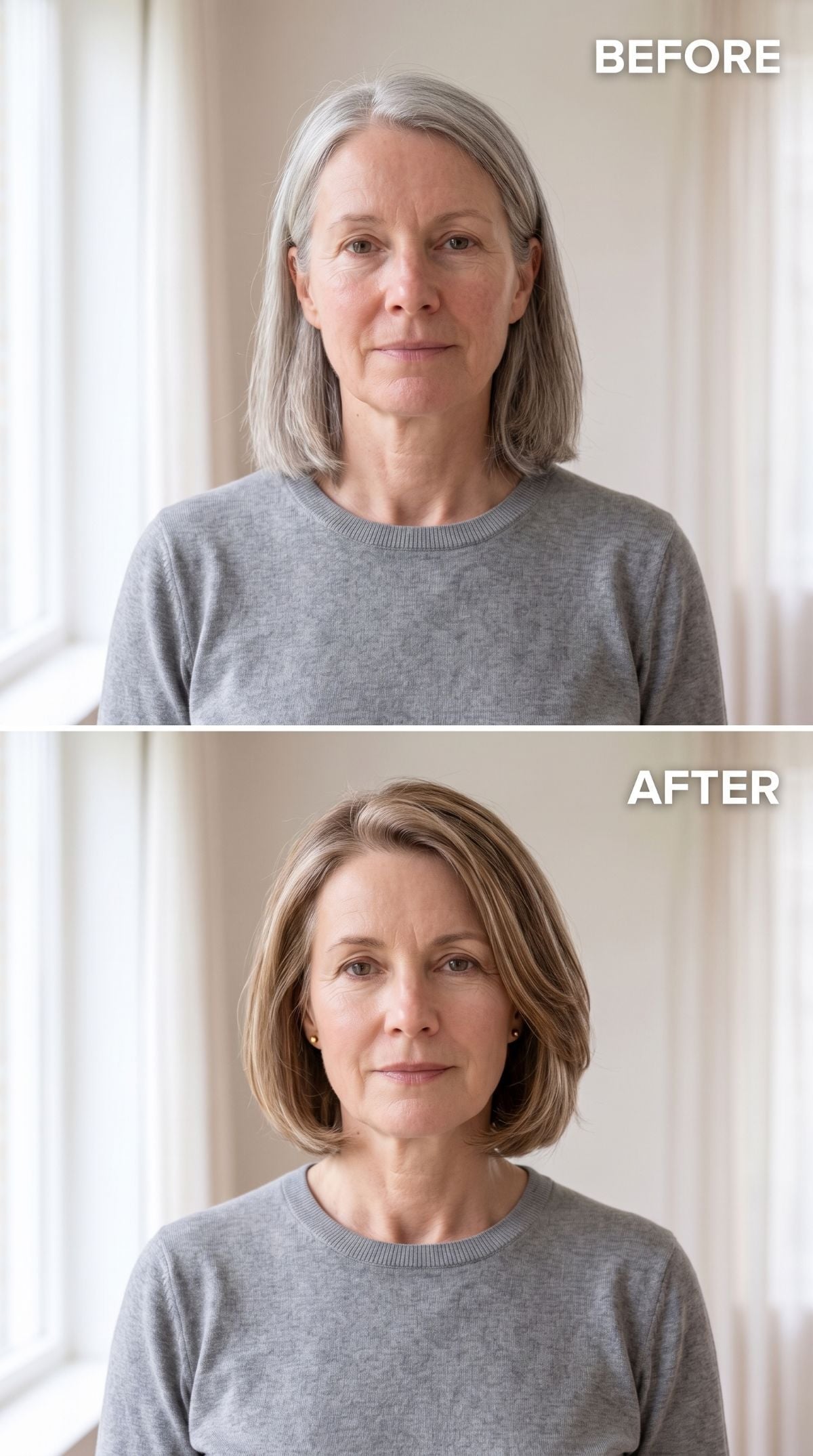
A deep side part immediately changes the geometry from the center-parted before.
The cut sits shorter at the back and extends toward the jaw, creating a diagonal line rather than one level perimeter. Warm ash-blonde pieces brighten the front without turning the whole head one flat shade.
The angle is the story. It gives a familiar bob enough direction to keep it from reading generic.
10. A Layered Silver Bob Trades Precision for Movement
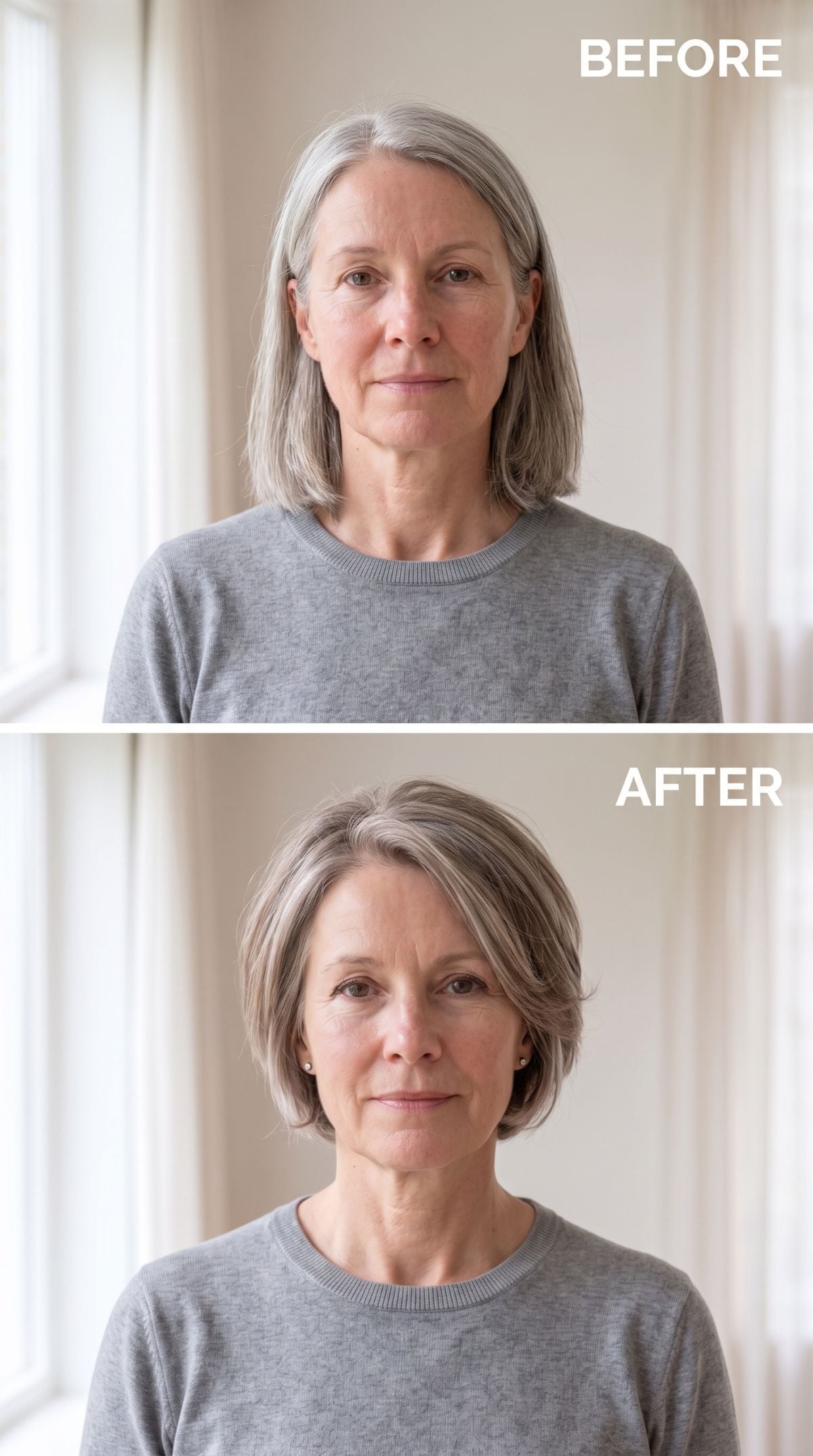
Instead of the sharper perimeter seen in the earlier silver bobs, the ends sweep softly and the crown carries more layering.
The result has less graphic precision and more movement. Gray variation becomes visible through those layers, especially where brighter silver sits over darker ash.
Same color family. Completely different personality.
9. A Textured Blonde Pixie Breaks Up the Straight-Line Before
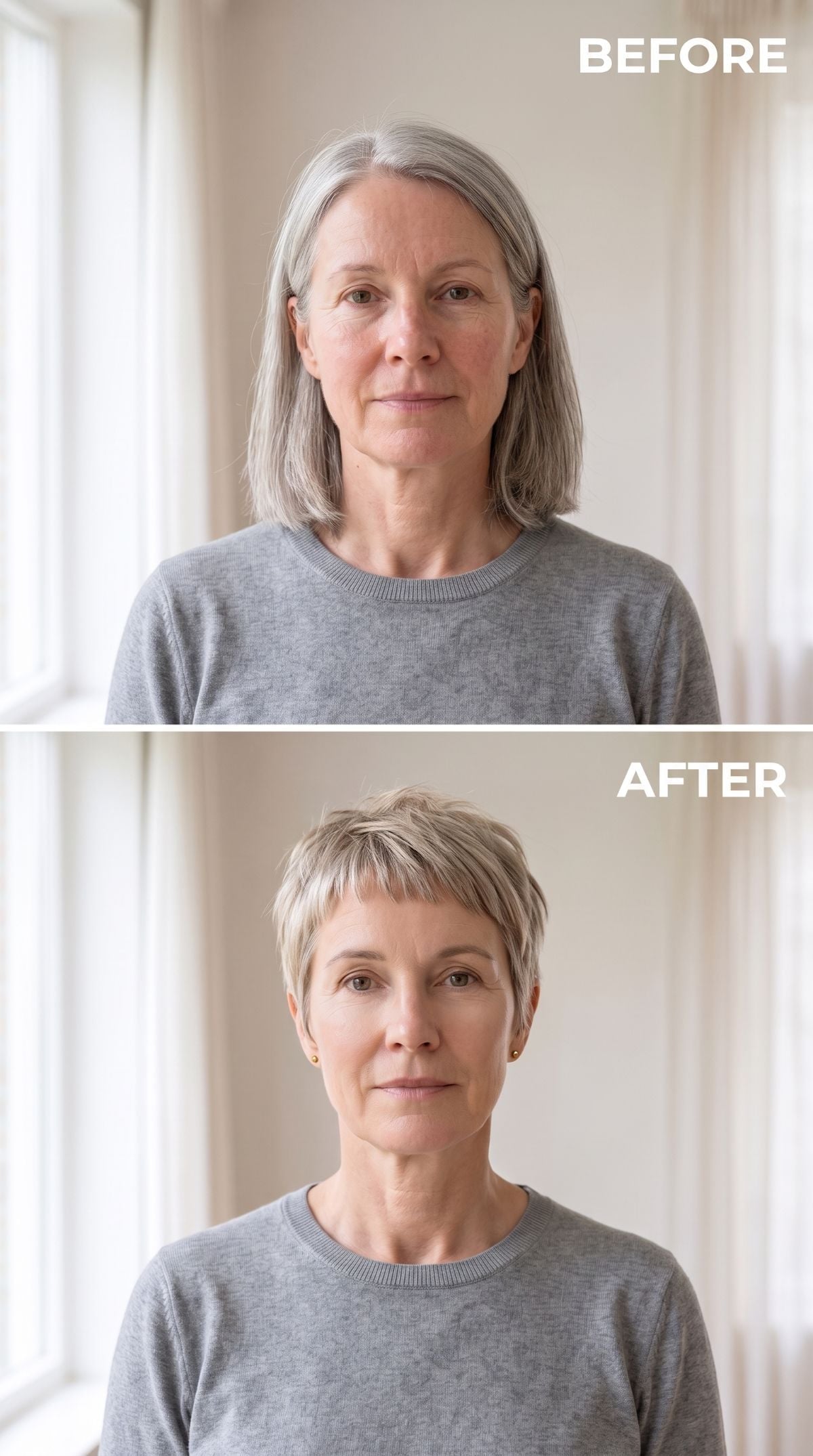
The before falls straight and close around the face. The after refuses to.
A longer top, piecey fringe, and texture through the crown create multiple directions where there used to be one. Ash-blonde warms the overall look without going especially golden, keeping some connection to the coolness of the original gray.
This is a pixie for anyone who likes movement more than polish.
8. A Chestnut Bob With a Soft Under-Curl Makes the Ends Matter
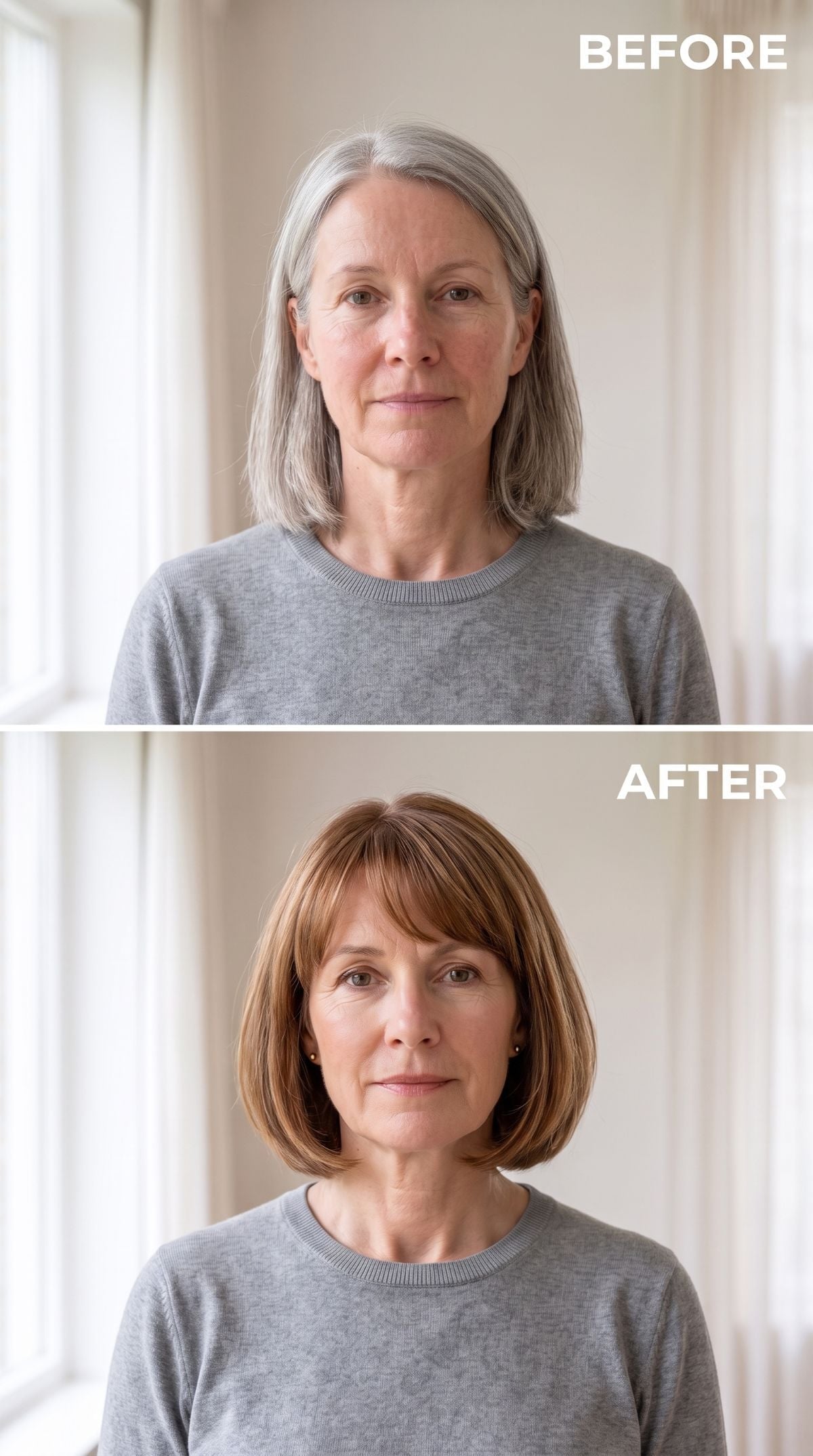
This chestnut bob is less blunt than the earlier brunette version.
A soft fringe crosses the forehead, but the useful detail is lower down: the ends turn gently inward, creating a rounded finish rather than a hard horizontal edge. The shape reads fuller at the perimeter without keeping the old collarbone length.
Small change in geometry. Large change in finish.
7. A Strawberry-Gold Pixie Builds Height Without Bulk
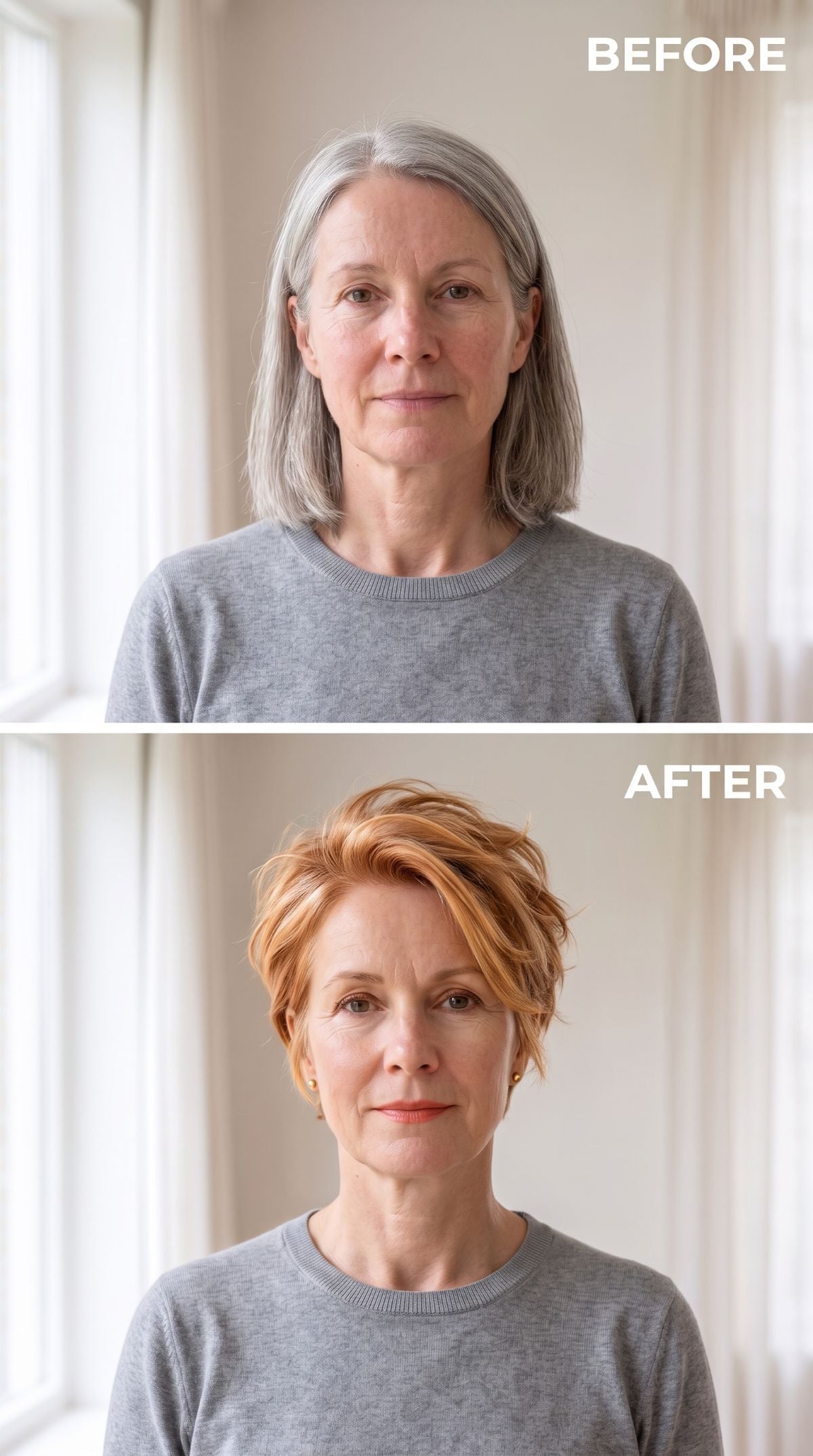
Warm strawberry-gold gives this pixie a different character from the cooler blonde versions.
The top lifts and moves forward while the sides stay close, so the added volume sits above the face rather than around it. That is the important distinction. More hair does not have to mean a wider haircut.
The warmer color adds another layer, but the silhouette would make its point without it.
6. A Soft Blonde Flip Keeps Some Swing in the Ends
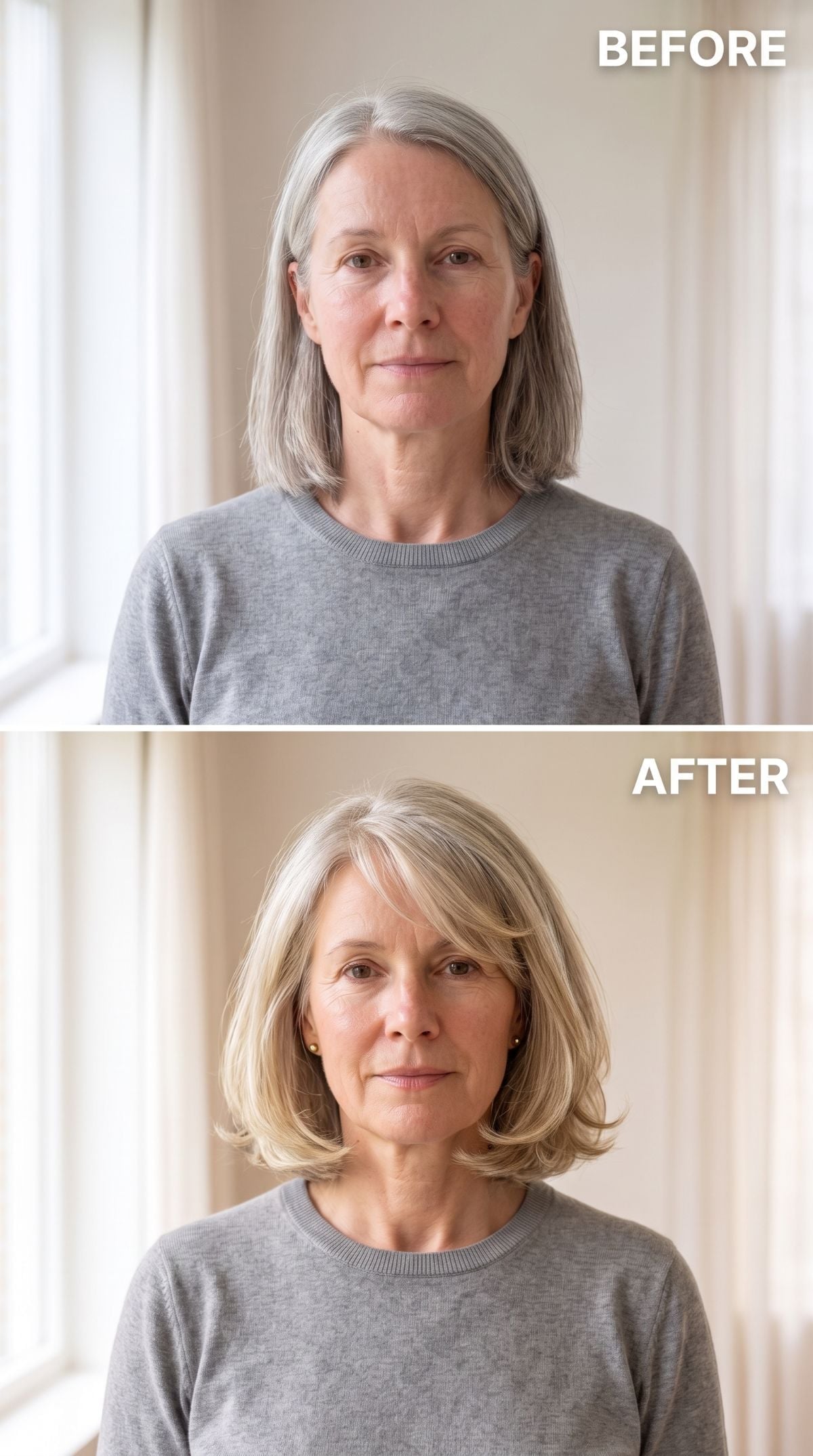
Blunt bobs are not the only way to go shorter.
Warm ash-blonde replaces the gray, while the reduced length finishes in a soft outward flip. That small kick at the ends keeps the silhouette lively and gives the shoulder-grazing cut more movement than a tucked-under bob.
Polished, but not rigid.
Color Note: Ash-blonde sits cooler than honey or golden blonde, which can make it a useful bridge between silver and warmer blonde territory. The exact shade still needs to work with the individual complexion and starting color.
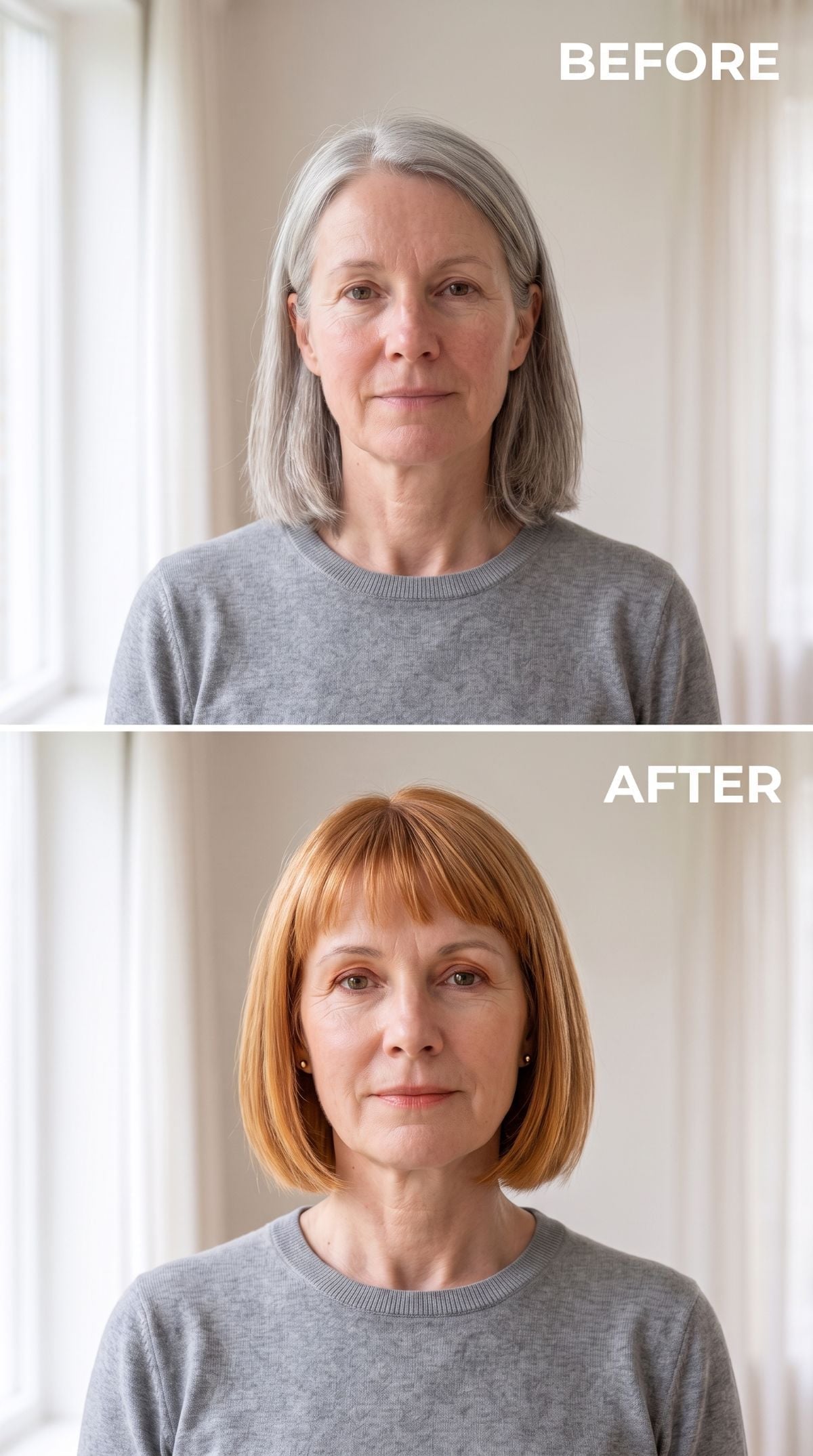
5. A Copper Bob With Fringe Makes the Perimeter Do the Work
❤️ Would you like to save this?
Copper returns, this time without the choppy pixie.
The jaw-length bob is compact and comparatively blunt, while eyebrow-level fringe closes the space across the forehead and makes the whole haircut feel more contained. On straighter hair, a perimeter like this can retain its visual structure even without much volume.
The appeal is not that bangs magically style themselves. It is that the intended line is already built into the cut.
4. An Ash-Blonde Pixie Keeps a Little Length Where It Matters
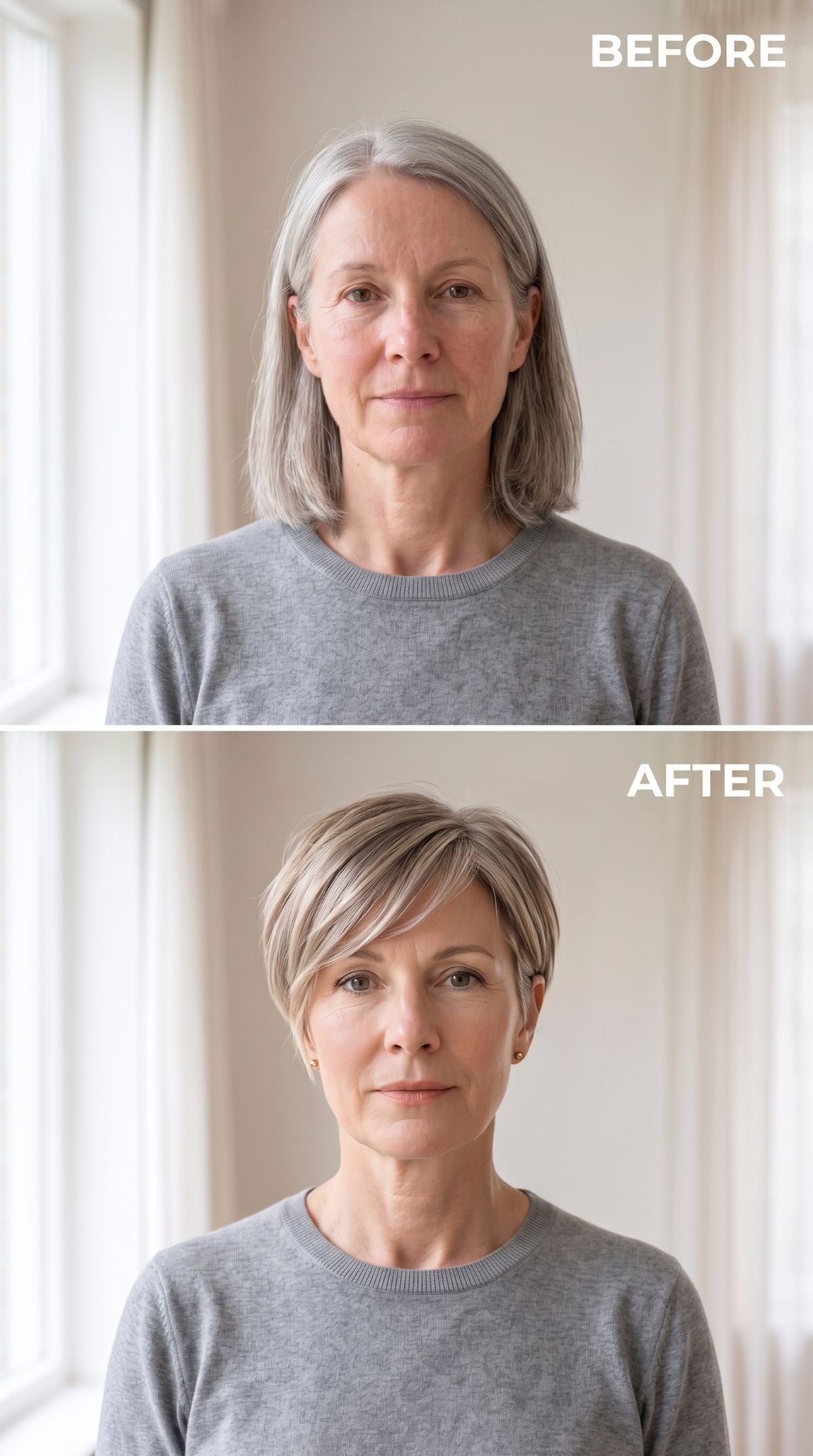
This pixie is cropped close around the ears but refuses to take the top equally short.
That extra length gives the fringe enough weight to sweep sideways and keeps the silhouette from becoming hard or bristly. Mid-tone ash blonde sits between silver and warmer gold, so the color change is noticeable without becoming the entire transformation.
Short at the edges. Softer where it counts.
Cut Note: A longer top can give a pixie more styling options than an all-over crop. Whether it behaves with a finger-comb or needs more help depends on texture, density, growth pattern, and the finish you want.
3. A Brunette Bob With Brow-Skimming Fringe Turns Length Into a Frame
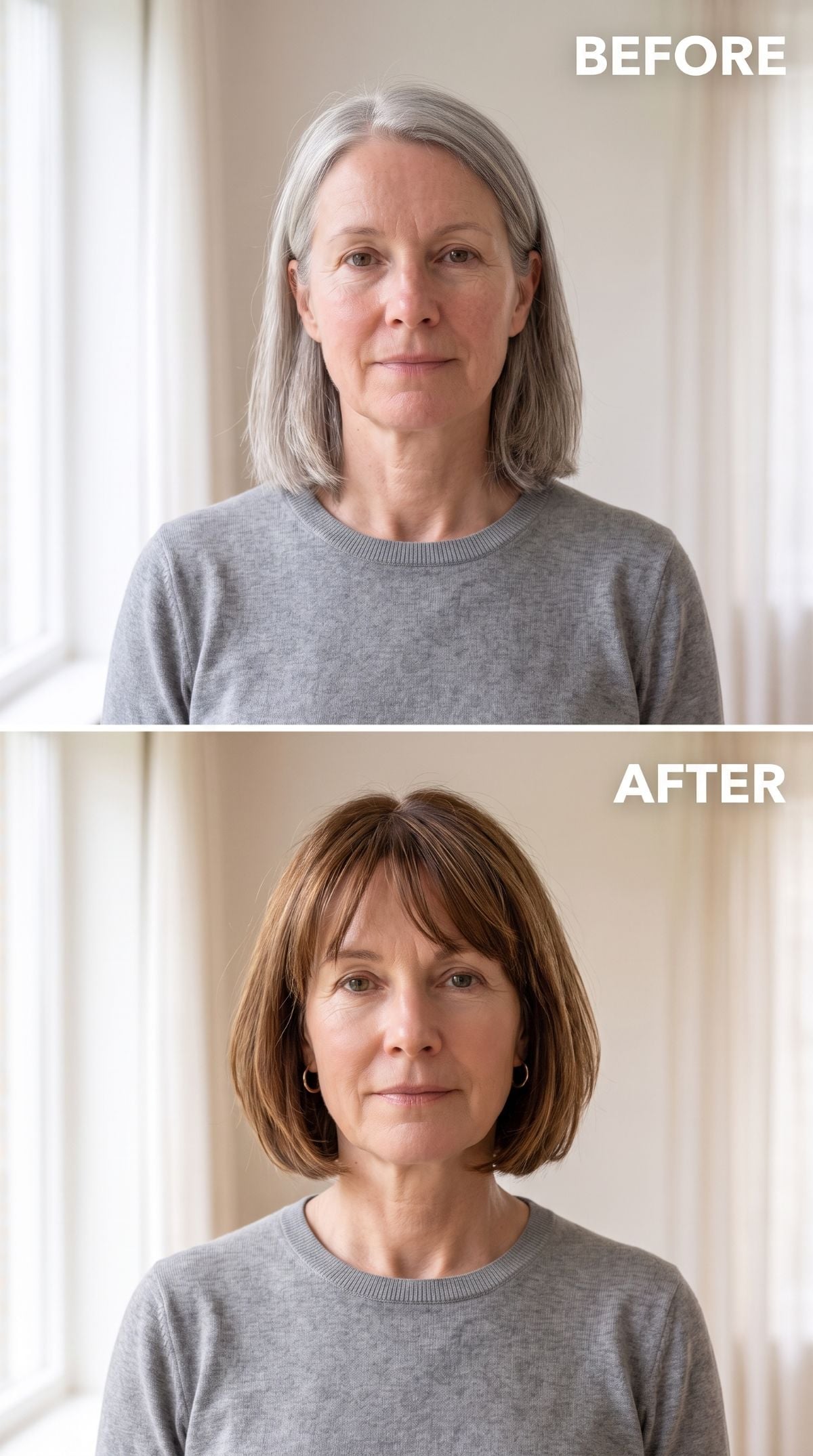
Long gray becomes warm chestnut, but the real before-and-after happens around the face.
A chin-length bob curves inward while a soft fringe skims the brows. Instead of the center part exposing the entire forehead and sending two long sections downward, the new shape puts a clear boundary above the eyes and another at the jaw.
Color changes the temperature. The cut changes the map.
2. A Side-Swept Blonde Pixie Keeps the Final Crop Loose
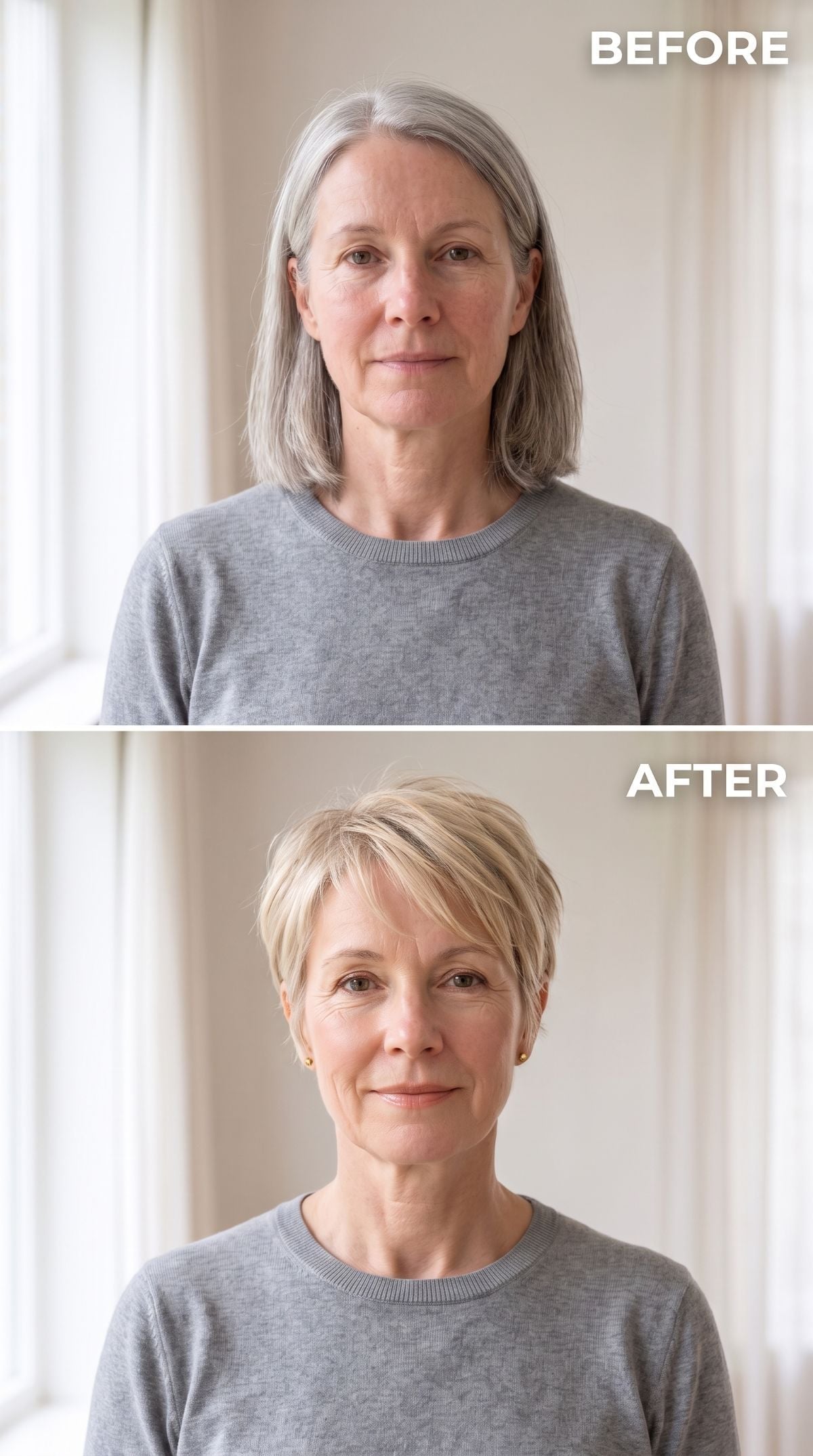
One last pixie, and it takes the softer route.
The top remains long enough to fall to one side, the edges around the ears stay neat, and the warm blonde prevents the short shape from looking too stark. Compared with the shoulder-length before, there is less visual weight below the cheeks and considerably more open space around the neck.
Short, yes. Severe, not remotely.
1. A Gray Bob Ends the Gallery Without Changing the Color
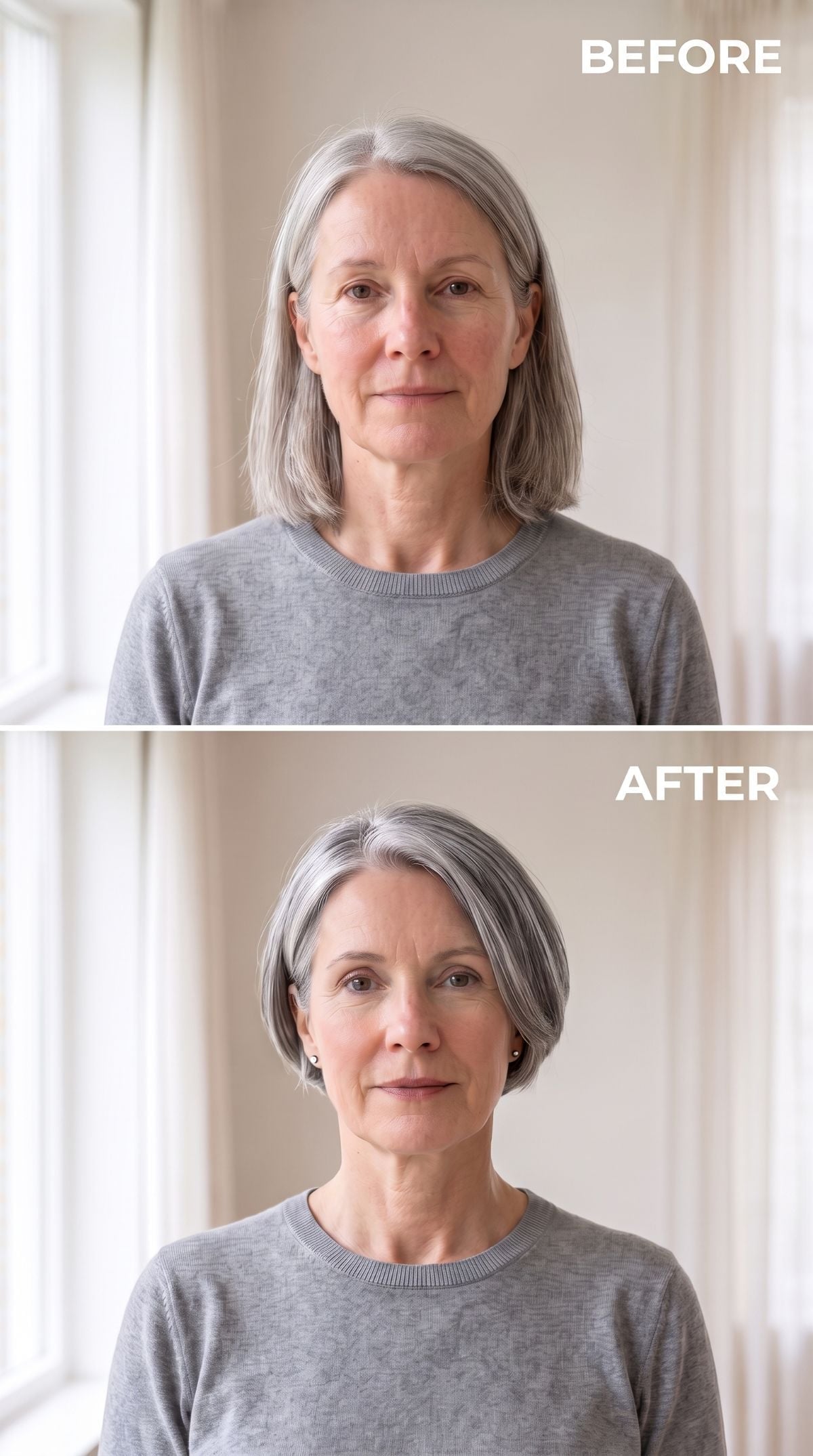
After pink, navy, copper, auburn, brunette, blonde, and lavender, the last transformation leaves the gray exactly where it is.
The change comes entirely from shape. Shoulder-length hair moves up to the chin, a side part replaces the center split, and soft layers curve toward the jaw. Silver at the crown now has a compact silhouette underneath it instead of disappearing into longer lengths.
That feels like the right place to finish.
Twenty-nine transformations, and the simplest one gets the last word: modernizing gray hair does not necessarily mean getting rid of the gray.