
The hemline crept up a half inch, then another, then kept going. And somewhere between the bouclé-suited elegance of the early decade and the suede-fringed abandon of its final years, the A-line skirt became the quiet workhorse of an entire generation’s wardrobe.
It flattered, it swung, it took a bold print without flinching. These were the skirts hanging in every closet, pressed for church and loosened for parties, and the ones below still carry that unmistakable swing.
FYI, thanks to AI imagery software, we’re able to create very specific fashion and hairstyle examples to illustrate the points being made. In some cases, imagery is exaggerated to hammer home the point. Also, assume links that take you off the site are affiliate links such as links to Amazon. this means we may earn a commission if you buy something.
38. The Mary Quant Color-Block Mini
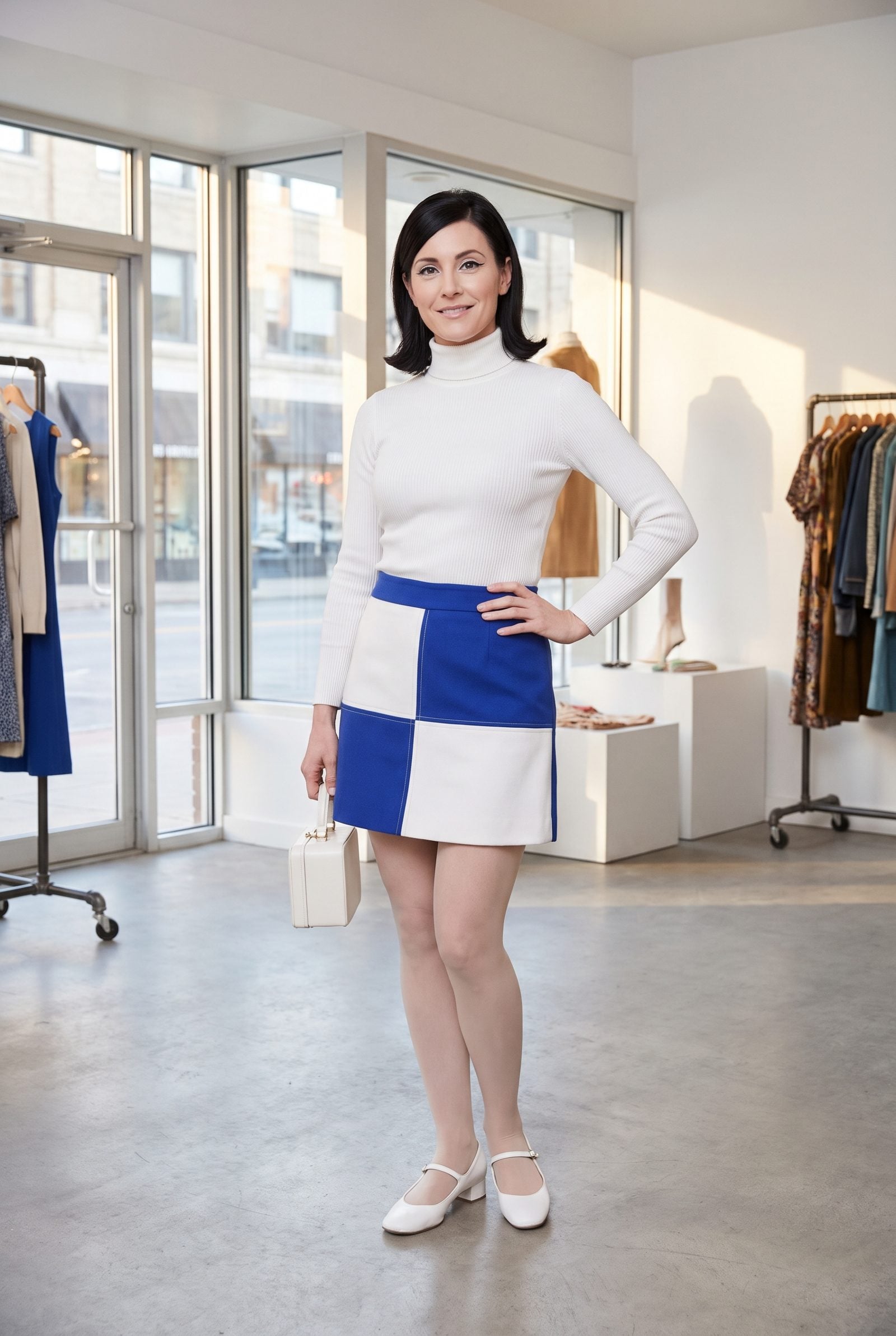
Geometry did the heavy lifting here. The color-block panels broke the skirt into clean architectural shapes, and that single bold decision made everything around it look deliberate. Mary Quant understood that a mini didn’t need a print to read as modern — it needed edges.
The white roll-neck keeps the eye moving upward, so the skirt reads as the main event without shouting. This was the uniform of women who wanted to signal they’d read the memo on where fashion was headed.
37. The Jackie Kennedy Bouclé Suit Skirt
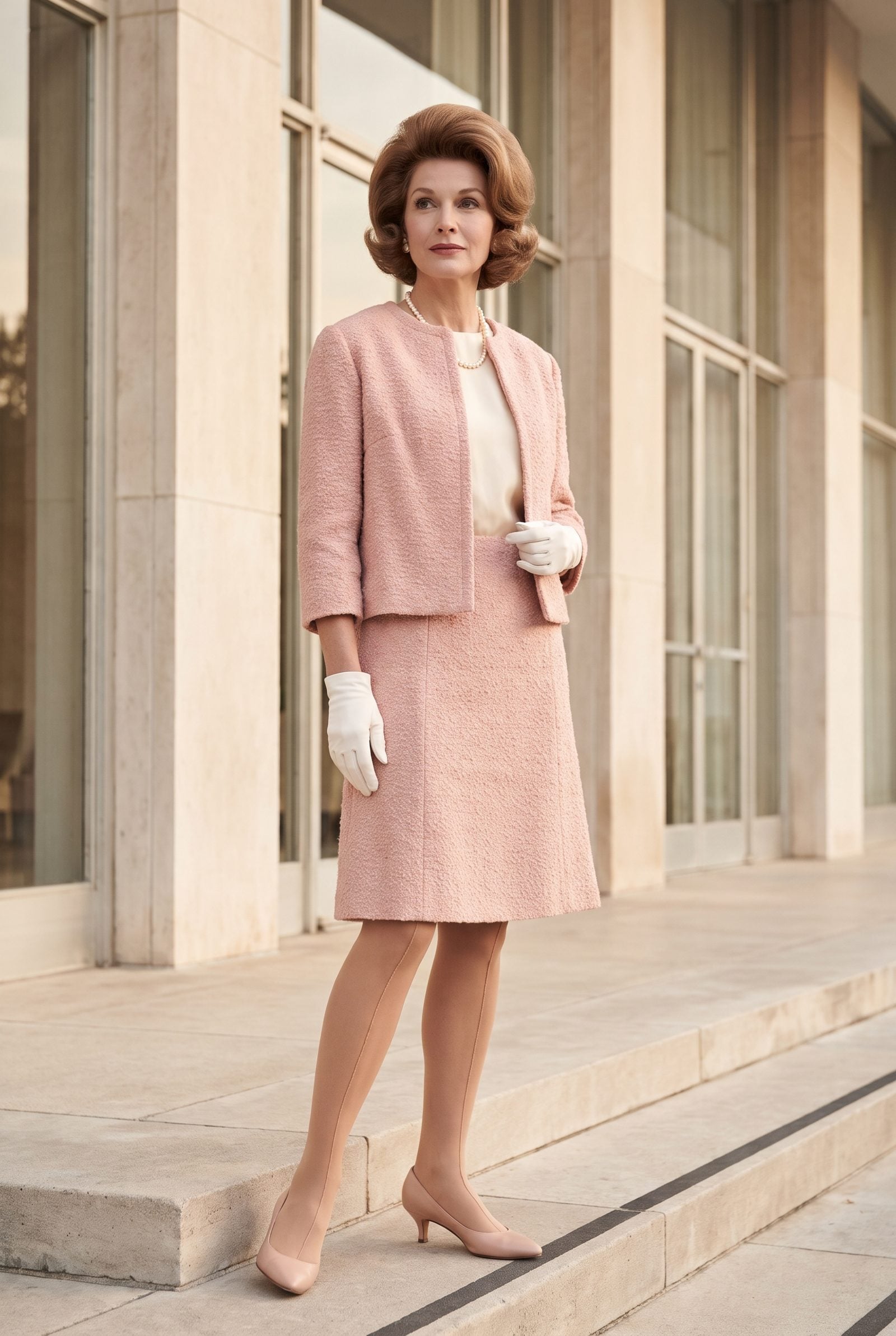
The bouclé is the whole story. That nubby, textured weave caught the light in a way smooth wool never could, which is why these suits photographed so beautifully — and why every woman with an eye for occasion wanted one.
Jackie made the matched skirt-and-jacket set look like armor you could smile in. The cropped boxy jacket sat clean at the waist, the skirt skimmed without clinging, and the whole thing said composure before you’d said a word. Call it the original quiet-power dressing. It still reads that way.
36. The Audrey Hepburn, Style Black Wool A-Line
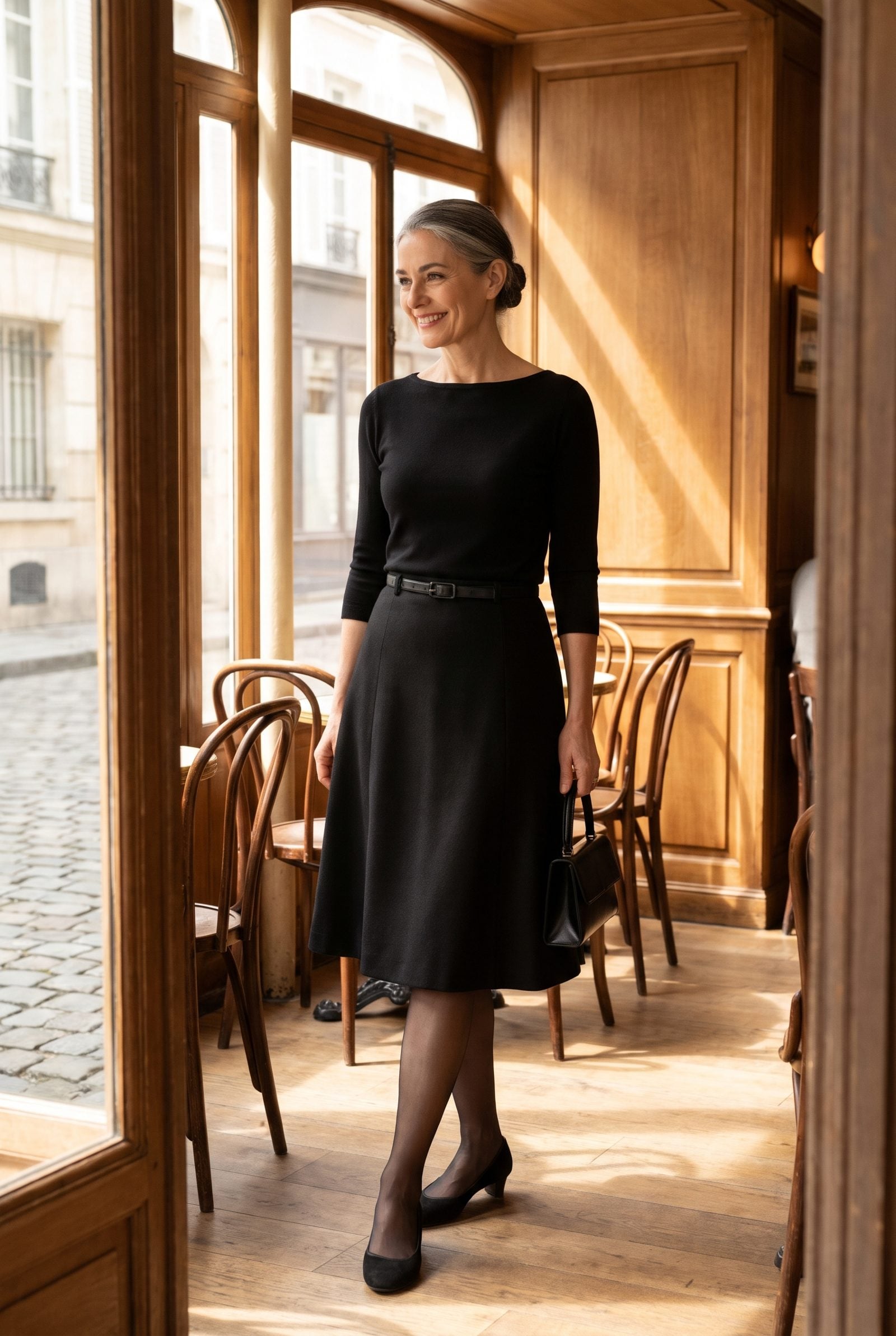
Restraint is the flex. No print, no color, no trim, just the clean swing of black wool cut on a true A-line, and somehow it never faded into the background. The absence of anything extra forces the eye onto proportion and posture.
Wear this when you want the room to notice you without being able to say exactly why. A fitted black boatneck up top, a slim belt at the waist, low-heeled suede pumps on the feet, and you’ve got a look that refuses to date. Audrey built a whole language out of this kind of quiet.
What Our Readers Say
- Asked which print they would actually buy, half of ThreadCurve readers chose a solid, ahead of stripes at 27% and florals at 21%.
- Readers who said they shop for fewer, better pieces were more likely to call their era timeless, 84% compared with 56% of everyone else.
From ThreadCurve reader polls and votes.
35. The Front-Button Denim A-Line
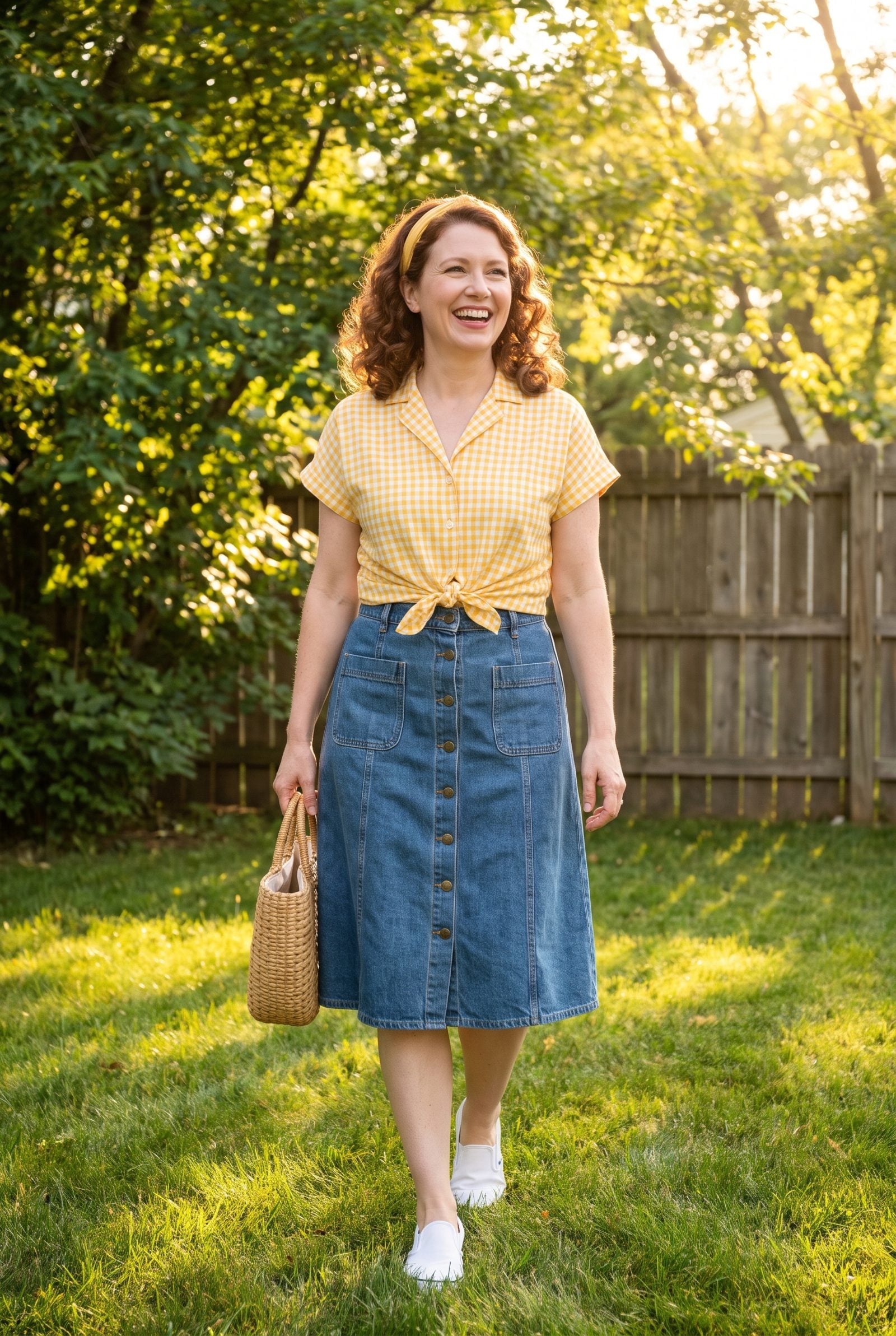
The button placket turned a casual skirt into something with a point of view. That vertical line of buttons marching down the front drew the eye downward and gave the shape a sense of motion even when you were standing still.
Knot a gingham blouse at the waist, slide on canvas sneakers, and you had the weekend uniform of a woman who wasn’t trying to look like she was trying. The skirt styles that survive decades tend to be the ones built on function, and this one earned its keep in patch pockets.
34. The Caramel Suede A-Line Mini
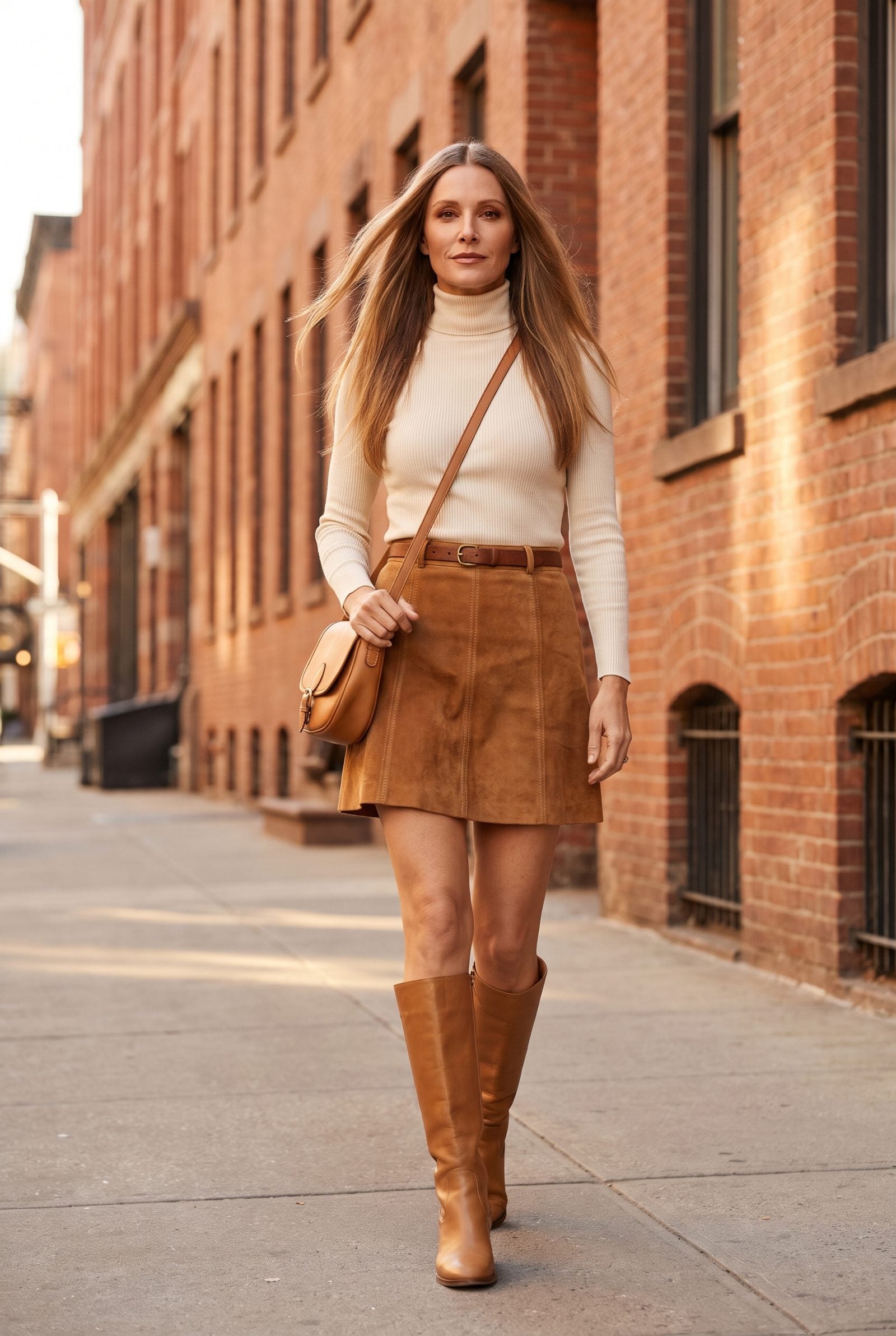
Texture carries this one. Caramel suede has a soft matte nap that drinks the light instead of bouncing it, and that warmth makes the whole look feel richer than the simple cut suggests.
The tonal play does the real work: caramel skirt, cream turtleneck, tan boots, all living in the same warm family so the eye glides top to bottom without a single hard stop. A retro skirt that still works because nothing fights for attention. Want it today? Start with a caramel suede skirt and keep everything around it quiet.
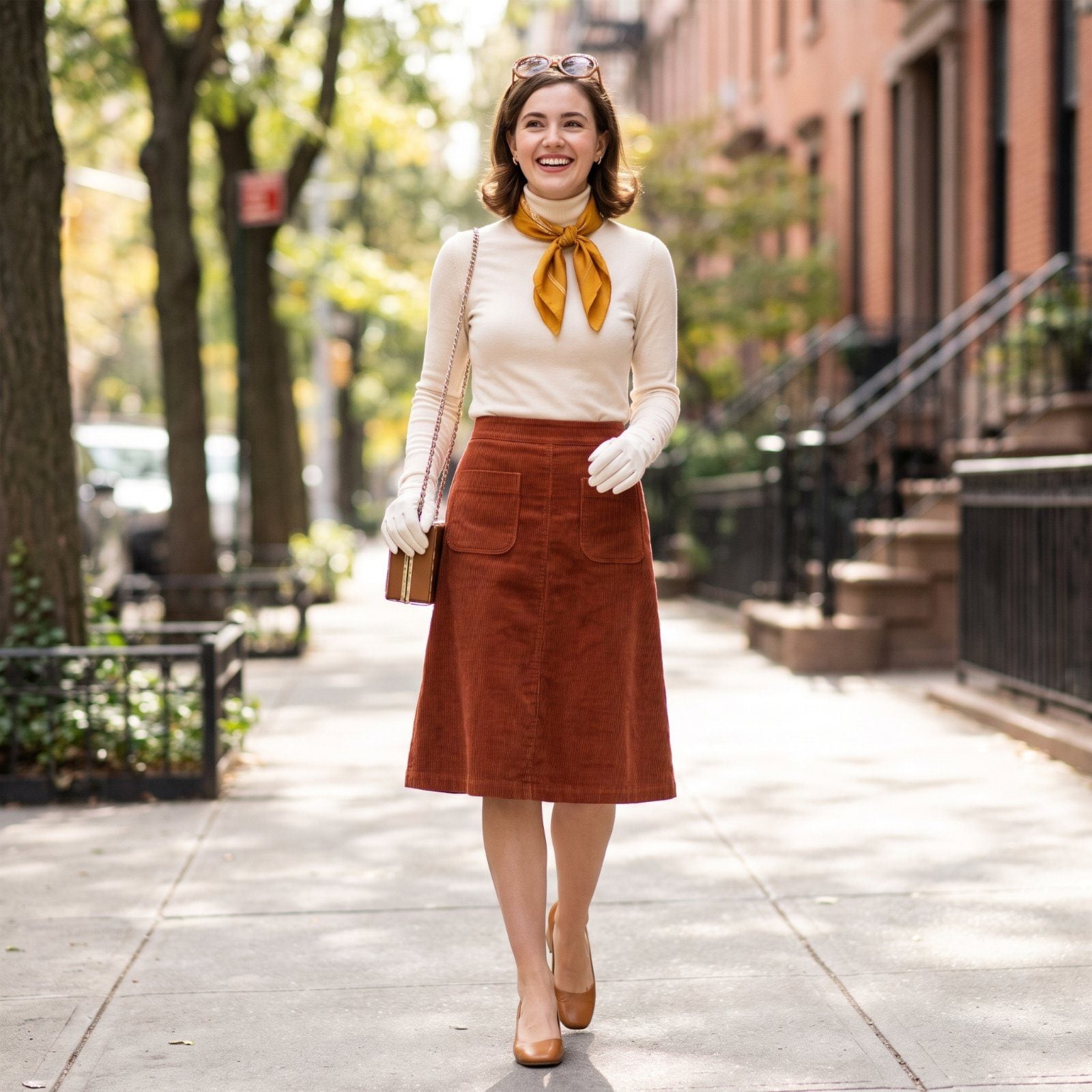
33. The Rust Corduroy Skirt With Patch Pockets
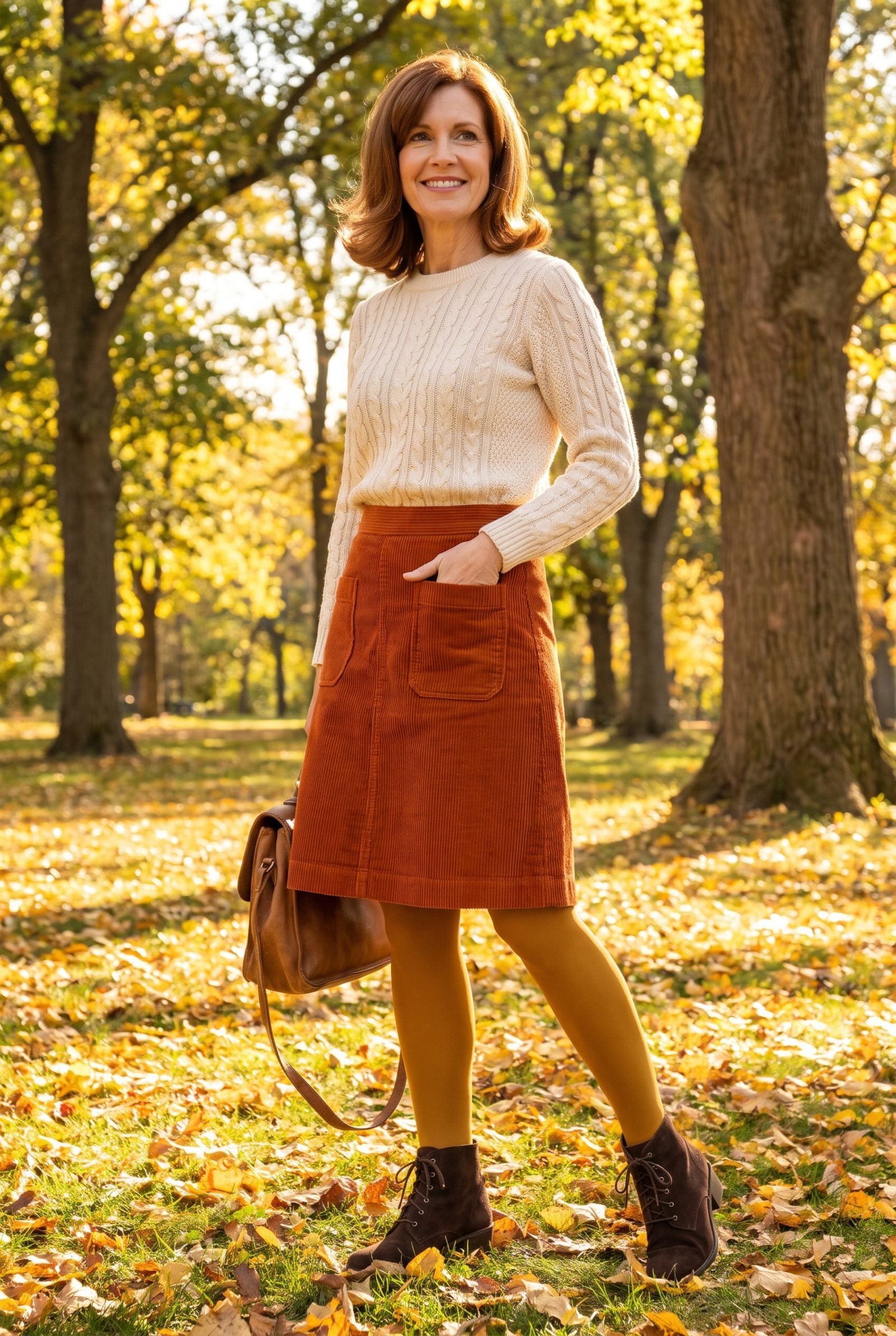
Those patch pockets are not an afterthought. Sewn flat on the front, they break up the rust corduroy and give your hands somewhere confident to go, which changes how you stand in the thing entirely.
The ribbed wale catches shadow along every line, so the skirt looks substantial without being stiff. Rust against a cream cable-knit and mustard tights builds a whole autumn in three colors. There’s something grounded about this kind of dressing — the warm-toned, hands-in-pockets ease of a woman who isn’t performing for anyone.
32. The Sleek Black Leather A-Line
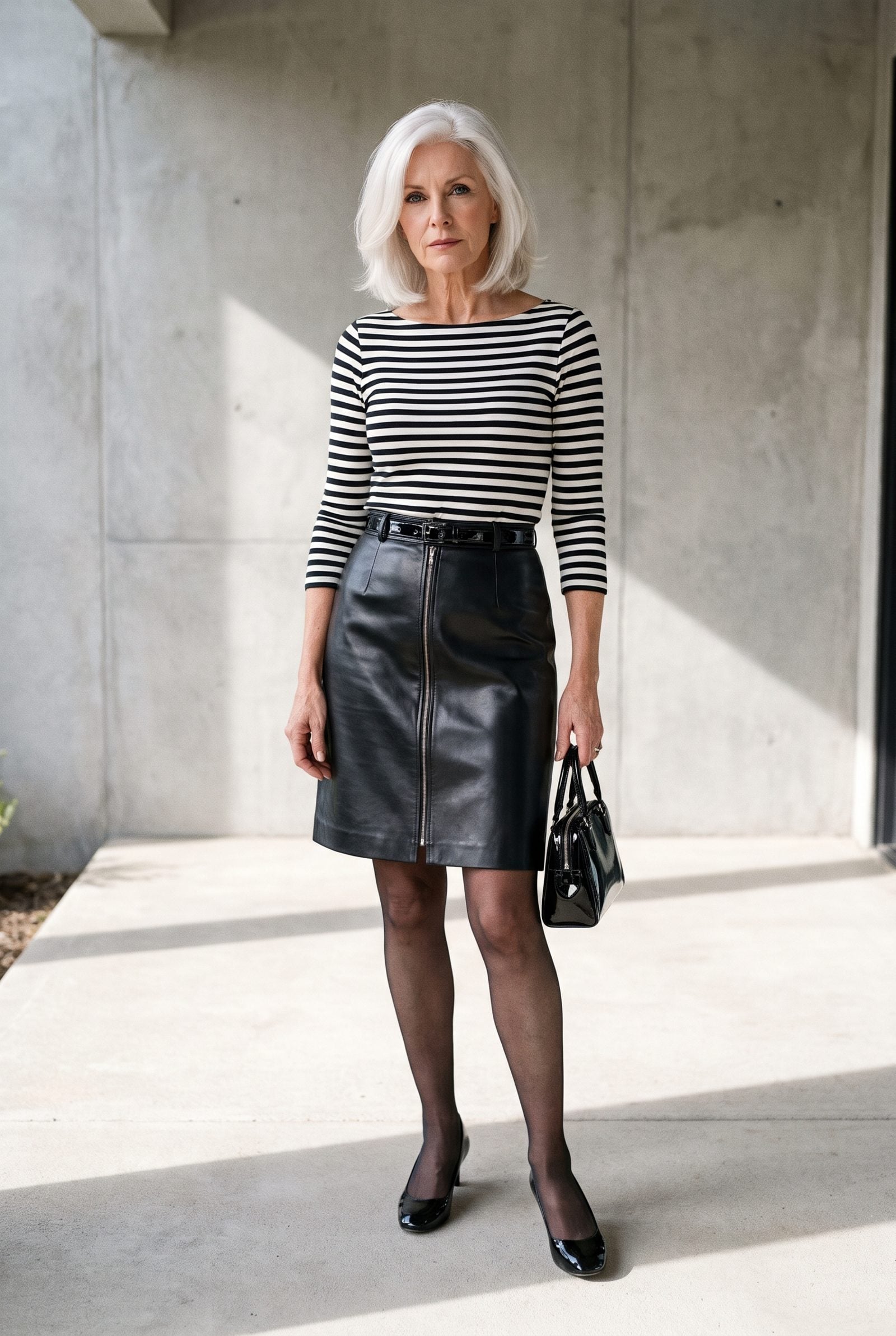
Shine leads here. Polished black leather throws light back in sharp highlights, so even a plain A-line cut carries attitude. This was the skirt for the woman done asking permission.
Pair it with a striped boatneck and the contrast gets interesting — the matte graphic stripes up top cool down the gleam below, and neither piece has to work as hard. There’s something to the enclothed-cognition idea, where putting on the armor makes you feel the part. Worth having one black leather A-line skirt in the rotation for exactly that reason.
31. The Fringed Suede Festival Skirt
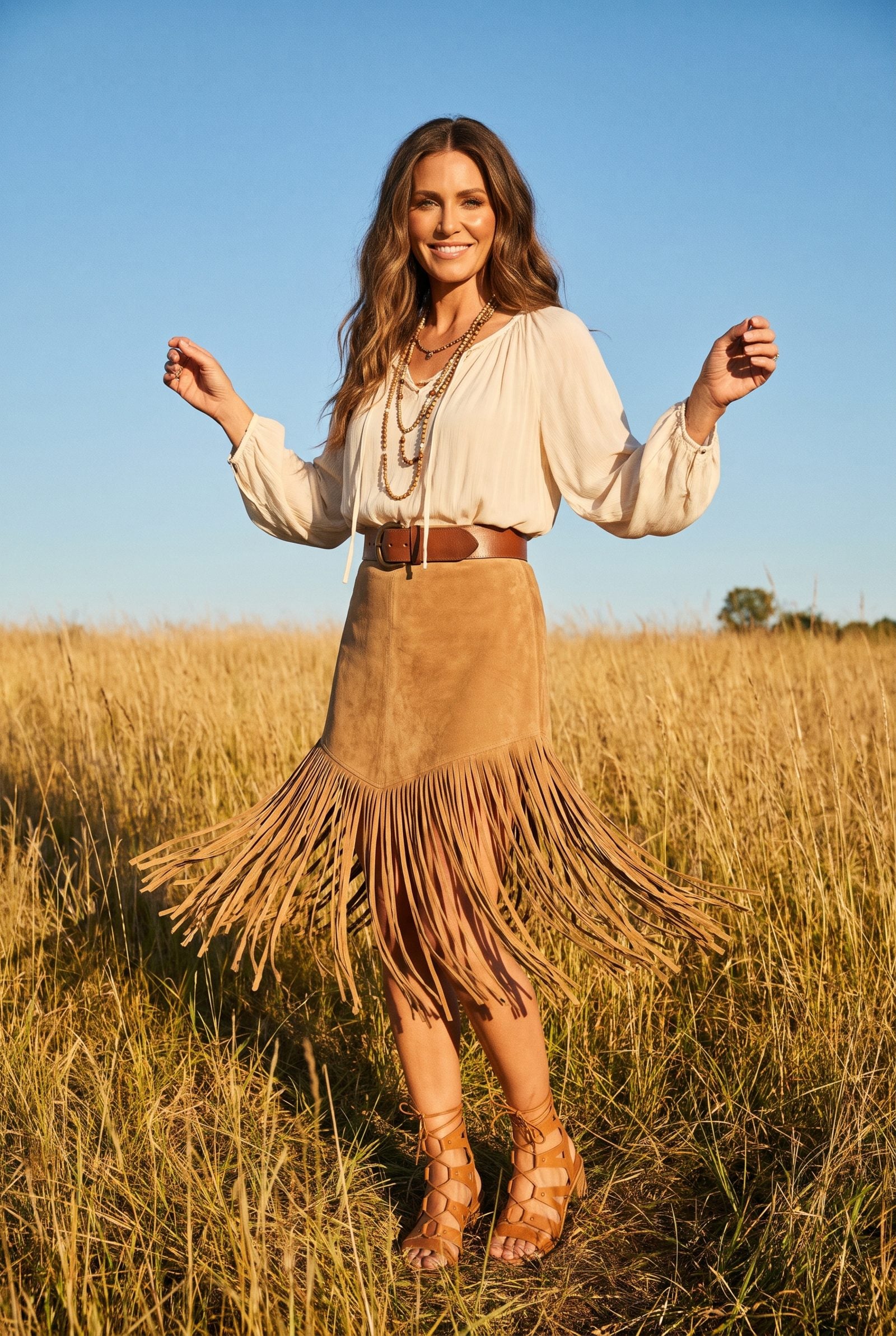
The fringe moves, and that movement is everything. Every step sent the suede strands swaying, so the skirt was never static, never still, always catching the golden light at the hem.
By the late sixties, this festival skirt had become the flag of a whole counterculture. Slung low on the hips with a wide belt, worn with a peasant blouse and layered beads, it said you’d traded structure for freedom. Fifty years on it still signals exactly that — the quiet genius of clothes that mean something.
30. The Classic Scottish Tartan A-Line
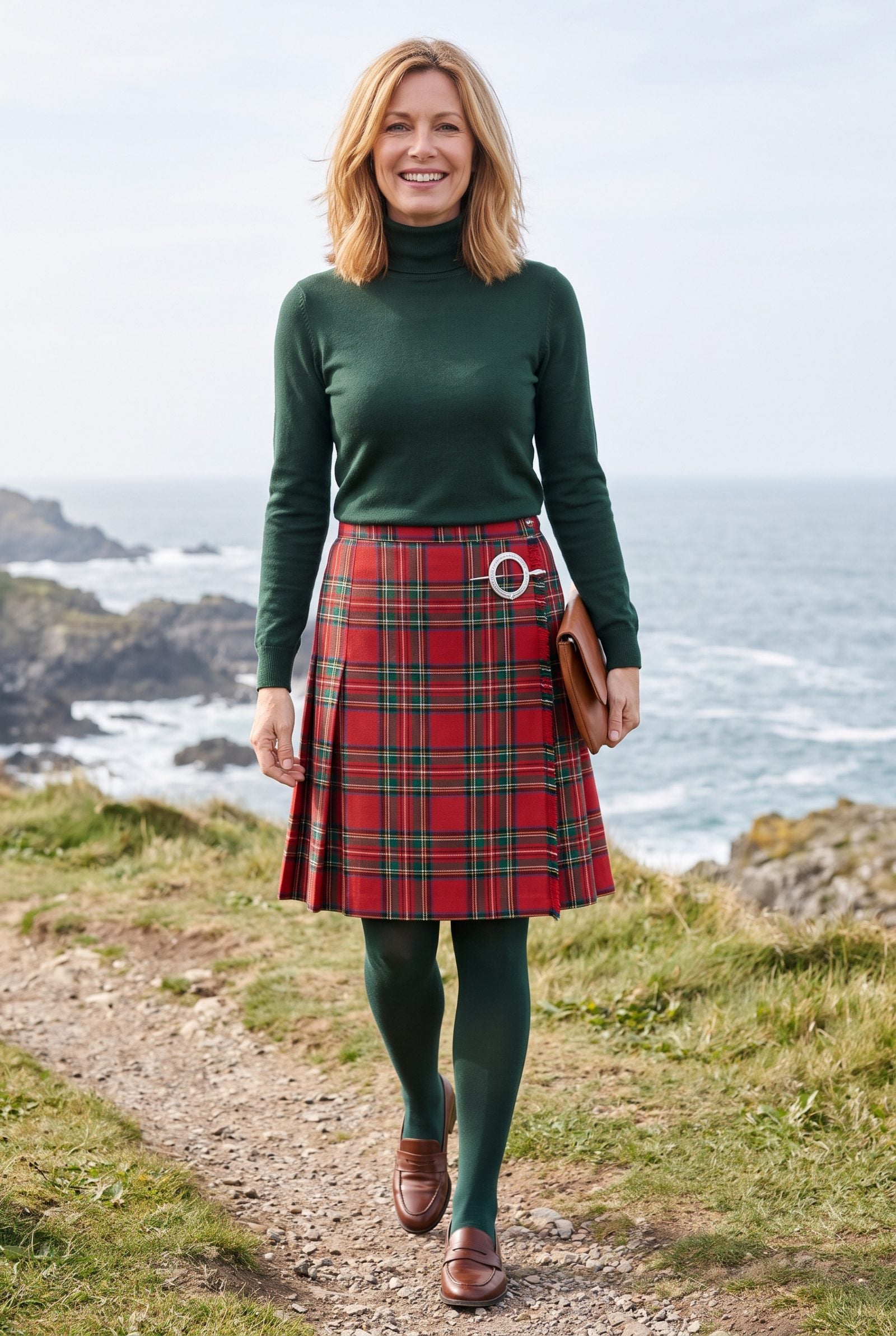
The kilt pin makes it. That heavy metal fastening at the front panel isn’t just hardware — it announces that the skirt takes itself seriously, and the fringed wrap edge backs it up.
Tartan carries built-in authority, centuries of it, which is why pairing the red-and-green plaid with a forest turtleneck and loafers reads as scholarly rather than costume. Add it to a cold-weather rotation and you’ve got a holiday skirt that won’t age you, as long as you let the pattern talk and keep the rest plain.
29. The Graphic Black-and-White Houndstooth Skirt
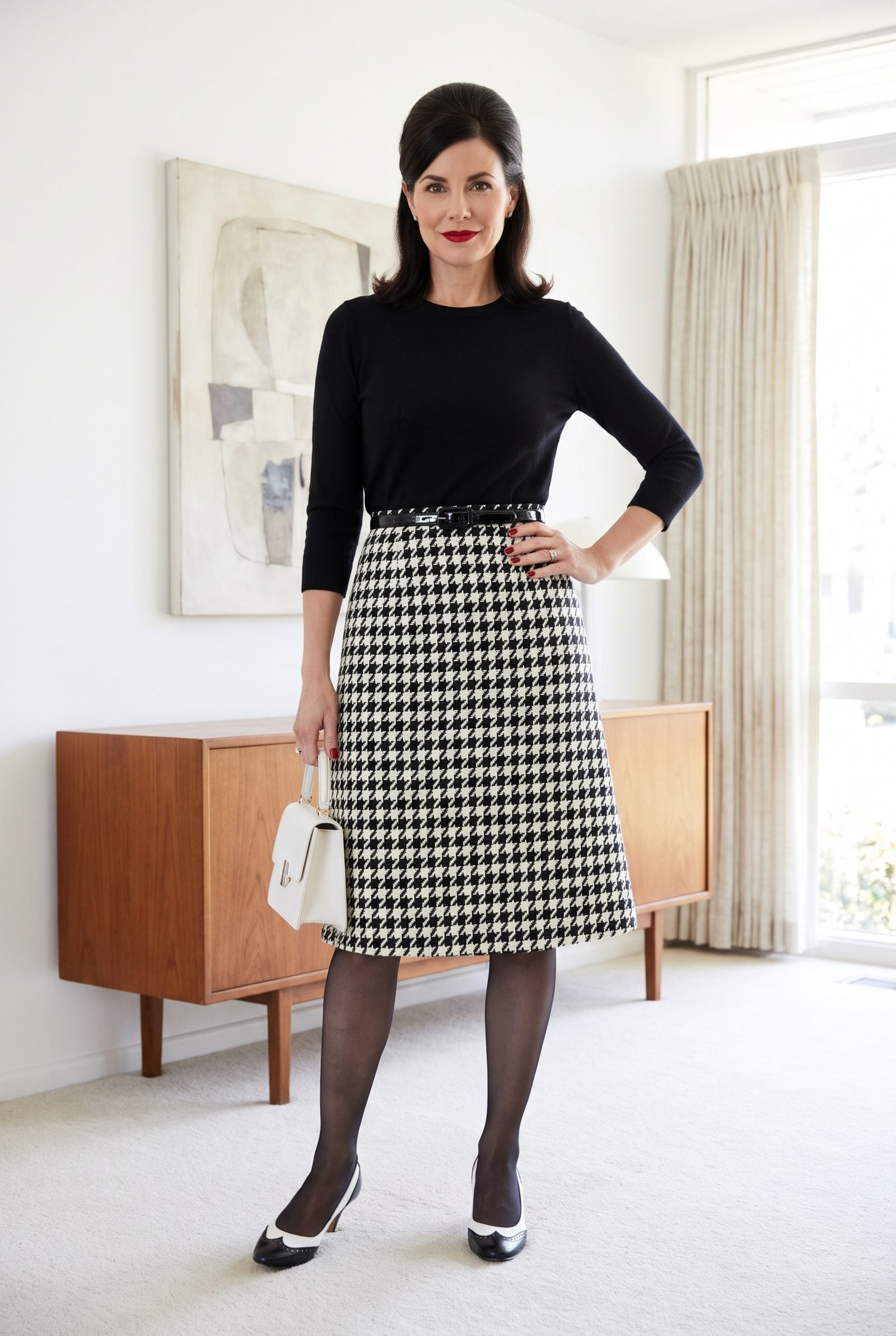
High-contrast graphics were practically made for photography, and houndstooth delivered. The repeating black-and-white check reads bold from across a room and sharp up close, which is a rare trick for any print.
Keep everything else monochrome — a black shell, black hosiery, two-tone spectator pumps — and the pattern stays the loudest voice without the look tipping into chaos. A red lip is the only color, and that’s the whole strategy. This is the kind of graphic maximalist skirt that proves pattern and restraint aren’t opposites, and it still turns heads.
28. The Bright Summer Madras A-Line
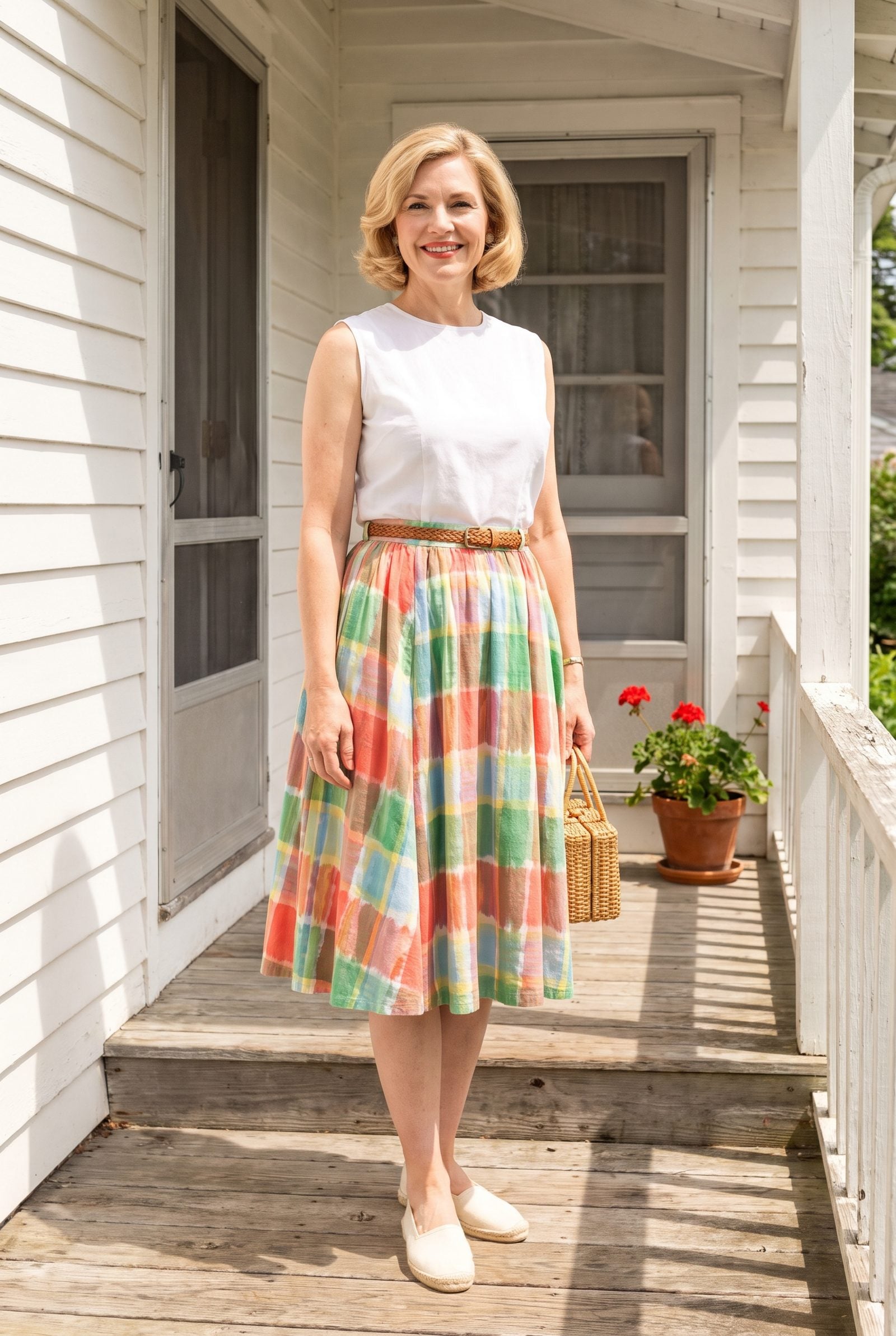
Madras bled when it got wet, and nobody minded one bit. The plaid was never meant to stay sharp — it softened with every wash, which is why a coral-and-green festival skirt like this looked better in its third summer than its first.
The gathered cut is doing the real work. A full plaid print needs a clear shape underneath it or the pattern turns into visual noise, and here the skirt is gathered into a belted waistband and falls in soft, full folds, giving the plaid room to swing and move. Against a plain white blouse, the color does all the talking.
27. The Polka-Dot Cotton A-Line
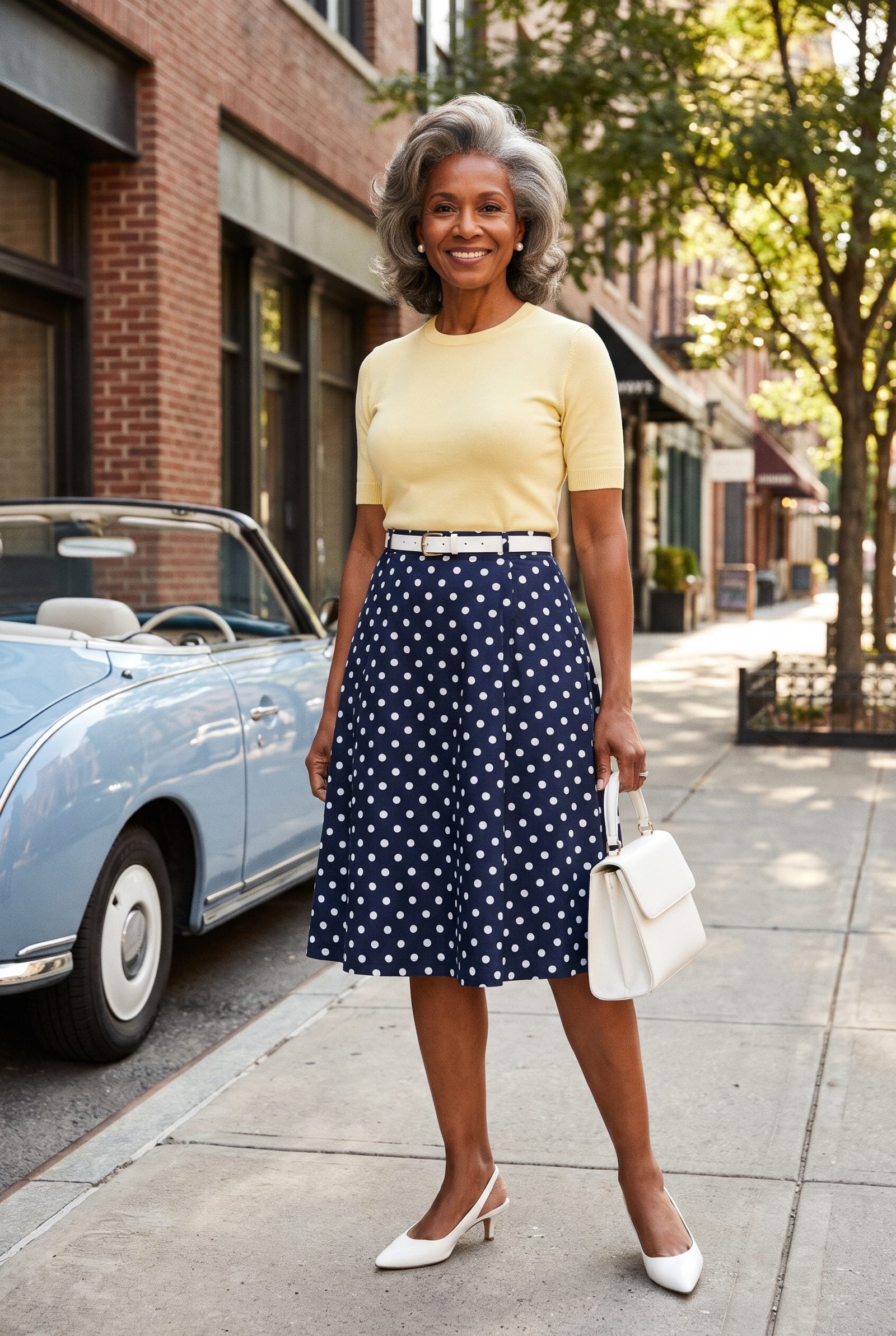
Navy ground, white dots, nothing competing for attention. The polka-dot A-line was the skirt you reached for when you wanted to look put-together without trying to prove anything.
Scale was everything. These dots were the size of a dime, evenly spaced on structured cotton poplin that held its own shape without any help, and the crisp white belt and kitten-heel pumps keep the whole thing reading clean rather than busy. Quiet, confident, the kind of outfit that signals you’ve got your afternoon handled.
26. The Op-Art Swirl Skirt
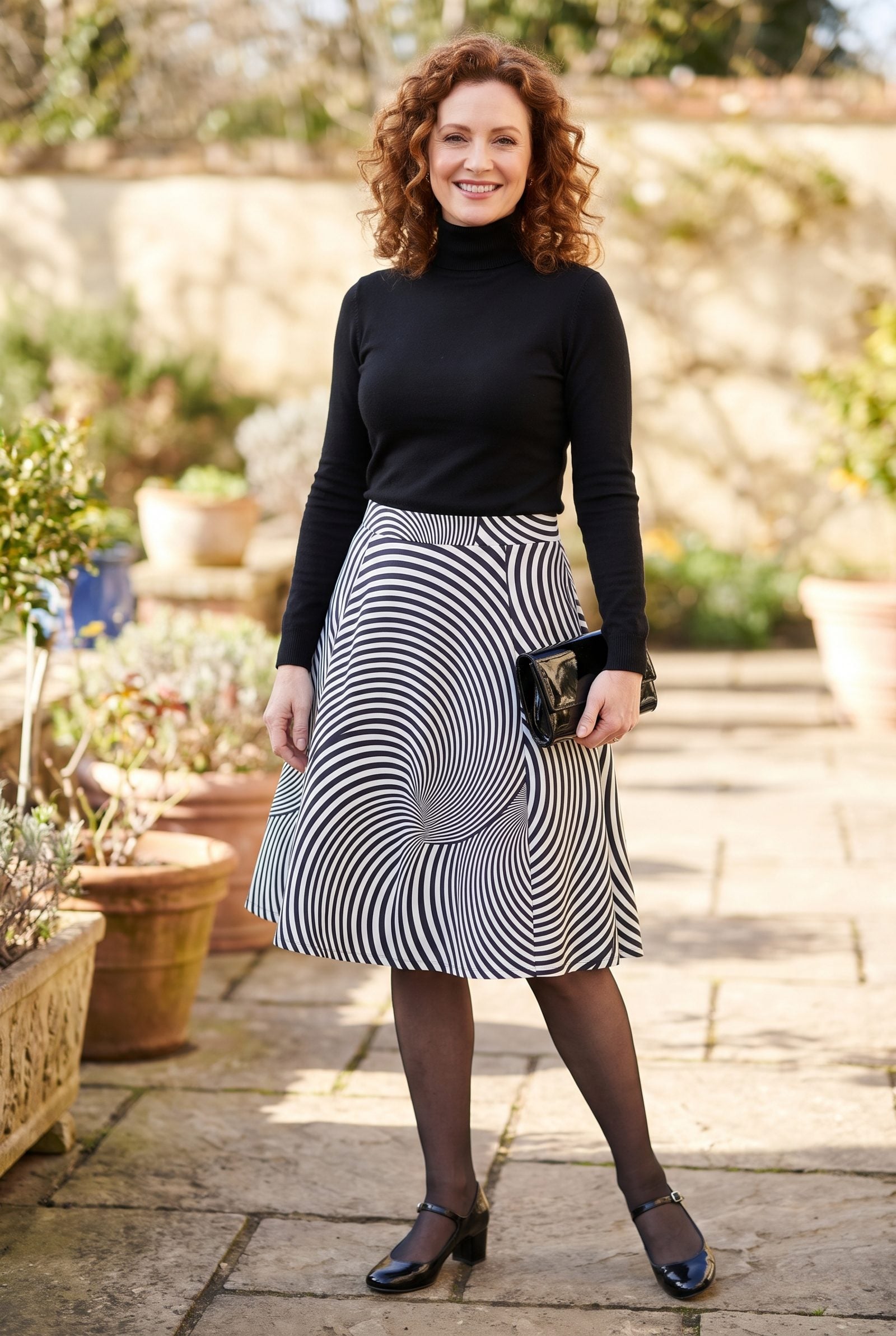
The eye doesn’t know where to rest, and the skirt wants it that way. Op-art hit fashion hard in 1965 after Bridget Riley’s black-and-white canvases crossed over from the gallery into the fabric mills, and the swirl pattern was the most dizzying of the lot.
Worn flat against a black turtleneck, the graphic does the entire job. No jewelry, no color, nothing to dilute the punch — one commitment, let the pattern take the floor. The Mod woman who wore it was signaling she read the right magazines and didn’t need to explain herself.
Op-art was the only trend where standing still made you look like you were moving.
25. The Psychedelic Wave-Print Skirt
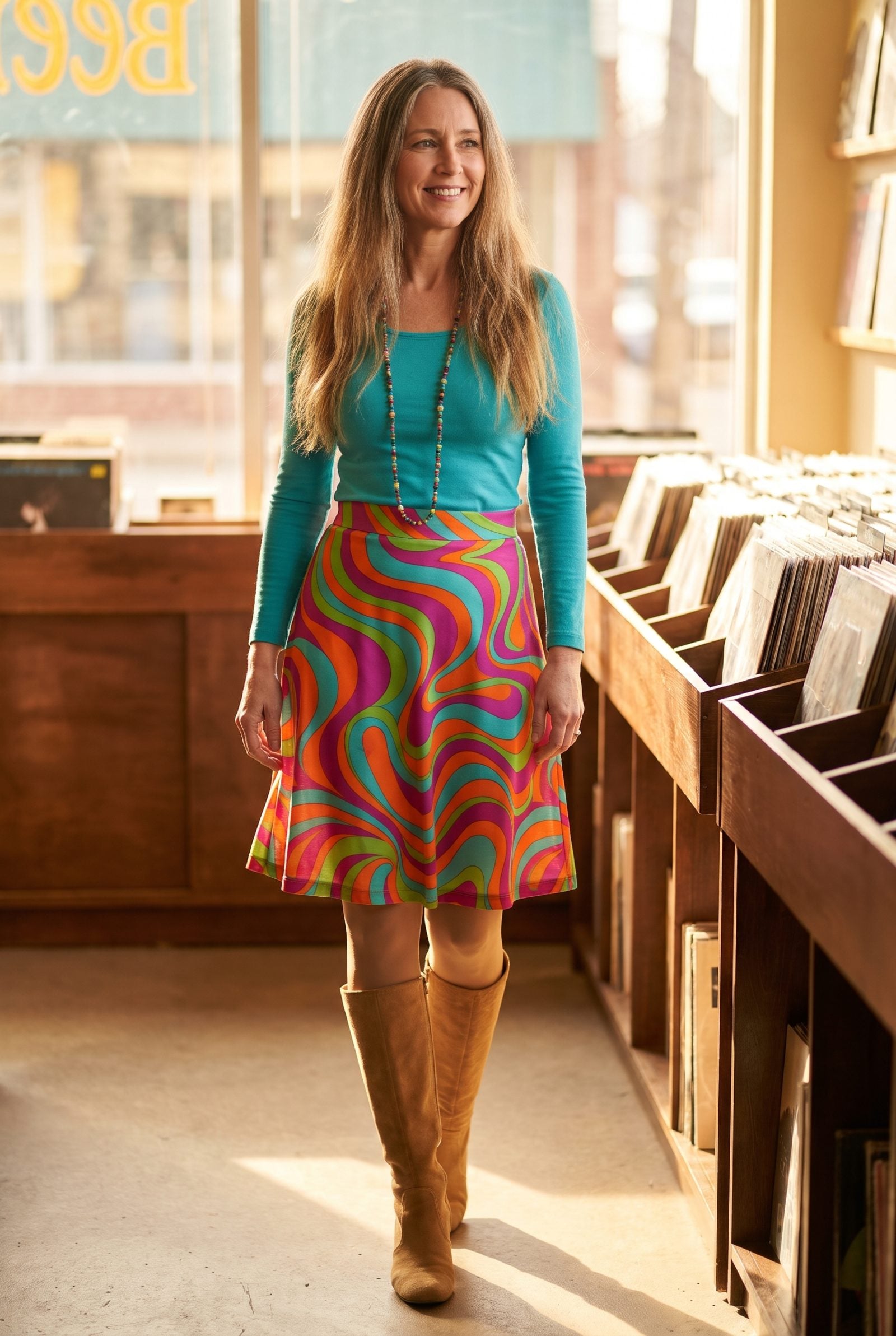
By 1968 the prints had stopped making sense on purpose. Waves of magenta crashed into lime, turquoise melted into orange, and the whole thing read like a sound rather than a pattern. Call it the maximalist skirt before anyone had the word for it.
The trick is restraint everywhere else. Pull a single color out of the swirl — turquoise, here — and build the top around it. That one anchor keeps a riot of a print from tipping into chaos. Everything flows, nothing fights.
24. The Mondrian-Inspired Color-Block Skirt
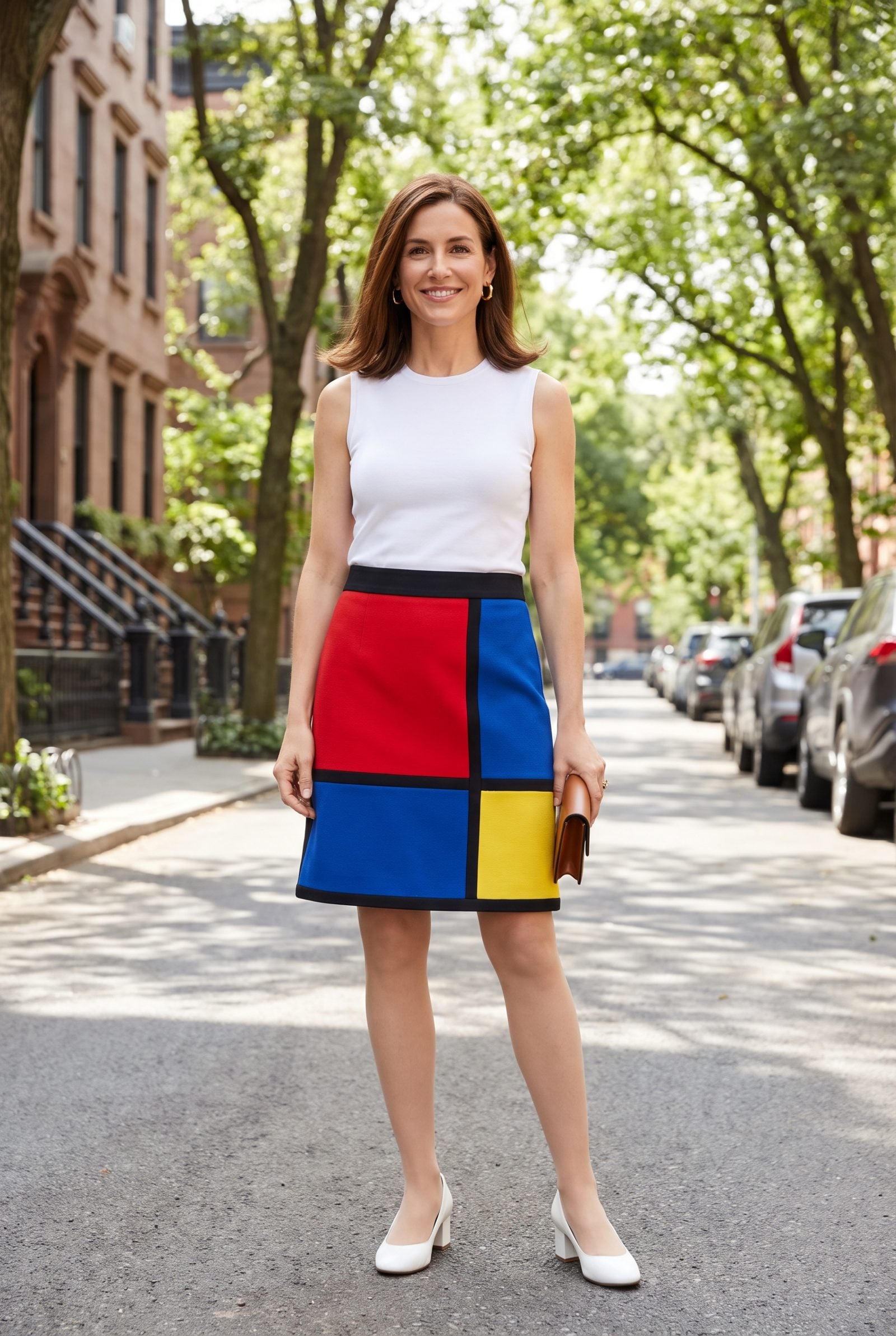
Yves Saint Laurent put Mondrian’s grid on a shift dress in 1965, and within a season the color-block panels showed up on skirts in every department store. The knockoffs were everywhere — and honestly, some of them were better than they had any right to be.
What makes this work is the seaming. Each color sits in its own structured panel, divided by crisp black lines, so the skirt reads as architecture rather than print. Keep the top plain white and let the geometry hold the floor. No soft edges anywhere, which is exactly its appeal.
23. The Oversized Daisy-Print Mini
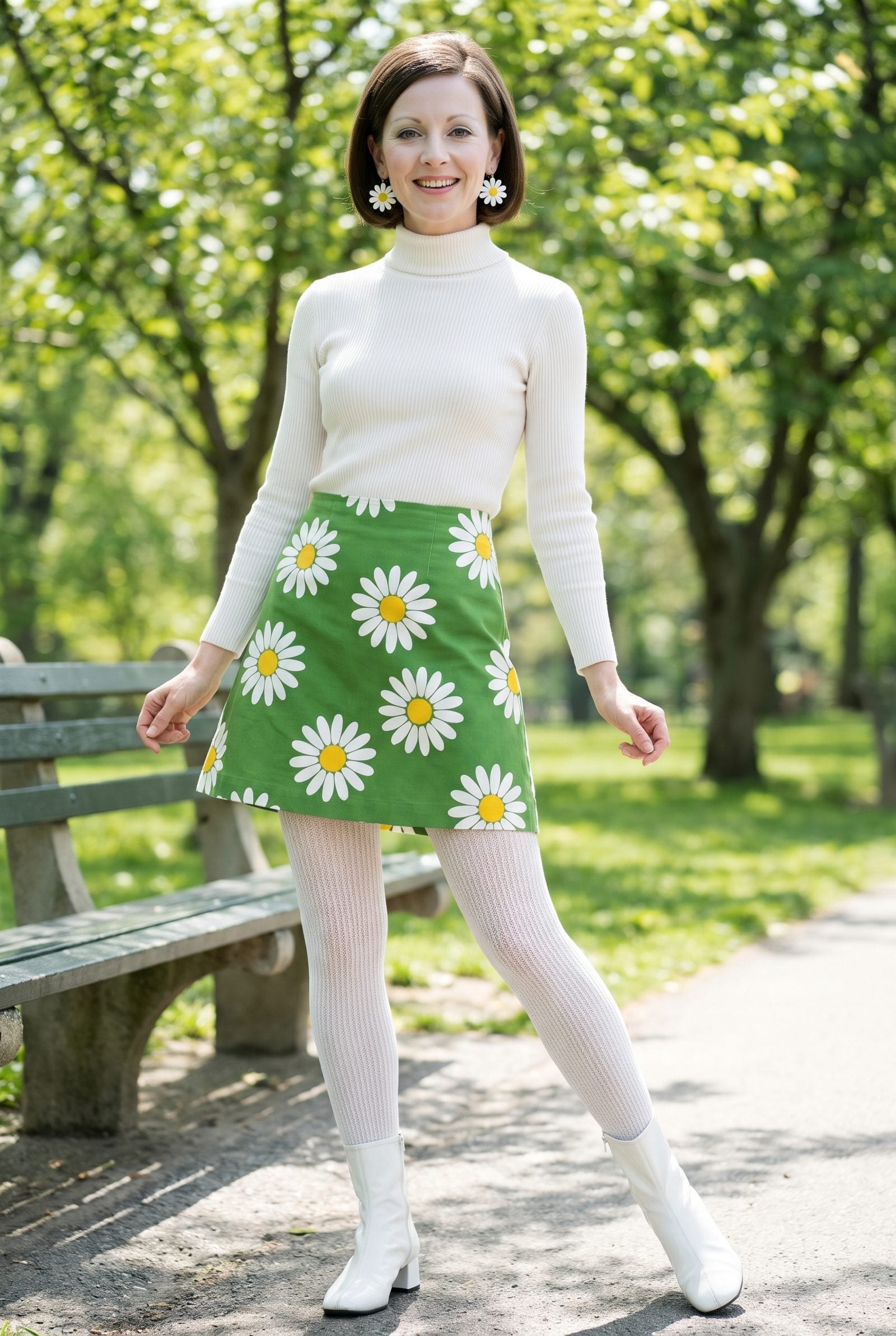
The daisies were huge, the hem was short, and both decisions arrived together in 1967 like they’d always belonged. An oversized flower print only works on a mini, because the scale needs the brevity to balance it.
Green ground, white petals, white boots pulling the look up and down the leg. The white go-go boots carry the whole thing, repeating the skirt’s white so the outfit reads as deliberate rather than loud. A young woman’s skirt that reads as pure joy — and nothing wrong with wanting to look like you’re having a good day.
22. The Bohemian Paisley Skirt
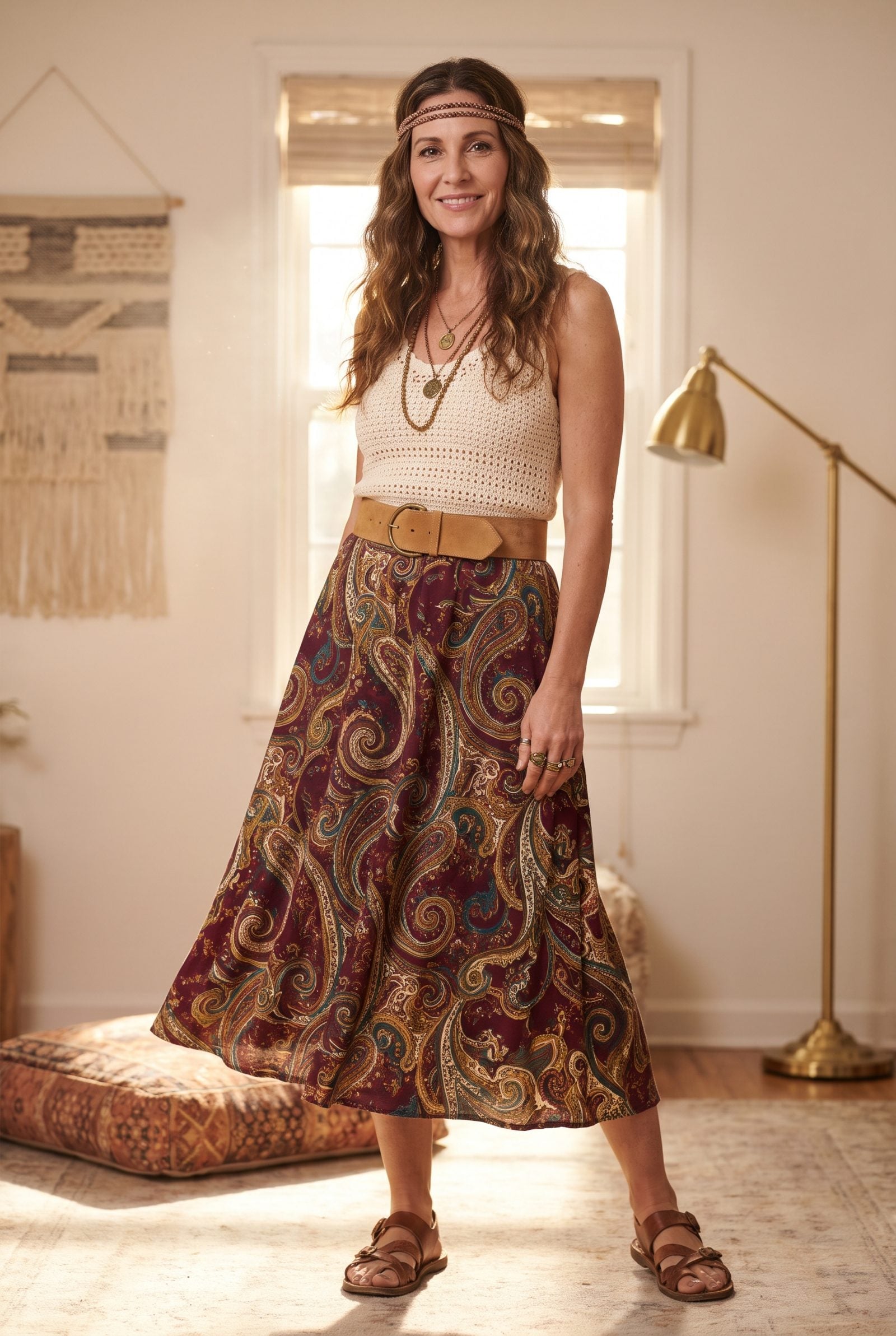
Paisley came back from India with the travelers and never quite left. By 1969 the teardrop print had gone from exotic import to the uniform of anyone who wanted to signal they were done with the suburbs.
This is a romantic skirt built on softness. The waist gathers rather than seams, the fabric drapes to mid-calf, and the low-slung suede belt breaks up the length so the paisley doesn’t swallow the frame. Warm burgundy and gold against cream crochet keeps it earthy. Nothing about it is sharp, and that’s the whole feeling.
21. The Nautical Breton-Stripe A-Line
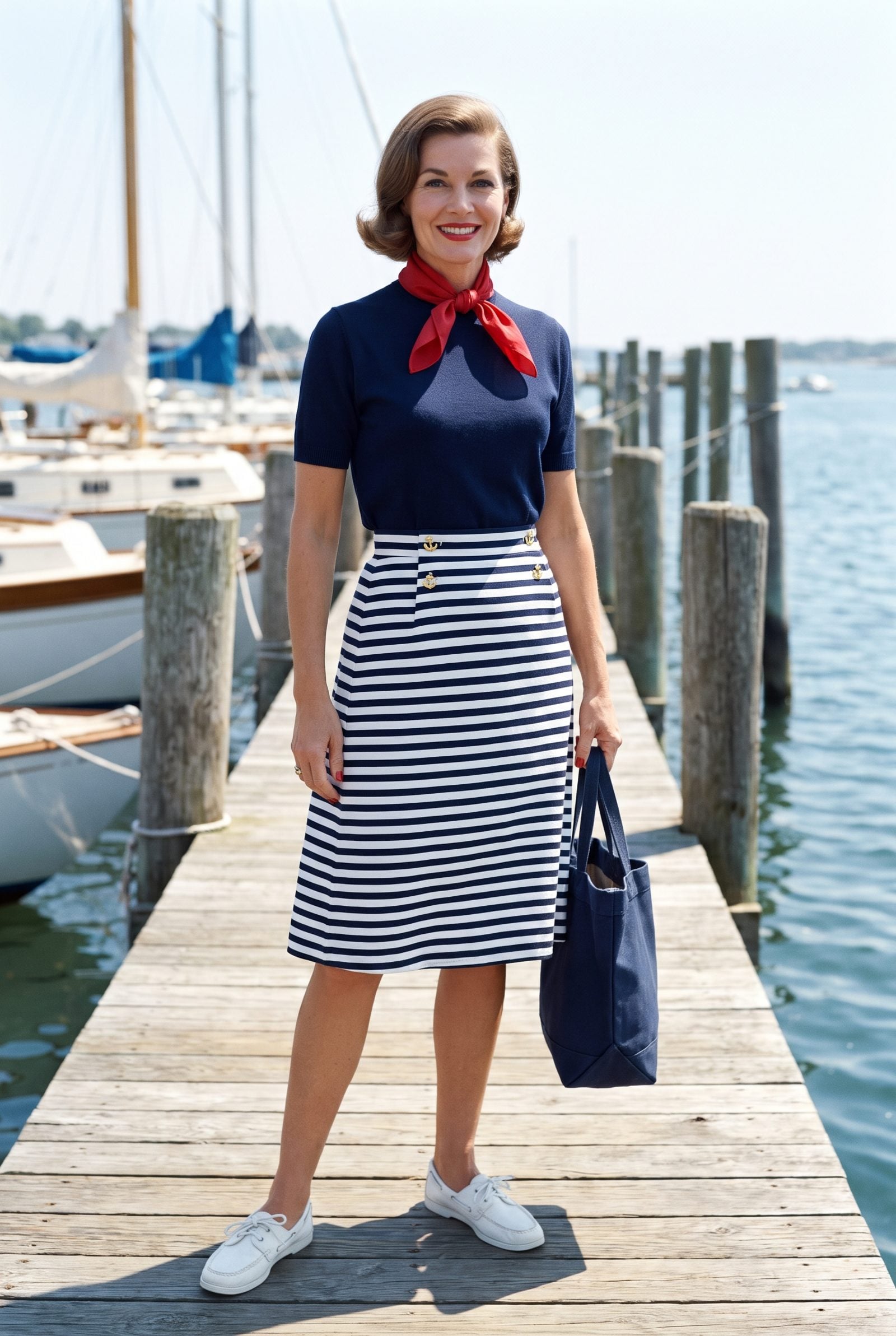
Horizontal stripes on an A-line skirt shouldn’t work as well as they do. The clean cut keeps each navy band level as it falls, so the stripes run flat and straight across, and the whole skirt looks crisp before you take a step.
The red scarf is the one decision that makes this an outfit rather than a uniform. Two colors would read as a costume. The third, tied at the throat, snaps it into something a real woman chose — and the gold anchor buttons at the hip are the wink.
Not everyone is sold on stripes, though: in our Hot or Not matchups, outfit pictures with stripe patterns won fewer of their head-to-head matchups than expected.
20. The Novelty Conversation-Print Skirt
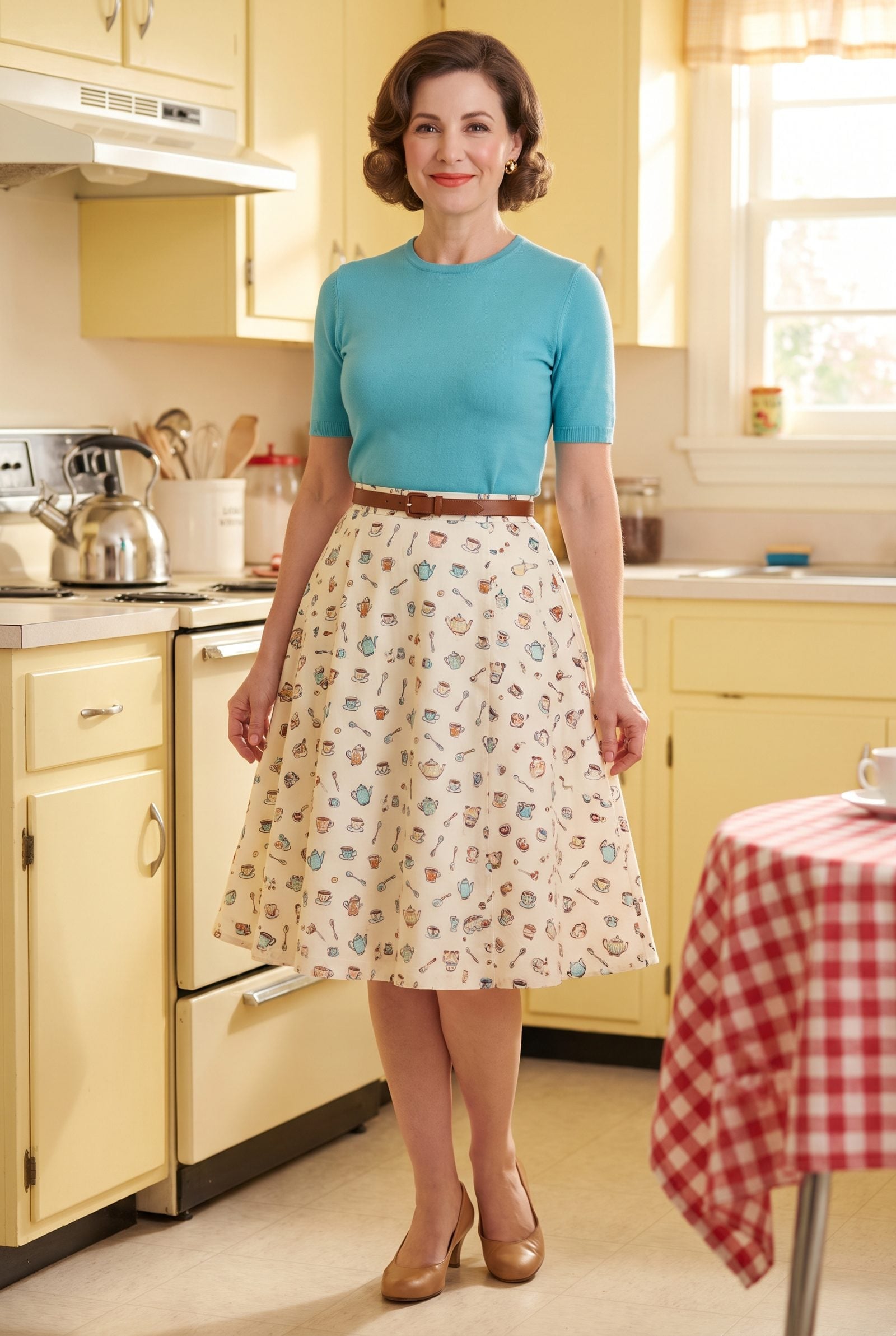
Conversation prints were exactly that: a skirt that started a conversation. Tiny coffee cups and teapots scattered across cream cotton, close enough together that you only caught the joke when you leaned in. People always leaned in.
Treat the whimsy seriously. A solid turquoise blouse and a plain leather belt give the playful print a grown-up frame, so the skirt reads as clever rather than cutesy. This was the woman who enjoyed being noticed and had a sense of humor about it — a combination that never goes out of style.
19. The Gold Brocade Evening A-Line
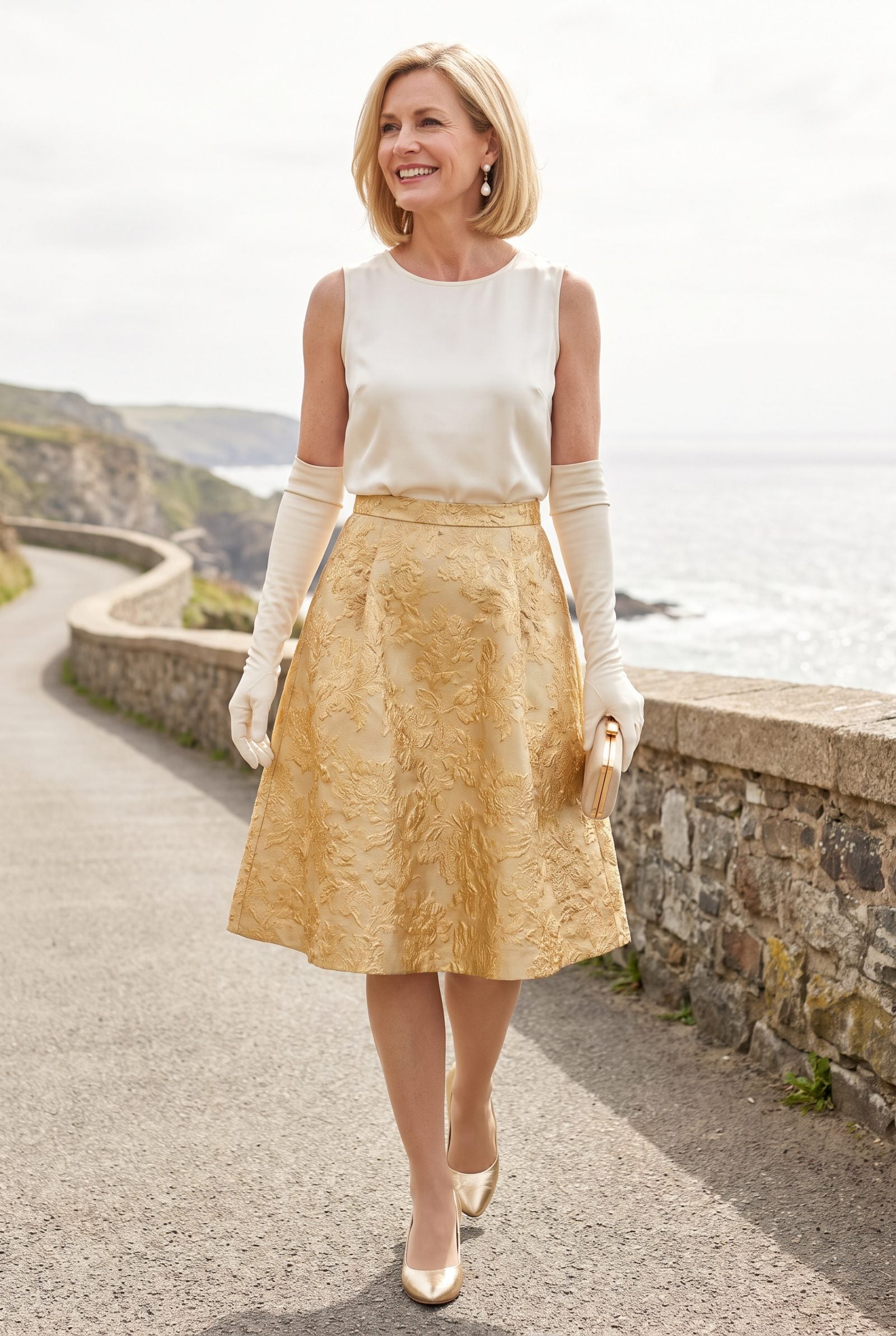
Brocade had weight. You felt it when you sat down, the stiff metallic threads holding their shape instead of pooling in your lap. This was the holiday skirt that came out once a year and earned its keep.
The A-line cut keeps all that weight from reading as drapery. A raised gold damask motif on a structured skirt needs clean lines or it starts to look like upholstery — the flat waistband and precise hem keep it firmly on the glamorous side of that line. Paired with cream silk and opera gloves, it’s a skirt that understood the whole point of an evening was to arrive.
18. The Jewel-Tone Velvet Skirt
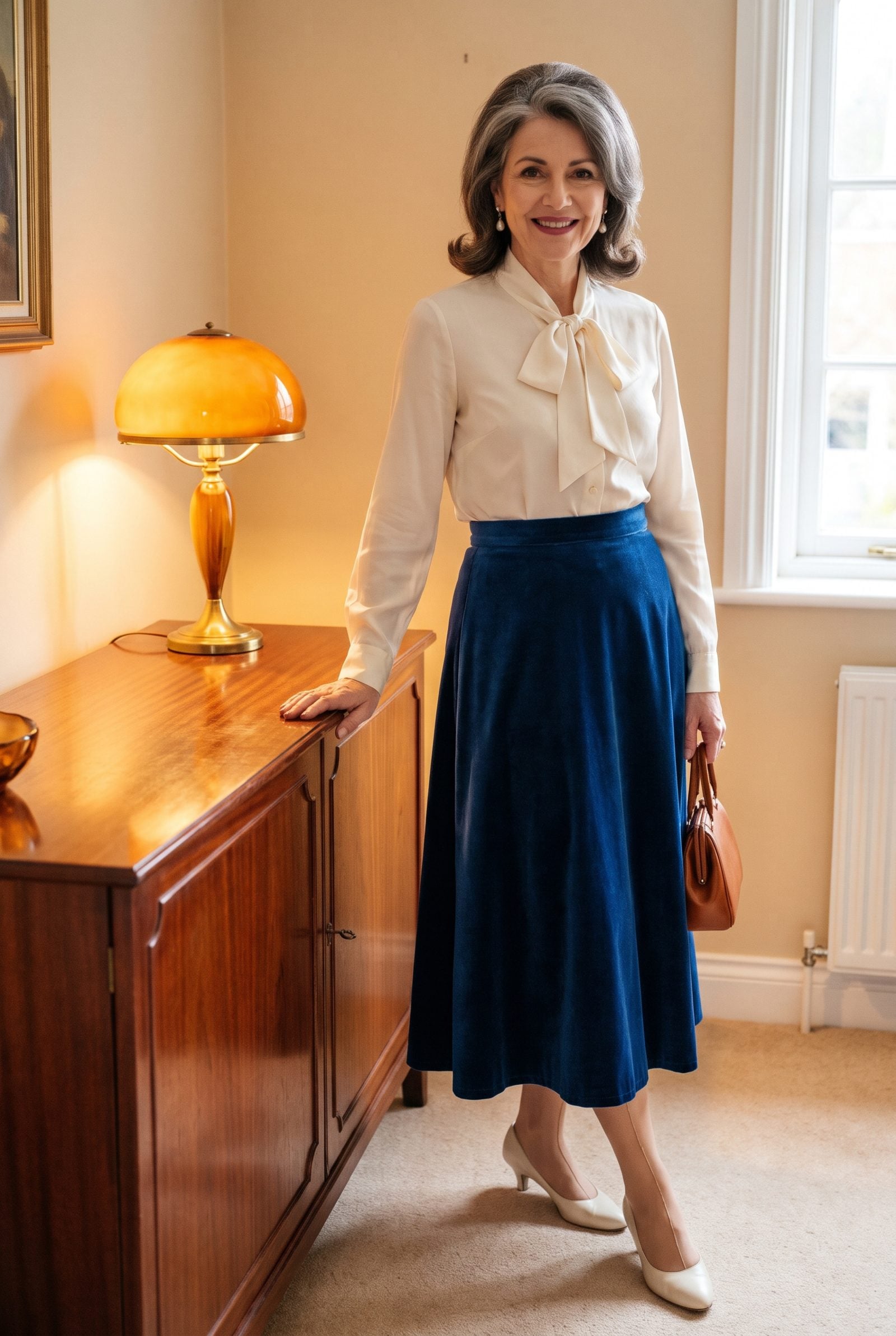
Velvet in a jewel tone announced that the evening had started. Sapphire, emerald, garnet — the colors behaved like stained glass under lamplight, shifting as you moved across the room. And the A-line cut kept all that heaviness from dragging, letting the skirt stand slightly away from the hip instead of clinging.
The cream silk blouse is the quiet hero here. Against all that saturated pile, a pale matte top gives the eye somewhere to rest, and the contrast between crisp silk and deep velvet makes both feel more deliberate. This was the holiday skirt of its decade, worn to anything that called for stockings and a little effort.
17. The Silver Lamé Space-Age Mini
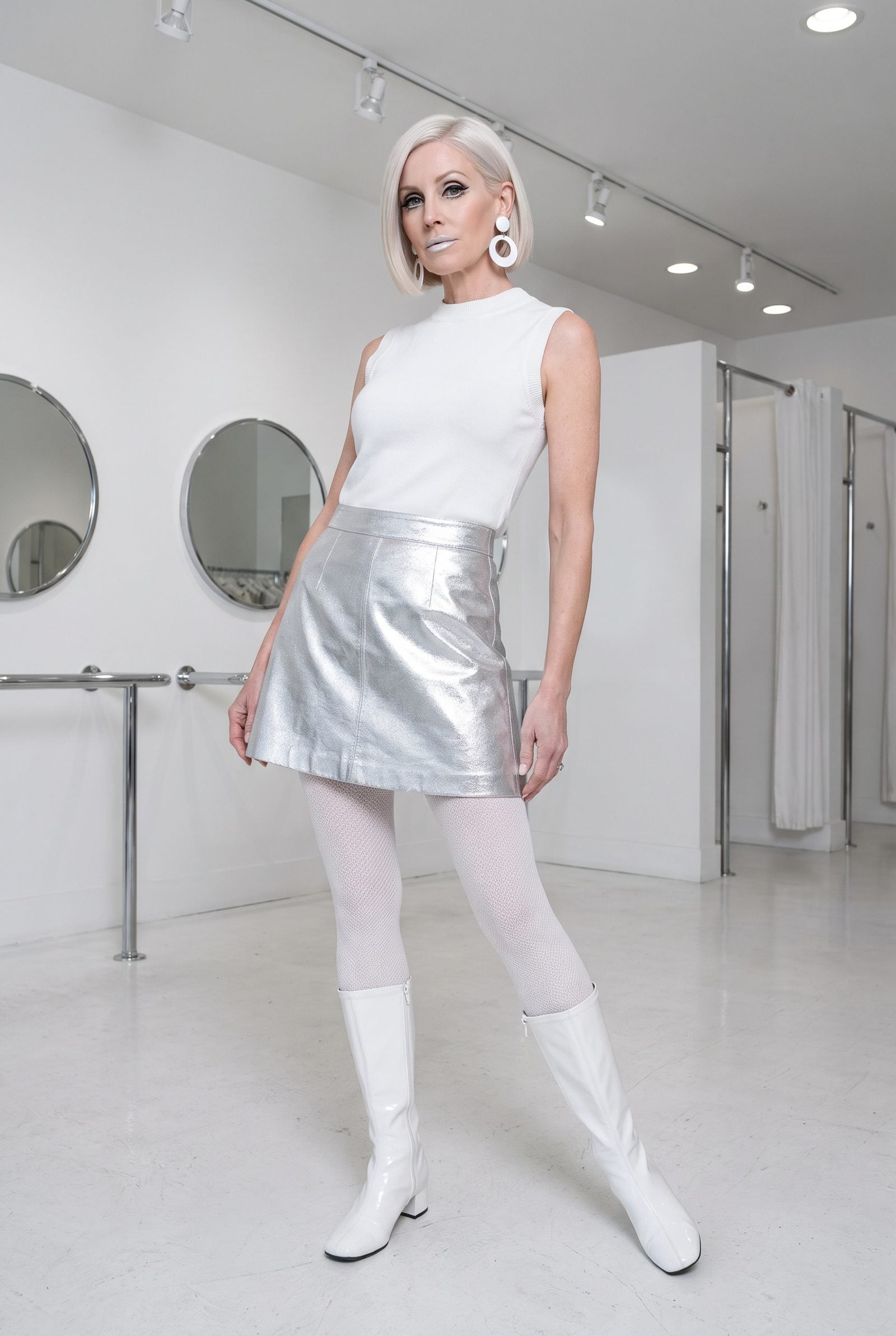
The future arrived in sheet metal, or close enough. Silver lamé skirts came straight out of the Courrèges and Paco Rabanne orbit, and wearing one meant you were paying attention to Paris, not your mother’s hemline rules.
The whole look rides on commitment to the cold palette. Silver skirt, white shell, white boots, nothing warm anywhere — and that restriction is what keeps it reading as deliberate rather than costume. One stray beige accessory and the mod premise collapses. The short cut let the metallic fabric swing and flash with every step, which was exactly what you wanted people to notice.
16. The Lace-Overlay Cocktail Skirt
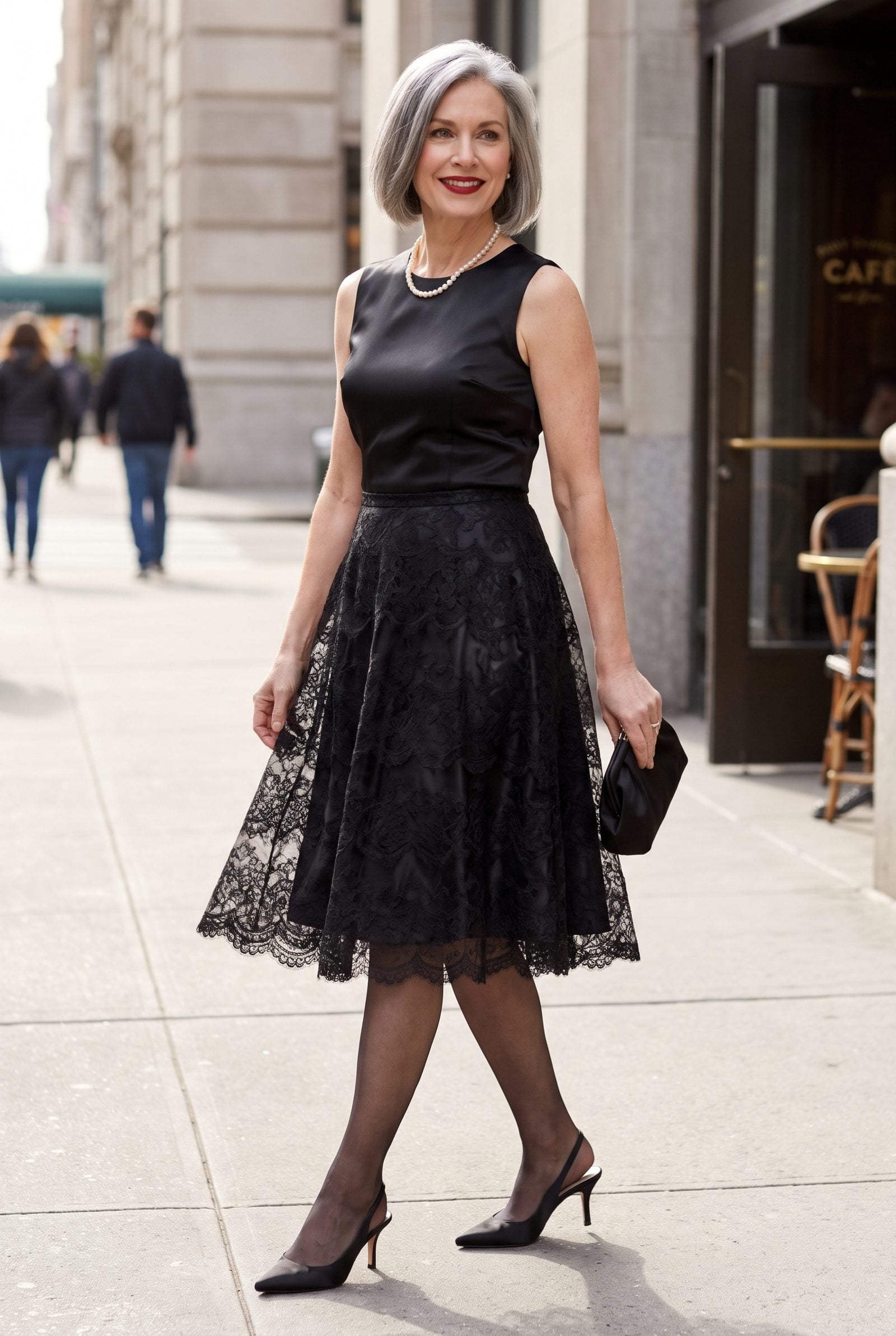
Lace over satin was the skirt you saved for the nights that mattered. The overlay did something clever, letting the lining show through the open pattern so the fabric read as two layers at once — delicate on top, solid underneath.
What makes it work is the scalloped hem. That finished edge, instead of a plain cut, turns an ordinary A-line into something that looks made rather than bought. Paired with the slingbacks and a single strand of pearls, it needed nothing else. A good cocktail party skirt still runs on this logic.
15. The Eyelet Cotton Summer A-Line
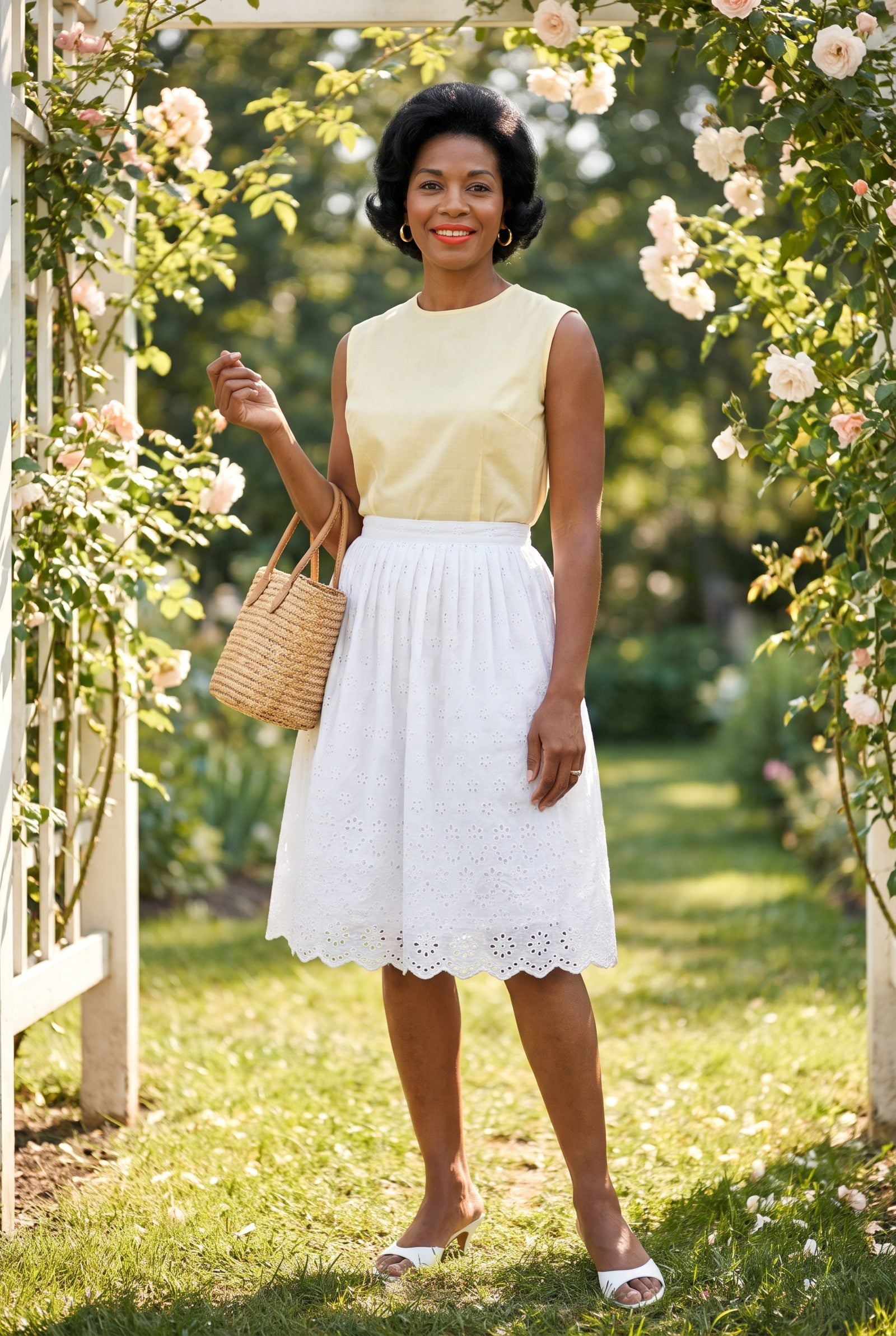
Eyelet cotton meant summer had officially begun. That broderie anglaise — punched holes backed with tiny stitched edges — let the breeze through and let a little leg peek past the scalloped hem, which was about as daring as a church picnic ever got.
Soft butter-yellow blouse against white eyelet, and that’s the whole mood: two pale colors, no hard contrast, everything dialed to daylight. You wore this to things that happened before sundown, with bare legs and a straw bag swinging off your arm.
14. The Double-Knit Pull-On Skirt
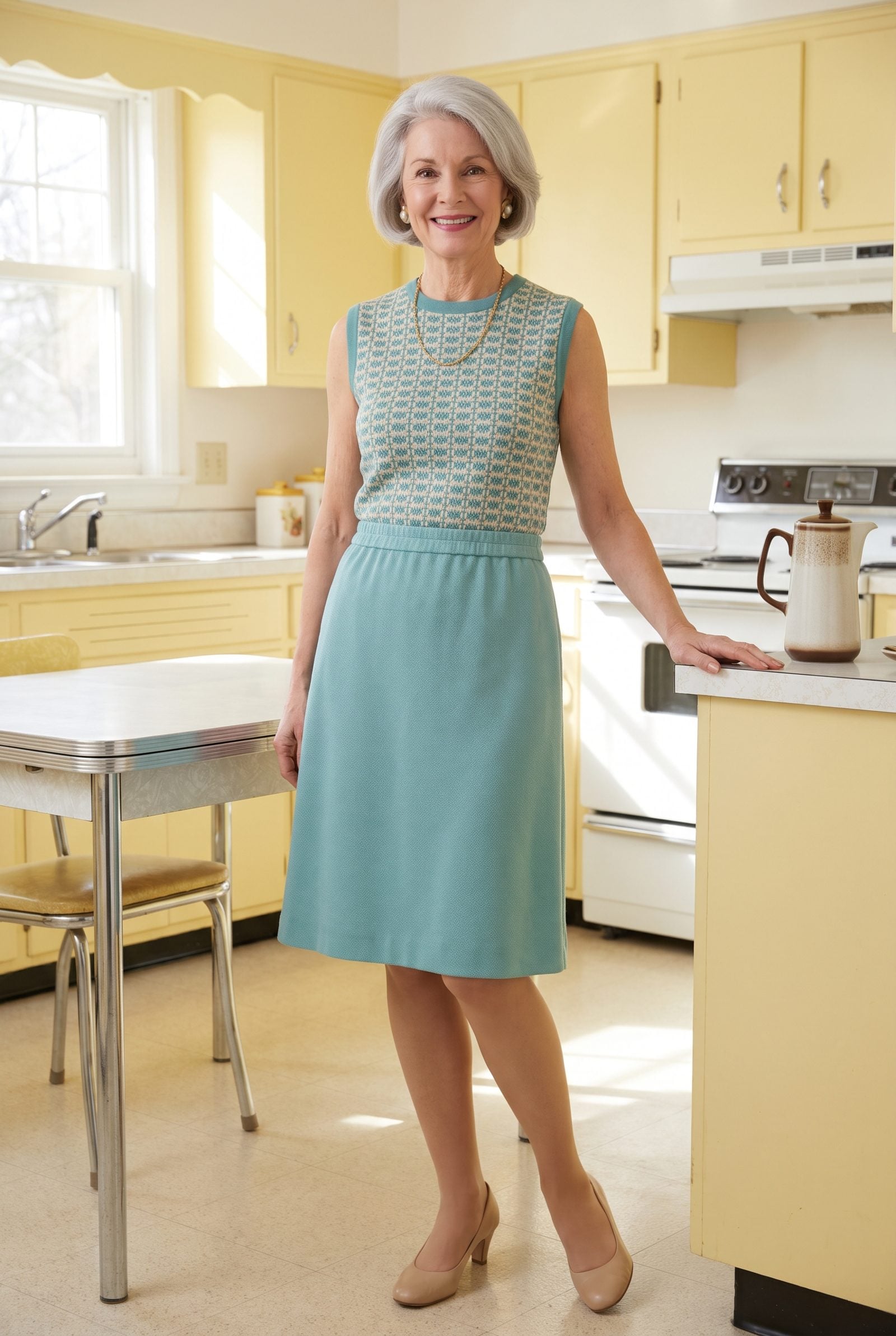
Double-knit changed what a skirt could be. No zipper, no fussing — you pulled it on over your head or stepped into it, and the fabric held its A-line shape through an entire day of errands without wrinkling or sagging at the seat.
This was the practical workhorse of the later decade, the skirt that let women move. The textured knit gave it enough body to stand slightly away from the hip, and the flat elastic waist meant comfort without the sloppy look elastic usually dragged along with it. It’s the quiet ancestor of every easy skirt styles conversation we still have.
13. The Hand-Crocheted Summer Skirt
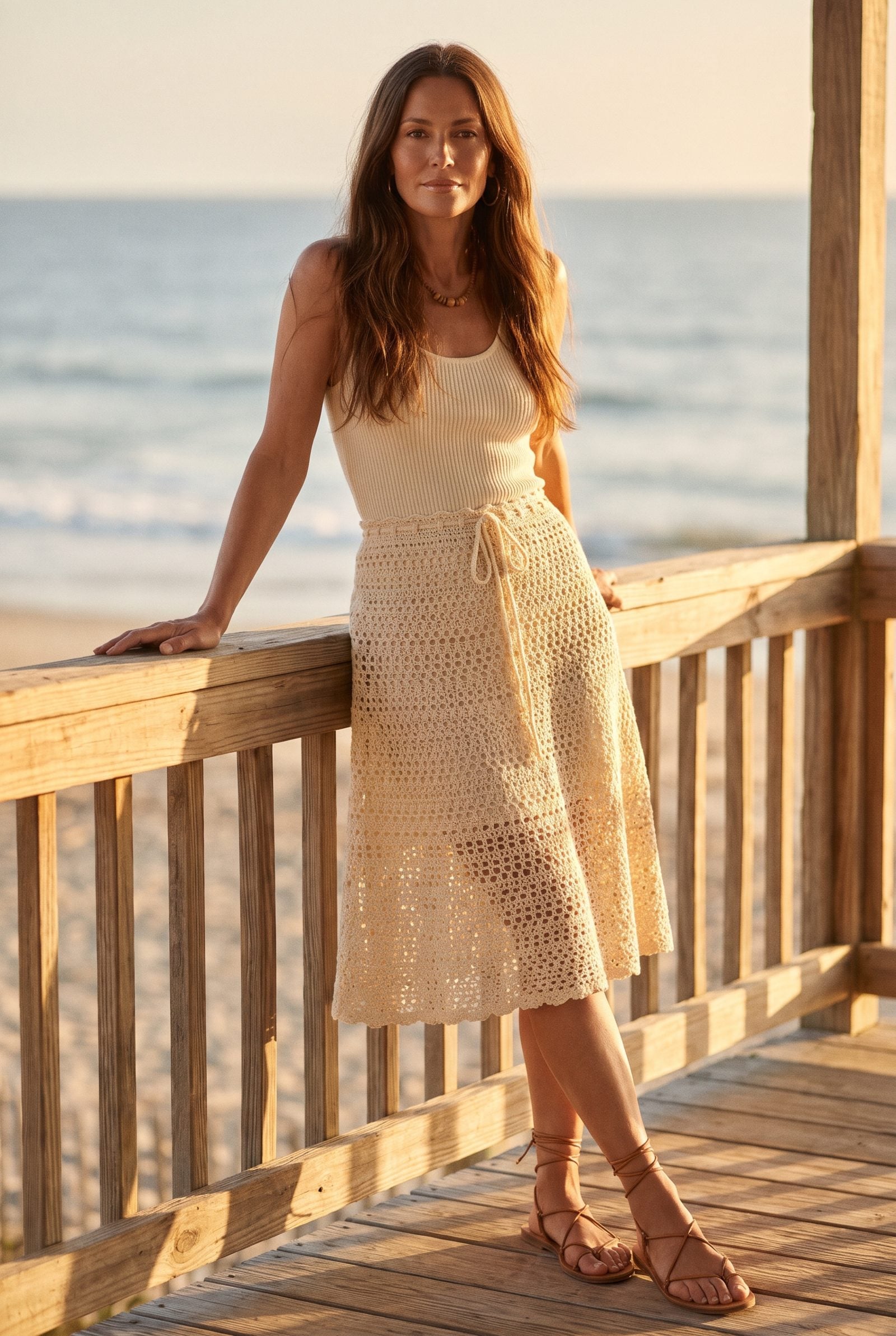
Someone’s hands made this, stitch by stitch, and you could see it. Hand-crocheted skirts arrived with the back-to-earth mood of the late decade, worn with a slip underneath because the open stitch left very little to the imagination otherwise.
The texture is the entire personality. All that irregular, airy lacework against bare sun-browned legs said you were nowhere near an office. Loose hair, laced leather sandals, and it was the free-spirited festival skirt before anyone used that phrase — the kind of piece that looked better the more faded it got.
12. The Transparent PVC Overlay Skirt
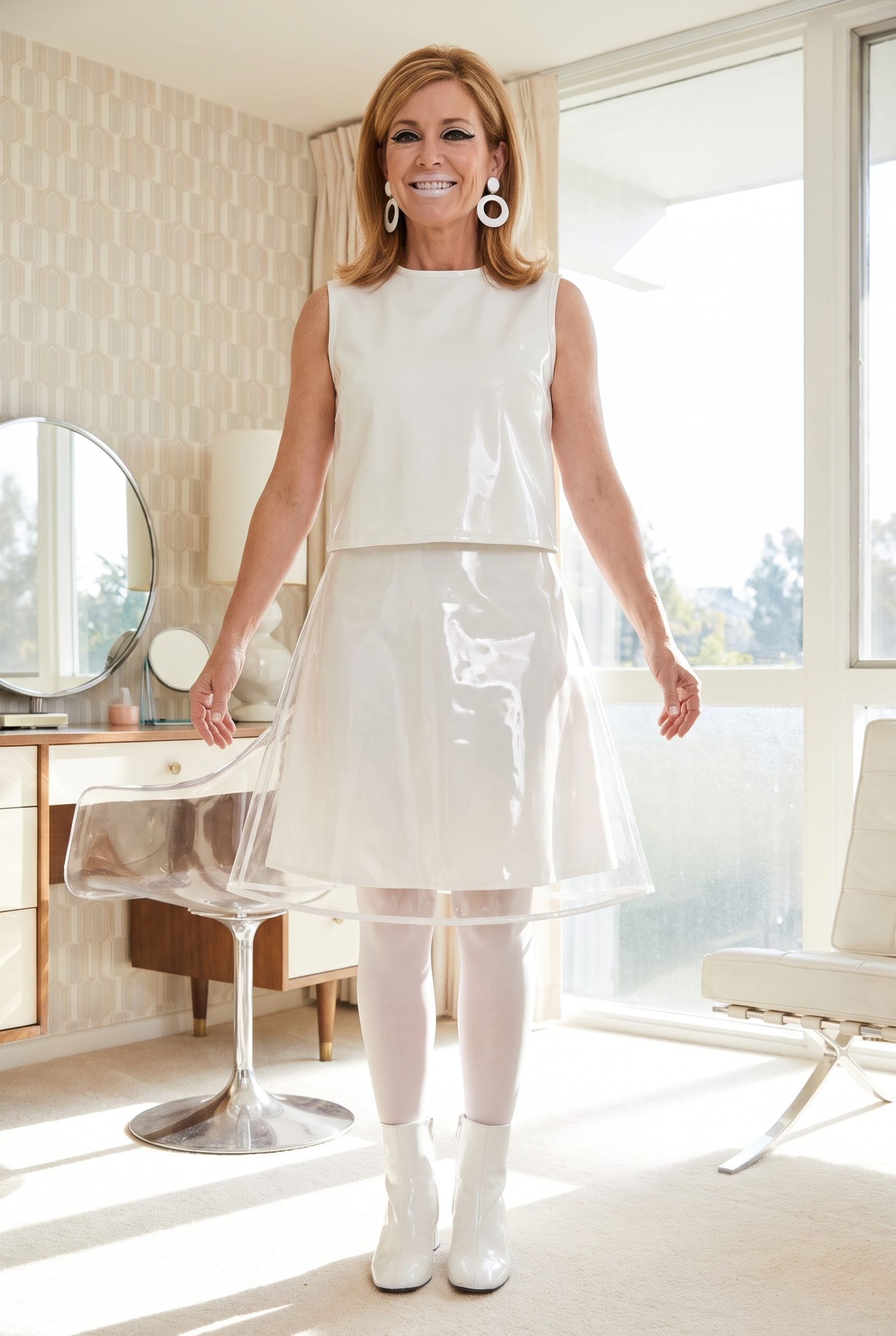
Clear plastic over fabric was fashion deciding that clothes could be objects. The PVC overlay sat over an opaque base, so you got the shock of transparency with none of the actual exposure — a trick the mod designers couldn’t get enough of.
The gloss does all the heavy lifting. That wet-looking vinyl against the matte white underneath creates a contrast you simply couldn’t get any other way in 1966. It was loud. It was forward. And it crinkled when you sat down, which nobody minded. Blending in was never the idea.
11. The Brass-Button Sailor Skirt
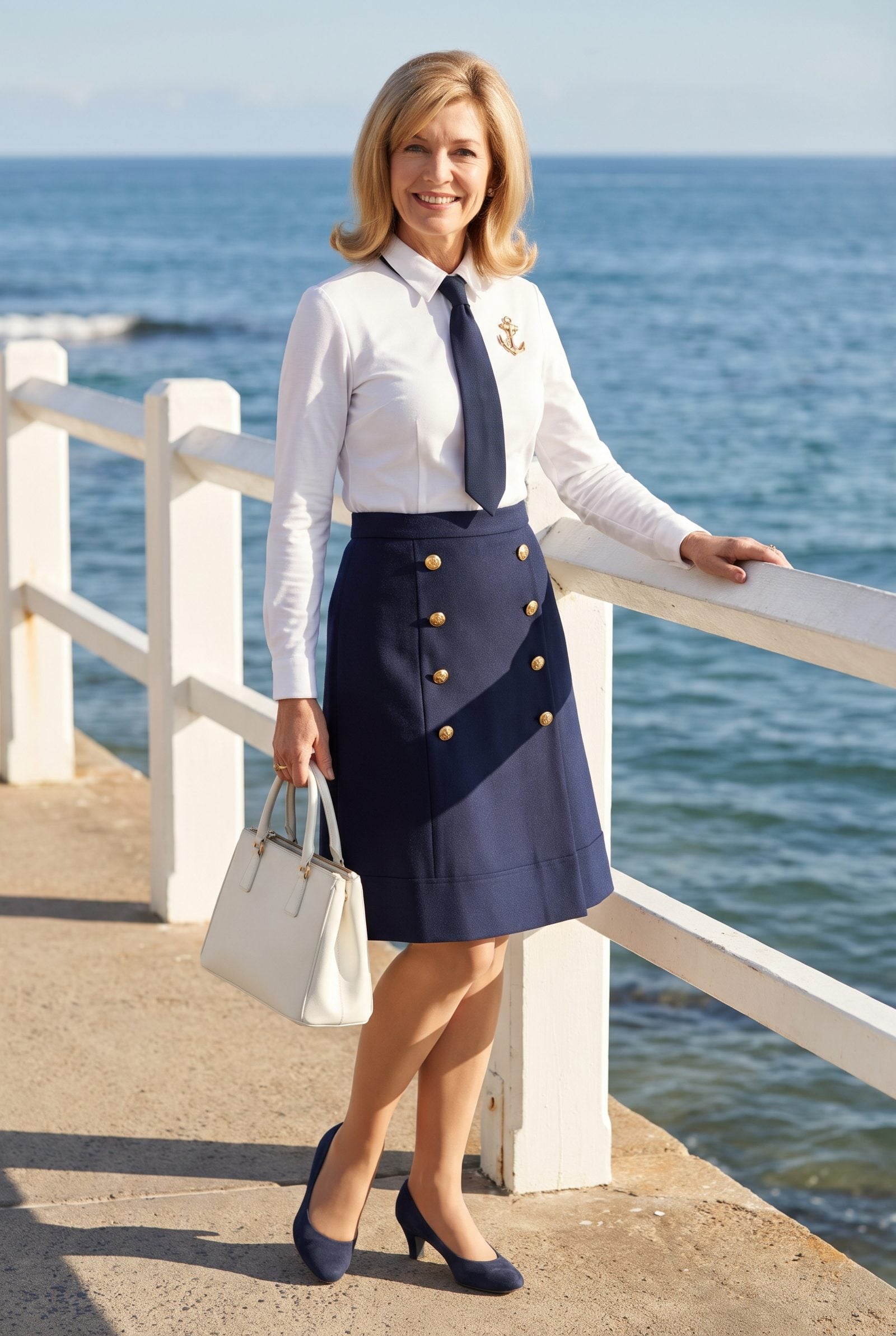
Nautical styling ran through the whole decade, and the sailor skirt was where it got structured. Those two rows of brass buttons marching down the front pulled double duty — functional on some, purely decorative on others, catching the light with every step.
Navy and white is the most reliable color pairing fashion has, and the brass is what keeps this version from reading as a uniform. That warm metallic against the cool wool gives the eye a reason to look twice. Worn with a neck tie and a structured bag, it was crisp, confident daytime dressing.
10. The Side-Buckle Wrap A-Line
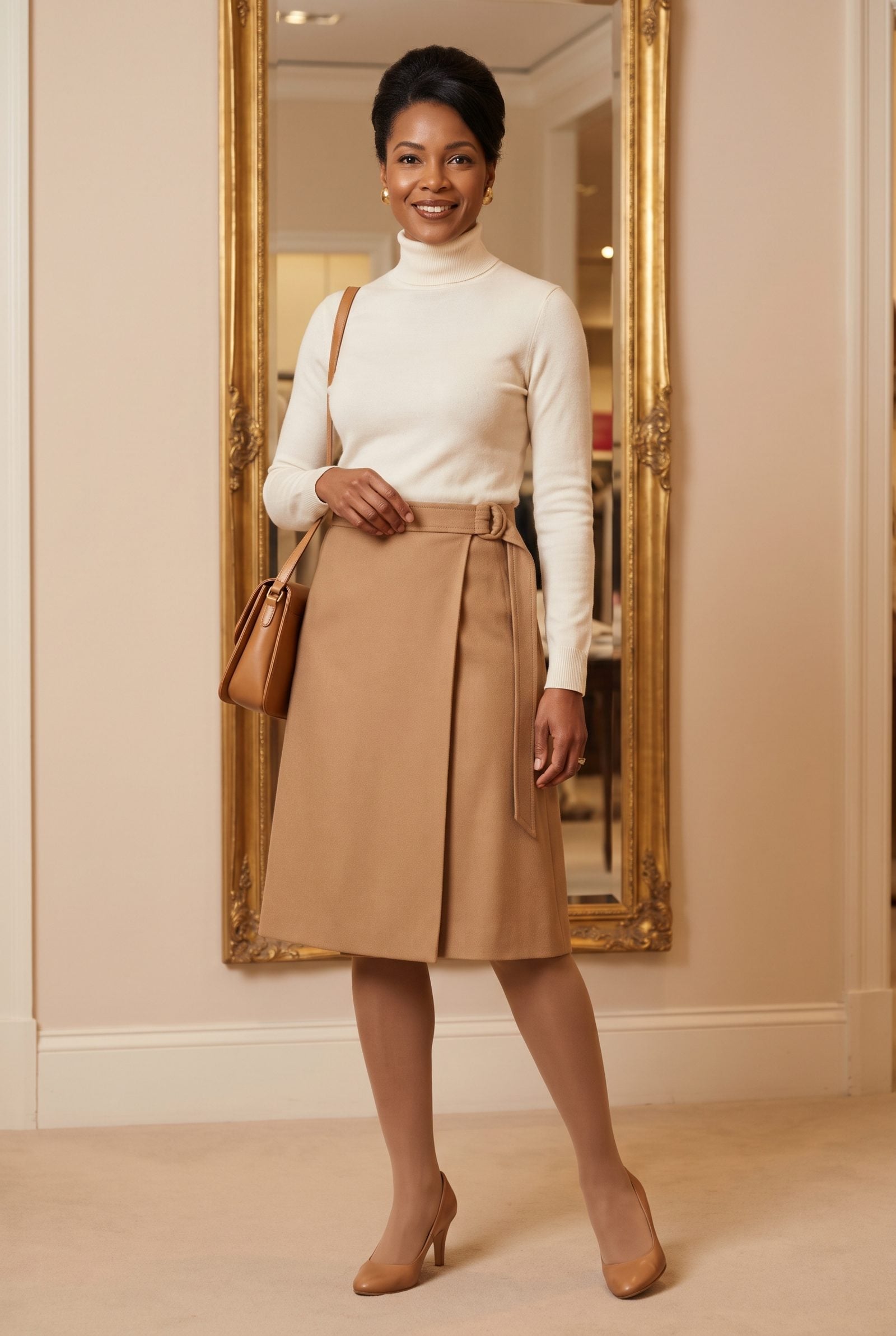
The wrap that buckled at the hip gave you a skirt and a focal point in one. That single covered buckle sat off-center, breaking up the clean camel panel and giving the eye somewhere to land along the overlap of the wrap.
Camel gabardine is the quiet luxury of the bunch — matte, smooth, holding its shape without a hint of shine. It reads expensive because it does so little. Paired with a cream turtleneck tucked in at the waist, the whole thing is a study in warm tonal dressing, one shade building on the next. A beautifully cut romantic skirt like this never dated the way the louder pieces did.
9. The Late-1960s Safari Utility Skirt
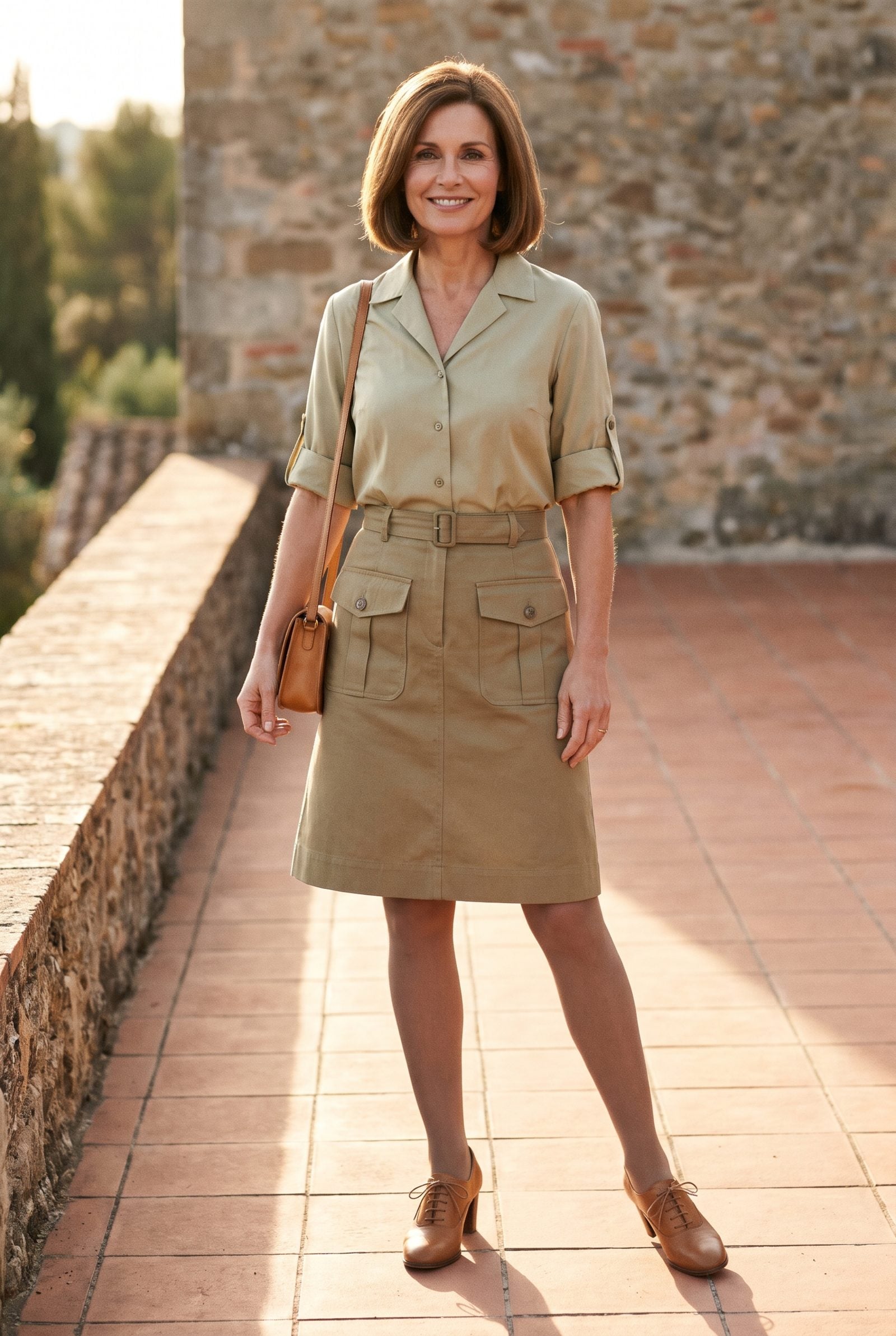
Khaki went from field gear to city wear almost overnight. By the end of the decade, the safari look had crossed from expedition outfitters into boutiques, helped along by Yves Saint Laurent’s famous 1968 safari jacket, and the A-line skirt picked up the same vocabulary: bellows pockets, epaulette-style tabs, a sturdy cotton drill that could take a beating.
What makes it work is the tension between utility and shape. All those pockets and topstitched seams suggest practicality, but the gentle flare keeps the skirt feminine and moving. Belt it with wide tan leather, add a crisp shirt with the sleeves rolled, and you look like you have somewhere interesting to be.
8. The Scalloped-Hem A-Line
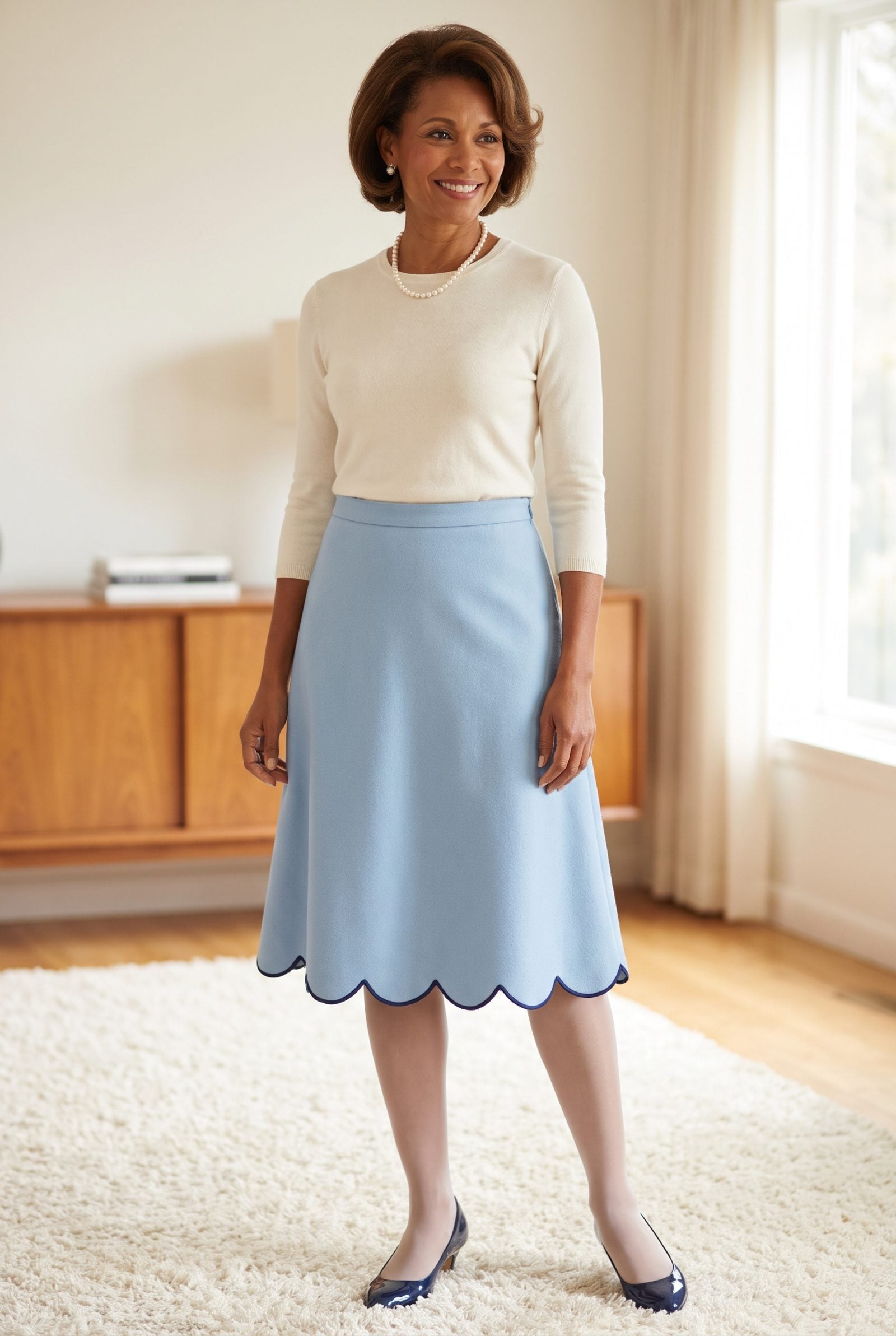
A scalloped hem turns the most ordinary skirt into something worth a second look. Each curved edge catches the light differently as you walk, and the A-line flare gives those little arches enough swing to actually show off instead of hanging flat against the knee.
The detail did a lot of polite work in the early sixties. It read as sweet without tipping into childish, which made it ideal for luncheons, church, and anywhere a plain hem would have felt like too little effort. In a solid pastel wool or crisp cotton piqué, the scallops are the only ornament needed, and that restraint is exactly why the skirt still looks so finished.
7. The Folk-Embroidered Peasant Skirt
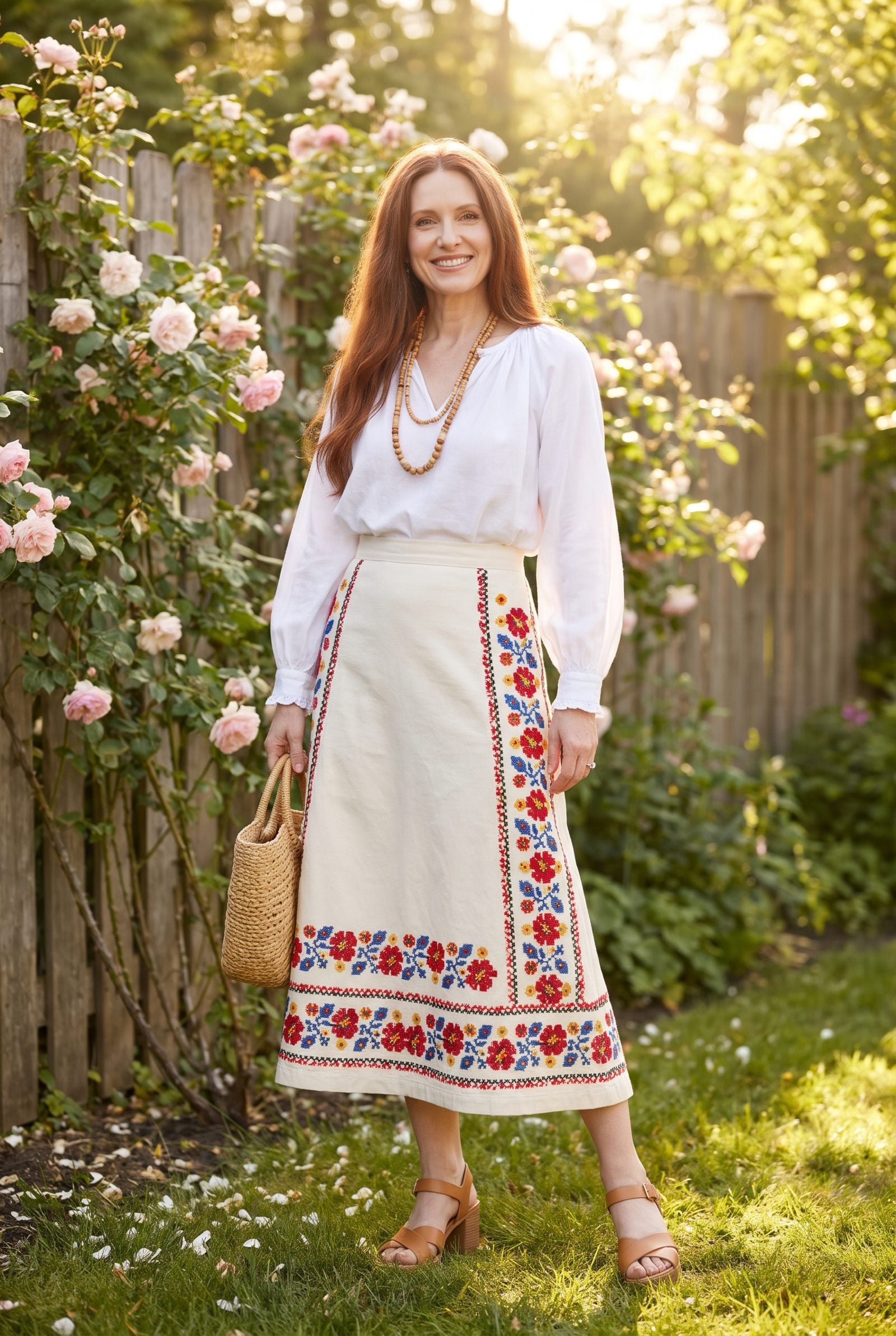
Bands of embroidered flowers ran around the hem like a border on a folk tapestry, and suddenly a cotton skirt carried the feeling of somewhere far from the suburbs. As the decade turned toward the hippie years, peasant styles borrowed from Eastern European and Mexican textile traditions became everyday wear for young women chasing something handmade.
The A-line shape keeps all that ornament from feeling costume-like. The skirt flares just enough to let the embroidered band sit flat and readable, and a plain white gathered blouse lets the stitched color carry the outfit. Add flat sandals and loose hair, and the look still feels warm, personal, and nothing like a mass-produced print.
6. The Beaded Cocktail A-Line
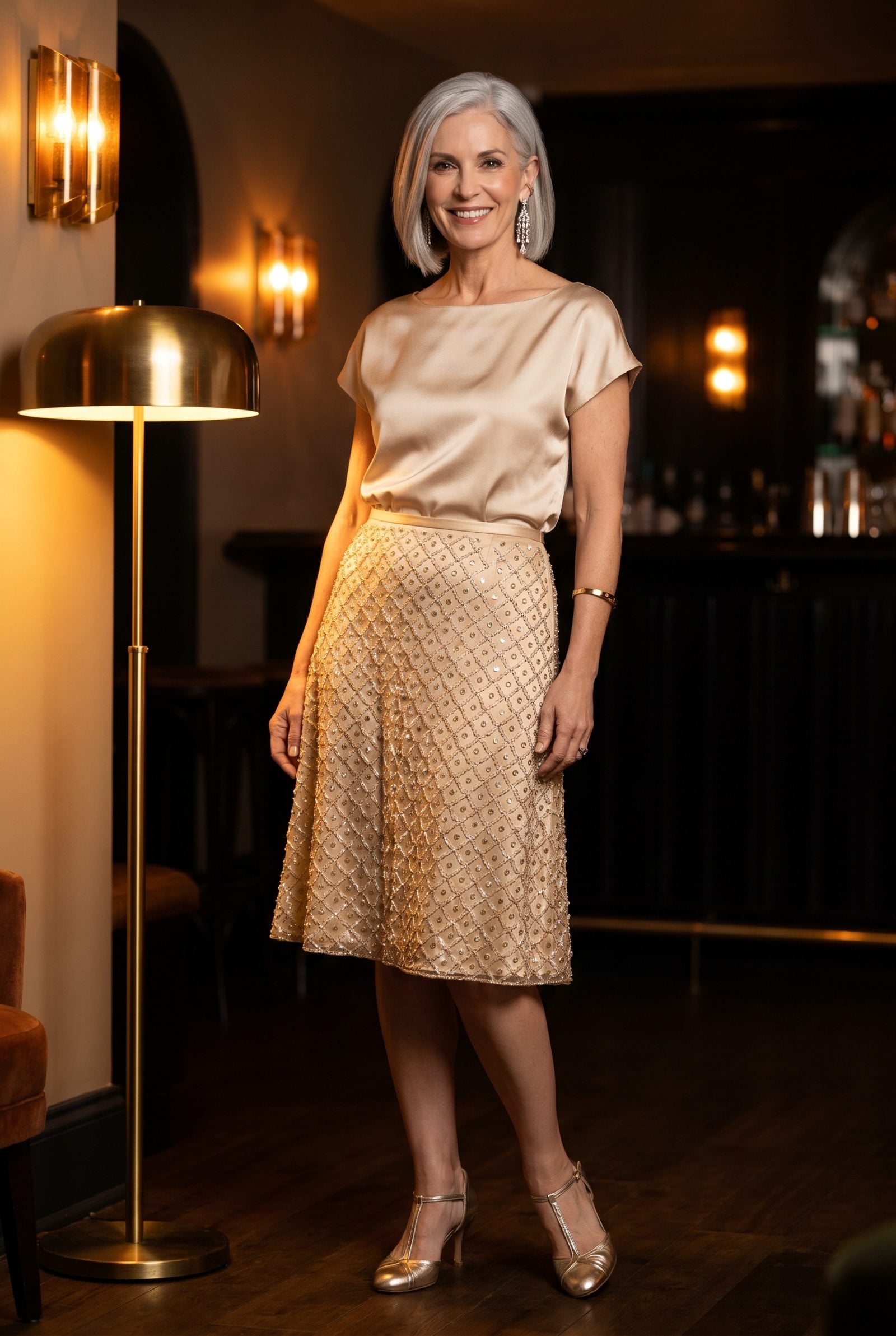
Thousands of tiny beads, each one sewn on by hand, turned a simple A-line into something that glittered every time you shifted in your chair. Beaded cocktail skirts were weighty, deliberate pieces, the kind you saved for an evening that genuinely mattered.
The cut is what kept them graceful. A straight skirt loaded with beading could pull and pucker, but the A-line let the weight fall evenly from the waist, so the skirt hung clean and swung slightly on its own momentum. Paired with a cap-sleeved satin top in matching tone, the beading becomes the whole conversation. Today’s sequined fast-fashion versions simply don’t have that same heft or shimmer.
5. The Chain-Belted Mod Skirt
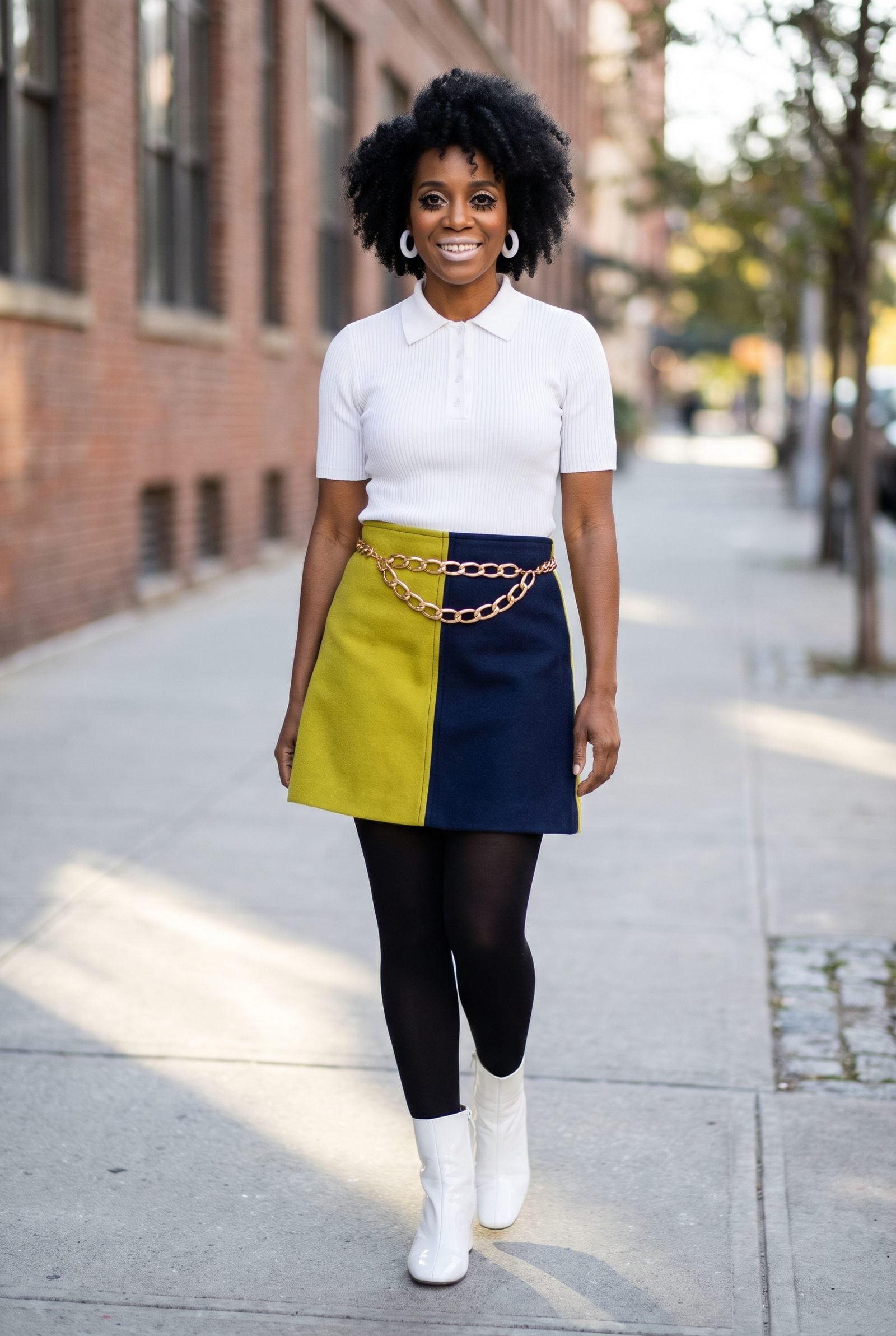
A metal chain slung low around the hips did for the mod skirt what a good frame does for a painting. The links sat loose and a little off-center, catching light and clinking softly as you moved, and they turned a plain wool A-line into something that looked unmistakably 1966.
The trick is contrast. A solid skirt in navy, white, or bold red lets the silver or gold chain register as jewelry rather than clutter, and riding it below the natural waist pulls the whole silhouette into that long, lean mod line. Finish it with a skinny rib-knit top and flat shoes, and the outfit looks sharp enough to walk straight out of a Carnaby Street window.
4. The High-Waisted Skirt With a Sculpted Waistband
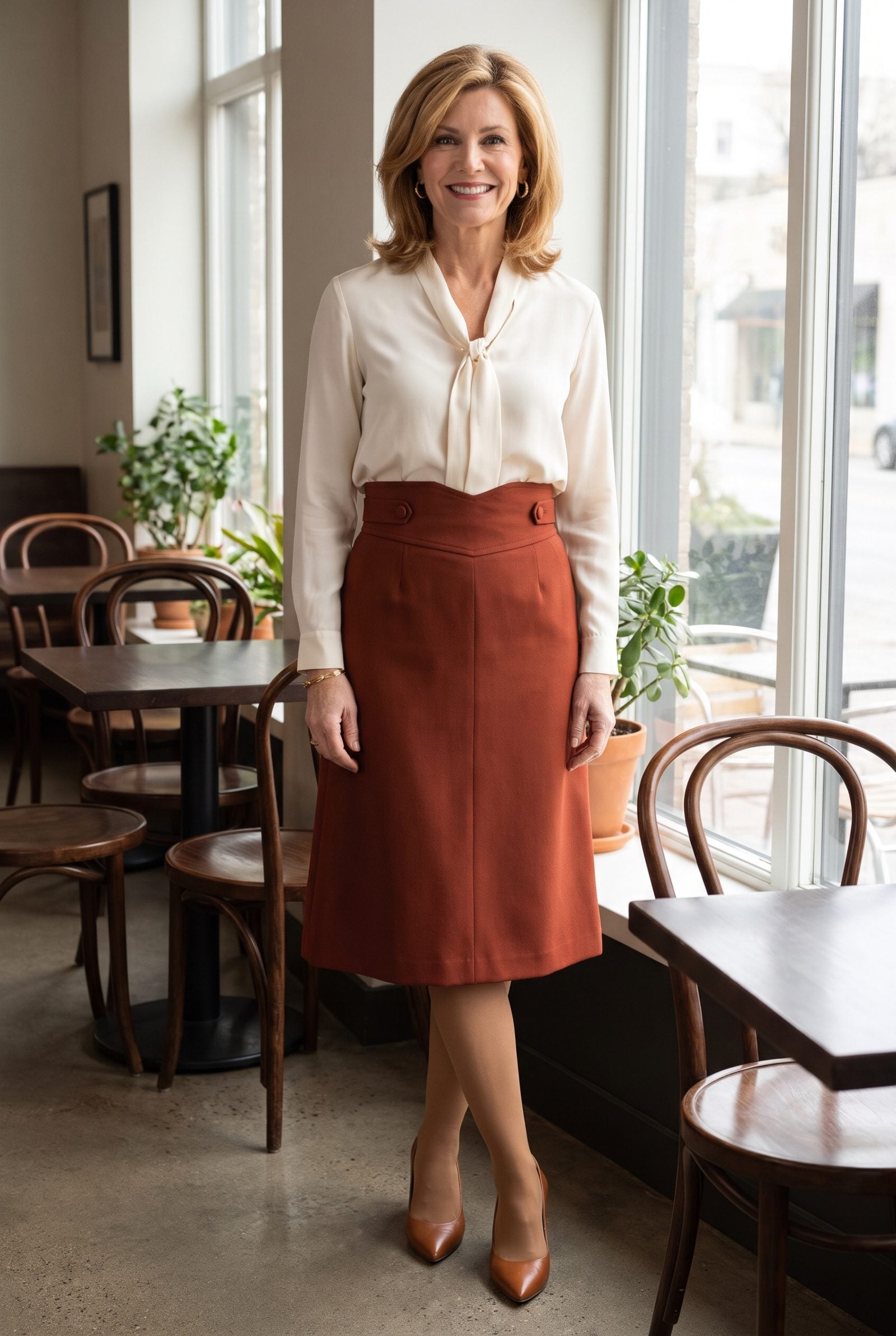
The waistband is the architecture here. Cut deep, shaped with seams, and sitting high above the navel, it held the body like a cinch and then released into a clean A-line flare below. The effect was a long leg line and a defined middle, without a single belt or buckle required.
This style belonged to the early part of the decade, when tailoring still ruled and women had their skirts properly fitted. A tucked-in blouse with a neat collar keeps the focus on that structured band, and the proportion does the flattering on its own. It’s the kind of precise construction that’s hard to find on a rack today, which is exactly why it still impresses.
3. The Suspender Skirt With a Mod Bib
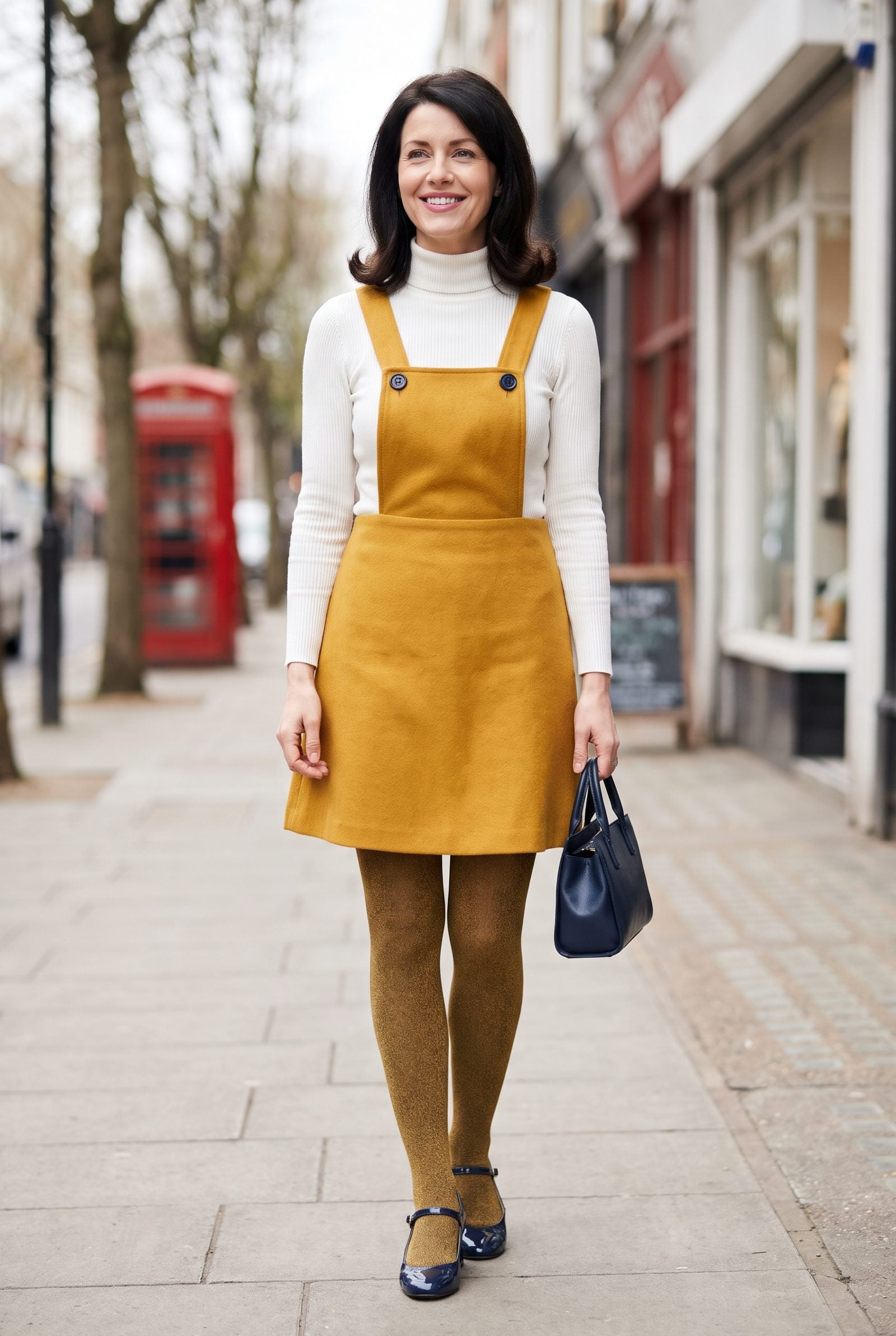
Part schoolgirl, part mod rebel, the suspender skirt with a bib front was one of the playful surprises of the mid-sixties. Straps rose from the waistband over the shoulders, sometimes crossing at the back, while a small square bib framed the chest and turned the whole piece into something closer to a jumper.
Worn over a skinny turtleneck or a striped knit, it created instant layers without any bulk. The A-line skirt keeps the proportions youthful and swingy, and the straps draw the eye vertically, which lengthens the torso. With opaque tights and low heels, it looked fresh and a little cheeky, a mood that modern versions rarely manage to capture.
2. The Late-1960s Hostess Maxi A-Line
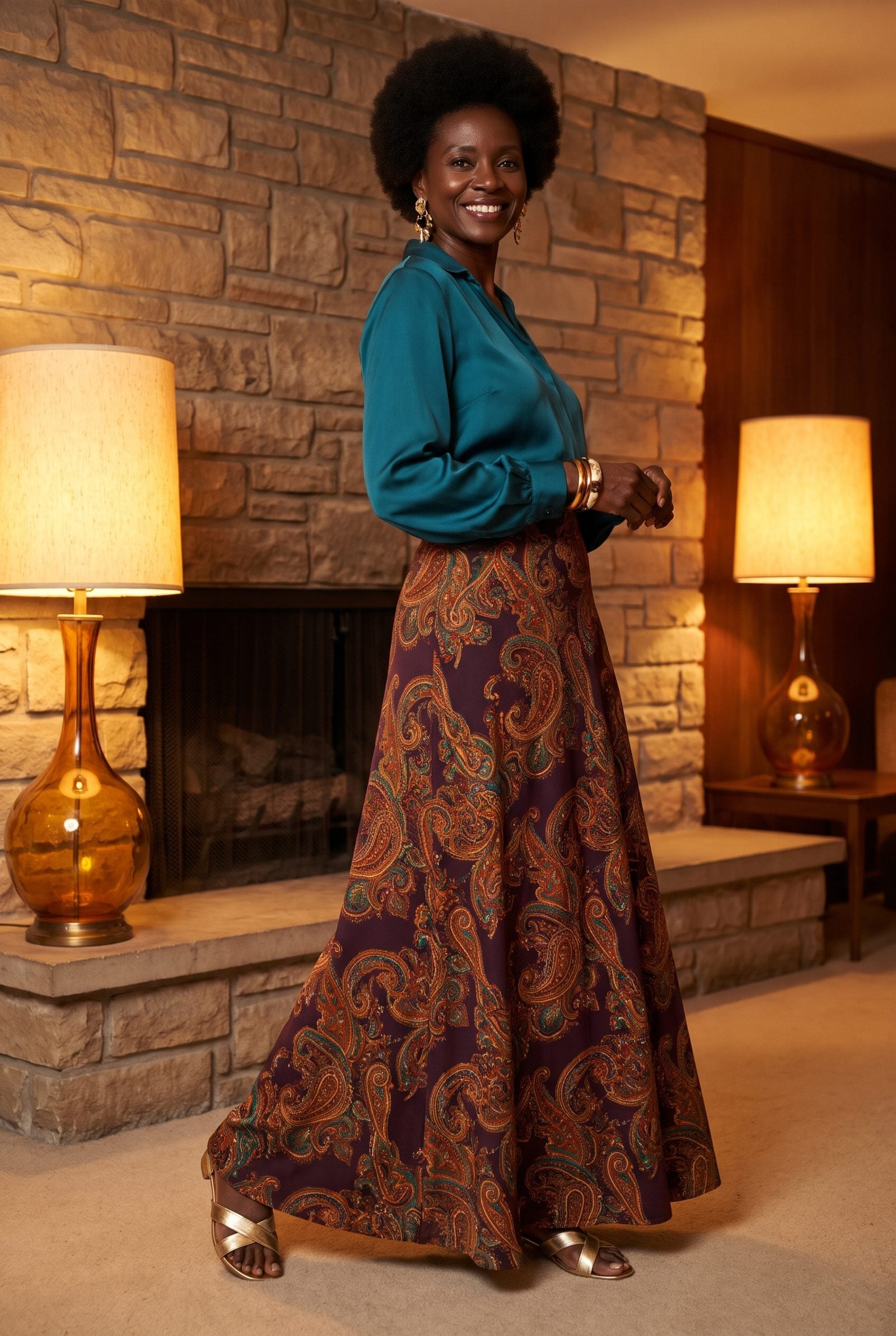
Entertaining at home had its own dress code, and by the late sixties that meant a floor-length hostess skirt. The maxi A-line skimmed the floor in printed cotton, jersey, or brushed velvet, and it let you greet guests looking dressed up while still moving comfortably between the kitchen and the living room.
The length is what makes it so striking. A full-length skirt that flares gently from the waist creates a long, unbroken column of color, and a bold print or saturated solid reads as dramatic without any extra jewelry. Topped with a simple fitted blouse, it carried an easy glamour that felt relaxed and festive at once, and it still beats most of today’s party wear.
1. The Courrèges Space-Age White Vinyl Skirt
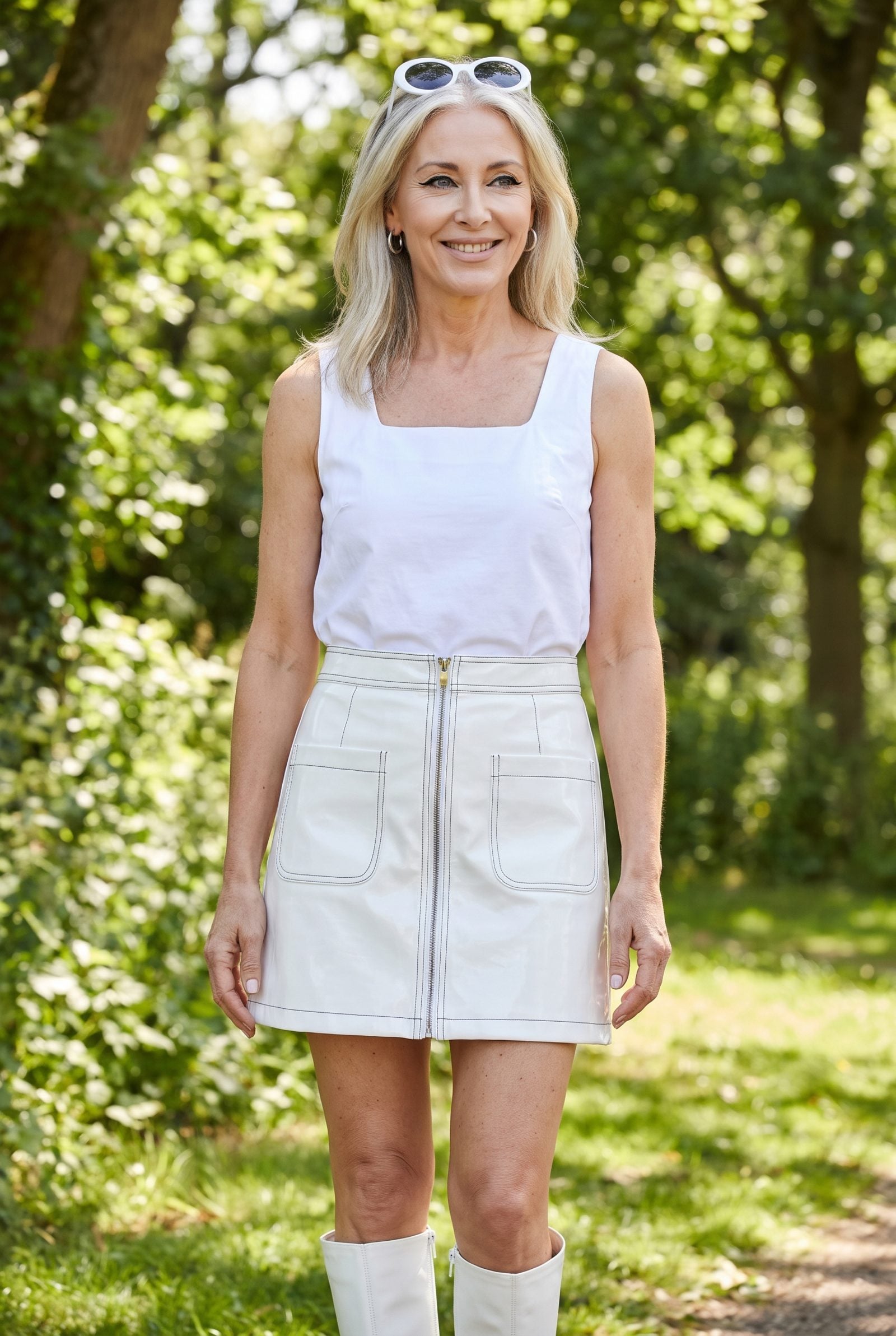
Stark white, glossy, and cut into a sharp little trapeze, this skirt looked like it had arrived from a future no one had seen yet. André Courrèges stripped fashion down to clean geometry and pure white, and vinyl gave that vision a sheen no wool could match.
The A-line here is almost architectural. Stiff vinyl holds its flare away from the body, so the skirt keeps its crisp shape no matter how you move. Pair it with a white top and flat white boots, and the whole outfit becomes one bright, graphic statement. Even now, it looks more daring than most of what passes for futuristic in stores.