❤️ Would you like to save this?
A belt is a horizontal line with an extraordinary amount of power. Put it in the wrong place and a beautifully cut dress can lose its shape, shorten the torso or divide the figure at precisely the wrong point. Move it a few inches and the same basic silhouette can appear longer, leaner, more sculptural or dramatically more relaxed. The buckle is often the least interesting part. Where the belt sits, how wide it is and what happens to the fabric on either side are what really matter.
At the natural waist, a belt establishes the familiar relationship between bodice and skirt. Raise it beneath the bust and the eye reads a longer lower body, particularly when the fabric falls without interruption. Lower it toward the hips and the proportions reverse: the torso lengthens, the waist loses its traditional emphasis and the dress takes on something of the languid geometry of the 1920s. A diagonal belt introduces another possibility entirely, replacing the expected horizontal division with an angle that can follow the drape of the garment.
Fabric complicates the equation beautifully. Chiffon gathers into soft vertical folds. Taffeta resists, pushing outward into architectural volume. Knitwear stretches around a wide leather band, while satin turns every adjustment into a play of light and shadow. Even the material of the belt changes the result. Raffia softens a linen dress, polished metal sharpens an evening gown, and two narrow leather straps can establish a rhythm that a single belt never could. The most successful placement doesn’t simply mark the waist. It makes the entire dress work differently.
FYI, thanks to AI imagery software, we’re able to create very specific fashion and hairstyle examples to illustrate the points being made. In some cases, imagery is exaggerated to hammer home the point. Also, assume links that take you off the site are affiliate links such as links to Amazon. this means we may earn a commission if you buy something.
33. Wide Low-Hip Belt on a Silver-Gray Jersey Dress
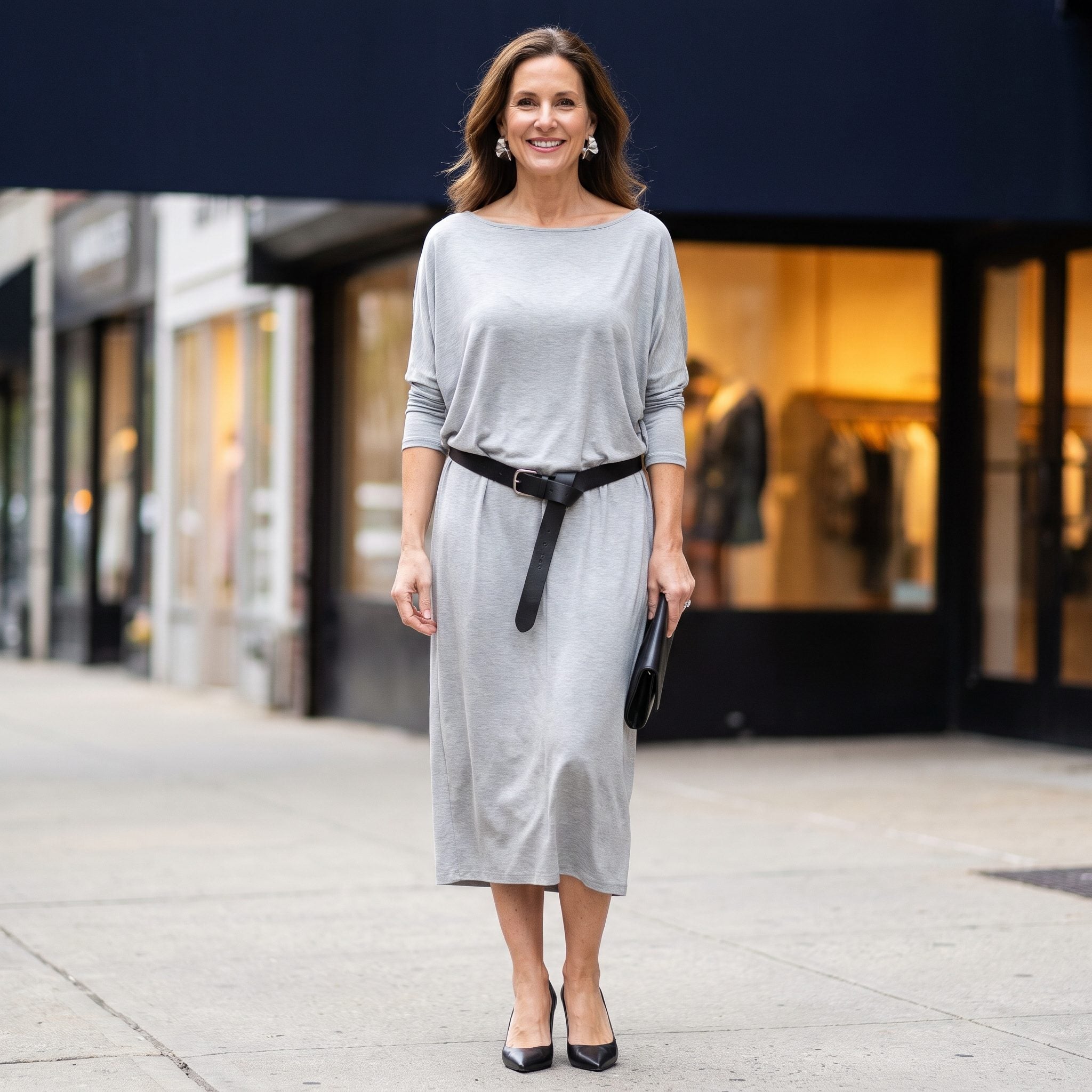
Forget the waist for a moment. A wide black belt rides the hips of this silver-gray jersey dress, drawing a decisive horizontal line well below the torso’s narrowest point. The result is an elongated upper body and a sleek, almost architectural silhouette.
That placement favors torso length over the traditional illusion of longer legs. Pointed-toe heels help balance the proportions, while the restrained gray-and-black palette lets the unusual belt position do the talking. Nothing about this outfit is interested in the conventional hourglass.
32. Double Cognac Belts on an Ivory Midi Dress
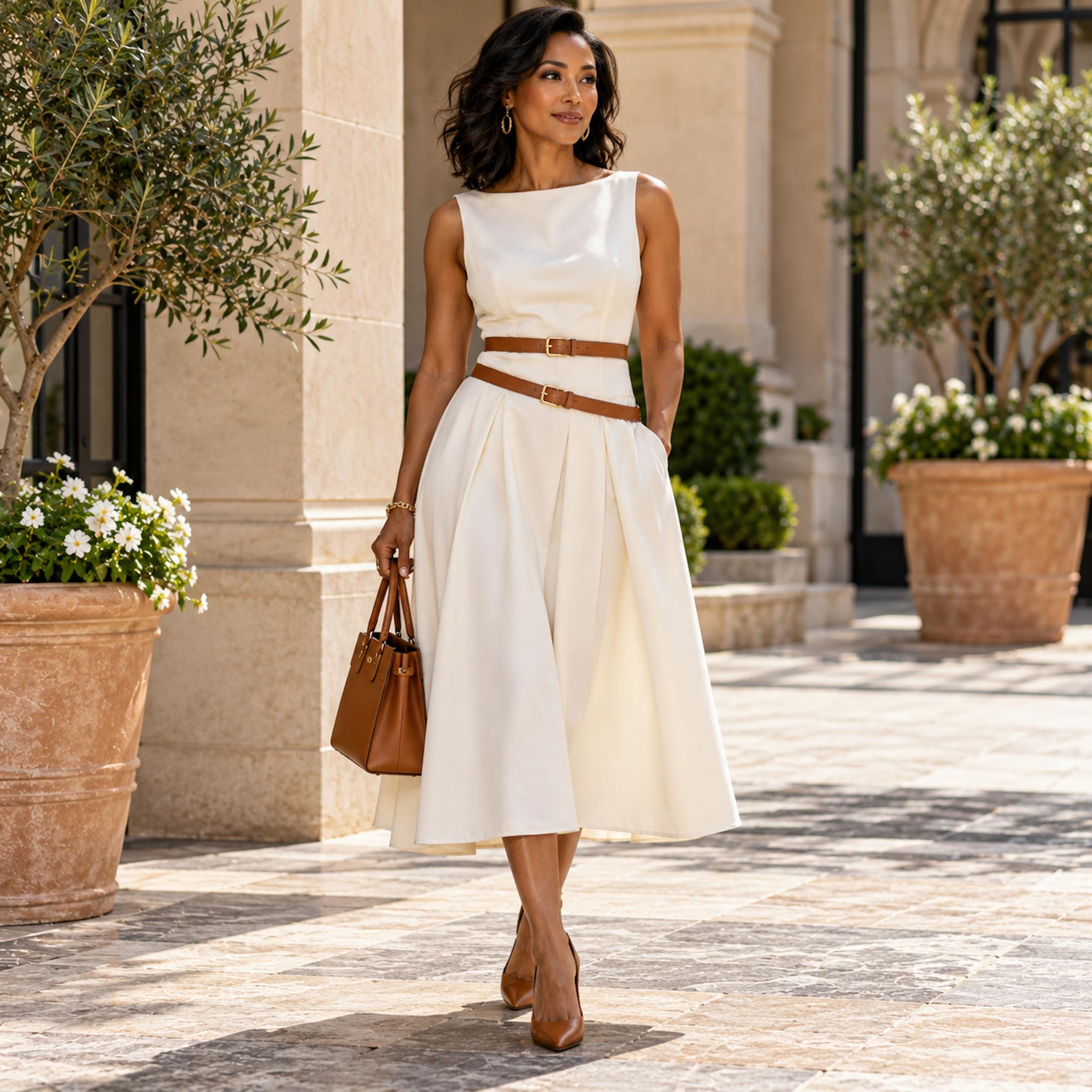
One belt draws a line. Two make a composition. On this sleeveless ivory midi dress, slim cognac straps sit at different heights, one at the natural waist and the other crossing the upper hips. The arrangement introduces two distinct accents without sacrificing the dress’s easy movement.
The warm leather repeats in the pointed pumps and structured handbag, while the full skirt provides a soft counterpoint to the buckled straps. The lower belt’s slight angle prevents the arrangement from becoming too rigid. Two buckles, two lines and considerably more attitude than either belt could manage alone.
What Our Readers Say
- When we asked ThreadCurve readers whether an outfit called for a belt, 79% voted to add one, so most of you are already reaching for that extra line.
From ThreadCurve reader polls and votes.
31. Silver Empire Belt on a Black Pleated Chiffon Dress
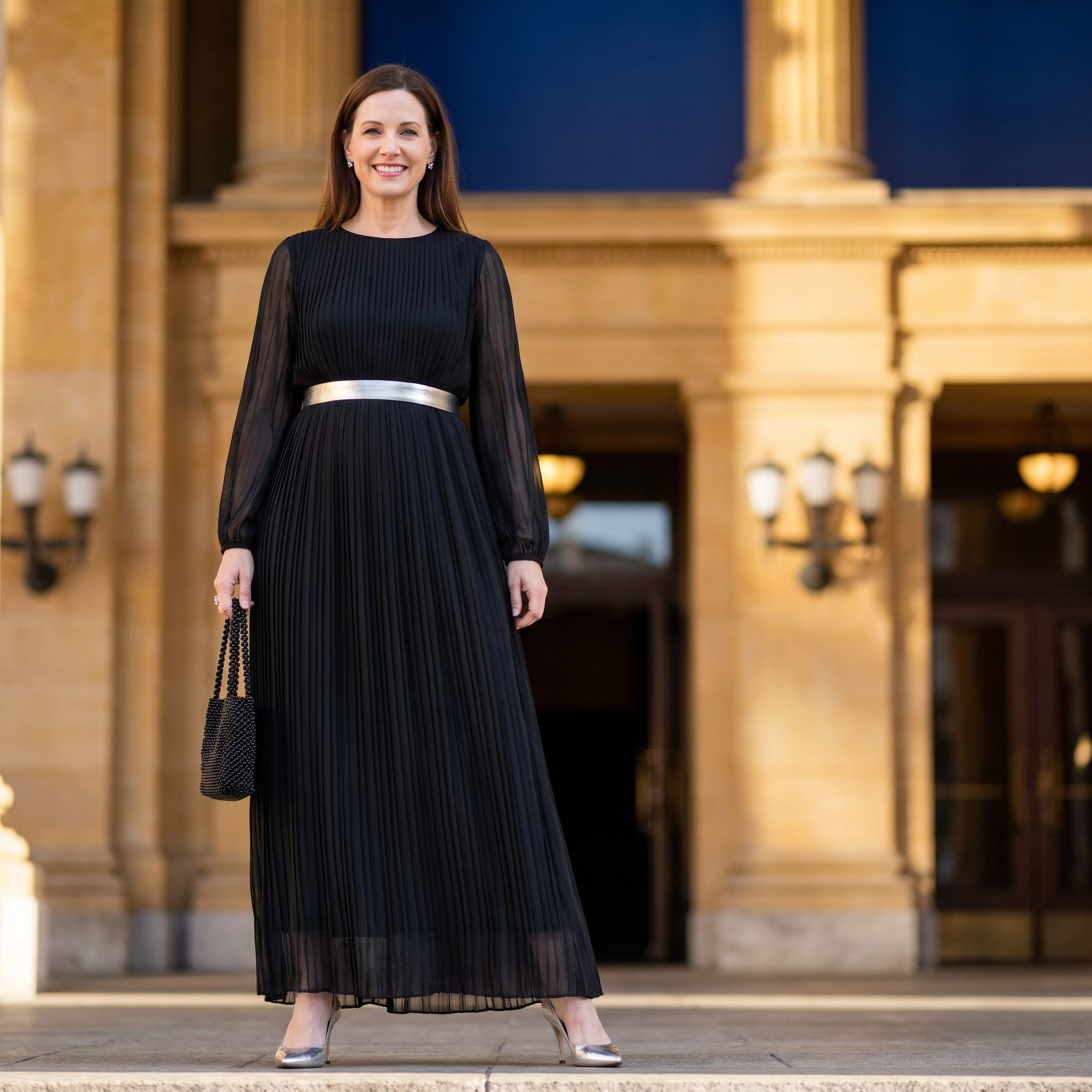
A brushed-silver band moves the dividing line directly beneath the bust. Fine black pleats descend from that elevated point, creating an exceptionally long visual sweep through the skirt. The narrow belt gives the chiffon definition without interrupting its movement.
Silver registers almost as jewelry against the matte black fabric. No heavy buckle, no elaborate knot, no interruption to the pleats below. The dress makes its entrance through movement, and the belt gives that movement a starting point.
A belt doesn’t have to squeeze the waist to change the silhouette. Sometimes moving the dividing line is enough.
30. Silver Natural-Waist Belt on a Raspberry Crepe Dress
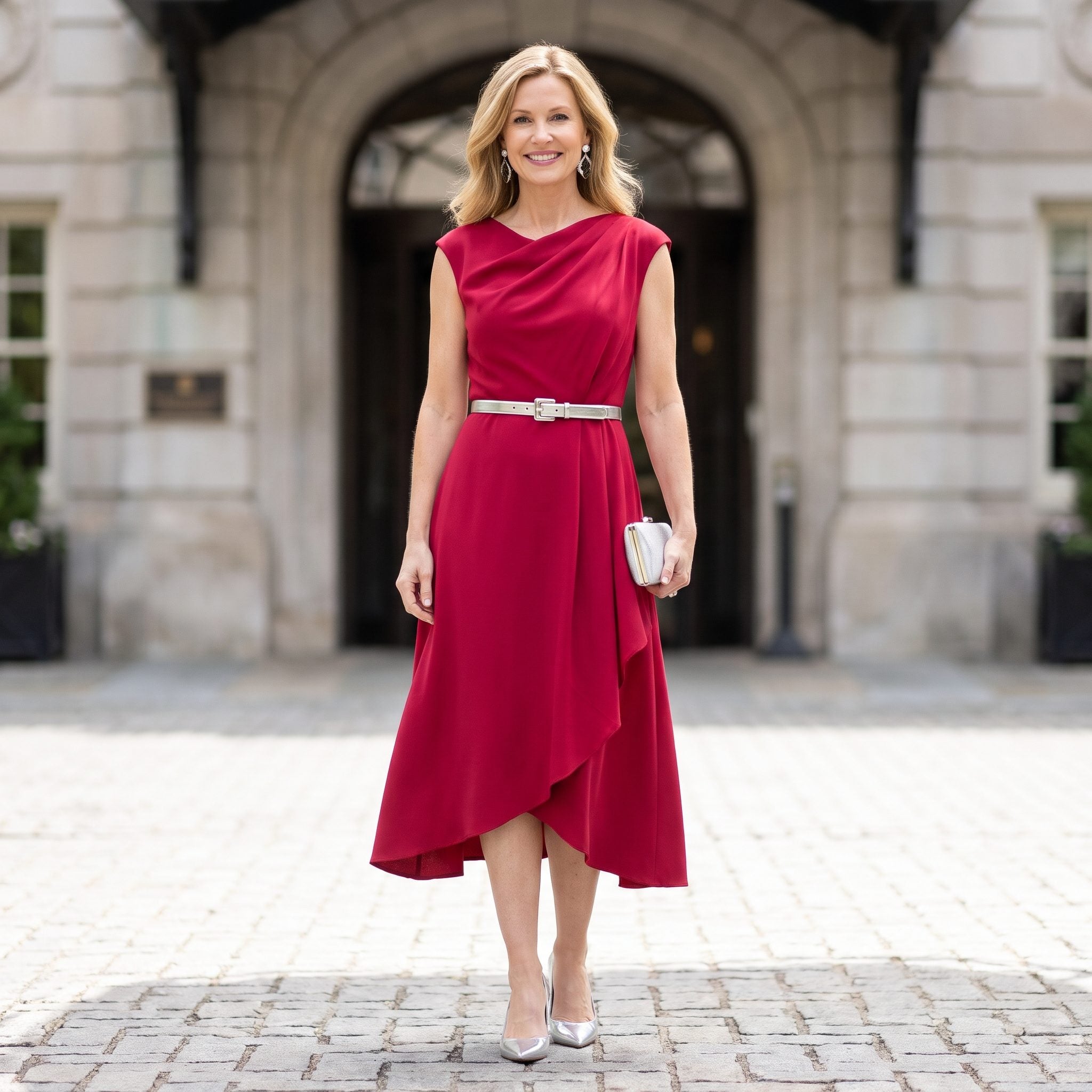
Raspberry crepe supplies the color; a narrow silver belt supplies the punctuation. Positioned at the natural waist, the metallic line gives the fluid dress a defined middle while the asymmetrical hem introduces movement below.
Silver heels and a matching clutch carry the cool metallic note through the outfit. Against such a strong dress color, that disciplined choice matters. The belt creates shape, the accessories establish continuity, and the uneven hem prevents the whole arrangement from becoming too orderly.
29. Tan Low-Hip Belt on a Cream Crochet Dress
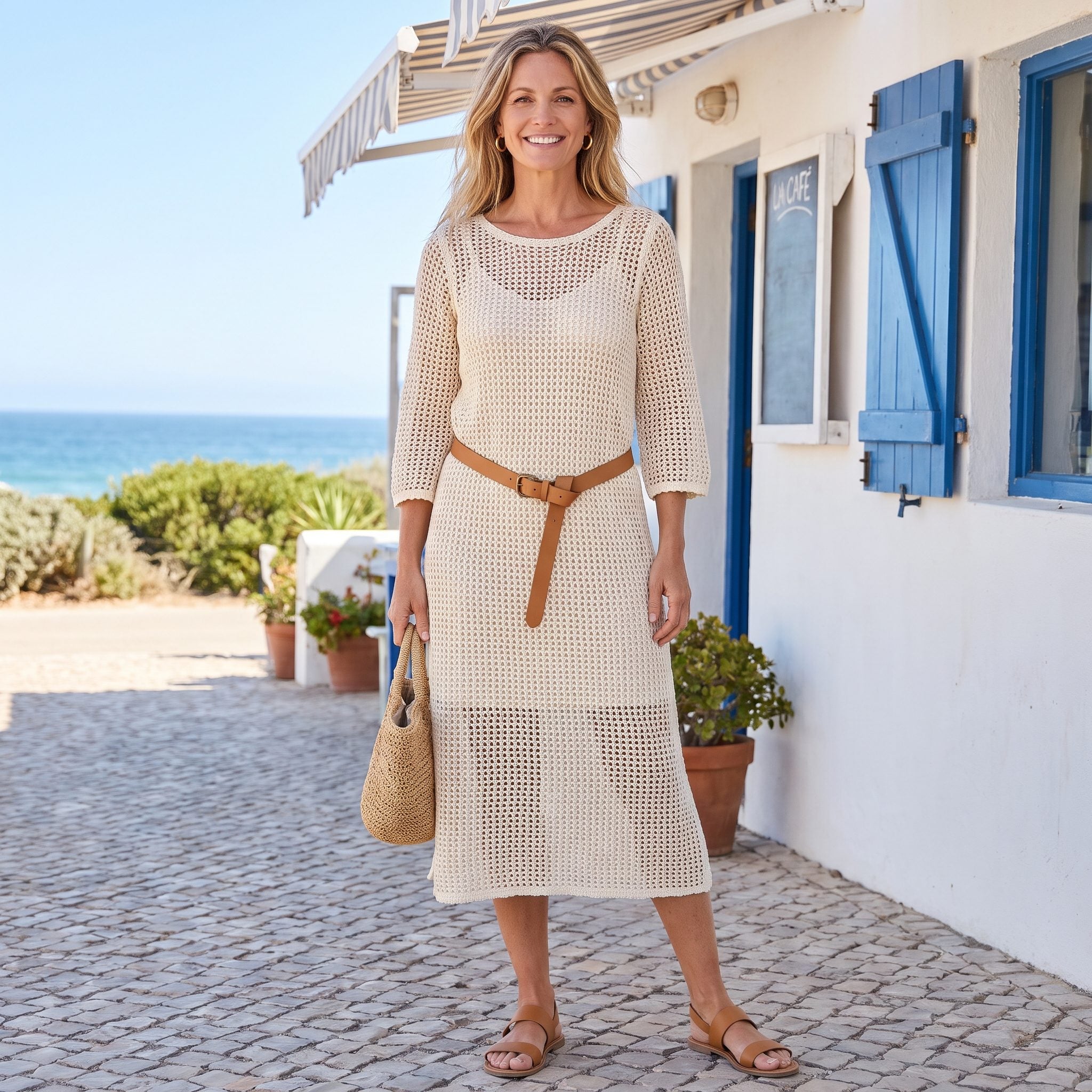
Crochet brings its own architecture: open stitches, visible texture and fabric that behaves differently from a smooth woven dress. A tan belt placed low across the hips introduces a clear boundary without overpowering the intricate surface.
The skirt flares beneath that line, while the upper portion retains its relaxed shape. Because tan and cream sit so close together tonally, the eye notices the change in proportion before it notices the accessory. Beachside ease with a little more structural intelligence.
28. Silver Chain Belt on a Black Satin Dress
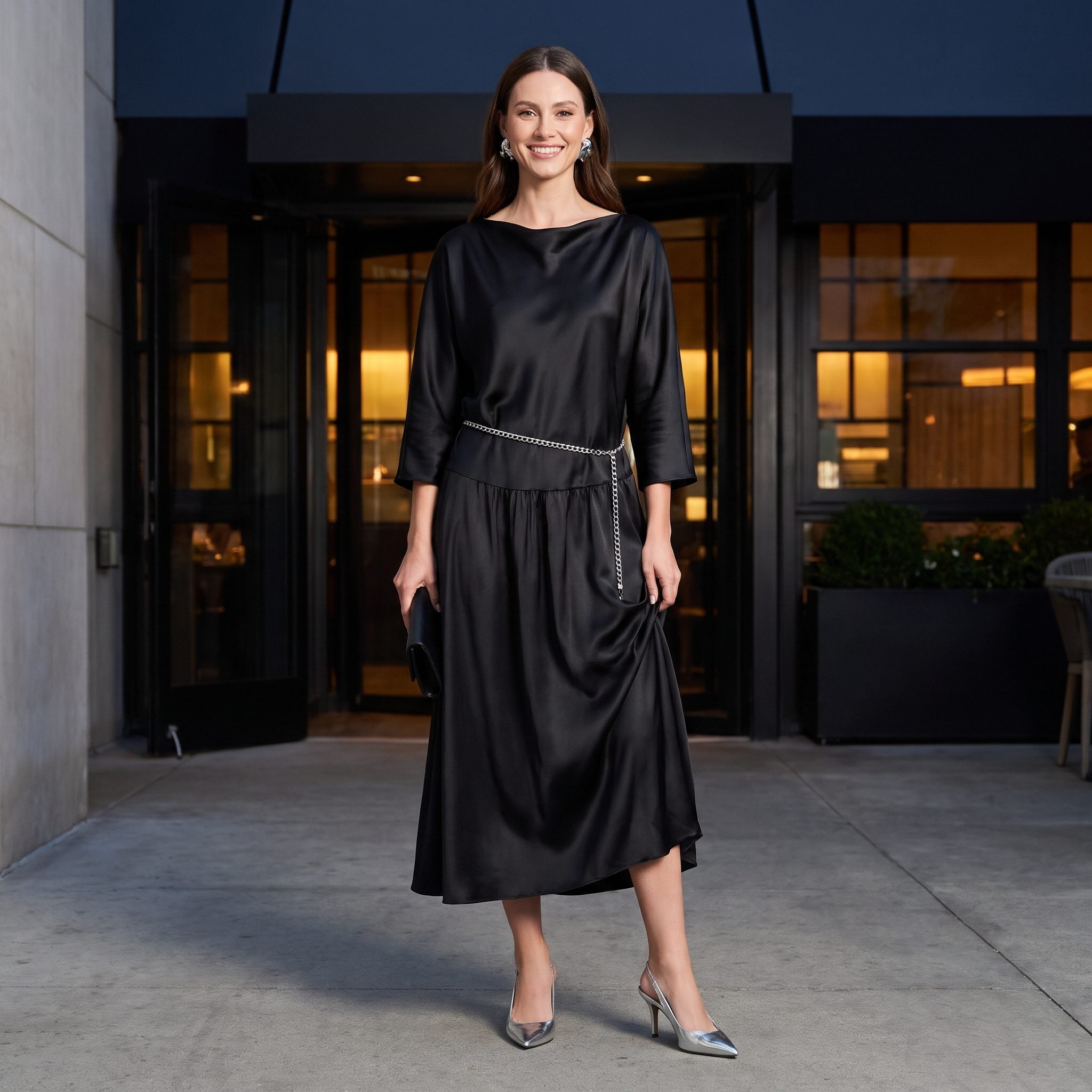
A silver chain draped across the hips takes the place of a conventional cinched waist. Against the smooth black satin, its loose metallic curve draws attention to the lower torso while the dress falls in a long, uninterrupted line above it.
The chain is ornament rather than a structural belt. Its loose curve introduces a dropped-waist impression without gathering the fabric into folds. Silver chain links and silver slingback heels add light at two different heights, giving the otherwise black ensemble a restrained metallic rhythm.
27. Cream Low-Hip Belt on a Denim Dress

A denim shirt dress usually invites the obvious solution: pull it in at the waist and call it finished. Here, a cream belt sits lower, letting the button-front torso remain relatively straight before the silhouette changes around the hips.
Light-wash denim and pale leather share an easy, washed-out softness. White sneakers keep the proportions casual, while the dropped belt gives a familiar utility dress an unexpected hint of 1920s attitude. A small relocation, a completely different personality.
26. Bronze Natural-Waist Belt on a Champagne Velvet Dress
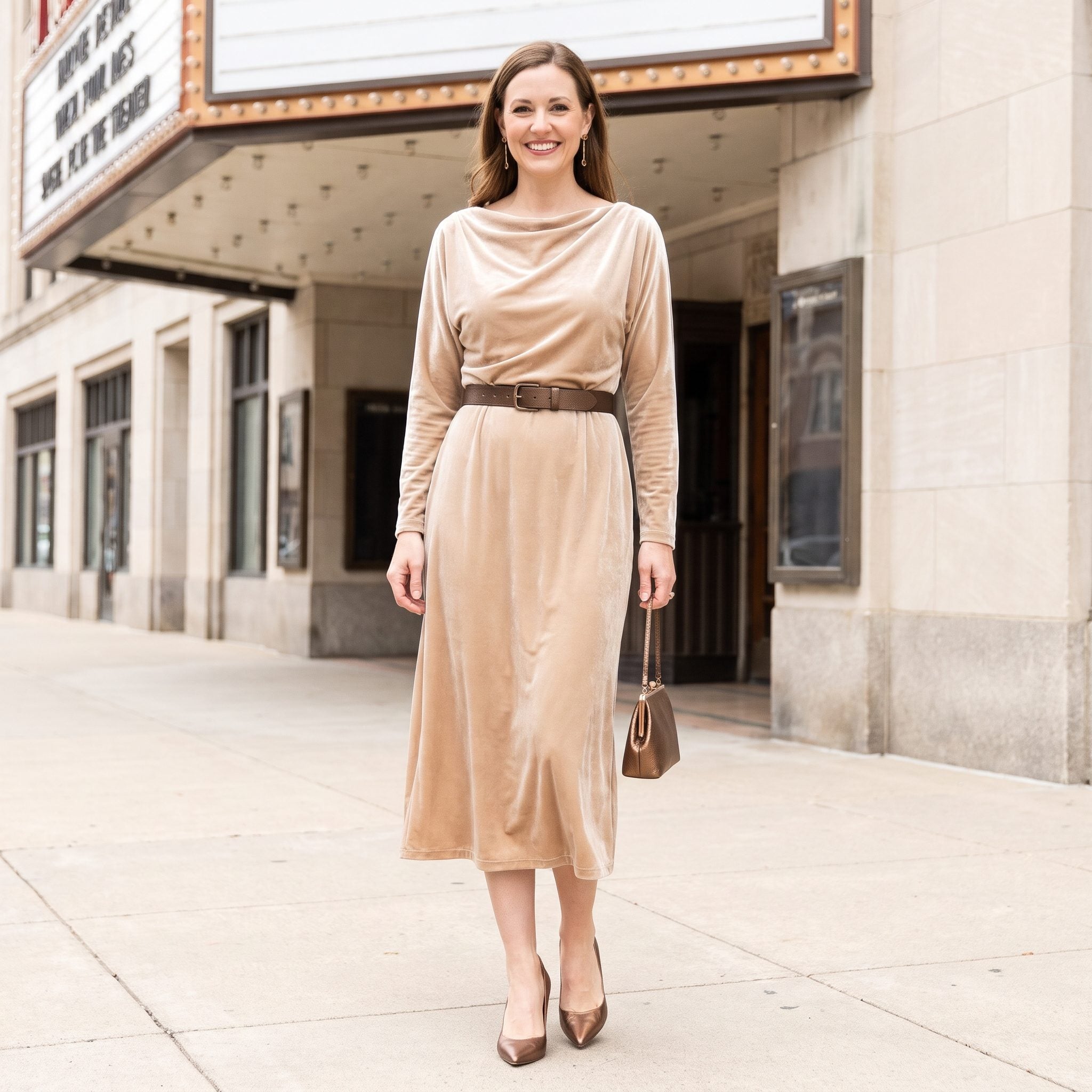
Velvet doesn’t need help attracting light. Its shifting nap does that beautifully on its own. What this champagne dress needs is a firm interruption, supplied by a dark bronze belt positioned where the bodice gives way to the skirt.
Fabric gathers above and falls below, creating a defined middle without sacrificing velvet’s characteristic softness. The darker metallic finish provides contrast without the glare of bright gold. Champagne and bronze belong to the same warm family, although their textures could hardly behave more differently.
25. Slim High Belt on a Cobalt Polka-Dot Dress
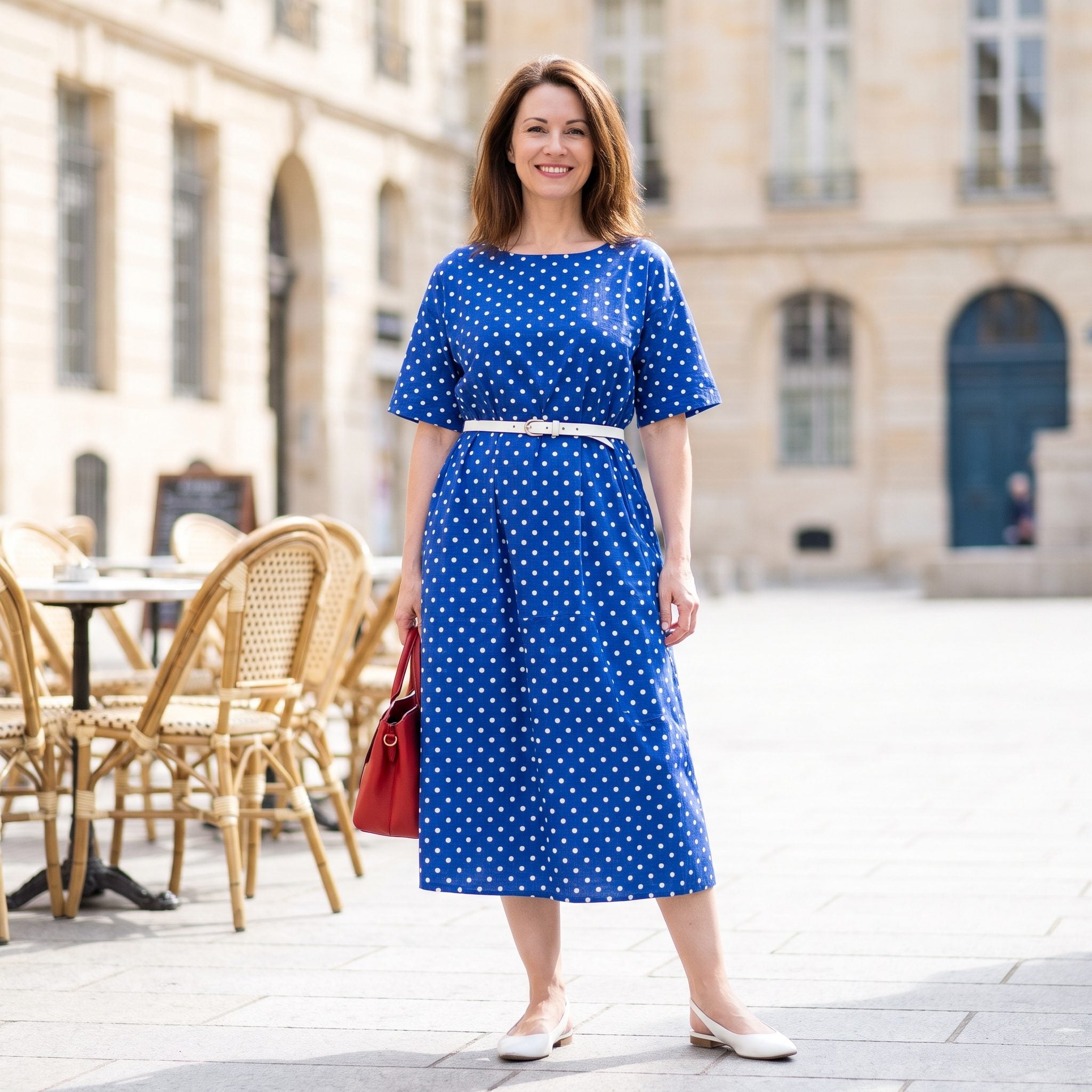
Cobalt blue, white polka dots and a belt positioned just beneath the bust make a spirited combination. The narrow white band establishes an elevated dividing line, allowing the patterned skirt to fall away beneath it.
Then comes the red handbag. Against the cobalt, it introduces a second assertive color without asking the belt to compete. The white band connects with the dots, the bag supplies the surprise, and the dress retains its playful rhythm. Three colors, each with a distinct assignment.
24. Wide Natural-Waist Belt on a Forest-Green Knit Dress
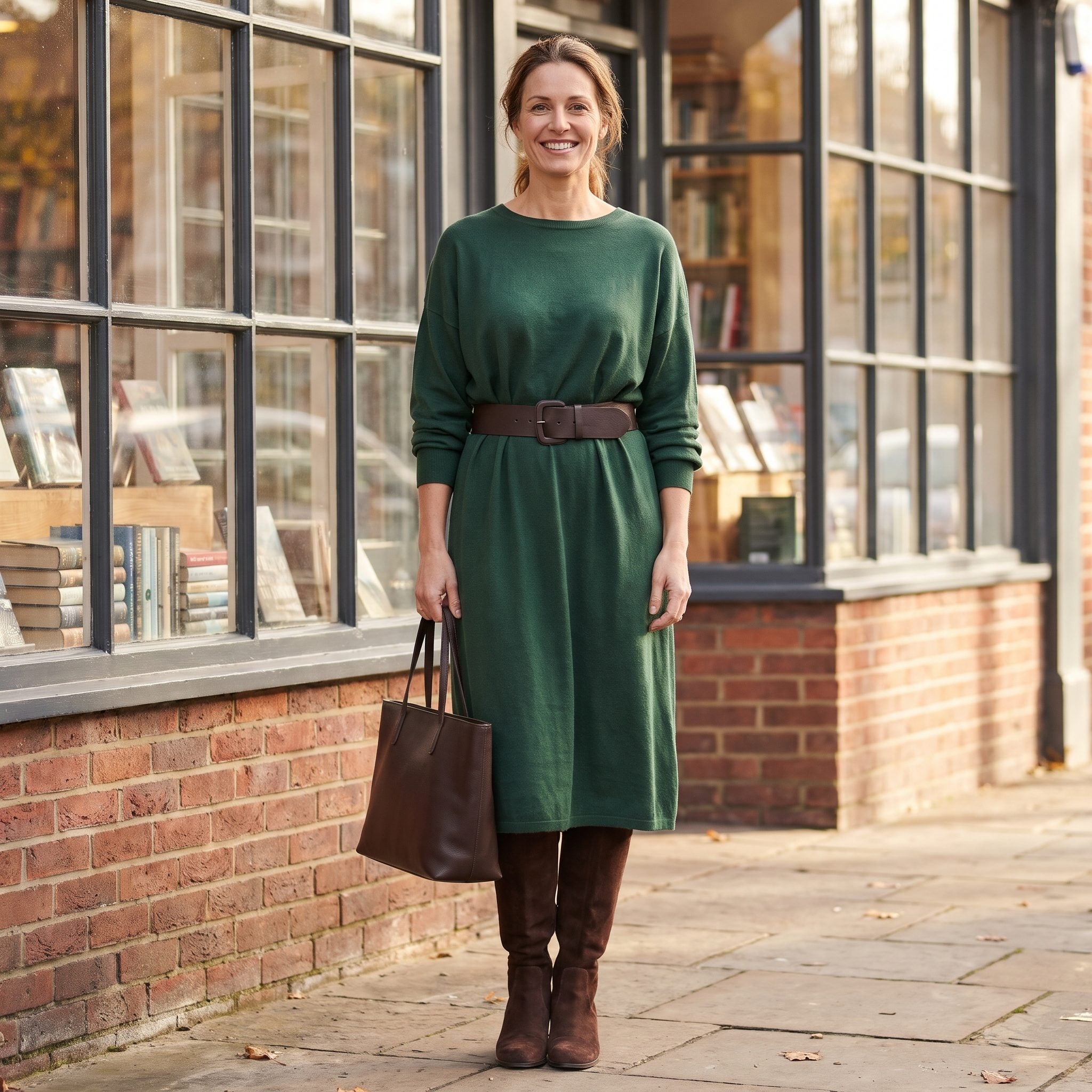
A soft green knit dress meets a substantial leather belt, and the contrast is immediate. The wide band defines the natural waist across a generous section of fabric, giving the dress a more pronounced hourglass shape without changing its relaxed character.
Chocolate knee-high boots continue the brown leather story below the hem. The combination has a satisfying autumnal weight: fine knit against sturdy leather, deep green against warm brown. A narrow belt would have whispered. This one has other ideas.
23. Low-Hip Belt on a Plum Metallic Dress
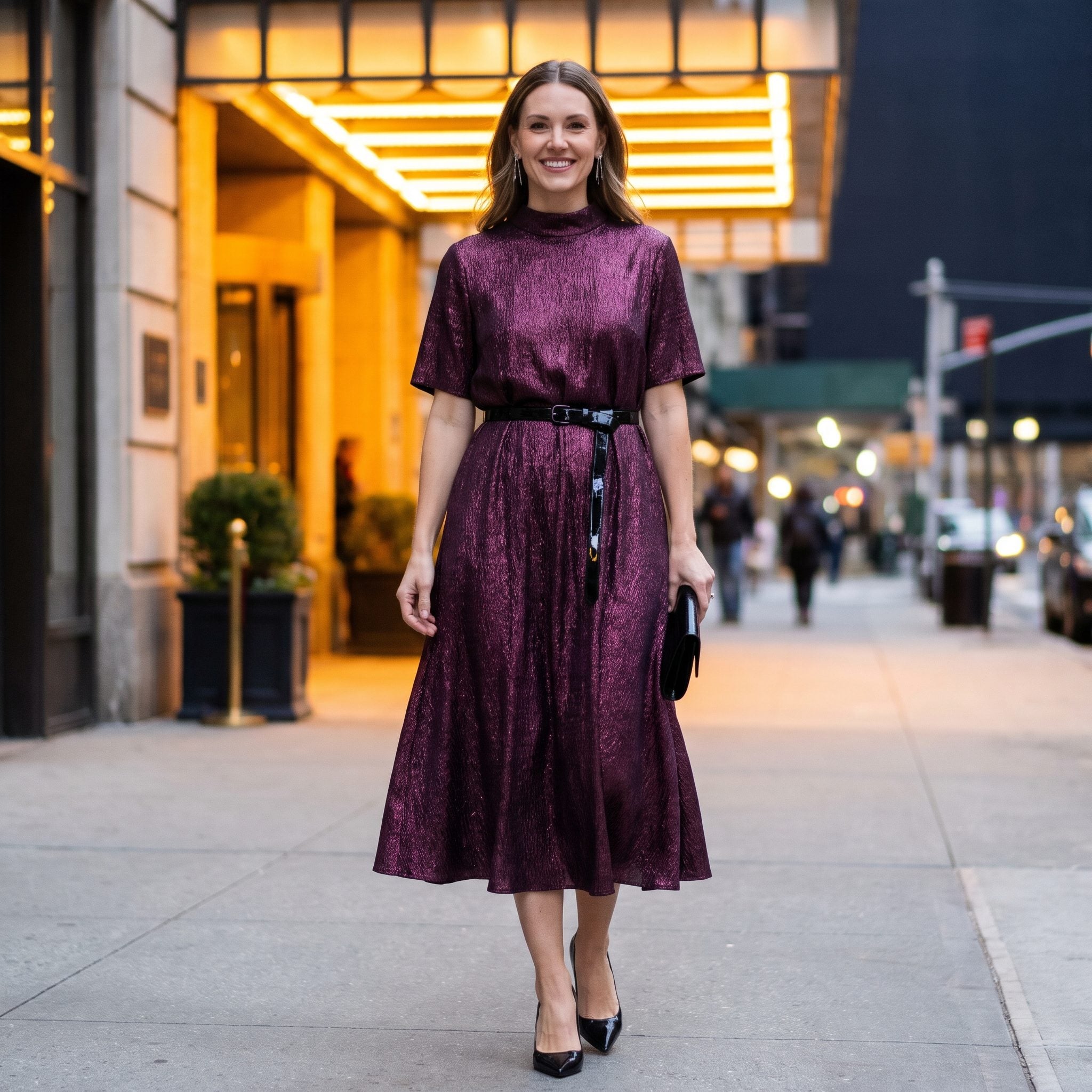
Shimmering plum jacquard already has enough visual activity to fill a room. Rather than adding more decoration at the waist, a slim black patent belt settles onto the hips, letting the torso remain long before the skirt begins to flare.
The glossy black line provides a crisp boundary against the metallic fabric. Its small buckle keeps the emphasis on placement rather than ornament. The dropped waist introduces an unexpected dose of nonchalance to a dress that might otherwise have taken a more conventional eveningwear direction.
22. Black High-Hip Belt on a Burgundy Satin Midi Dress
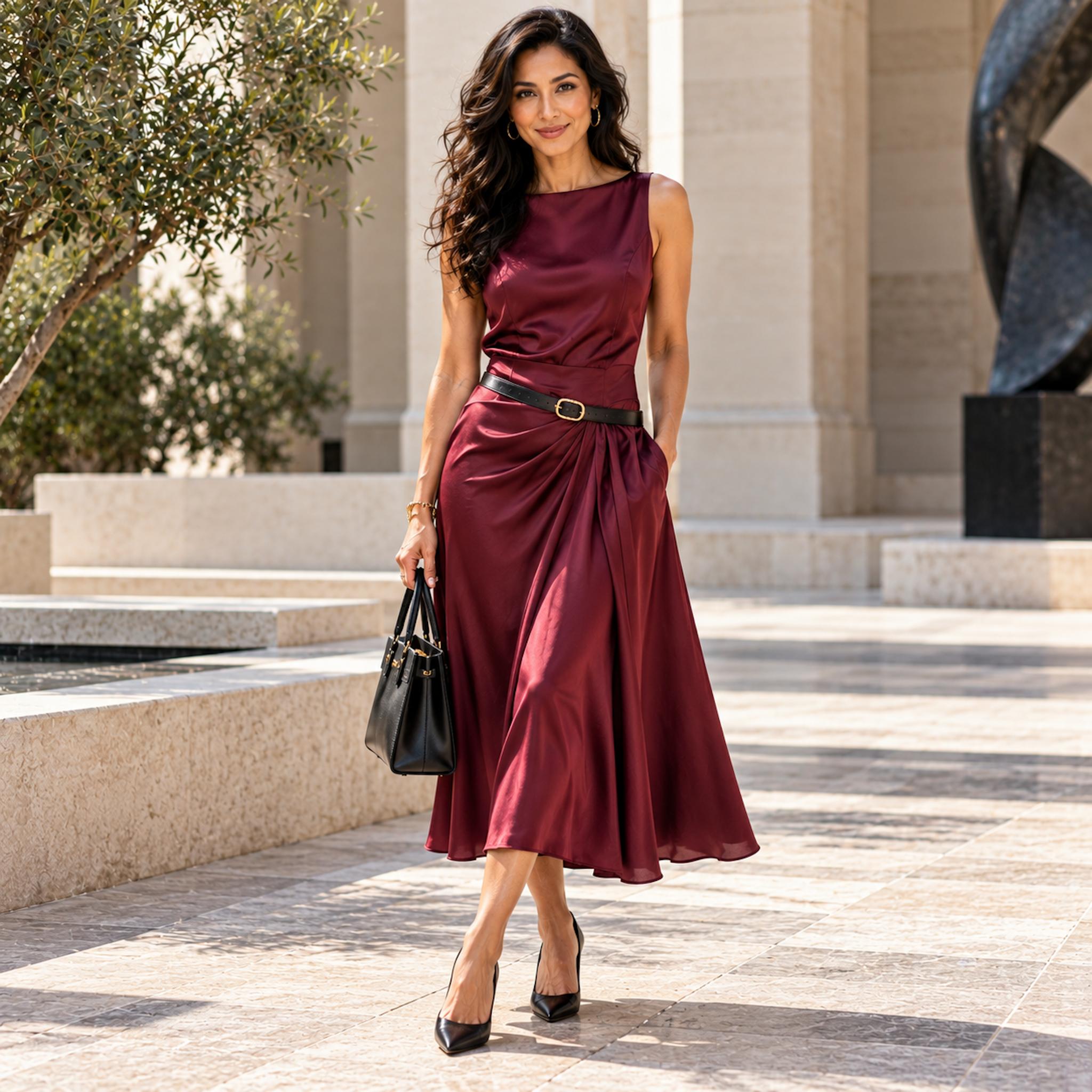
Not quite at the waist, nowhere near the hips: this black leather belt occupies the territory between. Against burgundy satin, the slightly lowered line gives the bodice extra length while the skirt gathers and spills beneath it. The effect is more relaxed than a tightly cinched waist, yet sharper than a fully dropped silhouette.
Black pointed pumps and a structured handbag echo the belt without competing with the satin’s sheen. The gold buckle adds a small, deliberate flash. A few inches can change the balance of an entire dress, and this placement makes the case without raising its voice.
21. Natural-Waist Belt on a Blue Cotton Shirt Dress

❤️ Would you like to save this?
Few garments demonstrate the power of a natural-waist belt more clearly than a loose cotton shirt dress. Without much shaping, the fabric falls from the shoulders. Introduce a chestnut leather belt and the bodice blouses, the skirt opens, and the entire silhouette acquires definition.
Blue cotton and brown leather have the unfussy appeal of classic workwear, while the fitted middle gives the combination a more polished direction. No dramatic color contrast or complicated accessory strategy is necessary. The dress simply finds its waist.
20. Pearl Empire Belt on a Sapphire Velvet Dress
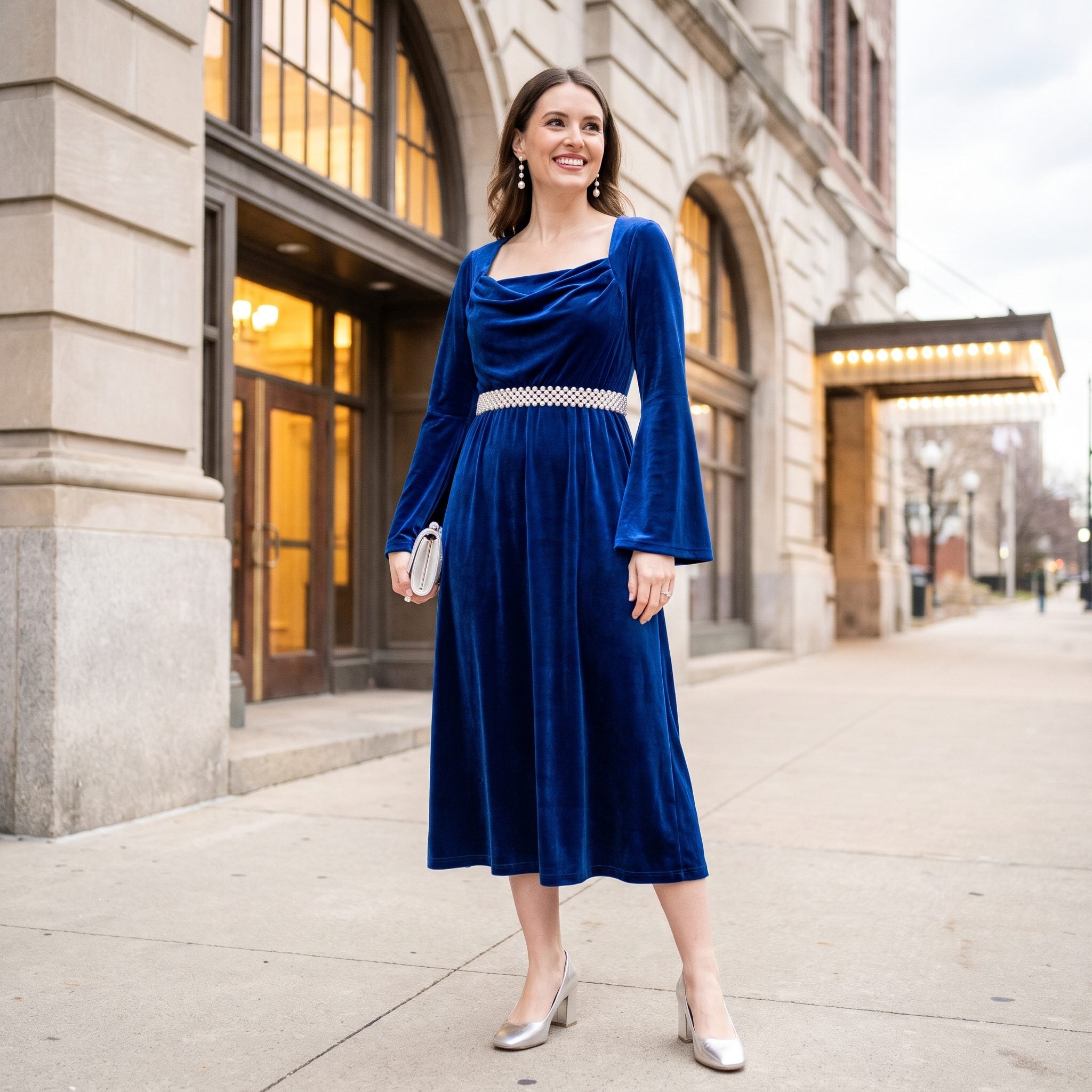
A pearl belt across sapphire velvet creates a striking meeting of surfaces. Small, luminous beads trace a high line beneath the bust, while the deep blue fabric falls away in a continuous sweep.
Silver pumps and pearl earrings extend the cool-toned palette without introducing another strong color. The belt serves as decoration and as a structural dividing line, organizing the dress’s proportions. Velvet provides the depth; pearls provide the light. Neither needs to shout across the room.
19. Raffia Natural-Waist Belt on a Terracotta Linen Dress
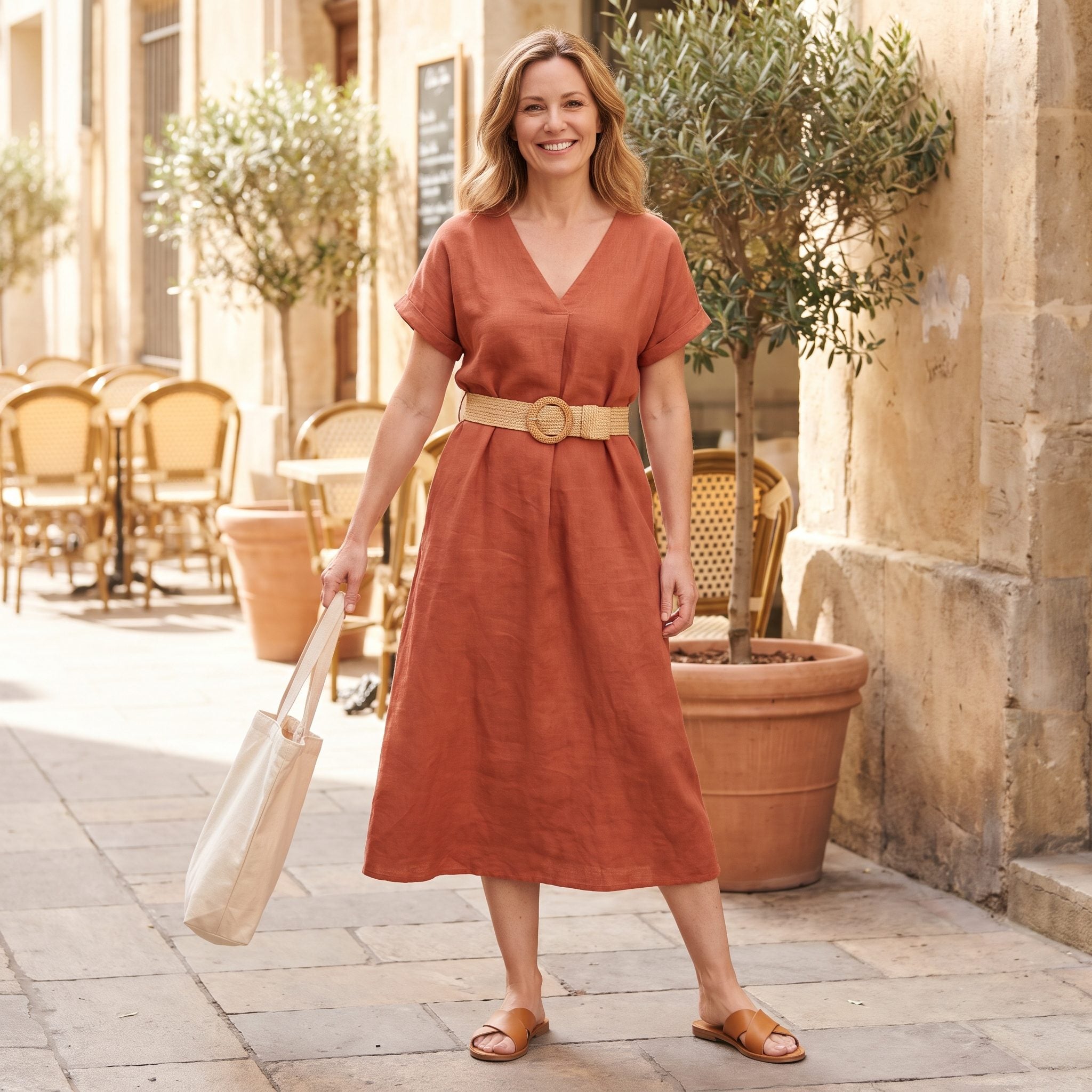
Raffia and terracotta linen look as though they were introduced by the same Mediterranean afternoon. The woven belt gathers the dress at the natural waist, bringing definition to fabric whose appeal lies partly in its relaxed, slightly rumpled character.
Tan leather sandals and a cream canvas bag continue the earthy palette. The interest comes from texture rather than strong color contrast: coarse weave against linen, supple leather against both. The outfit has the easy confidence of something designed for a long lunch rather than a complicated morning in front of the mirror.
18. Black Velvet Natural-Waist Belt on a Burgundy Satin Dress
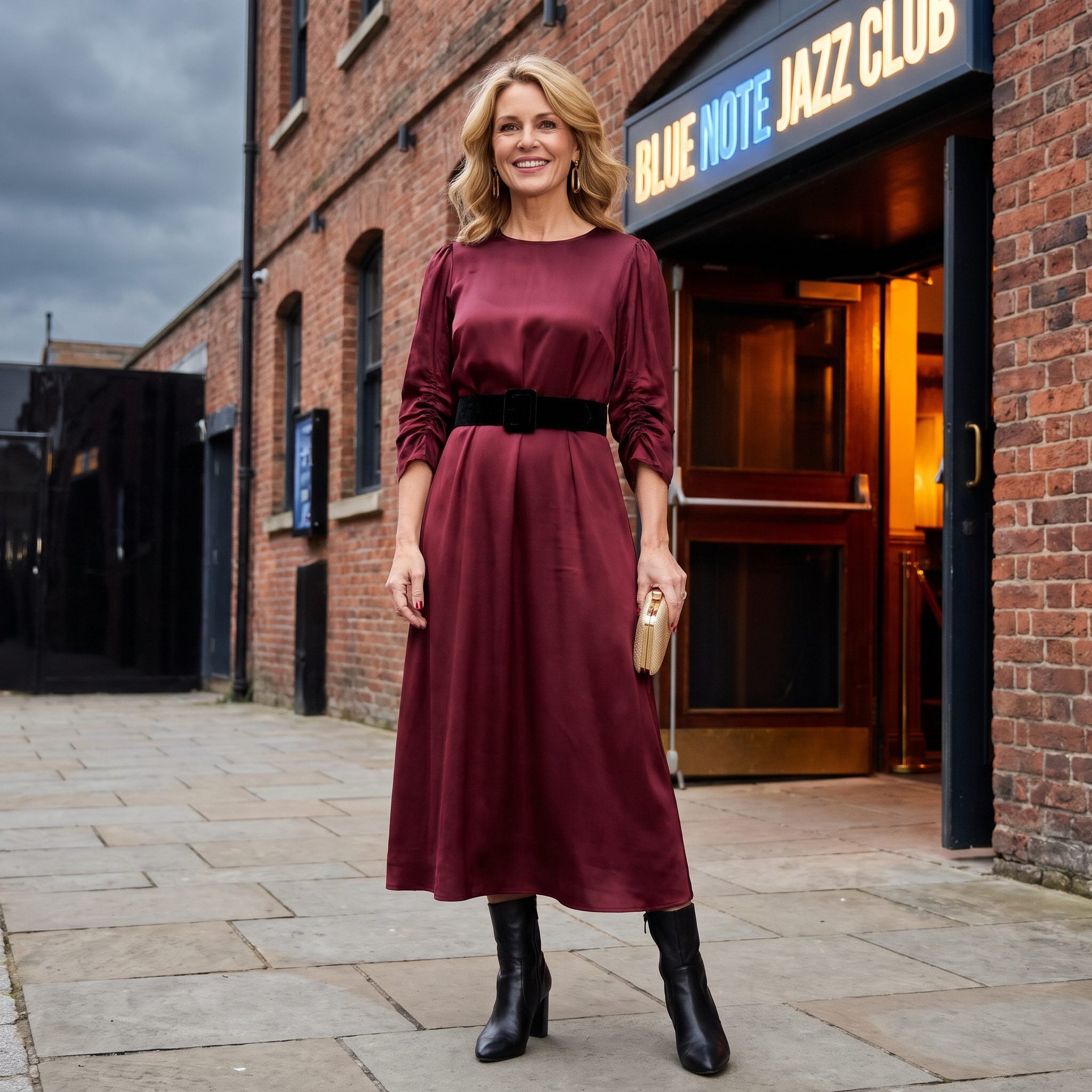
Black velvet absorbs light; burgundy satin throws it back. Put the two together at the waist and the difference in finish becomes as important as the difference in color.
The belt defines the middle while the satin blouses above and moves freely below. Gold earrings and a coordinating clutch introduce a warmer metallic note without disturbing the central contrast. The dress has plenty of sheen already. Its most effective accessory is the one that refuses to reflect it.
17. Braided Empire Belt on a Peach Chambray Dress
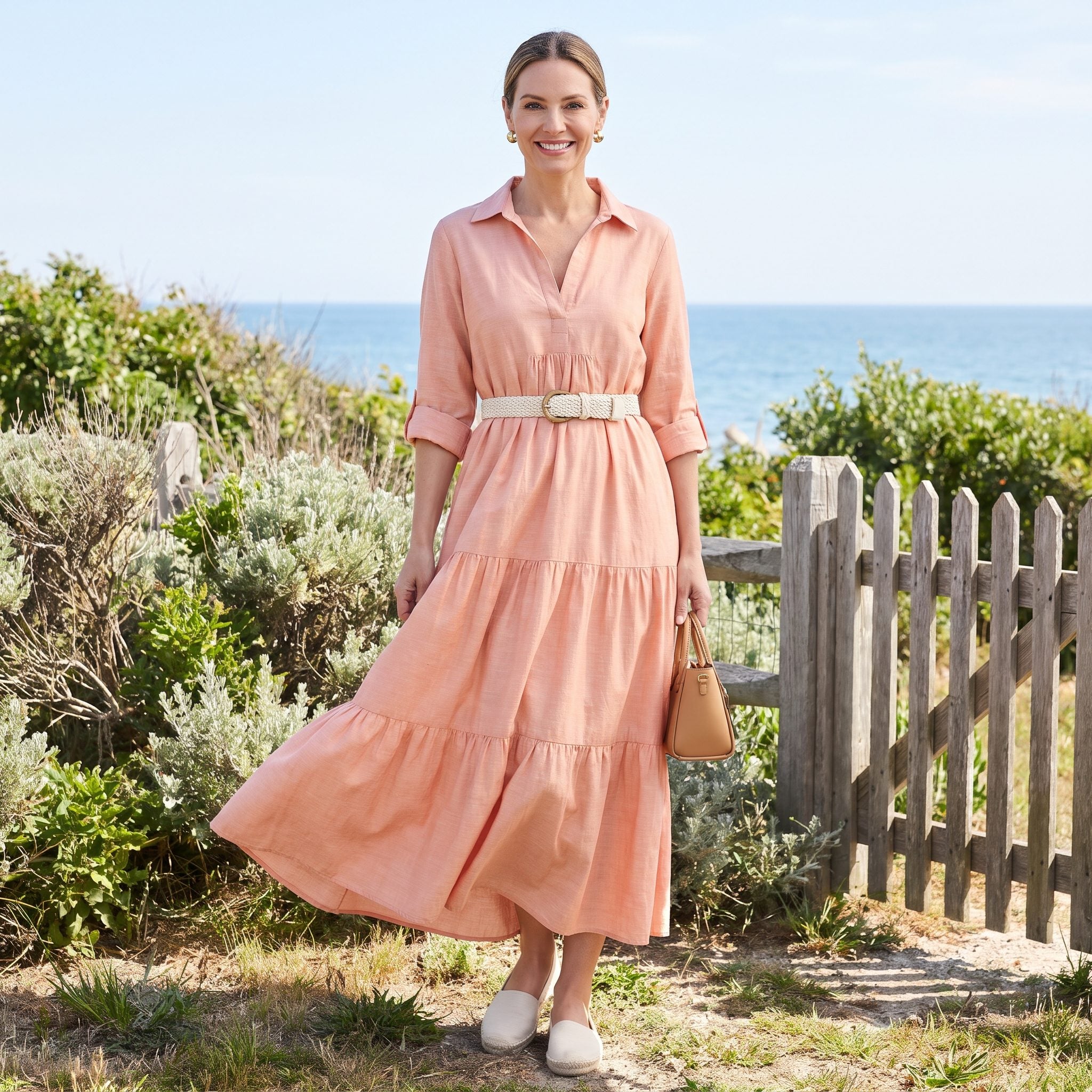
Peach chambray has the casual familiarity of a shirt, while the tiered maxi skirt gives it considerably more movement. A cream braided belt beneath the bust brings the two ideas together, defining the upper portion before the fabric opens into loose tiers.
Rolled sleeves keep the look from becoming overly precious. Cream espadrilles repeat the belt’s pale tone at ground level, creating continuity without rigid matching. The braided texture adds enough interest to make a simple high placement feel deliberate rather than improvised.
16. Low-Hip Belt on a Plum Pleated Dress
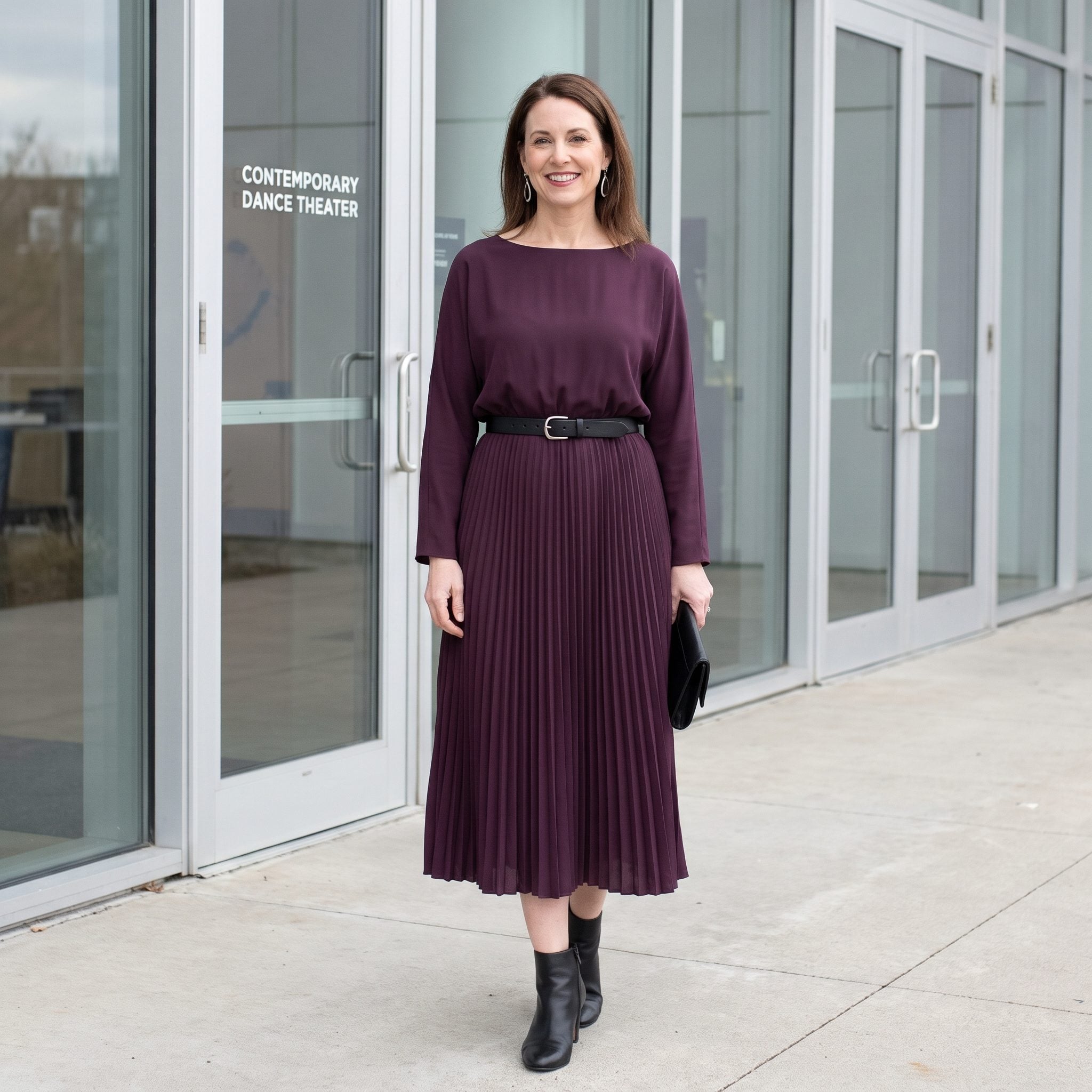
Three distinct sections give this plum dress its character: a straight upper body, a black belt across the hips and a release of fine pleats beneath. The lowered dividing line creates a dropped-waist silhouette with a distinctly Art Deco sensibility.
Under evening lighting, the deep plum behaves almost like a neutral, allowing the pleats and horizontal belt to carry the visual drama. Ankle boots steer the outfit away from historical costume and toward something sharper. The appeal lies in that collision between vintage proportions and contemporary styling.
15. Emerald Natural-Waist Belt on a Black Taffeta Dress
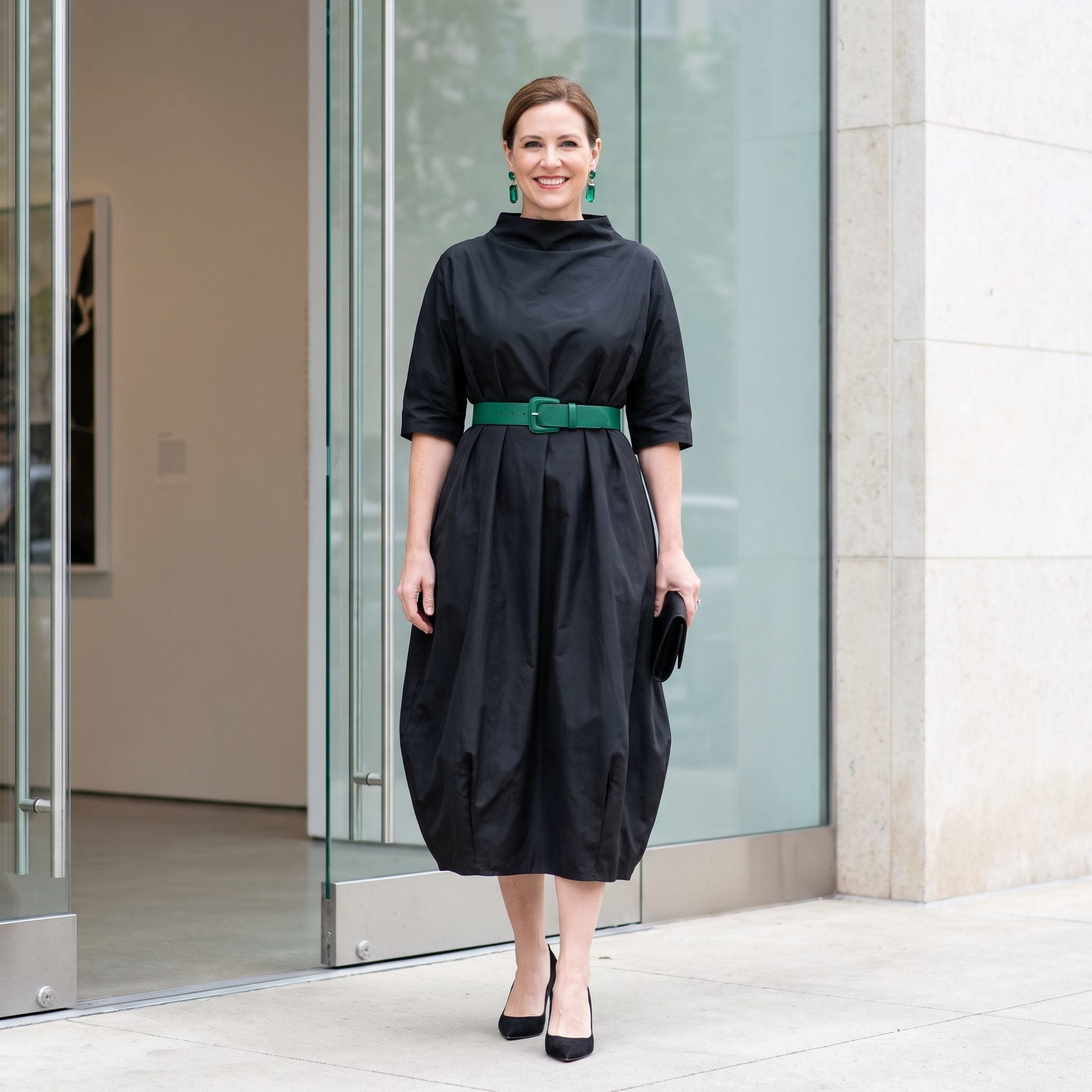
Taffeta has opinions. Pull it inward at the waist and the crisp fabric responds by pushing outward through the skirt. An emerald belt makes that exchange unmistakable, defining a narrow middle against the dress’s exuberant volume.
Matching emerald earrings introduce a second flash of green against the black. The jewel tone is vivid enough to hold its own beside the sculptural skirt, while the natural-waist placement makes the contrast between fitted and full particularly pronounced. This is a dress that understands the value of a dramatic entrance.
Soft fabric follows a belt. Crisp fabric may push back. The best placement makes use of that difference.
14. Tan Low-Hip Belt on a Mustard Linen Dress
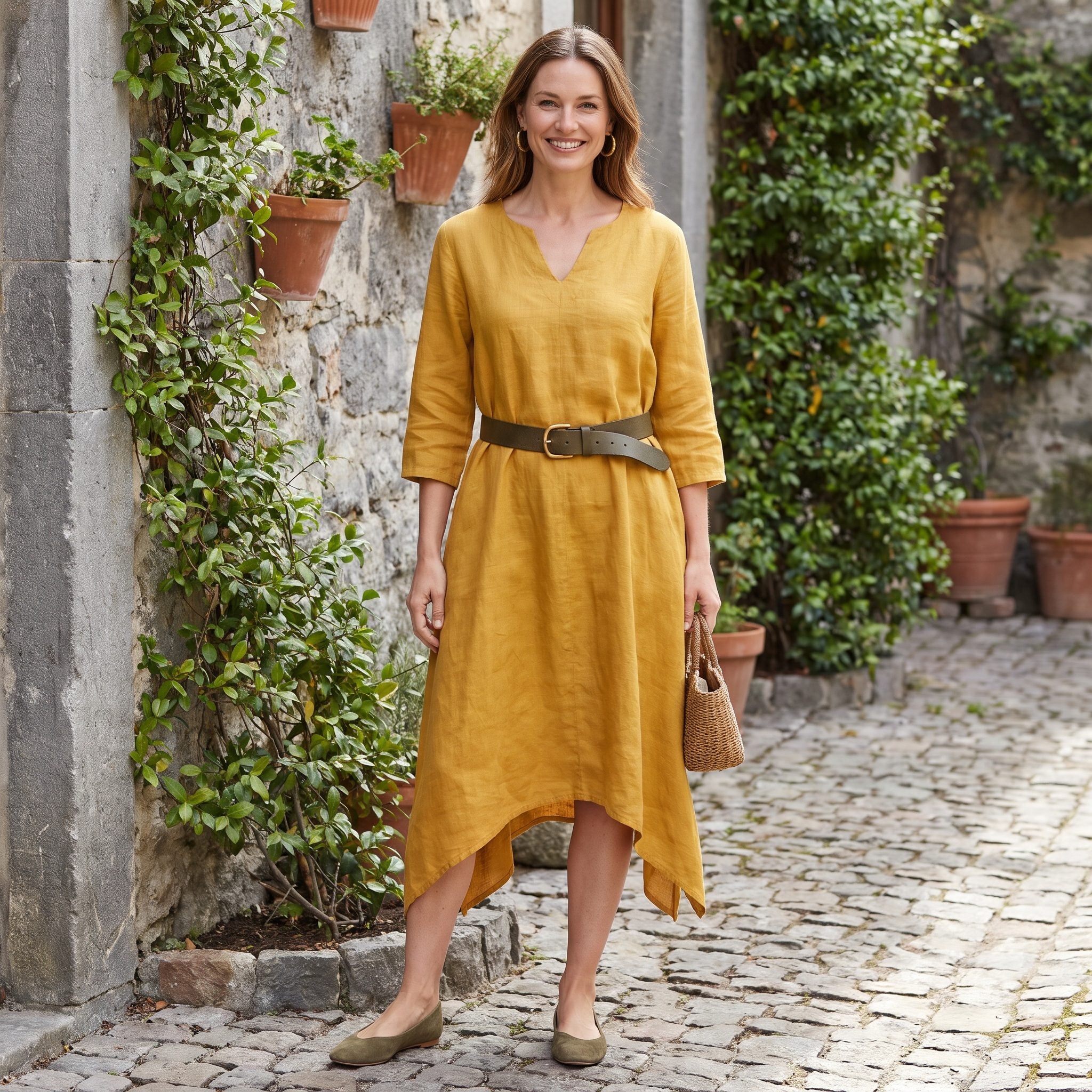
Mustard linen falls relatively straight from the shoulders before an olive-toned belt catches it at the hips. The placement preserves the relaxed upper body and creates a dropped-waist effect, while the handkerchief hem introduces irregular movement below.
Olive and mustard share an earthy warmth without disappearing into one another. The belt supplies a muted horizontal accent rather than a bright interruption. Compared with a sharply cinched waist, the proportions are looser and less conventional, exactly what gives the dress its appeal.
13. High Empire Belt on an Ivory Linen Dress
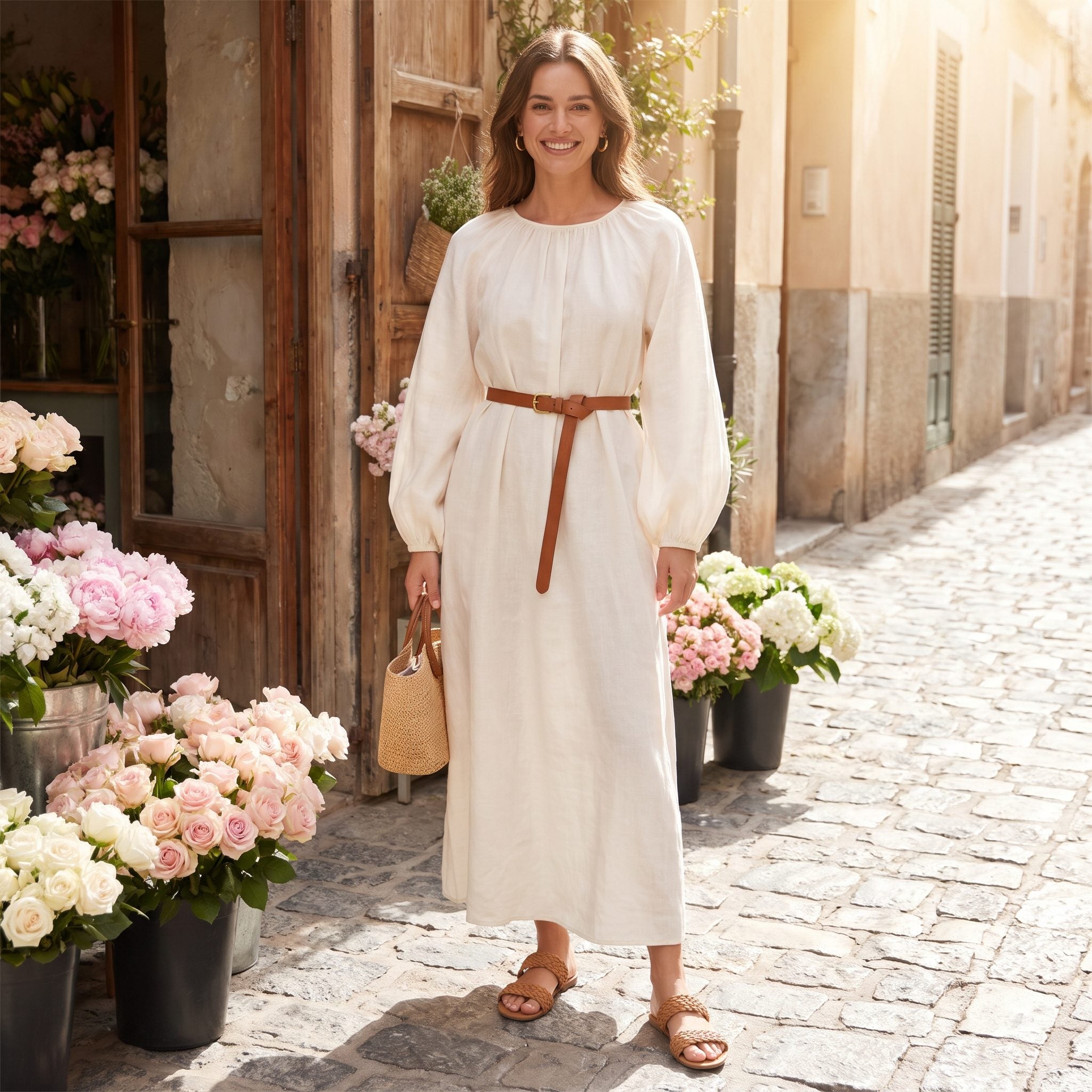
Ivory linen can become a great uninterrupted expanse of fabric. A slim cognac belt placed just beneath the bust breaks that expanse near the top, encouraging the eye to follow the long fall of the skirt.
The brown leather introduces warmth against the pale dress, while a simple dress silhouette keeps the raised placement from becoming overly elaborate. A straw bag adds another natural texture. The effect is romantic, with accessories grounded in practical summer dressing.
12. Corset Belt on a Mauve Sweater Dress
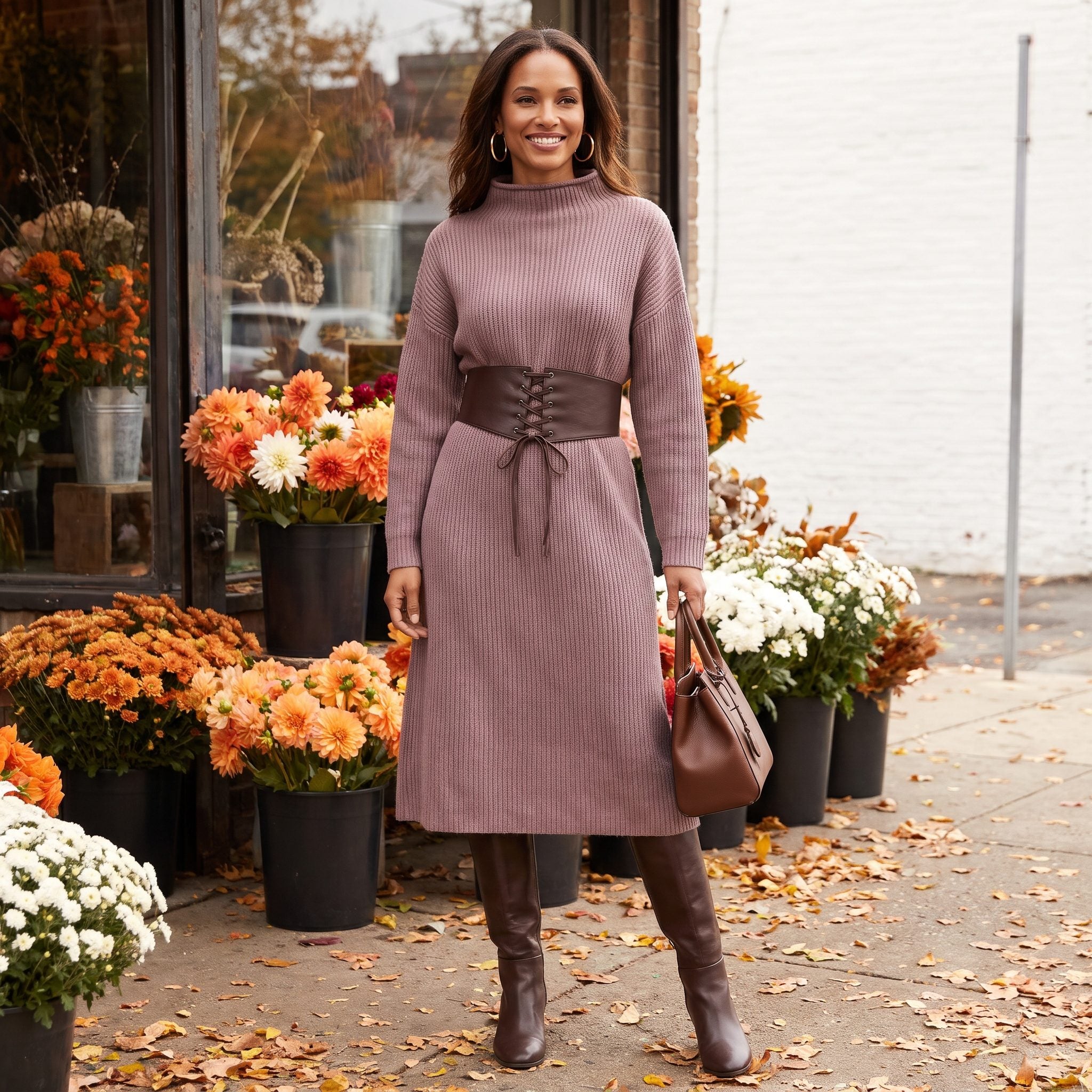
There is nothing timid about putting a corset belt over a slouchy sweater dress. The mauve ribbed knit wants to fall in a relaxed column; the broad espresso leather belt insists on defining the middle.
That tension is precisely the attraction. The fabric gathers above the belt and falls more cleanly below, while matching espresso knee-high boots give the lower half a strong visual finish. The result balances softness and structure without sacrificing the sweater dress’s comfortable character.
11. Gold Empire Belt on a Black-and-Ivory Printed Dress
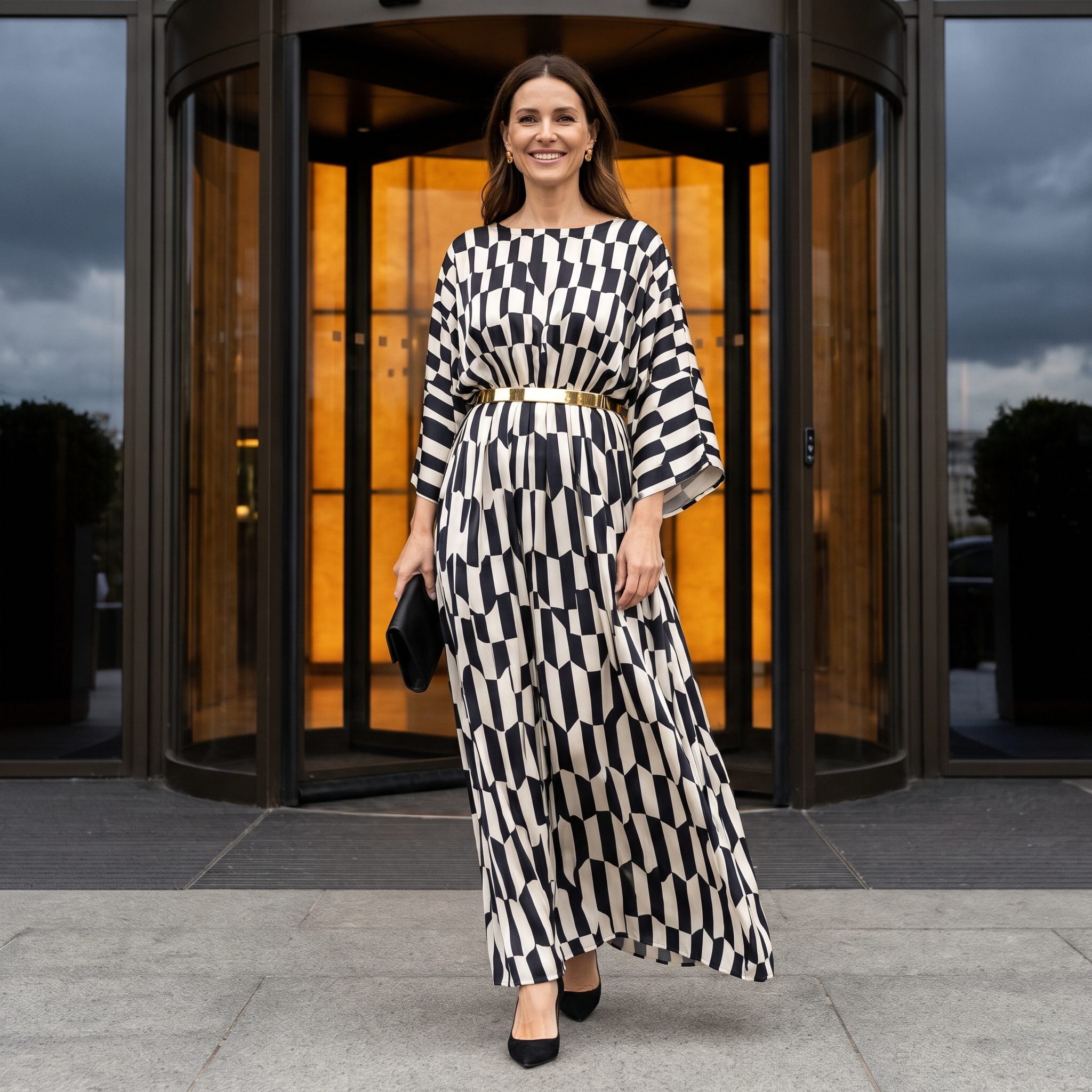
Black-and-ivory geometry covers this dress with enough pattern to make additional ornament a risky proposition. A narrow gold metal belt solves the problem by creating one luminous line beneath the bust.
The elevated placement organizes the print without dividing it at the natural waist. Gold brings warmth to the otherwise monochromatic palette, and the slim band has the delicacy of a piece of jewelry. The belt doesn’t need to be large to command attention. Its position gives it authority.
10. Brown Natural-Waist Belt on a Camel Corduroy Dress
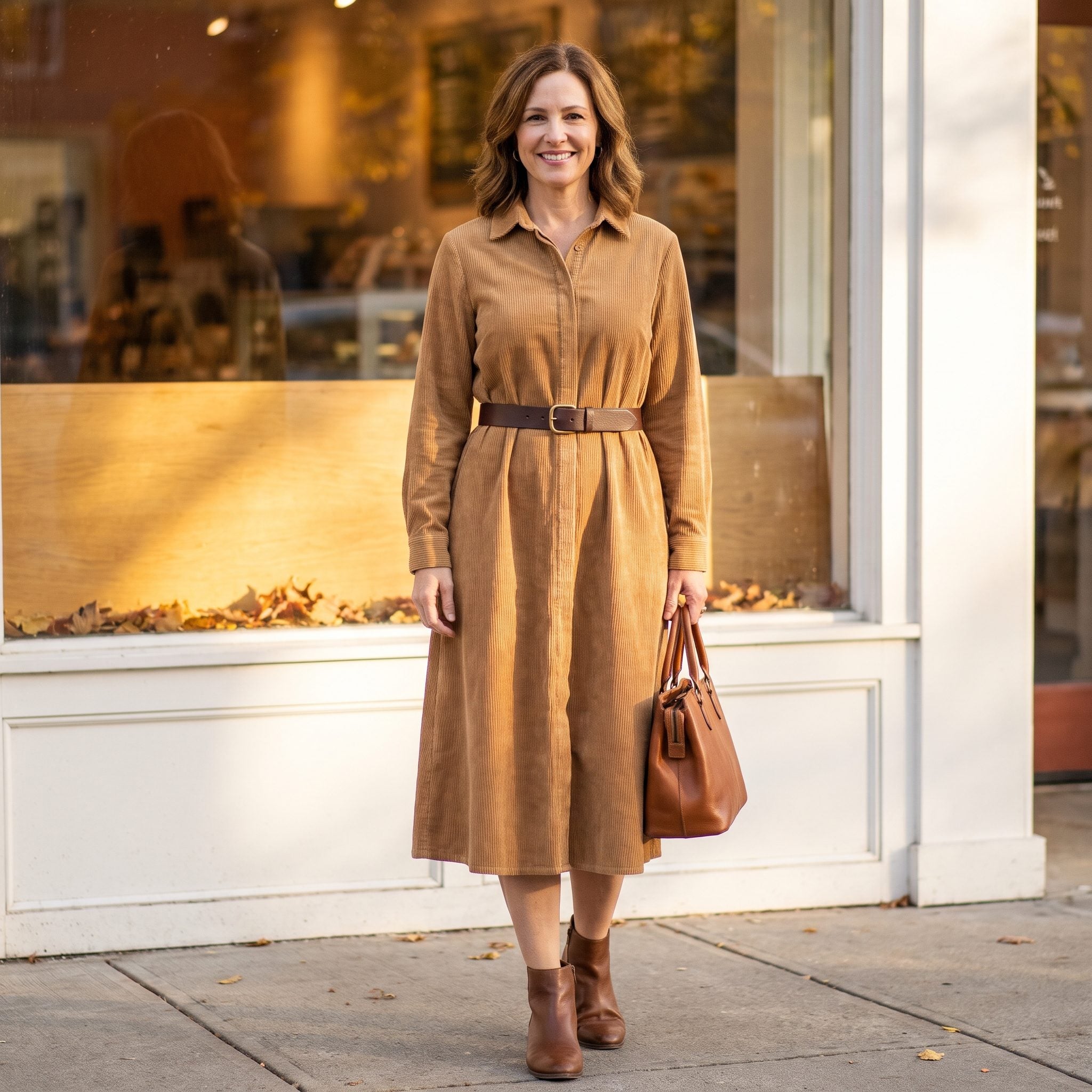
Vertical corduroy wales give this camel dress a built-in sense of direction. A darker brown belt interrupts those lines at the natural waist, separating the fitted upper portion from the softer A-line skirt.
Matching brown ankle boots complete the tonal arrangement. Camel against chocolate brown is a reliable fall combination, while the corduroy’s pronounced texture keeps it from looking flat. The belt supplies the shape; the fabric supplies the character.
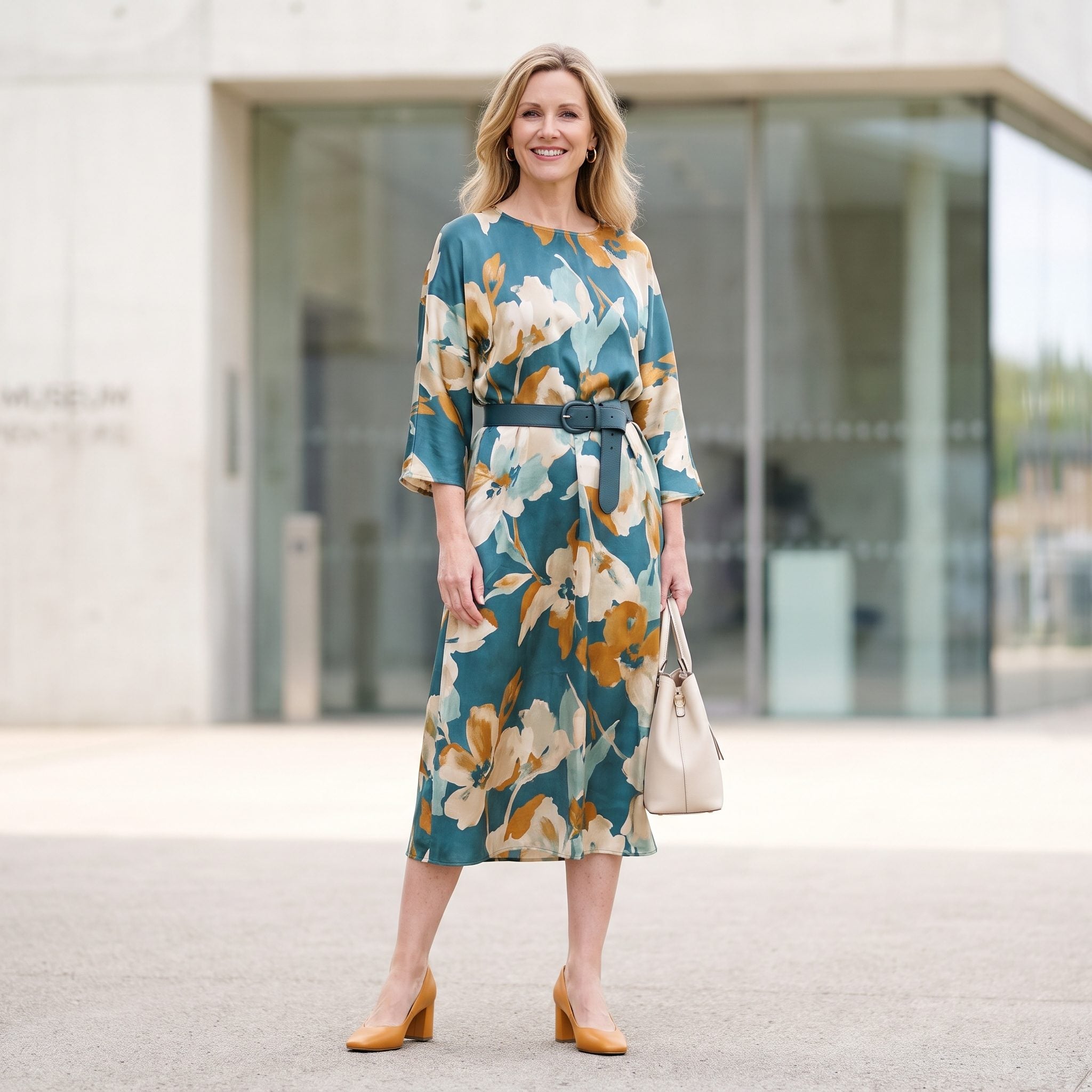
9. Teal Natural-Waist Belt on a Printed Silk Dress
❤️ Would you like to save this?
An abstract silk print can send the eye in several directions at once. A dark-teal belt takes one color from the pattern and establishes a clear center, giving the loose dress a more deliberate silhouette.
Ochre heels pick up another note from the print without matching the belt. The result is coordinated rather than rigidly symmetrical. Instead of introducing an unrelated accessory color, the styling draws its palette directly from the dress. The print supplies the ingredients; the belt decides where the emphasis belongs.
8. Slim Empire Belt on a Yellow Eyelet Dress
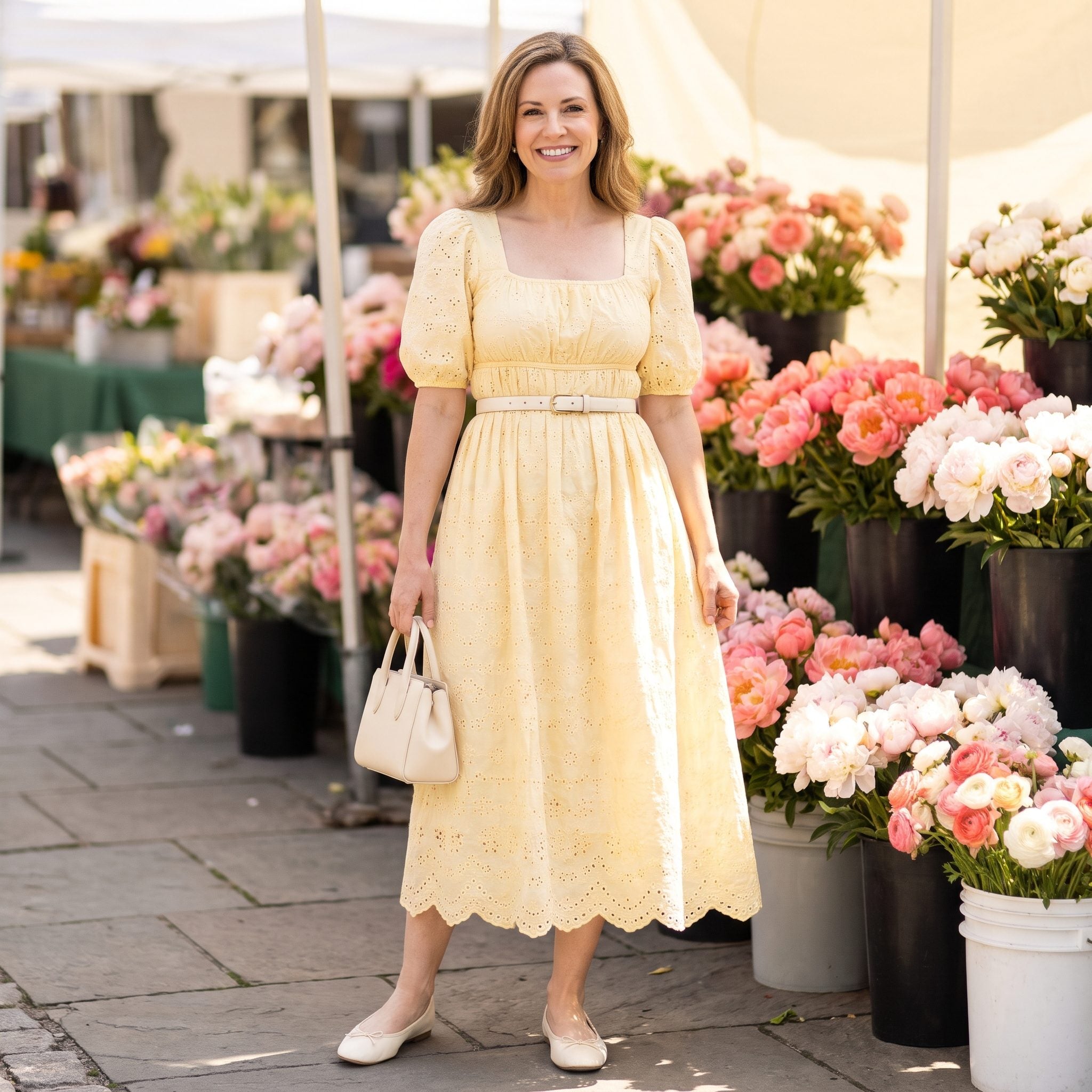
Pale-yellow eyelet has a lightness that would be easy to overwhelm with a heavy accessory. A slim belt beneath the bust establishes a gentle empire line while leaving the flared skirt free to move.
Ivory ballet flats and delicate gold earrings keep the accessories understated. The openwork fabric already provides pattern and texture, so the belt’s contribution is primarily proportional. Nothing needs to compete with the dress’s sunny color.
7. Chocolate Natural-Waist Belt on a Copper Silk Shirt Dress
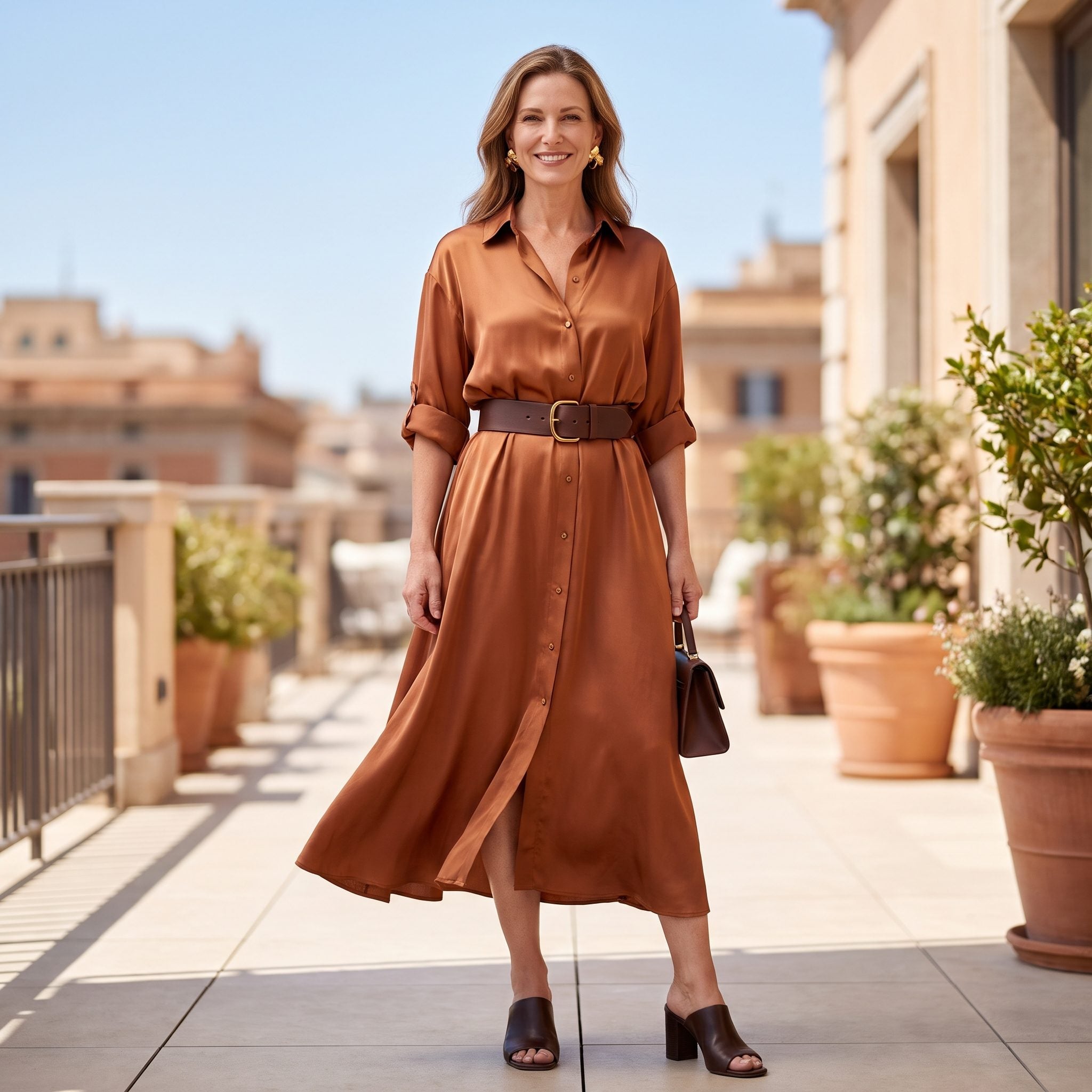
Copper silk catches the light with every fold. A wide chocolate-brown belt introduces a deeper, quieter band at the natural waist, giving the shirt dress definition without interrupting its warm tonal character.
The bodice gathers softly above the leather while the skirt retains its fluid movement. Unlike a high-contrast black belt, chocolate belongs to the same color family as copper, allowing the difference in texture and depth to carry the effect. Polished evening dressing with an unexpectedly earthy foundation.
6. Pearl-Gray Empire Belt on a Lavender Georgette Dress
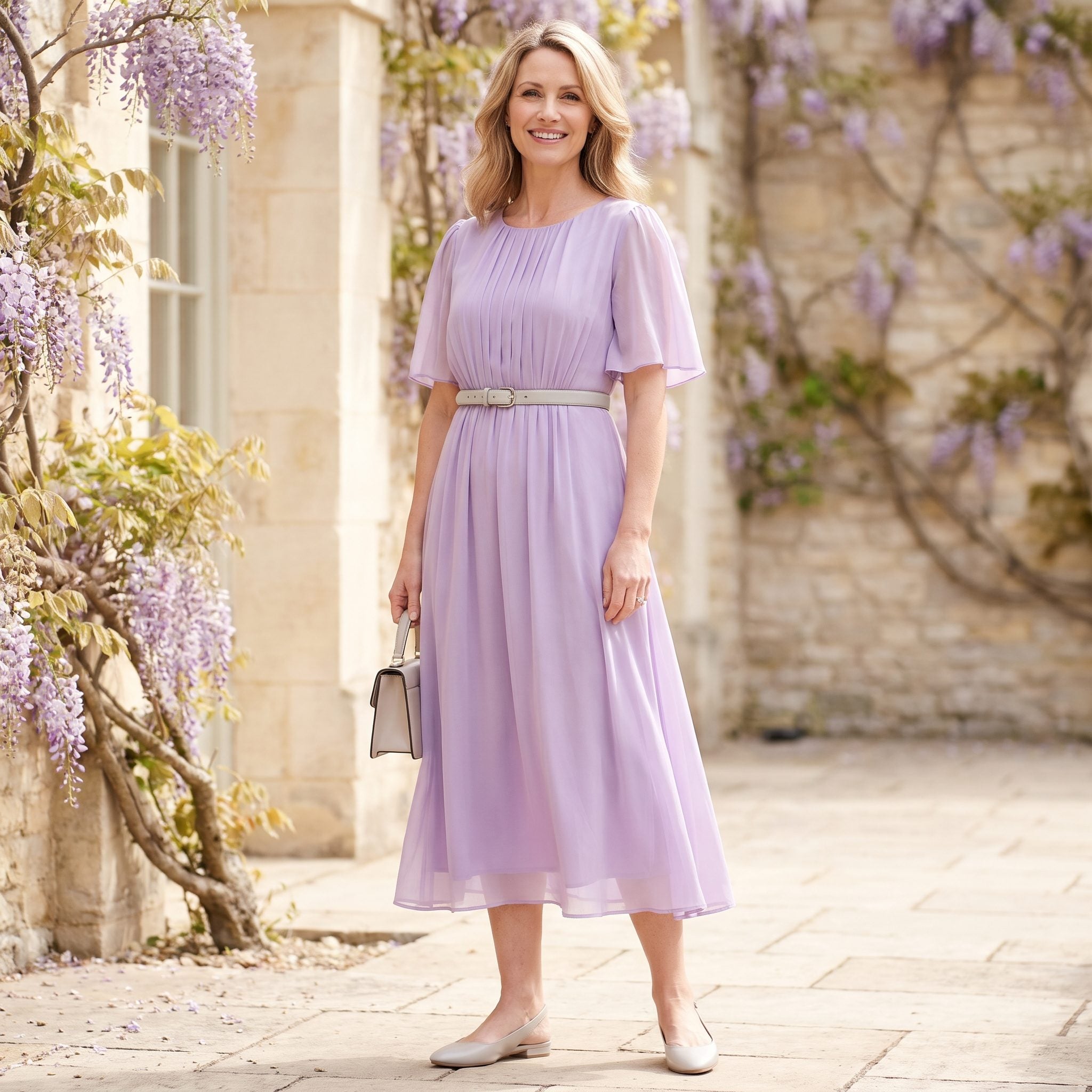
Lavender georgette has the airy quality of fabric that would rather float than hold a rigid shape. A pearl-gray empire belt gathers the upper portion beneath the bust, giving the dress a point of definition before the pleats descend.
The cool gray softens the sweetness of lavender without introducing a competing color. Pearl earrings repeat the pale accent near the face. The controlled placement keeps the delicate combination from dissolving into an indistinct cloud of pastel fabric.
5. Obi Belt on a Cream-and-Black Striped Dress
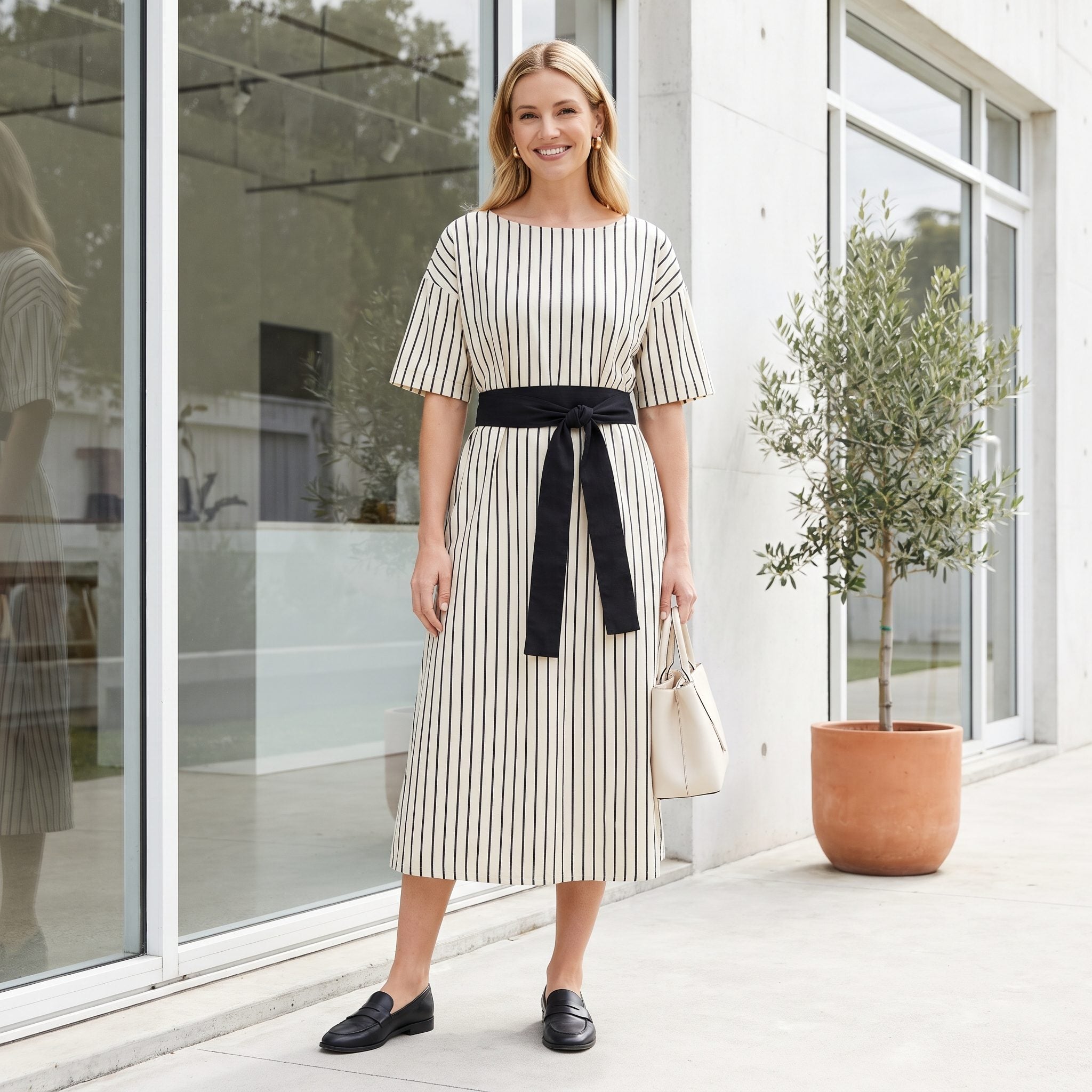
Vertical stripes already establish a strong direction. A black obi belt interrupts them with a broad, softly tied waist treatment, gathering the fabric without the hard metallic punctuation of a conventional buckle.
Black loafers repeat the belt’s color, while a cream bag provides a quieter finish. The appeal is graphic rather than decorative: bold stripes, a generous wrap and a tightly controlled palette. The obi introduces shape without sacrificing the relaxed character of the dress.
4. Red Empire Belt on a Navy-and-White Floral Dress
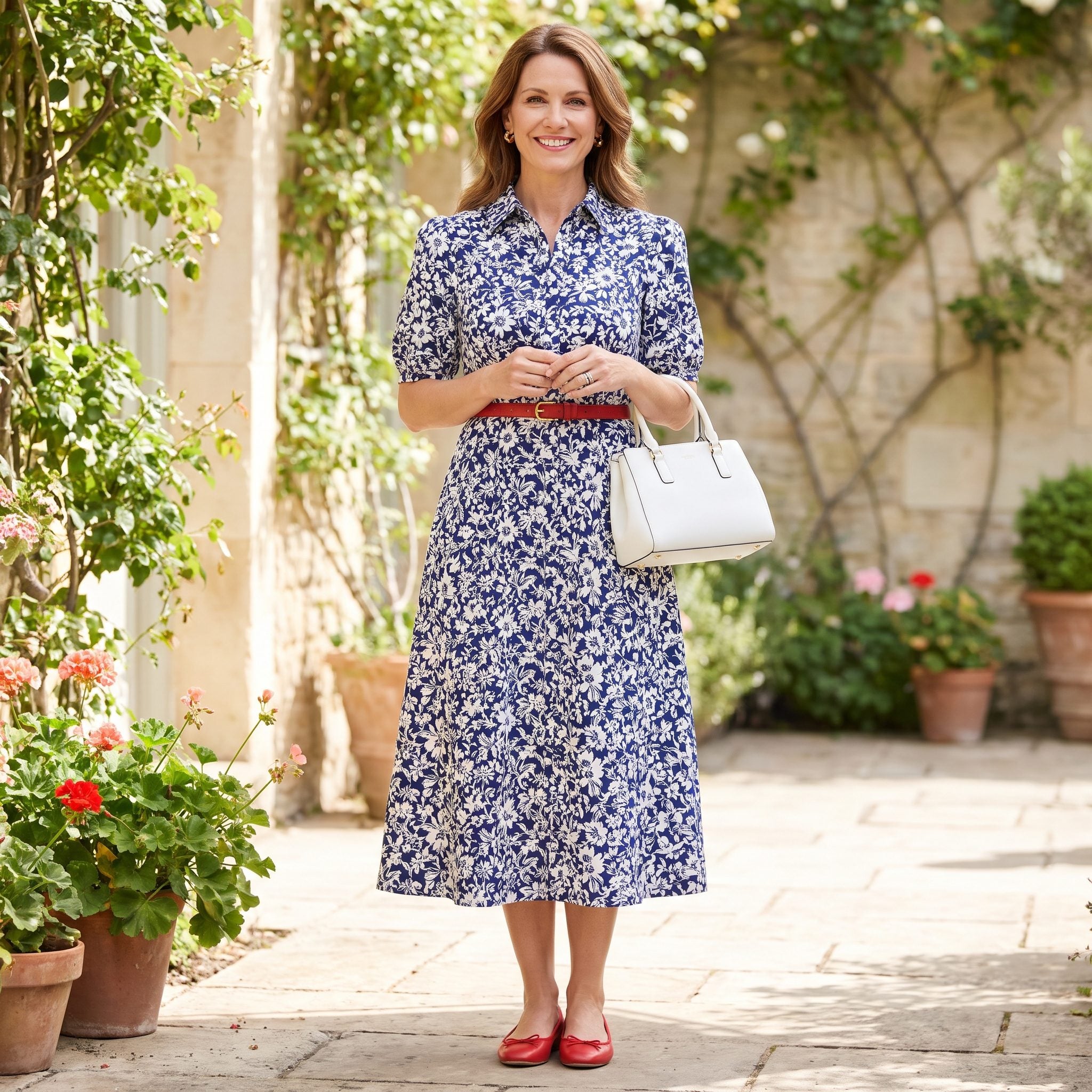
A vivid red belt beneath the bust cuts through the navy-and-white floral print with remarkable clarity. The elevated placement keeps the skirt airy, while the red line gives the pattern a focal point it might otherwise lack.
Matching red flats repeat the accent below, connecting the upper and lower portions of the outfit. The combination has the charm of a garden-party dress without relying entirely on its floral print. That single red band gives the whole arrangement a sharper, more contemporary finish.
Florals can be a harder sell with our readers: outfit images with floral patterns got fewer hearts than the other images in the same articles, which makes a clear focal line worth having.
3. Asymmetrical Gold Belt on a Black Satin Gown
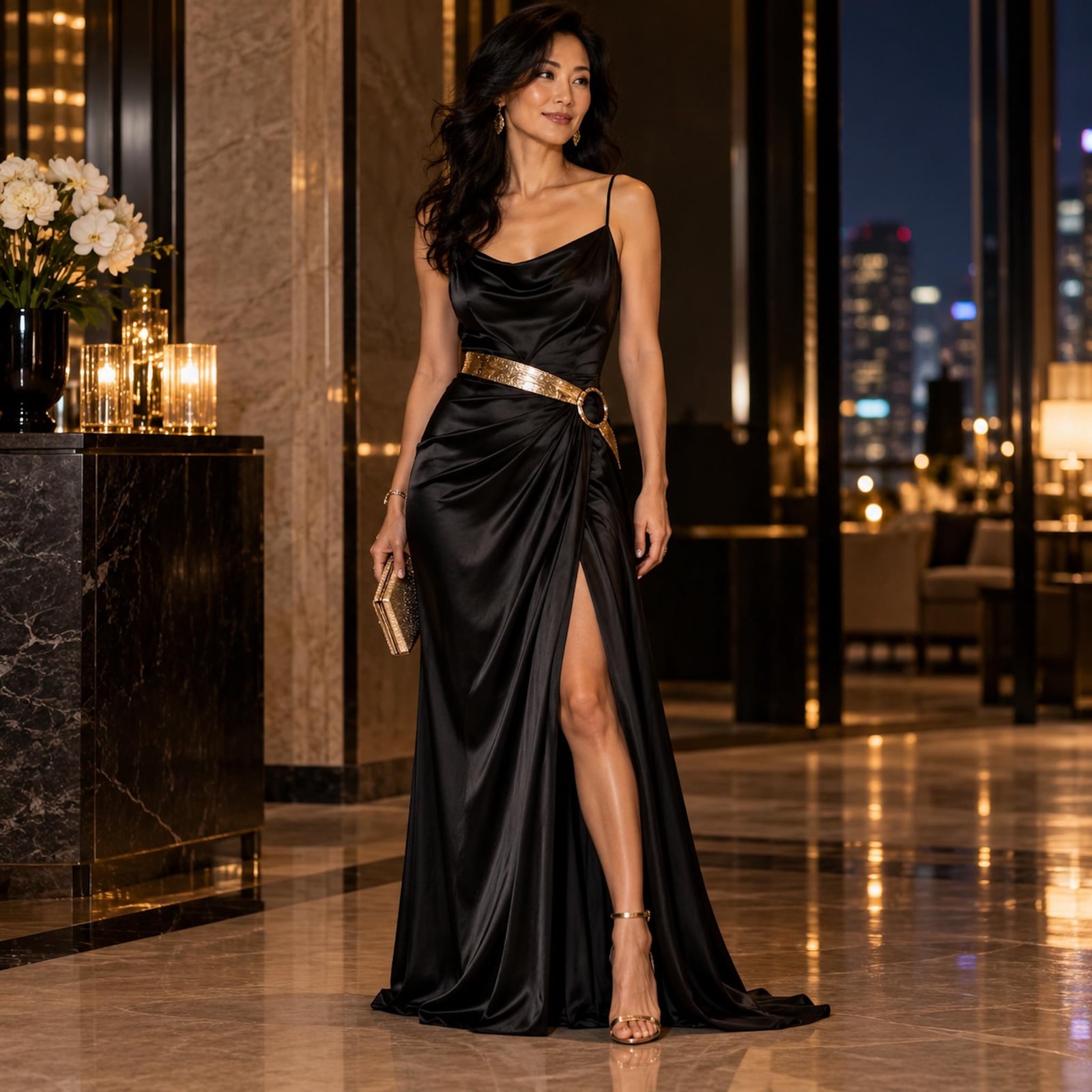
A conventional belt draws a straight line and calls the waist settled. This sculptural gold band has other plans. Slanting across the black satin from one side of the waist toward the opposite hip, it creates a striking diagonal that works with the gown’s gathered draping rather than dividing it neatly in two.
The gold ring at the hip becomes the pivot point for the fabric, while the thigh-high slit extends the sense of movement. Metallic heels and a small gold clutch repeat the warm gleam without challenging the belt’s authority. A black evening gown, a single angled line, and suddenly symmetry looks rather predictable.
2. Red Natural-Waist Belt on an Ivory Broderie Dress
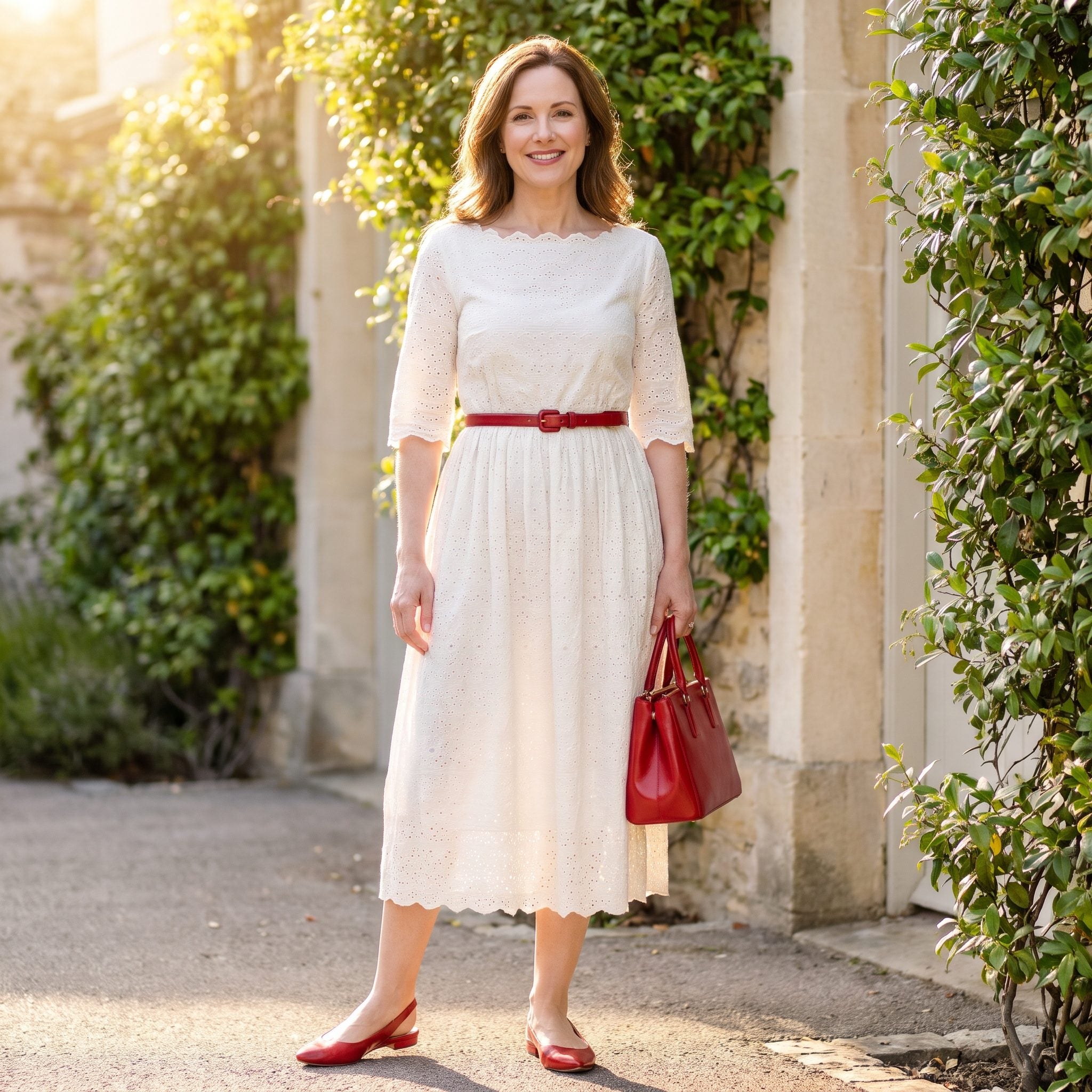
One red belt cuts across an expanse of ivory eyelet, and suddenly the delicate dress has a commanding center. Cinched at the natural waist, the bodice blouses gently while the skirt opens into a soft A-line. The broderie remains romantic; the styling refuses to be timid.
Red slingback flats and a structured handbag repeat the belt’s saturated color at opposite ends of the outfit. That three-part rhythm gives the look its precision. The accessories aren’t competing with the dress. They’re putting a firm red frame around it.
1. Natural-Waist Belt on an Emerald Printed Wrap-Effect Dress
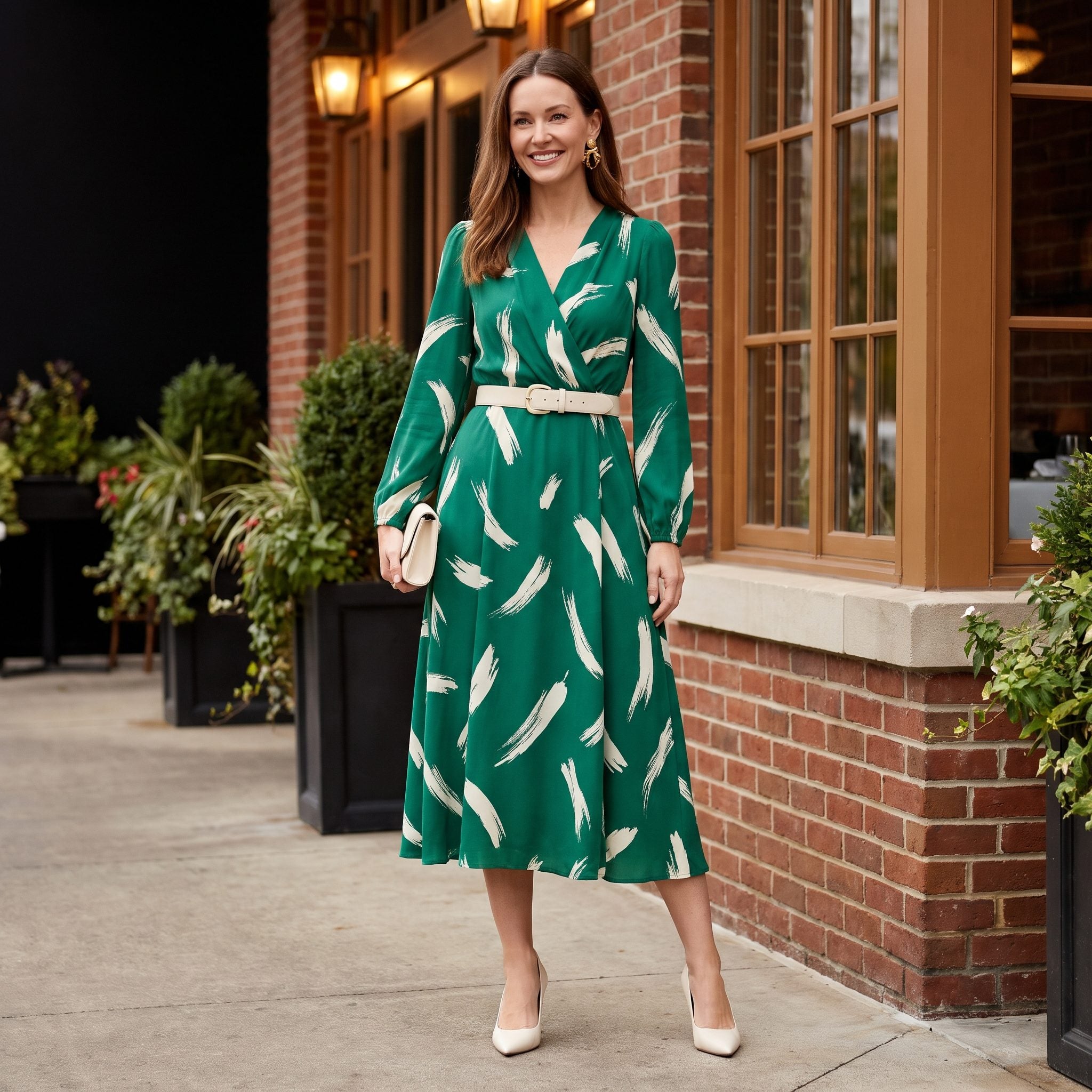
A sweeping emerald brushstroke print brings all the visual drama this dress could need. An ivory leather belt settles at the natural waist, gathering the crepe into a soft upper silhouette while allowing the skirt and flowing sleeves to retain their movement.
Ivory heels and a matching clutch draw a pale accent from the print and repeat it beyond the waist. The belt follows the dress’s natural shaping rather than imposing a new dividing line, bringing order to the expressive pattern and flowing fabric. Strong color, generous movement and a narrow strip of ivory leather: nothing more complicated is required.