❤️ Would you like to save this?
The black dress hanging in your closet right now is not the problem. It never was. The problem is wearing it the same way you did three years ago, with the same shoes, the same bag, the same earrings you grabbed because they were closest. A great black dress is not a finished outfit. It’s a starting point. These 27 tricks can make it feel like you bought something new, often using pieces already in your closet.
FYI, thanks to AI imagery software, we’re able to create very specific fashion and hairstyle examples to illustrate the points being made. In some cases, imagery is exaggerated to hammer home the point. Also, assume links that take you off the site are affiliate links such as links to Amazon. this means we may earn a commission if you buy something.
27. Wear an Oversized Men’s Shirt Open Over the Dress, Then Belt the Layers Together
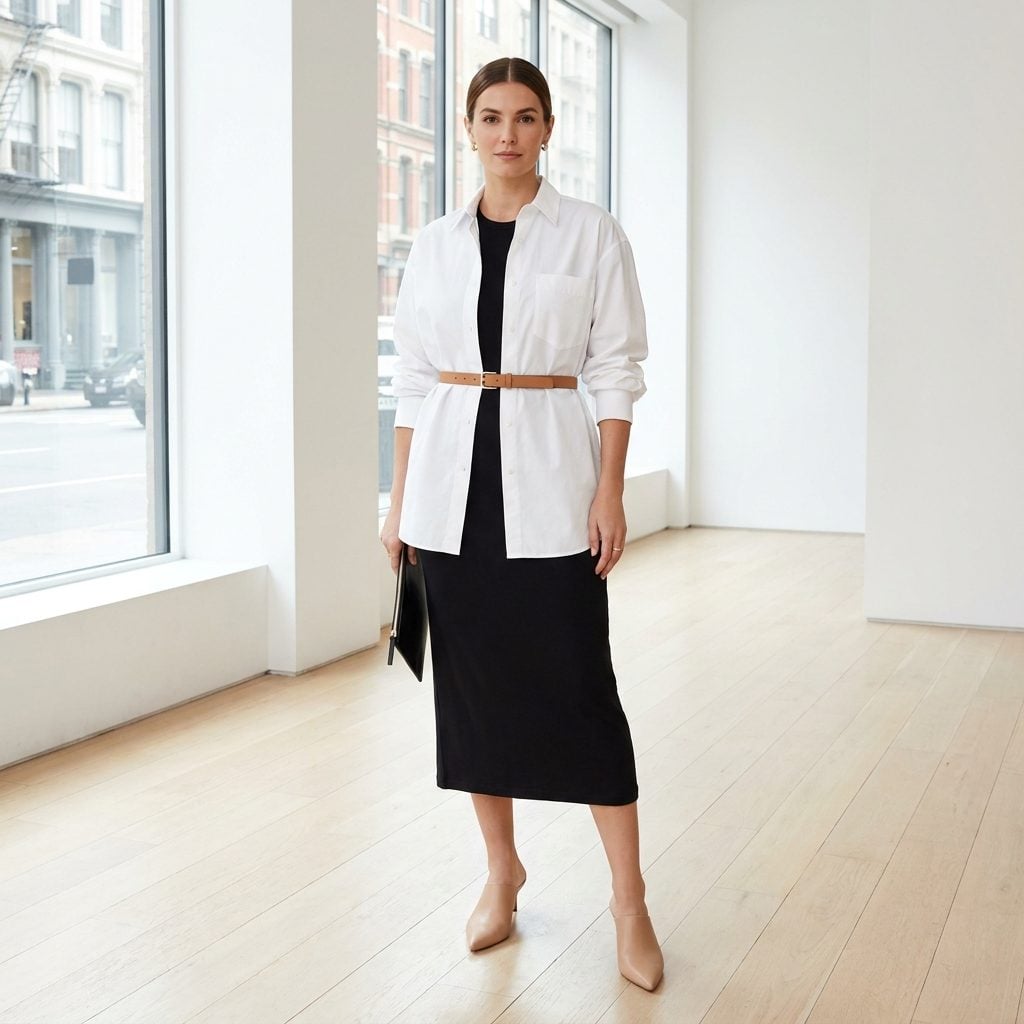
Steal the biggest white shirt in the house. Leave the shirt unbuttoned, then belt both layers together at the waist so the shirt feels like deliberate layering rather than a cover-up.
The belt gives the loose layers a clear center. Without it, an oversized shirt over a dress just looks like you got cold and grabbed something off a chair. Cinch it at the natural waist and the two loose layers gain a defined center. Roll the sleeves and nothing tips into fussy.
26. Add a Leather Moto Jacket and Suddenly the Dress Belongs to a Different Woman
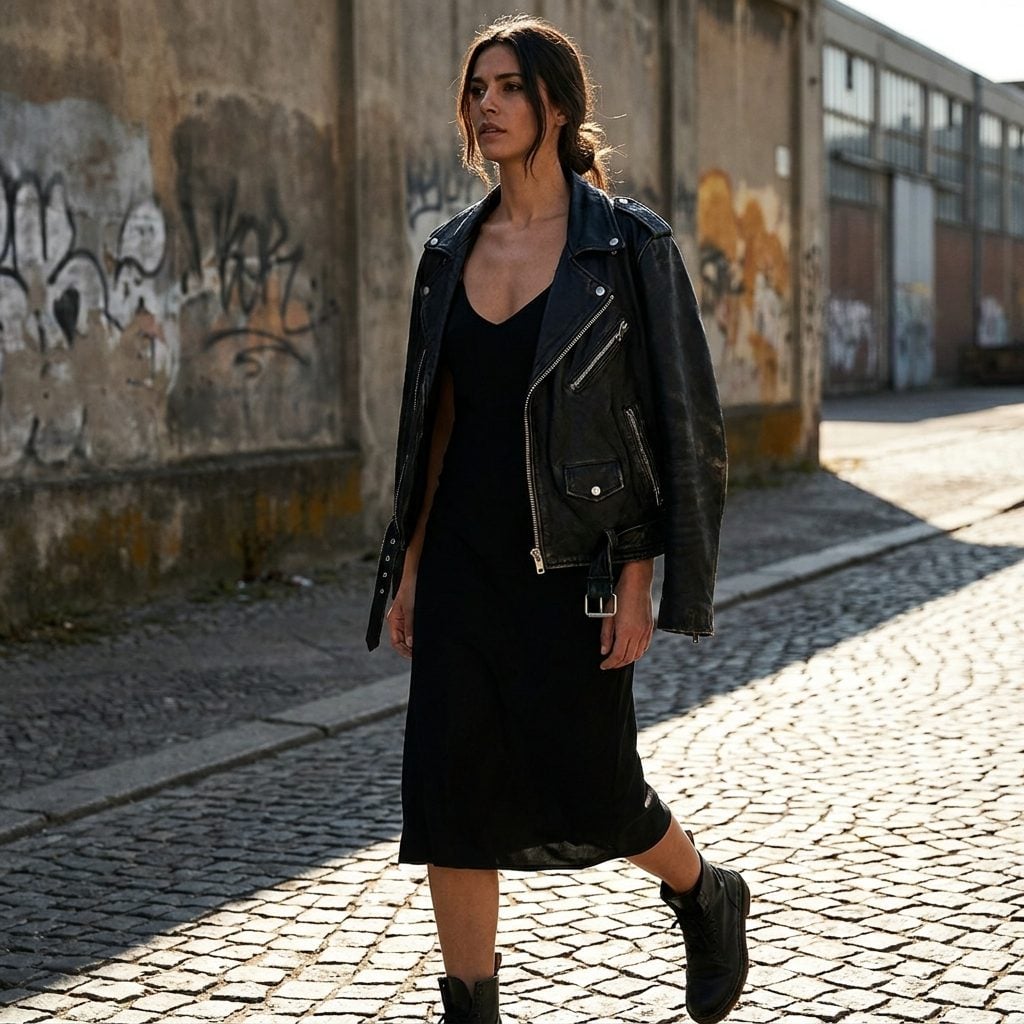
The moto jacket is the original dress-disruptor. It doesn’t soften the black dress, it roughens it up. The hardware, the asymmetrical zip, the slightly stiff silhouette, all of that drags a simple sheath into completely different territory. Day-to-night stops being a concept and starts being a reality.
The trick is fit at the shoulder. A moto jacket that pulls across the back or hangs too far past the hip throws off the proportion. When the shoulder seam lands correctly, the rest of the jacket usually falls into place. Cognac brown creates more contrast than black-on-black and makes the layering easier to see.
25. Throw an Unbuttoned Denim Jacket Over Your Black Dress and Treat It Like a Shirt Layer

The denim jacket over a black dress is not a new idea. Treating the denim jacket as a shirt layer rather than a coat is. Leave it completely unbuttoned, wear it open at all times, and let the black dress show through the center like a dark stripe. This flips the visual hierarchy: the denim becomes the canvas and the dress becomes the detail.
A medium wash creates a clearer contrast against black than dark denim does. Pair it with white sneakers and the whole thing tilts properly casual without losing any sophistication. It’s the weekend version of your favorite dress, and it takes about fifteen seconds to put together.
24. Layer a Lightweight Vest or Gilet Over the Dress to Add Structure Without Sleeves
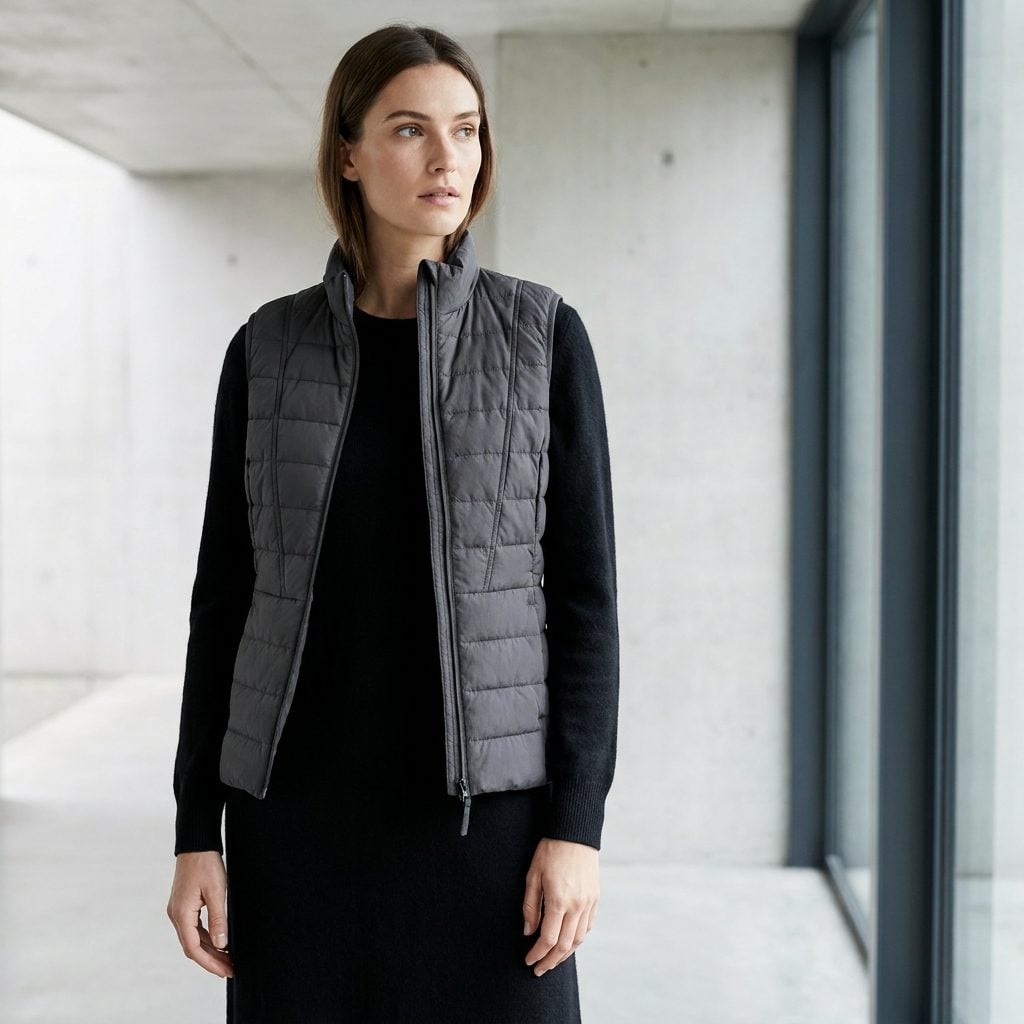
A vest or gilet over a dress is one of those combinations that looks considered and complex but requires almost no effort. The sleeveless shape adds structure at the front without covering the dress entirely, interrupting the black column while leaving the original dress visible.
Camel, oatmeal, or forest green in a wool or quilted fabric works best. The material contrast between a soft knit or structured wool vest and the fabric of the dress underneath is where the interest lives. It’s also genuinely warm without the formality of a blazer, which makes it one of the more practical styling tricks in this list.
23. Layer a Sheer Printed Midi Skirt Over Your Black Dress to Invent a Whole New Silhouette
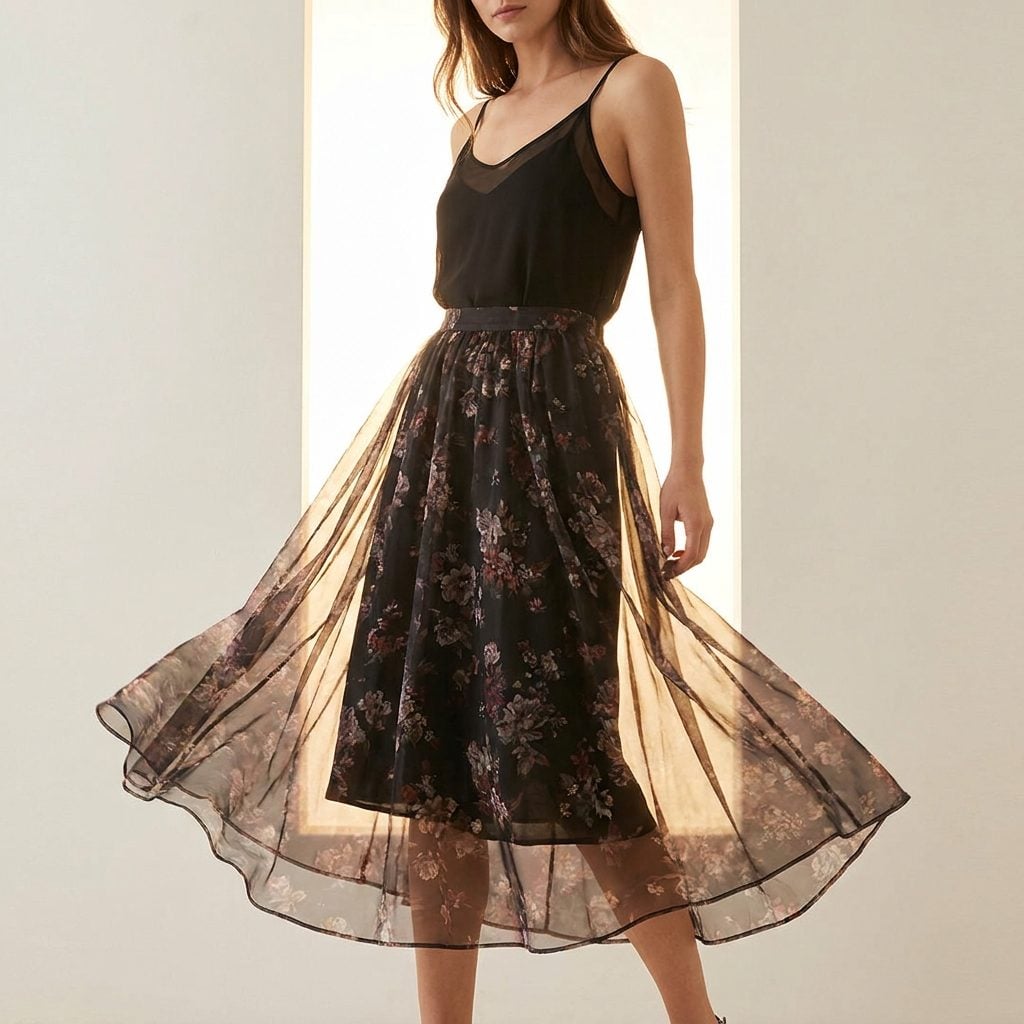
The layering trick works in two directions: the sheer printed skirt softens the structure of the dress underneath while the black anchors the floatiness of the skirt above. Neither piece can do this alone. Together they look like one deliberate outfit rather than two unrelated garments.
Look for a sheer printed midi skirt with a waistband that can sit comfortably at either the natural waist or the hips, depending on the proportions. Florals, abstract brushstrokes, and watercolor prints all work. Choose a print that does not compete with the dress neckline or seam lines. The strongest version uses one opaque layer underneath and one airy layer above, with the black keeping the combination visually anchored.
22. Drape a Long Wool Coat Over Your Shoulders and Never Put Your Arms Through
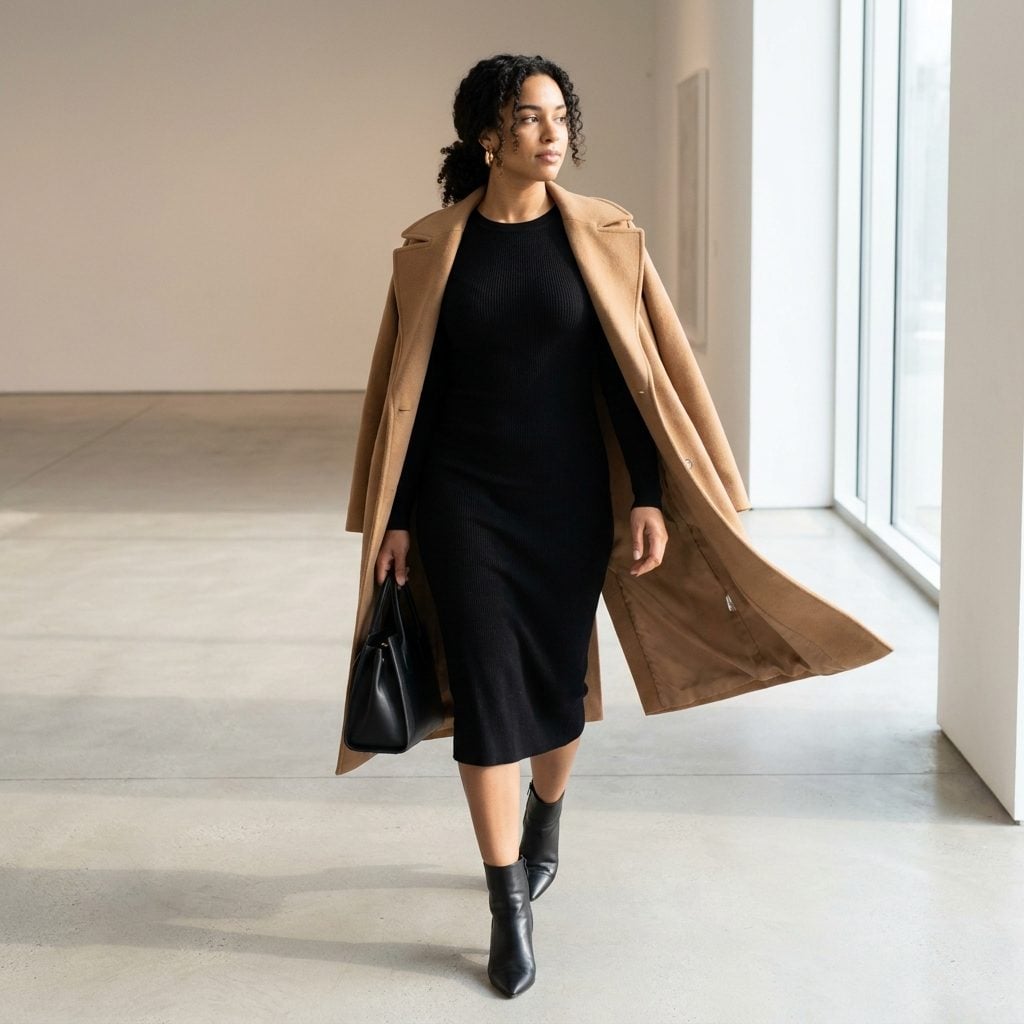
A coat worn properly keeps you warm. A coat draped over the shoulders makes you look like you own the building.
It’s a proportion game. Start with a slim black knit dress, then float a long camel wool coat over the top with the sleeves left empty. The color break—camel against black—does half the work, and the empty-sleeve drape handles the rest, adding width at the shoulder and a lazy grandeur that a zipped-up coat never manages. Formal outerwear carries its own associations, and the dramatic shoulder drape can change your posture as much as the outfit.
21. Cinch a Wide Corset Belt Just Under the Bust for an Empire-Line Twist
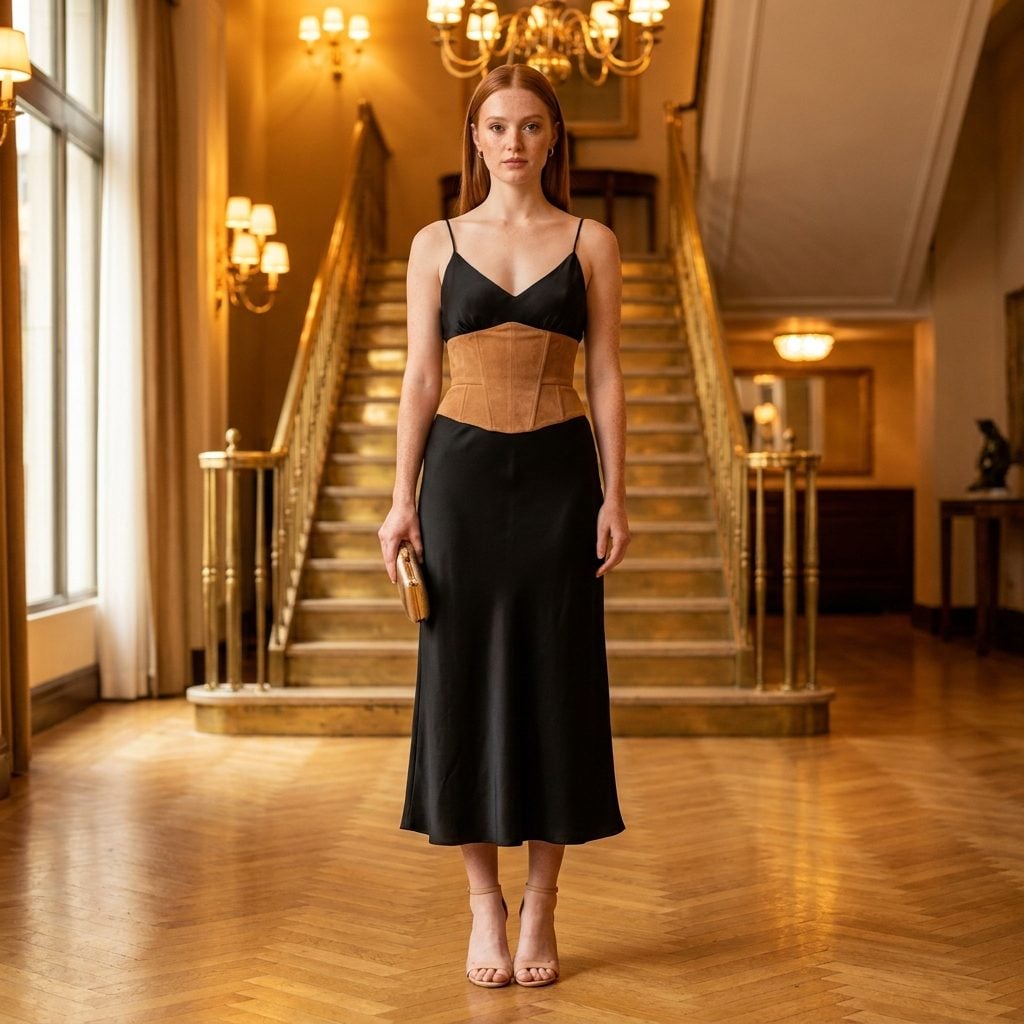
Everyone belts at the waist. Move it up.
A wide tan suede corset belt cinched just under the bust turns a plain slip dress into an empire-line silhouette, dropping the fabric into a long clean column below. That high placement changes the dress from loose and casual to deliberately shaped.
20. Knot the Hem to One Side and Reveal a Sculptural Boot Underneath
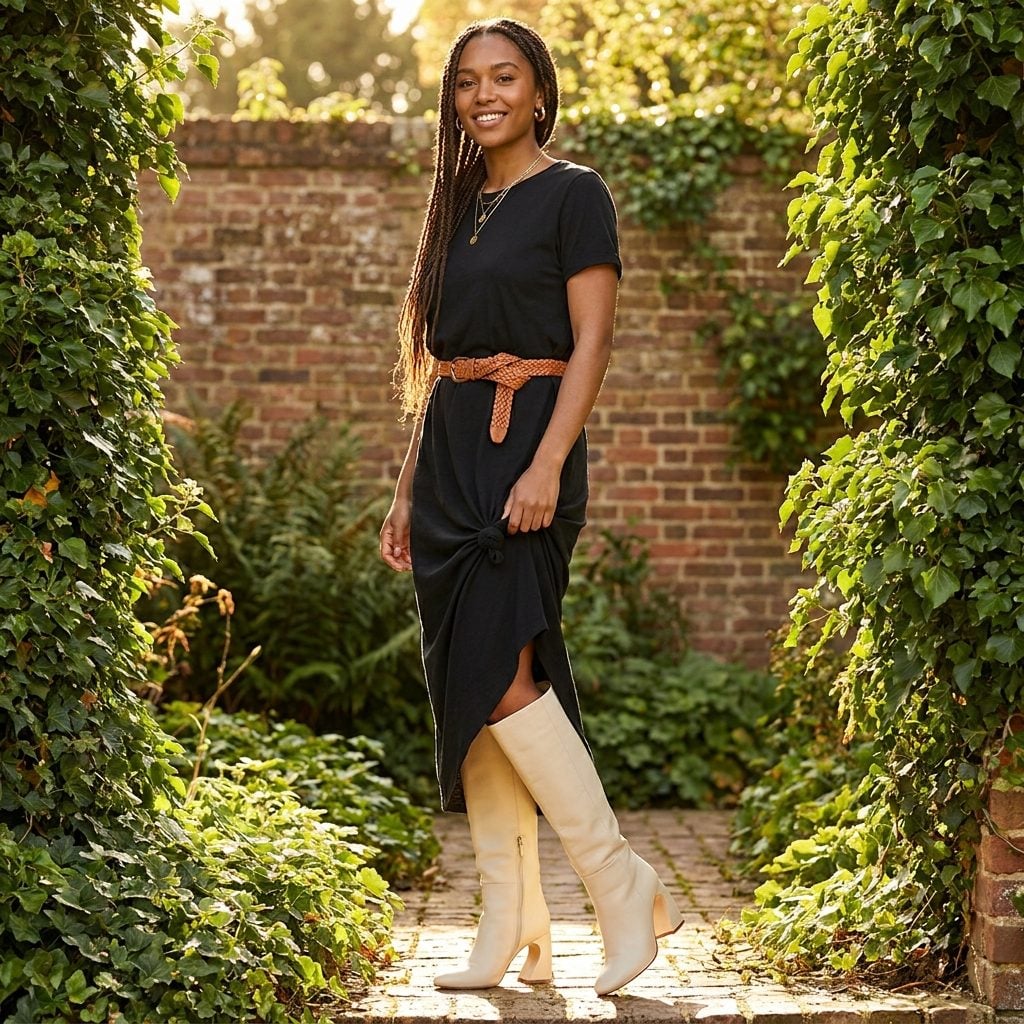
A knotted hem is the fastest way to change a dress’s proportion without a needle.
Gather the fabric at one hip, tie it off, and the straight midi becomes an asymmetric skirt that hikes on one side. Now there’s a reason to show off a cream leather block-heel boot underneath, and the whole silhouette goes from tidy to interesting.
It’s all about the diagonal. That off-center line interrupts the straight hem and exposes more of the boot. Layer some gold necklaces up top so the neckline gets as much attention as the reworked hem. Use this only on a soft knit that can tolerate the knot without stretching out.
19. Add a Collarless Linen Blazer in Cream or Ivory for a Graphic Black-and-White Reset
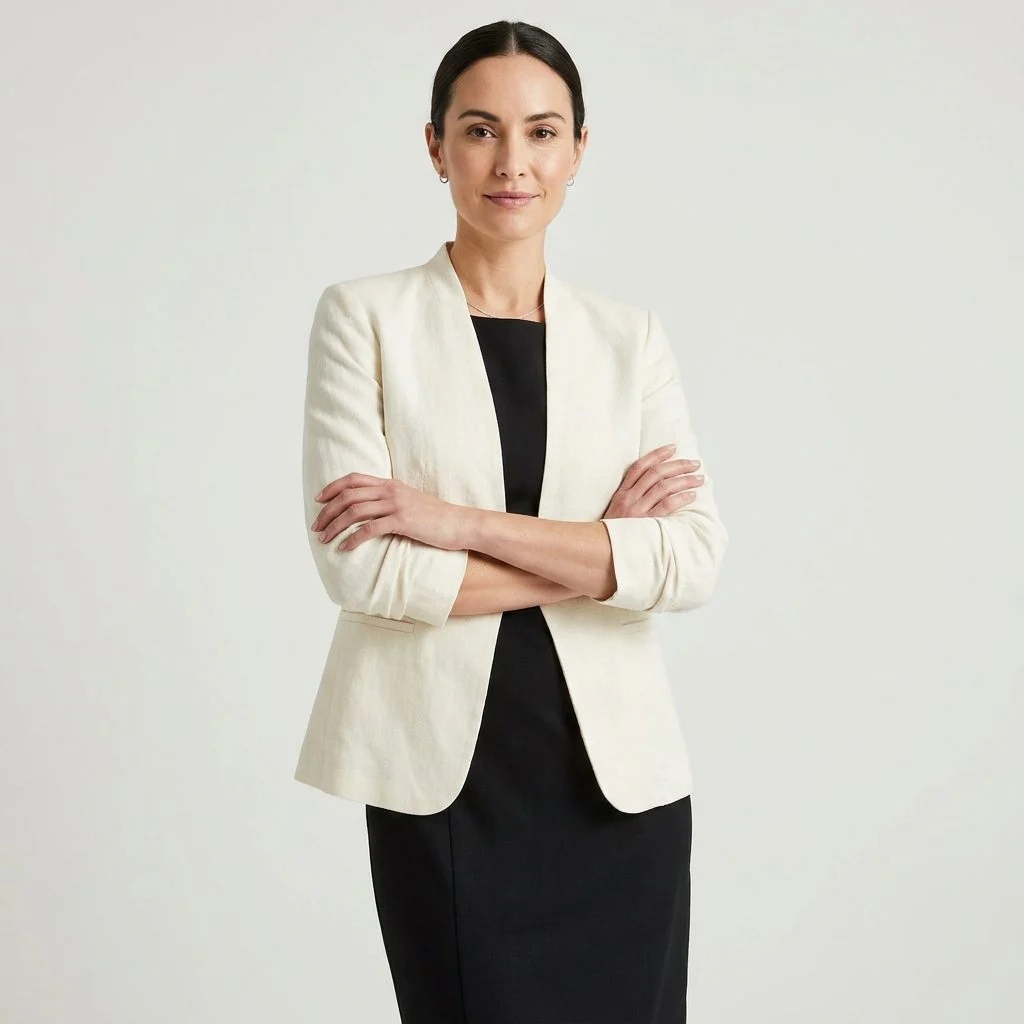
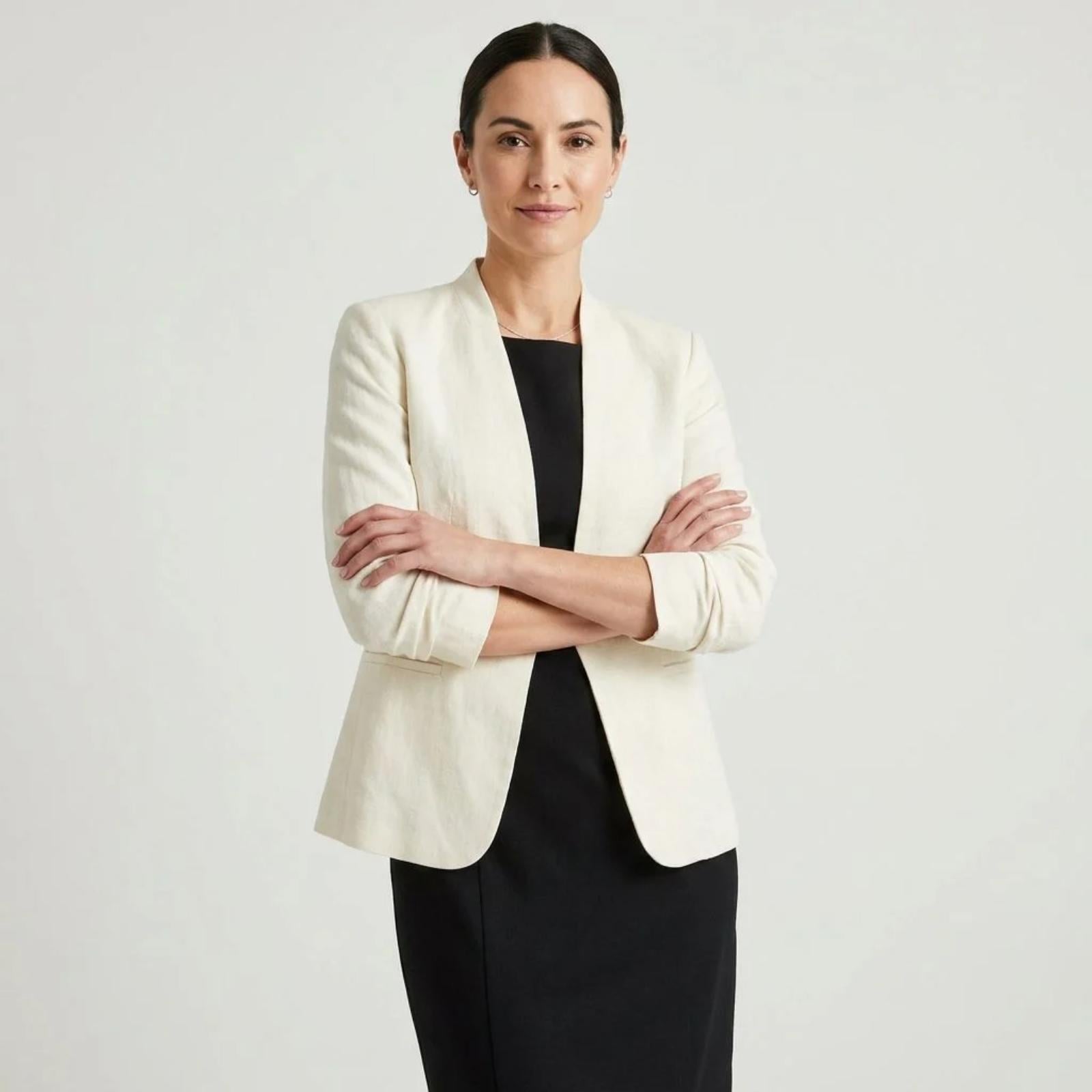
Black and ivory is not a safe choice. It’s a sharp one. A collarless blazer in cream or linen white over a black dress creates a graphic, high-contrast pairing that reads architectural rather than corporate. The collarless neckline keeps the black-and-ivory contrast especially clean without adding another set of lapel lines. The result feels structured without becoming office-bound.
Push the sleeves up, leave the blazer open, and resist adding much else. The contrast already supplies enough visual interest.
18. Layer a Fringed Suede Jacket Over the Dress and Let the Movement Do the Talking
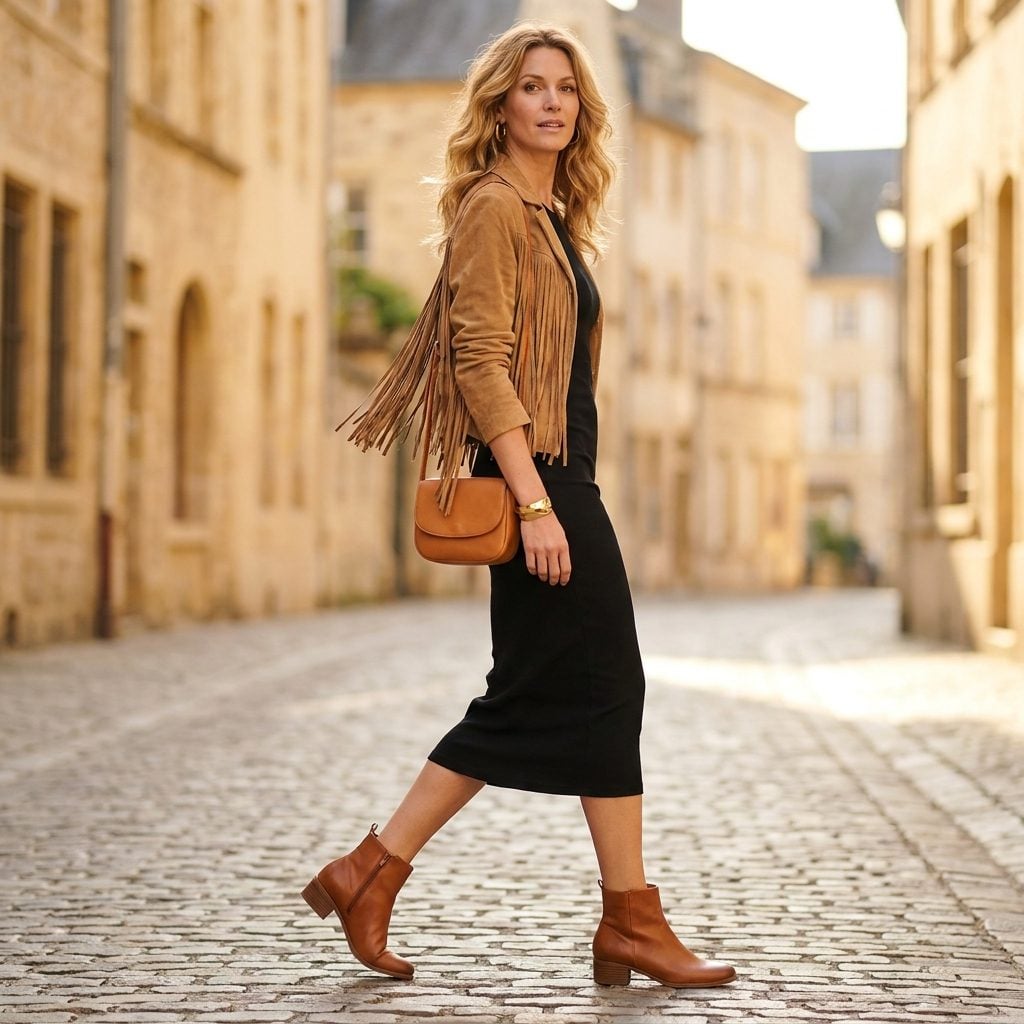
Fringe was made to be walked in. Stand still and a suede jacket like this reads fine, but the second you move, the fringe swings against the still column of the black dress and suddenly there’s rhythm where there was none.
Brushed tan suede fringe and matte black rayon create contrast before the jacket even starts moving. The dress stays sleek and quiet while the jacket brings the drama. She looks like she’s walking to a soundtrack only she can hear.
17. Add a Wide-Brim Felt Hat and Watch the Dress Suddenly Have a Point of View
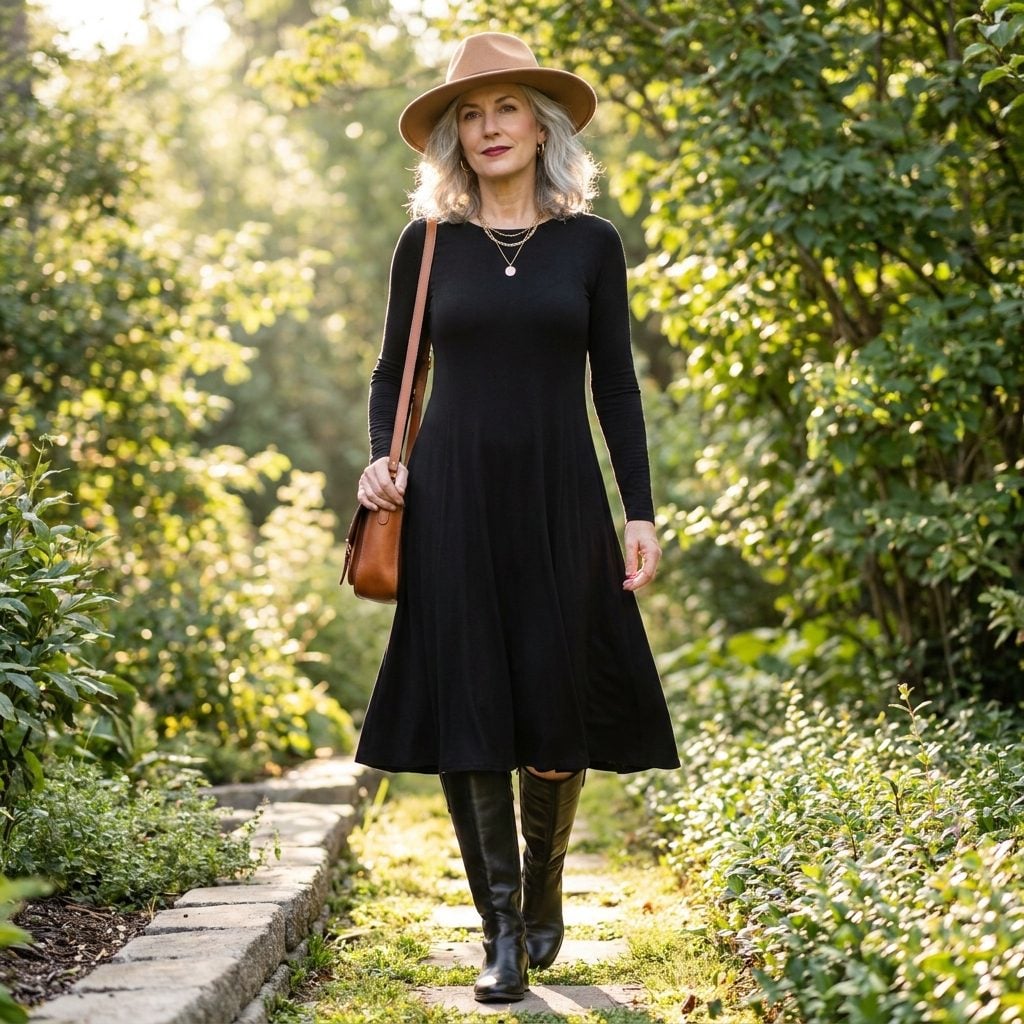
A hat does something no accessory below the shoulders can. It reframes the face and hands the whole outfit an attitude before anyone gets around to looking at the dress.
Camel felt against a black column is a reliable pairing, because the warm tone lifts the black out of funeral territory and into something with a story to tell. Against the silver hair shown here, camel and black create an especially crisp contrast.
16. Throw a Chunky Cable-Knit Sweater Over the Top Half and Let the Dress Become a Skirt
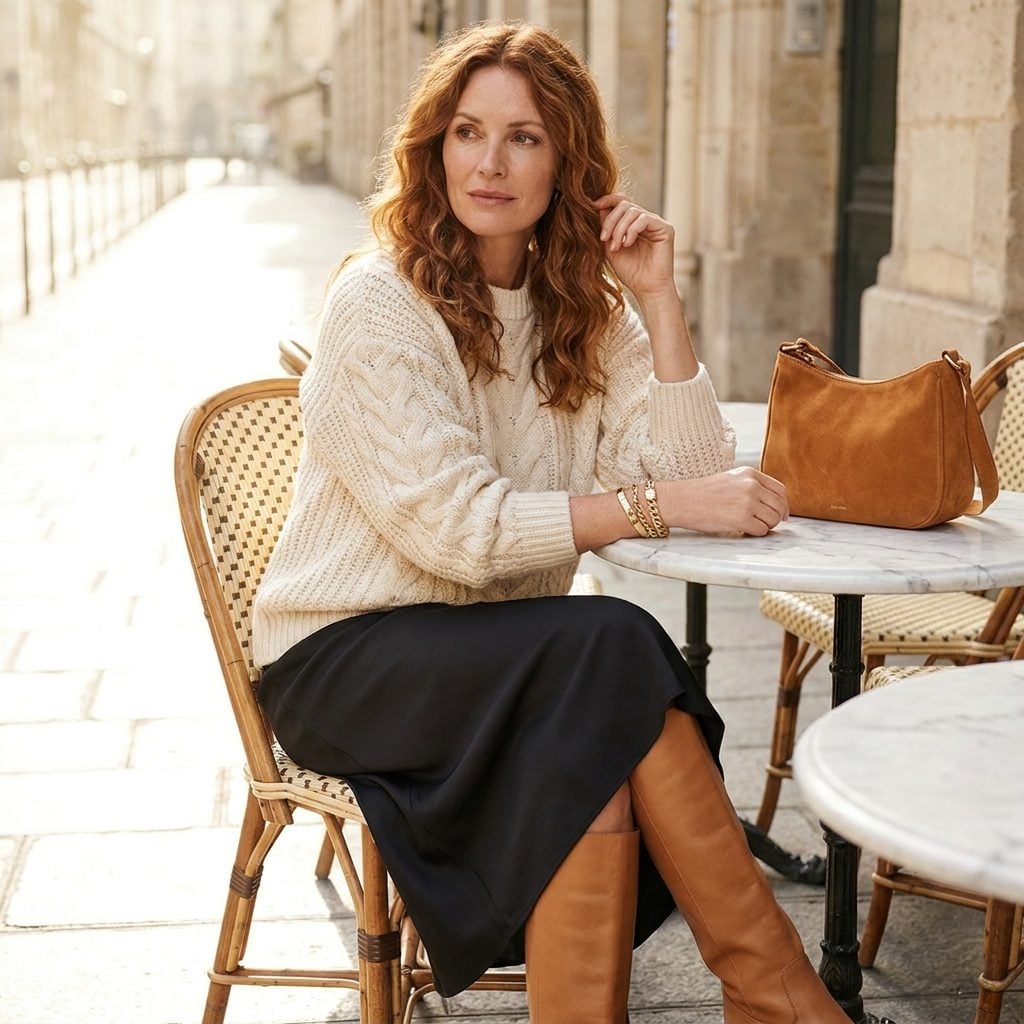
Pull an oversized sweater over the bodice and the dress stops being a dress. Everyone reads the black skirt hanging below the cream cable-knit sweater as a separate piece, and just like that a summer slip becomes a fall outfit.
The contrast in volume gives the outfit its shape. Bulky knit up top, fluid drape below, boots anchoring the bottom, and that chunky texture against the smooth slip skirt is what stops it from going shapeless. I got this wrong for years by tucking the sweater in. Don’t. Letting the sweater sit loose preserves the illusion that the lower half is a separate skirt.
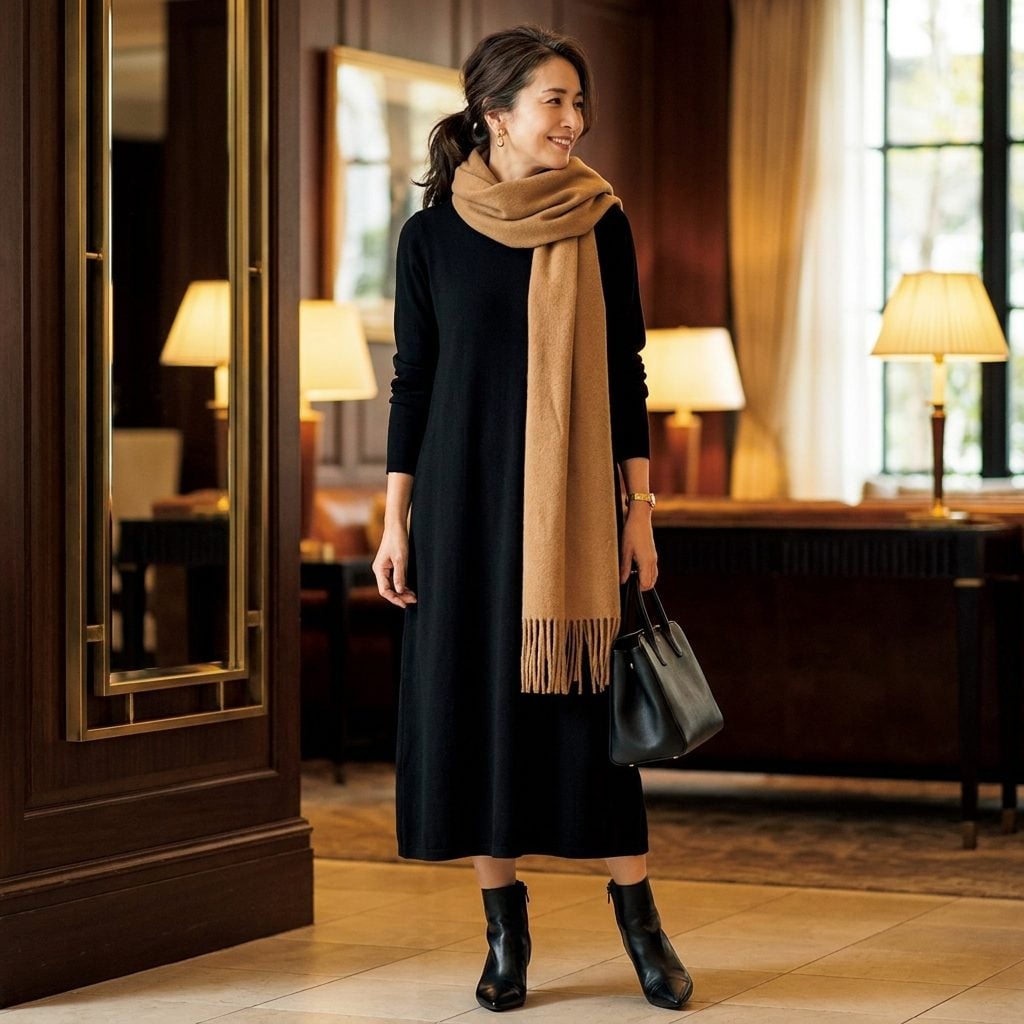
15. Wrap a Long Camel Scarf Twice Around the Neck and Let It Fall Past the Hem
❤️ Would you like to save this?
Length is everything. A short scarf sits at the chest and stops there. Wrap a really long camel wool scarf twice and let both ends drop past the hem, creating a continuous contrasting line from the neck to below the dress hem.
That line is why the look stretches you out. The eye travels the camel column straight down against the black dress, so the contrasting ends emphasize the outfit’s vertical direction. One accessory, no styling degree required. Throw the ends over one shoulder if you want a little asymmetry.
14. Push the Sleeves Up and Add One Wide Cuff at the Wrist
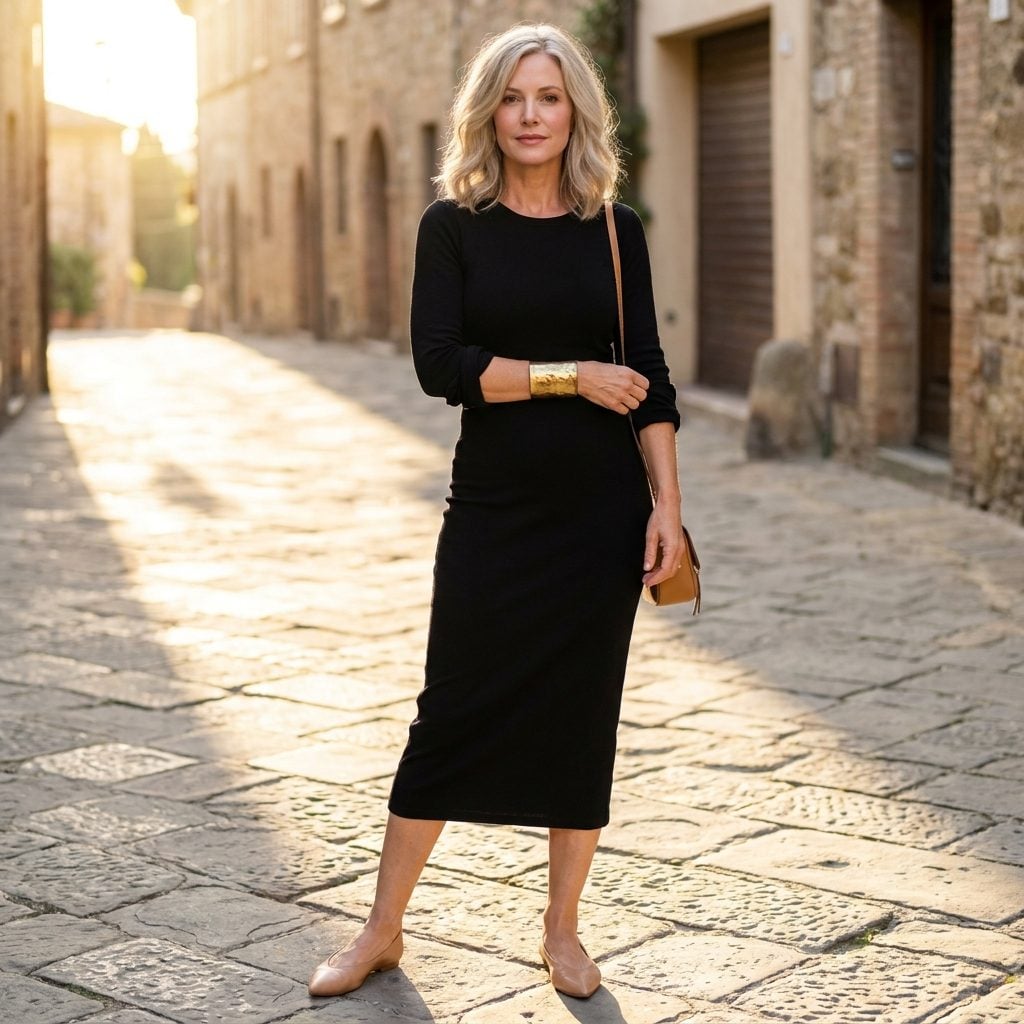
One heavy cuff against a bare forearm does more than a wristful of thin bangles ever could. Push the sleeves up to reveal skin, then let a single wide brass or gold cuff sit like punctuation. The result feels deliberate, as though the sleeves were pushed up to make room for the jewelry.
What drives it is contrast of scale. Against a quiet black dress, one substantial piece of metal creates a clean focal point at the wrist. It is one of the smallest edits on the list and one of the sharpest.
13. Layer a Sheer Black Blouse Underneath and Let the Straps Disappear
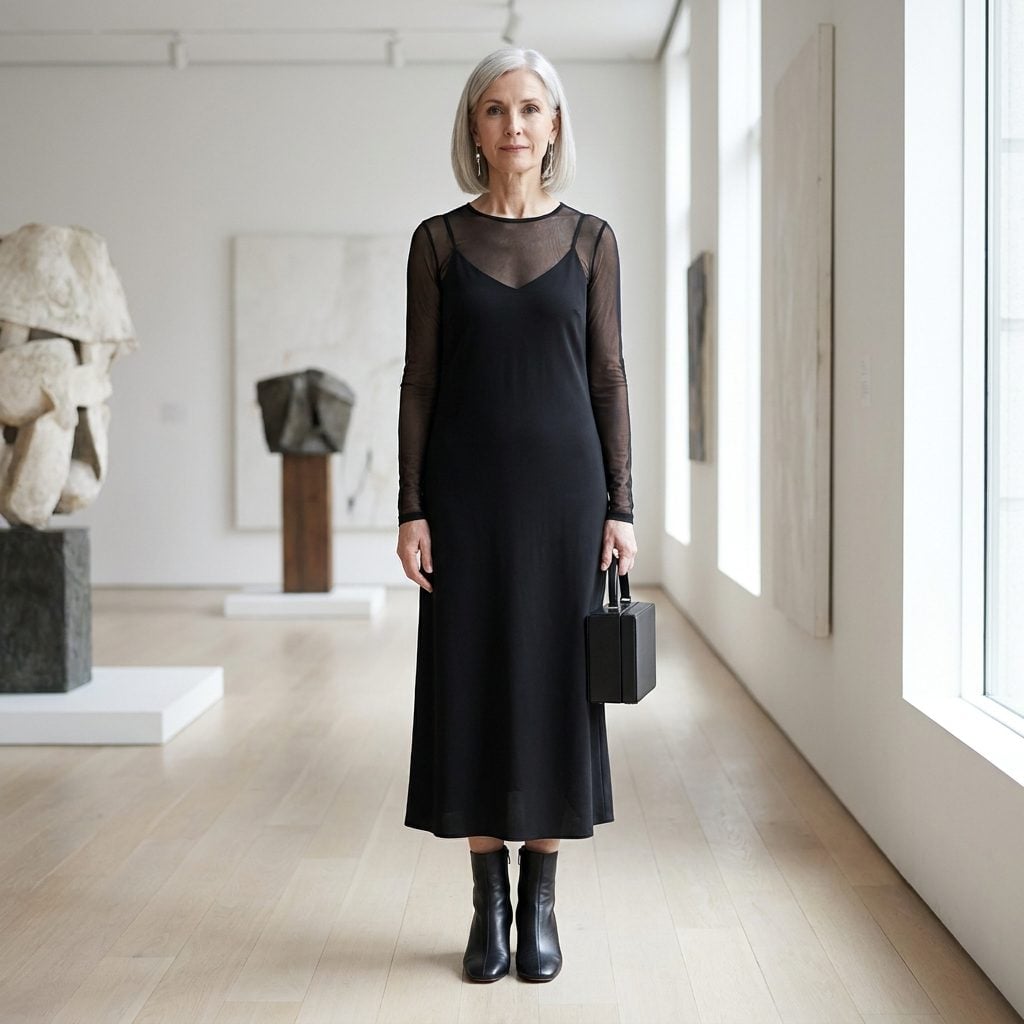
That sleeveless slip dress you wore all summer becomes cold-weather ready the second you slide a sheer mesh blouse beneath it. The dress straps vanish against the black layer, so it reads as one intentional piece rather than two things thrown together in a panic.
The tension between skin and coverage is what makes it. Mesh hints at the arm without fully exposing it—grown-up and considered, not bundled up. One of my favorite tricks for stretching a warm-weather dress into November.
12. Add a Wide Suede Belt and Sit It Low on the Hips
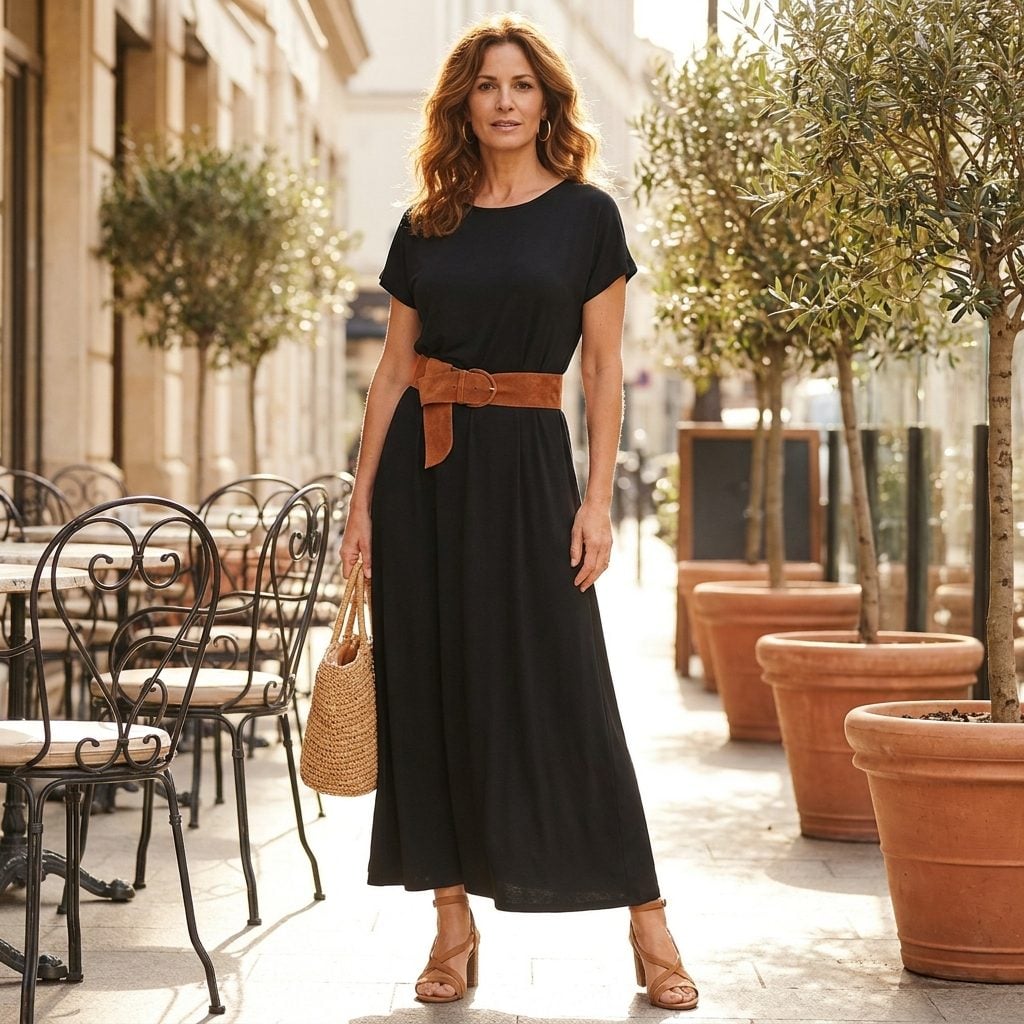
Everyone belts at the waist. Drop the belt to the hip bones instead and the silhouette changes immediately—a wide cognac suede belt slung low creates a relaxed, seventies-leaning line that keeps a floaty black maxi from disappearing into itself.
The low placement changes the balance between bodice and skirt. On this loose maxi, the low belt extends the visible torso and lets the fabric blouse gently above the buckle, which adds movement where a black column can go flat. Try a cognac suede belt for the warmest contrast against black.
11. Throw a Sequin Bomber Jacket Over the Top and Own the Clash
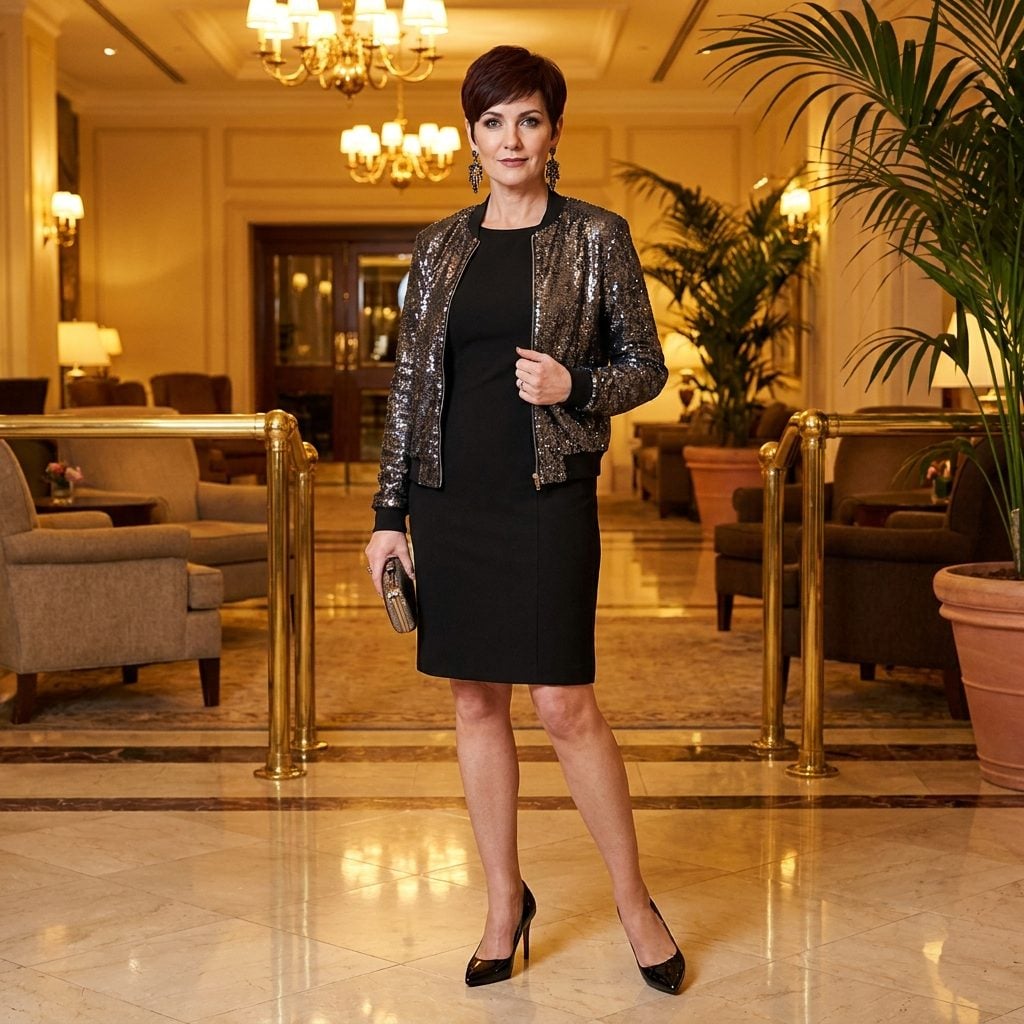
The trick with sequins over black is keeping the sequins casual. A bomber shape, zipped down and worn loose, drains the formality out of the sparkle so you look like you’re having fun rather than heading to a gala you’d rather skip.
Reflective gunmetal breaks sharply against matte black. The cropped, sporty shape keeps the sparkle from feeling formal, while a gunmetal sequin bomber gives the plain dress a completely different surface.
10. Tuck the Hem Into Combat Boots and Blouse the Extra Fabric
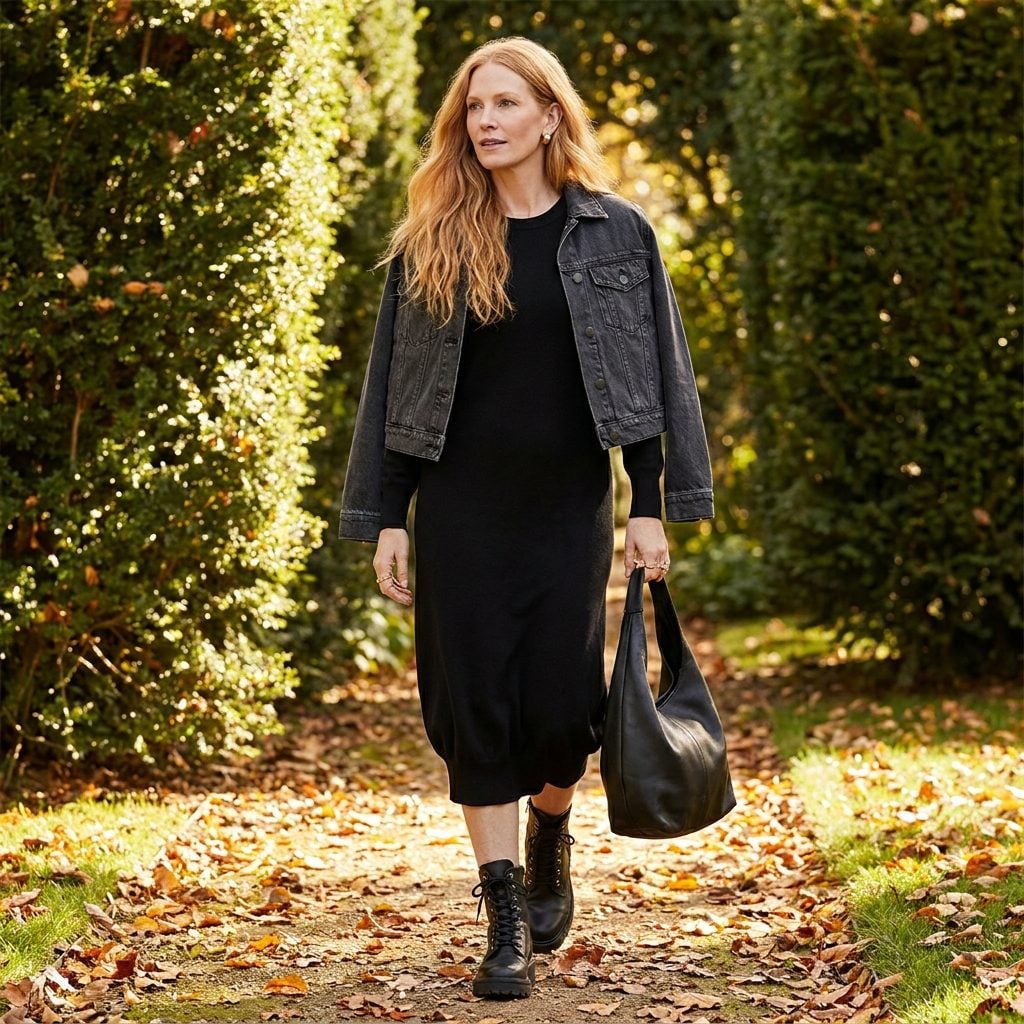
Tucking a dress hem into your boots sounds like it shouldn’t work. It works. Pull a knee-length black knit into chunky combat boots, let the fabric puff and slouch over the shaft, and the silhouette turns from ladylike to downtown in a single motion.
What’s happening is manufactured proportion—the tuck shortens the visible dress and creates a modern, slightly undone blouson shape. Prim it is not, and that’s the whole idea.
9. Slip a Contrast-Color Slip Skirt Underneath to Peek at the Hem
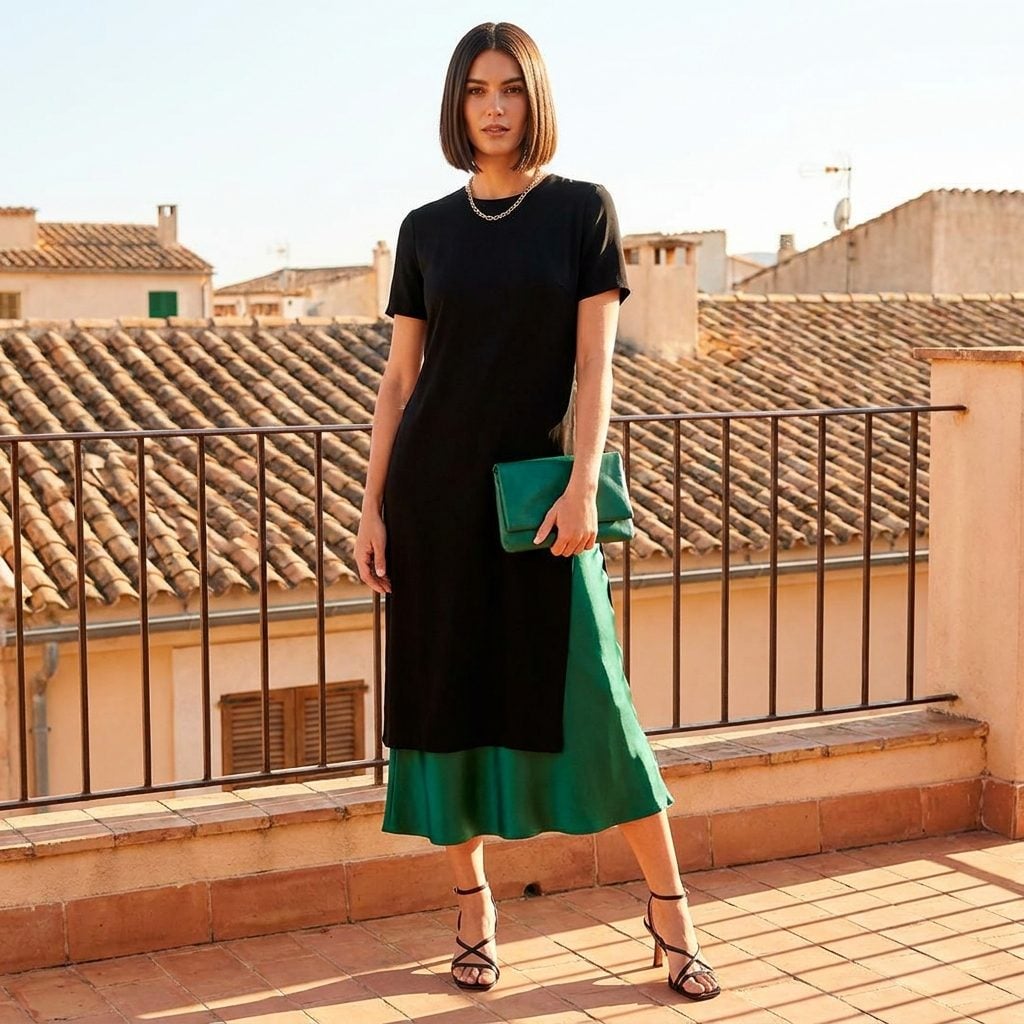
Let something unexpected show at the hem. Layer a longer satin slip skirt under your black dress in a color you’d never dare wear head to toe, then let two or three inches show below the hem.
The small band of color changes the outfit without taking it over. A sliver of emerald or oxblood satin against matte black introduces depth without committing you to a full color story, and matching a small clutch to the slip makes the visible hem look planned rather than accidental. This is the sort of quiet detail that makes people wonder where you shop. If you fall for the shade, a emerald satin slip skirt earns its keep under half your wardrobe.
8. Cinch It With a Stack of Thin Belts Worn Together
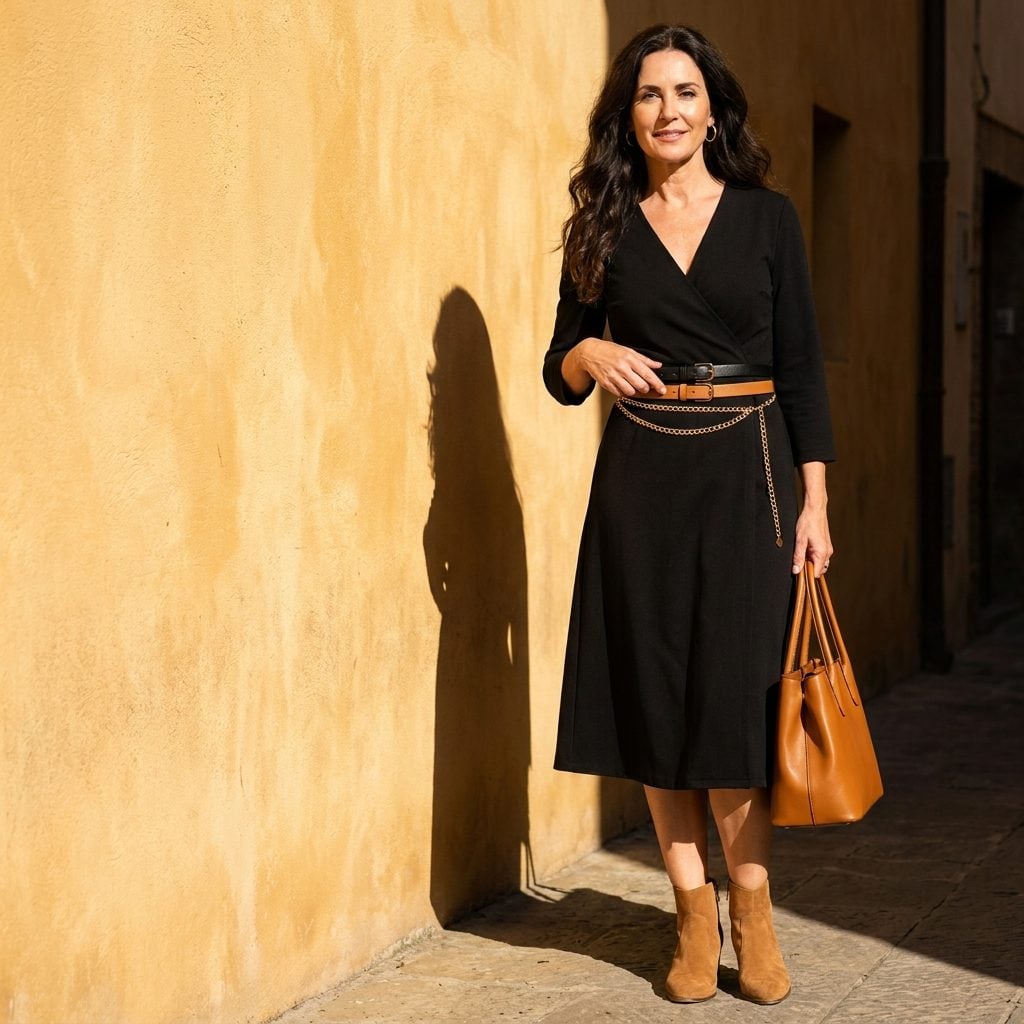
Instead of one belt, stack three thin ones—a black leather strap, a tan one, and a fine gold chain, all cinched together at the waist to turn a basic black dress into something that clearly took a minute of thought.
The mixed leather and chain create a narrow band of texture at the waist. Because the belts differ in color and material, the effect feels collected over time rather than purchased as a matching set.
7. Drape a Long Duster in a Warm Neutral and Break Up All That Black
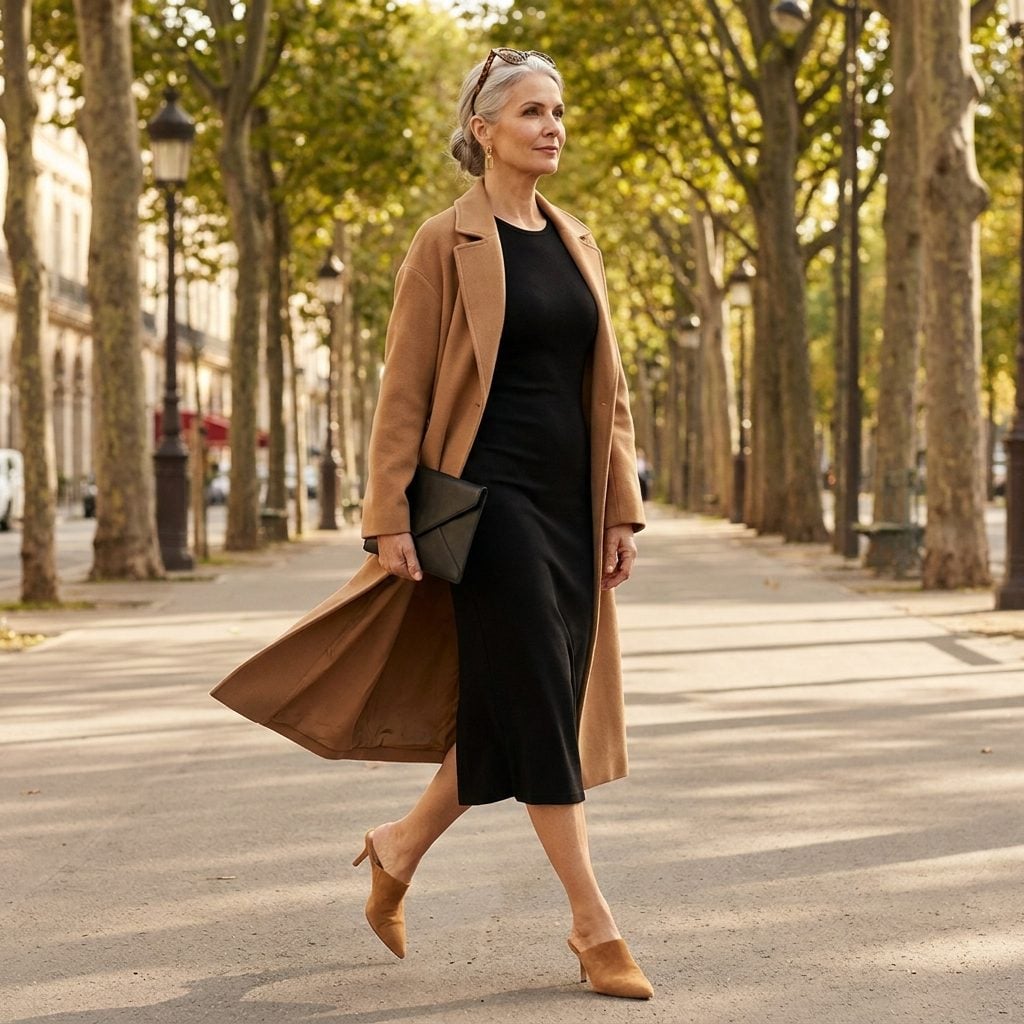
All black can start to feel like a wall.
Break it with a long camel duster left open. The soft fabric moves beside the black dress, creating two warm side panels that keep the outfit from feeling like one solid block. Camel and black remain distinct enough that both layers stay visible. A camel duster coat can reshape more than one black dress, making it a versatile layer if you already own one.
6. Add Opaque Colored Tights and Let Your Legs Bring the Color

Colored opaque tights are the cheapest color injection you’ll ever make. A pair of deep burgundy or forest-green under a black dress turns your legs into the accent piece and shifts the outfit’s whole temperature.
One bold color placed low, and it grounds the look while drawing attention toward the lower half of the outfit. Match a small bag to the tights and everything snaps into place. I resisted colored tights for years. Wrong the whole time.
5. Knot a Denim Shirt at the Waist Over the Dress for a Wrapped Waist Effect
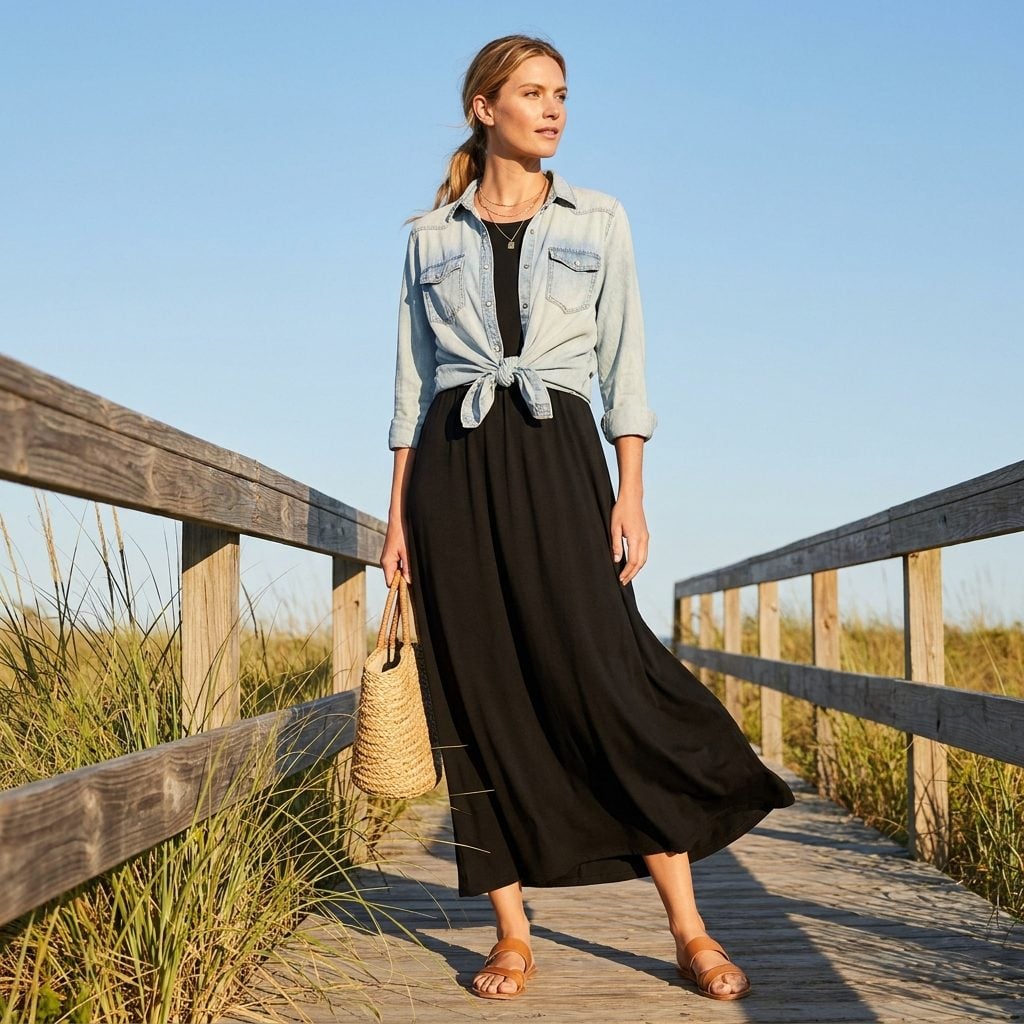
Wrap a denim shirt around the waist over a black maxi and knot it at the front. The knot gives a loose maxi a clear waist, and pale wash denim against black is the easiest casual contrast there is.
Rugged cotton gives the fluid jersey a more casual edge. Easy styling that looks unforced—which is the goal on a Saturday. And honestly? It beats tying a cardigan around your shoulders for the hundredth time.
4. Swap the Straps for a Vintage Silk Scarf Tied Through the Shoulder Loops
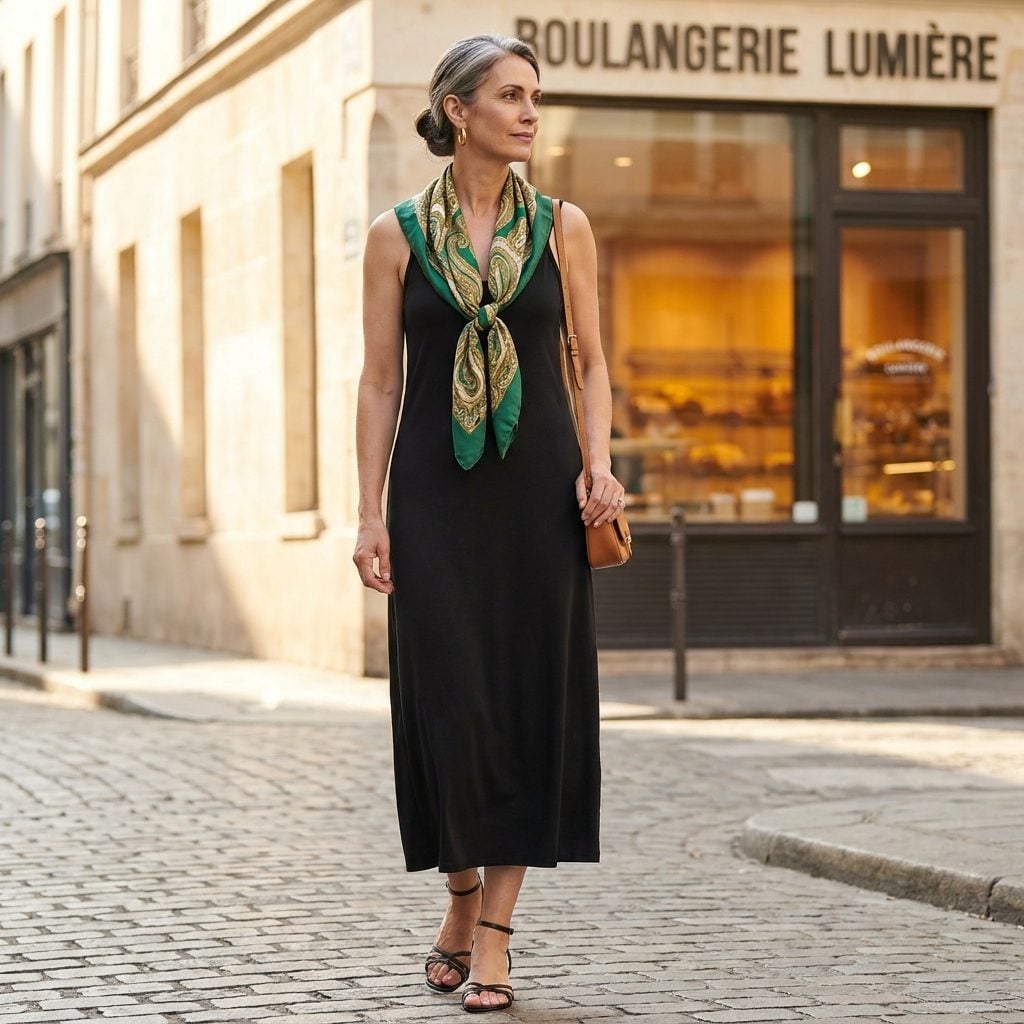
On a slip dress with removable straps and reinforced shoulder loops, thread a folded silk scarf through the attachment points and knot it softly at each shoulder. The change gives a plain black dress a completely different neckline. Emerald and gold paisley works especially well because the sheen contrasts with the matte jersey. This is the kind of trick that costs nothing if you already own one decent scarf, and most of us have three shoved in a drawer we forgot about.
3. Cuff the Sleeves and Slide On a Row of Stacked Bangles for a Hard-Edged Softness
❤️ Would you like to save this?
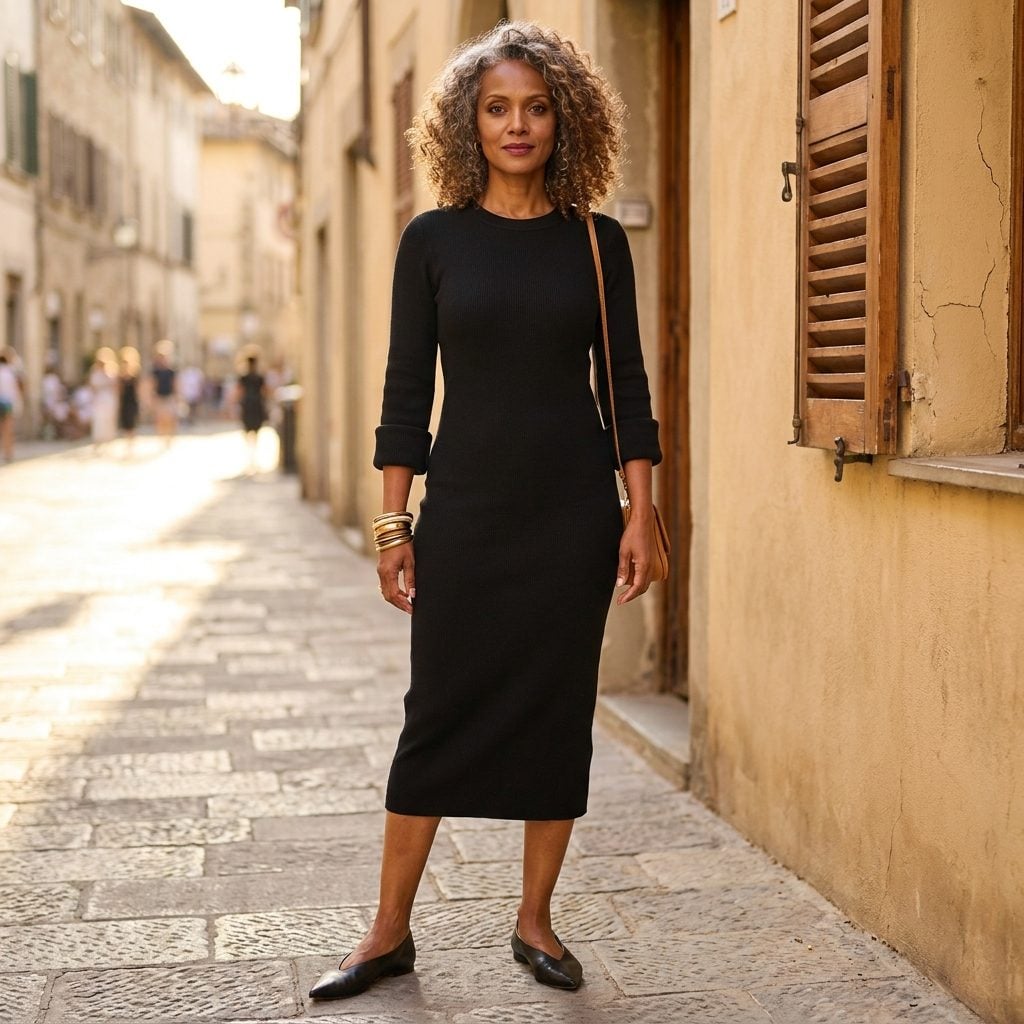
Push the sleeves. Stack the metal. That one move takes a plain sleeve and gives it a job.
Mixed widths of gold and brass stacked bangles shift and clink as you move, creating a livelier effect than the single sculptural cuff used earlier. Uniform widths feel formal; varied ones look collected over time.
2. Slip Into Pointed Metallic Mules and Break the Black at Floor Level
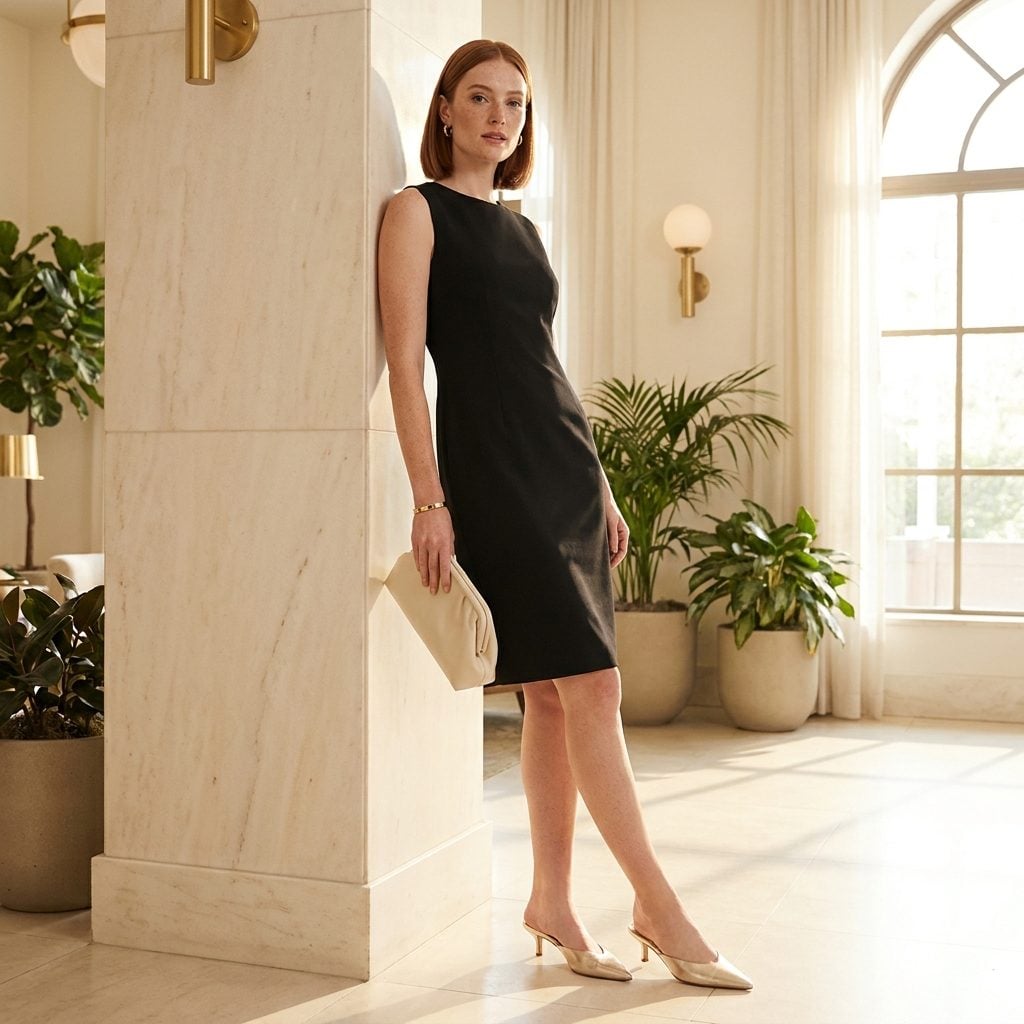
The shoe is doing everything here. Swap black pumps for pointed champagne metallic mules and the dress stops being funeral-adjacent and starts looking like it has somewhere to be.
The metallic finish interrupts the black at floor level, while the pointed toe extends the shoe’s line beyond the hem. A kitten heel keeps the shape polished without making the shoe difficult to walk in.
Champagne gives the contrast a warmer cast than silver and feels softer against the black dress.
1. Half-Tuck the Front Into a Statement Belt and Break the Hemline on Purpose
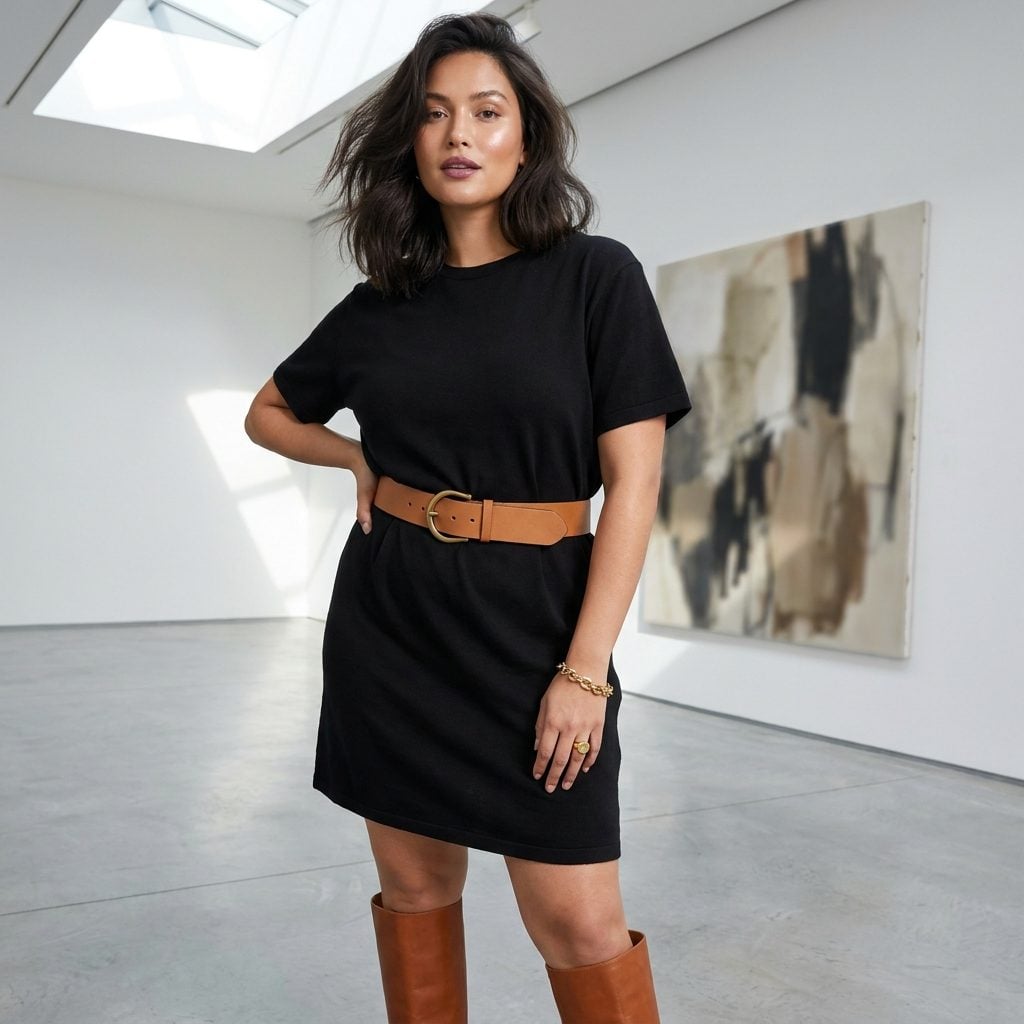
A flat black hemline is exactly what makes a jersey dress read as pajamas. Break it and the whole outfit wakes up.
Cinch a wide tan leather belt at the natural waist, then pull just the front of the hem up and tuck it loosely underneath. You get three things at once: a defined waist, an asymmetric drape that adds movement, and a flash of the black knee-high boot below. The dress gains a defined waist and a more deliberate hemline.
The belt has to be substantial. A thin black belt would disappear into the dress and fail to anchor the drape. Go wide, go tan, go brass hardware—that’s the anchor the whole outfit hangs off.