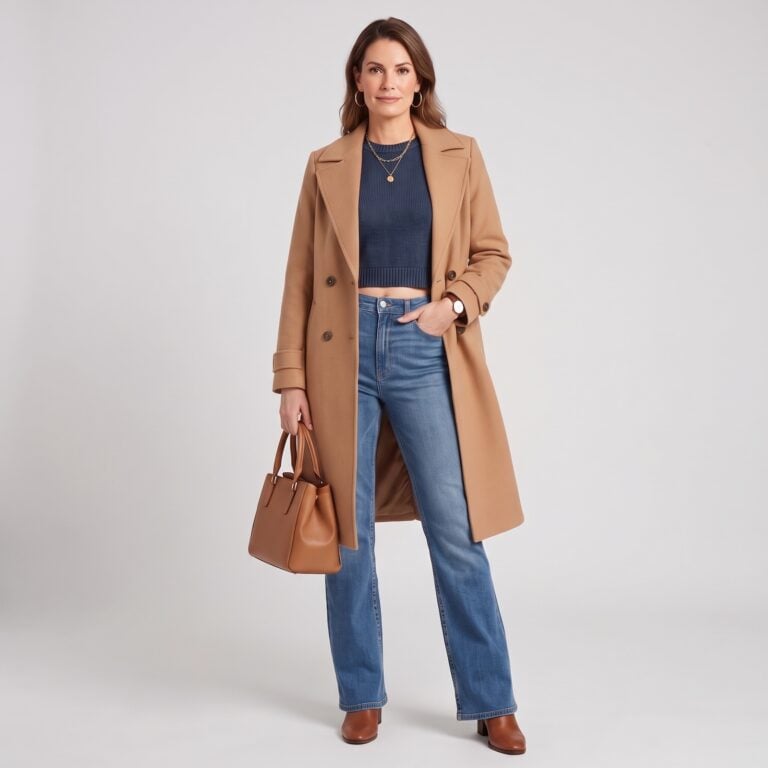

❤️ Would you like to save this?
A blazer can be beautifully made, beautifully expensive and still betray you before anyone gets close enough to read the label. Shoulders drift an inch too far. A collar hovers instead of settling. One button pulls the entire front into an X. Suddenly all that wool, lining and careful styling looks less Savile Row and more borrowed jacket on the way to an interview.
The maddening part is that most of these failures are small. A seam lands in the wrong place. A sleeve twists. A vent refuses to stay shut. A pocket sits just crooked enough to bother the eye without immediately explaining why. Across these 29 examples, the clues move from obvious fit disasters to tiny construction details that can make a perfectly good blazer look oddly wrong.
Some can be fixed with tailoring. Some should send the jacket straight back to the rack. The useful trick is knowing which is which before the receipt disappears.
FYI, thanks to AI imagery software, we’re able to create very specific fashion and hairstyle examples to illustrate the points being made. In some cases, imagery is exaggerated to hammer home the point. Also, assume links that take you off the site are affiliate links such as links to Amazon. this means we may earn a commission if you buy something.
29. Shoulders That Hang Past Her Natural Shoulder Line

The shoulder seam is one of the first places a blazer gives itself away. When it lands past the actual shoulder and the sleeve head collapses beyond it, the jacket starts looking borrowed even when everything else is immaculate.
The navy wool, clean trousers and simple shell are doing their jobs here. That little overhang is not. Shoulder width is also one of the more complicated and expensive alterations, which makes this a detail worth getting right before the credit card comes out.
28. The Front Straining Across a Fuller Bust

The jacket closes, technically. The horizontal strain across the bust says that is not the same thing as fitting. Once the fabric starts pulling the lapels out of line, the whole front loses its clean architecture.
Sometimes the answer is a larger size. Sometimes it is a different cut entirely — more room through the bust, a better dart, princess seaming or a pattern shaped for a fuller chest. The goal is not squeezing the button closed. It is getting the front to fall smoothly once it is closed.
27. A Collar That Floats Away From the Neck

A jacket collar should settle neatly against the back of the neck. When daylight appears between collar and skin, the blazer suddenly looks as if it is backing away from the person wearing it.
From the front, the black wool, cream knit and white trousers look controlled. Turn around and that gap becomes the story. Neck balance, shoulder slope, posture or the collar itself can all contribute, so this is one to diagnose before assuming a quick nip of fabric will solve it.
26. A Length That Swallows Your Frame

There is a world of difference between a longline blazer and one that is simply too big. A true longline cut keeps the shoulders, armholes and upper body in proportion while extending the hem. An oversized mistake just keeps going.
Here the clue is not length alone. The shoulder placement joins the low hem in overwhelming the frame. Together they make the jacket look accidental rather than purposefully oversized. Forget a universal stopping point at the hip; the better question is whether the jacket’s entire set of proportions makes sense together.
25. Lapels That Ripple Instead of Lying Crisp

A lapel has one simple visual job: make a clean, confident line. Little waves and puckers interrupt that line immediately, which is why a tiny ripple can make an otherwise polished jacket look tired.
The navy pinstripe and burgundy heels have plenty of authority. The lapel edge keeps interrupting them. Construction, pressing and interfacing can all contribute; badly applied fused interfacing can even bubble or delaminate over time.
24. Sleeves That Spiral Around the Arm
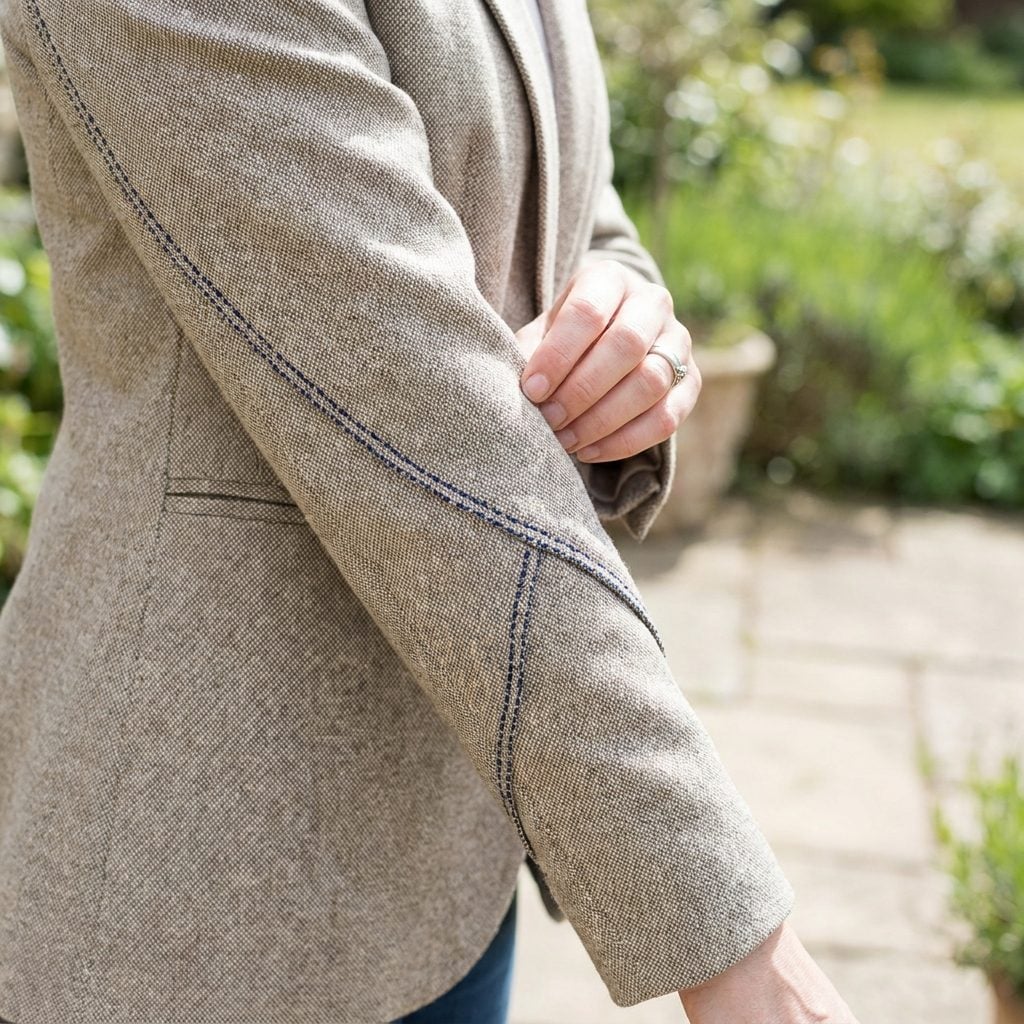
On the hanger, nothing looks suspicious. Put the blazer on and suddenly the sleeve seam starts migrating while a slow corkscrew of fabric works its way toward the cuff.
That can happen when sleeve pitch does not agree with the way the wearer naturally carries her arms. It is subtle, surprisingly distracting and not the same thing as a sleeve being too tight. Resetting a sleeve is real tailoring work, so this is one flaw worth catching while the jacket can still go back on the rack.
23. The Front Gaping Open Across the Bust

Straining announces itself with wrinkles. Gaping is quieter. The front panels simply refuse to fall where they should, opening away from the body and disturbing the long vertical line a blazer is supposed to create.
The oatmeal over black is restrained and elegant, which makes the misfit more noticeable rather than less. A jacket designed to hang open is one thing. A jacket that hangs open because its cut cannot accommodate the chest is another. The difference shows.
22. Tension Lines Pulling Across the Upper Back

Horizontal lines stretched between the shoulder blades often mean the upper back needs more room. Reach forward and the evidence gets louder: the jacket tightens just when the body is trying to move.
Shoulder width, posture and overall back balance can all contribute, so this is not automatically solved by letting out one seam. When the shoulders already feel restrictive, trying the next size or another cut is usually smarter than buying the problem and hoping a tailor can manufacture missing fabric.
21. A Sleeve Button Placket That Sits Crooked Against the Cuff

Nobody warns you about the cuff. The shoulders can be clean, the lapels quiet, the length perfect — and then the button row wanders off at an awkward angle and suddenly that is all you can see.
Not every cuff has to follow one universal geometry; some are deliberately angled or overlapped. What looks wrong is unintended asymmetry, uneven spacing or a placket that visibly fights the sleeve construction.
So check before you buy. Run a finger down the button row and see whether the arrangement looks deliberate rather than drunken. A slim navy wool-crepe blazer over a crisp white poplin shirt deserves better than a cuff that appears to be sliding sideways.
20. An X-Shaped Pull Radiating From the Button

The X-pull is not subtle. Fasten the blazer and diagonal creases shoot away from the button as if someone drew arrows toward the exact place the fit went wrong.
The rust wool and cream knit have plenty going for them, but tension at the closure overwhelms both. The jacket may be too small through the torso, too aggressively shaped at the waist or simply the wrong cut. Whatever the cause, a button should close the jacket, not become its emergency support system.
19. A Collar That Buckles Into Horizontal Folds

Instead of lifting away from the neck, this collar problem collapses downward. Horizontal folds bunch beneath the collar and turn an otherwise smooth upper back into a little traffic jam of wool.
The forest green deserves better. Excess length across the upper back can contribute, but so can posture, shoulder slope and jacket balance. It is a common tailoring diagnosis precisely because several small pattern relationships meet in this one visible spot.
18. Excessively Wide Sleeves

A blazer can nail the shoulder and still lose the argument halfway down the arm. Too much sleeve width creates soft folds around the forearm and muddies what should be a fairly clean line.
If the rest of the sleeve construction allows it, slimming the sleeve can be a high-impact alteration. Just do not confuse a generously cut sleeve with accidental excess. One looks considered. The other looks as though there is simply too much jacket.
17. A Button Stance That Sits Awkwardly Low

❤️ Would you like to save this?
Move the main button too far down for a particular torso and the entire composition changes. The lapels lengthen, the upper front opens farther and the jacket’s visual center of gravity drops with it.
There is no rule saying every blazer button must hit the natural waist. Different cuts place it higher or lower for different effects. The question is whether the stance balances the wearer’s proportions. If the closure seems to drag the whole jacket downward, another cut will usually beat trying to redesign this one.
16. Excess Fabric Pooling Down the Back
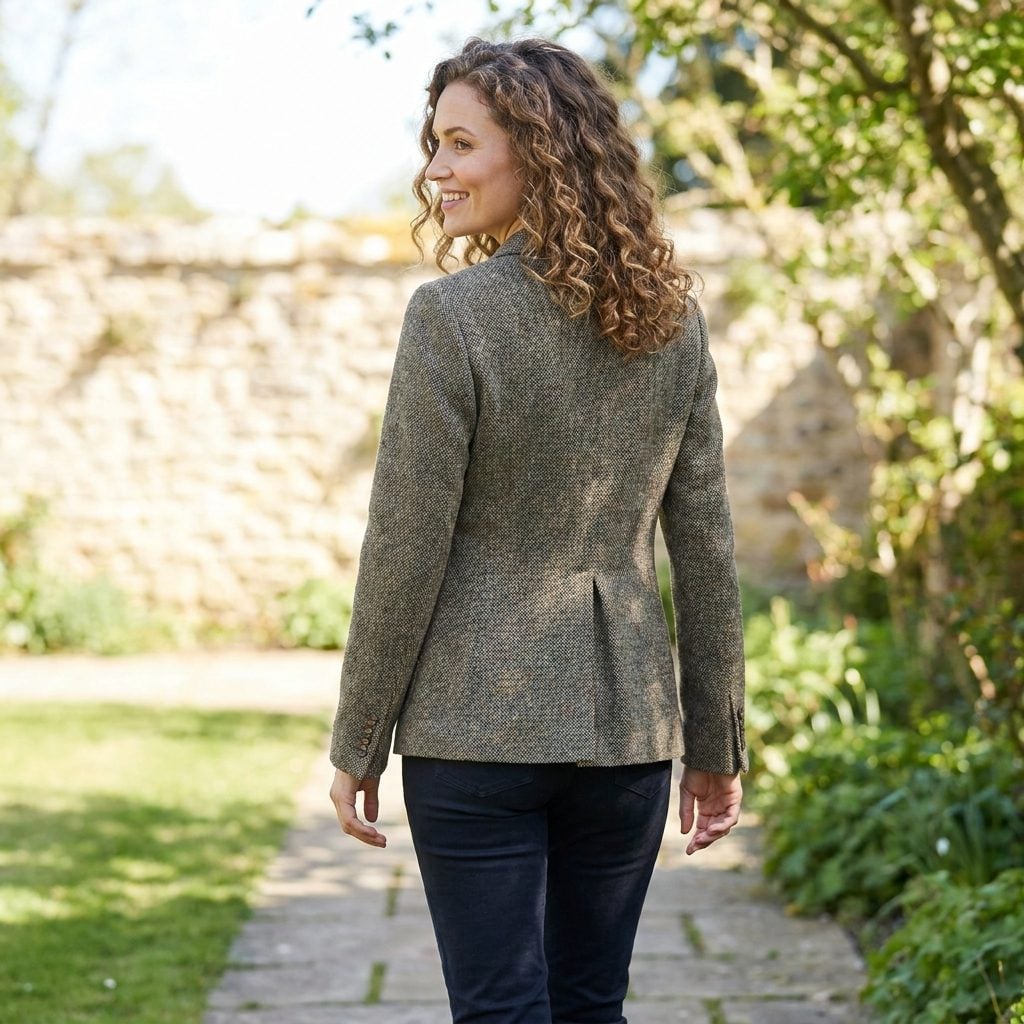
This is the mirror image of the too-tight upper back. Instead of pulling, the fabric has nowhere useful to go and settles into loose folds.
Sometimes a tailor can clean this up beautifully by adjusting the center or side seams. Other times posture, shoulder slope or excess back length is causing the puddling, which makes the alteration more involved. The oatmeal linen can tolerate a little relaxation. It should not look as though the back of the jacket has melted.
15. Armholes That Cut Into the Underarm

A high armhole is not automatically a bad armhole. In good tailoring, a well-shaped higher armhole can actually help movement. The trouble starts when it is simply too small, too tight or wrongly shaped for the wearer.
This one bites into the underarm and sends tension across the upper chest as soon as the arms move. If crossing your arms feels like negotiating with the jacket, the cut is wrong. A blazer should participate in movement, not veto it.
14. A Chest Pocket That Looks Accidentally Crooked

You notice something before you know what you noticed. The blazer seems fine, yet the eye keeps returning to one small feature like a picture frame that was bumped on the wall.
Some chest pockets are intentionally angled, so horizontal is not a universal law. The problem is a pocket that looks accidentally crooked or sits awkwardly against the jacket’s other lines. Good tailoring should make those little decisions feel resolved rather than approximate.
13. A Hem That Cuts You Off Too High

Too much length can swamp a frame. Too little can make a conventional blazer look as though someone washed it on hot.
The button, pockets and waist all become crowded into a short stretch of fabric here. A deliberately cropped blazer solves those proportions at the pattern stage. A regular jacket that merely ends too soon does not. And unlike excess length, missing cloth is difficult to bargain with.
12. The Blazer That Won’t Stay Put: When the Jacket Creeps Up Every Time She Moves

Stand still and the blazer behaves. Raise an arm and the whole thing climbs toward the ears. That is a fitting-room test worth remembering.
Low or overly large armholes can make the sleeve drag the jacket body upward because the arm and torso are not moving independently enough. Other balance issues can contribute, but the symptom is unmistakable: every gesture requires a little tug afterward to put the jacket back where it started.
That constant correction makes even beautiful fabric look fussy. You can be draped in Italian wool and still look as though the jacket belongs to somebody with an entirely different frame.
11. Lapels That Bow Away From the Chest

Lapels are supposed to belong to the jacket front, not hover several millimeters above it. Once they start bowing outward, the eye stops following the elegant V and starts following the gap.
The taupe fabric and black silk cami are restrained enough to make that floating edge obvious. Chest shape, jacket balance, button position and construction can all play a role. What matters visually is simpler: the lapel should settle, not levitate.
10. Sleeves That Stop Short of the Wrist

Sleeve length has an irritating ability to make a jacket look wrong from across the room. When a conventional full-length sleeve stops well above the wrist, the whole blazer can appear undersized even if the torso fits beautifully.
There is no mandatory half-inch-of-shirt-cuff rule for women’s tailoring. The useful check is whether the sleeve length works with the jacket design and what is worn underneath. Many sleeves can be lengthened slightly if enough fabric was left inside, although functional buttonholes can sharply limit what can be done at the cuff. Even an otherwise beautifully proportioned jacket can be undone by sleeves that stop in no-man’s-land.
9. A Back Vent That Gapes While You Stand Still
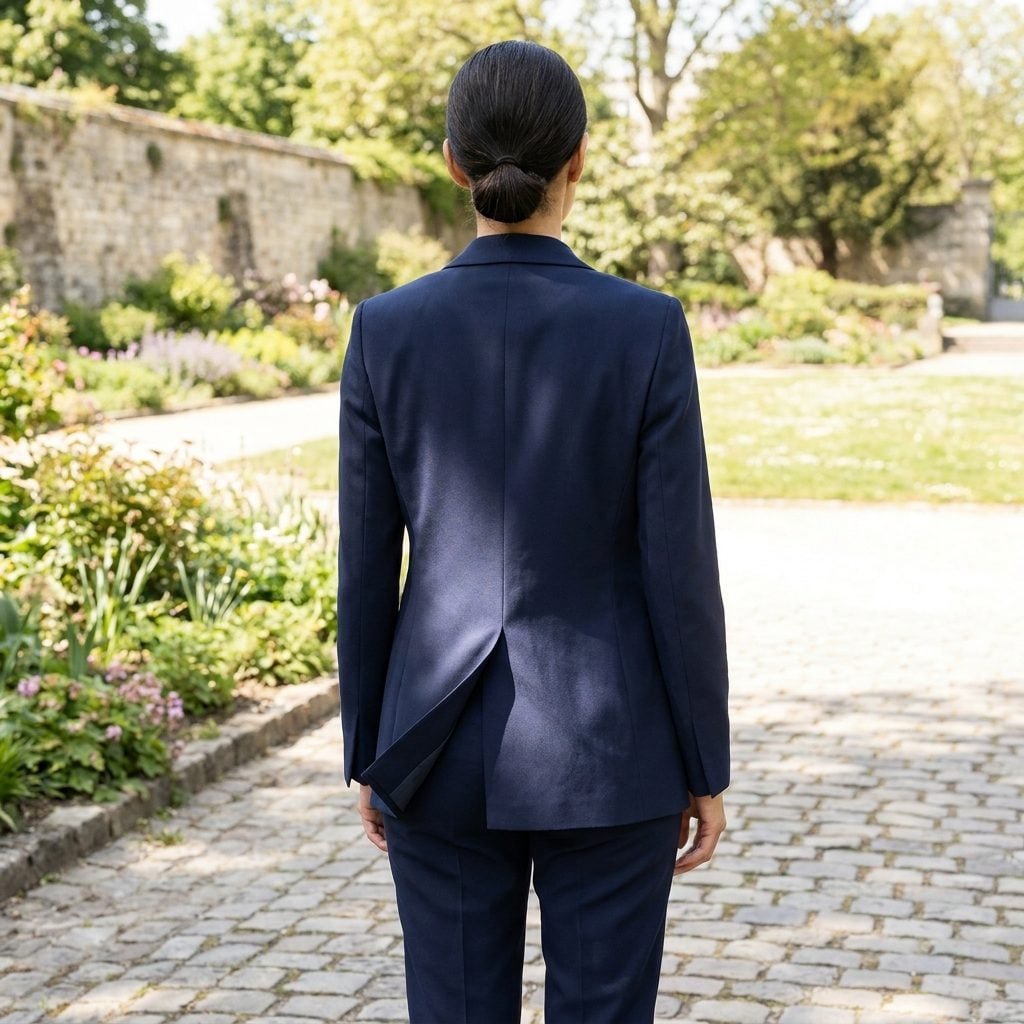
A back vent exists to open when the body needs room. It should not already be waving a white flag while you are standing motionless.
A vent that spreads at rest often points to insufficient room through the hips, although posture and jacket balance can contribute. If there is seam allowance, a tailor may be able to release some fabric. If there is not, sizing up or changing cuts is usually the cleaner answer.
8. Too Much Empty Fabric Through the Chest

Too tight is obvious. Too empty is sneakier. Fabric caves inward, hangs away from the torso and creates soft folds where the front should look controlled.
Do not automatically size down, because the shoulders and back may already fit. First figure out where the excess actually lives. Sometimes another size works; sometimes the front needs shaping; sometimes the entire cut was designed for a different chest proportion.
7. Patch Pockets Sagging Away From the Body

Patch pockets are allowed to be casual. They are not supposed to look exhausted.
The giveaway is the top edge peeling away from the body or the corners drooping under their own weight. On a well-made linen or cotton blazer, those stress points should be securely reinforced, whether by bar tacks, careful stitching or another construction method. Put a hand in the pocket, take it out and see whether the opening returns to shape.
6. Side Seams That Twist Off-Vertical

This is one of those flaws you feel before you understand. In profile, the side seam starts at the underarm and then wanders forward or backward instead of dropping cleanly toward the hem.
Pattern balance, grain, posture and cut can all play a part. Whatever caused it, the jacket begins to look subtly torqued around the torso. Check both sides in a three-way mirror; if the seam appears to be trying to escape to another part of the body, believe it.
5. A Lining That Bunches and Bubbles Under the Shell

❤️ Would you like to save this?
The lining is where a lot of shortcuts go to hide. Nobody falls in love with a blazer because of the fabric nobody sees, which makes it an excellent place to inspect once the exterior has charmed you.
If the lining is cut or installed too tightly, it can restrict the outer shell and contribute to pulling, puckering or poor movement. Good jackets usually include some lining ease so the two layers are not wrestling each other every time you reach forward.
4. Buttonholes That Fray After Three Wears
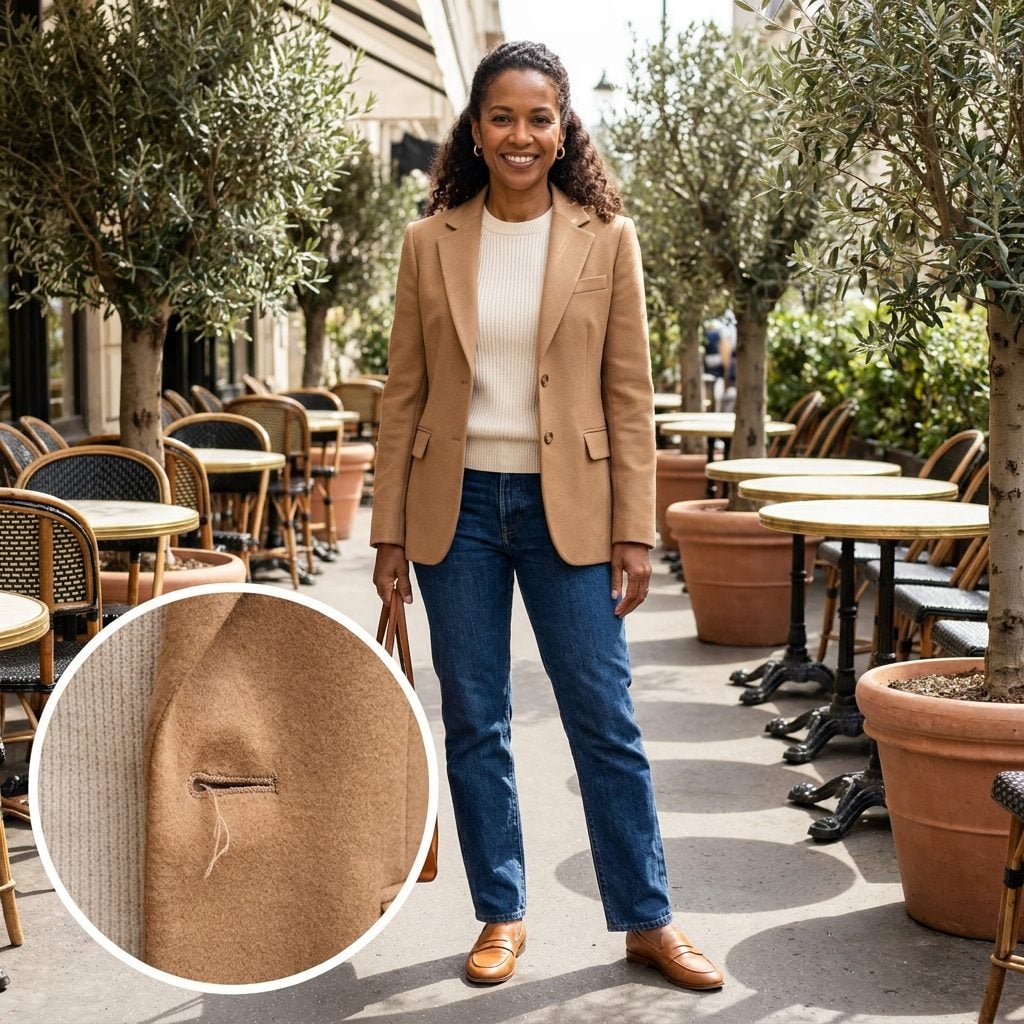
Buttonholes are tiny, which is precisely why sloppy ones are so irritating. Once loose threads begin sprouting around the opening, the jacket starts looking worn before the rest of it has had a chance.
Hand-worked buttonholes can be beautiful, but machine-made ones are not automatically inferior; excellent machine stitching can be clean, dense and extremely durable. Look instead for secure stitching, a neatly cut opening and edges that are not already unraveling in the store.
3. A Waist So Loose the Blazer Looks Shapeless

Boxy can be fabulous when boxy is the design. This jacket does not read as deliberately boxy; it simply drops from underarm to hem without acknowledging the body underneath.
That is often one of the more rewarding tailoring problems because excess through the waist can frequently be taken in at the side or back seams. The trick is preserving enough ease to move while giving the jacket back some shape. You want definition, not corsetry.
2. A Fabric That Sets Hard Creases at the Elbow

The color can be glorious and the tailoring impeccable, but fabric still gets the final vote. If every bend of the elbow leaves a hard crease that looks pressed in with an iron, the blazer quickly loses its polish.
Fiber content alone does not predict this. Wool is naturally resilient, linen is supposed to wrinkle, and many synthetics are highly crease-resistant. Weave, weight, finish and blend all matter. Instead of declaring one fiber luxurious and another guilty, scrunch a small section gently in your hand and see how that particular cloth recovers.
1. Buying the Size on the Tag Instead of the Body You Actually Have

This may be the most expensive fit mistake because it happens before any of the others. A prestigious blazer comes off the rack in the number you usually buy, so the number gets trusted more than the mirror.
But sizing is not standardized tightly enough for that loyalty. One label’s 10 can fit like another label’s 12, and two jackets carrying the same number can be cut for entirely different proportions.
The best-fitting blazer in the room may be the one whose size tag you would never have reached for first.
So watch the jacket instead. Are the shoulders where your shoulders are? Does the front close without broadcasting tension? Can you move your arms? Do the sleeves and hem look deliberate? Try one size above and one below whenever the fit is close. The number disappears the moment the blazer is on your back. The seams do not.