

Blonde had plenty of brightness and precious little backbone. Gold ran from root to tip, the ends drifted past the shoulders, and the whole arrangement seemed determined not to offend a single hairbrush. A color can be luminous and still leave the haircut with nothing interesting to say.
Give that same face an espresso pixie and the eyes take command. Put a sharp edge on copper and the color suddenly has architecture. Send strawberry curls outward, sweep mahogany away from the cheekbones, or let a streak of silver cut through dark brown: every move changes the balance of the face. The difference isn’t age. It’s intention.
Thirty-seven possible answers, all starting with one familiar blonde. Some keep the length and rethink the light; others trade the whole silhouette for a bob, shag, or crop. The best transformations don’t simply exchange one shade for another. They decide exactly where the hair should make its point.
FYI, thanks to AI imagery software, we’re able to create very specific fashion and hairstyle examples to illustrate the points being made. In some cases, imagery is exaggerated to hammer home the point. Also, assume links that take you off the site are affiliate links such as links to Amazon. this means we may earn a commission if you buy something.
37. Espresso Pixie Cuts Straight to the Eyes
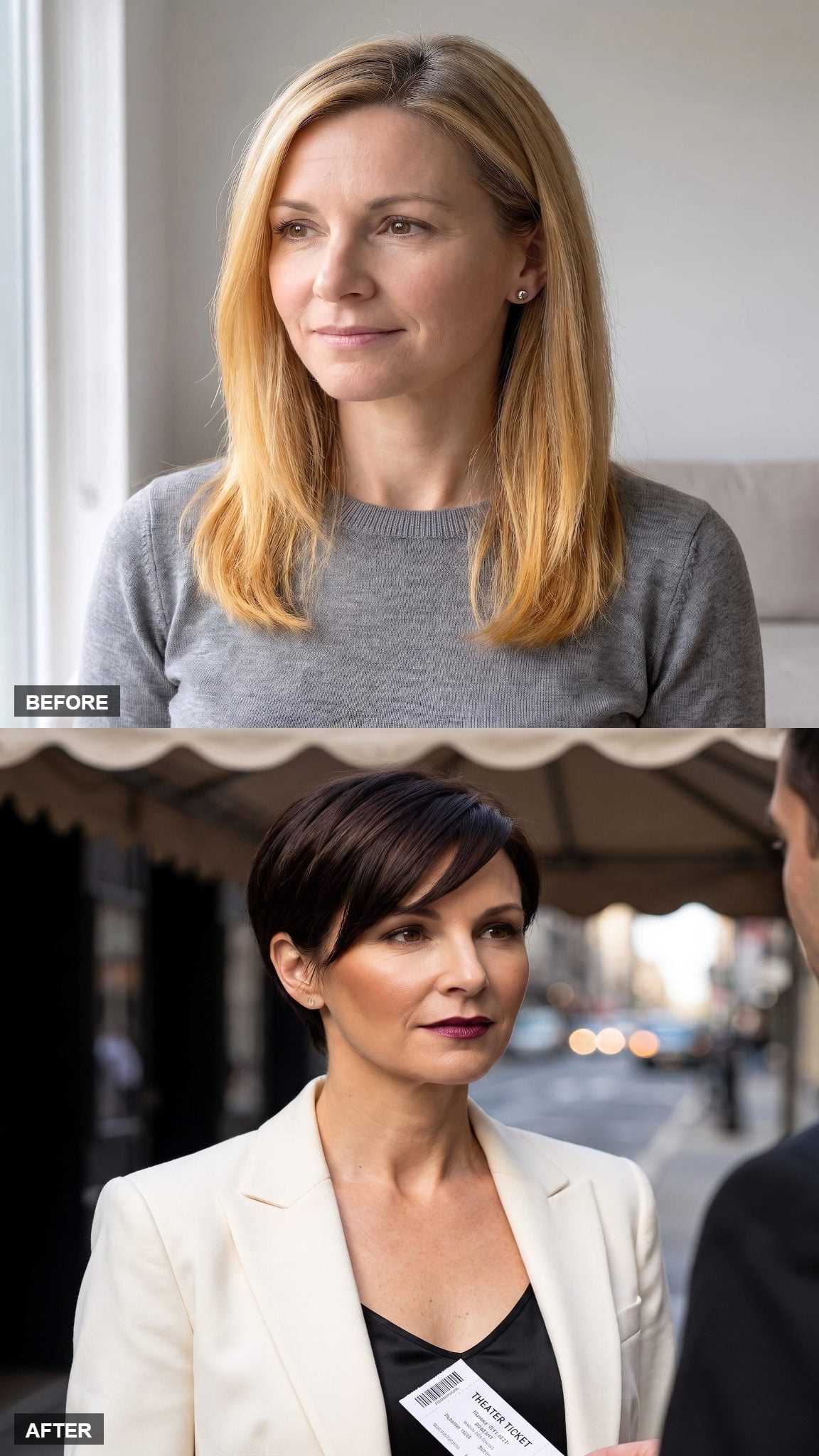 Espresso takes the starting blonde to the opposite end of the spectrum. The nape is cropped close, the top left long enough to sweep across one brow. That diagonal fringe is the escape hatch: without it, such a dark, compact cut could look too severe. Notice how the short sides expose the jaw while the fringe interrupts the forehead. The color supplies drama; the asymmetry keeps it human.
36. Strawberry-Blonde Curls Turn Straight Lengths Into a Soft Halo
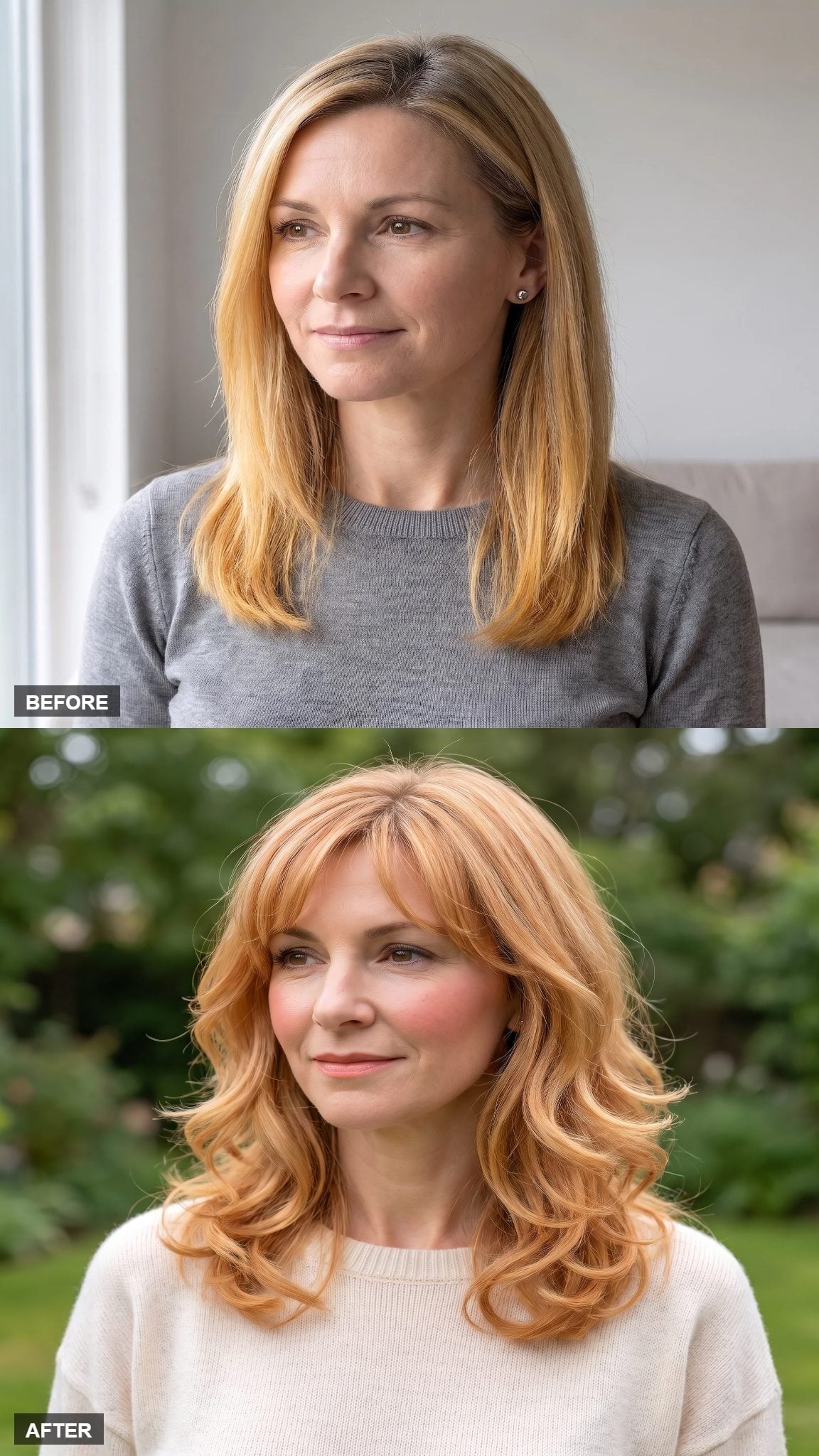 The blonde warms into strawberry and peach, but texture delivers the larger change. Brushed-out curls build volume through the sides, while parted bangs sweep into the shape instead of sitting on top of it. The result has more width, spring, and visible movement than the straight starting style. Softly separated curls keep the outline generous without making it rigid.
35. A Silver Angled Bob Draws a New Line Along the Jaw
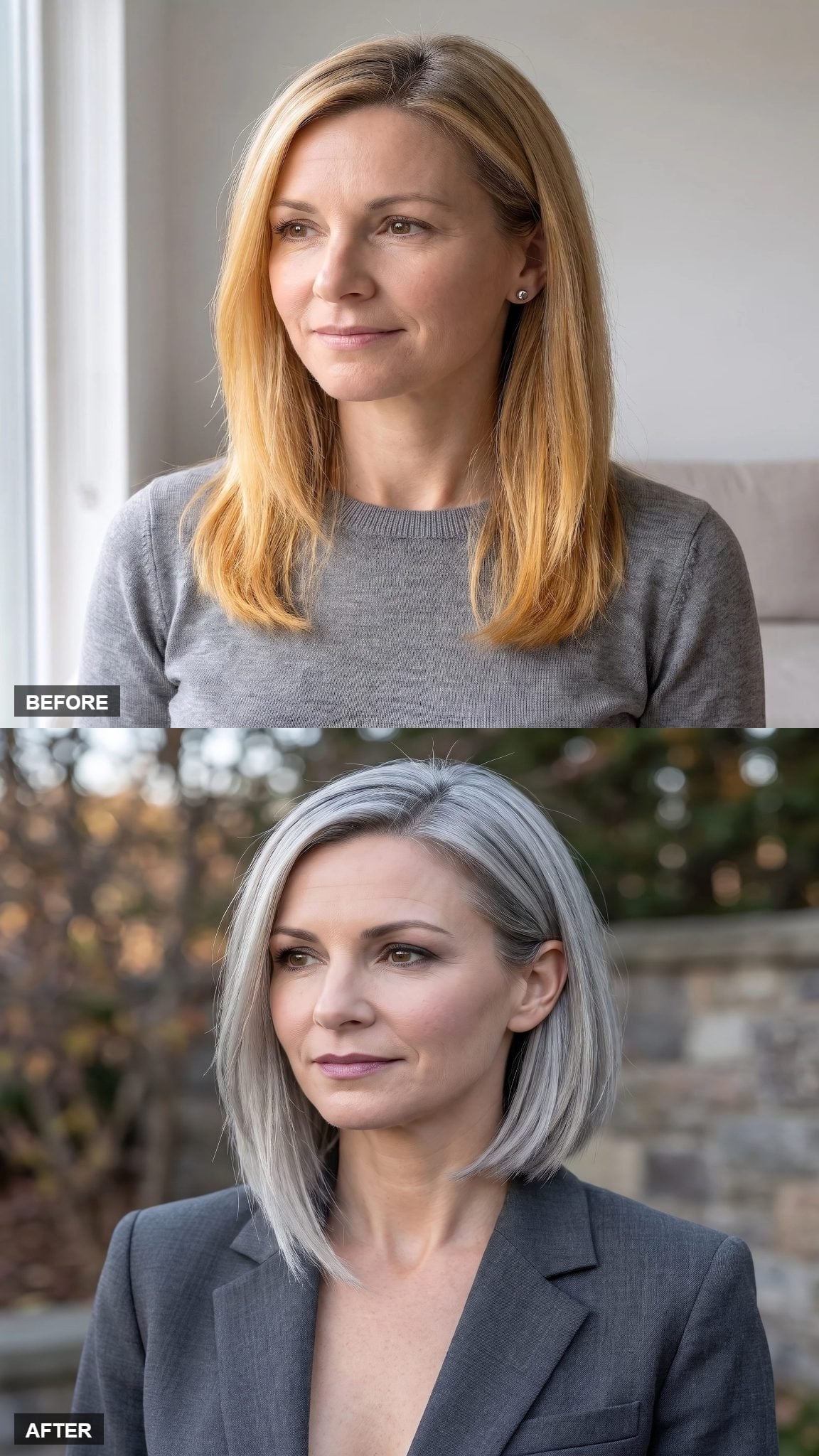 Bright silver changes the color story, while a forward angle changes the geometry. Shorter at the nape and longer toward the chin, the bob creates a deliberate diagonal on either side of the face. One side tucked behind the ear reveals the precision of the cut. A smooth finish lets the angled ends, rather than extra styling, do the work.
34. Chestnut Lob Gives the Ends a Clean Break
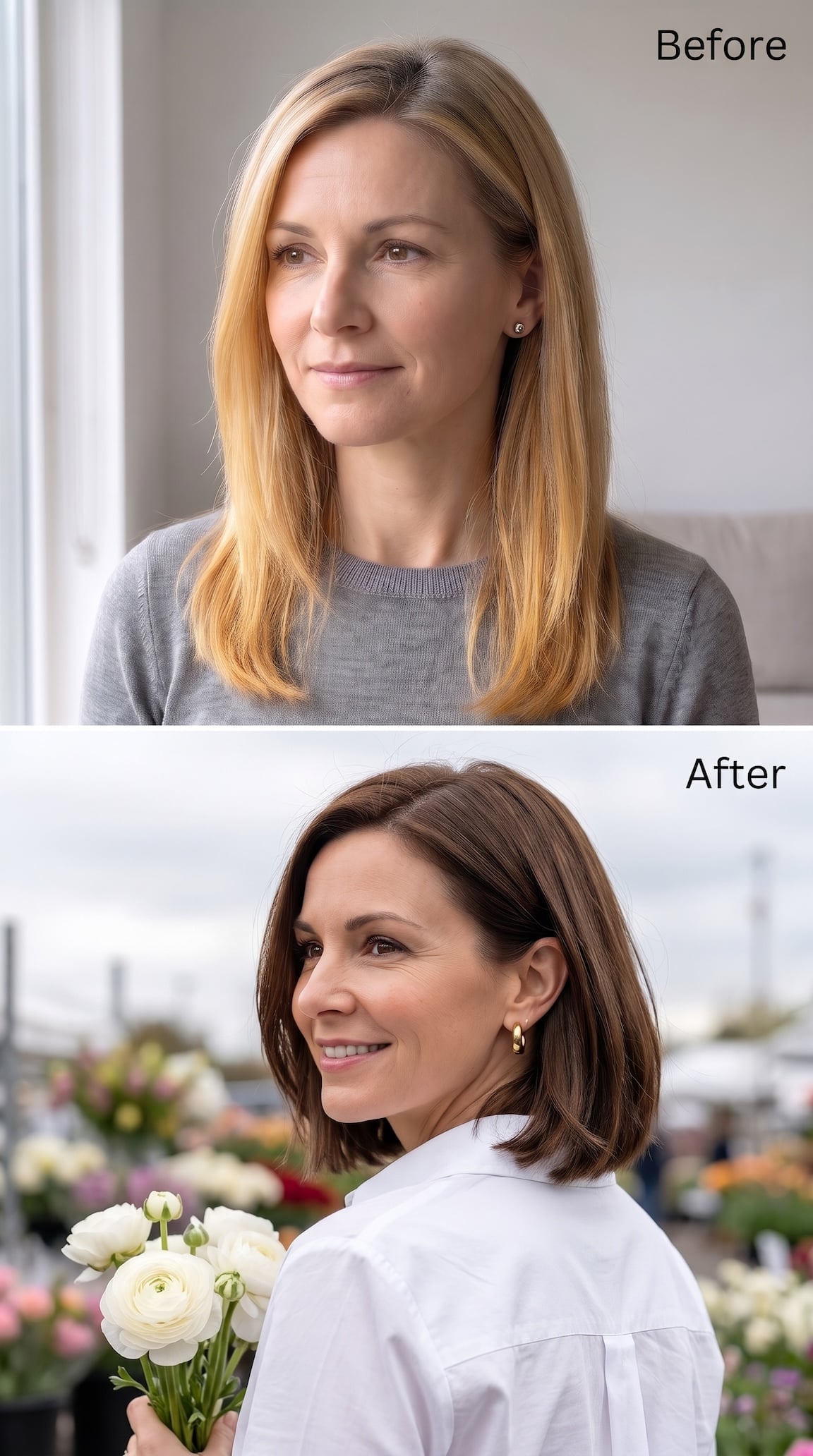 Chestnut brings a reddish-brown glow to a collarbone-length lob. Instead of fading into wispy ends, the hair stops at a decisive, blunt edge. That solid perimeter gives the warmer brown a crisp silhouette. No elaborate layers or decorative bangs are needed when the outline is this assured.
33. Copper Spirals Give the Fringe the Same Curl as the Rest
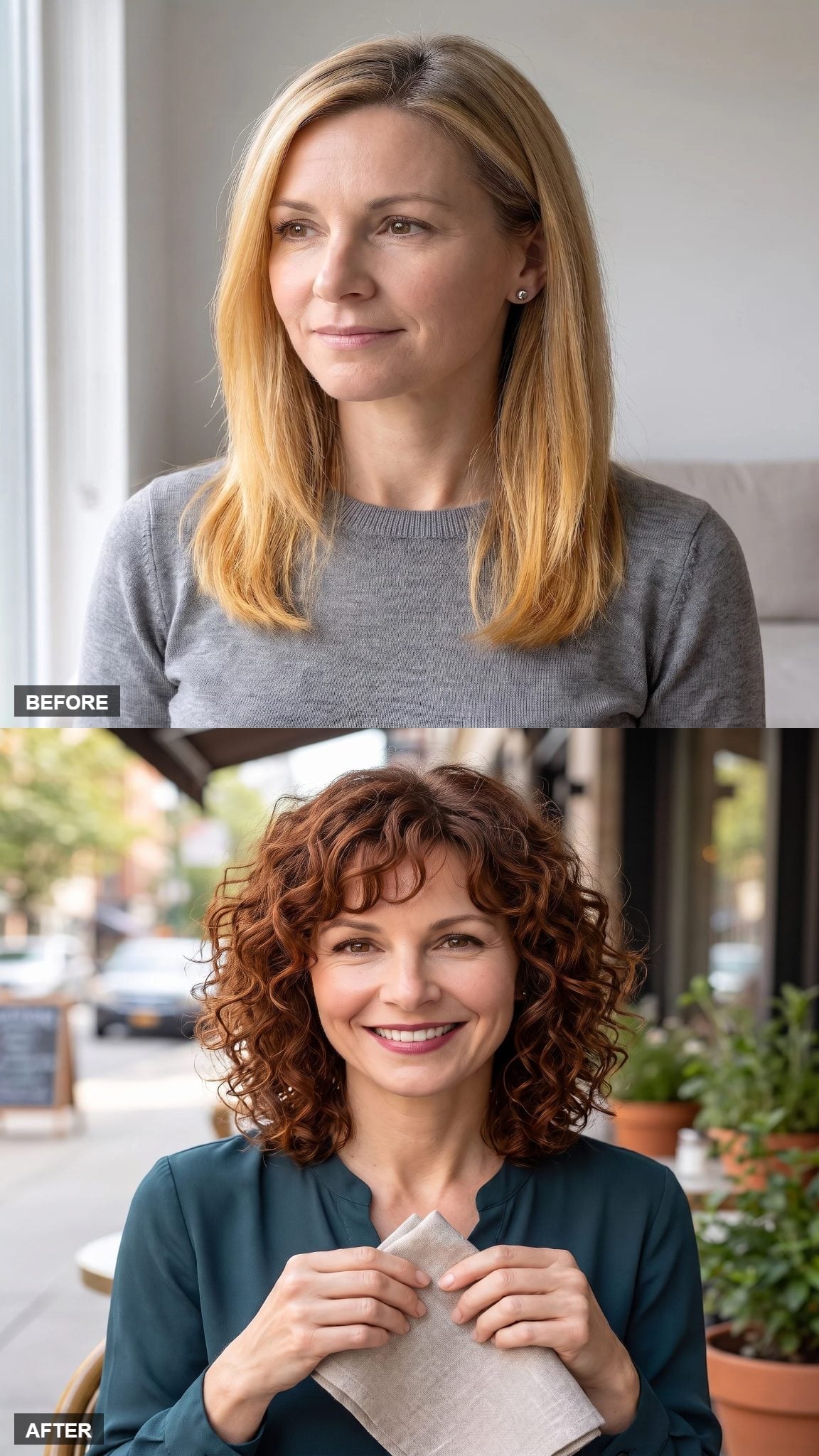 Copper becomes a full head of defined spirals, with the curl pattern continuing through the bangs. The shape rounds out near the cheekbones and falls below the shoulders. Keeping the fringe curly creates a unified texture from crown to ends. The cut needs to account for curl shrinkage so the bangs settle at the intended height when dry.
32. Vanilla Blonde Gets Its Definition From a Jaw-Length Bob
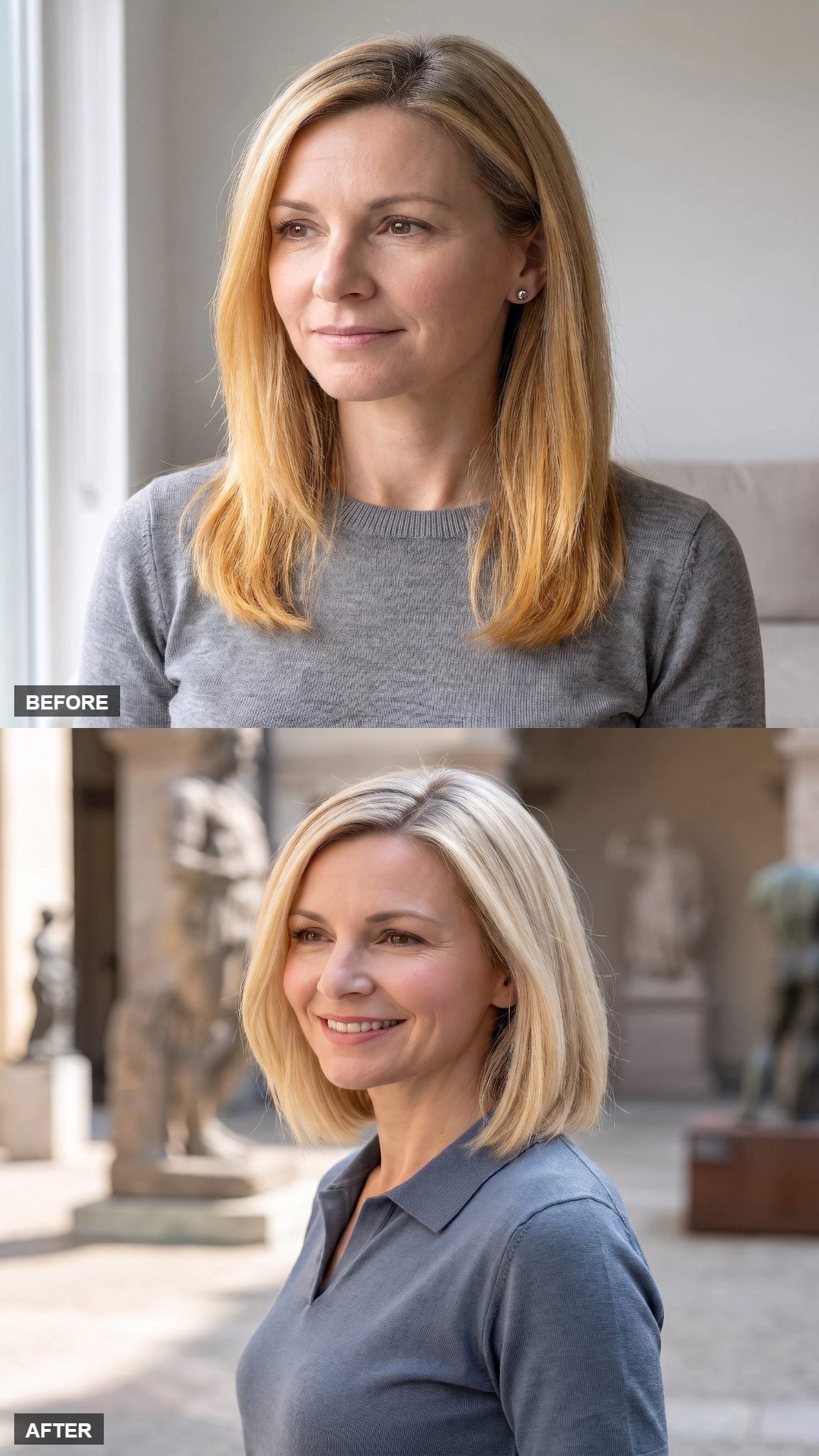 Pale vanilla blonde becomes more assertive when cut just below the jaw. The side part reveals a little root shadow, and the compact bob holds the light ends in a clear, graphic shape. Unlike the original longer blonde, this version depends on precision at the perimeter. Regular trims matter more than extra volume.
31. Black Cherry Reveals Its Red Only When the Light Hits
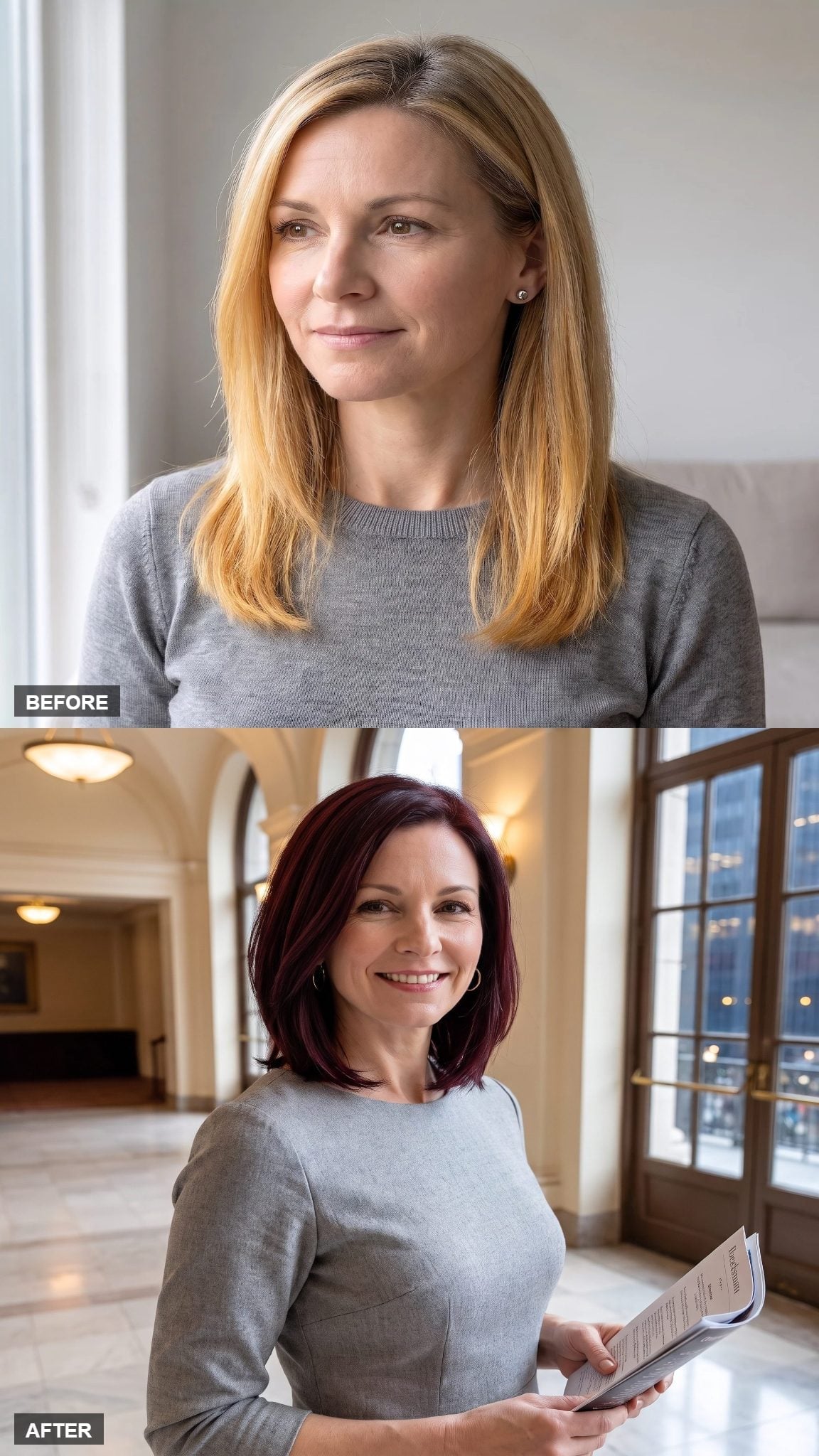 At first glance, this chin-length bob looks almost brown-black. Then the light catches its cherry-red undertone, especially around the shorter pieces opening at the cheekbones. The color has a second act without requiring an elaborate haircut. A few layers lift the surface enough for the darker and brighter tones to trade places.
30. Feathered Butter Blonde Changes Direction at the Cheekbones
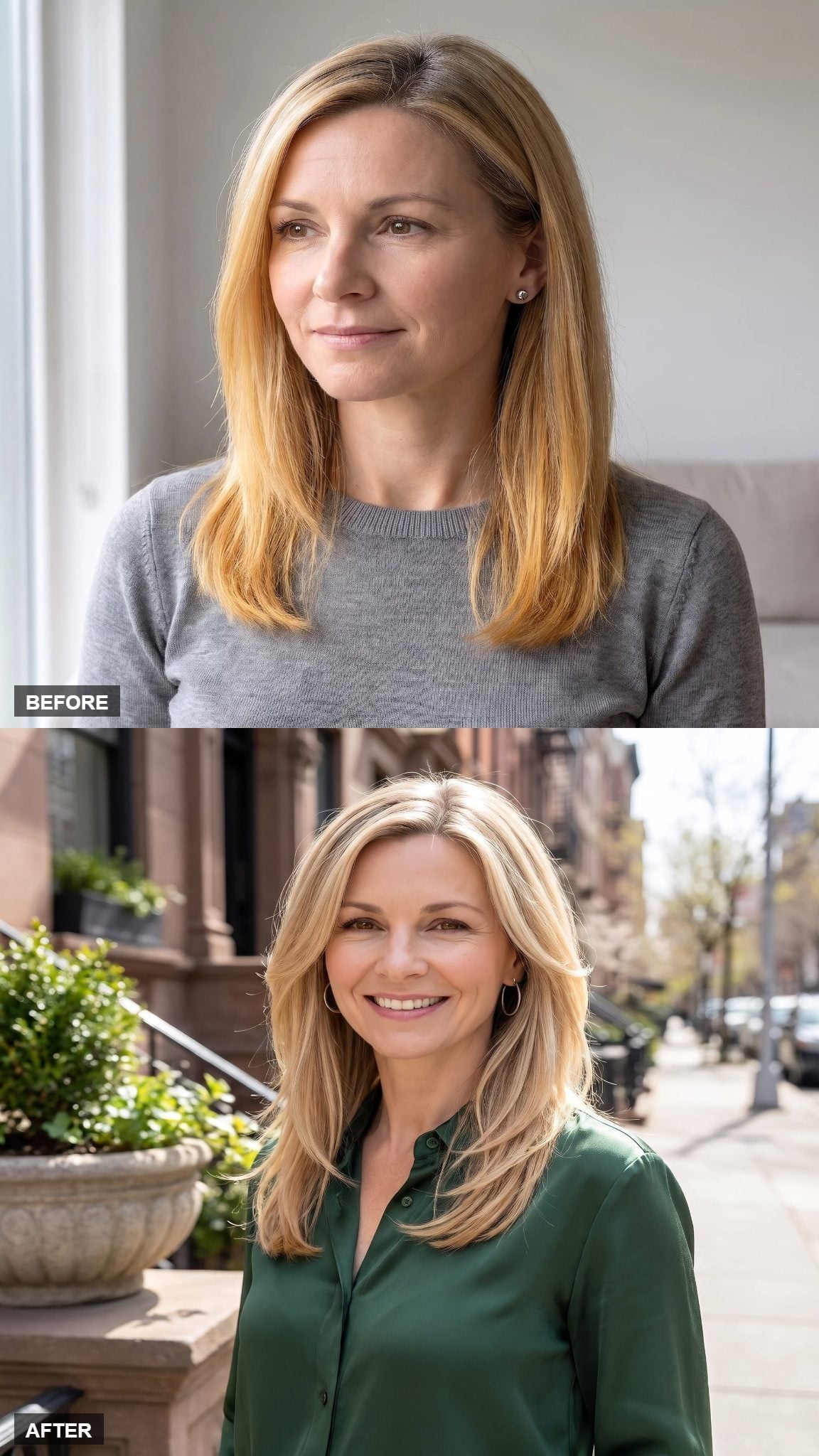 Butter blonde remains warm, but the layers now sweep backward from the cheekbones. The face-framing pieces flare away instead of falling straight down, giving the familiar color a more open outline. A deeper root lends contrast at the crown. This option shows how much a change in cutting and styling can accomplish without abandoning blonde.
29. Espresso Lengths and Heavy Bangs Make the Boldest Frame
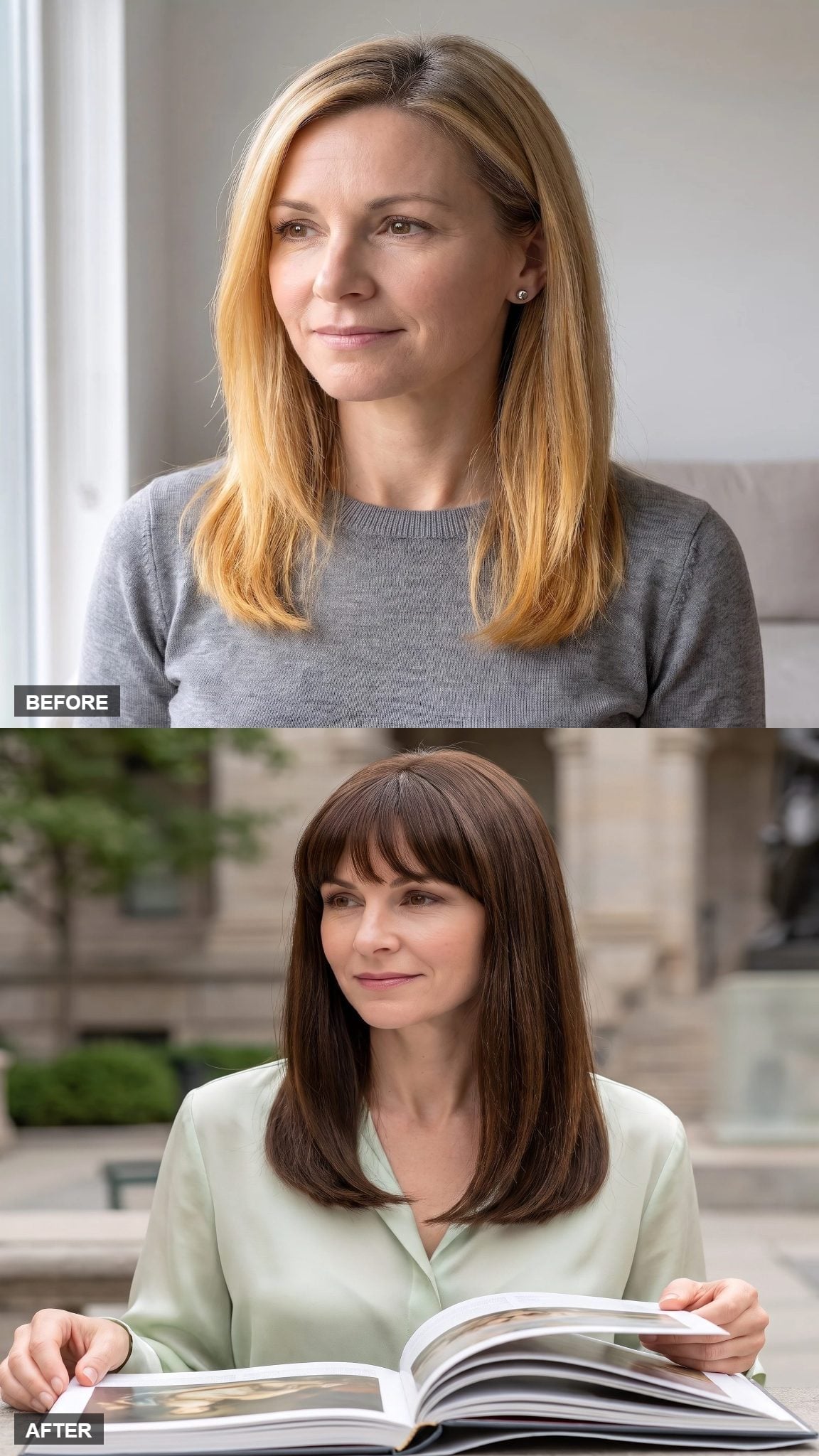 This option retains long hair but changes nearly everything else. Glossy espresso falls straight below the shoulders, and a dense, blunt fringe lands at the brows. The contrast between the heavy front line and uninterrupted lengths is the design. Keeping the ends polished matters; uneven texture would weaken the graphic effect.
28. Strawberry-Gold Waves Bring Copper Back Toward Blonde
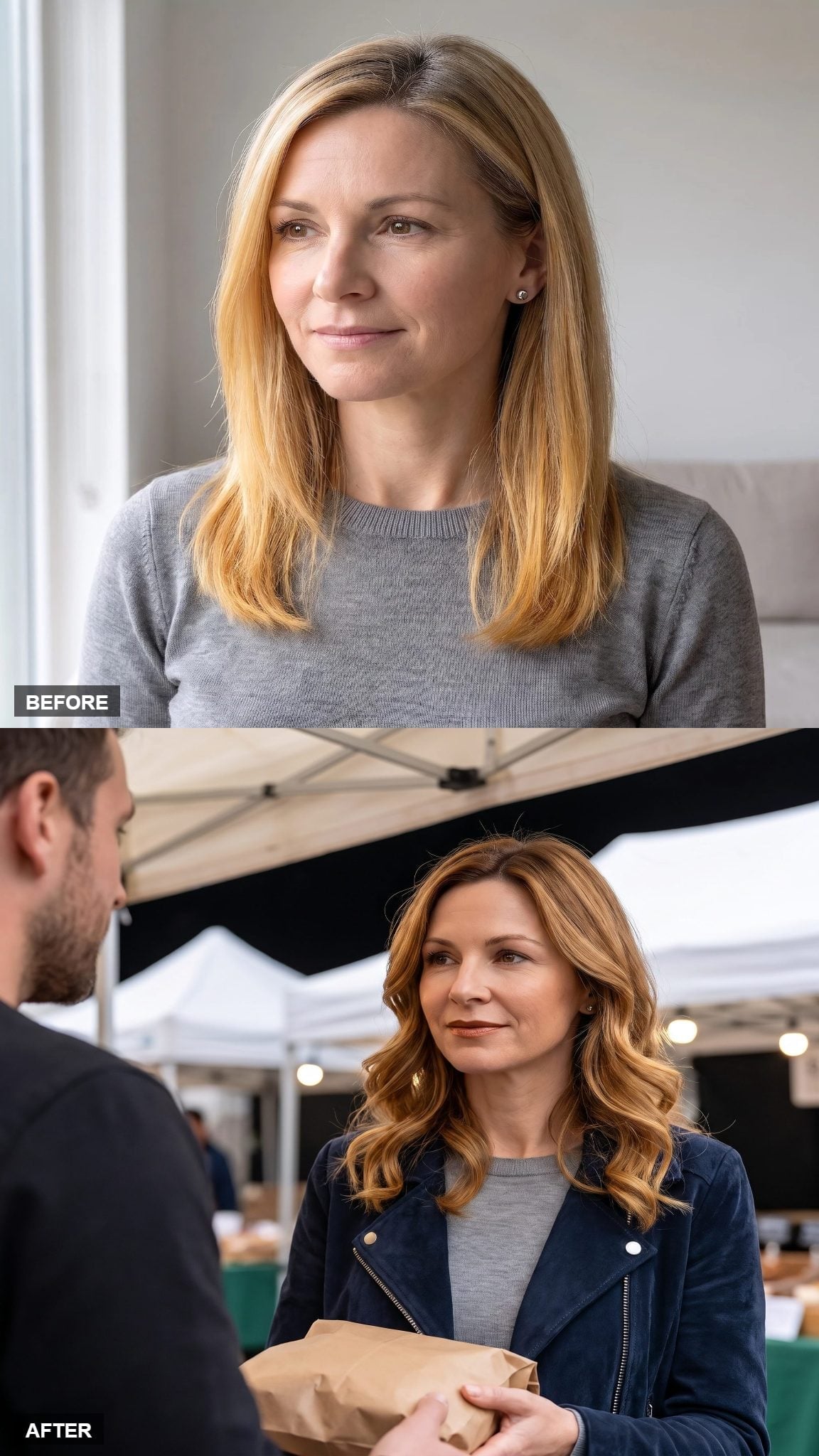 Strawberry-gold sits between blonde and copper, combining golden highlights with a soft red cast. Loose waves start around the cheekbones and travel through the shoulder-length ends. The appeal is the balance: warmer than honey blonde, lighter than full copper, and textured enough to show both notes in the same curl.
27. Mushroom Brown Makes a Blunt Cut Look Architectural
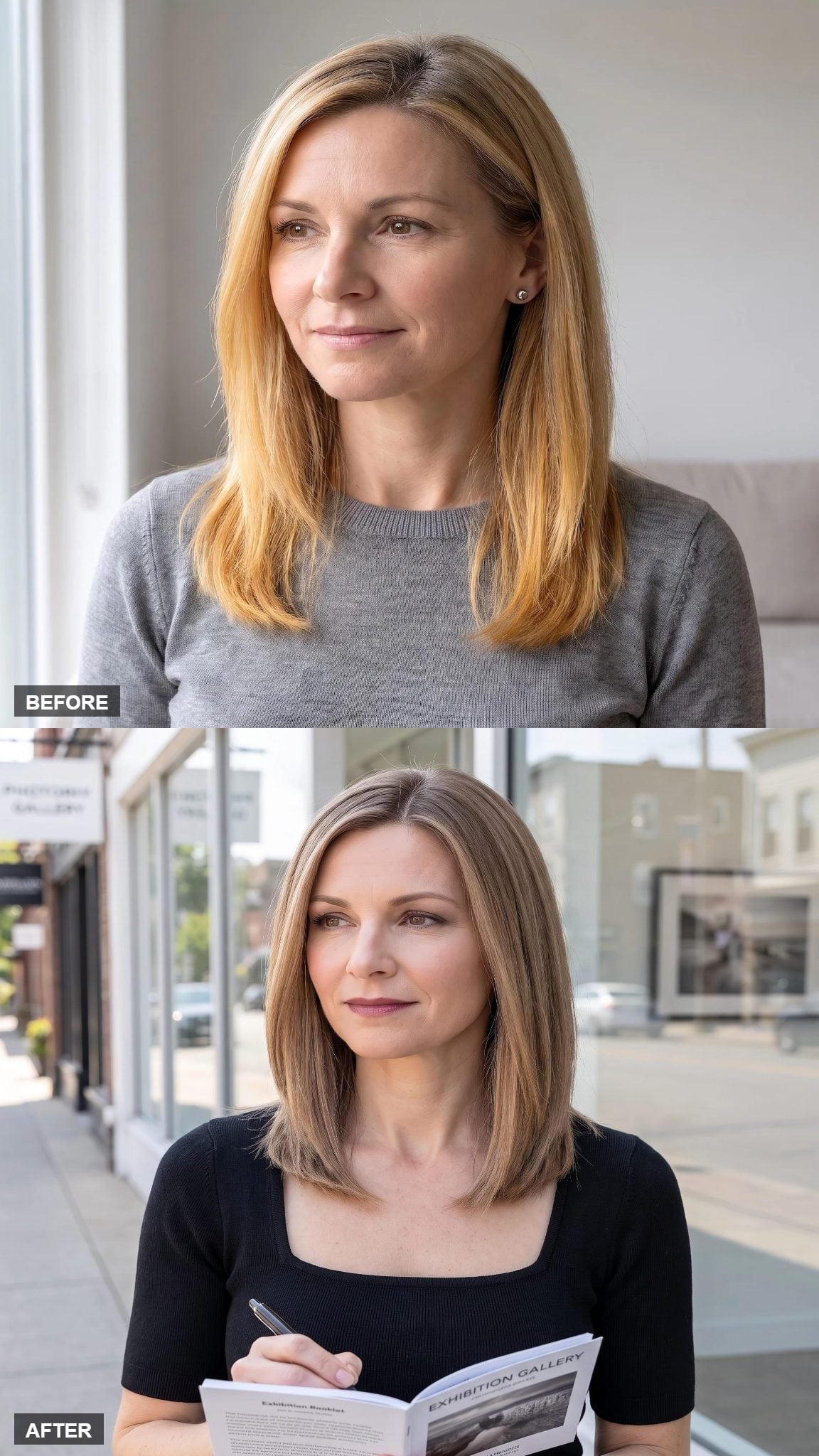 Smoky mushroom brown lives somewhere between taupe and cool beige. Paired with a collarbone-length cut, the muted shade acquires a surprisingly strong outline. The ends fall in a clean, blunt line. Fine shifts in tone keep the brown alive, while the haircut supplies the precision.
26. Copper Layers Put the Warmth Back in Motion
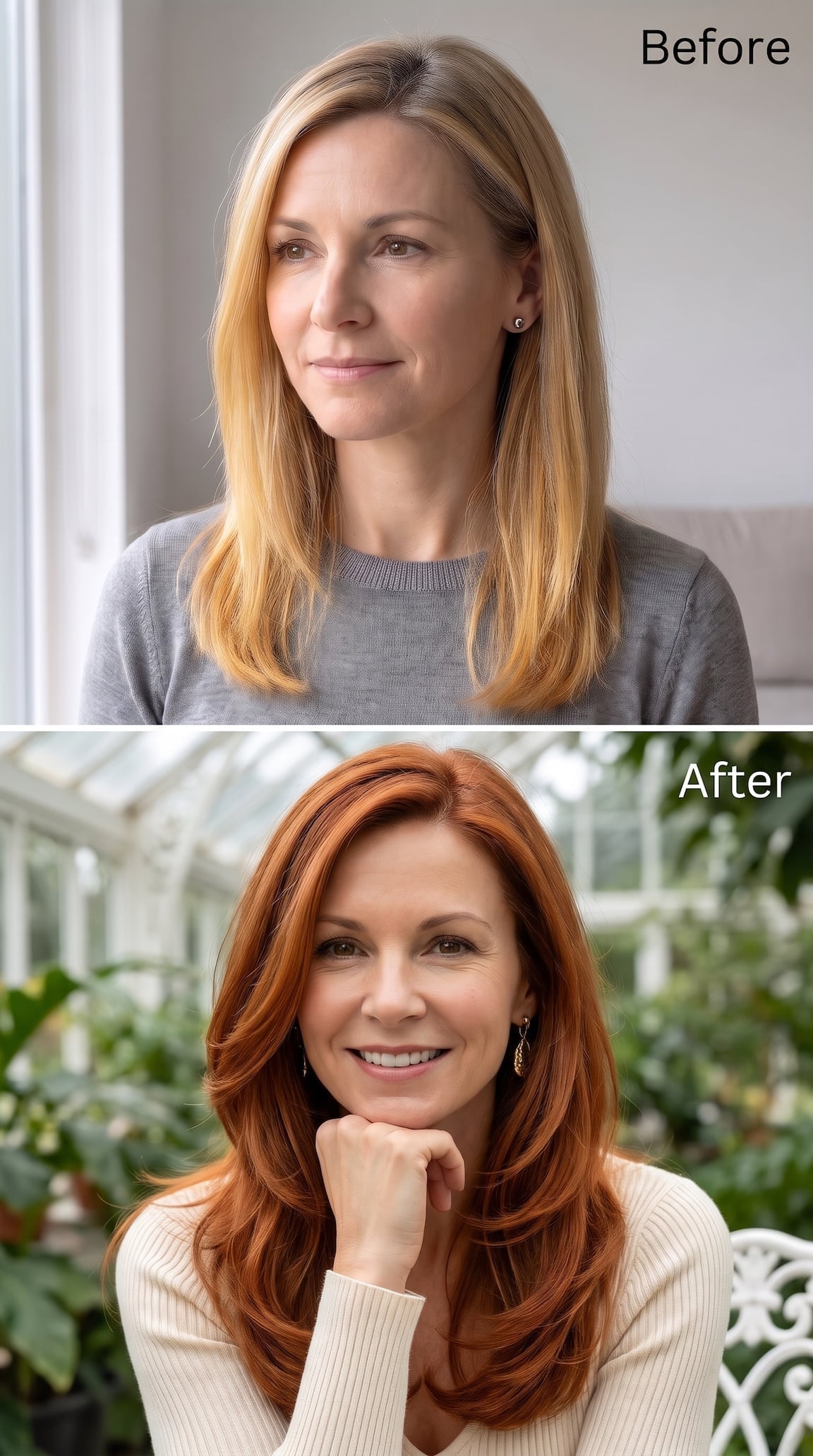 Saturated copper replaces the blonde with a clear red-orange direction. Shorter pieces open around the cheekbones, while longer layers flick outward and reveal different intensities as they turn. This isn’t simply a brighter color. The layered shape breaks up the copper surface, making the red read as several moving planes rather than one uninterrupted curtain.
25. A Textured Pewter Pixie Lets the Crown Do the Talking
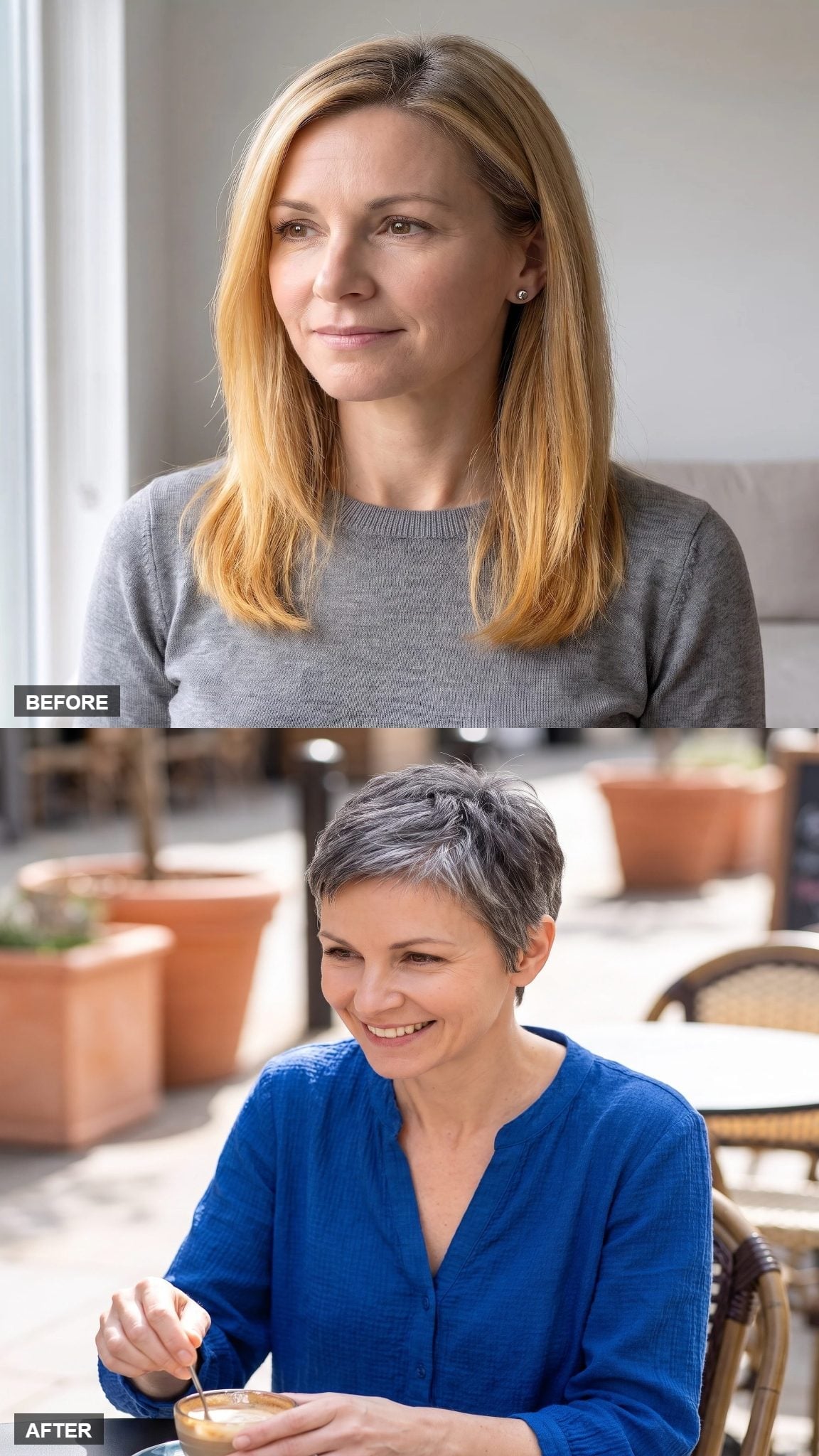 Pewter silver moves the transformation into cool metallic territory. Short, choppy layers lift through the crown and keep the sides compact, creating height without the weight of long hair. Texture is the essential design decision. Separated pieces reveal the mixture of lighter and darker gray rather than smoothing it into one uniform surface.
24. Honey Highlights Break Up a Brown Bob
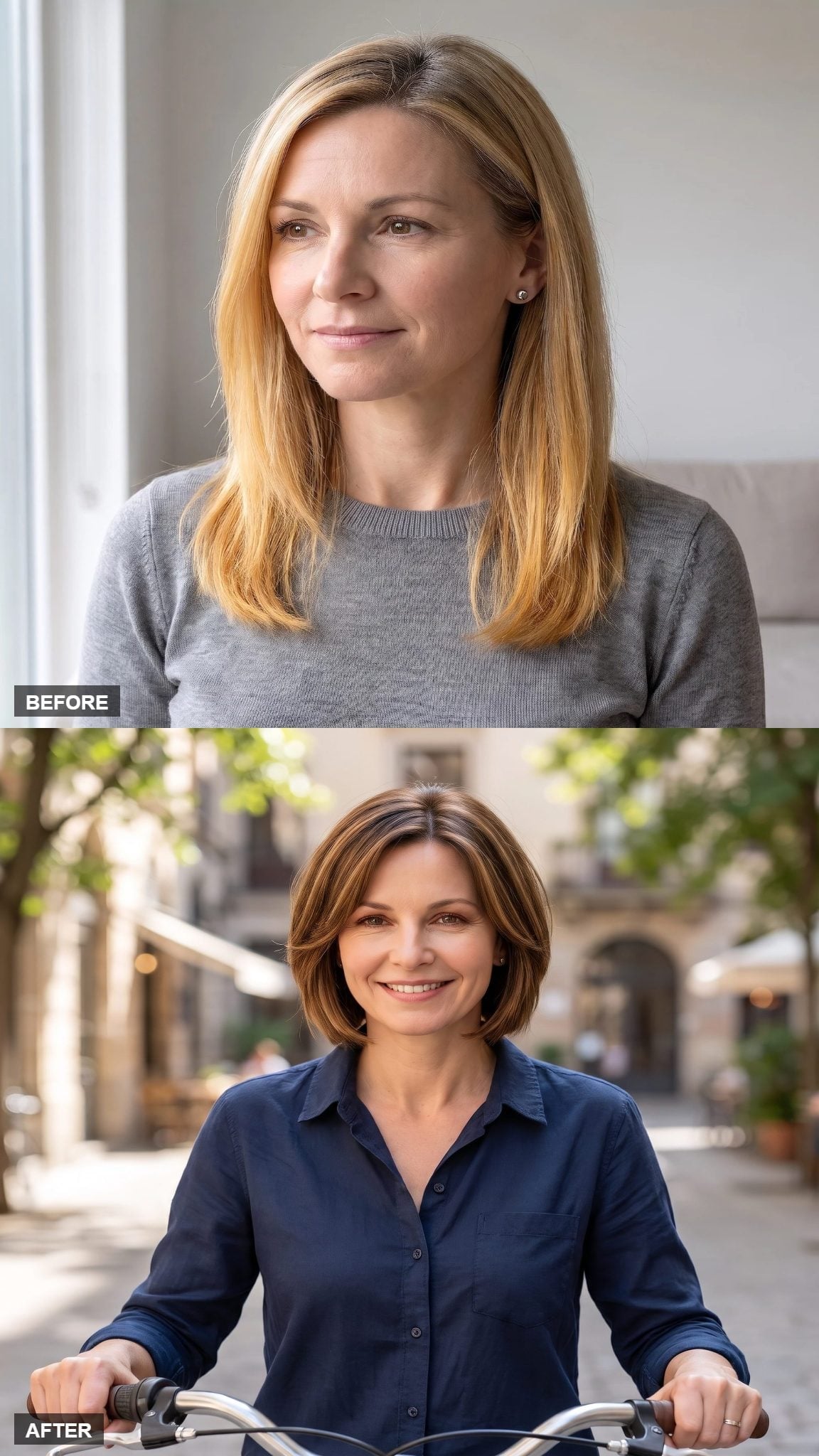 A medium-brown bob gets concentrated honey ribbons through the front and crown. The ends curl inward just below the jaw, creating a rounded outline that is shorter and more structured than the starting blonde. The highlights are strongest where the hair frames the face. Leaving darker sections underneath gives the lighter pieces contrast without turning the whole bob blonde again.
23. Merlot Waves Stop Short and Leave a Lasting Impression
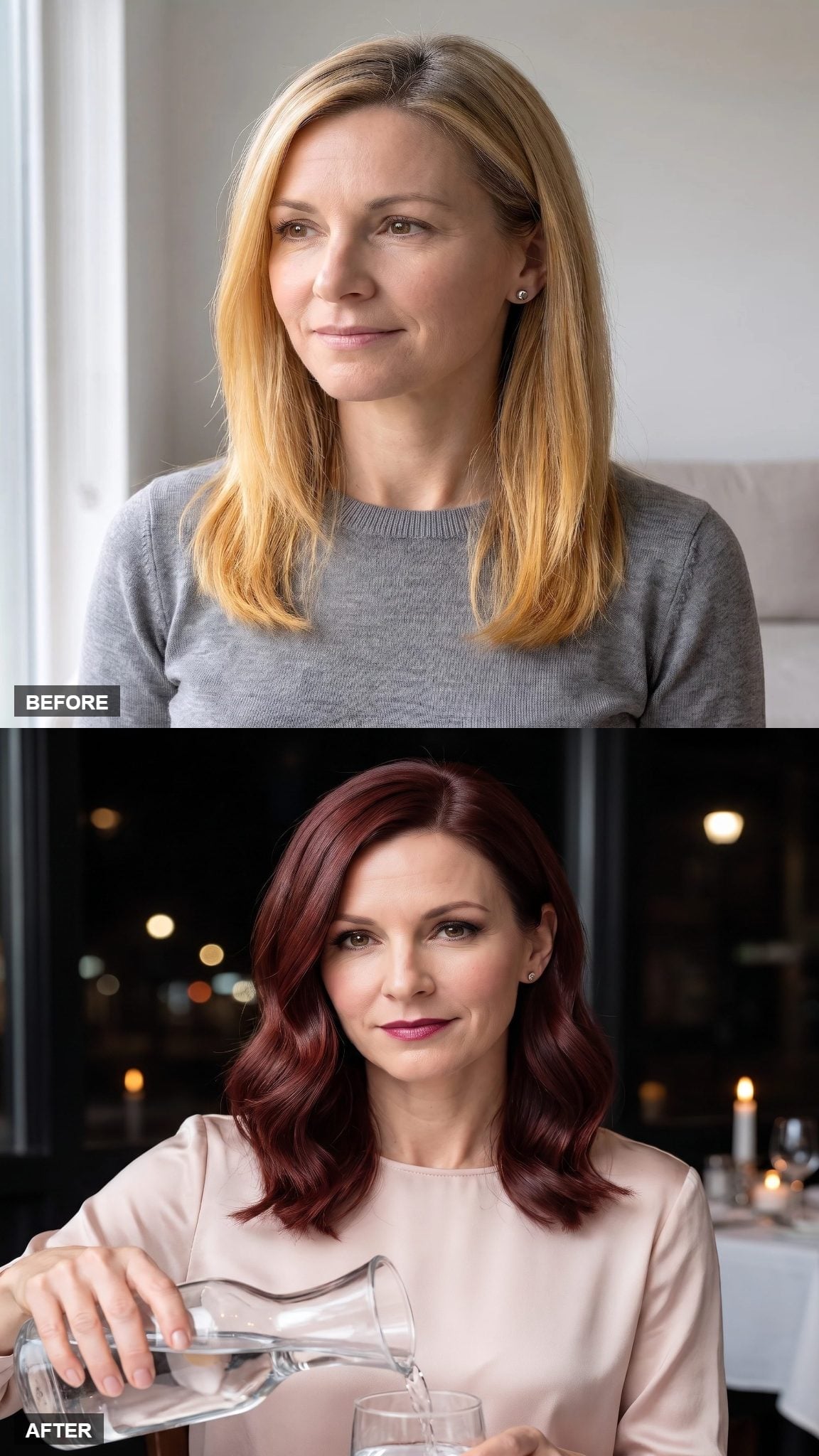 Merlot takes the blonde into a wine-dark red-violet. Broad waves turn at the collarbone, catching flashes of burgundy along their curves. A glossy finish lets the red emerge without making the hair look uniformly purple. The bends are broad and polished, not beachy or broken.
22. Pewter Bob Puts a Sharp Fringe on Silver
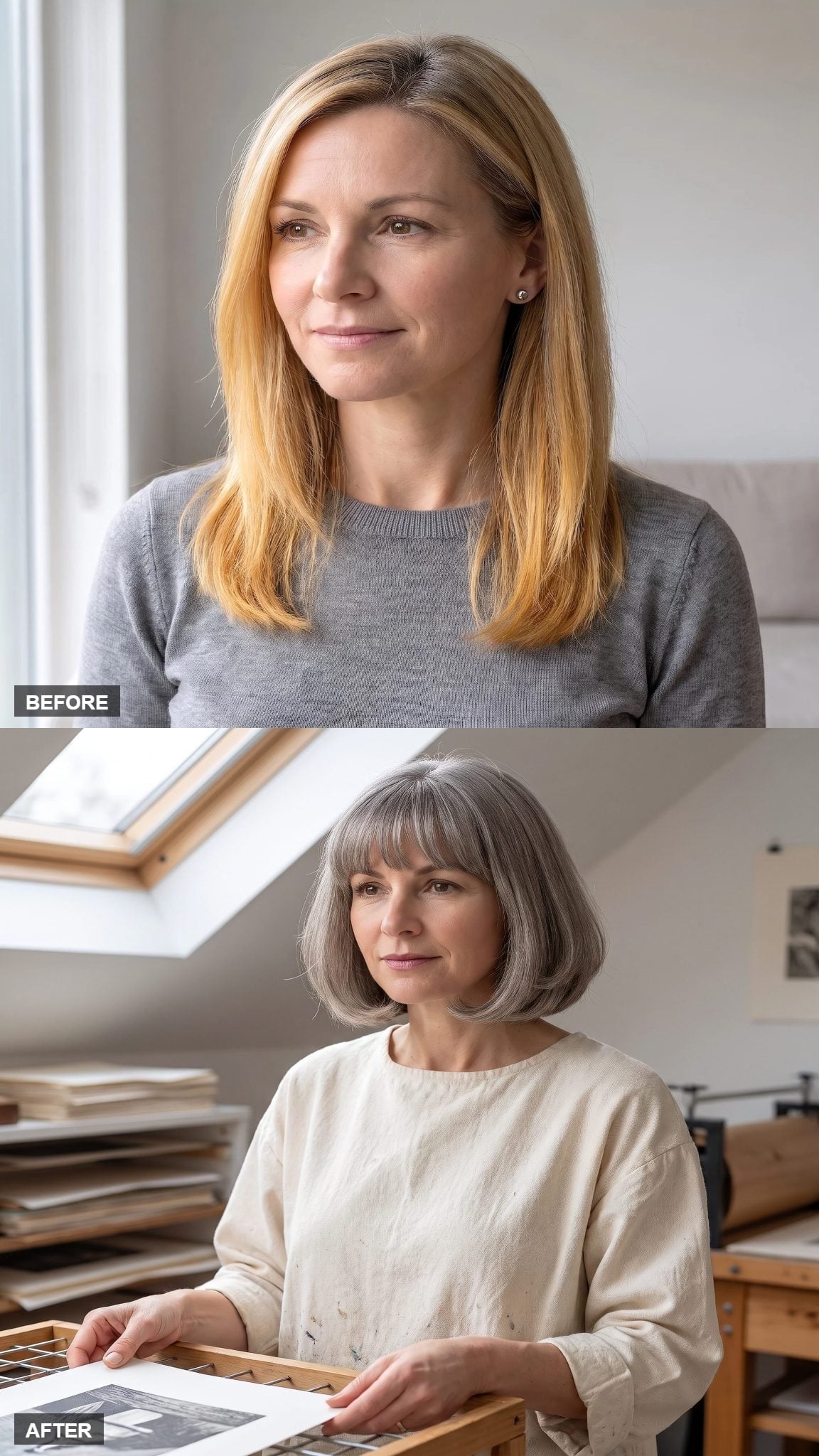 A pewter-gray bob curves under at the jaw, with full bangs drawn across the brows. The result is compact and emphatic: two clean edges, one at the forehead and one beneath the face. Darker gray underneath the silver adds depth, while the rounded ends soften the otherwise graphic shape.
21. Caramel Ribbons Slice Through a Bronde Base
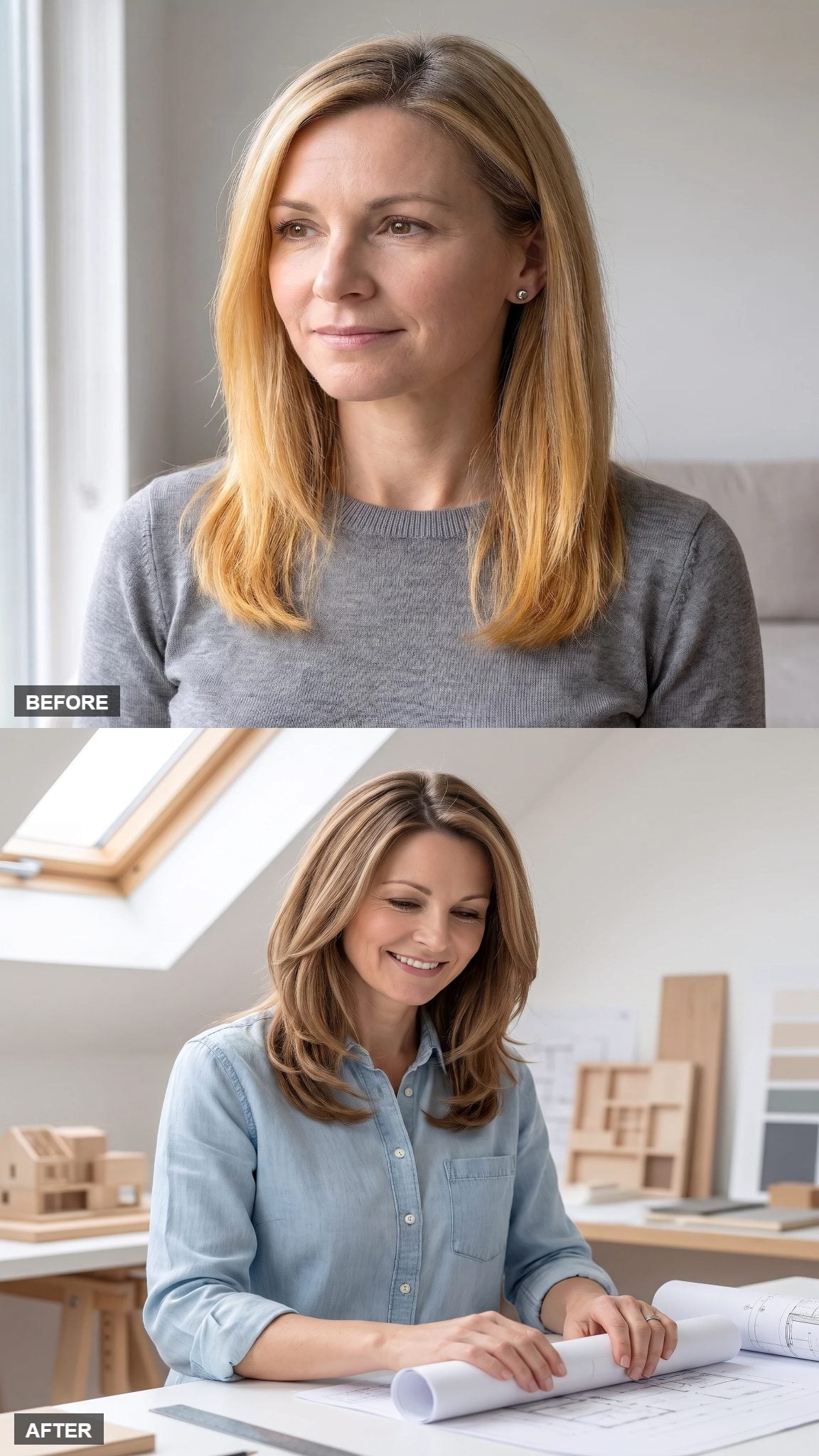 Caramel highlights run through medium bronde, gathering around the face before slipping into layers that turn outward below the collarbone. The placement is more interesting than an even scattering of highlights. Darker strands provide a backdrop, so each caramel ribbon earns its brightness.
20. Tousled Silver Waves Refuse the Perfect Bob
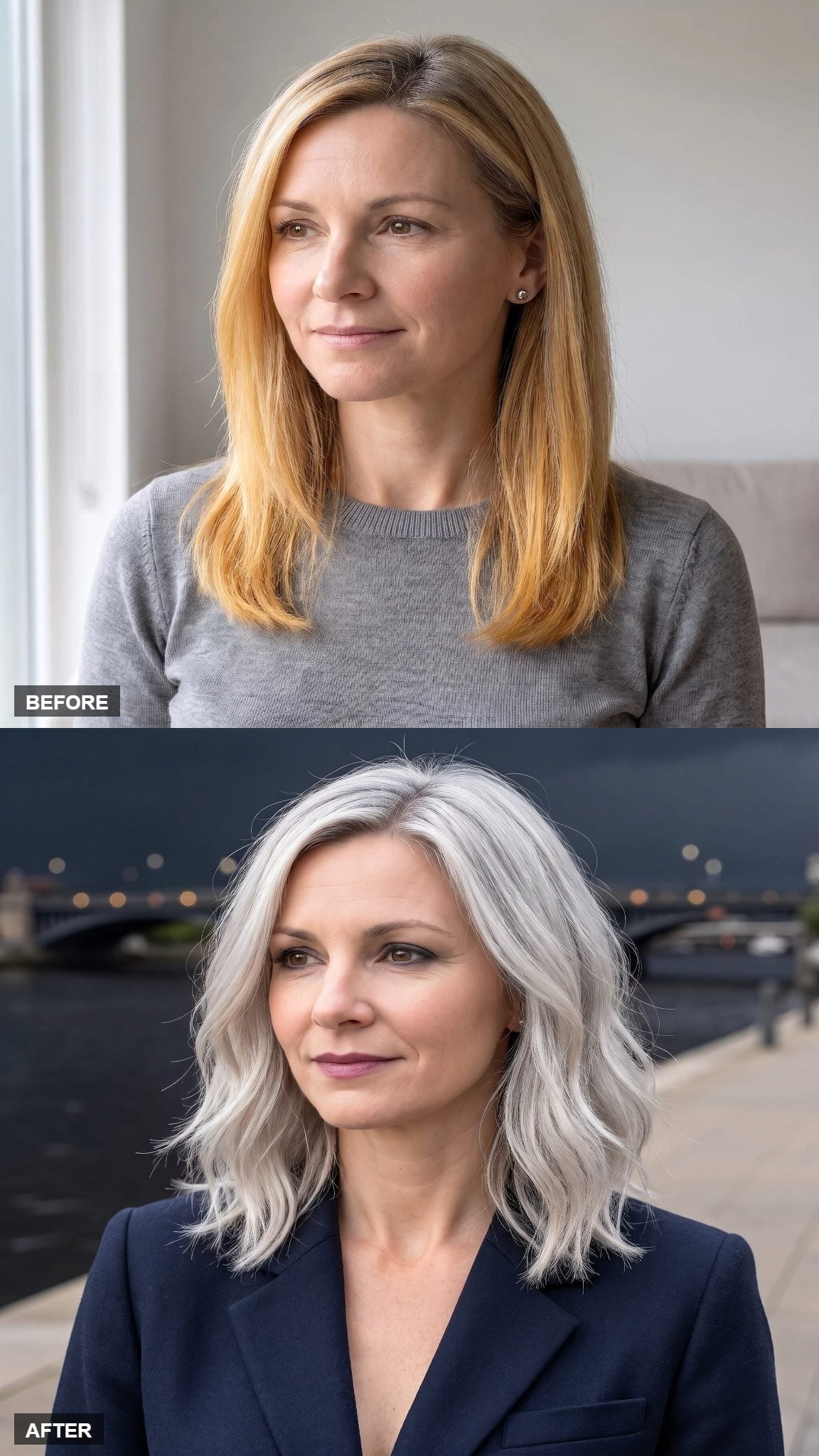 Silver takes on a looser character in shoulder-length waves with an irregular, airy finish. The side volume softens the outline, while the cool tone remains visible from root to tip. Unlike the sharply angled silver bob, this one depends on movement. Light separation through the ends makes the shape look intentionally undone rather than unfinished.
19. Toffee Brown Gains Lift From a Low Side Part
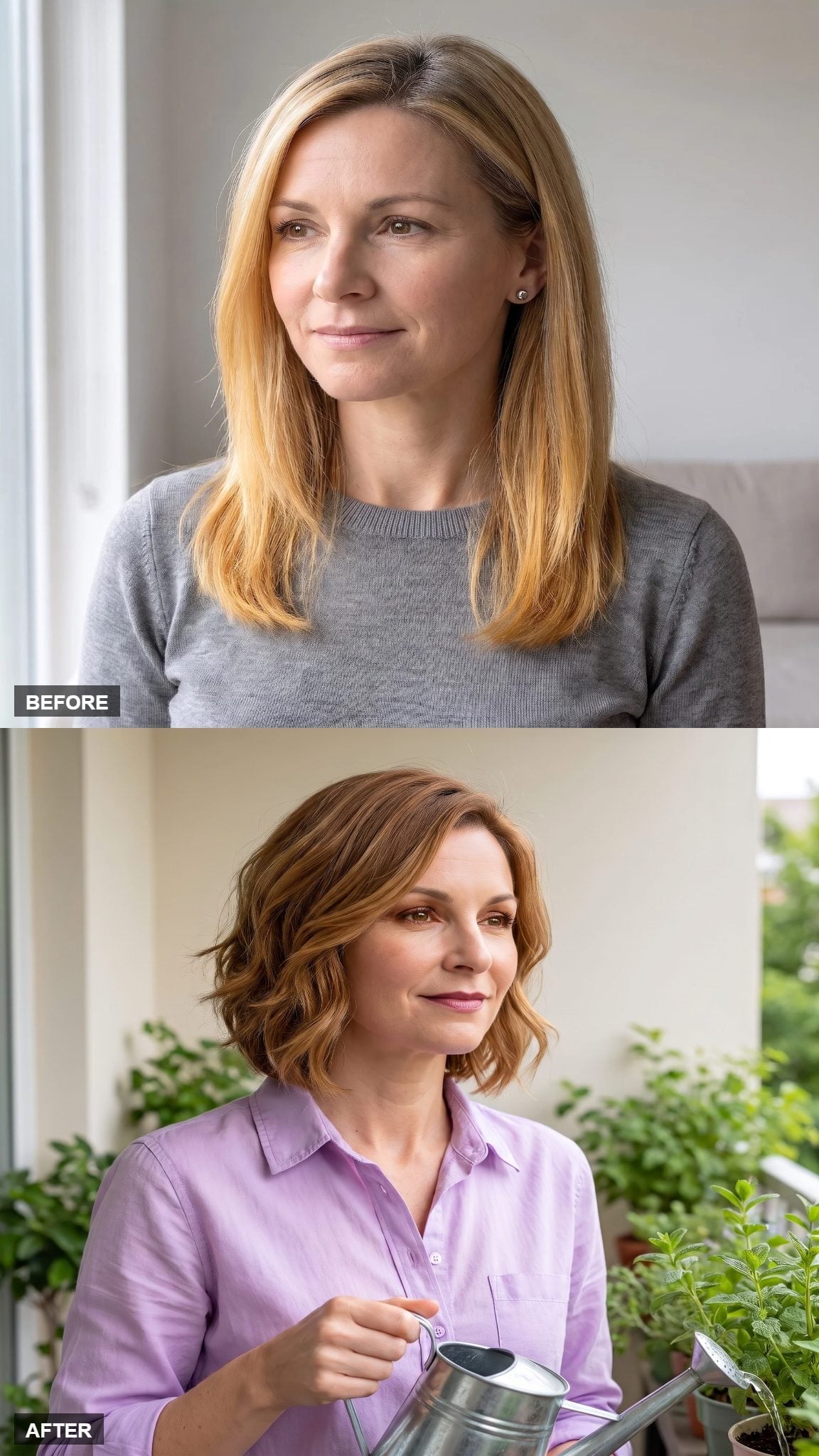 Copper threads run through toffee brown in a jaw-length bob with loose bends. A low side part pushes more volume to one side, creating a sweep that follows the cheekbone. The asymmetry gives this warm brunette its personality. The cut doesn’t require a full fringe; the side-swept front supplies the shape.
18. Butter Blonde Gets a Sleek, Side-Swept Makeover
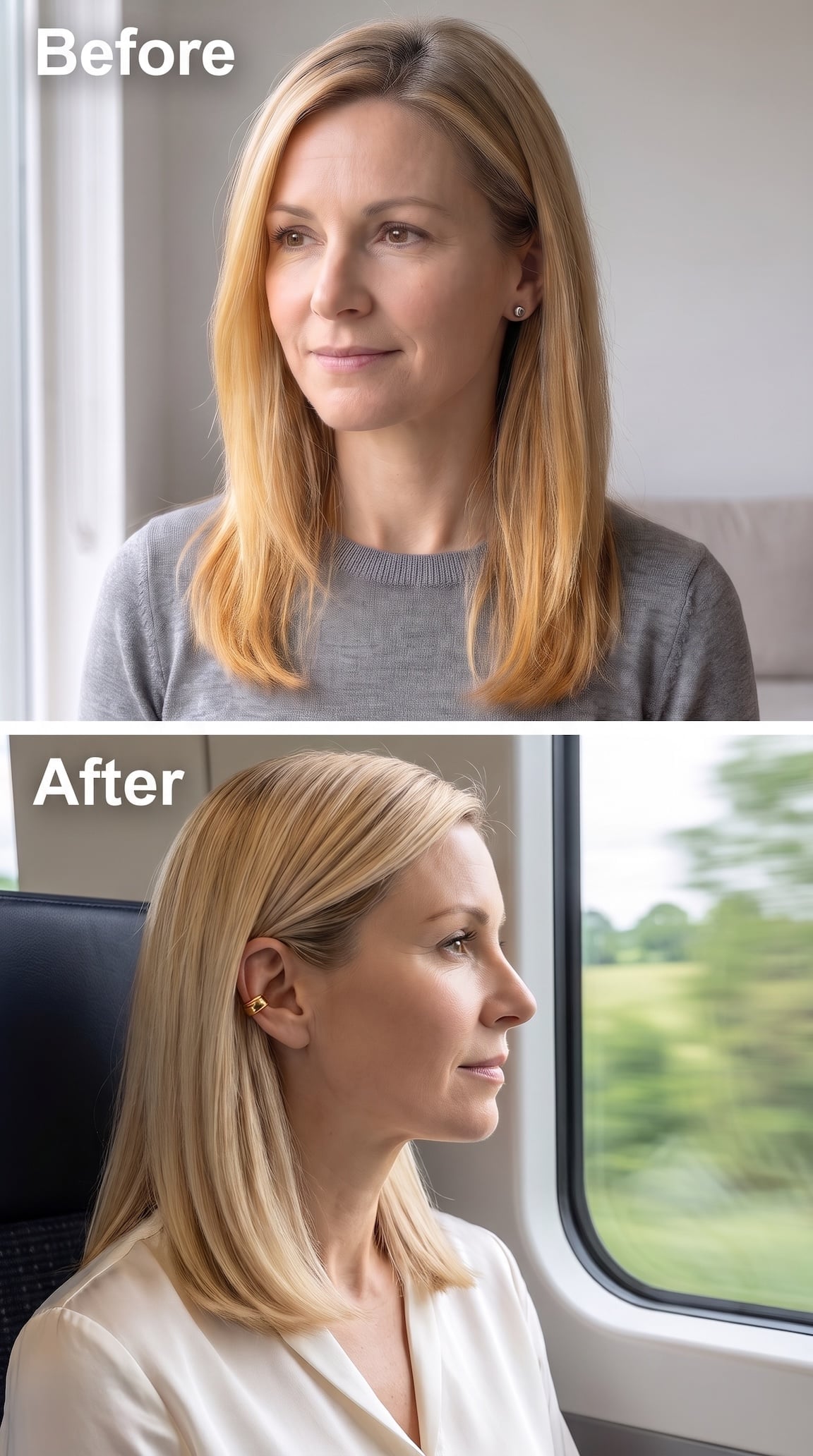 Not every transformation needs a new dye formula. Here, a deep side part moves the weight across the forehead, and one side is tucked back to reveal the ear and jaw. The warm blonde remains, but a little darker depth near the crown breaks up the gold. Sleek lengths and an exposed side give the original curtain of hair a clear direction.
17. Feathered Black Cherry Turns a Shag Loose
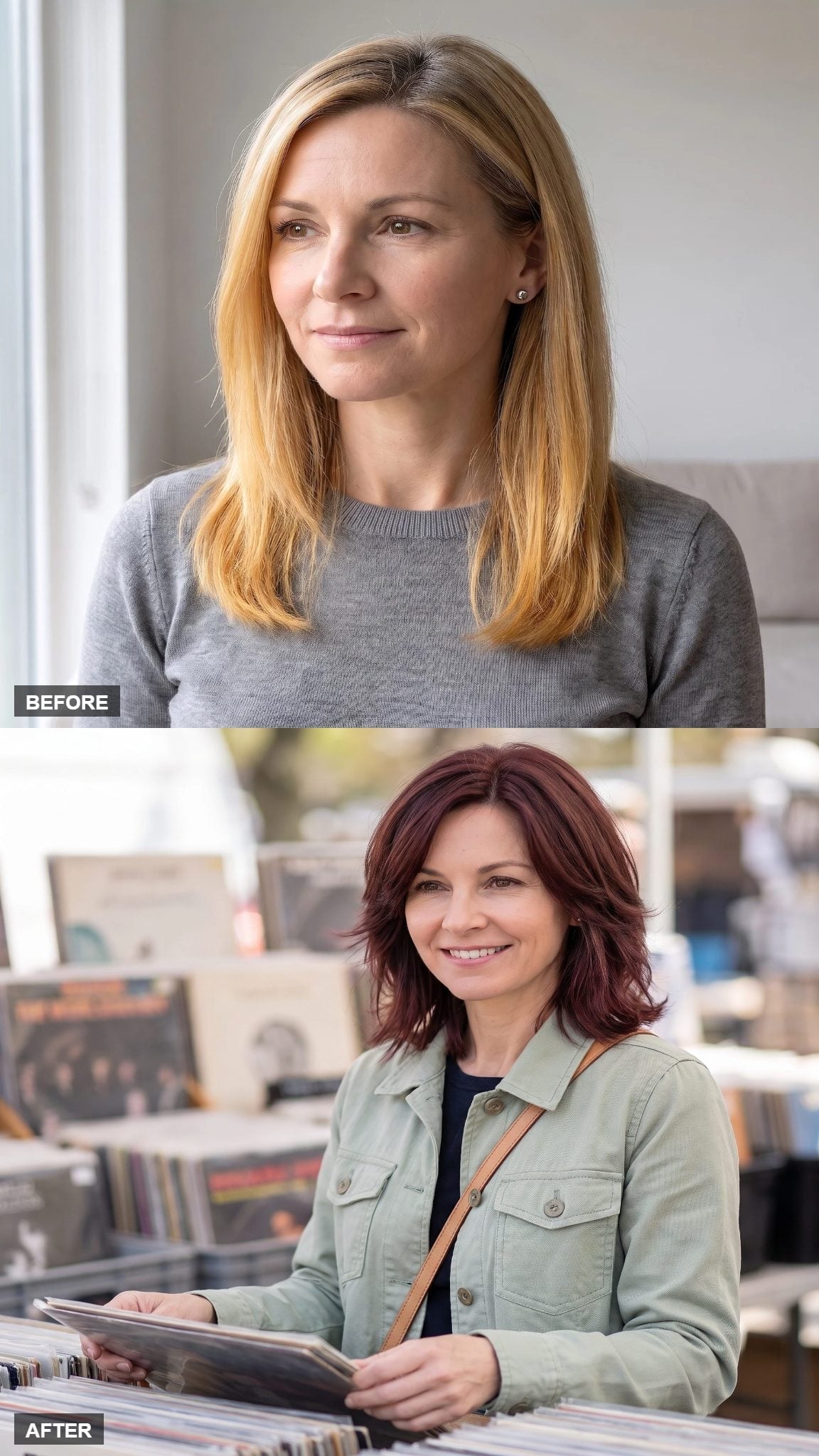 Black cherry moves into a feathered shag, with shorter layers flaring around the cheeks and ragged, light ends reaching below the collar. The near-brown base reins in the red. What makes this look rebellious is the cut: pieces point outward instead of submitting to a tidy bob.
16. Ash-Blonde Bob Finds Its Edge in a Smoky Root
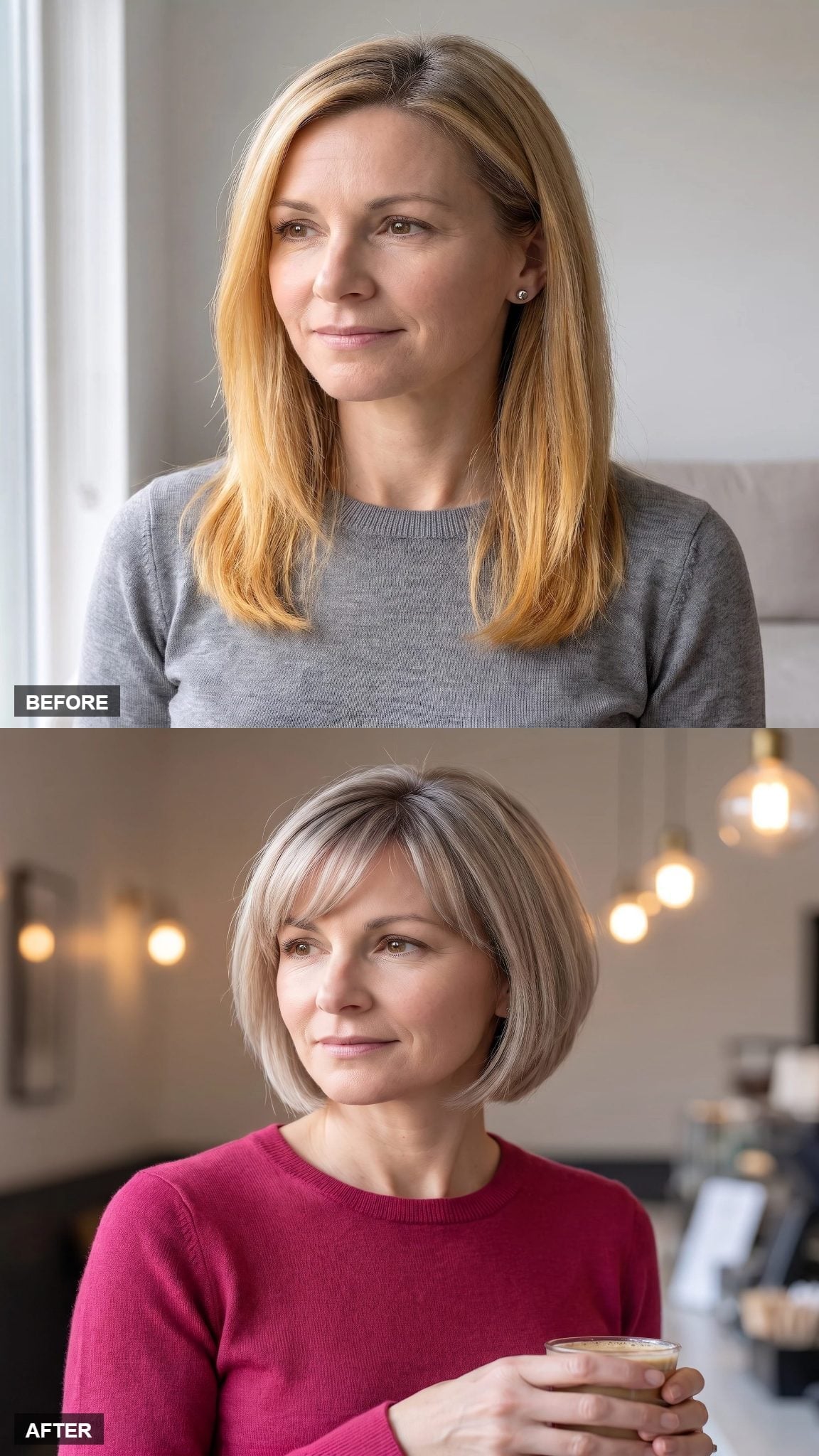 Champagne and ash meet in a compact bob curved beneath the jaw. A smoky root gives the pale lengths a darker starting point, and delicate bangs separate across the forehead. The round silhouette is disciplined without looking helmet-like. Fine breaks in the fringe bring some air to a cut built on precision.
15. Mahogany-Auburn Layers Sweep Back From the Face
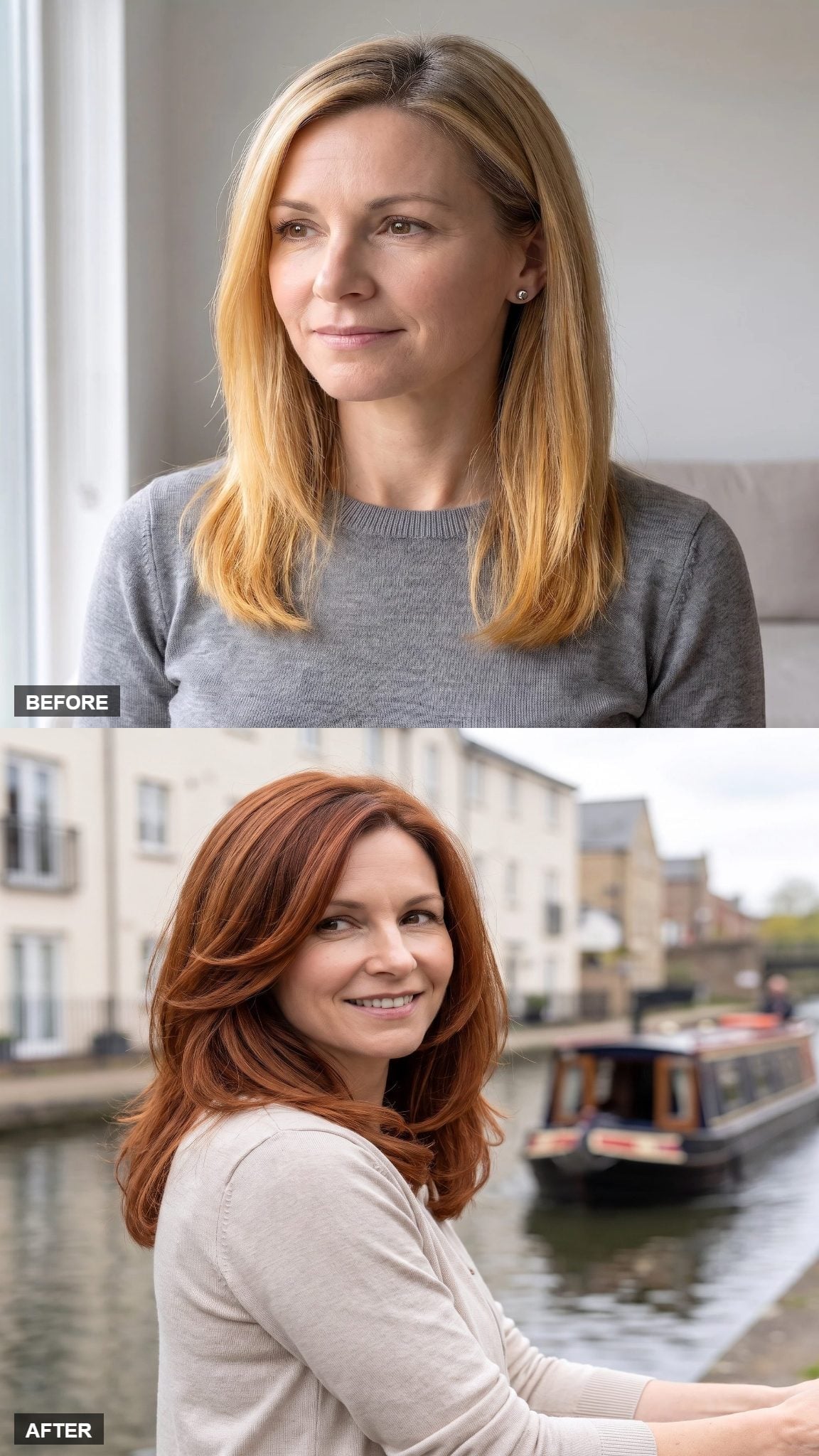 The red moves deeper here, into auburn with mahogany undertones. Long layers begin around the cheekbones and sweep backward, exposing the face instead of enclosing it in hair. That direction is the defining feature. It gives the richer color multiple surfaces to catch light while keeping the overall length substantial.
14. From Long Gold to a Rose-Gold Bob With Bite
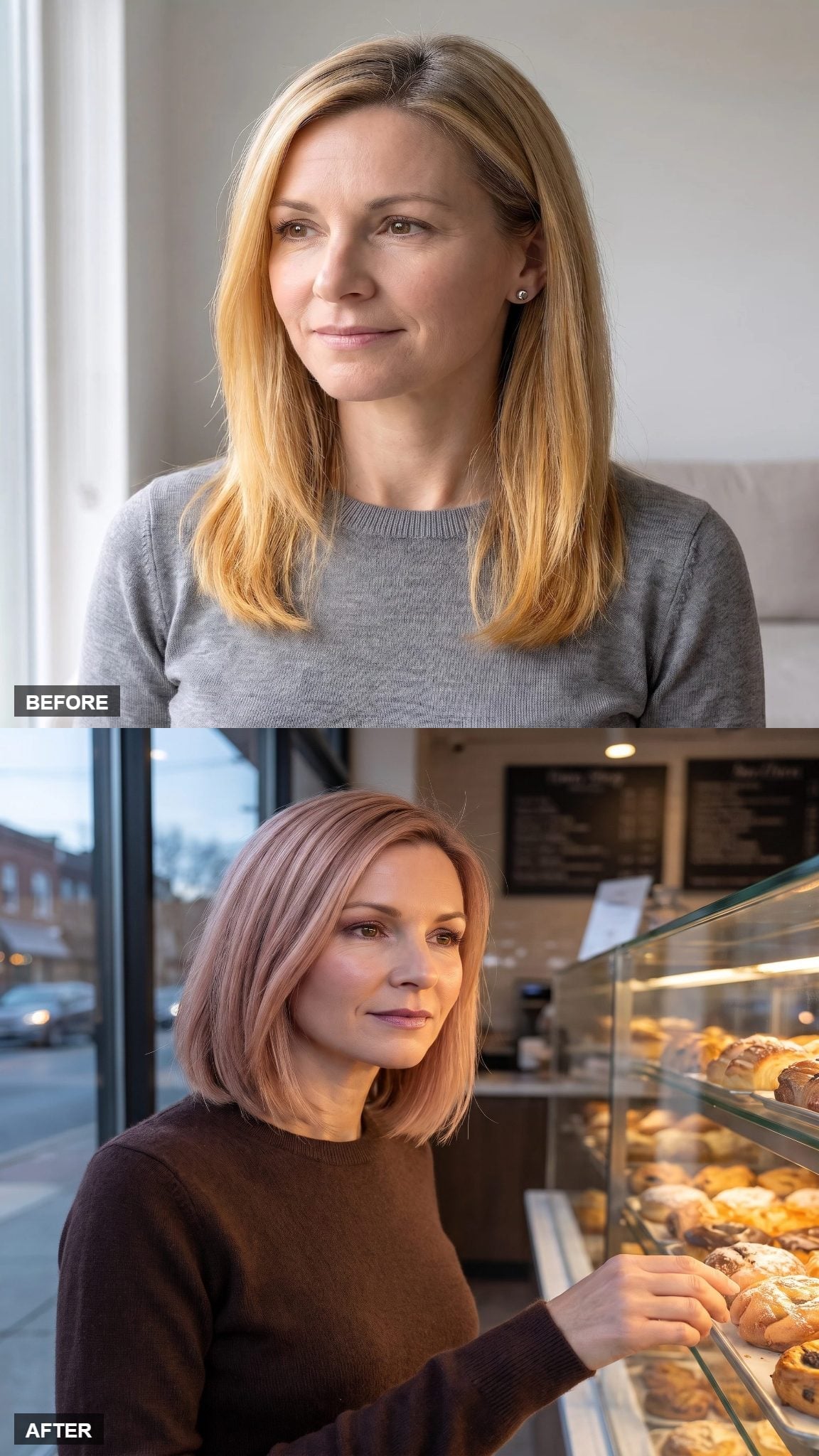 Muted pink slips into warm blonde, producing rose gold without the brashness of bright copper. The new bob stops above the shoulders, and a side-swept front panel crosses the forehead. A blunt edge keeps the color from turning sugary. The pleasure lies in the tension between a soft, rosy shade and a haircut with very definite opinions.
13. Brushed-Back Gray Pixie Puts the Crown in Charge
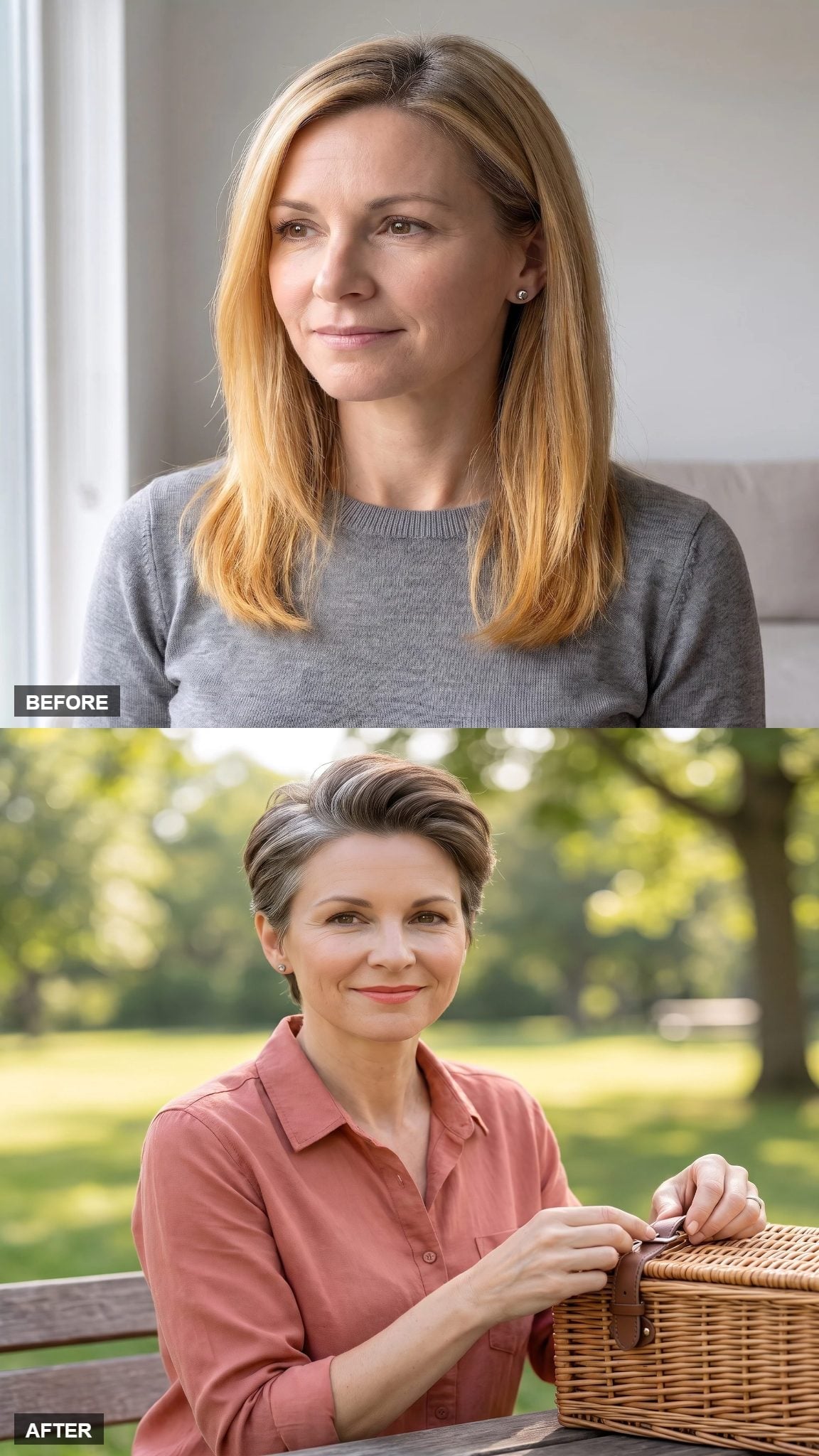 Brown and gray mingle through a short pixie brushed upward from the forehead. The movement reveals individual silver strands instead of flattening them into a single gray surface. Close sides make the lifted crown look even taller. The effect is brisk, open, and full of texture.
12. Blunt Copper Lob Draws a Line in Red
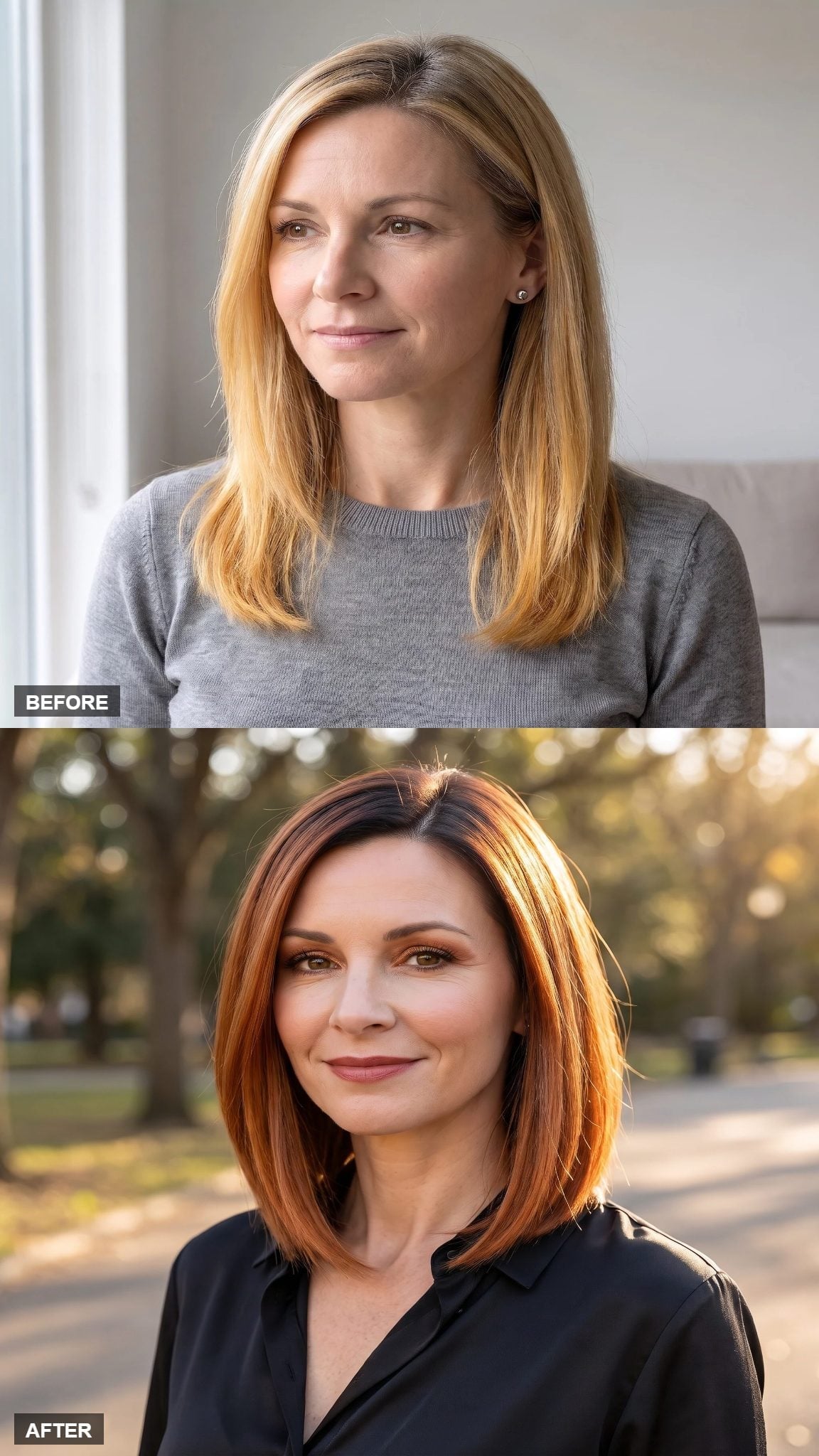 Vivid copper lands on a lob cut just above the collarbone. The nearly level ends are so clean that the red reads like a single, confident stroke. A slightly deeper root gives the bright lengths a foothold. This is copper without curls, feathers, or excuses: all color and perimeter.
11. Chestnut Waves Get Their Focus From a Wispy Brow Fringe
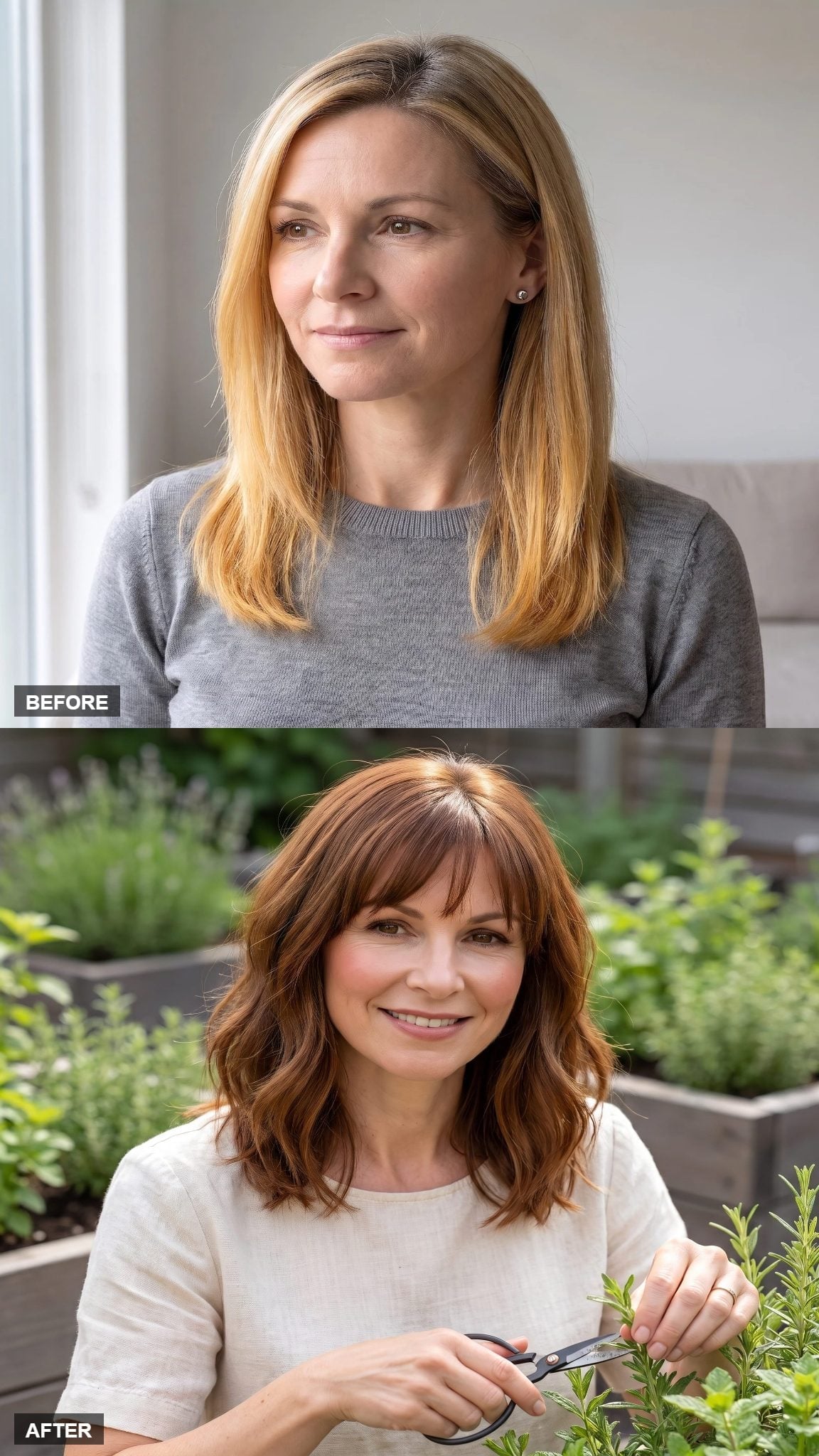 Copper glints warm the chestnut base, and loose waves interrupt the length. Wispy bangs settle at the brows, leaving small openings that keep the fringe from becoming a heavy horizontal bar. The waves and fringe work together: one supplies movement through the sides, the other draws attention toward the eyes. Neither needs a severe finish.
10. Mahogany Bob and Blunt Bangs Build a Stronger Silhouette
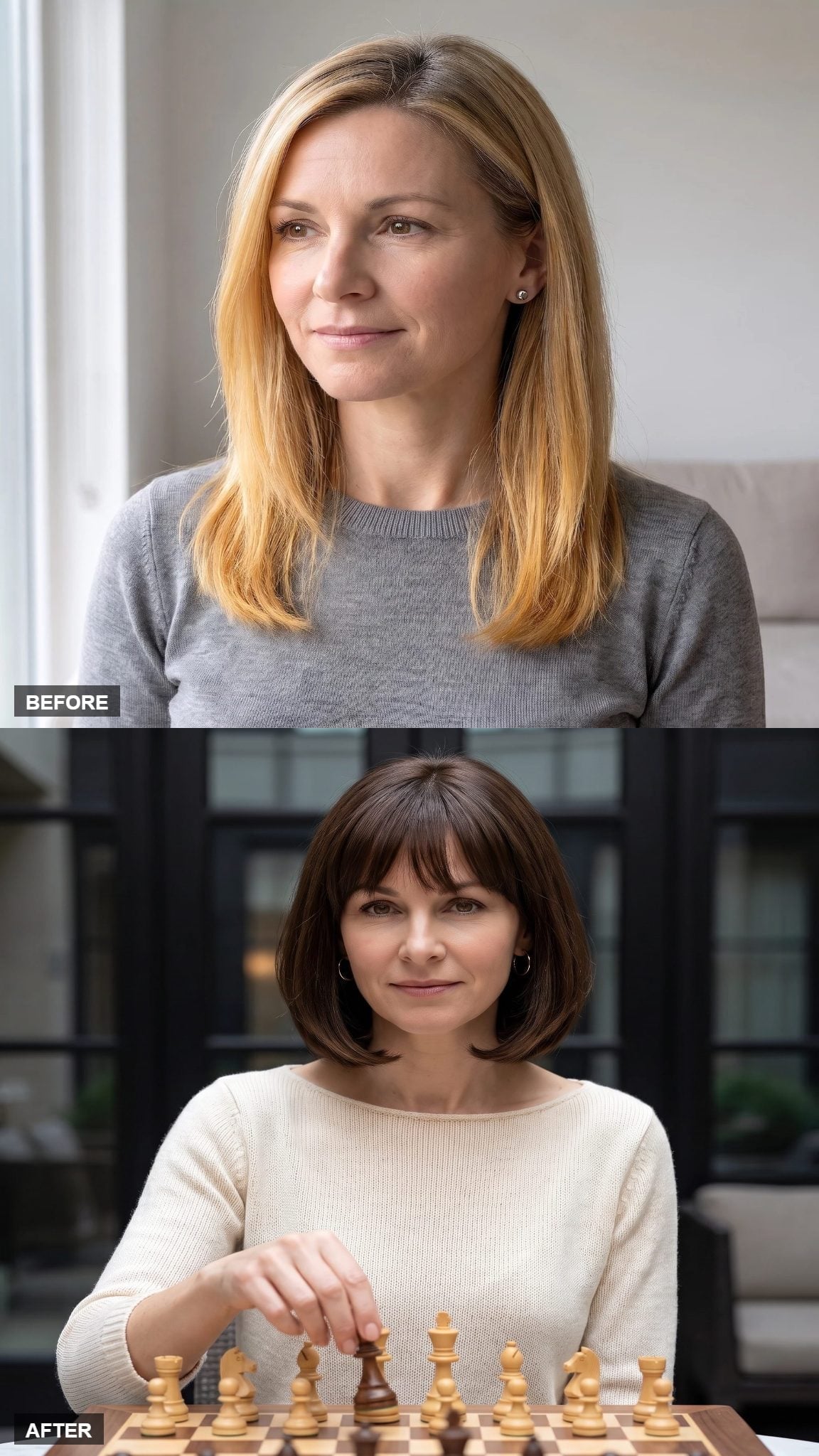 Deep mahogany brown gives this bob a rich red-brown finish. Full bangs skim the brows, while the ends curve inward near the collarbone, creating two distinct lines around the face. The fringe requires regular maintenance to keep its edge. The rest of the cut can remain comparatively simple, letting the color and blunt front do the talking.
9. Sandy Bronde Softens the Root Without Losing the Blonde
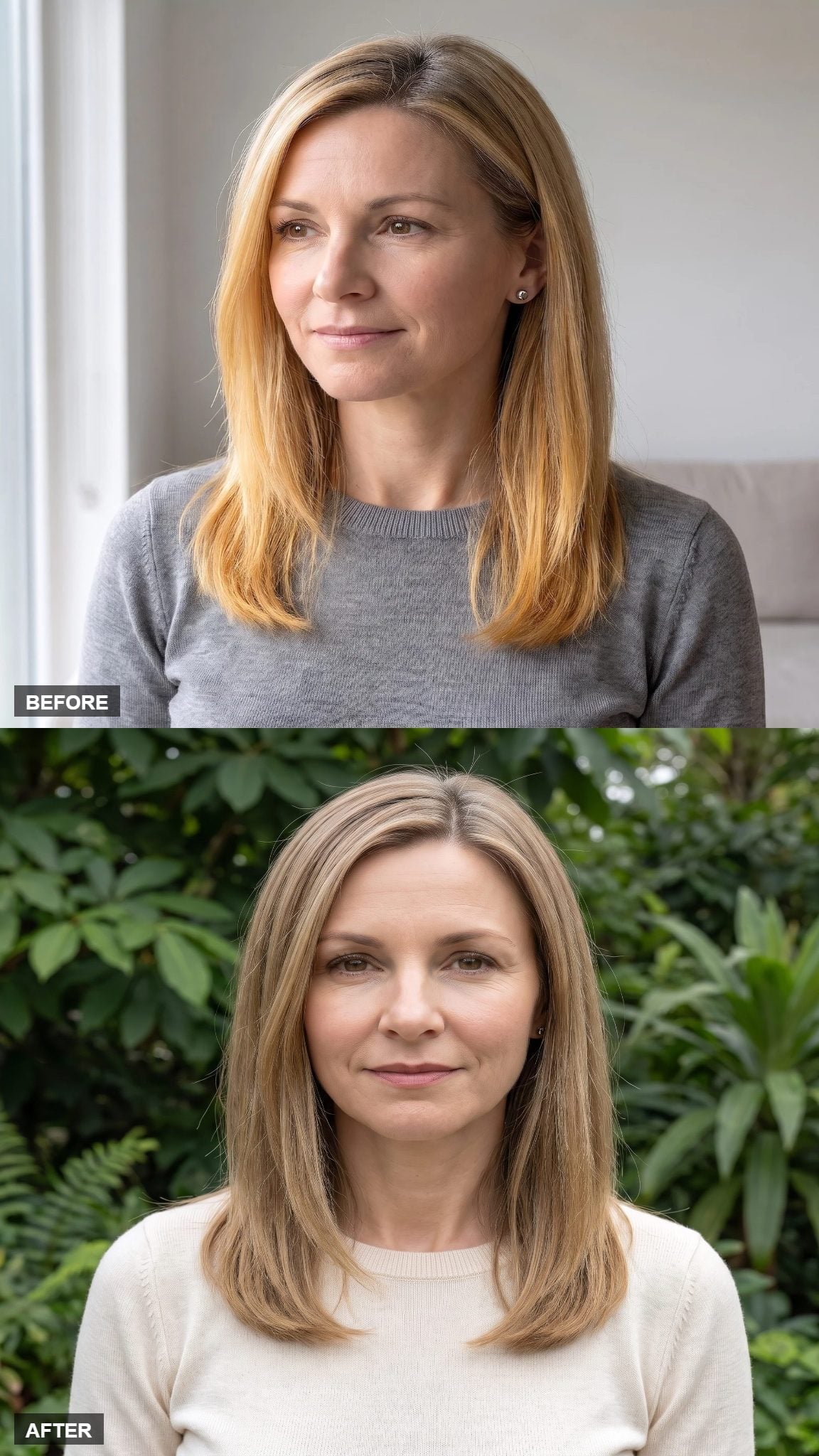 A deeper root blends into sandy, cool-leaning bronde, with fine lighter strands traveling toward the ends. The long layers preserve the original length but introduce a less uniform surface. This is a subtle transformation rather than a reinvention. Root blending can make regrowth less abrupt when the tones are chosen close to the natural base.
8. Ash-Beige Blonde Gives the Fringe a Cooler Edge
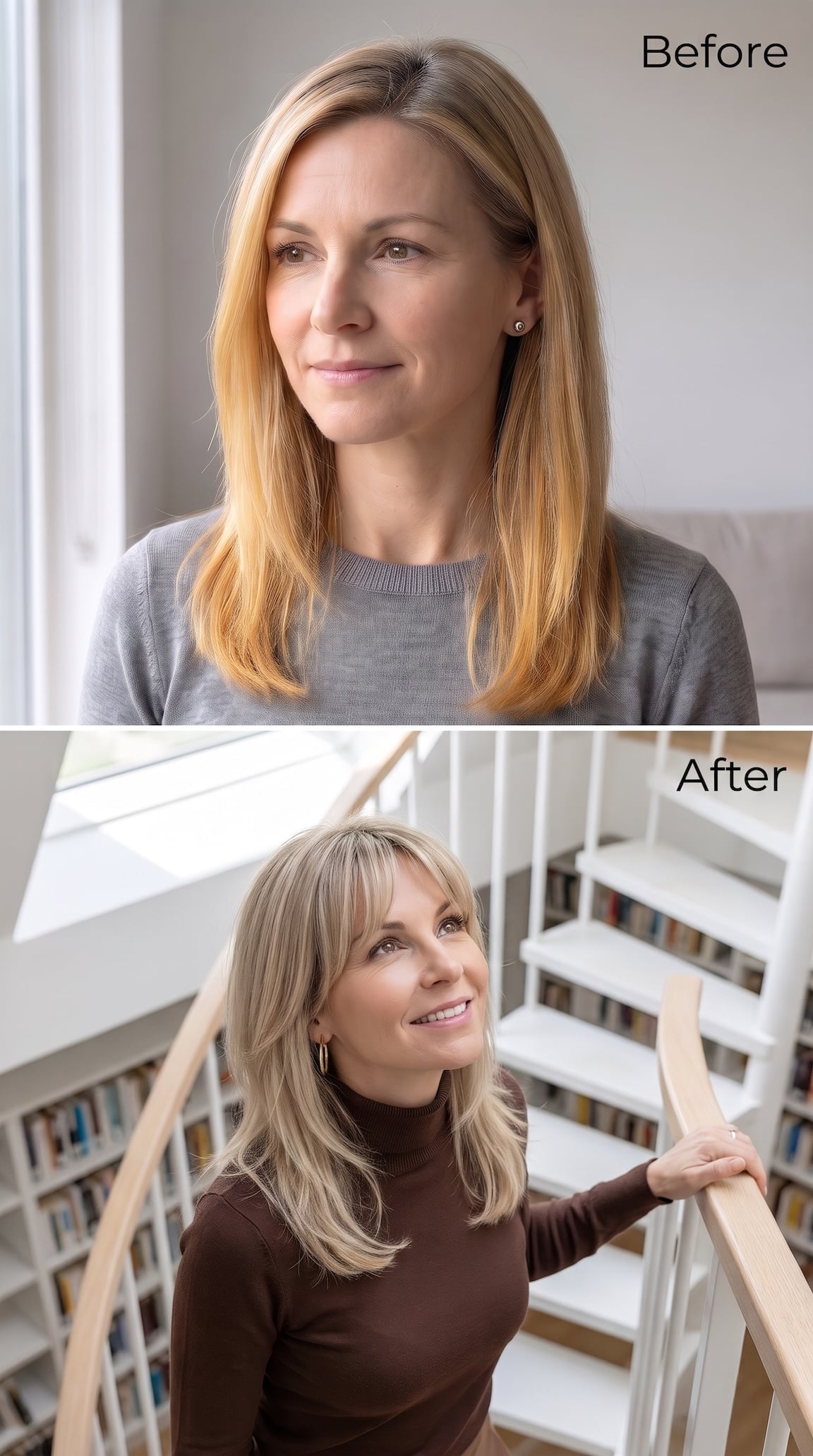 The golden starting shade turns to beige blonde with a soft ash cast. Airy bangs split at the center and brush the brows, while face-framing layers interrupt the straight lengths. Less yellow, more tonal variation, and a fringe that draws the eye upward. The darker interior gives the pale ends something to play against.
7. Cocoa Waves Make a Shorter Cut Feel Fuller
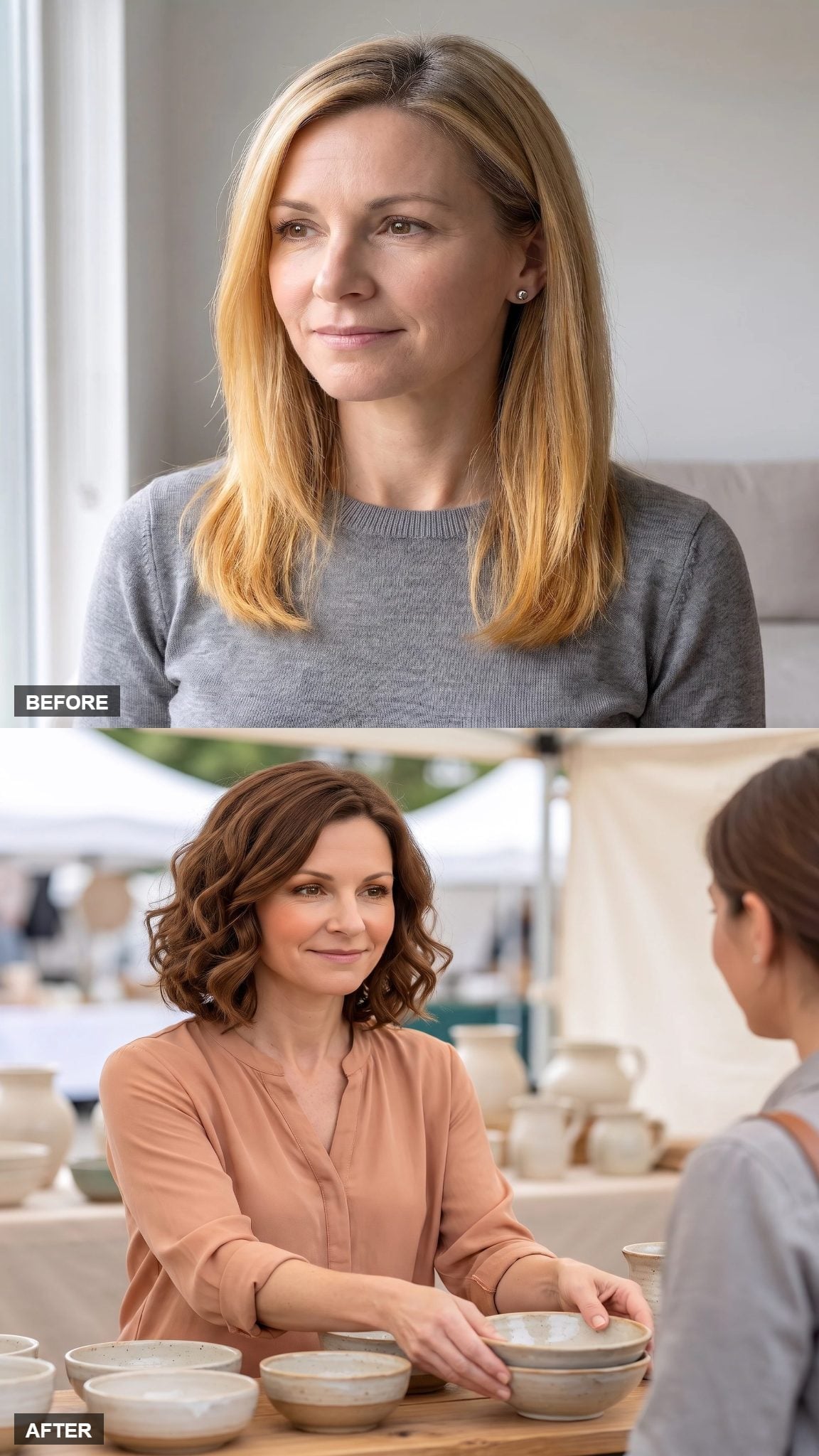 Warm cocoa brown replaces the pale lengths, while loose, irregular waves build width just above the collarbone. The result feels more buoyant because the ends no longer hang in a straight vertical sheet. Subtle tonal warmth keeps the brown from looking opaque. A light hand with styling product preserves separation between the waves.
6. A Gray Streak Becomes the Feature of a Dark Brown Lob
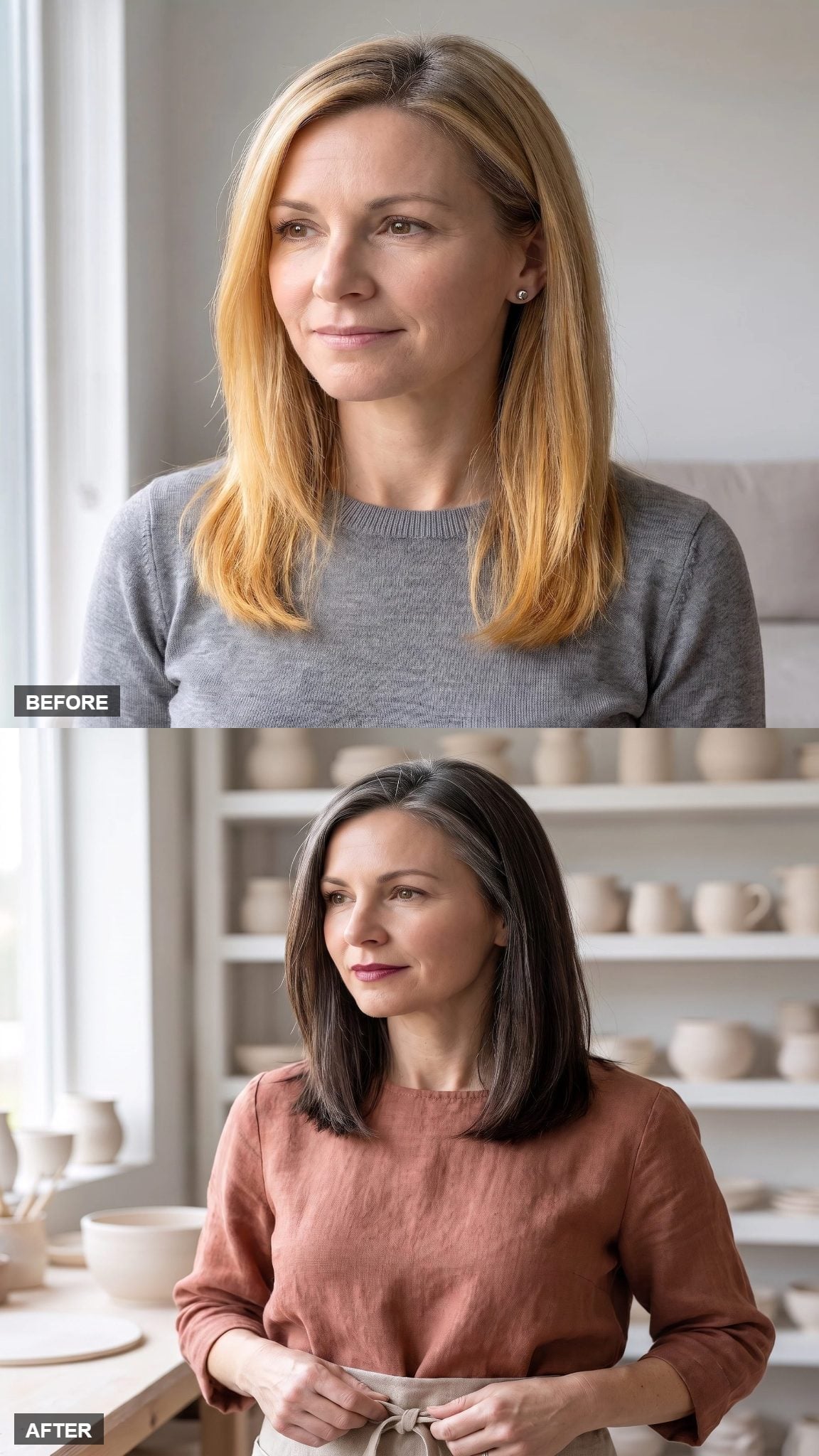 Deep brown returns, but a visible gray streak travels back from the part. The lob ends above the collarbone, its tips turning inward to create a restrained, rounded finish. Whether natural or colored, the streak interrupts the dark surface with a strong line. Keeping it visible makes the contrast intentional rather than something to disguise.
5. Merlot Layers Bring a Darker, Windblown Kind of Red
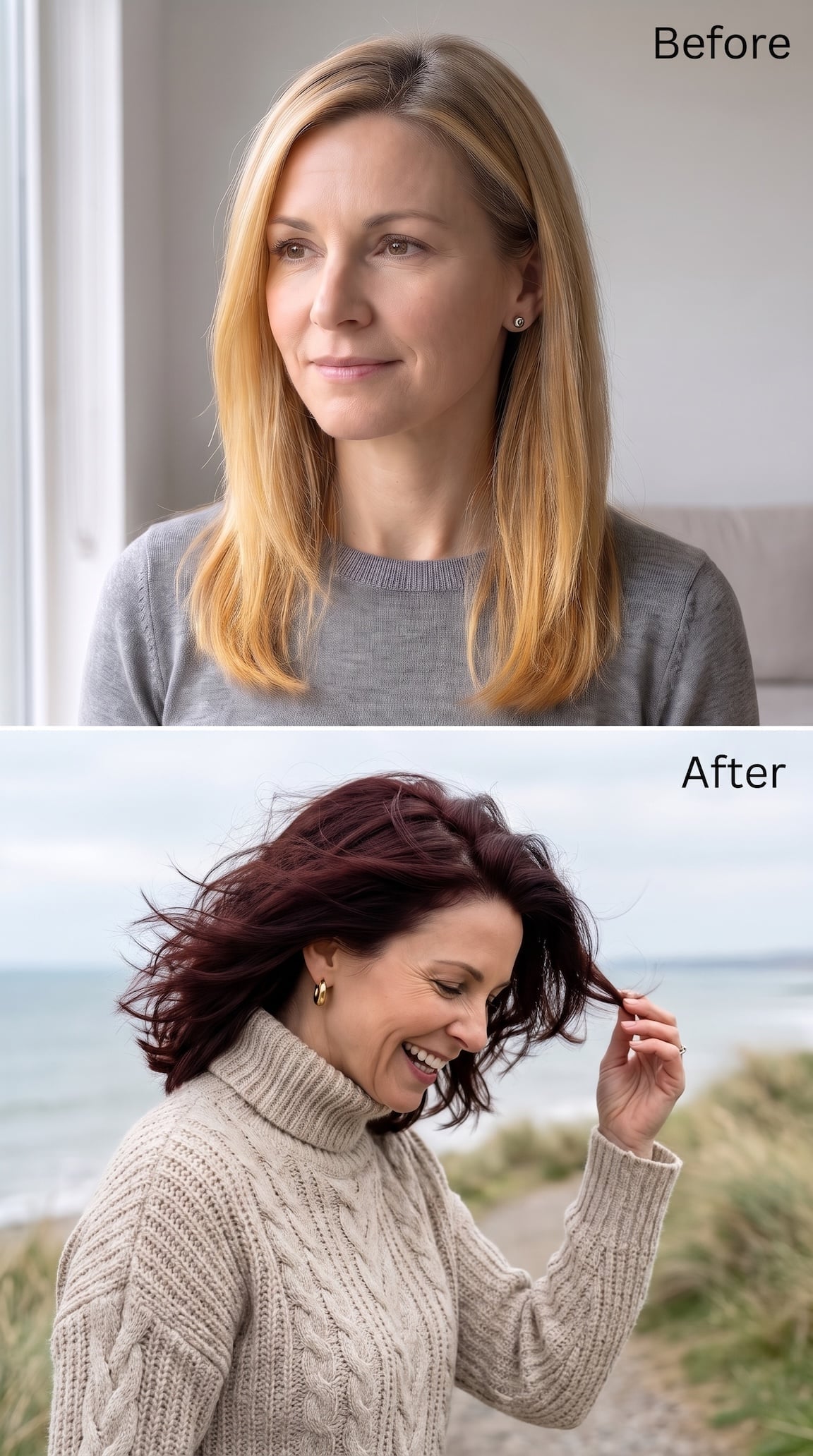 A violet-leaning merlot changes the mood completely. Choppy layers release weight around the face, while loose, uneven ends keep the wine shade from looking too solid. The deeper base is especially important with this color: it gives the burgundy reflections somewhere to emerge. The cut should move freely rather than be ironed into submission.
4. Butterscotch Waves Put a Warm Gloss on the Lob
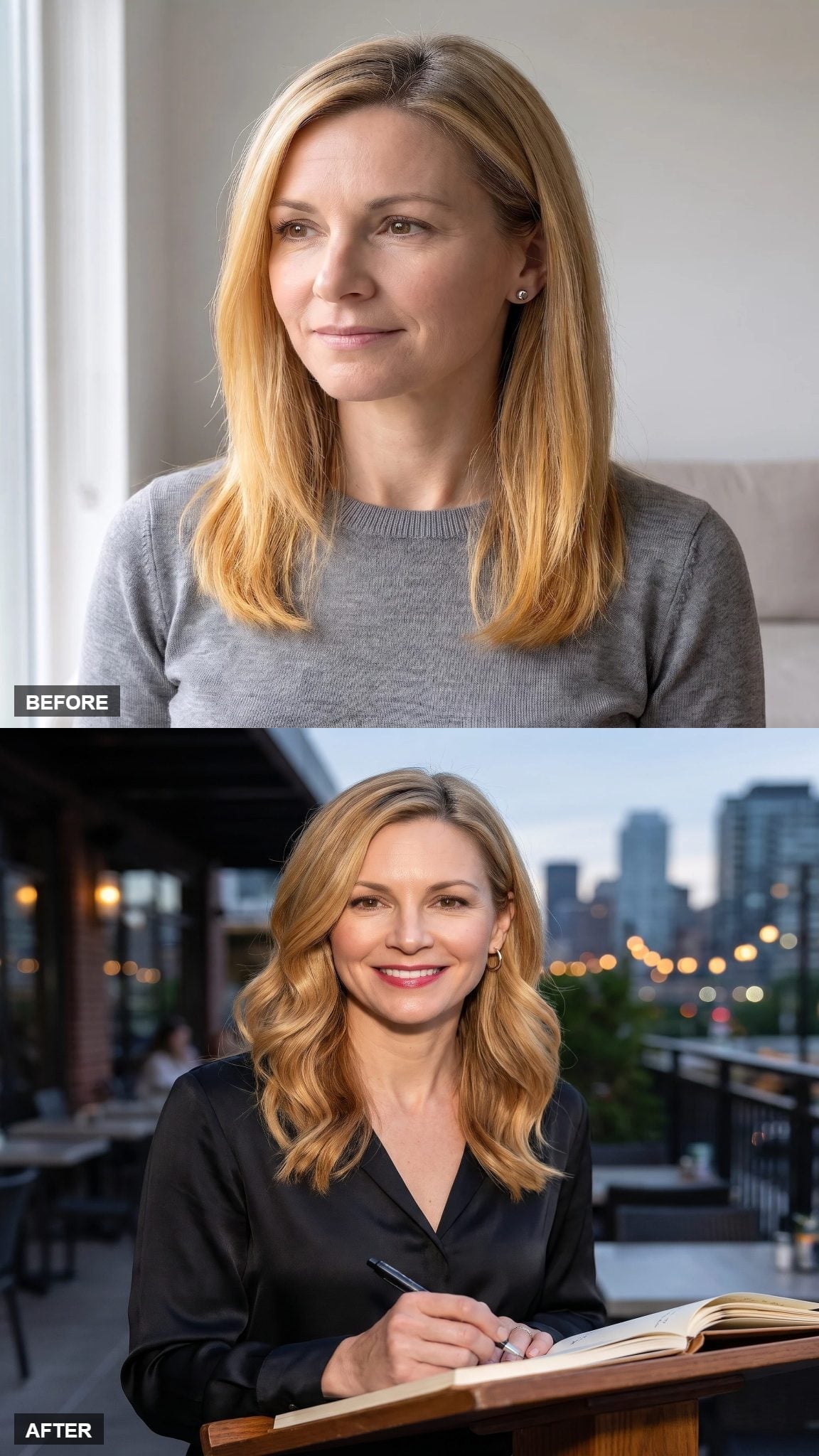 Butterscotch blonde deepens toward the roots and opens into broad waves below the cheekbones. The lengths reach past the collarbone, giving the color enough room to move from shadow to gold. This is warmth with structure, not an indiscriminate return to brighter blonde. A deeper base makes the lighter bends more visible.
3. Rooted Honey Blonde Keeps the Length but Finds Its Shape
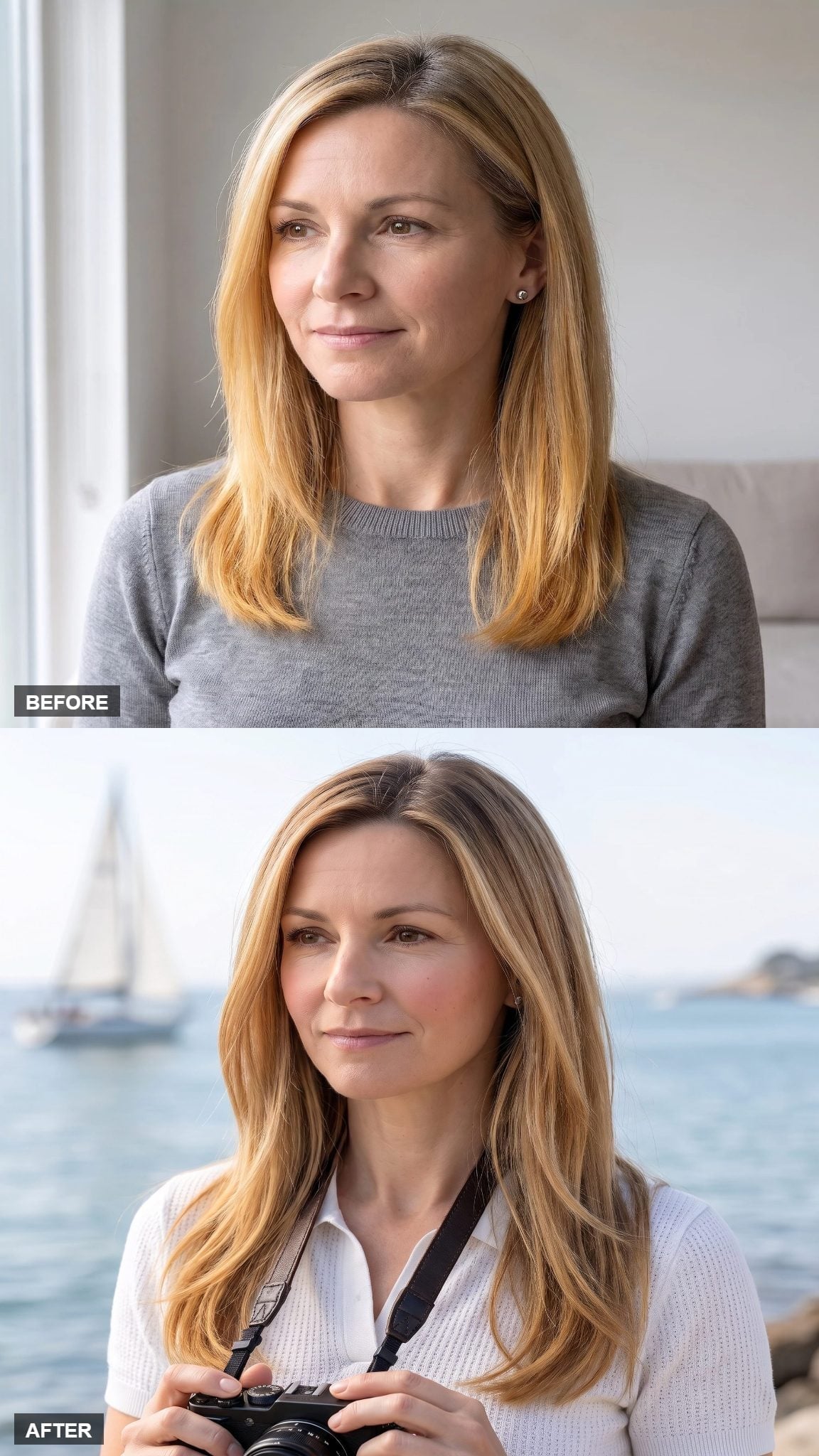 A brown root melts into honey blonde, with brighter sections close to the face. Long layers loosen the ends, trading a flat curtain for a shape that moves. The transition from dark to gold is gradual, not striped. That small adjustment gives familiar blonde a richer beginning and a lighter finish.
2. Champagne Blonde Opens Up With Curtain Bangs
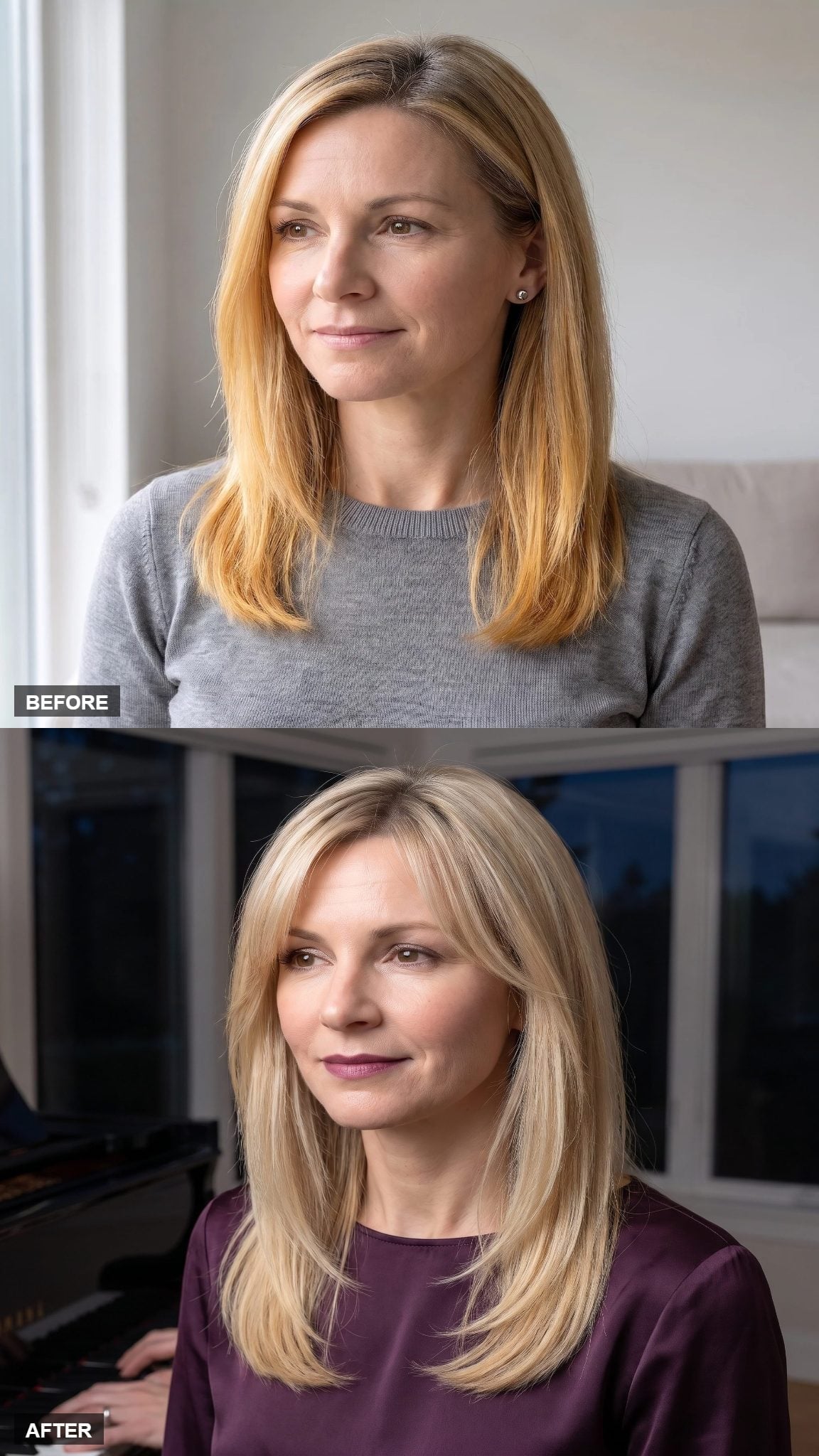 Cool champagne blonde sits over a deeper base, with curtain bangs parting near the brows and sweeping into cheekbone-level layers. The front opens outward, replacing the starting style’s uninterrupted fall. The cut is the transformation’s strongest feature. The parted fringe introduces movement and shape while preserving the lightness of blonde.
1. Rosewood Pixie Ends the Argument With One Clean Cut
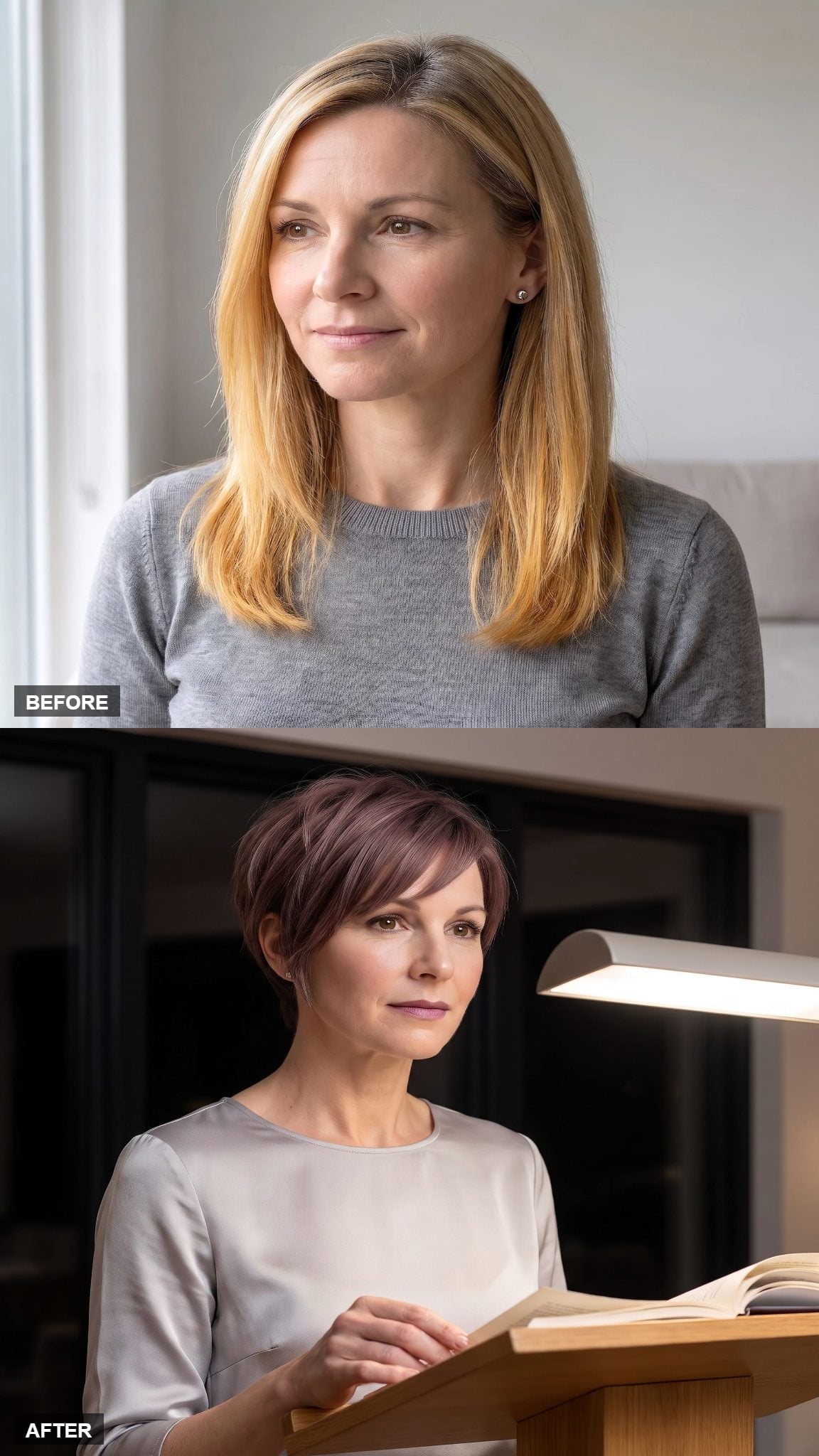 Rosewood brings a muted mauve-brown cast to a crop cut close at the nape and sides. Longer, piecey layers cross the forehead on a diagonal. After all those flowing lengths and softened edges, the close nape is a decisive full stop. The fringe keeps one last flicker of movement above it.