
❤️ Would you like to save this?
A bob can miss by half an inch and take the whole face with it. The length lands at exactly the wrong point. The crown goes flat while the sides puff out. A fringe that looked airy when wet dries into a wall. Nothing is catastrophically wrong, yet somehow the mirror is less forgiving than it was before the haircut.
That’s what makes the bob so good — and so dangerous. There is nowhere for bad geometry to hide. Every line has a job: where the perimeter stops, where the weight collects, how the front opens around the eyes, whether the crown lifts or collapses, and whether the cut works with the hair’s actual density and texture instead of the hair somebody wishes were there.
After 50, those decisions can matter even more because hair may become finer or drier, while texture can shift in either direction. The answer isn’t automatically more volume, more layers or more length. Sometimes those are exactly the mistakes.
These 35 bobs show where a perfectly good idea can go sideways — and how surprisingly small changes in weight, movement, proportion and finish can put the cut back on your side.
FYI, thanks to AI imagery software, we’re able to create very specific fashion and hairstyle examples to illustrate the points being made. In some cases, imagery is exaggerated to hammer home the point. Also, assume links that take you off the site are affiliate links such as links to Amazon. this means we may earn a commission if you buy something.
35. The Flat-to-the-Head Bob With No Lift at the Crown

A bob doesn’t need bouffant volume, but this one has gone too far in the other direction. Fine hair is lying so close to the crown that the silhouette loses height before the sides even begin, making the entire cut look smaller and thinner than the amount of hair actually warrants.
The correction is lift, not necessarily more layers. Blow-dry the roots briefly against their natural direction, change the part while drying or use a lightweight root product before shaping the lengths. The goal is a little air between scalp and hair — enough to restore proportion without turning the crown into architecture.
34. The Heavy Blunt-Bang Bob That Closes In the Face

A thick blunt fringe on top of an already structured bob puts a hard line above the eyes and two more down the sides. Suddenly the face has less breathing room than the haircut.
One of those boundaries needs to give. A curtain bang can part and sweep away from the center, while a lighter fringe can preserve the bang without turning it into a solid panel. Either choice brings the eyes back into the composition instead of leaving them boxed inside it.
In our reader polls on bangs, curtain bangs took 52% of the vote, while blunt bangs got just 4%.
33. The Layerless Thick-Hair Bob That Turns Blocky

Fine hair can crave weight. Thick hair can drown in it. Keep a dense bob at one uncompromising length with no internal release and the bottom begins to swell outward, turning a clean silhouette into a solid block.
The answer isn’t automatically visible layering. Strategic internal weight removal can let dense hair settle closer to the head while preserving a strong exterior line. You still see a substantial bob; you just stop seeing every strand competing for the same square inch of space.
32. The Too-Short Baby-Bang Bob

Baby bangs can look terrific when the proportions support them. Here the combination of a short, blunt fringe and structured chin-length sides puts so much emphasis on the upper face that the forehead becomes the first thing you notice.
A longer, broken fringe would change the balance without abandoning bangs altogether. Brow-grazing pieces soften the transition between forehead and bob, while a slight diagonal gives the gaze somewhere to travel besides straight across.
31. The Over-Blown Round-Brush Bob

When every strand curls under at the same angle, the bob stops moving like hair and starts behaving like a molded object. The giveaway isn’t polish. It’s repetition.
Keep the blowout but interrupt the pattern. Leave a few ends straighter, give another section a looser bend and break up the finish with your fingers. Those tiny inconsistencies keep the bob polished while taking away the sense that every strand received identical instructions.
What Our Readers Say
- When ThreadCurve readers disliked a hairstyle, the top reason was colour at 21%, but close behind came “dated” at 18% and “too severe” at 16%.
From ThreadCurve reader polls and votes.
30. The Wrong-Length-for-the-Face Bob

Bob length isn’t just a measurement. It’s placement. Here the ends stop at the fullest part of the cheeks, creating a strong visual marker exactly where the face is already widest.
Another face might welcome that emphasis. This one doesn’t need it. Moving the perimeter lower would shift attention away from the cheek line and give the silhouette more vertical movement without changing the basic character of the bob.
29. The Over-Layered Curly Bob That Fights Its Own Shape

Curls already manufacture volume. Add too many short layers and every coil gets permission to spring outward at a different height, producing width through the sides while the lower edge loses the weight that could have anchored the shape.
Fewer, longer layers can preserve enough perimeter weight for the curls to hang and coil while selective internal shaping removes only the bulk that truly needs to go. That’s the distinction: control the distribution of weight without stripping away the weight the curl pattern needs.
28. The Center-Parted, Poker-Straight Flat Bob

On a long or narrow face, a dead-center part combined with poker-straight lengths can exaggerate the verticality already there. Nothing interrupts the line from part to chin.
An off-center part and a little bend through the lengths introduce two useful disruptions: asymmetry at the top and width through movement below. Neither requires abandoning sleek hair. The cut simply stops reinforcing the same direction from every angle.
27. The Razor-Thinned Bob With Transparent, Wispy Ends

Texture can loosen a bob beautifully. Too much aggressive thinning can hollow out the very perimeter that gives the cut its authority. Here the ends have been reduced until light passes through them, making the lower edge look depleted rather than deliberately airy.
The remedy is restraint. Depending on the hair type and desired finish, a cleaner scissor edge or sparing point-cutting can create movement without sacrificing so much density. Once too much weight has been removed from the ends, styling can’t put it back.
26. The Bouffant-Crown Bob
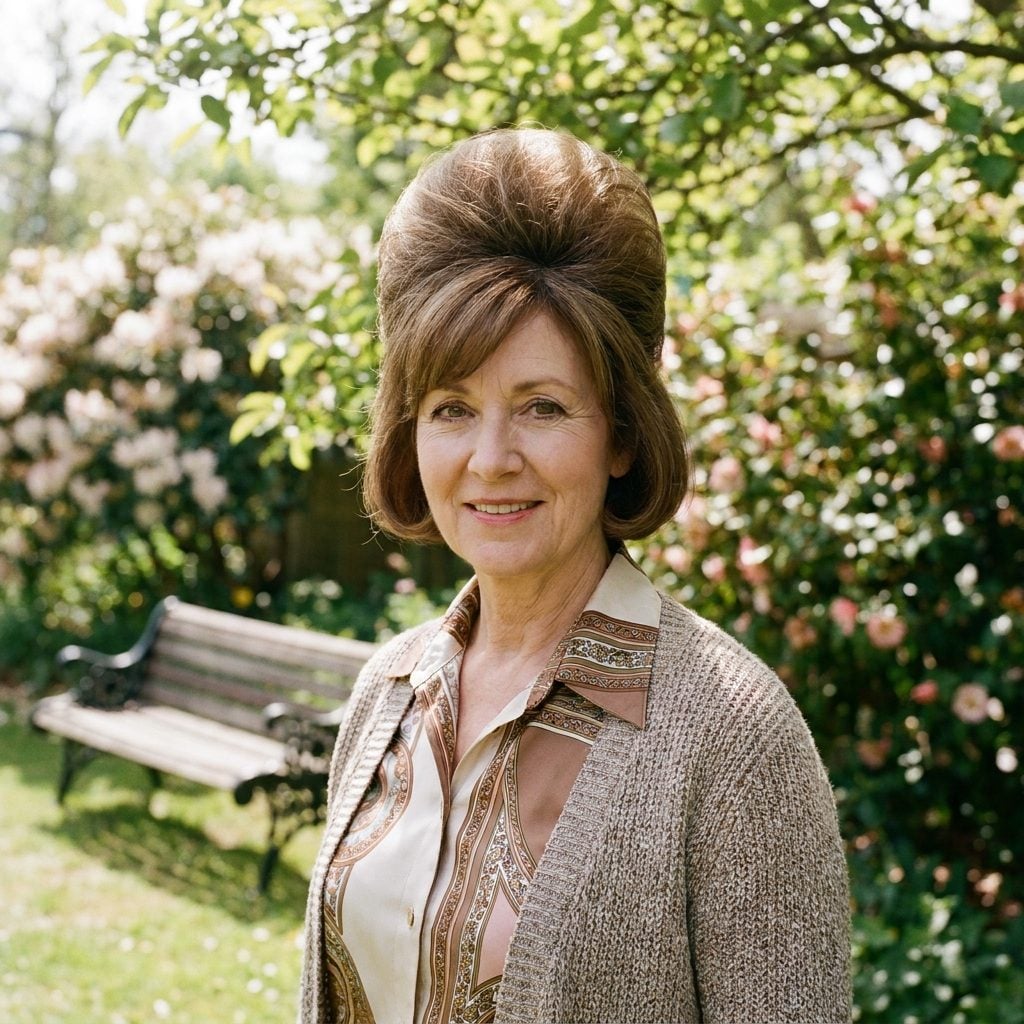
Volume is useful. A dome is a different proposition. Tease the crown high enough and lock it firmly enough and the hairstyle becomes more noticeable than the person wearing it.
Modern lift is less architectural. A lightweight root product, directional blow-drying and touchable separation can create height without turning the crown into a fixed structure. You want the top to rise when the head moves, not remain behind as a monument.
25. The Too-Short Jaw-Exposing Bob Cut Above Its Best Point

Short isn’t automatically severe, but this bob stops before it can do much framing around the lower face. With the ends sitting high near the ear, the jaw is left completely exposed and becomes a much stronger part of the silhouette.
The flattering point is individual, not age-specific. On this face, a little more length beside the jaw would create a softer transition between hair and lower face while preserving the freshness of a short bob.
24. The Stiff Hairsprayed Bob

A breeze arrives and the bob declines to participate. Too much firm-hold product can turn a soft haircut into a shell, replacing shine, separation and movement with one immovable shape.
A flexible spray used sparingly can hold the broad silhouette without freezing every strand into position. Once the finish is set, breaking it gently with the fingers restores the small movements that make a bob look like hair rather than equipment.
23. The One-Length Bob With Zero Interior Texture on Thick Hair

❤️ Would you like to save this?
A one-length outline can look terrific on thick hair. The trouble begins when “one length” is interpreted to mean that every ounce of density must remain untouched inside it. Then the exterior line may be sharp while the interior behaves like packed insulation.
Invisible internal layering can preserve the blunt-looking perimeter while creating room for the hair to move underneath. That’s what separates this mistake from simply choosing the wrong shape for thick hair: the silhouette can stay almost identical while the engineering inside it changes completely.
Our readers lean the same way: asked to choose between layered and blunt, 72% picked layered and 28% picked blunt.
22. The Eye-Covering Heavy Fringe Bob

The opposite of the baby-bang problem can be just as tricky. This fringe has enough length and density to curtain the eyes, taking away one of the face’s most expressive features.
The answer isn’t necessarily a shorter bang. Removing some density and creating separation can keep the longer fringe while allowing the eyes to appear between the pieces. A little transparency changes the entire mood without sacrificing the drama.
21. The Bottom-Heavy Triangle Bob That Pulls Everything Down

This isn’t merely a thick bob. It’s a proportion problem: little presence at the crown, then progressively more width as the hair approaches the jaw. The resulting triangle makes the lower half of the haircut dominate everything above it.
Redistributing the volume changes the silhouette more effectively than simply removing hair. A little lift higher up, combined with controlled weight through the bottom, gives the bob a more balanced outline without requiring it to become thin or heavily layered.
20. The Too-Long “Almost Bob” Fighting the Collarbone

There is nothing inherently wrong with a long bob at the shoulder. The problem starts when this particular cut repeatedly collides with the collarbone and the ends kick outward in directions that don’t belong to the intended shape.
There are several ways through it. Grow the perimeter beyond the collision point, take it slightly shorter or deliberately incorporate the flip with texture and movement. What looks awkward isn’t the length itself; it’s a length fighting the anatomy underneath it.
19. The Over-Layered Bob That Leaves Fine Hair Sparse at the Ends

Layers sound like the obvious prescription for flat hair. On fine hair, too many can produce the opposite of fullness. Remove enough internal weight and the lower edge tapers away until hair that began fine suddenly looks scarce.
A stronger perimeter preserves visible density. Movement can still come from restrained layering or texture placed where the hair can afford to lose weight. The objective isn’t a bob without layers. It’s a bob that doesn’t spend its limited density everywhere at once.
18. The Bob That Ends in a Blunt Wall at the Widest Cheekbone

This is more specific than simply choosing an unflattering overall length. The front edge forms an uninterrupted wall exactly beside the widest cheekbone, so the haircut visually extends that width from hair to face and back into hair again.
Break the wall rather than automatically changing the entire bob. A longer face-framing piece, a slightly angled front edge or a touch of softness through the corners interrupts the horizontal bar while allowing most of the perimeter to remain exactly where it is.
17. The Too-Sleek, Plastered-Down Bob

Sleek and flat are not the same thing. This bob has been pressed so close to the scalp that the styling advertises every separation at the roots, particularly where the hair is fine.
Keep the polished lengths but give the roots a little independence. Rough-drying the root area before smoothing the rest preserves the clean finish while preventing the entire haircut from looking laminated to the head.
ThreadCurve readers gave images with sleek finishes fewer hearts than the other hairstyles in the same articles, 40% versus 46%.
16. The No-Face-Framing Bob

The bob itself isn’t failing. The front simply has no relationship with the face inside it. Straight one-length pieces hang beside the cheeks without acknowledging the cheekbones, eyes or jaw, so the haircut can feel imposed rather than integrated.
A few carefully angled front pieces can provide the connection without turning the whole cut into layers. Think of them as punctuation rather than a rewrite: enough interruption to bring the face forward while leaving the larger silhouette intact.
15. The Puffy Sides With Flat Top Bob

Volume isn’t helping when all of it lives in the wrong neighborhood. Here the sides expand while the crown collapses, making the haircut appear broader than it is tall and pushing attention toward the middle of the face.
This isn’t the same problem as a bottom-heavy triangle. The width is concentrated higher, around the ears. Reduce some of that lateral bulk and restore modest lift above it, and the silhouette becomes more vertical without becoming bigger overall.
14. The Stringy-Ended Bob That Has Lost Its Cutting Line

This bob may have started with a good perimeter. Wear, breakage and growth have left the ends separating into thin points, so the lower edge no longer looks intentional.
That’s what distinguishes this from an over-layered or over-razored cut: the problem here is maintenance. A modest trim can restore the cutting line, while gentle handling and a small amount of smoothing product can help the last inch stay together instead of fragmenting.
13. The Ear-Level Width Bob

Look at where the silhouette reaches maximum width: directly beside the ears. That concentrated flare creates a strong horizontal emphasis across the middle of this particular face.
The solution isn’t a universal rule that bob weight must always sit lower. Different faces want different proportions. Here, spreading the fullness more gradually through the shape — rather than parking all of it at one level — would keep the eye moving instead of stopping at the widest point.
12. The Unevenly Grown-Out Bob

A relaxed grown-out bob can be terrific. A bob whose original weight line has simply wandered away is another matter. Once the sections grow at slightly different rates and the perimeter loses its relationship with the original shape, undone starts looking accidental.
Precise bobs often benefit from reshaping every six to eight weeks, but there is no universal expiration date. Growth rate, texture, length and the original geometry all matter. Watch the silhouette rather than the calendar. When the shape disappears, that’s the appointment.
11. The Jaw-Level Bulk Bob

❤️ Would you like to save this?
This bob doesn’t merely end near the jaw; its heaviest concentration of hair sits beside it. That adds visual mass to the lower face even though the actual facial proportions haven’t changed at all.
Selective internal weight removal, softer ends or longer front pieces can redistribute that mass without requiring a dramatically different length. The useful question isn’t simply “Where does the bob end?” It’s “Where does most of the bob live?”
10. The Rounded “Helmet” Bob That Looks Too Set

The helmet bob begins with good intentions: neatness, polish, control. Then every section gets curled under into the same smooth dome and the haircut loses all the irregularity that makes polished hair still look alive.
Keep the finish but loosen the choreography. Let a few ends stay straighter, allow a little separation and resist forcing the entire perimeter underneath. A bob can be groomed without looking as though it would survive being removed in one piece.
9. The Tight, High Neckline Bob

Turn around and this bob reveals a different problem from the exaggerated wedge: the nape itself has been cut extremely tight, leaving a hard, high neckline beneath all that graduation.
Letting the nape retain a little more softness can modernize the back without dismantling the entire cut. The change may be almost invisible from the front, which is precisely why it matters. A bob has a rear view whether the wearer spends much time looking at it or not.
8. The One-Shape-Fits-All Curly Bob

A bob measured as though curly hair will behave like straight hair can change dramatically once it dries. Different curl patterns shrink by different amounts, leaving some sections springing higher and others carrying unexpected bulk.
The cut has to account for the texture that will actually be worn. That may mean cutting dry, refining dry or simply allowing carefully for shrinkage before the final length is established. Curly hair can carry a bob beautifully; it just shouldn’t have to impersonate straight hair to get one.
7. The Severe Chin-Length Blunt Bob That Hardens the Jaw

A blunt chin-length bob can be magnificent. Here the problem is the combination of exact placement and absolute rigidity: the perimeter lands directly beside the jaw and stays uncompromisingly horizontal from one side to the other.
A half inch of movement can change the conversation. Slightly soften the ends, introduce a whisper of graduation or shift the perimeter above or below the strongest jaw point. The bob stays blunt in spirit without turning the chin into a ruler line.
6. The Bob That Pretends Your Natural Texture Isn’t There

A bob that only works after forty minutes of persuading the hair to become something else has a design problem. Natural wave begins returning at the roots, the straightened lengths head in another direction and by midday the haircut is negotiating with itself.
Build the shape around the bend that’s already there. A bob designed to accommodate natural wave can still be blown straight when desired, but it doesn’t collapse the moment humidity reminds the hair what it actually does. The cut should cooperate more often than it argues.
5. The Heavily Stacked Bob With an Exaggerated Wedge
Strongly stacked bobs became especially recognizable in the late 1990s and 2000s, and an exaggerated version can still carry that period signature. Here the steep graduation pushes the back outward while the front collapses toward sharp points. The haircut announces its construction before you notice anything else.
Softer graduation can keep the useful part — fullness through the back — while losing the wedge effect. Another option is a stronger perimeter with more internal movement. Either way, the bob stops behaving like a historical reenactment of its own geometry.
4. The Overly Geometric A-Line Bob

An A-line bob already contains drama. Push the slope too far and the haircut becomes a diagram: very short back, dagger-long front, hard angle connecting the two.
Easing that slope doesn’t destroy the idea. It lets the architecture support the face instead of competing with it. A little texture through the front can soften those long points further while keeping the directional sweep that made the A-line appealing in the first place.
3. The Bob Copied Straight Off a Celebrity Photo

The photograph isn’t the problem. Treating it like architectural blueprints is. That bob was cut for a particular density, texture, face, hairline and head shape. Transfer every measurement unchanged and you get the geometry without any guarantee that you’ll get the effect.
Bobs are unusually customizable. Length, weight line, graduation, fringe, internal texture and front pieces can all move while the basic idea survives. Bring the photograph. Steal what makes it interesting. Then let the cut acknowledge who’s actually sitting in the chair.
2. The Same Bob She Has Kept Since 1998

❤️ Would you like to save this?
Hair can change with age. Density may decrease, texture may shift, curl can loosen or tighten and a hairline can behave differently than it did years earlier. A bob that once worked beautifully may eventually be solving problems the hair no longer has.
Here the steep graduation, aggressive forward angle and propped-up crown belong to a very specific version of the bob. Keeping the identity of the cut doesn’t require preserving every old measurement. Softer graduation, a stronger perimeter or a less engineered crown can let the haircut evolve with the hair wearing it.
1. The Bob You Ordered Without Mentioning Density, Face or Life

The biggest bob mistake can happen before the scissors move: walking in and asking for “a bob.” That’s like ordering “food.” A bob is a category, not a finished haircut, and almost everything that determines whether it works comes after those three letters.
Length. Perimeter. Graduation. Fringe. Internal weight. Face-framing. Natural texture. Growth pattern. Styling time. A good version answers to all of them, because the most flattering bob isn’t necessarily the shortest, softest, newest or most voluminous one. It’s the one whose decisions make sense together.
- Density influences how much weight the perimeter can carry and how much can safely be removed inside.
- Face proportions help determine where strong lines, fringe and volume will have the most useful effect.
- Texture and growth pattern decide how the shape behaves once the salon styling is gone.
- Lifestyle determines whether the haircut still works on an ordinary Tuesday when nobody has forty minutes and three hot tools to negotiate with it.
Bring inspiration, but bring information too. The difference between a bob that merely looks good in the chair and one that keeps working at home is usually hidden in those specifics.