
❤️ Would you like to save this?
She had a good bob. That was actually the problem. It was neat, it suited her face, and it had been sitting at roughly the same length, with the same part, for the better part of a decade. At 44, “good” started to feel like a trap. So she did what more women are quietly doing now: she typed her frustration into an AI and asked it to show her what else was possible. What came back surprised her.
Twenty-seven looks later, the before-and-after spread reads less like a makeover reel and more like a negotiation between the version of herself she’d been playing safe with and the one she wanted to see in the mirror. Some changes barely disturb the original bob. Others abandon it completely. That’s what makes the experiment interesting: there isn’t one answer waiting at the end.
FYI, thanks to AI imagery software, we’re able to create very specific fashion and hairstyle examples to illustrate the points being made. In some cases, imagery is exaggerated to hammer home the point. Also, assume links that take you off the site are affiliate links such as links to Amazon. this means we may earn a commission if you buy something.
27. Warm Highlights and a Tucked Bob With a Sharper Shape
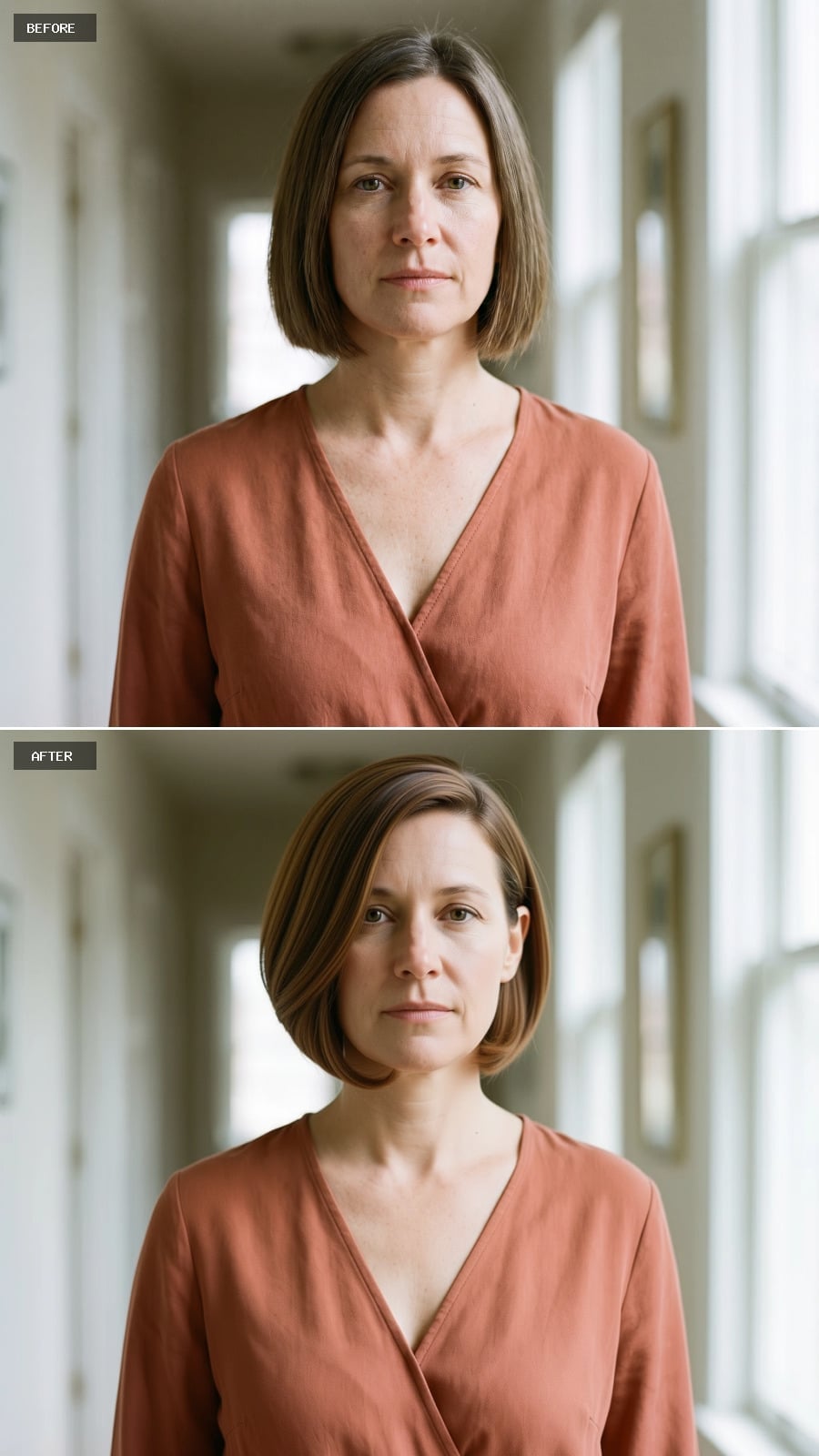
Her bob gets its structure back without becoming stiff. The ends curve gently under at the jaw instead of hanging straight down, while warm caramel highlights break up the solid brown and give the surface more depth. It’s a restrained change, but that’s part of its appeal.
The copper-rust wrap top helps frame the result, too. Its V-neck leaves enough open space below the cut that the new shape is easy to read rather than getting lost against a high collar.
26. Copper-Toned Highlights and a Bob With More Lift
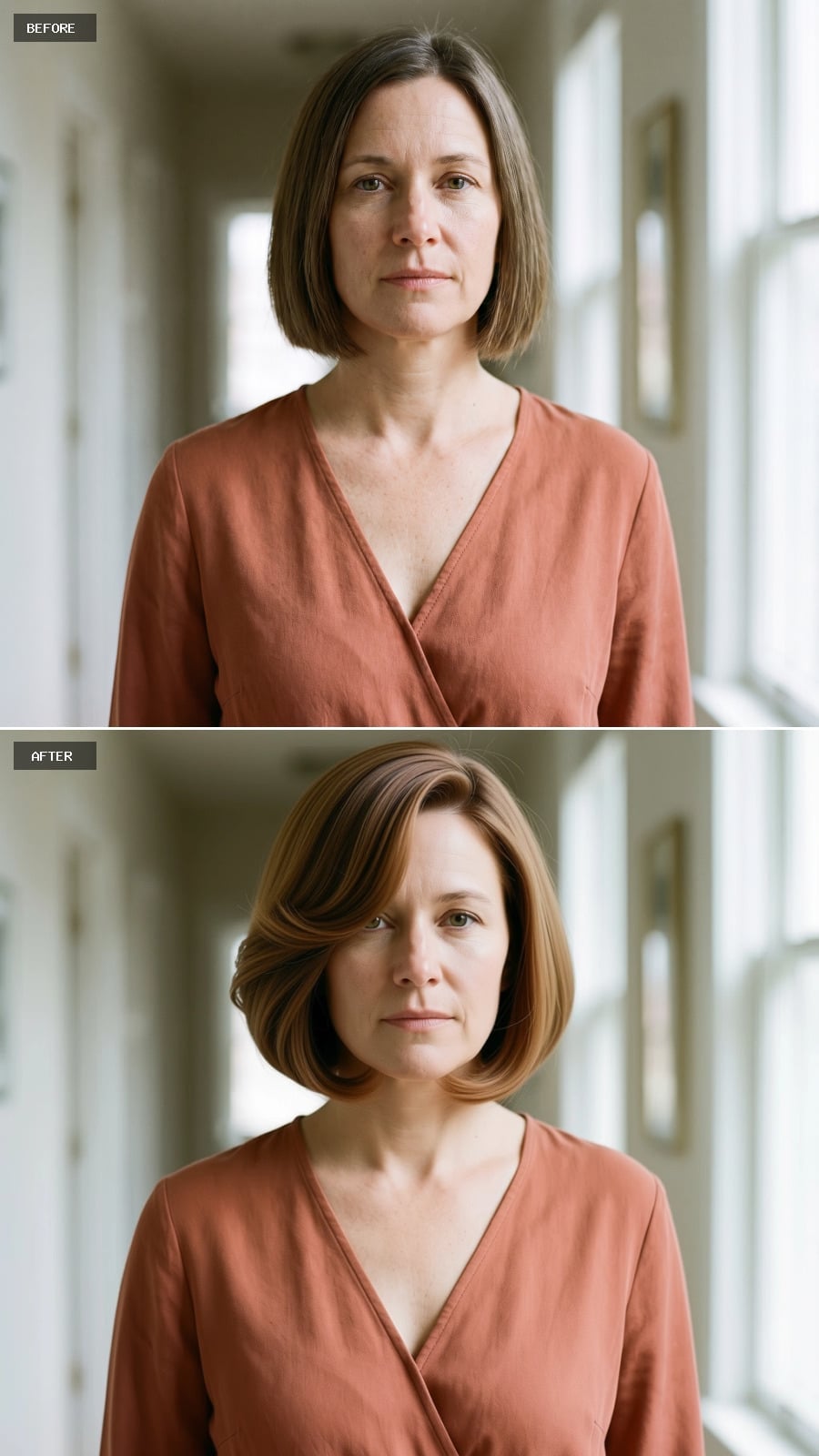
Here the bob loosens into waves that curve toward the jaw instead of lying flat against it. Copper and caramel pieces run through the brown base, catching the light at different points and giving the color more depth than the original single shade.
The front section falls slightly longer on one side, introducing a subtle asymmetry. A little lift through the crown keeps the shape from becoming bottom-heavy, while the waves make the cut feel softer without turning it into an entirely different hairstyle.
25. Blonde and Silver Pieces With Long, Loose Layers
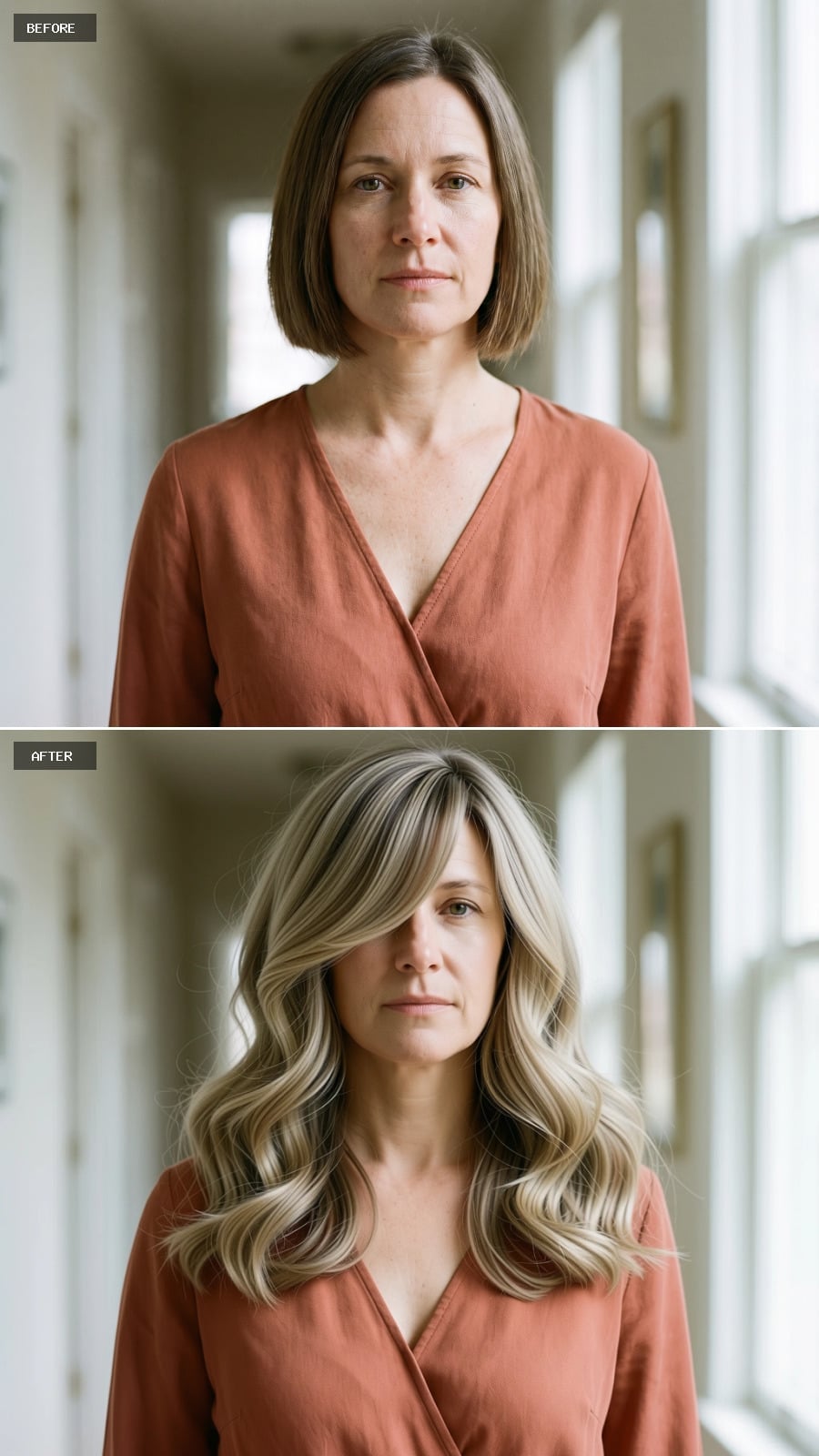
The bob disappears completely here. Soft waves fall past the collarbone, broken up by long layers that keep the extra length from hanging as one heavy mass. Cool blonde and silver-toned sections sit against a darker root, creating a noticeably more dimensional palette.
A side-swept fringe shifts the emphasis toward her eyes and upper face. This is less a revision of the old haircut than a full reset.
24. Rich Auburn Waves With Long Layers and Full-Bodied Shape
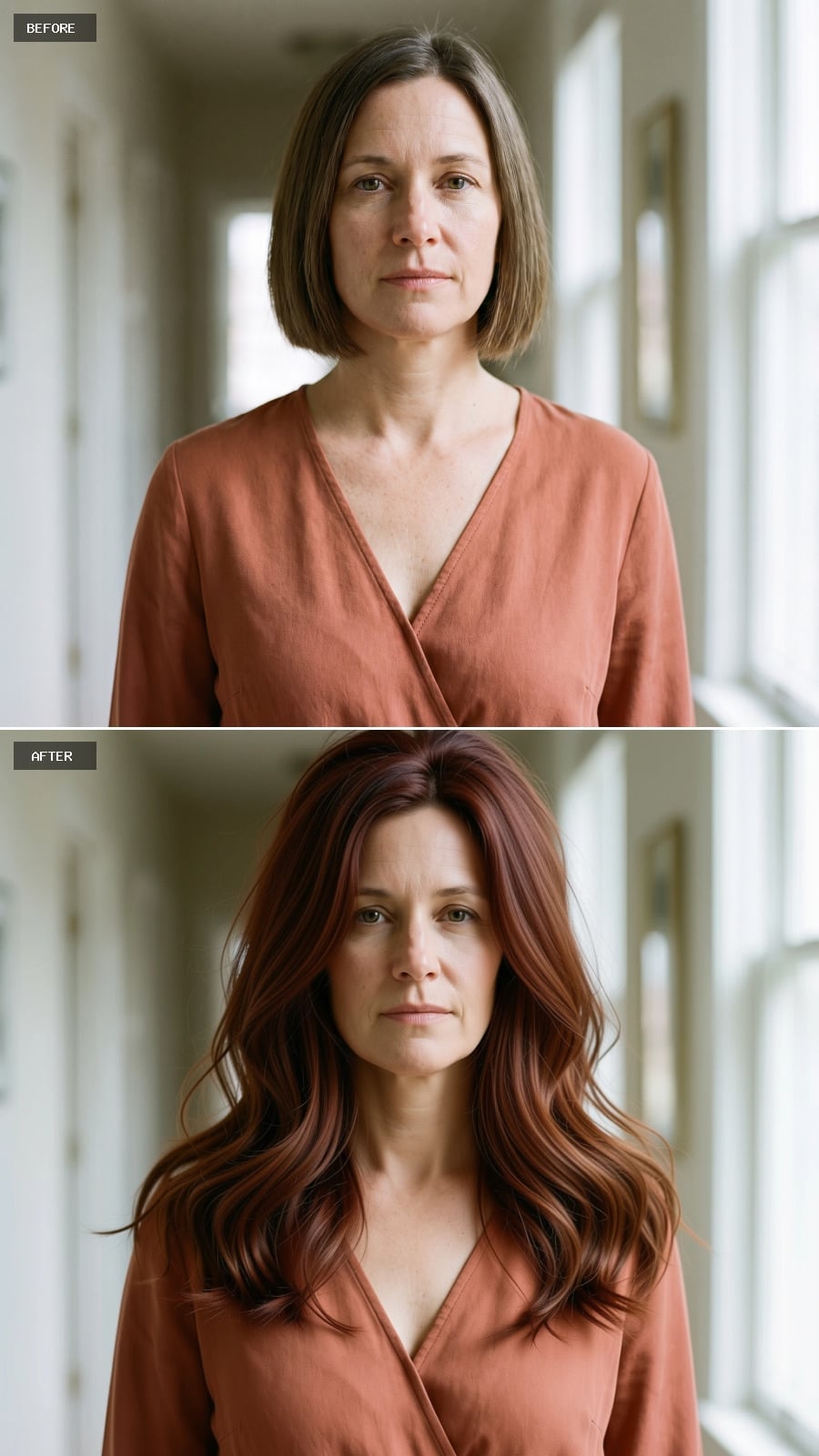
Deep mahogany near the roots moves into warmer copper through the lengths, while long layers fall well beyond the collarbone. The waves are broad and relaxed rather than tightly set, giving the hair a fuller outline without making the styling look rigid.
What changes most is the scale. The original bob hugged the face closely; these longer waves create a much wider, softer frame around it.
23. Golden Blonde Layers That Reach Past the Shoulders
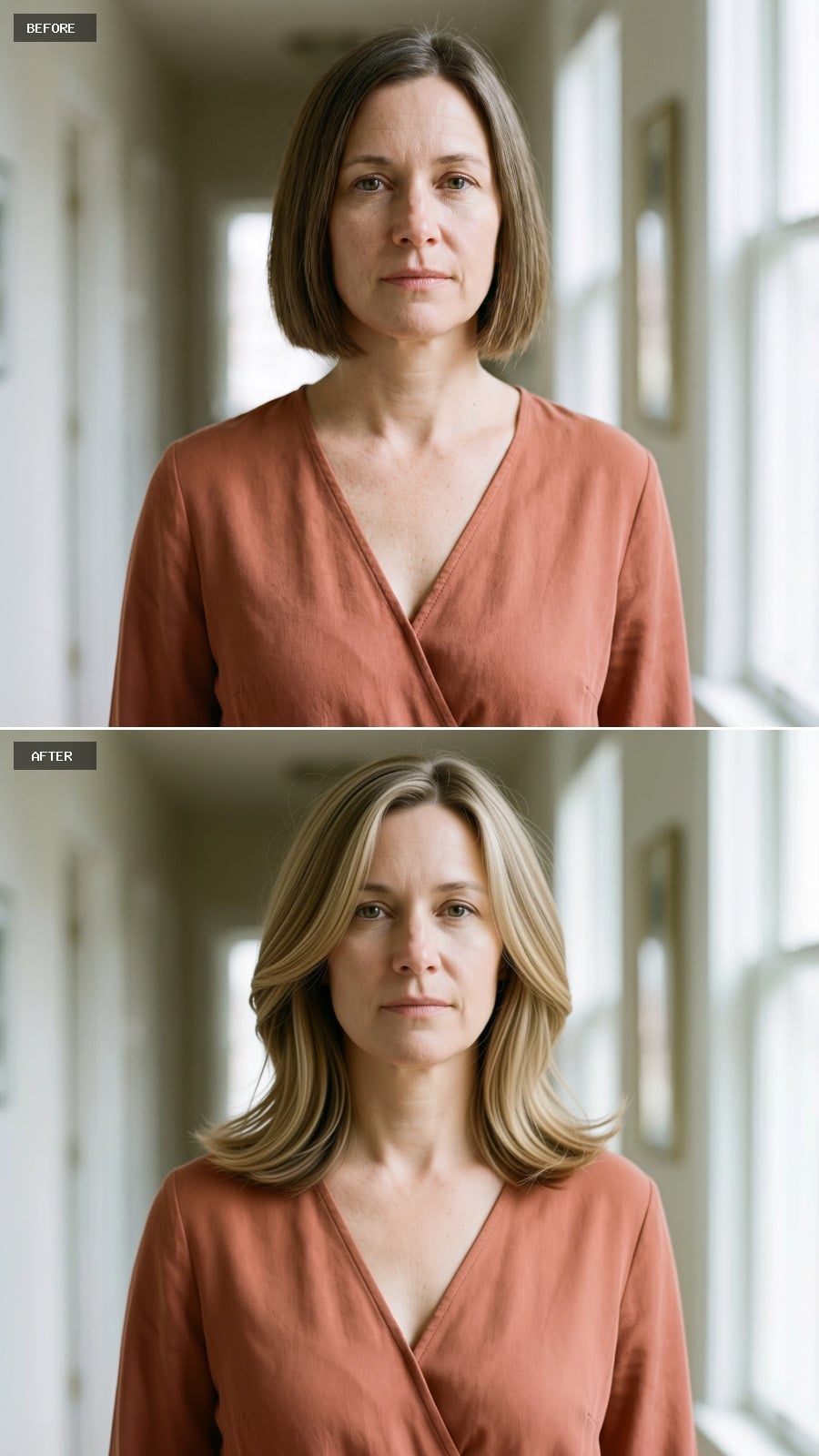
Golden blonde streaks brighten toward the ends, running through long layers that fall past the collarbone. A slight wave through the mid-lengths prevents the extra length from looking flat, while shorter sections around the face keep the front from feeling heavy.
This particular length suits the shape shown here because it gives the layers enough room to separate and swing. The crown stays lightly lifted, and the ends have just enough texture to keep the finish relaxed.
The Details: What keeps this from feeling like one long sheet of blonde is the spacing between the brighter and deeper sections. Even when the waves loosen, that variation helps the layers stay visually distinct.
22. Cool Blonde With Darker Underlayers and a Cleaner Silhouette
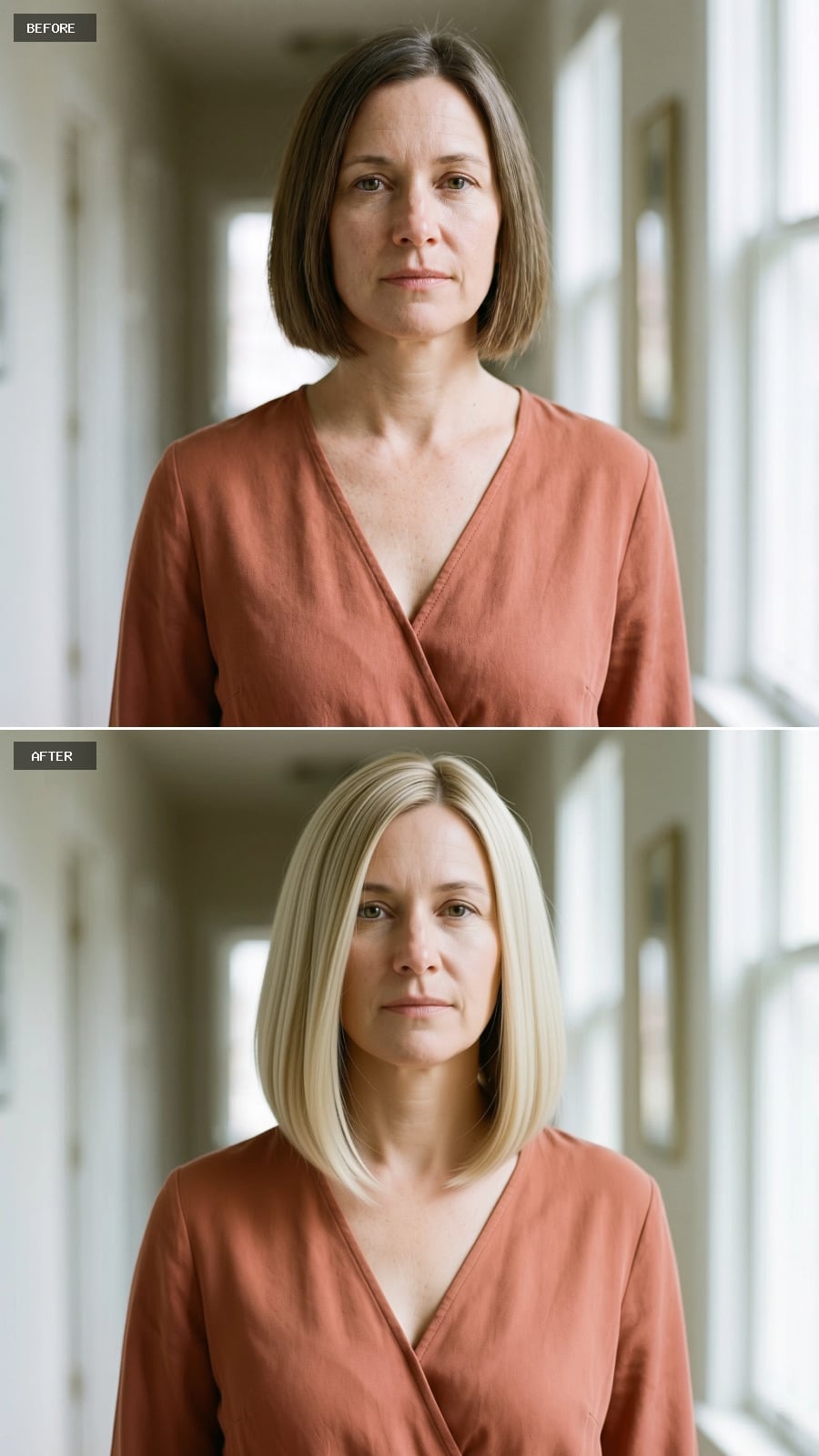
Platinum and ash-blonde sections sit over darker underlayers, giving this longer cut a much stronger sense of depth. The lightest pieces gather near the front, while the darker tones underneath prevent the blonde from turning into one continuous block of color.
The length lands just past the collarbone, where it still has enough swing to feel loose while retaining a clear outline. Against the warm wrap top, the cooler hair color becomes even more noticeable.
21. Gray and White Pieces Give the Bob a Stronger Identity
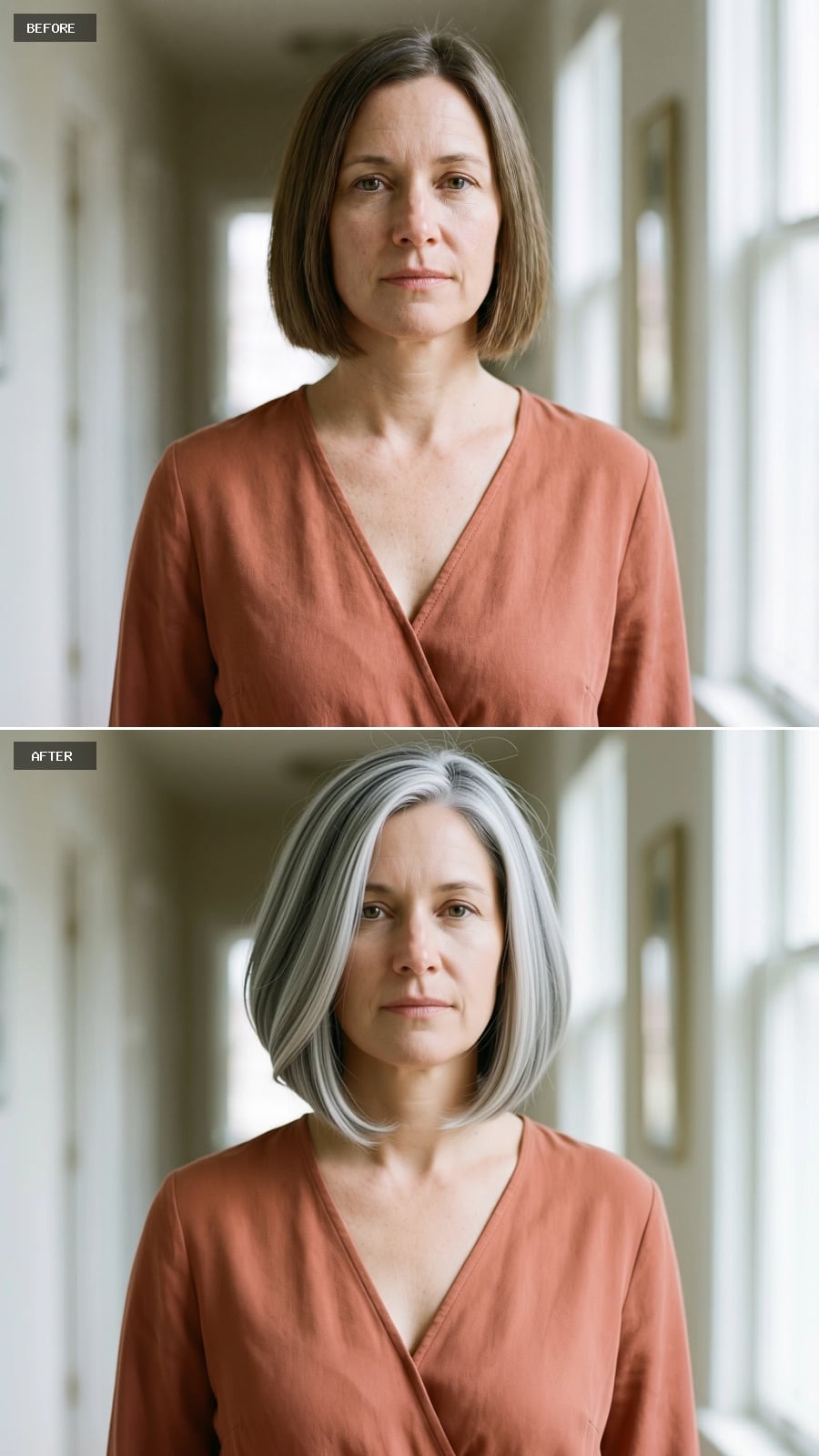
Steel-gray roots blend into bright white sections across the bob, but the transition isn’t uniform. Some strands remain darker almost to the ends, while others brighten much earlier, producing contrast across what is still a relatively simple cut.
That irregularity is what gives the style character. The basic bob hasn’t vanished; it has simply stopped looking like one uninterrupted curtain of brown.
20. Two-Tone Blonde Pieces Bring Direction to the Bob
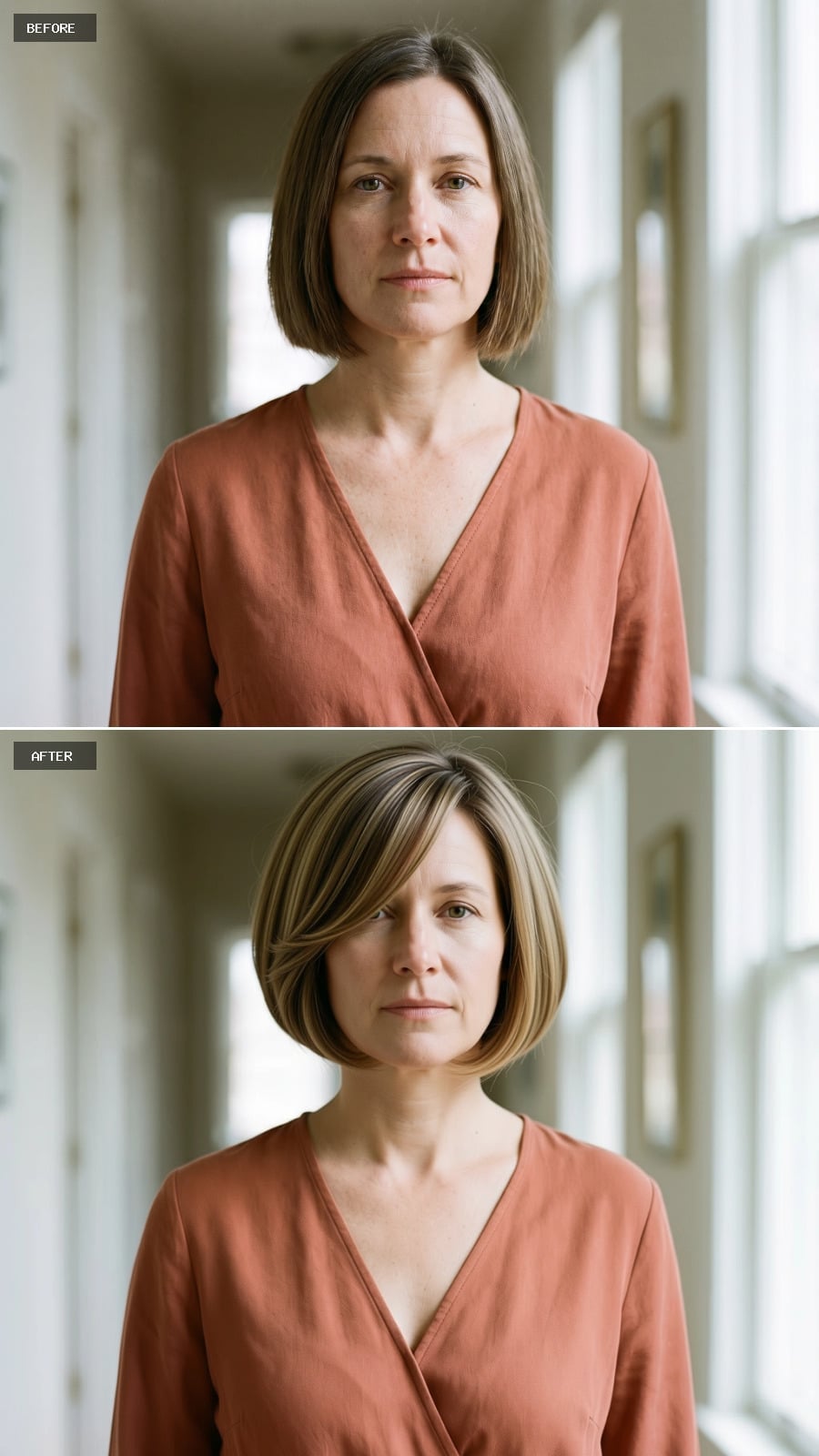
Chunkier highlights move through the bob in two distinct ranges: cooler blonde around the crown and warmer honey tones through portions of the mid-lengths. Rather than blending into one uniform shade, the colors stay visible enough to give the cut more visual separation.
The side-swept front section introduces movement where the original style felt static. The length is still recognizably a bob, but the layering and direction make it look far less rigid.
19. Mauve-to-Pink Lengths Leave the Original Bob Behind
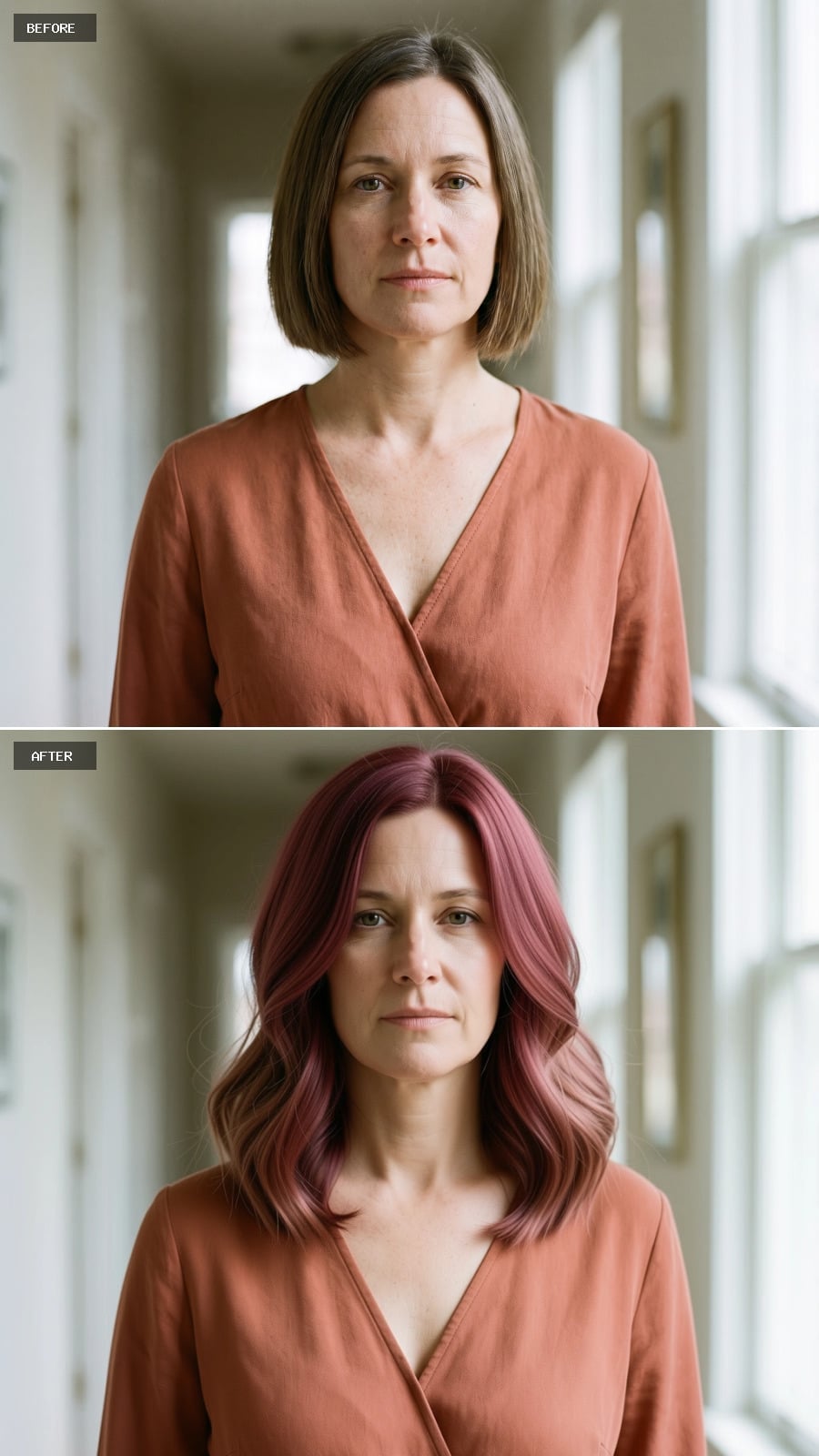
Rosy mauve at the roots deepens and brightens into pink through the lower lengths, giving this look the most obvious color departure so far. The hair extends just past the collarbone, with a slight wave through the lower third to break up the longer line.
The color is bold, but the cut itself is uncomplicated. Lift at the crown and gently curved ends give the silhouette enough shape that the pink doesn’t have to carry the entire look.
18. Dark Chocolate Waves Broken Up With Cool Ash Pieces
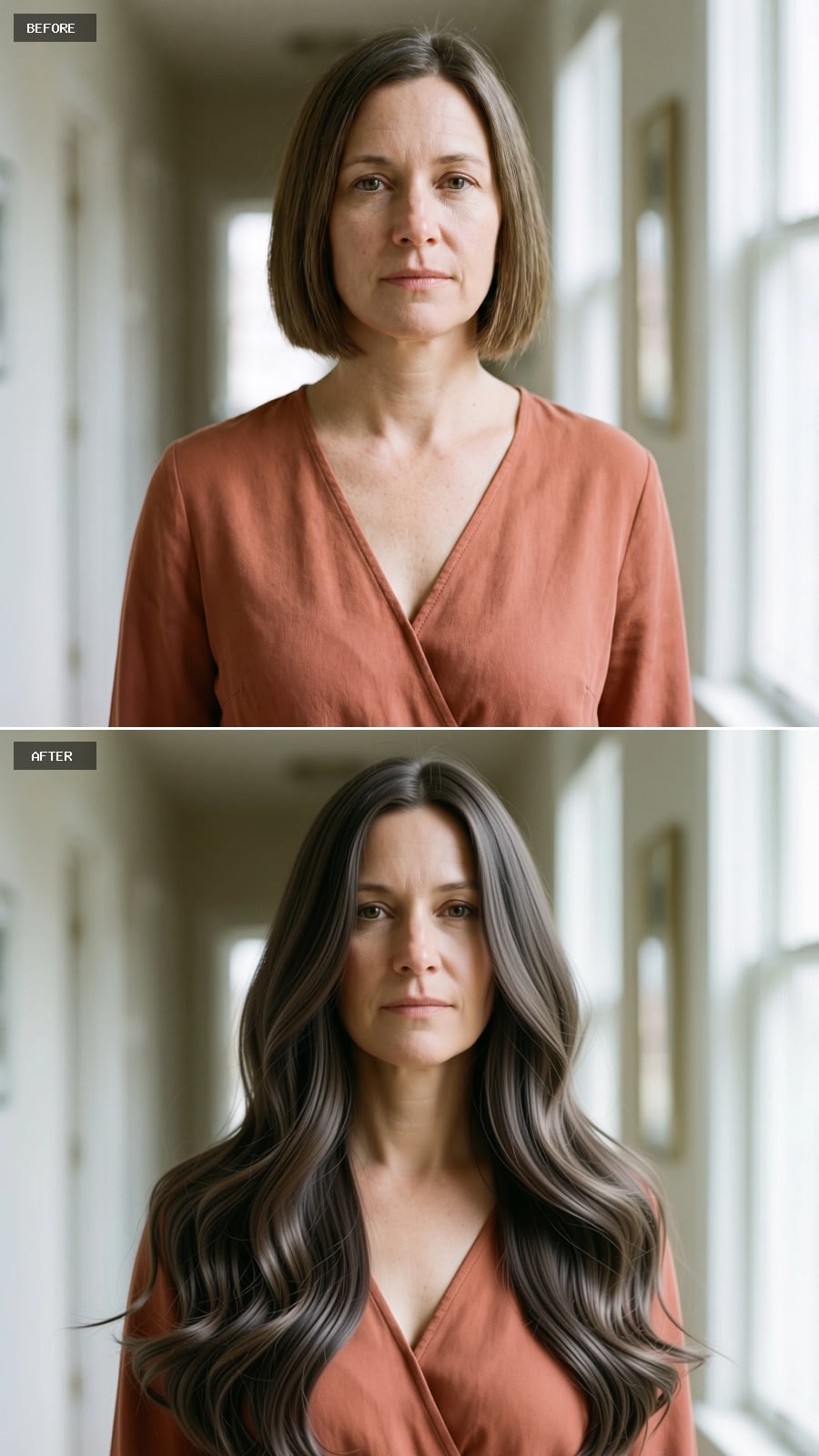
Long layers fall past the collarbone over a deep brown base, with ash and cool gray pieces scattered through the lengths. The contrast prevents the dark color from appearing as one solid mass, particularly where the waves bend and expose different sections of hair.
Volume begins near the crown and continues through the sides, while the lower lengths fan outward over the neckline. The result feels richer without relying on a dramatic change in base color.
Editor’s Note: Contrasting lighter and darker sections can create more visible depth in fine hair because the strands don’t all merge into a single shade. Whether those highlights look best cool or warm depends on the base color, complexion, and effect you’re after.
17. Gray and Silver Waves Turn the Bob Into a Distant Memory
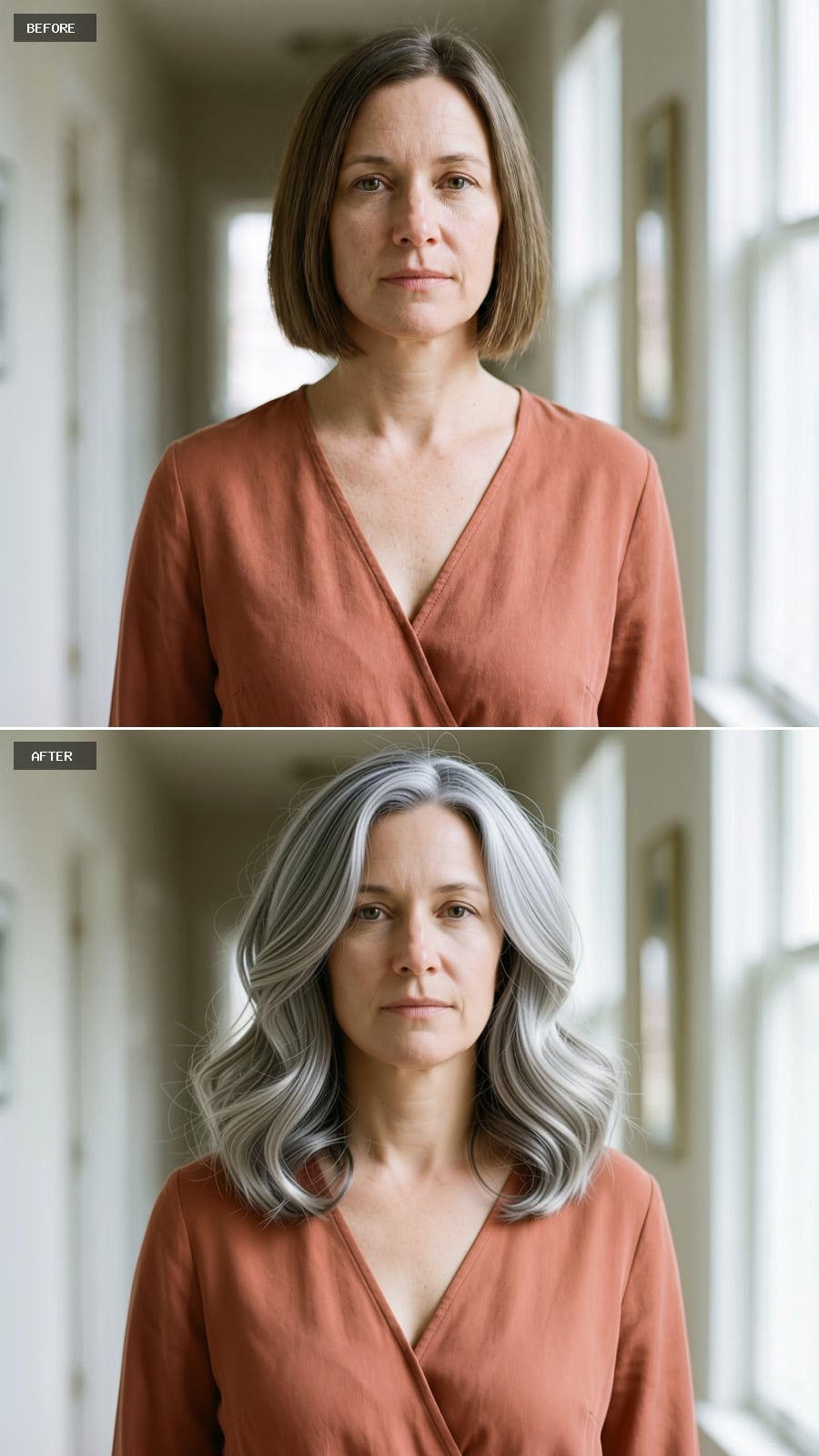
Silver appears in distinct streaks rather than a uniform wash, leaving visible darker sections between the brighter strands. That separation gives the waves more dimension and keeps the gray from looking visually flat.
The lengths settle just past the collarbone, with enough body to push outward from the face rather than tracing the jaw. It’s a much looser silhouette than the original cut and an entirely different way to wear silver.
16. Copper-Red Waves Give the Short Cut Some Swagger
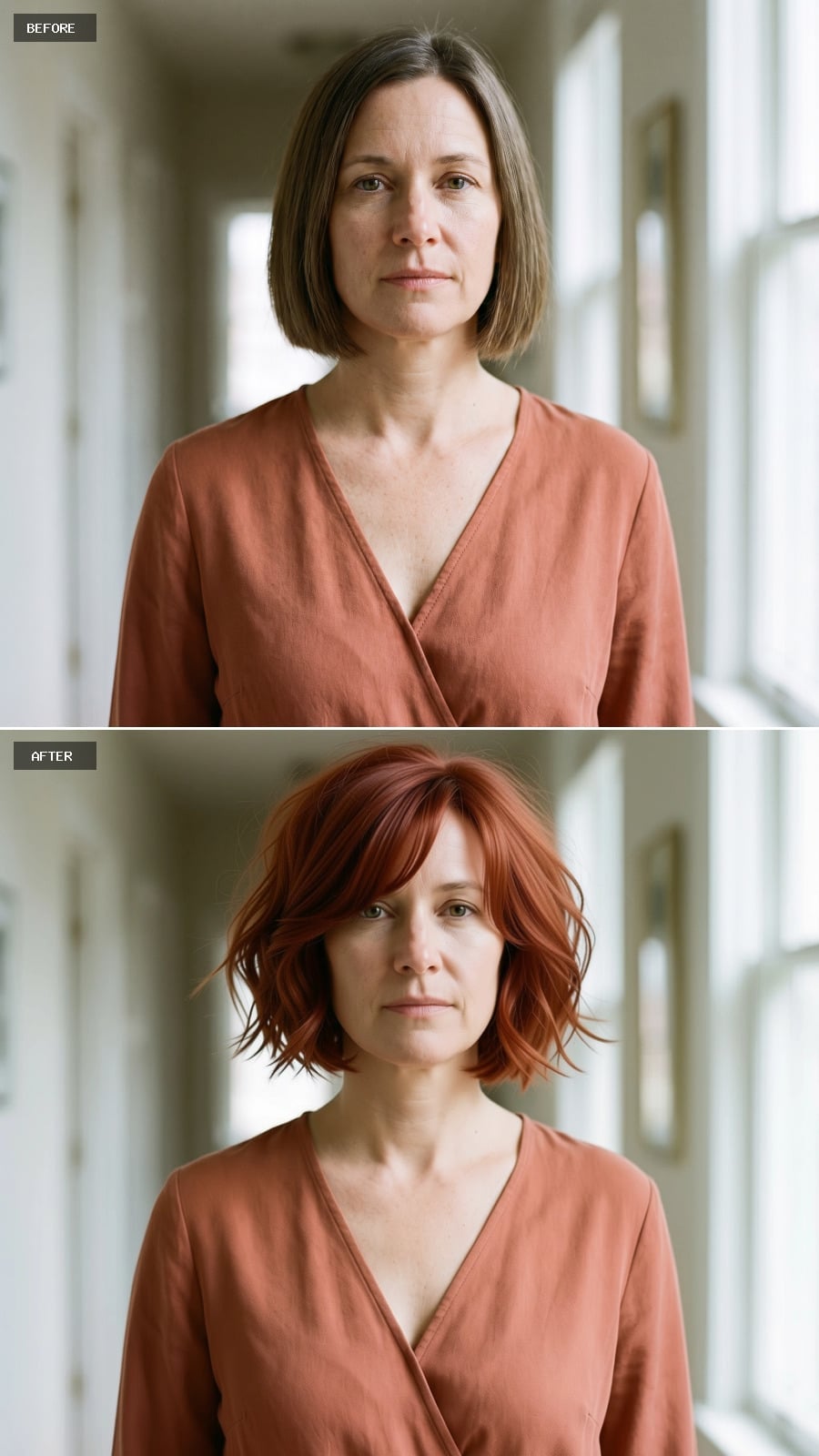
She goes decisively copper-red here, somewhere between auburn and true red. The saturation is strong enough to hold up in soft indoor light, while subtle variation through the strands keeps the color from looking completely uniform.
The cut remains relatively short, but loose waves change its character. Instead of forming a flat line around the jaw, the ends separate and bend in different directions, making the same general length feel far less predictable.
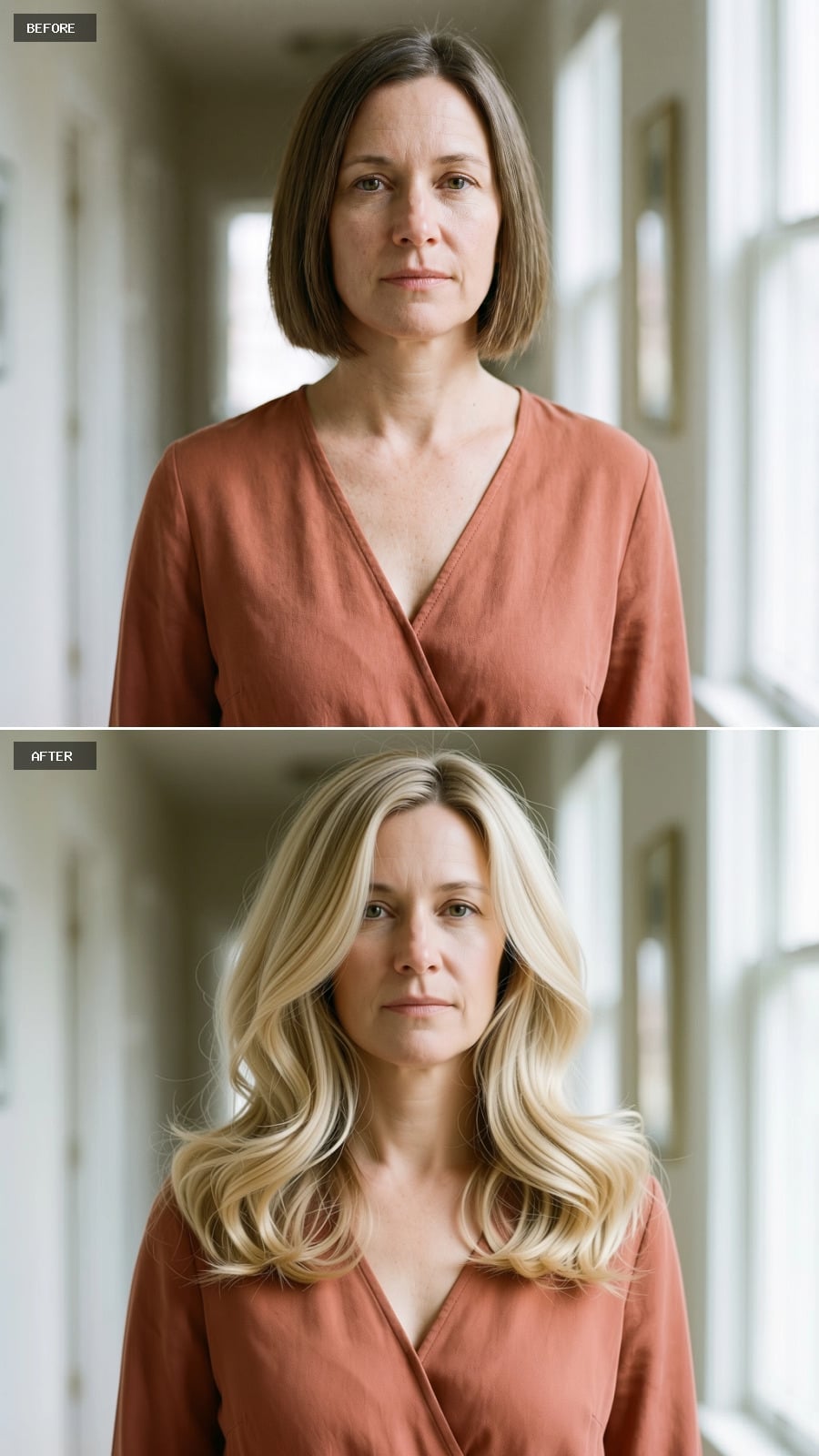
15. Wavy Blonde Lengths With Light Around the Face
❤️ Would you like to save this?
Warm blonde runs through shoulder-length waves with noticeably darker depth near the part. The brightest pieces sit close to the face, while deeper blonde farther back prevents the color from flattening into one shade.
Most of the volume collects through the lower half of the style, allowing the waves to spread across the shoulders without making the crown look overworked. It’s a softer, sunnier alternative to the original dark bob.
14. Copper Curls Replace the Bob’s Straight Edges
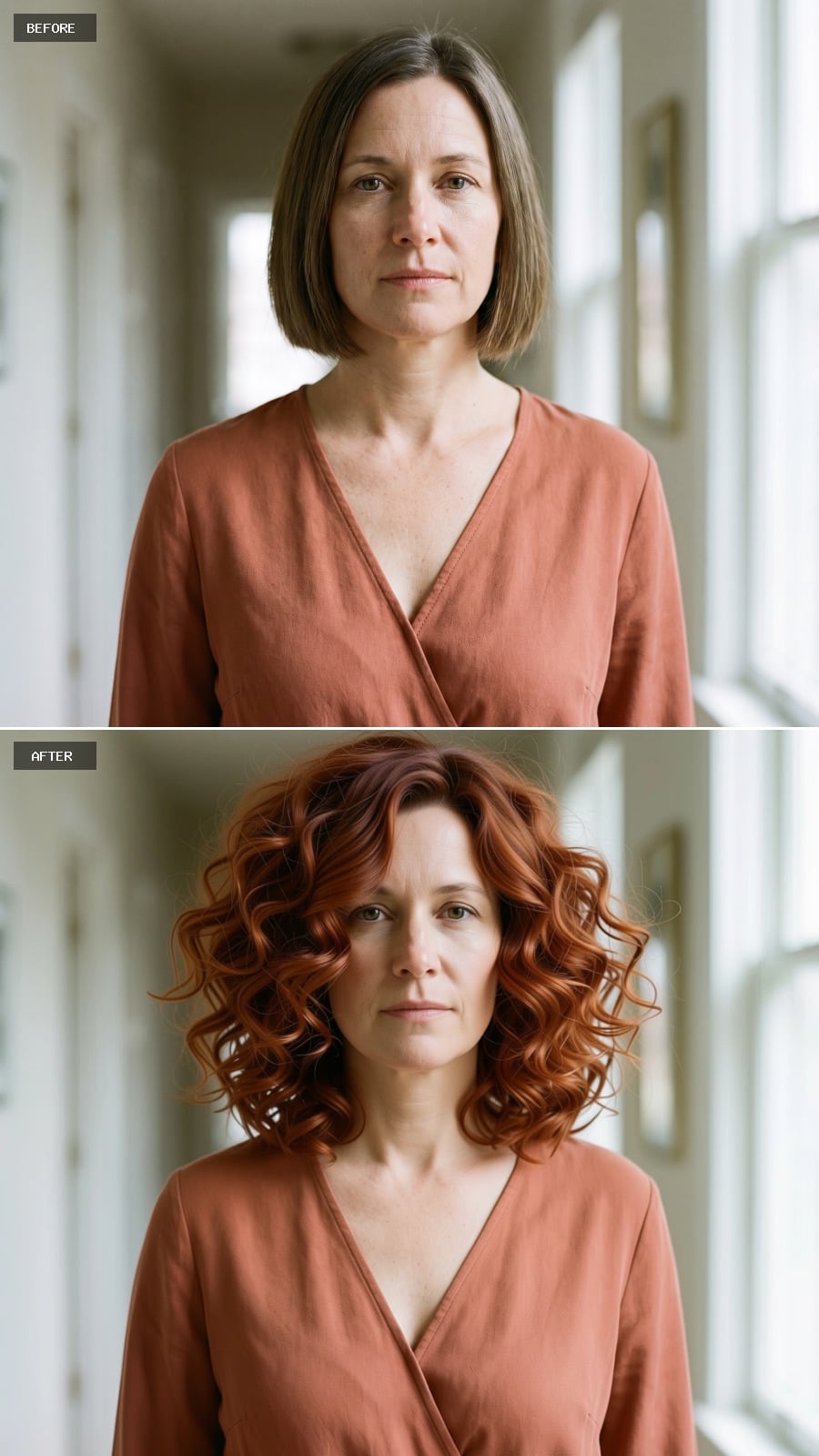
Auburn near the roots shifts into brighter copper through the curls, while the texture expands the silhouette around the cheeks and jaw. Instead of the clean lower edge of the original bob, this cut is defined by individual bends and coils.
The transformation comes as much from texture as color. The fuller sides create an entirely different frame around her face without requiring extreme length.
13. Dark Brown Waves With Caramel Around the Face
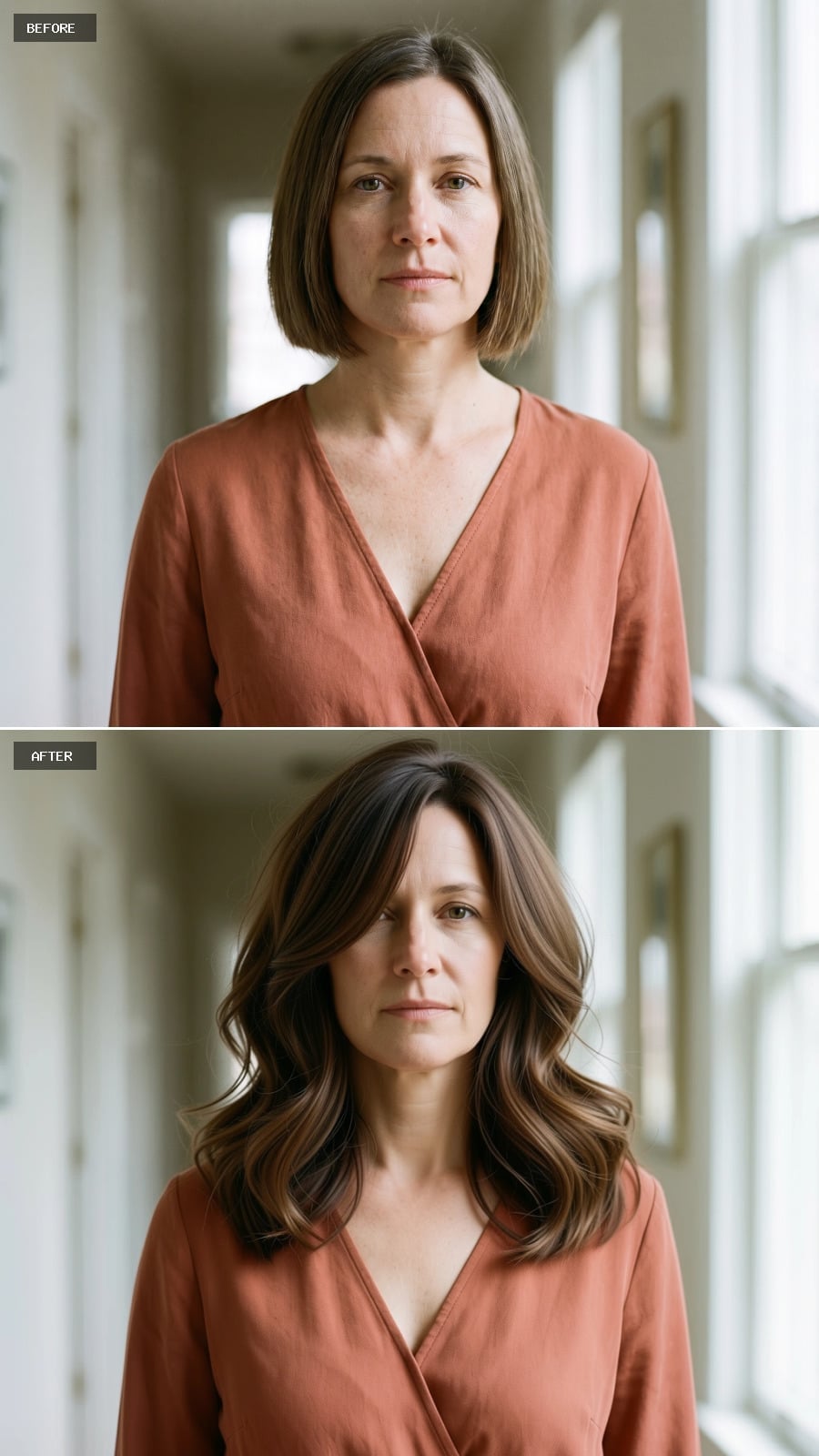
Dark brown waves extend just beyond the shoulders, interrupted by caramel and toffee-colored pieces concentrated near the front. Those brighter sections make the layers easier to see and keep the dark base from swallowing the shape.
A side-swept fringe breaks the symmetry at the forehead, while the widest part of the style lands lower around the shoulders. The result is full without feeling rigid or overly set.
12. Gray-Blonde Pieces Sharpen a Blunter Bob
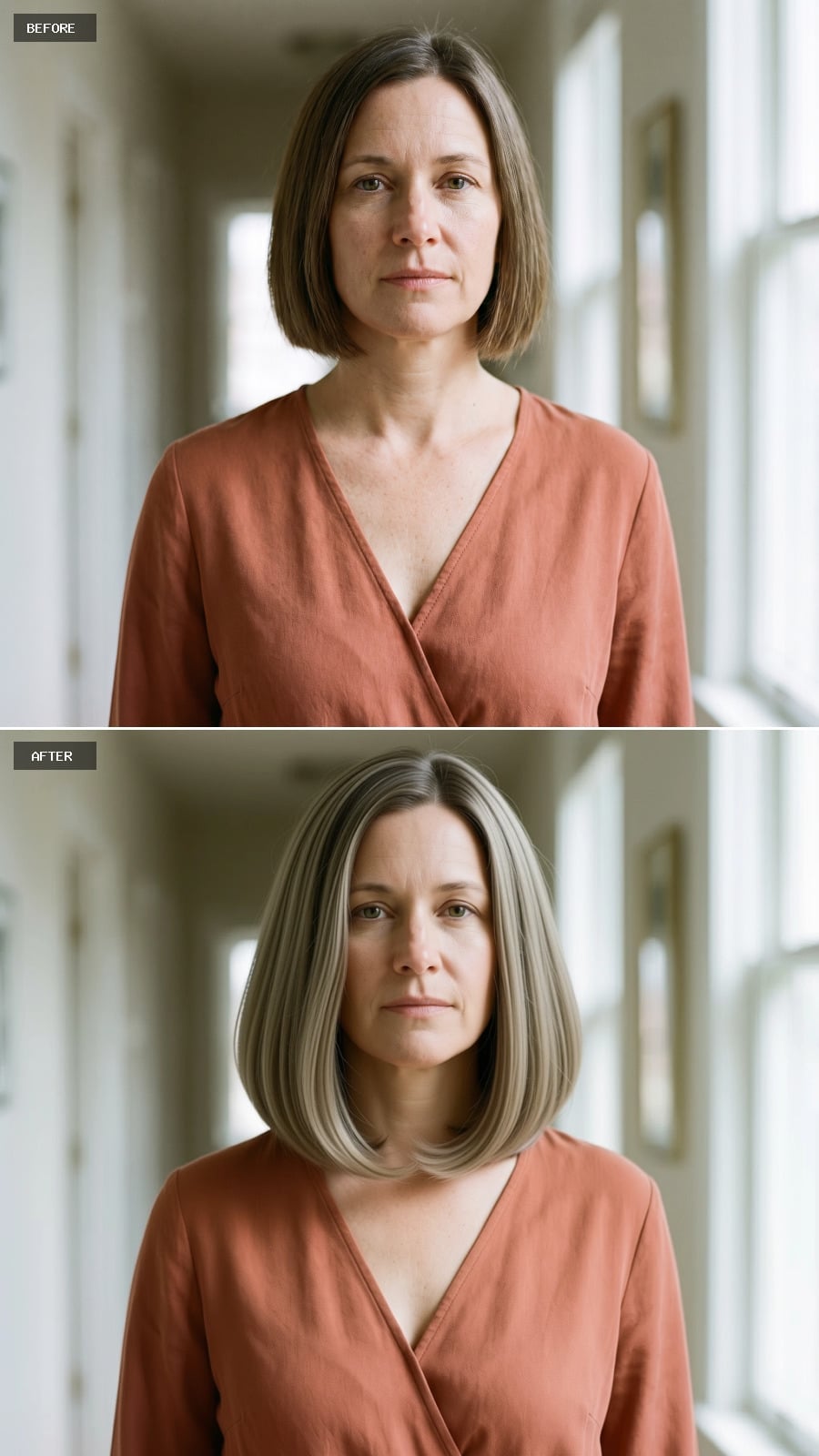
The length changes very little here. Instead, cool ash-gray and pale blonde pieces are layered over the darker base, with the lightest sections concentrated toward the front.
The ends are cut into a cleaner, blunter line, making the color variation especially visible where the strands meet that strong lower edge. It’s proof that the experiment doesn’t need to add six inches of hair every time to produce a noticeably different result.
The strongest change here comes from contrast and a cleaner lower edge, not extra length.
11. Long Brunette Waves and Bangs Create a New Frame
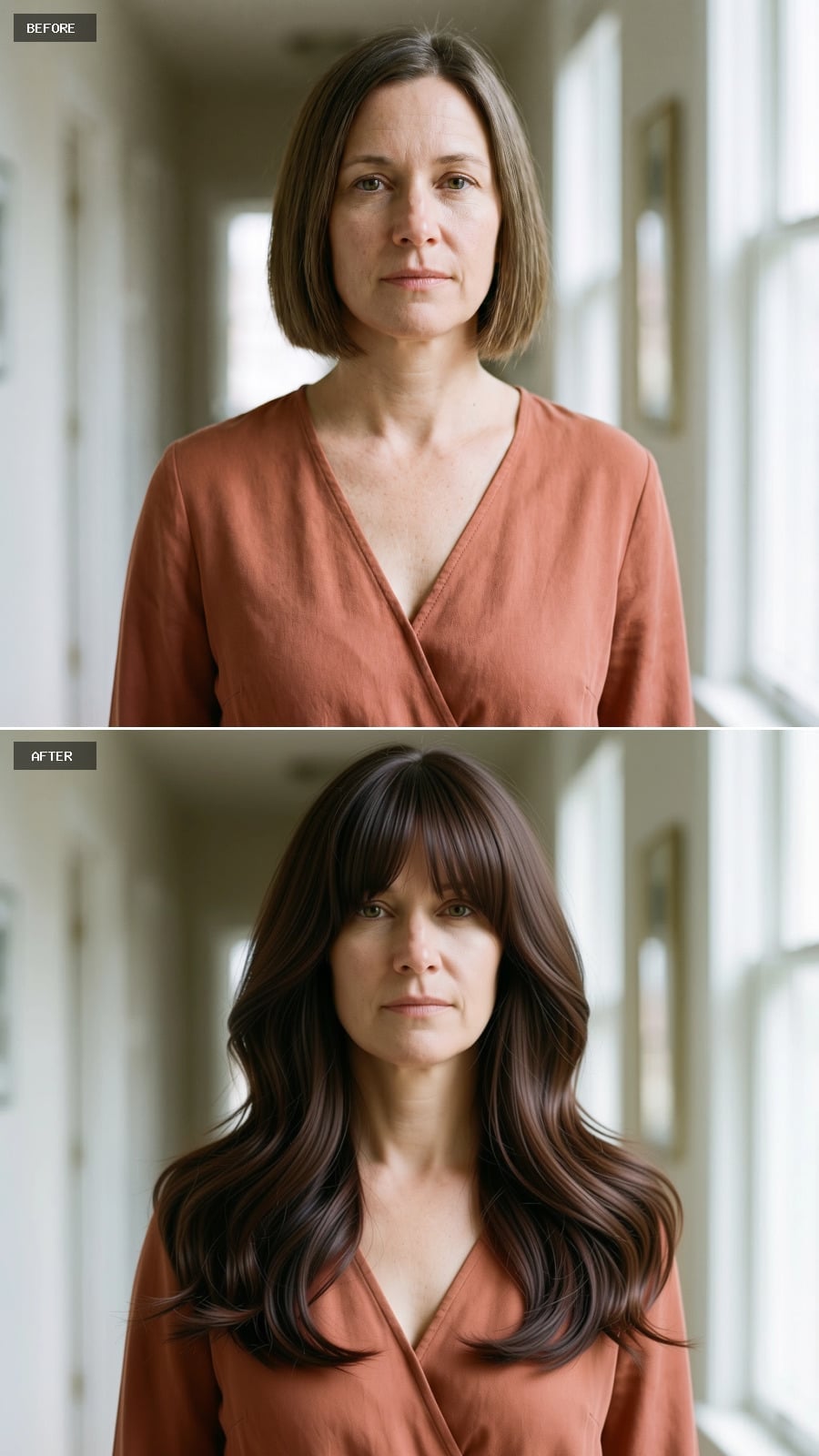
Deep brunette waves are worn long and loose, with a curtain-style fringe sweeping across the forehead. Subtle lighter sections through the mid-lengths catch differently as the hair bends, preventing the brown from appearing completely solid.
The fringe gives the upper portion of the cut a clear focal point around the eyes. Farther down, the waves spread widest around the shoulders, distributing the volume across a longer silhouette instead of concentrating everything near the jaw.
10. Extra-Long Gray-Silver Hair Goes in the Opposite Direction
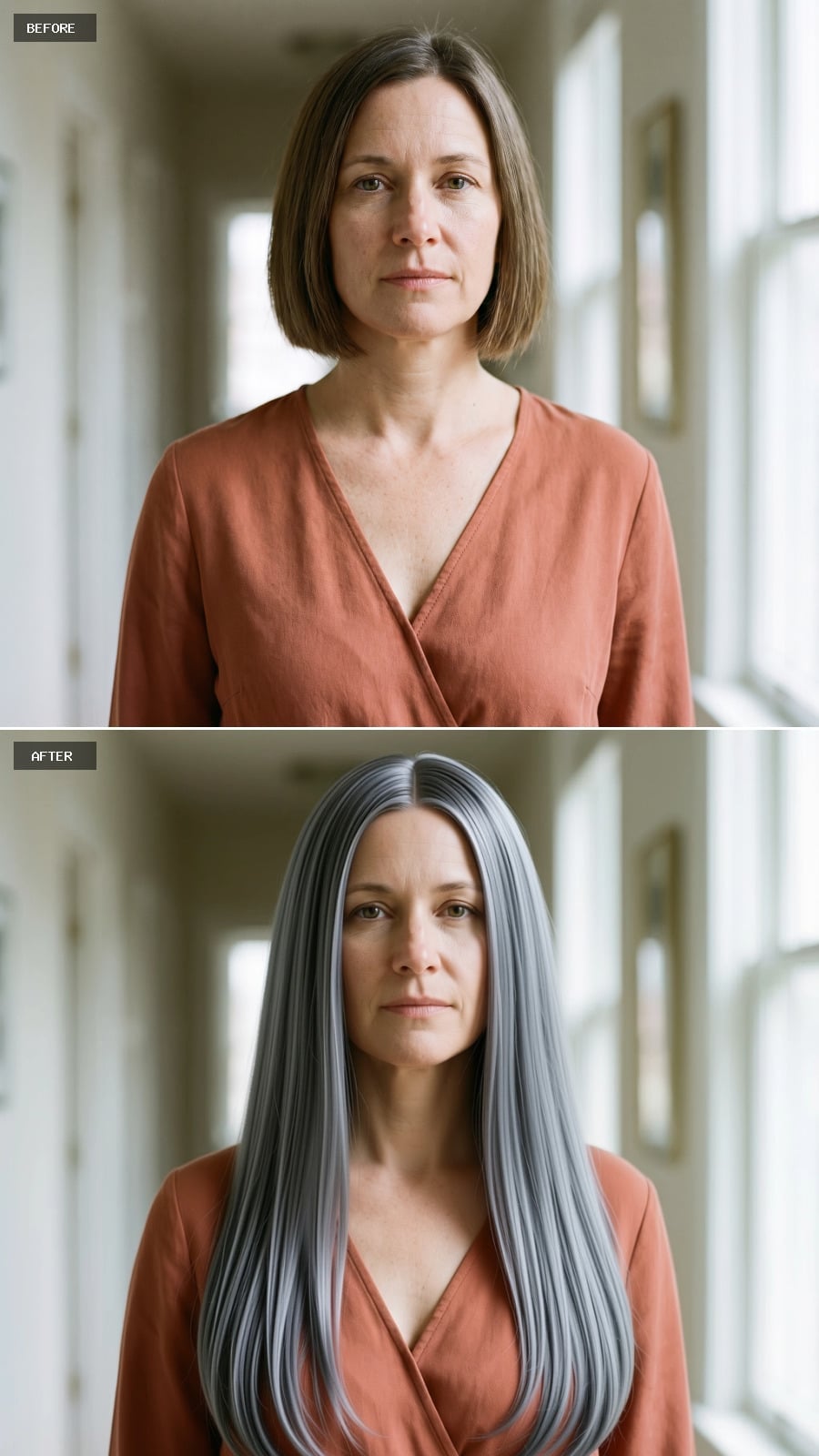
Very long, straight lengths fall well beyond the shoulders in a steel gray that shifts toward blue-silver in the light. A clean center part divides the hair into two smooth panels, emphasizing just how far this look has moved from the compact bob.
Darker charcoal strands break up the mid-lengths, while the ends appear cooler and brighter. Instead of relying on waves or layers for drama, this version gets its impact from sheer length and a striking metallic palette.
9. Longer, Darker Waves Change the Entire Proportion
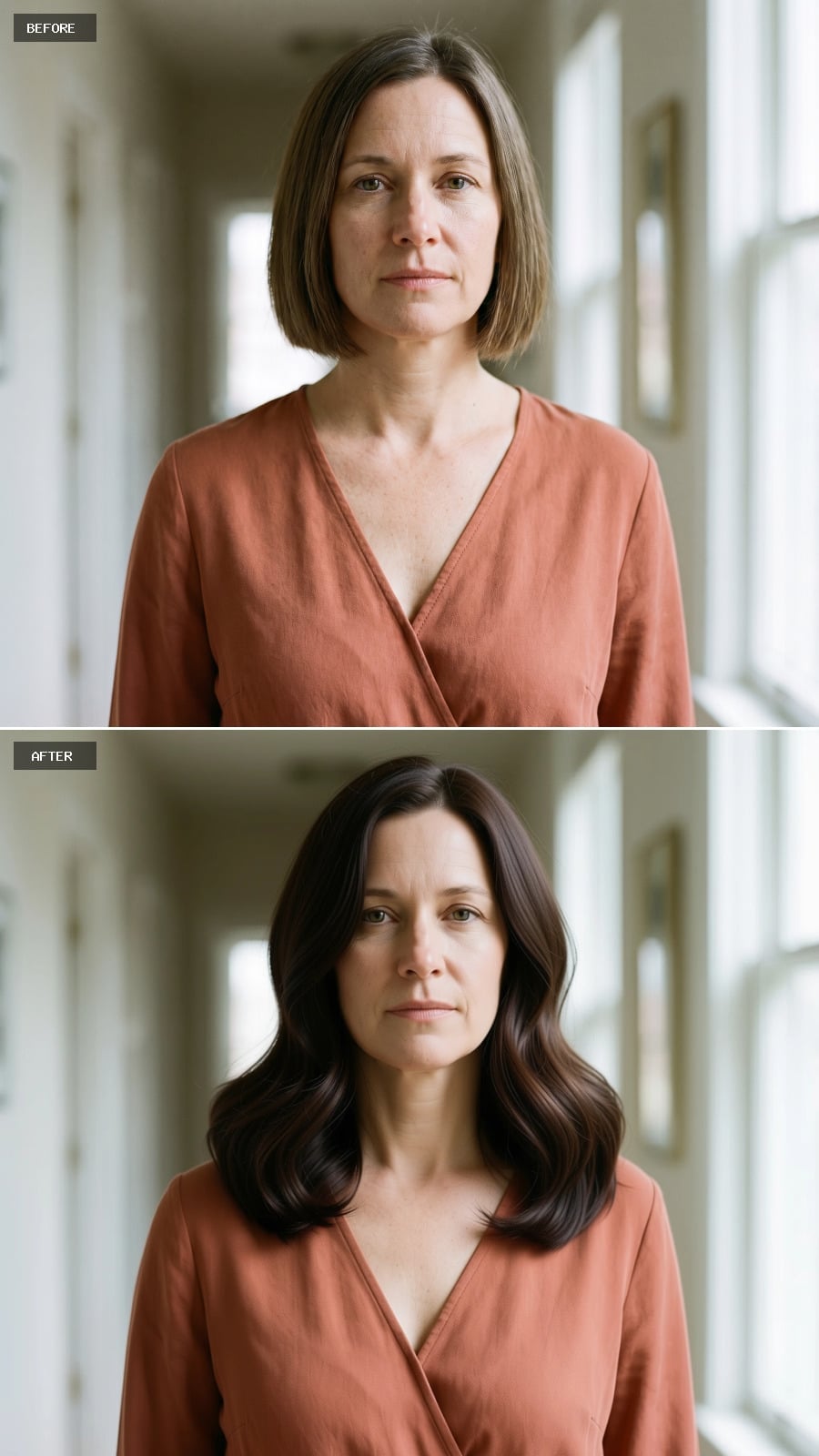
Rich dark brown hair with a faint burgundy undertone falls past the shoulders in broad, loose waves. The deeper color keeps the change from depending on highlights, while the added length shifts the scale of the entire look.
The old bob stopped almost parallel with the jaw. These waves continue downward before tapering outward, creating a longer visual line around the face and neckline. It’s a simple change in geometry with a surprisingly large effect.
8. Honey-Caramel Balayage Softens the Longer Waves
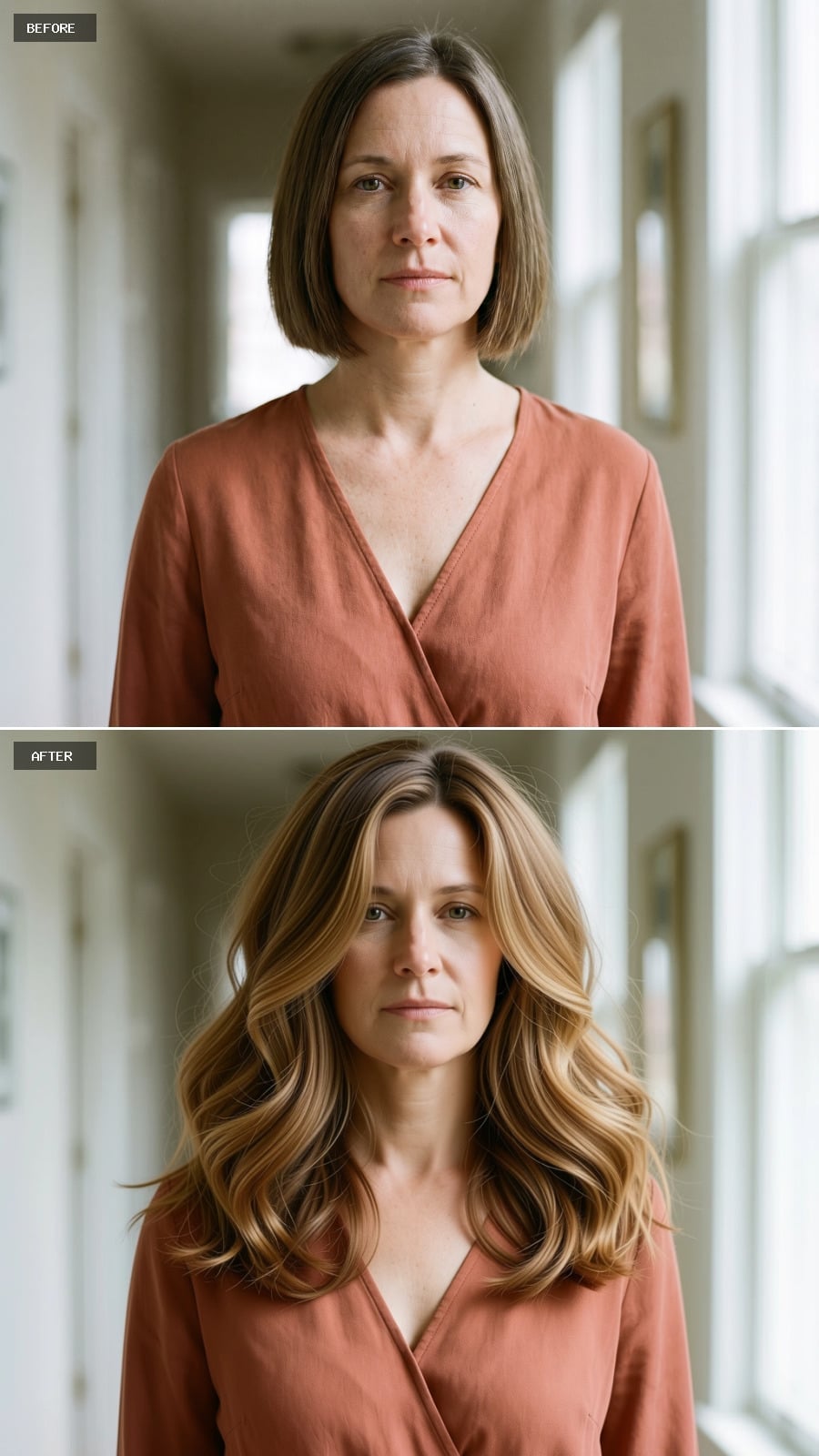
Honey and caramel tones move through lengths that land just past the collarbone, with waves that break at slightly different points rather than forming a row of identical curls. Brighter sections gather around the face while the deeper root preserves contrast.
The effect is softer than the higher-contrast blonde transformations elsewhere in the gallery. Nothing changes abruptly from root to tip; the color gradually becomes lighter as it travels downward.
Why the Root Shadow Works Here
Keeping the root darker anchors the balayage and gives the lighter lengths something to contrast against. It can also make new growth less conspicuous than a bright color taken directly to the scalp. On this cut, the gradual shift from dark to light reinforces the movement of the waves.
7. Lavender-Gray Waves Bring in an Unexpected Cool Tone
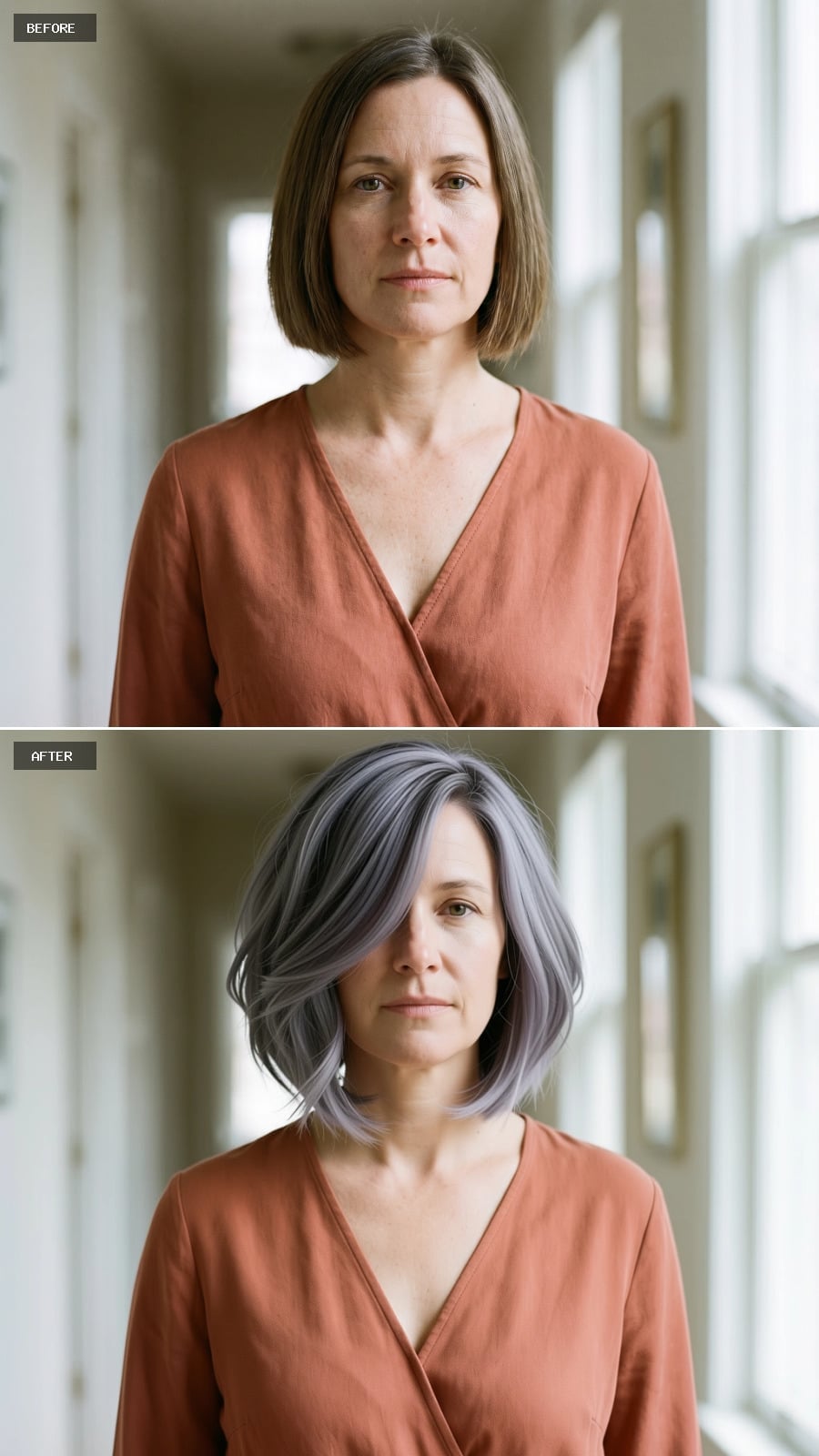
Cool lavender-gray carries just enough blue and violet to distinguish it from conventional silver. The waves fall beyond the jaw with more width and lift than the original bob, creating a soft halo of color around the face.
The brightest sections appear near the front, while deeper gray farther back gives the palette some restraint. Against the warm clothing, the cool hair tone becomes especially pronounced.
6. Gold-to-Cream Blonde With Big, Soft Waves
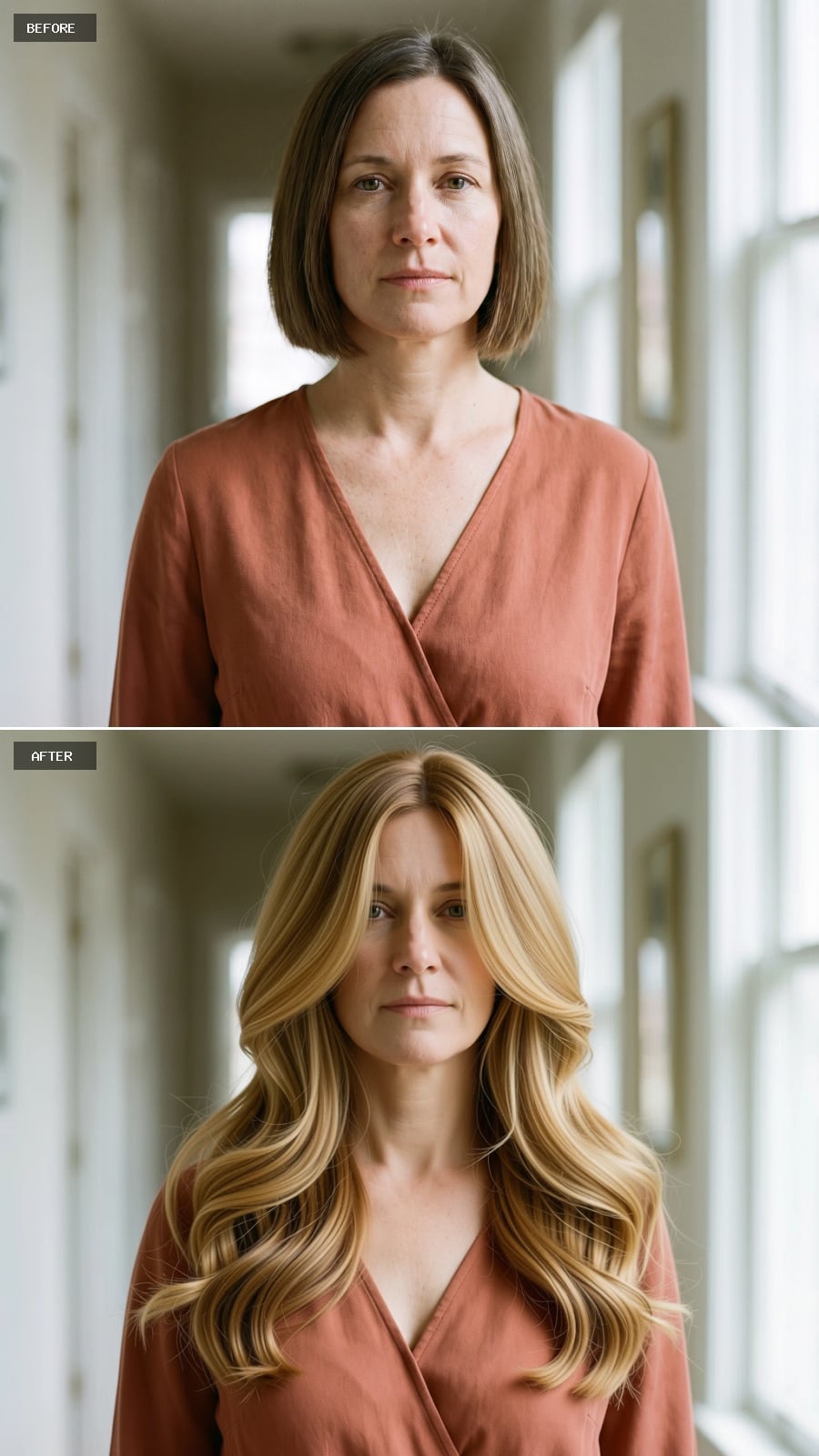
Gold-to-cream balayage runs through long waves that begin opening near the collarbone and continue past the shoulders. Lighter pieces around the face brighten the front, while deeper blonde underneath gives the style enough contrast to show off each bend in the hair.
The large waves create body without producing a hard, set finish. This one feels polished, but the variation in the curl pattern keeps it from looking too carefully arranged.
The appeal here isn’t just the lighter color. It’s the way the waves expose several shades of blonde at once.
5. Burgundy-to-Brown Waves With Bangs and a Stronger Focal Point
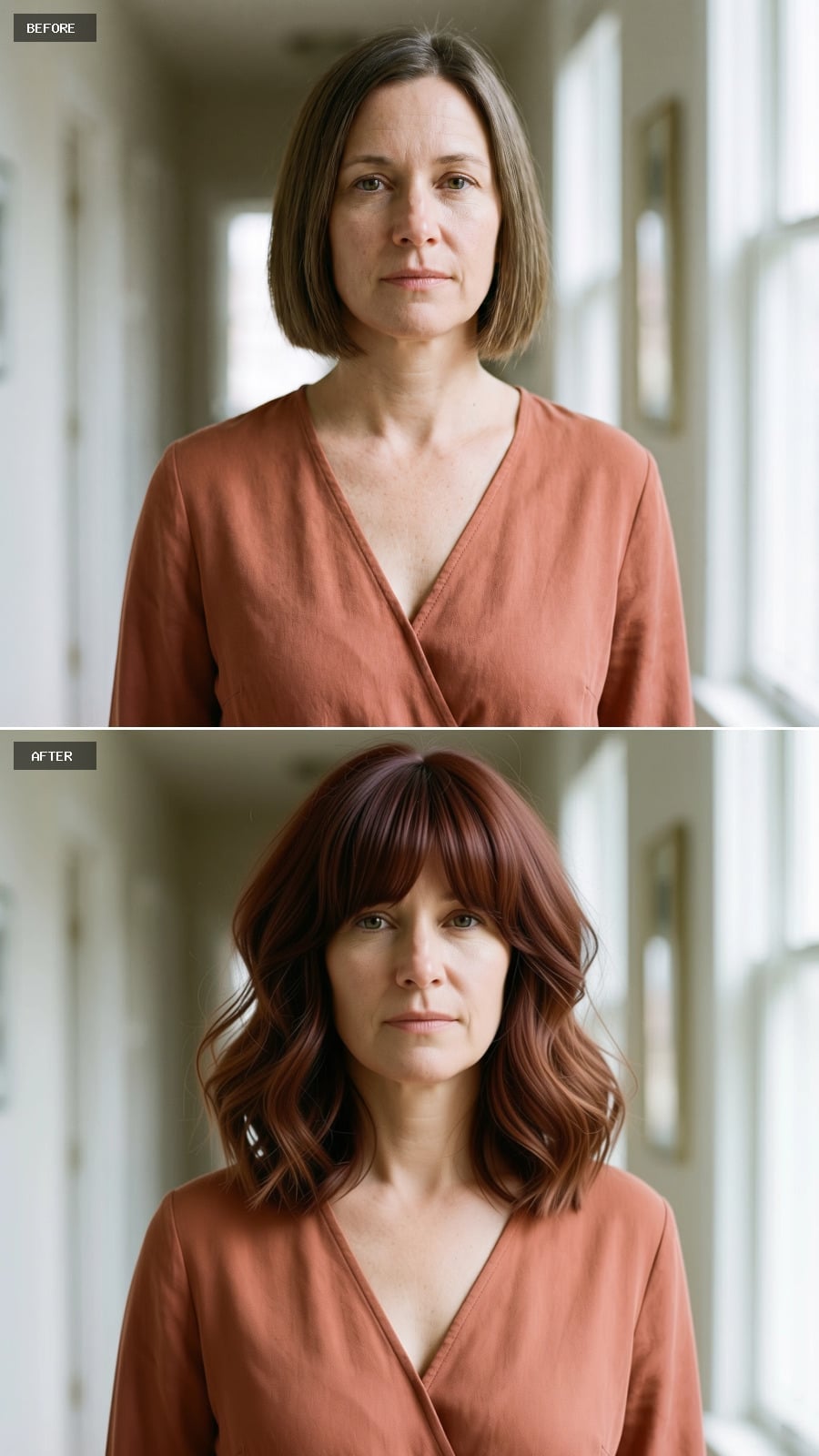
She ends up with a shoulder-length cut that carries far more movement than the original bob. The color begins as deep burgundy near the roots before shifting into warmer chestnut brown through the lengths, appearing redder or more plum depending on the light.
Bangs land just above the brows with a soft, slightly broken edge rather than a severe ruler-straight line. The waves sit somewhere between loose bends and defined curls, holding their shape while still looking relaxed.
The fringe gives the eye a clear point of entry around the upper face, so the volume along the sides reads as deliberate framing rather than simply additional width.
4. Cropped, Dark, and Textured With a Piece-y Finish
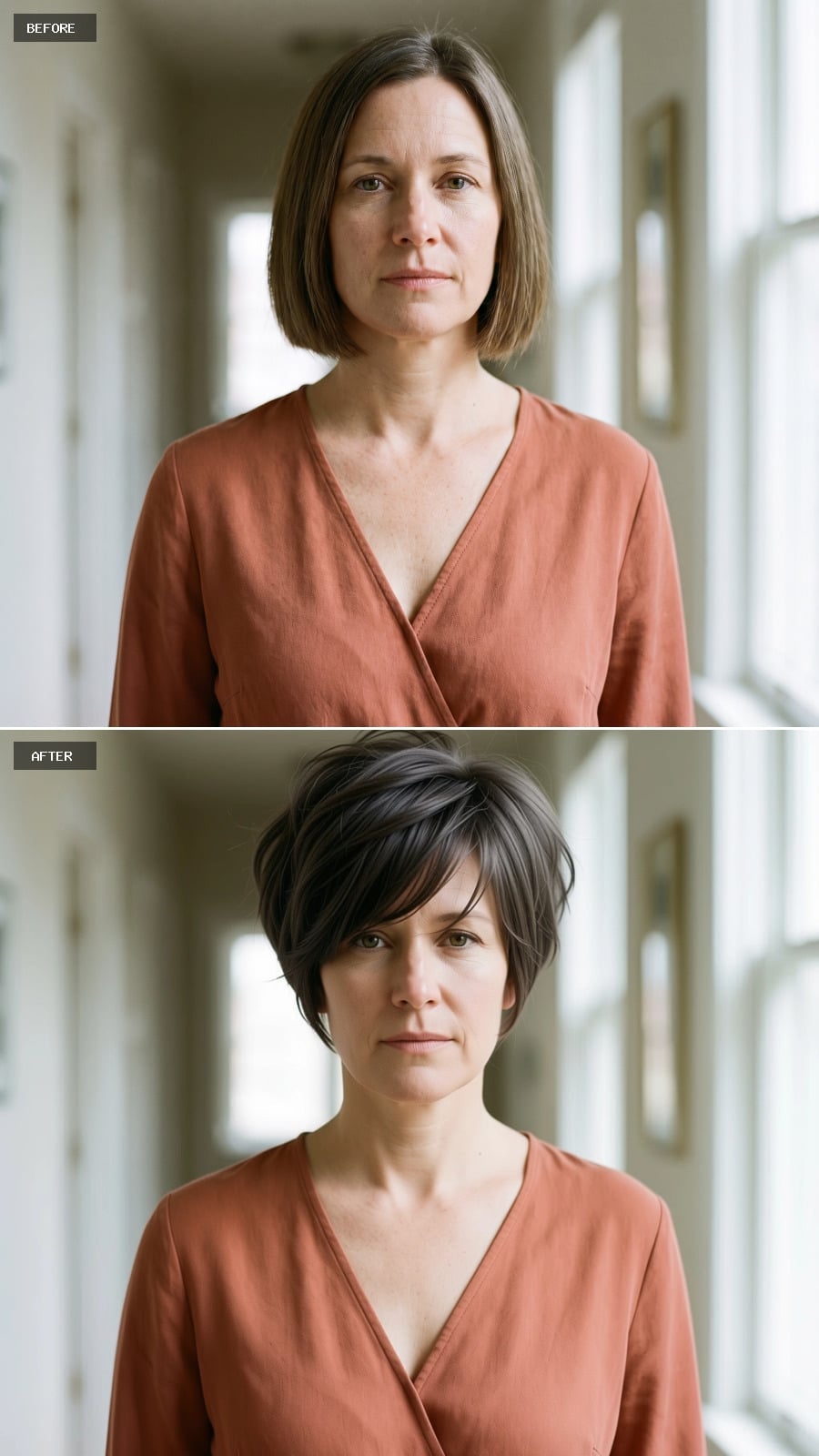
Soft charcoal and dark brown layers are cut close around the nape but left longer across the top, where separated pieces create texture and height. A side-swept fringe drops just beyond the brow, giving the front a softer edge.
Going shorter rather than longer makes this one stand out from most of the gallery. The shape is compact, but the uneven lengths prevent it from looking severe or overly groomed.
Styling Hack: A small amount of pomade or styling paste worked through dry hair with the fingertips can separate short layers without making them look stiff. Start with less product than you think you need; more can always be added.
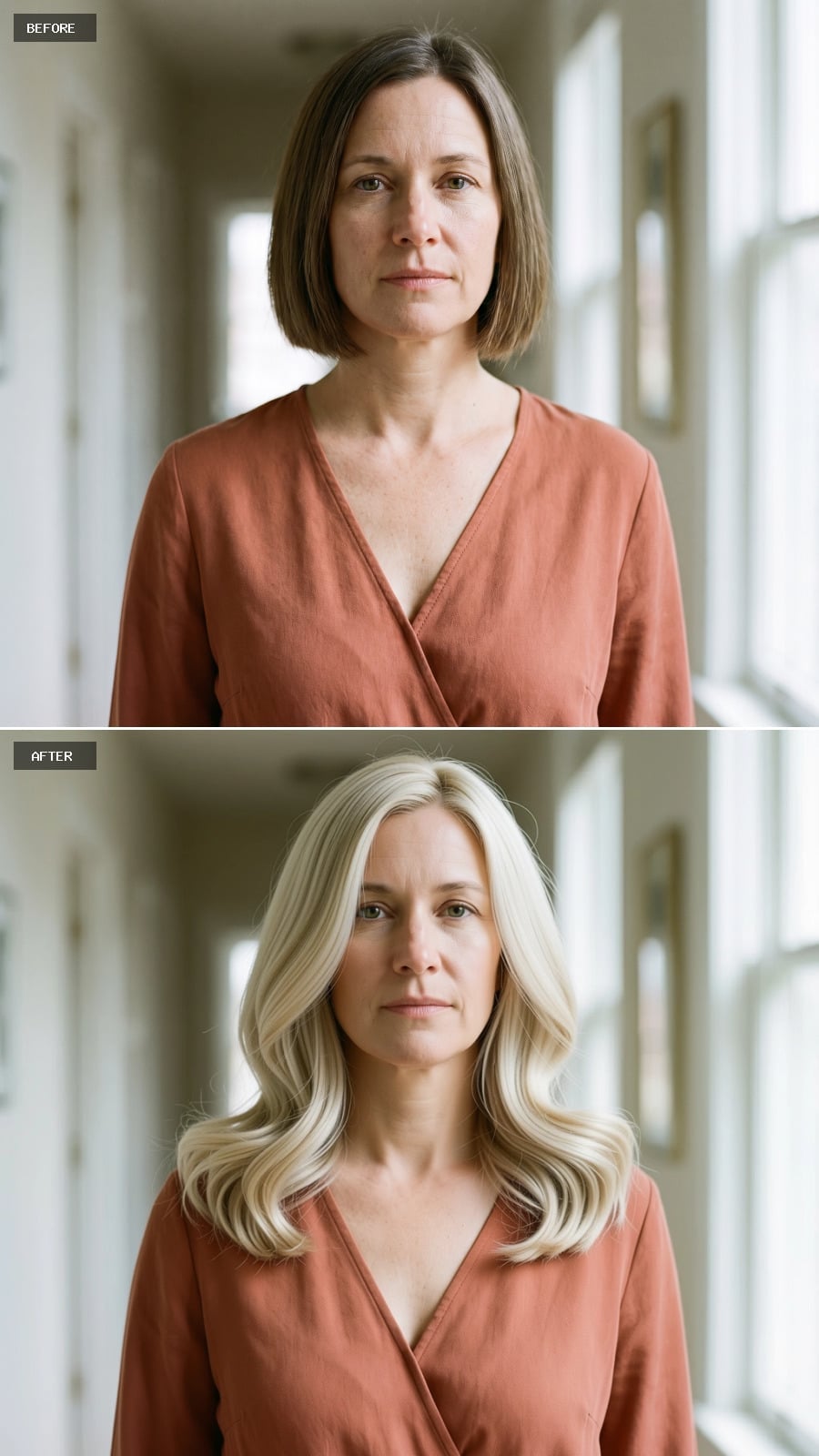
3. Platinum-Cream Waves With a Softer Root
❤️ Would you like to save this?
Platinum-to-cream waves fall just beyond the collarbone, with a little lift near the root helping the style keep its shape. The blonde is deliberately uneven: deeper color remains close to the part while brighter pieces run through the mid-lengths.
That variation keeps the light color from looking flat and gives the waves more definition. Compared with some of the warmer blondes earlier in the gallery, this one leans noticeably cooler and brighter.
2. Copper-Gold Waves With Auburn Depth at the Roots
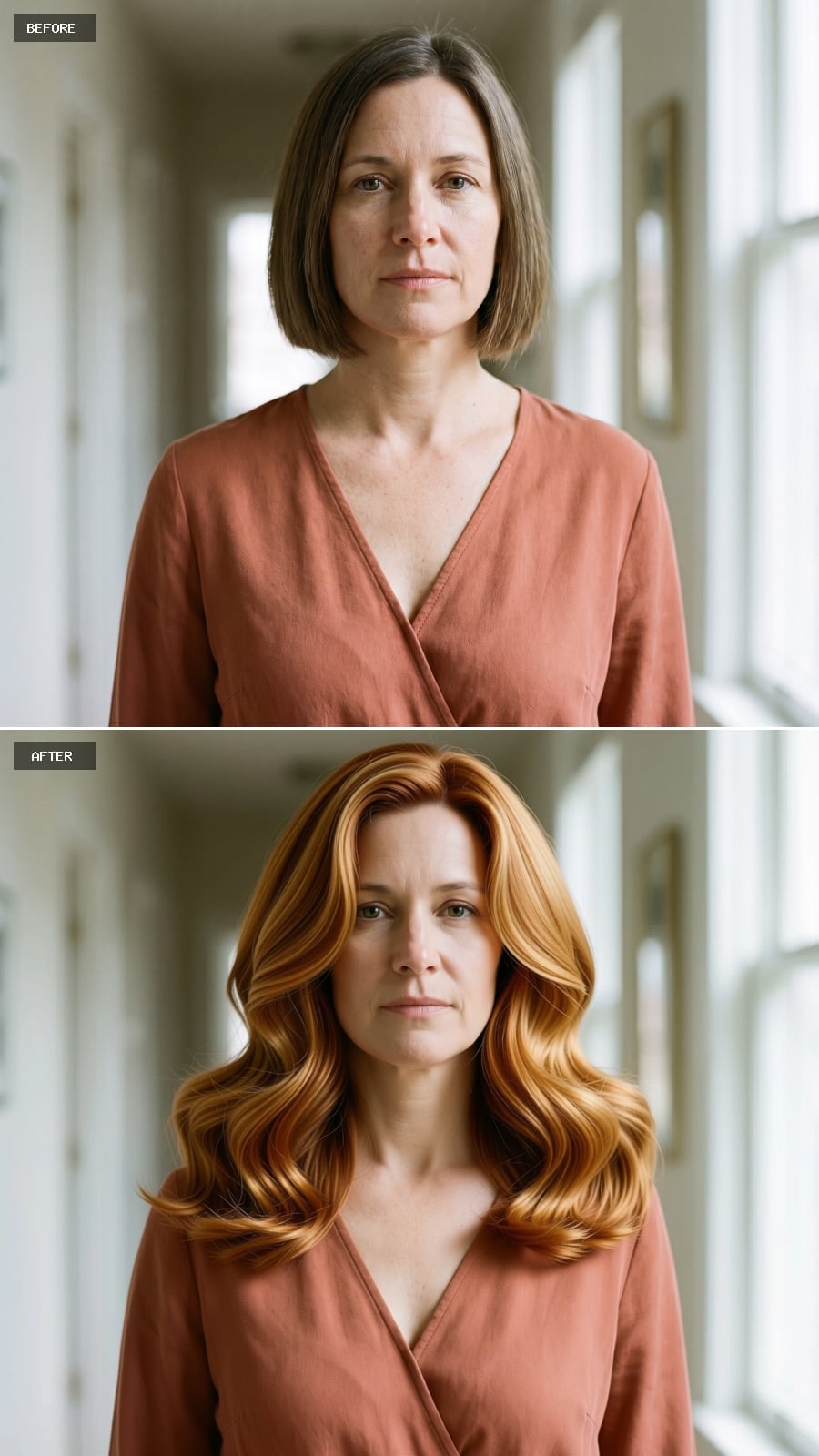
Long waves move through a copper-to-gold range, beginning with deeper auburn close to the roots and gradually brightening through the mid-lengths. The variation across the highlights becomes especially visible wherever the waves turn toward the light.
Unlike the richer red look earlier in the gallery, this version pushes much farther toward gold at the ends. The added length also spreads the color across a larger silhouette, making the gradation easier to see from top to bottom.
The structured waves give the style polish, but the roots remain soft enough that the finish doesn’t look stiff or overly set.
1. Dark, Swept, and Shorter Than Before
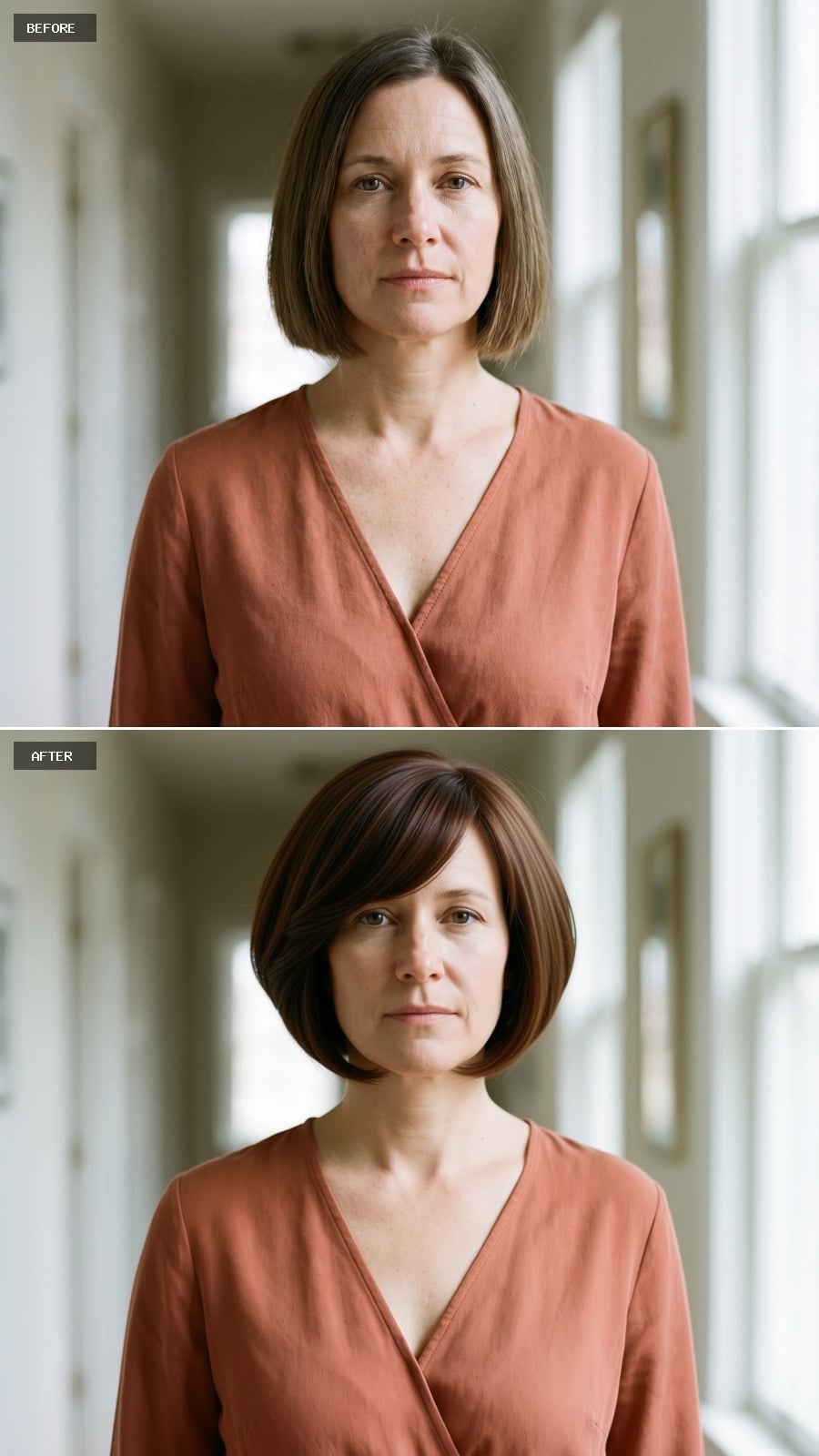
What the AI suggests here is a darker shade paired with a rounder, more compact shape. The color lands somewhere between espresso and dark chestnut, with enough warmth to keep the surface from looking completely flat.
The cut sits above the collarbone with the ends turned gently under, giving the silhouette a neat curved edge. Side-swept bangs stop just past the brow and break up the otherwise rounded shape.
After all the long waves, silver lengths, copper curls, and experimental color, ending with another bob feels almost like a return to the beginning. The difference is that this one looks chosen rather than simply left alone.