
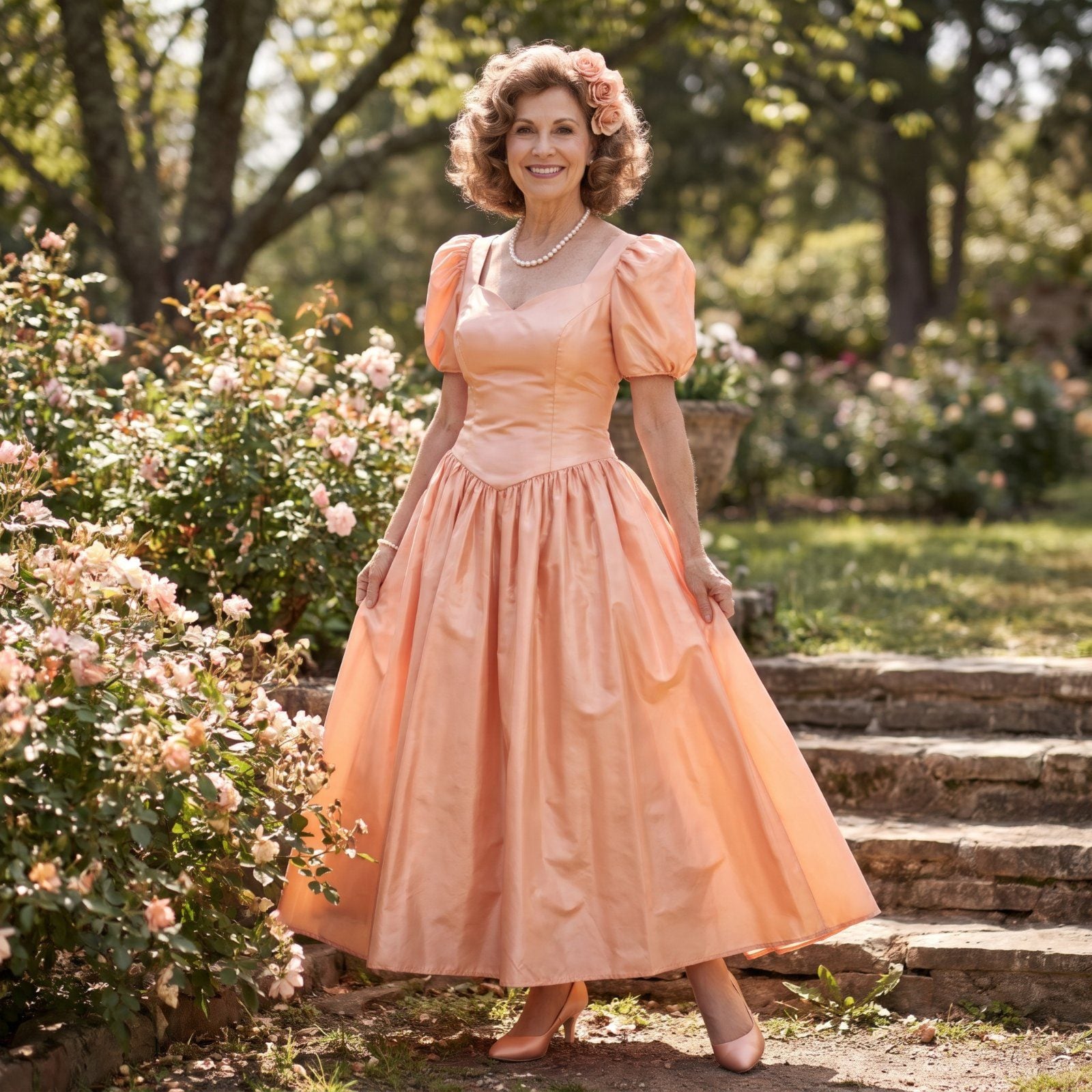
The hiss of a taffeta skirt moving down a church aisle. That specific sound. In 1985, bridesmaids rustled like gift wrap and wore it with pride, puffed sleeves grazing their earlobes and dyed-to-match shoes pinching their toes, and nobody questioned any of it. The look was loud, sculptural, built to photograph under flash. We pulled those silhouettes out of the attic and set each one beside what a wedding party wears now. The contrast is almost comic. And occasionally, it’s humbling.
FYI, thanks to AI imagery software, we’re able to create very specific fashion and hairstyle examples to illustrate the points being made. In some cases, imagery is exaggerated to hammer home the point. Also, assume links that take you off the site are affiliate links such as links to Amazon. this means we may earn a commission if you buy something.
26. Puffed Taffeta Sleeves vs. Sleek Fitted Sleeves
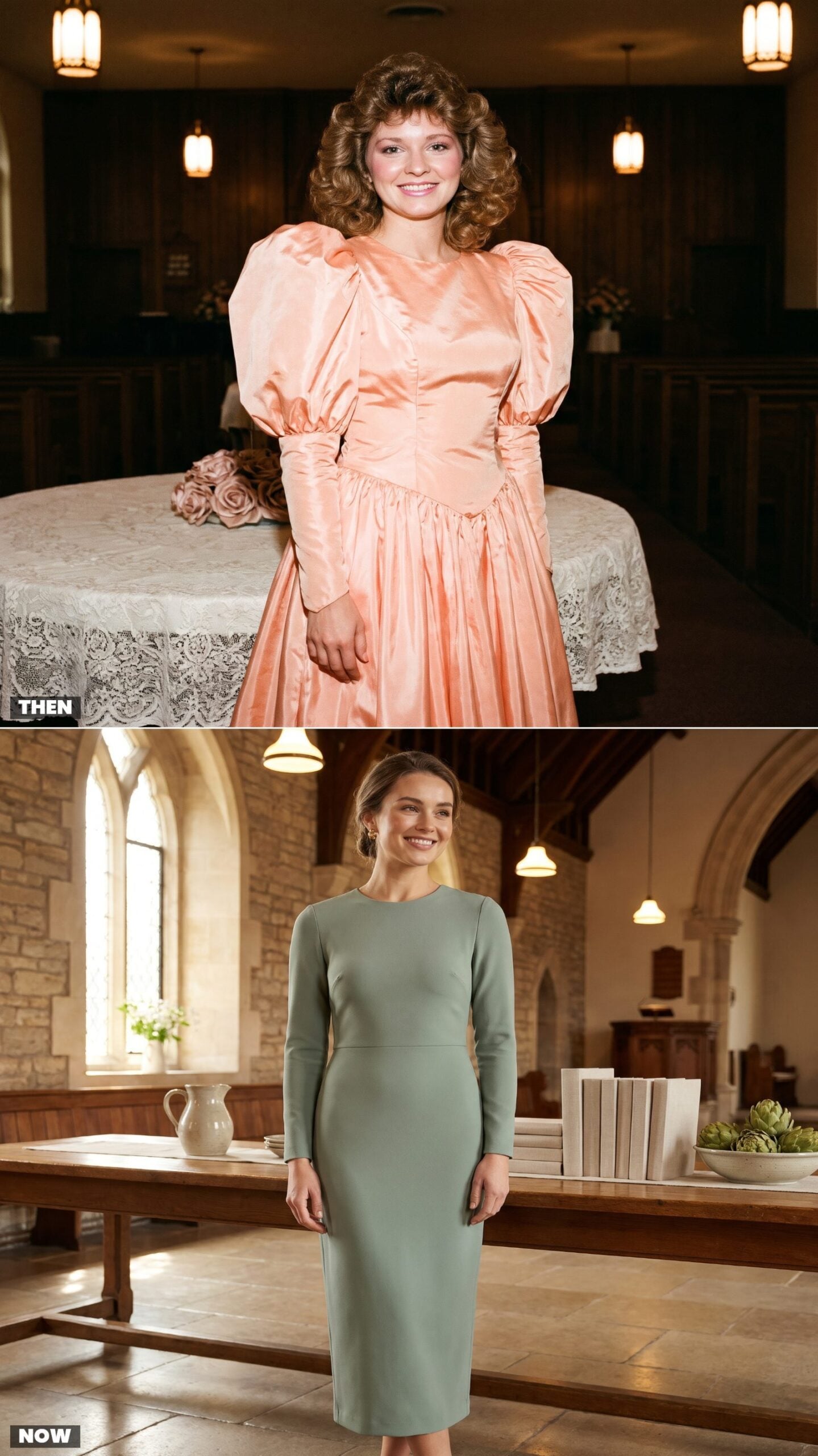
Those 1985 sleeves had their own zip code. Gathered, lined, and pumped full of air, they turned every bridesmaid into a linebacker in taffeta — pure drama, maximum volume up top to balance the big skirt below.
The modern fitted sleeve does the opposite work. A slim crepe sleeve tracing the arm reads as deliberate restraint, and that restraint is what makes it feel expensive. It’s all proportion. When the shoulder stops shouting, the whole figure lengthens.
25. Matching Picture Hats vs. Minimal Hair Accessories
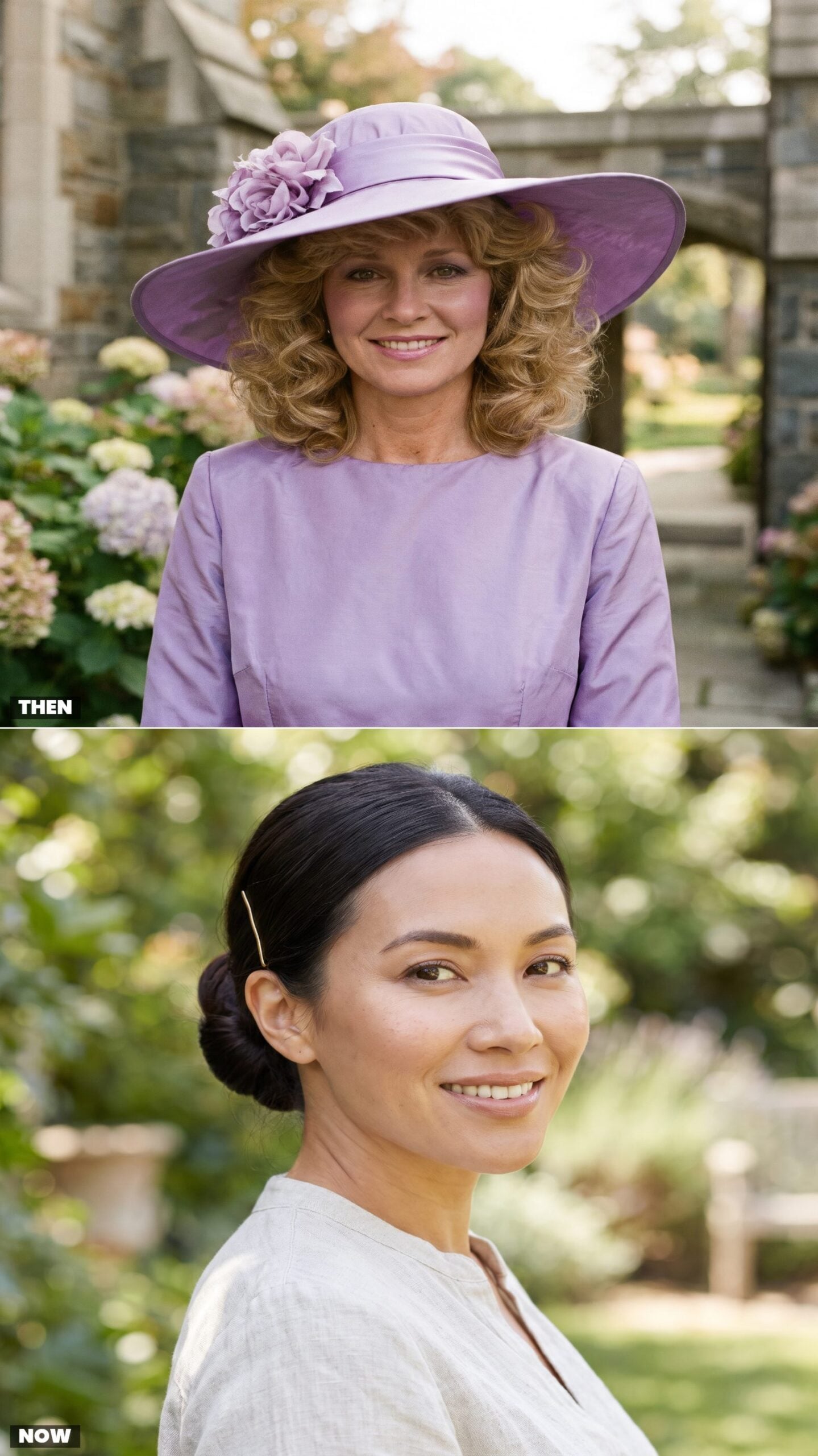
Someone in 1985 decided bridesmaids should wear a matching sun hat indoors, and for a decade nobody argued. The brim ate the face, threw a shadow over the eyes, and had to be clutched during every gust — commitment to a theme at the expense of actually seeing anyone.
Now the face wins. A single gold pin or a few scattered pearls keep the hair intentional without hiding the person, and that quiet confidence photographs far better than a brim ever did.
Asked which hair accessory they would buy, our readers split almost evenly between a clip and a headband, so either one is a fair choice.
24. Big Back Bows vs. Sculptural Open Backs
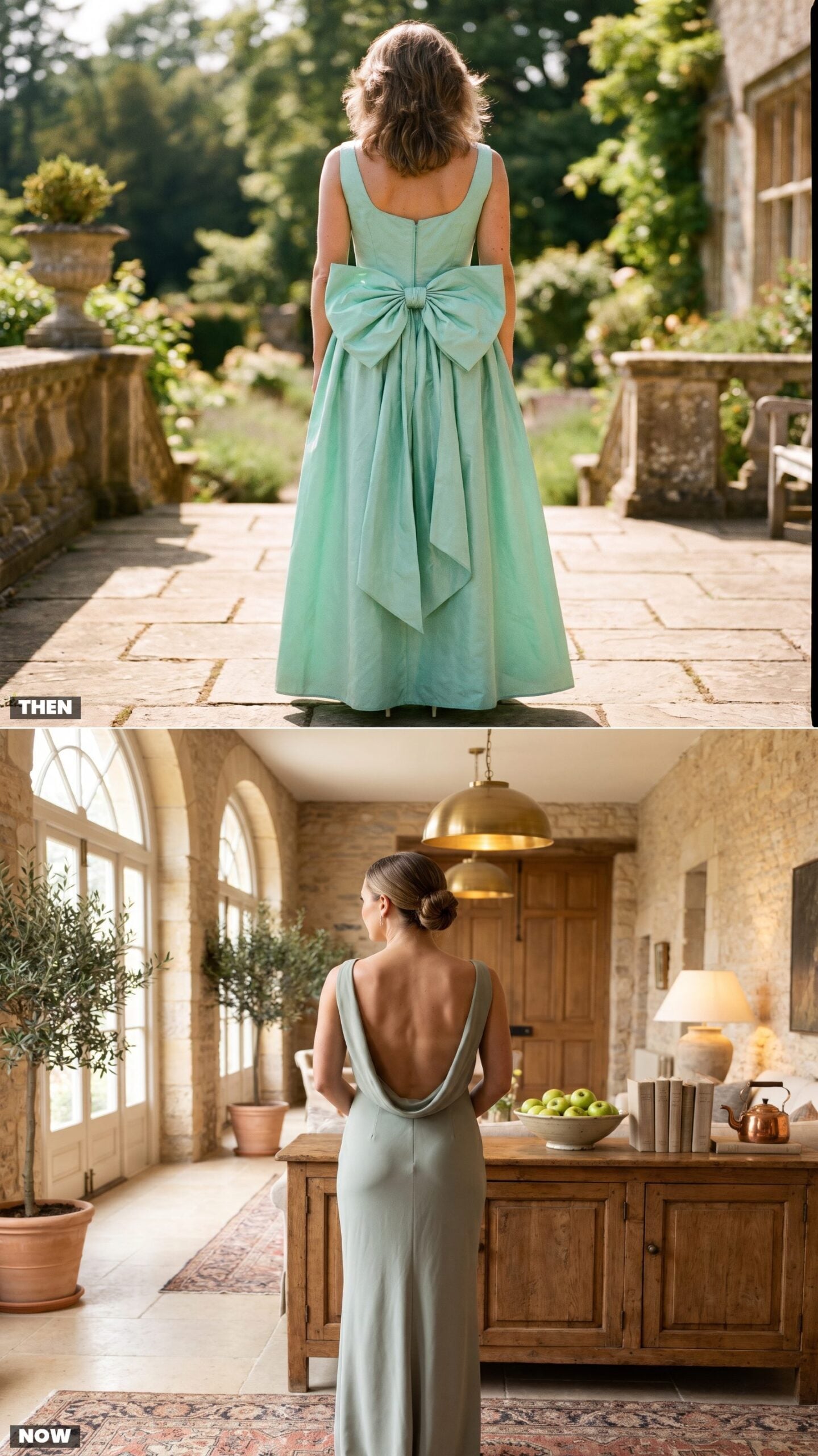
The 1985 back bow was the finale — a taffeta explosion planted at the base of the spine so the walk back up the aisle came with its own closing credits. Sitting through dinner in one took real willpower.
The sculptural open back gets the same attention the opposite way. A clean cowl or a curved cut-out lets skin and drape do the talking. The surprise is the absence: negative space where fabric used to pile up, modern precisely because it’s quiet.
Skin is the new embellishment. It needs no ironing.
23. Heavy Crinolines vs. Unlined Bias-Cut Skirts
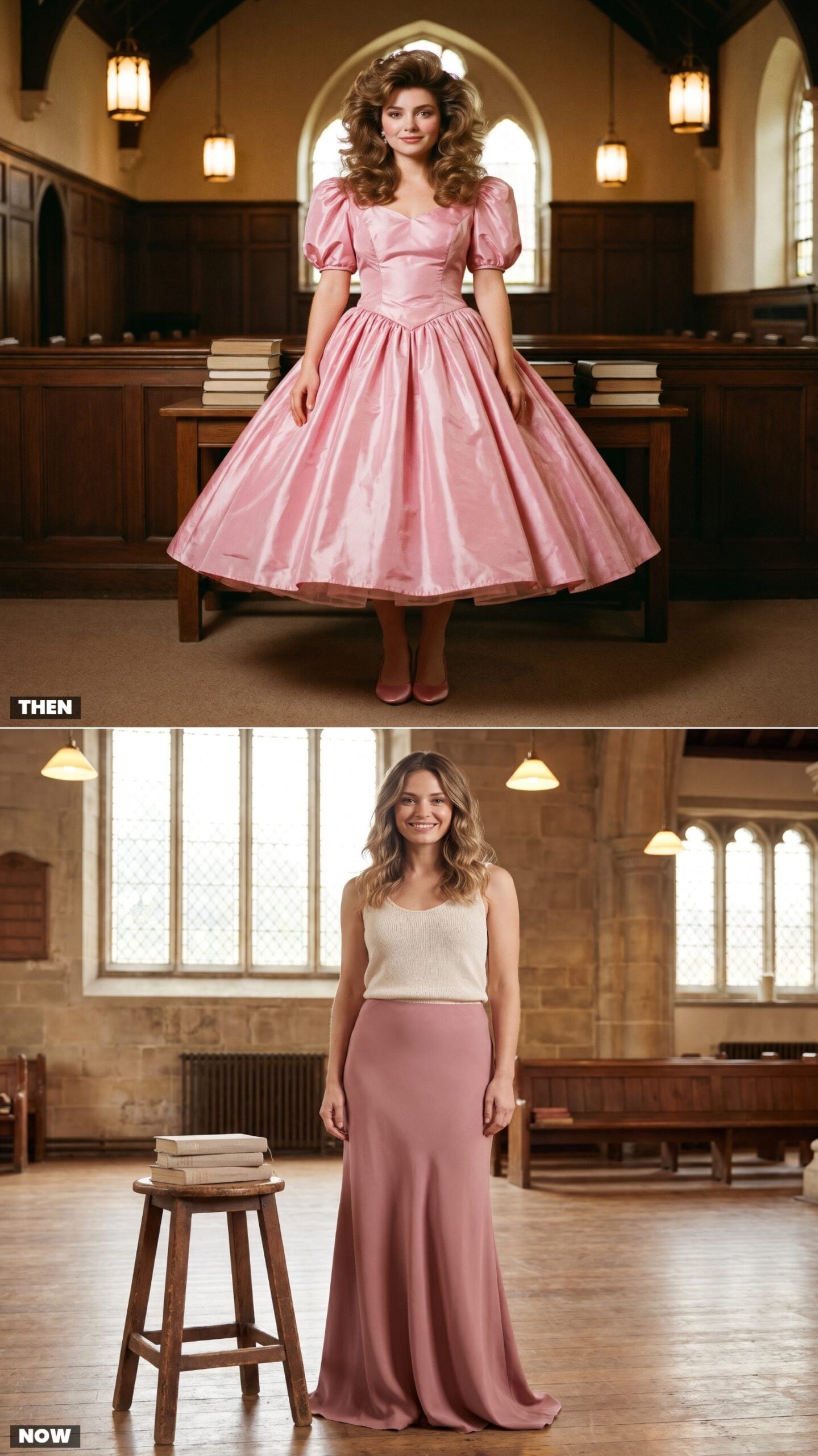
A crinoline in 1985 was a cage you wore to be festive. All that netted volume gave the skirt a dome, kept you three feet from every hug, and turned car doors into a strategic problem.
The bias cut threw out the scaffolding. Fabric cut on the diagonal falls in soft folds and moves with the body instead of fighting it — drape over structure. That’s the whole difference between a dress that stands on its own and one that follows you.
As one apparel manufacturer puts it, “Woven fabric stretches and drapes most in this direction, so a bias-cut garment clings to the body and moves with it rather than hanging stiff and square.”
22. Ruffled High Necks vs. Clean Square Necklines
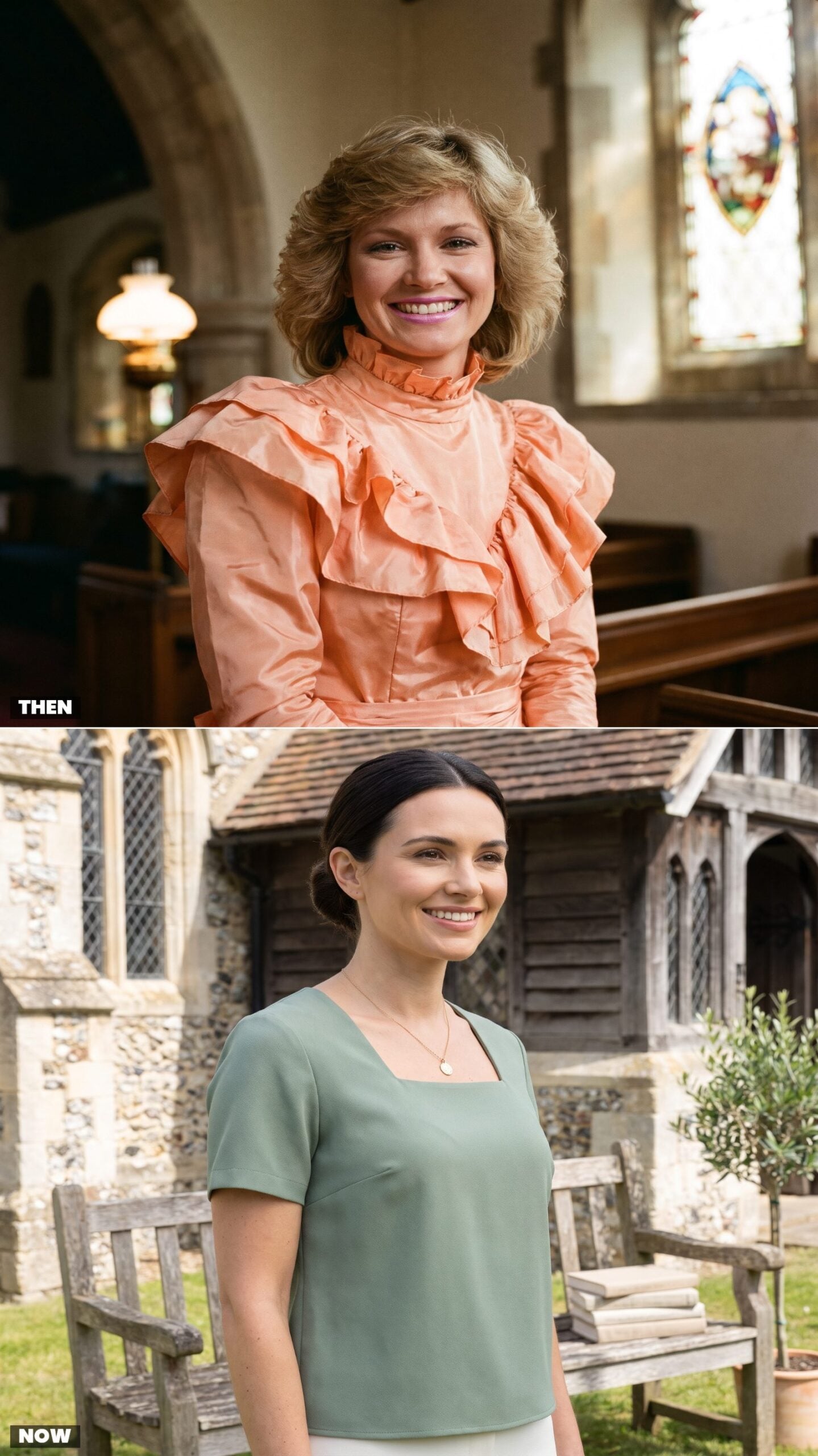
The ruffled high neck wrapped the throat in frills right up to the chin — a lace bib for the clavicle. Fussy, warm, and faintly flustered in every photo.
A square neckline does the reverse with four straight lines. It frames the collarbones, opens the chest, gives the face room to breathe. What sells it is the flatness: no gathering, no ruffle, just a confident geometric edge.
21. Lace Bib Bodices vs. Illusion-Lace Insets
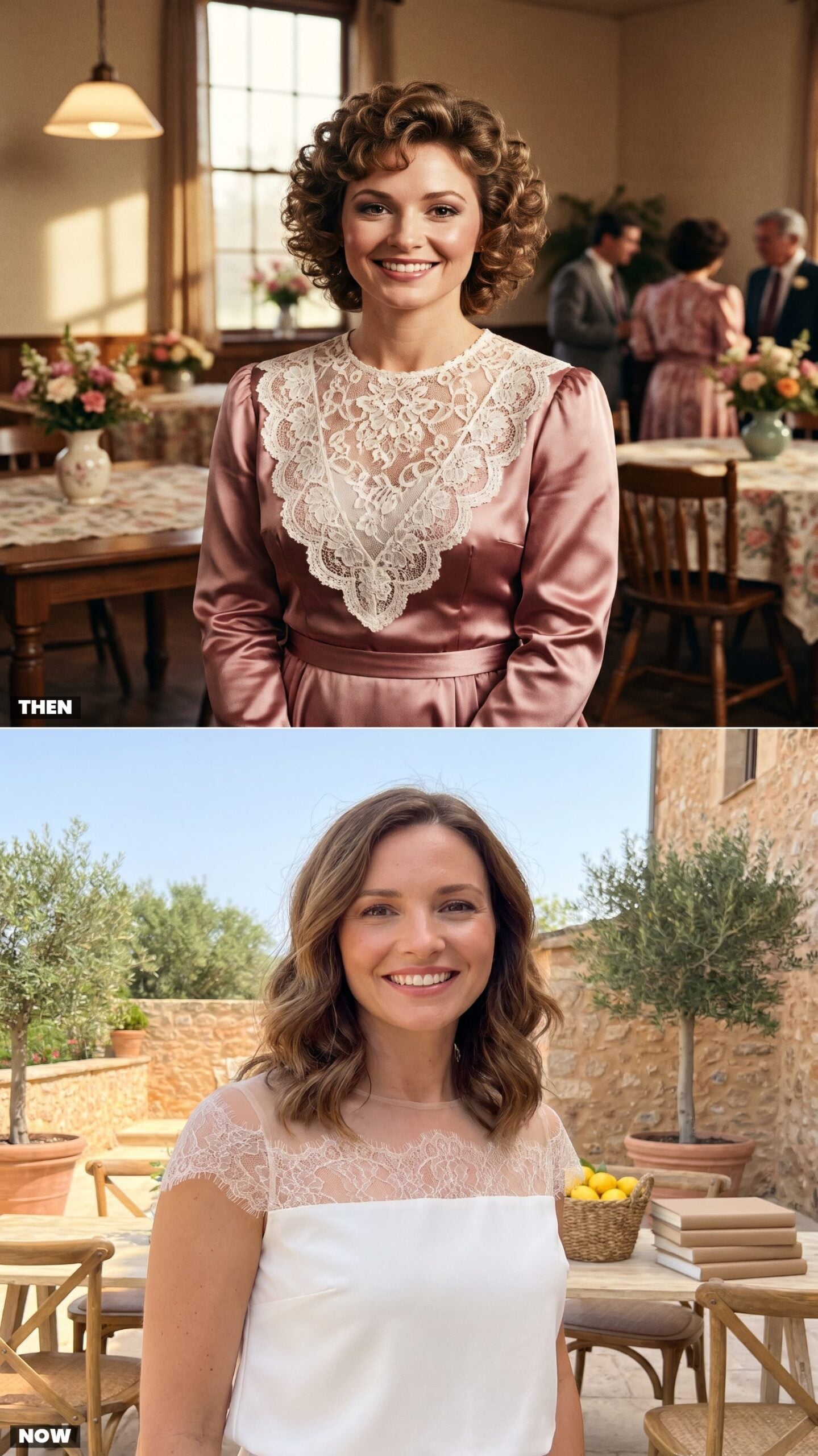
The lace bib bodice laid a thick doily across the chest and shoulders, heavy enough to stand up on its own. It covered a lot and read as formal from clear across the parking lot.
Illusion lace rethinks the whole idea. Fine lace floats on nude tulle so it reads as skin with a pattern on it — delicate instead of armored. Sheer against matte crepe gives it depth without weight.
20. Dropped Basque Waists vs. Natural Waist Seams
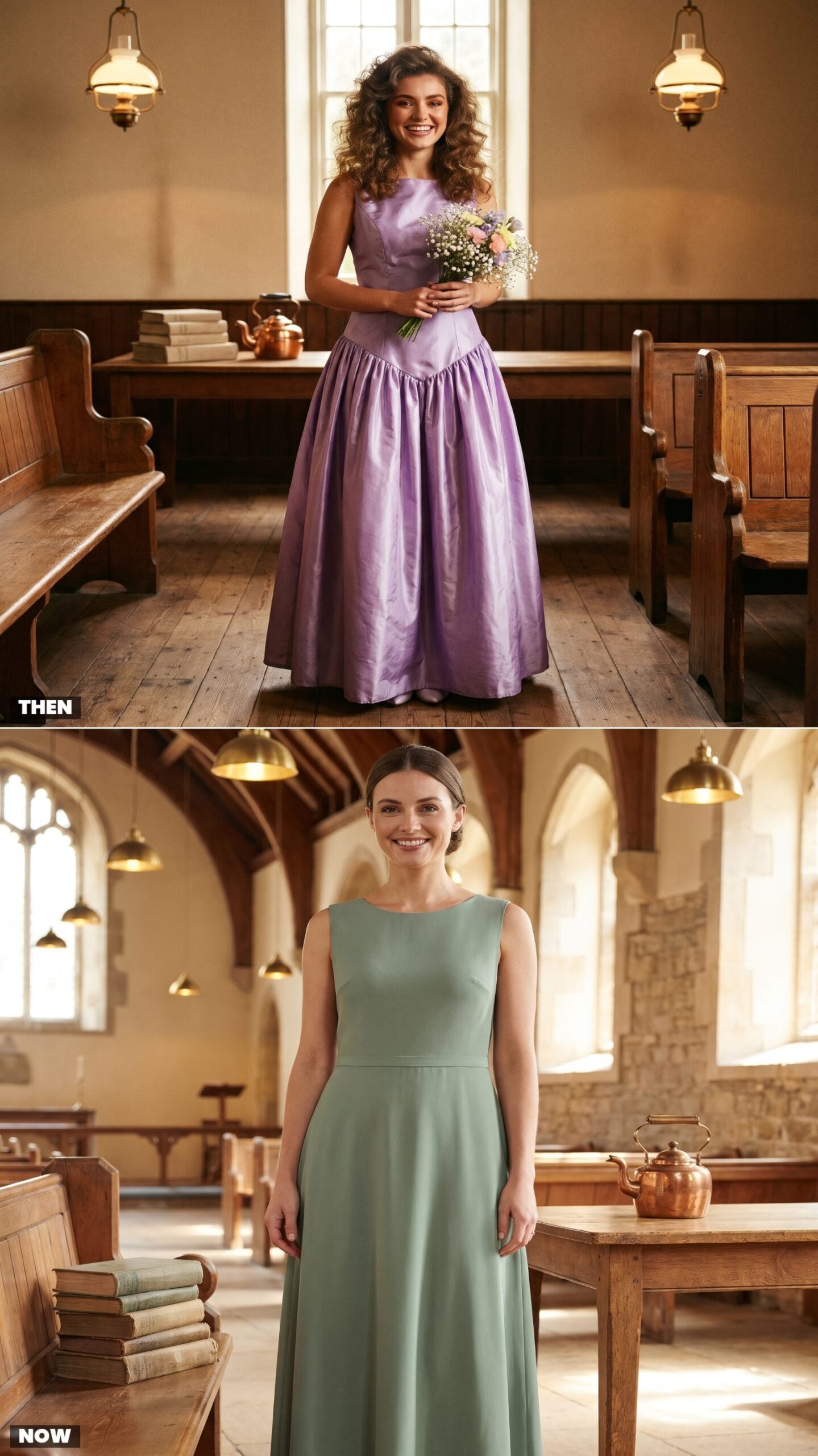
The dropped basque waist pushed the seam down into a long V past the hips. Regal on a portrait. Leg-shortening on everyone else. A silhouette borrowed from Renaissance paintings and applied, somewhat optimistically, to taffeta.
The natural waist seam just sits where the waist actually is. That one honest placement lengthens the leg and defines the middle without a single corset bone — and it’s why the modern version reads taller.
19. Shoulder-Pad Structure vs. Softly Tailored Bodices
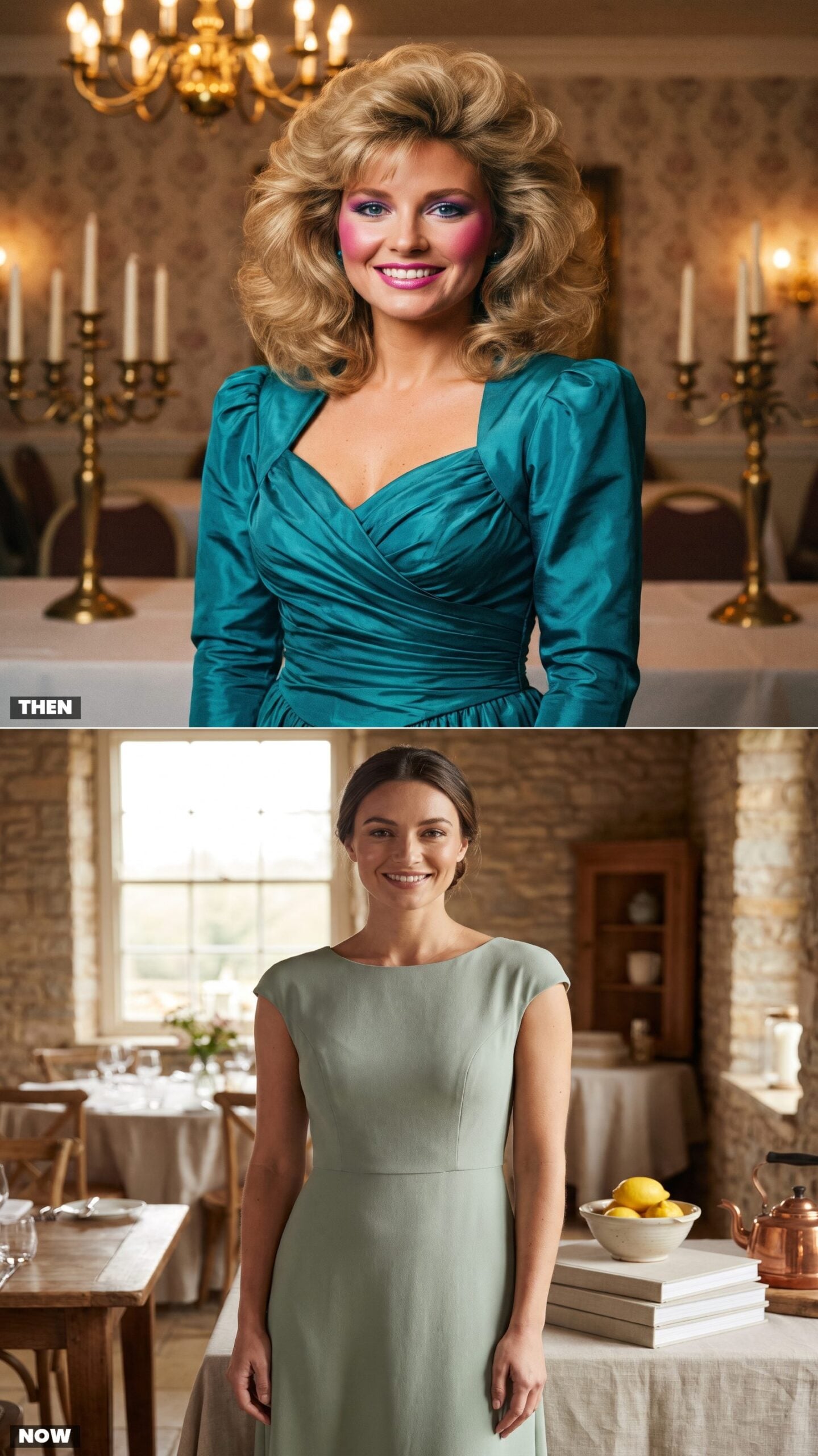
Shoulder pads turned the 1985 bridesmaid into a sharp-cornered power suit with a skirt attached. The square shoulder broadened the whole upper body on purpose — wide shoulders meant authority back then.
The softly tailored bodice holds just enough structure to keep its shape while following the natural shoulder. Gentler, current, and happy to let the body be the body.
18. Shiny Pastel Taffeta vs. Matte Crepe
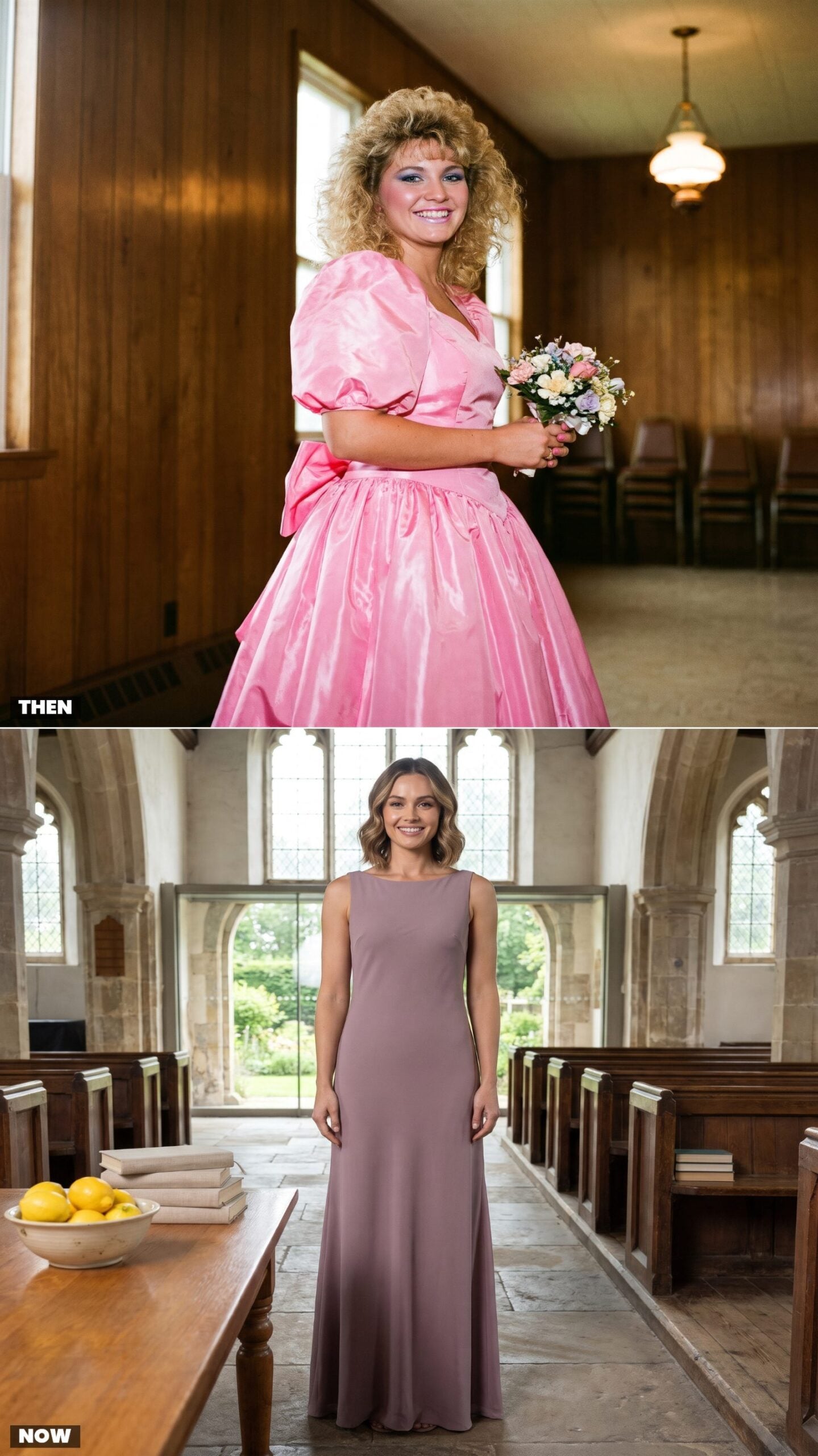
Shiny pastel taffeta was built for the on-camera flash. It bounced light, photographed candy-bright, and in person looked like a wrapped gift under fluorescents. Every crease caught a highlight.
Matte crepe absorbs light instead of throwing it back. The color stays rich, the surface stays calm, and the fabric drapes like water. That’s the reason the whole modern palette slid toward muted, dusty tones — they read grown-up, and they never glare in a photo.
Comparing the two fabrics for brides, one bridal boutique notes that crepe photographs with a softer finish: “Since it does not reflect as much light as satin, the focus stays on shape, tailoring, and the emotion in the image.”
What Our Readers Say
- When we asked ThreadCurve readers how they like to shop, they split almost exactly down the middle between more variety and fewer, better pieces.
From ThreadCurve reader polls and votes.
17. Tea-Length Ruffles vs. Modern Midi Slip Dresses
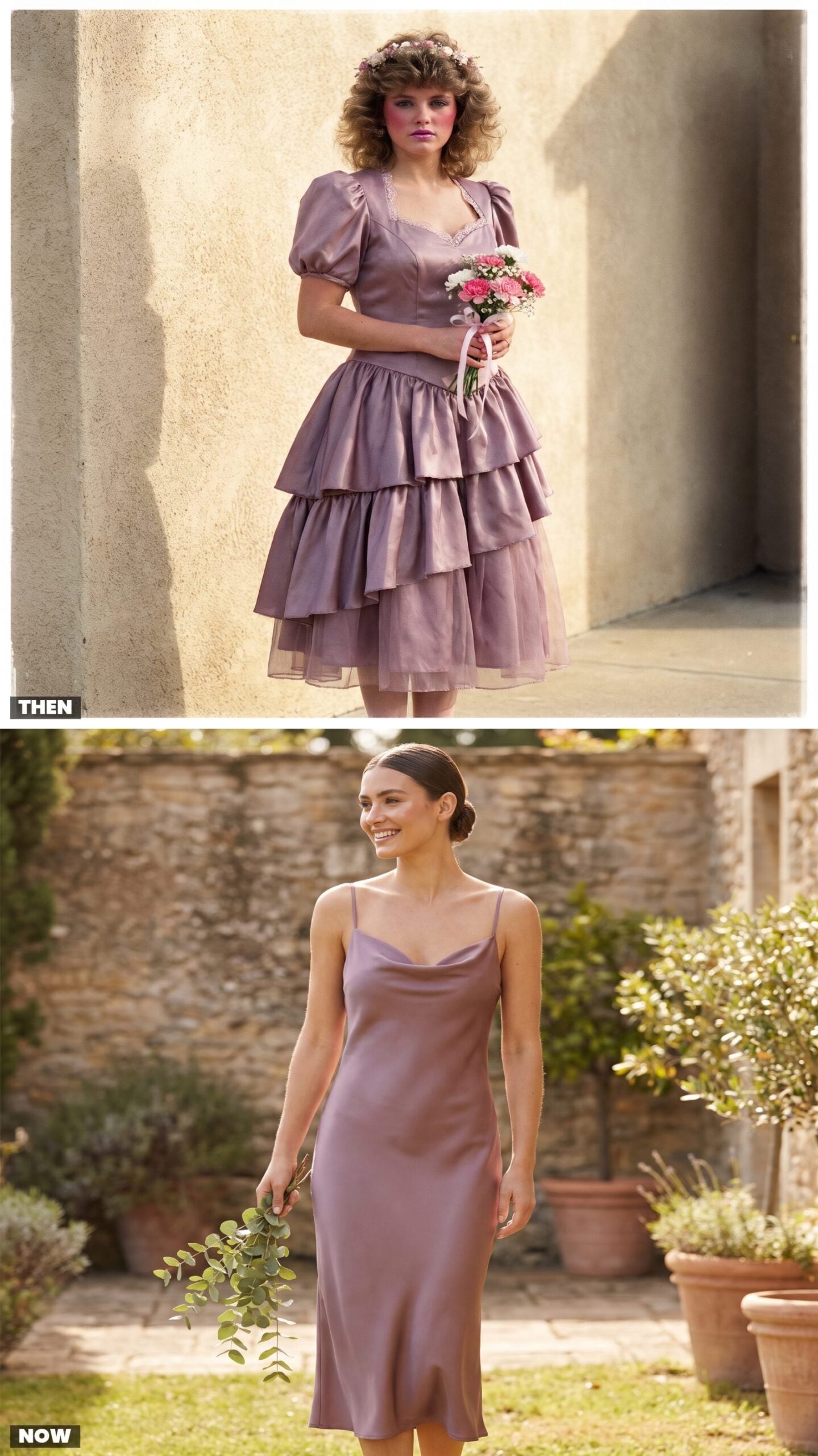
The 1985 ruffle wasn’t shy. Tiers stacked on tiers, each one standing slightly away from the body thanks to that scratchy crinoline nobody admitted to wearing, and the whole thing read festive, formal, and a little bit wedding-cake. Volume was the message.
The modern slip does the opposite. One clean bias-cut line, fluid mauve silk, no understructure fighting the body — the drape is the drama now. Where the old dress announced itself from across the parking lot, the slip whispers and still owns the room.
16. Floral Chintz Gowns vs. Watercolor Botanical Prints
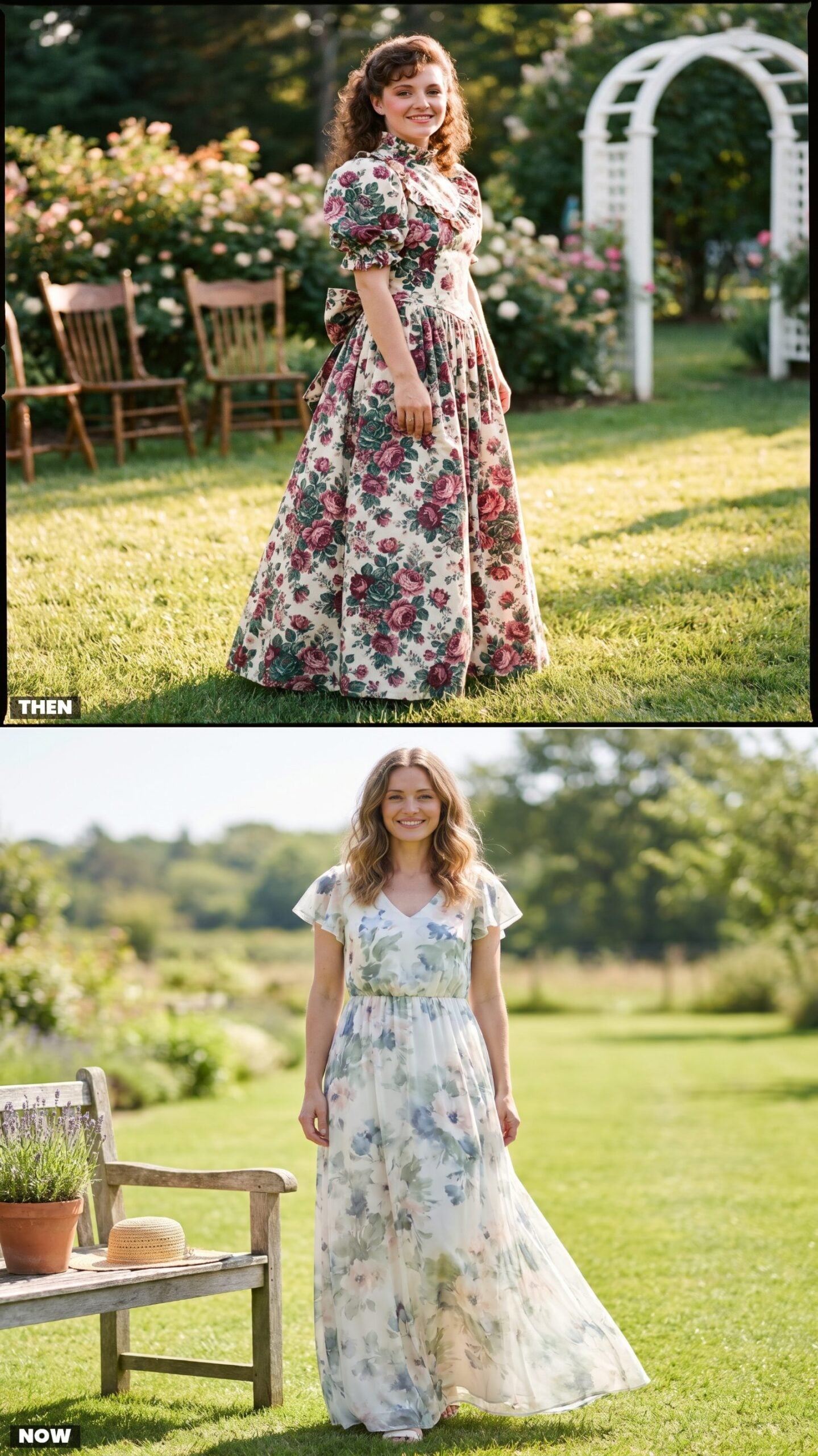
Chintz in 1985 meant commitment. Cabbage roses the size of a fist, printed edge to edge on glossy polished cotton, usually paired with a sash bow big enough to have its own zip code. The florals shouted, filling every inch and leaving no quiet.
Now the print breathes. Watercolor botanicals bleed softly into each other on weightless chiffon — more suggestion than declaration. The painterly wash reads romantic instead of busy, and the airy fabric moves with the garden breeze rather than standing against it.
15. Dusty Rose Uniformity vs. Tonal Pink Mixes
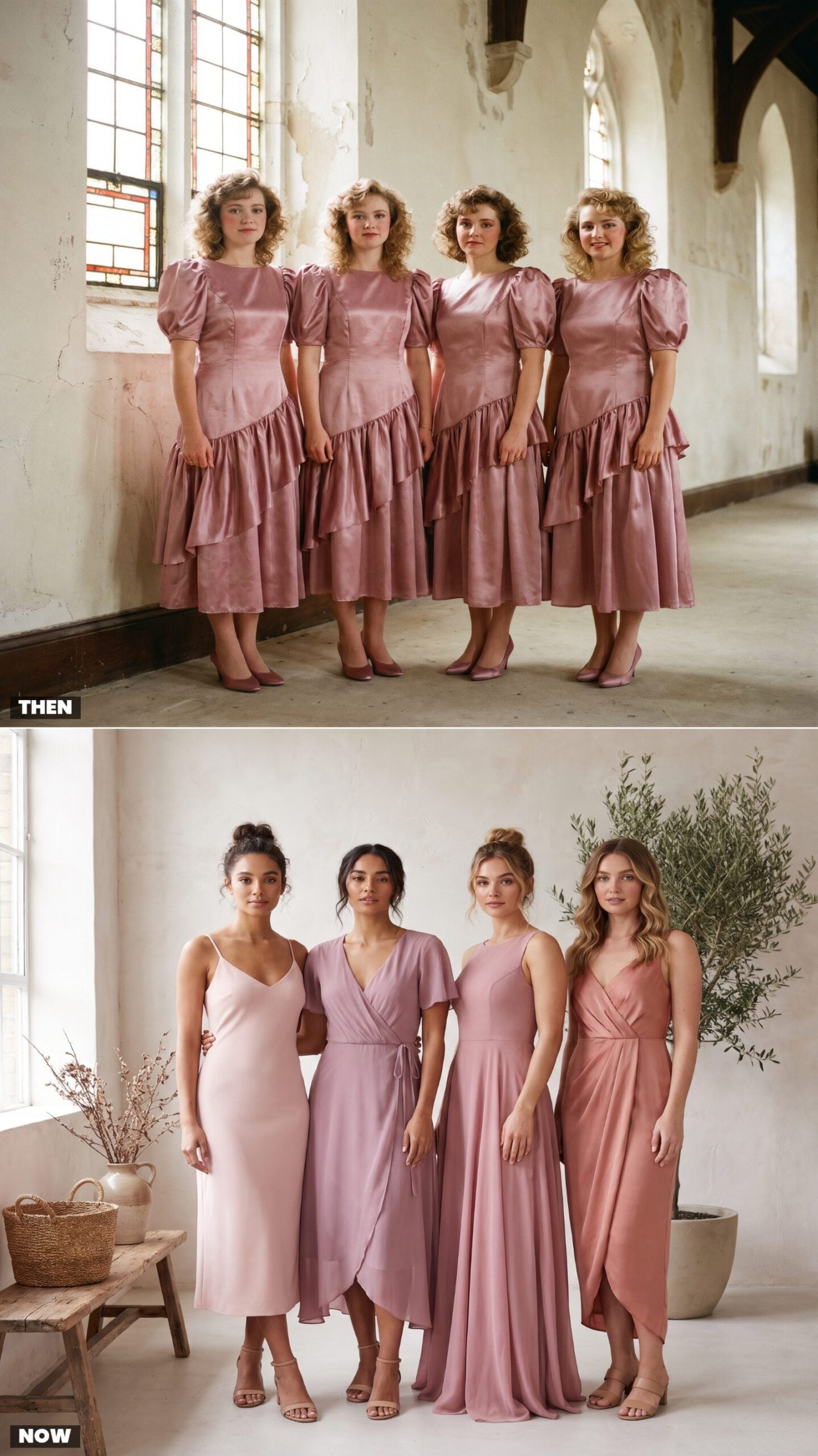
Matching was the mandate. Four women, one dress, zero deviation, down to the dyed heels. The logic was harmony, but the result often read like a chorus line that lost its soloist.
A tonal mix trades that military precision for a conversation. Blush next to terracotta next to mauve, each in a silhouette that suits the woman wearing it. The palette holds the group together while the cuts let everyone look like herself.
One bridal styling director has noticed brides moving away from cookie-cutter matching bridesmaid looks so each woman can feel comfortable and look her best. (via one bridal styling director)
14. Matching Dyed Pumps vs. Neutral Strappy Sandals
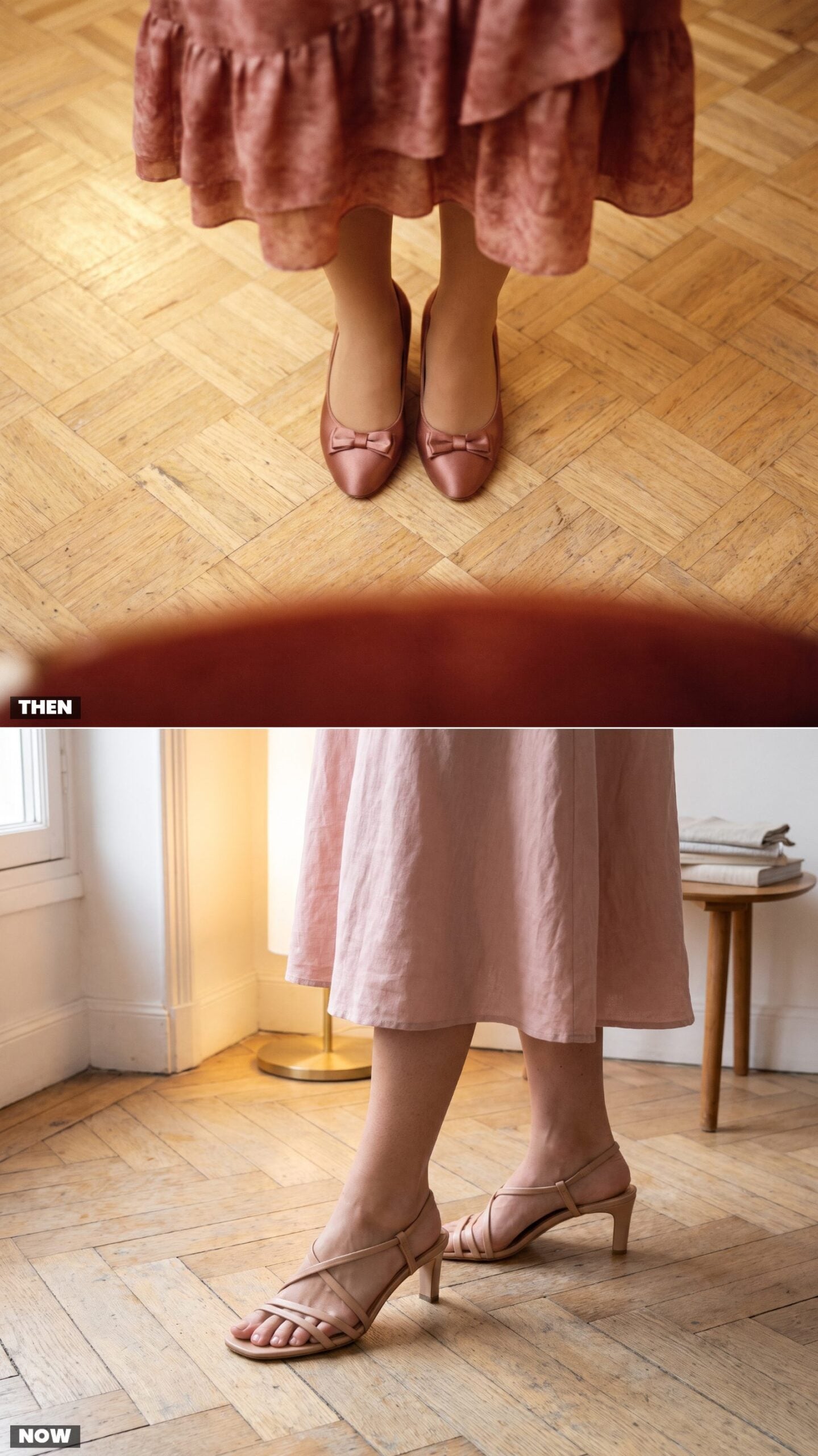
Those dyed satin pumps were a gamble every single time. You sent your shoes off to be dunked in a vat of dusty rose dye and prayed all four pairs came back the same color. Half the time one leaned mauve, one leaned salmon, and the bride noticed in every photo.
The neutral strappy sandal ended that anxiety. A nude leather sandal goes with any shade in the palette, looks longer on the leg, and — unlike the dyed pump — gets worn again after the reception. Freedom, honestly.
Even today, a bridal shoe dyer that custom-dyes satin shoes for wedding parties warns: “Because of fabric dye-lot variations, we cannot guarantee an exact match.”
In our reader polls on sandals, flat styles came out ahead at 42%, with heeled at 30% and wedges close behind at 28%.
13. Full-Length Gloves vs. Bare Arms and Delicate Bracelets
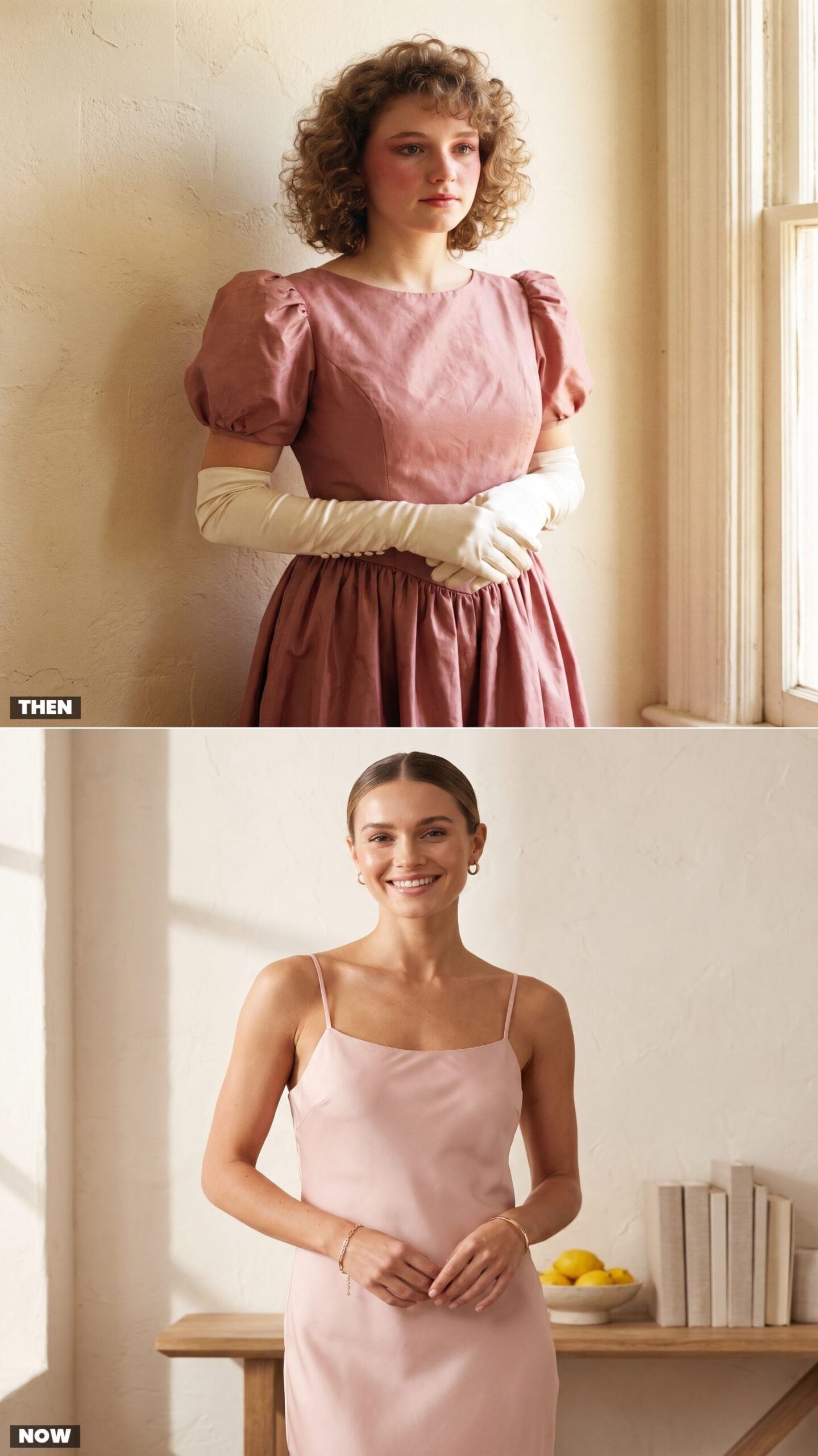
Opera gloves carried a whiff of ceremony in 1985, all those tiny wrist buttons and smooth satin climbing past the elbow. They looked formal in the processional and became a logistical nightmare at dinner, peeled off and bunched beside the water glass.
Bare arms replaced all of it. A thin gold chain bracelet and a single bangle do the finishing now, letting the arm itself be the line. Less to fuss with, nothing to lose, and a far more modern read at the reception table.
12. Coordinating Parasols vs. Petite Hand-Tied Bouquets
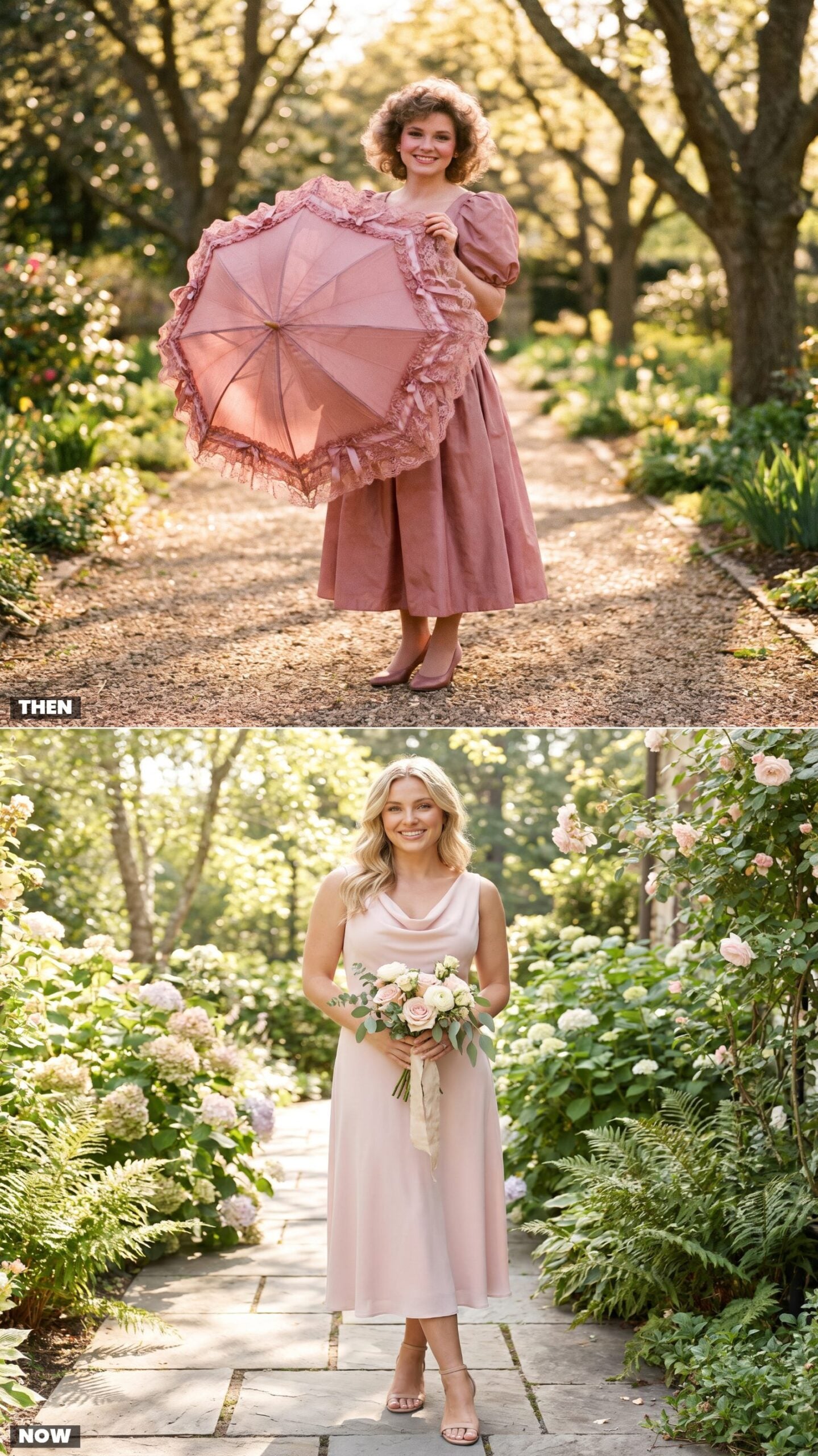
The coordinating parasol was peak 1985 garden-wedding theater. Lace-trimmed, dyed to match, propped jauntily on one shoulder in every posed shot — charming in theory, awkward in practice, and useless the moment a breeze showed up.
A petite hand-tied bouquet carries the same romance without the prop energy. A loose cluster of blush roses and trailing greenery sits naturally at the waist, soft and seasonal rather than staged. It photographs beautifully and asks nothing of you but to hold it.
11. Matching Bolero Jackets vs. Tailored Bridesmaid Blazers
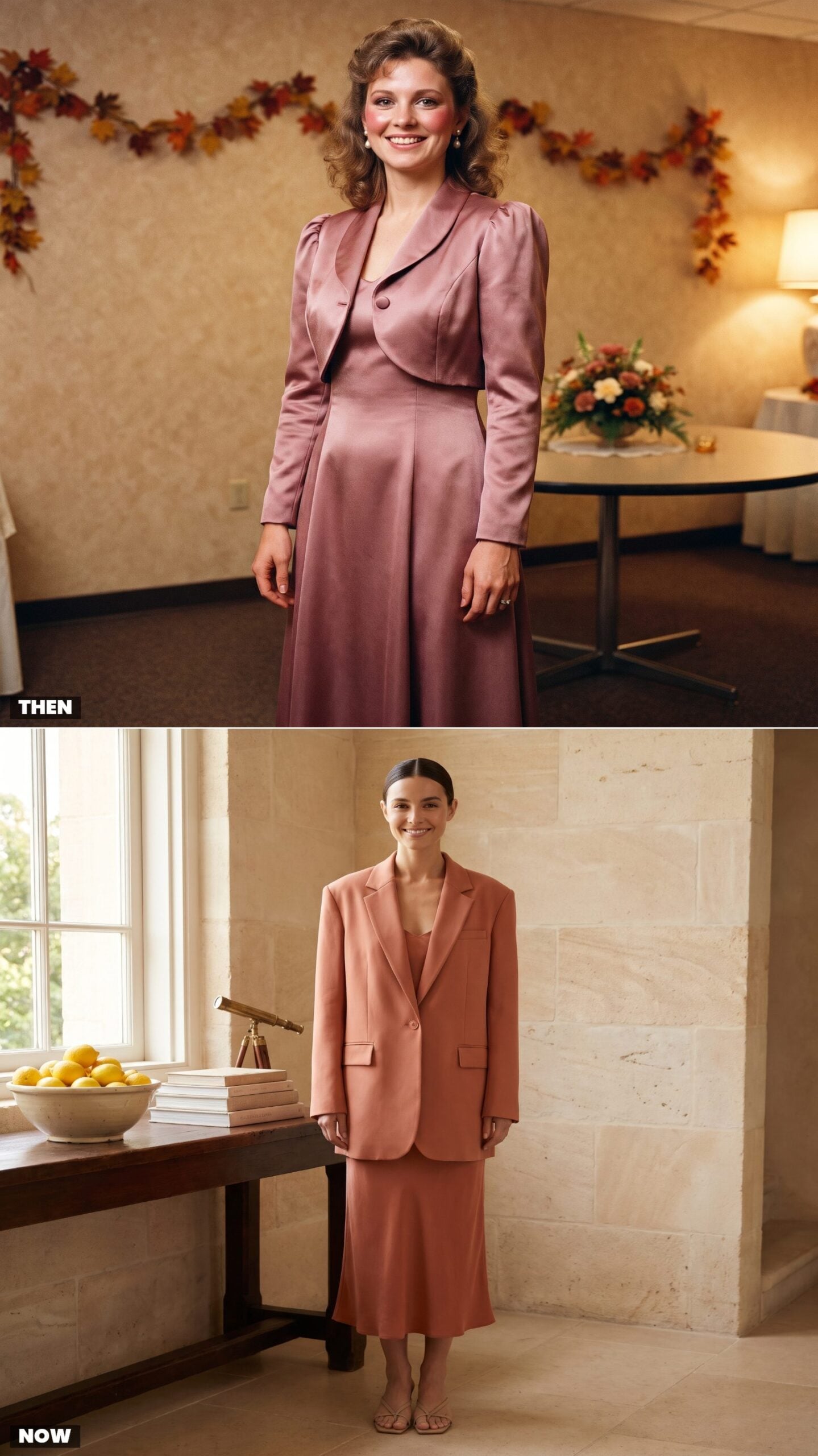
One button, cropped at the ribs, puffed at the shoulder, cut from the exact same satin as the dress. The bolero existed to add a bit of formality and a layer for drafty churches, and it did both while looking like a dinner napkin with sleeves.
The tailored blazer does real work. A longline terracotta crepe jacket over a matching slip gives the whole look a modern spine — structured at the shoulder, clean at the lapel. Suddenly the bridesmaid reads like someone with authority, and the layer gets worn to work next month too.
A proper blazer gives a bridesmaid look something the old satin bolero never could: the posture of someone who dressed herself on purpose.
10. High-Low Ruffle Hems vs. Asymmetrical Midi Hems
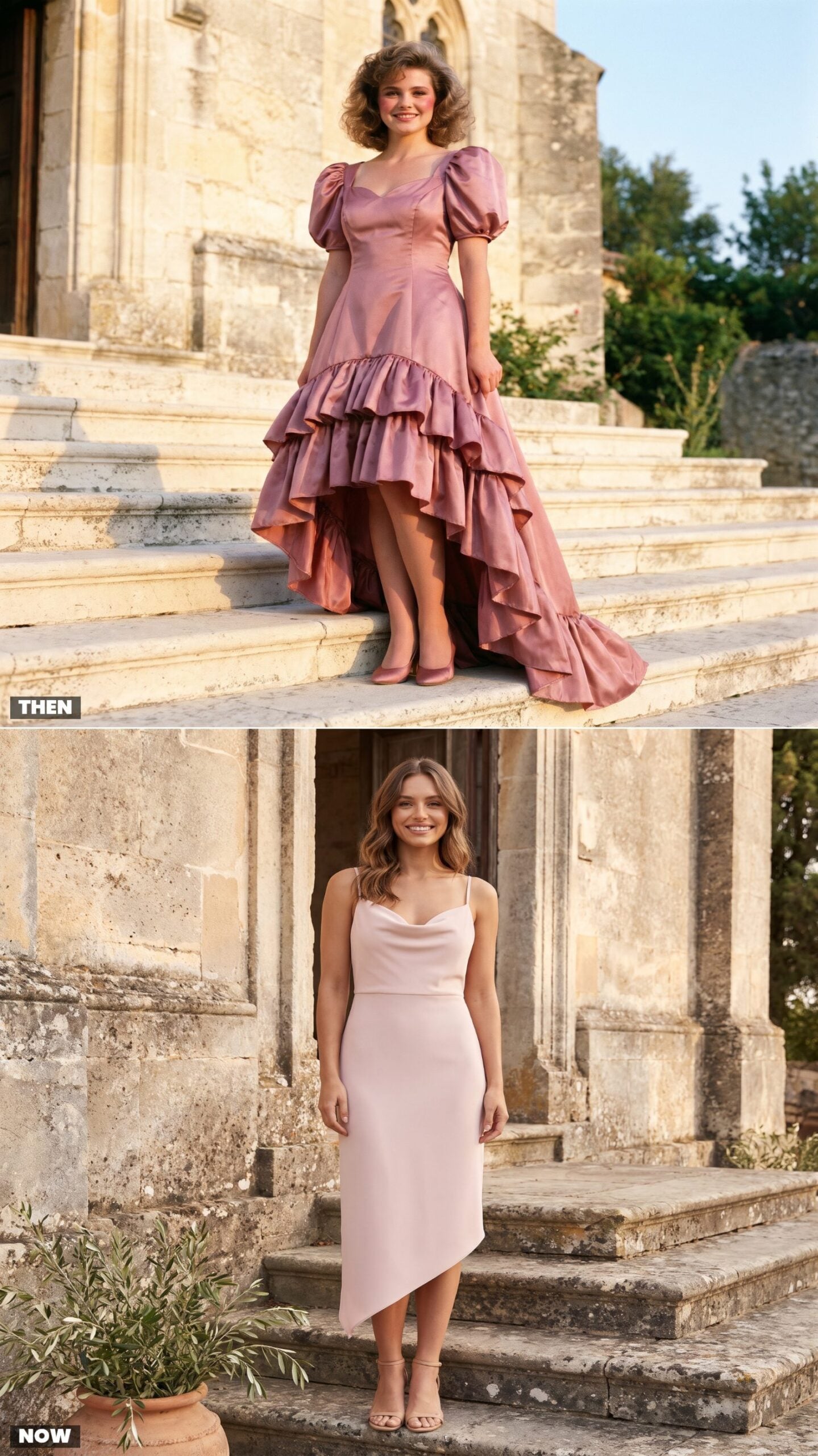
The high-low ruffle hem wanted it both ways: legs out front, drama out back, tiered satin pooling behind like a frosted trail. It was a lot of hem making a lot of noise, and it dated instantly the second the eighties ended.
The asymmetrical midi carries the same off-center idea with restraint. One clean diagonal cut across fluid crepe, no ruffles crowding the line. The slant creates movement and a flash of leg without the circus. Same instinct, grown up.
9. Pearl-Trimmed Bodices vs. Subtle Beaded Necklines
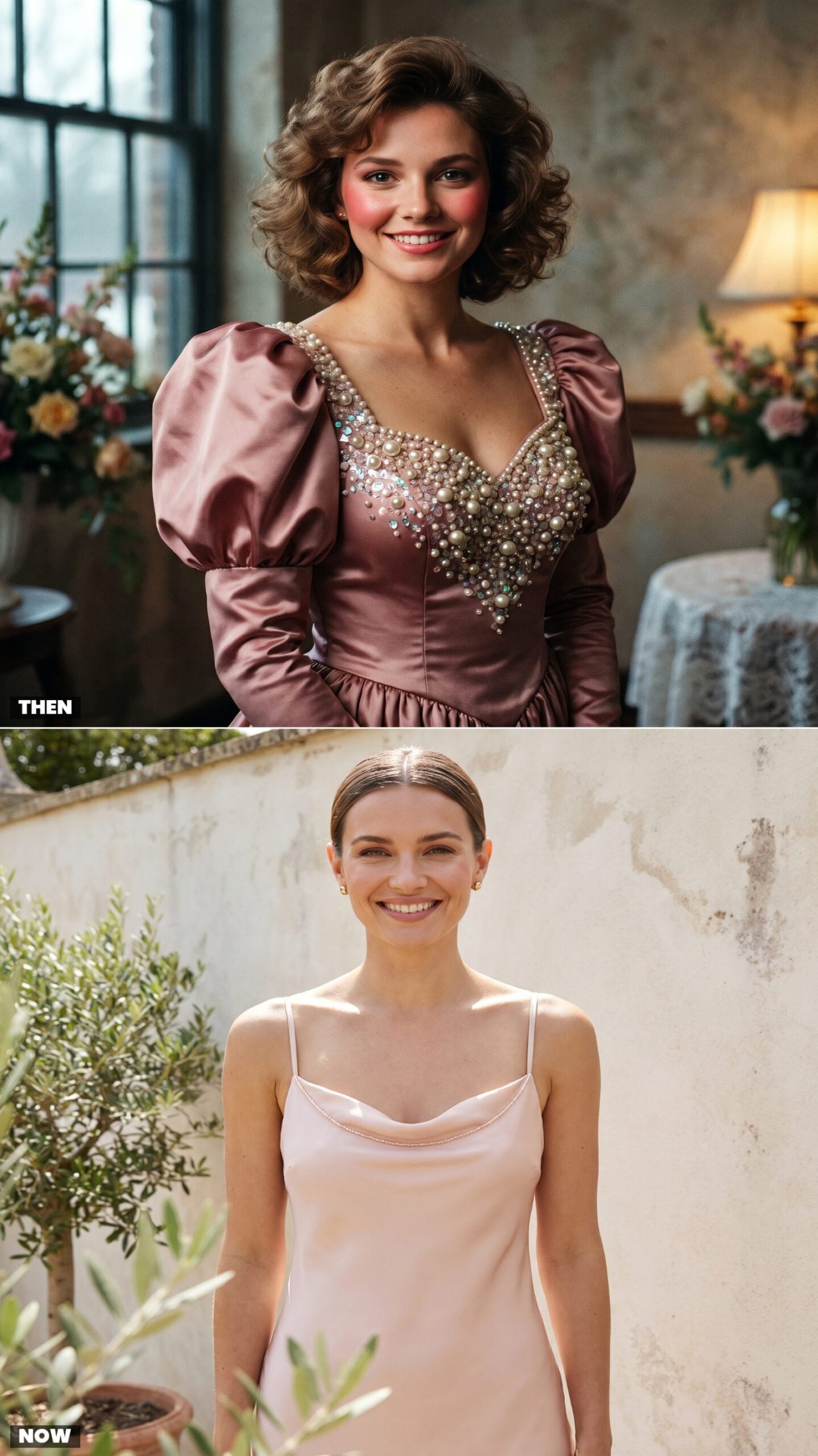
More was the mood. A 1985 bodice could carry hundreds of faux pearls and sequins, packed shoulder to shoulder until the fabric underneath barely mattered, throwing sparkle in every direction under candlelight. That was the goal, no apology.
The modern neckline whispers instead. A single sparse row of seed beads traces the cowl edge, catching light only when she turns. The restraint reads expensive, because one considered detail always looks more deliberate than full encrustation.
8. Satin Rosette Trims vs. Removable Floral Pins
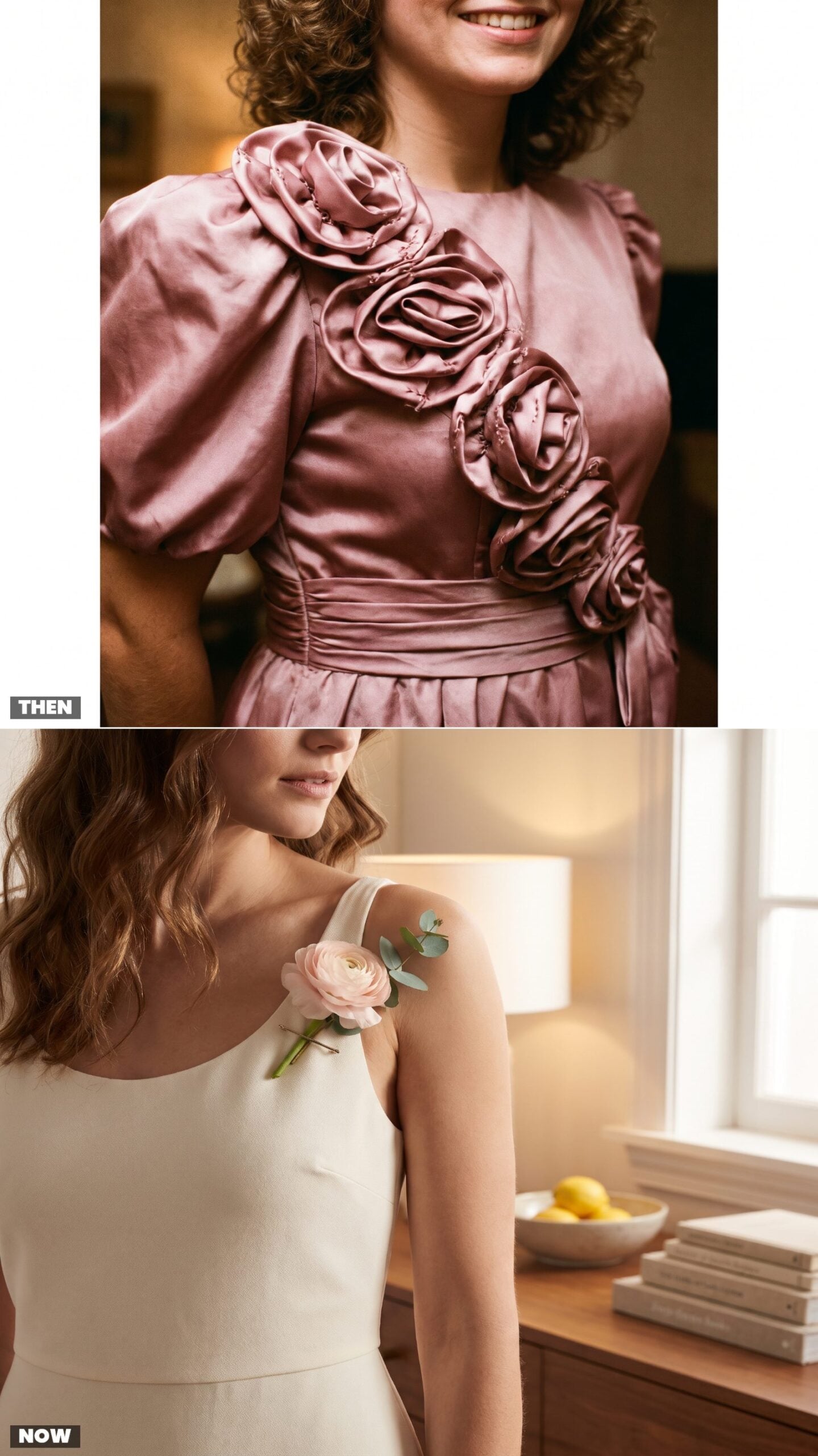
Satin rosettes were sewn on and permanent. Gathered fabric roses marched down from the shoulder to the waist sash, dimensional, slightly stiff, committed to the dress forever. Romance in the loudest possible font.
The removable floral pin is the smart update. One fresh ranunculus with a wisp of greenery, pinned at the shoulder of an otherwise clean slip, carries the whole romantic idea in a single piece. It comes off after the ceremony, and the dress underneath keeps living a normal life.
7. Flocked-Dot Organza vs. Swiss-Dot Chiffon
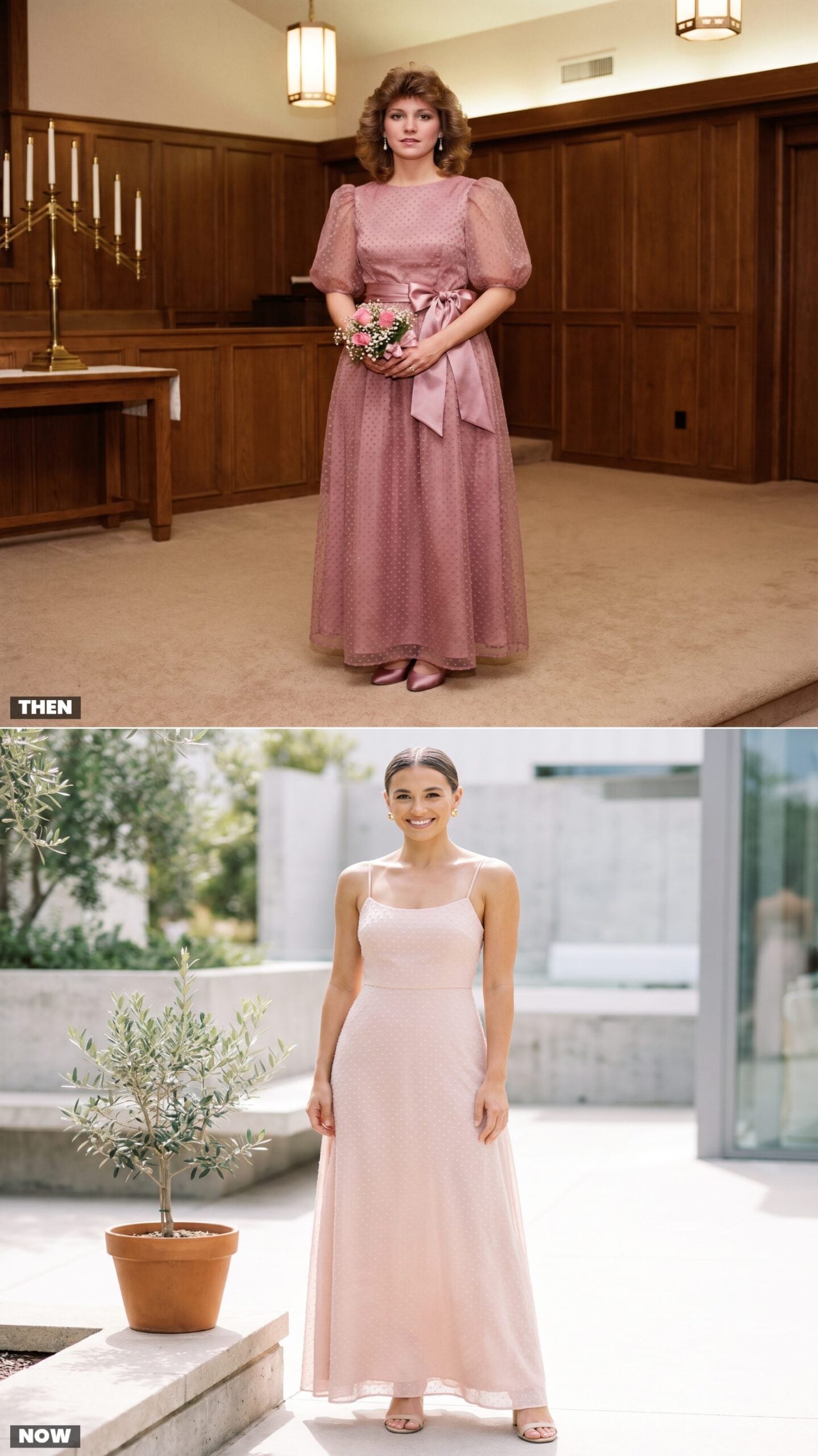
Flocked dots had texture you could feel across the room. That fuzzy raised pattern on stiff organza read as formal in 1985 because it looked expensive and refused to move, and the puffed sleeves and bow sash sealed the decade shut.
The modern swiss-dot chiffon keeps the polka motif but drops the armor. The dots are woven tonal, barely there, and the fabric falls where the old gown stood at attention. Same romantic idea. The difference is a silhouette that actually breathes.
6. Modest Ankle-Length Gowns vs. Contemporary Jumpsuits
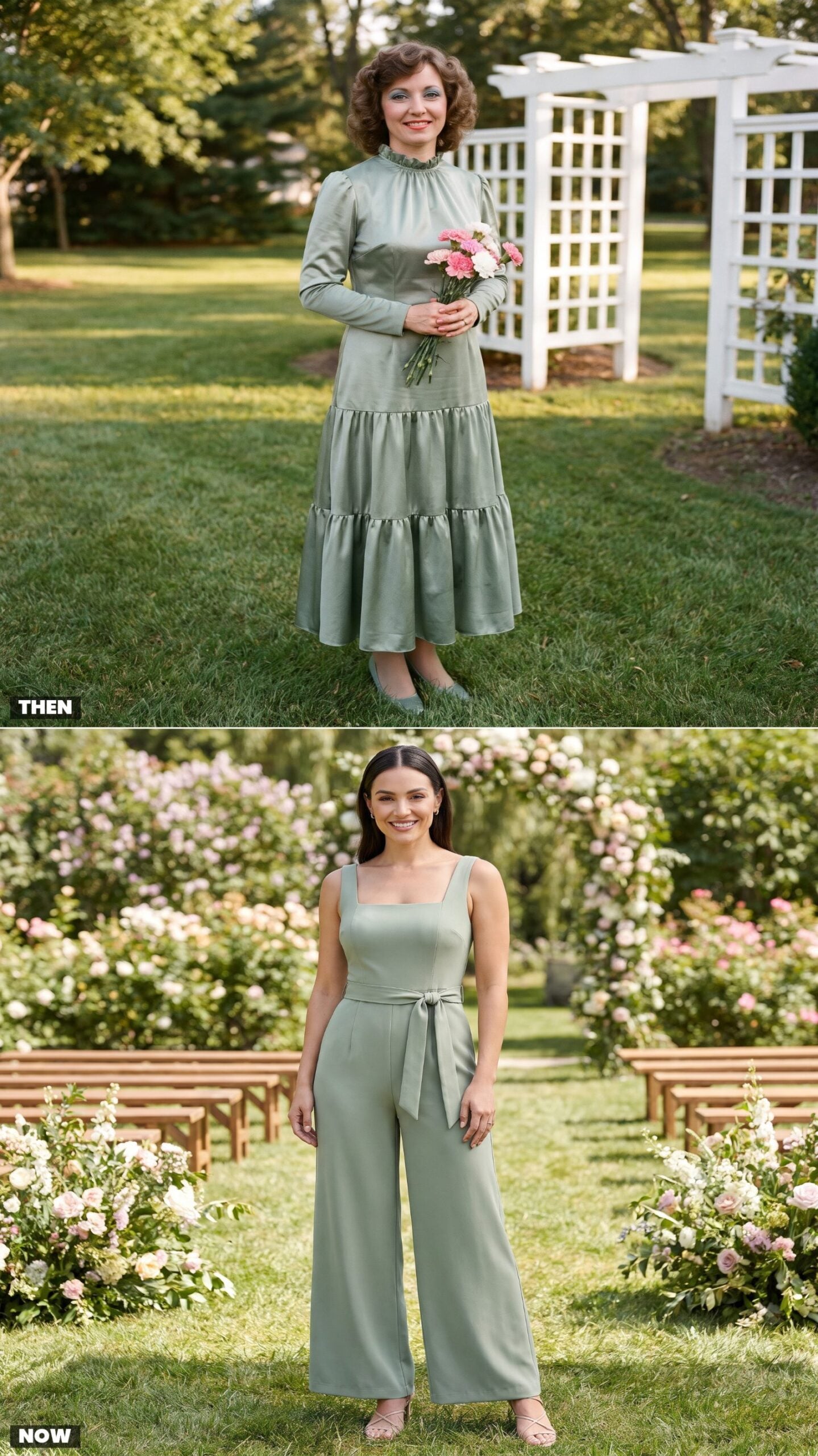
Covered neck, covered arms, covered ankles. The 1985 formula equated modesty with layers of ruffled polyester that added bulk everywhere, so nobody felt sleek and everybody felt dressed.
The party jumpsuit answers that same coverage brief with a cleaner line. Wide legs still read formal, the square neck opens the frame, and the self-tie waist handles the shaping the old dropped waist kept fighting against. One piece, nothing fussy. You can sit through the whole reception without wrangling a skirt.
Not everyone agrees on the jumpsuit: in readers’ votes, outfit images featuring jumpsuits got fewer hearts than the other images in the same articles.
5. Long-Sleeved Floral Gowns vs. Printed Convertible Dresses
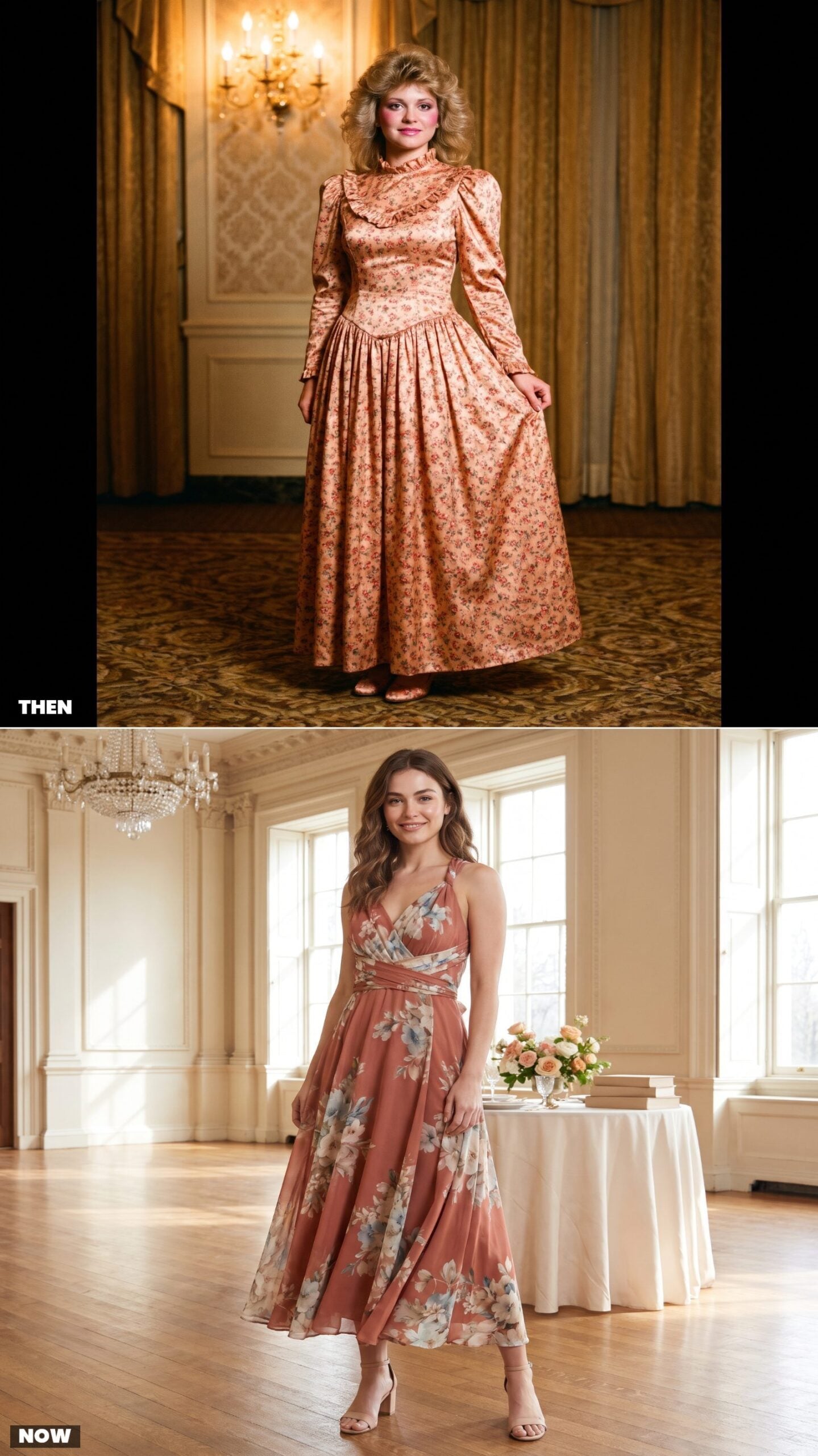
The 1985 floral gown committed hard to the print: full sleeves, high collar, and a skirt wide enough to need its own chair. Busy pattern plus maximum coverage plus volume, and the dress ended up wearing the woman.
Today’s convertible print dress hands the control back. One garment ties a dozen ways, so a whole wedding party can share the same watercolor floral and still look like individuals. Softer print, adjustable straps, fabric that moves. The real win is that nobody gets locked into a cut that argues with her frame.
4. Metallic Lamé Accents vs. Champagne Satin Finishes
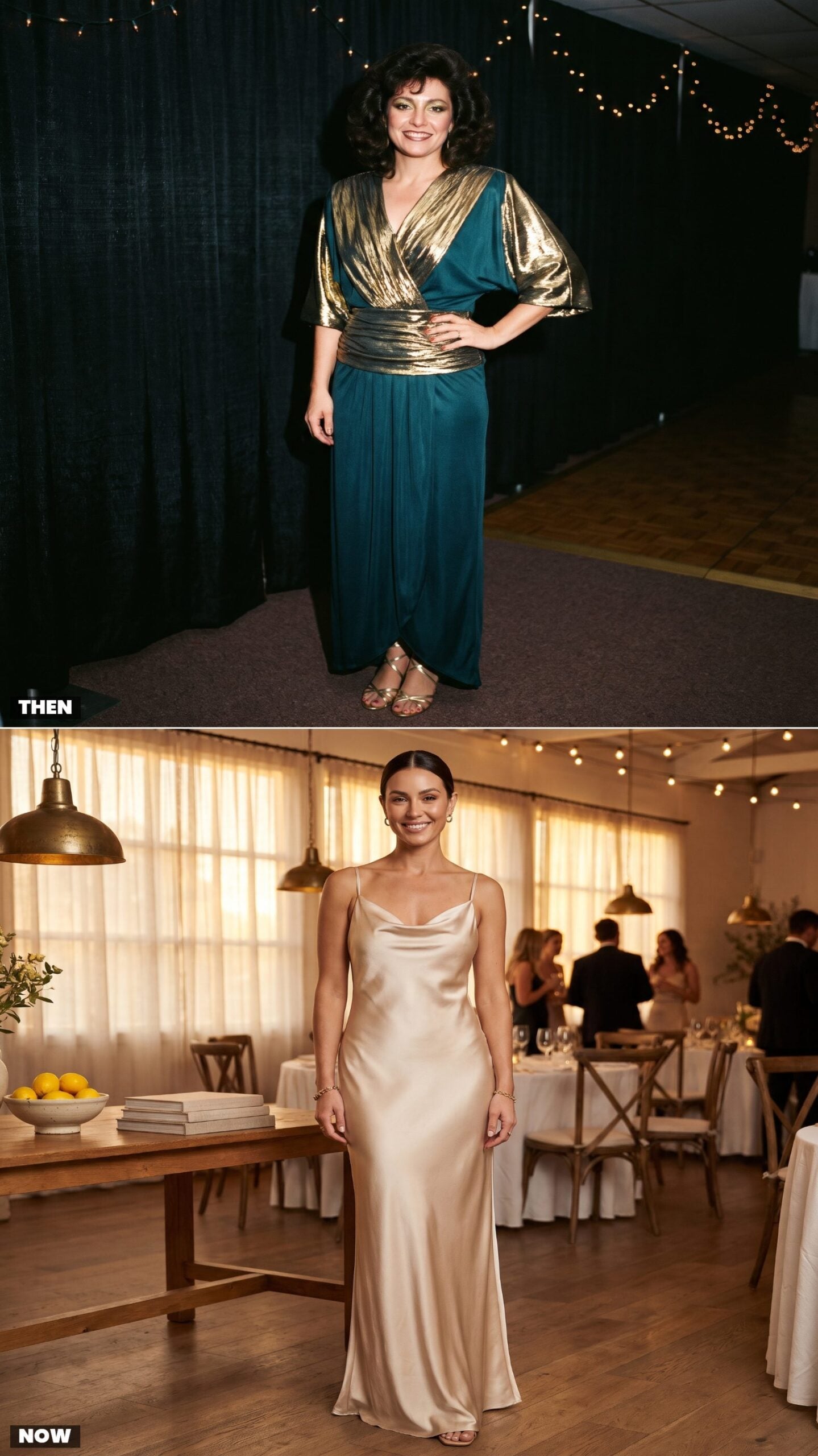
Lamé was the 1985 shortcut to glamour. Blast it with flash and the metallic threads screamed money, which was the whole point, even when that gold panel sat oddly against the teal and blew out in every single photo.
Champagne satin does the opposite. It catches light low and warm, a bias-cut slip that glows across the shoulders instead of flinging glare back at the lens. Restrained shine reads richer than loud shine, and the cowl neck handles the drama that lamé cummerbund used to shout.
3. Formal White Tights vs. Bare Legs
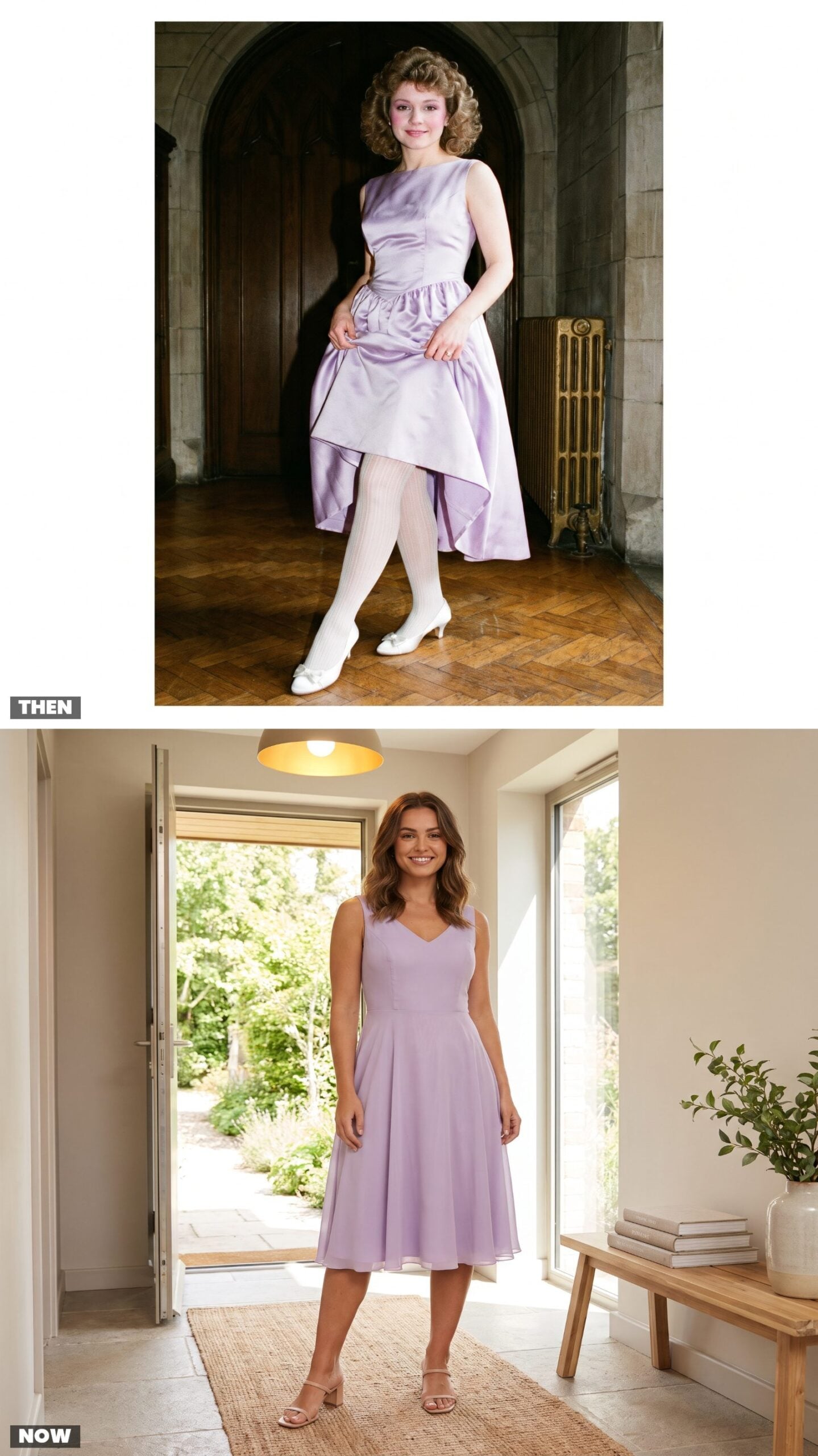
White tights were non-negotiable in 1985. Formal meant legs covered, and opaque white hose under a pastel gown was simply what you wore, with the textured ribbing counting as a refinement.
Then bare legs killed the rule outright. The modern tea-length dress stops at the same point and skips the hosiery, letting the nude sandal do the lengthening that old white-pump-and-tight combo used to cut short. Less fabric, longer line, nothing to snag in the limo door.
2. Matching Fabric Clutches vs. Individual Minimal Bags
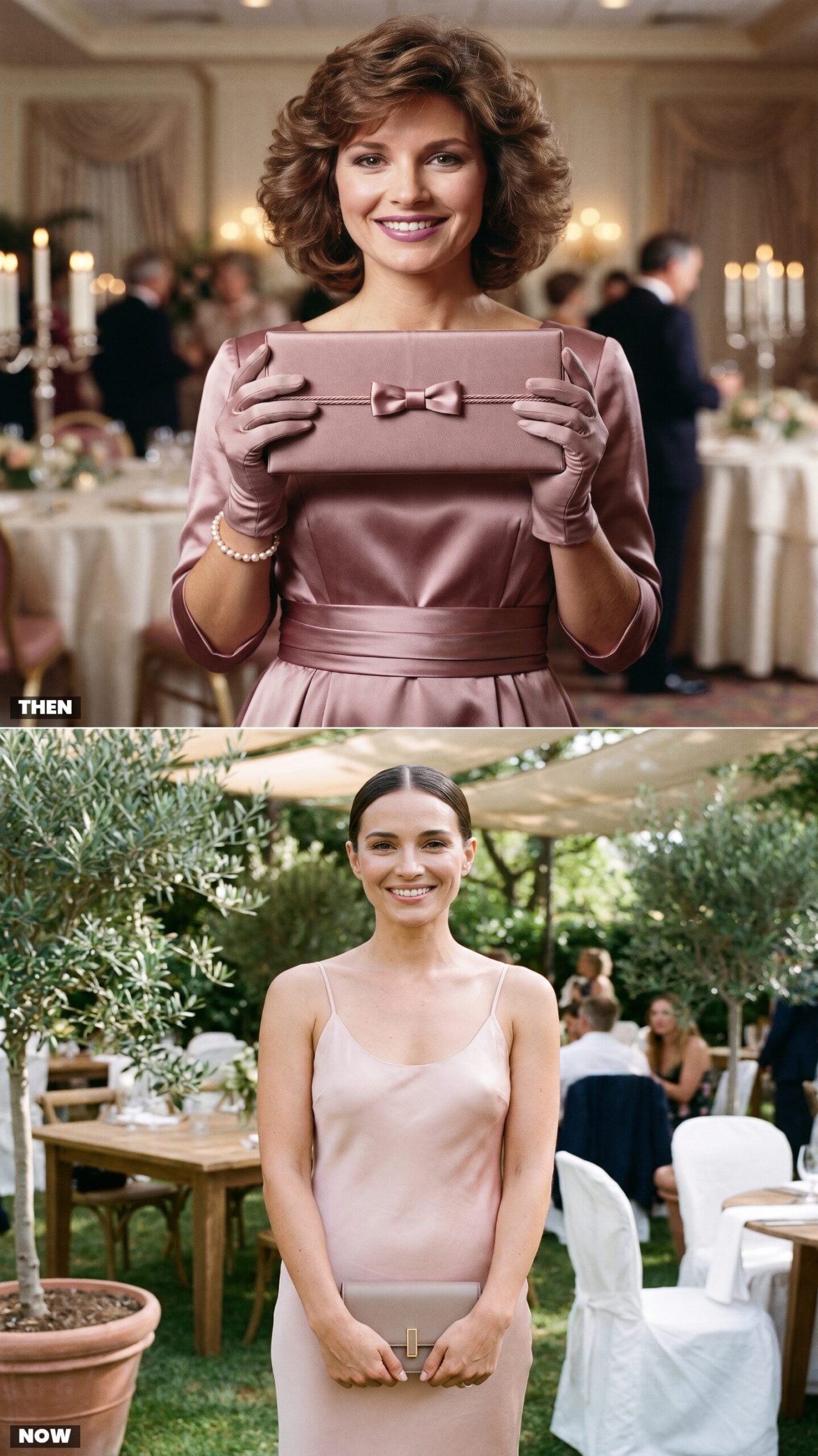
Everything matched in 1985, right down to a clutch covered in the gown’s own fabric. The box-shaped party clutch with its little satin bow was supposed to prove the look was complete. Mostly it proved the look was a uniform.
Now each woman carries her own small bag. A soft taupe leather clutch reads as chosen rather than issued, and it outlives the wedding into actual use. Letting the accessory break from the dress is what makes a whole party look like grown women who picked their own outfits.
1. Single-Use Formal Gowns vs. Rewearable Evening Separates
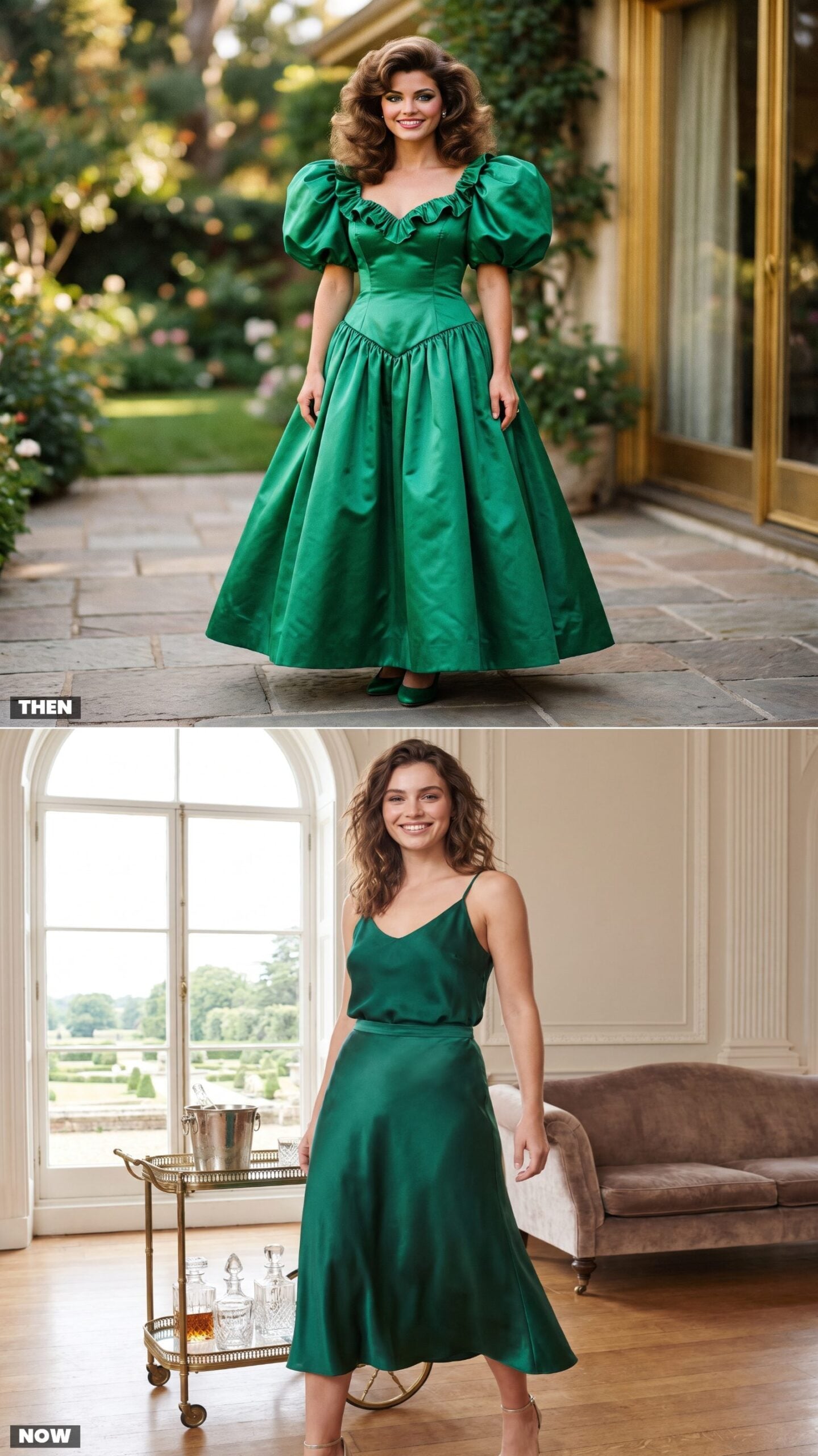
The 1985 bridesmaid gown had one job and exactly one wearing. Those puffed sleeves and the basque waist guaranteed it would never surface again, and everyone knew it the moment they zipped in.
Separates changed the math entirely. A silk camisole and a satin midi skirt photograph as a gown together, then split into two pieces you genuinely wear again. Rewearability is the modern priority, and it quietly strips out the resentment that used to come stapled to the invitation.
The best compliment a bridesmaid outfit can get now is “I’d wear that again,” and in 1985 nobody could say it with a straight face.
As a bridal shop manager puts it, “If your dress has a lace bodice, you can create a cute crop top from the bodice and keep the skirt separate”