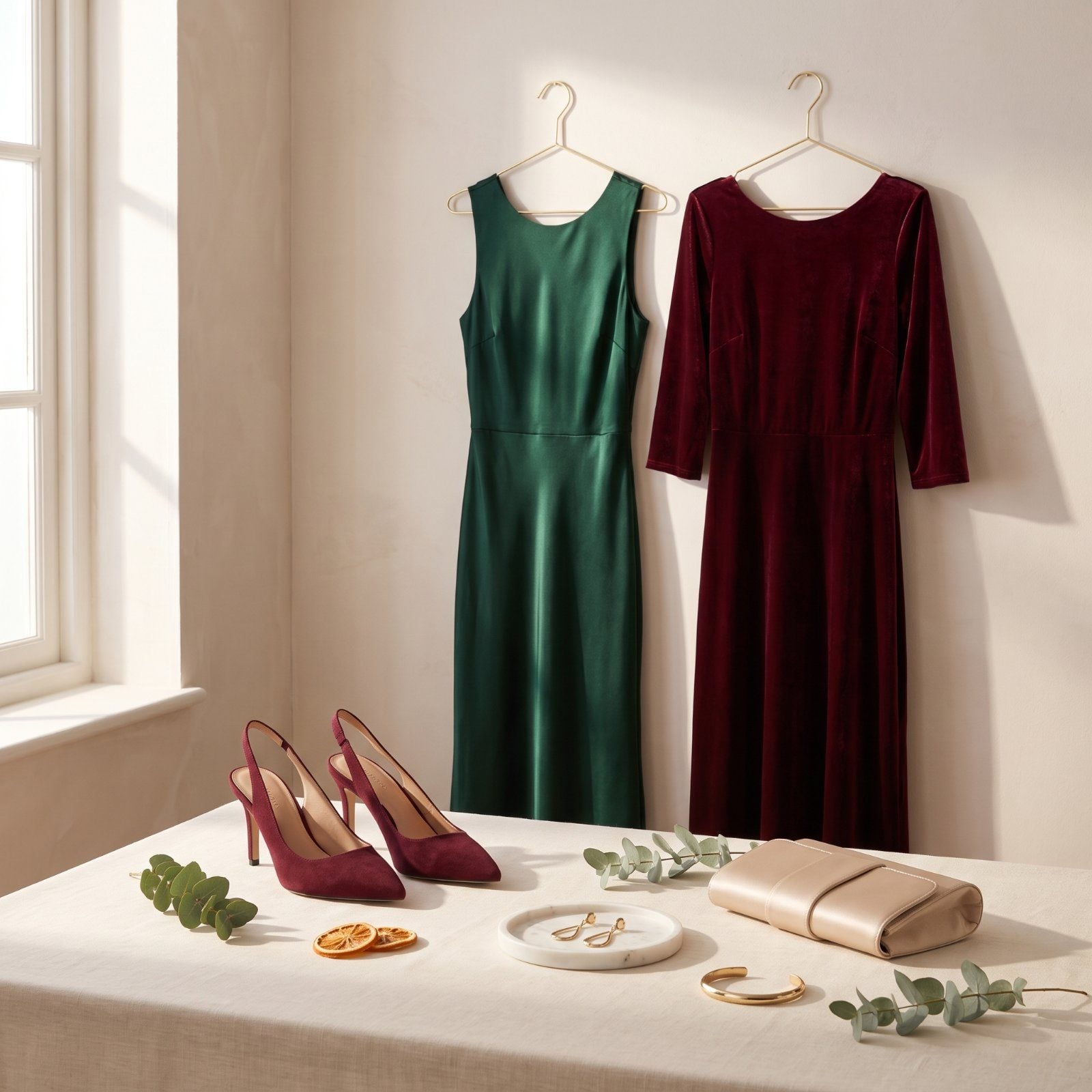
❤️ Would you like to save this?
Somewhere in a department store right now, a perfectly lovely woman is holding up a fit-and-flare dress with a satin waistband the width of a dinner plate, thinking it looks festive. It does. It also looks like 2011. The gap between festive and dated is narrower than anyone admits, and it hides in the details most of us stopped noticing years ago. We pulled the most common holiday-dress traps and set each one next to the version that actually reads current. Your December self will thank you.
FYI, thanks to AI imagery software, we’re able to create very specific fashion and hairstyle examples to illustrate the points being made. In some cases, imagery is exaggerated to hammer home the point. Also, assume links that take you off the site are affiliate links such as links to Amazon. this means we may earn a commission if you buy something.
32. The Fit-and-Flare With the Extra-Wide Satin Waistband
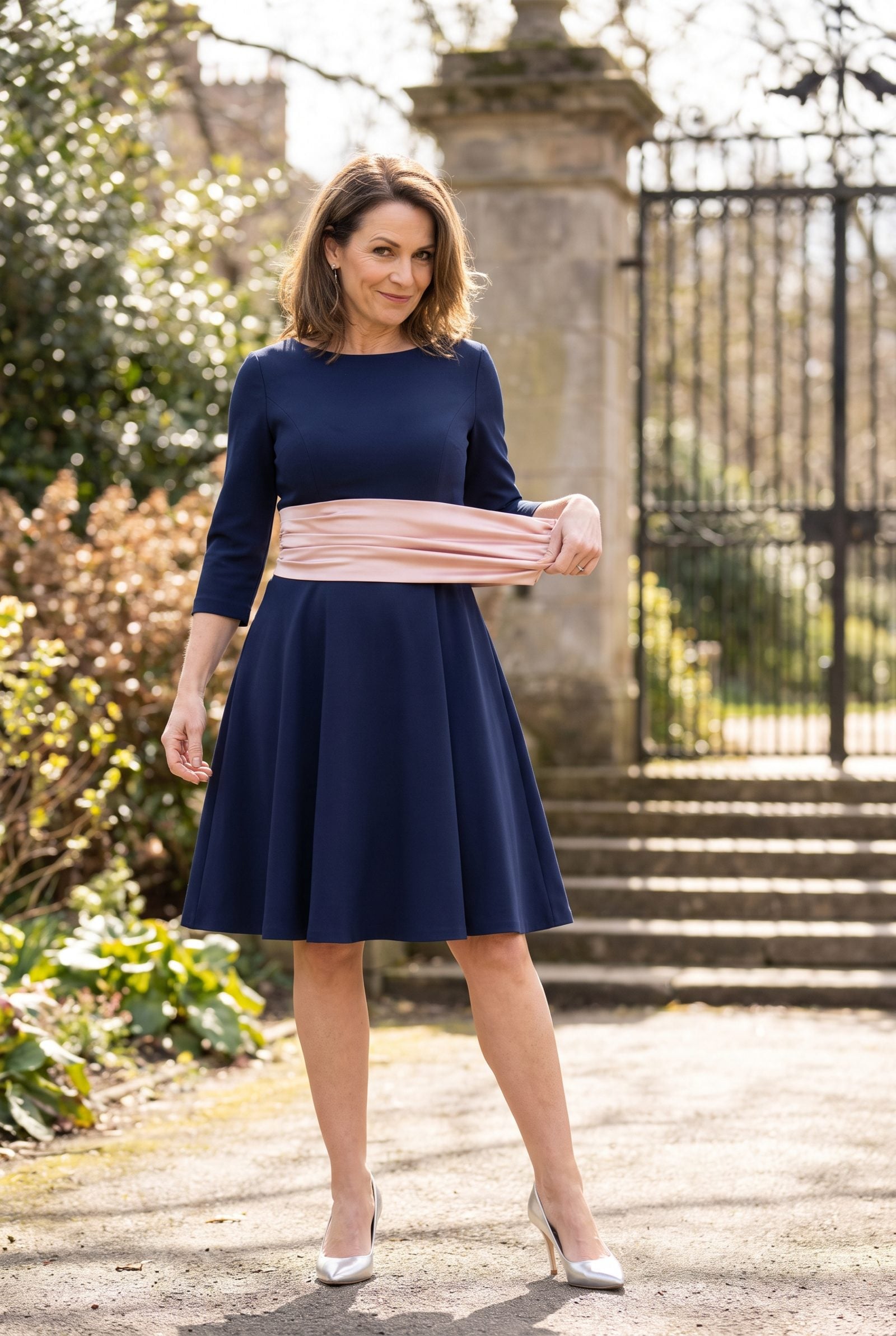
The wide satin waistband was supposed to be a shortcut to a defined middle, and it did the opposite. A five-inch band of shine sits at the thickest part of a bodice and announces exactly where your waist is supposed to be, whether or not it actually lands there. The gleam catches light and widens everything it touches. That’s the trouble with putting a spotlight on the one spot most people want to quiet down.
The current version keeps the flare and ditches the stiff belt. A fit-and-flare with a navy crepe dress and a seamed, nipped waist built into the fabric gives you the hourglass without the billboard. Want sheen? Let it live in a pointed metallic pump, down at the hem where it elongates instead of interrupts.
31. Cold-Shoulder Cutouts Loaded With Fussy Beadwork
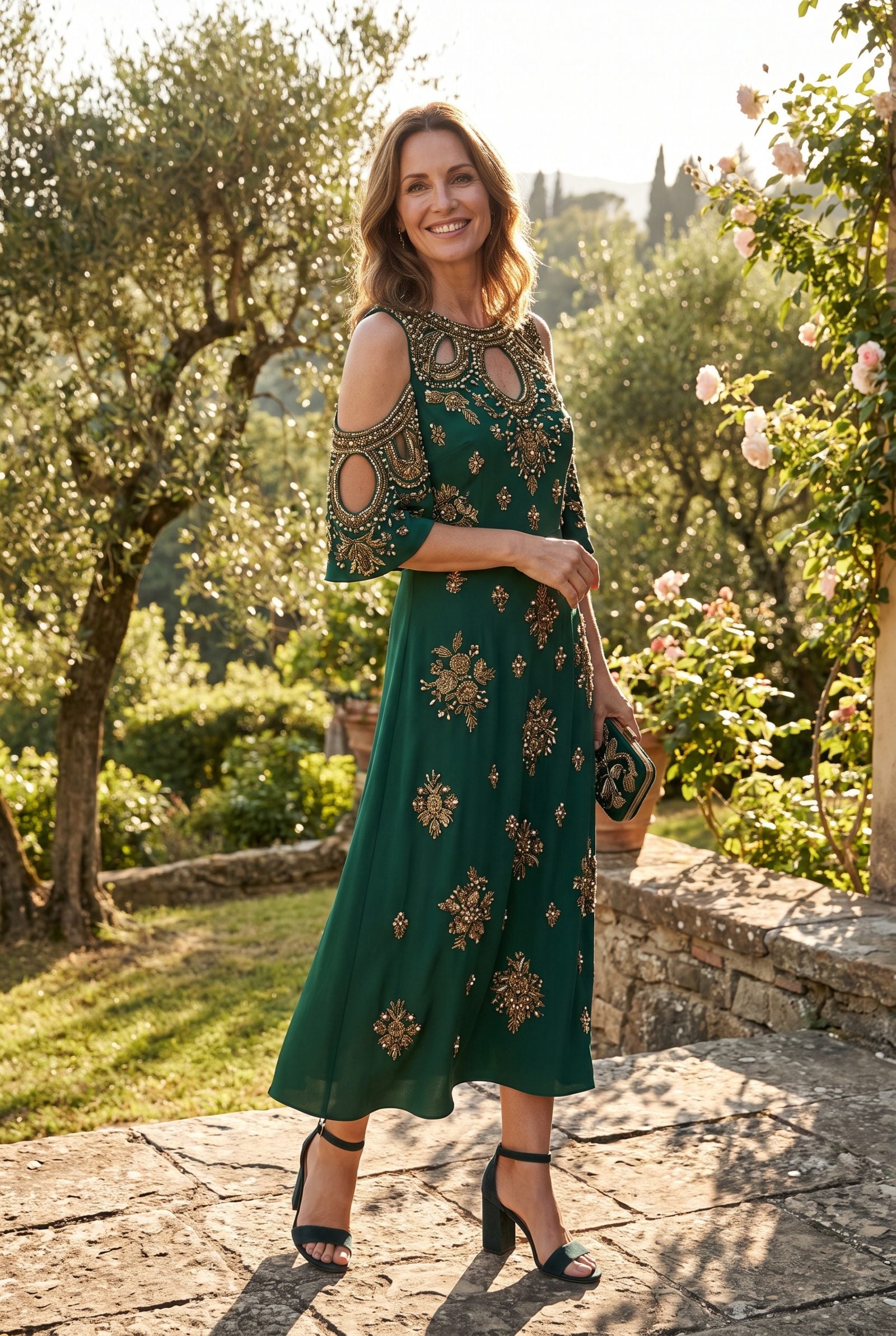
Cold-shoulder cutouts had a good run, then the beadwork showed up and overstayed. Little rows of sequins crawling along the strap turn a clean, open neckline into something that reads like a 2014 bridesmaid.
Keep the shoulder exposure if you love it. Just strip the embellishment. A smooth, unadorned cold-shoulder in matte crepe or a plum velvet dress lets the skin and the clean cut do the work. The draw of a shoulder reveal has always been confidence, not sparkle. Let the cut carry it and bring your shine in with earrings instead.
30. The High-Low Hem in Full Mullet Mode
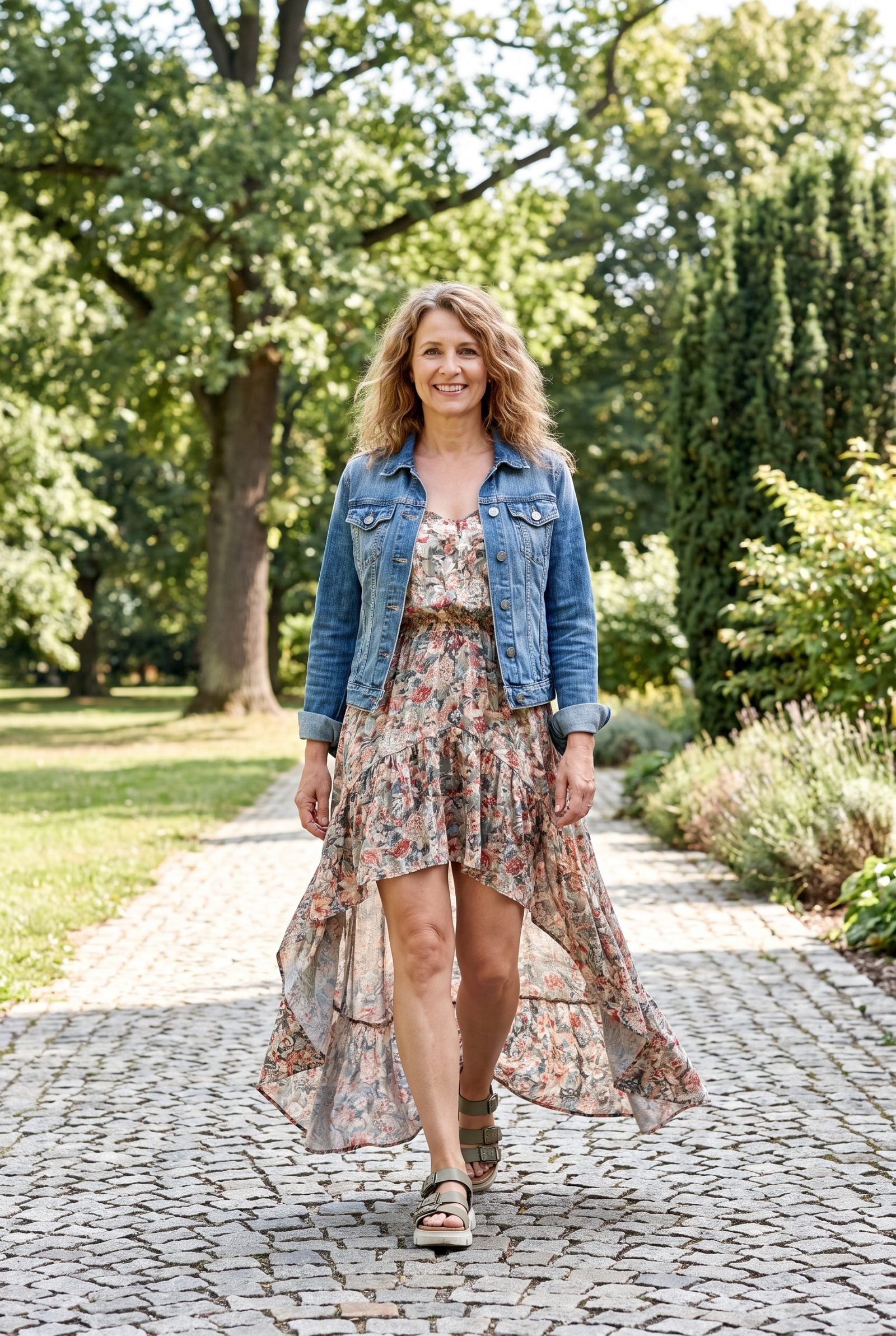
The extreme high-low promised drama and delivered confusion. Short in front, floor-length in back, it never decides what kind of dress it wants to be, and the eye spends the whole night trying to resolve it.
A modern teal midi dress with one committed hemline reads intentional. Want movement? A soft asymmetric hem that dips only a few inches gives you the flutter without the mullet silhouette. The dress shapes that age best are the ones that pick a length and mean it.
29. Lace, Sequins and Satin All Fighting in One Dress
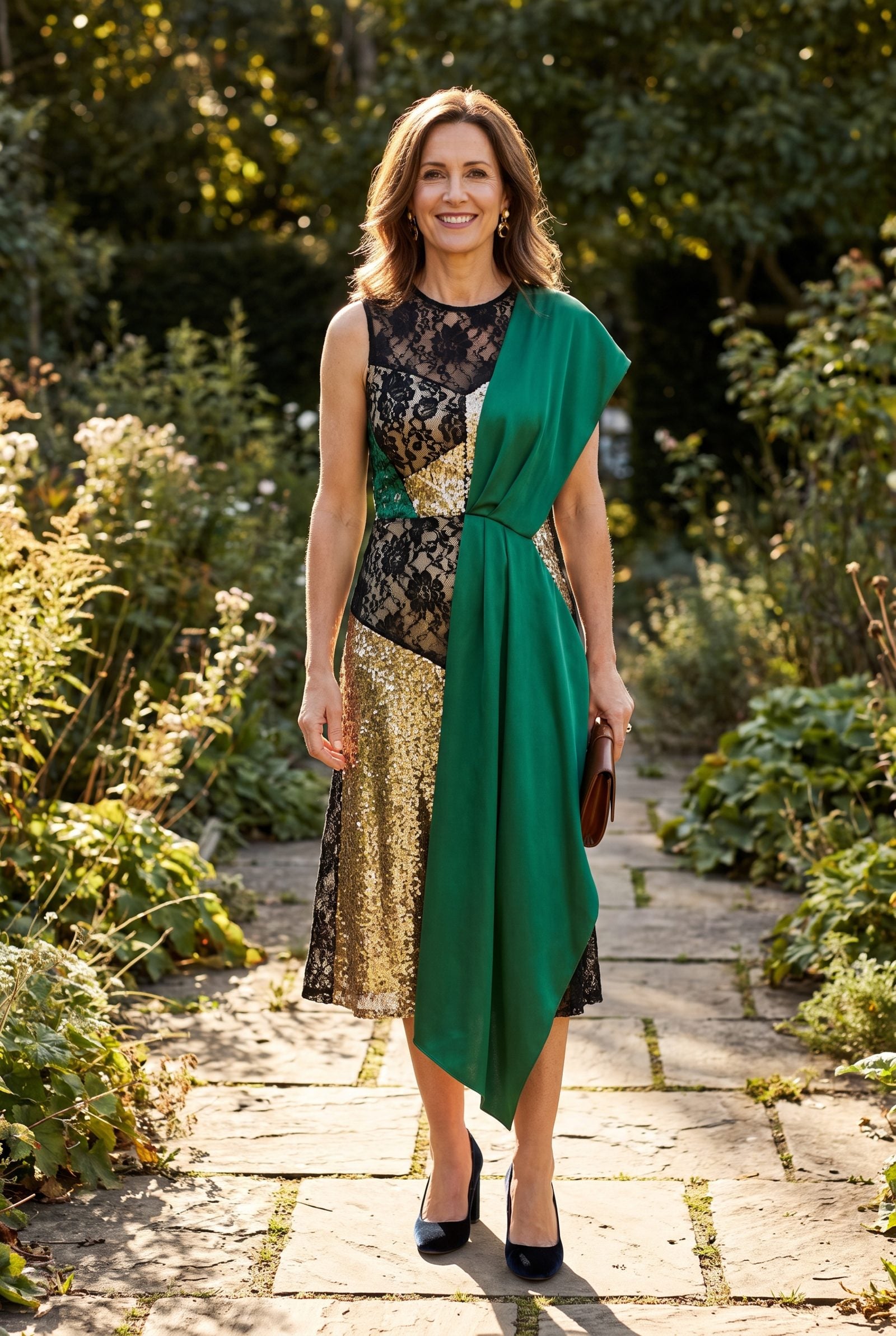
Three textures in one dress, each in a slightly different tone, and suddenly the thing is doing three jobs badly instead of one job well. Lace on top, sequins in the middle, satin below. It looks like a sample sale got sewn together after hours.
Pick one hero texture and let it carry. A sequined sheath. A lace midi. A satin column. Then keep everything else quiet. One rich material with a single supporting note always looks more expensive than a committee of three fighting it out across your torso. Restraint is what reads as money here, and it almost always wins.
28. The Mesh Illusion Panel That Fools No One
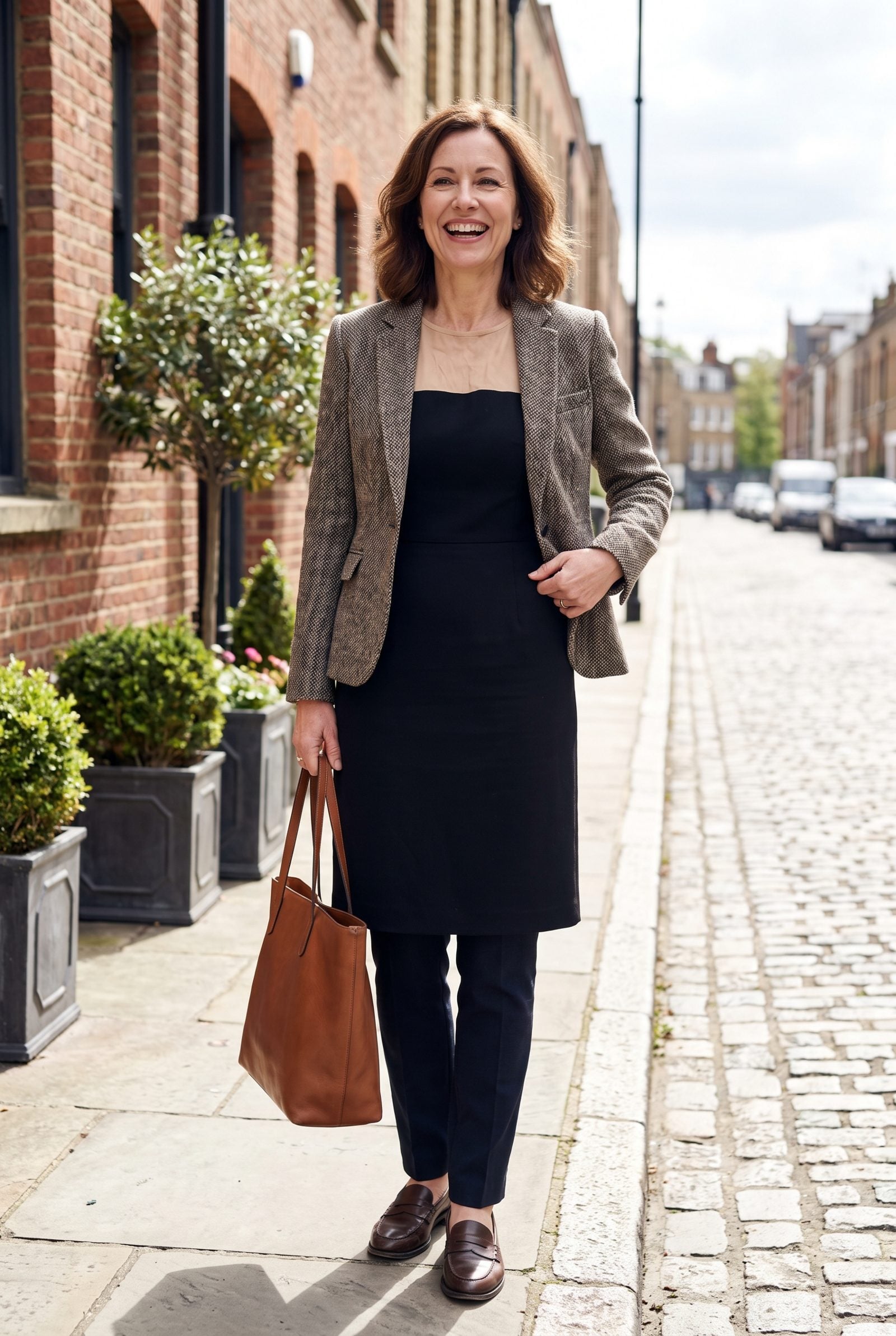
Illusion mesh was supposed to suggest skin while covering it. The nude panel almost never matches your actual skin, so you get a visible beige rectangle floating at the waist that reads as exactly what it is.
Want a hint of transparency? Real sheer does it better. A genuine sheer sleeve, or a mesh yoke in the same color as the dress, looks deliberate. A contrasting nude cutout masquerading as skin looks like a costume department hedge. Go actual-sheer or go solid. That in-between is where dresses date.
27. Nude Platform Pumps With Every Single Party Dress
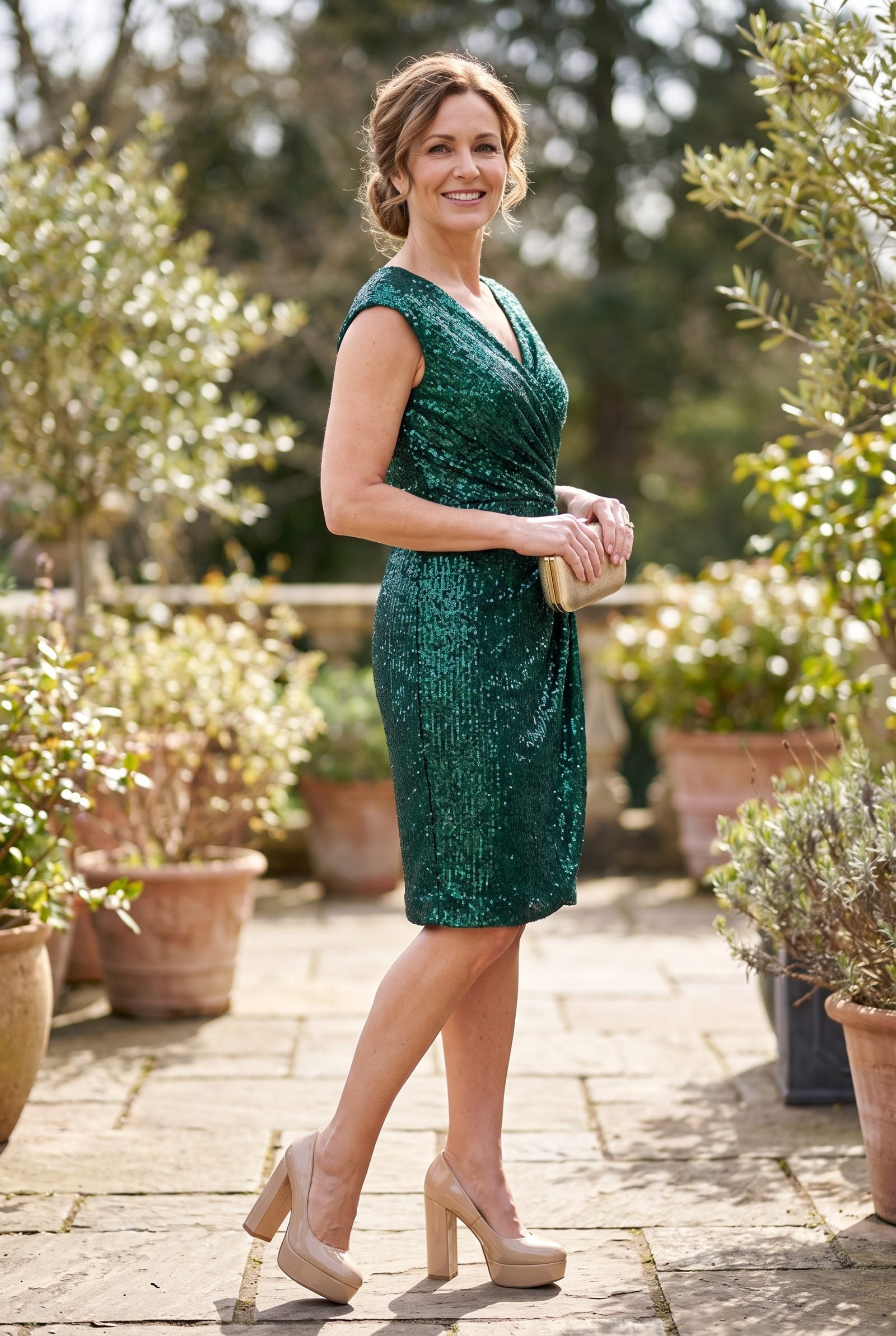
The nude platform pump was the default for a decade, and defaults are exactly what date you. That chunky one-inch platform under the toe thickens the whole foot and drags a 2012 silhouette into an otherwise current dress.
A sleek pointed toe in a deep color does more for the leg and the look overall. Try a burgundy pointed pump or a slim metallic slingback against a red velvet dress. The platform gave you height but stole the line. Lose it and watch the whole outfit tighten up.
We defaulted to nude platforms for years, convinced they went with everything. They went with nothing. They just quietly aged every dress we owned.
26. Head-to-Toe Christmas Red With Nothing to Break It
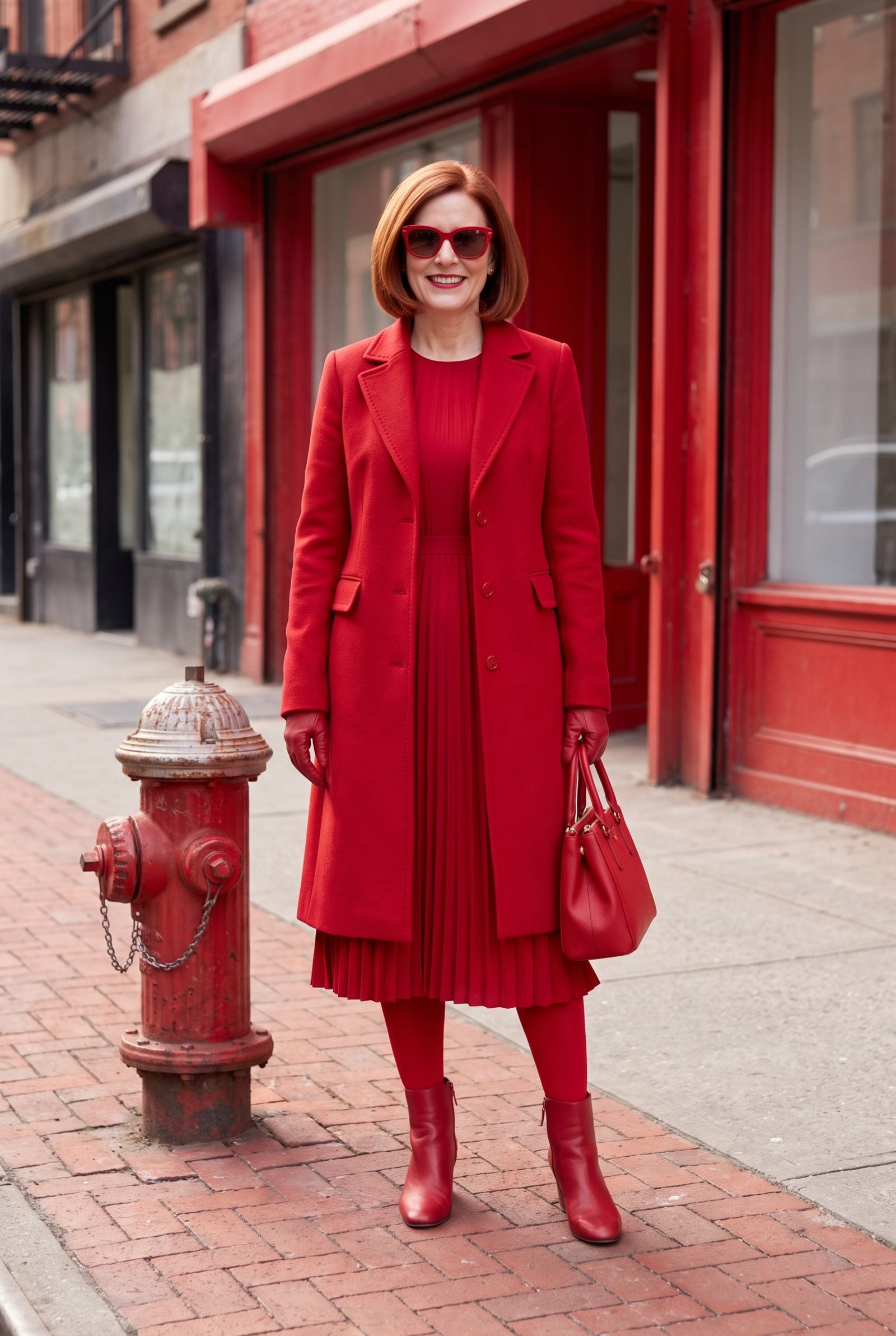
Going full Christmas red feels seasonal and ends up looking like a theme. Red dress, red tights, red shoes, and the outfit stops being you and starts being a decoration on somebody’s mantel.
Red isn’t the problem. The lack of a break is. Wear the red velvet dress and interrupt it. A black pointed heel, a gold cuff, a deep burgundy lip instead of fire-engine. One neutral or deeper tone anchors the red and lets it read as a choice rather than a costume. It’s one of the holiday traps that sneak up fastest.
25. Random Glitter Mistaken for Real Sparkle
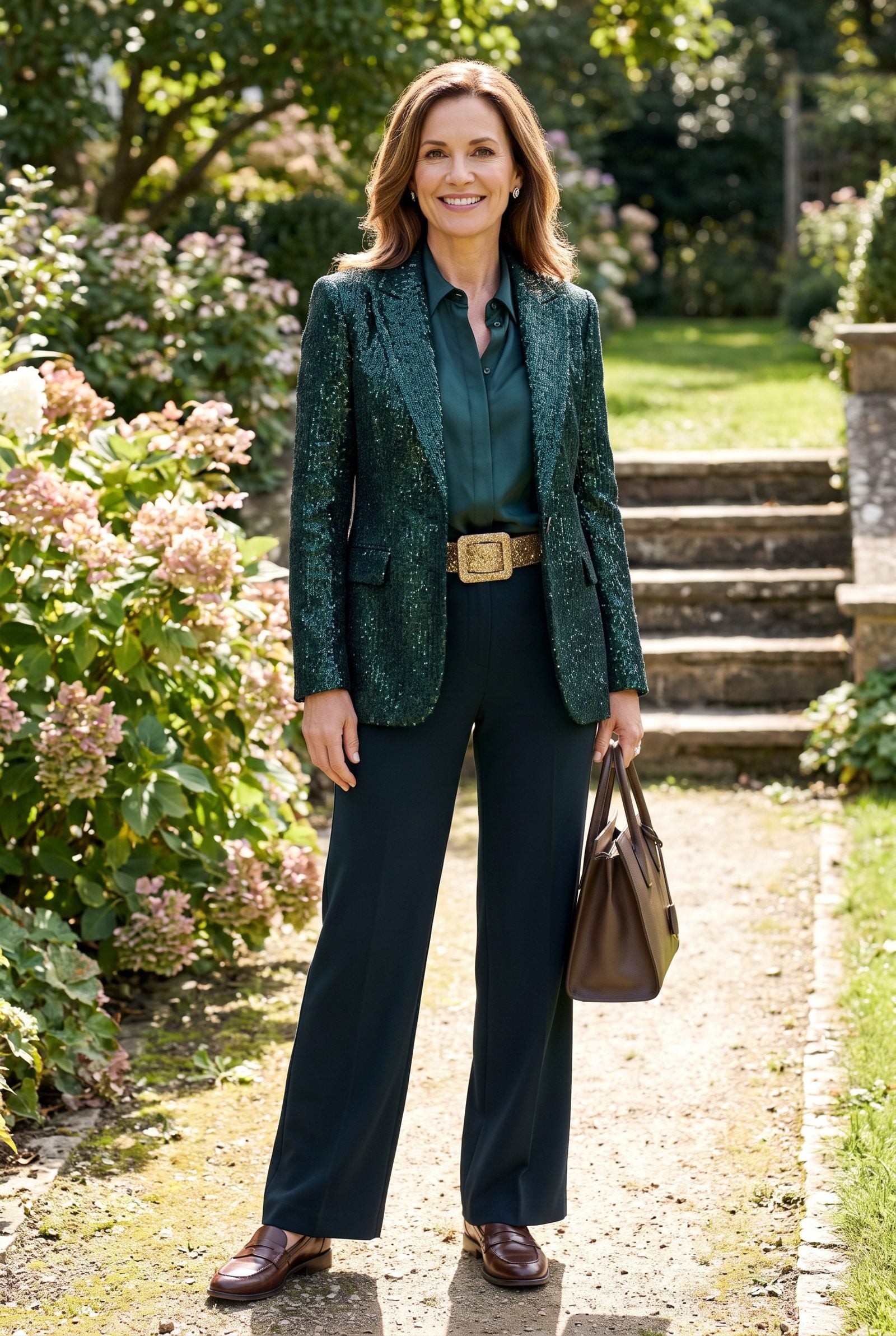
There’s a difference between sparkle and glitter, and the fabric knows it even when we don’t. Chunky surface glitter sheds on everyone you hug and catches light in a cheap, uneven scatter. It never reads as luxury.
Woven-in sequins or metallic lurex thread behave completely differently. The shine is part of the cloth, so it moves like liquid instead of dust. A sequin midi dress with embroidered paillettes catches candlelight in deep, controlled flashes. Same festive instinct, grown-up execution.
24. A Bolero That Stops Dead at the Widest Part of the Bust
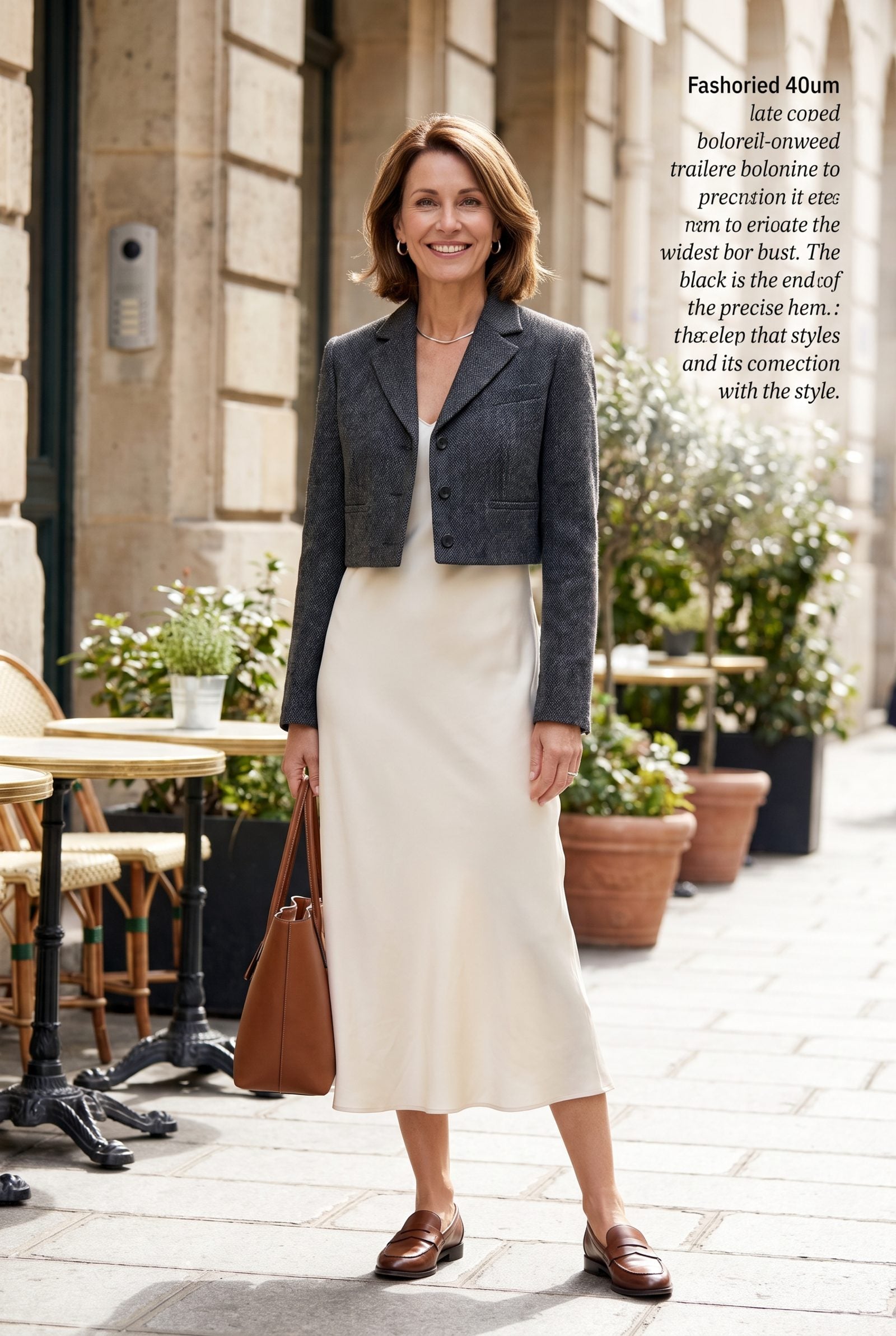
The bolero that cuts off at the bust draws one hard horizontal line across the fullest point, which is the exact spot you least want a stopping line. It shortens the torso and broadens the chest in a single move.
A cropped topper can work beautifully. It just needs to end at the natural waist or well below the bust, not on it. Swap the bolero for a longer fitted black blazer over an emerald evening dress, or a longline wrap that pulls the eye down in a vertical line instead of across. Where a jacket ends decides what it does to your proportions, every single time.
23. Lace Backed With a Heavy Contrasting Lining
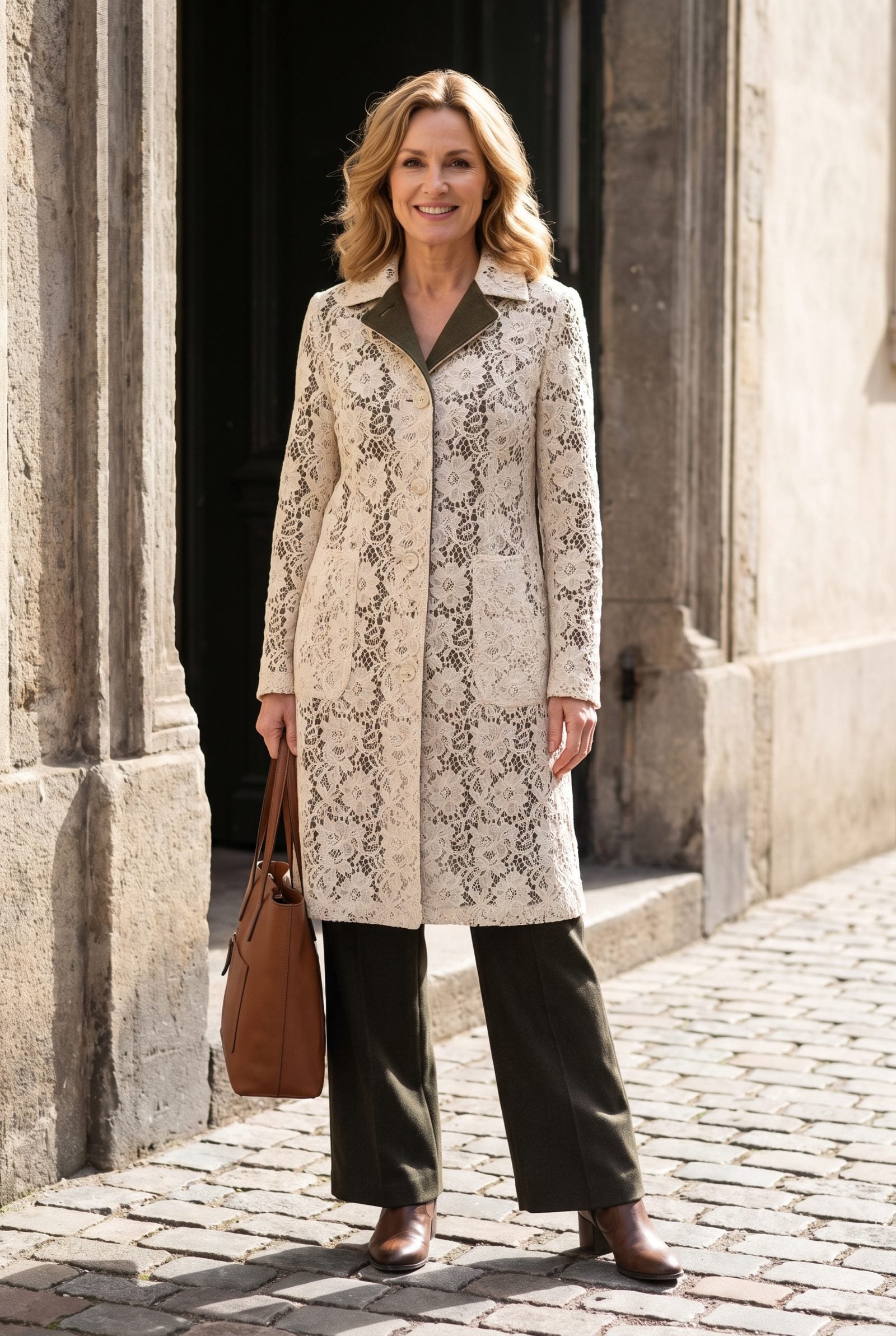
Lace over a loud contrasting lining turns delicate fabric into a graphic print. Black lace over bright white backing flattens all the intricacy into stark two-tone, and the whole point of the lace, its depth and softness, just disappears.
Tonal lining is the fix. Black lace over a deep charcoal or matching black slip keeps the texture readable and the effect quiet and rich. The lace reads as lace instead of as a pattern. Already own the high-contrast version? A black slip dress worn underneath can rescue it entirely.
22. Choosing a Bodycon Dress Made From Thin Shiny Jersey
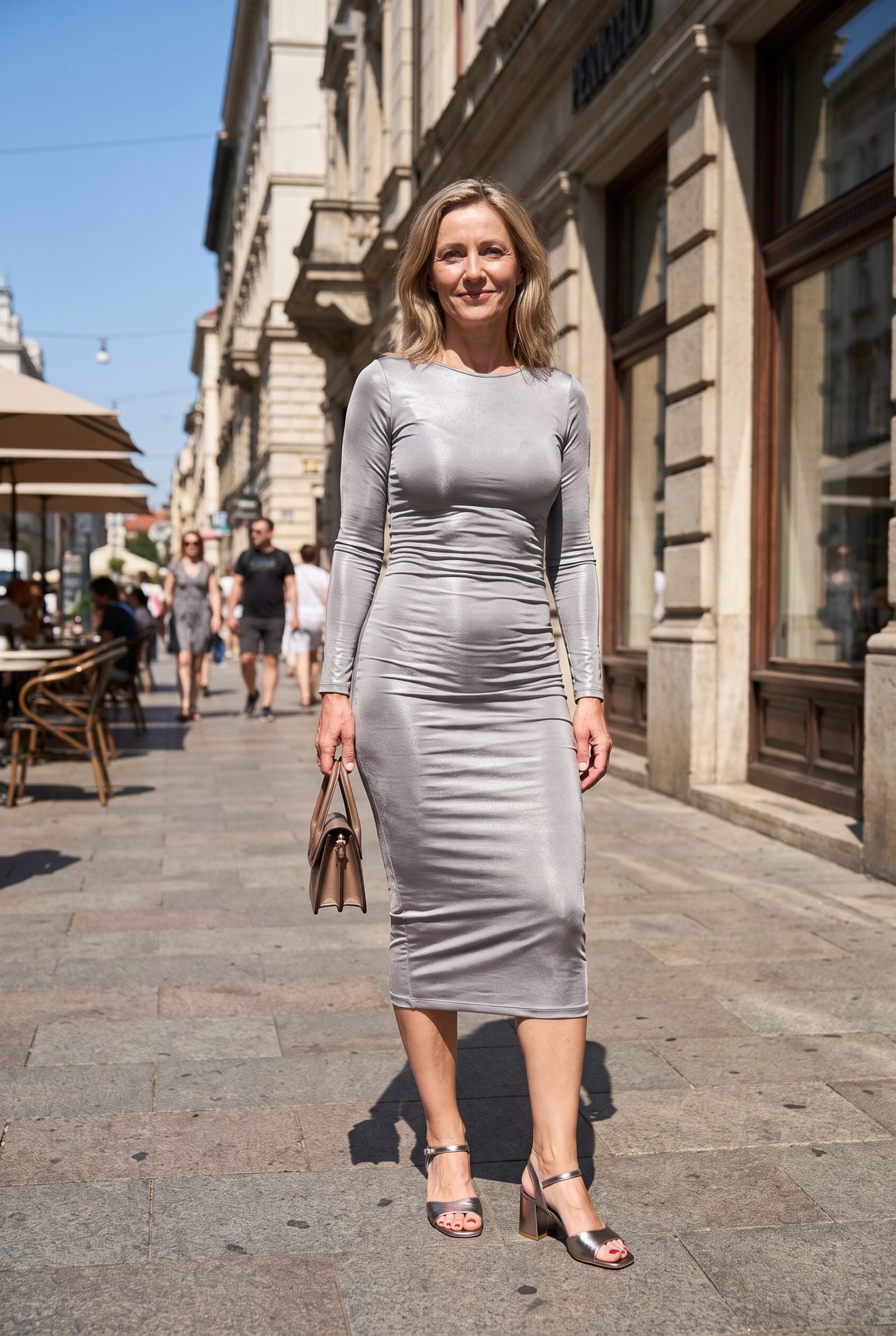
Thin shiny jersey has one job and it does it badly. It broadcasts every seam, every ripple, every place the fabric is working too hard, and that plastic sheen under party lighting reads cheap even when the dress wasn’t.
We swapped one of these for a column dress in matte ponte with a bit of structure — same black, same close fit. The difference? The fabric now holds its own shape instead of borrowing yours. Ponte or a heavyweight crepe skims where thin jersey grips. The matte ponte column dress is the quiet upgrade: no sheen, no cling, all line.
21. Picking a Skater Dress With a Short, Flippy Circle Skirt
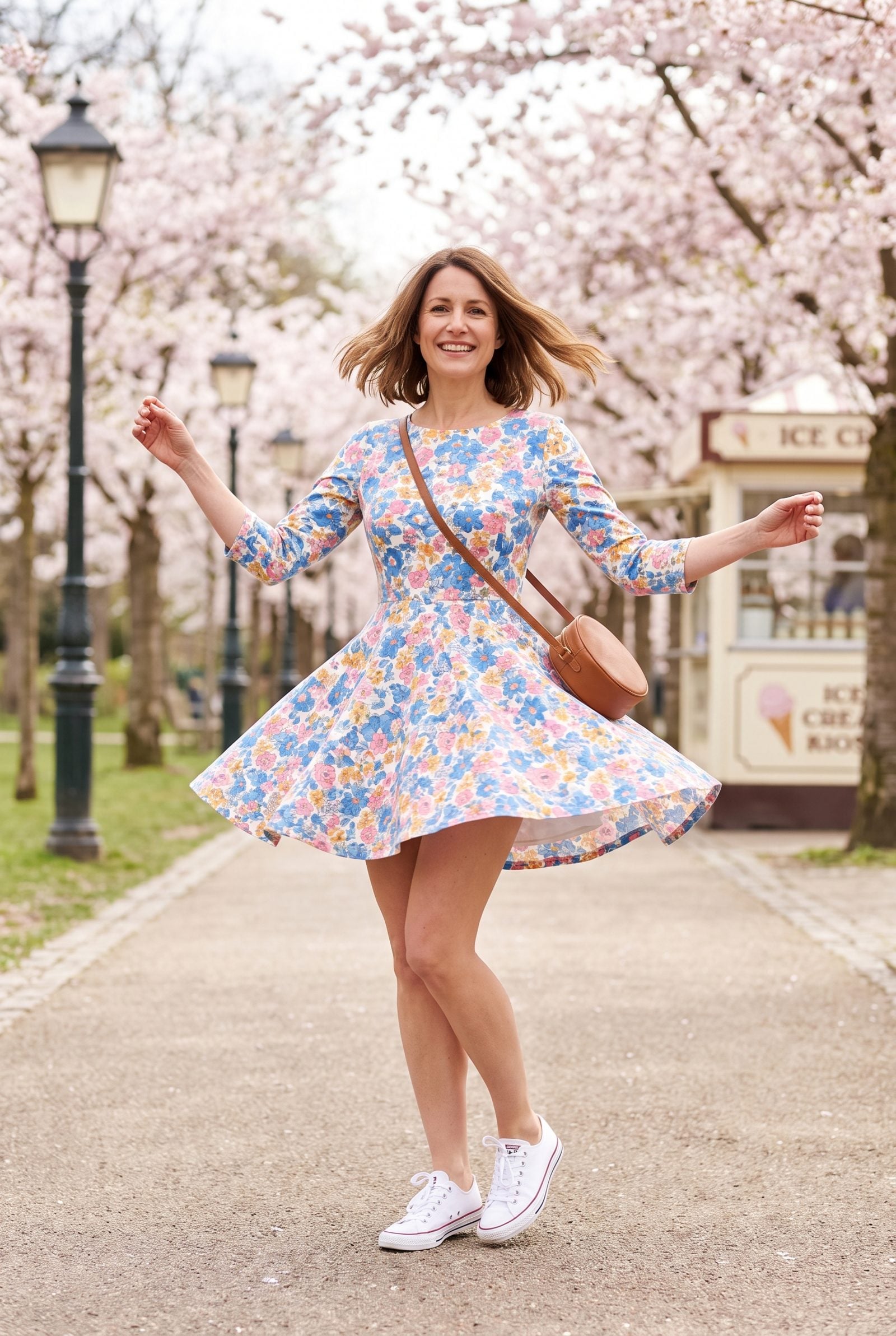
The flippy circle skirt cuts you at the widest, fullest point and then piles air underneath. It skews young in a costume way, not a confident way, and it’s one of the fastest ways a holiday outfit tips into dated territory.
So we gave this one a longer, leaner line. Same burgundy, same fit through the bodice, but a bias-cut slip skirt that falls to mid-calf and moves instead of flounces. The burgundy bias slip dress keeps the softness and drops the bounce. Longer and fluid always reads more deliberate than short and springy.
20. Adding a Rhinestone Belt to a Dress That Already Sparkles
❤️ Would you like to save this?
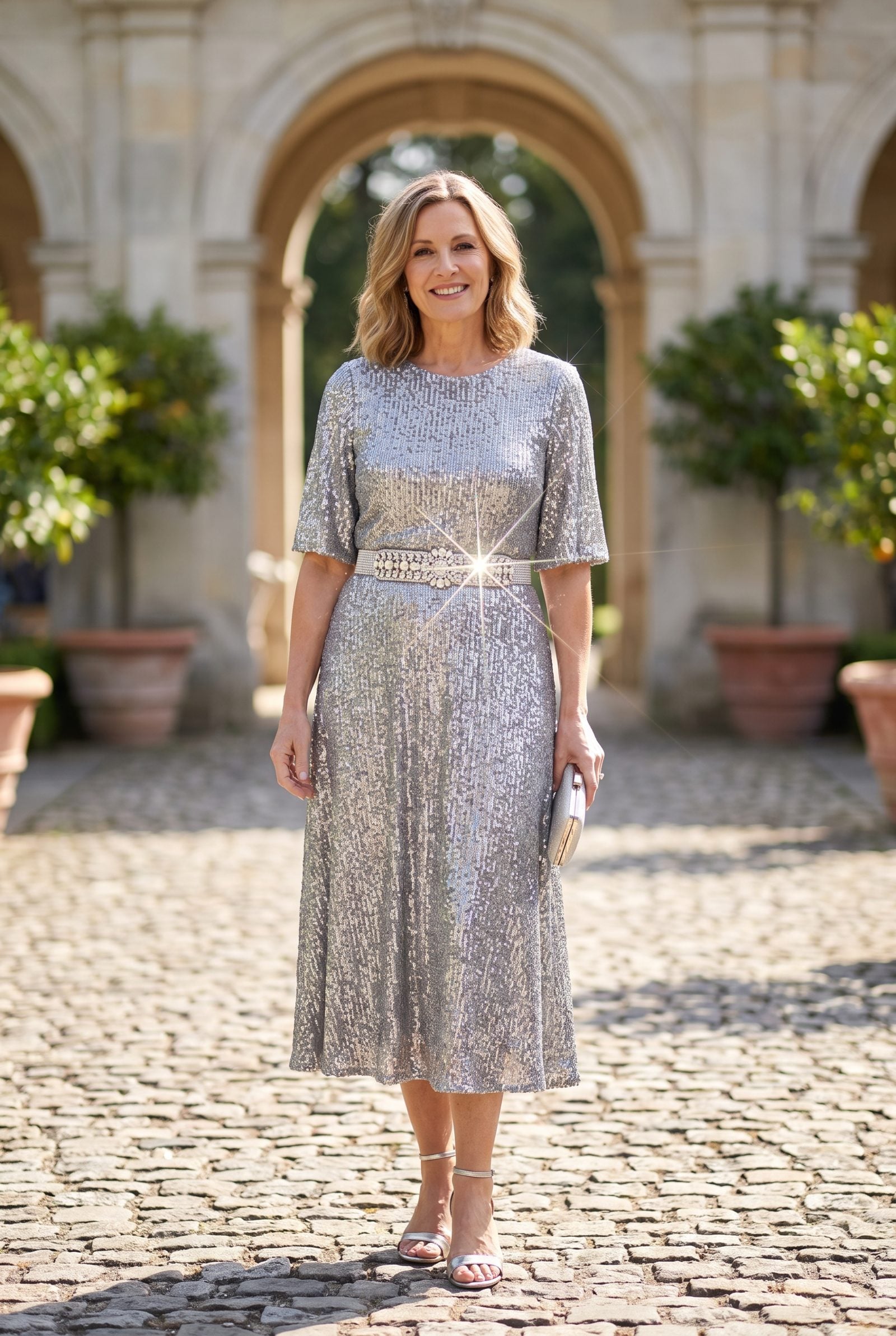
Sparkle on sparkle is a volume problem. When the dress already throws light, a rhinestone belt doesn’t add glamour — it adds noise, and the eye can’t find anywhere to rest.
The fix is restraint. On a sequined sheath we cut the crystal belt entirely, let the dress carry the shine alone, then defined the waist with a slim matte satin sash in the same navy. One source of glitter, one quiet anchor. The shine suddenly looks intentional instead of accidental.
19. Choosing Stiff Taffeta That Stands Away From the Body
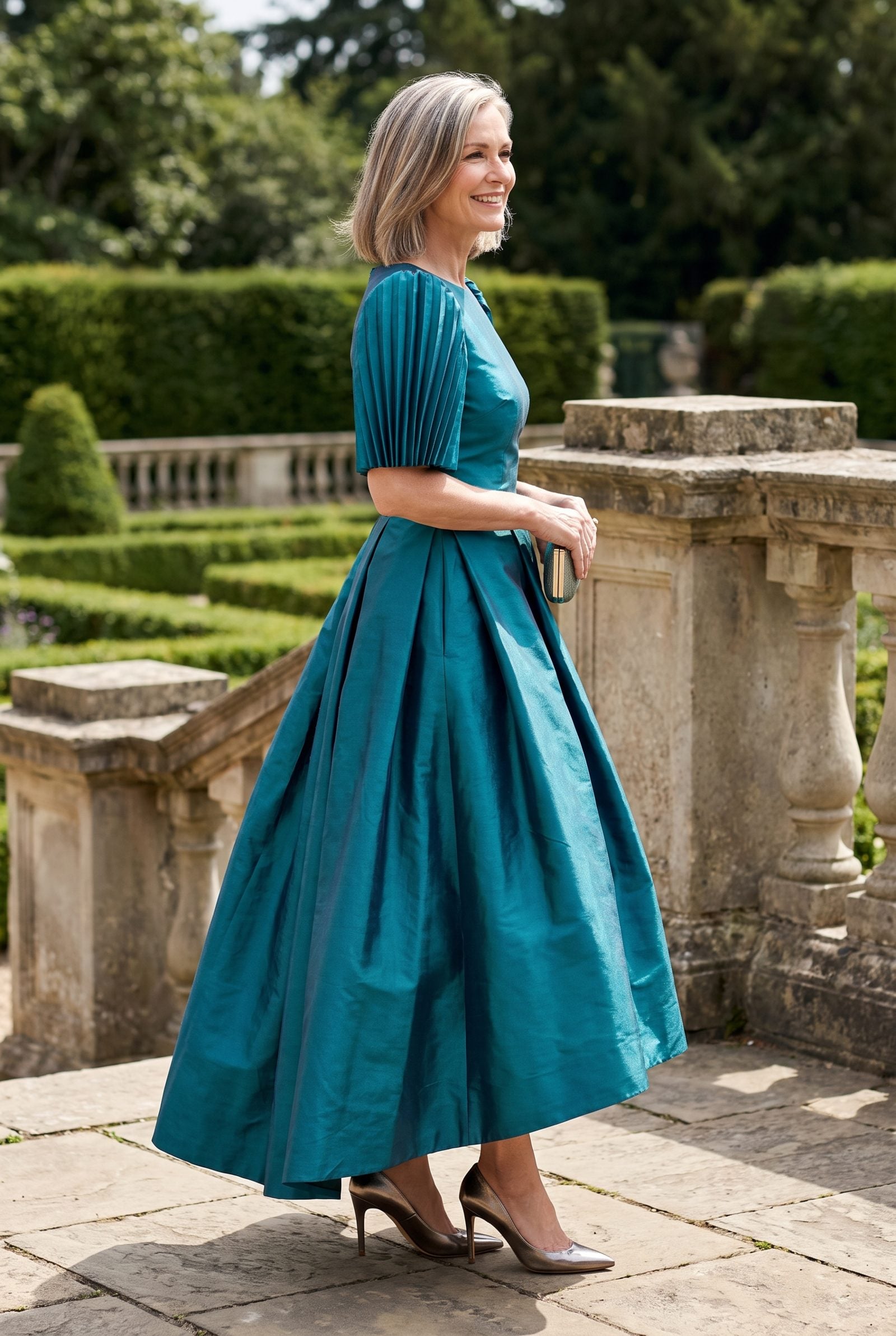
Stiff taffeta has a mind of its own. It stands away from the body, holds hard creases, and crinkles with that papery rustle that pins a dress to about 1998. You end up wearing a rigid cage of fabric rather than a dress.
We kept the emerald and the drama but moved to something that pours. A silk-blend charmeuse or a soft crepe de chine falls along the body and catches light in soft ribbons instead of stiff planes. The emerald silk-blend dress moves when you move. That motion is the whole difference between modern and museum piece.
18. Choosing a Metallic Fabric With a Foil-Like Finish
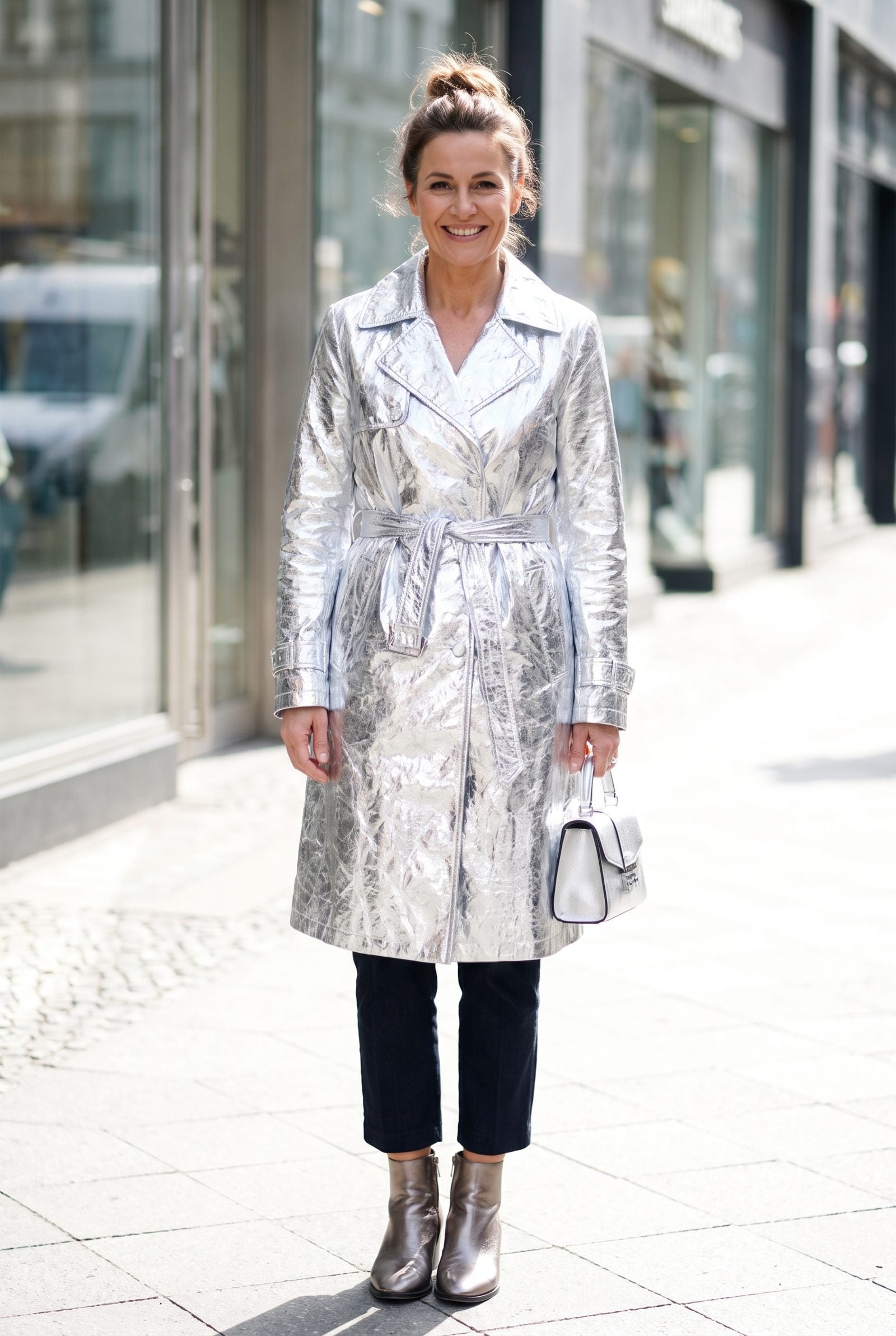
Foil-finish metallics read like gift wrap under a flash. The hard coating bounces light into harsh white spots and flattens the whole dress into one shiny plane — no depth, no softness.
Metallic can be gorgeous. It just needs to be woven, not coated. We traded the foil for a lamé with a liquid, slightly dulled finish, the kind that glows rather than glares. Antique gold, or pewter that moves like mercury. Now the shine is a slow shimmer under candlelight instead of a camera-killing glint.
17. Choosing Cheap Velvet That Photographs Crushed and Patchy
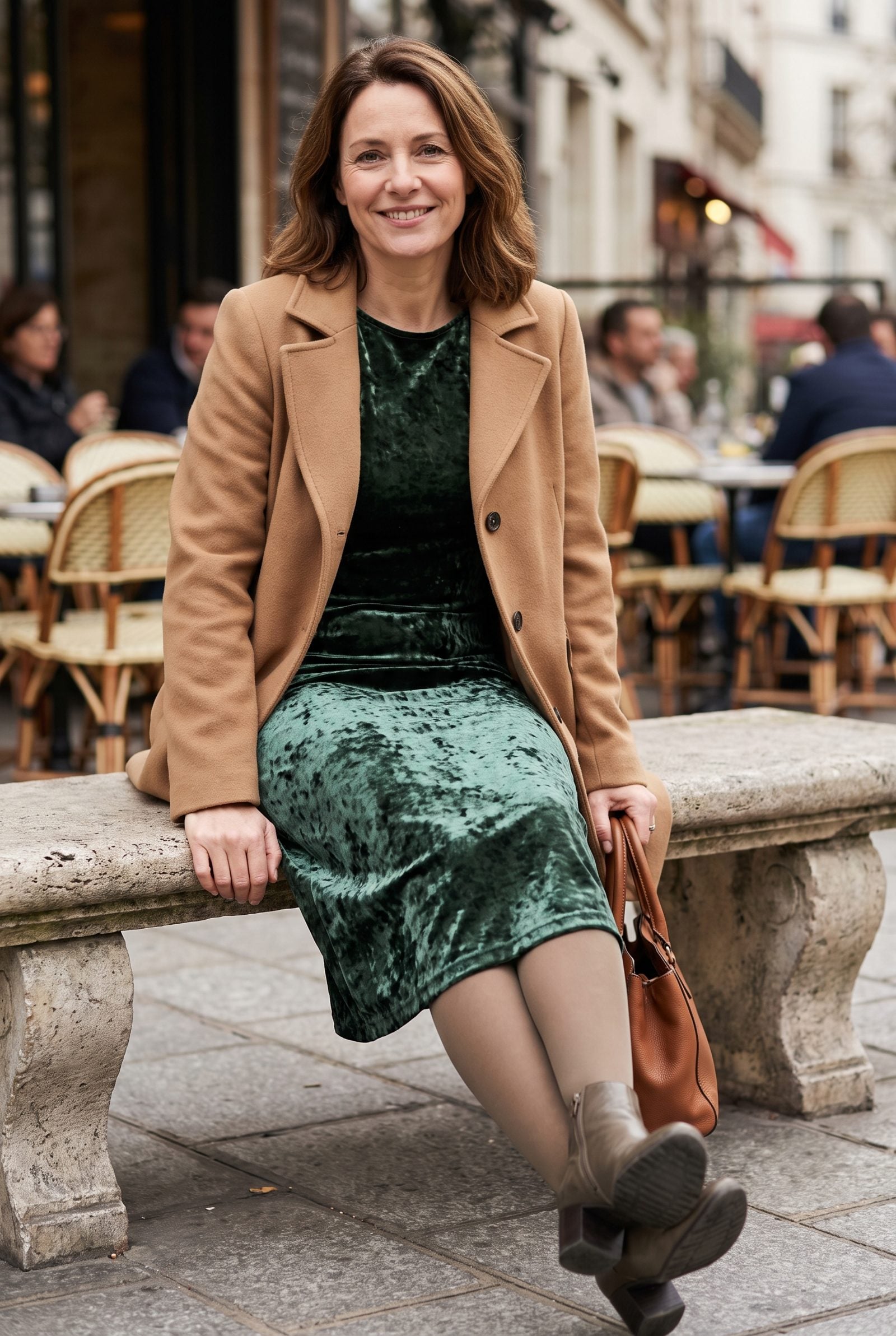
Cheap velvet betrays you the second you sit down. Thin, low-pile velvet crushes into shiny flat patches at the lap and elbows, and in photos those patches read as stains. The dress looks tired before the first toast.
Good velvet has density. A short, dense cotton-silk pile holds its nap, sits back up after you stand, and photographs as deep uniform color. We kept the plum and upgraded the cloth, and the dress went from mottled to rich. This is one fabric where you can spot the price difference in a single picture.
16. Pairing a Jewel-Neck Dress With a Chunky Statement Necklace
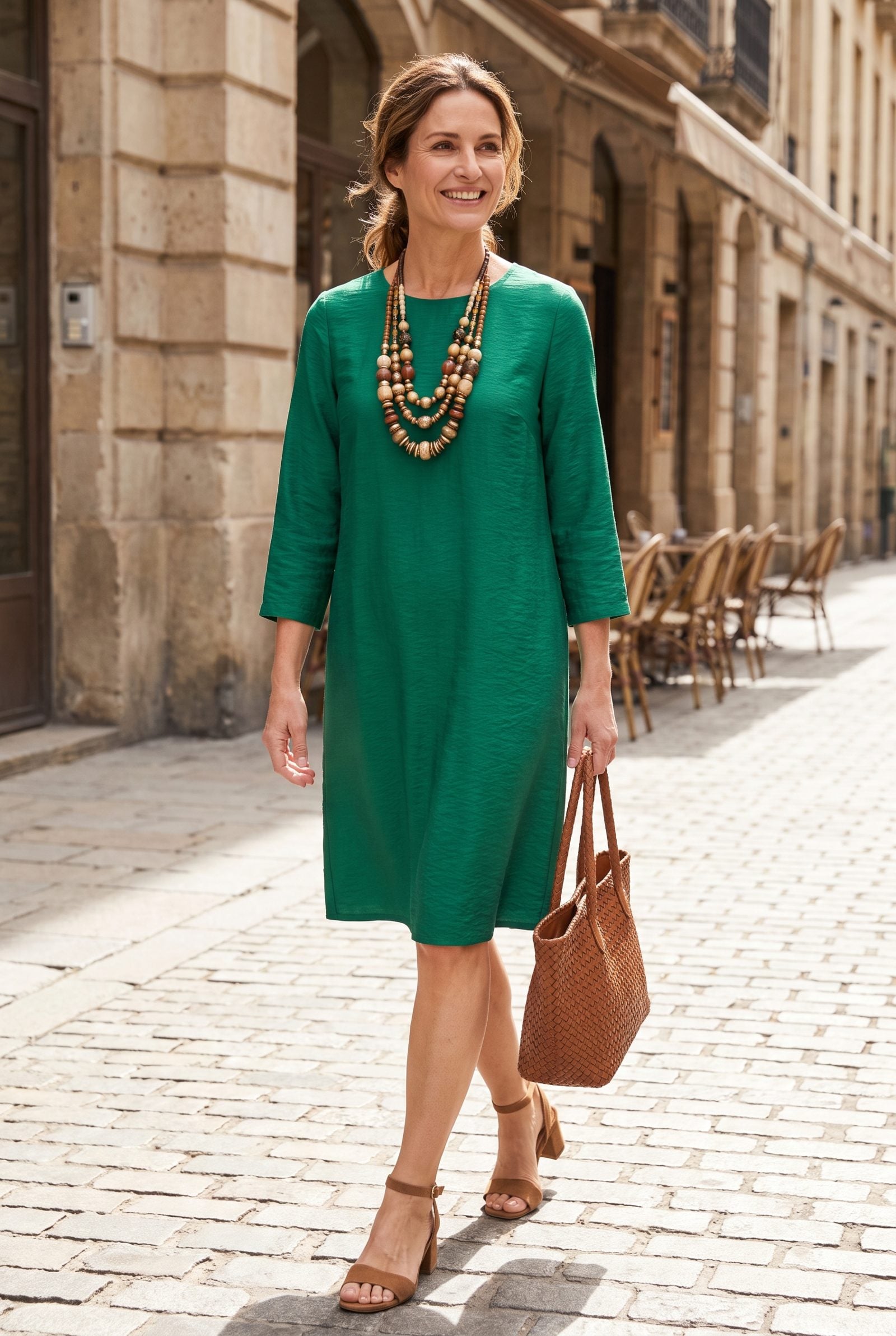
A jewel neckline sits high and close. Pile a chunky necklace on top of it and the two crowd each other, beads bunching against fabric with nowhere to fall. It looks heavy, and it drags the whole look back to some 2010 department-store moment.
High necklines want vertical, not horizontal. We pulled the collar necklace off and swapped in a single long pendant on a fine chain that drops past the neckline and pulls the eye down the body, letting the earrings do the sparkling instead. Suddenly there’s air, length, and a clean line from chin to waist.
15. Choosing a Peplum That Sits Too High on the Torso
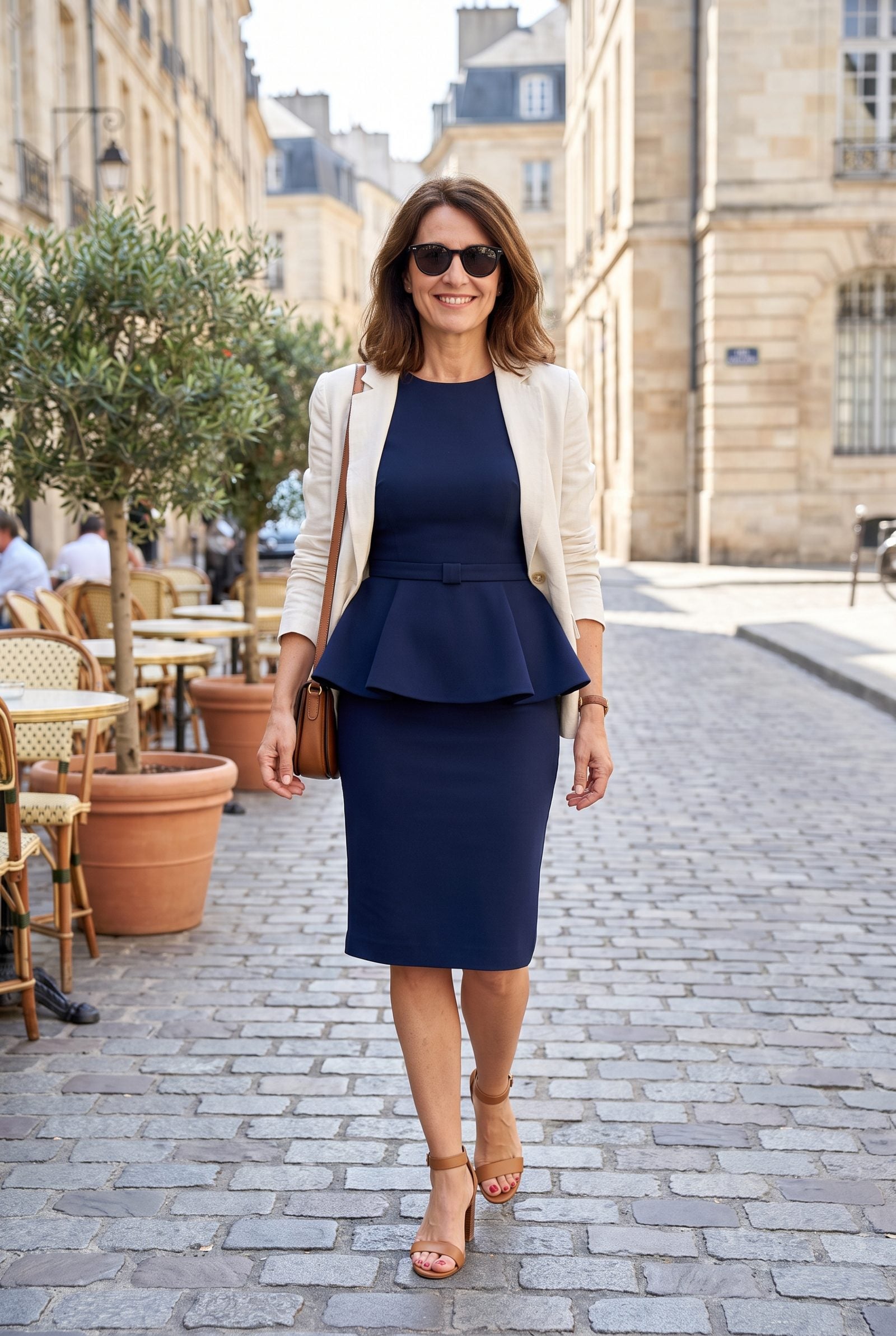
The peplum isn’t the problem. The placement is. Flare it two inches above the natural waist and it builds a little shelf across the ribcage that shortens the torso and widens the middle — exactly where you don’t want width.
We dropped the flare to the true waist and let it release from the narrowest point, so it defines rather than disguises. Same black crepe, same structure, entirely different read. A peplum launched from the right spot elongates the leg line and sharpens the waist. One that sits high just adds bulk.
14. Choosing a Cowl Neck That Collapses Into Saggy Folds
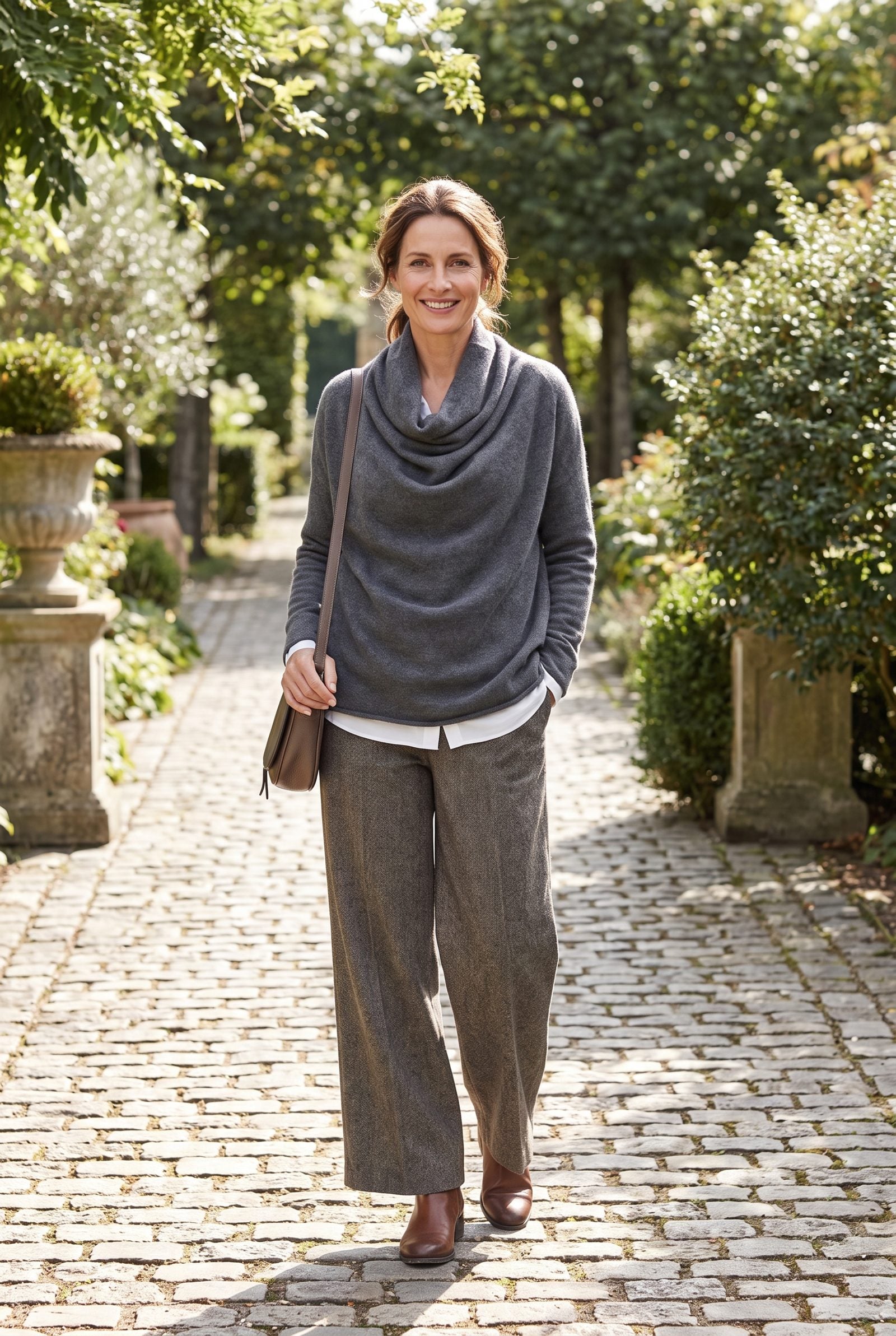
A cowl lives or dies on the fabric’s weight. Thin, flimsy satin can’t hold the drape, so the folds go slack and the neckline sags into a sad flat pool against the chest. It looks like the dress deflated.
Proper cowls need body. A bias-cut heavyweight silk satin, or a matte crepe-back satin, falls into clean sculptural loops that stay where you put them. We kept the champagne color and chose a denser cloth — droopy became elegant. Here’s the quick test: if the swatch won’t hold a fold when you pinch it, the cowl won’t either.
13. Wearing Black Opaque Tights With a Delicate Pastel Dress
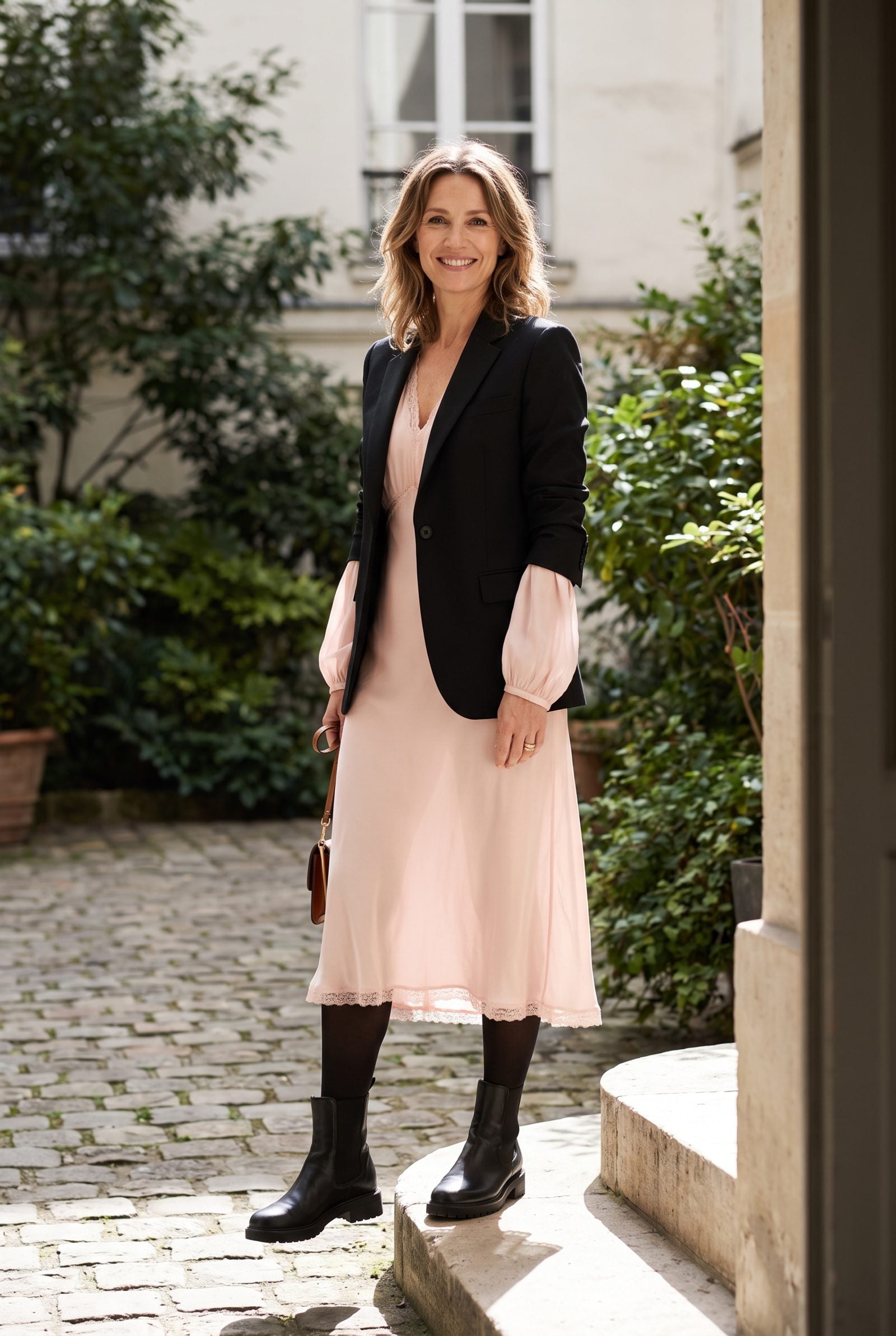
Black opaque tights under a soft pastel dress cut you in half at the hem. The dense black wrestles with the delicate color above it, chopping your line and dragging a pretty dress into clompy territory.
Pastels want a leg that continues the softness. We swapped the black for a sheer nude — a whisper-fine skin-tone tight — and the line ran uninterrupted from hem to shoe. Want warmth and coverage? A sheer tight in the dress’s own color family keeps everything in one conversation. The leg should finish the dress, not interrupt it.
12. Adding a Faux-Fur Stole That Overwhelms the Neckline
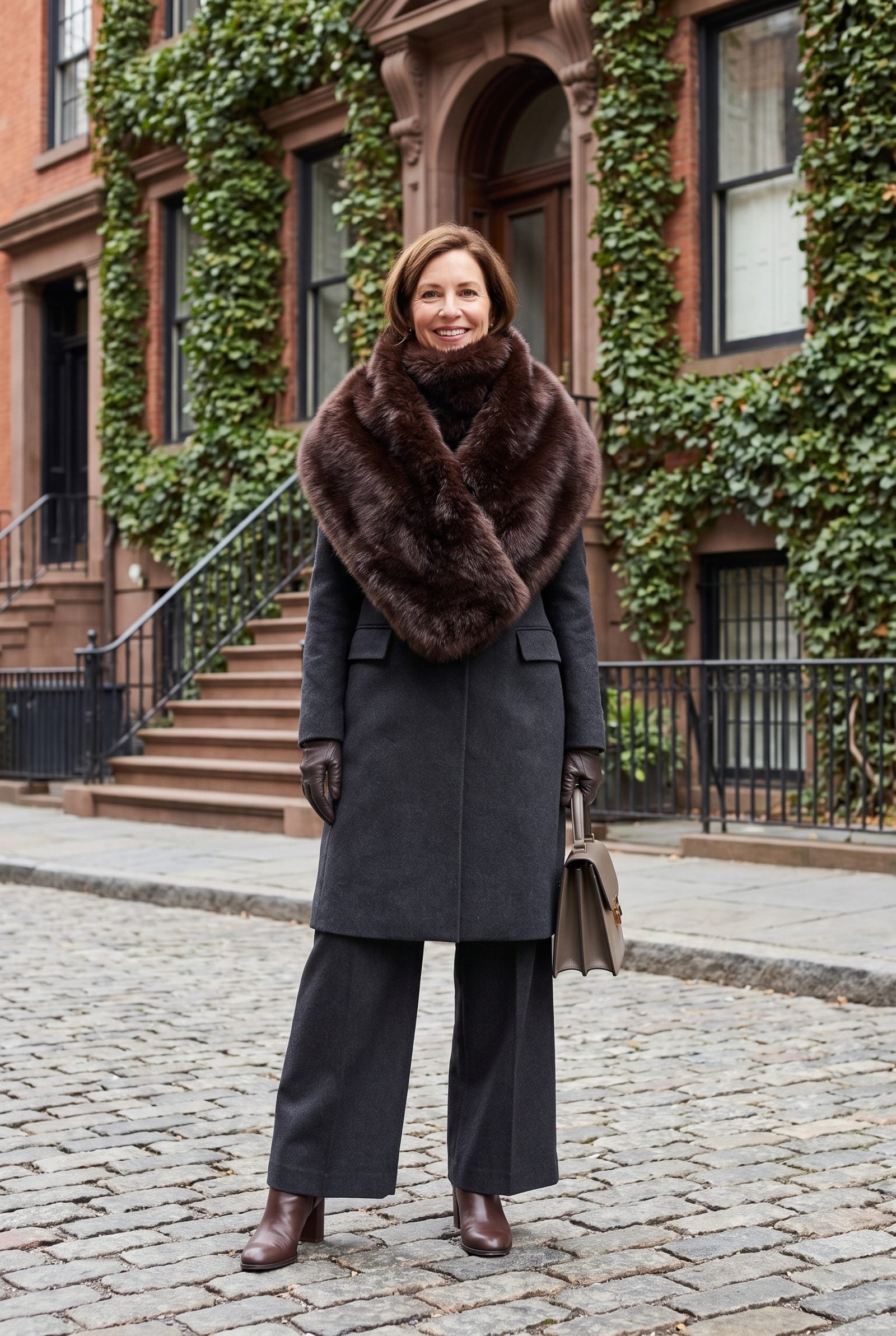
The gown wants to show its neckline, and the stole won’t let it. A wide faux-fur wrap that climbs past the jaw swallows the shoulders and shortens the neck, which reads heavy and somehow older than the woman wearing it.
The fix keeps the drama and loses the bulk. A narrow fur or shearling scarf, something you can toss once and forget, sits below the collarbone and lets the dress breathe. Or go a size down on the stole and wear it off one shoulder. Same luxury, half the weight.
11. Selecting a Maxi Dress With a Busy Digital Holiday Print
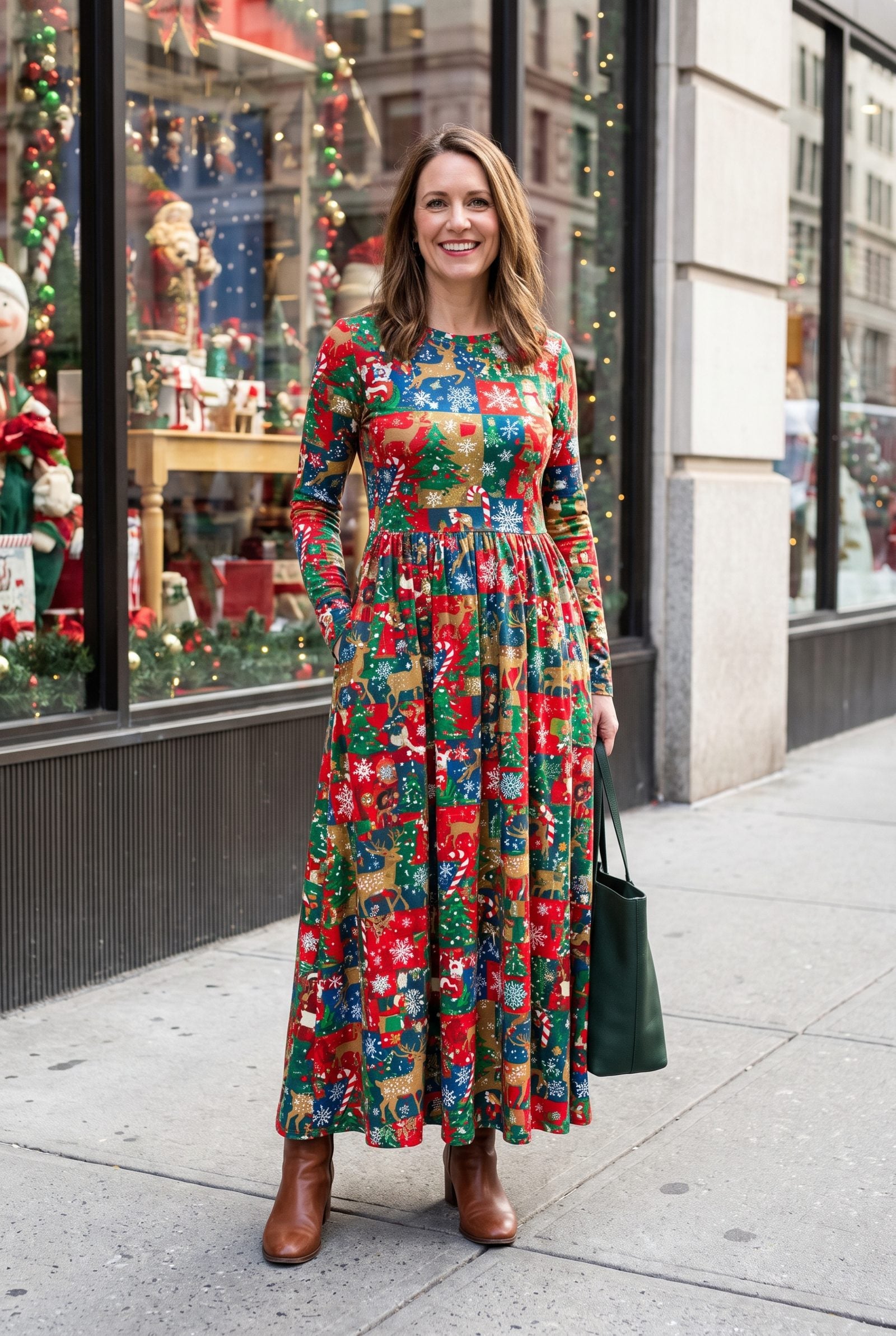
A print with no breathing room ages a dress faster than anything else in the closet. Those dense digital florals and gold swirls, crammed edge to edge, read like a screensaver from 2011. There’s no place for the eye to rest, so the whole thing looks loud and flat at once.
Trade the busy repeat for a print with space in it — a dark ground with scattered motifs, a large-scale botanical, or one real color commitment instead of six. A solid emerald column with a holiday sparkle in the earring does more festive work than an acre of printed snowflakes ever could.
10. Wearing a Heavy Black Shoe With an Airy Chiffon Dress
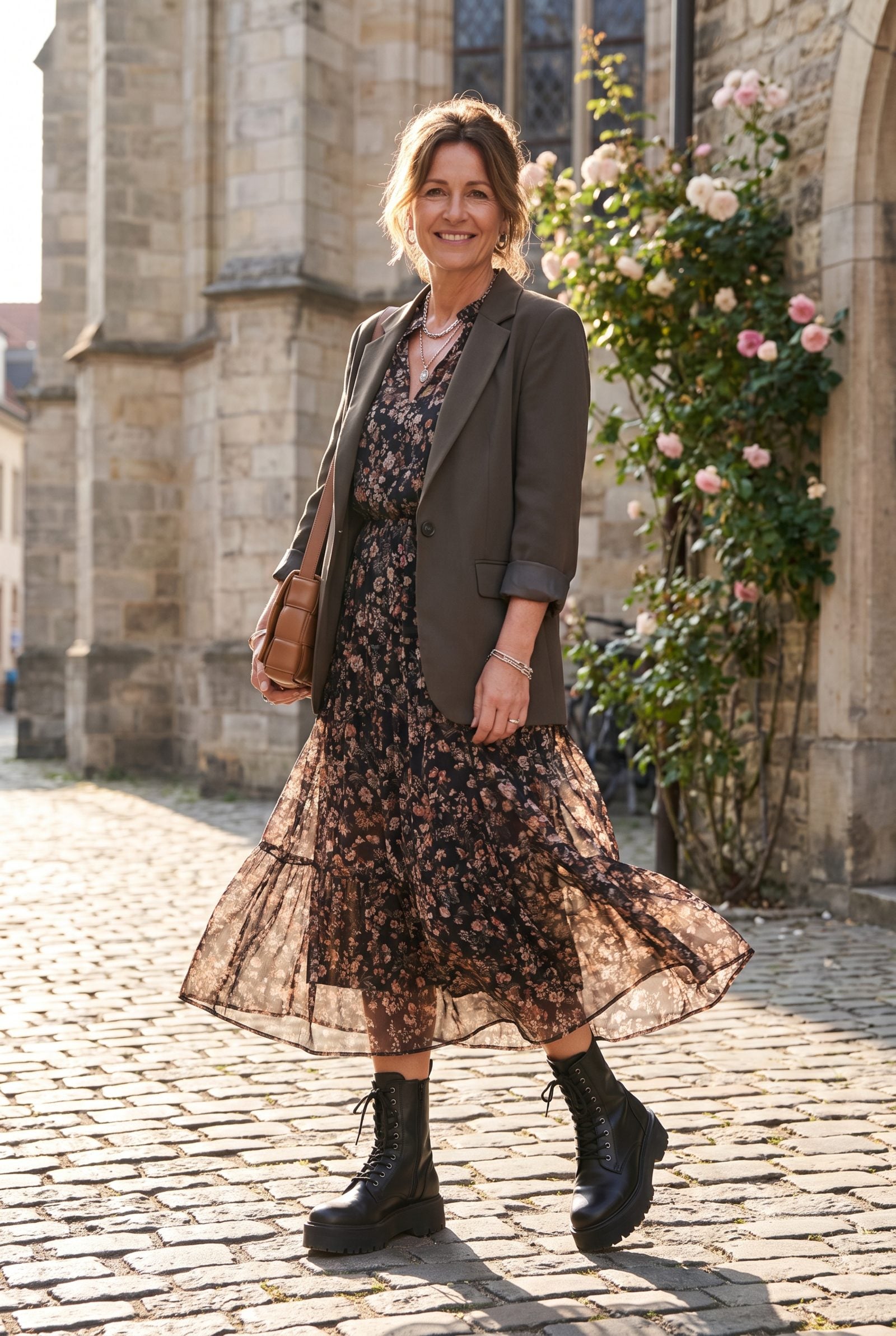
The shoe is doing the opposite of its job. A chiffon dress floats; a heavy black block heel with a chunky sole drops an anchor on it. The weight sits at the bottom and drags the whole silhouette down, so a dress built to move looks stuck to the floor.
Match the shoe to the mood of the fabric. A metallic strappy sandal, a slim nude heel, or a barely-there pointed pump lets the hem do its thing. The foot nearly disappears and the leg reads longer, which is why anyone bothers with a floaty dress in the first place.
9. Wearing an Ankle-Length Dress With a Dowdy Mid-Calf Coat
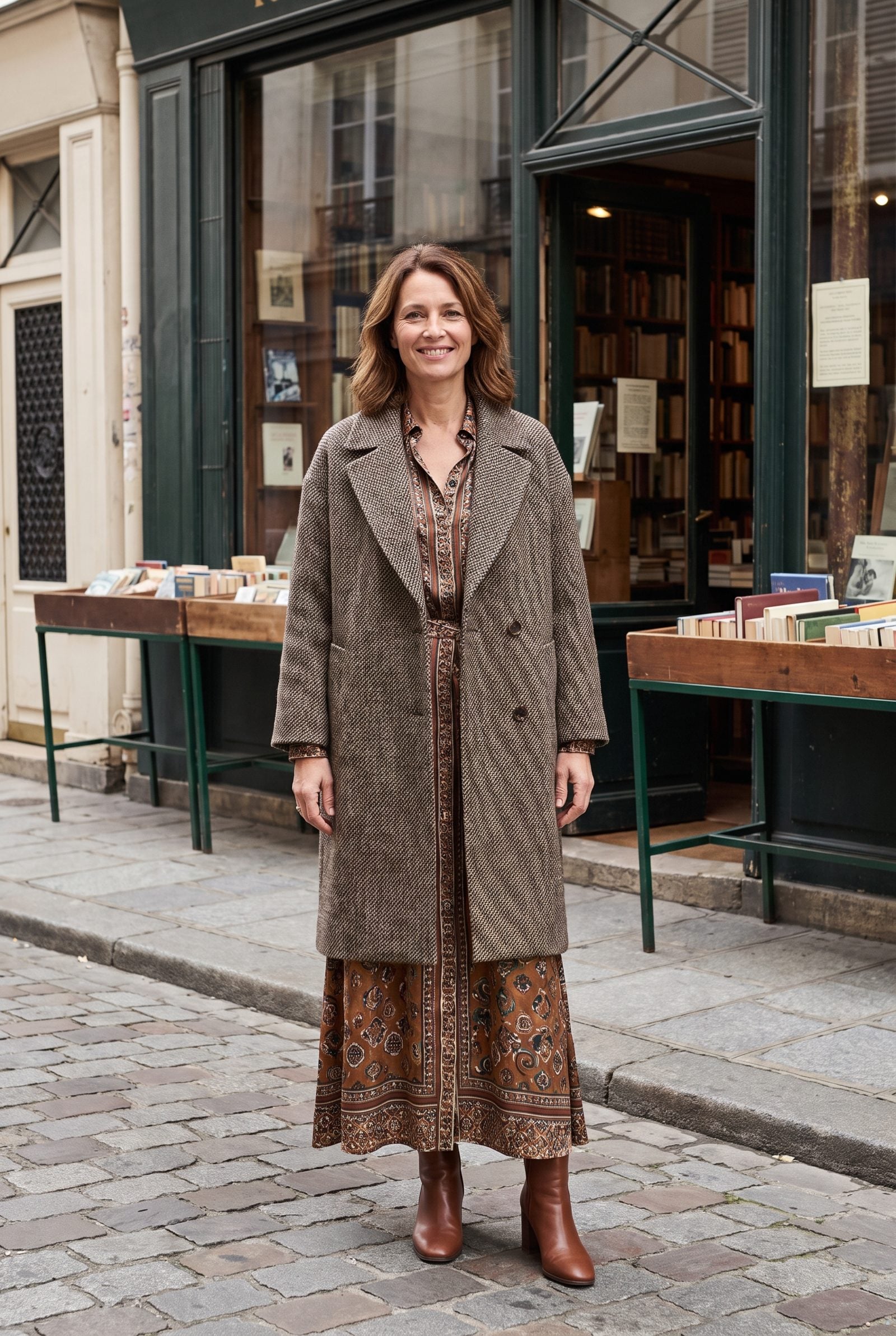
Two competing hemlines chop the body in half. The mid-calf coat ends where nothing good happens, and that band of dress peeking out below it reads like an afterthought rather than a plan.
With a long dress, go long with the coat too — or go properly short. A full-length wool wrap coat, a column-cut evening coat, or a tailored tux-length jacket keeps one clean vertical line. And if you only own the mid-calf coat? Cheat it open and unbuttoned so it frames the dress instead of interrupting it.
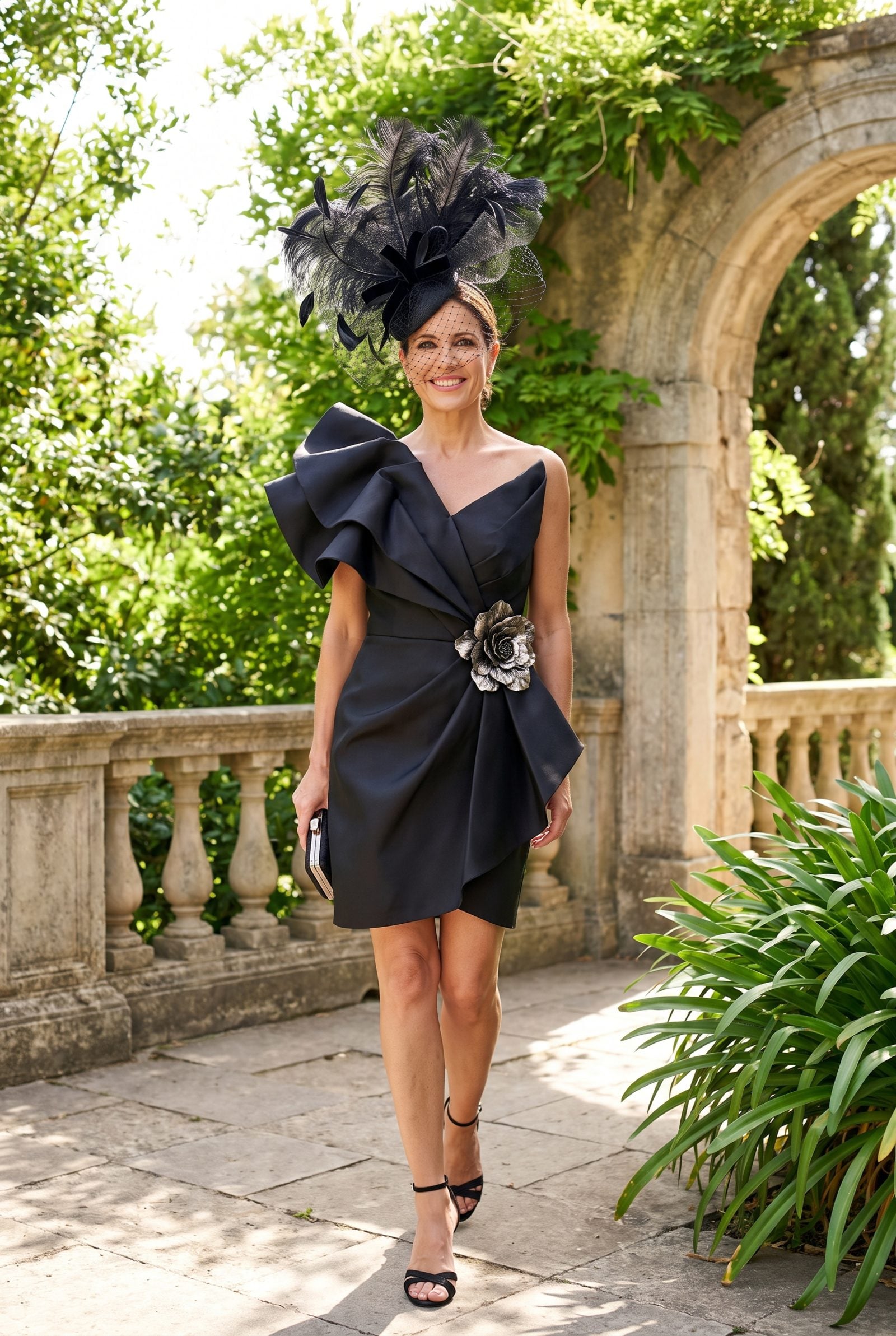
8. Adding a Fascinator to an Already Dramatic Cocktail Dress
❤️ Would you like to save this?
Two show-stoppers fighting for the same spotlight. The dress is already saying plenty with that sculptural bodice, and then the fascinator throws a feathered second act on top. The eye doesn’t know where to land, so it gives up on both.
Pick one hero. If the dress is the event, skip the headpiece entirely and let a clean chignon and a bold earring finish it. Save the fascinator for a quieter dress that actually needs the lift. A loud dress and a loud head accessory just cancel each other out.
7. Picking an Oversized Bow That Swallows the Upper Body
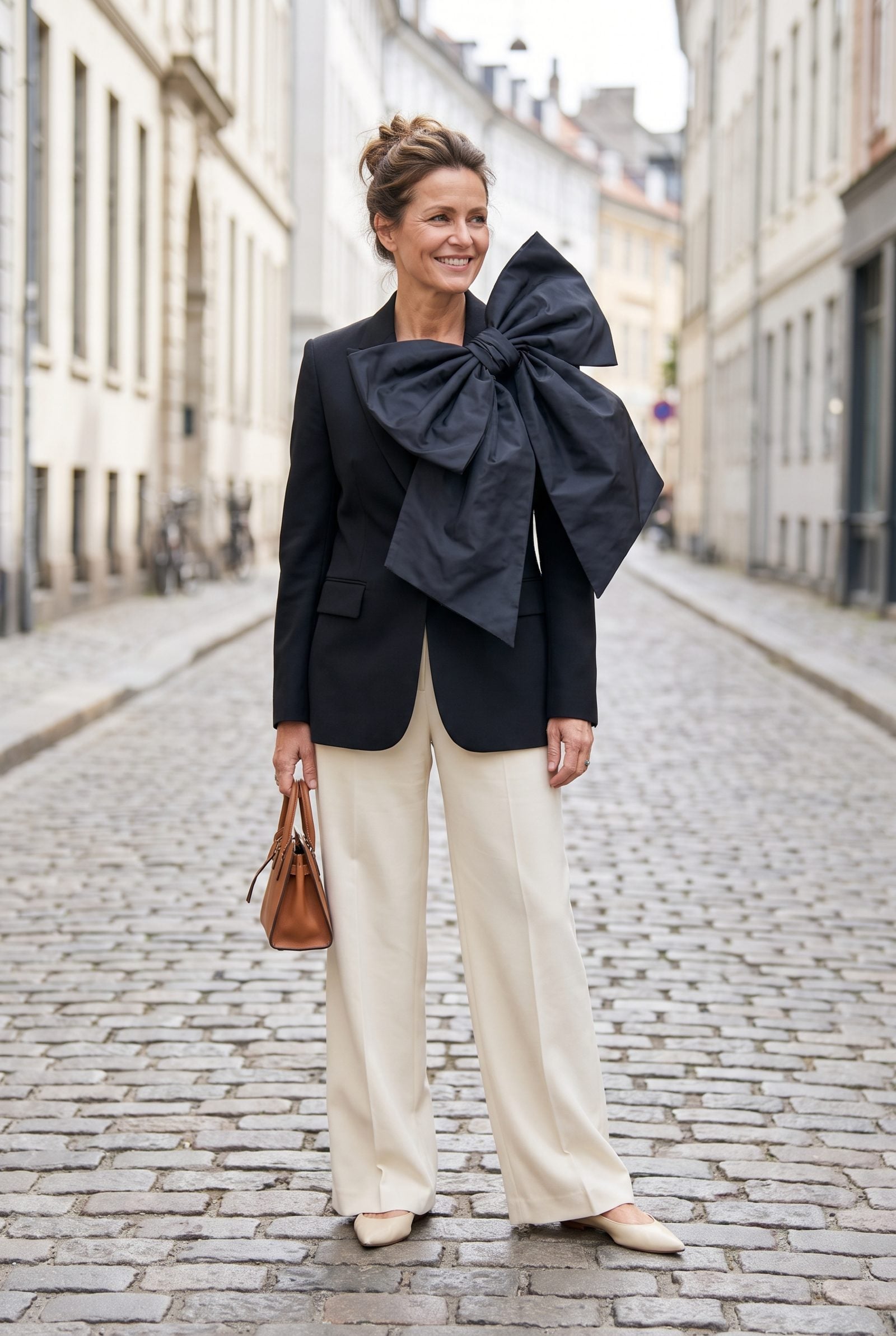
The bow trend is wonderful right up until it eats the torso. A taffeta bow stretching shoulder to shoulder turns a sharp sheath into a gift-wrap situation. It’s the proportion that fails here, not the bow.
Scale it down and move it off-center. A single bow at the shoulder, at the waist, or tucked as a back detail reads modern and deliberate. A smaller bow in the fabric of the dress — tonal rather than contrasting — whispers instead of shouts. The bow should be a wink, not the entire personality of the look.
6. Using a Wide Patent Belt to Manufacture a Waist
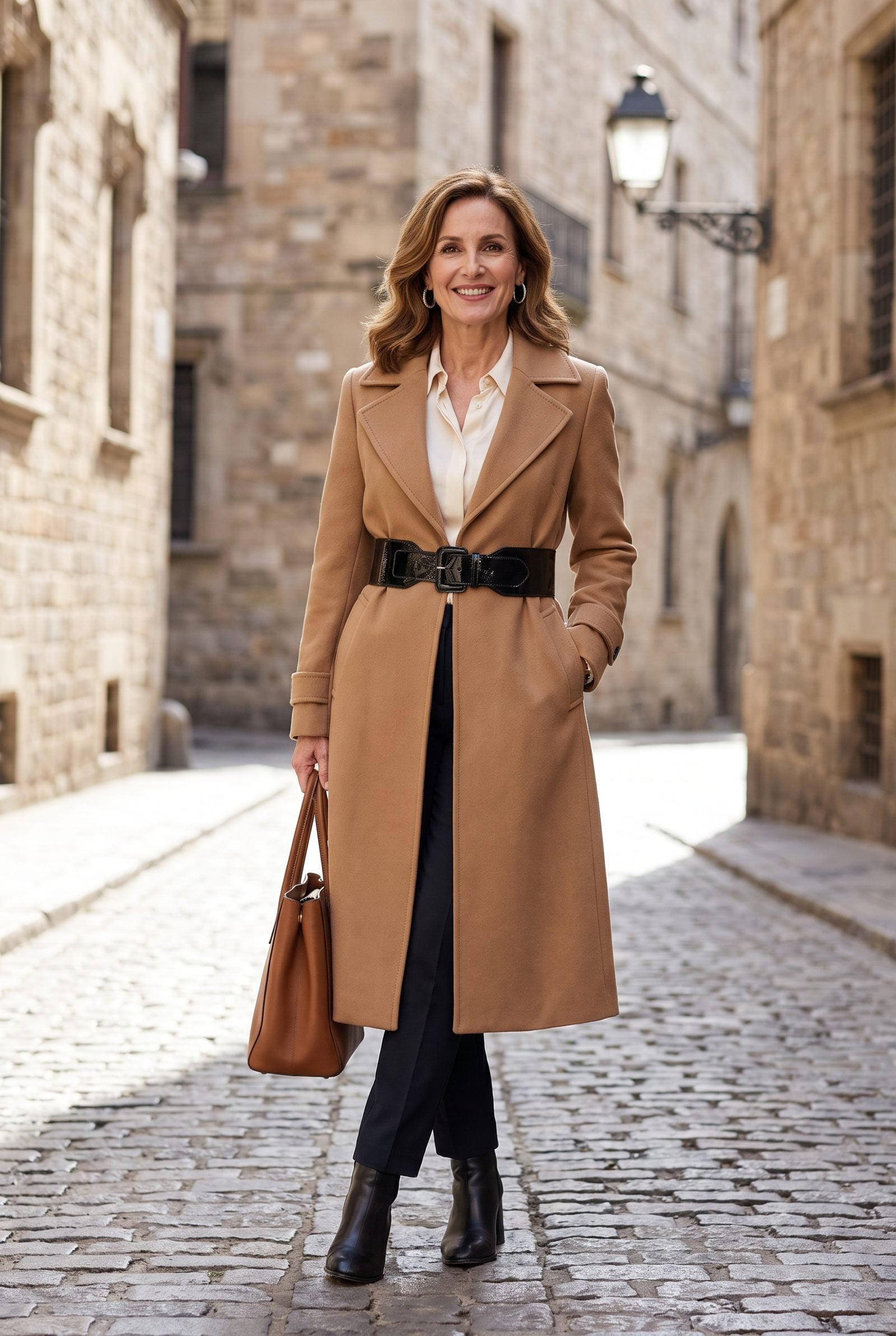
A stiff four-inch patent belt forced over soft jersey doesn’t define a waist. It bunches the fabric and announces the effort. The rigidity fights the drape, and the shine dates the whole thing to a decade of overdone waist-cinching.
Let a soft dress define its own waist. A self-tie in the same fabric, a slim suede belt, or a wrap dress that’s already shaped does the job without the hardware showing its work. Want a belt anyway? Match its stiffness to the fabric. Structured cloth can take a structured belt. Jersey cannot.
5. Choosing a One-Shoulder Dress With Too Many Draped Layers
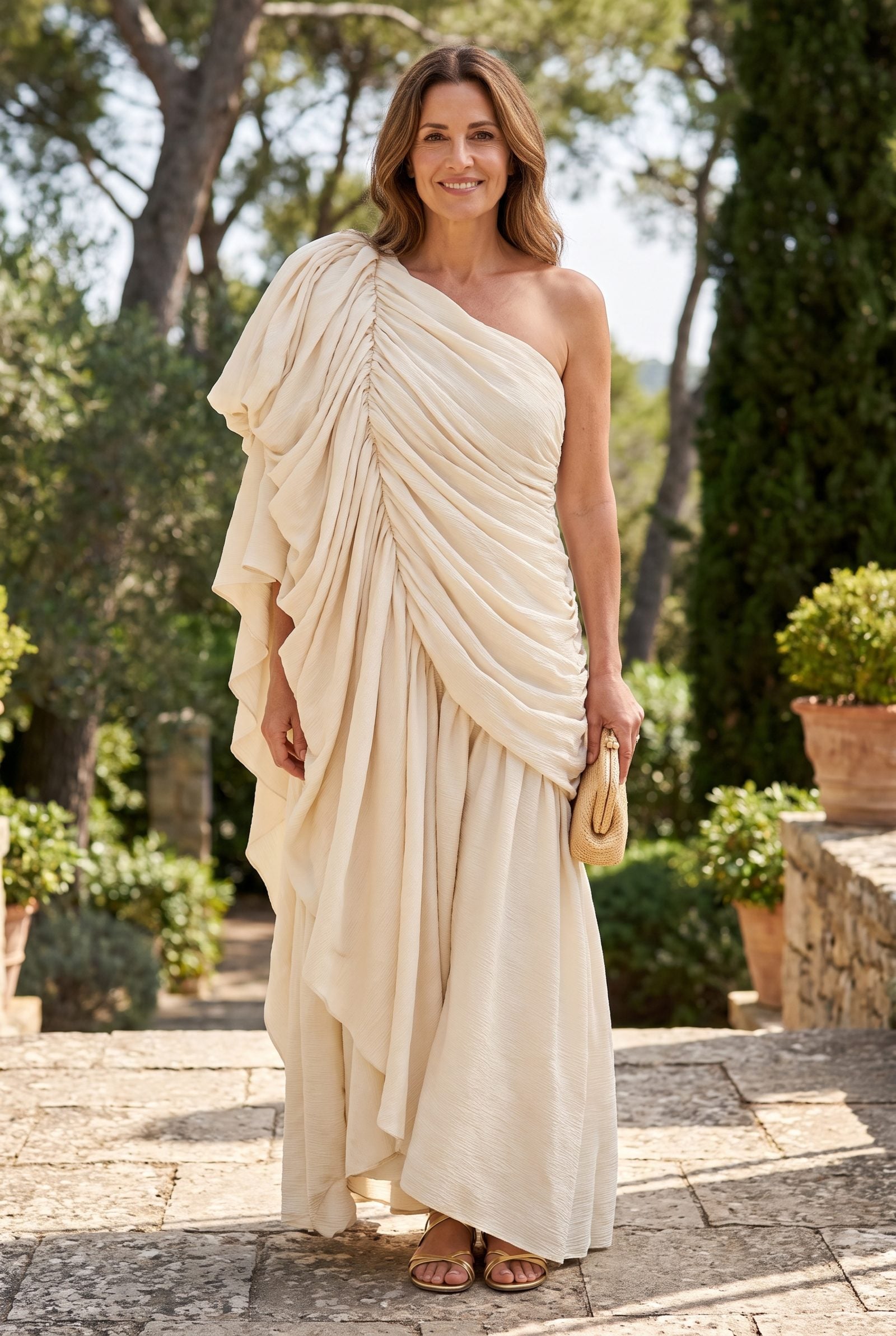
One asymmetric shoulder is a clean, modern move. Pile four ruched layers on top of it and the drama turns dense, the torso gaining volume it never asked for while the elegance of that single shoulder gets lost in the swags.
The best one-shoulder gowns stay spare. One clean diagonal line, smooth fabric, and the shoulder does all the talking. If you love drape, let it fall in one long column from shoulder to hem rather than stacking it across the middle. Less fabric, more impact.
4. Wearing a Cropped Cardigan Over a Formal Column Dress
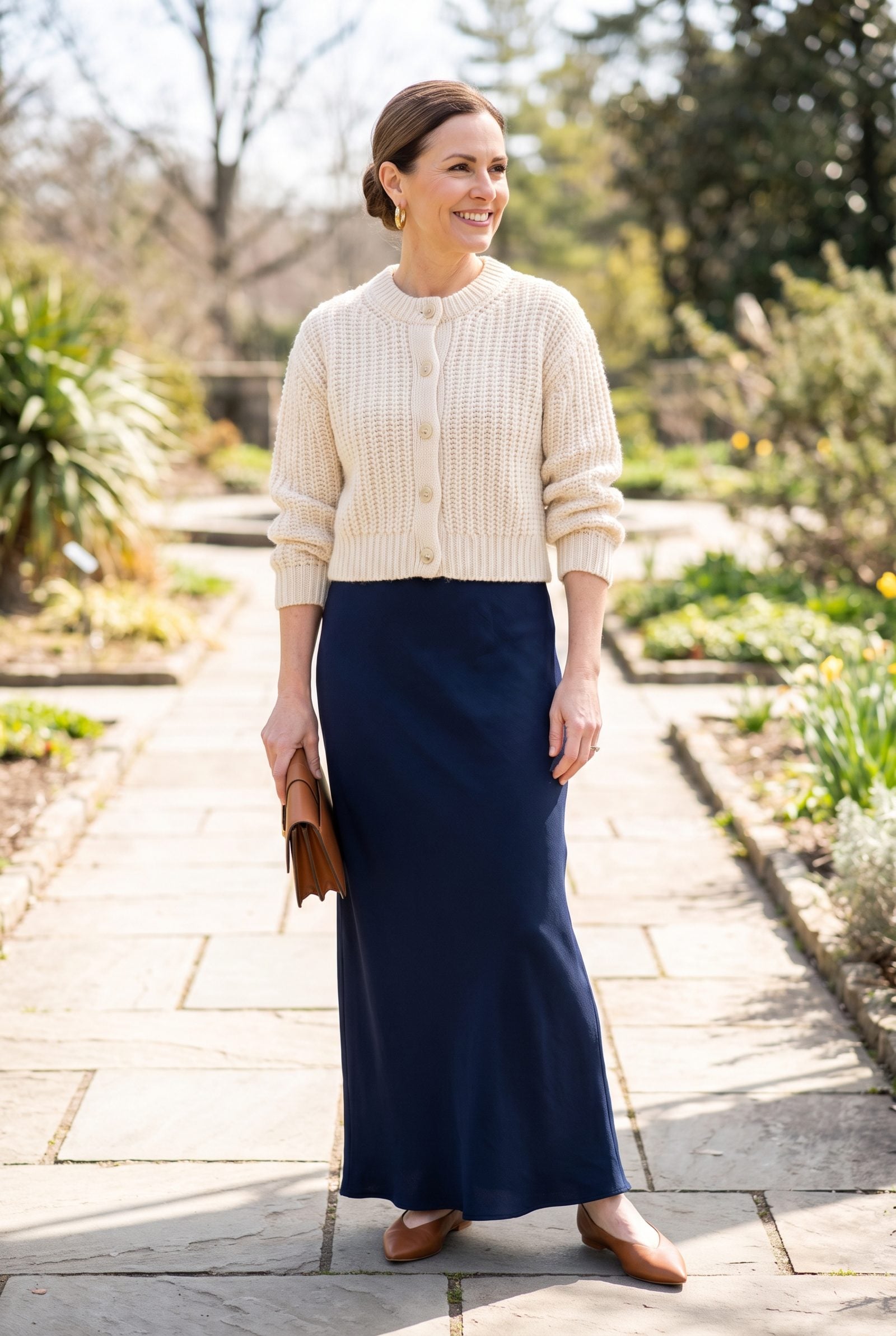
A column dress is one long, uninterrupted line, and a cropped cardigan buttoned high across the ribs snaps that line in two — dropping the eye to the worst possible spot. The casual knit against formal satin reads mismatched rather than cool.
Cover up without killing the column. A long duster, a tailored blazer, or a sleek evening jacket keeps the vertical going. If you want knit, go long and open so the dress still reads top to bottom. Warmth is fine. Chopping the silhouette at the midsection is not.
3. Buying a Dress That Looks Festive Only Because It Is Green
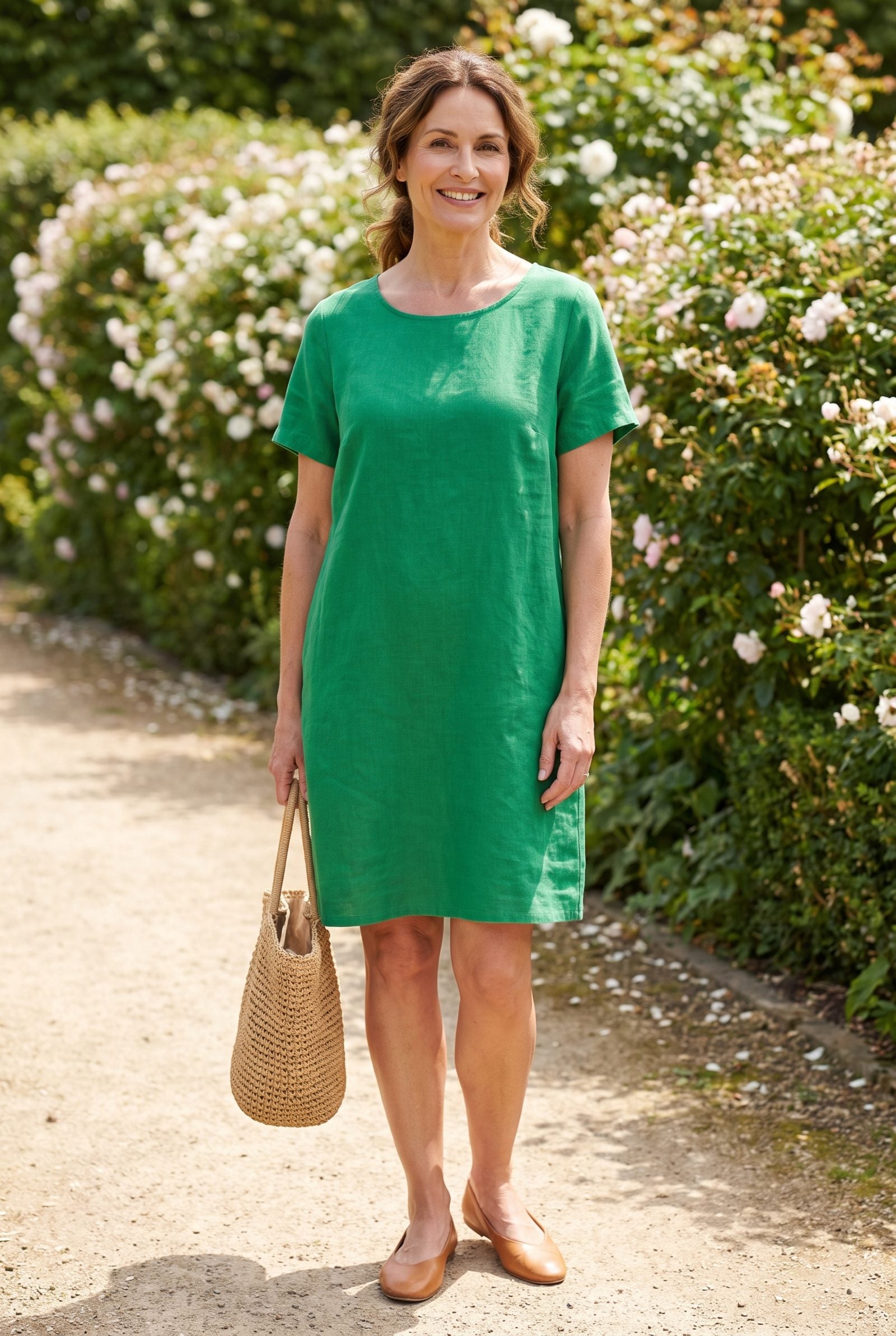
Green alone is not a party. A flat Kelly-green shift with no shape, texture, or detail leans entirely on the color to carry the occasion, and the color can’t do it alone. The result feels costume-adjacent, like the dress showed up for the theme and forgot to get dressed.
Let the fabric do festive work instead of the hue. A deep emerald in velvet, satin, or sequin reads rich on its own. A sharper cut, a bias drape, or a textured weave gives the eye something to hold. Color is the easy part. Shape and surface are what make a dress feel like an occasion.
2. Ditching the Waterfall-Hem Overlay for a Clean Column Silhouette
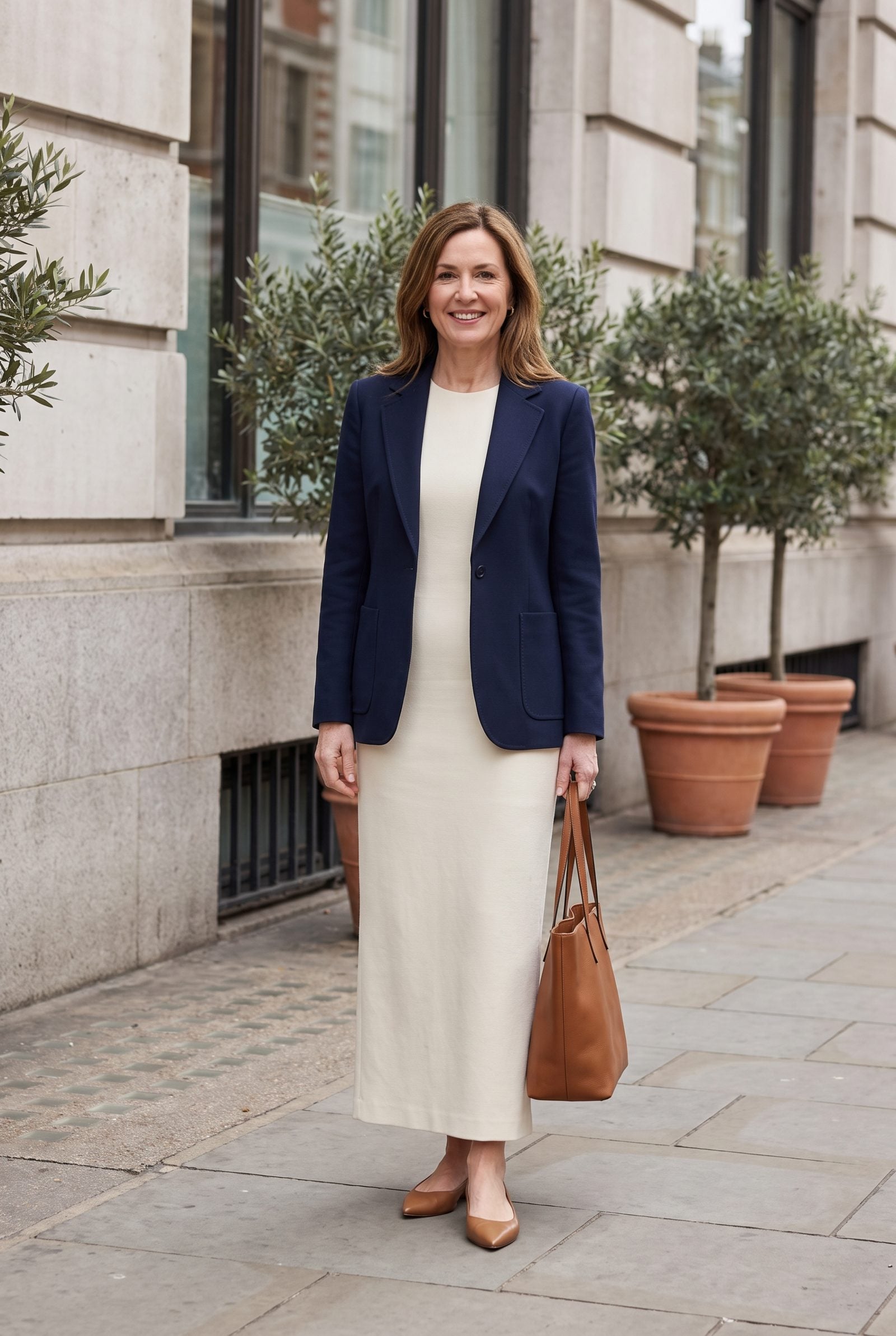
The waterfall overlay was everywhere around 2014, and it hasn’t aged well. Those cascading points chop your silhouette into three competing lengths, so your eye never knows where to land and the whole look reads older than the woman wearing it.
The fix is less fabric, not more. A clean column in a single color does the work the overlay was fumbling at. Reach for a burgundy jersey column dress that skims from shoulder to hem in one uninterrupted line, then add warmth with something structured instead of something floaty. A short cropped velvet jacket ends at your natural waist and leaves that vertical line alone.
What’s really doing the work is the unbroken column. One length, one color, zero handkerchief points fluttering around your shins. It’s the gap between a dress that moves with you and one that fusses at you all night.
1. Breaking the Head-to-Toe Match: Dress, Shoes, Clutch and Lip in One Color
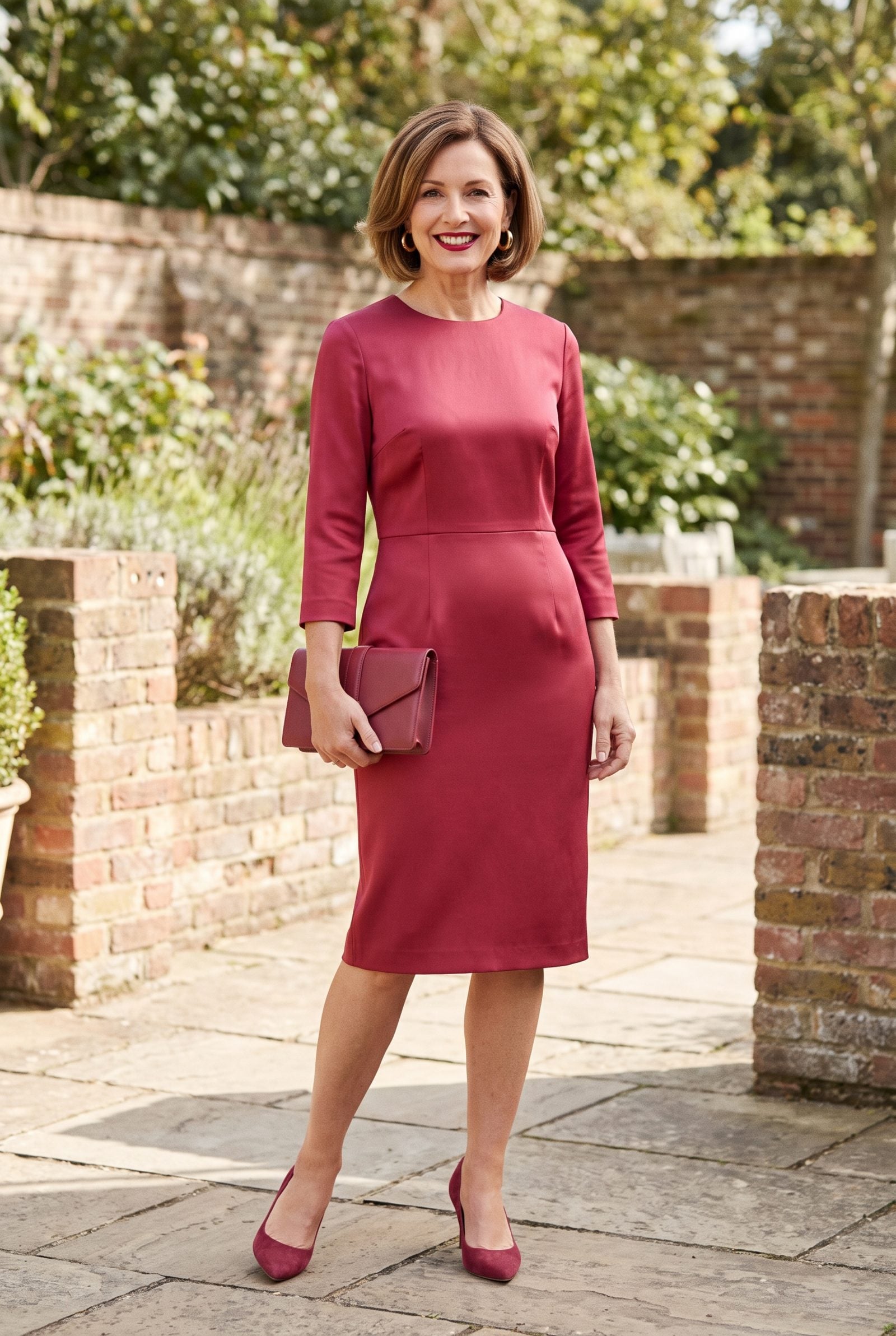
Matching your dress to your shoes to your clutch to your lipstick felt coordinated back in 1998. Now? It reads like a costume rental. When every single thing is the exact same green, the outfit collapses into one flat block and your face loses the contrast that used to make it the main event.
Modern polish lives in deliberate mismatch. Keep the emerald satin wrap dress — then break the spell everywhere else. Swap the matching pumps for gold metallic heels, trade the satin box clutch for a black velvet clutch, and pick a neutral or berry lip so your face leads instead of blending in.
What makes it click is intentional contrast. One commitment, the dress, and everything else in conversation with it rather than echoing it back. That’s a woman who got dressed. The other version is a woman who bought the set.