
A coat follows the body. A cape redraws it. One sharp fold can turn shoulders into architecture; a few extra feet of fabric can give an ordinary stride the sweep of a grand entrance. Then comes the deliciously impractical question of where the sleeves went. Fashion has answered with military fastenings, opera-length velvet, embroidered silk, and enough cashmere to make a winter afternoon feel positively extravagant.
The modern cape has moved well beyond the familiar wool semicircle. A cropped capelet can exaggerate the shoulders while leaving the waist entirely exposed. Asymmetric cuts send one panel toward the floor while another stops at the hip. Leather holds its shape; velvet drinks in light; sheer embroidery reveals the outfit beneath. Belts impose a waist on fabric designed to float around it. Contrasting linings turn a change of direction into a flash of color. The engineering is in the cut, the fastening, and the way the cloth moves.
These 37 looks take that idea from city streets and snowy terraces to theater evenings and full-scale formal dressing. Some rely on discipline: a precise collar, a clean shoulder, a single well-placed button. Others make a case for volume, extravagance, or two fabrics that have no business looking so good together. The best ones don’t simply cover an outfit. They change its entire geometry.
FYI, thanks to AI imagery software, we’re able to create very specific fashion and hairstyle examples to illustrate the points being made. In some cases, imagery is exaggerated to hammer home the point. Also, assume links that take you off the site are affiliate links such as links to Amazon. this means we may earn a commission if you buy something.
37. Floor-Sweeping Oxblood Leather Cape and Ivory Satin Gown
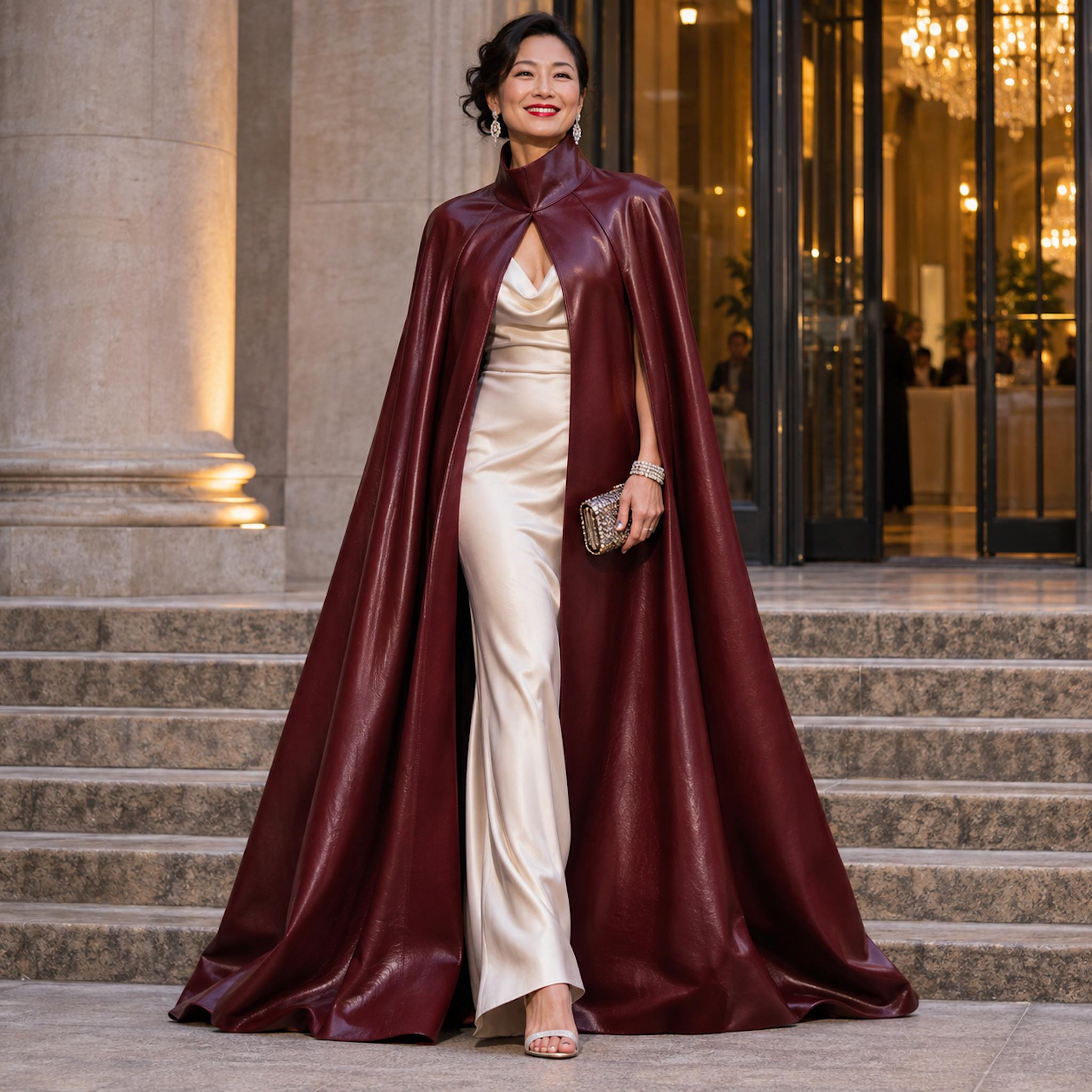
Oxblood leather takes the cape to an entirely different scale. A high, close-fitting collar gives way to long, glossy panels that reach the ground, their weight producing a stately sweep rather than the flutter of lighter fabric. The open front reveals an ivory satin gown, its liquid folds contrasting with the leather’s substantial surface. A jeweled evening clutch and delicate sandals provide the finishing touches. The drama comes from the opposition of two materials: one structured and commanding, the other soft enough to follow every step.
36. Salt-and-Pepper Tweed Cape and Cream Cable Knit
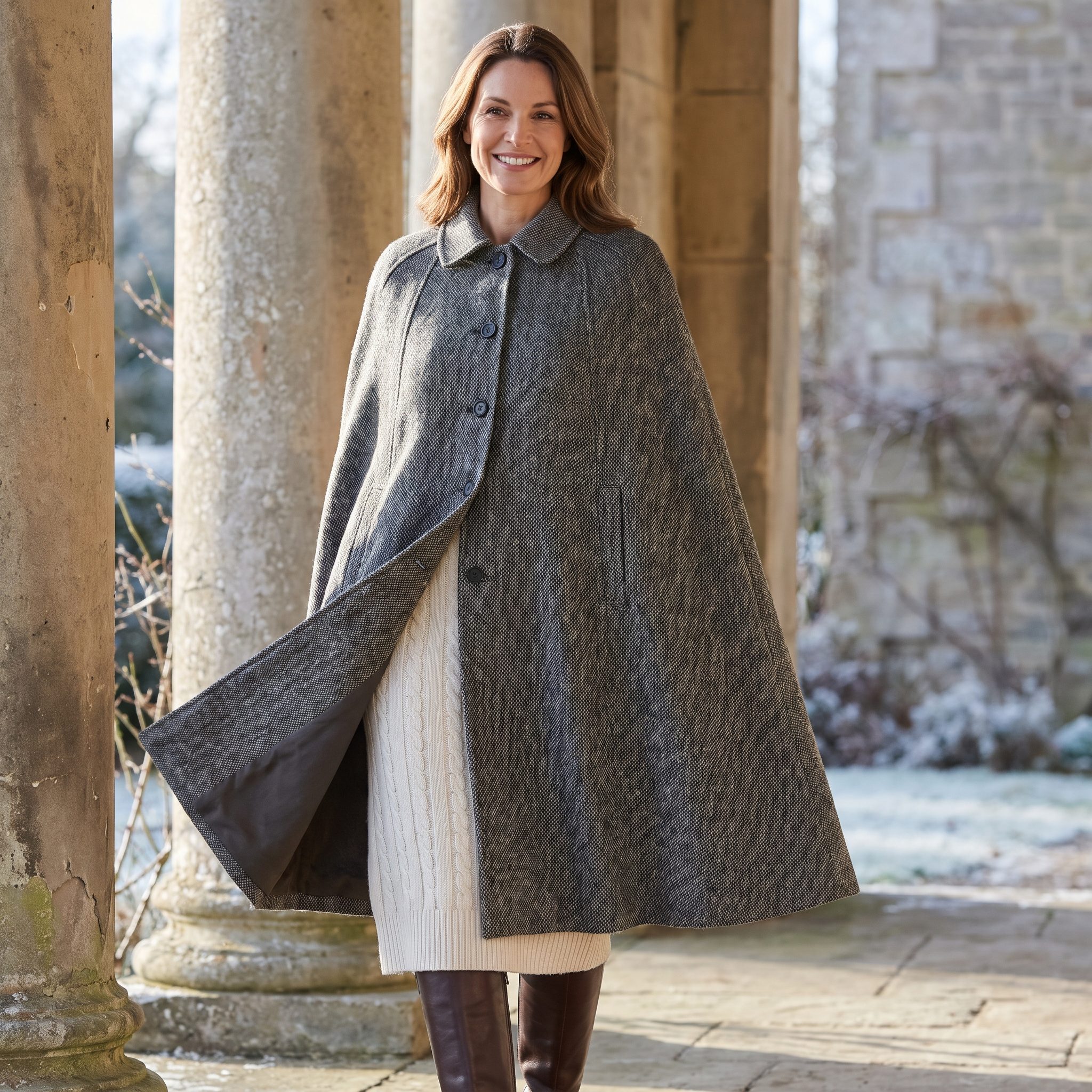
A salt-and-pepper tweed cape swings from a neatly fitted shoulder, revealing a cream cable-knit midi dress beneath its open sides. The combination brings together two substantial winter textures without allowing either to overwhelm the silhouette. Its country-house sensibility is more practical than precious.
The cable-knit dress supplies softness and a continuous line; the tweed adds a more rugged surface. Chocolate knee-high boots bring the outfit firmly back to earth. The result has the practicality of traditional country clothing without requiring a matching tweed skirt or a particularly strong interest in the shooting season.
Tweed and wool seem to attract the same people: ThreadCurve readers who would buy a wool coat picked a tweed work blazer 62% of the time, vs 48% of everyone else.
35. Sculptural Ivory Capelet and Black Leather Pencil Skirt
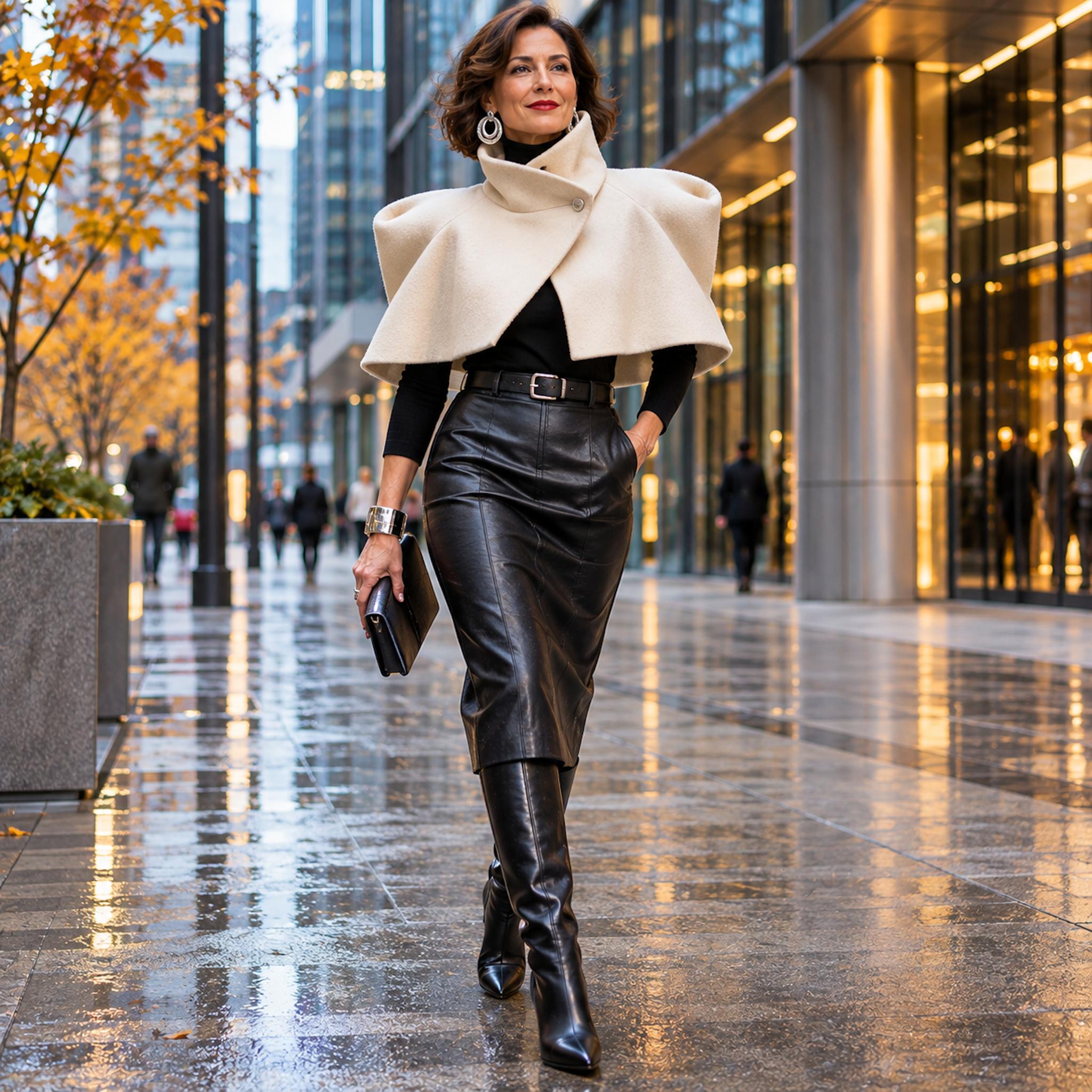
Barely reaching the bust, this ivory capelet proves that a cape needn’t be long to make an entrance. The exaggerated shoulder line and folded, asymmetric funnel collar turn a small expanse of wool into an architectural statement. A black turtleneck, leather pencil skirt, and tall pointed boots extend a narrow dark line beneath it. Silver jewelry adds a hard-edged finish. The capelet’s abbreviated length is the point: almost all the volume sits above the waist, where it has the greatest visual impact.
34. Burnt-Orange Circular Cape and Navy Knit Dress
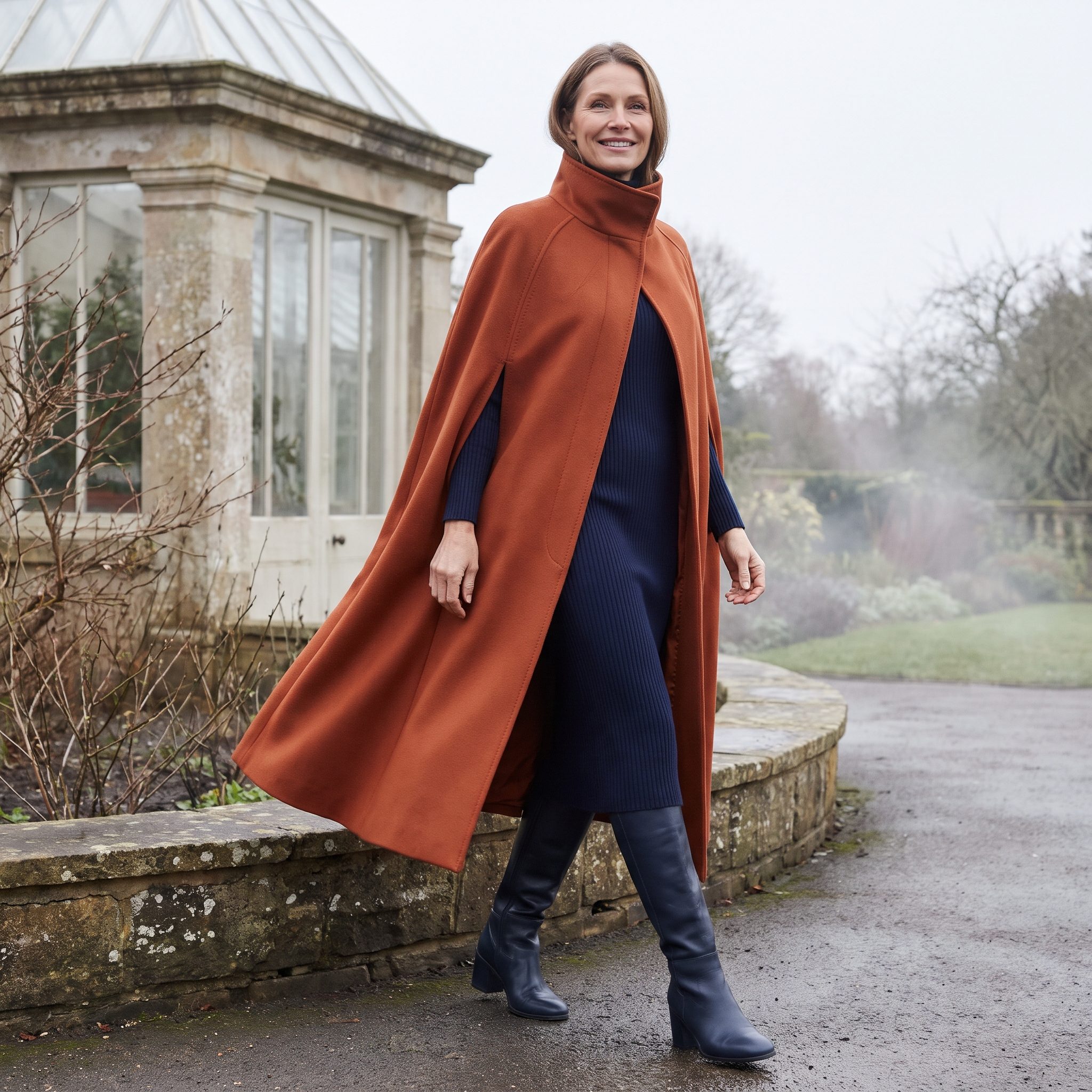
A tall funnel collar holds the neckline firmly in place before the burnt-orange cashmere expands into a broad circular sweep. The cape’s fullness is particularly apparent when the fabric moves, creating a rounded silhouette around the shoulders and upper body.
Underneath, a navy ribbed midi dress remains close to the figure, its deep blue giving the orange a particularly handsome counterpoint. Matching knee-high boots continue the dark foundation, allowing the cape’s circular hem to stand out against a narrow, uninterrupted silhouette. The combination has energy without requiring elaborate accessories; the sweeping cashmere has already supplied the excitement.
What Our Readers Say
- Sleeves still divide people: when ThreadCurve readers chose which top they would buy, wrist, bracelet and elbow lengths came out as a split with no clear winner.
- Our readers are split on outer layers too, with 52% wearing a jacket with every outfit and 48% saying they rarely do, essentially a coin toss.
From ThreadCurve reader polls and votes.
33. Charcoal Tuxedo Cape and Black Evening Trousers

Everything recognizable about a tuxedo is present except the conventional sleeves. Satin peak lapels, a single-button fastening, and sharply controlled shoulders give the charcoal cape the authority of evening tailoring. Below the shoulders, however, the fabric opens into panels that move independently of the arms.
An ivory silk camisole interrupts the dark palette when the front parts, while black trousers maintain the formal line. Patent pointed pumps finish the outfit with a sharper surface. The subtle distinction between charcoal wool, black fabric, and satin lapels gives the monochrome arrangement dimension without introducing another color.
32. Sheer Floral-Embroidered Cape and Plum Tailoring
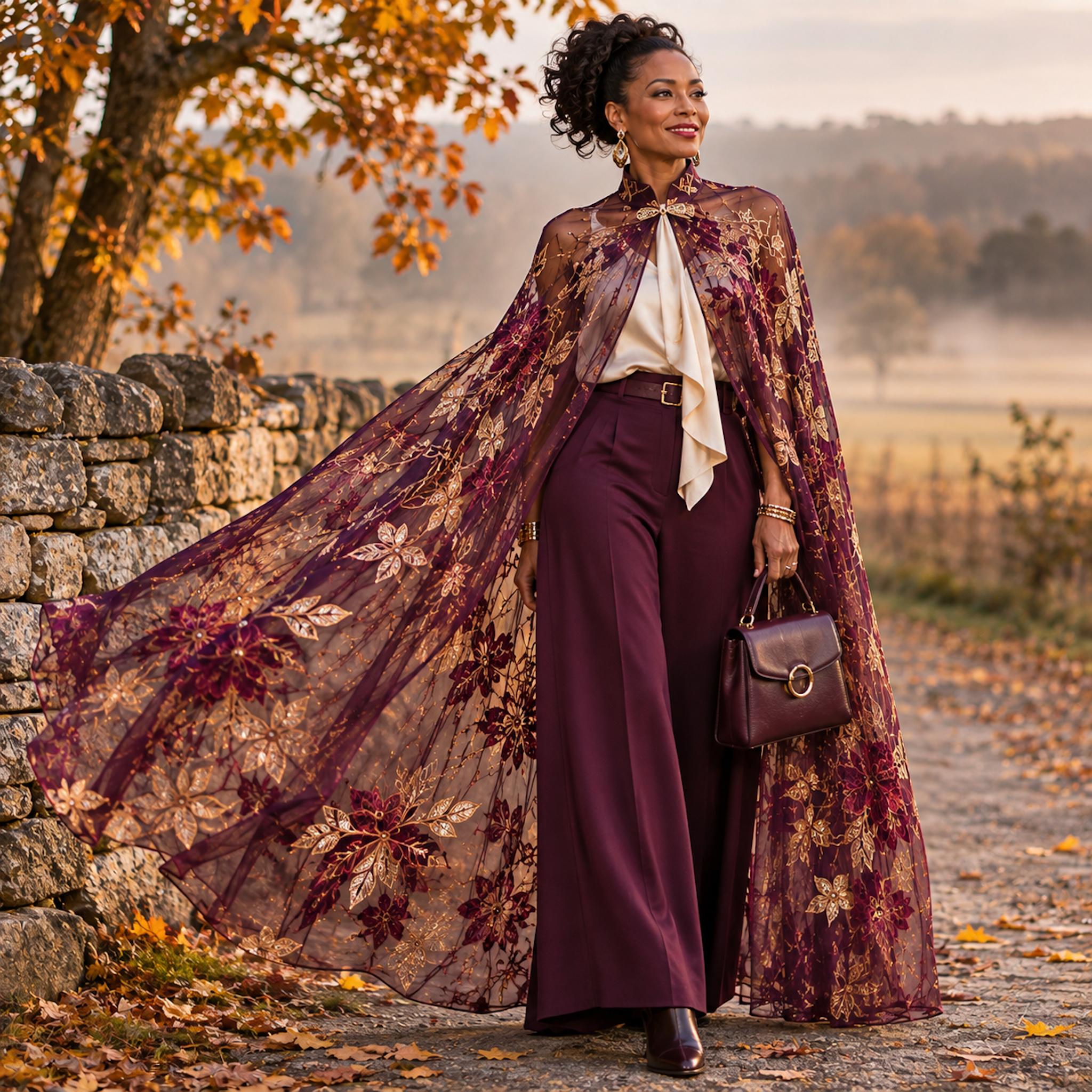
A transparent plum cape embroidered with gold and wine-colored flowers brings decoration without concealing the outfit beneath. Its long, airy panels drift outward, revealing high-waisted plum trousers and an ivory blouse with a soft tie neckline. The embroidered surface gives the cape its own intricate identity, while the tailored separates keep the ensemble from becoming a conventional evening gown. Against an autumn landscape, the sheer fabric catches the light and makes the floral work appear suspended in the air.
31. Stone Storm-Collar Cape and Black Leather Trousers
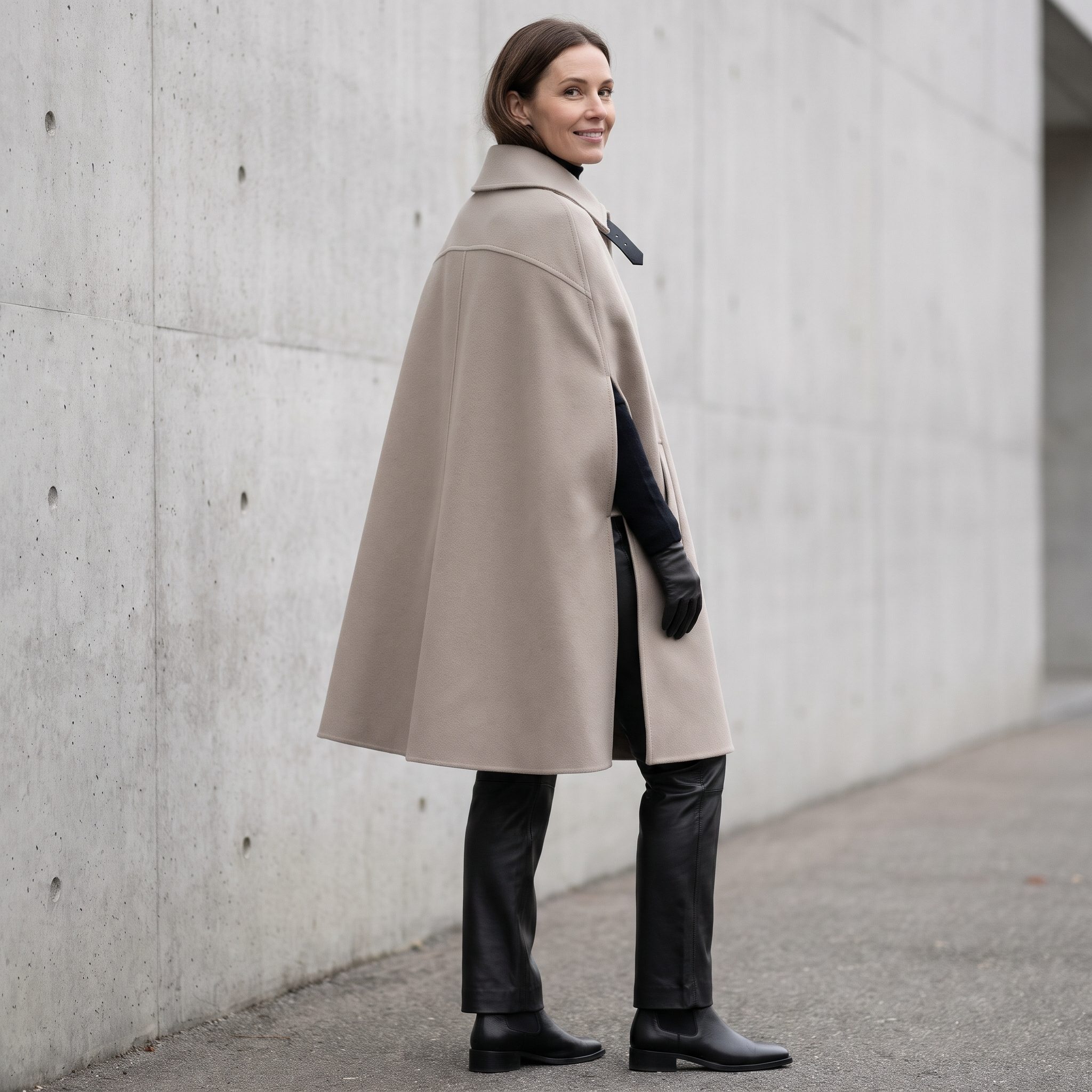
A matte-black throat buckle transforms an otherwise restrained stone-colored cape. The high storm collar has a distinctly utilitarian character, its fastening introducing a hard graphic detail against the soft wool.
Black leather trousers bring a different kind of structure below. Their smoother surface catches highlights that the double-faced wool absorbs, giving the outfit contrast even in subdued light. Square-toe ankle boots continue the tougher register. The storm collar and graphic buckle lend this combination an authority that an ordinary leather jacket would struggle to match.
30. Ruby Pointed-Front Cape and Pearl-White Midi
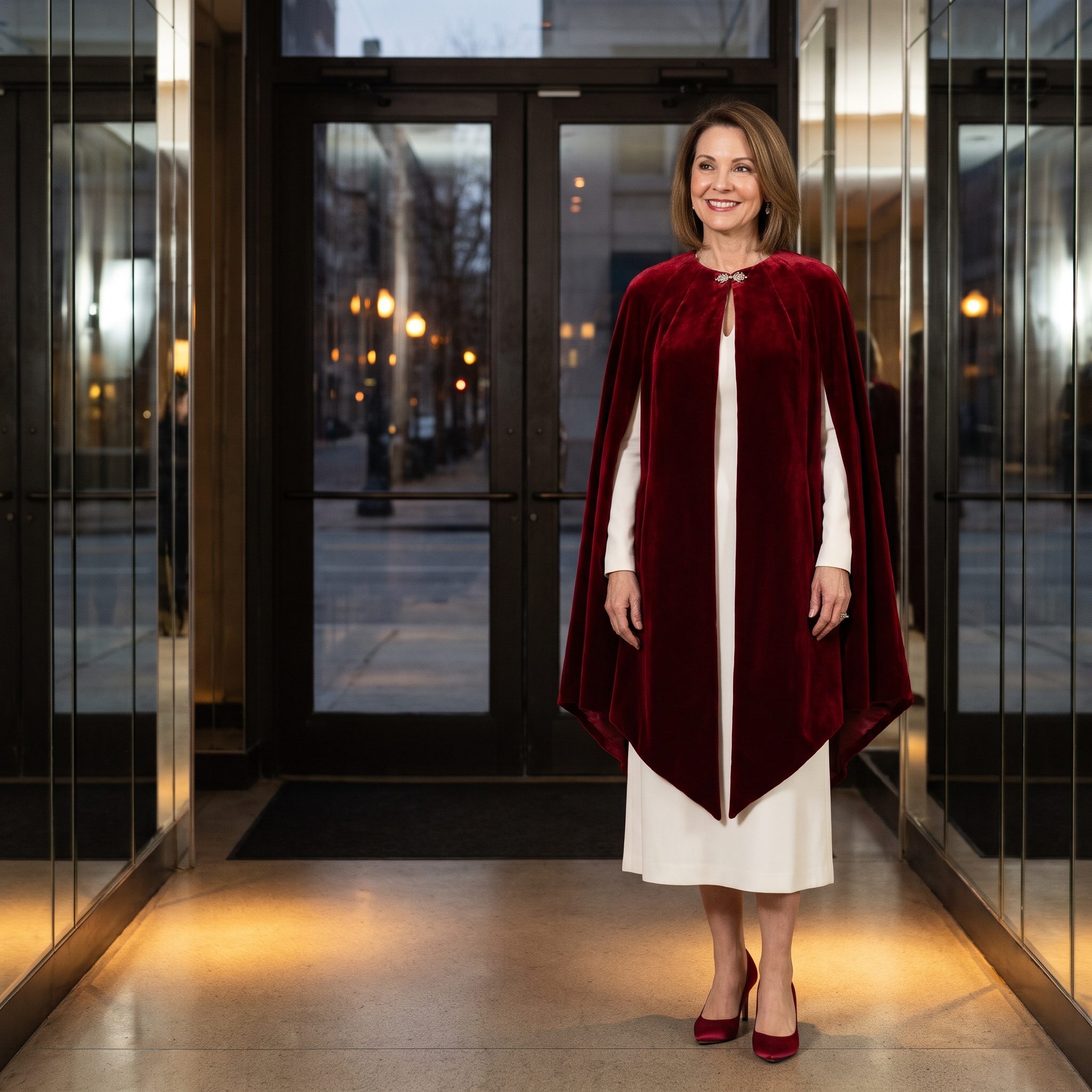
Two pointed front panels descend toward the knees while the back rises to mid-thigh. That unusual hemline gives the ruby velvet cape an almost theatrical silhouette, with a striking difference between its front and rear profiles.
A pearl-white crepe midi dress provides a clean background for the angular red panels. Matching ruby satin pumps repeat the color at the feet, bringing a little visual continuity to an otherwise unconventional cut. The outfit’s real distinction lies in its geometry: pointed velvet against a straight, pale dress, with every change in direction clearly visible.
29. Herringbone Cape and Dark Straight-Leg Denim
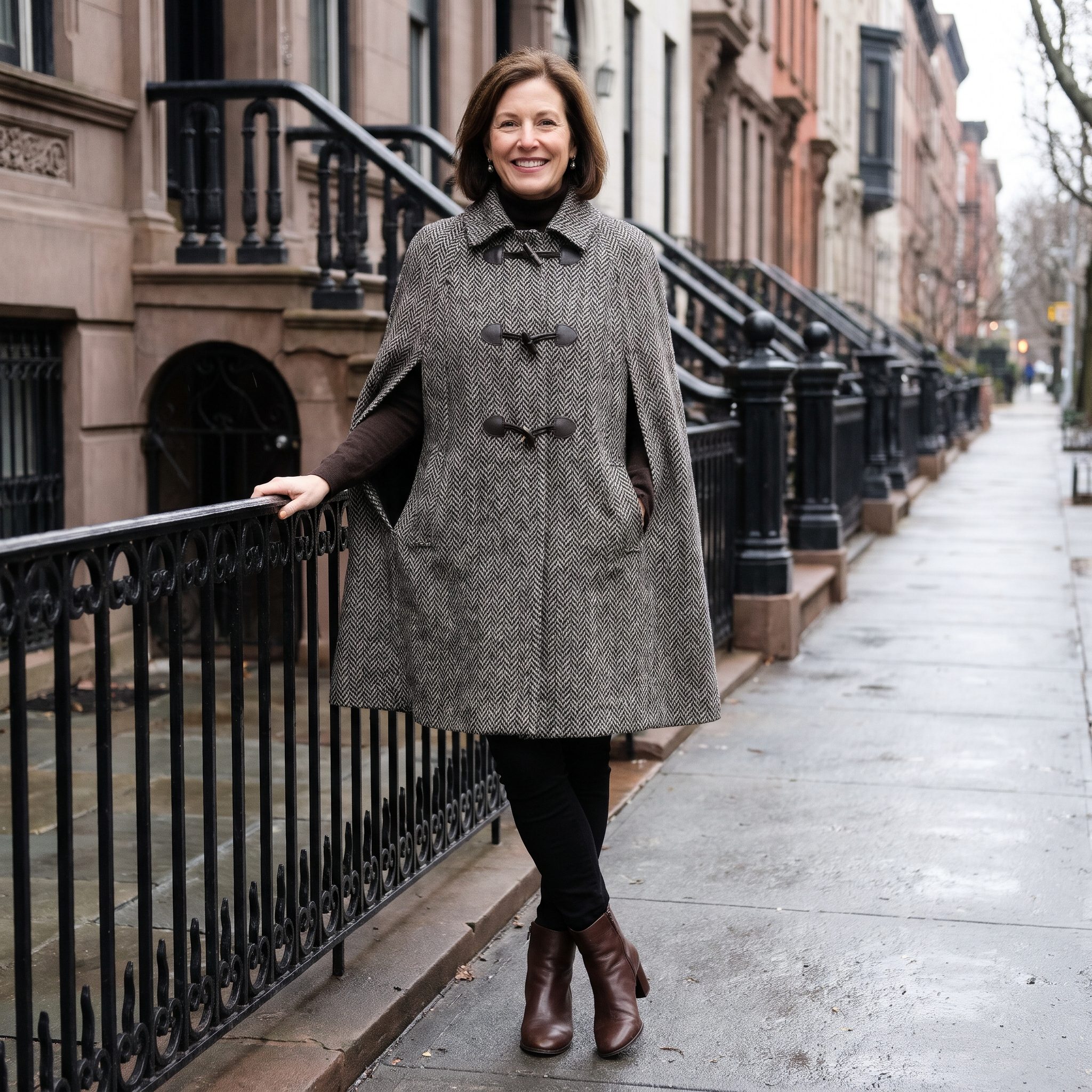
Herringbone tweed has a reputation for behaving itself. Dark indigo denim has considerably less interest in tradition. Put them together and the cape loses any suggestion of costume, becoming an unusually handsome alternative to a conventional wool jacket.
Two leather toggles define the upper chest, allowing the fabric below to flare from a secure yoke. Chocolate boots pick up the brown leather without insisting on an exact match. Straight-leg jeans give the look a familiar everyday foundation, making the cape’s heritage detailing feel intentional rather than ceremonial. The most successful part of the outfit may be how little effort it appears to require.
28. Peacock-Blue Cascading Cape With Copper Satin Edging
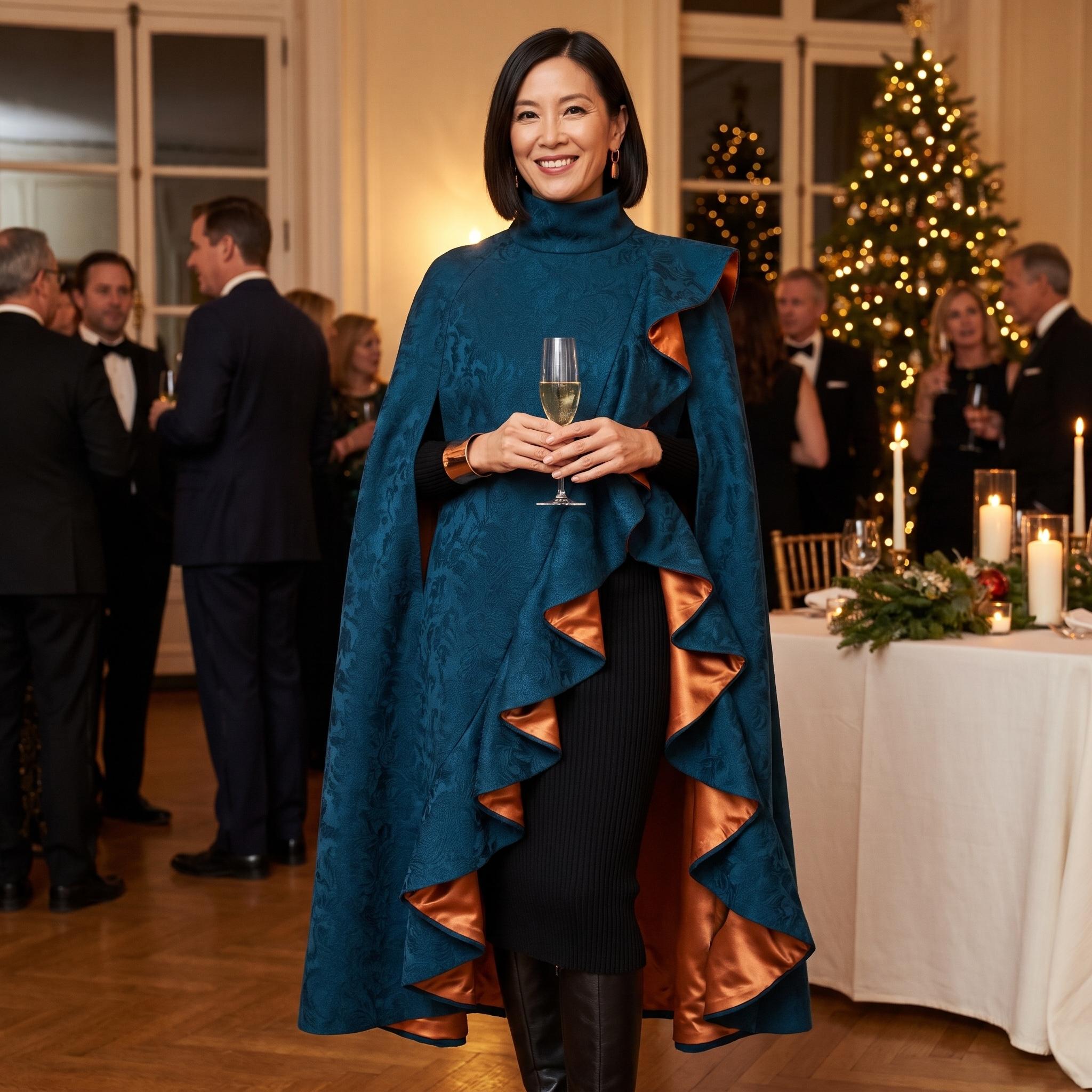
Peacock-blue fabric falls in a dramatic diagonal cascade, with copper satin flashing along the ruffled edges. One side hangs longer than the other, creating an asymmetric outline that changes as the wearer turns. A narrow black dress and tall dark boots provide a restrained base, leaving the cape’s sculptural folds to carry the outfit. The metallic lining is more than decoration: it traces the unusual cut, making each curve legible even in the warm light of a holiday gathering.
27. Cream Bouclé Cape and Slate Knit Skirt
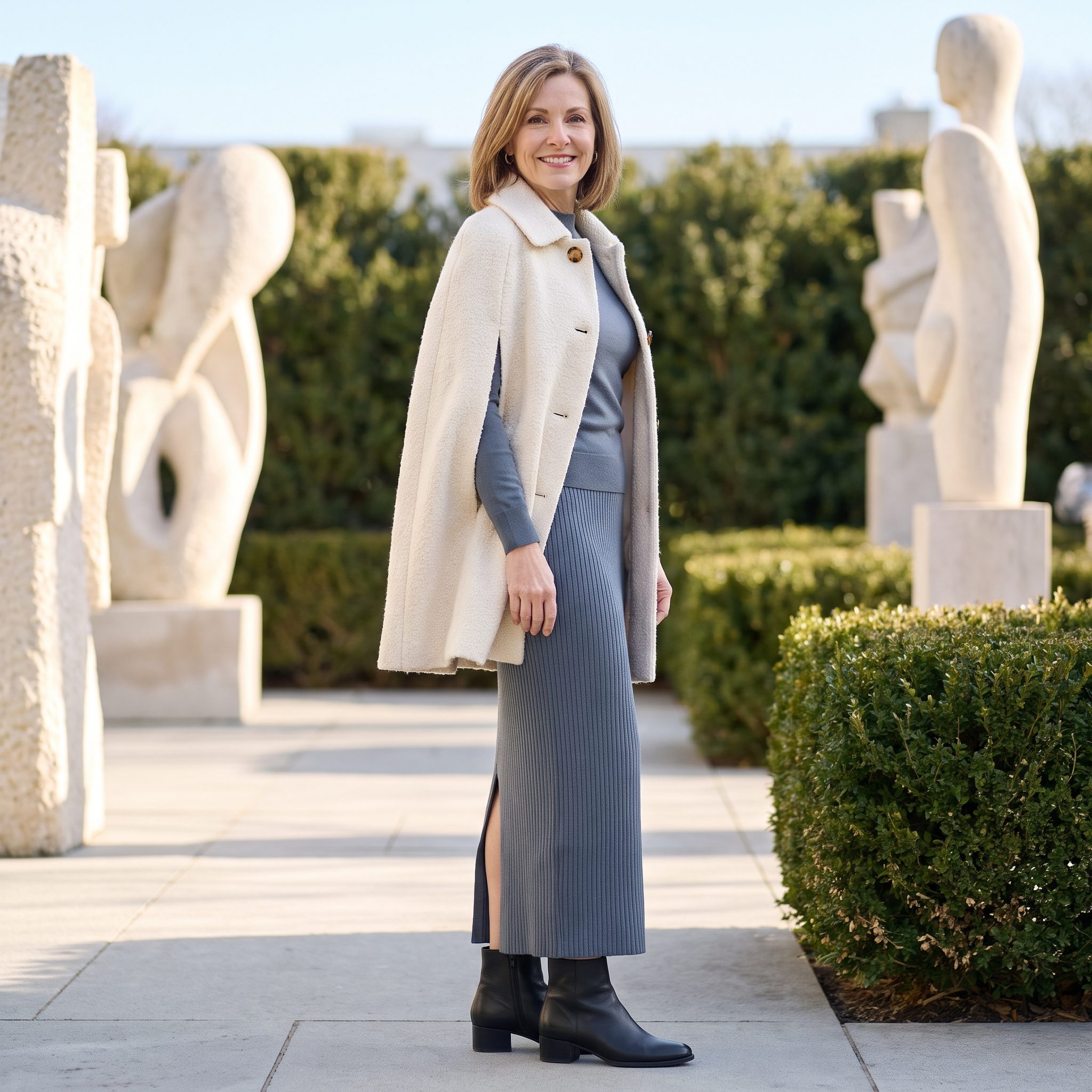
Looped cream bouclé gives this cocoon-shaped cape a wonderfully tactile surface. Its rounded silhouette expands gently through the body, while a long slate ribbed skirt provides a narrower line below.
A large tortoiseshell button becomes the focal point against the pale fabric, introducing warmth without requiring additional decoration. The slate knit skirt and matching top form a coordinated foundation beneath the textured cape. This is an effective example of using a single oversized fastening as an accessory in its own right. The bouclé supplies richness, the button supplies punctuation, and the darker knitwear prevents the outfit from drifting into an uninterrupted expanse of cream.
26. Scarlet Asymmetric Cape and Black Cigarette Pants
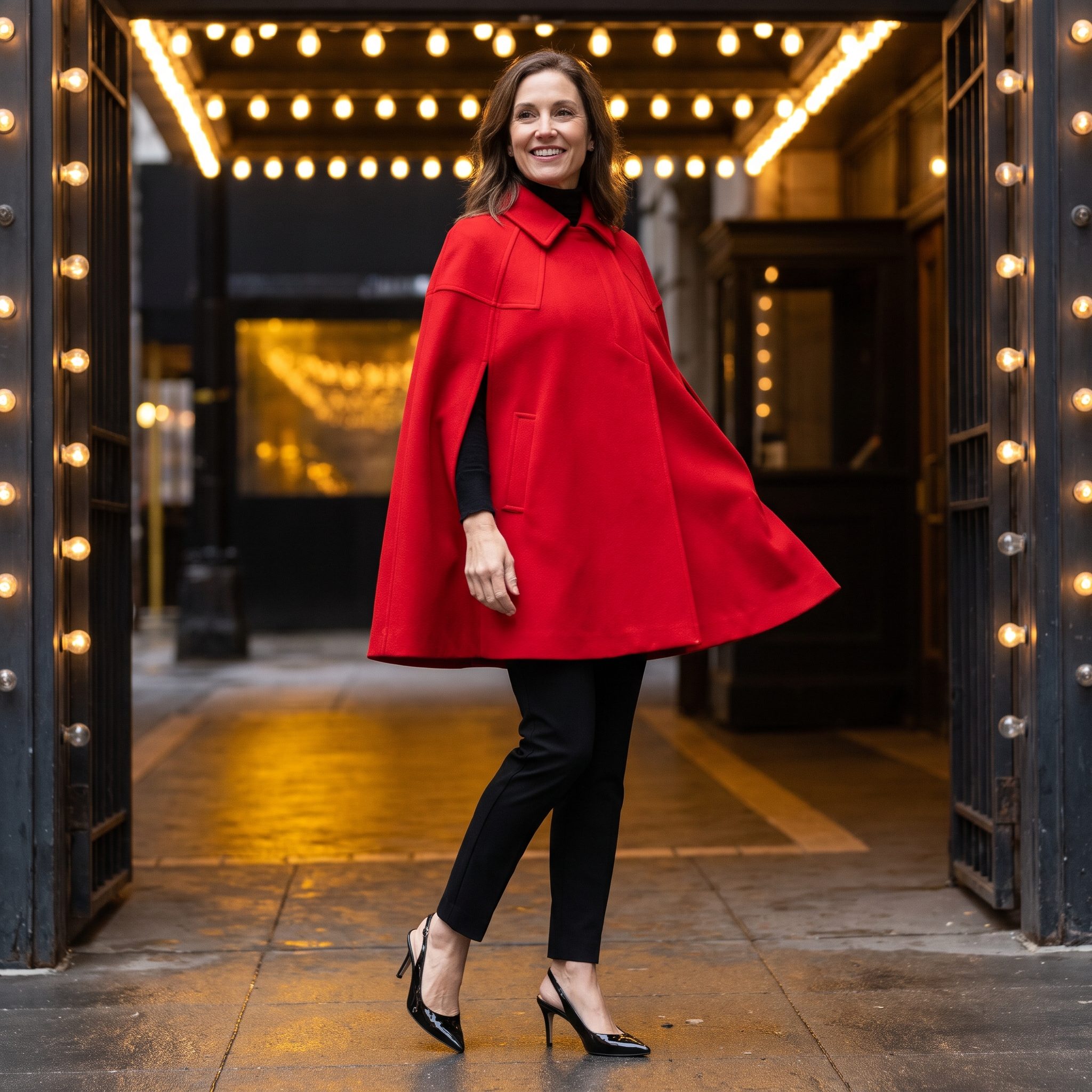
Scarlet wool, angular shoulder panels, an asymmetric closure. Nothing about this cape is interested in blending into the background. Its sharply cut front gives the saturated color an architectural edge, while the opening at the side reveals an arm without interrupting the garment’s sweeping outline.
Black takes care of everything underneath. A mock-neck top and cigarette trousers establish a narrow foundation, finished with patent slingbacks. The effect is closer to modern military tailoring than traditional outerwear. A scarlet wool cape this assertive needs no competing color, print, or ornament. The cut has already made its point.
25. Chocolate Cocoon Cape With an Ivory Shearling Collar
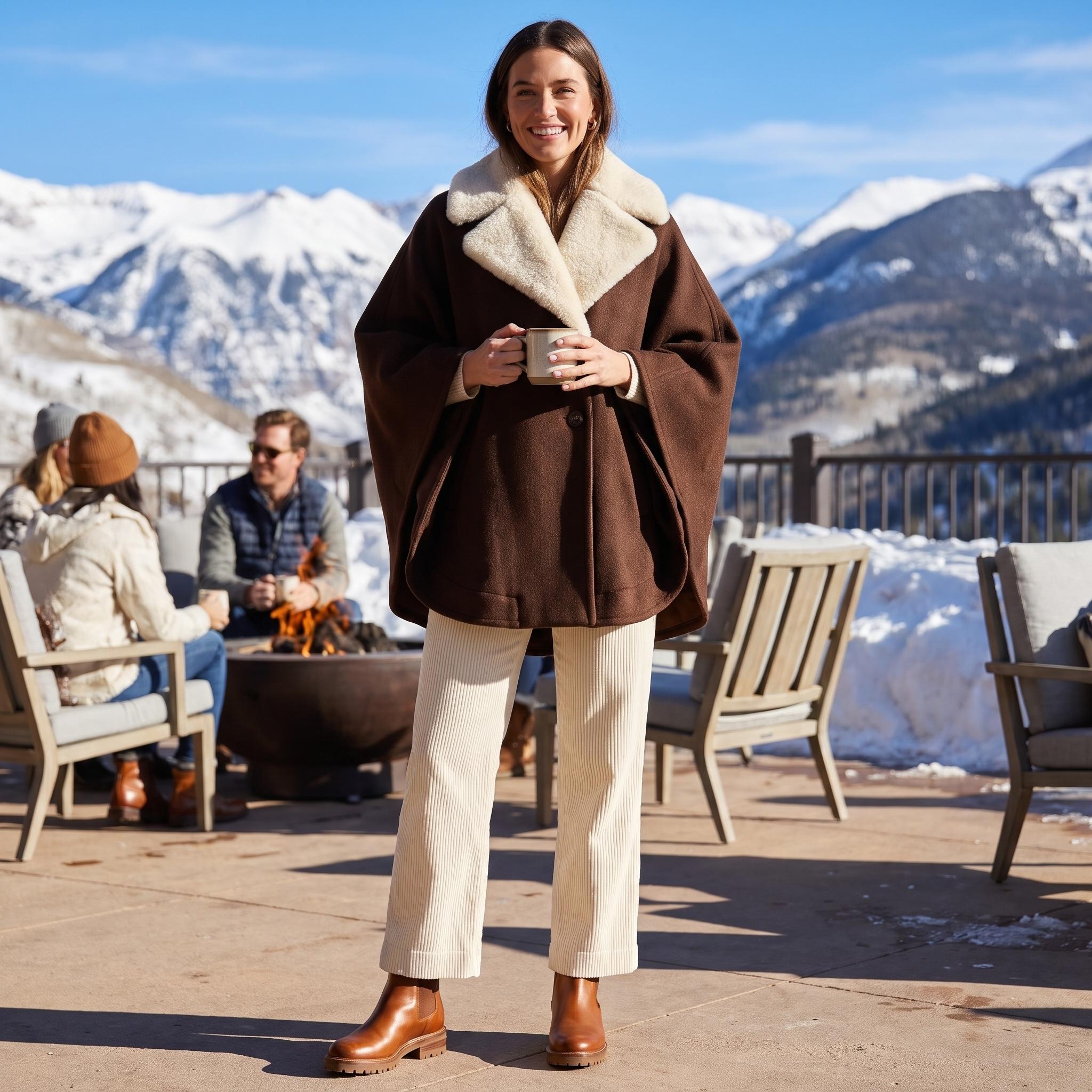
A generous ivory shearling collar gives a chocolate wool cocoon cape its unmistakable winter character. The rounded body falls to the upper thigh, with open sides that allow the arms to move freely. Cream corduroy trousers and sturdy cognac boots extend the warm palette without repeating the cape’s texture. Against a snowy mountain backdrop, the plush collar and substantial wool make a persuasive luxury statement. The rounded silhouette offers a welcome alternative to sharper military and tailored capes.
24. Champagne Velvet Cape and Aubergine Evening Jumpsuit
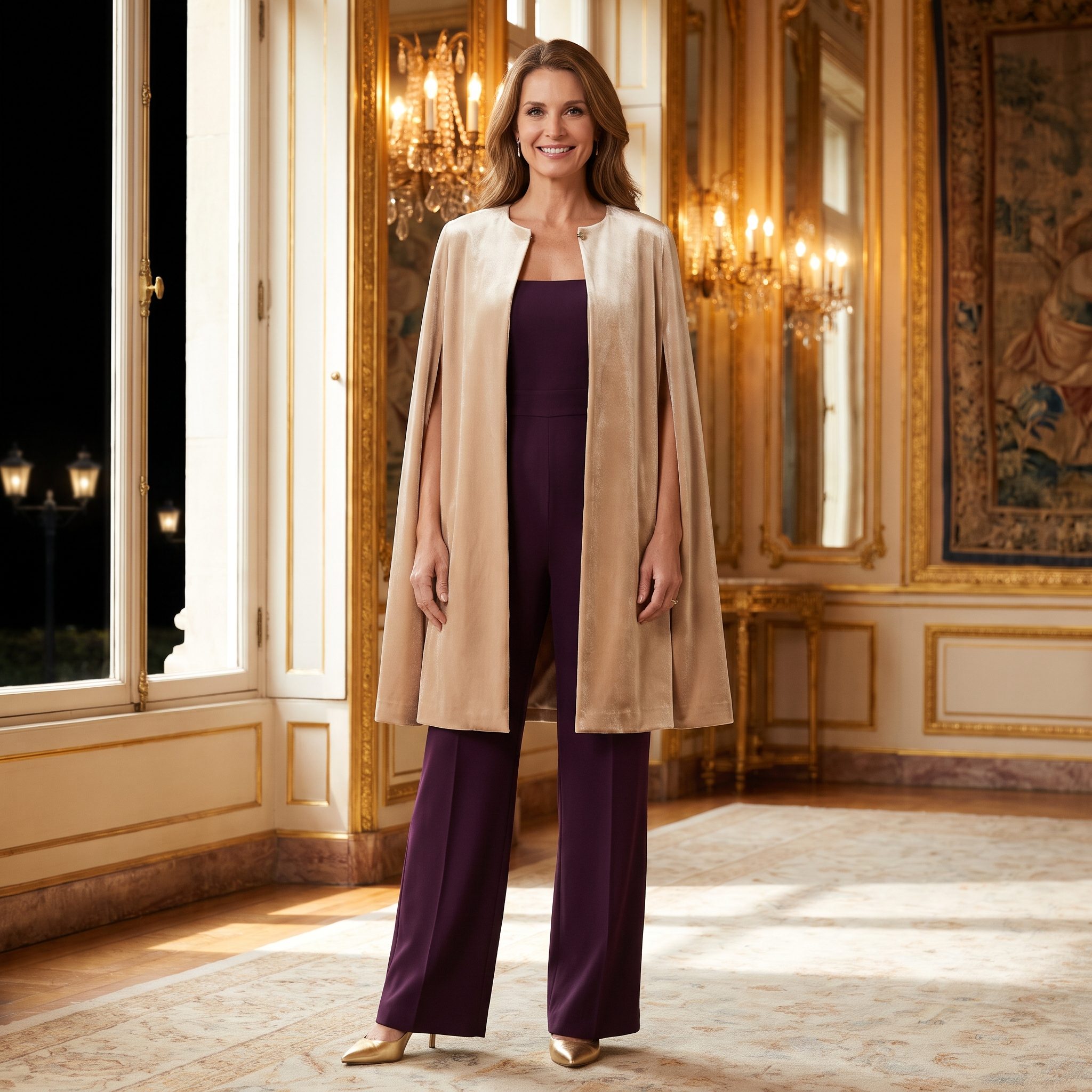
Champagne silk-velvet catches the chandelier light, giving this cape a gentle luster that contrasts with the darker aubergine crepe beneath. The collarless neckline leaves the upper chest uncluttered, allowing an antique-gold clasp to serve as the principal ornament.
The jumpsuit’s wide legs create an elegant alternative to a long evening dress, while pointed gold pumps continue the metallic accent at floor level. The cape rounds gently over the shoulders before opening into a loose flare. Rather than matching the richness of the aubergine with an equally dark outer layer, the champagne brings light toward the face and gives the ensemble a more unexpected color balance.
23. Deconstructed Olive Trench Cape With Burnt-Orange Lining
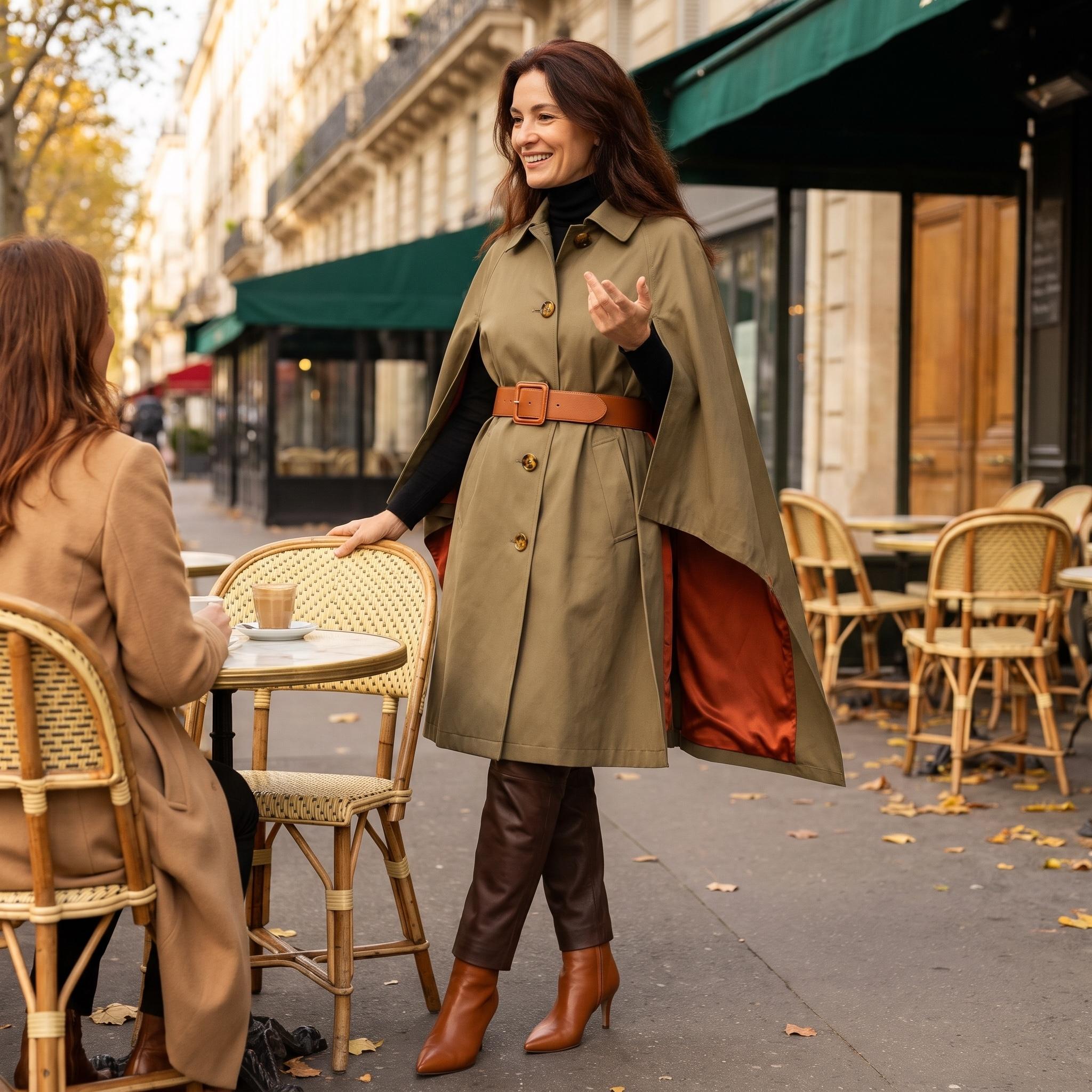
Trench-coat details take a different route in this olive gabardine cape. A pointed collar, prominent buttons, and a broad tan belt define the front, while the open sides and cape-like sleeves replace the conventional trench sleeve. Burnt-orange lining becomes visible as the fabric moves. Brown leather trousers, cognac ankle boots, and a black turtleneck give the look a practical urban foundation. The result retains the trench’s utility and recognizable tailoring while giving the arms freedom and the hem a more dramatic swing.
22. Black Cashmere Cape and Cobalt Sculptural Dress
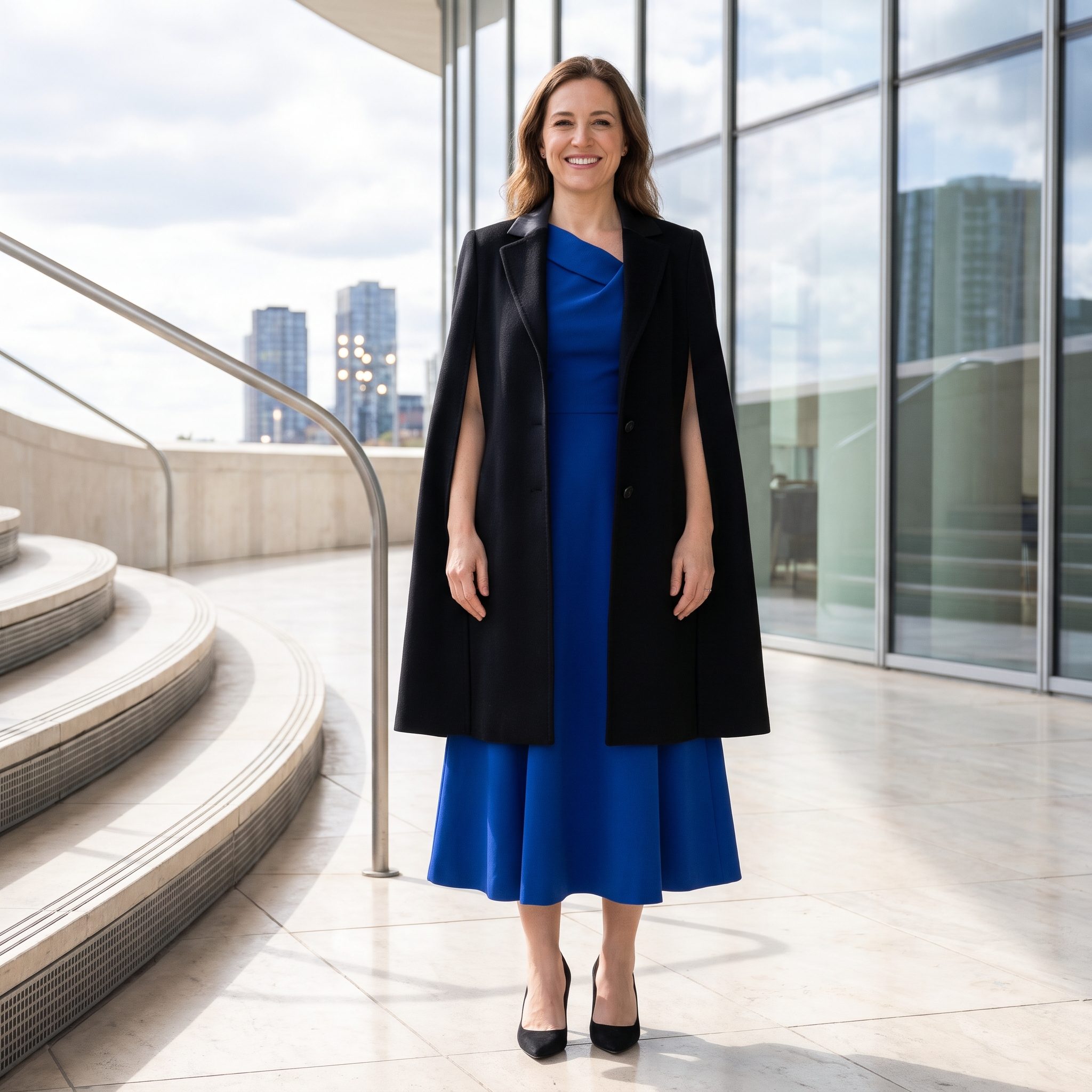
The cobalt dress is already a strong design statement, with a sculptural bell skirt that expands away from the body. A conventional fitted jacket could interrupt that silhouette. The black cashmere cape instead frames the vivid blue, leaving the dress’s distinctive shape visible through the open front.
Structured shoulders give the black cashmere cape definition, while the softer fabric below introduces a controlled contrast with the dress. The effect depends on allowing two different volumes to coexist: a cape falling from above and a skirt expanding below. Neither needs to imitate the other.
21. Loden-Green Back-Pleat Cape and Tobacco Tailoring
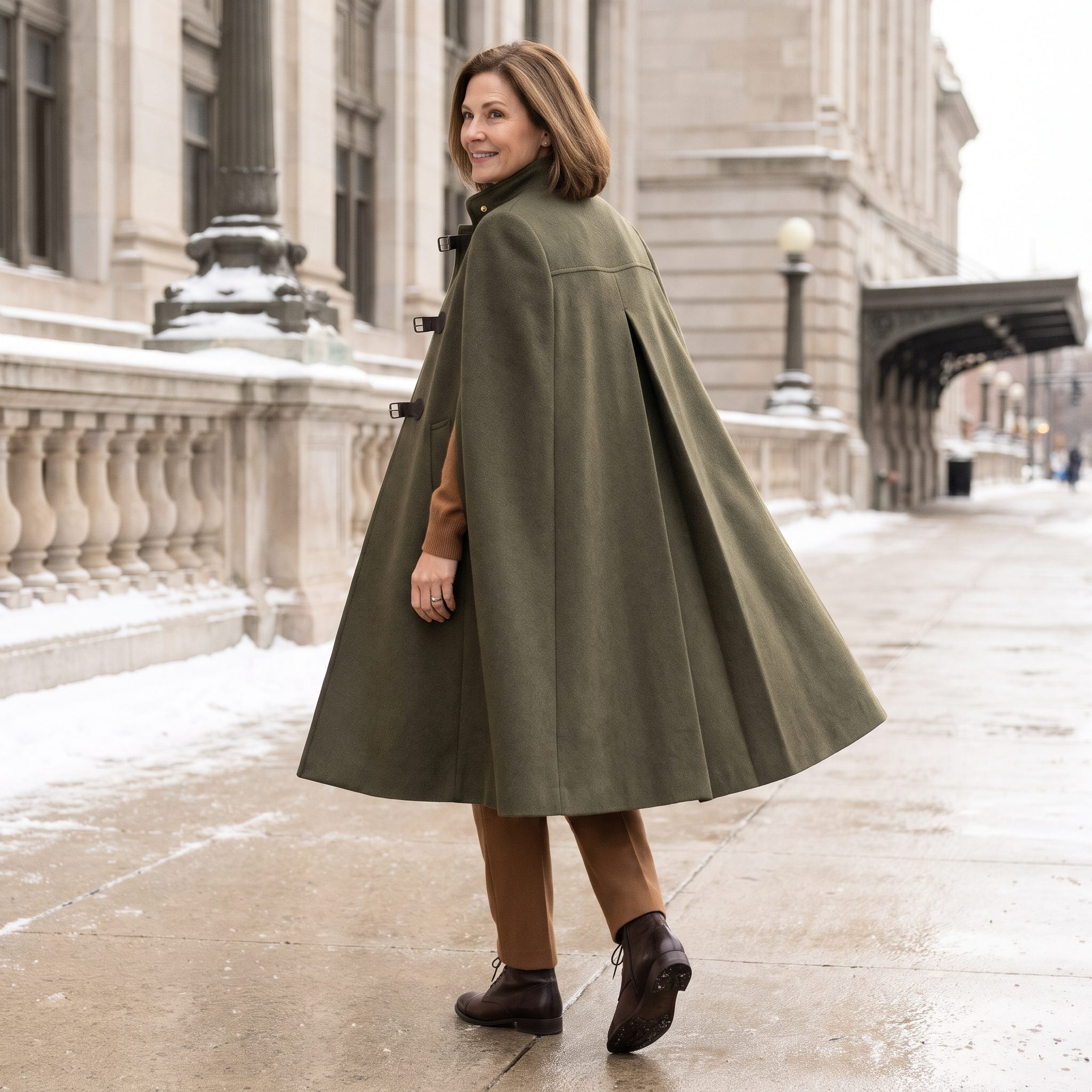
The important detail is behind the shoulders. Two inverted pleats give the loden-green cape additional fullness across the back, allowing the fabric to expand as the wearer moves. The rear view becomes as considered as the front.
Tobacco-colored cashmere and matching trousers introduce a warm foundation beneath the muted green. It’s a palette with roots in traditional outdoor clothing, translated here into something considerably more polished. The tobacco sweater softens the cape’s structured character, while the pleats prevent the back from becoming an anonymous sheet of wool. Good outerwear deserves to look interesting from more than one direction.
20. Ink Velvet High-Low Cape and Ivory Palazzo Trousers
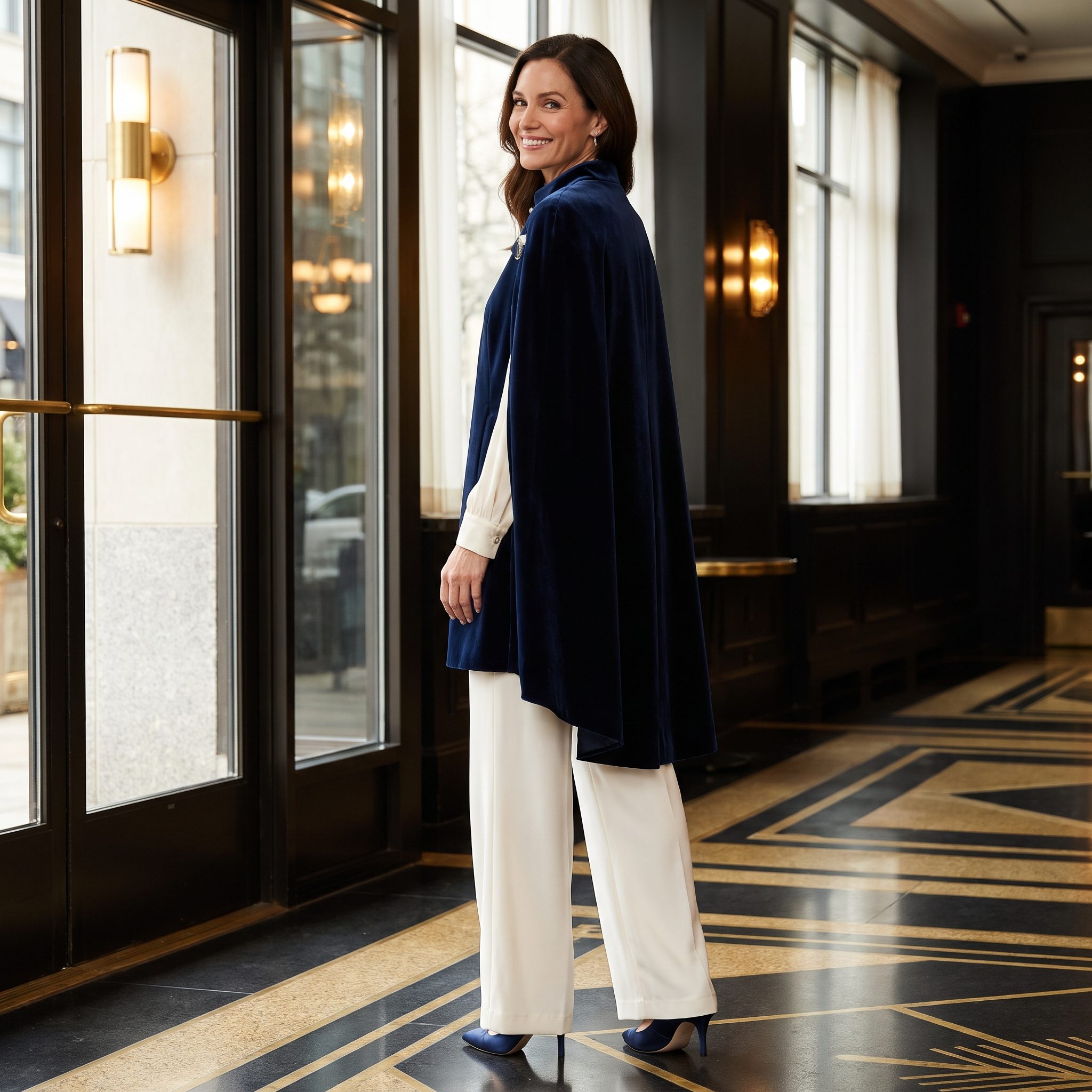
Short in front, dramatically longer behind, this ink-colored velvet cape changes its outline with every turn. The high-low hem is the defining feature, giving the back a sweeping finish while leaving the trousers clearly visible from the front.
Ivory palazzo trousers fall in broad, fluid columns beneath the abbreviated front, while the velvet extends behind them like a dark train. Navy satin heels repeat the cape’s color at floor level. The real accomplishment is the balance between two generous silhouettes: the trousers retain their width, the cape retains its sweep, and neither disappears beneath the other.
19. Rust Windowpane Cape and Chocolate Culottes
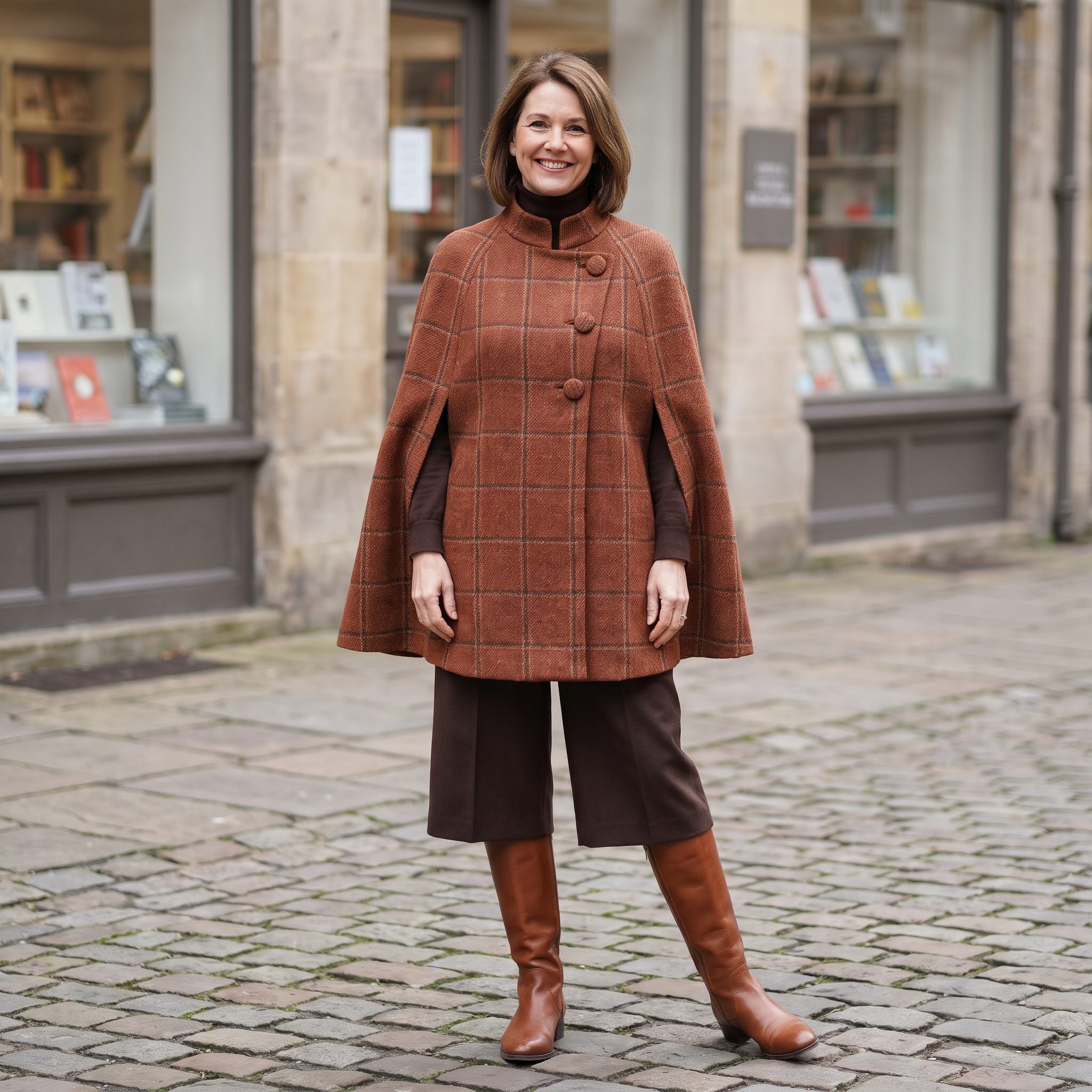
Rust windowpane tweed brings pattern into a wardrobe of earthy browns. The cape is compact, with a flared shape and diagonal covered buttons that give its front an unexpected slant. Beneath it, a chocolate roll-neck and matching culottes establish a darker foundation.
Cognac boots introduce a third warm tone, lighter than the knitwear and more subdued than the rust. The culottes are particularly useful here: their cropped length reveals the boots, preventing the layers from merging into one heavy block. The outfit has the substance of winter tailoring, while the visible boots and swinging cape keep its proportions lively.
18. Double-Layer Charcoal and Burgundy Cape With Ivory Tailoring
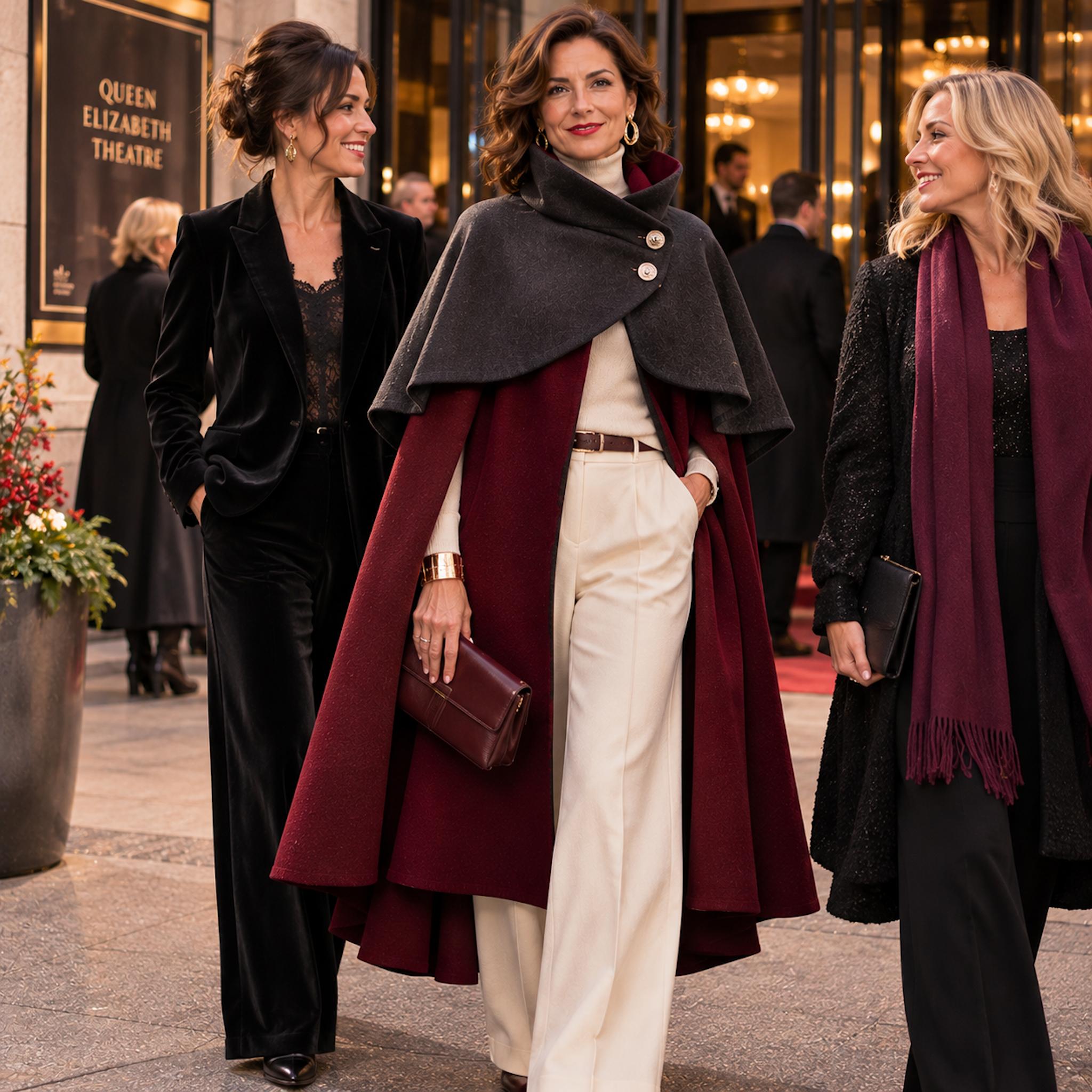
Two different cape lengths give this design its unusual rhythm. A charcoal shoulder layer curves across the upper arms, while a burgundy underlayer continues toward the knees, creating a distinct second silhouette. The high collar and pale buttons sharpen the upper section; winter-white trousers and a fine ivory knit keep the lower half clean. Burgundy leather accessories pick up the deeper layer without overwhelming it. The construction reads as one deliberate garment rather than a cape with a scarf added afterward.
17. Oatmeal Cashmere Cape and Tonal Knit Trousers
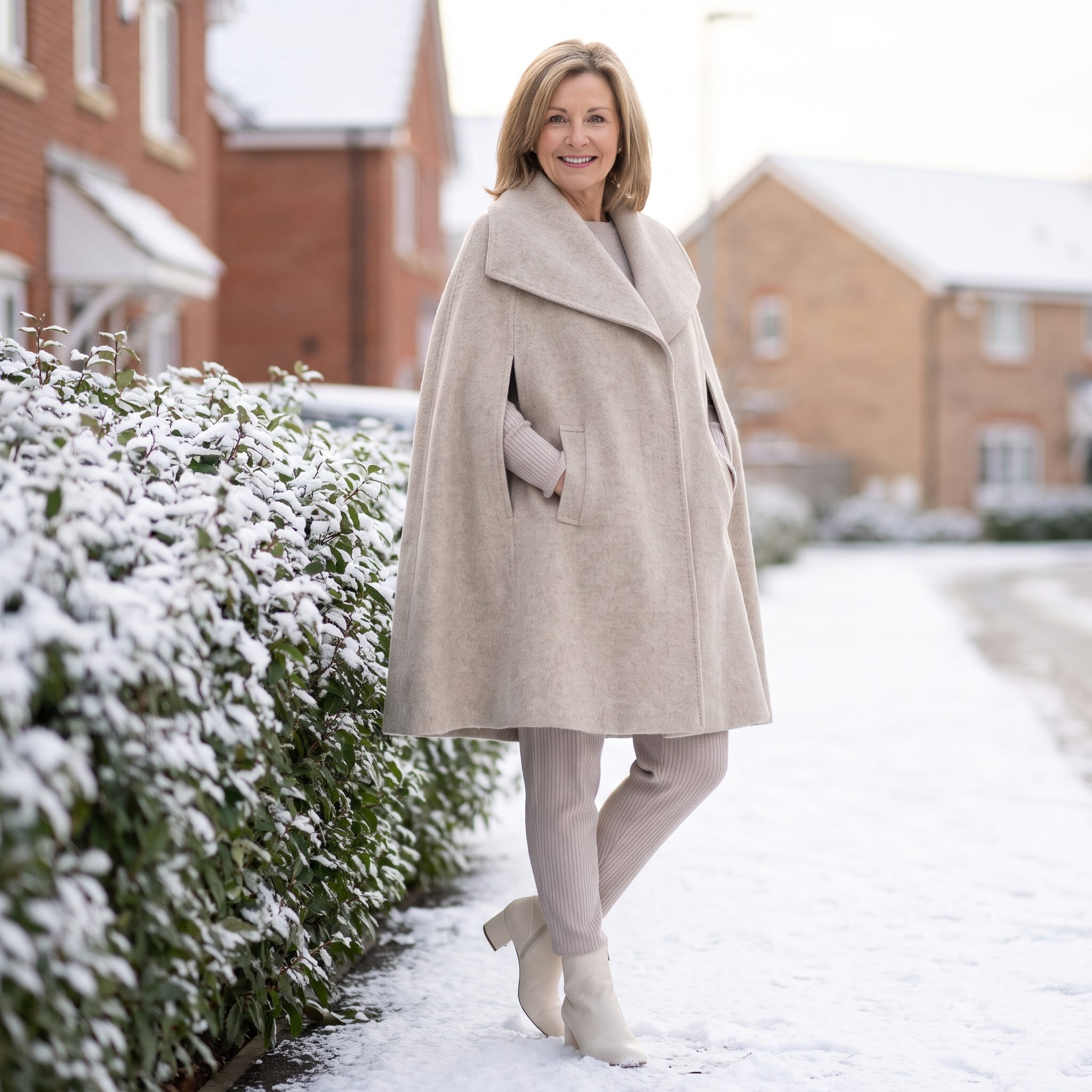
An oversized fold-over collar gives this oatmeal cape its personality. The generous neckline softens the shoulders, while the brushed cashmere falls over ribbed knit separates in closely related shades of taupe and cream. The palette barely changes, yet the textures prevent it from becoming monotonous.
Matching the sweater and trousers creates a relaxed foundation beneath the cape. Ivory leather ankle boots introduce a smoother finish, with low block heels suited to everyday walking on clear, dry surfaces. The appeal is in the absence of fuss: no dramatic fastening, no elaborate accessories, no unnecessary attempt to turn comfortable knitwear into formal tailoring. The cape gives the whole arrangement its shape.
16. Cobalt Diagonal-Button Cape and Winter-White Trousers
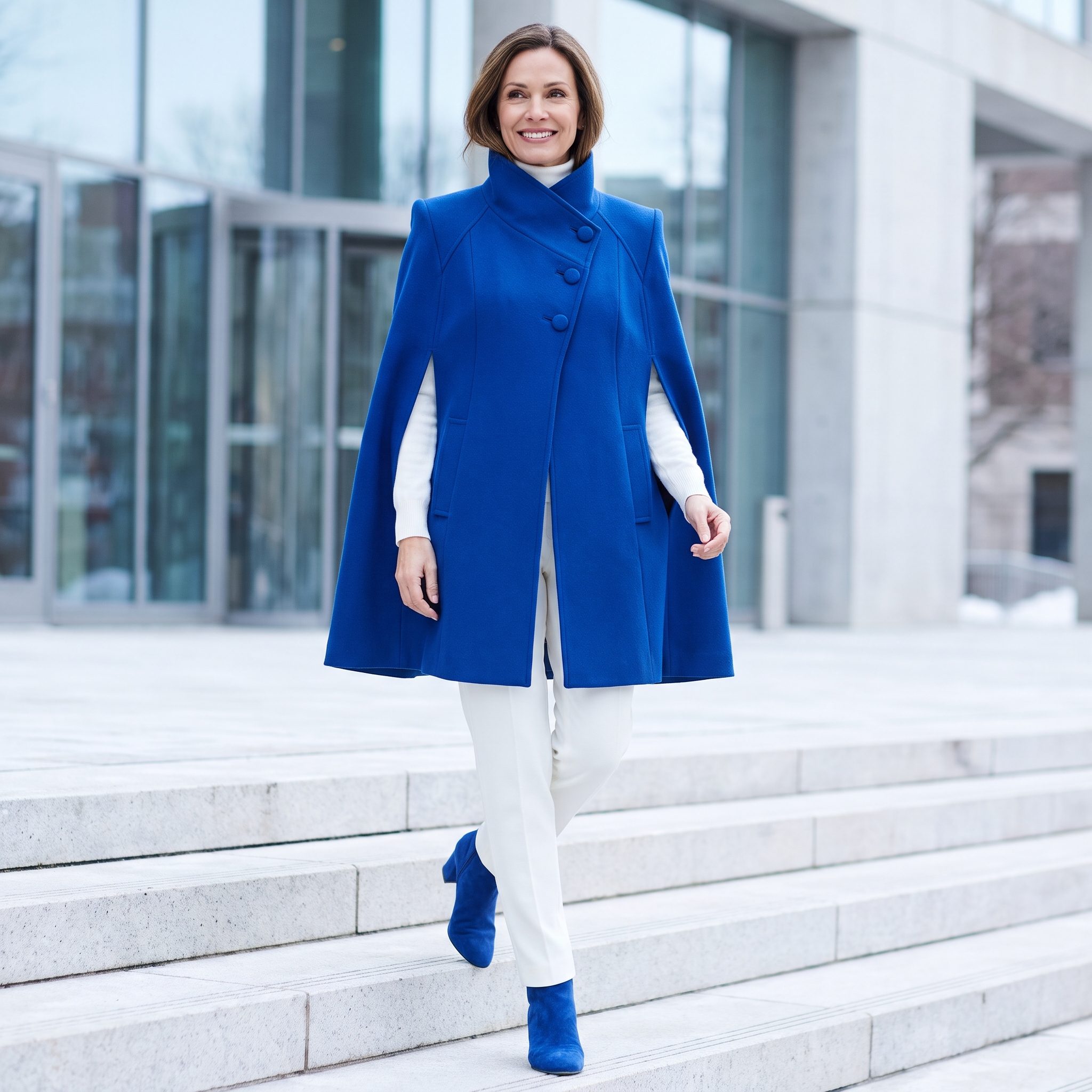
Three covered buttons run diagonally across the cobalt cape’s upper front, interrupting the symmetry normally associated with this kind of outerwear. The fastening gives the saturated blue a more directional, contemporary character.
Winter-white knitwear and trousers create a pale contrast beneath the opening, while cobalt suede ankle boots repeat the cape’s color below. The blue is concentrated at the top and feet, with the white separates occupying the space between. It’s a bold arrangement, yet the uncomplicated shapes prevent the colors from becoming overwhelming. The diagonal buttons provide the finishing detail that distinguishes the cape from a simpler blue wrap.
15. Camel Front-Belted Cape and Cream Knit Midi
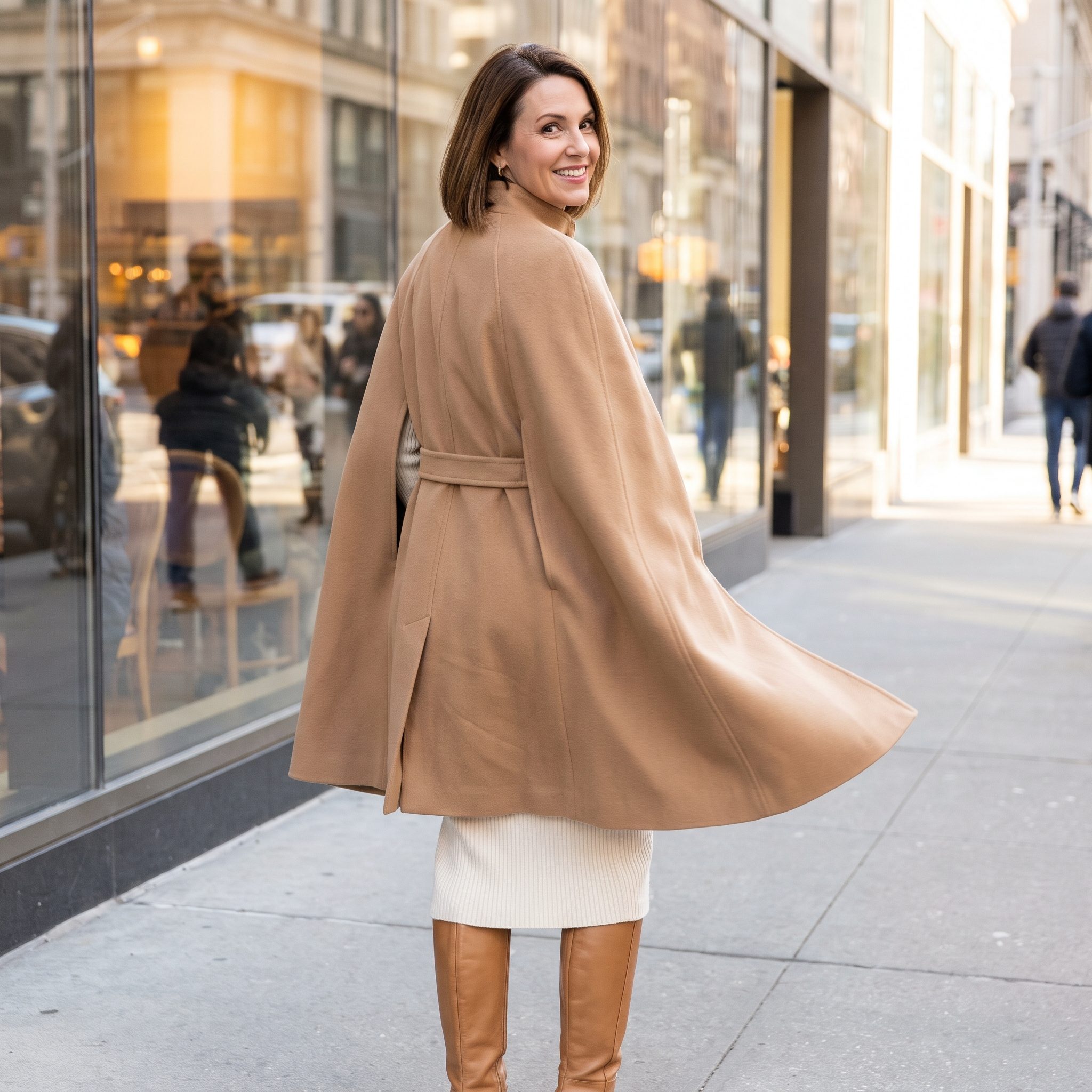
The fastening is the cleverest part of this camel wool cape. A belt defines the front while the back remains free to swing, creating a suggestion of waist shaping without wrapping the entire garment tightly around the body.
An ivory ribbed midi dress provides a long, soft line beneath the warm camel wool. Tan boots continue the palette without introducing a harsh break at the hem. The combination is tonal, but not static: the fitted knit and moving back panel behave differently with every step. Where a fully belted coat might emphasize containment, this design makes room for movement.
14. Deep-Teal Velvet Cape and Silver Brocade Trousers
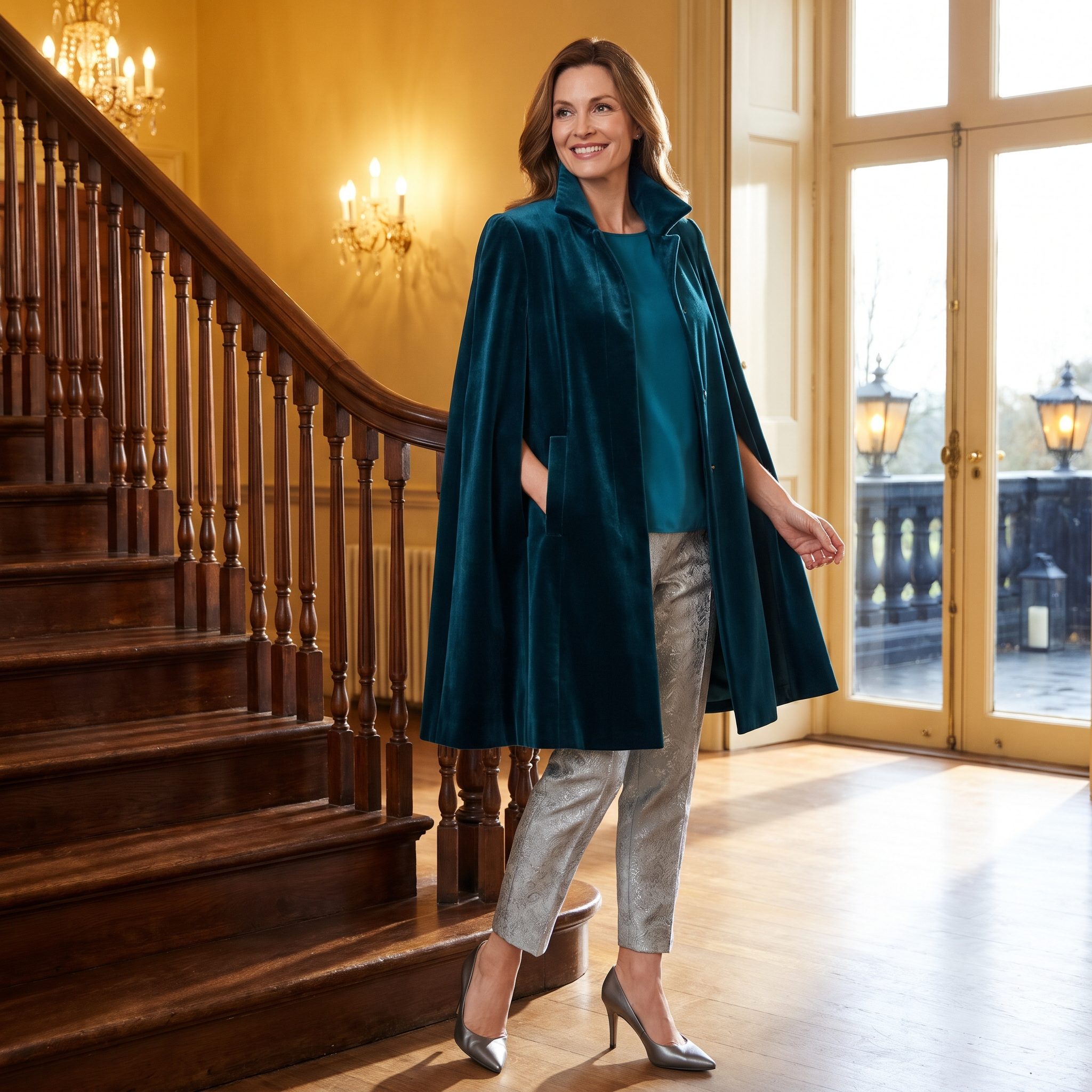
Deep teal changes character under evening lighting, moving between blue and green as the velvet pile catches the light. A folded portrait collar frames the face, giving the cape a formal upper edge before the fabric falls into broader panels.
Silver brocade trousers introduce pattern and metallic detail without relying on a bright contrasting color. Their subtle surface design becomes more noticeable under direct light, while pewter pointed pumps keep the lower half coordinated. This is a particularly effective way to combine two elaborate fabrics: give each a different texture, keep their colors related, and resist the temptation to add a third statement piece.
13. Hooded Graphite Cape and Ivory Winter Tailoring
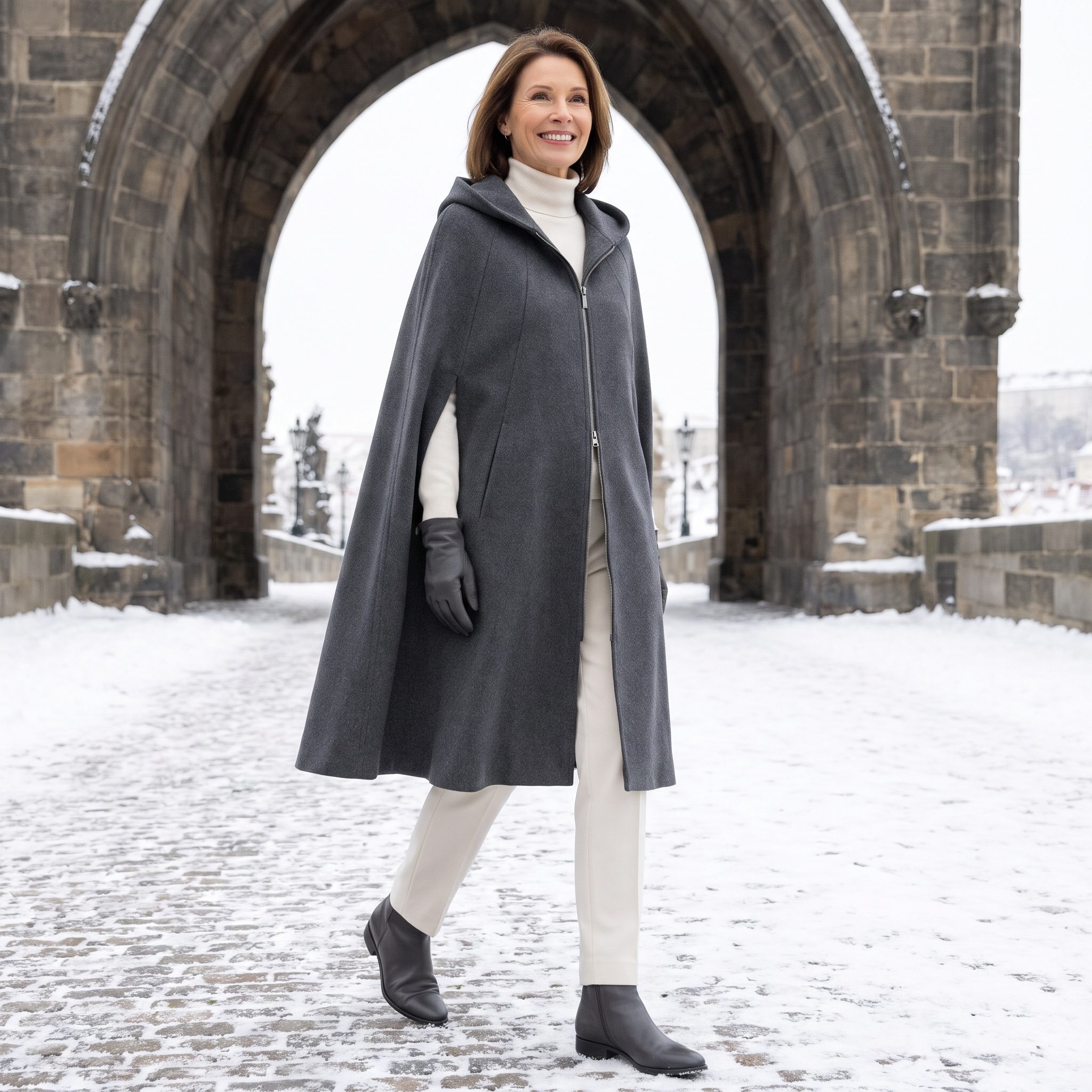
Graphite wool surrounds an almost entirely ivory outfit, making the pale tailoring appear especially crisp. The cape’s hood rests against the back, adding weight and structure across the shoulders without requiring a rigid collar.
Deep side folds give the garment a generous drape, while an ivory cashmere turtleneck and matching tailored trousers establish a clean foundation. The hood distinguishes this look from the more formal capes in the collection, bringing a practical winter detail into an otherwise polished outfit. Dark outerwear and pale separates make a striking combination, particularly when the cape remains sufficiently open to reveal the tailoring beneath.
12. Emerald Velvet Cape and Black Satin Separates
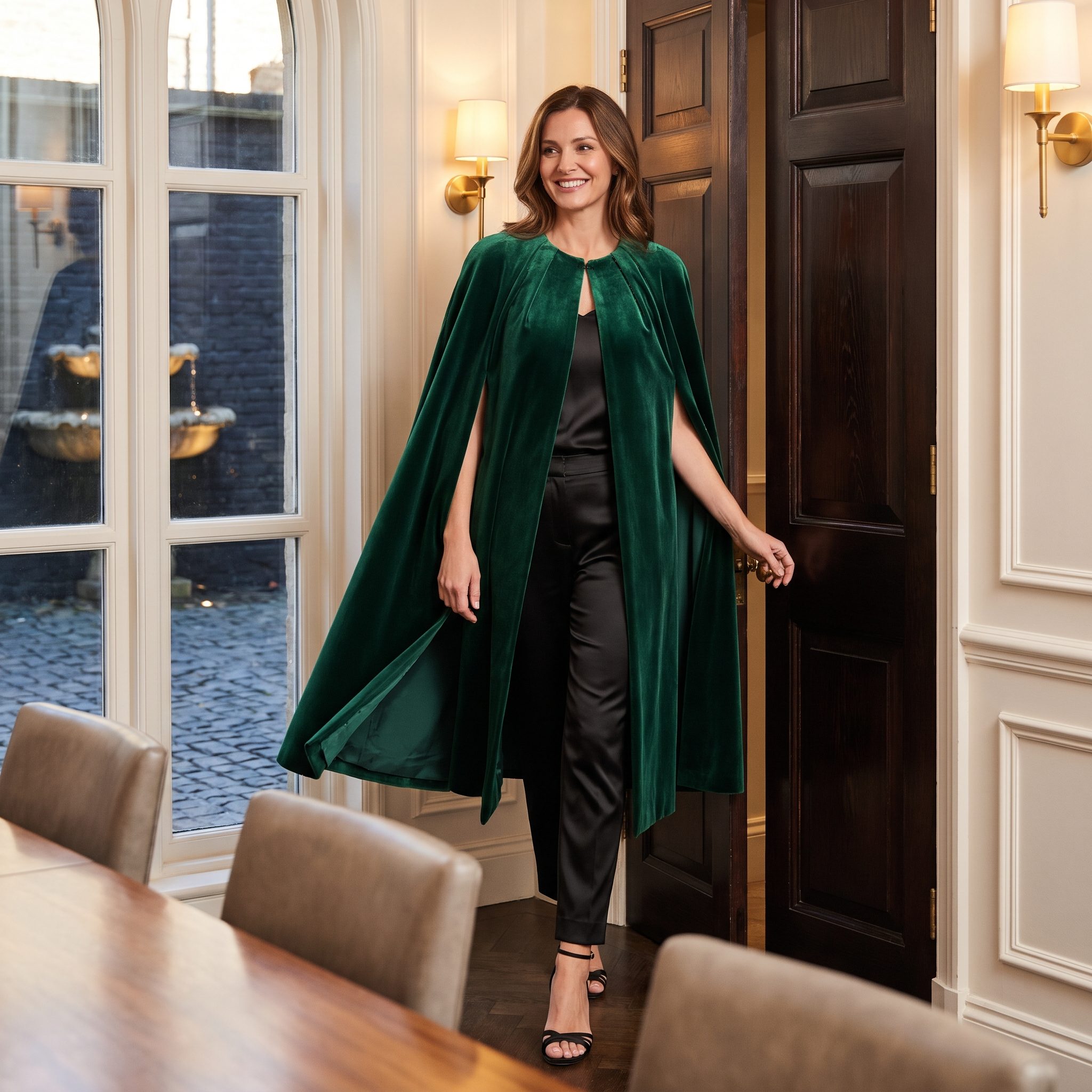
Emerald velvet has enough depth to stand alone as the principal color in an evening outfit. This cape uses shoulder pleats to control its fullness, allowing one panel to fold diagonally while the other falls more directly toward the hem.
Black satin separates provide a sleek foundation, their smoother finish contrasting with the dense velvet pile. The emerald velvet cape is the dominant element, while black satin trousers maintain the evening character without competing for attention. The asymmetric drape gives the outfit a distinctive sense of movement, particularly when the panels shift independently as the wearer walks.
11. Glen-Check Cape and Burgundy Pencil Skirt
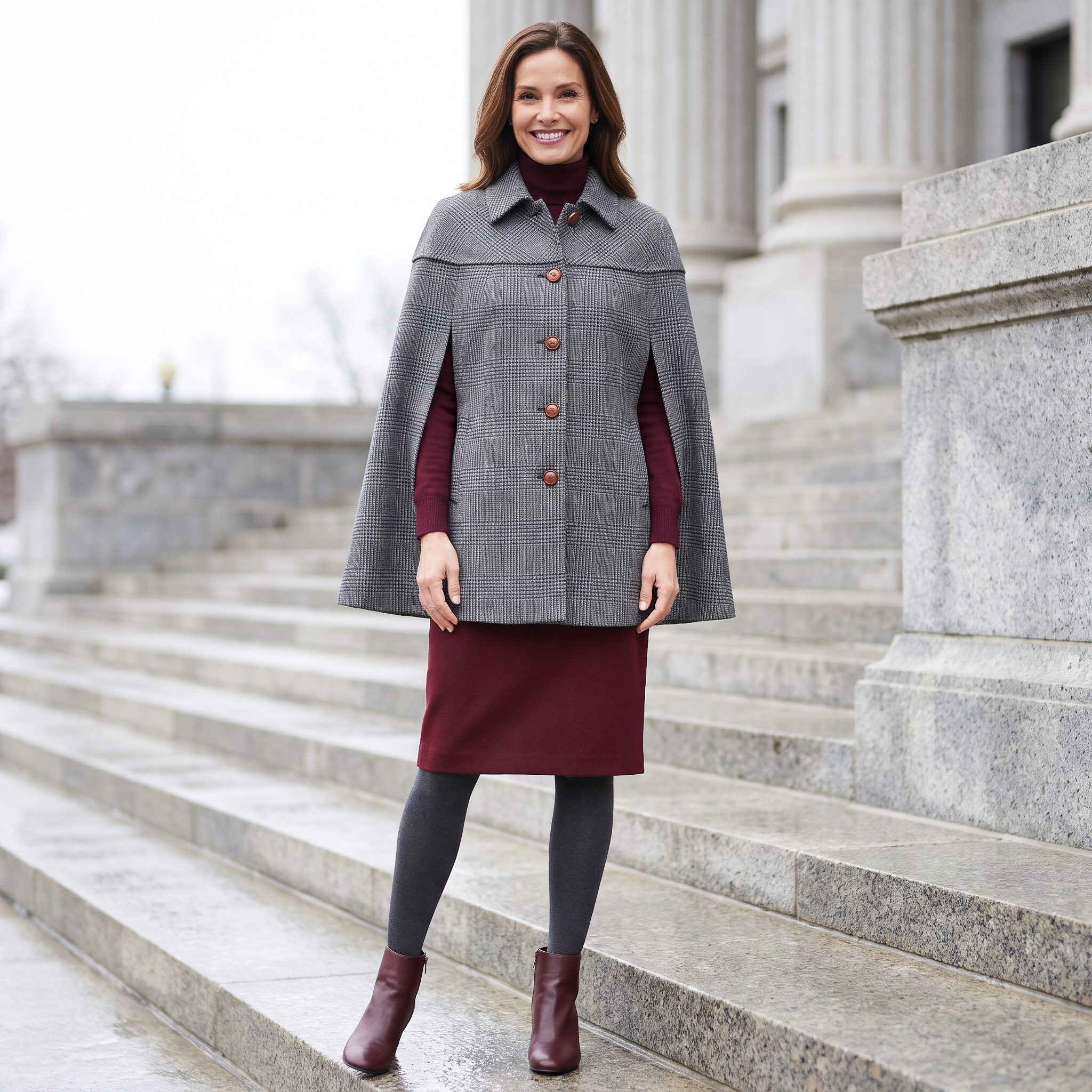
Glen check brings the visual discipline of traditional tailoring to a garment that is considerably less conventional than a blazer. The checked tweed cape broadens the upper silhouette, while the burgundy pencil skirt provides a more closely fitted counterpoint.
The skirt’s saturated color is particularly effective against gray checks, introducing warmth without undermining the professional character of the outfit. Burgundy ankle boots extend that color below the hem. The result makes a convincing case for a cape in a tailored wardrobe: the familiar ingredients of office dressing are present, but their proportions have been rearranged.
The pencil skirt holds its own with our readers, too: in our skirt poll it took 39% of votes, just behind the A-line at 45%.
10. Sapphire Velvet Cape and Champagne Fishtail Gown
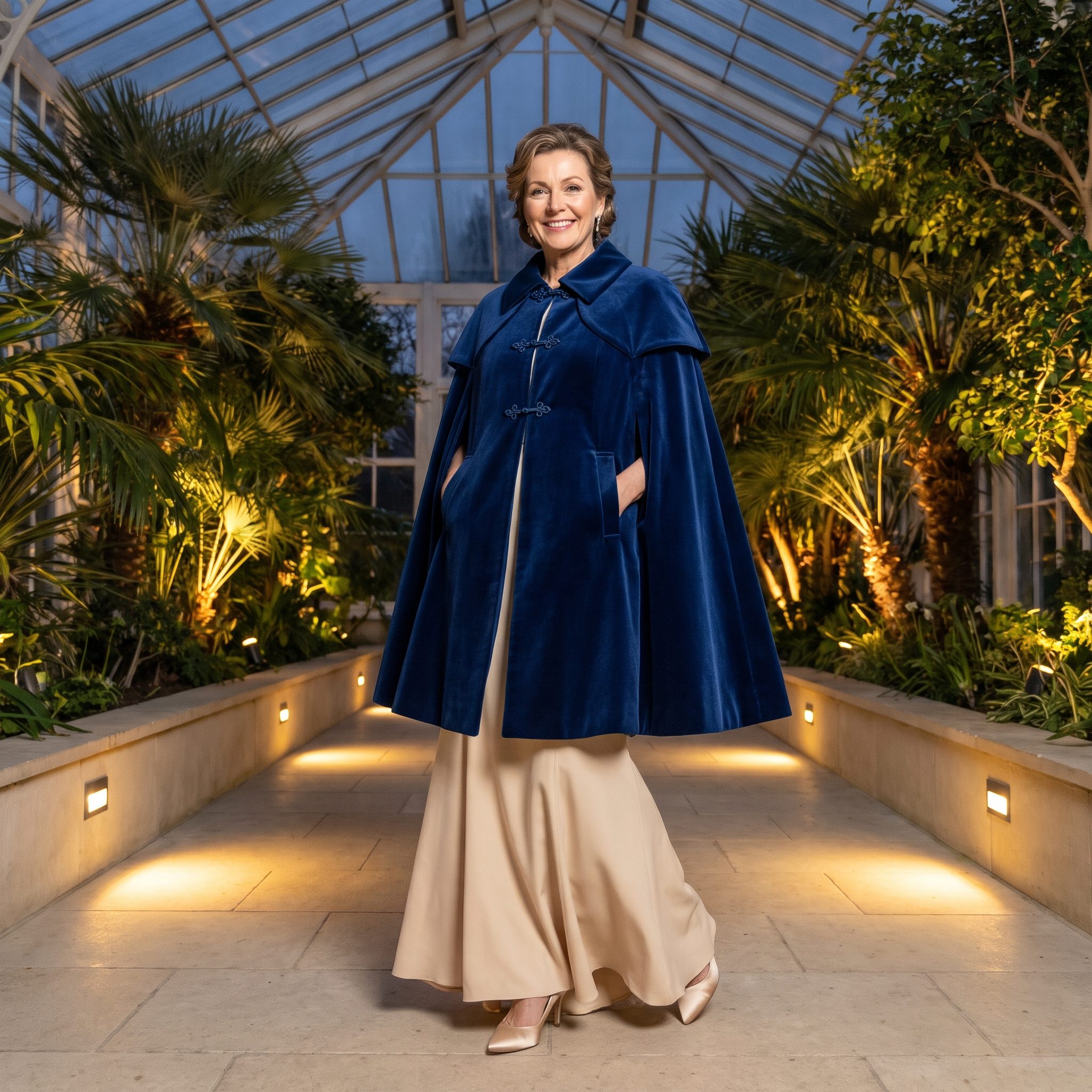
Sapphire velvet provides a spectacular contrast to the pale champagne gown beneath. The cape’s rich blue surface frames the lighter dress, while three silk-frog fastenings give the upper portion a decorative structure that suits the formality of the occasion.
The gown’s fishtail hem introduces a different silhouette below, narrowing through the body before expanding into a fluted finish. That shape deserves to remain visible, and the cape accommodates it without introducing a conventional coat hem across the gown’s most distinctive lines. The sapphire velvet cape supplies depth and grandeur; the champagne fishtail gown brings lightness and movement. Together they make a compelling argument for evening outerwear that contributes to the outfit rather than concealing it.
9. Midnight Cashmere Cape and Pearl-Gray Wide Legs
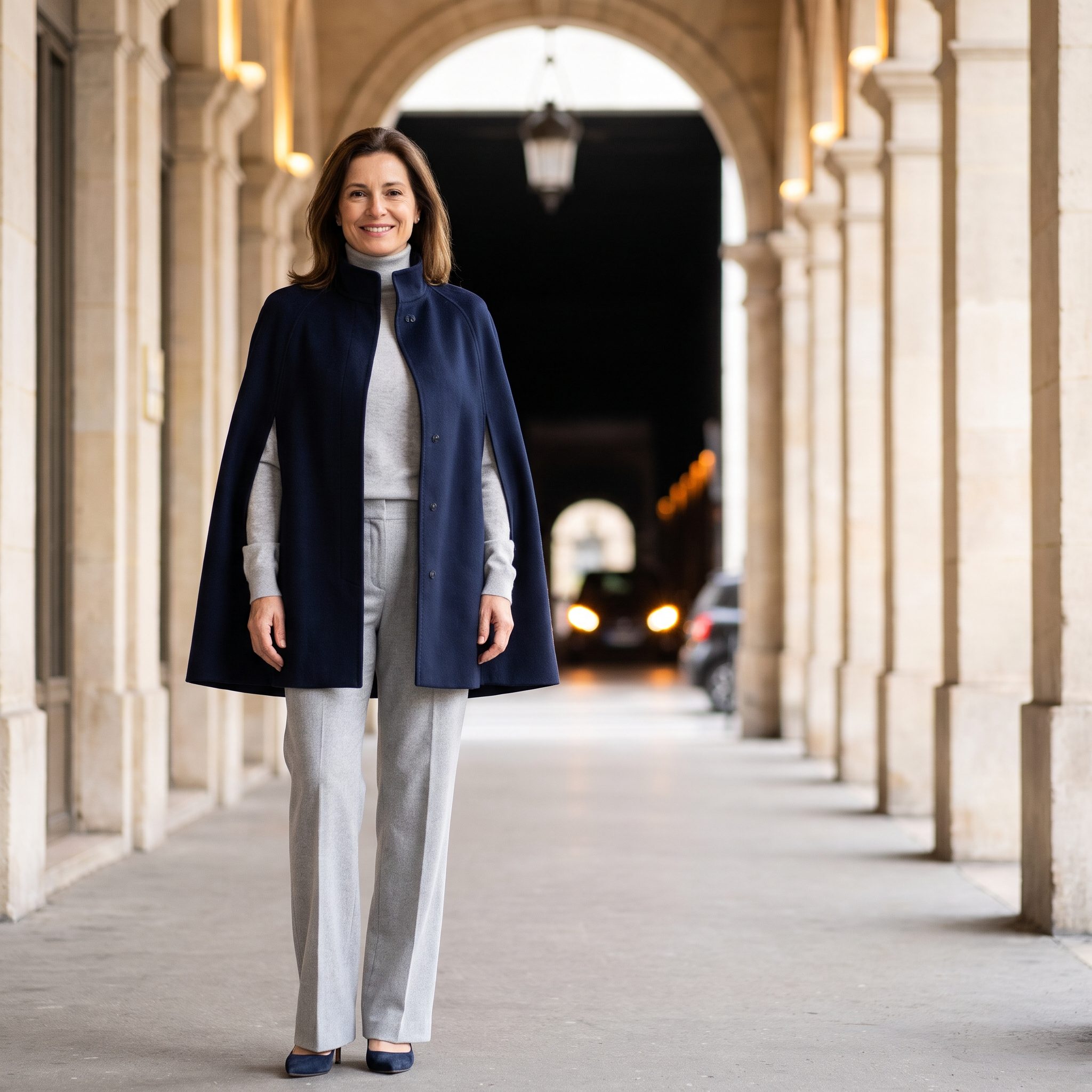
The abbreviated length makes this midnight-blue cape particularly effective with wide trousers. Ending around the upper thigh, it leaves enough of the pearl-gray fabric visible for the lower silhouette to establish its own presence.
The trousers fall generously toward the ankles, providing a fluid contrast to the cape’s high stand collar and more controlled shoulders. The midnight cashmere cape and pale gray tailoring remain within a cool palette, but the difference in tone keeps their outlines distinct. This is a useful reminder that cape volume doesn’t always require narrow trousers. A shorter cape can work beautifully with a wider leg when the lengths are carefully balanced.
8. Black Velvet Cape and Emerald Dinner Trousers
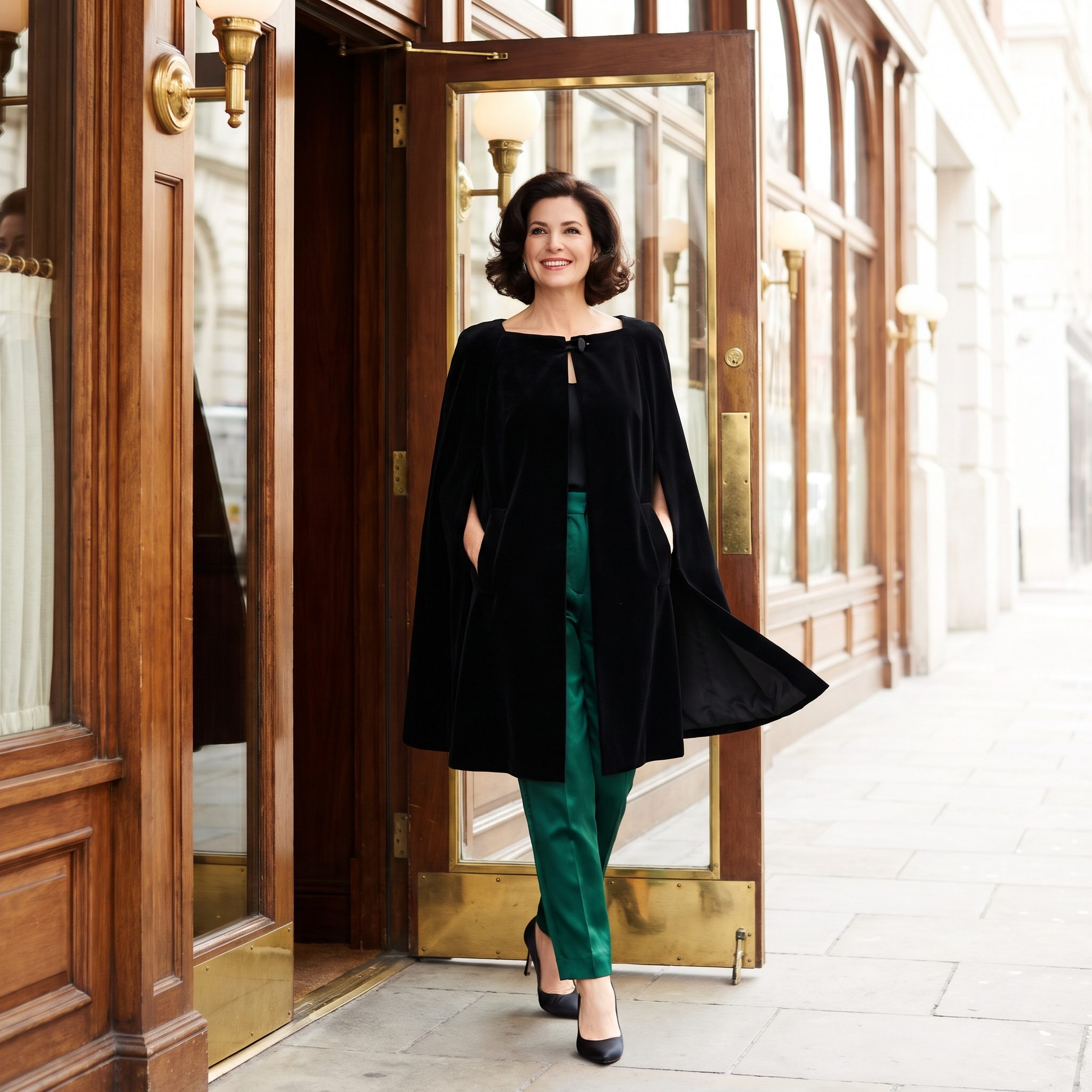
Black velvet provides the frame; emerald silk supplies the spectacle. The cape’s broad bateau neckline extends the shoulder line, while the fabric falls in substantial folds that absorb much of the surrounding light. Against that dark surface, the emerald silk trousers appear particularly luminous.
What makes the combination interesting is the refusal to use a dress. Wide-leg evening trousers introduce movement beneath the shorter, more controlled cape, creating a formal silhouette without the familiar outline of a gown. The green is bold enough to carry the outfit, so jewelry can remain restrained. This is eveningwear built around contrast rather than embellishment.
7. Ivory Funnel-Neck Cape and Charcoal Tailoring
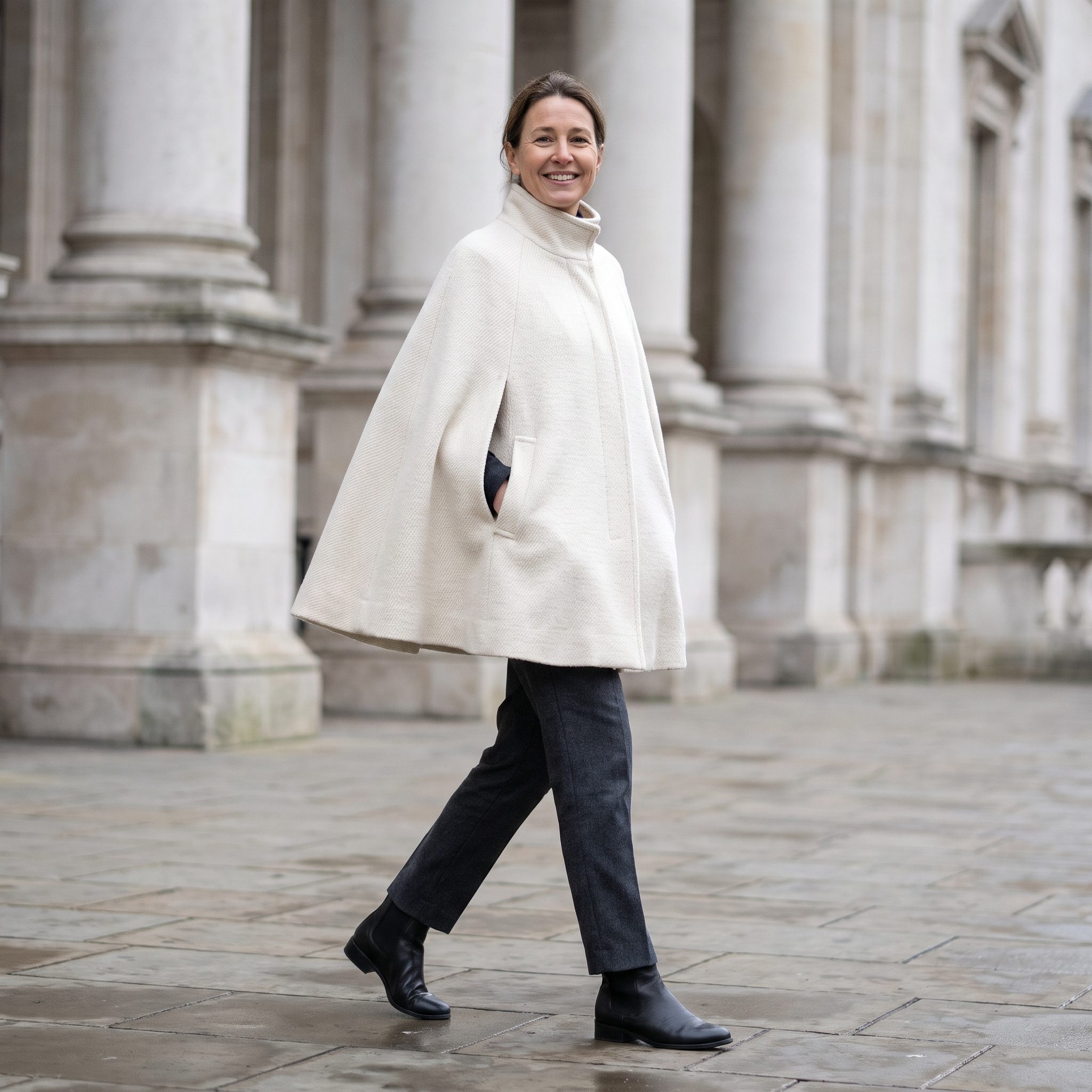
The high funnel collar gives this ivory cape its striking profile, framing the jaw and lending the shoulders a more architectural presence. The wool falls cleanly from that structured neckline, creating a broad upper silhouette without the familiar lines of conventional sleeves.
Charcoal merino and tailored trousers introduce a slim, dark foundation that emphasizes the cape’s pale volume. The contrast is substantial, but the absence of decorative hardware keeps it controlled. A substantial ivory wool cape benefits from this kind of restraint beneath it. The collar already provides all the ornament the outfit requires.
6. Dusty-Rose Cashmere Cape and Burgundy Dinner Suit
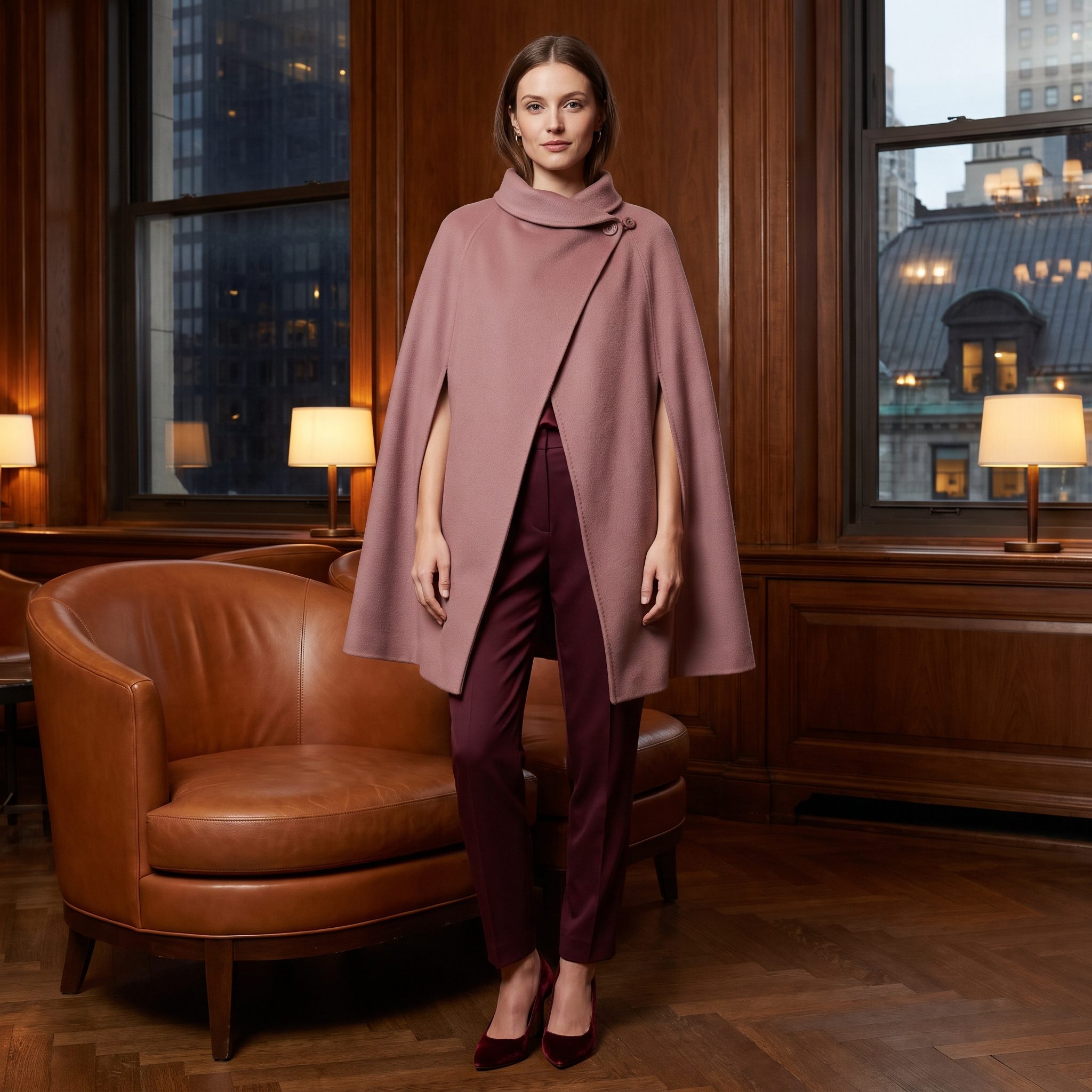
Dusty rose and burgundy occupy different ends of the same warm color family. The pale cashmere cape softens the deeper dinner suit beneath, creating a tonal combination with more character than a conventional neutral overcoat.
The cape’s crossover front draws a diagonal across the torso, breaking up the straight lines of the tailored trousers. Burgundy velvet pumps repeat the suit’s darker color, while the soft outer layer provides a contrast in texture as well as tone. The diagonal fastening is especially effective because it gives the cape a sense of direction without relying on elaborate trim. This is evening tailoring with its severity pleasantly interrupted.
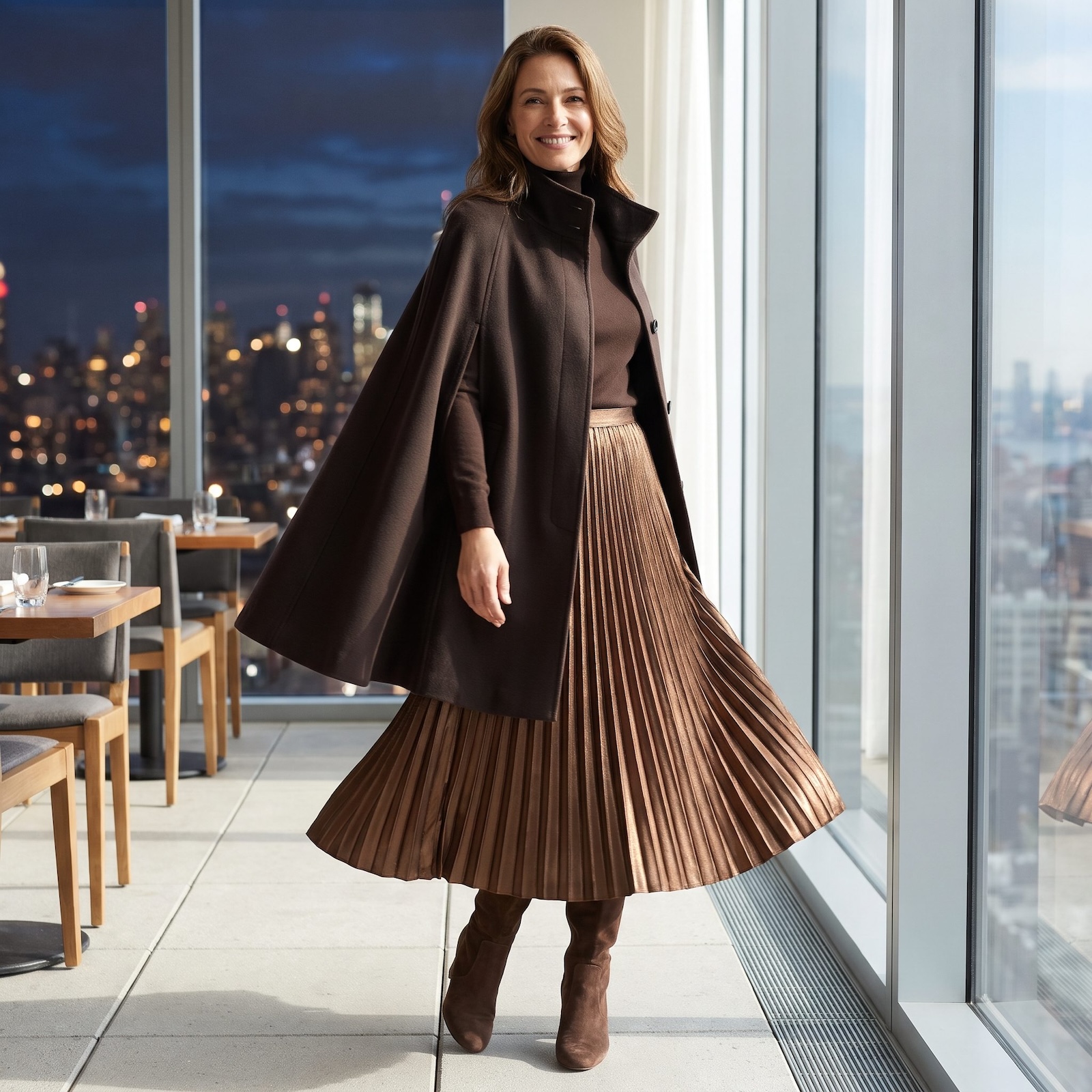
5. Espresso Cashmere Cape and Bronze Pleated Skirt
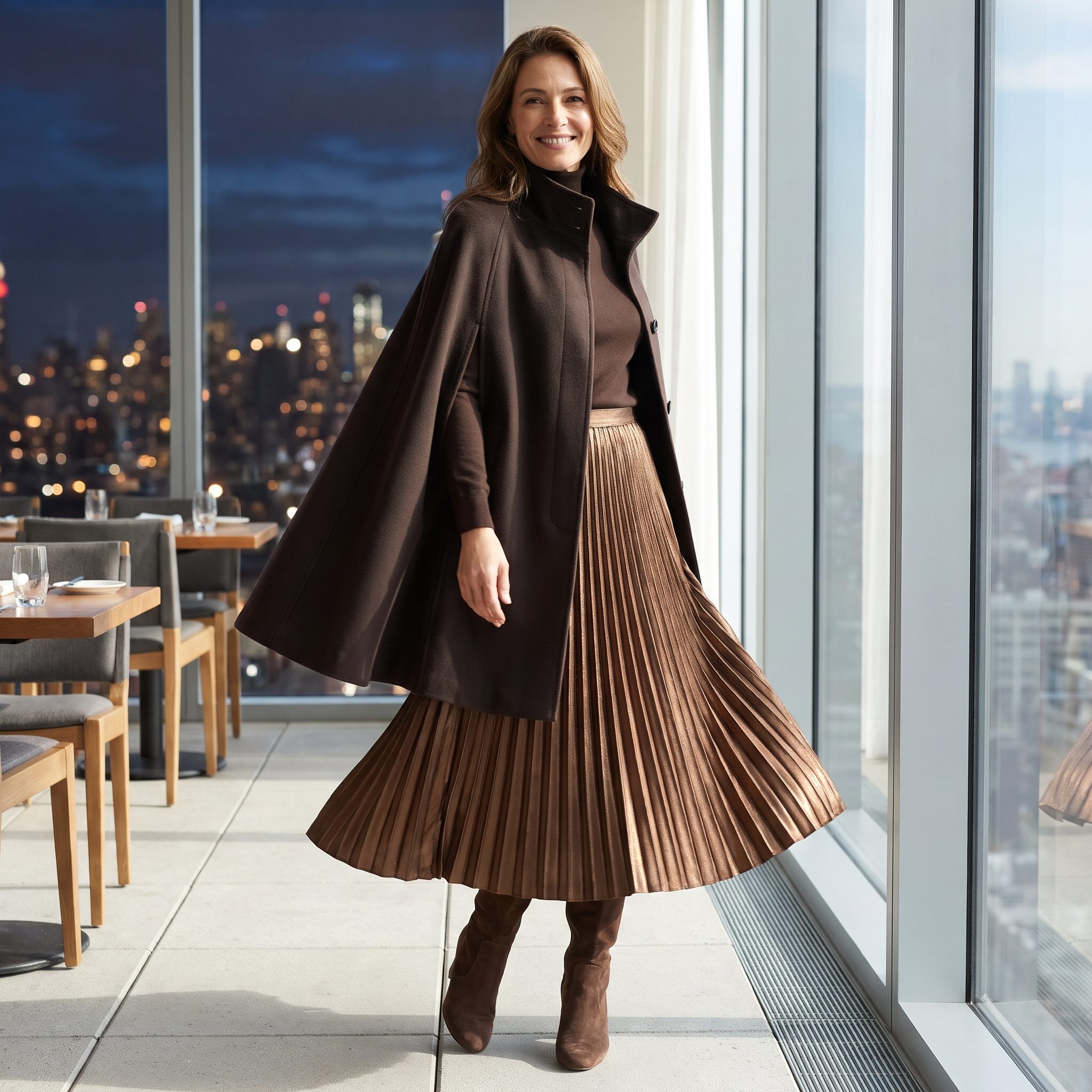
Espresso cashmere has a dense, quiet finish. Bronze pleats are considerably more restless, catching the light in a succession of narrow metallic folds. Together they create a compelling contrast between stillness and movement.
The bronze midi skirt becomes most expressive when the cape opens, revealing the shifting surface below. Espresso suede boots repeat the darker brown at floor level, preventing the metallic skirt from appearing disconnected. This combination demonstrates why a cape works particularly well with pleats: one garment supplies a broad, relatively uninterrupted surface, while the other provides fine detail and movement.
4. Reversible Ivory-and-Black Cape and Deep-Red Tailoring
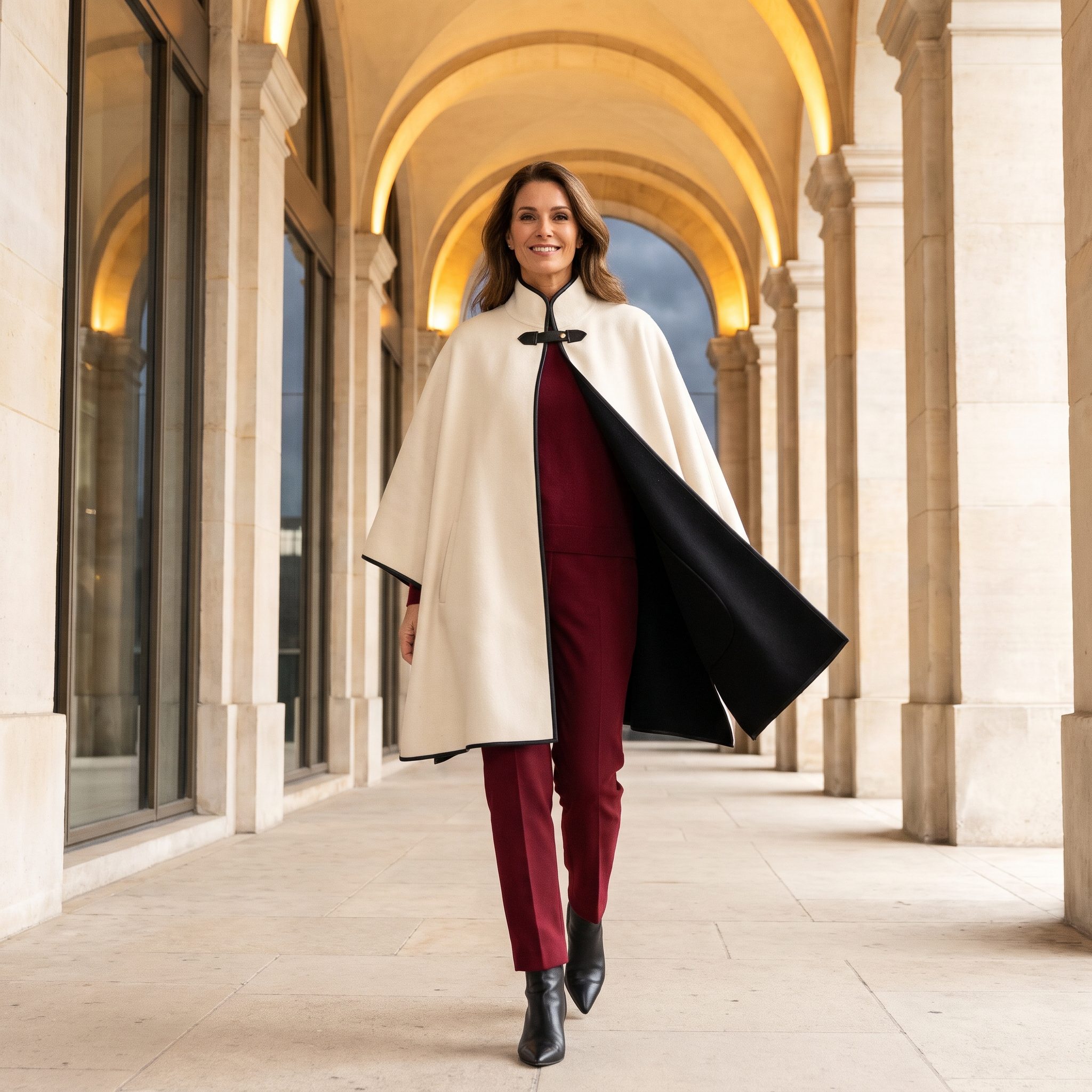
Reversible outerwear becomes considerably more interesting when both sides are visible at once. Here, an ivory cape folds back to reveal its black reverse, creating a bold graphic edge that changes with movement.
Deep-red cashmere and matching narrow trousers establish a saturated foundation beneath the two-tone wool. Black pointed ankle boots introduce another dark accent, connecting the footwear with the cape’s contrasting reverse. The combination contains three assertive colors, yet each occupies a clearly defined area. The reversible construction provides a practical advantage as well as a visual one: the same garment offers two different outer appearances without requiring a second coat.
3. Oxblood Velvet Cape and Blush Evening Column
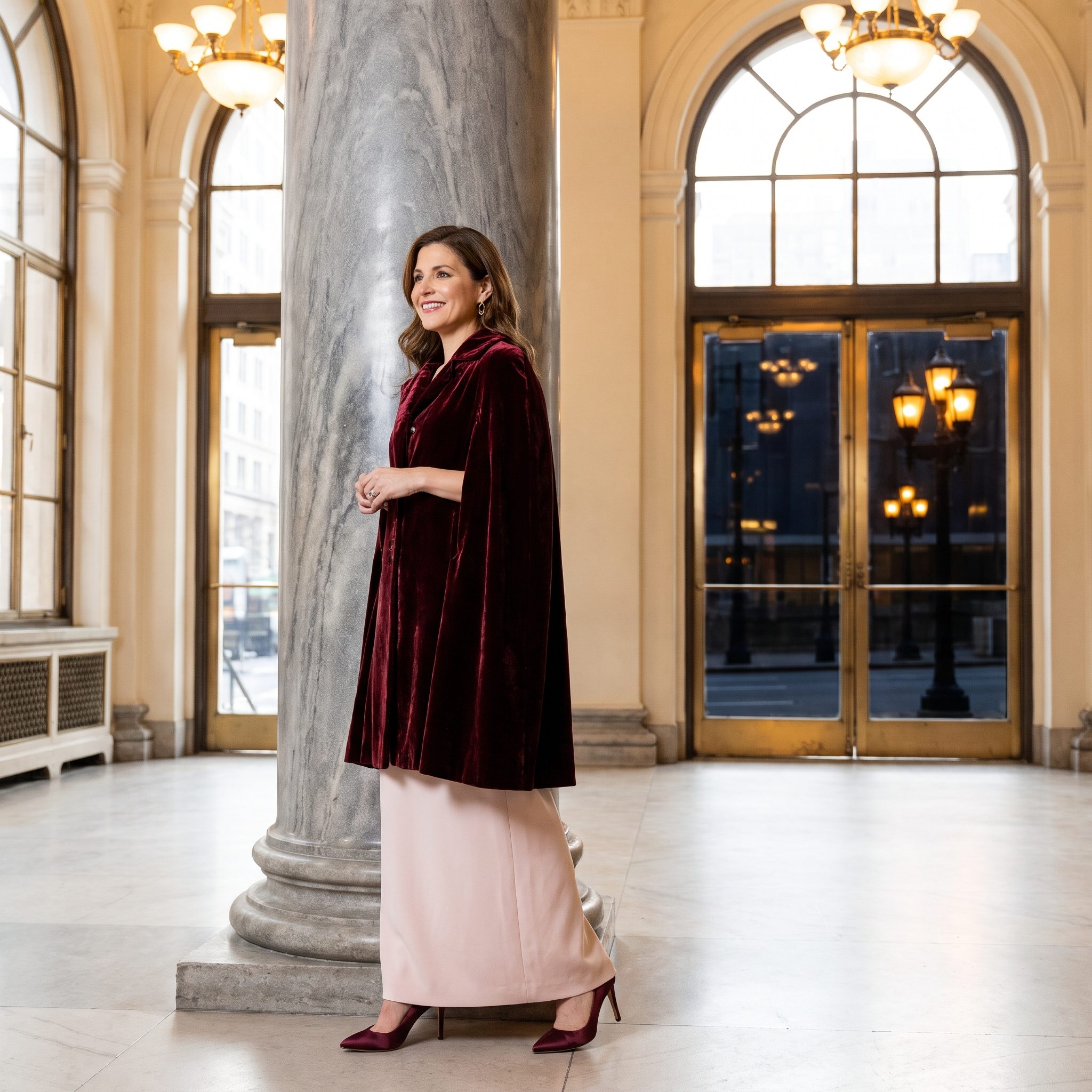
Oxblood velvet has a depth that bright red rarely achieves. Against a pale blush evening column, its rich wine tone becomes particularly pronounced, with the lighter dress revealing itself between the open panels of the cape.
The collarless neckline leaves the face unobstructed and gives the oxblood velvet cape an elegant simplicity. Long folds provide the movement, while the dress supplies a smoother, quieter surface beneath. Rather than matching the cape with black, the blush introduces a softer contrast that makes the entire arrangement more unusual. The two colors share enough warmth to belong together without disappearing into one another.
2. Winter-White Sculptural Cape and Black Sheath
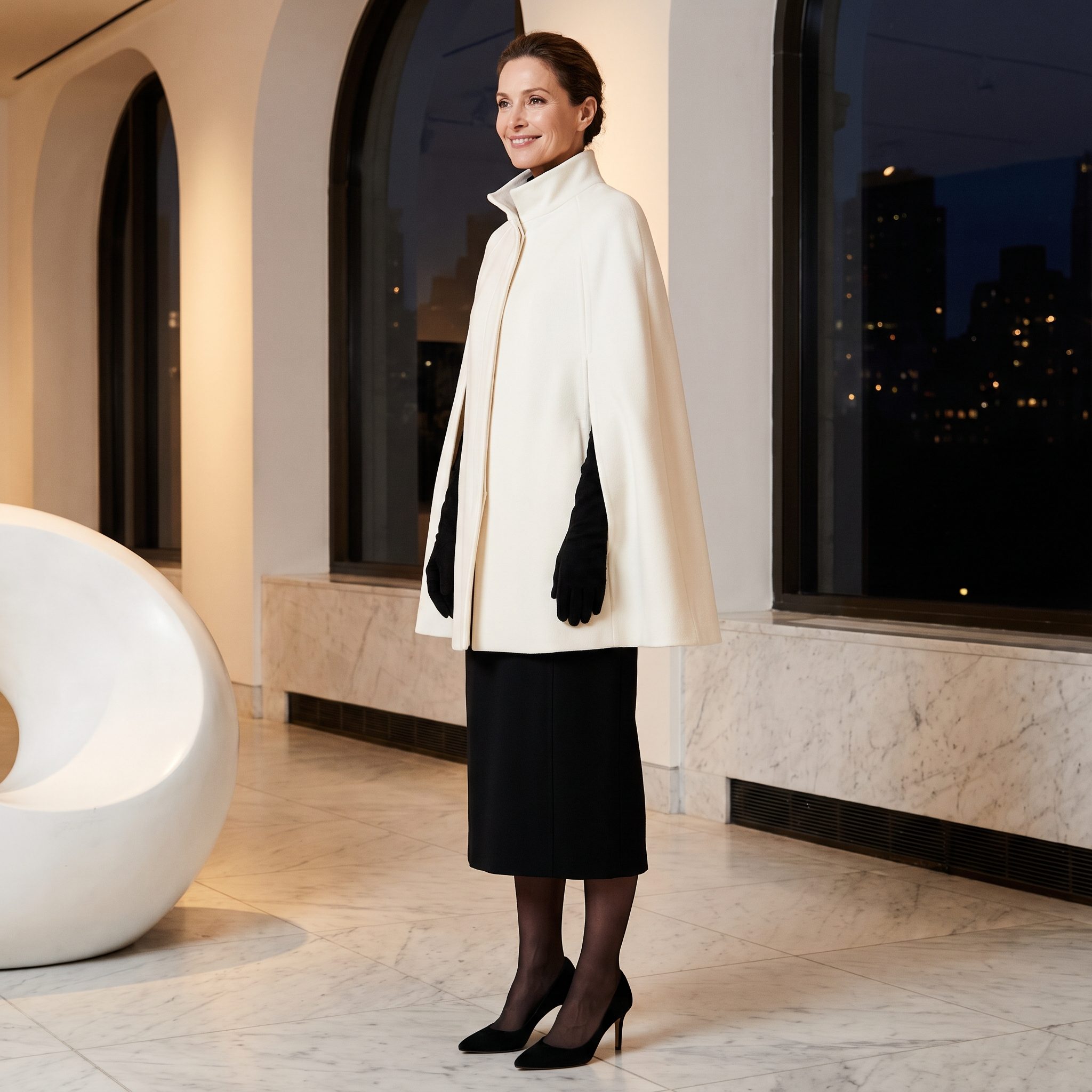
This winter-white cape has the rounded precision of a carefully constructed shell. Its curved collar and sculptural shoulder line create a continuous pale form, uninterrupted by visible hardware or decorative trim.
A narrow black sheath beneath the cape gives that volume a sharply contrasting outline. The dark dress remains visible below the hem, emphasizing the difference between the cape’s rounded architecture and the body’s straighter line. The smooth wool-silk surface reinforces the disciplined construction, while the absence of embellishment leaves every curve exposed. Minimal color, maximum ambition in the cut.
1. Forest-Green Military Cape and Black Cigarette Trousers
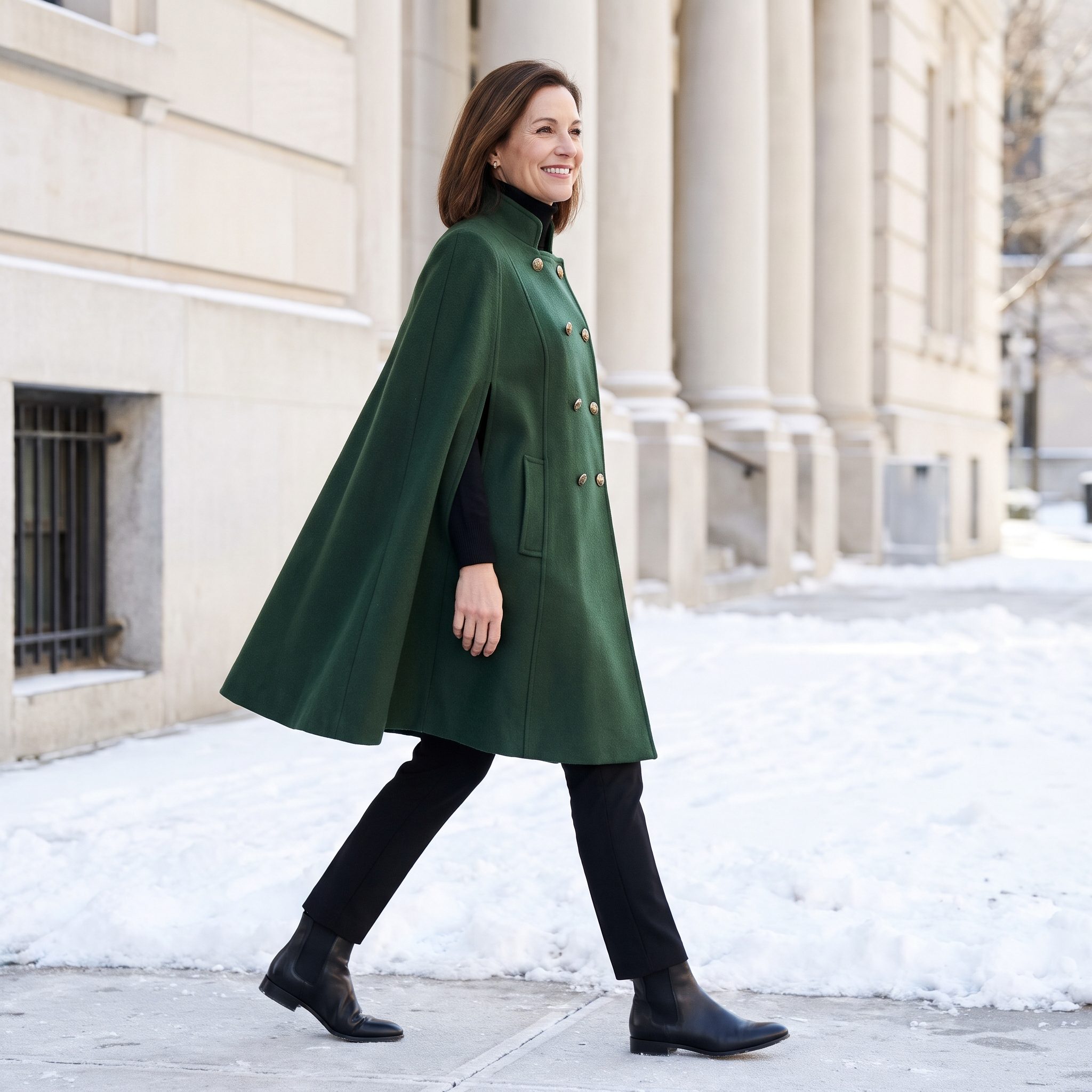
Brass buttons march down the forest-green wool, stopping short of the sweeping hem. An upright collar and carefully shaped shoulders establish the military reference; below them, the cloth refuses to stand at attention.
Black cigarette trousers provide a lean foundation, allowing the cape’s curved outline to remain the dominant feature. The green is deep enough to feel restrained, while the brass introduces a warmer, more decorative note. The surprise is the contrast between the buttoned-up upper half and the freedom of the lower panels. Military precision, with a little insubordination.