
❤️ Would you like to save this?
The scrunchie you refused to take off in 1991 was never just about the ponytail. Neither were the jelly shoes, the jacket your mother hated, the color you wore until everyone begged for mercy, or the outfit in the photograph you still can’t throw away. Before we had much language for identity, clothes gave us one.
Psychologists have spent decades studying nostalgia, memory, social identity, belonging, attachment, and the meanings people give to possessions. That does not turn a childhood wardrobe into a personality test. It does make those old clothes more interesting. They can carry remarkably durable associations with who we were, who we wanted to become, who we wanted beside us, and where we felt at home. These 23 fashion ghosts have been hanging around for a reason.
FYI, thanks to AI imagery software, we’re able to create very specific fashion and hairstyle examples to illustrate the points being made. In some cases, imagery is exaggerated to hammer home the point. Also, assume links that take you off the site are affiliate links such as links to Amazon. this means we may earn a commission if you buy something.
The Fashion Era You Return To May Be Carrying More Than Good Clothes

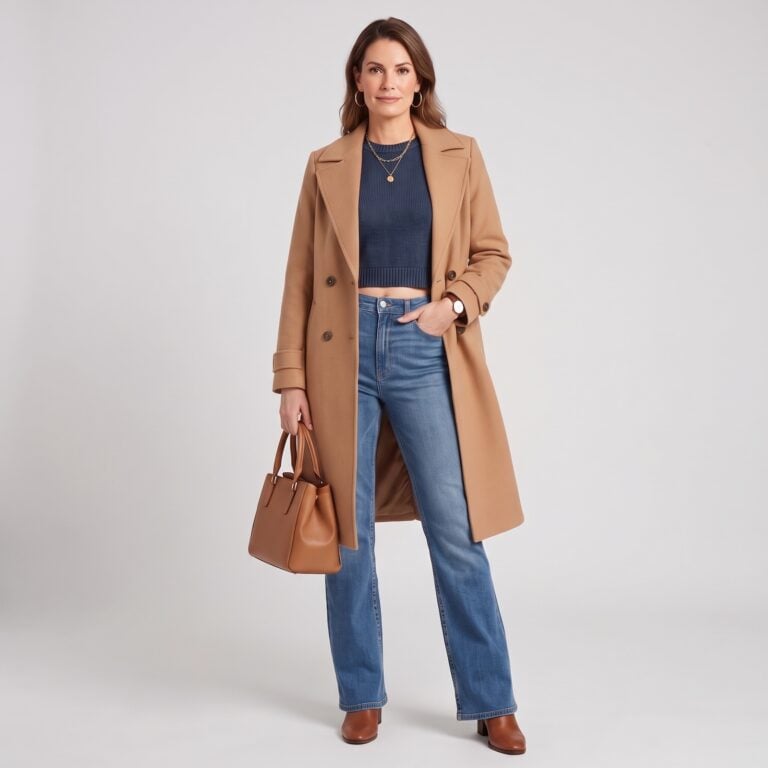
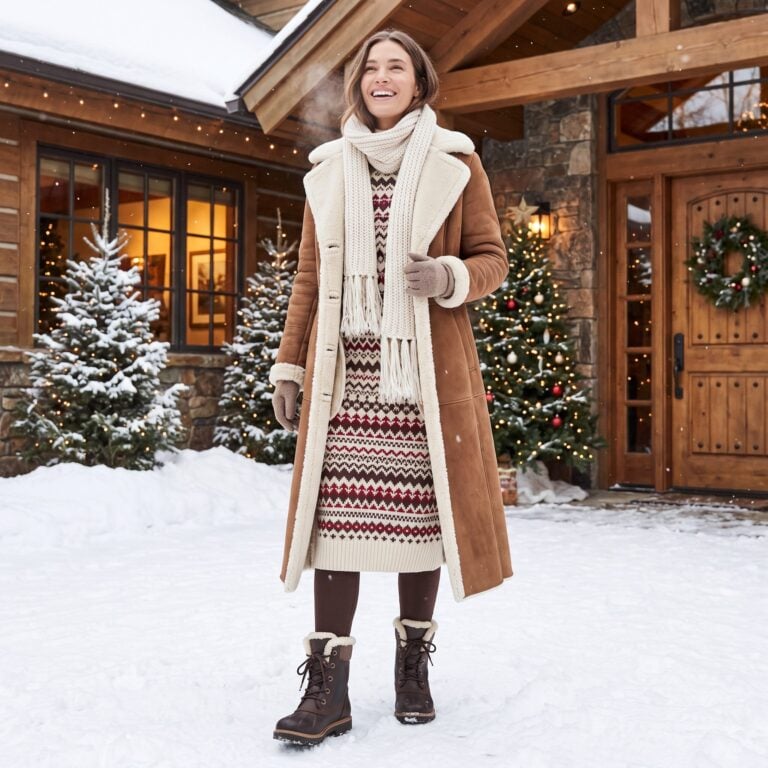
Notice which decade keeps getting you. The slouchy ’90s minimalism. The bold shoulders of the ’80s. The prairie softness you remember from childhood. Maybe the clothes were simply good. Maybe your brain also attached an entire chapter of your life to the silhouette.
Nostalgia researcher Ziyan Yang has described nostalgia as involving warmth, belonging, and a kind of mental time travel. Research she and others have discussed also links nostalgic experience with brain systems involved in autobiographical memory, self-reflection, emotional regulation, and reward processing. (Source)
Your favorite decade does not contain the exact coordinates of your personality. But nostalgia is often connected with self-continuity: the feeling that the person you were and the person you are still belong to the same story. (Source) Sometimes a shoulder pad is just a shoulder pad. Sometimes it arrives carrying twenty years of autobiography.
The Childhood Piece You Begged For Says More About the Wanting Than the Waiting
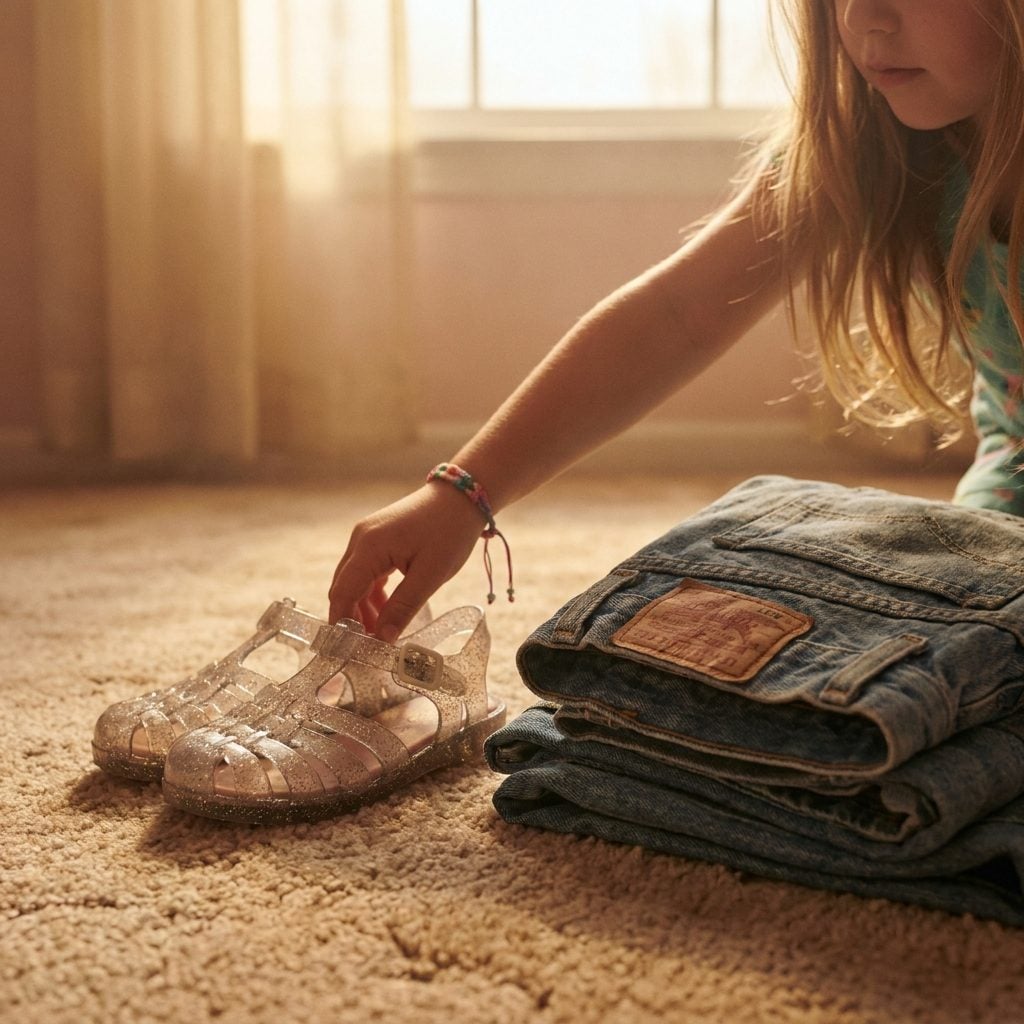
The jelly shoes. The brand-name jeans everyone else had. The jacket you saved allowance for or campaigned for through an entire birthday season. Childhood wanting could be operatic. You did not merely desire the thing. You built a case.
The famous Stanford marshmallow studies turned delayed gratification into one of psychology’s best-known stories. A later follow-up found persistent differences between adults who, as preschoolers, had been especially high or low delayers. (Source) Then the neat little morality tale started getting messier.
More recent work has questioned how strongly a child’s waiting behavior predicts later outcomes once family and environmental factors are considered. (Source) Experiments have also shown that children may wait longer when they have reason to believe an adult is reliable, suggesting that delay can involve expectations about the environment as well as self-control. (Source)
So the shoes you begged for are not a verdict on your discipline. The better question is what the wanting meant. Were they status? Belonging? Independence? The first thing that felt entirely yours? That story is more interesting than whether you would have eaten the marshmallow.
The Trend Your Mother Forbade Could Become More Desirable the Minute She Said No
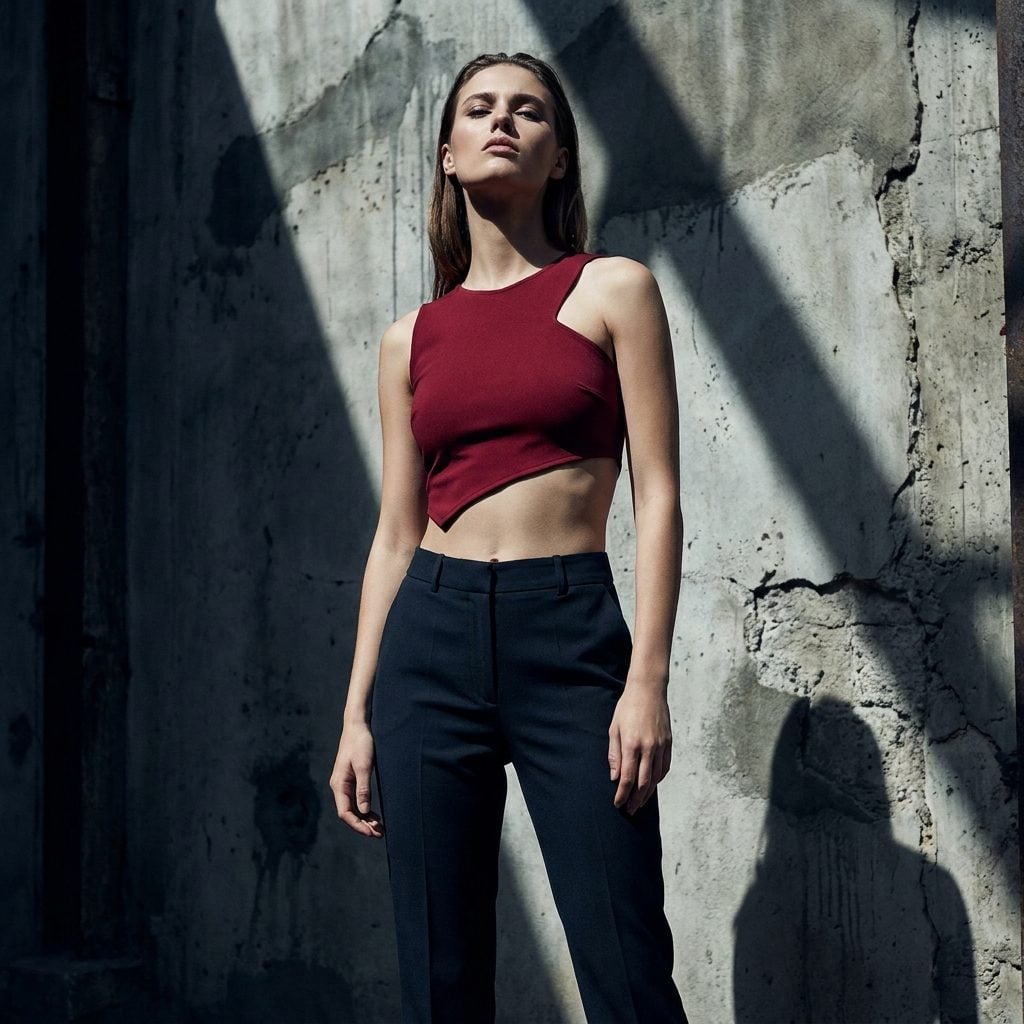
Every family had a line somewhere. The hemline. The heel. The crop top. The hair color. The thing your mother looked at once and answered with a no so complete that the garment immediately became fascinating.
Adolescence is exactly when clothing can become loaded with identity because teenagers are negotiating several things at once: individuality, social belonging, peer approval, and growing independence. (Source)
Research on adolescent clothing consumption has also examined the tension between personal identity and social identity — wanting to stand apart while still belonging to somebody. (Source)
So no, buying the forbidden thing at 50 does not prove you’ve spent four decades arguing with your mother in absentia. But if slipping it on produces a tiny private thrill, the mirror may not be the only thing getting the last word.
Why One Familiar Fabric Can Pull You Straight Back to Childhood
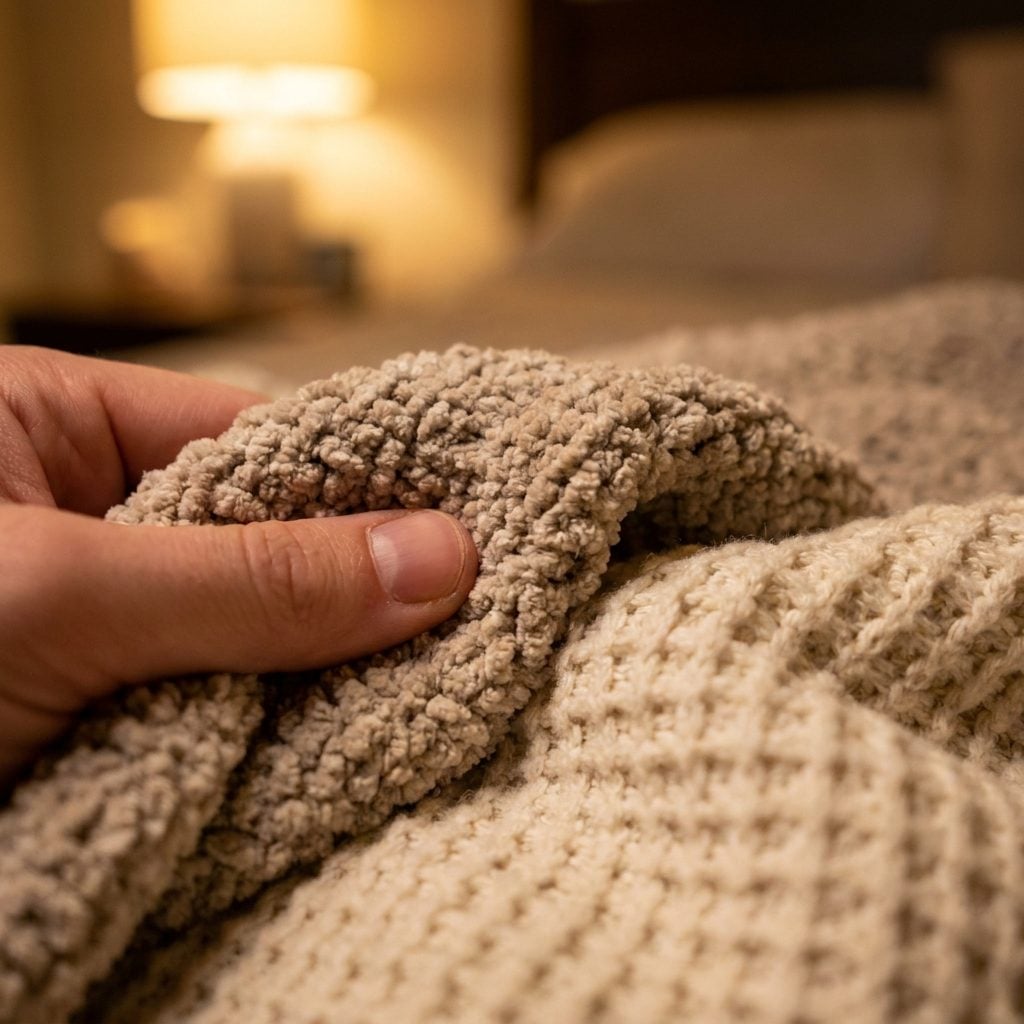
Chenille. Waffle-weave cotton. The nubby weight of a certain knit. Sometimes your hand knows the material before your memory catches up. Suddenly there is a room, a bedspread, a person, a whole house you had not been thinking about five seconds earlier.
Nostalgia often begins with sensory cues and autobiographical memories, and research has connected nostalgic reflection with comfort, social connection, identity, and emotional regulation. (Source)
The fabric itself does not have magical calming powers. What it can have is history. Texture, place, people, and feeling can become bundled together tightly enough that one familiar surface opens the whole package.
The Style You Copied From a Friend Was a Way of Trying on a Possible Self

There was a girl. You watched how she dressed and borrowed it piece by piece: her shoes first, maybe the eyeliner next, then suddenly half your closet looked suspiciously familiar. Nobody called it identity construction. You called it Tuesday.
Research on fashion and identity regularly describes clothing as a tool for self-expression and identity construction. (Source) Adolescence makes that particularly visible because the person doing the dressing is still experimenting with the person she might become.
Clothing can also help communicate identities to other people and reinforce aspects of identity to ourselves. (Source)
So forget the jacket for a minute and remember the girl. Maybe she seemed confident. Artistic. Unbothered. Sophisticated. Borrowing her clothes did not transfer those qualities by osmosis. But it gave you a costume for trying them on.
The Outfit in Your Favorite Old Photo May Be Attached to More Than the Photograph
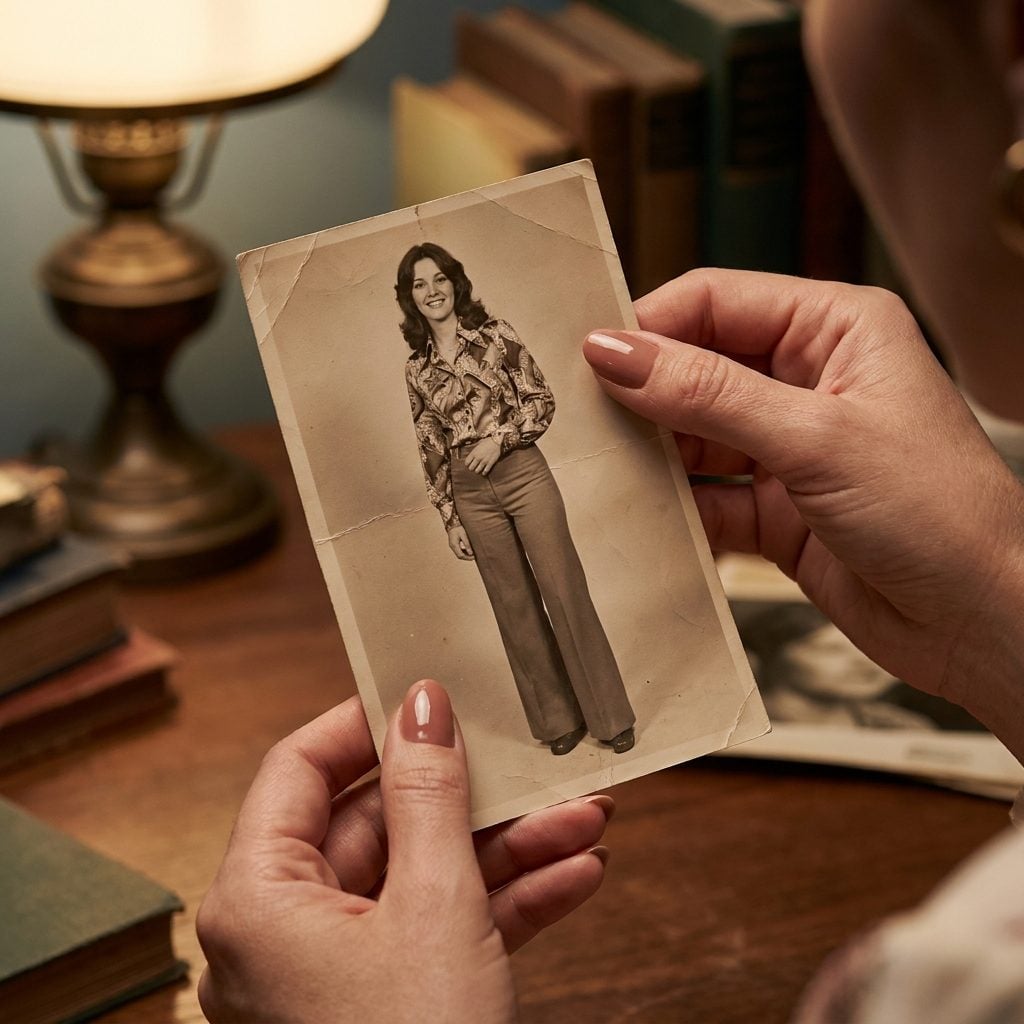
There’s one photo you keep coming back to. Maybe it’s in a shoebox, maybe it was scanned years ago, maybe it still lives in a frame nobody is allowed to replace. You in the corduroy overalls. You in the denim jacket two sizes too big. You in the party dress you apparently intended to wear forever.
The clothes are not necessarily the reason you love the picture. Look at the person inside them.
Memories of appearance can become intertwined with later self-perception, especially when those memories carry strong emotion. Source A photograph can therefore cue a larger memory about confidence, embarrassment, freedom, friendship, or simply being younger.
That may be why one terrible outfit earns permanent protection while a technically better photograph disappears into a drawer. You are not preserving the corduroy. You are preserving the girl who looked that happy in it.
The Color You Wore Constantly as a Girl May Still Come Loaded With Memory
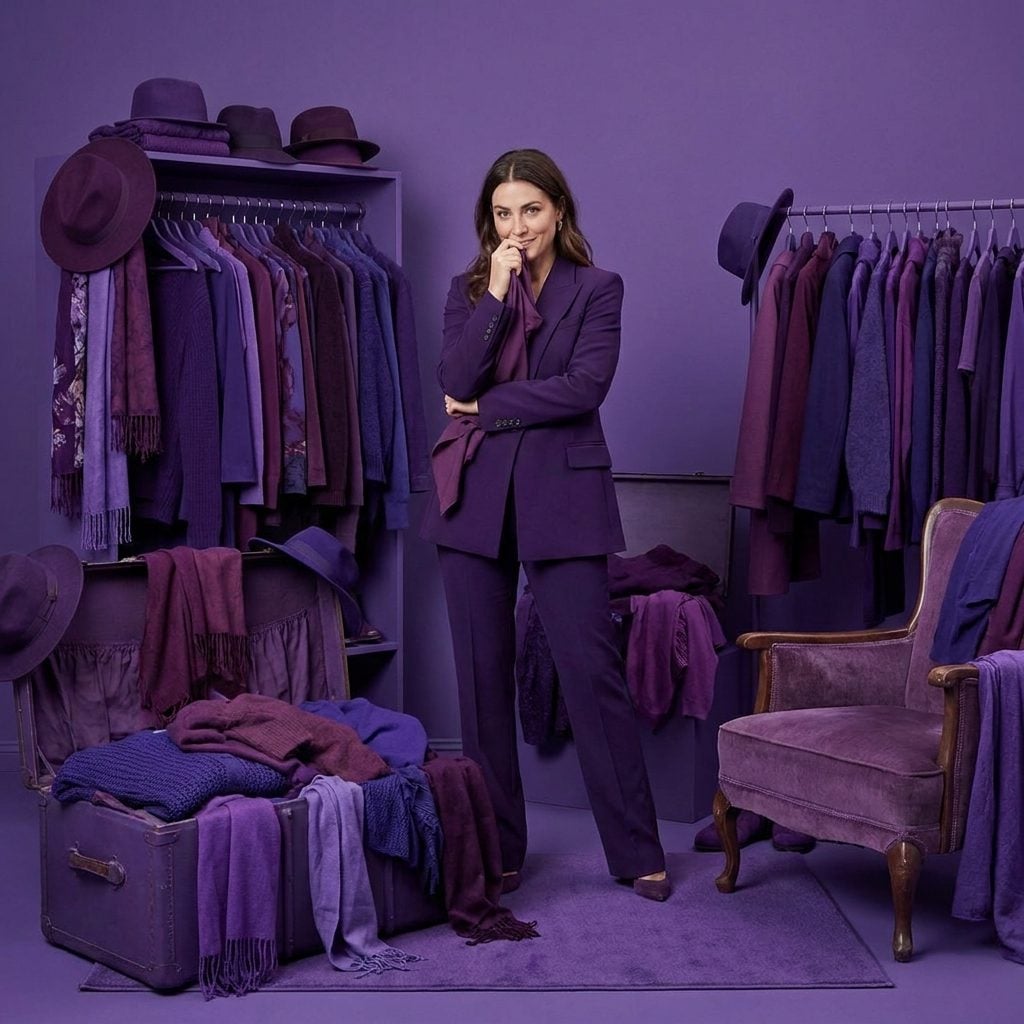
Every girl seems to have had a color phase. Purple everything. Red socks, red backpack, red marker pressed hard enough to shred the paper. A yellow bedroom that could probably be seen from space.
Research has found age and sex differences in children’s emotional associations with color, although individual preferences are shaped by far more than one universal rule. Source
What gives a childhood color its staying power may be everything that happened around it. Source Teal might mean a bedroom wall, a favorite swimsuit, a best friend’s kitchen, or one summer that somehow became shorthand for happiness.
Bring the shade back now and you are not unlocking a secret neurological code. You may simply be opening a very old file and discovering it still has excellent color.
The Trend That Embarrassed You Then Can Feel Completely Different Now
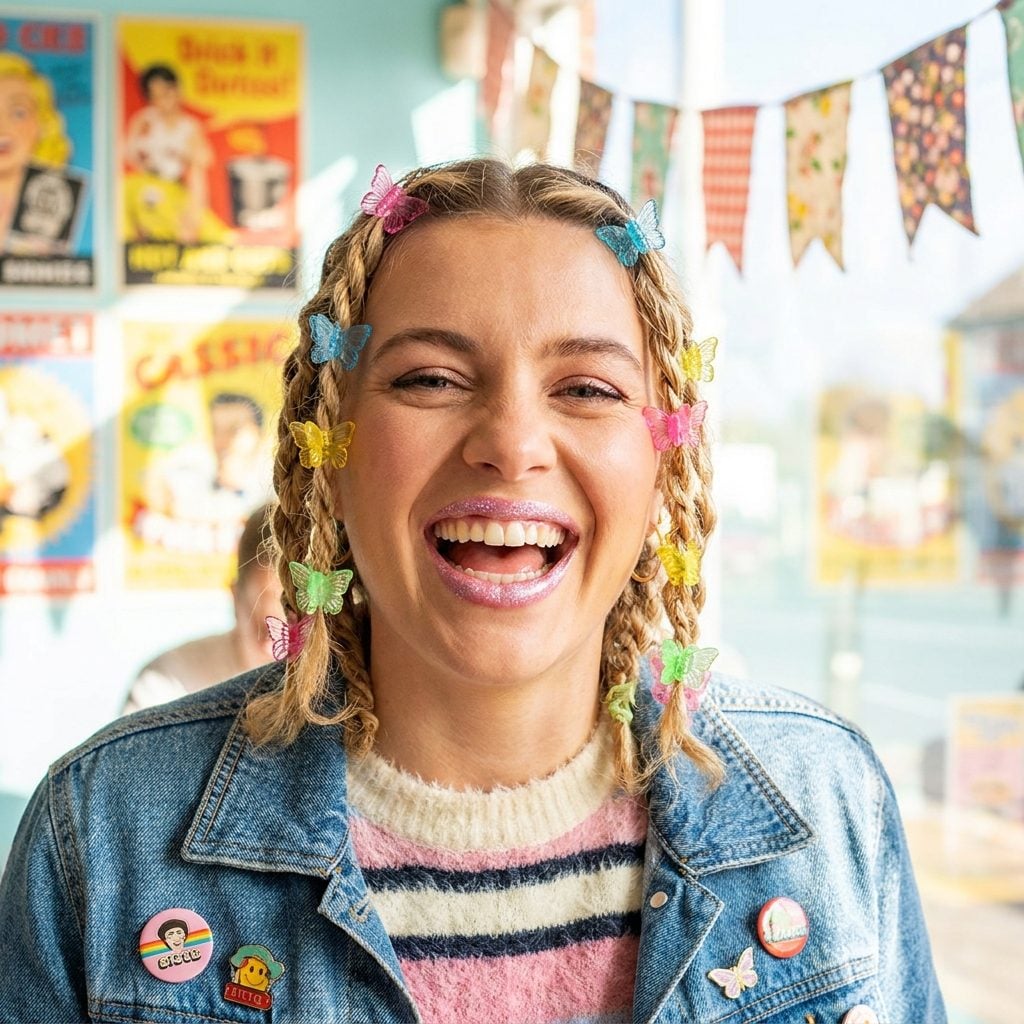
Butterfly clips. Frosted lip gloss. That jacket your mother begged you not to wear to church. The stuff that made you cringe at nineteen has a peculiar habit of turning up again decades later with considerably less shame attached.
Research on nostalgia has linked it with self-continuity — the sense that past and present versions of ourselves belong to one coherent life story. (Source)
That gives an old trend a second life beyond fashion’s usual recycling machine. Wearing it again can be less about reenacting adolescence than deciding that a chapter you once edited out no longer needs to be hidden.
The clip did not get cooler. You just stopped asking it to defend itself.
The Accessory You Collected Shows How Fashion Can Balance Belonging and Individuality
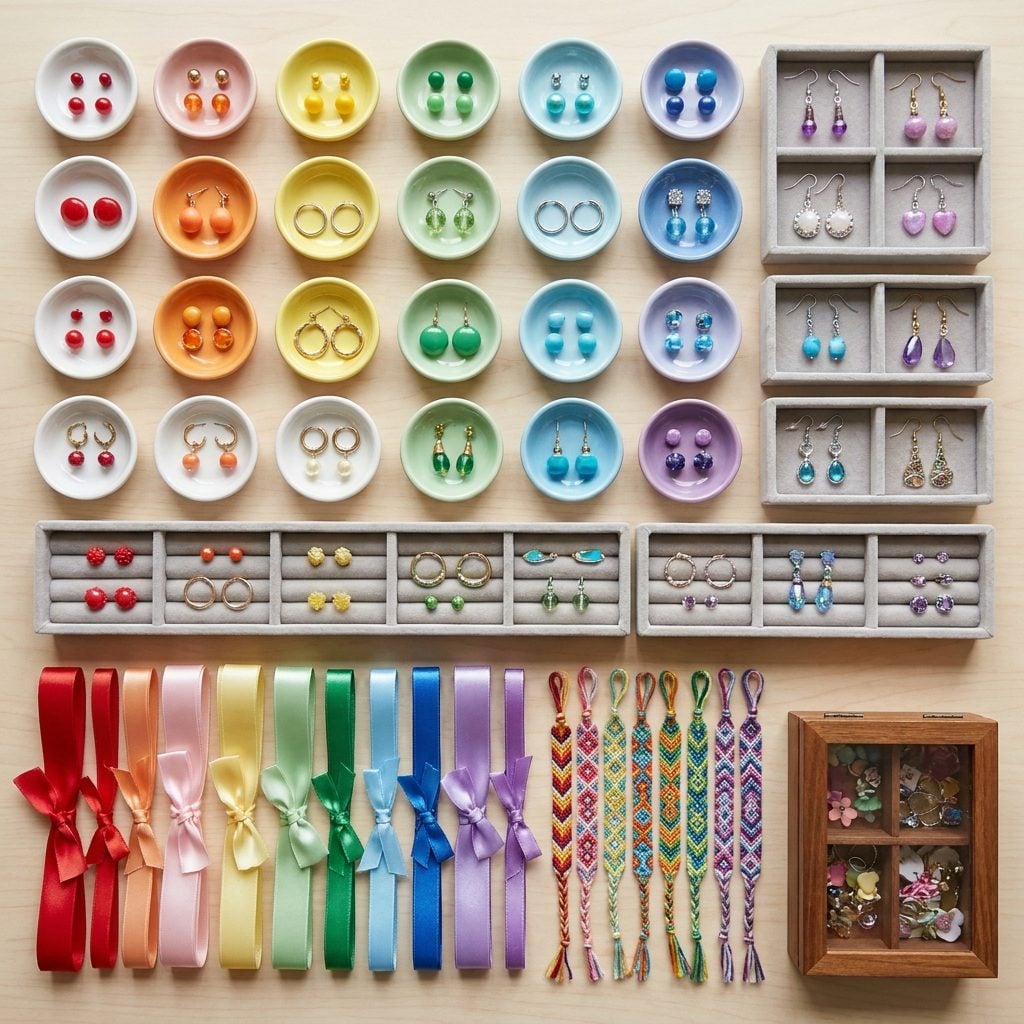
Some girls collected earrings. Some had a shoebox of hair ribbons sorted by color. Some saved every friendship bracelet until the drawer looked like an archaeological site.
Consumer research informed by Snyder and Fromkin’s uniqueness theory has examined the tension between wanting to feel distinct and wanting to remain acceptably connected to other people. (Source)
Accessories are almost absurdly good tools for that negotiation. Everyone can wear the same jeans while one person adds twelve bangles and another wears the same tiny pendant every day.
Look at what you collect now. Scarves. Reading glasses. Brooches. Rings. The category cannot diagnose you, but repetition does show where you like to leave fingerprints. Sometimes individuality is not a whole outfit. Sometimes it is the same ridiculous pair of earrings appearing in every photograph for six years.
The First Trend You Chose Alone Was a Small Declaration of Independence
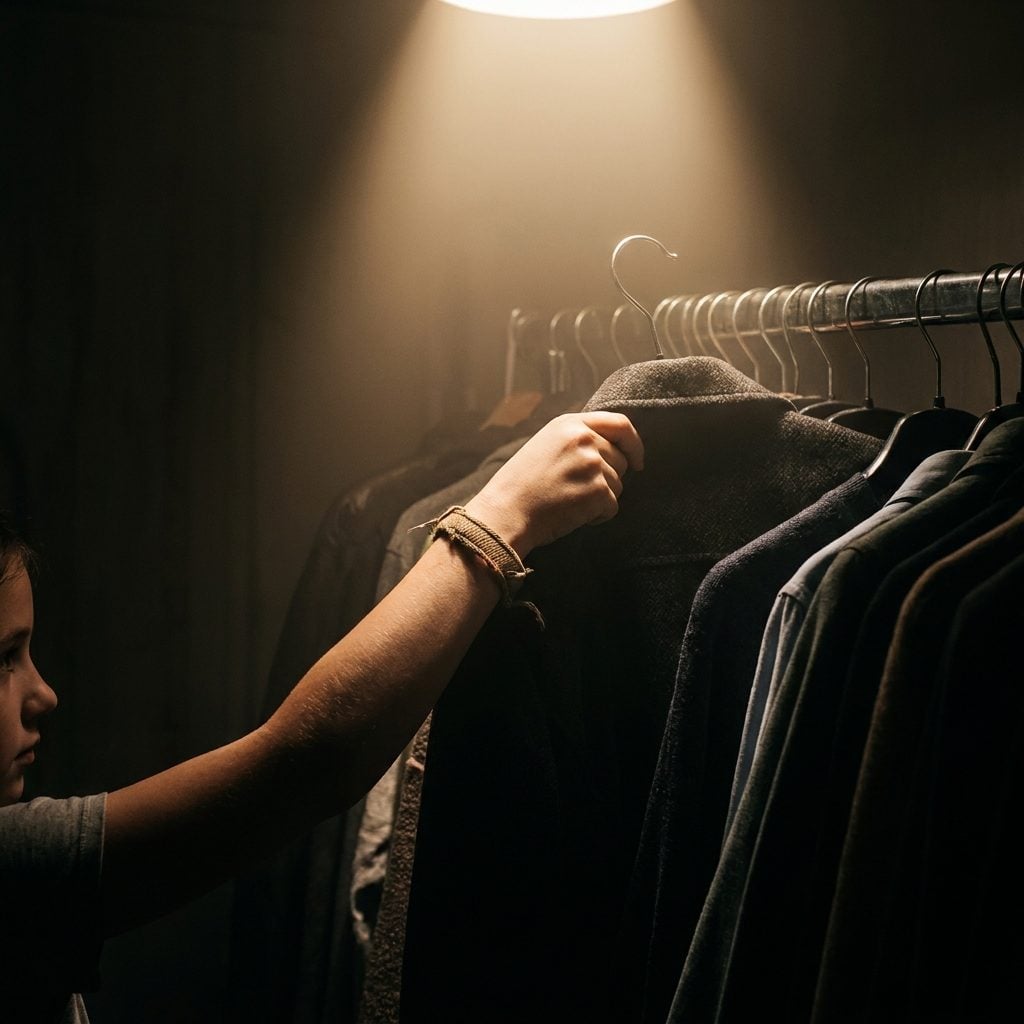
There may have been a moment when clothes stopped simply arriving in your closet and you chose something yourself. Not what your mother preferred. Not what your sister had outgrown. Yours.
One purchase did not create an identity. But adolescence is a period when people increasingly build and revise narratives about who they are, and research continues to examine how autobiographical memory and identity development interact across the lifespan. (Source)
That is what makes the first independent choice memorable. The garment might have been wonderful. It might have been catastrophic. Either way, it came with a new sentence attached: I picked this.
Why the Decade You Grew Up In Can Become Your Private Definition of “Normal”
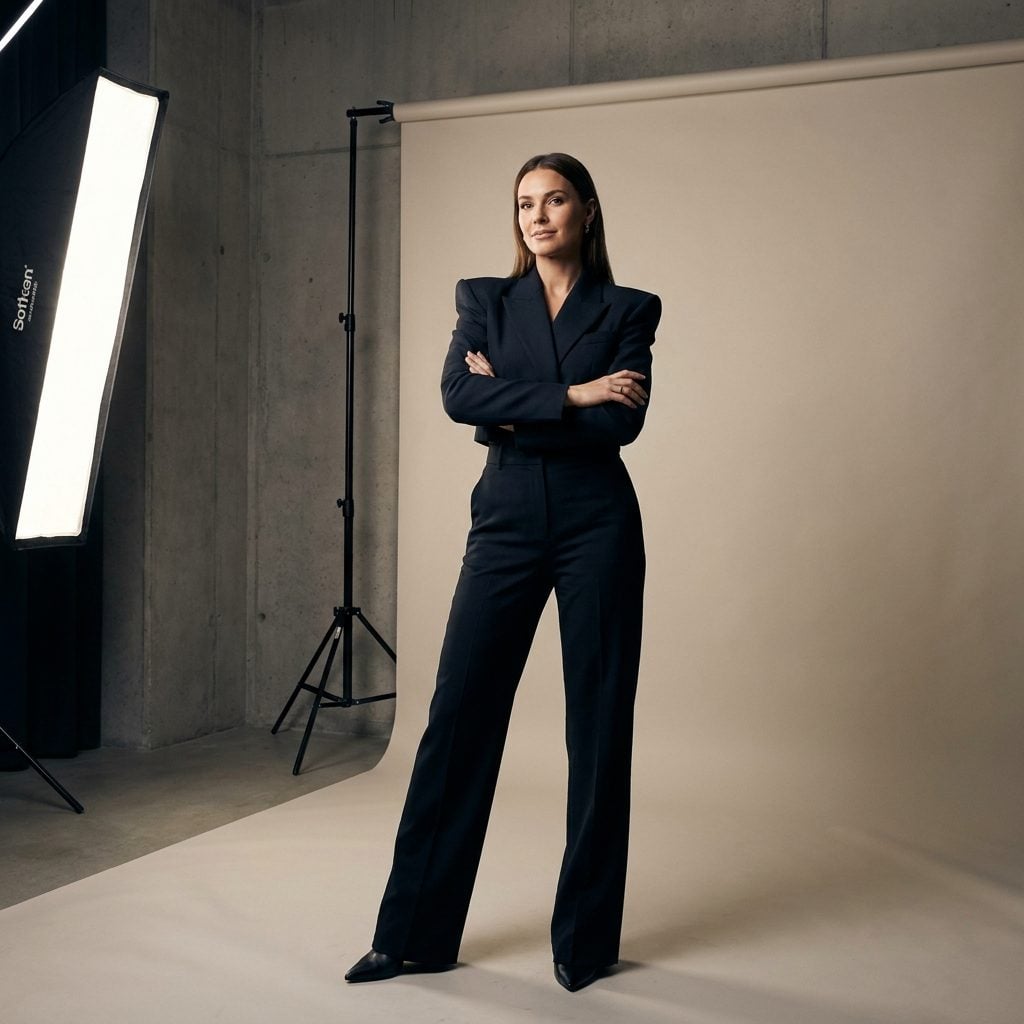
Ask someone who came of age in the ’80s what a proper shoulder looks like. Ask someone from the ’70s where jeans ought to sit. The answers may arrive suspiciously quickly, delivered with the confidence of constitutional law.
Consumer researchers studying retro styling have found that nostalgia can increase feelings of authenticity through self-continuity. They also found stronger preferences for personally relevant retro-styled objects when people’s sense of authenticity was threatened. (Source)
That does not mean everyone’s taste freezes at seventeen. It does mean the years when fashion first mattered can become a powerful reference library. Later silhouettes get compared with it whether you consciously mean to or not.
The decade did not permanently calibrate you. But it probably left fingerprints all over the ruler.
What That Worn-Out Favorite Can Tell You About Attachment to Things
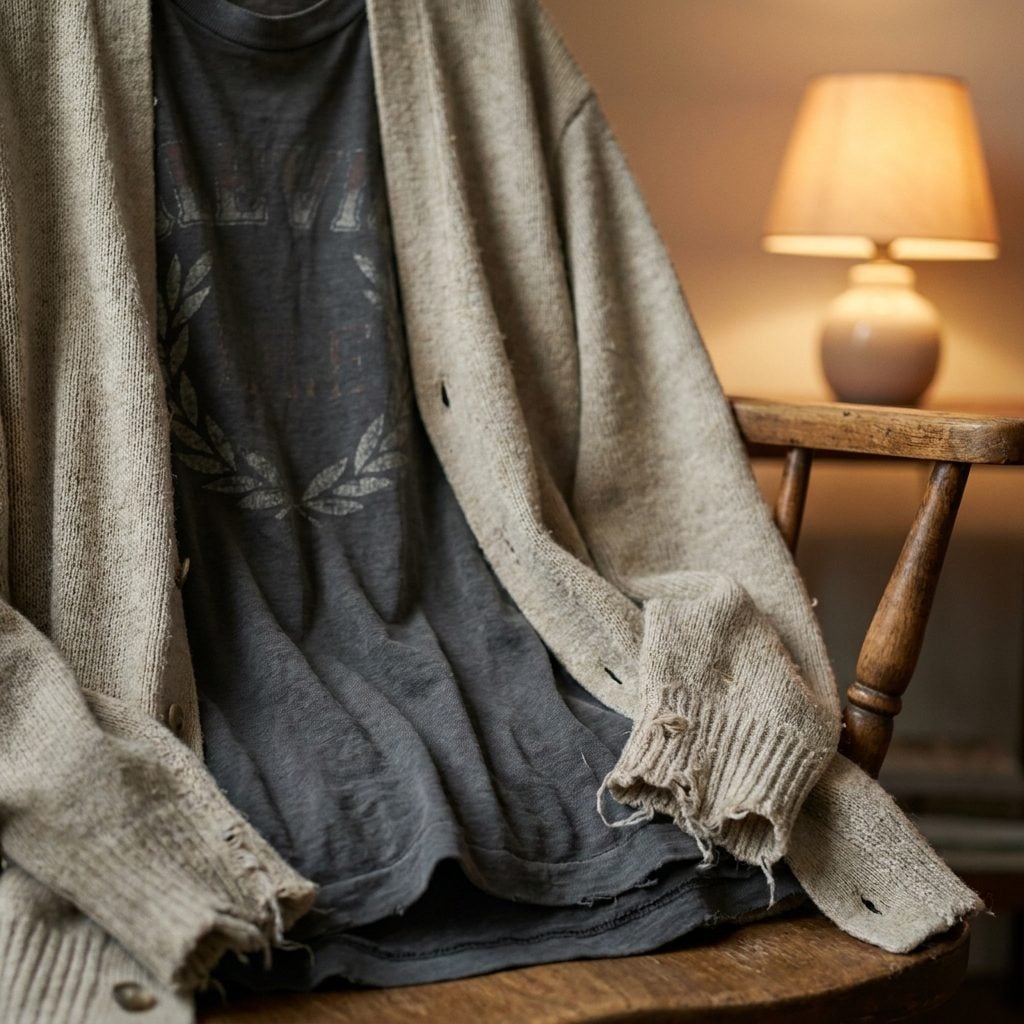
Everybody has the candidate. The cardigan thinning at the elbows. The band tee soft as tissue. The thing that should probably have left the good drawer several years ago and has somehow negotiated another extension.
Donald Winnicott introduced the psychoanalytic concept of the transitional object to describe objects such as blankets and soft toys that can help young children manage separation and comfort themselves. (Source)
The same article notes that adults can also become strongly attached to possessions — including clothing — that represent emotional connections or provide comfort during periods of transition. Clinicians have similarly discussed the role objects may play in self-comfort. (Source)
Your disreputable cardigan is not automatically a security blanket. It may simply be astonishingly comfortable. But when an item survives long after its practical case has collapsed, the fabric may not be what is keeping it in the drawer.
The Trend You Secretly Still Love May Be a Piece of Your Personal History
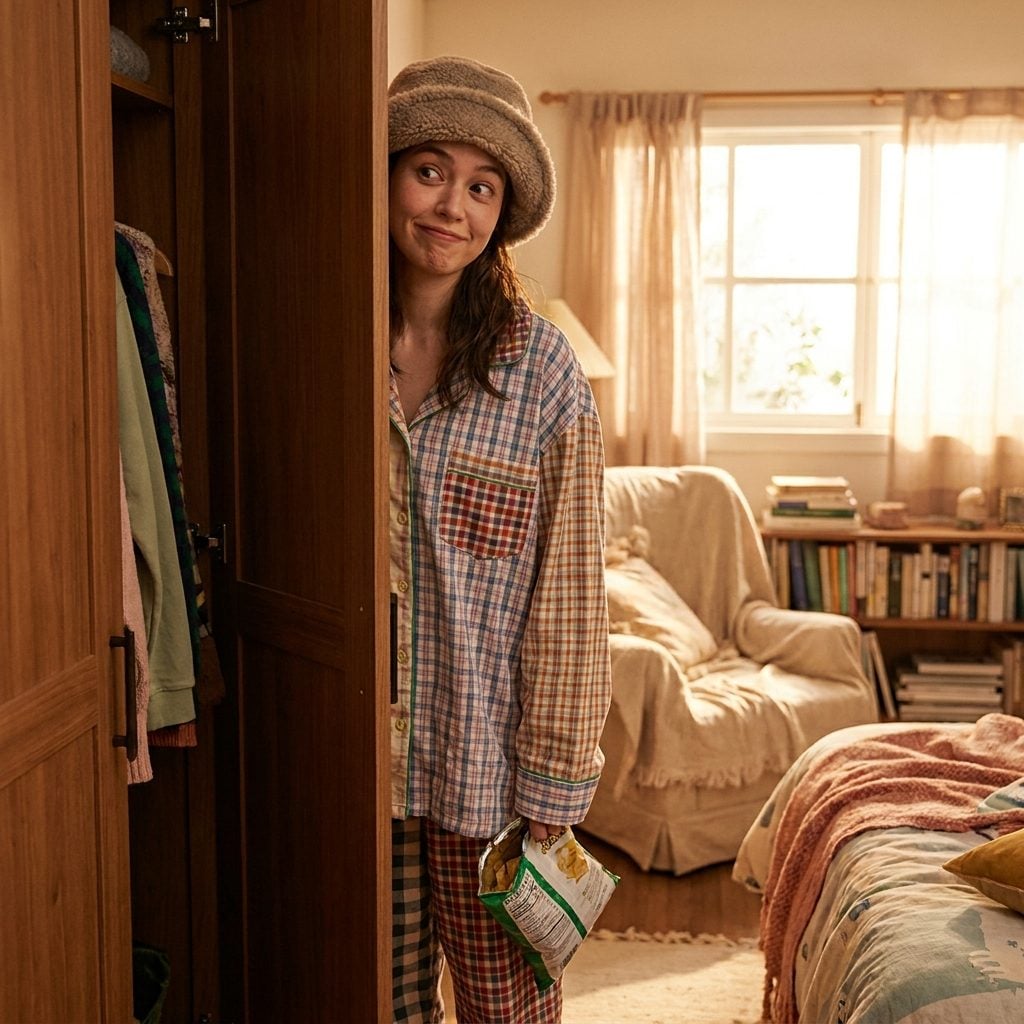
❤️ Would you like to save this?
There’s one you don’t talk about. The velour. The chunky glitter. The aggressively embellished jeans. You have accepted society’s verdict and would now like society to stop opening that particular drawer.
The hiding is more interesting than the garment.
Research on nostalgia and self-continuity suggests that memories of our earlier selves can help us experience our lives as connected narratives rather than unrelated chapters. (Source) Other writing on nostalgia has noted that its effects can depend on whether people feel connected with, or estranged from, their past selves. (Source)
Hiding a velour tracksuit is not psychologically dangerous. But the things we dismiss as “embarrassing old me” can reveal something about how ruthlessly we edit our younger selves for a present-day audience.
Maybe the braver move is not wearing the entire tracksuit. Maybe it is simply admitting you still kind of love it.
The Style Your Idol Wore Became Part of Your Catalogue of Possibilities

You copied her. The lip color, the collar, the jacket, the exact angle of the hat. You were eleven and thought you were being a fan. You were also gathering evidence about what adulthood could look like.
Albert Bandura’s social-learning work made observational learning and modeling central ideas in psychology: people can learn behaviors and attitudes by observing others. Source
Research on adolescents and celebrity identification has also found associations between some forms of identification and measures such as self-esteem and well-being. Source
Your idol did not permanently rewire your brain or dictate the adult contents of your closet. She did something more ordinary and probably more useful: she expanded the menu. Suddenly that neckline, posture, lipstick, or silhouette represented a kind of womanhood you could imagine trying yourself.
What Your First Grown-Up Outfit Taught You About Dressing for a Role
You remember it. The first outfit that seemed to move you across some invisible line into the adult world. Maybe an interview suit. Maybe a dress for an event where nobody treated you like a kid. Maybe just the first thing you wore that made the person in the mirror look unexpectedly official.
Adam and Galinsky called their 2012 idea enclothed cognition. Their experiments suggested that clothing could influence attention when people both wore a garment and attached a particular symbolic meaning to it. (Source)
Research on adolescents also describes clothing as a means of communicating identity and negotiating social belonging. (Source)
The outfit did not install adulthood like software. But clothes can change how a role feels when they already carry a strong cultural meaning.
Sometimes the blazer isn’t confidence. Sometimes it’s the costume that helps confidence get through the door.
The Piece You Saved Your Allowance For Became Valuable Long Before You Owned It
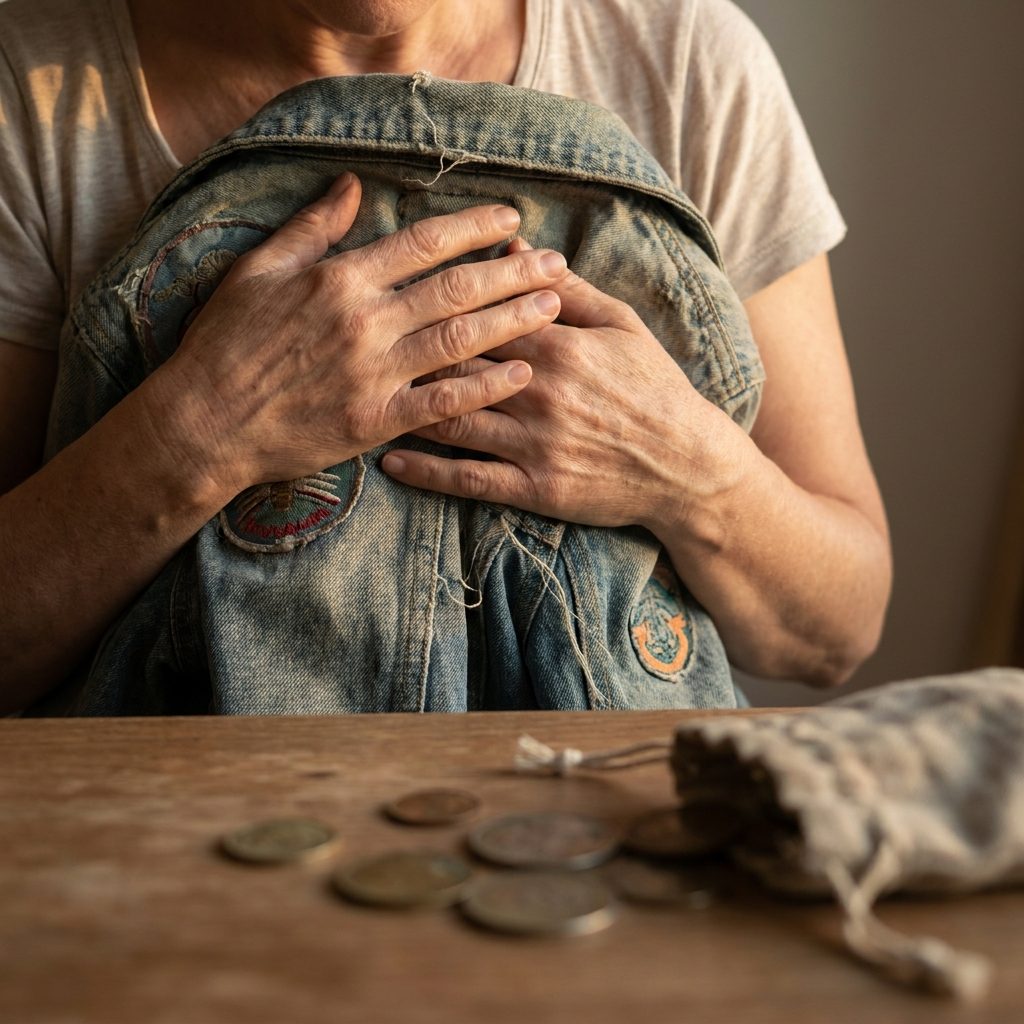
Six weeks of skipped candy money for one jacket. You may remember the number. You may remember carrying the bag home as though it contained crown jewels and several state secrets.
Saving for a garment does not reveal your entire value system, but it makes the object part of a much longer story. Wanting, waiting, comparing, plotting, and finally choosing can add meaning before the first wear even happens.
Research on fashion and identity has repeatedly examined clothing as both self-expression and social signaling, especially during periods when identity is still being actively negotiated. Source
The interesting question is why that one thing earned six weeks. Belonging? Beauty? Status? Individuality? Or simply the intoxicating novelty of buying something with nobody else’s permission?
Look at what you saved for then and what earns the splurge now. The answers do not have to match. The comparison is the good part.
Dressing Up in Your Mother’s Closet Was Play — and Play Can Be Serious Business
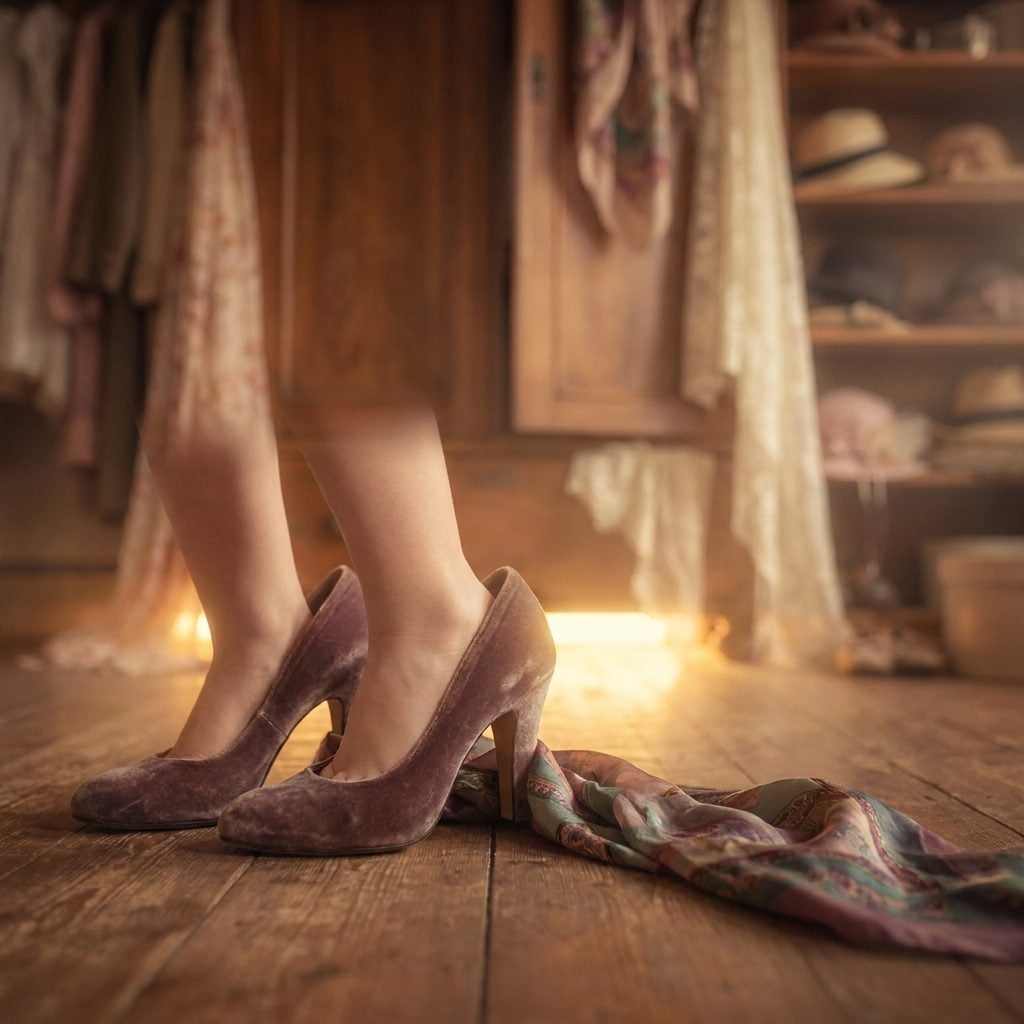
The heels were three sizes too big. You clomped across the bedroom anyway, wrapped in a scarf that smelled faintly of perfume and watched the mirror produce a very questionable approximation of adulthood.
Developmental theories have long recognized action and imitation as ways children learn about the world, including what is sometimes described as enactive representation — understanding through doing. (Source)
Research into mothers, daughters, fashion, and identity has also explored how ideas about dress can be transmitted, negotiated, accepted, and rejected across generations. (Source)
So yes, you were playing. But play is one of childhood’s great laboratories. The scarf did not reveal your destiny. It let you borrow adulthood for ten minutes and see how it looked in the mirror.
The Fashion Mistake You Still Cringe At Probably Drew Less Attention Than You Think
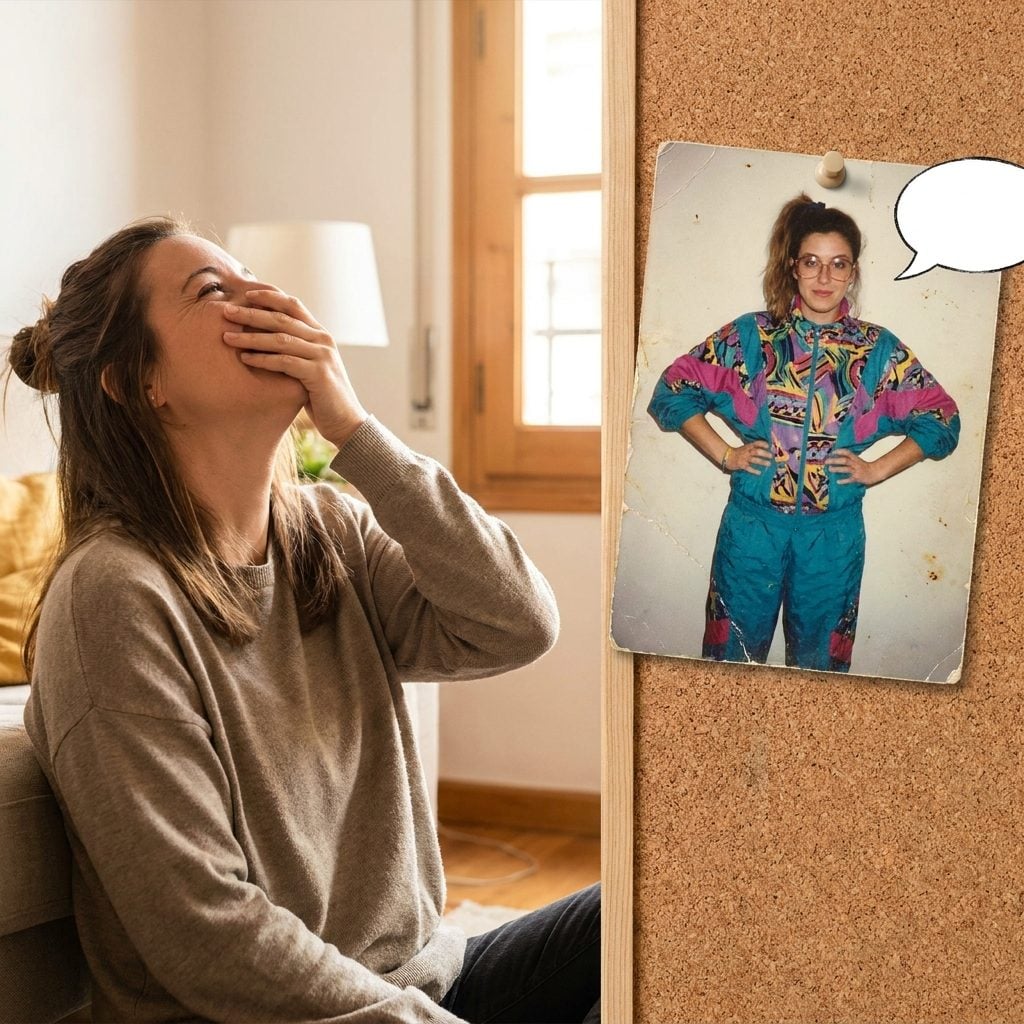
You know the photo. The one where you’re grinning, blissfully unaware that future-you will eventually examine the outfit like evidence from a crime scene. Frosted everything. A belt worn as a headband. Some decisions do not improve under archival scrutiny.
Psychologists Thomas Gilovich, Victoria Medvec, and Kenneth Savitsky coined the term spotlight effect for our tendency to overestimate how much other people notice our appearance and behavior. In one set of experiments, people wearing potentially embarrassing T-shirts overestimated how many observers would remember the image on the shirt. (Source)
Their explanation centered on an egocentric bias: because our own experience is vivid to us, we don’t adjust enough when estimating how noticeable we are to everyone else. (Source)
So the old photo does not expose some secret adult weakness. It gives you something much better: evidence that almost everybody else in the picture was probably too busy worrying about themselves to devote serious attention to your headband-belt situation.
Your Teenage Signature Look Was Part Uniform, Part Social Signal

Every teenager seems capable of building a uniform. All black. Immaculate prep. Skate shoes and oversized denim. Bohemian layers. Whatever the formula, repetition eventually turns clothes into a flag.
Clothing can communicate group membership, aspiration, distinction, and self-image, particularly during years when peer belonging carries enormous weight. (Source)
That does not mean the teenager in black grew up trusting only three people or that the extrovert in neon still trusts every room she enters. Clothes are not a psychological fingerprint.
But remember what your uniform was trying to do. Help you disappear? Find your people? Look older? Look tougher? Make strangers understand something before you had to explain yourself?
That answer is more revealing than pretending the clothes predicted your adult friendships.
Reaching Back to an Old Era Can Be a Way of Keeping the Story Connected

You bought the slip dress again. Or the gold hoops. Or the wide-leg trousers you swore off years ago. Fashion has returned to the scene of the crime and somehow convinced you to participate.
Memory isn’t an objective archive. What we remember is reconstructed, filtered, and often softened by everything that happened afterward. (Source)
Research has also linked nostalgia with responses to loneliness, discontinuity, uncertainty, and other uncomfortable states, although nostalgia certainly isn’t confined to moments of crisis. (Source)
One recurring idea in this literature is self-continuity: nostalgia can help people experience a connection between past and present selves. (Source)
That gives the resurrected silhouette a better job than merely looking retro. It carries something familiar forward.
You are not necessarily trying to become the woman who wore it the first time. You may simply be refusing to pretend she has nothing useful left to contribute.
Ruining a Favorite Piece Can Hurt Because Possessions Become Personal

There was a jacket. Or a dress. Or jeans worn thin at the knee. You loved it hard, and then something happened. Grass stain. Torn strap. Train platform. Washing-machine catastrophe. The object was ordinary to everybody except the person staring at the damage.
Research on possessions has explored the idea that owned objects can become incorporated into our sense of self. Work discussed in a Medical Daily article on the endowment effect (Source) describes brain-imaging research in which objects assigned to participants as “mine” elicited greater activity in areas associated with self-referential processing than objects belonging to someone else.
Sometimes what hurts isn’t the ruined shirt. It’s realizing how much of a story had accumulated inside it.
Attachment to belongings also varies considerably among individuals, and research has explored links between possession attachment and interpersonal attachment styles. Source
One ruined childhood garment does not explain why you now resole expensive boots. But the research does help explain why losing a possession can feel wildly out of proportion to its market value.
By the time something becomes a favorite, you’re rarely losing fabric alone.
The Shoe You Refused to Take Off Was One of Childhood’s Small Territories of Choice

The jelly sandals. The light-up sneakers. The scuffed pair you wanted at breakfast, dinner, and possibly in the bathtub. Adults saw footwear. You saw the only acceptable option.
Winnicott’s theory of transitional objects focused on the special attachment children can develop to possessions that help them negotiate comfort, separation, and growing independence. Source
The jelly sandals were not secretly conducting a lifelong personality experiment. Loving sneakers at six tells us nothing reliable about whether you’ll book an aisle seat at 46.
But shoes can give a child something unusually tangible: choice, movement, ownership. You choose them. You fasten them. You walk out the door in them. You run until the soles start losing the argument.
Sometimes the memory sticks because the shoes were attached to the delicious discovery that your body could carry you somewhere under its own power.
The Outfit You Wore Until It Fell Apart May Have Become a Container for an Era

There was a dress you wore into the ground. The seams gave out, the hem unraveled, the color faded three shades, and still you reached for it. Everybody else saw an exhausted garment. You saw the thing you were not finished with yet.
Possessions can become emotional placeholders because they accumulate associations with people, places, routines, and periods of life. Source That helps explain why discarding something can sometimes feel oddly close to discarding the chapter attached to it. Source
Research on bereavement and continuing bonds also suggests that the way people maintain connections with what has been lost can matter, though findings about a deceased person’s belongings should not be turned into rules about an old dress. Source
Wearing something until it dissolves does not predict how you handle every ending in life. It may simply mean that particular object had accumulated enough history to make throwing it away feel strangely premature.
She grieves in fabric. Maybe that’s too grand for a worn-out dress. Then again, anyone who has stood over a donation bag negotiating with a cardigan knows exactly what it means.
The Bottom Line
Your favorite childhood fashion trend isn’t a secret psychological test, and one pair of jelly shoes cannot predict the woman you’ll become. Clothes are better than that. They collect meaning. They get tangled up with belonging, embarrassment, first independence, friendships, family, aspiration, comfort, bad photographs, terrific photographs, and versions of ourselves we have not completely left behind.
That’s why an old silhouette can stop you cold in a store thirty years later. You’re looking at the garment in front of you, but somewhere behind it is a bedroom, a school hallway, a friend, a mother saying absolutely not, or a younger version of yourself who thought those shoes were the most important thing in the world.
Fashion moves on. Memory has a much messier filing system.