❤️ Would you like to save this?
The living room smelled of pine needles, cigarette smoke, and somebody’s Chanel No. 5. A silver tray of deviled eggs, a record spinning on the turntable, and every woman in the room dressed like the party mattered. Because it did. We pulled some of the most memorable Christmas party looks from 1975 and rebuilt each one for now, keeping the fabric, the color, the detail that made it unforgettable, and losing everything that dated it. Same DNA. Different decade.
FYI, thanks to AI imagery software, we’re able to create very specific fashion and hairstyle examples to illustrate the points being made. In some cases, imagery is exaggerated to hammer home the point. Also, assume links that take you off the site are affiliate links such as links to Amazon. this means we may earn a commission if you buy something.
40. The Gold Lamé Halter Jumpsuit
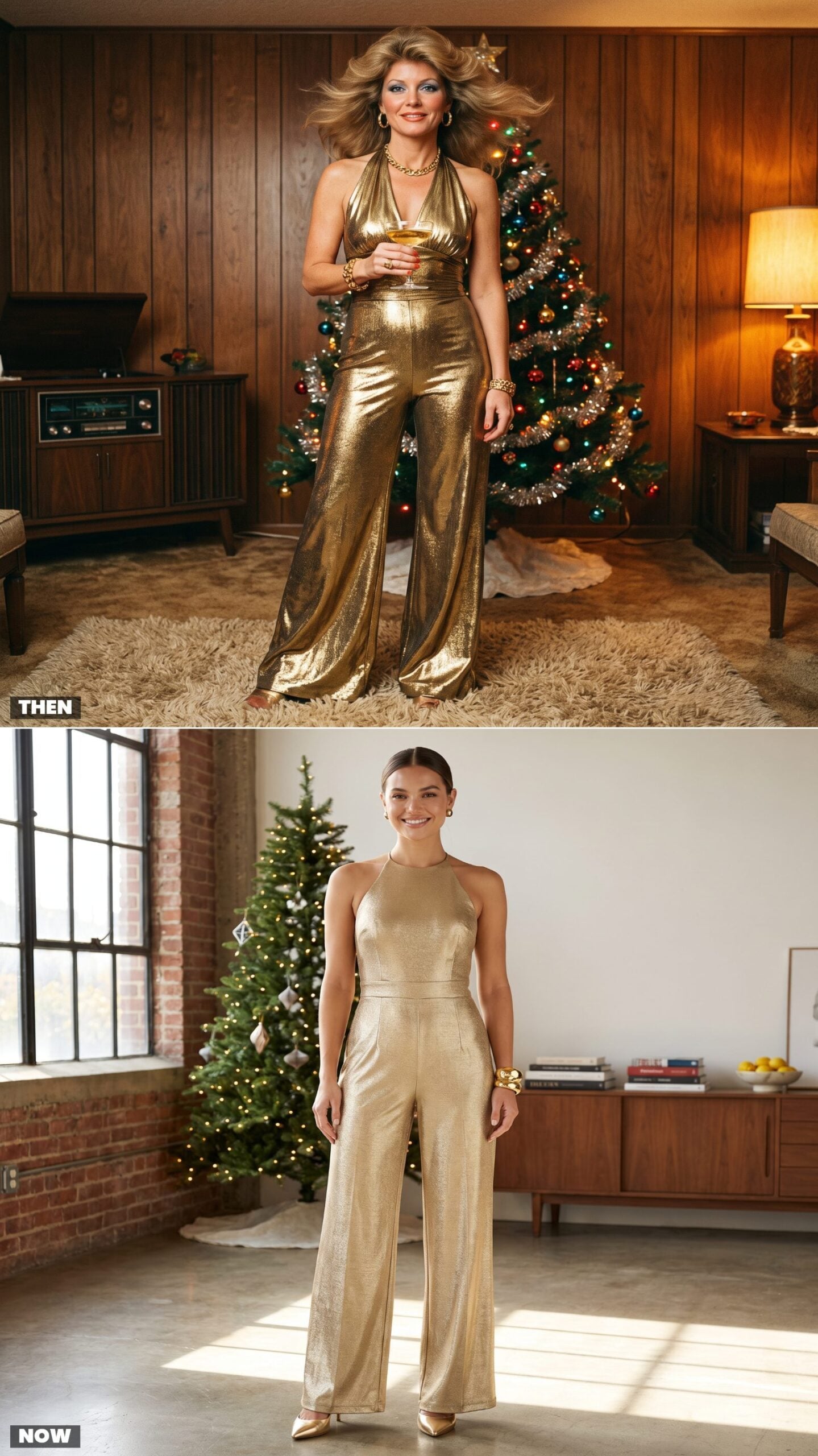
The 1975 version screamed for attention from the doorway, and it got it. Feathered hair, platform sandals, lamé that turned every lamp into a spotlight. The 2025 rebuild keeps the metal and loses the noise.
What drives it now is the tailored waist seam, which gives the shimmer a spine so the gold reads as intentional rather than disco leftover. A gold lamé jumpsuit with a clean column leg does what the flares never could: it elongates instead of overwhelming.
39. The Emerald Velvet Hostess Dress
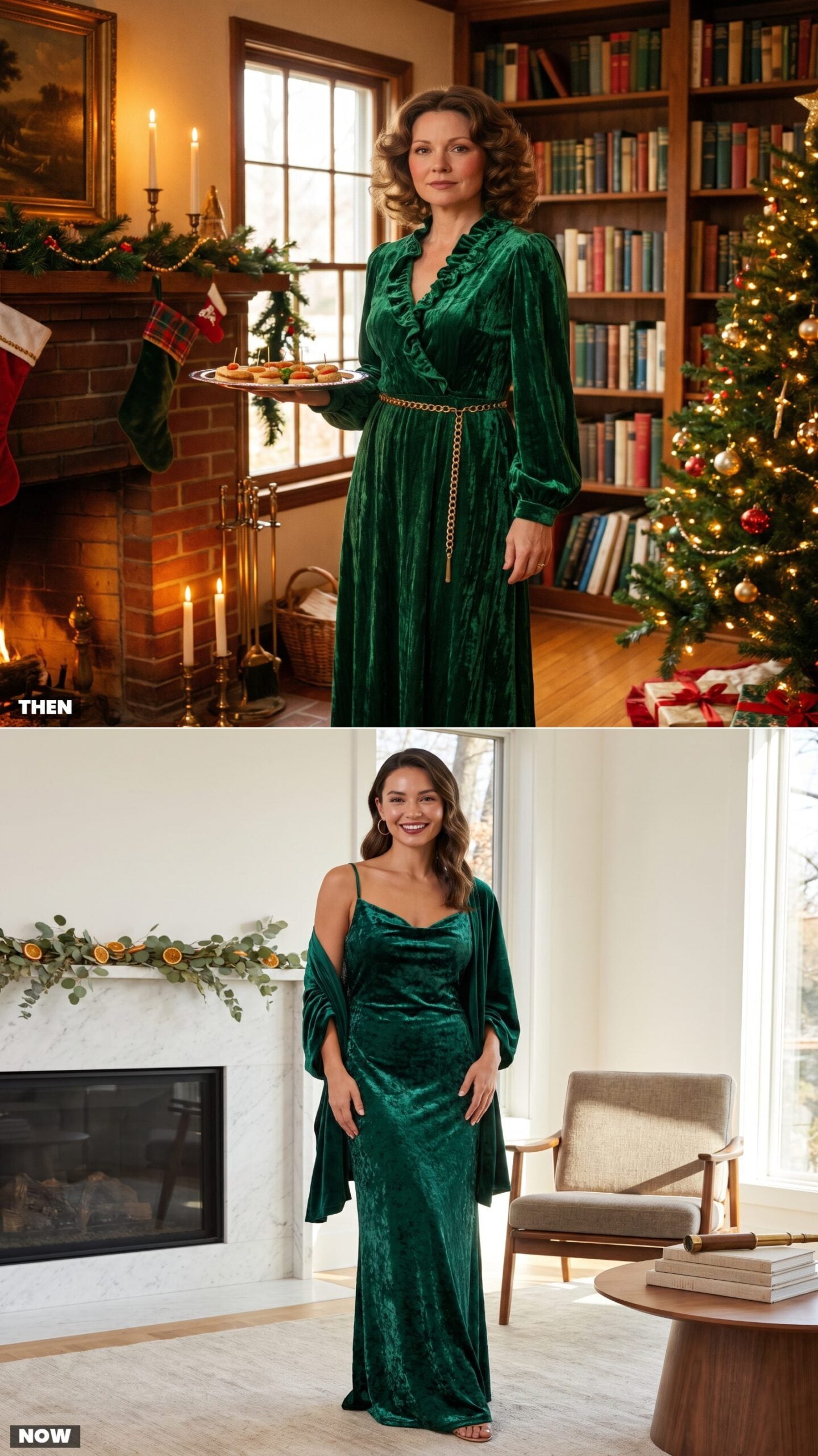
Crushed velvet in that deep bottle green was the hostess uniform, and 1975 loaded it up: bishop sleeves, ruffled neck, chain belt, the works. Gorgeous color, buried under a lot of fabric.
Now the velvet does the talking on its own. A bias-cut emerald velvet slip dress lets the pile catch light as you move, which is what velvet is for and something the stiff empire cut never allowed. The contrast between matte skin and that liquid sheen is the entire outfit. One color, one fabric, richer than the loaded original ever managed.
38. The Silver Space-Age Minidress With White Boots
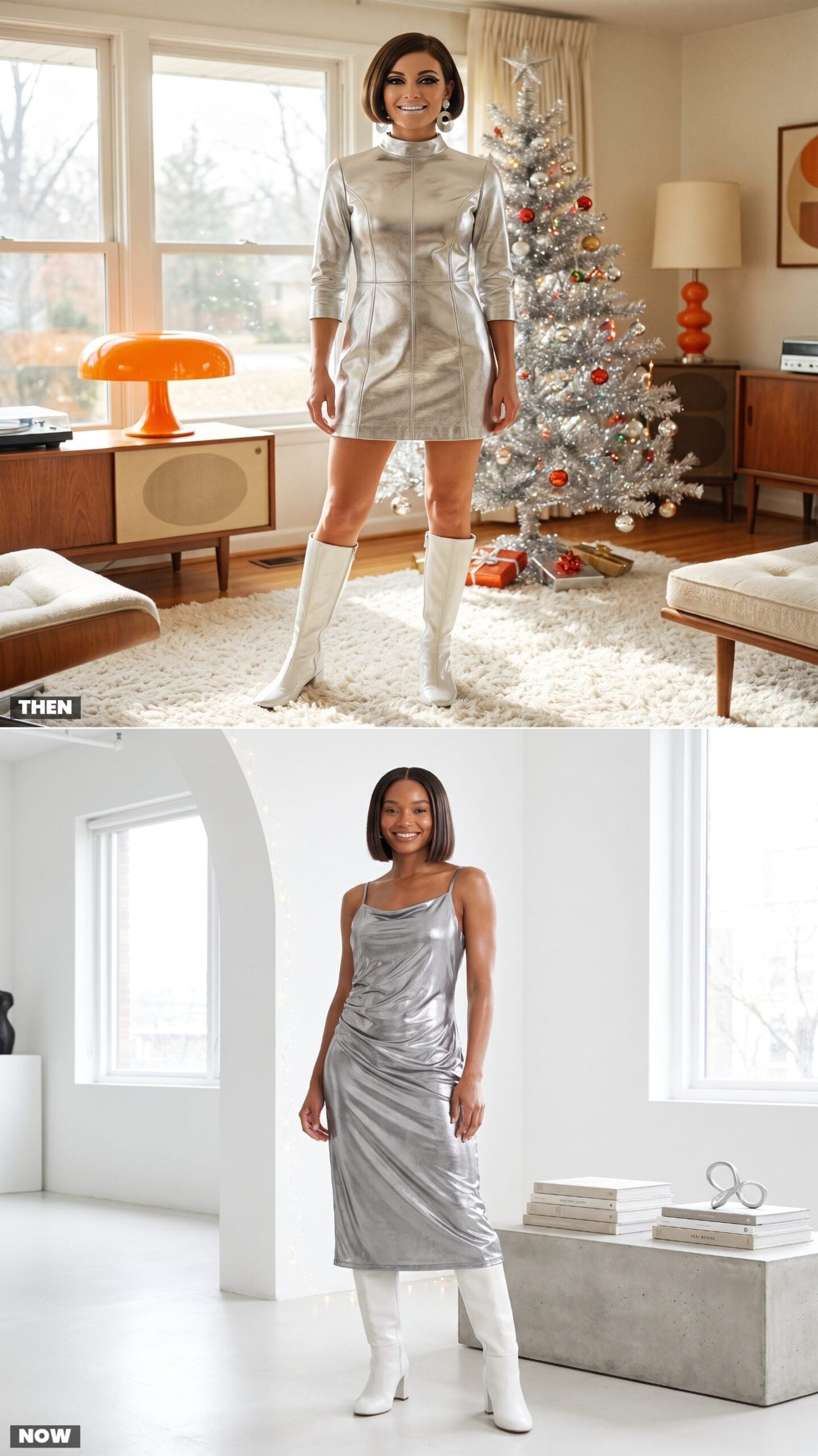
The boot does everything here. Then and now.
Back in 1975 the white patent go-go boot paired with a lurex shift was pure Space Age optimism, all geometry and shine. The 2025 reboot keeps the silver and the white boot but softens the shift into liquid metallic that moves with you.
The trick is proportion: a leaner column mini against a knee-high white leather boot leaves a sliver of leg that reads modern instead of costume. Silver-and-white color blocking still feels futuristic. It just no longer looks like a museum exhibit.
37. The Tartan Taffeta Party Skirt
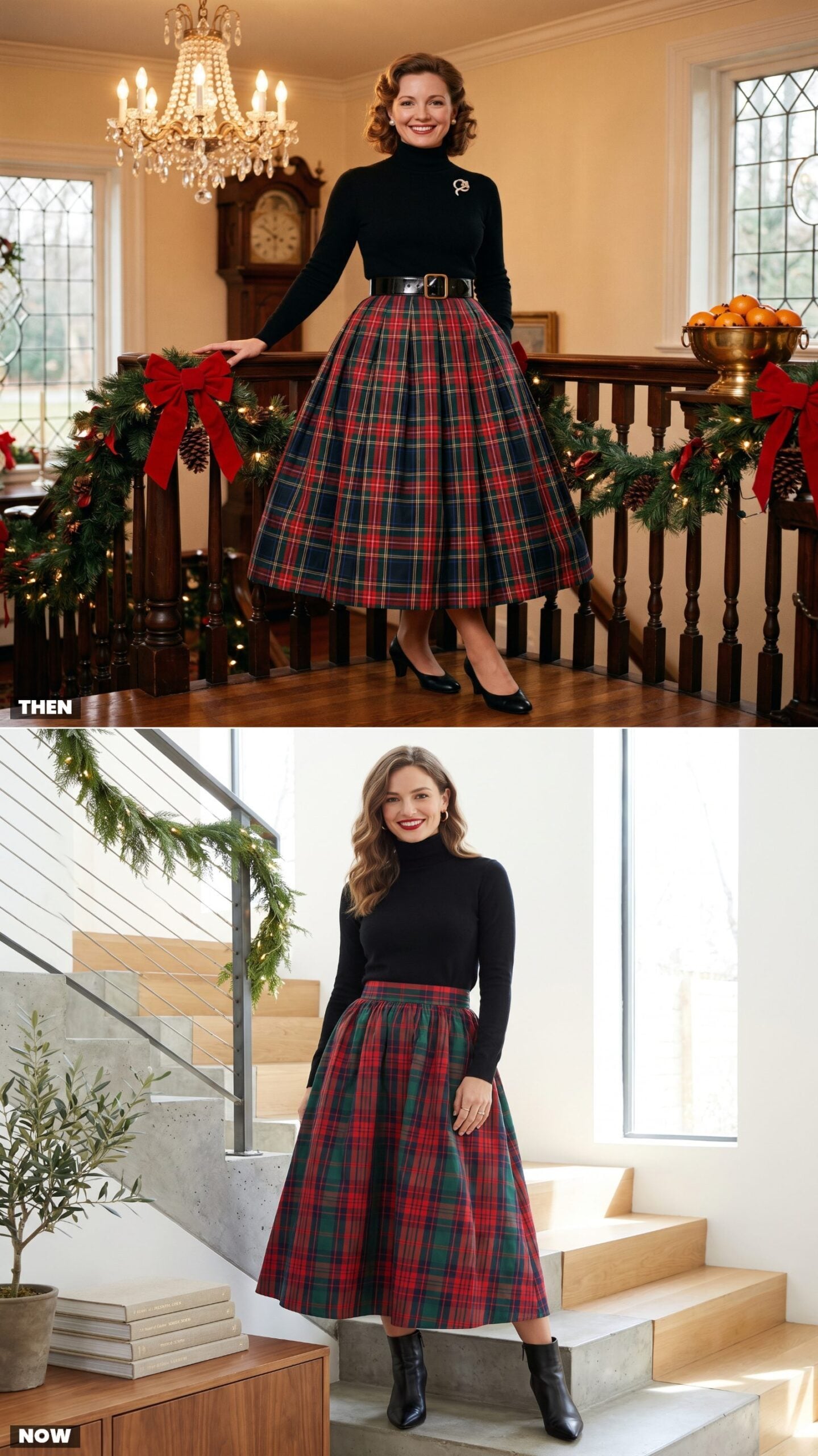
Taffeta that rustled when you walked in. That sound was half the outfit in 1975, and the full-length plaid skirt with a wide patent belt was the holiday standard.
The modern version cuts it to midi length and lets the taffeta keep its volume without swallowing the room. Waist definition carries the whole thing now. A fitted black turtleneck tucked into that structured plaid builds a sharp hourglass the floor-length version blurred, and with an ankle showing and a pointed boot below, it lands grown and modern.
36. The Black Velvet Tuxedo With a Ruffled Shirt
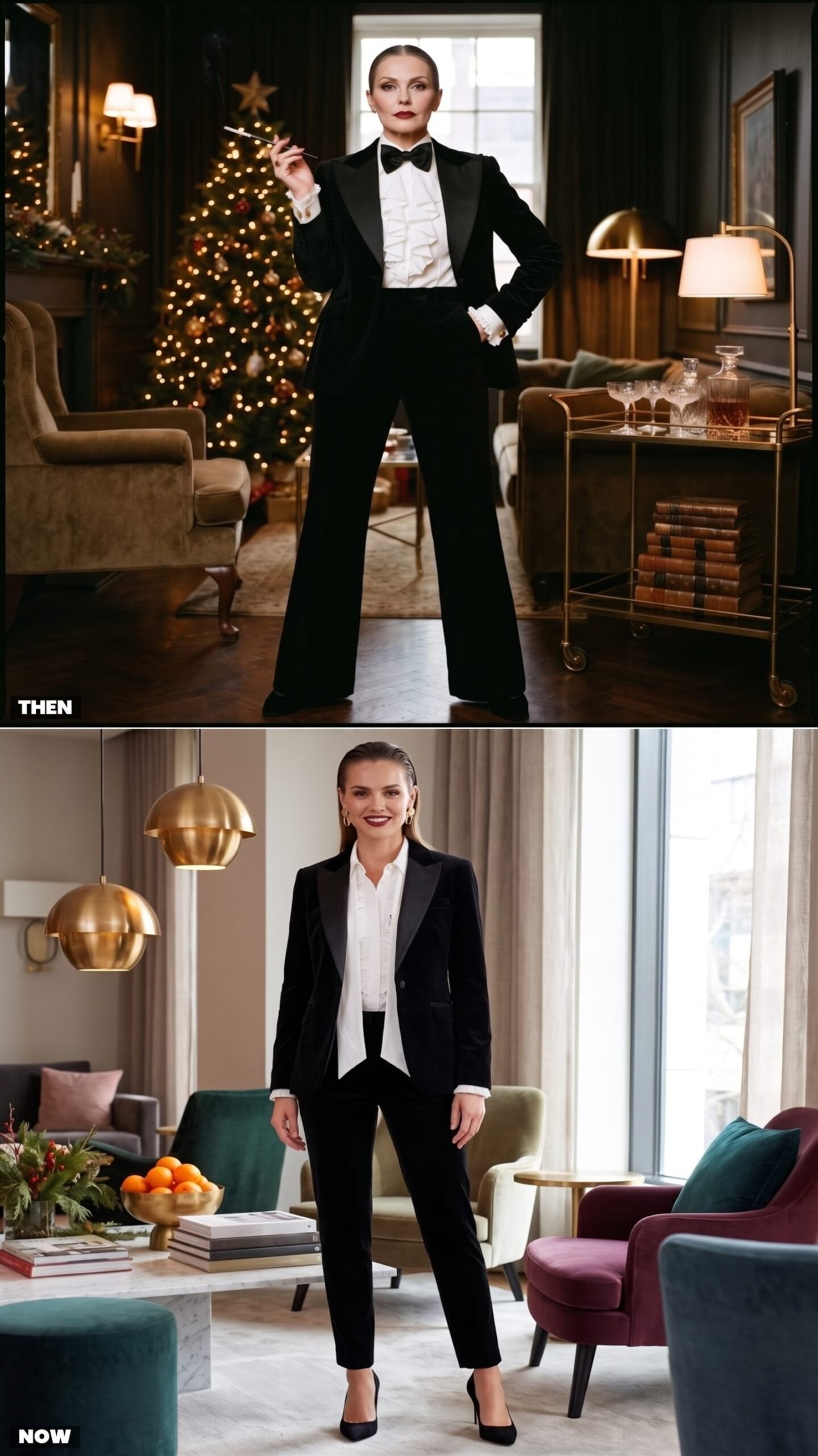
YSL’s Le Smoking had already given women permission, and by 1975 the black velvet tuxedo was the power move at any party. The original went wide: peaked lapels the size of dinner plates, flared trousers, a full jabot.
The reboot keeps every signature and sharpens the line. Slim satin-lapel jacket, tapered cigarette trousers, the ruffled shirt softened and worn open. That ruffle is the surprise piece, keeping a men’s-tailoring blueprint unmistakably feminine. A black velvet tuxedo blazer open over a white ruffle front is the most quietly commanding thing you can wear to a holiday party. This is the androgynous look at its most refined.
A tuxedo on a woman never went out of style. It just got better tailoring.
35. The Sequined Butterfly-Sleeve Tunic With Flares
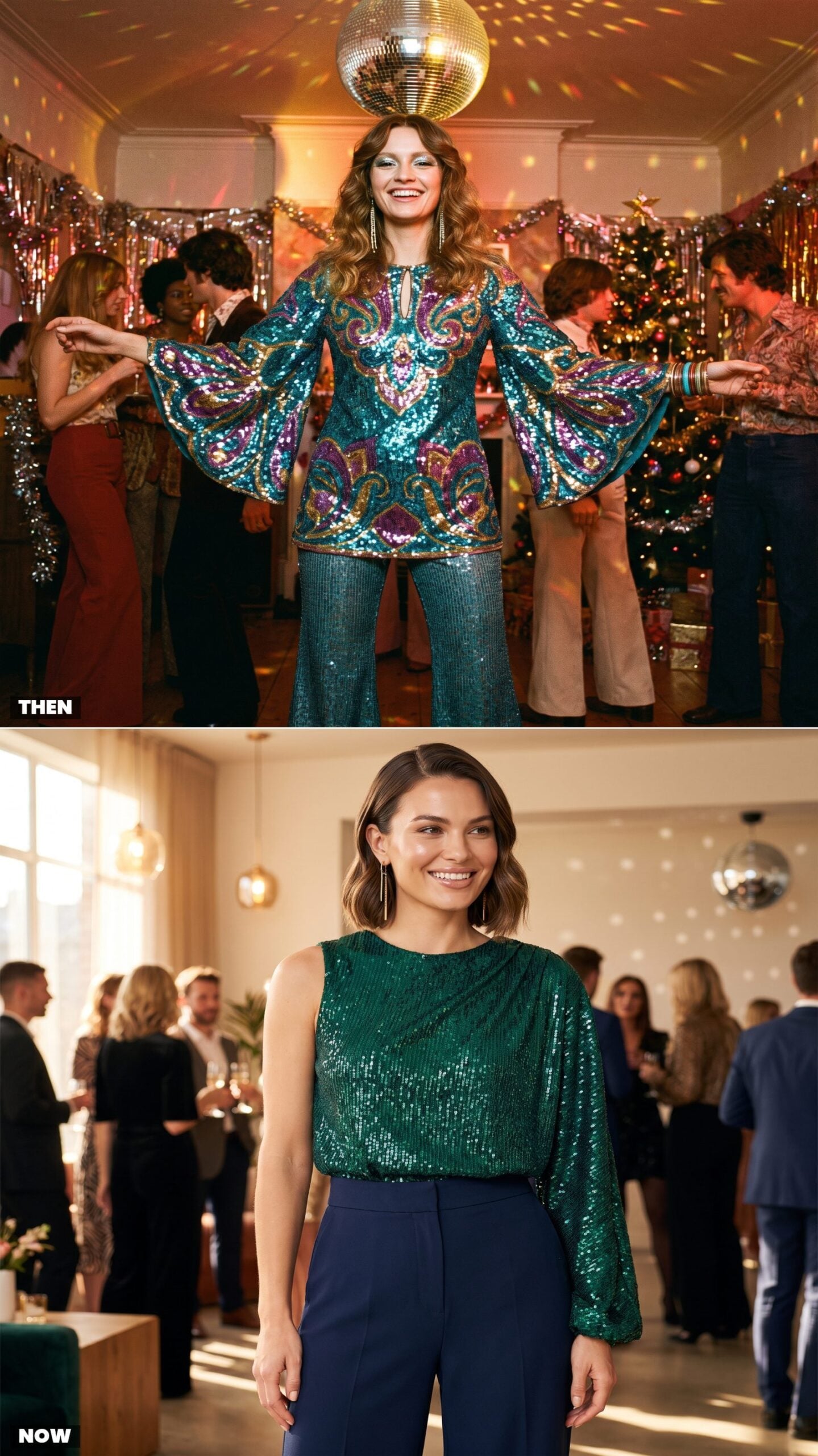
Everything sparkled at once in 1975, and this one committed hard: sequins swirling teal, purple, and gold, butterfly sleeves wide enough to knock over drinks, flares underneath. Wonderful energy. A little exhausting.
Restraint is the fix. Keep the sequins on top, quiet everything below. A jewel-tone sequined blouse tucked into clean wide-leg tailored flares hands you all the shimmer and none of the overload, because matte trousers make sequins look expensive instead of frantic. Same disco DNA, dialed to grown.
34. The Red-and-Gold Jacquard Caftan
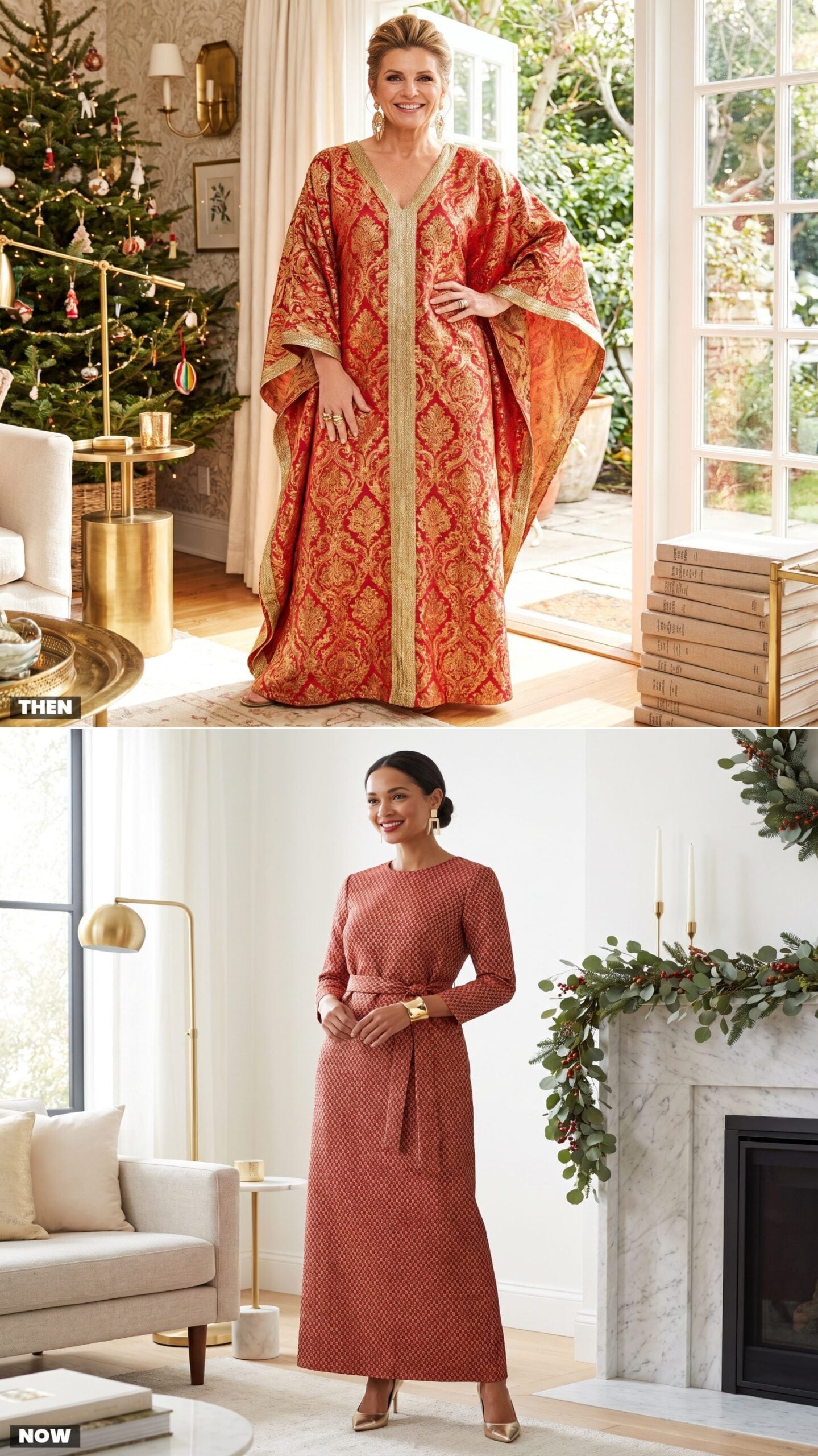
Comfort disguised as glamour. That was the genius of the 1975 caftan, and the red-and-gold jacquard version made you look like you were hosting from a throne.
The modern column caftan keeps the ease and adds a whisper of shape. A subtle waist tie turns a tent into a silhouette without surrendering a single inch of comfort, which after fifty is not a compromise but the entire strategy. That woven red-and-gold pattern is the hero here, carrying the look so the cut can stay simple. Enclothed cognition in action, you feel regal because the fabric insists on it.
33. The Chocolate-Brown Suede Pantsuit
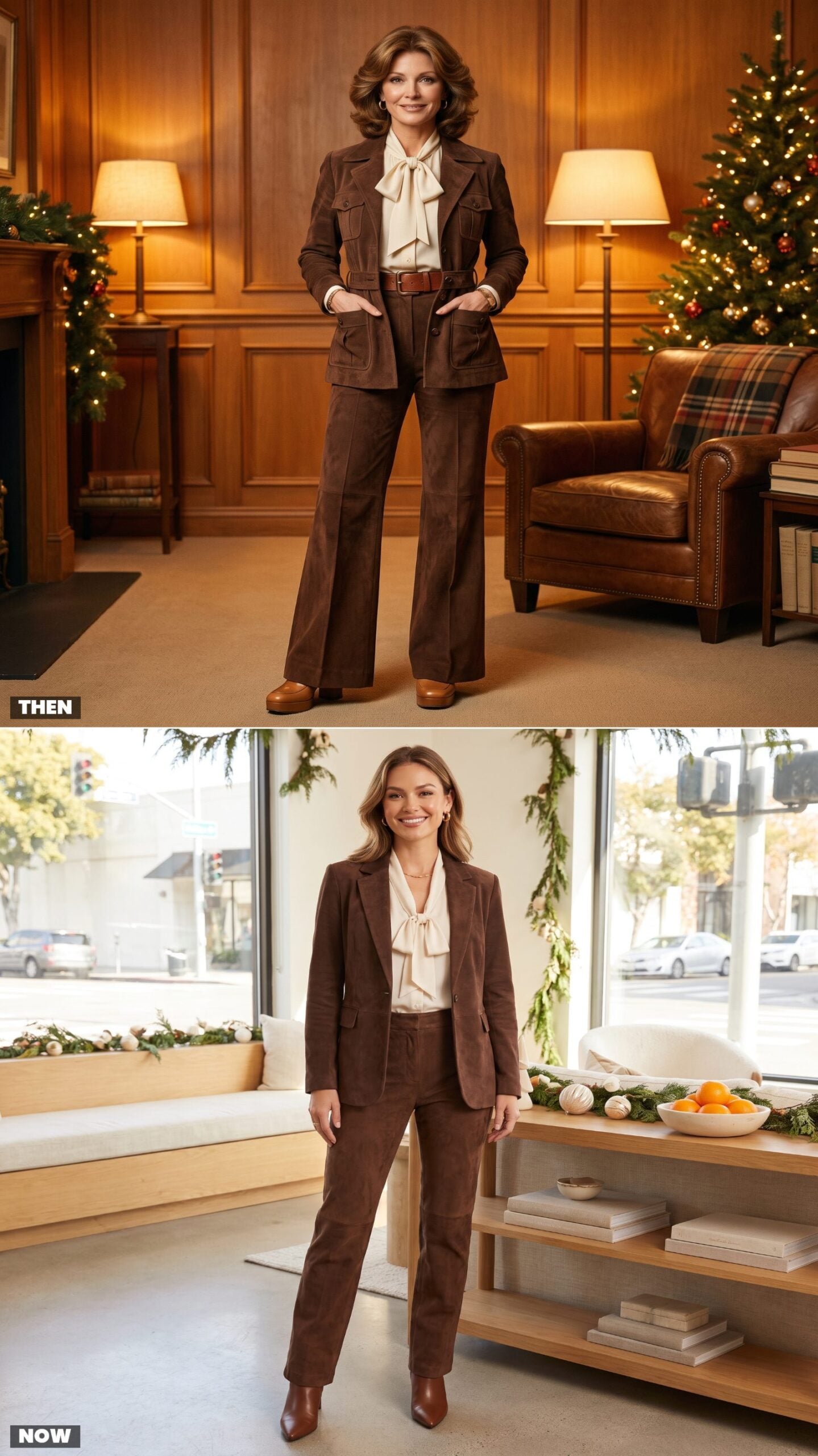
Not every 1975 party look was about sparkle. The chocolate suede pantsuit was the quiet flex, and it still is.
The original leaned safari, with a belted patch-pocket jacket, wide flares, and a pussy-bow blouse. The rebuild sharpens the tailoring and keeps the tonal build. Three browns layered together, suede against silk against leather, create depth without a single loud color, and that stacked, monochrome brown is the whole trick. A brown suede blazer over cream silk and straight-leg trousers reads confident and warm, the outfit for the woman who does not need to shimmer to be noticed.
32. The White Satin Angel-Sleeve Dress
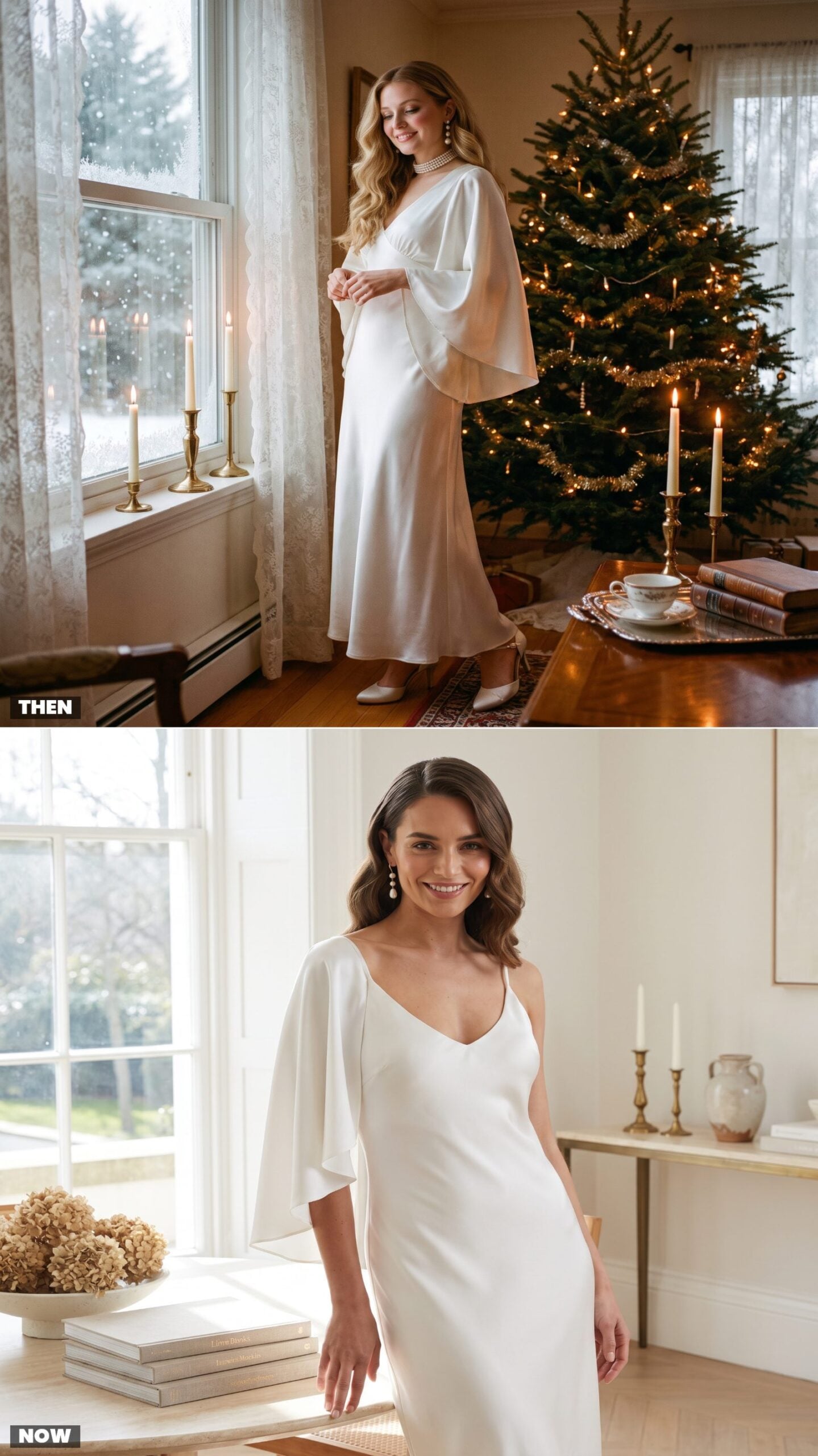
White satin at Christmas felt daring in 1975, and the angel-sleeve dress made it dreamy: empire waist, pearl choker, sleeves that floated when you moved.
The modern version trades the empire tent for a bias cut that follows the body, then keeps one fluid angel sleeve as the memory of the original. That single dramatic sleeve does all the work, romantic without tipping into bridal. A white satin slip dress in that soft liquid finish still catches candlelight the way the original did, just with a grown-up silhouette underneath.
31. The Cranberry Gaucho Set With Tall Boots
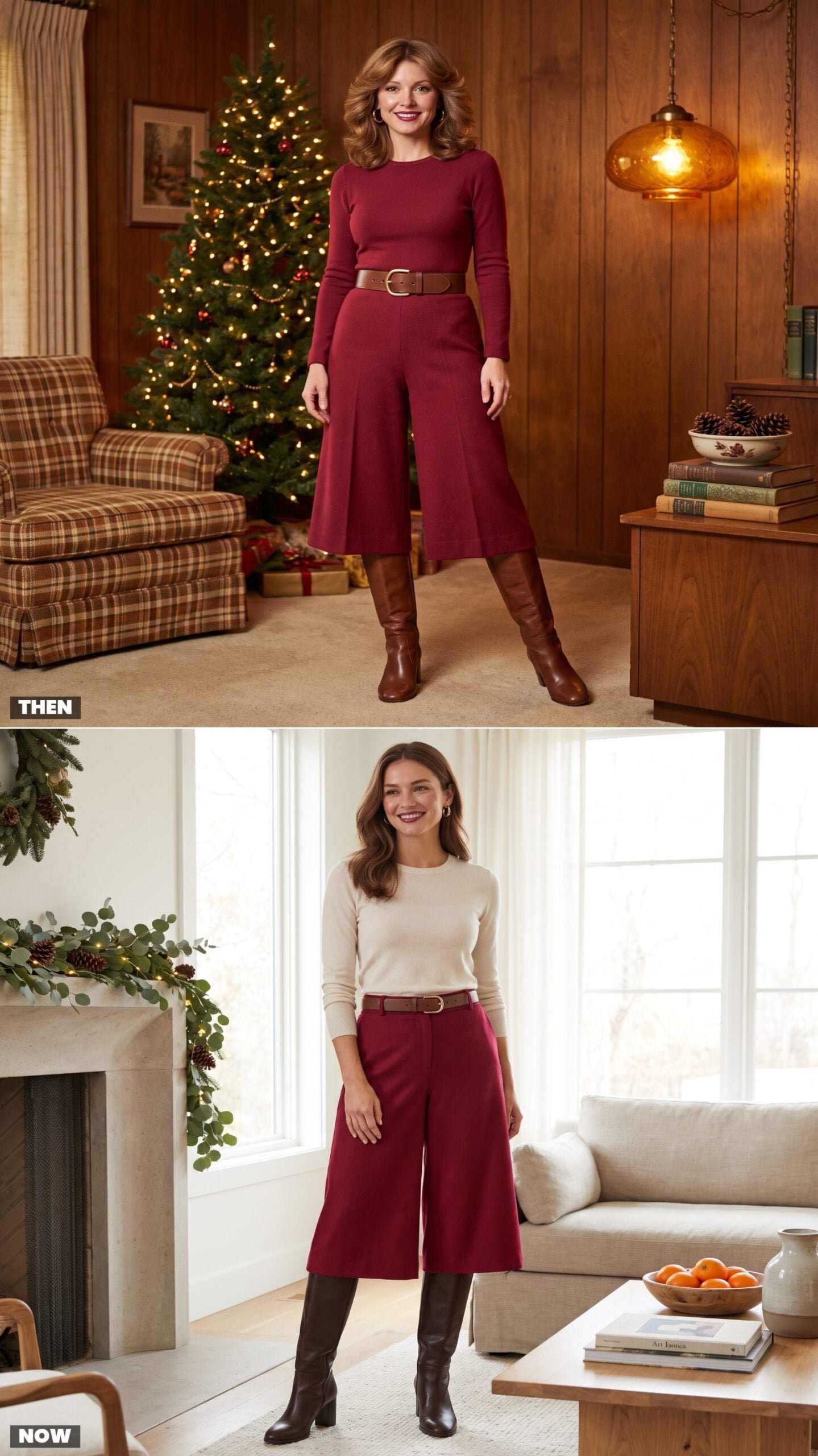
The gaucho was 1975’s answer to how a woman could wear trousers to a party and still feel dressed. Cropped wide culottes in cranberry, tall boots rising to meet the hem, a wide belt cinching it all together.
The reboot keeps that exact color relationship, cranberry above the boot, brown leather below, which is what made the original look considered rather than thrown together. Everything hinges on where the crop hits. A modern cranberry wide-leg trouser ending just above a sleek tall boot leaves the leg unbroken and long. Same clever proportion, better fabric, and the boots now do the heavy lifting the belt used to.
30. The Cream Crochet Maxi Over a Satin Slip
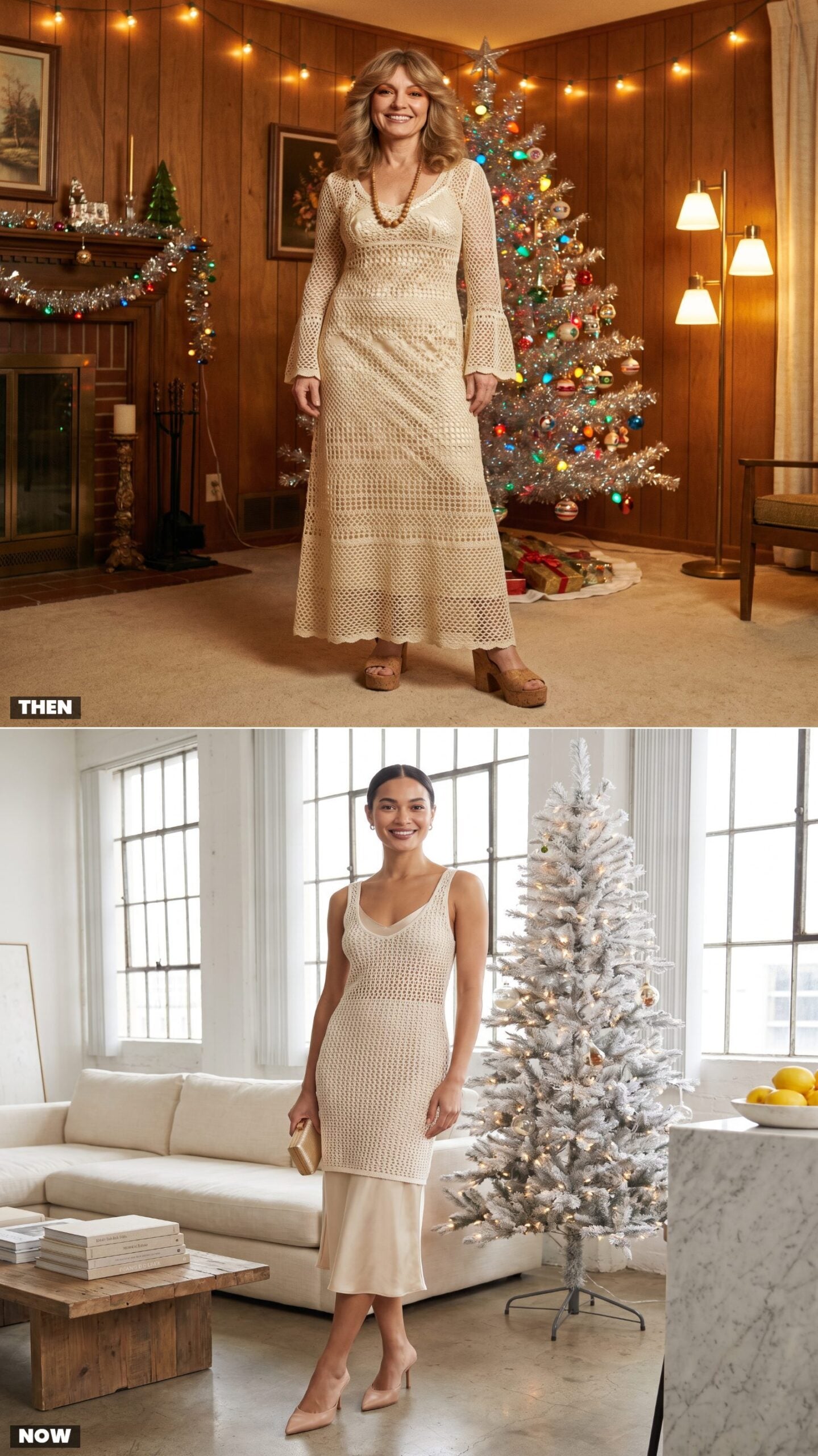
The 1975 version leaned on the slip doing the work under all that crochet, a soft glow peeking through the lace loops. We kept the peek and tightened the read. Swap the shapeless maxi for a fitted cream crochet midi over a champagne silk slip and a cozy texture becomes a party texture.
Texture contrast is the whole engine here. Matte open knit against liquid satin makes both fabrics look more expensive than either does alone. The original hid the body inside a tent; the update lets the crochet trace a line instead of erasing one.
29. The Scarlet Cape-Sleeve Minidress
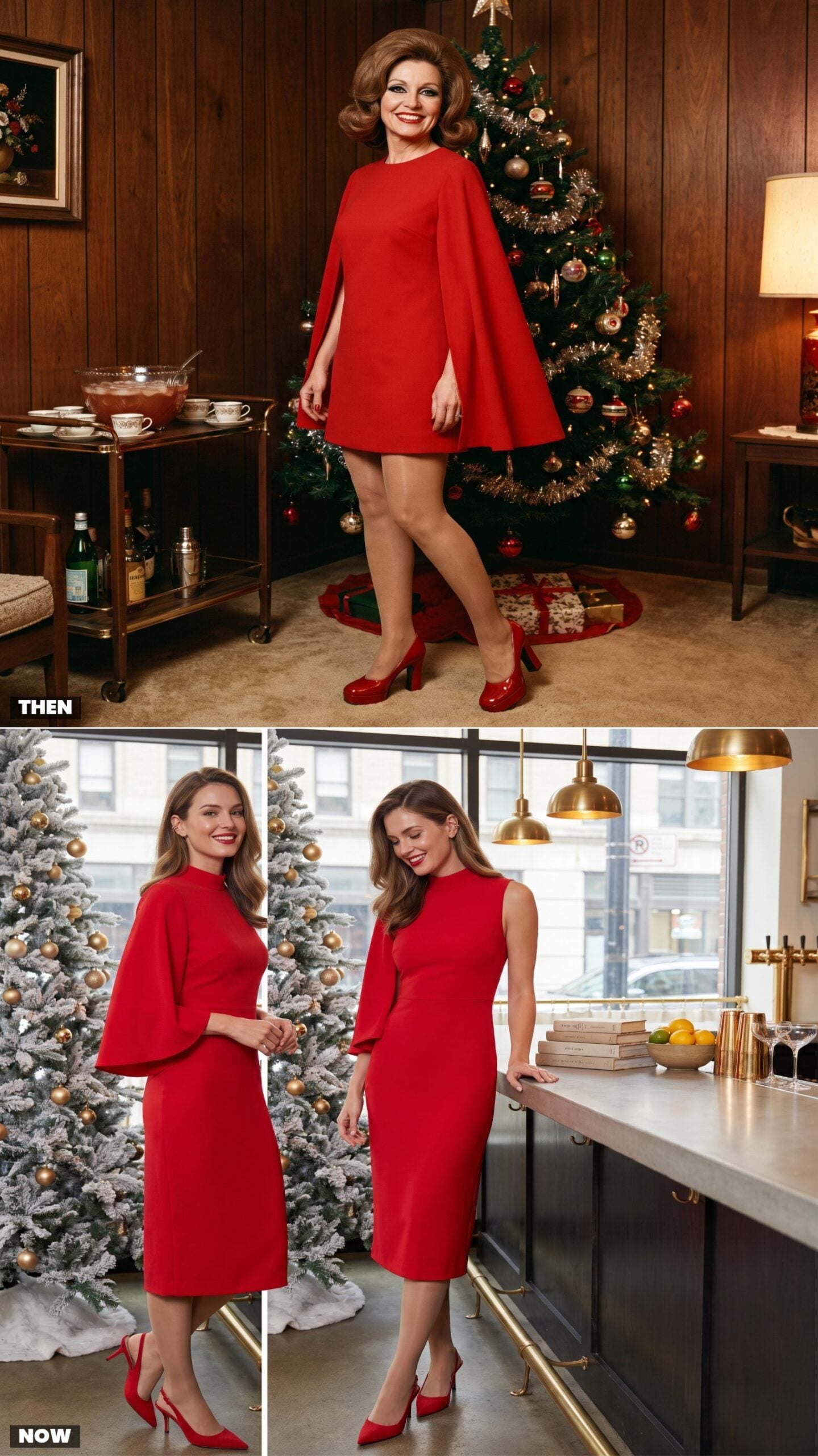
Those cape sleeves were pure theater in 1975 — wings of scarlet polyester that moved when she reached for the punch. We refused to kill the drama. We relocated it.
One sculptural cape sleeve on a crepe midi keeps the movement and drops the costume. The single-sleeve asymmetry becomes the star, giving your eye somewhere to travel while the rest of the dress stays quiet. And red on a woman who has stopped apologizing for taking up space? That reads as authority, not attention-seeking.
28. The Metallic Brocade Trouser Suit
❤️ Would you like to save this?
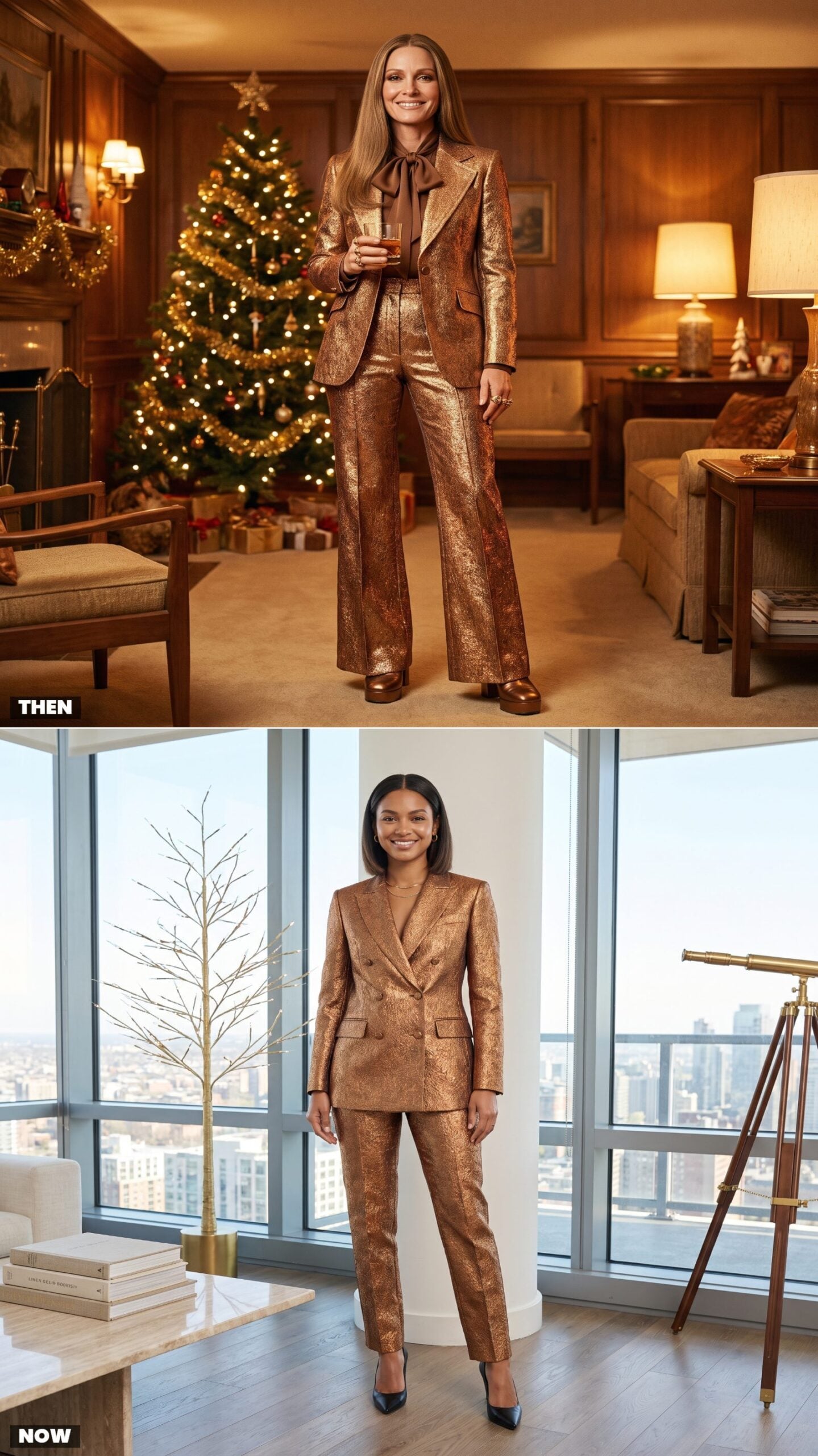
Metallic brocade in 1975 came with acreage — wide lapels and a trouser flare that swept the floor. Beautiful fabric, buried under volume. So we saved the fabric and cut the excess.
Proportion does everything here. A nipped double-breasted blazer over slim straight trousers lets the brocade shine without swallowing the frame. Same shimmer, sharper line. Worn with a bare neckline and one gold ring, a metallic suit reads modern precisely because it doesn’t pile on.
27. The Burgundy Pinafore Dress Over a Satin Blouse
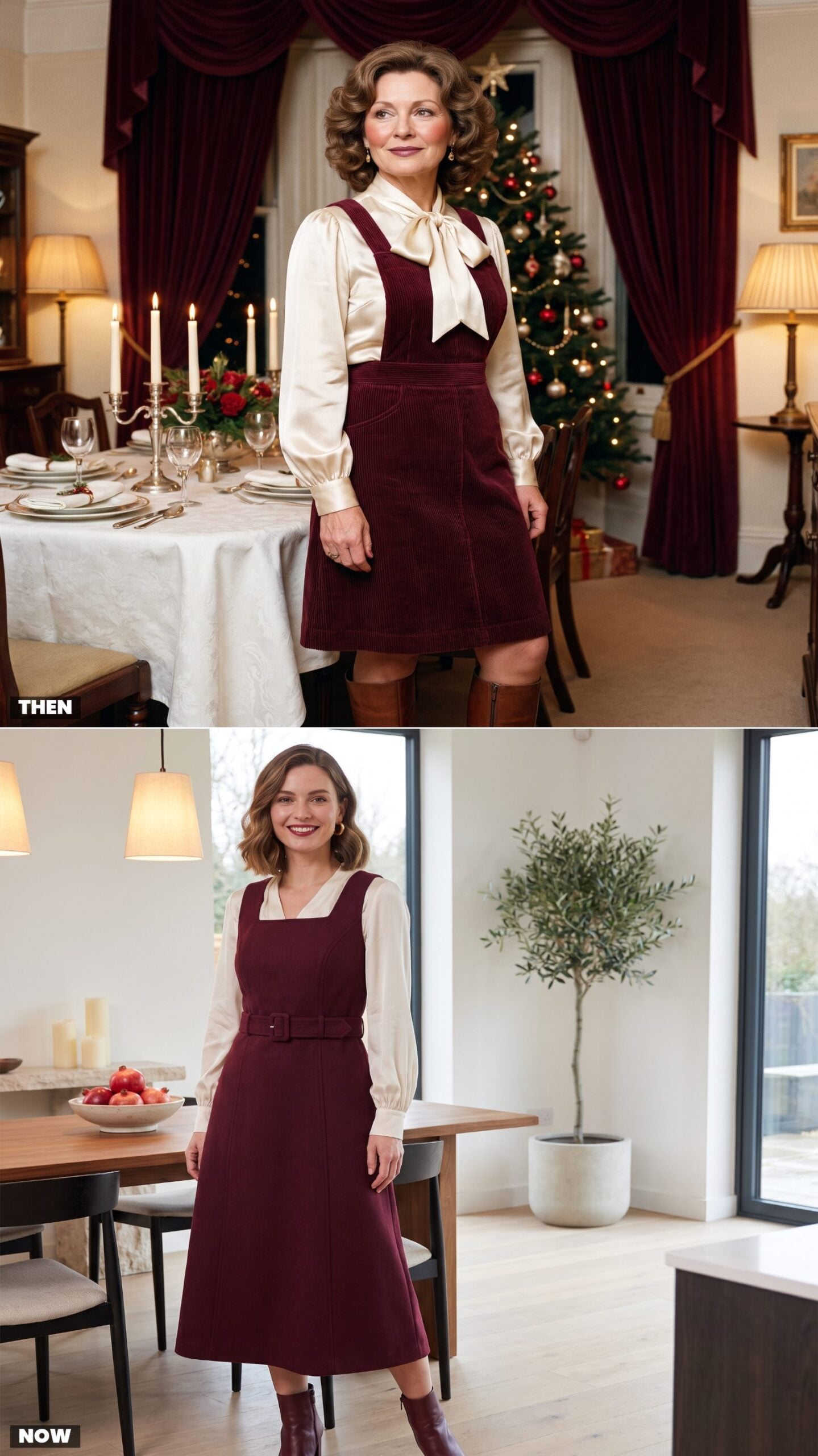
The pinafore-over-blouse was 1975’s answer to layered festivity, but the corduroy bib and school-uniform straps aged the whole thing. We kept the burgundy-and-cream conversation and grew it up.
A belted wool pinafore over a fluid silk blouse holds the same layered idea with a defined waist doing the heavy lifting. Structure on top, softness underneath, a hemline that reads deliberate rather than dutiful. The burgundy against cream still whispers holiday — minus the pilgrim energy.
26. The Champagne Pleated Accordion Dress
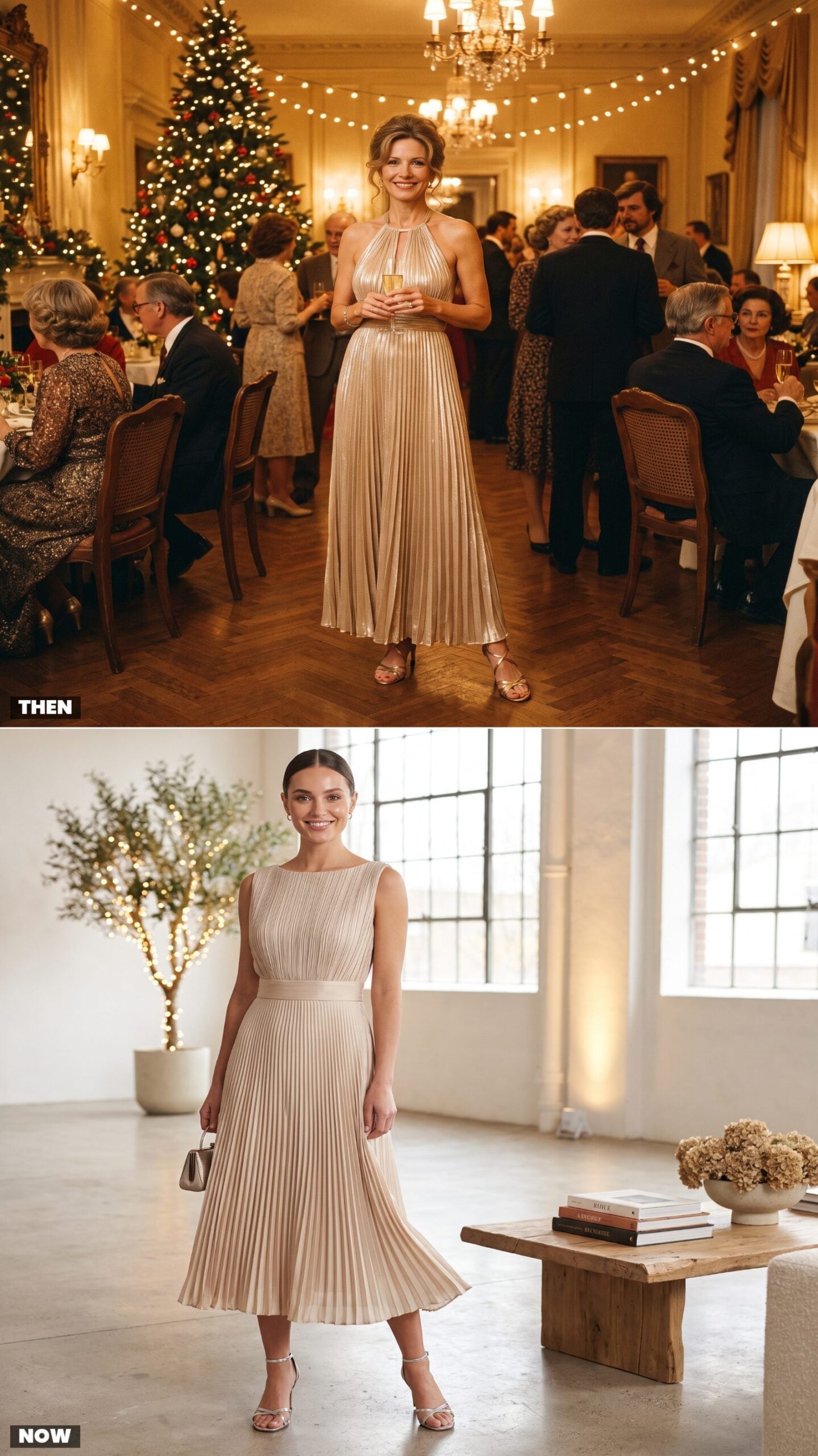
Accordion pleats catch light like nothing else, which is exactly why 1975 committed to them from neck to floor. The only trouble was the halter and the sheer length reading a little disco-mother-of-the-bride.
Drop the hem to mid-calf, swap the halter for a soft cowl, and you keep every gram of shimmer without the fuss. The pleats handle the movement. You just stand there and let them ripple when you turn.
25. The Jewel-Tone Patchwork Maxi Skirt
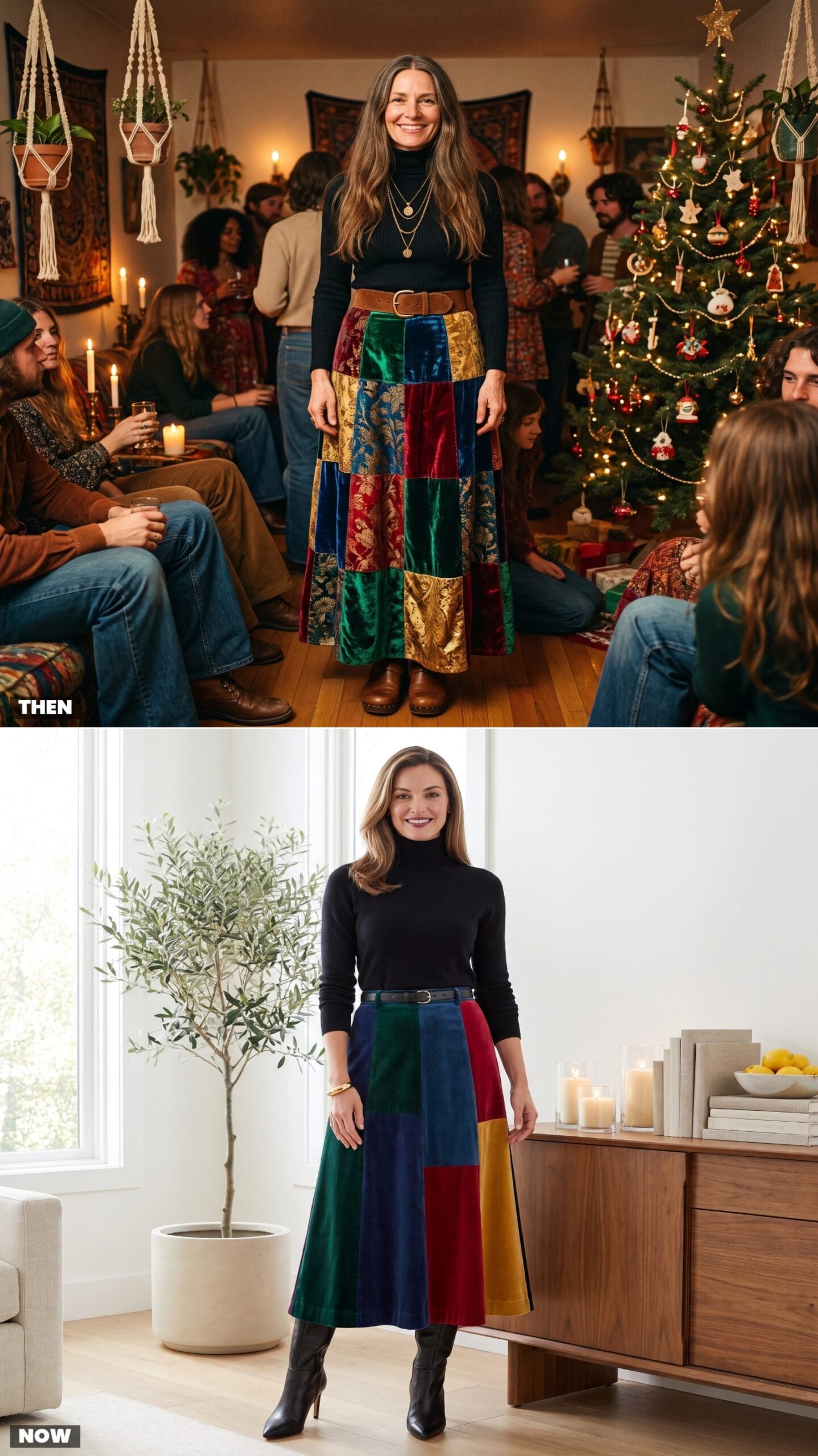
The careful arrangement of color is the reason this one survives half a century. Emerald, sapphire, ruby and gold panels stitched into one skirt gave 1975 its festive richness. The floor-length hem and the clogs are what dated it.
Trim it to a sleek A-line midi, clean up the panels into deliberate color blocks, and folk craft becomes something you can wear to a real dinner. A fine black turtleneck up top anchors all that color so the skirt stays the loudest thing you own. Which is what you want.
24. The Winter-White Knit Dress With a Chain Belt
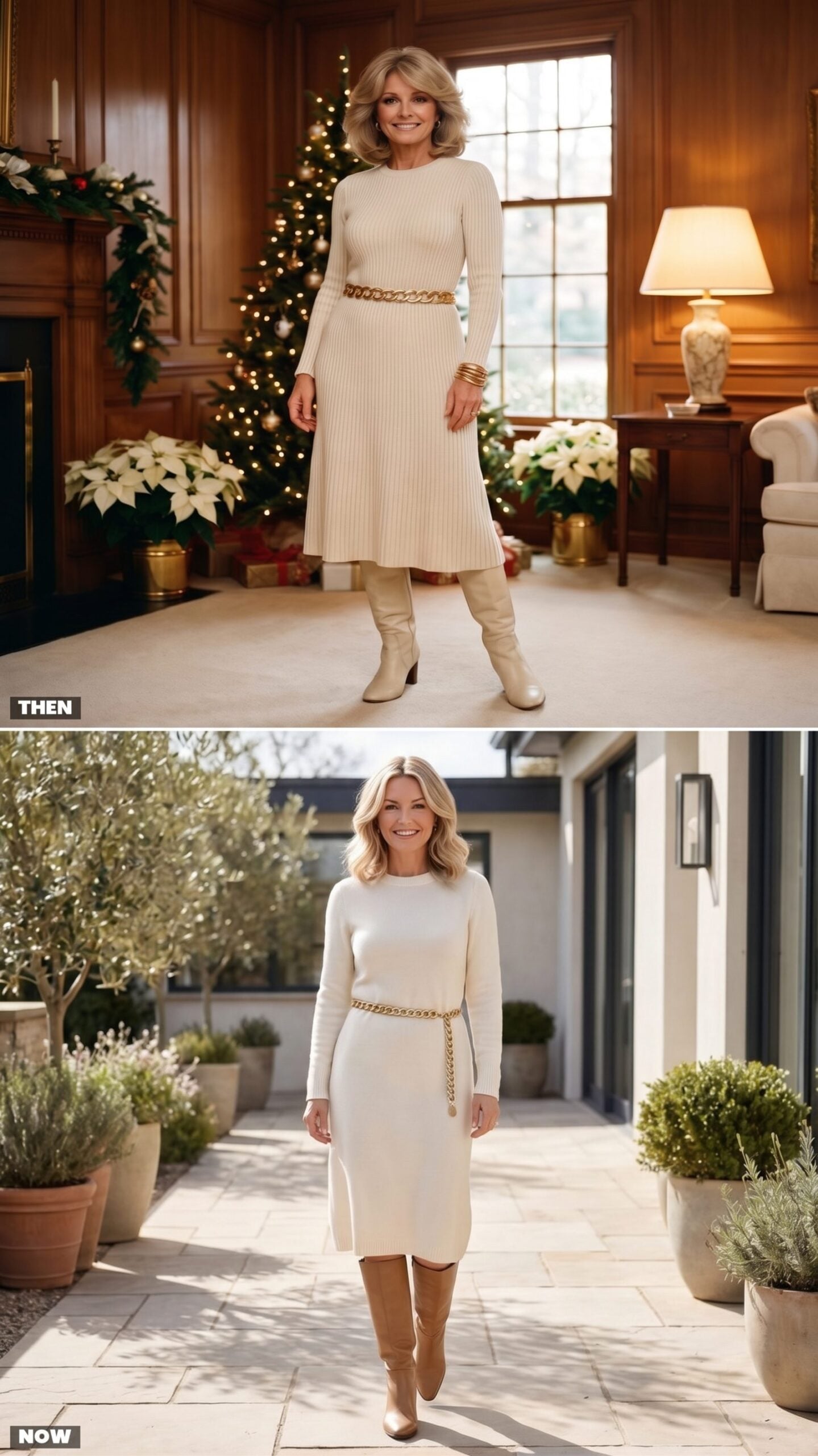
A white knit dress lives or dies on the belt. In 1975 that chunky gold chain link was the whole personality, carving out a waist the boxy ribbing wanted to hide.
We kept the belt and refined the knit. A fine cashmere-blend midi with a soft crew neck drapes instead of bulks, so a draped gold chain rides the waist like jewelry rather than hardware. The finishing detail carries the look. Winter white on a woman who owns her presence reads clean and confident — the sartorial equivalent of speaking softly and meaning it.
23. The Purple Bell-Sleeve Minidress and Tights
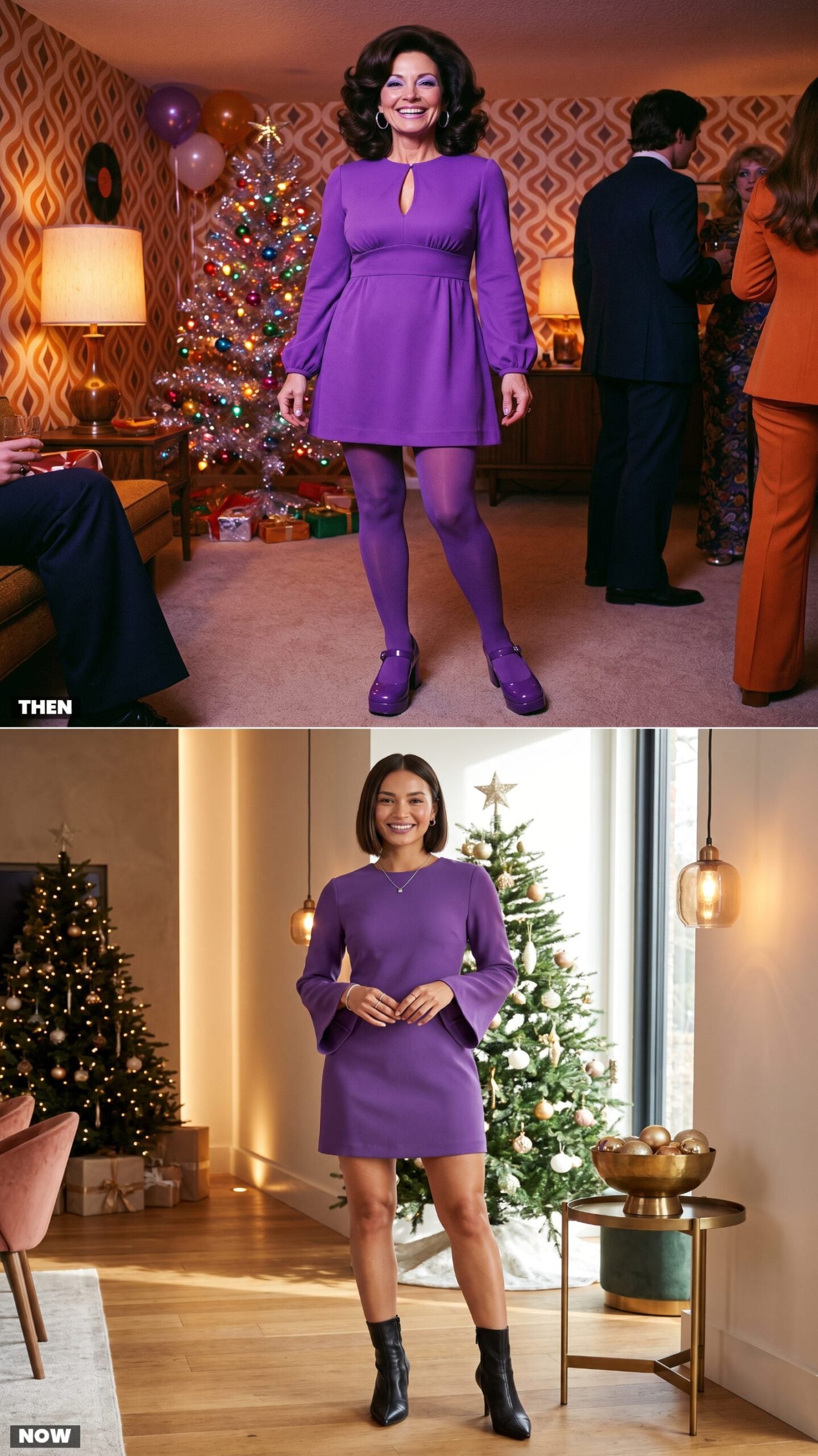
Head-to-toe purple, tights and all, was 1975 being fearless. We admire the nerve, honestly. But we broke up the monochrome so it stops reading as a costume.
The bell sleeve is the piece worth keeping, so we made it the whole story. A purple crepe mini with sculpted fluid sleeves, sheer or bare legs, one sharp black boot — the sleeve moves while everything else calms down. Dopamine dressing works best when a single color leads and the rest steps back to let it.
22. The Powder-Blue Ruffled Prairie Dress
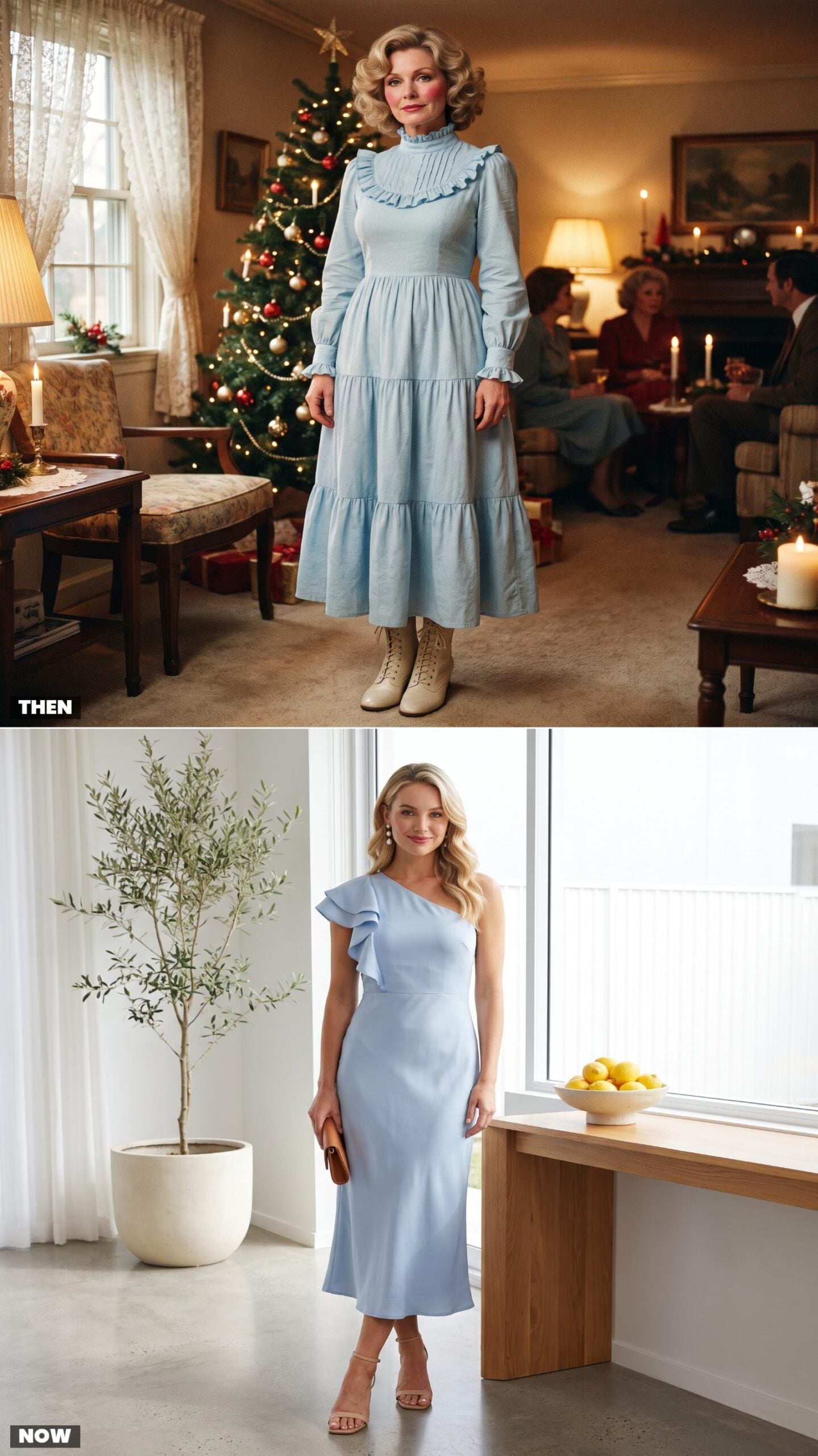
Prairie dresses in 1975 never met a ruffle they didn’t multiply — neck, cuffs, and three tiers of skirt. Sweet, but a lot. The powder blue was always the pretty part.
Restraint saves this one. Keep the color, keep exactly one ruffle, let a fluid silk-blend midi do the rest. A single ruffle at the shoulder reads romantic and modern where a dozen reads Little House on the Prairie. Sometimes the most confident move with a trend is to subtract from it.
21. The Silver Lurex Cowl-Neck Gown
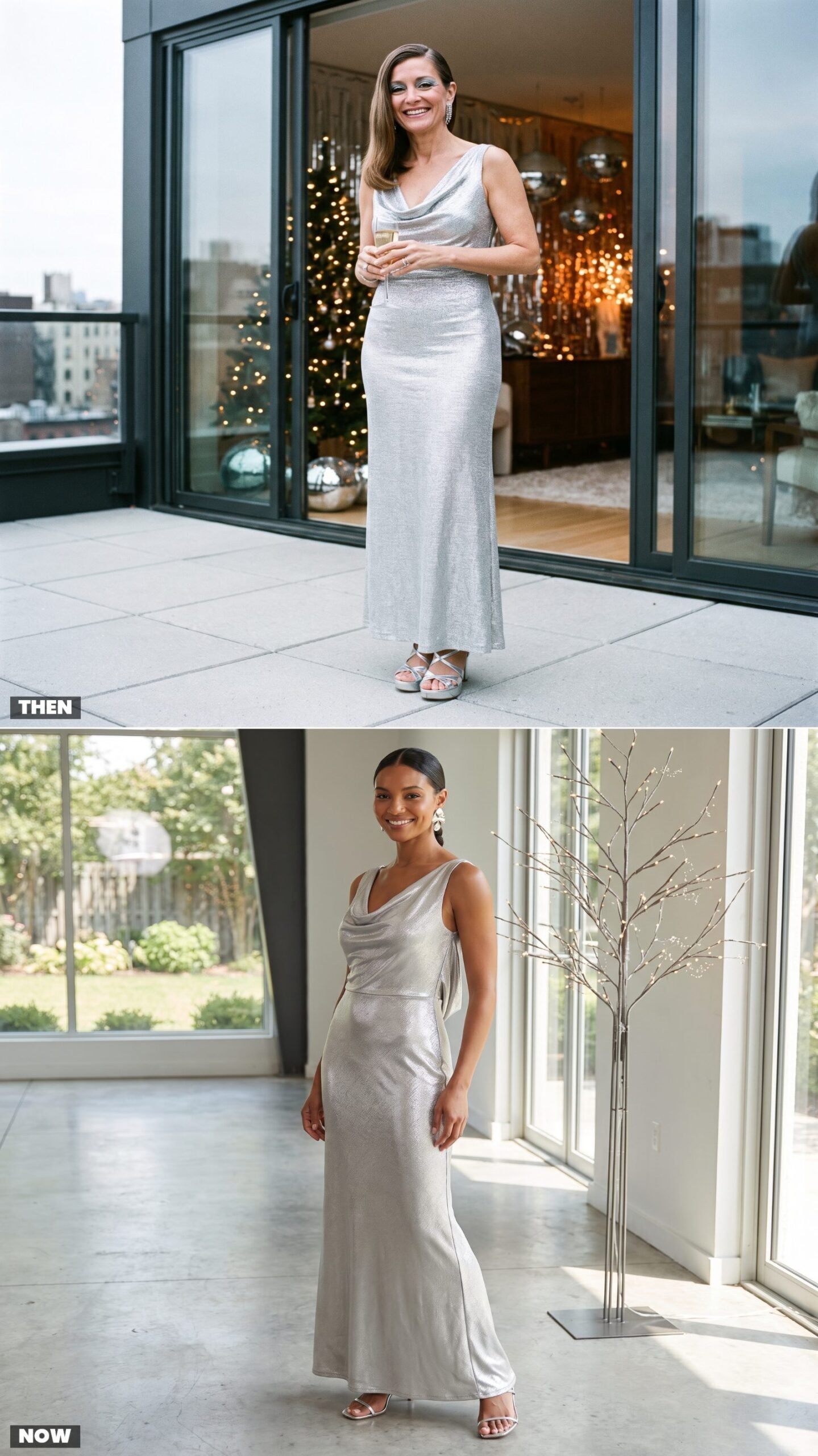
Silver lurex was 1975’s mic drop, a cowl neck catching every light in the room. The bones were right. The fabric just sat a little stiff and the flare fought the drape.
A liquid metallic knit in a bias-cut column fixes both — it pours over the body instead of standing away from it, and the cowl still pools at the neckline the way it always did. One sculptural earring, sleek hair, done. This is the gown that walks into a room and makes everyone else check their reflection. Silver on a woman who has earned her confidence isn’t loud, it’s certain, and nothing is more magnetic in a sea of black dresses.
20. The Sheer Black Chiffon Dress With a Velvet Vest
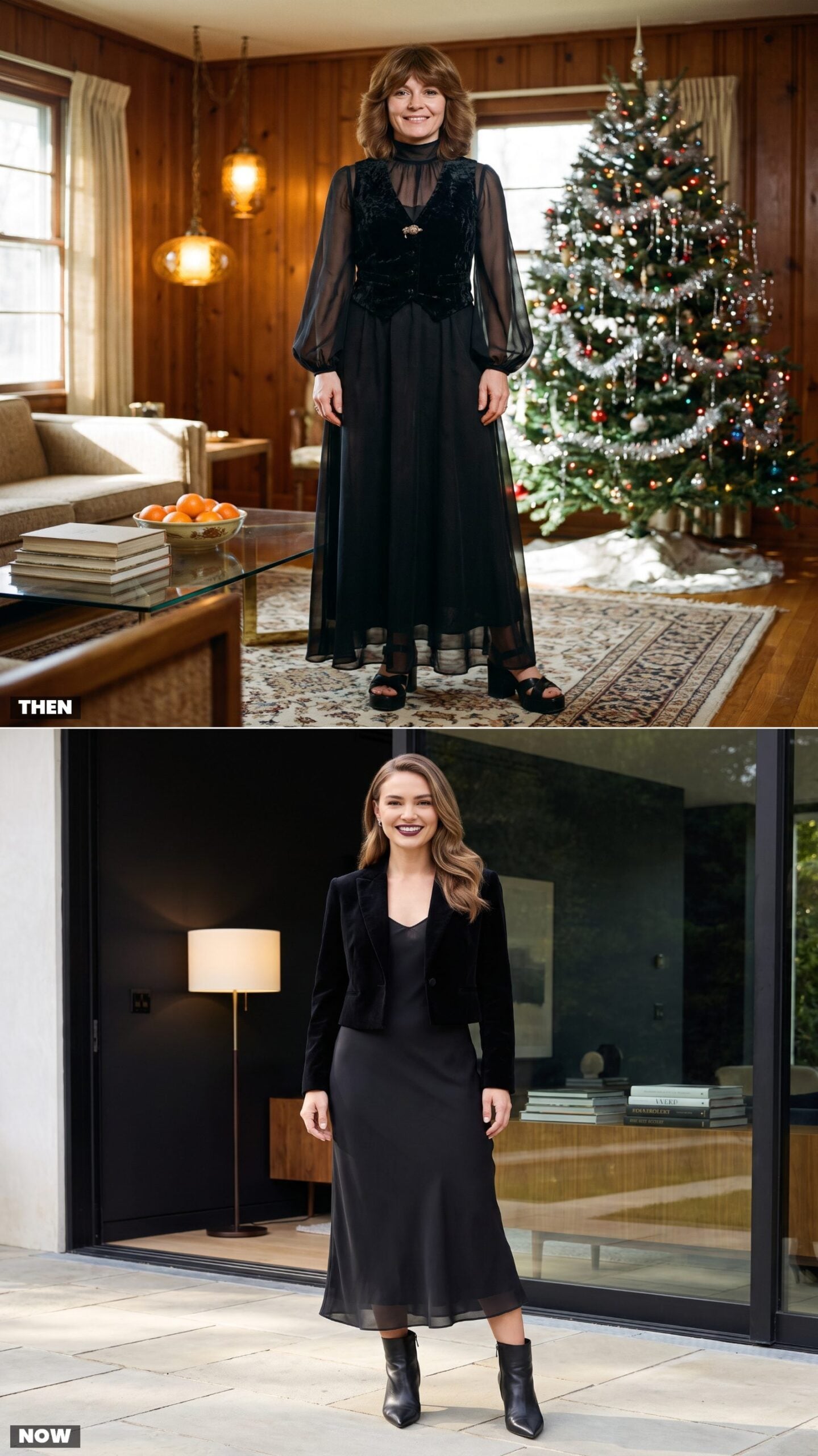
The 1975 version buried a perfectly good chiffon dress under a velvet vest thick enough to hang a coat on. Modern styling keeps both fabrics but lets them breathe, and the whole thing hangs on texture contrast — matte crushed velvet against liquid chiffon, one absorbing light while the other catches it. That push and pull is what makes both pieces read as intentional instead of piled on.
Crop the velvet into a blazer instead of a vest and the waist suddenly has somewhere to go. The black velvet blazer does the heavy lifting. The sheer slip underneath stays quiet on purpose.
19. The Green Satin Shirt With White Flares

Satin shirt, white flares, wide belt. The 1975 formula was loud but sound, and the color relationship still holds up — emerald green sitting against clean ivory reads rich because the two never compete. Green wants attention. White steps back and lets it.
The update trades polyester flares for a tailored ivory wide-leg trouser with a real crease, then swaps the shiny satin for a fluid silk that moves instead of glares. Half-tuck the shirt and the high waist does its job without the belt shouting about it.
18. The Faux-Fur-Trimmed Hooded Maxi Dress
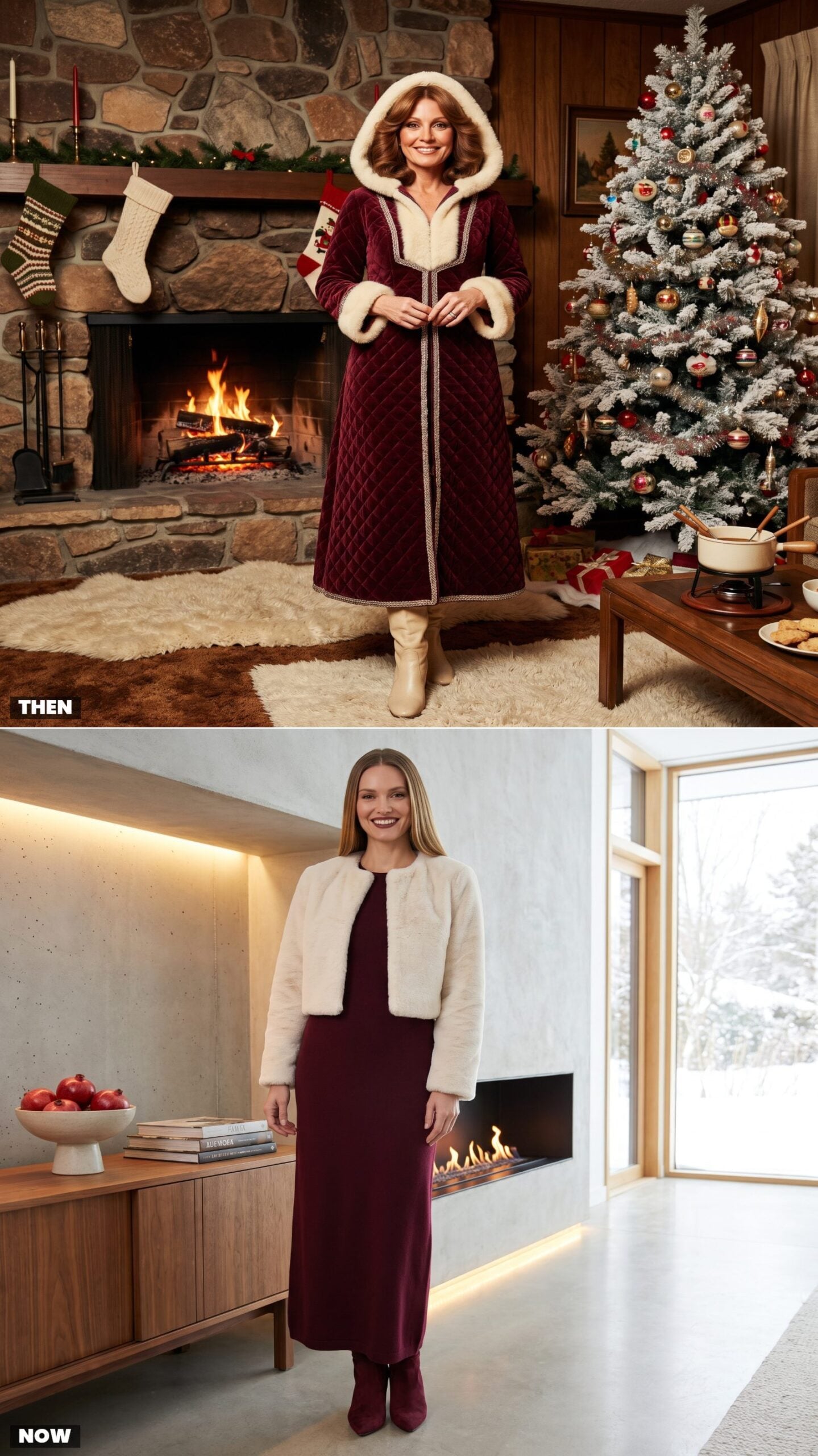
An attached fur hood on an evening dress is one of those 1975 ideas that sounds absurd until you remember how cold a drafty living room got in December. It committed fully, which I respect, even if I would never wear the hood indoors.
The modern read pulls the fur off the dress entirely. A slim burgundy column carries the color, and a cream faux-fur bolero handles both warmth and drama, cropped short so the whole silhouette stays long. Same fabrics, no hood confusion.
17. The Beaded Art-Deco Revival Flapper Dress
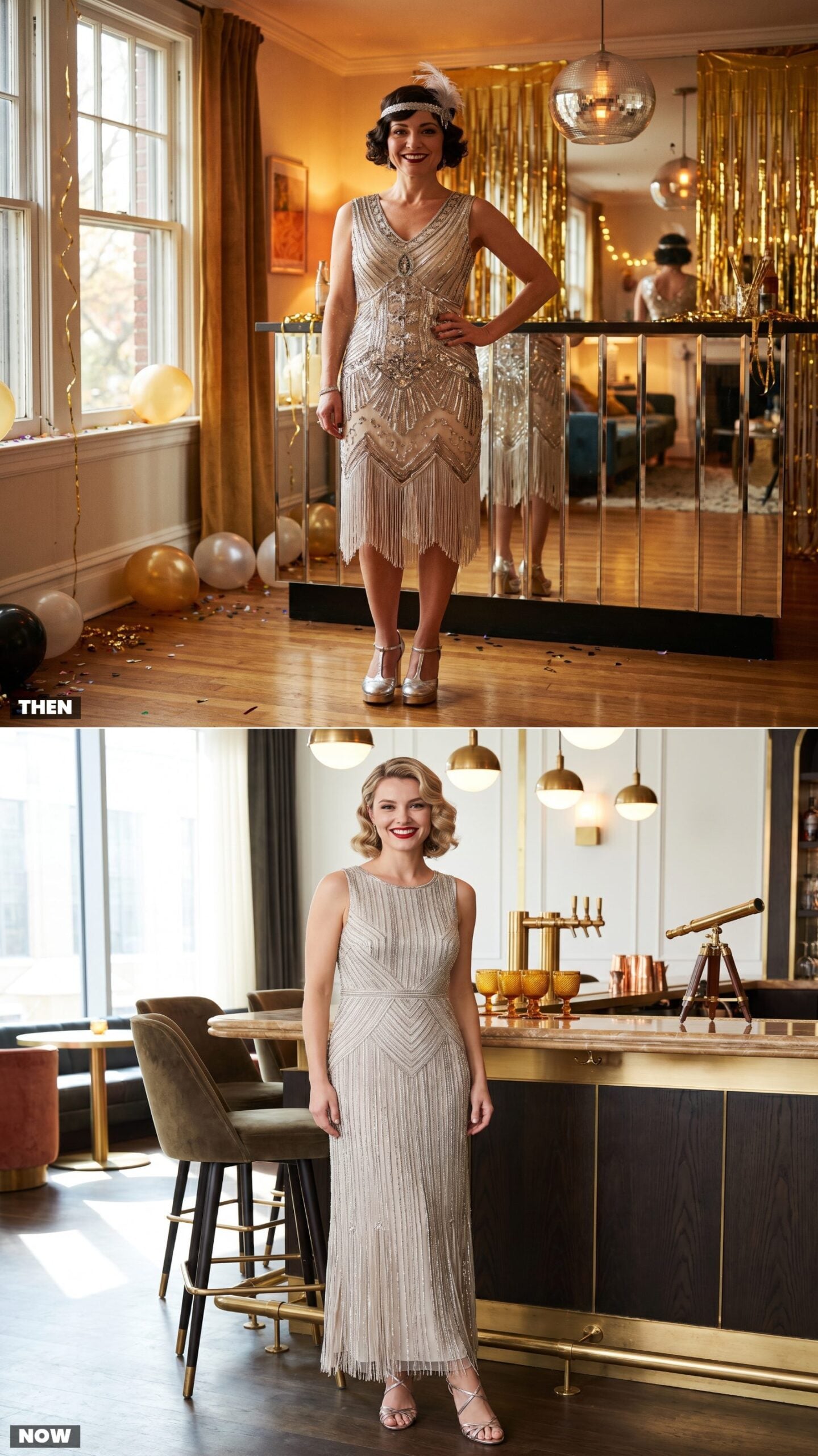
The 1920s revival hit hard in 1975, headband and feather included. All that costume-party earnestness is charming, but the fringe hem and the beadwork were always the parts worth saving.
Keep the beadwork, lose the headdress. A floor-length champagne beaded gown takes the art-deco lines vertical, which lengthens everything instead of chopping the eye off at the knee. The one accent left from the original is the fringe, dropped to the hem where it moves when you do.
Red lip stays. It earned its place fifty years ago and it still does.
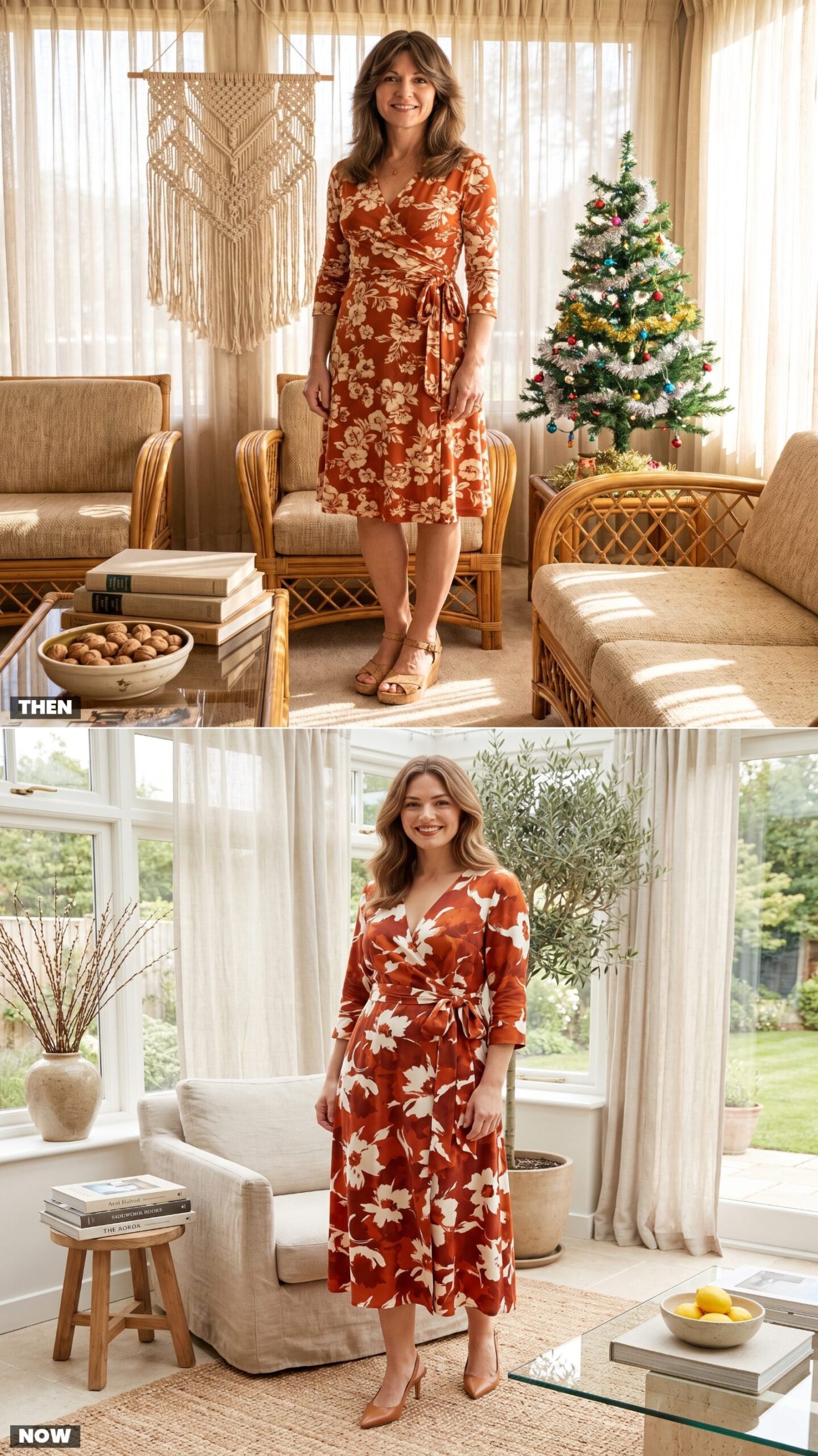
16. The Orange Floral Jersey Wrap Dress
❤️ Would you like to save this?
The wrap dress is one of the few 1975 party pieces that needs almost nothing done to it. The construction was already right: a tie waist that defines the middle, a V that lengthens the neck, a drape that skims. That’s why the shape survived intact.
The only real change is fabric. Swap heavy jersey for a silk crepe orange floral wrap dress and you keep the drape but drop the cling, and a tan slingback replaces the cork wedge. Burnt orange against cream still reads warm and sure of itself — which is exactly what you want walking into a party.
15. The Ivory Pantsuit With a Dramatic Bow Blouse
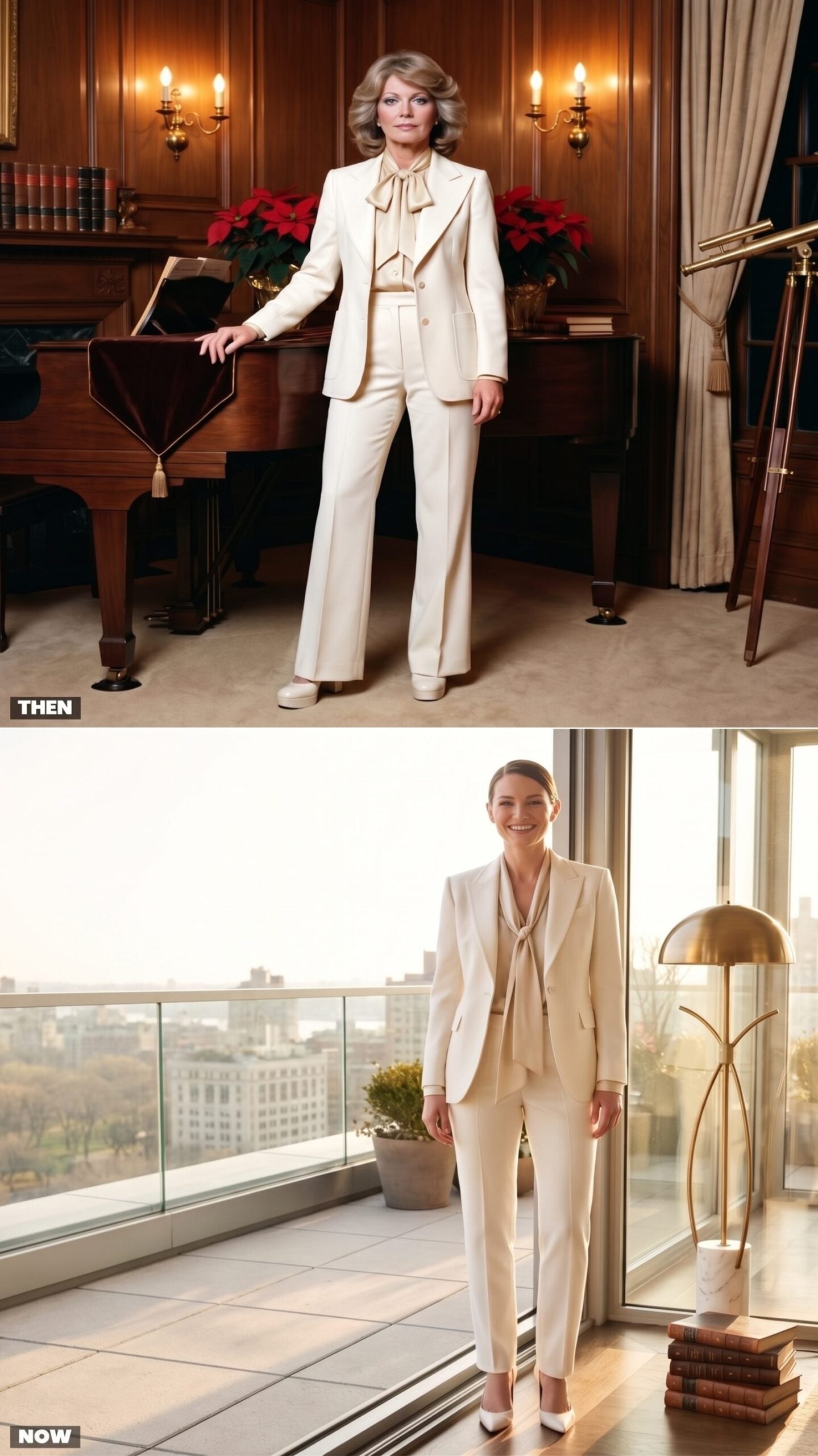
An ivory pantsuit at a Christmas party is a power move now, and it was one in 1975 too. The difference is precision. The old version was all volume — wide lapels, flared legs, a bow the size of a dinner napkin.
The detail carrying the modern look is that pussy-bow, tied a touch looser so it reads soft rather than trussed. A tailored ivory wool pantsuit with narrow lapels sharpens everything the polyester version blurred, and the champagne silk blouse keeps a whisper of that original gold.
14. The Ruby Velvet Blazer With a Metallic Midi Skirt
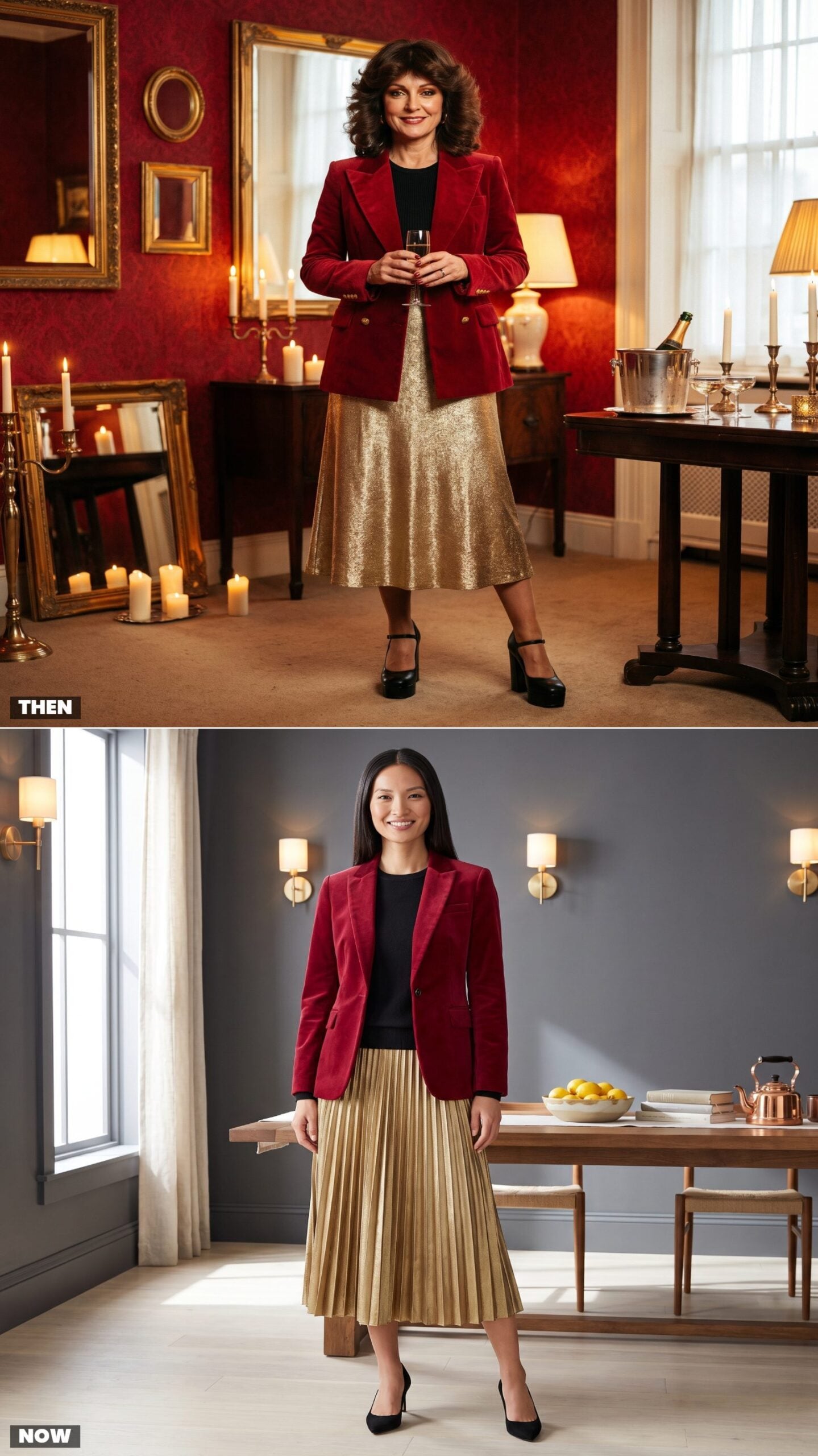
One color commitment holds this whole thing together: ruby velvet against gold metallic, warm on warm, the two saturations close enough that they hum instead of clash. Right in 1975, still right now.
What changed is the tailoring and the movement. A slim single-button ruby velvet blazer replaces the boxy wide-lapel version, and a fluid pleated gold metallic midi skirt takes over from the stiff lame A-line. Those pleats catch candlelight as you move — something the old rigid skirt never quite pulled off.
13. The Midnight-Blue Sequin Column Dress
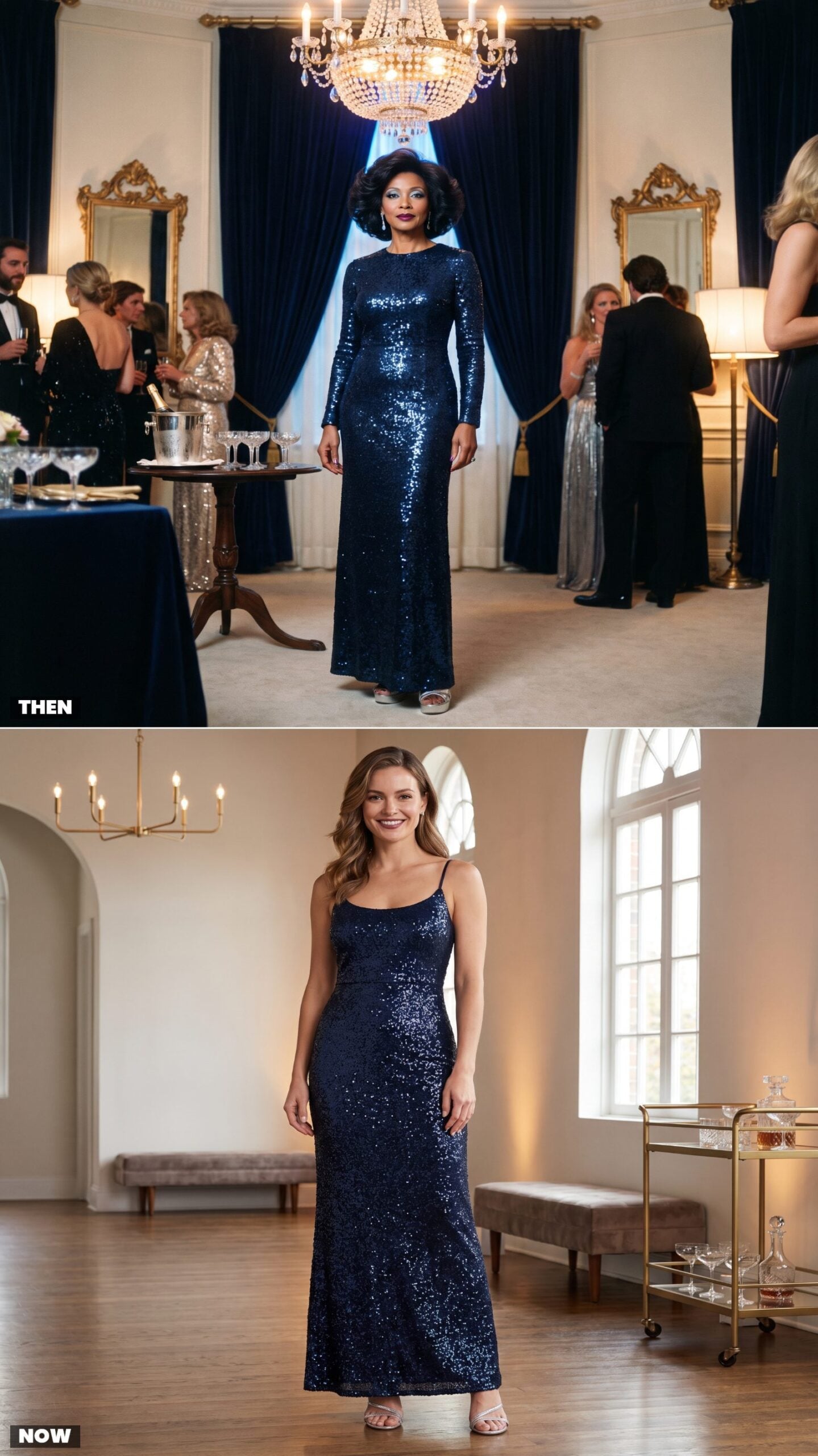
Fully sequined long sleeves and a high neck was a lot of shine to carry in 1975, though we get the impulse — if you’re going to do sequins, do sequins.
The modern column keeps the midnight-blue shimmer and the long lean line, then edits the coverage way down. A scoop neck and thin straps let skin break up the sparkle, so the midnight-blue sequin gown reads as evening glamour rather than armor. Deep blue sequins throw light differently than silver or gold. They shift with the room, which is exactly why they photograph so well under a chandelier.
12. The Gold Fringe Poncho Over Black Trousers
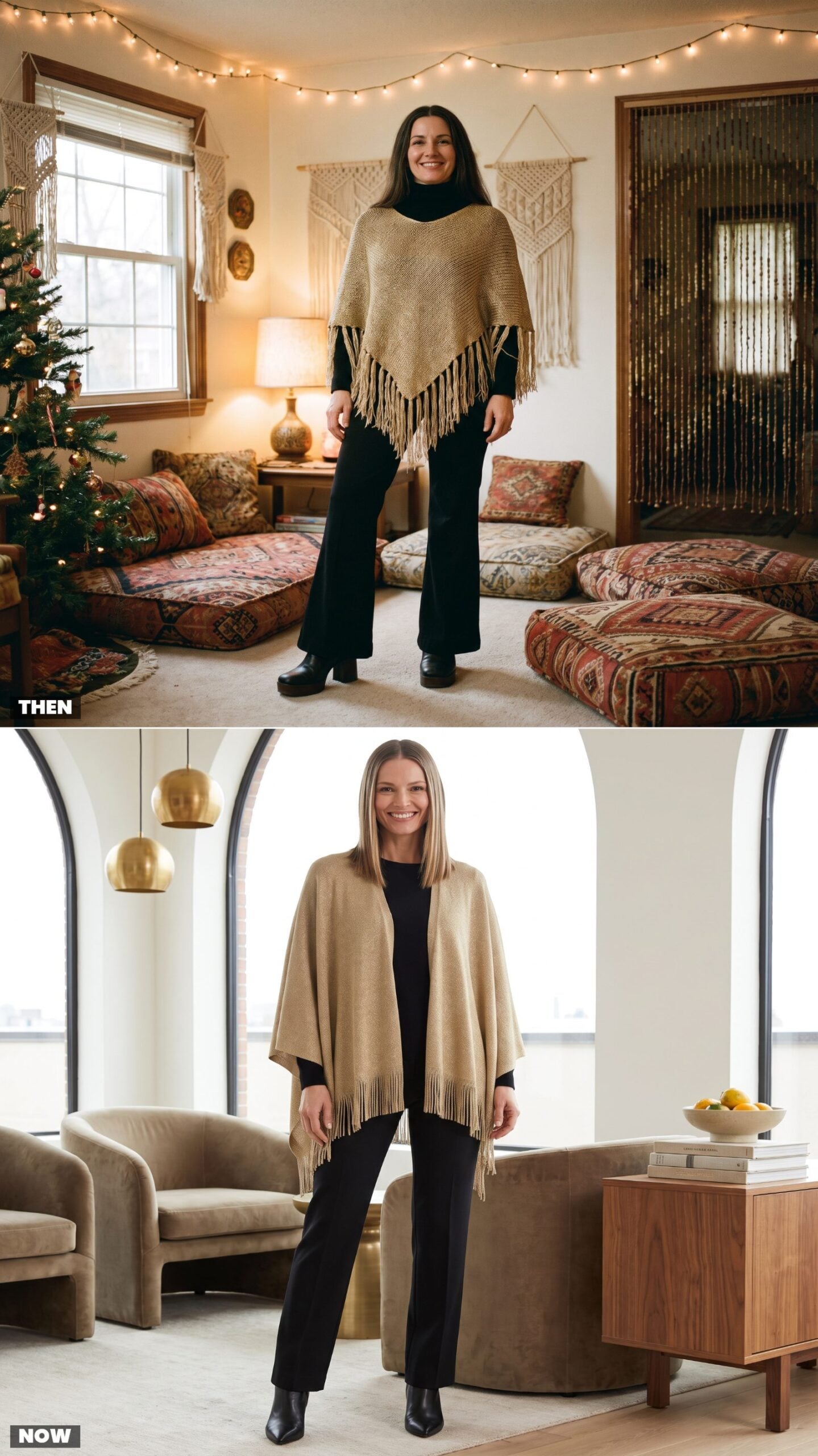
A gold fringe poncho is either a statement or a costume, and the line between them is fabric quality. The 1975 version leaned crafty. The update leans deliberate.
The poncho does all the reframing here. Underneath it is just a black top and black trousers, the plainest base imaginable, which is precisely why the gold fringe poncho can go loud without the outfit tipping over. Shorter, cleaner fringe and a lurex knit read as evening rather than market stall. The black column below keeps everything grounded.
11. The Paisley Chiffon Handkerchief-Hem Dress
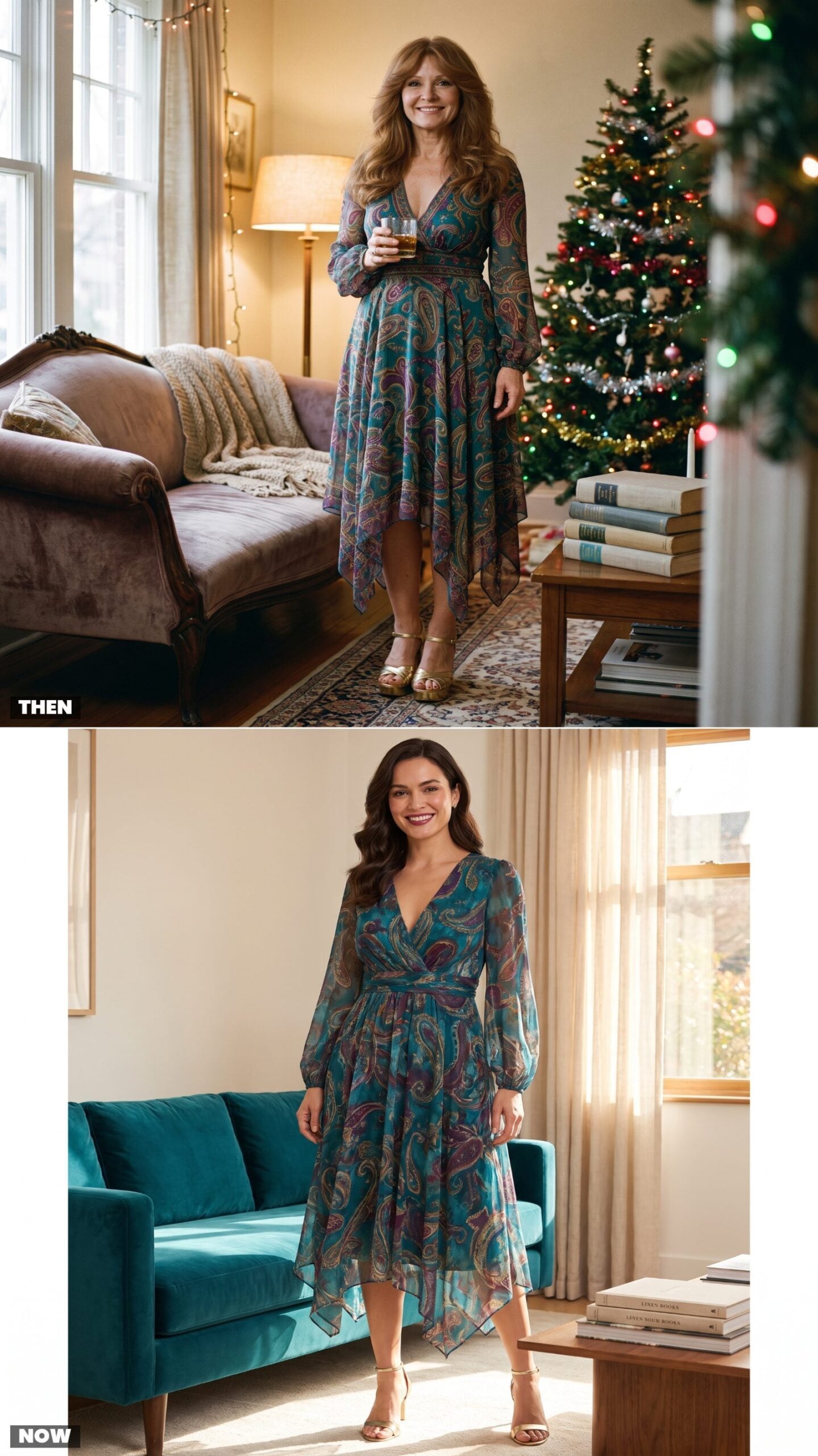
The handkerchief hem is the whole personality of this dress, and it survives beautifully. Those floating points move when you walk, catch the light on the diagonal, and keep the eye traveling down the body. That’s the main driver, then and now.
The paisley stays, tightened into a painterly print instead of a busy 1970s wash. Teal, plum, and gold still hold together because they share the same jewel-tone depth. A modern paisley chiffon midi dress lengthens the hem points slightly, which reads more evening and less folk festival.
10. The White Lace Victorian Blouse With a Velvet Maxi Skirt
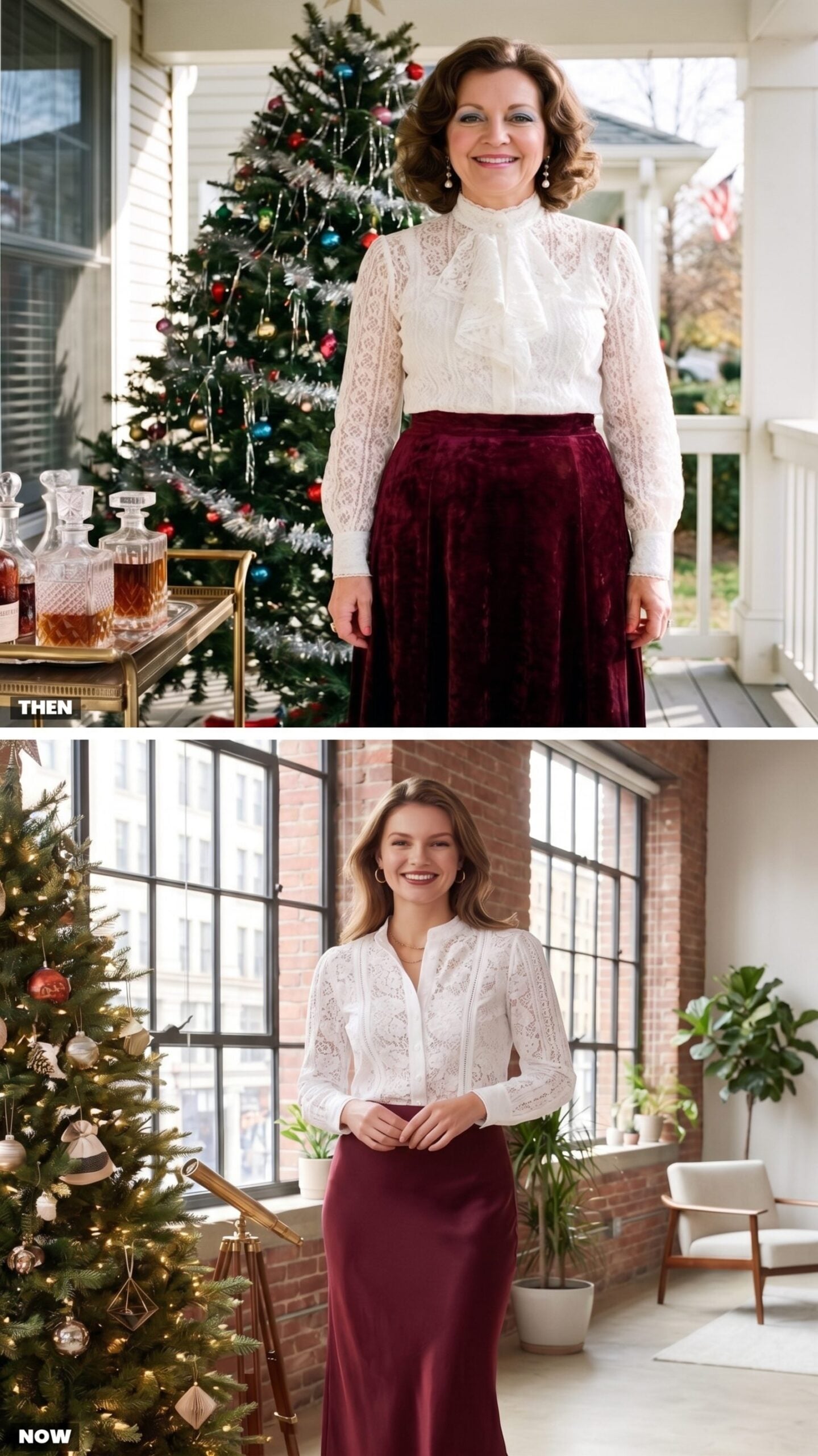
The lace stayed. Everything around it got quieter. Back in 1975 that Victorian blouse and the velvet skirt were basically at war for your attention, jabot ruffles piled high under a high lace collar like the room wasn’t big enough. Charming, sure. Also busy.
The modern version holds onto the pairing that actually mattered — crisp white lace blouse against liquid burgundy satin maxi skirt — and lets the bias cut carry the rest. Matte lace, wet-looking satin, nothing else competing for the spotlight. Tuck the blouse, ditch the jabot, and suddenly the whole thing reads composed instead of costume.
9. The Red Satin Shirt Dress With a Wide Patent Belt
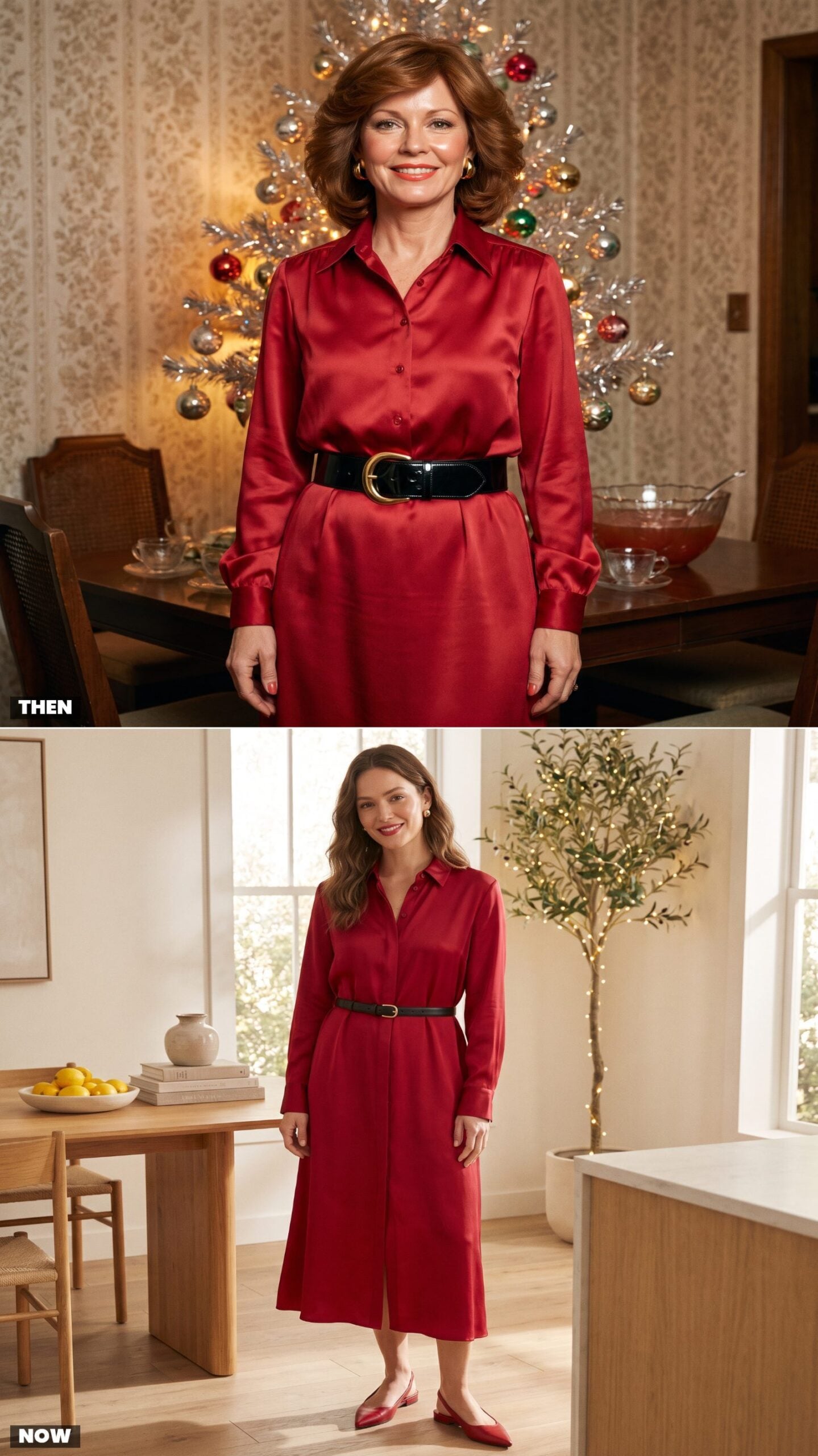
That patent belt in 1975 was doing a lot of heavy lifting — an inch and a half of glossy black gripping the waist like it had something to prove. It worked. It also pinned the dress to one exact year.
Now the red satin leads and the belt just supports. Swap the wide patent slab for a slim polished leather one and the color does the rest. A single saturated red from collar to hem reads as confidence, not fancy dress. Push the sleeves, drop the hem a little, and you get that ease that separates a woman heading somewhere on purpose from one dressed by a decade she can’t shake.
8. The Turquoise Halter Dress With a Matching Shawl
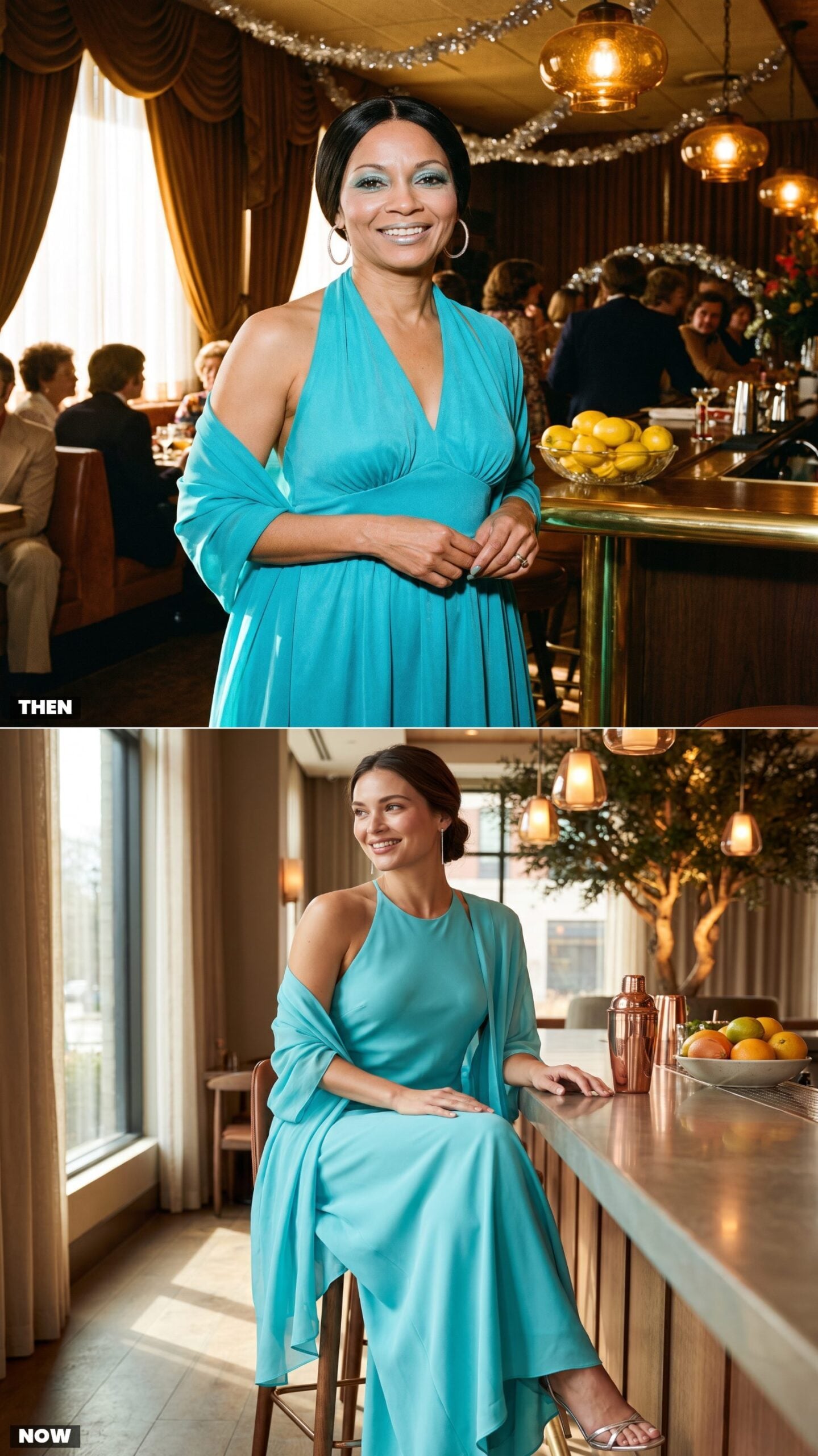
One color, head to toe. That saturation is exactly why the turquoise reads rich instead of loud. In 1975 the halter arrived with a matching shawl heavy enough to hide the whole shape, polyester that caught lamplight in a way silk never quite manages.
The reinterpretation holds onto the monochrome commitment and the halter neckline, then trades all that bulk for movement. A light silk wrap slung off one shoulder does the shawl’s job without the volume, and a cowl back adds interest right where the shoulder line used to sit. Same idea. Better fabric. More skin left to breathe.
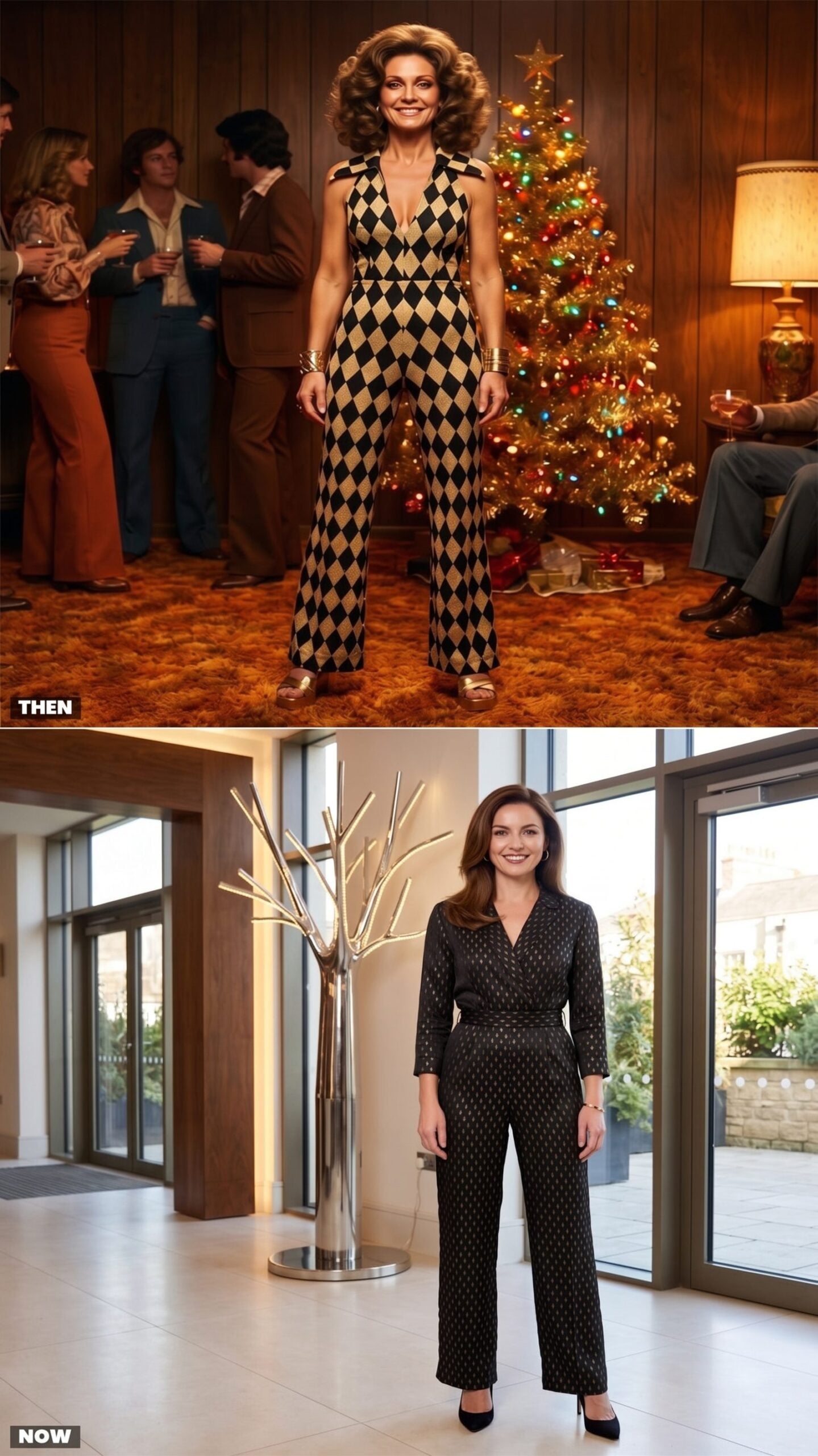
7. The Black-and-Gold Harlequin-Print Jumpsuit
❤️ Would you like to save this?
The harlequin print is the surprise that reframes the whole outfit. Loud on paper, restrained once the silhouette settles down.
Back in 1975 those diamonds rode a jumpsuit with a wide collar and trouser flares broad enough to sweep the floor. Fun — but the shape kept elbowing the print for room. The modern take flips that: let the pattern lead, calm everything around it. A tailored V, a real waist seam, a straight wide leg that reads long instead of theatrical. Keep the black and gold, lose the platforms, and a costume turns into something with actual authority behind it.
6. The Mauve Draped Grecian Maxi Dress
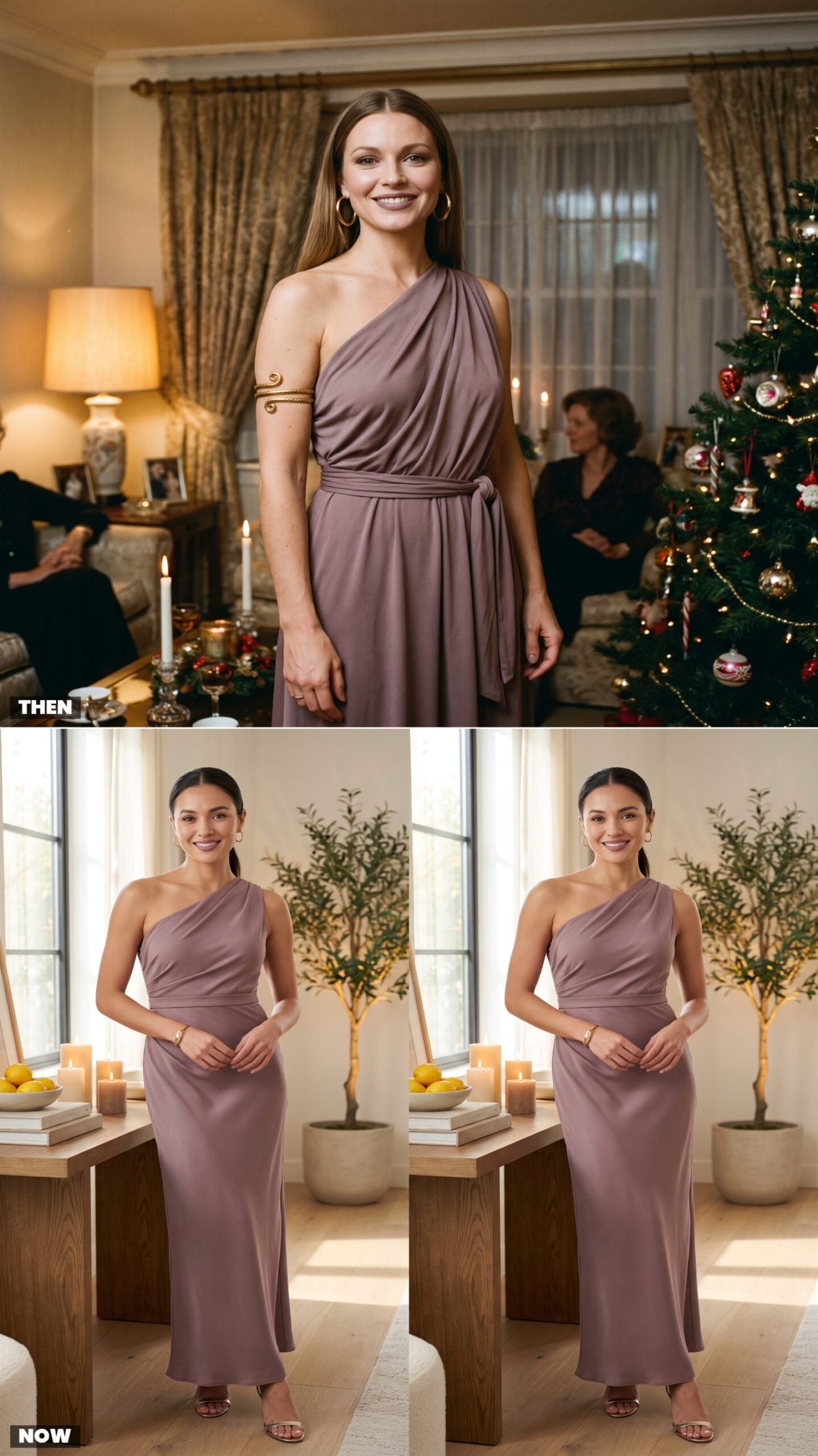
Draping is genuinely hard to pull off, and the 1975 version leaned too soft — matte jersey pooling a little where it should have held firm. The Grecian idea was sound. The execution just wanted more backbone.
The updated mauve silk gown keeps the one-shoulder line and that dusty color, then sharpens the pleats so they fall on purpose rather than by gravity. It’s all about the line here: a column that skims, one strong diagonal at the neckline, a waist you sense more than see. The whole thing elongates, pulling your eye up the shoulder and down the drape without a single interruption.
5. The Peacock-Print Caftan With Gold Sandals
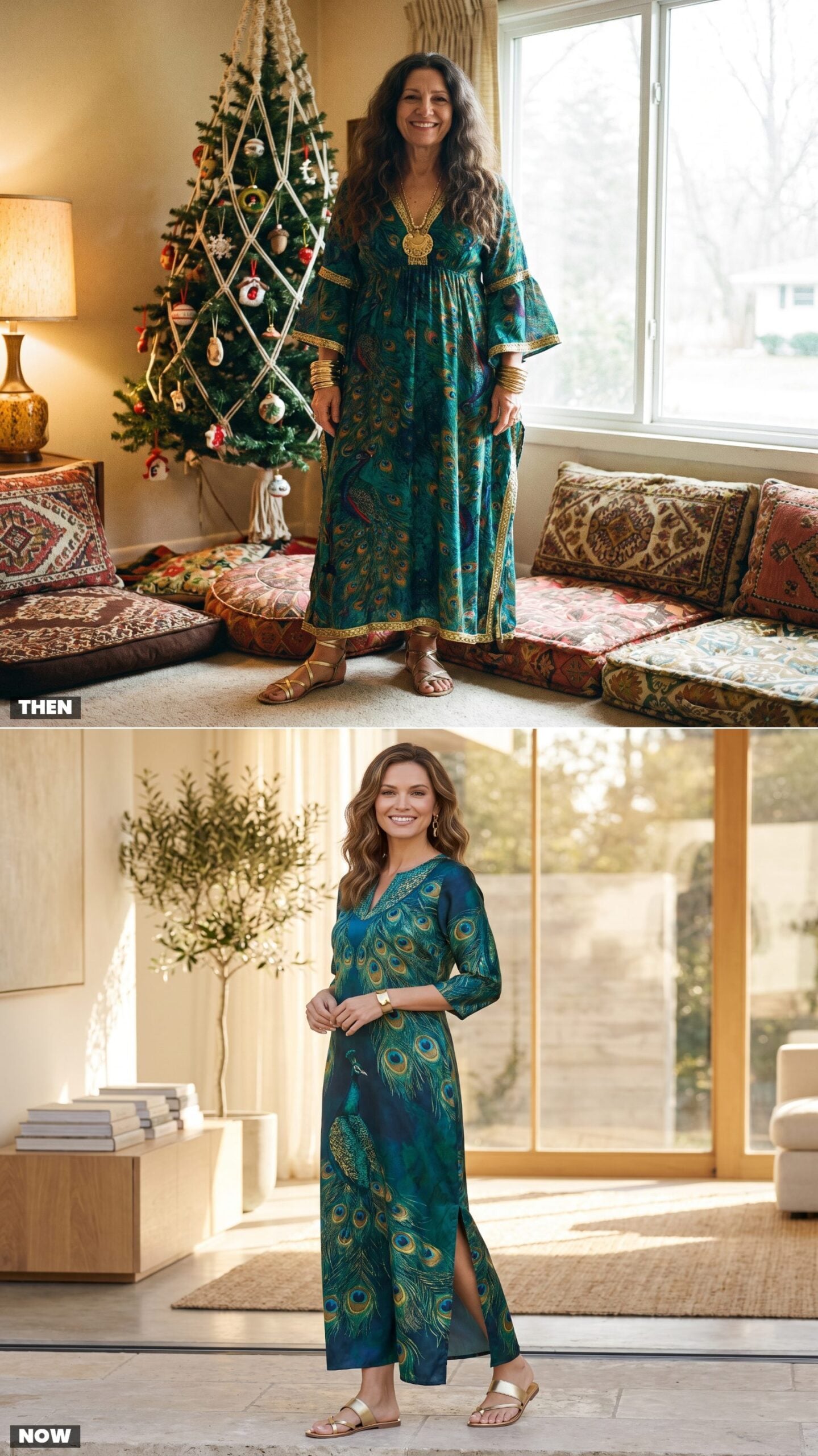
The peacock print earns its keep. Teal, emerald, sapphire, gold — all the color a room could want, coming from one garment.
The 1975 caftan gave it acres of fabric and bell sleeves you could hide a turkey in. Comfortable, generous, and shapeless in a way that read more housecoat than party by the second glass of punch. The modern caftan gown keeps the palette and the ease but adds a shoulder line and a side slit, so now it drapes with intent. And the gold sandals stayed put, because flat gold with jewel-tone silk was never the thing that needed fixing.
4. The Silver Tunic With Matching Flared Trousers
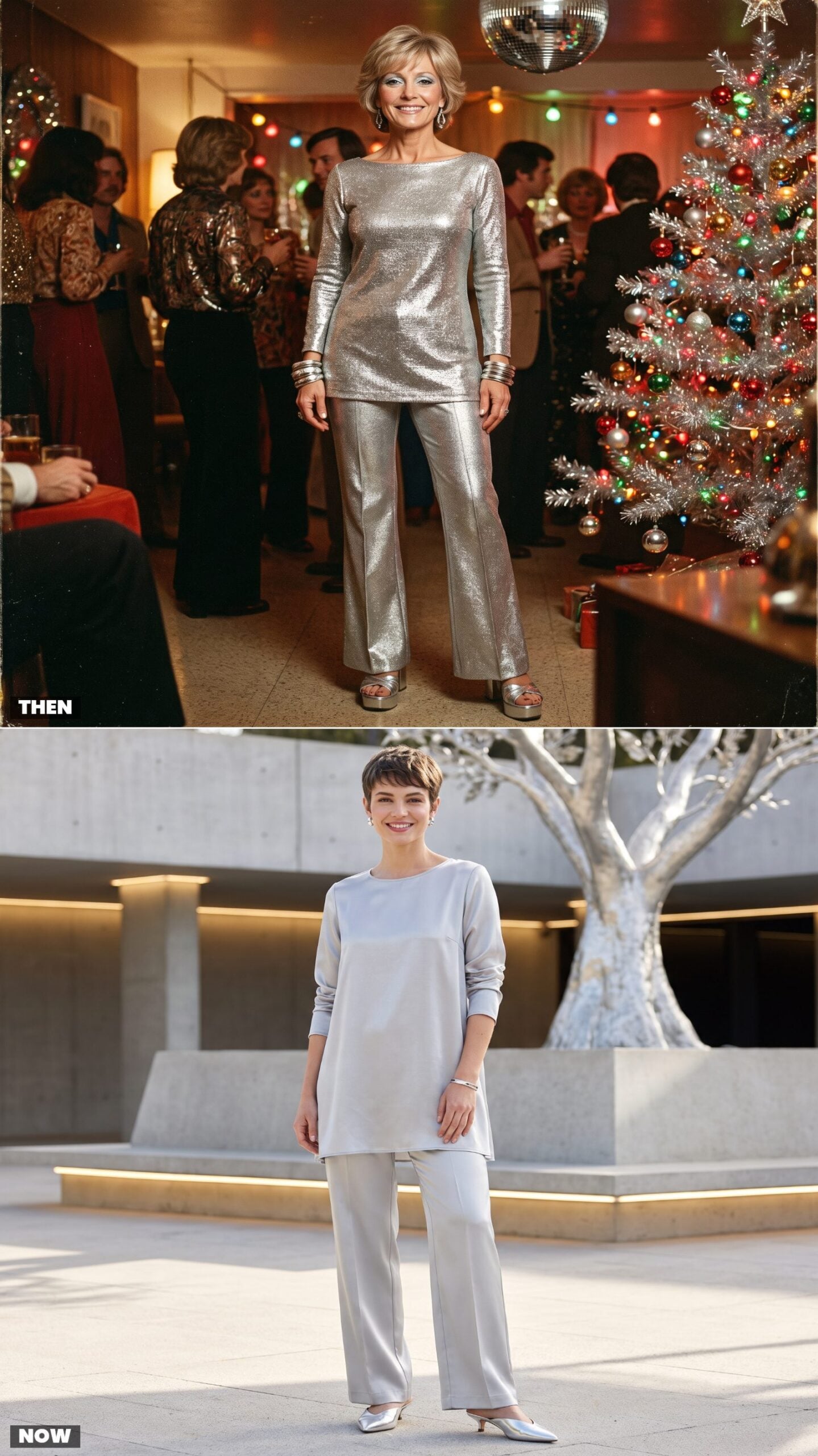
Silver on silver takes nerve, and we respect the 1975 version for going all in. Lurex tunic, matching flares, the whole outfit throwing light like a disco ball with a day job.
The problem was texture. Lurex reads cheap the second the shine tips over into tinsel. This rework holds the monochrome silver and the tunic-over-trouser proportion, then swaps in liquid satin that catches light without shrieking about it. Straighten that flare into a clean wide leg and you’re done. Same head-to-toe metallic commitment — none of the costume-shop finish.
3. The Raspberry Smocked Dress With Balloon Sleeves
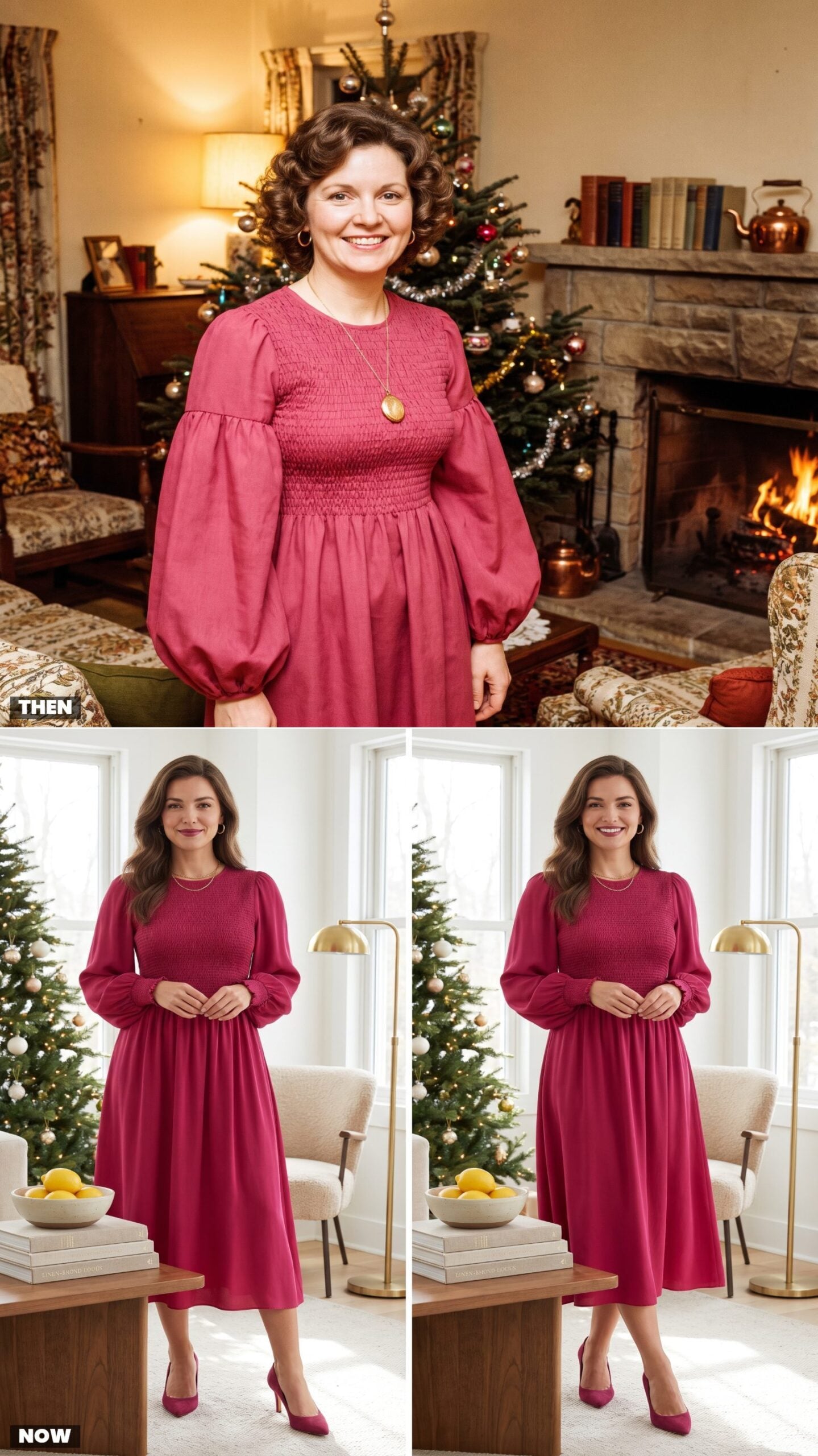
Balloon sleeves are back, which makes this one easy. The whole trick is knowing how much air to let in.
The 1975 dress inflated those sleeves to their absolute limit and paired them with a smocked panel that gathered the entire chest — sweet, but bulky. The modern raspberry version keeps both signatures and dials the volume down. You get a controlled balloon that gathers cleanly at the wrist, a shirred bodice that shapes instead of swallowing. The finishing detail is that cuff, snug where the old one flapped around. Same color, same romance, tailored so it defines the wrist and stretches the arm.
2. The Champagne Satin Culotte Jumpsuit
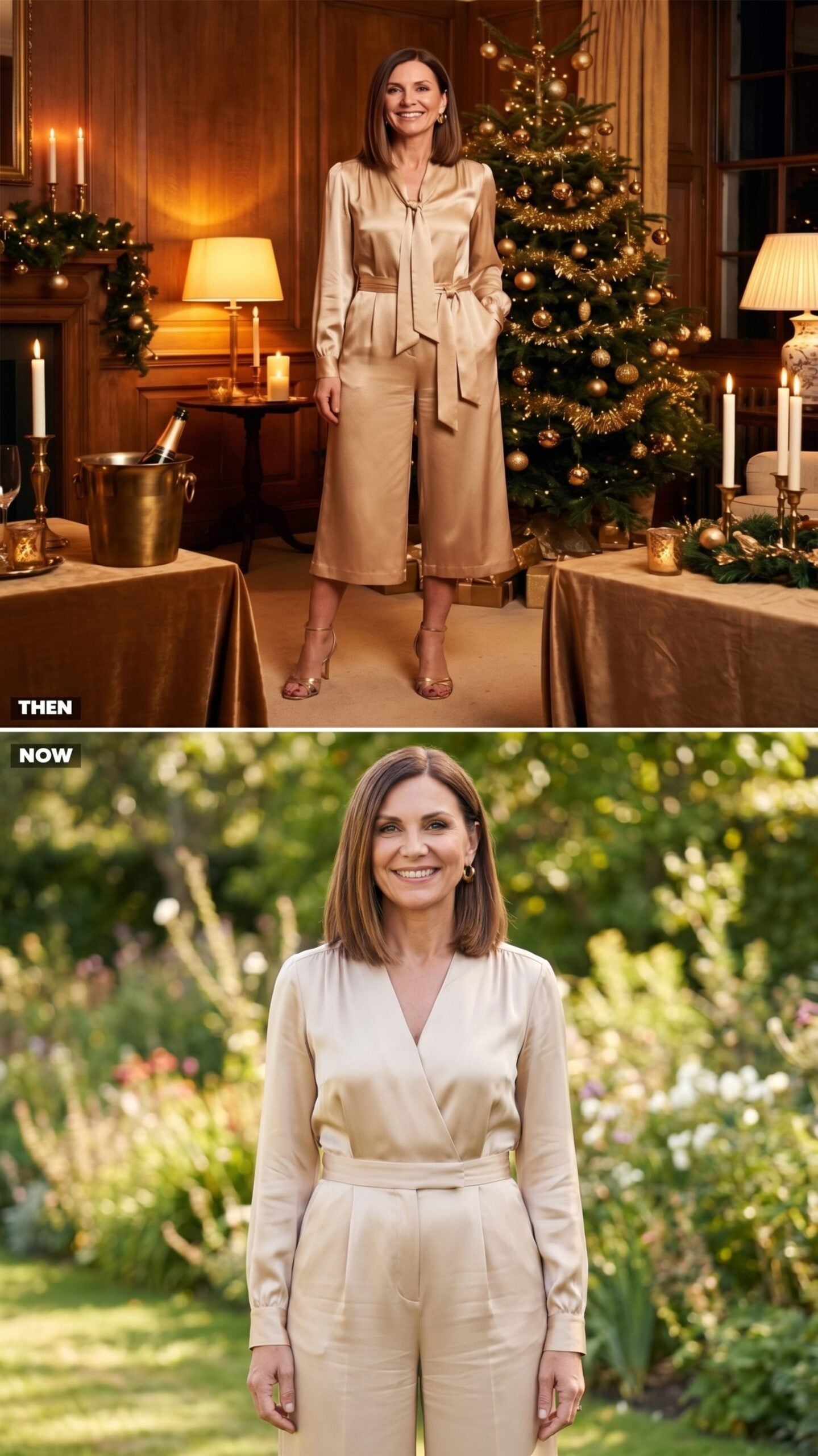
Champagne satin is the color that reads expensive in any decade, and the culotte cut keeps this from becoming a gown you have to guard all night long.
The proportions are what separate the two eras. In 1975 the tie-neck blouse bloused soft and the culottes swung wide with no crease to anchor them. The modern jumpsuit sharpens the leg with a pressed line and pins the waist with a wide, flat waistband, so all that volume reads deliberate. A cleaner neckline finishes the job. Fluid up top, structured below — that tension is the entire reason it works.
1. The Black Disco Jumpsuit With a Rhinestone Belt
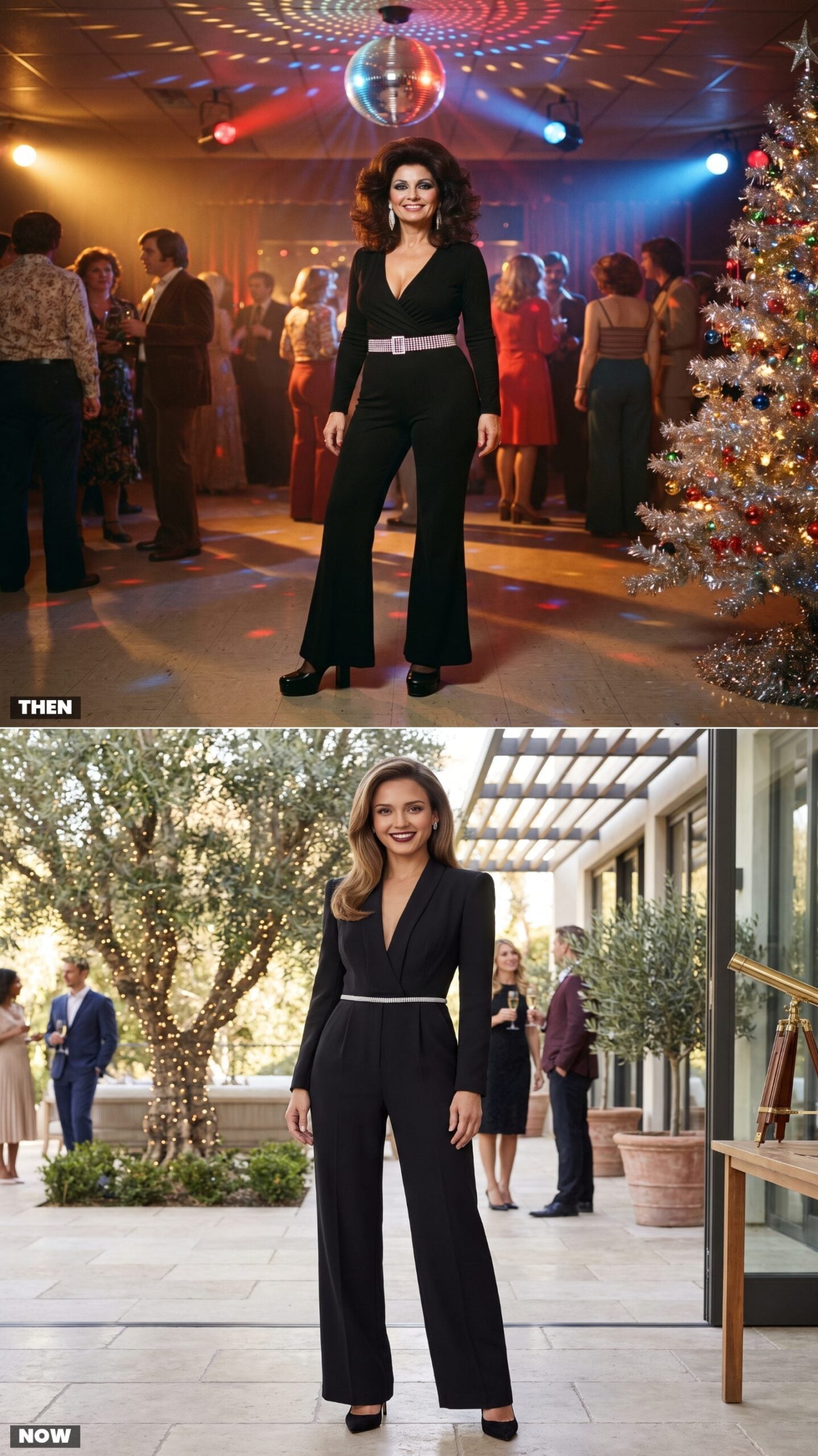
The rhinestone belt is the whole outfit, and that’s deliberate. Everything else stays black so the one glint at the waist becomes the thing you notice.
The 1975 disco jumpsuit buried that belt in competing shine — plunge, flares, platforms, all grabbing for the light at once. The modern version strips the black back to matte crepe and hands a slimmer crystal belt the only sparkle in the room. A tailored plunge, a straight wide leg, and that’s it. One deliberate flash against a field of black reads far richer than sequins from collar to hem ever could.