
Somewhere along the way, the Christmas sweater became a joke with sleeves. Reindeer acquired flashing noses, snowmen developed electrical requirements, and an entire category of clothing surrendered to the novelty department. A curious fate for knitwear, a medium capable of producing everything from intricate geometric colorwork to some of the most sophisticated evening clothes in the wardrobe.
Consider what happens when a cable-knit sweater encounters champagne satin, when a shawl collar borrows the authority of a tailored jacket, or when a few metallic yarns turn an ordinary stitch into something worthy of candlelight. Christmas dressing has room for the extravagance of a capelet, the precision of Nordic patterning, the richness of velvet, and the sheer pleasure of a substantial winter knit. Even a single snowflake can make a persuasive fashion statement when given an interesting place to land.
These 39 Christmas sweater outfits take knitwear from the outdoor market to the cocktail reception, with plenty of interesting territory between the two. Some achieve their festive character through color and traditional pattern; others rely on unexpected necklines, luminous yarns, ingenious layering, or the movement of an extraordinary sleeve. The Christmas sweater has considerably more range than its reputation suggests. Time to give the reindeer some competition.
FYI, thanks to AI imagery software, we’re able to create very specific fashion and hairstyle examples to illustrate the points being made. In some cases, imagery is exaggerated to hammer home the point. Also, assume links that take you off the site are affiliate links such as links to Amazon. this means we may earn a commission if you buy something.
39. Pearls and Plum Velvet Give Cashmere an Evening Appointment
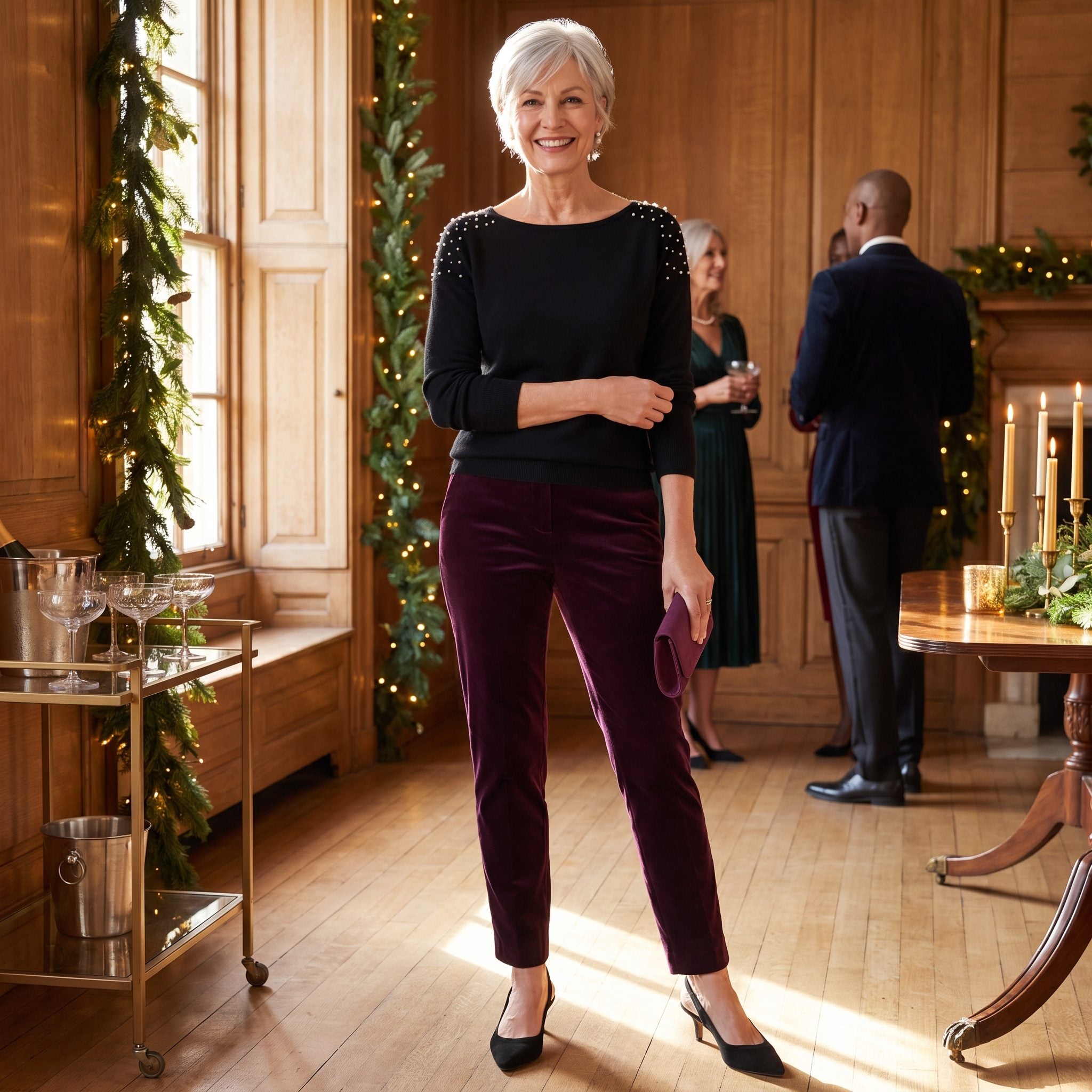
Plum velvet brings a deliciously theatrical depth to the Christmas palette. Its directional pile shifts between dark wine and brighter purple highlights, offering an expressive companion to a black pearl-scattered cashmere sweater.
The placement of the pearl embellishments is especially effective. Concentrated across the shoulders, they establish a luminous frame around the upper body while leaving the rest of the knit uninterrupted. The velvet supplies movement and color below. Between the rounded pearls, fine knit, and rich pile, three very different surfaces give eveningwear an unusually tactile character.
38. Fisherman’s Rib Takes Christmas Dressing Back to Its Cozy Origins
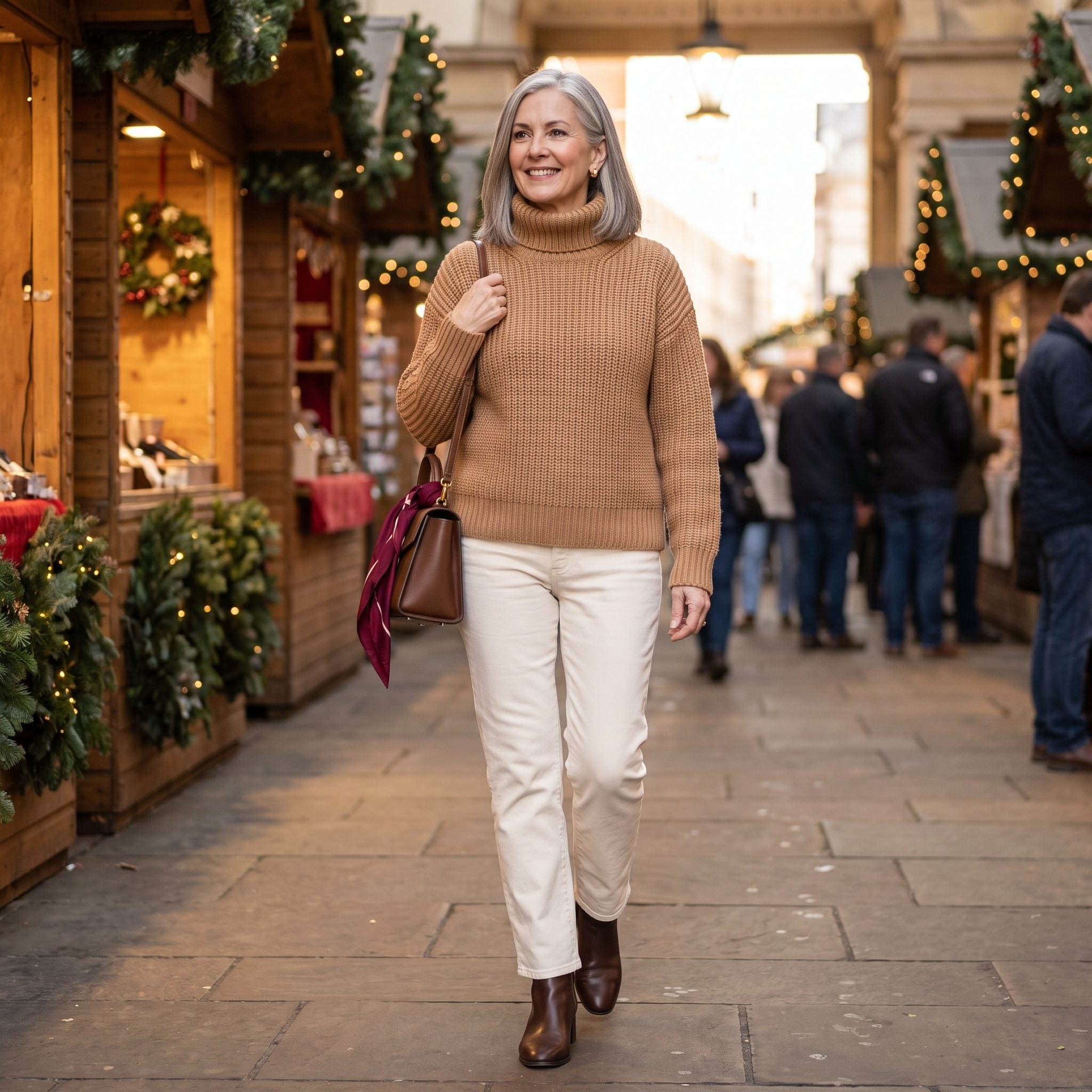
Fisherman’s rib has an architectural quality that ordinary flat knitting cannot quite reproduce. Its pronounced vertical ridges give the camel sweater depth and substance, with the natural shadows between stitches becoming part of the design.
Cream denim carries the pale, warm palette into a more relaxed register suitable for Christmas markets and daytime gatherings. A burgundy scarf tied to the brown structured bag introduces a concentrated note of seasonal color. Christmas arrives through the texture of the clothes, the warmth of the palette, and one particularly well-placed accessory.
37. Silver Thread Turns a Cowl Neck Into Evening Sculpture
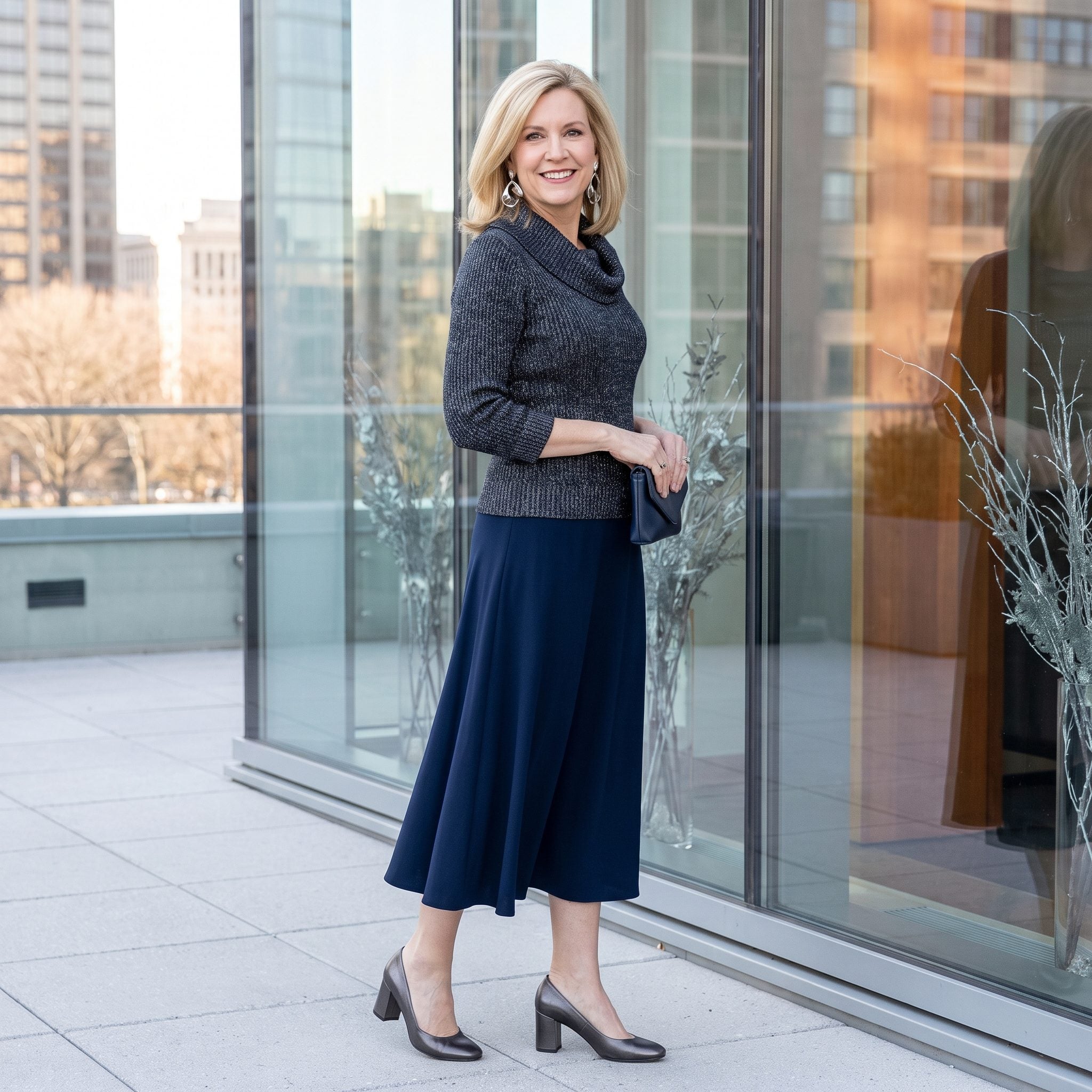
The broad folds of this cowl neckline give metallic yarn an unusually expressive surface. As the silver-thread sweater curves toward and away from the light, its appearance shifts between charcoal and frosted silver.
A midnight-blue column skirt extends the darker tones downward, allowing the volume of the neckline to remain the outfit’s principal architectural feature. The closely related colors connect the two garments without requiring an exact match. Silver acquires a particularly elegant quality when its brilliance follows the construction of the knit rather than sitting on top of it.
36. One Snowflake Is Enough to Establish the Season
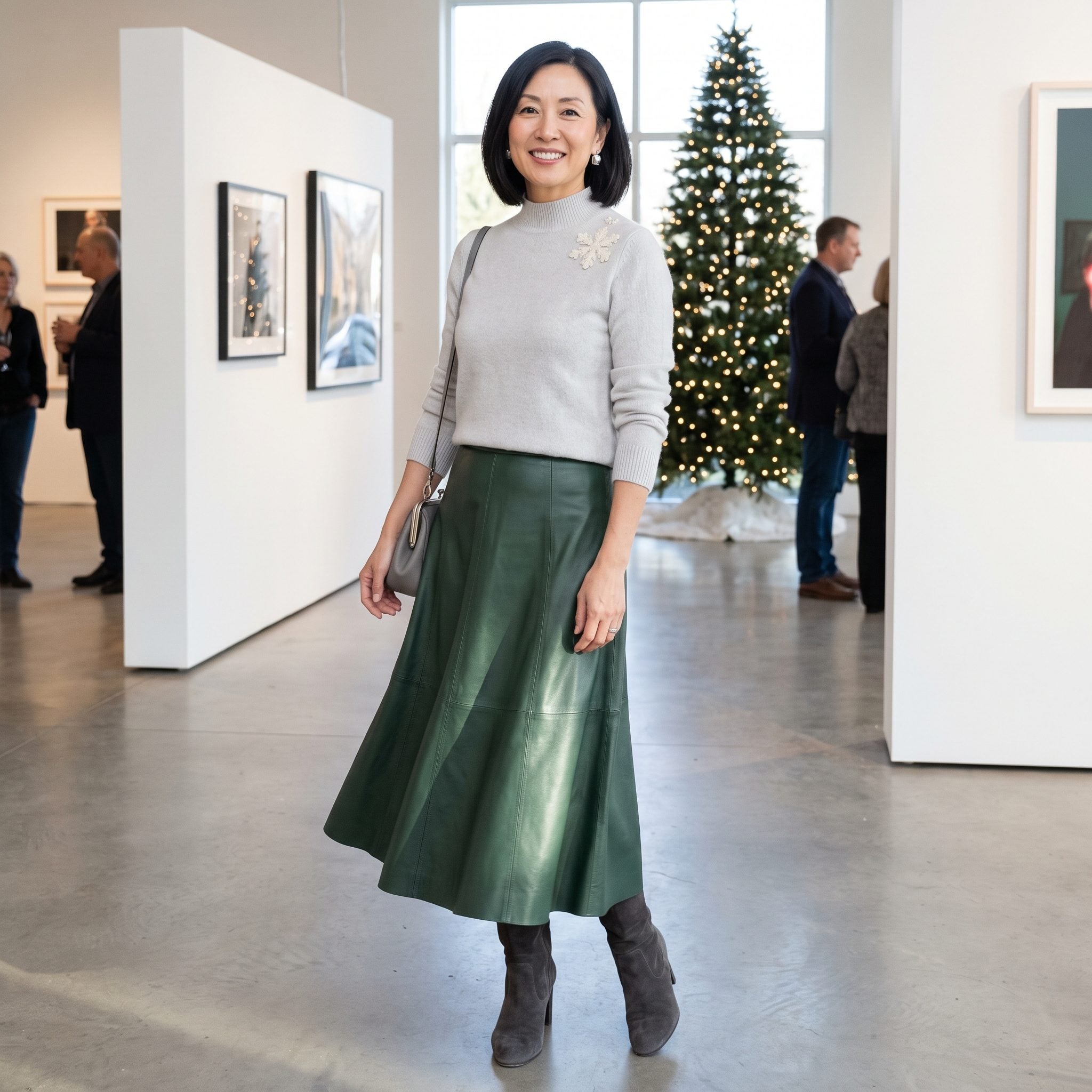
An entire Christmas vocabulary distilled into one geometric snowflake. Positioned near the shoulder of a gray snowflake sweater, the motif gives an otherwise understated winter knit a distinctly seasonal identity.
The forest-green leather skirt takes the idea somewhere considerably more contemporary. Its A-line cut introduces swing beneath the compact sweater, while the smooth leather offers a dramatic change of surface. The snowflake belongs to familiar winter imagery; the leather belongs to a different fashion tradition altogether. Their unlikely partnership makes the outfit interesting well beyond the holiday calendar.
What Our Readers Say
- Asked to pick a top, ThreadCurve readers chose a fine knit 41% of the time, ahead of a blouse at 33% and a tee at 26%.
- In our reader polls, 70% said two layers is their sweet spot, well ahead of those who prefer one or three.
From ThreadCurve reader polls and votes.
35. A Velvet Ribbon and a Sweep of Gold Organza
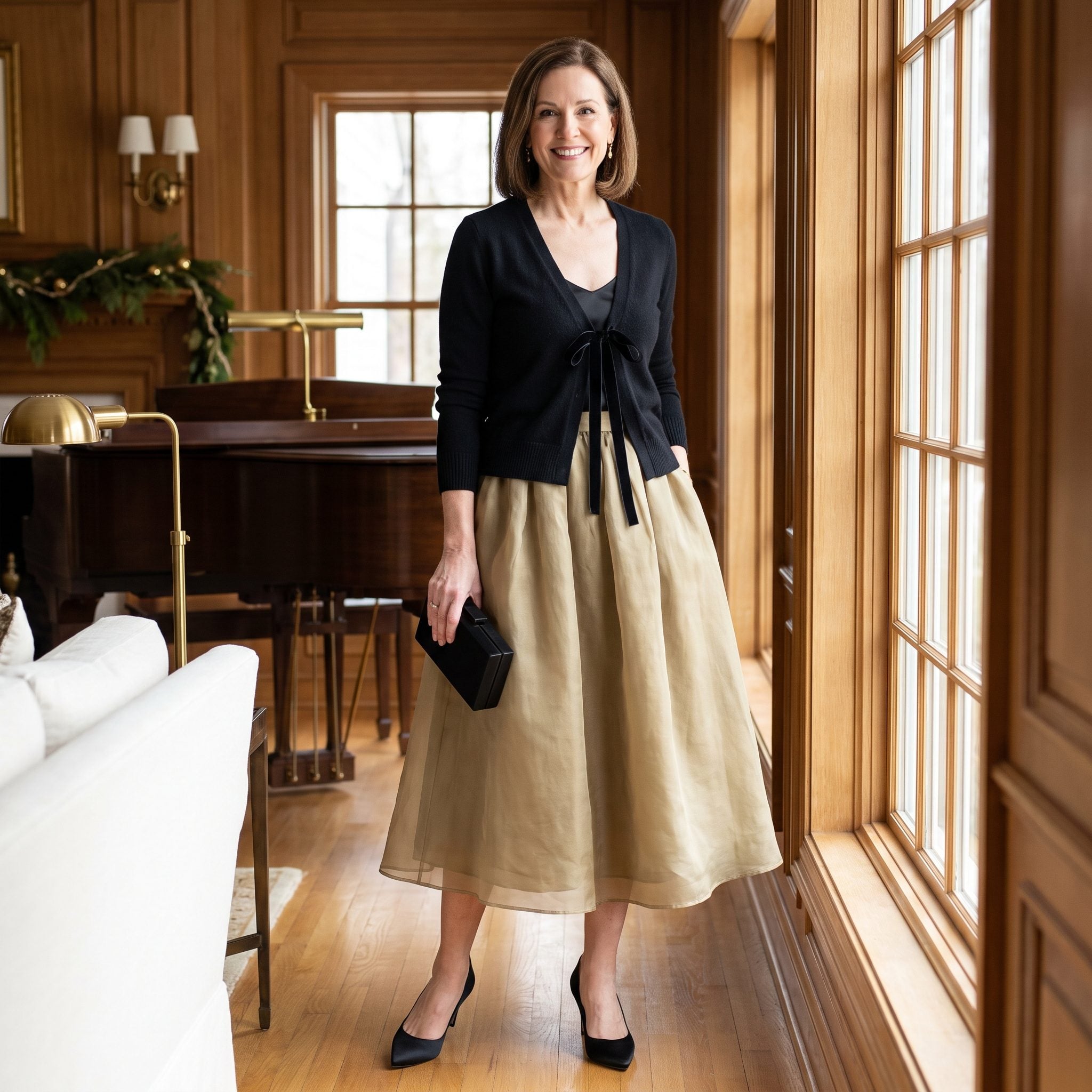
Organza introduces a kind of volume that substantial winter knitwear rarely achieves. Its crisp, translucent structure allows the skirt to extend outward in airy layers without acquiring the visual density of wool or velvet.
The fitted black velvet-ribbon cardigan supplies a compact shape above the expansive muted-gold organza skirt. Ribbon closures replace the familiar rhythm of buttons with small, tactile accents. There is something wonderfully unexpected about a cardigan adopting the proportions of an evening bodice. Add the antique-gold color of the skirt, and knitwear finds itself in decidedly grander company.
34. The Shawl Collar Borrows a Few Tricks From Tailoring
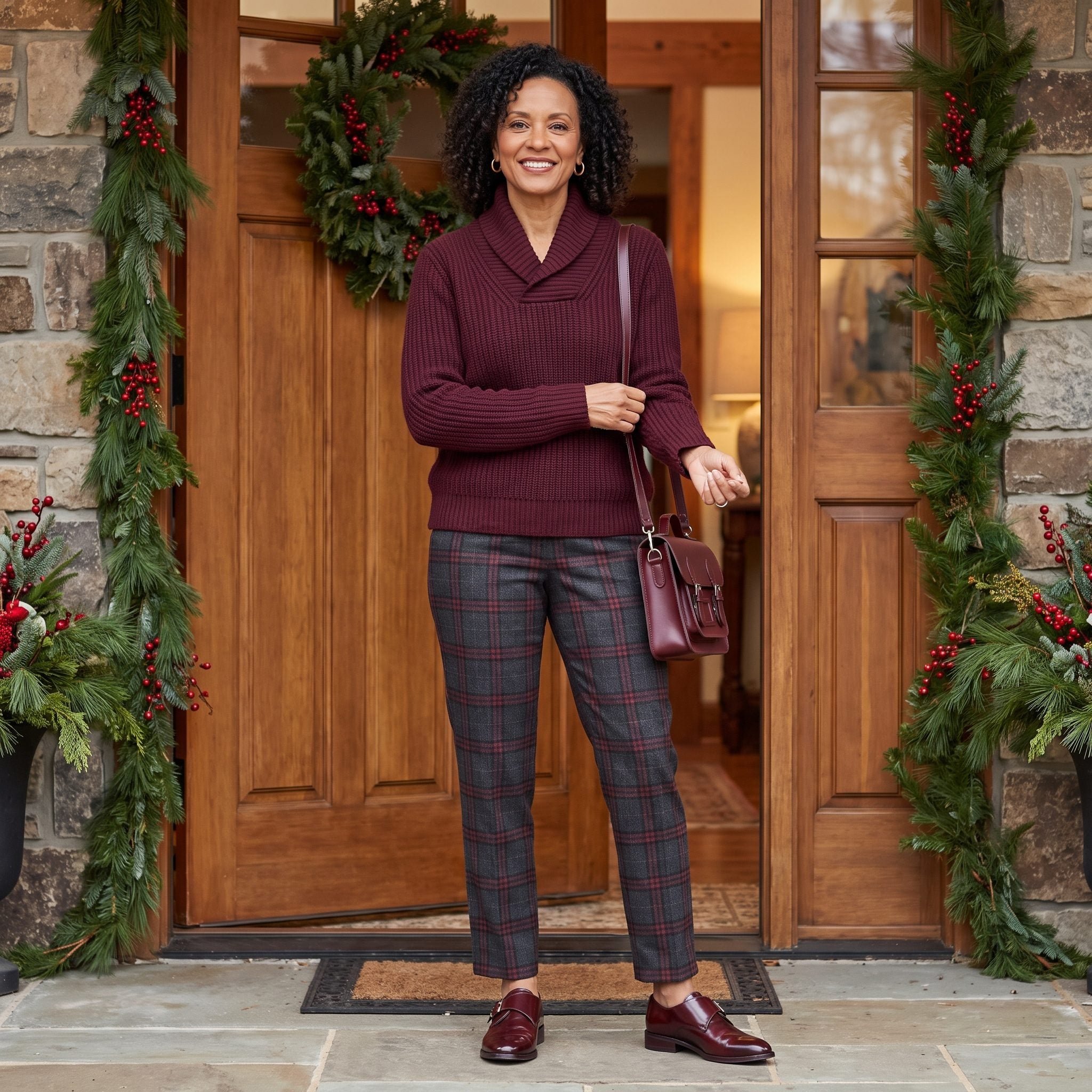
A substantial shawl collar changes the character of a sweater by establishing a pronounced frame around the neckline. Its folded construction recalls the lapels of traditional jackets, although the flexibility of the knit gives the shape a softer expression.
The windowpane check trousers pick up the burgundy of the sweater within their larger geometric pattern. Oxblood monk-strap shoes introduce another detail borrowed from classic tailoring. Christmas color meets the vocabulary of menswear here, resulting in a particularly interesting alternative to the conventional festive dress.
33. Bronze Batwing Sleeves Change the Architecture of a Party Outfit
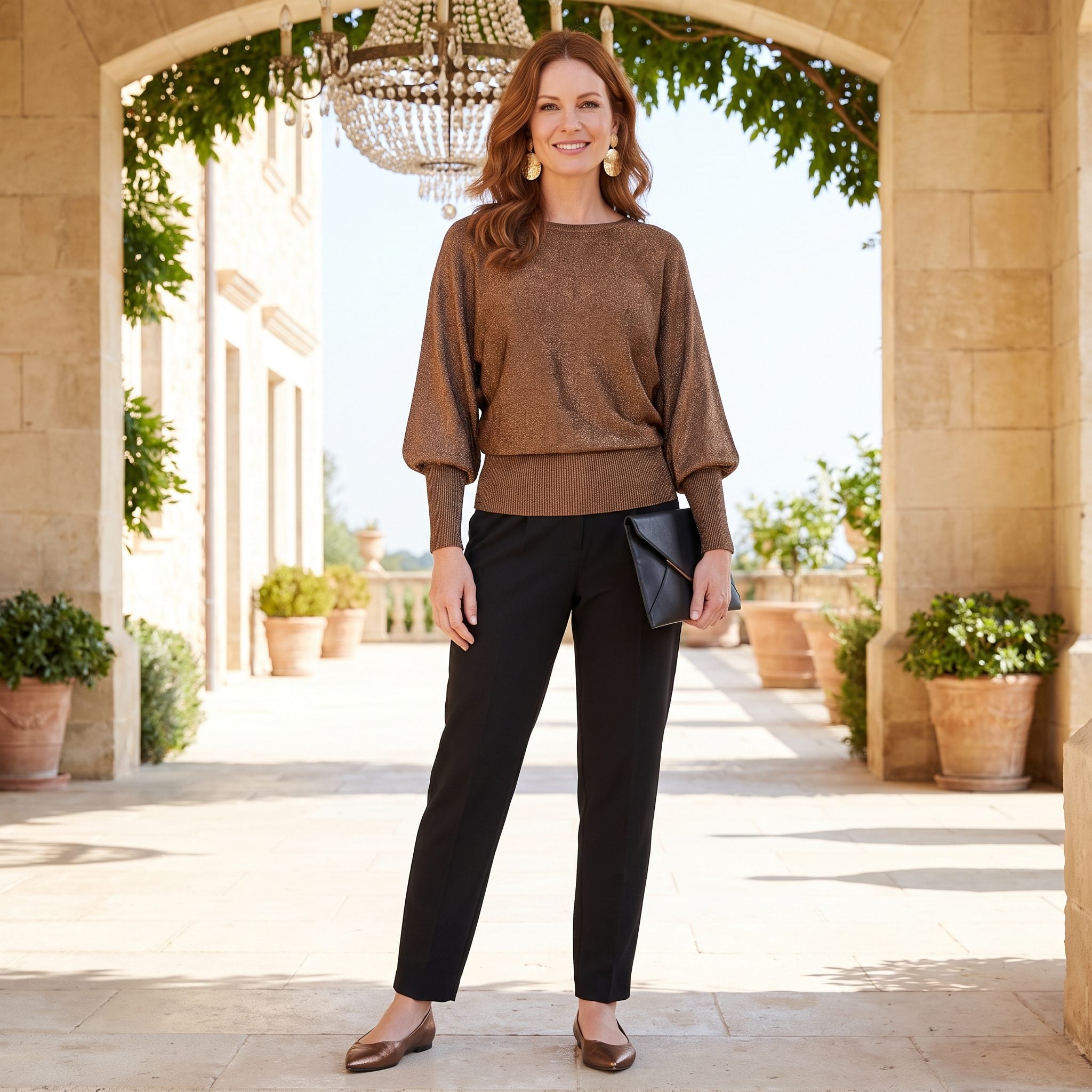
Batwing sleeves concentrate much of a garment’s volume between the shoulders, arms, and torso. Here, a fitted ribbed hem gathers the expansive bronze knit into a more defined shape at the waist, allowing the generous sleeves to remain the dominant feature.
Metallic yarn gives the batwing sweater a warm, coppery luster that becomes particularly expressive across its folds. Tapered black trousers introduce a much narrower line beneath the sweater, while pointed bronze flats repeat the metallic color at floor level. The outfit achieves its evening character as much through proportion as through shine.
32. Winter Botanicals Take Embroidery Beyond the Christmas Tree
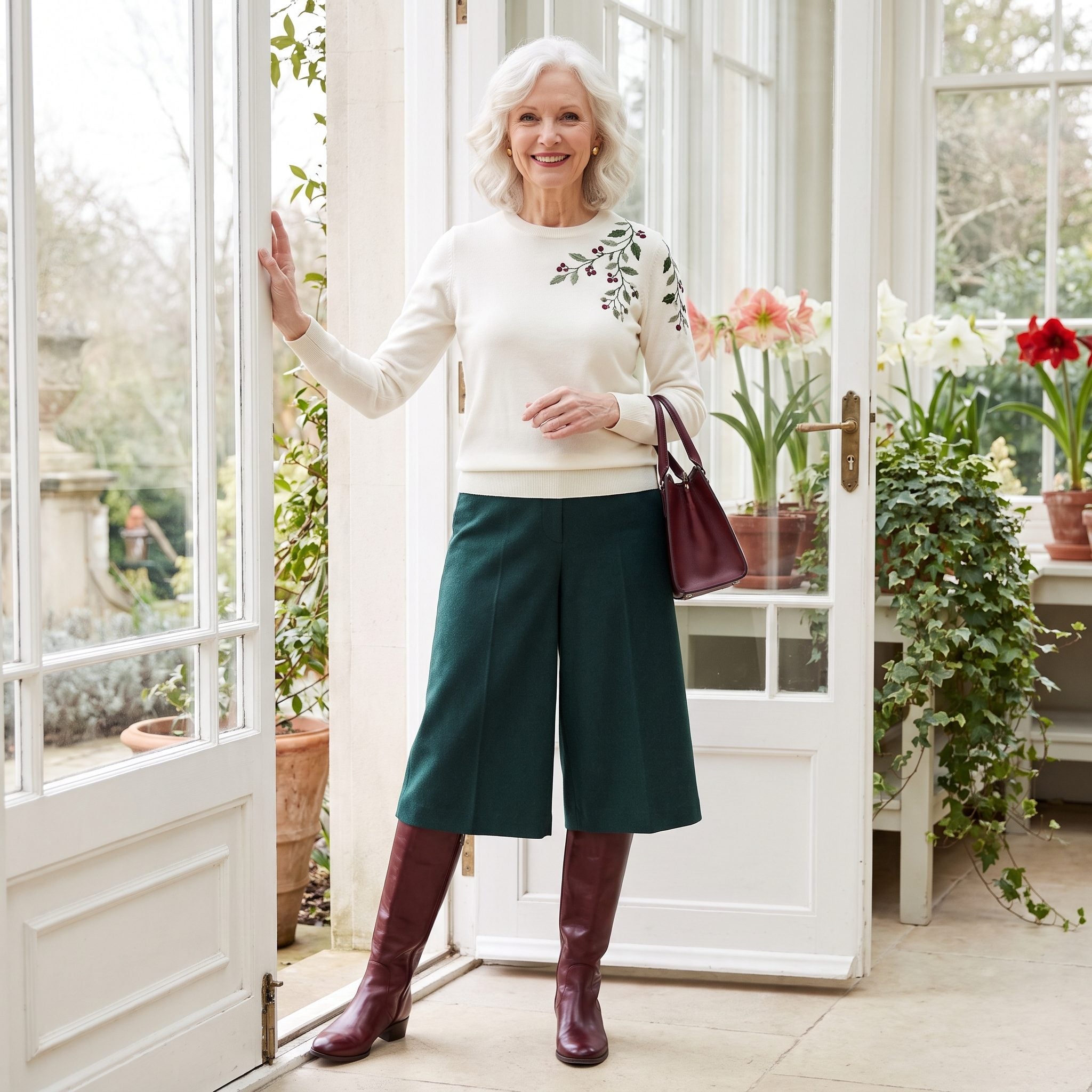
Leaves and berries travel across one shoulder, giving the sweater a botanical composition with a distinctly asymmetrical arrangement. Unlike an all-over repeat, this concentrated embroidery establishes a particular direction across the garment.
The deep-green wool culottes extend the colors of the foliage into a broader field below. Tall oxblood knee-high boots provide coverage beneath the cropped hems, while a burgundy bag repeats the berry tones. A small piece of decorative needlework has supplied the color scheme for an entire winter outfit.
31. The Bobble Sweater Discovers the Slip Dress
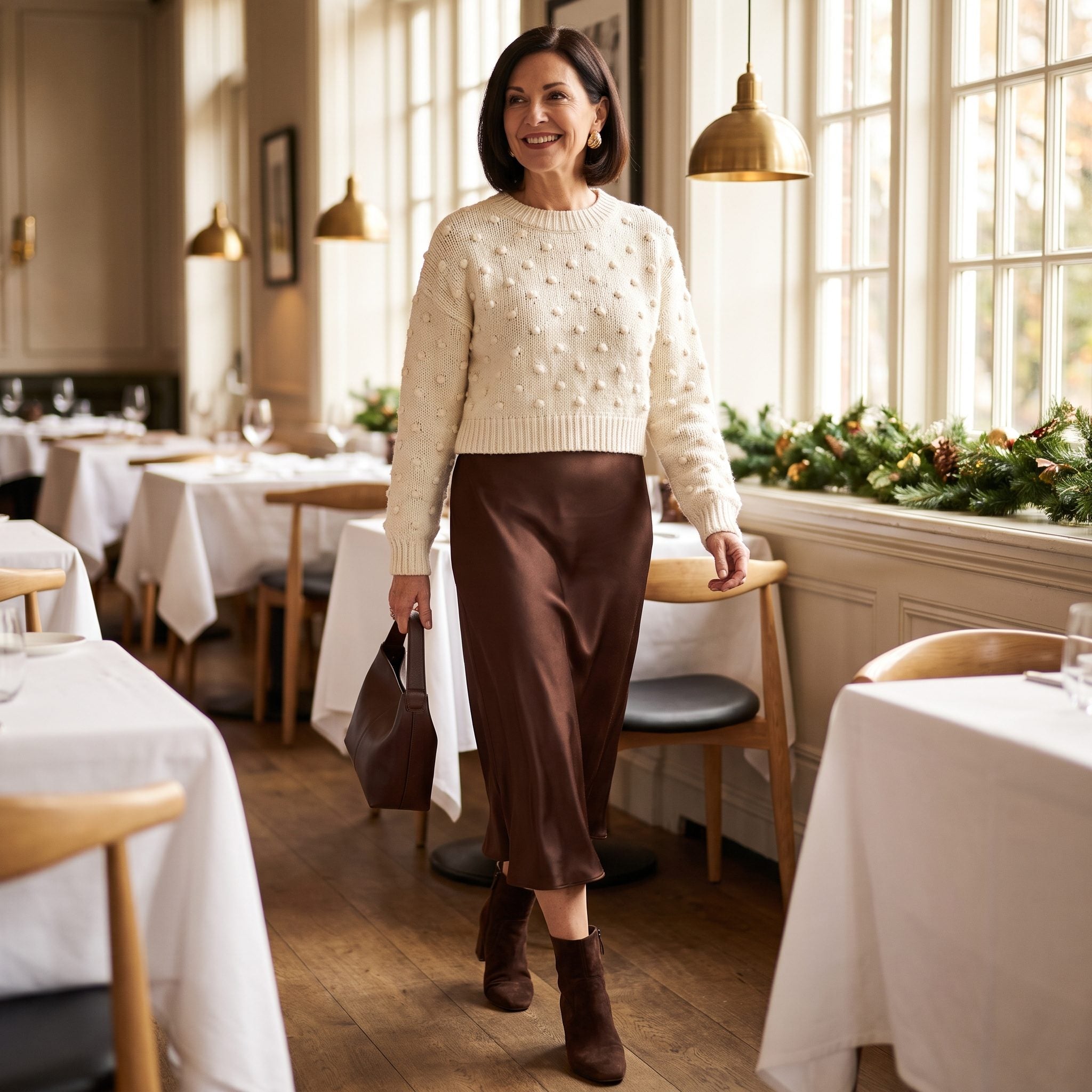
A cropped ivory bobble sweater turns the familiar slip dress into an intriguing winter layering exercise. The raised stitches introduce substantial texture, while the shorter hem allows the waist and the length of the dress to remain apparent.
The smooth chocolate slip dress falls away beneath the knit in long, luminous folds. Chocolate and ivory offer a warmer alternative to the graphic contrast of black and white. More interesting still is the collision of garment types: a deeply textured sweater associated with winter comfort and a fluid dress associated with summer evenings. Together, they make a persuasive case for keeping the slip dress in circulation throughout December.
30. The Nordic Zip Neck Leaves the Ski Lodge Behind
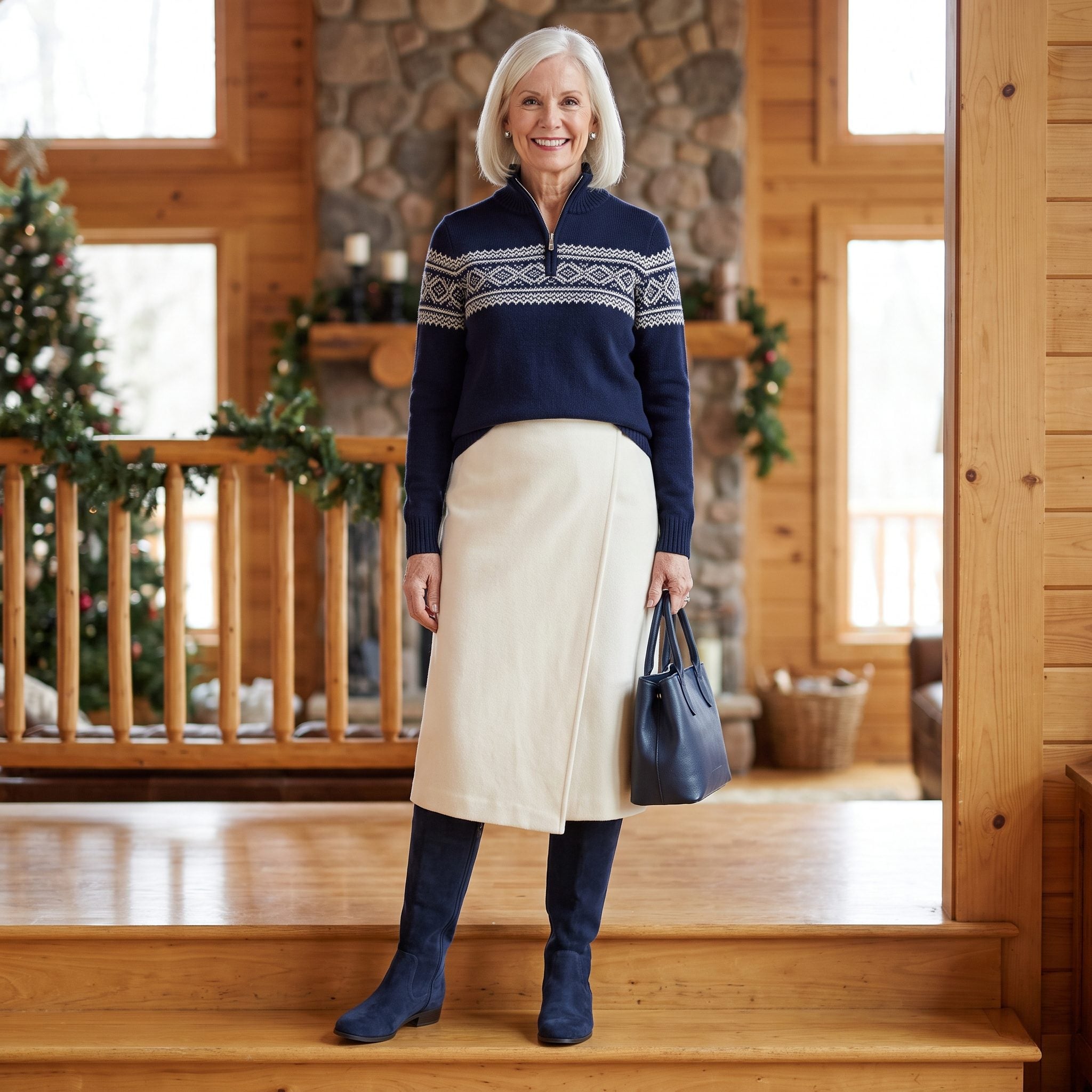
Traditional Nordic-inspired colorwork acquires a sportier character through the stand collar and adjustable zip neckline of this sweater. The geometric pattern supplies the decorative interest, while the fastening introduces a practical element associated with contemporary winter sportswear.
An ivory wool wrap skirt takes the short navy Nordic zip-neck sweater into unfamiliar territory. Its overlapping front establishes a broad diagonal beneath the smaller repeating motifs. The combination preserves the sweater’s winter heritage without allowing its sporting associations to dictate the rest of the outfit.
29. Cranberry Cashmere Finds Its Evening Neckline
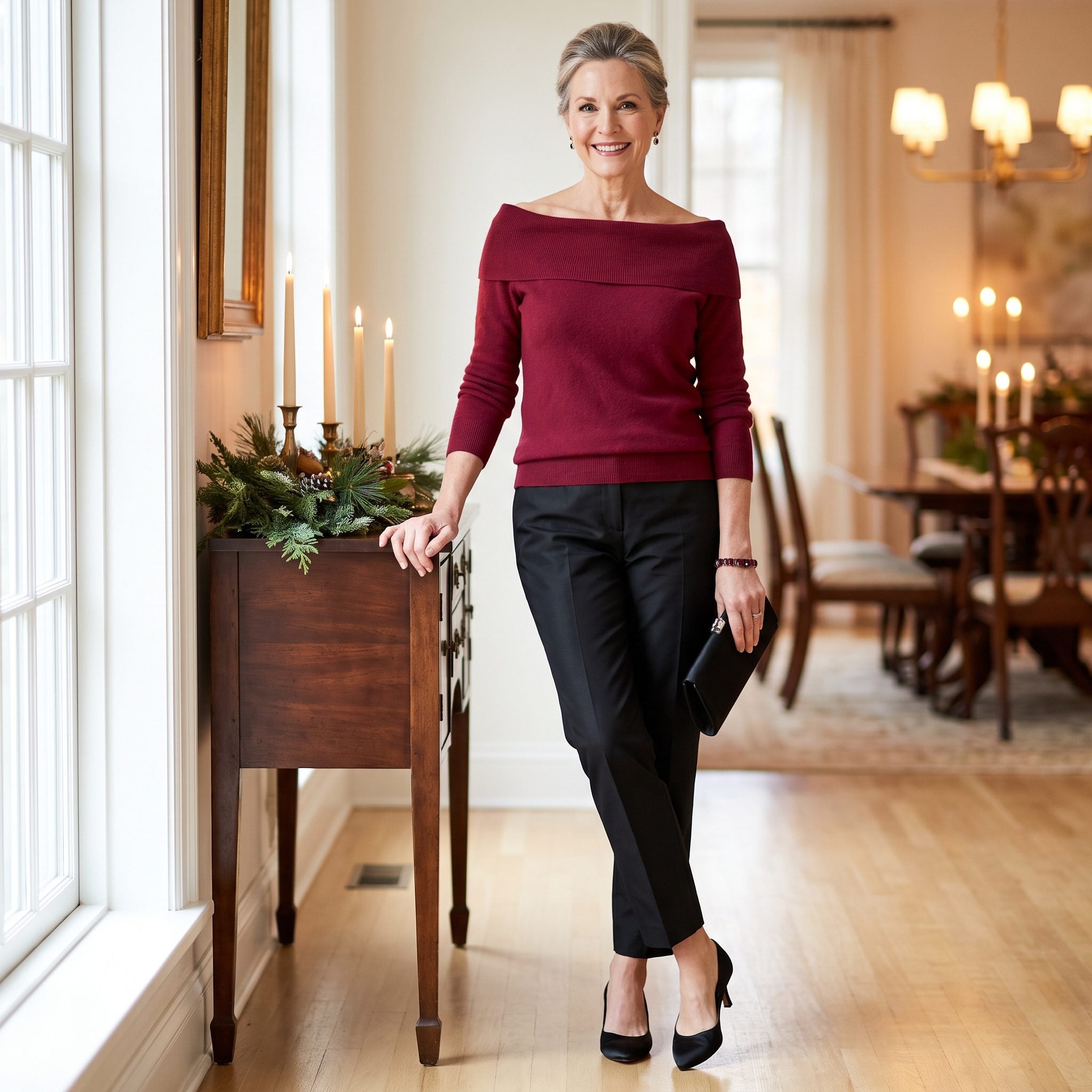
The broad folded neckline of this off-the-shoulder cranberry cashmere sweater borrows a familiar detail from formal evening gowns. The substantial fold gives the neckline a defined edge, demonstrating how effectively knitted fabric can establish a sculptural shape.
Black silk-faille trousers provide a more structured companion than fluid satin. Their subtle ribbed surface introduces another textile detail without distracting from the sweeping neckline. Black satin kitten heels and a small garnet bracelet complete the evening palette. A sweater has acquired the proportions of cocktail attire without surrendering its knitted construction.
28. A Moss Henley Takes Christmas Into Equestrian Territory
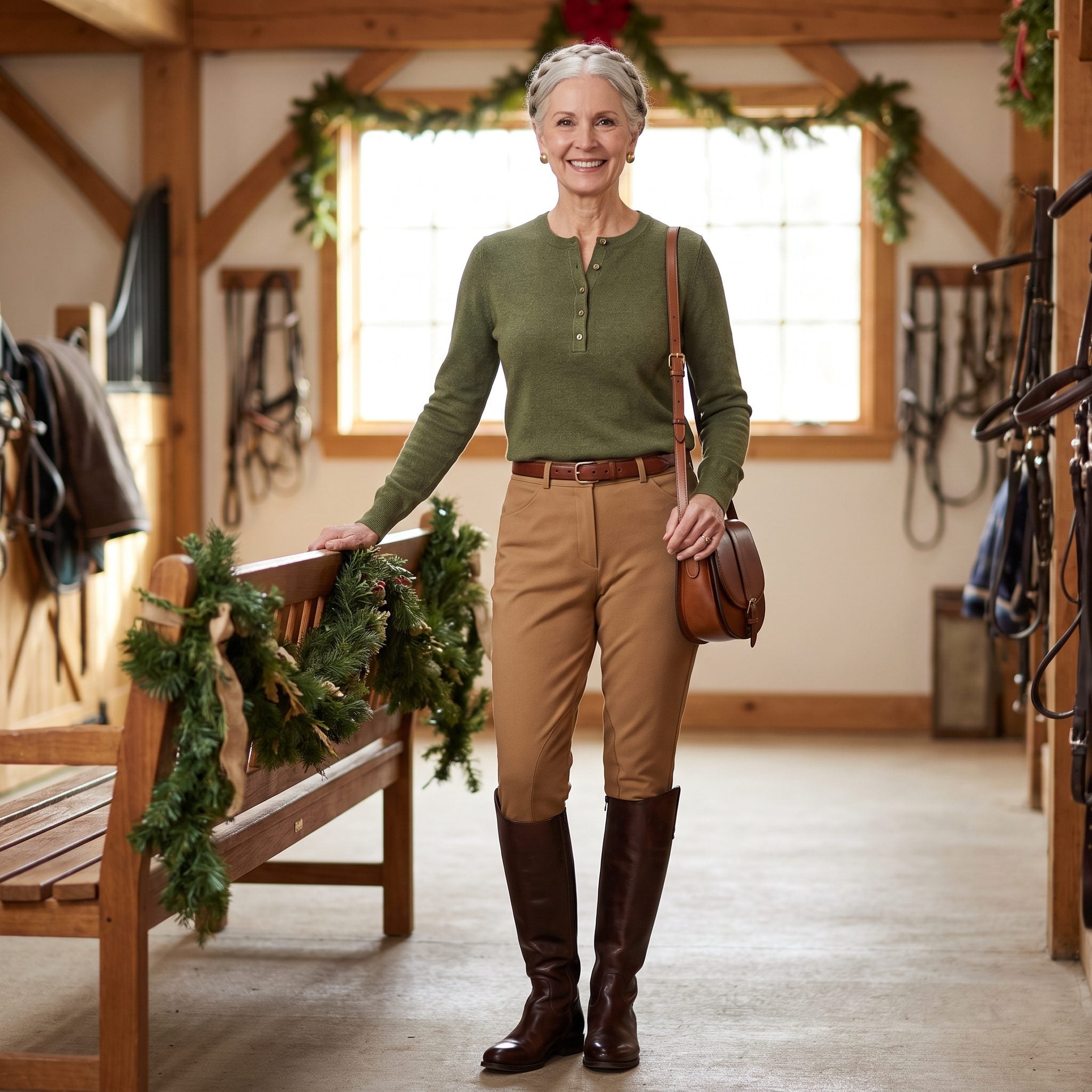
The short buttoned placket of a Henley introduces a little structure into the uninterrupted surface of a fine-gauge knit. Here, horn-effect buttons provide a traditional detail that sits naturally alongside the moss-green color.
Camel trousers tucked into polished riding-style boots give the sweater an equestrian context, reinforced by a brown leather saddle bag. The palette draws on woodland greens, warm leather, and natural earth tones. Festive dressing needn’t begin with an evening invitation; these clothes have all the character required for a winter lunch or countryside Christmas gathering.
27. Sapphire Beadwork Saves Its Brilliance for the Wrists
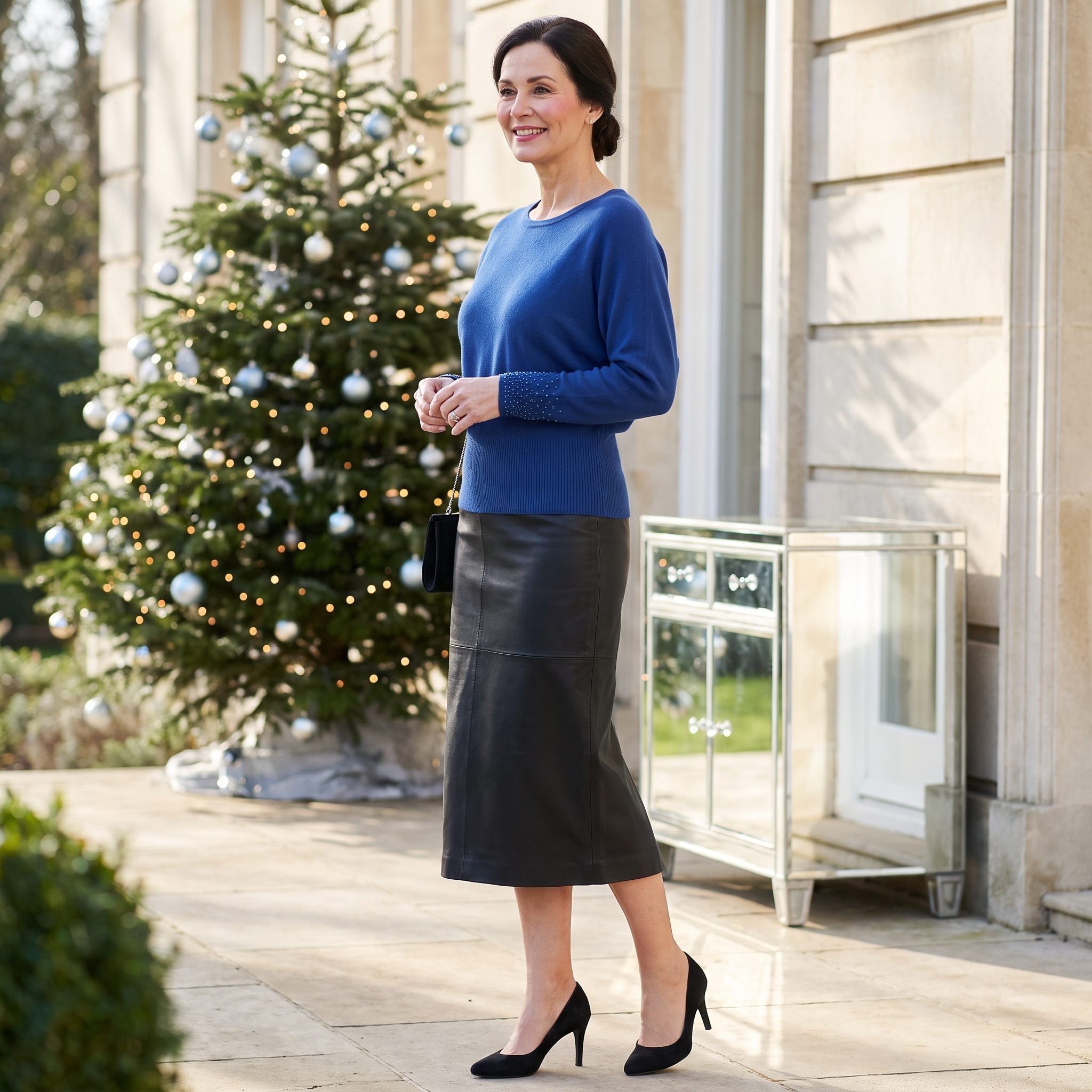
Decorating the cuffs rather than the neckline relocates the sparkle to one of the most mobile parts of the outfit. The sapphire beadwork catches different angles of light as the hands and arms move.
Dolman sleeves taper toward the decorated cuffs, while a fitted ribbed waist gives the knit a defined lower edge. The black leather midi skirt supplies a smoother, more structured surface beneath the rich blue sweater. The most expressive part of the outfit is its sleeve construction, with the embellishment emphasizing the point where the generous fabric comes to an end.
Sleeve length is a coin toss for our readers: asked which top they would buy, wrist and bracelet lengths each drew 40%, with elbow length trailing.
26. Oatmeal Basketweave Gives a Chocolate Column a Winter Layer
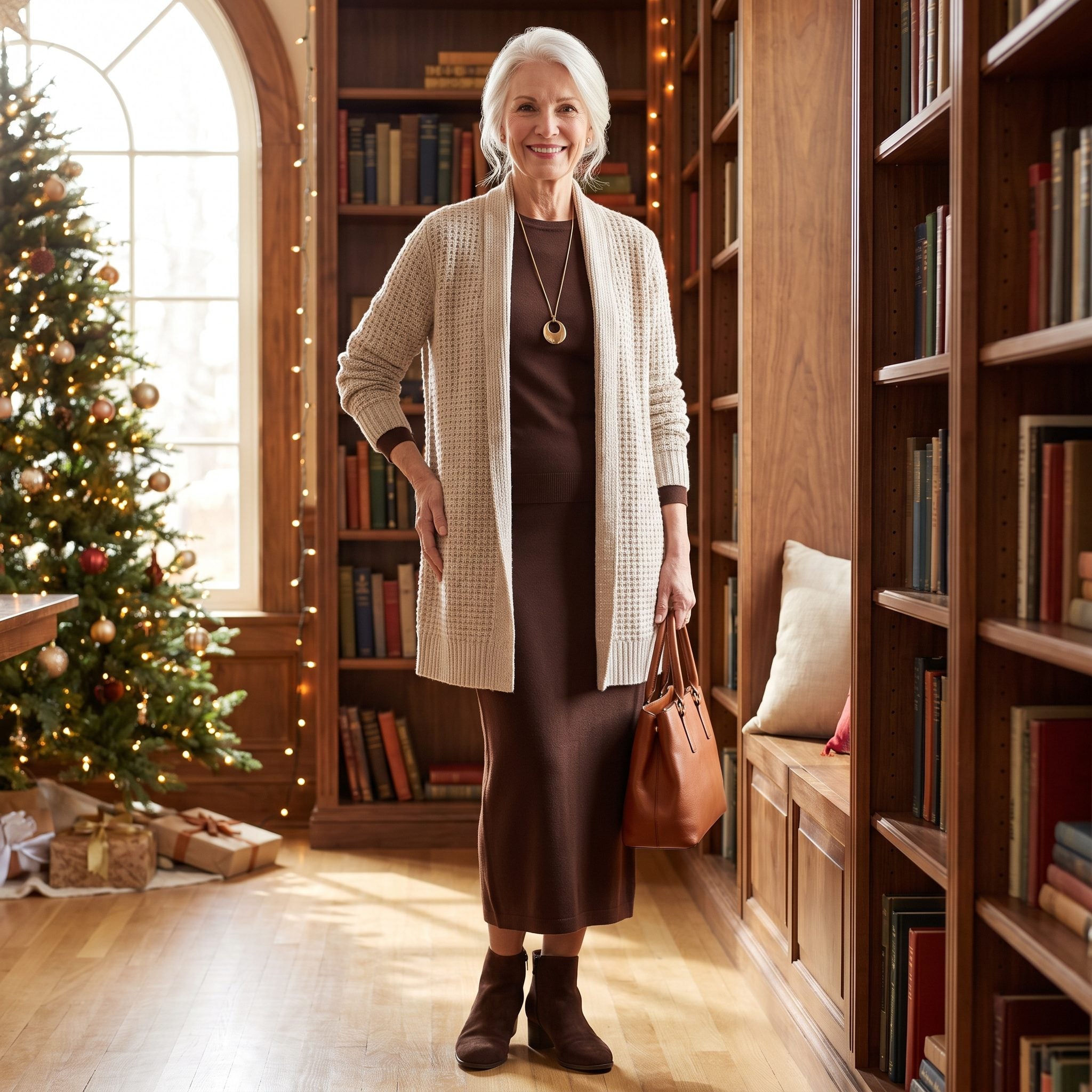
Basketweave knitting creates a distinctive arrangement of raised and recessed stitch groups, suggesting the interlaced structure of woven material. On a substantial longline cardigan, the pattern becomes an expressive architectural surface.
Leaving the cardigan open allows the chocolate-colored top and midi skirt underneath to establish a continuous central field of color. Matching chocolate suede boots extend that darker palette beneath the hem, while a cognac bag introduces another warm brown. The festive possibilities of neutral dressing become particularly apparent when each layer has such a distinct material character.
25. A Knitted Bow Gives Scarlet Its Christmas Signature
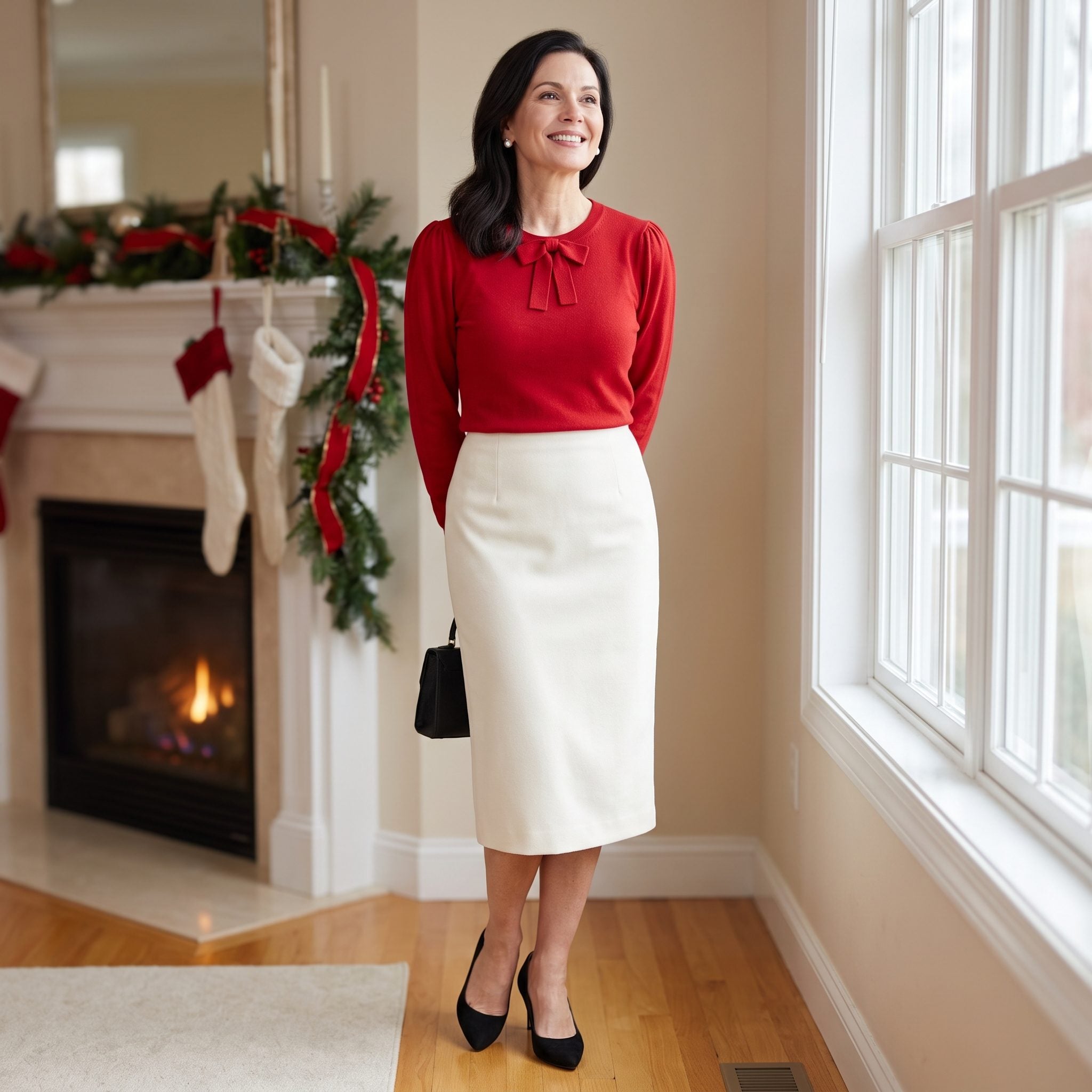
A small knitted bow sits at the neckline of the scarlet sweater, introducing a festive reference through the shape of the garment rather than a printed motif or metallic embellishment.
The fine-gauge knit maintains a relatively close fit, while the ivory pencil skirt establishes a clean, narrow outline beneath it. Scarlet and ivory deliver a familiar Christmas pairing through sharply defined blocks of color. The charming distinction is that the bow belongs to the material vocabulary of the sweater itself. The knit has effectively supplied its own accessory.
24. Pewter Openwork Borrows the Tuxedo’s Evening Authority
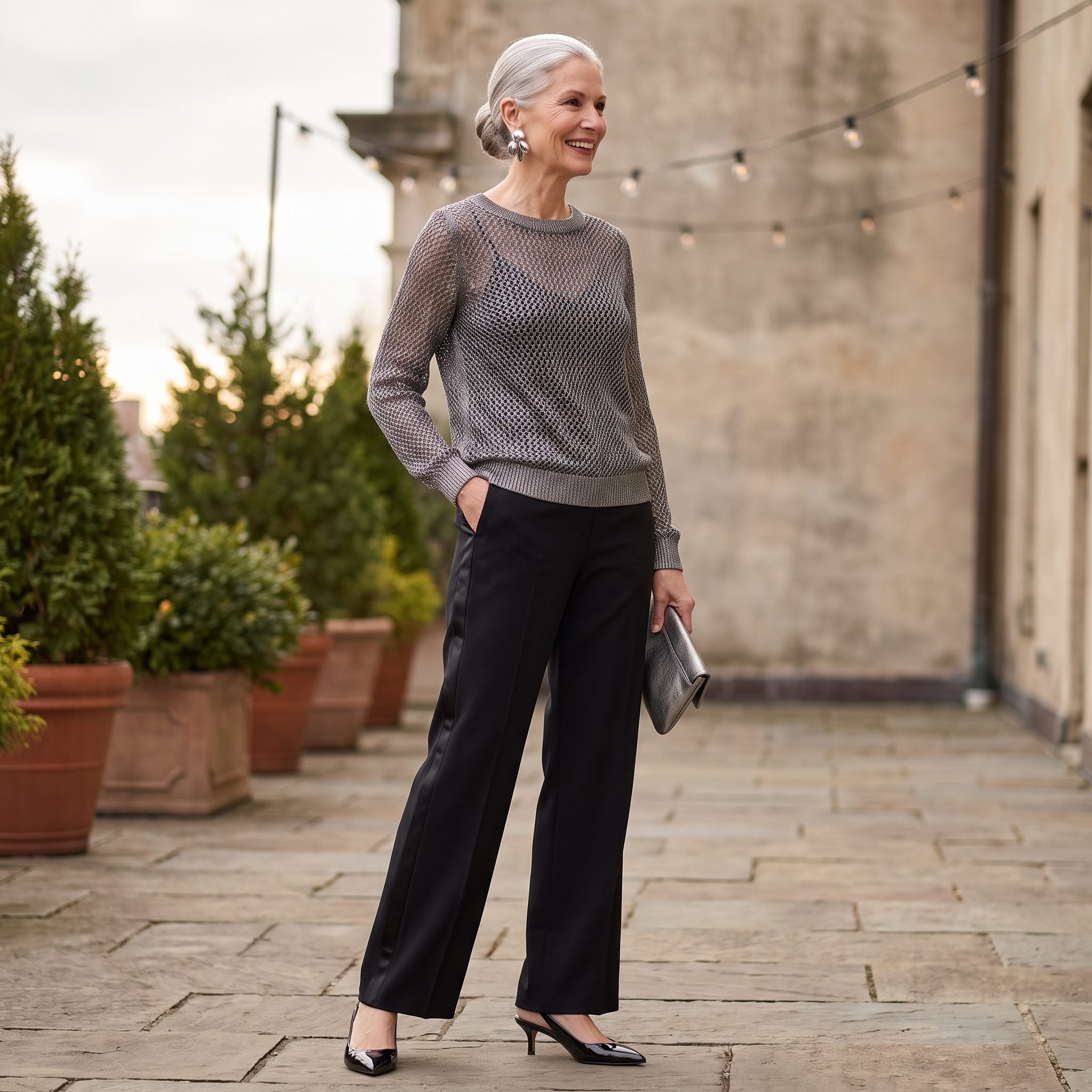
Openwork knitting introduces deliberate gaps into the fabric, giving light and the layer beneath an opportunity to participate in its appearance. Metallic yarn makes the effect particularly expressive in this pewter metallic sweater.
The satin stripes on the black tuxedo trousers supply a second interpretation of evening luster. Their long, uninterrupted lines differ considerably from the smaller reflections scattered across the knit. Pewter, black, and silver form a closely coordinated palette, with the model’s smooth silver-haired bun echoing its cooler tones. Traditional formal tailoring has found an unexpectedly compatible partner in openwork knitwear.
23. Argyle Changes Its Colors and Discovers a Different Wardrobe
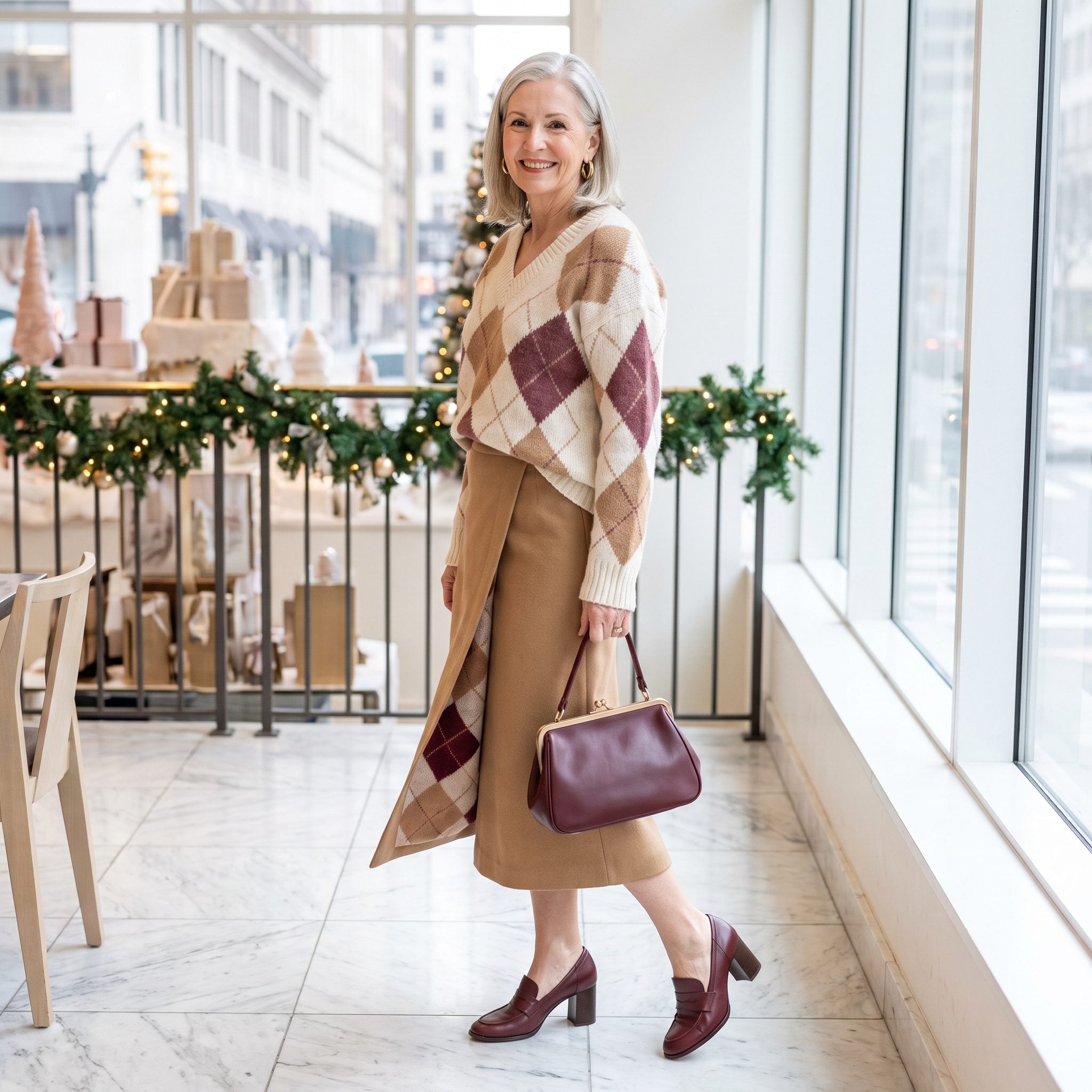
Large burgundy-and-camel diamonds cross a cream background, bringing the familiar geometry of argyle into a warm seasonal palette. The generous scale gives the pattern a distinctly graphic quality, while the softer colors temper the contrast between individual shapes.
The camel wrap midi skirt picks up the diagonals of the diamonds through its own overlapping construction. Burgundy loafers and a matching frame bag repeat the darker pattern color. Argyle is often associated with traditional sporting and collegiate dress; the asymmetric skirt introduces a considerably more contemporary set of proportions.
22. Rose-Gold Yarn Gives the Wrap Sweater a Party Persona
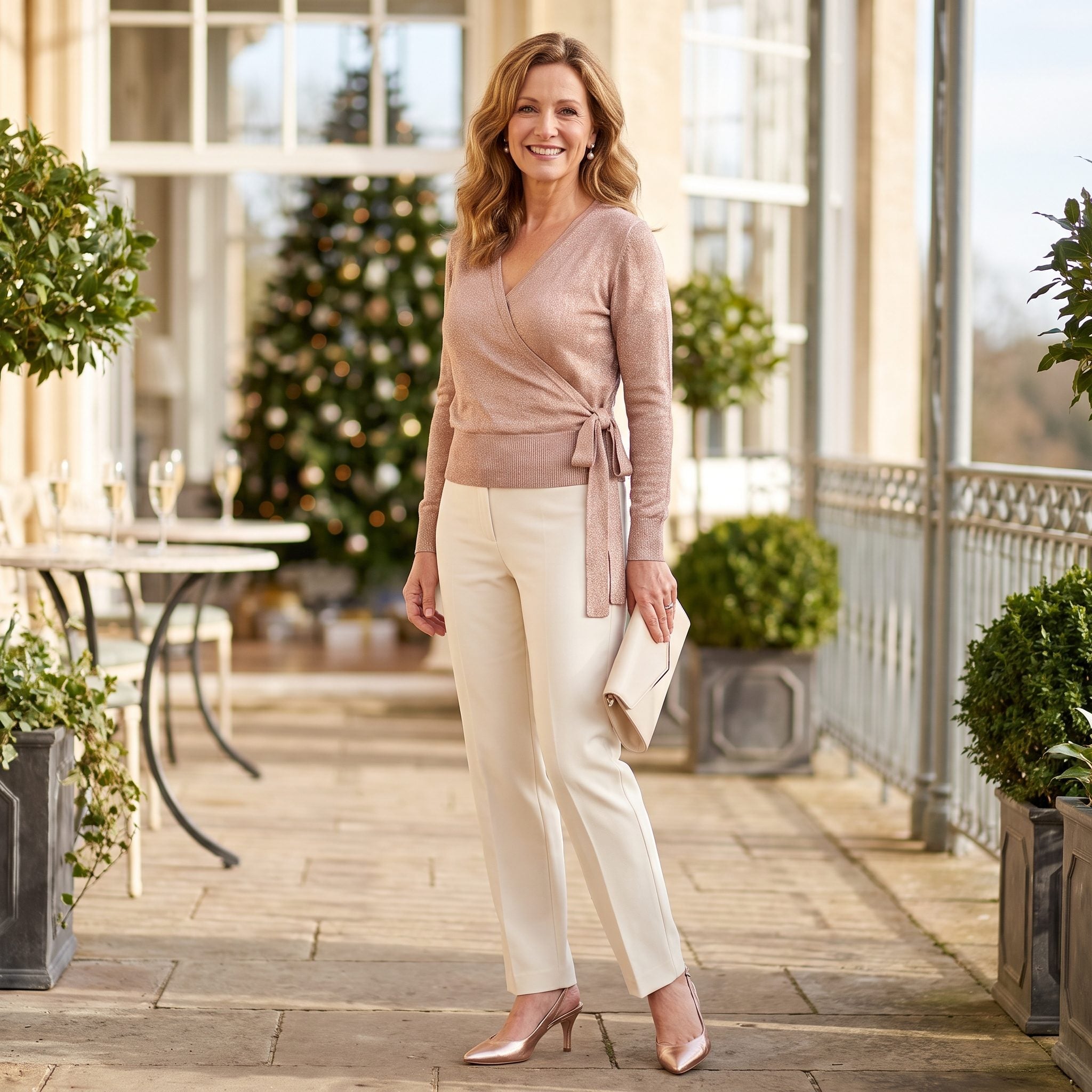
Wrap construction introduces diagonals, overlapping fabric, and an adjustable point of fastening into a garment otherwise associated with uninterrupted knitted surfaces. The side tie gathers the rose-gold fabric, creating folds that reveal the metallic yarn from several angles.
The cream crepe trousers extend the warm, pale palette without repeating the sheen. Their softly textured finish provides a useful distinction from the reflective knit. Rose gold has a particularly interesting relationship with cream: sufficiently different to establish contrast, yet close enough in warmth to give the combination a cohesive appearance.
21. A Cable-Knit Vest Finds an Unexpected Partner in Burgundy Silk
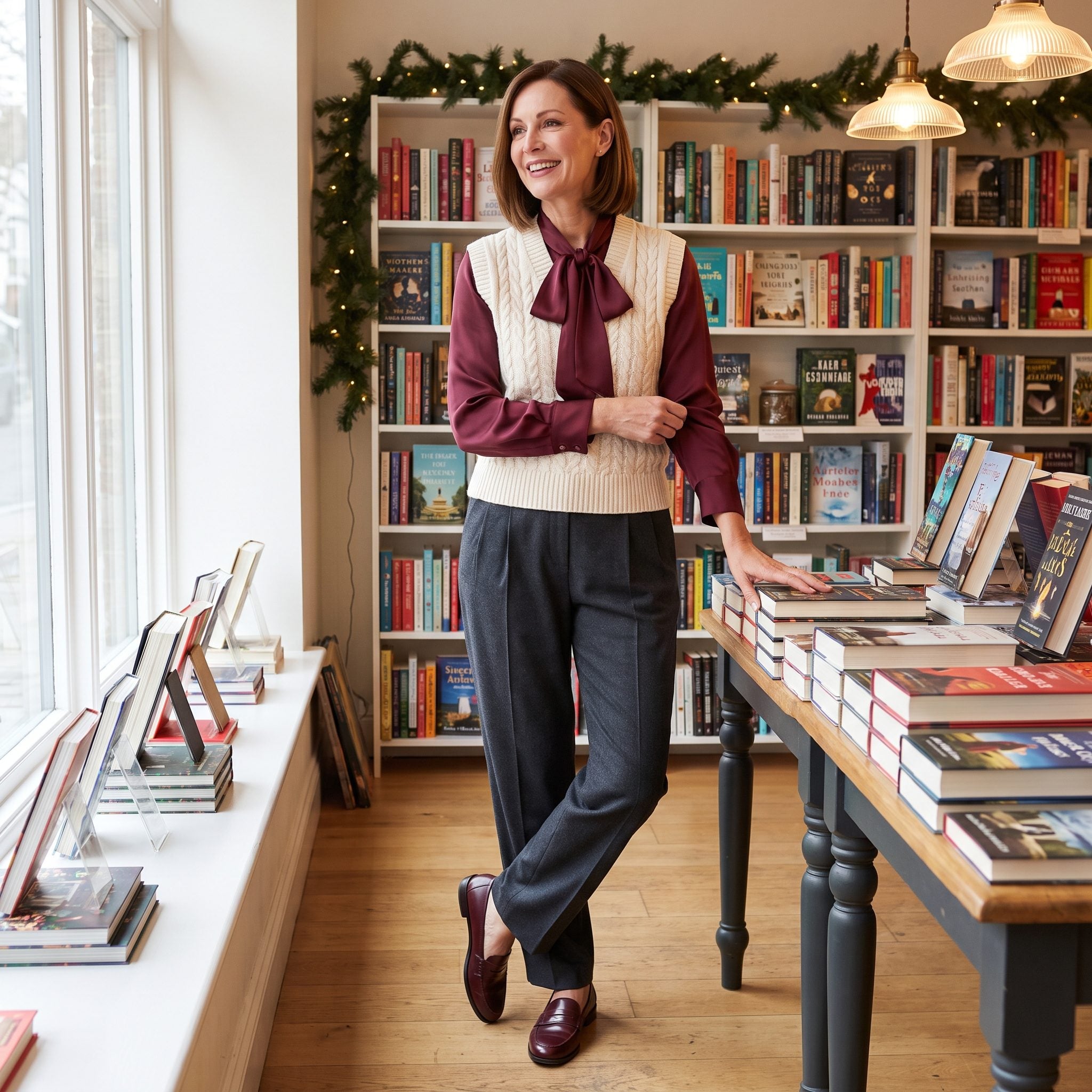
The sweater vest becomes considerably more interesting when the garment underneath contributes as much to the composition as the knit itself. Here, burgundy silk provides a fluid, luminous contrast to the raised cream cables.
Folding the cuffs allows more of the blouse to remain visible beyond the sweater, while the small tied neck bow supplies another glimpse of the darker fabric. Charcoal pleated trousers bring precise tailoring into the layered arrangement.
A vest with sufficient room through the armholes and torso allows a blouse to retain its natural drape. The combination offers an appealing departure from the familiar shirt-and-vest formula, giving substantial winter knitwear a surprisingly delicate foundation.
20. Midnight Beadwork Meets a Skirt That Refuses to Sit Still
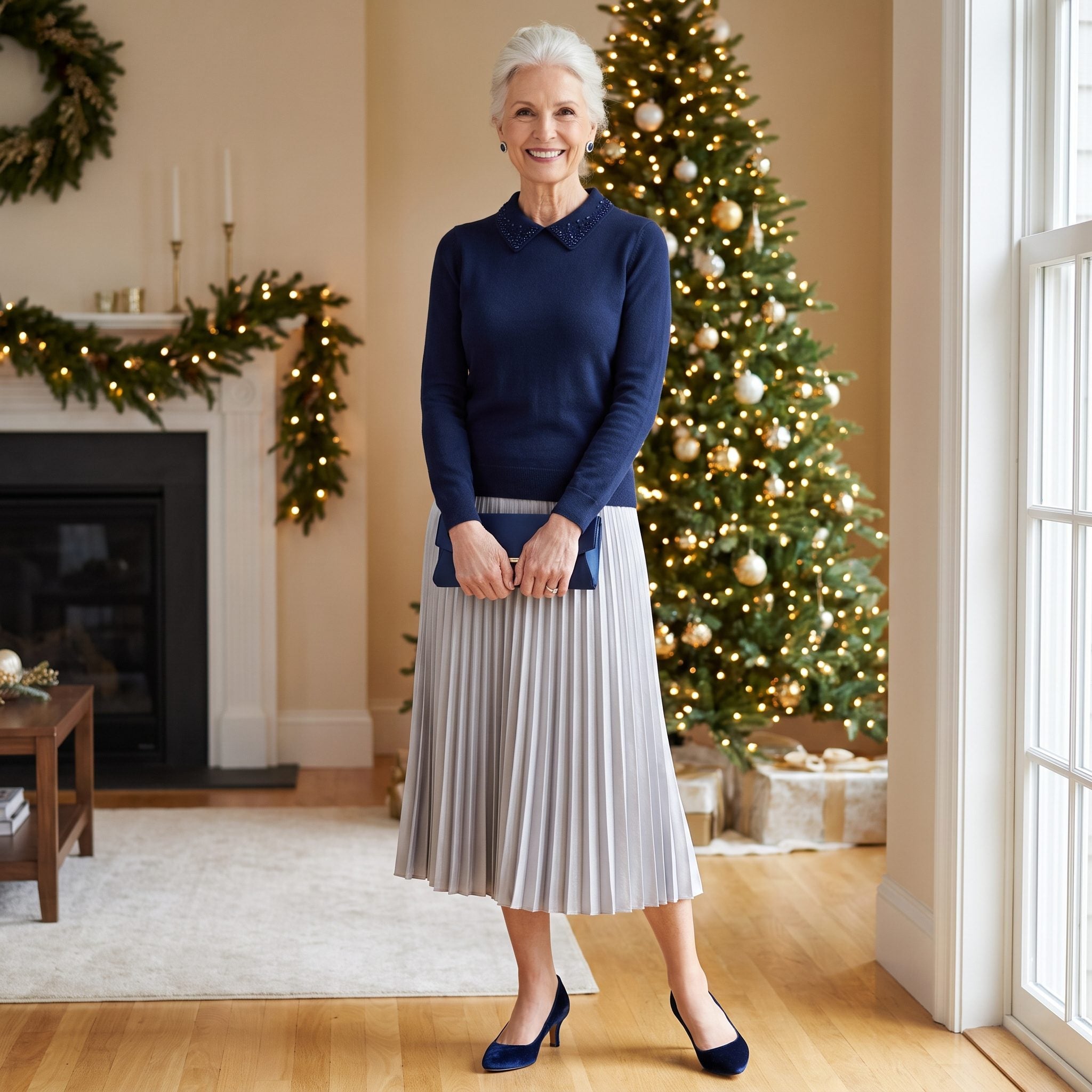
Beadwork concentrated around the neckline gives the midnight-blue sweater an ornamented edge, while the plain sleeves and body allow the decoration to remain clearly defined.
The silver accordion-pleated skirt introduces a much broader reflective surface. Even at rest, its alternating ridges and recesses create variations of brightness and shadow; movement changes those relationships with every step. The sweater’s beaded collar supplies smaller, concentrated points of brilliance.
Two forms of decoration operate at different scales. One frames the neckline with individually placed details, while the other turns an entire garment into a shifting arrangement of light. Knitwear becomes an unexpectedly effective foundation for both.
19. A Forest-Green Tunic Reconsiders the Long Checked Skirt
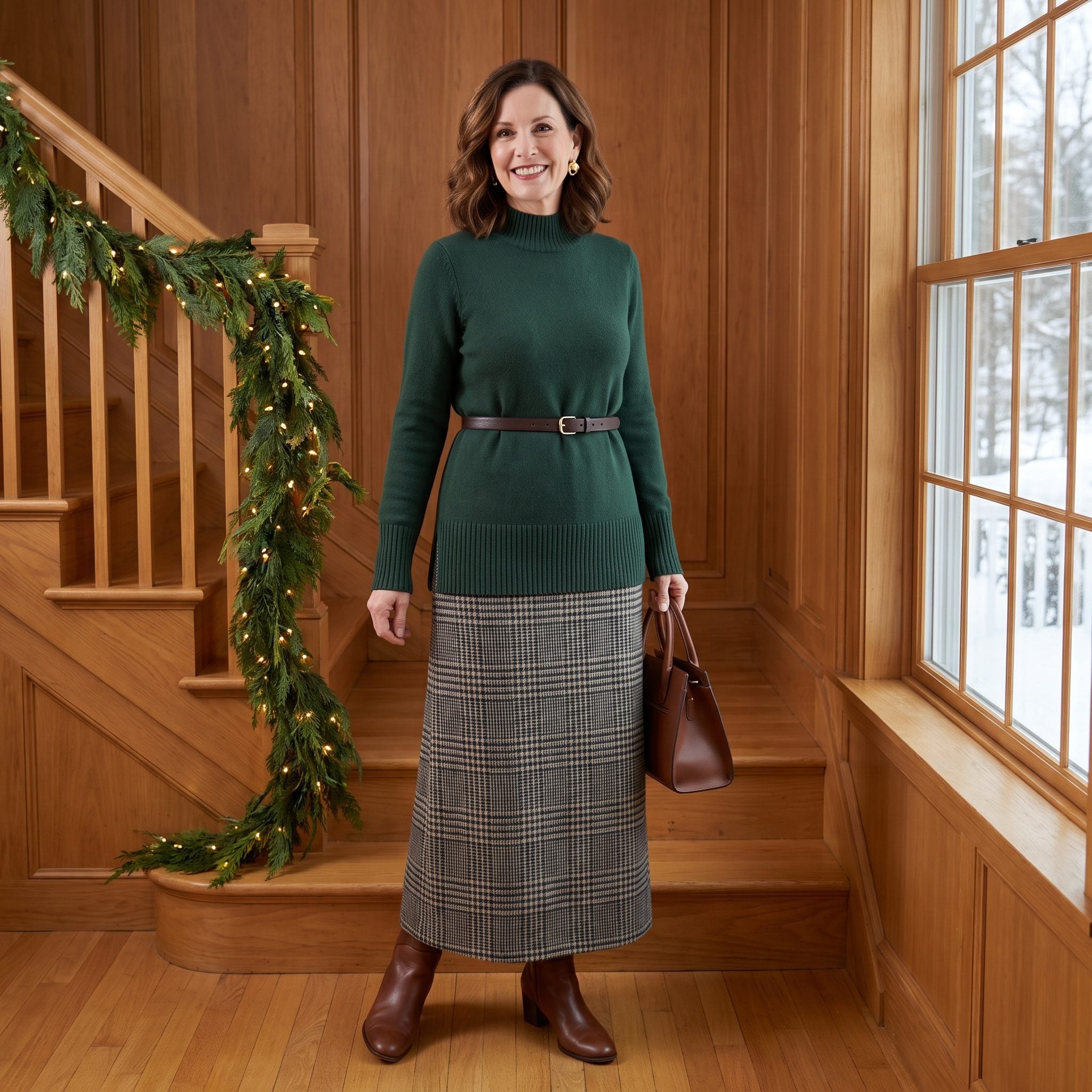
Long tunics offer interesting possibilities for layering because their extended hems overlap more of the garment underneath. A narrow brown belt gathers this forest-green knit at the waist, while side slits allow the lower fabric to fall more freely.
The checked maxi skirt introduces a traditional winter pattern within the otherwise woodland-inspired palette. Brown boots and a matching bag provide warmer accents against the cooler green and charcoal. The outfit has the generous coverage associated with winter dressing, with enough variation in length, pattern, and material to give its proportions considerable interest.
18. Cranberry Beadwork Gives the Black Jumpsuit a Festive Layer
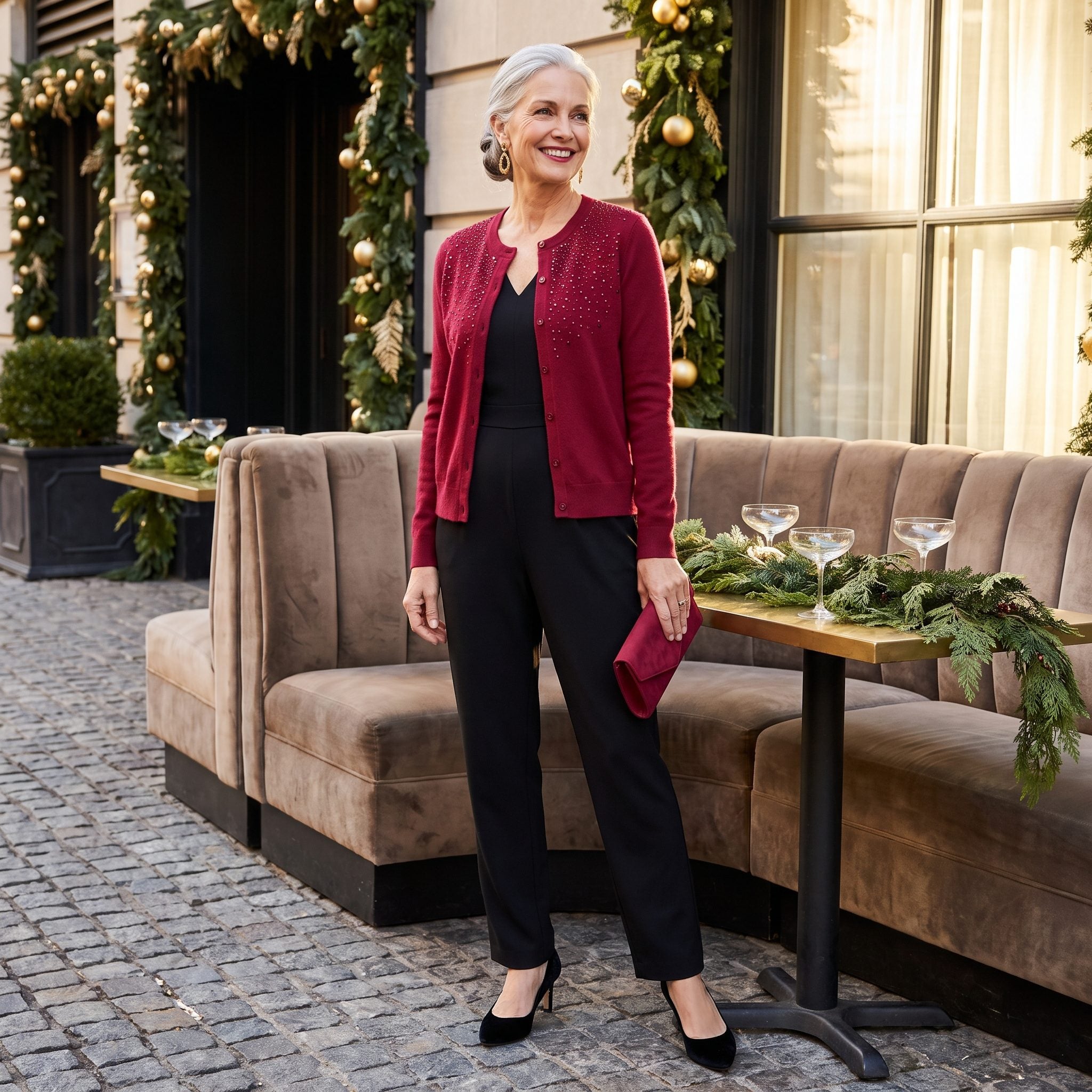
A black crepe jumpsuit supplies the continuity of a dress and the construction of tailored trousers within a single garment. Layering an open cranberry beaded cardigan over it introduces a separate field of festive color around the shoulders and upper body.
The cranberry-on-cranberry beadwork becomes particularly apparent under directional lighting, creating tonal highlights without requiring contrasting embellishment. The cardigan also offers a removable layer that can change the outfit’s character as the temperature or occasion changes. An evening jumpsuit has acquired the decorative possibilities and practical versatility of knitwear in one rather elegant move.
17. Ice Blue Gives Christmas an Entirely Different Temperature

Pale blue introduces the cooler colors of winter into a holiday wardrobe more commonly associated with cranberry, evergreen, and gold. The brushed-looking surface of the sweater gives the color a diffuse, almost frosted appearance.
Black flared trousers establish a sharply different outline beneath the fuzzy knit, fitted through the upper leg before widening toward the floor. The combination is particularly expressive under backlighting, which reveals the halo of fine fibers around the sweater’s edges.
A brushed finish can be produced from several different fibers and blends. Its visual appeal lies in the way those projecting fibers soften the garment’s contours. Christmas dressing takes its inspiration here from the winter landscape rather than its decorations.
16. The Chocolate Polo Knit Goes Somewhere Rather Grand
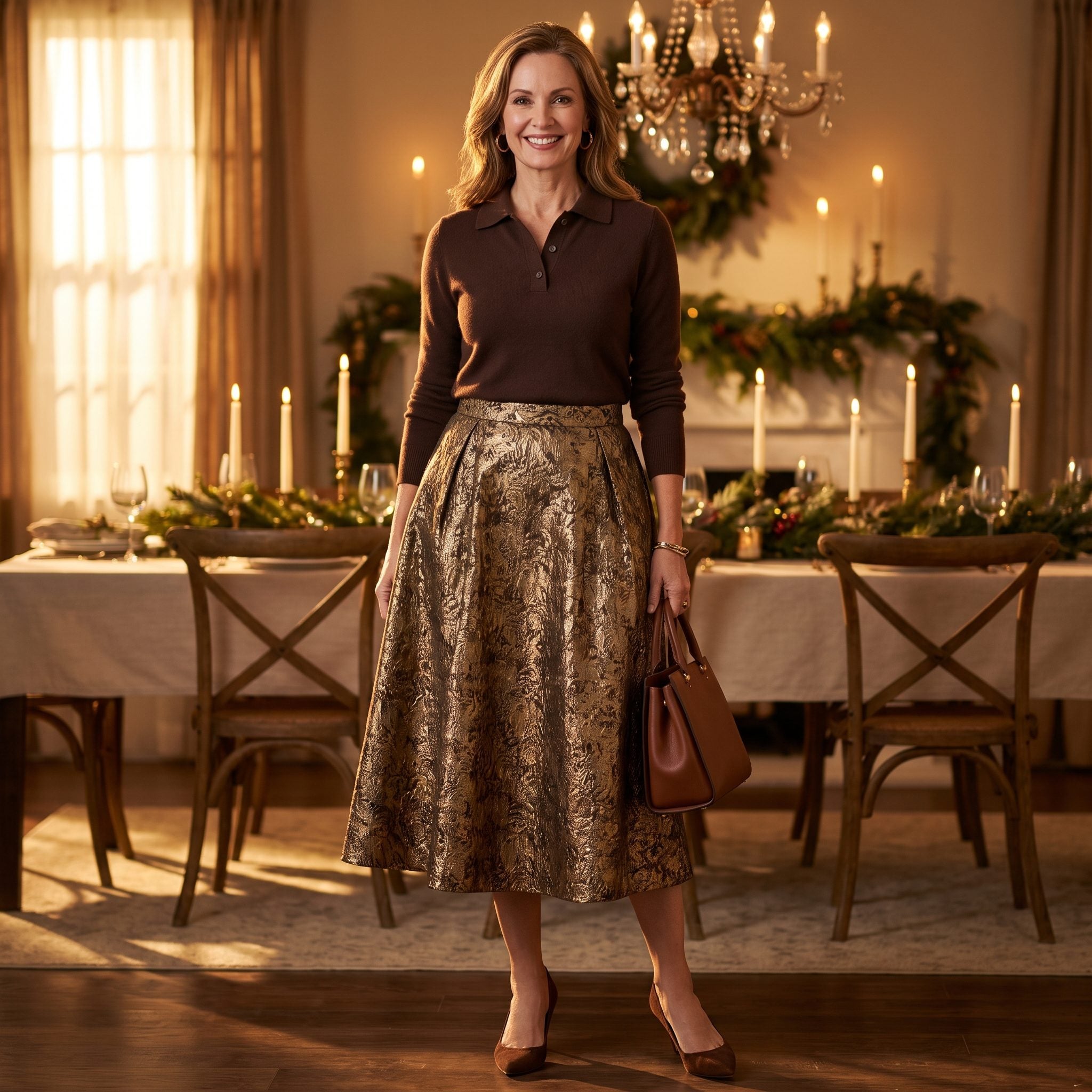
A polo collar introduces the familiar structure of casual sportswear into an outfit dominated by the elaborate pattern of an antique-gold skirt. The combination is considerably more interesting than another conventional evening blouse.
Tucking the chocolate-colored sweater into the waistband allows the skirt’s A-line construction and woven ornament to remain apparent. The darker knit supplies a relatively matte field above the luminous pattern.
Jacquard weaving allows intricate designs to become part of a textile’s construction rather than being printed onto its surface. Against the simplicity of a polo knit, the skirt’s elaborate woven detailing acquires the grandeur of eveningwear without dictating the formality of every other garment.
15. An Asymmetric Fold Takes Plum Knitwear Off-Center
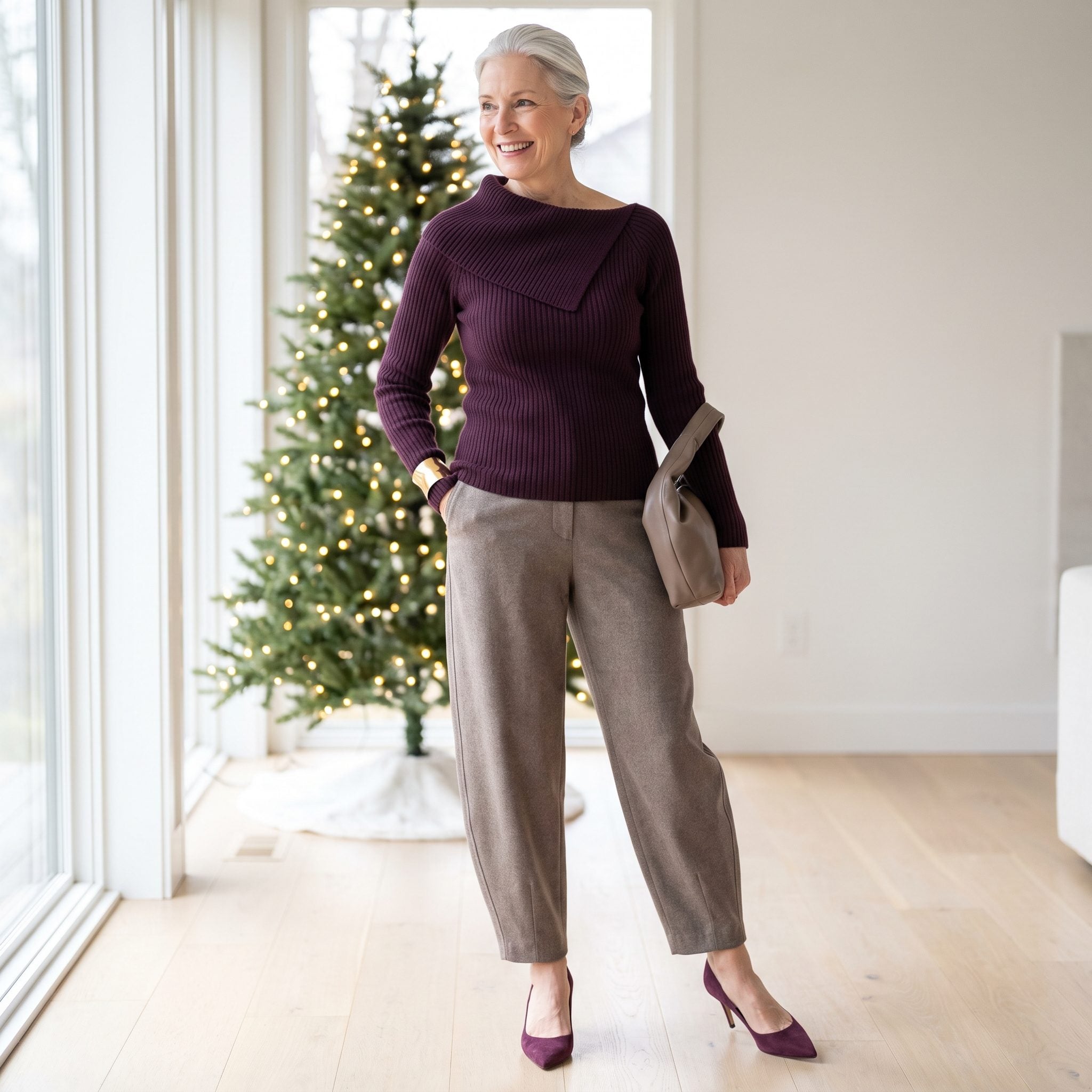
The broad diagonal fold across this plum sweater interrupts the vertical direction of its ribbing, giving the neckline an almost sculptural quality. Revealing one collarbone establishes an asymmetrical frame quite different from a conventional off-the-shoulder cut.
The taupe barrel-leg trousers introduce curved volume through the leg before tapering toward the ankle. Their rounded construction offers an interesting companion to the fitted rib knit. Both garments depart from conventional silhouettes and straight lines, yet the understated plum-and-taupe palette allows those unusual proportions to remain the principal attraction.
14. Gold-Thread Scallops Meet the Depth of Aubergine Velvet
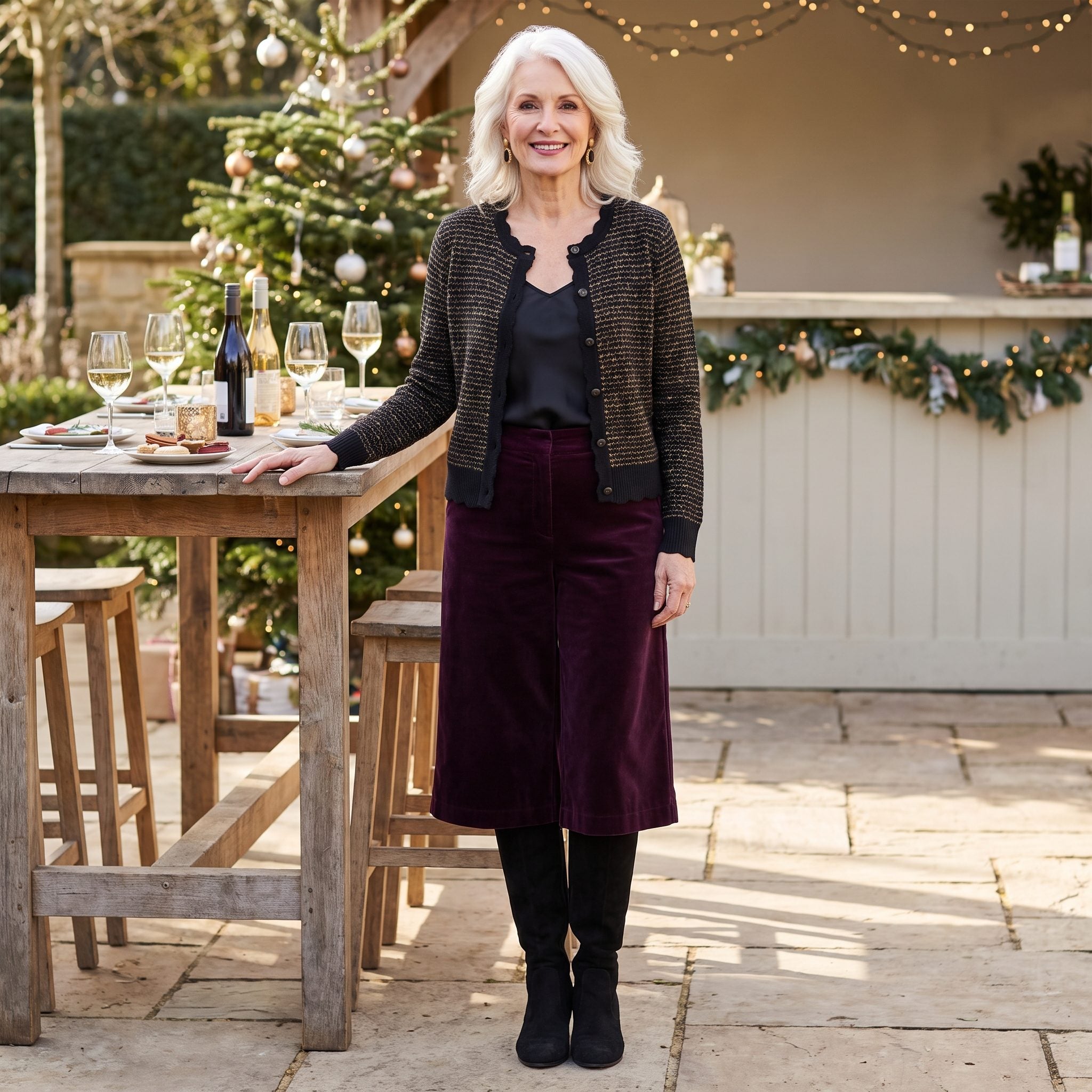
Fine antique-gold threads introduce small flashes of brilliance across a black cardigan, while its scalloped edge gives the garment a delicately shaped finish. The curved border offers a softer departure from the straight hems and plackets of conventional knitwear.
Aubergine velvet culottes establish an unusual evening proportion beneath the cardigan. Their cropped length leaves the tall boots visible, while the velvet’s changing pile creates variations of dark purple and wine. The combination has considerable depth despite its predominantly dark palette. Gold supplies the occasional glint, while velvet gives the lower half its rich, directional luster.
13. Raspberry Knitwear Gives the Pleated Mini a Winter Companion
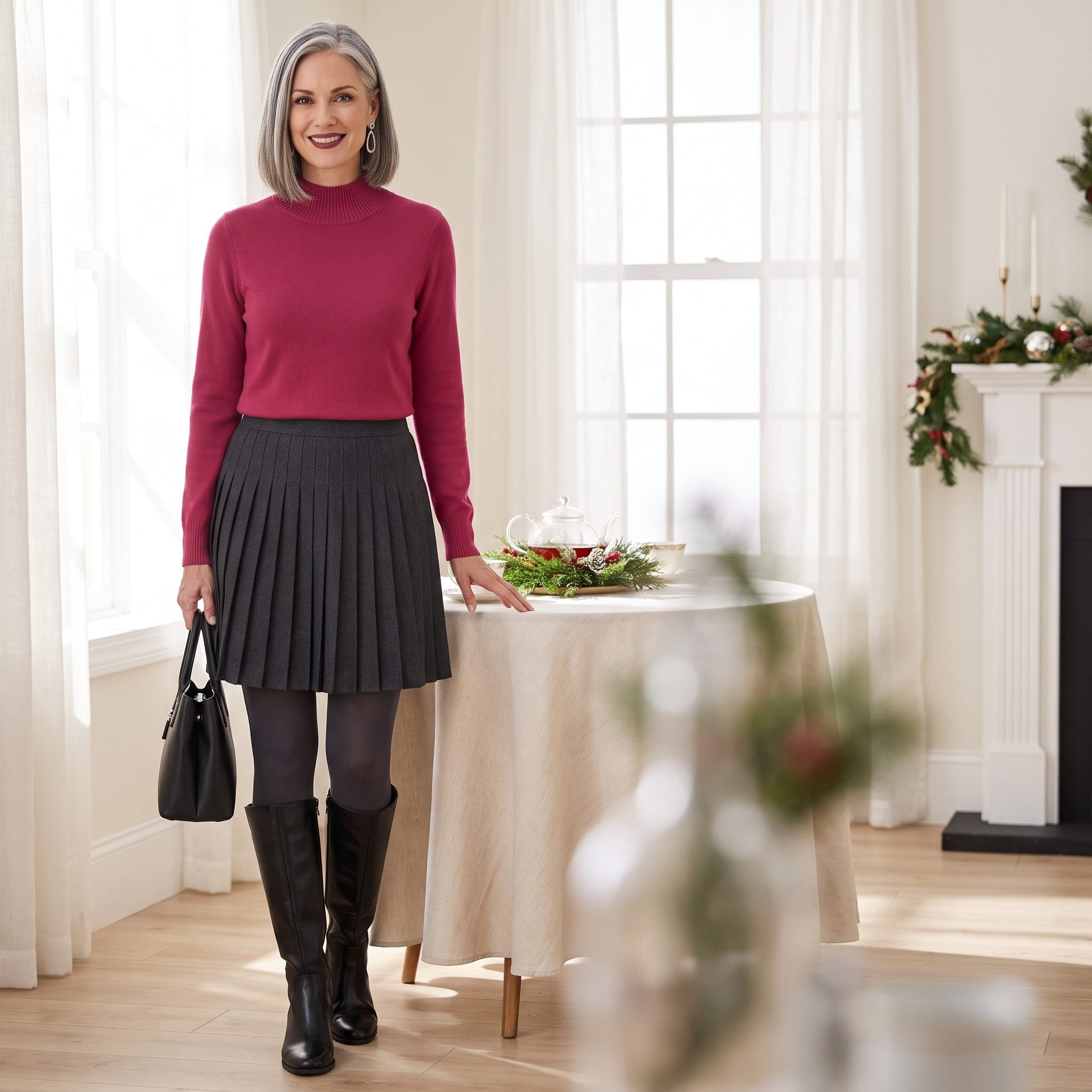
The raised funnel neckline gives this raspberry sweater a compact architectural shape around the face. Its uninterrupted color makes the neckline’s construction particularly apparent, creating a strong frame above the shorter skirt.
Knife pleats introduce movement to the charcoal charcoal pleated skirt, while opaque tights and polished tall boots provide continuous winter coverage beneath it. The sweater’s relatively smooth construction contrasts with the sharper folds of the skirt. Raspberry supplies the festive intensity without requiring a single seasonal motif.
12. Nautical Tailoring Acquires a Little Christmas Gold
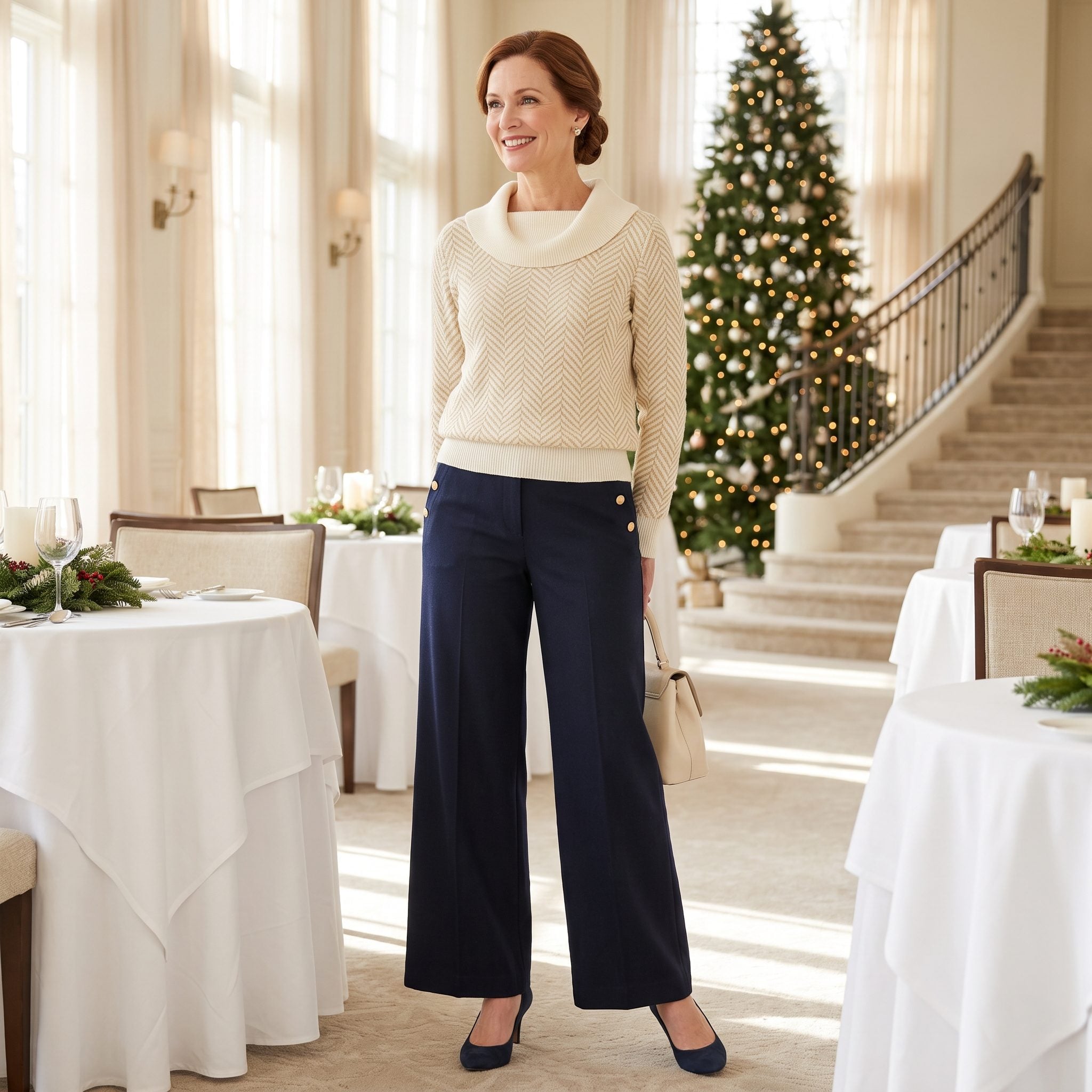
Sailor trousers bring an unexpected architectural vocabulary to festive dressing. Their high waist, broad legs, and prominent button arrangement establish a tailored shape quite different from ordinary evening trousers.
The cream-and-gold herringbone knit answers that structure with a wide portrait collar. Its repeating diagonal pattern introduces metallic highlights without obscuring the substantial neckline. Navy provides the darker foundation, allowing the cream and gold to retain their brilliance. The outfit’s interest lies in bringing maritime tailoring and festive knitwear together through geometry rather than literal nautical decoration.
11. Crystal Cuffs Give the Pinafore an Evening Detail
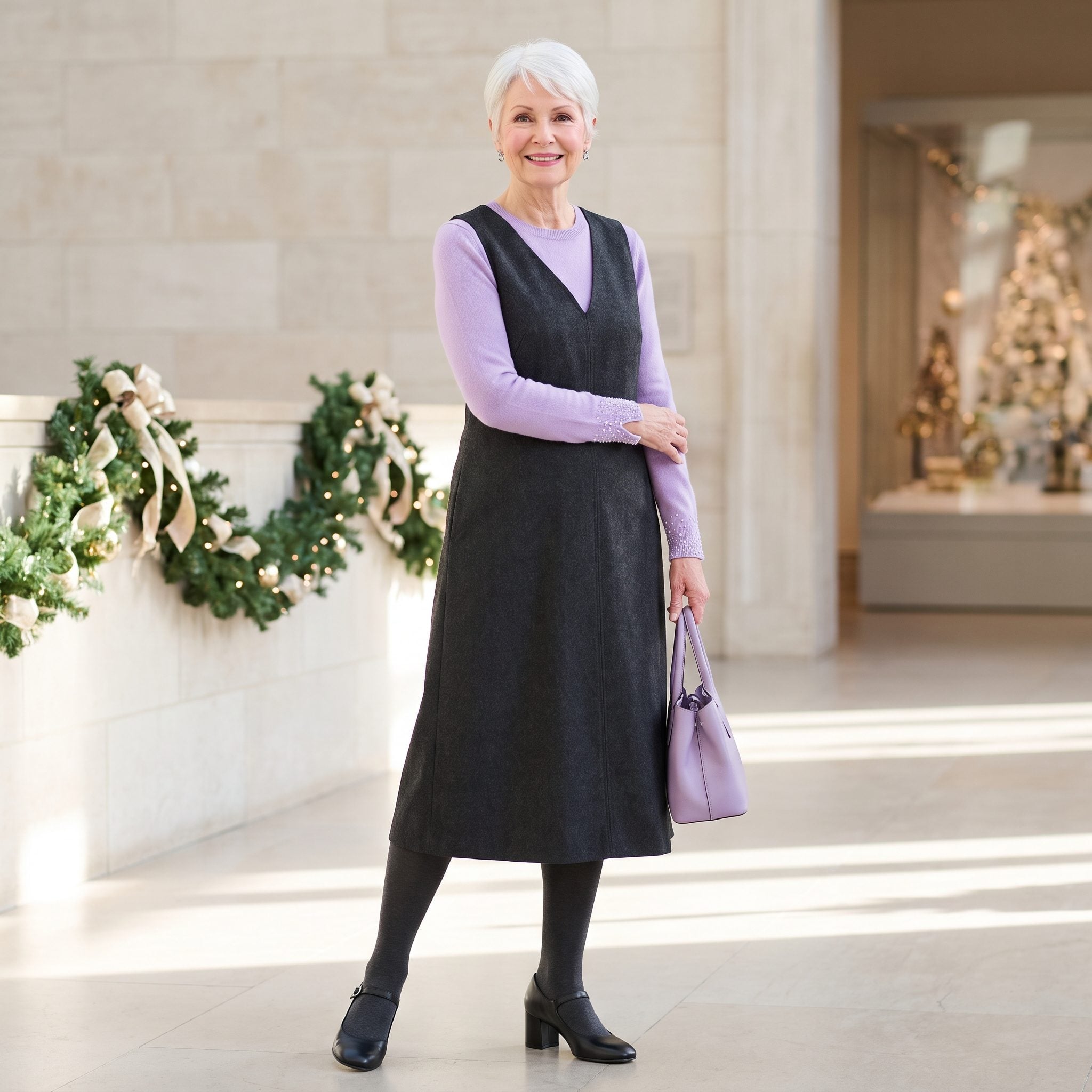
A charcoal pinafore places much of the lavender sweater beneath another garment, leaving the sleeves and their crystal embellishments particularly visible. The arrangement demonstrates how effectively decoration can be positioned to work with layers rather than across the entire knit.
The tailored waist of the sleeveless dress supplies the principal shaping, while the sweater brings color, coverage, and a softer material into the composition. Small crystal details catch the light near the wrists. A garment traditionally associated with practical daytime layering acquires a surprisingly sophisticated evening identity through what is worn underneath it.
10. Teal and Aubergine Find Common Ground in a Waterfall Cardigan
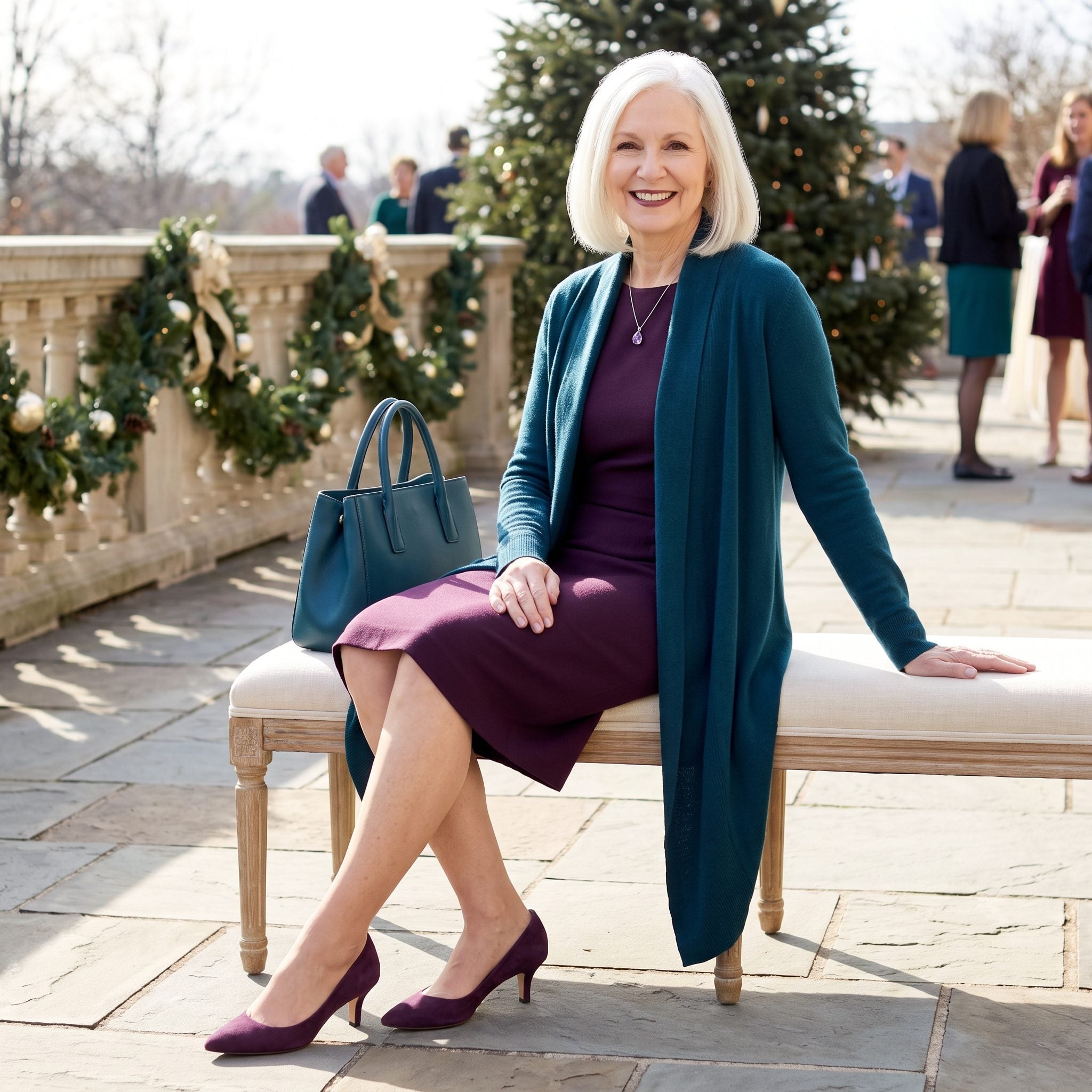
Waterfall cardigans use extended front panels to create long, cascading folds. Here, the deep-teal knit falls over the aubergine garments beneath, introducing a fluid outer layer with considerable freedom of movement.
The combination of blue-green and purple creates a rich jewel-tone palette without relying on traditional Christmas red. An amethyst pendant repeats the purple tones near the neckline, while a teal handbag reinforces the cardigan’s color elsewhere.
The absence of a conventional buttoned front gives the knit a particularly relaxed construction. Its extended panels remain an important part of the composition when seated, making fabric weight and drape as relevant as the colors themselves.
9. An Ivory Sweetheart Neckline Meets Garnet Satin
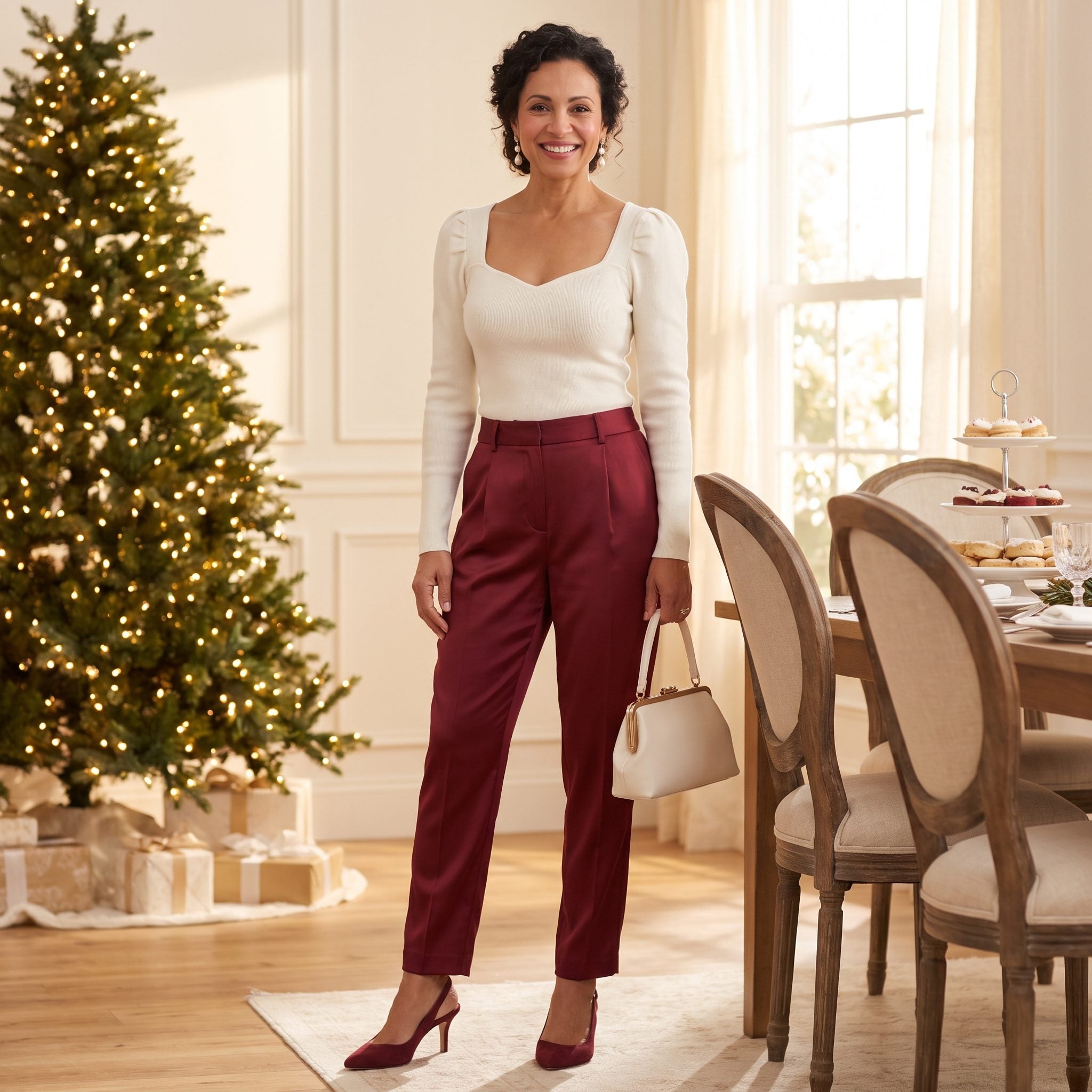
A sweetheart neckline and puff sleeves bring the construction language of romantic dressmaking into the ivory sweetheart sweater. The curved neckline establishes a central point, while the sleeves introduce additional volume around the shoulders.
Garnet satin peg trousers supply a different kind of shaping, generous through the upper leg before tapering toward the ankle. Their smooth reflective finish gives the festive red considerable depth. Pearl drop earrings and garnet slingbacks repeat the principal colors at opposite ends of the outfit. Romantic knitwear above and fluid tailoring below make an especially intriguing alternative to the familiar Christmas cocktail dress.
8. The Christmas Sweater Discovers the Power of a Single Brooch
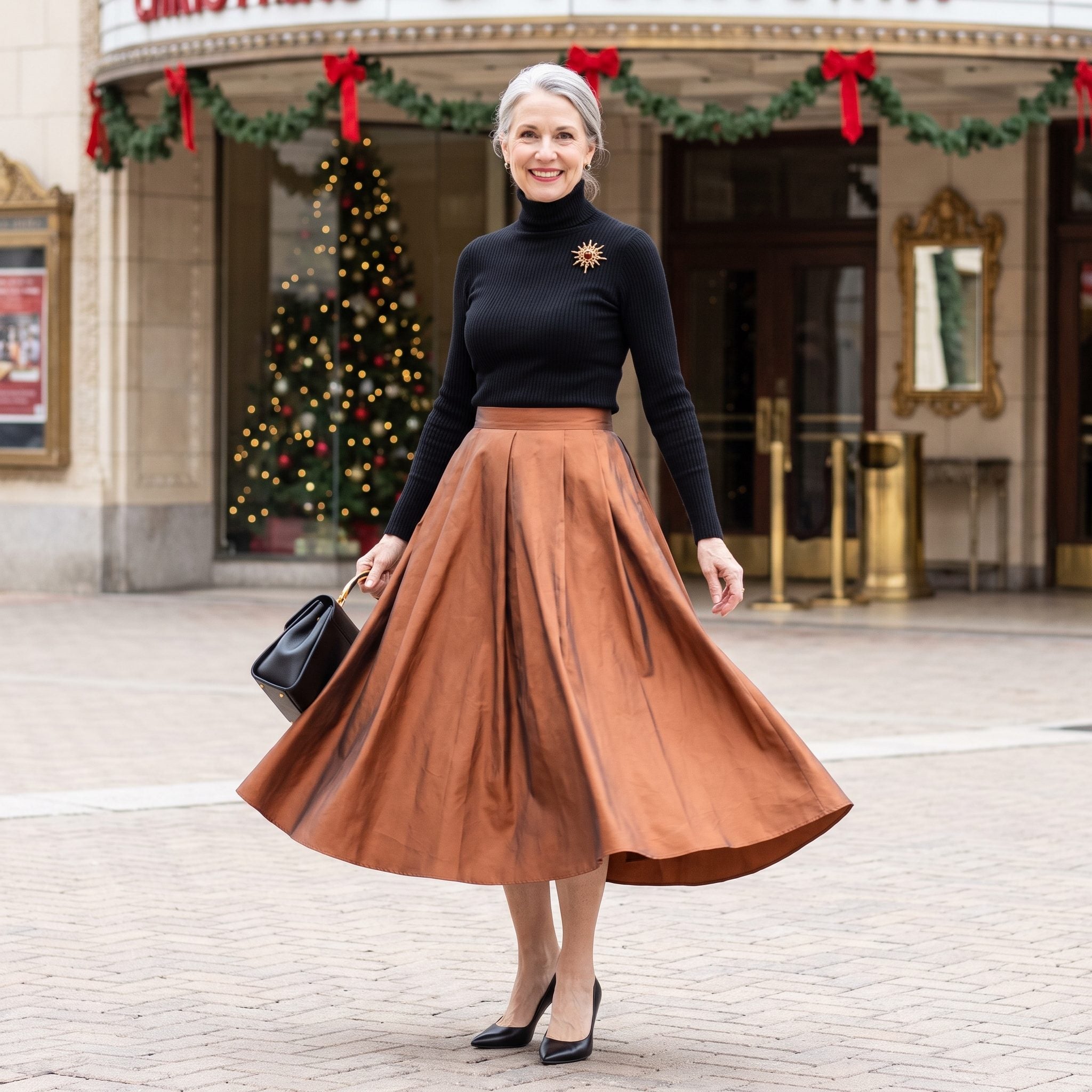
A vintage-inspired garnet-colored starburst brooch introduces a concentrated piece of ornament to an otherwise uninterrupted black ribbed turtleneck. Its position high on one shoulder breaks the symmetry of the garment and establishes an unexpected focal point.
The copper-colored taffeta skirt brings an entirely different decorative quality into the outfit. Taffeta’s characteristic crispness allows its folds to hold their shape more distinctly than those of a fluid satin. Movement reveals new angles of its lustrous surface. The brooch provides a particularly adaptable festive detail: remove it, and the black sweater returns to its everyday wardrobe without losing any of its original character.
7. The Ivory Capelet Makes a Sweater Move Like Eveningwear
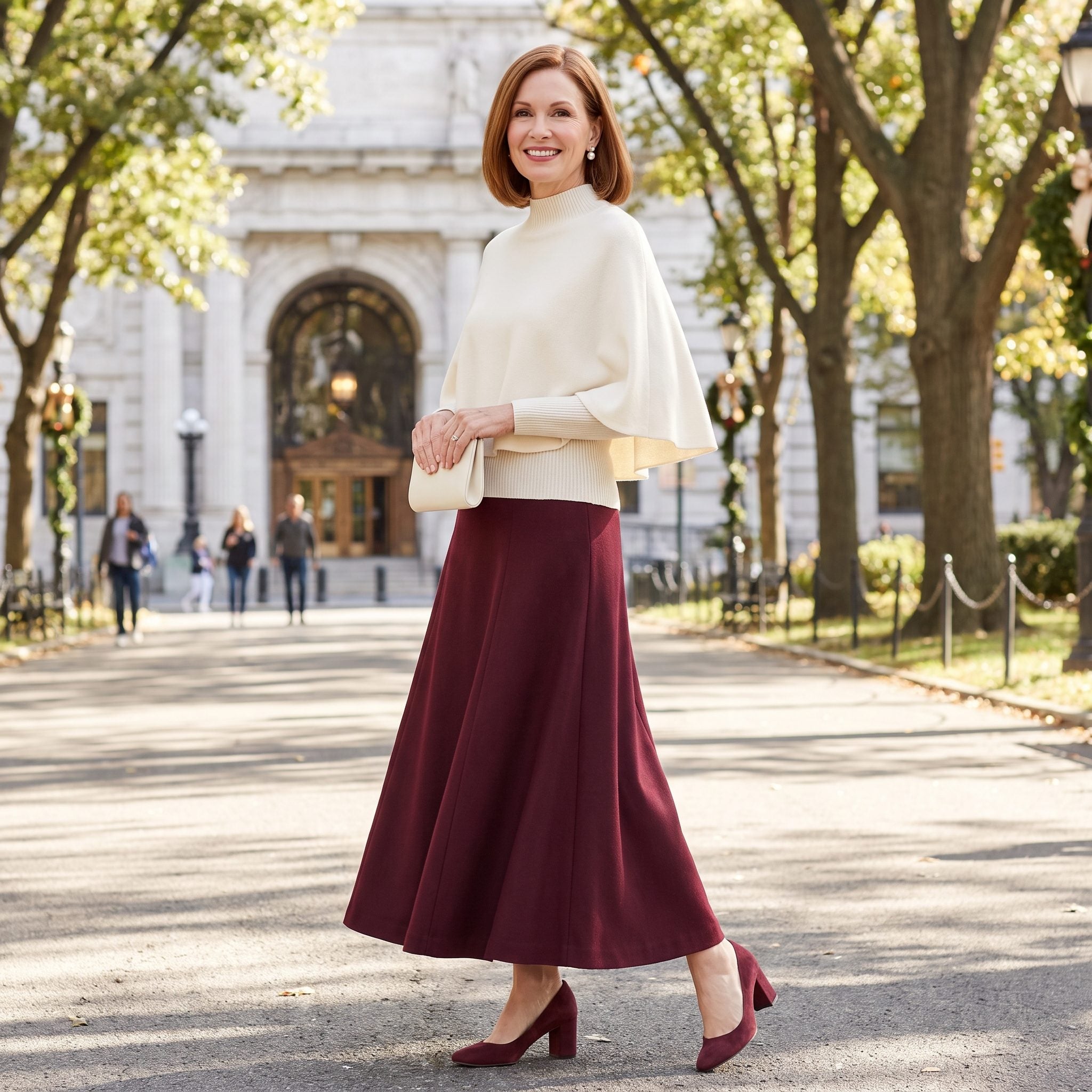
Capelet construction gives knitwear an additional layer of movement around the shoulders and arms. The ivory fabric extends outward from the upper body, introducing the sweeping outline more commonly associated with evening wraps and short capes.
A fitted knit layer underneath establishes the garment’s central shape, while the burgundy A-line maxi skirt provides a long, uninterrupted sweep beneath it. The two elements produce different kinds of movement: expansive across the shoulders and elongated toward the floor. Ivory and burgundy supply the traditional Christmas references, although the construction of the capelet is what gives the outfit its theatrical character.
6. Copper Pointelle Gives the Winter Knit a Little Breathing Room
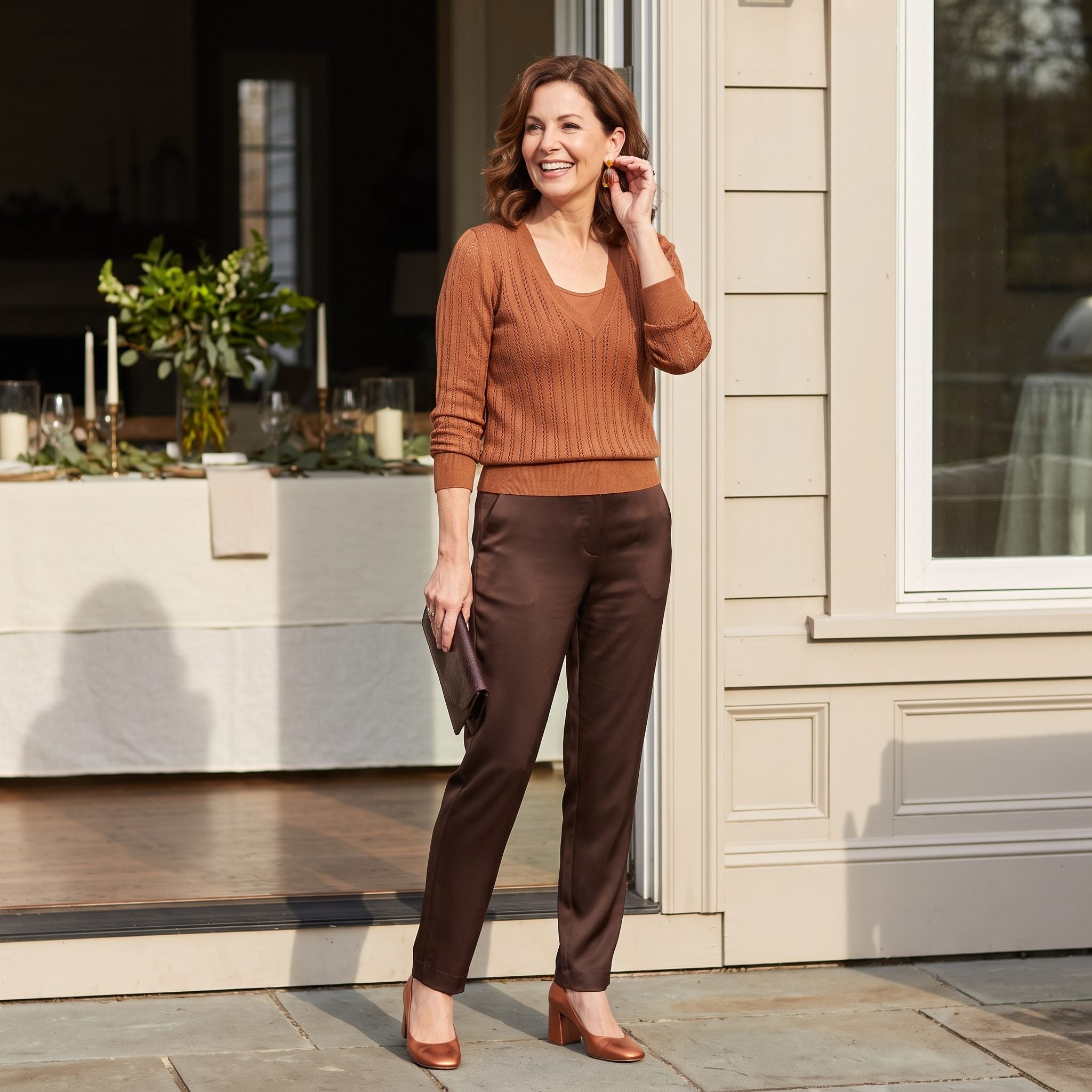
Pointelle knitting creates small, deliberately arranged openings that give the fabric a delicate, lace-like appearance. In copper, the pattern acquires an additional warmth, while a square neckline establishes a defined architectural edge above the intricate stitching.
The fitted top tucks into the smooth waistband of the espresso silk wide-leg trousers. Their long folds introduce a considerably more fluid surface beneath the fine openwork. Copper and espresso form a rich tonal pairing that allows the individual textile constructions to remain especially apparent.
5. Smocking Gives the Dusty-Rose Sweater an Unexpected Construction Detail
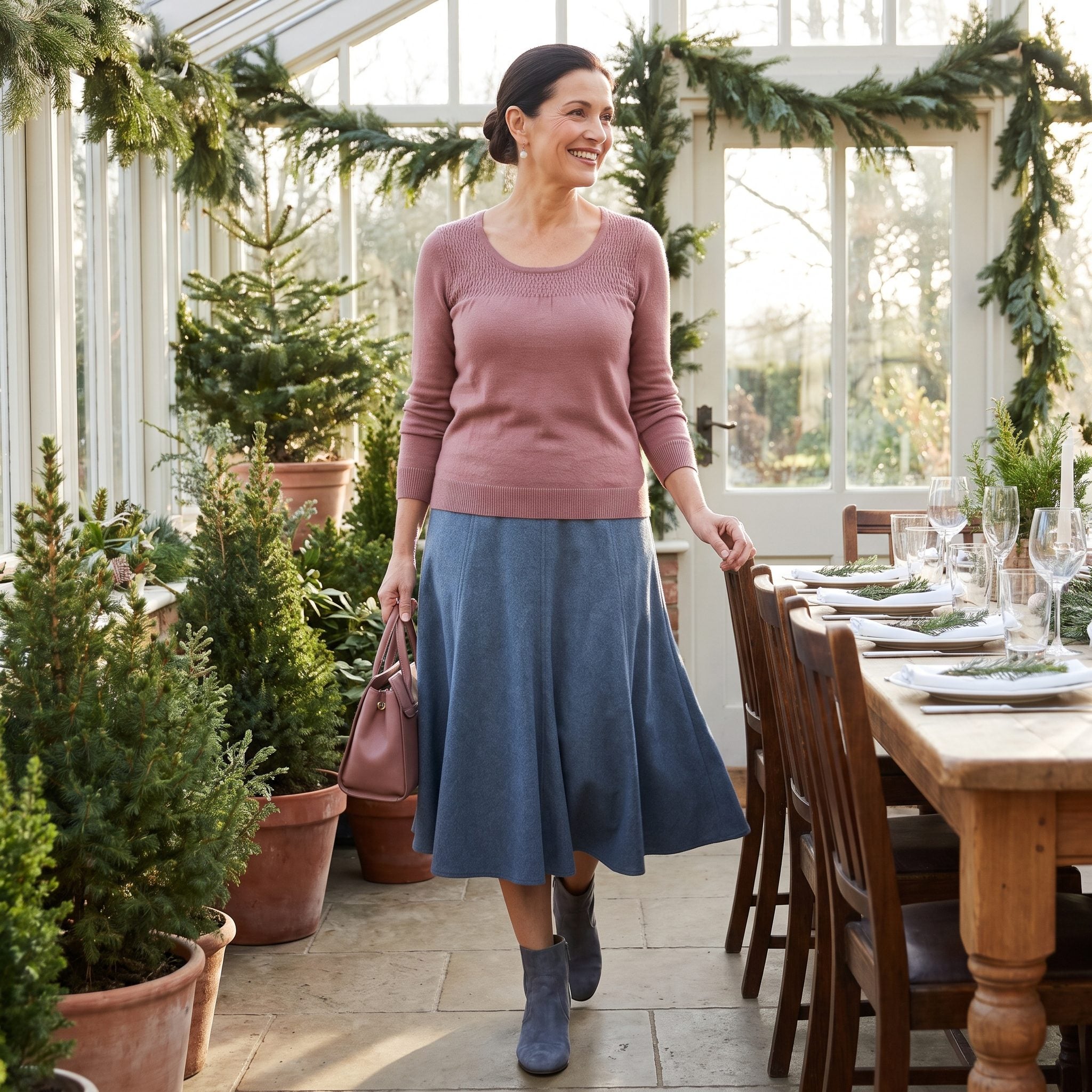
A finely gathered band across the chest gives this dusty-rose knit the appearance of traditional smocking. The concentrated texture interrupts the surrounding fabric, creating a decorative feature through the manipulation of the material rather than an added motif.
The slate-blue godet skirt introduces another construction technique into the outfit. Inserted fabric sections create additional fullness toward the hem, allowing the skirt to expand as it moves. Dusty rose and slate blue provide an atmospheric alternative to the saturated colors of Christmas. Both garments reveal the decorative possibilities of shaping and gathering fabric, making construction itself the festive detail.
4. Midnight Cashmere Gives a Crystal Crescent Its Own Night Sky
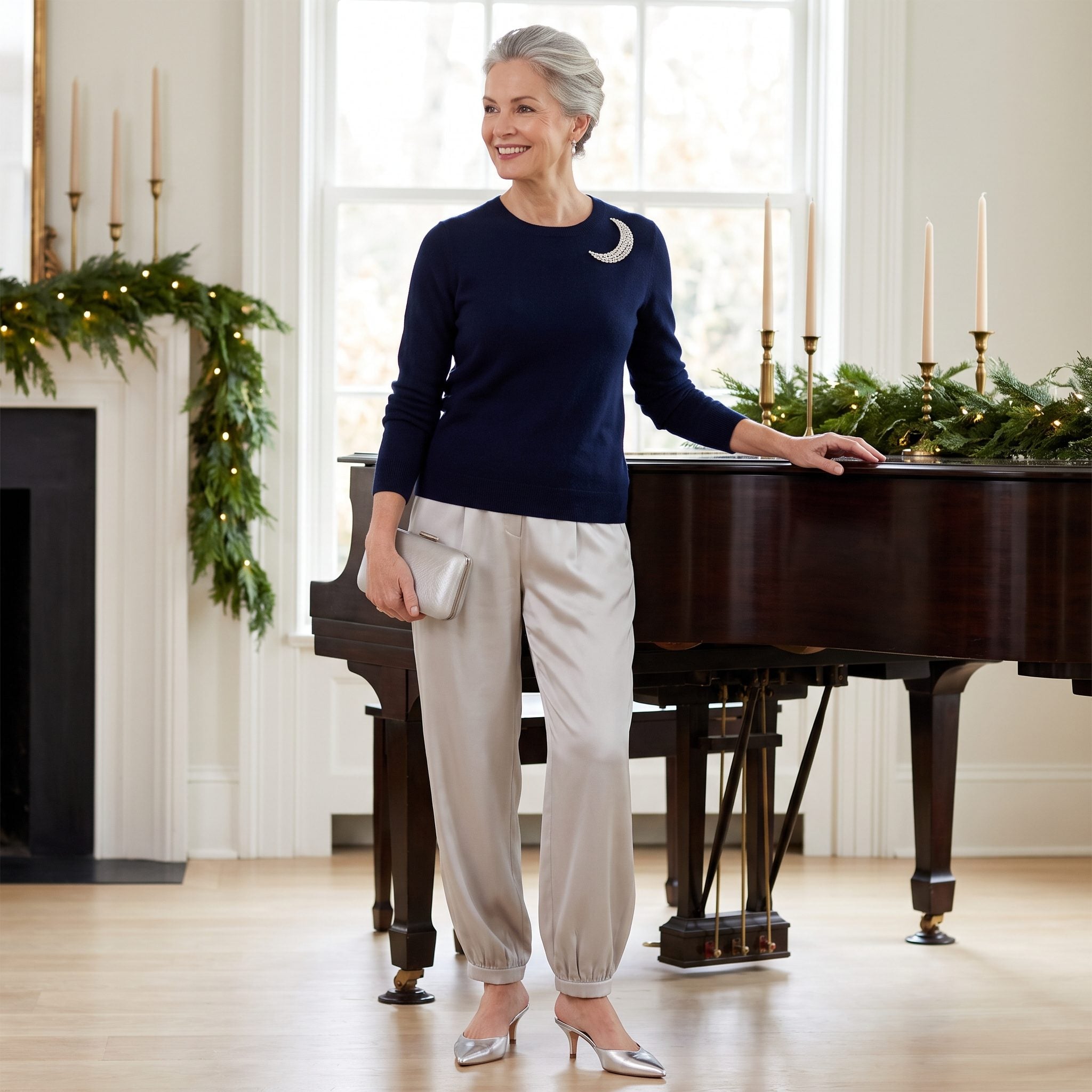
A crescent of crystals sits near the shoulder of this midnight-blue sweater, following the broad horizontal emphasis of its slash neckline. The curved embellishment introduces a small celestial reference against the dark expanse of cashmere.
Fluid silk balloon trousers give the lower half an expansive shape, gathering toward the ankle after curving outward through the leg. The contrast between their smooth reflections and the comparatively matte knit establishes two distinct material effects within the same dark palette. Silver kitten-heel mules and small diamond studs echo the crystal crescent. Midnight blue becomes the backdrop for an arrangement of small, strategically positioned highlights.
3. Burgundy Bell Cuffs Give Ivory Leather a Little Theater
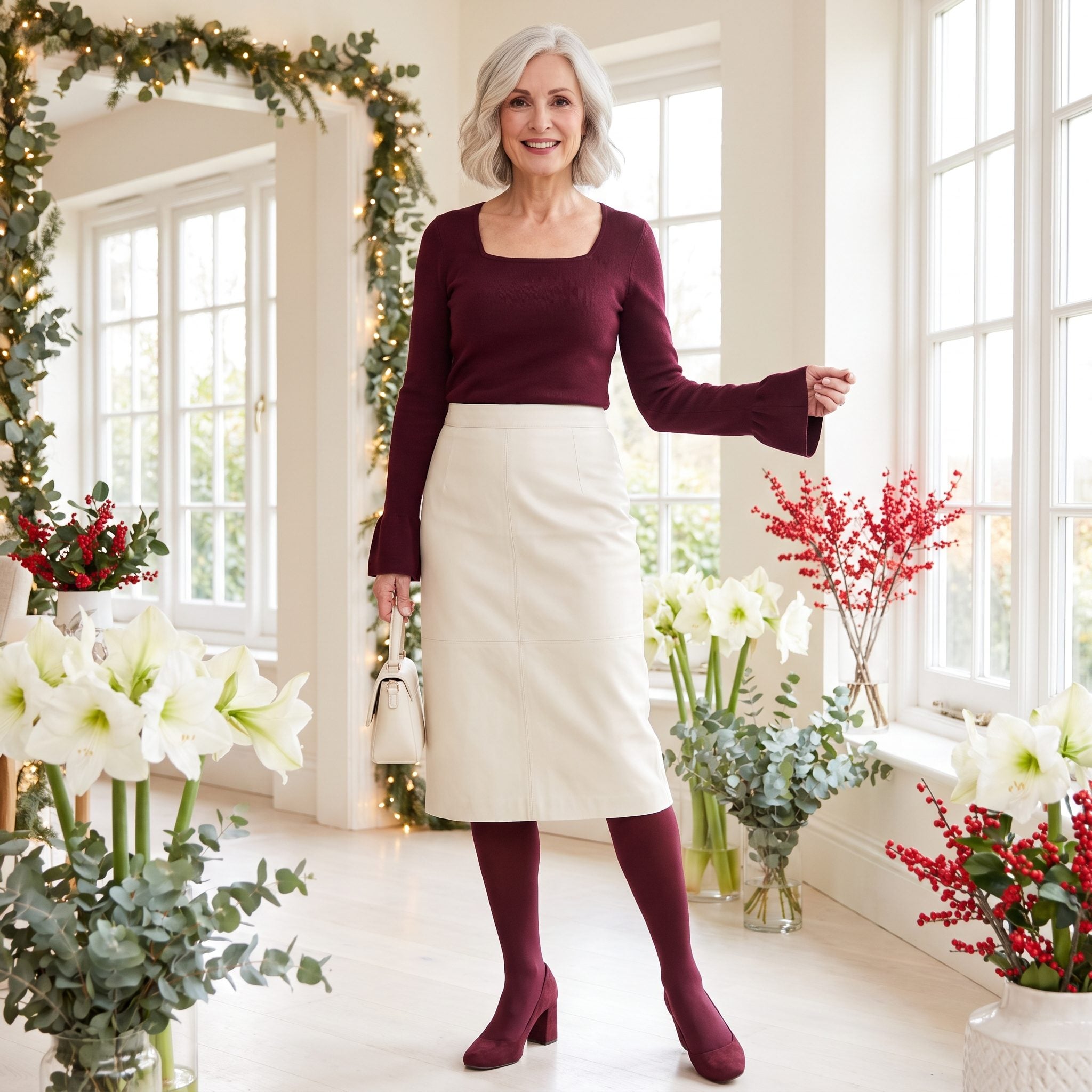
Bell cuffs introduce volume at the ends of the sleeves rather than around the shoulders. Their flared shape becomes particularly expressive when the arms move, giving the burgundy knit an unexpected theatrical quality.
The square neckline establishes a clean geometry above, while the ivory leather pencil skirt introduces another precise outline beneath the tucked sweater. Burgundy tights and suede pumps repeat the knitwear’s color below the contrasting skirt. The arrangement gives each garment a clearly defined shape, with the expressive cuffs providing a moment of movement within an otherwise streamlined outfit. Traditional Christmas color has acquired a particularly contemporary set of proportions.
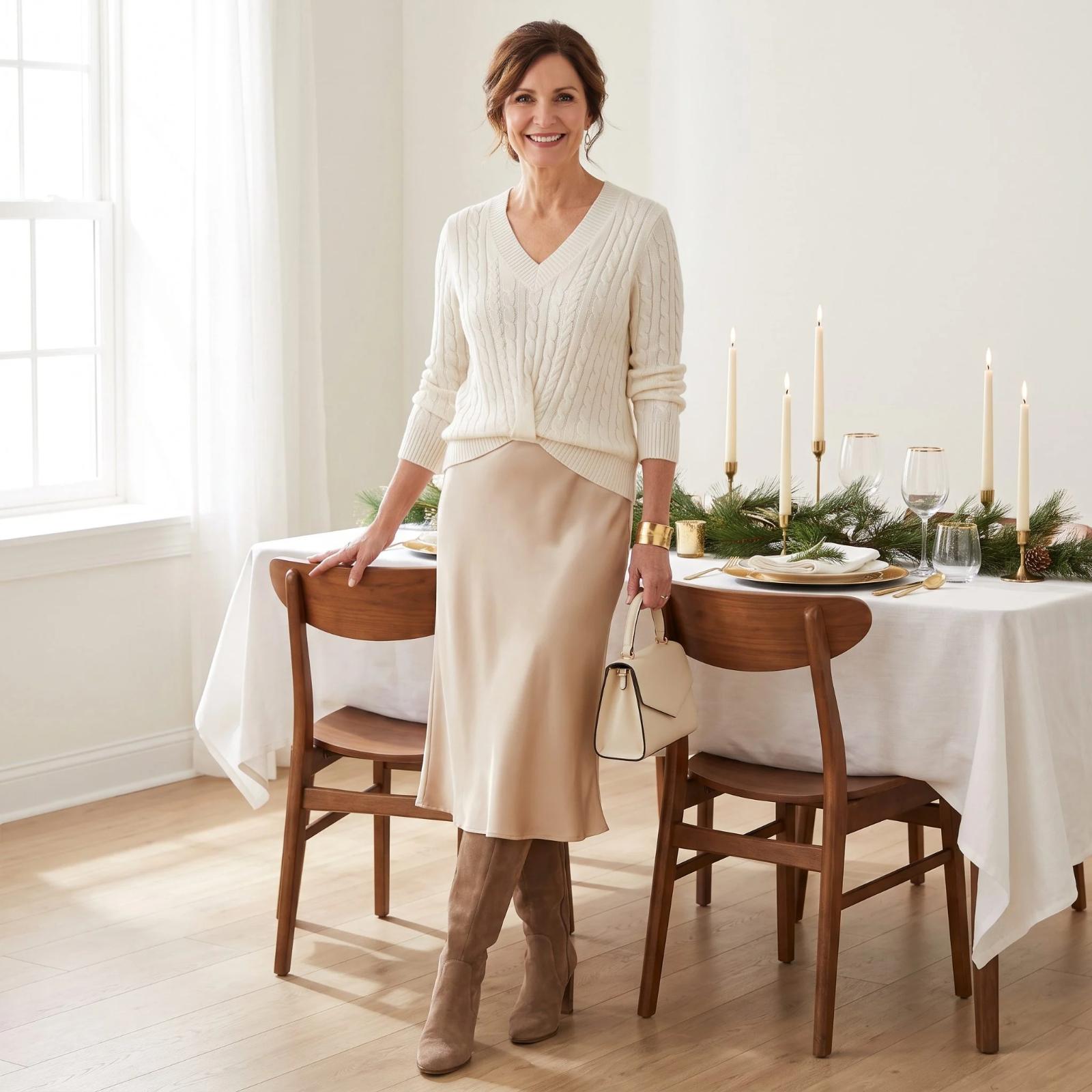
2. Cable Knit and Champagne Satin Make an Unlikely Christmas Double Act
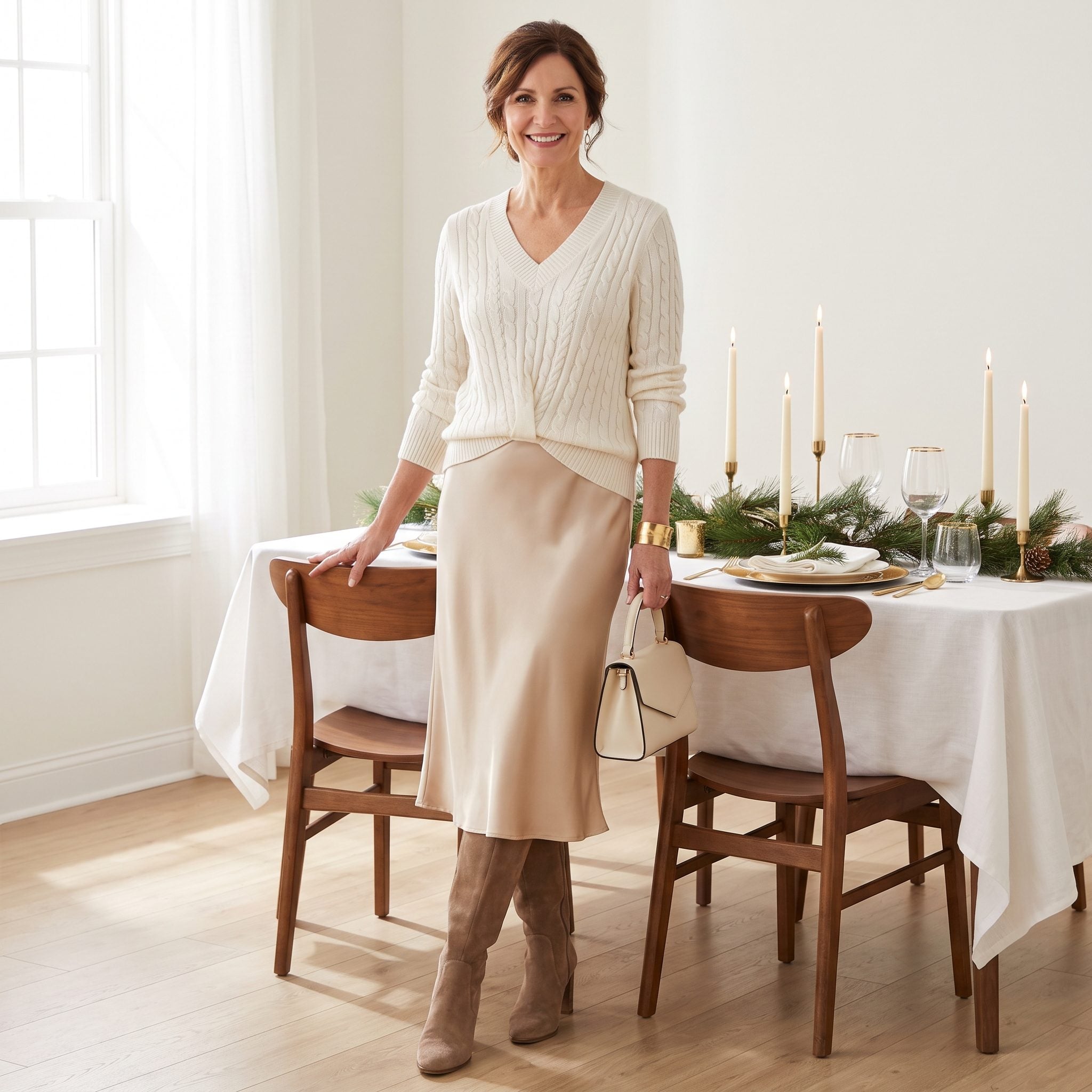
Few textile combinations make their individual qualities as apparent as substantial cable knit beside smooth satin. The raised, intertwined stitches of the ivory cable-knit sweater create small pockets of shadow, while the champagne satin skirt gathers light into long, uninterrupted highlights.
A partial front tuck establishes the position of the waist without eliminating the generous character of the sweater. Taupe suede boots introduce another subdued texture beneath the satin hem. Ivory, champagne, and taupe form a closely related palette that gives the different fabric constructions room to make their own statements.
The most appealing aspect is the collision of occasions. A substantial winter sweater meets a fabric associated with formal eveningwear, and neither garment loses its identity in the process.
If you’re torn between pale shades, ThreadCurve readers lean warm: 63% picked cream over white in our poll.
1. Evergreen Chevron Knitwear Gives Christmas the Last Word
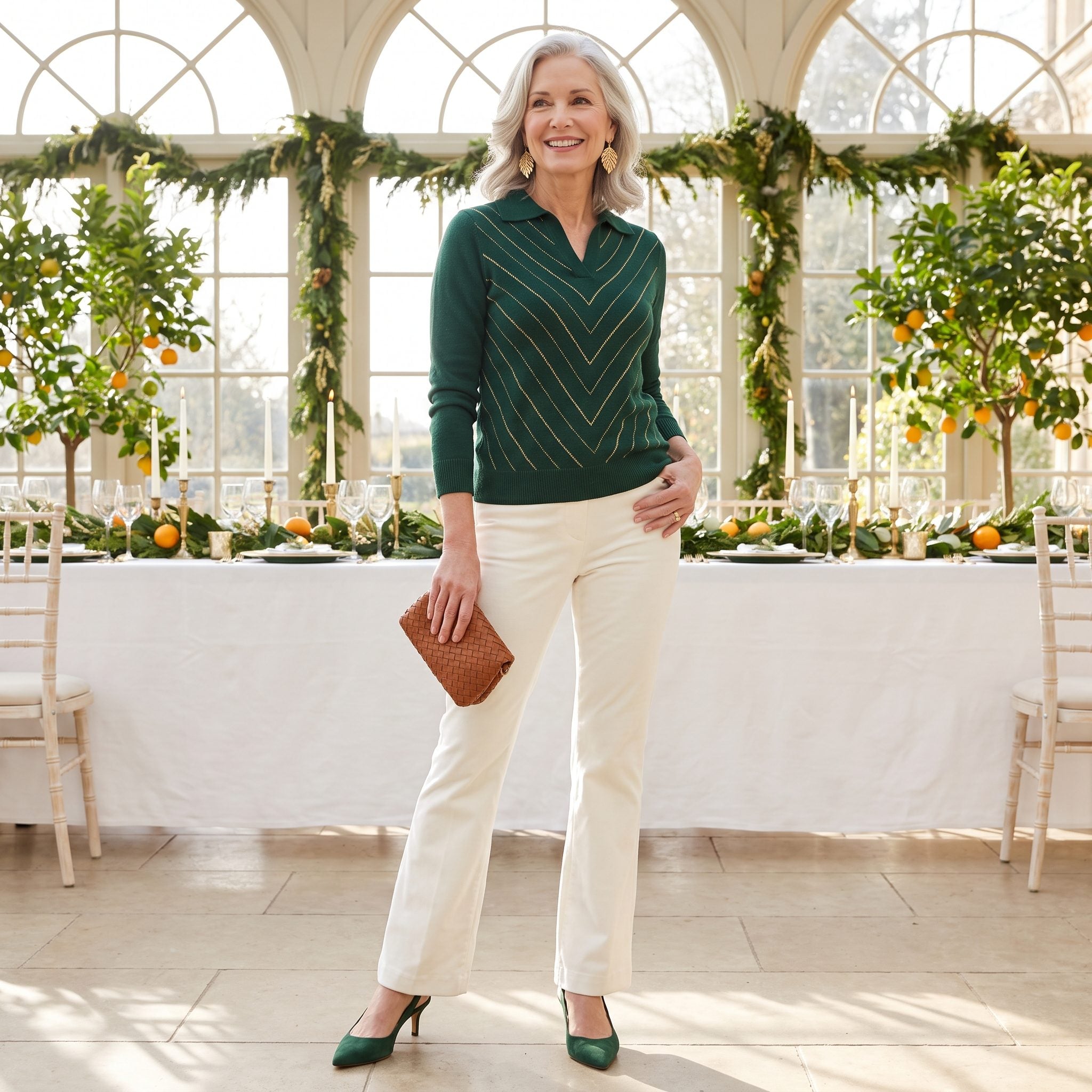
Evergreen, winter white, and gold: three of Christmas’s most familiar colors, expressed through some of winter fashion’s most interesting materials. Gold-thread chevrons establish a repeating zigzag across the merino knit, giving the rich green surface a geometric brilliance that follows the construction of the garment.
Winter-white kick-flare velvet trousers provide a luminous counterpart, their short flared hems introducing movement near the ankles. Elbow-length sleeves lighten the proportions of the substantial evergreen sweater, while brushed-gold leaf earrings echo the botanical associations of the color palette through a different decorative medium.
The Christmas references are unmistakable, although every one of them has been translated into the language of fashion: geometric colorwork, directional velvet pile, expressive tailoring, and a carefully chosen piece of jewelry. The festive sweater never needed to become a novelty. The stitches had plenty to say all along.