

A lipstick melted through the dryer once and ruined half a load. That was the last time I skipped checking pockets. Our grandmothers washed clothes like the garments cost something, because they did, and most of their habits still beat whatever the detergent bottle promises you this week. These are the quiet, practical methods that keep a good blouse looking good long past the point where fast fashion gives up and falls apart. No gadgets. No gimmicks. Just the stuff that actually works.
FYI, thanks to AI imagery software, we’re able to create very specific fashion and hairstyle examples to illustrate the points being made. In some cases, imagery is exaggerated to hammer home the point. Also, assume links that take you off the site are affiliate links such as links to Amazon. this means we may earn a commission if you buy something.
47. Check Every Pocket Before Starting the Wash

Lip balm, a pen, one lone AirPod, a five-dollar bill gone to pulp. The pocket check is the thirty seconds that saves the whole load, and almost nobody does it anymore.
Run your thumb into every pocket, front and back, including that tiny coin pocket on jeans that exists purely to swallow things. One stray tissue shreds into a thousand white flecks across an entire dark wash, and nothing clings tighter or dies harder.
46. Sort Laundry by Fabric Weight as Well as Color

Color sorting is only half the job. A heavy towel tumbling against a silk blouse is like putting a brick in a bag of eggs and shaking.
So group by weight as well: heavy denim and towels together, medium cottons on their own, lightweight knits and delicates in their own gentle pile. Weight mismatch is what pills your fine knits and stretches your soft tops out of shape, long before color ever bleeds. Your lightest pieces cost the most to replace, so give them their own load and let them off easy.
45. Turn Dark and Printed Garments Inside Out to Slow Fading
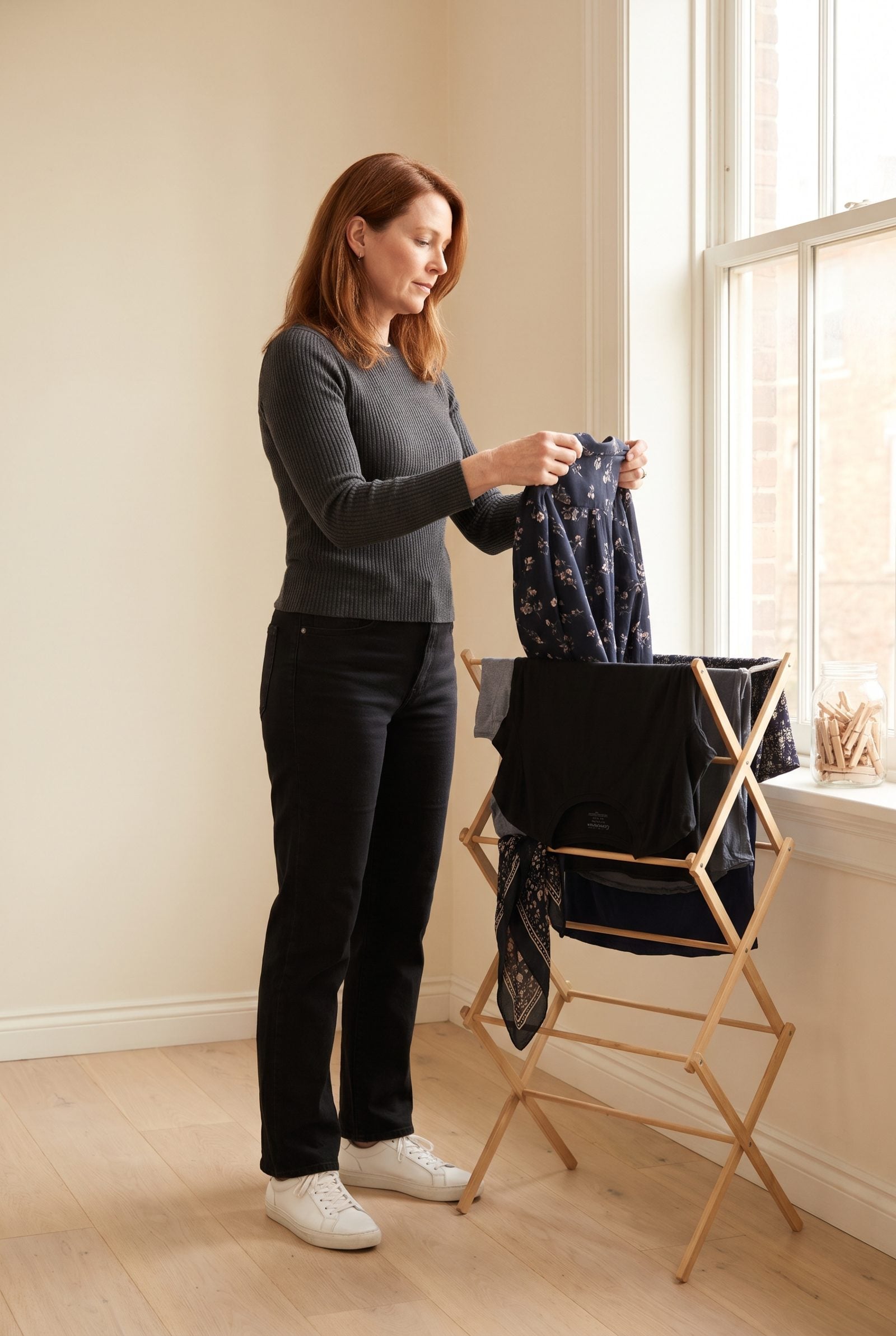
The color on your clothes lives on the outside. So does the printing on that graphic tee and the screen print on your favorite summer dress. Every cycle, the friction of fabric rubbing against fabric scrubs that surface pigment away, a little more each time.
Turn dark jeans, black tees, and anything printed inside out before they go in. The abrasion hits the hidden side instead, and your blacks stay black instead of fading to that tired, dusty grey that announces a shirt has been through it. Two seconds per garment. Years of wear bought back.
Turning bright or dark clothes inside out before washing is worth it, according to a cleaning company owner, who says “This will prevent the fading of clothes with dark or bright-colored garments and will maintain embroidery or screen prints”
44. Fasten Zippers So Their Teeth Cannot Snag Fabric
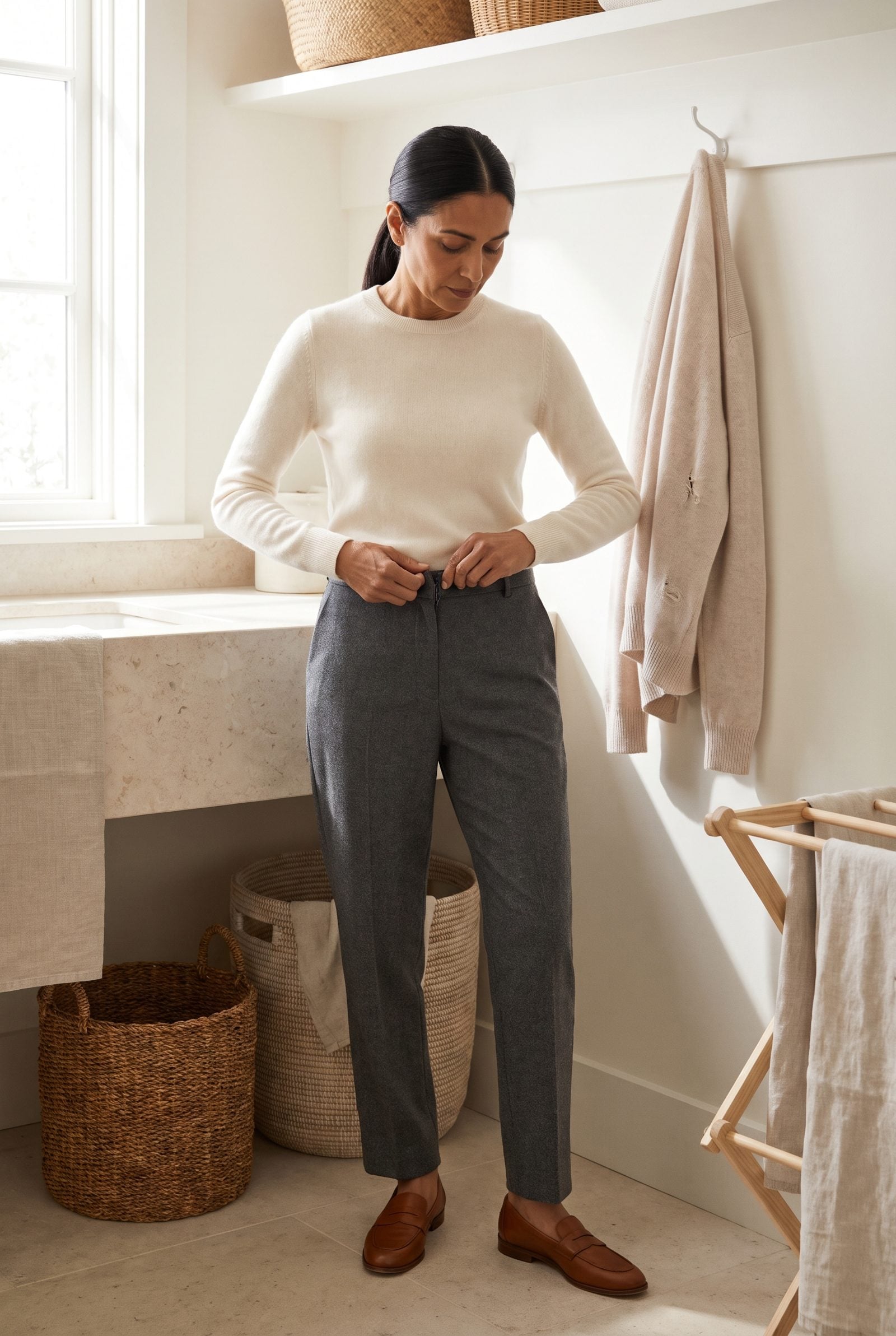
An open zipper is a row of tiny metal teeth looking for something to chew. In the wash it finds your knits, your tights, your silk, and it pulls threads until a sweater has a run in it like a stocking.
Zip up every fly and every jacket before the load goes in, and do the same for the hook-and-eye closures on skirts. A fastened zipper lies flat and keeps its teeth to itself, so your delicate pieces come out whole instead of hooked.
43. Leave Shirt Buttons Undone to Protect the Buttonholes

Here is the one that trips people up, because it feels backwards. You fasten zippers but you unbutton shirts.
A buttoned shirt yanks and twists in the drum, and every tug pulls at the buttonhole stitching and strains the thread holding each button on. Over time the holes stretch, the buttons pop, and a good shirt goes slack at the front. Leave them open and the placket moves freely, so nothing works loose. Your collar buttons especially, the tiny ones that are absolute murder to re-sew, will thank you.
42. Place Delicates Inside a Clean Pillowcase
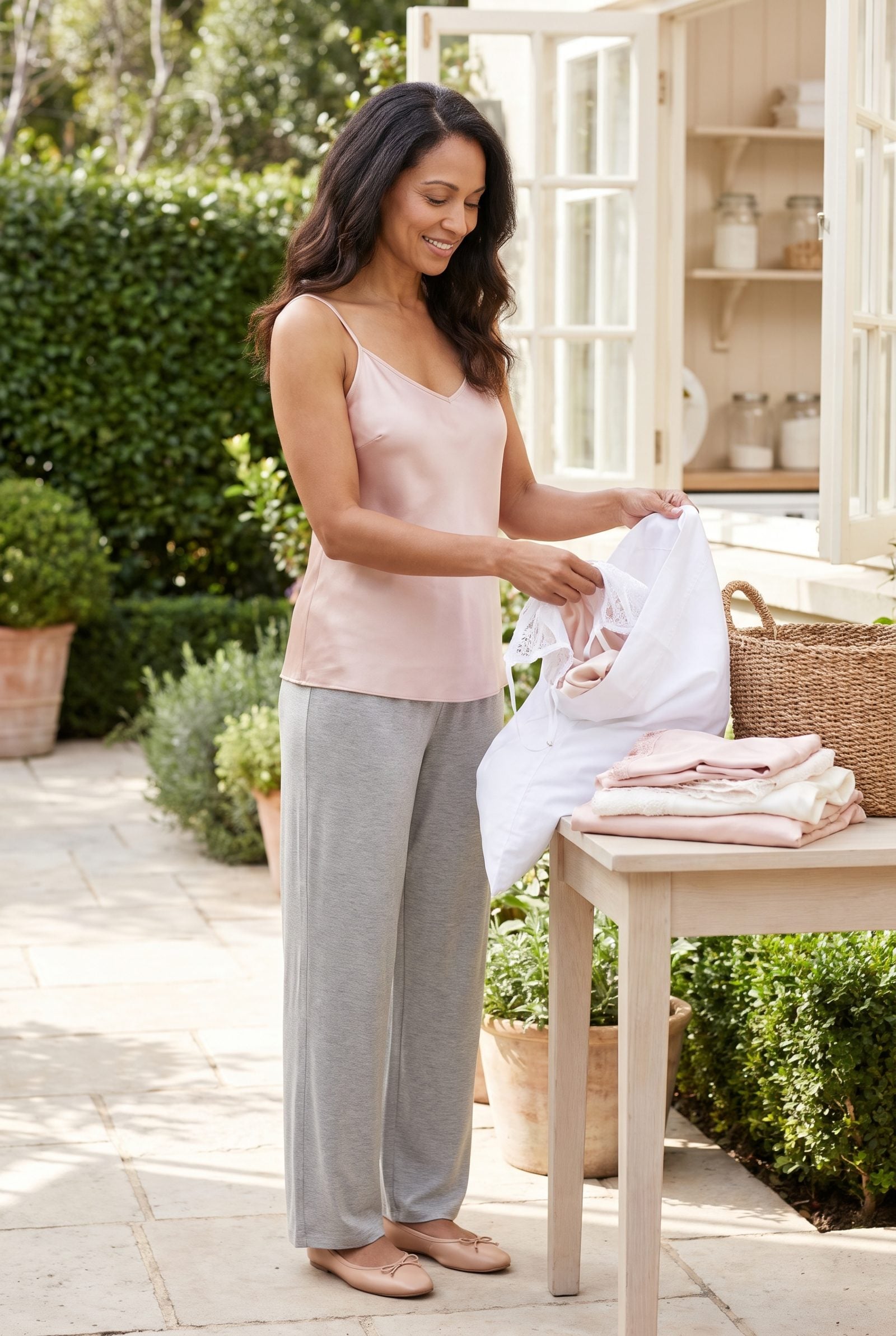
Before mesh laundry bags existed, there was the pillowcase, and honestly it still works better than half the ones you can buy. Lace bras, silk camisoles, fine knits, anything with a strap that loves to tangle, all of it goes inside.
Drop your delicates in, knot the open end loosely or tie it off, and wash on a gentle cycle. The cotton shields them from the agitator and from heavier items in the load. No more bras with bent underwires, no more straps garroting a cashmere sweater. One old pillowcase saves a drawer’s worth of nice things.
41. Choose Cool Water for Everyday Colored Clothing

Hot water opens fabric up and lets the dye march right out. That is why your bright coral tee went salmon and your navy went slate after a summer of warm washes.
Cool water cleans everyday colored clothing just as well with modern detergents, and it keeps the color locked in. It is gentler on the fibers too, so cottons hold their shape and knits don’t shrink on you. Save the hot water for the genuinely grimy stuff, which, in a normal week, is almost nothing.
40. Use Less Detergent to Prevent Dull, Stiff Fabric

More detergent does not mean cleaner clothes. It means detergent that never fully rinses out, building up in the fibers until your towels feel like cardboard and your dark shirts wear a chalky film.
Use about half what the cap tells you, and less still if your water is soft. All those suds the machine makes? Not the thing doing the cleaning. The excess just redeposits grime back onto the fabric. Clothes washed with a light hand come out softer, brighter, and smelling like nothing at all, which is exactly how clean is supposed to smell.
39. Add White Vinegar to the Rinse to Remove Soap Residue
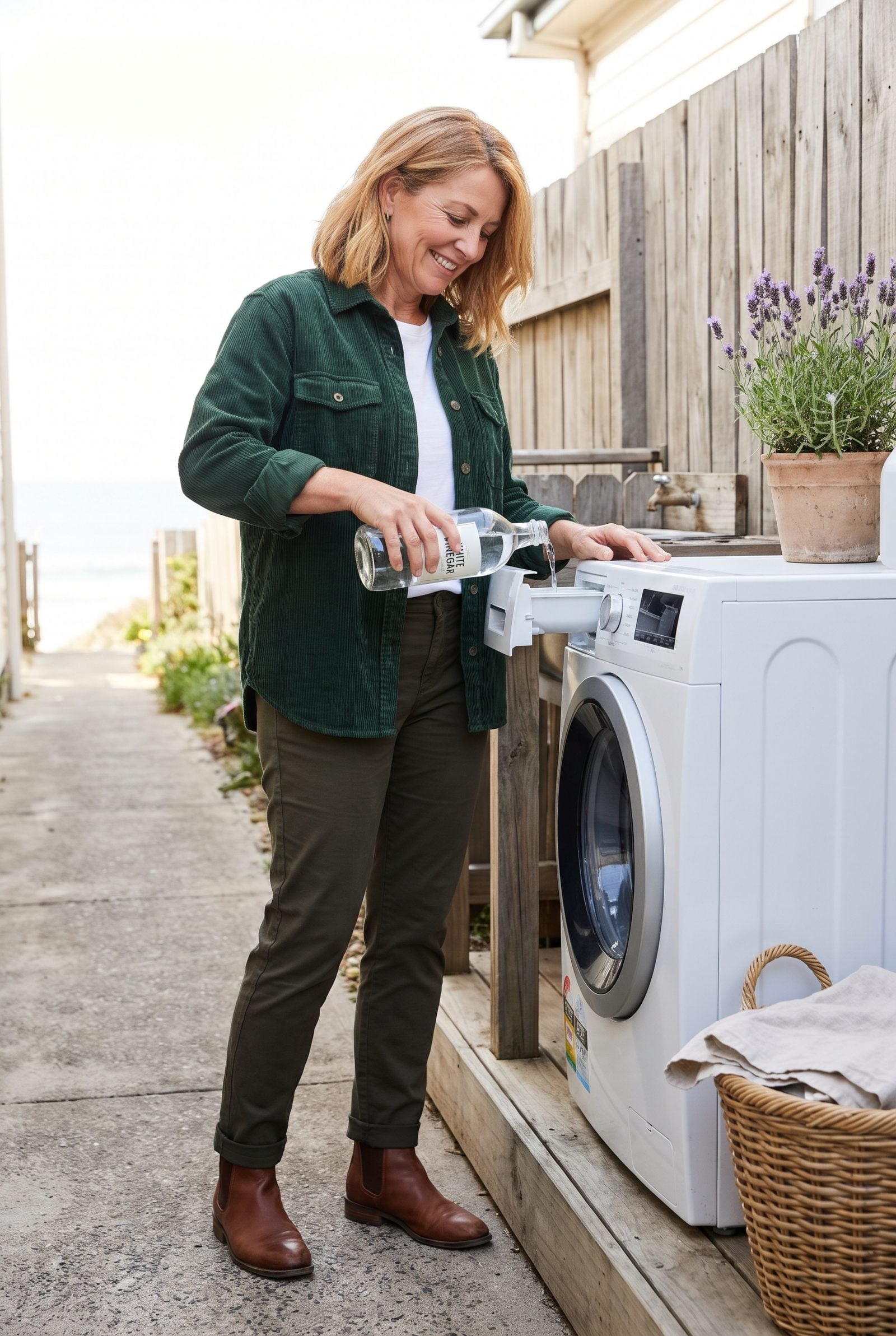
Half a cup of plain white vinegar in the rinse does what expensive fabric softener only pretends to do, and it skips the waxy coating that quietly ruins your towels’ absorbency.
It cuts through leftover detergent, softens the water, and strips out the buildup that leaves fabric dull and scratchy. Towels come out fluffier and thirstier. Whites look brighter. And no, your clothes do not come out smelling like a chip shop, the vinegar scent rinses clean away in the spin. Cheapest laundry upgrade going.
38. Use Washing Soda for Heavily Soiled Work Clothes
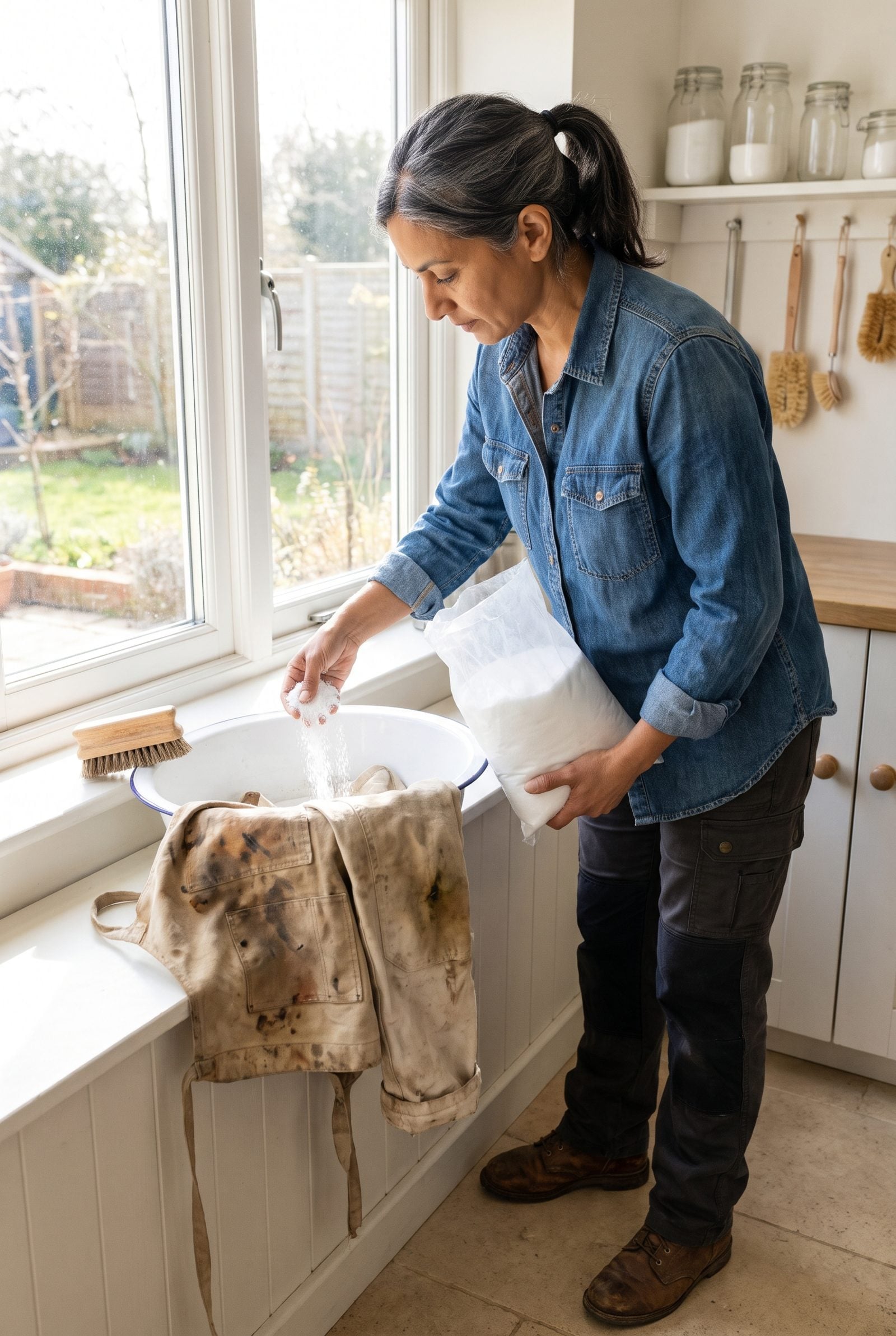
Garden clothes, painting clothes, the jeans that lost a fight with engine grease. Regular detergent throws up its hands at that kind of dirt. Washing soda doesn’t.
It is an old-fashioned alkaline booster that breaks down grease and ground-in grime ordinary soap can’t shift. Add a scoop to the load alongside your usual detergent, or make a soaking solution in a basin for the truly filthy pieces and leave them an hour before washing. Gentler on the garment than bleach, and far better at lifting the kind of soil that would otherwise retire a good pair of work trousers years too early.
37. Add Borax to Soften Hard Wash Water

Hard water fights your detergent. You pour in the usual scoop, agitate, and your whites still come out dull and stiff with a faint chalky film. That film is mineral buildup, and borax is the old fix for it. Half a cup in the wash softens the water so the soap actually works, and your cottons come out brighter and feel softer against the skin.
Grandmothers kept a jar of it next to the detergent for a reason — it also knocks back the sour smell in gym clothes and towels that have gone off. I resisted it for years because it felt fussy. It isn’t. Add it with the detergent and forget it.
36. Revive Yellowing Whites With Laundry Bluing
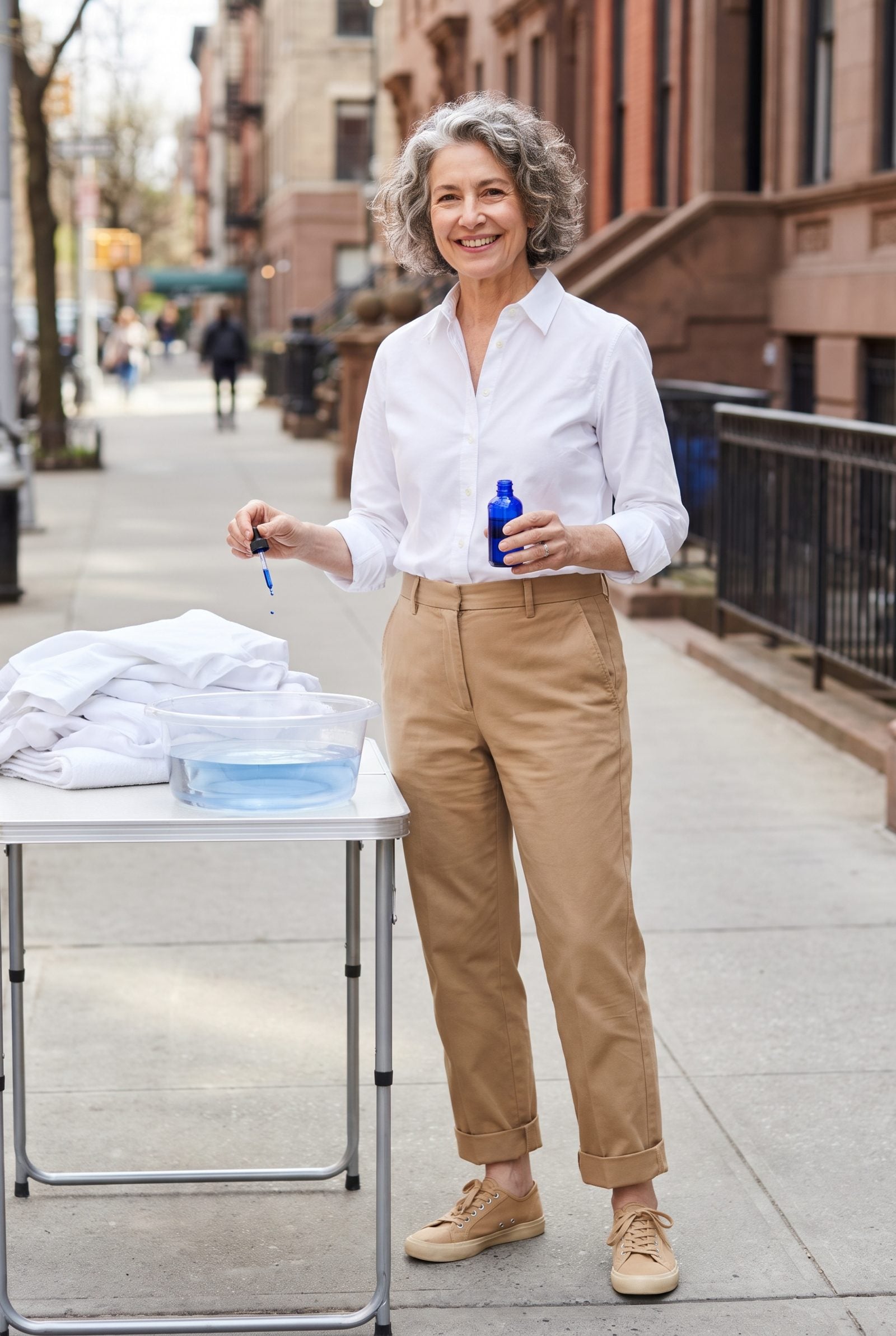
White fabric doesn’t fade to gray by accident. It yellows and dulls with every wash, and bleach only pushes it further yellow over time. Bluing works the opposite way. A tiny trace of blue pigment in the rinse water tricks the eye into reading the fabric as brighter white, the same trick a touch of blue plays on yellow across a color wheel.
The dose is almost comically small — a few drops, measured out first and only then added to a half-filled basin, never straight onto the cloth, or you’ll end up with a blue streak you’ll regret. Old cotton blouses, linen napkins, a tired white camisole. They come out looking washed new.
35. Wash Wool in Cool Water, No Rubbing or Wringing
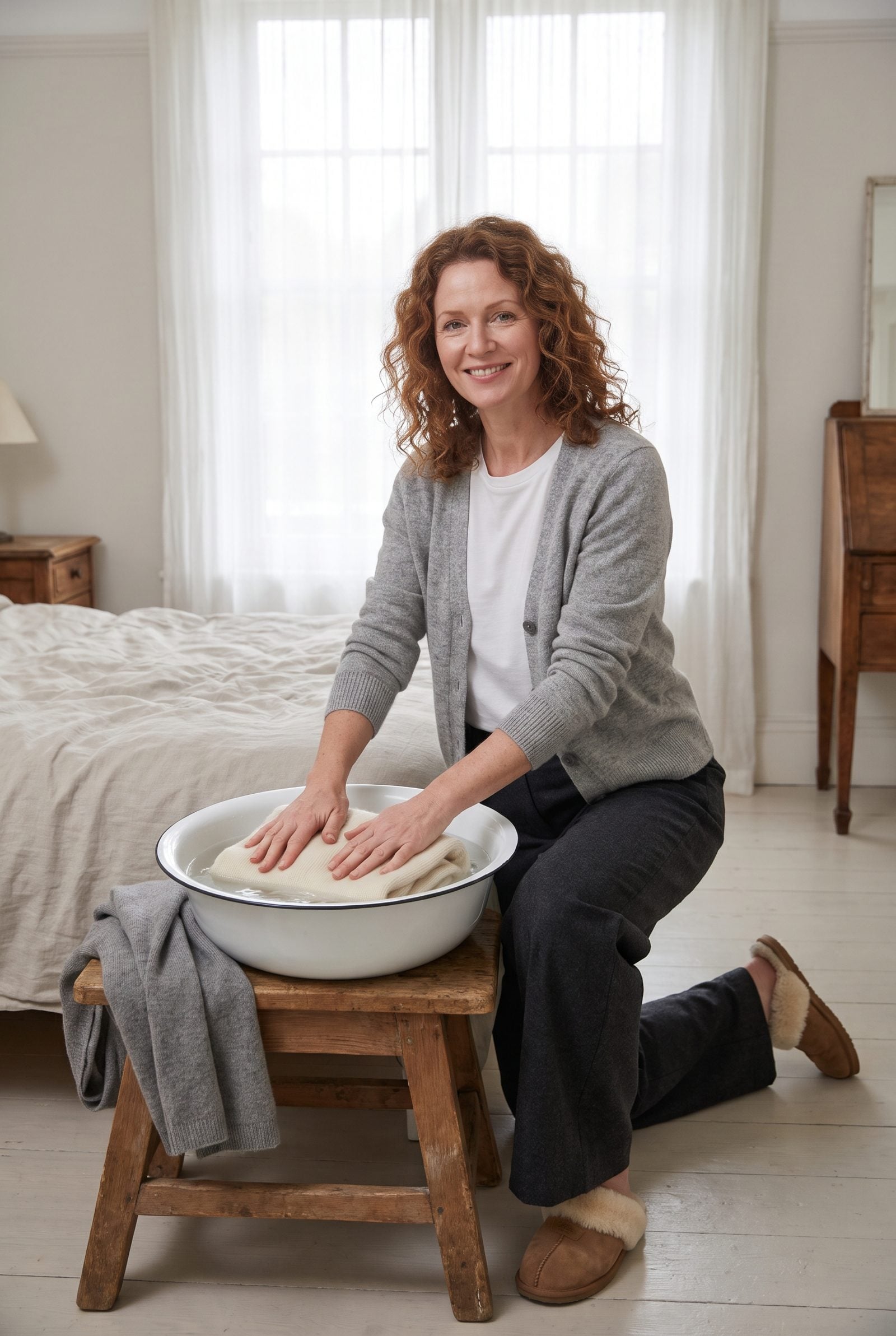
Wool shrinks because of heat and friction, not water itself. The fibers have microscopic scales that lock together when you agitate them in warm water, and once they felt, there’s no coming back from it. So you treat wool like something half-asleep. Cool water, a splash of gentle soap, and you press it through the suds with flat hands.
No rubbing. No wringing. No swishing it around like you’re mad at it. I shrank a good lambswool sweater down to doll size exactly once, and once was plenty. Let it soak a few minutes, then move on to the towel.
34. Roll Wet Sweaters in a Towel to Press Out Water
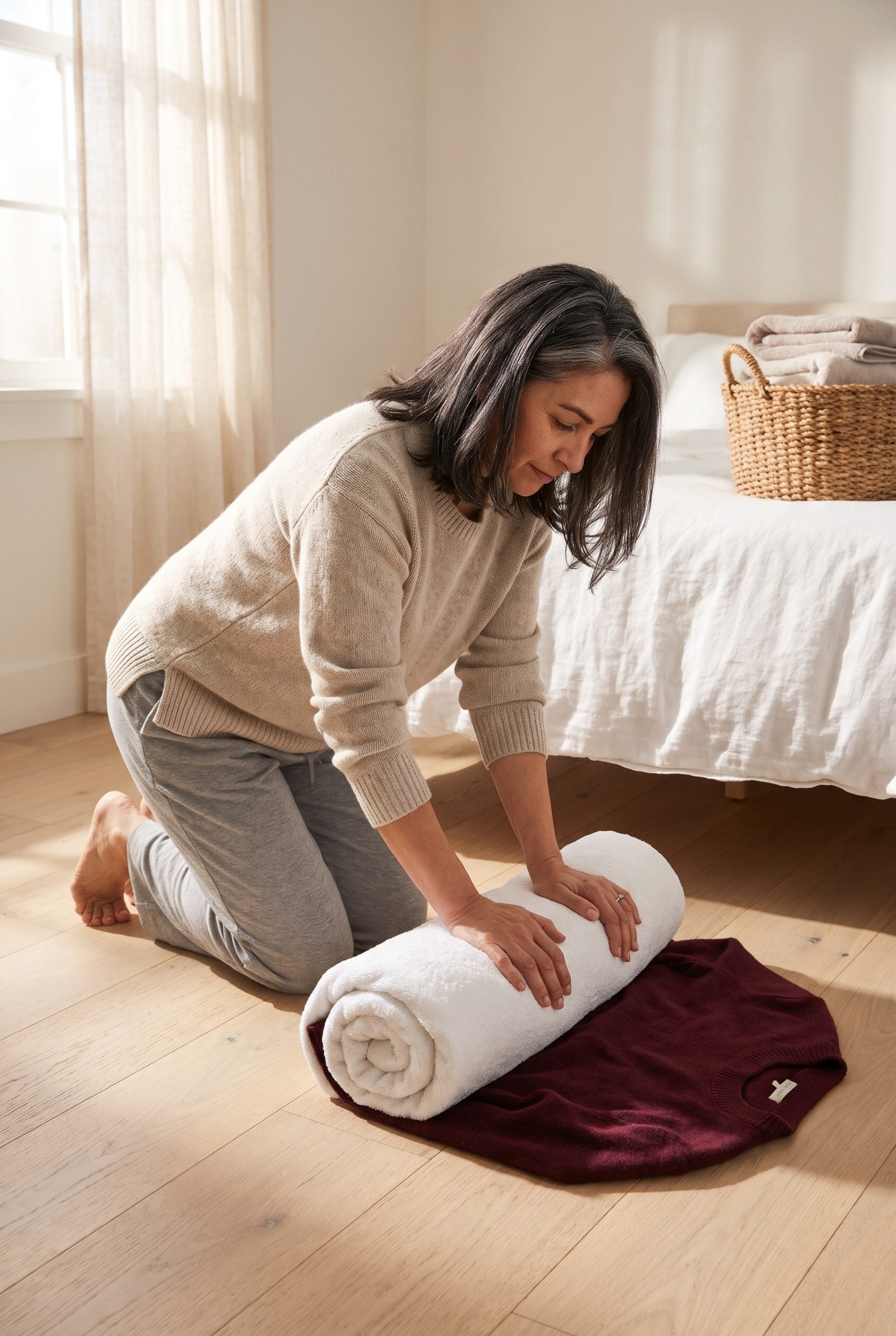
Lift a soaked sweater by the shoulders and gravity does the damage for you. All that trapped water drags the knit down and stretches it into a shape you never asked for. The towel trick stops that cold.
Lay the sweater flat on a dry bath towel, roll the two up together like a jelly roll, then press down along the length of the roll with your hands. The towel drinks up most of the water in under a minute. No twisting, no hanging, no pulling. What comes out is damp instead of dripping, and ready to be reshaped.
33. Reshape Knitwear While Damp, Then Dry It Flat
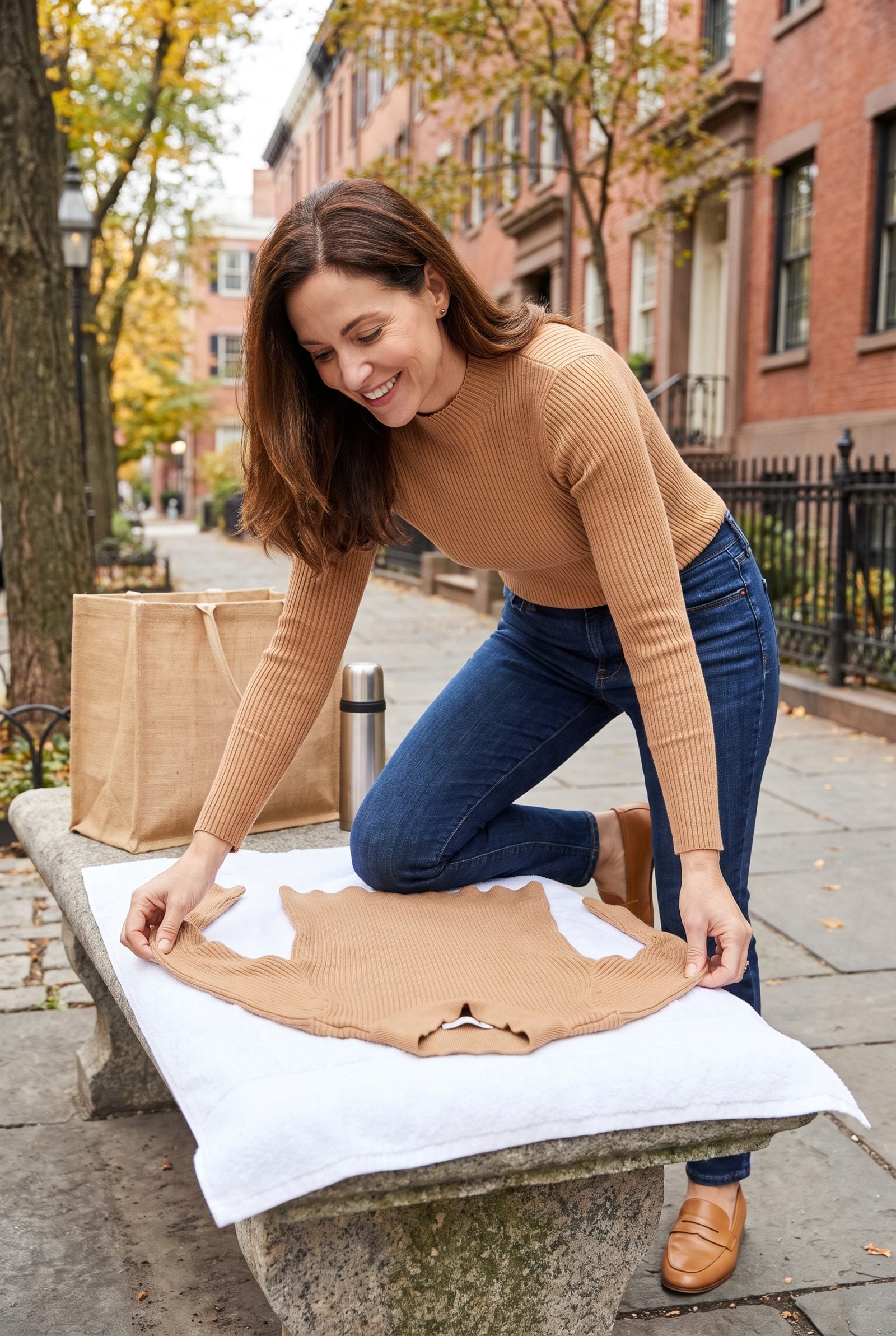
A damp sweater is clay. It holds whatever shape you leave it in, and it dries into that shape and stays there — so this is your one window to fix it. Lay it flat on a towel or a mesh rack and pat the body back to its real dimensions.
Square up the shoulders, line up the sleeves, nudge the ribbing at the hem and cuffs back to where it belongs. Gone wide and short in the wash? Gently stretch it longer and narrower now, while it’s still willing. Then walk away and let it dry flat, never on a hanger. A hanger gives you shoulder nipples by morning, and nobody wants those.
32. Air Lightly Worn Clothes Before They Go Back in the Closet

Not everything needs a wash after one wear. A blazer, a wool skirt, the trousers you had on for three hours — those want air, not a soak. Hang them somewhere open overnight, ideally near a cracked window, and let the day’s warmth and faint smells lift out on their own.
Over-washing is what wears clothes out. Every cycle fades color, frays seams, thins fabric. Airing is the old answer. It gives a garment a few more years and keeps it smelling like nothing at all, which is exactly how clean clothes should smell.
31. Spot-Clean a Small Mark Instead of Washing the Whole Garment
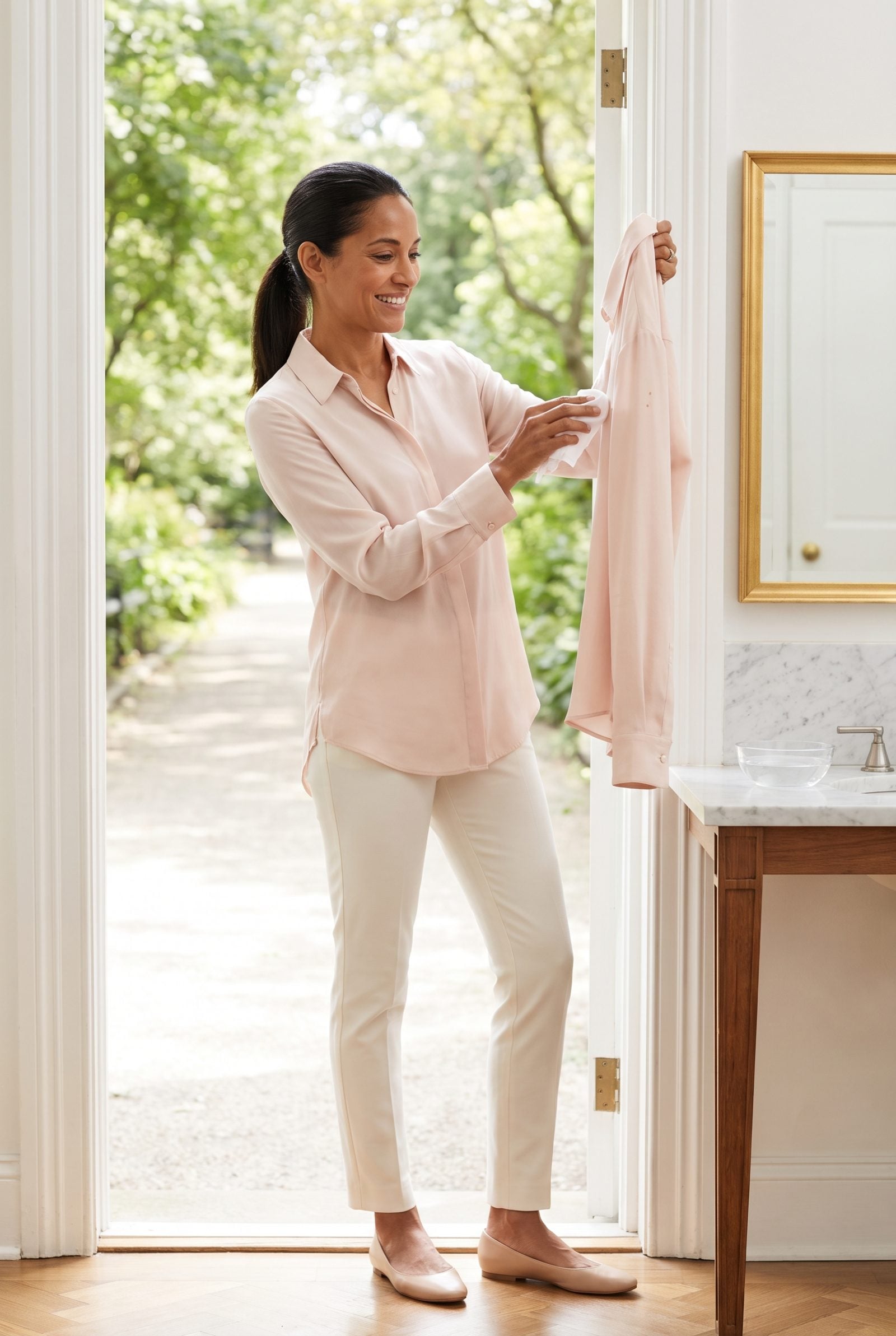
A coffee drip on the cuff does not require the whole blouse to go through a cycle. Washing the entire thing for one spot is how good silk and fine knits get tired before their time. Dab the mark with a damp cloth and a trace of gentle soap, working from the outside of the stain inward so you don’t spread it.
Blot, don’t scrub. Scrubbing bruises the weave and can leave a pale worn patch that’s more obvious than the stain ever was. Patience here saves the garment twice — once from the stain, once from the wash it didn’t need.
30. Rinse Fresh Bloodstains Immediately With Cold Water
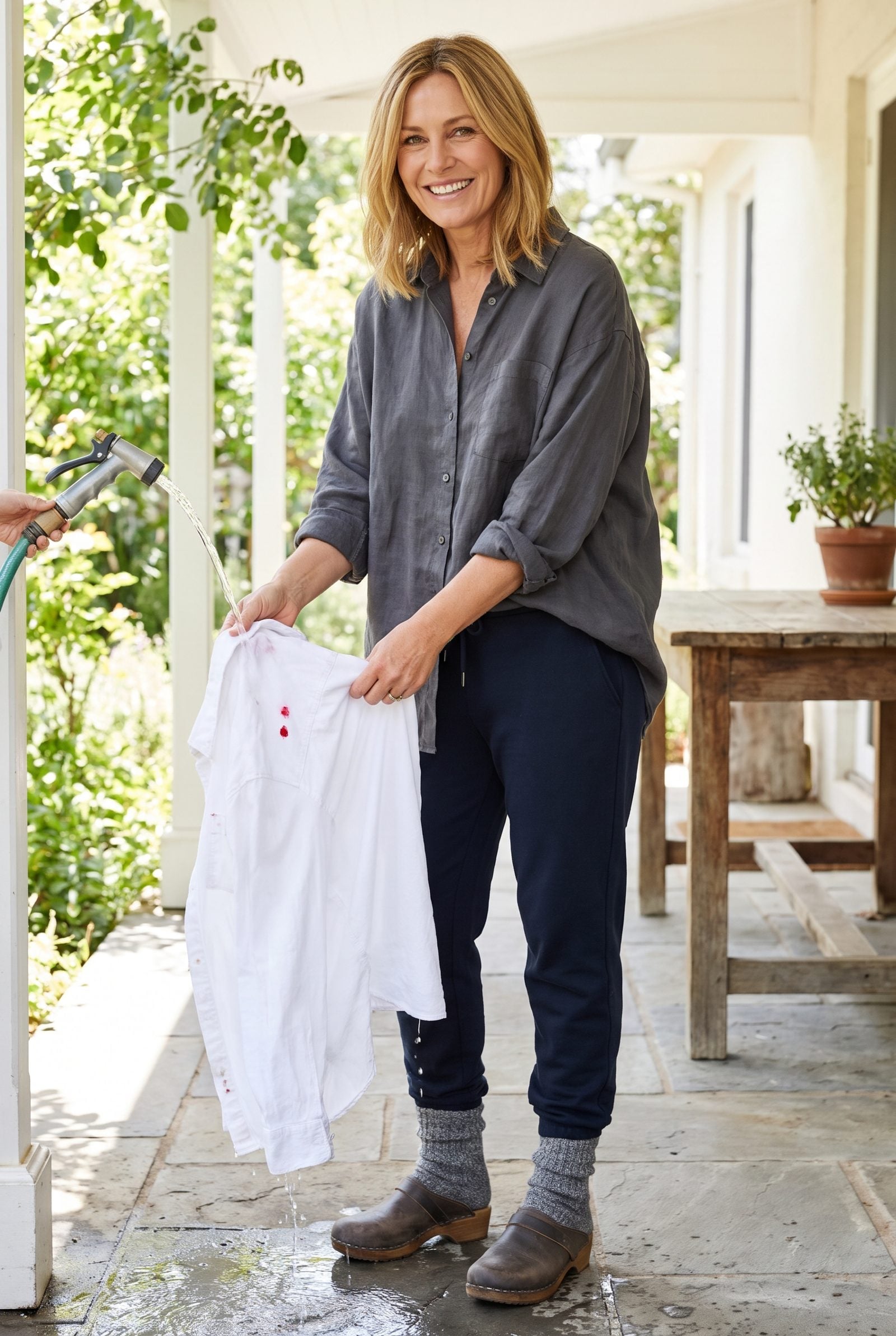
Heat sets blood like it’s trying to ruin your day. Hot water cooks the proteins into the fibers and locks them there for good, which is why the single rule is cold, and cold only. Run the fresh spot under the coldest tap you’ve got, from the back of the fabric, so you push the stain out rather than through.
Catch it fast and most of it rinses clean before it ever becomes a stain. If a shadow lingers, a dab of gentle soap or a soak in cold salted water does the rest. Never wring it into warm water first. That’s the mistake that makes it permanent.
29. Cover a Fresh Grease Spot With Cornstarch or Chalk
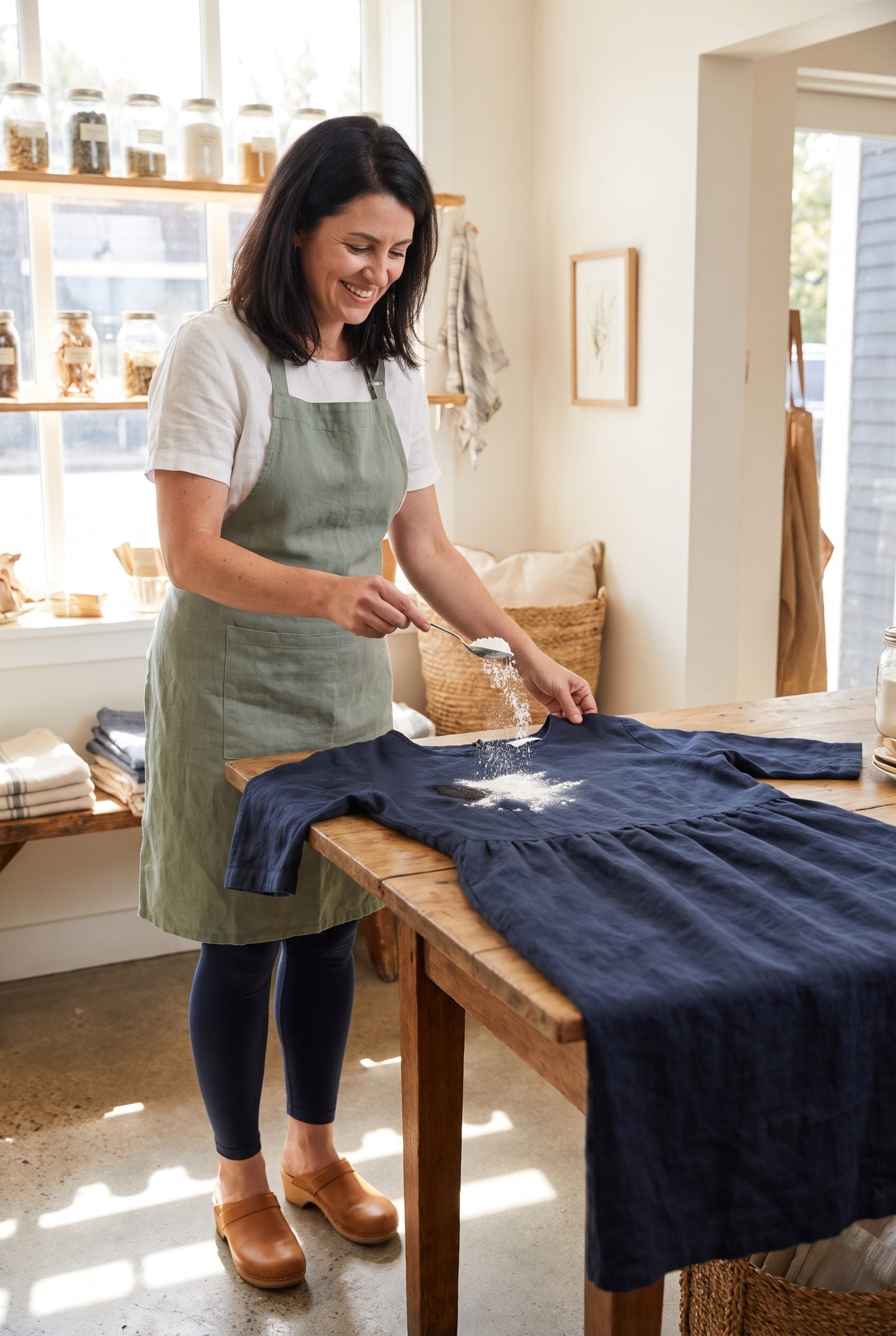
Grease and water don’t mix, which is why dabbing an oil spot with a wet cloth only smears it wider. You need something thirsty instead. Pile cornstarch, talc, or a swipe of white chalk right onto a fresh grease mark and leave it alone.
The powder pulls the oil up out of the fibers over an hour or two. Brush it off, and much of the grease goes with it. A second round catches the rest before the spot ever gets near water. It’s the sort of fix that feels too simple to work — right up until the day it saves a linen dress you love.
28. Let Mud Dry Completely Before You Brush It Away
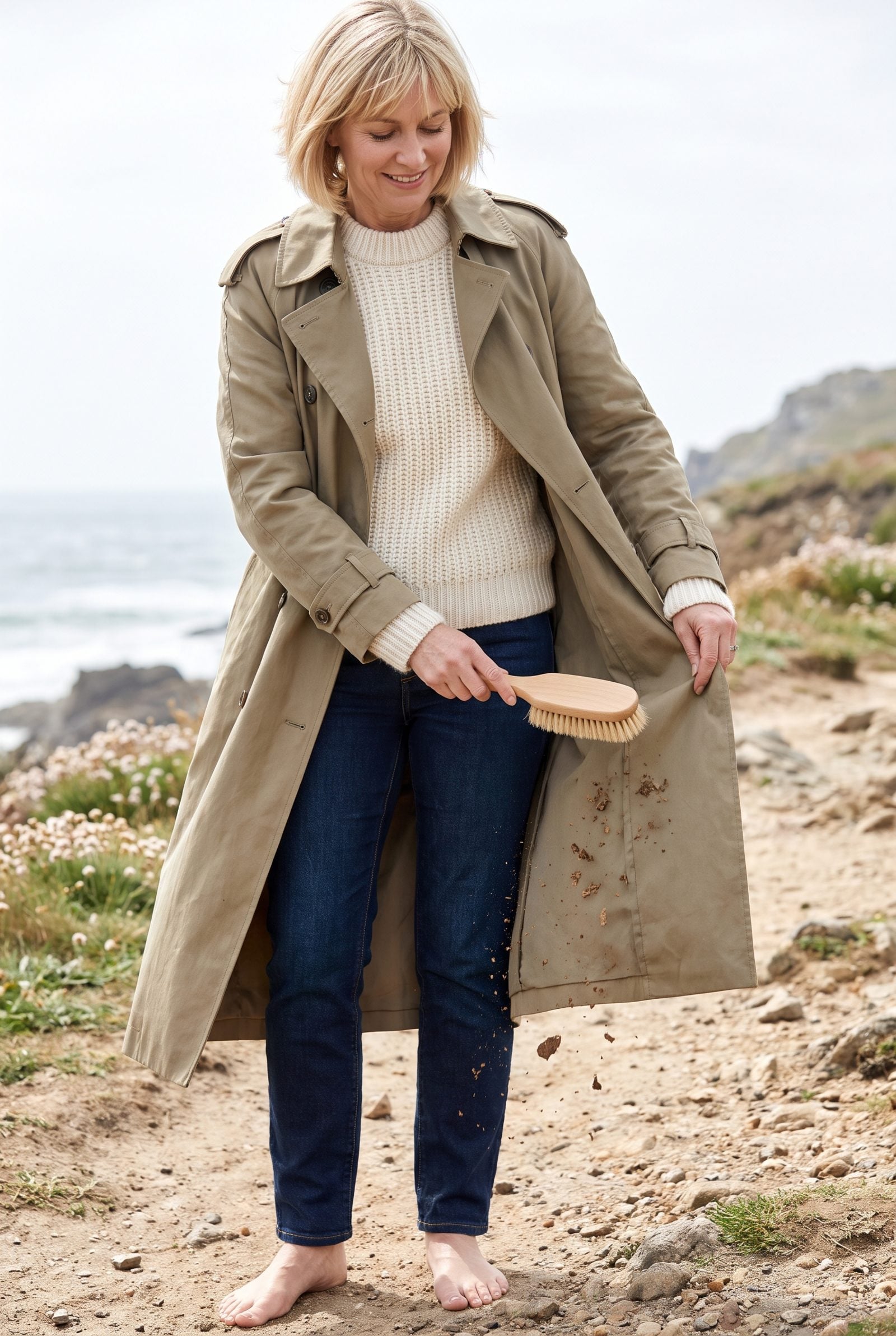
Every instinct says wipe mud off the second it lands. Fight that instinct. Wet mud smears into the weave and drives the dirt deeper, turning a surface splatter into a ground-in stain that clings for good.
Hang the garment and wait. Once the mud is bone dry and crumbly, most of it brushes straight off with a stiff clothes brush, flaking away and leaving barely a shadow. Whatever ghost remains comes out with a gentle spot-clean. It’s the most patient trick on this list, and the one that goes most against the grain. A coat hem, a trouser cuff, the back of a skirt — let the mud die first, then dismiss it.
27. Lift Ballpoint Ink From Washable Fabric With Rubbing Alcohol

Ballpoint ink looks permanent. It almost never is, as long as the fabric is washable and you catch it before it goes through heat.
Lay the stained area face down on a folded towel and dab a little rubbing alcohol onto the back of the stain with a cotton ball, letting the towel blot up the loosened ink before it spreads sideways. Move to a clean section every few dabs. You’ll watch the blue bleed out in fading passes, and then you just launder as usual.
26. Soak Milk and Egg Stains in Cold Water, Never Hot
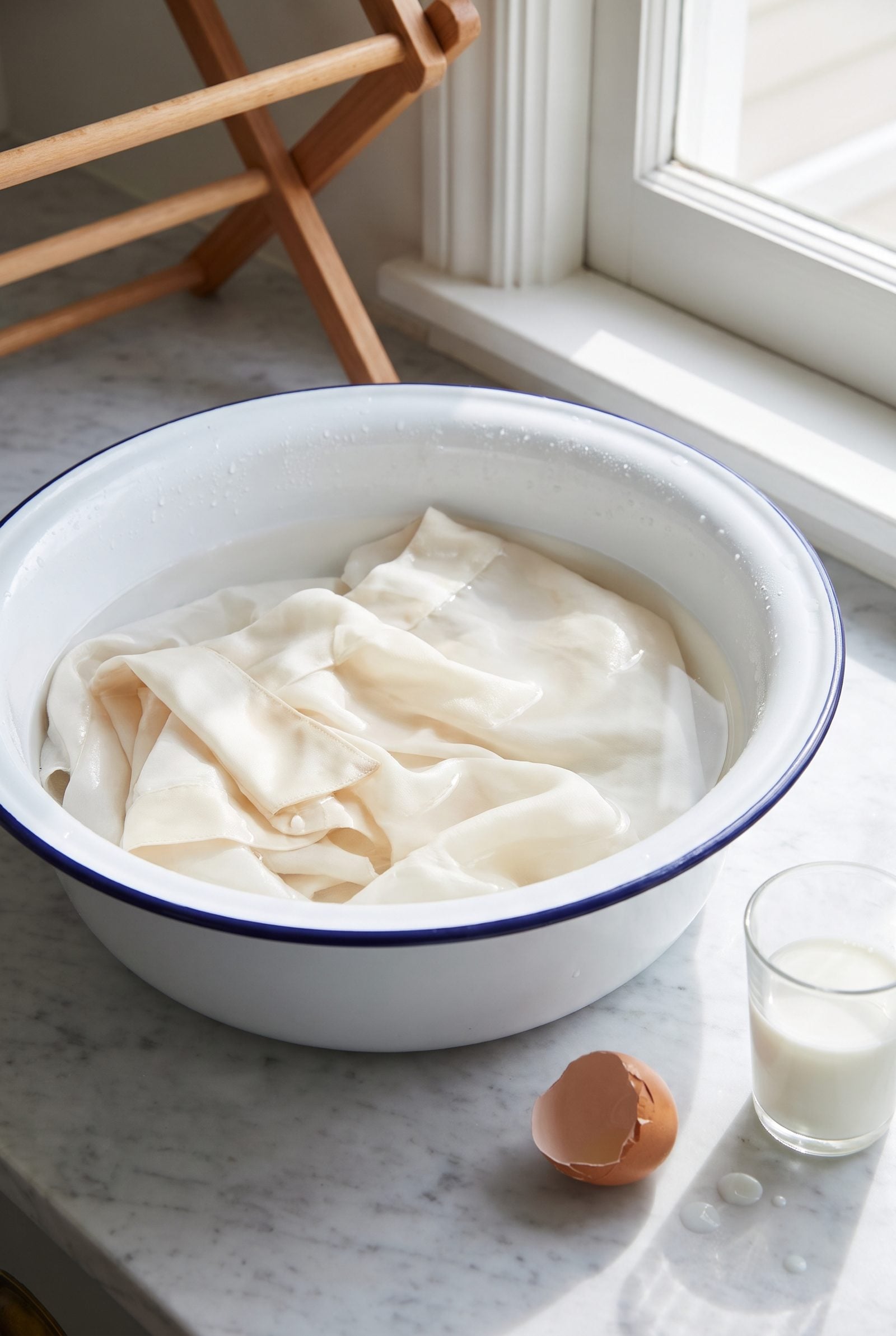
Protein stains have a cruel trick built in. Heat cooks them into the fibers and sets them forever, exactly the way an egg firms up in a hot pan.
So milk, egg, cream, anything protein-based goes into cold water first. Let a washable garment soak for half an hour, longer if the stain is stubborn, then launder cool. I ruined a good cream silk blouse learning this the hot-tap way years ago, and I still think about it.
25. Blot Coffee and Tea Spills Instead of Rubbing Them

The instinct is always to scrub. Fight it.
Rubbing a coffee or tea spill grinds the tannins deeper and frays the surface fibers, so the stain shows worse once it dries. Blot straight down with a clean cloth, lifting the liquid out rather than smearing it around, and work from the edge inward. Flush with cool water from the back, then treat and wash. Yes, blotting is slower, and it feels like you’re doing less. You’re doing more.
24. Lift the Collar Ring With Laundry Soap and a Soft Brush
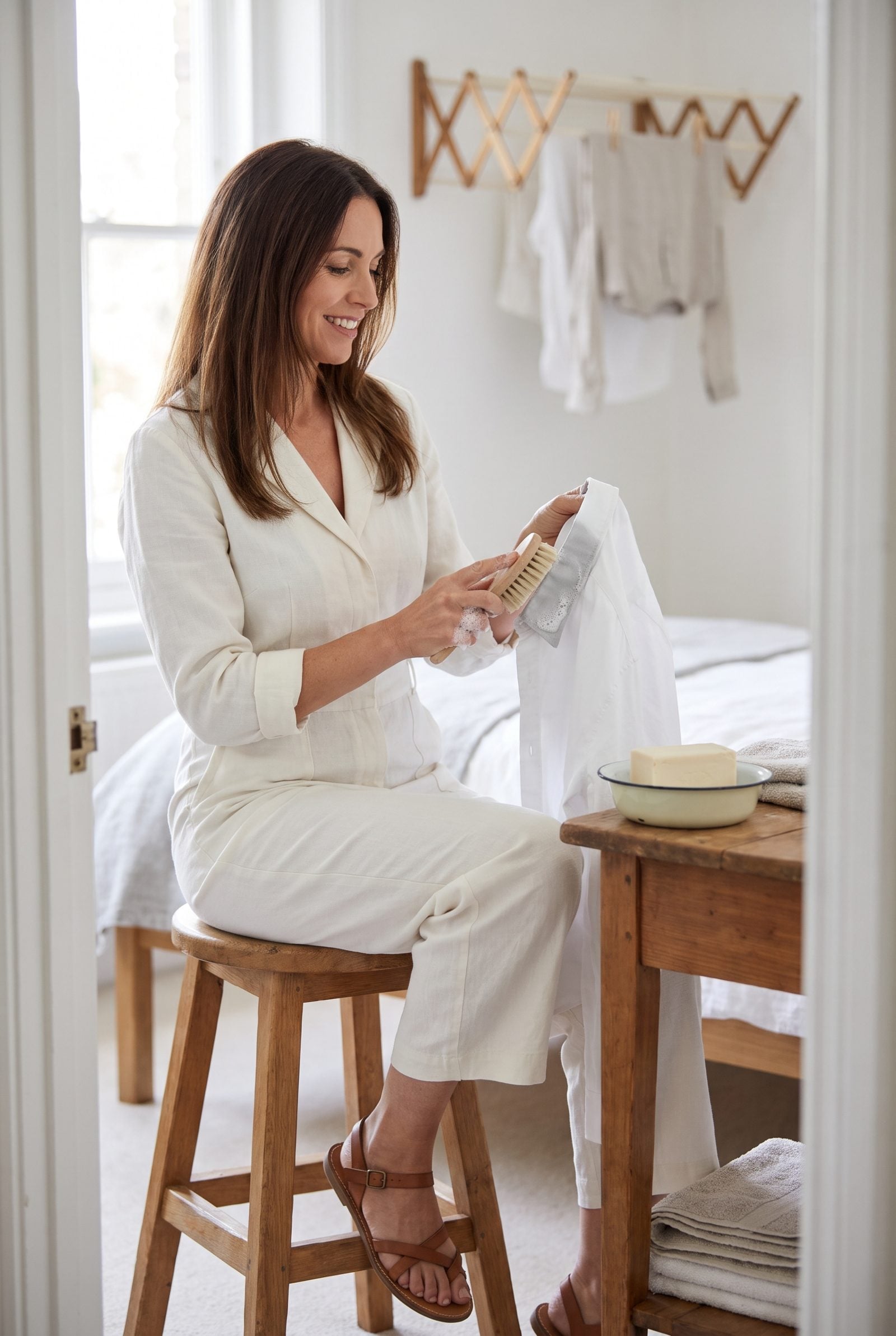
That grey shadow along a collar isn’t dirt in the usual sense. It’s skin oil, sweat, and a little makeup pressed into the weave by your own neck all day.
Rub plain bar laundry soap directly onto the dampened collar, then work it in with a soft brush — an old toothbrush does fine. Short strokes, following the grain of the fabric. Give it ten minutes so the soap can break down the oils, then wash. The ring lifts out instead of just going pale.
23. Use Diluted Hydrogen Peroxide on Sweat Stains in Washable Whites
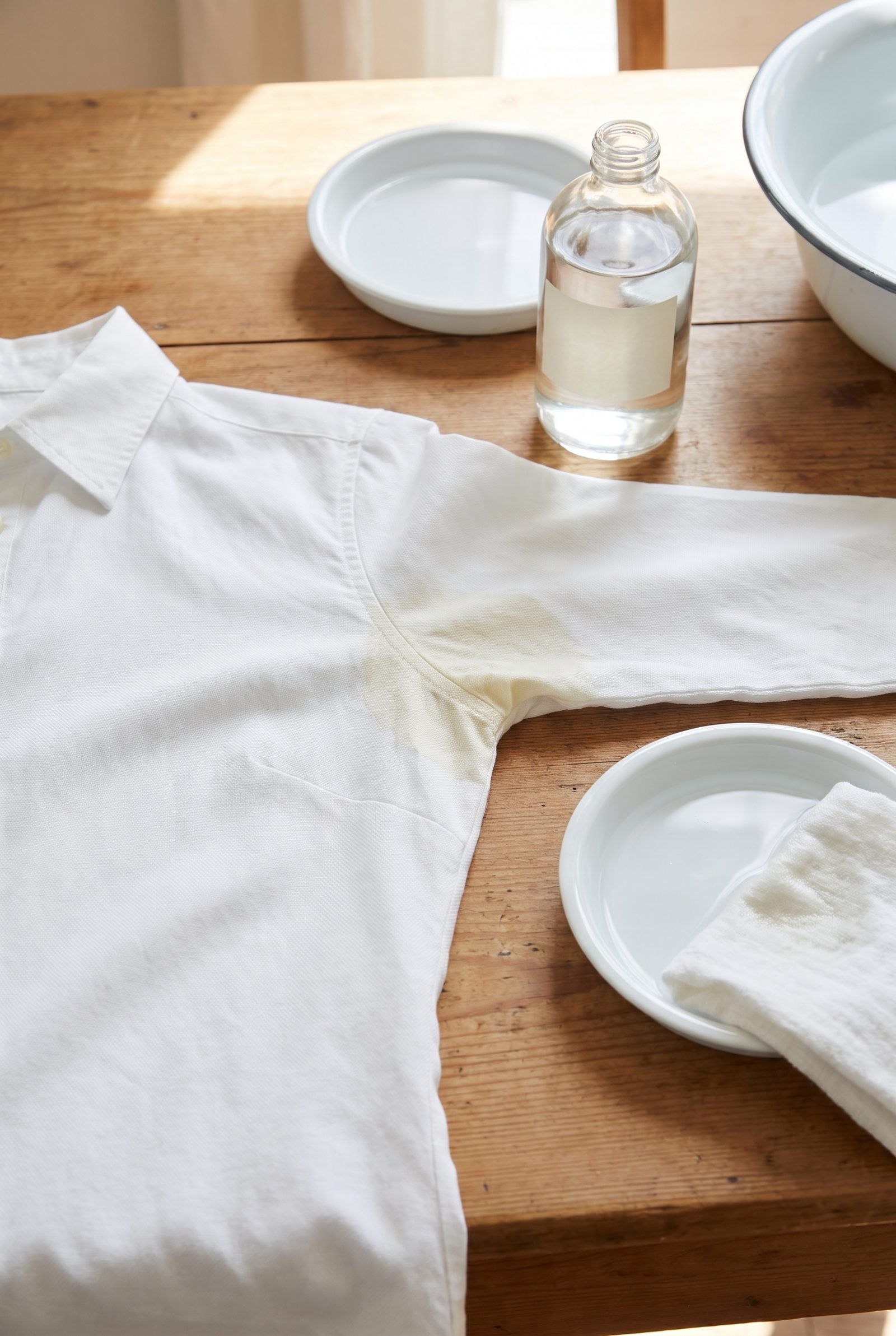
Yellowed underarms are the quiet killer of white tops. Blame the reaction between sweat and the aluminum in antiperspirant, which builds slowly until the shirt is unwearable.
Mix hydrogen peroxide with an equal part cool water, dab it onto the stain, and give it half an hour in indirect light before washing. Keep this to washable whites and sturdy light cottons. Peroxide lightens — the whole point on white, and the whole problem on color.
22. Harden Candle Wax With Ice, Then Draw It Out With Paper and a Warm Iron
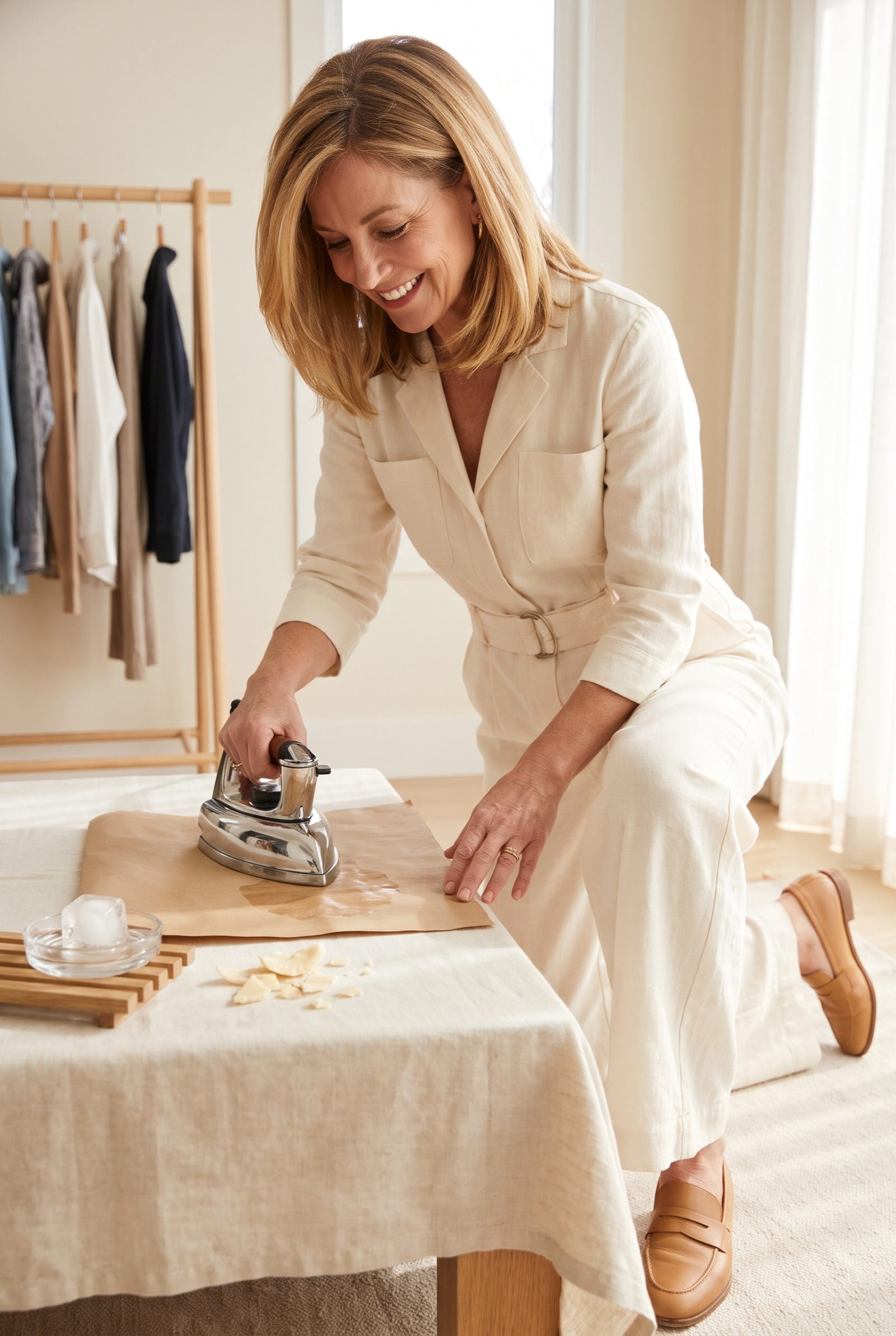
Candle wax on a tablecloth is a two-step job, and people usually skip the first step and make it worse.
Start by hardening the wax with ice, then chip off everything that lifts. Now lay plain brown paper or a paper towel over and under the stain and press with a warm, dry iron. The warmth melts the wax just enough to migrate up into the paper — swap to a clean patch as it soaks through. Any color left from a dyed candle comes out with a stain treatment afterward.
21. Brighten Washable White Linens With Lemon Juice and Sunlight
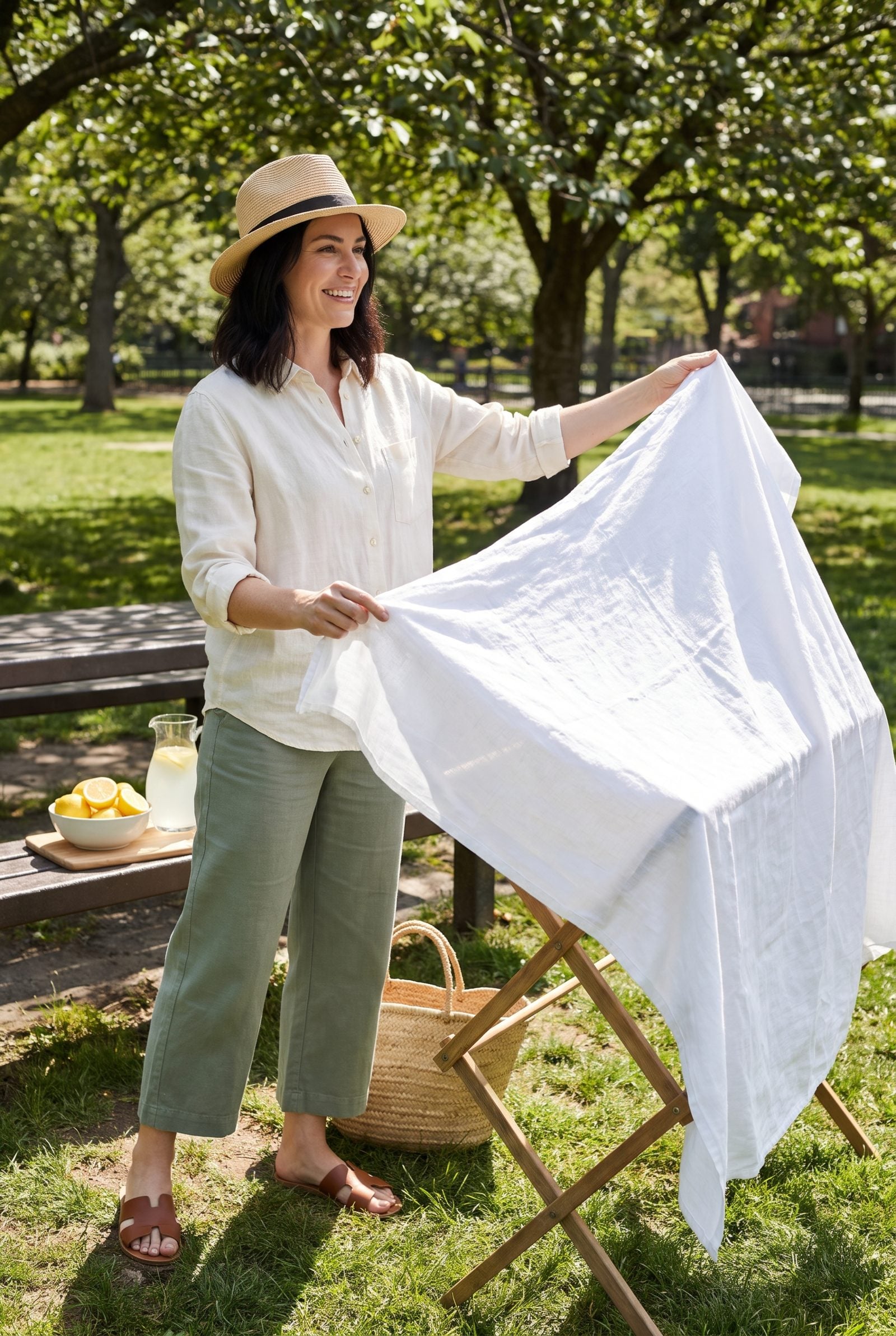
Our grandmothers bleached without bleach, and they were right.
Dab or soak washable white linen in lemon juice, then lay it flat in full sun. The citric acid and ultraviolet light work together to break down yellowing and lighten stains, and the sun handles the finishing on its own. It’s slow, it’s free, and it leaves linen smelling like a clean afternoon instead of a chemical cabinet.
Whites only, though. Lemon and sun will fade color right out of anything dyed, which is exactly what you don’t want on a good patterned tablecloth.
20. Test Every Stain Treatment on a Hidden Seam First
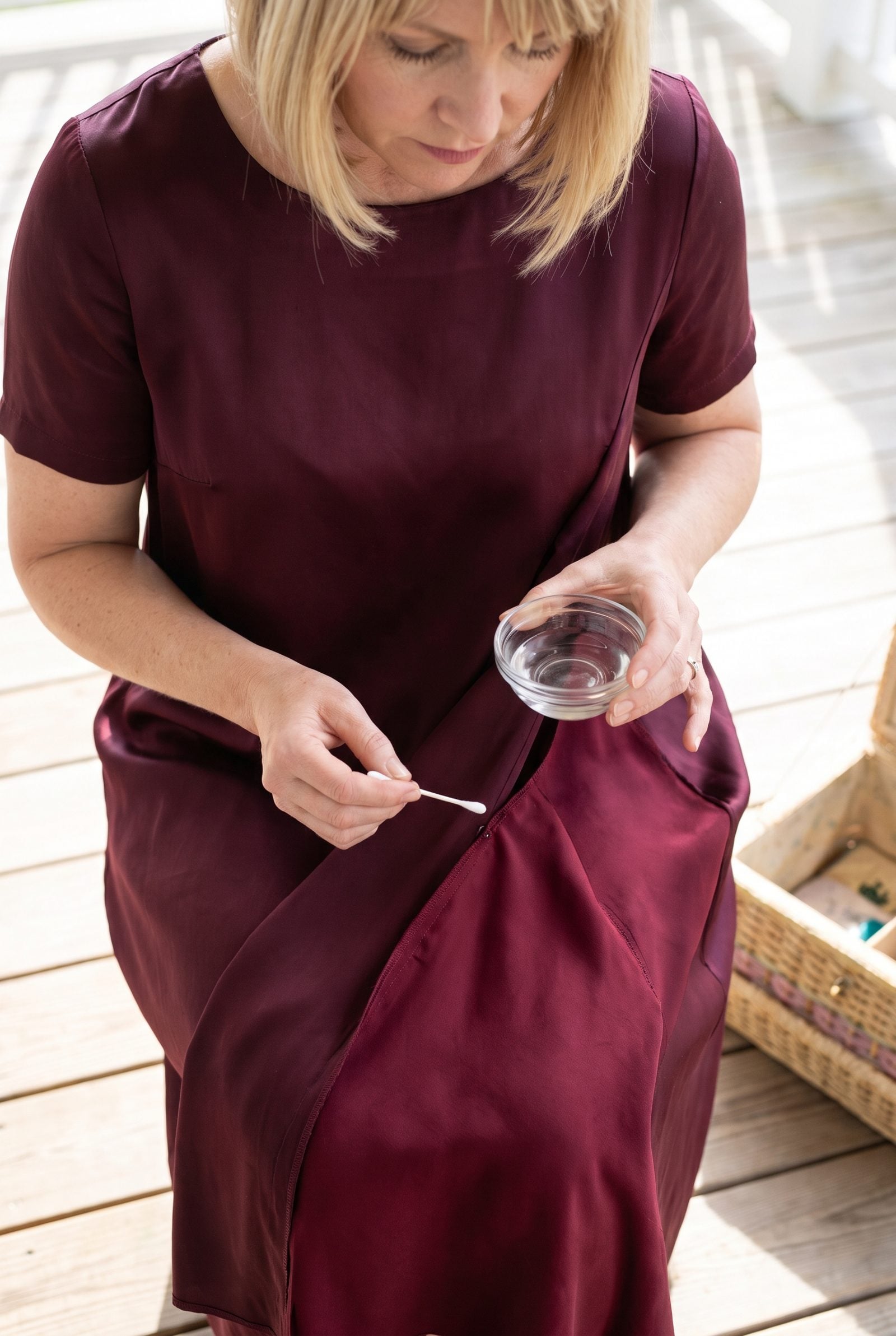
This is the step that saves the garment you actually care about. Test first, always, on a spot no one will ever see.
An inside seam, the hem allowance, the underside of a cuff. Dab a little of whatever you’re about to use, wait a few minutes, then press a white cloth against it to check for color transfer or any dulling of the dye. If the fabric reacts, you’ve lost a seam no one sees instead of the front of a dress you love. On anything silk, wool, or richly dyed, I treat this as non-negotiable. The two minutes it costs are nothing against the shirt you’d otherwise bleach a pale patch into.
19. Never Put a Stained Garment Under a Hot Iron or in the Dryer
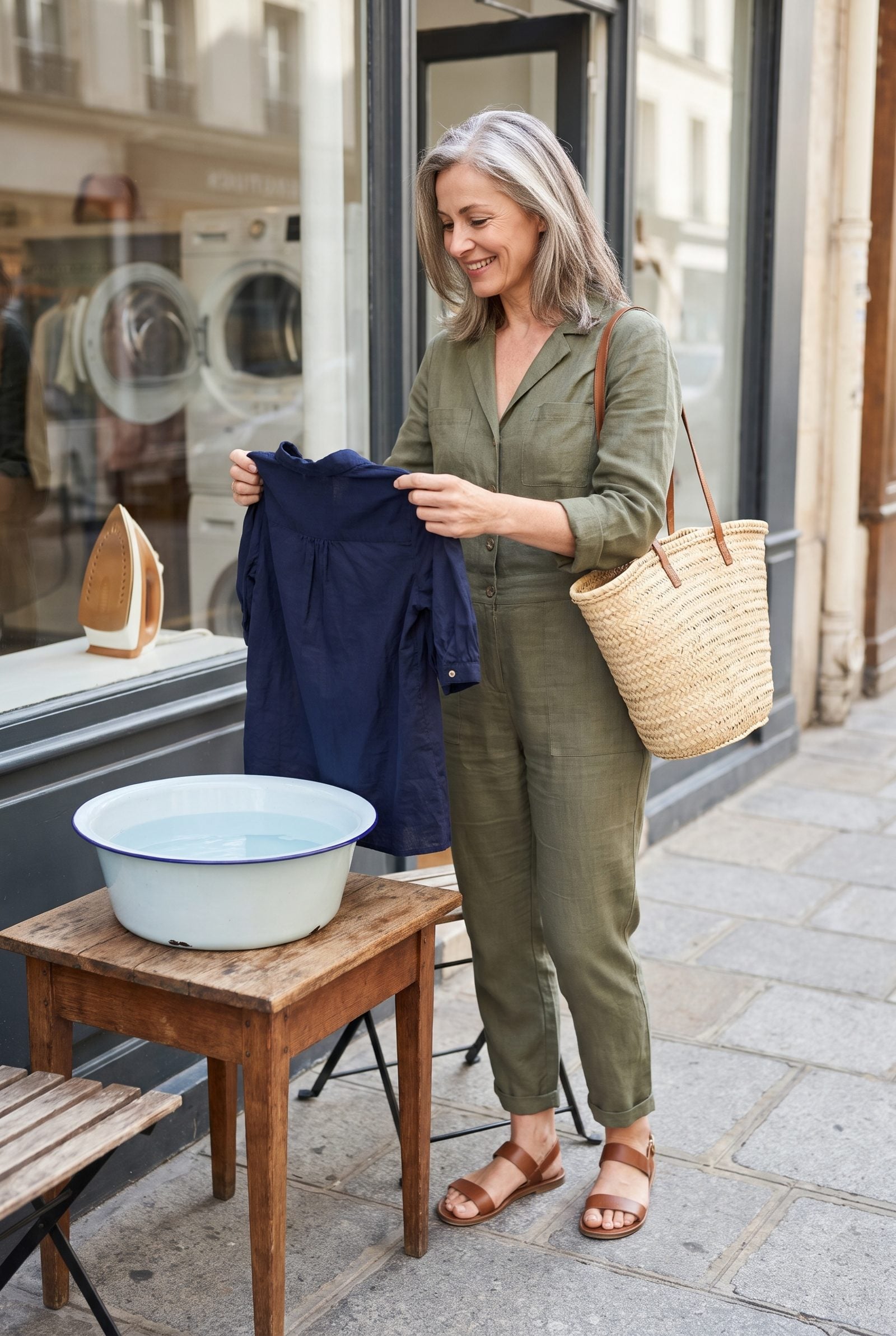
This is the one rule that undoes every other one on this list.
Heat sets stains permanently. A mark you could have lifted in cold water becomes forever the moment it goes through a hot dryer cycle or under an iron. The fibers close around it and bond it in, and after that no soak or solvent gets it back out.
So the order matters. Treat first, confirm the stain is gone, then — and only then — apply heat. Not certain it’s fully out? Air-dry the garment and check in good light before you commit. When in doubt, keep it cool and keep it damp.
18. Dry Dark Clothing in the Shade to Limit Fading

Sunlight is a bleach you can’t see working until it’s done. Hang a black cotton dress in a bright window all afternoon and you’ll pull it down a few shades lighter across the shoulders, faded exactly where the light hit hardest.
The fix our grandmothers knew by heart: dark clothes dry in the shade. A covered porch, a north-facing room, the gap behind the garage — anywhere the air moves but the direct sun doesn’t reach. Indigo denim especially holds its depth this way, which is why line-dried dark wash looks newer for longer than anything that’s seen a dryer and a windowsill.
17. Shake Out Garments Before Line-Drying to Reduce Wrinkles

One good snap of the wrist before a garment goes on the line does more than ten minutes with an iron ever will. Wet fabric settles into whatever shape you hang it in, creases and all, then dries stiff into that memory.
So give it a firm shake first. Gravity pulls the weave straight, the wrinkles fall out, and a cotton shirt comes off the line almost ready to wear. Our mothers did this without thinking, holding a wet sheet by two corners and cracking it like a sail. Easiest way I know to dodge ironing altogether — and I will happily dodge ironing whenever the universe allows it.
16. Bring Line-Dried Clothing Inside Before Evening Damp Sets In
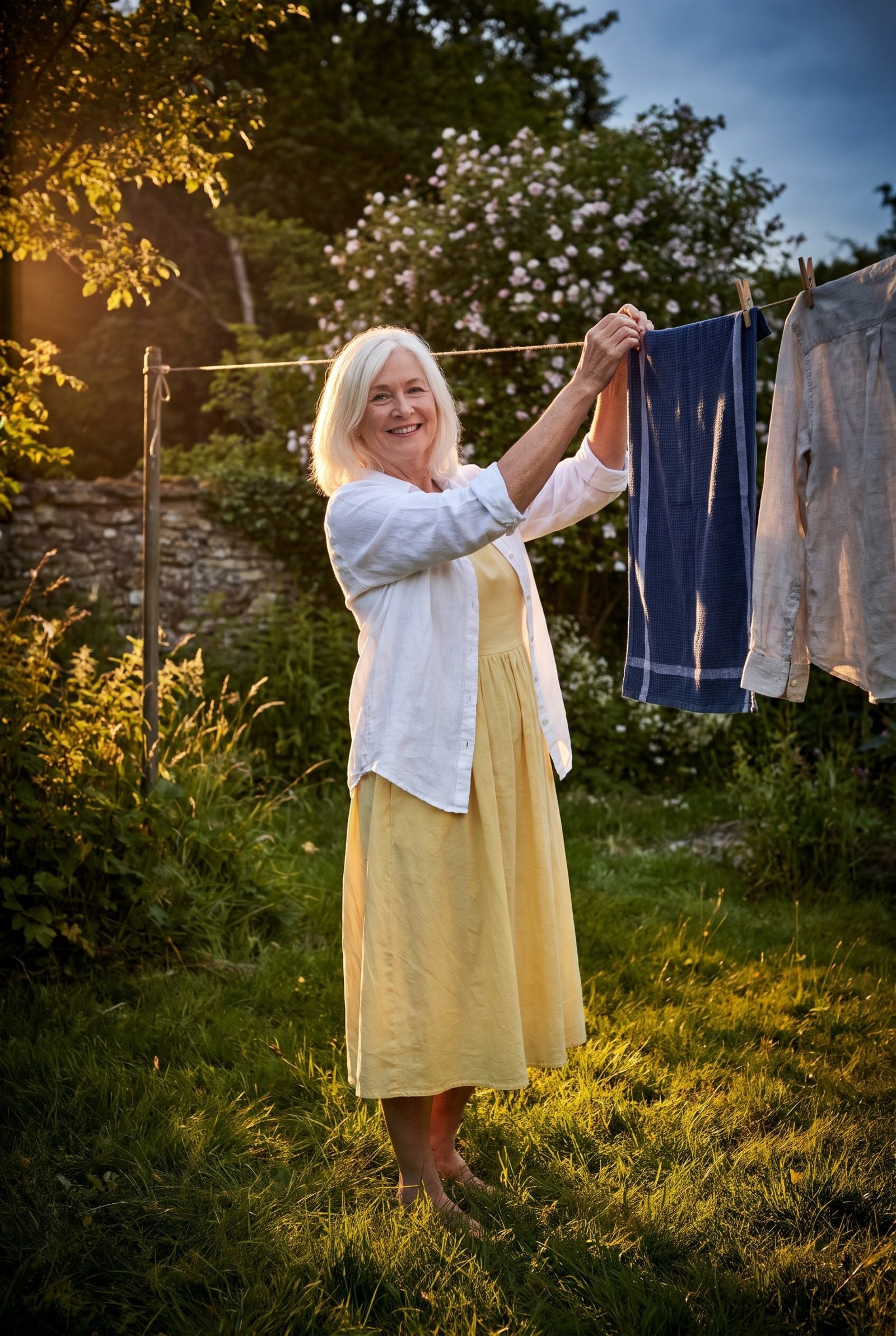
The dew doesn’t announce itself. One minute your wash is bone dry on the line, the next the sun drops behind the fence and the air turns damp — everything you hung out at noon is cool and clammy again by seven.
Timing the collection is half the skill of line-drying. Bring it in while the light’s still warm, before the evening moisture creeps back into the fibers and leaves you with laundry that smells faintly of outside and has to go right back out tomorrow. Dry cotton pulled off a warm line smells like nothing a dryer sheet can fake.
15. Press Cotton While It Is Still Slightly Damp
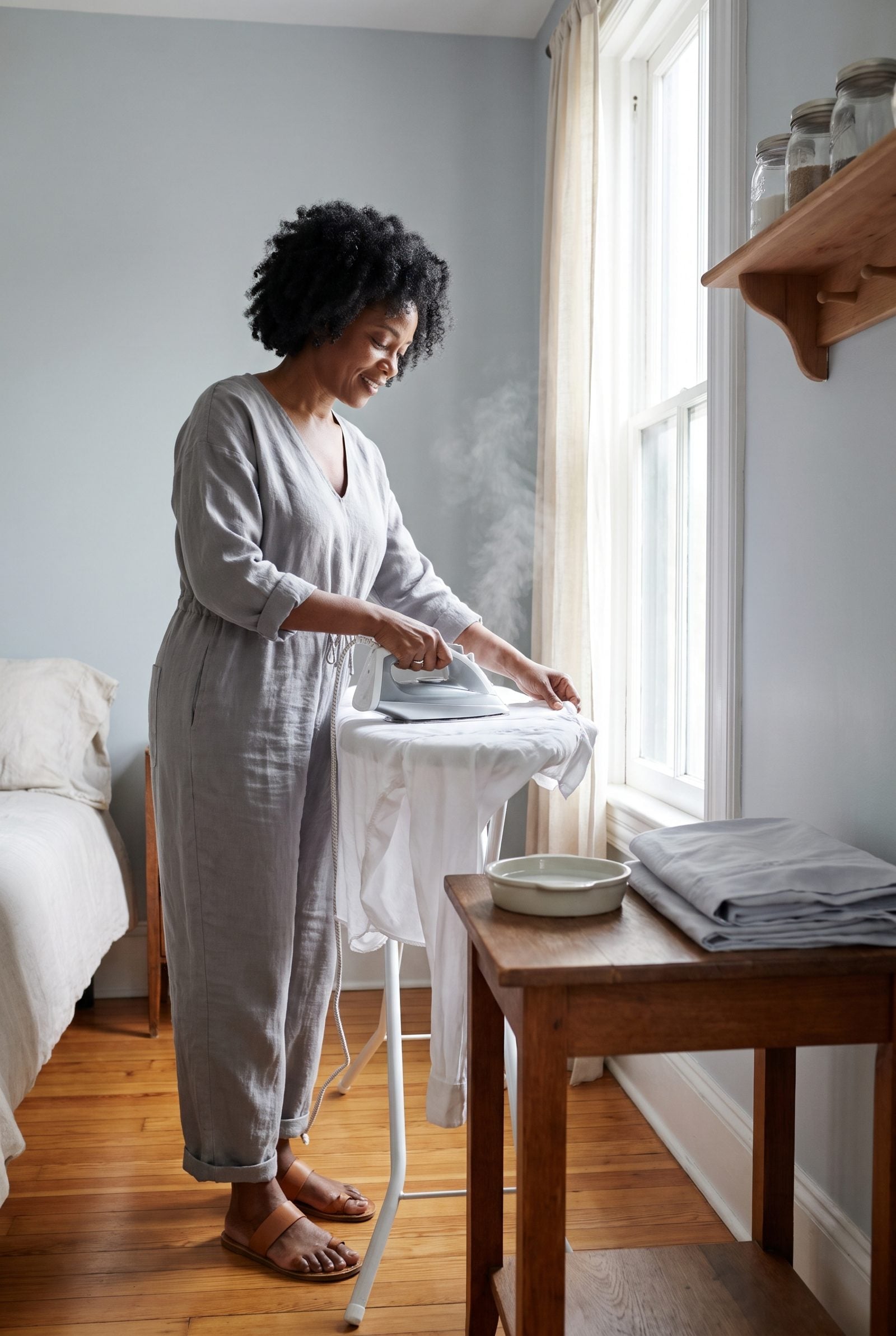
Ironing bone-dry cotton is a battle you half lose. The wrinkles have set hard, you fight each one, and the result still looks like you tried and gave up.
Catch it slightly damp instead — pulled off the line before it’s fully dry, or spritzed with a little water from an enamel dish. The heat turns that moisture to steam from the inside, and the fibers relax and flatten under the plate with almost no effort. A white cotton blouse pressed this way comes out with a collar sharp enough to stand on its own. Already dry? A fine mist over the fabric gets you most of the way there.
14. Iron Dark Fabrics on the Wrong Side to Prevent Shine
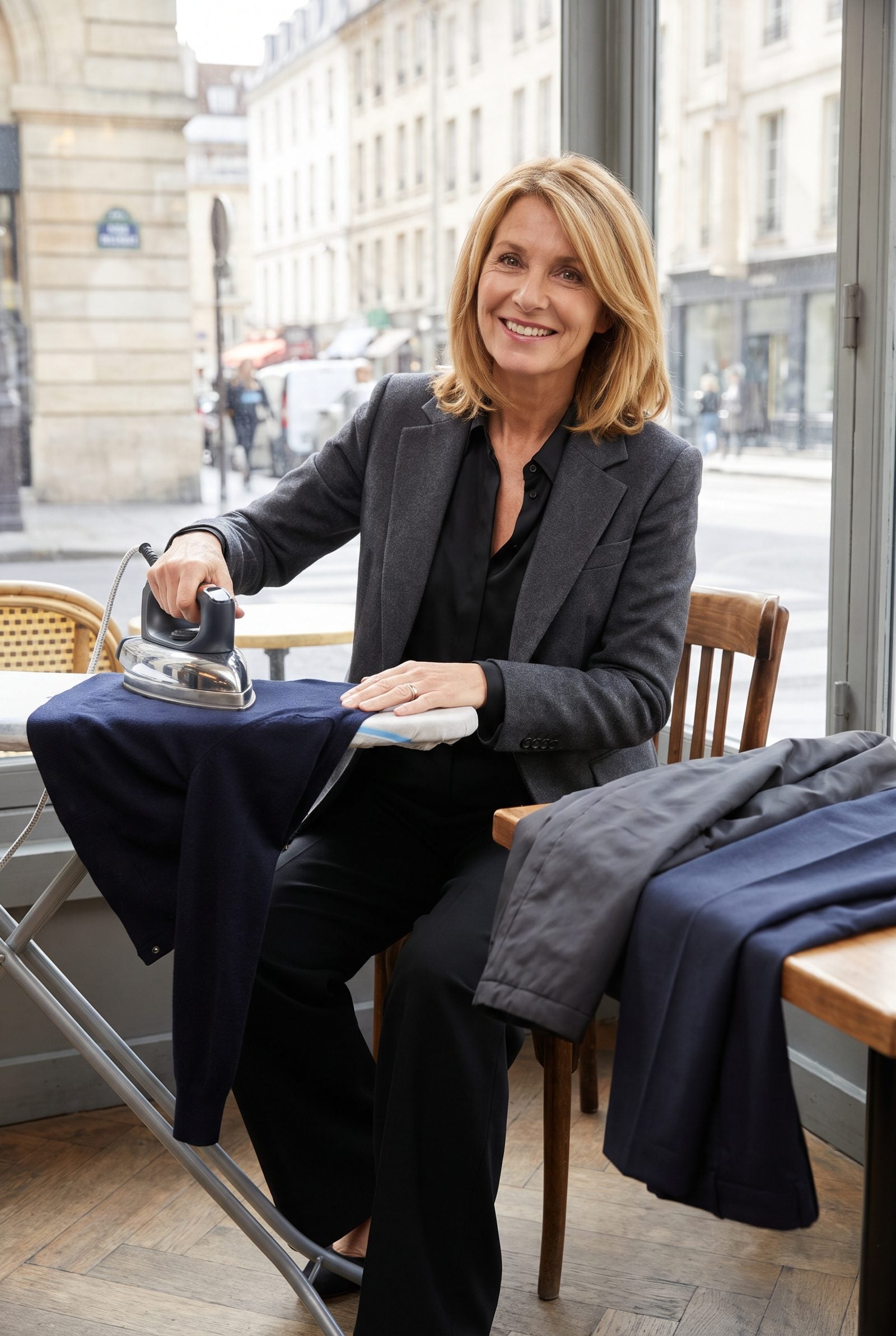
You’ve seen the mark a hot iron leaves on dark fabric: a shiny, flattened patch across the seat of black trousers or the knee of a navy skirt, catching the light like the fabric’s been polished. It almost never comes out.
Turn the garment inside out and press from the wrong side. The heat does its work, the creases fall, and the face of the fabric never meets the plate. On anything dark, anything with a bit of synthetic in the blend, this is non-negotiable. The shine is permanent, and there’s no quiet way to say it — a polished patch on your good black trousers announces itself from across the room.
13. Place a Pressing Cloth Between the Iron and Delicate Fabric

Silk scorches. Chiffon melts. Lace prints the weave of its own pattern into itself if the iron touches it bare. A delicate fabric gives you no margin for a hot plate pressed straight onto it.
The pressing cloth is the oldest trick in the sewing basket — just a plain scrap of cotton or a clean handkerchief laid over the fabric before the iron comes down. It diffuses the heat, stops the shine, and takes the scorch for you if the temperature’s off. A square of old bedsheet does the job. Keep one folded with your iron and you’ll save a silk blouse the first time it matters.
12. Steam Wool Instead of Pressing the Iron Directly Onto It
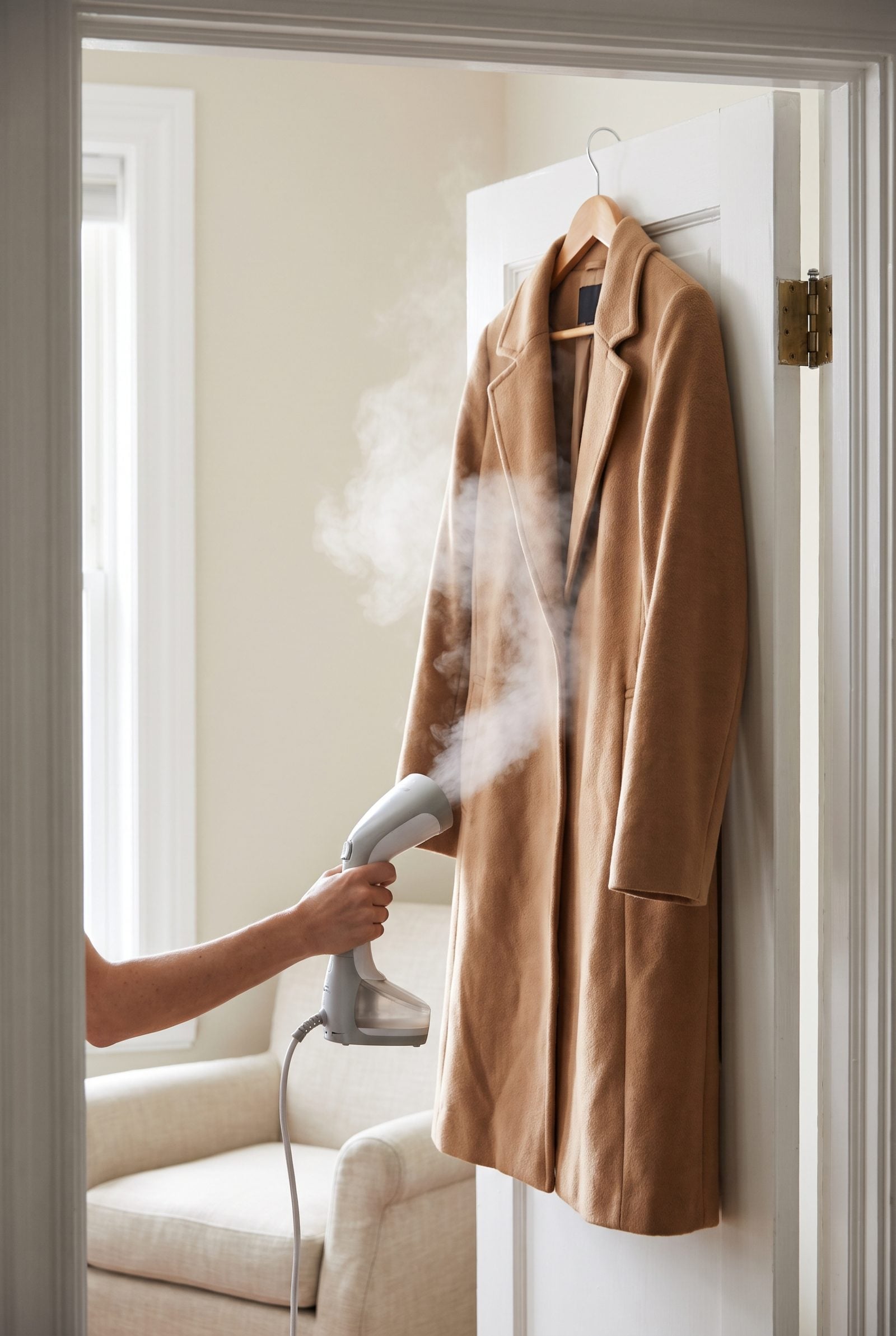
Press a hot iron flat onto wool and you crush the nap, leave it limp and shiny, and take the life right out of the fabric. Wool is three-dimensional. Flattening it is the one thing you don’t want.
Steam it instead. Hang the garment, hold a steamer or even a kettle’s spout a few inches off, and let the warm moisture relax the fibers while the wool stays standing up full and soft. The creases drop out, the nap stays lofted, and a wool blazer comes back looking cared for rather than beaten into submission. No steamer? Hang it in the bathroom while you shower — the humidity does most of the work.
11. Brush Wool Coats After Wearing Them

A wool coat collects everything the day throws at it — dust, hair, the grit of a bus seat, the fine haze of city air. Left to sit in the weave, that debris dulls the color, and over time it feeds moths, which absolutely adore a dirty collar.
A soft natural-bristle brush, drawn downward with the nap after each wear, lifts all of it out before it settles. The wool stays smooth and the color stays true. Hang the coat, give it ten seconds, and it looks fresh without ever seeing a dry cleaner. Fewer trips to the cleaner means the wool lasts longer, too — harsh chemicals age it faster than wear ever does.
10. Use a Sweater Comb to Remove Pills Without Pulling the Knit

Those little fuzzy balls that bloom on the elbows and sides of a favorite sweater are just fibers rubbing loose and tangling. Pick at them with your fingers or, worse, a razor, and you risk tearing a hole in a knit you love.
A sweater comb or a fine-toothed pill shaver clears them cleanly. Lay the sweater flat, work in short gentle strokes, and watch years come off it as the pills lift away and the surface goes smooth again. A heather-grey wool knit that looked tired reads nearly new in five minutes. This is the small, patient kind of mending that keeps a good sweater in rotation long after the ones you gave up on went to the donation bin.
9. Snip Loose Threads Instead of Tugging Them

Pulling a loose thread feels satisfying for about half a second, and then the seam puckers and you’ve made it worse. I learned this the hard way on a wool skirt I loved and never wore again.
So snip it flush with small, sharp scissors instead. The thread you can see is holding more than you think, and yanking it only unpicks the stitch it came from. A clean cut stops the fraying and leaves the garment exactly where it was.
8. Reinforce a Loose Button Before It Falls Off

A button that wobbles is a button in its final week. You feel the thread go slack under your thumb, tell yourself you’ll fix it, and then it drops off in a parking lot three days later, gone forever.
Catch it early. Five minutes with a needle and doubled thread will do it — wind the shank a few times underneath so it sits proud of the fabric, then knot it off. That little wrapped stem is what stops the button straining against the cloth every time you do it up, and a reinforced one will outlast the garment it’s on.
7. Coat Sewing Thread With Beeswax to Reduce Tangling

Run your thread across a block of beeswax before you sew and it stops behaving like a cat with a ball of yarn. The wax coats the fibers, stiffens them a touch, and the thread glides through fabric instead of knotting on itself halfway down the seam.
Sounds fussy until you try it. Then you wonder why nobody told you sooner.
6. Darn a Sock While the Hole Is Still Small

A pinhole takes two minutes. A silver-dollar hole takes patience you don’t have and leaves a lump under your heel for the rest of the sock’s life.
Here’s the fix: grab a darning mushroom, or honestly any smooth round thing lying around. Stand it on your knee, drape the sock around it, lay your thread in a woven grid across the thin spot, and you’ve rebuilt the fabric before it tore through. Thin patches are a warning, not a verdict. Catch them while there’s still something to anchor the stitches into.
5. Patch Worn Fabric From the Inside for a Neater Repair

Pin a contrasting cream patch to the outside of your trousers, even up at the thigh, and everyone sees the patch. Patch the worn knee from the inside and all they see is a pair of trousers that held up better than most.
Position your backing fabric behind the thin spot, pin it, then stitch through from the right side in rows close enough to catch the weak threads. The repair hides underneath. The surface stays flat, the color stays consistent, and the fix reads as part of the garment instead of an apology for it.
4. Fold Heavy Sweaters Instead of Hanging Them

Hang a heavy sweater and gravity does what gravity does. The shoulders stretch into little peaks, the body droops, and within a season you’ve got a knit that fits like it was made for someone with much longer arms than yours.
Fold them instead. Flat, on a shelf, in a stack you can see. Knit has no structure to resist a hanger, so it just gives in and sags, whereas a folded sweater holds its shape for years. A neat stack of soft knits folded together on one shelf reads tidier than a rail of sagging shoulders ever will.
As a personal wardrobe consultant puts it, “The integrity of the sweater is compromised by good old fashioned gravity. If they’re hung they stretch out, become misshapen, and the shoulders get ruined.”
3. Store Clean Seasonal Clothing in Breathable Cotton Bags

Plastic bins feel like protection. They’re actually a greenhouse. Seal a wool coat in airtight plastic for six months and you trap whatever moisture was in the fibers, then open it to a smell that no amount of airing fully fixes.
Cotton bags breathe. Air moves through, damp doesn’t build, and the fabric comes out in spring smelling like fabric rather than a basement. Natural cotton over clear vinyl, every time. Your winter clothes will thank you in a language you can smell.
2. Renew Cedar Blocks by Lightly Sanding Their Surface

That cedar block in your drawer stopped working about a year ago and nobody told you. Cedar protects through its scent, and the scent fades as the surface oils dry out and seal over.
Don’t buy new ones, though. A light pass with fine sandpaper opens up fresh wood, and the smell comes roaring back the moment the dust rises. Same block, good as the day you bought it. Do it once a year and a set of cedar blocks lasts the better part of a decade.
1. Clean Clothes Before Storage So Moths Are Not Attracted to Residue

Nobody wants to hear this before packing away the winter woollens, but moths don’t want your cashmere. They want what’s on it.
Sweat, body oils, a splash of wine you forgot about, the invisible film of a season’s wear — that’s the meal. Moth larvae feed on the residue and chew through the fiber to get at it, so a garment that looks clean to you is a buffet to them. Wash or air everything before it goes into storage, even the pieces you only wore twice. Clean clothes get skipped. That’s the one people ignore until they open a box of holes in March.
Writing about moths that go after clothes soiled with sweat and stains, an extension entomologist advises “Have susceptible clothing cleaned before placing into summer storage to kill any life stages of clothes moths or carpet beetles that are already present and to make the item less attractive to egg-laying moths.”