❤️ Would you like to save this?
Flip a cheap blazer inside out and the story is right there. Raw serged edges, a lining stitched on in a hurry, a collar that won’t lie flat no matter how many times you press it. Now do the same with something that cost real money, and you’ll find the inside finished as carefully as the outside. These are the details that explain the price tag, and most of them live where no one ever looks. Learn to spot them and you stop paying for logos. You start paying for work. Here are the ones that give the game away.
FYI, thanks to AI imagery software, we’re able to create very specific fashion and hairstyle examples to illustrate the points being made. In some cases, imagery is exaggerated to hammer home the point. Also, assume links that take you off the site are affiliate links such as links to Amazon. this means we may earn a commission if you buy something.
47. The Dressmaker’s Chain Linking Lining to Shell
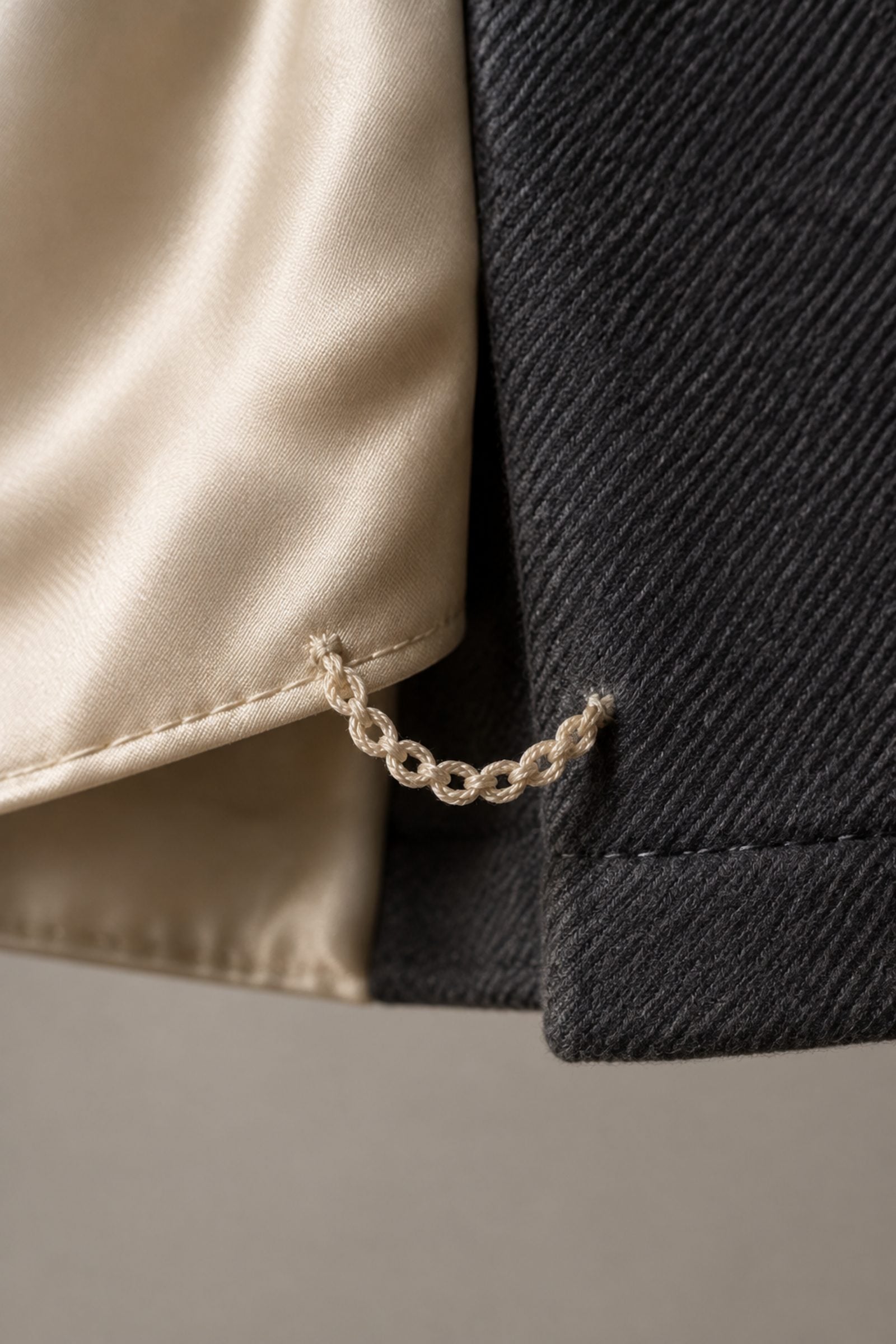
That braided chain looping between the lining and the shell at the hem is doing a job you’d never guess. Stitched where the lining meets the shell, its weight keeps the coat hanging straight and the open front falling cleanly. The lining itself hangs free of the shell.
You’ll find it on couture jackets and the best coats. It costs a tailor extra minutes per garment, which is precisely why fast fashion skips it.
46. The Curtained Waistband Hiding Inside Fine Trousers
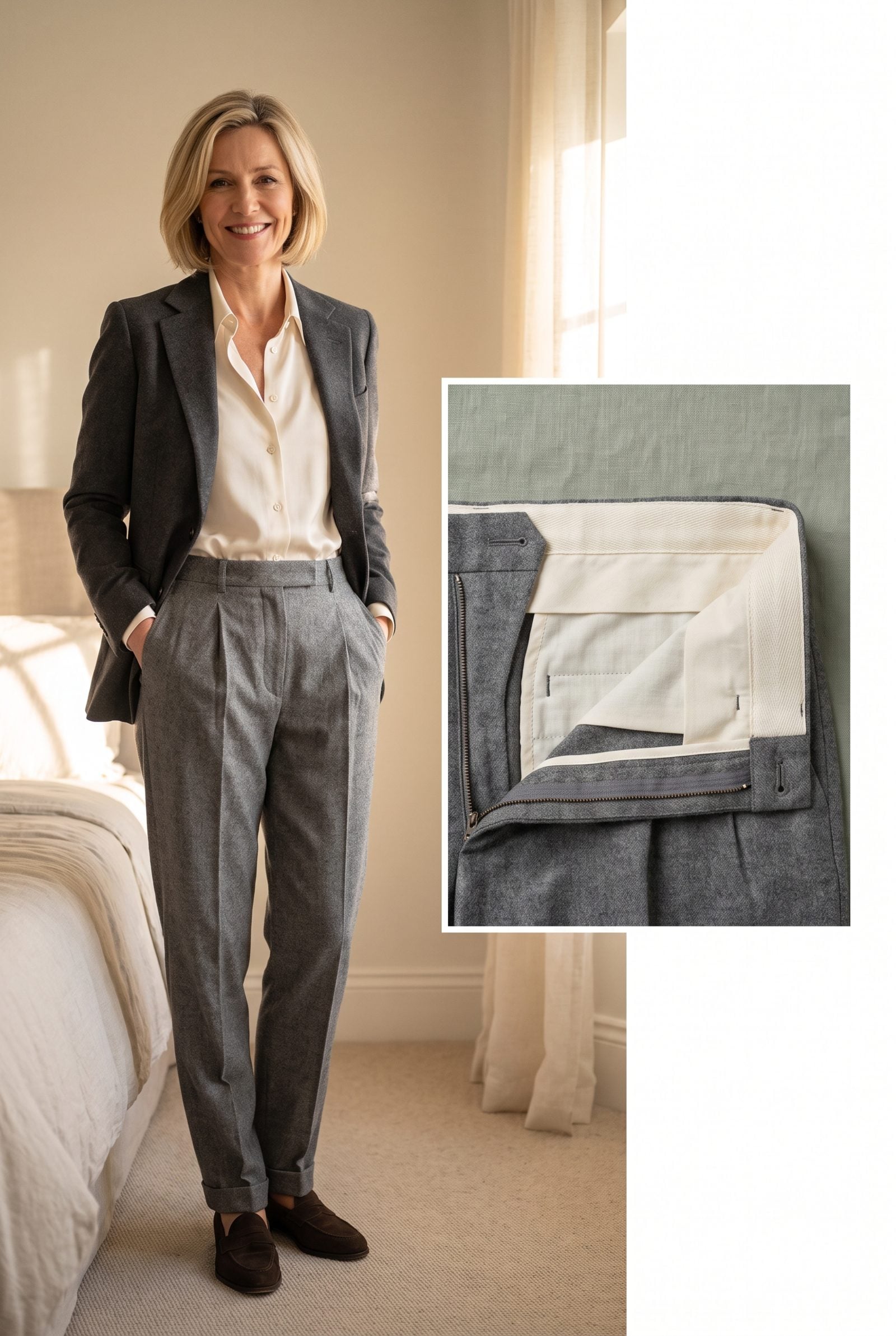
Look inside the waistband of a pair of serious trousers and the interior lining hangs loose at the bottom edge, like a little curtain, instead of being sewn flat to the trouser. That gap lets a shirt tail tuck smoothly and keeps the waist from rolling or digging in.
Cheap trousers fuse the waistband solid. It pinches, it bulges, and it never relaxes with your body.
45. The Bias-Cut Undercollar That Makes a Jacket Roll Right
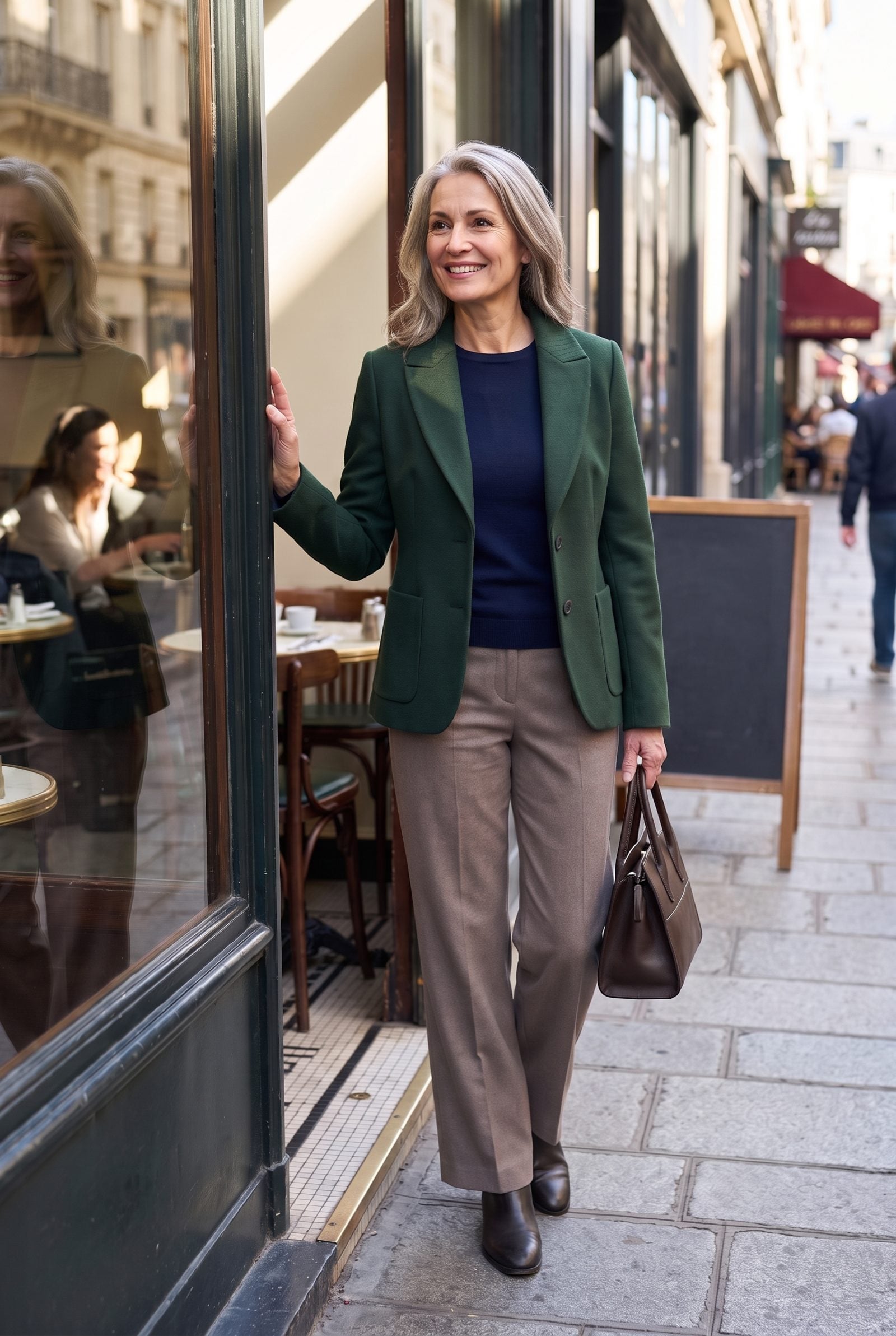
Here’s a detail almost nobody names but everybody notices: the way a collar hugs the neck and rolls softly instead of standing up stiff. The secret is in the collar’s shaping: melton wool cut on the bias and pad-stitched on the underside, so it curves around you.
Melton grips. The bias cut gives it stretch in exactly the right direction, and the result is a collar that lies down like it was poured there.
44. The Ease Pleat Tucked Into a Jacket Lining
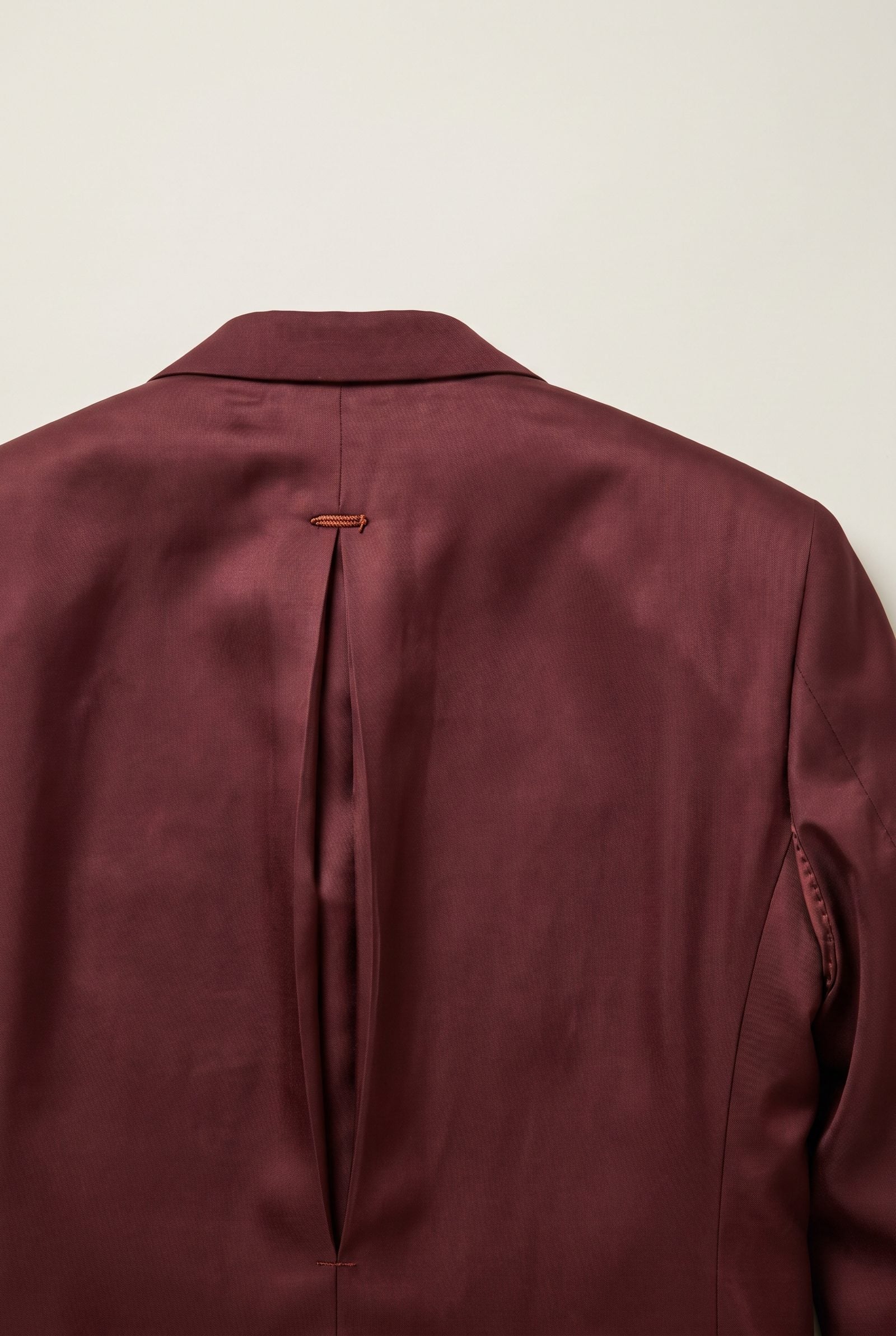
Reach across a table in a fused, flat-lined jacket and you feel the top underneath pull tight. The fix is a box pleat sewn right into the center back of the jacket’s lining, a fold of extra fabric that opens up when you move and lies flat when you’re still.
It gives you room to actually use your arms. You only register it by its absence, when something cheaper strains across your front and you spend the night sitting carefully.
43. The Floating Canvas That Shapes a Jacket From Within

This is the big one, the detail that separates a real tailored jacket from a glued imposter. On this navy jacket, the wool of the left front has been cut away to reveal what normally sits hidden inside the chest: a layer of horsehair canvas, covered in rows of hand pad stitching that attach it to the wool so it floats rather than bonds. It molds to your chest over time and curves with you.
The cheap alternative is fusing, where a stiff interfacing is heat-glued to the wool. Looks fine in the store. Then it bubbles and delaminates after a few cleanings, and the chest goes flat and dead.
42. Fully Fashioned Knitwear With Its Shaping Marks on Show

Those faint diagonal marks near the shoulder seam of a good sweater aren’t flaws. They’re proof the knit was shaped on the machine, narrowed stitch by stitch to fit the body, instead of knitted as a flat sheet and cut to shape like a biscuit.
Fully fashioned knits hold their form, resist unraveling, and drape where cut-and-sew knits sag.
41. Linked Knit Seams That Vanish Against the Skin
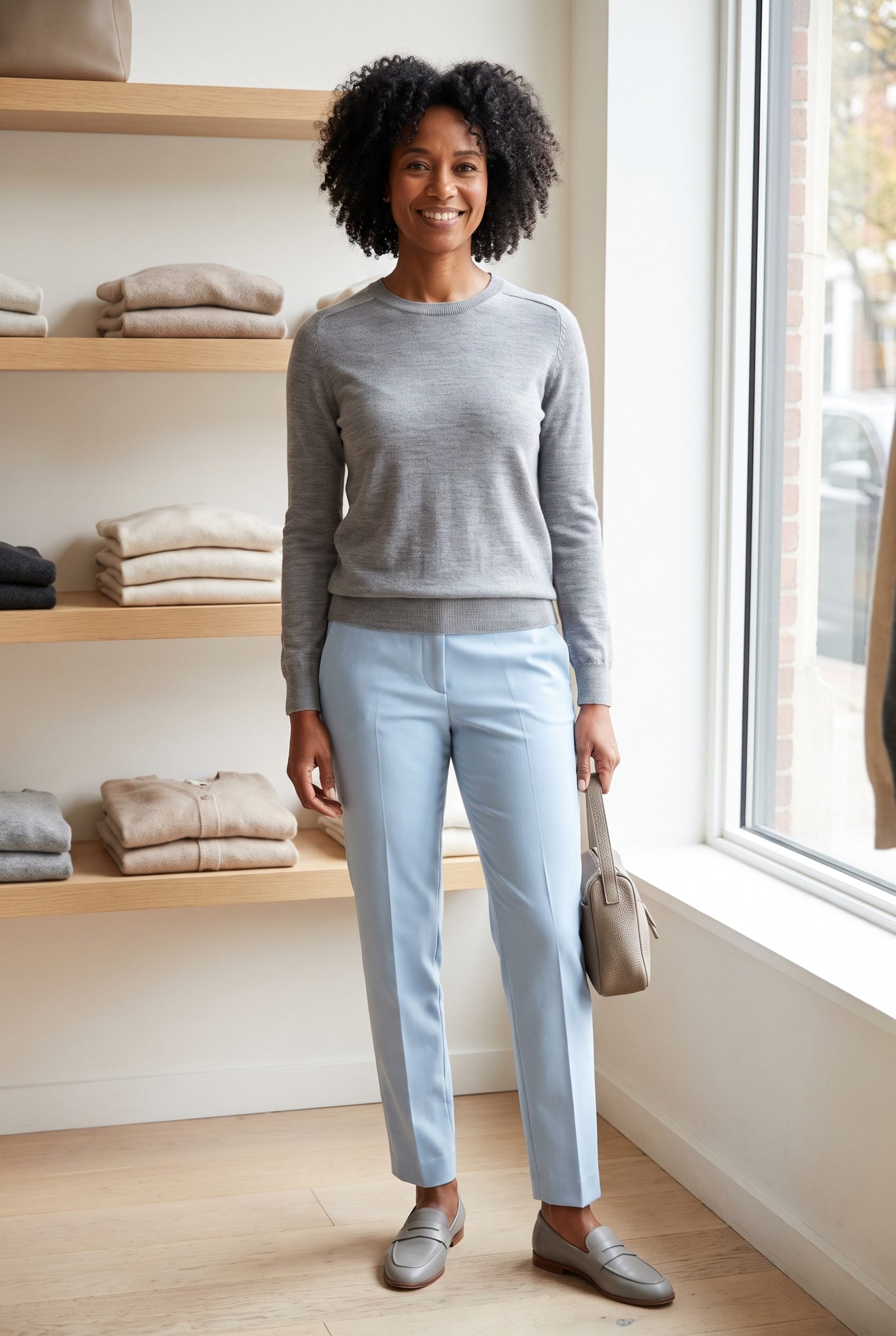
Run your thumb along the shoulder seam of an expensive sweater and you feel almost nothing. That flatness comes from linking, where each loop of knit is joined to its neighbor on a specialist machine, one stitch at a time.
The budget version is overlocking, a bulky serged ridge that rubs against your neck all day. Once you’ve felt the difference, the ridge becomes impossible to ignore.
40. Bound Buttonholes Built Like Tiny Welt Pockets
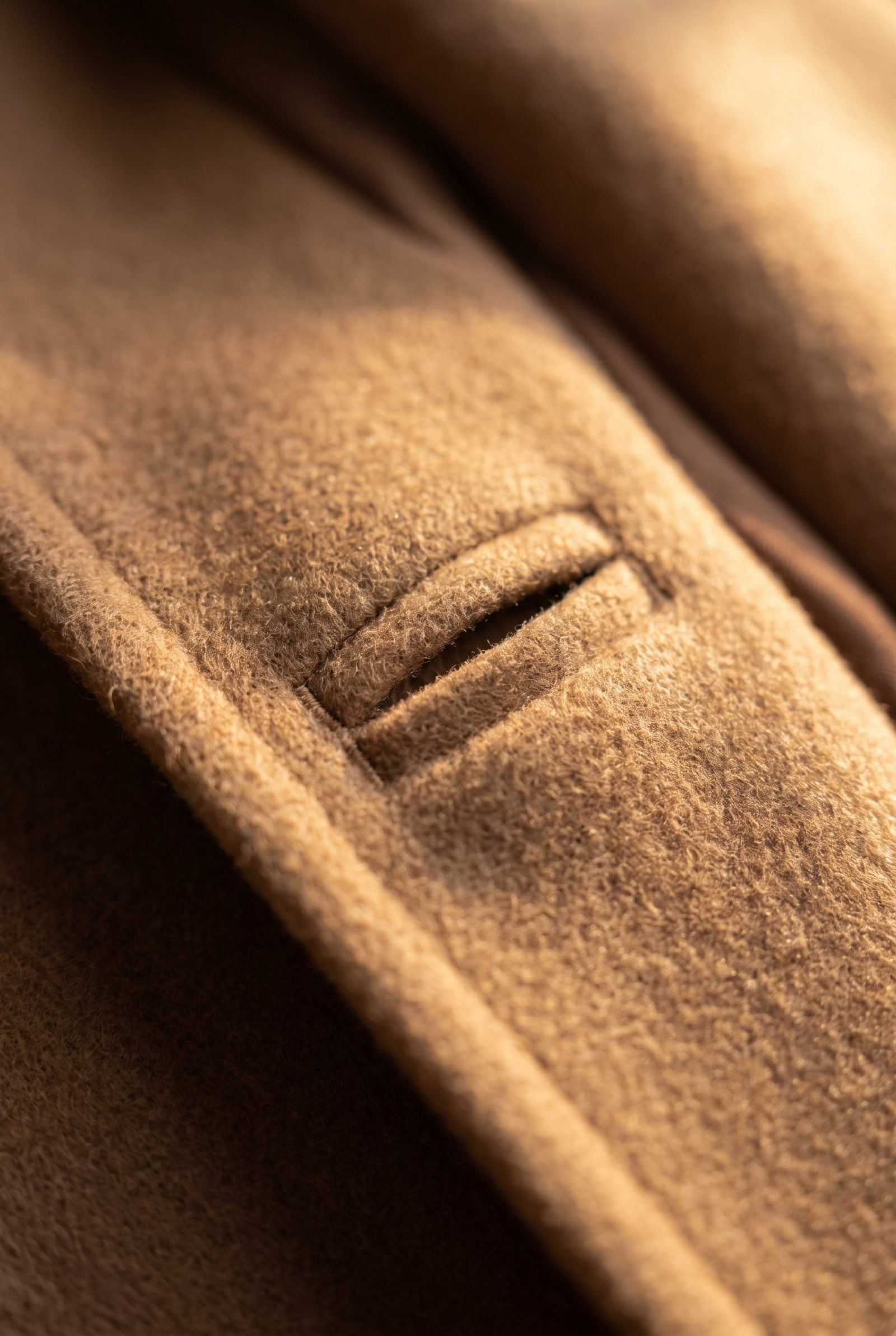
A machine buttonhole is a slit with thread whipped around it. A bound buttonhole is a small piece of architecture: two folded lips of fabric framing the opening, constructed exactly like a miniature welt pocket, with clean corners and not a raw edge in sight.
They turn up on fine coats and couture jackets where even the way you fasten a button gets treated as a design decision worth doing beautifully.
39. Pattern-Matched Welt Pockets That Nearly Disappear

Look at a checked or striped jacket and find the pocket. On a cheap one, the pattern breaks at the welt and the pocket announces itself. On an expensive one, the plaid runs straight through the welt as if the pocket were never cut at all.
Matching a pattern across a pocket wastes fabric and demands patience. It’s the mark of a maker who refused to let the eye snag on a seam.
38. Fabric-Covered Buttons Cut to Continue the Pattern

Most buttons are an afterthought. A covered button that carries the garment’s own pattern across its face is not — someone cuts each one from the same cloth and matches the print by eye, so the plaid runs straight through instead of stopping dead at the button’s edge.
You notice it without knowing why. Covered buttons cut from the same cloth let the garment read as one continuous surface, with nothing breaking the line. That seamlessness is the whole tell.
37. Underarm or Crotch Gussets Added for Movement

A little diamond of fabric set into the underarm where the sleeve meets the body, or at the crotch, looks like a mistake until you understand it. It isn’t. That gusset is extra cloth built in on purpose so the garment moves when you do, instead of straining at the seam and tearing over time.
Fast fashion skips it, because nobody wants to pay for an extra panel of cloth. Reach for something on a high shelf in a shirt with real gussets, though, and you feel the difference instantly. The fabric goes with you.
36. A Split Waistband Designed for Easier Alterations
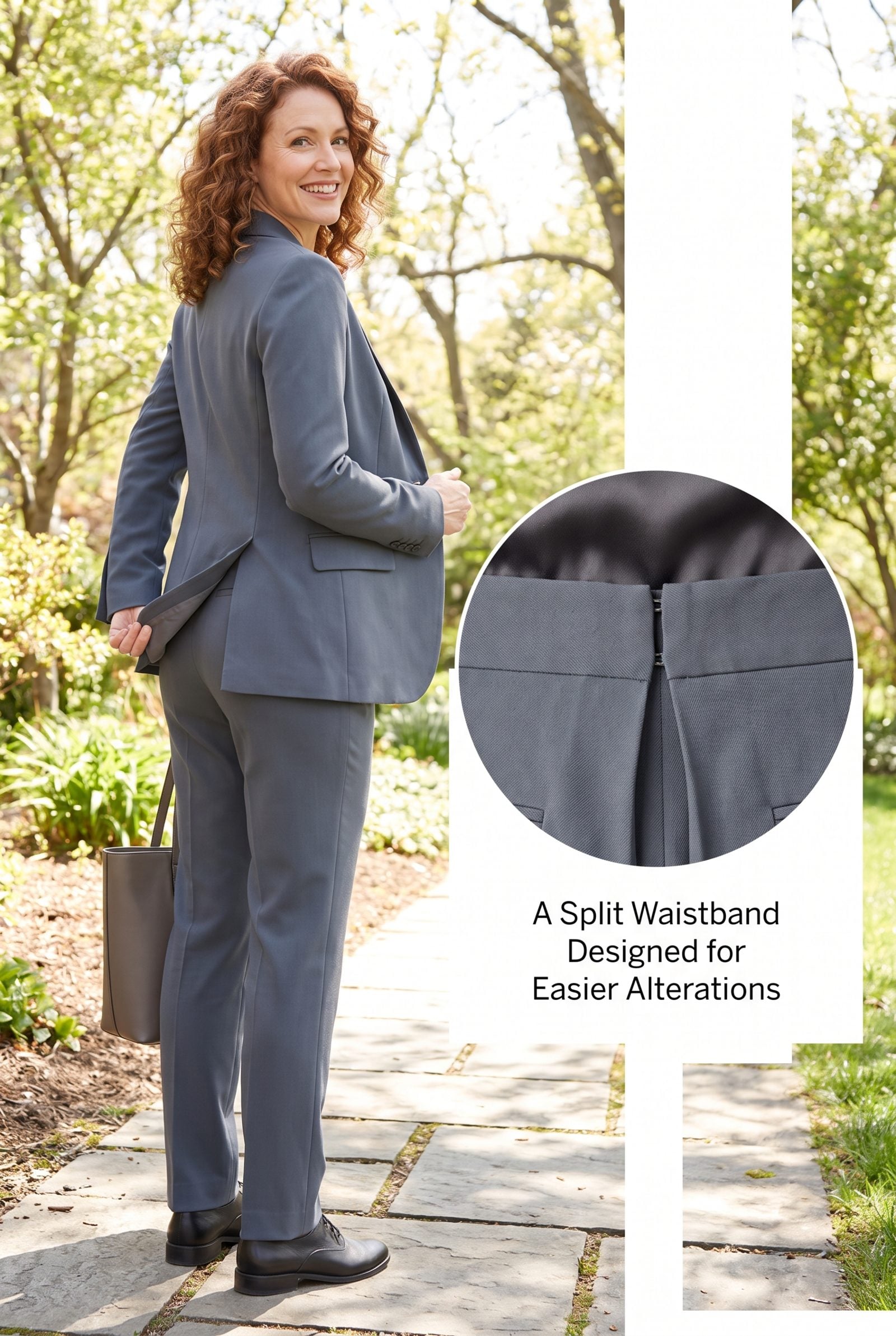
Turn a good pair of trousers around and look at the center back of the waistband. Two separate waistband halves meeting at the center back seam, with extra cloth left in reserve, means the maker expected you to keep these pants. Bodies change, and a split waistband lets a tailor let the waist out or take it in without rebuilding the whole garment.
Cheap trousers give you nothing. The seam is sewn flat and trimmed to almost nothing, so a single alteration becomes impossible. The split is a maker telling you these are worth fixing, not replacing.
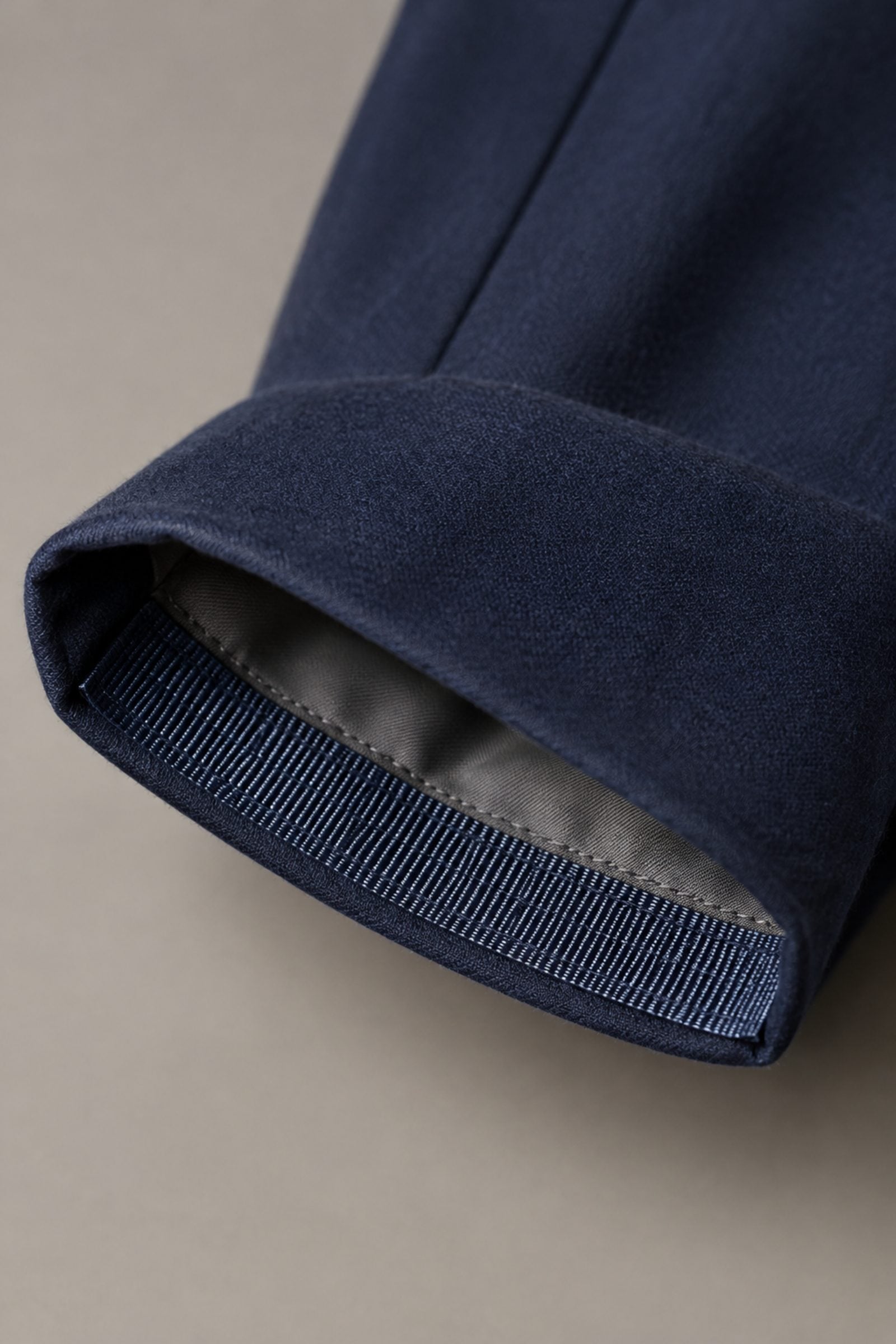
35. Protective Heel Tape Inside Trouser Hems
❤️ Would you like to save this?
The back of a trouser hem drags against your shoe heel every single step. Over a season that edge frays, then shreds, then the whole hem goes. A thin band of woven tape sewn inside the back of each plain hem takes the abuse so the wool doesn’t have to.
It costs almost nothing to add, and here it’s tucked out of sight — a navy ribbed grosgrain band stitched inside the hem, invisible from the outside — which is exactly why it signals quality. The maker reinforced the hardest-working edge of the garment without making a show of it, on the assumption you’d be wearing these long enough for it to matter.
34. Hidden Bra-Keeper Loops Inside the Shoulders
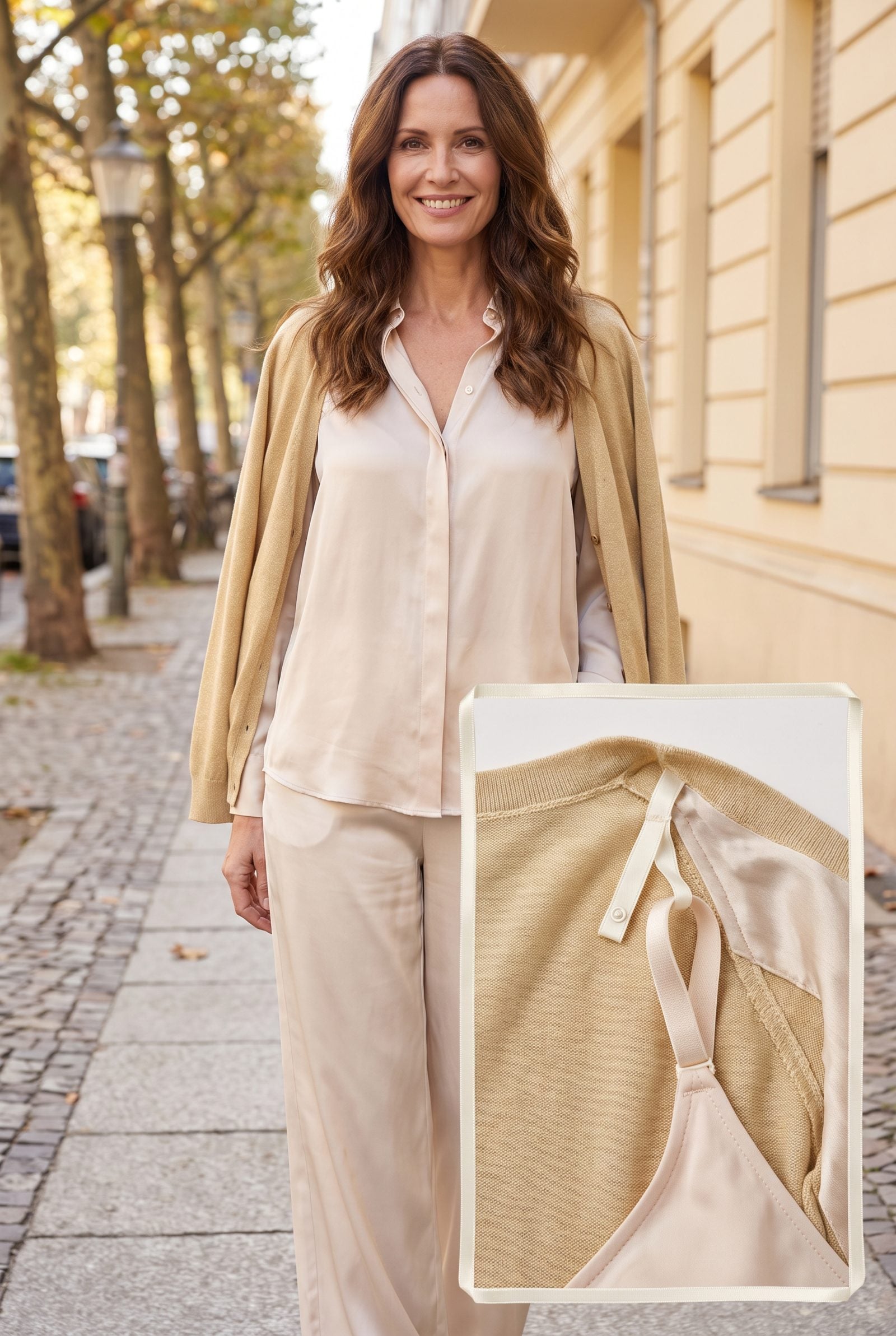
A small ribbon loop with a snap tucked inside each shoulder seam solves the problem every woman knows — the bra strap that keeps sliding into view all night. Clip the strap to the loop and it stays put, hidden, under a wide neckline or a blouse that wants to slip off the shoulder.
This detail comes from someone who has actually worn the clothes. It means nothing to a spreadsheet and everything to the person getting dressed for dinner.
33. A Free-Hanging Lining Cut Shorter Than the Shell

The lining inside a good coat hangs loose rather than stitched flat to the shell, and it ends an inch or two shy of the outer hem. Both choices matter, because the free hang lets the outer fabric and the lining move independently so nothing pulls or puckers when you walk.
Cutting the lining short keeps it from peeking below the coat’s edge and lets the wool fall with its own weight. Often a small thread chain, called a swing tack, is the only thing connecting them. That tiny detail is a tailor’s signature.
32. Breathable Cupro or Silk Used for the Lining

Polyester lining is a heat trap. You know the feeling — a jacket that looks sharp and turns you clammy by noon. Cupro and silk linings breathe, slide over a blouse instead of clinging, and manage body heat the way a plastic lining never will.
Cupro gets overlooked because the name sounds industrial. But it behaves like silk and costs the maker more than polyester, which is precisely why its presence tells you where the budget went.
31. Deep Facings That Keep Openings Structured
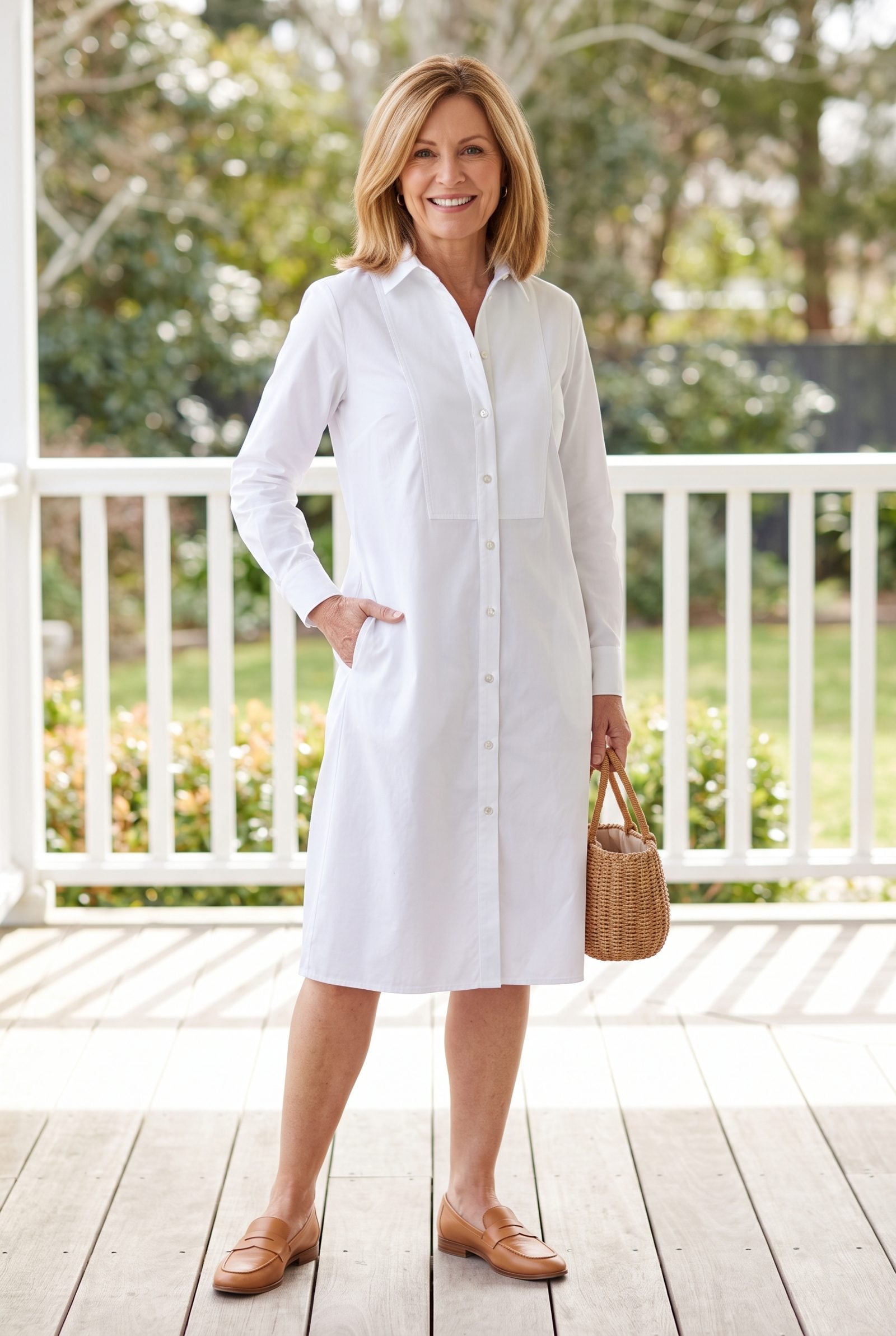
Run your fingers down the inside of a shirt front or a jacket lapel. That wide band of extra fabric folded back behind the opening — the facing — is what keeps the edge standing up straight instead of curling and flopping.
A shallow facing saves cloth and gives you a placket that waves around by lunch. A deep one holds its line all day. It’s the difference between an opening that frames you and one that sulks.
30. A Deep Hem Allowance That Adds Weight and Drape
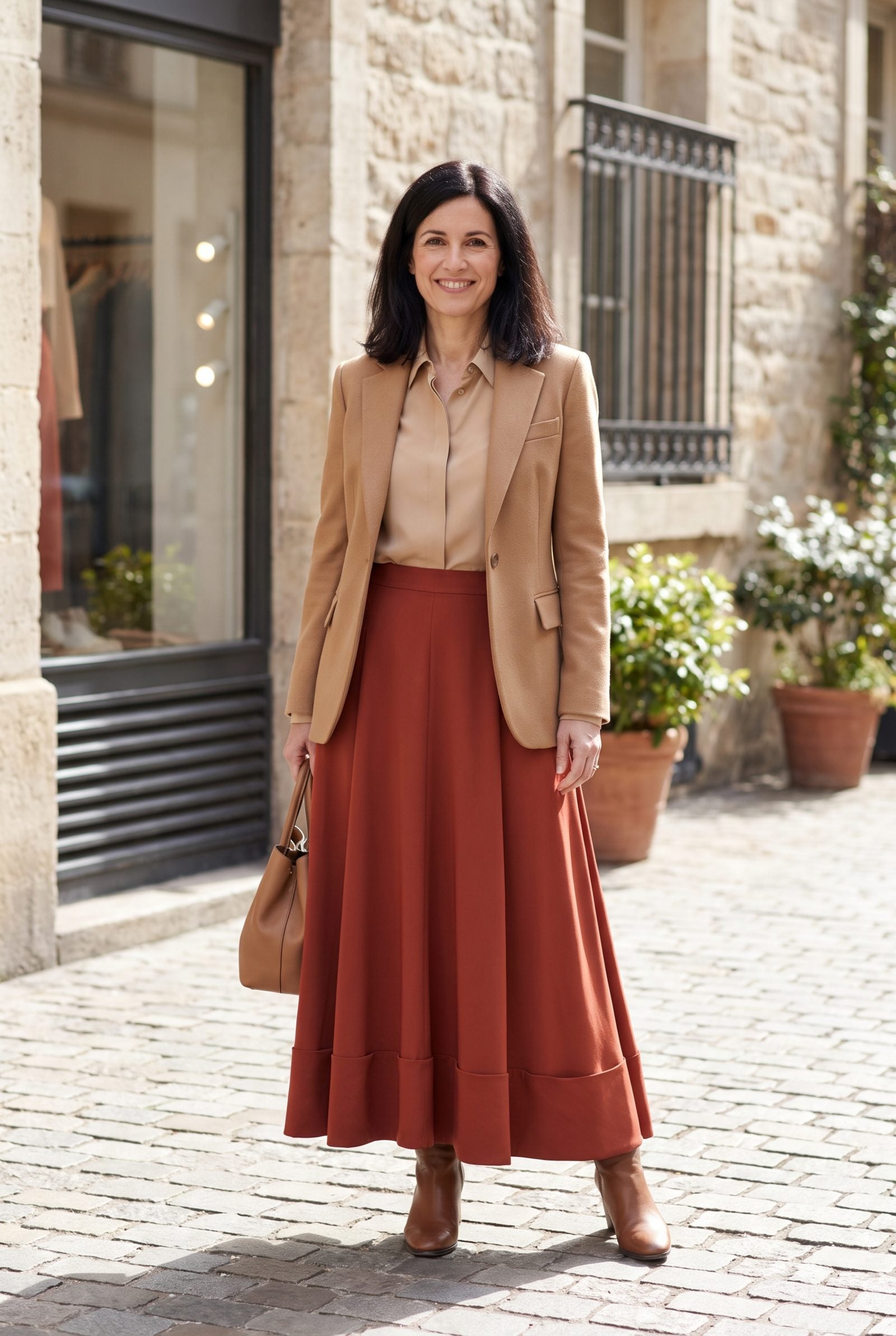
Turn up a skirt hem and measure the fold. A cheap garment gives you half an inch, serged and flipped once. A good one gives you three or four inches of turned-back fabric, and that extra cloth does real work.
Weight is the secret to drape. A deep hem pulls the fabric down into clean vertical lines so a dress hangs like liquid instead of fluttering at the knee. It also means a tailor can lengthen the thing if hems change or you want a different line.
The clothes that move the most beautifully are usually the ones with the most fabric doing the hanging.
29. Mitered Corners at Hems, Vents or Facings

Where two folded edges meet at a corner — a hem crossing a vent, a facing turning at a cuff — lazy construction just stacks the fabric and you get a lumpy knot. A miter folds the corner on the diagonal so it lies perfectly flat, like the join on a good picture frame.
Doing it by hand takes time and skill. The payoff is a corner that stays square and crisp through years of pressing. Fair warning, though: once you start checking corners, you can’t stop, and most garments will let you down. That’s the price of knowing.
28. Hong Kong Binding Wrapping Every Raw Edge
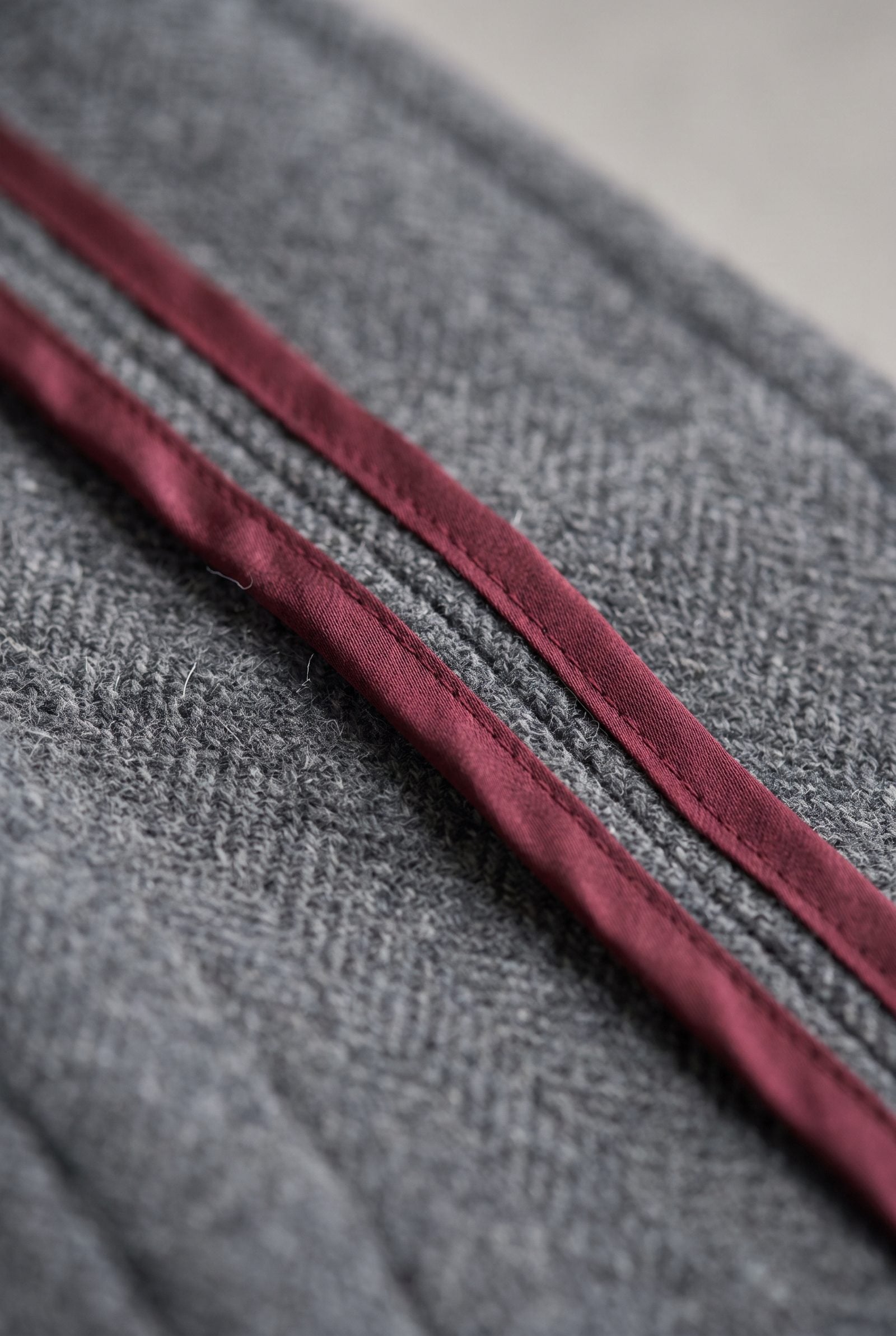
Turn a jacket inside out and the first tell is the raw edge. Cheap garments leave it serged in a rush of polyester thread, while the costly ones wrap it in silk.
Hong Kong binding folds a bias strip of fine fabric around each seam allowance by hand, or near enough. It stops fraying, sure. But the real reason it signals money is the labor behind it. Nobody binds seams you’ll never see unless they care about the ones you will.
27. French Seams Hiding Every Raw Thread in Sheer Silk

Sheer fabric has nowhere to hide. Hold a cheap chiffon blouse to the light and you’ll see a mess of frayed edges trapped behind the seam, shadowing through like dirty secrets.
A French seam folds the fabric over itself twice and seals every raw thread inside a clean tube, so against the light it reads as one quiet line instead of a ragged one. On silk, organza, or fine cotton voile, that’s the gap between a garment that looks finished and one that looks turned inside out.
26. Seam Allowances Wide Enough to Rebuild the Garment

Fast fashion cuts seam allowances to the bone. Three-eighths of an inch, serged tight, no room to move. The garment was never meant to last past a season, so why leave fabric for a tailor who’ll never see it?
Expensive clothing does the opposite. Wide allowances, sometimes more than an inch, pressed and finished and just sitting there in reserve. It assumes your body will change and the garment should change with it.
25. Lining Seams Finished as Carefully as the Face Fabric
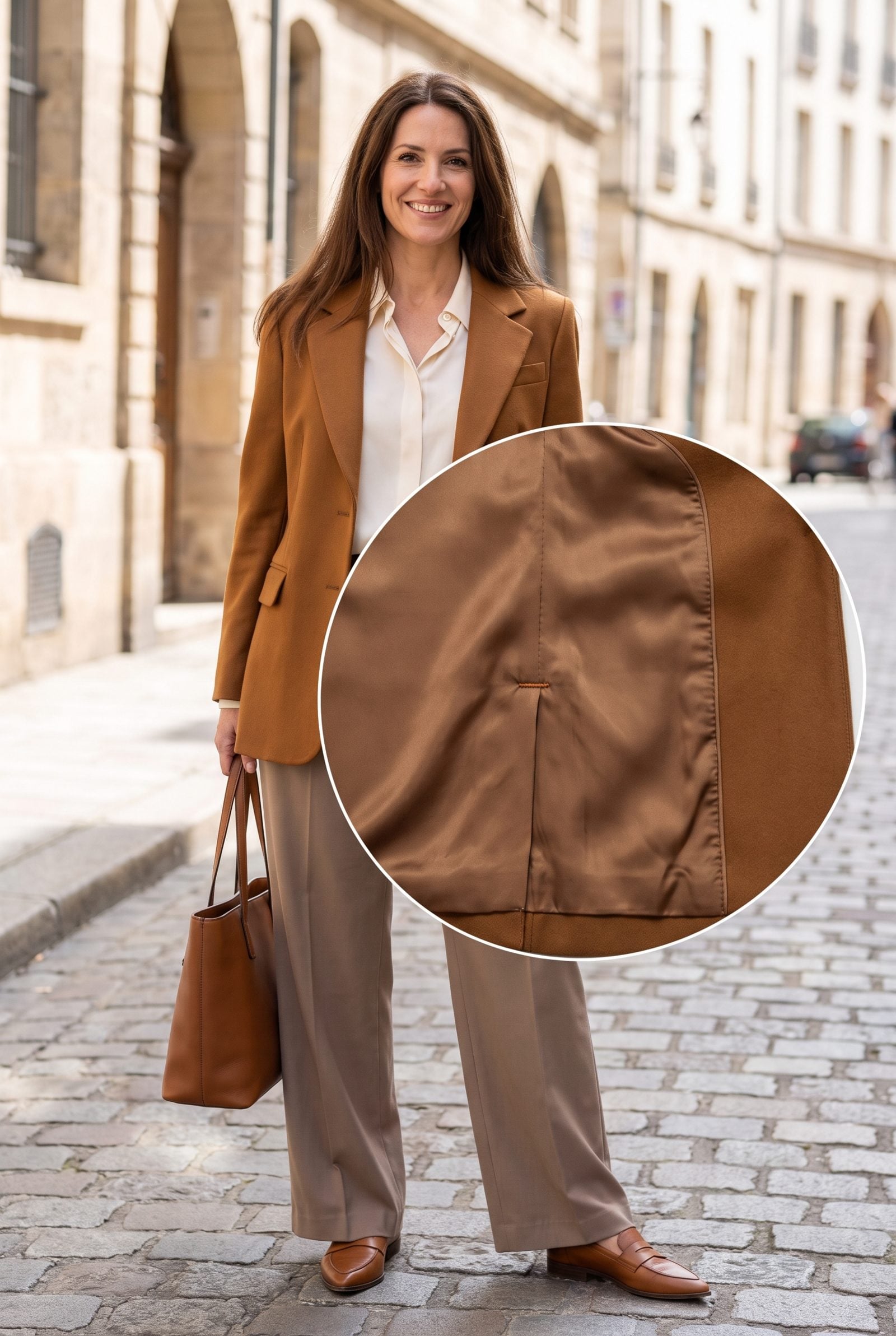
Nobody inspects a lining. Which is exactly why cheap brands cut corners there.
Flip back the hem of a well-made coat and the lining seams tell on the maker. Enclosed, pressed, often bound in the same silk-weight thread as the body fabric. No orange serging, no loose threads, no puckering where the lining meets the facing. A clean lining means somebody didn’t drop their standards once the fabric went out of sight.
24. Blind Hems You Can’t Find From the Outside

Run your fingers up a trouser leg and you’ll know. A cheap hem puts the stitching right there on the face, a dotted track announcing itself with every step.
A proper blind hem catches only a thread or two of the outer fabric, invisible unless you go hunting with the garment inside out. Done well, it reads as a clean fold with no stitch line at all. Slow, fiddly handwork, and one of the clearest signs a human slowed down over your clothes.
23. Sleeves Set by Hand With No Puckers at the Cap
❤️ Would you like to save this?
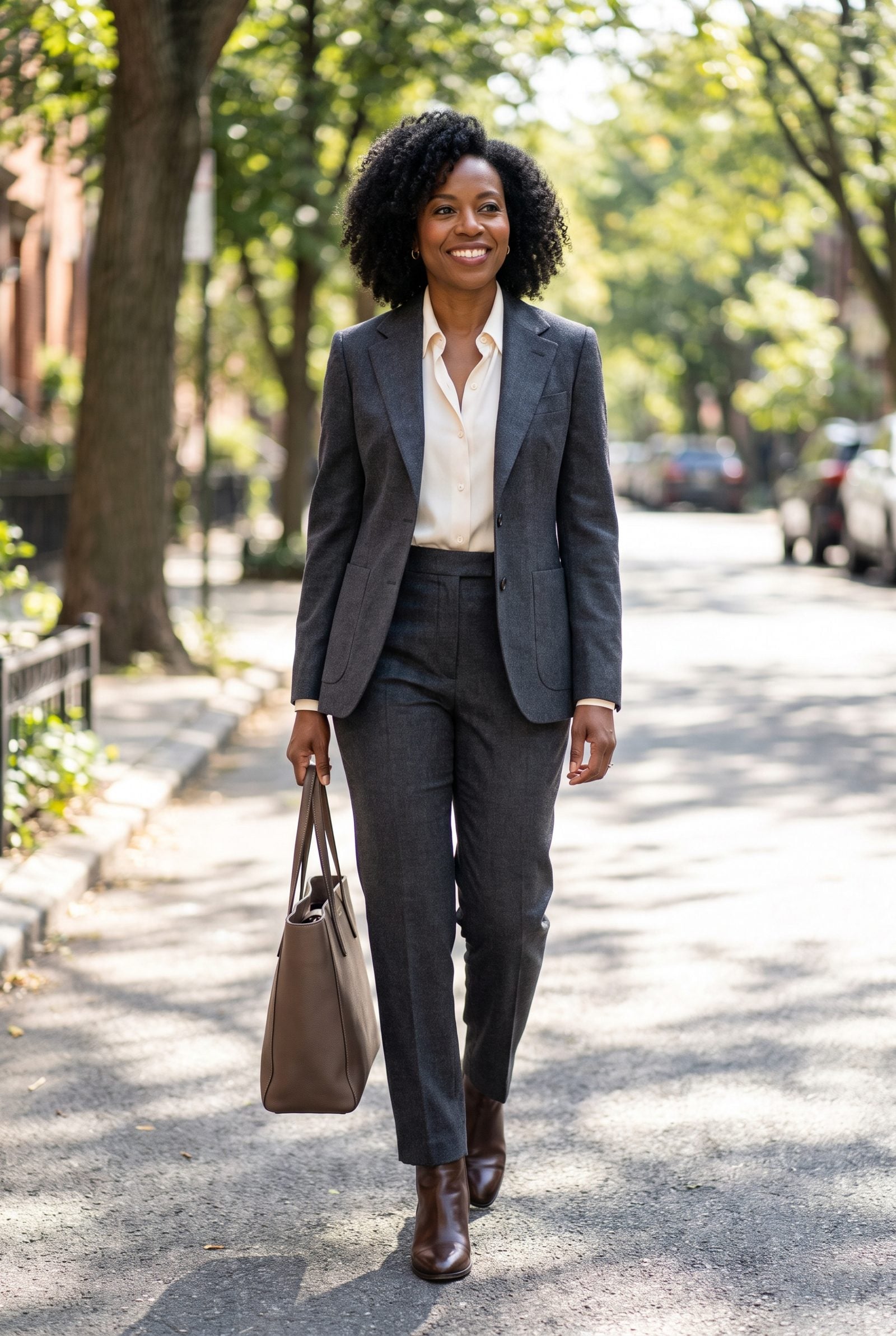
The sleeve cap is where tailoring gets honest. Force too much fullness into a machine seam and you get puckers, those little gathered pleats riding the top of the shoulder like a quilt that didn’t fit.
Hand-set sleeves ease that extra fabric in by eye and by hand, distributing it so smoothly the cap rolls into a clean dome. No pleats, no drag lines. Just a soft, rounded shoulder that moves when you move.
22. Lapels That Roll Over a Soft Curve Instead of Creasing Flat

Press a lapel flat and it dies. That hard, folded crease running down to the button is the mark of fused, glued construction, pressed into submission because there’s nothing underneath to give it shape.
A good lapel rolls. It curves softly away from the chest with a rounded belly, a swell that comes from hundreds of tiny pad stitches anchoring the canvas by hand. The fabric wants to fold where it folds, and that bit of life in the lapel is one of the hardest things to fake.
21. Interfacing That Supports Without Bubbling or Stiffening
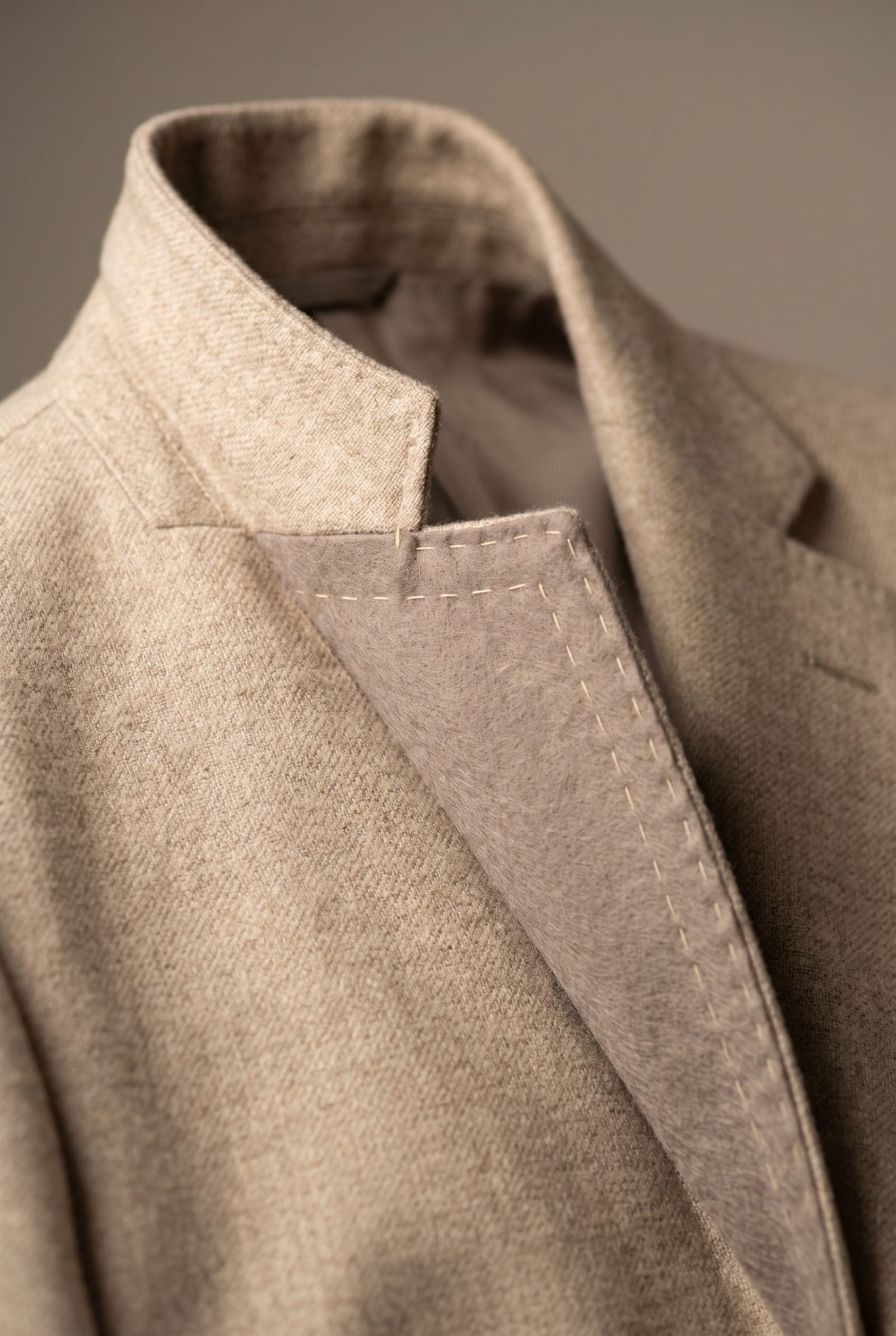
You’ve run your hand over a shirt collar that felt like cardboard. That’s cheap fusible interfacing, glued in with heat, doomed to bubble and separate after a few washes until the collar ripples like a dried leaf.
Proper interfacing moves with the cloth. Fold back a well-made lapel and you’ll find a soft, hairy taupe layer hand-stitched flat against the wool, supporting the shape without killing it. Press your palm flat against a well-made lapel or waistband and it feels alive, firm but pliable, with no lumps rising up to betray the glue underneath.
20. Darts That Melt Into Nothing at the Point
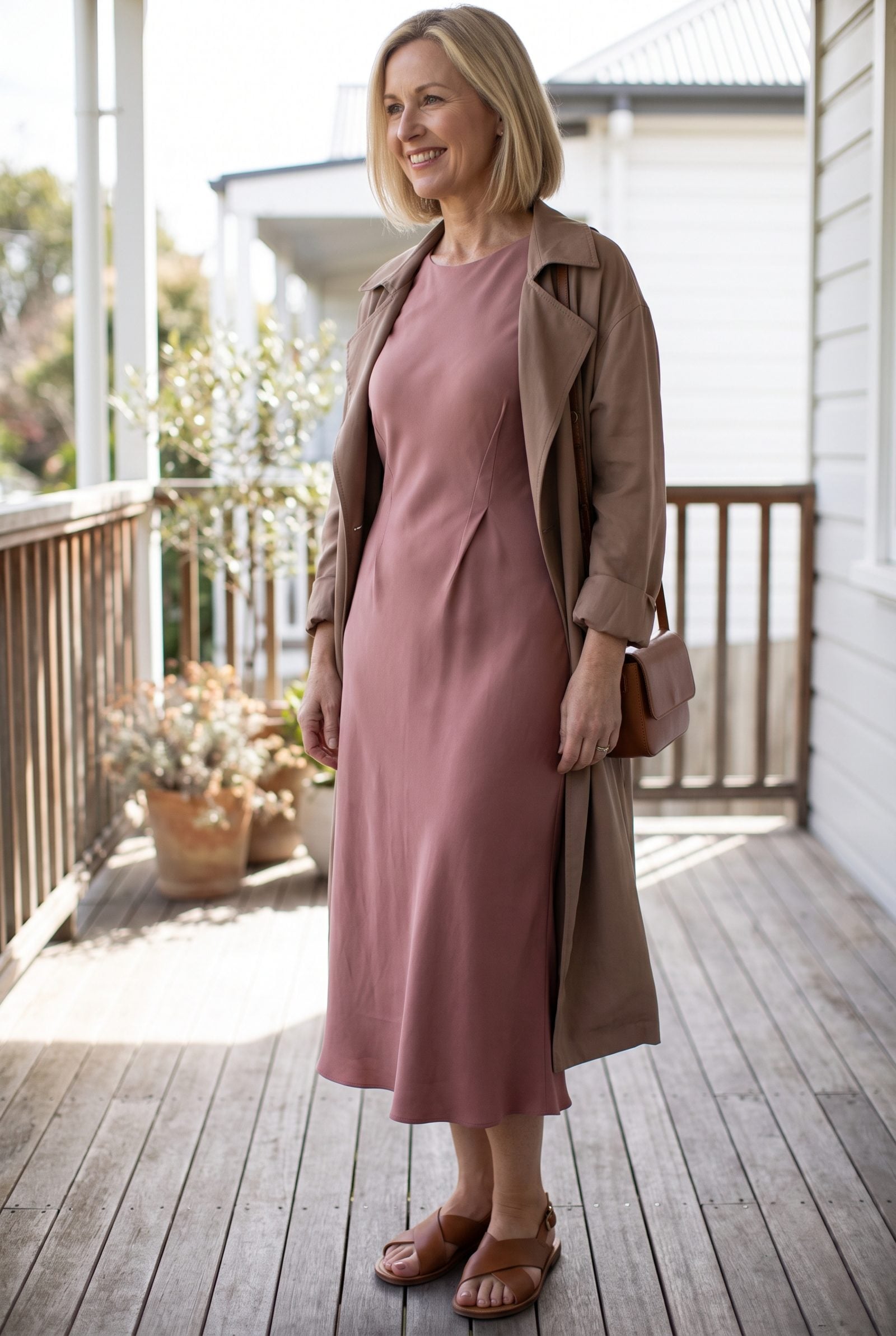
A dart has one job: to turn flat fabric into a three-dimensional shape. And the place it almost always goes wrong is the point.
Rush a dart and the tip puckers into a hard little dimple, a bubble that announces itself across the bust or hip. A well-sewn one tapers to nothing, the stitching easing out until the fabric lies perfectly flat where the point ends. On silk and fine wool especially, that smooth vanishing point is a mark of real skill.
19. Seam Intersections That Line Up to the Thread

This is the detail that separates genuine craftsmanship from everything else. Where seams cross, on a waistband, a yoke, a plaid jacket, the lines should meet like they were drawn with a ruler.
Cheap production lets intersections drift. The horizontal seam lands a quarter inch off the vertical, the plaid jumps across the join, the check gives up. On fine garments those lines meet to the thread, and a check or stripe flows across the seam as if the fabric was never cut. Slow, expensive, nearly impossible to fake. It’s the last thing to check and the hardest one to argue with.
18. A Grainline That Lets the Garment Hang Straight

Hang a well-cut trouser and it drops like a plumb line. That straight fall is grainline, the direction the threads run relative to how the pattern was placed, and it’s the first thing a cheap garment gets wrong.
Lay a jacket front flat and the lengthwise threads should run dead straight up and down. Drift off true and the fabric starts pulling on the body — twisting around the leg, collapsing at the hip, no matter how you stand. You can’t press it out. You can only buy it cut right in the first place.
17. True Bias-Cut Fabric That Hangs Without Twisting
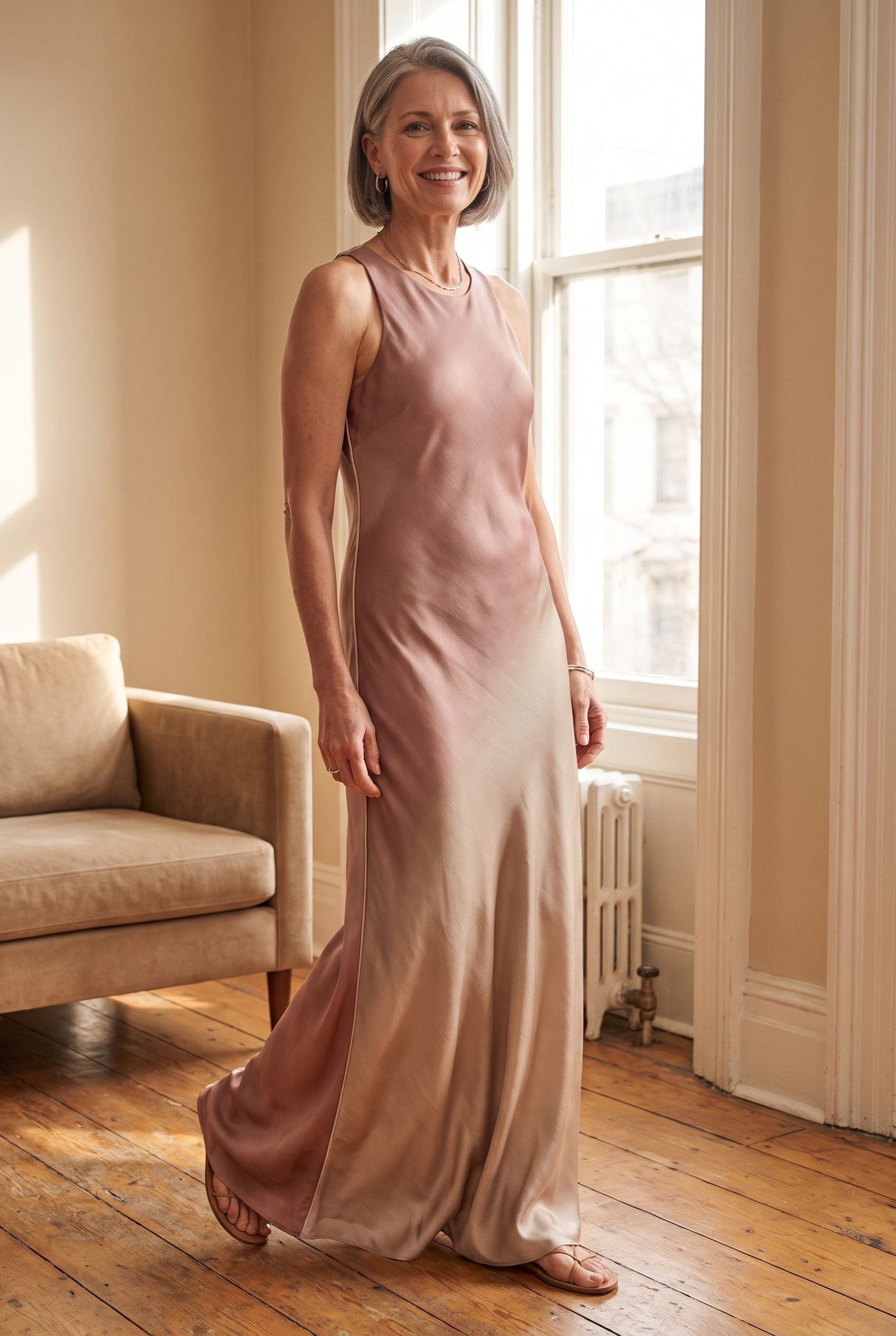
A true bias cut is expensive before a single stitch goes in. Cutting on the 45-degree diagonal eats fabric — far more than cutting straight — which is why corner-cutters fake it and the dress spirals around the body by noon.
Done right, bias silk moves like water. The diagonal grain lends the fabric a stretch it doesn’t naturally have, so a charmeuse slip skims the hip and releases at the hem instead of gripping. The seam stays plumb, and the dress swings back to center every time you stop walking.
16. Seams Thoroughly Pressed Without Visible Ridges

Run your thumb down a seam from the outside. Feel a hard ridge pushing through? That seam was sewn and forgotten. Feel nothing but a flat clean line? Someone pressed it open before moving on.
Pressing is the invisible labor nobody shops for and everybody sees anyway. A pressed-open seam lies flush against the body, so the fabric sits smooth over the ridge underneath. Skip it and the allowance bunches into a little rope that telegraphs through the outer cloth every time light hits it.
15. Plaids Aligned Precisely Across the Front Closure
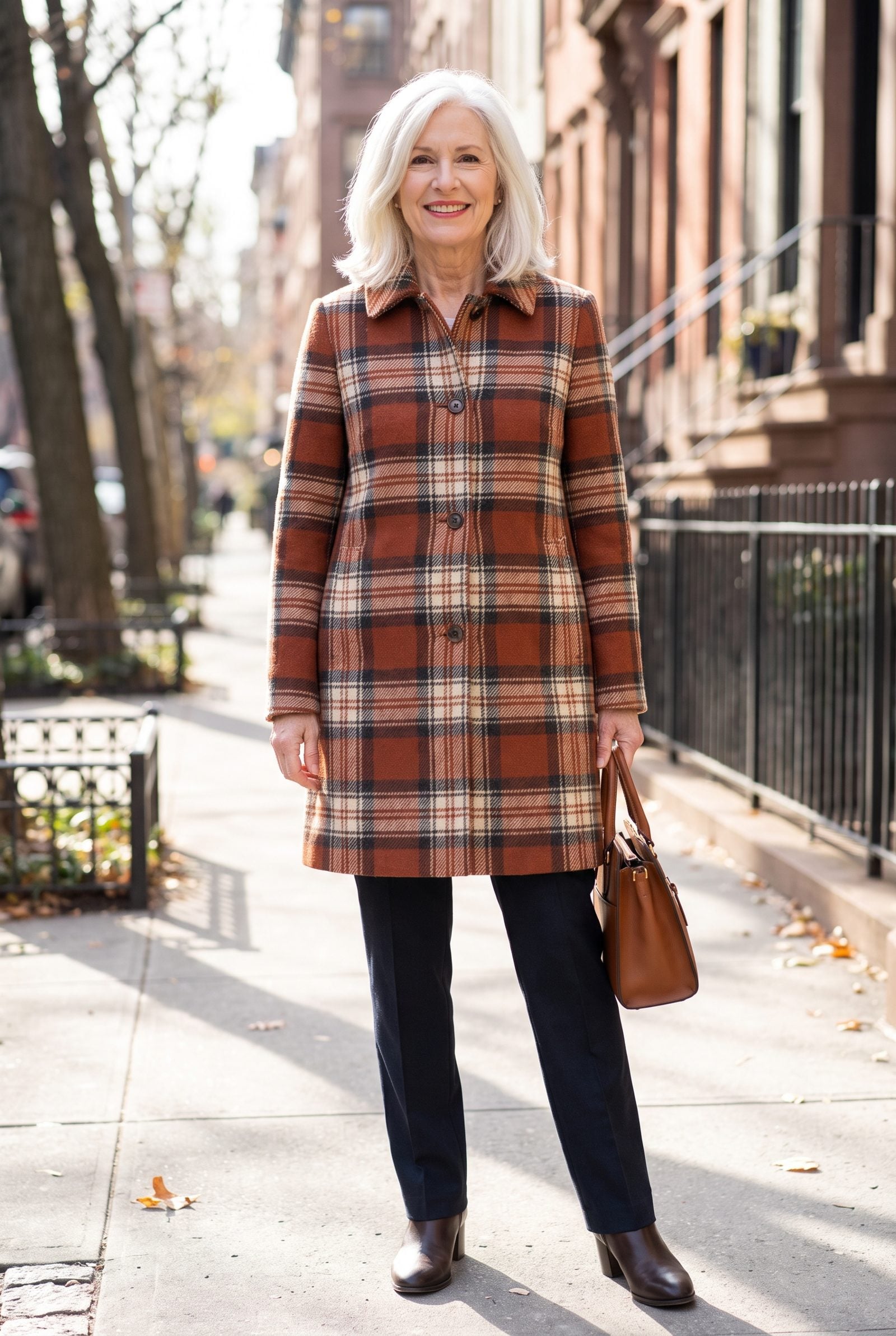
Button a cheap plaid jacket and the lines jump. One side sits half a bar higher than the other, and your eye snags on it before anything else.
Matched plaid across a front closure means the cutter wasted fabric on purpose, lining up each panel so the pattern reads continuous across the button stand. Slow, costly, and the clearest tell going that a human cared.
14. Stripes Matched Across Curved Armhole Seams
❤️ Would you like to save this?
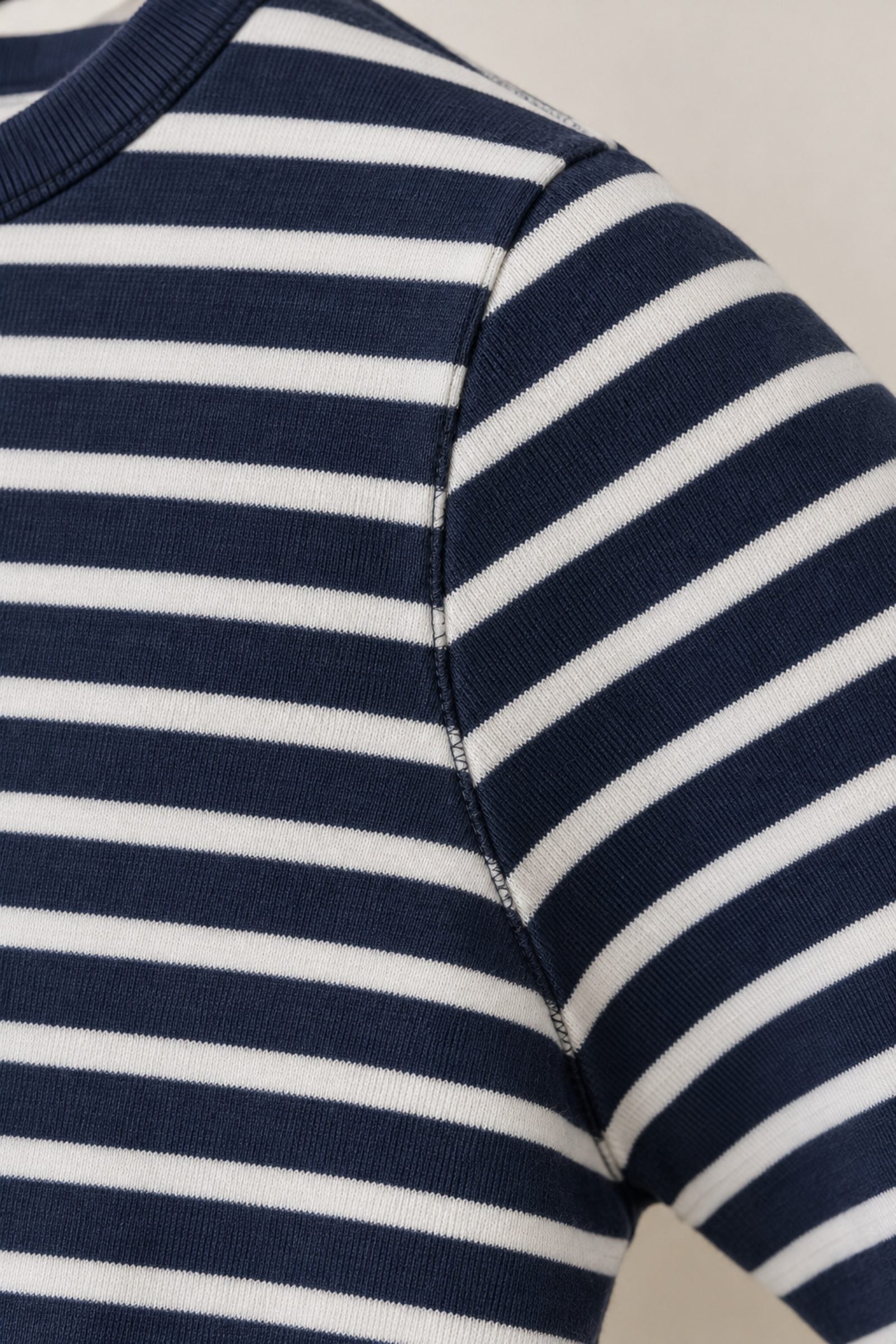
Matching stripes across a straight seam is work. Matching them across the curve of an armhole is near sorcery.
The sleeve and body are different shapes meeting along a bend, so aligning each horizontal bar across that join takes a pattern cutter who understands how the curve eats length. When it lands, the stripe flows unbroken from torso into sleeve and the eye reads one continuous piece. Get it wrong and the shoulder looks fractured — which is exactly where cheap tops give themselves away.
13. Large Motifs Centered Symmetrically on the Garment
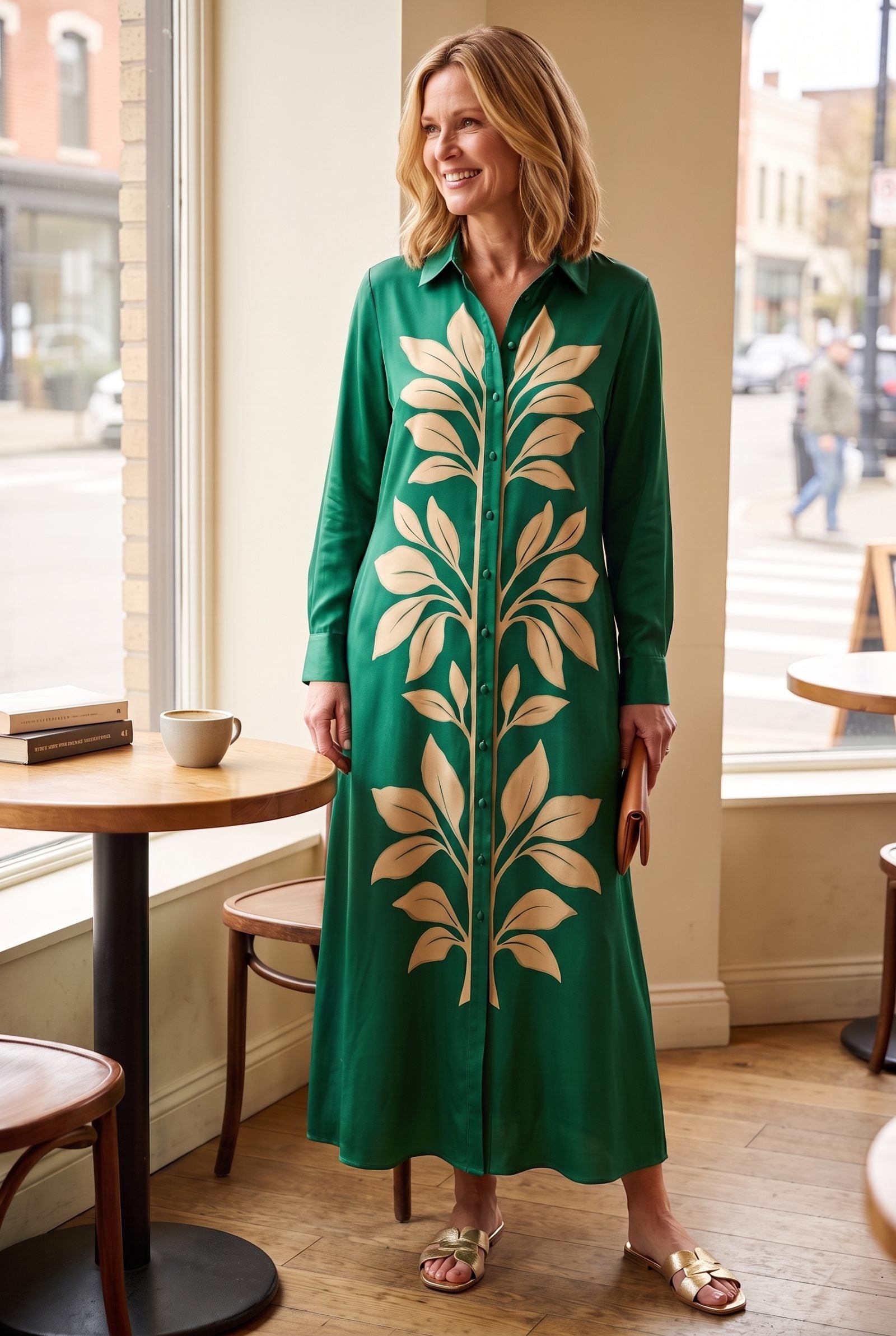
A big print demands a decision, and cheap manufacturing makes the lazy one. The pattern gets slapped down wherever the fabric lands, so a bold flower blooms off-center or lands in some awkward spot across the bust.
Centered placement means someone cut each panel to the motif, not the other way around. That emerald maxi shirt dress with its print mirrored evenly down the button line reads intentional because it is. Your eye settles instead of hunting for the balance it instinctively expects — the same satisfaction you get from a picture hung dead center on a wall.
12. Velvet or Corduroy Nap Running in One Direction

Velvet keeps a secret in its pile. Brush it one way and it drinks light, reading deep; brush it the other and it throws light back, reading pale. Cut the panels carelessly and your jacket ends up two shades of the same color — the back lighter than the front, like someone left it in the sun.
A maker who respects nap cuts every piece with the pile running the same direction, so the color reads evenly across every panel. Corduroy’s no different. Costs more fabric, demands more attention, and it’s why the velvet reads as one unbroken depth of color instead of a patchwork.
11. Leather Panels Selected for Consistent Natural Grain
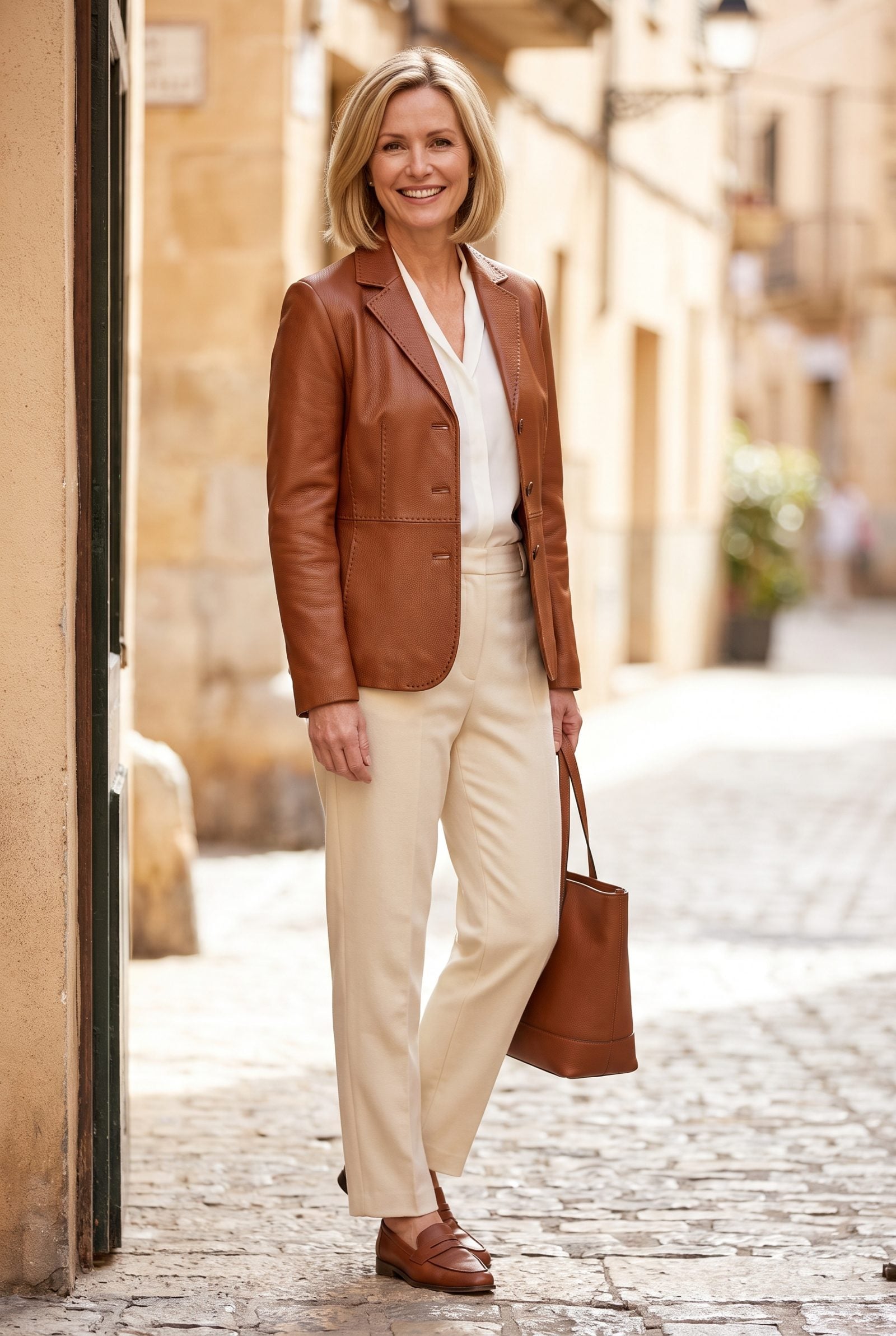
Leather is skin, and skin is uneven. One part of a hide runs tight and smooth, another loose and coarse. A cheap jacket mixes them without thought, so one panel looks like a different animal than the one beside it.
Costly leatherwork means someone stood over a full hide and chose which sections became the front, the collar, the sleeves — matching grain and thickness panel to panel. You feel it as one cohesive garment rather than a quilt of mismatched pieces. That saddle-stitched cognac jacket earns its price in the selection, long before any sewing starts.
10. Yarn-Dyed Checks Visible Clearly on Both Sides
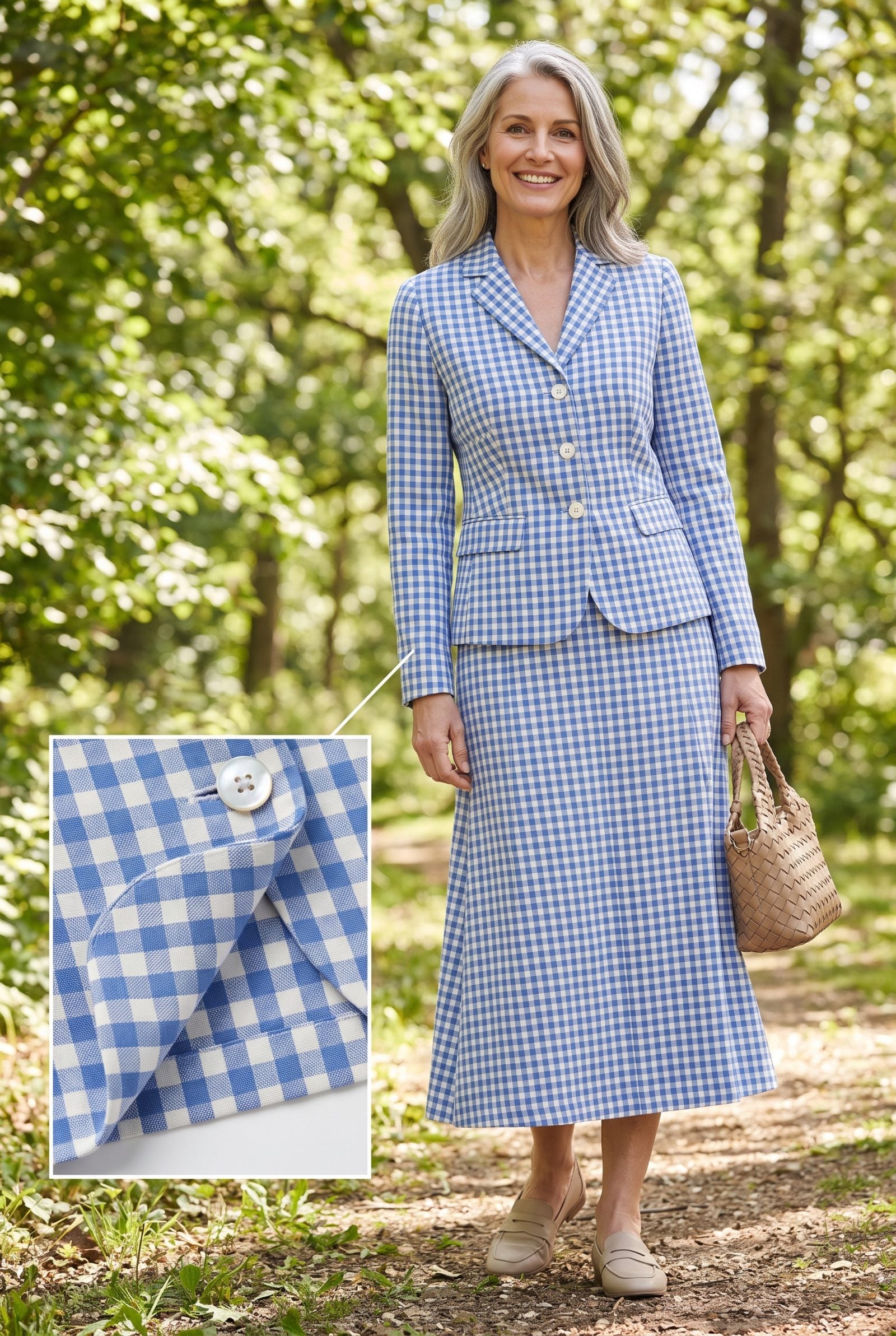
Flip a checked shirt inside out. Pattern still crisp on the back? The threads were dyed before they were woven. Faded ghost of the front? The check was printed onto finished cloth.
Yarn-dyed cloth holds its color deeper and wears longer, because the dye lives in the fiber rather than sitting on the surface. A gingham that reads clearly from both sides is telling you the cloth itself cost more. It’s one of the quickest checks you can run in a fitting room, and it never lies.
9. True Jacquard Patterns Woven Into the Fabric
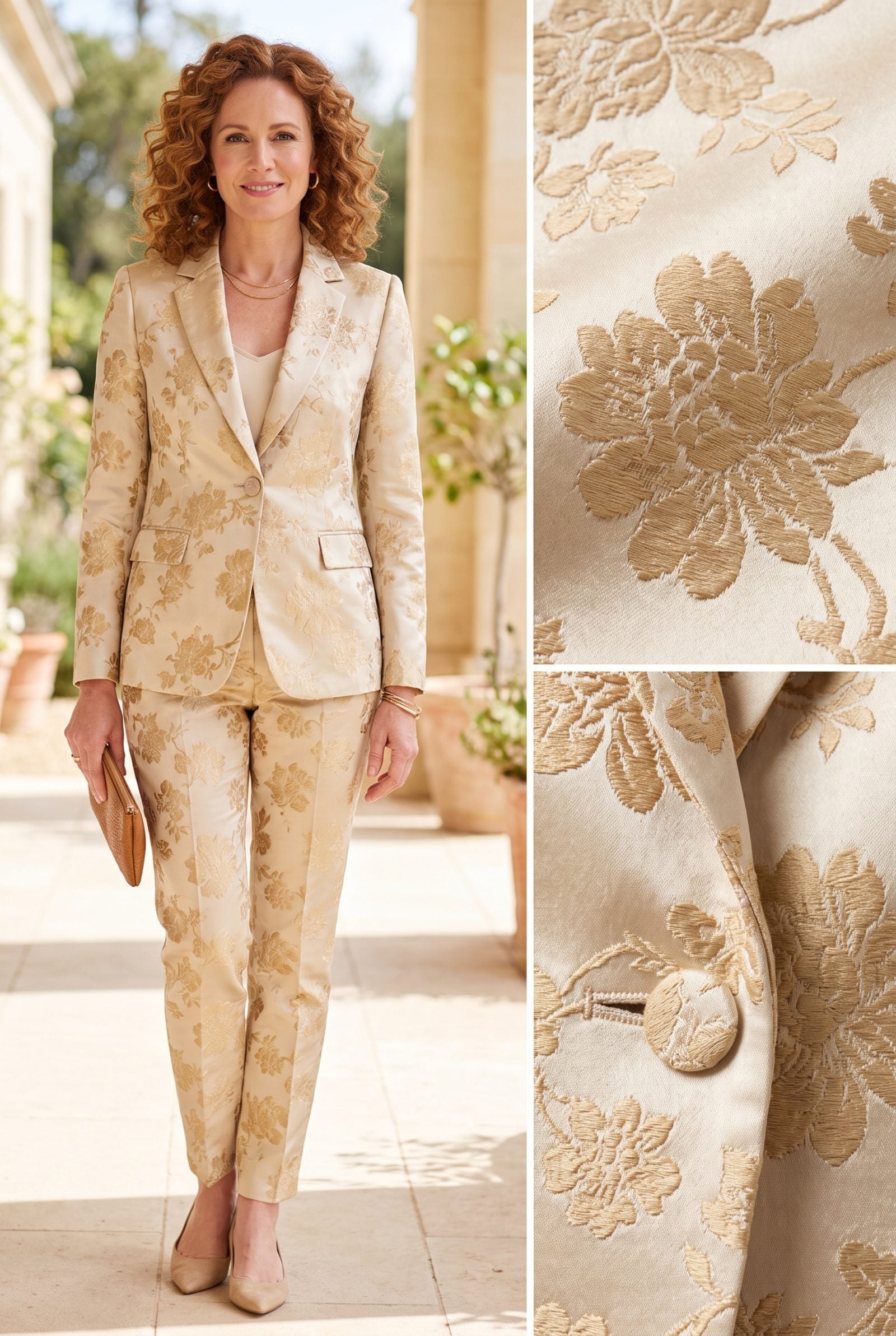
Tilt a true jacquard toward the light and the pattern shifts — matte where the weave sits one way, lustrous where it turns another. The design is built into the structure of the cloth, not stamped across the top.
This is the opposite of a print. A jacquard loom lifts individual warp threads to build the motif thread by thread, which is why the pattern exists on both faces and never cracks, fades, or peels. The champagne silk reads rich because the richness is woven in. Hold a printed version beside it and the gap is instant. One has depth you can rotate toward the window; the other has a picture glued to the surface.
8. Embroidery With a Clean, Secure Reverse Side
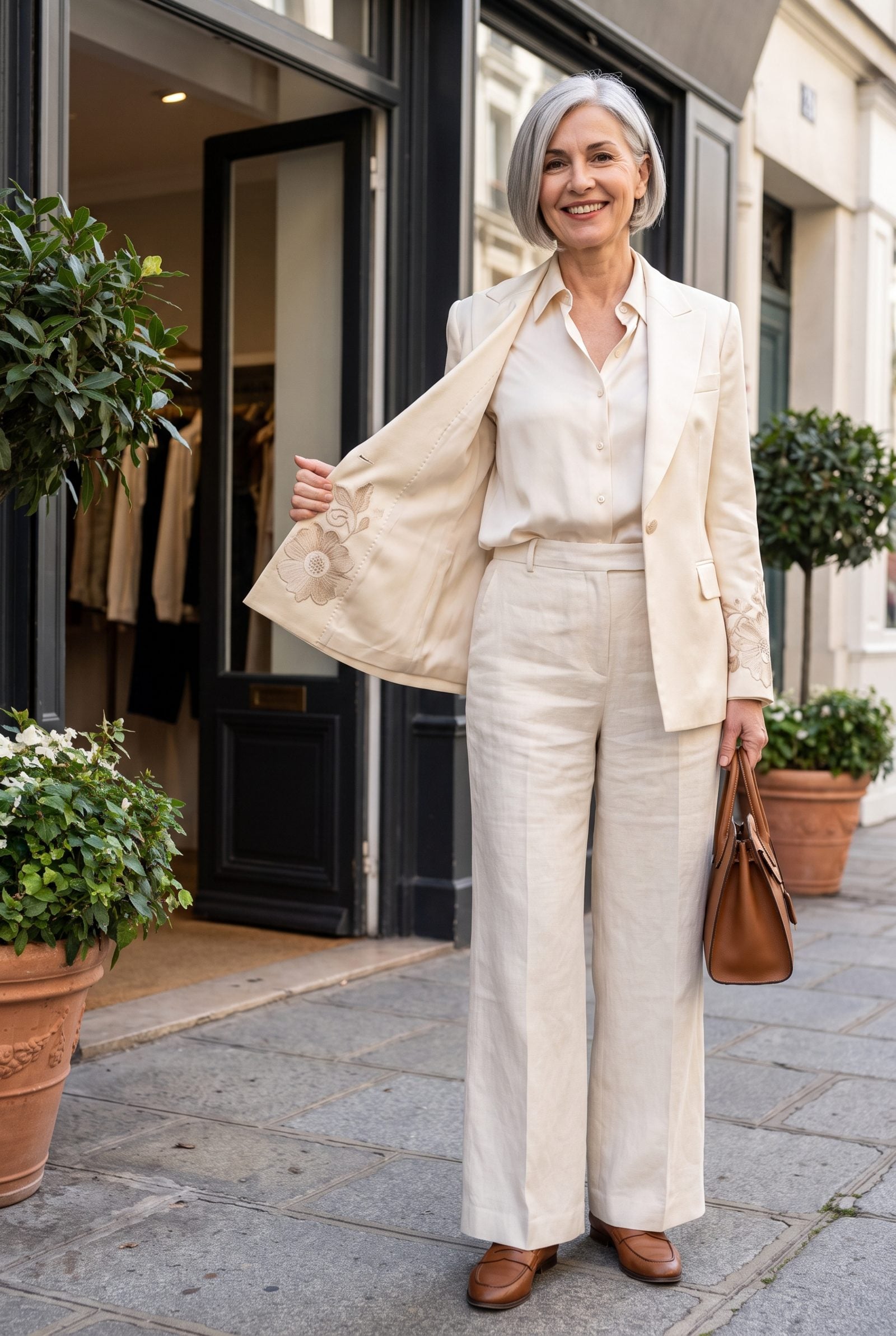
Flip a garment inside out. The back of the embroidery tells you everything the price tag won’t. Cheap embroidery leaves a nest of knots and loose tails back there, scratchy against your skin and prone to unraveling after three washes.
On the costly stuff, the reverse reads almost as clean as the front. Thread tails tucked, no tangles, nothing snagging your bra strap all day. That tidiness takes real hand time, which is exactly why it costs.
7. Knit Patterns Matched Accurately Across Seams
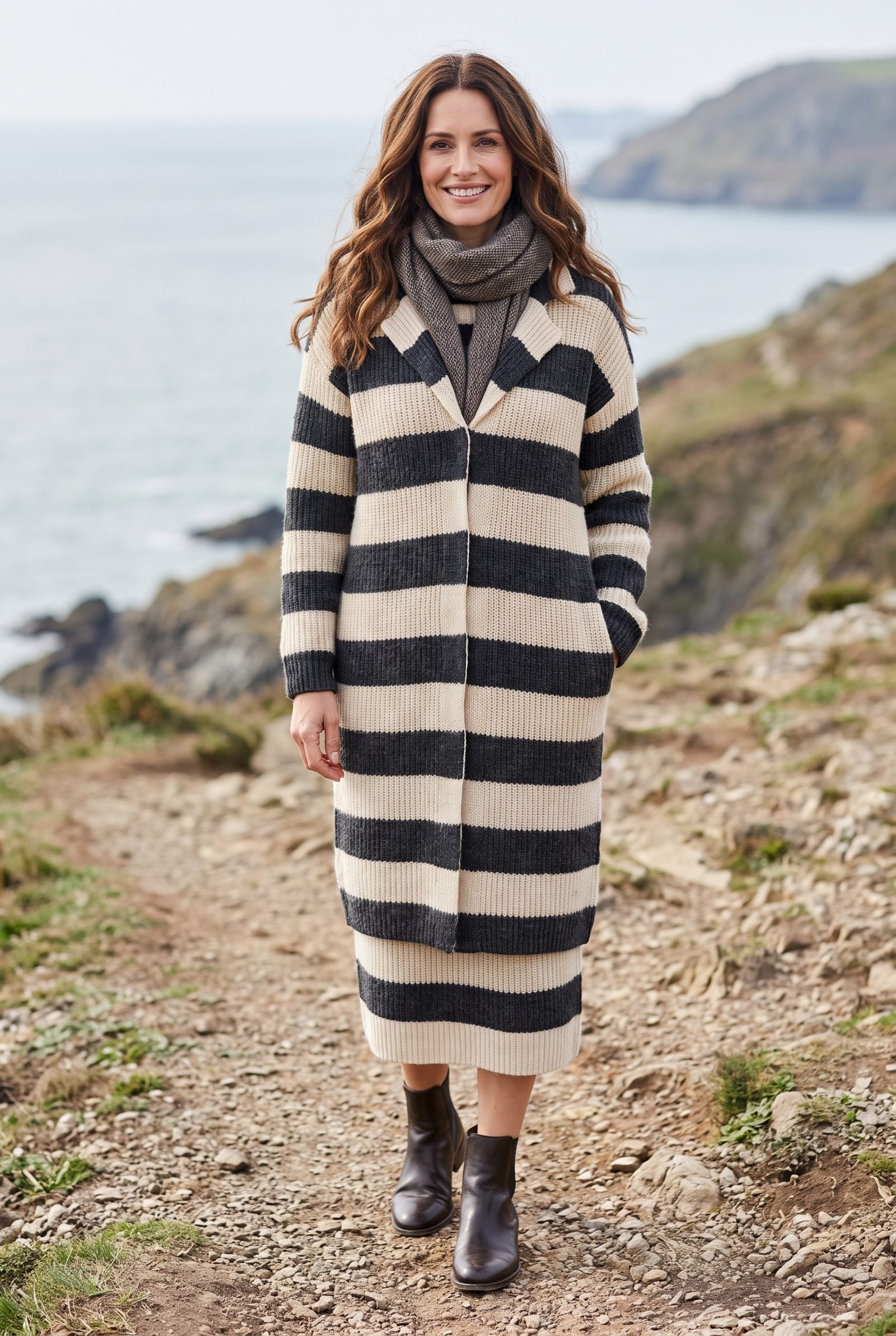
Stripes that line up across a seam look like nothing, and that’s the trick. Your eye glides right over the join because there’s nothing to snag on, so the whole sweater reads as one continuous piece instead of panels stitched together in a hurry.
Fast fashion skips this. Stripes jog and jump at the side seam, and once you’ve clocked it you can’t unsee it. Matching means cutting and knitting with extra material and extra attention — money nobody wants to spend on cheap goods.
6. Intarsia Motifs Knitted In Rather Than Printed On
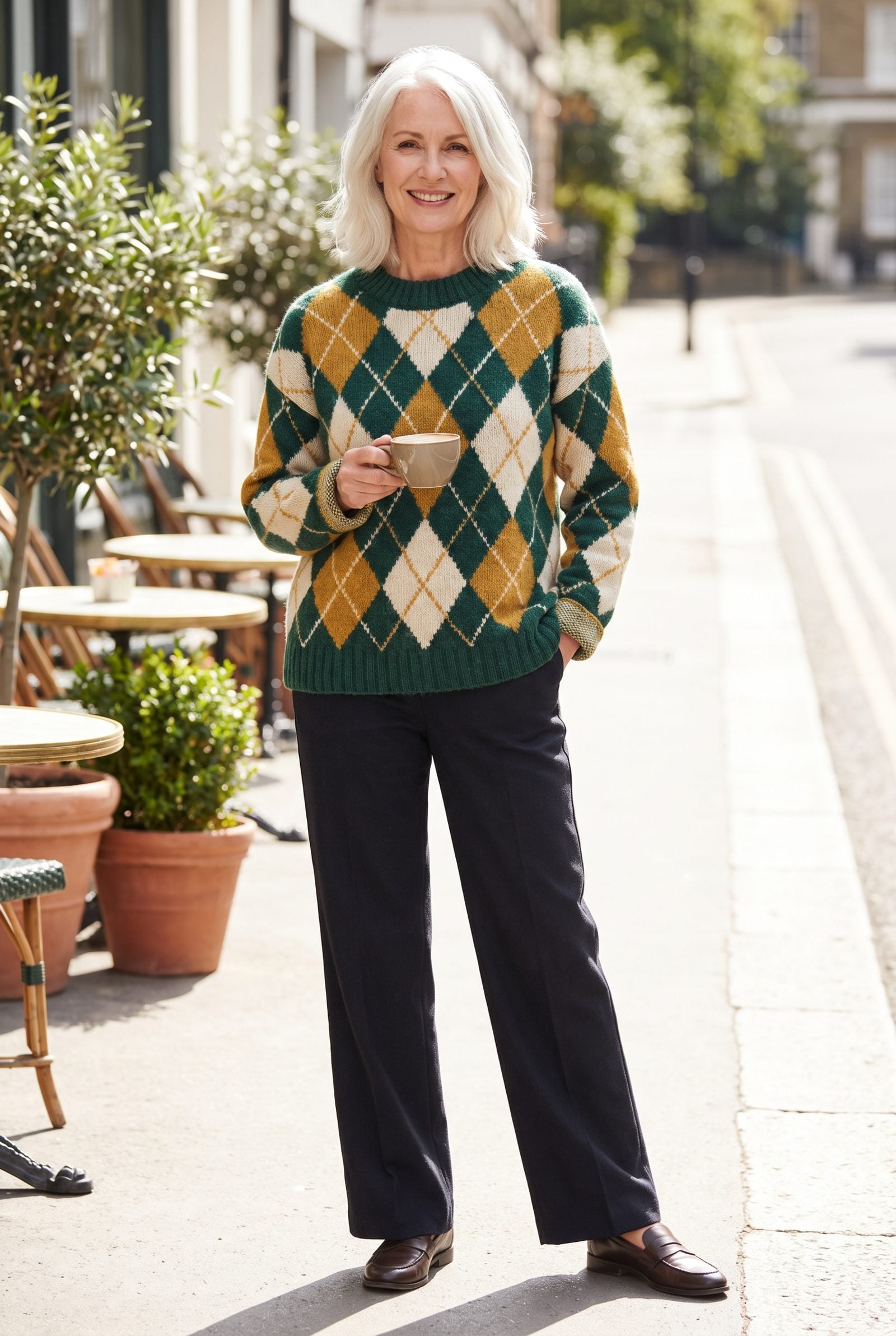
Run your thumb over a graphic sweater. If the design has a surface to it, if the colored shapes are built from the yarn itself and show on the back, that’s intarsia. Each color is a separate working yarn, knitted in by hand or on a specialized machine.
A printed motif sits on top like a sticker. It cracks, fades, feels plasticky against your skin. Intarsia is the design and the fabric at once, and it ages with the sweater instead of flaking off it.
5. Plied Yarns That Create a Stable, Balanced Knit
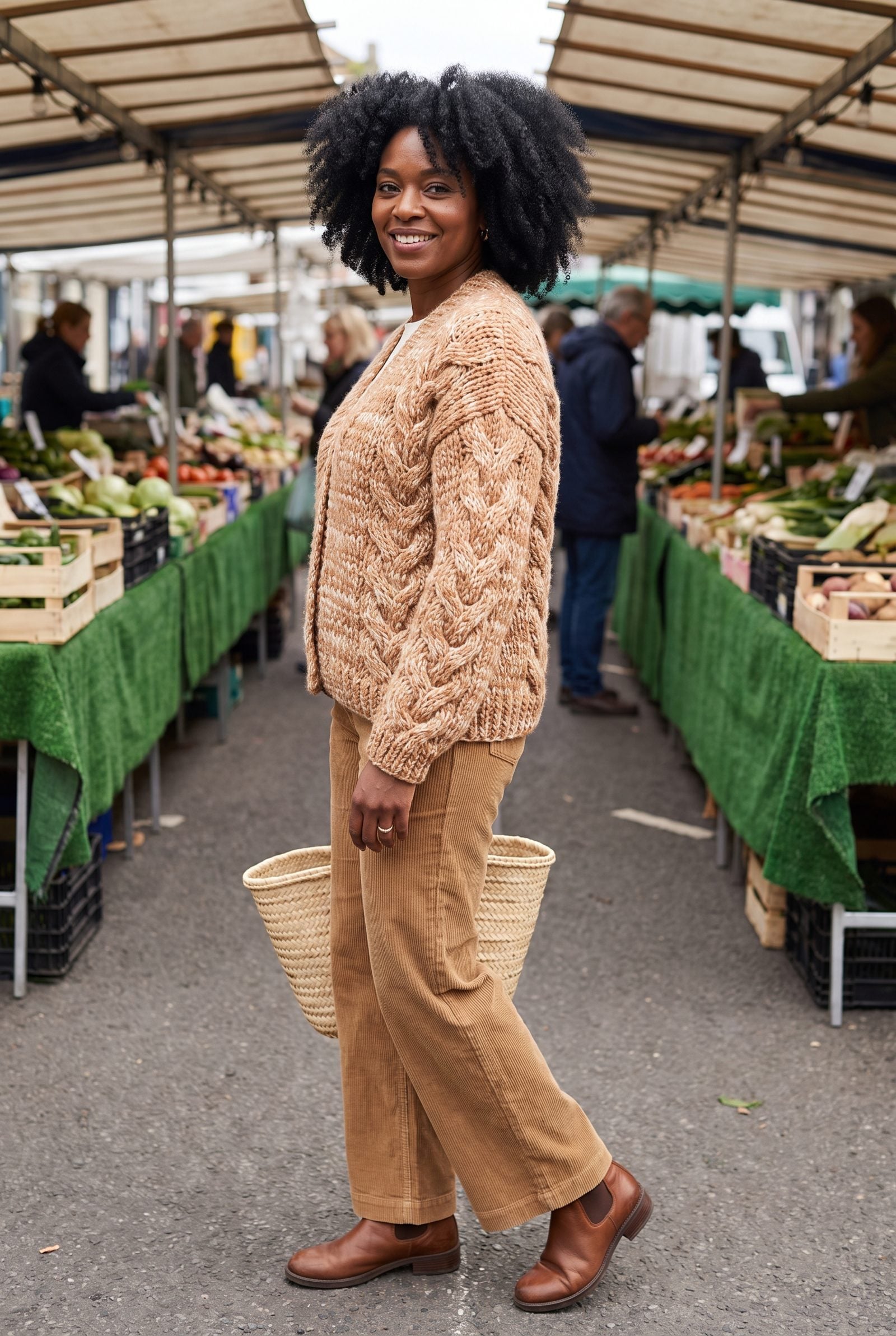
Pilling isn’t bad luck. It’s usually a single-ply yarn giving up.
Plied yarn is two or more strands twisted together, and that twist does something clever. The plies pull against each other and lock the fibers in place, so the knit sits balanced, holds its shape, and resists the little fuzz balls that make a cheap sweater look tired by February. You feel it in the hand too. Plied yarn has a round, substantial quality, where single-ply feels flat and thin, like it’s already halfway to wearing out.
4. Thread Shanks That Give Buttons Proper Clearance

Look at a button on a well-made navy wool coat. From the front you only see the button face and its cross of thread. What this angle can’t show is the little stem of wrapped thread that belongs underneath, lifting the button a few millimeters off the fabric. That’s a thread shank, and it exists so the button has room to perch on top of the layered cloth it’s fastening.
Without it? Buttons strain and pucker, the fabric bunches, and the whole front of the coat looks stressed. The shank gives everything clearance to close flat.
3. Buttons Made From Horn, Corozo or Mother-of-Pearl
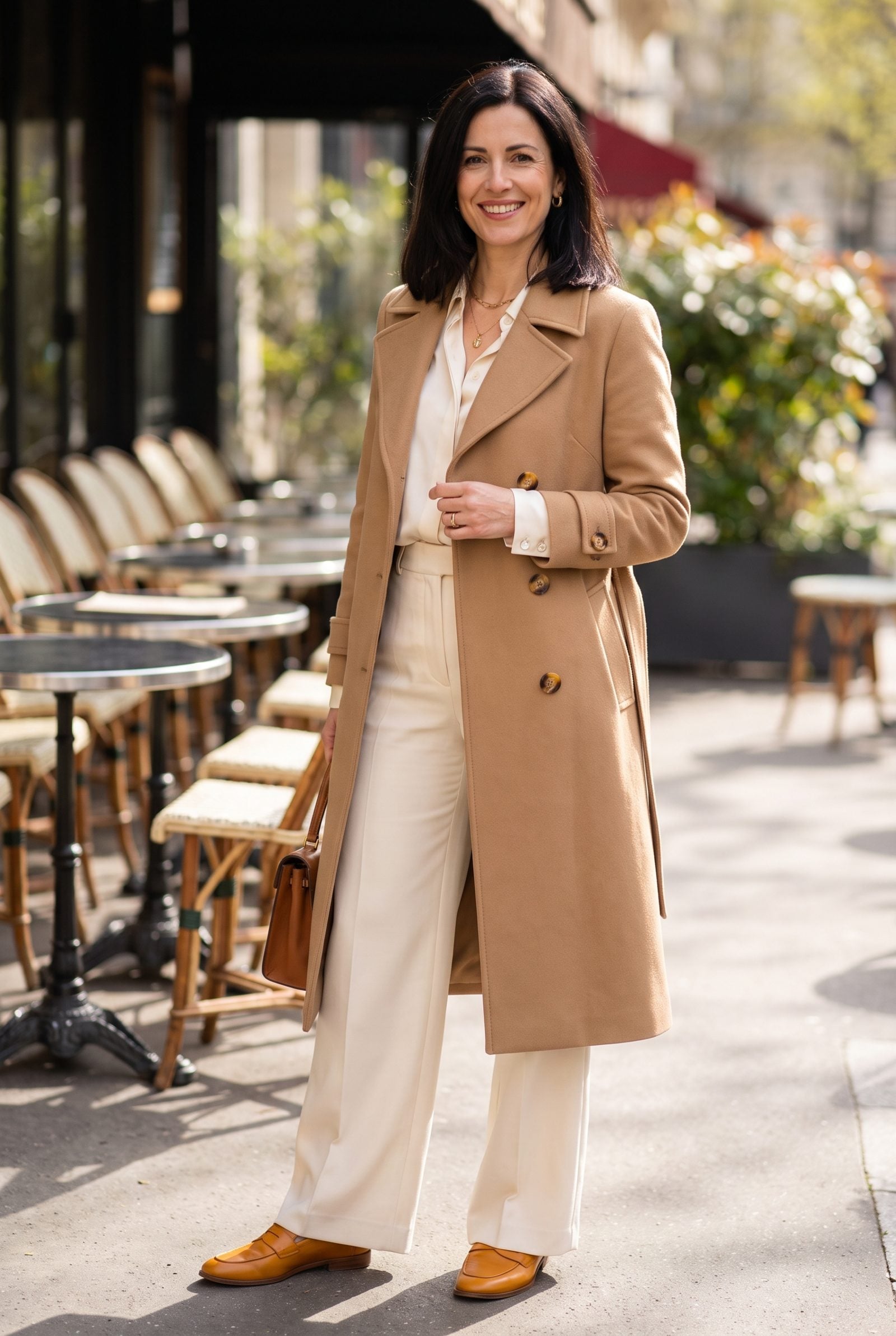
Plastic buttons are the tell nobody mentions. They feel light, warm up fast in your hand, and have that dead uniform shine.
Natural buttons behave differently. Corozo — a tropical nut sometimes called vegetable ivory — takes dye with a subtle grain, so no two match exactly. Horn carries smoky striations. Mother-of-pearl shifts color when it catches the light, cool and heavy against your fingers. These materials cost more and vary from button to button, and that variation is the whole appeal. A row of slightly mismatched buttons looks expensive precisely because machines can’t fake it convincingly.
2. Perfectly Parallel Rows of Decorative Topstitching
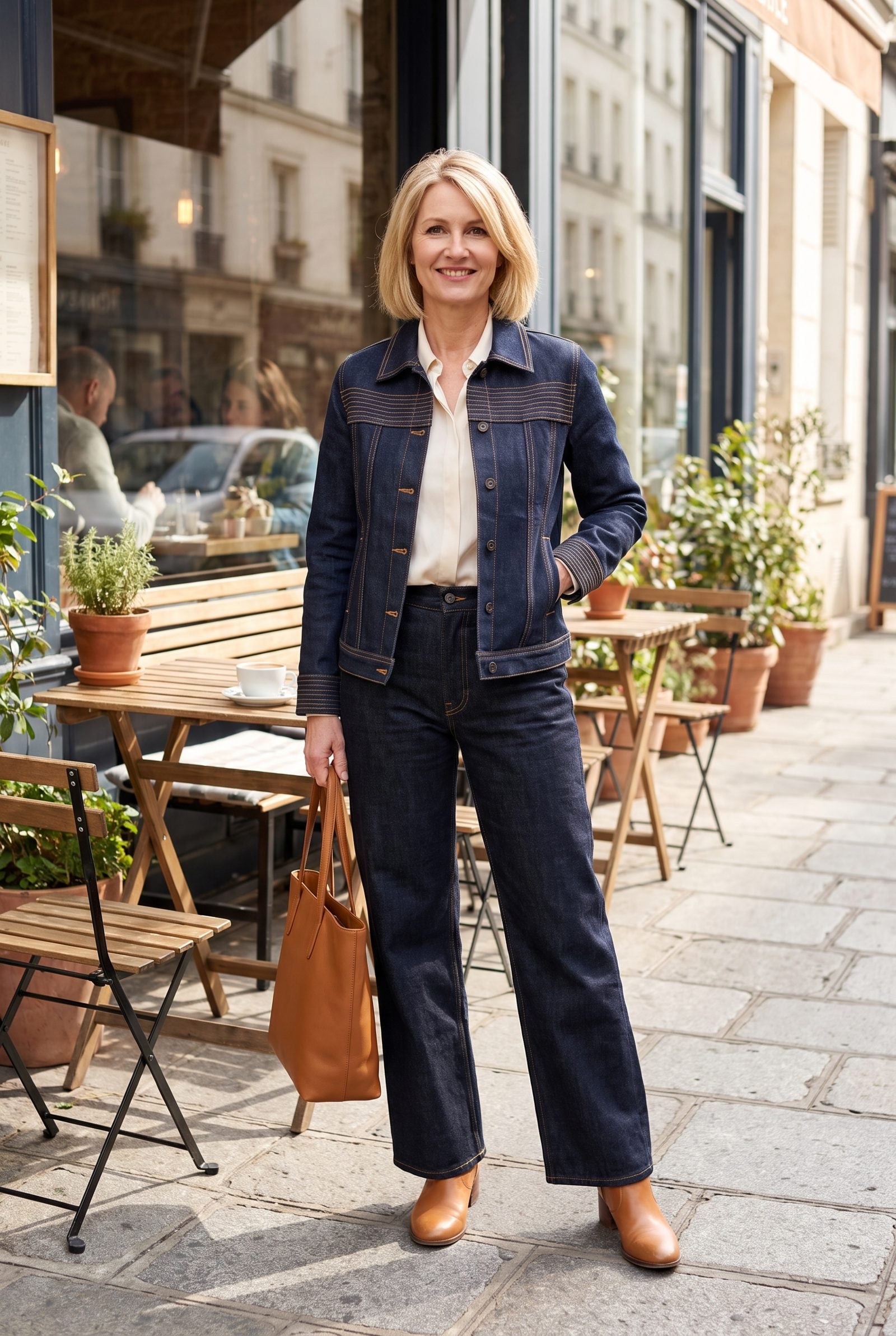
Topstitching is where corners get cut, because it’s hard and it shows. Bands of four to six rows of thread that stay truly parallel along every straight seam, even stitch length the whole way, mean someone slowed down and guided the fabric with real control.
Rows that drift apart, skipped stitches, puckered lines — that’s a factory moving fast. On indigo raw denim, where contrast thread makes every stitch visible, multi-row topstitching whose straight lines run in perfect step is basically a signature of the maker’s steadiness.
1. Polished Metal Zippers That Glide Without Catching

Zip a jacket once and you know. A good metal zipper moves in a single clean pull, no catching, no fighting it halfway up. The teeth are machined to interlock precisely, the pull has weight, and the whole thing feels built to outlast the garment.
Cheap zippers snag, jam, and eventually split at the worst possible moment — usually in public. On cognac leather, a solid brass zipper is often what separates a jacket you keep for years from one you quietly retire after two.