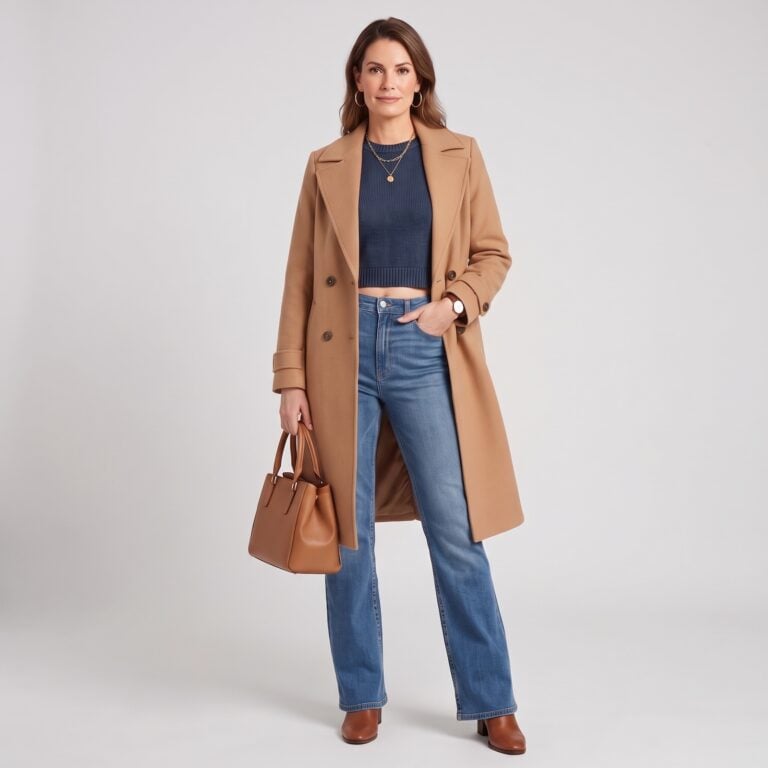
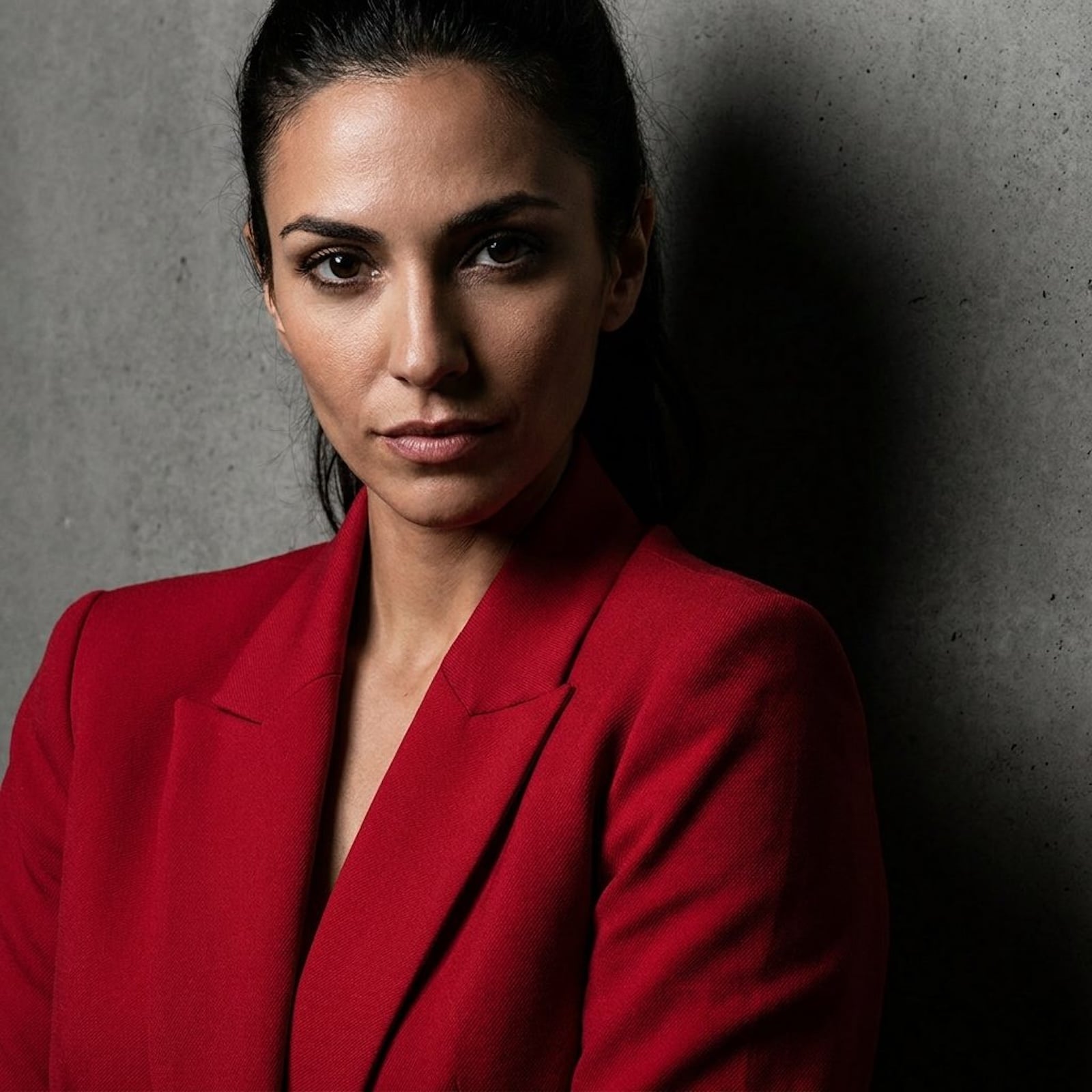
❤️ Would you like to save this?
There’s a specific hanger you go to. You know the one. The day starts sideways, the meeting has teeth, your reflection isn’t cooperating, and your hand goes straight to it without a vote from your brain.
Clothes collect meaning. A blazer can carry memories of meetings that went your way. A broken-in jacket can feel like backup. A color can remind you of the version of yourself who walks into a room without rehearsing the entrance first. Psychologists have spent years studying pieces of that relationship between dress, perception, memory, and behavior, but most women discovered the basic principle long before anyone gave it terminology: some clothes change the temperature of the day.
Some women reach for shoulders with a little authority built in. Some go monochrome and remove every unnecessary decision. Some grab the red one and dare the room. These 28 signature confidence looks explore what those choices can communicate, what they change in the mirror, and why certain outfits become the ones we trust when the day requires more nerve.
FYI, thanks to AI imagery software, we’re able to create very specific fashion and hairstyle examples to illustrate the points being made. In some cases, imagery is exaggerated to hammer home the point. Also, assume links that take you off the site are affiliate links such as links to Amazon. this means we may earn a commission if you buy something.
The Piece That Makes You Feel in Charge Before You Say a Word

Slip on a sharp charcoal blazer and the morning suddenly has edges. Defined shoulders, clean lapels, and a precise front line give the body a frame before the jewelry, bag, or shoes have entered the argument.
Psychologists Hajo Adam and Adam Galinsky introduced the term enclothed cognition in 2012 after experiments involving lab coats suggested that wearing clothing with a strong symbolic meaning can sometimes influence the person inside it. Source That idea helps explain part of the blazer’s enduring pull. Tailoring has spent generations attached to offices, uniforms, negotiations, institutions, and people expected to make decisions. Source
By 45, you probably already know which jacket has accumulated the right history. A tailored charcoal wool blazer over a plain white tee and matching wide-leg trousers keeps the formula simple. The tee makes it human. The blazer does the arguing.
The Head-to-Toe Trick That Makes an Outfit Look Instantly Resolved
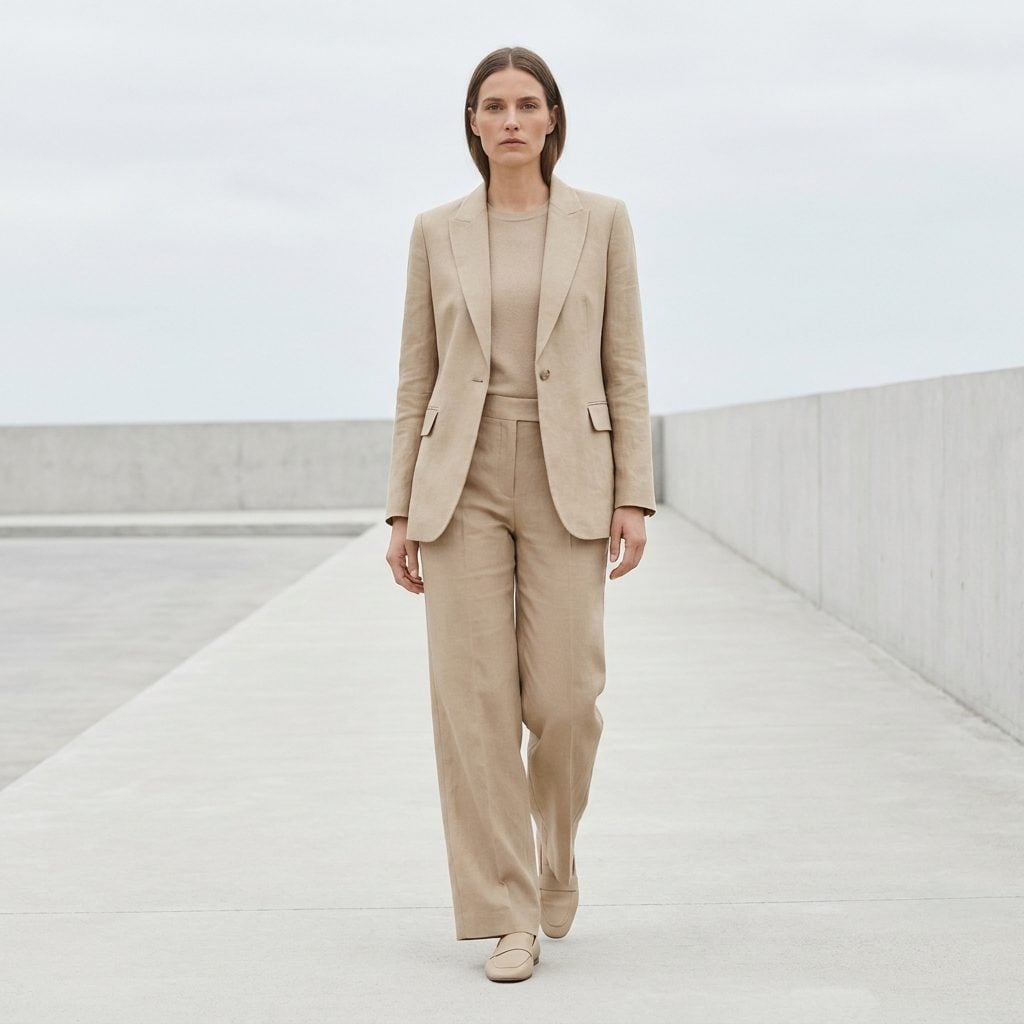
Dress in one color from throat to ankle and half the morning’s negotiations disappear. No wondering whether the trousers fight the sweater or whether the coat introduced one color too many. The palette has already made peace with itself.
Monochrome dressing creates visual cohesion because the eye encounters fewer abrupt shifts from one piece to the next. Source That visual order is part of what makes tonal outfits look composed even when they were assembled in two minutes. Source
A camel turtleneck under a matching camel coat turns texture into the interesting part. Knit, wool, leather, hair, skin — suddenly those small differences matter more than another color ever could.
The Wardrobe Basic That Looks Effortless Because Everything Extra Is Gone
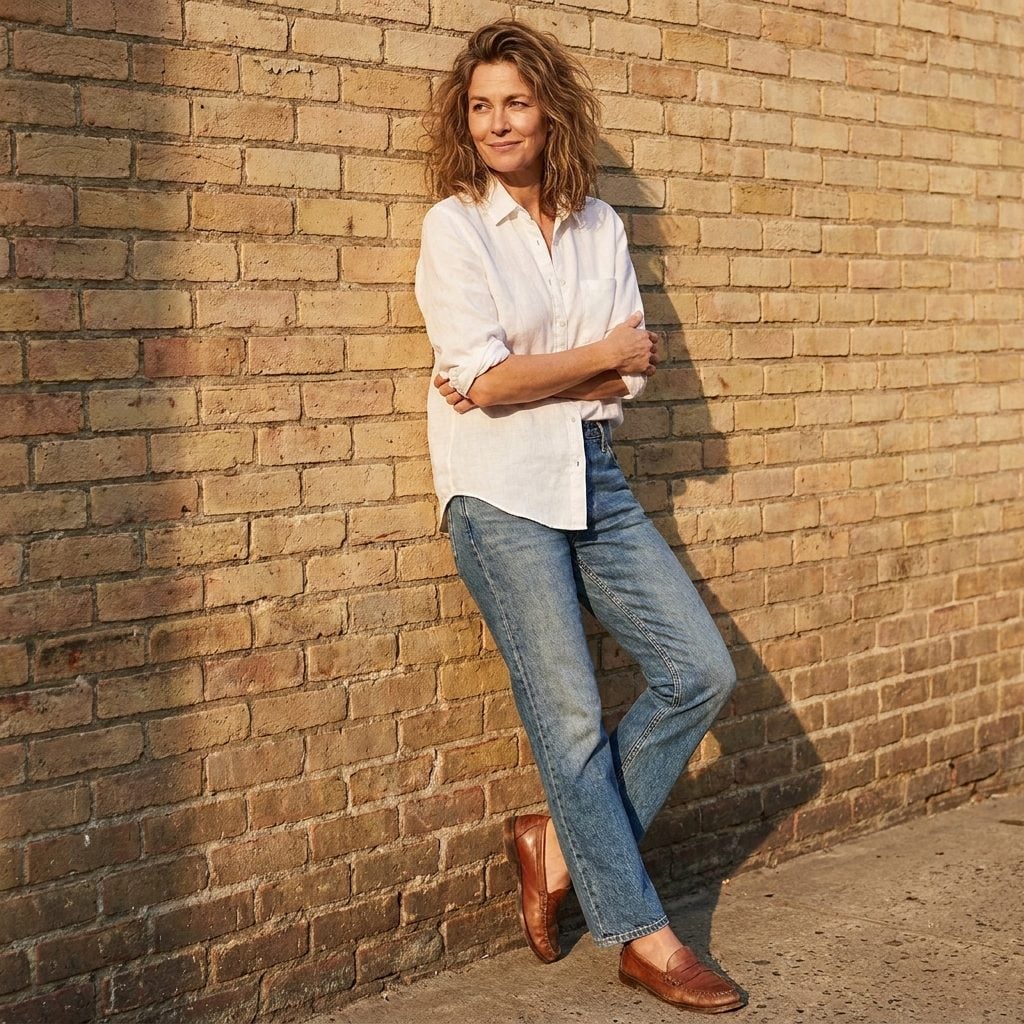
A crisp white button-down and good jeans. Nothing about it announces itself, which is exactly why every detail suddenly matters. Fit, cuff, tuck, denim wash, shoe. There is nowhere for a bad decision to hide.
Minimal wardrobes are often praised because fewer variables mean fewer small choices at the start of the day. Source Familiar pieces also carry a useful advantage: you already know what they do. No experimental hemline. No surprise neckline. No mirror summit at 8:12 a.m.
A pressed white button-down shirt tucked into straight-leg jeans, finished with gold hoops, gives you a uniform without making you look uniformed. The same low-friction thinking works in a relaxed athleisure outfit on the weekend: keep the pieces familiar and save the argument for something more interesting.
The Layer That Takes a Camisole From Dinner to the Boardroom
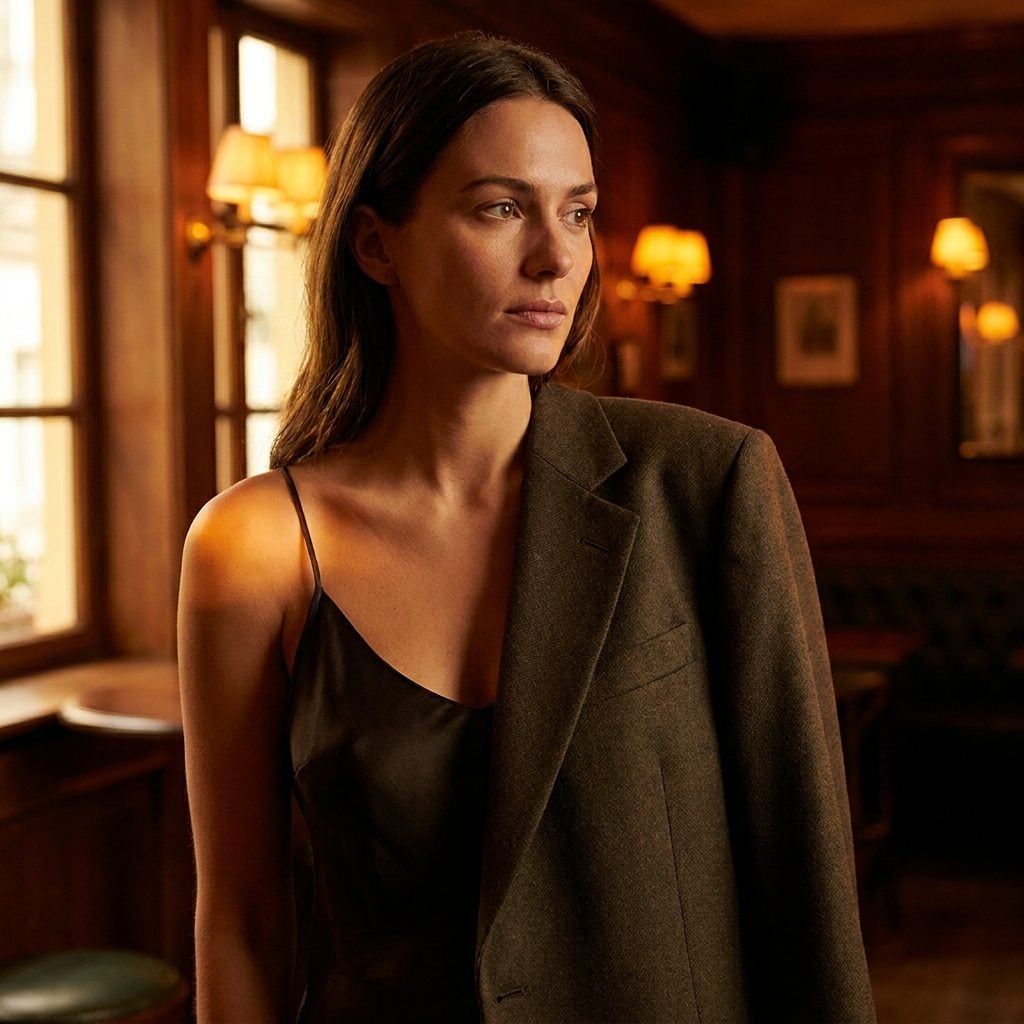
An oversized blazer thrown over a silk camisole is a small act of alchemy. Soft underneath, structured on top. One catches the light; the other draws the boundaries.
Tailoring carries decades of professional associations, which is why a blazer can change the tone of a camisole before either piece has technically changed at all. Source Silk contributes something more private: movement, sheen, and the tactile pleasure of fabric that feels different against the skin. Source
An ivory silk camisole under a beige oversized blazer lets both impulses coexist. One half says polish. The other says you remembered you still have a life after 5 p.m.
The Wide-Leg Trouser That Changes the Entire Proportion
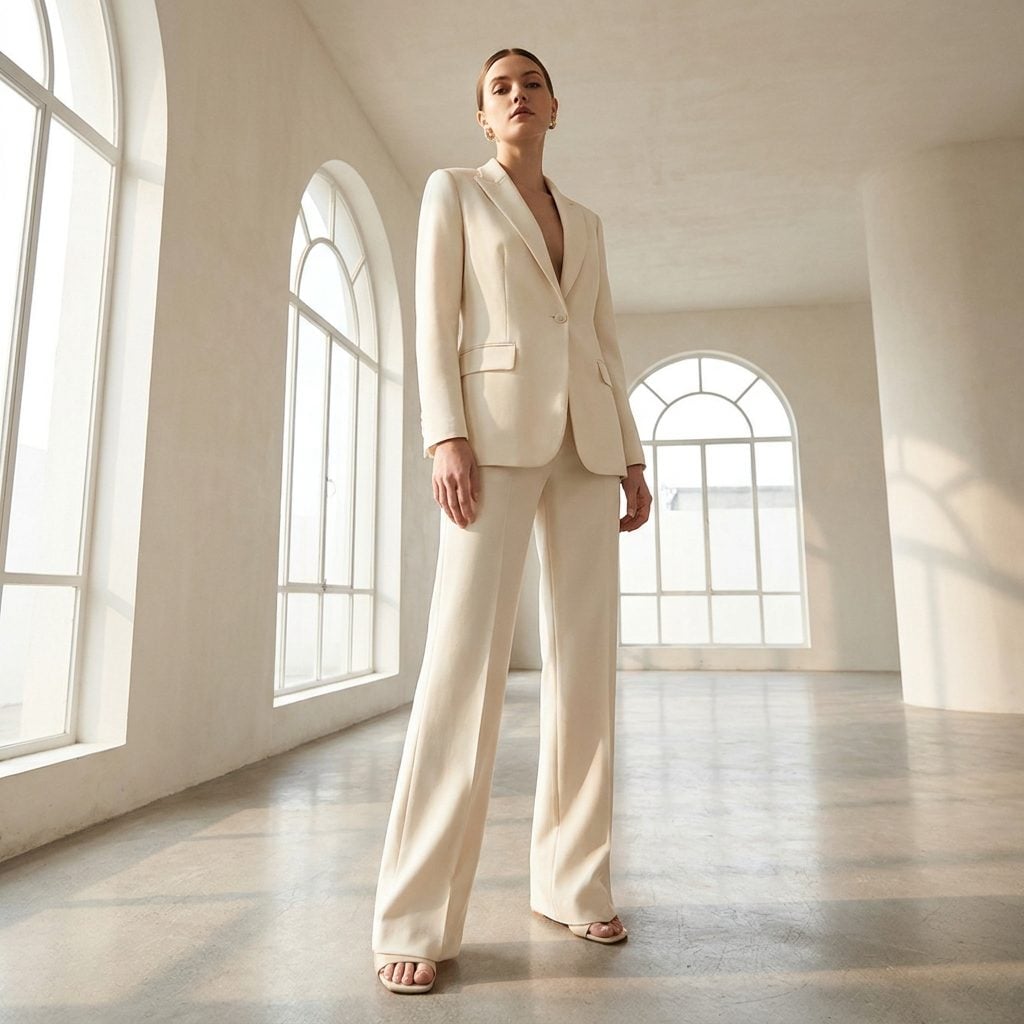
High-waisted, wide-leg trousers change the architecture of an outfit immediately. The waistband starts high, the fabric falls broad and uninterrupted, and the lower half suddenly has more sweep than anything skinny or sharply cropped could provide.
There’s psychology in the mirror feedback too. Clothes alter the proportions we see when we look at ourselves, and those proportions can influence whether an outfit feels tentative, relaxed, imposing, playful, or precise. A fitted top against a full trouser makes the shape especially easy to read. Source
Try high-waisted navy wide-leg trousers with a cream knit top and a structured tote. The high waist sets the scale. The trousers bring the movement. The tote is punctuation.
The Leather Jacket You Reach for When Soft Isn’t the Mood
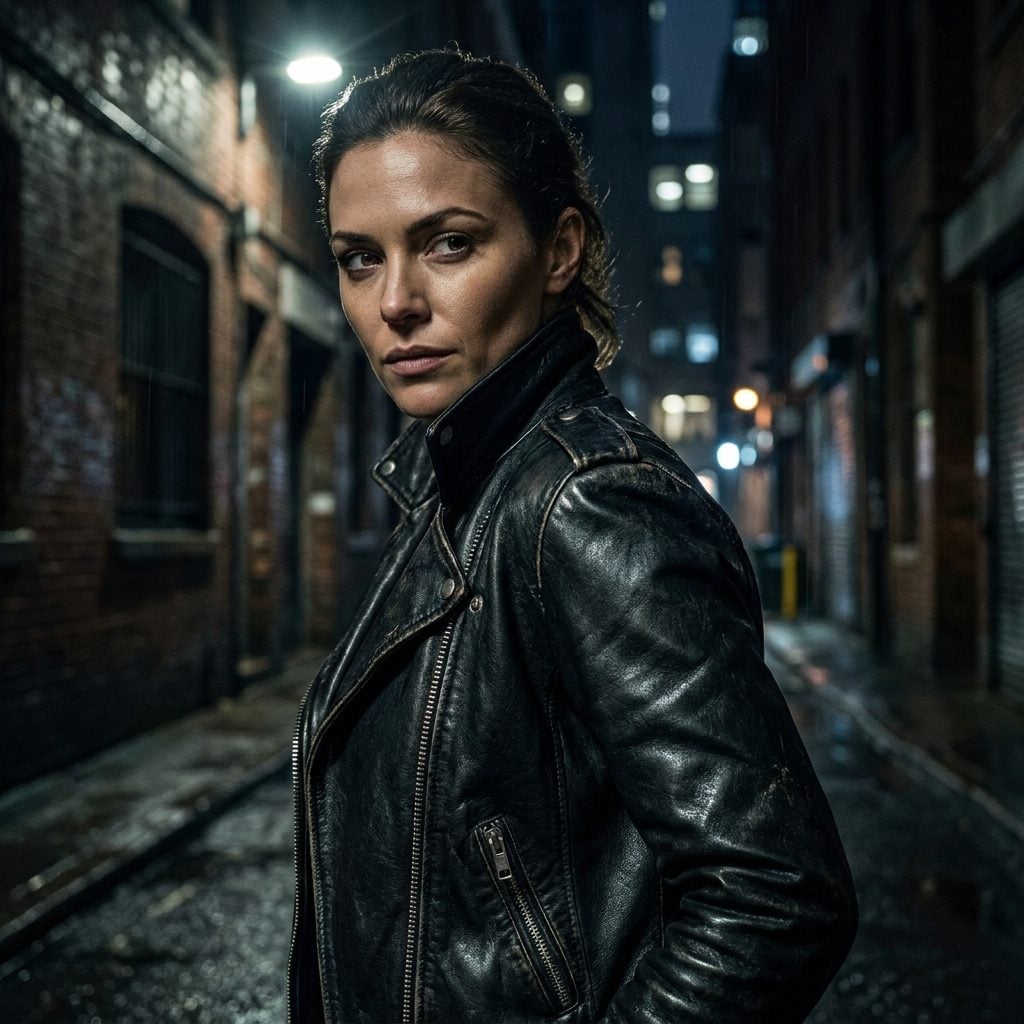
A leather jacket changes the atmosphere the moment the zipper moves. Part of that is physical — leather has weight, resistance, and shape — and part of it comes from decades of motorcycles, rebellion, rock music, uniforms, punks, pilots, and people in movies who rarely ask whether they’re allowed inside.
Leather began as protection long before it became a fashion statement, and the armor metaphor has followed the material ever since. Source Cultural meaning accumulates. By the time a modern biker jacket reaches your closet, the hide is carrying considerably more than weather resistance.
Now soften it. A black leather jacket over a flowing floral midi skirt puts toughness and tenderness in the same frame. That’s more interesting than choosing either one alone.
The Black Turtleneck That Lets You Decide What Gets Noticed

You reach for the black turtleneck on days when you want fewer moving parts. The color is familiar, the shape is simple, and almost every accessory suddenly has somewhere clean to land.
One British survey of 1,000 people found that black scored highly when respondents associated colors with confidence, intelligence, and attractiveness. Source Whatever the cultural variations, black has spent centuries acquiring associations with seriousness, elegance, mourning, rebellion, formality, and authority. That’s a lot of psychological luggage for one neutral.
The oversized gold earrings finish the sentence. Black recedes; metal catches the light. The woman gets to choose where the emphasis lands instead of letting the outfit scatter attention everywhere at once.
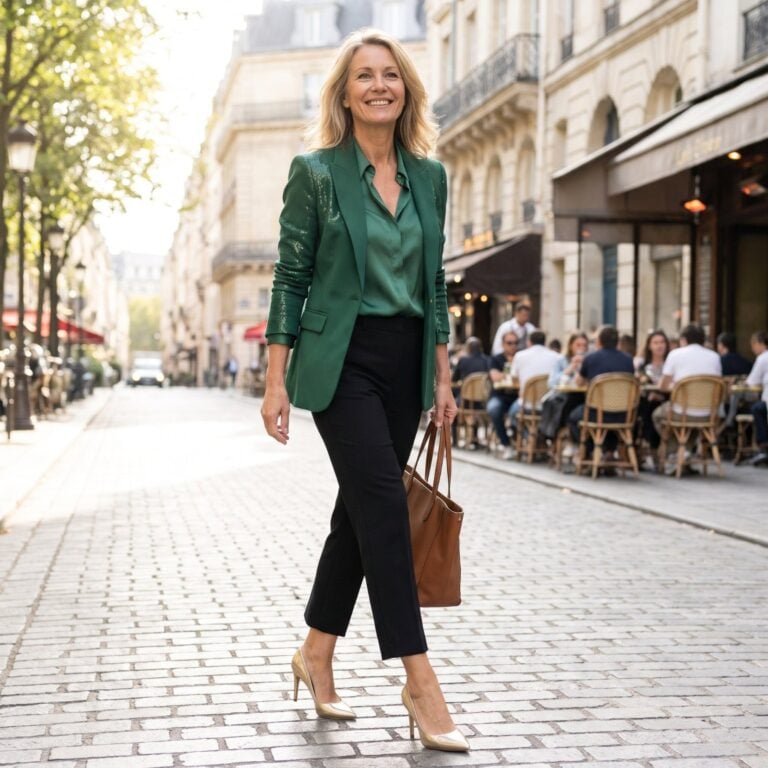
The Emerald Suit That Gives Power Dressing a Different Color
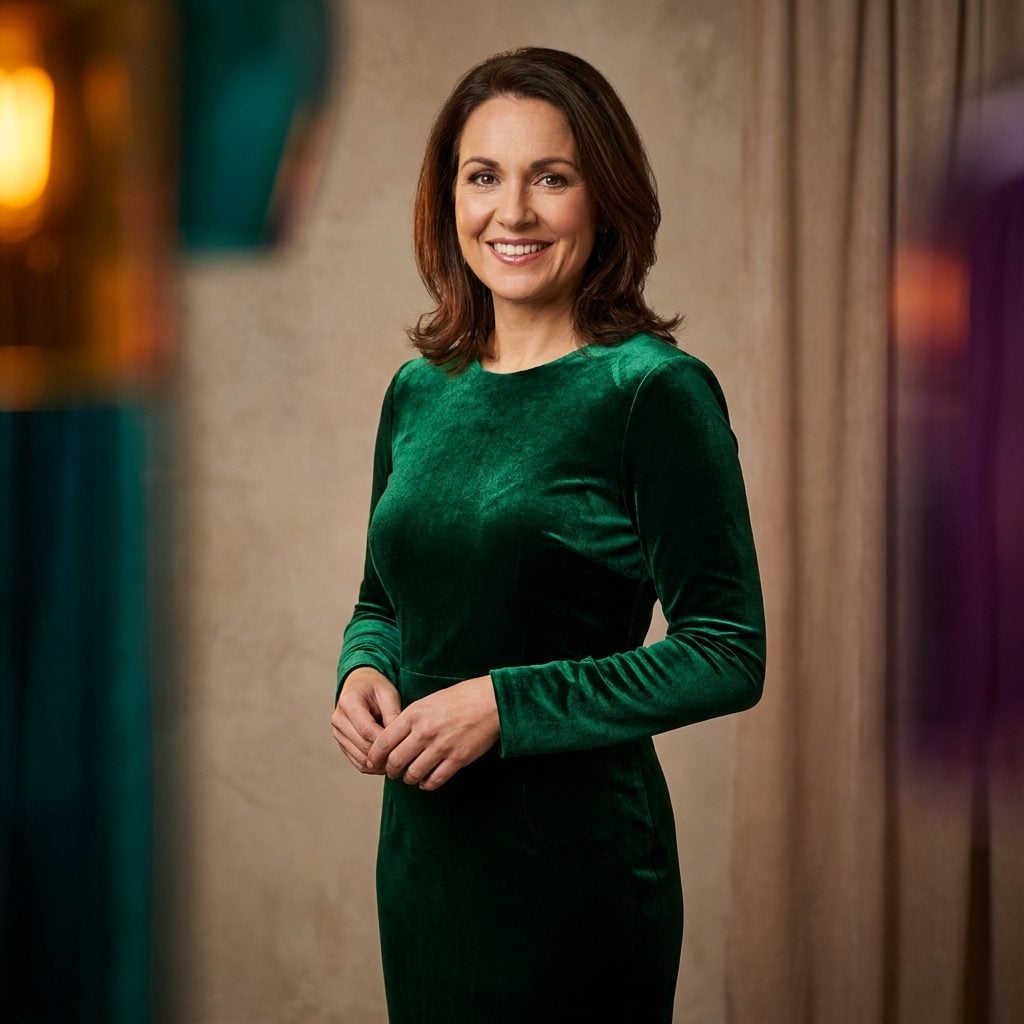
Emerald green is an unexpected confidence color, which is exactly why it works here. Black and navy own so much professional territory that a deep green suit becomes memorable before anyone has cataloged the lapels.
Color-psychology sources often connect green with nature, balance, growth, prosperity, and calm, though those associations change with shade, culture, lightness, and context. Source Deep emerald has another advantage: it carries enough darkness to feel substantial while remaining obviously, unapologetically green.
Then there’s the tailoring. A pantsuit cut cleanly through the shoulder and trouser gives all that color discipline. Source
The woman in emerald doesn’t disappear into standard office navy, and she doesn’t need scarlet to seize the room. She’s found the middle route: saturated, controlled, difficult to forget.
The Trench Coat That Makes Bad Weather Look Planned
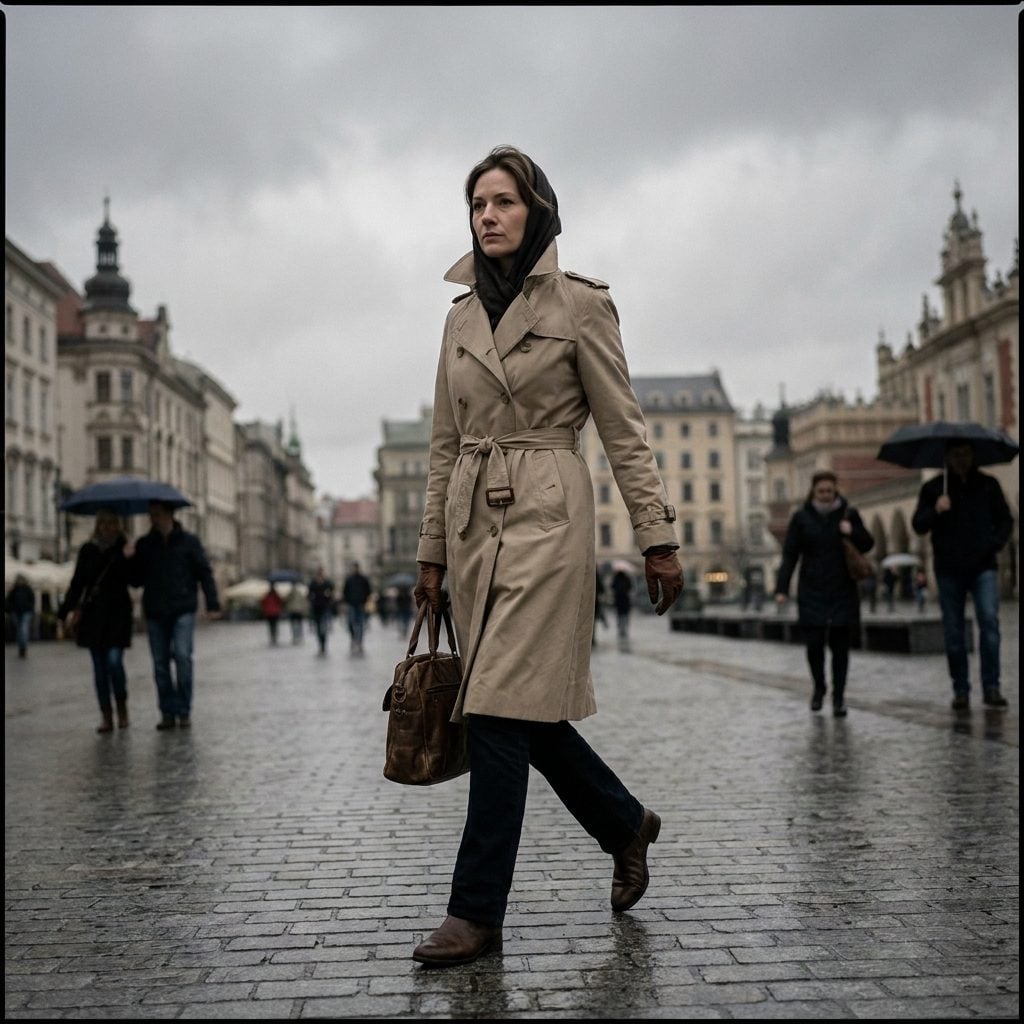
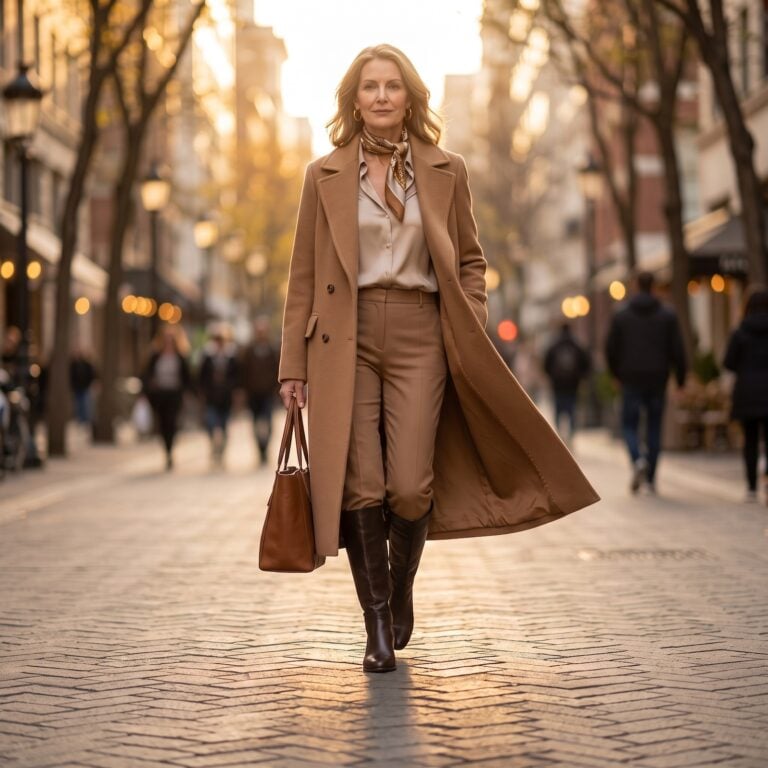
A belted trench on a gray day accomplishes something an ordinary rain shell rarely even attempts. The collar has architecture, the waist can be cinched, and the hem moves behind you. Weather protection suddenly has an entrance.
The trench’s military history still shadows the modern coat. Versions evolved from practical rainwear worn by officers around the First World War, and details such as epaulettes, storm flaps, belts, and hardware survived long after the battlefield disappeared from the equation.
That inherited symbolism matters. Military uniforms are designed around readiness, order, function, and rank; cinema later added detectives, spies, executives, travelers, and women striding through train stations with somewhere important to be. Put on a camel trench coat over the plainest dress you own and all of those associations arrive before the umbrella opens.
The Wrap Dress That Feels Like the Outfit Already Knows Your Shape

Some women reach for a wrap dress on days when they want the clothes to cooperate without a negotiation. The dress closes around the body and ties where you decide it should. That small amount of control is part of the magic.
Jewel tones such as emerald and sapphire bring saturated color without the visual heat of scarlet or orange. Color associations vary, but deep cool tones are often used when designers want richness without obvious flash. Source
The wrap silhouette adds something psychologically satisfying: adjustment. You shape the garment to yourself instead of squeezing yourself into a completely fixed shape. A emerald wrap dress works with a warm genuine smile because the dress already looks like it’s smiling. Add a printed scarf when temperatures fall and the same dress keeps collecting seasons.
The All-Neutral Uniform That Looks Expensive Without Announcing Why
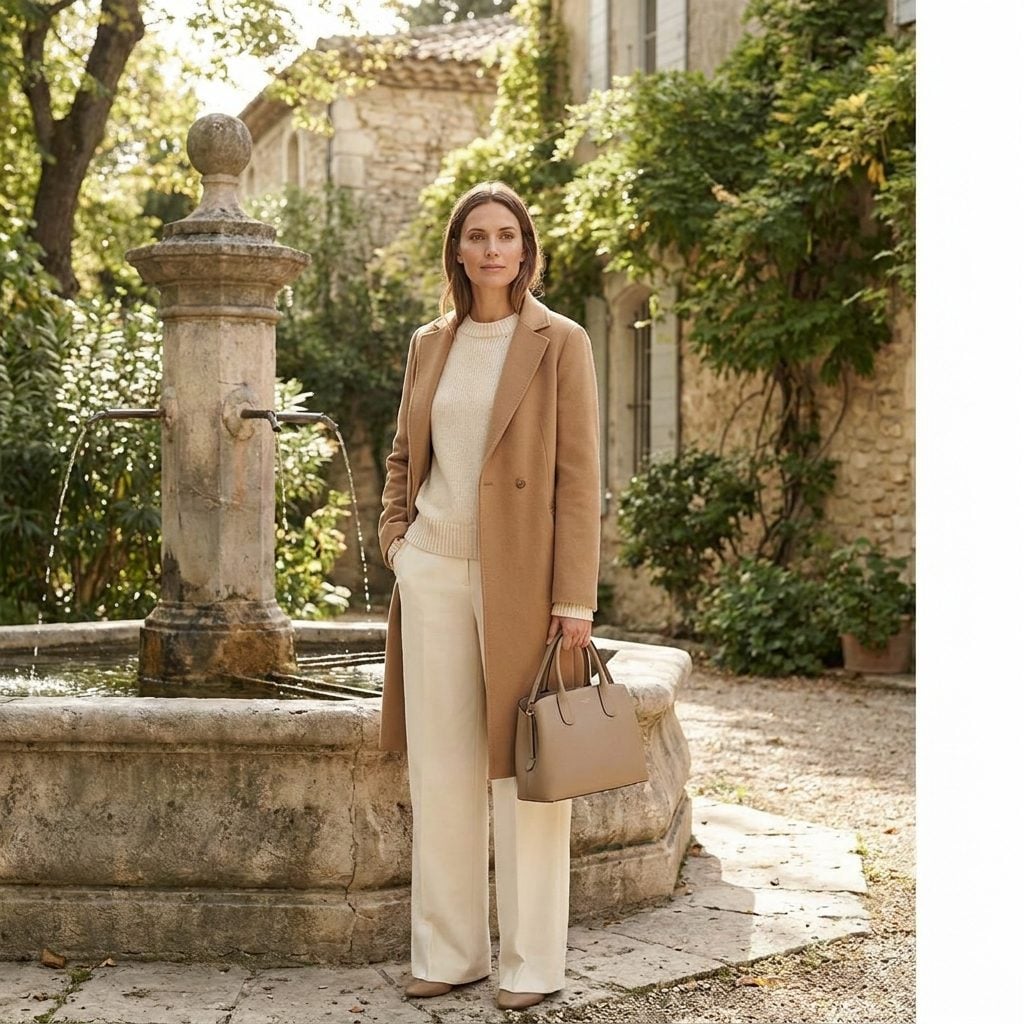
Beige, oatmeal, camel, ivory. No logos. No color begging for first billing. Just a woman by a fountain holding a structured handbag, looking like money that stopped announcing itself decades ago.
The association between subdued neutrals and understated luxury is cultural as much as visual. Muted palettes have circulated for years through cashmere, tailoring, leather goods, private clubs, expensive coats, and the whole “quiet luxury” vocabulary. Eventually the colors begin carrying some of those associations on their own.
A beige structured handbag gives all that softness one firm edge. Nothing in the palette fights for attention, so texture, cut, posture, expression, and accessories become more noticeable instead.
The Cropped White Blazer That Changes the Waistline First

A cropped white blazer over high-waisted jeans is a proportion correction disguised as an outfit.
The blazer stops close to the waistband instead of extending over the hips, so more of the denim remains visible. The mirror immediately gives you a different ratio: shorter-looking torso, longer-looking stretch of trouser, clearer waist.
That visual feedback matters because confidence isn’t only about what strangers see. It’s also about what you see before leaving the house. When the silhouette in the mirror suddenly looks sharper, longer, or better balanced, the emotional response can arrive almost embarrassingly fast.
A white cropped blazer with high-waisted straight jeans looks far more calculated than the effort required. Sometimes confidence begins with moving a hemline several inches north.
The Silk Blouse That Makes Movement Part of the Outfit
❤️ Would you like to save this?
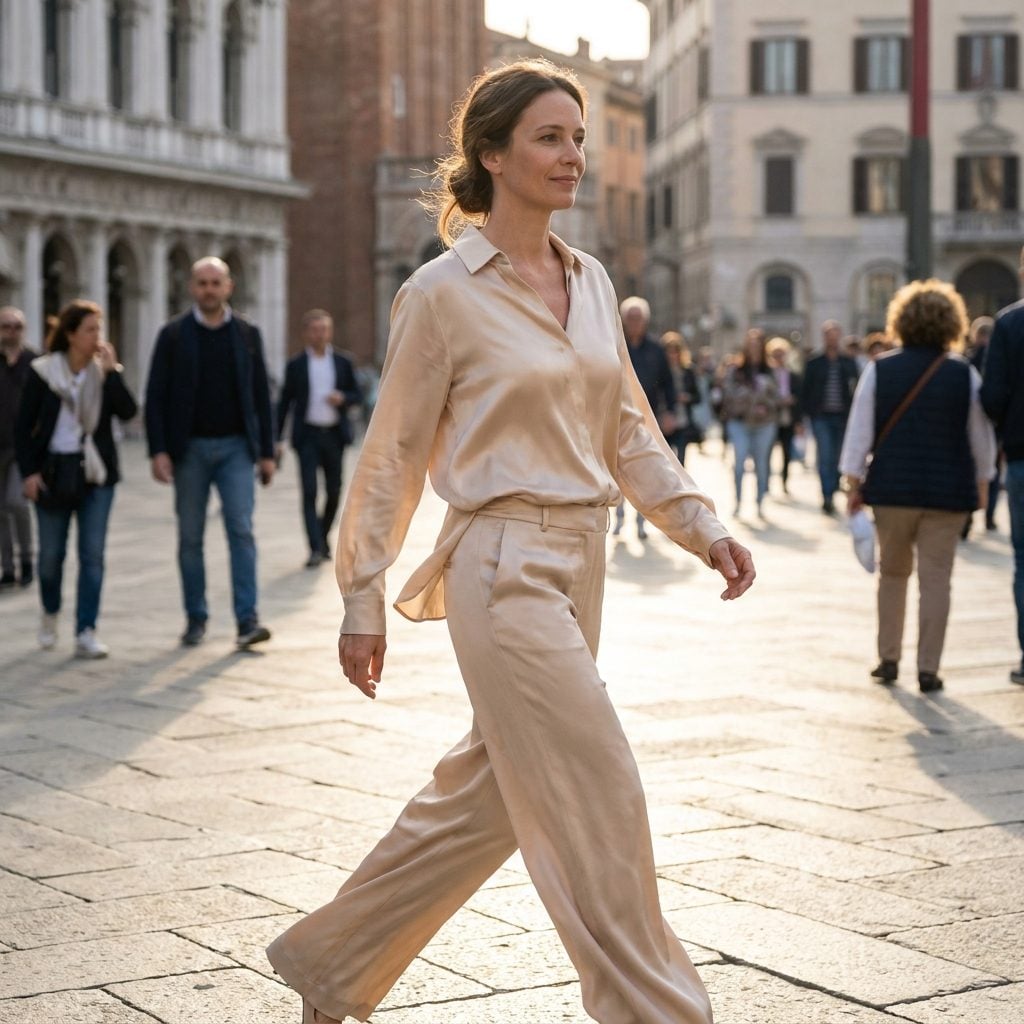
Watch a woman in a silk blouse cross a plaza and the fabric rarely stays still. It shifts at the shoulder, catches light at the sleeve, collapses softly around the elbow, then changes shape all over again when she turns.
Fabric changes the physical experience of an outfit. Crisp poplin holds its territory. Heavy wool has weight. Silk slips, drapes, cools, and moves. Those sensations are private, but they affect how aware you are of the clothes while wearing them.
Tucked into tailored Bermuda shorts, a flowing silk blouse splits the difference between relaxed and considered. A silk blouse over tailored Bermuda shorts lets fluidity sit on top of structure. The result looks like summer but behaves like an outfit with somewhere to be.
The Head-to-Toe Knit That Feels Like a Long Exhale
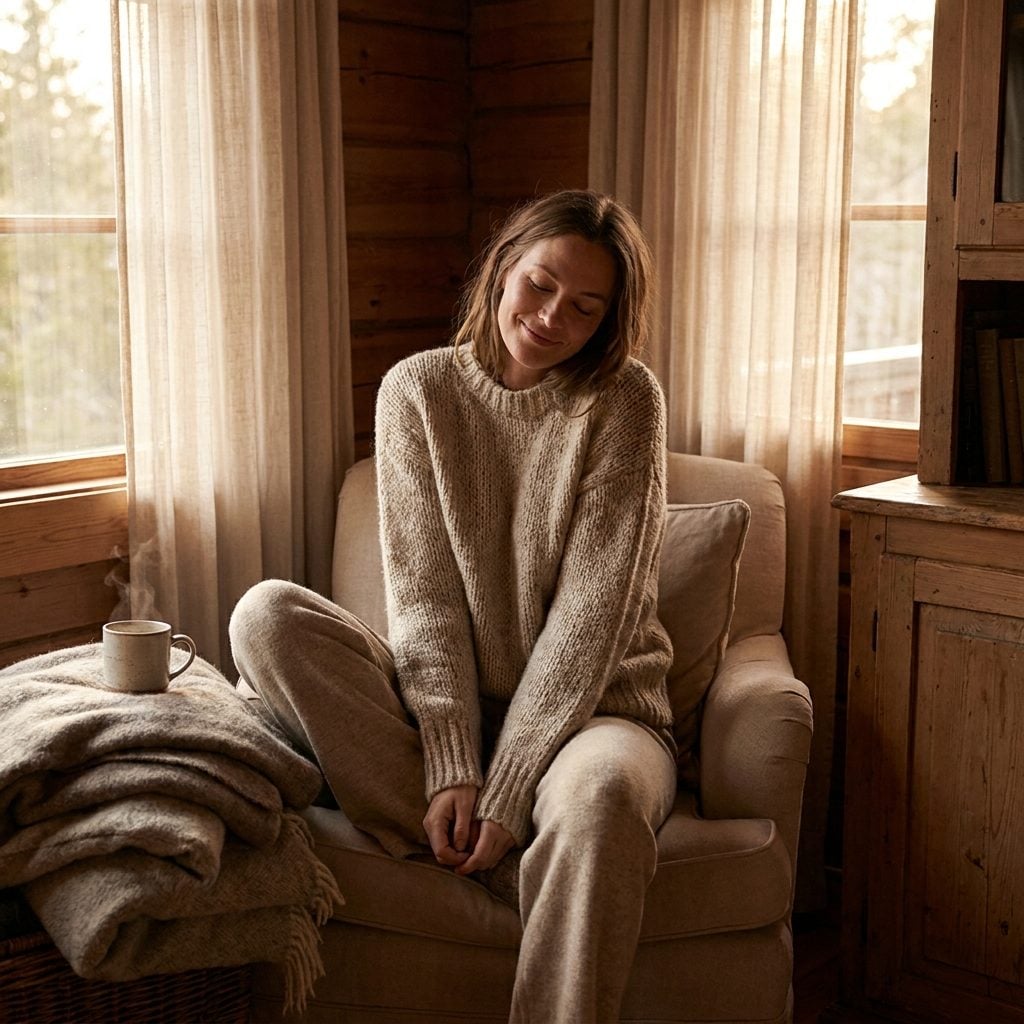
Some days confidence doesn’t look like armor. It looks like softness you chose on purpose.
A matching oatmeal cardigan and knit trousers eliminate most of the friction from getting dressed. Same palette, same texture family, no debate over whether the top belongs with the bottom. Familiarity and simplicity are doing as much here as the color.
Soft clothing also changes the physical experience of the day. Nothing rigid is cutting across the waist. Nothing sharp is demanding constant adjustment. An oatmeal oatmeal knit cardigan and matching knit trousers gives comfort a little discipline without asking comfort to disappear.
This is the kind of dressing I reach for when I’ve got nothing left to give the mirror, and somehow it’s the look that gets the most compliments. Go figure. Wear it as a slouchy look and nobody will know the outfit was basically emotional room service.
The One Statement Piece That Does All the Work So You Don’t Have To
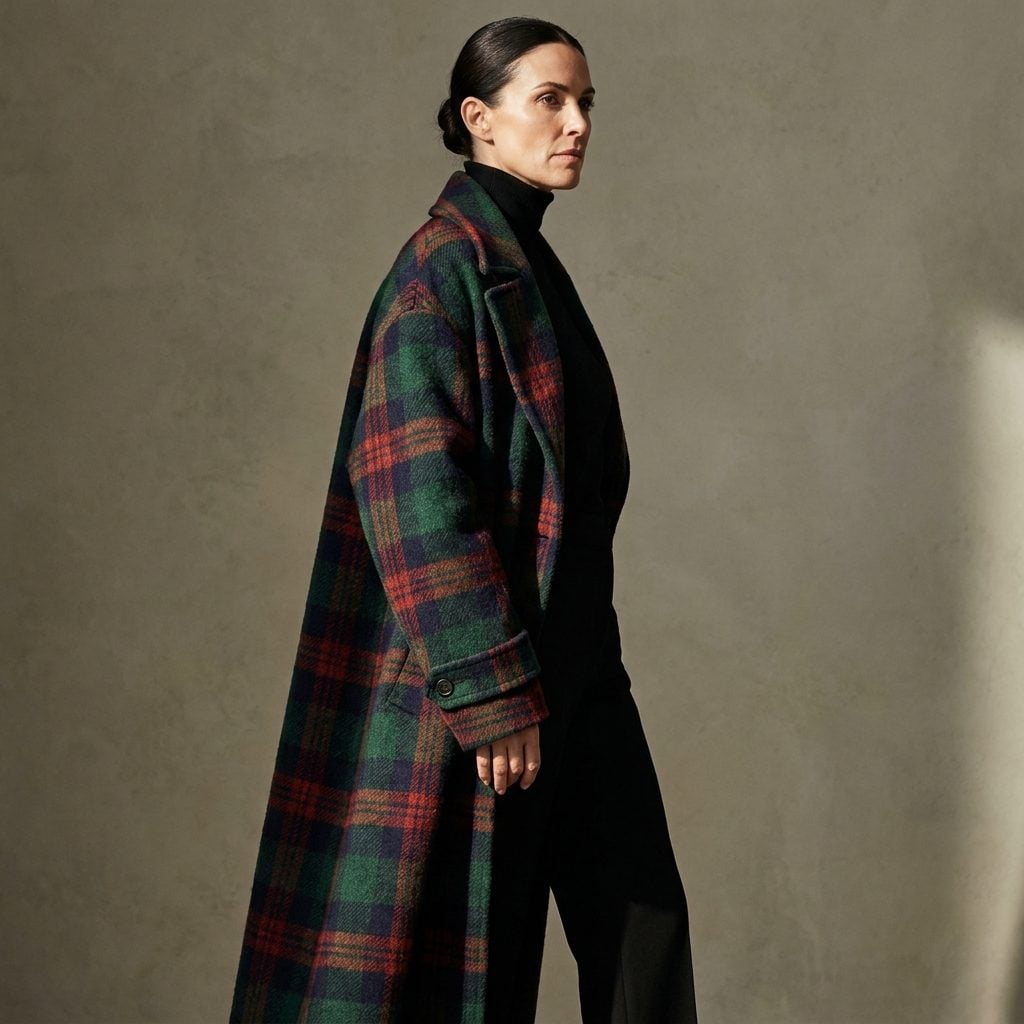
Plain black underneath. A bold plaid coat on top. That’s the whole outfit, and it’s more effective than plenty of combinations that required a spreadsheet.
The psychology is attention management. Give the eye one unmistakable focal point and the outfit becomes easy to understand. The coat gets the stage; everything underneath becomes scenery.
A plaid statement coat over the plainest black outfit you own creates the illusion that a lot more styling happened than actually did. The black base keeps the pattern readable. The coat keeps anyone from noticing you rolled out of bed ten minutes ago.
One bold piece over quiet neutrals reads as a decision. Three bold pieces need considerably better negotiating skills.
The Black Dress That Needs Almost Nothing Else
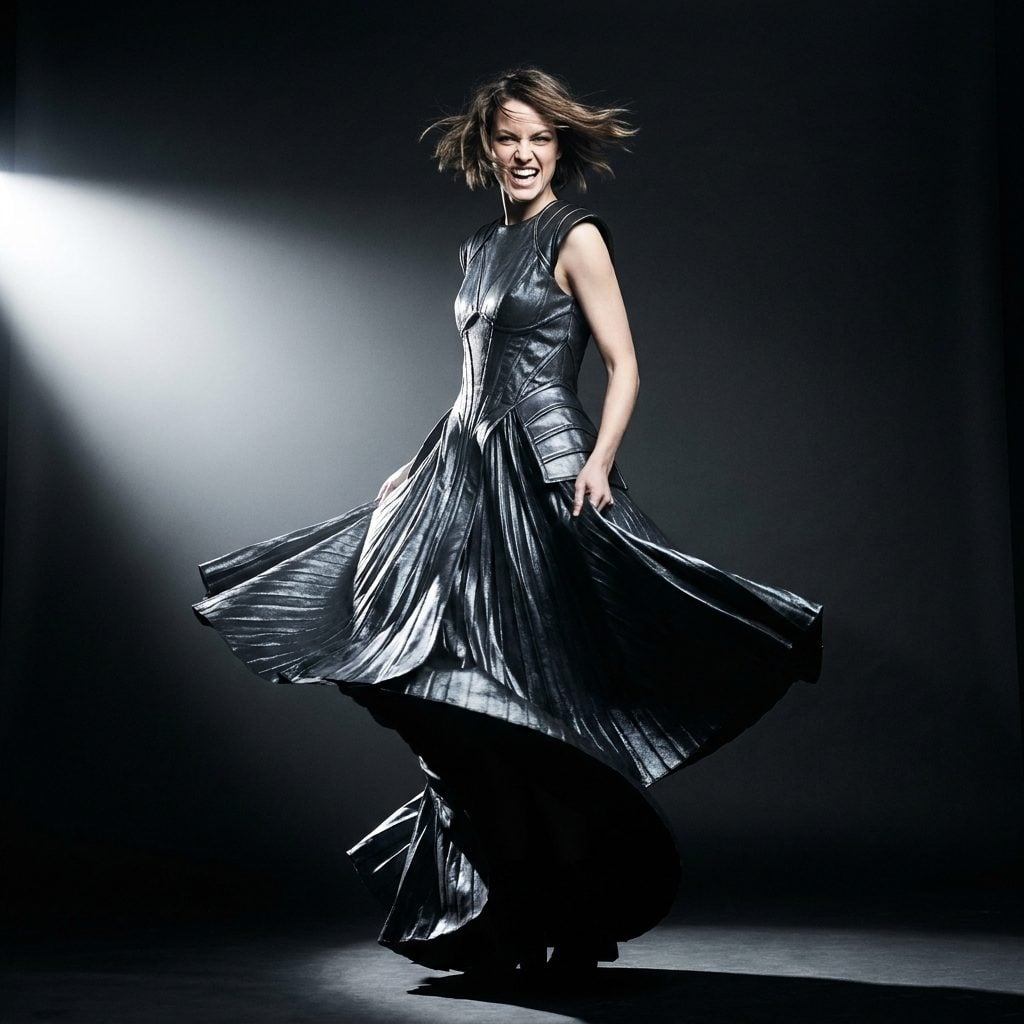
Every woman past 40 seems to know the type, whether or not she actually owns one: the black dress that never negotiates. You put it on when you want the clothes resolved before the rest of the day has a chance to become complicated.
Black carries centuries of cultural baggage — elegance, mourning, rebellion, severity, minimalism, glamour, formality. A beautifully fitted midi borrows selectively from that history. The shape determines whether the result reads funereal, seductive, severe, restrained, or simply very, very finished.
Coco Chanel’s 1926 little black dress helped push simple black daywear deeper into modern fashion mythology. A black midi dress with a little gold jewelry still makes the argument efficiently. Nothing to prove. Nothing to explain.
The Navy Jumpsuit That Solves the Morning in One Zip
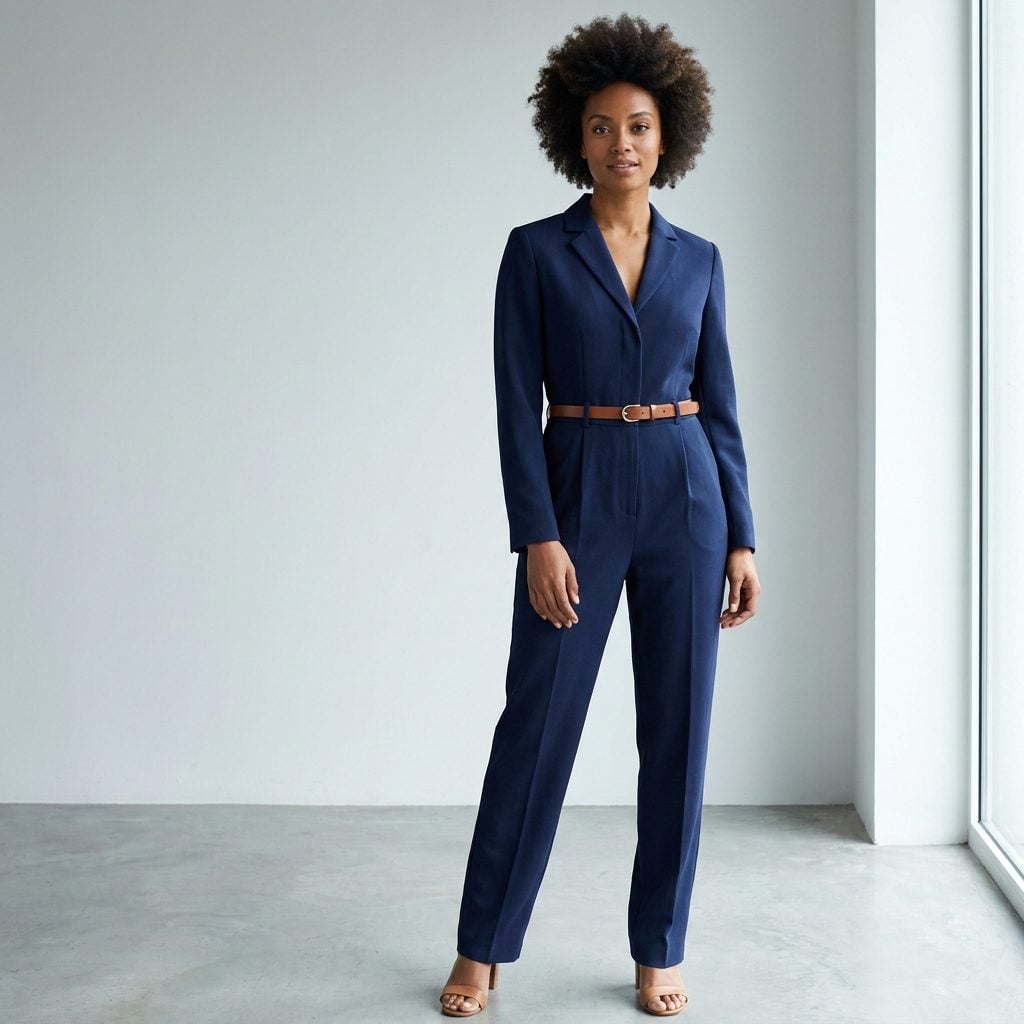
A navy jumpsuit with a thin belt is one decision that solves an entire morning. You step in, cinch the belt, and you’re done. No mixing, no matching, no blouse staring suspiciously at a pair of trousers from across the bed.
Navy has spent generations embedded in uniforms, tailoring, school dress, military clothing, and professional wardrobes. Those repeated associations give it a cultural seriousness that feels different from bright blue and softer than solid black.
The thin belt adds the only intervention the jumpsuit really needs, marking the waist and keeping one continuous piece of fabric from becoming a tube. A navy jumpsuit with a slim thin belt is one zip, one cinch, and very little left to negotiate.
The Confidence Look That’s Secretly a Time Machine
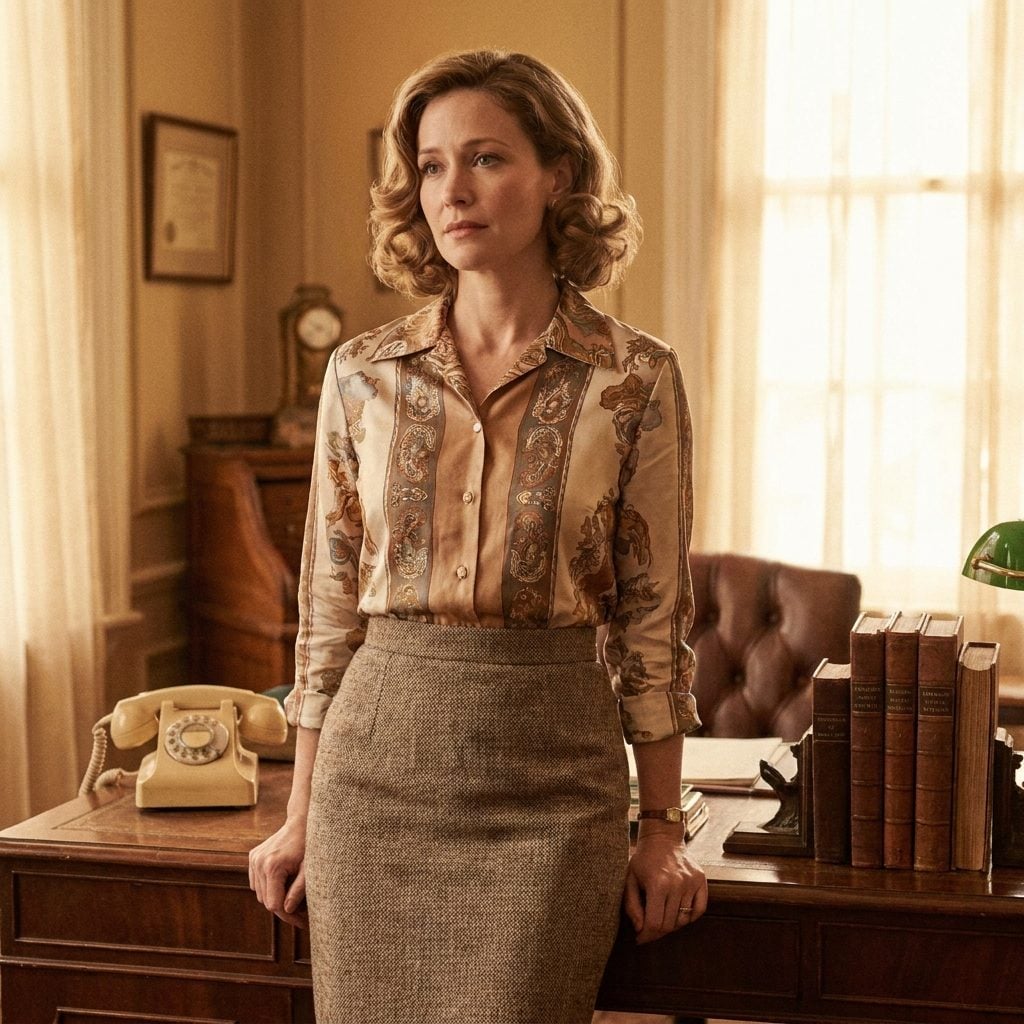
You reach for the vintage-inspired blouse and pencil skirt on the days you want something familiar but not ordinary. The pull can run deeper than the flattering nip at the waist.
Research on nostalgia and consumer preference has found that when people’s sense of authenticity is threatened, they can become more drawn to personally meaningful products associated with the past, partly because those objects reinforce continuity between earlier and present selves. Source
That’s why retro dressing can feel surprisingly personal. A blouse cut like something you once wore, something your mother wore, or simply something from an era you’ve loved for years can carry memory along with silhouette. Related research has linked nostalgia with stronger feelings of self-continuity. Source
The Softness-Plus-Structure Combination That Splits the Difference
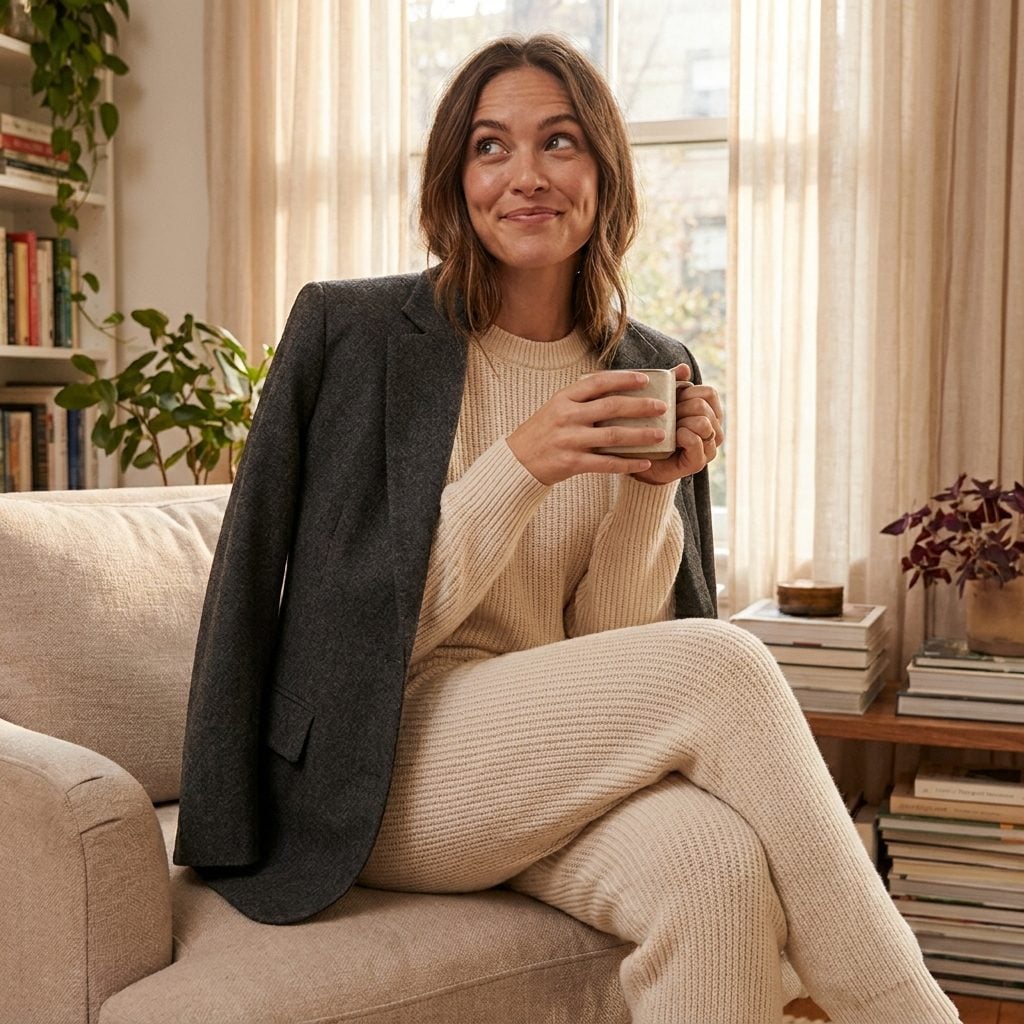
She’s wearing loungewear. Sort of. The matching knit set says comfort. The structured blazer thrown over it changes the entire category.
The psychological appeal is the compromise. You keep the familiar softness underneath while adding a garment culturally associated with work, order, and getting things done. One layer reassures; the other sharpens.
Visually, the blazer adds lapels, a defined shoulder, and a firmer outer boundary around a much softer base. Reach for this athleisure outfit formula when you want comfort without looking as though the meeting is happening from the sofa.
The Denim Uniform That’s Really About Familiarity
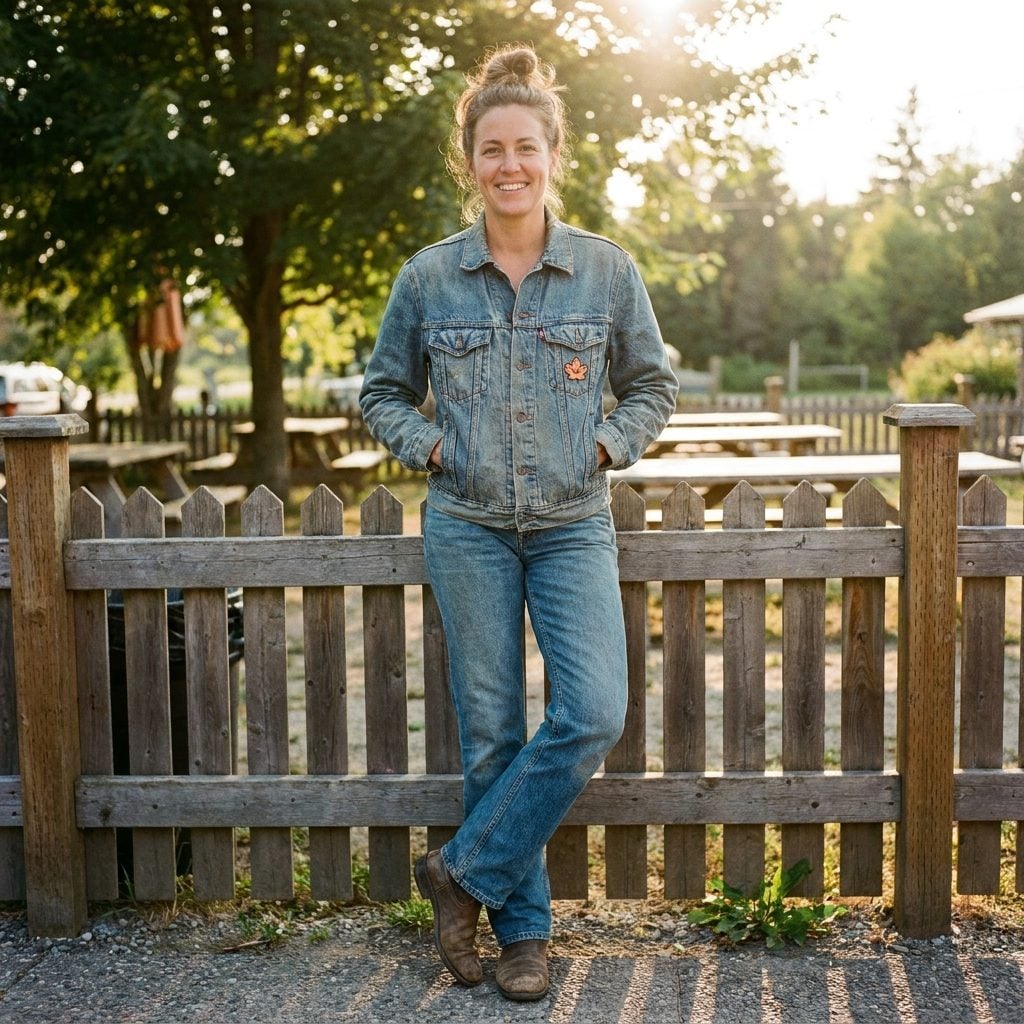
Denim on denim reads casual, but familiarity is part of its strength. A fitted denim jacket and straight-leg jeans require very little interpretation. Most of us have been wearing some version of them for decades.
Denim’s history as durable workwear gives the fabric cultural associations with toughness and utility. It dressed miners, railroad workers, ranchers, factory workers, teenagers, rebels, supermodels, rock stars, and eventually almost everyone waiting in line at the grocery store.
A jacket you’ve broken in over years has something a brand-new garment can’t manufacture overnight: a record. You know where the sleeves land, how the collar sits, which bag works with it, and whether you like yourself in photographs wearing it. That’s enough to make it the look you reach for when surprises are already arriving from every other direction.
The Dramatic Cape for the Days You Have No Interest in Shrinking
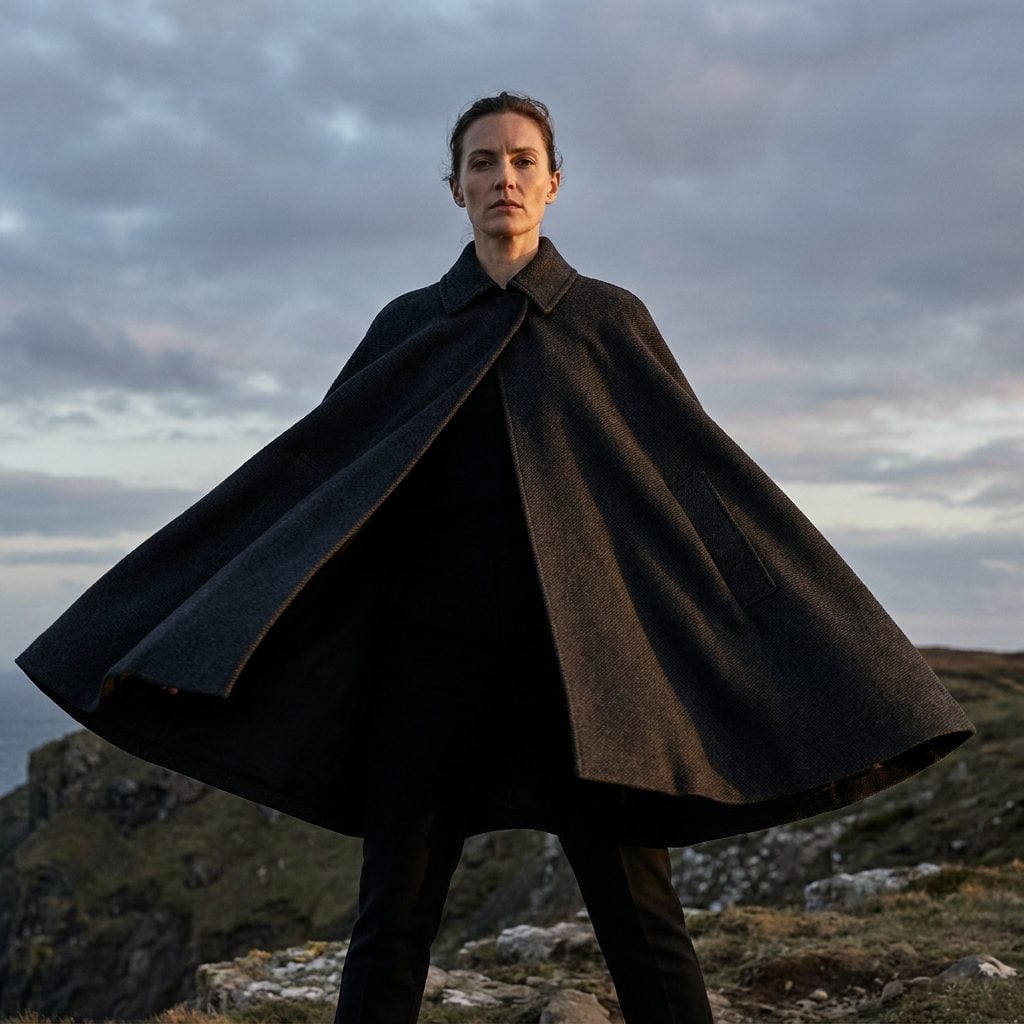
A cape is a decision. Nobody reaches for one hoping it won’t be noticed. Draped over a plain black outfit, it adds width, movement, and a silhouette visible from halfway across the room.
Research has explored whether formal clothing can influence abstract, big-picture thinking, which adds an interesting psychological layer to garments associated with formality and ceremony. Source A cape arrives with its own cultural symbolism too: uniforms, ceremony, theater, aristocracy, superheroes, entrances.
Black underneath gives all that fabric a quiet foundation. The base stays narrow while the outer layer sweeps, flares, and occupies air.
The pleasure is partly scale. Most daily clothing politely follows the body. A cape redraws the boundary around it.
Why the Quietest Outfit in Her Closet Might Hit the Hardest
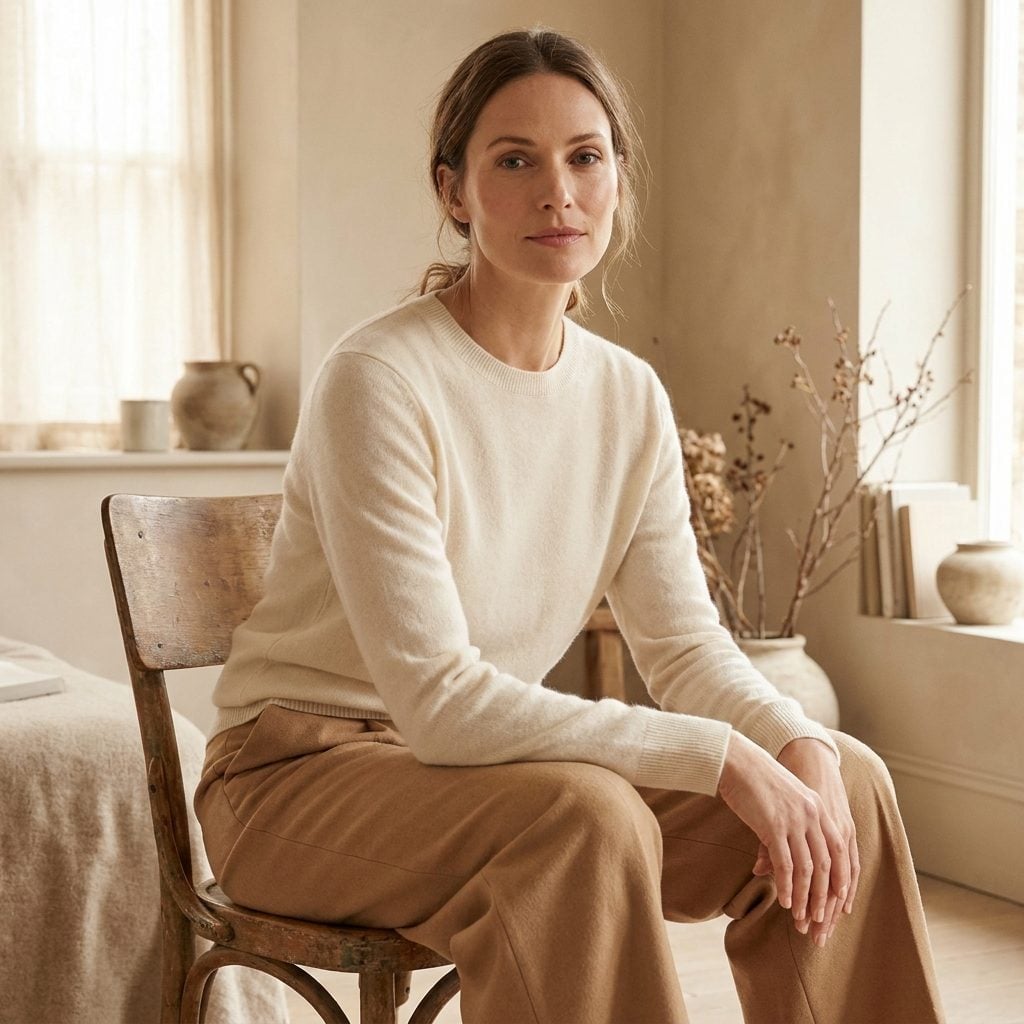
No print. No logo. A cream sweater tucked into camel trousers, and somehow it lands harder than anything loud. This is restraint with excellent tailoring behind it.
Clothes influence first impressions through a tangle of fit, context, polish, cultural expectation, and styling. Source Here, the psychological signal is largely one of restraint. Nothing appears to be campaigning for attention.
Cream and camel sit close enough that the outfit reads quietly, while the tucked sweater exposes the waistband and gives the trousers a defined beginning. The person wearing it becomes more noticeable precisely because the clothes have stopped waving their arms.
You’ve seen some version of her in a meeting. Soft sweater, excellent trousers, no visible panic. Somehow she’s the one everyone waits to hear from.
The All-White Look That Has Nowhere to Hide
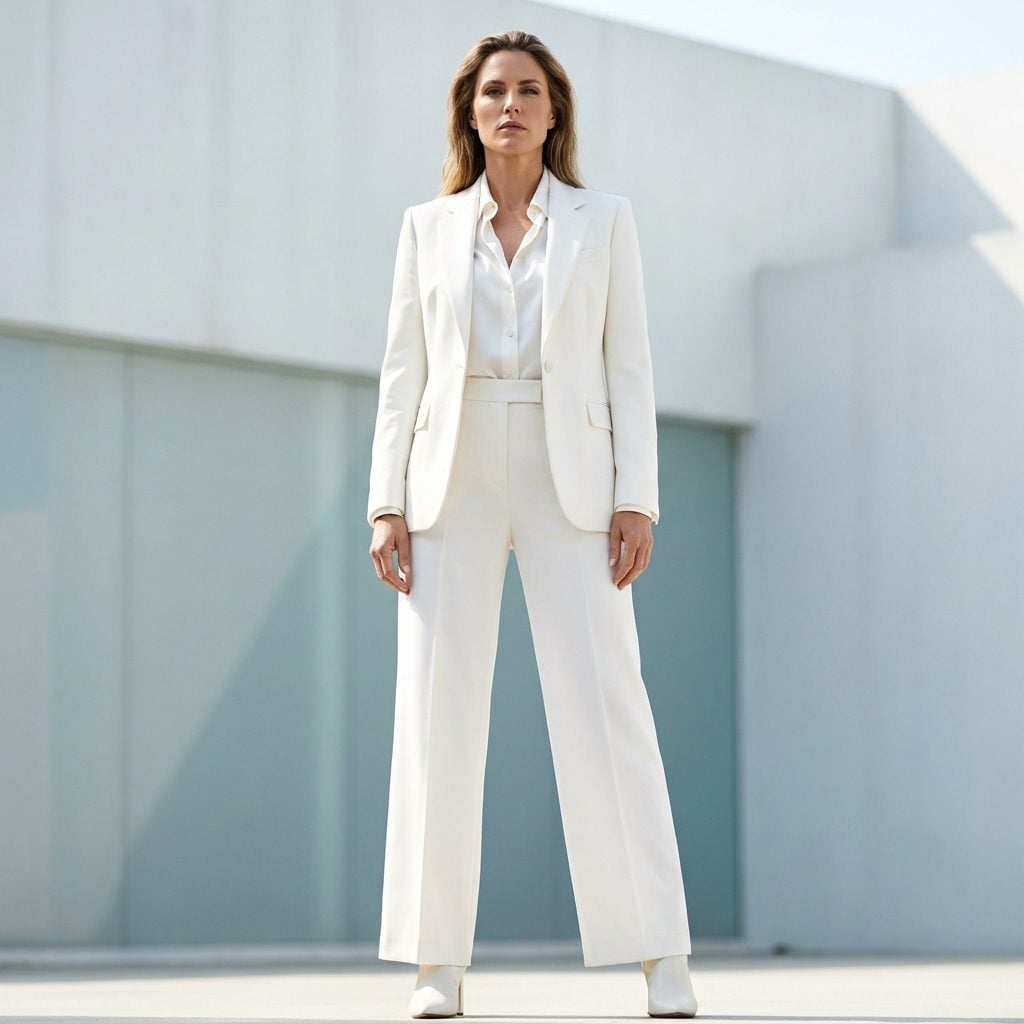
Head-to-toe white is a nerve test, if only because every coffee cup suddenly becomes a threat.
White exposes construction. Seams, fit, wrinkles, texture, and tailoring aren’t competing with a complex palette, so every detail gets promoted. Cultural associations with cleanliness, ceremony, order, modernism, luxury, and purity add another layer, though the exact meaning changes dramatically from one culture and setting to another. Source
There is also something psychologically satisfying about committing completely. No backup color. No darker jacket added at the last minute. Jacket, top, trouser, shoe: the same family all the way down.
For a woman over 40 — or anyone else — the outfit feels bold partly because it refuses to hedge. Once you’ve chosen white from shoulder to shoe, you’ve already made the loudest quiet decision in the room.
The Loud Print That Can Rescue a Gray Morning
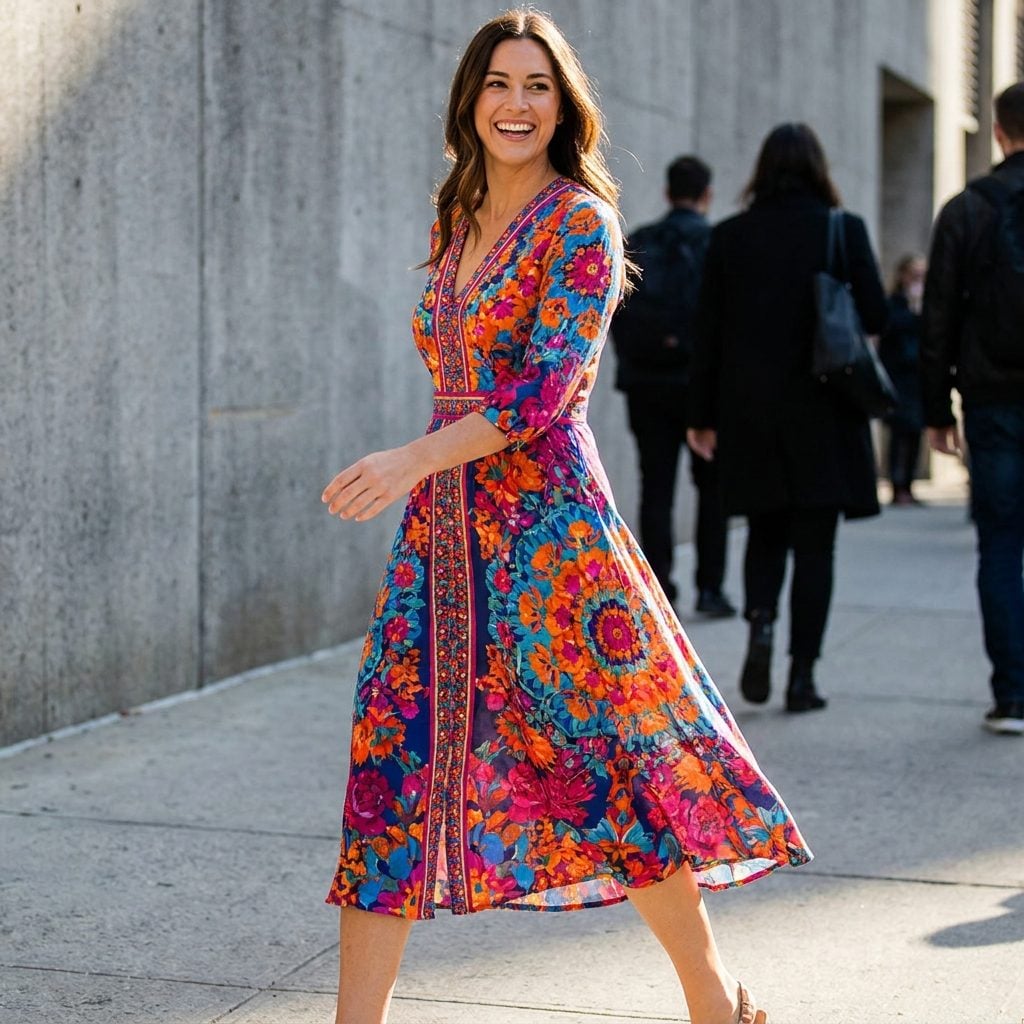
Some mornings call for color the way a gray sky calls for a window. A vibrant printed midi dress can change the mood of getting dressed before anything else about the day improves.
“Dopamine dressing” became fashion’s exuberant name for the idea of deliberately choosing colors, prints, and garments that make you feel good. Color, memory, mood, saturation, cultural association, and personal history all get tangled together in that experience.
The interesting part is how personal the trigger can be. A yellow floral might remind one woman of a vacation, another of her grandmother’s kitchen, and a third of the best photograph anyone ever took of her. The emotional charge doesn’t live inside yellow alone. It lives in everything the wearer has attached to it.
The woman who reaches for her boldest floral on a heavy day is using the wardrobe as an environmental adjustment. The forecast may still be terrible. Her side of the street just got brighter.
The Structured Vest That Sharpens Everything Around It
❤️ Would you like to save this?
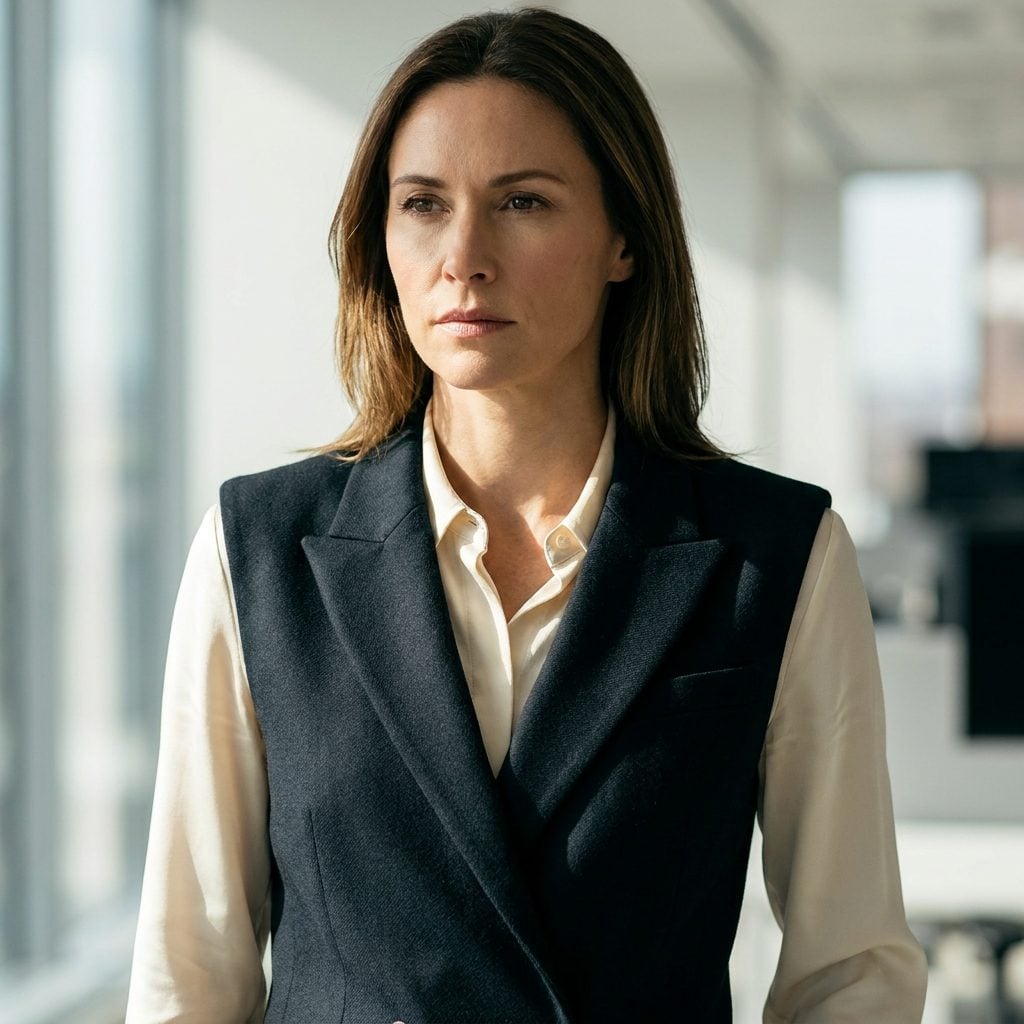
A vest is a small garment with an outsized ability to reorganize everything around it. Fitted through the middle and clean across the shoulder, it pulls a soft blouse and trousers into sharper focus without adding full sleeves or another heavy layer.
Tailoring carries symbolic meaning because we have seen it for years in uniforms, professional dress, ceremony, and formal situations. Research on enclothed cognition has explored how those kinds of associations can interact with the experience of wearing clothes. Source
The vest offers that effect in concentrated form. The blouse still moves. The trousers still relax. But the center of the outfit has suddenly acquired boundaries.
A neutral vest is what you reach for when the clothes feel almost finished and you want one piece to tell them to stand up straight.
The Single Accessory That Gives a Shirt Dress a Backbone

A shirt dress on its own can be pleasantly loose. Cinch it with a bold belt and the geometry changes immediately. The waist appears, the fabric gathers, and one long column becomes two deliberate volumes.
The psychological pleasure lies partly in authorship. The dress arrived with one shape; you decided on another. That small act of intervention can make an outfit feel more personal because the finished silhouette exists only after you changed it.
A belt also creates an unmistakable focal point. The eye has somewhere to land, and the rest of the fabric suddenly makes more sense around it.
One accessory. One decision. The difference between accepting the dress and editing it.
The Red Blazer That Refuses to Enter Quietly
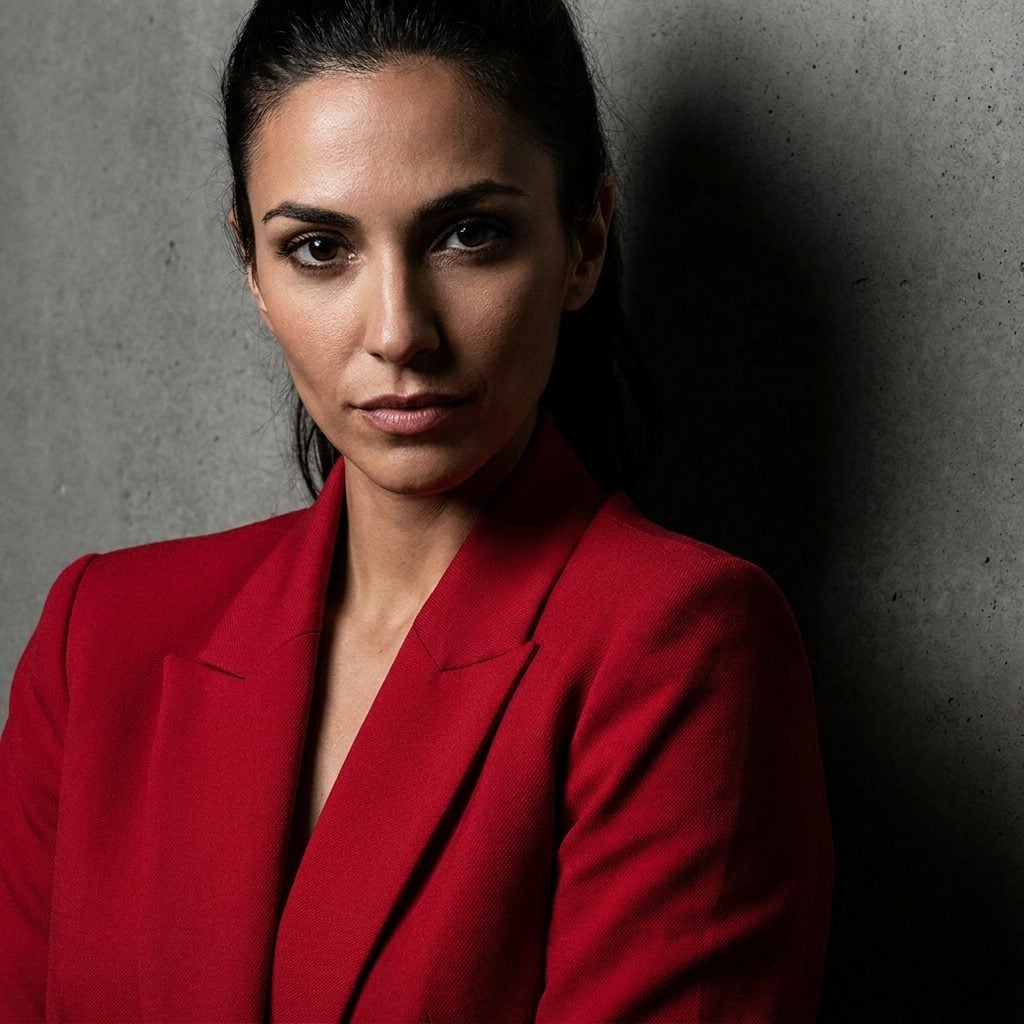
Red is not subtle, and that is precisely the point. When you reach for the red blazer on a day you have no interest in fading into wallpaper, you’re choosing a color loaded with cultural associations: urgency, attraction, danger, competition, celebration, heat.
Researchers have repeatedly been intrigued by red’s role in competitive perception. Source Hill and Barton’s famous analysis of the 2004 Olympics found that athletes assigned red won more often than athletes assigned blue in several combat sports, a result that sparked years of debate over how color, perception, and competition interact. Source
The conference room is not an Olympic ring, but red brings plenty of baggage through the door with it. A fitted red blazer over black separates gives the color nothing to compete with. Some days you want diplomacy. Some days you want the entrance.
The Matched Set That Makes Getting Dressed Almost Suspiciously Easy
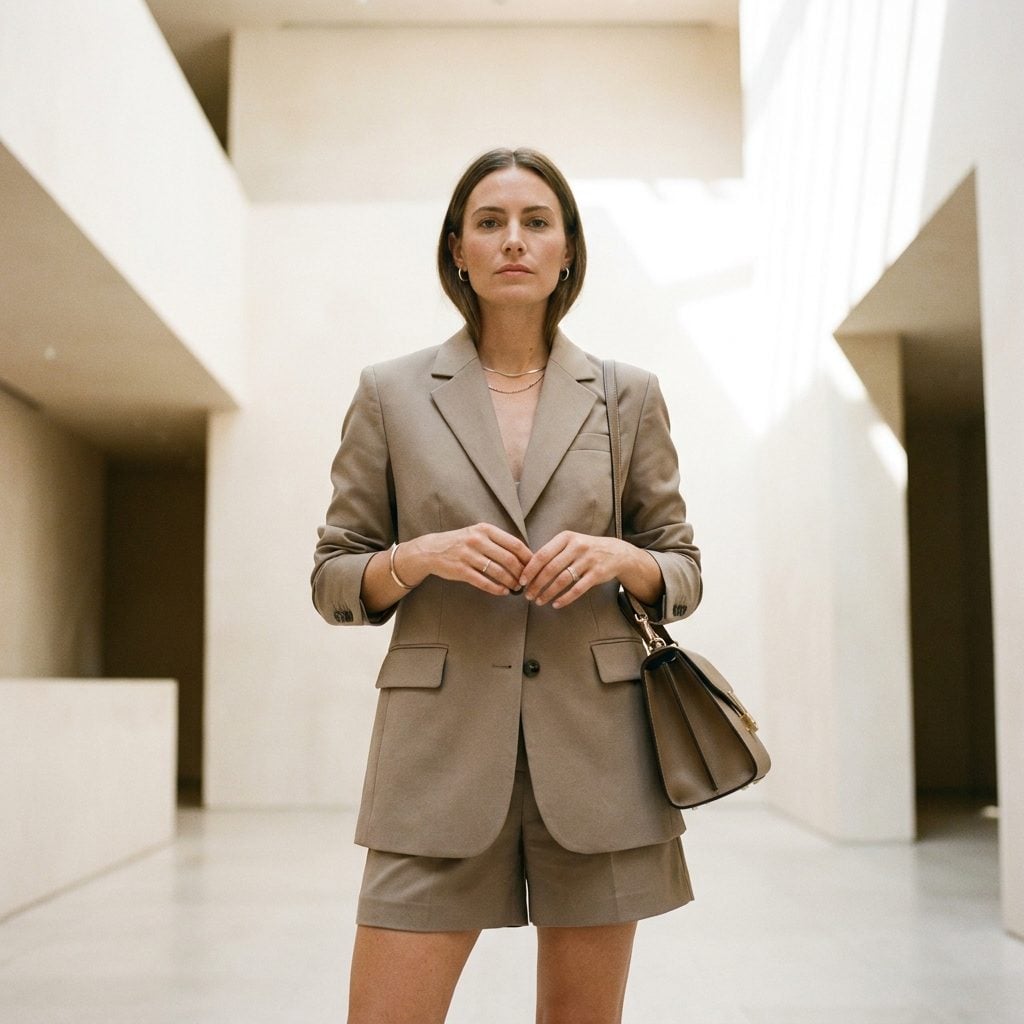
Two pieces cut from the same cloth arrive already agreeing with each other. A matching tailored shorts suit in soft taupe isn’t two separate styling decisions so much as one outfit divided at the waist.
That built-in coordination is psychologically satisfying because certainty has already been baked into the clothes. Jacket and shorts belong together. You are free to spend your attention on shoes, jewelry, hair, or whether you’ve remembered where you put your phone.
Taupe gives the tailoring a softer finish than stark black or bright white, while the shorts refuse the old assumption that a suit needs a full-length trouser or knee-length skirt to count.
The hemline adds nerve precisely because the tailoring around it is so controlled. It’s a suit with the formal grammar intact and one rule cheerfully crossed out.
The Bottom Line
The outfit you reach for on a hard day can say plenty without amounting to a personality test. Clothes collect associations. Structure can remind you of competence. Softness can make a difficult morning physically easier. Bright color can reconnect you with a version of yourself who likes being visible. An old jacket can carry the memory of ten previous days when you managed just fine.
Over time, certain garments become personal evidence. They remember the meeting that went well, the photograph you actually liked, the dinner when somebody couldn’t stop complimenting you, the morning you nearly canceled and didn’t.
Eventually you stop reaching for them because a study, stylist, or fashion theory says you should. You reach for them because they’ve earned the hanger.