❤️ Would you like to save this?
The crewneck sweater has a reputation problem. On its own, it is one of the cleanest shapes in a fall wardrobe: simple neckline, straight hem, no built-in drama. The trouble starts when that rectangle meets the wrong rise, too much volume below, or a jacket that ends at exactly the same place. Suddenly the eye has nowhere to travel and the whole silhouette stalls.
These 29 before-and-after ideas treat the sweater less like a problem to fix and more like a shape to design around. A higher waistband changes the break point. A cropped jacket redraws the torso. Pleats, long coats, satin, leather, pushed sleeves, and asymmetric hems send the eye in completely different directions. Some looks tuck. Plenty don’t. The goal isn’t to make the sweater tighter. It’s to make everything around it more interesting.
FYI, thanks to AI imagery software, we’re able to create very specific fashion and hairstyle examples to illustrate the points being made. In some cases, imagery is exaggerated to hammer home the point. Also, assume links that take you off the site are affiliate links such as links to Amazon. this means we may earn a commission if you buy something.
29. Black Wide-Leg Trousers Show What a Good Full Tuck Can Actually Do
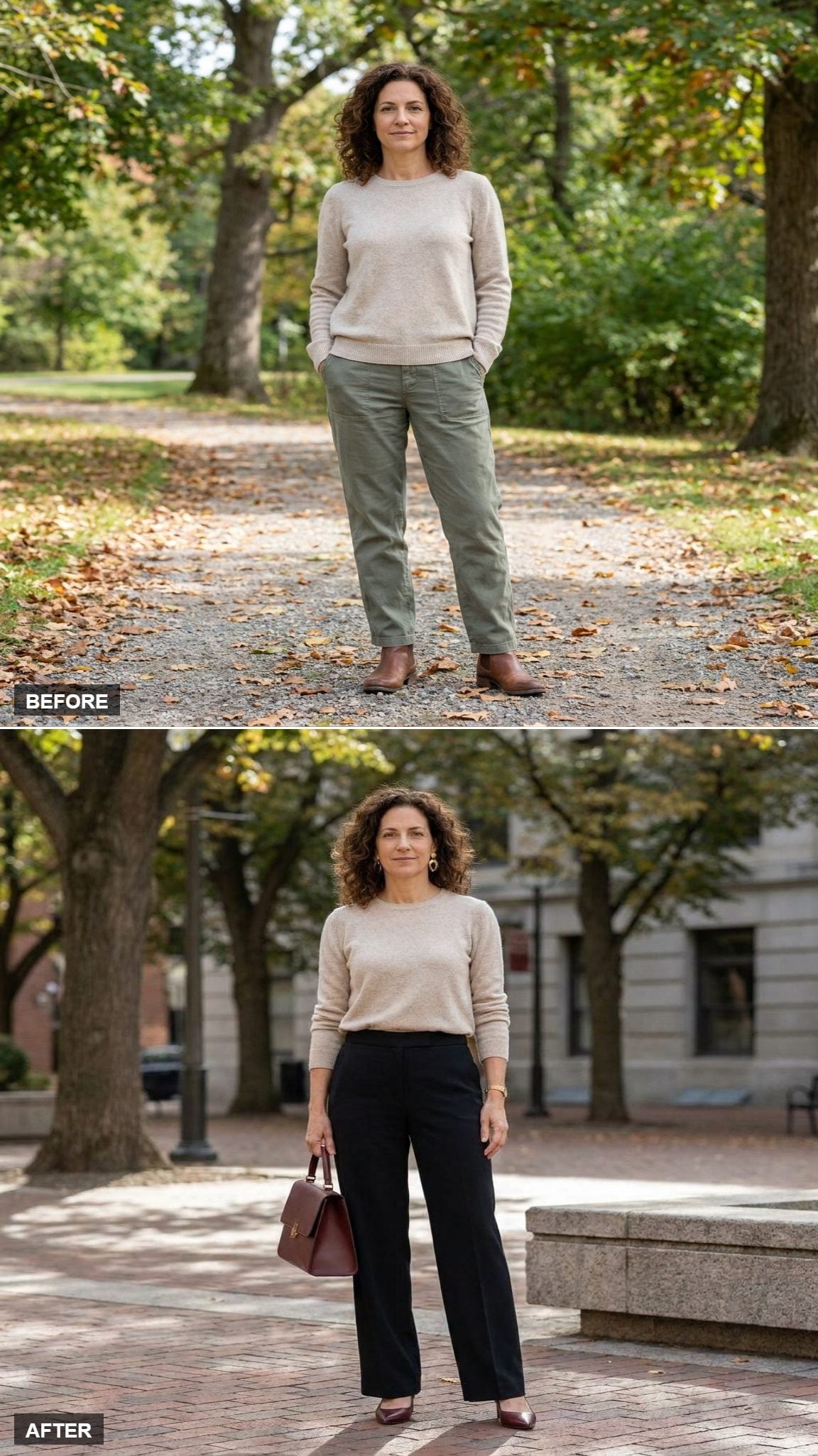
A full tuck works when the sweater is allowed to remain a sweater. Here, the oatmeal knit slips into black wide-leg tailored trousers with a soft ring of blousing left above the waistband. That little bit of looseness matters. Pull the knit drum-tight and the waistband becomes the entire story.
The high rise establishes the waist while the long trouser leg gives the outfit somewhere to go vertically. This is the androgynous sweater approach at its best: relaxed above, precise below, and polished without making the knit behave like a bodysuit.
28. A Cropped Suede Jacket Redraws the Torso Without Touching the Sweater
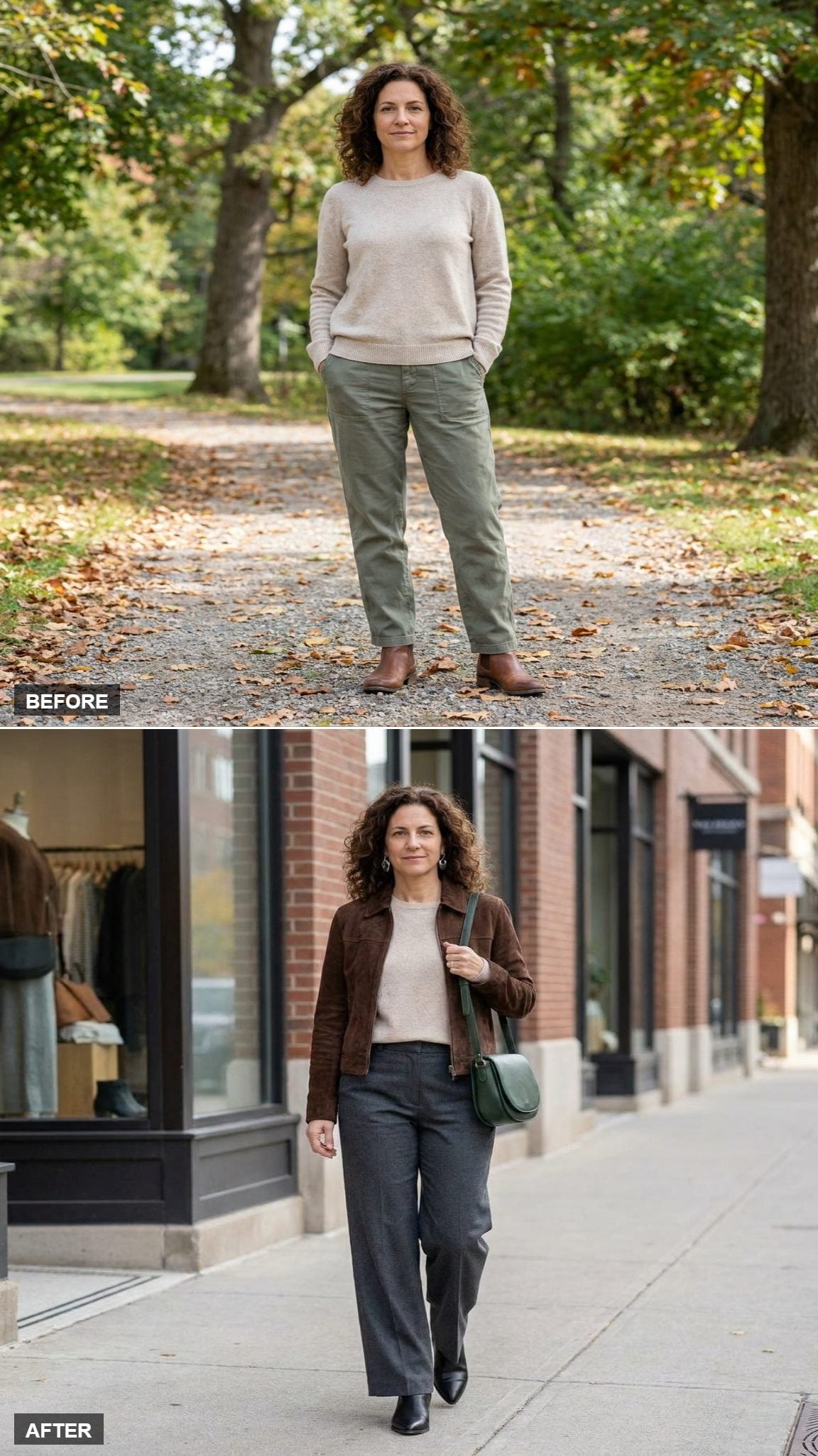
Nothing happens to the sweater here. It stays untucked, full length, and completely recognizable. The change comes from the chocolate suede cropped jacket, which ends near the waist and creates a new break point well above the sweater’s own hem.
Pair that shorter layer with charcoal wide-leg trousers and the roomy knit suddenly has context. The sweater didn’t get narrower. The outfit simply stopped asking it to define the entire torso by itself.
27. A Long Pendant Changes the Line Without Moving an Inch of Knit
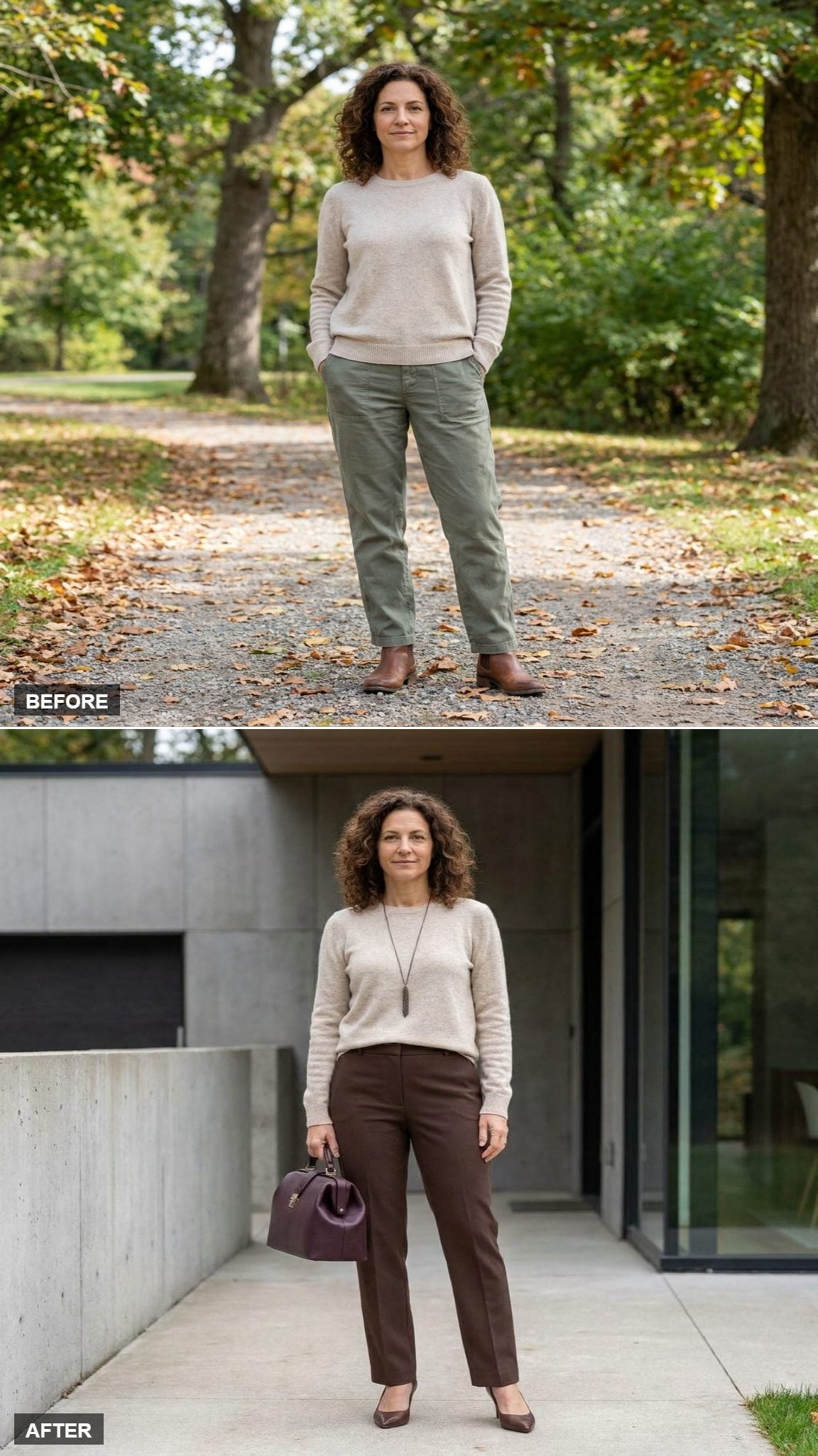
Sometimes the smallest intervention is enough. A long dark-metal pendant drops through the center of the crewneck and interrupts what would otherwise be one broad expanse of oatmeal knit. Nothing is cinched, tucked, cropped, or hidden.
High-rise chocolate straight trousers and chocolate pointed pumps create a nearly continuous lower column, while the deep-plum doctor bag gives the palette one controlled jolt. The sweater hangs naturally, but there is suddenly much more for the eye to follow.
26. Charcoal Column Skirt, Oatmeal Knit, and a Waistline That Finally Shows Up
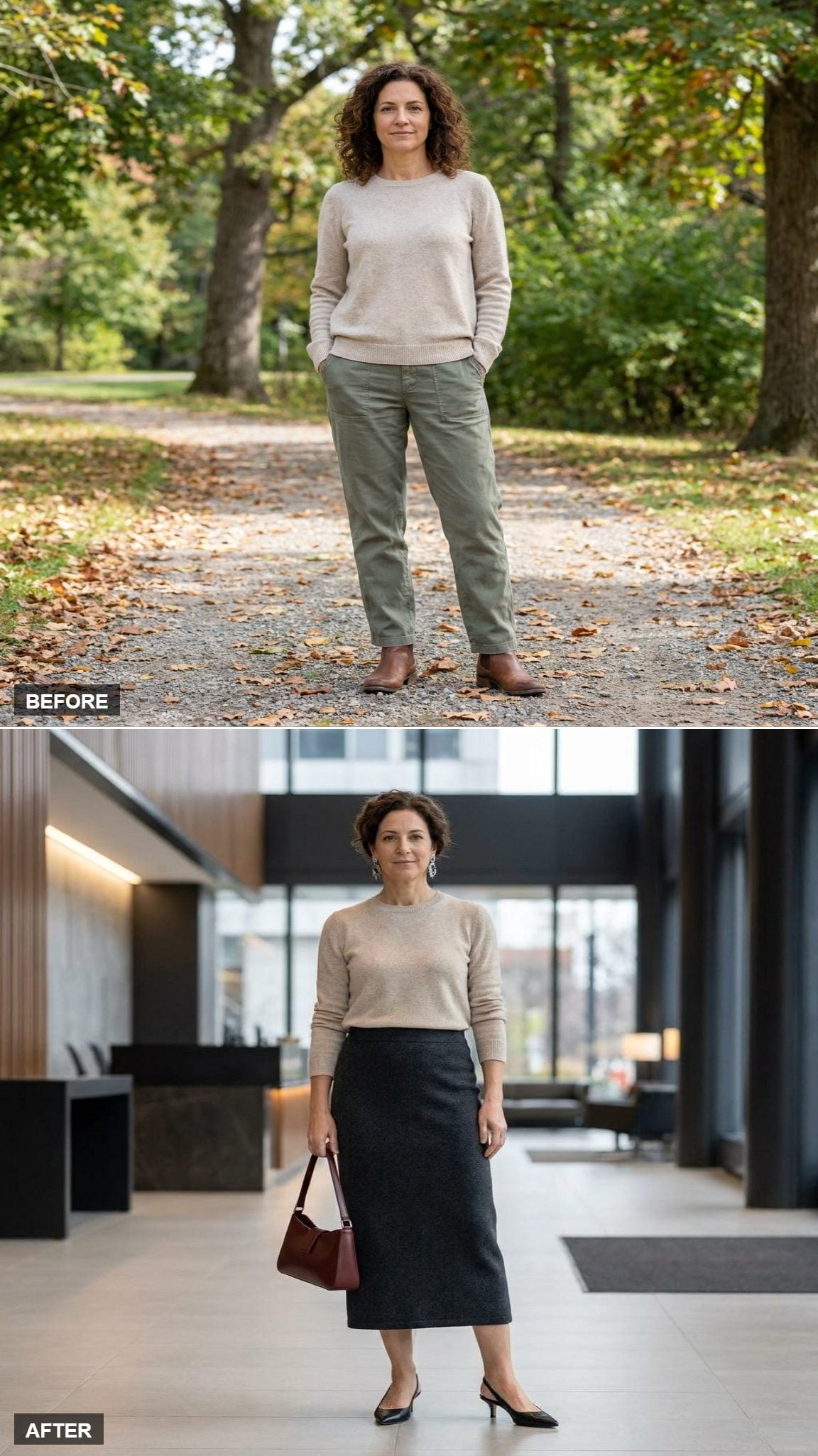
Tucking the crewneck into a charcoal knit column midi skirt establishes the waist and sends the silhouette straight down from there. The sweater still blouses gently over the waistband, keeping the top soft against the skirt’s cleaner shape.
Black slingback kitten heels and an oxblood east-west bag sharpen the mood, while silver earrings provide the one bit of drama. Same basic sweater, but the office version now looks like somebody made a decision.
The sweater wasn’t the problem. It just needed a better supporting cast.
25. The Long Navy Coat Gives the Eye Two New Lines to Follow
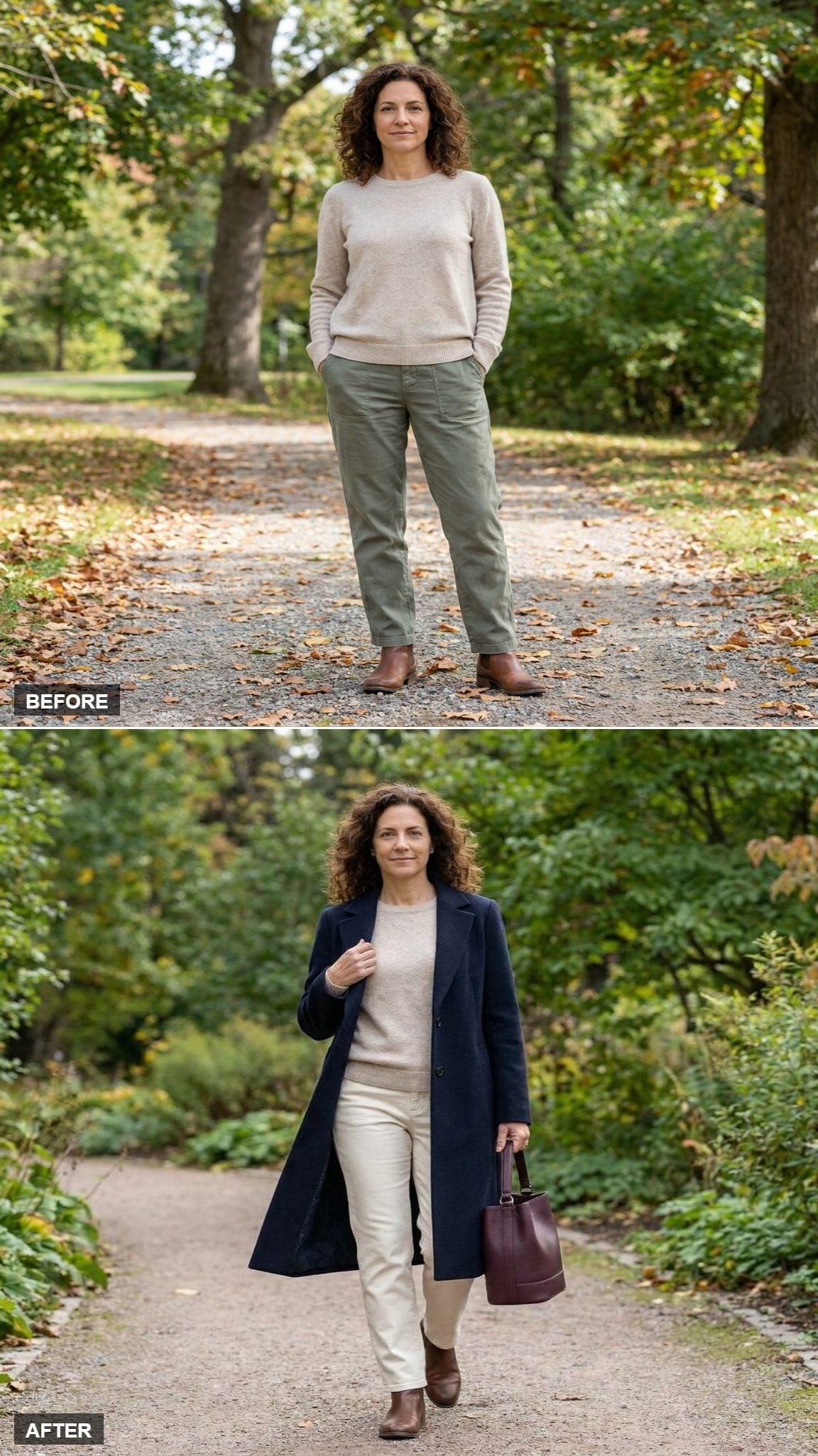
An open navy wool longline coat creates two dark edges on either side of the oatmeal knit, dividing the broad center without altering the sweater itself. Keeping the coat open is what makes the effect visible.
Cream straight-leg trousers continue the lighter tone below, so the outfit alternates between pale center and dark frame rather than becoming one large uninterrupted block.
24. Olive Satin Trousers Take the Crewneck Somewhere After Dark
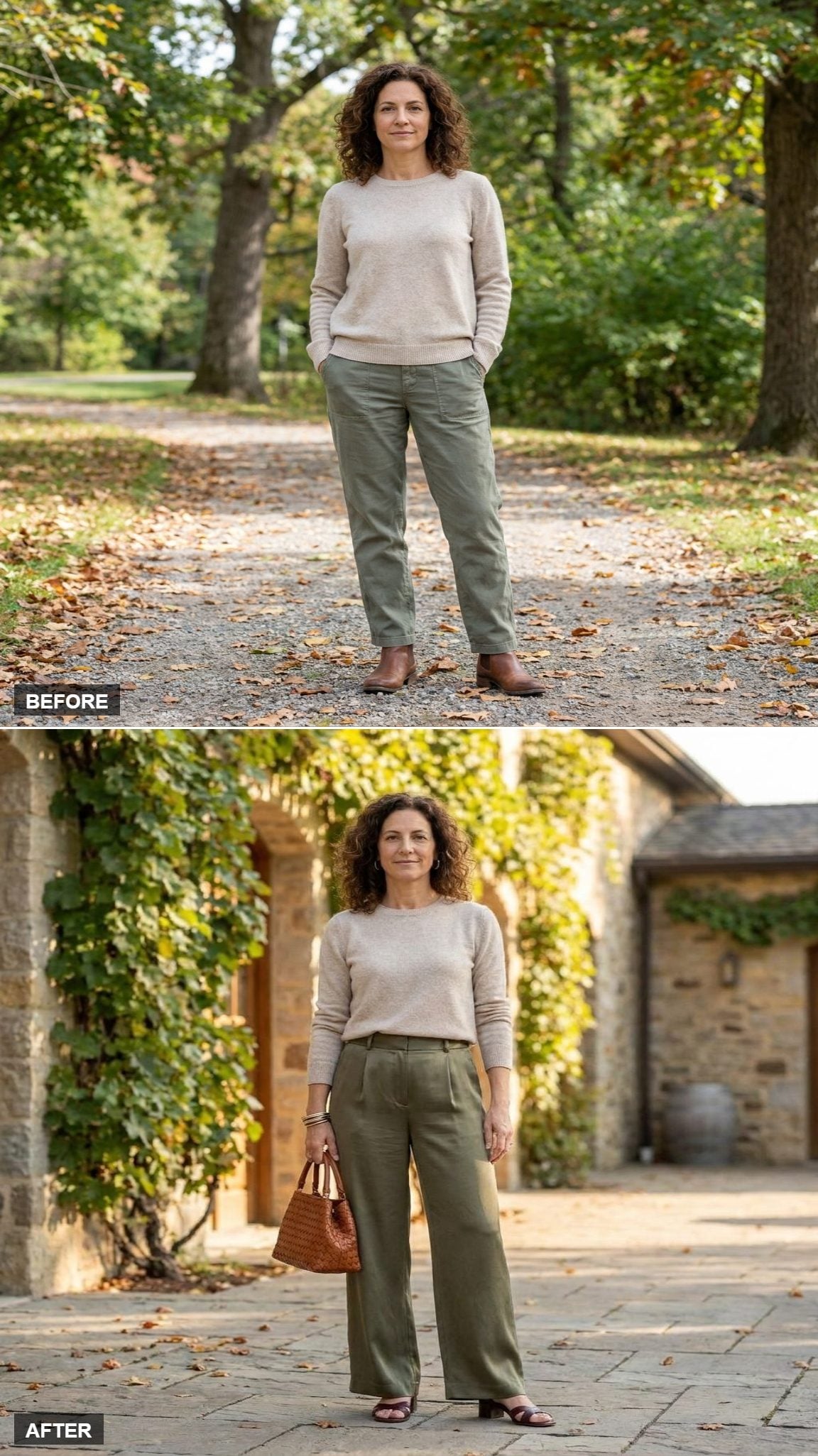
Fluid olive satin wide-leg trousers immediately change the conversation. Their long, liquid fall below the waist plays against the denser oatmeal knit, while a soft tuck lets both fabrics keep their character.
Dark-cherry low block-heel sandals, a cognac woven top-handle bag, and slim bangles take the look somewhere dressier without making it precious. The contrast between sturdy knit and fluid satin is enough; piling on more sparkle would only dilute it.
23. Push Up the Sleeves and the Proportions Change Before the Waist Does
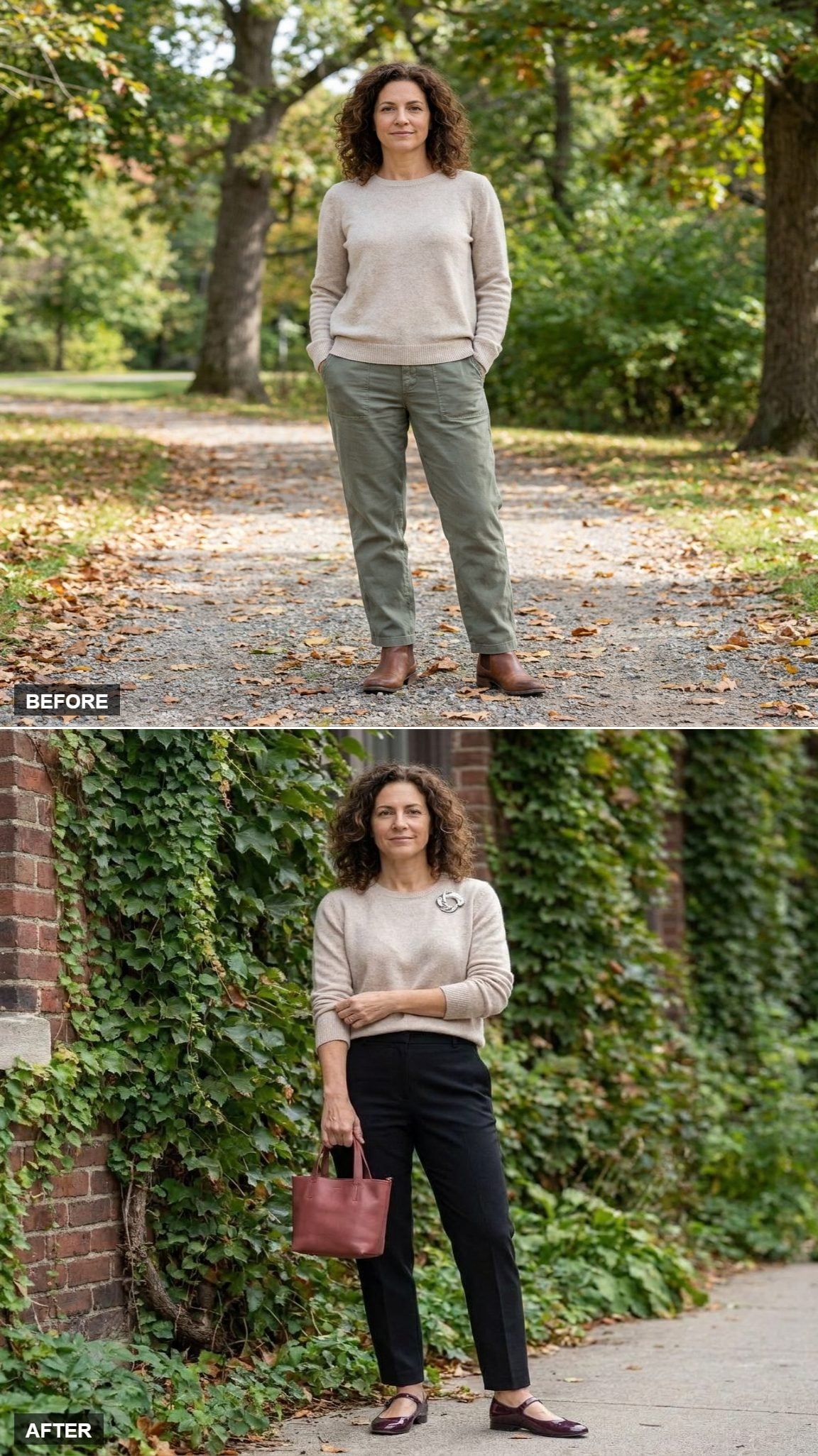
The sweater itself barely changes. Both sleeves are pushed to just below the elbow, exposing the forearms and breaking one uninterrupted block of knit into smaller sections. Proportion isn’t only about where the waist lands.
High-rise black tapered ankle trousers narrow the lower silhouette, while glossy plum Mary Jane flats bring personality down to the pavement. A sculptural brooch and muted-red mini tote finish the job without turning every accessory into an event.
22. Black Leather and Chocolate Boots Give the Soft Knit Some Backbone
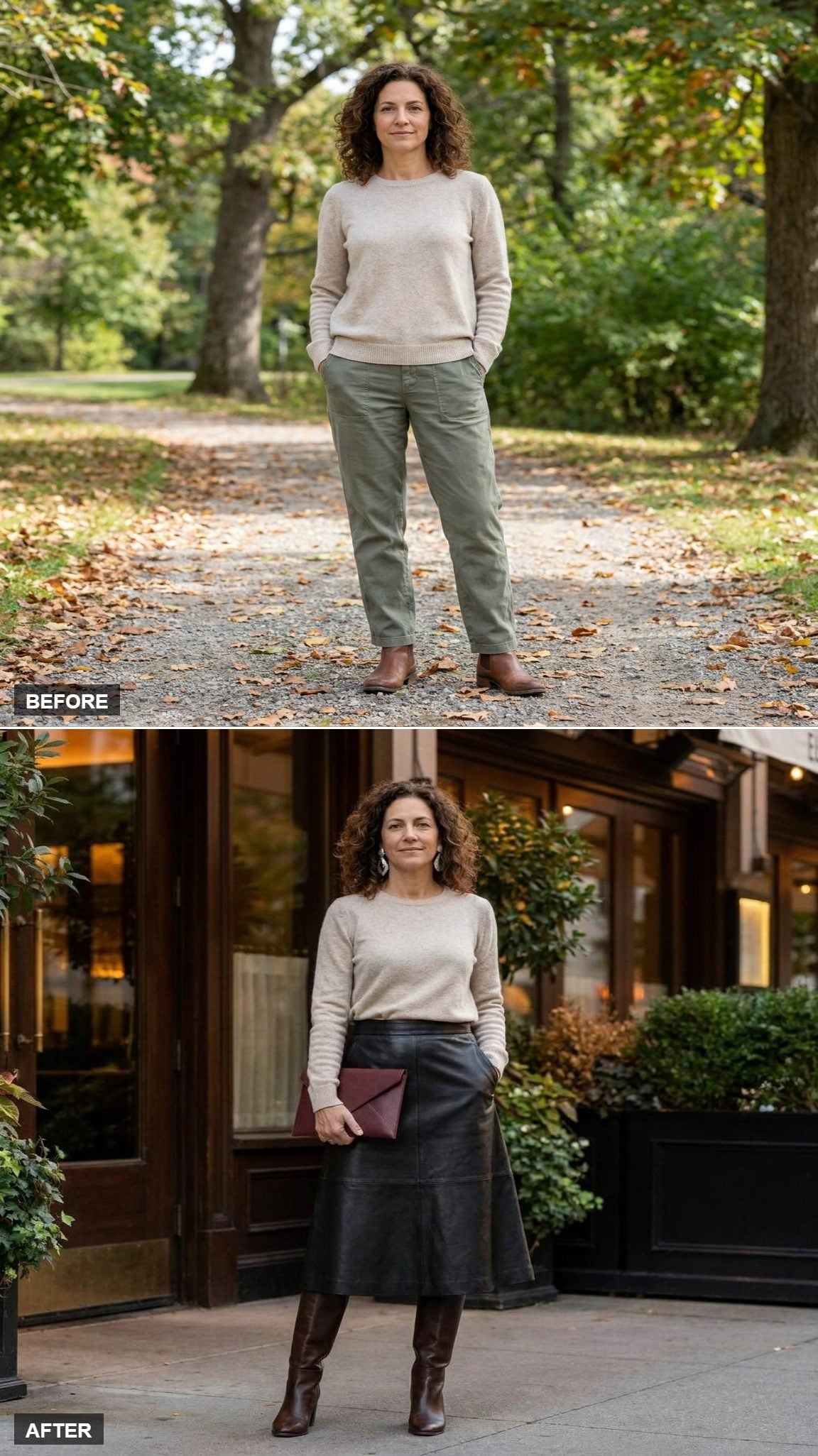
A black leather A-line midi skirt gives the crewneck a firmer counterpart. The high waistband provides definition, while the gentle flare lets the sweater remain soft above it instead of demanding that every inch of knit lie flat.
Chocolate knee-high boots and an oxblood envelope clutch warm the black-and-oatmeal palette. Statement silver earrings can afford to be loud because the larger shapes are so disciplined.
21. The French Tuck Works Better When Almost Nothing Happens
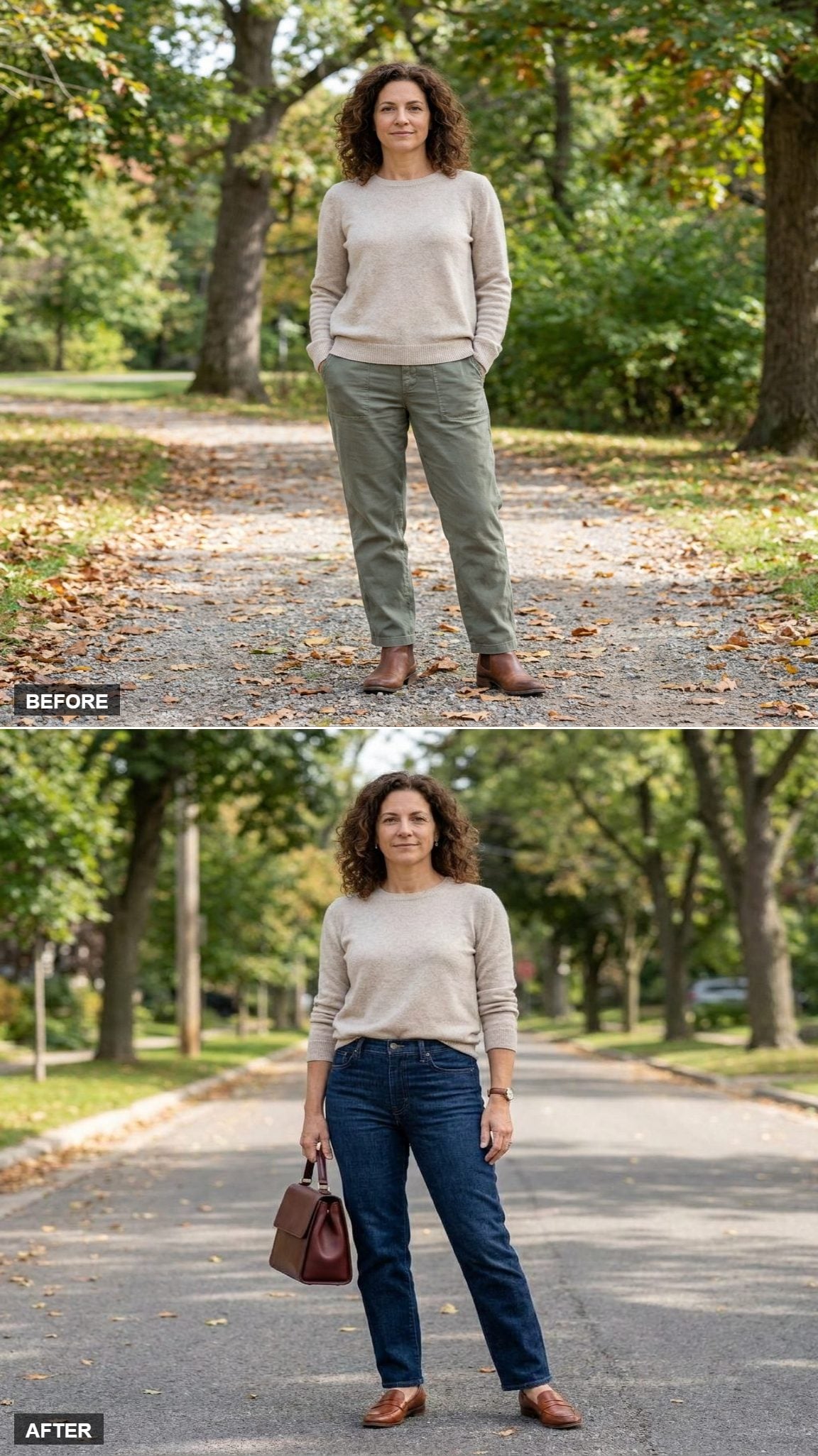
A small front tuck into dark indigo high-rise jeans is enough to reveal where the waistband sits. The sides and back stay loose, so the sweater keeps its natural length everywhere except that small break at center.
That exposed section of waistband changes the proportions of the entire look. The useful part is how little fabric actually had to move.
20. Winter Cream Turns Two Pieces Into One Long Pale Sweep
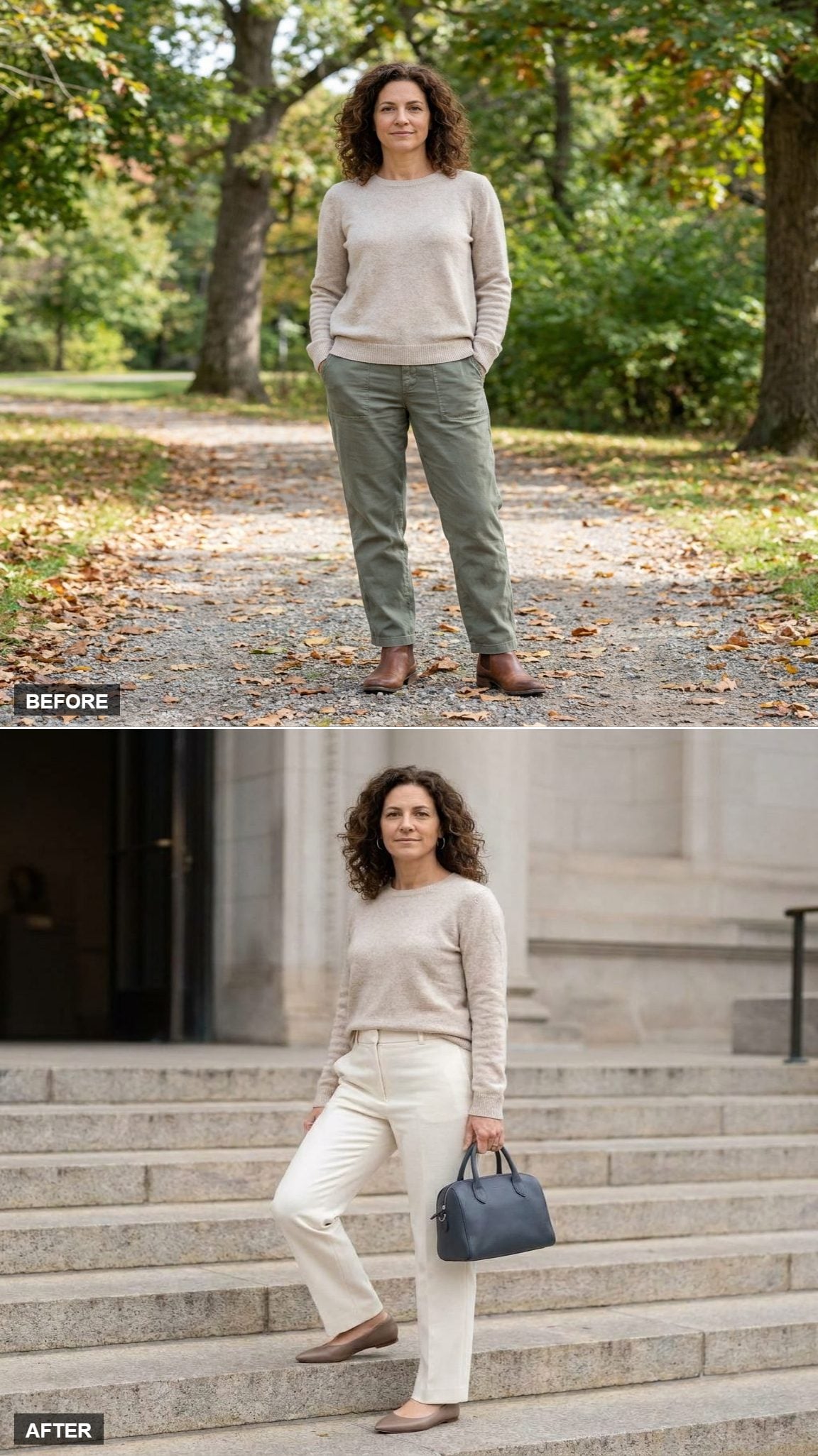
High-rise winter-cream straight trousers pull the oatmeal sweater into one continuous family of color from shoulder to ankle. A slight off-center tuck reveals the waistband without introducing a hard visual break.
Taupe pointed ballet flats continue the soft tonal range, while a muted navy satchel supplies the only strong contrast. The silhouette changes because the color stops chopping it into separate pieces.
19. A Cognac Belt Lets the Sweater Keep Every Inch of Its Length
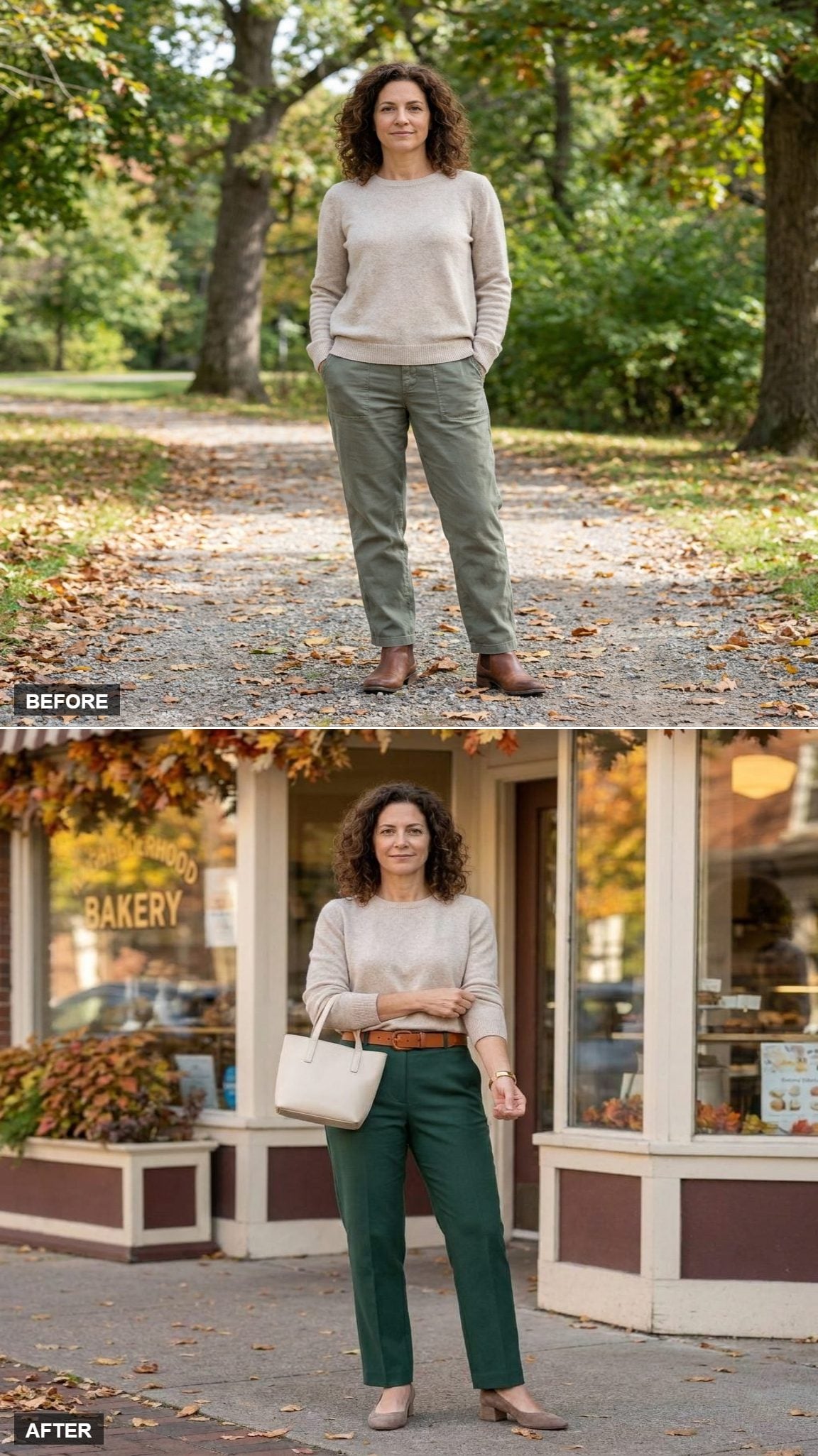
Belting over a knit can work when the belt isn’t trying to strangle the sweater into submission. A medium-width cognac leather belt sits at the natural waist, gathering the existing fabric while allowing soft fullness above and below.
Forest-green tailored trousers and taupe suede low block heels keep the fall palette earthy. One gold cuff is enough; the belt has already supplied the strongest line.
18. An Olive Utility Jacket Makes the Crewneck Feel Like Saturday
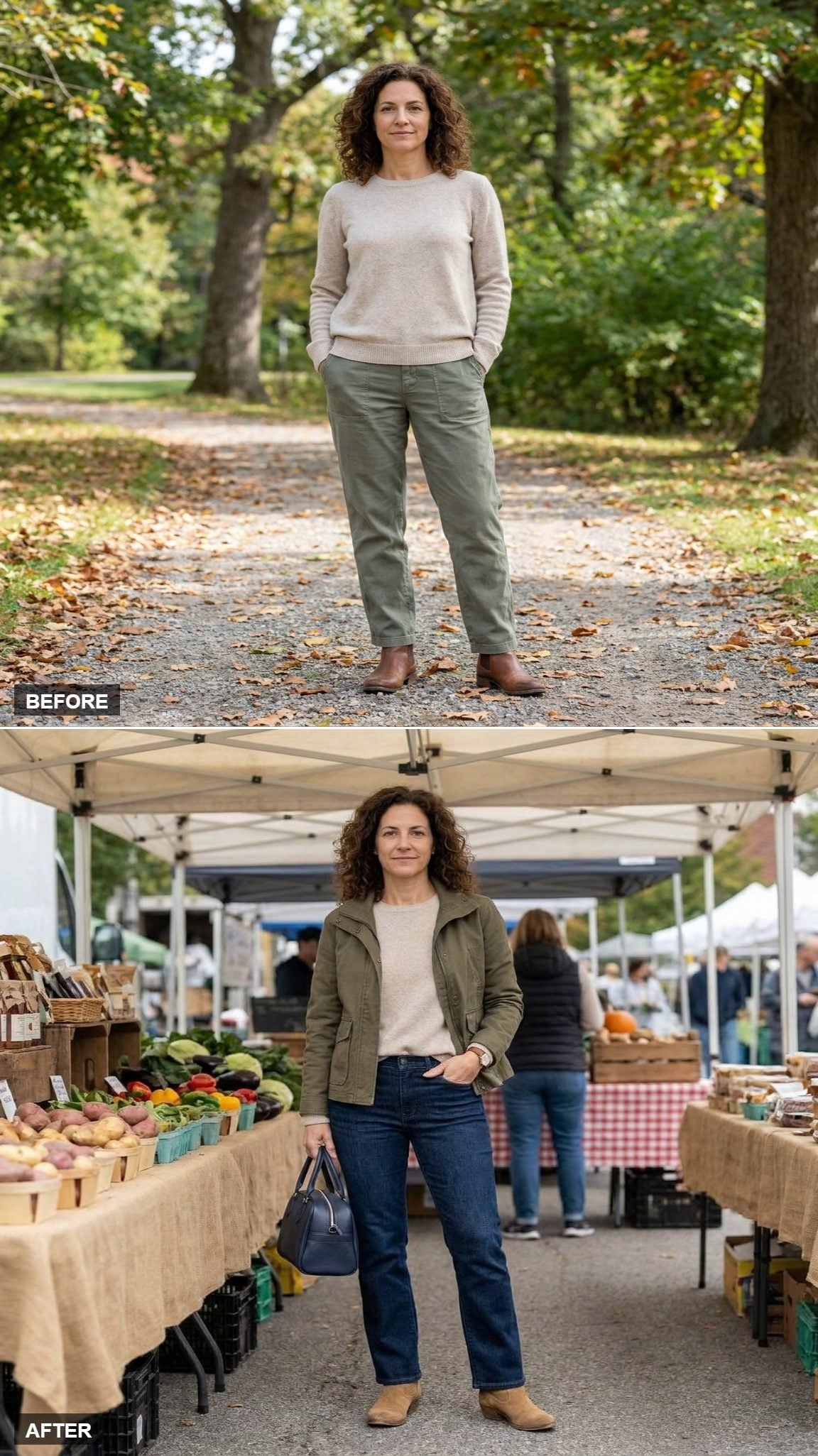
The center-front tuck is barely there—just enough oatmeal knit caught above the waistband of dark indigo bootcut jeans to establish the rise. A short olive utility jacket creates another break near the high hip without making the outfit look fussed over.
Tan suede Western ankle boots and a navy bowling bag make this the sort of look that could survive a farmers’ market, errands, and lunch without requiring a wardrobe adjustment in the parking lot.
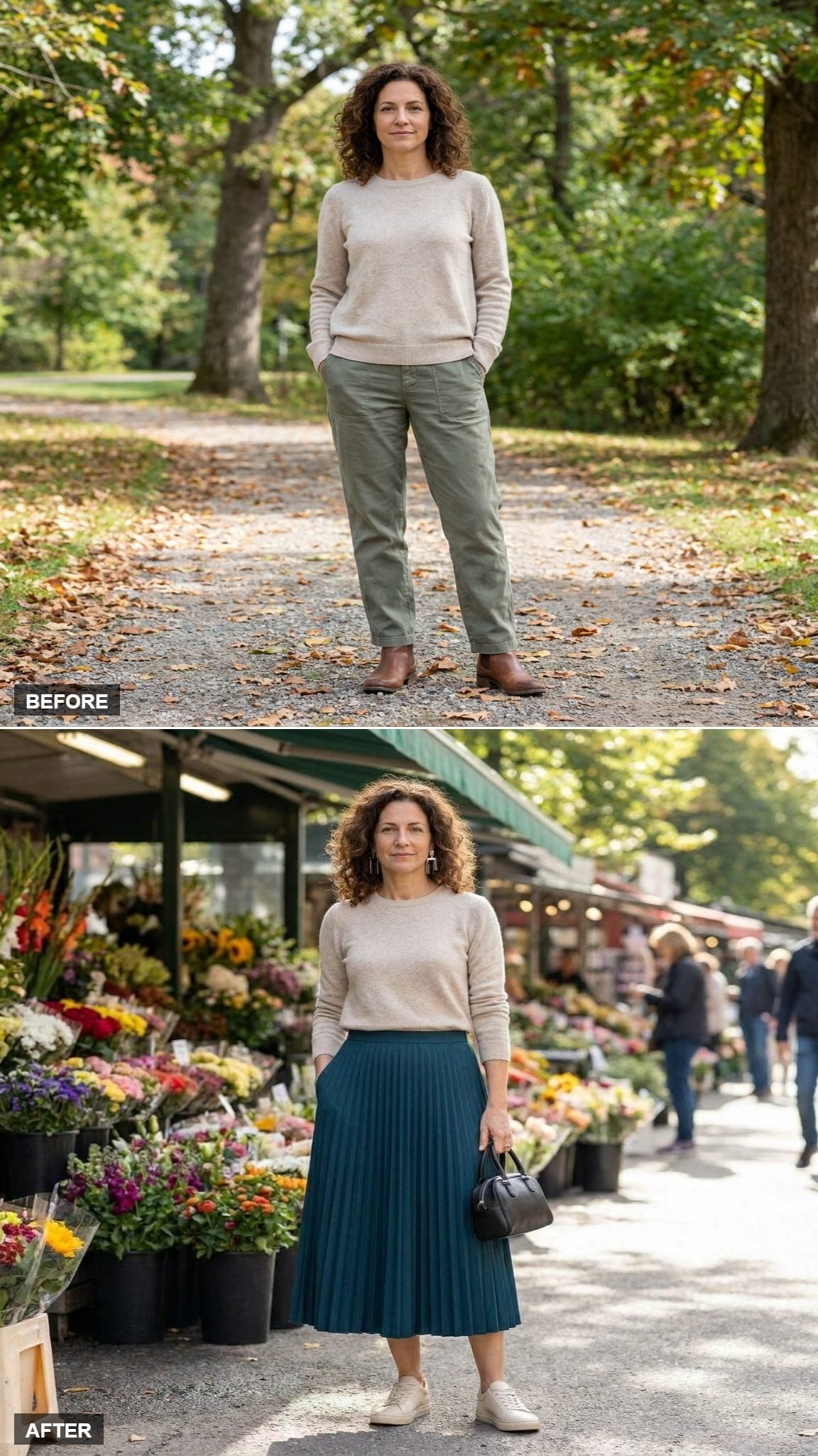
17. Deep-Teal Pleats Put the Movement Below the Sweater
❤️ Would you like to save this?
The vertical rhythm of a deep-teal knife-pleated midi skirt gives the eye something very different beneath the broad crewneck. The sweater is tucked softly rather than pulled flat, so the contrast between substantial knit and moving skirt stays visible.
Cream leather sneakers keep the outfit casual, while geometric earrings and a black structured mini bag bring enough polish to feel finished. The sweater no longer looks like the default option. It looks chosen.
16. One Side Tucked, One Side Loose, and the Straight Hem Disappears
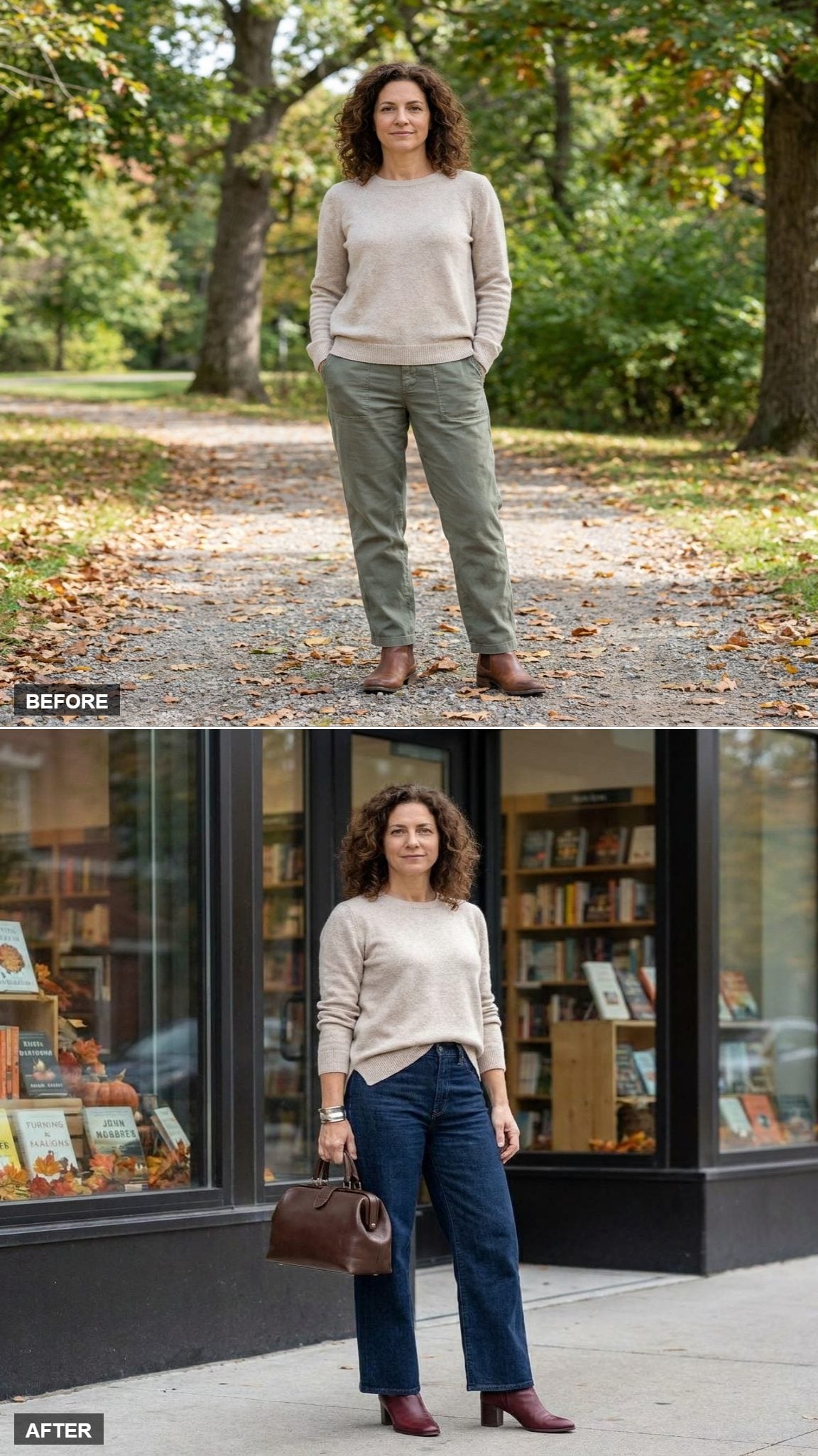
A single hip tuck breaks the sweater’s straight lower edge without pretending the knit has somehow become cropped. One side hangs naturally, the back stays loose, and the resulting diagonal gives the eye a more interesting route across the torso.
Dark-wash wide-leg jeans balance the upper volume, while deep-red heeled ankle boots, a chocolate doctor-style handbag, and a chunky silver cuff keep the asymmetry from feeling accidental.
15. The Long Charcoal Vest Brings Tailoring Without the Coat
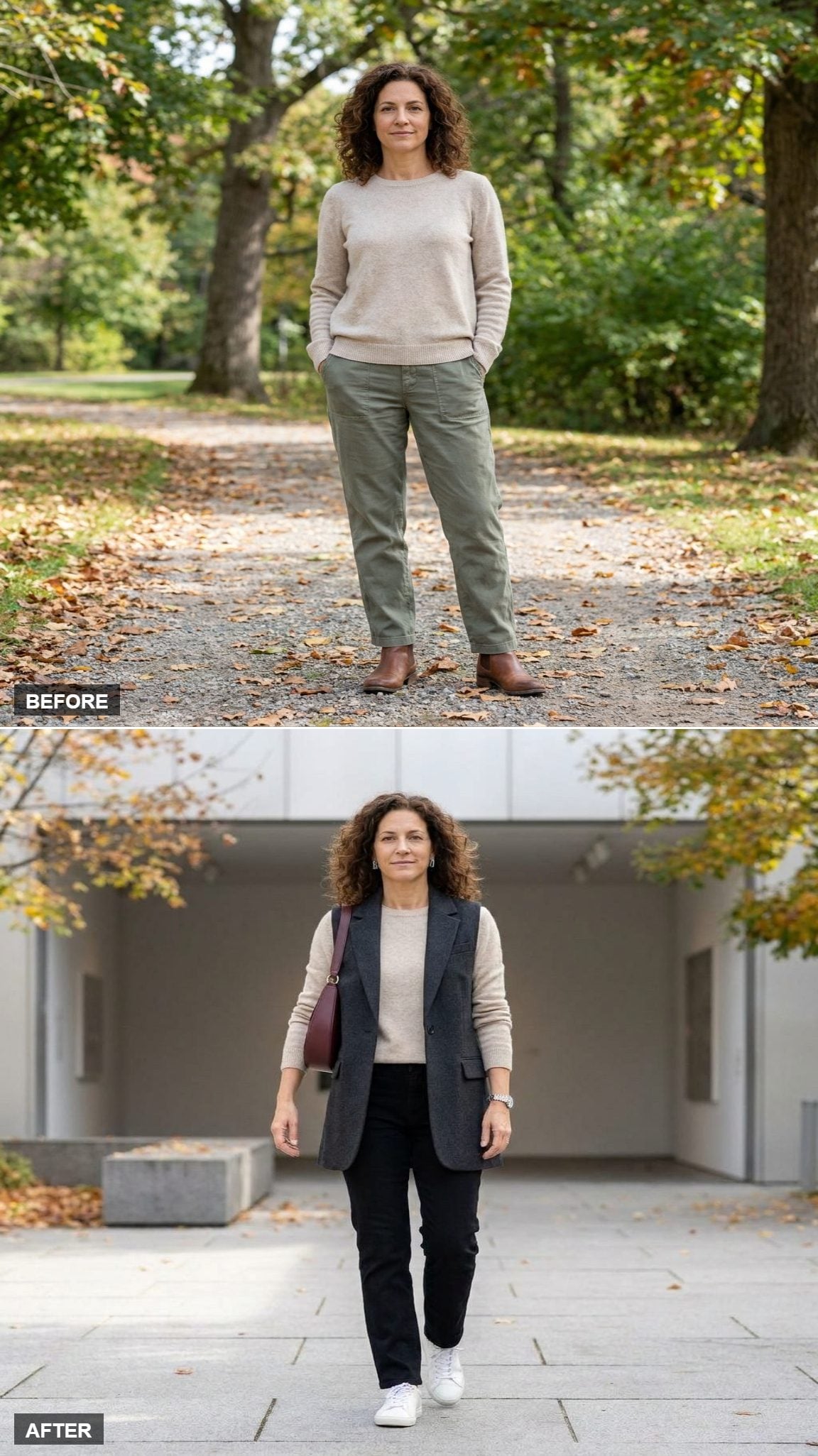
A charcoal longline tailored vest brings the same open-front framing as a coat but without the weight or weather commitment. Its clean edges cross the sweater’s own hem at a completely different point, giving the eye another proportion to register.
Black straight-leg jeans, white leather sneakers, and a burgundy crescent shoulder bag keep this version urban and practical rather than corporate. The silver watch is enough jewelry.
14. Rust Corduroy Makes Texture the Reason to Wear the Sweater
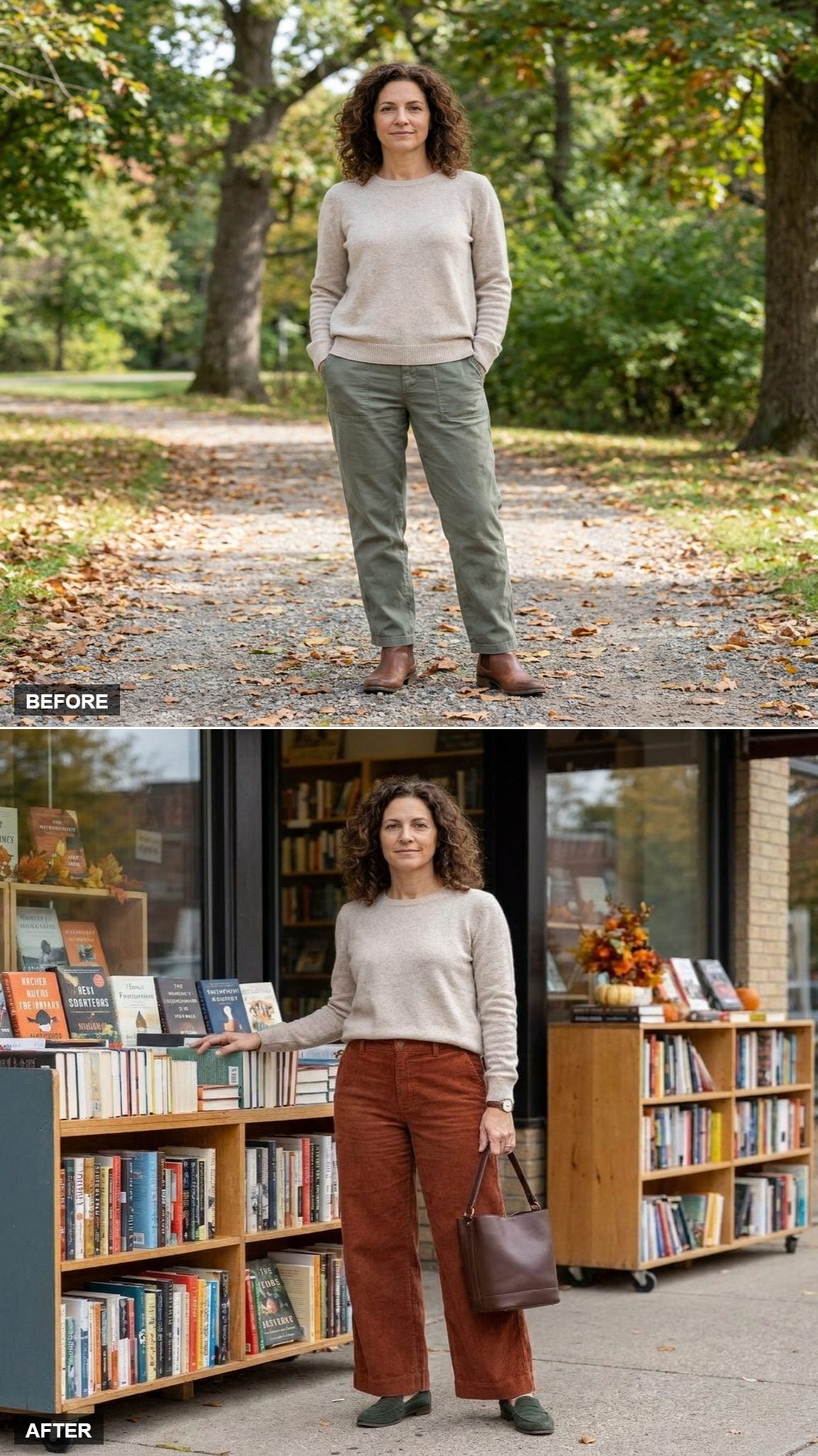
Corduroy ribs against oatmeal knit fibers are almost enough reason to wear this combination before proportion even enters the conversation. The high-rise rust wide-leg corduroy trousers take a small center tuck while the sides and back of the sweater fall naturally.
Dark-green suede loafers and a chocolate bucket bag deepen the autumn palette without adding another loud surface. A vintage-inspired watch keeps the accessories quieter than the fabrics.
13. Navy Blazer, Cream Denim, Leopard Flats: Three Classics With Better Timing
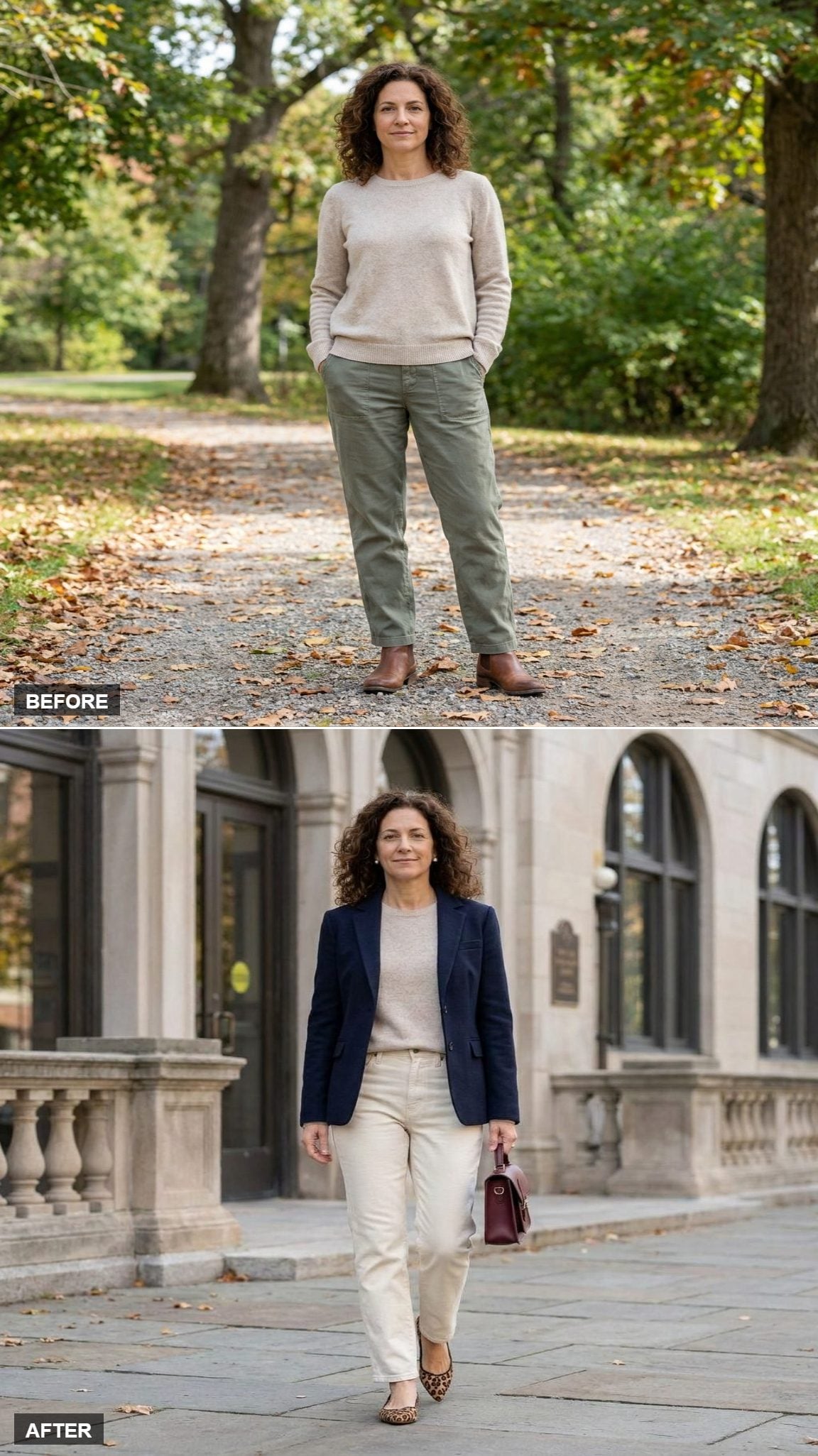
A shaped navy blazer worn open gives the crewneck clean edges without requiring a tuck. The sweater stays loose underneath while cream straight-leg denim lightens the lower half and gives the dark jacket more contrast.
Refined leopard-print pointed flats add the graphic note, while a burgundy compact satchel and pearl studs stay firmly in classic territory. Nothing here is especially new. The proportions are simply better organized.
12. A Long Silk Scarf Lets the Sweater Hang Exactly as It Wants
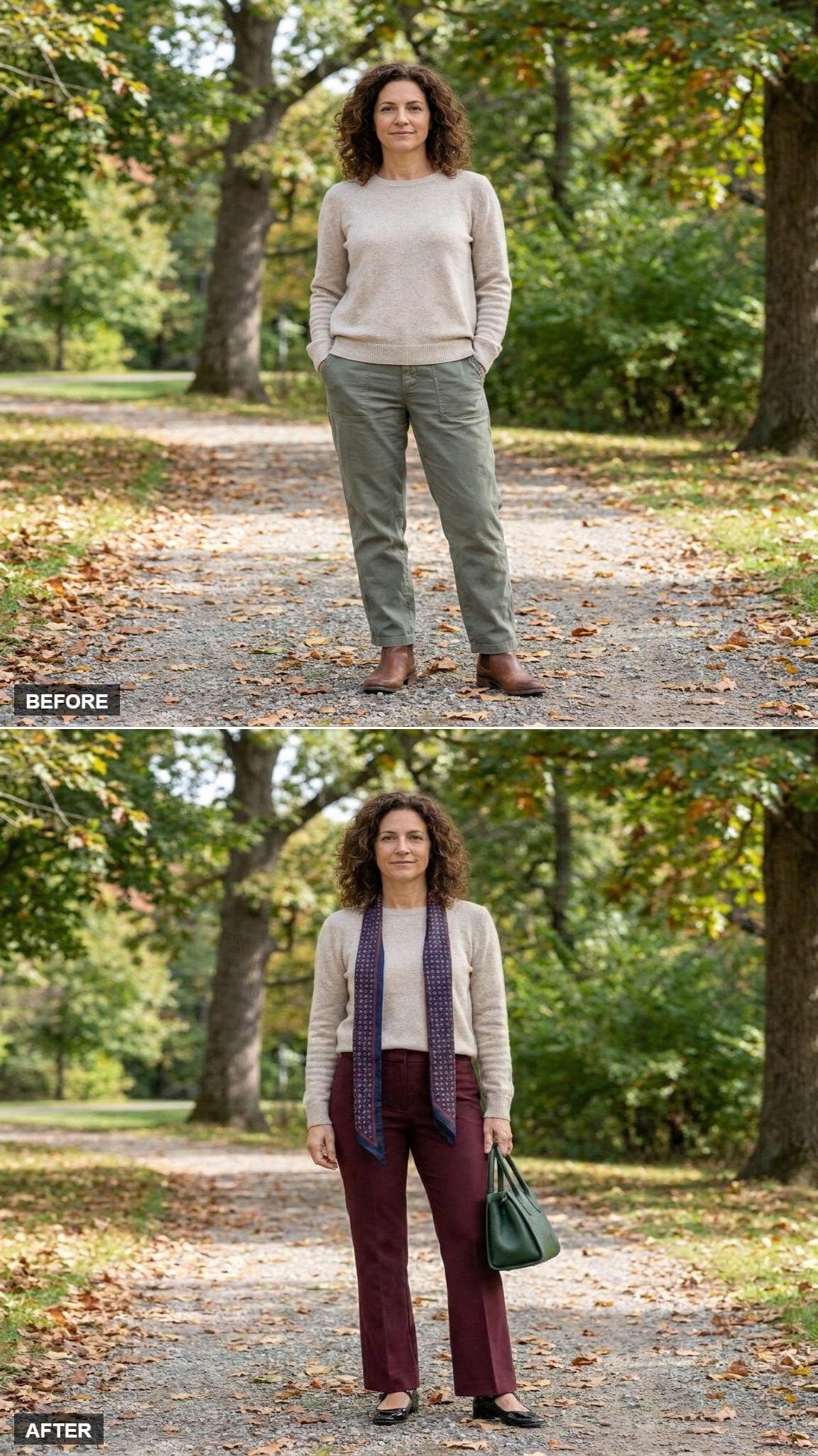
The sweater hangs at its full original length over high-rise burgundy flared trousers. A narrow navy-and-burgundy silk scarf falls loose down the front, introducing a long detail without adding bulk around the neckline.
Black patent Mary Janes and a forest-green handbag carry enough personality that the scarf doesn’t have to function as both jewelry and styling stunt. This is a good reminder that an untucked sweater can simply stay untucked.
11. Forest Green, Cognac Leather, and a Waistband That Knows Its Job
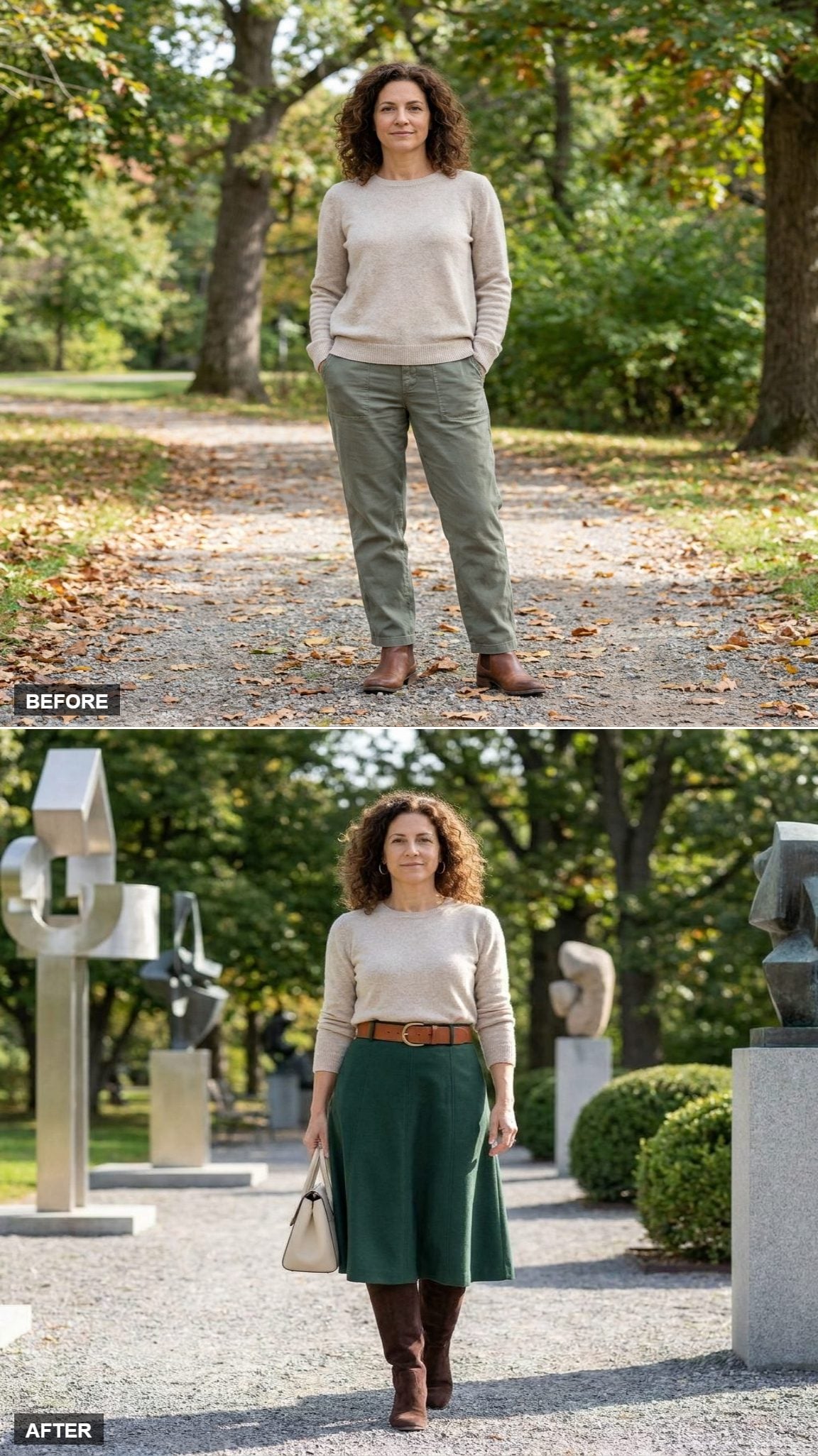
A wide cognac leather belt threaded through the actual waistband of the skirt creates definition differently from a belt cinched over the sweater. The structure belongs to the garment below, allowing the knit to blouse naturally above it.
The forest-green A-line midi skirt flares gently from the high rise, while deep-brown knee-high suede boots give the lower half substance. Shape comes from the skirt and waistband, not from squeezing the sweater into submission.
10. Dark Denim and Cognac Boots Stretch the Line Below the Waist
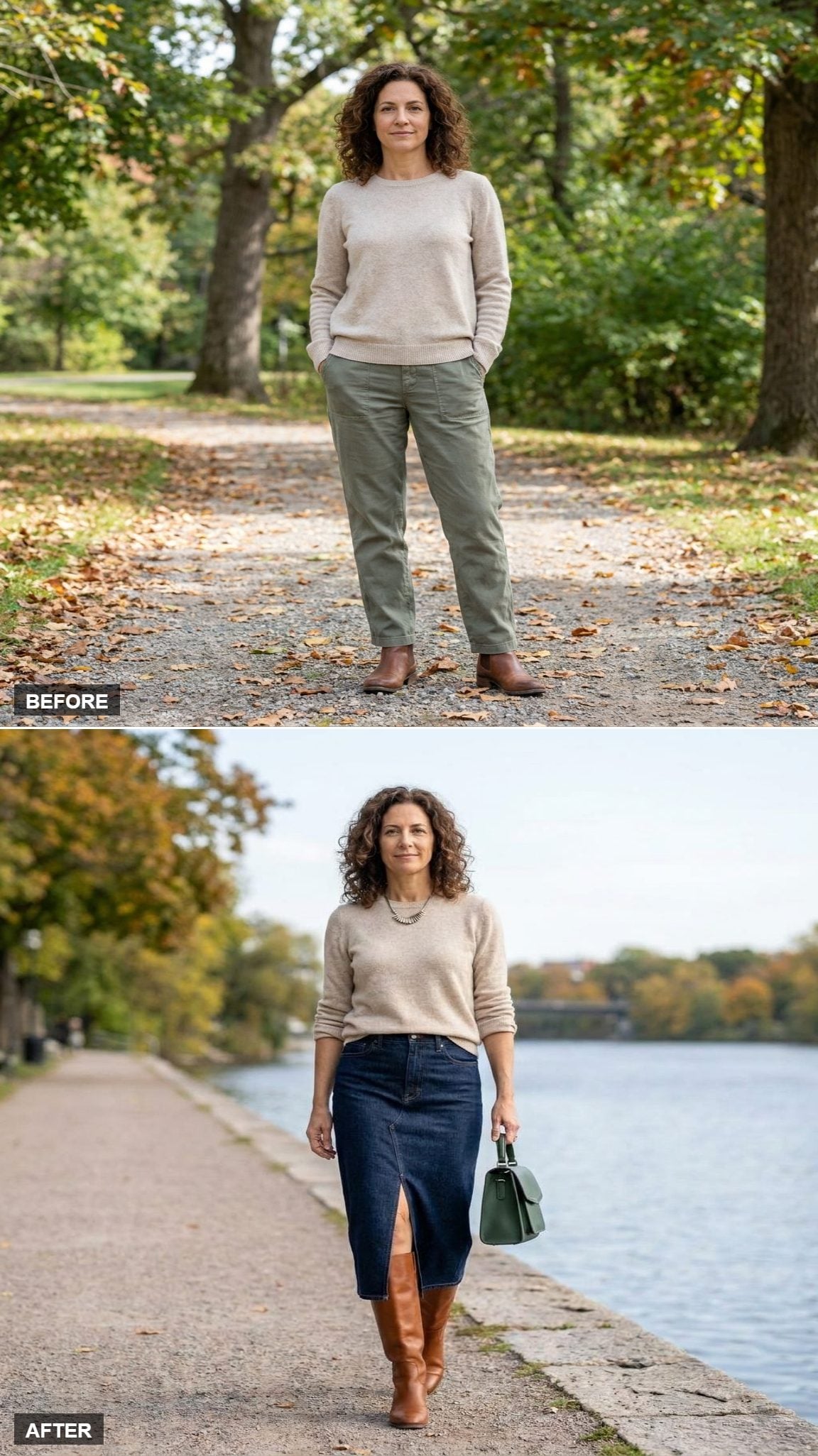
A dark denim column midi skirt gives the eye a clean path below the waist, while a restrained front tuck reveals just enough waistband to connect the two halves of the outfit. The sweater remains visibly full rather than disappearing into the denim.
Cognac knee-high boots appear through the walking slit, adding warmth and continuing that long line downward. A sculptural necklace, pushed sleeves, and forest-green satchel finish the styling without burying the crewneck under accessories.
9. The Stone Trench Lets Length Do What a Belt Doesn’t Need To
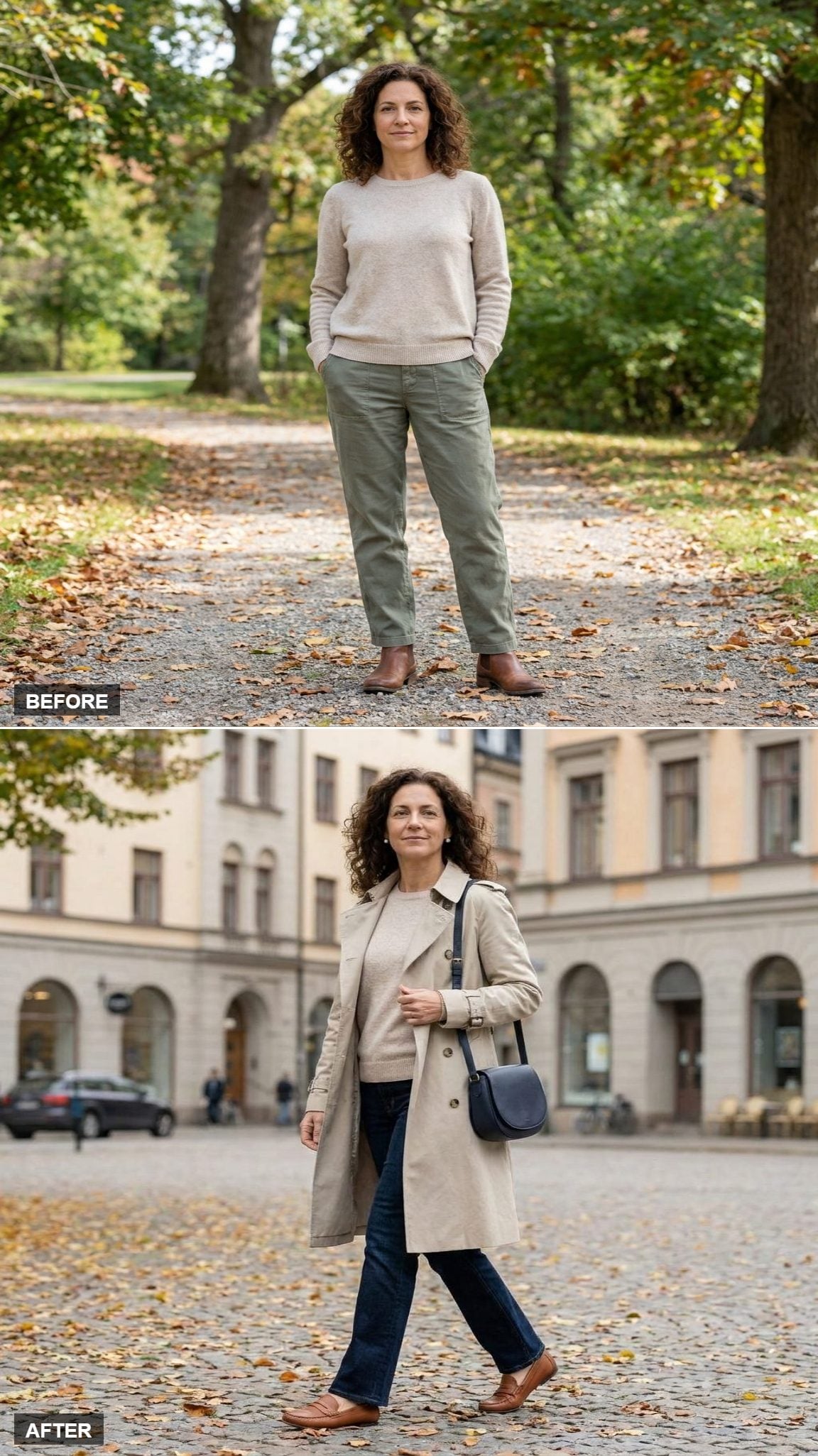
An open, unbelted trench gives the outfit length without asking the crewneck to do anything differently. The lapels and long front edges frame the knit, while dark bootcut denim introduces a subtle flare below so the coat does not overwhelm the lower half.
Cognac leather driving loafers, a navy saddle bag, and pearl studs keep the finish simple. The athleisure look temptation would be to cinch everything at the waist. Here, the open coat is much more interesting.
8. Chocolate Satin Gives the Oatmeal Knit a Completely Different Mood
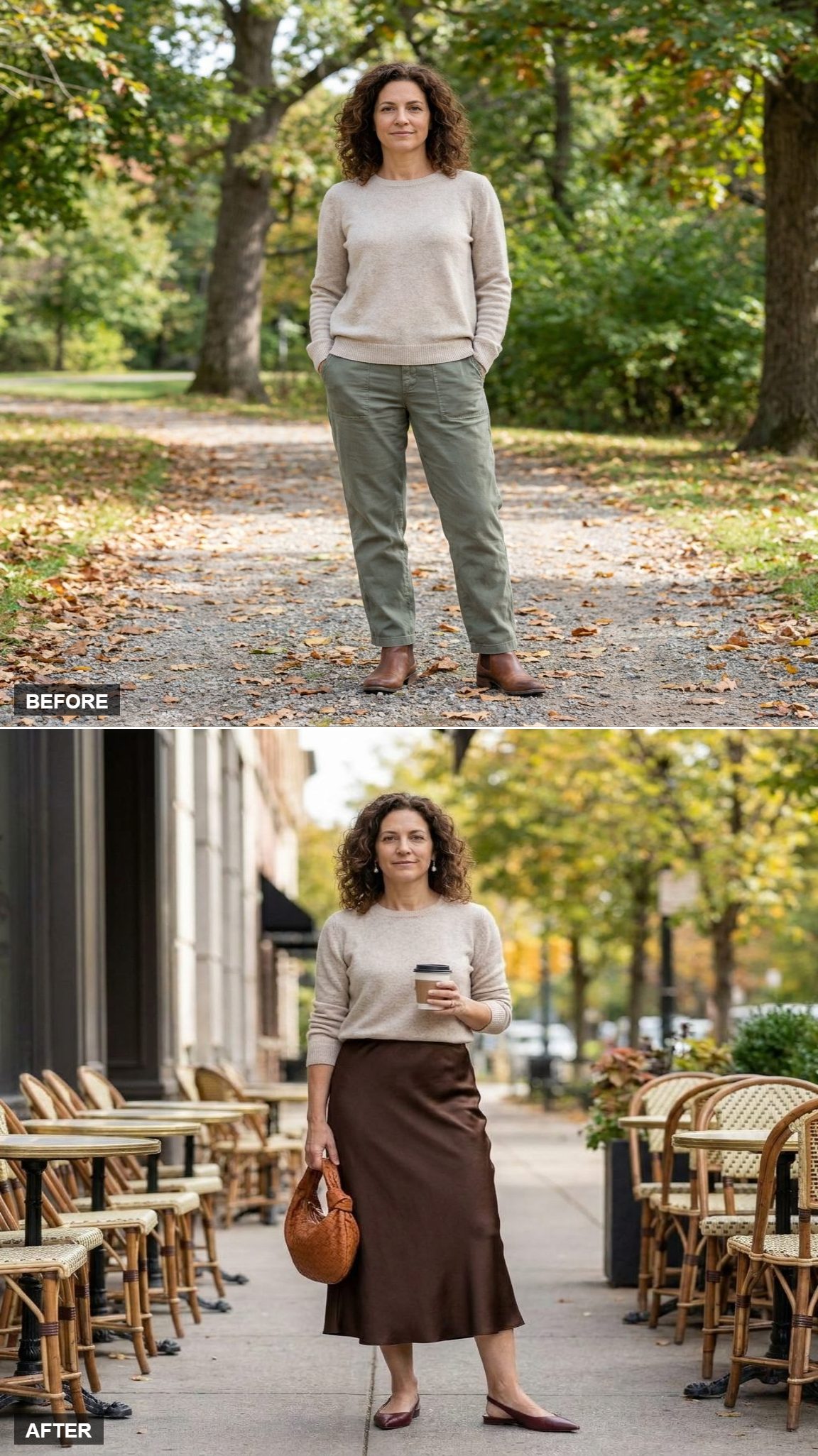
A substantial oatmeal knit against a chocolate satin bias-cut midi skirt works because the fabrics behave so differently. The sweater absorbs light; the satin catches it. One is substantial and dry, the other fluid and reflective.
The full tuck stays relaxed enough that the sweater’s volume remains visible at the waistband. That contrast is more interesting than trying to make the knit imitate the sleekness of the skirt, and it takes the athleisure sweater far outside its expected territory.
7. Forest-Green Trousers and Sneakers Bring the Sweater Back to Real Life
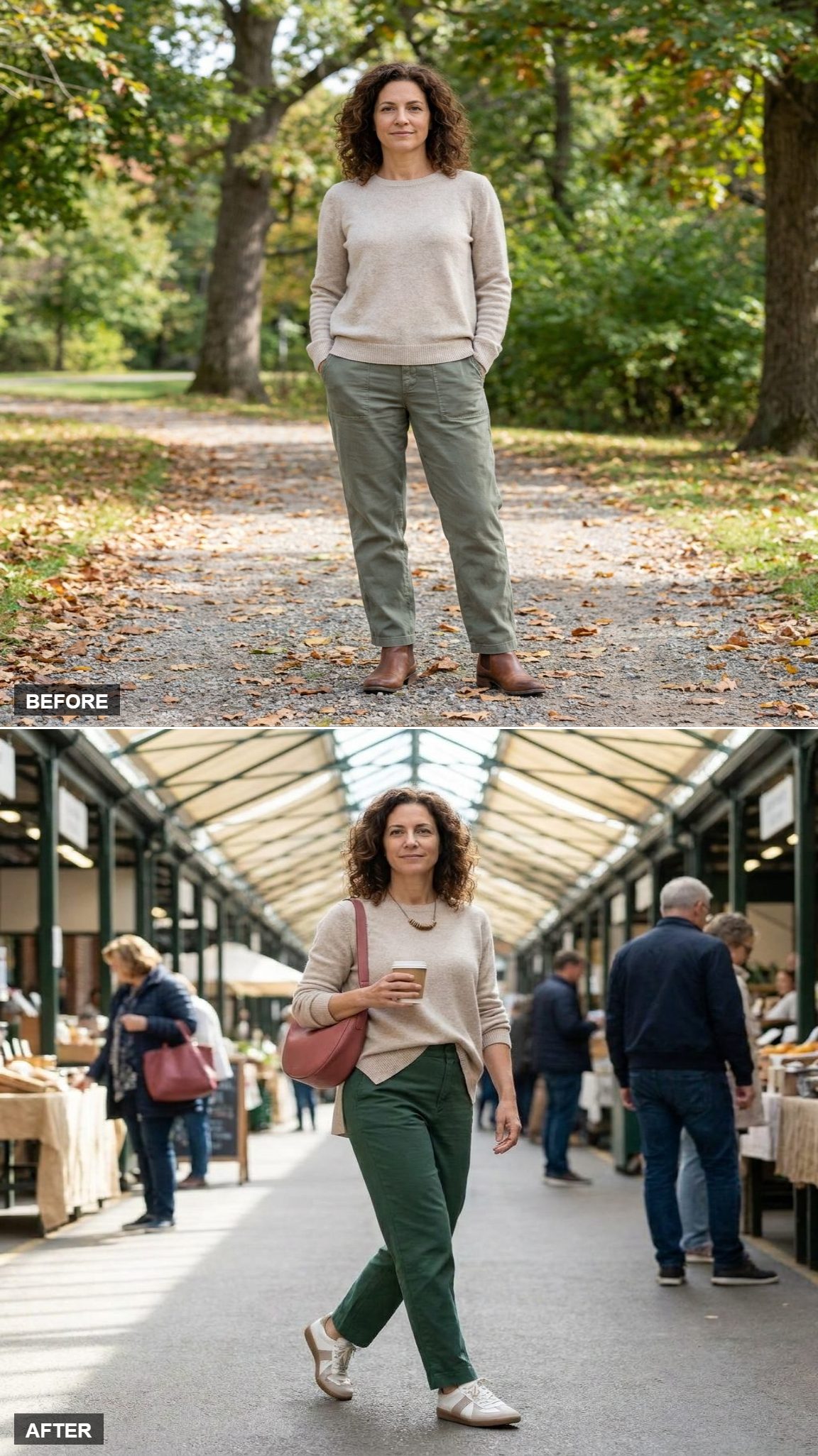
A relaxed off-center tuck into high-rise forest-green straight trousers gives the sweater one clear waist reference while leaving most of the knit untouched. Sleeves pushed to the forearms lighten the upper half further.
White-and-taupe leather sneakers, a muted-red crescent bag, and a short sculptural necklace make this a convincing off-duty version rather than an outfit designed only to prove a styling theory. It is also the most natural home for the athleisure sweater idea in the gallery.
6. The Long Chocolate Vest Takes the Same Idea Somewhere Softer
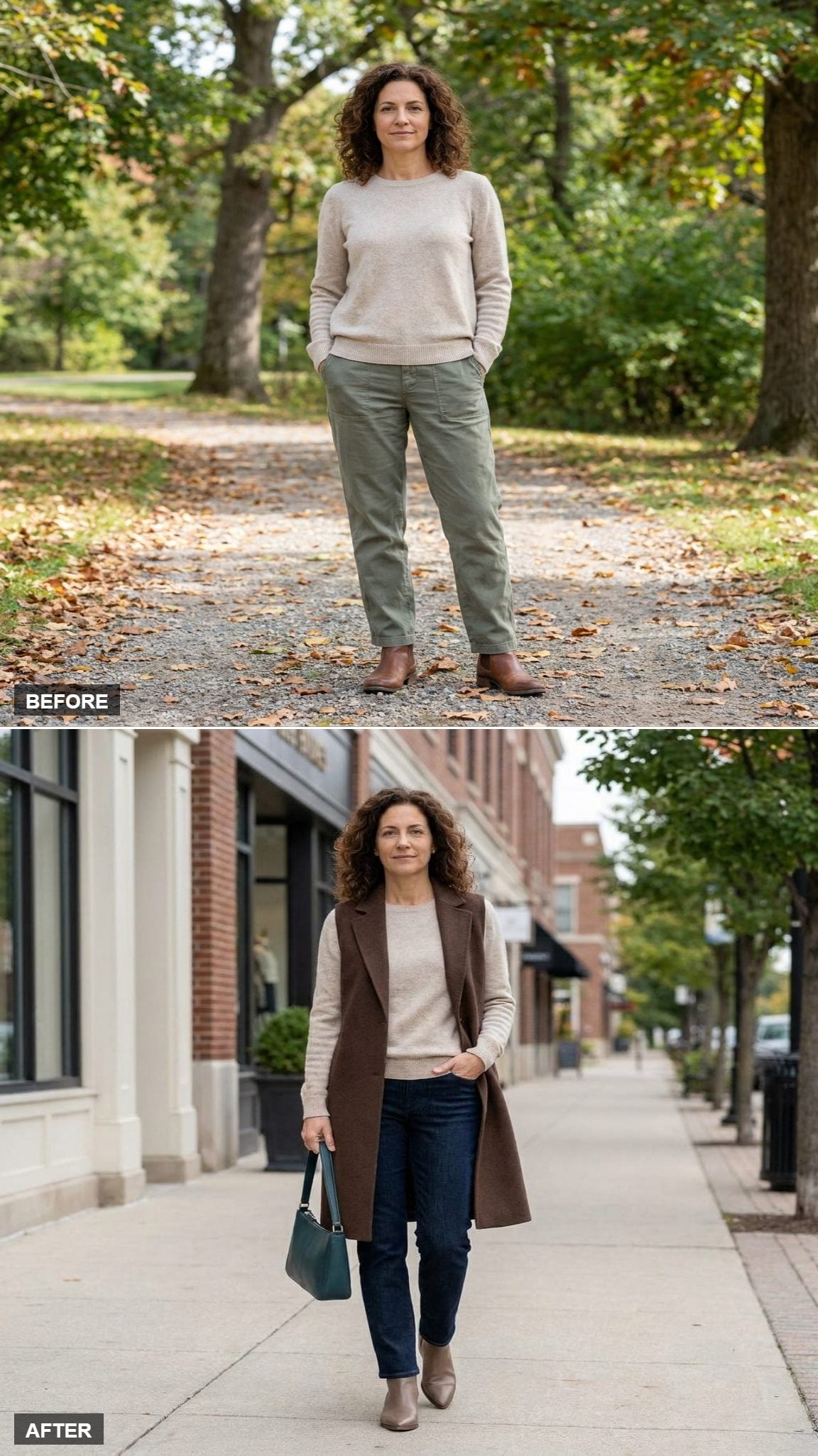
Unlike the sharper charcoal tailored vest earlier, this long chocolate wool vest leans softer and more casual. It stays open over the untucked crewneck, but the warmer color and less formal styling keep it from feeling like office tailoring without sleeves.
Dark-indigo straight jeans, pointed taupe ankle boots, and a deep-teal east-west shoulder bag carry the outfit into weekend territory. Tiny gold studs leave the silhouette alone instead of introducing another focal point.
5. Burgundy Tailoring Proves a Full Tuck Doesn’t Have to Look Severe
❤️ Would you like to save this?
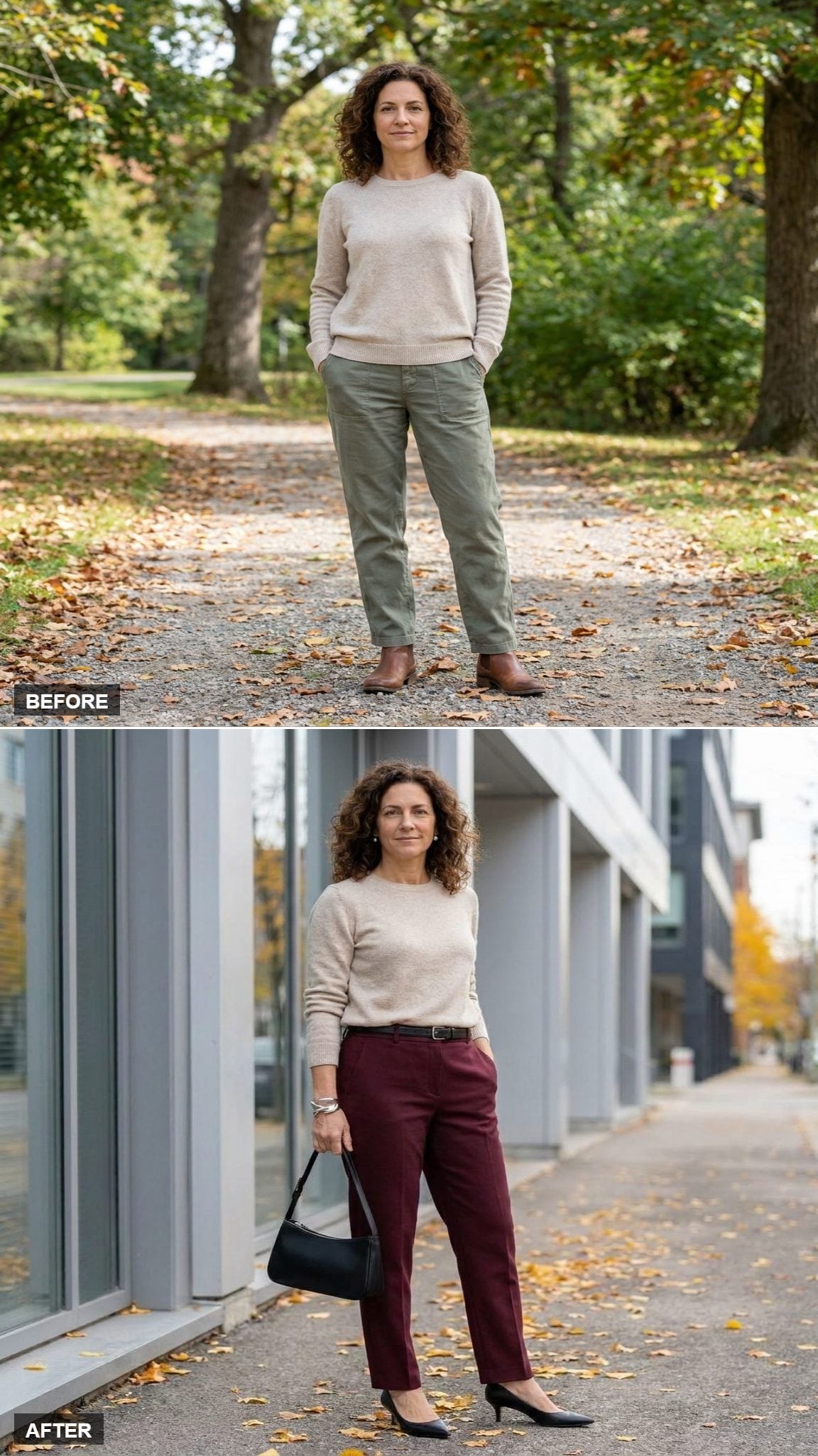
A full tuck into burgundy high-rise tailored trousers works because the sweater is allowed to blouse naturally above the waistband. A substantial knit has fabric to account for; pretending otherwise is how waistbands end up looking overstuffed.
The oatmeal-and-burgundy contrast supplies most of the visual energy anyway. There is no reason to flatten the sweater into submission when the color pairing is already strong.
4. A Cropped Navy Blazer Moves the Break Point Higher
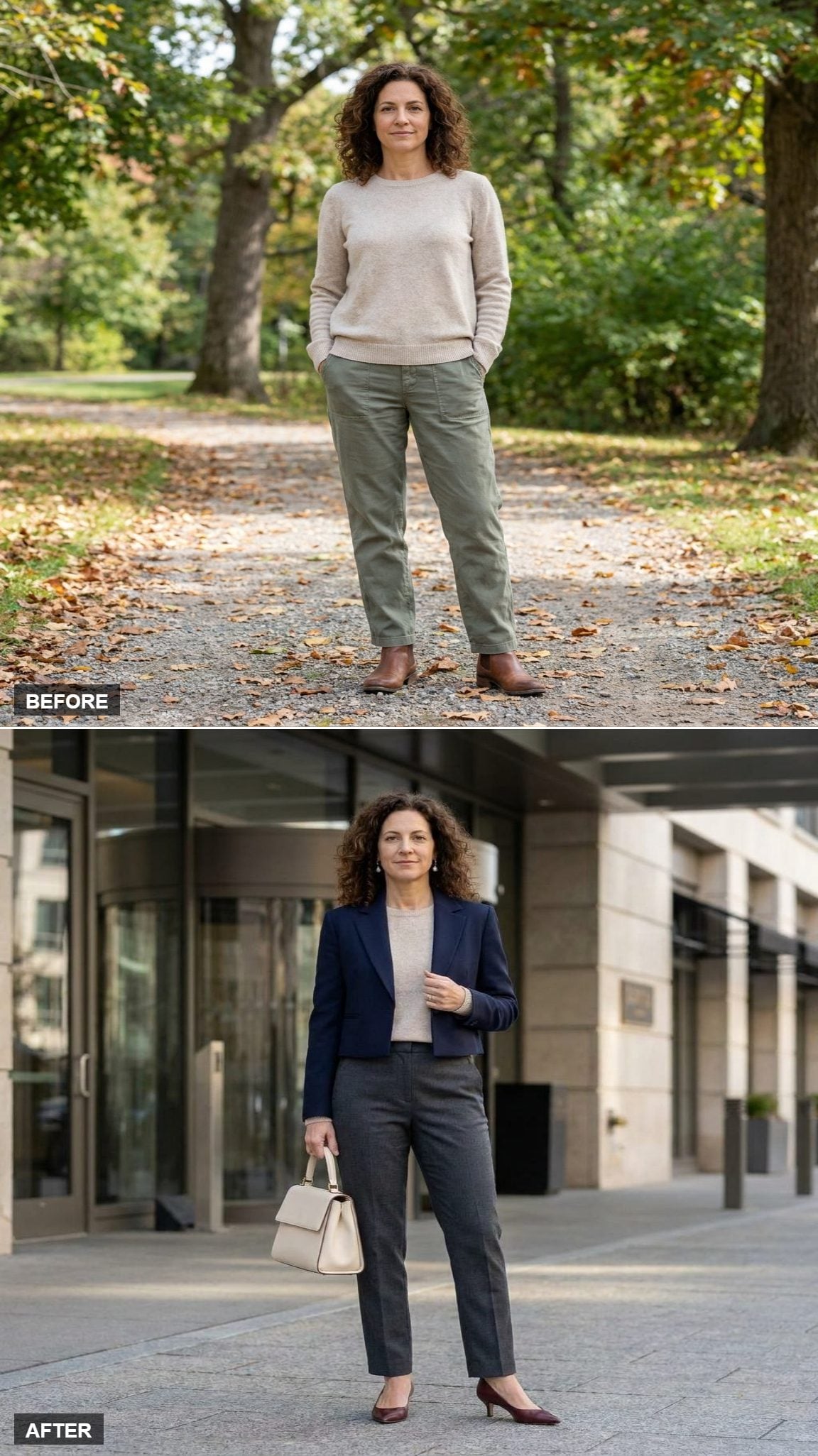
The crewneck stays untucked beneath a sharply tailored waist-length navy blazer. Unlike the longer blazer-and-denim combination earlier, this one introduces shape higher on the torso and lets the sweater’s own hem become secondary.
High-rise charcoal cigarette trousers and burgundy pointed kitten heels keep everything below clean and tailored. Pearl drops and a cream top-handle bag finish the office version without pushing it into formal territory.
3. Plum Corduroy and a Green Scarf Put the Fall Color Up Near the Face
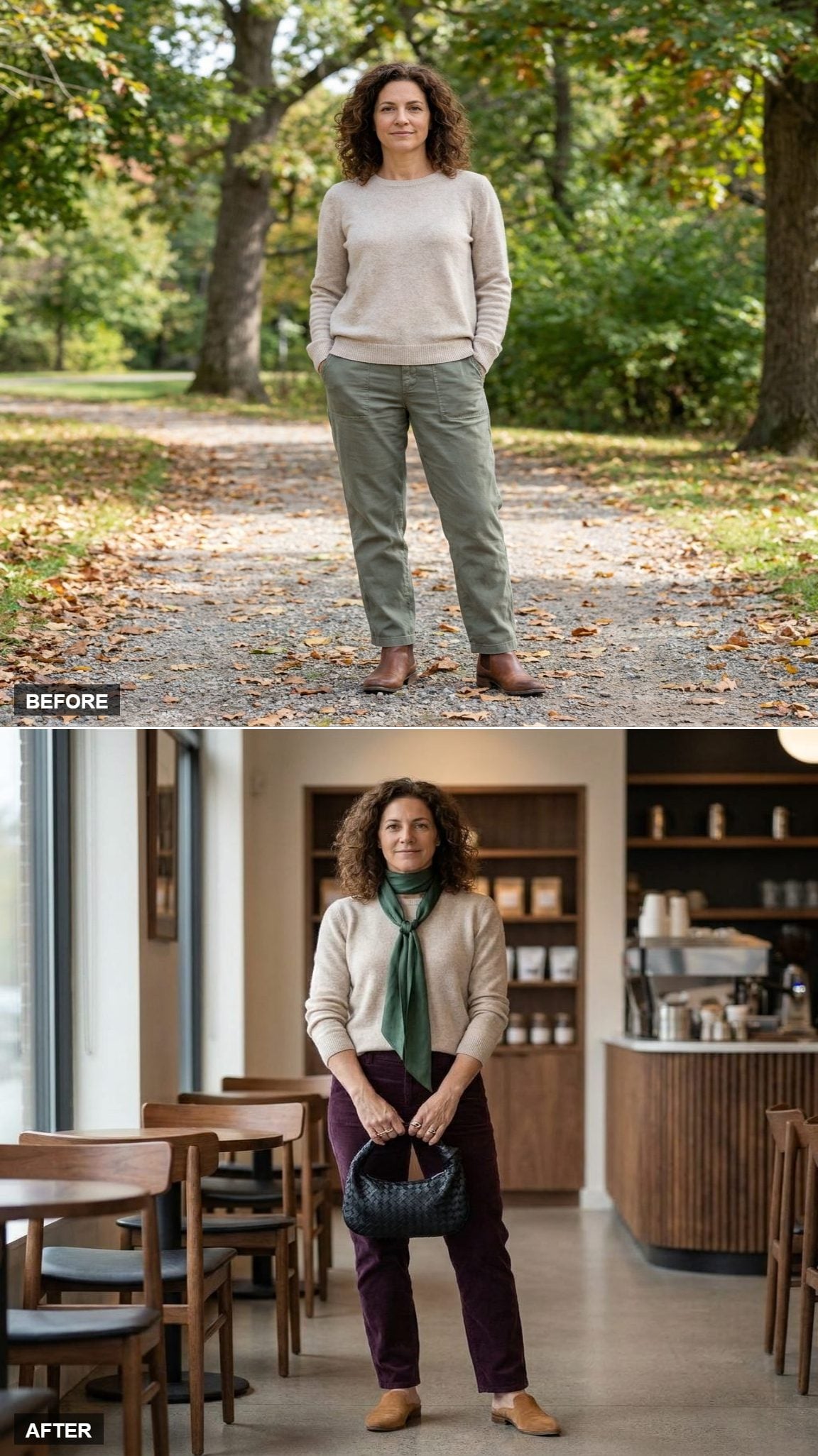
A lightweight forest-green silk scarf is tied low enough that its tails fall down the front of the oatmeal sweater. Unlike the earlier loose scarf, this one creates a shorter decorative line while bringing saturated color closer to the face.
Deep-plum corduroy trousers and camel suede backless mules make the palette rich without becoming murky. Sculptural rings replace statement earrings so the scarf gets the upper half largely to itself.
2. Deep-Teal Flares Give the One-Sided Tuck a Dressier Second Life
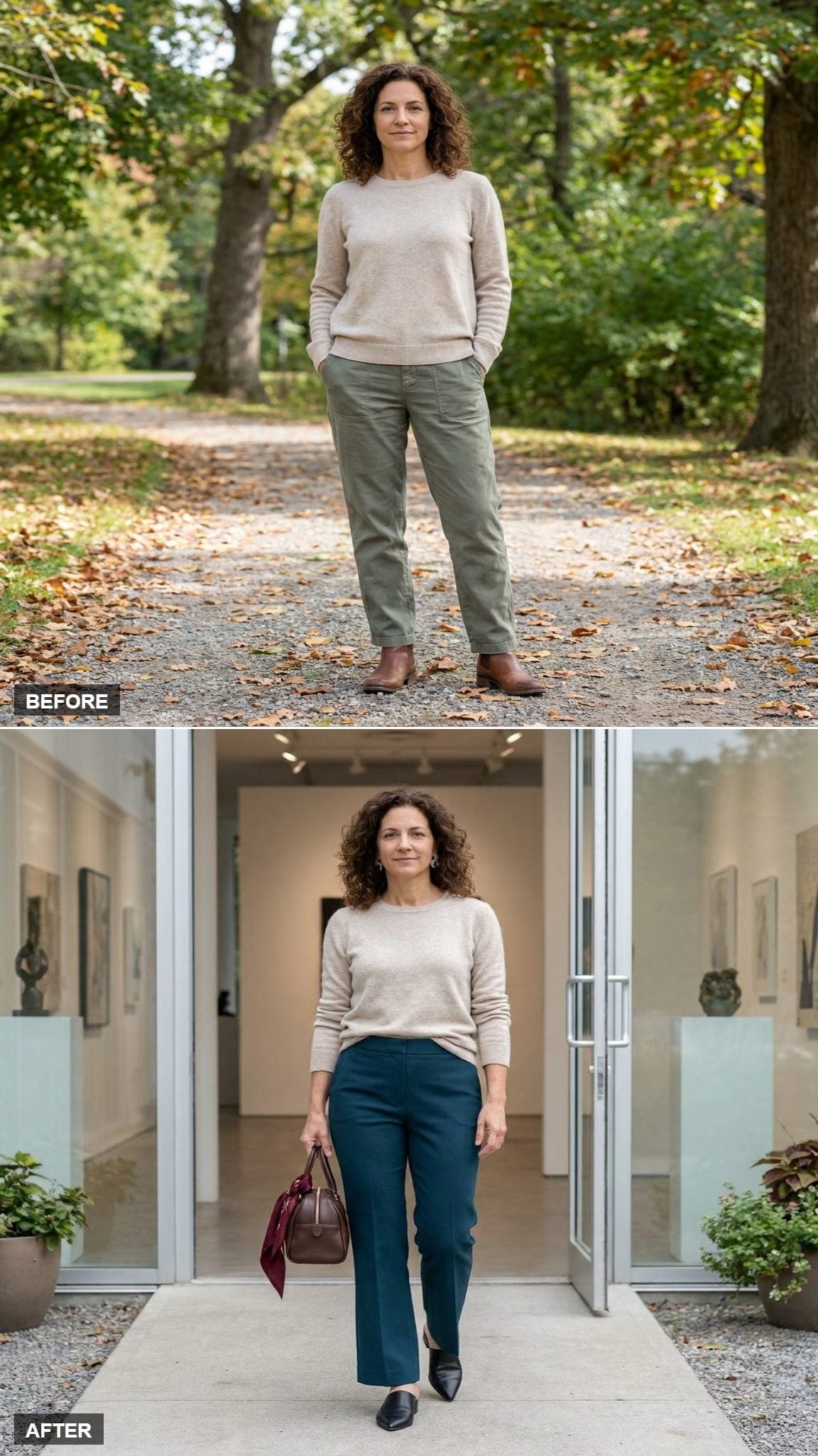
Asymmetry is useful when a straight sweater hem feels too blunt. Here, one side slips into deep-teal softly flared trousers while the other falls naturally, creating a dressier variation on the asymmetric-jeans look earlier.
The burgundy silk scarf moves off the body entirely and onto the handle of a chocolate bowling bag, adding color without crowding the neckline. Black pointed mules finish the look, while the athleisure sweater itself remains reassuringly ordinary.
1. The Burgundy Quilted Jacket Brings the Whole Argument Back to Earth
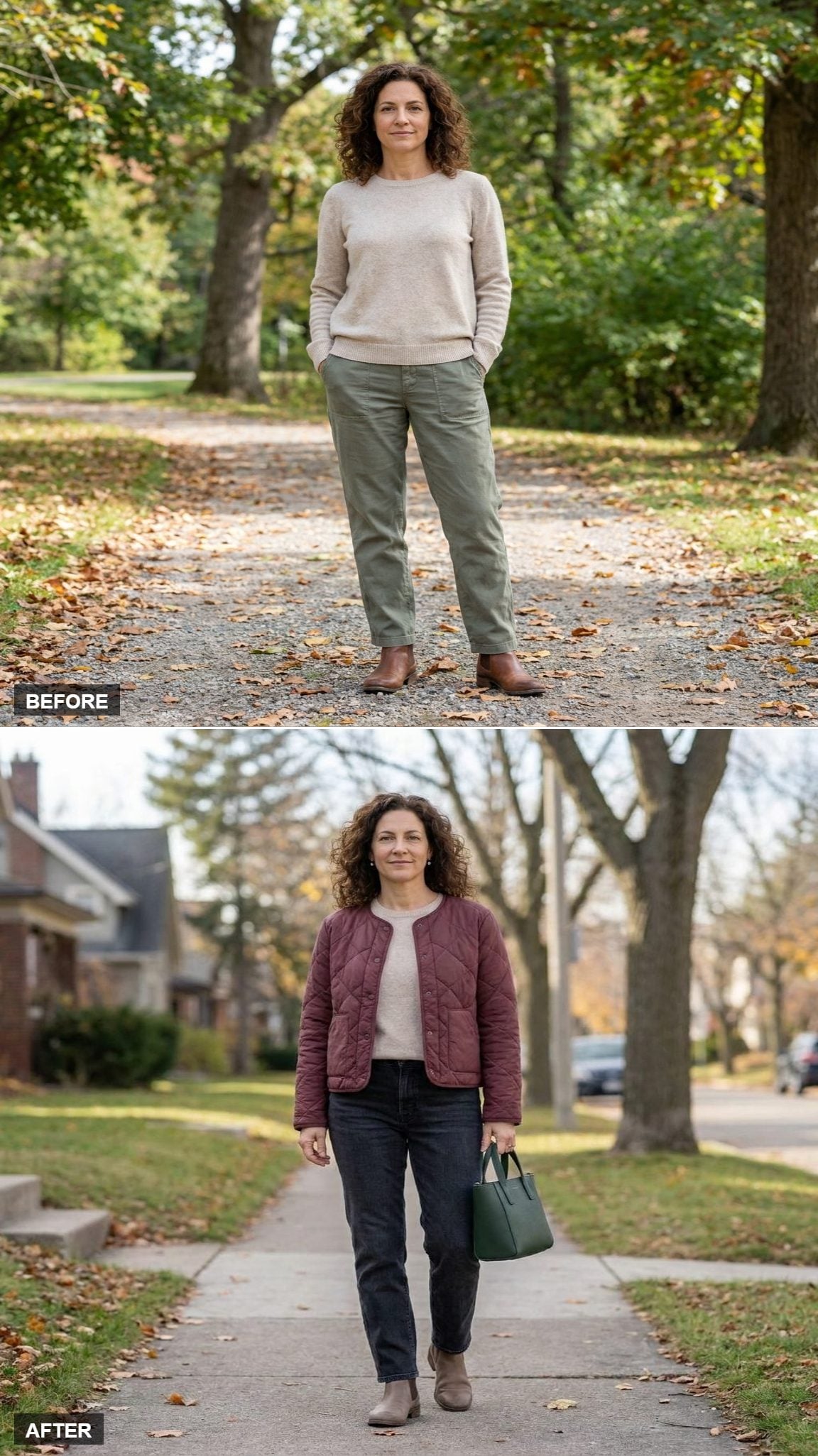
A muted burgundy quilted jacket ending around the high hip creates a clear break above the sweater’s own hem while the crewneck remains loose underneath. Dark charcoal straight jeans keep the lower half uncomplicated, and taupe Chelsea boots are practical enough for an actual fall day rather than a styling demonstration.
A forest-green structured mini tote and delicate studs are all it needs. After 29 variations, the answer is reassuringly uncomplicated: the crewneck never needed to become tighter, younger, or more elaborate. It just needed the shapes around it to give it somewhere better to go.