
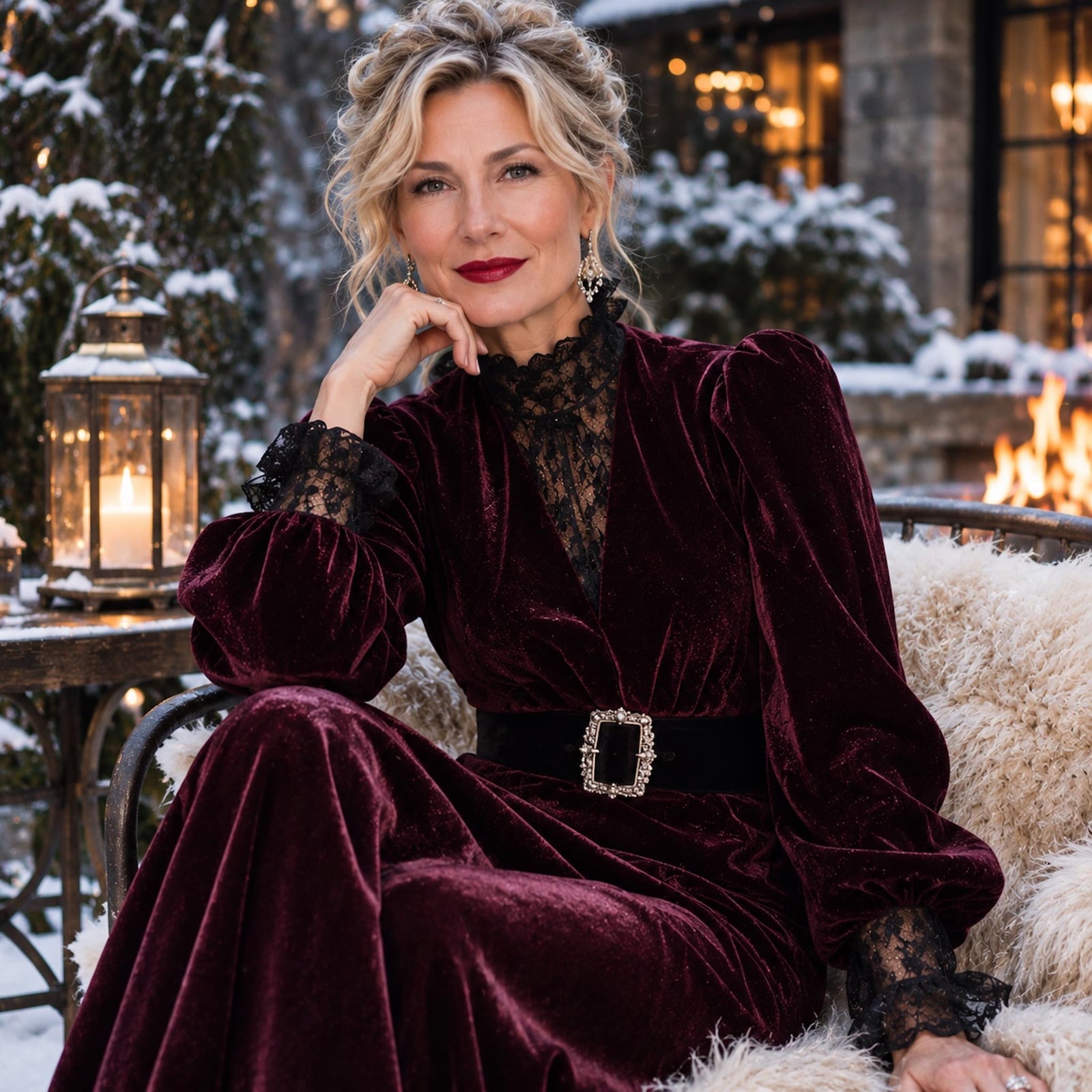
A sensible winter wardrobe knows when to button its coat. A dark romantic one knows how to make the buttons interesting. Oxblood leather, black lace, velvet with a dangerous-looking sheen: these are clothes with impeccable manners and a healthy disregard for behaving predictably. Even the most practical boot seems to have a backstory.
Cold weather gives the drama a legitimate excuse. High collars frame the face, long coats command attention, and substantial skirts earn their keep against a December wind. Stiff brocade meets soft velvet, glossy leather interrupts translucent lace, and a tailored shoulder brings order to a skirt that refuses to stand still. Forest green joins the familiar black and burgundy, giving the palette an unexpected change of direction.
Across these 39 looks, the mood moves from snowy streets and fireside terraces to art galleries, winter dinners, and an opera house that knows a thing or two about excess. The trick isn’t dressing as though you’ve wandered out of a gothic novel. It’s borrowing the novel’s atmosphere and leaving the impractical plot developments behind.
FYI, thanks to AI imagery software, we’re able to create very specific fashion and hairstyle examples to illustrate the points being made. In some cases, imagery is exaggerated to hammer home the point. Also, assume links that take you off the site are affiliate links such as links to Amazon. this means we may earn a commission if you buy something.
39. The Oxblood Leather Trench and Black Lace
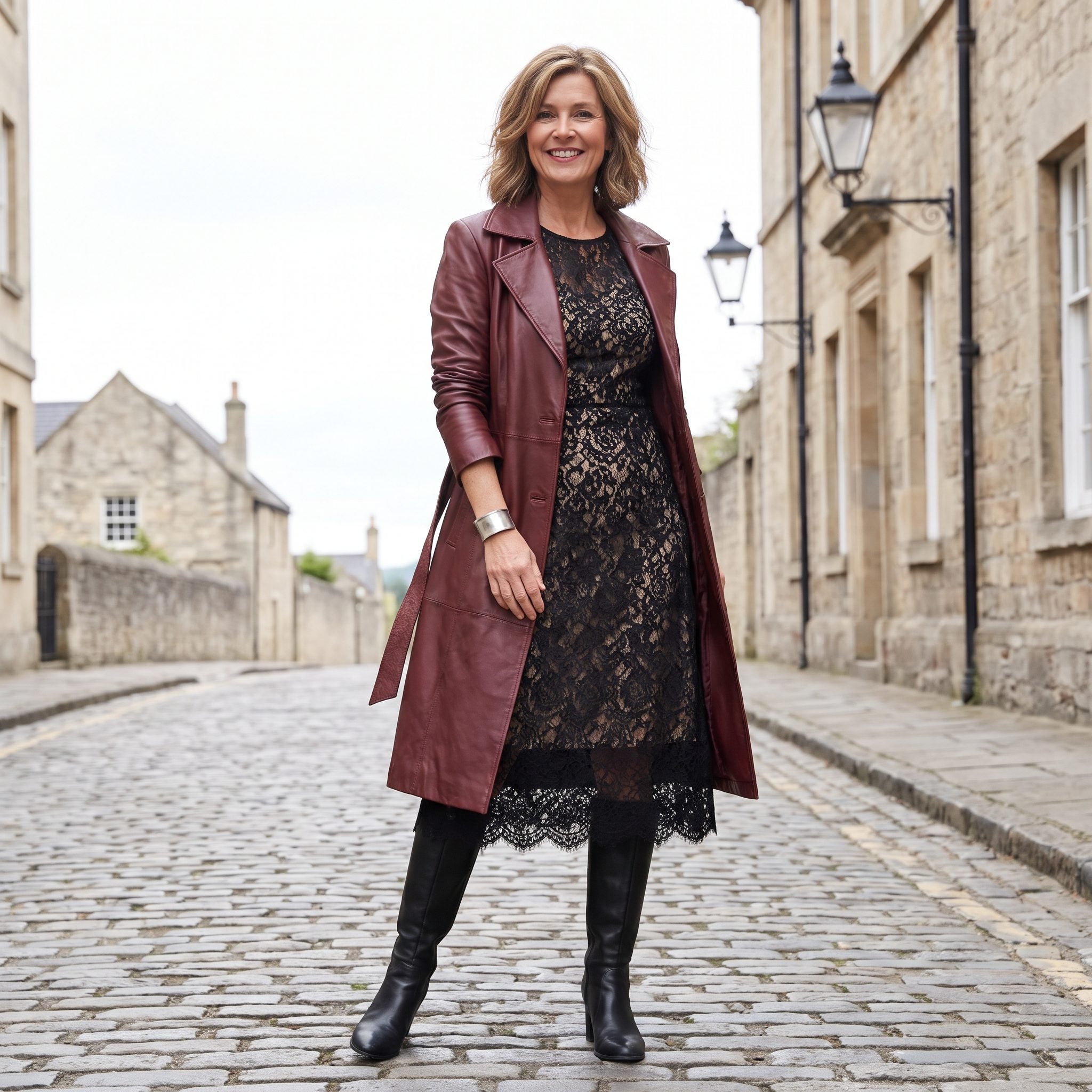
A trench coat usually comes with sensible intentions. Make it oxblood leather, leave it open over black lace, and sensible is no longer the word that springs to mind. The long, structured panels give the outfit authority; the delicate dress underneath introduces a completely different argument.
The contrast works because neither fabric tries to imitate the other. Leather supplies a firm outline while lace softens everything inside it. Knee-high boots extend the dark silhouette below the hem. This is romantic dressing with its defenses intact, and a particularly good example of why an oxblood leather trench needn’t belong exclusively to daytime wardrobes.
38. The Square-Neck Velvet Jumpsuit
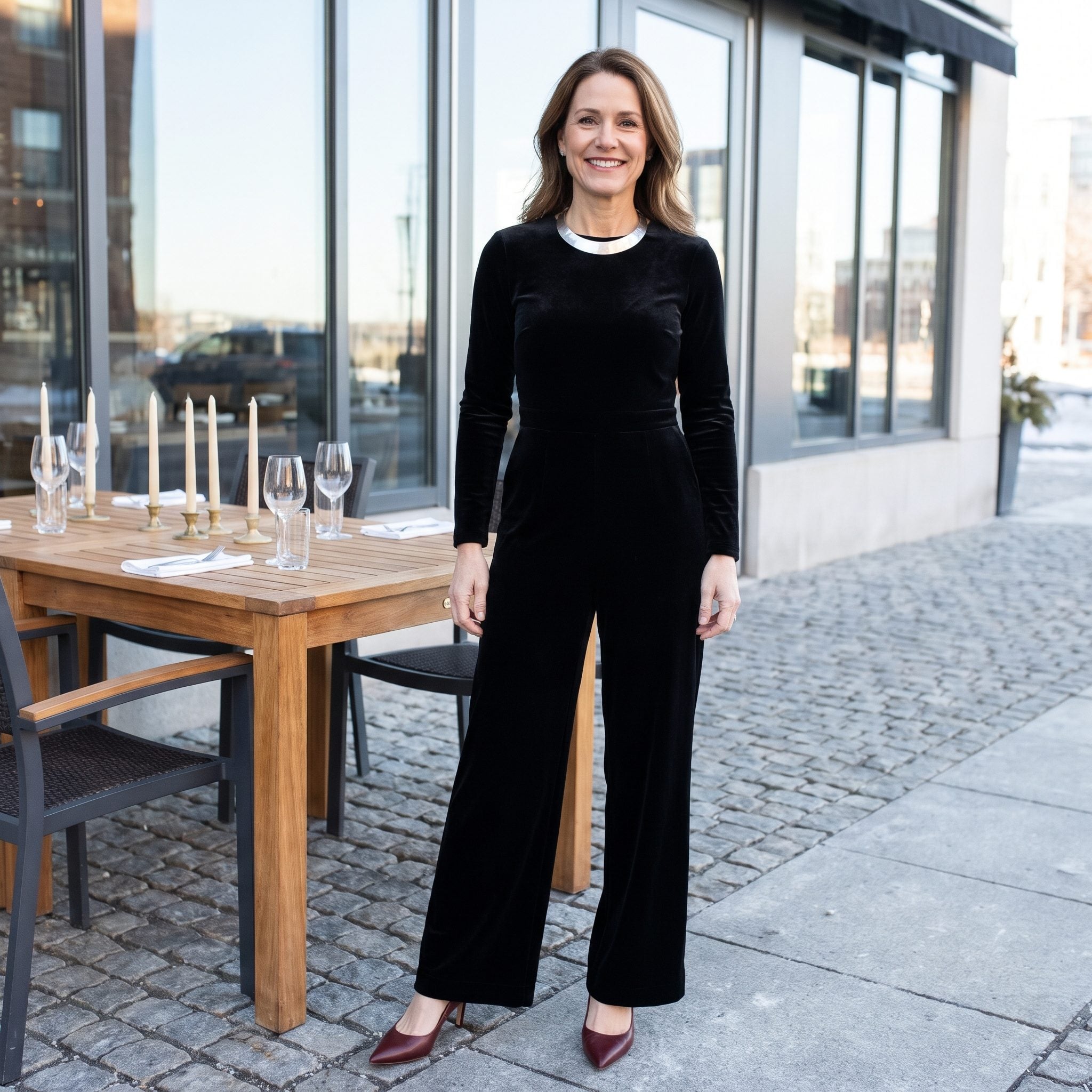
A velvet jumpsuit can go spectacularly wrong when it tries too hard to imitate a gown. This one understands its own advantages. The wide legs create an elegant sweep, while the square neckline gives the upper half a crisp architectural boundary.
That neckline is particularly accommodating to a sculptural torque necklace, allowing the jewelry to sit against an uncluttered frame. Oxblood pumps appear beneath the trouser hems as a discreet color accent. One garment, very little complication, and an entirely different attitude from the conventional evening dress.
Not everyone is sold on the jumpsuit, though: in our reader votes, jumpsuit images got hearts 52% of the time, versus 60% for the other outfits in the same articles.
37. The Black Brocade Dinner Dress
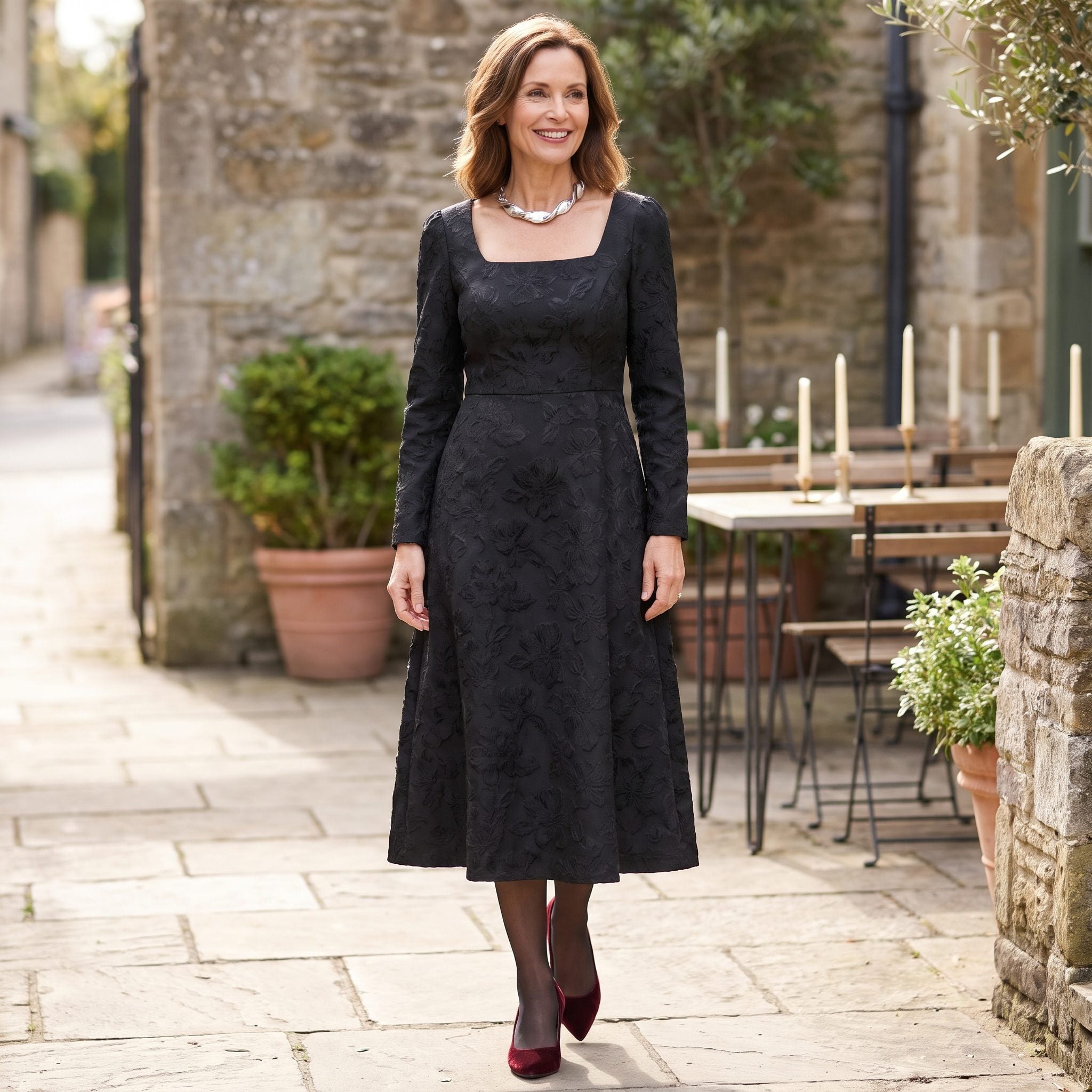
Black brocade has an excellent trick: from a distance, the dress looks almost plain. Move closer and the raised floral pattern begins to emerge, giving the surface an intricacy that ordinary black fabric can’t quite reproduce. The fitted bodice and gently flared skirt let the textile provide the ornament.
Oxblood velvet pumps introduce a restrained change of color, while a sculptural silver collar gives the neckline a clean metallic edge. Brocade has centuries of history in formal European clothing, but tone-on-tone weaving allows its elaborate surface to feel thoroughly contemporary.
36. The Oxblood Wool Shorts Suit
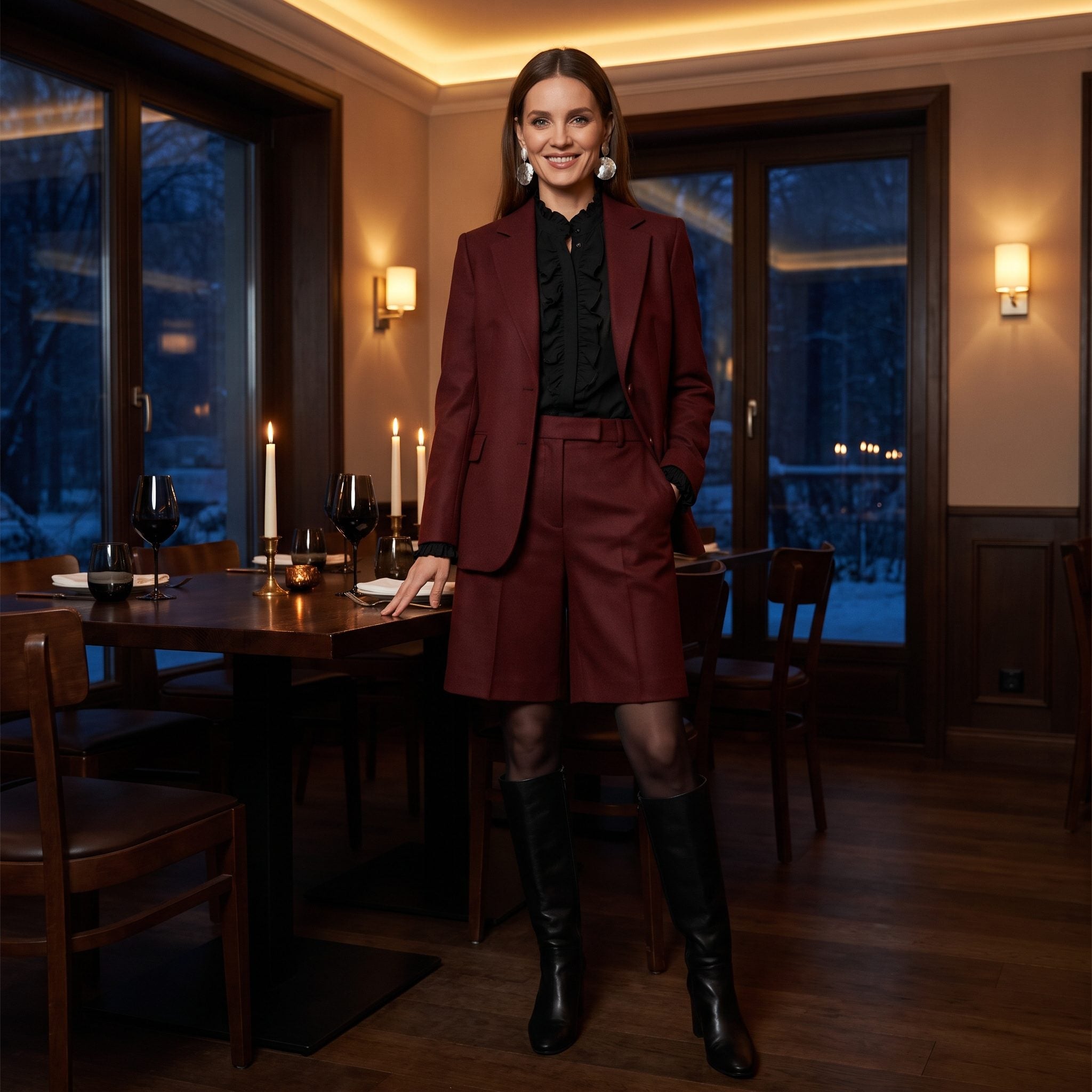
Shorts at a winter dinner sound like a dare. Tailored oxblood wool and a longline blazer turn them into a perfectly serious proposition. The jacket brings the authority of traditional suiting, while the abbreviated trousers prevent the outfit from becoming another predictable evening uniform.
Dark tights and knee-high boots make the exposed stretch of leg visually continuous, even if they don’t offer quite the warmth of full-length trousers. A black ruffled collar supplies a touch of theatricality without overwhelming the clean tailoring. The oxblood wool shorts suit is an unexpectedly sharp alternative to the usual winter holiday outfit.
What Our Readers Say
- Cold-weather dressing has a real fan club: in our reader polls, about half of ThreadCurve readers named fall and winter as their favourite season to dress for, well ahead of spring and summer.
From ThreadCurve reader polls and votes.
35. The Ink Satin Dress With a Fine Lace Hem
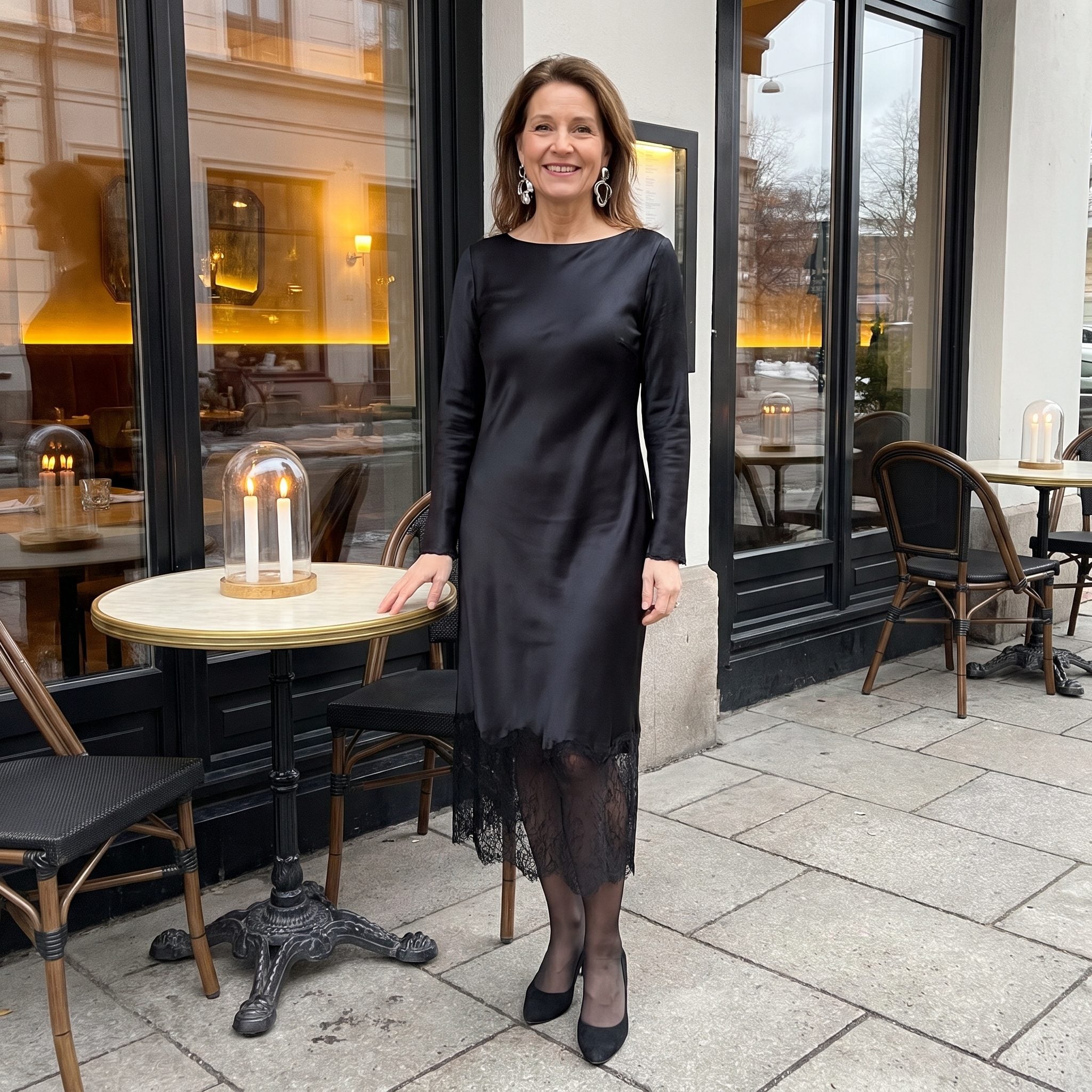
Two finishes, one dress, and the entire effect changes at the hem. Ink satin has a fluid, polished surface; the fine lace edging introduces intricate openwork just as the eye reaches the bottom. The difference is subtle enough to reward a second look.
A clean boat neckline leaves the upper half almost severe, making the lace an unexpected ending rather than one decorative detail among many. For an evening when sequins would feel too obvious, a dark satin midi offers a more understated approach to party dressing.
34. The Oxblood Coatdress and Silver Brooch
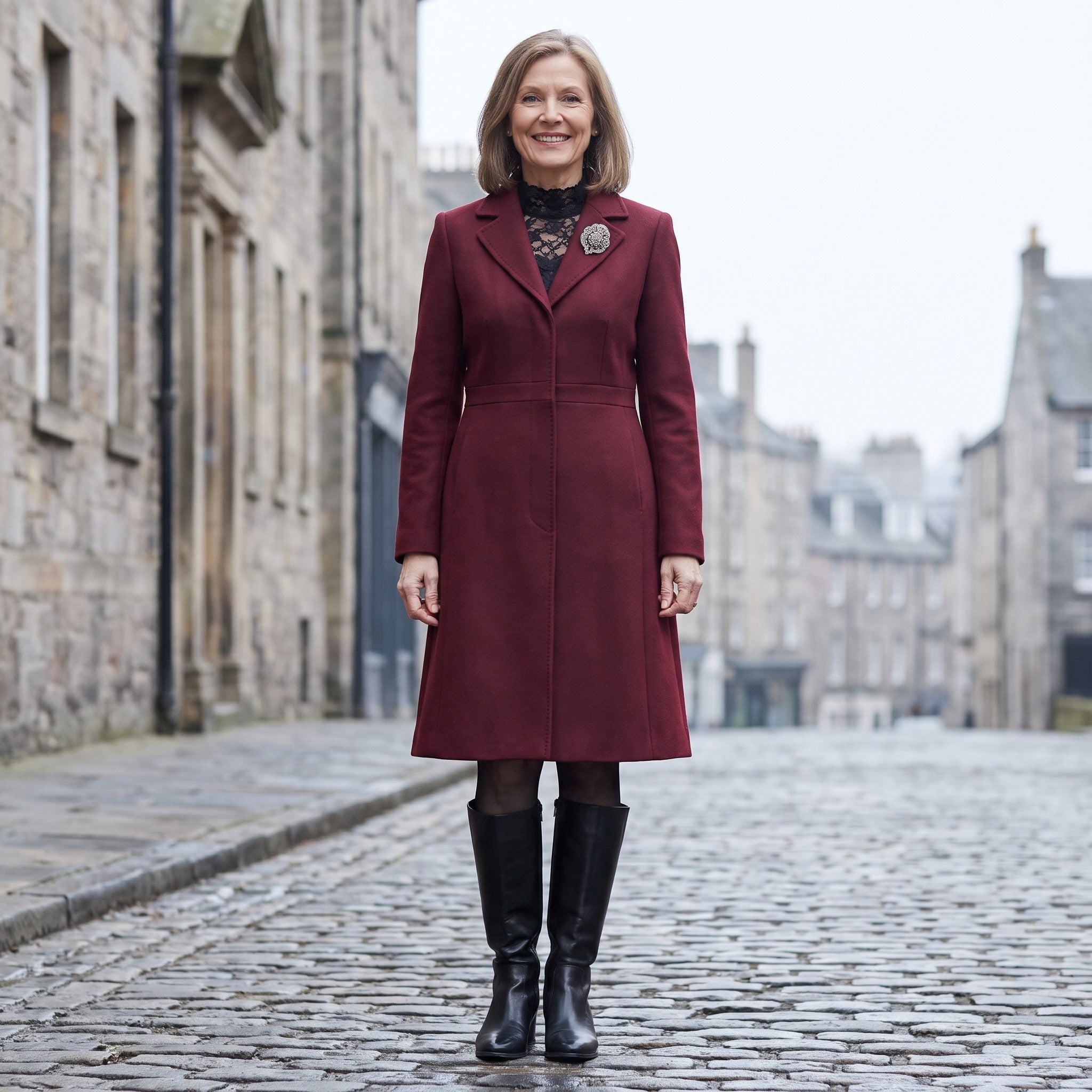
A fully fastened coatdress has a particular sort of authority. There are no competing layers to negotiate, no separate top and skirt to reconcile. The oxblood wool establishes one continuous shape from the structured shoulders toward the boots.
The antique-style silver brooch is the detail that changes its character. Pinned at the lapel, it interrupts the broad expanse of wool with a small, intricate focal point. A lace mock neck softens the collar area without undermining the coatdress’s formality. Brooches have been worn in many forms for centuries, and this is an excellent reminder that they needn’t look remotely old-fashioned.
33. The Cascading Ruffle and Cigarette Trousers
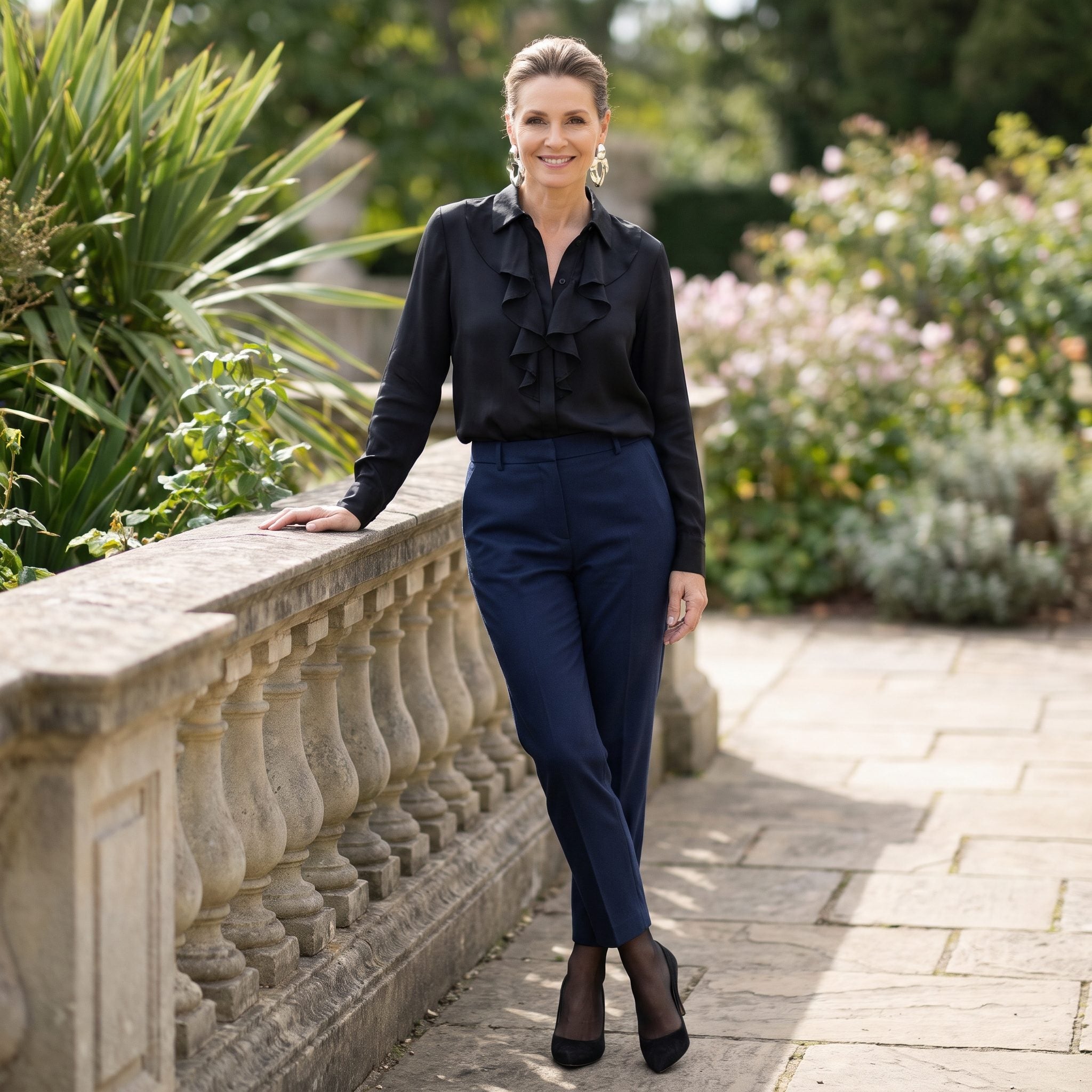
Ruffles grow up the second they go narrow and vertical. Instead of spreading across the shoulders like decorative frosting, this silk cascade runs down the front of the blouse, introducing movement to an otherwise disciplined outfit.
Ink cigarette trousers provide the necessary straight line beneath all that softness. The sculptural silver earrings echo the blouse’s irregular shape without competing with it. A little Victorian flourish, a little modern tailoring, and none of the fussiness that can make romantic clothing look as though it belongs behind museum glass.
32. The Black Velvet Wrap Dress
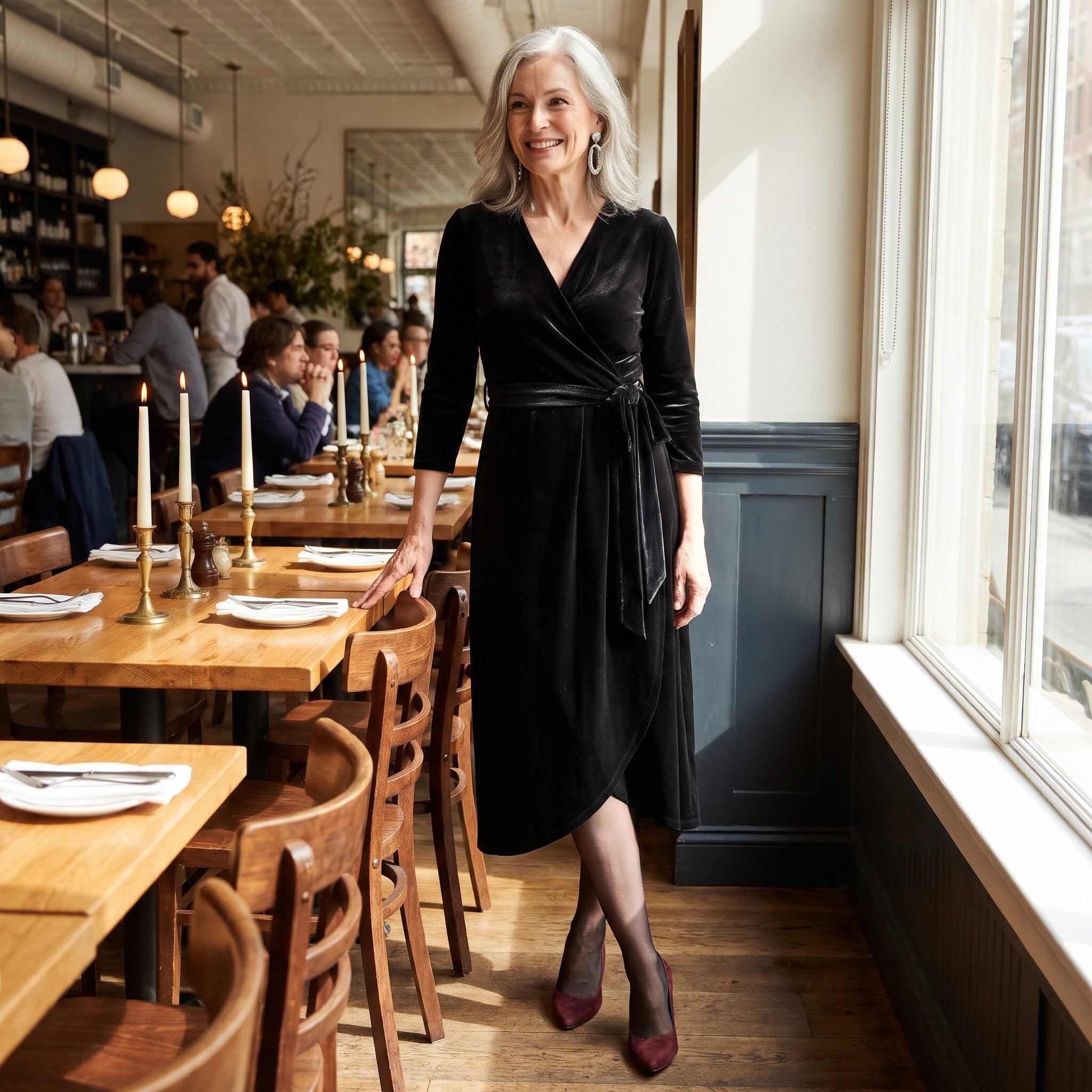
The wrap dress is hardly an unfamiliar proposition, which makes its transformation in black velvet all the more satisfying. The diagonal front interrupts the dark surface, the V-neck introduces a little openness, and the tied waist allows the shape to be adjusted rather than imposed.
Oxblood suede pumps supply the only significant color change. Positioned below the hem, they give the outfit a small, unexpected flourish without challenging the dress. The result is quieter than a heavily embellished evening look, but velvet has never needed much encouragement to appear dressed for the occasion.
31. The Asymmetric Knit and Lace Trousers
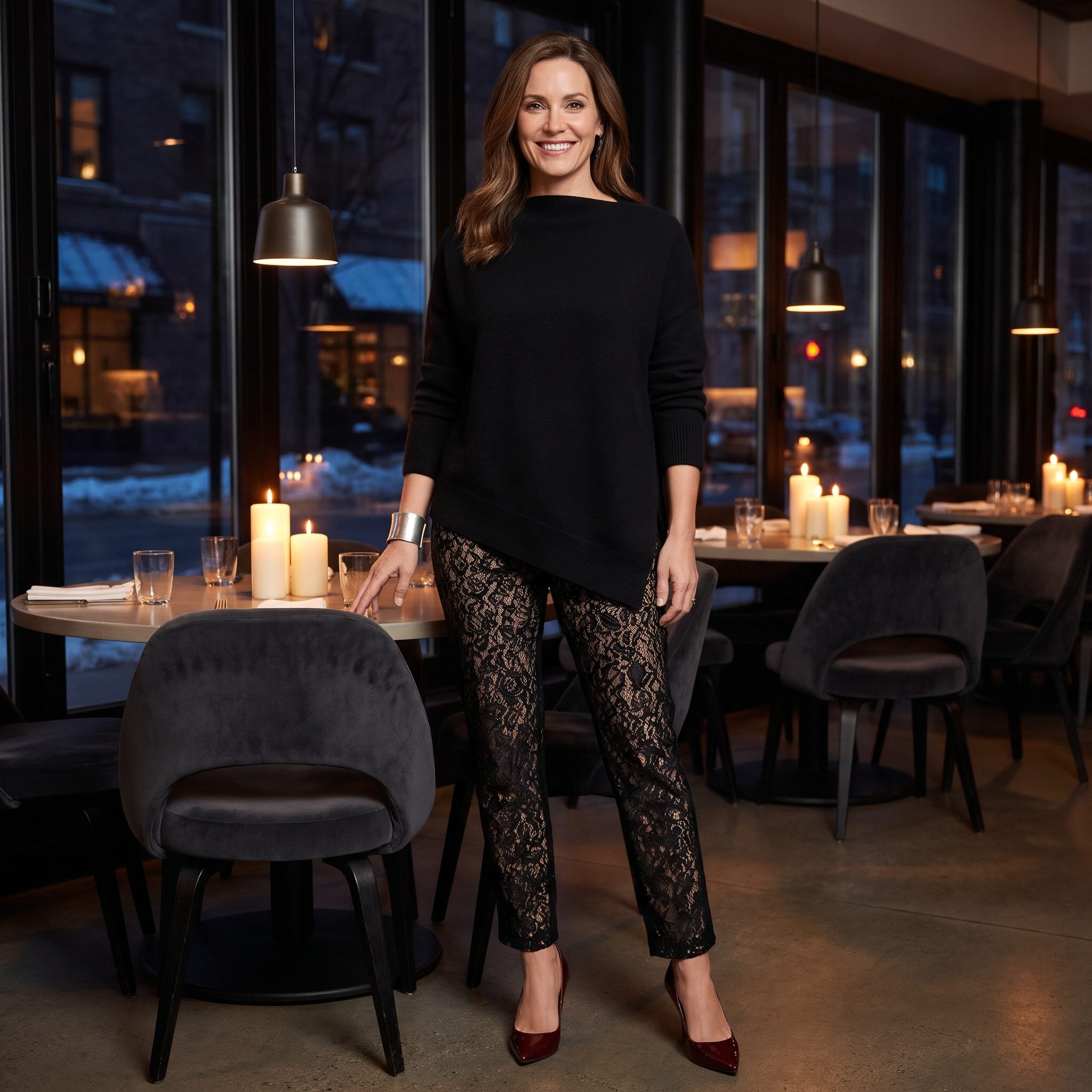
Lace trousers sound like the sort of idea that should remain safely on a runway. An opaque lining makes them considerably more wearable, turning the openwork into surface pattern rather than a question of how much skin is showing.
Above them, the asymmetric cashmere knit introduces a sloping hem that cuts across the hip. Its dense, uncomplicated texture gives the elaborate trousers room to breathe. Oxblood pointed pumps provide a welcome departure from black, while the diagonal hem keeps the composition from settling into a predictable top-and-bottom arrangement.
30. The Oxblood Bow Blouse and Palazzo Trousers
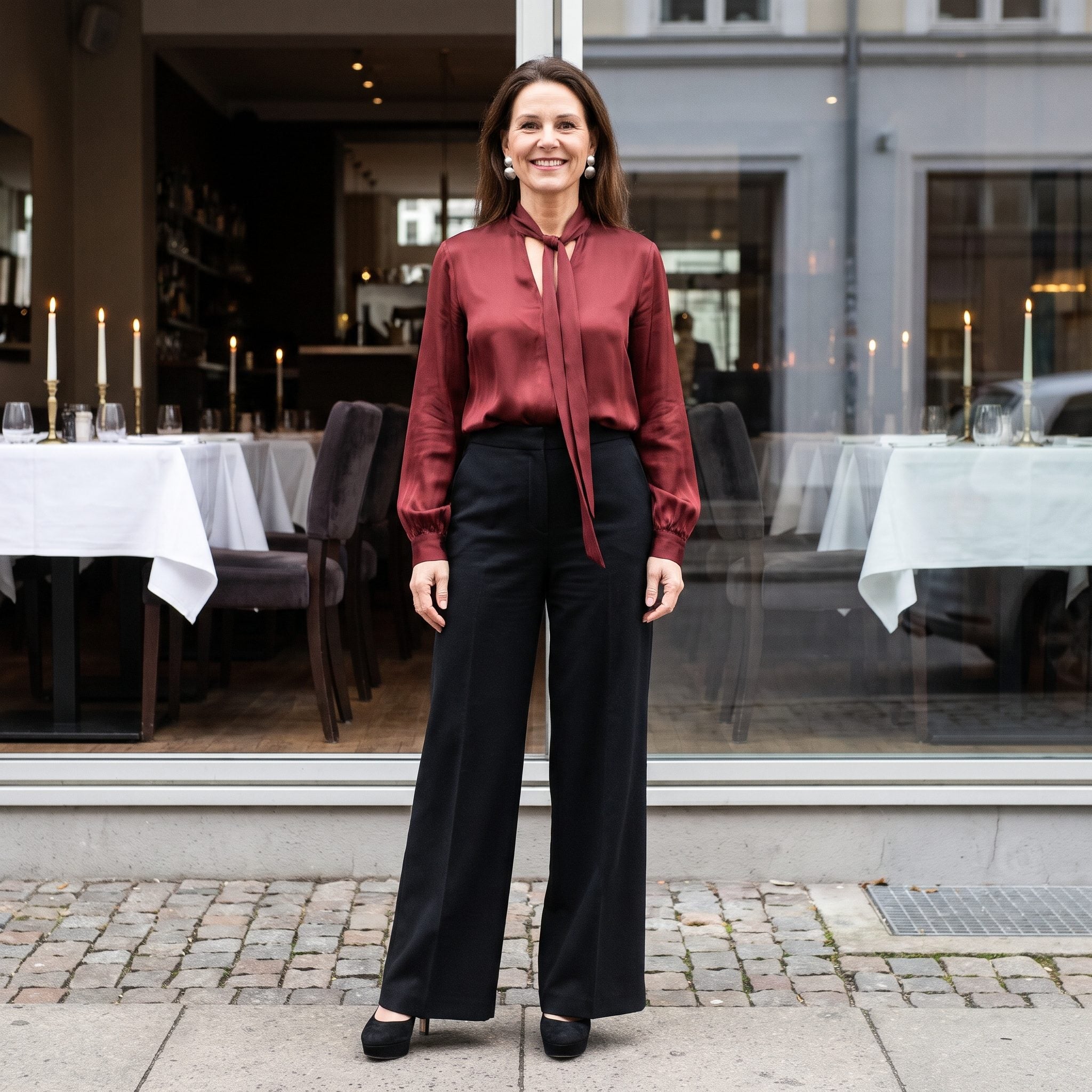
A tightly knotted bow can make a blouse look ready to chair a committee. Loosen it, let the ends fall naturally, and the mood changes completely. The oxblood silk retains its polish but loses the stiffness associated with more formal neckwear.
Black palazzo trousers provide a generous sweep beneath the tucked silk blouse. The contrast between the fluid upper layer and substantial wool below gives the outfit an easy rhythm. It’s a persuasive case for romantic dressing that doesn’t require a dress at all.
29. Black Lace and the Structured Column Skirt
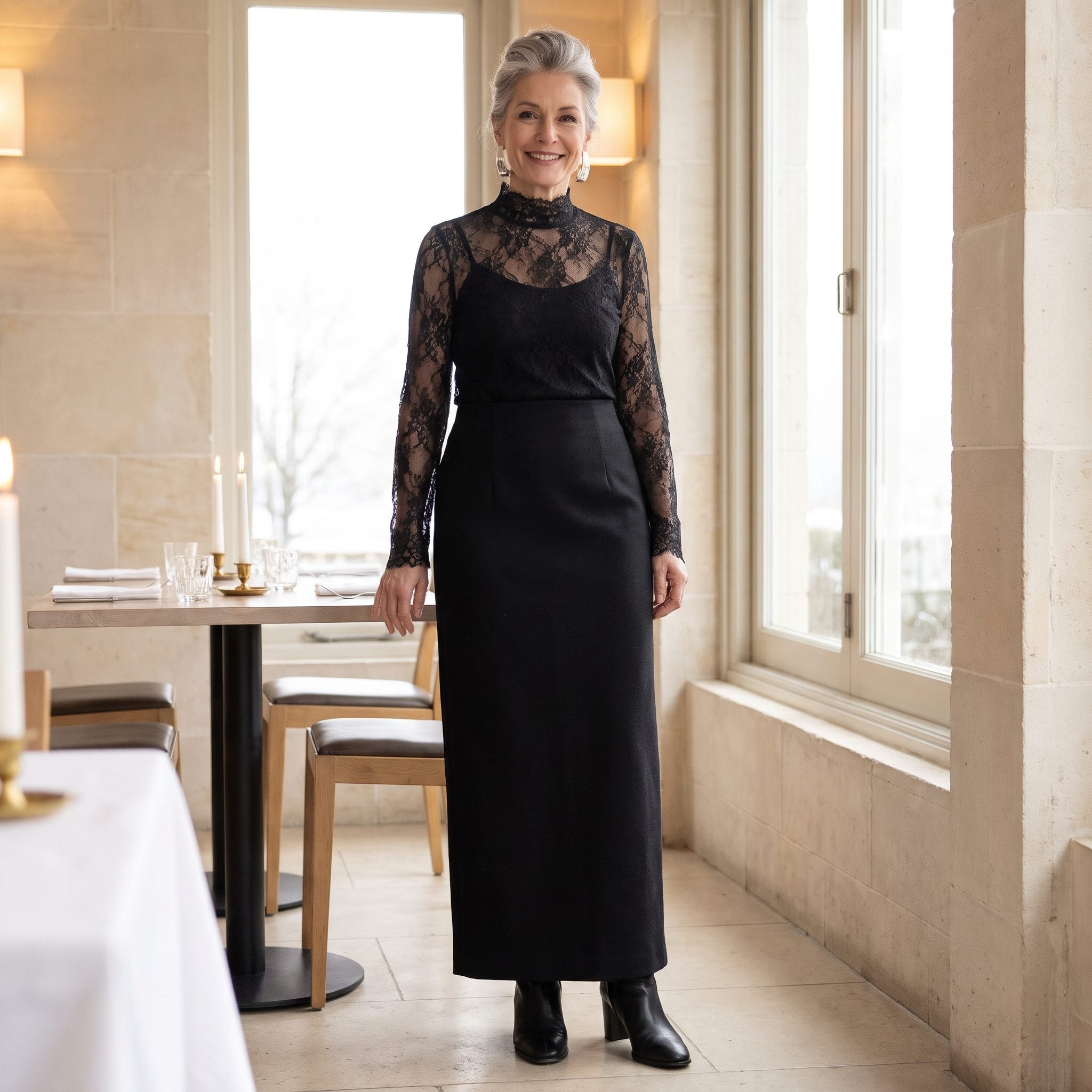
The high lace neckline has all the formality of a Victorian portrait, though the narrow black column skirt has more contemporary plans. Intricate openwork across the upper half gives way to a long, uninterrupted line below. The tension is the point: ornament above, absolute discipline beneath.
Sheer sleeves lighten the silhouette without exposing the lined bodice, and dark boots continue the skirt’s vertical line. No bustle, no billowing train, no attempt to recreate an entire century. The lace does the remembering; the tailoring gets on with the evening.
28. The Ink Velvet Dinner Suit
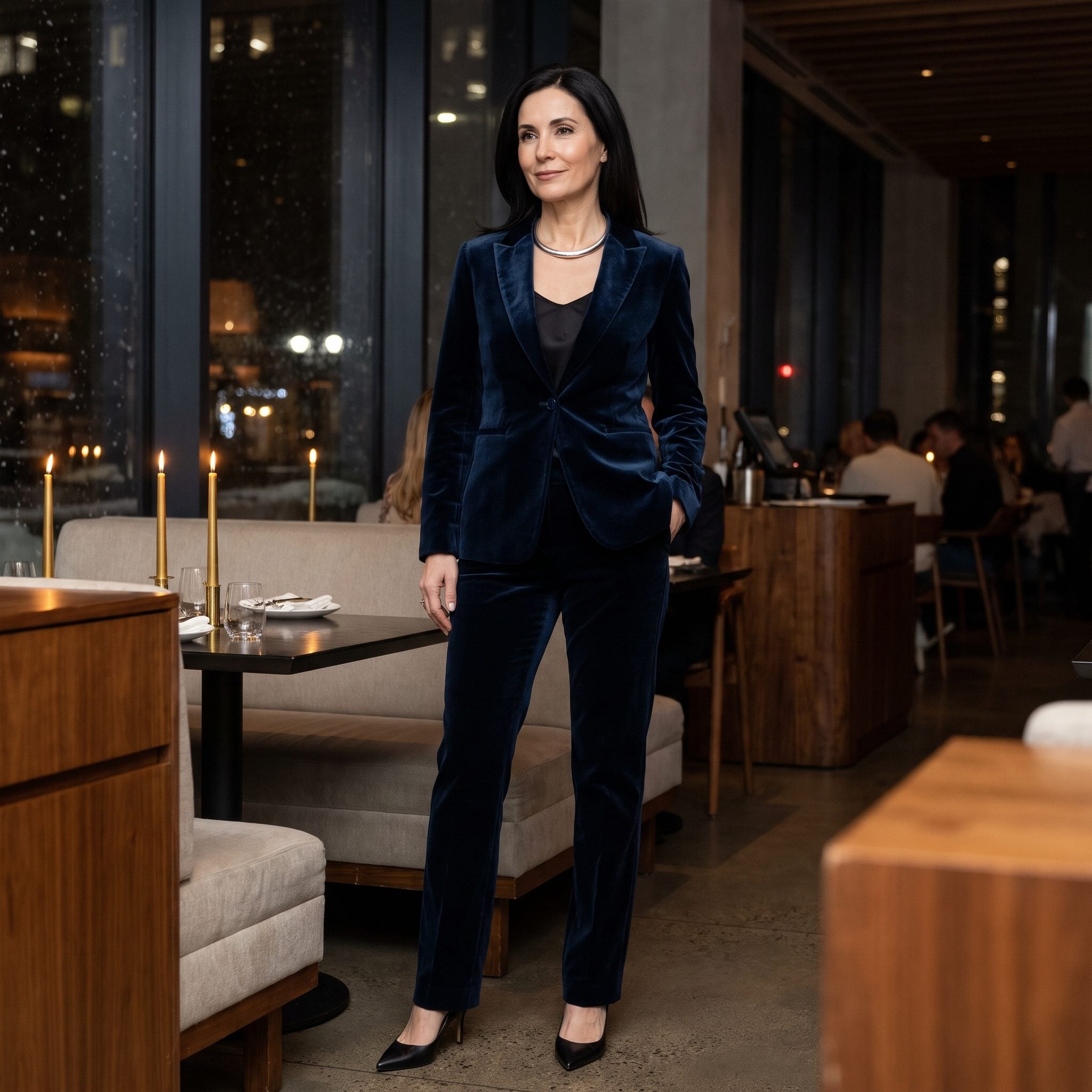
A dinner suit in ink velvet borrows the formality of traditional evening tailoring and gives it a softer disposition. The blue-black fabric develops subtle variations as its pile changes direction, lending depth to an otherwise restrained silhouette.
The shaped blazer follows the waist without becoming boxy, while a silver collar necklace adds a clean, bright interruption at the throat. Nothing needs to be unbuttoned or exaggerated to make this feel romantic. The appeal comes from the unlikely partnership between precise tailoring and a fabric that refuses to look entirely businesslike.
27. The Tailored Velvet Shift Beneath an Oxblood Coat
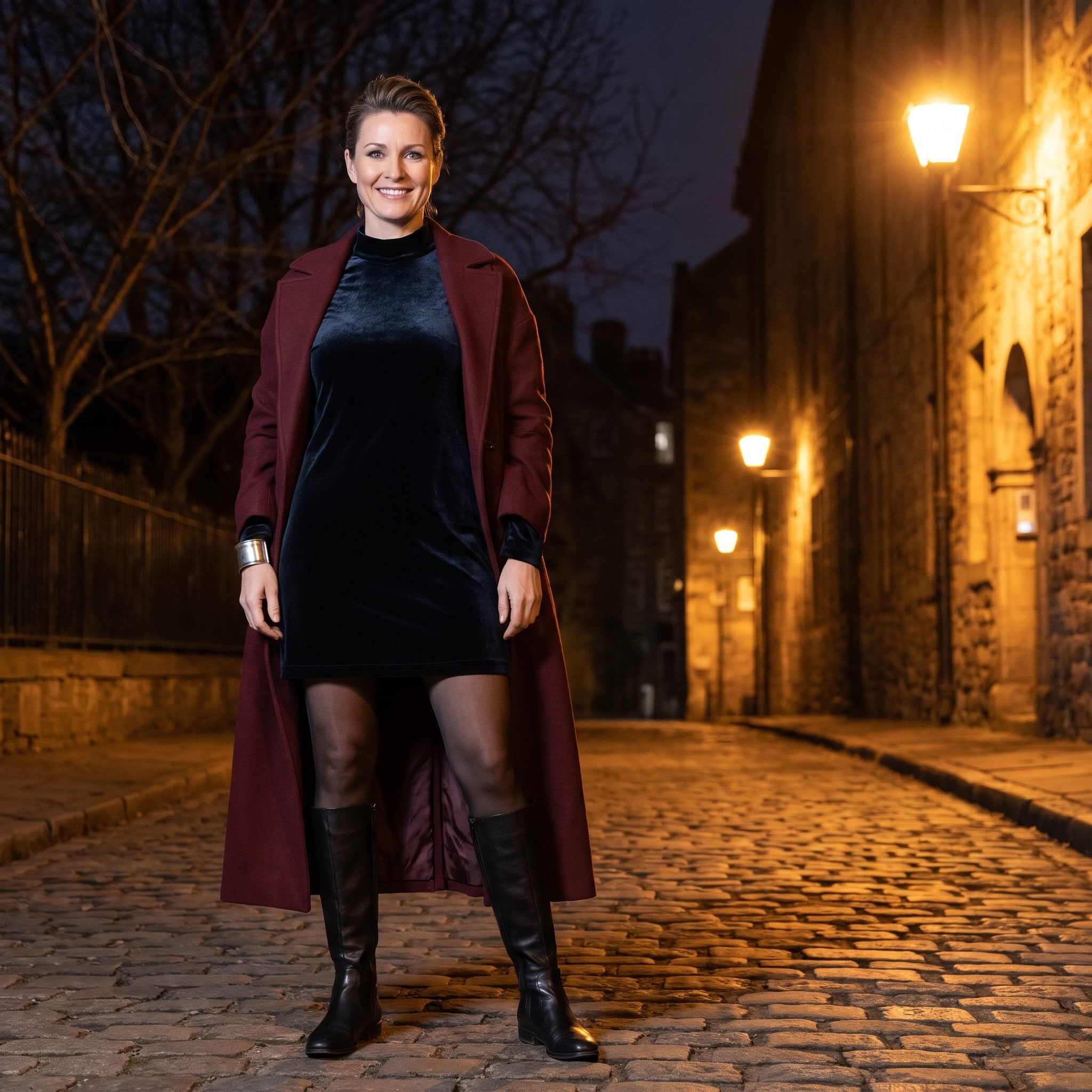
A clean-shouldered oxblood coat establishes the outfit’s strongest line. Its saturated color frames an ink velvet shift so understated that the dress becomes a dark foundation for the outer layer. The open front reveals enough of the shift to distinguish it from a conventional coatdress.
Flat knee-high boots make the combination suitable for walking, and the simple shift avoids unnecessary bulk beneath the oxblood wool coat. One memorable coat, one uncomplicated dress, and no accessories drafted in simply to fill the silence.
26. The Oxblood Leather Pantsuit and Black Silk Blouse
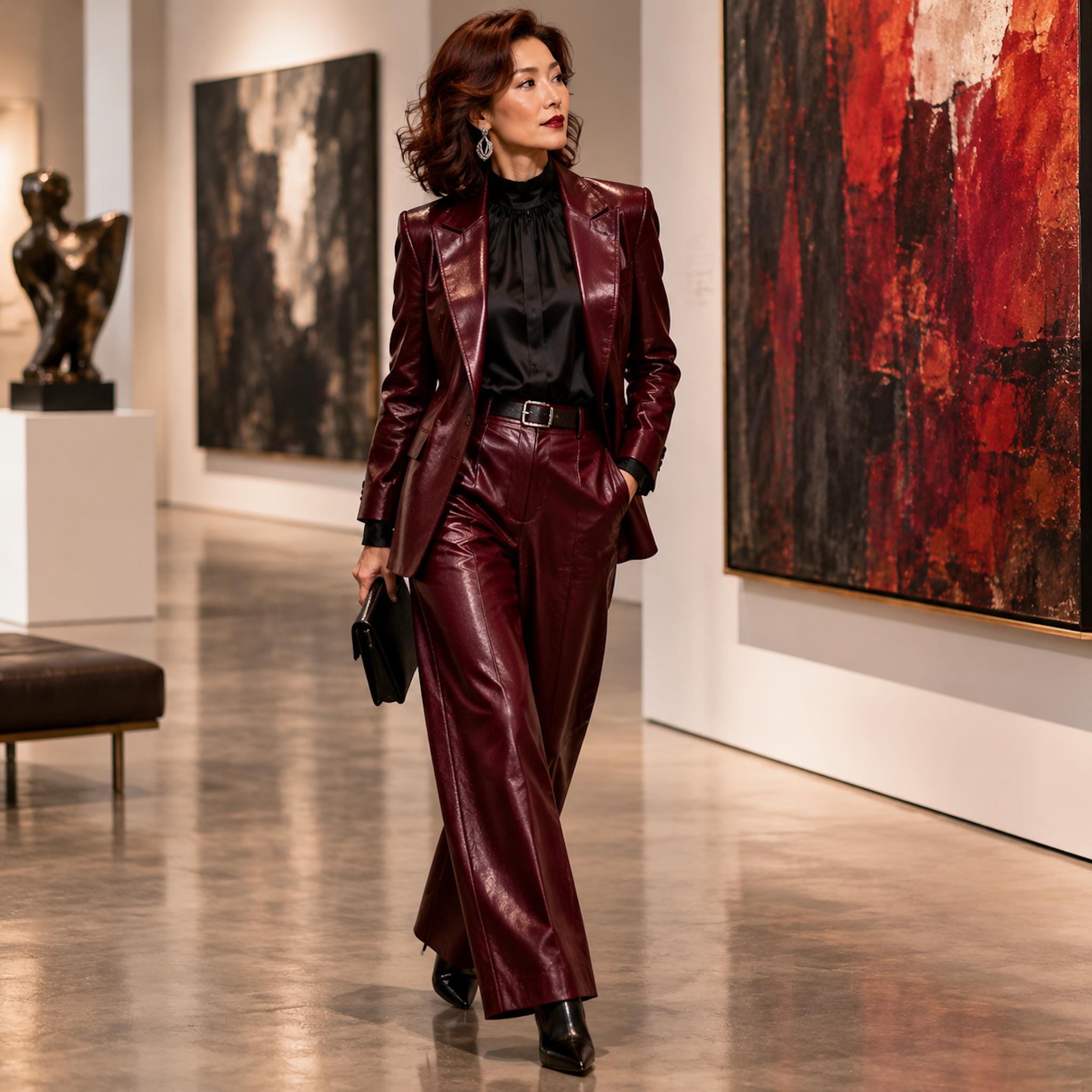
A gallery full of abstract paintings is no place for a timid suit. The oxblood leather blazer has pointed lapels and a sharply defined shoulder, while matching wide-leg trousers catch the light with every step. A high-neck black silk blouse interrupts the sheen without breaking the dark palette.
Black pointed boots, a narrow belt, and a compact clutch keep the styling precise. Against white gallery walls and monumental red-and-black artwork, the leather’s polished surface becomes another study in color and texture. The broad trouser legs and fitted jacket provide all the drama required, without a ruffle or lace cuff in sight.
25. The Ruffled Collar and Barrel Trousers

Barrel trousers refuse to travel in a straight line. Their curved legs widen through the middle and taper toward the ankles, creating a rounded silhouette that feels more architectural than conventional evening tailoring.
A cropped jacket leaves that shape clearly visible, while a small ink silk ruffle collar introduces a romantic detail near the face. The oxblood heeled loafers are an inspired alternative to predictable evening pumps. The outfit’s charm lies in its refusal to rely on the usual narrow-waist, sweeping-skirt formula.
24. Oxblood Lace and Black Bias-Cut Satin
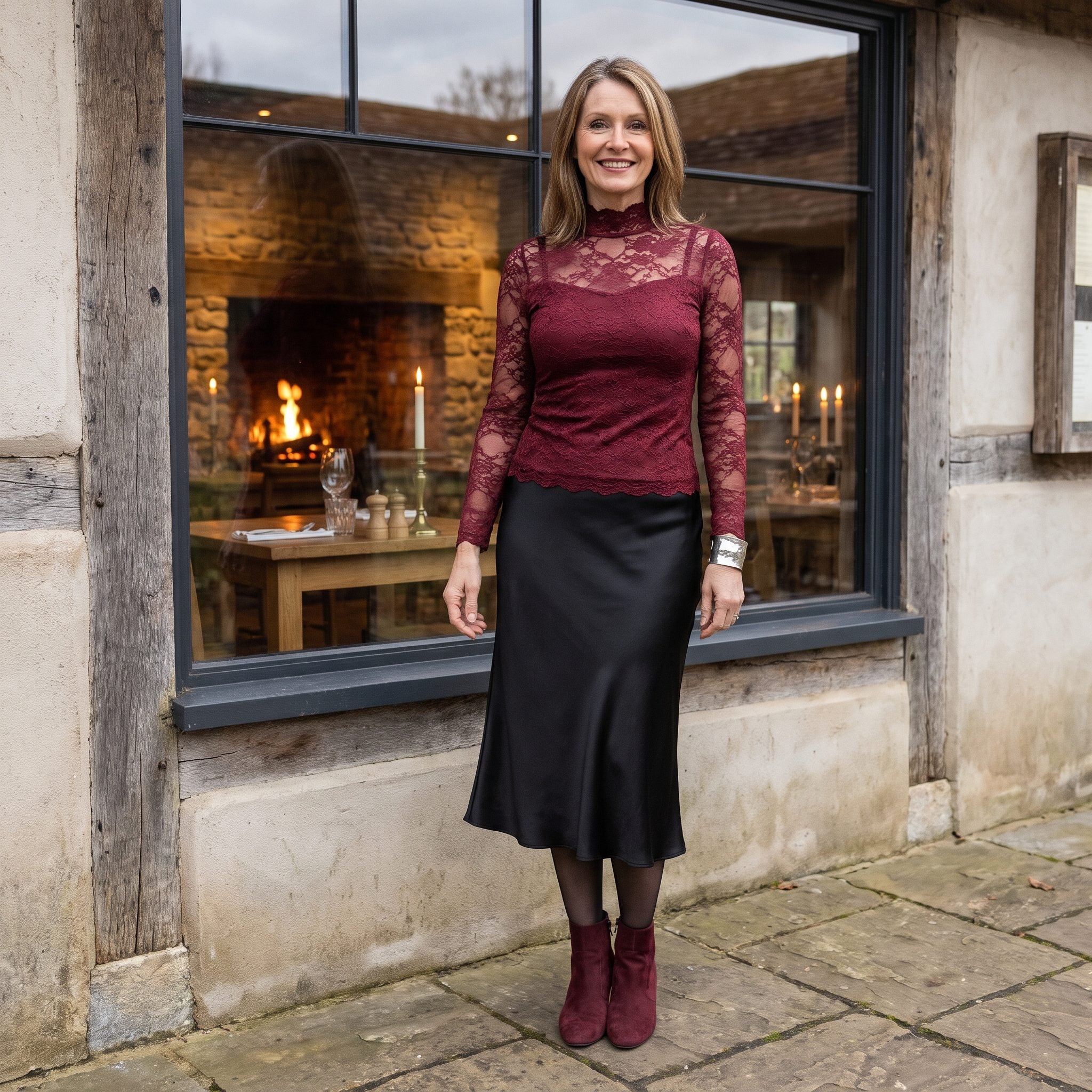
Oxblood lace above black satin is a combination that knows exactly how romantic it wants to be. The bodice offers intricate detail, while the bias-cut skirt follows the body’s movement with a fluidity that more rigid tailoring can’t reproduce.
The oxblood suede boots pick up the color of the lace, bringing a sense of continuity to the outfit. A wide silver cuff supplies a harder accent against the delicate upper half. The combination has plenty of drama without requiring the skirt to be enormous or the neckline to plunge.
23. The Velvet Waistcoat and Knife-Pleated Midi
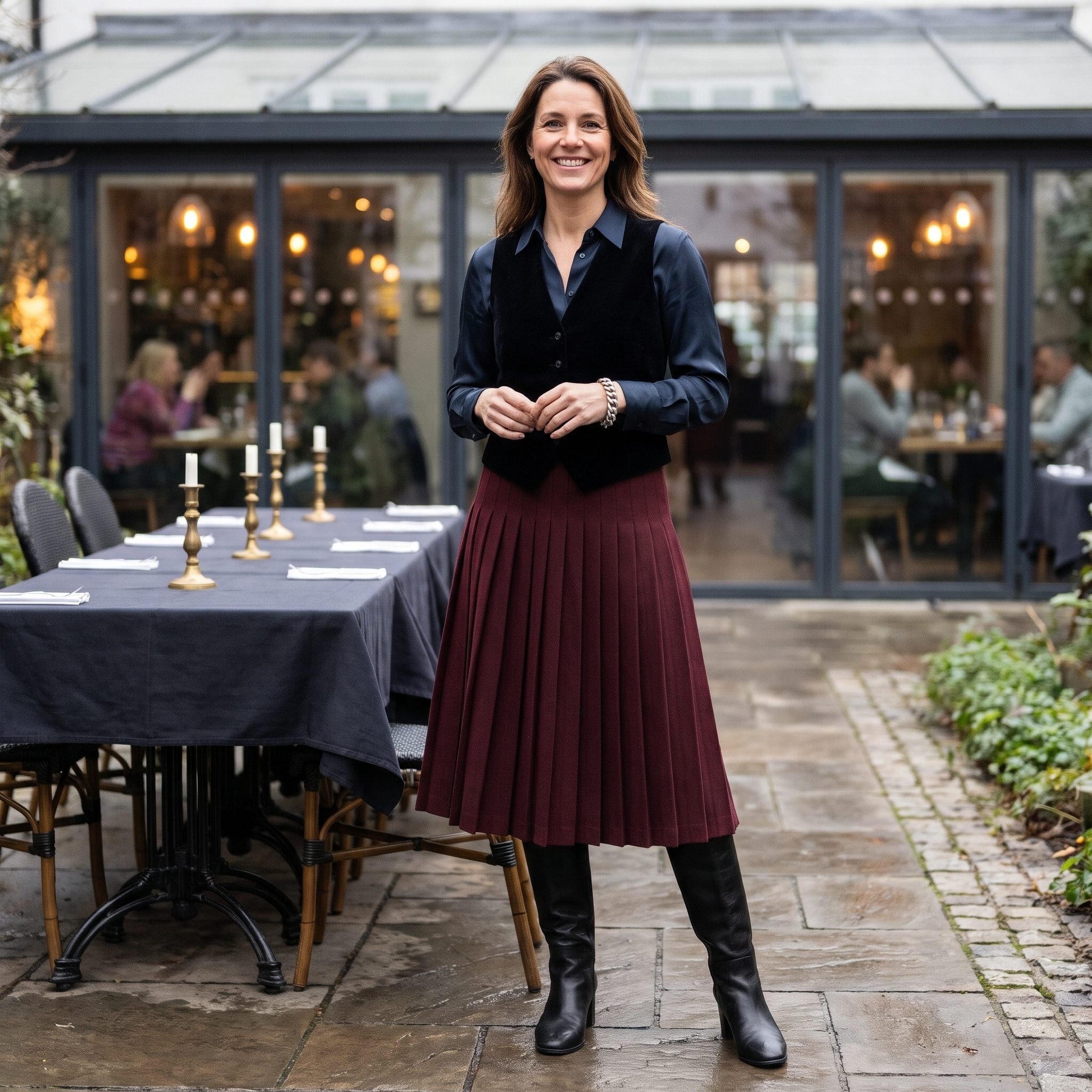
The waistcoat brings the discipline of menswear tailoring, but the oxblood pleated skirt has no intention of behaving like a pair of suit trousers. Its knife pleats open and close with every step, giving the lower half a restless energy beneath the compact black velvet top.
The black velvet waistcoat defines the torso without the visual weight of a full jacket. Boots beneath the skirt keep the outfit grounded. Romanticism doesn’t always require lace or ruffles; sometimes a sharply tailored waistcoat is all the resistance a dramatic skirt needs.
22. The Gathered Ink Silk Gown
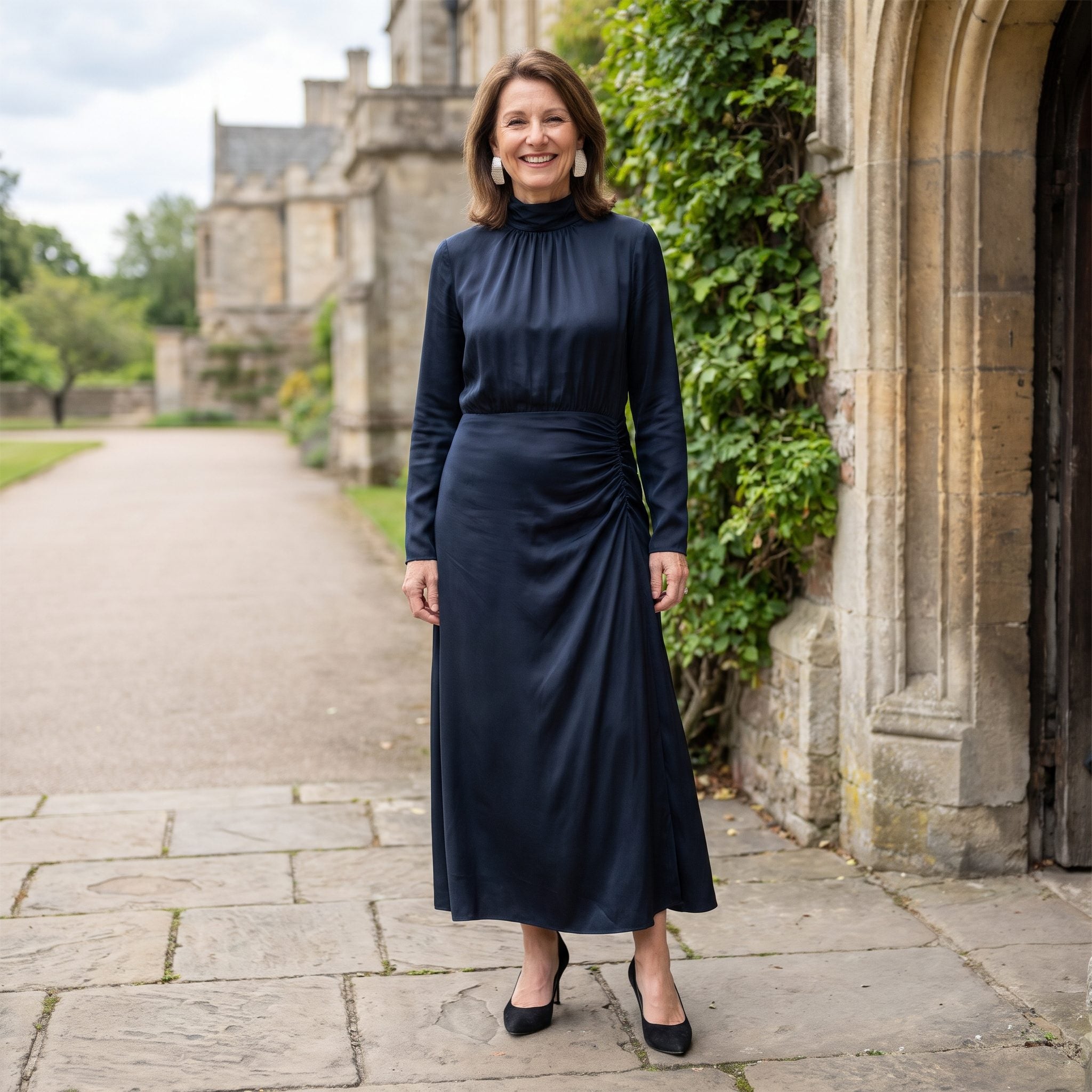
Asymmetric ruching can transform a relatively simple gown without introducing another color, fabric, or accessory. The gathering pulls the ink silk into a diagonal arrangement at the waist, giving the dress an irregular surface where a straight column might otherwise feel static.
The high gathered neck and long sleeves keep the upper half restrained, allowing the draped construction to become the main attraction. Ink silk occupies that intriguing territory between navy and black, its depth particularly apparent when the fabric folds over itself. Formal, fluid, and free of unnecessary embellishment.
21. The Forest-Green Wool Cape and Black Leather Trousers
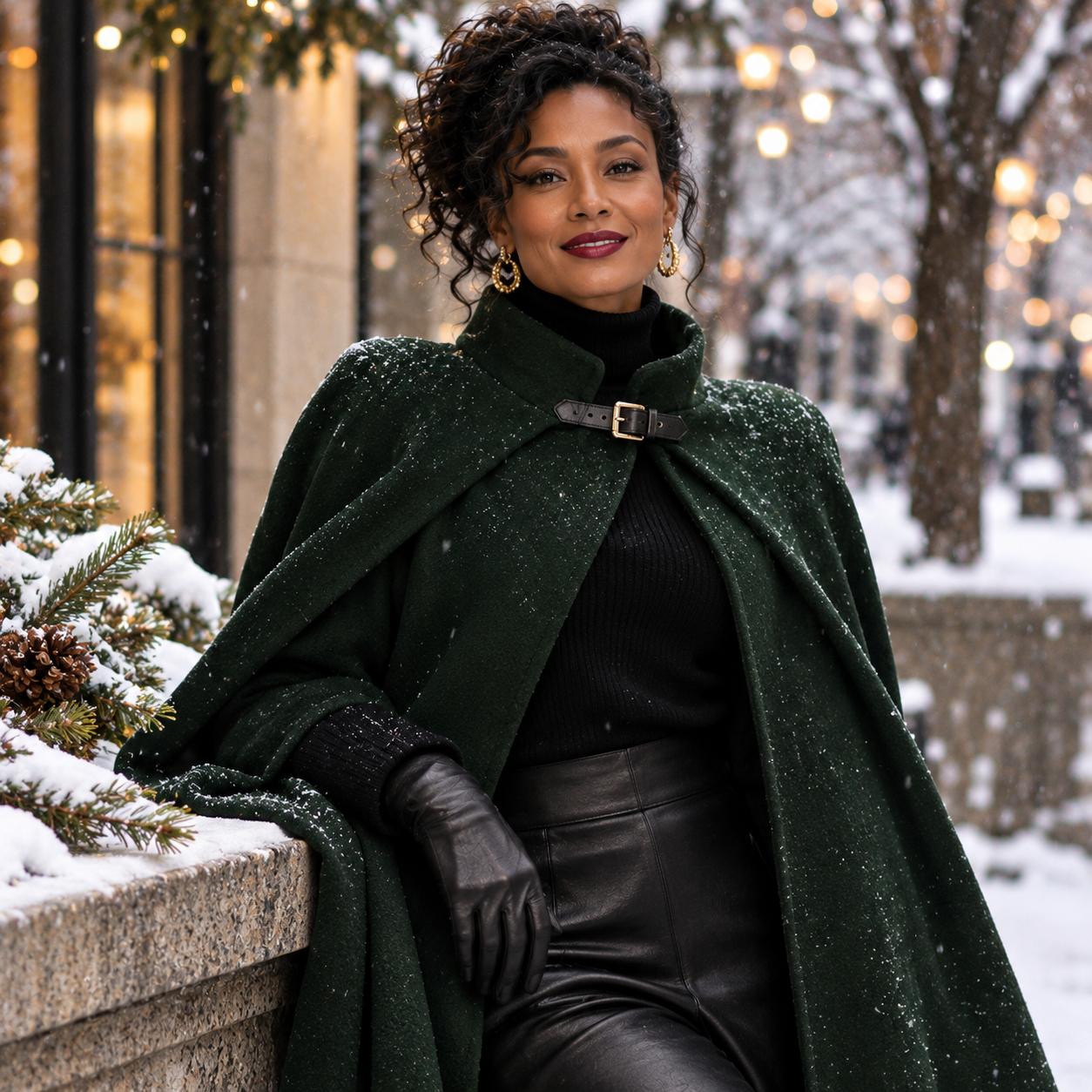
After a long procession of oxblood, forest green feels almost rebellious. The wool cape closes at the throat with a small leather buckle, its broad shoulders and generous drape creating a commanding outline over a close-fitting black turtleneck. Snow gathers along the fabric while the dark leather trousers keep the lower half lean.
Black gloves and gold earrings provide the finishing contrast, one practical and the other unapologetically decorative. On a snowy city street, the cape makes a persuasive case for winter romance that doesn’t require a gown, a corset, or even a trace of burgundy.
20. The Corset Belt and Wide Oxblood Trousers

The corset belt runs the whole show. An ink shirt and wide oxblood trousers are relaxed separates until that broad black band cuts across the middle. Suddenly the shirt blouses above a defined waist, and the trousers fall away beneath it with considerably more drama.
The wide oxblood trousers bring weight and movement to the lower half, while pointed boots keep the long hem from looking cumbersome. Nothing about the outfit requires an actual corset. Borrowing its architecture is quite enough.
19. The Ink Lace Shirt Dress
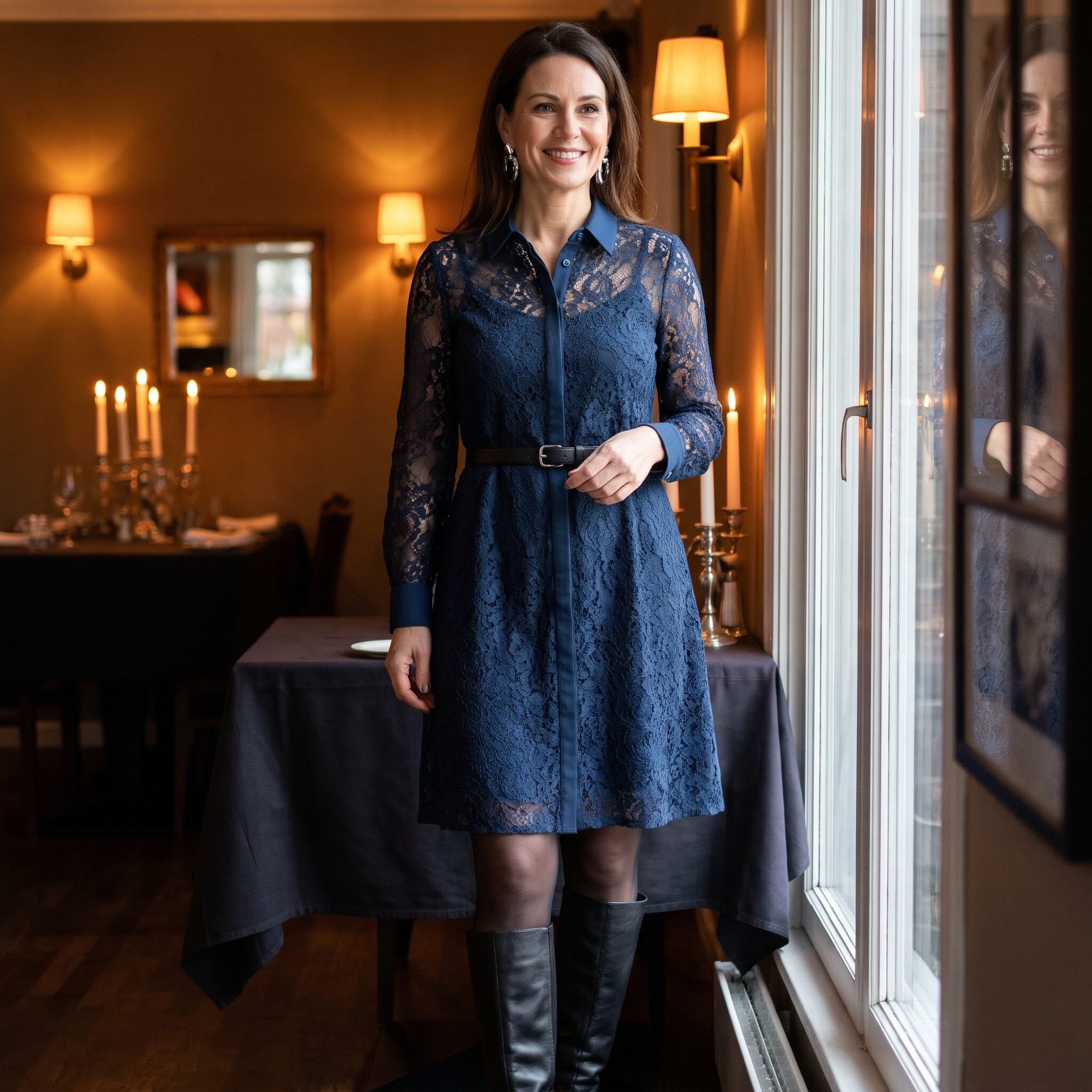
A lace shirt dress brings two unlikely ideas together: the practical familiarity of a button-front silhouette and the intricate decoration of openwork fabric. Sheer sleeves preserve the delicacy of the lace, while an opaque lining through the body makes the dress more versatile for eveningwear.
A narrow leather belt provides the sharpest contrast, cutting a clean line through the elaborate textile. Knee-high boots lend weight beneath the hem and make the outfit more appropriate for colder weather. The lace remains the attraction, but the leather prevents the whole thing from becoming excessively precious.
18. The Oxblood Velvet Culottes
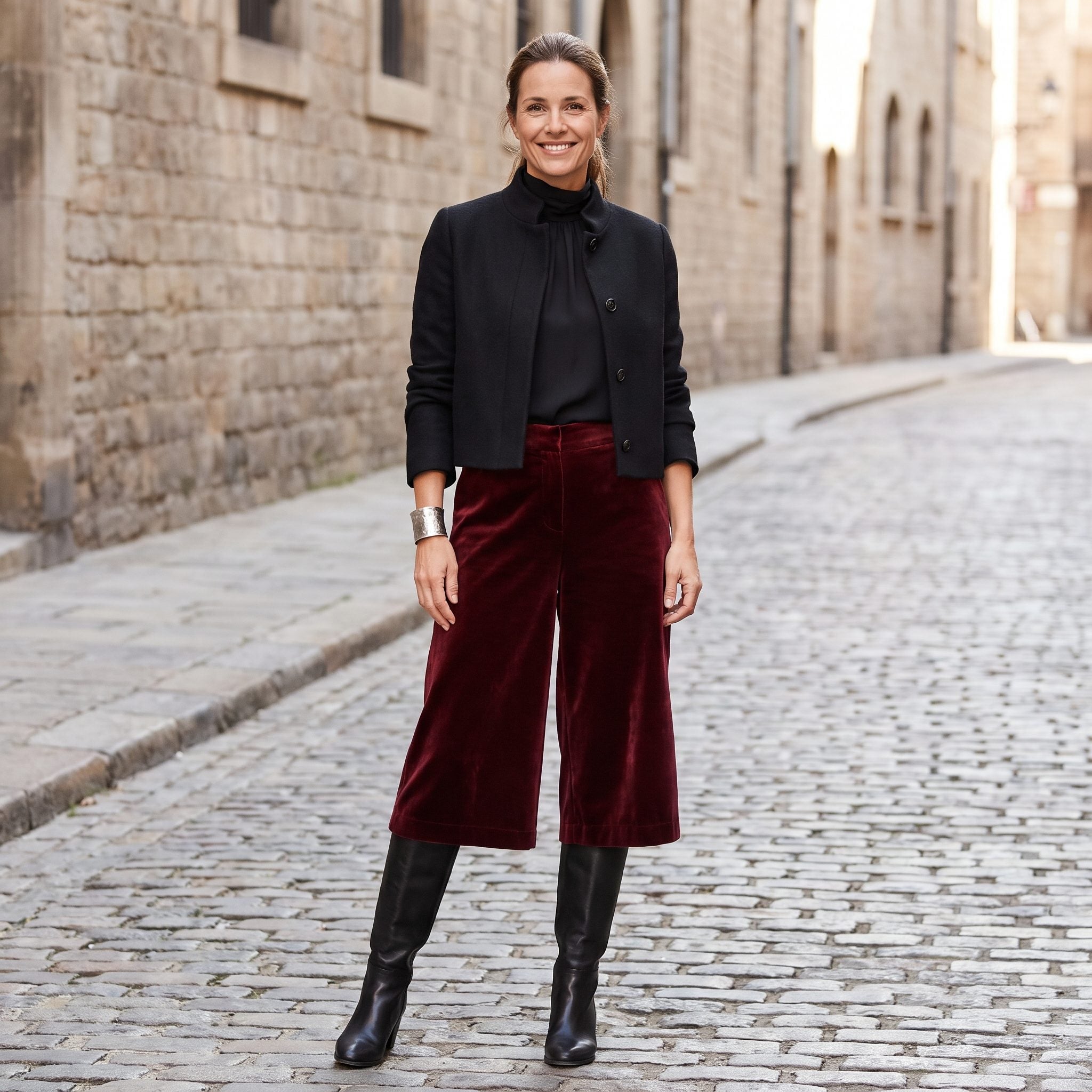
Velvet culottes are an unusual choice for winter eveningwear, and that’s much of their appeal. The broad legs end at mid-calf, creating a deliberate break in the silhouette that tall boots immediately pick up beneath the hem.
That boot-and-culotte partnership solves one of the garment’s trickier problems: the awkward gap between a cropped trouser and a winter shoe. A cropped black jacket and high-neck top leave the oxblood velvet culottes as the main attraction. The result is playful without becoming casual, and considerably more adventurous than another pair of straight black trousers.
17. The Black Silk Blouson and Oxblood Draped Skirt
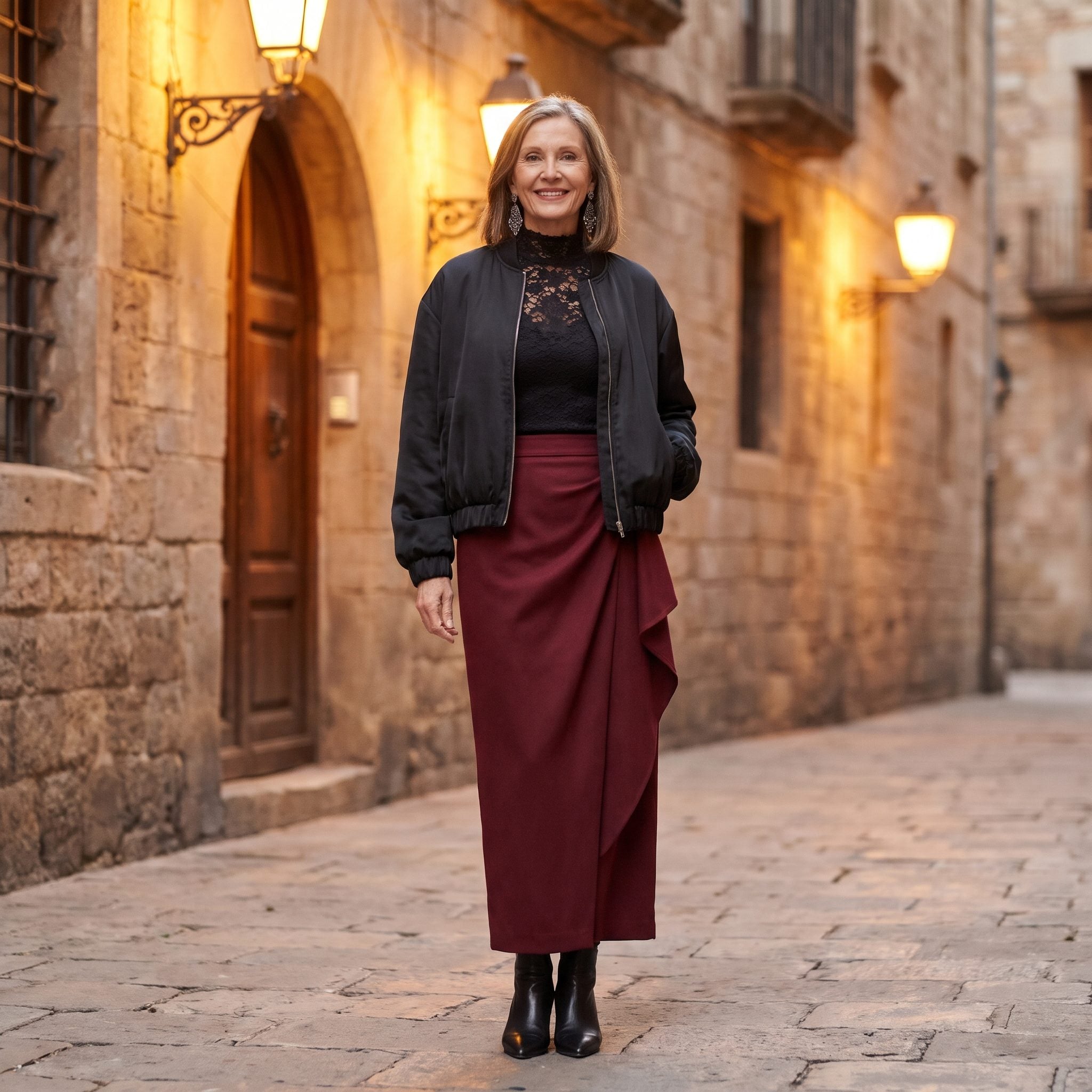
Rounded above, long and narrow below. The padded black silk blouson creates a softly cocooned upper half, while the oxblood skirt descends in a much straighter line. The opposing shapes give the outfit its distinctive character.
A side drape introduces an irregular fold into the floor-length skirt, preventing the silhouette from becoming too severe. The padded silk blouson offers a welcome alternative to the familiar fitted evening jacket. Its rounded volume looks intentional rather than bulky, particularly against such a narrow skirt.
16. The Oxblood Velvet Skirt Suit

A matching velvet skirt suit has all the authority of traditional tailoring, dressed in a fabric better acquainted with candlelit rooms. The collarless jacket and straight skirt create a compact, orderly silhouette, allowing the oxblood color to carry much of the impact.
A black lace high-neck shell introduces an intricate layer between the jacket and the face. The oxblood velvet skirt suit is formal enough for a dressy professional occasion but far more interesting after dark. The absence of a conventional collar is particularly effective, preventing the outfit from looking like a standard business suit translated into velvet.
15. The Single Ruffle and Black Cashmere
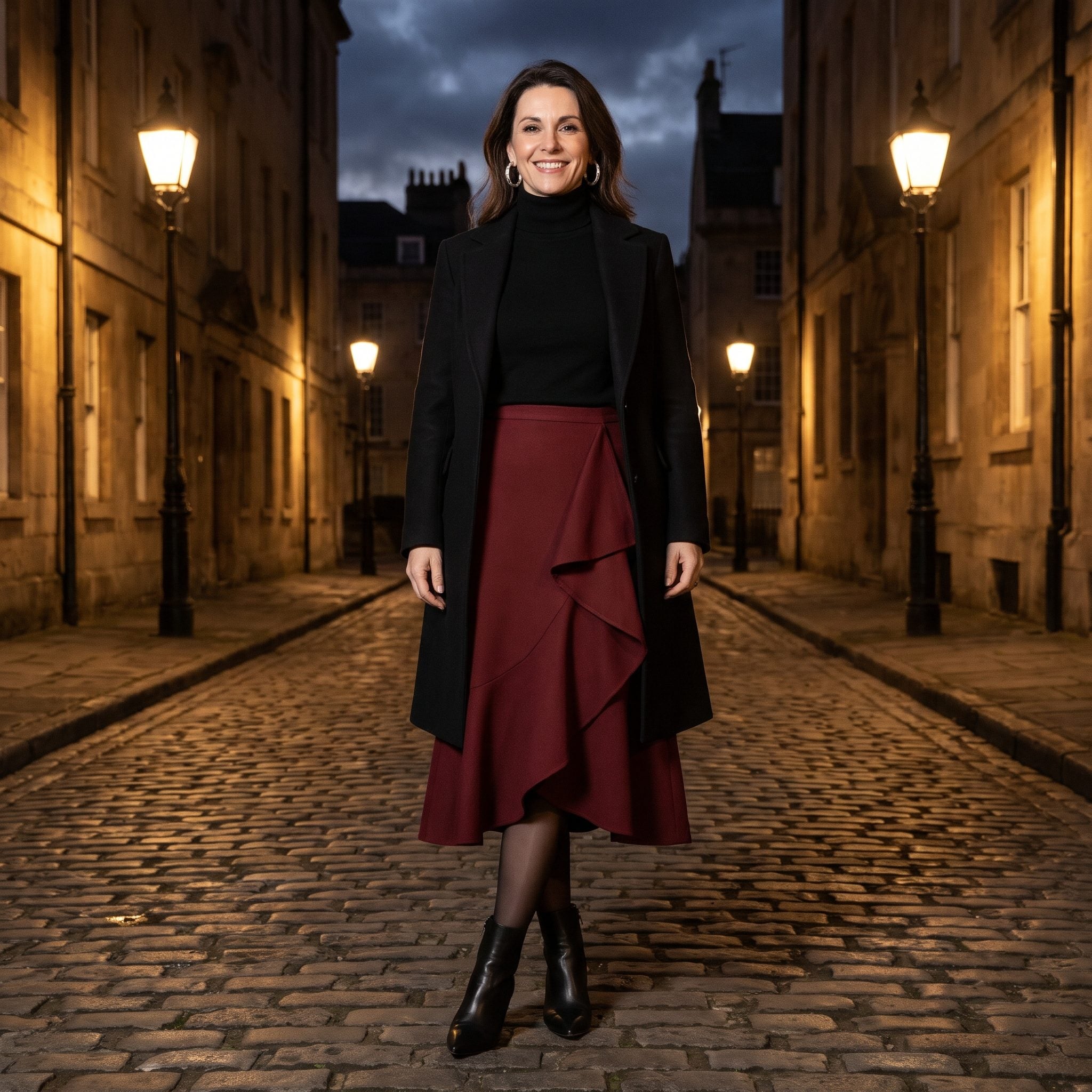
One enormous flourish can be more interesting than a dozen small ones. The asymmetric oxblood ruffle rises from the skirt like a piece of fabric caught in motion, its sculptural shape set against a remarkably restrained black cashmere top.
Black tights, boots, and an open coat continue the dark background without introducing another competing feature. The outfit understands something that heavily decorated eveningwear often forgets: when a single detail is this good, giving it the entire stage is a perfectly reasonable decision.
14. The Embroidered Velvet Opera Coat and Black Brocade Gown
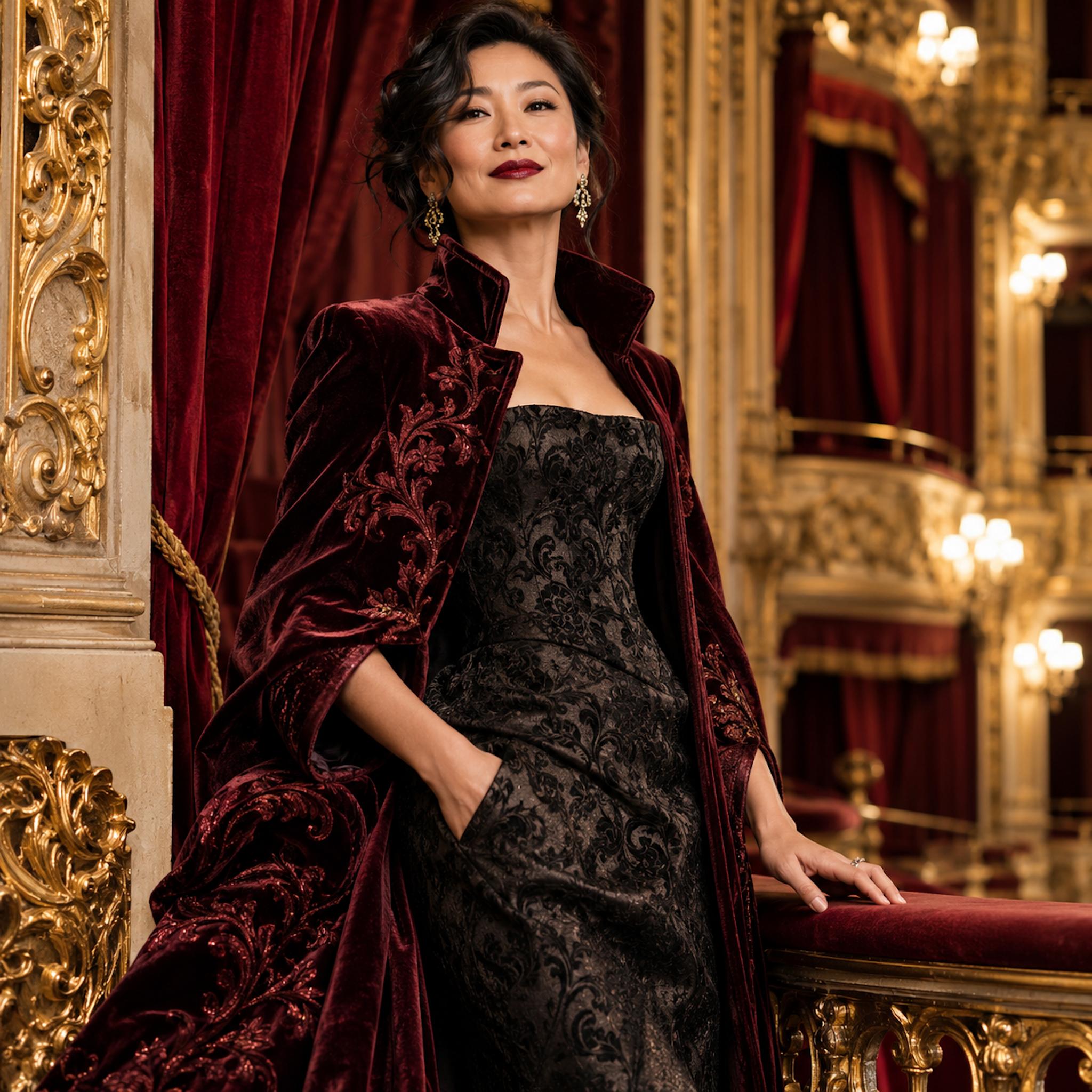
Some opera coats arrive with more ceremony than the performance. Deep oxblood velvet, embroidered in curling floral motifs, rises into a standing collar before falling open over a fitted black brocade gown. Against gilded balconies and crimson curtains, the rich fabrics have finally found an interior willing to compete with them.
The strapless brocade bodice brings a clean horizontal neckline beneath all that embroidered velvet, keeping the ensemble from becoming a continuous field of ornament. The coat supplies the historical extravagance; the sleek gown reins it in. For once, the dress code and the architecture appear to have reached an agreement.
13. The Leather Blazer and Lace Shell
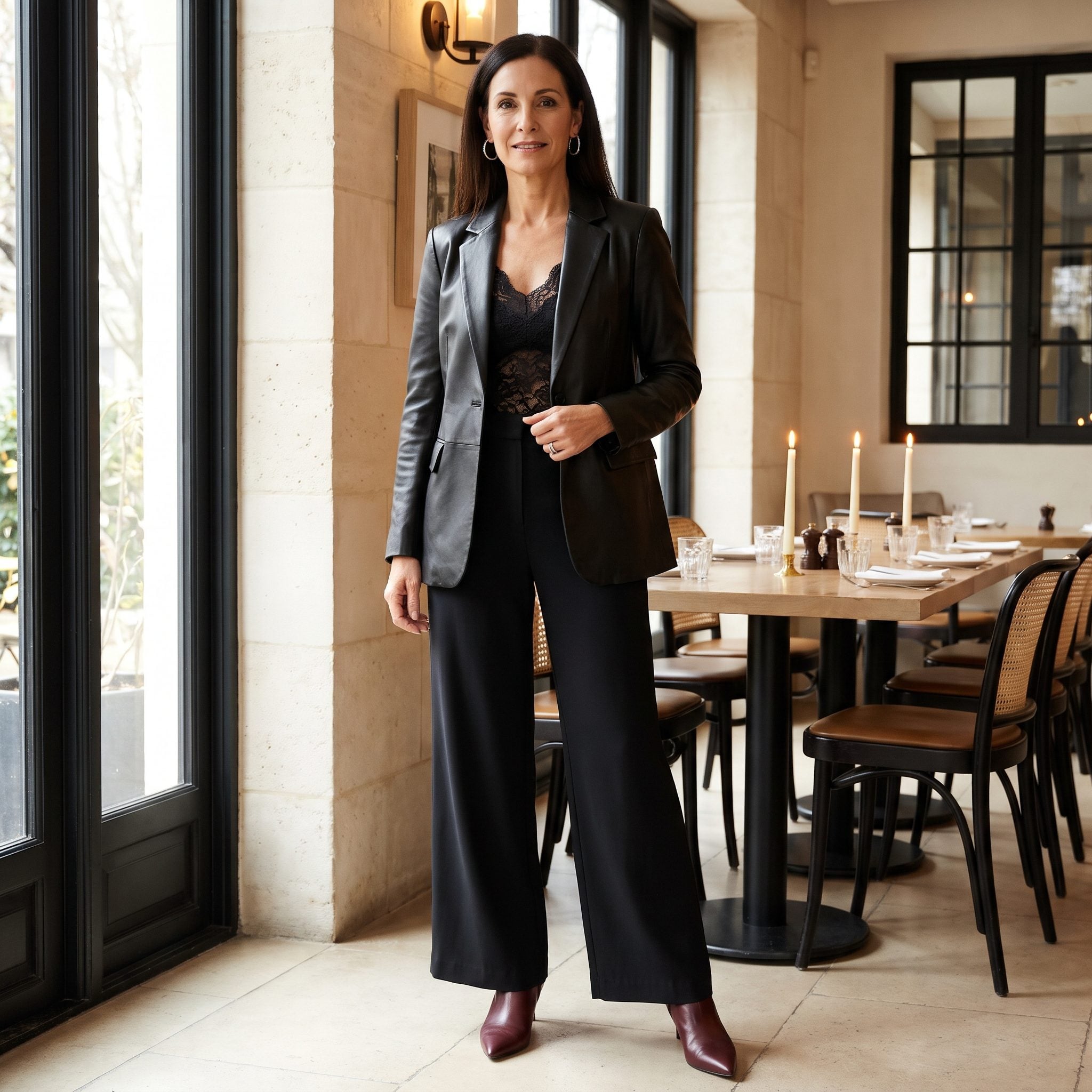
Leather, lace, and crepe make an unlikely trio, especially when all three are black. The blazer supplies a smooth, structured exterior; the lace shell introduces delicacy beneath it; the trousers fall with a softness that prevents the outfit from feeling armored.
Oxblood boots interrupt the monochrome palette below, while silver hoops add a bright note near the face. A black leather blazer can be worn in countless ways, but pairing it with lace is particularly effective for a dark romantic wardrobe. Neither piece loses its identity in the process.
12. The Sculpted Peplum and Velvet Maxi
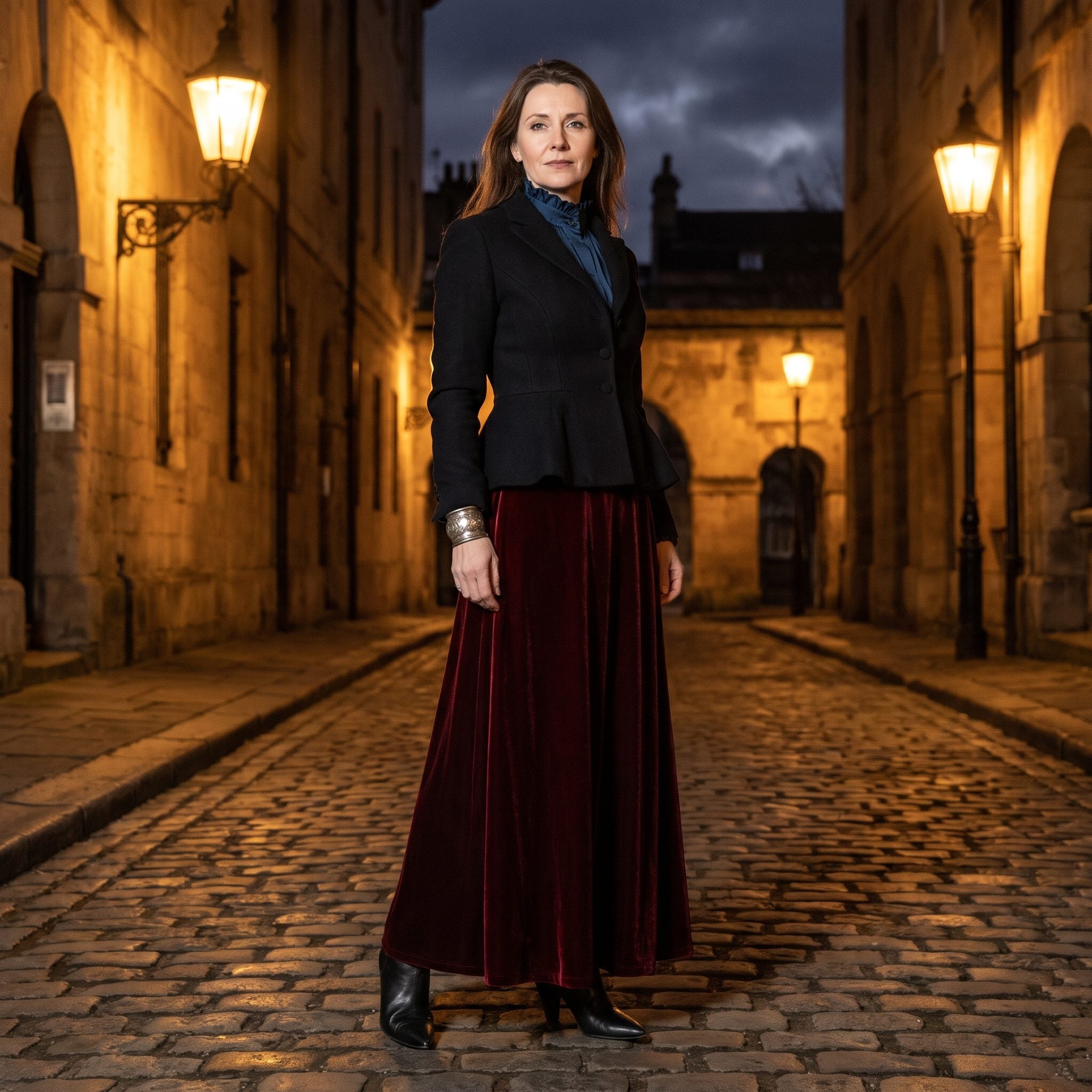
A peplum can look like an unnecessary complication until the rest of the outfit gives it a reason to exist. Here, the crisp flare of the jacket introduces a defined shape at the hips before the narrow velvet skirt drops toward the floor.
The tailored wool above and the oxblood velvet maxi skirt create a striking change in texture at the waist. A small ruffle at the throat and an antique-style silver cuff provide the finishing details. The silhouette recalls historical dress, but the uncluttered jacket and narrow skirt bring it convincingly into the present.
11. The Long Velvet Tunic
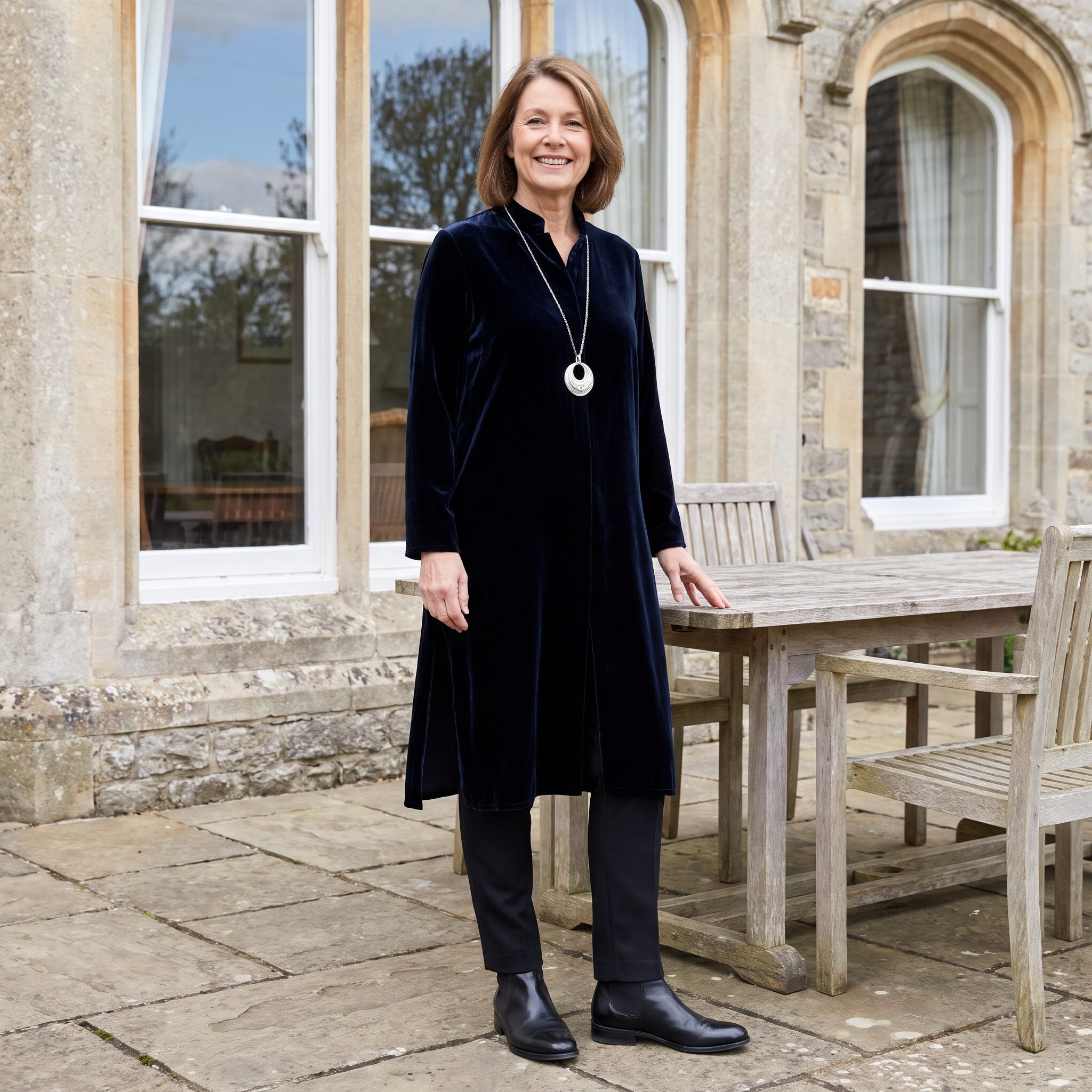
A long velvet tunic with high side slits occupies an interesting territory between a dress and a tailored top. The narrow trousers beneath allow the fabric to fall in uninterrupted panels, giving the outfit an elongated, almost monastic elegance.
The ink velvet tunic has enough richness of its own to dispense with elaborate decoration. One silver pendant on a long chain interrupts the dark front with a restrained vertical accent. This is the quieter end of gothic dressing, where the fabric and silhouette do considerably more than the accessories.
10. Oxblood Corsetry Over a Shirt Dress
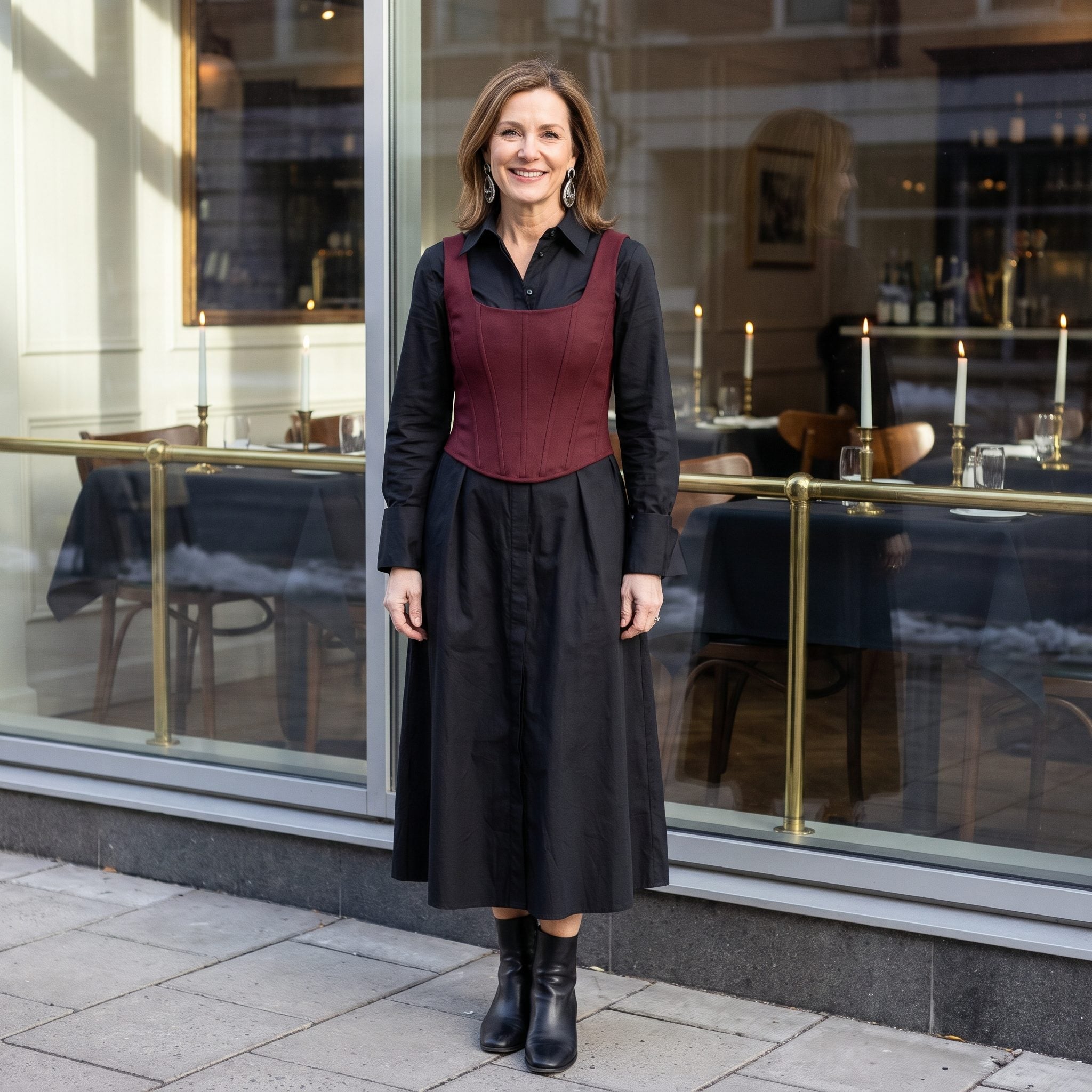
The corset has escaped the underwear drawer, but it hasn’t brought the usual lingerie theatrics with it. Worn over a crisp black shirt dress, the structured oxblood bodice becomes an architectural layer rather than a revealing one.
The shirt’s sleeves, collar, and flared skirt supply coverage and movement around the fitted middle. Ankle boots give the ensemble a contemporary finish. The result owes something to historical dress without attempting to reproduce it, which is precisely the distinction that keeps a gothic-inspired outfit from looking like a costume.
9. The Lace-Trimmed Cardigan Dress
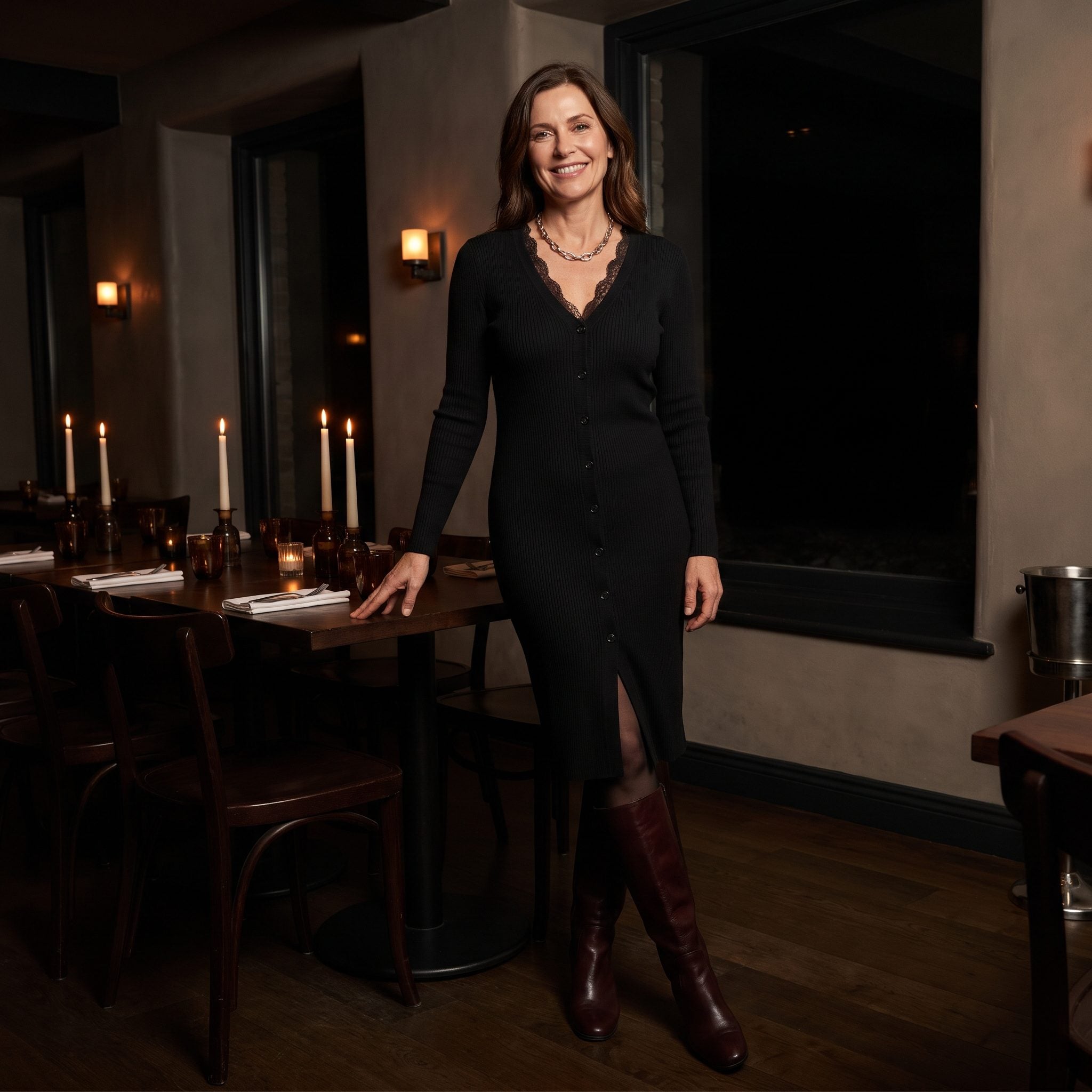
A cardigan that buttons all the way down and behaves like a dress is an appealingly uncomplicated idea. The fine-gauge black knit follows the body without the rigidity of tailoring, while a narrow lace trim at the neckline introduces the evening detail.
The oxblood knee-high boots bring a strong color accent beneath the otherwise understated dress. A long silver chain could add another point of interest without overwhelming the knit. The effect is intimate rather than theatrical, proving that dark romantic dressing doesn’t always need sweeping coats and elaborate skirts.
8. The Pleated Oxblood Collar and Leather Trousers
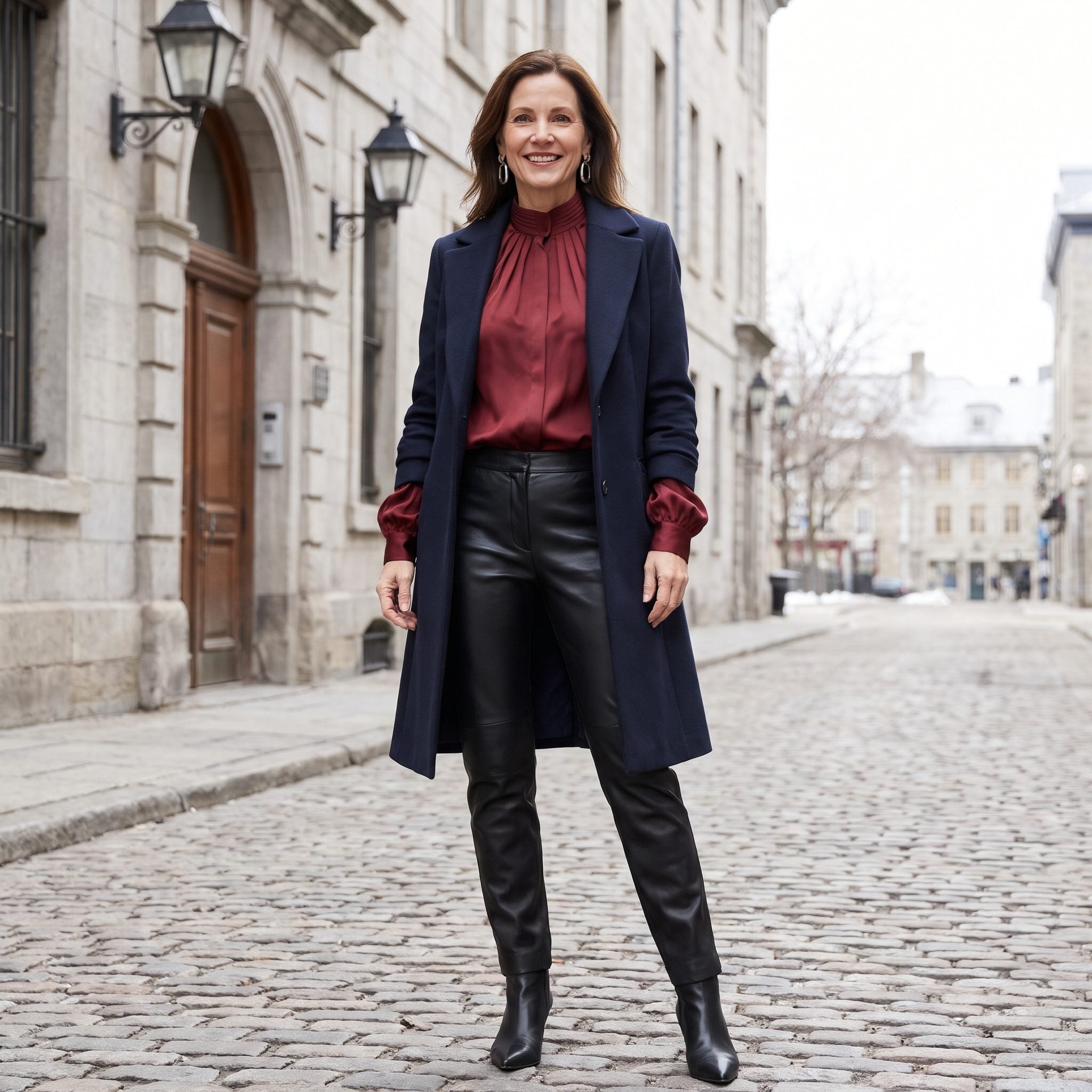
That standing pleated collar deserves a closer look. Rising around the neckline in oxblood silk, it creates a sculptural frame for the face that no ordinary necklace could quite duplicate. Below it, black leather trousers introduce a sleek, distinctly modern counterweight.
The open ink coat allows both elements to remain visible, its long panels adding a sense of formality to the trousers. The combination is particularly effective because the collar and leather occupy opposite ends of the style spectrum: one elaborate and almost historical, the other spare and contemporary. Together, they’re considerably more interesting than either would be alone.
7. The Oxblood Velvet Beneath a Long Black Coat
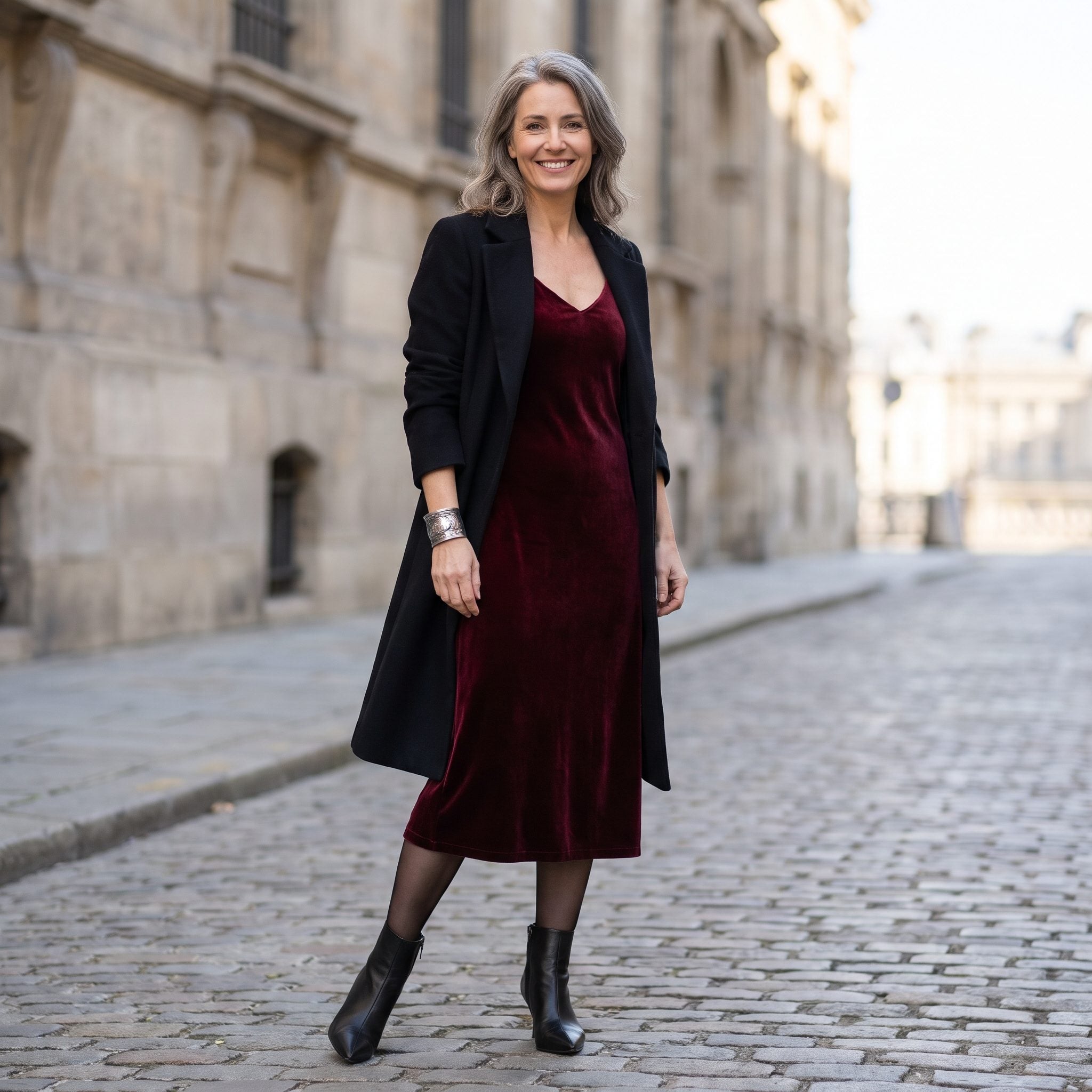
A long black wool coat worn open over an oxblood velvet dress is a lesson in making restraint look dramatic. The coat establishes a severe outer silhouette, while the richer color and softer surface of the dress emerge through the opening.
The black wool coat provides a practical winter layer without concealing the oxblood velvet dress beneath it. Pointed black ankle boots finish the outfit with a sharper edge than delicate evening shoes would offer. The wool coat stands between the velvet and the weather, leaving the dress to handle the romance.
When ThreadCurve readers were asked which coat they would buy, wool came out on top with 48% of the votes, ahead of trench at 29% and leather at 20%.
6. The Oxblood Velvet Blazer Dress
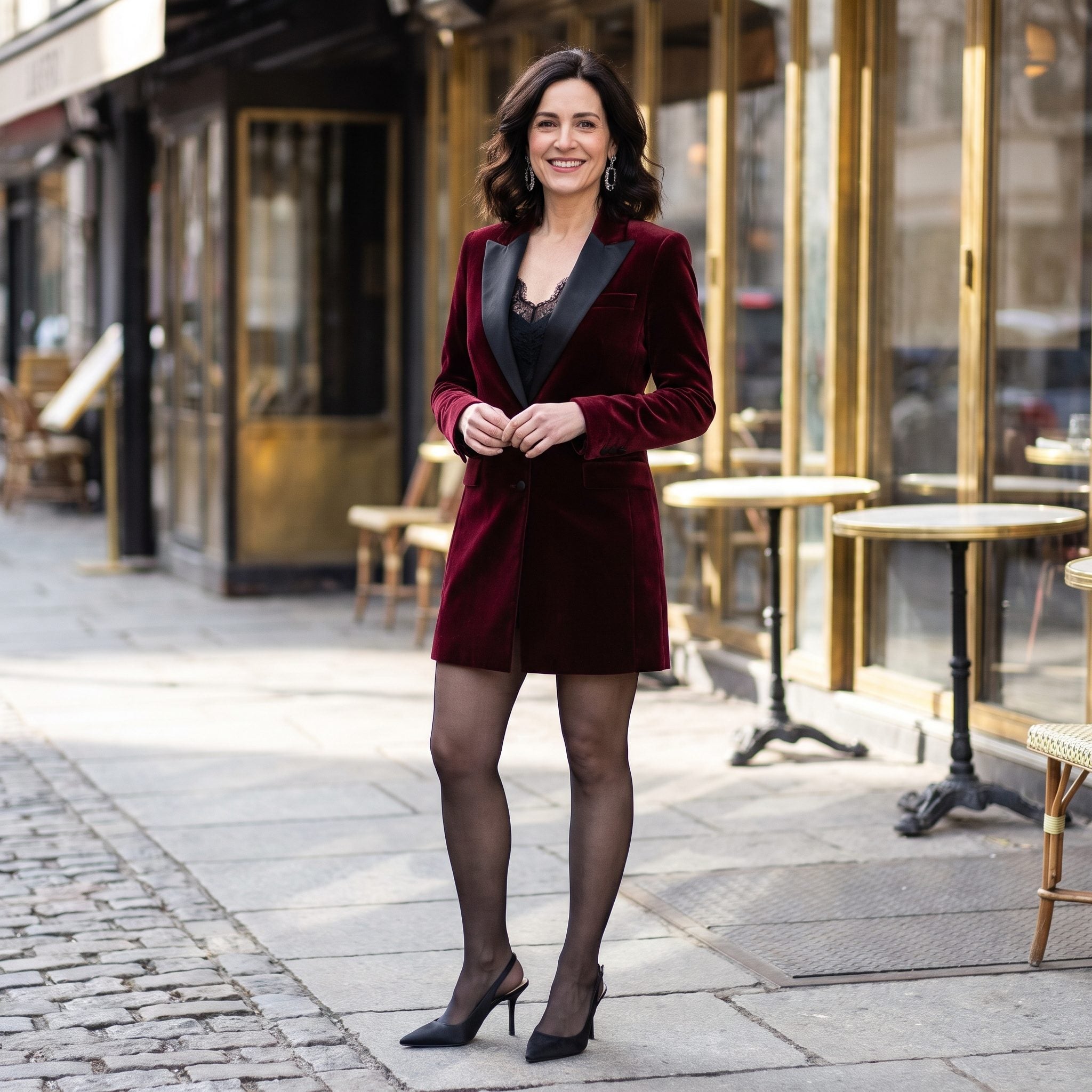
A double-breasted blazer dress already comes equipped with a strong silhouette. Make it oxblood velvet, add black satin lapels, and the familiar tailoring takes on a decidedly more decadent character. The lace insert at the neckline introduces softness without sacrificing the jacket’s clean construction.
Sheer tights and black slingback pumps give the hem a light, elegant finish. The oxblood velvet blazer dress needs little additional ornament, although sculptural silver earrings provide a striking counterpoint to the dark neckline. Boardroom tailoring has rarely looked less interested in business.
5. The Smoking Jacket and Slim Oxblood Midi
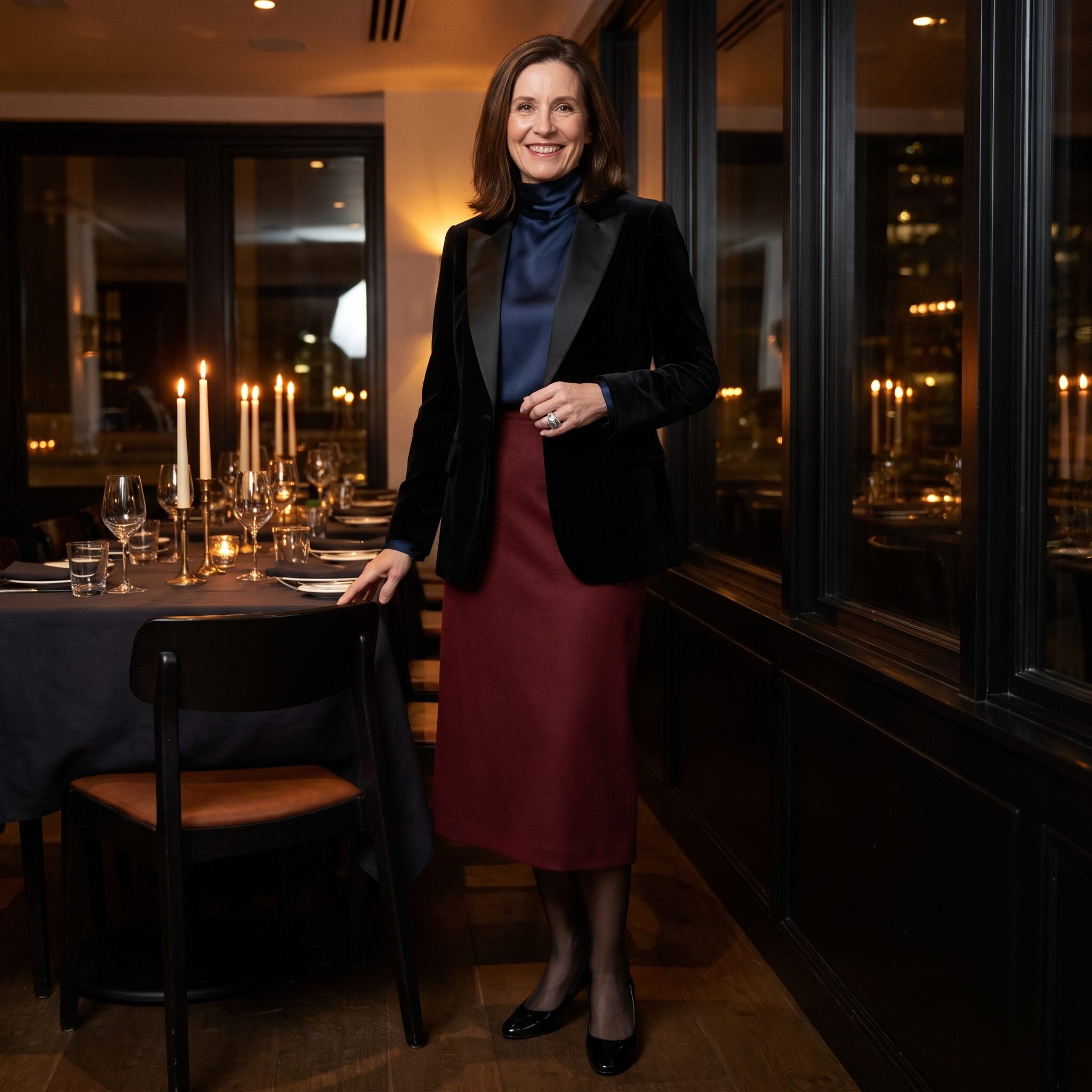
The smoking jacket arrives with a considerable amount of sartorial history. Its velvet body and satin lapels suggest traditional eveningwear, but pairing it with a slim oxblood midi skirt shifts the familiar masculine silhouette into something more fluid.
Worn open, the jacket frames the skirt rather than concealing it. Low patent pumps introduce another polished surface at the bottom, while the narrow skirt keeps the proportions controlled. This is one of the gallery’s most persuasive examples of borrowed tailoring: recognizable in origin, entirely different in execution.
4. The Velvet Blouse and Fishtail Skirt
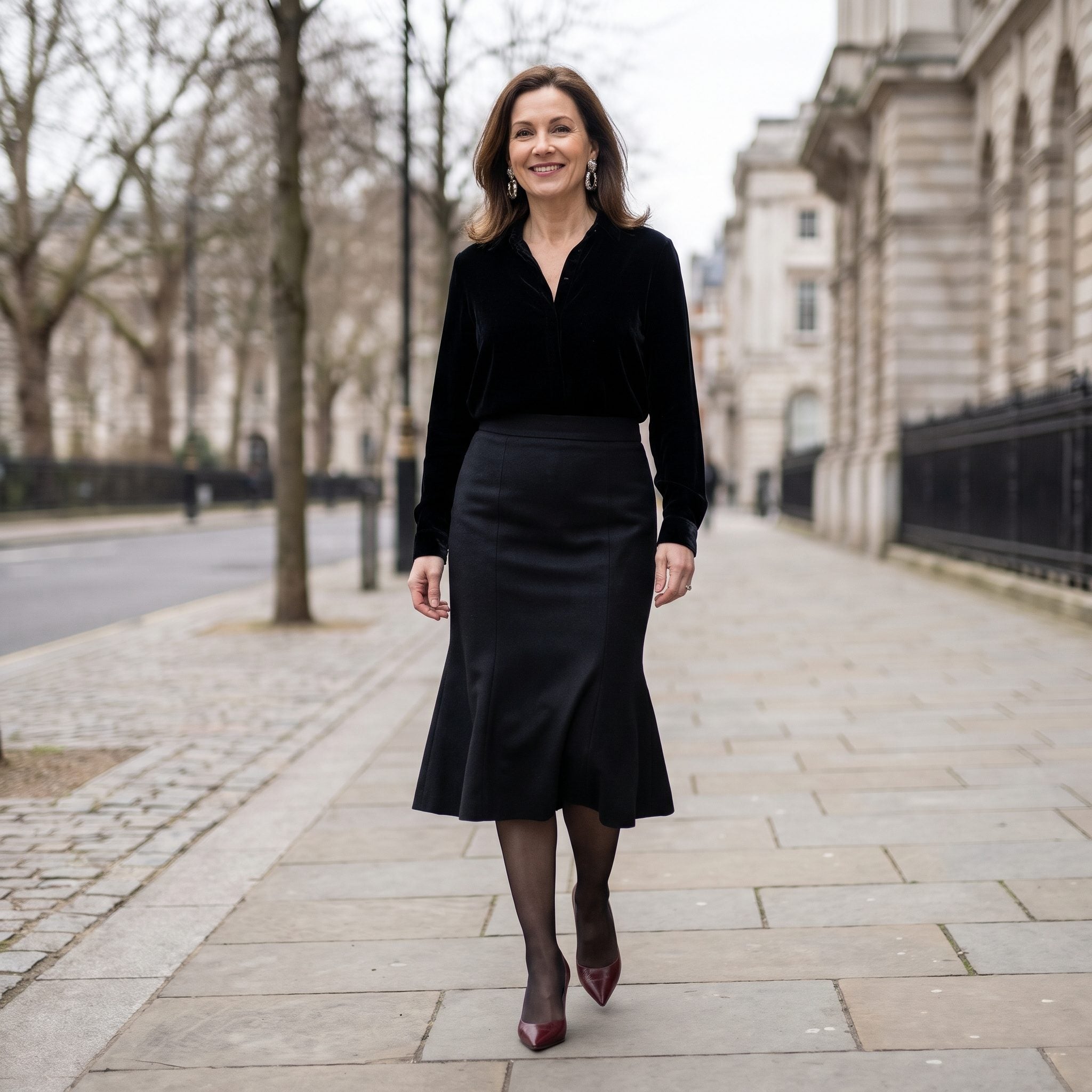
The fishtail skirt saves its drama for the final few inches. Narrow through the hips and thighs, it flares toward the hem, creating a distinctive outline without the exaggerated volume of a full mermaid gown. The effect is formal, but not excessively theatrical.
A velvet blouse above the skirt introduces a softer texture without disturbing its sculpted shape. The black fishtail skirt carries enough character that elaborate jewelry would be unnecessary. Among the more traditional evening silhouettes, this one stands out for its carefully controlled proportions.
3. The Oxblood Velvet Gown With Black Lace and a Jeweled Belt
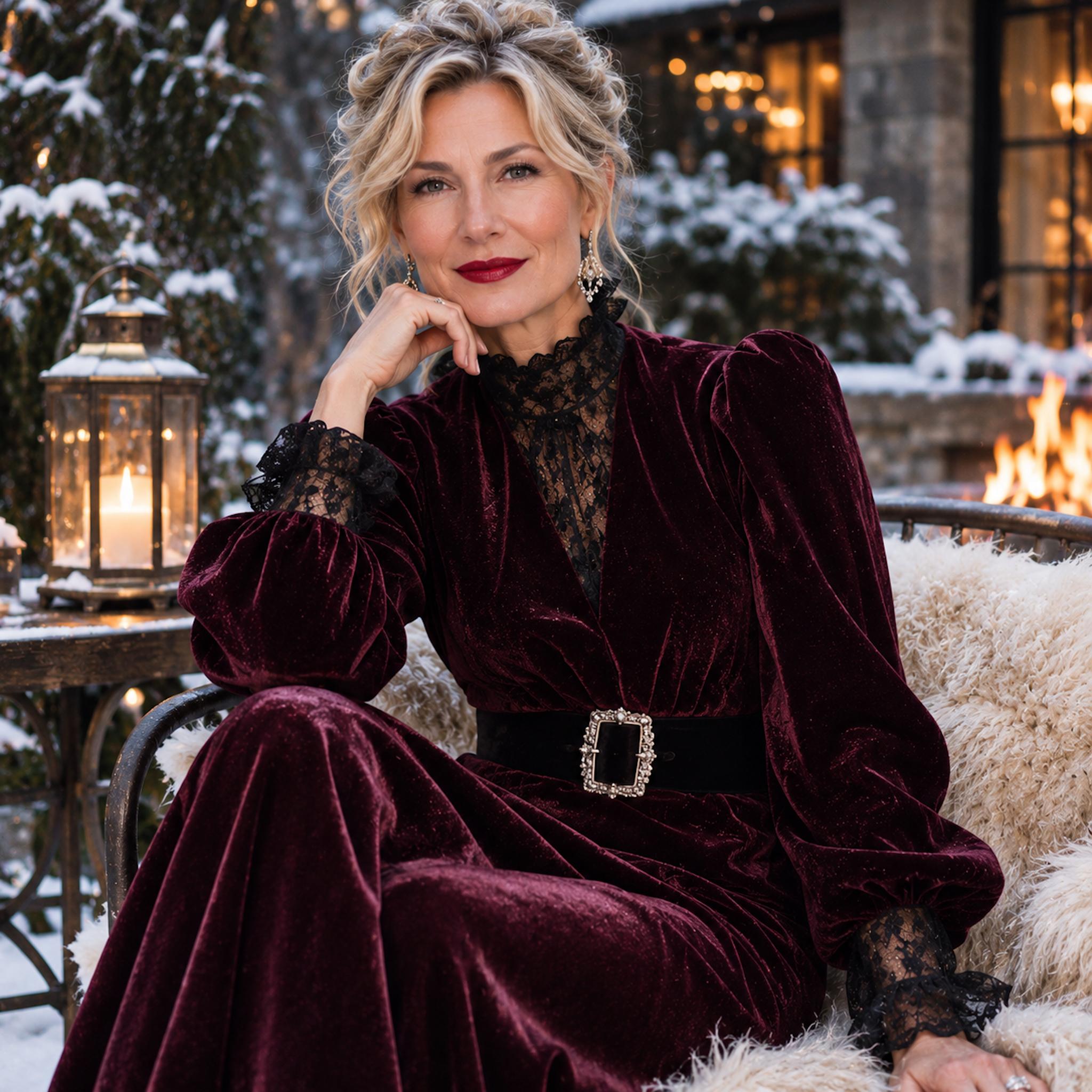
Snow on the terrace, fire in the background, and enough oxblood velvet to make the cold seem like someone else’s problem. The gown’s generous puffed sleeves and full skirt give the silhouette its sweep, while black lace climbs the neckline and spills from the cuffs with a finer, more intricate rhythm.
A wide black belt, secured by an ornate silver buckle, gathers all that volume at the waist. Seated among winter lanterns and snowy greenery, the look combines the grandeur of formal eveningwear with the intimate atmosphere of a fireside gathering. The jeweled detail catches the light; the velvet does everything else.
2. The Short Ink Coat and Sweeping Taffeta Skirt
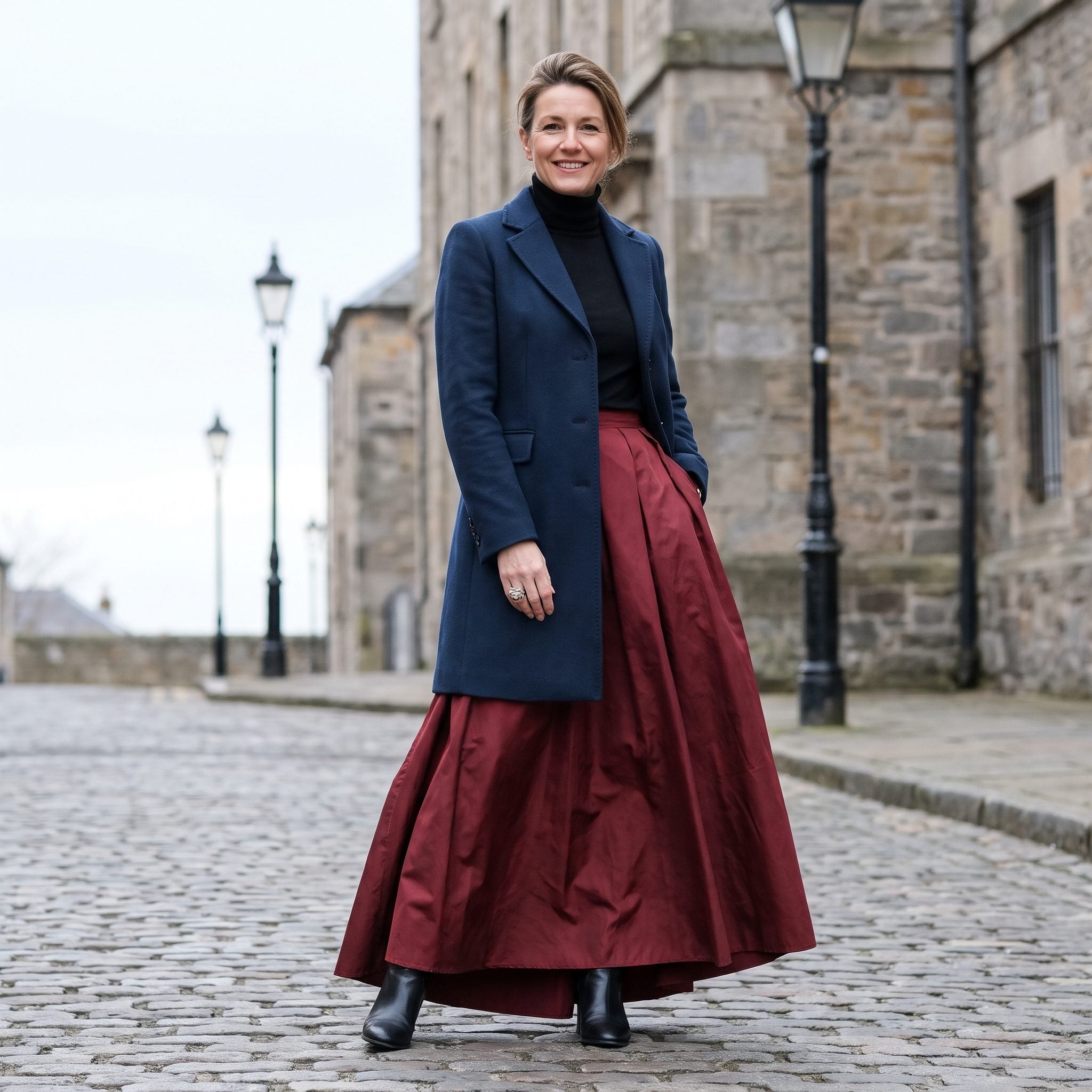
Volume below, discipline above. The fitted ink coat establishes a compact upper silhouette, leaving the oxblood taffeta skirt free to expand into broad, architectural folds. The difference in scale is dramatic enough to make the outfit feel almost cinematic.
Taffeta has a distinctive crispness that allows a skirt like this to hold its shape, even as the folds shift with movement. Ankle boots lend the sweeping hem a grounded finish, preventing the ensemble from drifting too far into historical costume. For a formal winter holiday outfit, the proportions make an unforgettable statement.
1. The Oxblood Velvet Blouse and Black Faille Ball Skirt
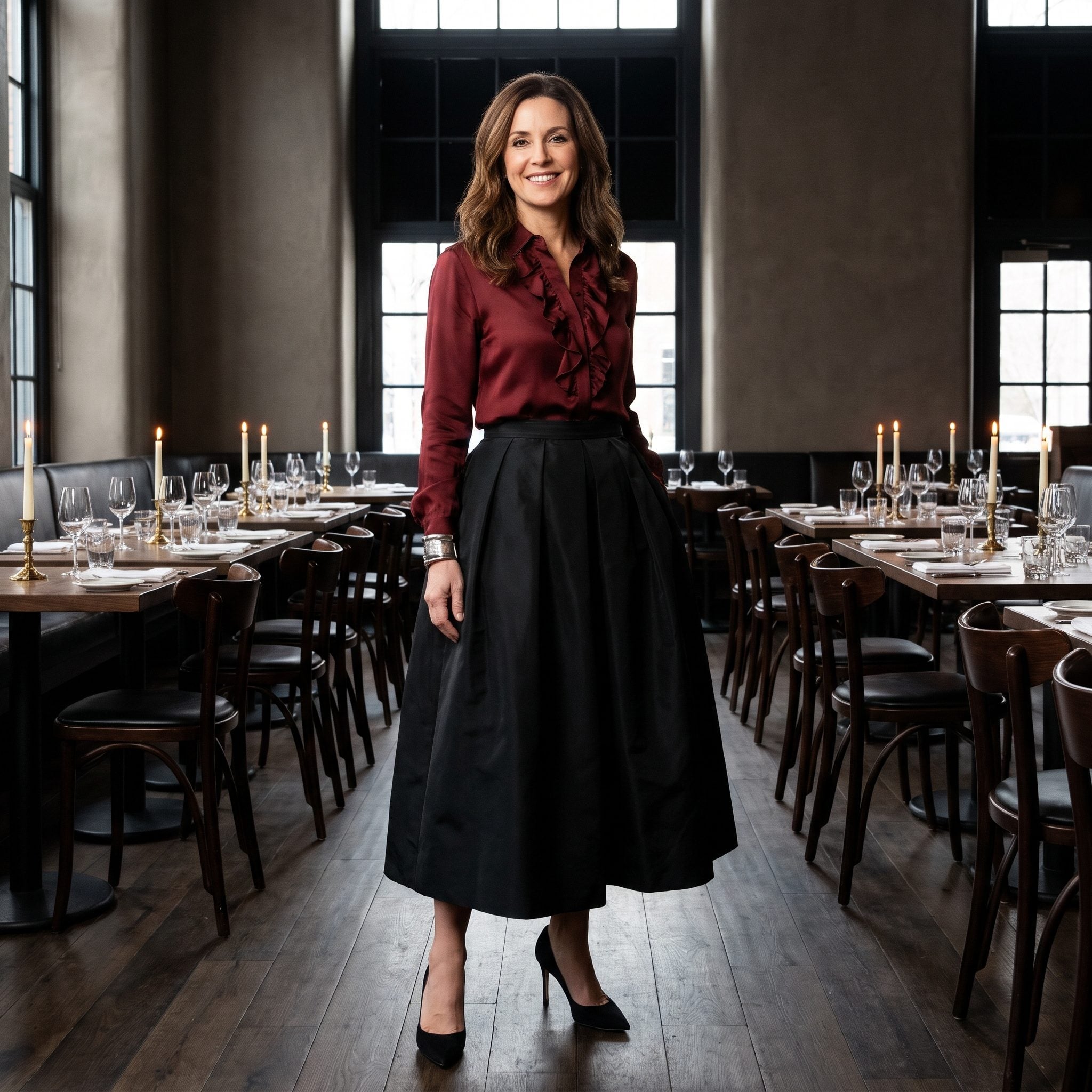
Some evening outfits whisper. This one has hired an orchestra. The oxblood ruffled blouse supplies softness and movement above a black faille skirt whose broad pleats hold their shape with architectural conviction. The contrast is extravagant, but its components are remarkably disciplined.
The fitted waist keeps the generous skirt from overwhelming the silhouette, while the fluid blouse prevents the upper half from becoming equally rigid. Rich velvet, monumental pleats, and enough drama to make a roomful of little black dresses look as though they misunderstood the invitation.